
Loose waves are the style brides ask me for most at consultations, and also the one they underestimate. A wave that looks soft at ten in the morning can be a straight sheet by the first dance unless it was set properly, so the prep matters as much as the look. Waves move when you walk and catch window light, and they work on anything from a long bob to waist-length hair. Below are 20 loose wave wedding hair looks I’d happily put in front of a bride at a trial, with notes on how each one behaves over a long day.
Why Some Waves Fall Out Before the Reception
Almost every flat wave I’ve been called to fix was set on hair that was too clean, too warm or too heavy with product. A curl only holds if it cools in its new shape, so the order of work matters more than the tool.
- Wash the day before, not the morning of. Day-old hair has a little grip; freshly washed hair is slippery and releases curl fast.
- Rough-dry with a light mousse at the root and a heat protectant through the lengths. Heavy creams weigh the wave down.
- Curl in small sections, all away from the face on each side, and pin every curl flat against the head while it’s still hot.
- Let everything cool completely, usually fifteen to twenty minutes, while makeup goes on.
- Release the pins, break the curls apart with fingers or a wide-tooth comb, then mist with a flexible hairspray from arm’s length.
Skip the cooling step and the wave looks fine for the getting-ready photos, then drops by the time you reach the aisle.
1. Hollywood Waves Wedding Hair
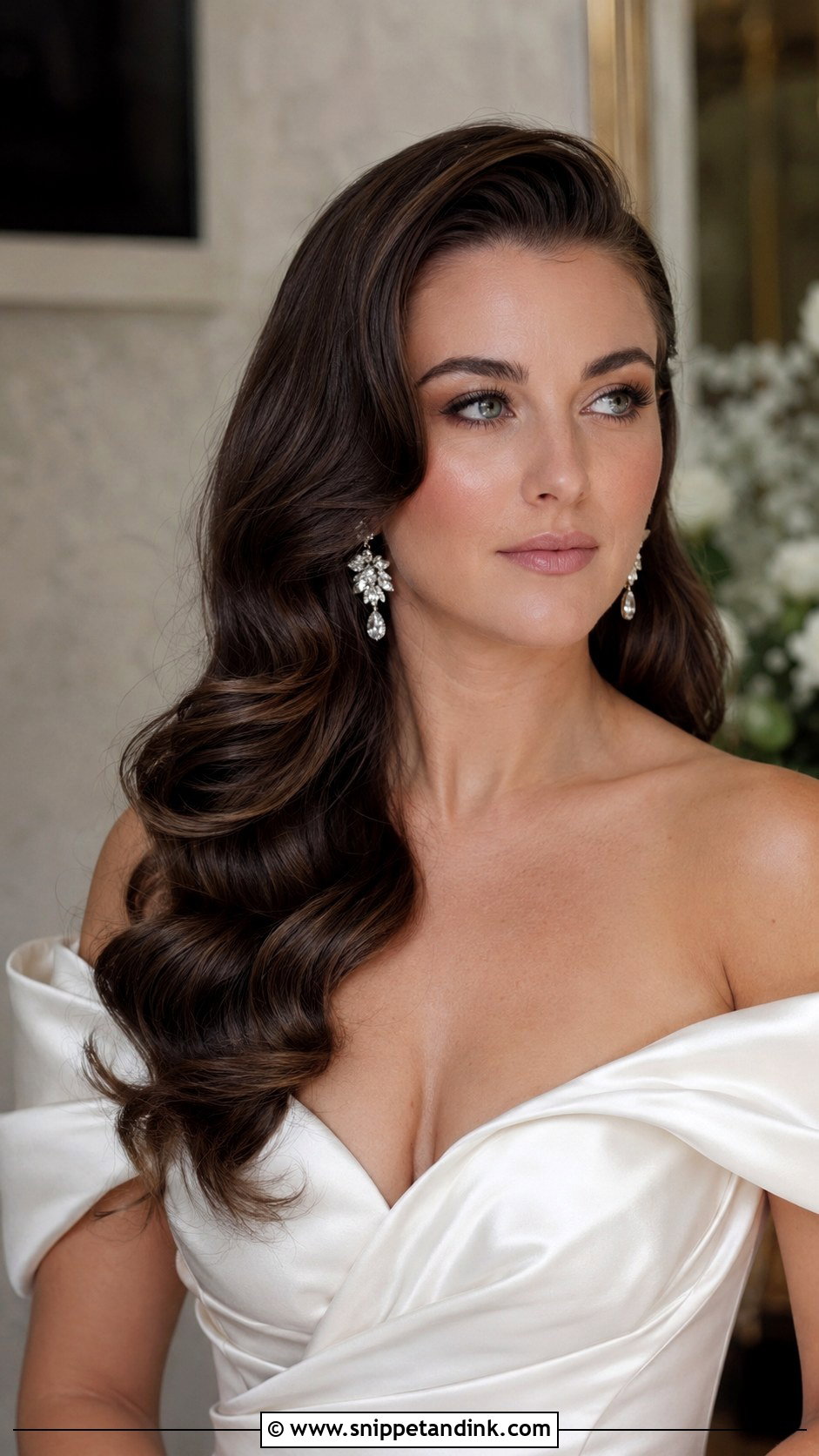
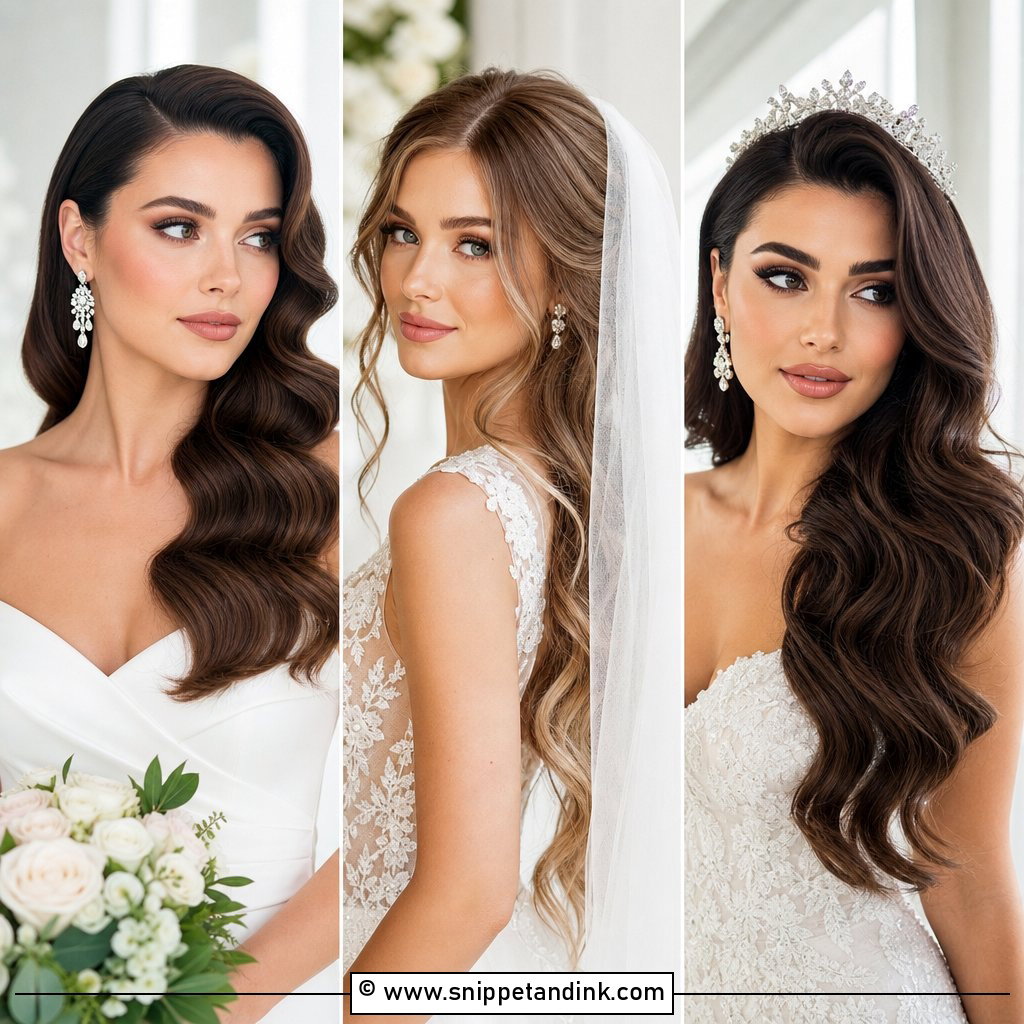
This is the most disciplined wave on the list. Hollywood waves sit on a deep side part, every curl is wound in the same direction, pinned to cool, then brushed out until the waves join into one glossy S-shape that hugs the face. I leave the pin curls in for at least fifteen minutes, because brushing out warm hair is the fastest way to lose the pattern. Root volume stops the shape lying flat against the head, and a flexible hairspray rather than a stiff lacquer lets it move without cracking. It belongs in a ballroom with a sleek gown and statement earrings. Freshly washed, slippery hair fights it, so I ask brides to wash the day before.
2. Loose Waves With Veil
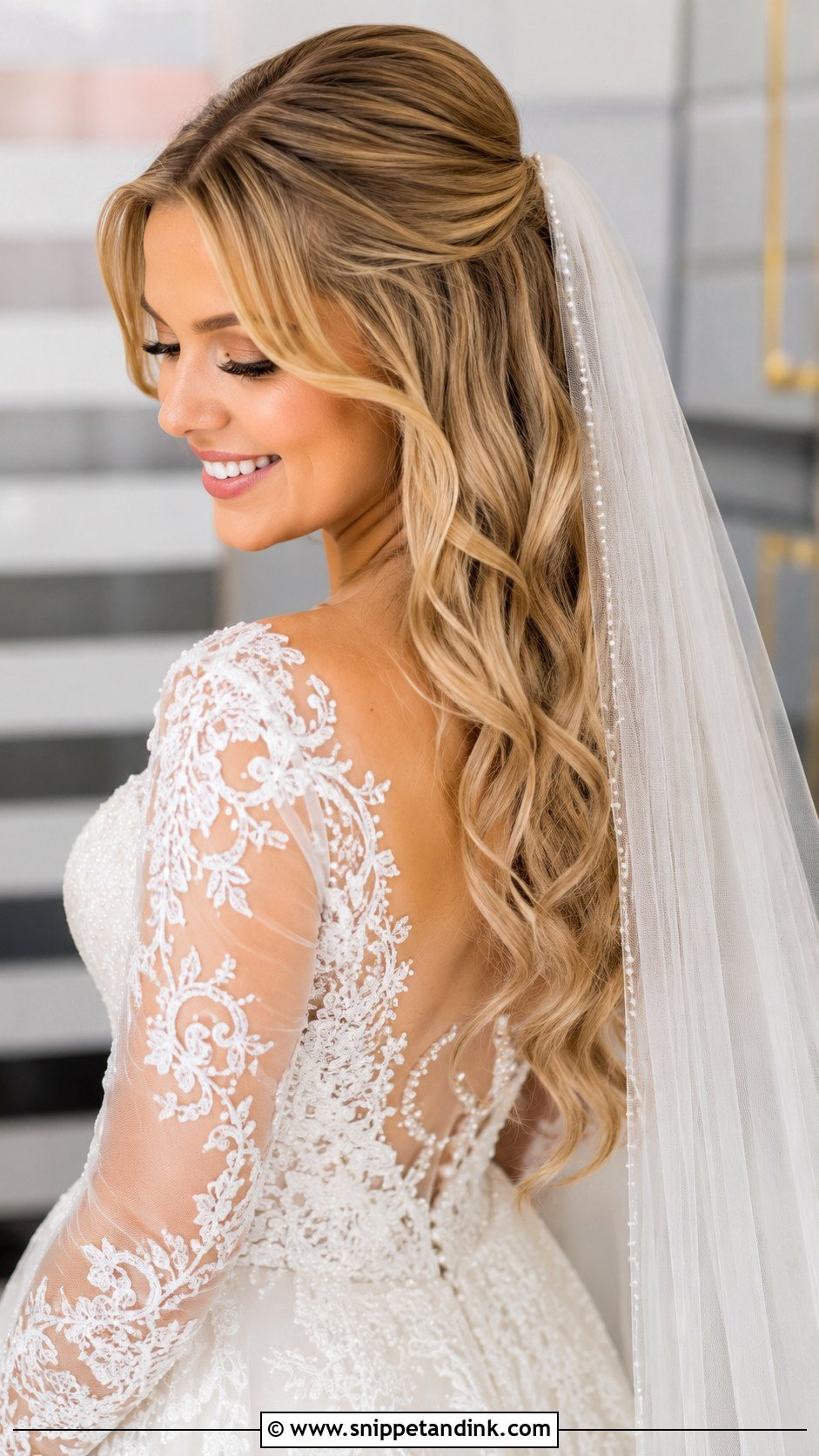
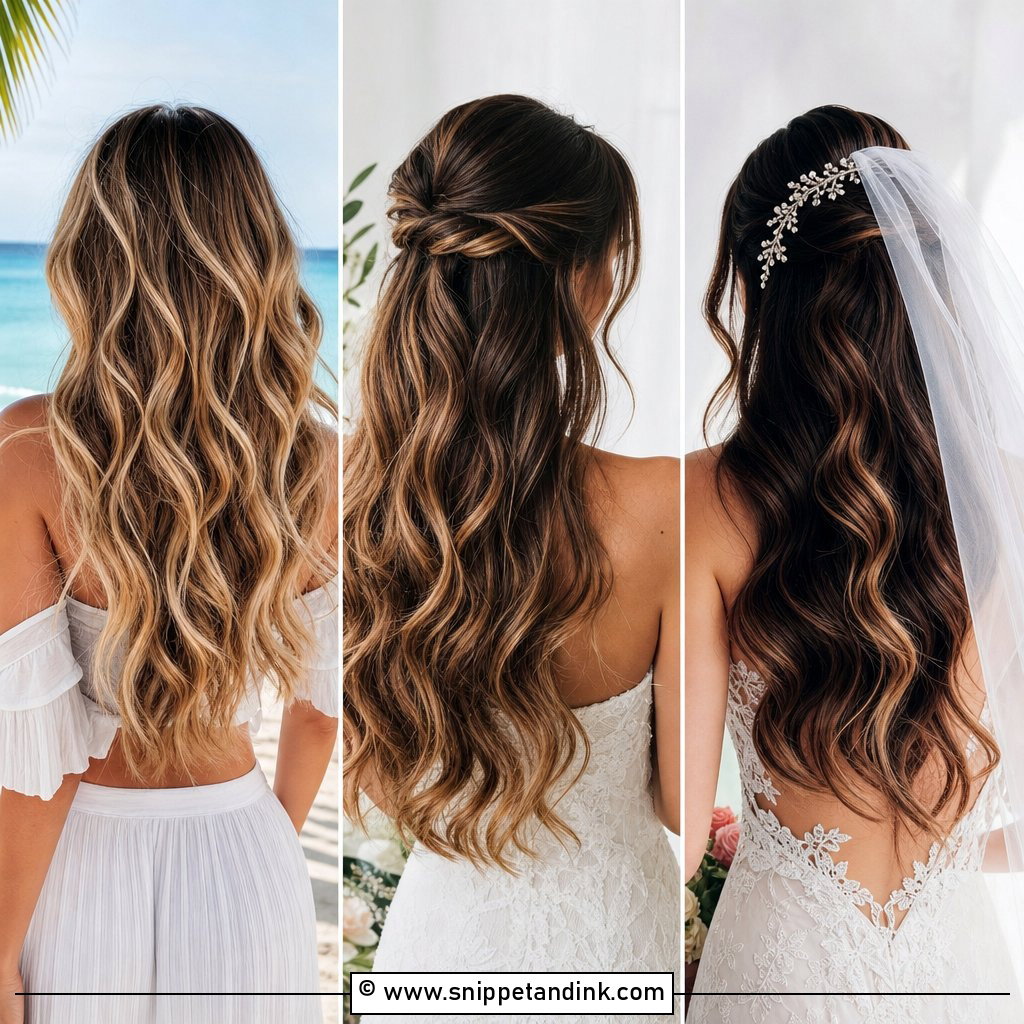
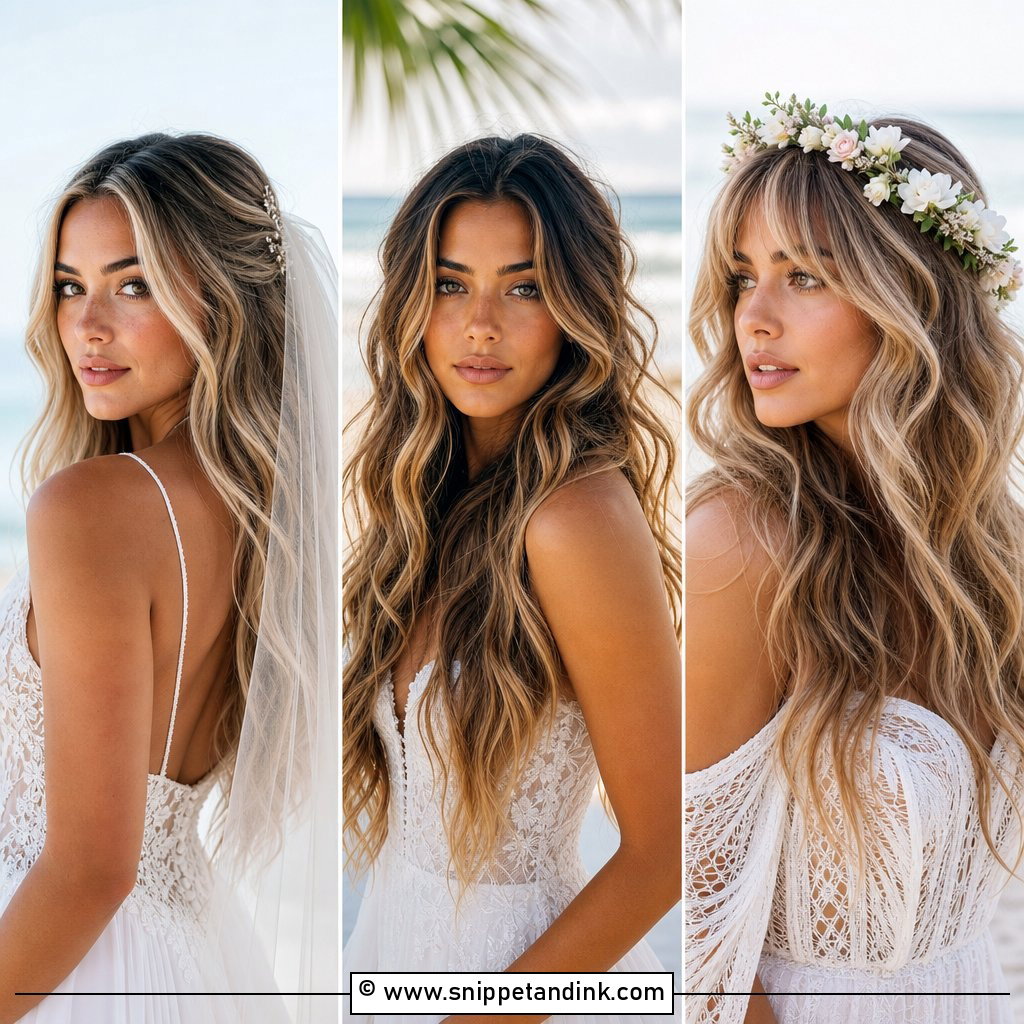
Waves under a veil need a plan, because the comb has to grip something. I build a small hidden anchor at the crown first, either a tiny braid or two crossed bobby pins, and slide the veil comb into that so it doesn’t drag the waves flat. Setting the veil high keeps more of the waves visible in photos; tucking it lower at the back suits a cathedral or fingertip length that needs to drape. A birdcage sits at the front and barely touches the waves at all. When the veil comes off for the reception, a quick finger-comb over the anchor point hides the dent.
3. Side Swept Loose Waves
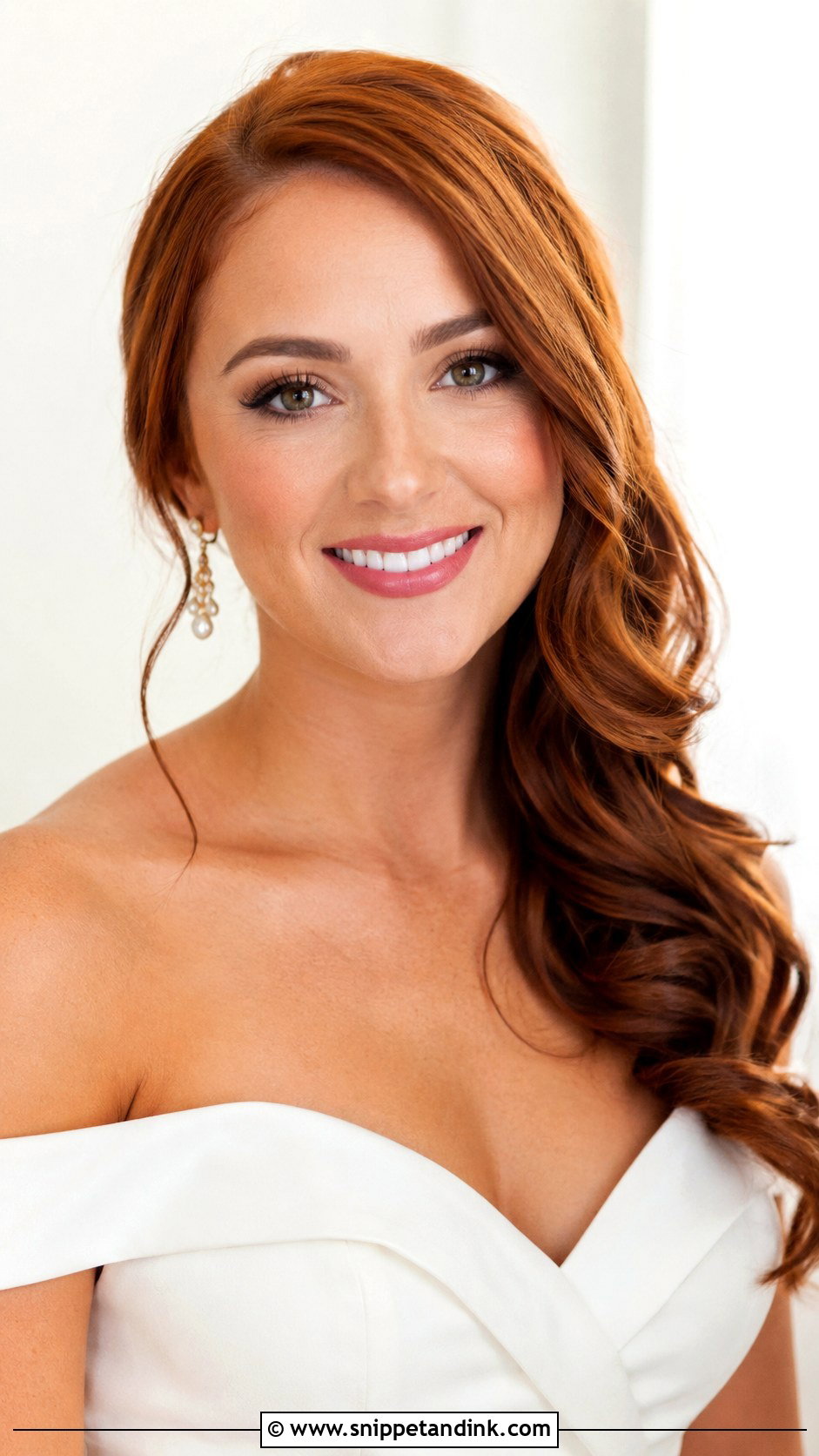
Sweeping everything over one shoulder shows off the neckline and earrings, and it’s an easy match for an open-back gown since the back stays clear. The hidden work is on the opposite side. I criss-cross pins behind the ear, tight to the scalp, so the waves don’t slide back to centre after an hour of hugging, and those pins sit under a layer of hair so they never flash in photos. Before the trial, find out which side you’ll stand on at the ceremony. That’s the side most of your photos will capture.
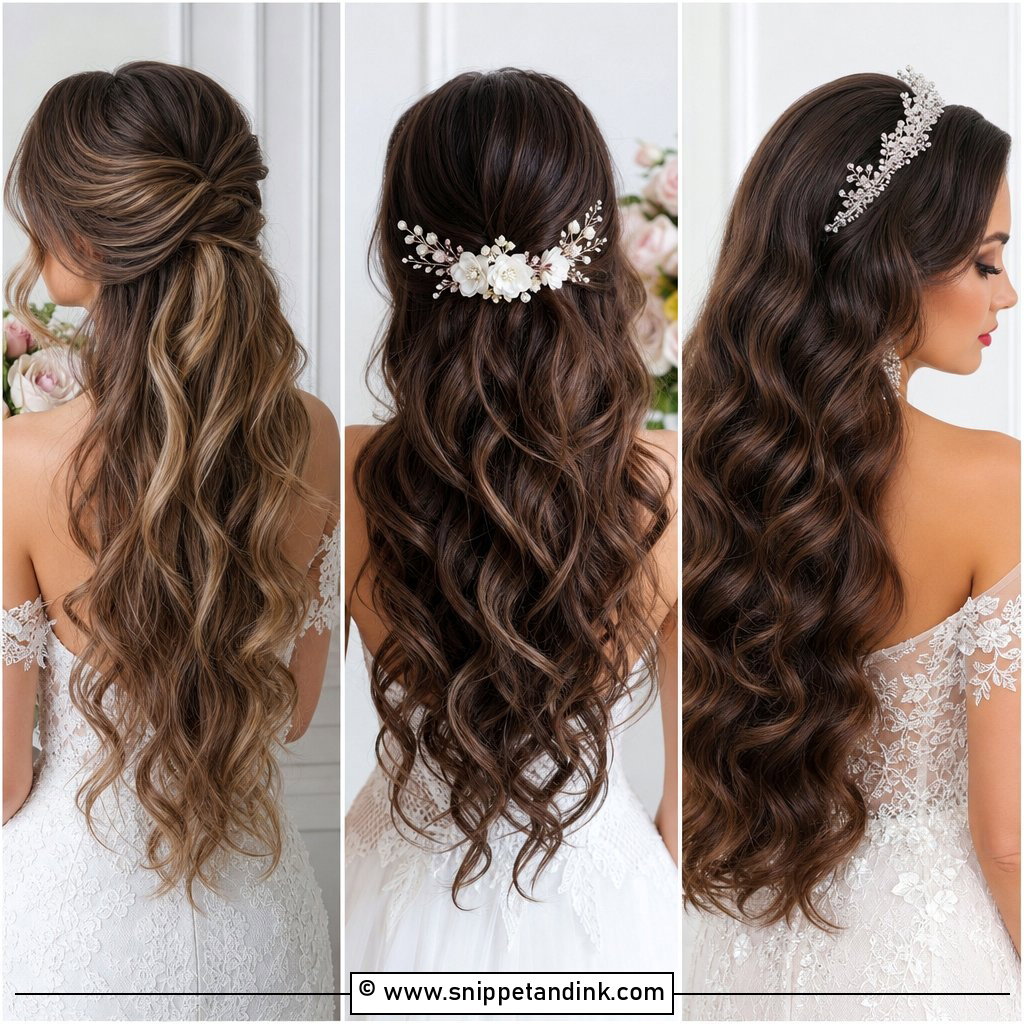
4. Half Up Half Down Loose Waves
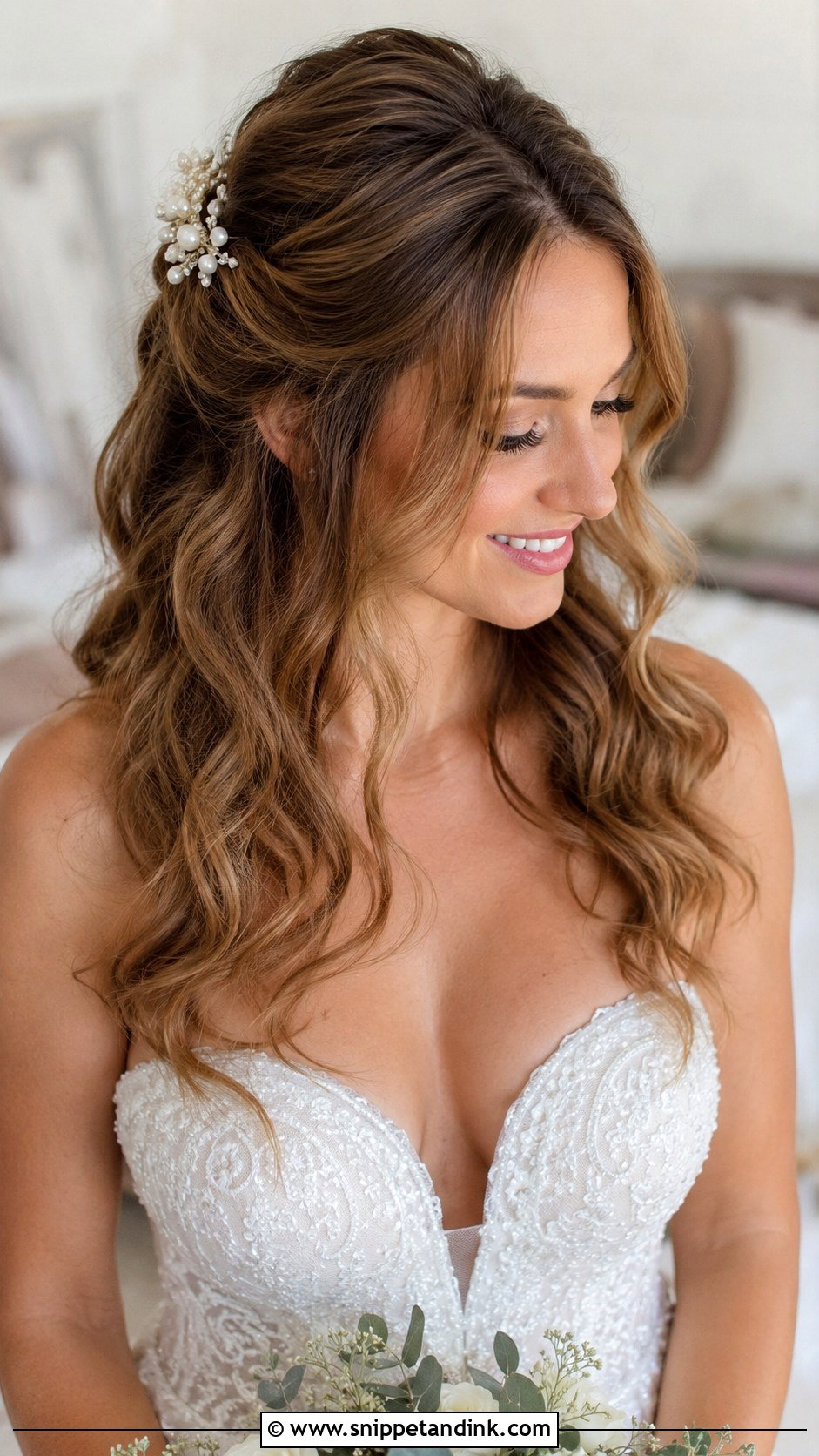
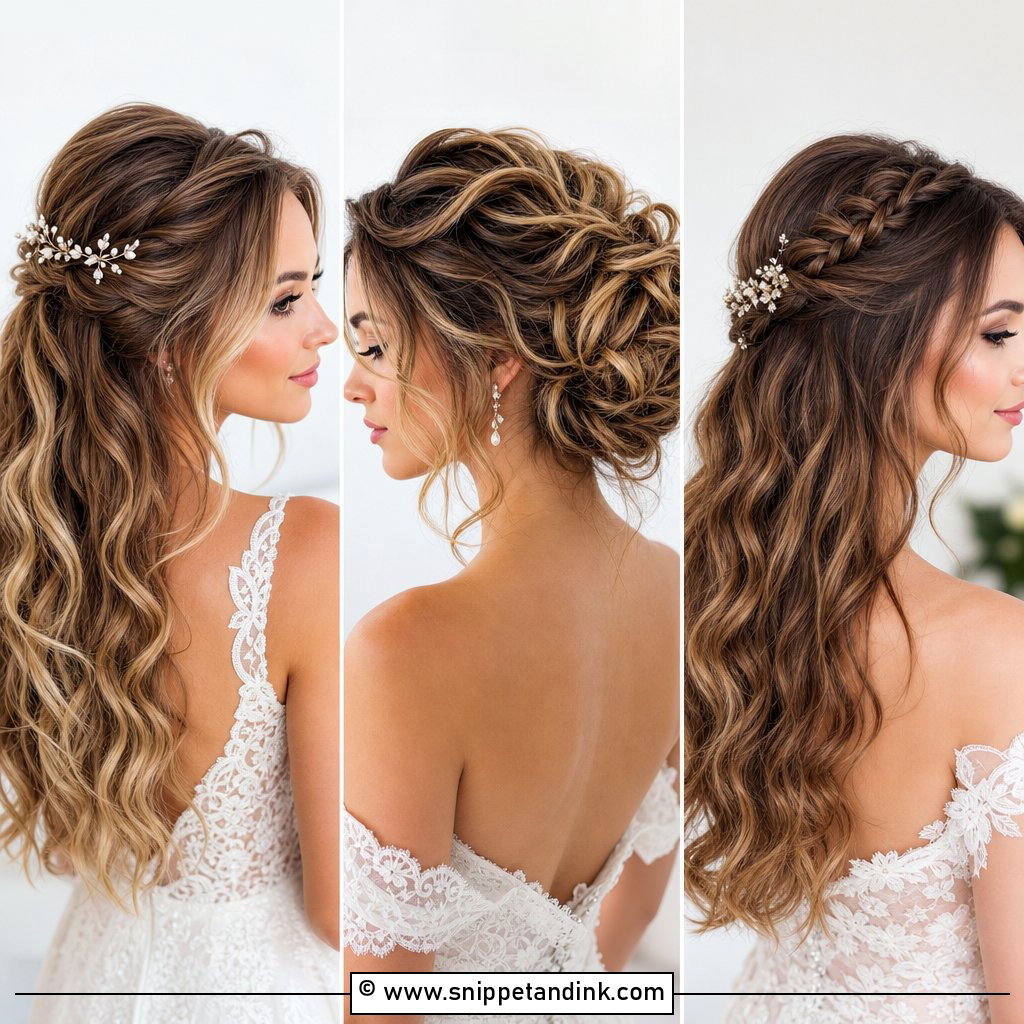
Half-up, half-down is my default suggestion for brides torn between an updo and wearing it down. I gather the top section with a little backcombing at the crown or a soft twist, secure it with a small elastic, then hide that with pins so nothing shiny shows. A couple of face-framing tendrils, curled separately, stop it looking too done. Veils, combs and floral pins all sit happily on the join. The one length it struggles with is very short hair, where the top section can’t quite reach the back without ends poking out.
5. Boho Loose Waves Wedding Hair
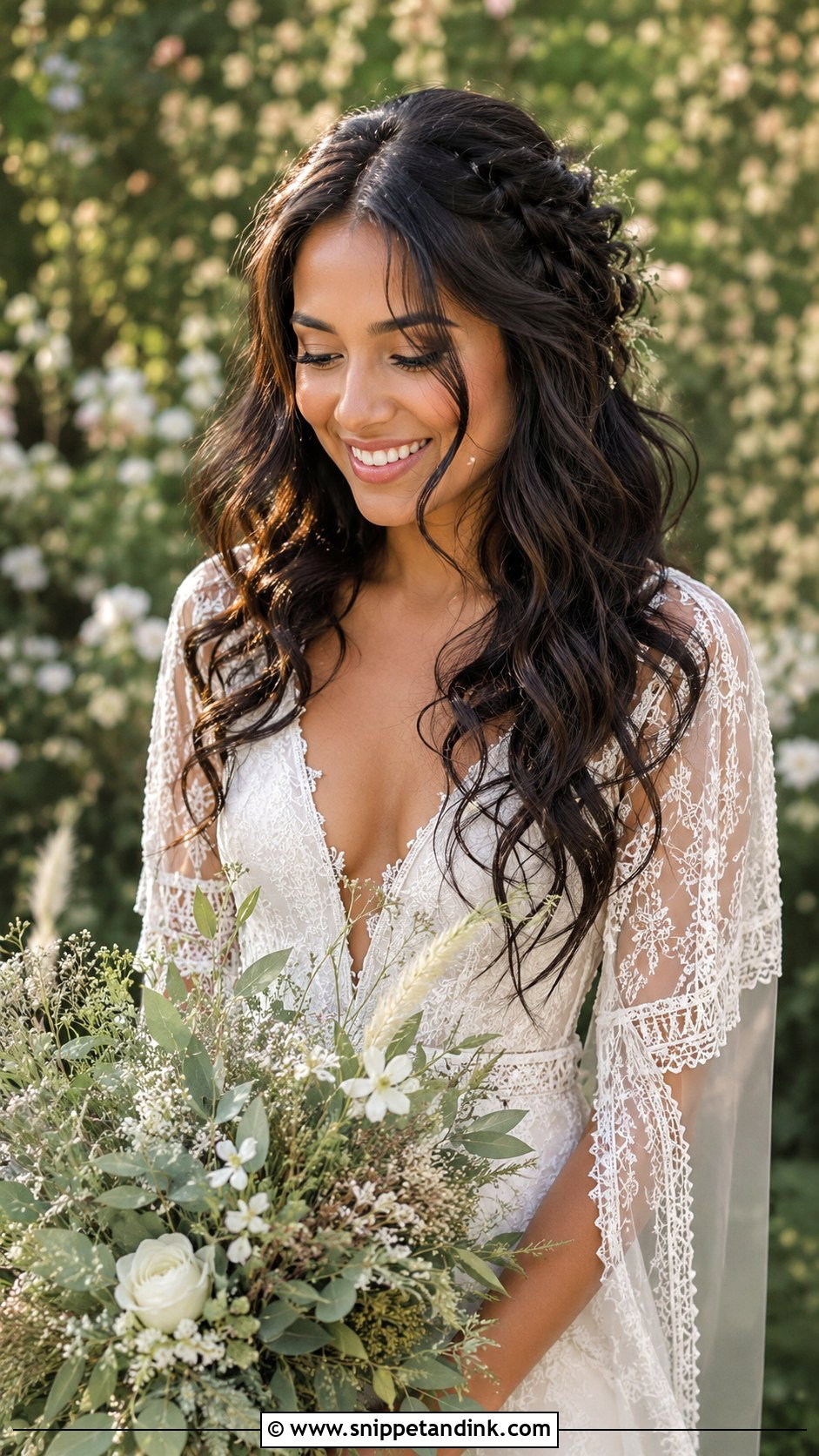
Boho waves are deliberately imperfect, and they’re harder to get right than they look. The relaxed, undone texture comes from curling in alternating directions, leaving the last inch of the ends straight, then breaking it up with fingers instead of a brush. Texturizing spray gives the grip that keeps it looking lived-in rather than unfinished. A few thin braids or wildflowers fit right in at a barn or on a beach. If your hair is very silky, an undone wave can drift into plain flat by evening, so I build more texture at the root than you’d expect.
6. Loose Waves With Flower Crown
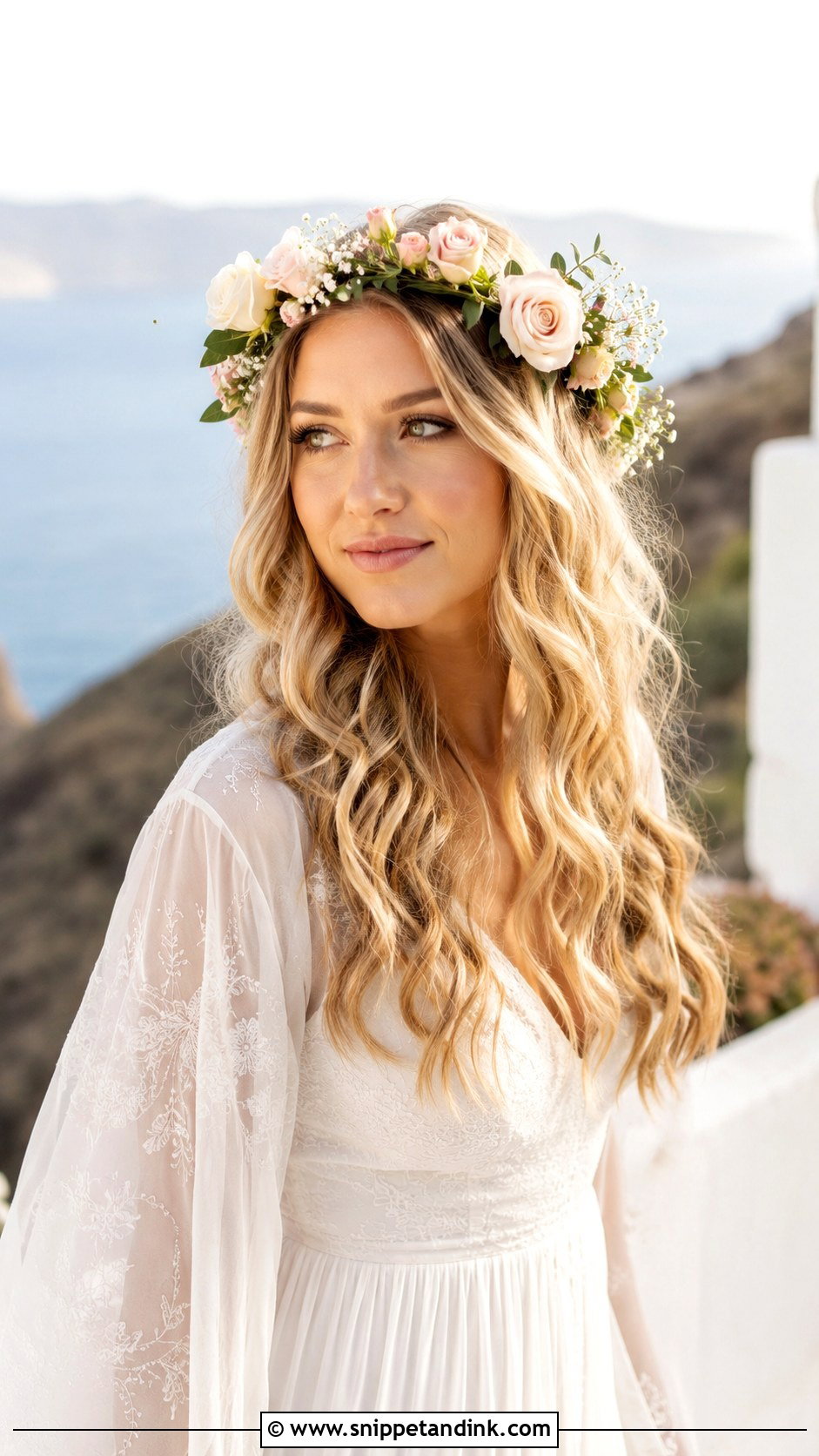
Fresh flowers settled into waves bring the garden right into the hair, and pastel roses, baby’s breath and small sprigs of greenery all sit well against loose curls. The crown needs a firm base. I pin it at four points, through the wire and into small anchor sections, rather than resting it on top of slippery waves where it will tilt. Worn low like a halo, it leaves room for a veil later. Ask your florist to make it the morning of and keep it cool, because baby’s breath browns quickly in heat. The waves underneath stop the crown looking like a costume and give it a whimsical, fairytale quality.
7. Loose Waves With Side Braid
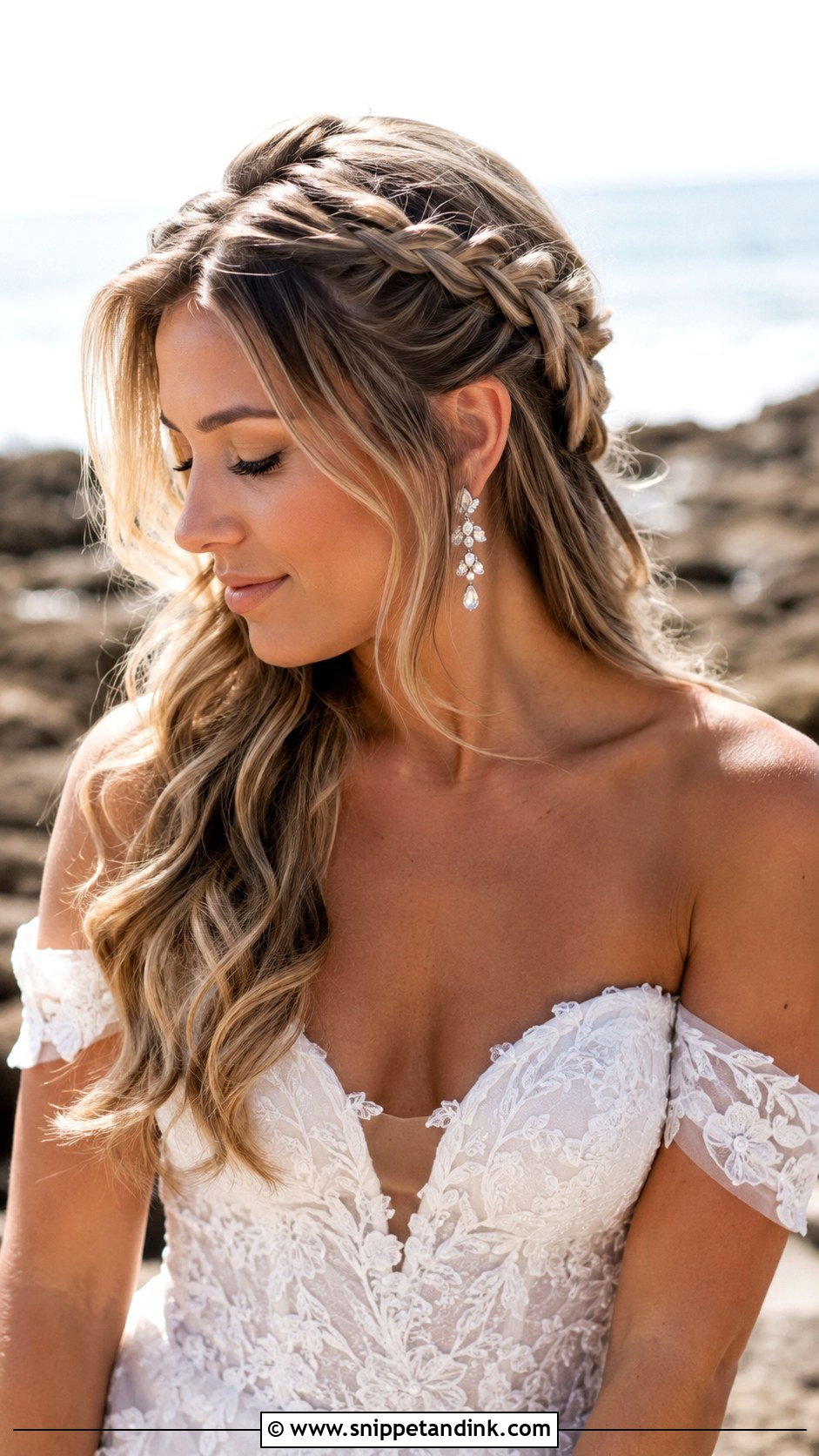
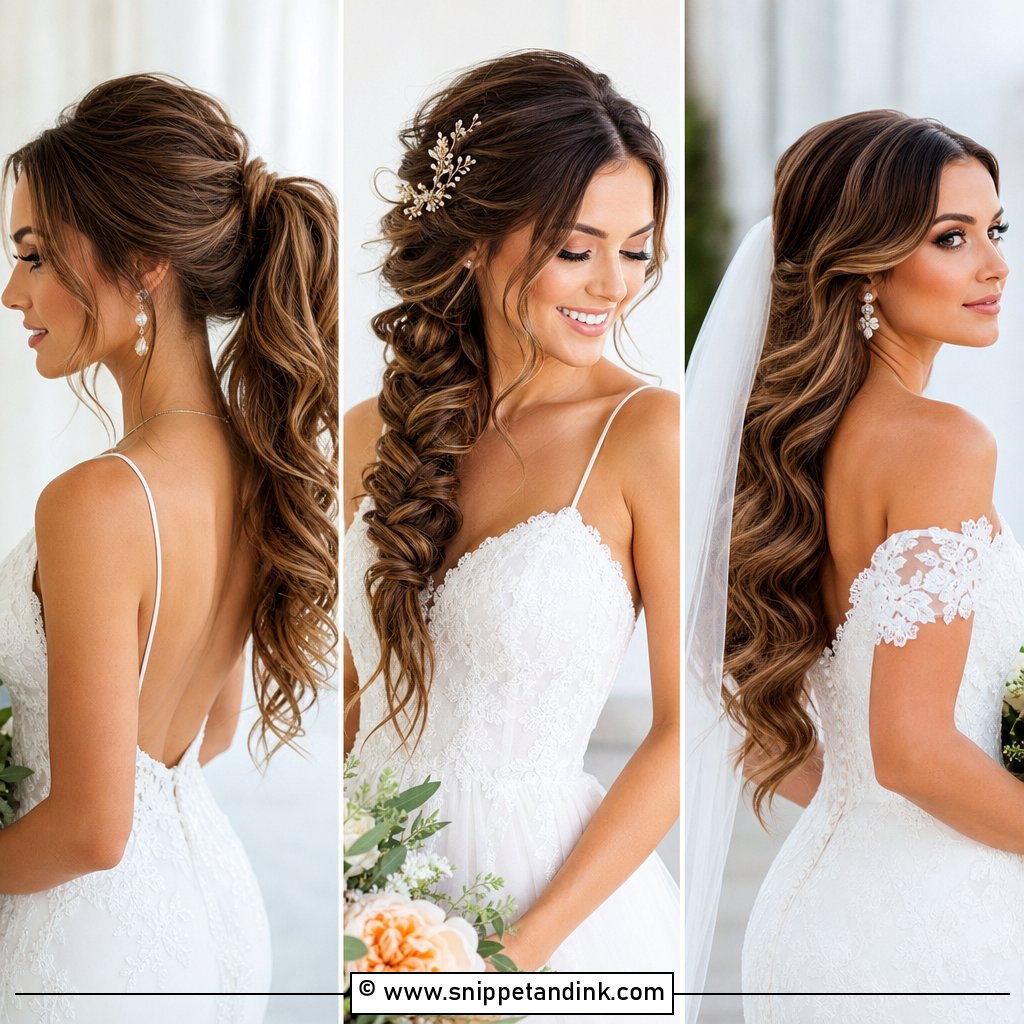
A loose side braid holds hair off one shoulder while the rest of the waves fall down the other side. I pancake the braid, gently pulling the outer loops wider, so it reads as part of the wave instead of a tight rope sitting on top. On a beach this is one of the more practical choices, since the braided section can’t blow across your face mid-vows. Heavily layered hair is the catch: shorter pieces pop out along the braid, so expect a few hidden pins down its length.
8. Loose Waves With Curtain Bangs
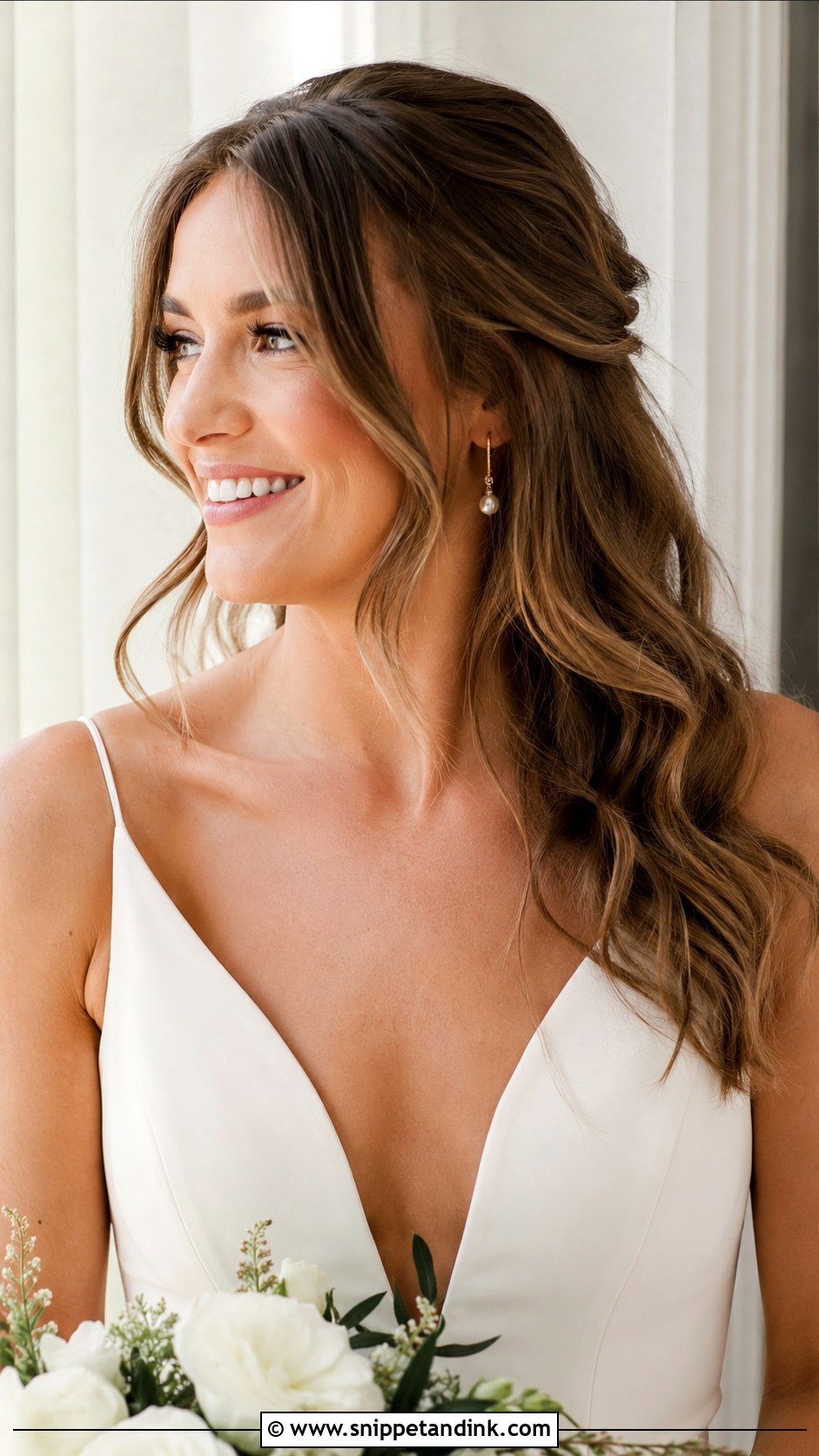
Curtain bangs and soft waves pair well because the fringe repeats the curve of the waves around the face. The bangs part at the centre and sweep each way. I set them with a round brush and a blow dryer, not the curling iron, so they arc away from the face instead of coiling into a tube. A light texturizing spray blends the fringe ends into the waves on medium to long hair. Get the bangs trimmed about a week before the wedding rather than the day before, so the cut has time to settle and loses its blunt edge.
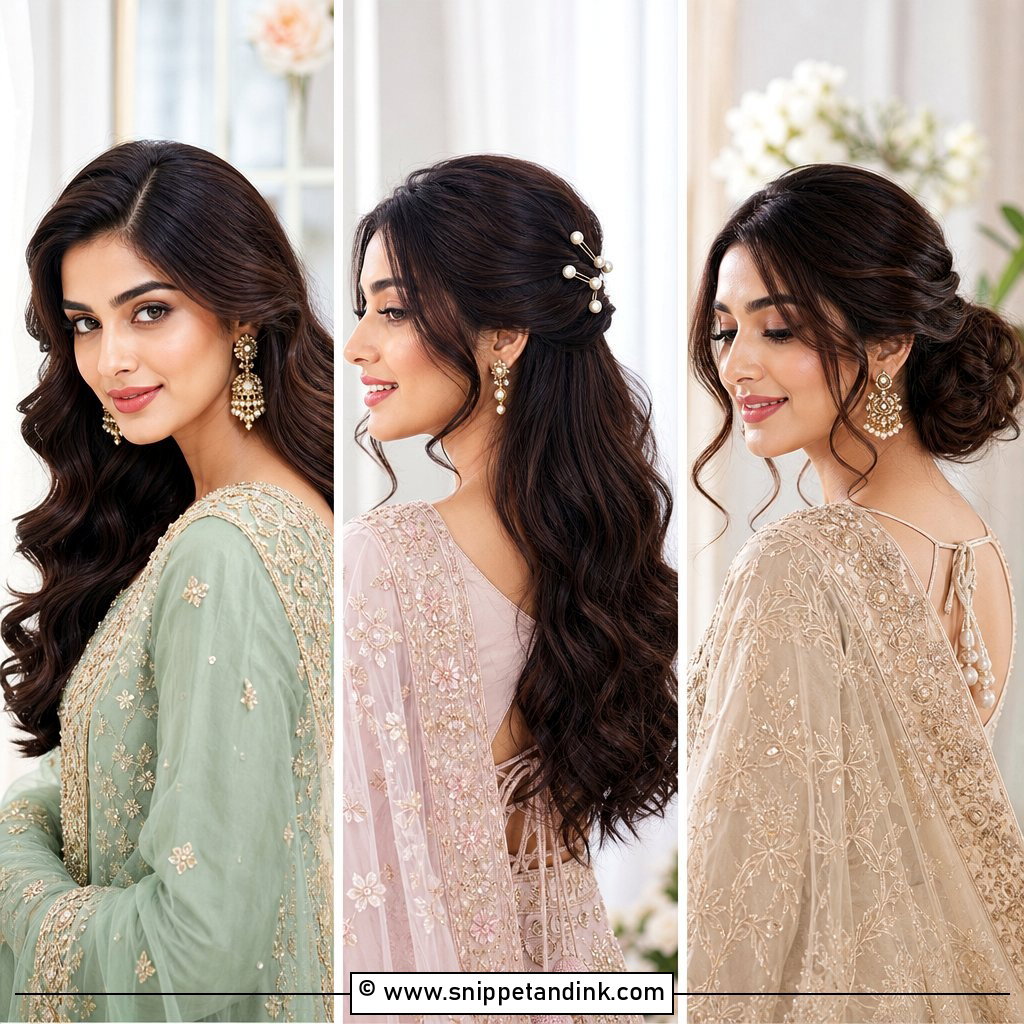
9. Loose Waves Low Bun
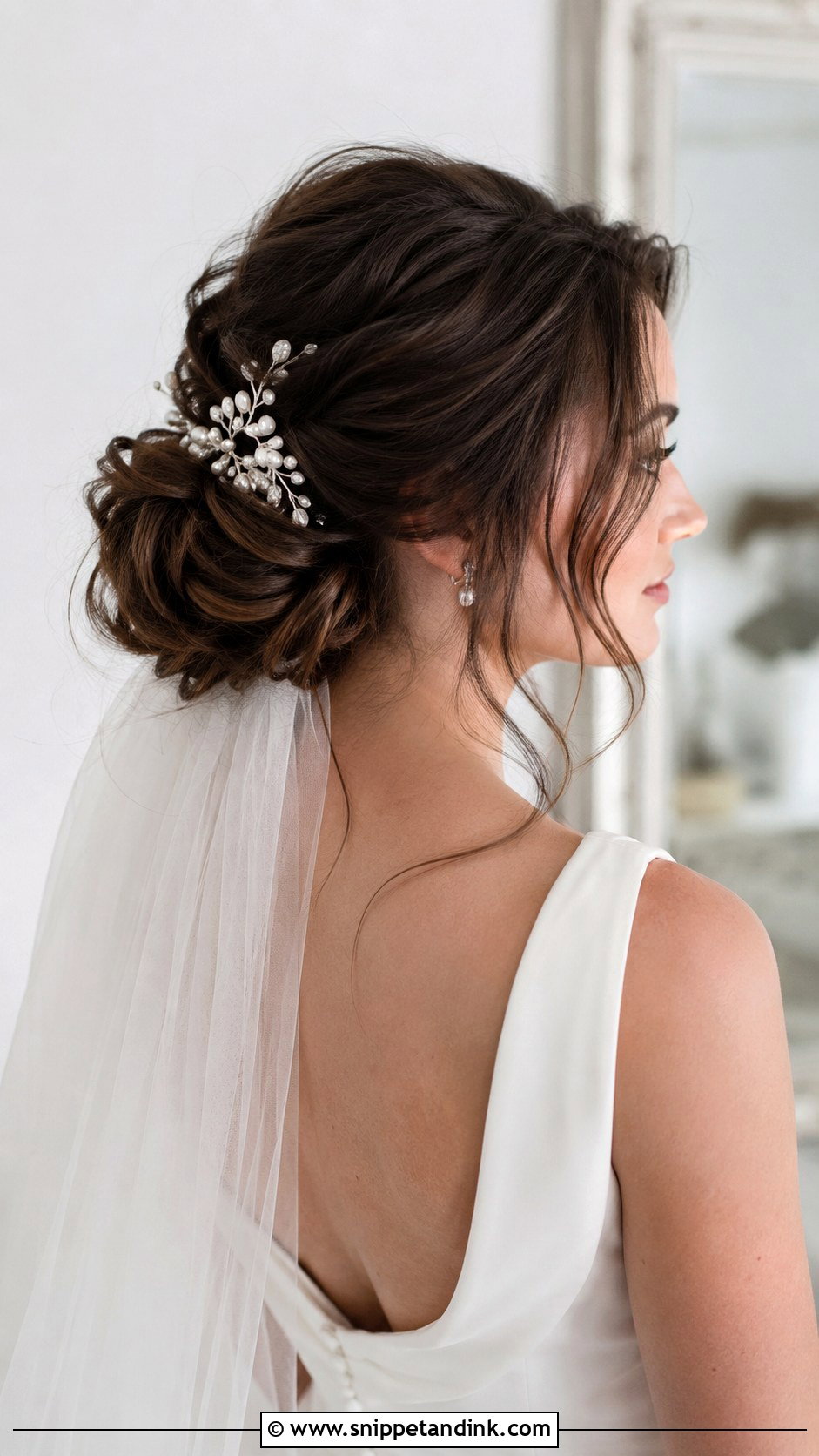
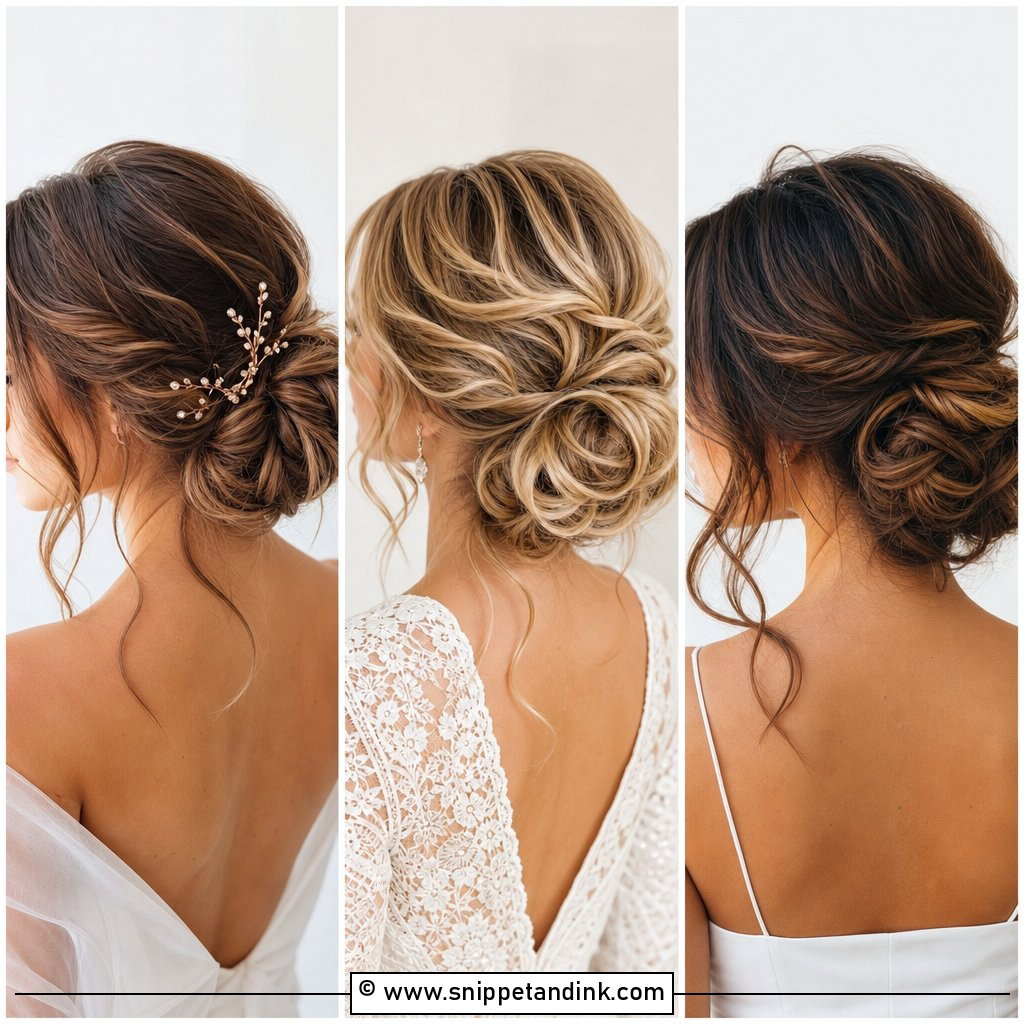
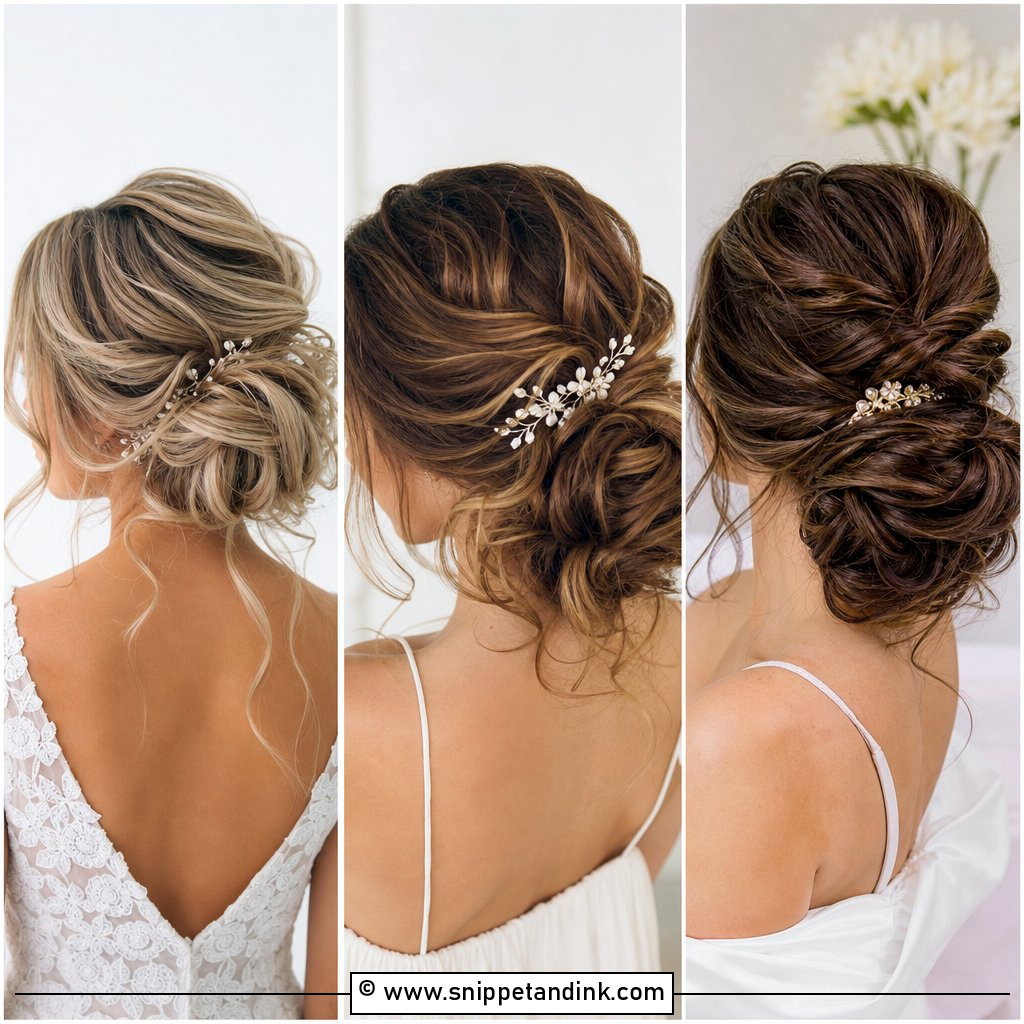
A low bun made from waved hair has far more body than one made from straight hair, because the curl gives every pin something to grip. I leave a few tendrils loose around the face and curl them on their own so they don’t hang limp by the speeches. It sits neatly under a veil and takes jeweled combs or pearls. The low placement matters for comfort too: it won’t press into a chair back the way a mid-height bun does when you sit through dinner.
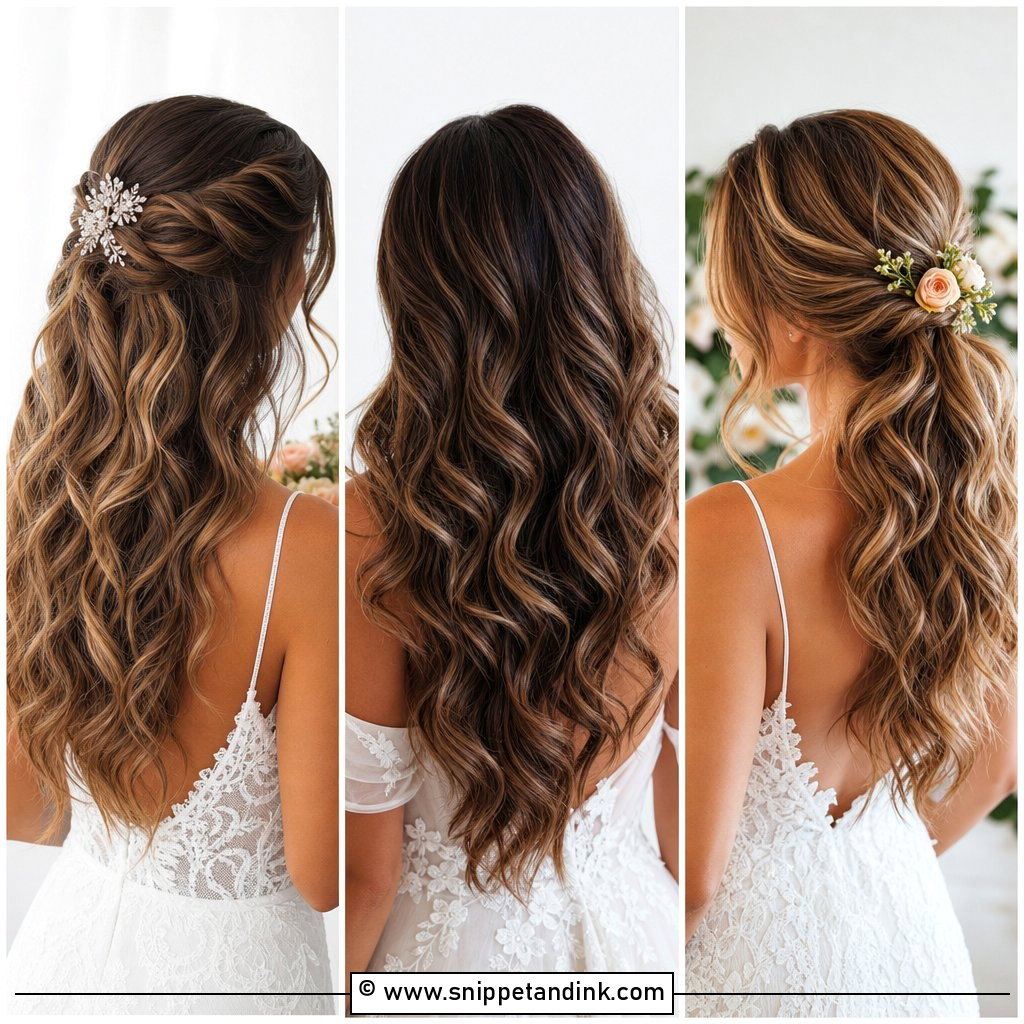
10. Loose Waves Half Up Twist
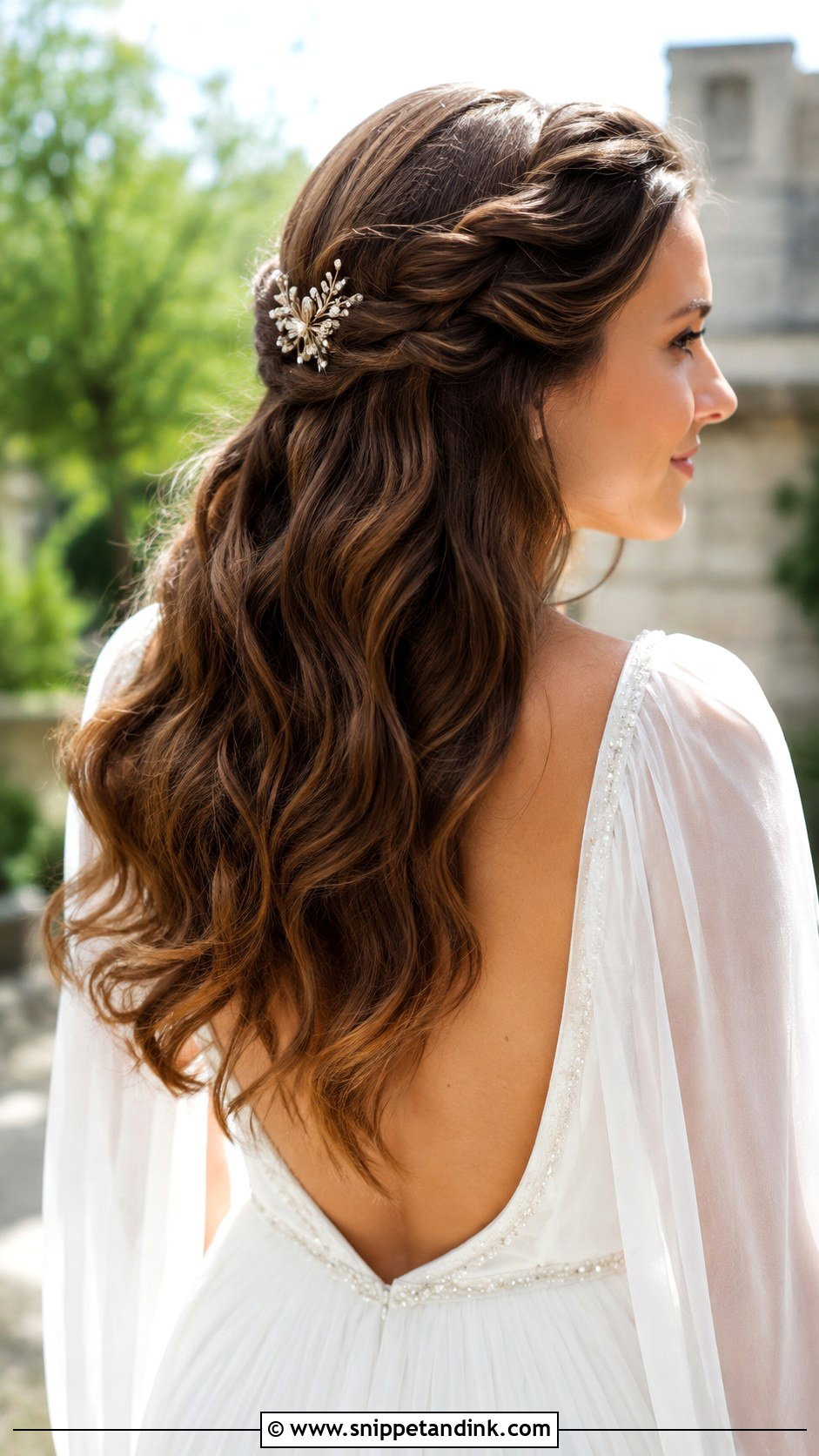
Two rope twists, one from each temple, met at the back and pinned, is the simplest version of this style. It adds a bit of detail at the crown and keeps hair off your face while the rest of the waves fall loose. I always twist away from the face. Twist the other way and the rope slowly unwinds as the day goes on. A decorative pin or small comb where the twists meet covers the join, and it works indoors or out on most lengths.
11. Loose Beach Waves Wedding Hair
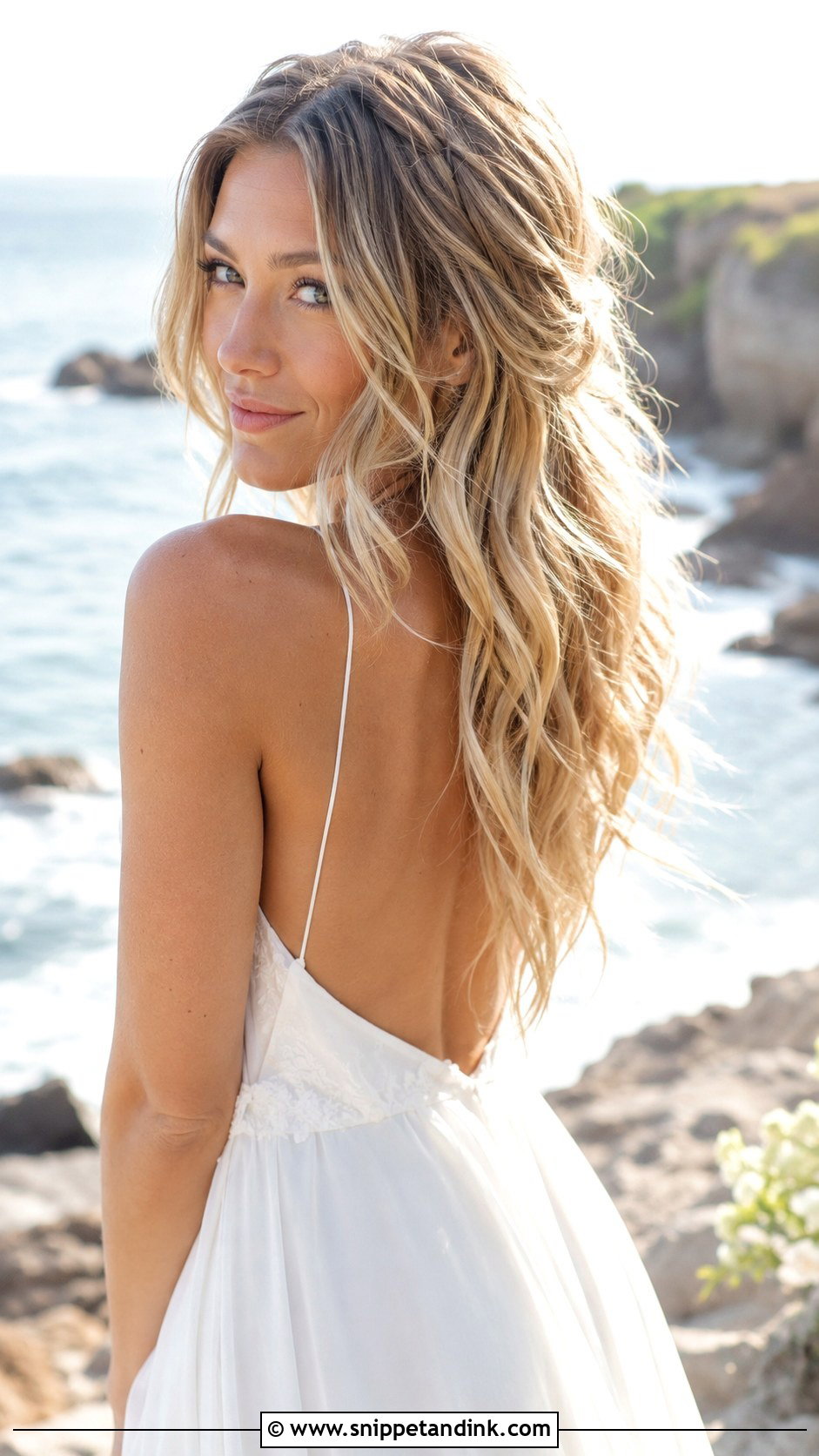
Beach waves are looser and less uniform than anything else here. These relaxed, slightly undone waves come from a flat iron twist or a large barrel, then a scrunch of sea salt spray. They suit seaside ceremonies, destination weddings and simple gowns with minimal accessories. The honest trade-off is that sea air and wind loosen this look faster than any other on the list, and salt spray is drying on already porous ends. Keep a small brush and a travel-size spray with a bridesmaid, and expect them to be looser at the end of the night than at the start.
12. Loose Waves With Pearl Accessories
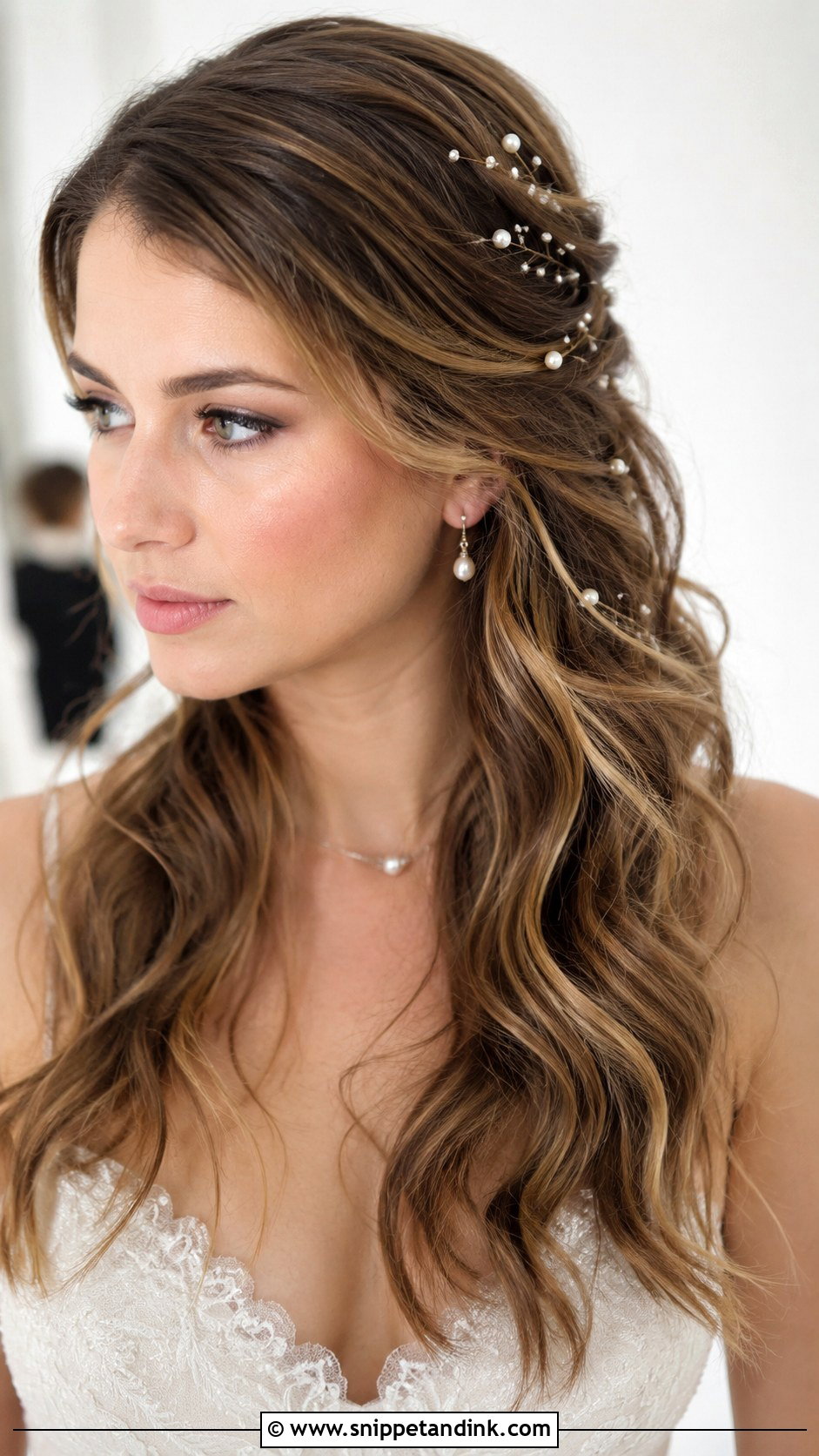
Pearl pins scattered through waves give a little shine without competing with the hair. I place them in a loose diagonal rather than spacing them evenly, since evenly spaced pins can read as polka dots in photos, and clustering them on one side looks more deliberate. Each pearl pin goes into a small crossed-pin base. On its own, a single pearl pin in a slippery wave tends to slide down by the reception. They suit half-up and fully down styles alike.
13. Loose Waves Side Ponytail
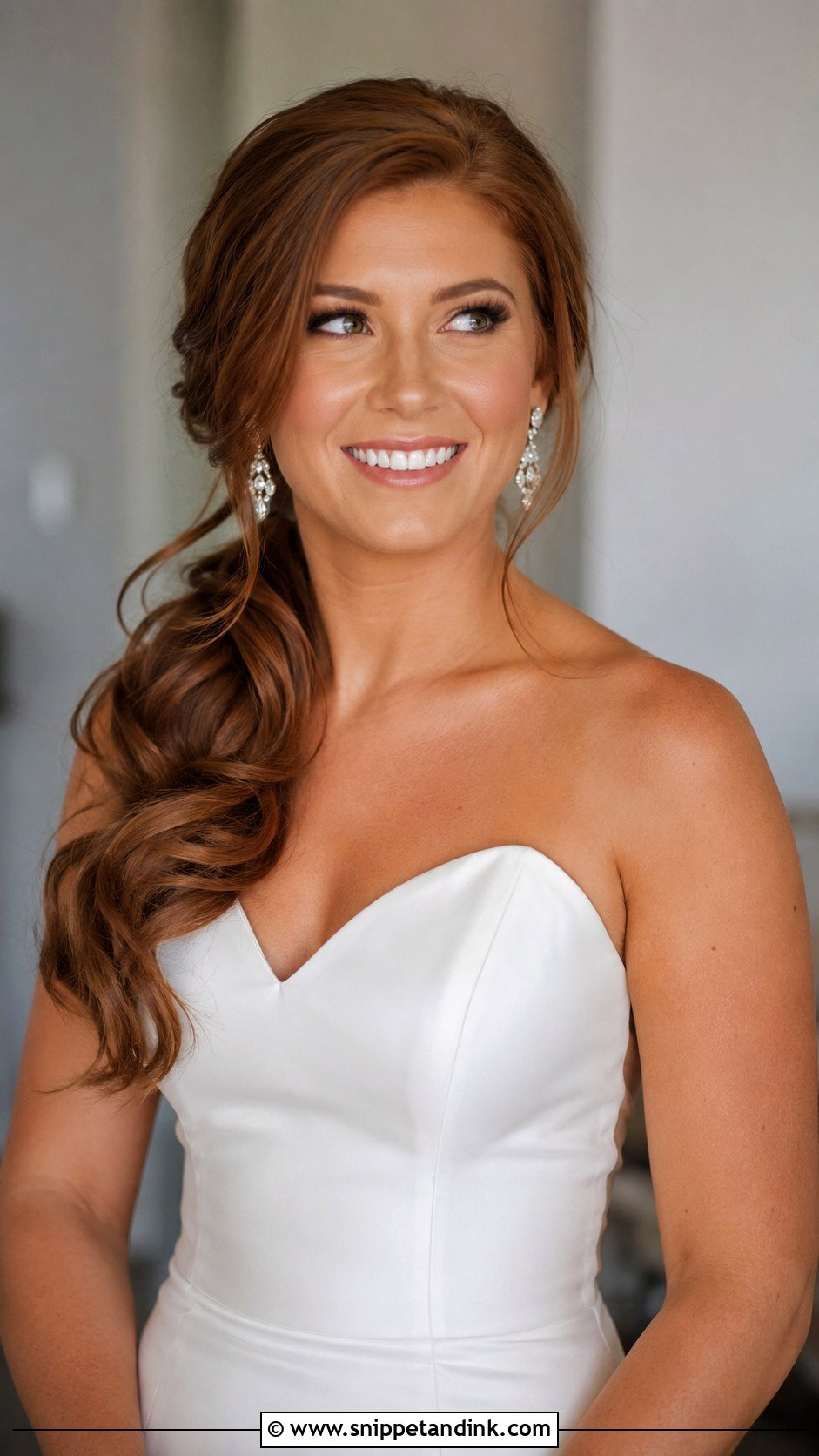
Quick to style and very secure, a low side ponytail gathers the waves at the nape, slightly to one side, with a small section of hair wrapped around the elastic to hide it. The waves fall over one shoulder and show off the earrings. The top can stay sleek or get a little crown volume. Weight is what I watch here: on very long, thick hair a single elastic starts to sag after a few hours, so I use two, one hidden under the other.
14. Loose Waves With Fishtail Braid Crown
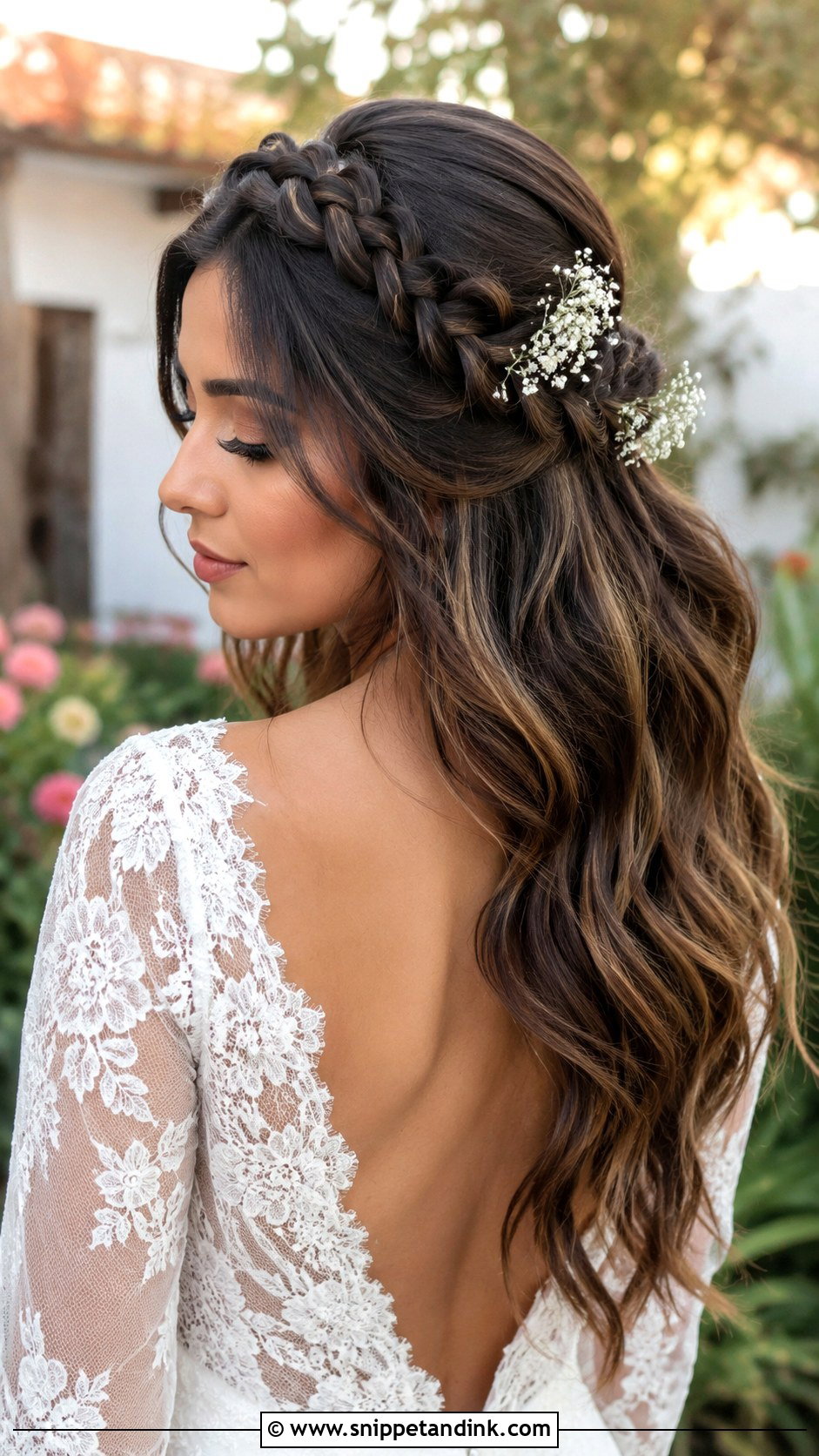
A fishtail braid wrapped around the head like a halo frames the waves falling below it. Fishtails take longer than three-strand braids and need at least shoulder-to-chest length to reach around, so shorter hair usually needs a few clip-in extensions for this one. After pinning, I pull the outer loops loose for that undone boho feel, and small flowers tuck easily into the gaps. It’s one of the most secure looks here, because the braid locks the top hair in place no matter how windy the venue gets.
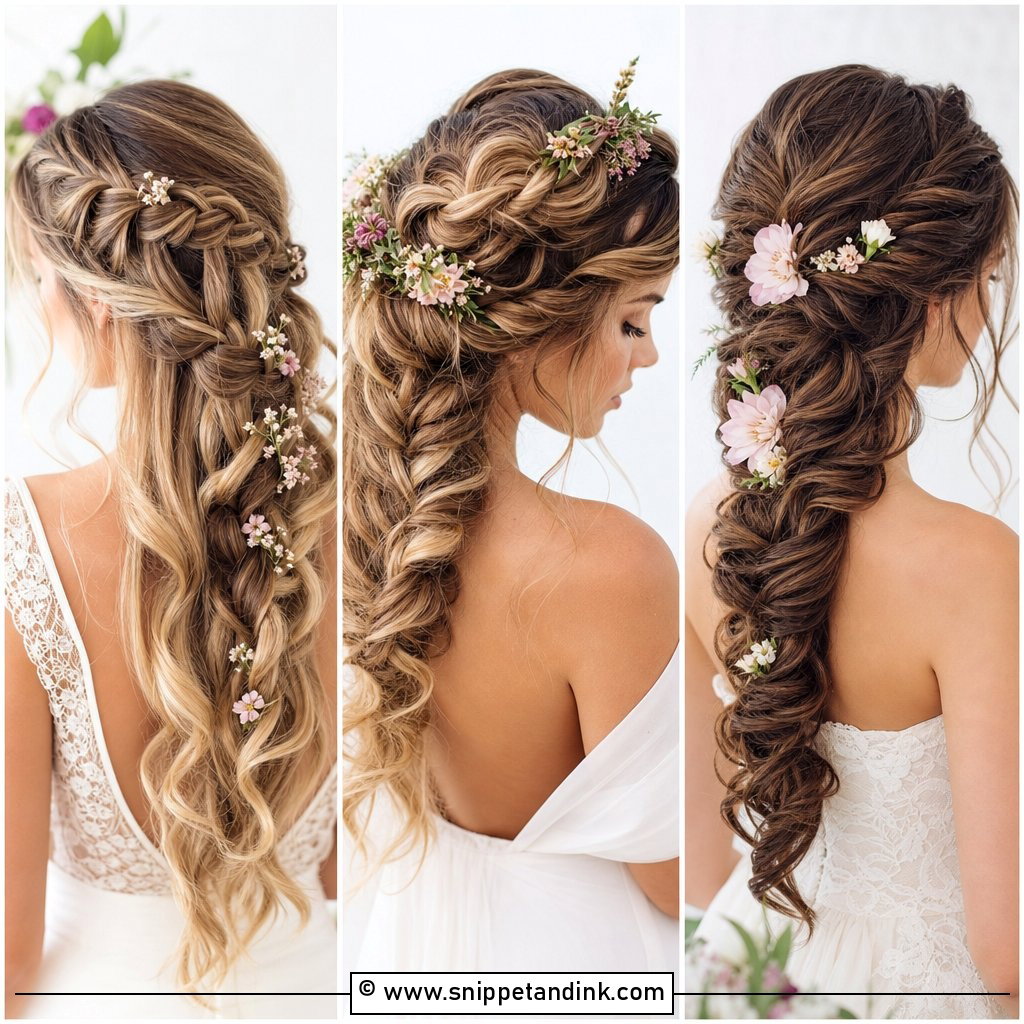
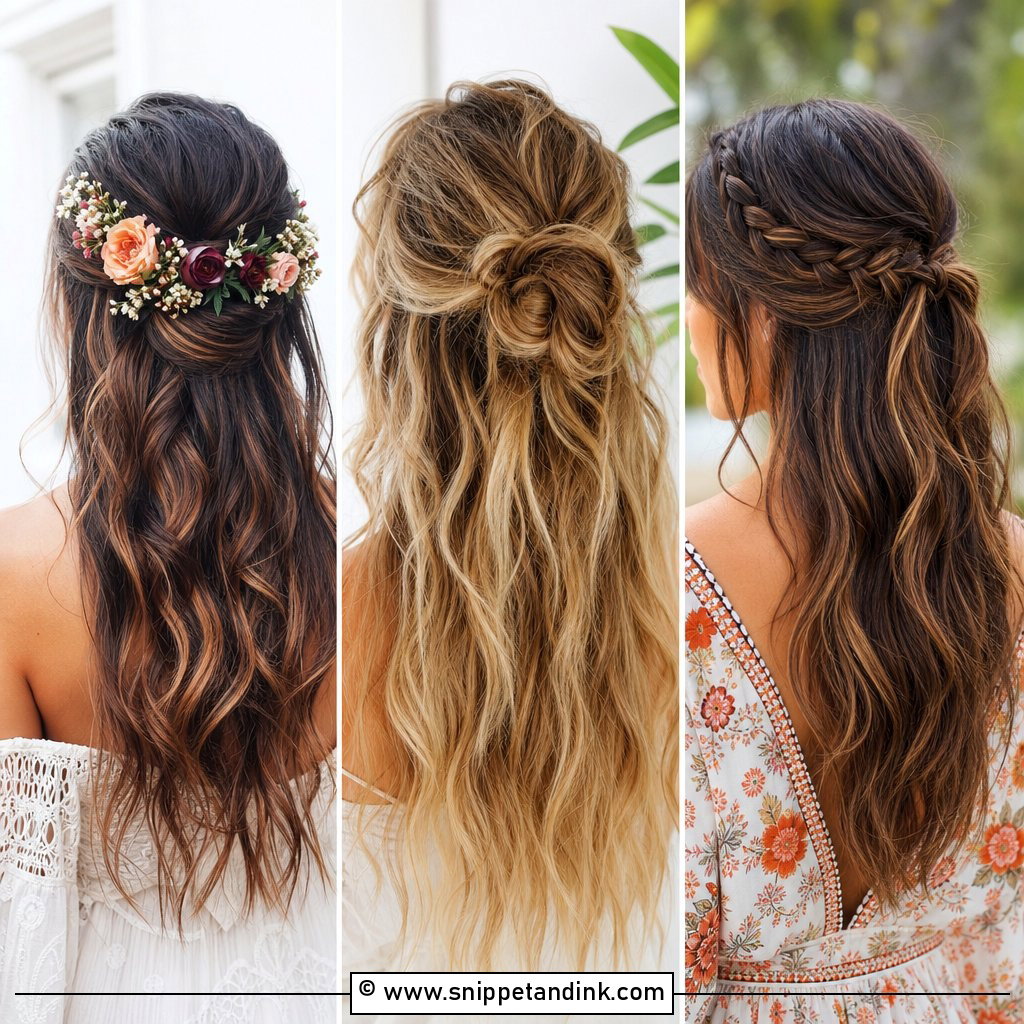
15. Loose Waves Below The Ear
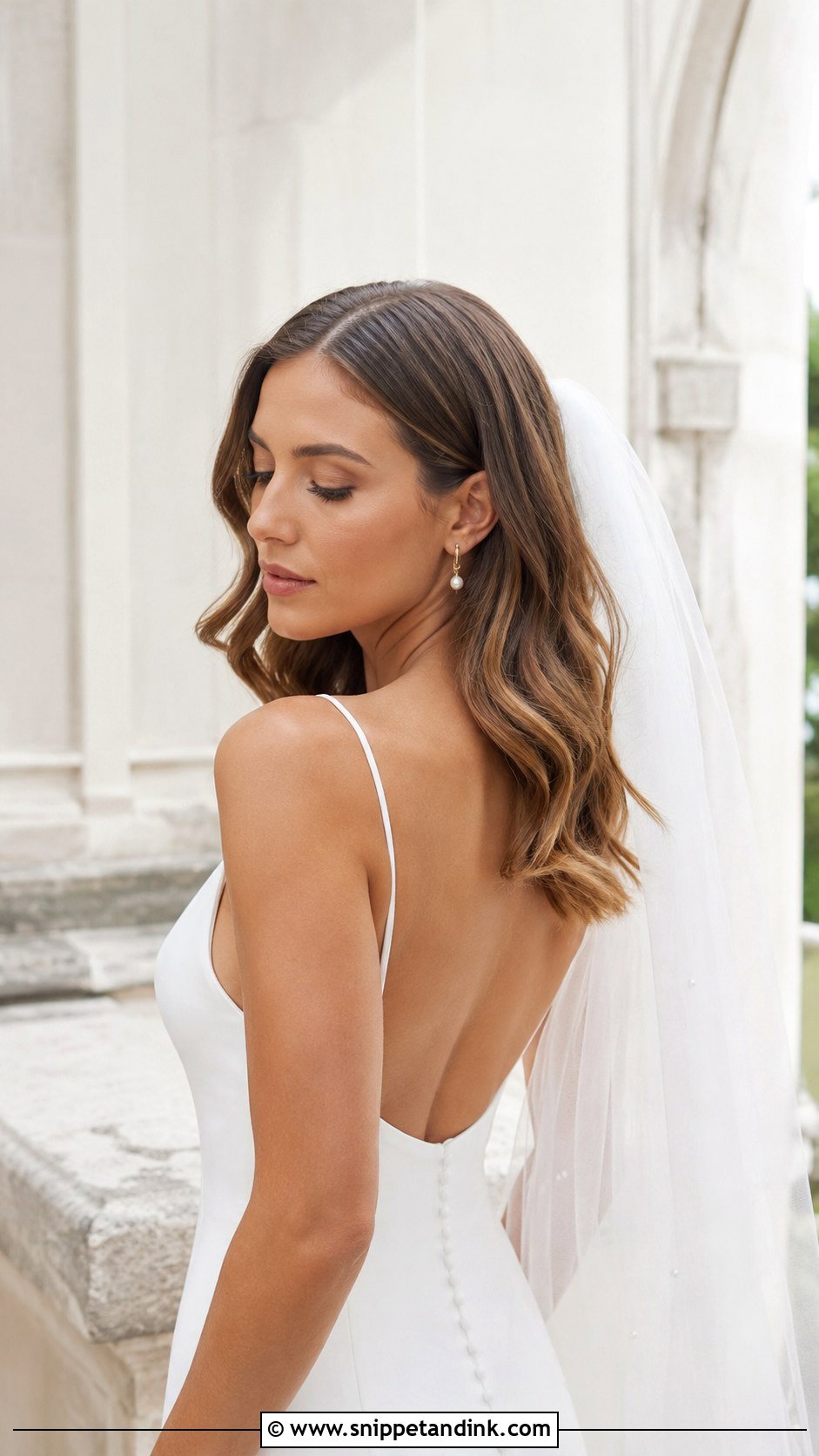
Starting the wave below the ear keeps the roots smooth and puts all the movement in the mid-lengths and ends. It’s a more relaxed cousin of the Hollywood wave, and it suits shorter and medium lengths well. I curl from about cheekbone height down, then smooth the roots with a drop of serum. It sits nicely under a veil. Smooth roots can look a little flat on fine hair in photos, so I sometimes add hidden lift at the crown before I start curling.
16. Loose Waves With Floral Pins
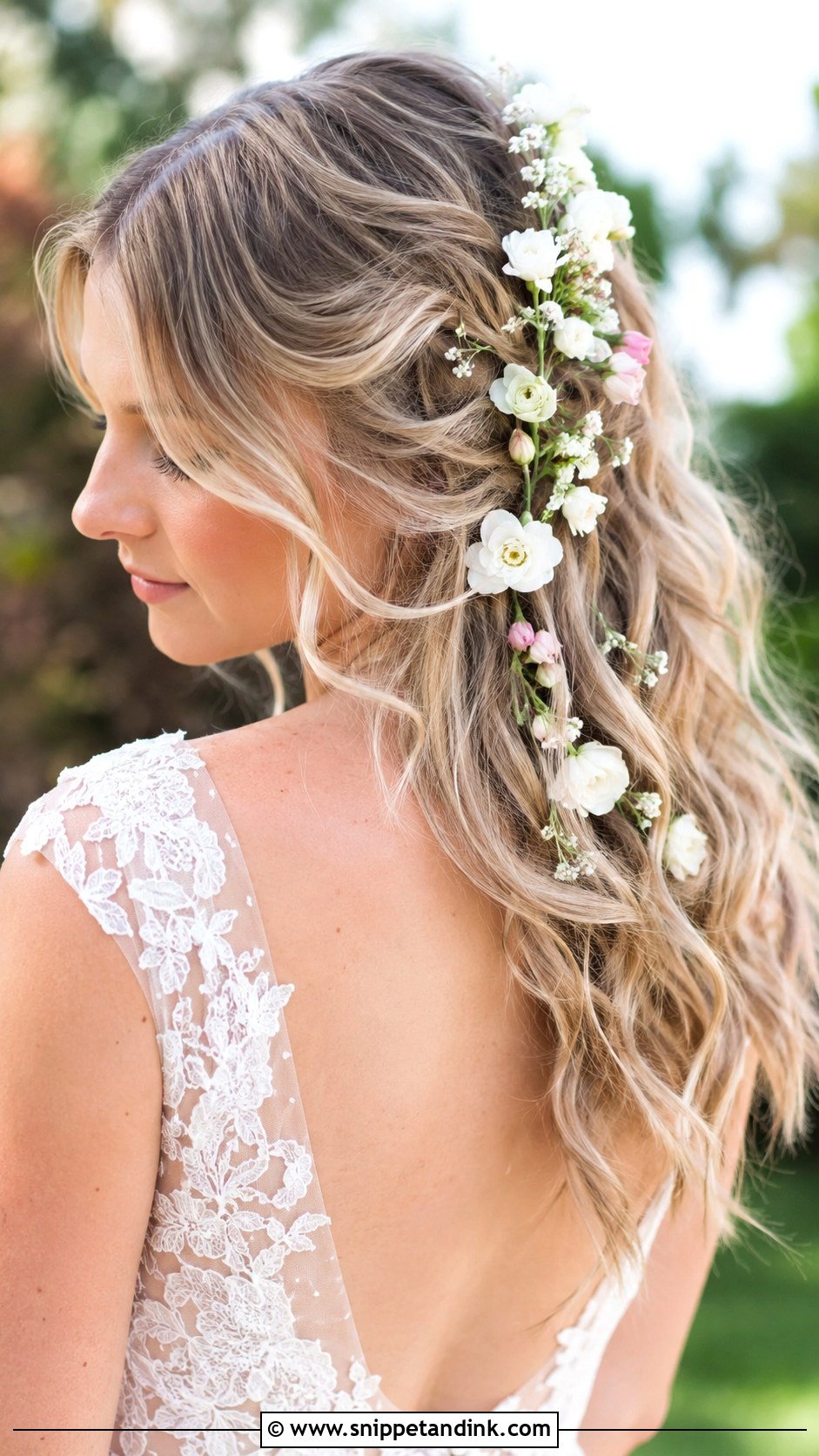
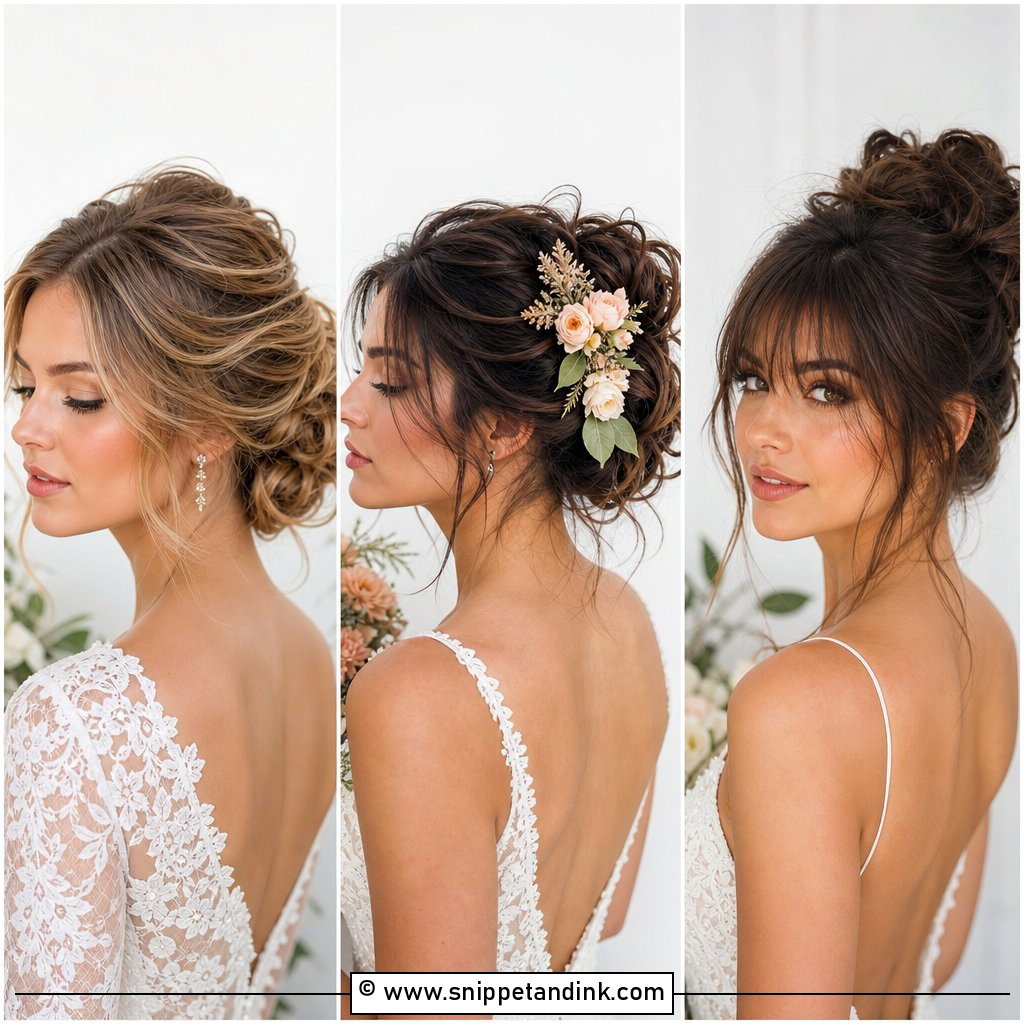
Small floral pins tucked through the waves work like a scaled-down crown. They suit spring and summer, and the stems can be fresh or preserved to match your palette. For anything sitting close to the face all day I lean toward preserved or silk, since fresh blooms wilt from body heat and some petals can mark very light blonde hair. Place them in odd numbers, three or five, rather than a neat row.
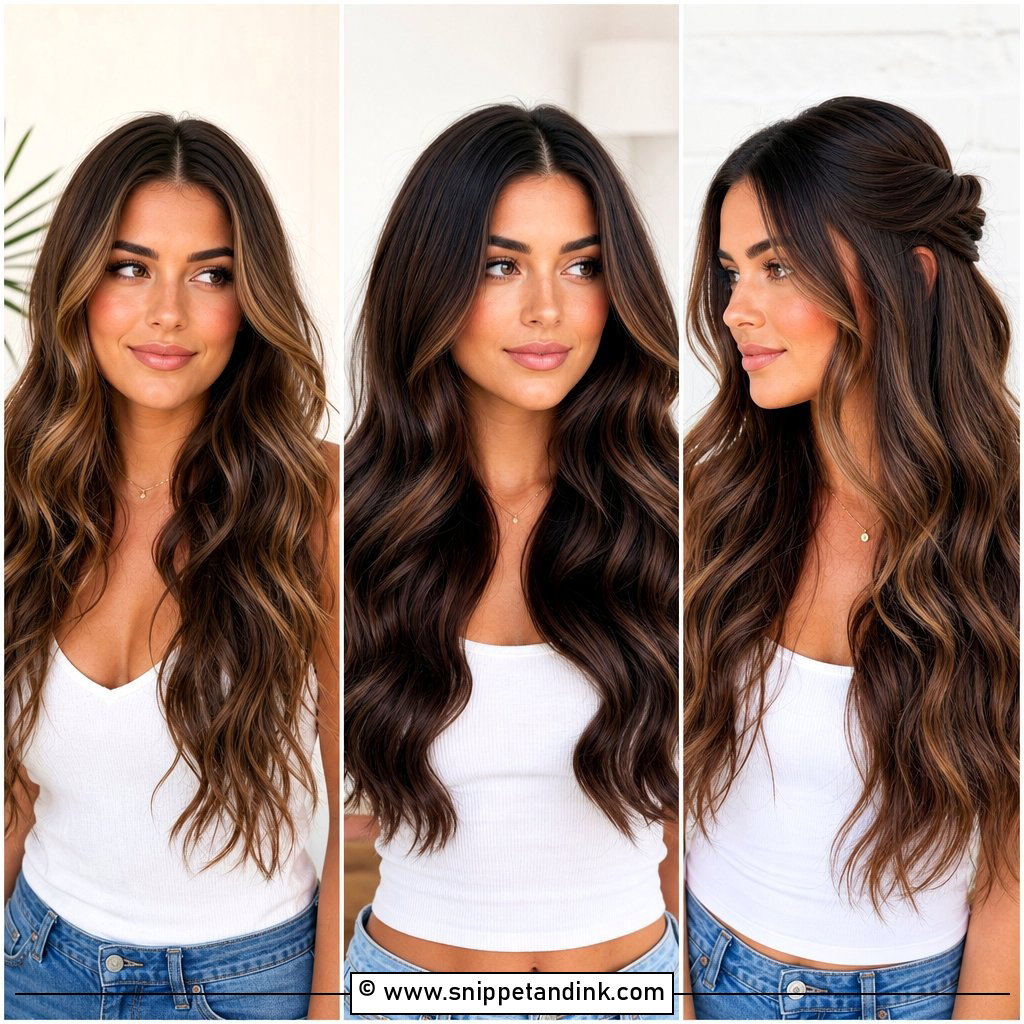
17. Loose Waves Middle Part
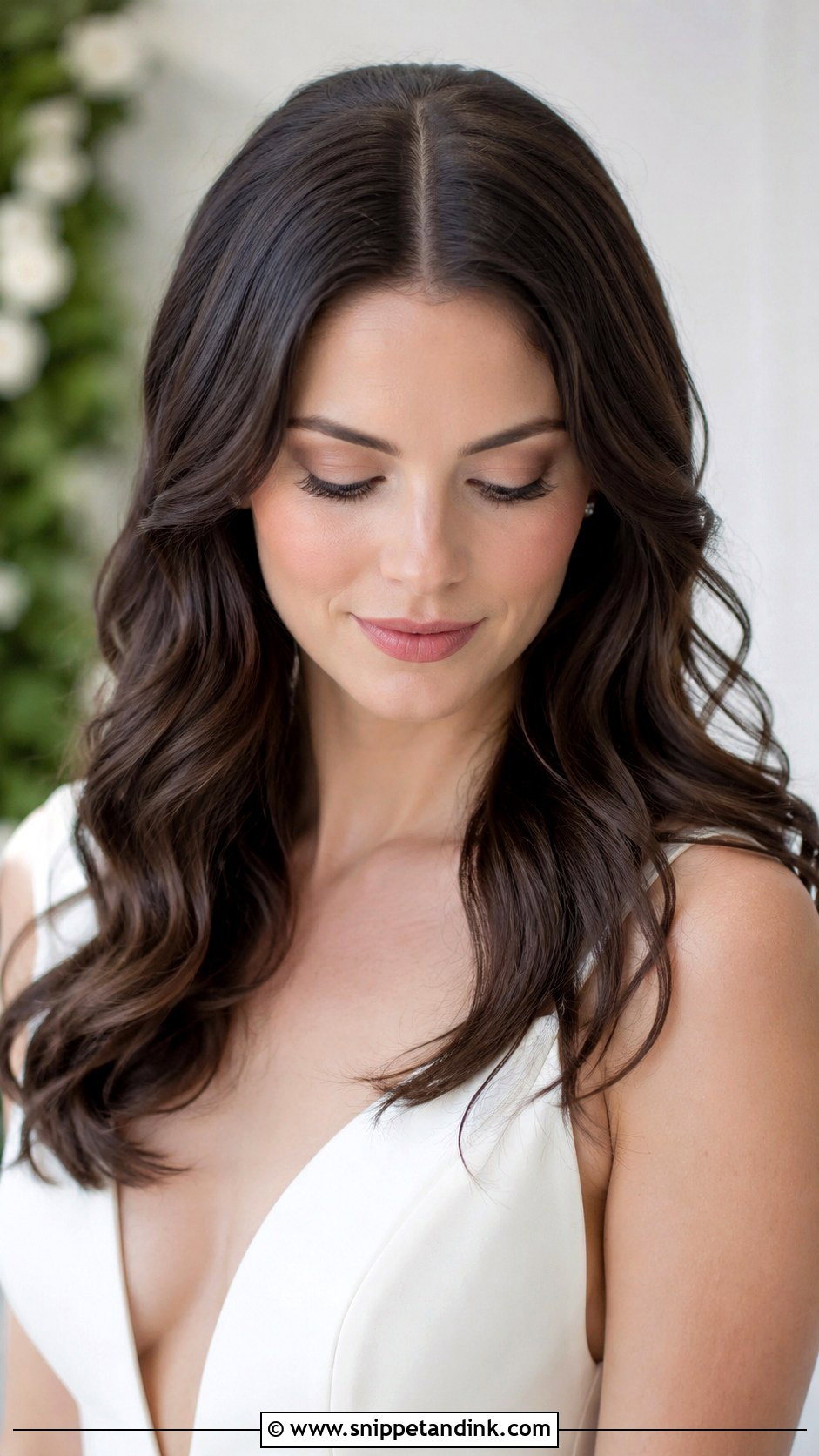
A center part splits the waves evenly and frames the face symmetrically. It’s a minimal, modern look that goes with simple gowns and understated accessories, and smooth roots flow into soft waves on long or medium hair. A middle part is honest about facial symmetry, though. If you normally wear a side part, try this at your trial before committing, because it can feel very different when you see yourself in photos.
18. Loose Waves With Hair Comb
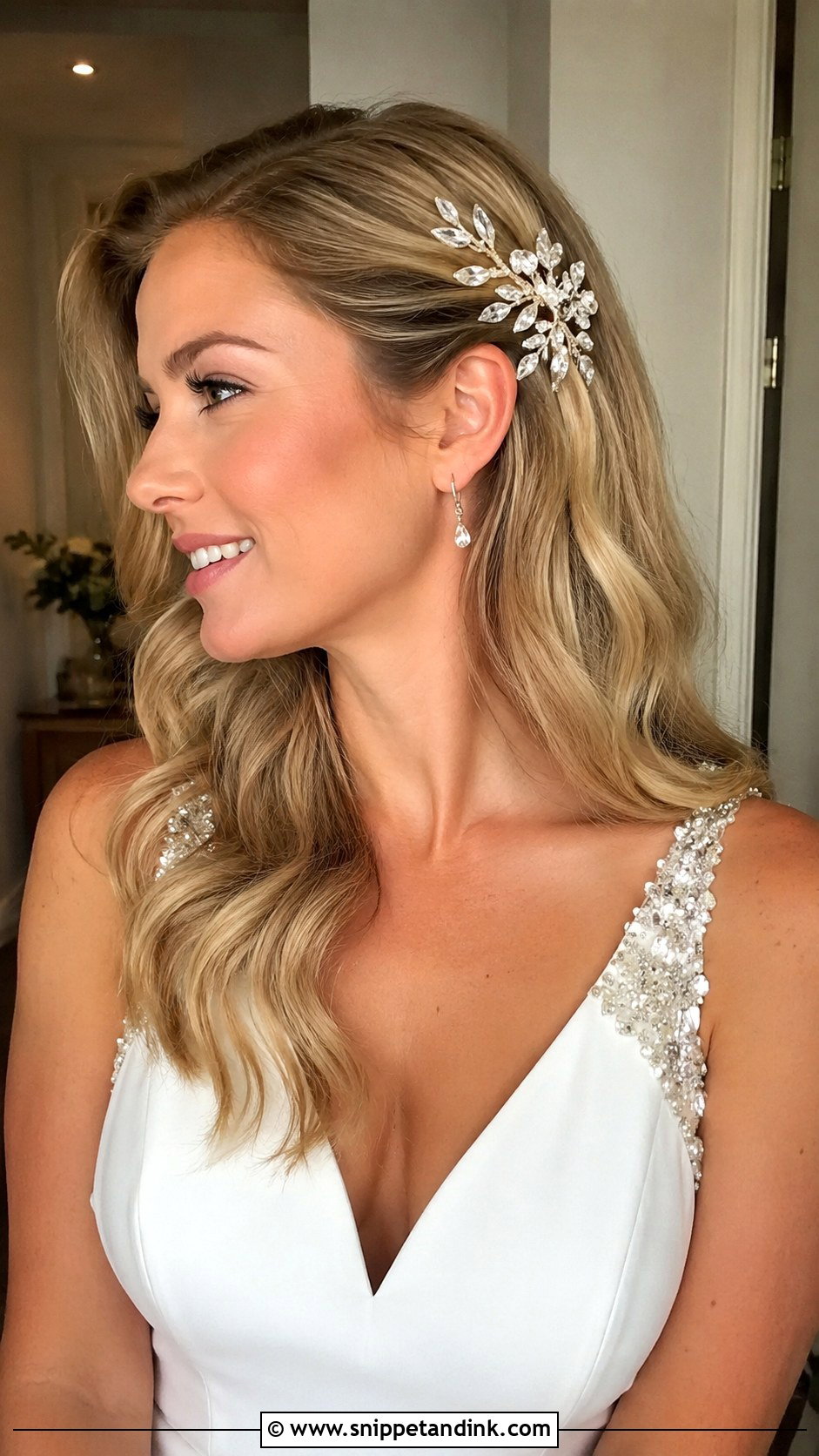
Tucked into one side or the back, a decorative comb holds a section of waves while the rest fall free. Crystal, pearl and floral combs all work. Combs slip easily in soft, freshly curled hair, so I lay a small row of crossed bobby pins first and slide the comb teeth over them to lock it in. It gives you one special detail without committing to an updo, and it suits traditional and modern weddings.
19. Tousled Loose Waves Updo
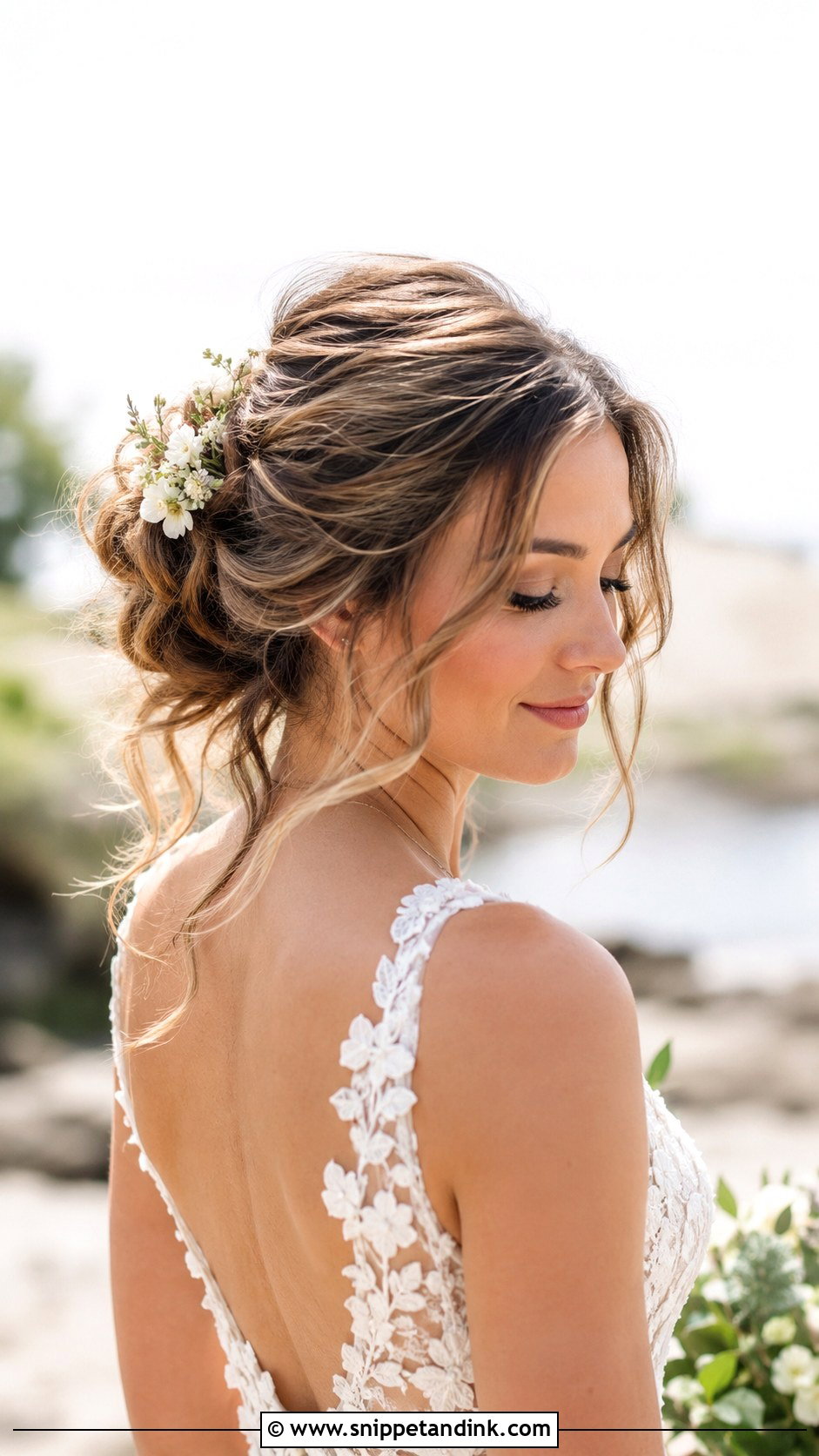
When a bride wants her hair up but not stiff, a tousled wave updo is where I go. Soft waves are gathered loosely and pinned in sections so the texture still shows, with a few face-framing pieces left out. I use U-pins rather than bobby pins for this, since they hold the shape without crushing the curl. Getting hair off the neck makes it a sensible pick for warm-weather and outdoor weddings, and it stays comfortable for hours.
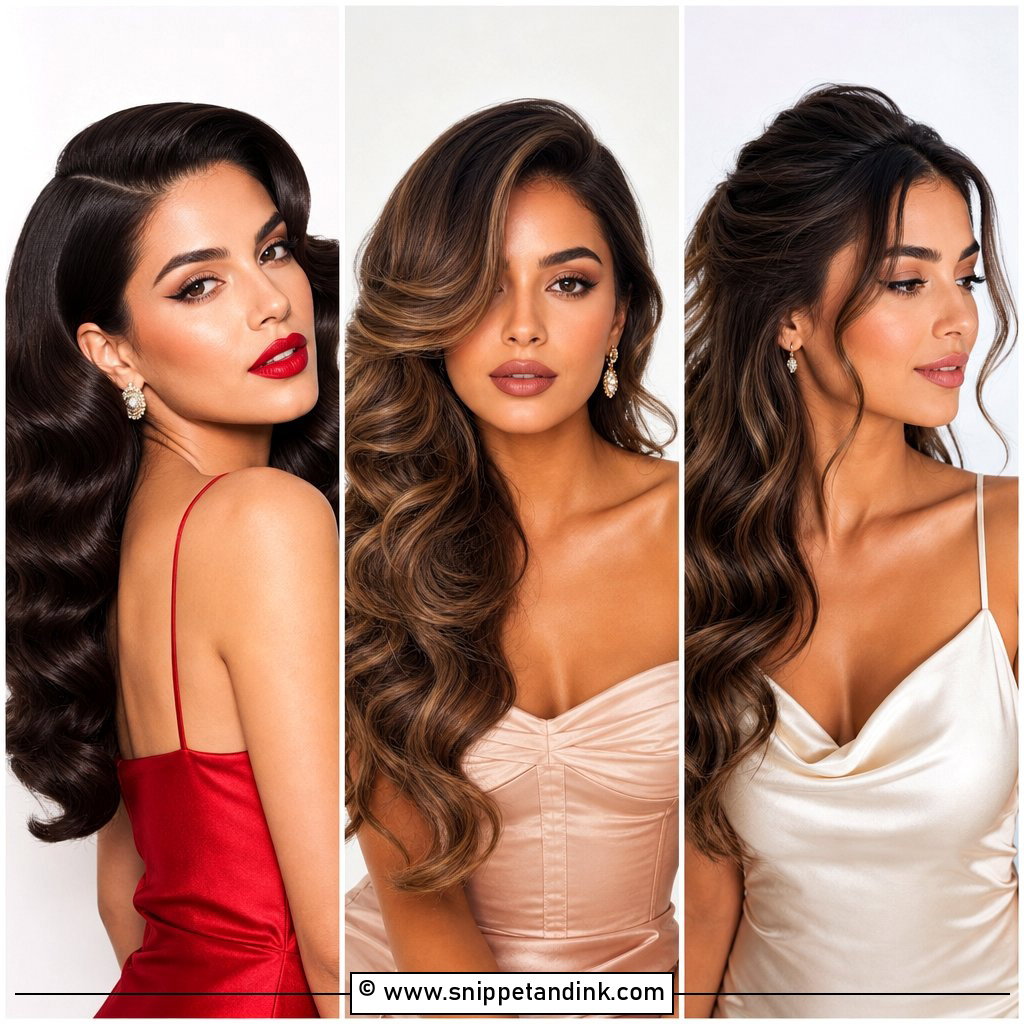
20. Long Flowing Loose Waves
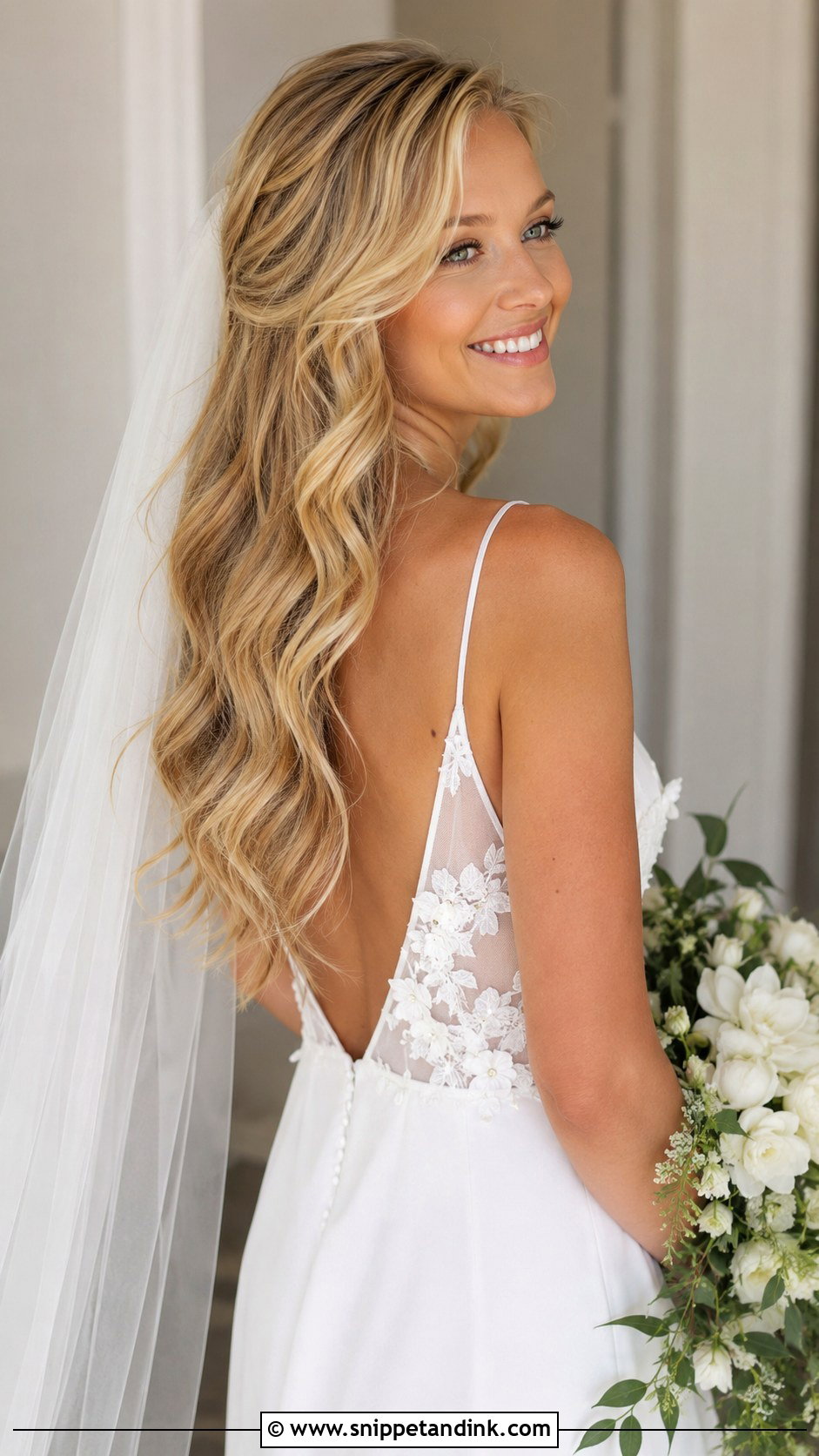
Sometimes the simplest look is the right one. Long waves left fully down need the most hold of anything here, because the weight of long hair pulls curls straight. I set them with more product than you’d think and use a barrel a little smaller than the finished wave should be, so the curl relaxes into place rather than out of it. A little root volume keeps it full, and it takes a veil, a crown or nothing at all. For a summer wedding, plan a half-up backup for the reception; hair down on the neck gets hot once the dancing starts.
Barrel Size and the Wave You Actually Get
The wave in your inspiration photo depends on the hair it was done on as much as the iron. I adjust the barrel to the hair in front of me, not the picture.
Long, heavy or very straight hair
Go a size smaller than the finished wave you want, often a 1 inch barrel for a look that reads as loose. The weight will stretch it out within an hour, and starting tighter leaves you with the right shape at the reception.
Shoulder-length and layered cuts
A 1.25 inch barrel usually gives a soft bend without turning short layers into ringlets. I leave the ends straight so the waves look modern rather than poodle-like.
Naturally curly or coily hair
You may not need heat at all. Stretching your natural pattern with a twist-out or a large-section roller set, then defining a few pieces with a wand, gives a loose wave that respects your texture and survives humidity far better than a silk press curled on the day.
A Small Kit for Wind, Drizzle and Hugging
Hand this to whoever is carrying your phone and lipstick. None of it is fancy, but it covers almost every wave emergency I see.
- Six or eight bobby pins in your hair colour, plus two U-pins for a sagging section.
- A travel-size flexible hairspray, not a firm-hold one that leaves the waves crunchy.
- A wide-tooth comb. A paddle brush will brush the wave right out.
- A small clip to pin back a side during dinner so food and lip colour stay off the ends.
- A pocket mirror for checking the back before the first dance.
If a section falls completely, twist it gently around a finger, pin it flat for ten minutes, then release. It won’t match the set exactly, but in photos nobody can tell.
One Wave, Worn Twenty Ways
Loose waves can be worn down, half-up, swept to one side or gathered into a soft updo, and they span everything from Hollywood polish to boho texture. What makes any of them last is the set, not the style. Bring two or three favourites from this list to your trial, wear the winner for a few hours afterwards, and judge it at the end of the afternoon rather than in the chair. That’s the version that will still be there for your last dance.
You'll Like These Ideas:



Leave a Reply