
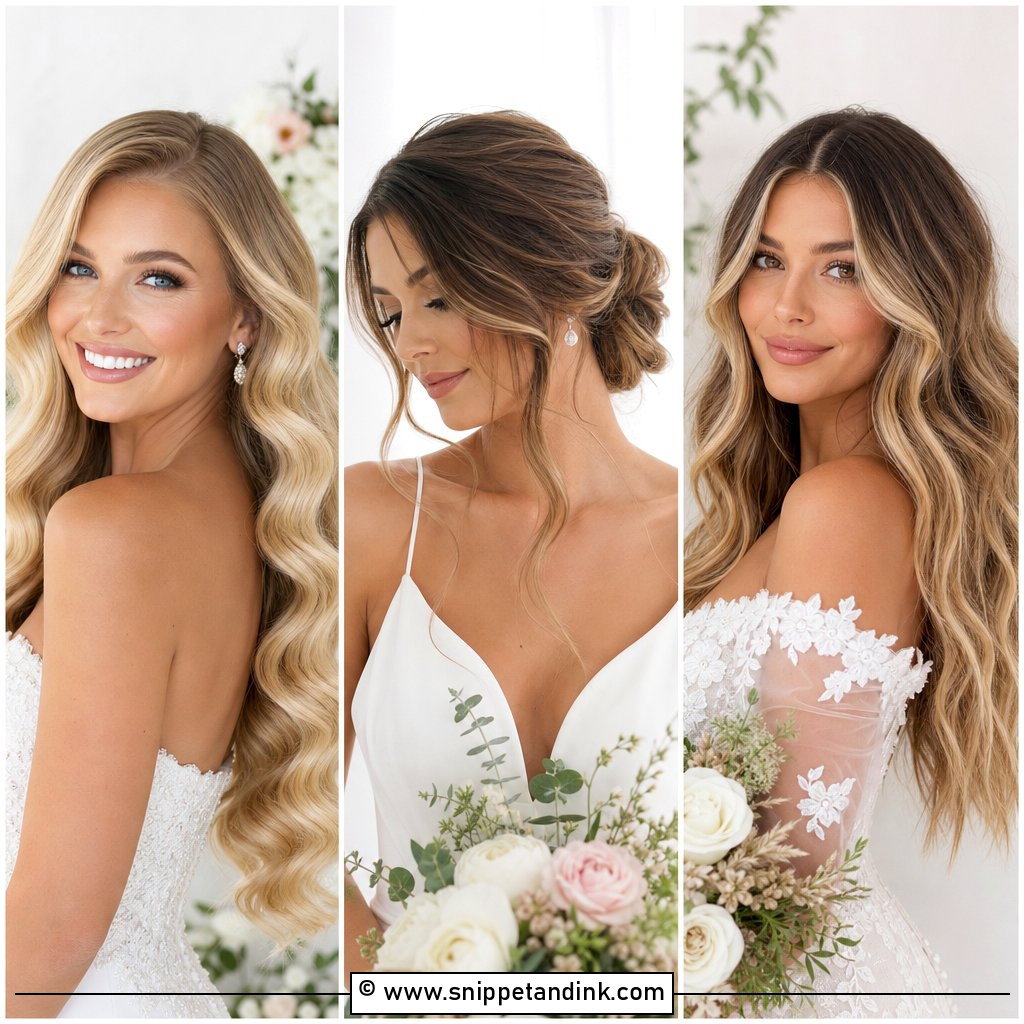
Loose low buns are the most requested style in my chair right now, and also the most misunderstood. Brides bring a photo of something soft and undone and assume it took five minutes, when the softness is usually sitting on a very secure base that nobody can see. Brides are leaning toward quieter, refined hair at the moment: loose tendrils, a few pearls, some fresh flowers. Below are 20 versions I’d recommend, with what each one needs from your hair, how it wears through the day, and which ones I’d talk you out of.
What Holds a Loose Bun Up When It Looks Like Nothing Does
Every soft bun on this list has a secure structure hidden inside it. When brides tell me their loose bun fell apart at a past event, it’s almost always because the softness went in first and the anchor was never there.
Here’s the order I build in, and what you can ask your stylist about at the trial:
- Grip on the hair. Freshly washed, silky hair slides out of pins. I prefer hair washed the day before, then I add a texture spray or dry shampoo through the lengths.
- A hidden anchor. A small, tight ponytail or braid at the nape, or a cross of pins, gives the bun something to lock onto. The loose shape is pinned over it.
- The right pins. Bobby pins hold flat sections against the head; U-pins hold the loose loops of the bun without crushing them. A loose bun needs both.
- Loosening last. Pulling pieces out happens only after everything is secured, with fingertips, a little at a time.
Hair that’s very thick and heavy can drag a loose bun down by sheer weight. In that case I thin the bulk by braiding some of it inside the bun, so the shape stays soft but lighter.
1. Messy Low Bun With Face-Framing Tendrils
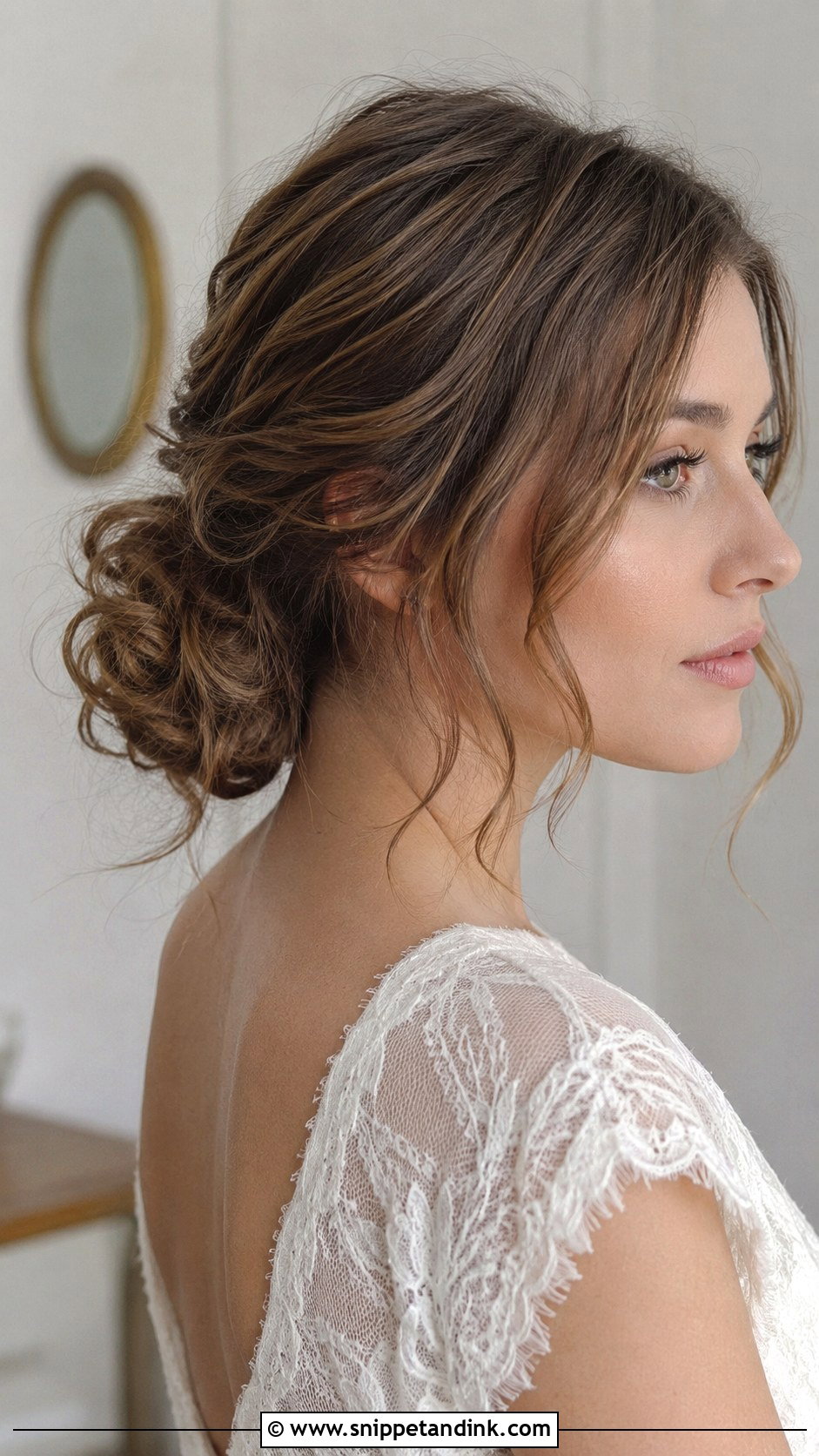
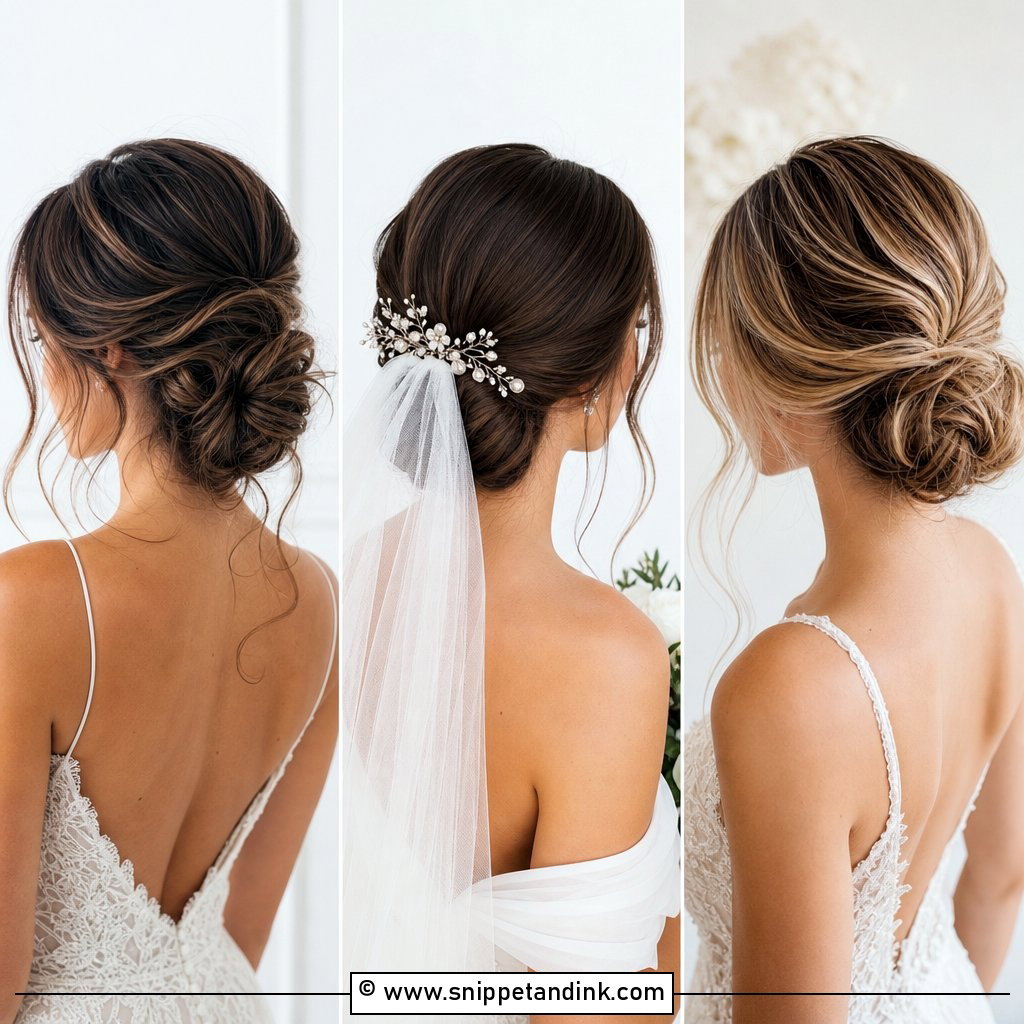
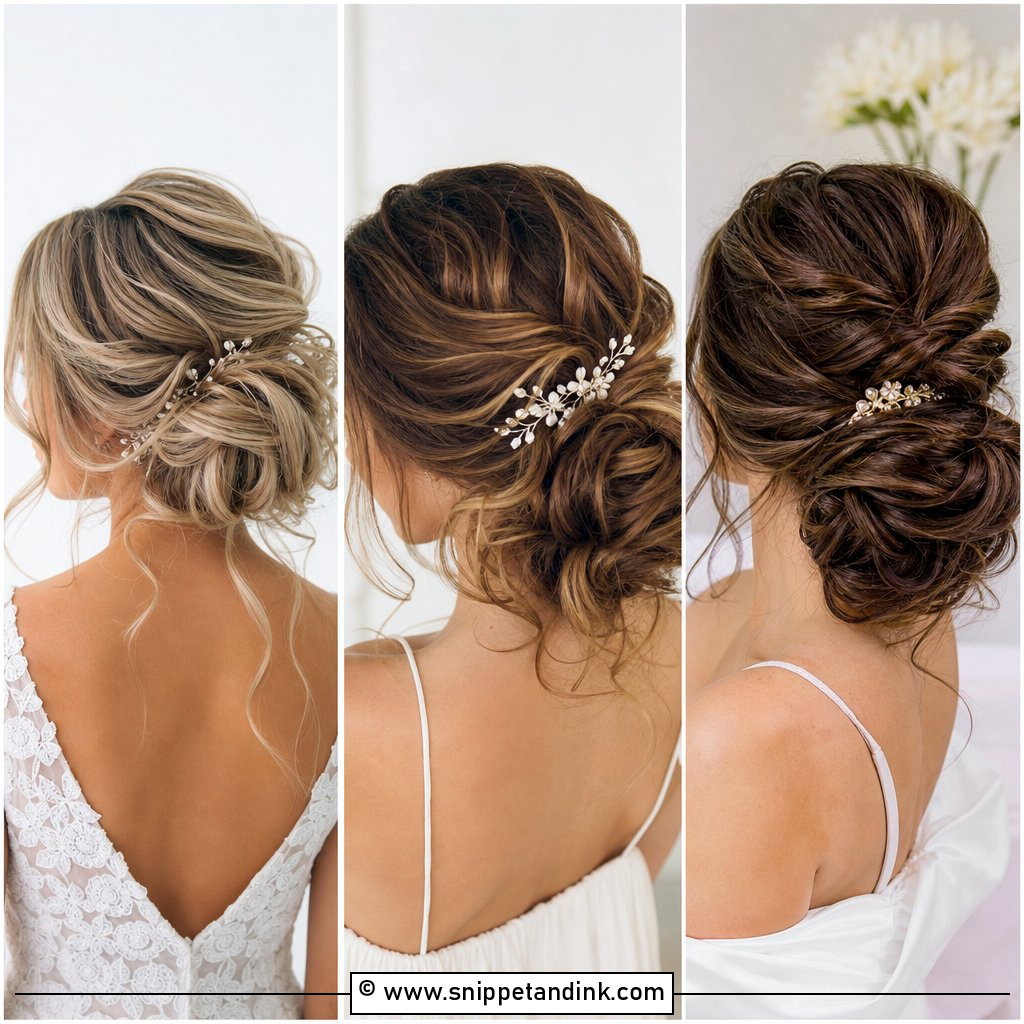
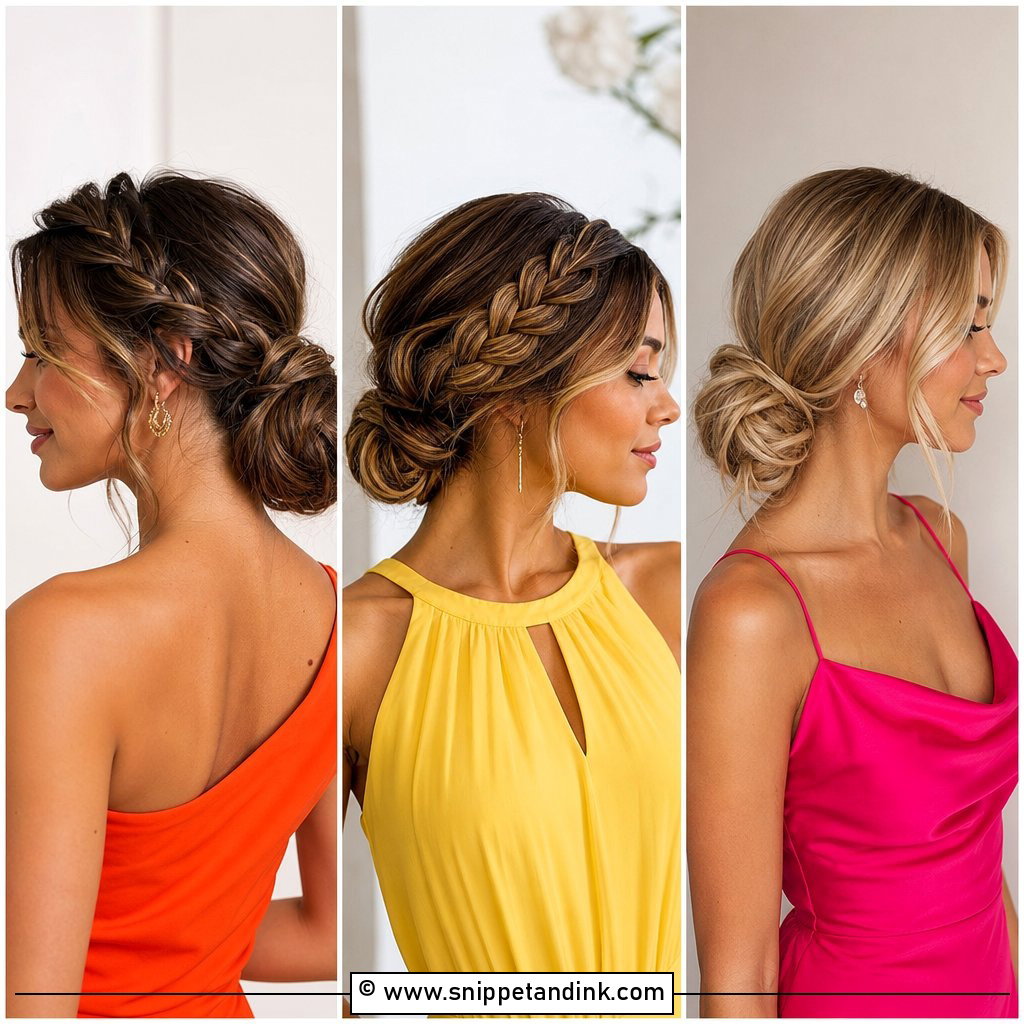
The bun sits at the nape with loose, wispy tendrils around the face. I pin it firmly first and only then pull sections loose with my fingertips, which is the order that keeps it from sliding. The tendrils near the cheekbones get curled separately with a small iron and left to cool before I touch them. Lace gowns and fine jewellery sit well with it. Very straight, silky hair struggles here unless it’s prepped with texture spray, otherwise the mess just looks flat.
2. Sleek Low Chignon With a Center Part
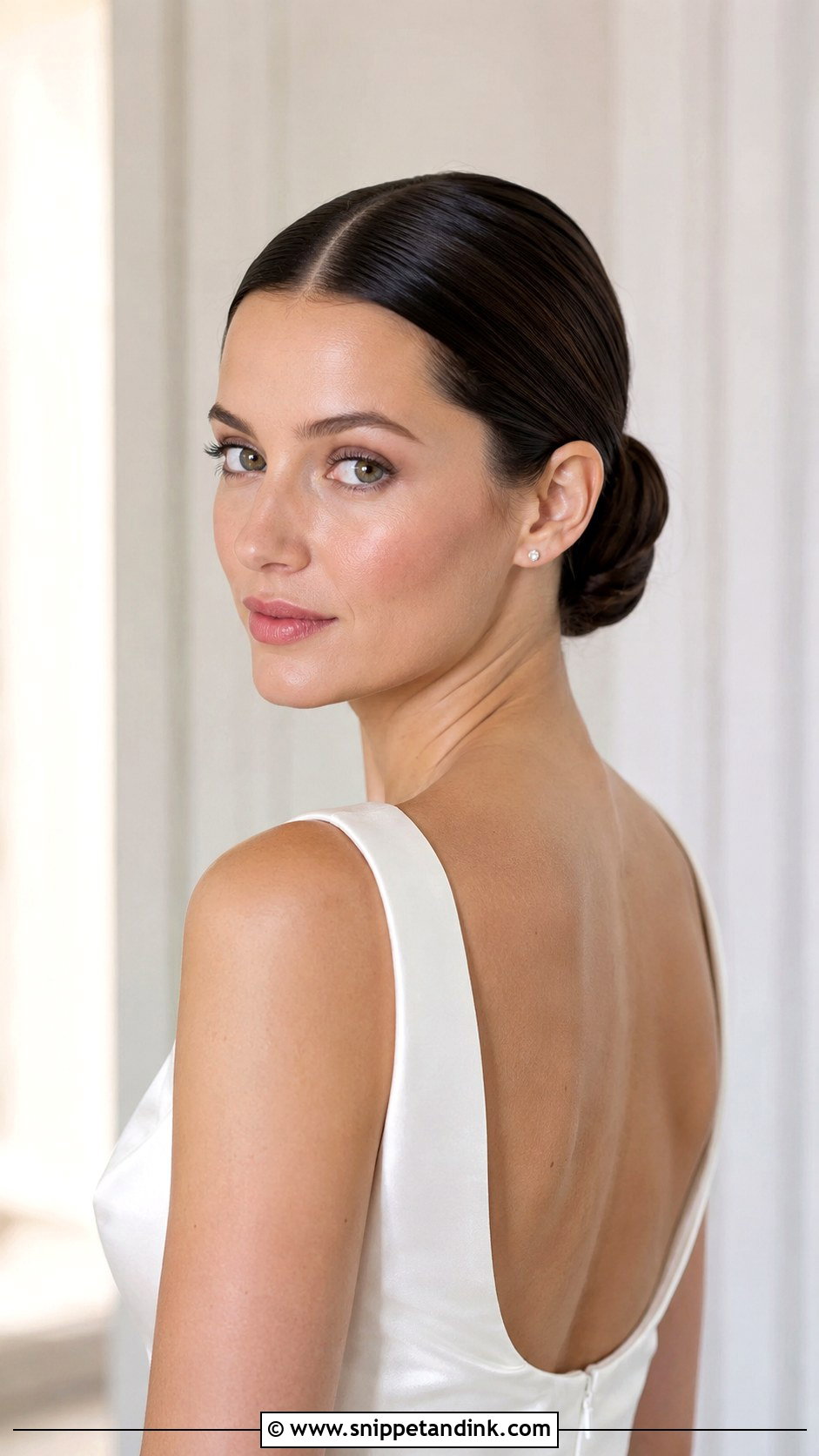
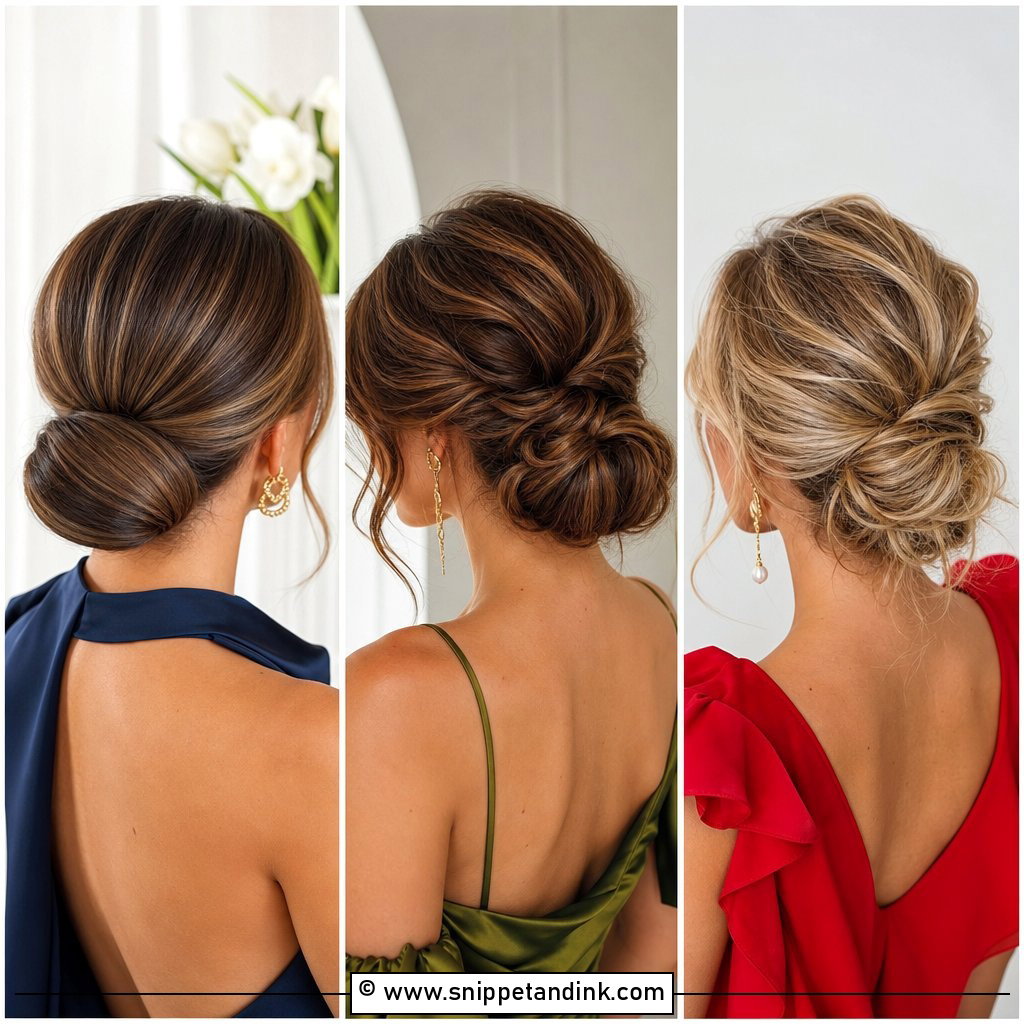
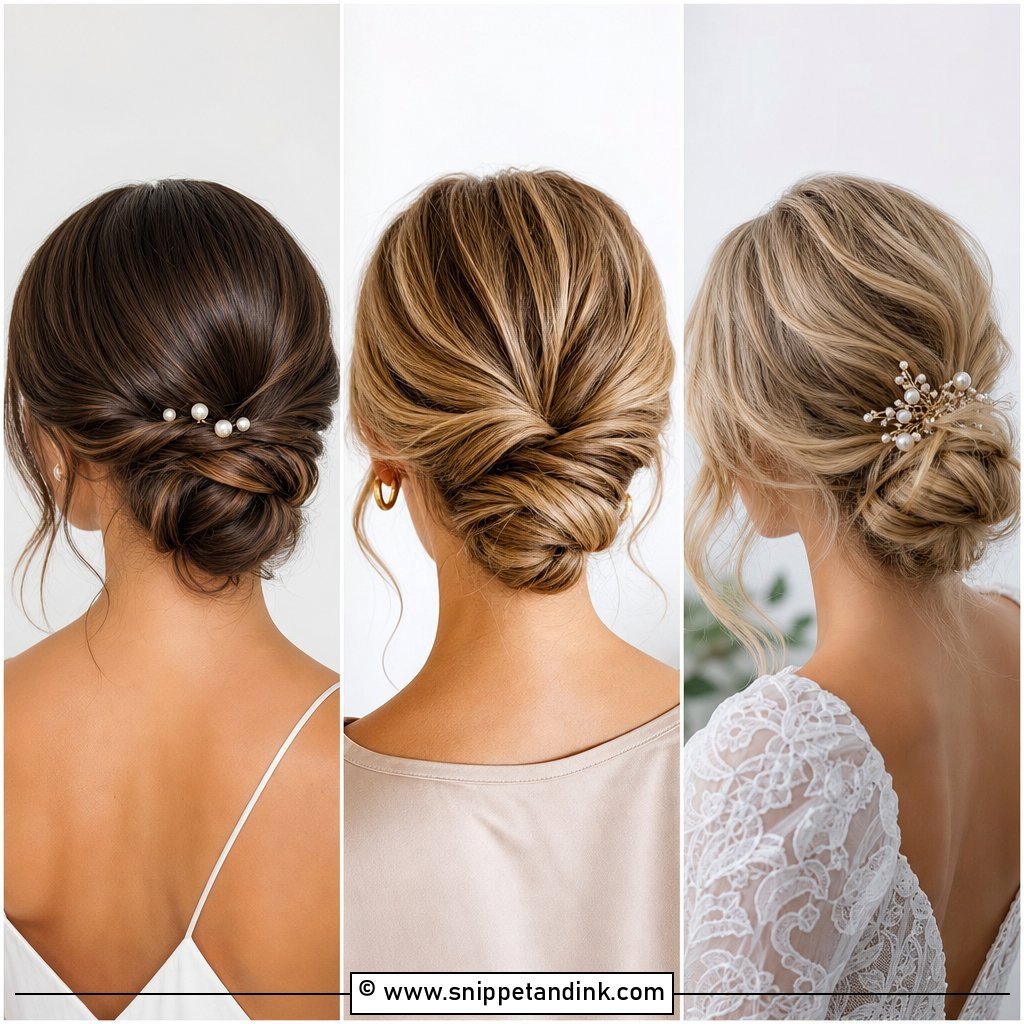
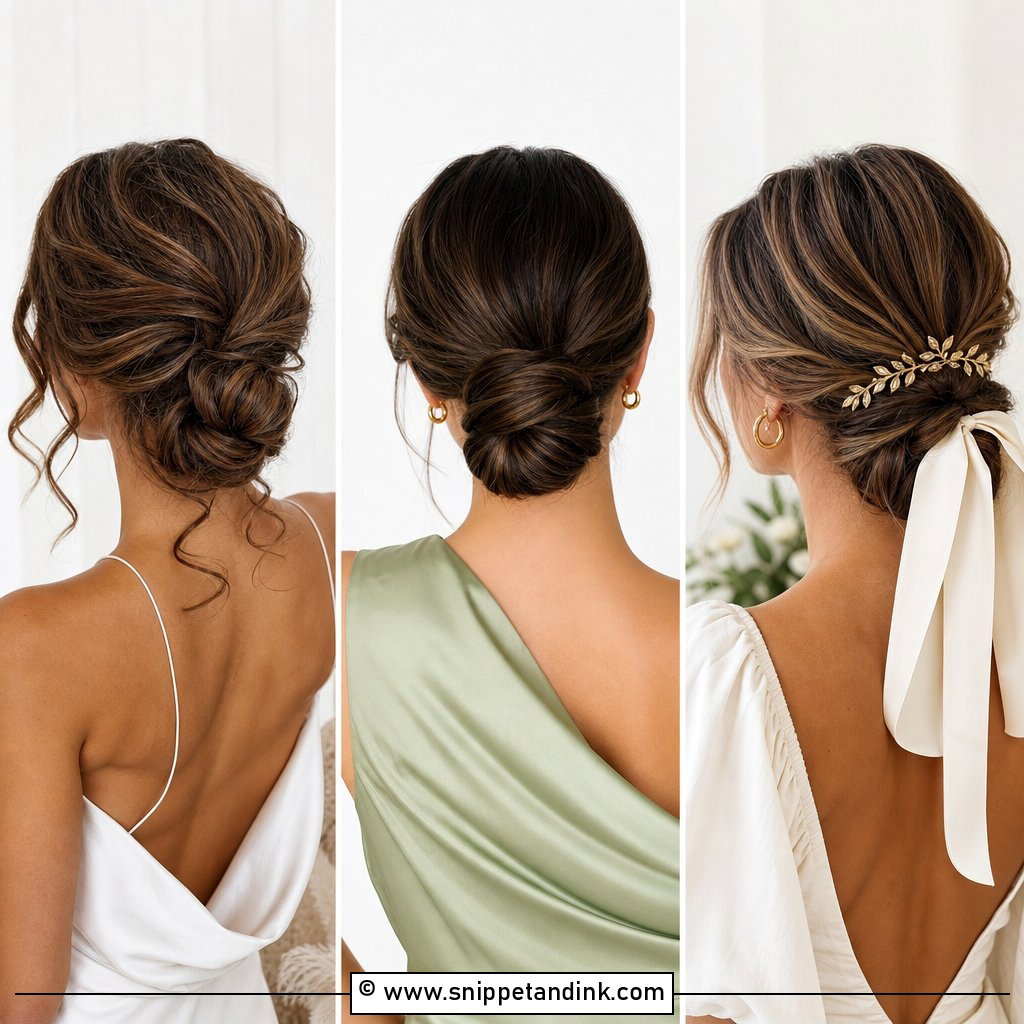
Clean lines suit a center part and a tidy, twisted bun at the nape. A center part is unforgiving: if the face isn’t symmetrical or there’s a strong cowlick at the front, the part shows it, so I check it at the trial before committing. A drop of shine serum on the surface, never at the roots, gives the glossy finish without making it look greasy by the evening. It makes a solid base for a mantilla or a pearl comb, and it matches minimalist gowns with structured shapes.
3. Boho Low Bun With Loose Waves
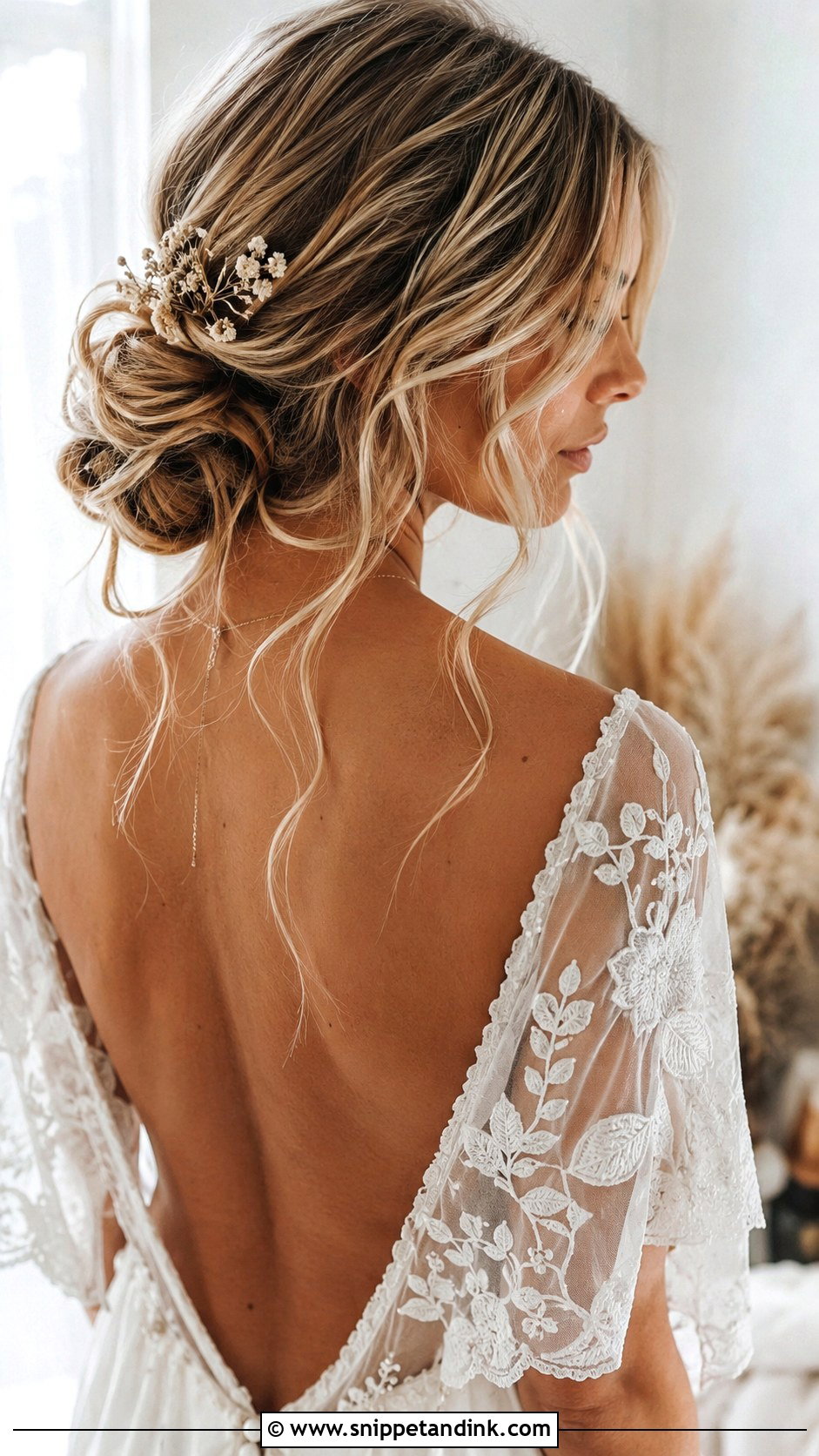
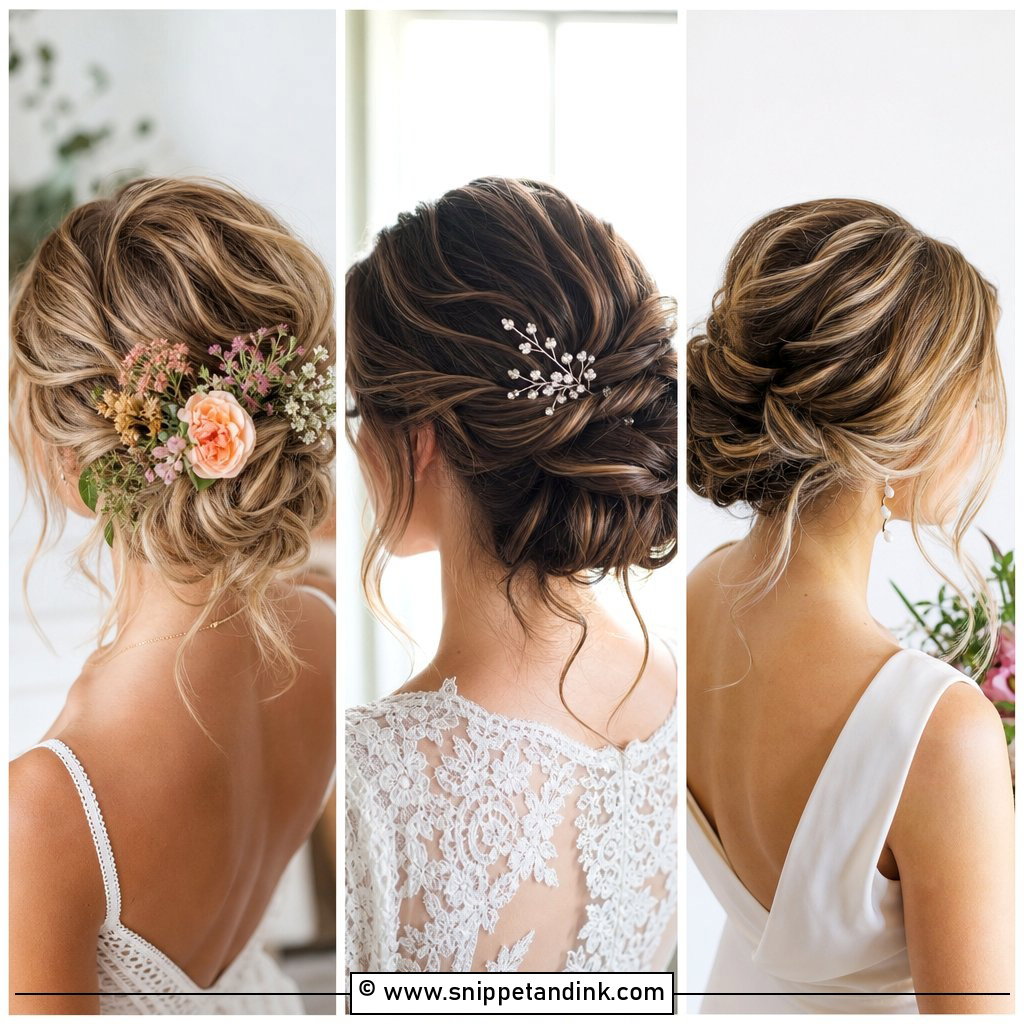
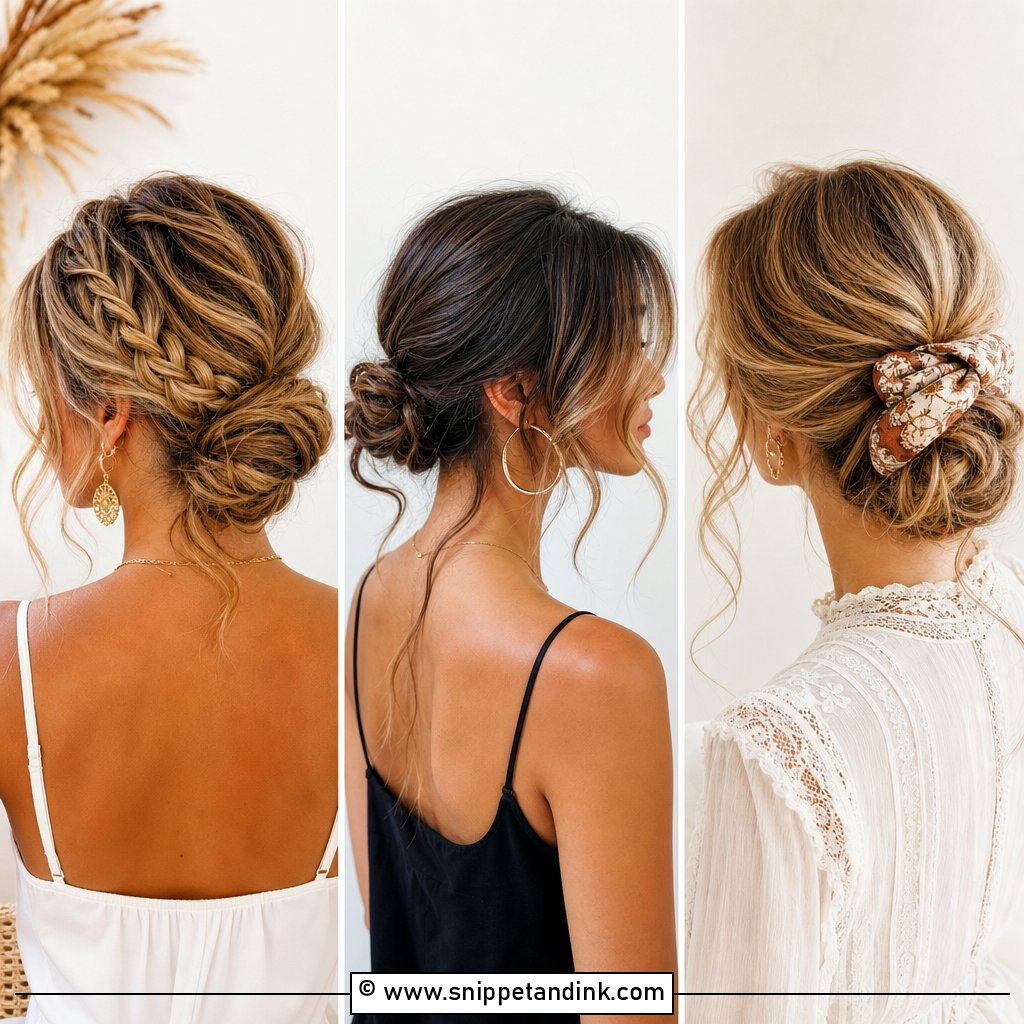
Soft waves fall around a loosely gathered bun with plenty of pieces left out at the neck and face. The waves need to be set the morning of, not the night before, because sleeping on them flattens the shape. Small dried flowers or greenery tuck in well, and dried stems are lighter than fresh ones. Wavy and curly hair does most of the work naturally. On a beach day with sea air, expect the waves to relax into something looser by the evening, which most boho brides are happy with.
4. Braided Low Bun With Twisted Details
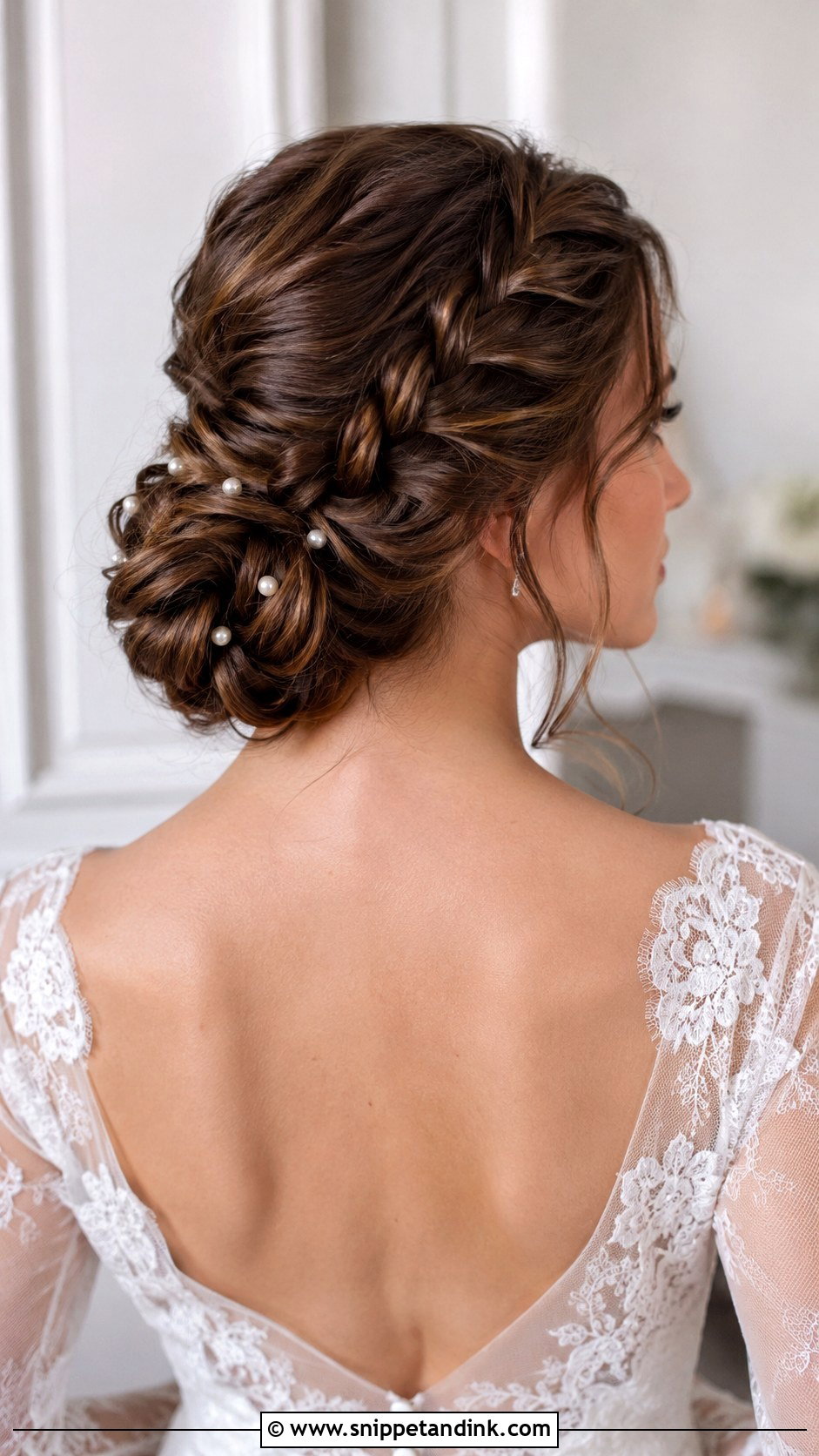
A few braids woven through the bun give it structure along with texture. One side braid running into the bun is the version I find most flattering in profile; several small braids throughout read busier and suit a simpler gown. Braids are also the secret strength of this style, since each one works like a built-in anchor, so it holds well through a long day. Longer, thicker hair is easiest. Pearl pins tucked between the plaits finish it.
5. Low Bun With Pearl Pins
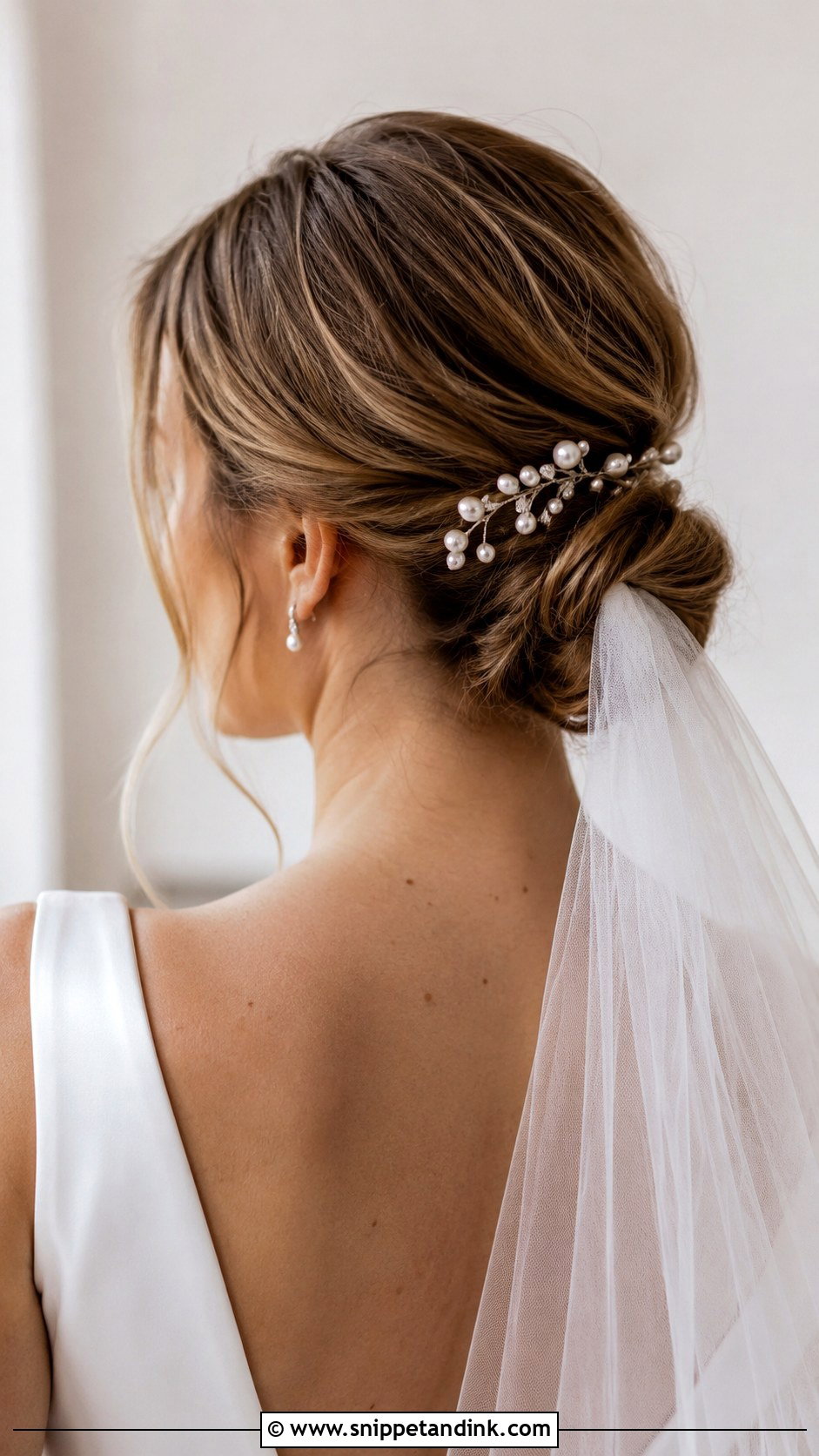
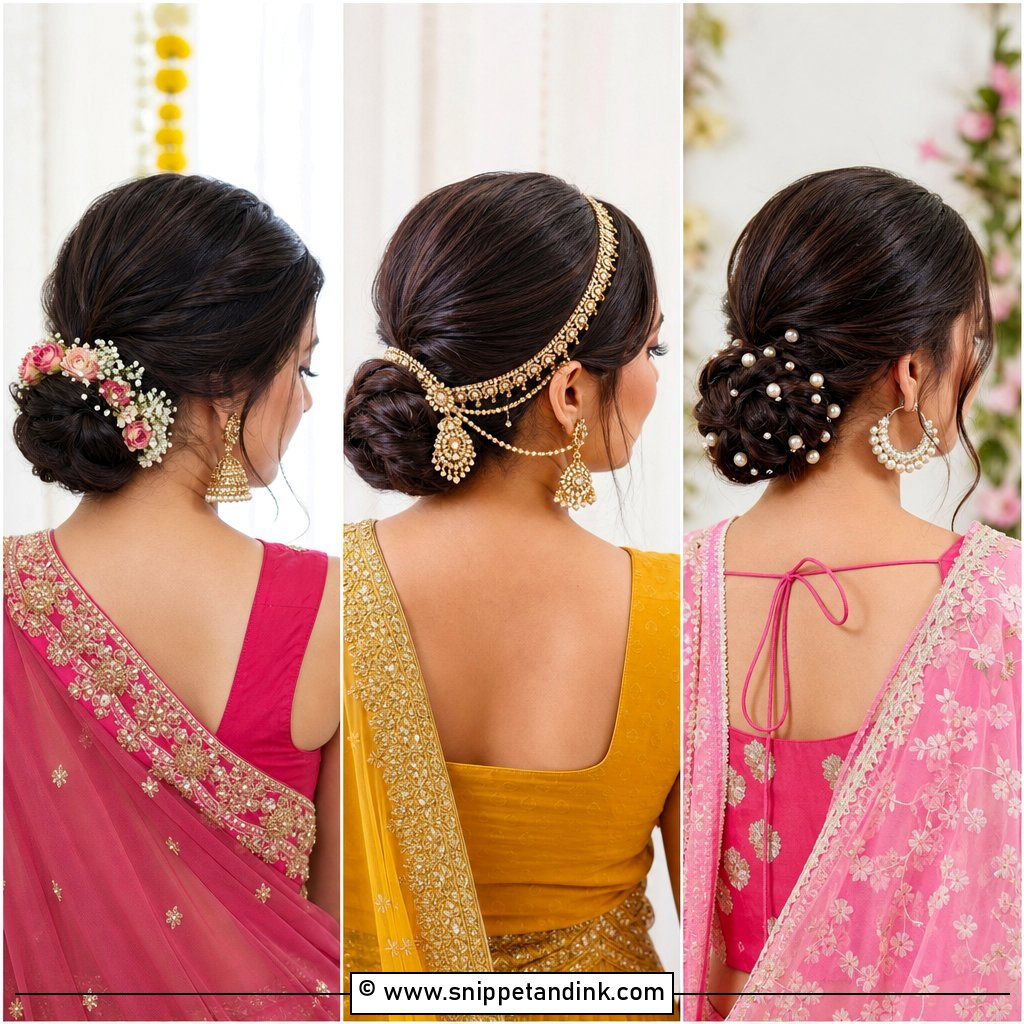
Pearl pins woven through the twisted strands add shine without much weight. I place each one at an angle into the bun’s texture, never flat on the surface, so it grips and doesn’t slide out when the veil comes off. Pearls lift a plain bun more than almost any other accessory and suit nearly every neckline. A sleek or slightly textured base both work, with a soft veil anchored underneath. This pearl-adorned bun is one I’d recommend to a bride who can’t decide.
6. Side-Swept Low Bun
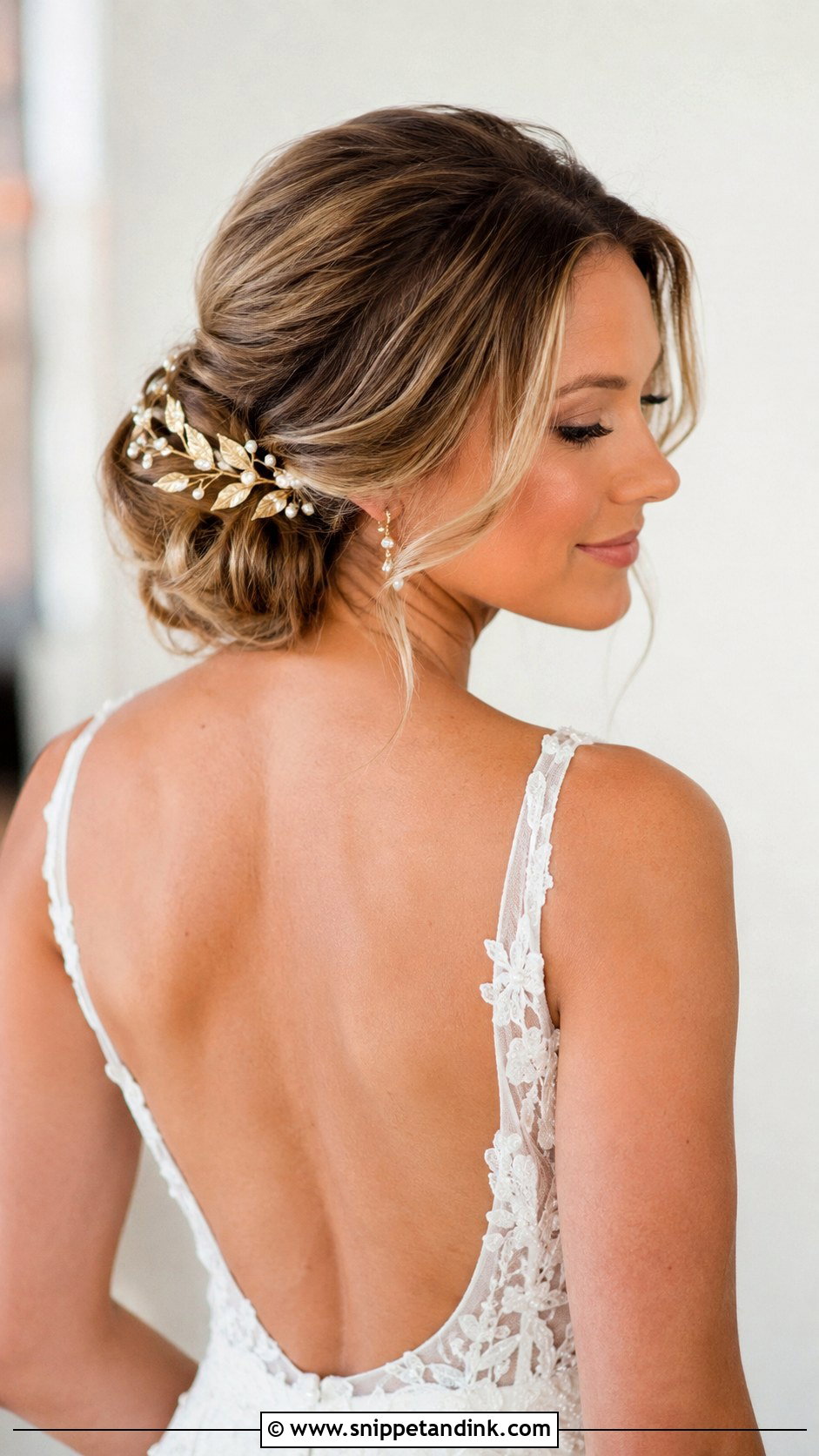
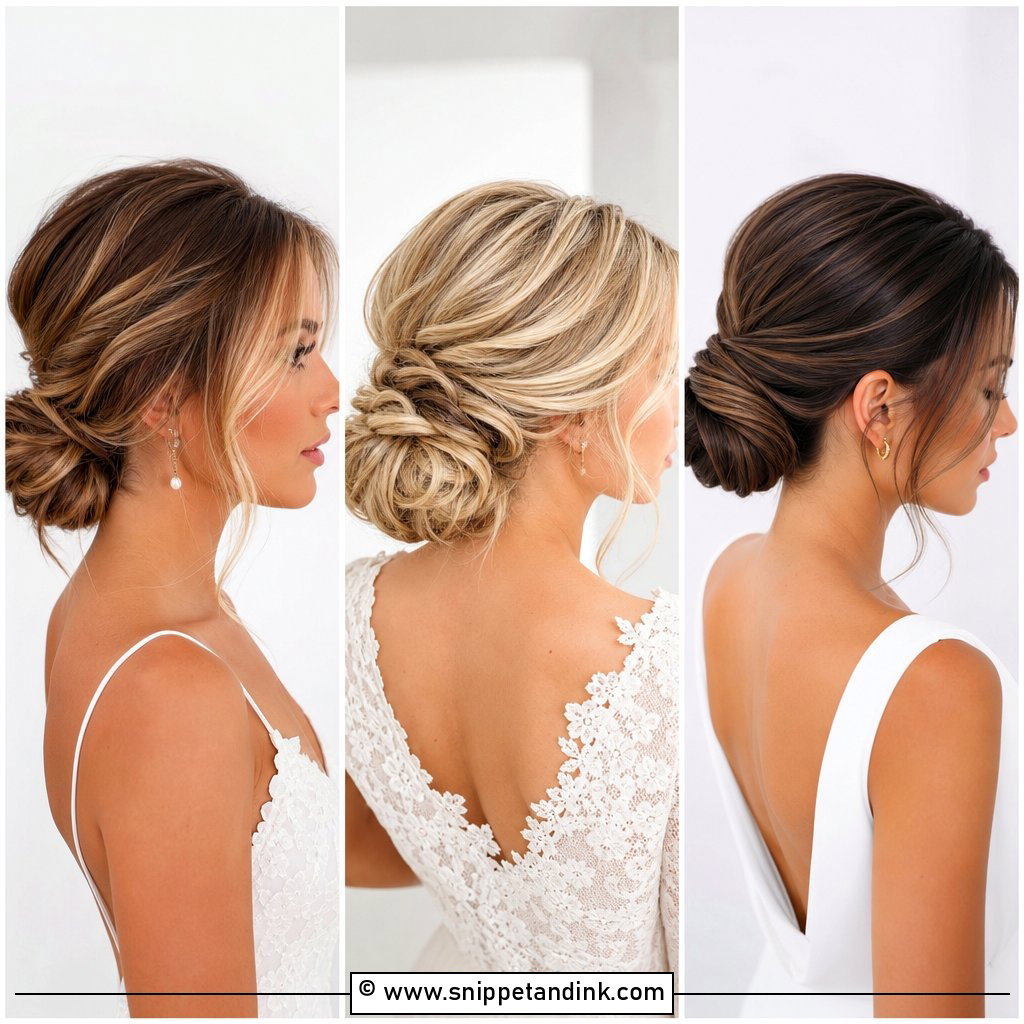
Gathering the hair to one side shows off a backless gown and puts one earring fully on display. Before I commit to a side, I ask where the bride will stand at the ceremony, because the bun should face the guests and the camera, not the officiant. Waves swept over add softness, and a cluster of flowers, gold leaves or pearls can sit right at the bun. It’s a good change from a centered bun, and it shows a neckline well.
7. Low Bun With Fresh Flowers
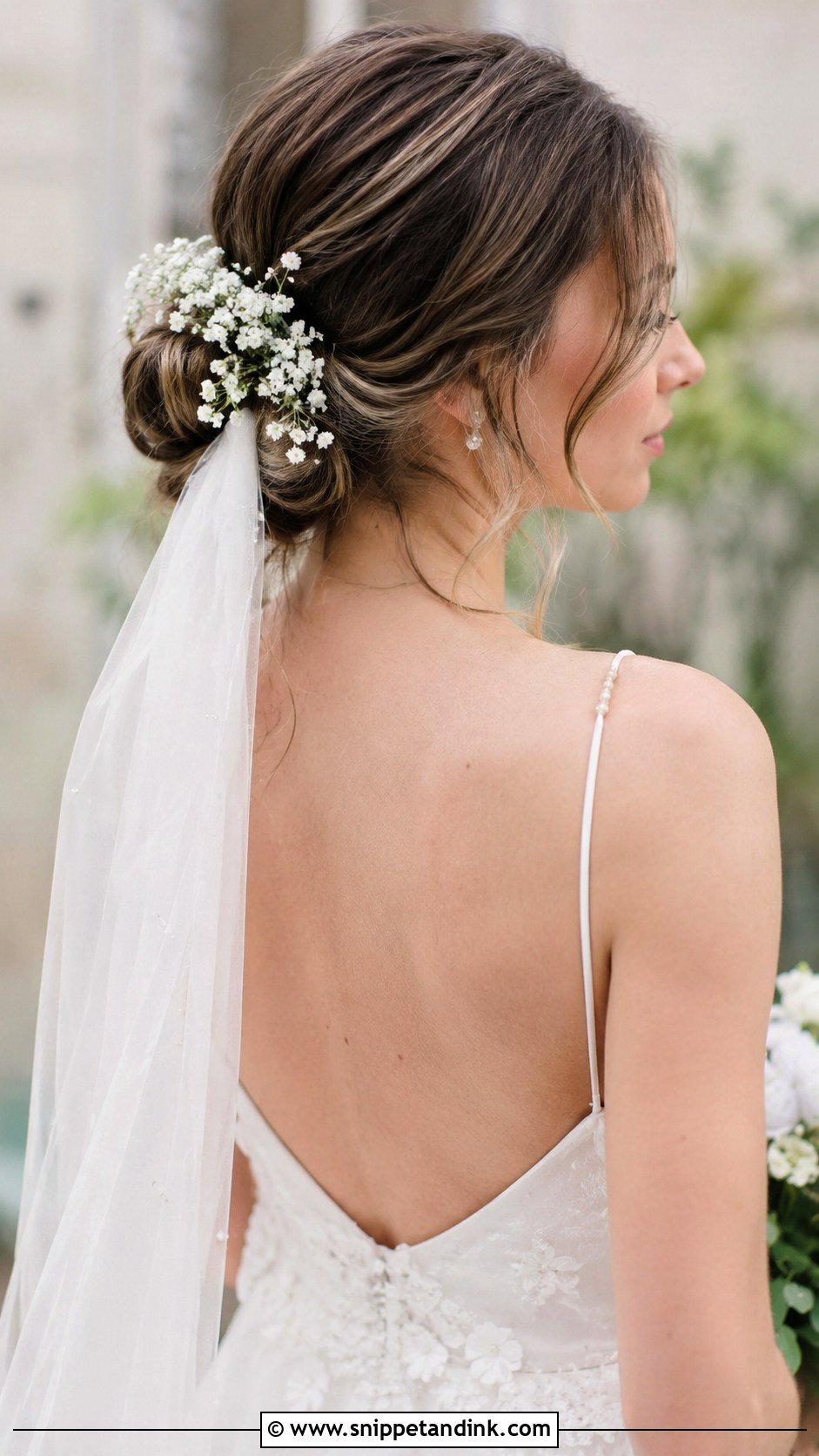
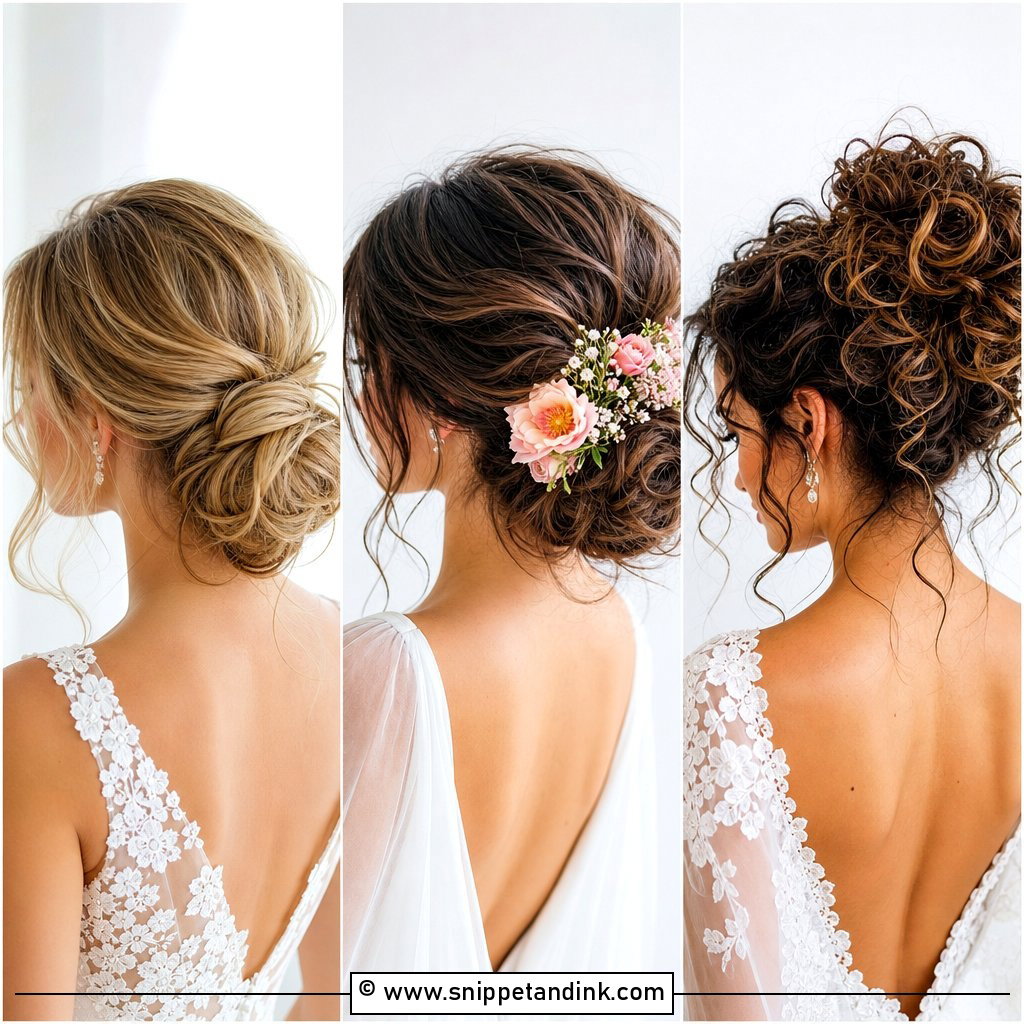
Small blooms or floral pins tucked into the bun bring colour and a garden feel. I ask the florist for flowers that can survive out of water for hours, such as spray roses, waxflower or orchids; delicate petals like sweet pea go limp quickly against a warm head. White blooms look natural in daylight photos. They can sit scattered or clustered on one side, and a sheer veil sits well over either.
8. Curly Low Bun With Natural Texture
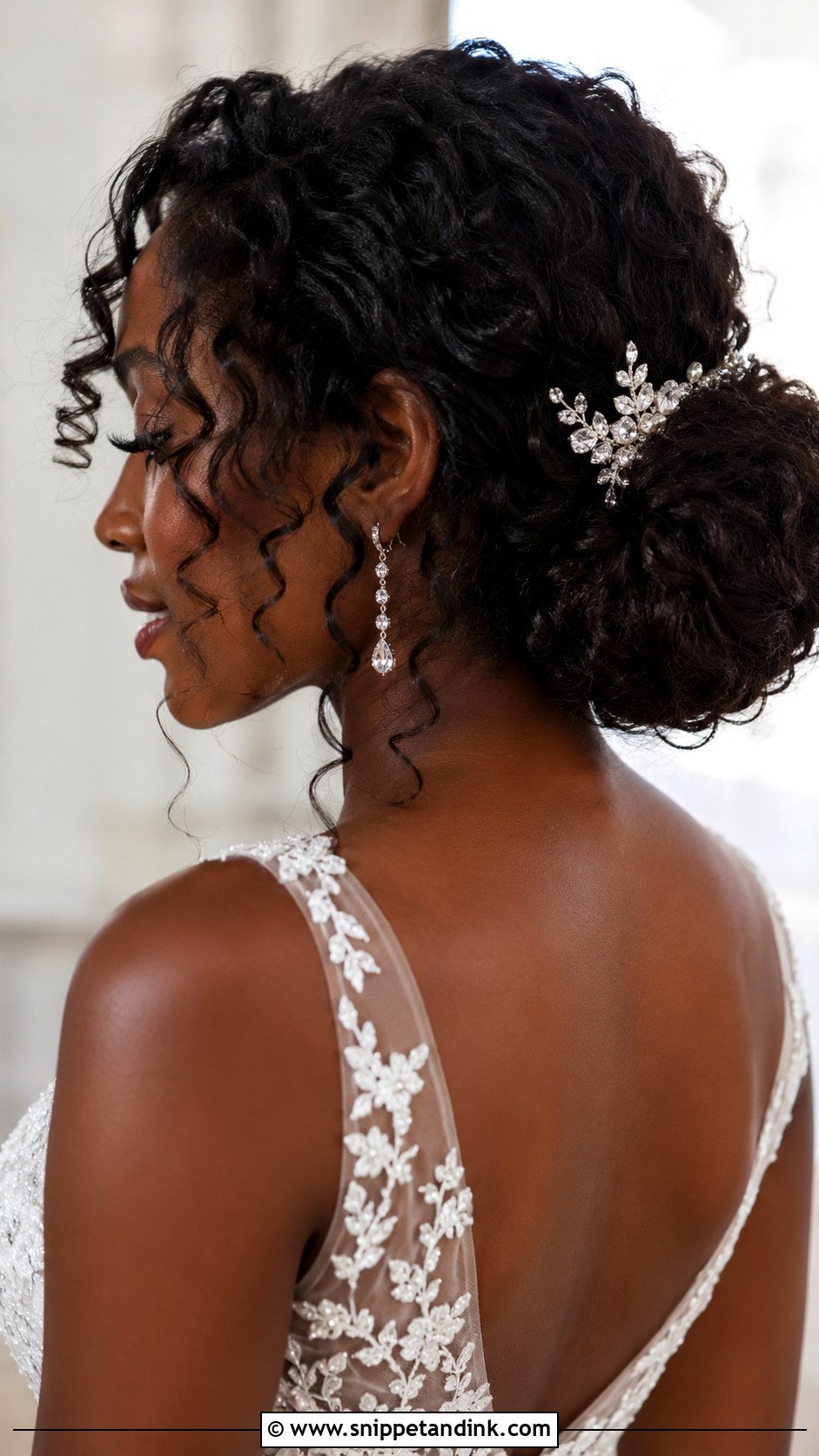
Natural curls gathered into a full bun at the nape, with loose ones left around the face. I style curly hair as close to its wash day as possible, using the bride’s usual cream so the curls clump the way she knows them, and I avoid brushing them out, which turns definition into frizz. Pulling a few curls loose around the hairline makes it look intentional. A jeweled clip or pearl pins add sparkle. It’s one of the easiest buns to maintain on the day, since curls hide a lot of movement.
9. Low Bun With a Veil
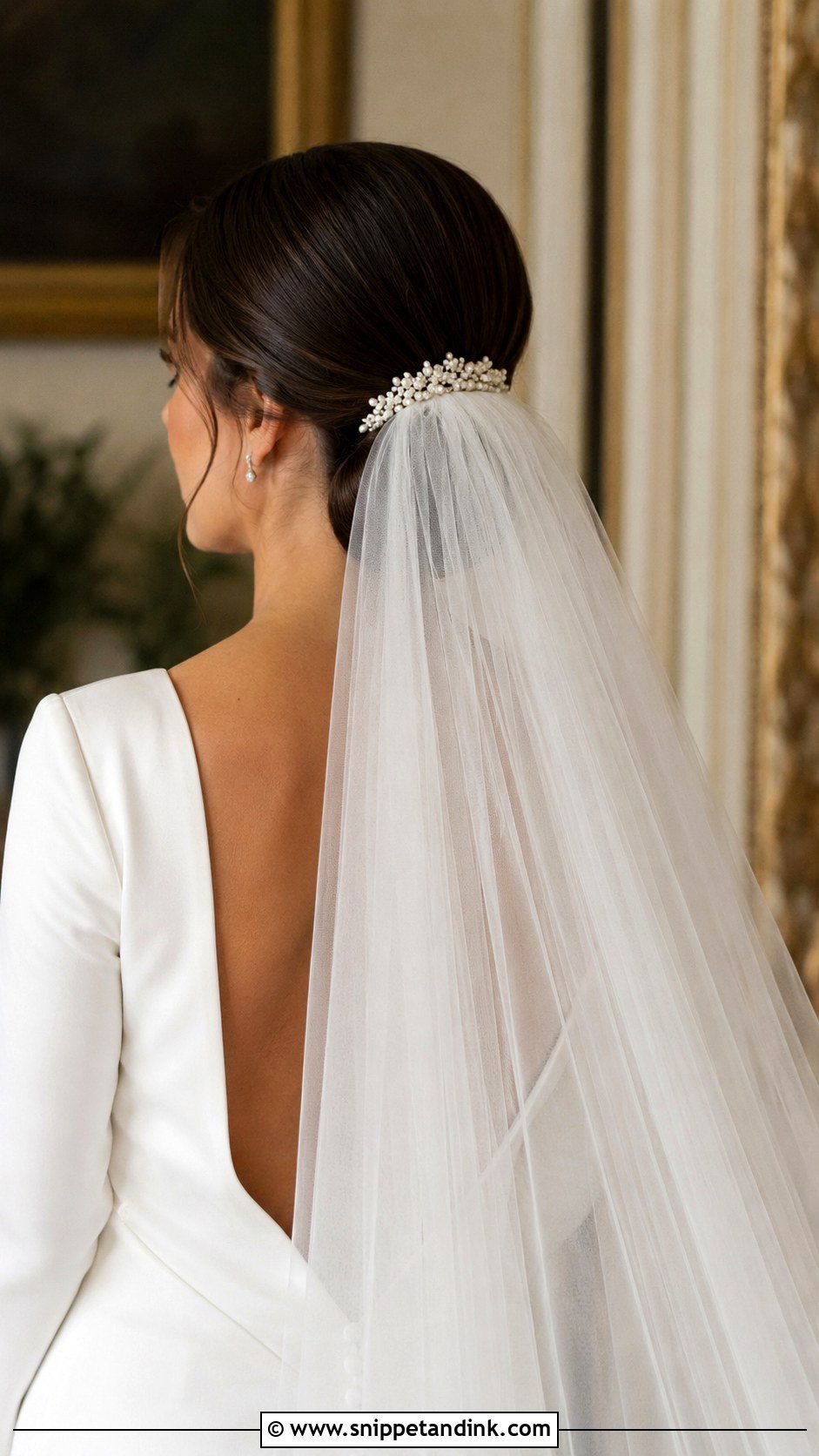
The low position makes the bun an anchor for almost any veil, from a short blusher to a cathedral length. A heavy, long veil pulls harder than people expect, so for those I cross two pins under the bun before the comb goes in. Placement depends on the effect you want: under the bun shows the hair off; above it frames it. A pearl comb on one side adds detail for formal ceremonies, and it works on sleek and textured buns alike.
10. Twisted Low Bun With Loose Strands
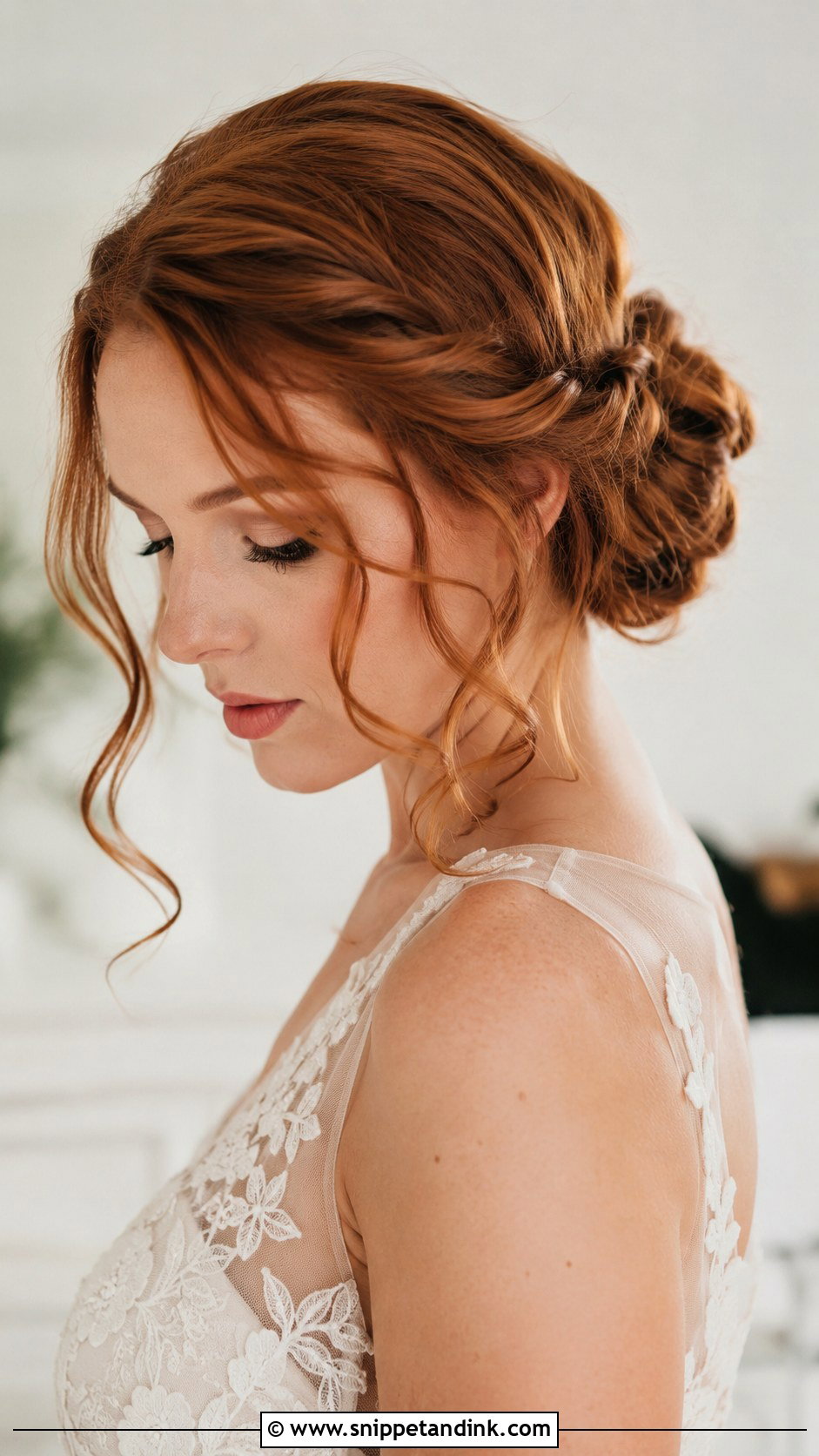
A twisted bun forms the base while long, curled strands fall around the face and down the neck. Twisting is quicker than braiding and builds grip into the bun, which helps on silky hair. The loose strands are the part that needs care: a light flexible spray keeps them soft, whereas a strong-hold spray makes them crunchy and stiff by the photos. It suits most lengths and face shapes, and it feels less formal than a sleek chignon.
11. Low Bun With a Hair Vine
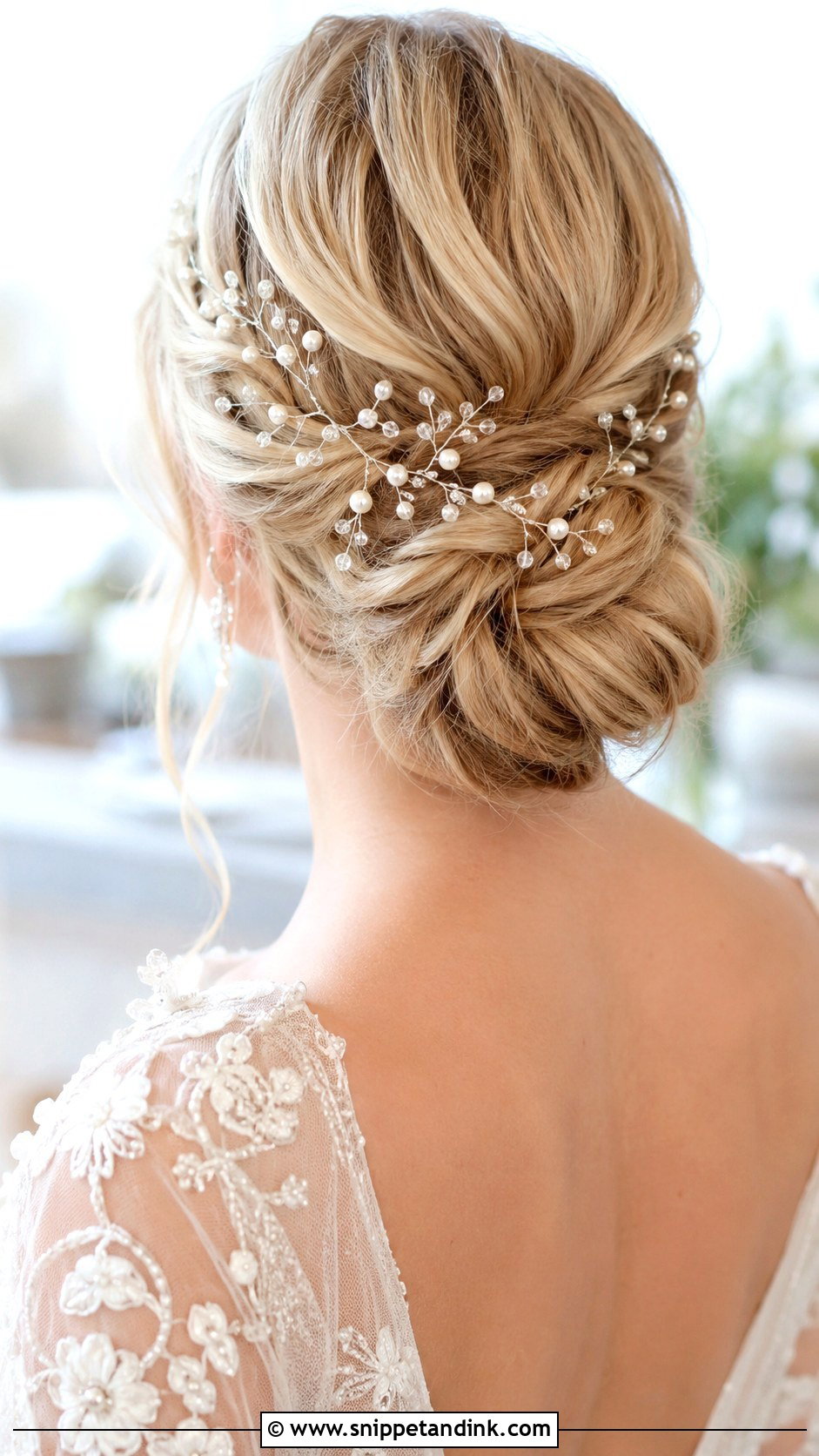
A hair vine is a flexible wire strung with tiny pearls, crystals or leaves, and it winds along the bun’s twists. I attach it with small pins at each end and at a few points along the way, weaving the wire under the hair so it doesn’t lift. It suits whimsical, garden-themed weddings. Fine, slippery hair can struggle to hold a long vine, so I’d go shorter there. A vine reads as part of the hairstyle rather than something sitting on top of it.
12. Low Bun With Curtain Bangs
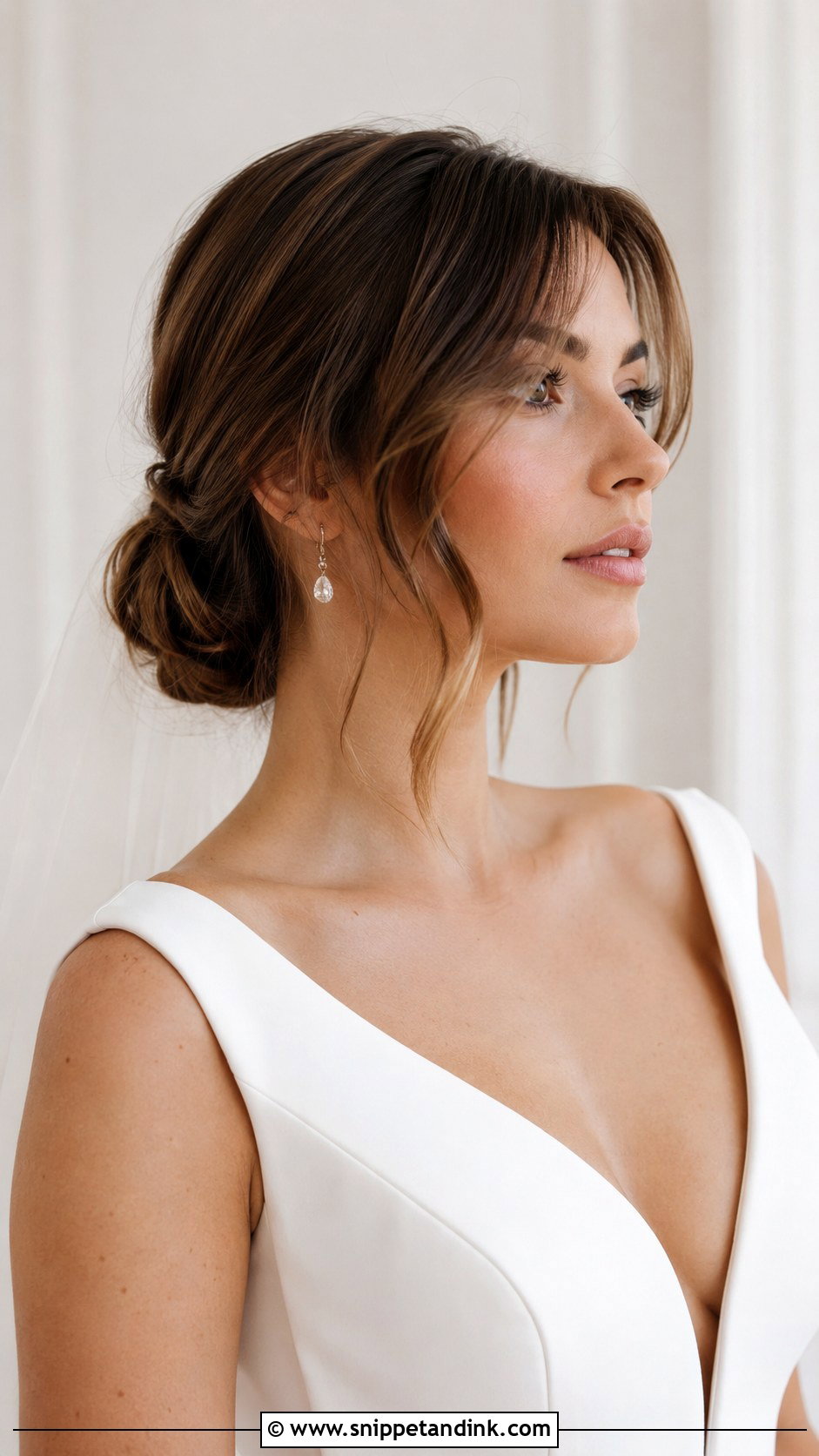
Curtain bangs sweep out from a center part while the rest of the hair sits in a low bun. They soften a strong brow or a long face. I’d only do this on a bride who already wears them, or who has them cut at least a month ahead, since fresh bangs need time to sit and grow a little. A light curl on the bangs gives movement, and they suit both messy and sleek buns.
13. Low Bun With a Braided Halo
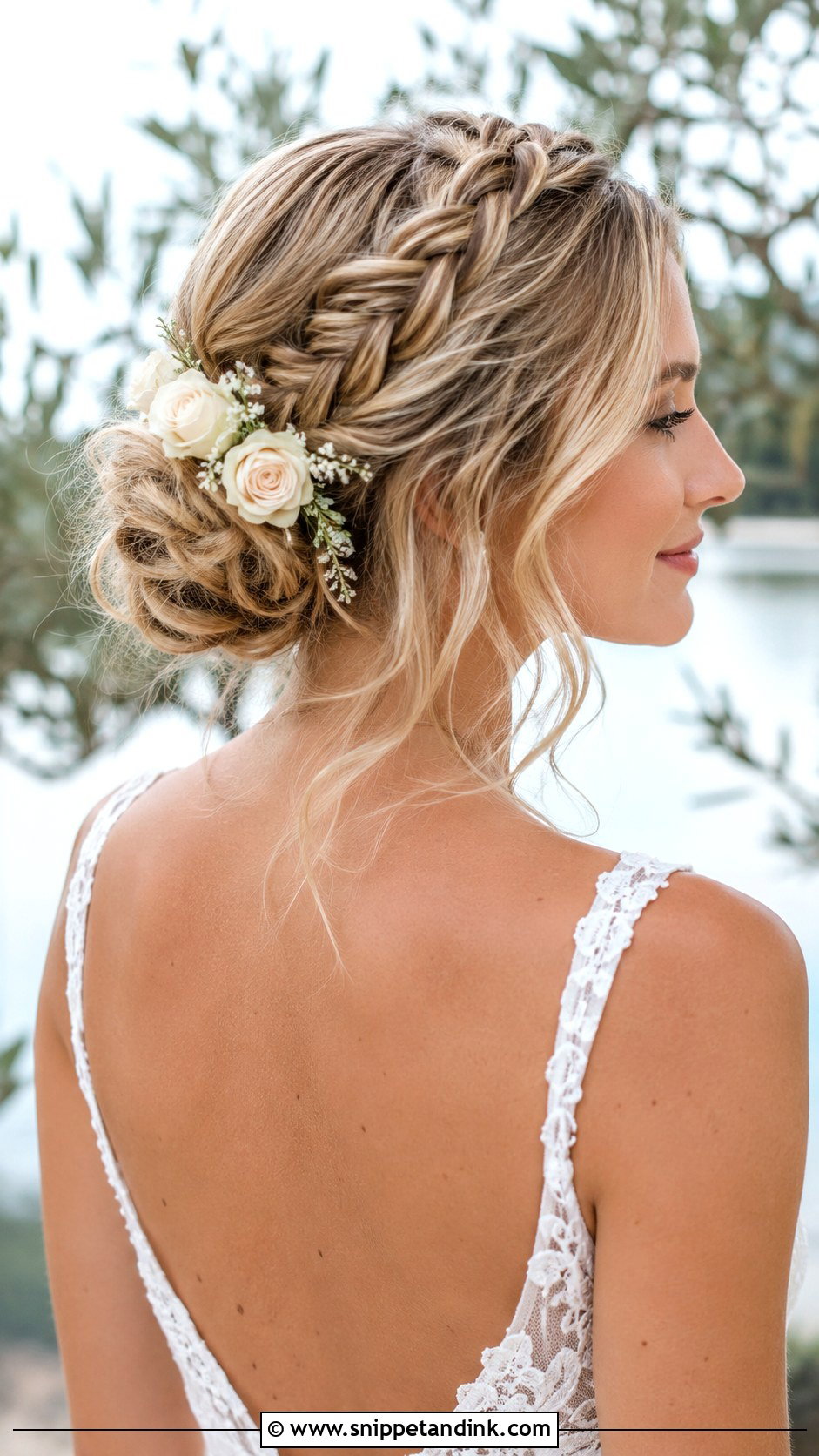
A braided halo circles the crown and runs down into the gathered bun. It keeps hair off the face completely, which is useful for an outdoor ceremony in wind. Placement is everything: set too far back, it disappears in front photos. Flowers can be tucked along the braid. It needs enough length to travel around the head, so shoulder-length hair usually needs a clip-in or a partial halo.
14. Low Bun With a Crystal Comb
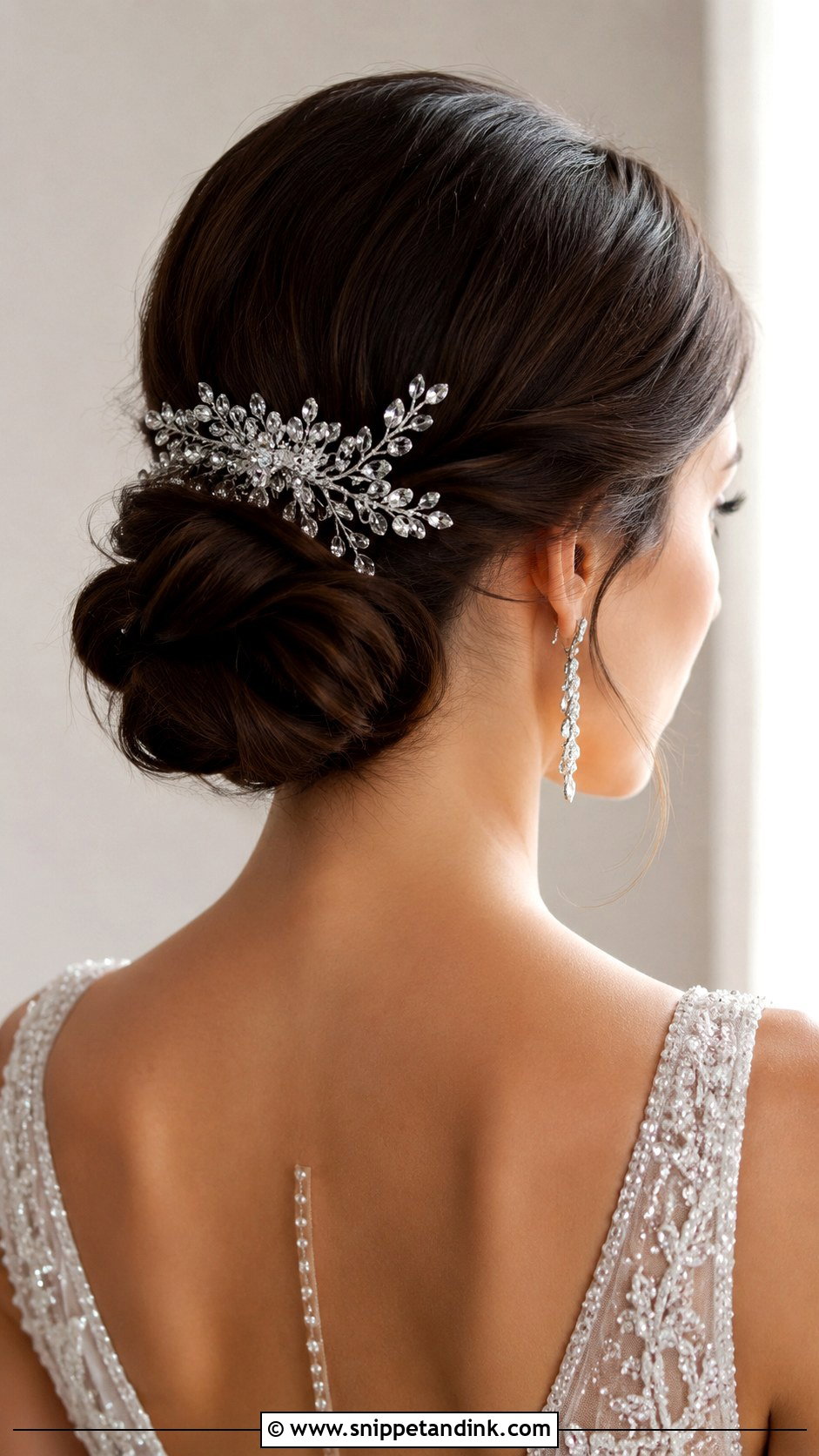
A glittering comb tucked beneath the twisted strands catches the light every time you turn your head. I slide combs in against the direction of the hair and then back, so the teeth hook into the base of the bun instead of just the surface. Crystals suit evening and formal weddings where the lighting is low. Placed on one side, it feels more modern than a centered piece, and it lifts even the plainest bun.
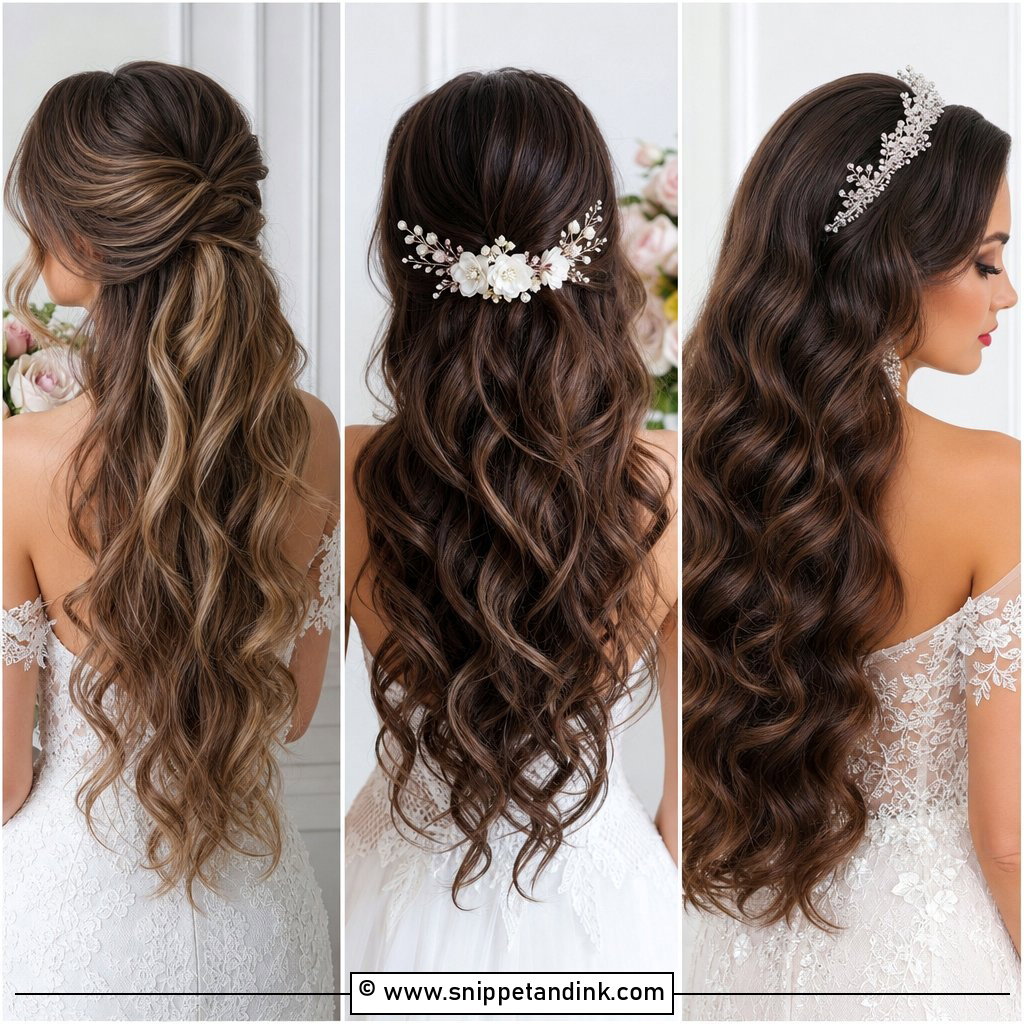
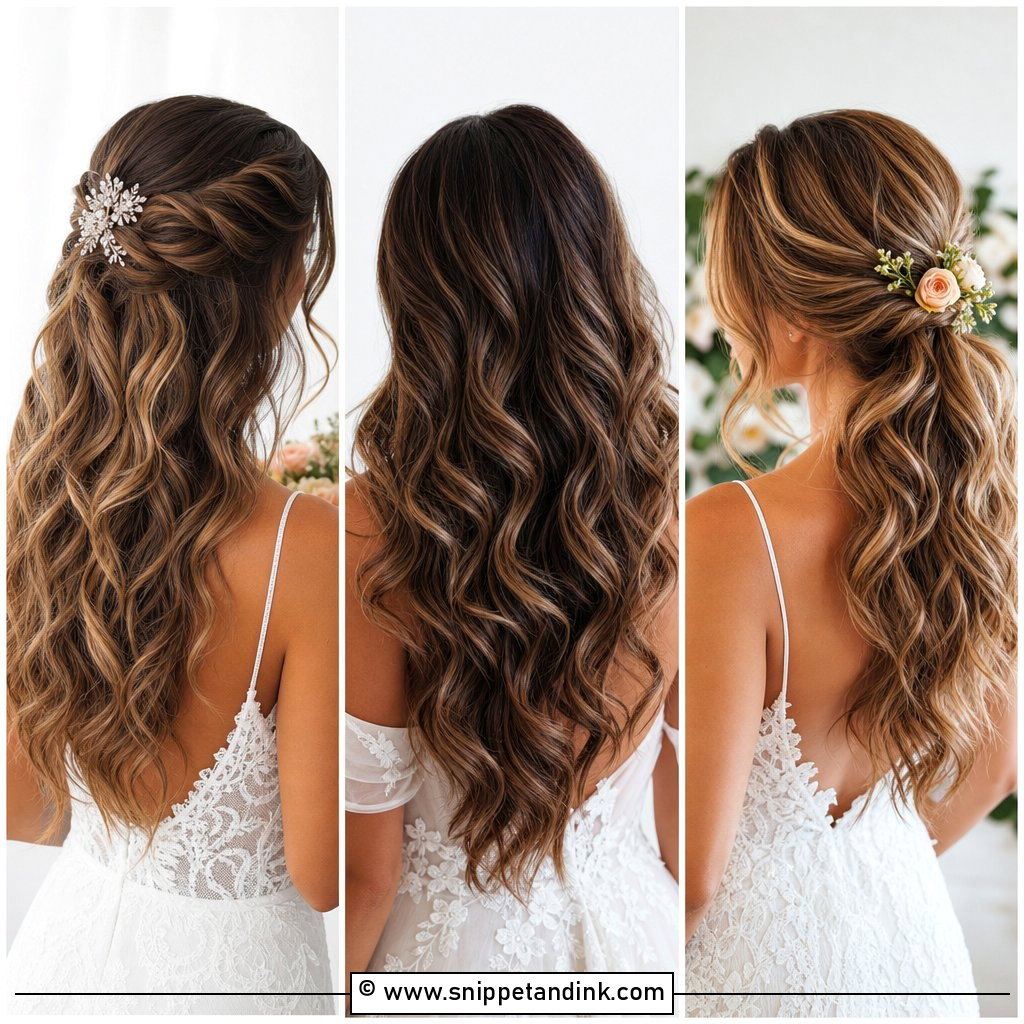
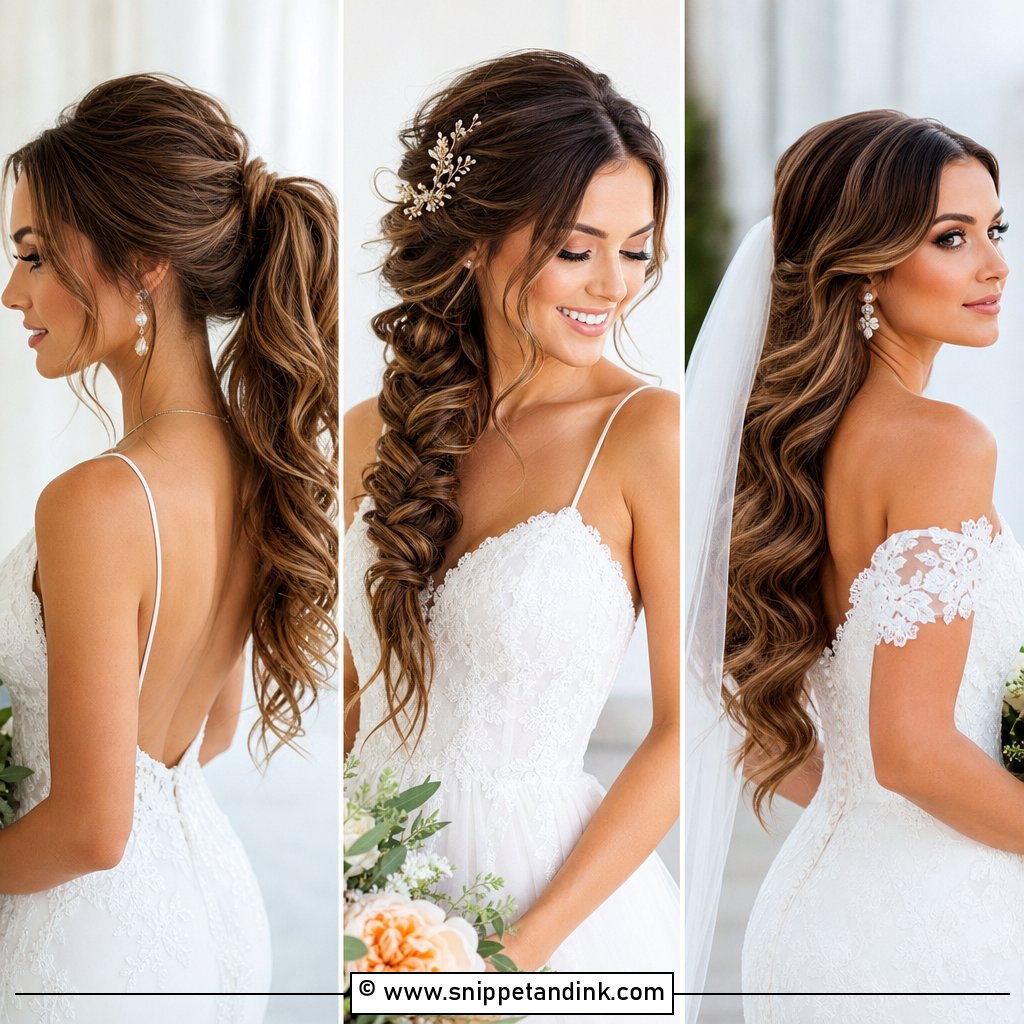
15. Low Bun With a Deep Side Part
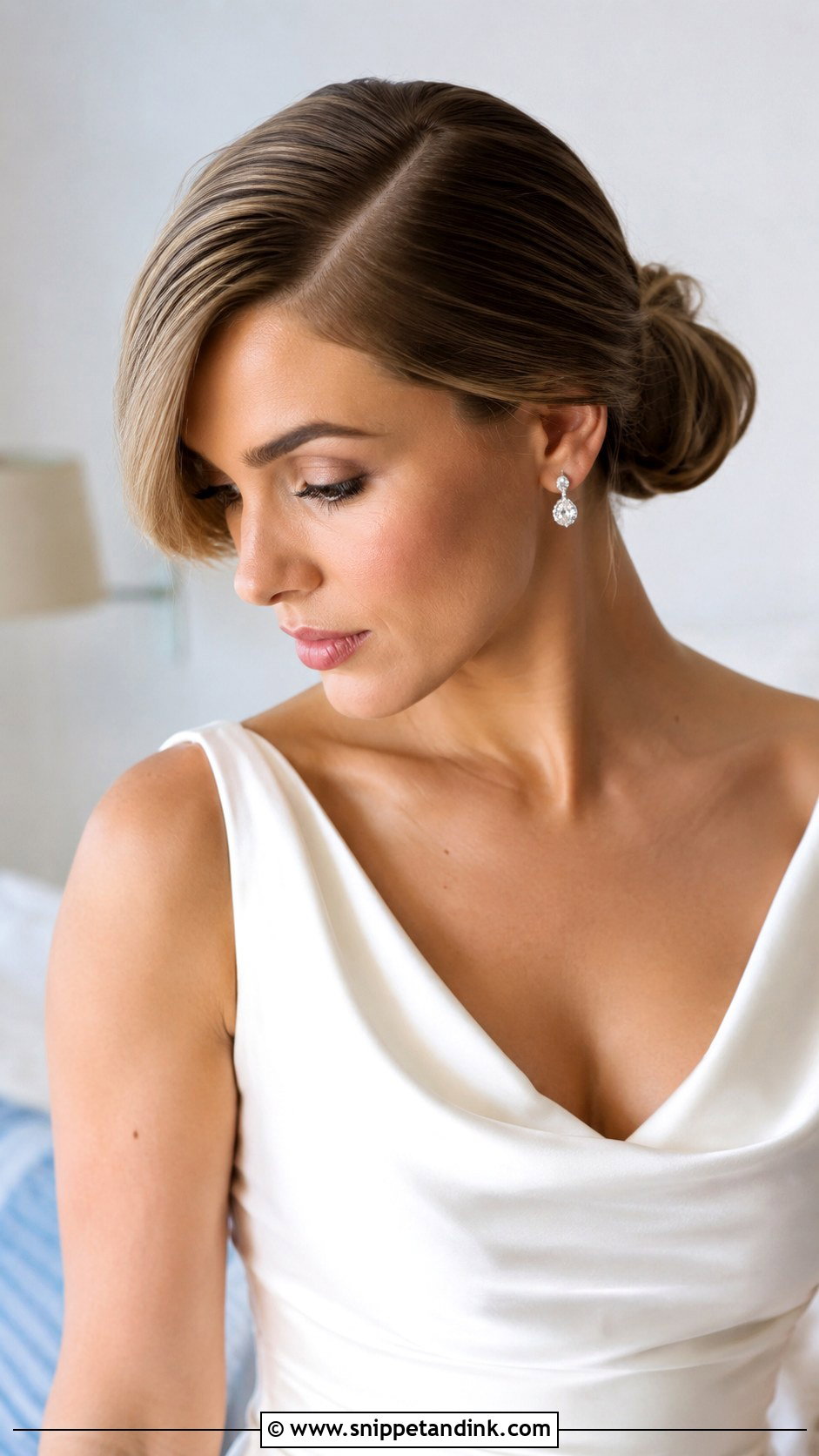
A deep side part creates asymmetry and brings a touch of old Hollywood to a low bun. I usually find the bride’s natural part and then exaggerate it a little, because a part that goes against the hair’s growth tends to flip back by the reception. One side can sweep over the forehead for softness. It suits sleek chignons and textured buns alike, and it’s particularly good at lengthening a rounder face. The fuller side becomes the natural place for a comb or a flower.
16. Low Bun With Cascading Curls
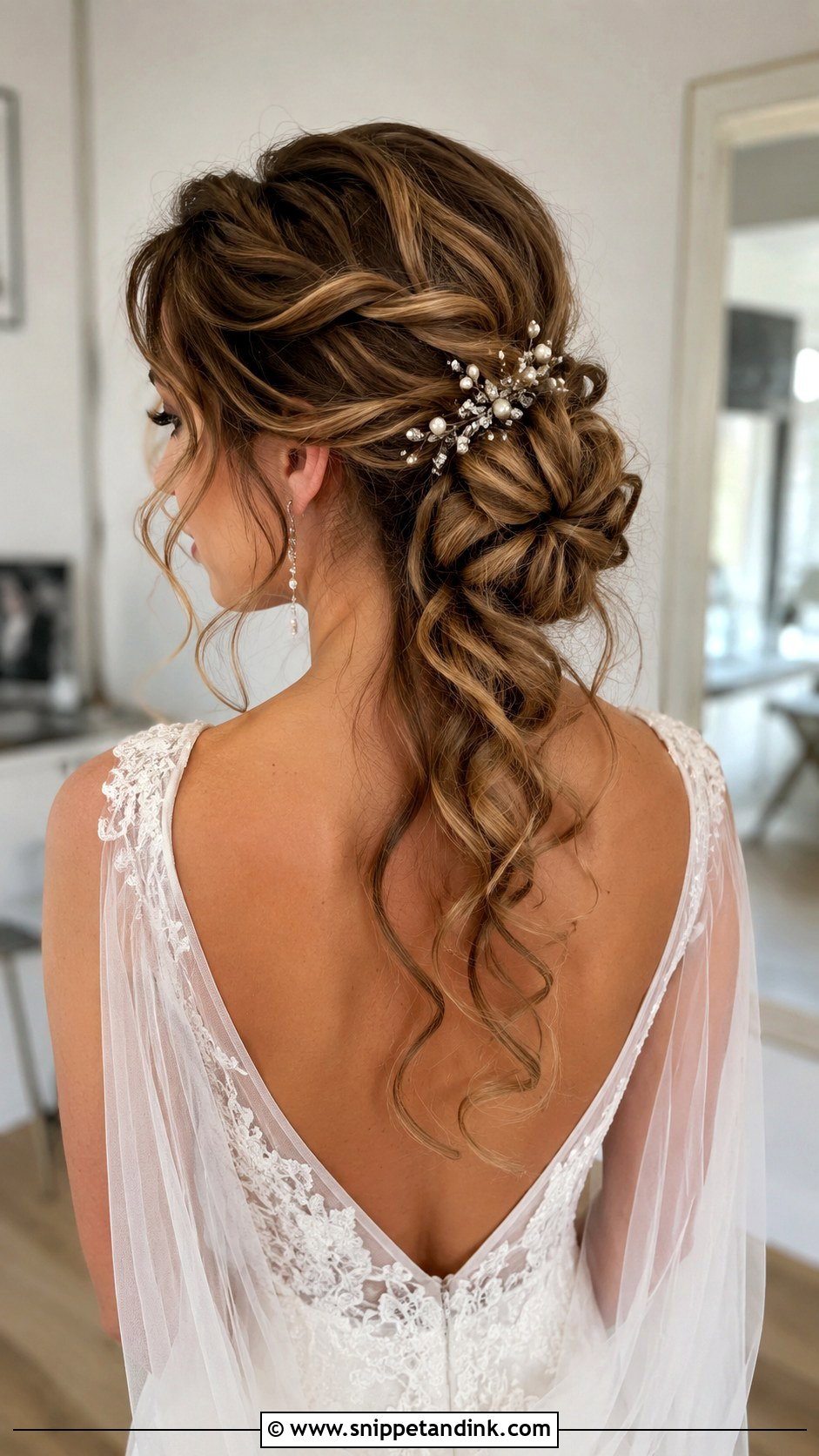
Most of the hair gathers into a low bun while several curled pieces fall down the back and over the shoulder. It’s a good compromise for brides with long hair who don’t want it all up. The curls do drop over the day, especially in humidity, so I curl them a little tighter than the final look and let them relax. Add pearl pins or a few flowers if you like. It has a half-up feel while keeping the neck mostly clear.
17. Low Bun With Greenery and Foliage
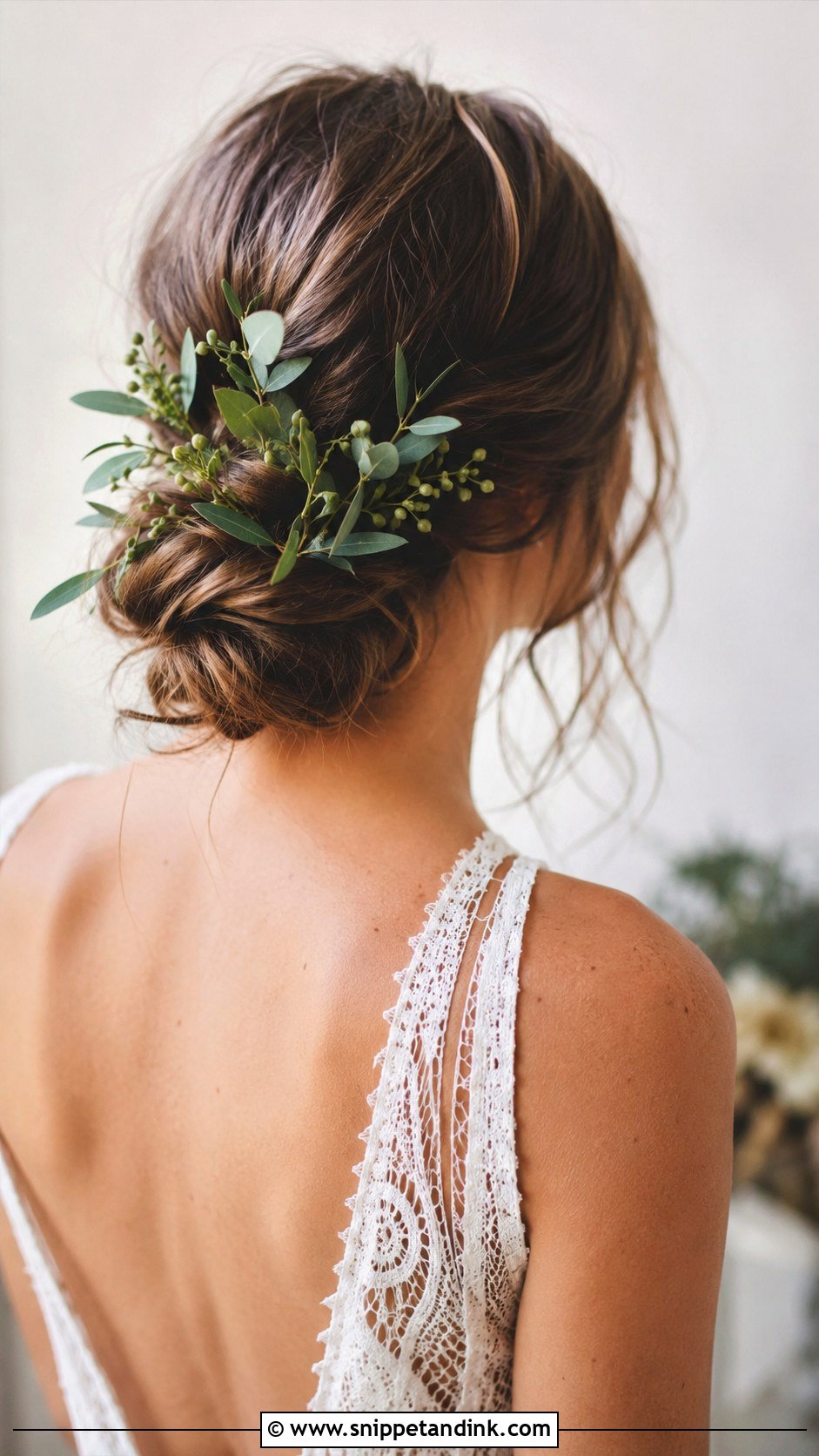
Eucalyptus, olive or other small leaves tucked into a loose bun give a botanical finish and an earthy elegance. Greenery is far tougher than blooms out of water, which makes it the smarter choice for a hot vineyard or woodland day. Eucalyptus does leave a scent, so check that you like it on your skin all day. Keep sprigs small and wired so they don’t poke out or scratch. It sits best on textured buns with soft tendrils.
18. Low Bun With Volume on Top
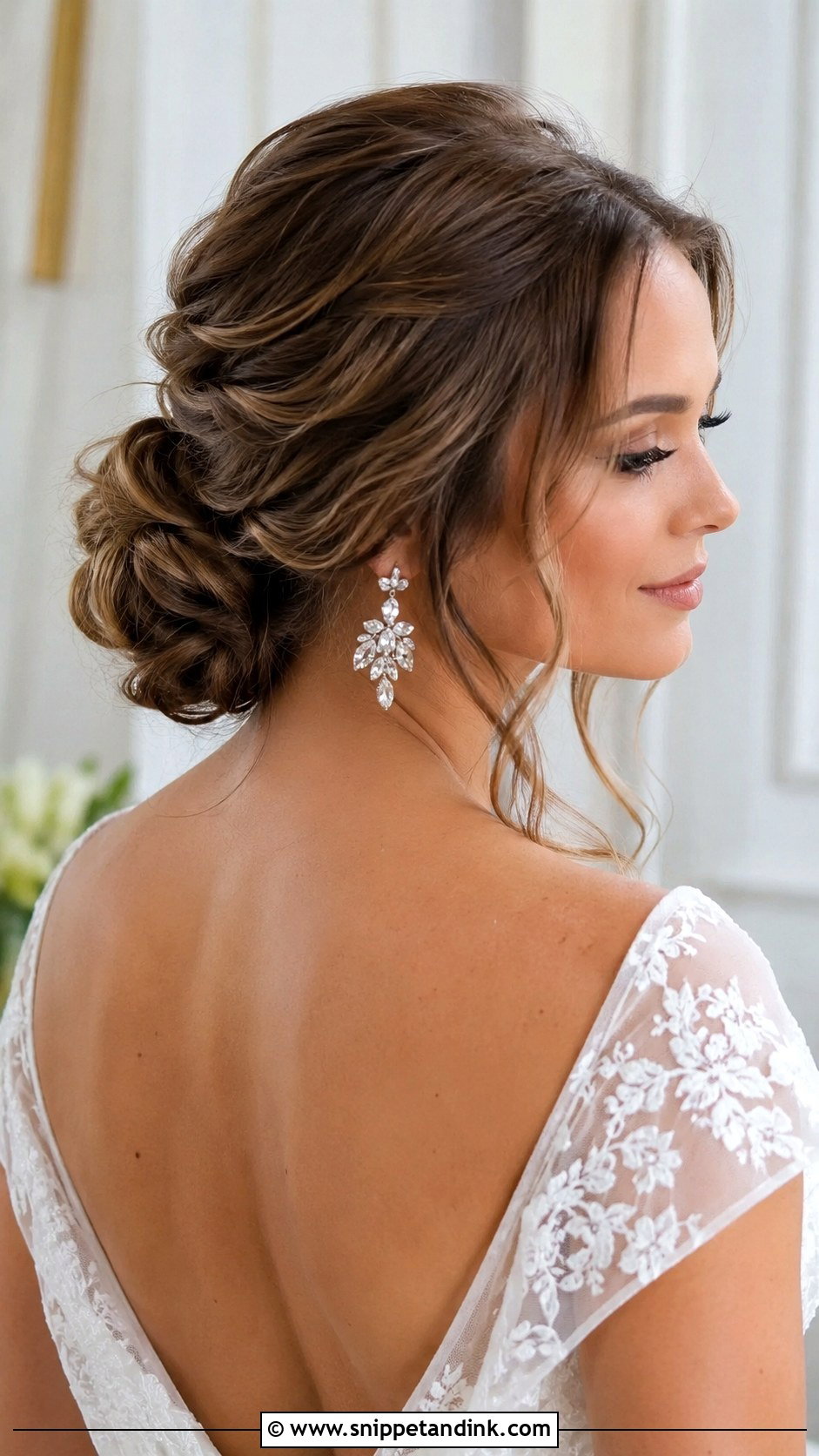
Lift at the crown before everything sweeps down into a soft bun at the nape. The volume comes from backcombing at the root and smoothing the top layer over it, and I set it with a small amount of hairspray so it doesn’t collapse under a veil. That height balances a round or wide face and suits formal and traditional weddings. If your hair is fine and flat by noon on a normal day, ask your stylist to add a small padding piece rather than rely on teasing alone.
19. Fishtail Braided Low Bun
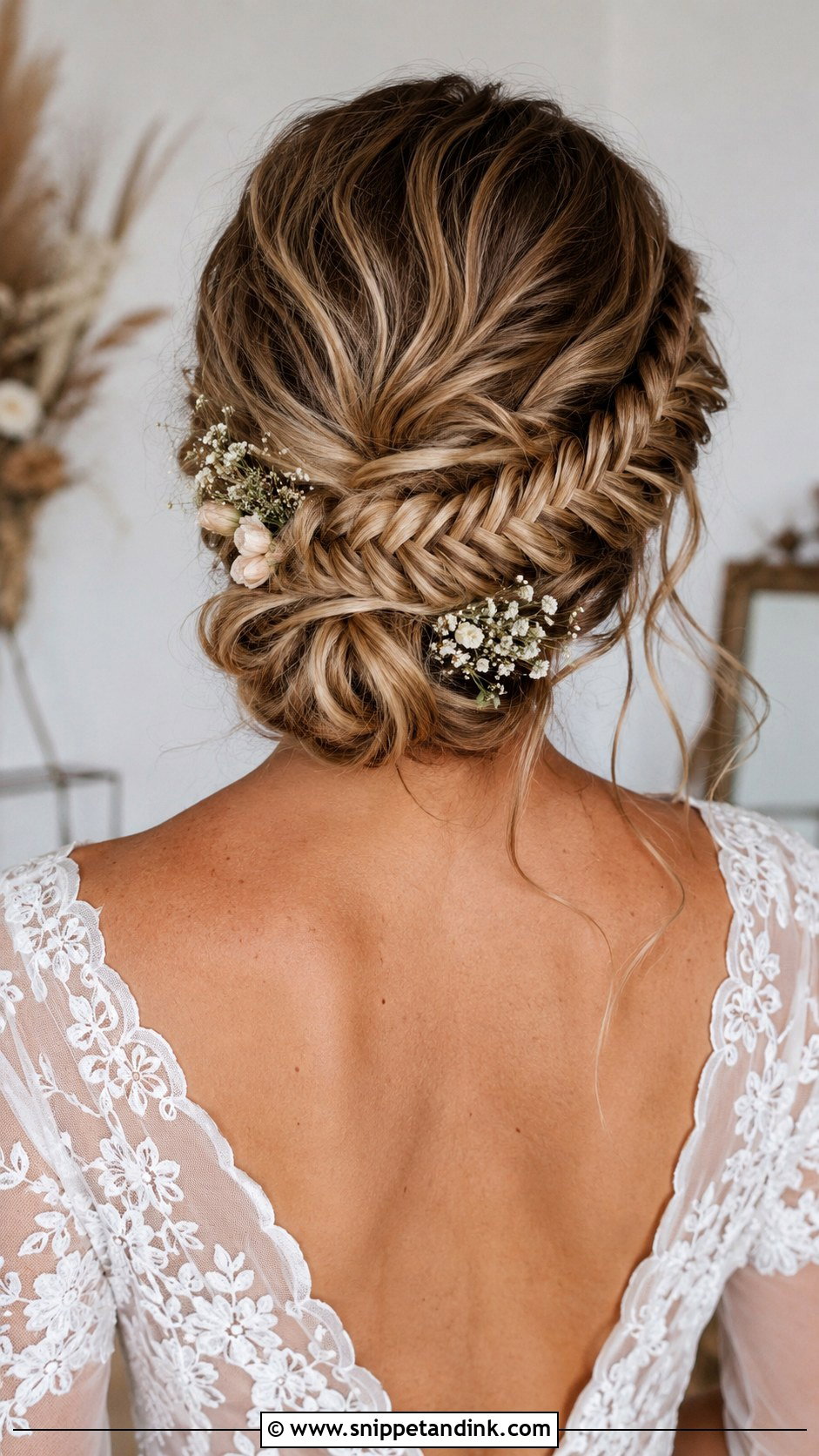
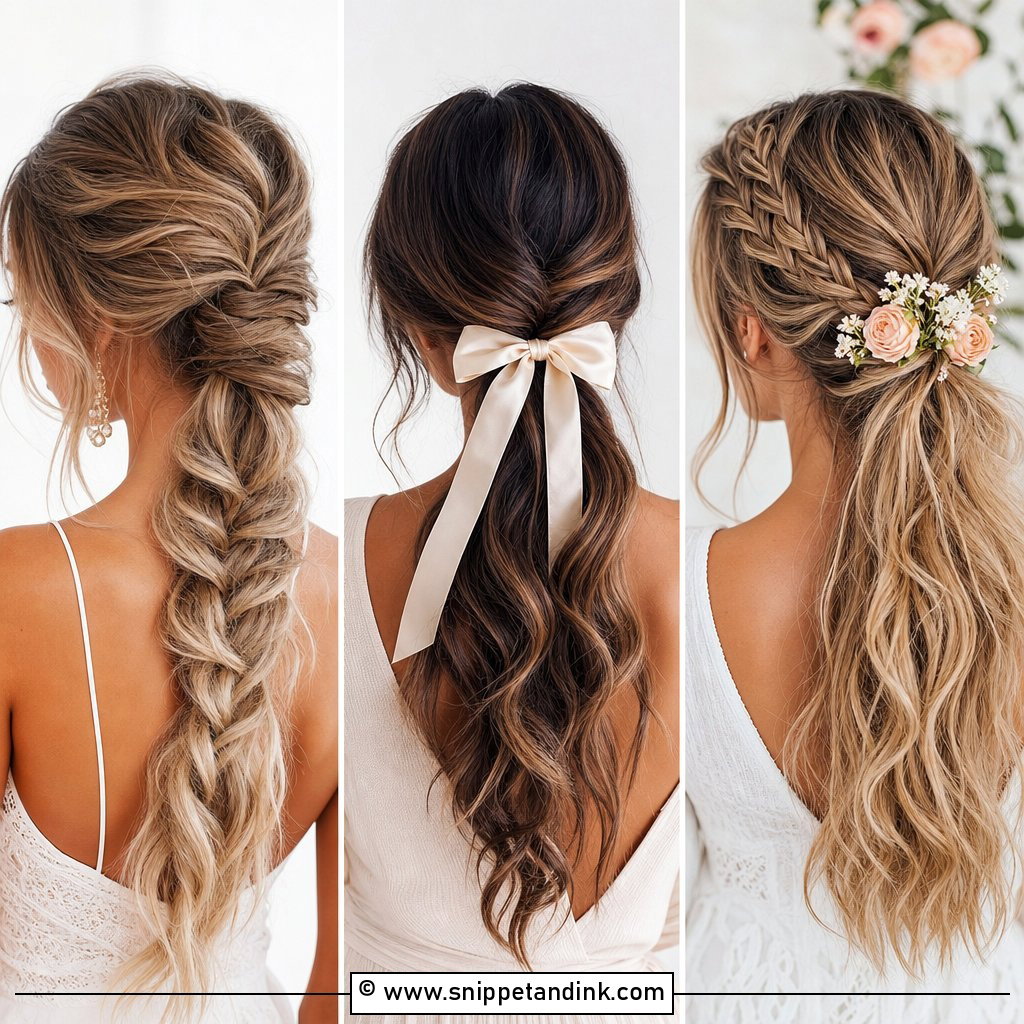
A fishtail braid either wraps around the bun or leads into it from the side. Fishtails grip better than a standard braid because the sections are smaller, so they hold up well across a long day. I pull the edges of the braid out gently after tying it to make it fuller, which also helps it look artful and unique in close shots. Small flowers or pearl pins add detail. It needs longer hair to show off the pattern.
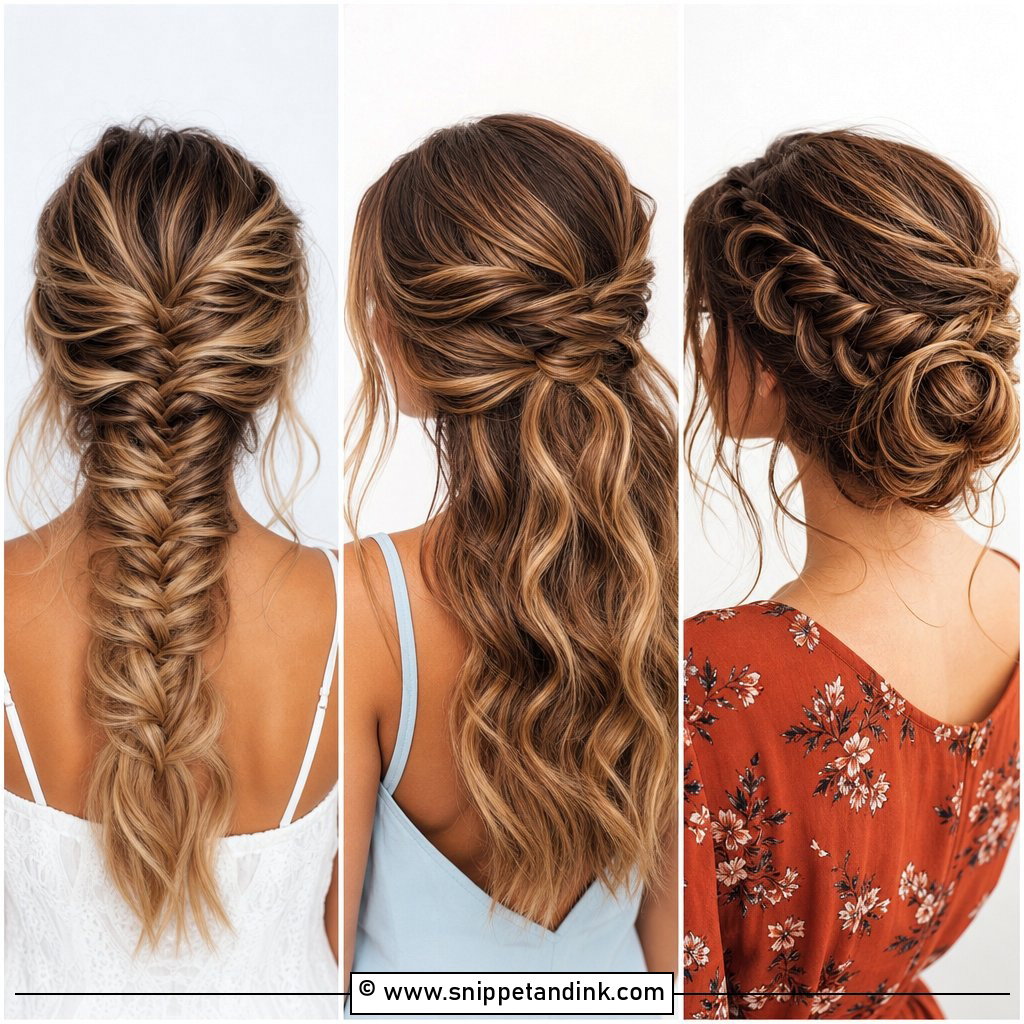
20. Low Bun With Soft Tendrils and a Tiara
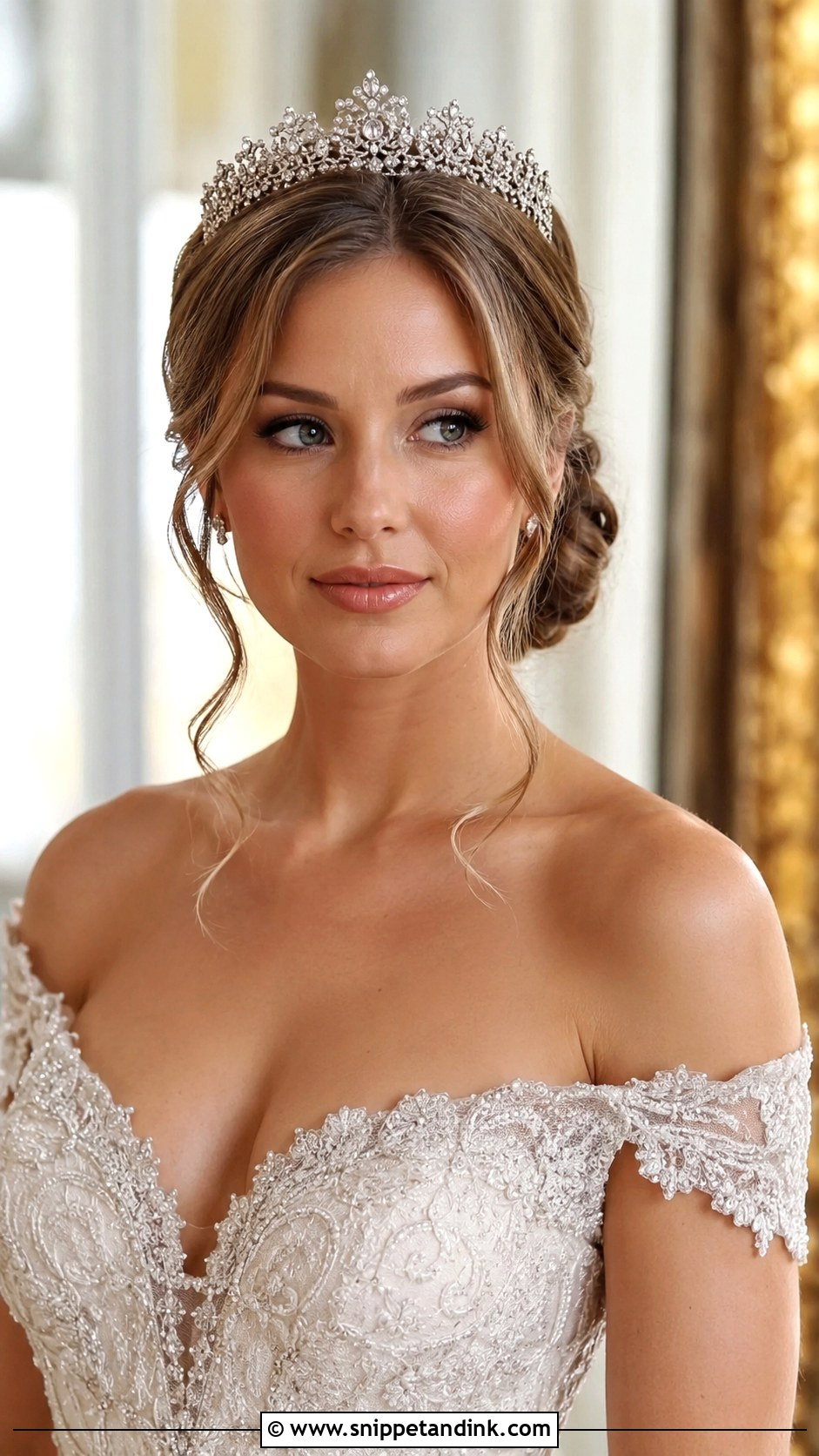
A low bun under a tiara, with soft tendrils at the face to stop it feeling stiff. The tiara sits just in front of the bun, and I secure it with pins through the loops at each end, criss-crossed into a small hidden braid so it doesn’t rock when you dance. Grand, traditional or ballroom weddings carry it best. A veil can tuck underneath. The weight of a large tiara does press after a few hours, so try one on at the trial for at least an hour.
When the Bun Slips Halfway Through the Reception
Even a well-built loose bun moves. Hugs, a veil coming off, dancing and humidity all loosen it, and that’s normal. What matters is having a plan so a small slip doesn’t become a full rebuild in a restroom mirror.
Ask your stylist to give you, or your maid of honour, a small bag with eight or ten pins that match your hair colour, a travel hairspray and a mini comb. Show that person, at the end of your appointment, where the anchor is, because re-pinning the loose loops into the anchor fixes most sagging in under a minute. If a section comes down fully, it’s usually easier to twist it and tuck it into the bun than to try to recreate the original loop.
For outdoor summer weddings, I’d plan for the tendrils to frizz a little by evening. A loose bun forgives that far better than a sleek one does, and photos in soft evening light rarely show it. If you’re very worried about it, choose a style with braids built in, which are the most stable loose buns here.
Take Three of These to Your Trial and Let One Win
A loose low bun can lean sleek, boho or full fairytale, and the trick is matching the version to your hair and your day rather than to a photo. Shortlist three, bring a picture of your gown’s neckline and back, and tell your stylist how long the day runs. Pearls, flowers, braids or a veil can then be added to the version that holds best on you. The quiet, refined look that brides are asking for depends on that groundwork more than anything you put on top.
You'll Like These Ideas:


Leave a Reply