
More brides now ask me for hair that moves when they turn their heads, rather than a set that won’t budge. Loose styles frame the face and sit well with veils, floral pins, pearl combs, tiaras and simple gowns. The catch is that down hair is the least forgiving kind of bridal hair. It reacts to heat, humidity, hugging and the back of every chair you sit in. The fifteen looks below range from fully down to soft, loose updos, with notes on what keeps each one looking intentional at the end of the night as well as at the first look.
Humidity Decides How Long Loose Waves Last
Heat-set curls hold because the iron reshapes the hair’s internal bonds as it cools. Moisture in the air re-forms those bonds back toward your natural texture, which is why waves done at nine can hang straight or puff up by four on a muggy day. Loose styles show this first, because there’s nothing pinned to hold the shape.
Before I commit to fully down hair, I check the forecast for the wedding month and ask whether the ceremony is outdoors or in a marquee. For a humid or coastal wedding, I’ll often steer a bride toward half up or a loose low bun, which still reads soft but has structure underneath.
Adjusting the prep to your texture
- Fine, straight hair: a light mousse or setting spray before curling, smaller sections, and full cooling time. Avoid heavy oils, which weigh the curl down.
- Thick or coarse hair: larger sections but a longer hold time on the iron, then an anti-humidity finishing spray.
- Naturally wavy or curly hair: often better enhanced than straightened and re-curled, because your own pattern doesn’t drop the way a heat-set curl does.
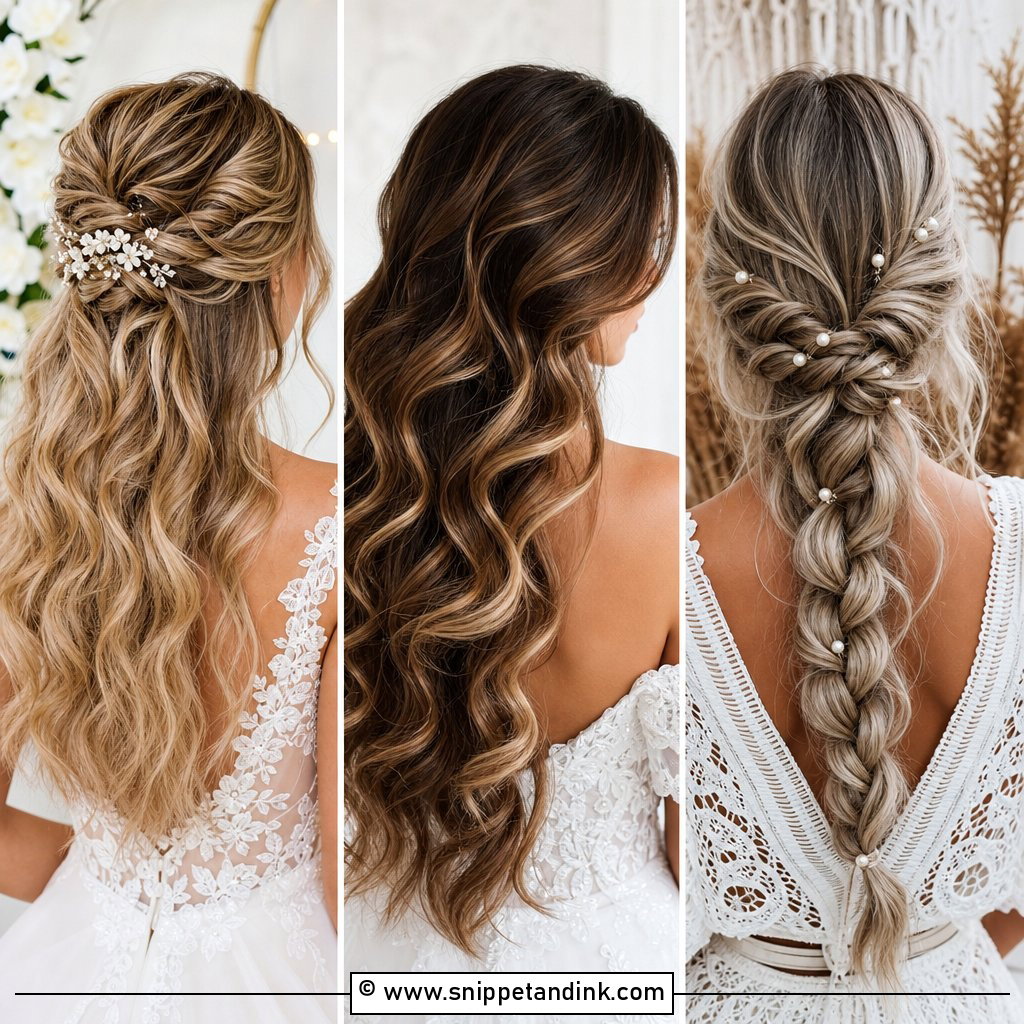
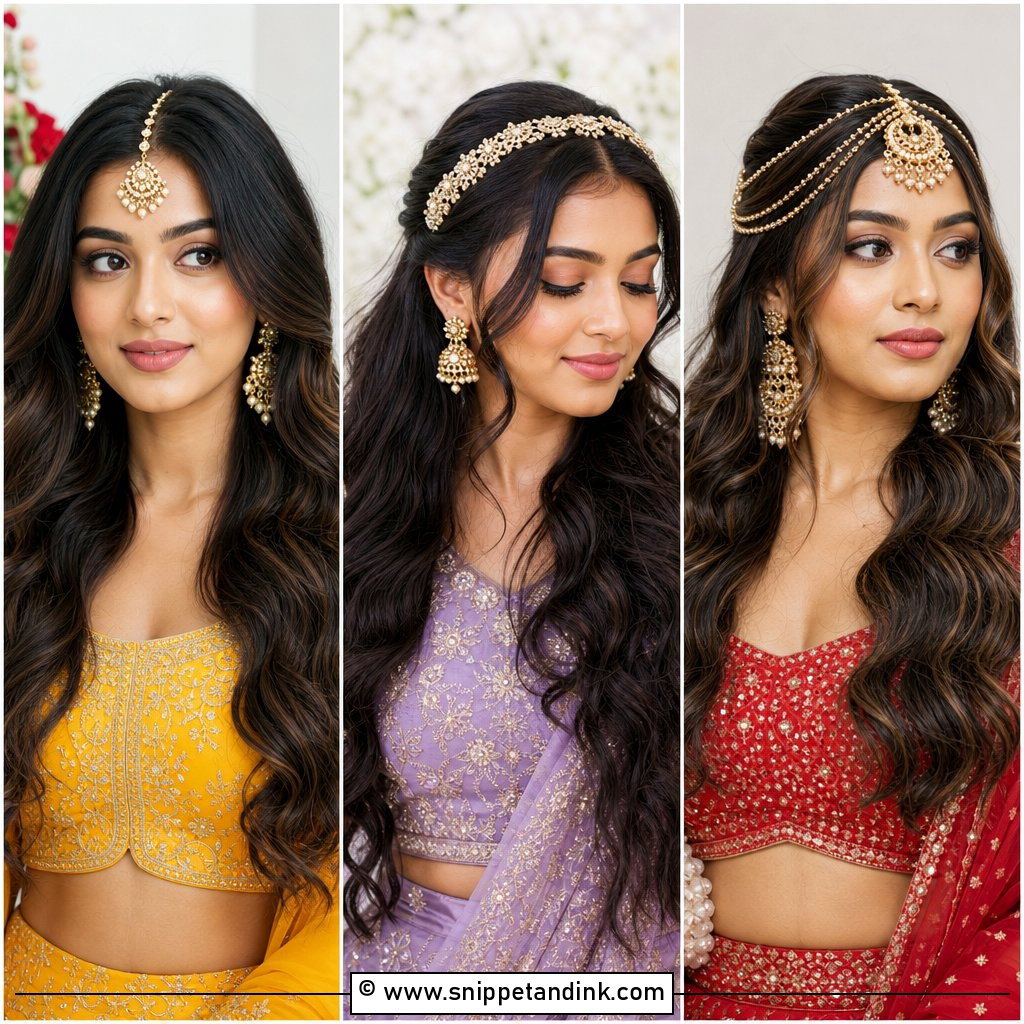
1. Loose Bridal Waves
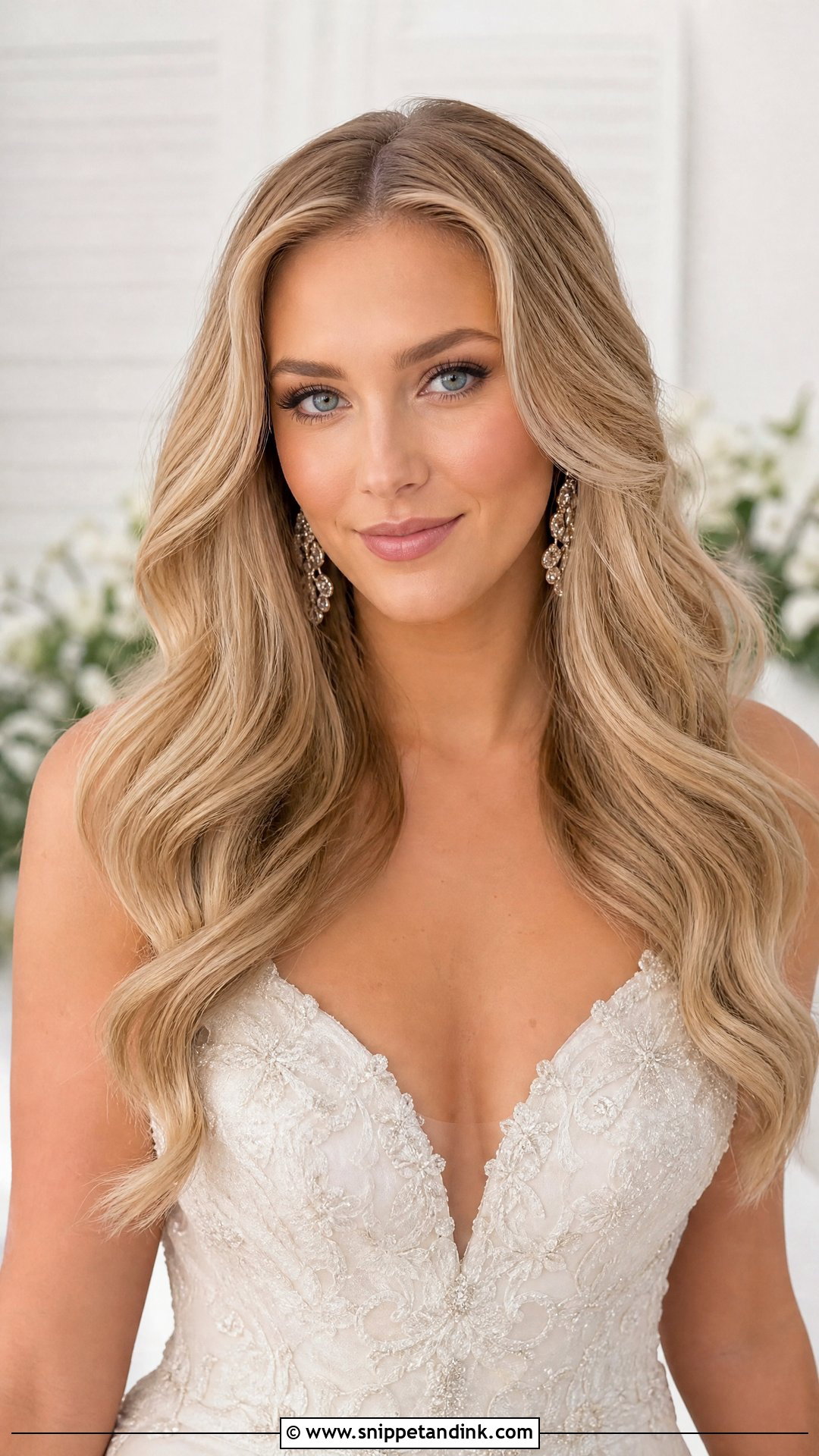
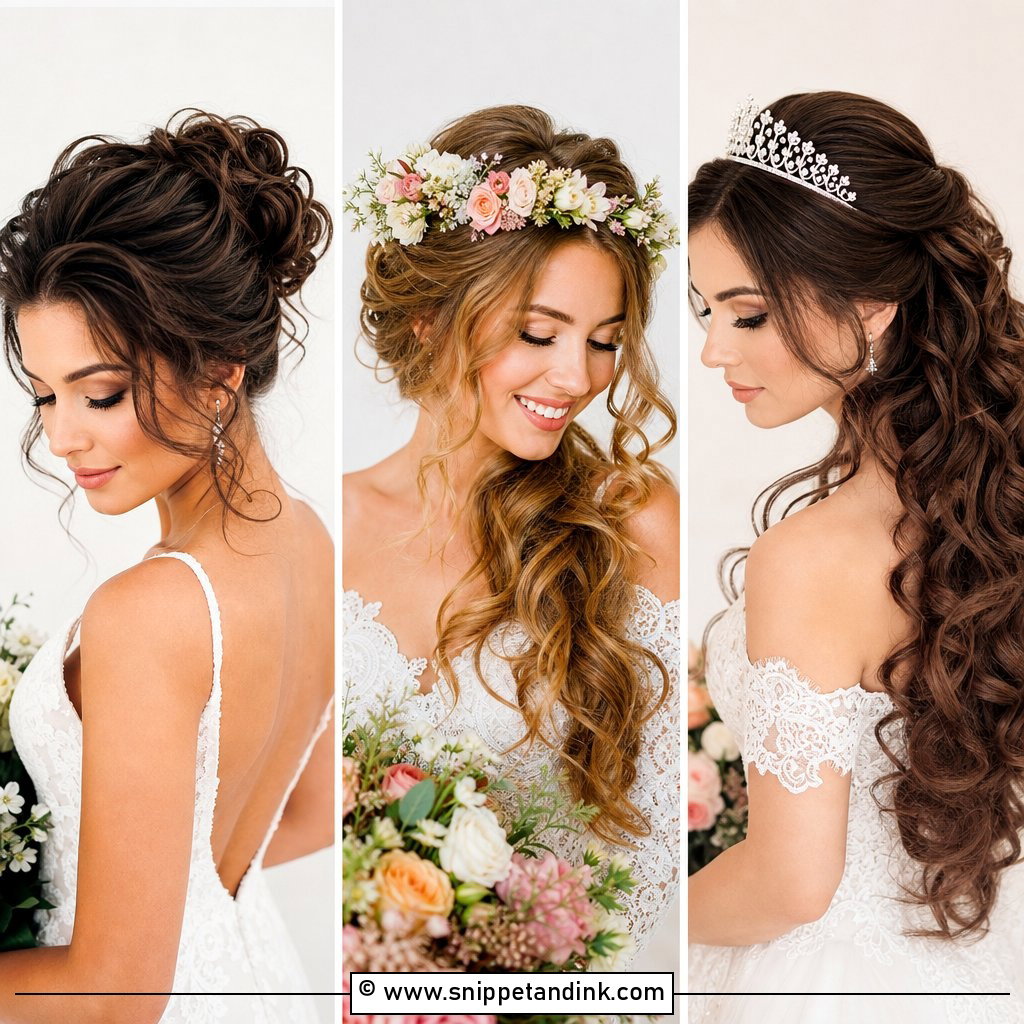
Brushed-out waves are the base for half the looks on this page. I start the bend around the cheekbone or jaw and keep the crown smooth with a little lift, so the shape doesn’t sit flat under a veil. Ask for curls brushed out, not left as ringlets: brushing joins them into a wave pattern that holds longer than you’d expect. A centre part looks current; a side part adds a touch of glamour. Long veils, pearl pins, strapless gowns and minimal jewellery let the movement stand out.
2. Half Up Loose Bridal Hair
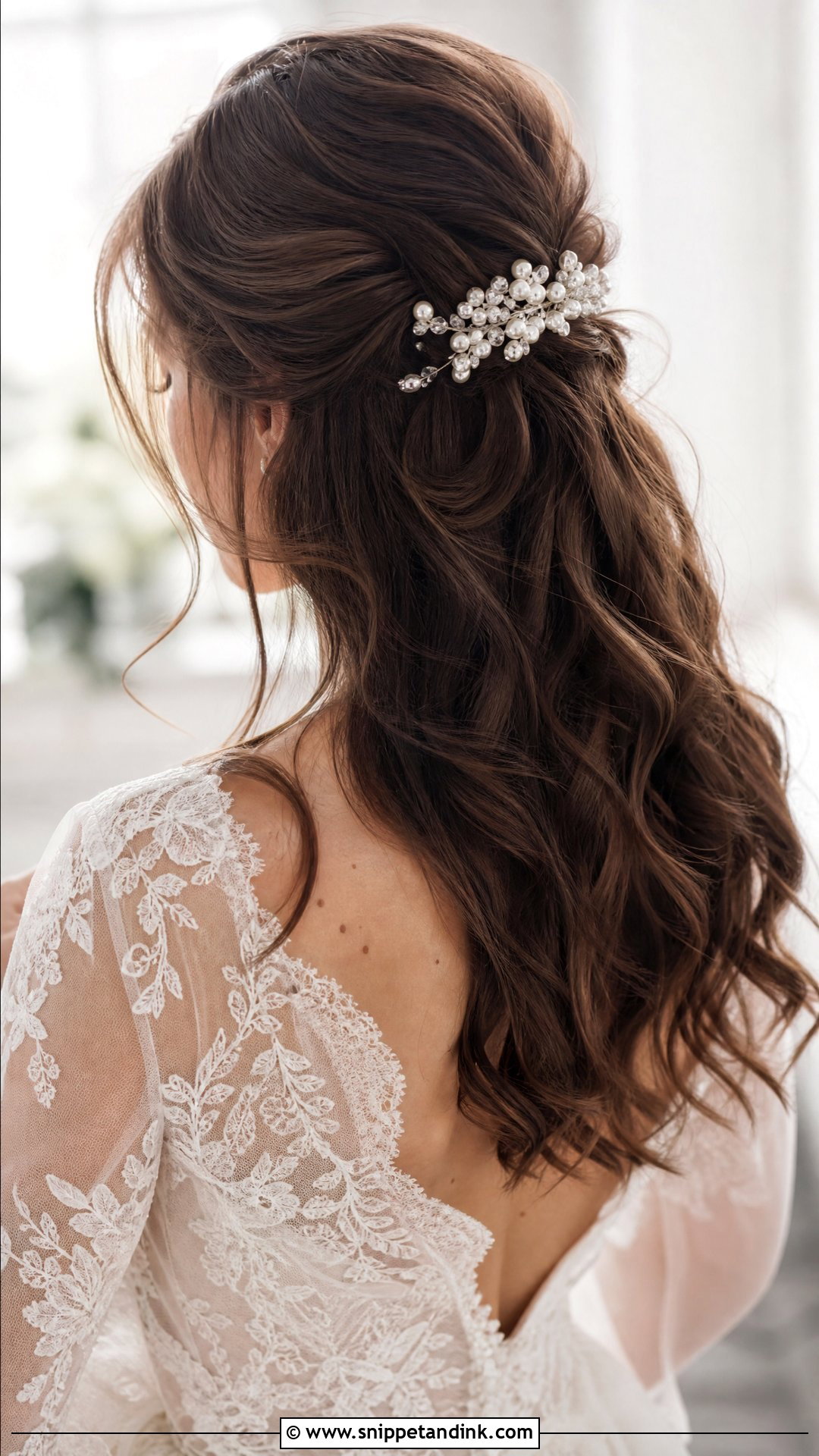
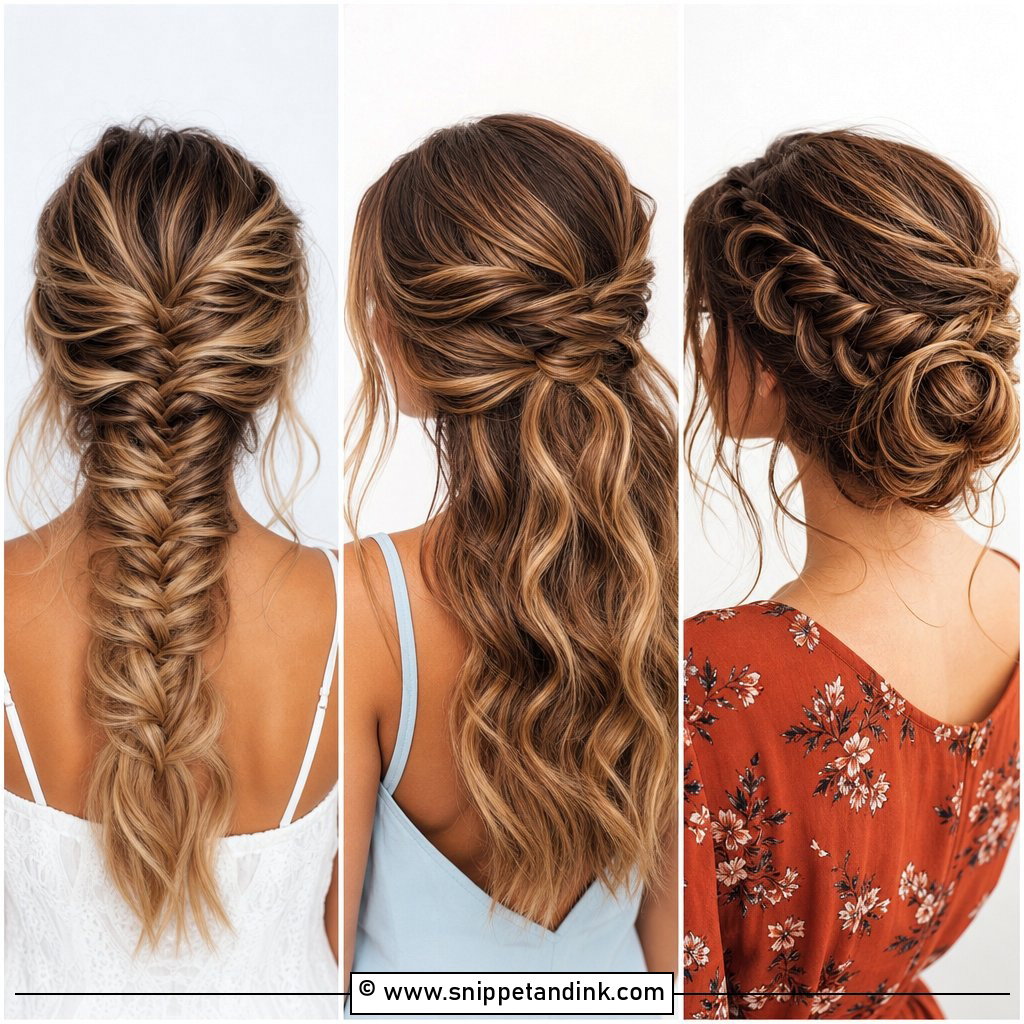
If you worry about hair falling into your face during vows, this solves it. The top section is twisted or pinned back with gentle volume, while the length stays waved, curled or smoothly bent. The pinned section takes all the strain, so on silky hair I hide a small braid underneath the twists for the pins to grab. Finish the join at the back with a comb, small pearls or a few fresh stems.
3. Loose Bridal Curls
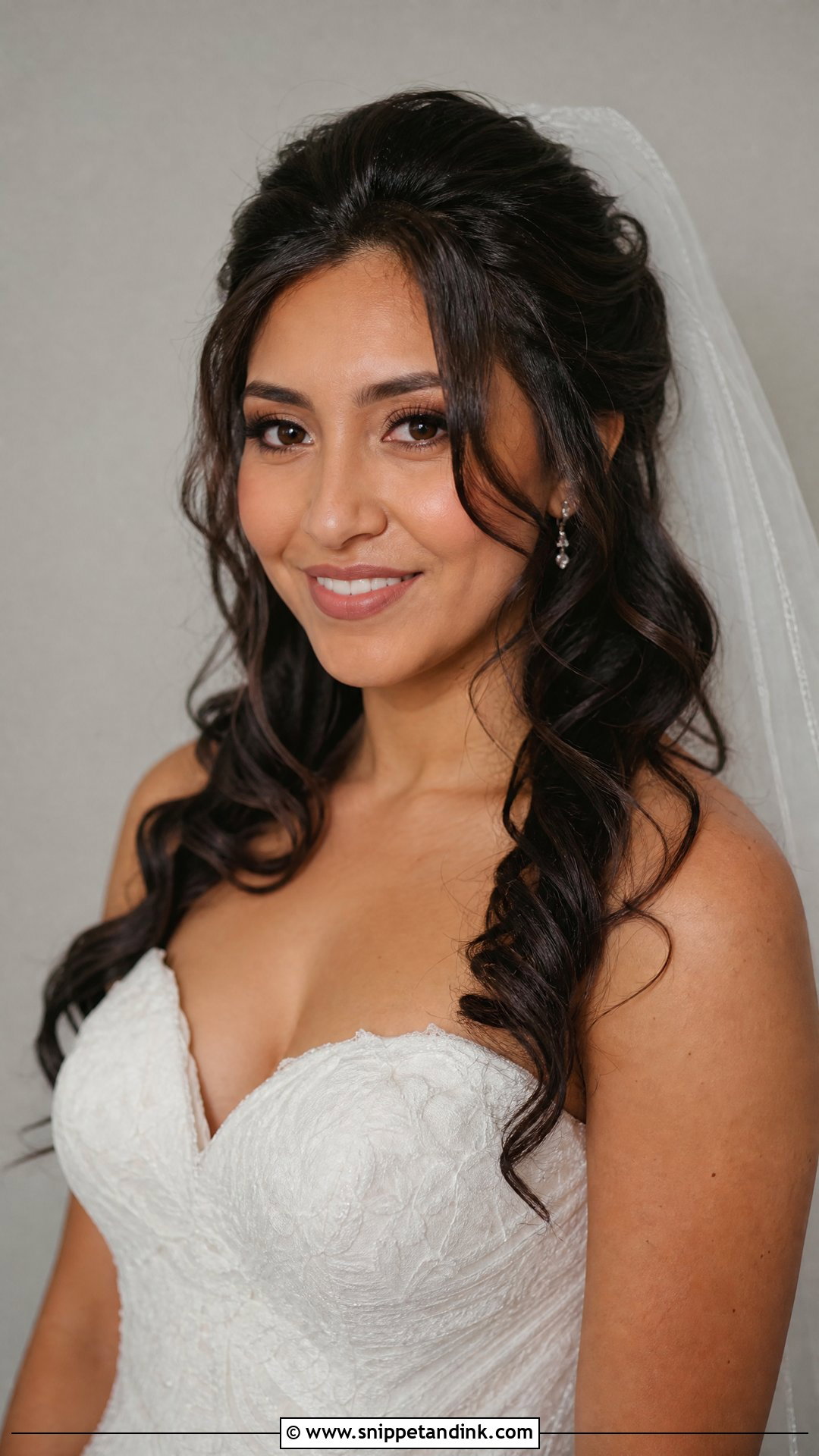
Curls give more bounce than waves while still looking relaxed. I separate them with my fingers instead of brushing, so they stay defined but not perfect. Fine hair needs a setting lotion and smaller sections to hold; thick hair needs longer cooling time on each curl, or the weight pulls it out within the hour. Naturally curly hair usually just needs defining, not re-curling. A few soft curls near the front balance an open neckline.
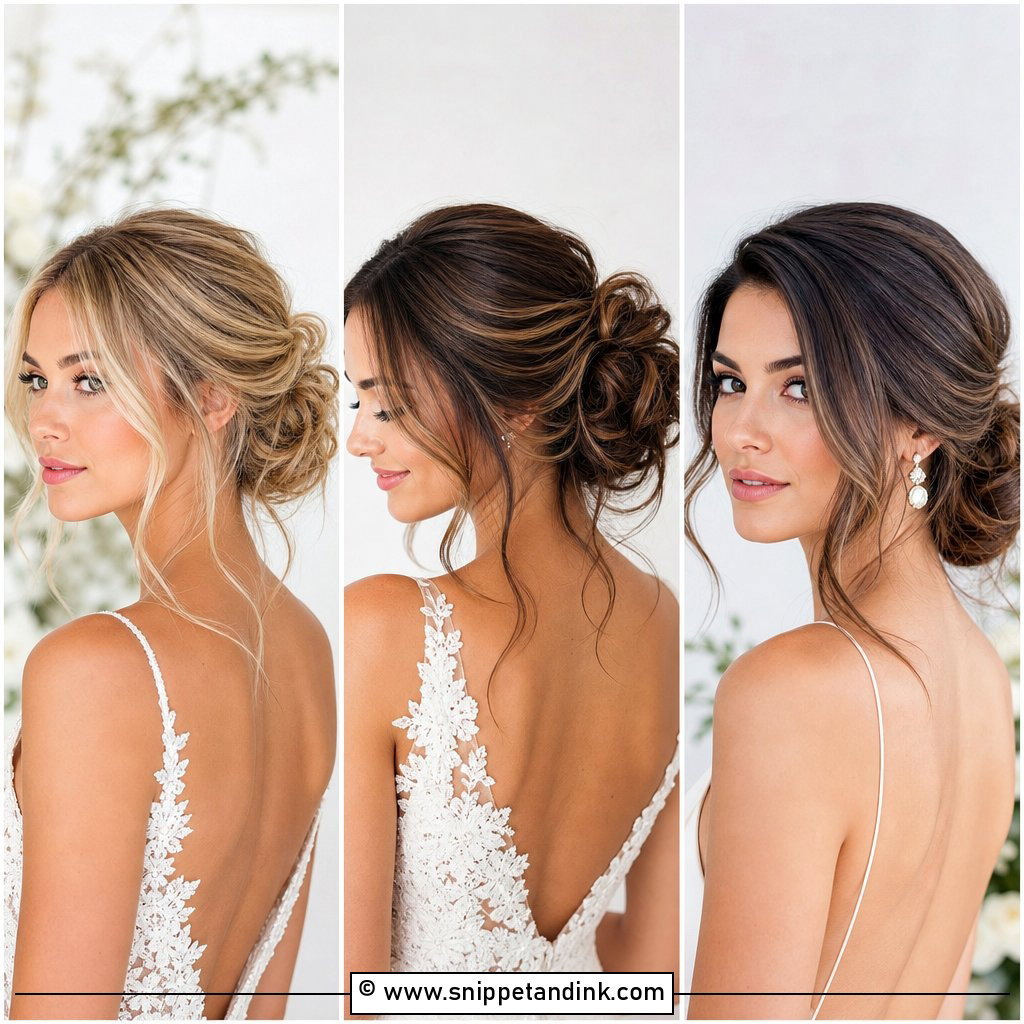
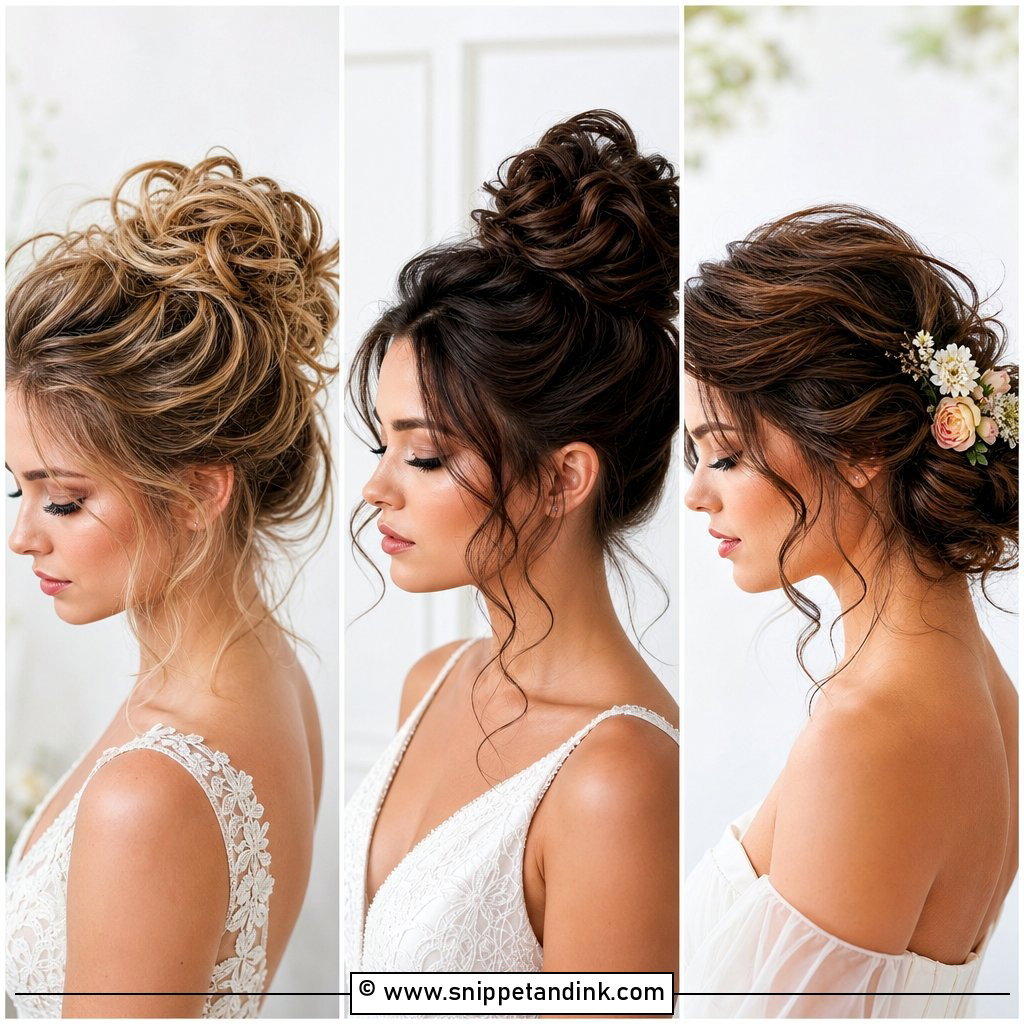
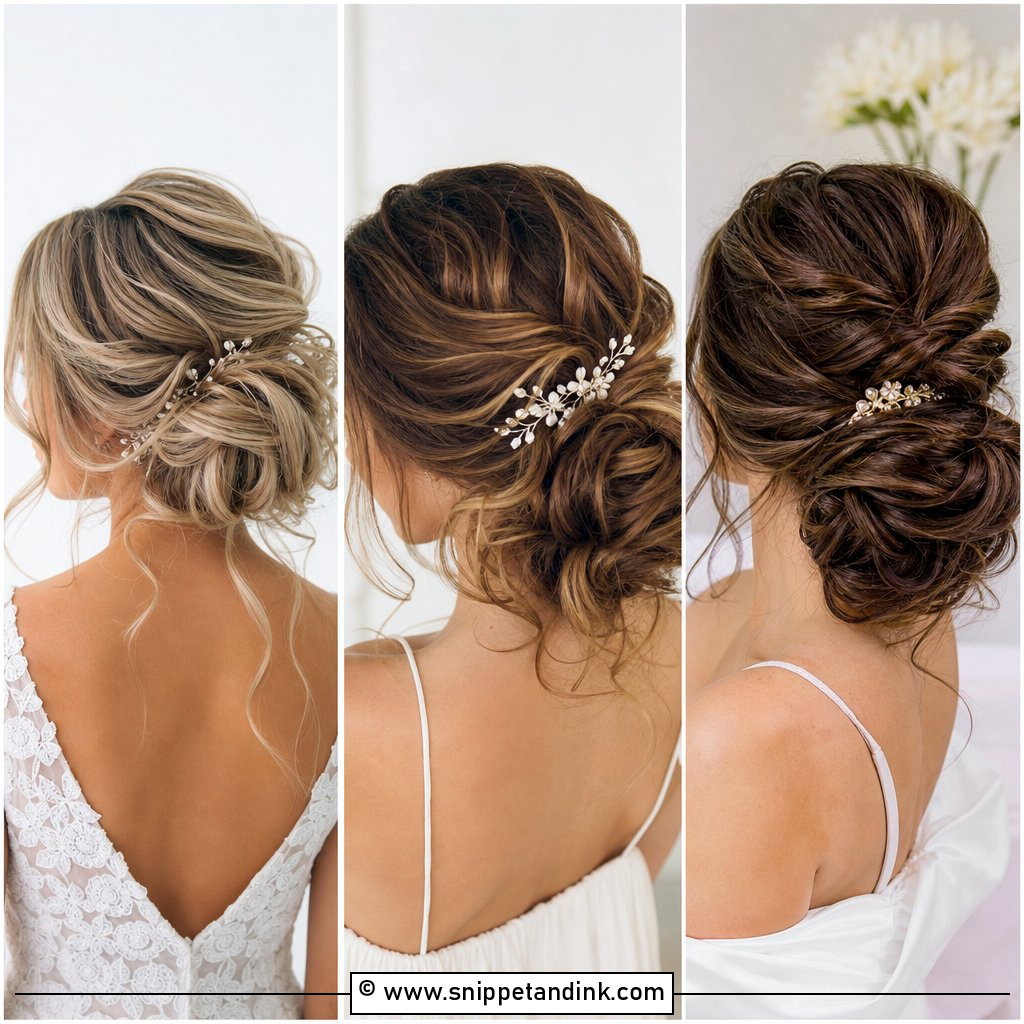
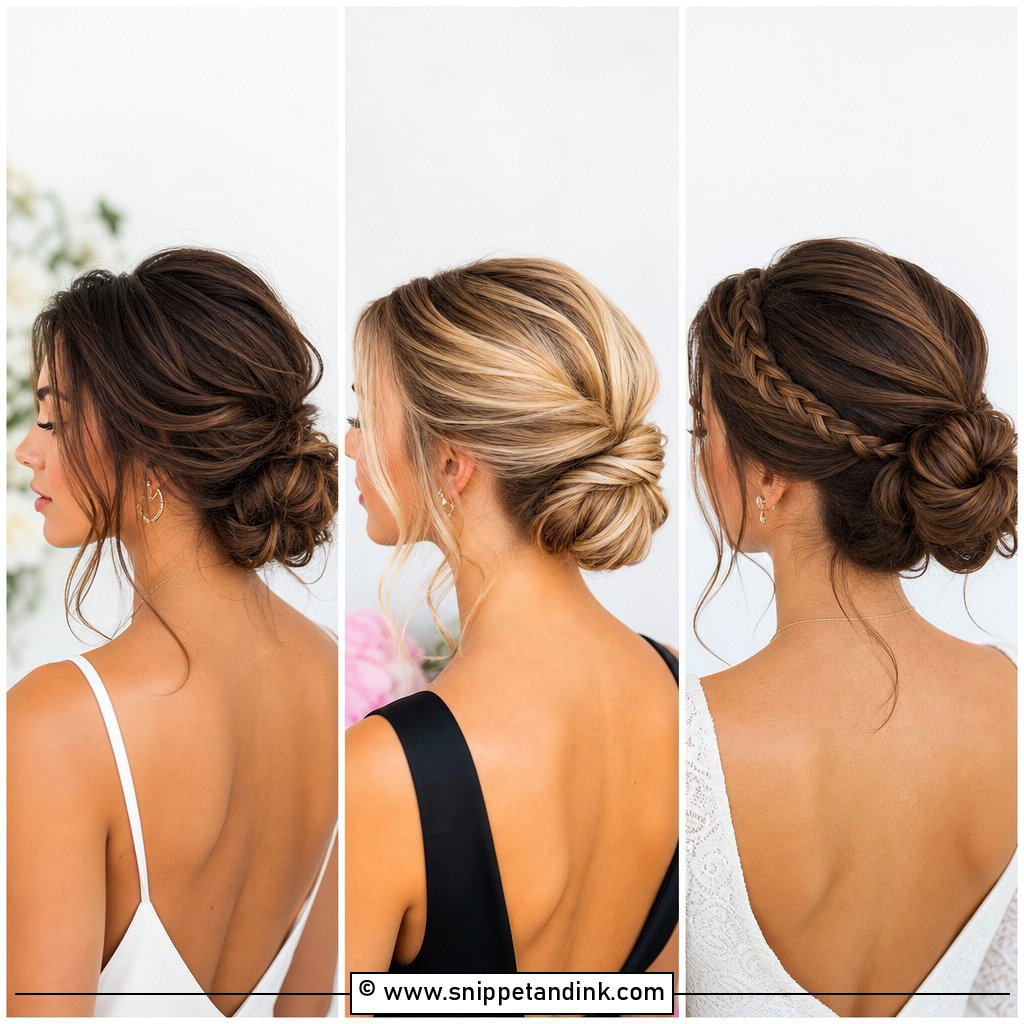
4. Loose Bridal Low Bun
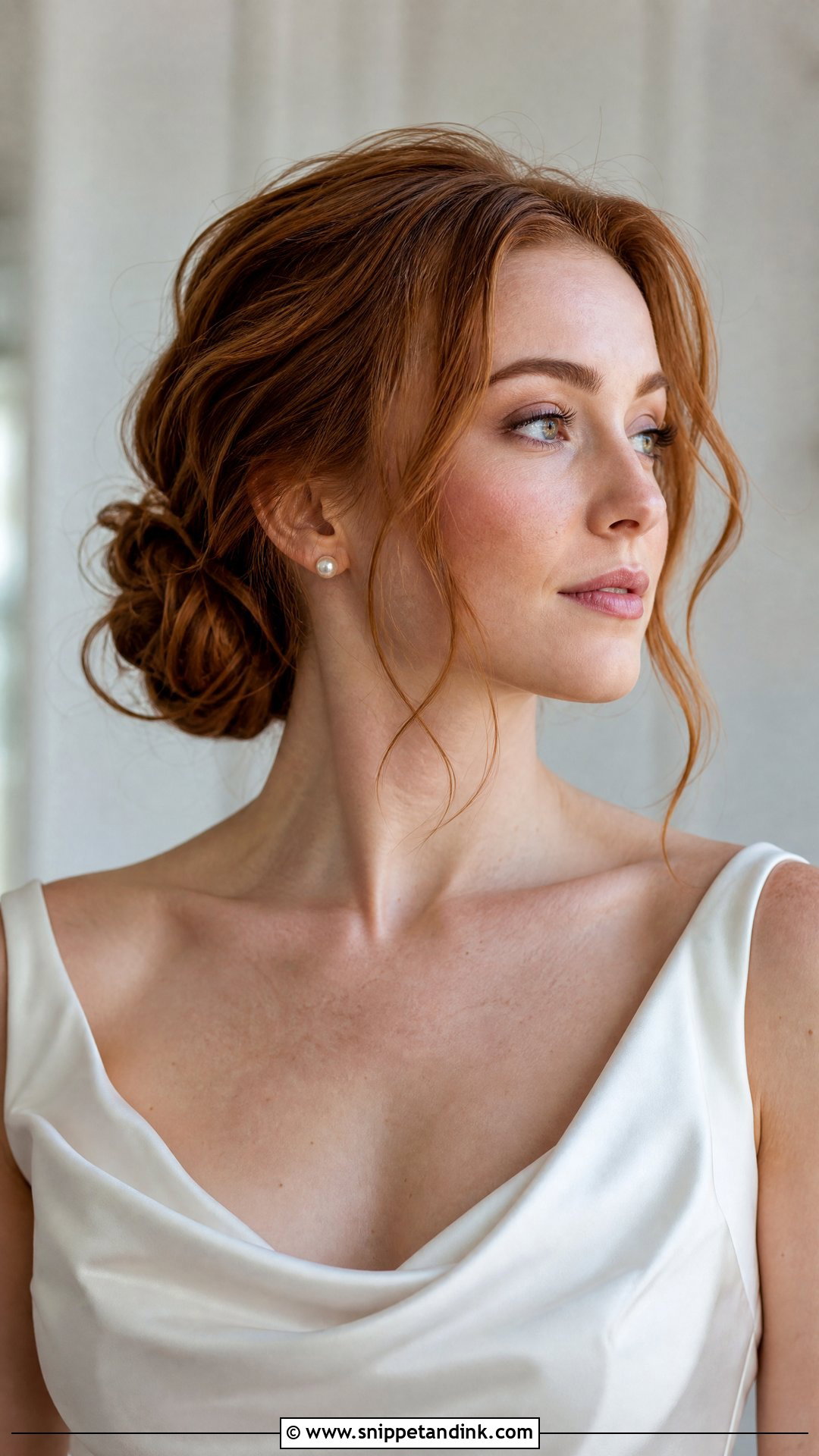
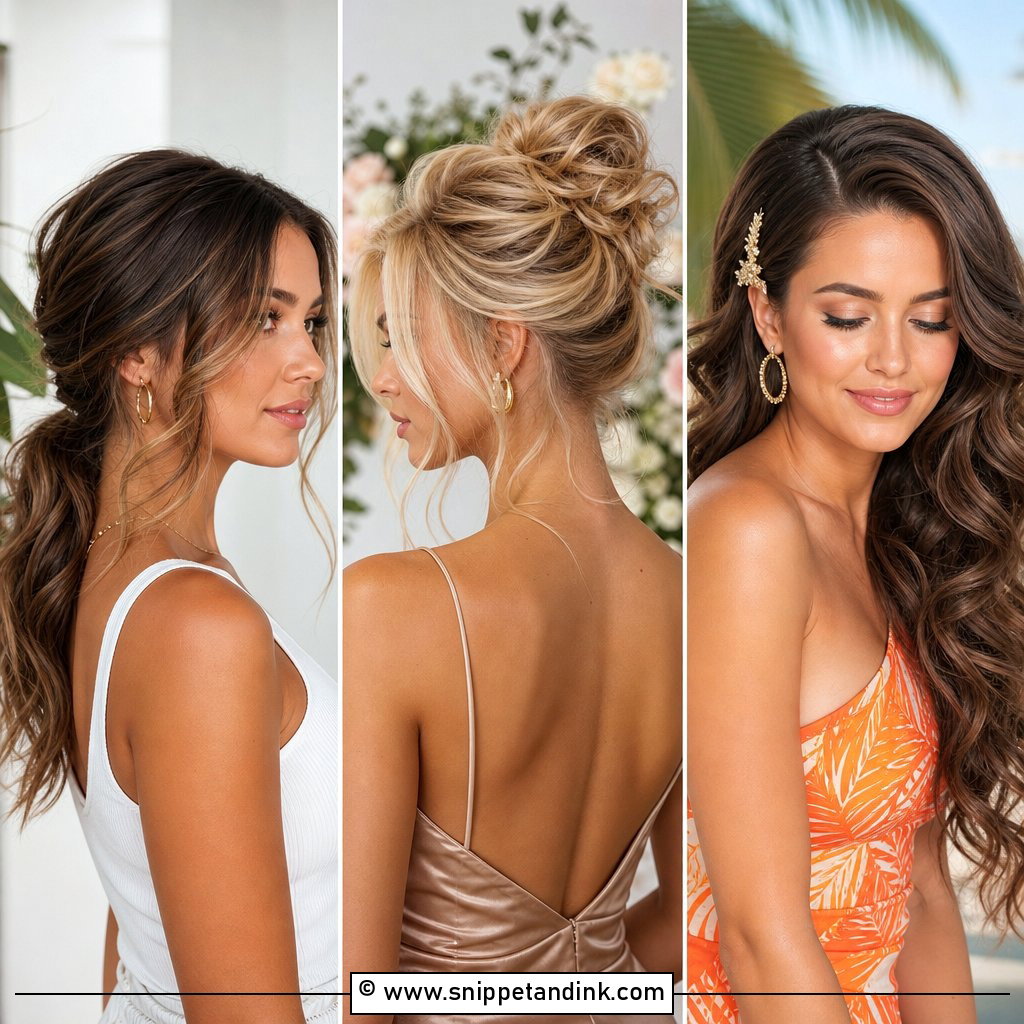
The loose low bun sits at the nape with texture at the crown and a few softly shaped pieces at the face. Low placement makes it secure all day, and the looseness keeps it from feeling strict. Veils, backless dresses, high necks and statement earrings all sit comfortably with it. I pin the bun firmly underneath and only pull texture from the surface, so it looks airy while the structure stays tight.
5. Loose Bridal Chignon
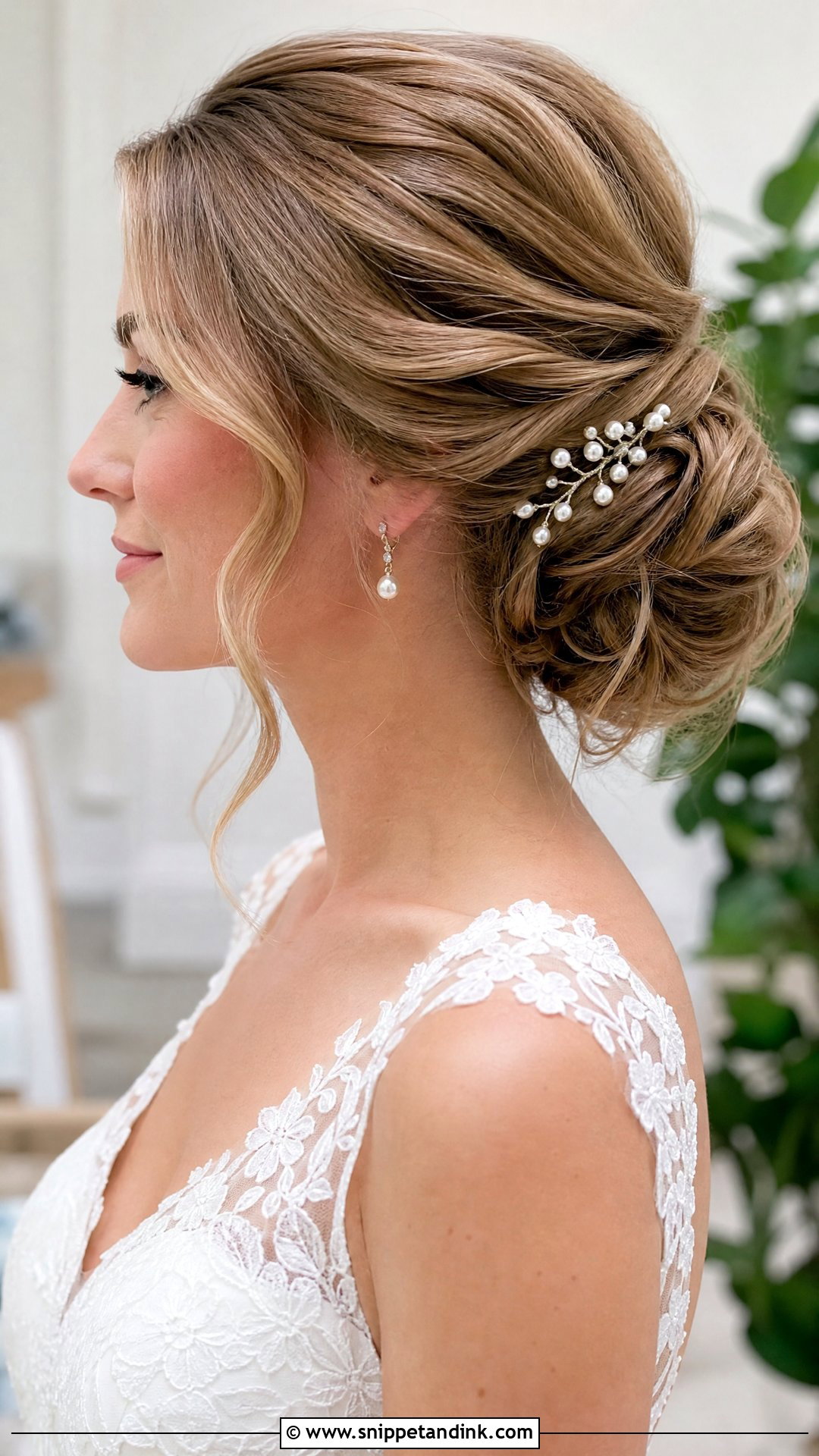
A chignon is the tidier relative of the messy bun. Hair is gathered low, twisted and pinned into a round shape with some visible movement. It reads well from every angle, which matters during a long processional when guests mostly see the back of your head. It handles a long cathedral veil better than most loose styles because the twisted shape gives the comb a solid base. I curve the front pieces back toward the ear so it stays relaxed.
6. Loose Bridal Ponytail
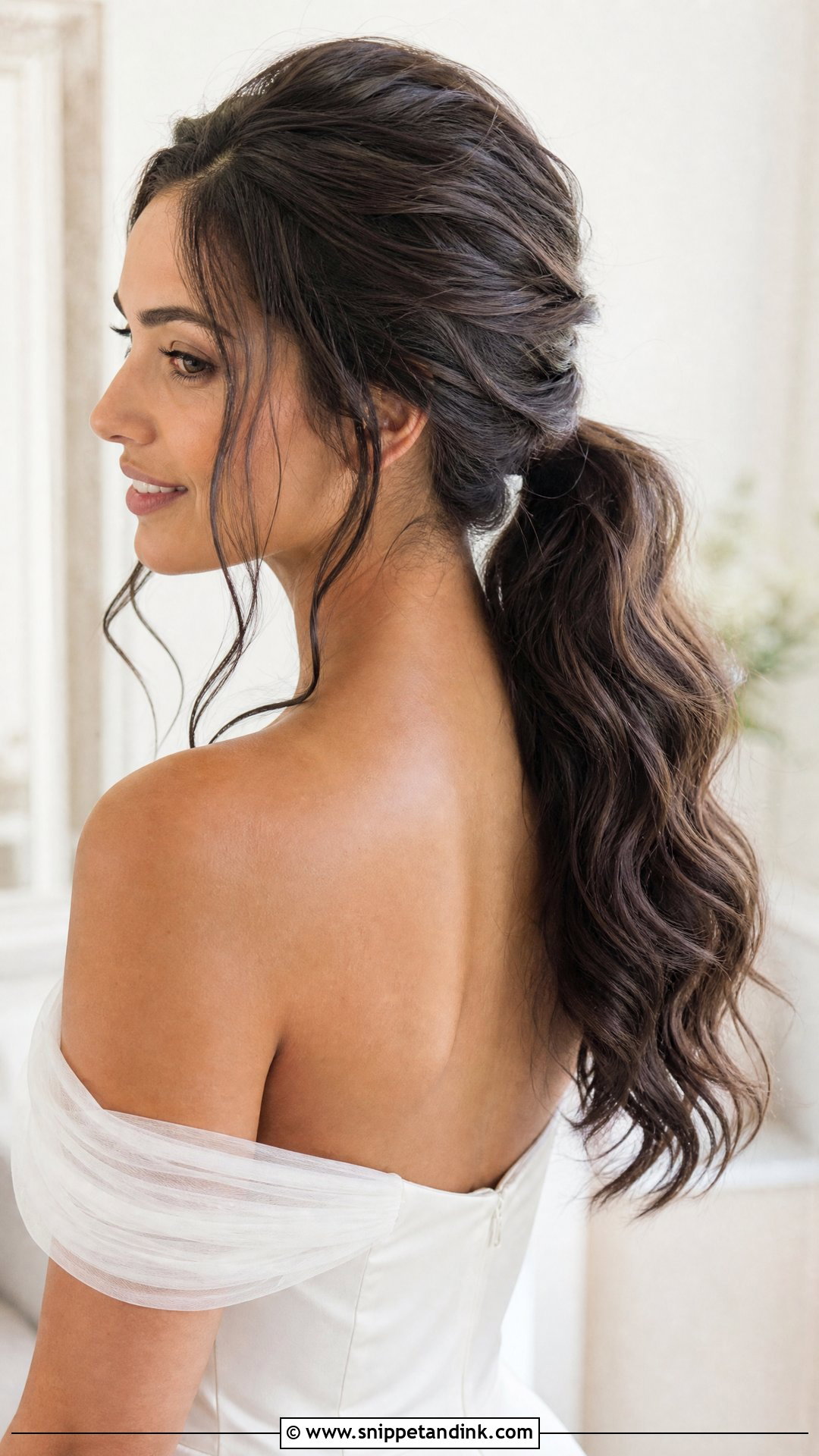
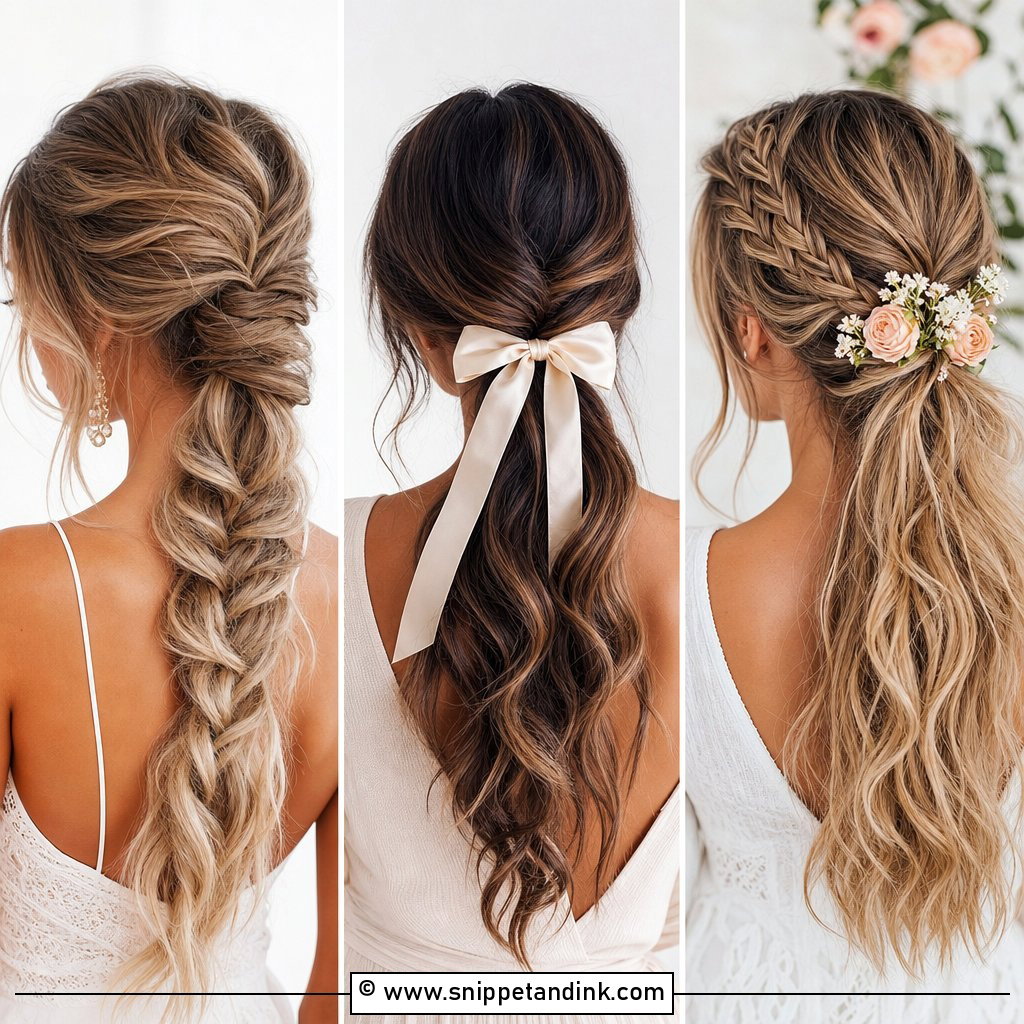
A low or mid-height ponytail with waves through the length moves on the dance floor without tangling. Wrap a strand of hair around the base to hide the elastic, which is the step that makes it bridal instead of weekend hair. I tie it slightly looser than a gym pony and pin through the base with two crossed pins, which takes away the headache by evening. Face-framing strands soften it, and pearl pins or a satin bow add detail.
7. Loose Bridal Braid
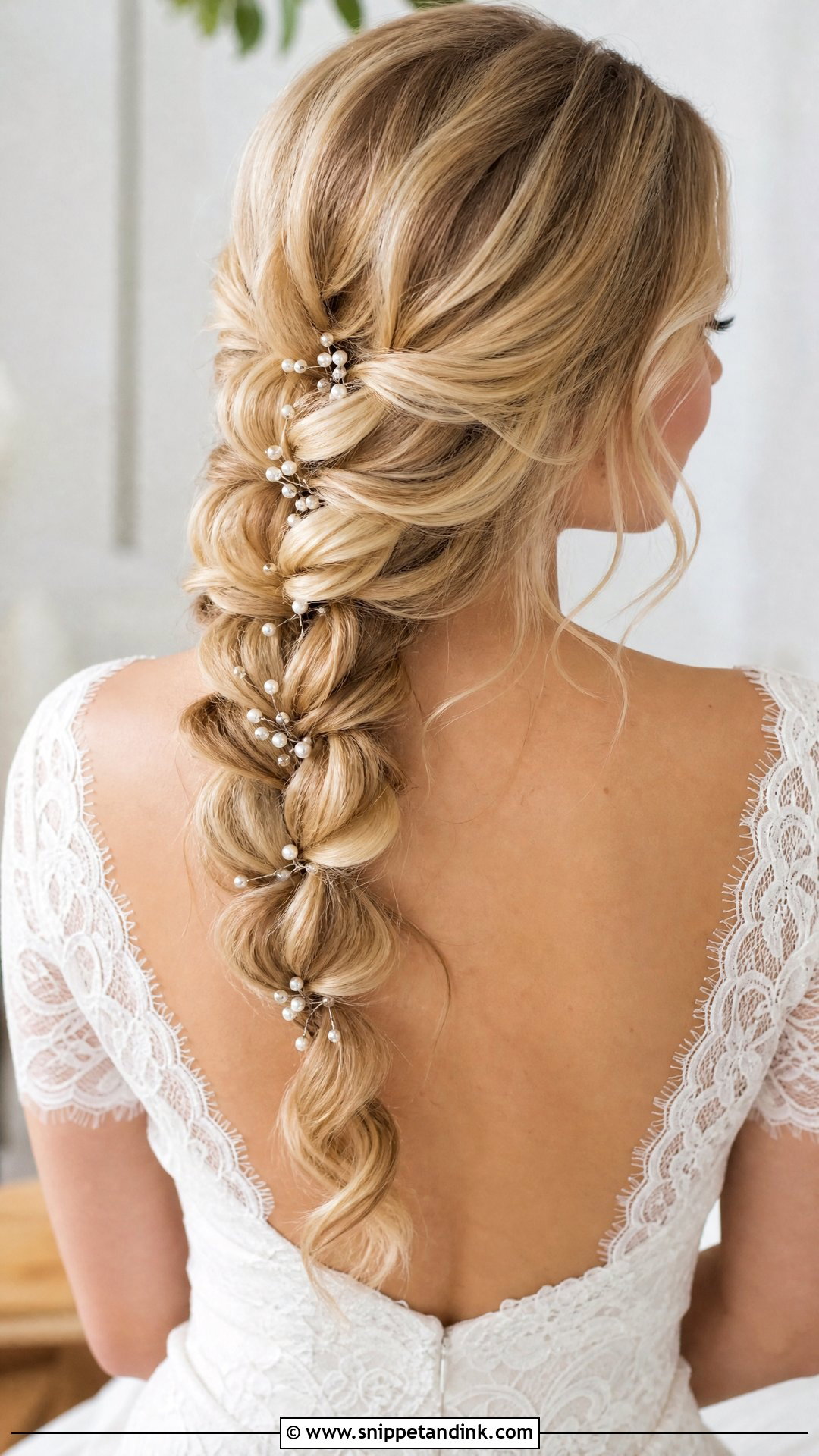
A braid controls the length while still showing it, and it’s the most wind-proof way to wear long hair down. It can run down the back, over one shoulder or into a half-up shape. I wave the hair first, braid it, then gently pull each section apart for width, since a braid of straight hair looks thin once loosened. Floral pins, greenery or tiny pearls slot neatly between the sections. Keep soft waves at the front so the overall look stays bridal.
8. Loose Bridal Side Braid
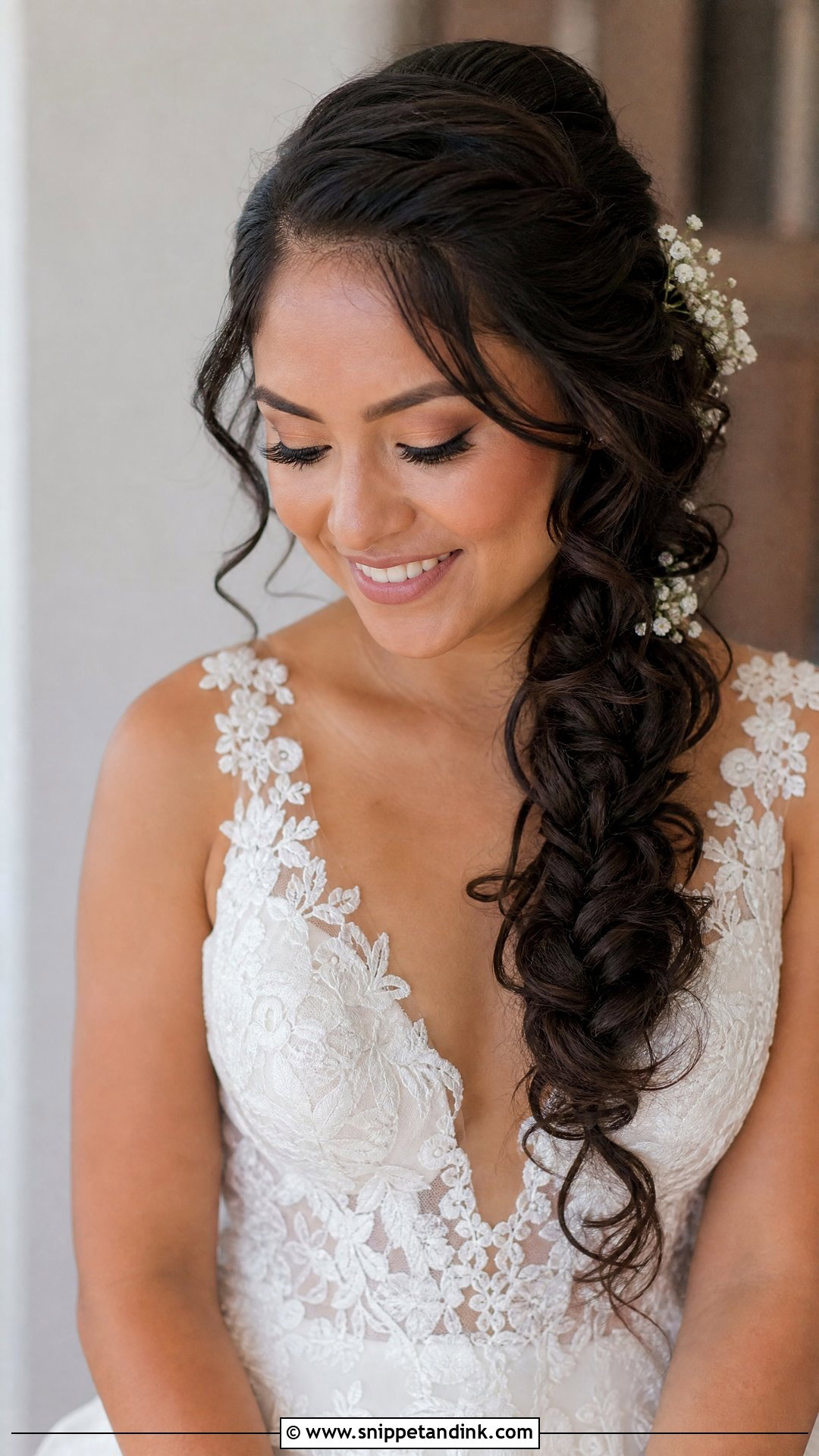
A side braid frames one cheek and shows up well in profile portraits. It suits one-shoulder gowns and open backs, as it adds detail without a heavy accessory. I start the braid behind the ear, not at the nape, so it hangs forward naturally instead of creeping round to the back during the day. A delicate comb or a few floral pins where the braid begins hides the starting point.
9. Loose Bridal Side Swept Hair
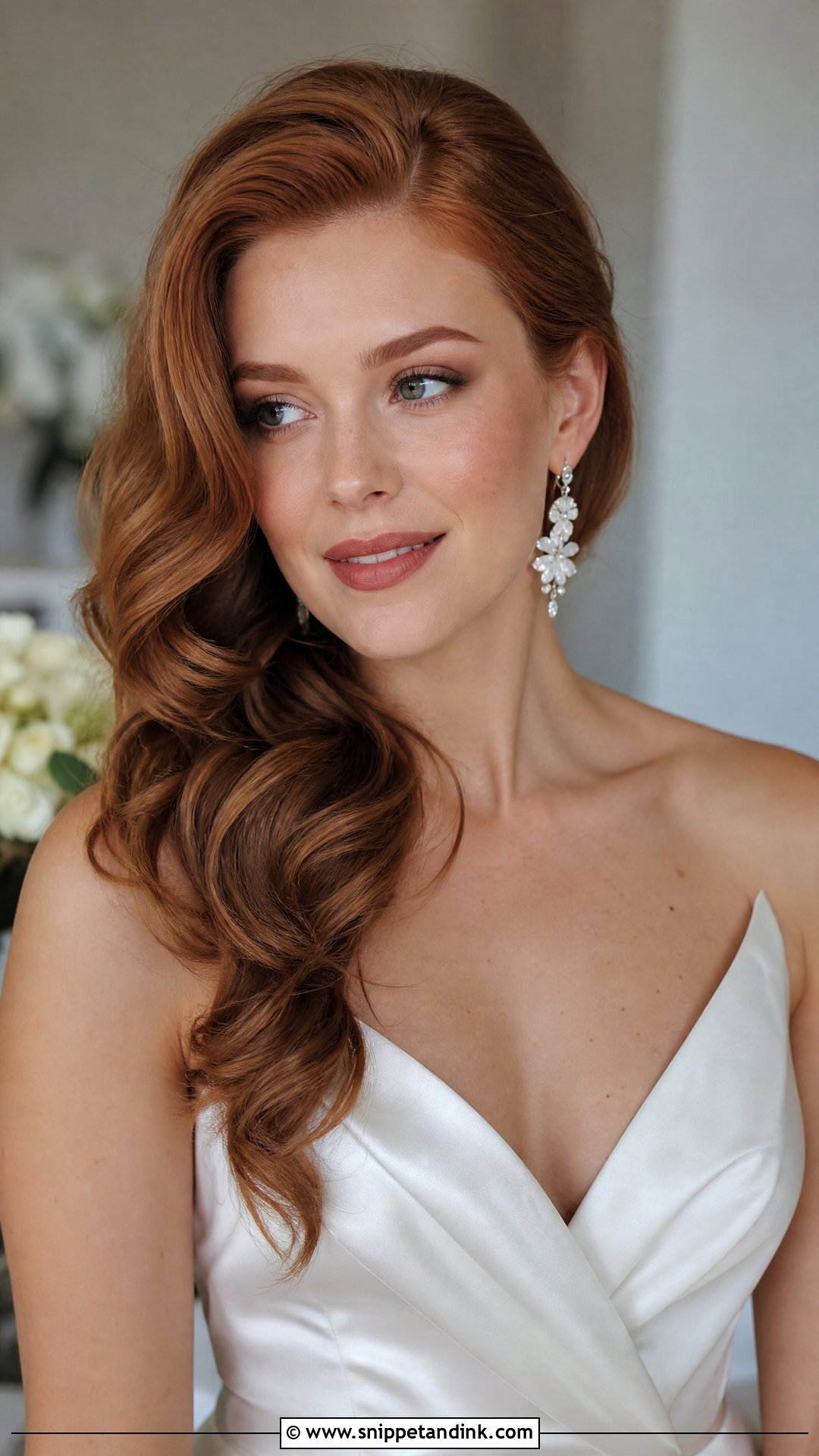
Gathering waves or curls over one shoulder shows off your earrings, a detailed neckline or an open back on the opposite side. The look depends on a hidden anchor: I pin a small section flat behind the ear on the far side, then sweep the rest over and pin it to that. Without one, hair slowly drifts back to both shoulders. A deep side part keeps it classic; softer volume reads more modern.
10. Loose Bridal Hollywood Waves
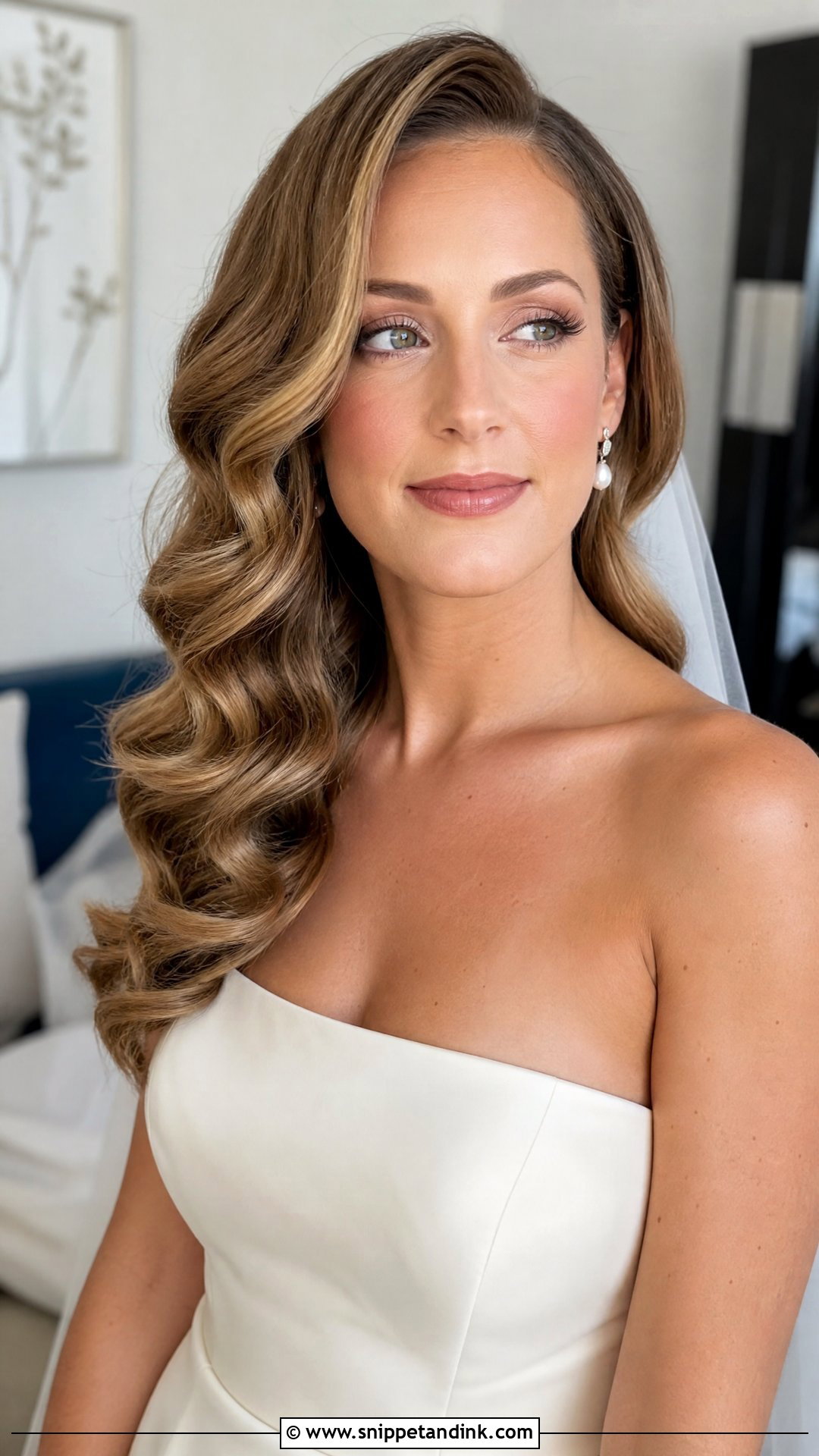
Hollywood waves can be softened slightly for a wedding, smoothed into one continuous pattern but not set rigid. The method is the same: every curl rolled in the same direction, pinned to cool and then brushed together. Medium to long hair works best, and the look sits naturally with strapless, satin or clean-lined gowns. A side part gives the classic shape; a centre part feels newer. Go light with shine spray, as too much clumps the waves and looks greasy under a flash.
11. Loose Bridal Beach Waves
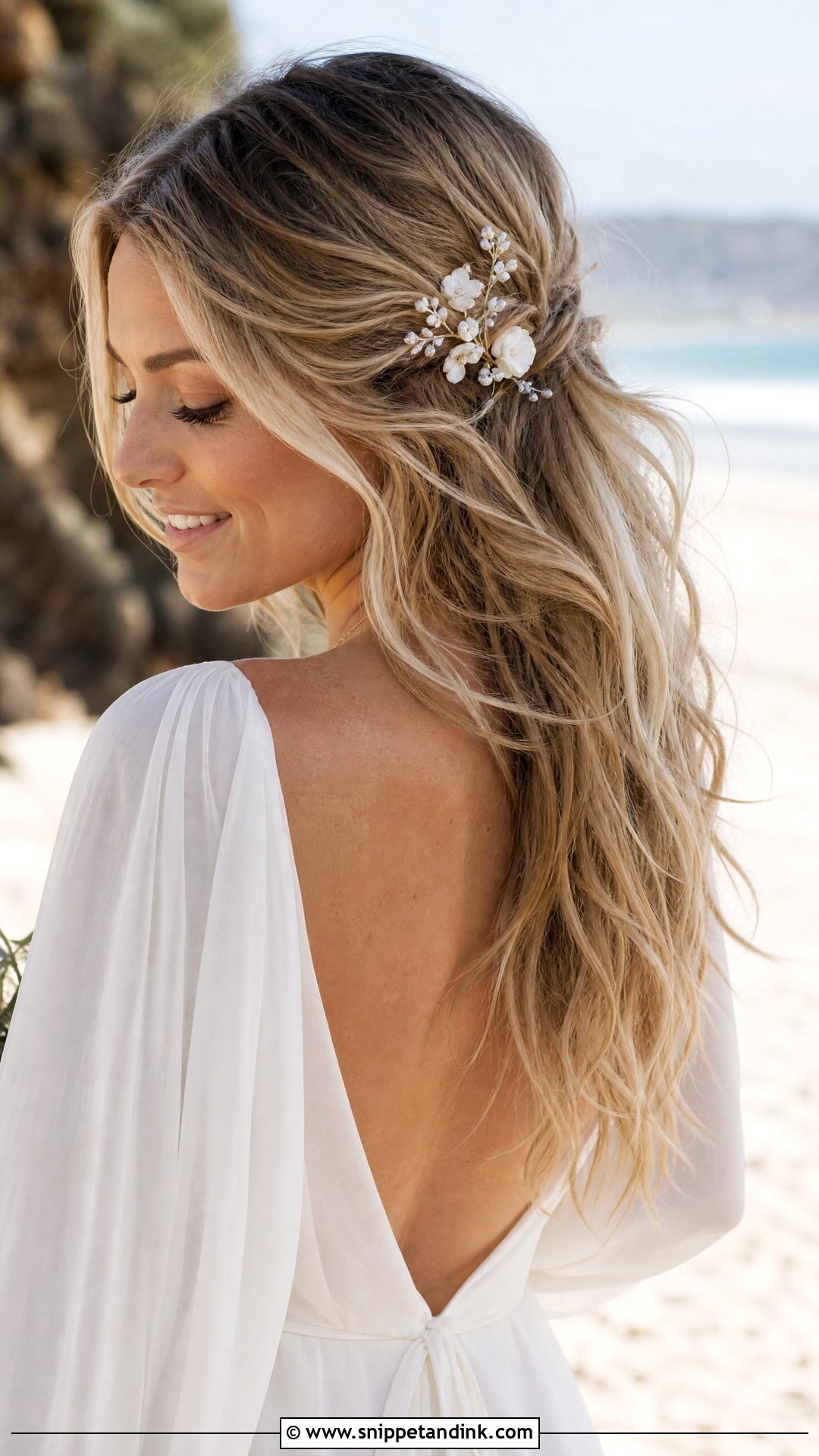
Beach waves suit coastal weddings, gardens and warm-weather celebrations, and they forgive salt air better than polished curls. Layers help, since they create movement at different lengths. I keep the top smooth and the mid-lengths and ends looser, and I use a flat iron twisted through sections rather than a curling iron. Avoid heavy sea salt sprays on dry or highlighted hair, which can turn crunchy and dull. A simple veil or small floral pin finishes it.
12. Loose Bridal Hair With Veil
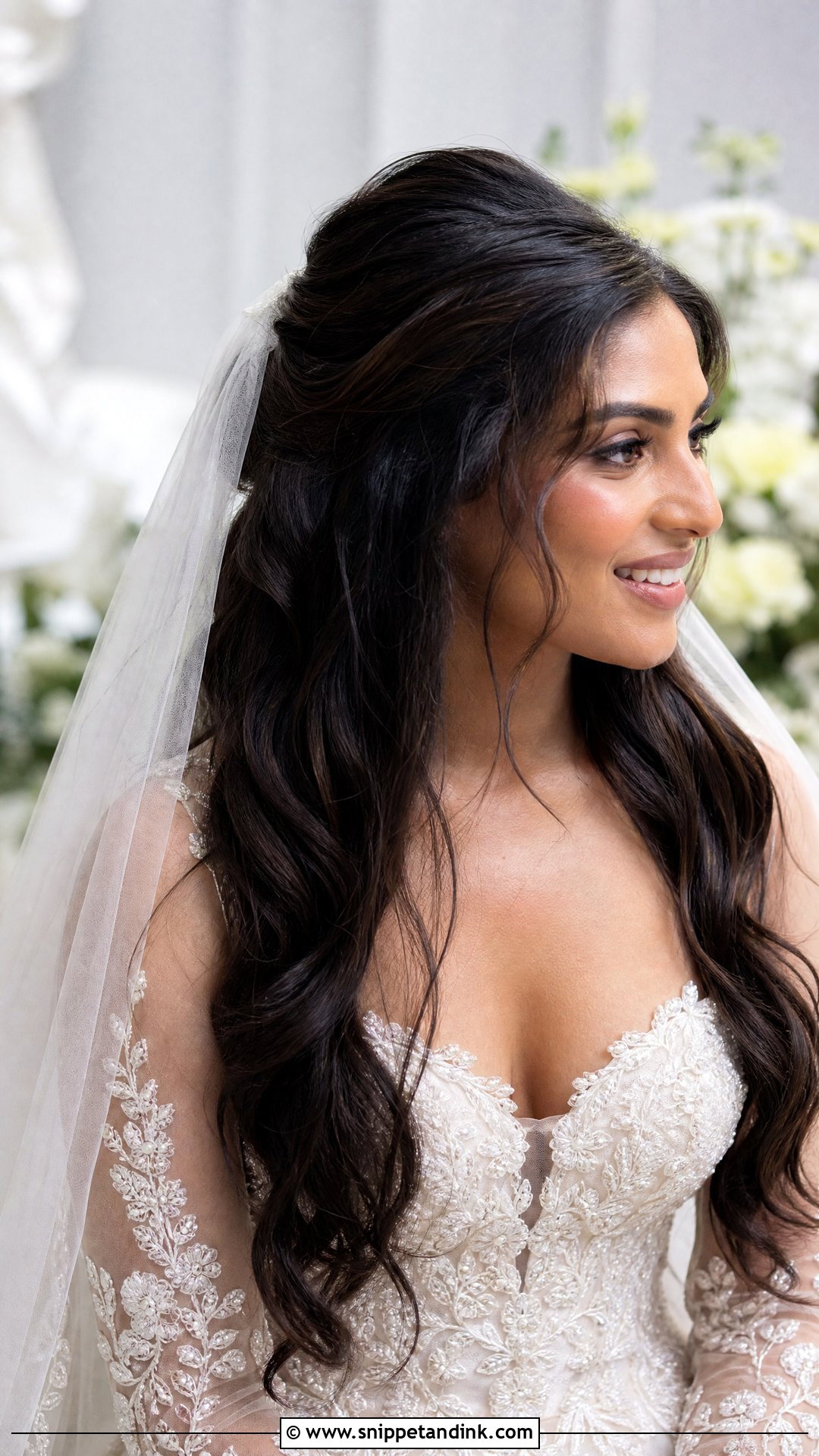
Down hair and veils need a plan for where the comb grips. Waves, curls, half-up looks and soft buns all work once the anchor point is decided. If you want your hair mostly down, I build a small hidden braid or a pinned section at the crown and push the comb into that. On updos, the veil sits above or below the bun depending on the dress. A comb pushed into loose, freshly washed hair alone will slide out within an hour.
13. Loose Bridal Hair With Flowers
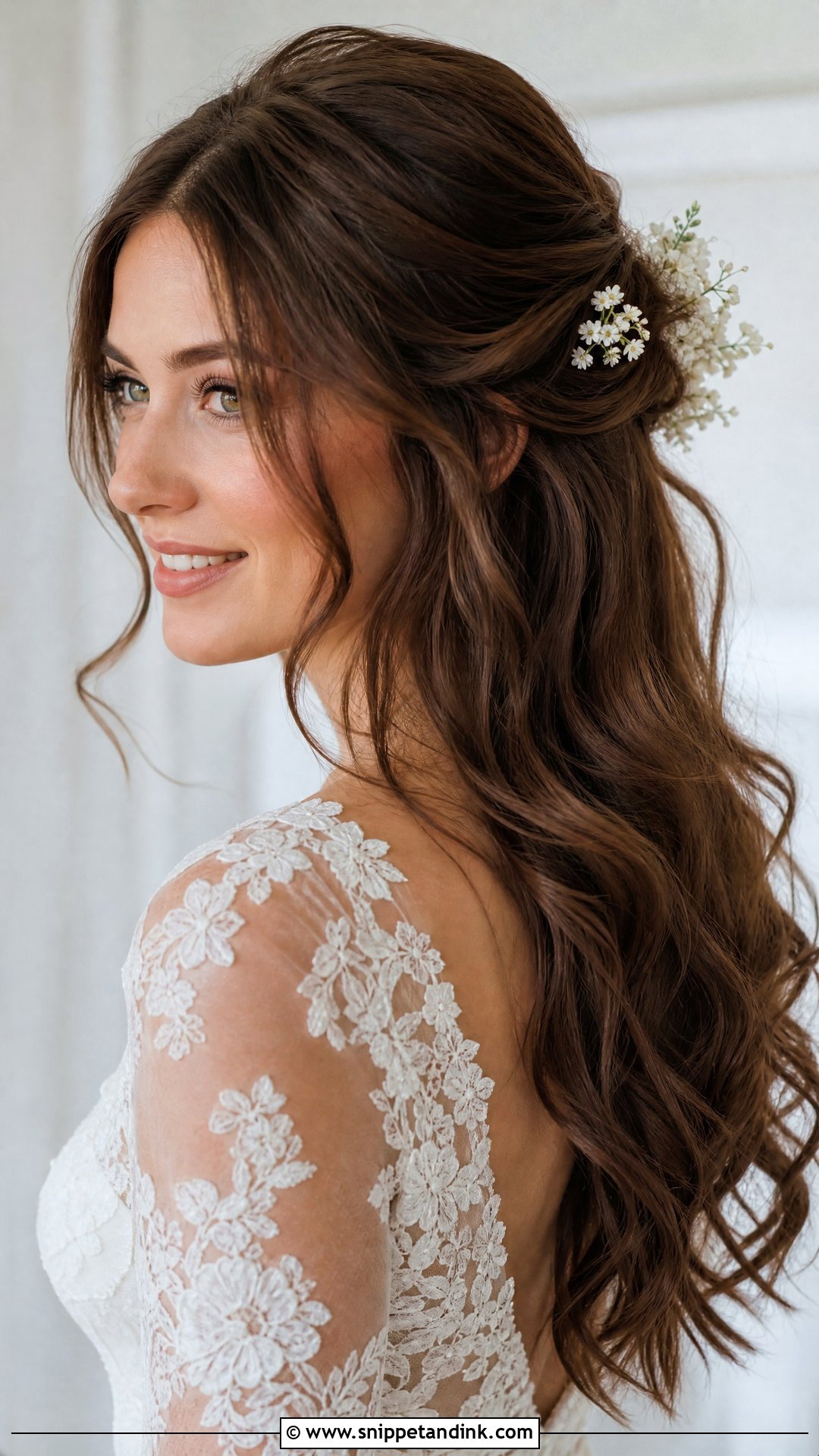
Flowers can be tucked into waves, set around a half-up twist or added to a loose bun. Smaller blooms look more refined and are far easier to secure. Match them to the bouquet but choose sturdy varieties: spray roses, waxflower, small orchids and baby’s breath hold up out of water; gardenias and garden roses brown fast against warm skin. Ask your florist to wire and tape the stems for hair. I place them in uneven groups rather than spacing them like buttons.
14. Loose Bridal Hair With Pearls
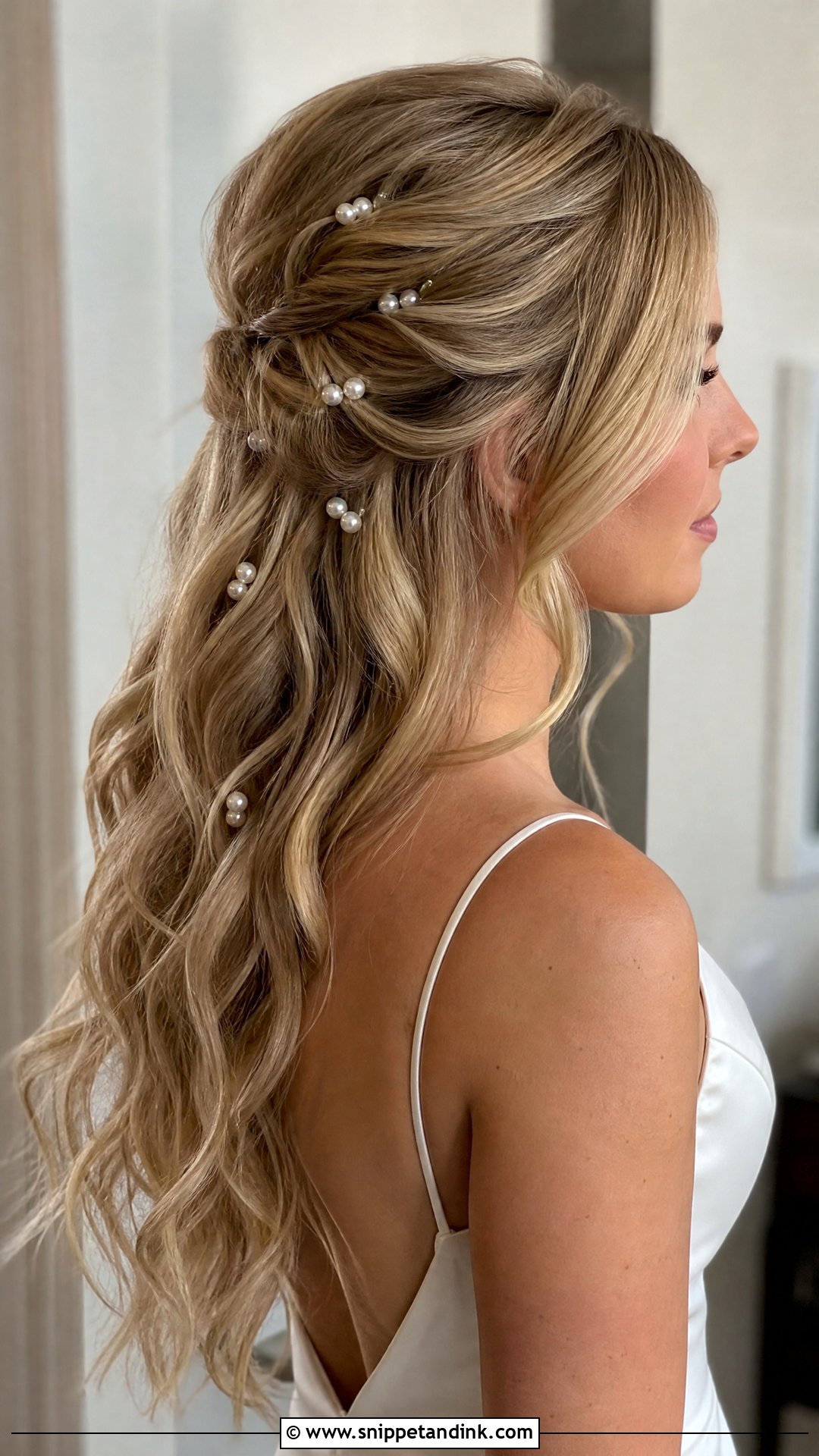
Pearls can be scattered through waves, set along a braid, placed in a low bun or used on a comb at the back of a half-up look. I’d keep it to one placement area, because pearls in three places start to look busy. They suit lace, satin, simple veils and classic jewellery. Look at the pin before you buy: a pearl on a short smooth pin slips out of silky hair, while one on a bobby-pin base or a small comb grips properly.
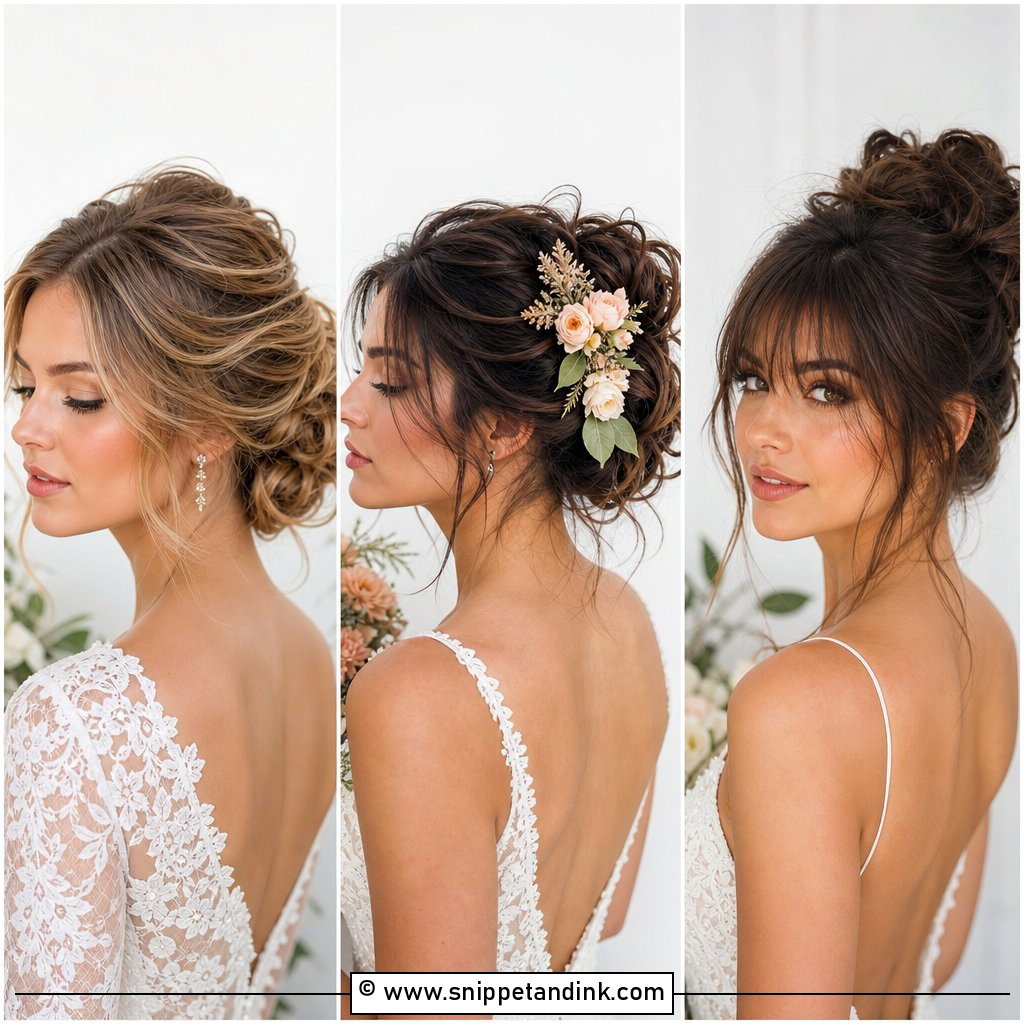
15. Loose Bridal Hair For Long Hair
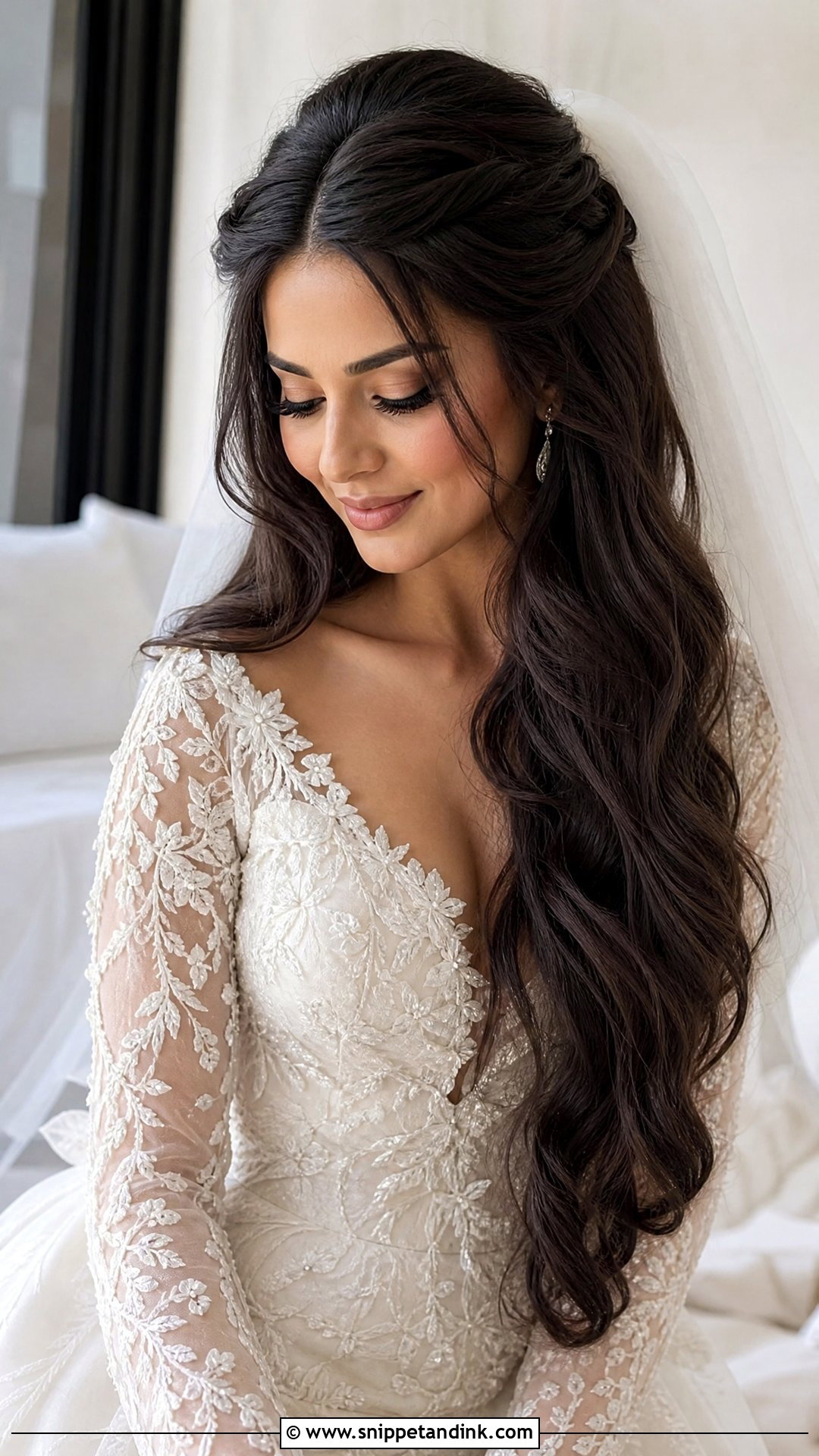
Long hair gives you room for every texture here, but the weight is the problem. By evening, heavy curls stretch out and the volume at the crown sinks. Long layers, root lift and a few face-framing pieces lighten it. Half up is often the most practical shape for very long hair because it keeps the front secure while showing length. If you want it fully down, I’d set firmer curls than you think you need and brush them into waves, since they’ll relax over the day anyway.
Reviving Waves Between the Ceremony and the Reception
There is usually a gap after the formal photos, and that’s the moment to refresh loose hair before guests see you again. It takes ten minutes if someone knows what to do. I leave these steps with a bridesmaid or the coordinator.
- Don’t brush. Run your fingers through the lengths to separate any clumps.
- Take any wave that has gone flat at the front, roll it around two fingers and pin it flat against the head for five minutes while you sit.
- Lift the crown by sliding a finger under the top section and misting a little dry texture spray at the roots.
- Unpin, shake the curls loose, and smooth flyaways with a dab of balm on your fingertips, not spray.
If you’ve changed into a reception dress with a different neckline, this is also the time to sweep the hair to one side or switch to a half-up clip. One accessory in your bag makes that change take seconds.
Down Hair Still Needs a Plan
Loose hair is romantic and comfortable, but it isn’t the low-effort option it looks like. Your dress, your venue’s weather and your hair type decide which version lasts, more than any inspiration photo does. The right choice holds well, frames your face, works with your veil and still feels like you when you look back at the pictures. Book a trial, bring clear photos, and wear the dress, or at least the neckline, while you test it.
You'll Like These Ideas:


Leave a Reply