
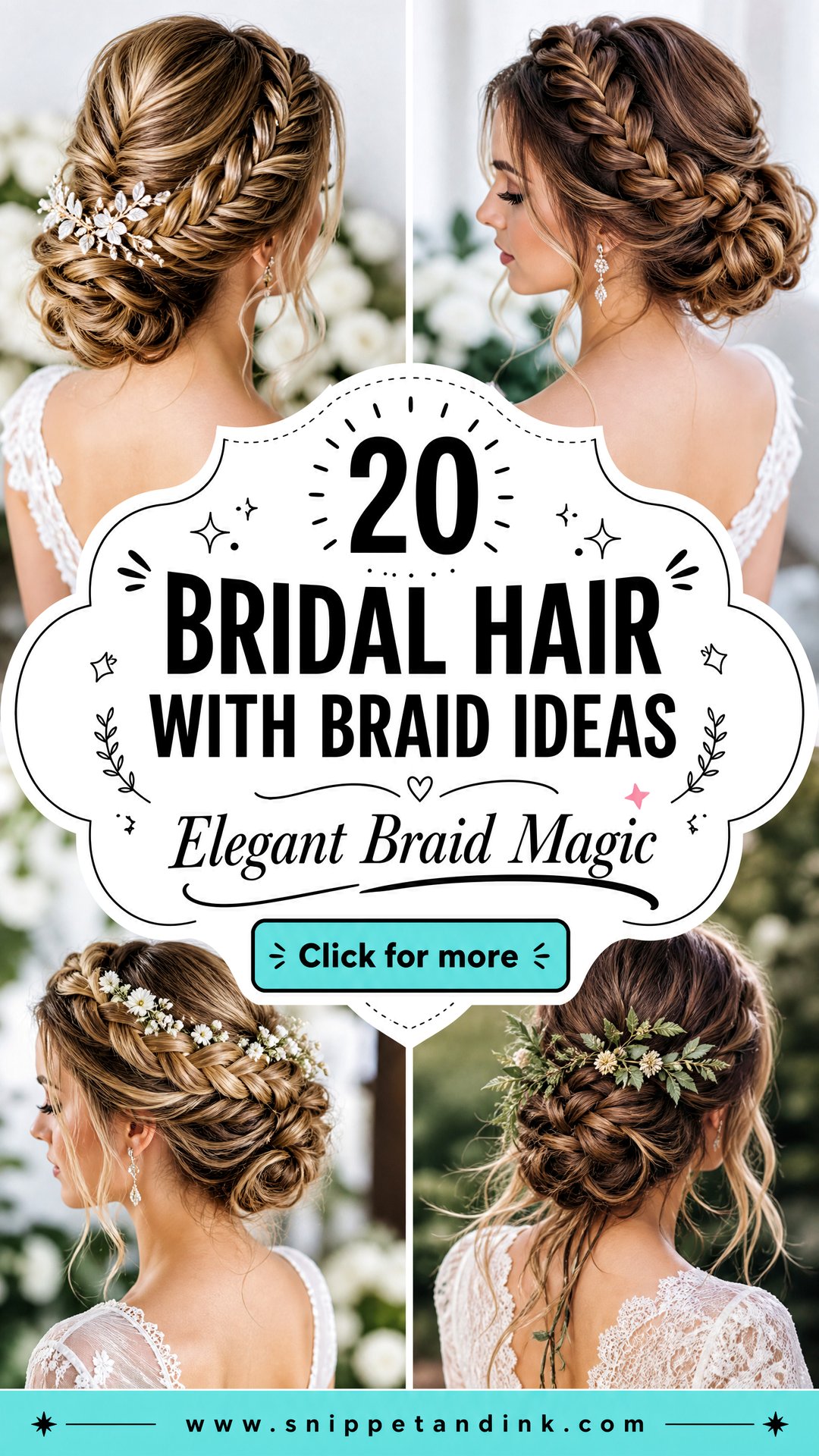
Braids are the hardest-working bridal style I do. They hold pins and accessories better than smooth hair, they cope with wind and humidity, and they still look right at midnight when loose curls have long since dropped. The variety runs from a fine three-strand plait tucked into a chignon to a raised Dutch braid you can see from the back row. These twenty styles cover that range, and for each one I’ve noted what kind of hair it needs and how it tends to wear across a long day.
Fine, Layered or Coily Hair Each Braid Differently
Almost any hair can be braided, but not every braid suits every texture. Before suggesting a style, I look at three things: how dense the hair is, how many layers it has, and how slippery it feels.
- Fine hair: Dutch braids pulled out after braiding look much fuller than French braids, which lie flat. A clip-in weft under the braid adds bulk.
- Layered hair: short layers poke out of fishtails and waterfalls. Rope and Dutch braids trap them better, helped by a little pomade.
- Very thick or long hair: crowns and milkmaid braids get heavy, so I add extra pins along the underside or leave some hair down to lighten the load.
- Freshly washed hair: braids loosen faster on clean, silky hair. Texture spray or dry shampoo gives grip.
- Coily and natural hair: knotless braids or twists installed in advance, or braids made from your own stretched hair, hold best. Avoid heavy tension at the edges.
Tell your stylist if your scalp is sensitive. A braid pulled tight at the hairline feels fine at ten in the morning and aches by the speeches.
1. Braided Crown Updo for Brides
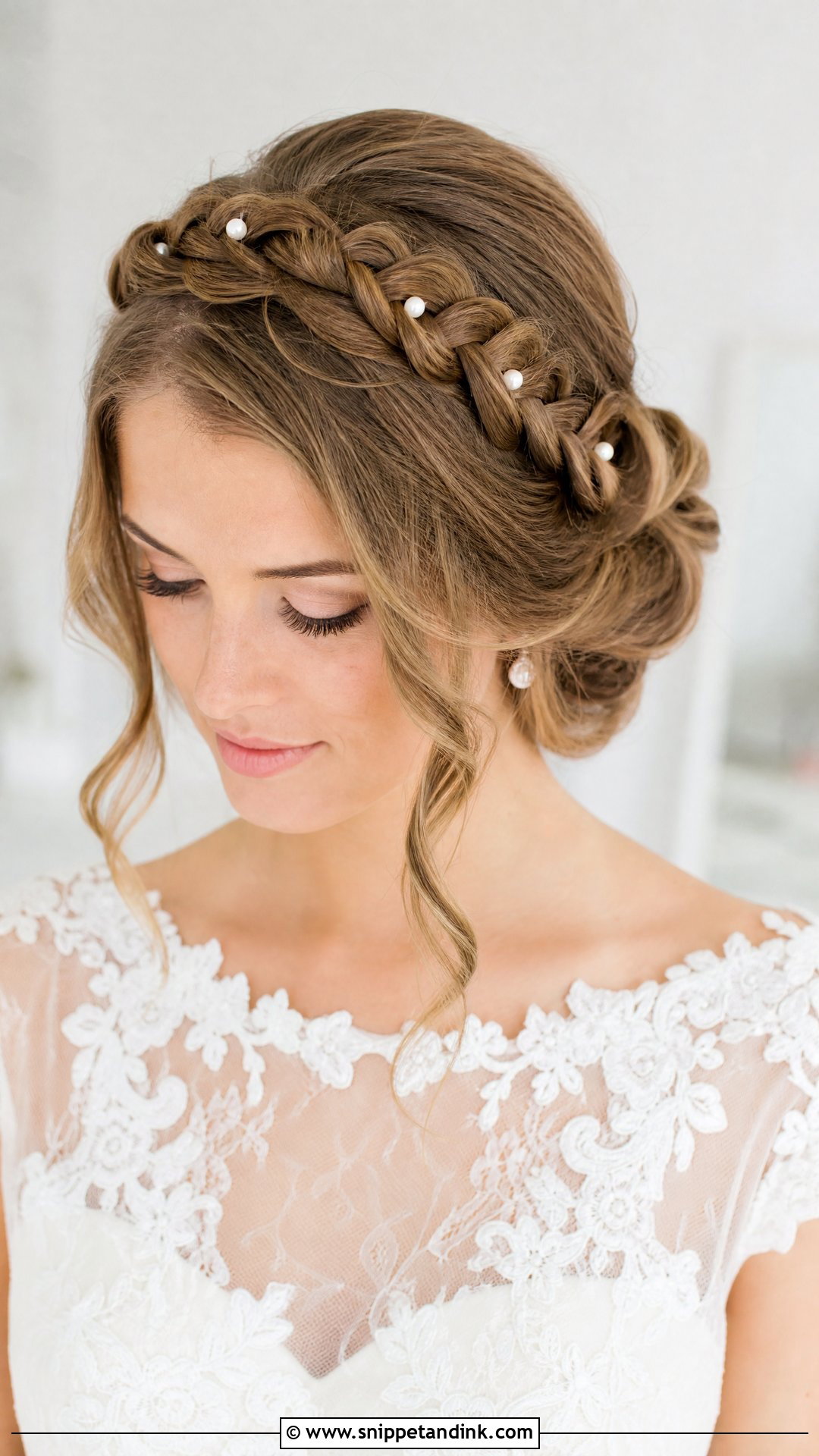
A braided crown wraps a halo of woven hair around the head, and it’s one of the most secure styles a bride can choose. I usually build it from two braids started behind the ears and pinned over the top, rather than one long braid, because it sits more evenly and doesn’t need waist-length hair. Pancaking the edges makes it look fuller and hides the pins. Flowers or pearl pins tuck neatly into the loops. On fine hair, a clip-in weft is often what makes the crown look substantial.
2. Fishtail Braid Wedding Updo
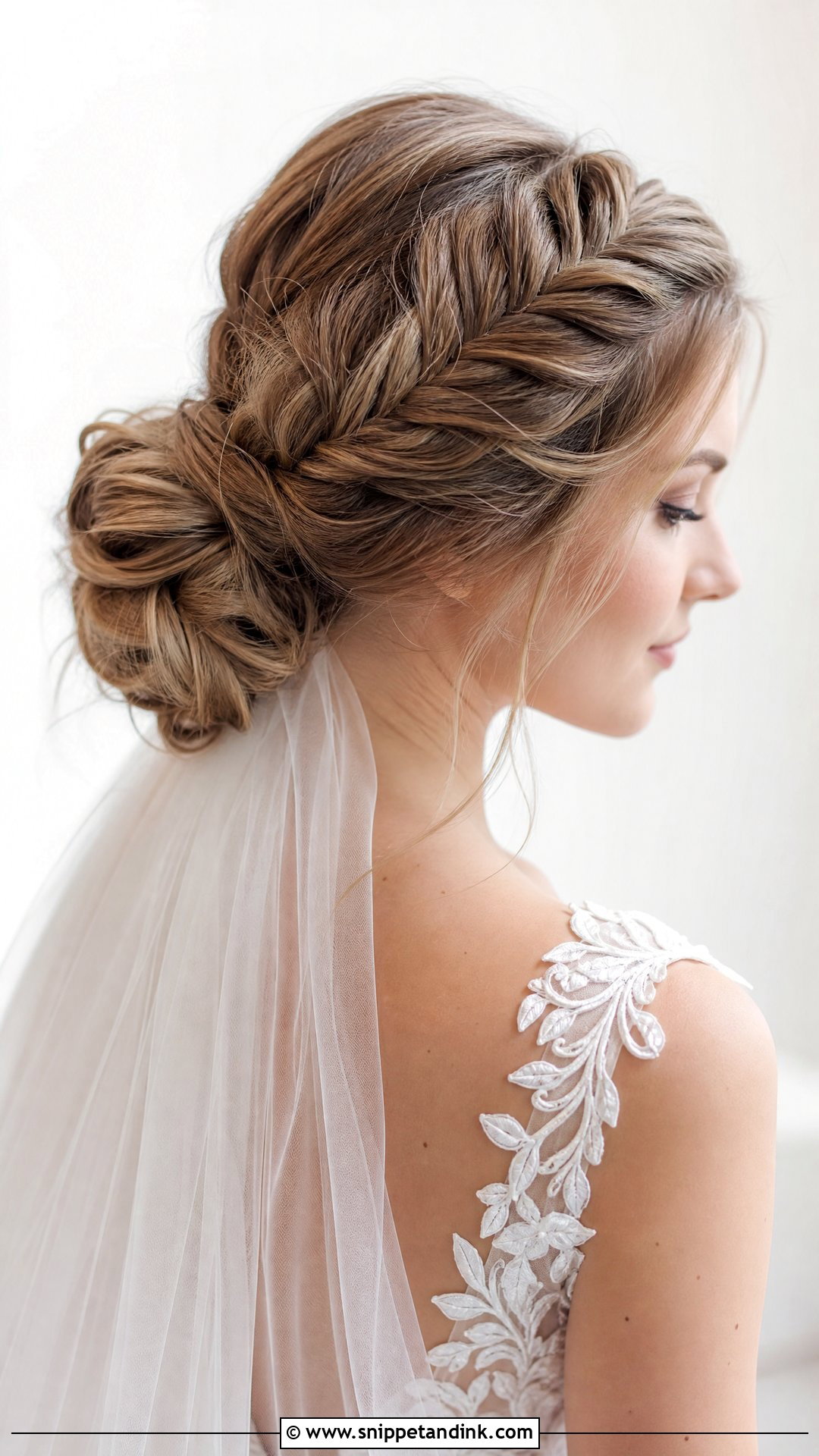
A fishtail is made from two sections and dozens of small crossovers, so it looks intricate even when loosened. For an updo, I braid it, pull it gently apart, then wrap it around a low chignon so the braid edges the bun. Layered hair is the challenge: short layers poke out of a fishtail’s tiny sections, so I work a little pomade into each crossover. It pairs well with a delicate veil or a few flowers, and it fits a bohemian wedding as easily as a classic one.
3. French Braid Bridal Chignon
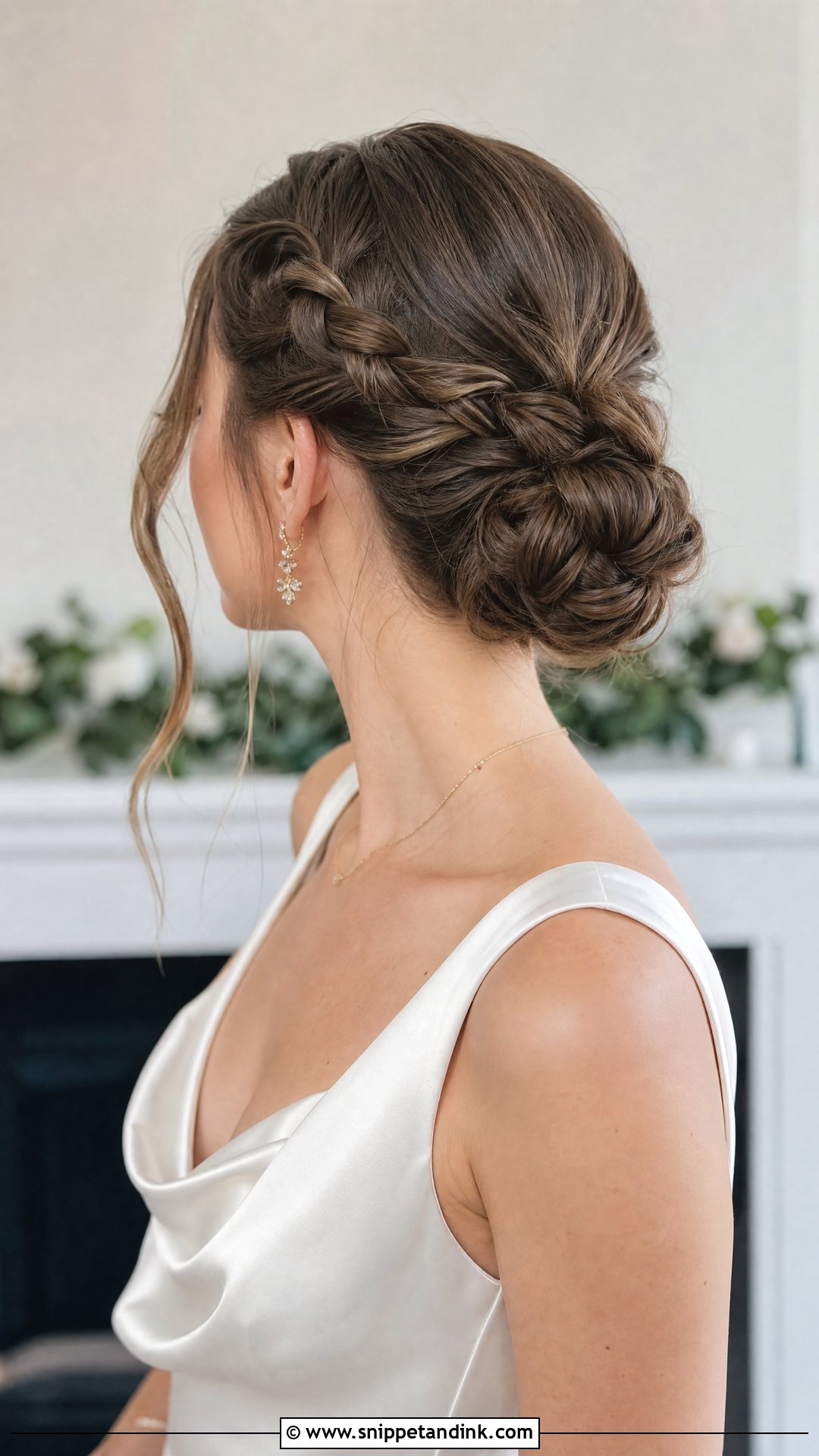
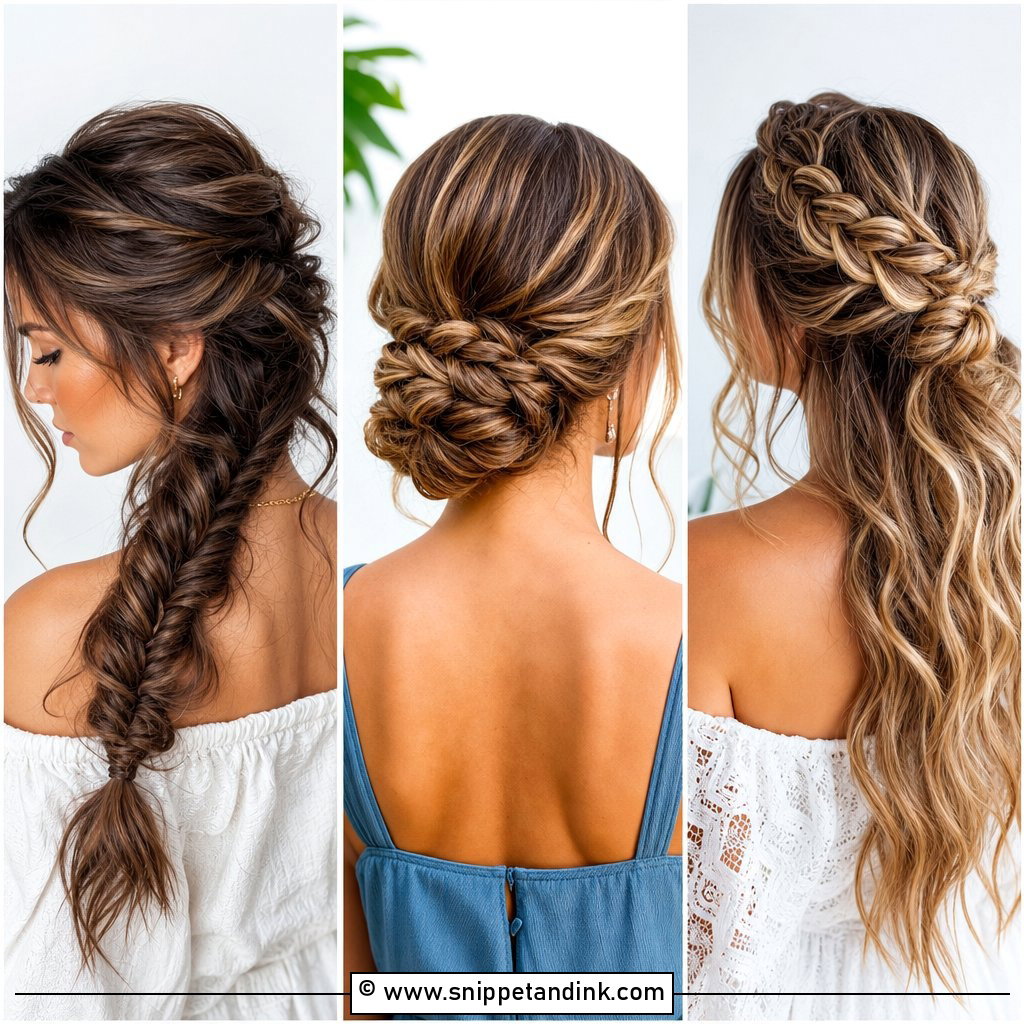
A French braid running down the back of the head into a chignon at the nape is my go-to for hot weather, because no hair touches the neck at all. The braid starts at the crown and picks up hair as it travels, so it largely holds itself; the chignon is just the tucked end, pinned in a twist. A sparkling pin or a few fresh flowers at the join make it bridal. It needs medium to long hair. A couple of face-framing pieces soften the front if the sleekness feels severe.
4. Boho Loose Braid for Brides
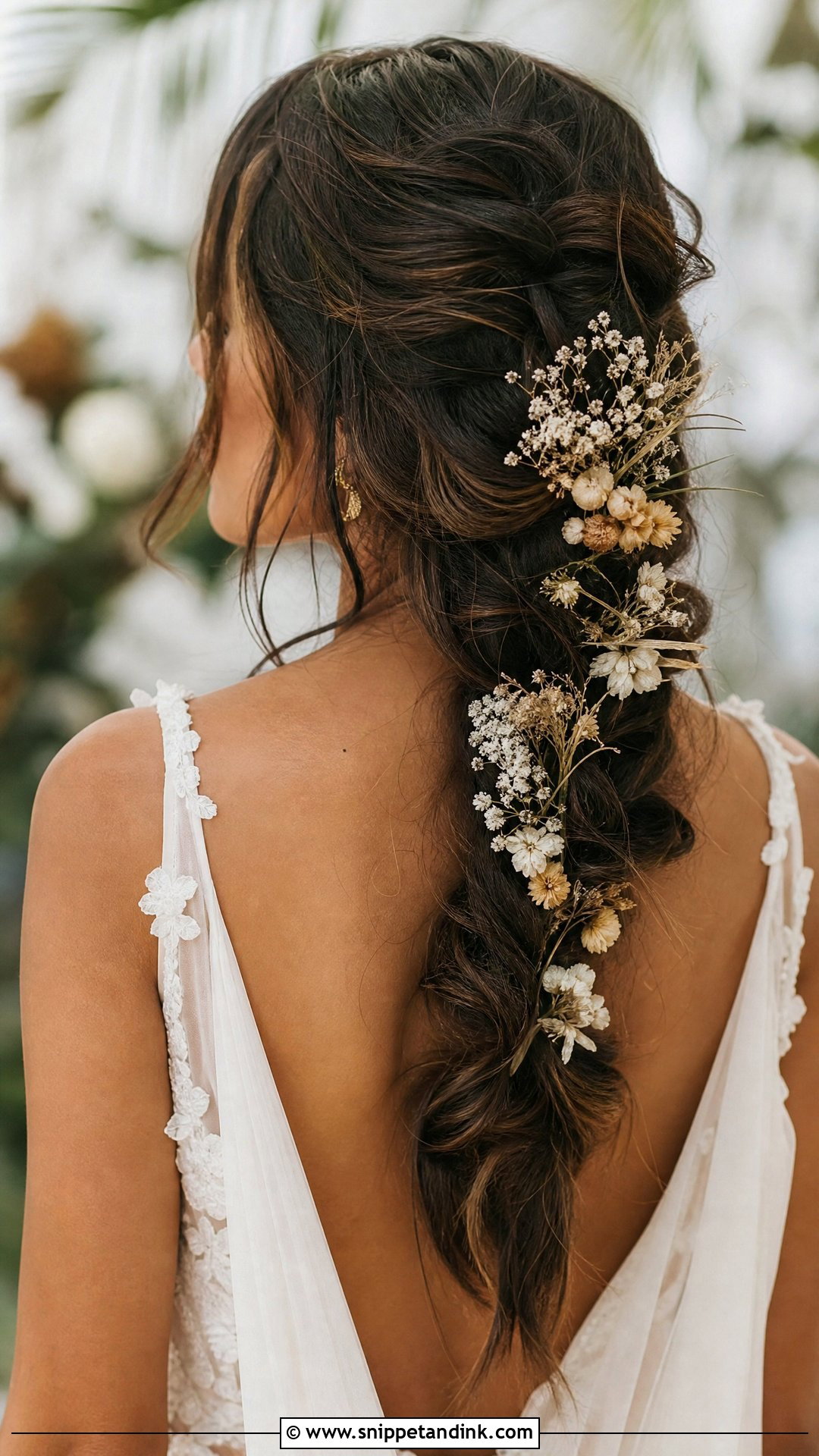
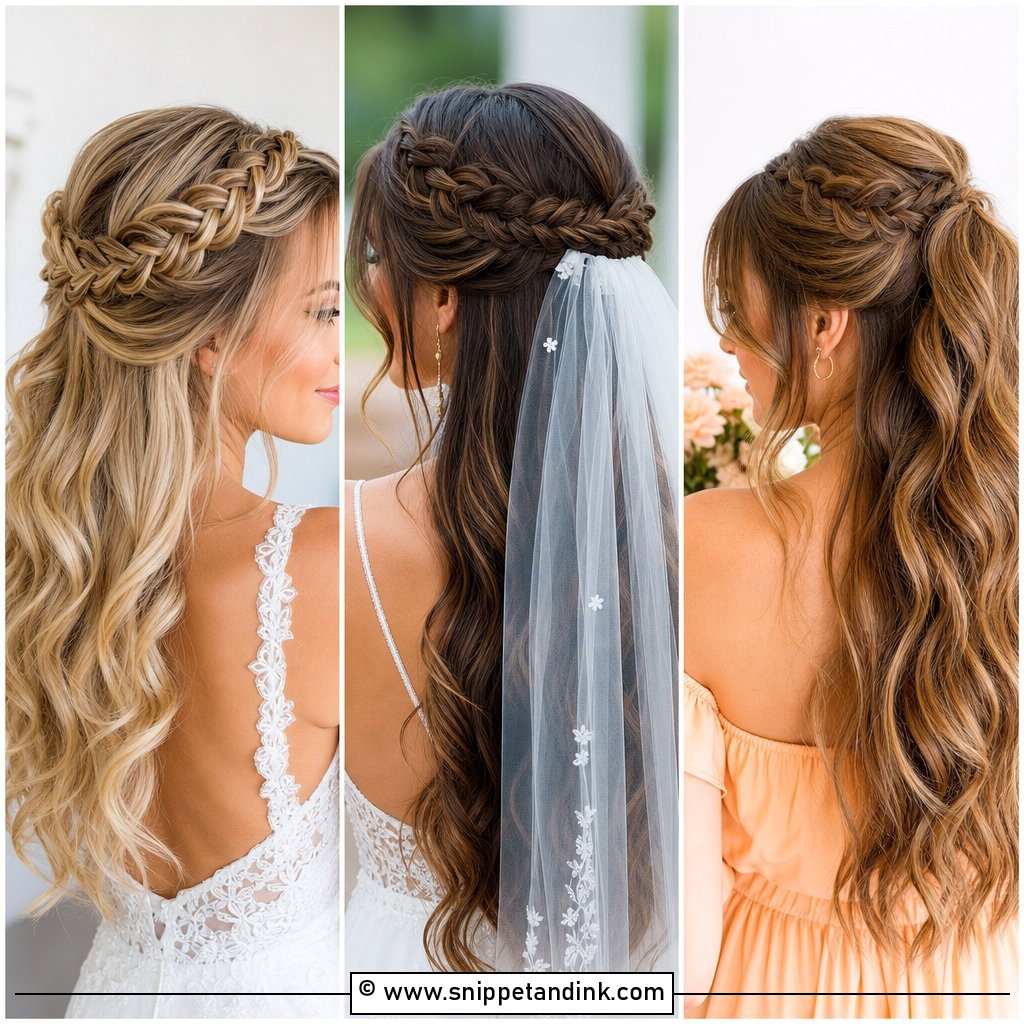
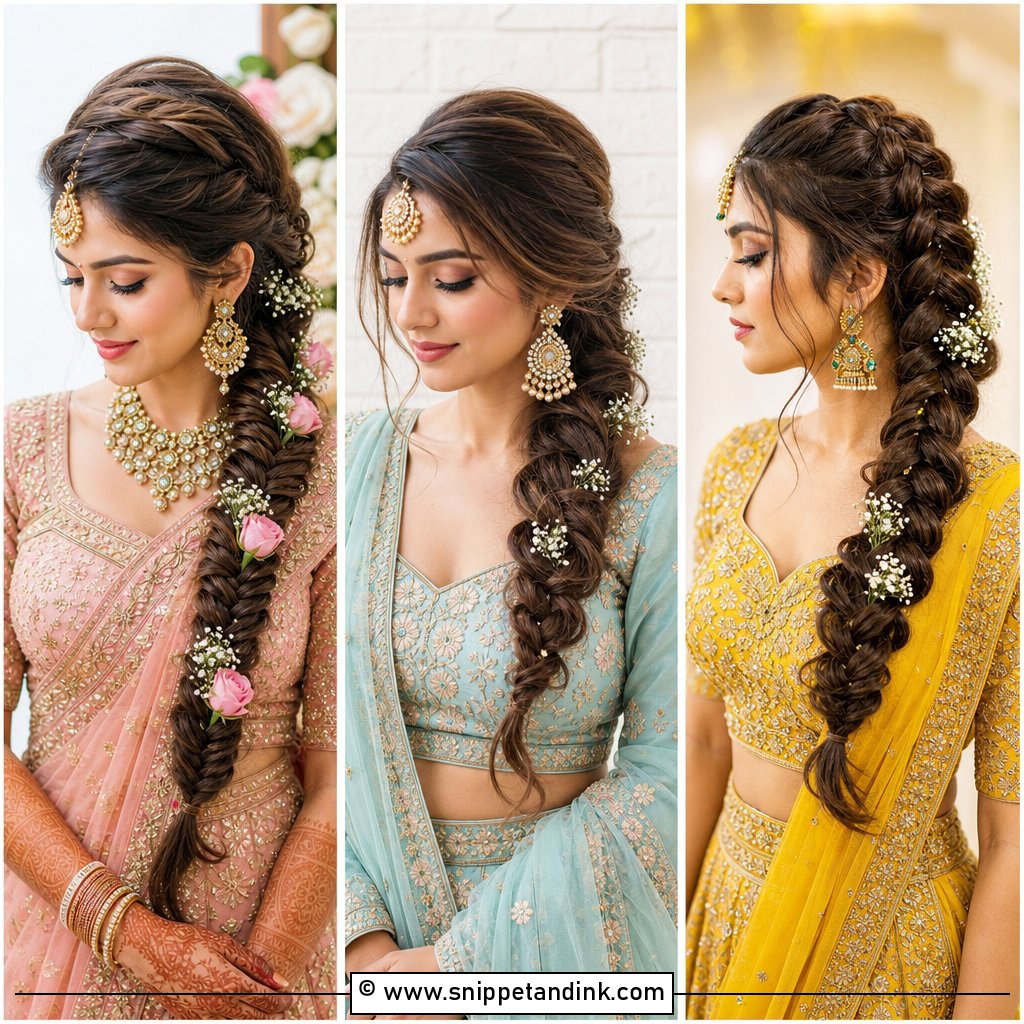
A loose boho braid is meant to look as if it’s been worn all day, which means it can genuinely be worn all day. I curl the hair first so the braid has texture, plait it loosely over one shoulder, then tug at the edges until it softens. A few escaping strands are part of the look. Dried flowers and eucalyptus last far better than fresh blooms here, since they won’t wilt against warm hair. Flowing gowns and outdoor venues suit it best.
5. Half-Up Braided Crown Wedding Style
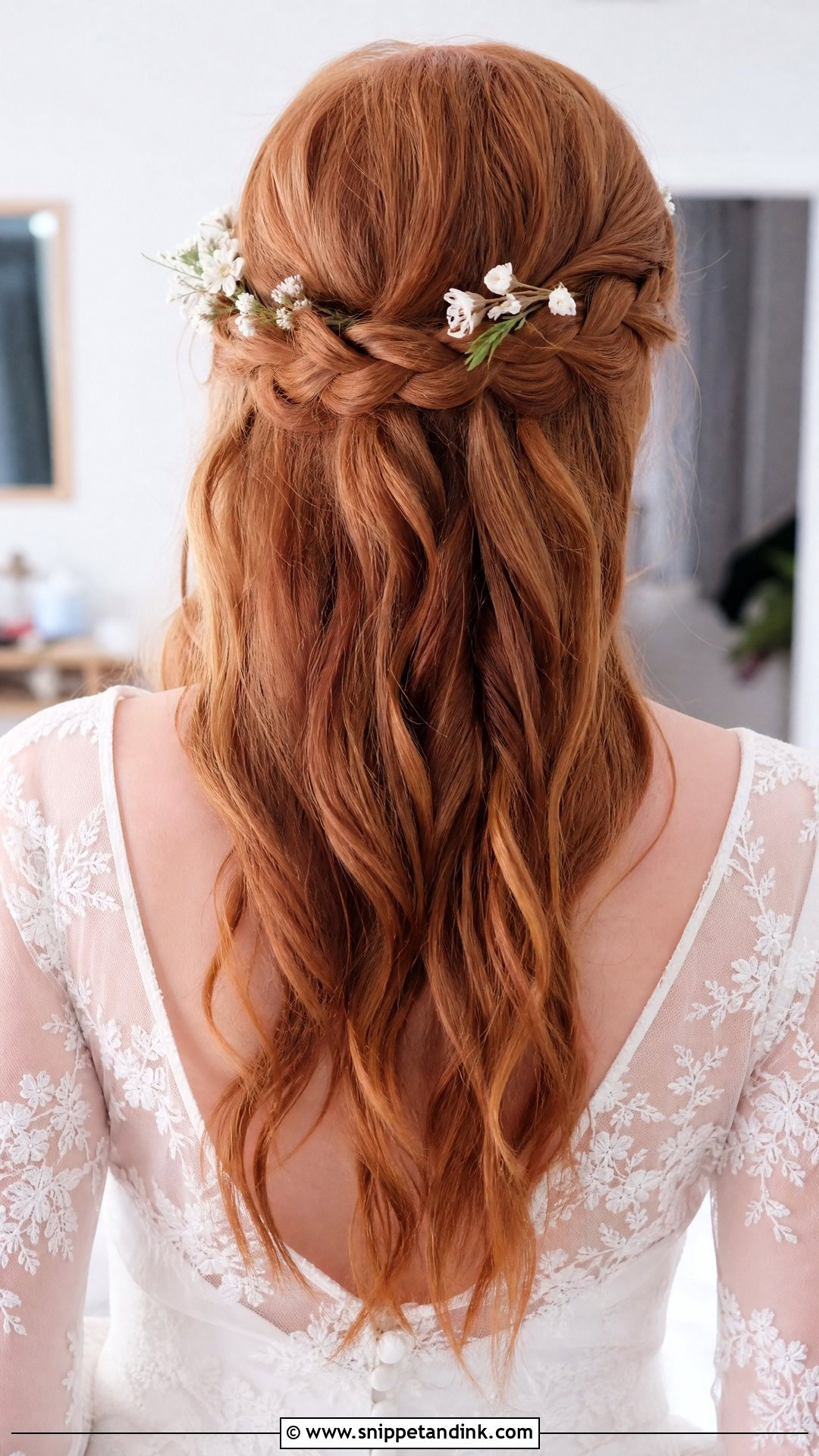
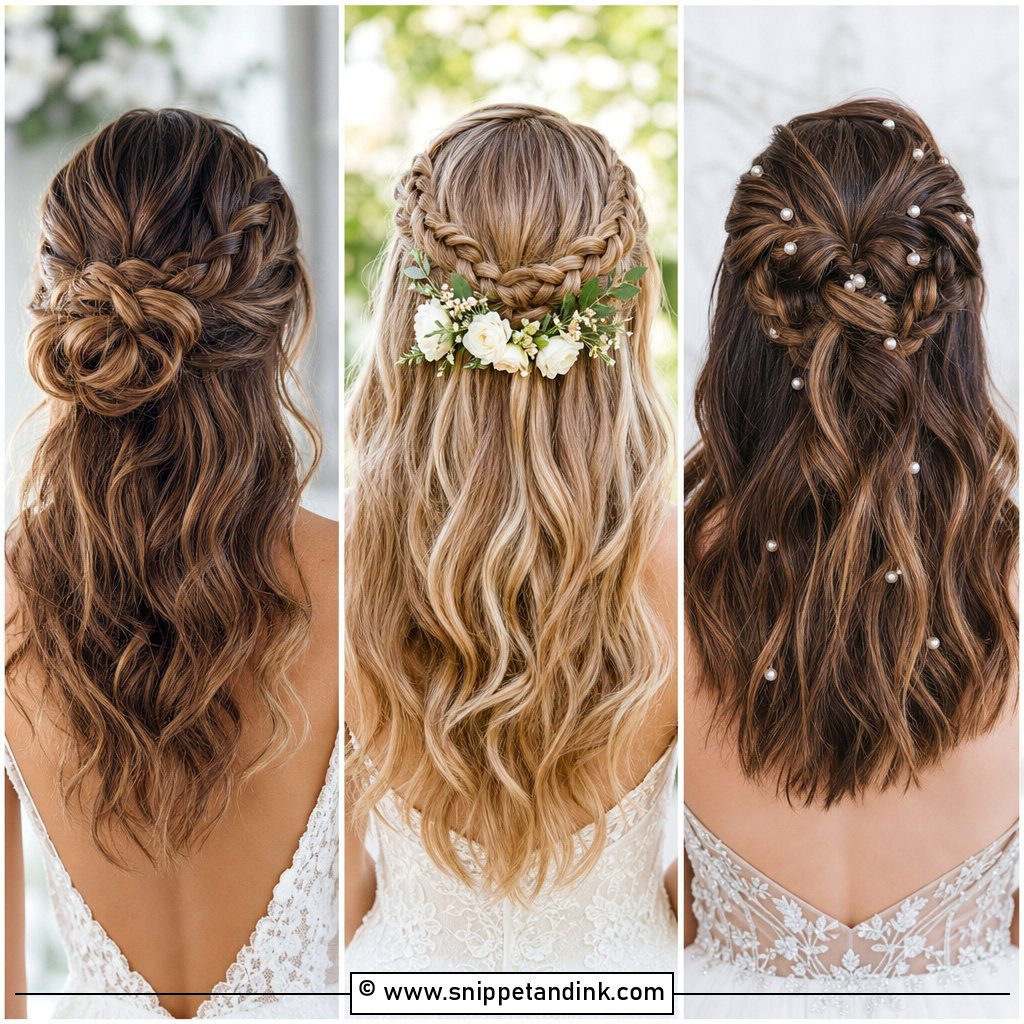
A half-up crown takes the top sections into a braid that wraps across the back, leaving the rest loose in waves. I braid from each side and join the two at the back, pinning where they meet, which is sturdier than one braid carried all the way round. It shows off length and colour and frames the face at the same time. Floral pins at the join hide the hardware. The loose lengths need a strong curl set, because they’re carrying all the softness.
6. Dutch Braid Bridal Updo
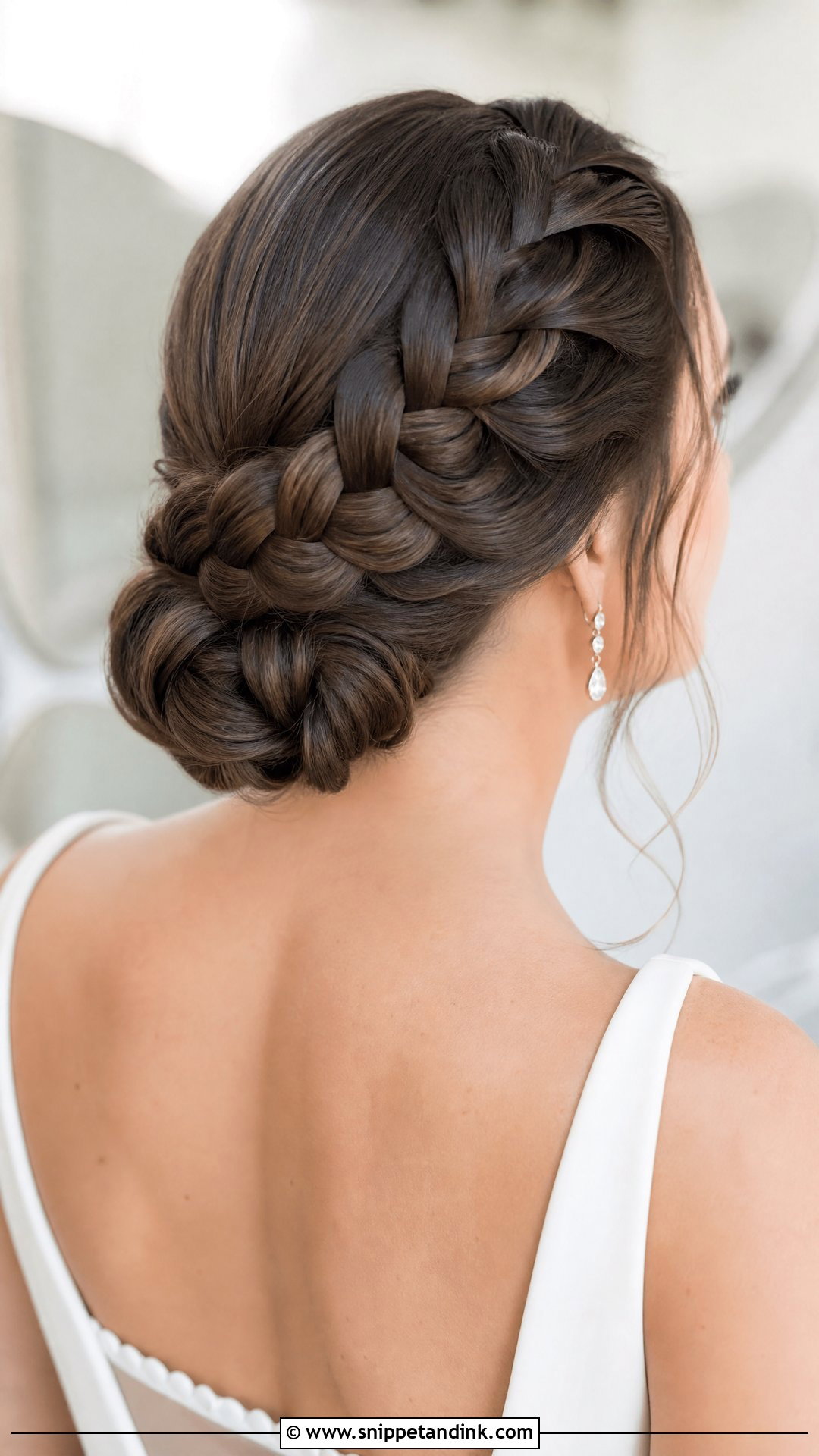
Braided by crossing strands under rather than over, the Dutch braid sits raised against the head, which is why it reads so clearly in photos. I braid tightly at the root for security, then pull the edges out afterwards so it looks bigger and softer. The tail tucks into a low bun or twists into a sculpted shape at the back. Dutch braids hold extremely well through dancing and long receptions. Keep accessories minimal; the braid is the detail.
7. Braided Low Bun for Weddings
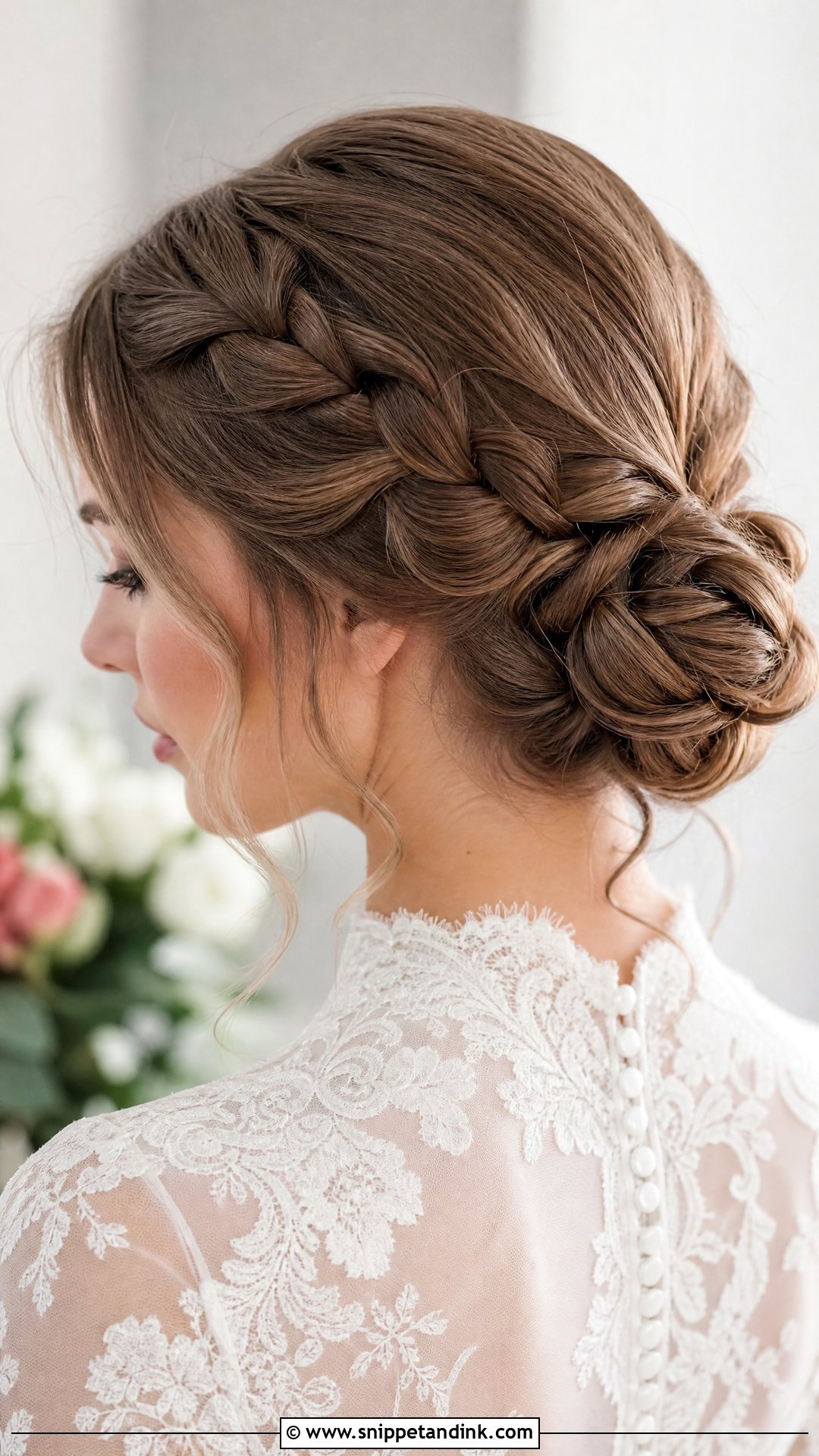
This combines a smooth braid with a gathered, twisted bun at the nape. The braid can run along the hairline or come up from the nape into the bun. The low placement sits well with a veil, statement earrings and a high neckline, because there’s no volume up top competing with them. Sleek reads formal, while a few loose tendrils make it gentler. It suits medium to long hair, and once pinned it’s very hard to dislodge.
8. Waterfall Braid Bridal Hairstyle
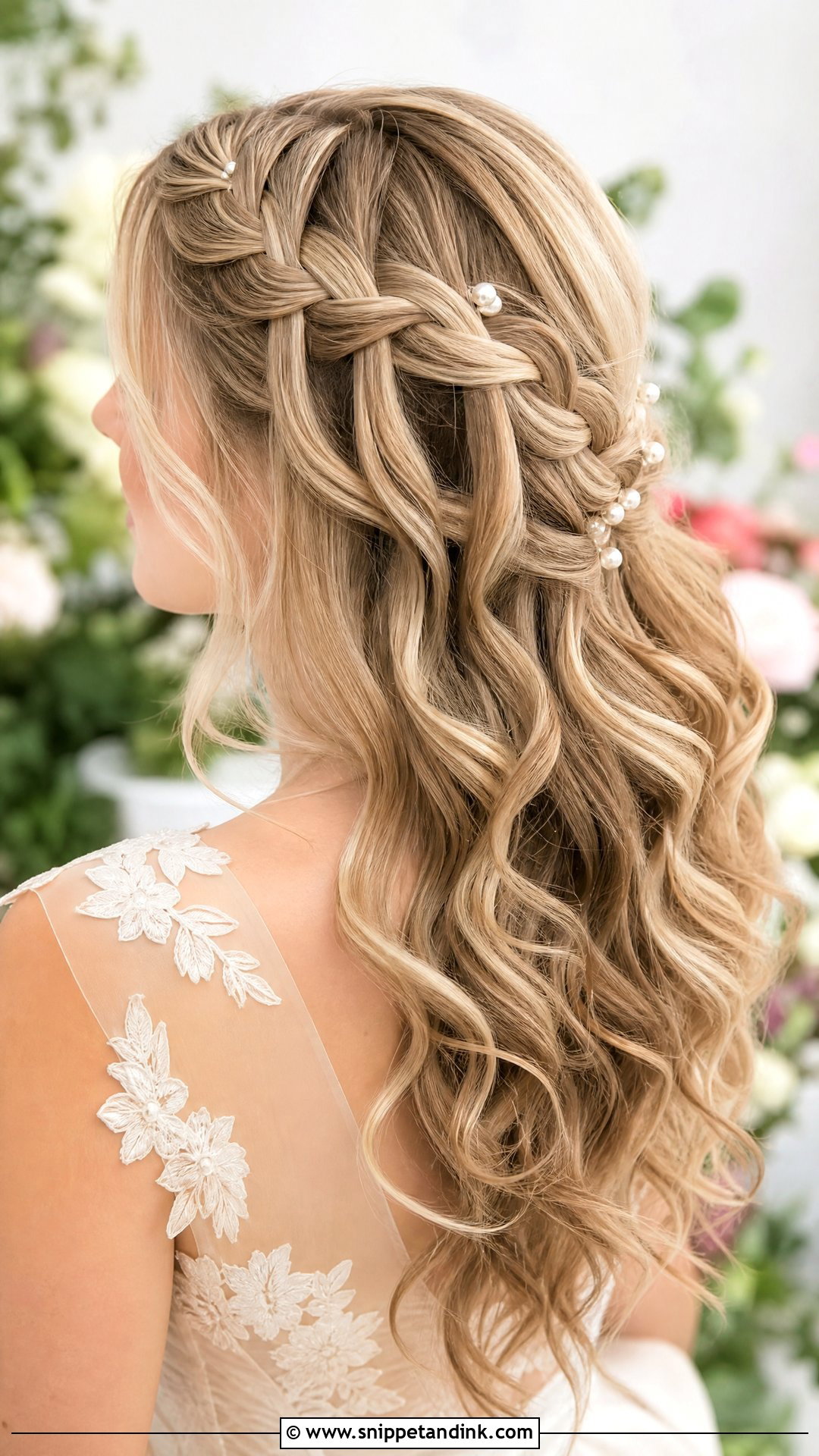
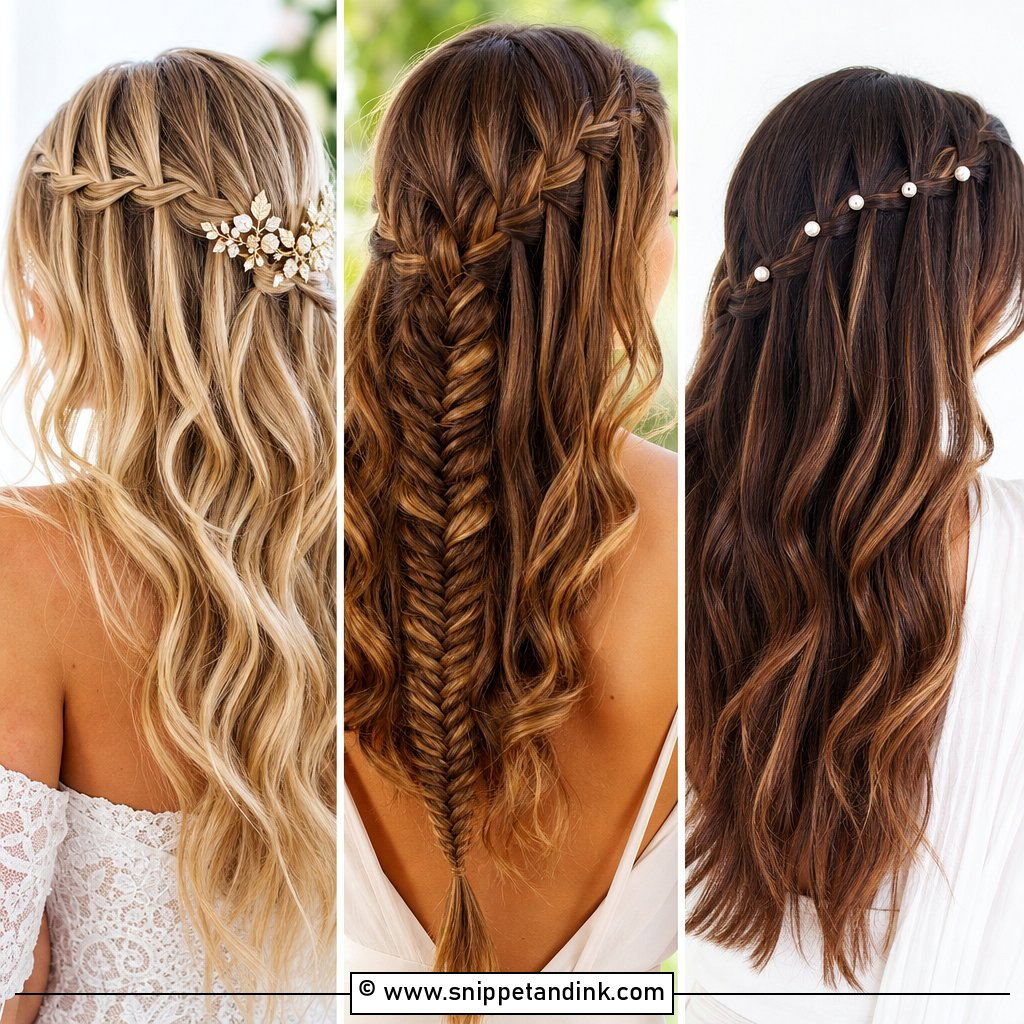
A waterfall braid travels across the head like a French braid, but on each pass one strand is dropped and left hanging, so loose hair falls through the pattern. It’s delicate. Because the dropped strands aren’t secured, the braid holds less hair and can loosen on very slippery hair, so I add texture spray before starting and pin the end firmly behind the ear. Medium to long hair with a slight wave works best, and at a garden wedding the waterfall braid offers detail while keeping your waves on show.
9. Braided Side Swept Wedding Style
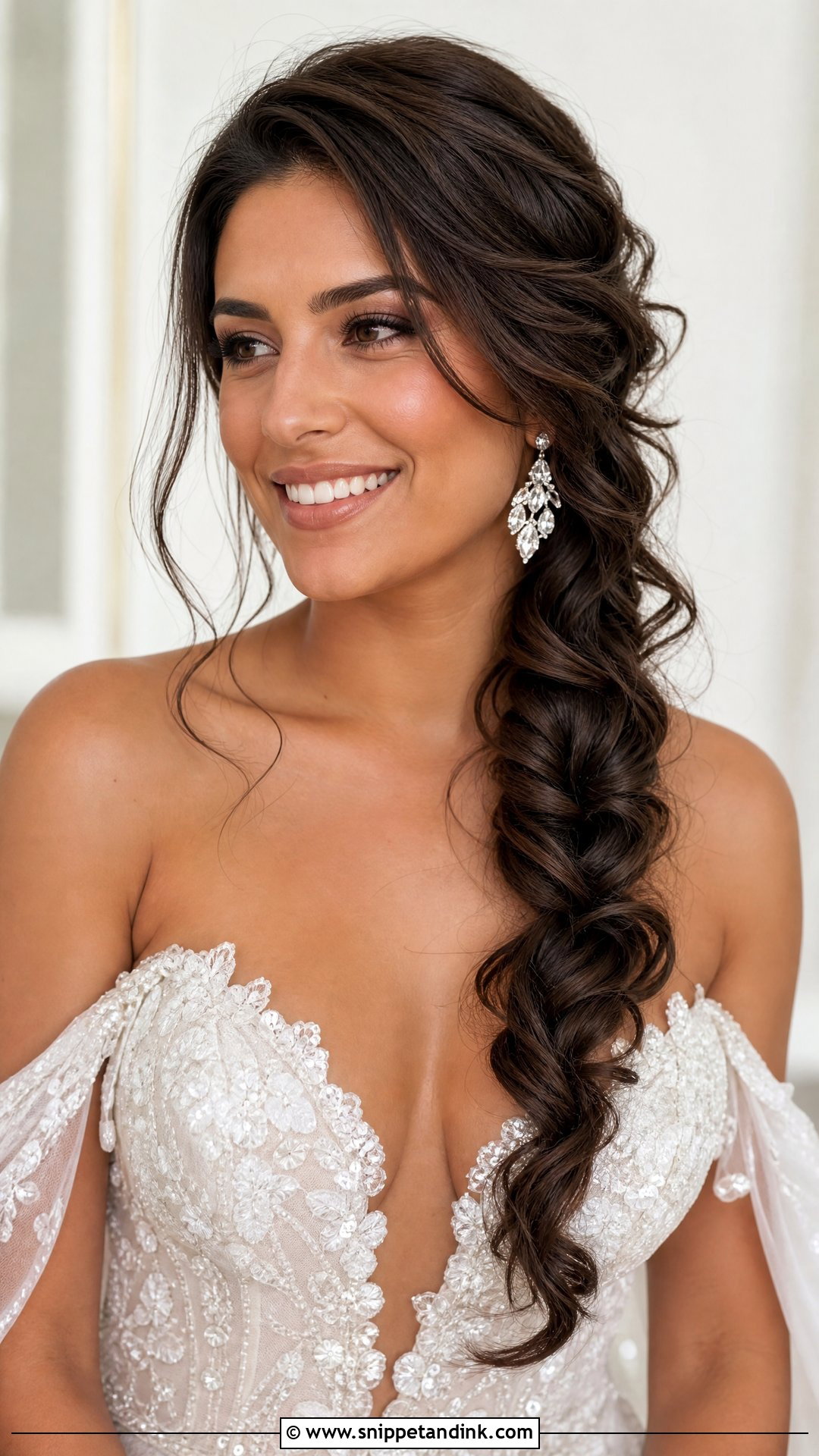
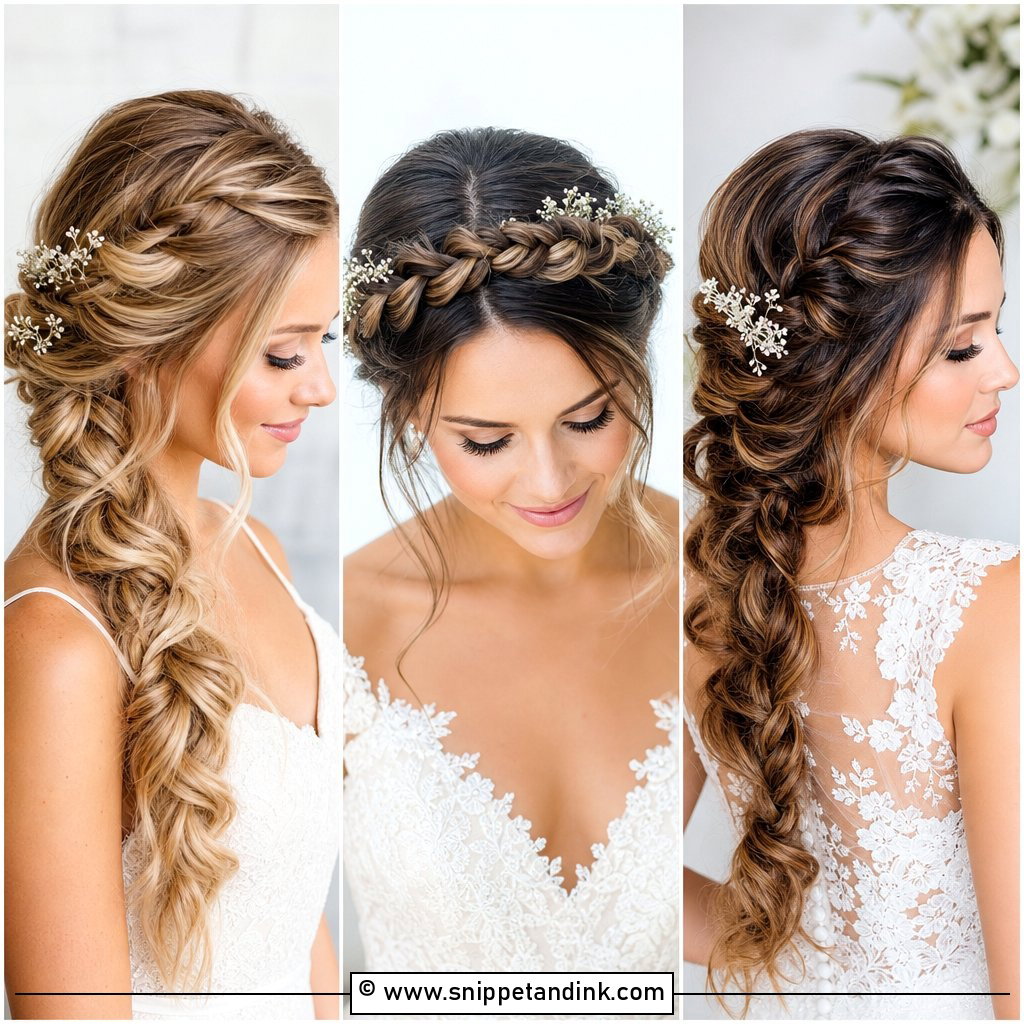
Bringing everything over one shoulder into a soft braid draws the eye to your neckline and earrings. I anchor the hair behind the far ear with crossed pins before braiding, or the weight pulls the braid back toward the middle. Long hair is a must. Loosen it once it’s tied and tuck in small blooms or a few sparkly pins. One practical point: put the braid on the side that faces your partner, since that’s the side guests photograph during the ceremony.
10. Milkmaid Braid for Brides
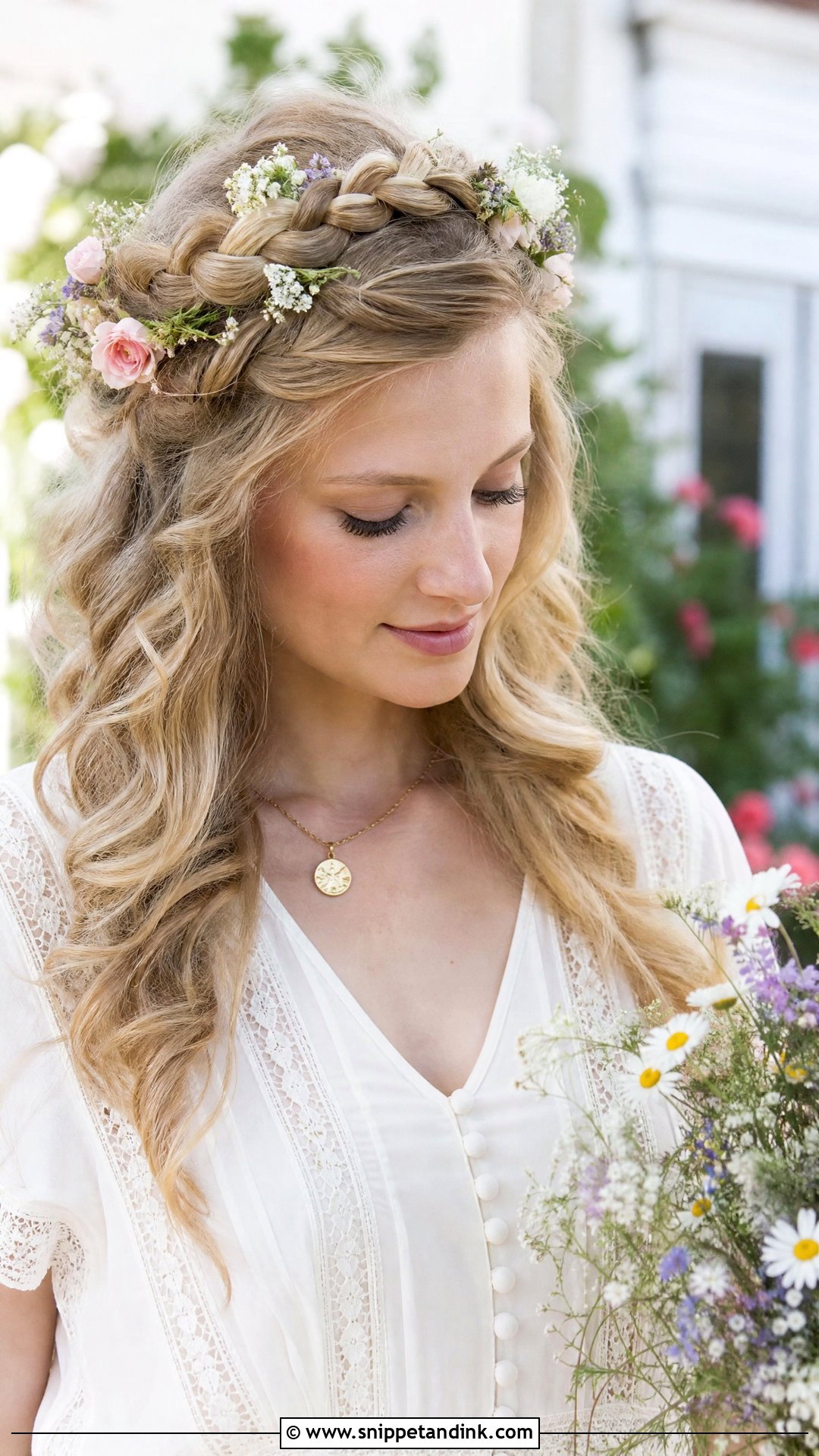
A milkmaid braid takes two braids from the nape up and over the crown, keeping every strand off the face and neck. That makes it one of the coolest styles to wear in summer heat. I braid each side from behind the ear, cross them over the top and pin each end under the opposite braid. Flowers woven through suit a rustic or whimsical wedding. It needs at least medium length, and on long, thick hair the milkmaid braid offers a base that won’t budge all day.
11. Braided Ponytail Wedding Hairstyle
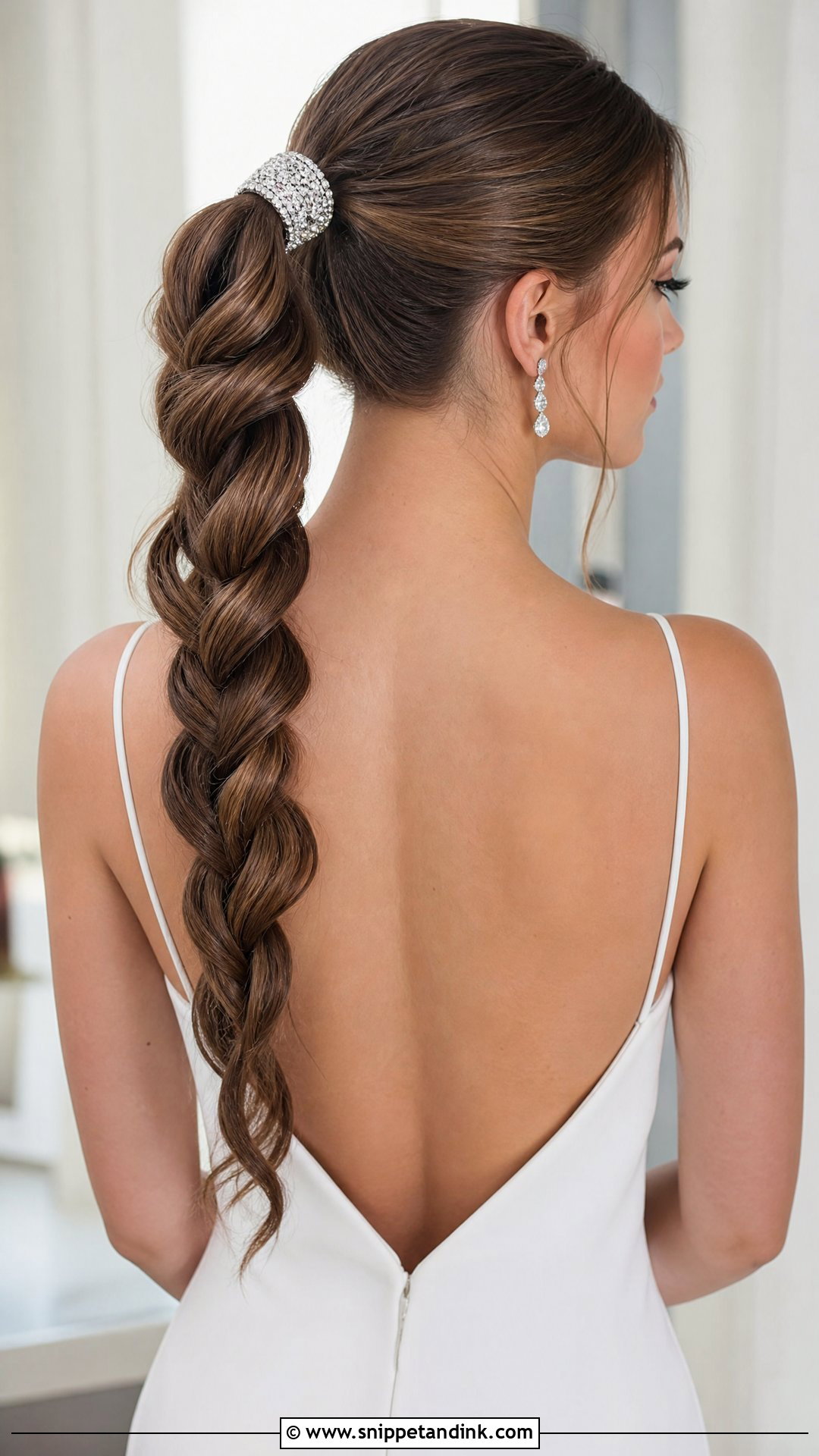
A braided ponytail is practical first: hair stays off your face all night and survives the dance floor. I gather the hair into a ponytail, wrap a section around the base to hide the elastic, then braid the length. High is dramatic, low is softer. Pancake the braid for width, because a tight braid on a ponytail can look thin. A hair cuff or a few small flowers finish it, and at a modern wedding the braided ponytail delivers movement without needing anything pinned.
12. Knotless Braid Bridal Updo
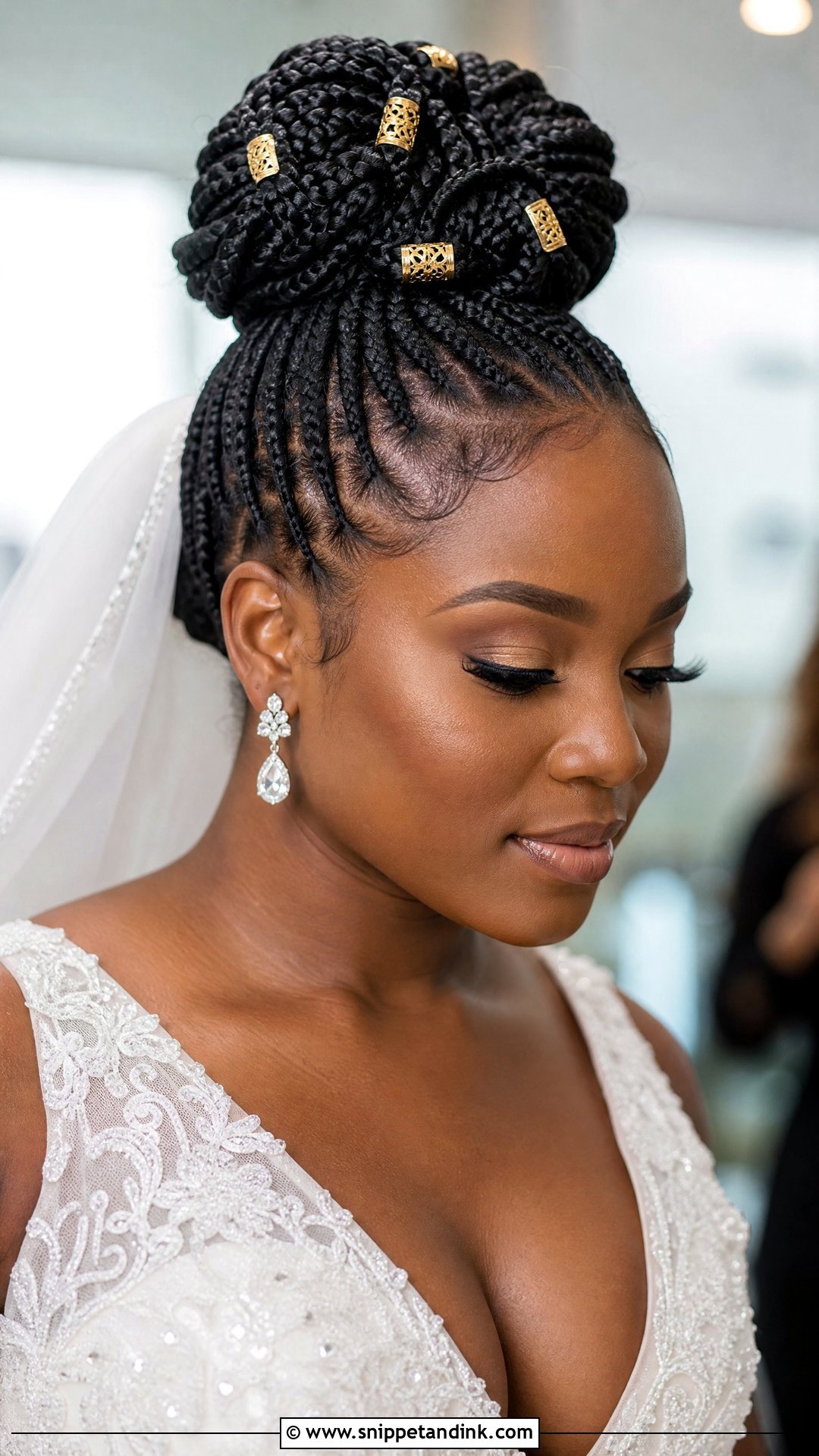
Knotless braids start with the bride’s own hair and have extension hair fed in gradually, so there’s no hard knot at the root and far less tension on the scalp. That matters when you’ll wear them for many hours. A braider installs them ahead of time, and it’s a long appointment, so book it well before the wedding week. On the day I gather them into a high or low bun and secure it with large pins or a cuff. Gold cuffs, pearls or flowers make it personal, and the finished shape holds all night.
13. Braided Bun with Loose Strands
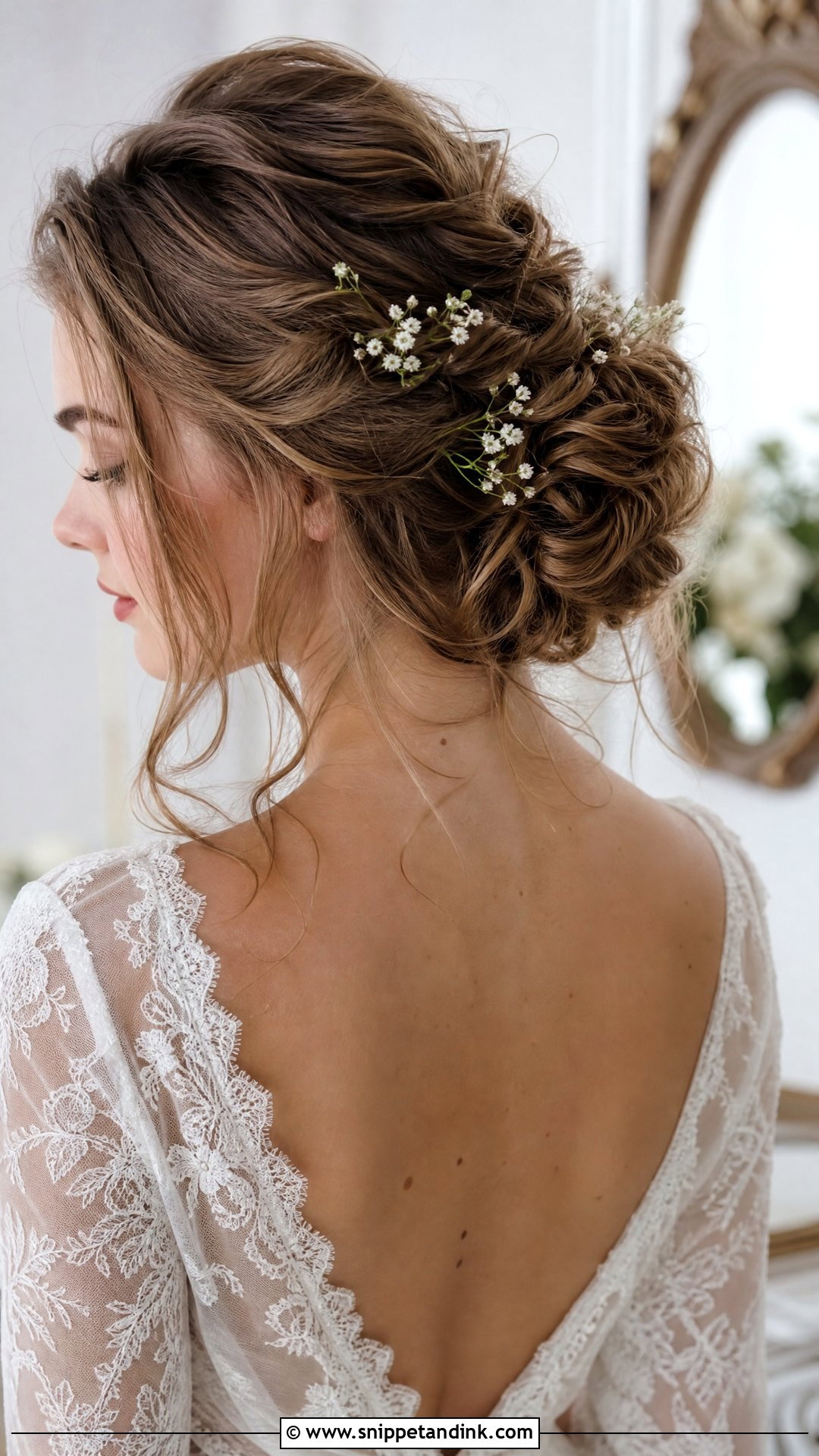
This is a structured bun with a deliberately soft finish. The braids are woven and pinned firmly into the bun, then a few face-framing pieces are pulled loose. I curl those pieces separately so they hold a shape instead of hanging limp. It suits outdoor, garden and bohemian weddings. Tiny blooms or pins tuck into the braid loops easily.
14. Crown Braid with Flowers for Brides
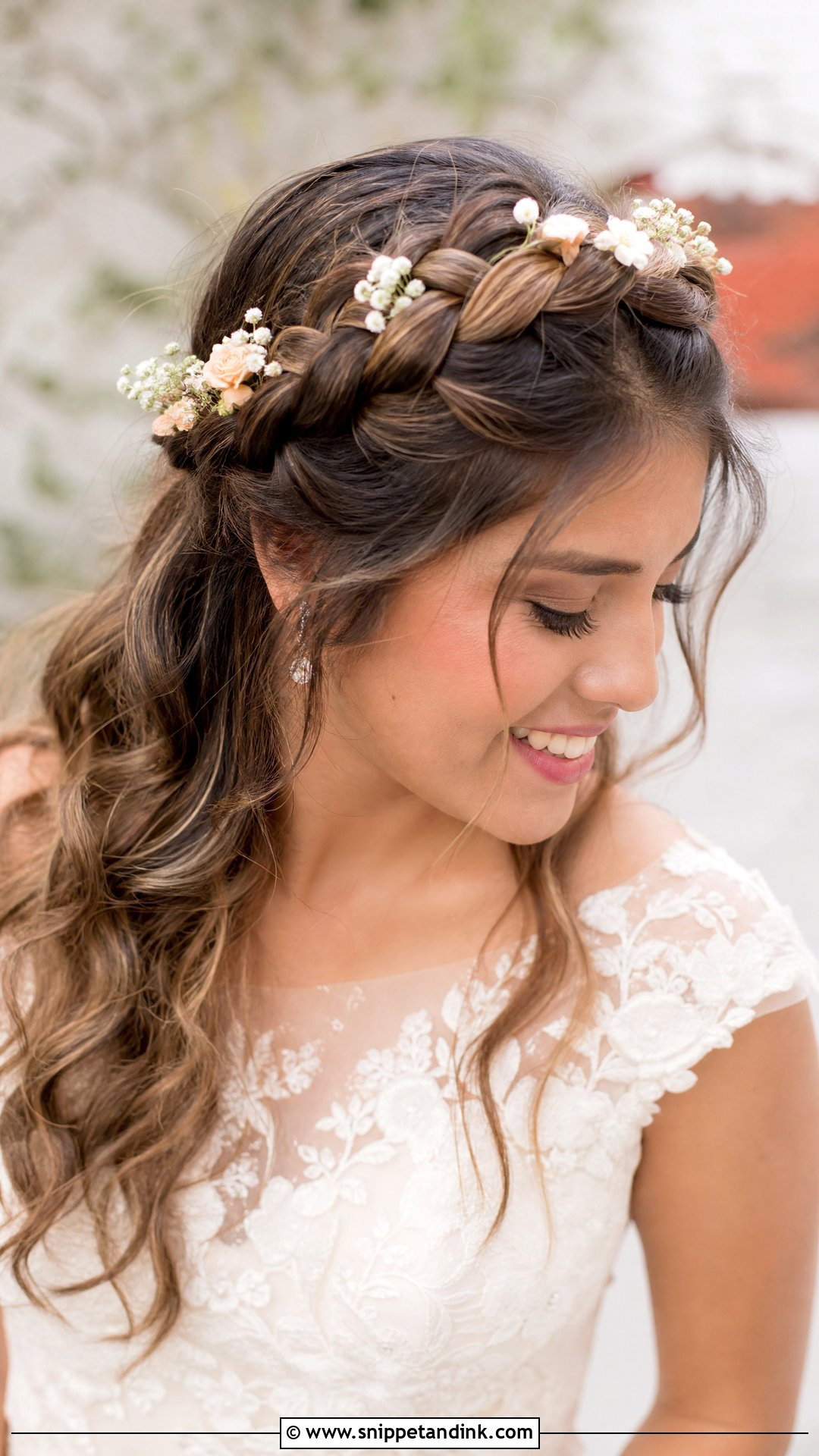
A crown braid gives fresh flowers a natural home: each wired stem slides into a loop of the braid and stays without extra pins. Small roses, baby’s breath or wildflowers matched to the bouquet all work. I ask the florist to wire the stems short and keep them chilled, and I add them last, after the hairspray. Neat, it’s formal; loosened, it’s boho. It suits spring weddings and garden ceremonies.
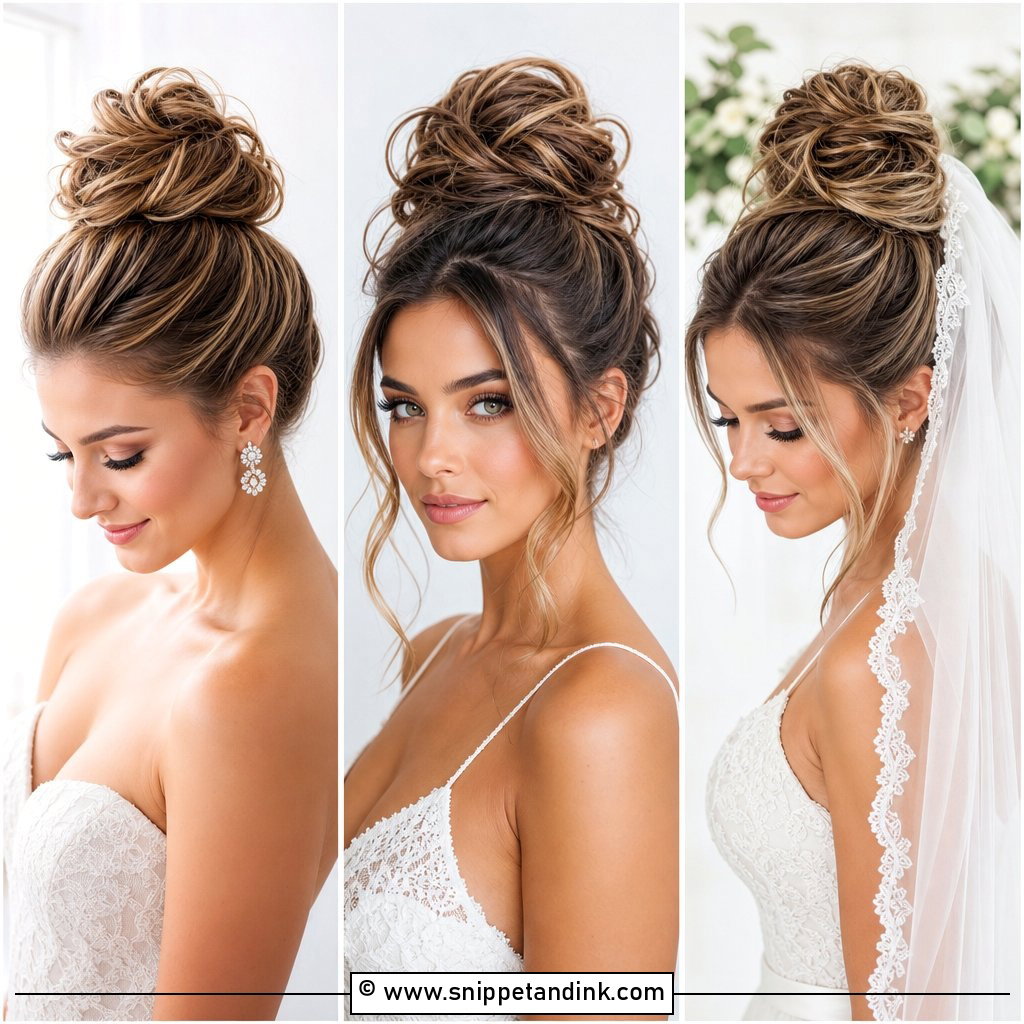
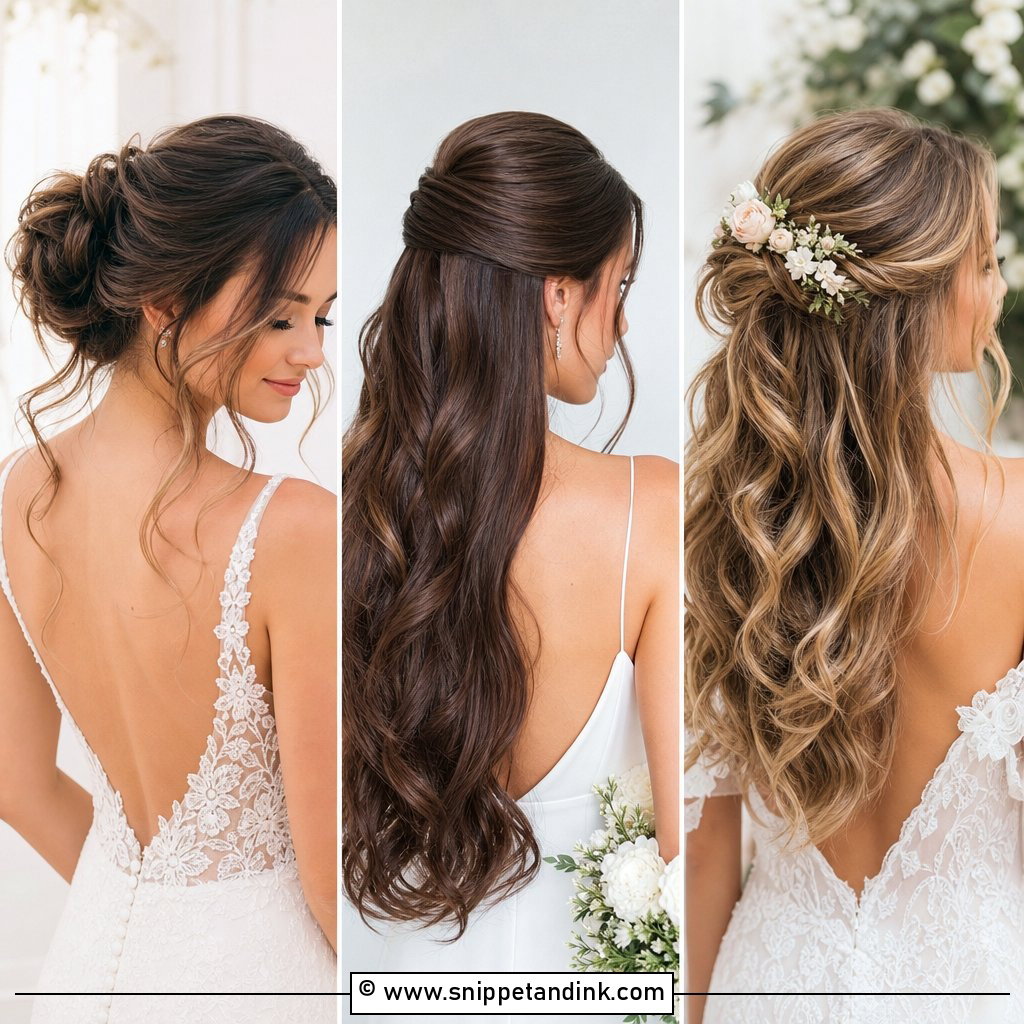
15. Braided Half-Up With Curls
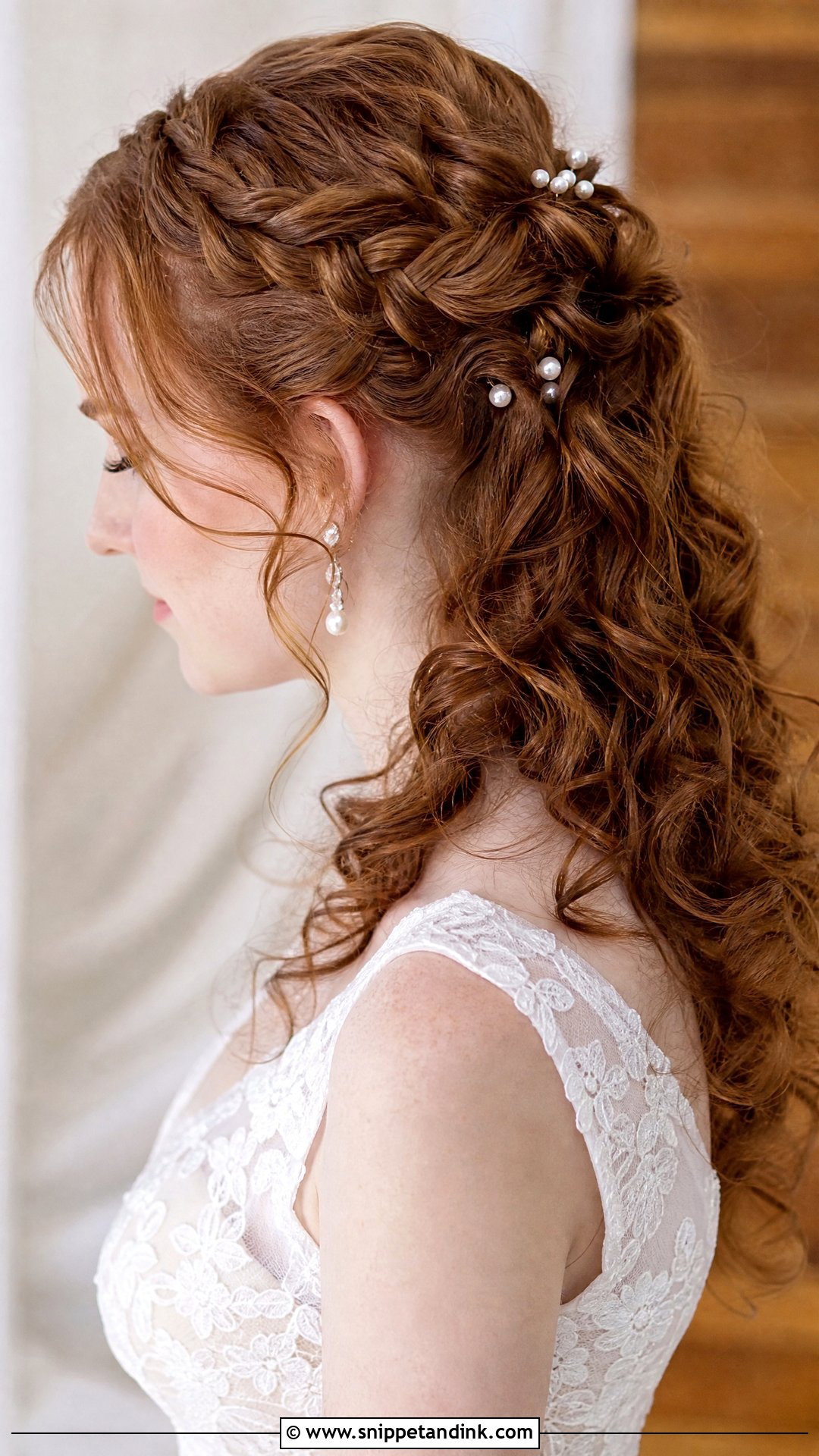
Here the detail sits on top and the volume below. The top sections go into a delicate braid, and the lengths are curled and set before brushing out. The curls carry most of the look, so I make sure they’re set firmly, especially on fine hair, which drops fastest. Pearl pins or small flowers along the braid finish it, and it shows off both length and colour.
16. Side Braid With Veil for Weddings
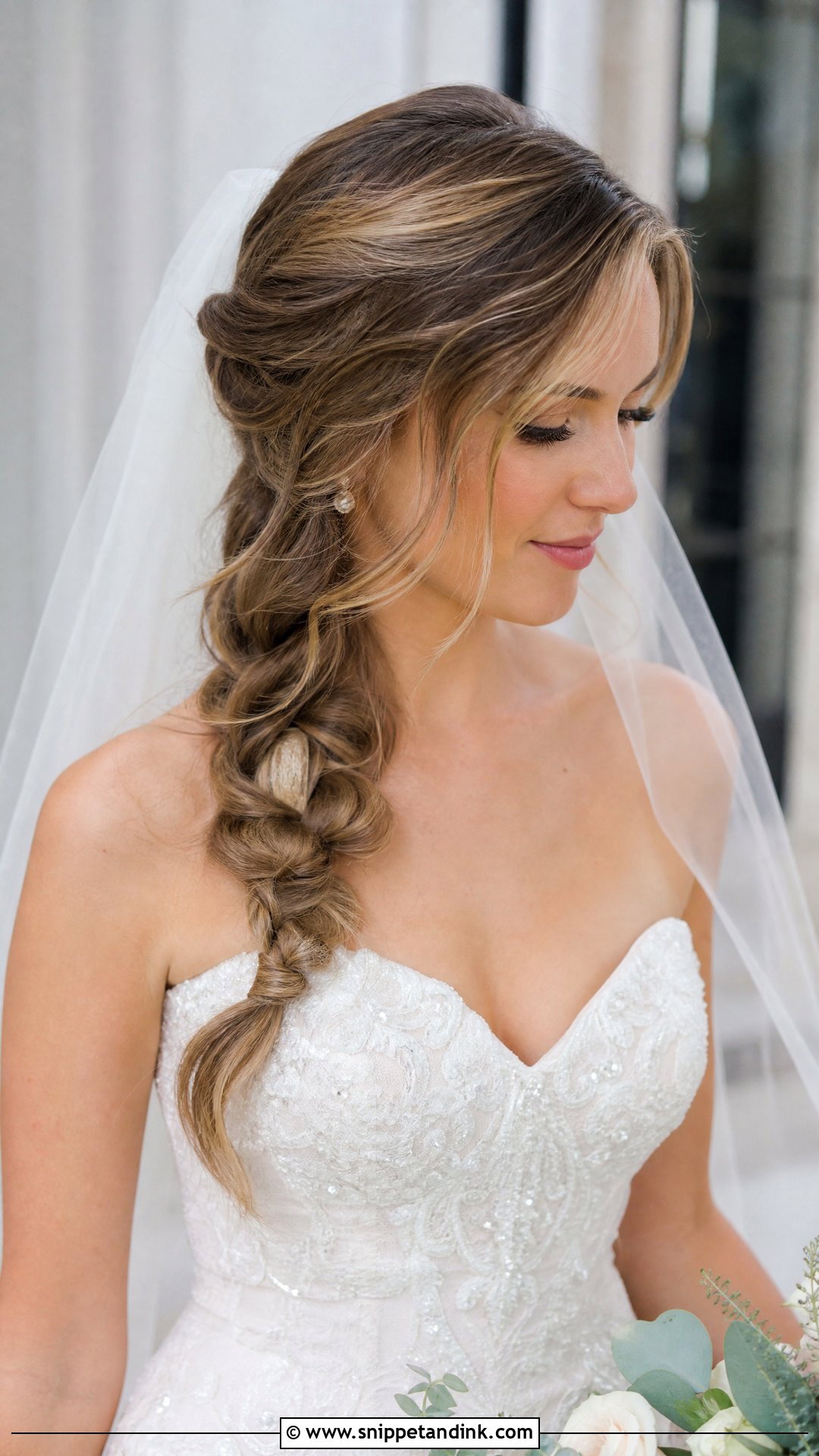
A side braid and a veil only need the right placement to coexist. I set the veil comb at the crown, above where the braid begins, so the veil falls straight down your back while the braid lies over your shoulder in front. After the ceremony the veil comes out and the braid stays untouched. Loosen it slightly for softness. A few flowers or sparkly pins finish it.
17. Braided Updo With Pearls
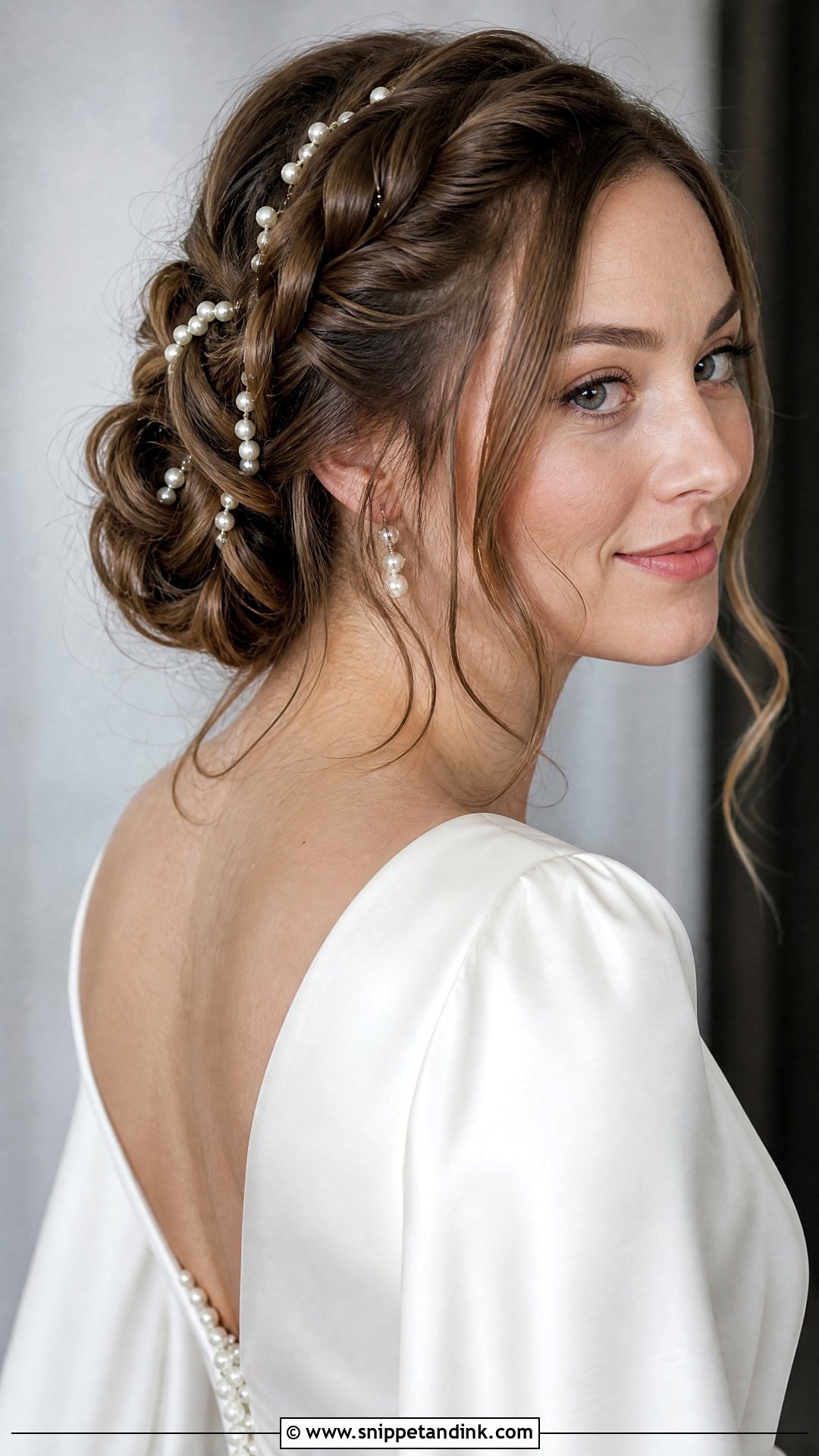
Pearls tucked along a braided updo turn the braid’s pattern into a setting for them. I build the base as a low bun or sculpted braid, then dot pearl pins along the outer loops where the light lands. Space them out; too many in a row look like a necklace rather than detail. Pearl earrings and a formal gown complete it.
18. Rope Braid Bridal Hairstyle
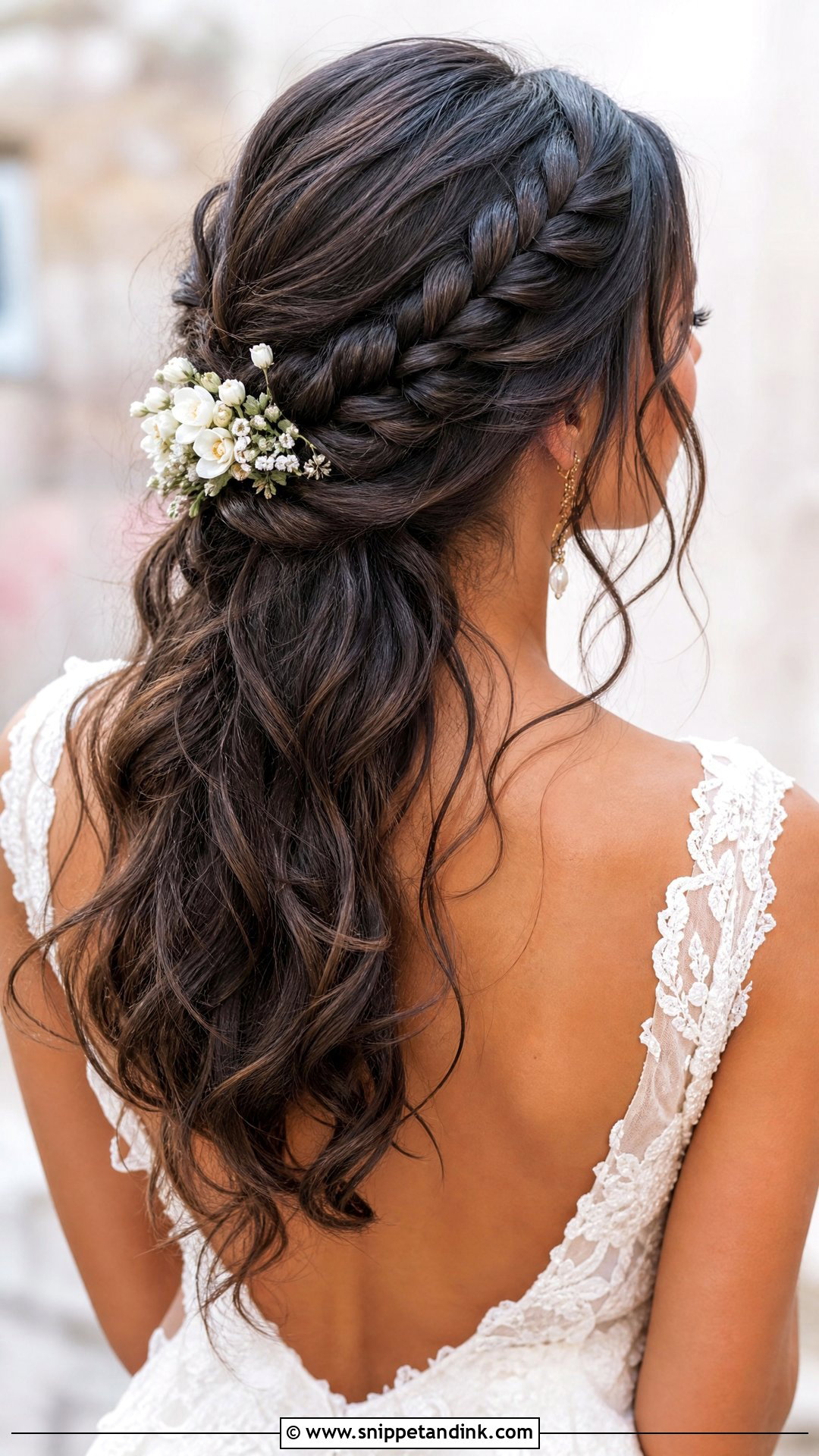
A rope braid is two twisted sections wrapped around each other, which gives that spiral effect. It’s quicker than a plait and a good choice for heavily layered hair, since the twisting traps short ends. The catch is that it unwinds unless each section is twisted the opposite way to the wrap, so make sure your stylist does this. In an updo, a ponytail or a half-up style, the rope braid adds gorgeous dimension. Small flowers or pins finish it.
19. Braided Low Chignon for Brides
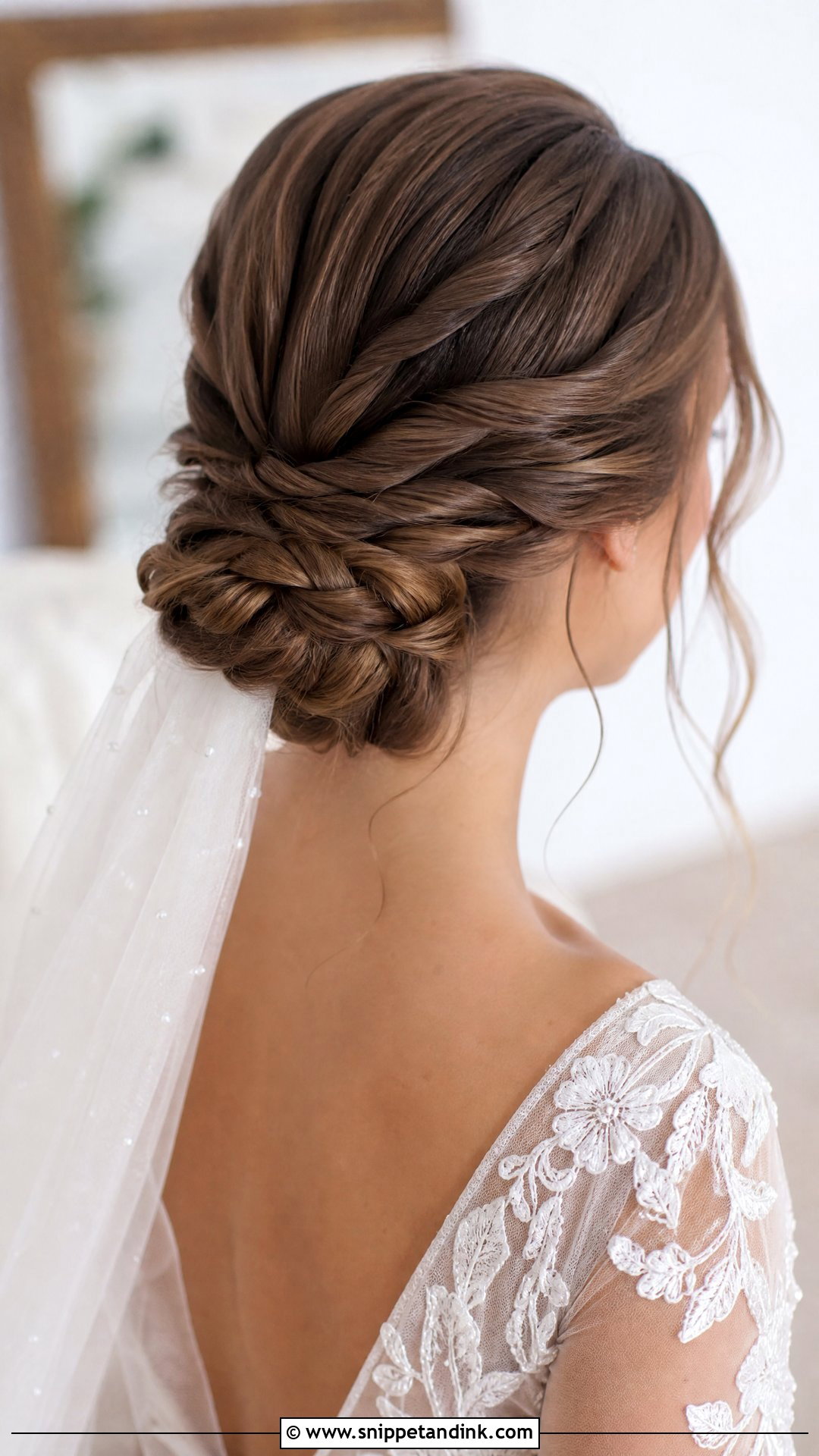
Braided sections twisted into a smooth, rounded bun at the nape give a chignon more structure than a plain one. The braids also give pins something to grip, so it holds through hugs and dancing. Keep it sleek for a formal wedding or add tendrils for softness. It suits medium to long hair and sits neatly under a veil.
20. Boho Braided Updo With Greenery
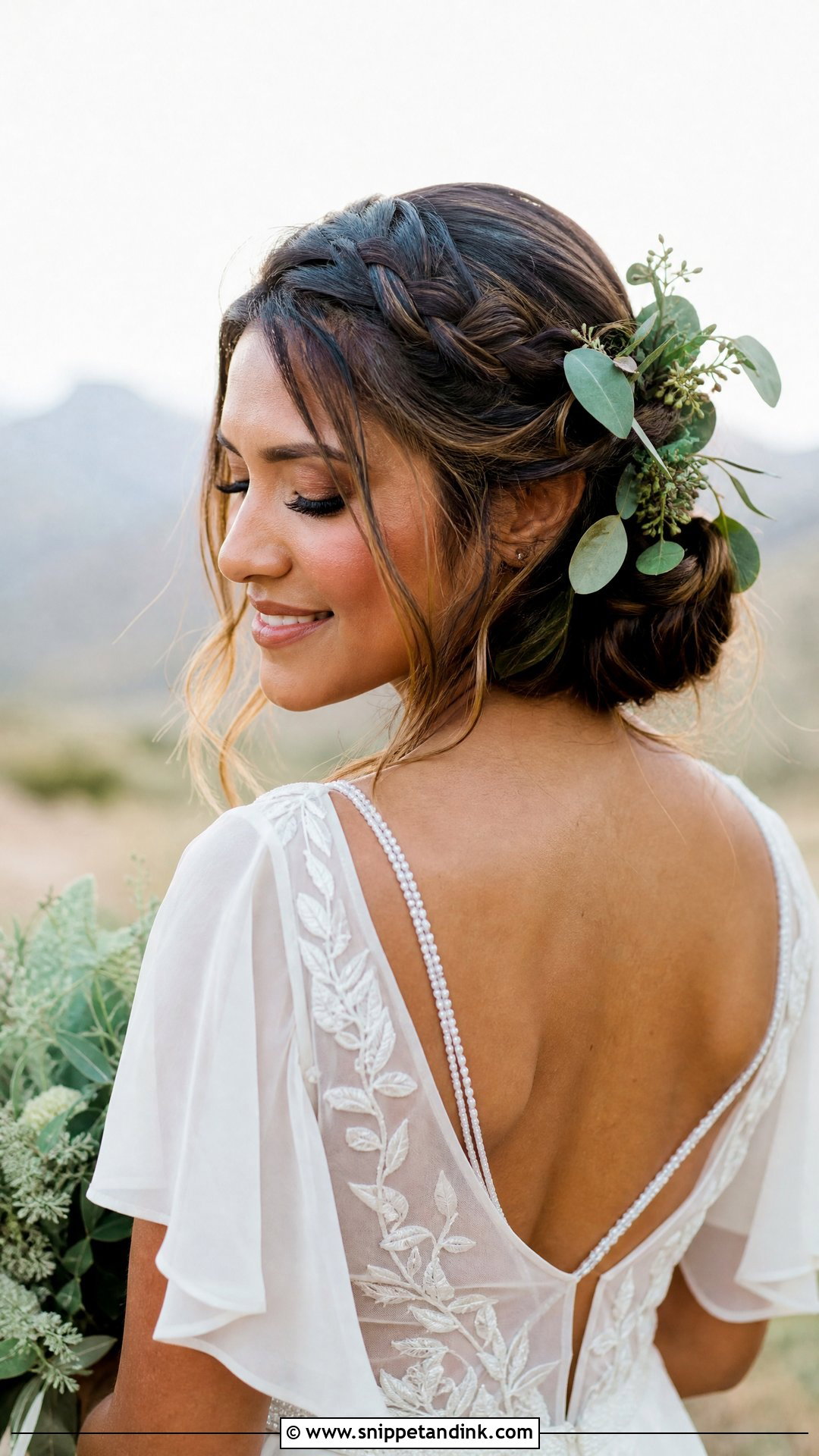
Greenery holds up in hair far better than most flowers. Eucalyptus, ruscus and small trailing vines don’t wilt quickly, so I can tuck them into a loose braided updo early in the day. The braids are woven softly and gathered loosely, with a few strands left at the face. Each sprig is wired before it goes in. It suits outdoor and rustic weddings, a flowing gown and very little jewellery.
When Each Braid Should Be Done, From a Week Out to the Morning Of
Timing varies more with braids than with most styles, and getting it wrong is usually what makes a braid feel tight or look tired.
- About a week ahead: knotless braids and other protective styles, so the initial tightness eases and the scalp settles before the wedding.
- The evening before: a few loose braids slept in can add bend to hair that will be worn half-up, though they don’t replace a proper curl set.
- The morning: crown, Dutch, French, fishtail and waterfall braids, done once the hair is dry, prepped and textured.
If a braid loosens at the reception
A loose braid rarely falls apart. It usually slips at the end or around one pin. Give a bridesmaid a few bobby pins in your shade; pushed through the braid at an angle and into the hair beneath, one pin fixes most slips in seconds. Don’t attempt to rebraid in a bathroom mirror. Re-pin the slipped section and leave everything else alone.
Take a Photo of the Back at Your Trial
Braids look their best when they match your hair’s texture and the day you’re planning. Tight, raised braids handle wind and dancing; loose, pulled-apart ones look softer but need more pins underneath. Bring your gown photos and any flowers or pearls you want to add to your trial, and photograph the back of the style before you leave. That’s the view most guests will see during the ceremony.
You'll Like These Ideas:



Leave a Reply