
Twists are one of the most useful tools I have at a bridal trial. A twist holds a curl off the face, gives fine hair a shape to hang on, and turns thick or textured hair into structure without the tension of a tight braid. They range from loose and airy to sculpted and sleek, and they show up in buns, ponytails and half-up styles alike. They also give accessories something to grip, from veils to pearl pins, floral combs, crystal vines and simple clips. The fifteen styles below run from classic updos to protective natural looks, and for each one I’ve noted what makes it hold and who it suits.
Pinned Twists and Installed Twists Need Different Bookings
The word twist covers two very different jobs, and brides often don’t realise it until they’re booking. Mixing them up is how people end up with the wrong stylist or the wrong timeline.
Styled on the Morning
French twists, rope twists, waterfall twists and twisted chignons are made from loose hair and pinned on the day. They need a trial, usually a few weeks to a couple of months ahead, and roughly an hour to an hour and a half on the morning. Bring your veil and pins to the trial, and arrive on the day with clean, completely dry hair unless your stylist asks for second-day hair, which grips better.
Installed in Advance
Senegalese, passion and flat twists are installed by a braider before the wedding, then shaped into a bun or ponytail on the day. I’d book the install a few days to a week out, so the scalp has settled and the twists are fresh at the roots. Installs can take several hours, which is a lot to fit into wedding week. Ask the braider to leave the edges slightly looser than usual, since the hairline is what the camera sees most.
If you want installed twists styled formally, you’ll often need two people: the braider for the install and a bridal stylist for the updo on the day. Confirm who is doing which part before you pay either deposit.
1. Bridal French Twist
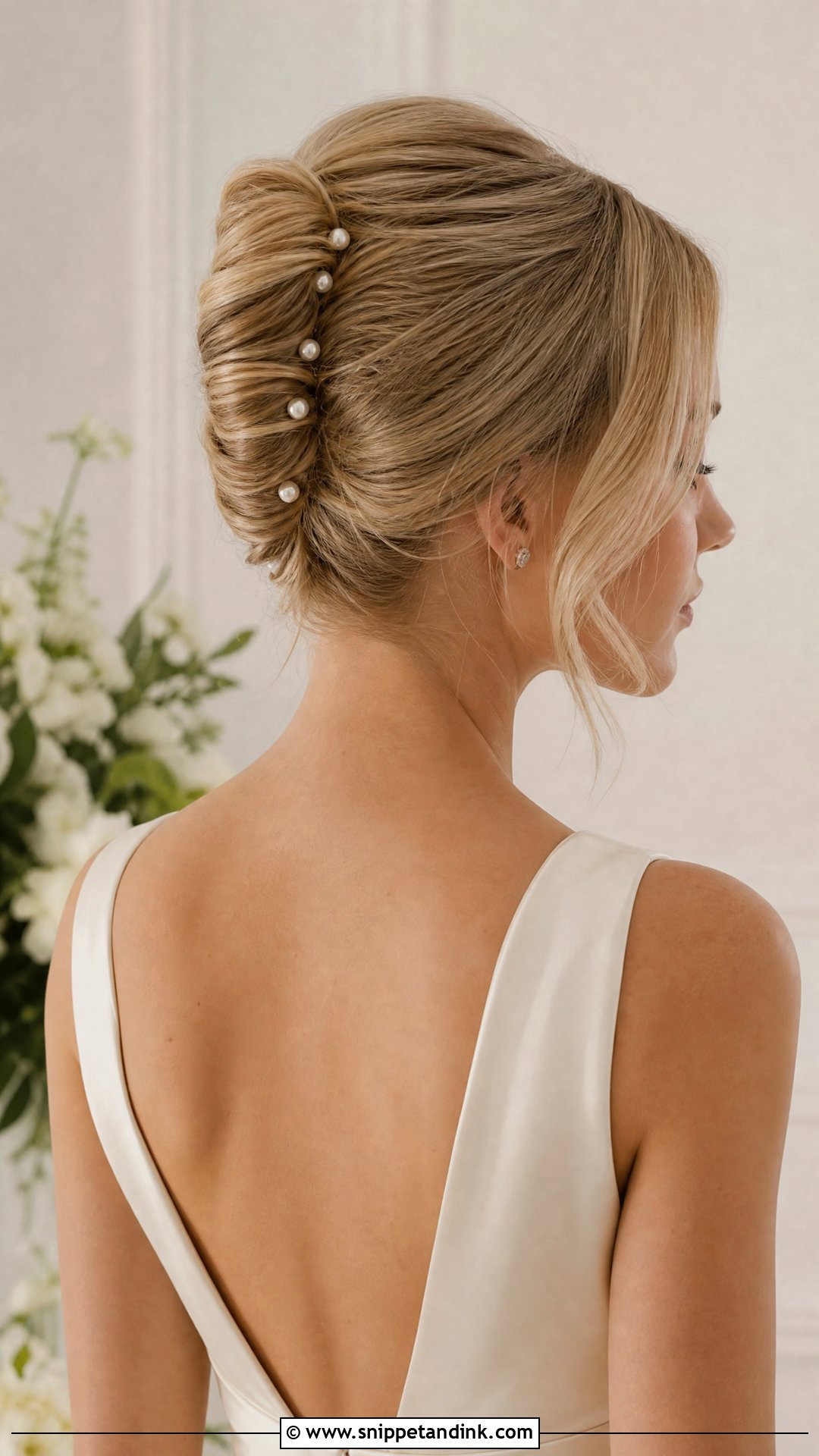
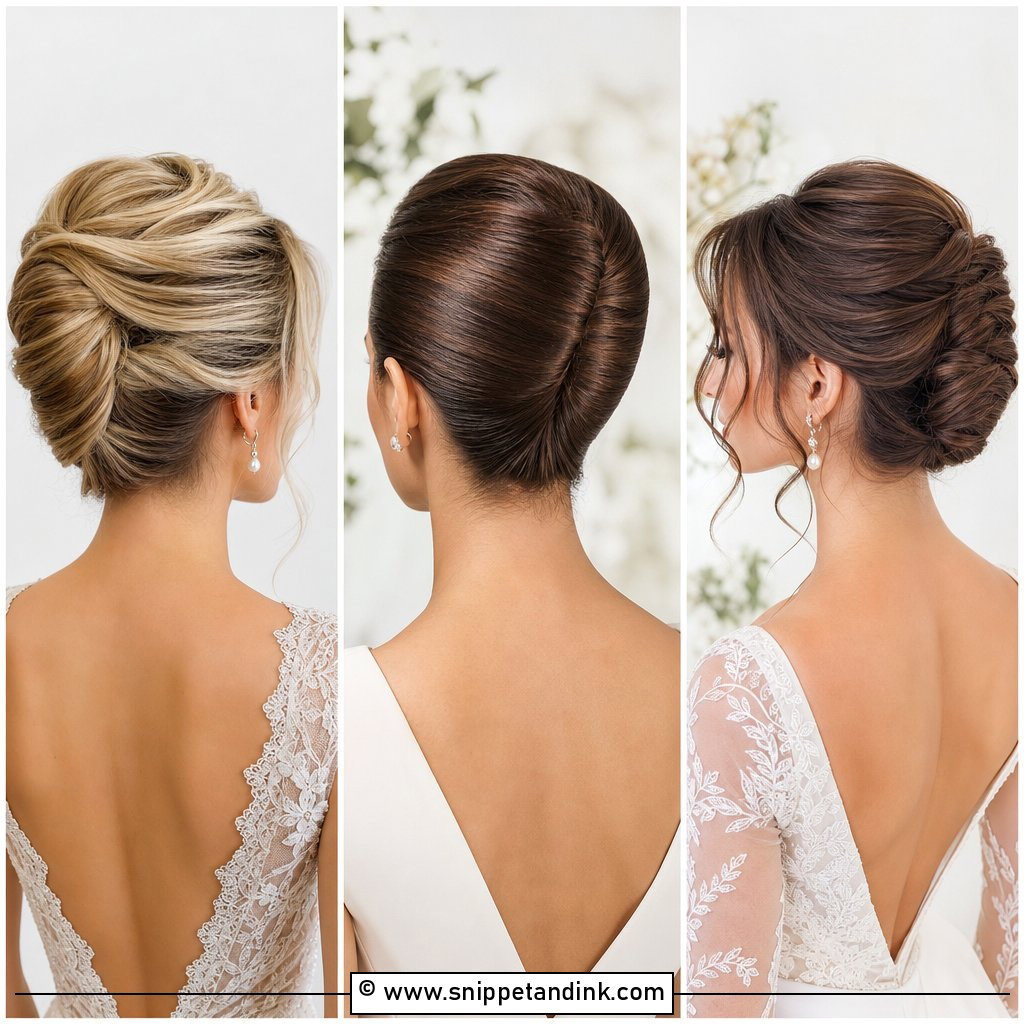
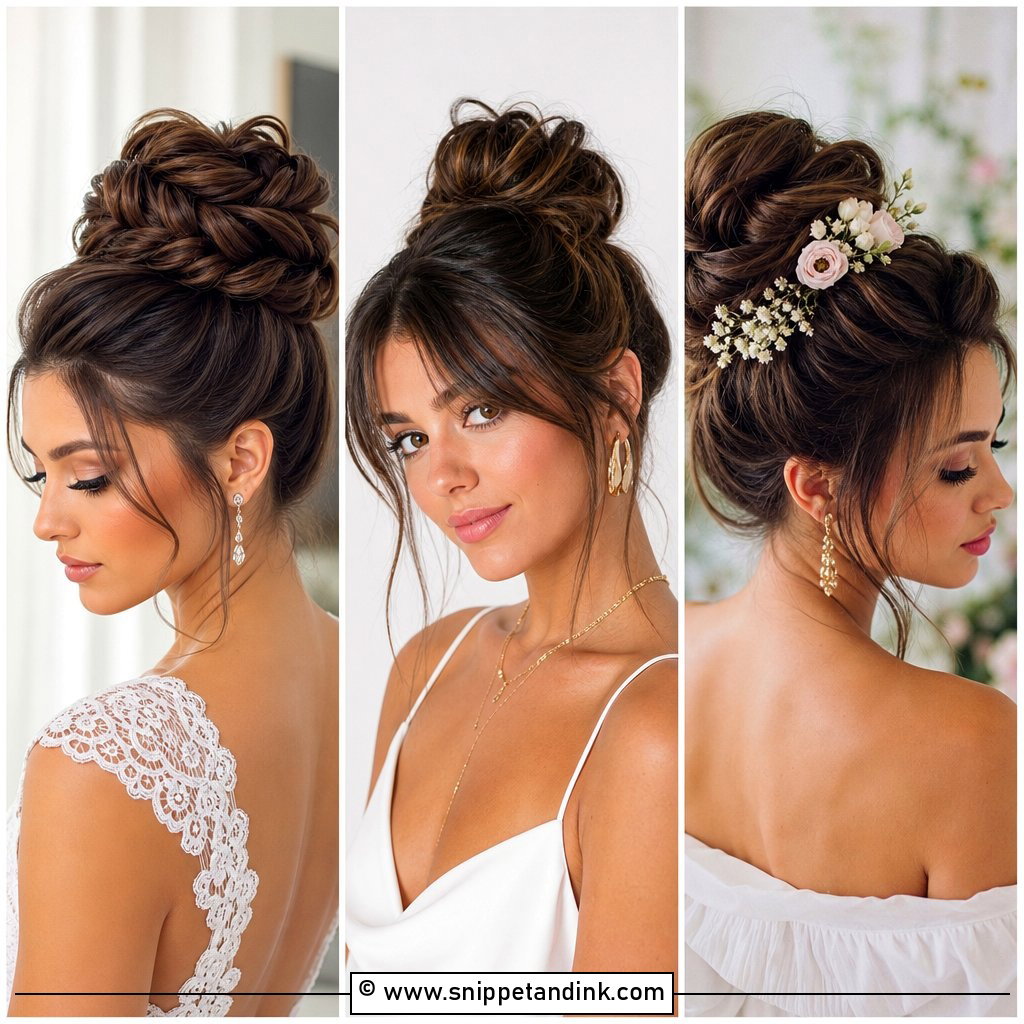
The French twist is the updo I’d pick for a satin gown and a long veil, because the vertical roll keeps the neck and shoulders completely clear. The hair is gathered up and rolled inward against the back of the head. What makes it hold is a row of crossed pins down the seam before the roll goes over them; the visible pins only finish the edge. Fine hair needs light backcombing or a slim padding piece for fullness, while thick hair needs smoothing cream and strong pins so the roll doesn’t bulge. I’ll leave a couple of loose pieces at the temples if the face needs softening.
2. Bridal Low Twist Bun
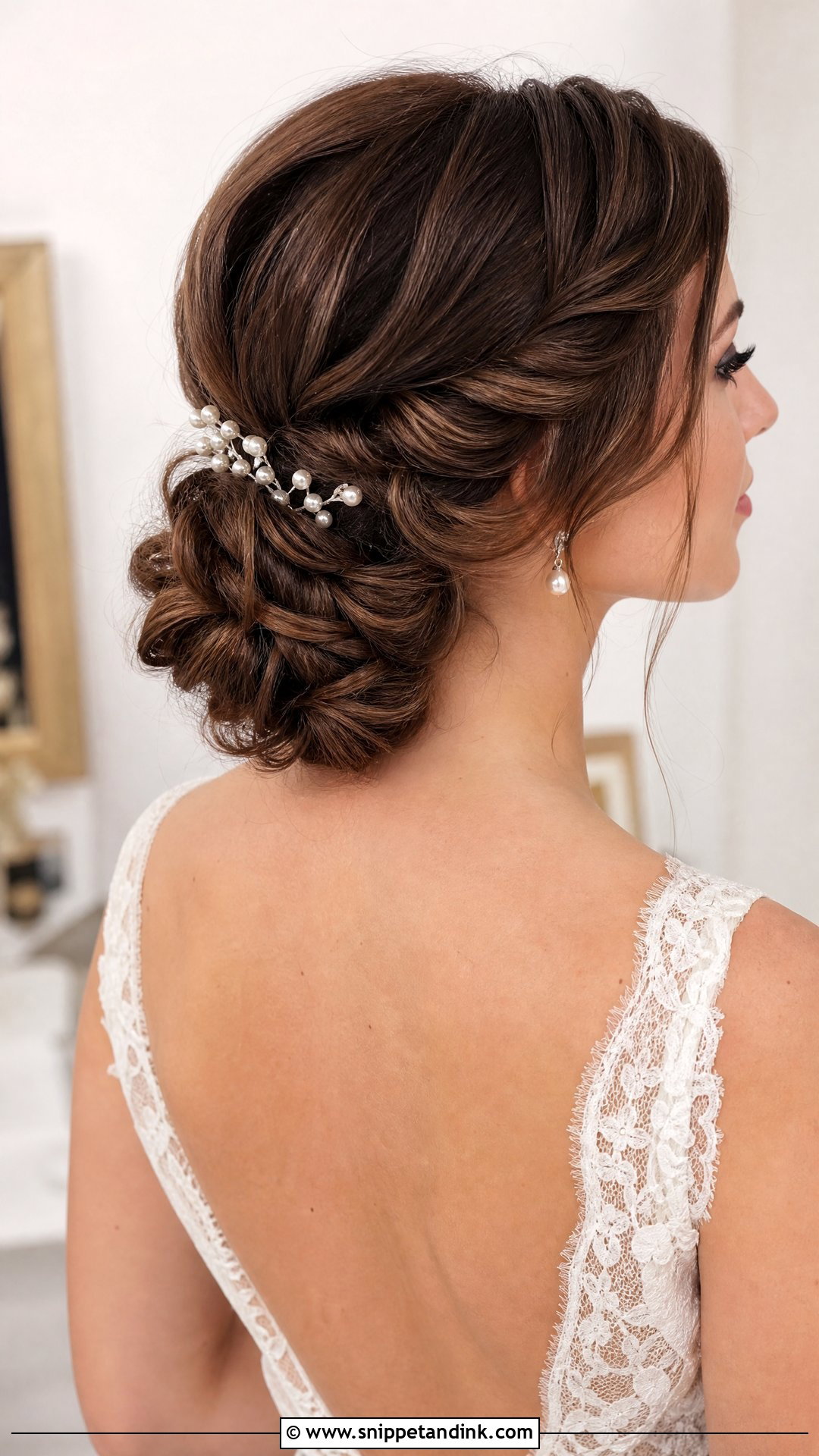
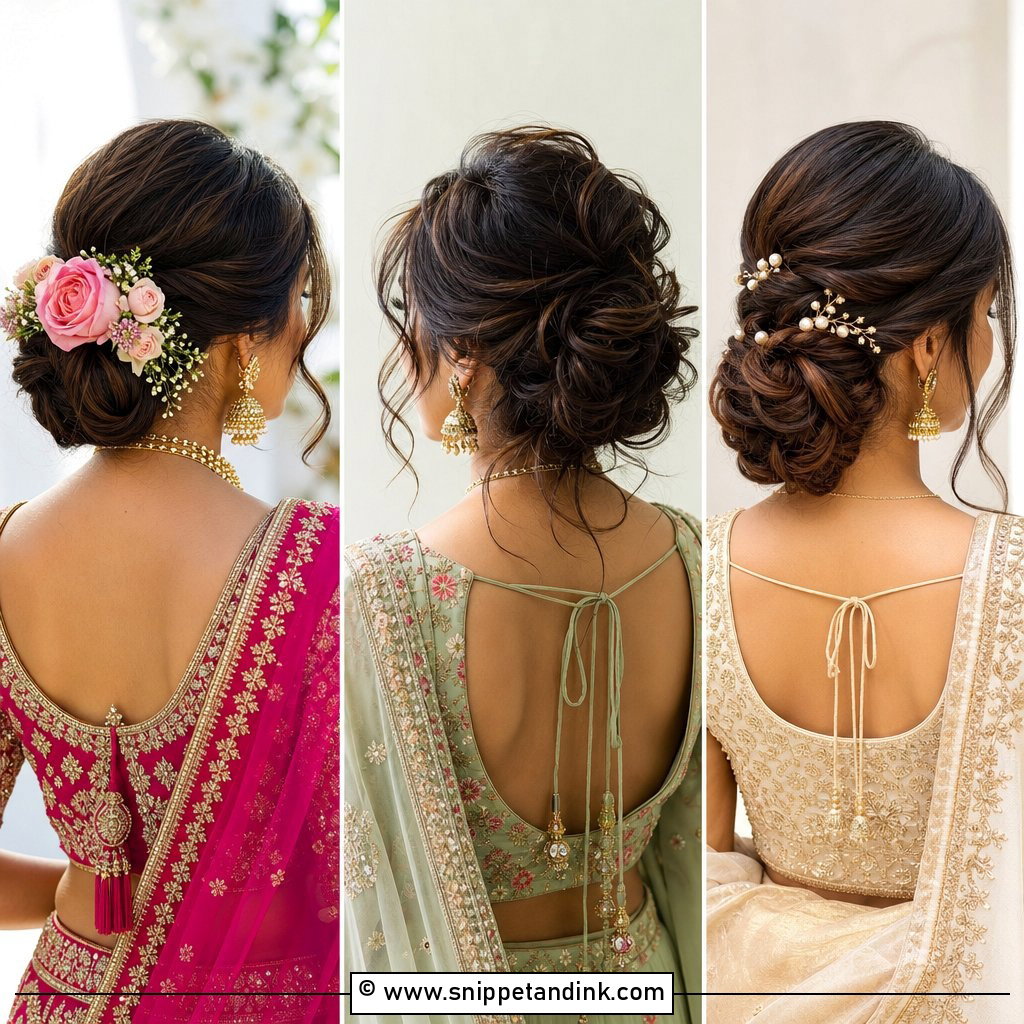
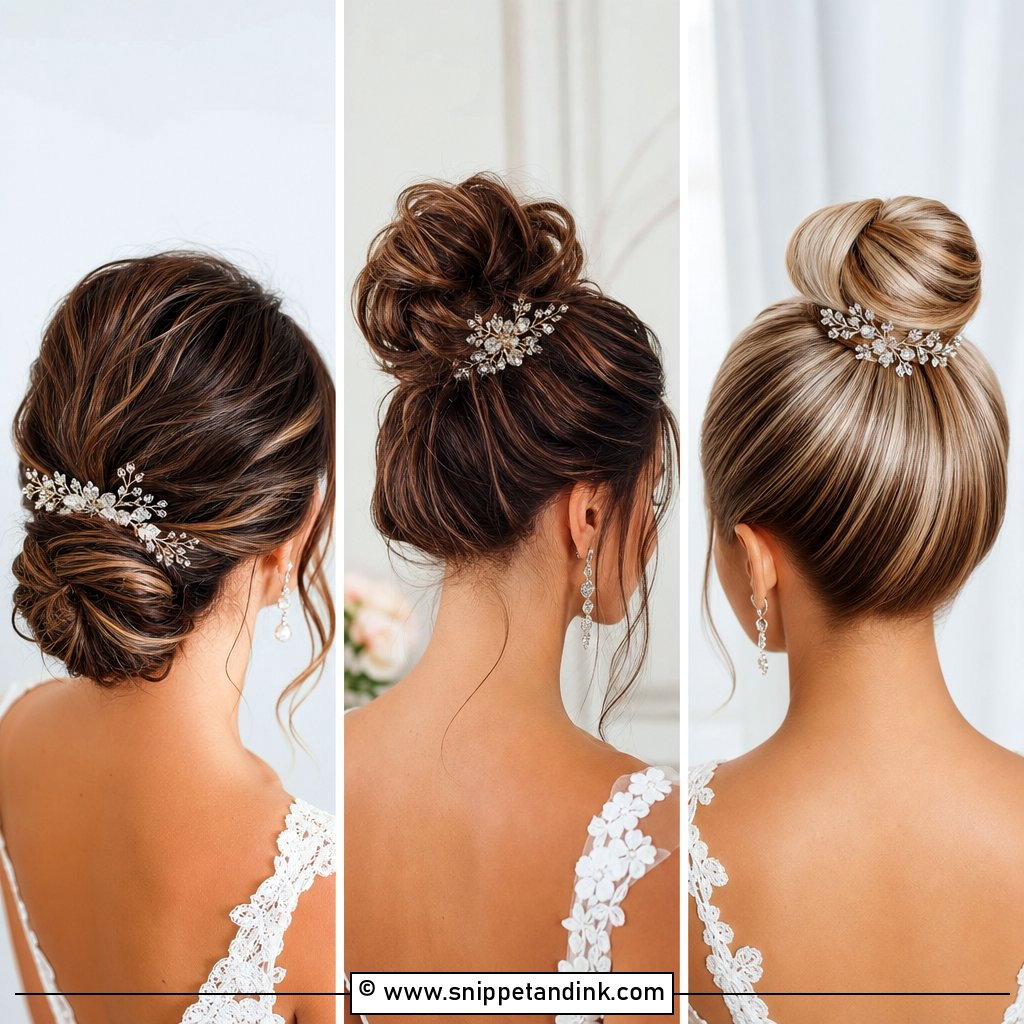
A low twist bun gives you twisted detail with the security of an updo. I start the twists at the sides or crown and wrap them into a bun at the nape, so the back of your head looks finished in ceremony shots and dress-detail photos. It’s a good middle ground if you want your hair up but hate the feeling of a tight style. Keep it smooth for a formal room or pull it apart slightly for a garden. A comb or lace veil sits just above the bun, where the twists give the teeth plenty to grab.
3. Bridal Half Up Twist
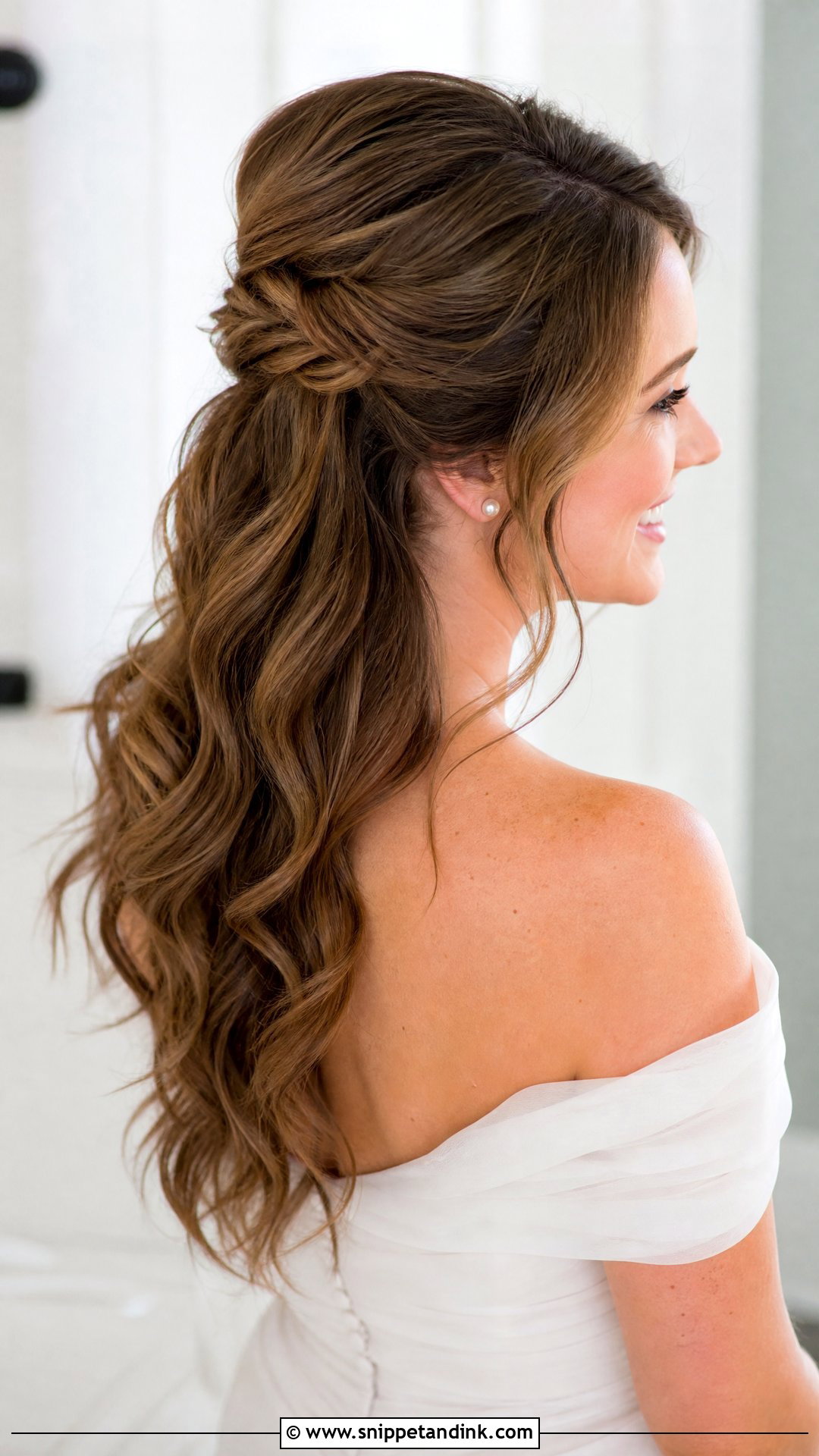
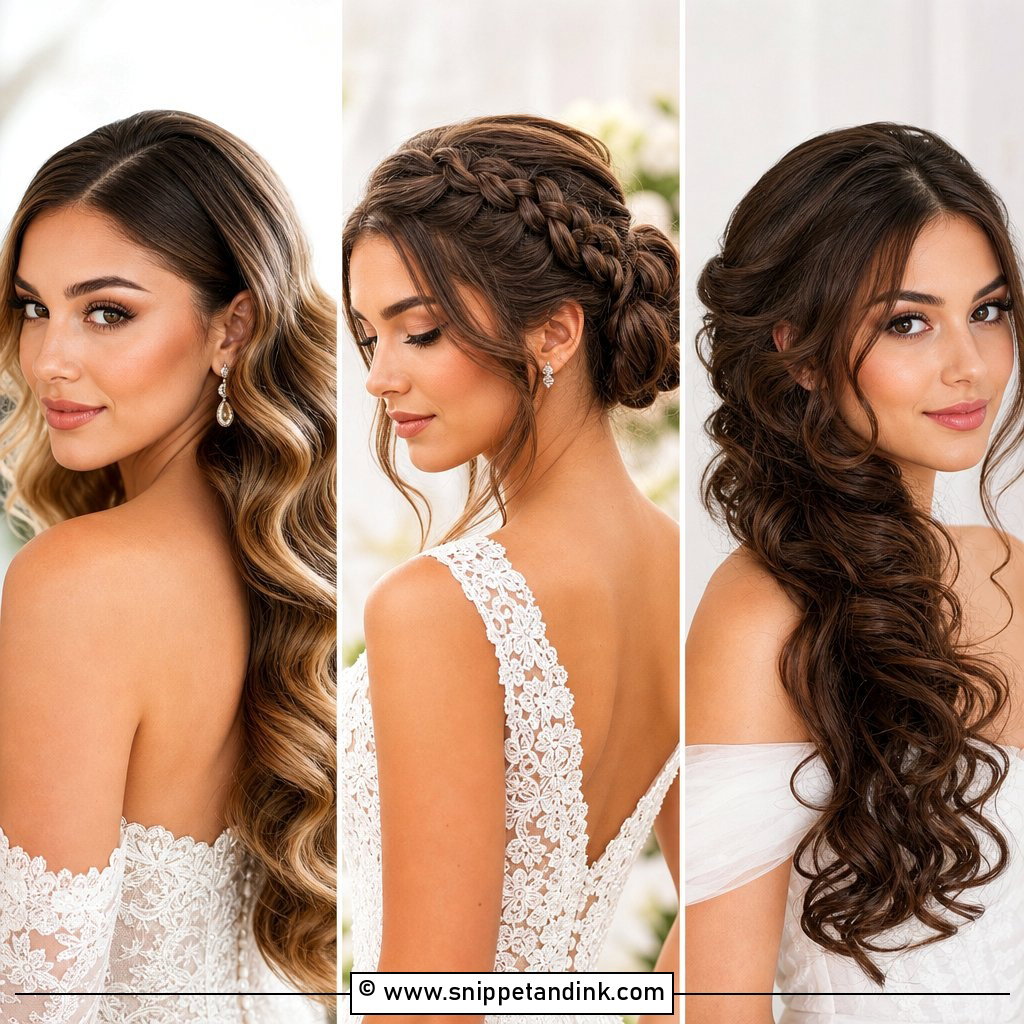
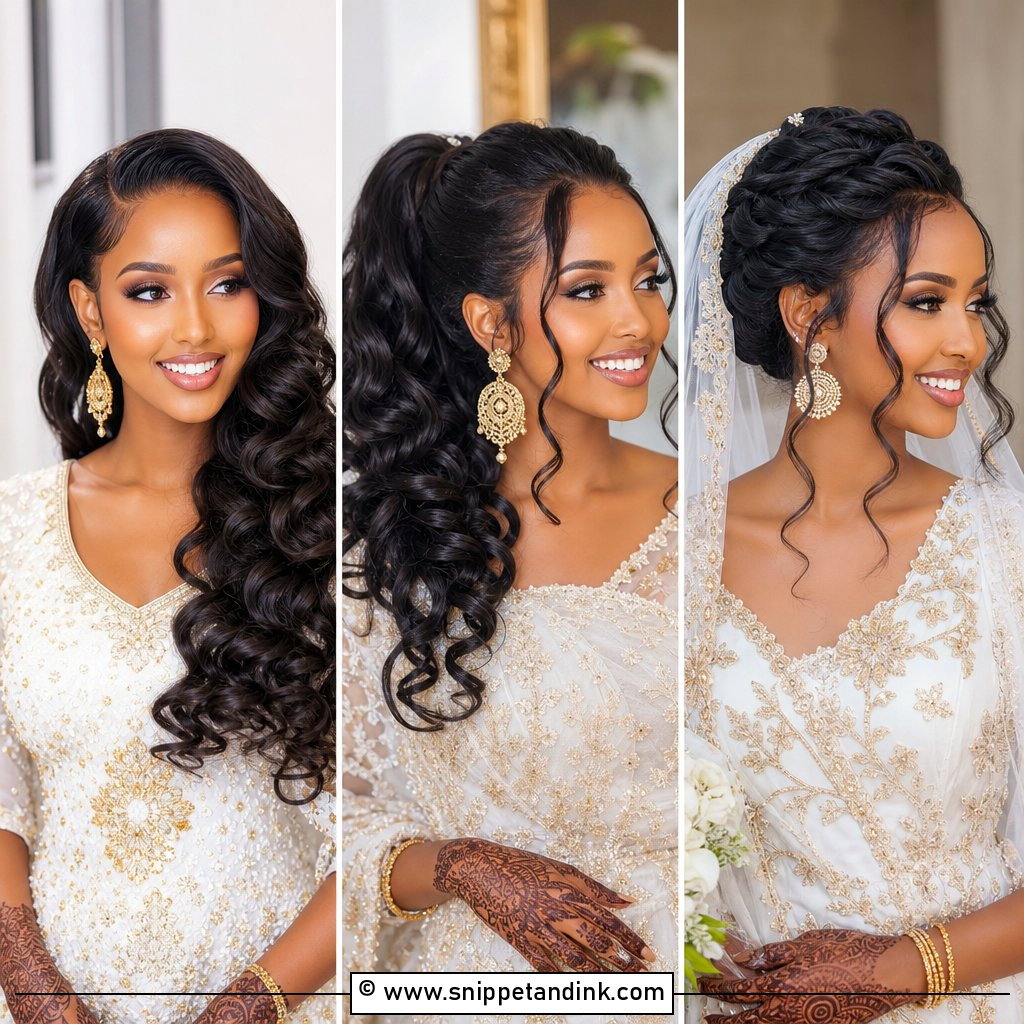
The half up twist is my usual answer for a bride who loves her hair down but needs it out of her face for photos and hugs. Two front sections twist back and pin at the crown while the rest falls loose in curls, waves or natural texture. The pinned junction becomes a strong anchor for a veil or hairpiece. I lift the crown a little before twisting, then loosen the twists with my fingertips, because tight twists on top flatten the head in profile. It stays comfortable from ceremony to reception.
4. Bridal Rope Twist Updo
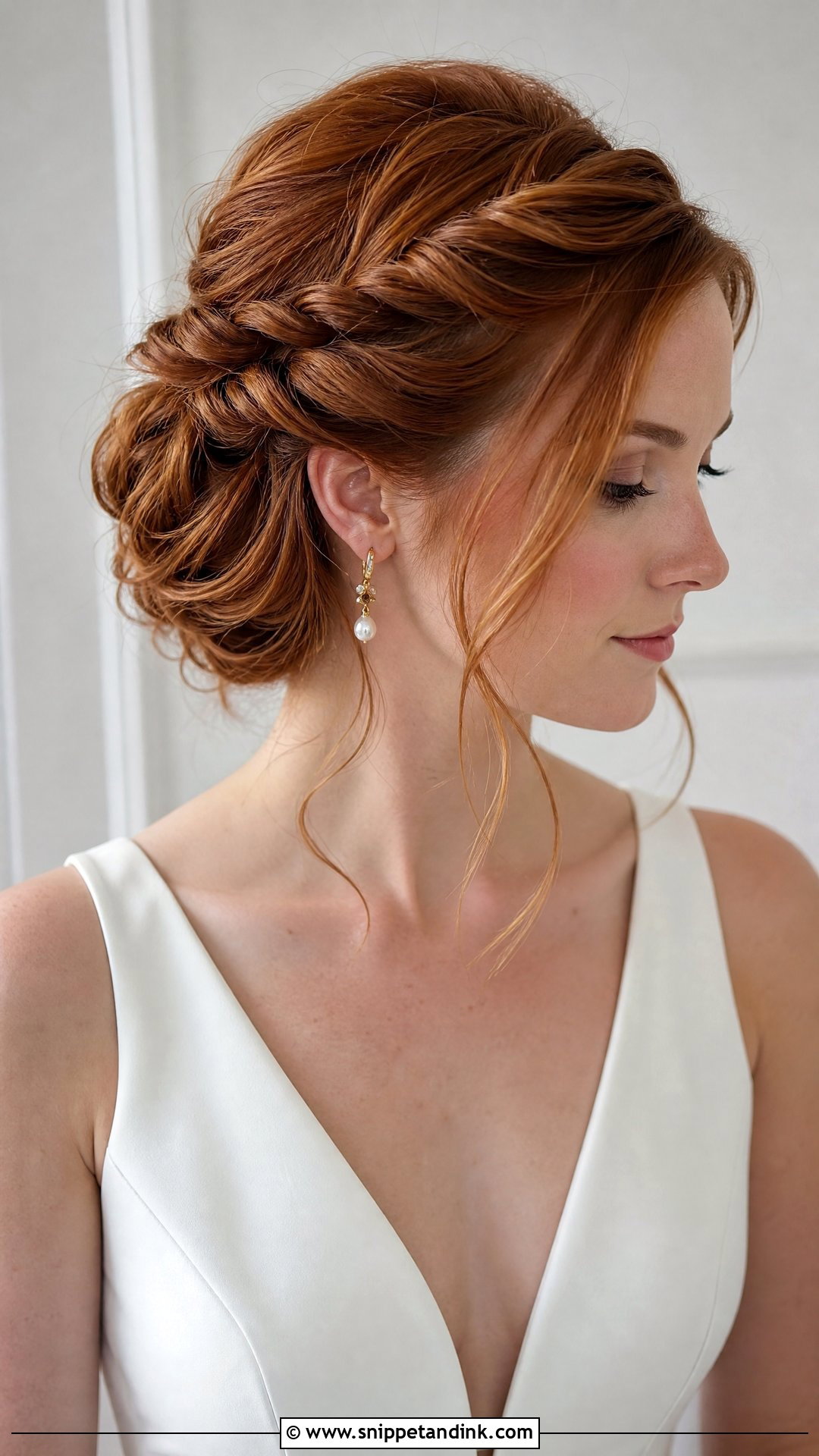
A bridal rope twist updo has a raised, spiral texture that shows up clearly in photos. Two strands wrap around each other, and the twists can run along the sides, across the crown or into a low bun. Medium to long hair gives the best result. Highlighted hair suits it especially well, because the spiral shows each tone. The thing to know: rope twists unravel if they’re built wrong, so each strand is twisted one way and then crossed the other. Keep the front soft with loose pieces, or go sleek for a formal venue.
5. Bridal Side Twist Curls
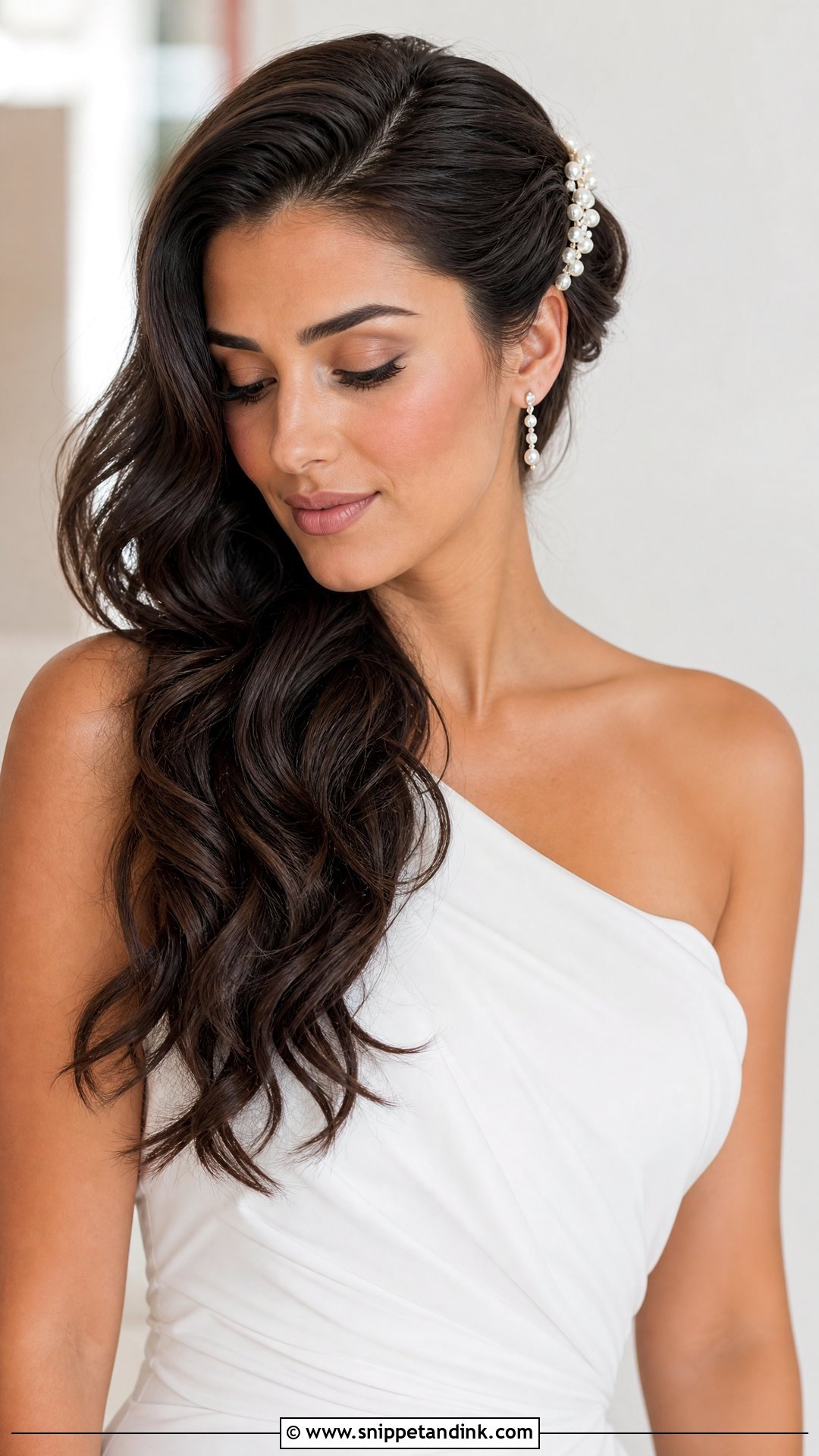
One side twisted back and pinned behind the ear, the other side falling in curls over the shoulder: that asymmetry balances one-shoulder gowns, sweetheart necklines and statement earrings without covering half the face. It gives a down style more control than open curls, since the twisted side stays put through hugs and dancing. The pin is the weak point. I hide two crossed pins under the twist rather than one, because a single pin slides once the curls start to relax. A small comb or pearl clip finishes it.
6. Bridal Twisted Crown
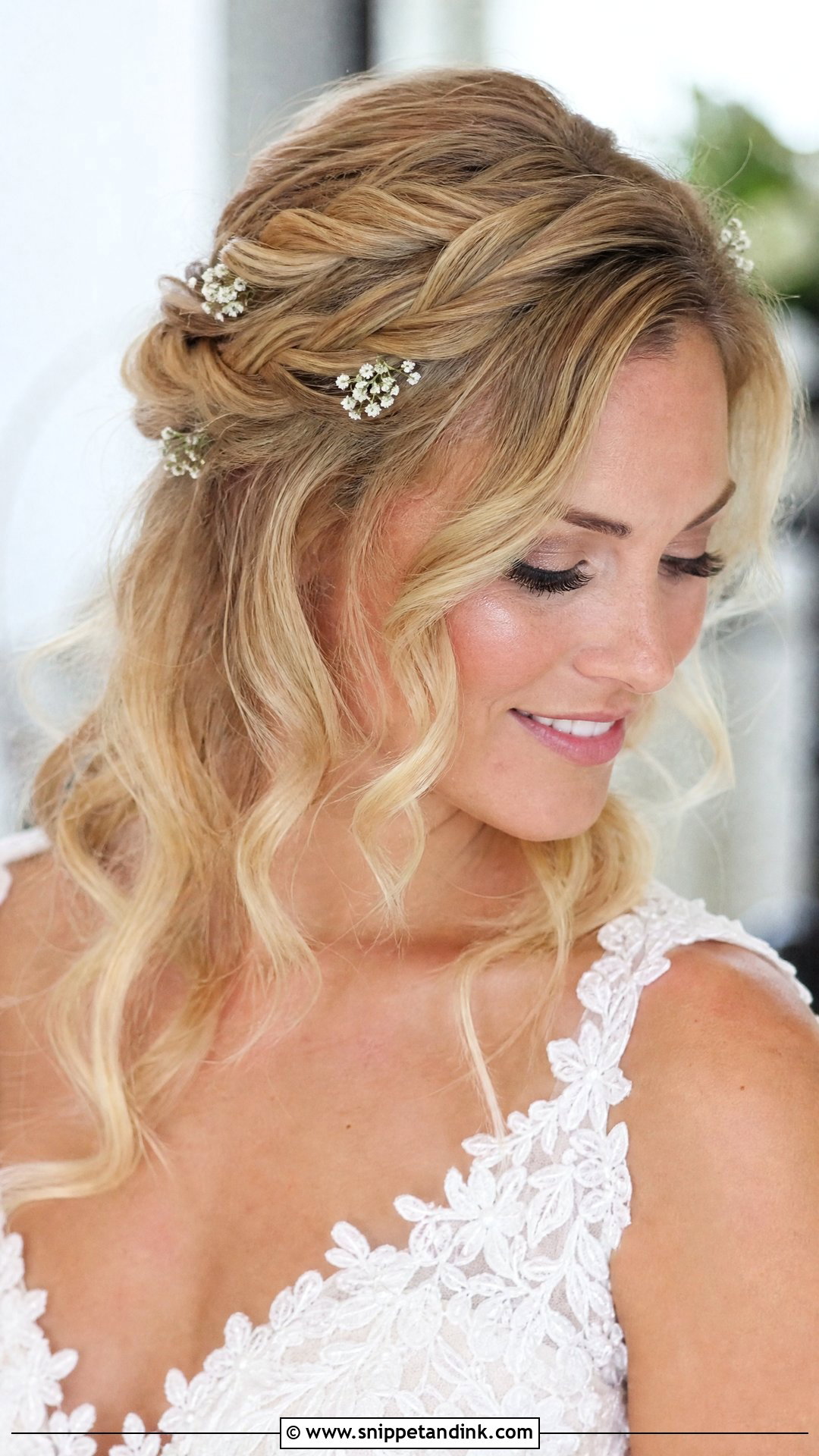
A twisted crown wraps around the head like a halo, with a softer, more boho feel than a braided crown. The hair is twisted in sections and pinned around the crown, which adapts more easily to different textures than a braid does. It can sit over loose waves, lead into a low bun, or tuck the ends away entirely. Outdoor and garden weddings suit it, as do lace dresses and small flowers. I keep it relaxed, but not loose: a crown pinned too gently sinks backward over the day, so the pins go in at an angle toward the scalp.
7. Bridal Flat Twist Updo
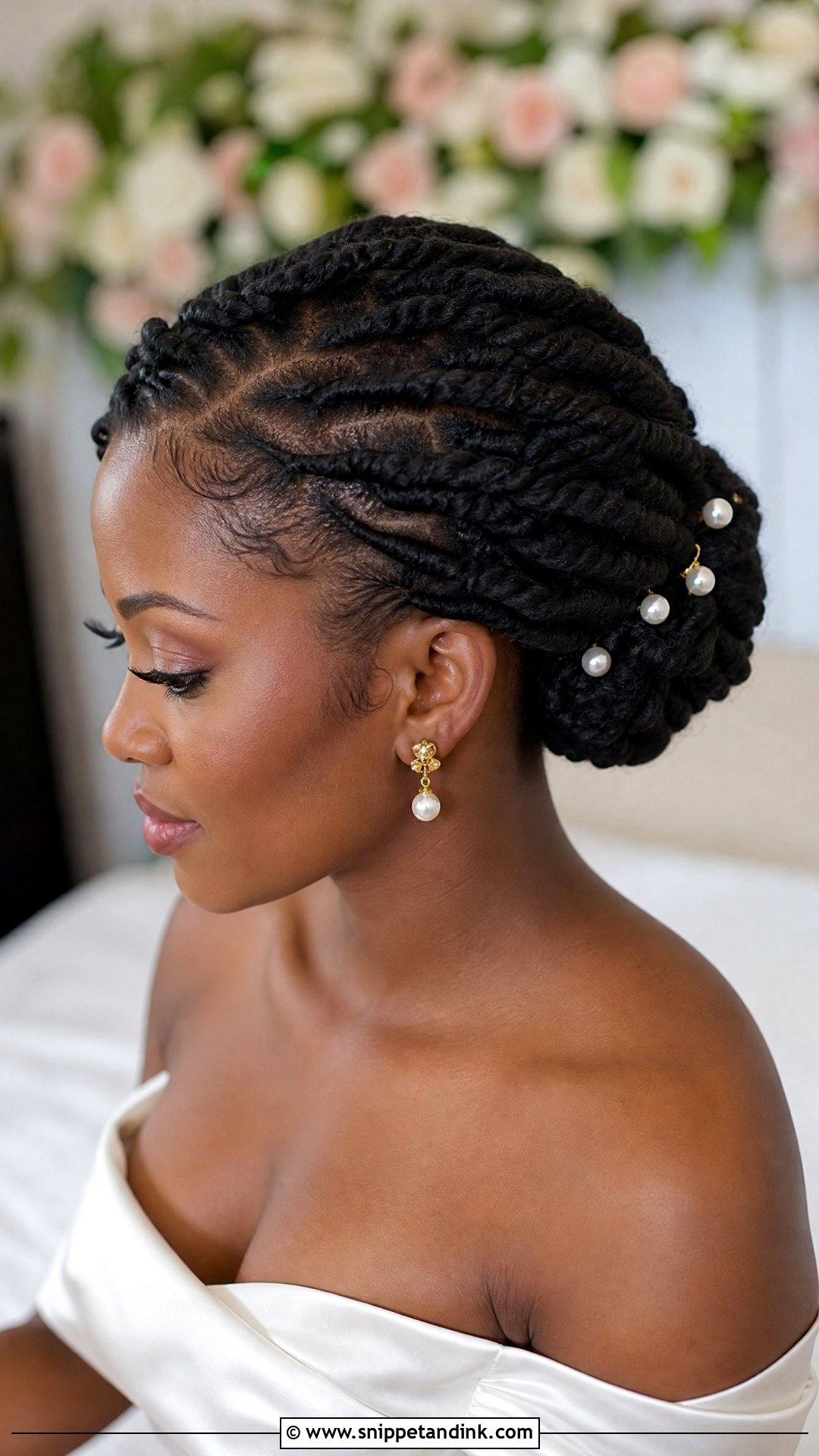
Flat twists on natural hair are one of my favourite updos to build, because the hair stays protected while the pattern does the decorating. The twists lie close to the scalp and gather into a bun, roll or pinned crown. They can be sleek and formal or fuller with volume at the top or back. Long days don’t worry me with this one, since the base is set before you even sit down for makeup. Moisturise first, then use a light setting product so the twists stay defined without flaking, and lay the edges last. Gold cuffs or pearl pins add shine.
8. Bridal Senegalese Twist Bun
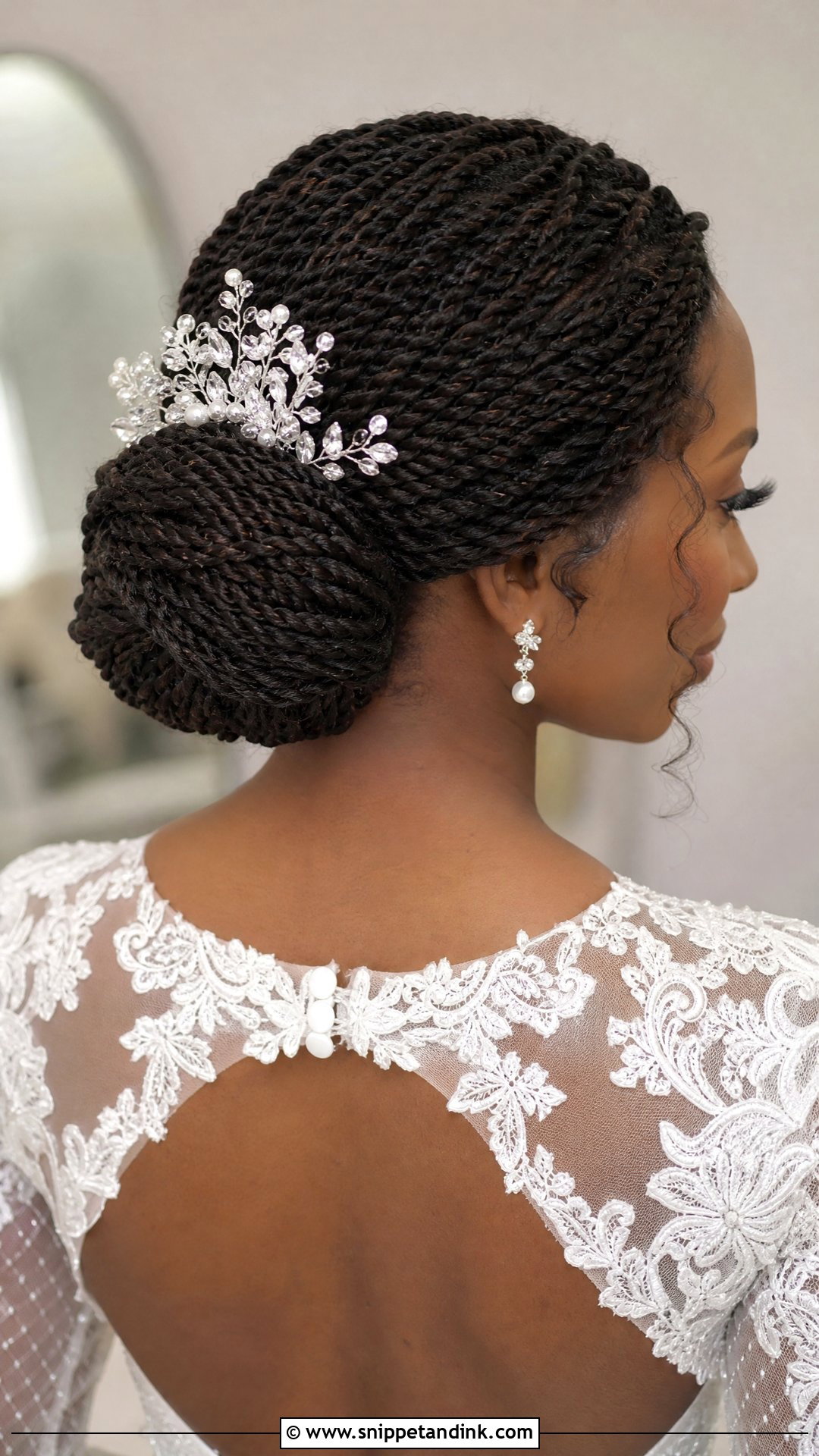
A bridal Senegalese twist bun is the simplest way to make existing twists formal. They sweep into a high, low or side bun depending on the dress and where the veil sits. A low bun feels classic; a high one lifts the whole look and shows the neckline. The twists already have fullness, so the bun rarely needs padding. My caution is about age: twists that are four or five weeks old usually show frizz at the roots in close-ups, so if the wedding falls late in the install, I’d refresh the front or reinstall.
9. Bridal Passion Twist Ponytail
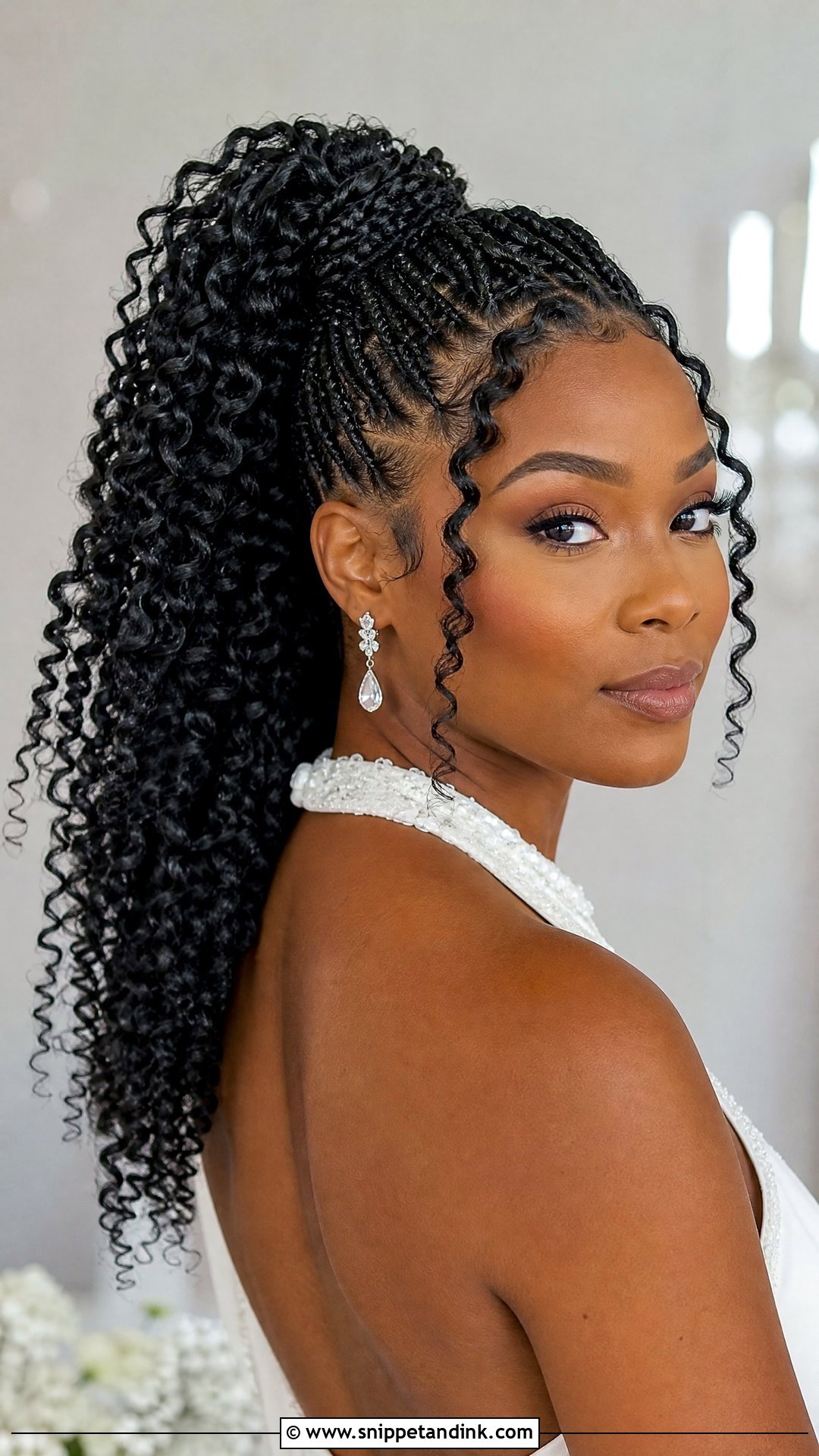
A bridal passion twist ponytail has a looser, springier texture than most protective twists, which gives a ponytail lots of movement. It can sit low, mid or high, with a few twists left out around the face. I wrap the base with a twist to hide the band. Passion twists are light, but a long, dense ponytail still pulls at the hairline over a full day, so I’d keep it mid or low for a long wedding. Backless dresses, halter gowns and bold earrings all show well with the hair gathered back.
10. Bridal Twisted Chignon
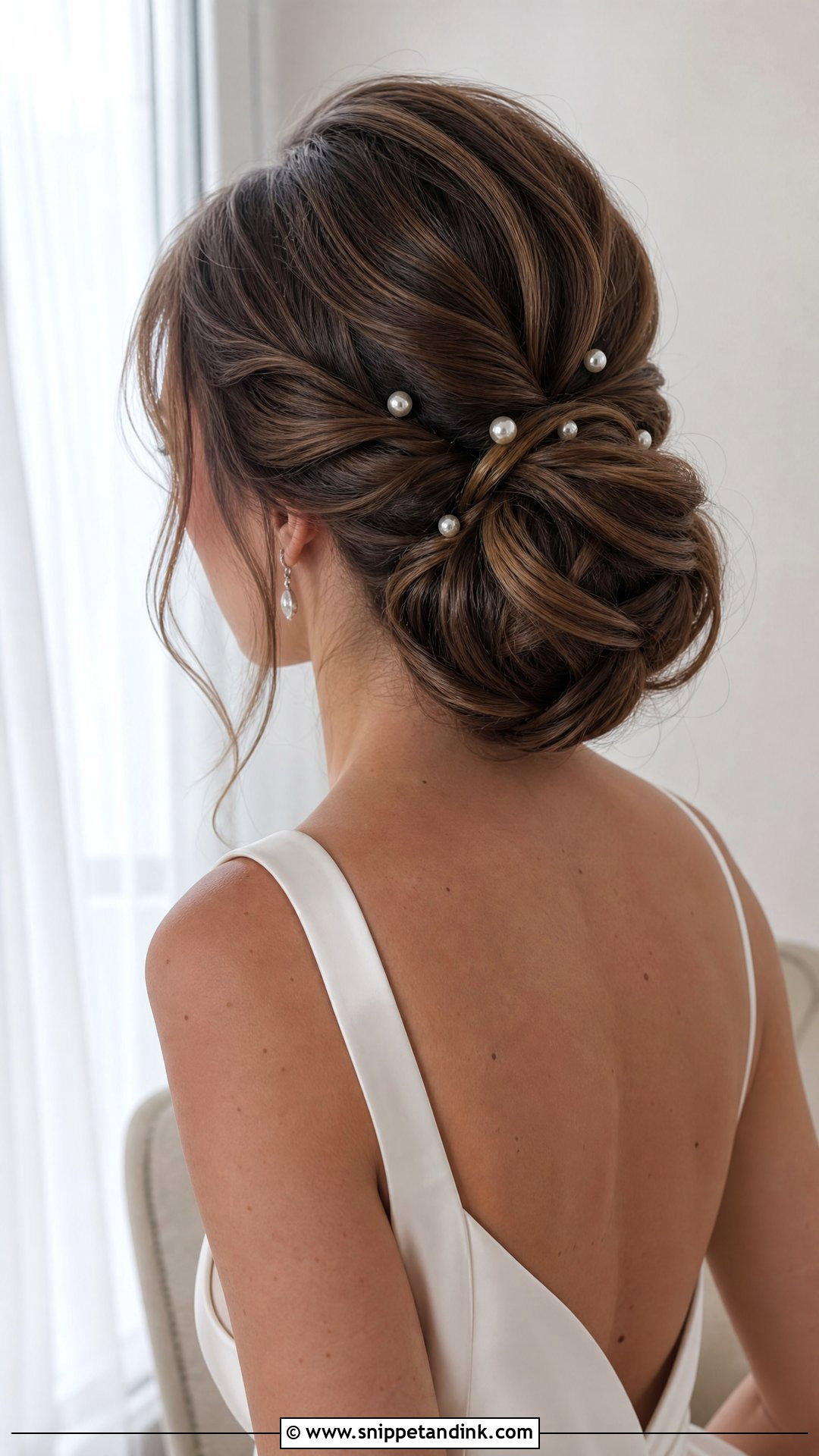
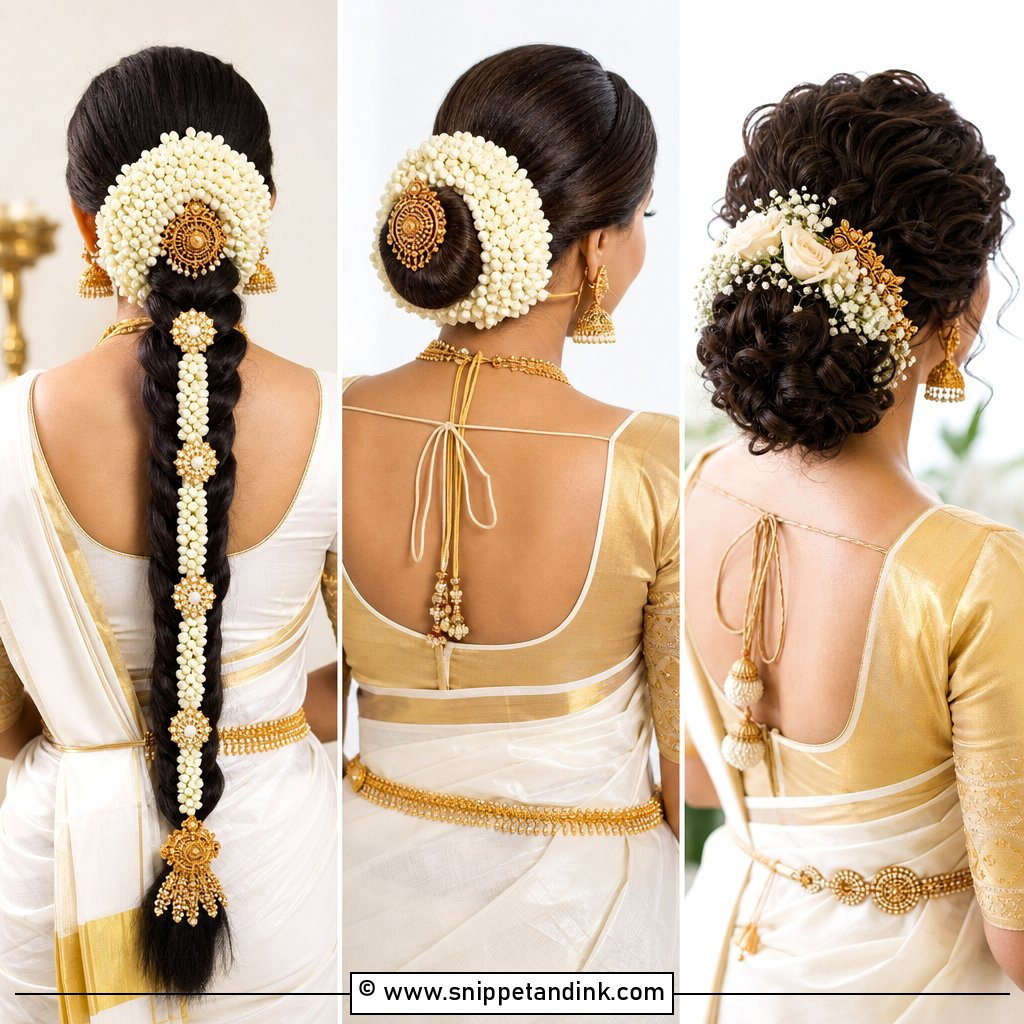
A twisted chignon is a soft low updo that tucks into a rounded shape at the nape. I place twists through the sides and back, then gather them into the chignon, which gives you a clean front and detail from behind. Classic gowns, cathedral veils and pearl accessories all sit well with it. Fine hair needs texture spray and a little backcombing before twisting, or the twists look thin. Thick hair needs the opposite: I thin out the bulk at the nape so the chignon doesn’t pull or press against the back of the neck.
11. Bridal Waterfall Twist
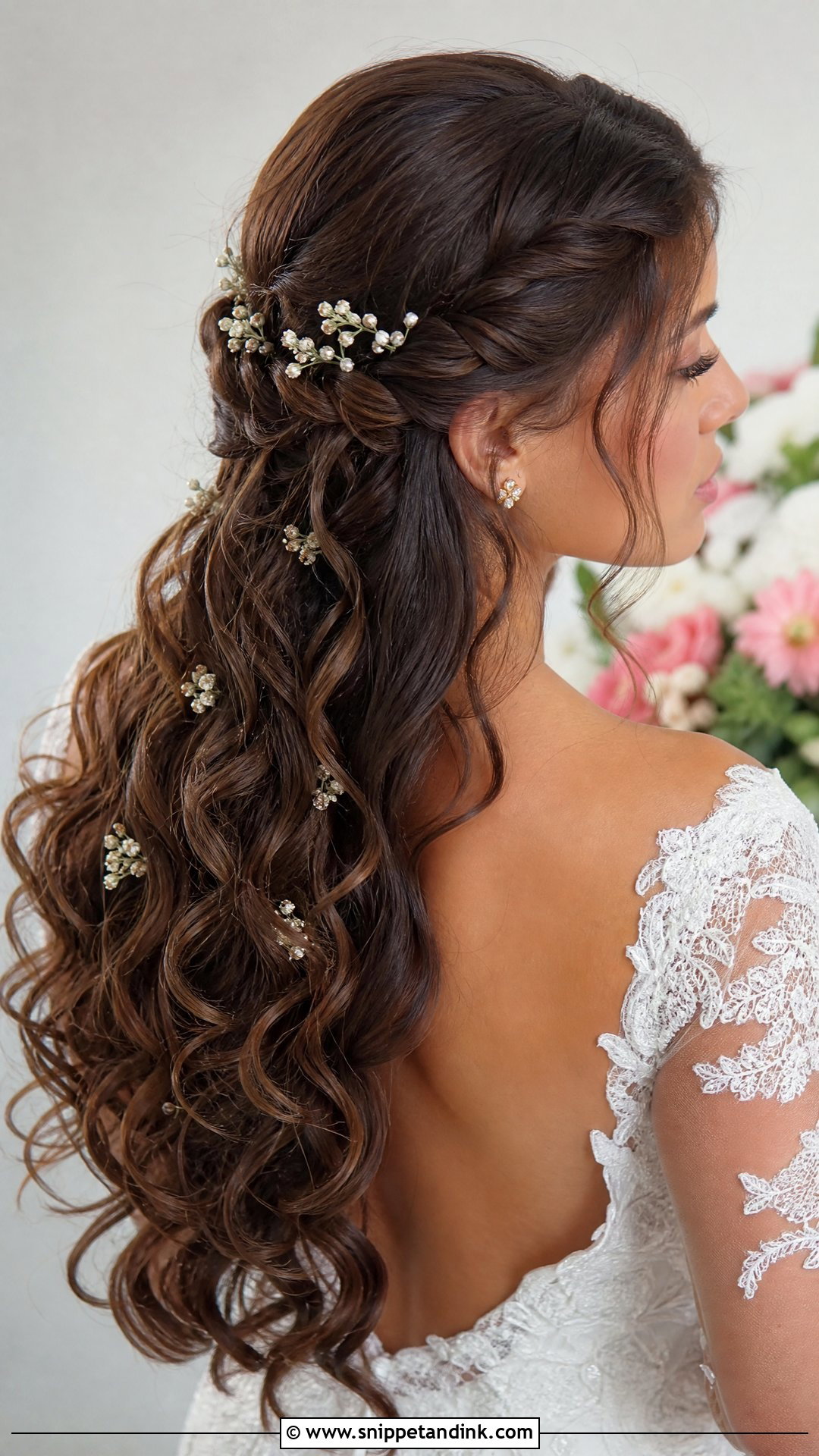
A bridal waterfall twist adds a woven line to loose hair without the tightness of a braid. The twist travels across the back or side of the head, dropping small pieces through as it goes. Curled or waved hair hides the dropped pieces in its movement, which is why I always curl before twisting. Tiny flowers or a slim crystal vine can sit along the line. It’s delicate, though: very layered hair pokes through the twist, so I’d check your cut at the trial.
12. Bridal Twisted Ponytail
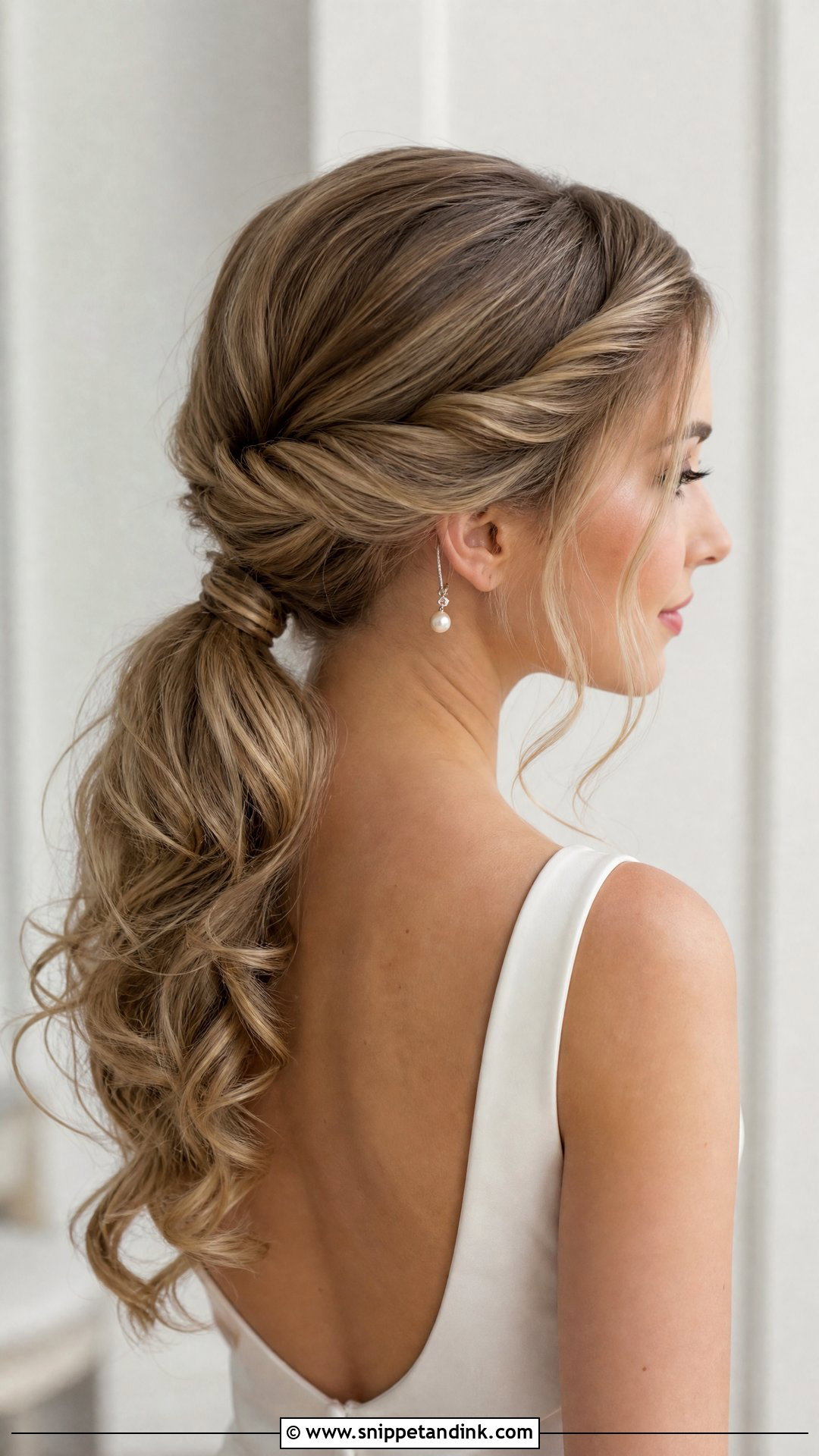
A twisted ponytail is quick to customise. The front or side sections twist back into the ponytail, and the length can be curled, waved, sleek or textured. Low, with a middle part and a smooth finish, it looks refined; higher, it lifts the face. It keeps hair contained while still showing length, which helps if you’re dancing hard. I wrap a section around the elastic and pin it underneath so it doesn’t unwind. A pearl comb or a small bow adds softness.
13. Bridal Twisted Bob
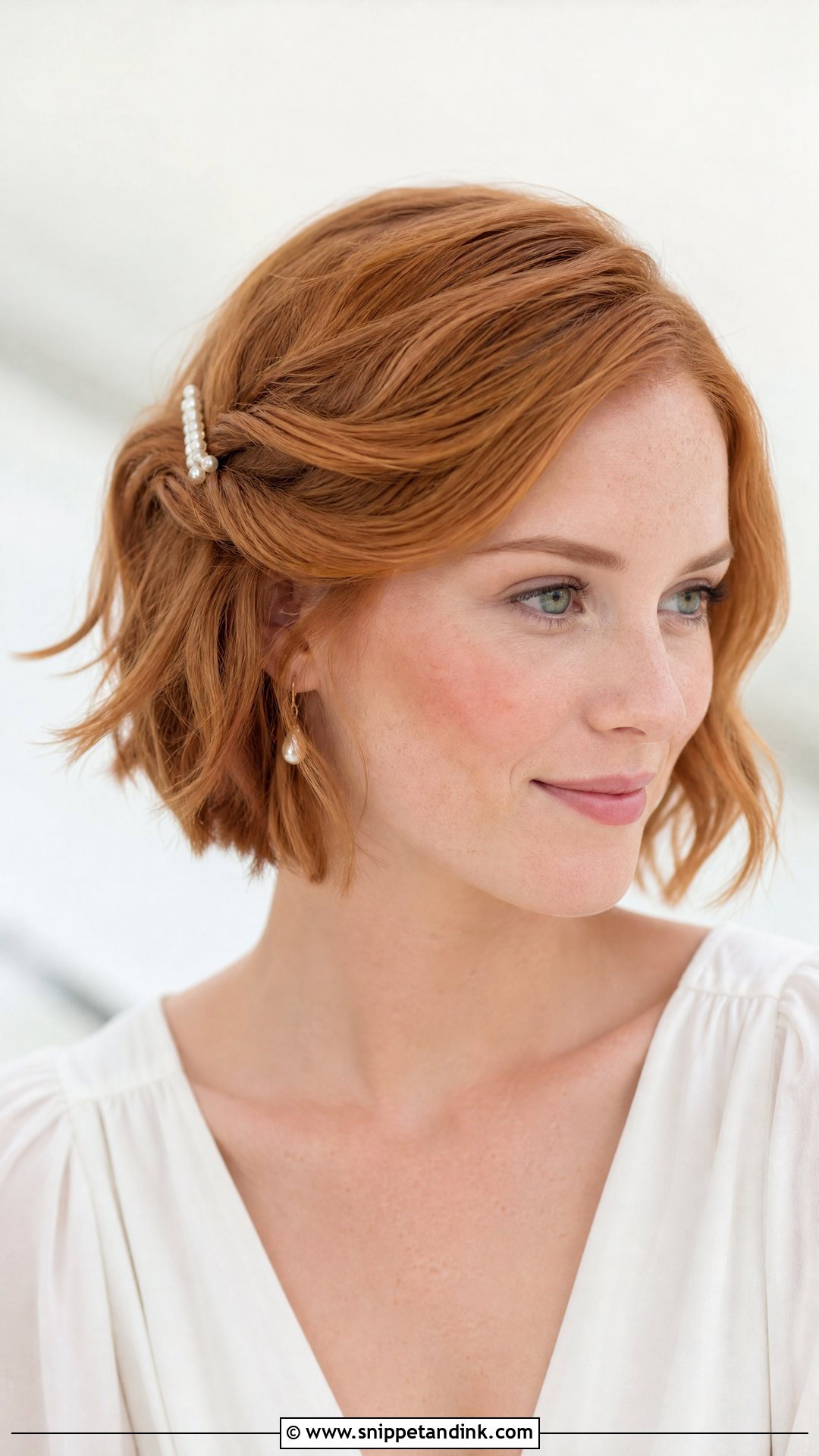
Short hair takes twists better than people expect. The front pieces twist back and are pinned above the ears, and the bob itself can be sleek, softly waved or curled under. It suits chin, jaw and shoulder-length cuts, with no need for extensions. One side twist opens the face asymmetrically; two small twists give a balanced half-up. On short hair the ends are springy, so I twist with a touch of pomade to keep them from popping loose. A tiny clip finishes it.
14. Bridal Twist Braid Updo
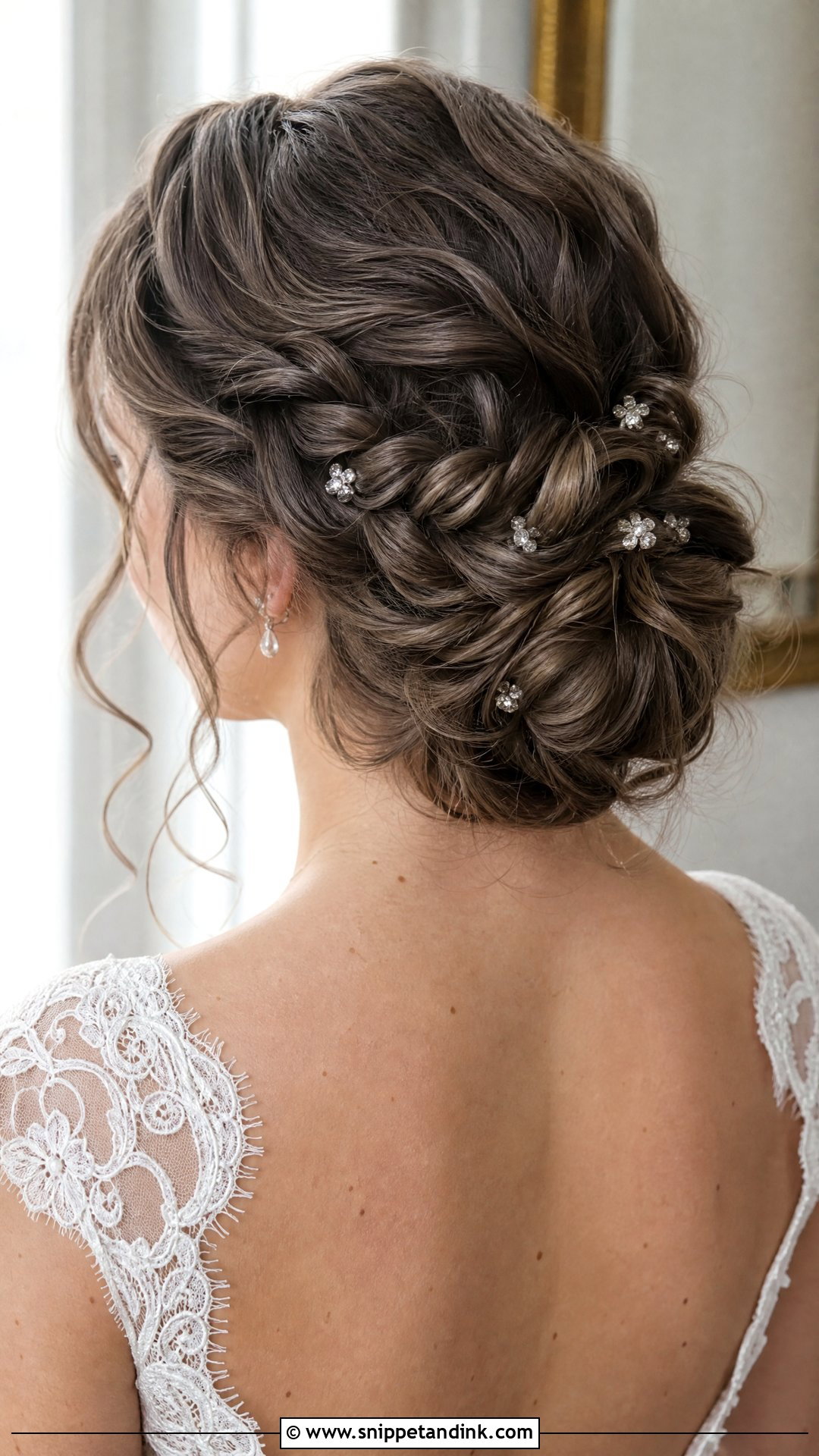
A twist braid updo combines twists at the front with braids through the back, tucked into a low bun or side updo. The mix of textures gives depth, and braids give the pins something firm to hold, so it lasts through a long celebration. Highlighted hair shows every twist and braid. Keep it slightly loose for romance or smooth for a formal room. I’d put small pins along the braid rather than one big piece, so the sparkle reads from every angle.
15. Bridal Twist With Veil
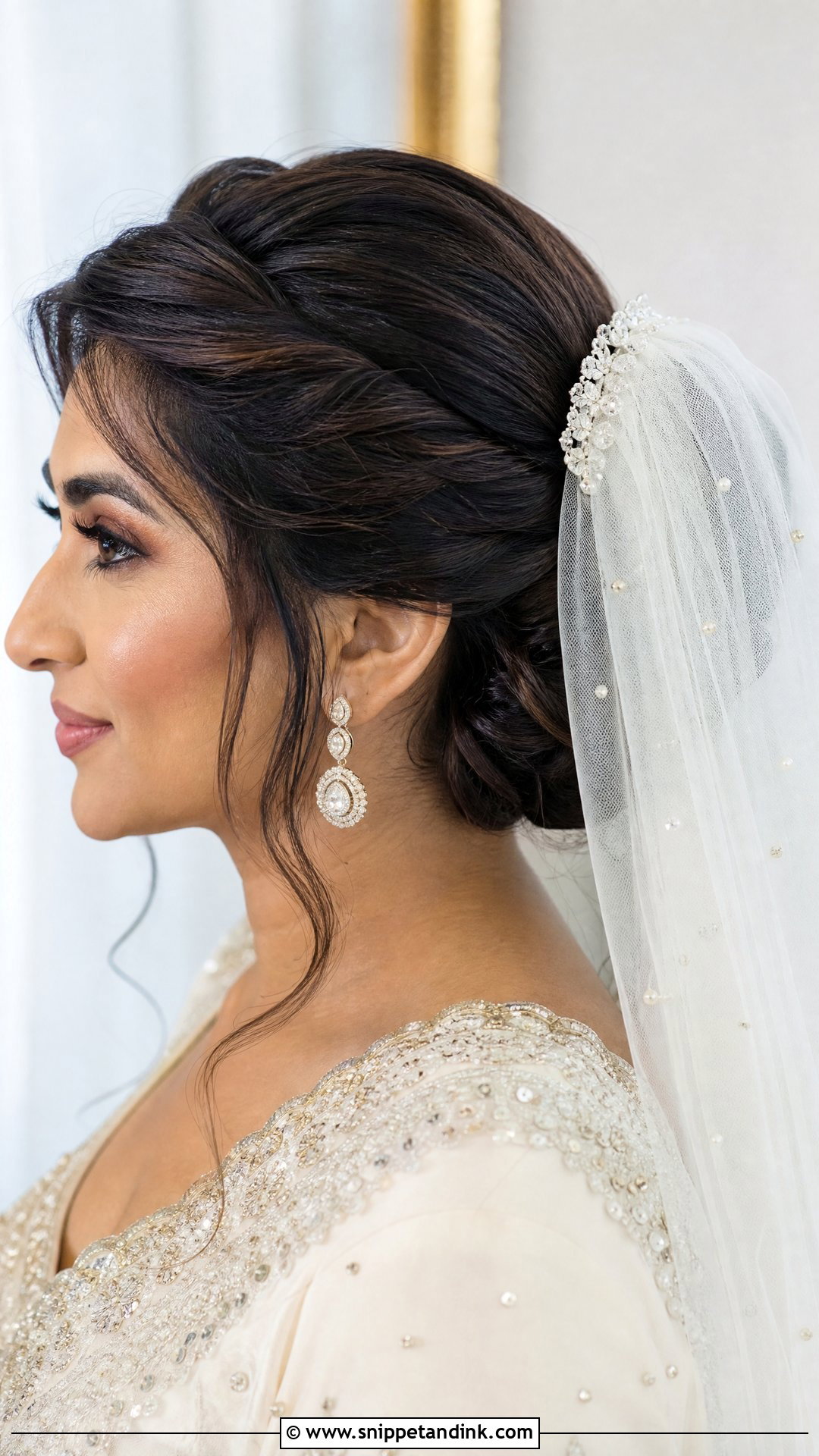
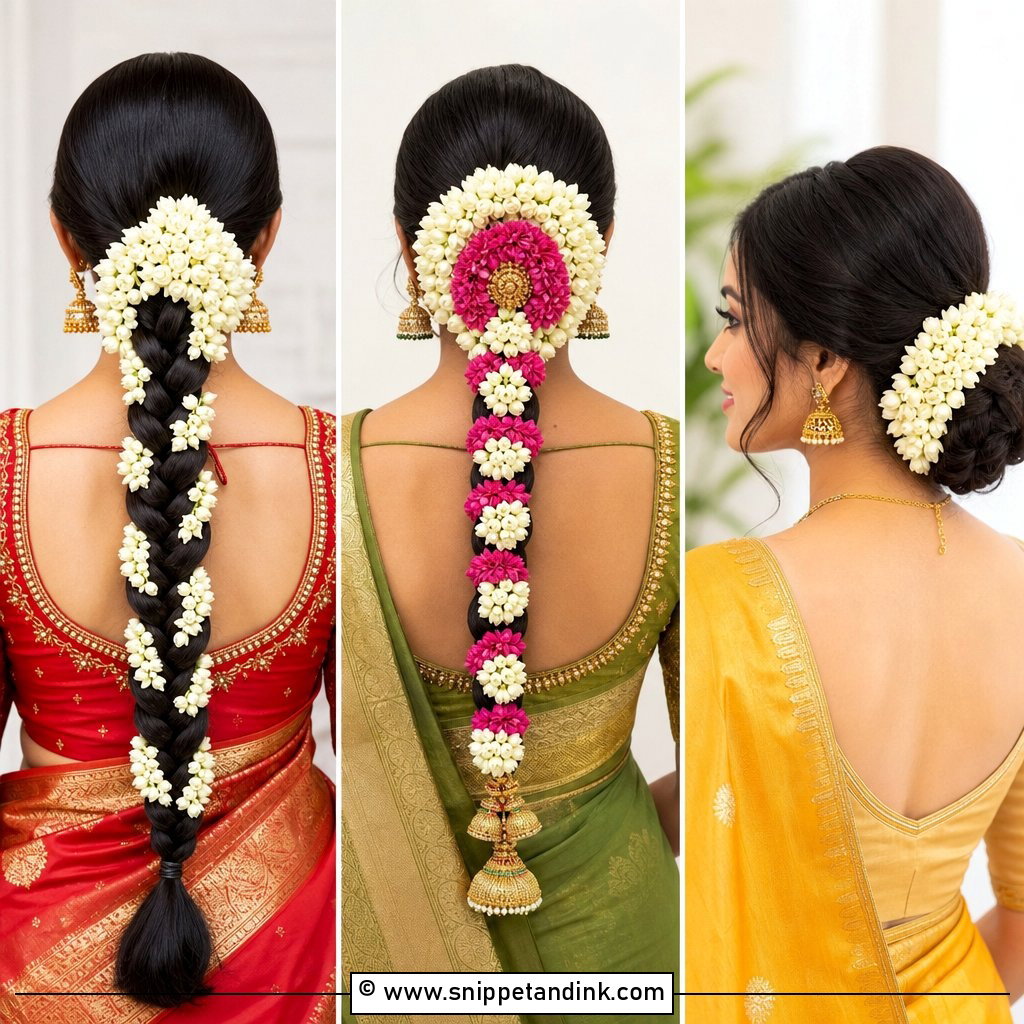
The twist you choose should support the veil without burying its detail. Low twist buns, half-up twists, French twists and twisted chignons all give combs a secure place to grip. With a heavy veil, I build a pinned base under the twist so the weight sits on that rather than pulling the style down. A sheer veil lets the twist detail show through, so I keep it visible and neat. A dramatic cathedral veil needs a strong shape like a French twist or low twisted bun. And I always remove the veil at the trial to check the hair still looks finished without it.
Why Twists Unravel, and What Stops It
A twist that looked perfect at noon and loose by the first dance almost always failed for one of a few reasons I can spot at the trial.
- Built in one direction. For a rope twist, each strand gets twisted one way and the two are wrapped around each other in the opposite direction. Twist and wrap the same way and it springs open.
- Freshly washed, silky hair. Twists slide apart on very clean hair, so I prep with a texture spray or dry shampoo to give the strands grip.
- Pins following the twist instead of crossing it. A pin slid along the twist holds nothing; I push pins against the direction and lock them in pairs.
- Humidity on loose twists. They swell and blur, so on a humid day I keep pinned twists tighter and finish with a humidity-resistant spray.
If one does slip on the day, don’t pull at it. Tuck the loose end back under the twist and slide one bobby pin in against the direction of the twist. Keep a few pins in your bag matched to your hair colour, and that repair takes less than a minute.
Test the Hold Before You Trust It
Twists can be simple, detailed, classic or protective, depending on your hair and the look you want. A French twist or twisted chignon reads classic. A half up or waterfall twist feels softer. Flat, Senegalese and passion twists bring texture and long-lasting hold to natural hair. Match the style to your dress, veil, venue and comfort. Bring a few photos to your trial, wear the accessories, and keep the style in for a few hours afterwards. That’s how I find out whether it will still hold its shape at the end of the reception.
You'll Like These Ideas:


Leave a Reply