
This season I’m putting brides in softer buns, lighter flower placement, sculpted waves and pearl details, and classic South Indian braids are as popular as ever. Style is only half the job, though. Indian wedding hair has to survive rituals, photos, dancing, heavy jewelry, dupattas, humidity and very long days, and it has to frame your face while it does it. The fifteen styles below run from a jasmine-wrapped bun to reception waves, and for each one I’ve added what makes it hold and who it suits.
Your Hair’s Density and Texture Decide Half of This List
Two brides can show me the same photo and need completely different work to get there. Before I look at a single reference, I feel the hair: how thick it is, how coarse each strand is, and whether it holds a bend or springs back.
Thick, heavy hair
It makes a full bun and a thick braid with no padding, but its weight pulls curls straight within hours. I curl it in smaller sections and lean toward updos and braids over long open curls.
Fine or thin hair
It holds curls well but has little bulk. Buns need a donut or teasing underneath, and long braids or a fuller pony usually need clip-in extensions. Sleek styles can show the scalp at the part, so a slightly softer part helps.
Naturally wavy or curly hair
This is often the easiest to texture and the hardest to make sleek. Messy buns, braids and defined curls work with it; sleek buns and glossy straight lengths fight it, especially in monsoon humidity. Working with your texture almost always lasts longer than ironing it flat.
1. Indian Bridal Bun With Gajra
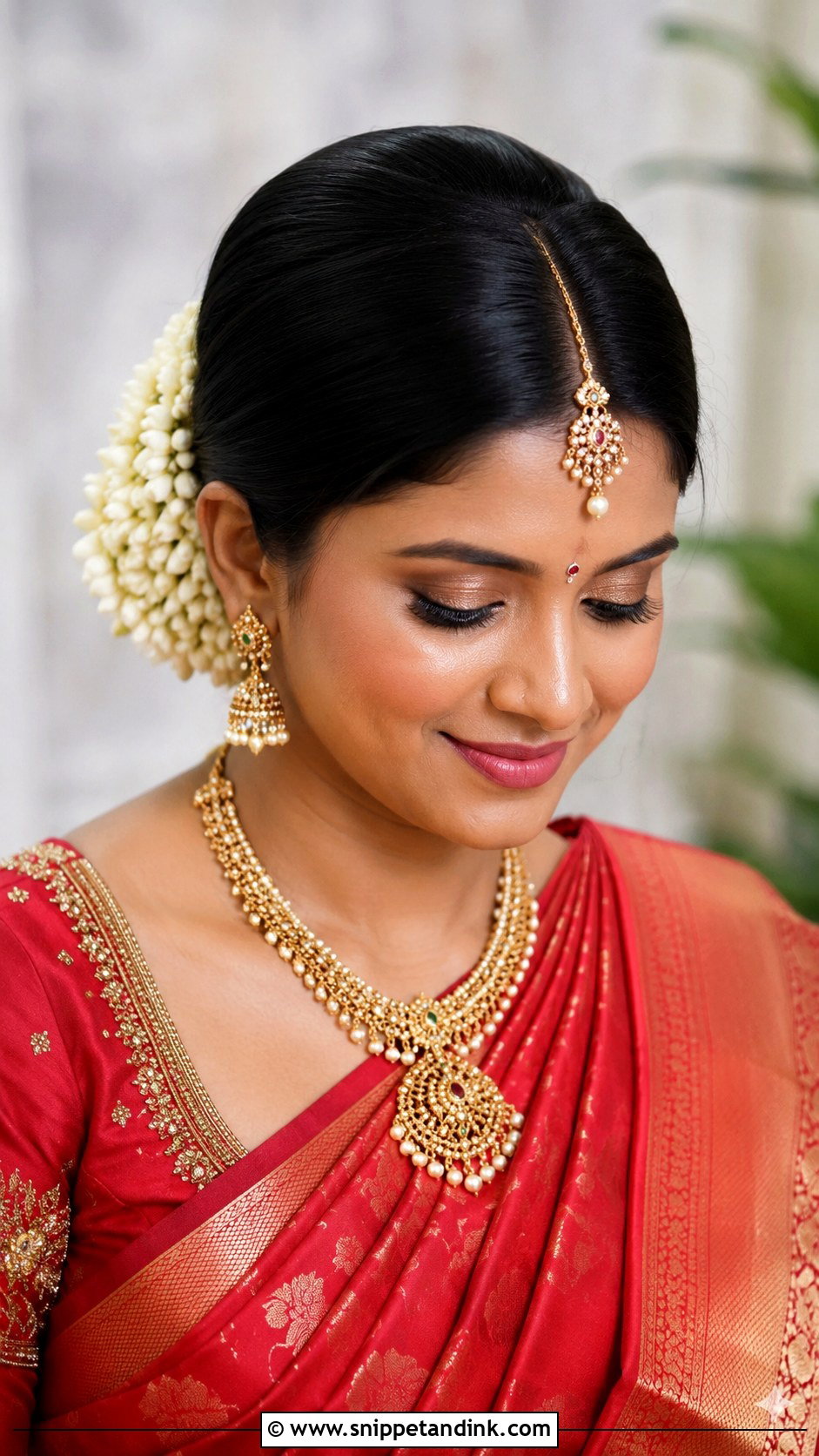
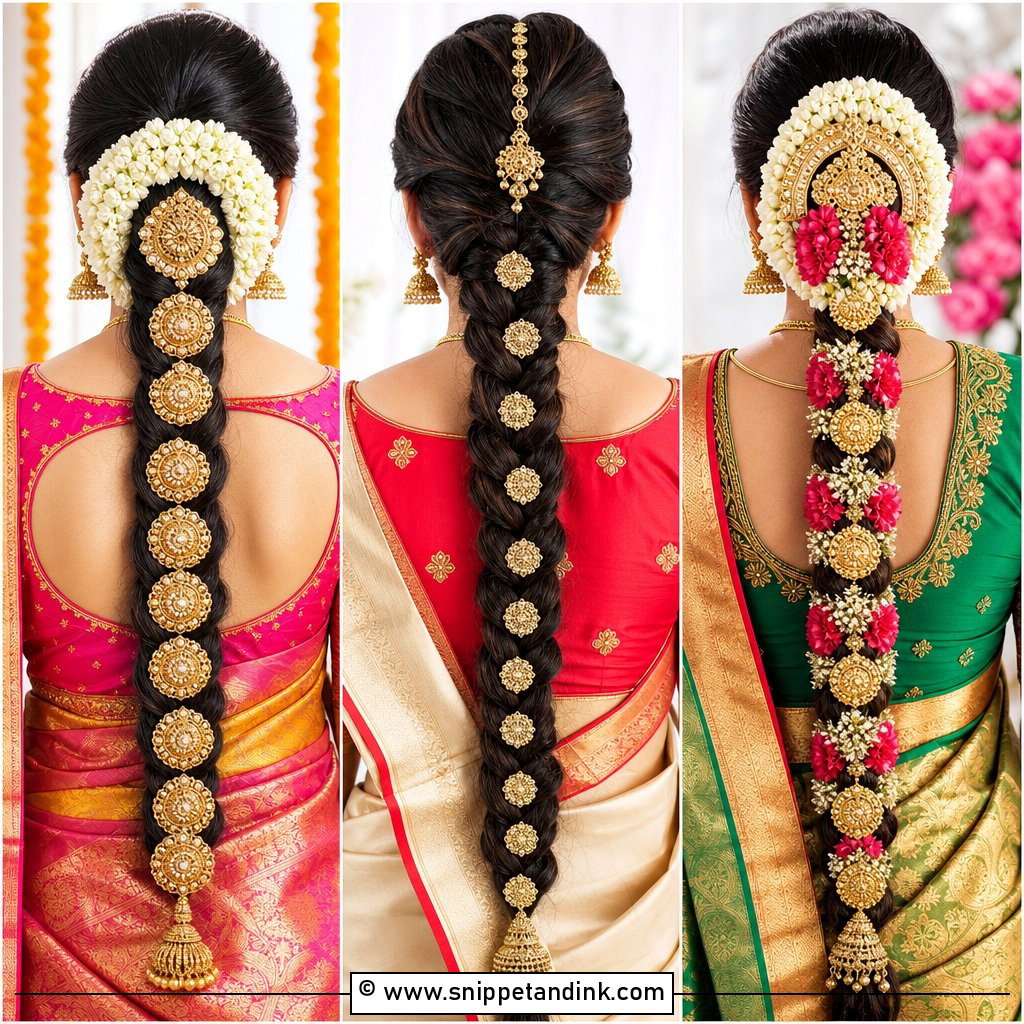
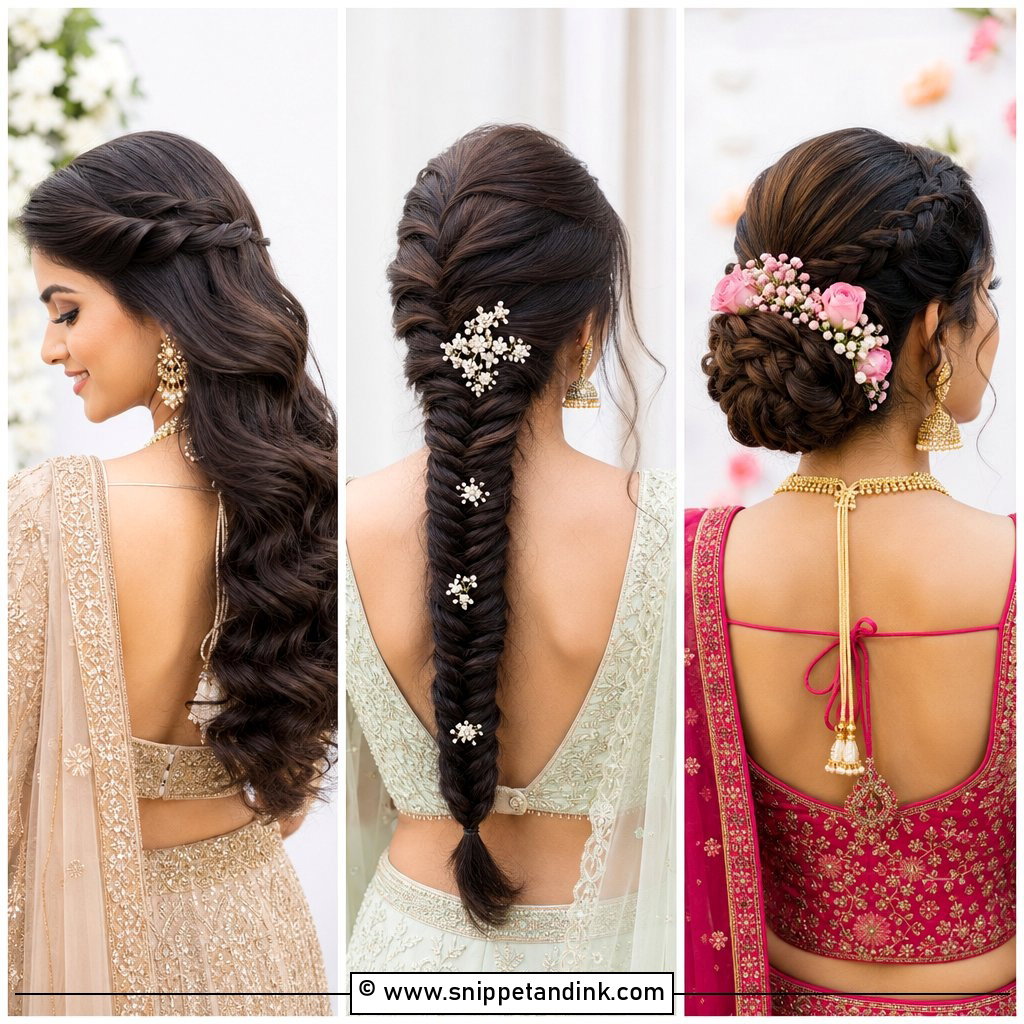
An Indian bridal bun with gajra is the look I trust most for the main ceremony. Sitting low or mid-height, it leaves room for a dupatta, matha patti, maang tikka and heavy earrings. Fresh jasmine wrapped around it adds fragrance and softness without looking busy. I build the bun on a padded donut for thick hair or over a teased base for fine hair, then pin the gajra in at four points so it can’t slip as the bun takes the dupatta’s weight. Keep the front smooth with a center part, or loosen two thin face-framing pieces for a modern touch.
2. South Indian Bridal Braid
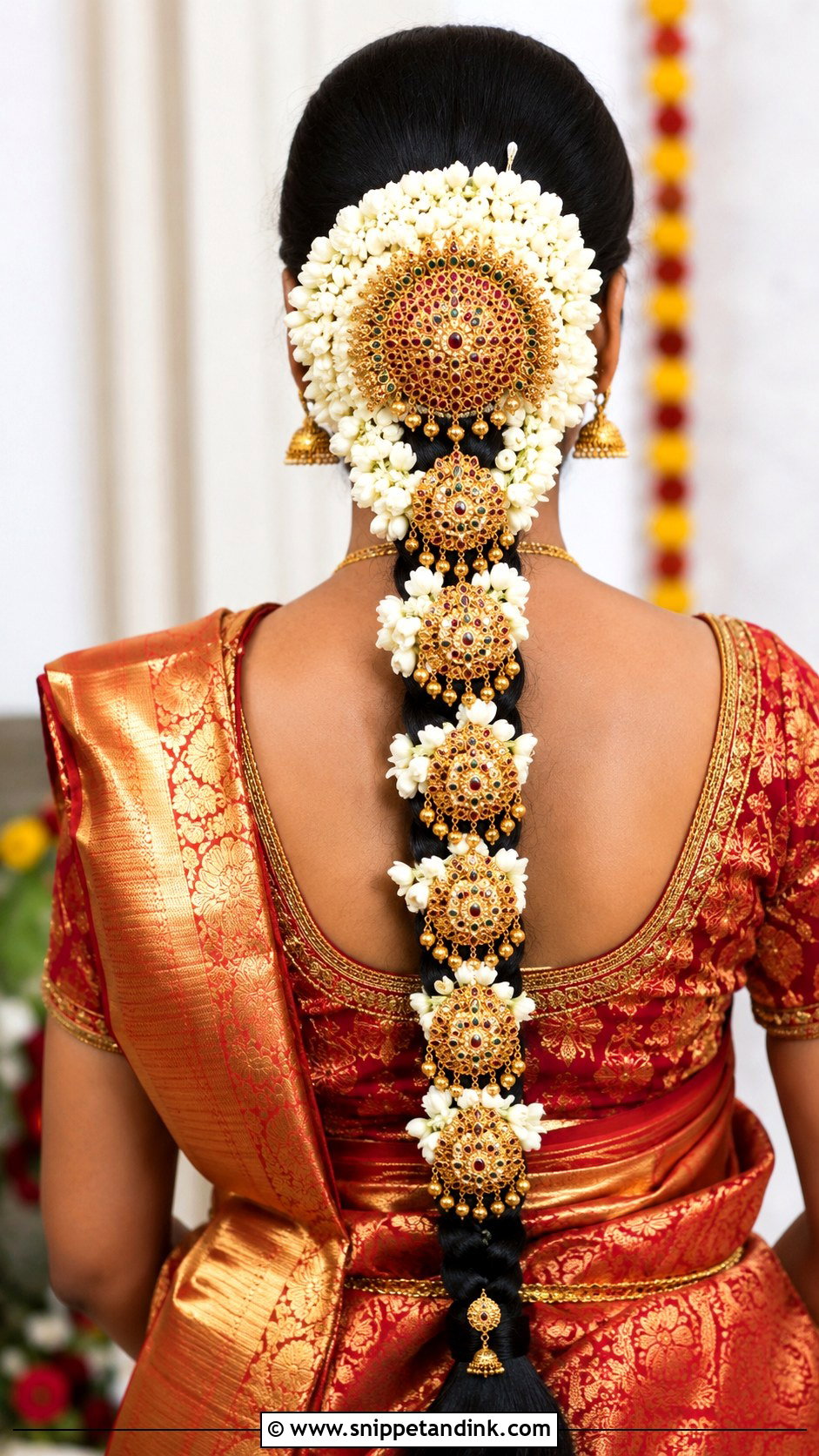
The South Indian bridal braid is ceremonial in a way loose hair never is. A long, thick braid is dressed with flowers, gold ornaments, jada billalu or temple-style pieces, and it sits naturally with silk sarees, layered necklaces and traditional makeup. Most brides need extensions to reach the length and fullness the jada expects, and I’d color-match those well before the wedding. The heavy gold pieces should be stitched or pinned onto the braid in a line so they don’t twist sideways. The front can be center-parted, gently puffed or sleek.
3. Indian Wedding Low Bun With Flowers
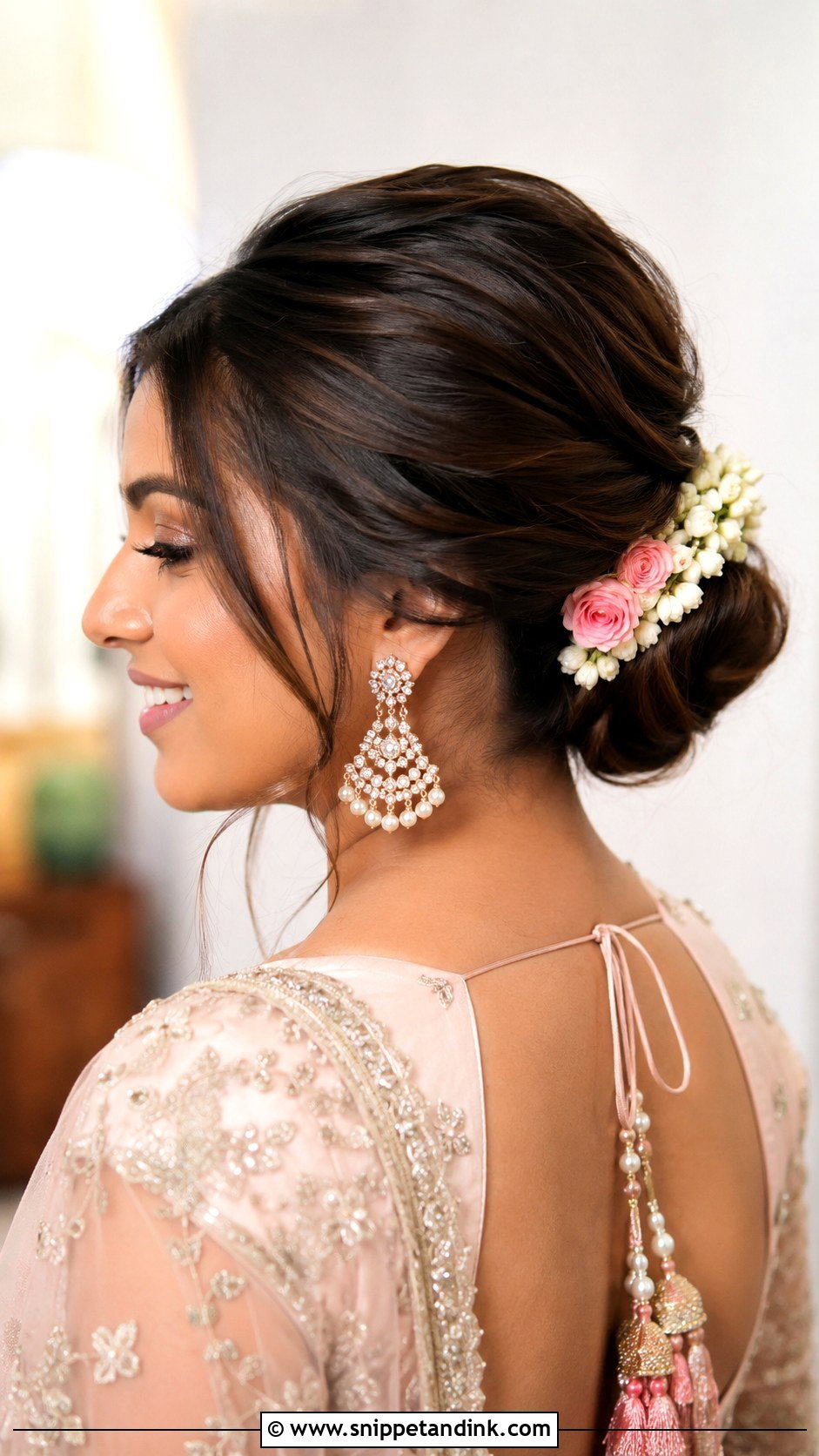
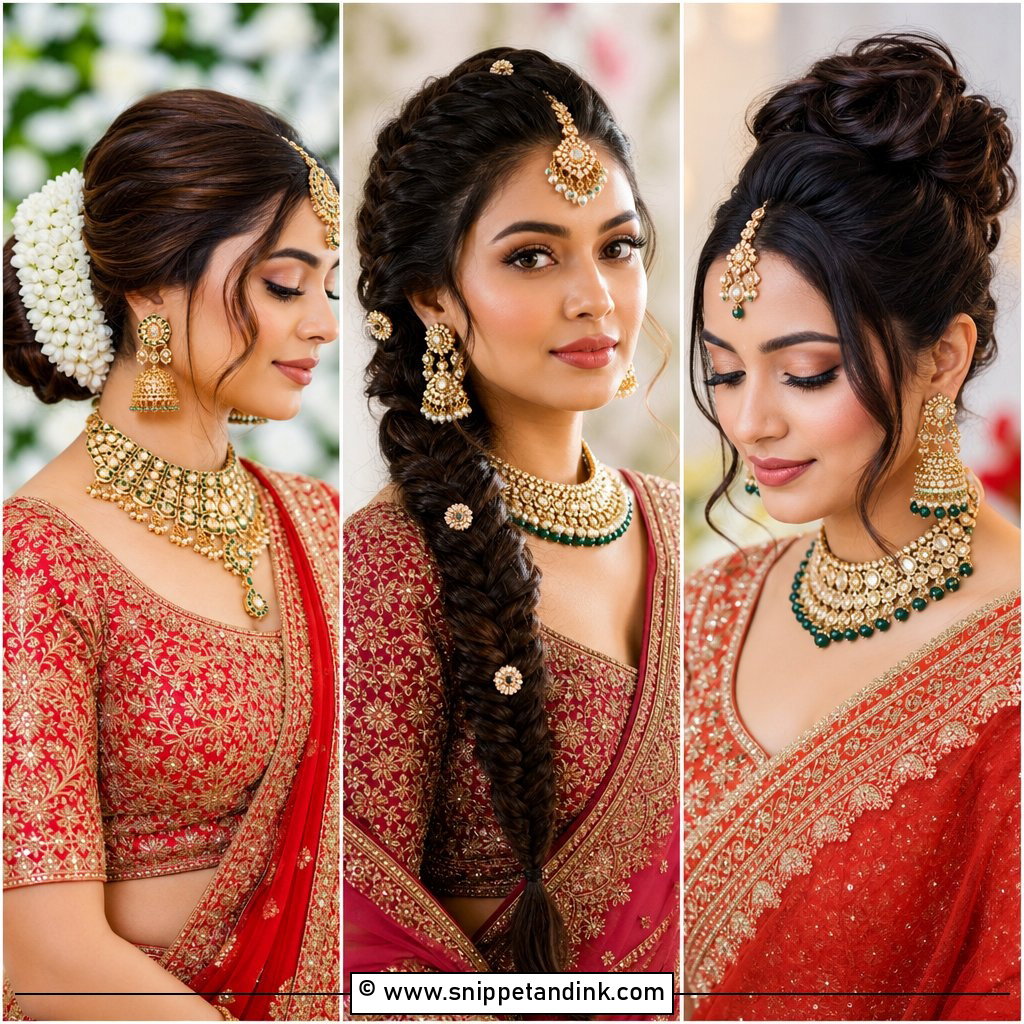
A low bun with flowers is my go-to when a bride wants something polished but not strict. Resting near the nape, it sits comfortably under a dupatta and suits high-neck blouses and detailed lehengas. Tiny roses, jasmine buds, baby’s breath or orchids pinned along one side keep it light. The one thing I watch is the high neckline: a bun set too low rubs against a stiff collar all evening and slowly flattens, so I lift it a finger’s width above. Brides, bridesmaids and guests can all wear it, dressed up or plain.
4. Indian Wedding Half Up Curls
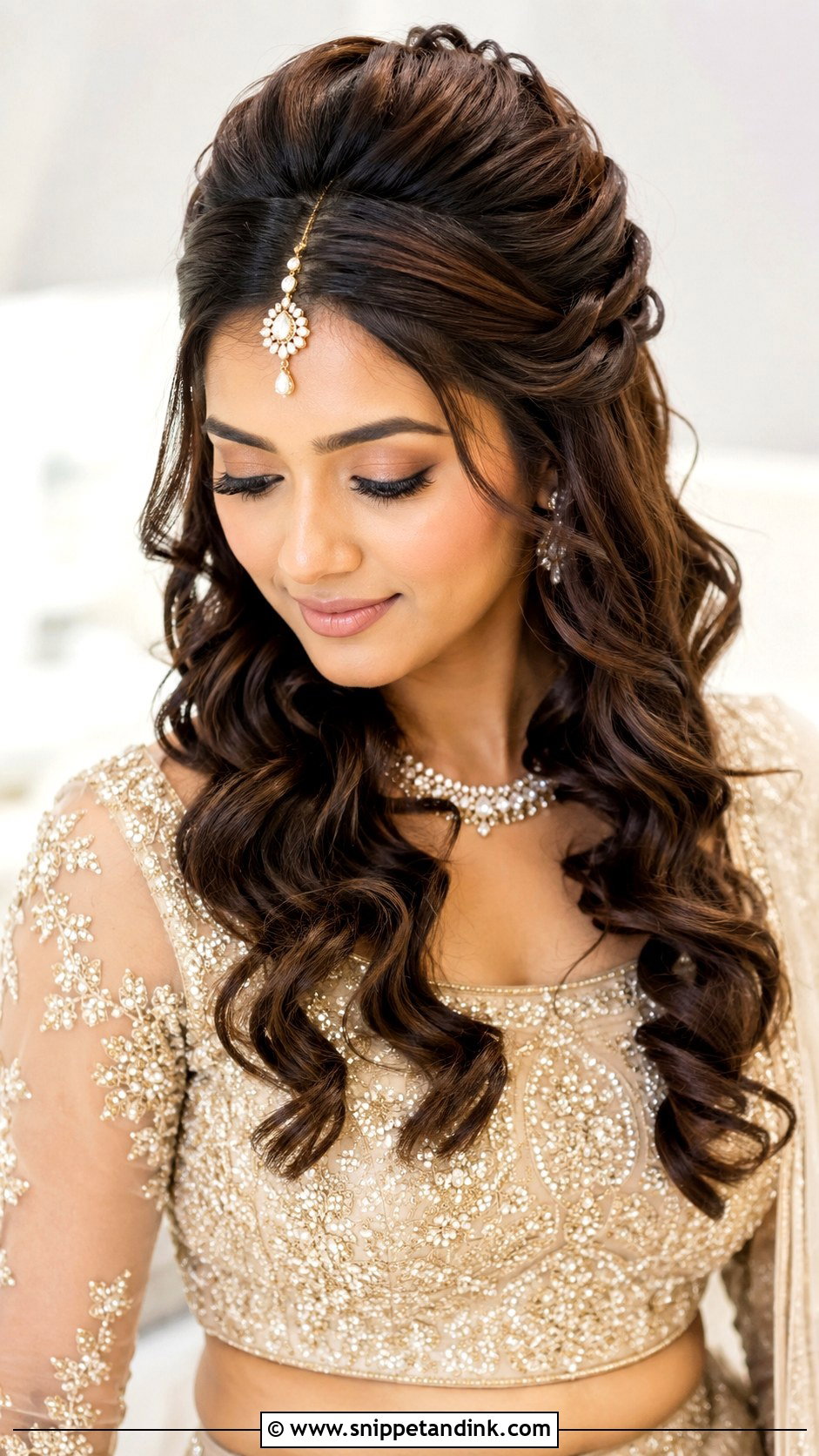
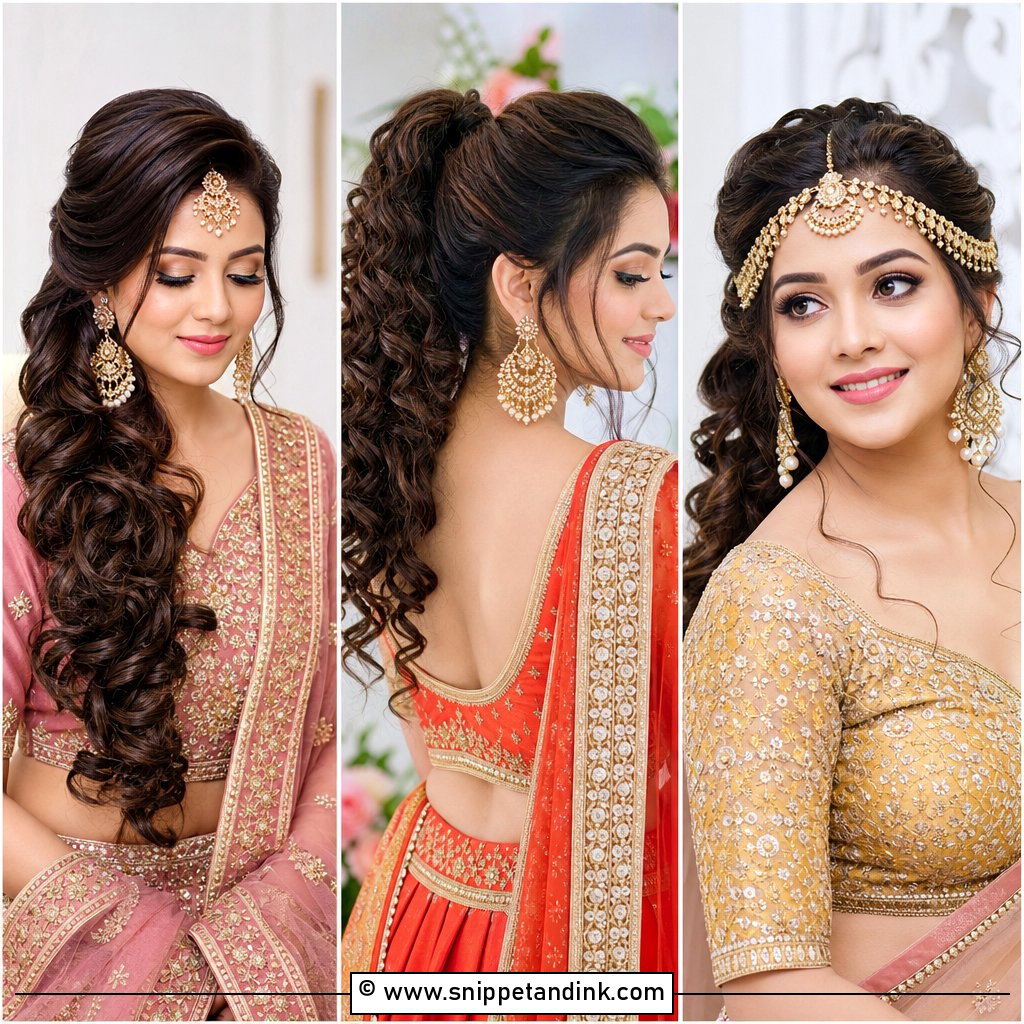
Indian wedding half up curls give you hair down with some structure around the face. The top section is pinned, twisted or braided back while the rest falls in curls over the shoulders, which keeps hair out of your eyes and leaves a clear spot for a tikka or small pins. Lehengas, gowns and lighter reception outfits suit it. Curls on the lower lengths take the most movement, so I set them on a larger barrel than you’d expect and pin them to cool; they’ll tighten slightly as they set.
5. Indian Wedding Soft Waves With Maang Tikka
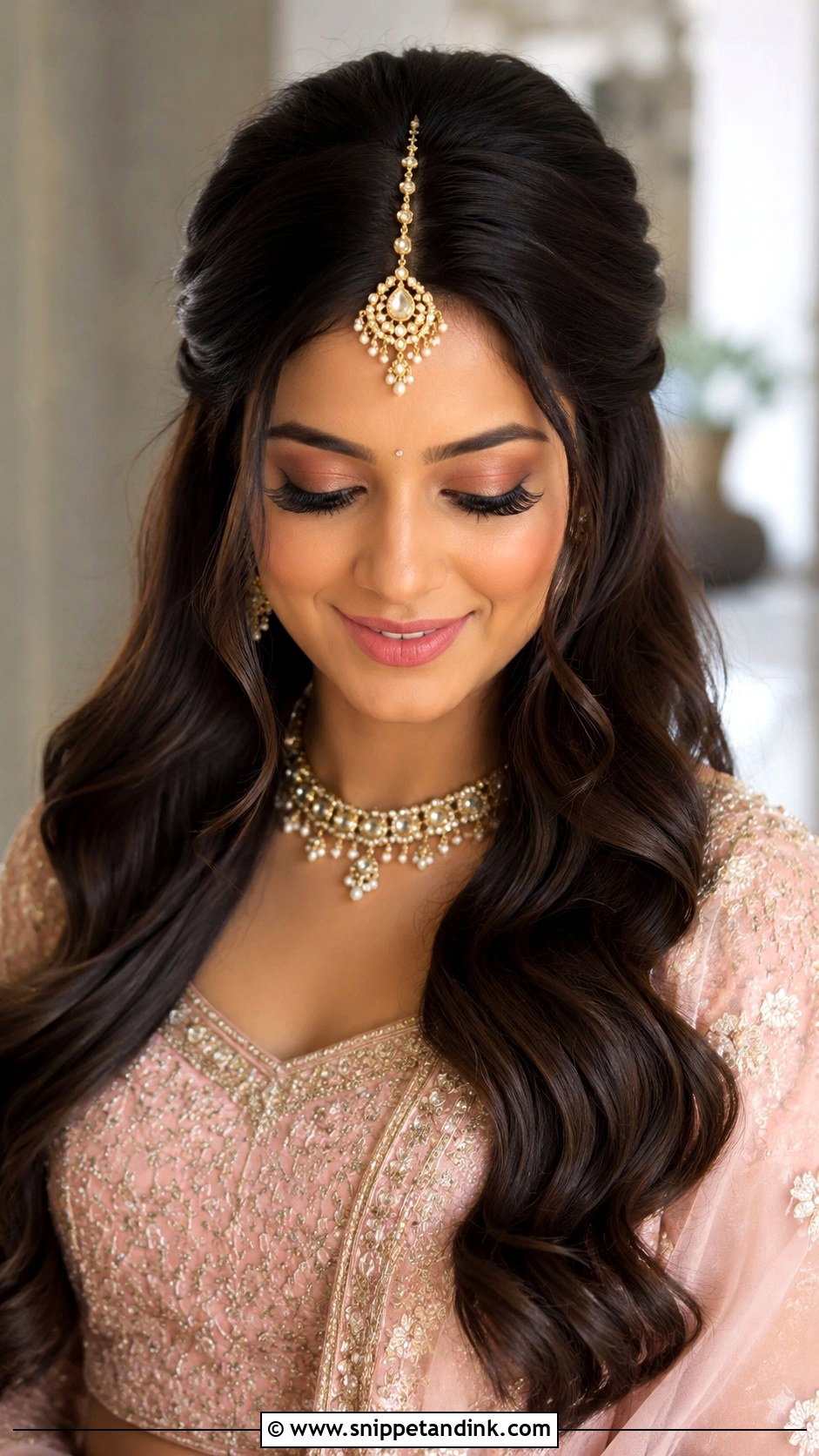
Soft waves with a maang tikka sit right between modern and bridal. The center part gives the tikka a clean track and the waves add movement at the shoulders. It fits engagements, sangeet nights and receptions. I keep the waves polished rather than beachy; loose, matte texture looks underdressed against embroidery. If you’ll wear a heavy dupatta or big earrings, a little lift at the crown keeps the face from looking flattened.
6. Indian Wedding Side Braid
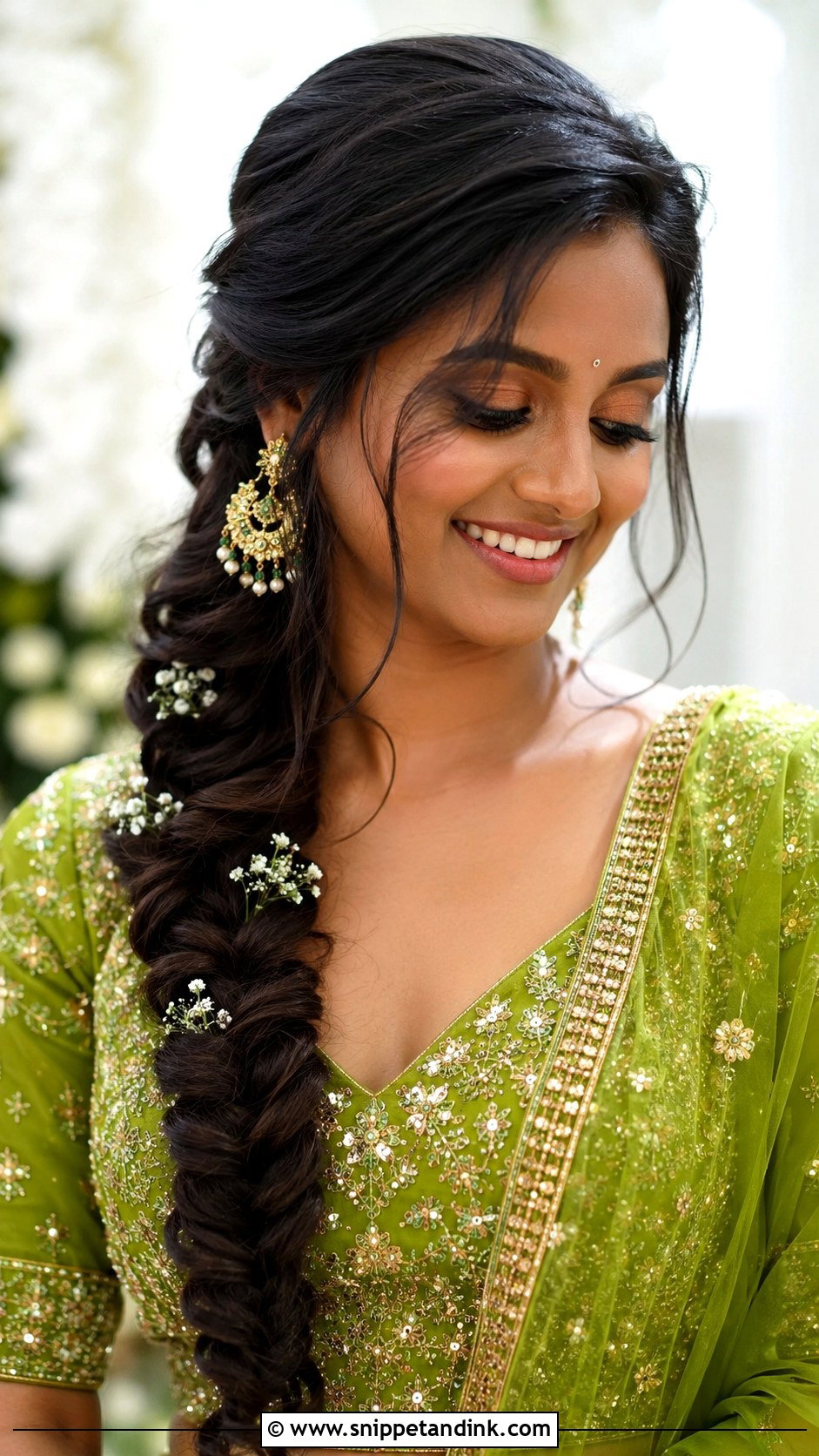
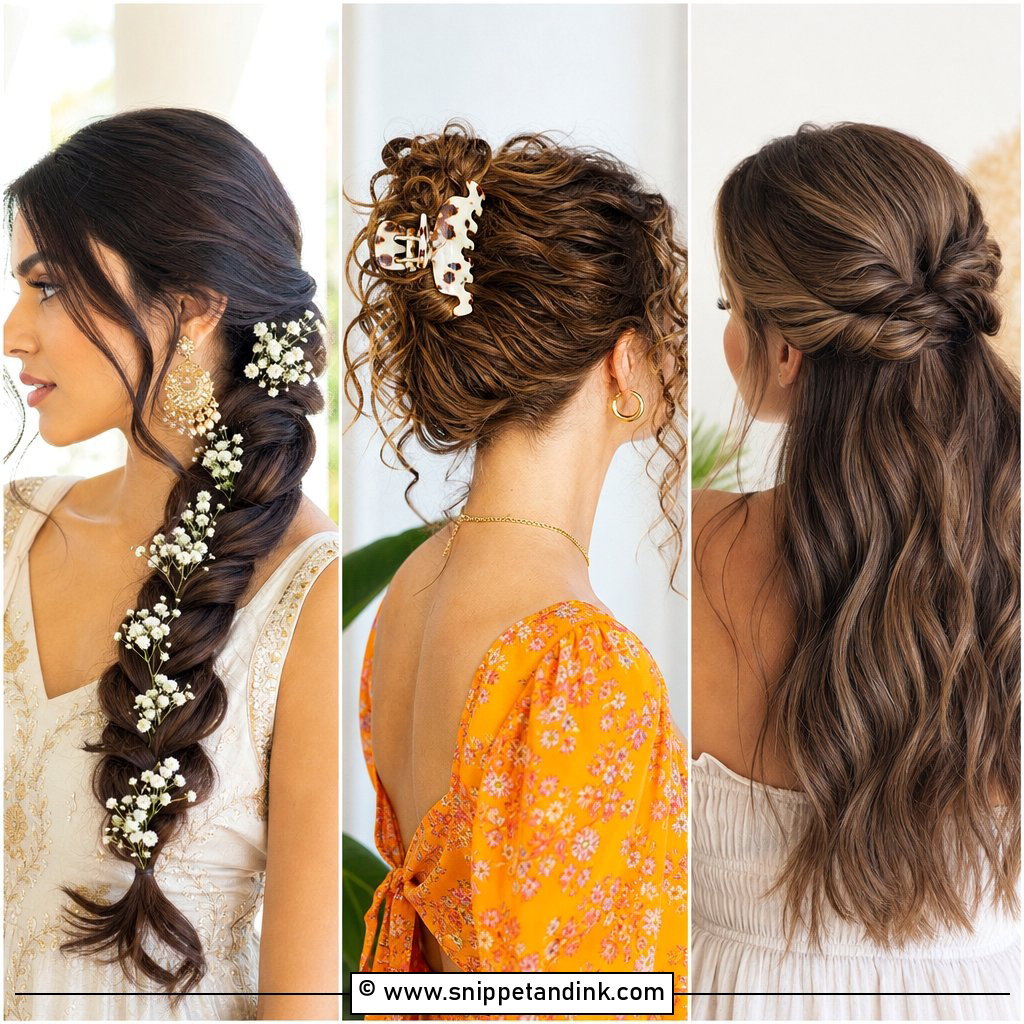
A side braid falling over one shoulder shows up clearly in photos and suits open necklines. It can be a loose three-strand braid, a fishtail or a textured braid with small flowers and pins. Heavy earrings are the thing to plan around, because a braid on the same side as a long jhumka will catch it constantly. I braid to the side opposite your more detailed earring or drape. It’s well suited to mehndi, haldi, sangeet and daytime weddings, and it keeps hair off a sweaty neck in warm weather.
7. Indian Wedding Braided Bun
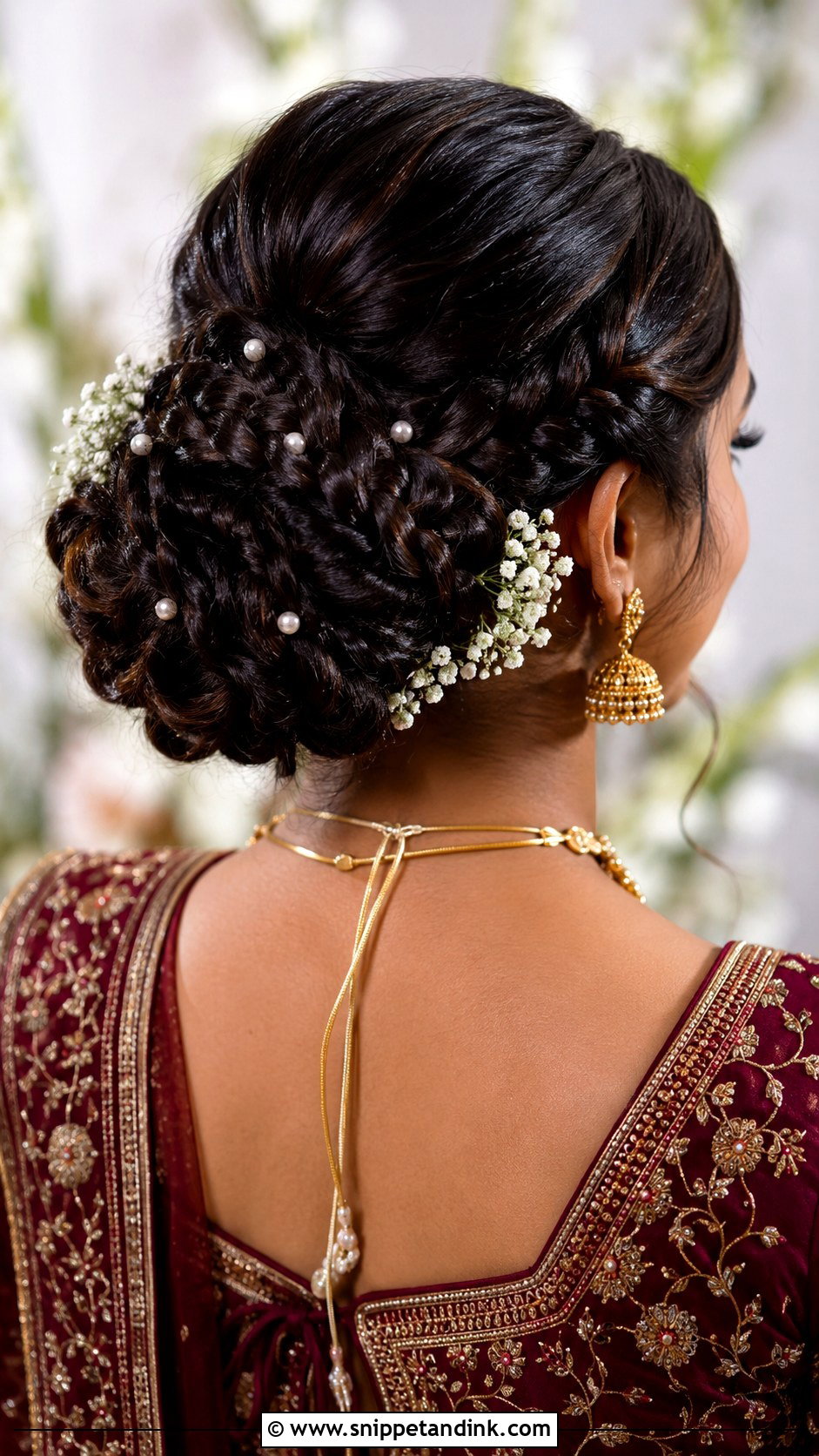
Braiding sections before wrapping them into a bun adds texture and makes the shape look fuller than a plain bun. It’s a practical way to get detail while keeping something secure for the ceremony, since braided sections grip each other and hold pins far better than smooth hair does. Pearls, fresh flowers or small gold pins slot neatly between the braids. The front can be sleek, parted or softly waved, and it sits well under sarees, lehengas and dupattas alike.
8. Indian Wedding Sleek Bun
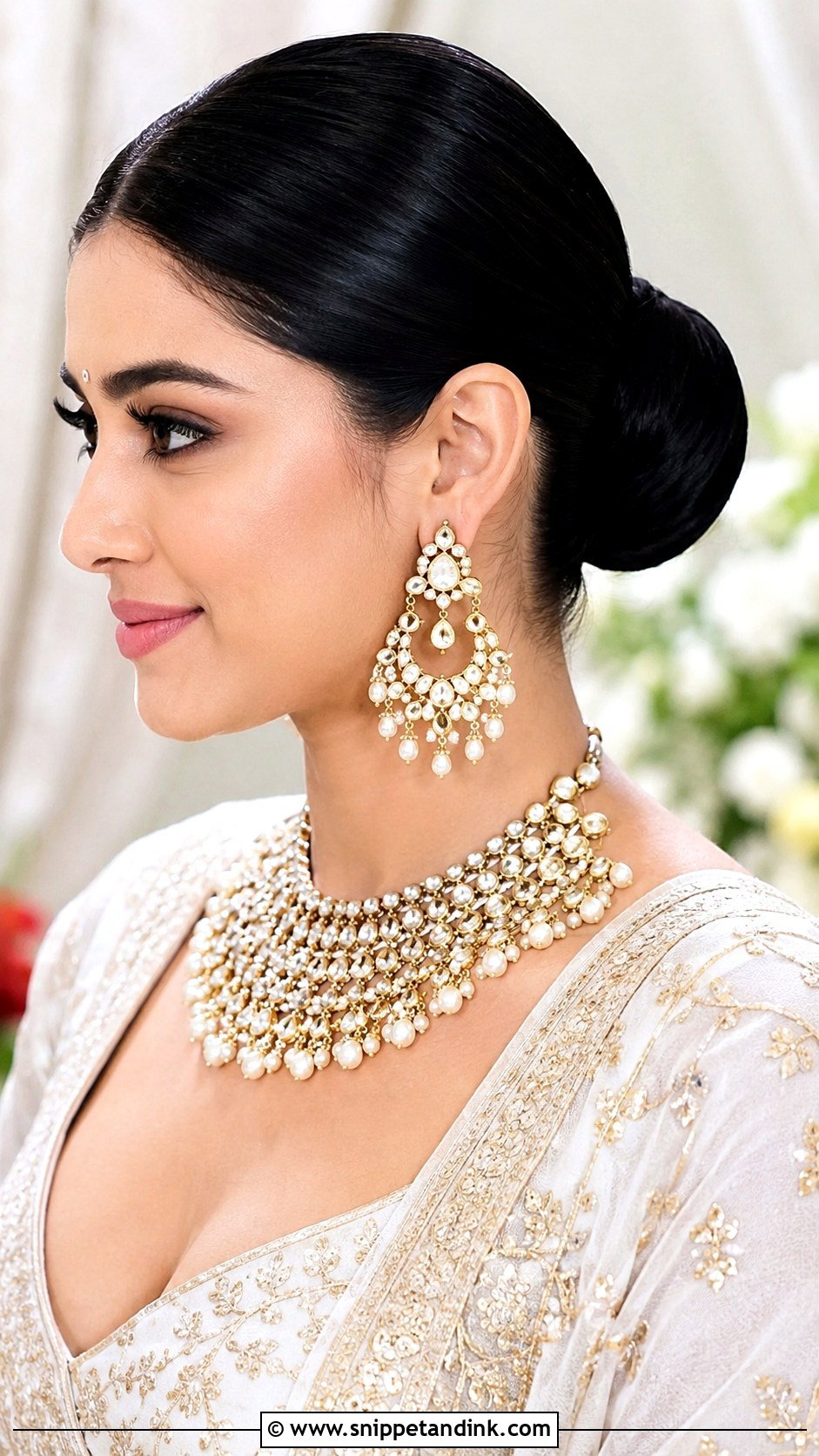
Sleek buns are the cleanest high-fashion look on this list. The hair is smoothed back or parted at the center and gathered into a polished bun, leaving bold earrings, chokers, matha pattis and embroidered dupattas completely on show. Dramatic eye makeup works with it because the face is fully open. I’ll be honest: sleek is unforgiving on frizzy or very curly hair in humidity, and needs a proper blow-dry, a gel along the hairline and strong pins. Receptions and engagements, where the outfit is already heavily detailed, suit it best.
9. Indian Wedding Messy Bun
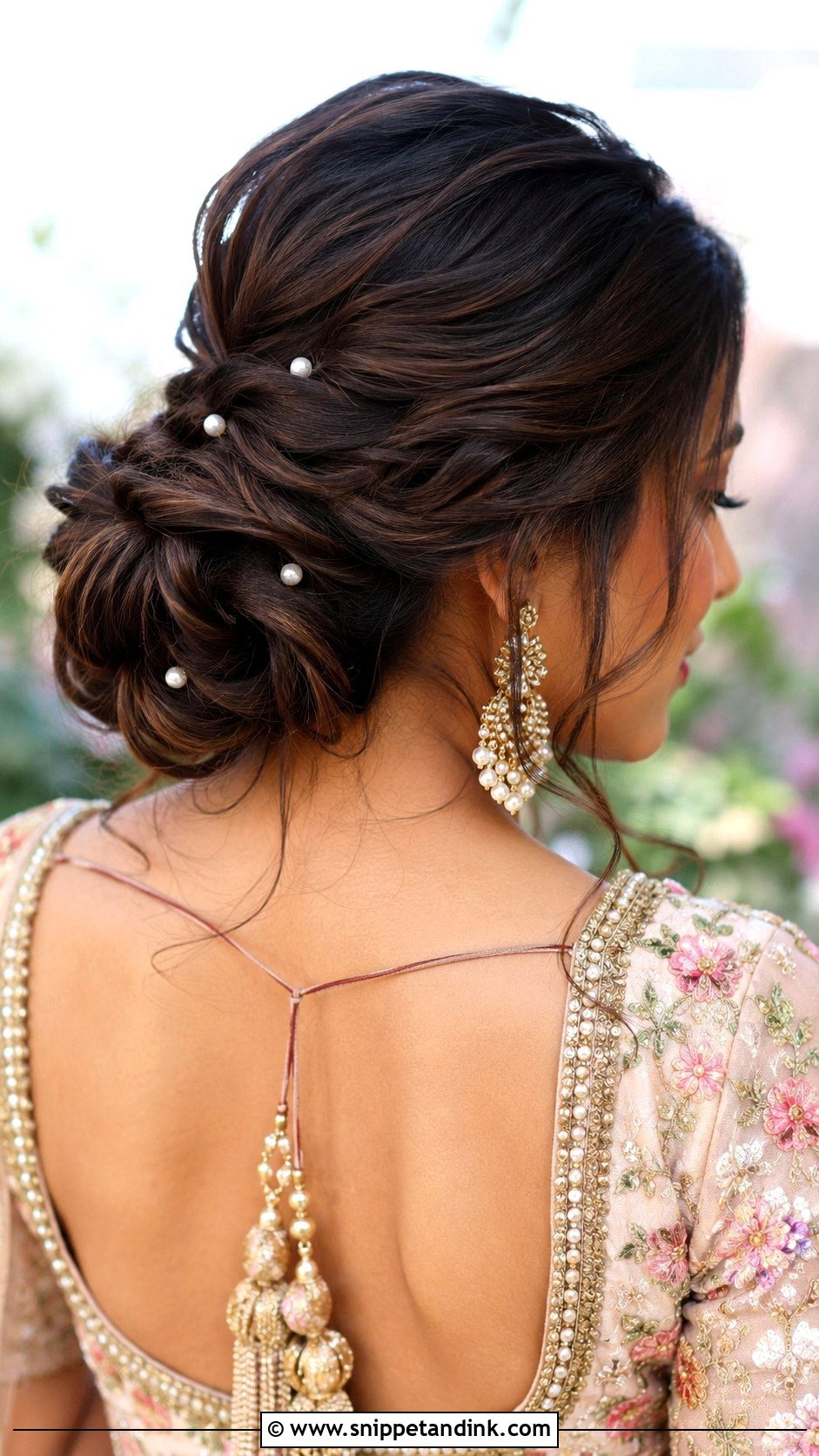
A messy bun at an Indian wedding should look soft and deliberate, never undone. The bun sits low and textured, slightly loose, with a few tendrils at the front. The texture is the hard part. I curl the hair first and build the bun from curled sections, because messy buns made from straight hair look accidental rather than romantic. Small pins, pearls or tiny flowers add sparkle. It fits sangeet, mehndi and outdoor ceremonies with lehengas, pastel sarees or floral jewelry.
10. Indian Wedding Ponytail With Curls
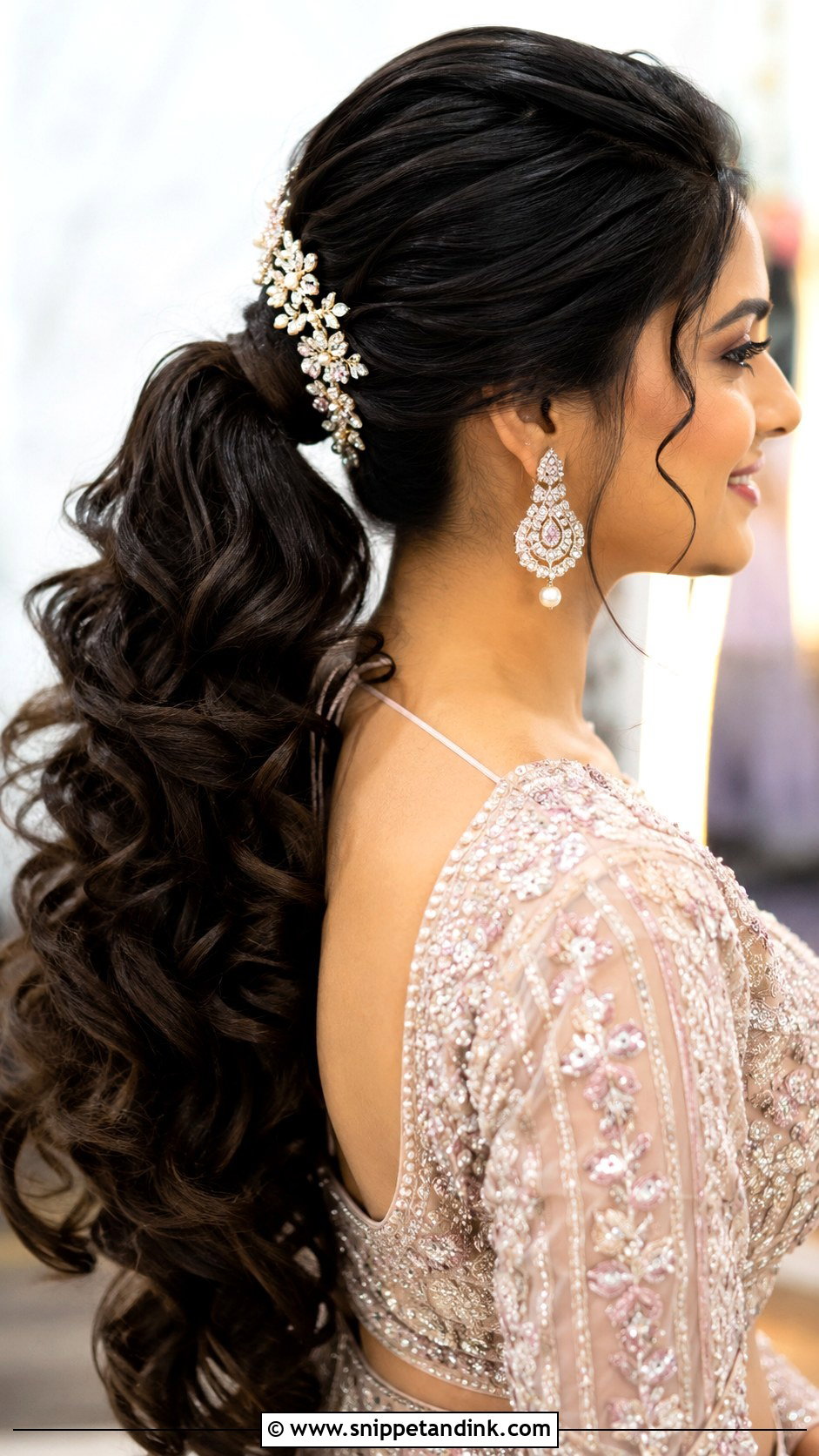
Height, movement and comfort in one: the curled ponytail. The crown can be lifted, the front softly parted, and the pony falls in big curls down the back. It swings when you dance, which is why it does so well at sangeets, cocktail nights and receptions. A strand wrapped around the base hides the elastic; jeweled pins or pearls can follow if the outfit wants more. Hair stays off your face and neck all night, and you still get the drama of long curls.
11. Indian Wedding Fishtail Braid
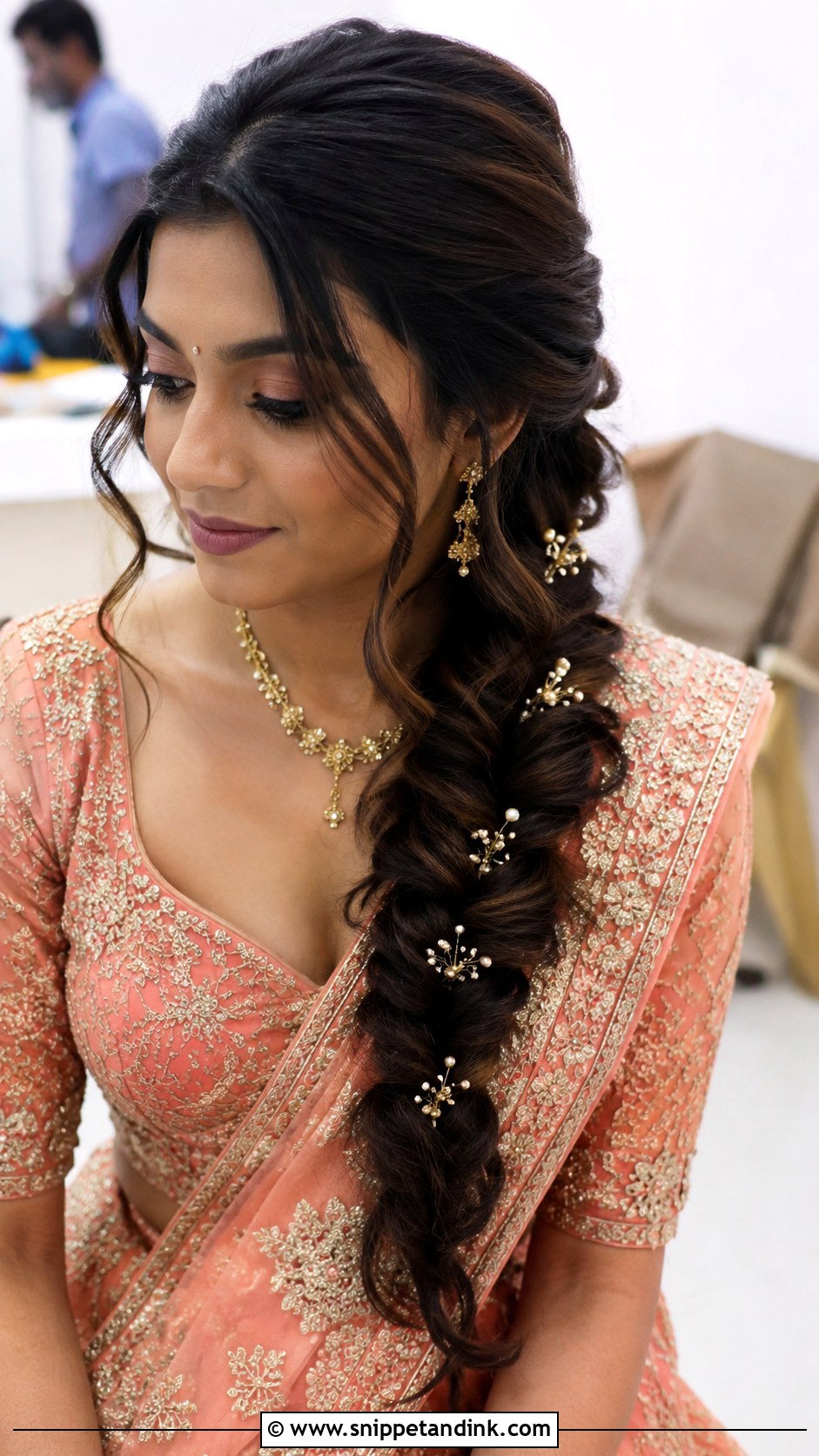
Fishtail braids give a fine, textured finish that never looks heavy. Wear it down the back or over one shoulder depending on the blouse, dupatta and jewelry. I braid it tight first, then pull the edges out gently for width, starting at the bottom so the top doesn’t loosen. Pearls, baby’s breath or small gold accessories tuck into the gaps. It suits mehndi, haldi and bridesmaids, and its shape stays controlled through a long day of sitting and standing.
12. Indian Wedding Open Curls
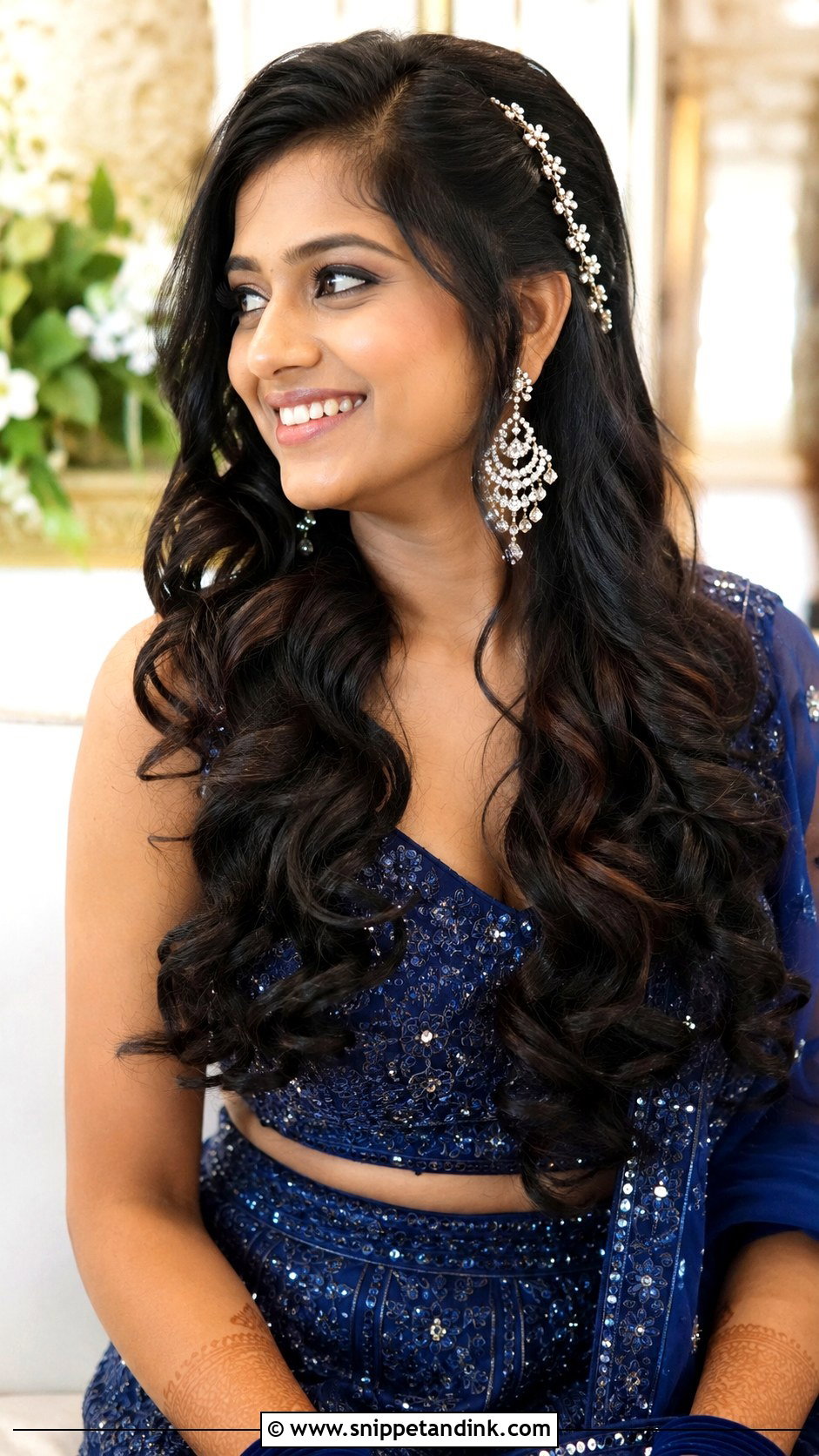
Open curls are the most requested look for receptions, engagements and sangeet nights, because they show off length and feel dressy at once. Style them with a center part, side part or lifted crown depending on jewelry and face shape. I always choose defined curls over flat loose waves here; defined curls relax into waves over the evening, while waves relax into nothing. A maang tikka, side pin or delicate hair chain makes it bridal.
13. Indian Wedding Juda With Dupatta
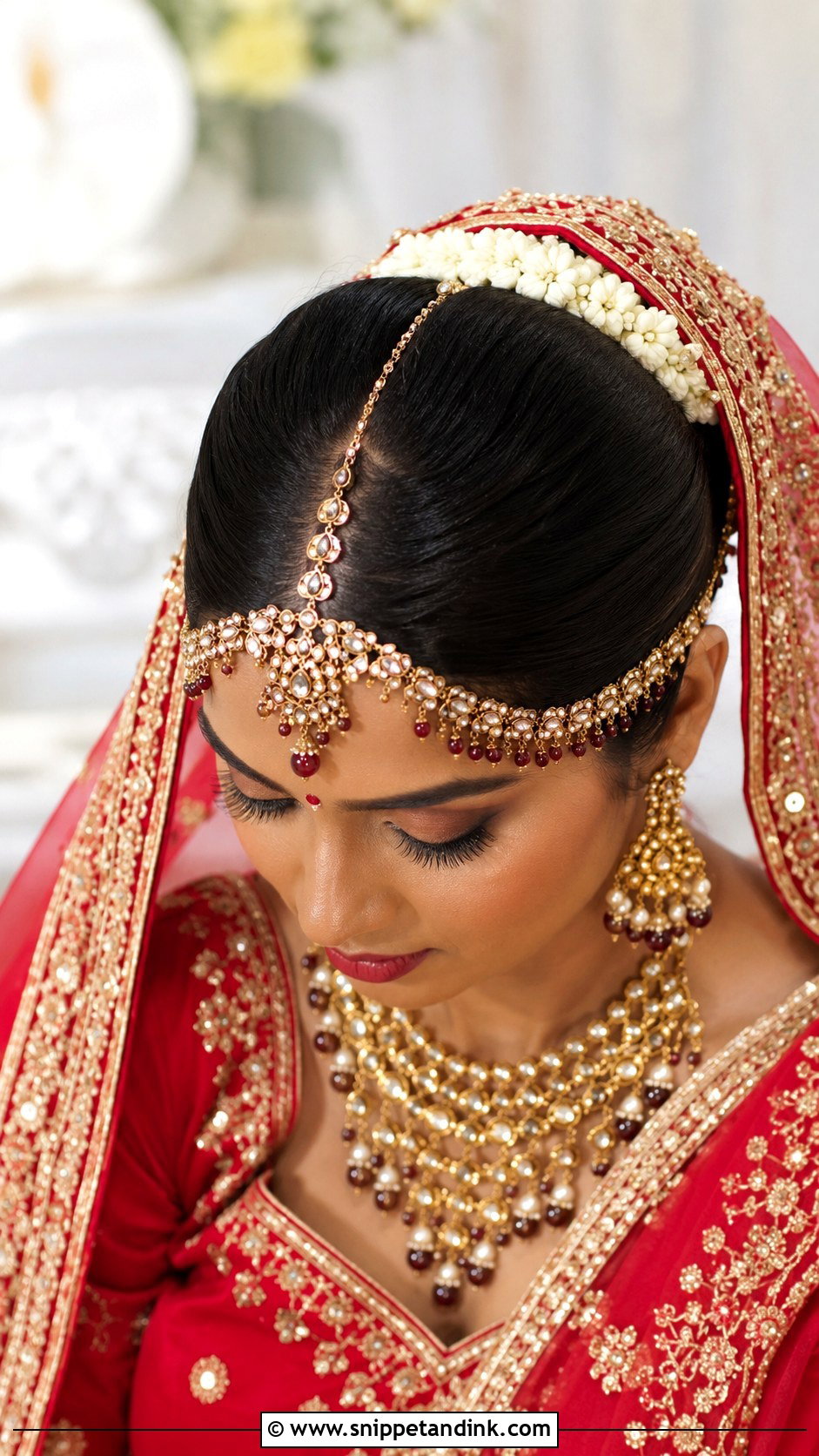
An Indian wedding juda with a dupatta is the classic ceremony pairing, and the juda’s real job is to be the anchor. It can be low, round, braided or lightly textured, and it supports a heavy, embroidered dupatta far better than loose hair can. I pin the dupatta into the top of the juda, not the scalp, so the weight sits on the bun. Gajra, roses, pearls or gold pins around the bun make it festive, and the front can stay neat with a center part or soften with a few strands.
14. Indian Wedding Bubble Braid
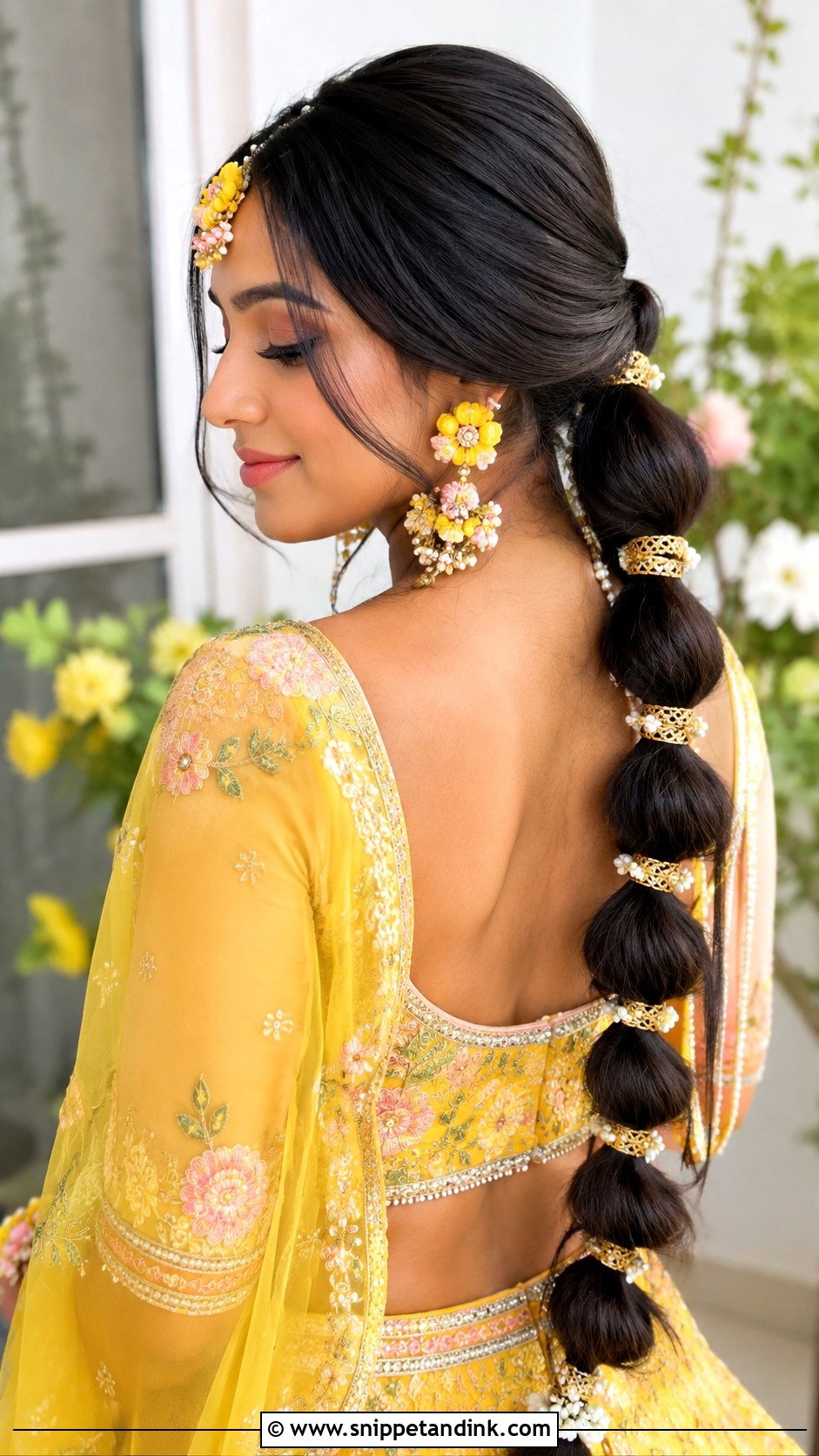
A bubble braid is playful but looks polished with the right accessories. The hair is gathered into a long pony and tied at intervals, then each section is gently pulled into a rounded bubble and dressed with pearls, gold cuffs, flowers or jeweled pins. It’s for mehndi, haldi, sangeet and bridesmaids, where you’re moving a lot. It needs long hair or extensions to have enough bubbles to look intentional. Keep the front smooth or softly waved so it doesn’t read as casual.
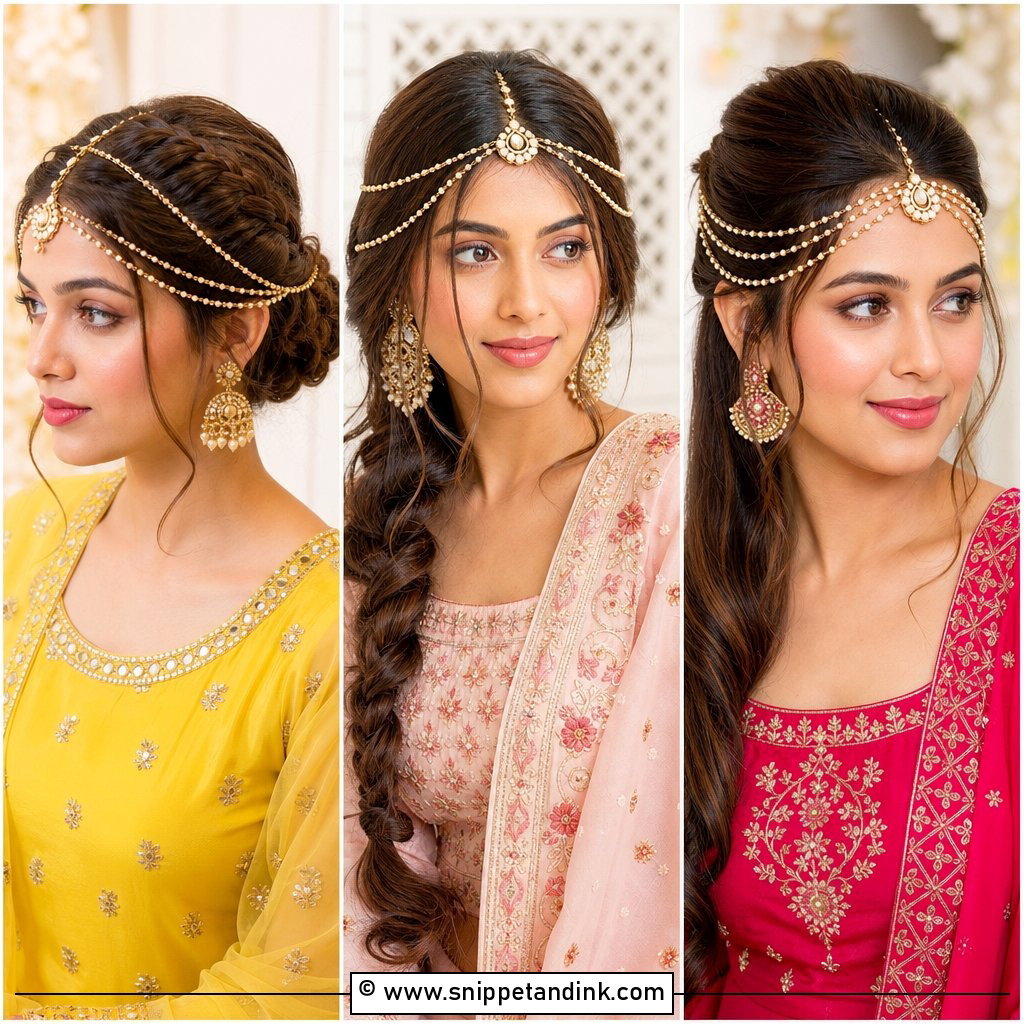

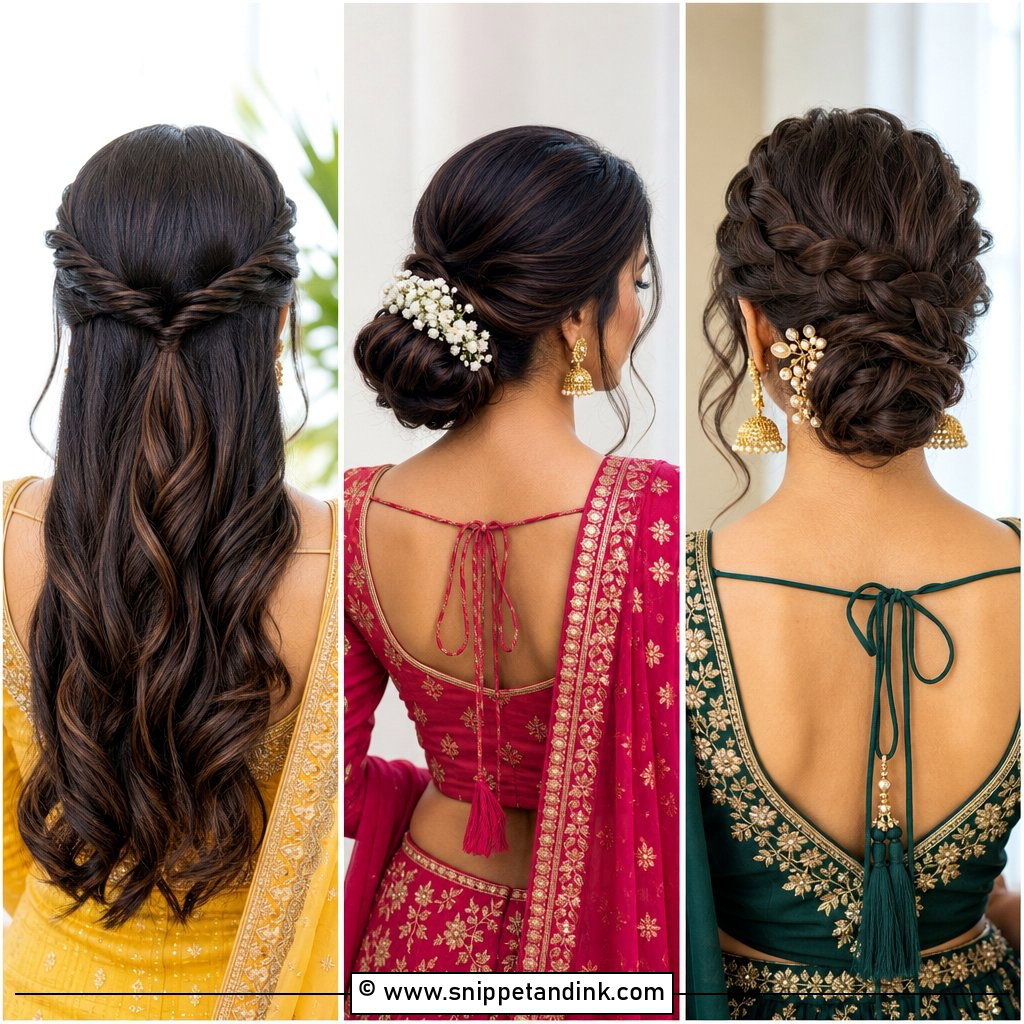
15. Indian Wedding Reception Hollywood Waves
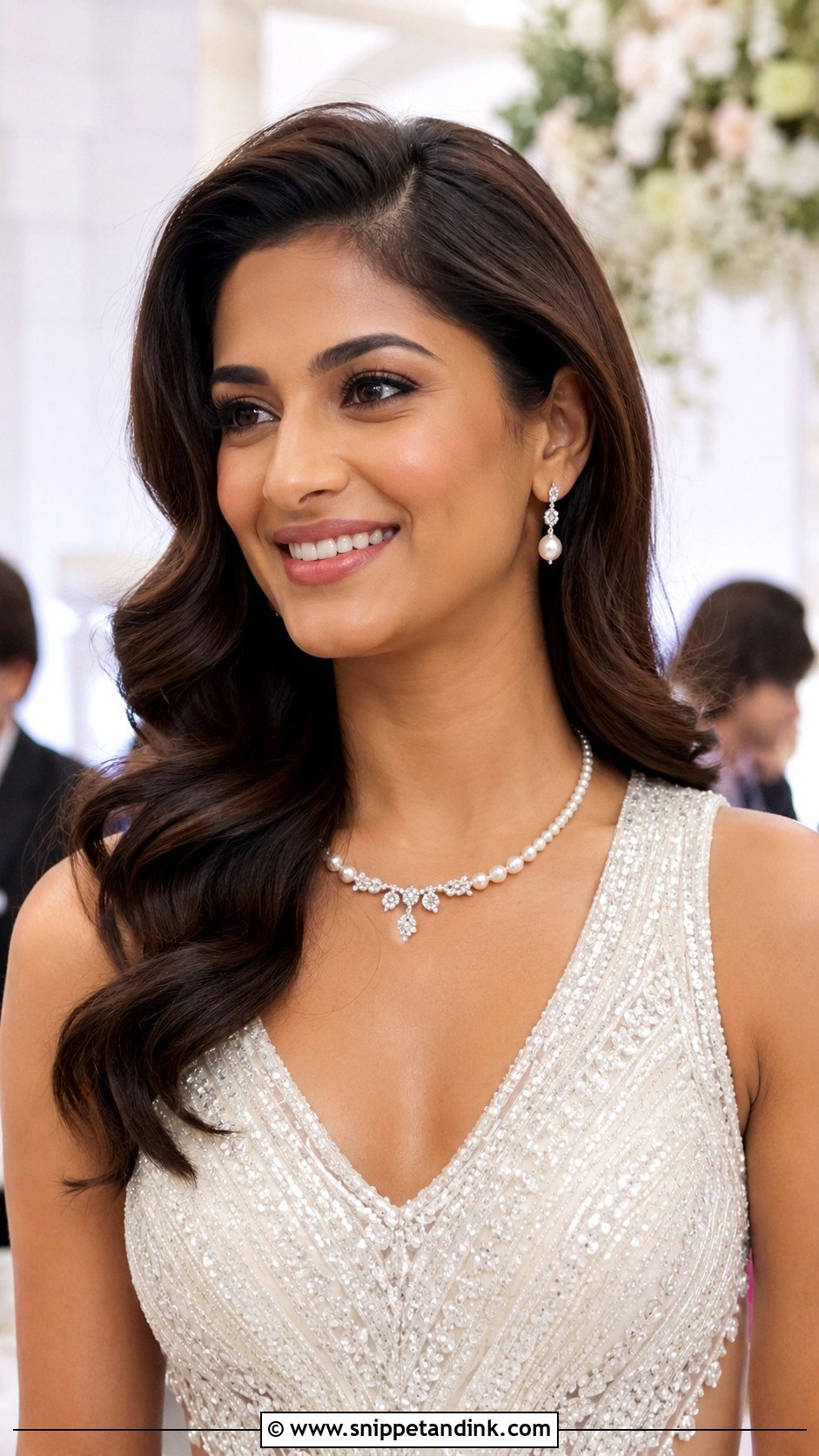
Hollywood waves bring shine, structure and old-film polish to a reception. Unlike beach waves, each wave is sculpted and glossy, set with a side part or clean center part. They pair with gowns, reception lehengas, sarees and diamond or pearl jewelry. The technique matters: I curl every section in the same direction, pin it to cool, then brush through and set the ridges with clips while a strong spray dries. Done this way, they hold through photos and dancing and look their best in warm evening light.
Bring the Dupatta and the Jewelry to Your Trial
A hair trial with only reference photos tells me very little. The weight of your real pieces changes where pins go, so I ask brides to bring:
- The actual dupatta, or one of similar weight and fabric, since a velvet or zardozi one pulls very differently from net
- Your maang tikka, matha patti or passa, plus the heaviest earrings you’ll wear
- A photo of the blouse from the back, so the bun height suits the neckline
- Any extensions you’ve already bought, so we can check the color in daylight
Do the trial four to eight weeks out, then keep the style in for the rest of the day. Dance in it, sit in it, take a flash photo at night. If something pulls or slips by evening, that’s exactly what we fix before the wedding.
Come to the trial with hair washed the way you’ll wash it on the day. If you normally oil the night before, skip it for both, because oiled lengths won’t hold a curl and the trial would show me the wrong hair.
Your Ceremony Bun and Your Reception Waves Can Differ
Indian wedding hair should be practical and personal as well as pretty. A gajra bun or South Indian braid carries tradition into the main ceremony, while soft waves, half-up curls, ponytails and Hollywood waves suit receptions and pre-wedding events. Weigh your outfit, jewelry, dupatta weight, hair length and how much you’ll move. And do a trial, especially if you need extensions, fresh flowers or heavy ornaments, because a style that looks right in a photo also has to feel secure at hour eight.
You'll Like These Ideas:






Leave a Reply