
Twenties dresses were cut for women who wanted to move. The waist dropped to the hip, columns hung straight from the shoulder, and the decoration, geometric beading, pearls, fringe and liquid satin, did the talking. When I dress a bride in this mood, the hard part is keeping the period detail without losing a flattering fit. Some of the gowns below stay close to authentic 1920s bridal fashion; others borrow a single Art Deco idea and put it on a modern shape. The accessories carry a lot of the effect, so I’ve included the shoes, headpieces and veils I’d use with each, for ballrooms, gardens and small city weddings alike.
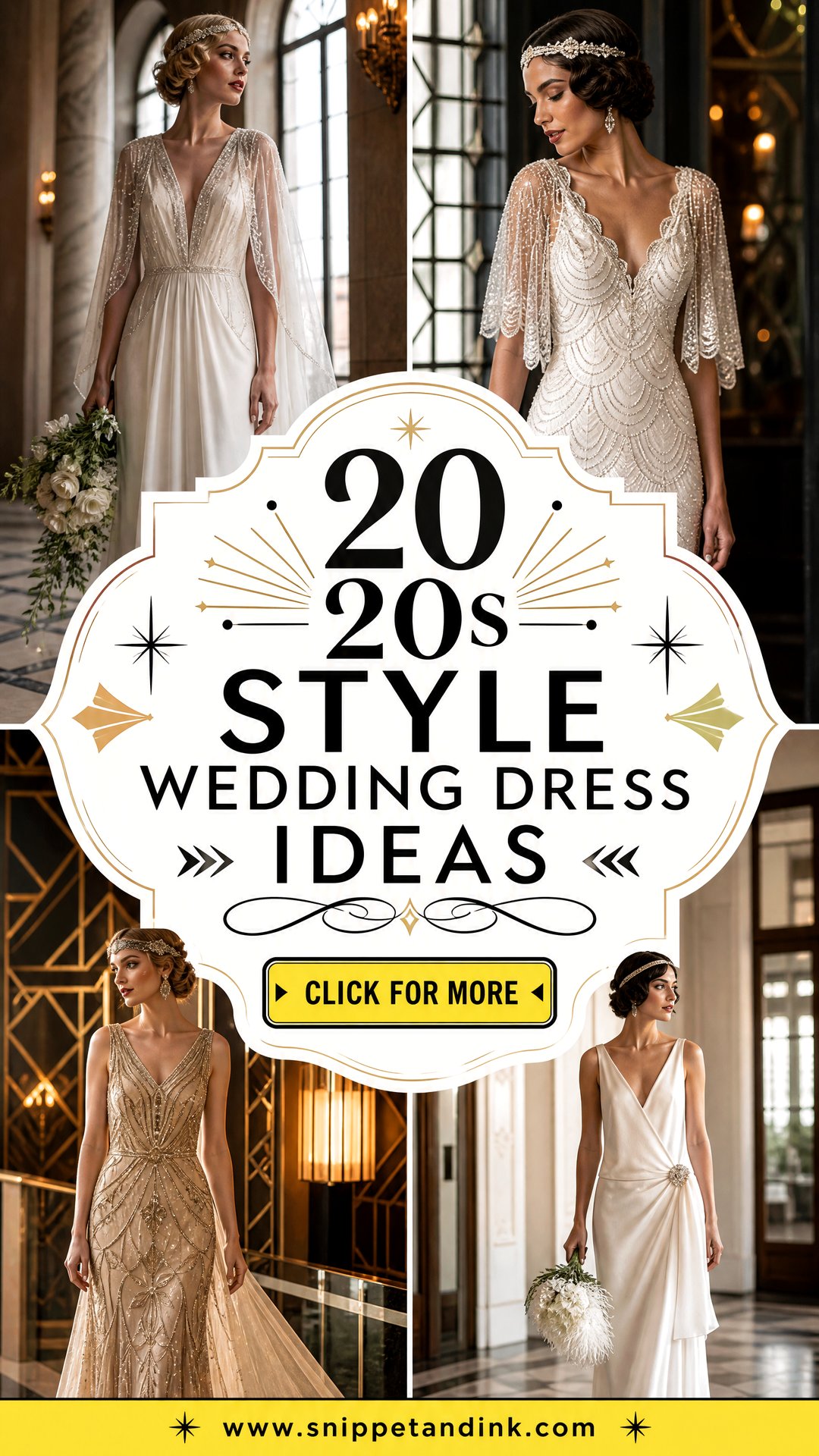
Why a Beaded Twenties Dress Weighs More Than It Looks
Brides are always surprised when they lift a fully beaded column off the rail. Glass beads, sequins and pearls add real weight, and that weight changes how the dress fits, travels and survives the night.
On the body, a heavy beaded skirt pulls the whole gown downward, so the shoulders and neckline need to be fitted with that drag in mind. I always do the final check after the bride has worn the dress for a while, because heavy fabric settles. Sitting on a beaded skirt for a long dinner is uncomfortable, so look for smoother panels at the back of the skirt if you can.
Off the body, heavily beaded dresses shouldn’t hang for long. The weight stretches the fabric and shoulder seams, which is why many beaded gowns come with internal hanging tapes at the waist, and why I’d store one folded flat with tissue rather than on a hanger.
If you’re buying genuine vintage
Original 1920s silks were often treated with metallic salts to add weight, and over a century that silk can split, a problem known as shattering. Hold an original dress up to the light and check the fabric under the beading and at the shoulders before you buy. If it tears with gentle pressure, it’s a display piece, not something to wear and dance in.
1. Art Deco Beaded Wedding Dress
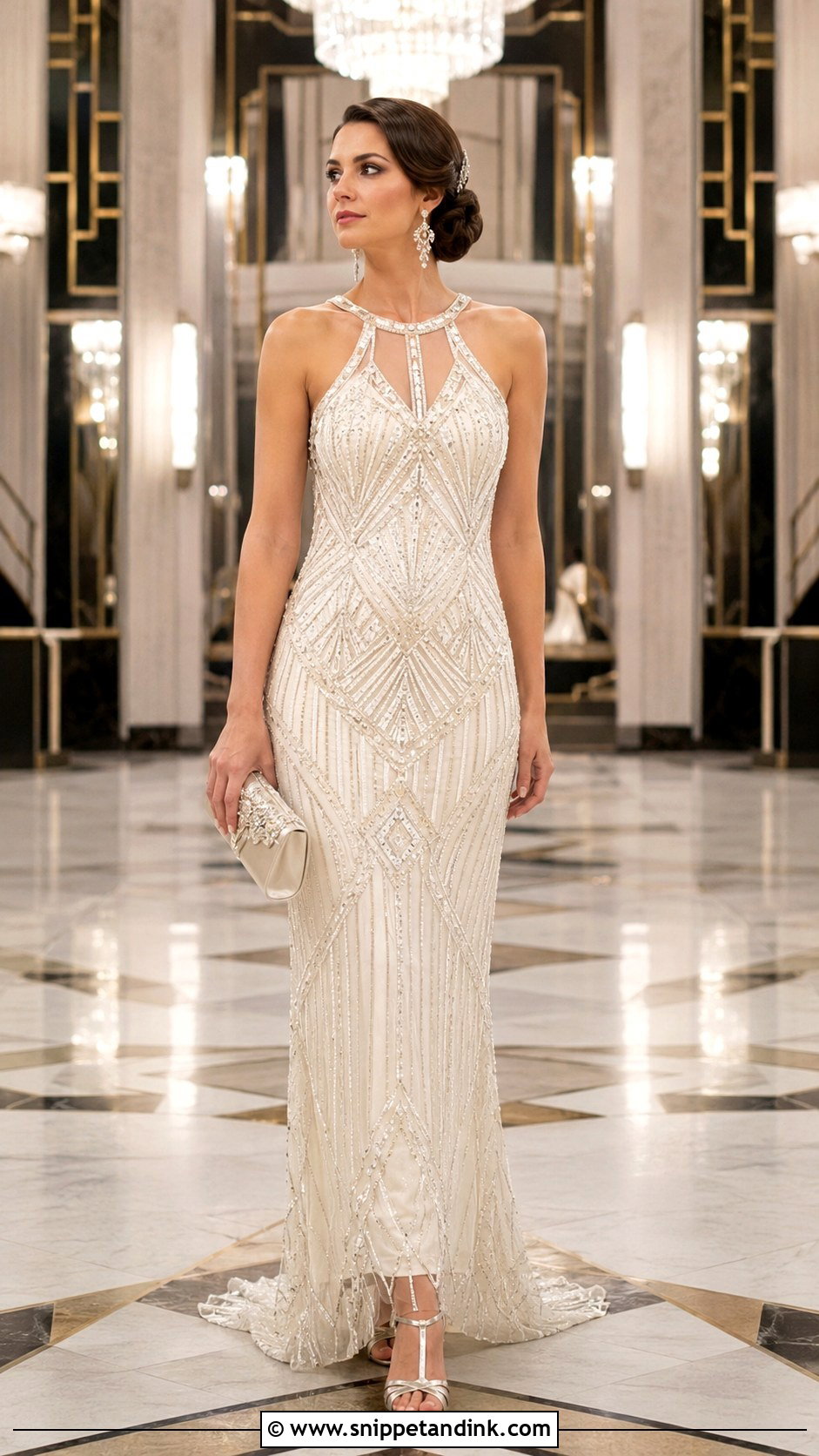
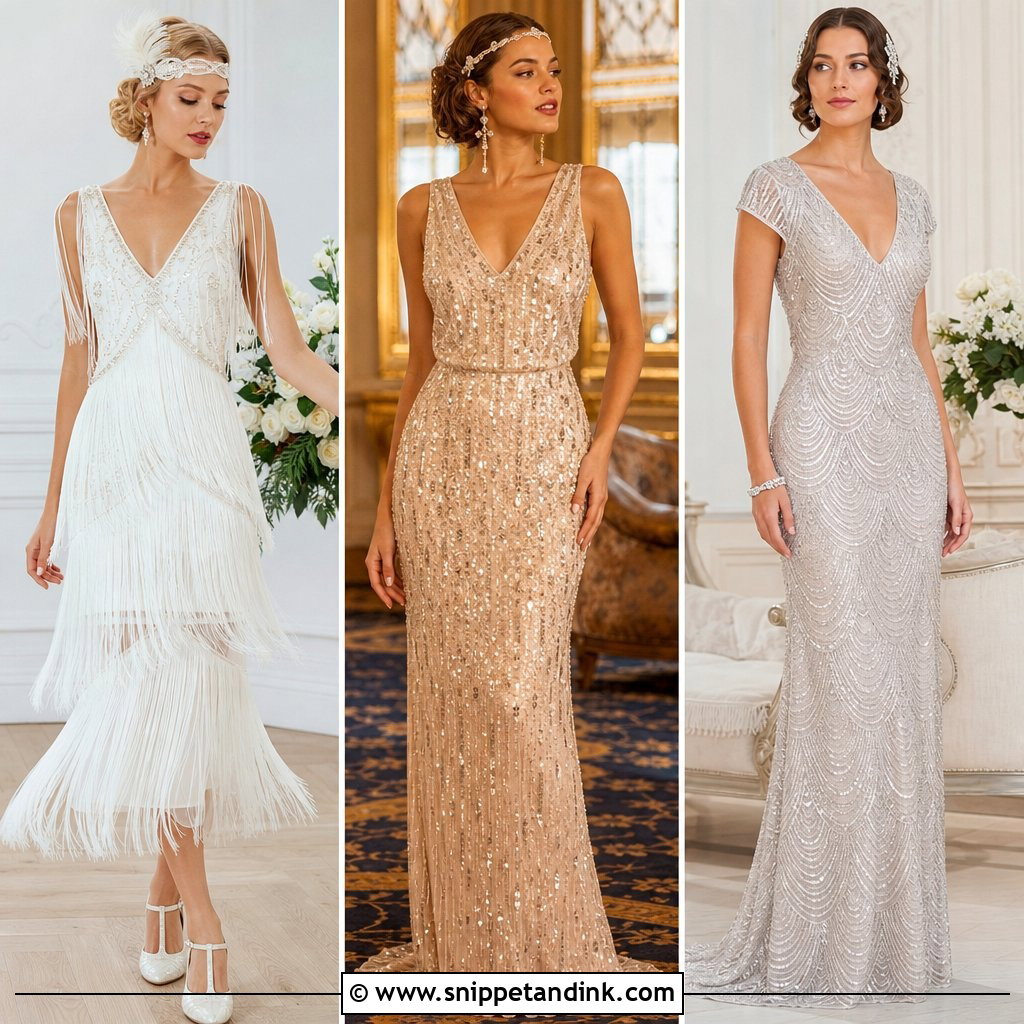
Symmetry is what keeps Art Deco beading from looking like a costume. On an ivory column, I look for sunbursts, straight lines or scallops mirrored exactly left and right; lopsided placement reads cheap from across the room. A slightly sheer overlay softens the geometry and adds movement. Silver T-strap heels, crystal drops, a small satin clutch and a jewelled comb set above soft finger waves complete it. Keep makeup polished, with defined lashes and a muted rose lip. Evening light in a ballroom or historic hotel is where this beading earns its keep.
2. Drop Waist Wedding Dress
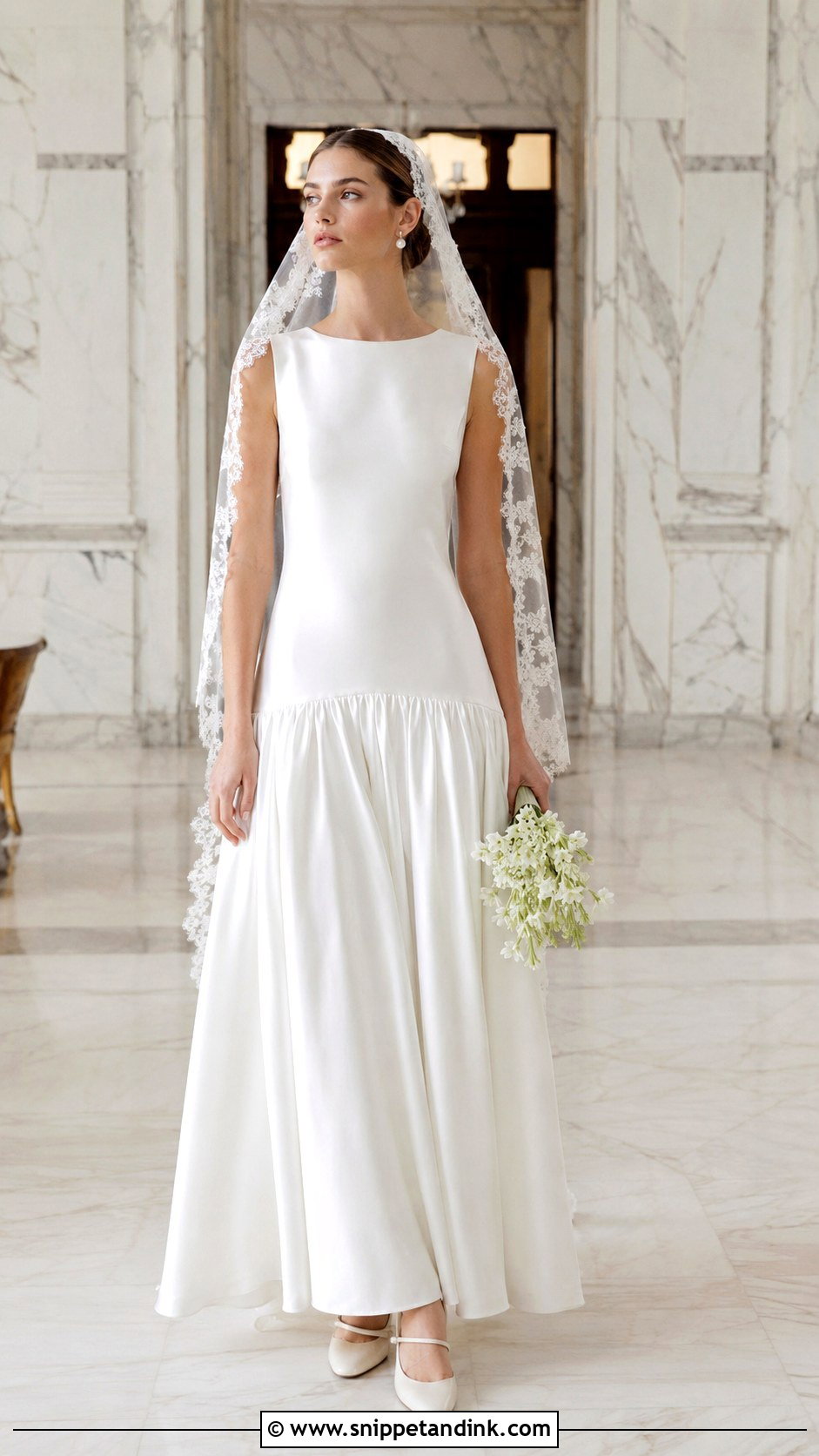
Nothing says twenties more clearly than a dropped waist. The bodice runs smoothly toward the hips before meeting a gathered, pleated or gently flared skirt, and in silk crepe or light satin it moves easily. Fully straight versions can look boxy on curvier figures, so I often suggest a softly shaped drop that still nips in slightly. Low Mary Janes, long pearl earrings and a slim bracelet are enough jewellery. A Juliet cap veil stays true to the period and frames the face. It works indoors or out.
3. Fringe Flapper Wedding Dress
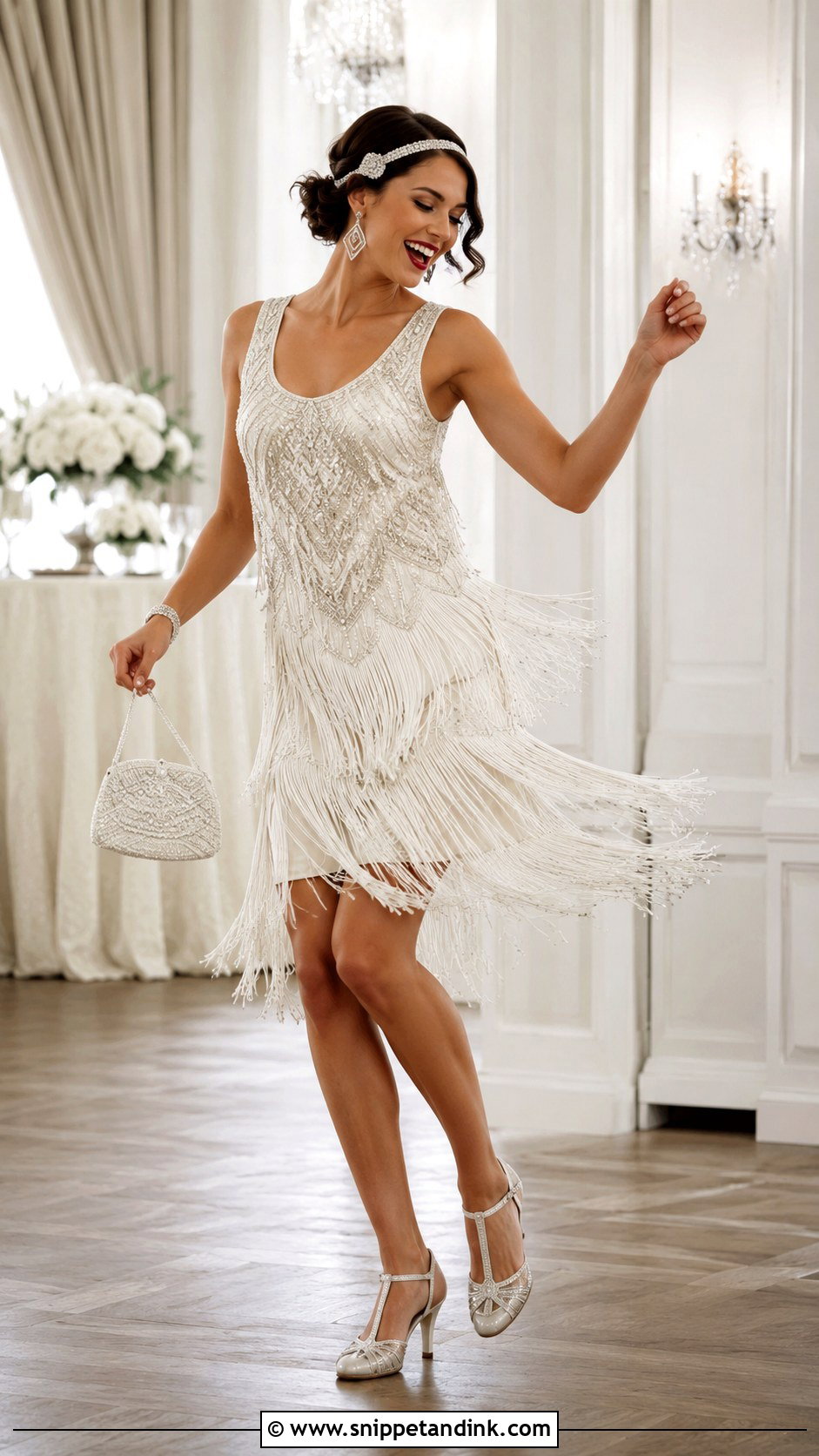
Fringe dresses are made for the dance floor. A knee or tea-length gown with layered fringe over a simple fitted lining swings with every step, and a little beading at the neckline adds sparkle without stealing focus. Fringe tangles, though, especially after hugging or sitting, so I give it a gentle shake rather than ever combing it. Choose ivory T-straps with a secure strap for dancing, geometric earrings and a compact beaded bag. A crystal headband over soft waves completes the Jazz Age look. Glowing skin, softly defined eyes and a berry lip suit it better than stage makeup. It’s a natural reception or courthouse dress.
4. Pearl Beaded Wedding Dress
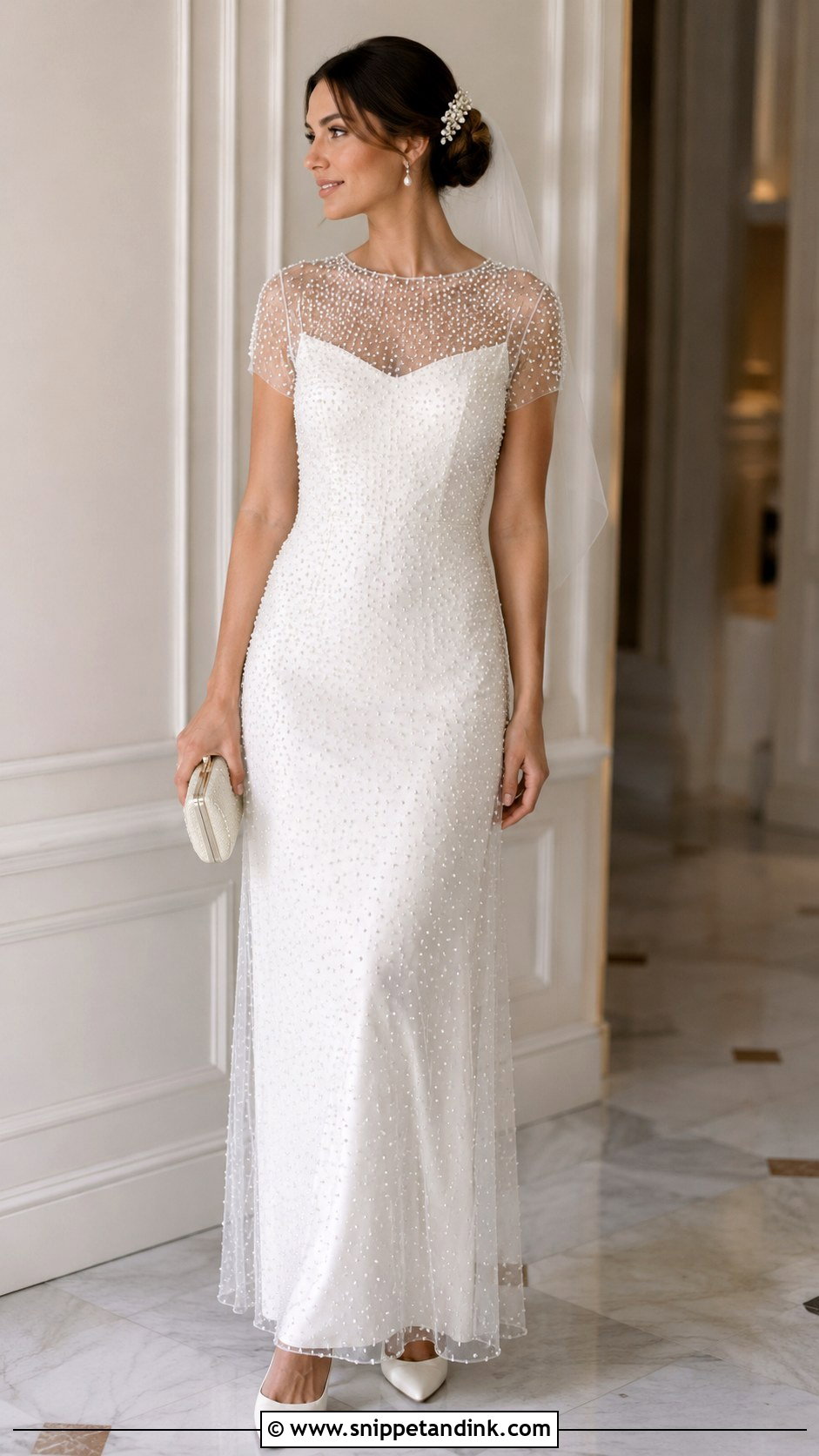
Pearls are the softer twenties choice, gentler than sequins and kinder in daylight. A fitted column or relaxed sheath carrying scattered pearls, linear pearl embroidery or a pearl-trimmed mesh overlay keeps the period line. Ivory satin pumps keep things tonal, and pearl drops echo the gown. If the neckline is already decorated, I’d skip the necklace and move the extra detail into a pearl hair comb with a short gathered veil. A structured ivory clutch is the modern note. It suits formal hotels, restaurant receptions and historic homes.
5. Satin Column Wedding Dress
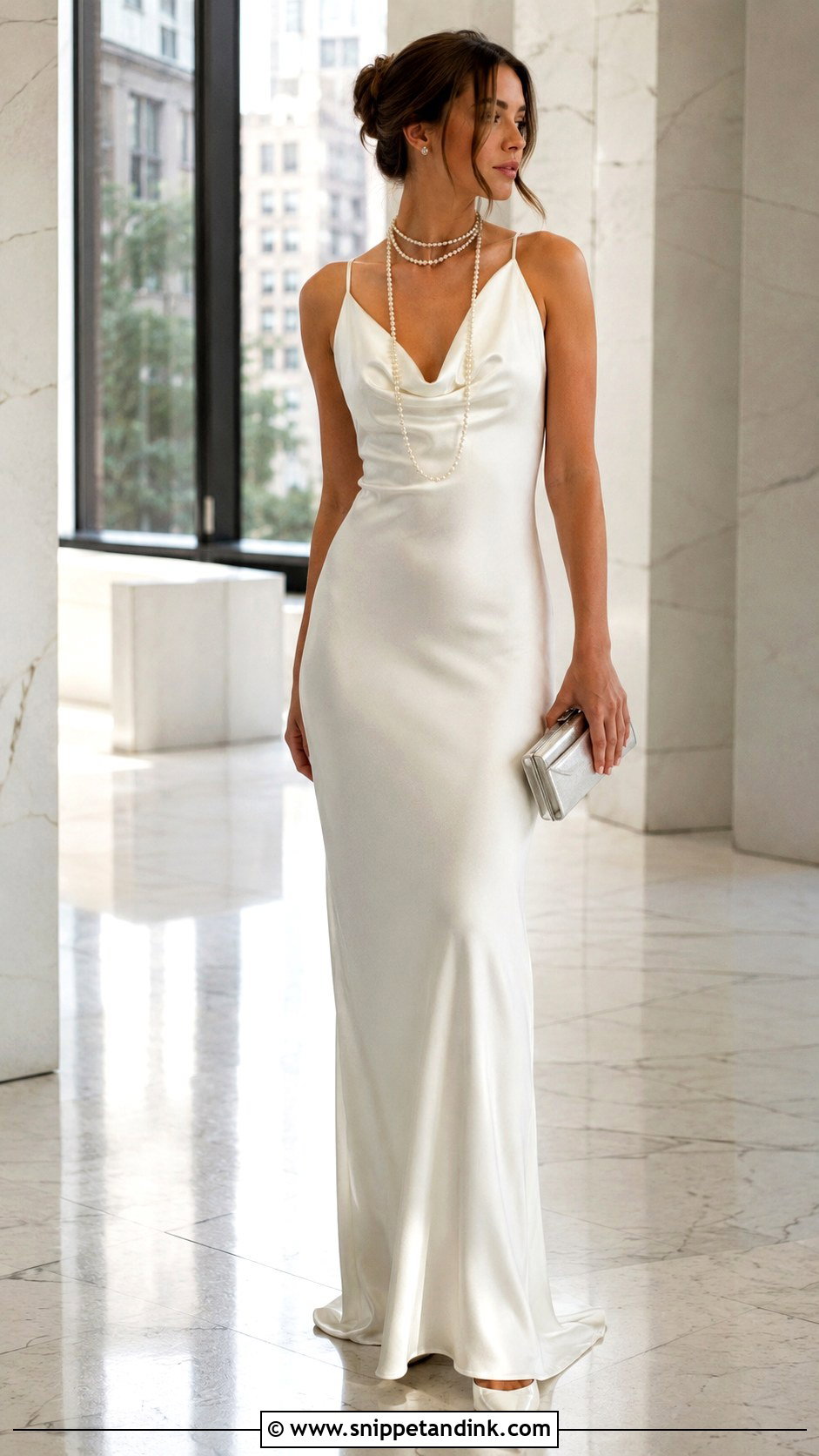
A satin column is the quietest way to reference the decade, all long straight line and glossy fabric. A draped neckline, low back or soft gathering at the hip adds interest without beading. The fit is a balancing act: the fabric should skim and move, never cling, so I size for drape and then take in only where it pulls. Bring your real underwear to every fitting. Pointed satin heels, long pearl strands, understated crystal studs and sleek finger waves give it a clear vintage identity. A small silver box clutch adds one geometric Deco touch.
6. Long Sleeve Beaded Wedding Dress
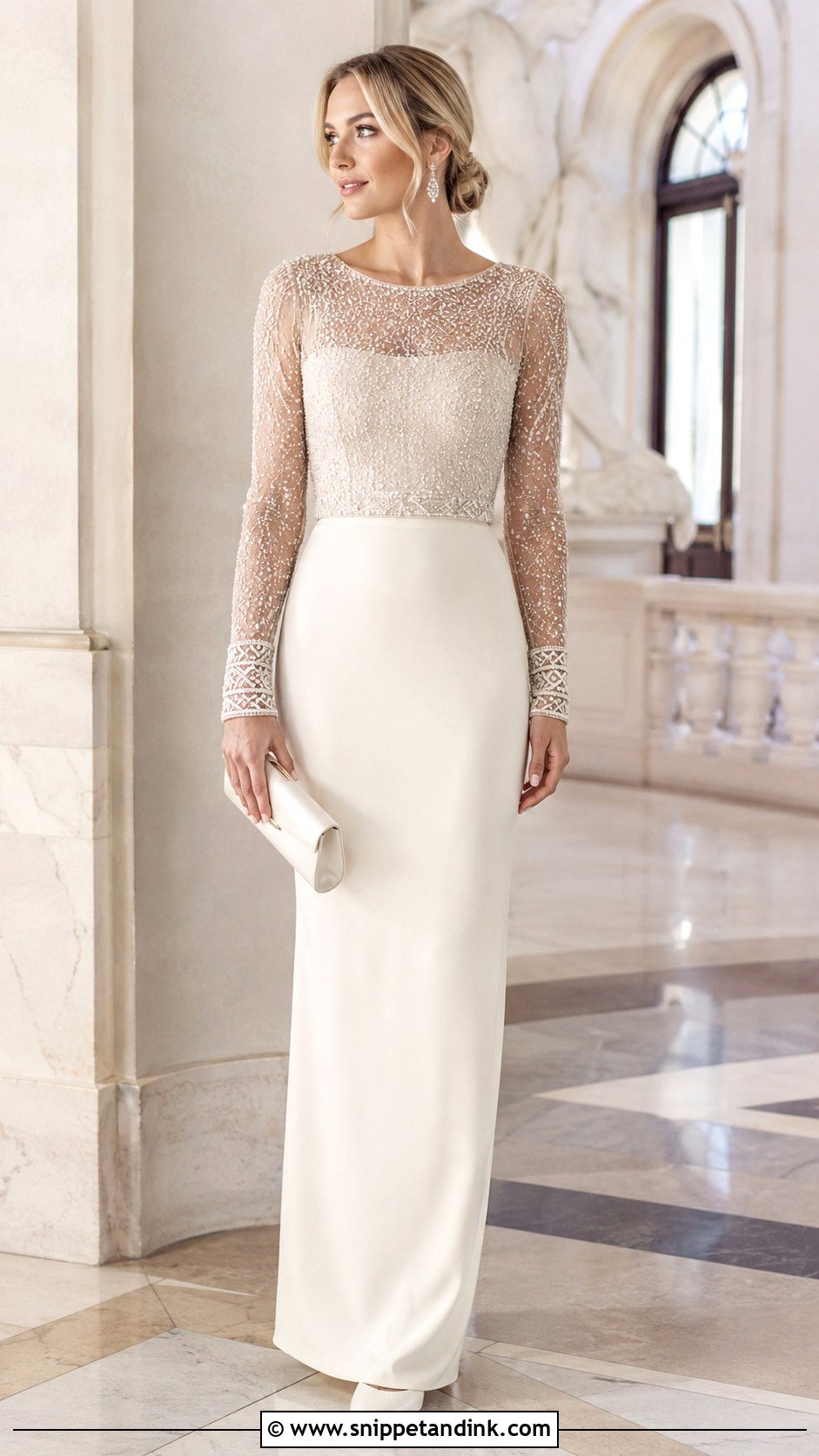
A long sleeve beaded wedding dress gives coverage and drama at once. Sheer mesh sleeves beaded to match the bodice, with geometric work at the cuffs, tie the design to the period. Beaded sleeves are heavy, and their weight pulls the shoulder seam backward if the bodice isn’t anchored, so I check the shoulders after the bride has worn it for ten minutes. Simple closed-toe heels and a slim satin clutch balance all that detail. Pick one statement piece of jewellery, crystal drops perhaps. A low waved bun with a narrow jewelled comb completes it. It’s warmest for autumn and winter.
7. Tea Length 1920s Wedding Dress
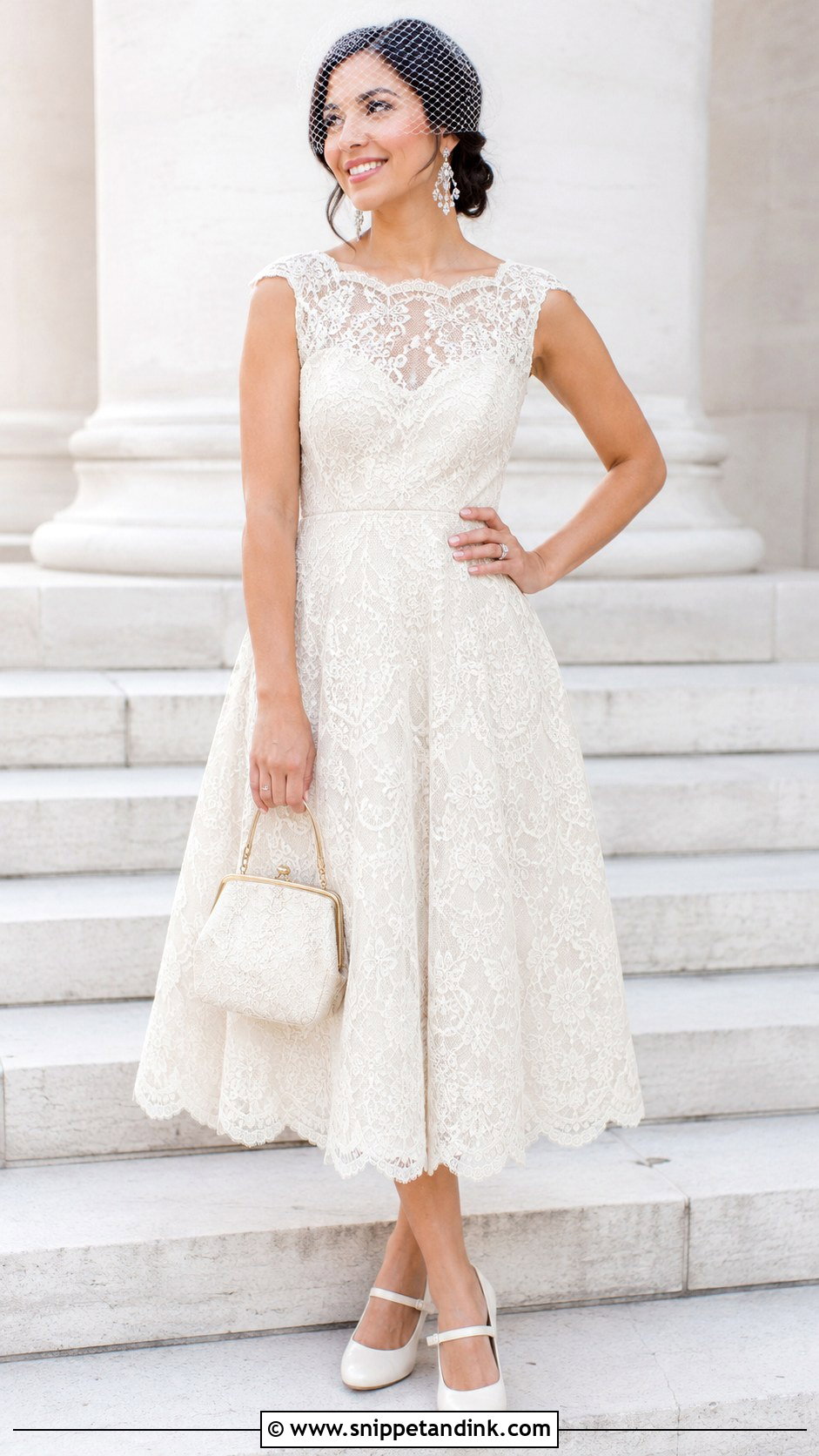
Tea length is the most practical twenties hem. Falling around the lower calf, it shows off period shoes without feeling short. A straight bodice with a dropped seam, scalloped lace or a few beaded panels suits it. Ivory Mary Jane heels, a small framed handbag and fine chandelier earrings complete it. I like a birdcage veil here because it balances the shorter skirt by adding something around the face; a pearl headband is the softer option. Courthouse ceremonies and daytime parties suit it, and you can walk and dance in it all day.
8. Lace Column Wedding Dress
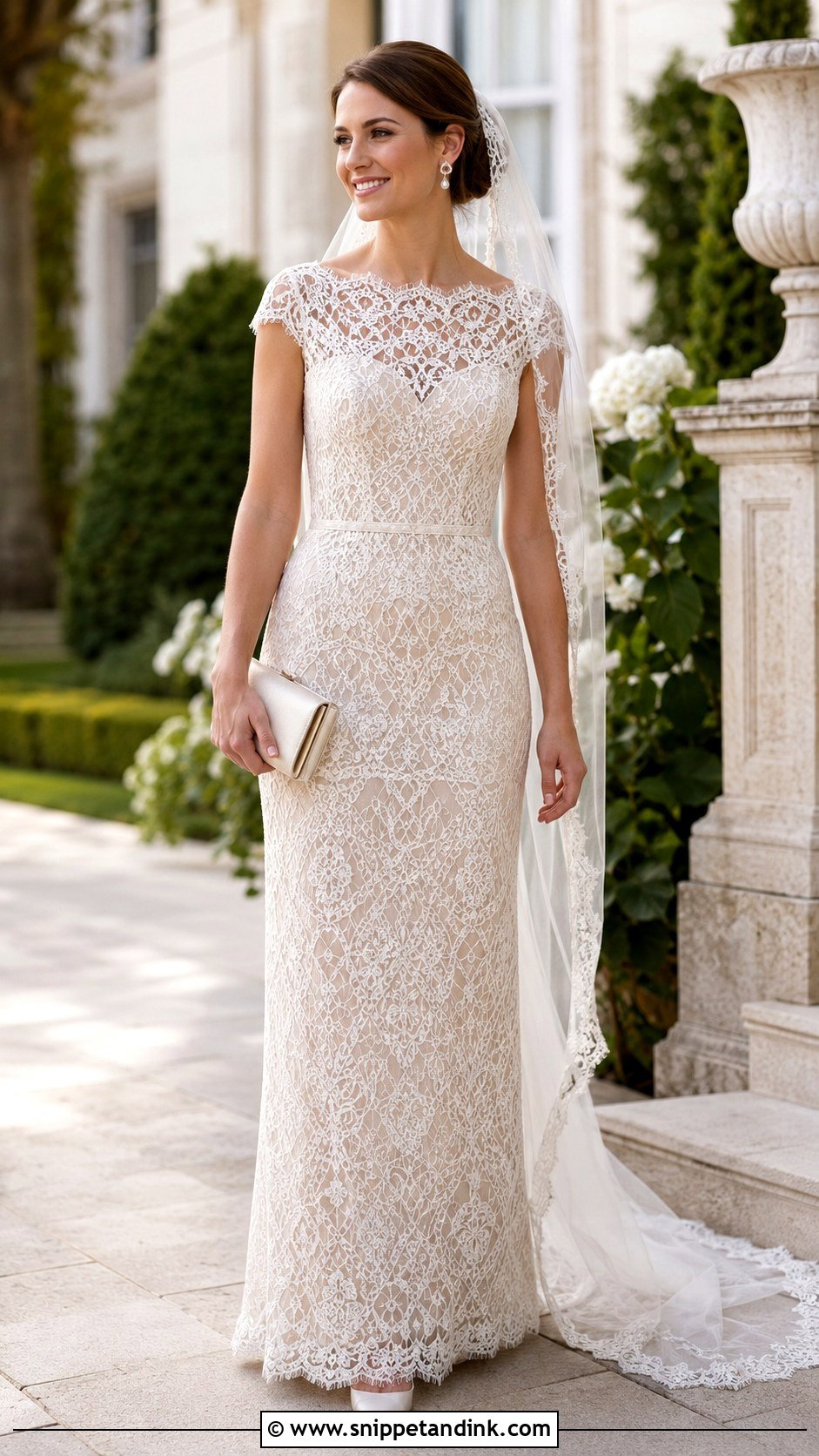
Lace on a column turns sleek into romantic. Fine geometric lace with scalloped edges over an ivory or champagne lining keeps the long silhouette, and a bateau neckline with slim cap sleeves gives graceful cover. A Juliet cap veil trimmed in lace feels genuinely of the period. It sits low on the head, so I set it over loose waves or a low tuck rather than volume at the crown, or it rides up. Low satin heels, pearl and crystal earrings and a structured clutch finish it. Skip big necklaces and decorated belts. Gardens and historic estates suit it.
9. Sequin Gatsby Wedding Dress
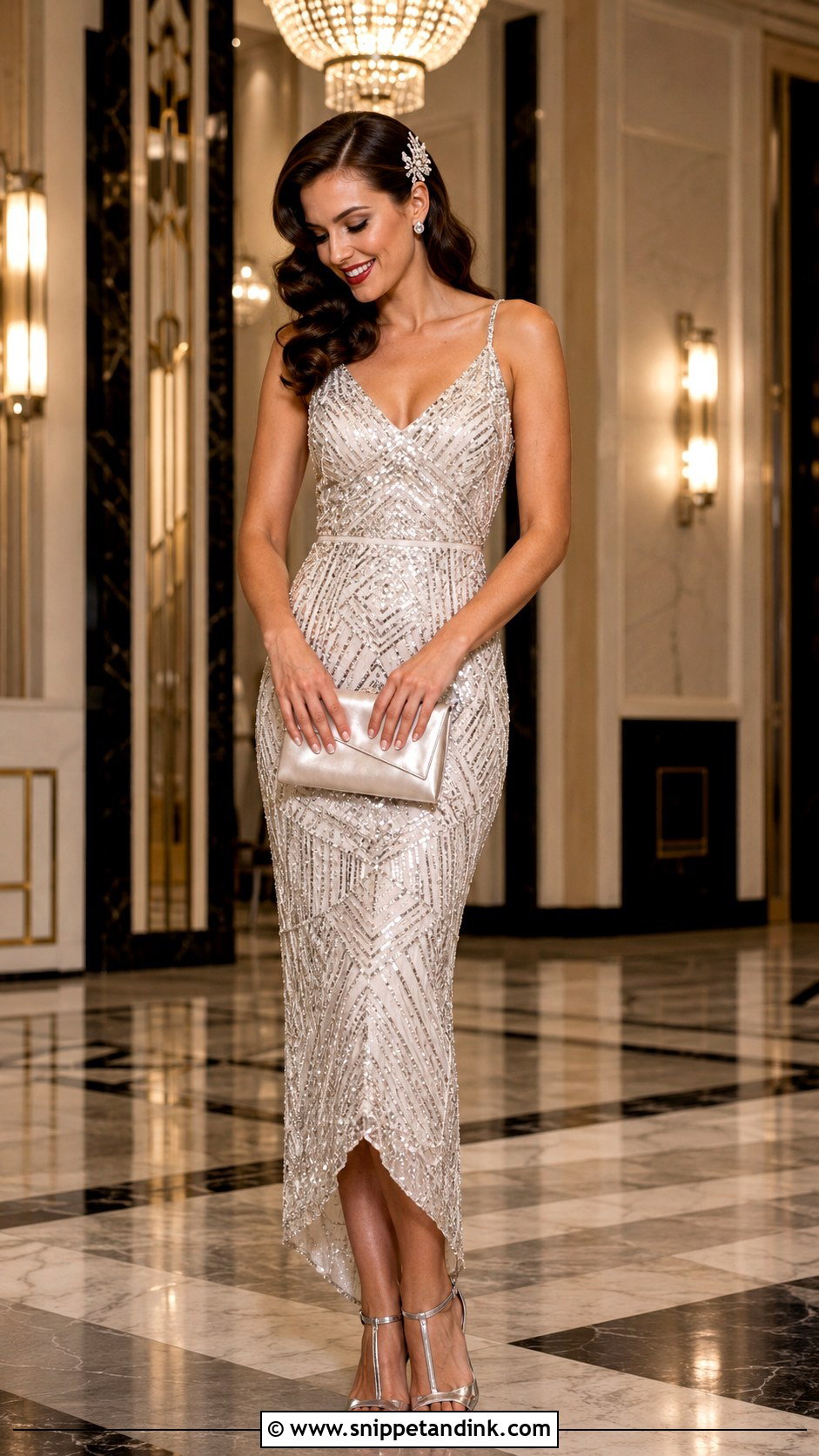
A sequin Gatsby wedding dress belongs at night, under chandeliers. Ivory, champagne or pale silver sequins worked in a geometric pattern look far richer than an allover finish, and a streamlined sheath keeps the sparkle under control. Sequins scratch the inner arm, so I check the underarm area for a smooth lining before anything else. Metallic T-straps, crystal studs and a satin envelope clutch suit it. Glossy side-parted waves held with a jewelled barrette, defined liner and a soft red lip finish the look, with fresh skin underneath.
10. Cape Sleeve Wedding Dress
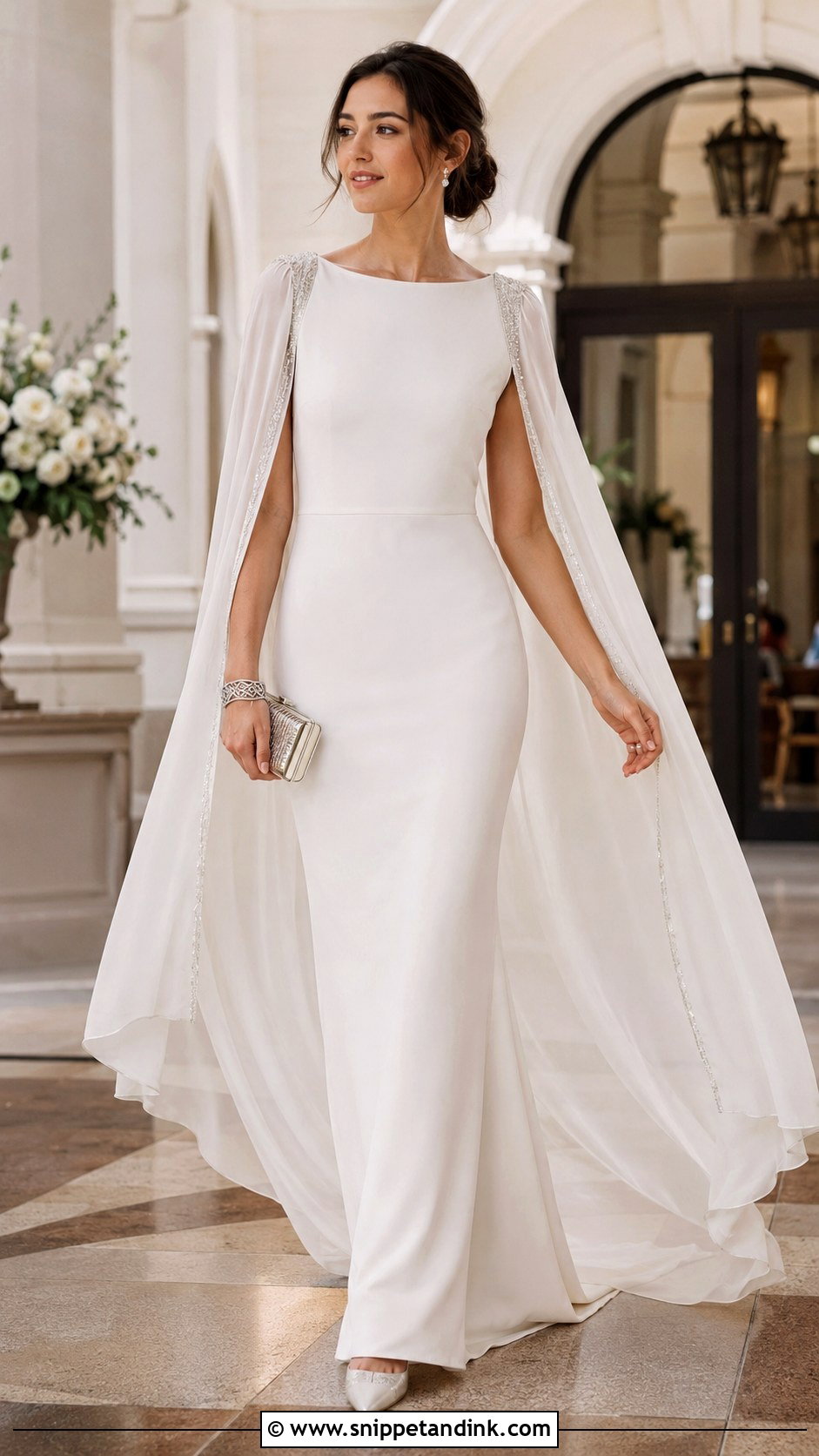
Cape sleeves add movement to a straight twenties line, falling from the shoulders to the elbow or all the way to the floor. In silk, crepe or chiffon, with beaded edges, the cape gives period detail without weight. The drama is around the shoulders, so earrings stay delicate and the necklace goes. A low bun with sculpted side waves keeps the neckline clear. I’d add streamlined pointed heels, an Art Deco bracelet and a compact metallic clutch. A floor-length cape catches the wind beautifully outdoors but tangles in car doors, so someone should gather it for you.
11. Scalloped Beaded Wedding Dress
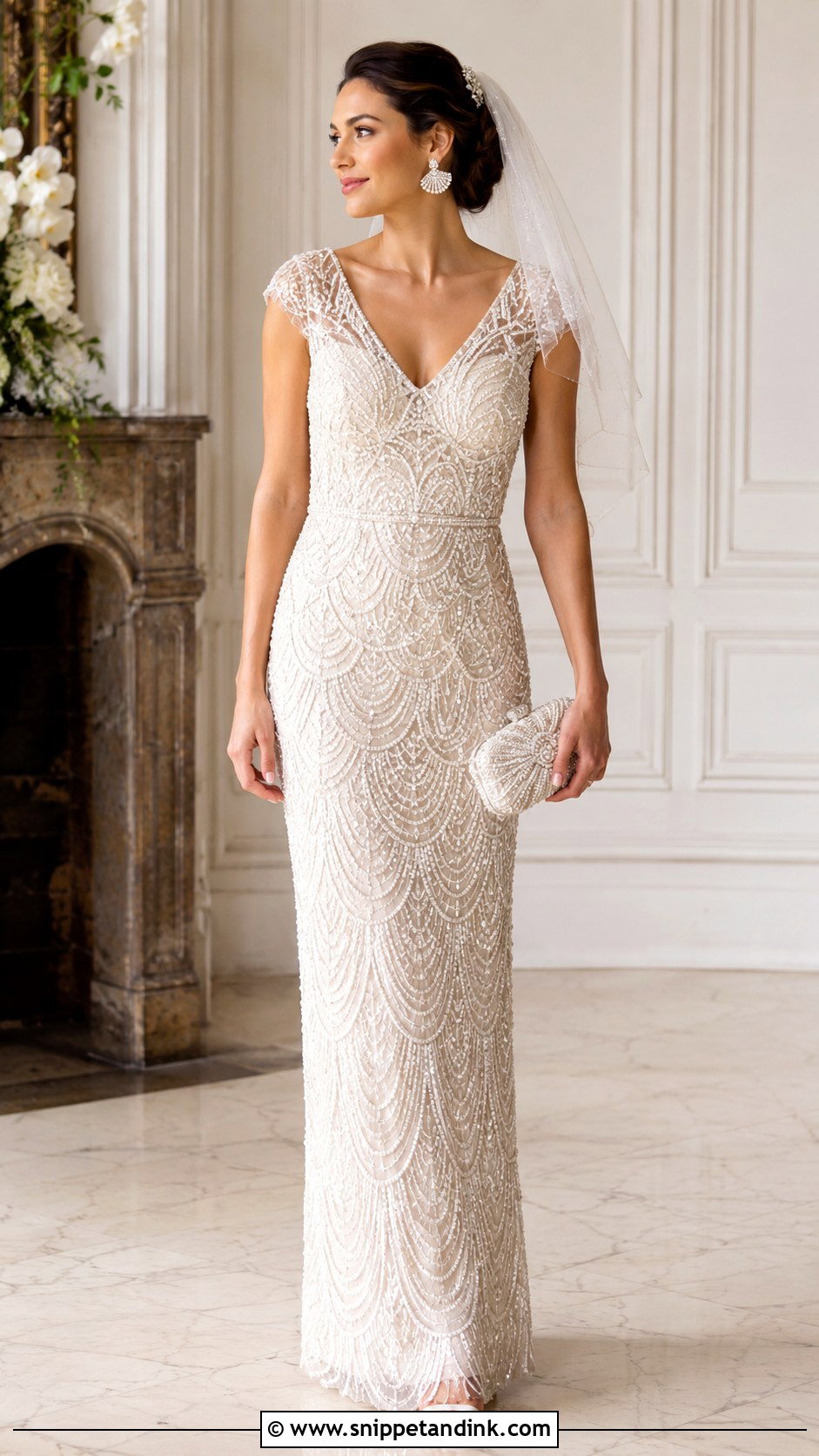
Scallops give Art Deco beading a softer rhythm than sharp chevrons. Overlapping rows across the bodice and skirt of a sheath or column, outlined in beads, pearls or tiny sequins, shimmer as you walk. They’re also more forgiving on curves, since the rounded lines don’t exaggerate width the way horizontal stripes of beading can. Simple ivory sandals, fan-shaped crystal earrings and a small beaded clutch complement it. Fix a short veil to a jewelled comb, and keep hair in soft waves with a neutral rose lip.
12. Cowl Neck Satin Wedding Dress
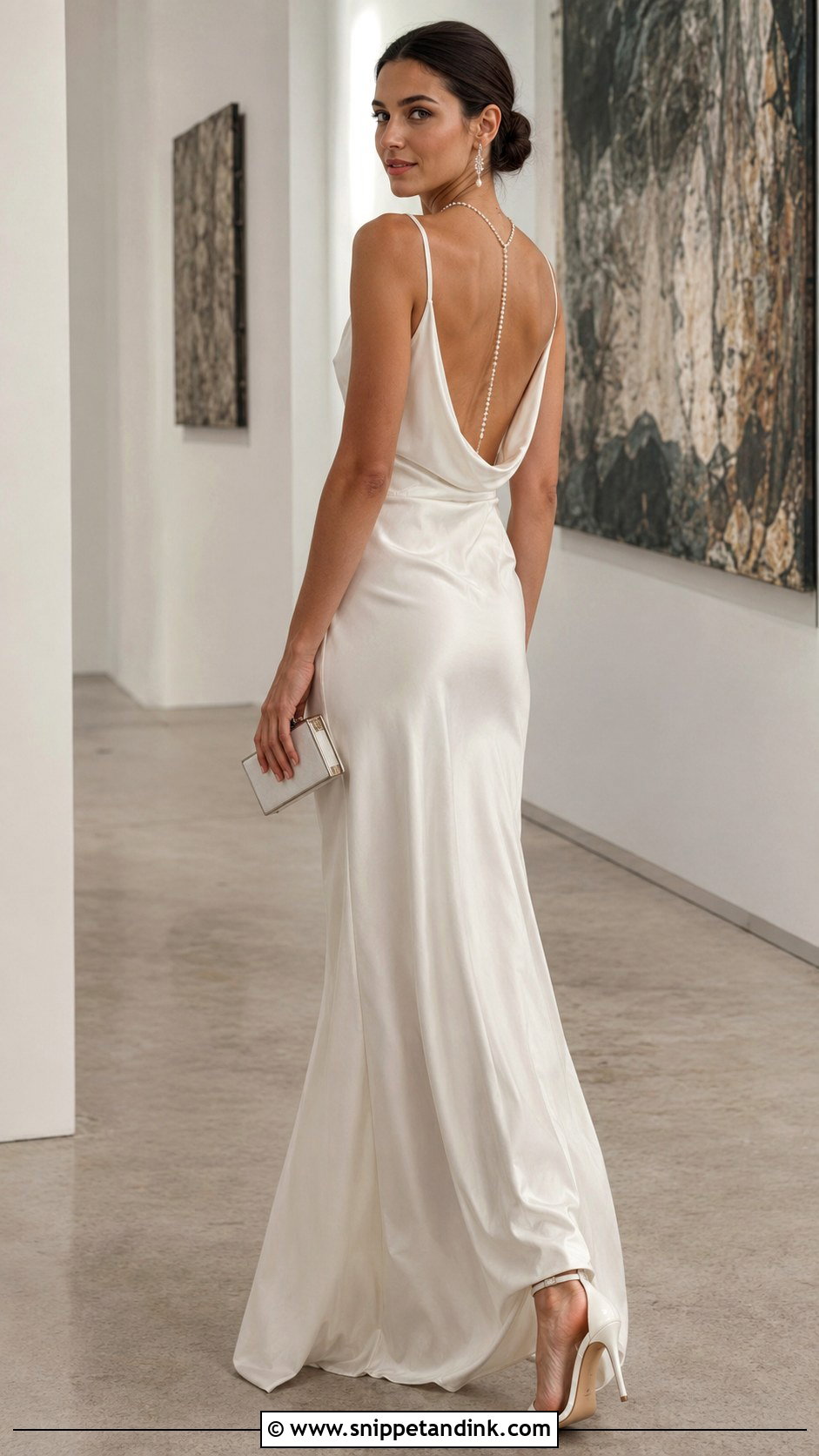
The cowl neck came in at the very end of the decade with bias-cut evening gowns, and it still flatters almost every bust. The drape falls into a sleek column or bias skirt. Ivory, oyster or pale champagne satin gives a soft glow. A cowl needs a little weight at its centre to hang well; I sometimes add a tiny weight inside the fold so it doesn’t flip up when you lean. Slim ankle straps, a long pearl necklace worn down the back and a small rectangular clutch suit it. If the back is low, wear a waved bob or low side bun to show it off. Keep earrings to small crystals.
13. Feather Trim Wedding Dress
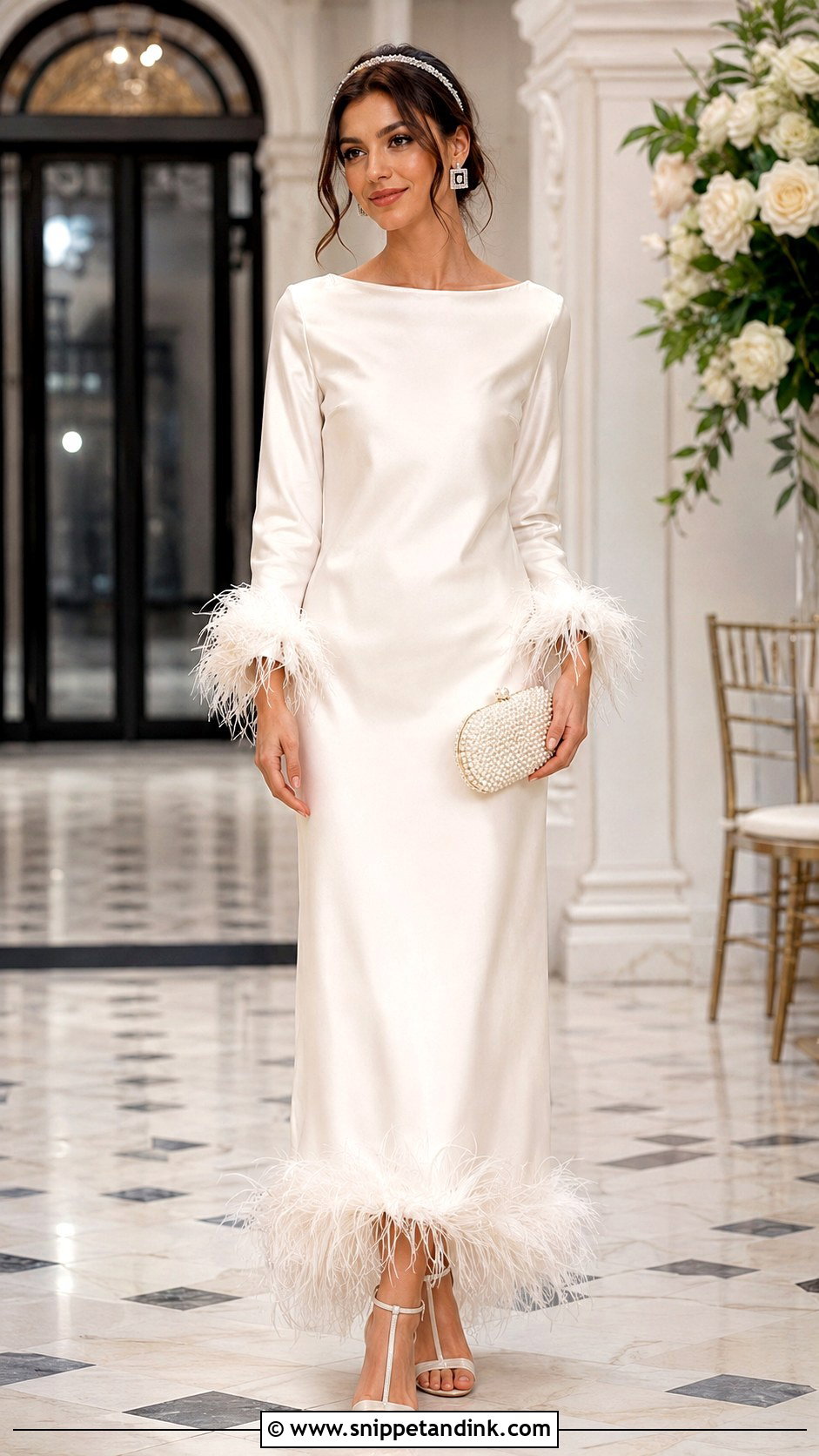
Feathers work in small doses. Soft edging at the cuffs, shoulders or hem of a straight crepe or satin gown keeps it chic; more than that tips into fancy dress. Satin T-straps, geometric studs and a pearl-covered clutch suit it. Choose a slim crystal headband or, if the dress already has lots of embellishment, a plain comb instead. Keep hair in smooth side waves and makeup soft. Feathers droop in damp air, so for outdoor or humid venues I’d treat this as a reception change. Winter and city weddings suit it best.
14. Champagne Art Deco Wedding Dress
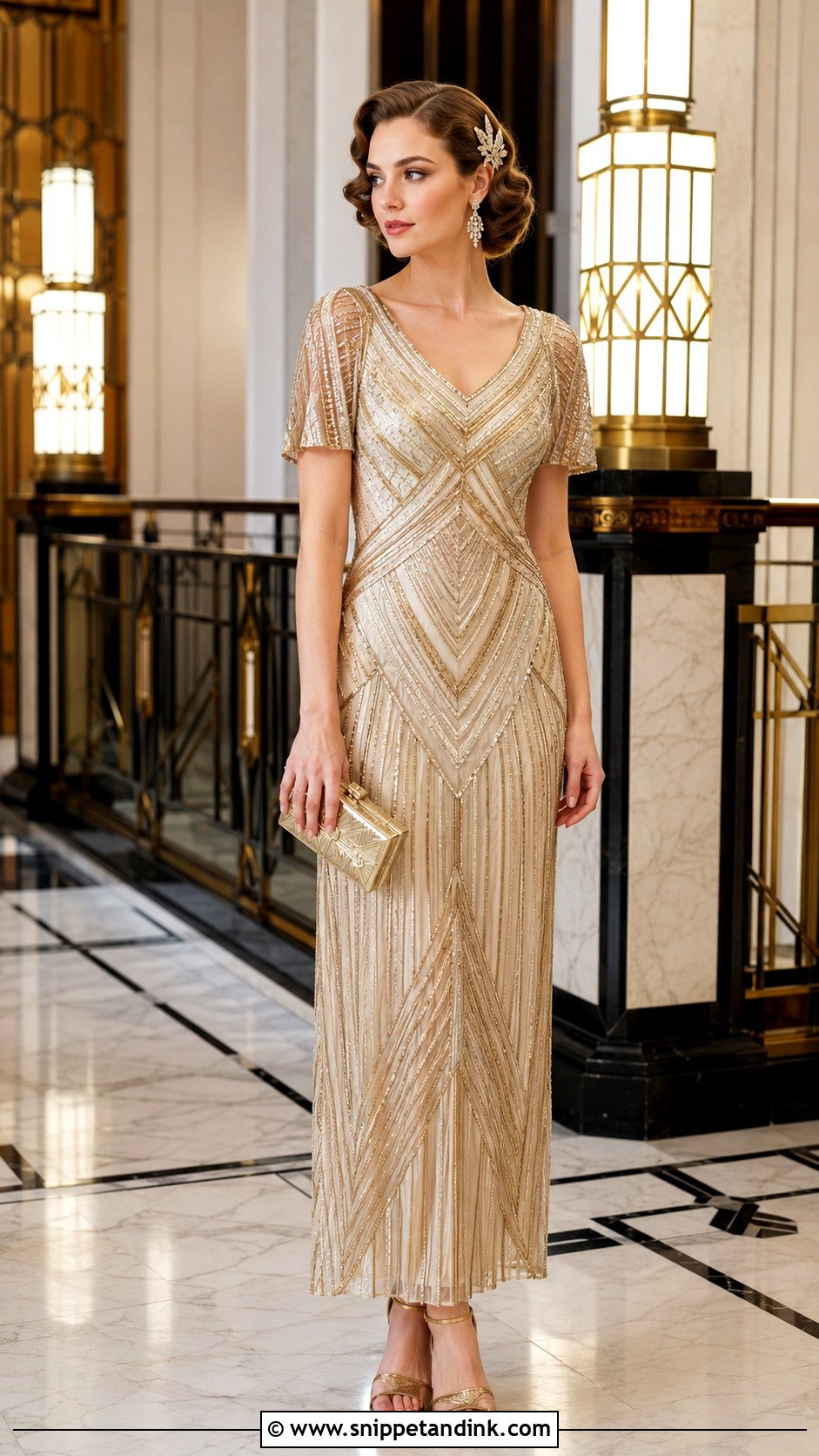
Champagne gives Deco beading a warm, aged base. On a column gown, ivory, gold or silver beads in chevrons, fans and mirrored lines stand out clearly while the dress still reads bridal. Champagne ankle straps, crystal drops and a metallic box clutch complete it, with a gold-toned comb tucked into sculpted waves. Keep other jewellery minimal. My one test is skin tone: some champagnes wash out fair complexions in daylight, so I compare the fabric against the bride’s face by a window. It glows against architectural interiors in the evening.
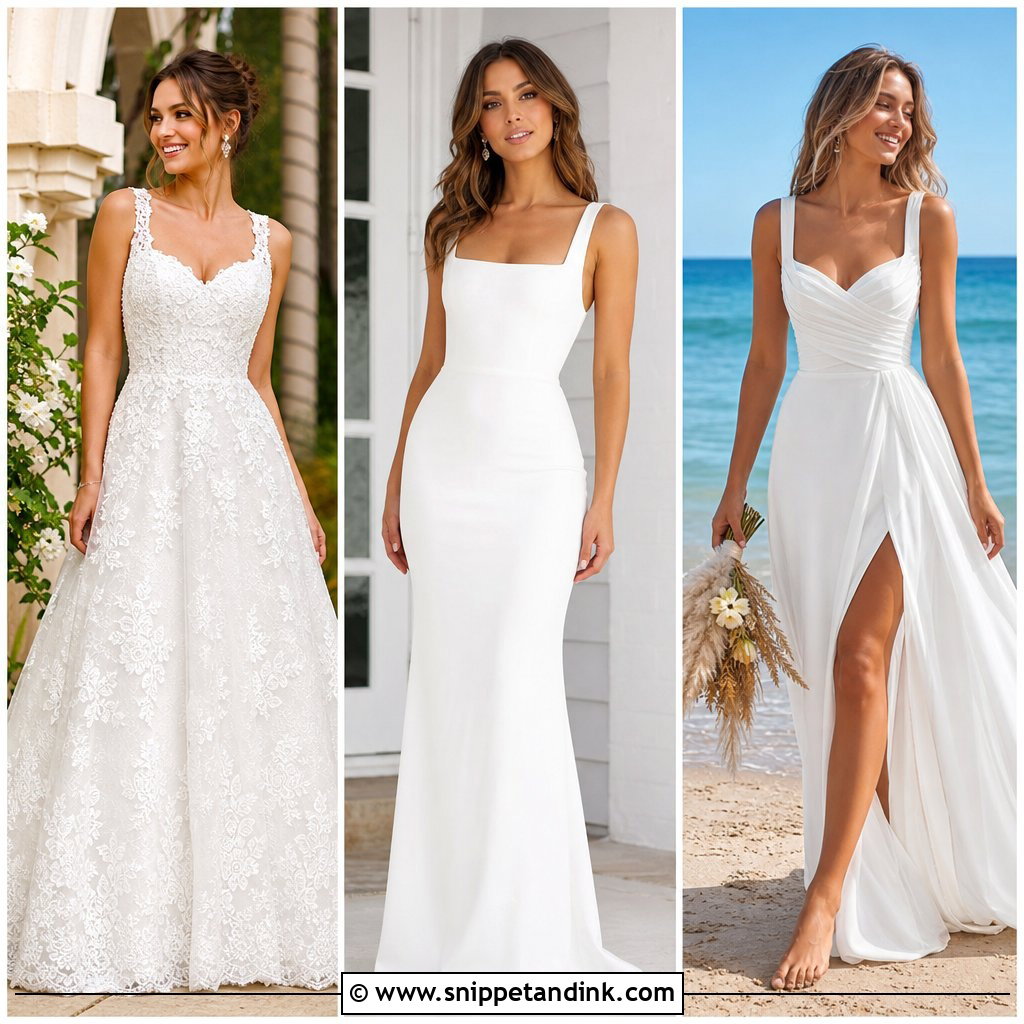
15. High Neck 1920s Wedding Dress
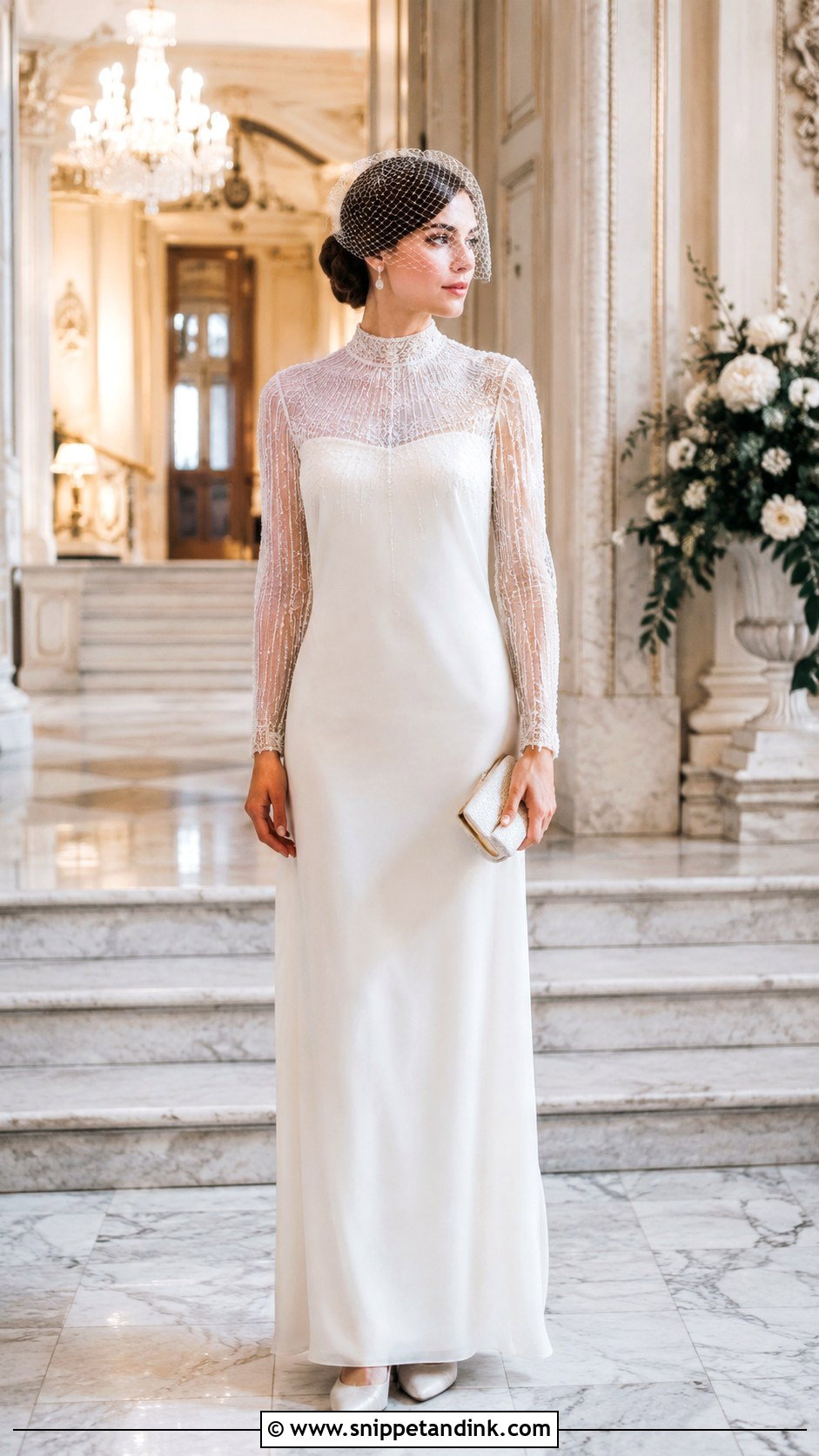
A high neck keeps the twenties’ long, easy line while adding modest coverage. A sleeveless or long-sleeve column with a sheer beaded yoke, lace neckline or small stand collar suits it. Beaded yokes can feel scratchy at the throat, so I ask for a soft lining behind them. Closed-toe satin pumps and a clutch with a geometric clasp keep it neat. No necklace; slender drops instead. A low bun with shaped waves shows the shoulder detail. Choose a floor-length veil for the ceremony or a birdcage for a lighter vintage finish.
16. Open Back Beaded Wedding Dress
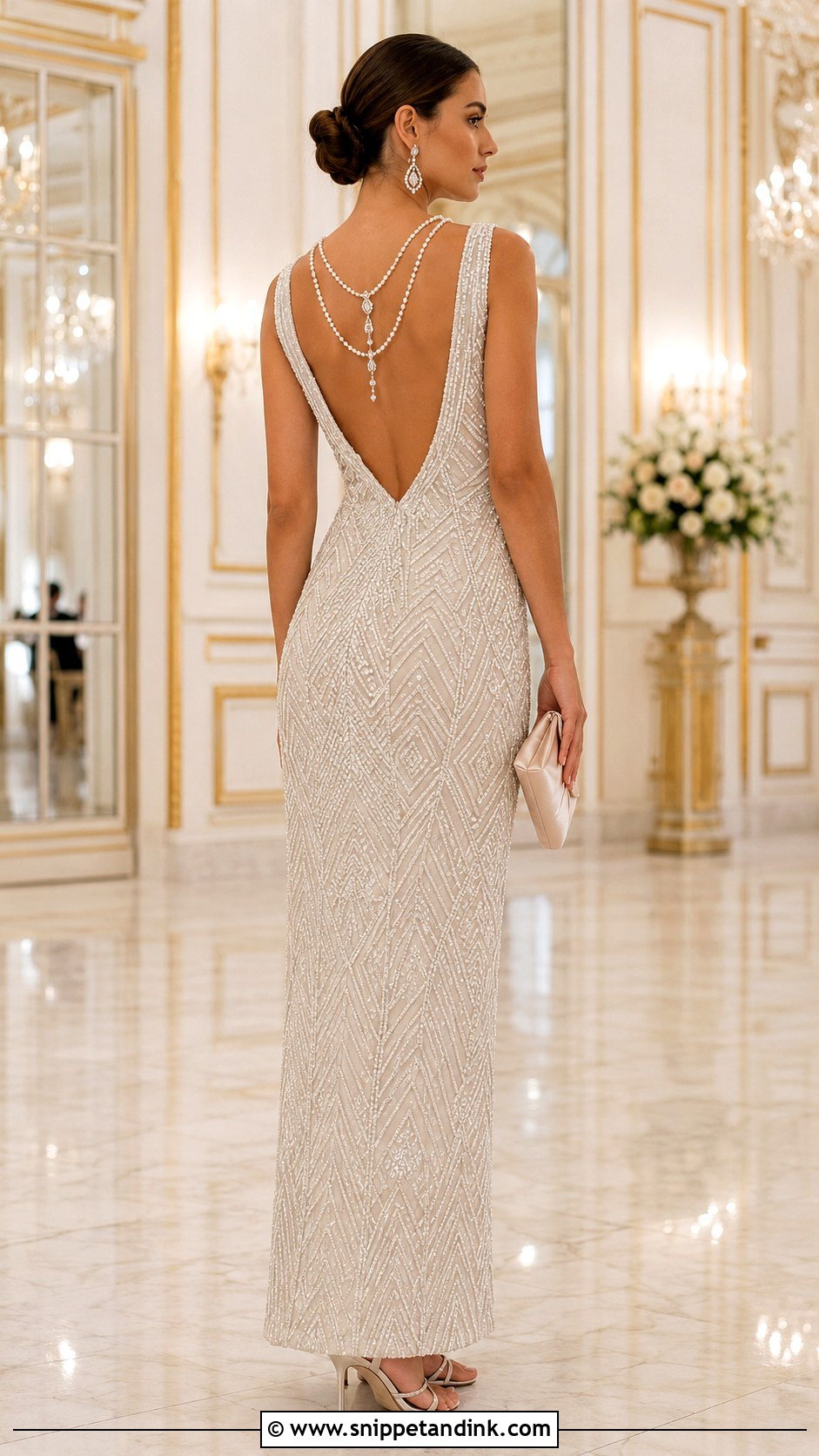
Open backs make beaded sheaths feel modern. The back can curve low, plunge into a V or sit behind sheer illusion, depending on how much cover you want. Geometric embellishment across the shoulders, waist and skirt carries the Jazz Age mood. A long strand of pearls draped down the spine highlights the opening, and a low side bun or short waved style keeps it visible. Hidden support is the part people forget: with no back to anchor it, the bodice needs internal cups and a firm waist stay. Simple ivory heels, small crystal earrings and a satin clutch finish it.
17. Blouson Wedding Dress
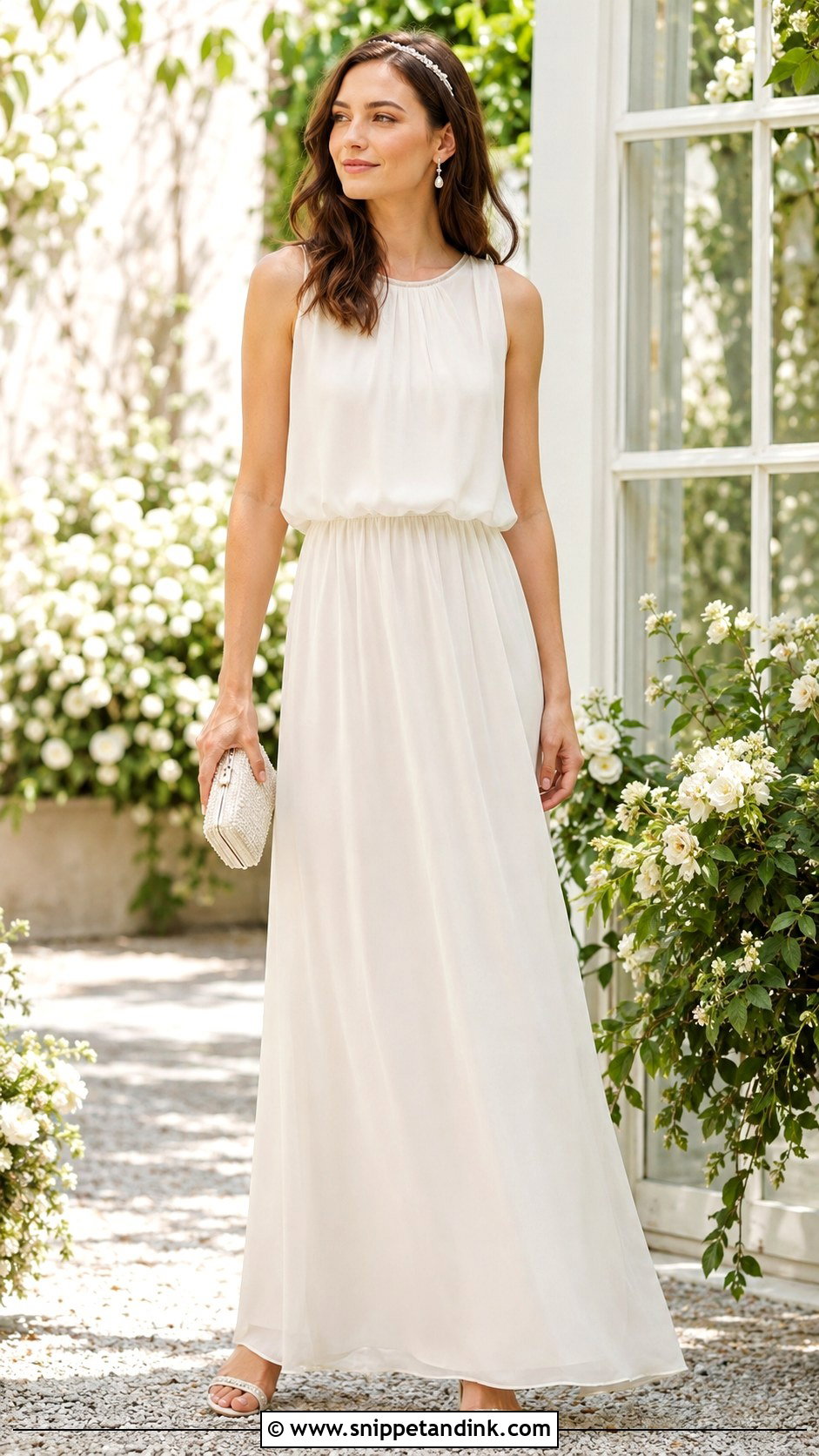
A blouson bodice blouses softly over a band at the hip or dropped waist, which makes it comfortable and very forgiving around the middle. Lightweight silk, chiffon or beaded mesh lets the upper section fall naturally; anything stiff will puff out. A straight skirt keeps proportions long. I adjust how much the bodice overhangs the band at the fitting, because a couple of centimetres too much can look sloppy. Low T-straps, a rectangular beaded clutch and slim pearl earrings suit it. Wear a narrow headband over soft waves, or a simple fingertip veil for a more traditional finish.
18. Tiered Fringe Wedding Dress
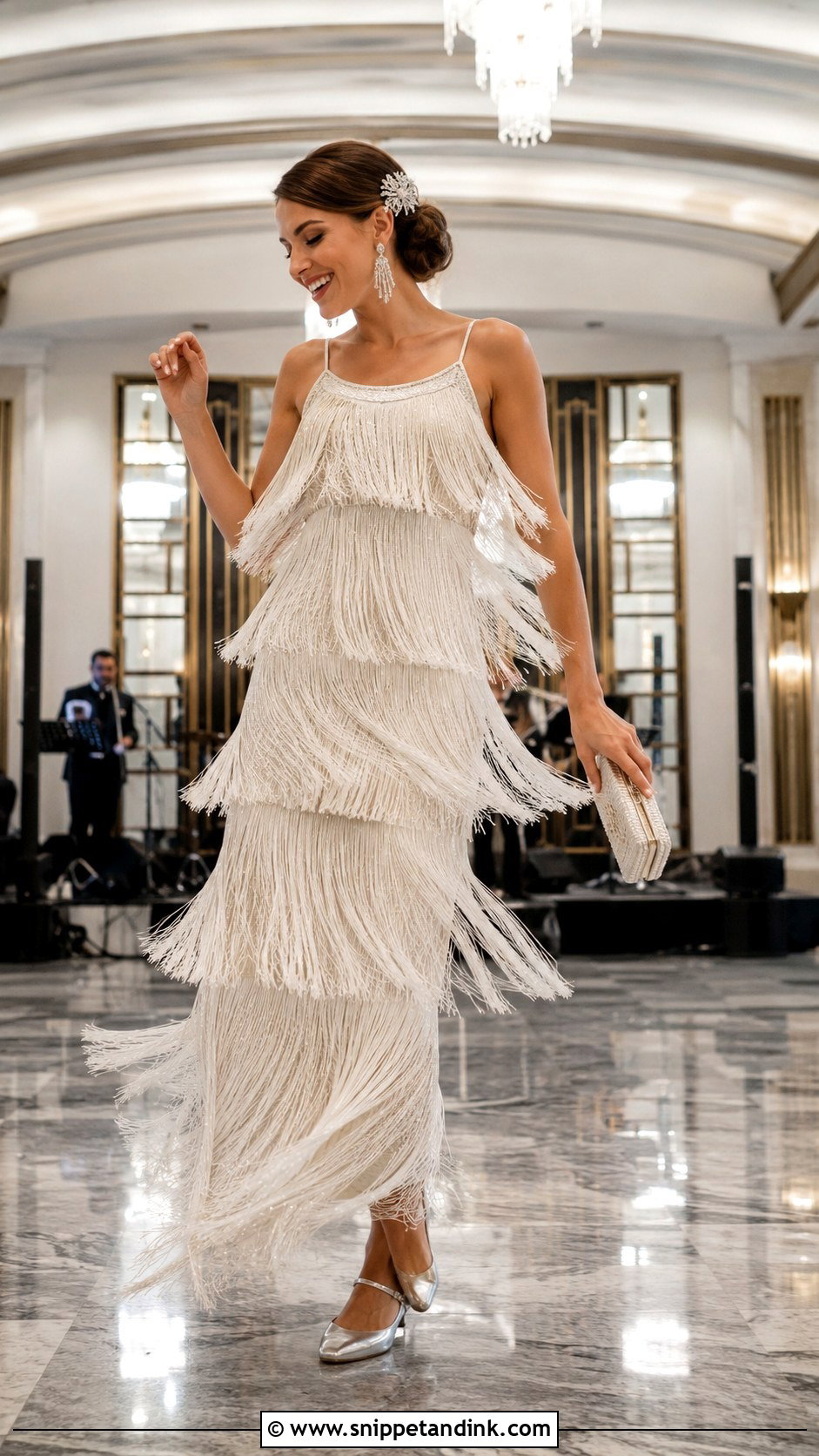
Tiered fringe has twice the movement of a single layer. The tiers should sit close to the body, so the shape stays slim rather than bell-like. A midi or ankle hem looks bridal and still shows off your shoes. Keep the neckline plain and let the fringe do the work. Silver Mary Janes, chandelier earrings and a small hard-shell clutch suit it, with smooth finger waves and a crystal side comb. Fringe catches on chair backs and lace, so be ready for a few tangles. Plenty of brides wear it as a second dress for the dancing.
19. Robe De Style Wedding Dress
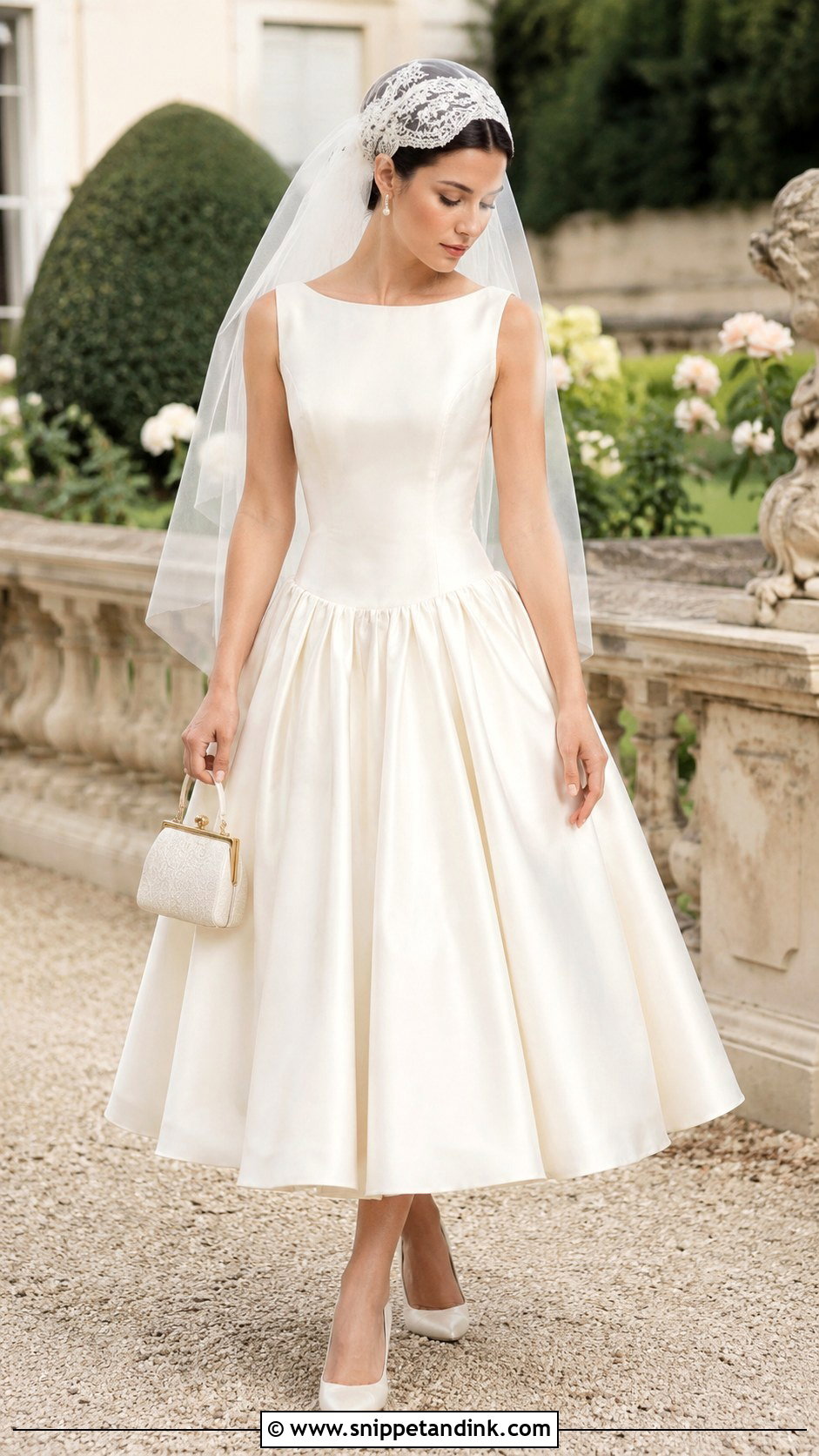
The robe de style is the decade’s other silhouette, the one with a waist and a full skirt rather than a straight column. A fitted or gently dropped bodice opens into volume at the hips. Silk taffeta, satin or layered organza hold the shape, with floral appliqués or restrained beading. It suits brides who love the era but feel lost in a shift. Classic pumps, pearl earrings and a compact vintage bag complement it. A Juliet cap or short lace veil balances the skirt without hiding it. Gardens, estates and formal daytime weddings suit it best.
20. Modern Minimal 1920s Wedding Dress
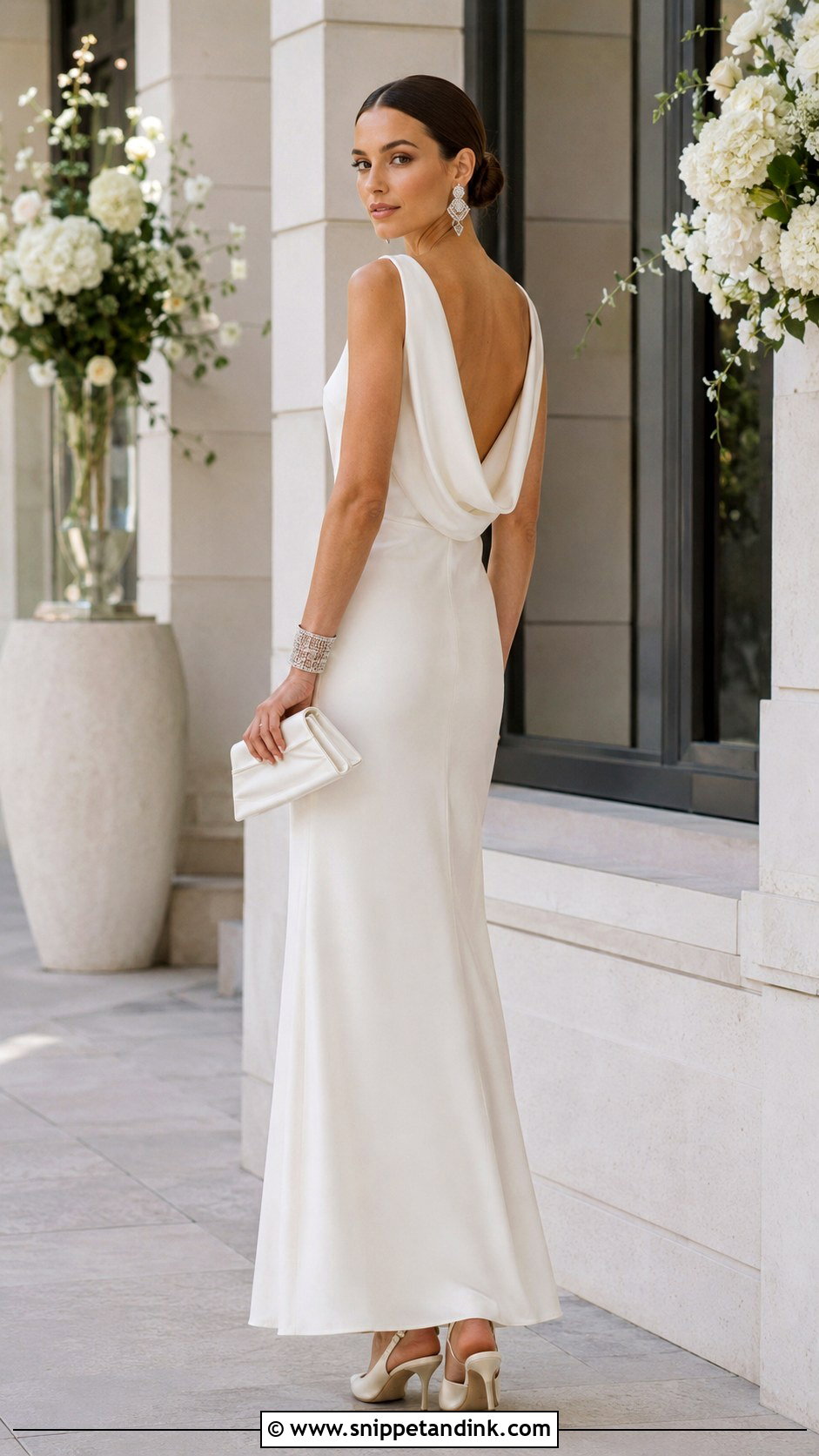
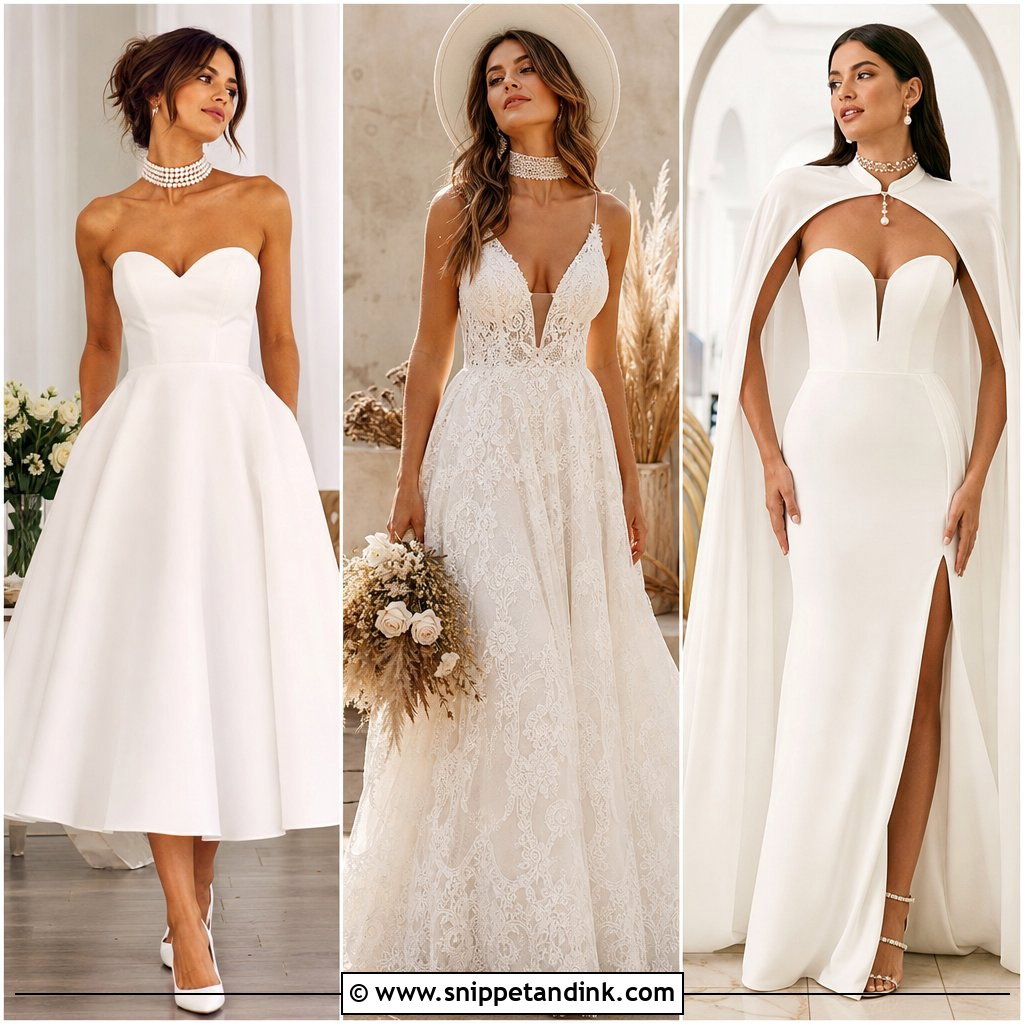
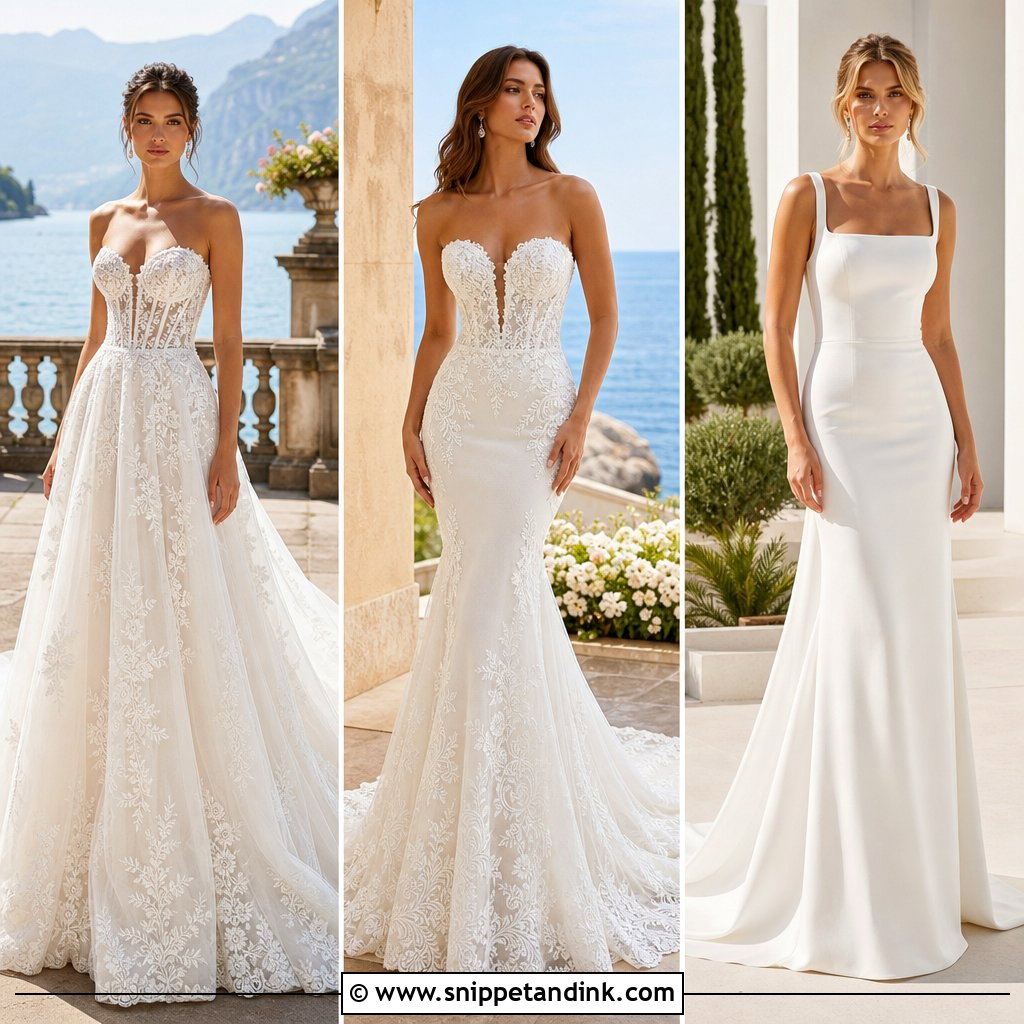
A minimal twenties dress skips the fringe and sparkle entirely. A clean silk crepe column with a dropped seam, a bateau neck or a low draped back carries the period through cut alone. Then I add one strong accessory, such as a pearl headpiece, geometric earrings or an Art Deco cuff, and stop there. Ivory slingbacks and a structured satin clutch keep the palette simple. Side waves or a sleek low bun, luminous skin and a muted berry lip finish it. With so little decoration, every fitting flaw shows, so allow time for precise tailoring.
A Faux Bob, a Juliet Cap and Other Ways to Wear the Twenties Above the Neck
The hair and headpiece decide whether a twenties dress reads as vintage or simply as a plain column. Here’s how I’d adapt it for different hair.
Short hair
You’re already halfway there. Sculpted finger waves or a glossy side part, held with a jewelled barrette, need no extra length. Brief your stylist to set the waves the night before or with hot tools on the morning, then lock them with a firm hold spray.
Long hair
A faux bob gives the cropped look without cutting anything. The length is curled, rolled under and pinned at the nape, with waves set around the face. It works best on medium-thick hair; very long, heavy hair can make the roll bulky, in which case a low waved bun is the better choice.
Headpiece and veil
- A Juliet cap veil sits close to the head and suits flat, waved styles, not volume at the crown.
- Headbands look most authentic worn low across the forehead, though worn higher they’re easier to keep in place all day.
- One jewelled piece is plenty with heavily beaded dresses; save the bigger headpiece for a plain column.
- Practise putting on the headpiece at your hair trial, since cap veils and bands both shift if they’re pinned in the wrong place.
Full Gatsby Sparkle or One Quiet Deco Detail?
A good 1920s-inspired bridal look nods to the era without burying the bride under it. Dropped waists, columns, geometric beading, pearls, fringe and fluid satin all give you a way in. You can go fully Gatsby with sequins and a jewelled headband, or keep a plain crepe gown and choose one Deco accessory. Either way, comfort, tailoring and proportion matter as much as decoration. Try each dress with the shoes, veil and jewellery you plan to wear before deciding, and pick the one that lets you dance.
You'll Like These Ideas:




Leave a Reply