
A wide strap does quiet work. It carries part of the bodice weight off the bust, so the gown stays put when you hug people, and it gives the neckline a frame to hang from. Wide straps pair with almost any skirt shape, from a narrow column to a full ball gown, and right now I see them most often with square necklines, matte satin, Mikado and lace appliqué. The twenty looks below are complete outfits, so I have noted where each one asks for a particular fitting or accessory choice.
Where a Wide Strap Should Sit on Your Shoulder
Most of the thick strap gowns I fit look right on the hanger and slightly wrong on the body, and nearly always the cause is placement. The strap should cross the shoulder close to the middle of the bone, not right at the outer edge where it slips, and not so close to the neck that it pulls the neckline into a narrow wedge.
- Width: a strap roughly as wide as two or three fingers suits most frames. Very broad shoulders often look best with the strap set slightly inward, which narrows the line.
- Angle: look at the back in a second mirror. Straps that run straight down usually feel secure; a strap angled outward will migrate toward the arm as you move.
- Armhole: lift both arms over your head. If the bodice rises off your waist or the armhole cuts into the underarm, the strap length needs adjusting, not the side seams.
- Underwear: wide straps hide a normal bra strap only if the two line up. Bring the exact bra or bodysuit to every fitting, or ask for cups sewn in.
Shortening a strap is one of the simplest alterations a seamstress does, but it lifts the whole bodice, so it should be done before the hem is marked.
1. Square Neck Thick Strap Wedding Dress
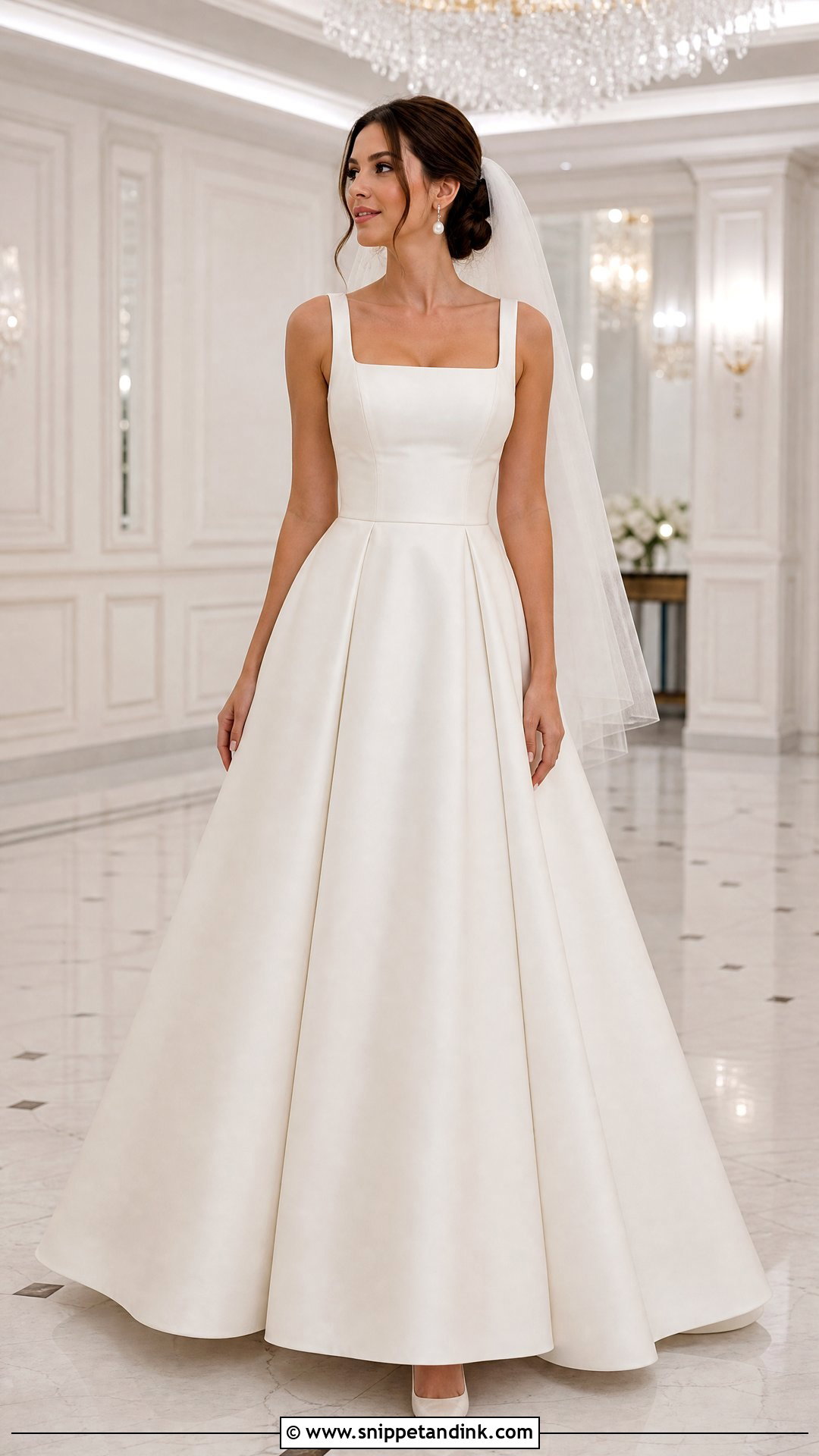
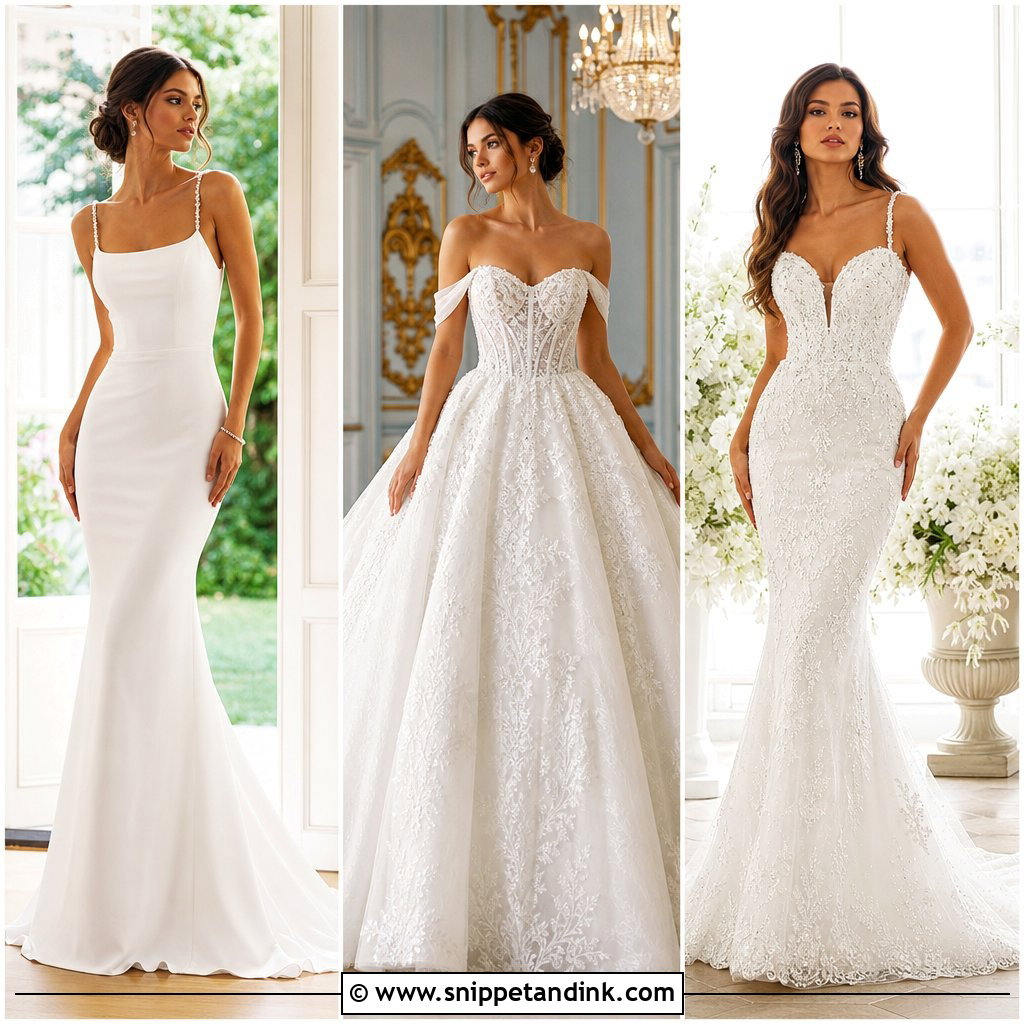
This is the cleanest way to show off a substantial strap. A straight neckline across the collarbone and a strap of two to three fingers wide make a crisp rectangle, so I keep everything else round and quiet: pearl studs, a smooth low bun, ivory pointed pumps. The thing I check first at the fitting is that the neckline sits level when you lift your arms; on satin a square neck can bow forward at the centre if the bodice is even slightly loose. A medium veil, covered back buttons and a bouquet of white flowers with a little greenery finish it. Ballrooms and estate houses suit its formality.
2. Lace A-Line Thick Strap Wedding Dress
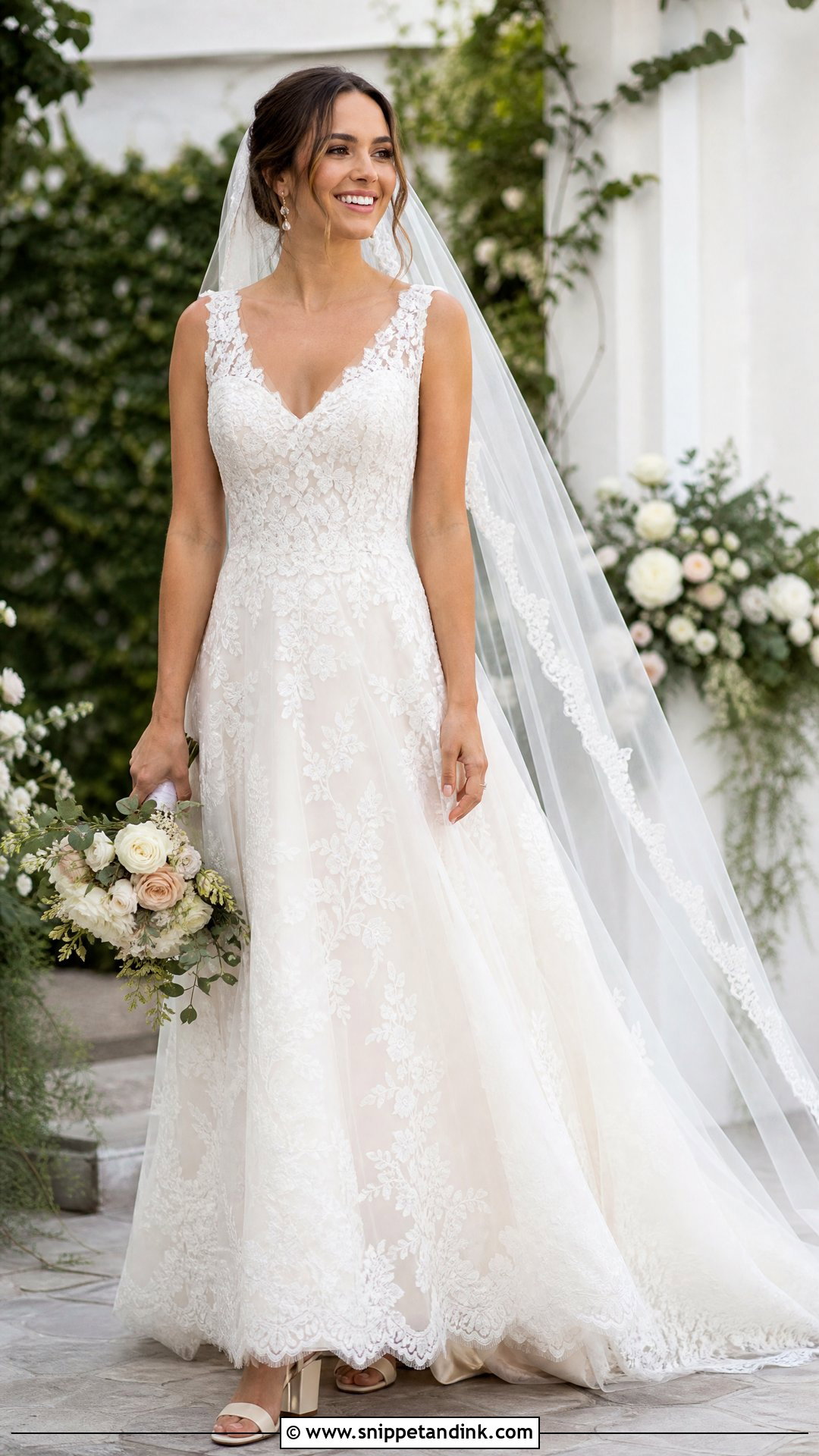
Lace on a wide strap needs a proper lining underneath, otherwise the strap stretches and slides toward the shoulder edge by the evening. Here the lined bodice has a gentle V and appliqués that drift down onto an airy A-line skirt, with the waist marking where the detail stops. I would skip a necklace entirely and wear pearl drops with a slim bracelet. Block-heel sandals keep you steady on lawn, and a fingertip veil with a fine lace edge ties back to the bodice. A loose chignon or pinned waves keeps it from looking too formal for a garden.
3. Mikado Ball Gown Thick Strap Wedding Dress
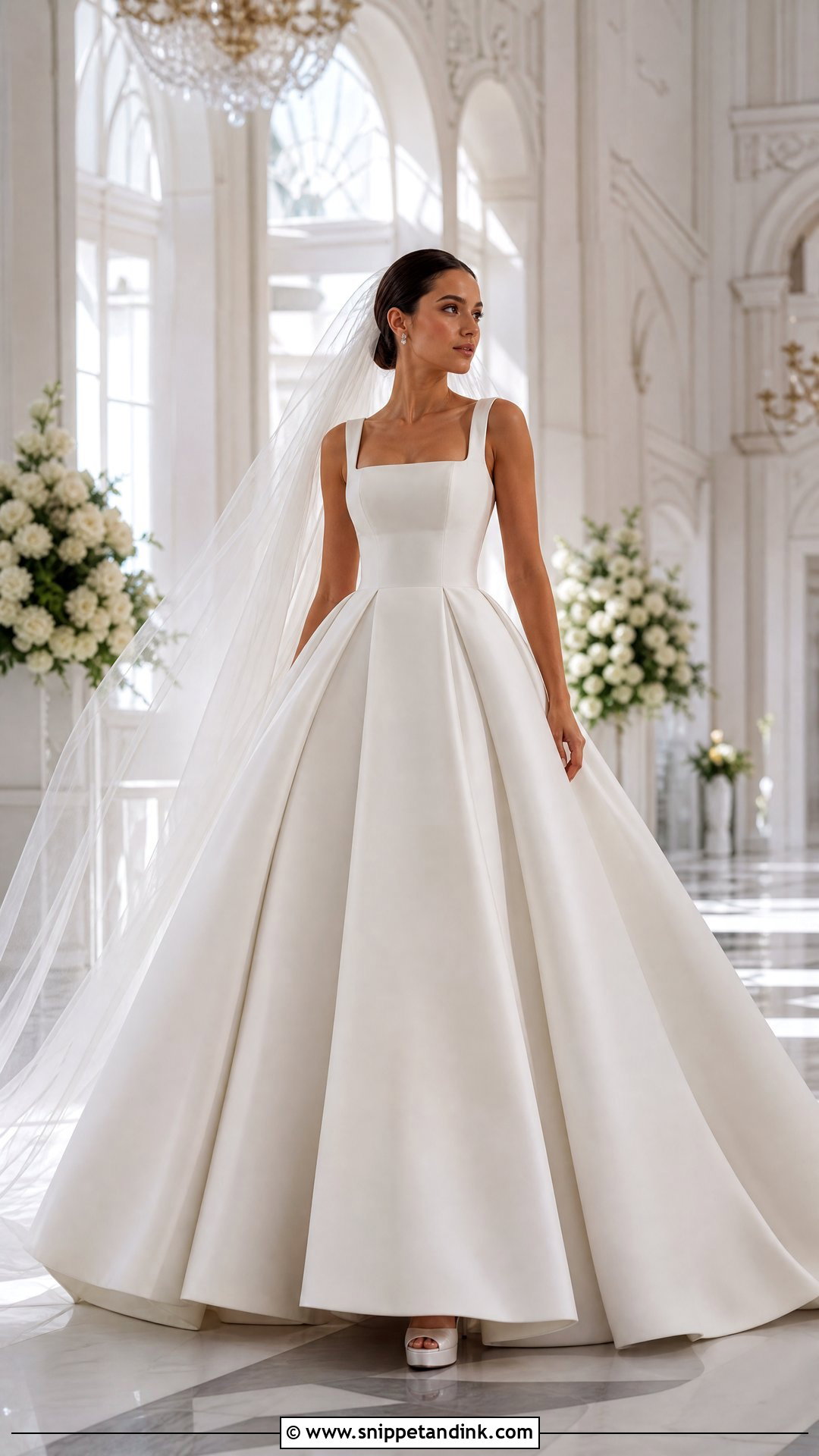
Mikado is stiff enough to hold pleats and a long train on its own, which is why it carries a ball gown so well. The fitted bodice with wide straps and a square neck gives the eye a narrow point before all that volume. Be aware of the weight: a full Mikado skirt is heavy, and the straps and waist stay need to take it, so I ask for a waist tape inside if the gown does not already have one. Crystal studs, a sleek updo, satin platforms and a cathedral veil suit a grand hall or an evening hotel reception. Keep the bouquet compact and white.
4. Crepe Fit-And-Flare Thick Strap Wedding Dress
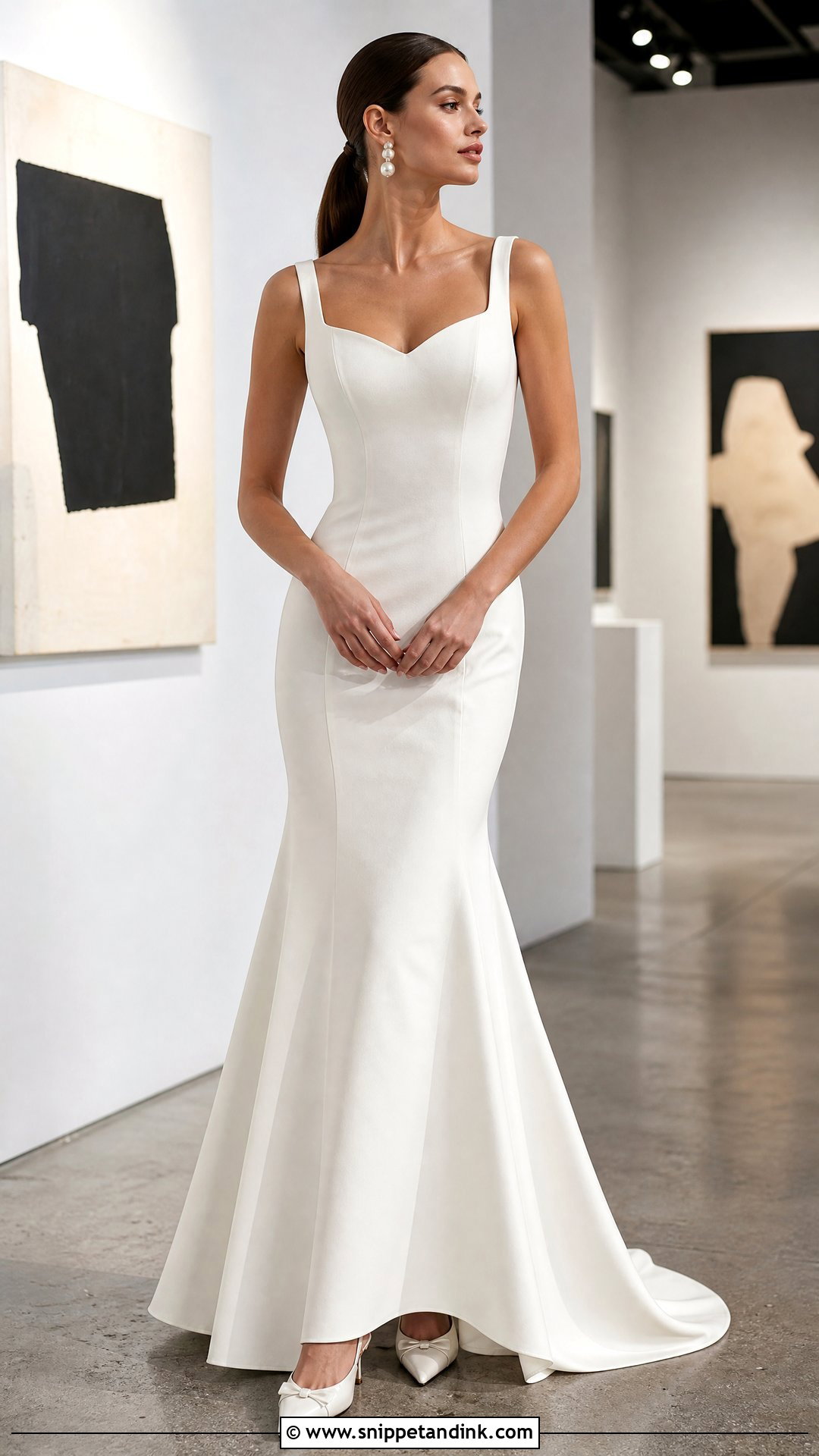
Crepe shows everything, which is exactly why it looks so refined when the fit is right. Princess seams, a gently curved neckline and a flare that starts around the lower thigh give you shape without embellishment. I always have brides sit down in a crepe fit-and-flare at the first fitting, because if the fabric pulls across the hips when seated it will crease into lines that show in every reception photo. Sculptural pearl earrings, pointed slingbacks and a small structured clutch go with it, plus a detachable veil swapped for a pearl comb later. Galleries and rooftops are its natural home.
5. V-Neck Thick Strap Wedding Dress
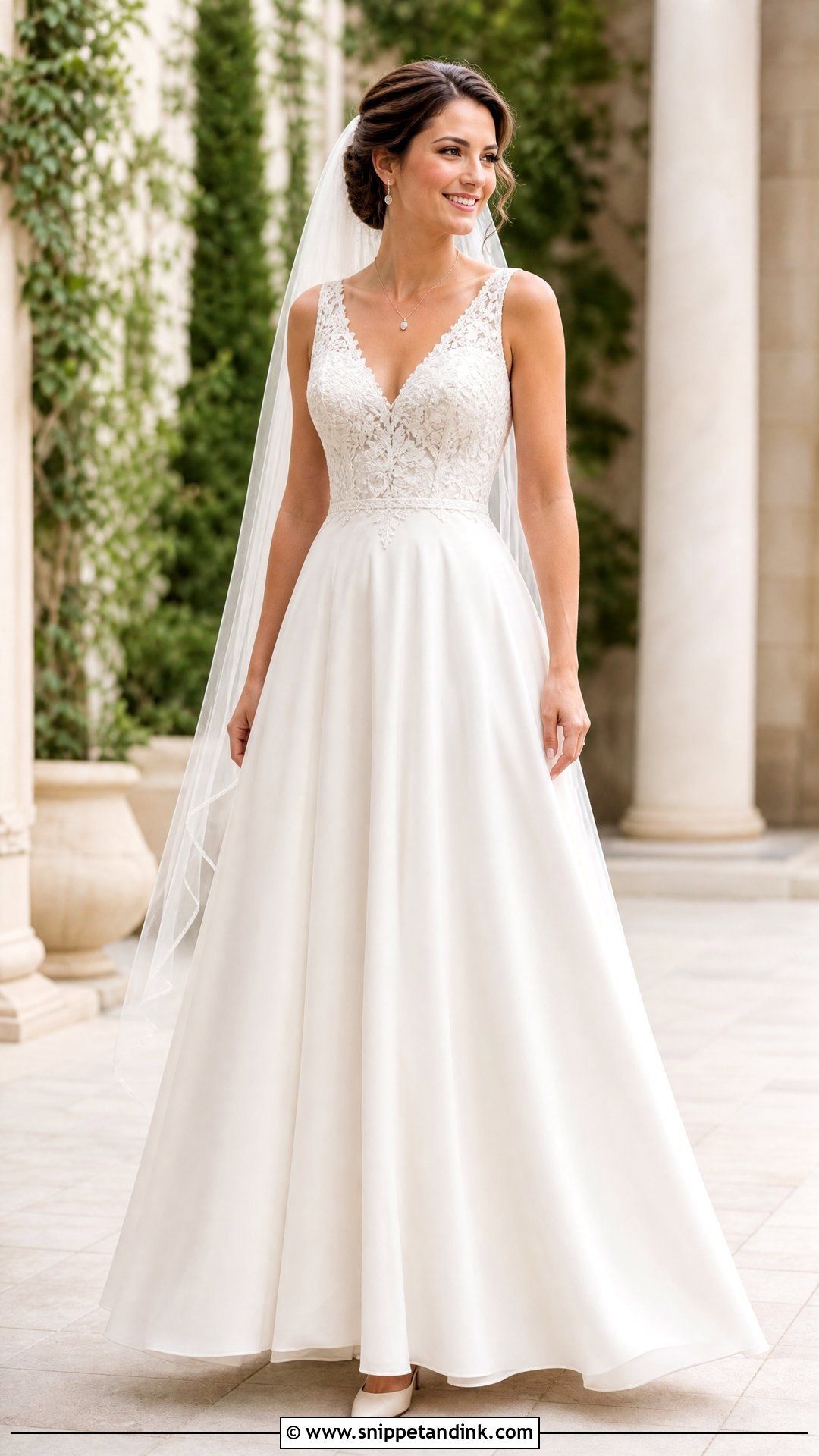
A V-neck points the eye downward, so wide straps on either side read as a long line rather than a heavy one. Keep the V moderate instead of an extremely deep plunge; with a deep cut, straps tend to drift outward and the neckline gapes when you lean forward. Lace, crepe or satin all work. I like a fine pendant that ends above the point of the V, small earrings and closed pumps. A waist-length veil keeps the neckline in view, and a sheer illusion insert is easy to add if you want more coverage.
6. Scoop Neck Thick Strap Wedding Dress
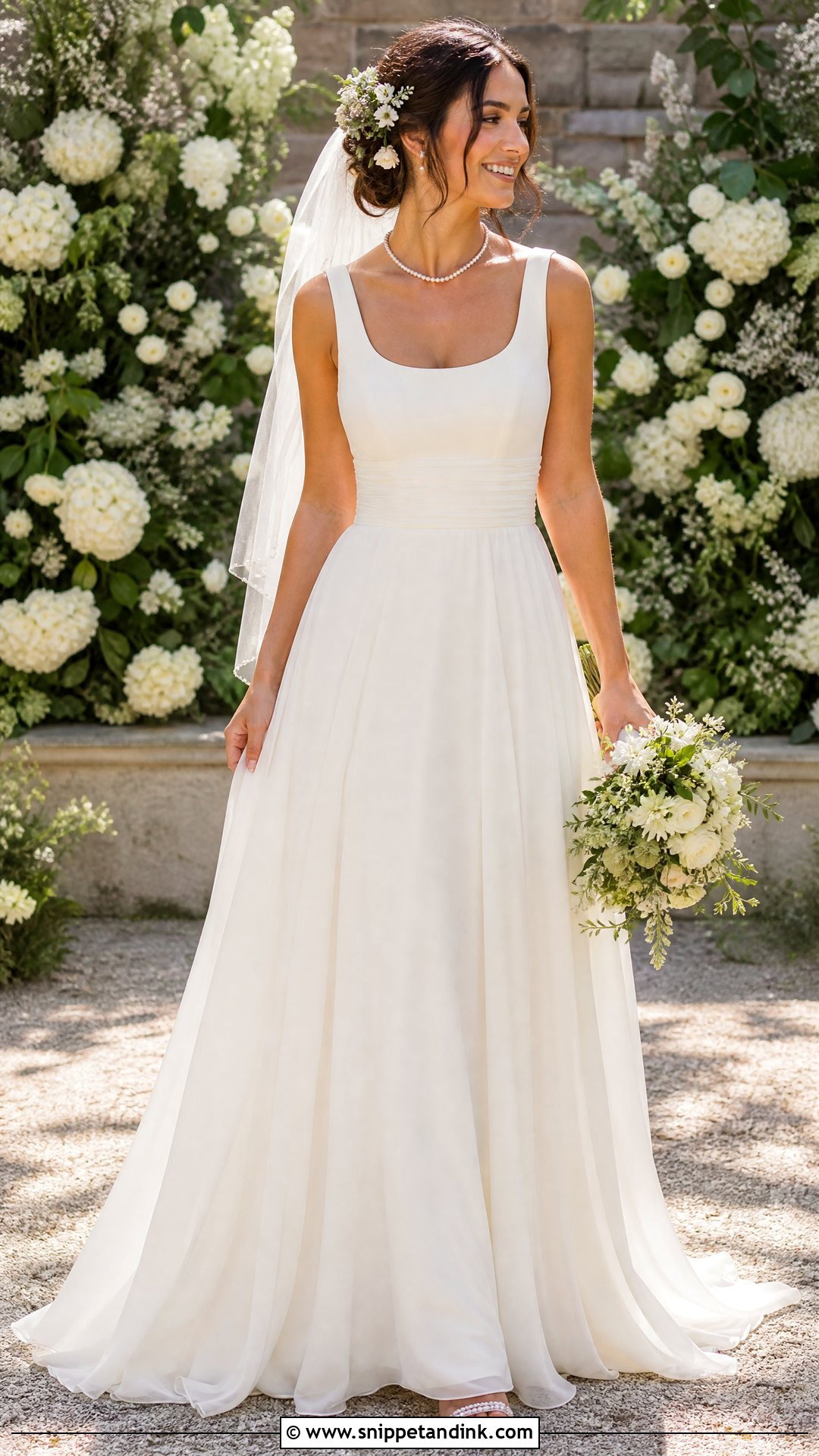
Rounder than a square neck, the scoop softens the shoulder line and suits brides who find straight edges severe. Thick rounded straps, a fitted waist and a flowing satin or chiffon A-line make the base. Because the curve leaves a clean space at the base of the throat, it is one of the few necklines here where I actually reach for a short pearl necklace. Add pearl-accented shoes, a small floral hairpiece and a fingertip veil. With a plain gown I would bring texture through the bouquet, mixing several white flowers. It sits well at daytime garden ceremonies and smaller venues.
7. Sweetheart Thick Strap Wedding Dress
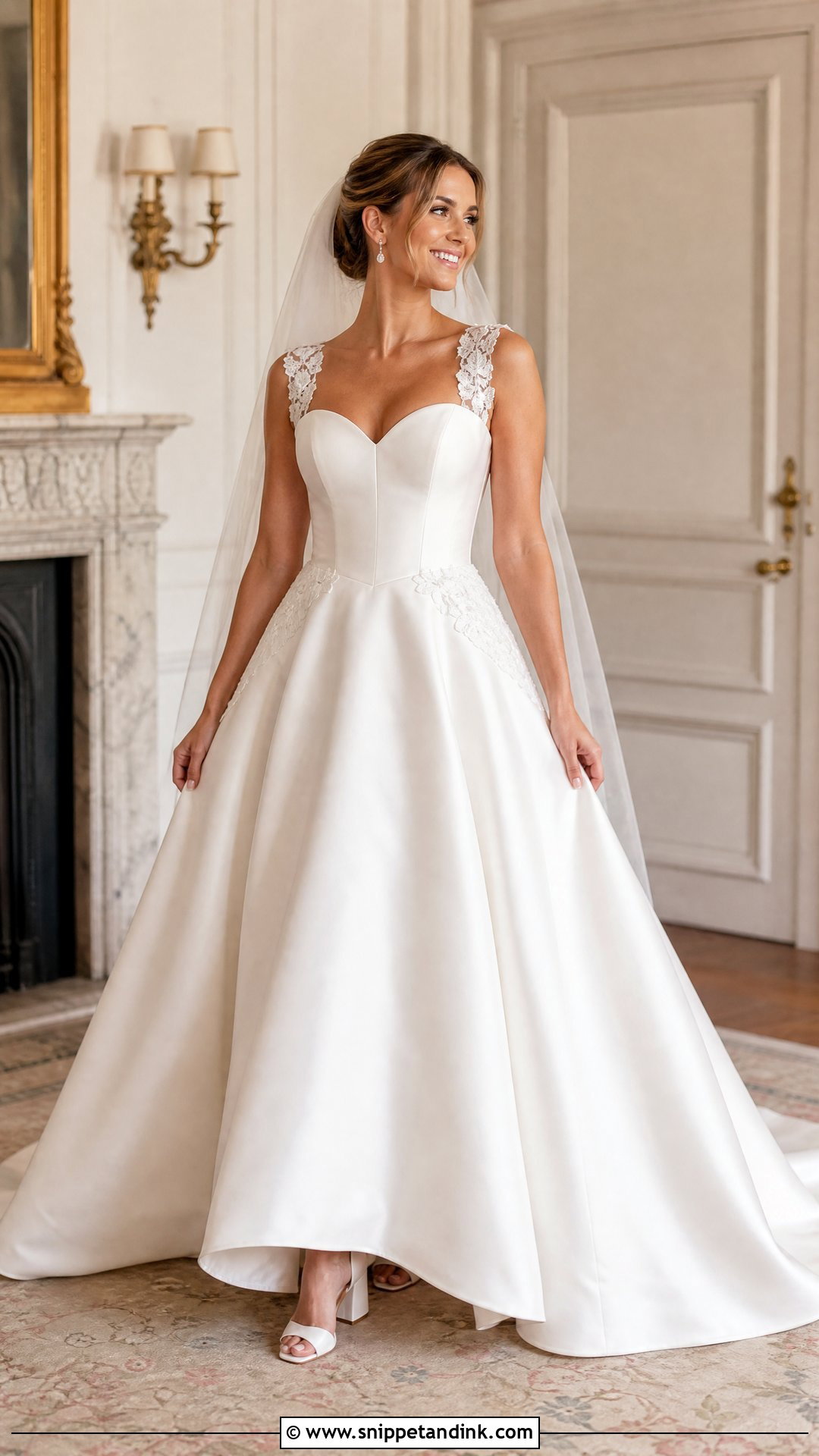
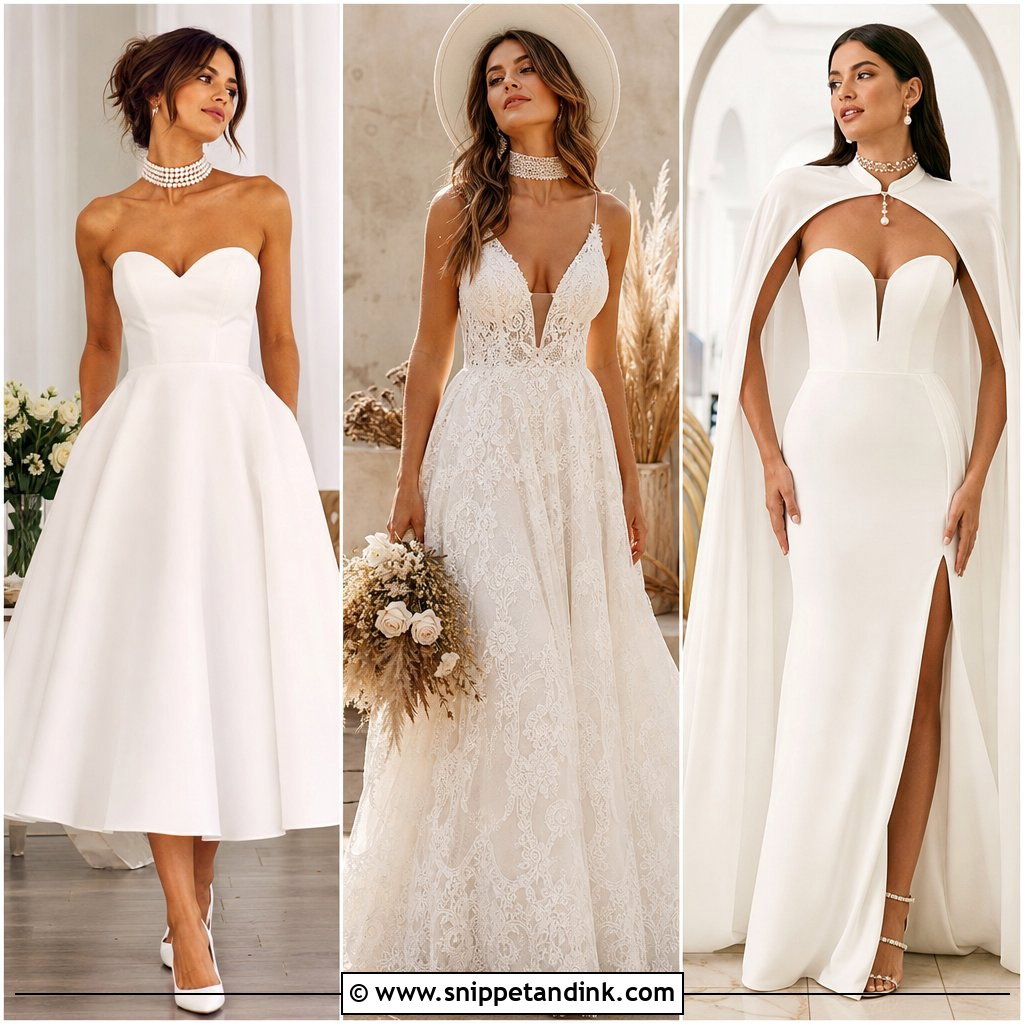
Sweetheart necklines don’t have to be strapless. Lifting wide straps from the curved bodice gives you the romance of the shape with far less hitching up through the evening. The structure matters here: the sweetheart point should be boned so it doesn’t fold inward when you sit. Satin with lace laid along the straps is a good option if you want texture. Teardrop earrings, swept-back hair and block heels keep the focus on the bodice, and a veil set beneath the hair leaves the straps clear from the front. It is a sensible pick for a long ceremony followed by an active reception.
8. Basque Waist Thick Strap Wedding Dress
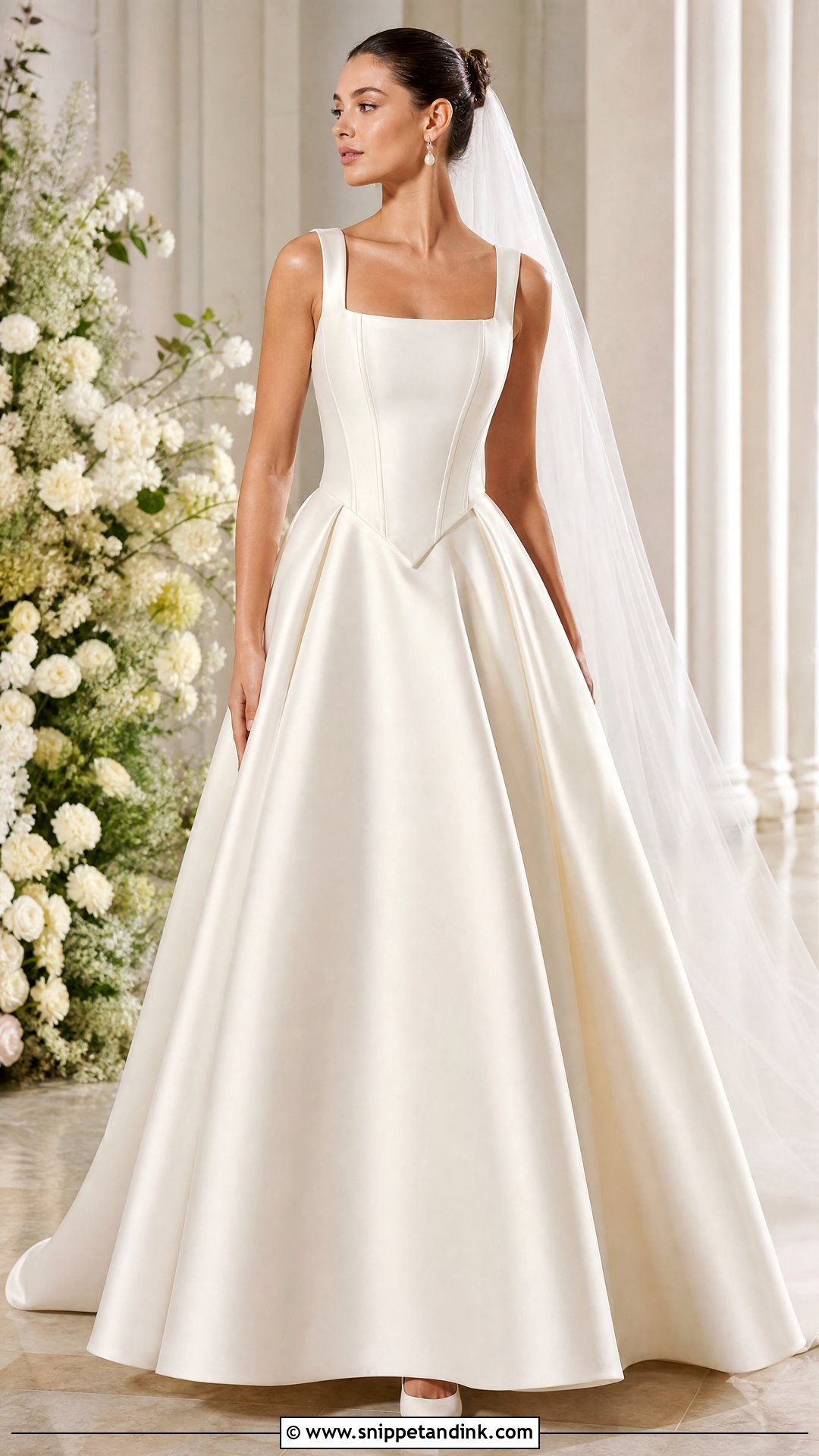
The point of a basque waist only reads clearly on fabric with some body, so I steer brides to smooth satin or Mikado here rather than soft chiffon. A square or shallow scoop neckline keeps the top simple while the waist does the talking. Never add a belt; it cuts straight across the V and you lose the whole idea. Drop pearls, a polished bun, almond-toe pumps and a long plain veil complete it. Watch the length of the point at your fitting, since if it sits too low it digs in when you sit.
9. Corset Thick Strap Wedding Dress
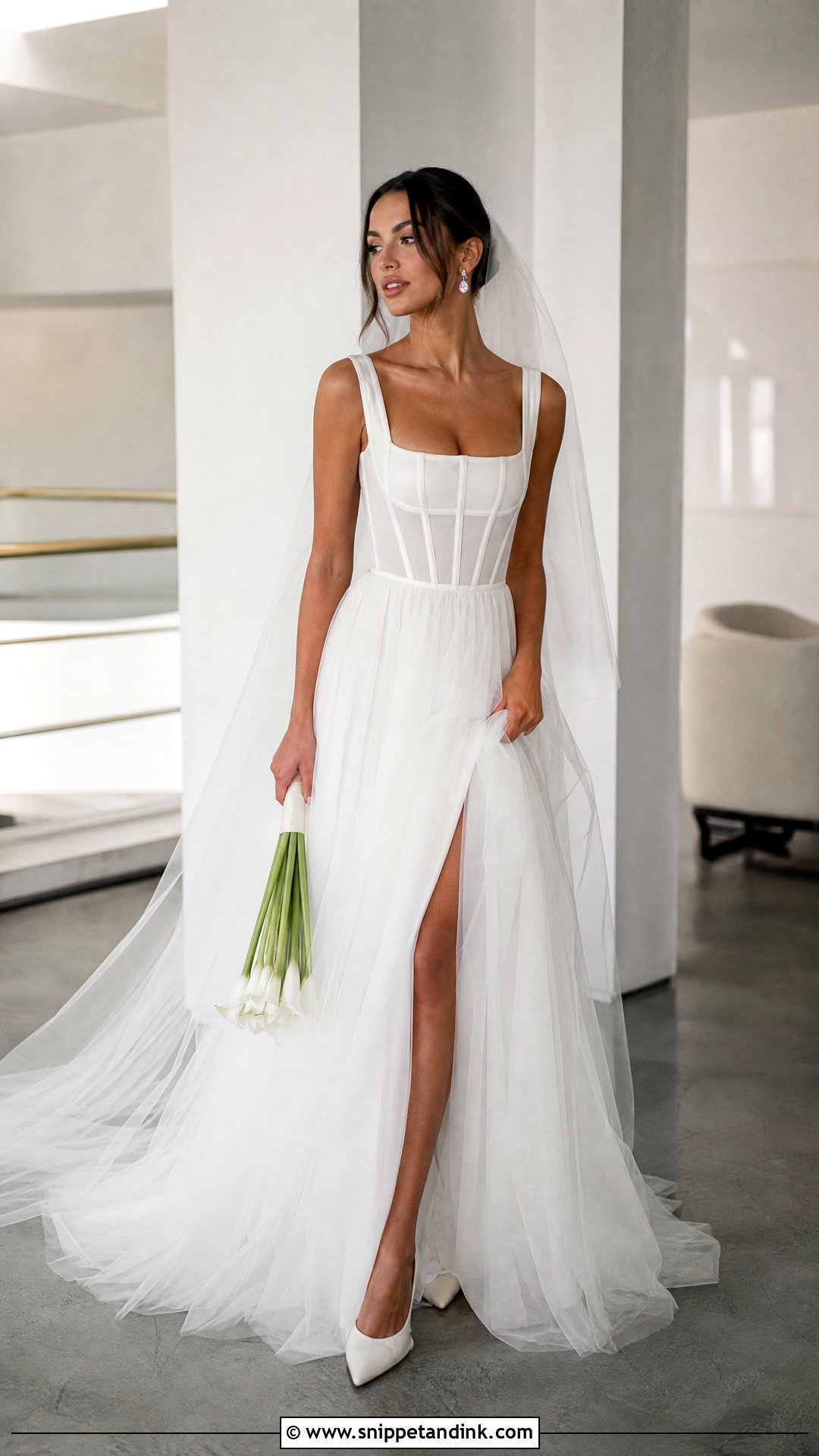
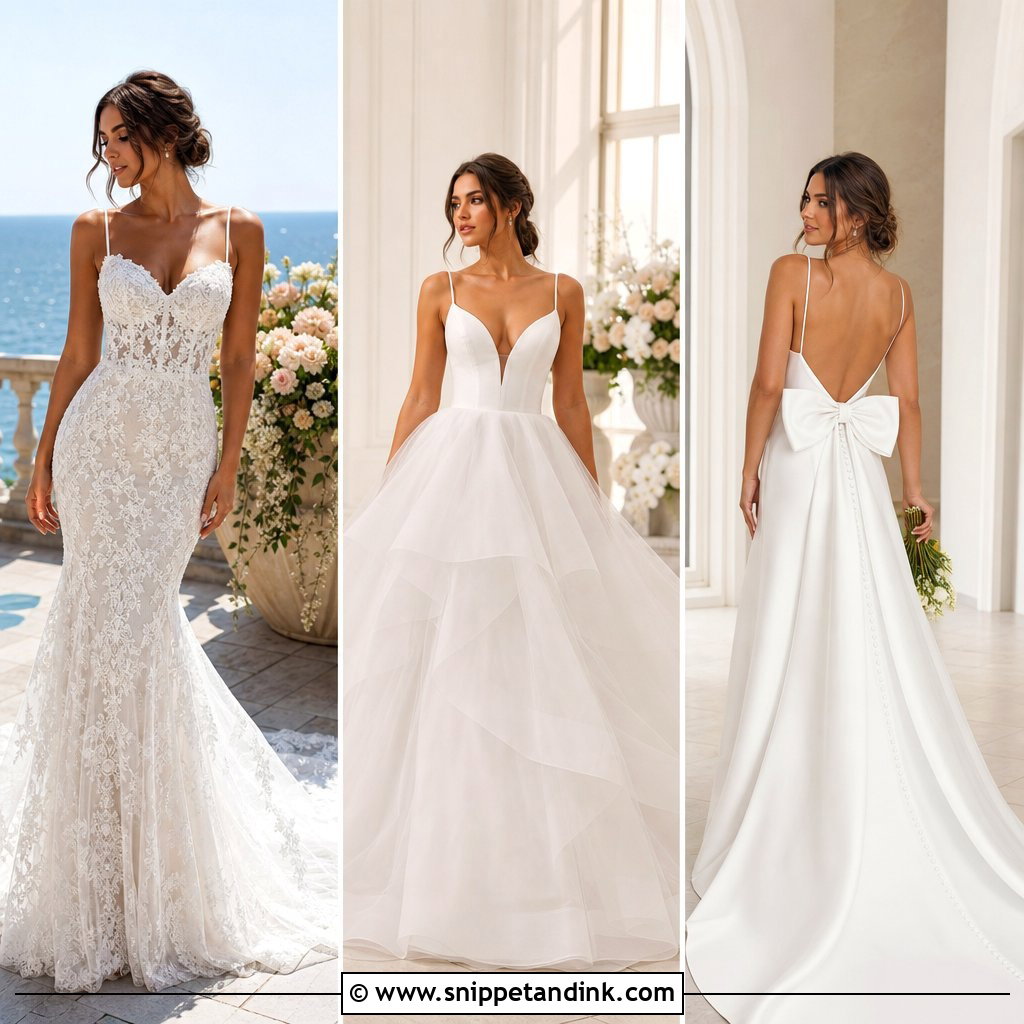
Visible boning is a fashion detail now, but it still has to do its structural job. On this gown the boned bodice, square neck and wide straps hold everything, and a soft tulle A-line keeps the lower half light. A lined corset gives more coverage; sheer panels look lighter but show every seam allowance, so they need clean finishing inside. I pair it with crystal earrings, a smooth updo, pointed satin heels and a raw-edge veil that won’t fight the seam lines. A slim bouquet with long stems repeats the vertical boning.
10. Satin Slit Thick Strap Wedding Dress
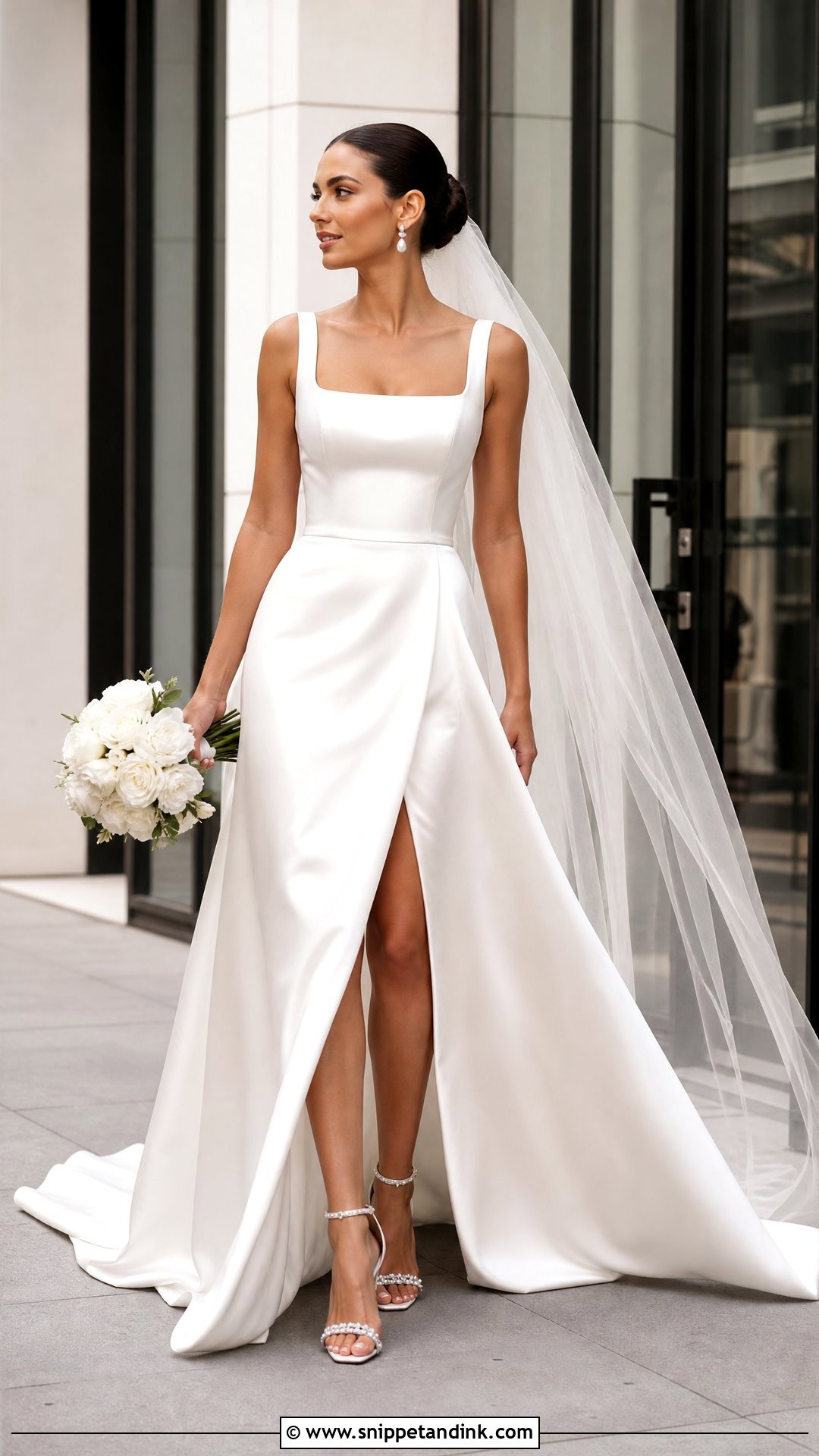
Placement is everything with a slit. I like it just off centre on the leading leg so it opens as you walk and closes when you stand still. On a square-neck satin A-line with wide straps, the slit is the only flash of skin, so the shoes become part of the outfit: embellished ankle straps, with pearl earrings and a sleek bun. At alterations I ask brides to climb a step and sit on a low chair, because a slit that looks modest in the mirror can open high once you sit. A long veil for the ceremony and a small bouquet keep the bodice visible.
11. Low Back Thick Strap Wedding Dress
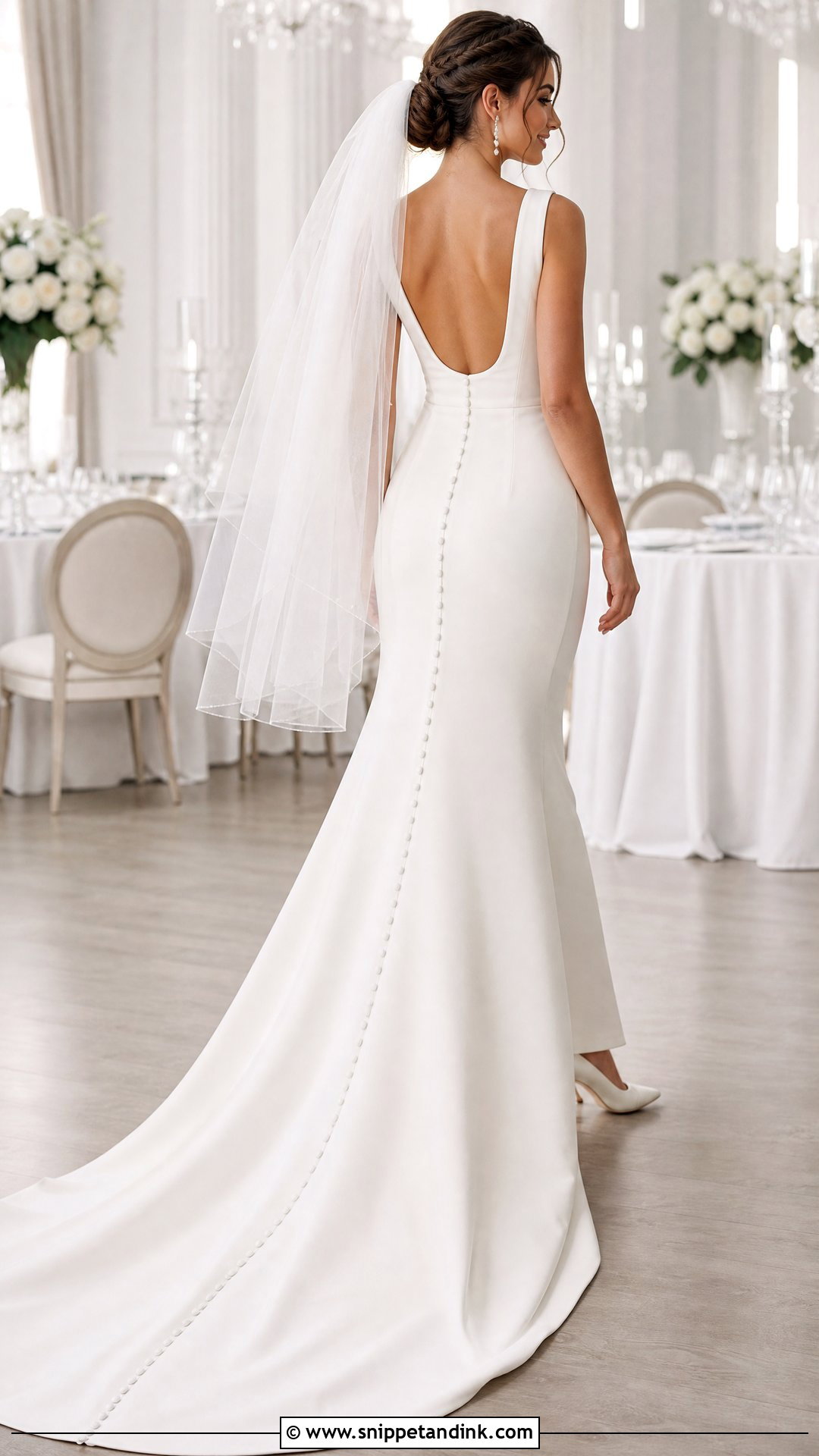
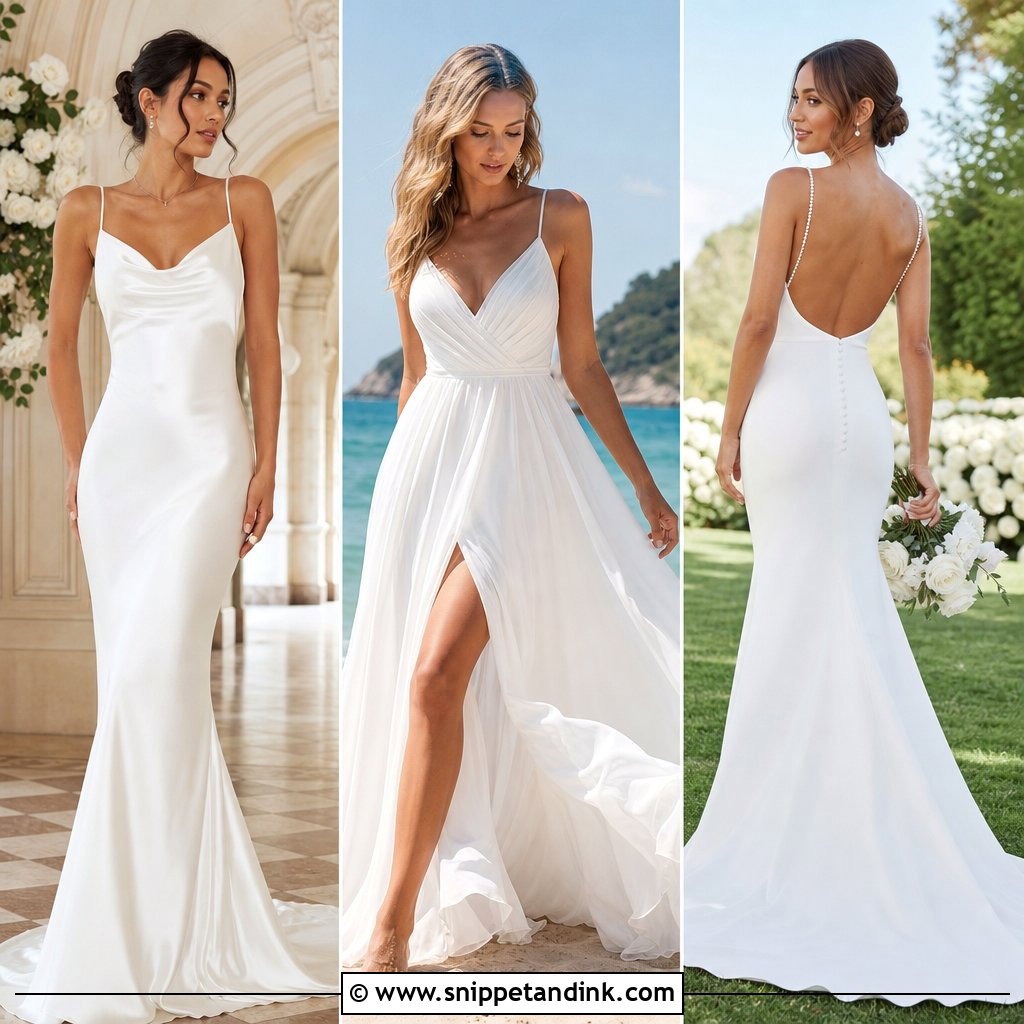
An open back is where wide straps earn their keep. They anchor the front, so the back can drop low without the bodice sliding forward. The fit check I insist on is a hug: reach both arms around someone, and if the back edge lifts away from your skin, it needs taking in along the side seams. Satin or crepe, a square neck and covered buttons running down to the skirt look tidy. Wear your hair up or swept to one side, choose small drops and pointed pumps, and set a sheer veil above the hair so the back reappears once it comes off.
12. Bow Back Thick Strap Wedding Dress
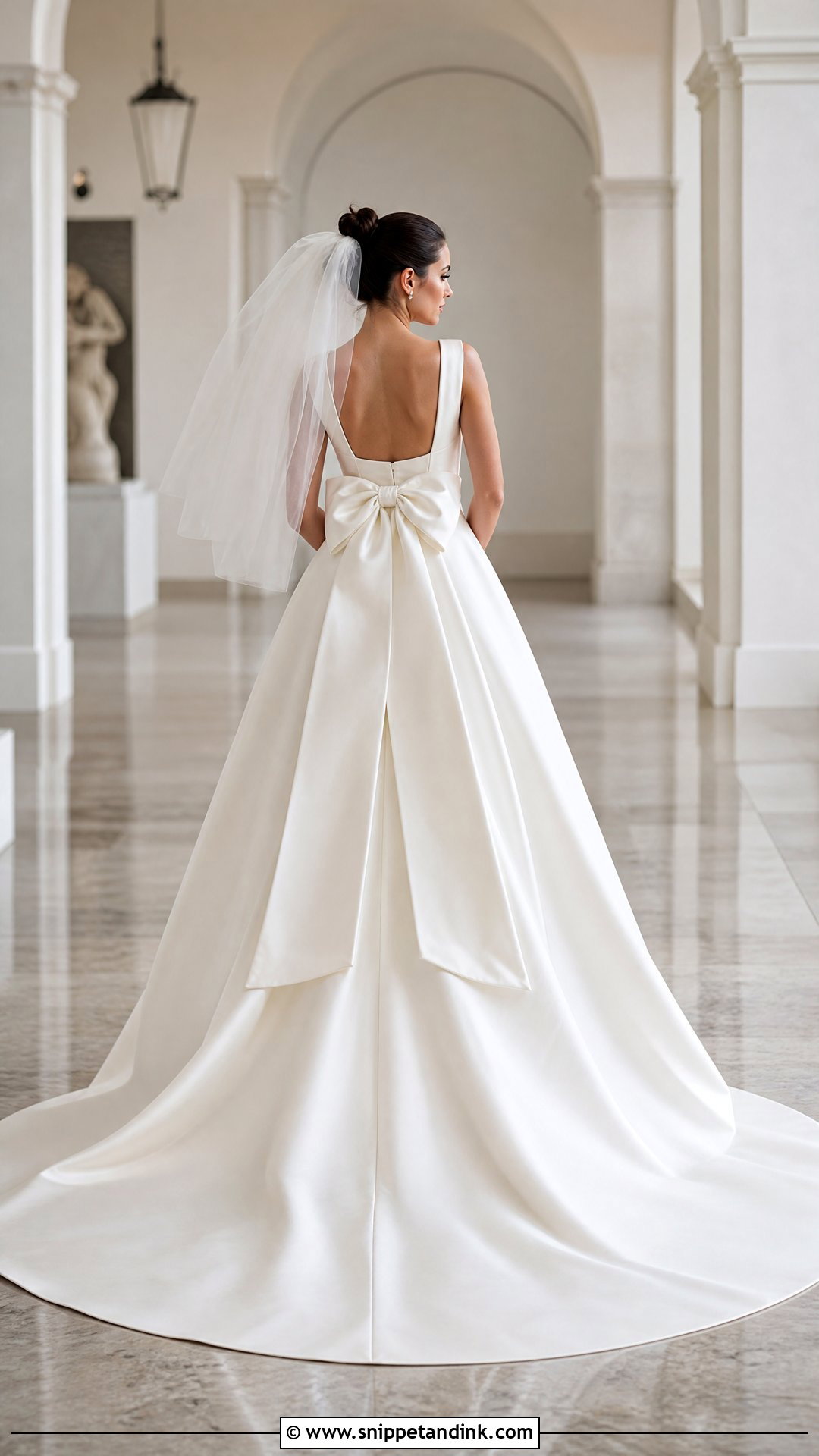
One big bow at the lower back carries this whole gown. Look for a square-neck, fitted satin bodice and a full A-line skirt, ideally with a detachable bow, because long tails get stepped on once the dancing starts. A bow in satin will crush if you sit back against it for a long dinner, so I tell brides to perch slightly forward or have the bow removable before the meal. Pearl studs, a smooth low bun and plain ivory pumps keep it calm. The veil should end just past the train.
13. Pearl Beaded Thick Strap Wedding Dress
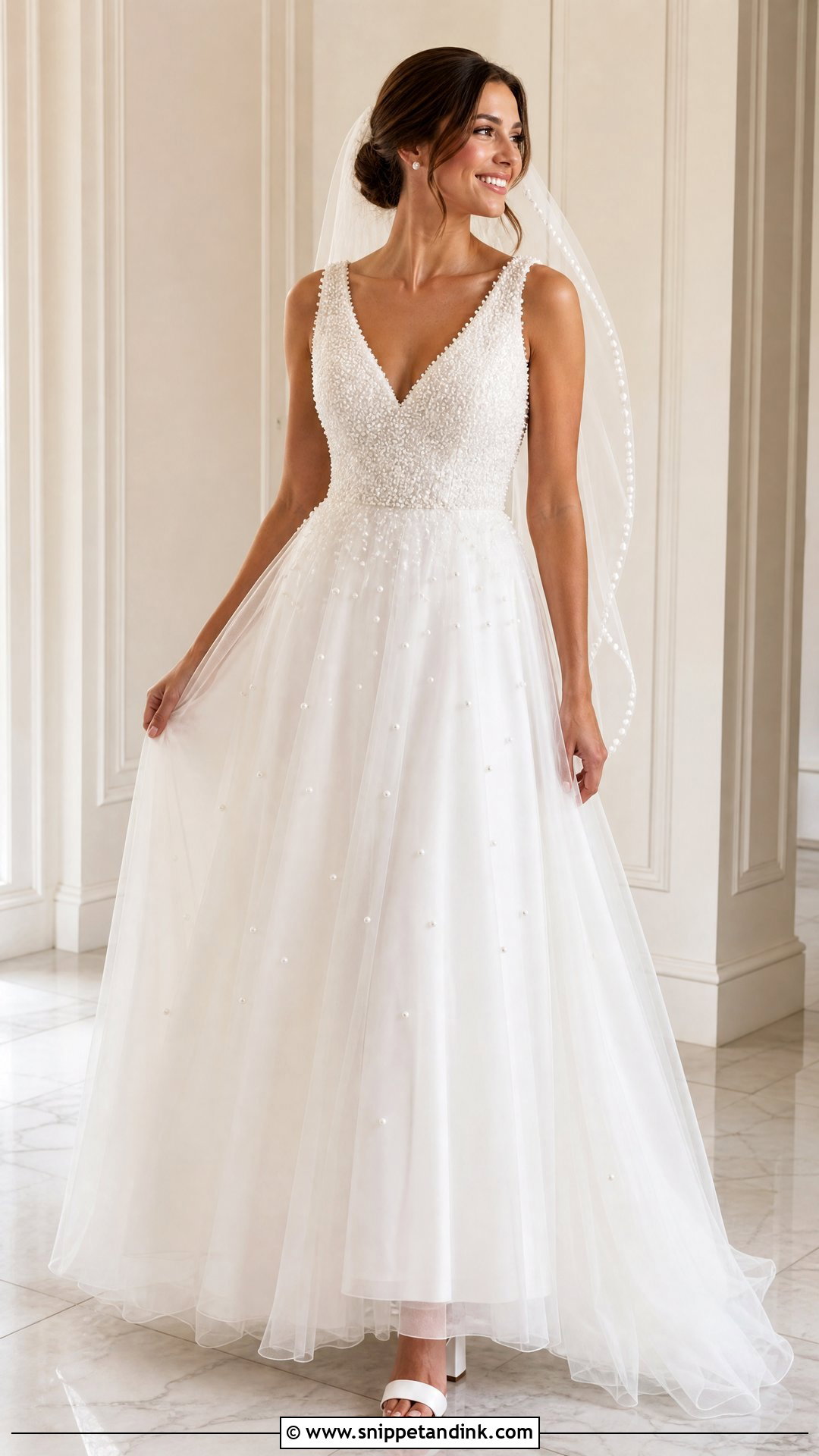
Pearls stitched along a wide strap catch light right next to the face, which is why this one glows in close-ups. The beading should thin out gradually from the straps and bodice into tulle or organza, never stop at a hard line. Hand-sewn pearls are heavy, though, and a heavily beaded strap can dig in by the evening, so check that the strap is backed with a firm interfacing. Wear only pearl studs, satin block heels and a soft veil with a few matching pearls on the edge. A neat chignon leaves the straps on show.
14. Floral Appliqué Thick Strap Wedding Dress
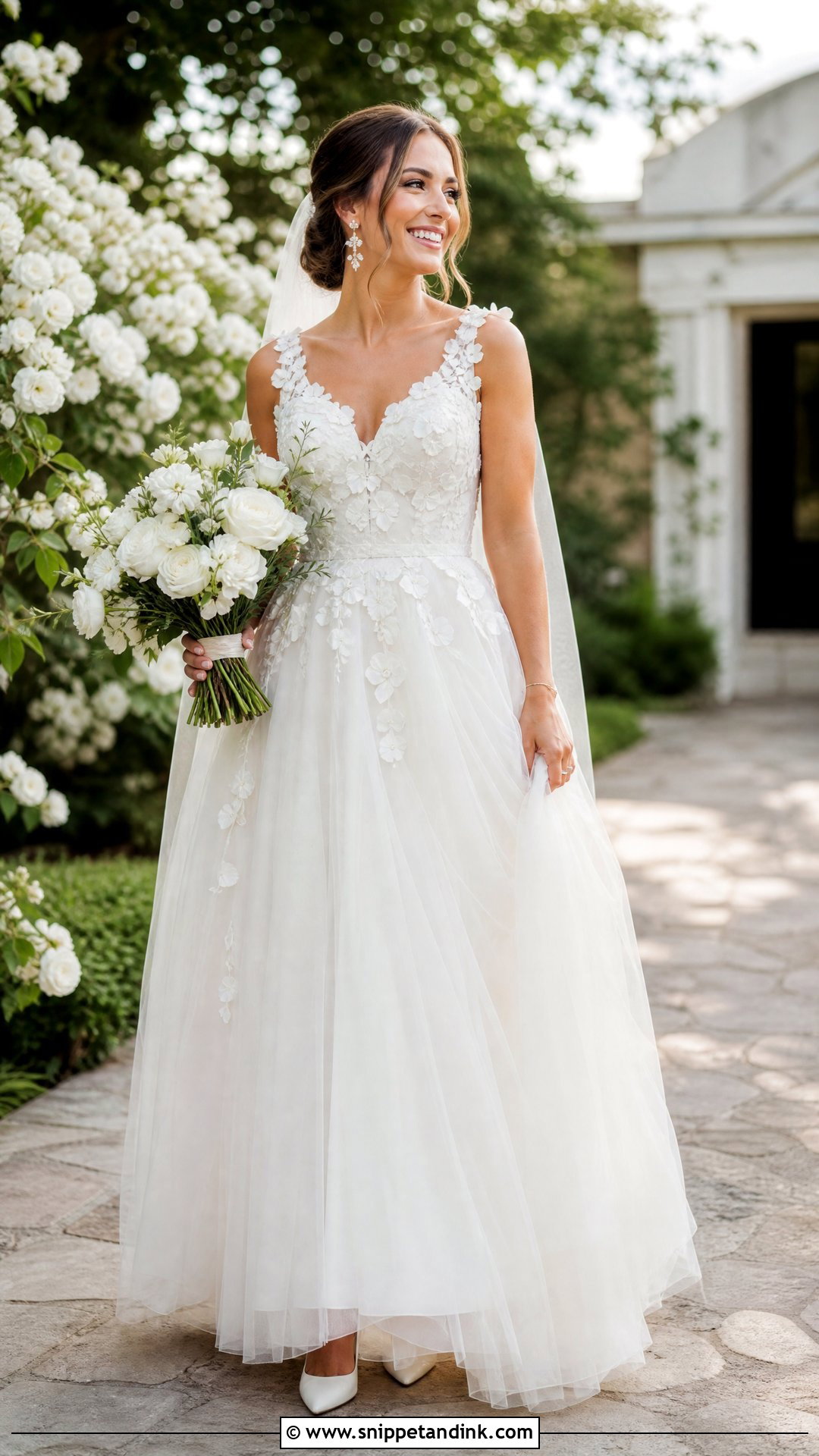
Three-dimensional flowers need a plain background to read, so I look for appliqués set over a layer of clean tulle rather than lace on lace. The flowers here run up the thick straps, across the bodice and scatter lightly onto the skirt. One practical note: raised petals catch on veil netting, so pick a plain veil with a smooth edge. Tiny floral earrings, a loose low bun and ivory heels are enough. A bouquet with similar flower shapes connects to the dress without matching it literally. Spring and summer gardens suit it best.
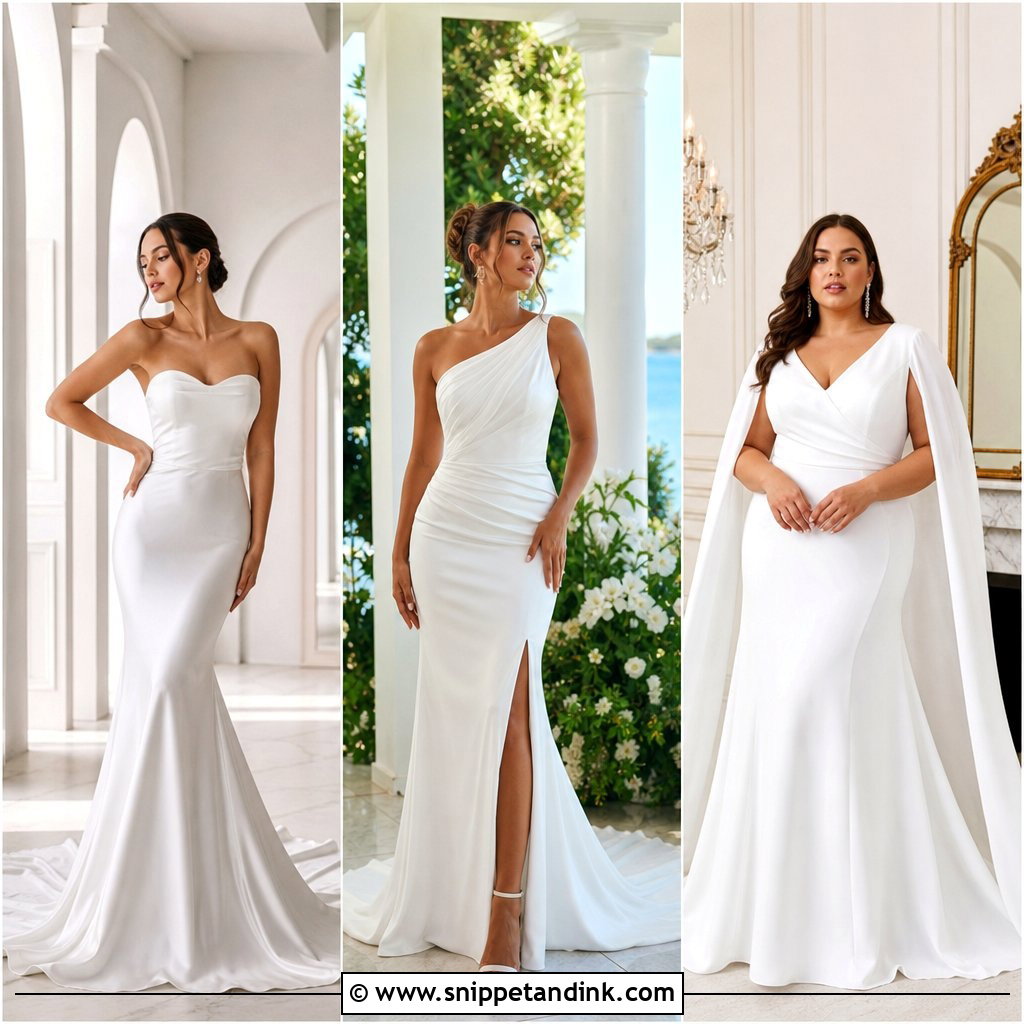
15. Tea-Length Thick Strap Wedding Dress
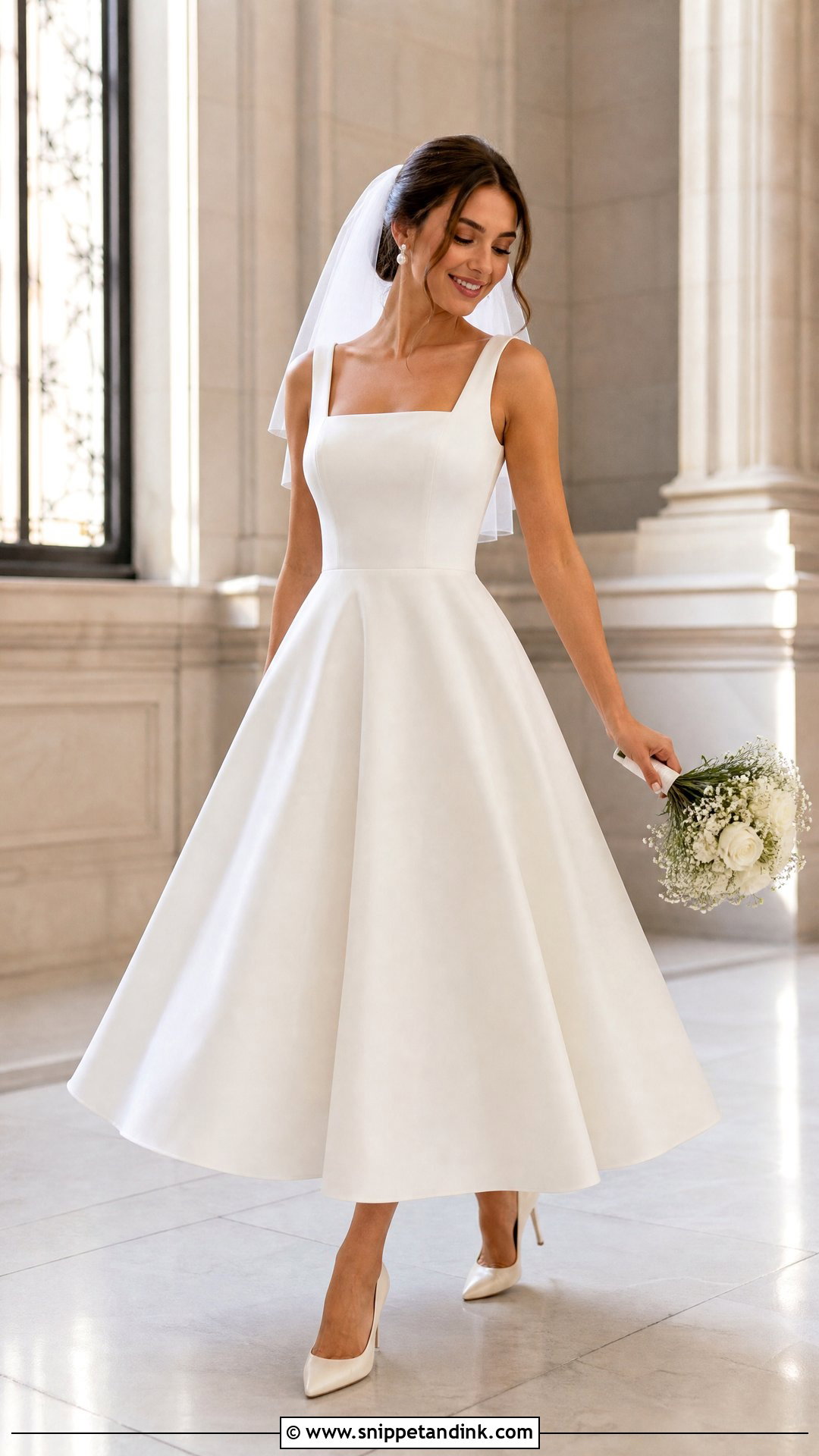
Tea length puts your shoes on full view all day, so I treat them as a main piece rather than an afterthought: pointed pumps, embellished flats or block-heel sandals. The gown has a structured square neck, wide straps, a fitted waist and a hem between knee and ankle. Satin feels polished; lace leans vintage. The hem must be marked in the exact shoes you will wear, because a centimetre changes the proportion on a short skirt. Pearl earrings, a short veil, a small handled bouquet and a waved bob or neat updo finish it. Courthouse ceremonies and daytime parties suit it.
16. Column Thick Strap Wedding Dress
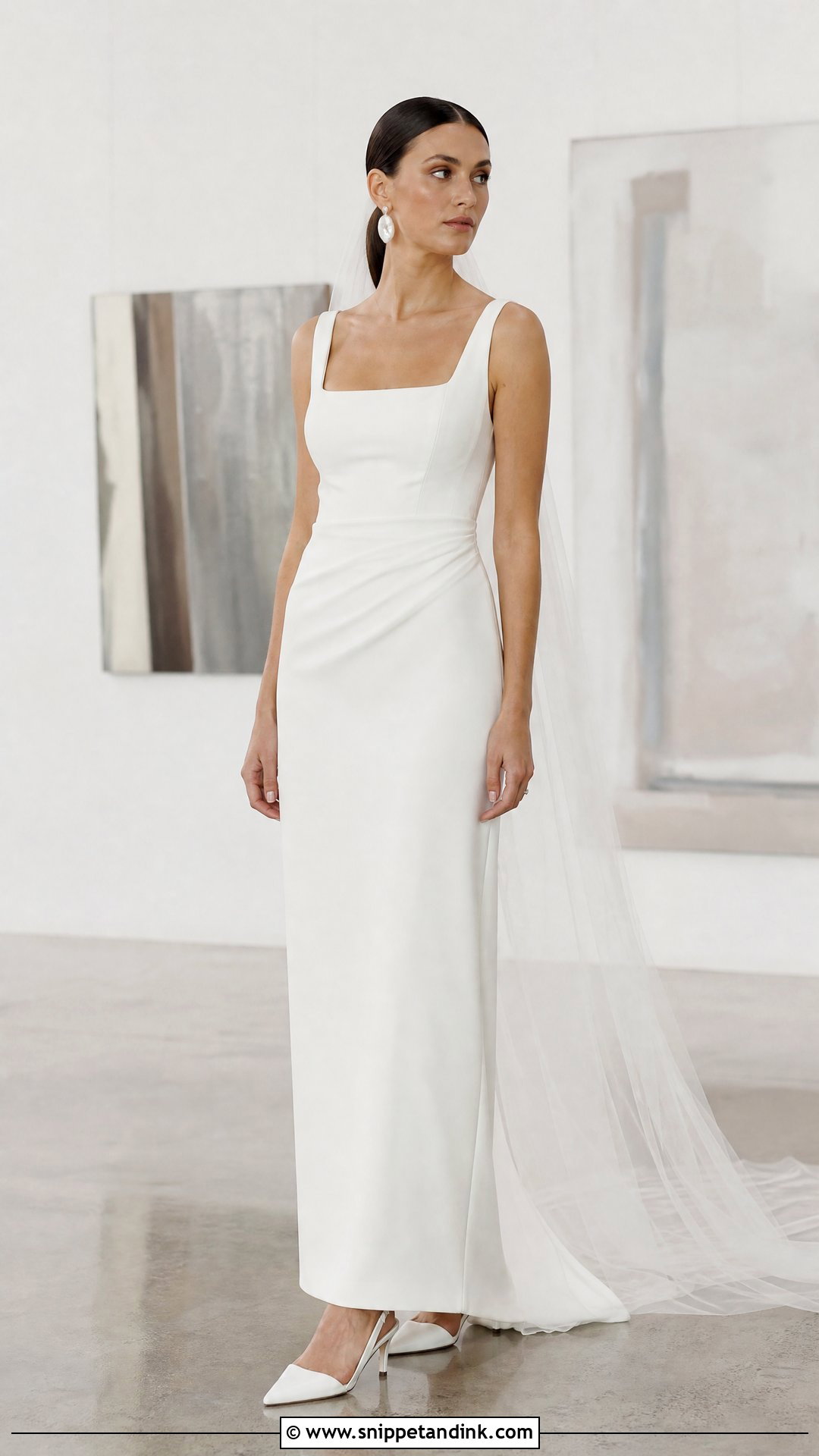
A column has nowhere to hide a poor fit. Substantial straps, a shallow square neckline and fluid crepe falling straight from the waist give one long line, with a back slit so you can actually walk. I spend more time on the hem and side seams of a column than any other shape, since any ripple shows. If you want waist definition, ask for soft draping across it rather than a belt. Pointed slingbacks, sculptural earrings, a sleek low ponytail and a long raw-edge veil suit it; a smaller bouquet keeps the narrow shape visible. Minimalist venues are the obvious fit.
17. Plus Size Thick Strap Wedding Dress
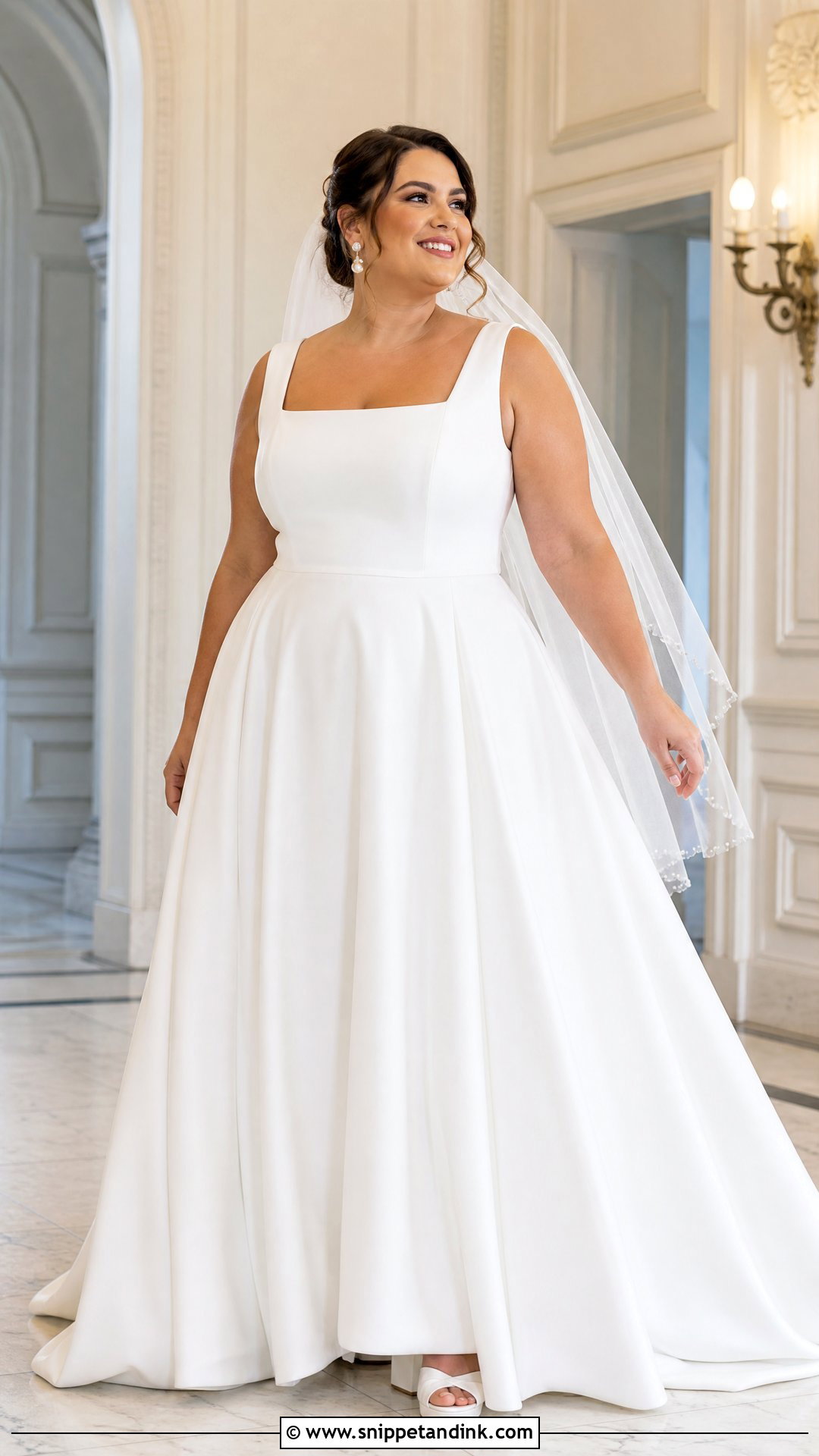
Wide straps are a real advantage for fuller busts, because they spread weight across the shoulder instead of concentrating it on a thin band. A structured A-line with a square or V neck and a waist set where your body naturally bends is a reliable base, in Mikado, satin or lined lace. At the fitting I adjust strap length, armhole height, bust support and skirt balance together, as one change affects the others. Cushioned block heels, statement earrings and a veil anchored into a comfortable updo complete it. There is no body-type rule here, only the gown that supports you and lets you move.
18. High Neck Thick Strap Wedding Dress
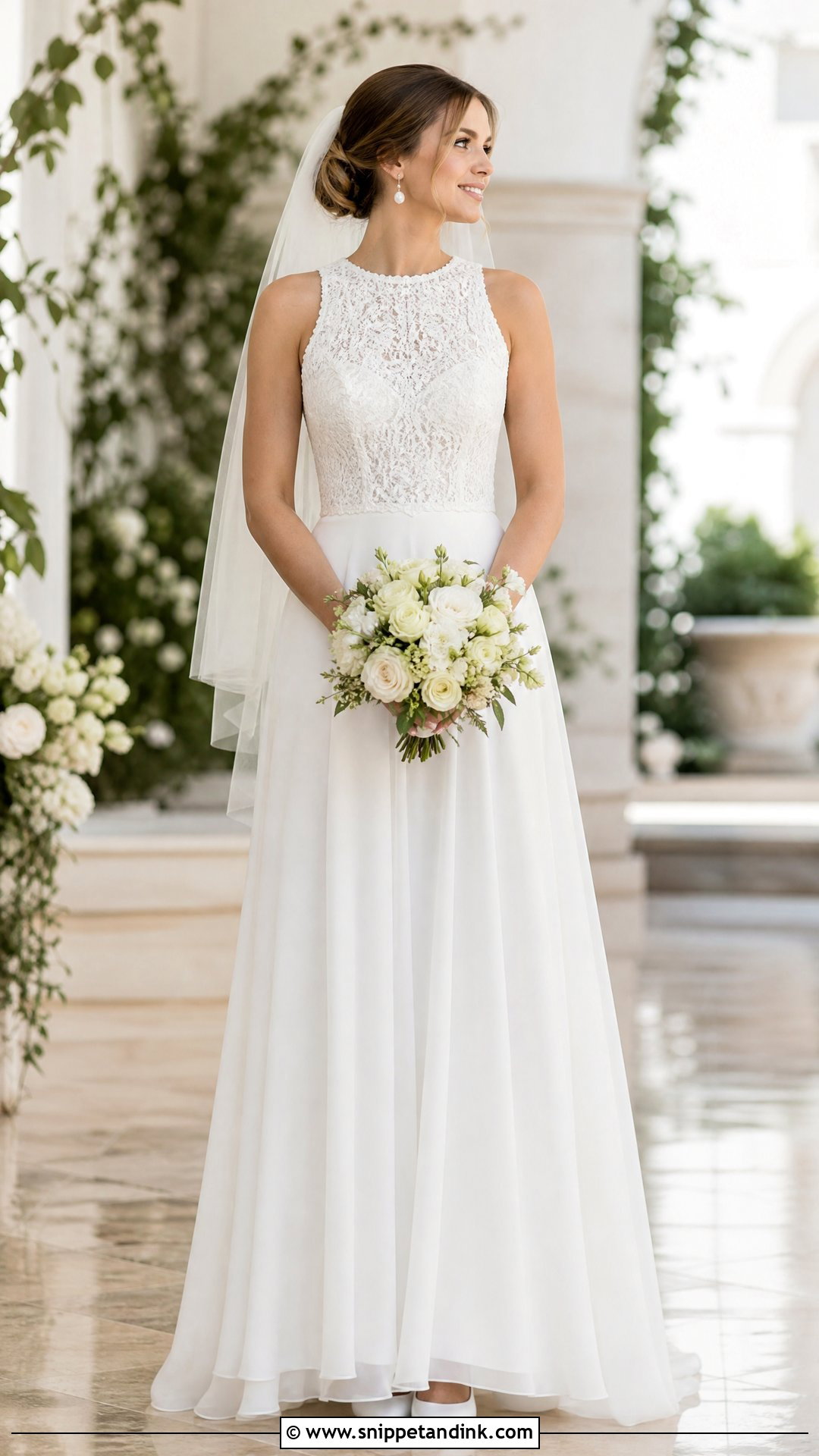
A high neck attached to broad straps gives coverage at the front without sleeves, so your arms stay free. A fitted lace bodice with a soft lining and an A-line chiffon or tulle skirt keeps it light, and a keyhole or low scoop back stops the outfit feeling closed in. High necks need a precise fit at the base of the throat; too tight and you feel it every time you swallow, too loose and it folds. Skip the necklace for pearl drops, and add closed pumps, a low bun and a light veil set under the hair. Formal daytime ceremonies and transitional seasons suit it.
19. Beach Thick Strap Wedding Dress
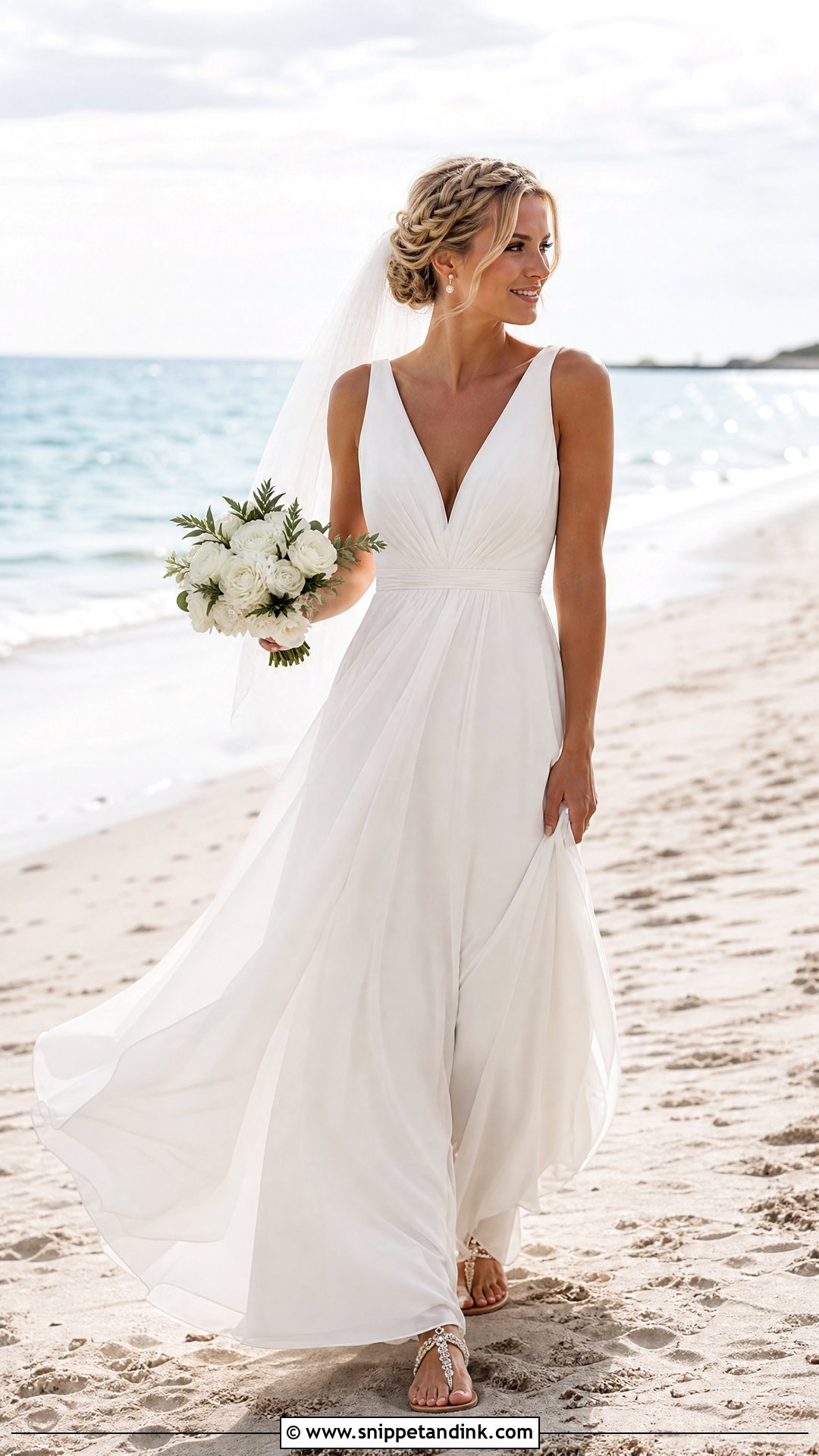
On sand, weight and length matter more than anything. A chiffon A-line with wide straps, a V-neck and a soft waist moves in the wind instead of fighting it, and the straps mean you’re not tugging at the bodice on uneven ground. Keep the train short, because a long one drags wet sand. Flat embellished sandals, pearl studs and a loose braided updo are practical. I’d pick a short or fingertip veil and pin it firmly, since coastal gusts lift a cathedral veil straight up. A bouquet of clean white flowers with little greenery finishes it.
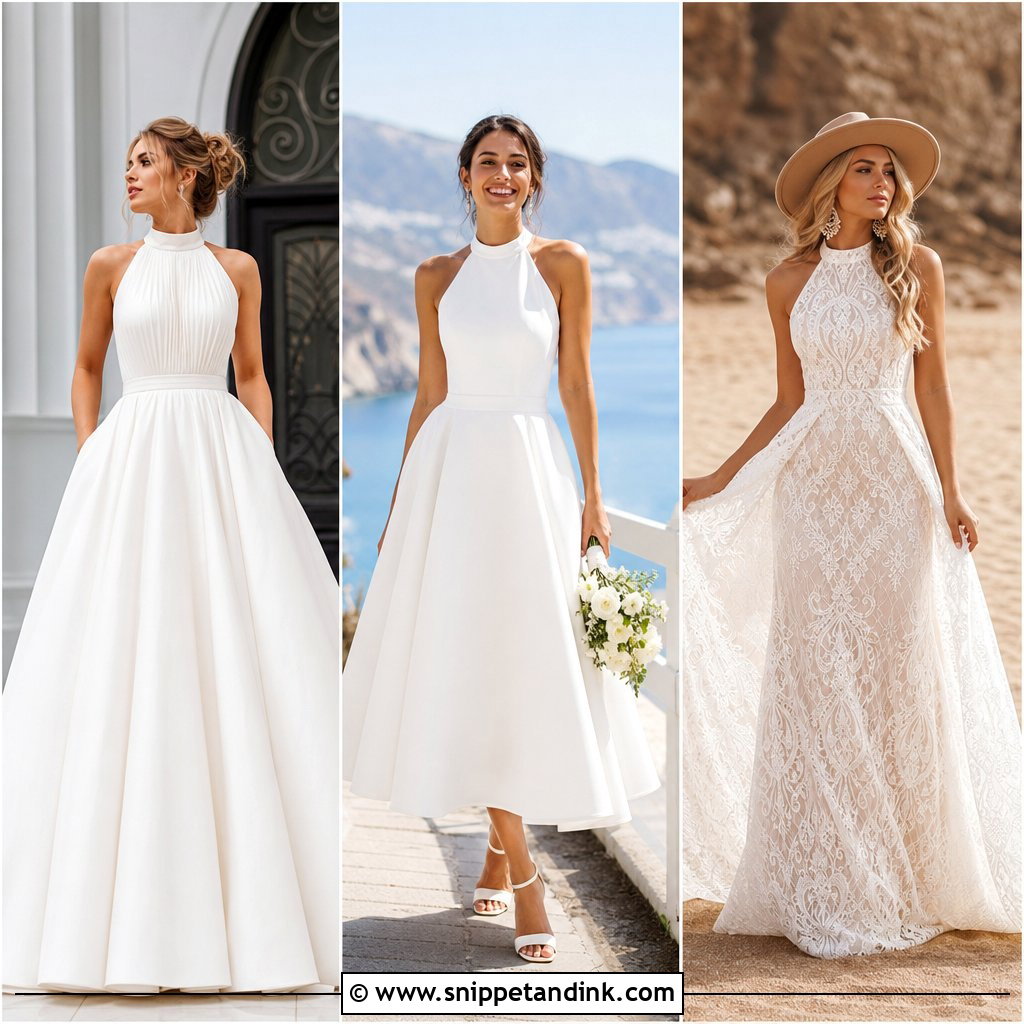

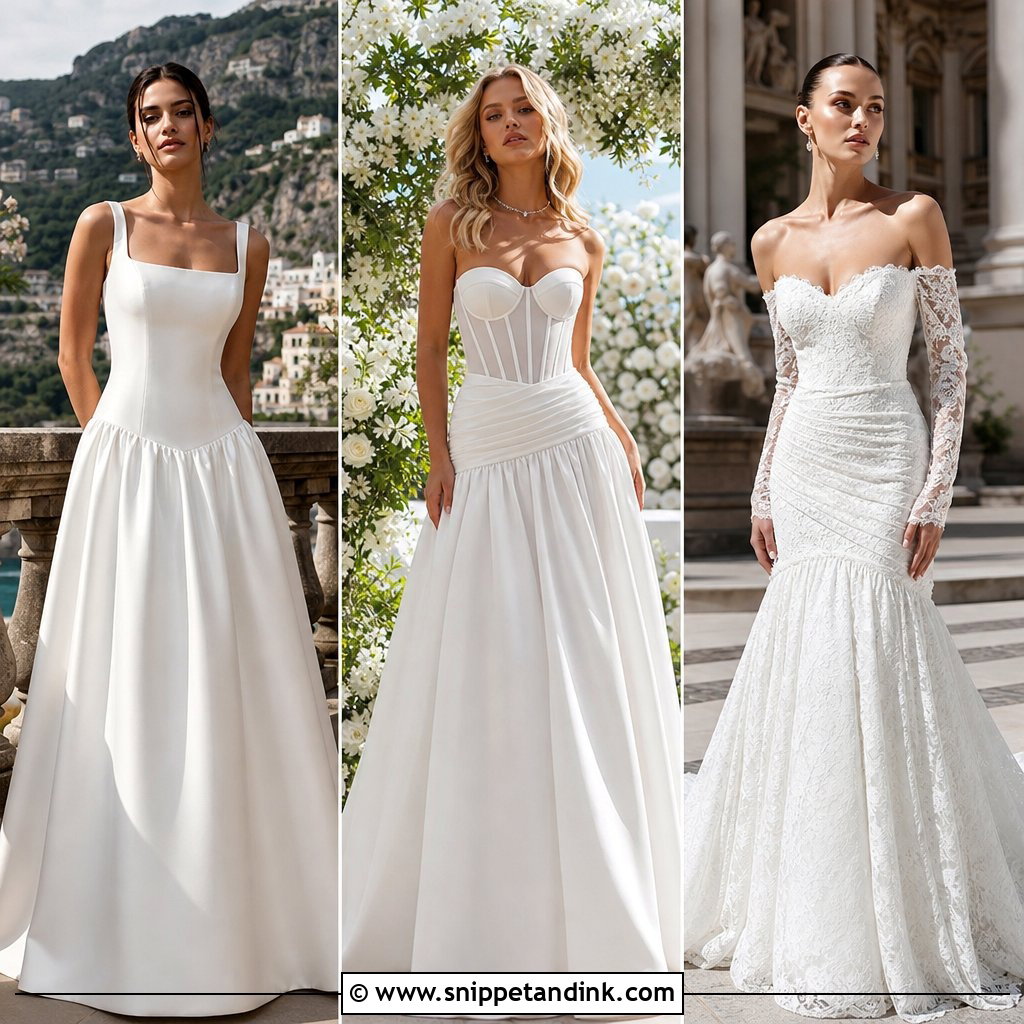
20. Detachable Overskirt Thick Strap Wedding Dress
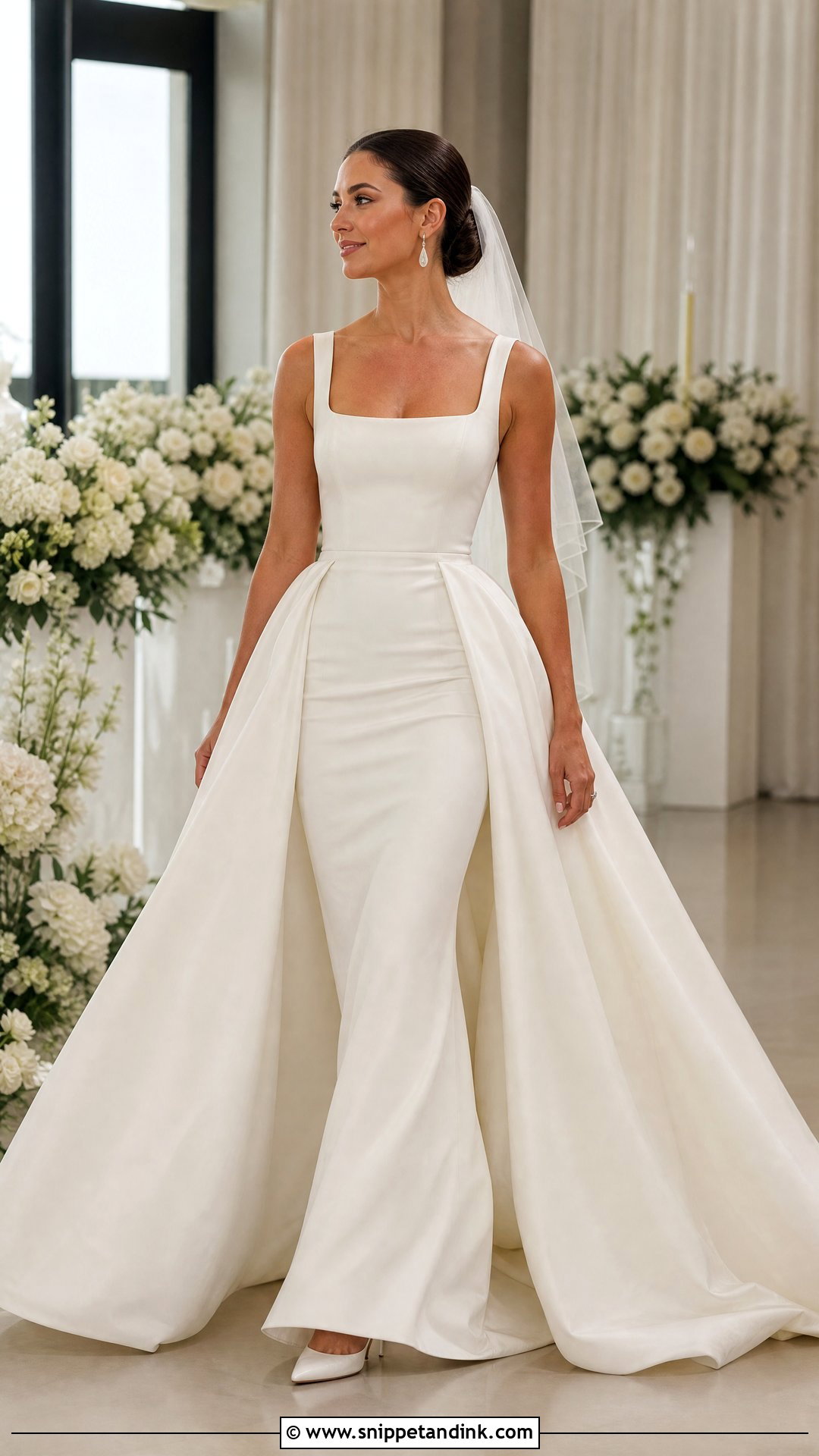
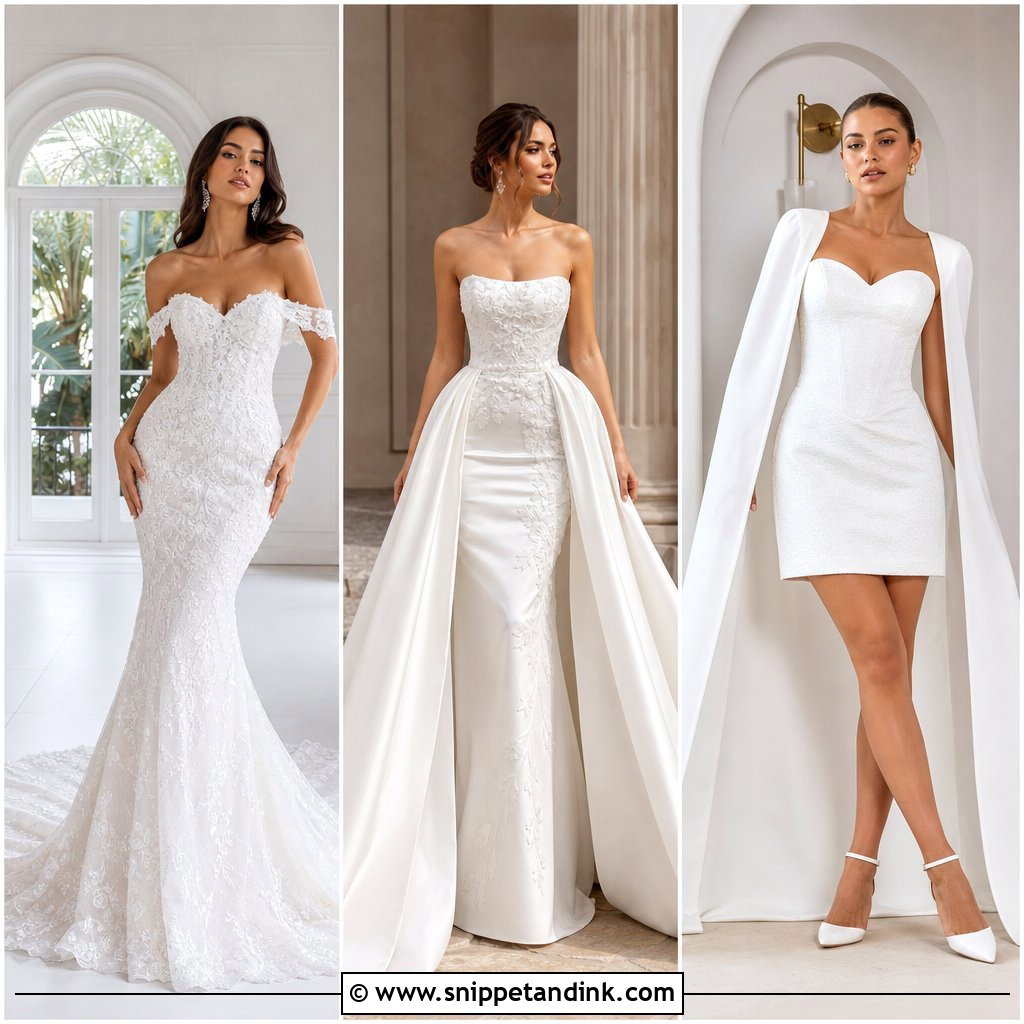
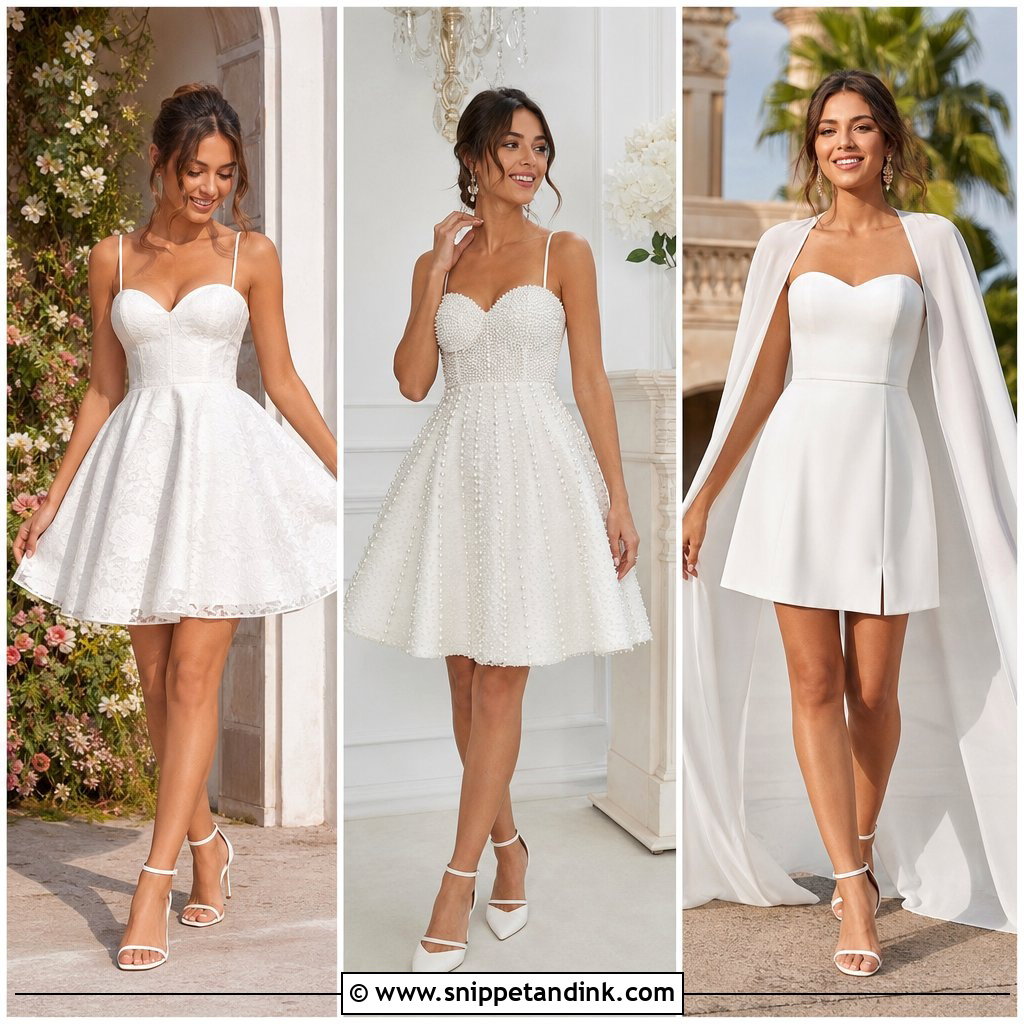
Two looks from one gown. The base is a fitted crepe or satin dress with wide straps, a square neckline and a column or fit-and-flare shape; a full tulle or organza overskirt goes over it for the ceremony and comes off for the reception. The fastening is where these succeed or fail. Ask for hooks or snaps that lie completely flat, and practise removing it with whoever will help you, since it should take under a minute. Drop earrings, pointed heels and a sleek updo work for both versions. Choose a veil that doesn’t hide the overskirt join.
What Thick Straps Change About Hair, Veil and Jewellery
A wide strap fills the space between neck and shoulder that a strapless gown leaves empty, and that changes the accessory decisions more than brides expect.
Hair up, or at least off the straps
Long hair worn down tends to sit on top of a broad strap and hide it, and on satin it creates static. If you love hair down, sweep it to one side so at least one strap stays visible in photos.
Earrings over necklaces
With a square or high neck, a necklace usually fights the neckline. Earrings carry the sparkle instead. A scoop is the exception, where a short strand sits neatly in the open curve.
Veil placement
A veil anchored under the bun keeps the straps clear from the front, while one set on the crown falls over the shoulders and blurs them. Decide which matters more to you before the hair trial, so your stylist can plan the comb position.
How Wide Straps Hold Up After Ten Hours of Wear
Thick straps are kinder over a long day than thin ones, but they have their own quirks. Satin straps can leave a pressure mark on the shoulder by evening if the bodice is relying on them for support it should get from boning, so check that the gown stays up for a moment with the straps lifted off. Lace and beaded straps stretch slightly with body heat; a strip of grosgrain stitched inside the strap stops that. Pack a few safety pins, a small roll of fashion tape and a spare bra strap converter in the emergency kit, because those three fix nearly every strap problem I see at a reception.
Start With the Neckline, Then Let the Straps Follow
Look again at the necklines first, because the strap only makes sense once you know which edge it is framing: square for crisp and modern, scoop or sweetheart for softer, V or high neck for length. Fabric decides the rest, from stiff Mikado to fluid crepe. Then add only what the gown asks for in shoes, jewellery, hair and veil. And please test every shortlisted dress the way you will use it: walk, sit, raise your arms, hug someone. The right one stays where it should through all of it.
You'll Like These Ideas:






Leave a Reply