
The 1920s gave us the easiest vintage look to wear today, because the dresses weren’t built on corsets. Most Roaring 20s wedding dress ideas come down to a handful of signatures: a loose, straight line, beadwork in geometric patterns, a waist dropped to the hip, pearls, fringe and the occasional feather, usually in ivory or champagne. The trick I use with brides is to pick one or two of those and leave the rest out, so the gown reads as Jazz Age rather than fancy dress. Below are twenty dresses, from beaded columns to tea-length and mini styles, each with the shoes, hair accessory and veil I’d pair with it.
Does a Dropped Waist Work on Curves?
It’s the question I hear most about this era. Original 1920s dresses were cut for a flat, straight line, and a waist that falls straight across the widest part of the hip can make a curvy figure look boxy. Modern versions solve that in a few ways.
- A curved or slight V drop waist, rather than a straight horizontal seam, follows the hip instead of cutting across it.
- A raised drop, sitting at the high hip a few centimetres below your natural waist, keeps the period feel with more shape.
- Bias-cut satin or crepe skims curves without needing a waist seam at all.
- Vertical beadwork pulls the eye down the length of the dress, so the waist matters less.
If your shoulders are broad, I’d look at cap or flutter sleeves over straps. And try tea and floor length in the same shop: tea length suits petite brides surprisingly well with a T-strap that shows the ankle.
Bring the shoes you plan to wear, or ones with the same heel height, to the very first appointment. A dropped waist looks right or wrong depending on where it lands against your leg length, and two centimetres of heel changes that more than people expect.
1. Beaded Column Wedding Dress
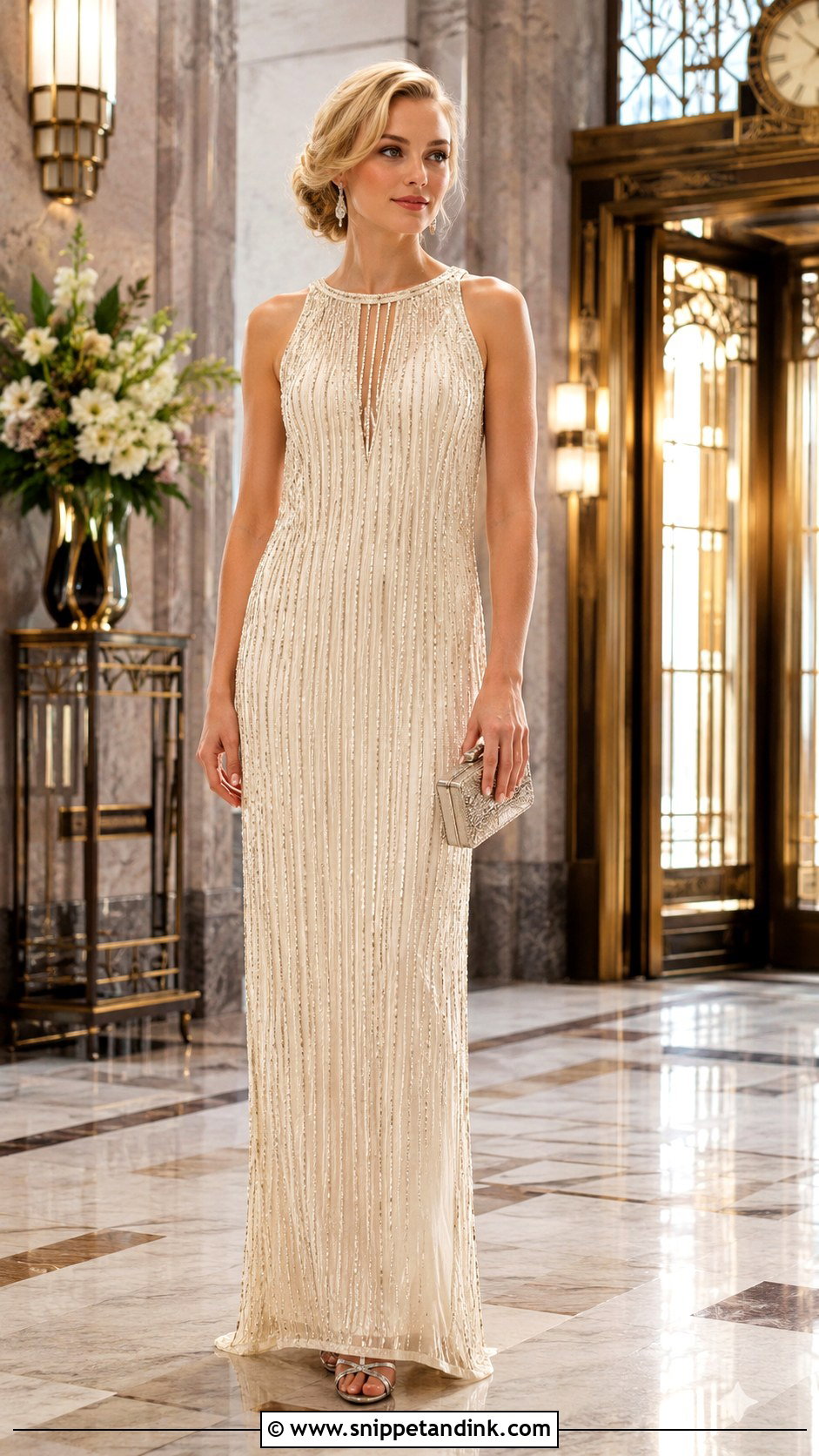
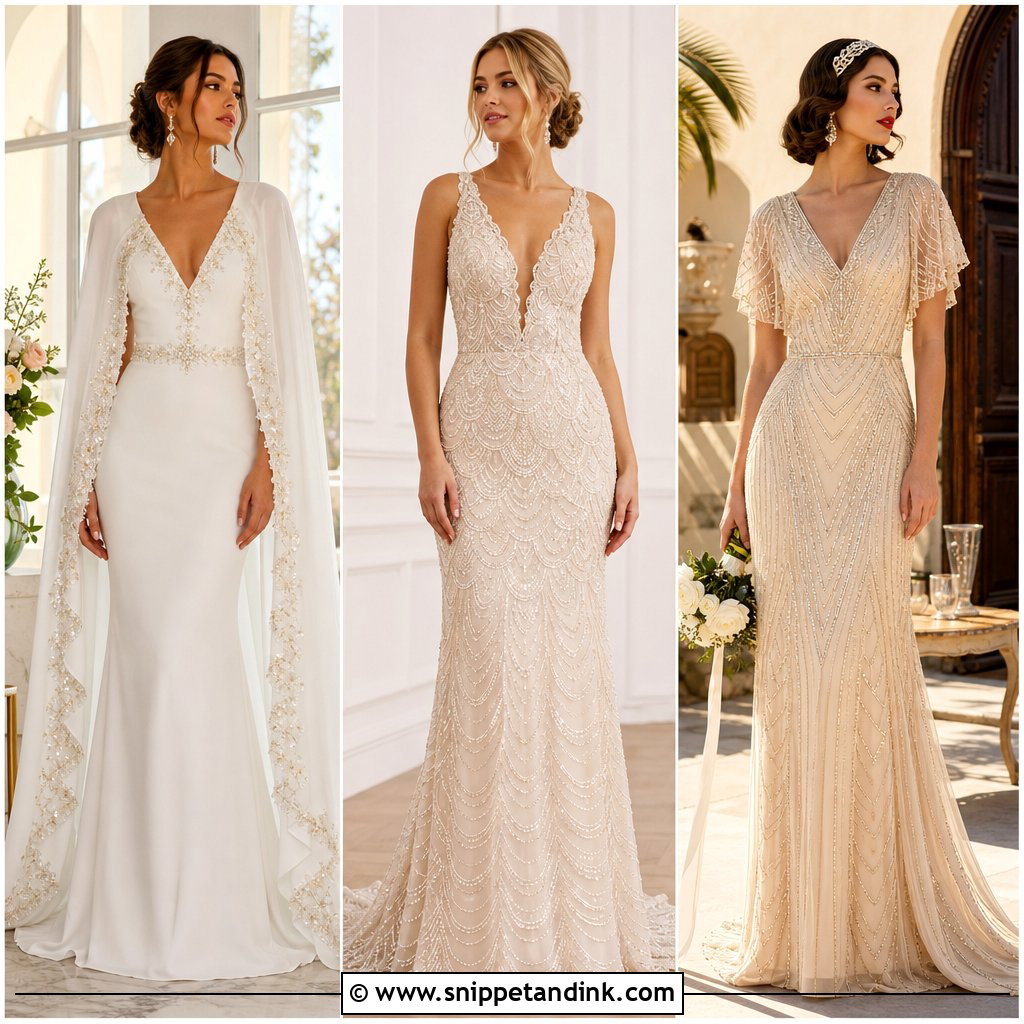
Vertical beadwork on a straight column draws the eye up and down, which lengthens almost anyone. The gown should skim rather than grip; if it’s tight across the hip, the beaded lines bend and the whole effect is lost. An ivory or champagne underlayer gives the beads something to glow against in photos. I’d keep it to T-strap heels, crystal drop earrings, a sleek side parting and a small structured clutch, with no necklace if the bodice is full of beads. It belongs in a hotel ballroom or an Art Deco venue at night.
2. Drop Waist Wedding Dress
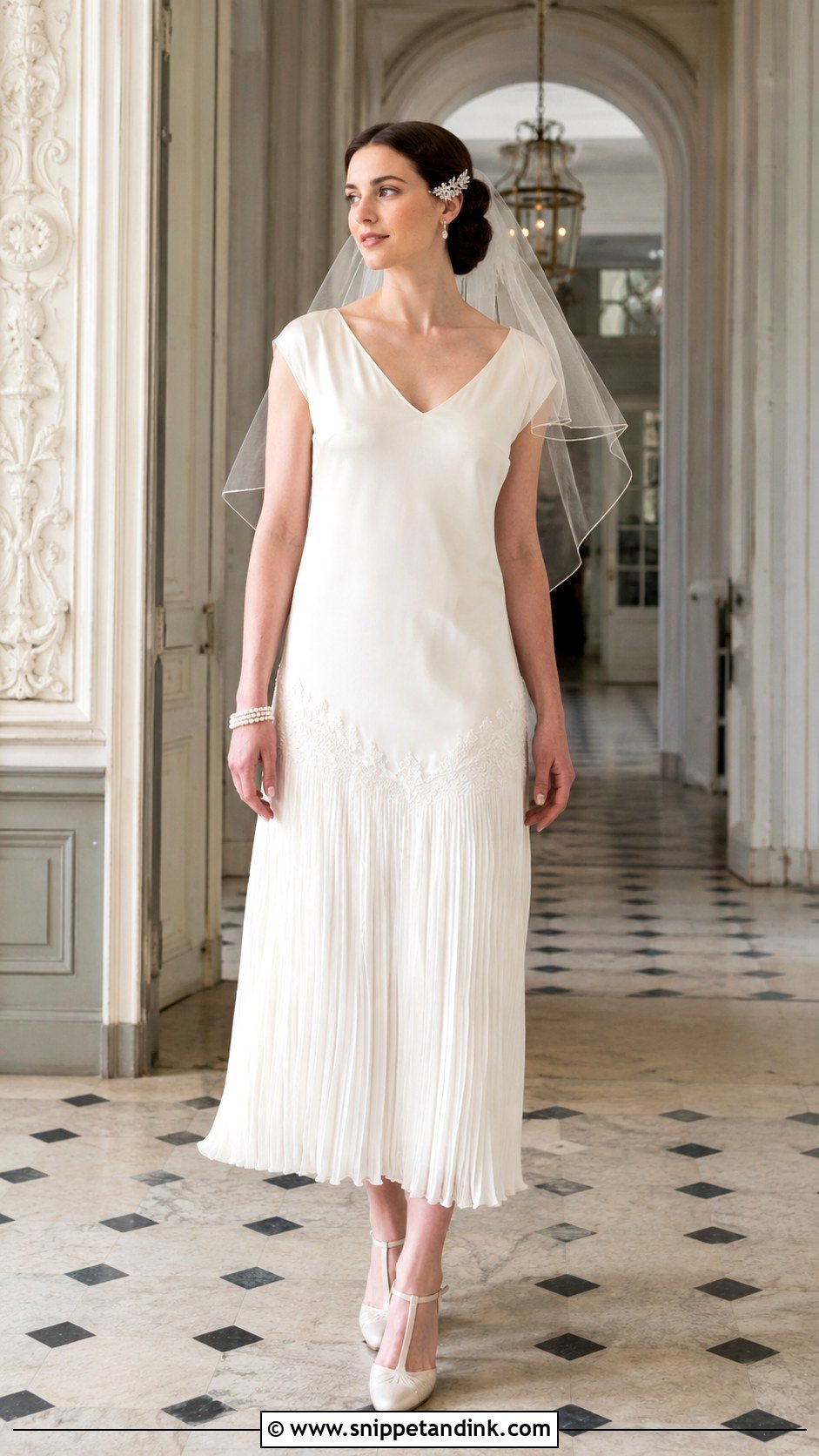
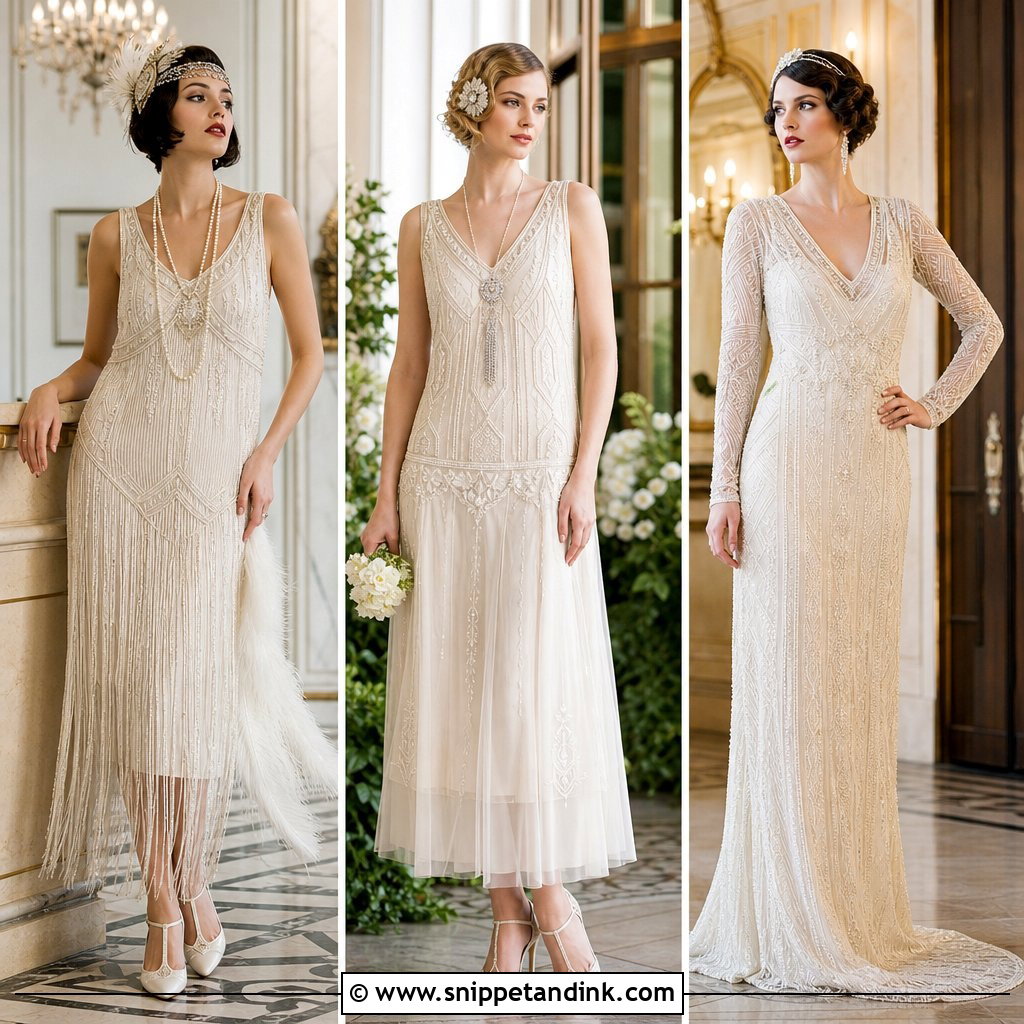
No shape says 1920s faster than a drop waist. The bodice runs past your natural waist and the skirt starts at the hip, gathered, pleated or flared, so it swings when you walk. Silk crepe and georgette move best. A completely straight bodice suits a straighter figure; if you have a defined waist and hips, ask for a slightly shaped bodice instead, or the dress can look boxy. I’d add ivory T-straps, a pearl bracelet, a beaded comb above a low bun and a sheer fingertip veil that stops before the waistline.
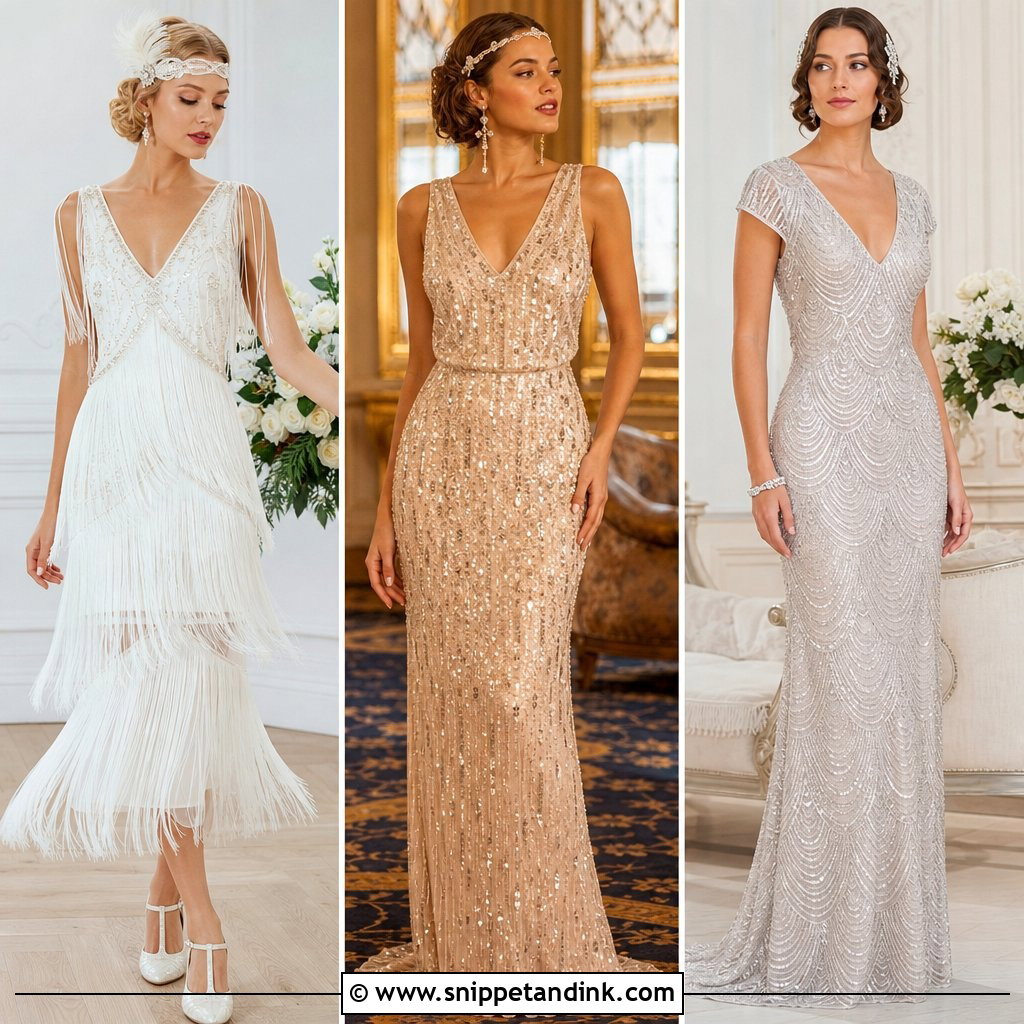
3. Fringe Flapper Wedding Dress
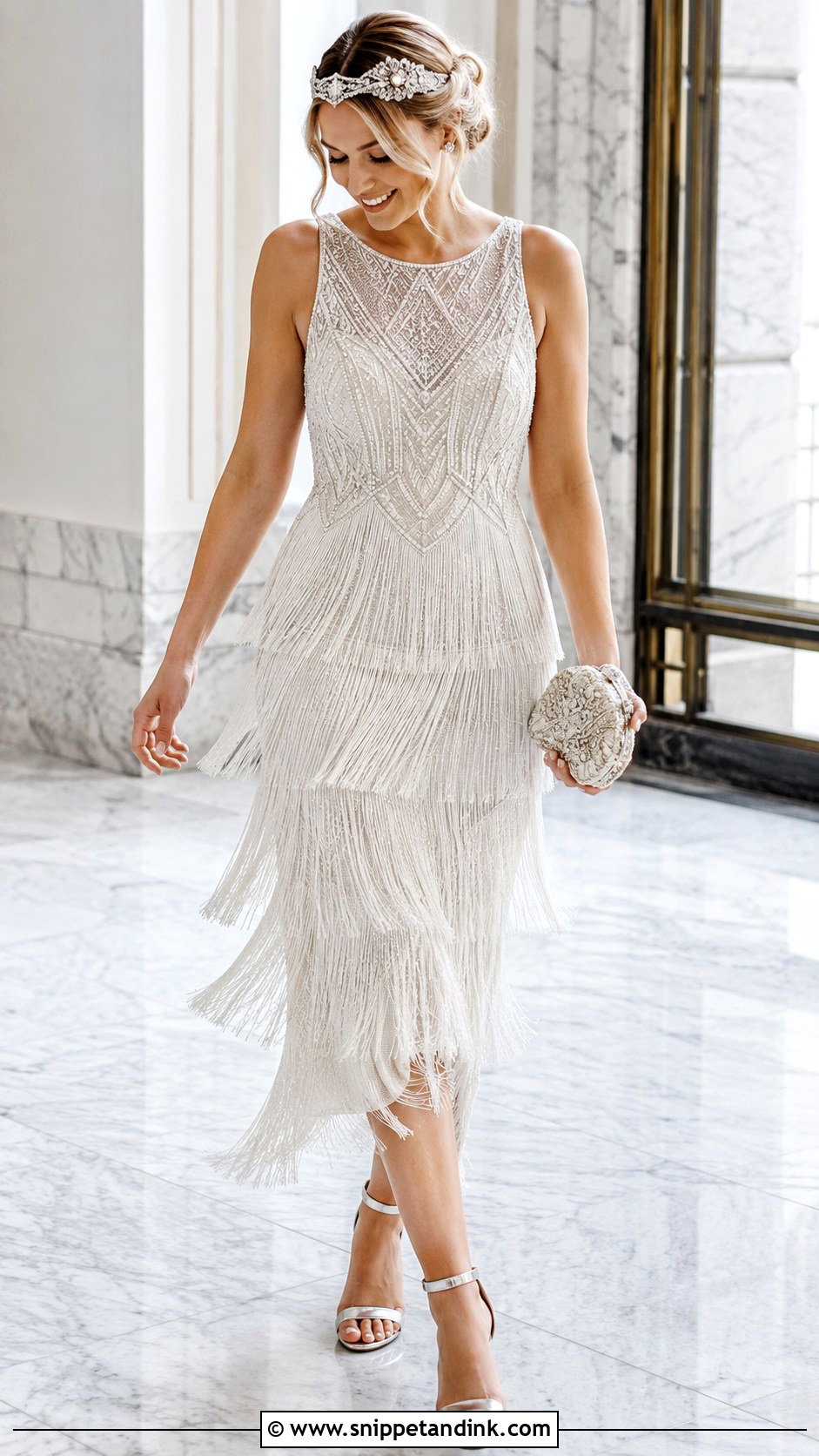
Fringe is made for the dance floor, and that’s also its weak point. Full coverage tangles, so I prefer tiers placed along the hem, the sleeves or the dropped waist, over a fitted lining that keeps the shape clean. Knee or midi length suits a city ceremony, a courthouse or a reception change; at full length, fine beaded fringe is lighter than chain or thread. Pair it with metallic T-straps you can actually dance in, crystal studs, a narrow embellished headband and a small ivory clutch. Ask how the fringe is anchored: hand-sewn strands survive a night of dancing far better than glued tape.
4. Art Deco Wedding Dress
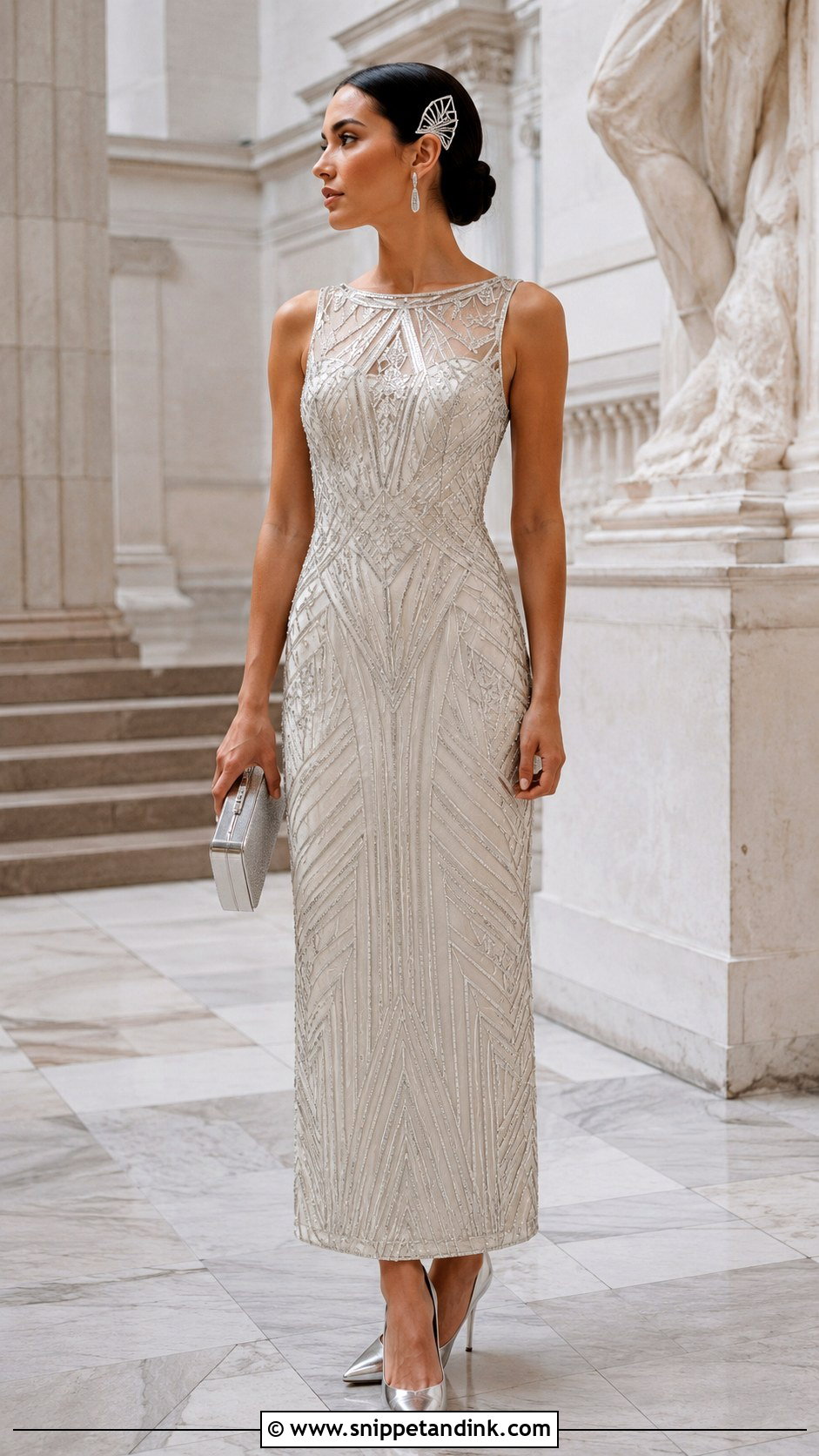
Fans, sunbursts, chevrons and diamonds, and clean geometric panels are the language of Art Deco, built in beads or embroidery. They need a plain sheath or column to sit on. Silver on ivory looks crisp; gold on a champagne lining is softer and warmer. Pointed metallic heels, slim drop earrings, a geometric comb and a small box clutch carry the theme without overdoing it. The pattern on these dresses is symmetrical, so I check at the fitting that the centre motif lines up with your sternum. If the bodice has been taken in unevenly, the fan sits off-centre and you notice it in every front-on photo.
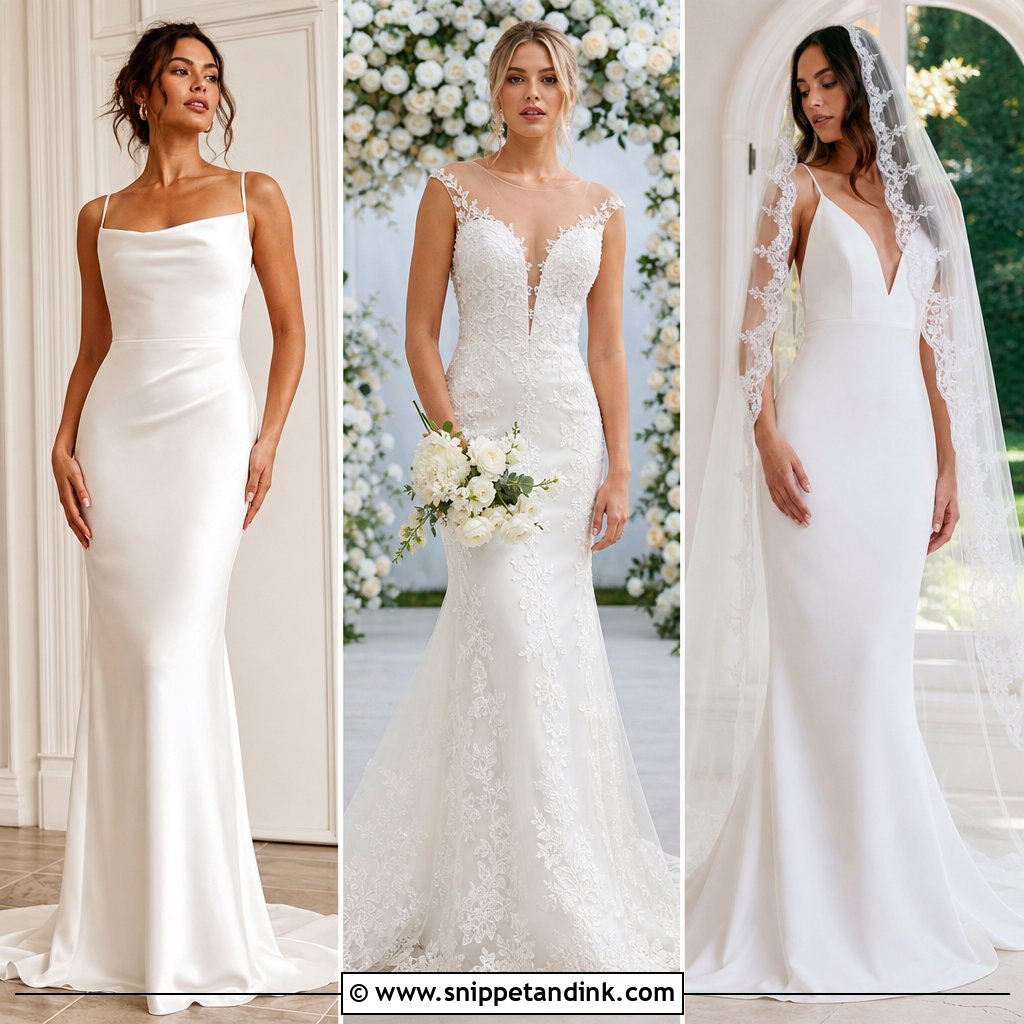
5. Satin Slip Wedding Dress
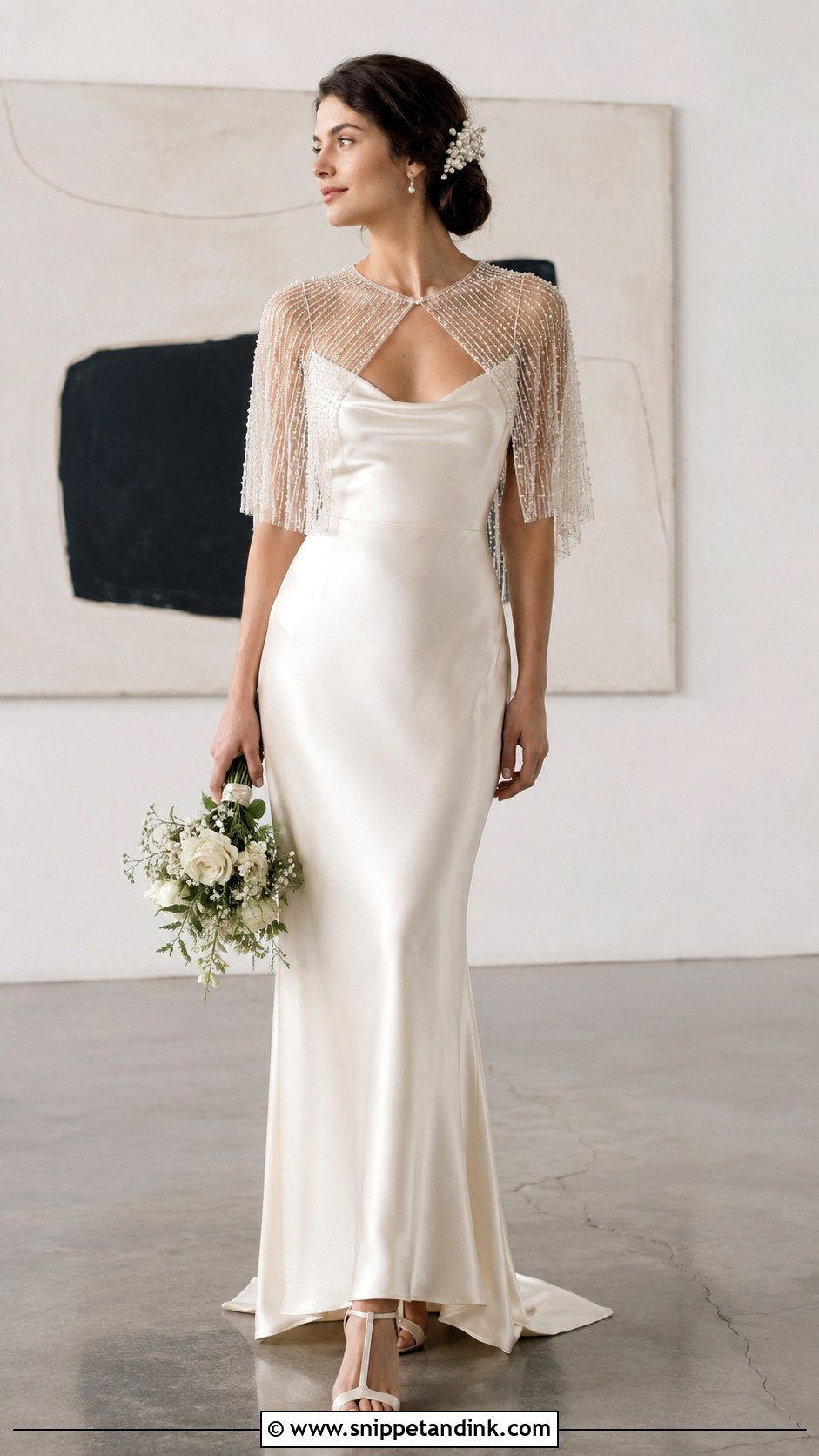
Bias-cut satin follows the body because the fabric is cut on the diagonal, which also means it shows everything underneath. Bring smooth, line-free underwear to every fitting. Narrow straps, a draped neckline and an ankle or floor length make the base; a beaded capelet, a pearl comb or a crystal-trimmed veil link it to the era. I’d choose satin T-straps over mules here, since they won’t slip off as you walk. Of everything in this list, it’s the best fit for a minimalist, and it suits small ceremonies and candlelit receptions, though bias satin creases when you sit, so expect some softening by the evening.
6. Cap Sleeve Beaded Wedding Dress
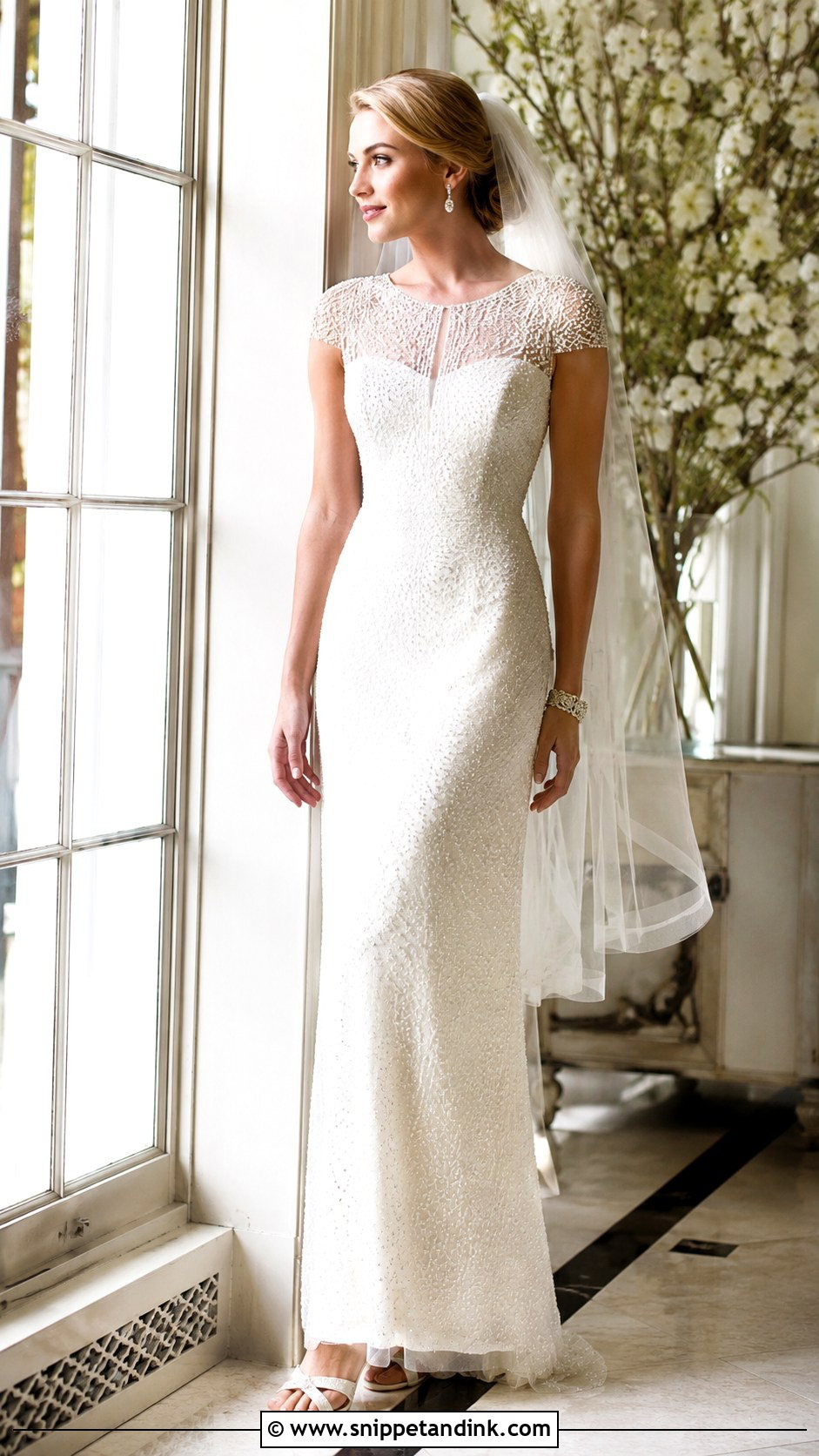
Cap sleeves of beaded tulle give a little coverage over the shoulder while keeping the dress light. A fitted or gently shaped bodice, then a straight skirt, soft A-line or fluid sheath. Pearl earrings, an Art Deco bracelet and low T-straps finish it. Choose a chapel-length veil for formality or a birdcage for a stronger vintage note. The armhole is where I check most carefully: beads sewn right on the edge rub the inside of the arm, and a narrow strip of plain tulle there makes a big difference. It’s a sensible choice for spring and for indoor ceremonies.
7. Long Sleeve Gatsby Wedding Dress
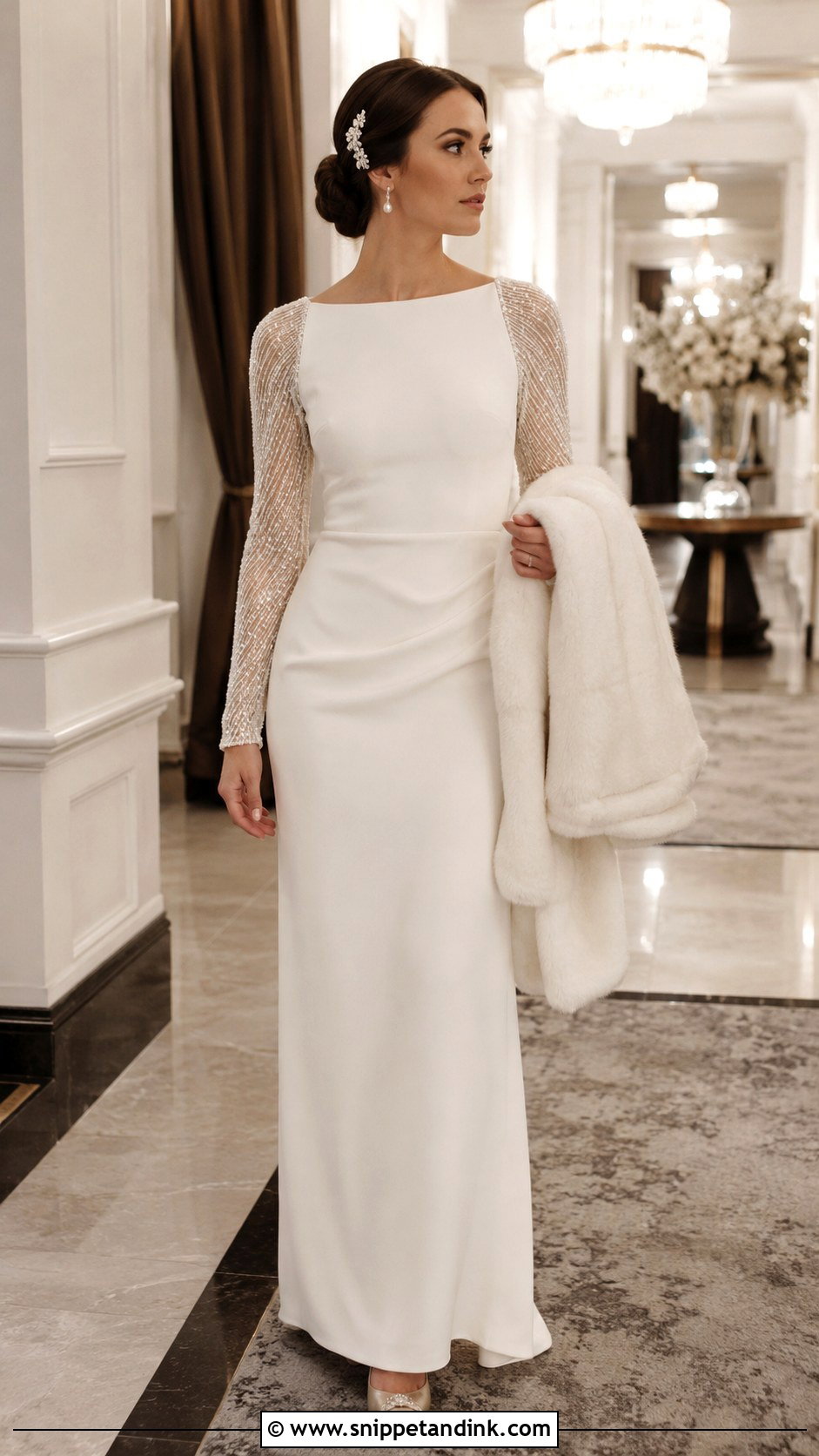
Sheer sleeves scattered with beads, pearls or embroidered lines feel much lighter than lined ones, and they give a Gatsby gown coverage without weight. Keep the body simple, a column or a crepe sheath. A deep V adds drama; a bateau or scoop neck is more modest. I’d style it with pearl drops, pointed ivory heels and a jeweled comb over a low chignon, with an ivory faux-fur wrap for a cold day instead of a coat. One fitting note: beaded sleeves are heavier than plain mesh, so the cuff should end at the wrist bone, not below it, or it drags over your hand every time you lift a glass.
8. Tea Length 1920s Wedding Dress
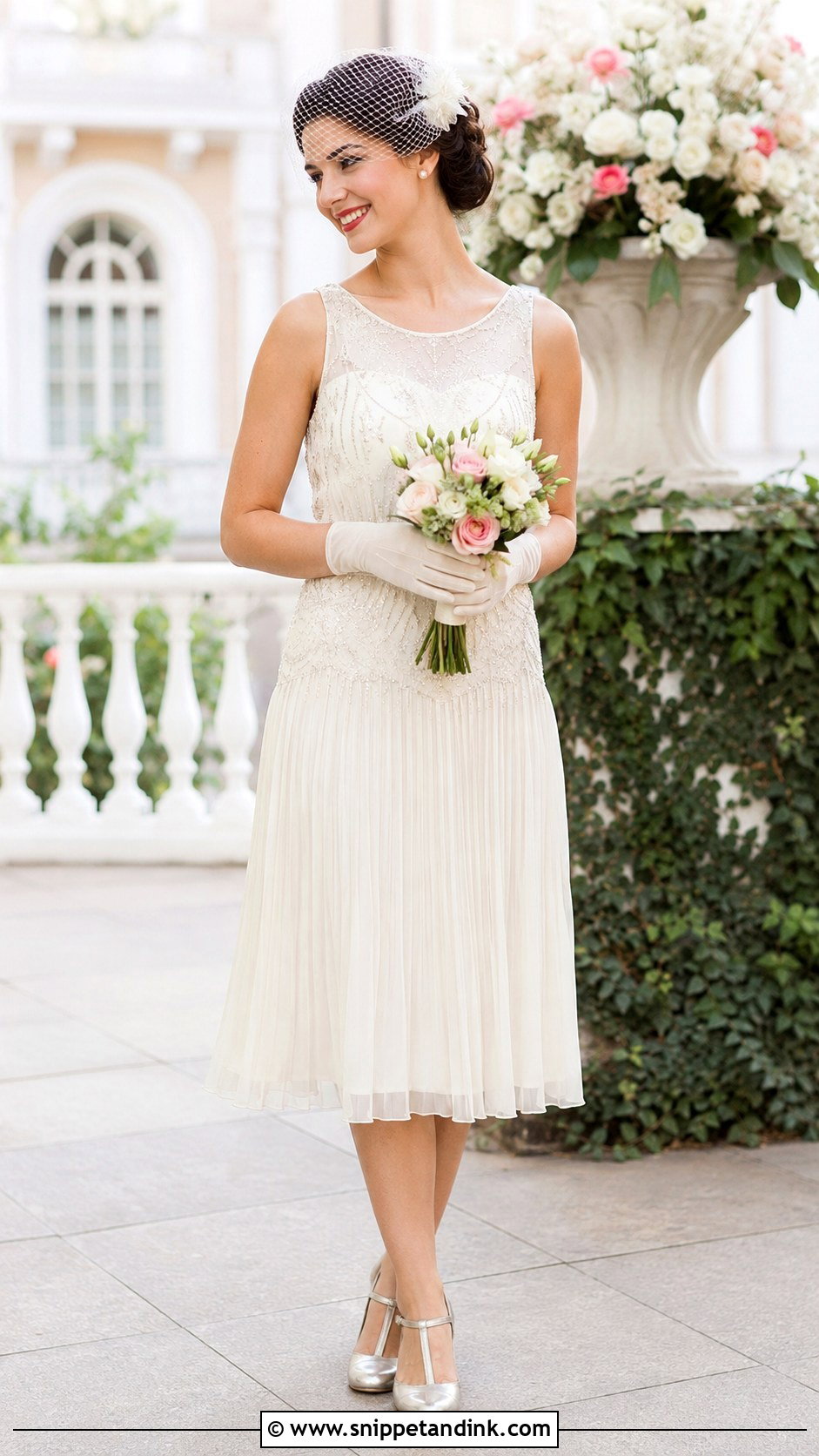
Tea length shows off the shoes, so treat them as part of the outfit. The hem should land between lower calf and ankle; any higher and it looks like a cocktail dress, any lower and it looks like a mistake. Pair a drop waist or lightly beaded bodice with a softly pleated skirt, then add T-straps, low Mary Janes or metallic pumps with an ankle strap. Pearl studs, short gloves, a birdcage veil or comb and a small bouquet keep the proportions right. It’s easy to walk and dance in, which is why I recommend it so often for courthouse ceremonies and daytime garden weddings.
9. Champagne Beaded Wedding Dress
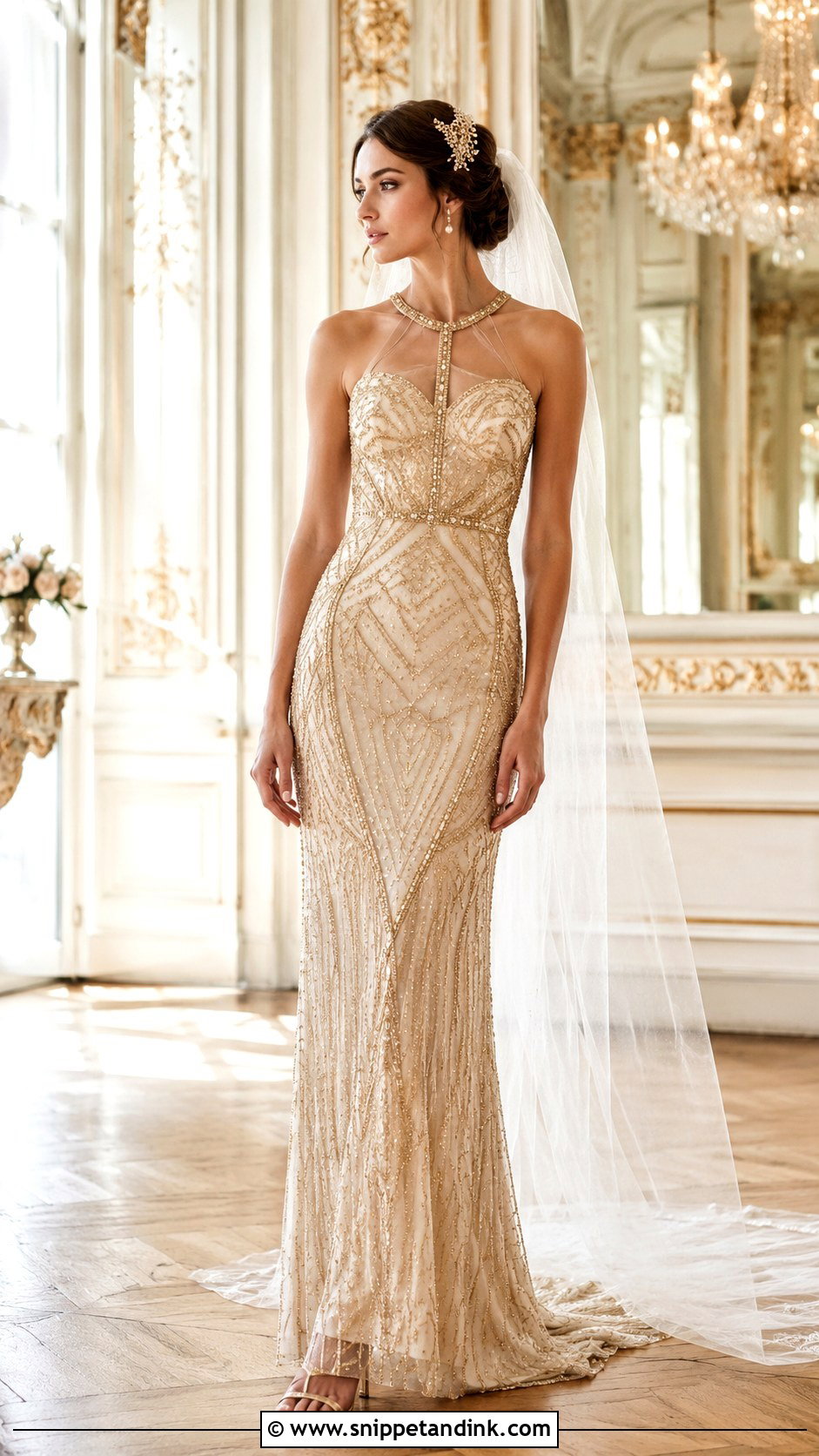
Champagne fabric gives beads more contrast than bright white, so gold, bronze, ivory or pale silver work all show up better. Choose a column, sheath or lightly flared shape with vertical or geometric beading. Before committing, hold the fabric near your face in daylight. Champagne flatters warm and olive skin easily but can wash out very fair, cool-toned skin, and a slightly pinker blush shade usually fixes that. Muted gold T-straps, pearl earrings, an antique-style comb and a sheer ivory veil suit it, with a light, neutral bouquet. It looks rich in historic interiors and at autumn weddings.
10. Pearl Embellished Wedding Dress
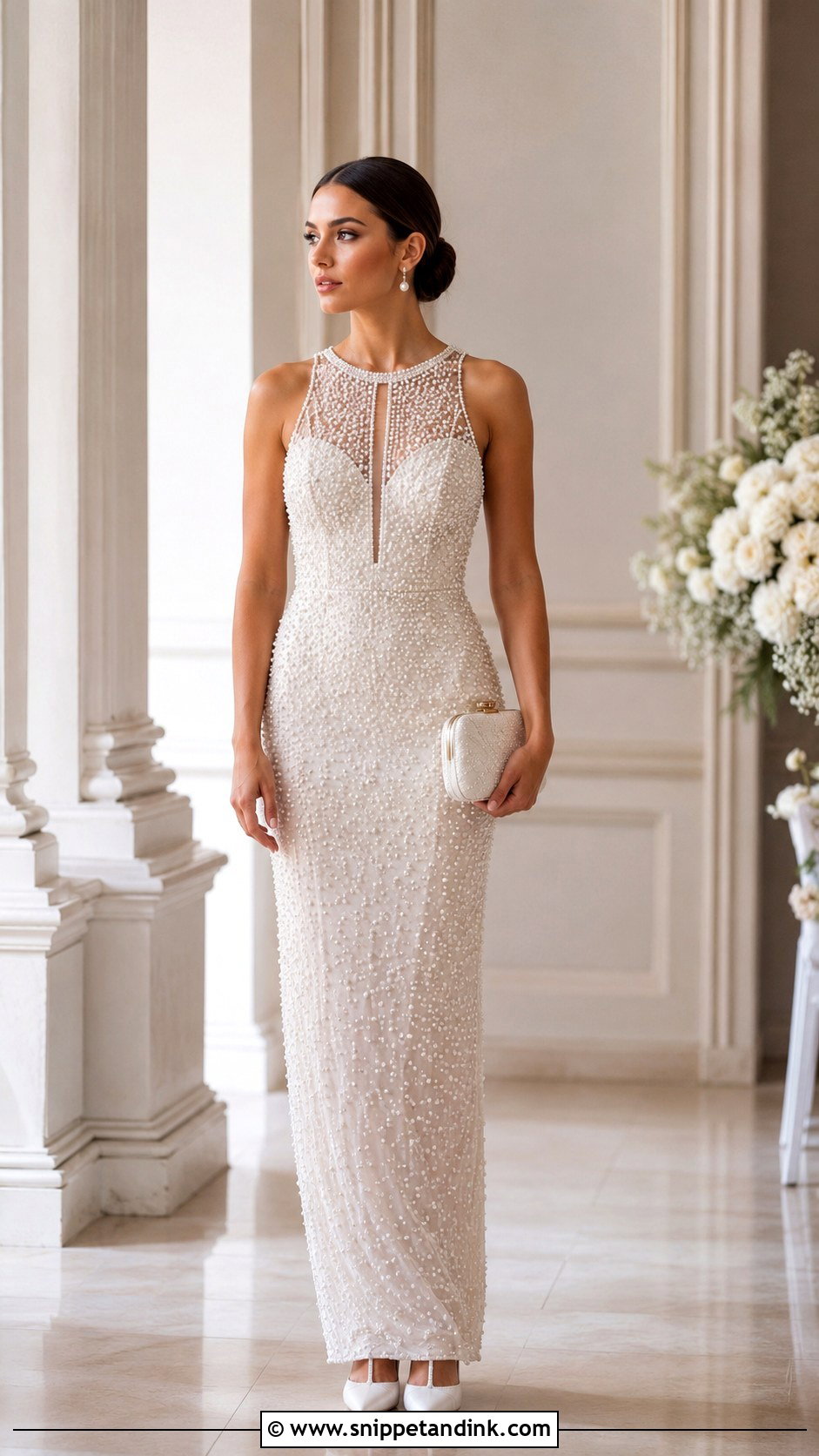
Pearls give a soft sheen instead of the sharp flash of sequins. They can be scattered over sheer tulle, ring the neckline or form geometric patterns down the bodice and skirt, but the silhouette underneath should stay simple. I’d repeat the detail once: pearl drops, satin T-straps and a sleek ivory clutch, and no big pearl necklace if the neckline is already decorated. A clean bun or a waved, bob-like style keeps attention near your face. Real or glass pearls on a gown are heavy in quantity, so check the shoulder seams carry the weight without pulling forward.
11. Feather Trim Wedding Dress
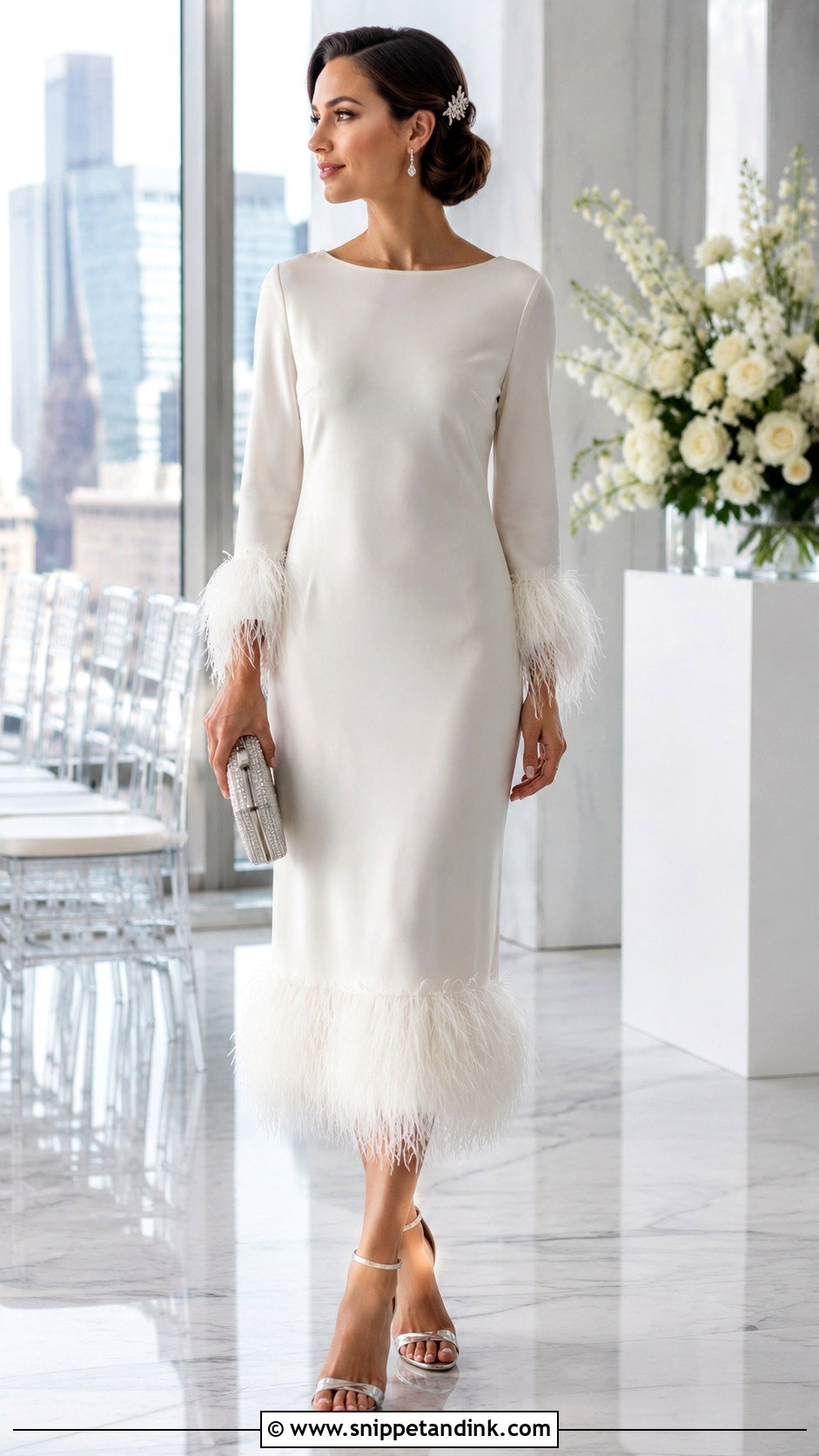
Feathers are best used in small doses: at the cuffs, the neckline or the hem of a sleek satin or crepe gown, midi or full length. Minimal crystal earrings, smooth metallic heels and a small clutch; skip a heavily decorated veil and wear a plain fingertip one or a jeweled comb. For a second look, a feather-trimmed mini dress with ankle-strap shoes is great fun. Two practical points from fittings: ostrich feathers shed, so keep a lint roller with your kit, and they droop in rain or heavy humidity, so I’d steer you away from them for an outdoor summer wedding.
12. Low Back 1920s Wedding Dress
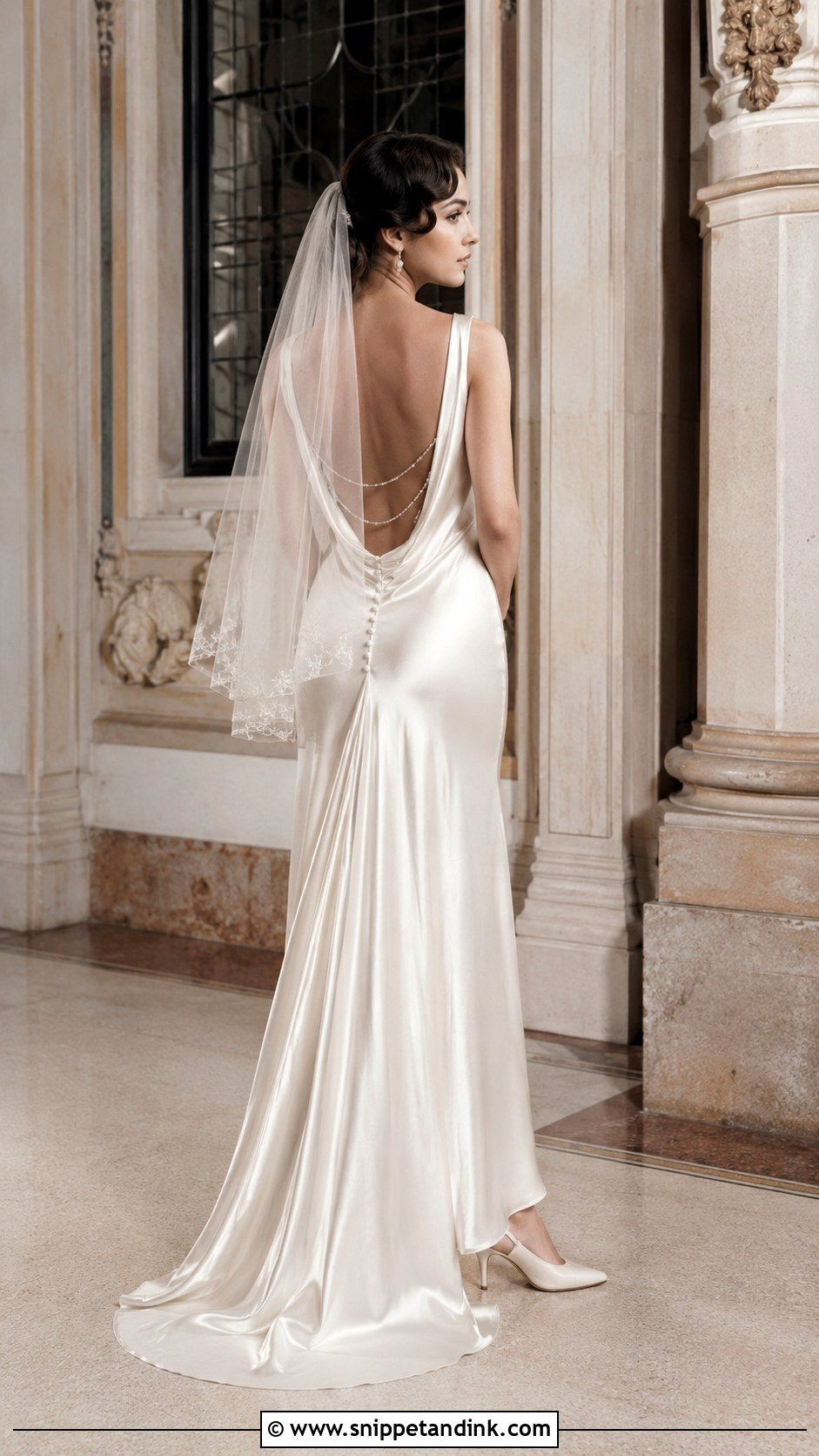
A low back keeps the long 1920s line and adds drama only when you turn around. Fluid satin, crepe or beaded column gowns suit a curved or V-shaped back, framed by pearl strands, crystal buttons or draped chains. Wear your hair in a low side bun or an updo, with slender drop earrings, closed-toe T-straps and a veil attached below the hairstyle. The question I always raise early is support. With a very low back, a regular bra won’t work, so the dress needs built-in cups or a plunge-style backless option, and that has to be sorted before the first fitting, not at the last one.
13. Cowl Neck Satin Wedding Dress
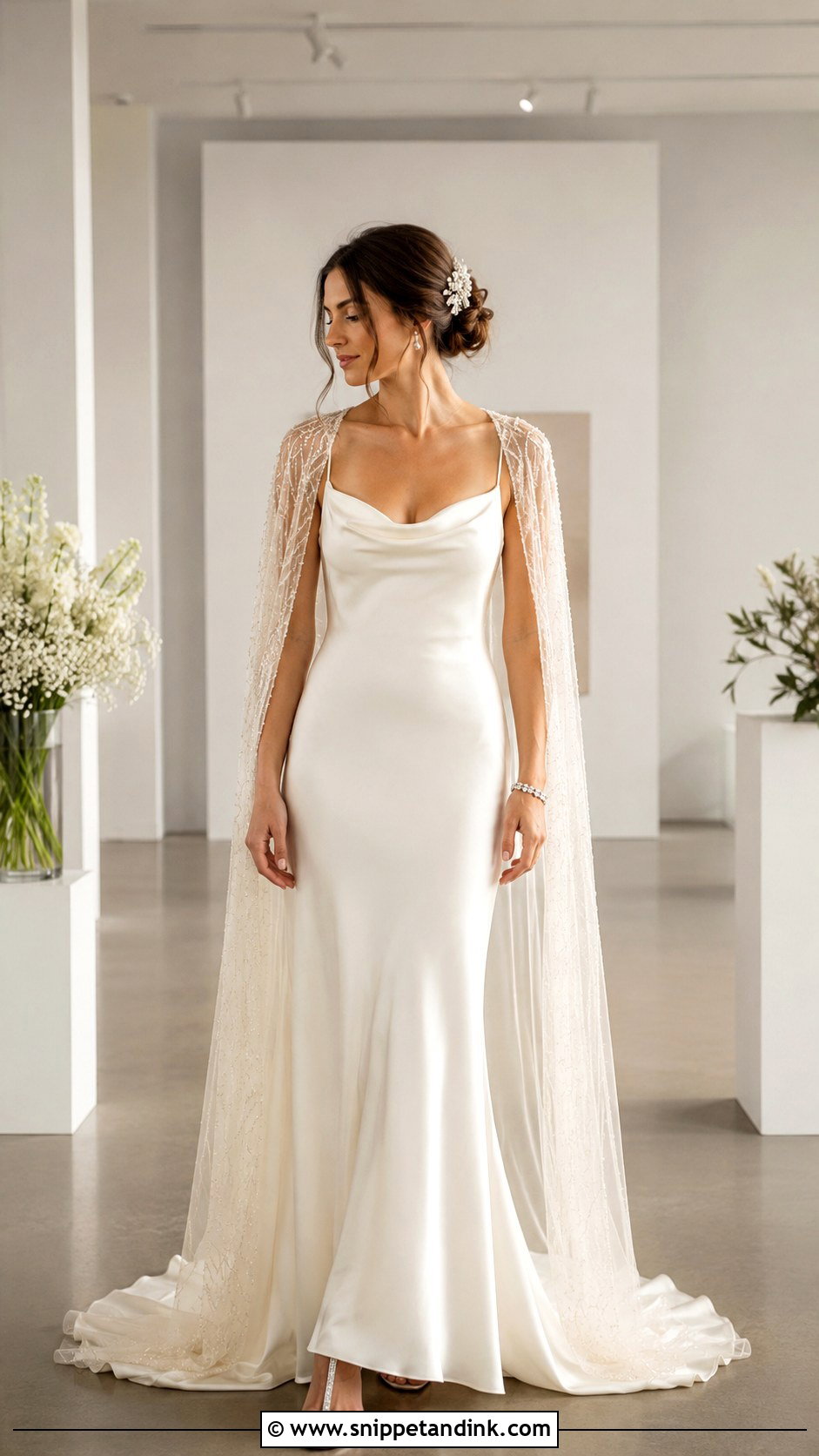
A cowl neckline drapes softly at the front and pairs naturally with bias-cut satin, narrow straps and a floor-skimming skirt. It should fall in a loose fold, never so deep that you have to hold it when you bend. A small weight or a discreet stitch inside the drape stops it from shifting, and any good seamstress can add one. I’d keep the accessories small: a crystal hair clip, a slim bracelet and ivory T-straps. For the ceremony, a sheer beaded cape gives coverage and comes off later. It suits destination weddings and intimate evening venues.
14. Flutter Sleeve Wedding Dress
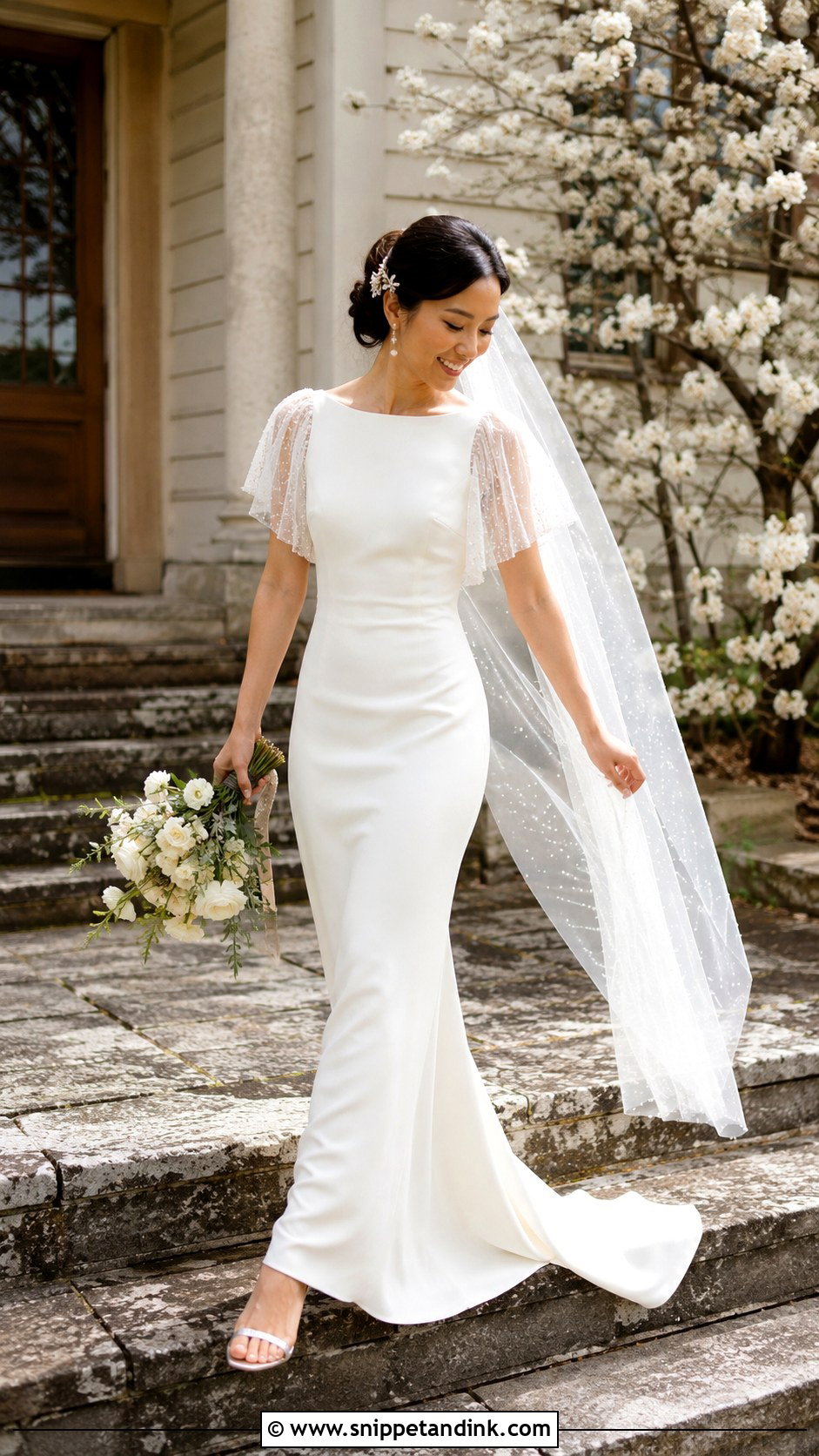
Flutter sleeves of chiffon, beaded tulle or soft lace fall loosely from the shoulder and give gentle upper-arm coverage without restricting movement. Keep them short, then pair them with a straight crepe skirt, a subtle drop waist or a narrow A-line. Pearl earrings, low metallic heels, a jeweled comb over pinned waves and a plain chapel veil finish the look. Chiffon flutters catch wind, which looks pretty outdoors but can get tangled in the veil, so I’d ask your hairstylist to anchor the veil lower if you’re marrying outside in spring or summer.
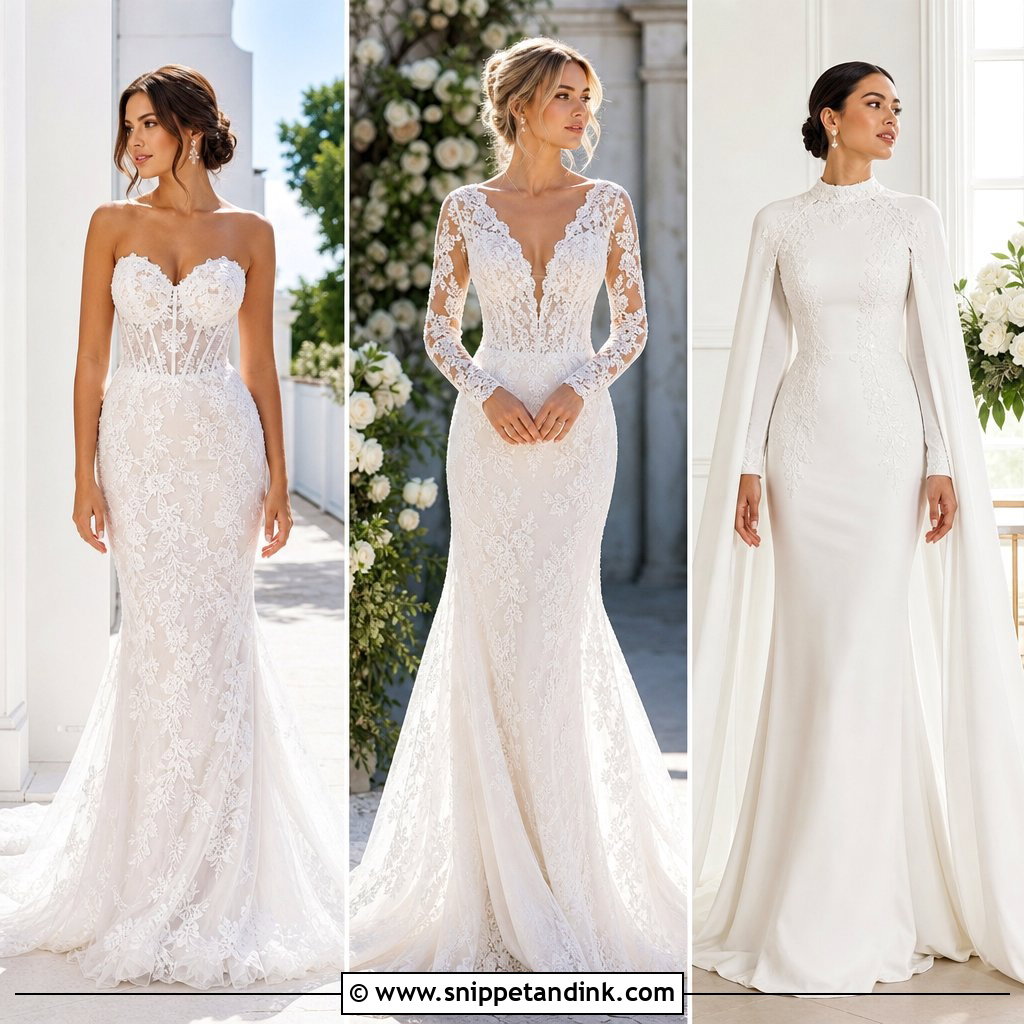
15. Geometric Lace Wedding Dress
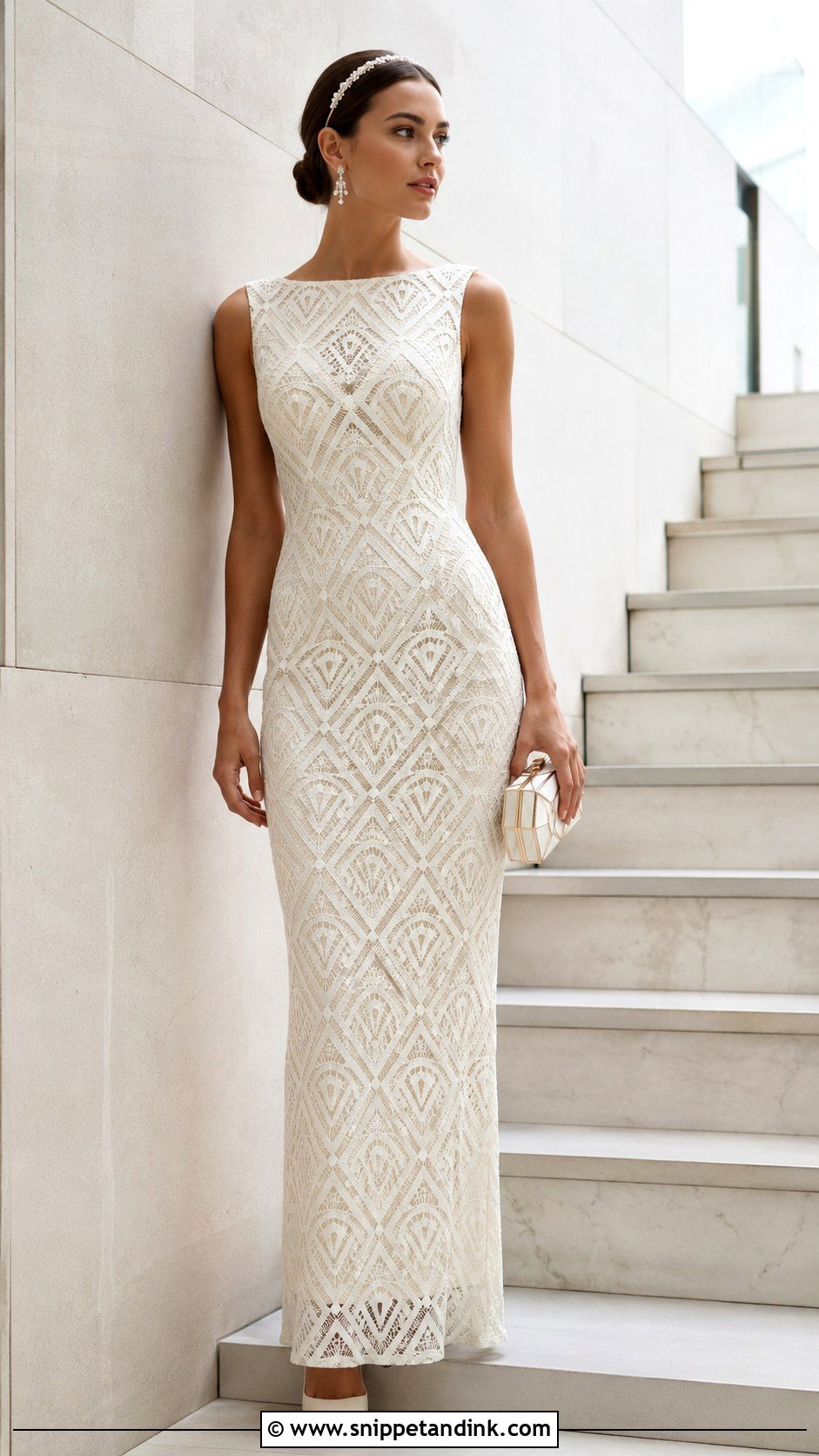
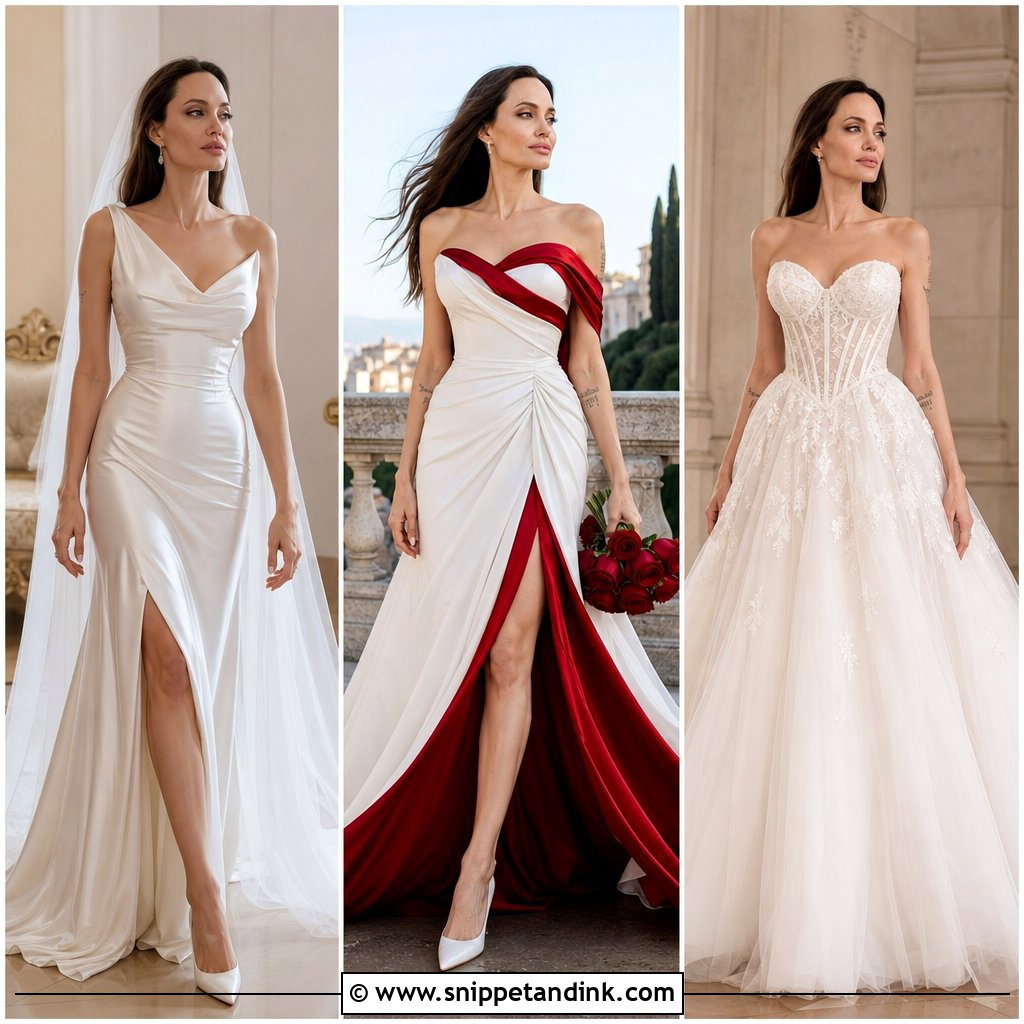
Geometric lace is the alternative to floral, in repeating diamonds, scallops, fans or angular panels over ivory or champagne. A clean sheath or column lets the pattern read. I’d add pointed satin heels, simple drop earrings and a clutch with one small metal detail; a narrow headband or symmetrical comb can echo the lace without matching it. With a high neckline, put all the jewelry in the earrings. Graphic lace is unforgiving at the seams, so check the motifs line up when the dress is taken in. It looks best in architectural venues, lofts and galleries.
16. Plus Size 1920s Wedding Dress
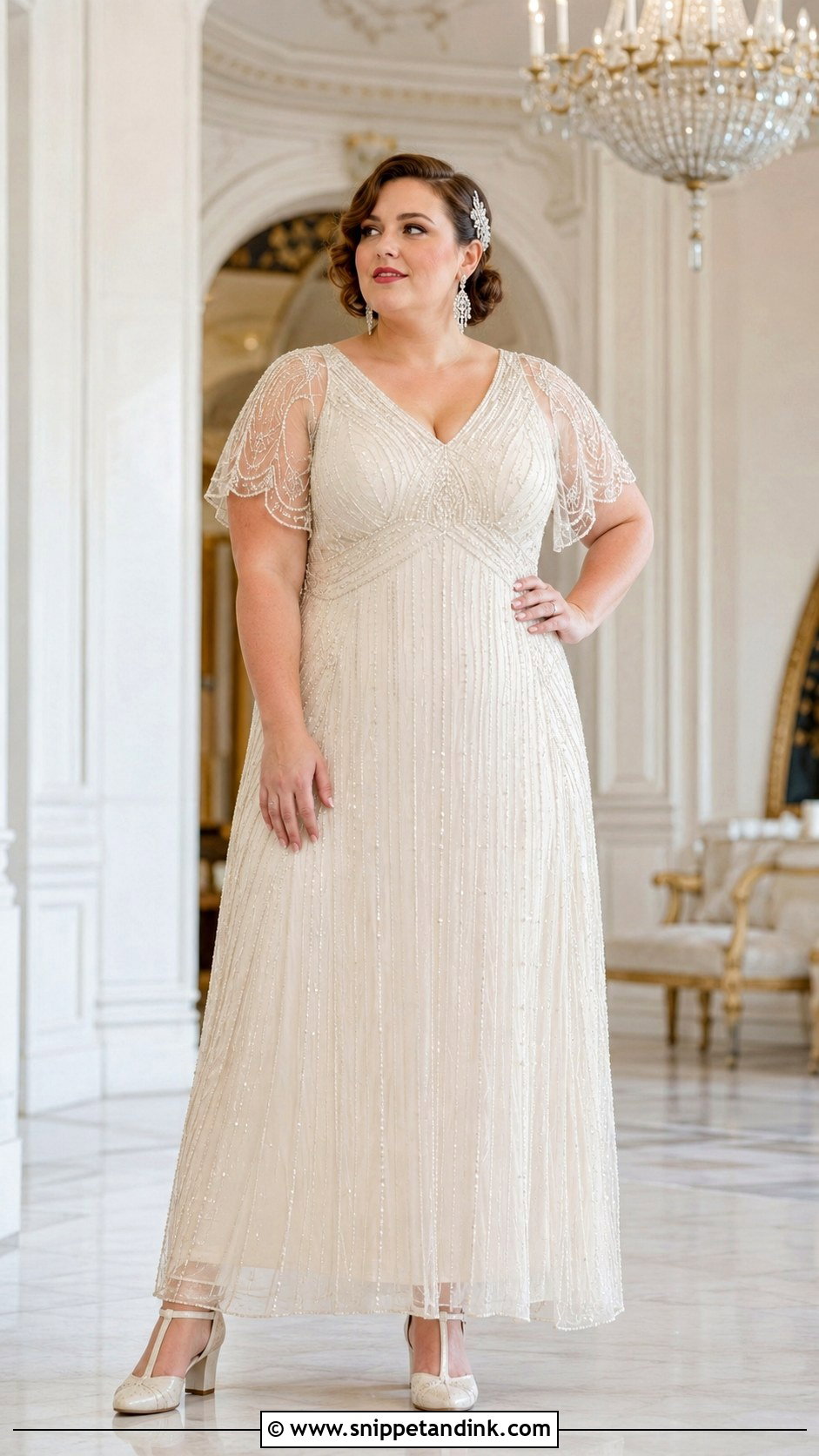
For plus size brides, I start with support and proportion and add the vintage detail afterwards. A softly structured sheath, a flowing A-line or a raised drop waist that sits at the high hip rather than the widest point usually works better than a fully straight cut. Vertical beading lengthens, and a V or scoop neck frames your face. For extra coverage, choose flutter sleeves, sheer cap sleeves or a beaded cape. Block-heel T-straps, statement earrings and a secure comb finish it. Ignore the size label; what matters is that the dress stays in place when you sit, walk and dance at the final fitting.
17. Modest 1920s Wedding Dress
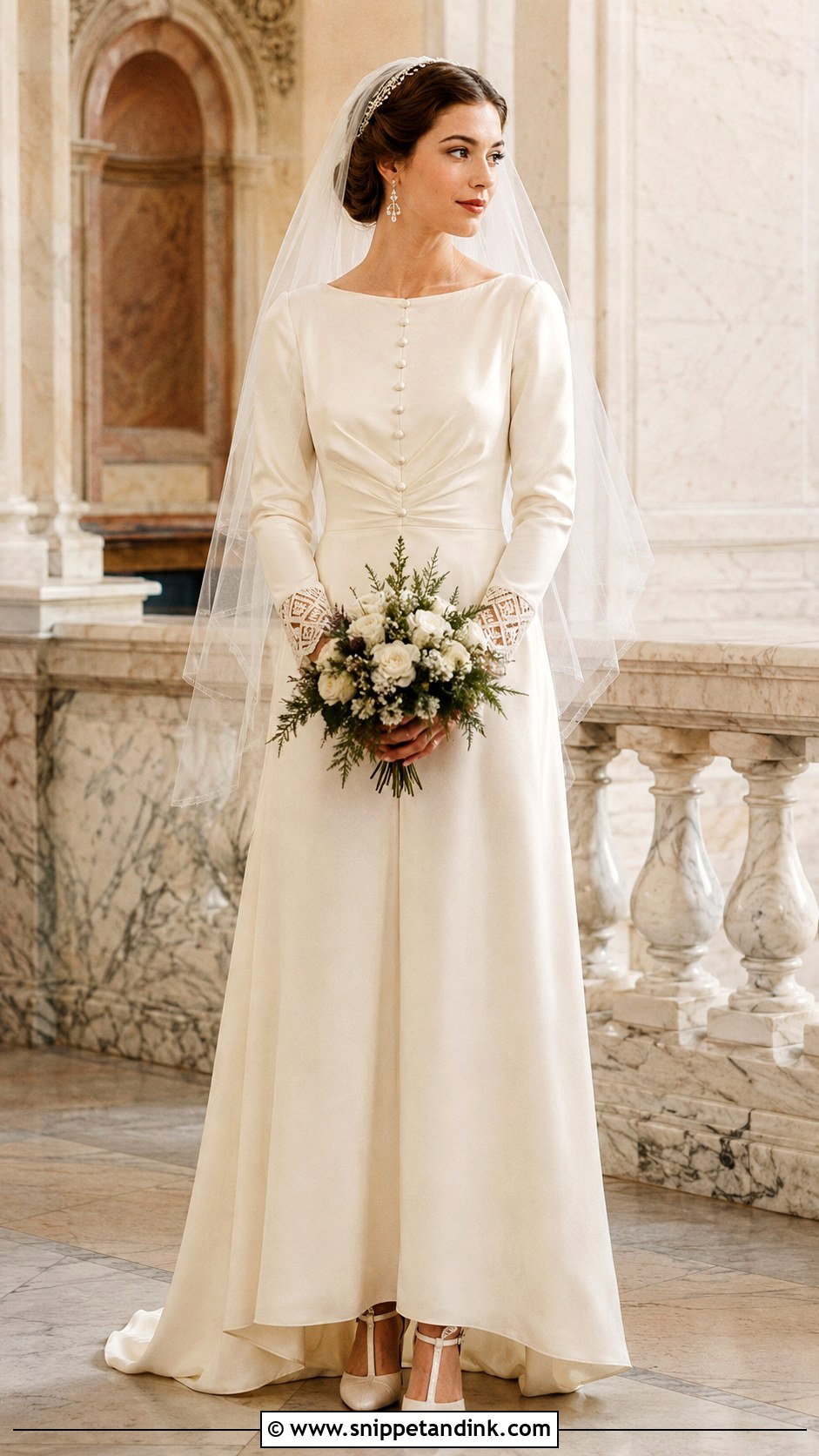
Modest doesn’t mean plain in this era. A bateau neckline, covered back and sheer or lined long sleeves keep the long, easy 1920s shape, especially over a straight skirt or soft A-line. Geometric lace, pearl buttons down the back or beadwork concentrated at the cuffs add the interest. I’d pair it with closed-toe T-straps, crystal earrings and a fingertip veil held by an Art Deco comb; a removable beaded cape is another option. If the ceremony has specific coverage rules, take the dress to your officiant or a family elder in photos before alterations, so any changes go into the same fittings.
18. 1920s Wedding Dress With Cape
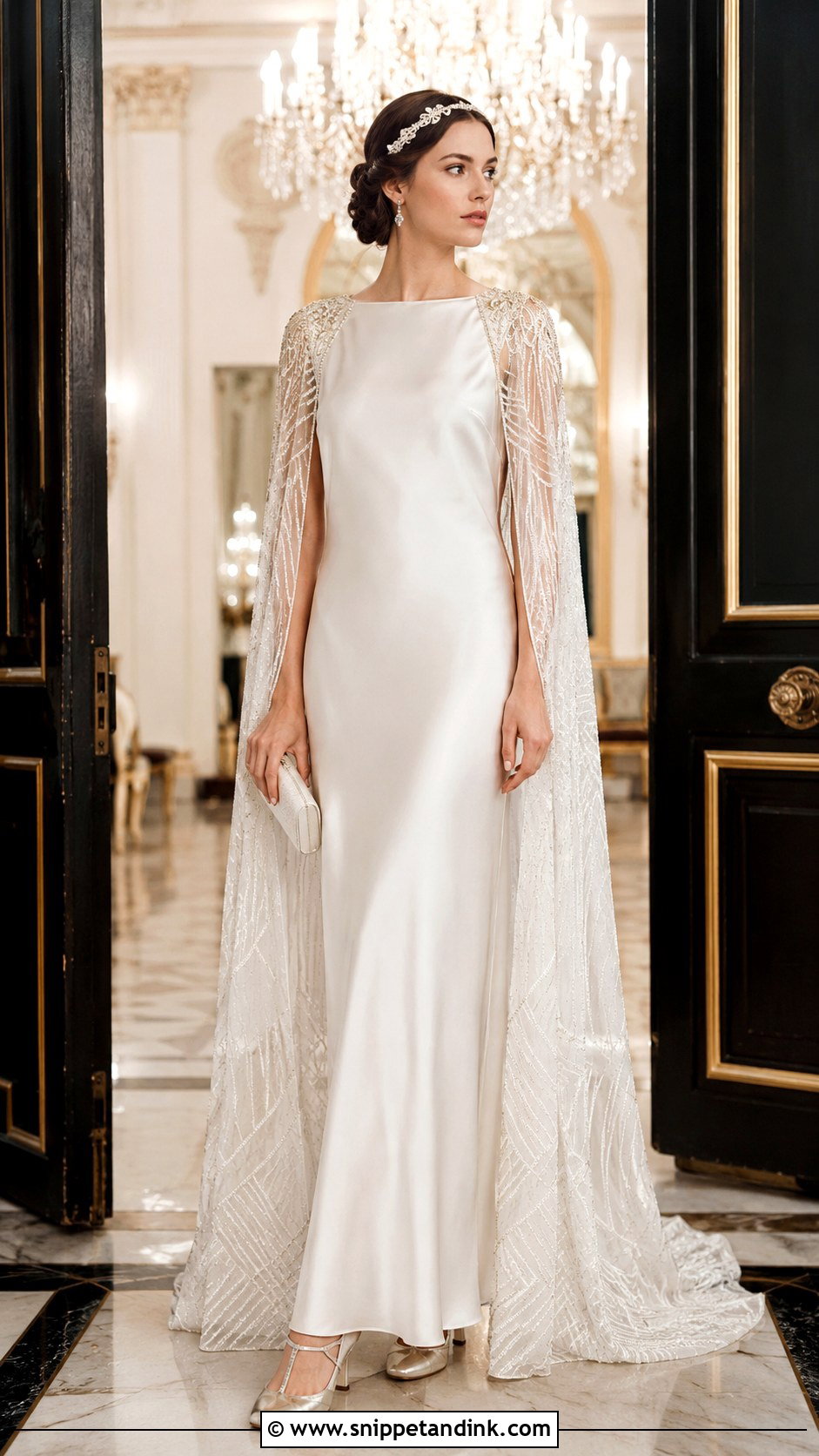
A cape makes the entrance and then comes off for dancing. Start with a simple satin column, beaded sheath or crepe gown, then add a sheer cape decorated with pearls, geometric embroidery or crystals. Hip length is light and playful; floor length is ceremonial. Keep the rest small: earrings, metallic T-straps and a smooth clutch, with a jeweled comb beneath the cape attachment or a headband if you skip the veil. I’d make sure the cape fastens with hooks or snaps you can undo yourself. Long capes are lovely on long aisles and staircases in autumn and winter.
19. Beaded Wedding Mini Dress
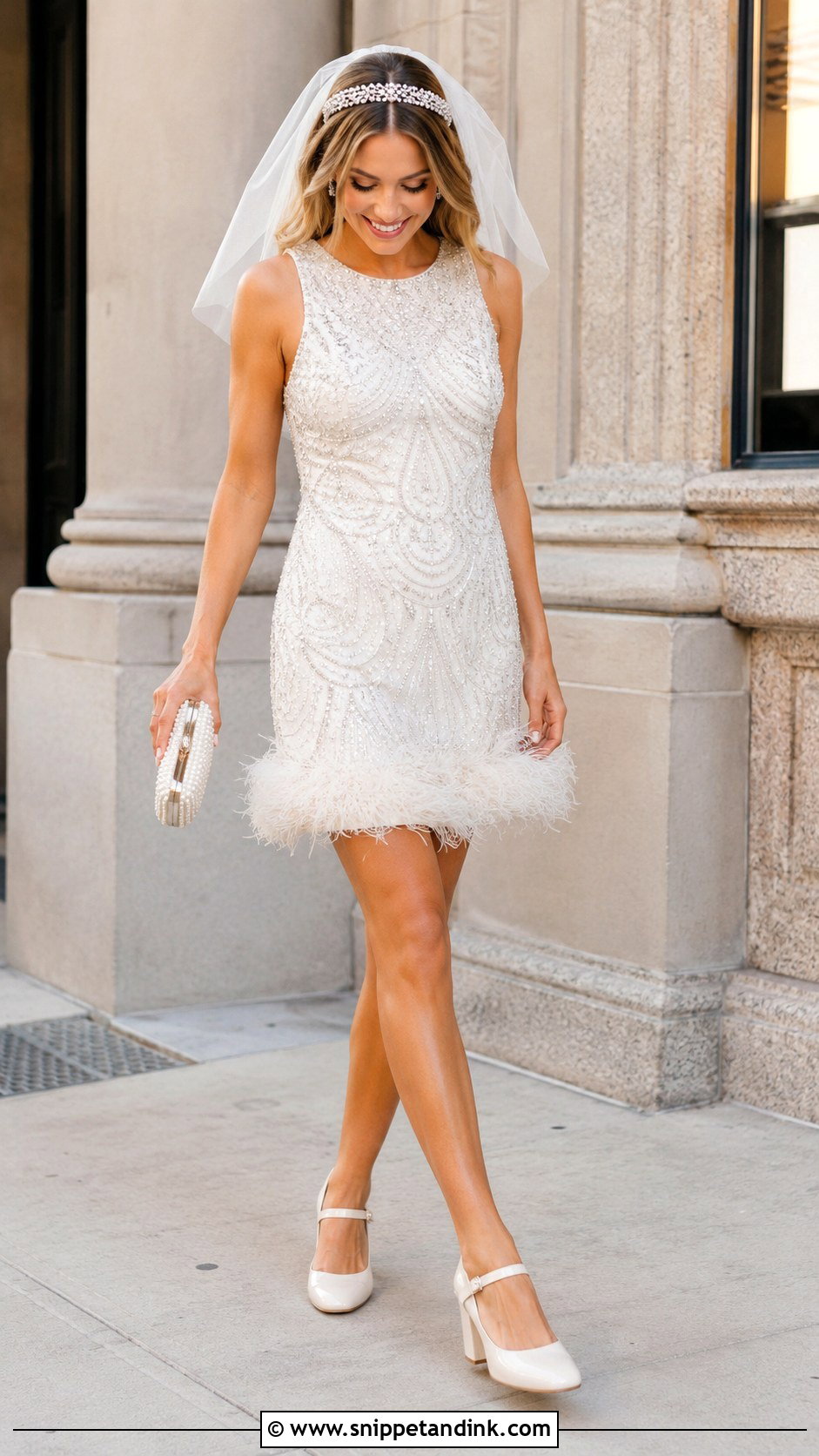
A beaded mini works as a ceremony dress for a courthouse or city wedding, or as a memorable second look later. A straight or lightly shaped line with Art Deco beads, short fringe or feather trim at the hem is the base; a higher neckline balances the short length. Block-heel T-straps or embellished Mary Janes keep you dancing, with crystal studs, a small headband and a compact clutch. Sit down in it at the shop. Beaded minis ride up more than plain ones because the beads catch on the seat, and a hem that’s right standing can be too short seated.
20. Black And White 1920s Wedding Dress
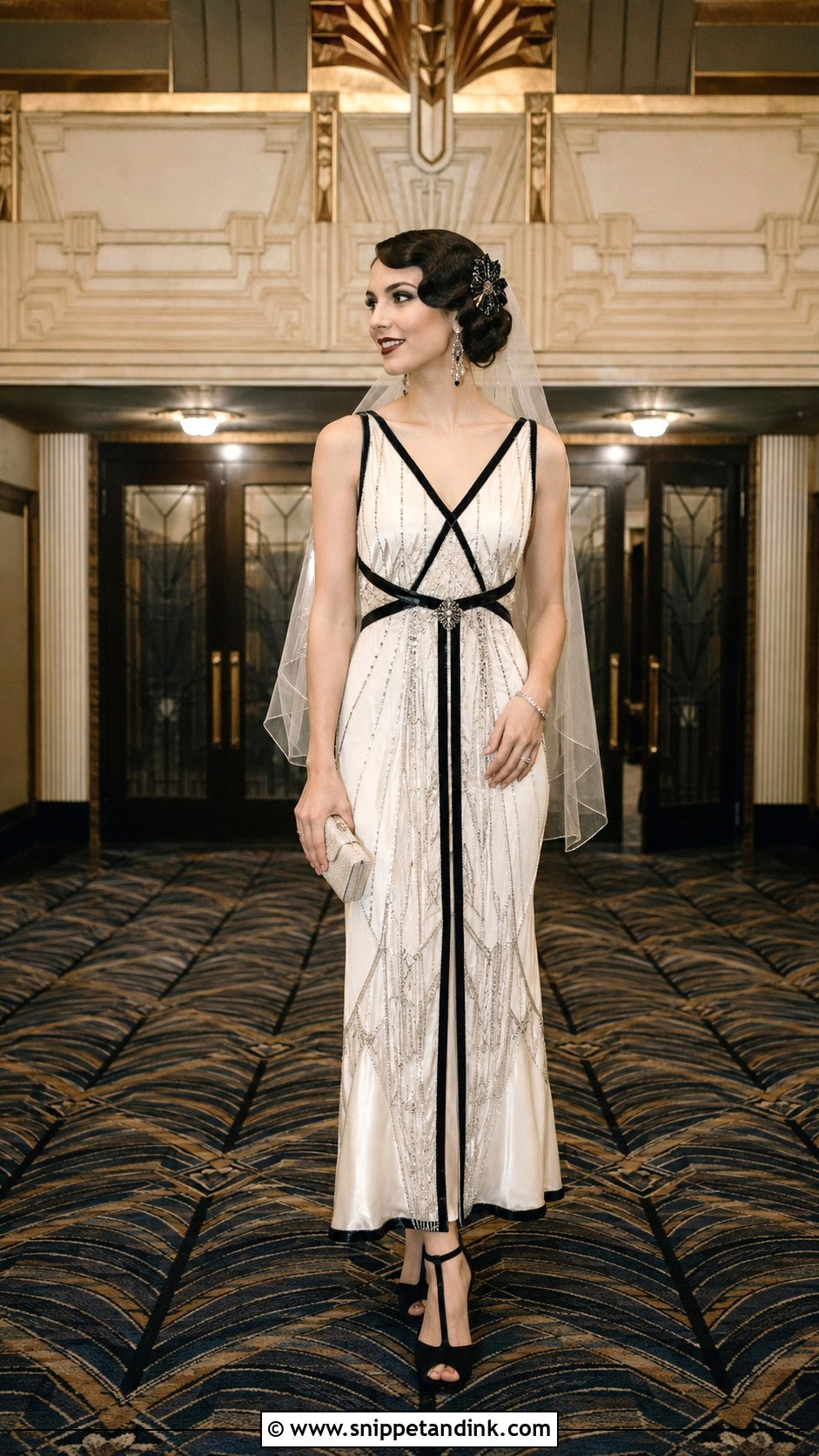
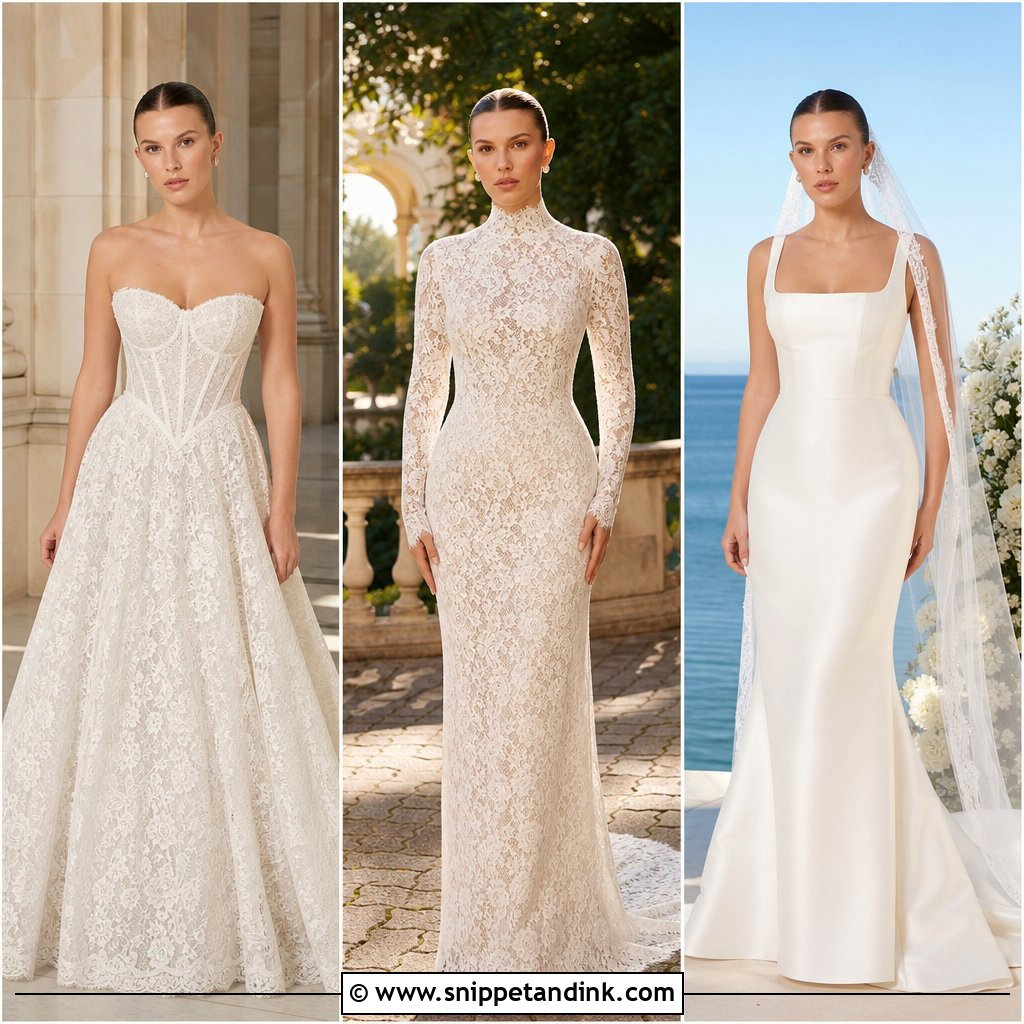
Black and white is the boldest way to do the 1920s. Keep the base ivory, a column or satin sheath, and bring the black in through geometric beading, velvet trim, a narrow waist detail or an embroidered cape. Black T-straps, crystal earrings and an ivory clutch with a small dark accent finish it; a plain veil softens the contrast, a black jeweled comb sharpens it. Avoid mixing patterns. I’d also warn your photographer, since high-contrast dresses need careful exposure so the ivory doesn’t blow out and the black doesn’t lose its detail.
Beads and Fringe Shed: Pack a Small Repair Kit
Beaded and fringed gowns lose a few pieces over a long evening. That’s normal, and a tiny kit handed to your maid of honour covers most of it.
- A needle already threaded with matching thread, plus a few safety pins.
- Spare beads or sequins; ask the shop or seamstress for offcuts at the last fitting.
- Clear tape for a loose hem and a lint roller if there are feathers.
- A small pair of scissors for any snagged thread, so nobody pulls it and unravels a row.
Sitting is where damage happens. I tell brides to smooth the skirt under them as they sit and avoid rough chair cushions, which pull beads loose. Fringe tangles when it’s crushed, so shake it out gently each time you stand.
Afterwards, never hang a heavily beaded dress for months. The weight stretches the fabric at the shoulders. Clean it, then store it flat in acid-free tissue in a cool, dry cupboard.
One Shape, Two Period Details, and Shoes You Can Dance In
Beading, fringe, pearls, geometric lace, low backs and dropped waists all point to the Jazz Age, but you don’t need all of them at once. Start with the shape you feel best in, then add one or two details from the era. Think about the venue, the season, how long you’ll be on your feet and how formal the day is. A plain satin gown with the right comb, T-straps and earrings can say 1920s just as clearly as a fully beaded column, and it will still look like you in twenty years.
You'll Like These Ideas:



Leave a Reply