
Italian bridal style is less about a single look than about restraint. Fine lace, fluid satin, a sculpted bodice and a clean train, with very little added on top. It mixes old-world romance with modern simplicity, so it travels well from a villa terrace to a coastal ceremony, a city hall or a garden lunch. When I dress a bride in this spirit, I usually take accessories away rather than add them, because the fabric and the fit are meant to carry the outfit. The most dramatic gown is rarely the right one. The right one suits the setting and your body and still feels natural at the last dance. From lace gowns to silk slips, these Italian Style Wedding Dress Ideas are all wearable, with notes on how each behaves once you’re in it.
Cobblestones, Church Steps and the Afternoon Sun
If you’re actually marrying in Italy, or at a venue built in that style, the setting will test the dress in ways a boutique floor never does. I plan for three things.
- Old streets and courtyards are uneven stone. Thin stilettos catch between cobbles, so choose block heels or add heel protectors, and have the hem set to clear the ground slightly.
- Historic churches often have long flights of steps and narrow aisles. A cathedral train needs someone to manage it on stairs, and a bustle that can be hooked up quickly for the walk out.
- Summer sun in the early afternoon is strong and warm. Silk, crepe and light organza breathe far better than heavy satin or mikado, and a long veil gives a little shade for the ceremony.
Check the dress code for a church ceremony as well. Many Catholic churches expect covered shoulders inside, so a strapless gown may need a bolero, a light cape or a lace shrug for the service. It’s simple to plan for and awkward to discover on the morning.
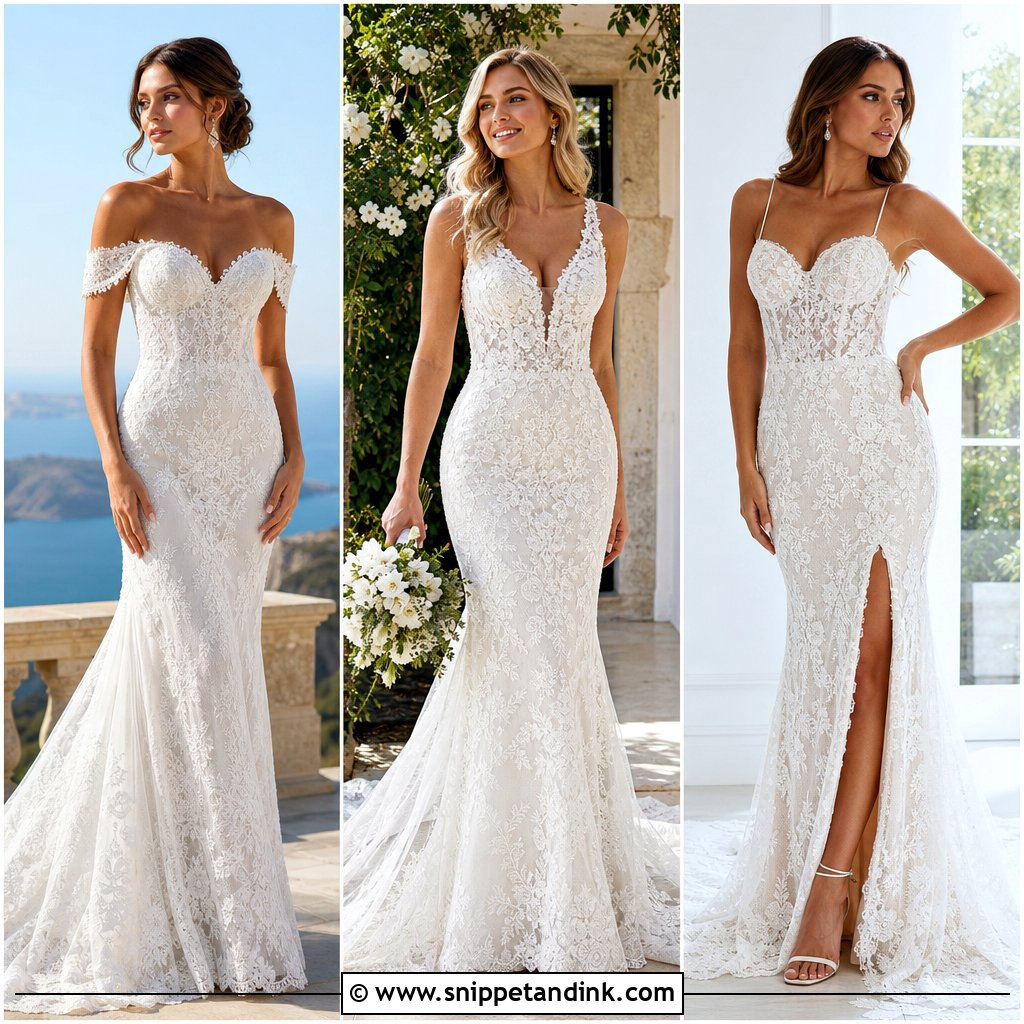
1. Italian Lace Wedding Dress
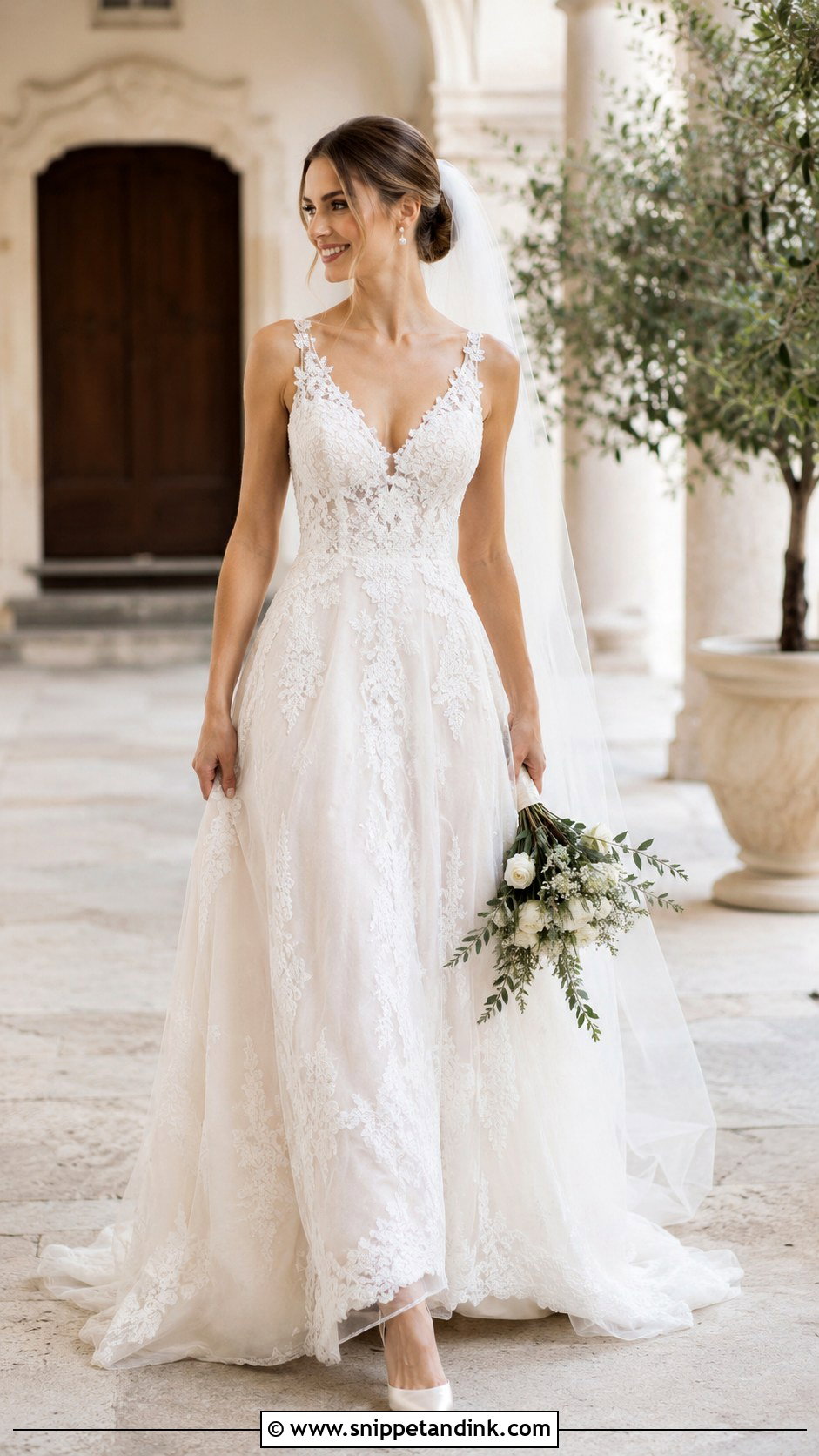
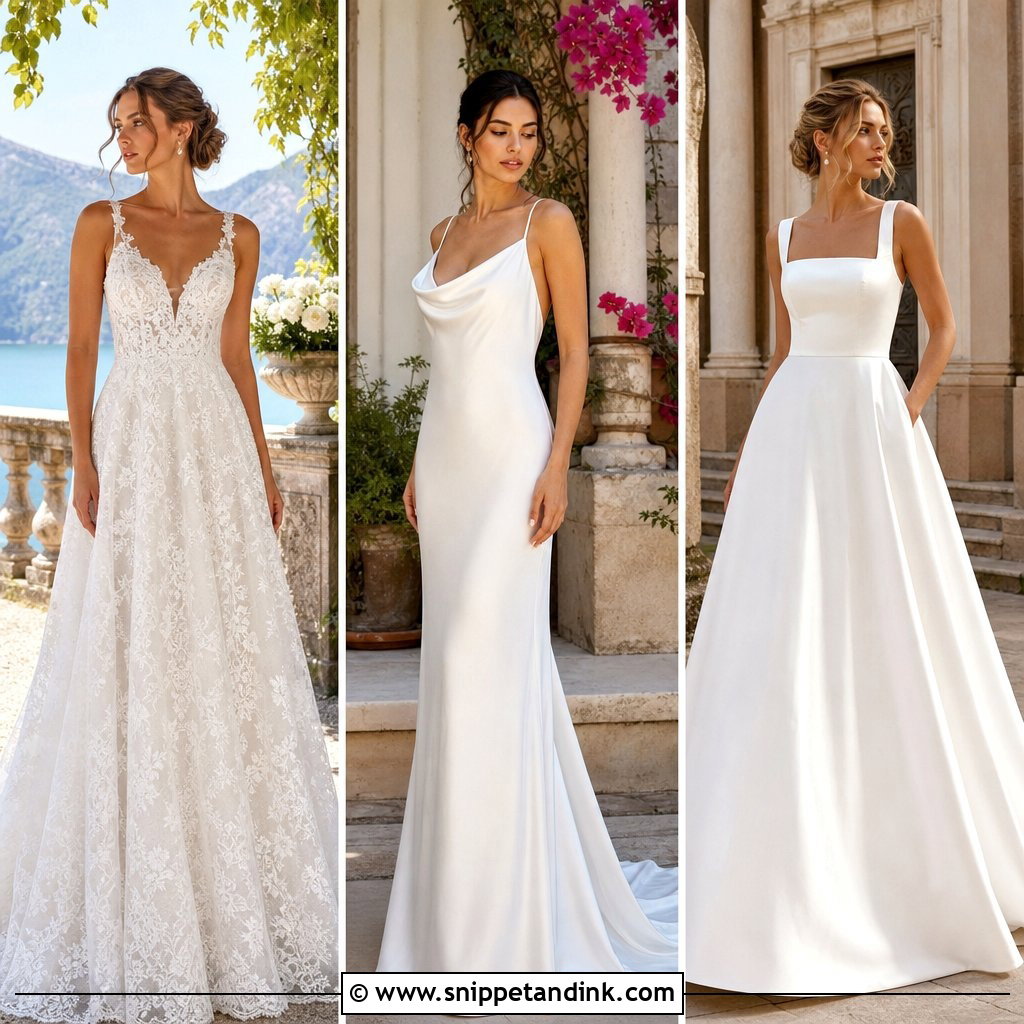
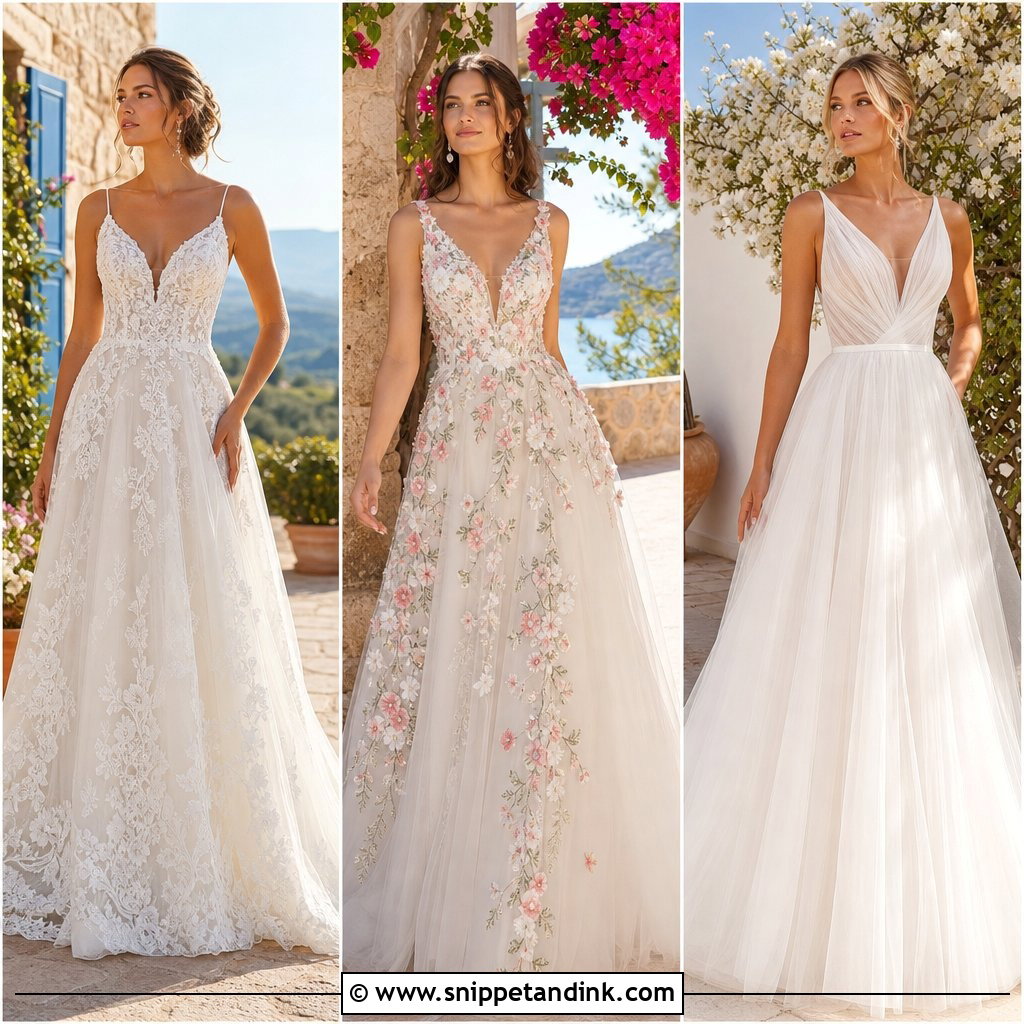
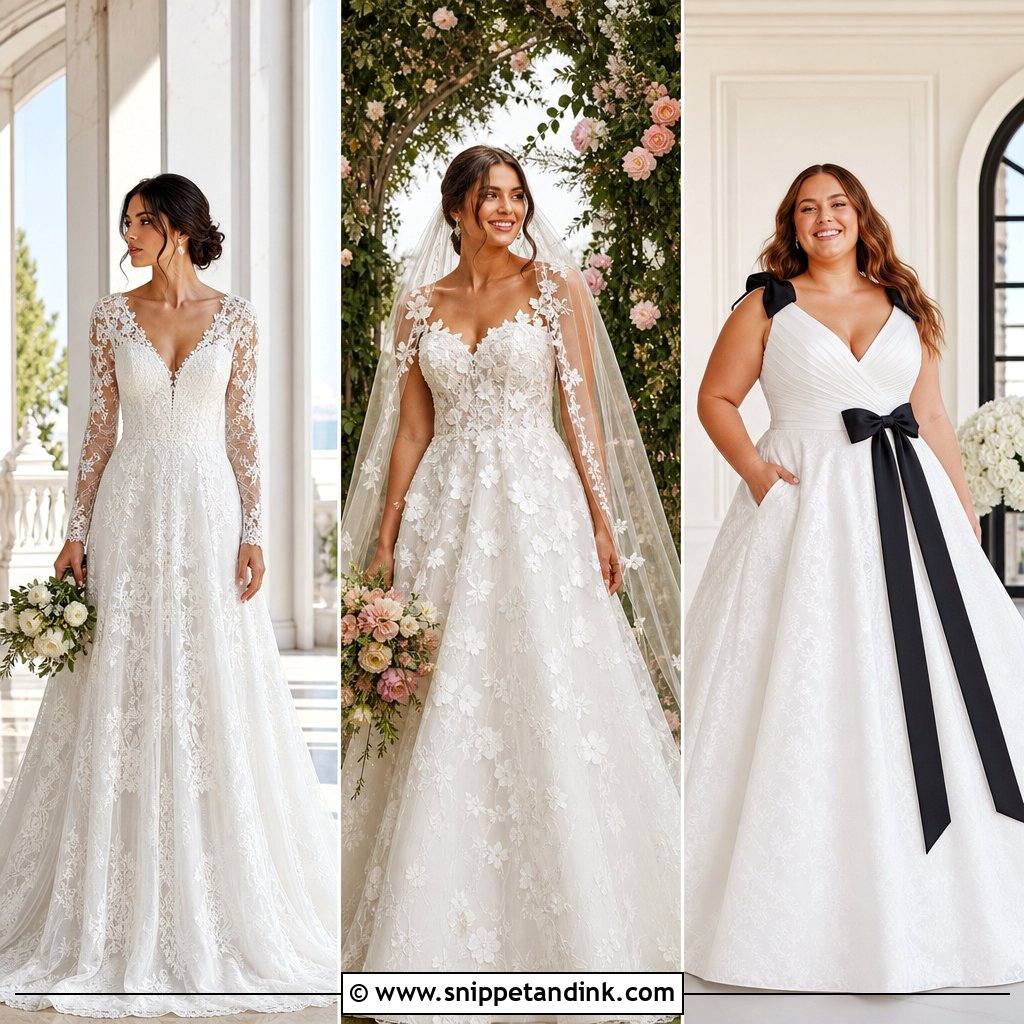
Lace is the heart of Italian romance, and the type of lace changes everything. Chantilly is fine and flat, almost like a drawing on tulle; corded or embroidered lace has more relief and reads from farther away. A fitted bodice with a gentle A-line suits most figures because it marks the waist and leaves room to move. Pearl earrings, a sheer veil and pointed satin heels complete it. For a modern take, I’d choose long lace sleeves with a clean neckline over heavy beading. Ask to see the back of the lace too: well-finished lace has trimmed, hand-sewn edges, not visible cut threads.
2. Italian Satin Wedding Dress
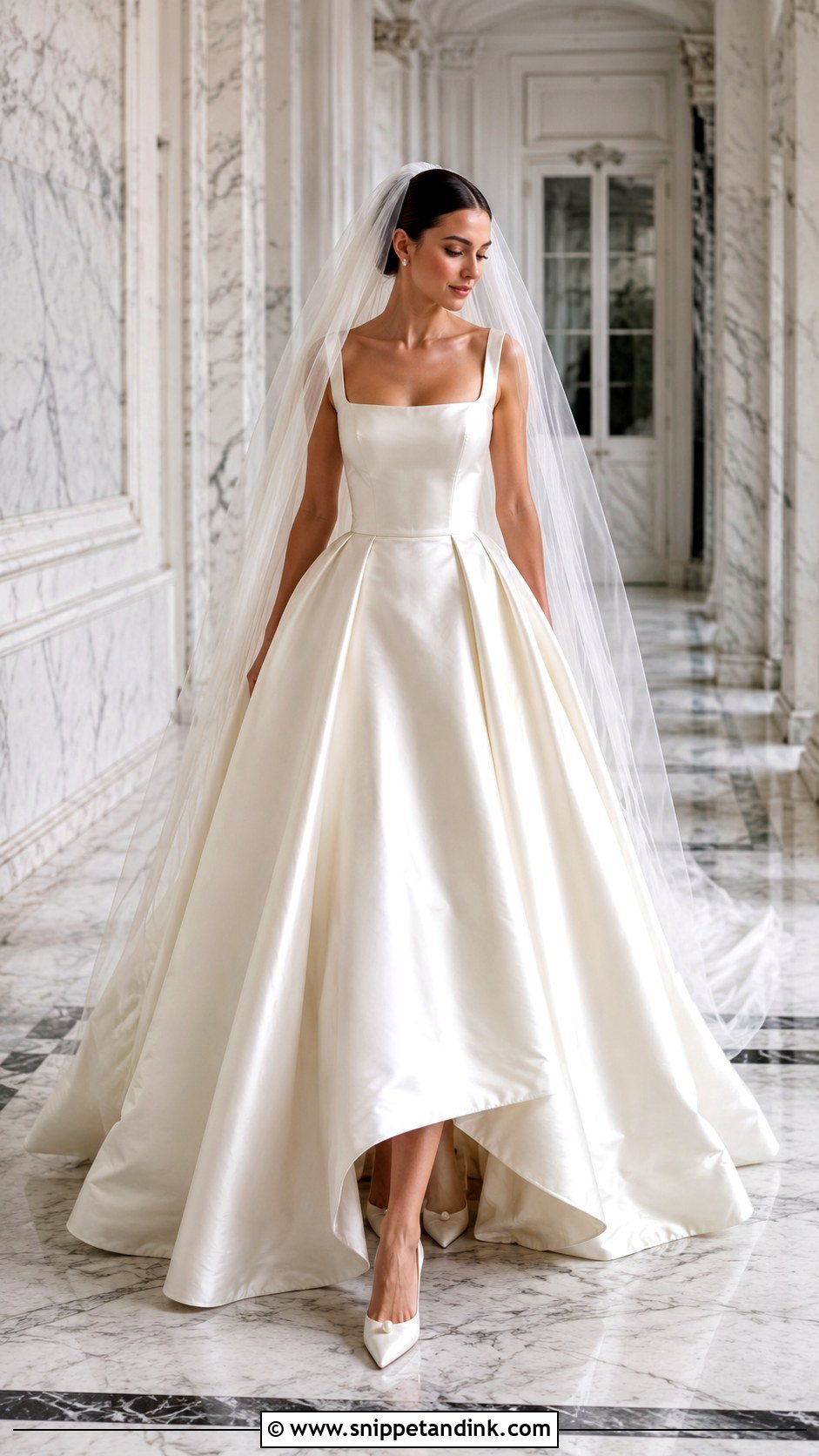
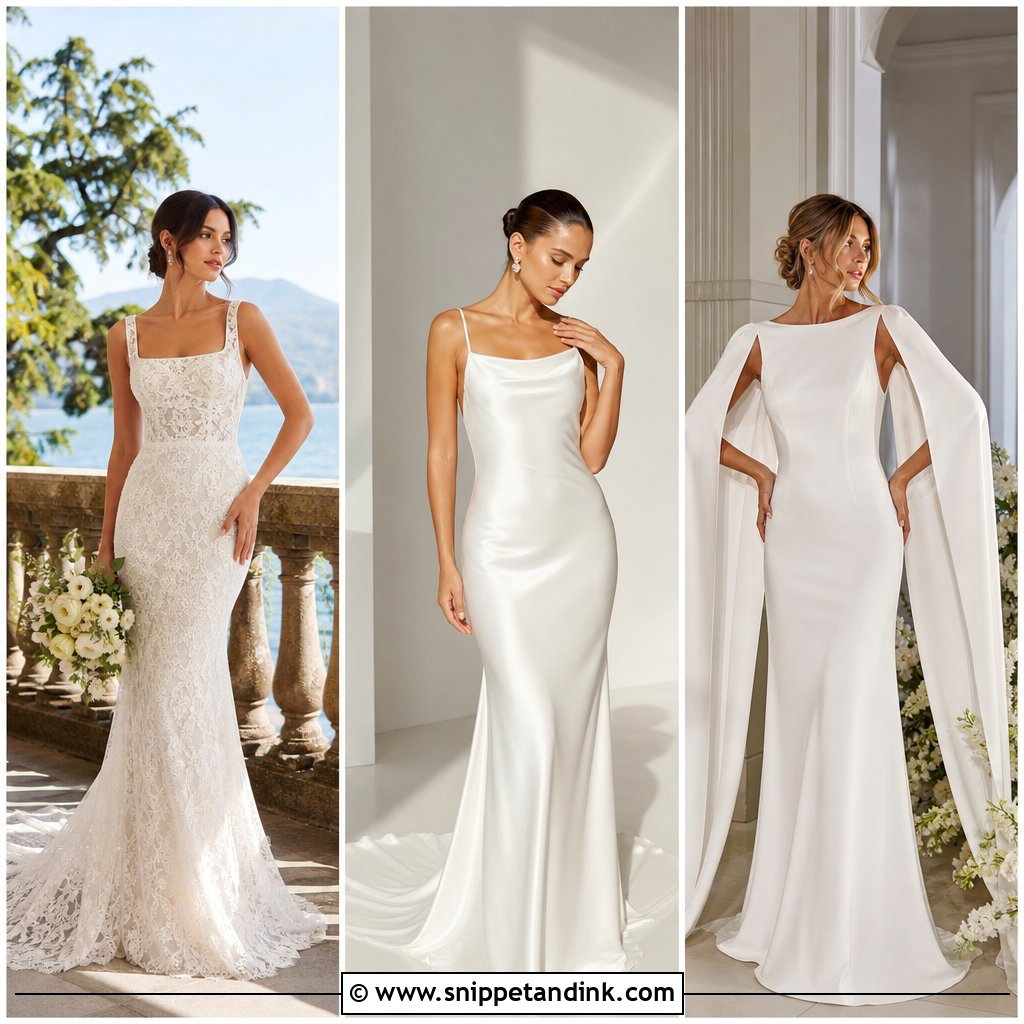
Satin looks expensive with almost no styling, which is exactly why it suits this aesthetic. A structured satin gown with a square neckline and full skirt feels architectural; a bias-cut satin slip feels fluid. Satin creases at the hip whenever you sit, so I’d steer a bride toward a heavier weight that recovers rather than a thin, glossy one that holds every mark. Ivory, soft white and champagne all work. Keep the rest simple: a sleek bun, pearl studs and classic pumps, with a long veil for the ceremony.
3. Italian Off Shoulder Wedding Dress
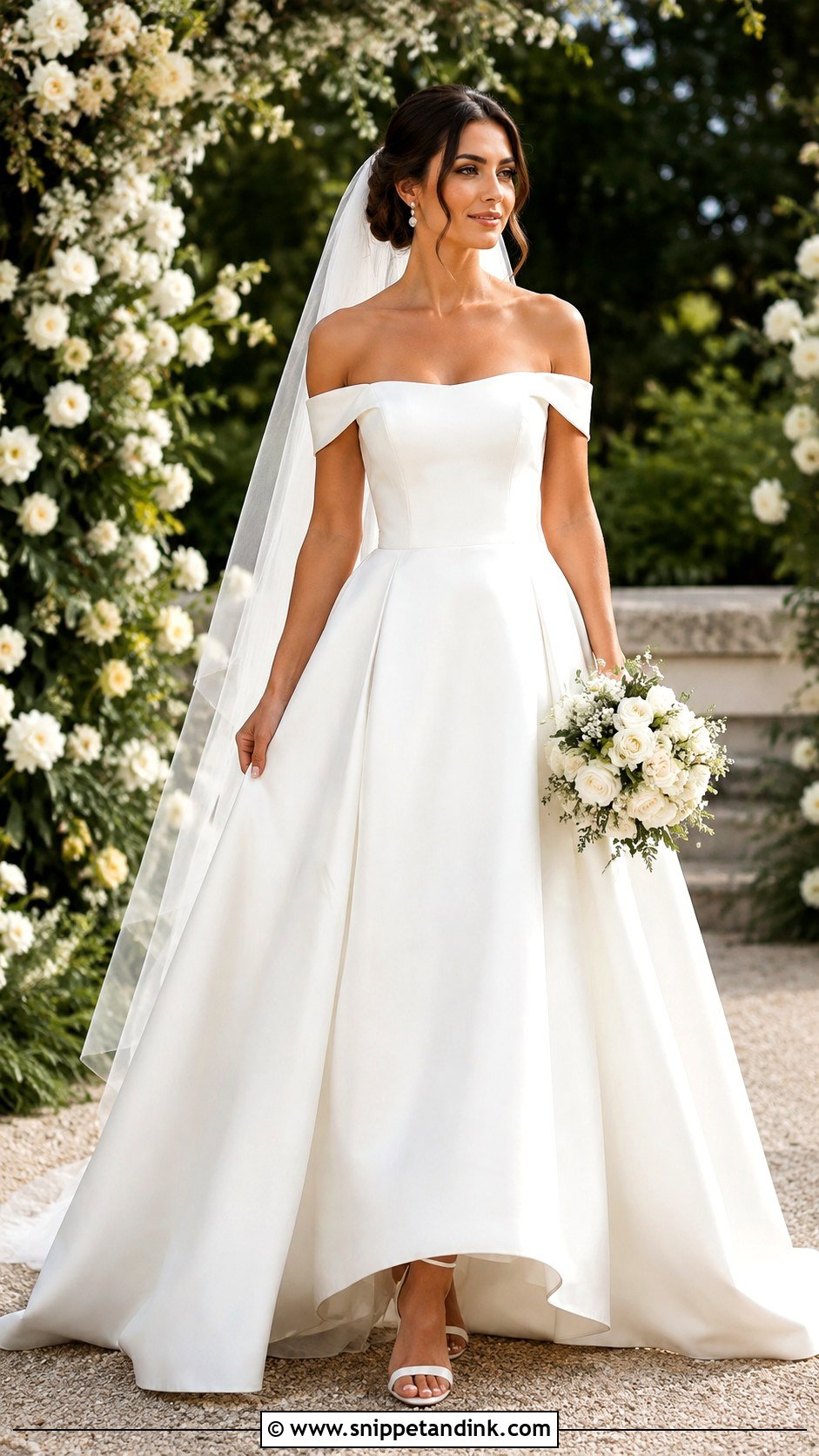
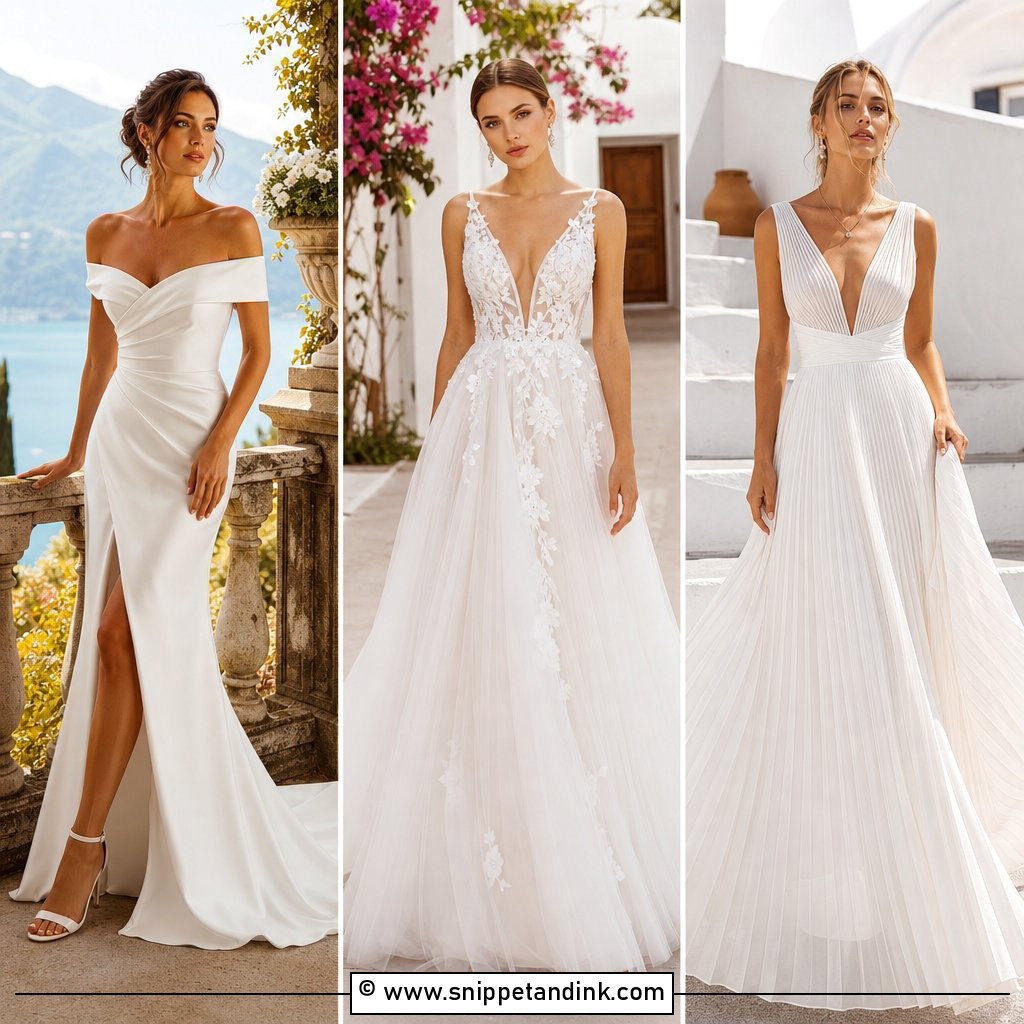
An off-the-shoulder neckline frames the collarbone and shoulders and softens a structured gown. Mikado, satin and lace all suit it; a fitted bodice with an A-line skirt is classic, while a mermaid adds drama. This neckline needs a good internal structure, otherwise the band creeps up as you move your arms, and I always have brides lift and hug at the fitting to check. Drop earrings and a low chignon show off the shoulders. If the dress is plain, a lace veil adds texture; if it’s already detailed, keep everything else quiet.
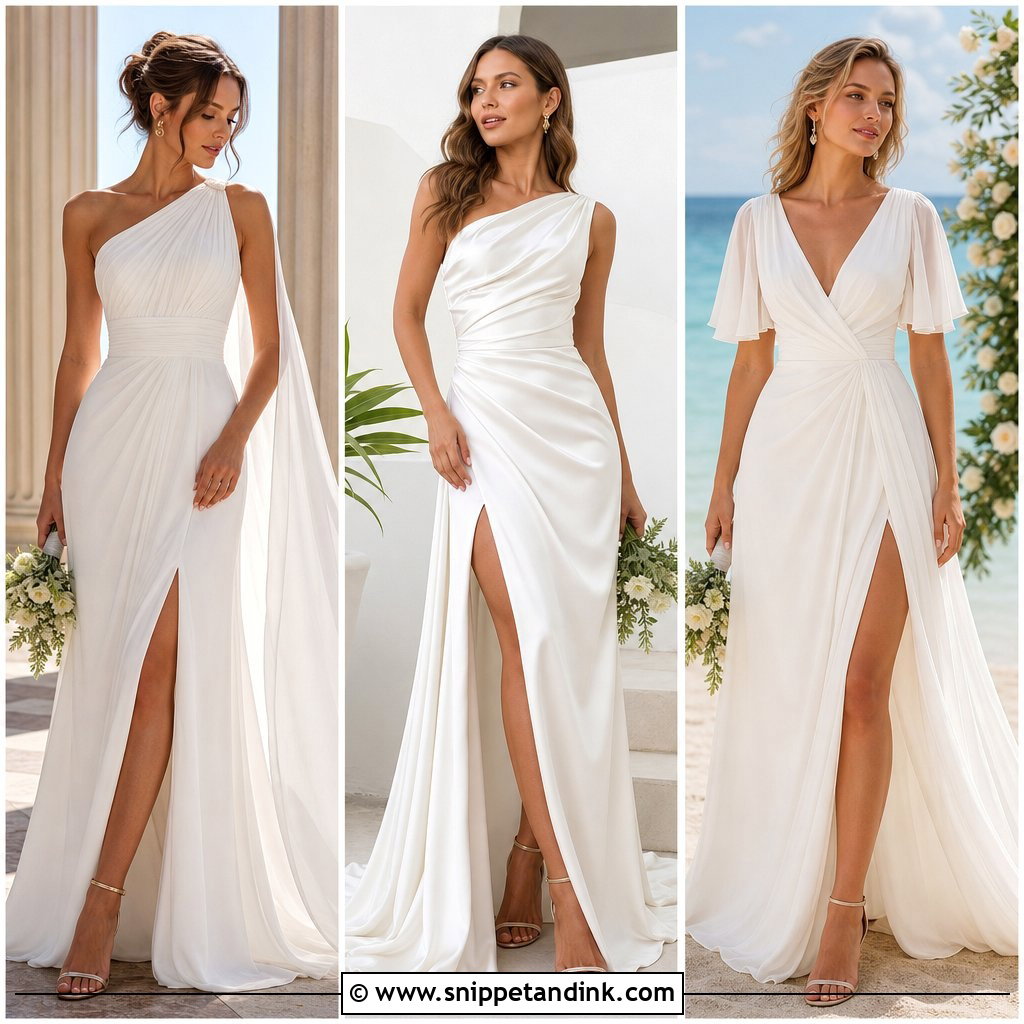
4. Italian Silk Slip Wedding Dress
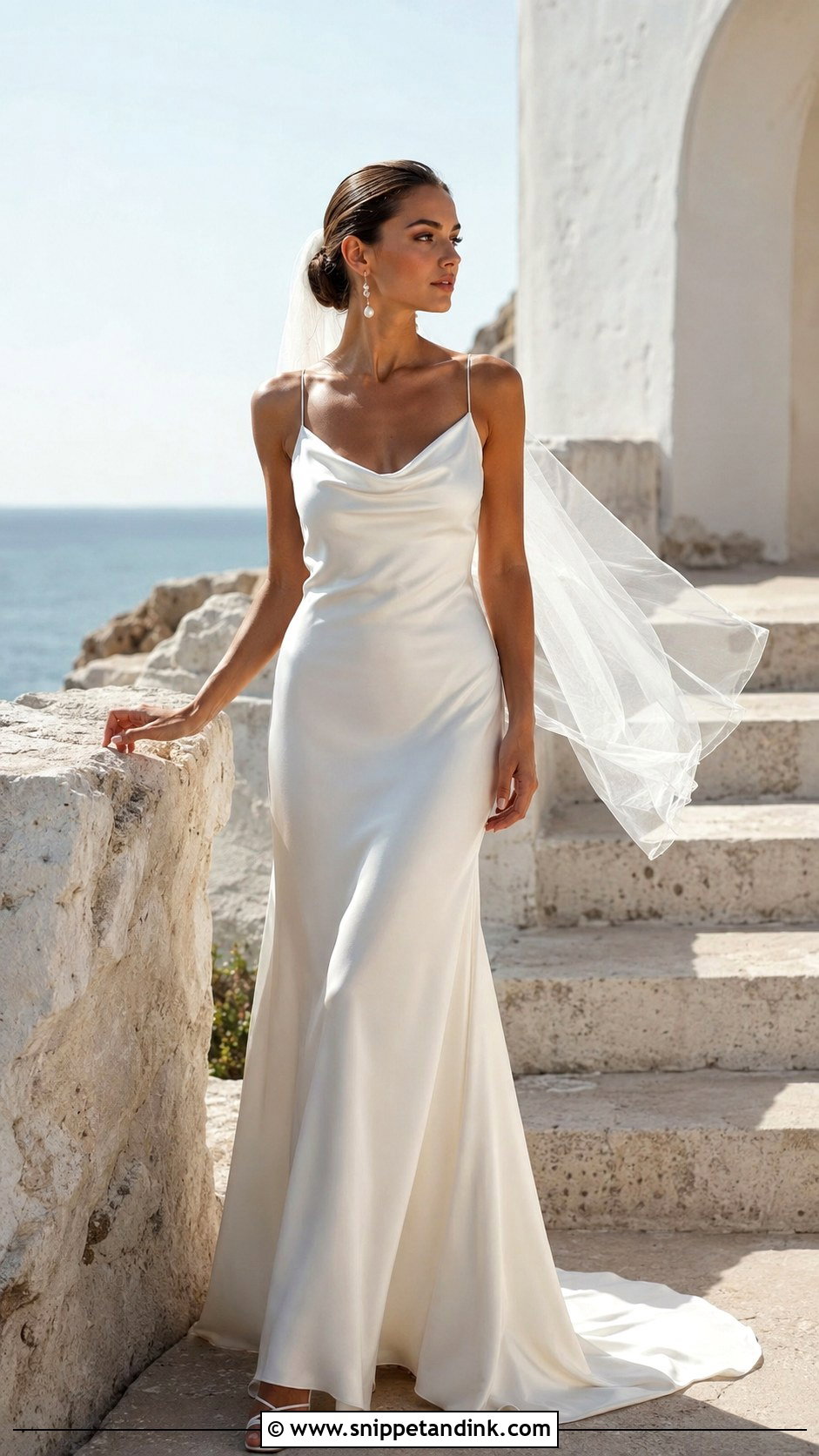
A slip shows off fabric and cut more than any other dress, so its quality has nowhere to hide. Choose a bias-cut silk gown that skims the body without clinging. Bias silk stretches slightly over time on the hanger, which is why I’d do the final hem only after the dress has hung for a while. Thin straps, a cowl neckline or a low back keep it modern. Smooth, edge-free underwear is essential. Strappy ivory heels, pearl drops and a soft veil complete a look that suits intimate ceremonies, the coast or a city wedding.
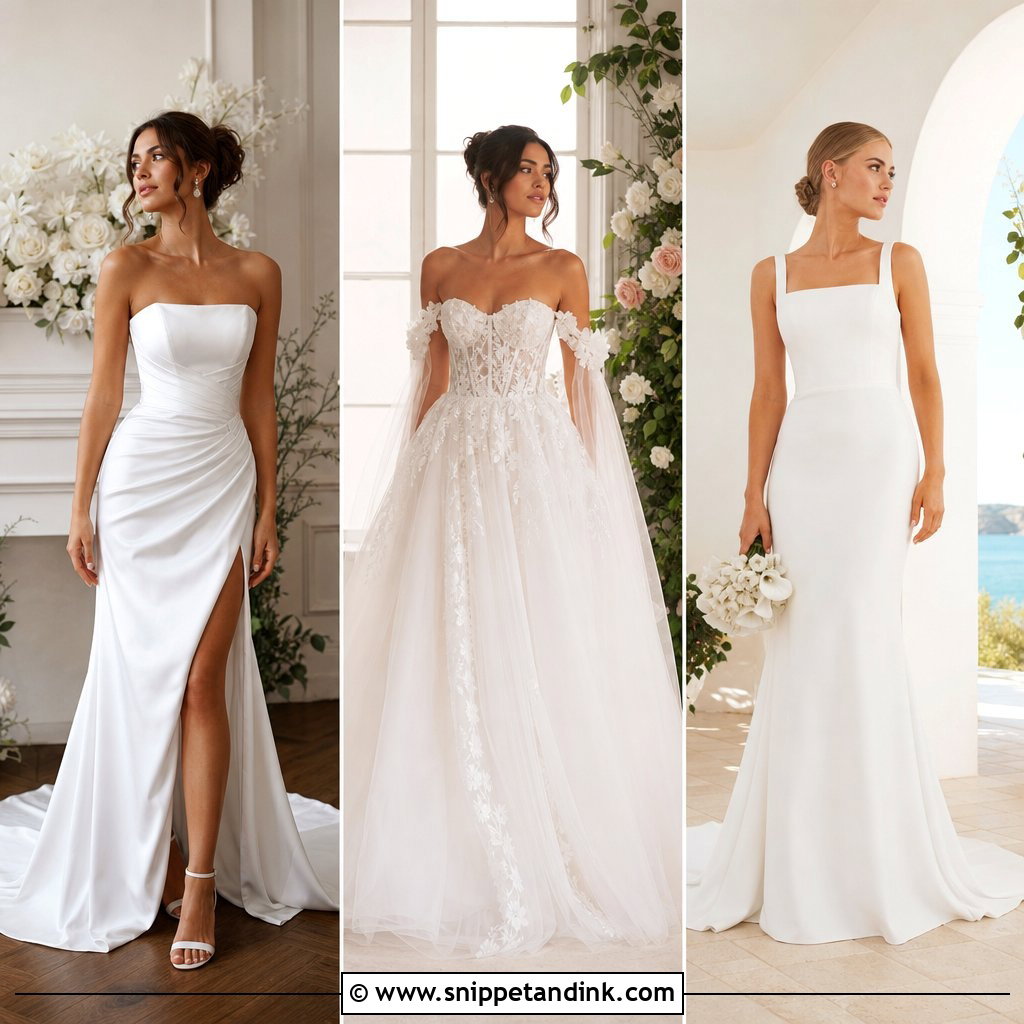
5. Italian Corset Wedding Dress
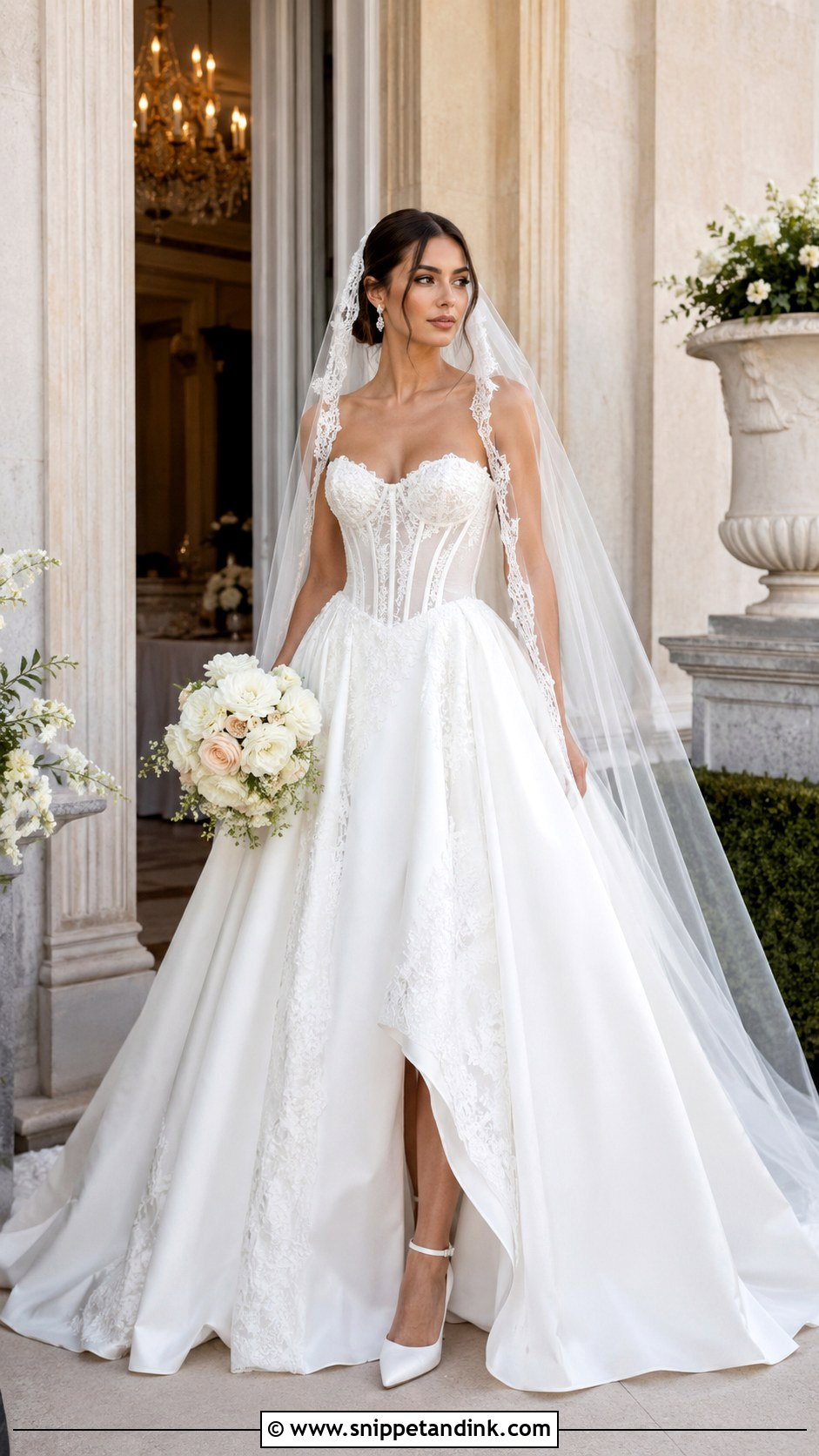
Corsetry gives a defined, sculpted shape, and done well it looks more tailored than theatrical. Look for a softly shaped bodice with visible boning over a full or fitted skirt, in silk, lace or mikado. A drop-waist corset feels current; a natural waistline is more classic. A corset should be fitted while you sit as well as stand. Boning that digs in at the hip when seated will be painful by dinner. Finish with a chapel veil, delicate earrings and elegant heels. The shape does enough on its own that sparkle is unnecessary.
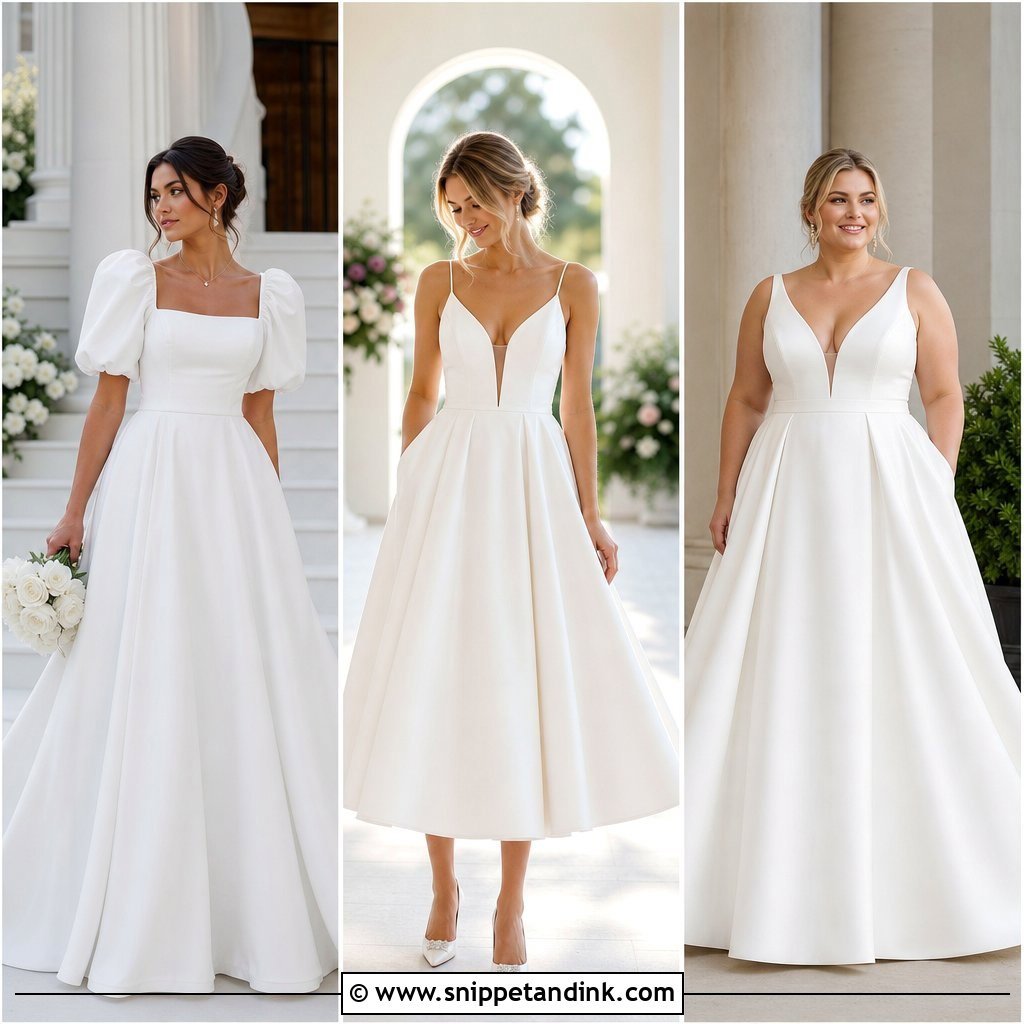
6. Italian A Line Wedding Dress
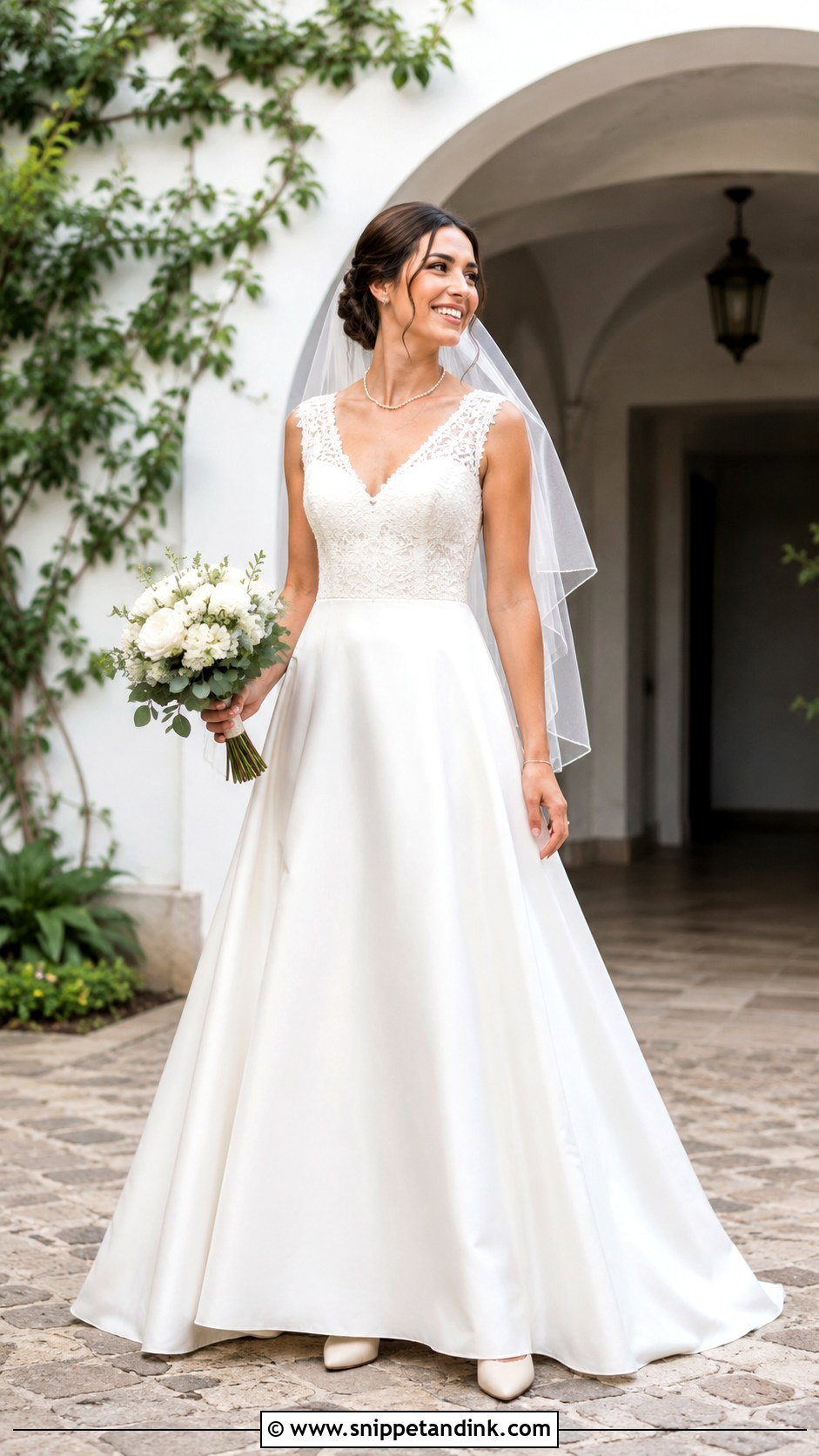
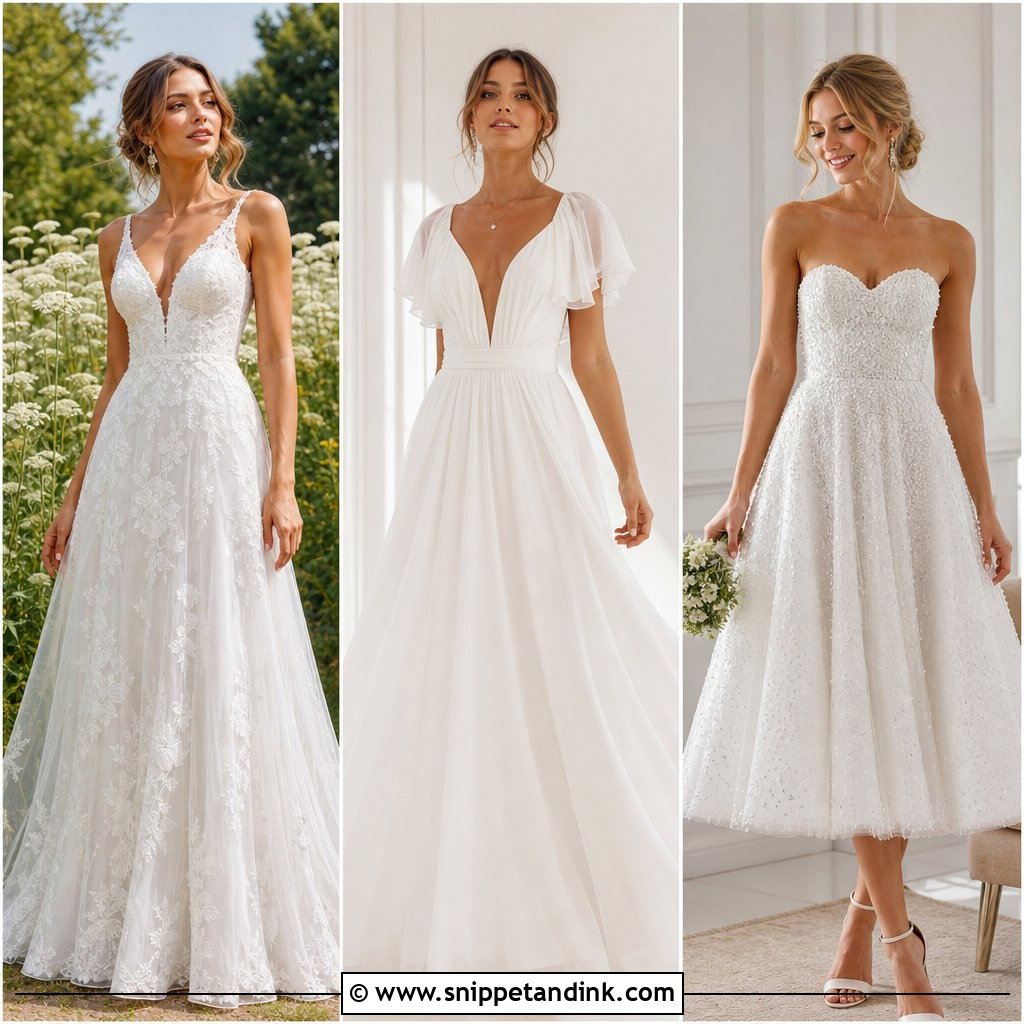
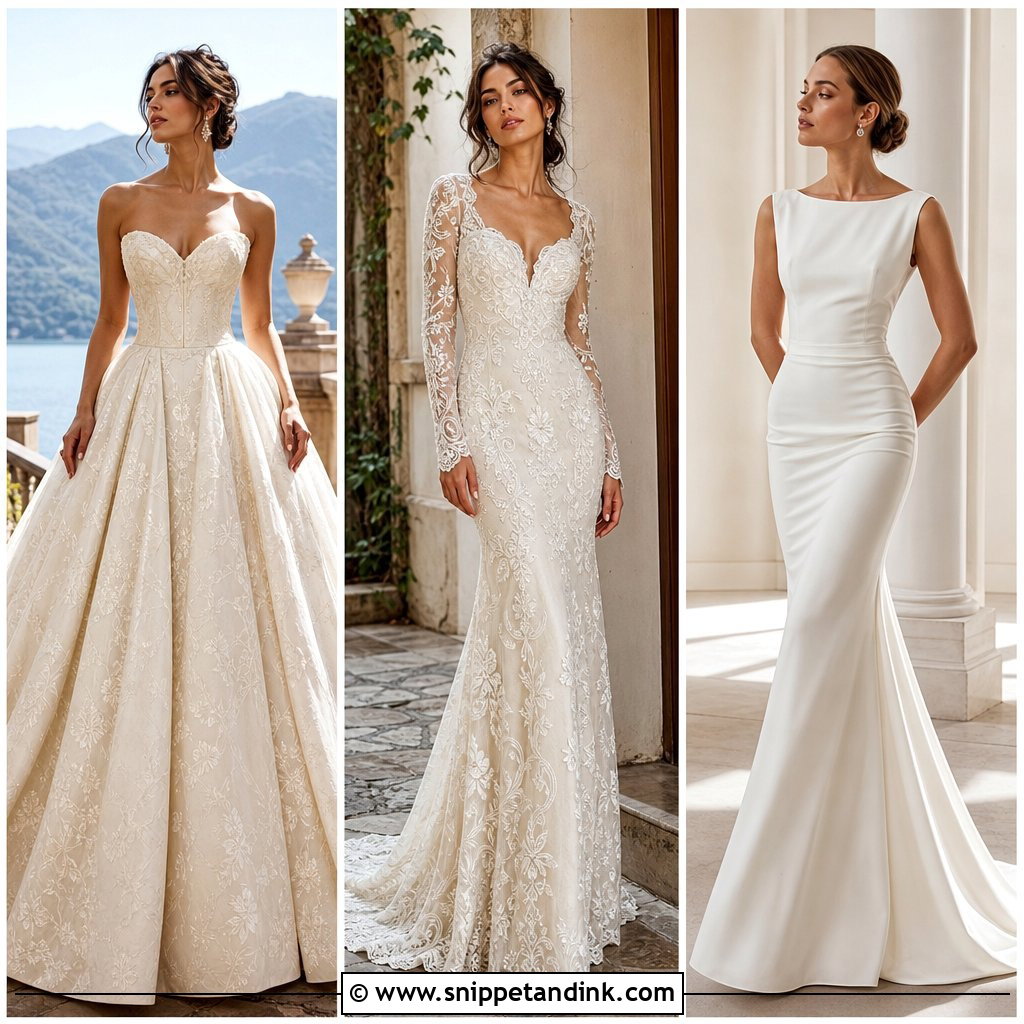
The A-line is the reliable choice: fitted through the bodice, gently opening from the waist, and easy to walk and sit in. Lace gives romance, satin a clean finish and organza a lighter effect. Square, sweetheart and bateau necklines all suit it, and the neckline is where I’d spend your decision, since it changes the whole outfit far more than the skirt does. A medium-length veil, soft waves and closed-toe heels complete it. This shape works equally well in a grand hall, a courtyard or a formal reception.
7. Italian Ball Gown Wedding Dress
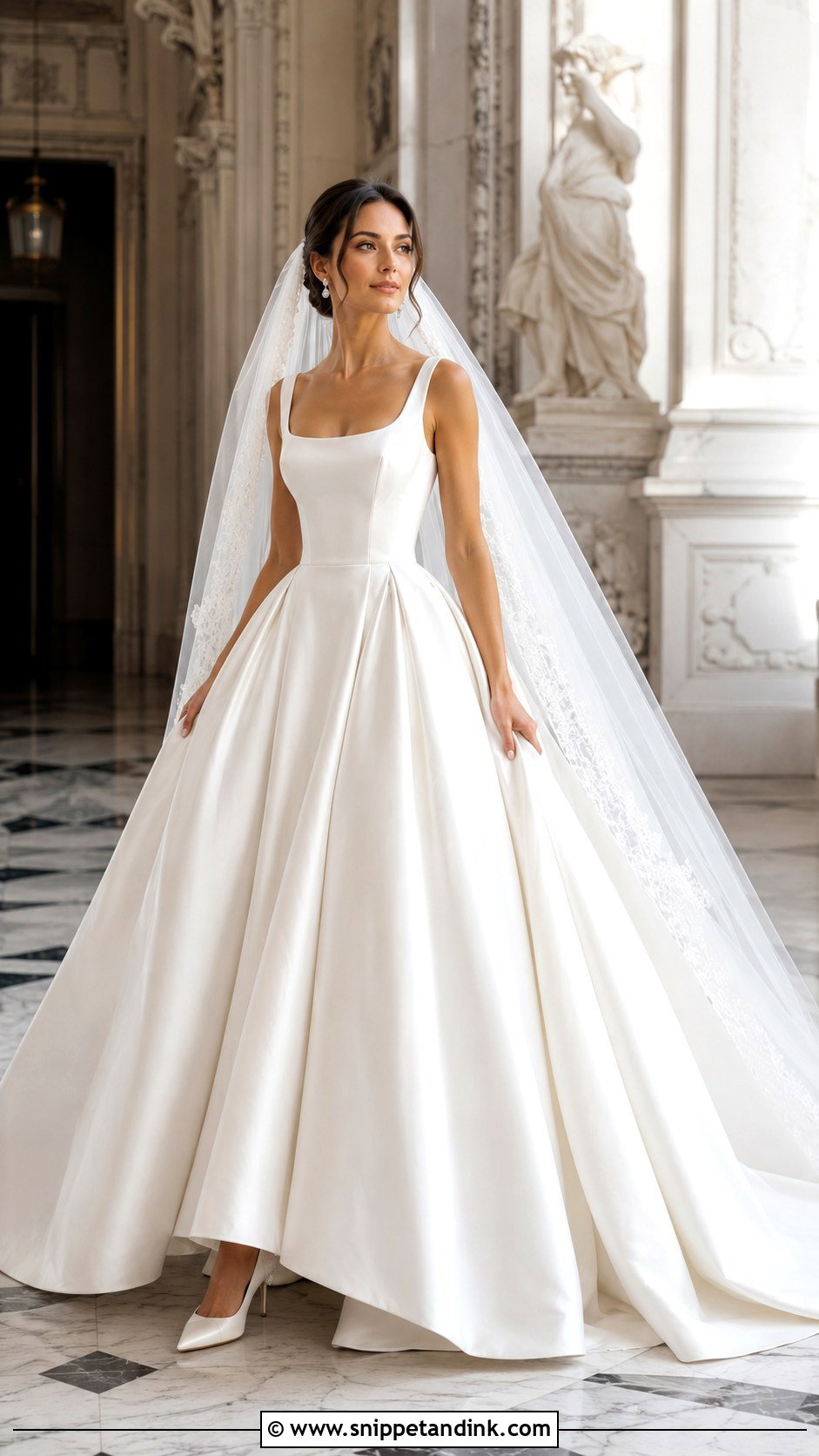
A ball gown in the Italian spirit is about fabric and proportion, not layers of sparkle. Satin or mikado with a fitted bodice looks regal; a lace bodice softens it. Keep the skirt full but not so heavy that stairs and outdoor photos become a struggle, because historic venues often mean steps, gravel and uneven stone. I’d ask how much the gown weighs before ordering. A cathedral veil, simple earrings and sleek heels are all it needs. Let the silhouette make the statement.
8. Italian Mermaid Wedding Dress
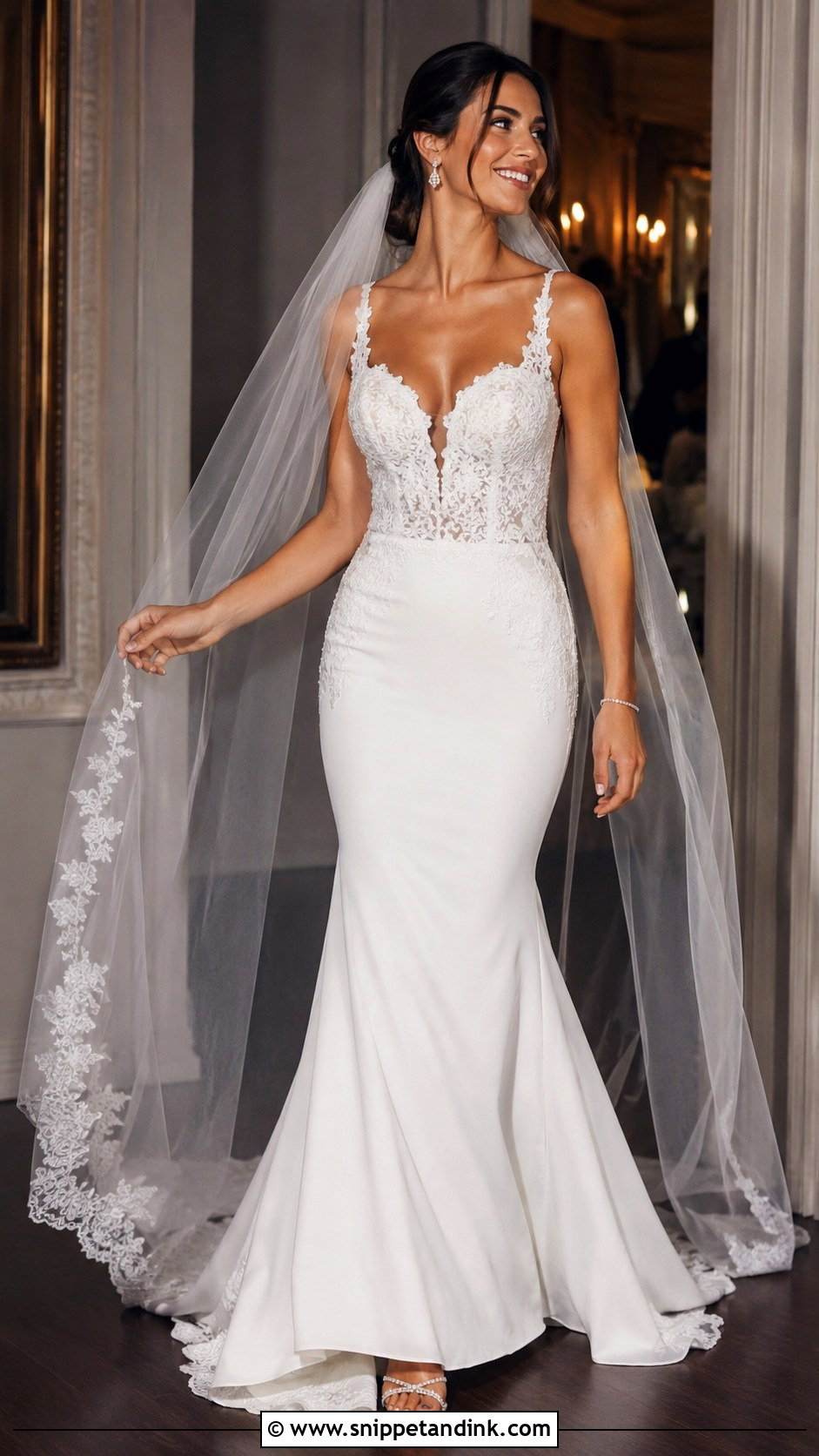
Mermaids are confident, and the Italian version keeps the details elegant rather than flashy: lace applique, smooth crepe or satin. The gown should fit through the bodice and hips and flare softly below the knee. The single most common problem I see is a flare set too low, which makes walking a shuffle and sitting nearly impossible, so check both at the fitting. Pair it with a long veil, a fine bracelet and heeled sandals or pumps. It suits formal indoor receptions and evening ceremonies.
9. Italian Long Sleeve Wedding Dress
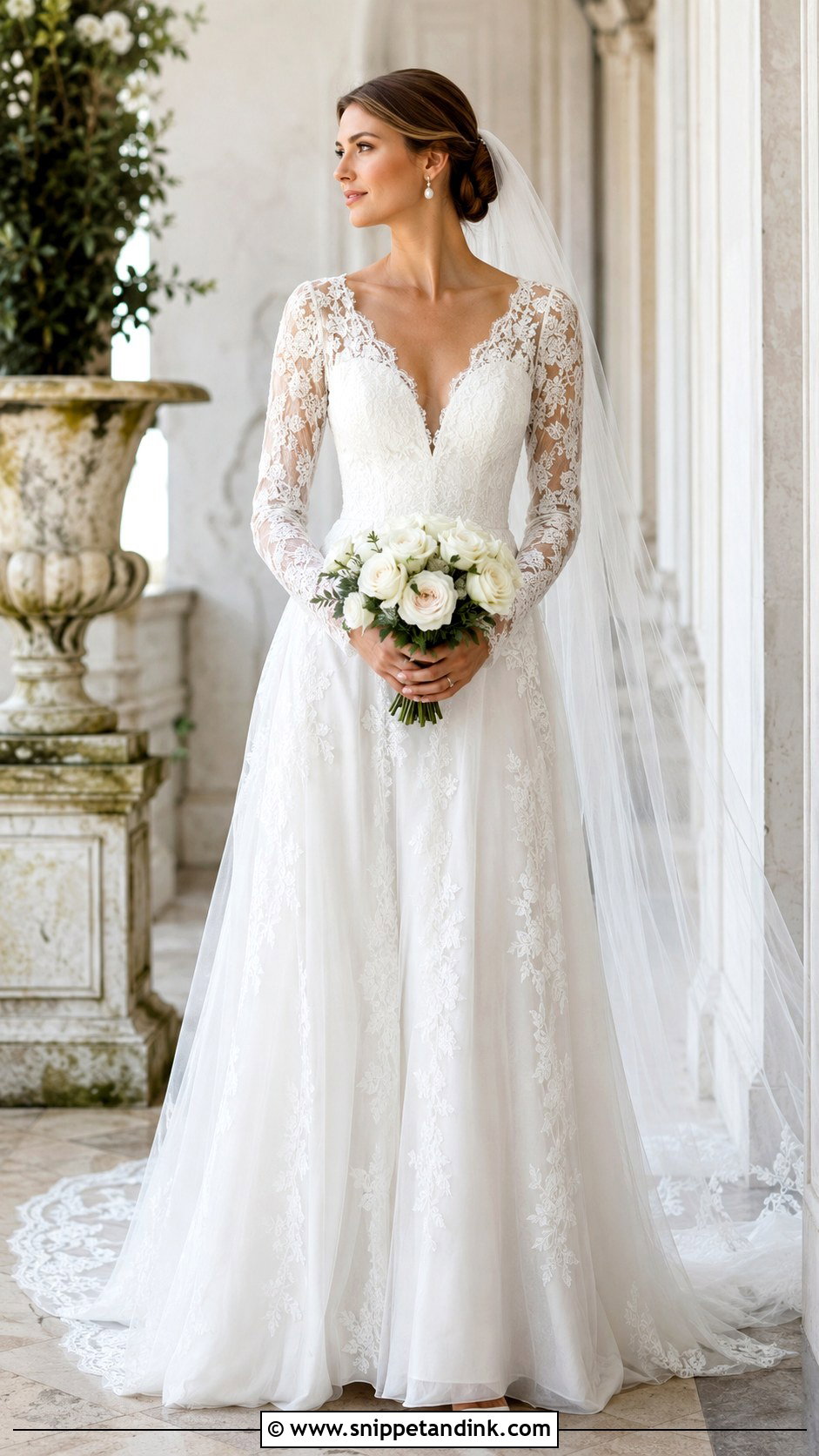
Sleeves bring a quiet grace to a gown. Italian style tends to use them in lace, sheer tulle or soft crepe, giving coverage without weight. Lace sleeves look classic; clean fitted ones feel modern. With a high neckline the look turns formal, while a V-neck or square neck keeps it lighter. Fitted sleeves need room at the elbow and underarm, or you can’t raise a glass comfortably. I check that with every long-sleeve bride. Pearl earrings, a low bun and simple satin shoes complete it for cooler seasons, formal venues or a modest look, and the sleeves add detail in close-ups.
10. Italian Square Neck Wedding Dress
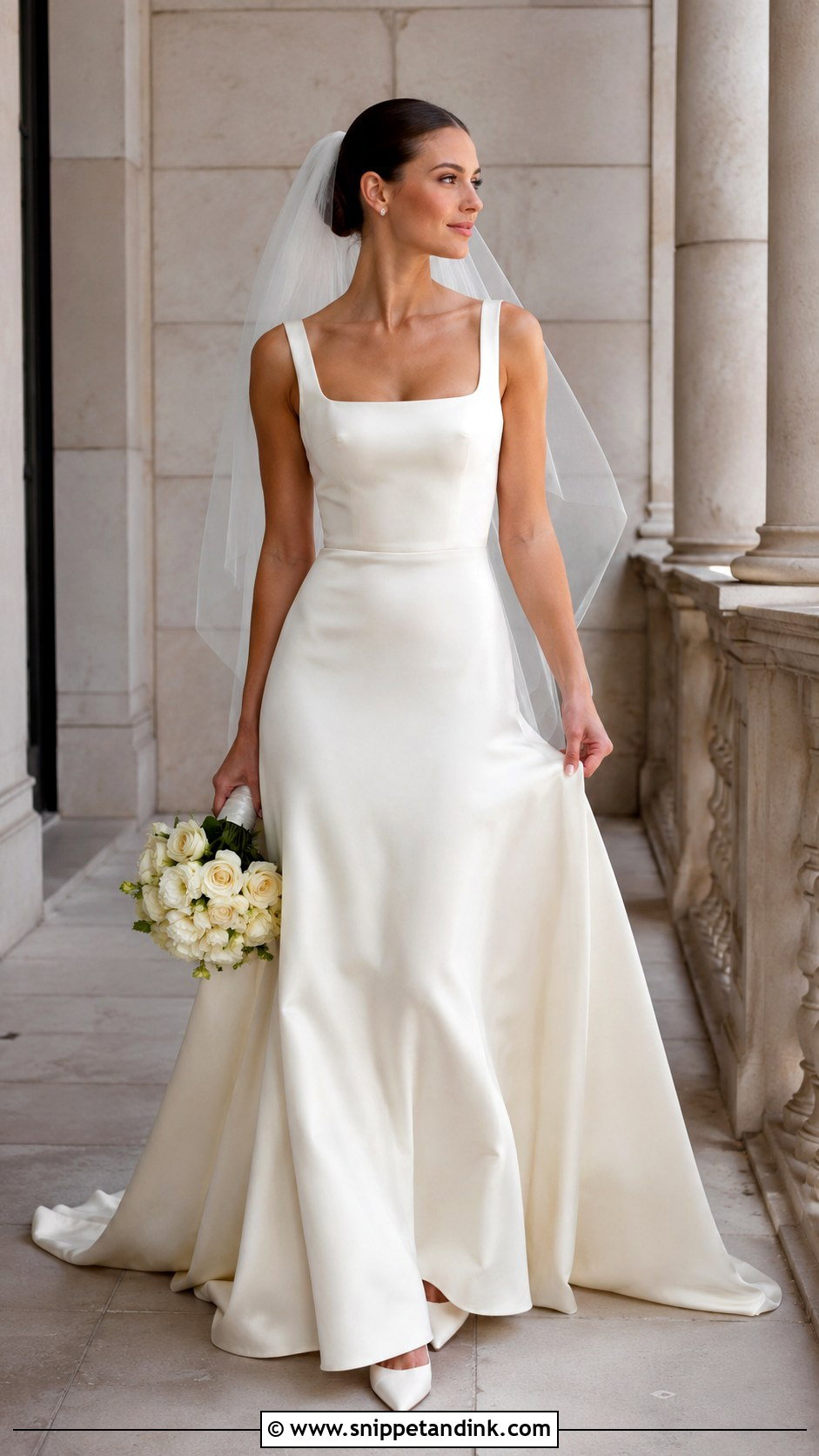
A square neck frames the face neatly and suits almost any silhouette, from a fitted satin gown to a full A-line. It also gives a strong horizontal line that balances wider hips. For the Italian look, choose a high-quality fabric and keep the styling plain: a low bun, pearl studs and a soft veil. A square neck shows a mismatched strap immediately, so the fit across the corners has to be exact. If you want more detail, lace trim around the neckline or a textured fabric adds it without fuss.
11. Italian High Neck Wedding Dress
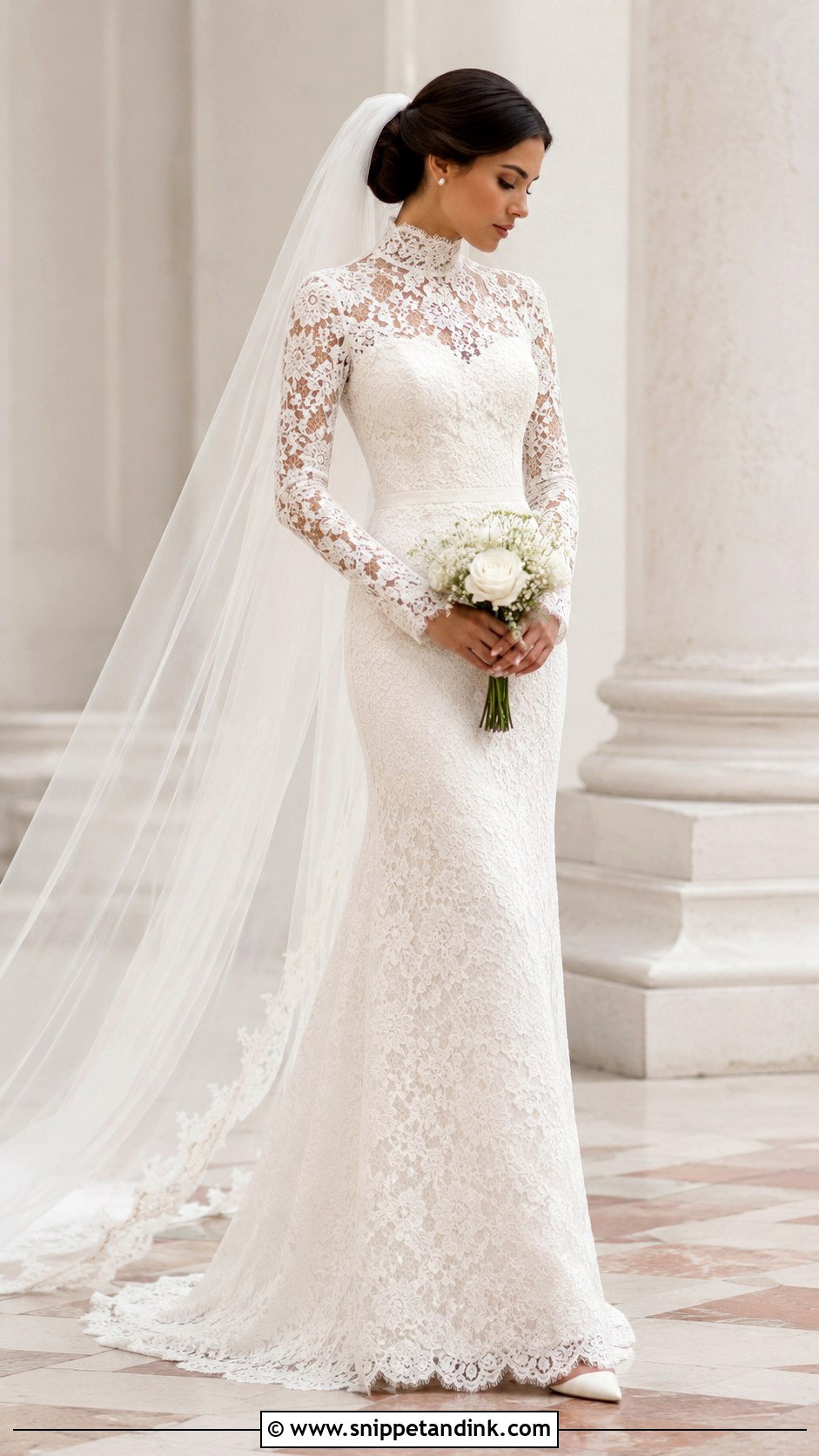
A high neck creates quiet drama and draws attention up to the face. It can lean vintage, modern or romantic depending on the fabric: lace feels soft and classic, crepe or satin sleek and contemporary. With the neckline doing the work, jewelry should be minimal, small pearl studs and a smooth updo. I’d keep hair up for this one, since loose hair tends to catch on and hide a high collar. A long veil adds softness. It pairs well with a column, a fitted gown or an A-line.
12. Italian Drop Waist Wedding Dress
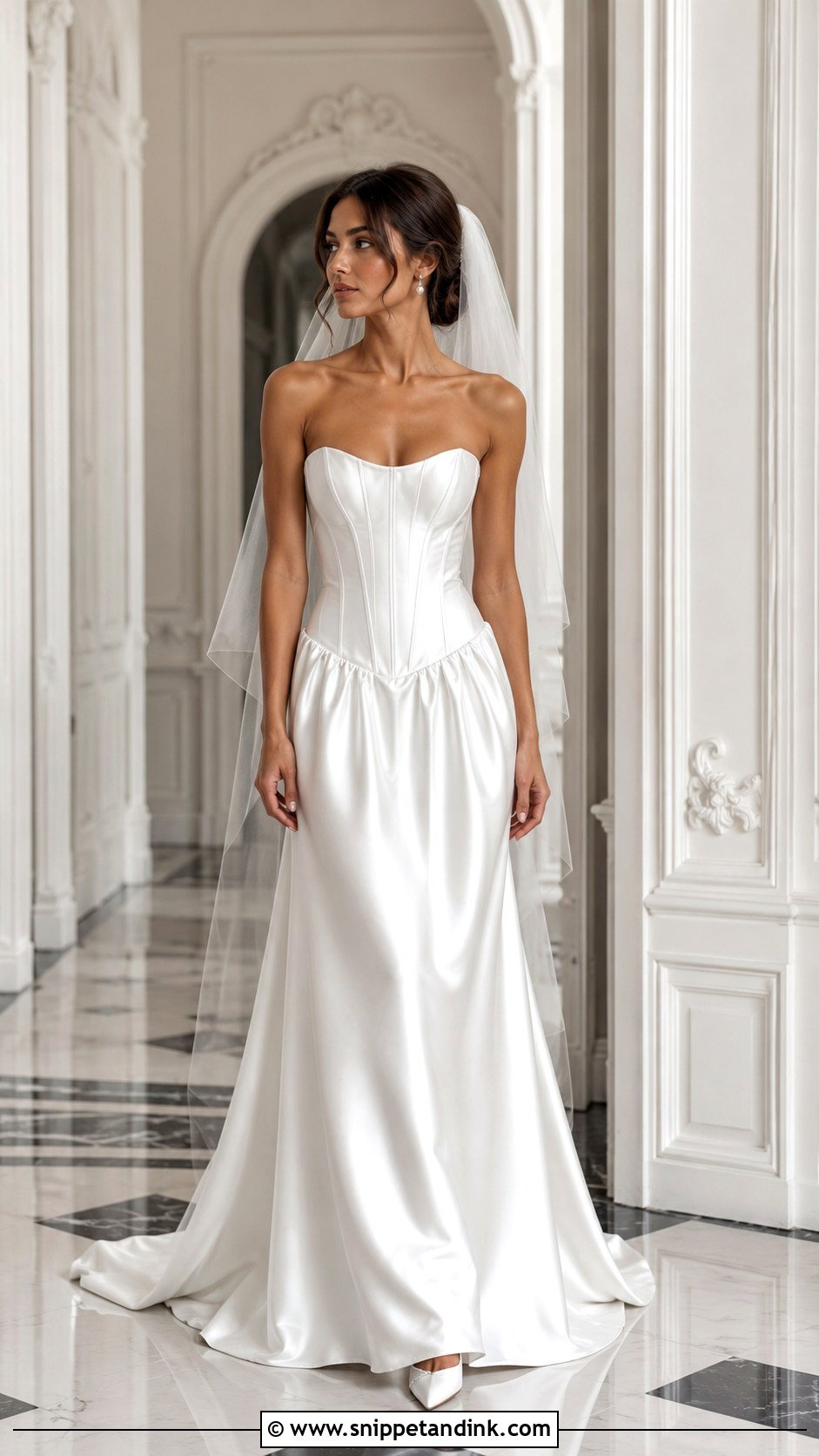
A drop waist extends the bodice below the natural waist, giving a longer torso line before the skirt starts. It is fashion-forward yet still bridal, in satin, lace or structured mikado. This shape flatters a long torso or a straight figure most easily; on a short torso it can make the legs look shorter, so I’d always try it next to a natural-waist version before deciding. Pair it with pointed heels, a soft veil and refined jewelry. A corseted drop waist looks dramatic, while a softer drop-waist A-line feels romantic.
13. Italian Tea Length Wedding Dress
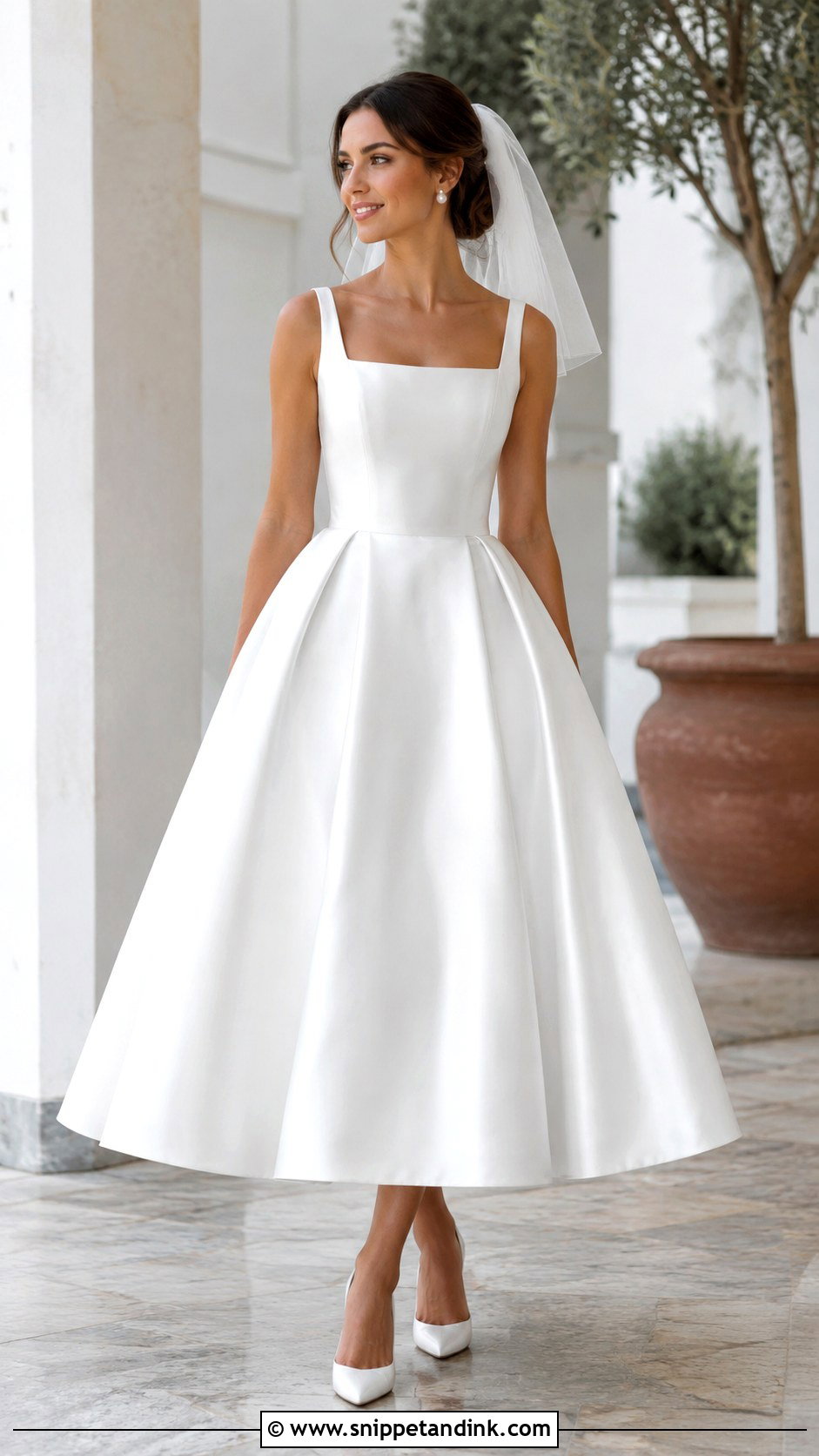
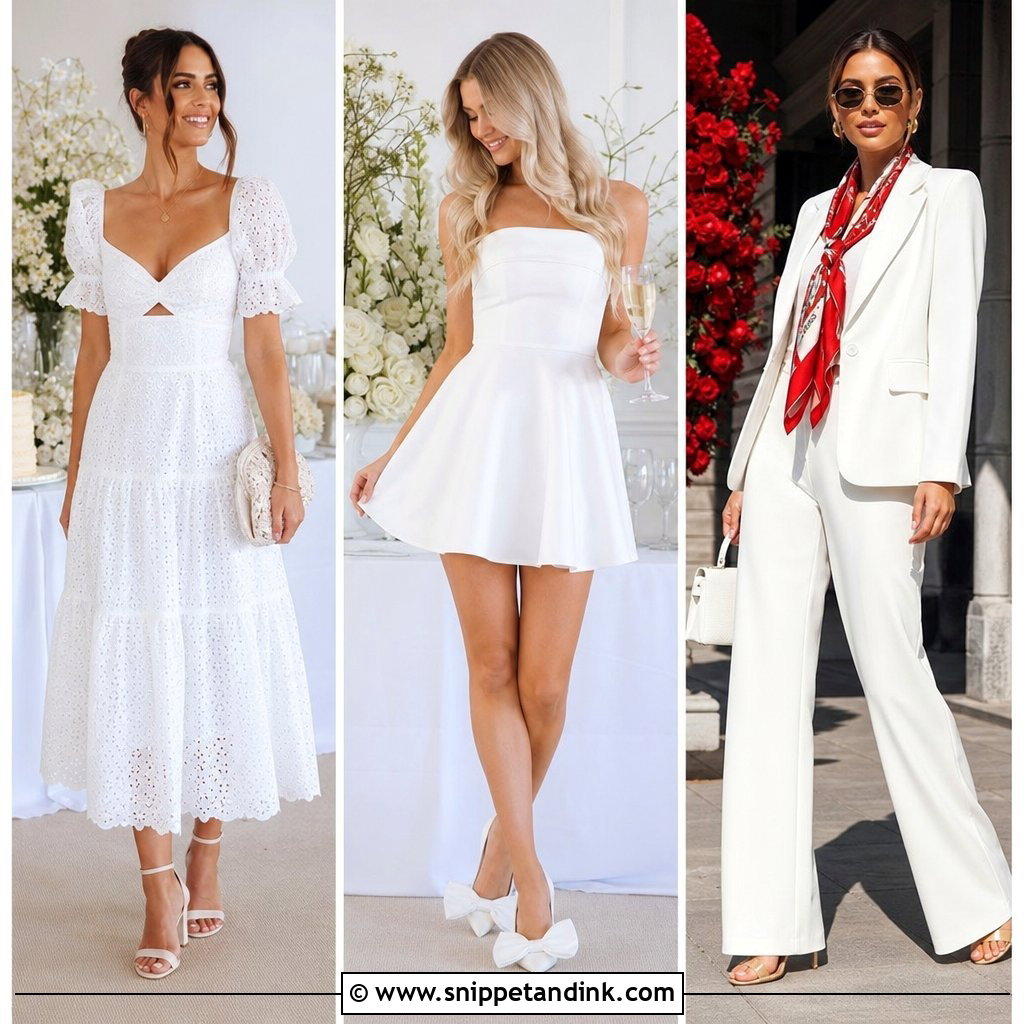
Tea length gives movement and a little vintage charm, with the skirt landing between the knee and ankle so you can walk, dance and show off good shoes. Satin, tulle or lace keep it polished. The hem placement is everything, so I mark it with the actual wedding shoes on, because an inch higher or lower changes how the leg looks. Pair it with pointed pumps, pearl earrings and a short veil or a hair bow. It suits civil ceremonies, garden receptions and smaller weddings, and it also makes a good second bridal look.
14. Italian Mini Wedding Dress
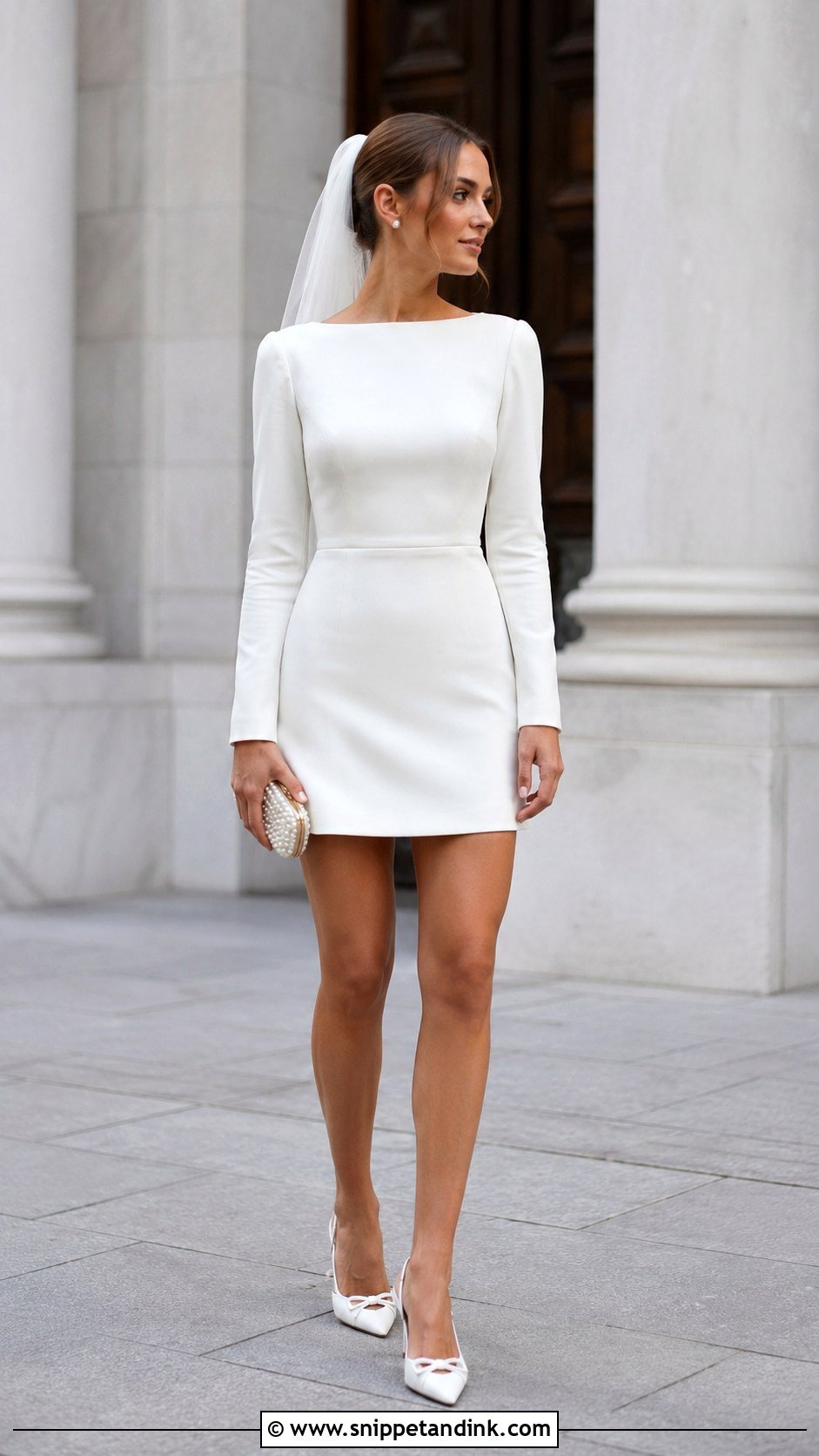
A mini can be elegant when the fabric is serious. Choose crepe, satin, lace or mikado rather than casual cottons. A long-sleeve mini, a structured shift or a tailored mini with a bow all look chic and bridal. Balance the hemline with a higher neckline or a structured shape. Sit down in front of a mirror at the fitting; a mini that looks right standing can ride up further than you’d like when seated. Slingback heels, pearl studs and a short veil or clean headband finish it for a courthouse wedding, a welcome party or a reception change.
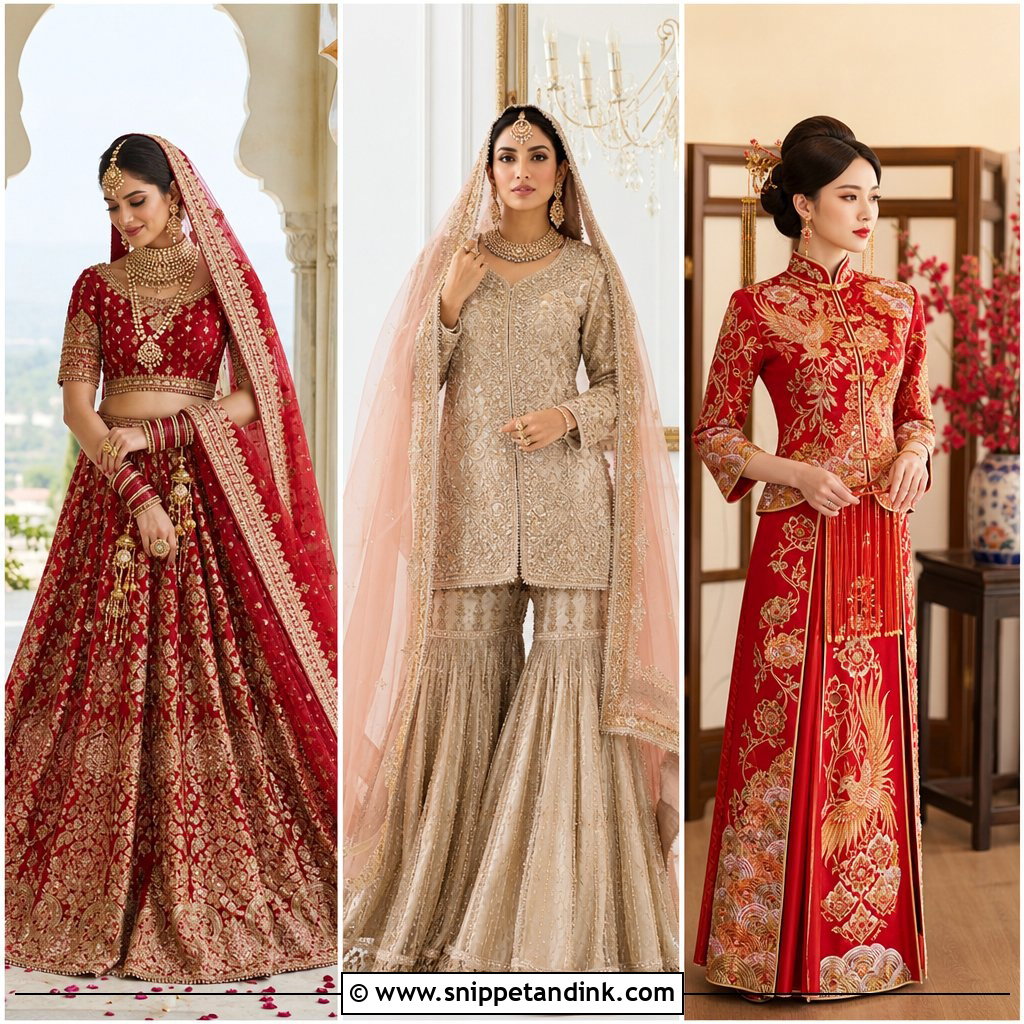
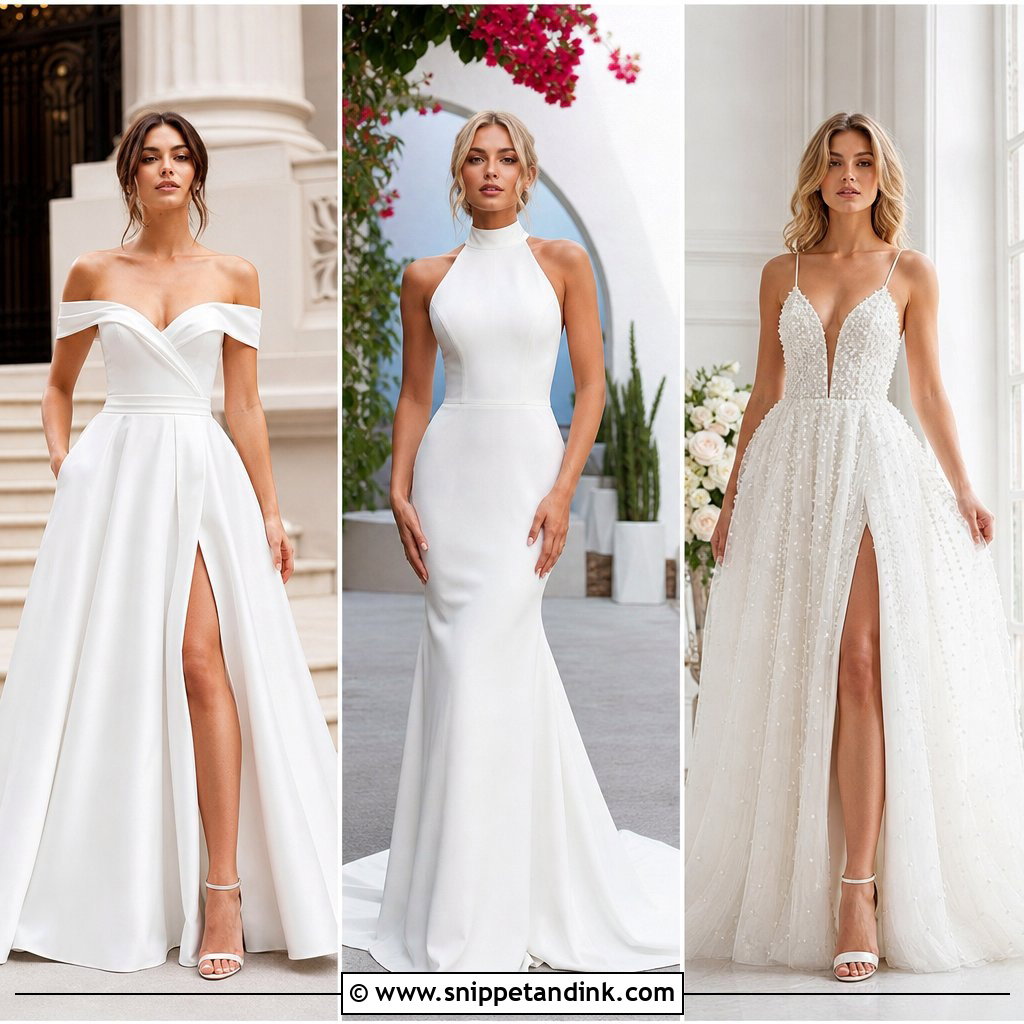

15. Italian Sheath Wedding Dress
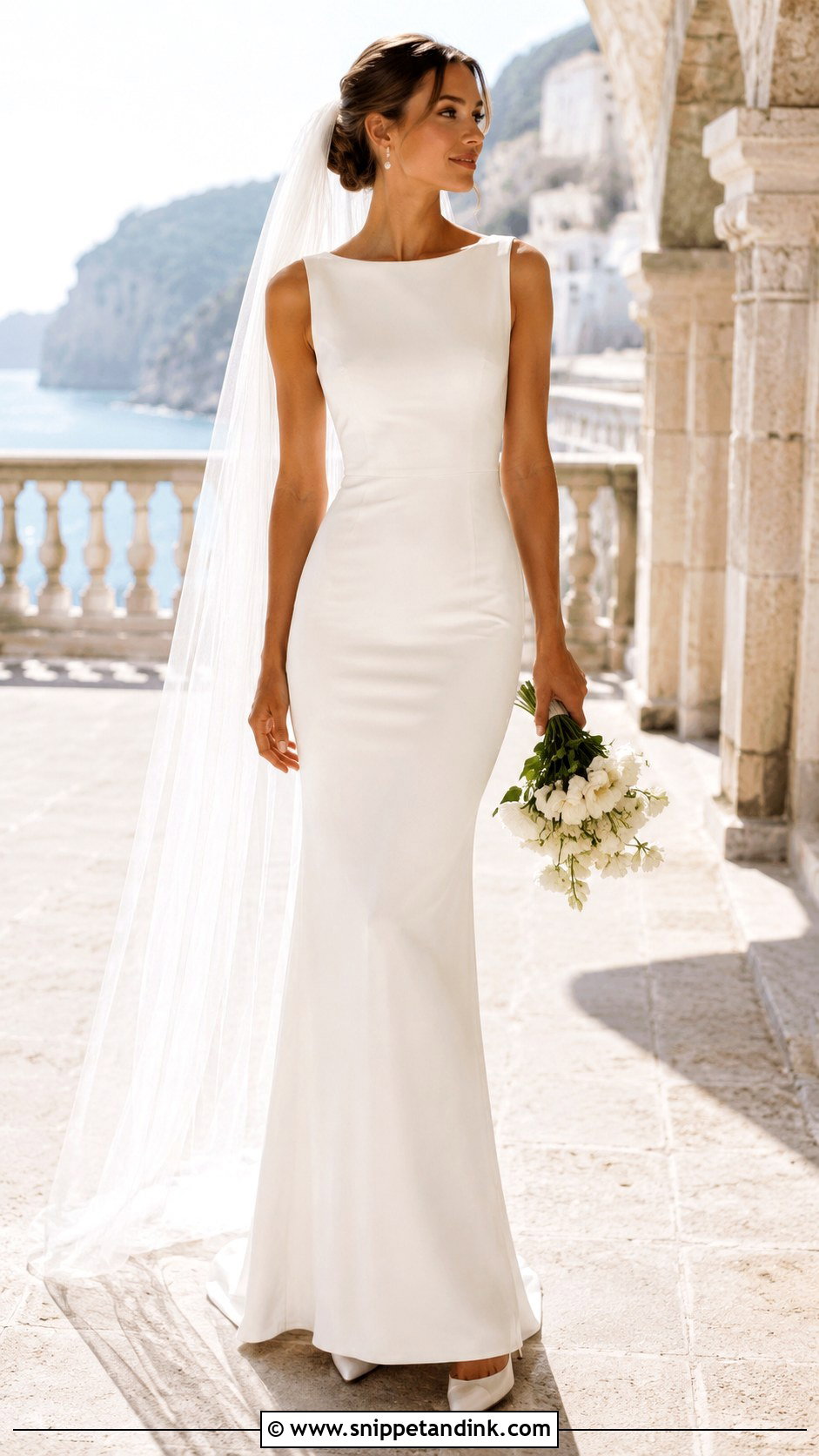
The sheath follows the body without the volume of a ball gown, which suits a bride with a natural, clean line in mind. Silk crepe, satin and soft lace all work, and a bateau, square or simple V-neck keeps it elegant. Sheaths depend on precise tailoring, especially at the hip and the back of the knee, where the fabric pulls when you walk. Classic heels, a smooth veil and understated jewelry complete it. I recommend sheaths for destination weddings, since they pack small and are easy to move in.
16. Italian Backless Wedding Dress
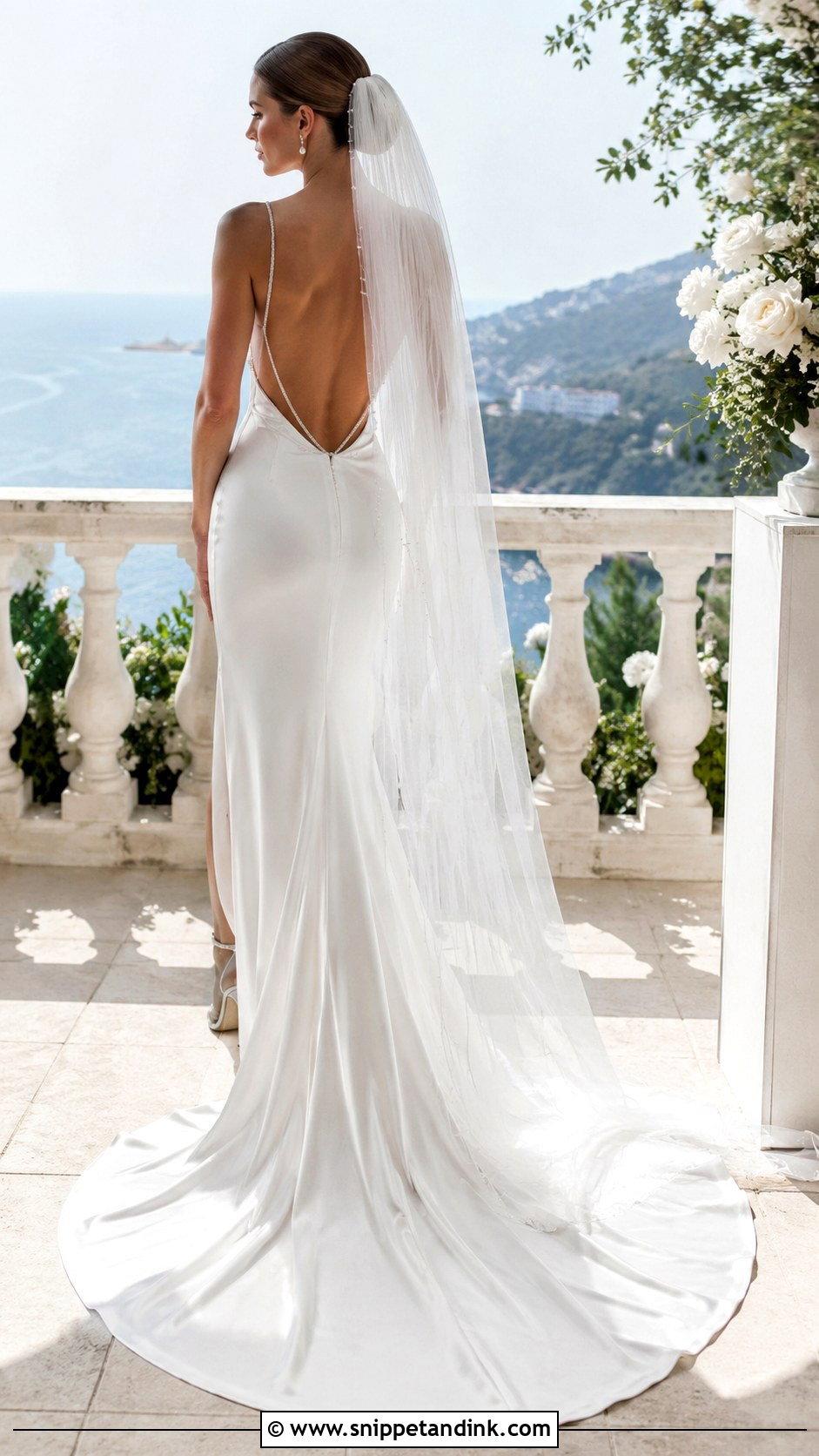
A backless wedding dress keeps the front refined and saves the drama for when you turn around. Choose a simple front with an open back, fine straps or lace edging; satin and silk let the back line stand out best. Support is the real question with a low back, and I’d ask for cups built into the bodice rather than relying on adhesive bras in summer heat. Wear hair up or swept to one side so the back shows. Drop earrings, slim heels and a sheer veil complete it for a warm-weather or coastal wedding.
17. Italian Floral Applique Wedding Dress
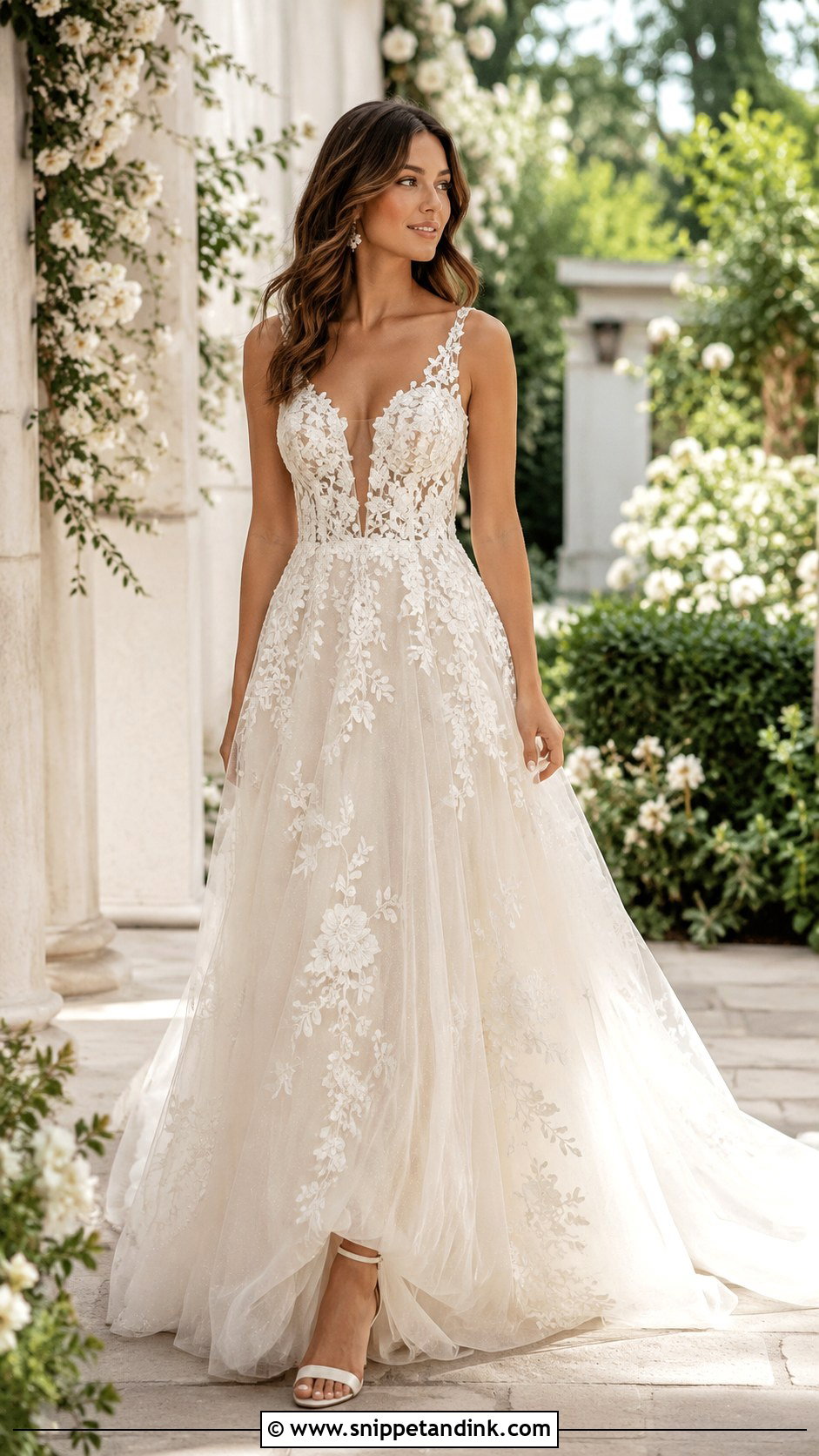
Floral appliques add texture, but they should look like they grew on the dress, not like they were glued there. Choose small flowers on tulle, lace or organza for a soft garden feel. A fitted bodice and flowing skirt keep the shape wearable. Dimensional appliques catch on a lace veil and on necklaces, so I keep both plain. Simple earrings, soft waves and ivory heels finish the look. It suits spring and summer, outdoor weddings and natural daylight, where the raised flowers cast small shadows.
18. Italian Embroidered Wedding Dress
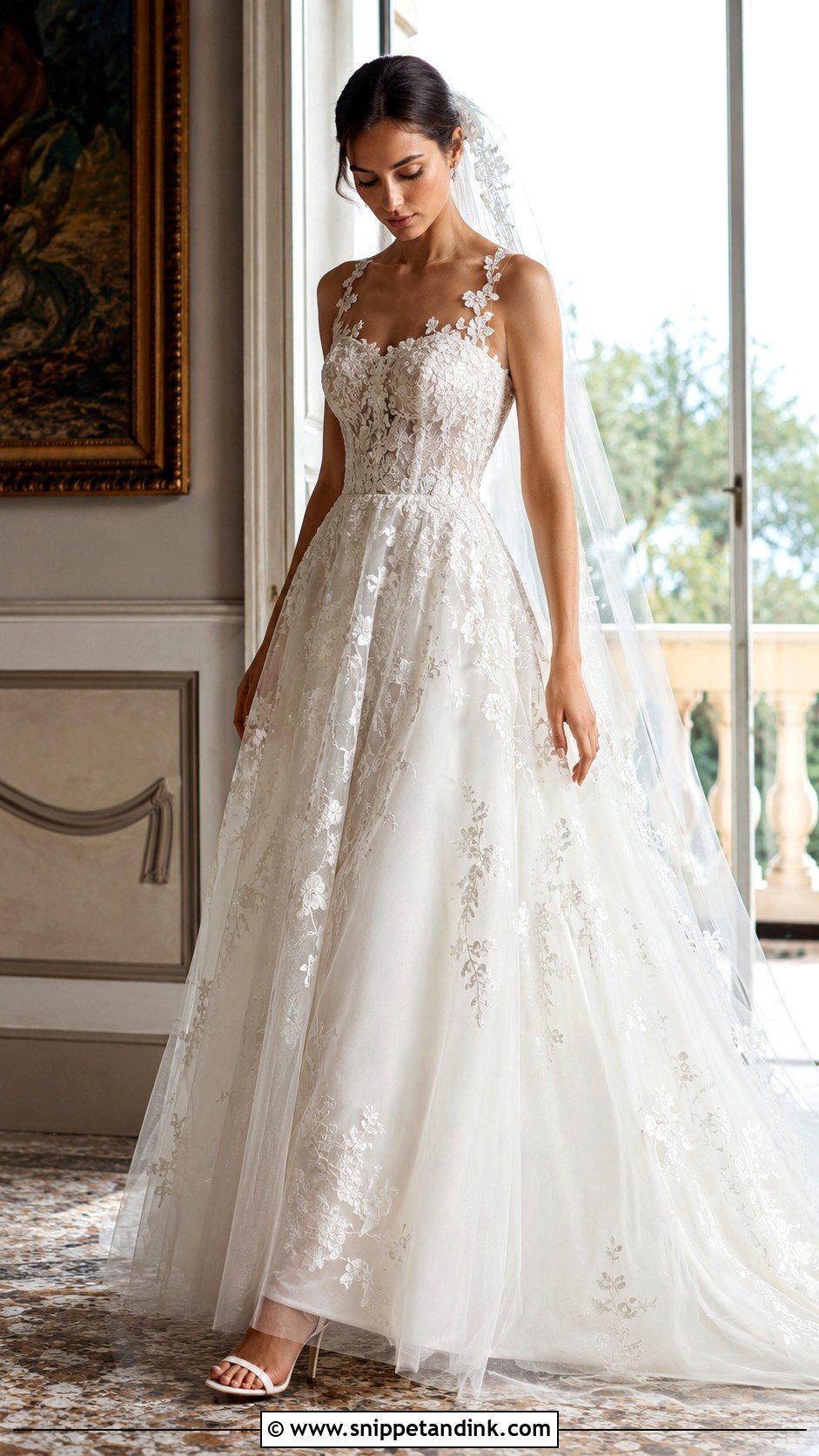
Embroidery feels artistic and personal when it is placed with intention. Floral motifs, vines or fine threadwork over sheer tulle or delicate lace suit the Italian style best. A fitted bodice and flowing skirt keep the work romantic rather than heavy. I’d choose this over beading if you want detail without sparkle, since thread reads clearly in daylight photos and doesn’t flash. Pair it with clean heels, a sheer veil and minimal jewelry. Look closely at the reverse: neat backs on embroidery are a good sign of quality throughout.
19. Italian Tulle Wedding Dress
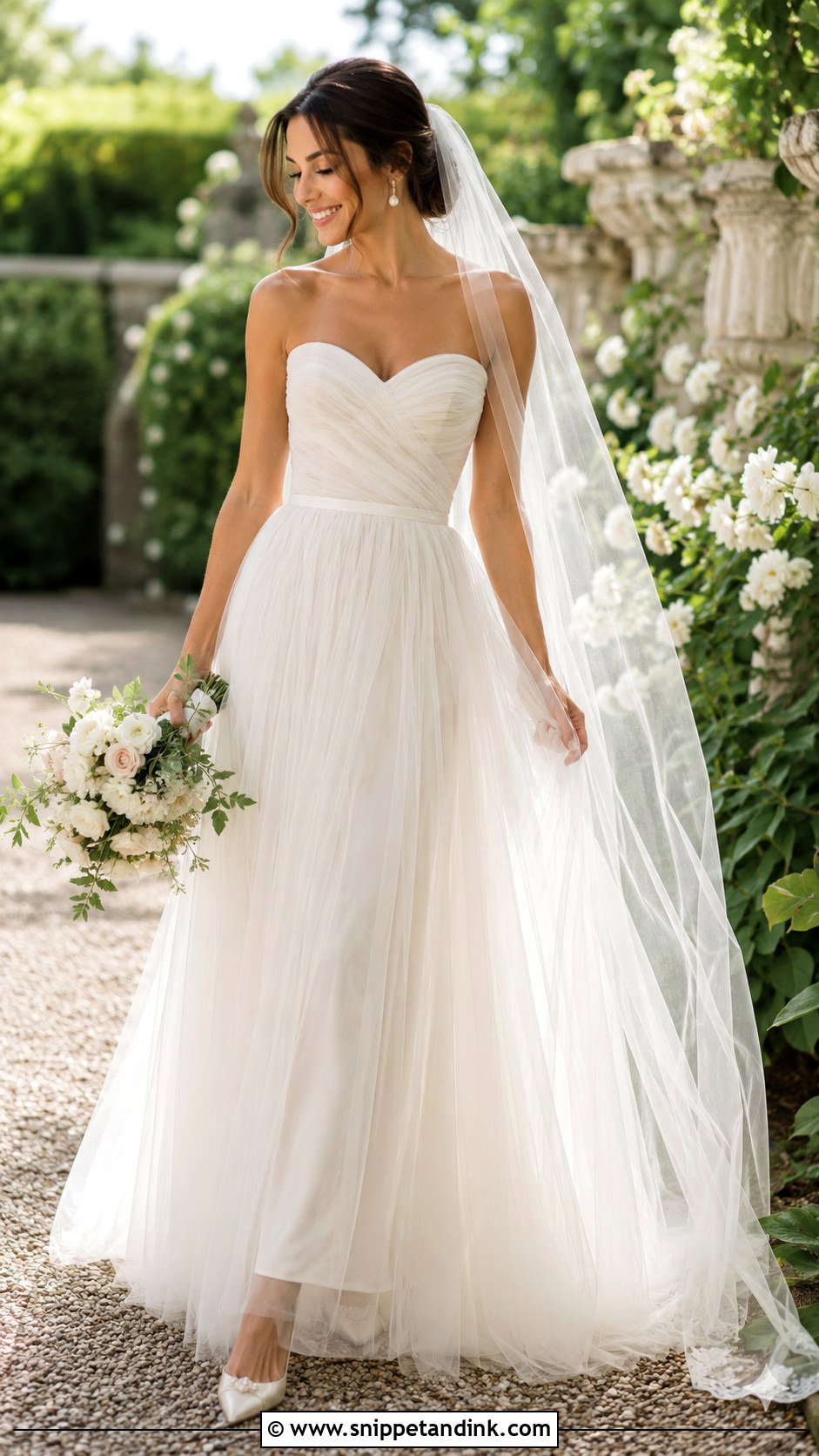
Tulle gives softness and movement, and for this style the layers should feel light rather than bulky. A tulle A-line with a fitted bodice is romantic and works for many venues. Plain tulle is minimal; embroidered tulle adds detail. Tulle catches on rough stone, gravel and rings, which matters at old villas and outdoor ceremonies, so I’d keep jewelry smooth and the hem a touch off the ground. Delicate heels, a long veil and small pearl earrings balance it for gardens and warm weather.



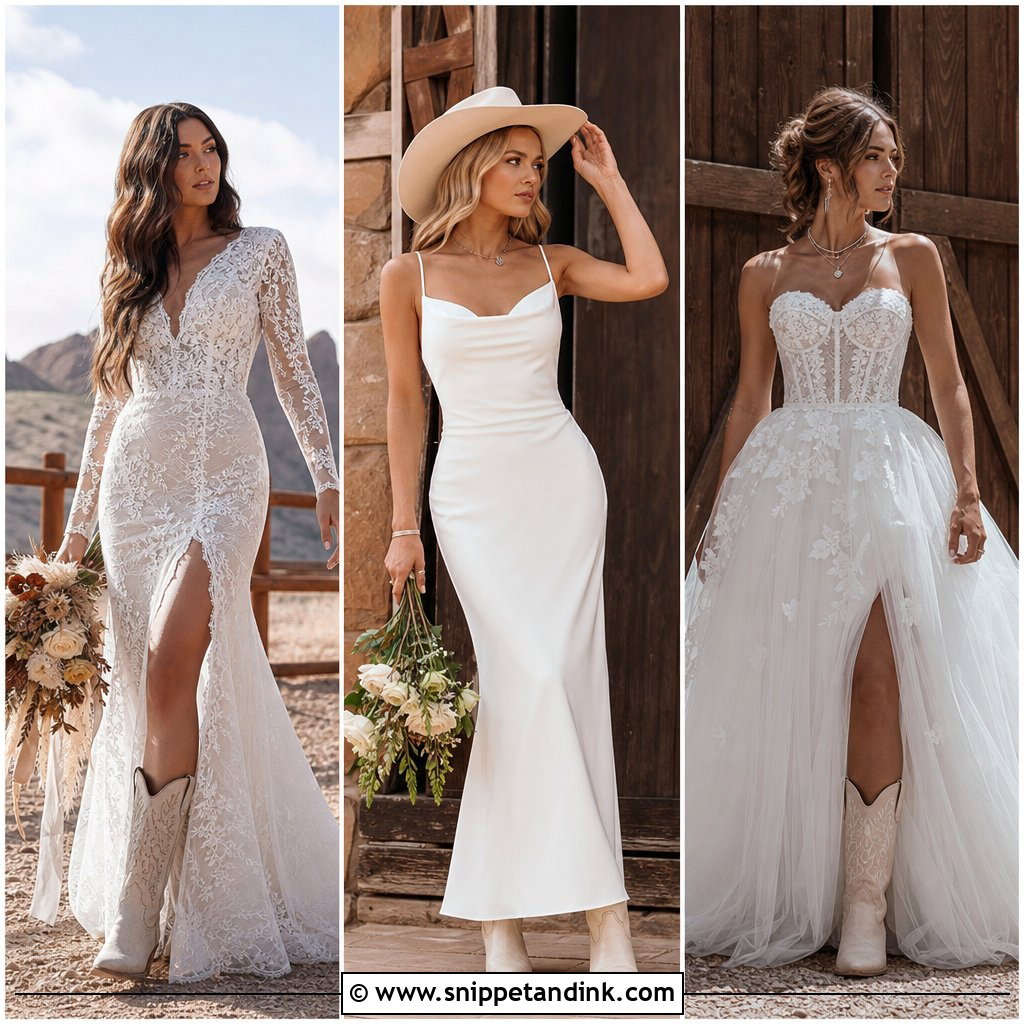

20. Italian Mikado Wedding Dress
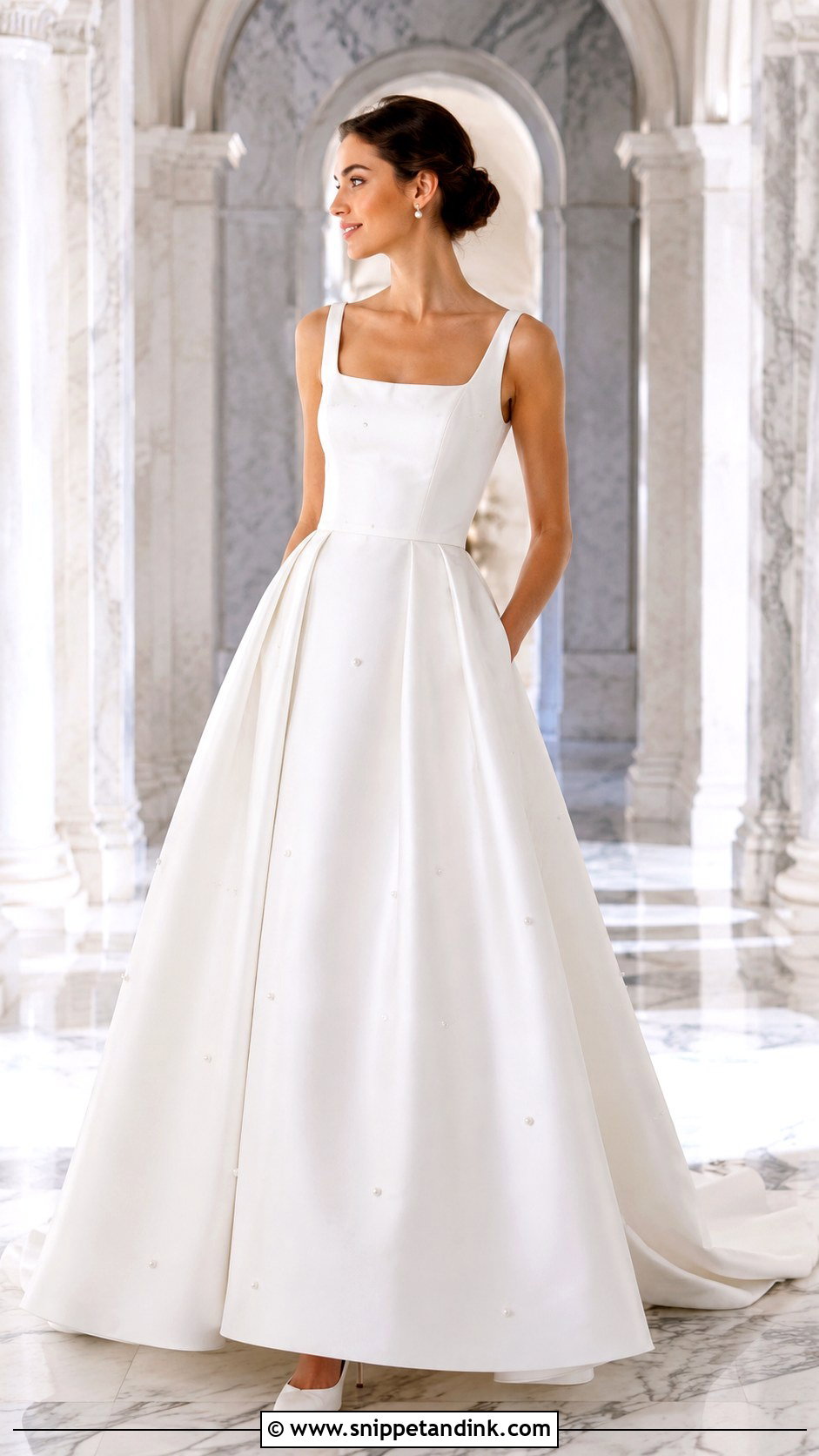
Mikado is heavier than satin, with a subtle sheen, and it holds structure without stiff layers underneath. That makes it ideal for clean ball gowns, A-lines and sculpted bodices. An Italian-inspired mikado gown looks best with crisp tailoring and minimal accessories. A square neckline, a pleated skirt or an oversized bow adds interest. Mikado is warm, so for a summer wedding in the south I’d think carefully, or choose a lighter silk faille. Pointed pumps, a smooth updo and pearl or diamond-like studs complete it.
21. Italian Column Wedding Dress
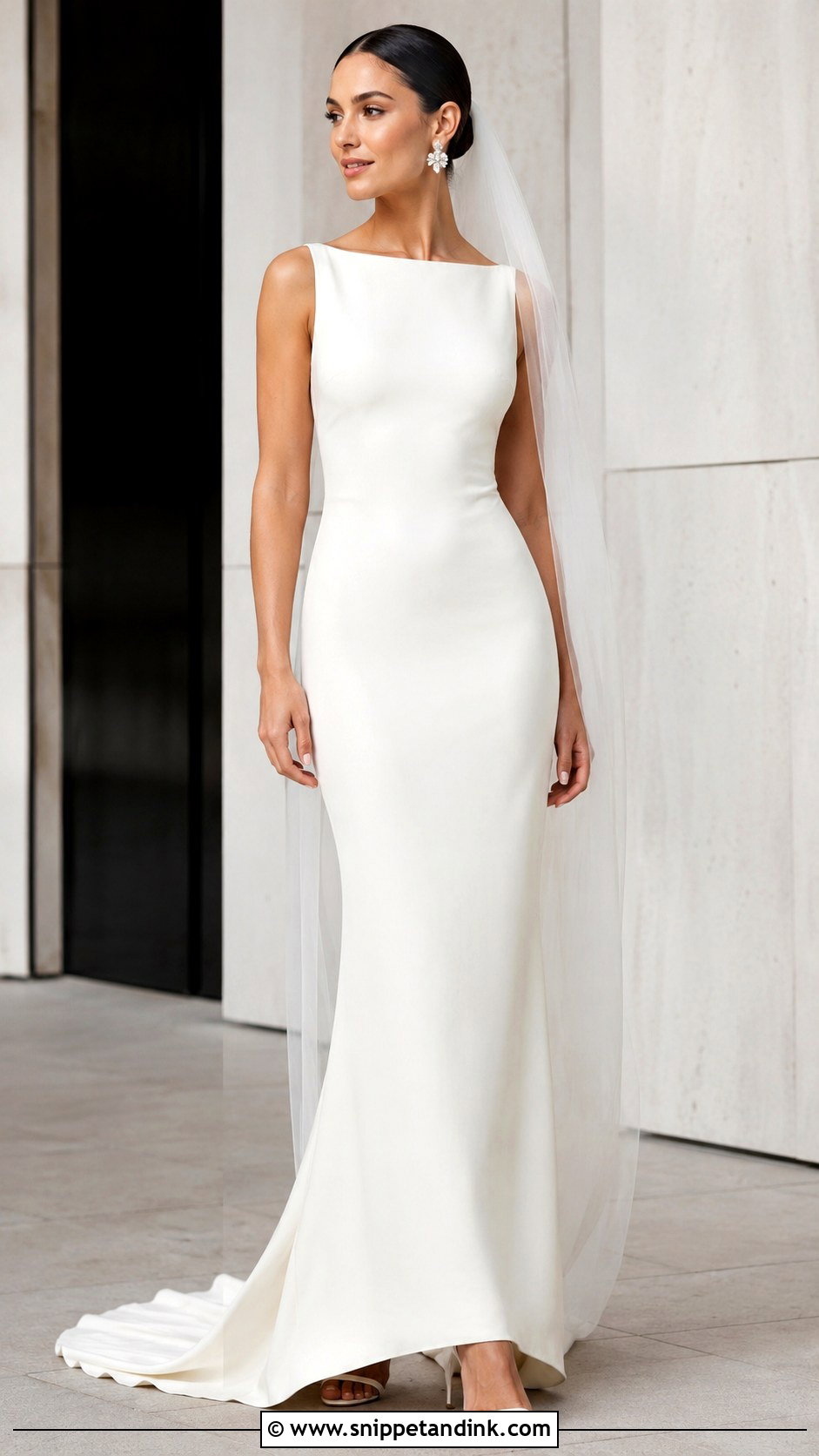
A column falls straight from the neckline or waist and creates one long, statuesque line. Crepe, silk or satin keep it refined. Keep details intentional: a bateau neckline, a low back, subtle draping or a small train is enough. Pair it with slim heels, a clean veil and sculptural earrings for a modern venue or a city wedding. For petite brides it is a strong choice, since a straight shape lengthens the body, but the hem has to be precise; even slightly too long and it puddles and shortens you again.
22. Italian Ruffle Wedding Dress
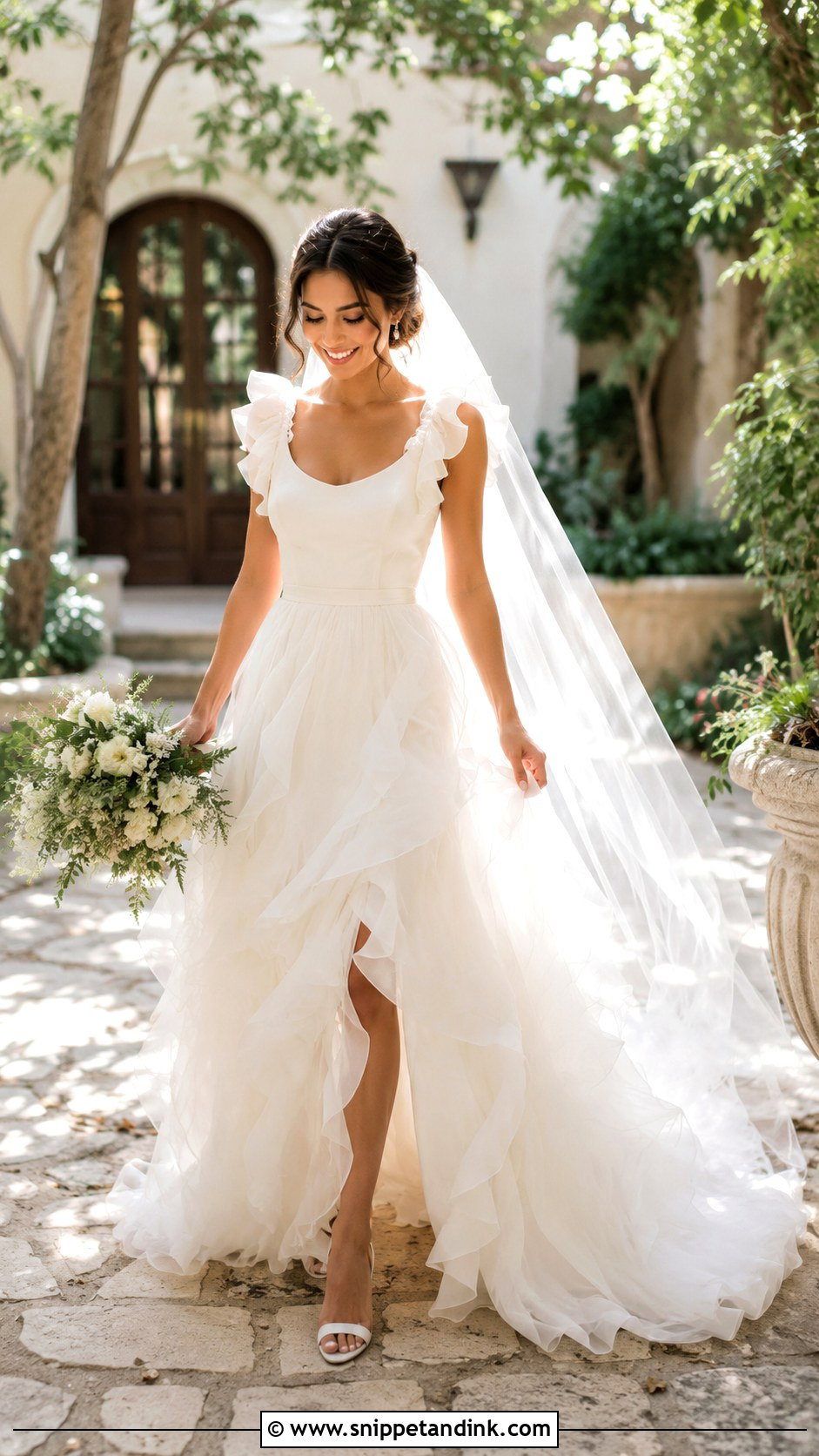
Ruffles work in this style only when they’re controlled. Pick one feature, a ruffled skirt, soft shoulder ruffles or a ruffled hem, and keep everything else calm. Lightweight organza, tulle or chiffon move best. Ruffled organza crushes when you sit, so I tell brides to fluff the tiers by hand after dinner. Clean heels, small earrings and a soft veil are plenty. The neckline, bodice and accessories should stay refined while the ruffles bring the motion to your photos.
23. Italian Cape Wedding Dress
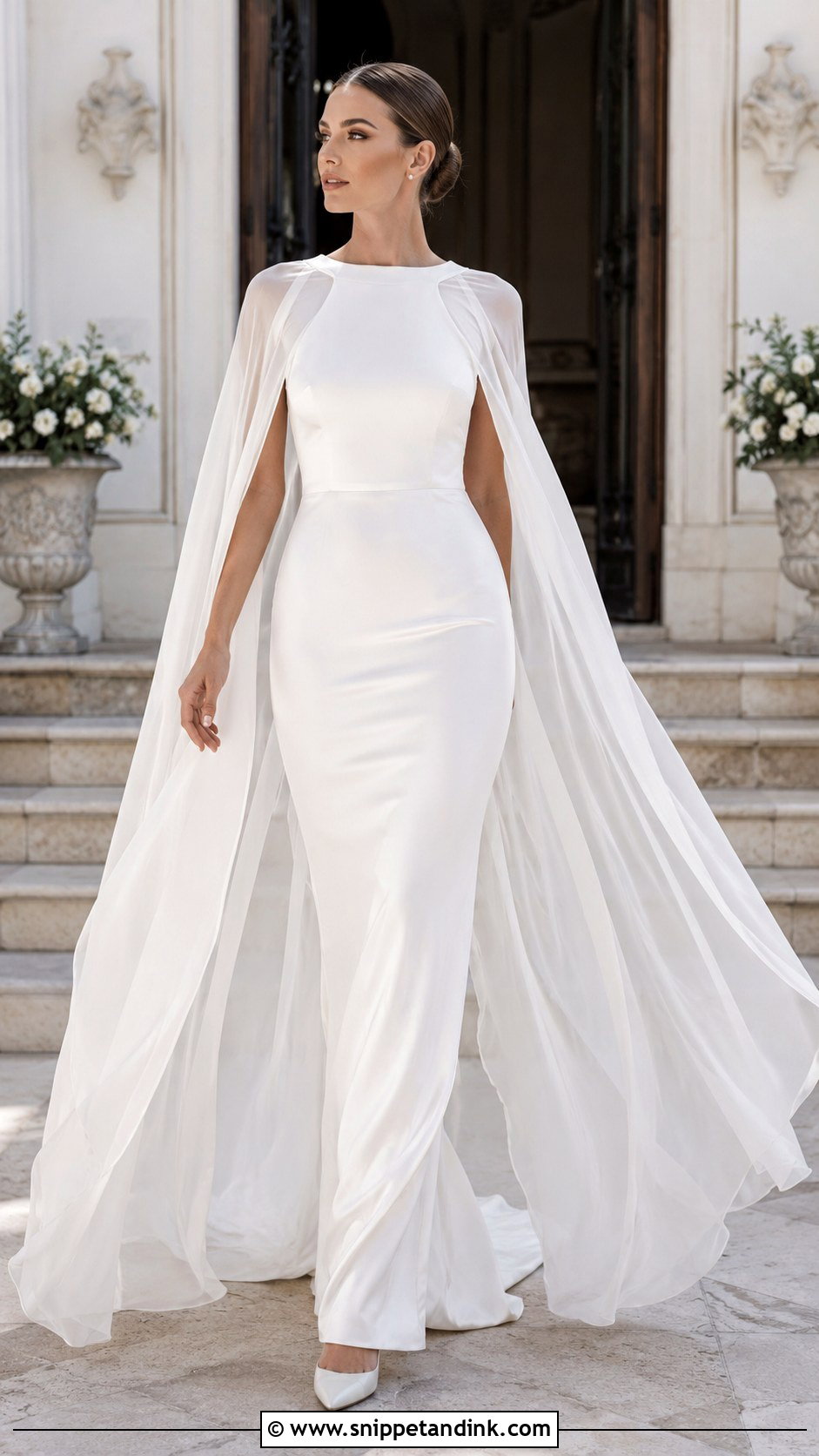
A cape can replace a veil and turn a simple gown into a statement. A sheer cape, a lace capelet or a floor-length tulle cape all work over a clean satin or crepe dress. Ask how the cape fastens, since snaps hidden under the shoulder seams stay put, while a front clasp tends to pull the neckline back during the walk. Keep hair sleek and jewelry minimal. A cape also covers the shoulders for a church ceremony, then comes off for the reception, giving you two looks from one dress.
24. Italian Two Piece Wedding Dress
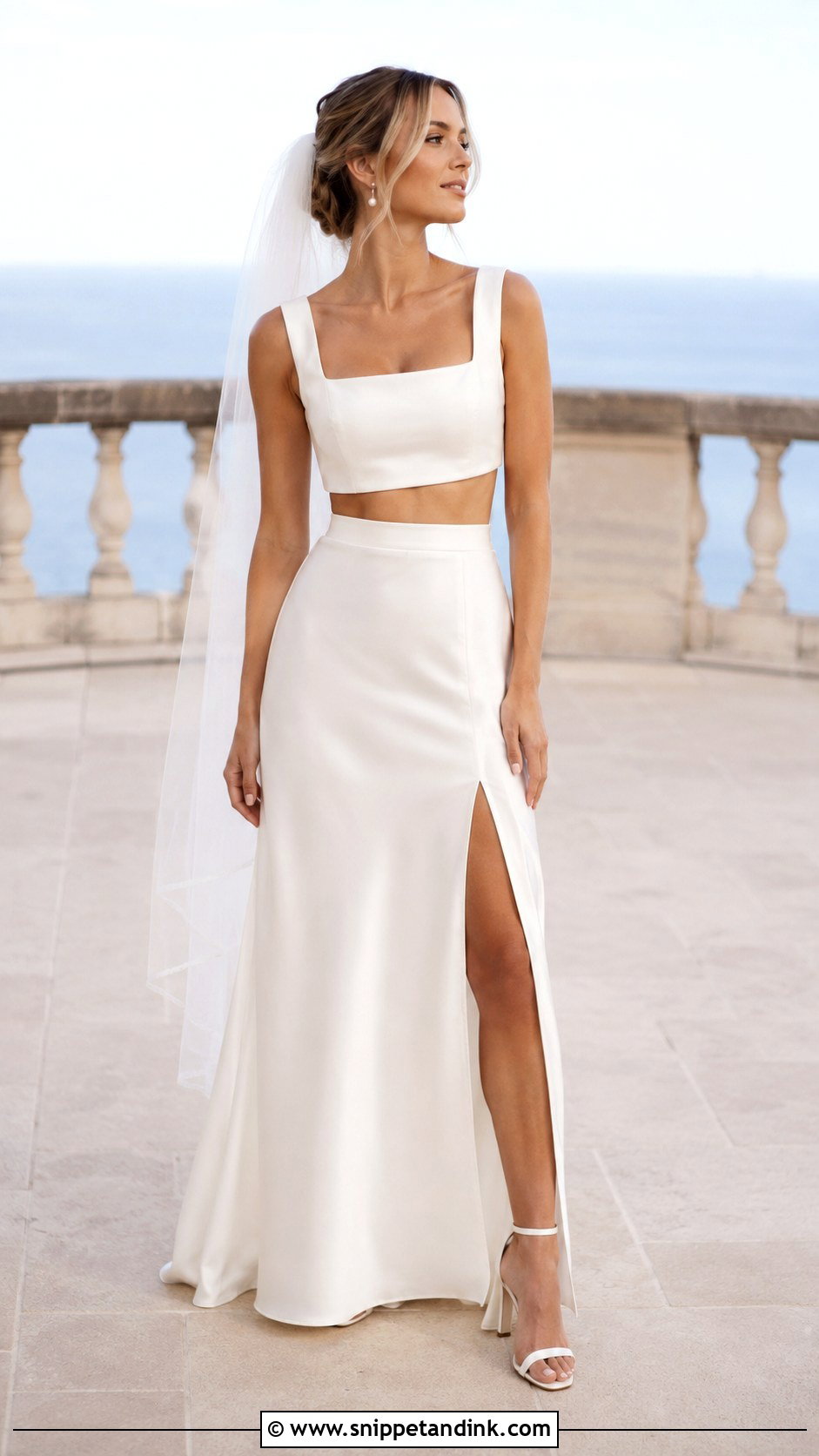
Two-piece sets look modern and still bridal: a structured crop top with a high-waisted skirt, a lace top with a satin skirt, or a tailored set with clean lines. Keep the fabrics refined and the fit polished. A crop top needs to be checked with the arms raised; the gap that shows when you hug can be larger than expected, so I usually ask for the top to sit slightly lower than standard. Pair it with sleek heels, pearl earrings and a simple veil. It suits civil ceremonies and destination weddings, and the pieces can be worn again separately.



25. Italian Bridal Suit Dress
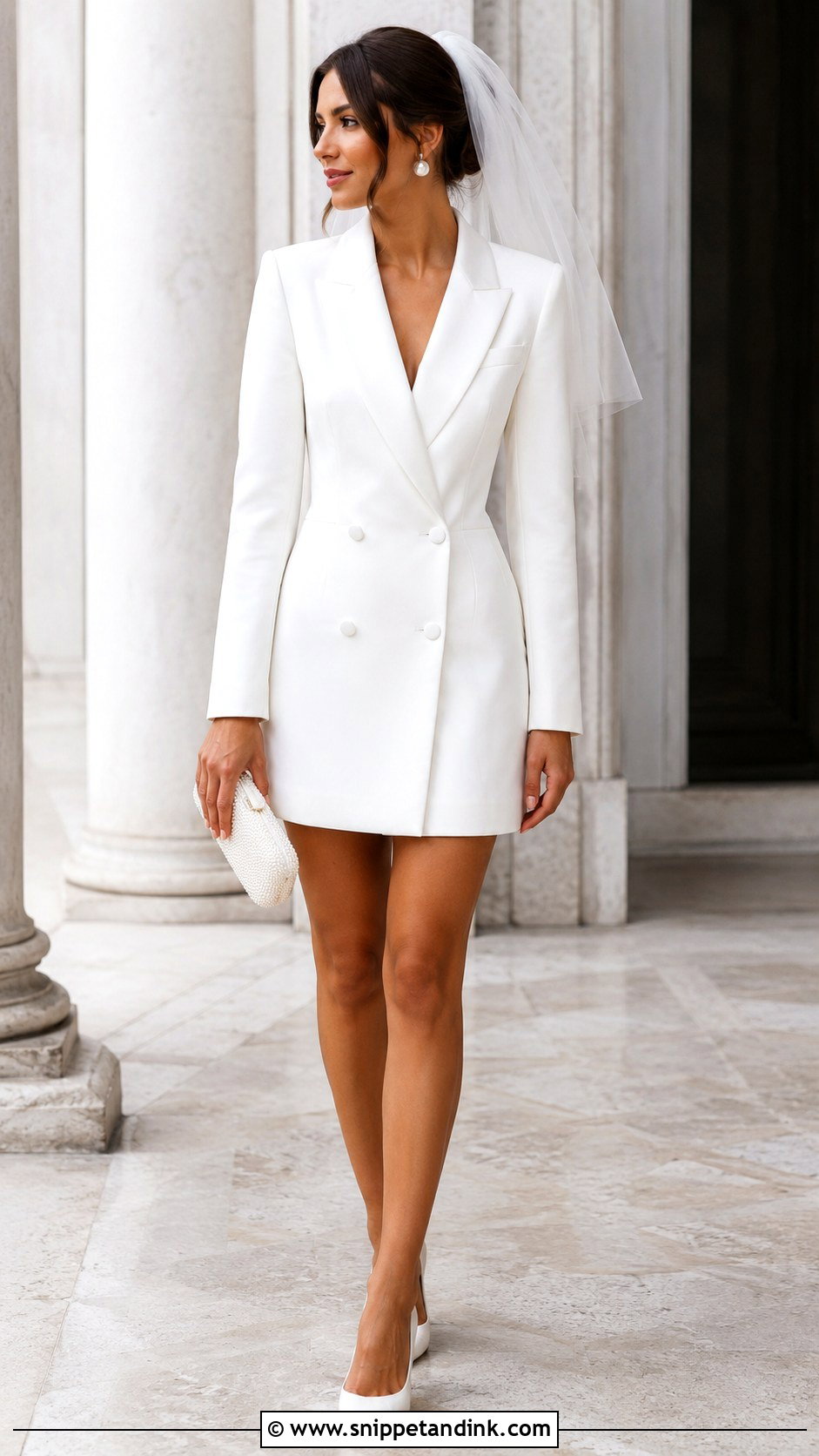
Sharp tailoring is the point of a bridal suit or suit dress. Choose a white blazer dress, a long tailored jacket over a mini, or a fitted bridal suit with wide-leg trousers. The shoulders are what I watch most, because a jacket that fits at the shoulder can be altered almost anywhere else, while a poor shoulder can’t be fixed. Add pointed heels, pearl earrings and a small clutch; a short veil or a hair ribbon softens it. It works for a courthouse ceremony, a city wedding or a reception change.
Flying the Gown Out for a Destination Wedding
I never let a wedding dress go in checked luggage. Ask your airline well ahead whether you can bring it on board in a garment bag; many will let it travel as a carry-on, and some cabin crews will hang it if there’s space, though you can’t count on that. Fold it as the shop shows you, with tissue paper between the layers, and pack the veil rolled rather than folded.
Have your final fitting at home before you fly, so there are no surprises abroad. Then arrange the pressing at the destination before you travel. Many venues and planners know a local seamstress or can recommend someone with a professional steamer. Unpack the dress as soon as you arrive and hang it in a cool room away from direct sun; light creases often drop within a day or two.
Pack a small kit in your hand luggage: a sewing kit in the dress colors, fashion tape, a stain pen safe for silk, clear nail polish for a pulled thread and spare bustle hooks. Shoes and undergarments travel with you too, since they decide how the hem was set.
Fine Fabric, a Precise Fit and Very Little Else
This style works best when it looks well made rather than busy. Lace, satin, silk, corsetry, short dresses and tailored suits can all carry it, as long as the outfit suits your body, the setting and your personality. The strongest looks I’ve dressed in this spirit come from good fabric, careful fitting, simple accessories and one or two graceful details. Pick the dress you can move in comfortably. When the gown, shoes, veil, hair and jewelry agree with each other, the whole outfit reads as one.
You'll Like These Ideas:




Leave a Reply