
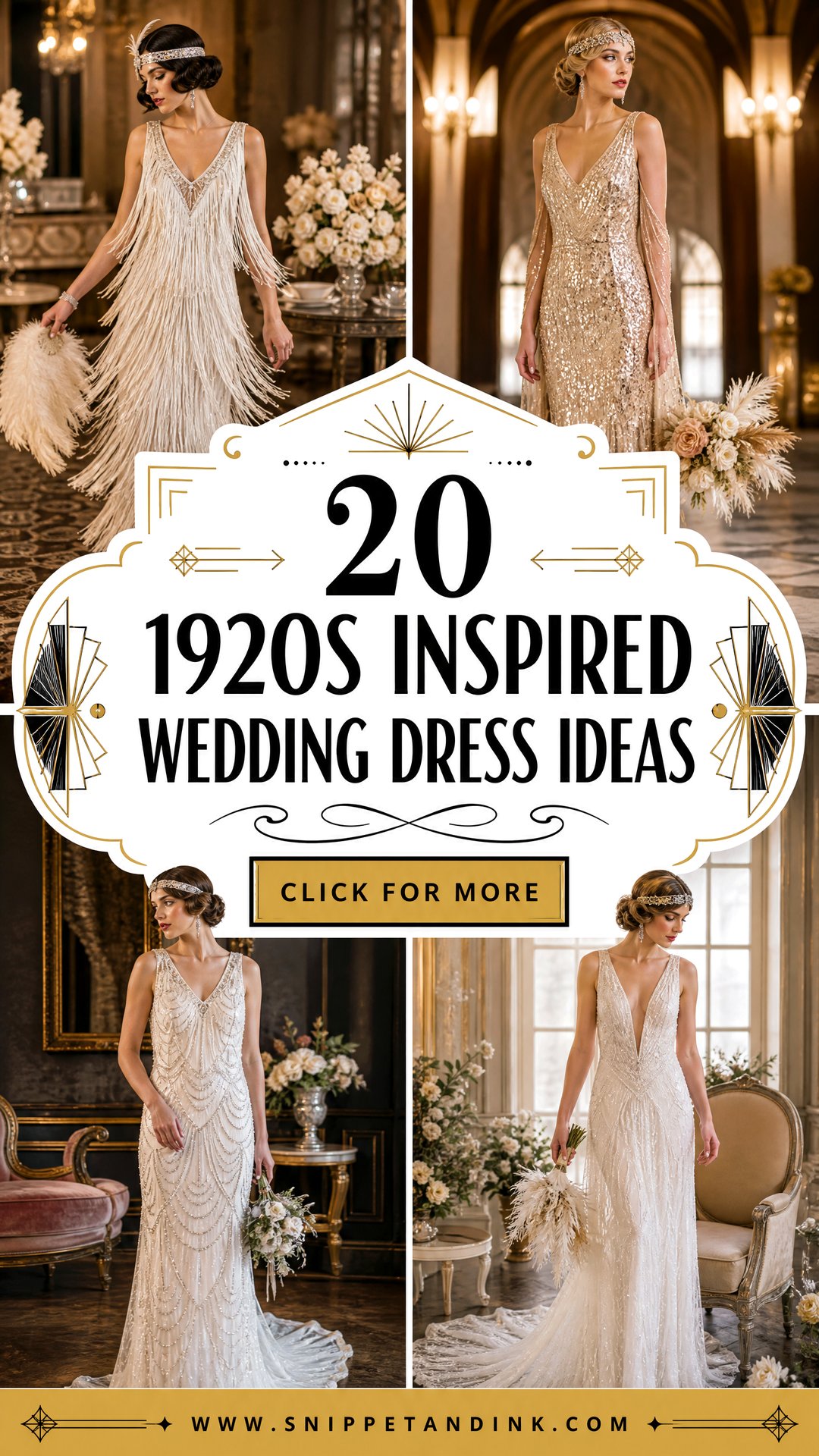
Jazz Age fashion is one of the easiest eras to borrow from, because its signatures are so recognizable: geometric beadwork, dropped waists, straight column shapes, pearls, sequins and movement-friendly fringe. The trap is wearing all of them at once. When I dress a 1920s-inspired bride, we pick two or three period details and let modern shoes, makeup and accessories do the rest, so the result looks bridal rather than like a themed party. The twenty looks below cover sleek satin, heavy beading, covered gowns and short reception dresses, with notes on fit, weight and comfort for each.
Why Beaded Jazz Age Gowns Weigh, Hang and Alter Differently
Most of the dresses on this list are beaded, sequined or fringed, and that changes the practical side of owning one. I talk brides through it before they buy, because a beaded gown that feels fine in the shop can still surprise you on the day.
The weight sits on your shoulders
Heavy beading adds real weight, and on a column dress it all hangs from the straps. Wear the dress for at least twenty minutes at a fitting. If the straps start marking your skin, ask for them to be widened or for an internal waist stay that takes some of the load.
Alterations take longer
A seamstress can’t sew straight through beads. She has to unpick them along the seam line, stitch the seam, then sew the beads back by hand, so hemming and taking in cost more and take longer than on plain fabric. Ask the shop for spare beads or sequins, and leave several weeks for alterations.
Storing and pressing it safely
Don’t leave a heavily beaded gown hanging by its shoulders for weeks, because the weight slowly stretches the fabric. Use the hanging loops sewn inside, or store it folded flat with acid-free tissue between the layers. Steam from the inside only and keep an iron well away, since heat can cloud or warp sequins.
1. Beaded Art Deco 1920s Wedding Dress
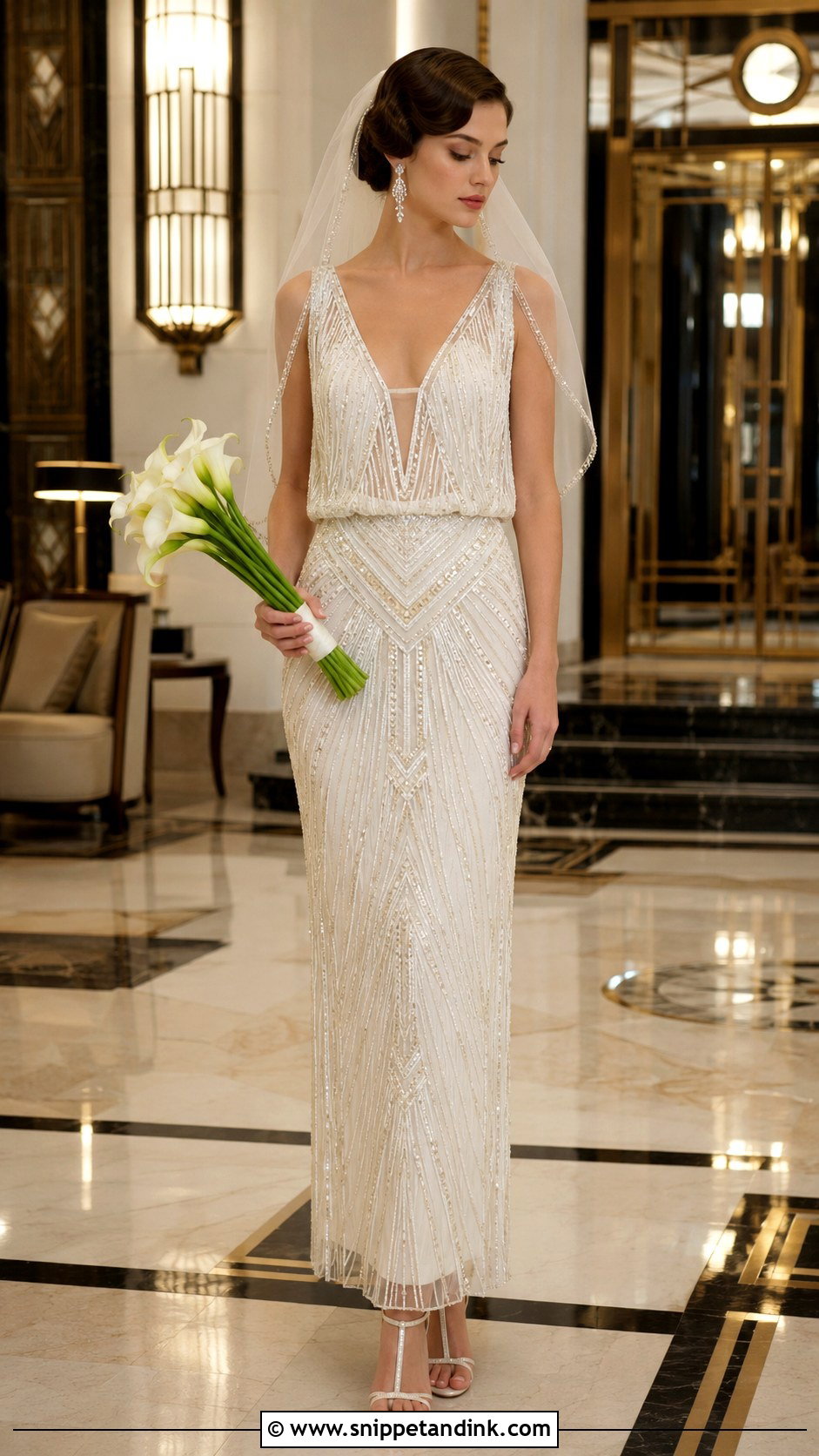
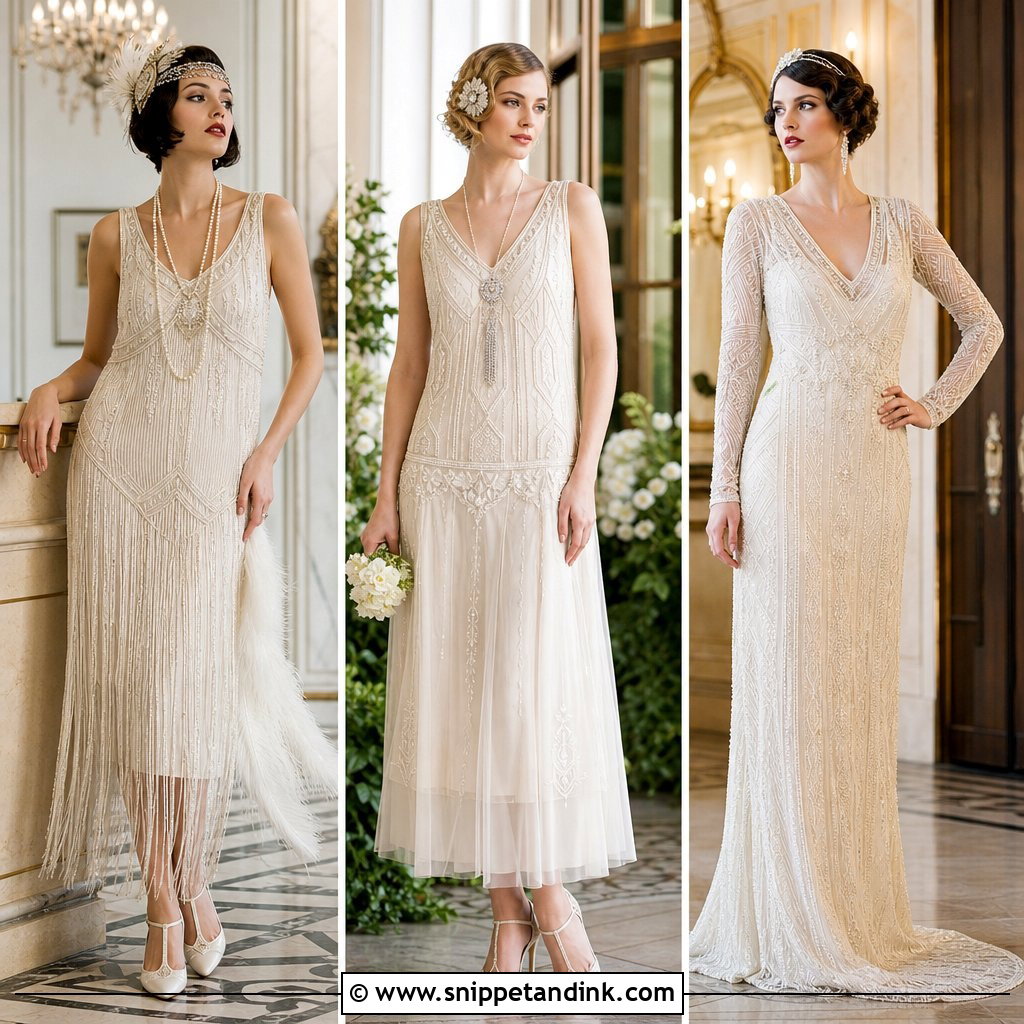
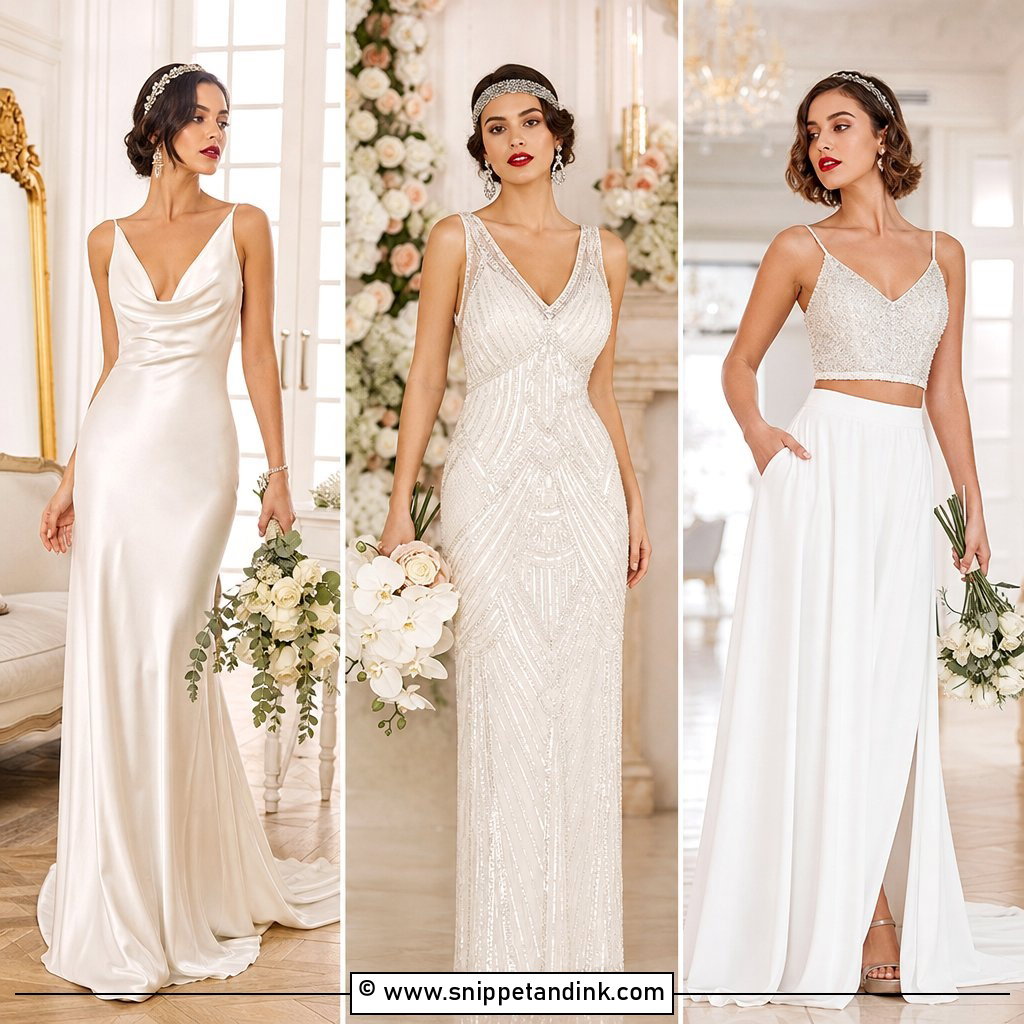
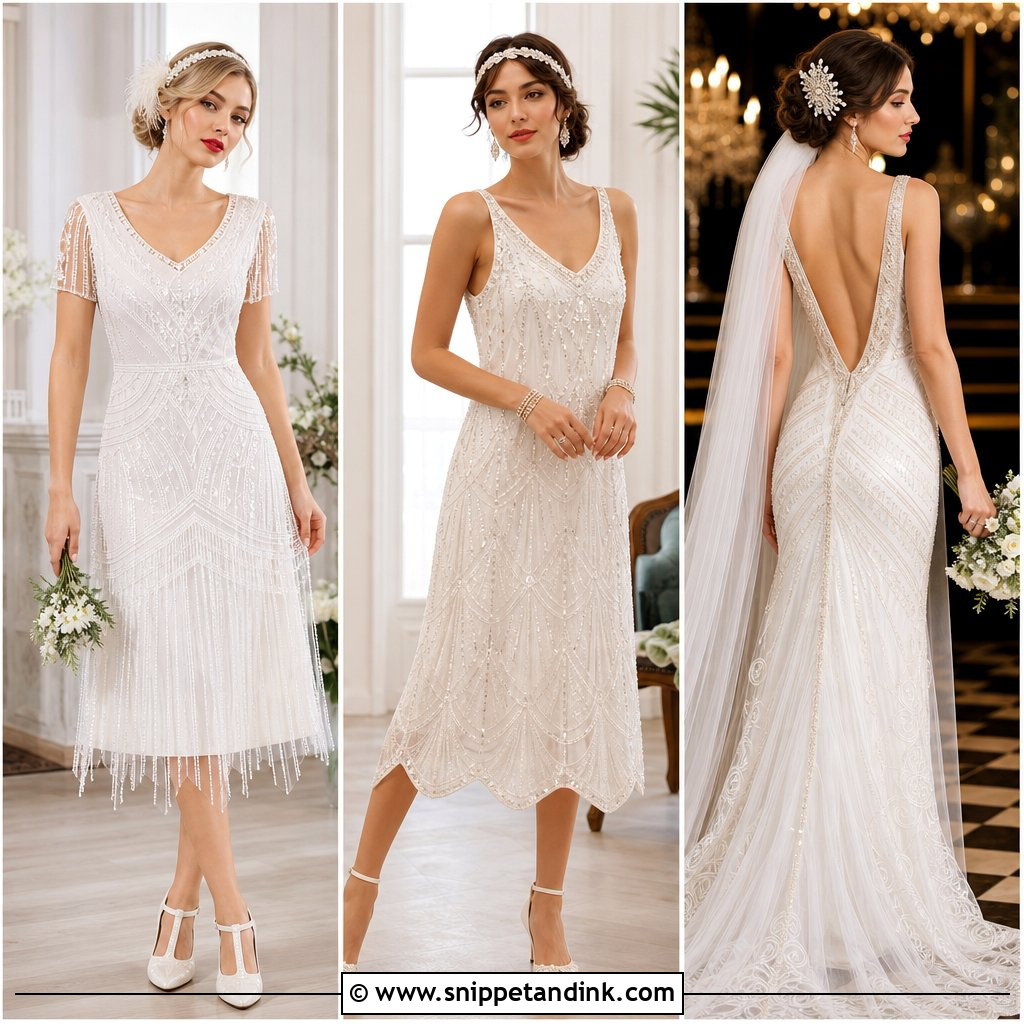
Nothing says Jazz Age faster than a beaded Art Deco gown. Look for a floor-length column with symmetrical chevrons, fans or sunbursts; the geometry gives the dress its structure, so it doesn’t need to be tightly fitted. What I check first is weight. Densely beaded dresses can be surprisingly heavy, all of it hanging from the shoulders, so the straps must be wide enough not to dig in by evening. Ivory T-strap heels, crystal drops and a small satin clutch suit it. A fingertip veil keeps the beading visible, and soft finger waves add a quiet vintage note. Carry white roses or callas in a slim arrangement. Ballrooms and historic hotels, where the beads catch lamplight, show it off best.
2. Drop Waist Satin 1920s Wedding Dress
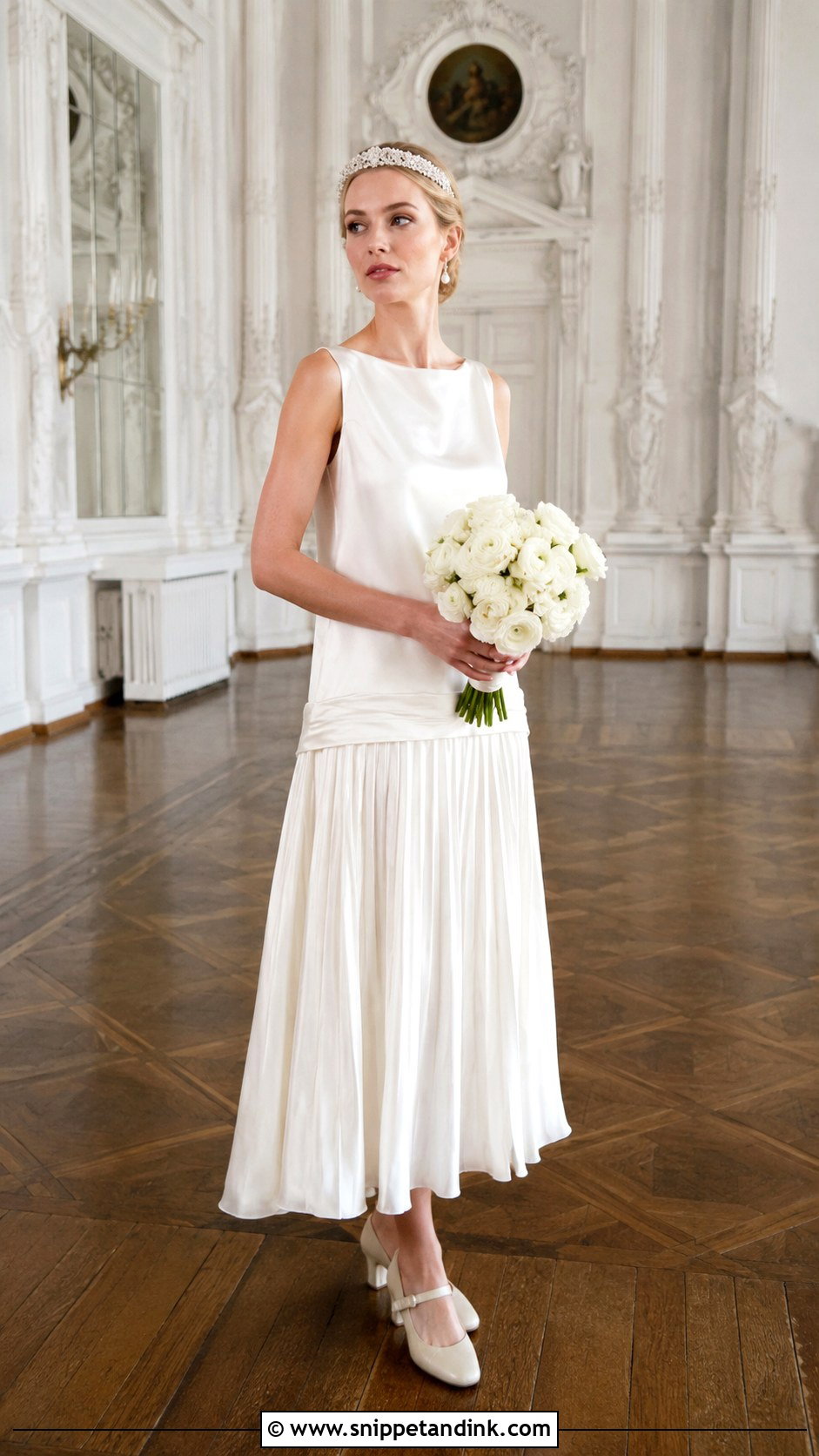
A dropped waist flatters some bodies straight away and fights others. On a long torso it looks right immediately; on a shorter one, a seam at the upper hip can make the legs look short, so I often raise it to just below the natural waist. Smooth satin keeps the line fluid. The bodice should skim the torso, with soft gathers or pleats below the seam so you can walk and dance freely. Pearl button earrings, low-heeled Mary Janes and a compact bouquet of white ranunculus suit it, with a narrow crystal headband in place of a tiara. At a formal indoor ceremony it’s understated in the best sense.
3. Fringe Flapper 1920s Wedding Dress
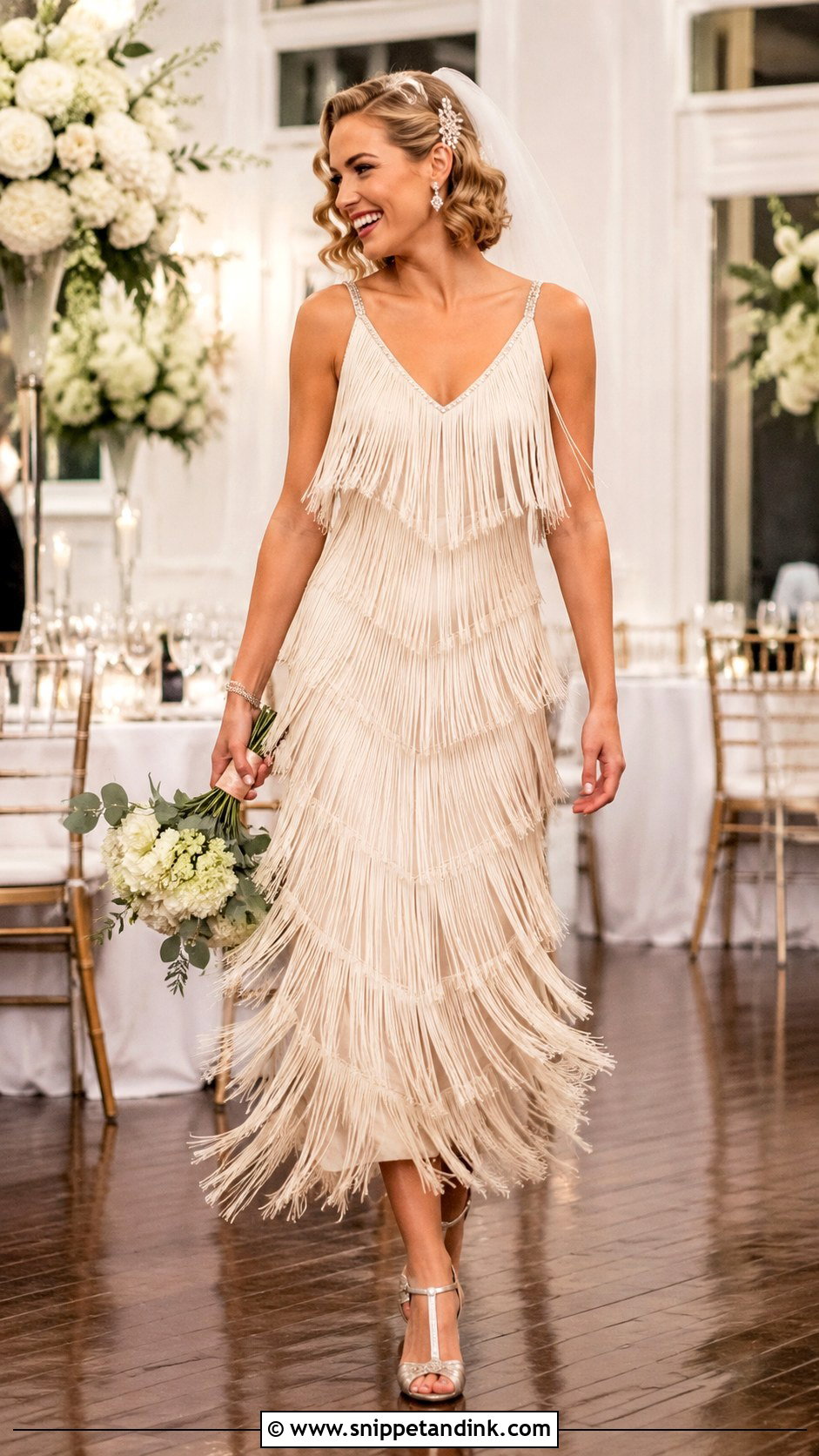
Fringe is made for dancing, and it gives a reception photographer something to work with every time. Keep it below the hip on a fitted or straight gown so the top stays streamlined and the trim swings freely. Tiers of fringe, sometimes with a little feather, evoke the decade while holding the close shape. Be warned that fringe tangles. Long strands knot around each other after a few hours of movement, so I shake it out gently and finger-comb it about halfway through the night. Metallic T-straps, a pearl comb and a beaded envelope clutch suit it; keep jewelry to small crystal earrings and one slim bracelet so nothing catches. A short veil beneath a low bun adds the bridal note, and it doubles as a lively second outfit.
4. Long Sleeve Beaded 1920s Wedding Dress
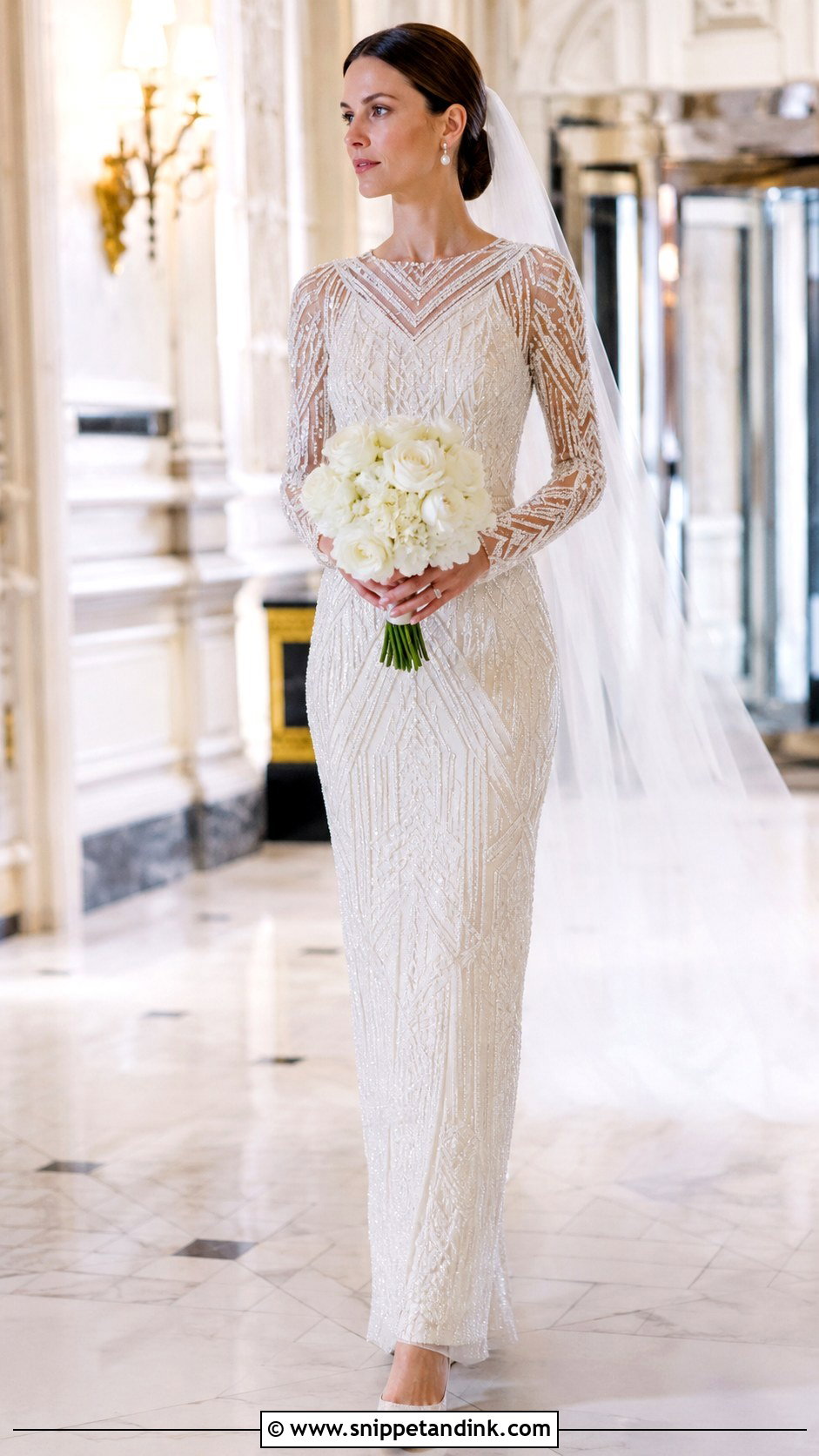
Long sleeves and beading together give you coverage that still glitters. Sheer illusion sleeves keep the dress visually light, and a straight skirt with a bateau neckline balances the geometric beadwork. One practical point: beading on the inner arm scratches, both you and whoever you hug, so I ask for it to stop short of the inner sleeve or switch to flat sequins there. Closed-toe ivory pumps, pearl drops and a plain-edged cathedral veil complete it, with a structured white bouquet for contrast against the shimmer. If you’d like more lining, opaque crepe or satin sleeves with beading only on the bodice and cuffs also work. Evenings, winter dates and formal hotel ceremonies suit it.
5. Pearl Embellished Column 1920s Wedding Dress
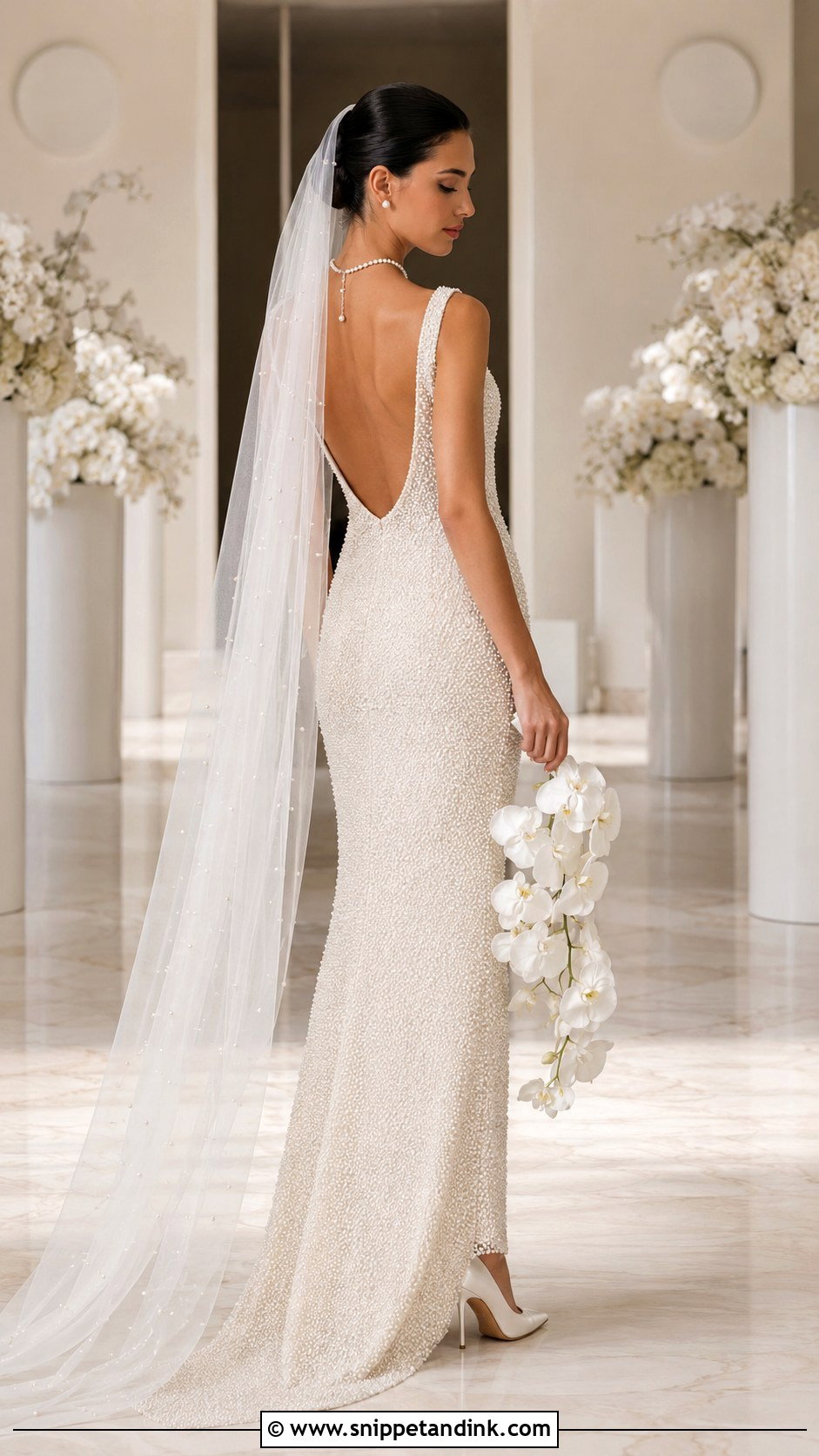
Pearls glow where crystals flash, which gives a softer kind of sparkle. Start with a straight column with scattered pearls, vertical strands or a pearl-covered mesh overlay, and let the narrow line put the embellishment in front. A low back adds modern contrast, finished with a backward pearl necklace or a veil set below a smooth chignon. Pearls are heavy, though, and they knock against chair backs, so sit down at the fitting and see how the back strands behave. Pointed satin pumps, pearl studs, a structured mini bag and a bouquet of white orchids keep the look long and clean. Minimalists who still want visible vintage character tend to land here.
6. Lace Cap Sleeve 1920s Wedding Dress
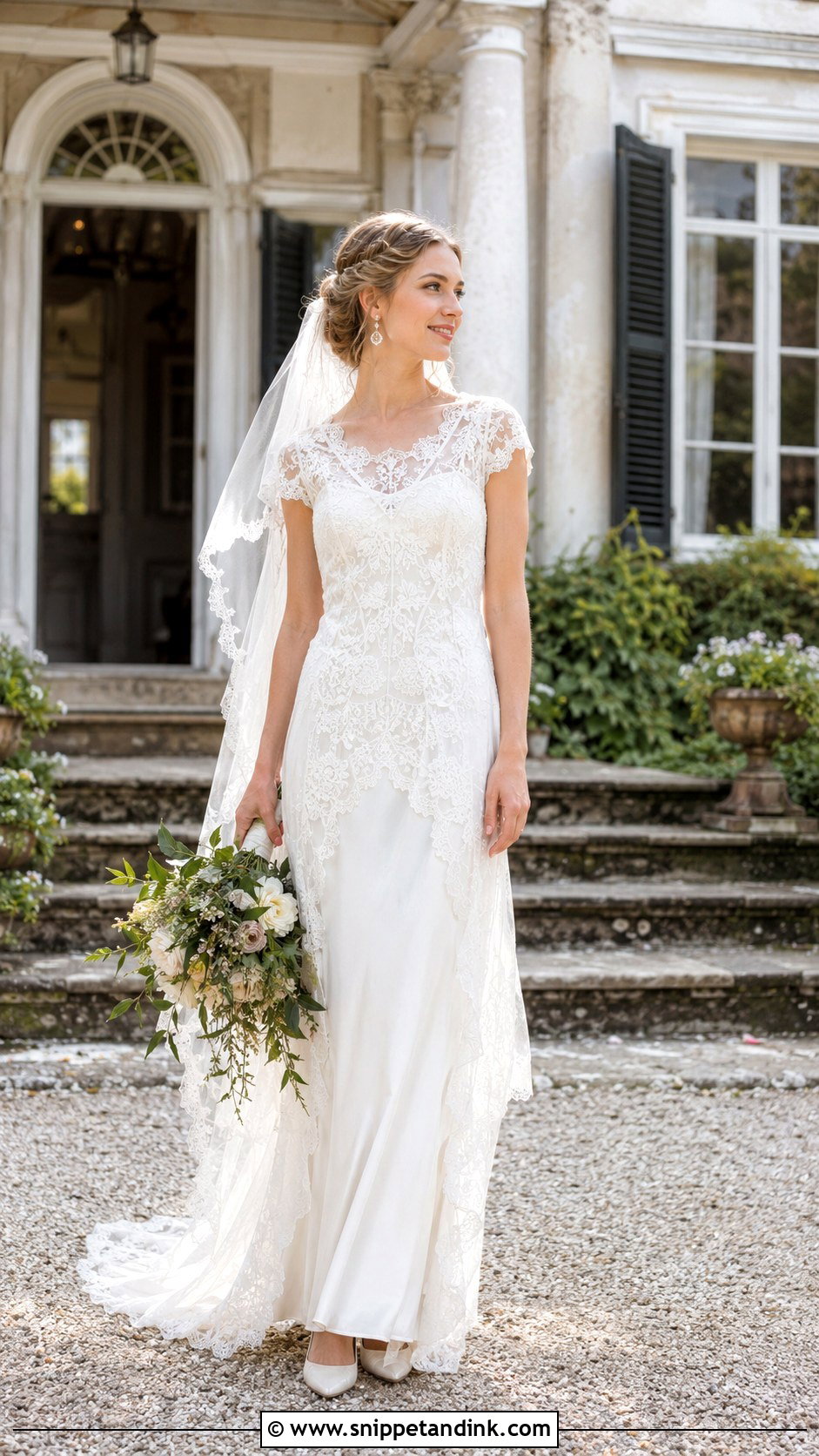
Lace and cap sleeves give a quieter take on the decade. Choose a relaxed sheath or column in silk crepe with a lace overlay that has scalloped edges or a subtle geometric pattern. Cap sleeves should rest lightly on the shoulder. If they cut in when you lift your arms for a hug, they need re-setting a little wider. Low ivory heels, pearl-and-crystal earrings and a lace-edged chapel veil finish it. A loose side-parted updo reads more current than a fully themed style, and a small garden bouquet adds texture. Spring ceremonies, garden weddings and historic homes suit its romance.
7. Champagne Sequin 1920s Wedding Dress
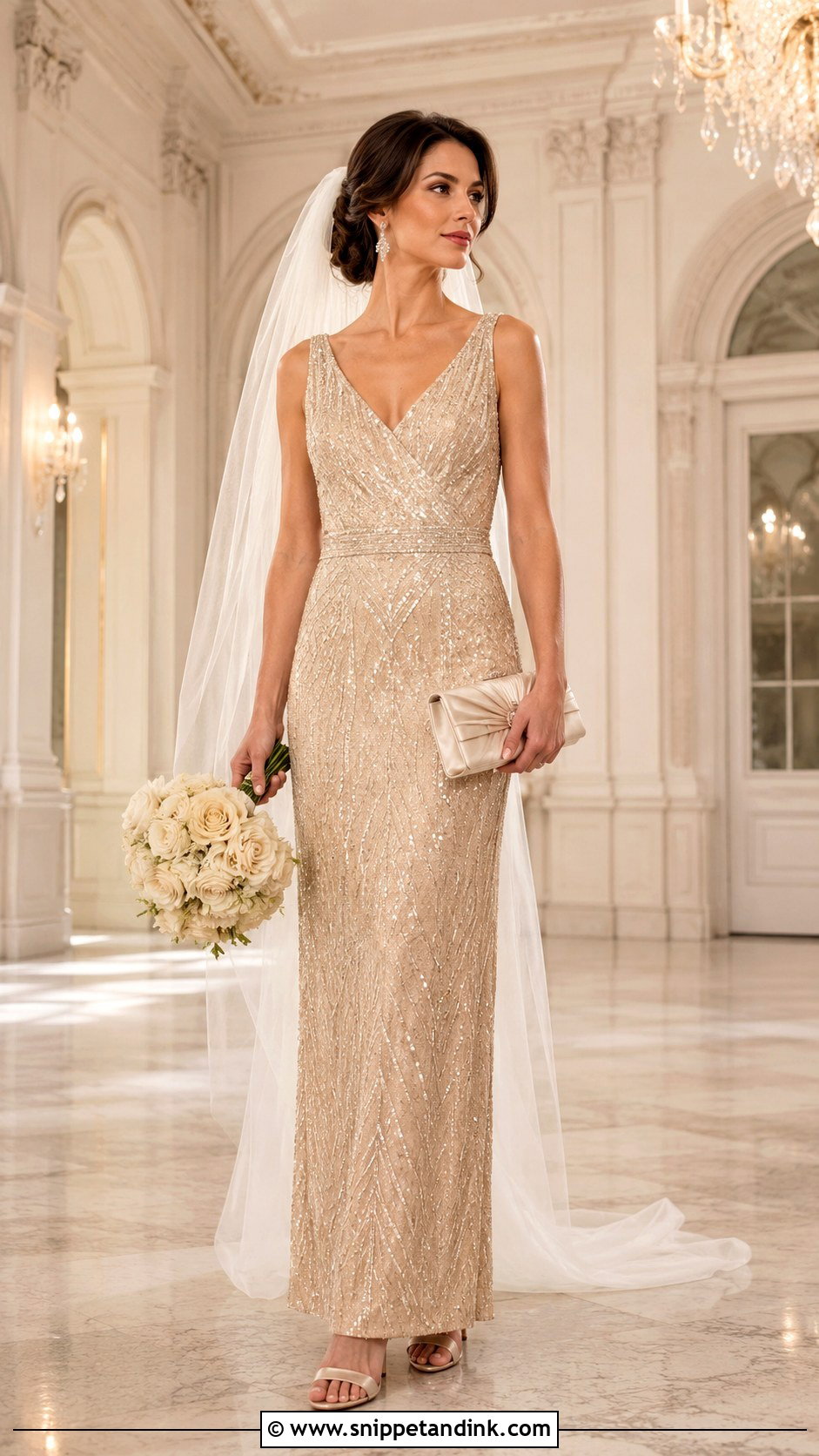
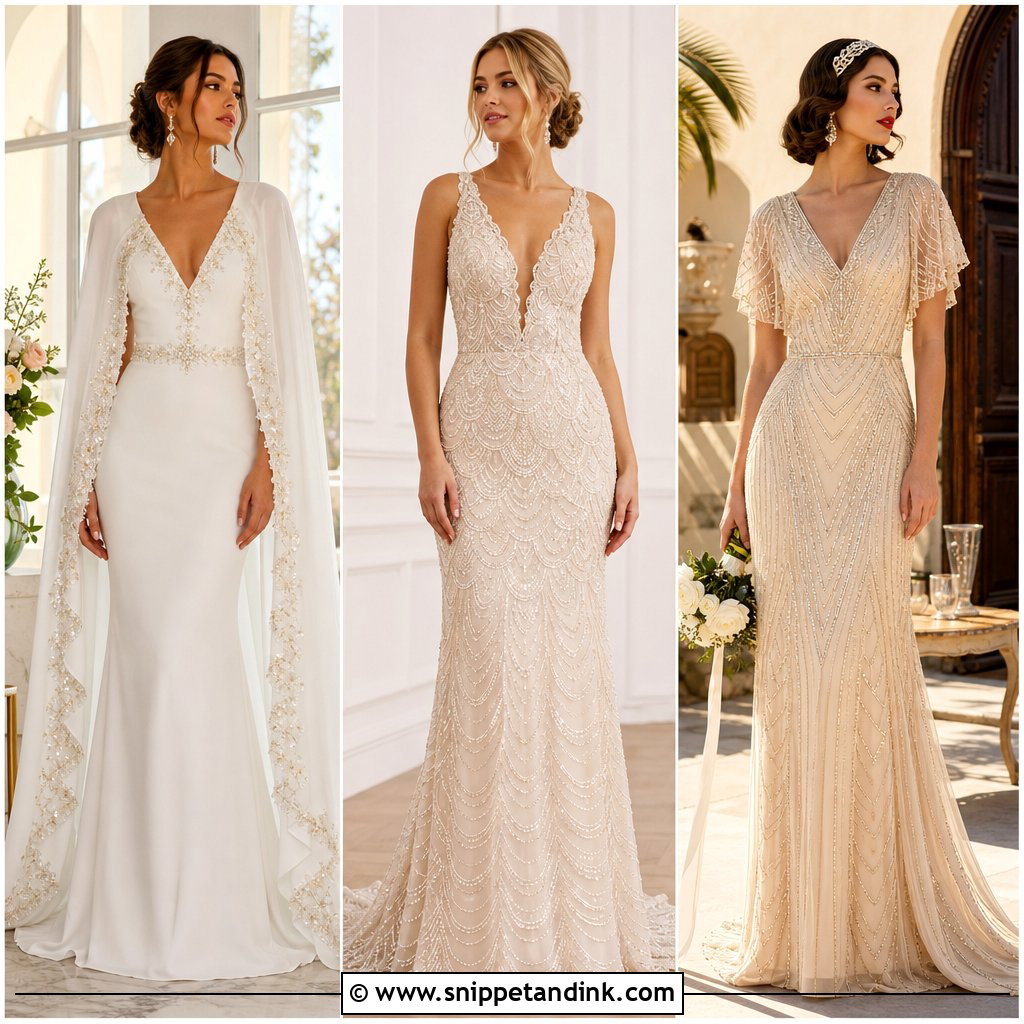
Champagne sequins add warmth without losing the bridal read. Pick a floor-length gown with a neutral lining and softly shimmering patterns rather than one solid metallic surface, which can look like costume under flash. A V-neck, slim straps and a gently fitted column skirt keep it current. I always check champagne against the bride’s skin and in the venue’s own light; some shades turn yellow under warm bulbs and grey in shade. Champagne block heels, crystal earrings and an ivory satin clutch work, with a plain tulle veil and creamy roses with pale greenery. Evening receptions, autumn dates and candlelit ballrooms suit its controlled sparkle.
8. Ivory Silk Slip 1920s Wedding Dress
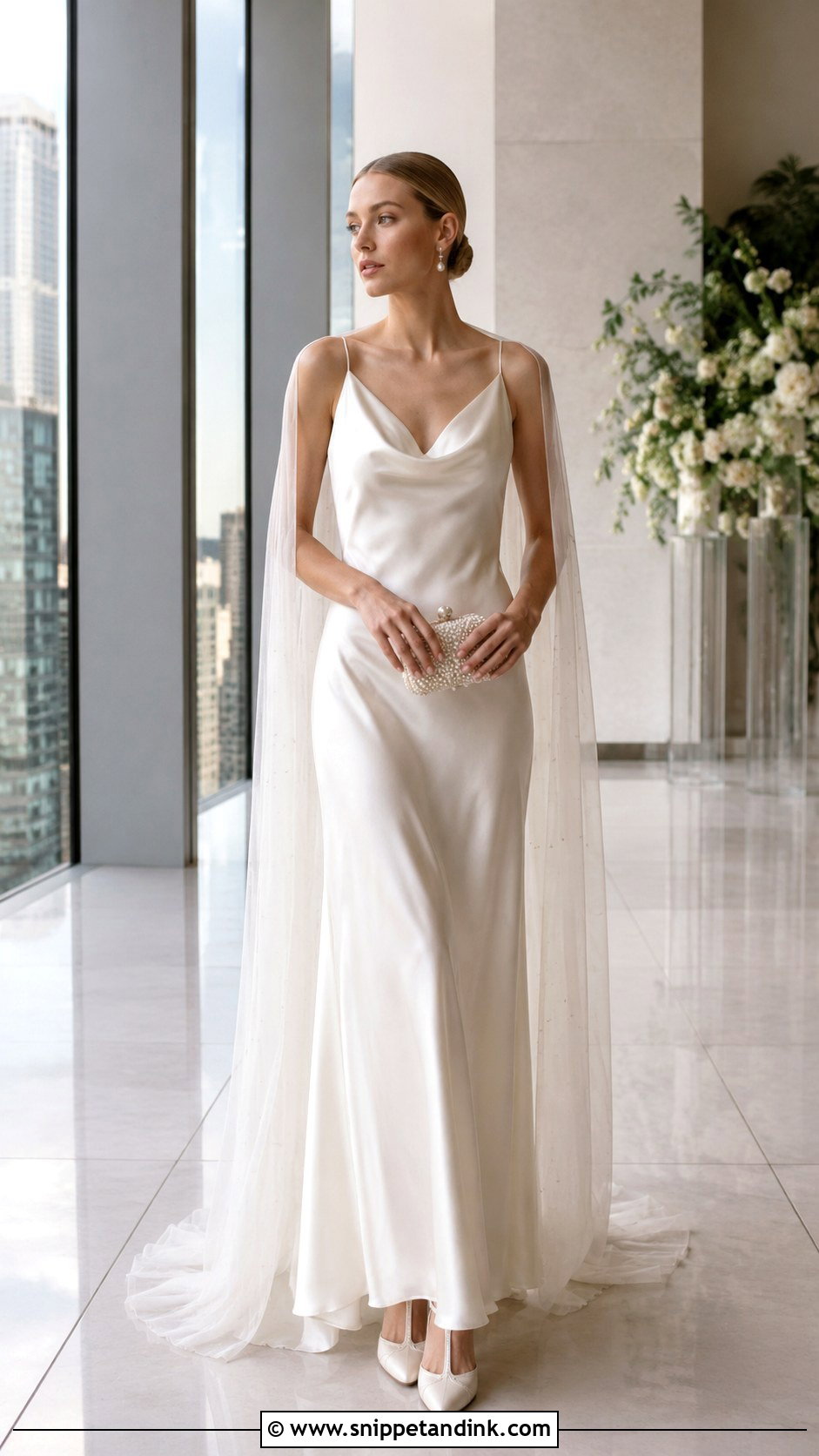
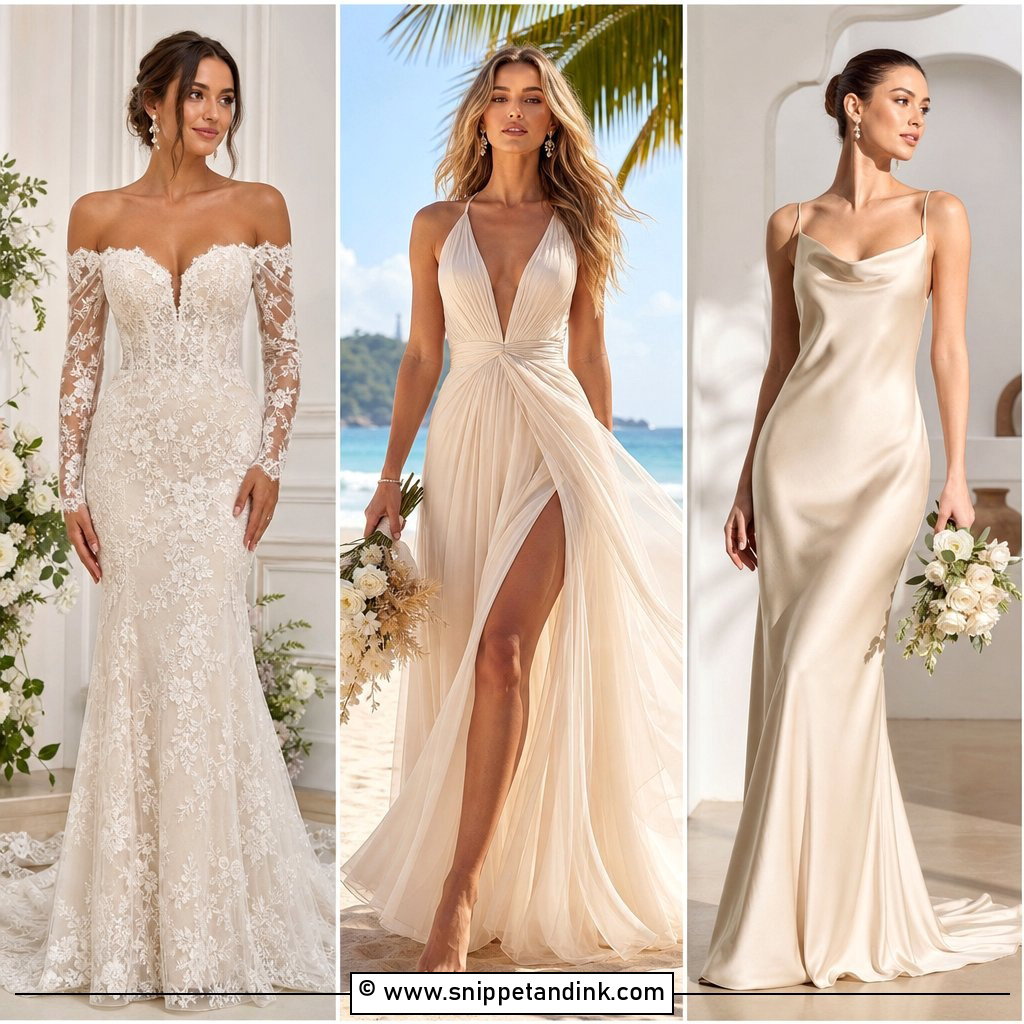
Not every 1920s look needs decoration. A bias-cut ivory silk slip catches the era’s fluid line through fabric alone. Choose a soft cowl neck, delicate straps and a low but secure back, and bring in the period through accessories: pearl drops, a crystal comb, satin T-straps and a beaded clutch. A sheer cape veil adds movement without hiding the construction, and a light beaded bolero adds ceremony coverage before coming off for dancing. Fit is everything. Bias-cut silk shows every pull, wrinkle and underwear line, so I have brides bring their exact undergarments to every fitting. It travels well, which makes it a strong pick for a destination wedding or a city venue.
9. Tea Length 1920s Wedding Dress
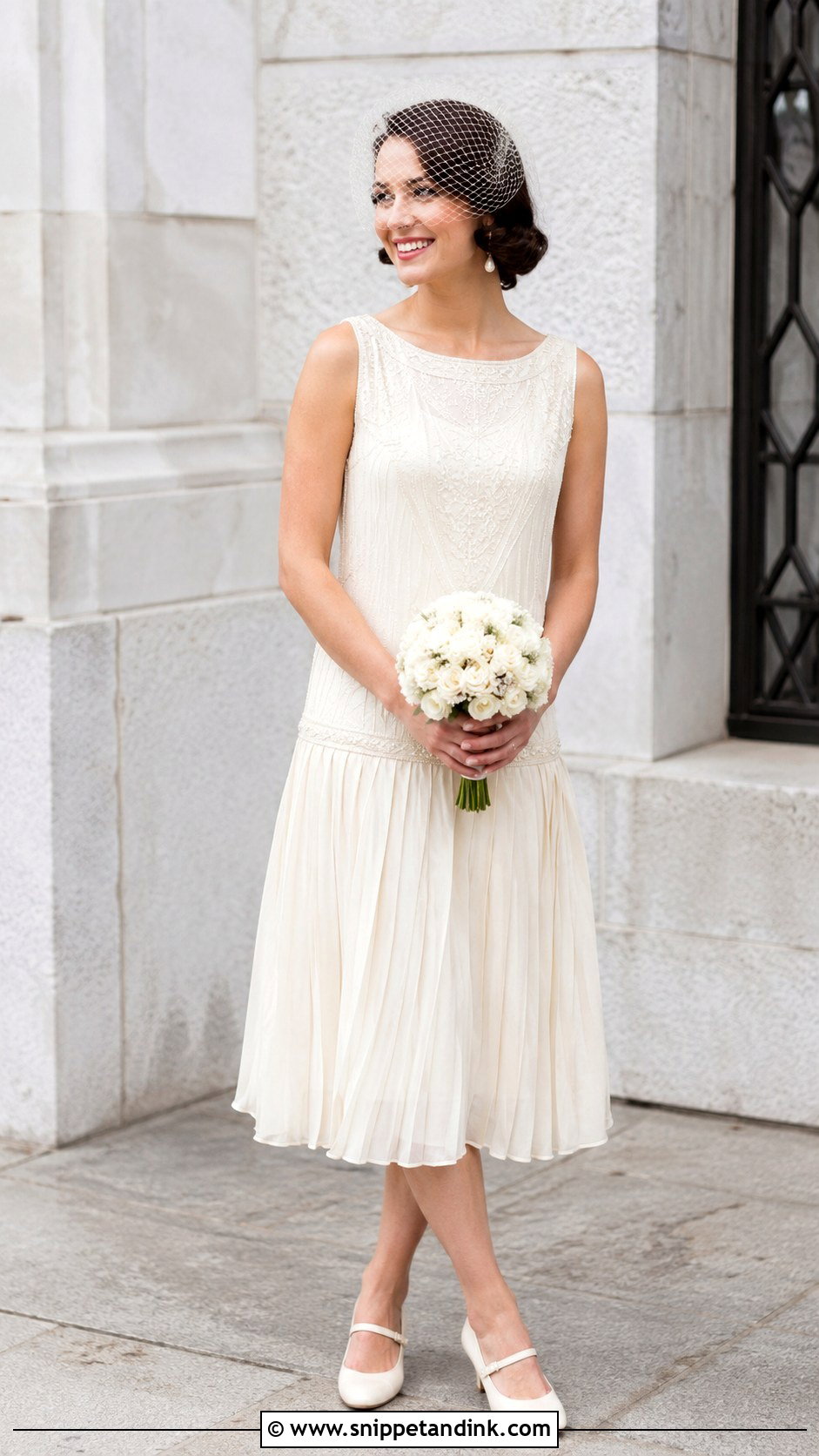
Tea length puts the shoes center stage. Choose a fluid dress with a dropped waist, a softly pleated skirt and a hem between knee and ankle, with beading at the neckline or waistband for definition. Hem placement matters more than most people realise. On petite brides I set it at the narrowest part of the lower leg, just below the calf, so the dress doesn’t cut the figure short. Ivory Mary Janes, sheer stockings if you like, a small birdcage veil, pearl earrings and a compact bouquet complete it. Courthouse ceremonies, daytime weddings and reception changes all benefit from the easier movement.
10. Handkerchief Hem 1920s Wedding Dress
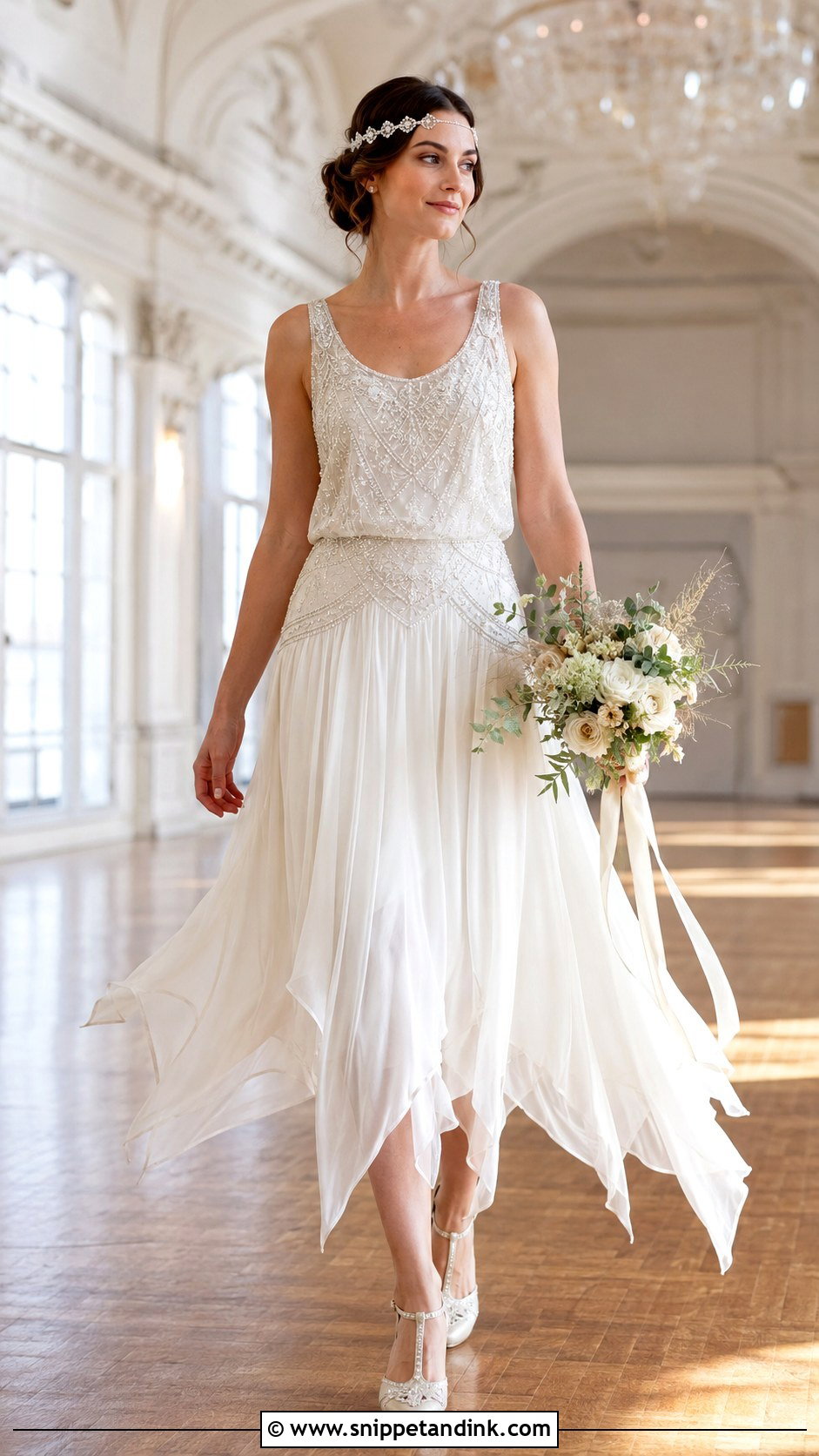
Handkerchief hems only work in fabric that floats. Chiffon, georgette or light silk let the points drift as you walk; anything stiffer just looks uneven. Pair the hem with a simple beaded bodice, a softly dropped waist and comfortable T-straps that peek out beneath the shorter sections. A crystal headband, pearl studs and a narrow ribbon-tied bouquet are enough, and the veil should stay short or give way to a comb. Before the wedding, walk some stairs in it. The longest points can catch under a heel, and I’d rather shorten one by an inch than see a bride stumble. Check too that the panels are lined enough not to turn sheer in sunlight.
11. Feather Trim 1920s Wedding Dress
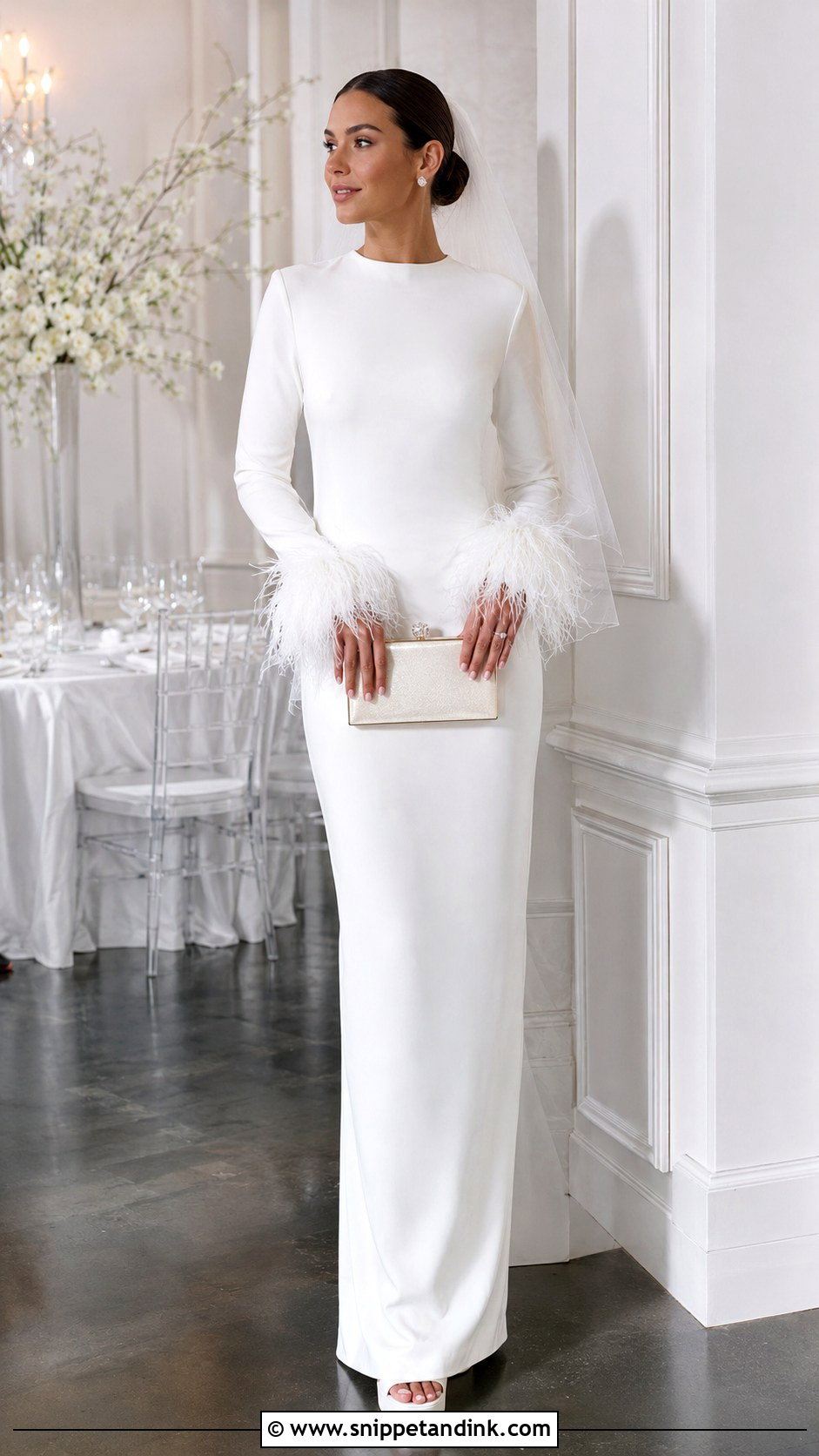
Feathers are festive, and careful placement keeps them grown-up. A simple crepe column with soft feather trim at the cuffs, neckline or hem is enough; pick one area so the texture stands out. Feathers shed, especially at first, so I shake the trim gently outdoors before the day and keep it away from lipstick and bouquet stems. Satin platform sandals, crystal studs, a small structured clutch, a sleek low bun and a plain shoulder-length veil keep everything else clean. For a reception change, a detachable feather capelet lets the ceremony look stay streamlined. Keep this one indoors; rain flattens feathers in minutes.
12. Scalloped Beaded 1920s Wedding Dress
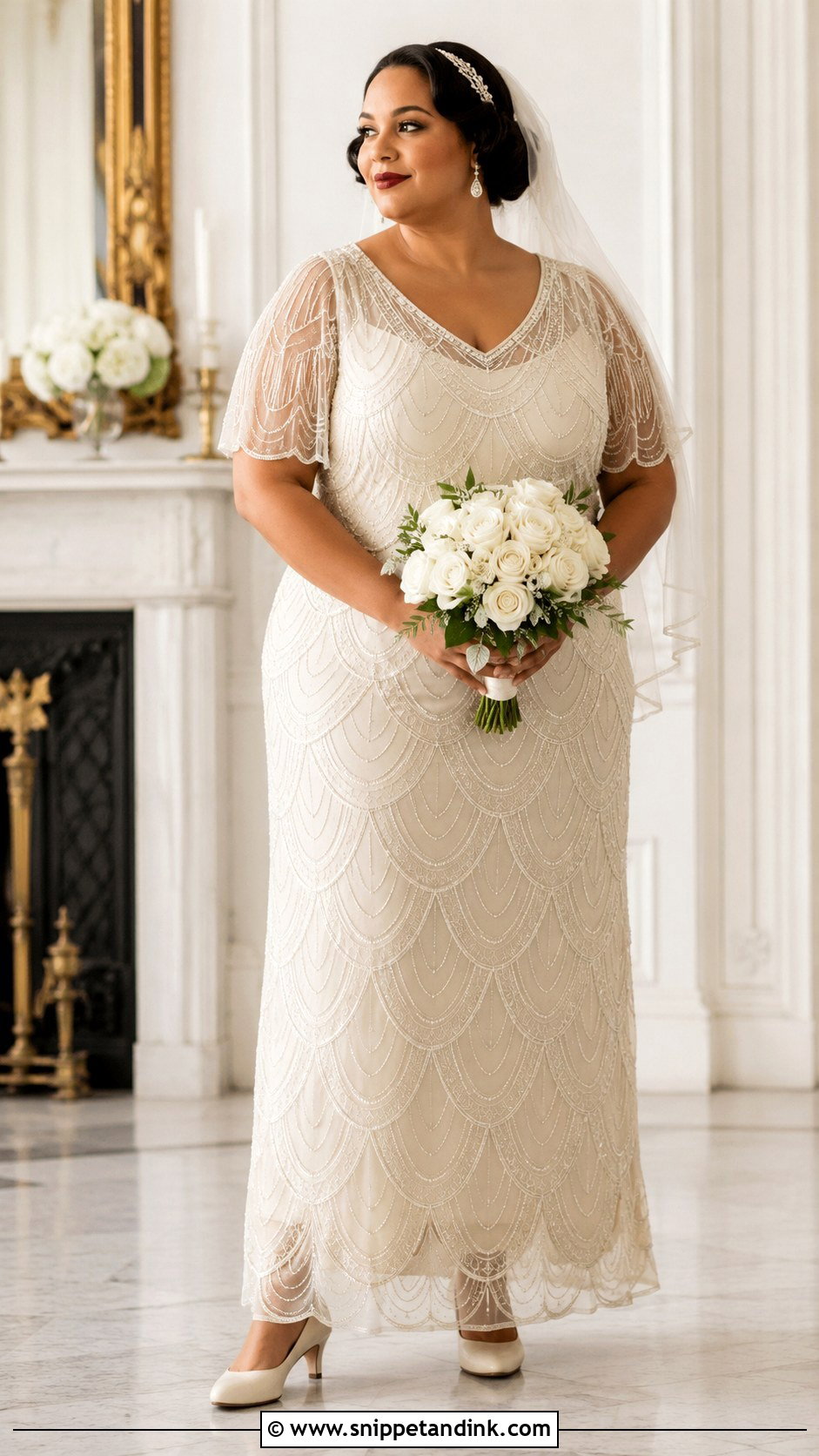
Scalloped beadwork moves the eye in curves rather than angles, so it reads softer than strict geometry. Look for ivory mesh with overlapping scallops running down a straight skirt, lined in a shade close to your skin or the bead color. A modest V-neck and delicate flutter sleeves balance the busy surface. On curvy brides I like the scallops running vertically or diagonally, since they lead the eye along the body rather than across it. Hemming is the catch. Ask before buying whether the hem can be shortened without cutting through a motif, because rebuilding scallops by hand is slow work. Ivory kitten heels, teardrop earrings, a satin wristlet, a lightly gathered tulle veil and white anemones or roses finish it.
13. High Neck 1920s Wedding Dress
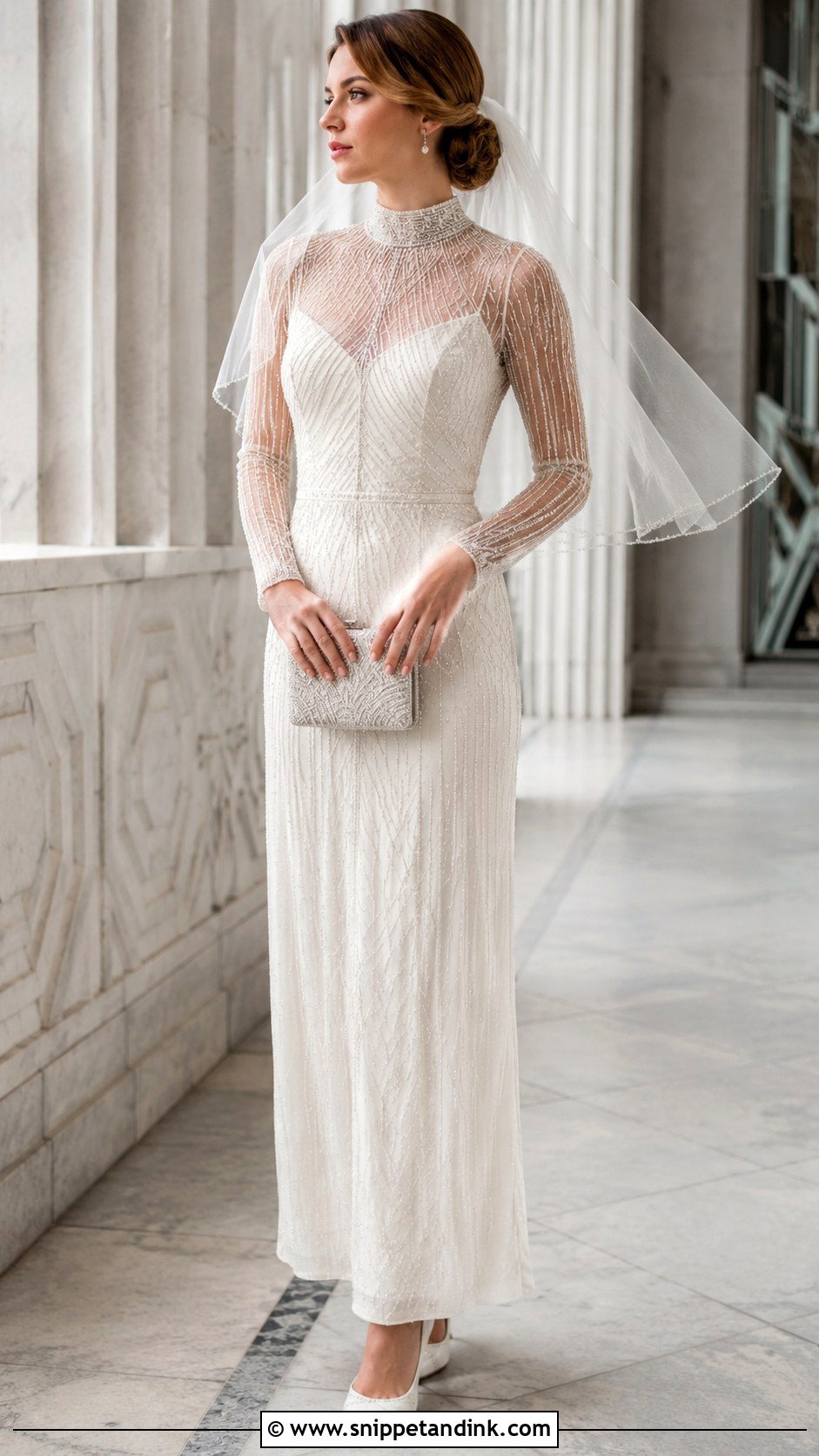
A high neck already frames the face, so the necklace goes and small pearl or crystal earrings take over. Choose a sleeveless or long-sleeve column with a sheer beaded yoke, a softly fitted bodice and a skirt that falls cleanly from the hips. Pointed ivory pumps, a beaded clutch and a veil secured beneath a low chignon suit it, along with a slender long-stemmed bouquet that continues the vertical line. Beaded collars can rub along the jaw and catch on earrings, so at the fitting I have the bride turn her head fully both ways and lift her arms. Formal ceremonies and cooler seasons suit it, with the chest covered and the shape still light.
14. Plunging V-Neck 1920s Wedding Dress
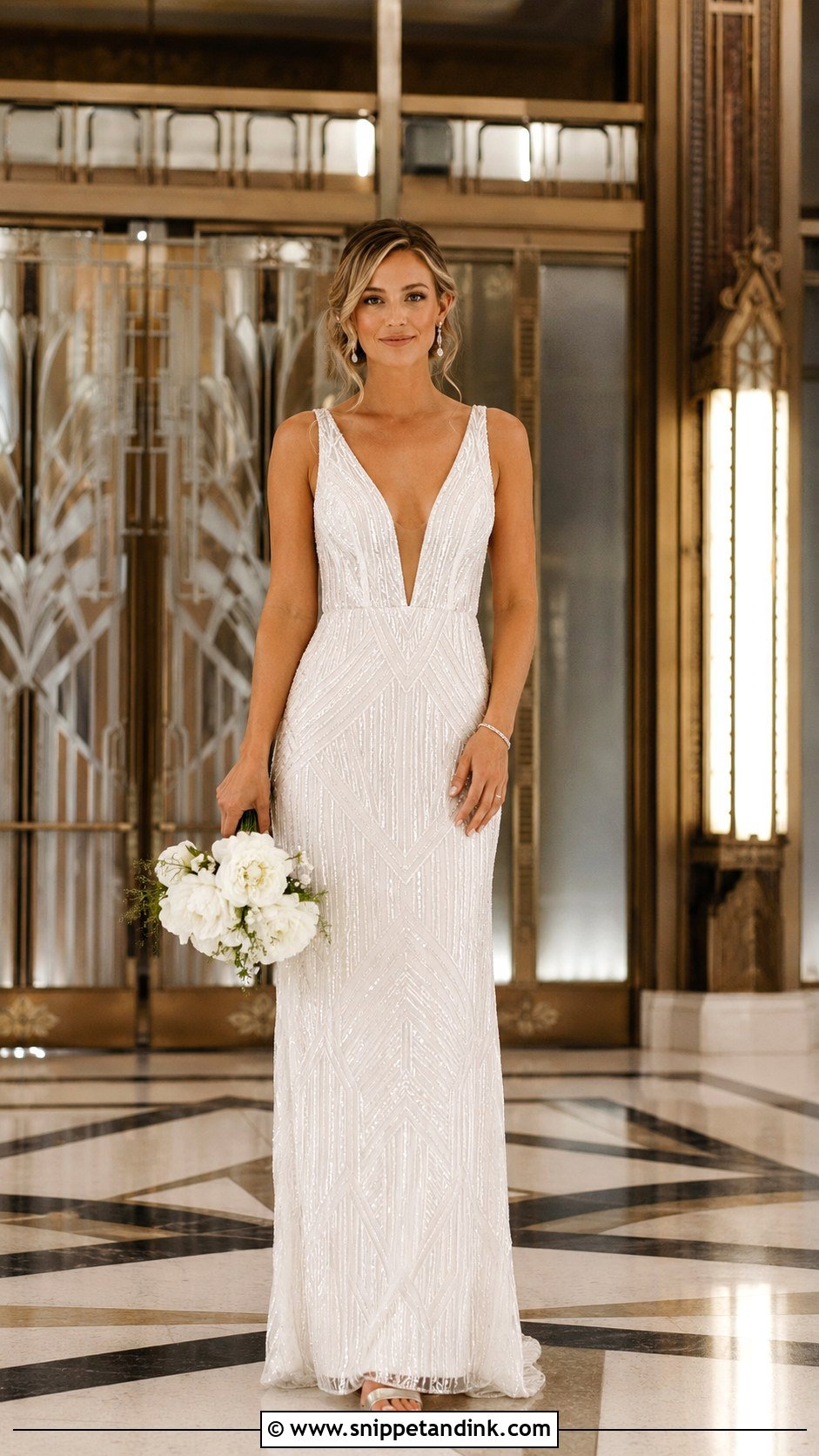
A plunging V gives a beaded gown a bold modern edge, and it lives or dies on its inner construction. Ask your tailor about illusion mesh, hidden cups, fashion tape and straps wide enough to hold everything in place when you bend to hug a grandparent; I test exactly that at the fitting. Geometric beadwork can frame the V and carry toward the hip, drawing the eye down the center, while a floor-length skirt balances the open neckline. Skip a big necklace, which breaks the line. Fine drop earrings, metallic sandals, one slim bracelet, a simple veil from a sleek updo and a compact white bouquet are enough. A formal evening wedding or an Art Deco venue is where it belongs.
15. Open Back 1920s Wedding Dress
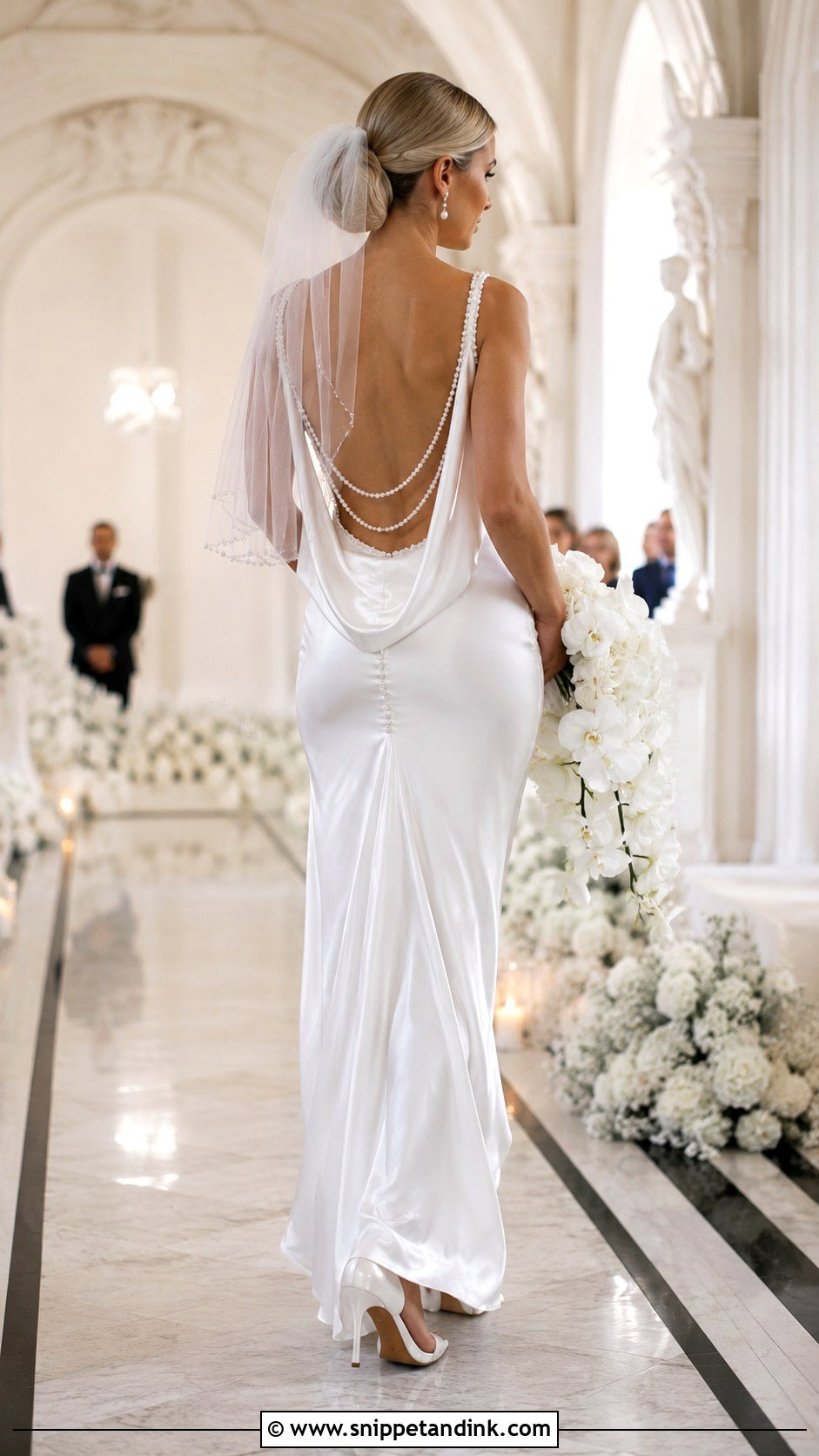
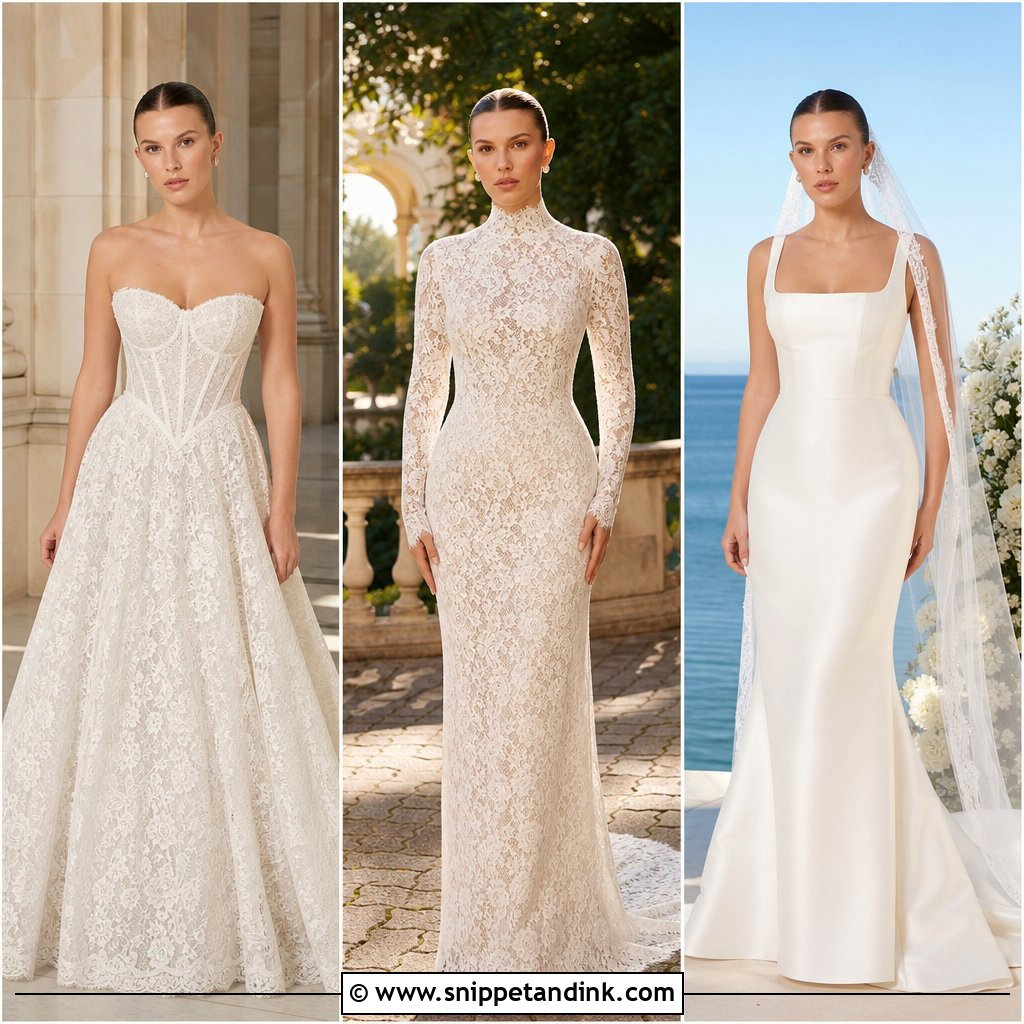
The back is what guests look at during the vows, so an open back earns its place. Choose a satin or beaded column with a low scoop, a V-back or a sheer embellished panel; pearl buttons, crystal edging or draped pearl strands emphasize it without bulk. Plan the support before you buy. A low back rules out an ordinary bra, so ask about built-in cups or a low-back bodysuit at your very first appointment. Wear a low side bun to keep the back clear, with pearl earrings and a veil attached beneath the hair. Satin heels and a narrow cascading bouquet complete it, and it moves easily between formal, city and destination settings.
16. Beaded Cape 1920s Wedding Dress
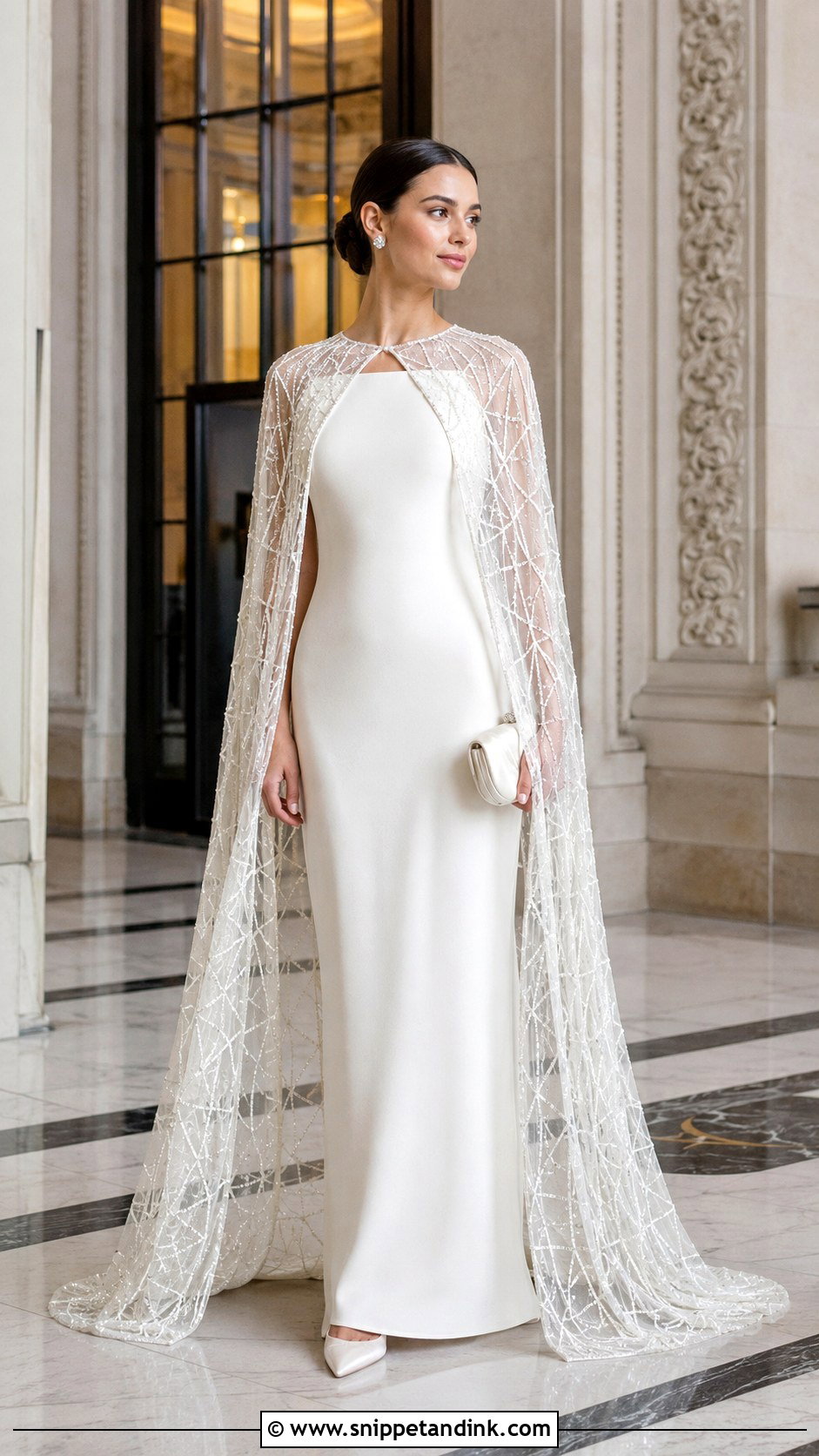
A beaded cape gives one dress two looks. Start with a clean ivory sheath in satin or crepe, then add a sheer cape decorated with geometric crystals, pearls or a little fringe. Waist length covers the shoulders; floor length gives the drama of a veil. Beads on the inside of a cape can snag the satin underneath, so I check that the edges are bound and that the neck closure is secure, ideally a hook and bar rather than a single button. Keep the rest simple with crystal studs, pointed pumps and a smooth satin clutch, and wear the hair in a neat bun or soft waves tucked behind the ears. If it’s removable, wear it for the ceremony and reveal the sleek dress at the reception.
17. Plus Size Beaded 1920s Wedding Dress
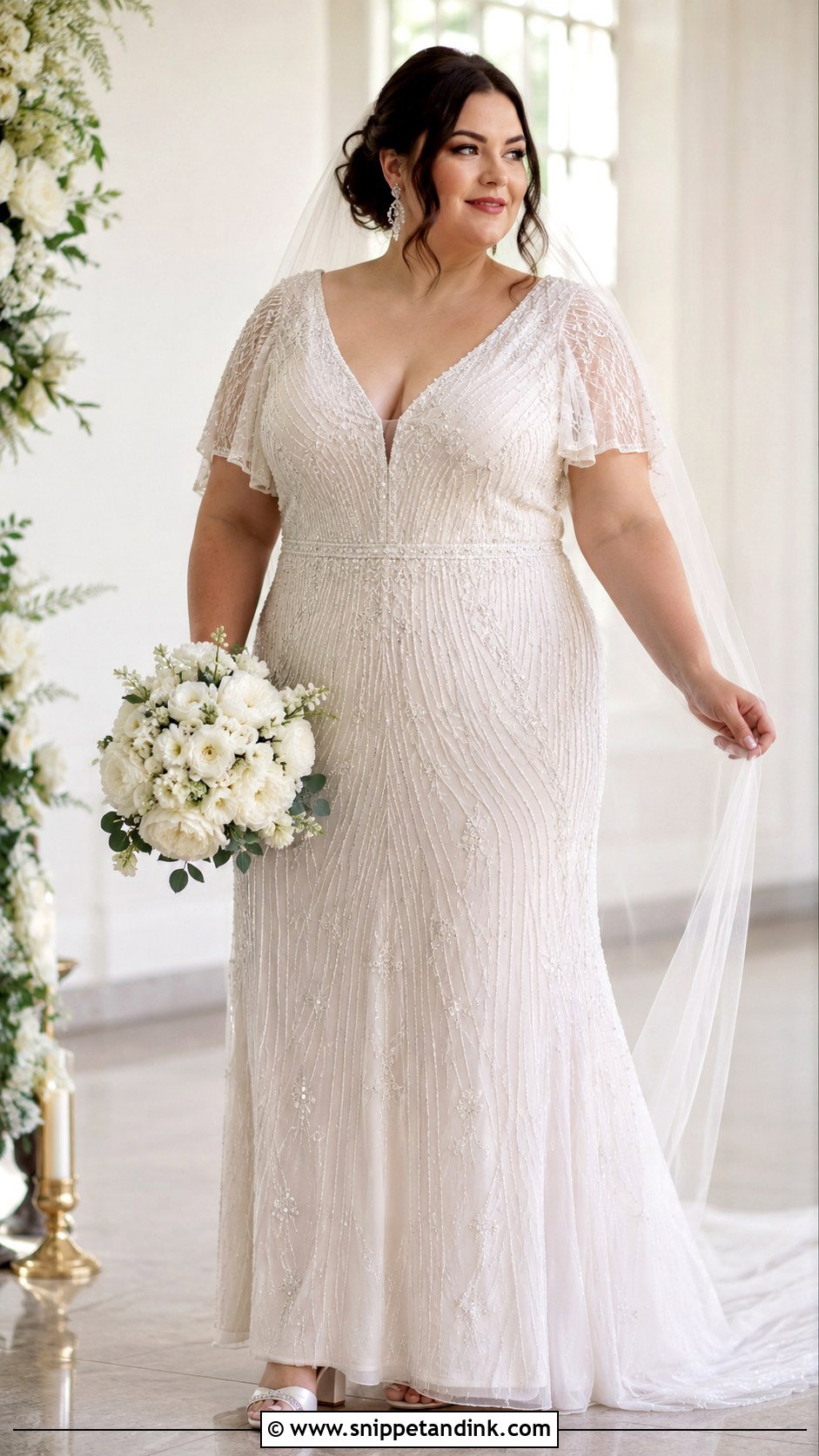
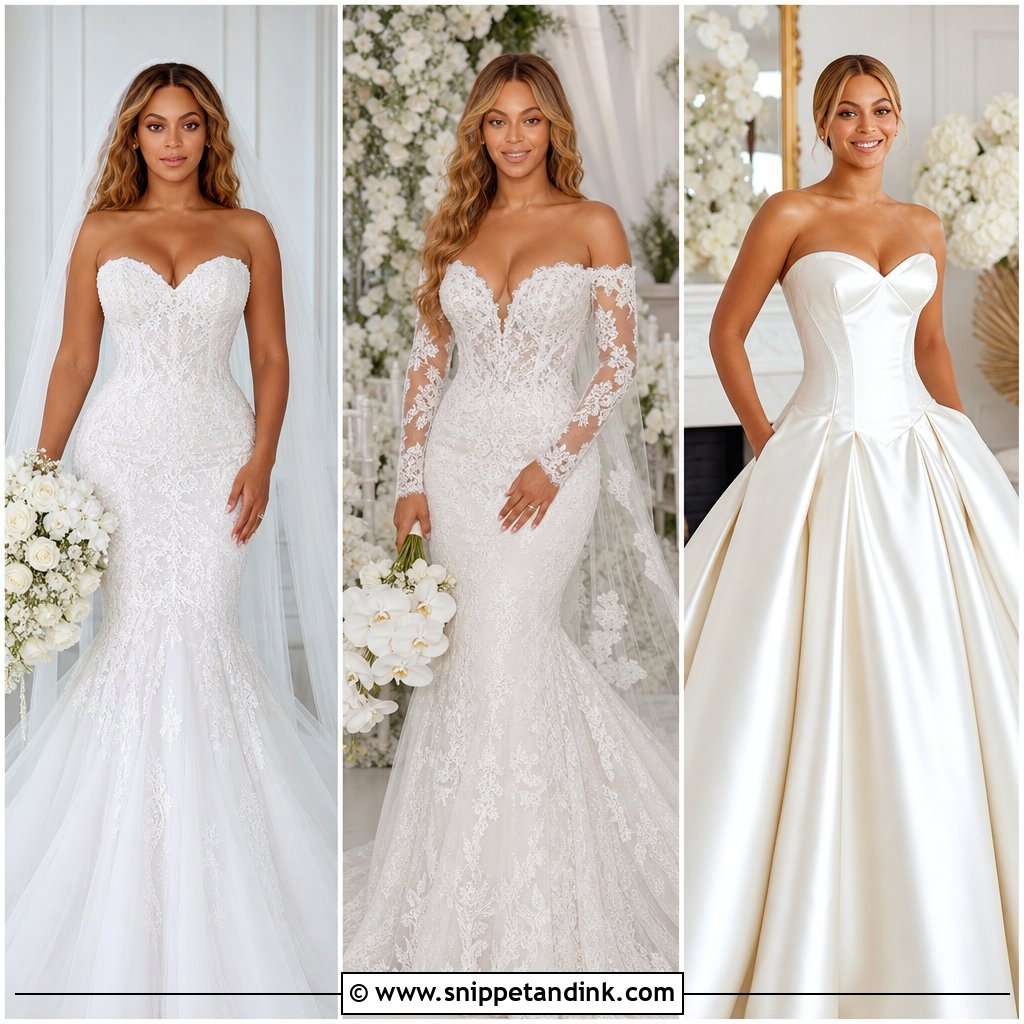
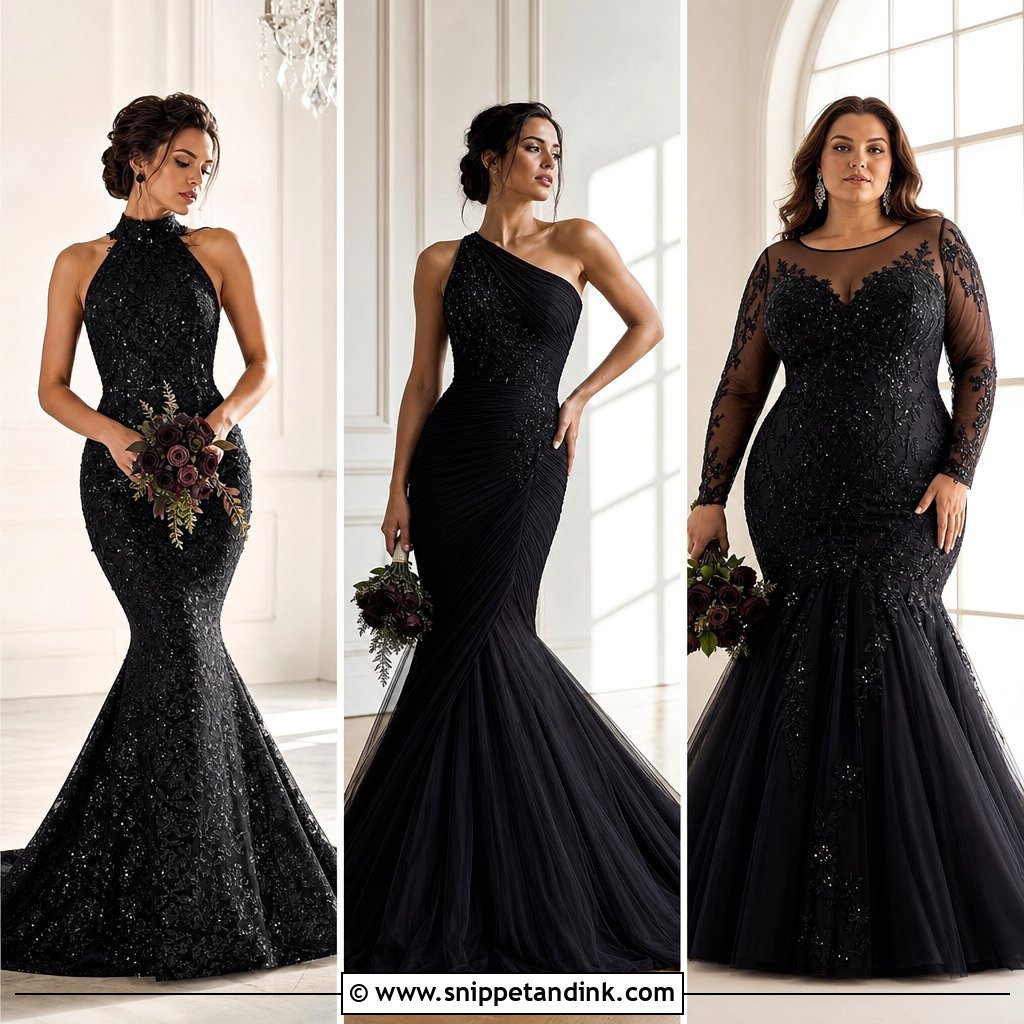
I fit a 1920s-inspired gown to the bride’s shape rather than forcing the straight flapper line, which was designed to flatten curves. A gently fitted column or soft fit-and-flare with vertical beaded panels, a supportive V-neck bodice and flutter sleeves keeps the period feel. A slightly raised or softly dropped waist nods to the era while defining whatever shape you prefer. Look for strong internal construction and generous seam allowances, because beaded fabric is hard to let out. At every fitting, sit, walk and raise your arms. Comfortable block heels, long crystal earrings, a simple chapel veil and a structured bouquet held low enough not to hide the bodice complete it.
18. Modest 1920s Wedding Dress
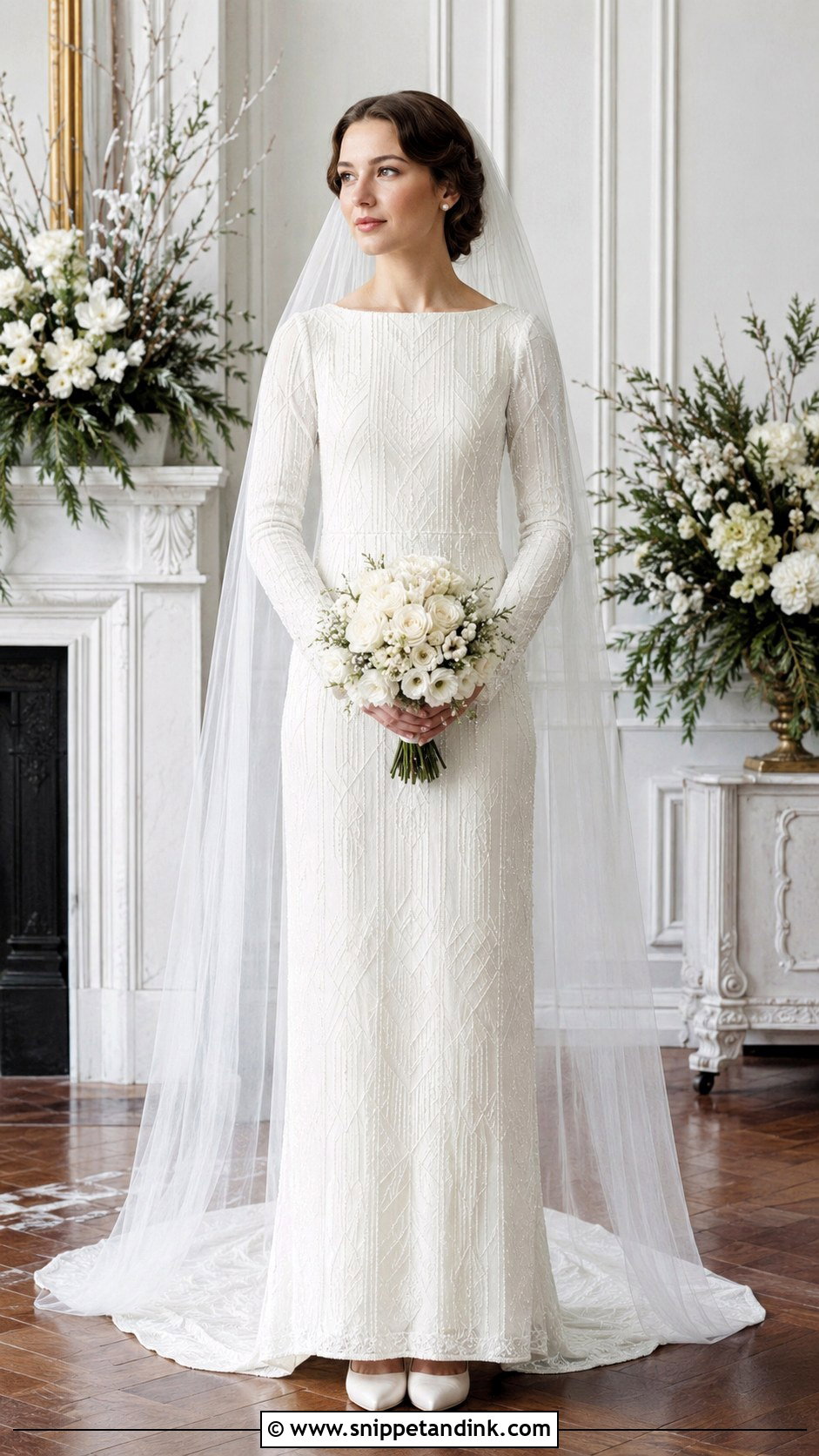
Coverage and sparkle can sit together. A long-sleeve column with an opaque lining, a bateau neckline and a geometric beaded overlay looks glamorous without revealing much. The skirt should skim rather than cling, with a short train for formal weight. Need longer sleeves or a higher neckline? Ask whether extra fabric can be ordered with the dress, since matching beaded fabric later is close to impossible. Closed-toe pumps, pearl studs and a full-length veil with a simple edge complete it, with a low bun and a rounded bouquet to soften the straight lines. For less shine, keep the beading to the shoulders, cuffs and waistband. Traditional ceremonies and winter weddings suit it.
19. Fringe Mini Reception Wedding Dress
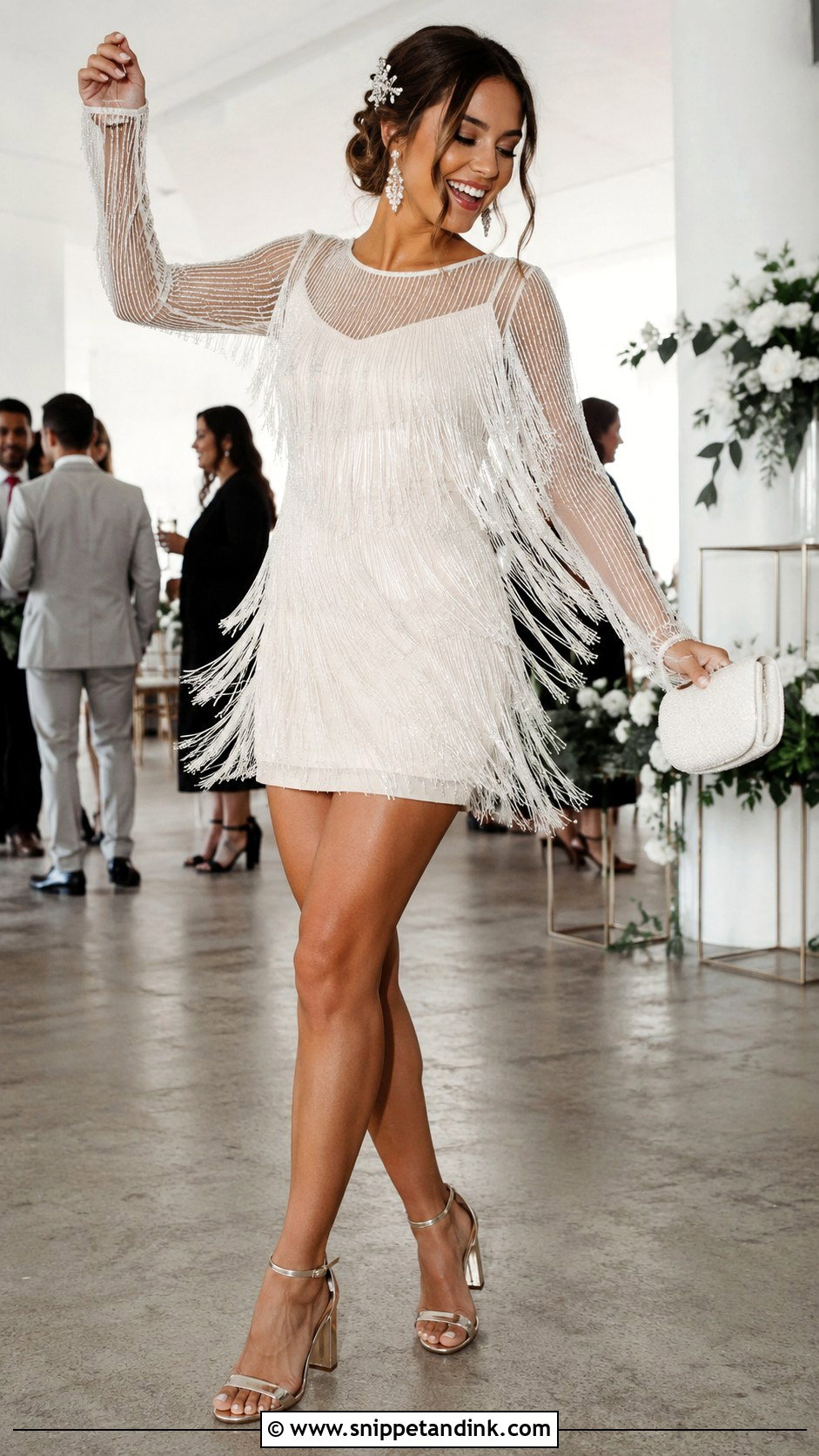
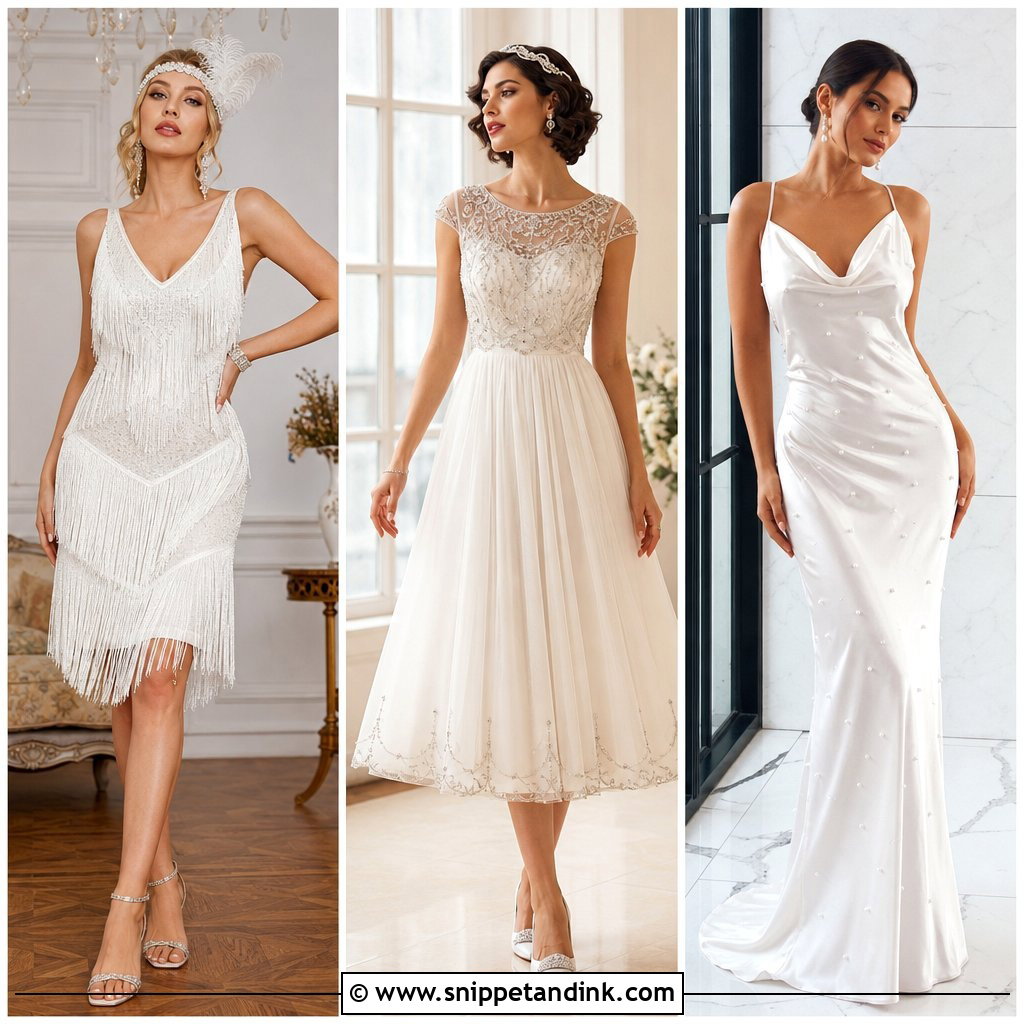
A fringe mini makes a lively second outfit for dancing. Choose an ivory or white shift with secure straps, a structured lining and fine tiers of fringe that move freely without much weight; a little beading at the neckline is all the extra sparkle it needs. Wear stable metallic block heels or embellished flats, crystal earrings and a small comb, and swap the bouquet for a compact satin clutch so your hands are free. Long sheer sleeves or a hem just above the knee add coverage. Sit and dance in it before the day, because long strands catch on bracelets and ring prongs. It ties the reception straight back to the 1920s theme.

20. Black And Ivory 1920s Wedding Dress
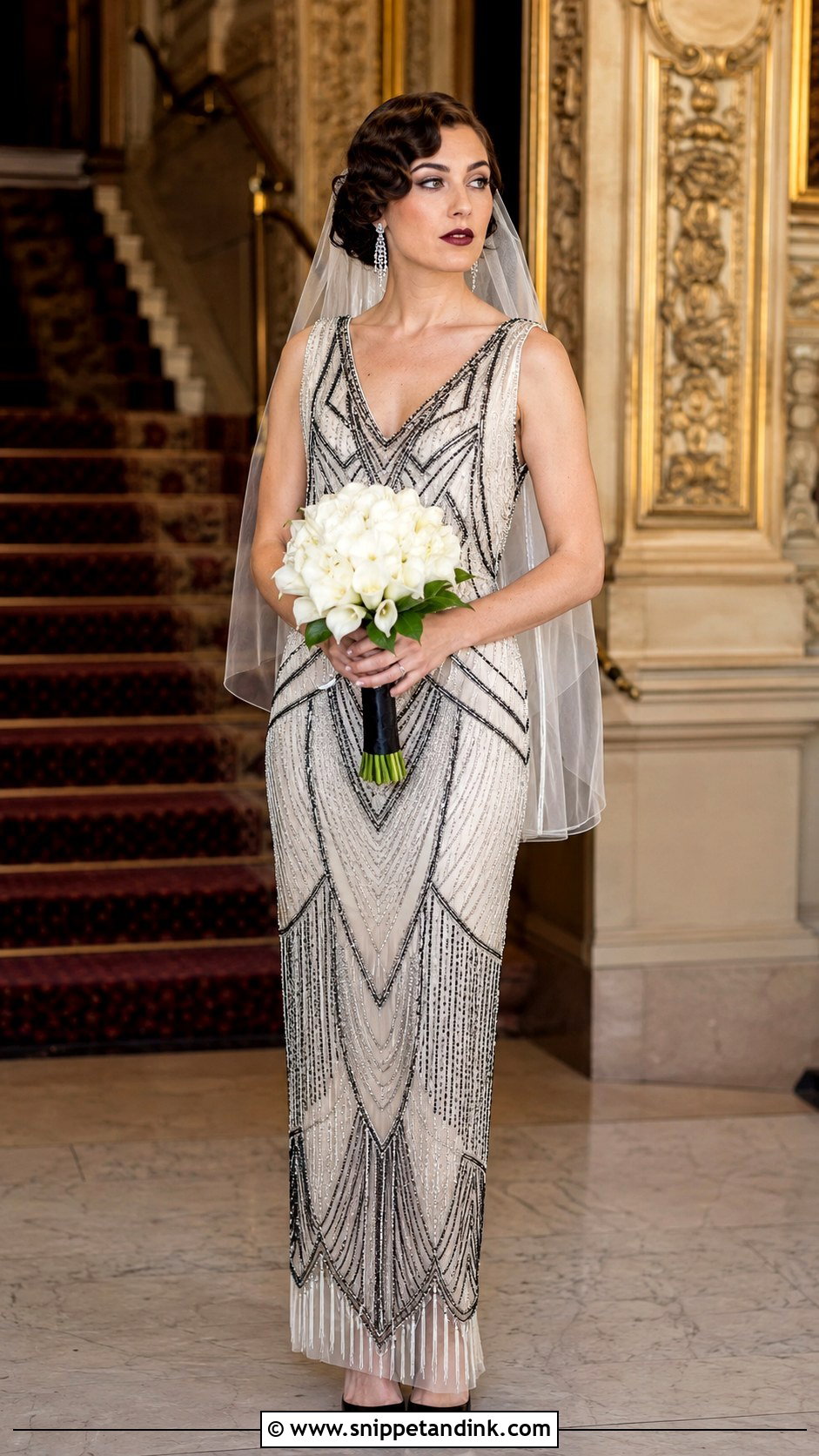
Black and ivory is the dramatic route, and restraint is what makes it work. Choose an ivory column with black Art Deco beadwork, a black velvet sash at the hip or a detachable black beaded cape, but pick just one; several contrast accents start to look busy. Black pointed pumps, crystal earrings and an ivory bouquet wrapped in black ribbon finish it. A plain ivory veil keeps it bridal, and sleek side-parted waves support the vintage feel. If a black veil feels heavy, use a small black comb or a geometric pin instead. Charcoal, pewter or deep navy beading softens the contrast. Formal evening venues, historic theaters and modern ballrooms suit it.
Headpieces That Read 1925 Rather Than Costume Shop
The headpiece sets the decade more than the dress does. Brides of the 1920s often wore their veils low across the forehead, sometimes attached to a fitted cap, and copying that shape exactly can tip into theatre. This is how I adapt the period options for a modern bride.
- Juliet cap veil: a close-fitting cap of lace or beads with tulle falling behind. It sits best on smooth hair or a faux bob, and I pin it through the hair at the sides as well as the crown so it doesn’t creep backward.
- Bandeau worn low: a natural partner for finger waves, but keep it slim if you wear glasses or have a short forehead, or it crowds the face.
- Jeweled side comb: the most modern choice and the easiest with long hair. Set it just behind the ear on the side of your deeper part.
- Feather or fan clip: one small piece above the ear is plenty. Anything bigger starts fighting the veil.
Long hair can still carry a 1920s headpiece. A faux bob, with the lengths rolled under and pinned at the nape, gives the short silhouette without cutting anything, and it holds firmly under a cap veil. Finger waves need setting gel and time to dry, so be honest with your hairstylist about how much room the morning schedule really has.
One Jazz Age Detail Done Well Beats Five Done Halfway
The 1920s gowns that work best at a wedding pair a few recognizable details with the fit and construction of modern bridalwear. Geometric beadwork, a dropped waist, fluid satin, pearls, fringe or a cape can each carry the look, and the strongest outfits use two or three of them rather than every Jazz Age reference at once. Weigh your venue, the season, how much you’ll dance, the coverage you want and what can be altered before you buy. Then finish with shoes you can stand in, refined jewelry, a headpiece that suits the neckline and a bouquet that follows the silhouette. Above all, the dress should feel like a celebration from the vows to the last song.
You'll Like These Ideas:


Leave a Reply