
The 1920s are the decade I get asked about most by brides who say they want vintage but don’t want to look in costume. A 1920s wedding look is built on movement rather than structure: the dresses hang from the shoulders, skim the body and come alive when you walk or dance. Beading, fringe, bias-cut satin, dropped waists, lace sleeves, capes, cap veils, pearls and T-strap shoes all belong to the era, and you can push any of them toward period-accurate or toward modern. Below are twenty-five ways to wear it, with the shoes, veil and jewelry for each and the fitting notes I’d give you in the room.
Fitting a Waistless Dress to a Body With Curves
The original 1920s line was designed for a flat, straight figure, and brides with a full bust or hips sometimes worry that the era isn’t for them. It is, but the dress has to be adjusted rather than copied.
- Fit the widest part first. A straight dress must pass over the bust or hips without pulling, then be taken in elsewhere.
- Drop the waist seam to the low hip, not the high hip. A seam sitting on the widest point makes the hips look boxy.
- On a full bust, a V neckline or a soft cowl breaks up the straight front far better than a high round neck.
- Bias-cut satin is the hardest shape to wear on curves. A beaded or lace overlay is more forgiving.
I’d also start fittings early. Beaded and lace dresses are slow to alter, because the dressmaker has to remove the beads along every seam and stitch them back by hand once the seam is moved.
1. 1920s Beaded Wedding Dress
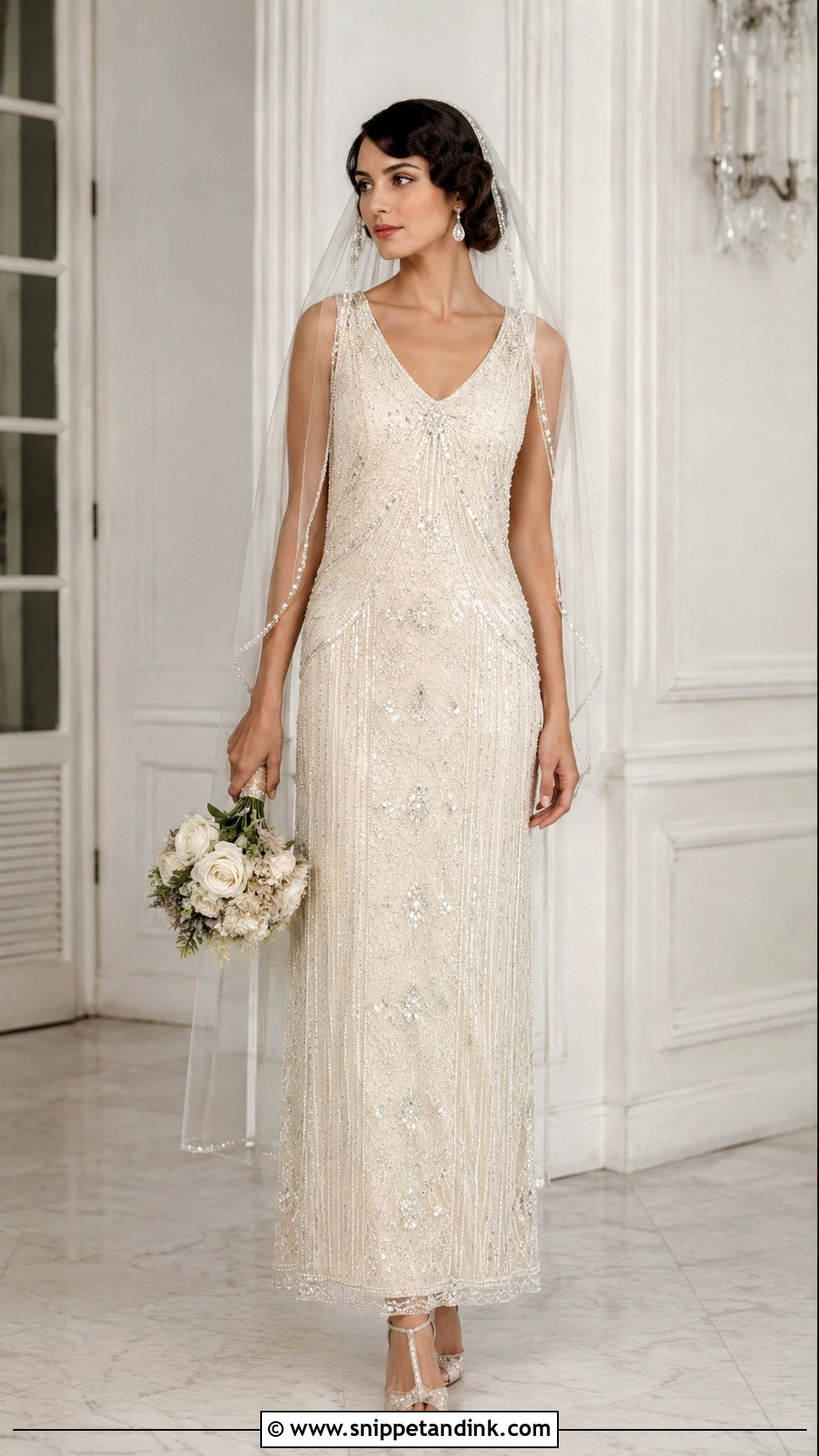
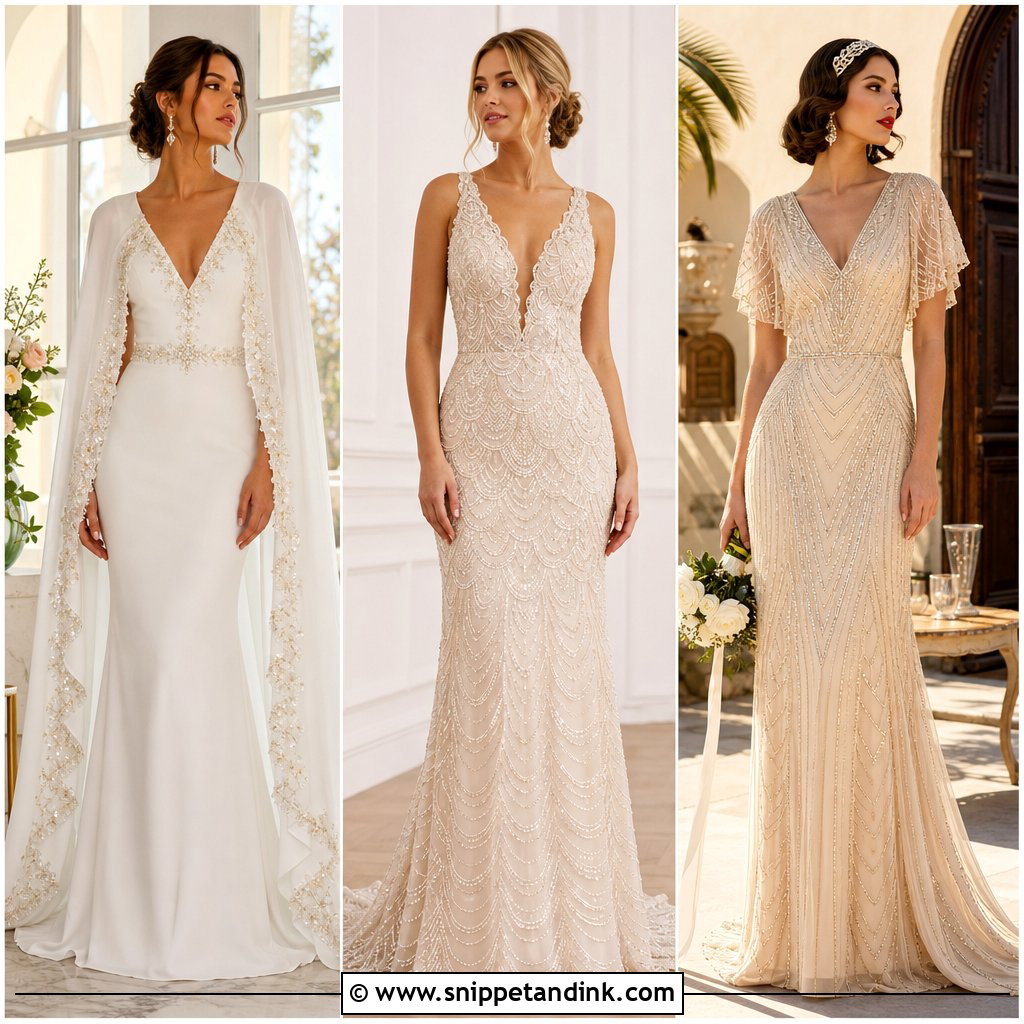
Beading is what most people picture first, and for good reason. A straight or softly columned gown covered in pearl, crystal or silver beads catches light from every angle without needing a big skirt. Ivory T-strap heels, a small satin clutch and a fingertip veil with a little beaded trim. Keep the jewelry to drop earrings or a slim pearl bracelet. Heavy beading drags the dress downward over a long day, and the shoulder seams take all of it, so I always check that the straps or sleeves are reinforced. Ballrooms, hotel receptions and evening ceremonies with good lighting show it best.
2. 1920s Fringe Wedding Dress
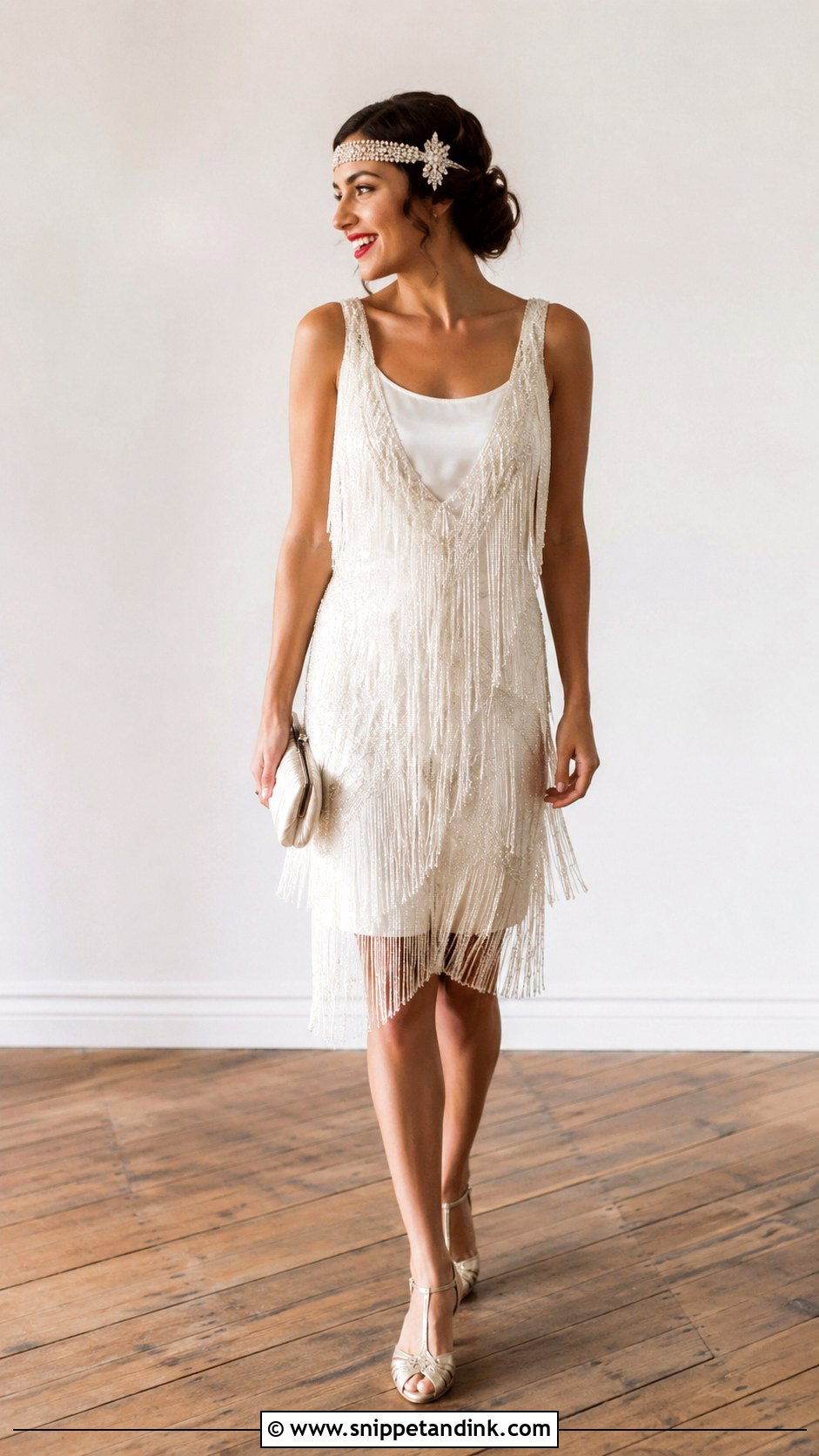
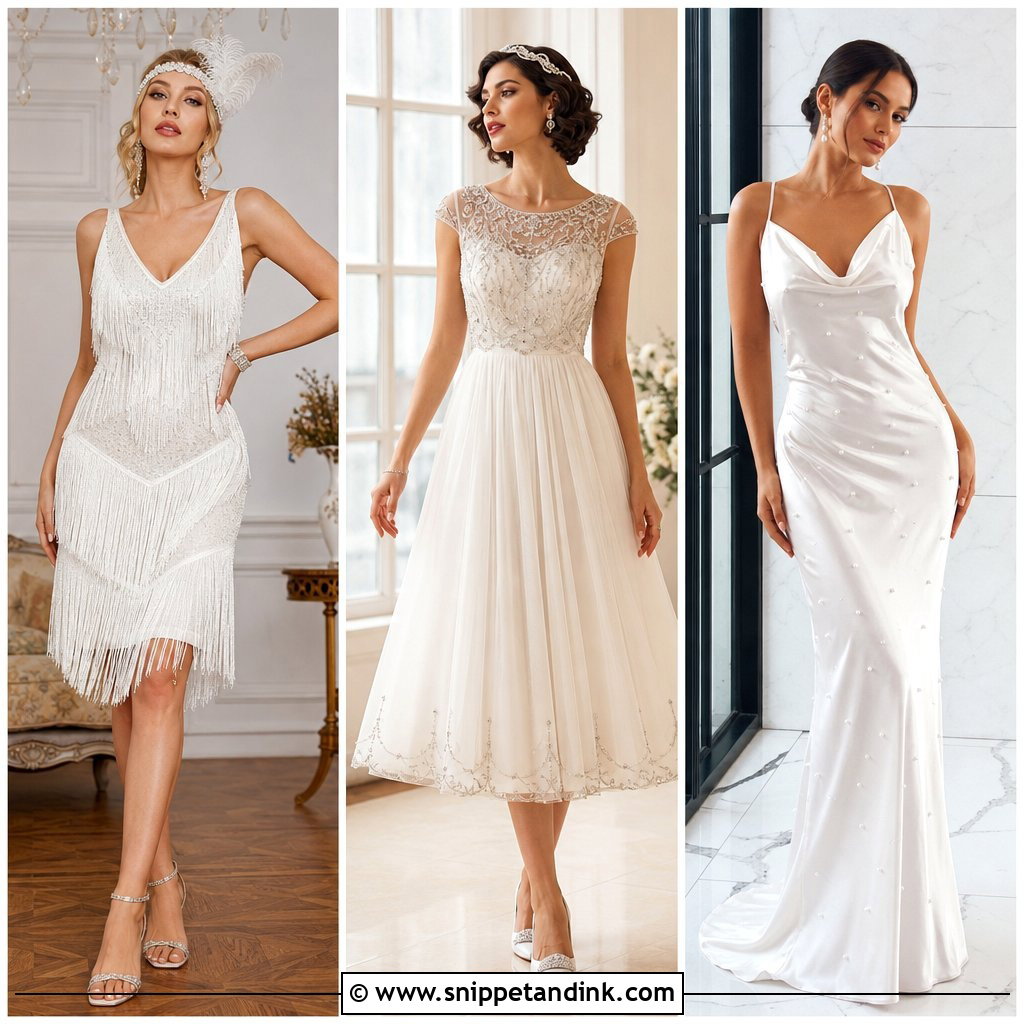
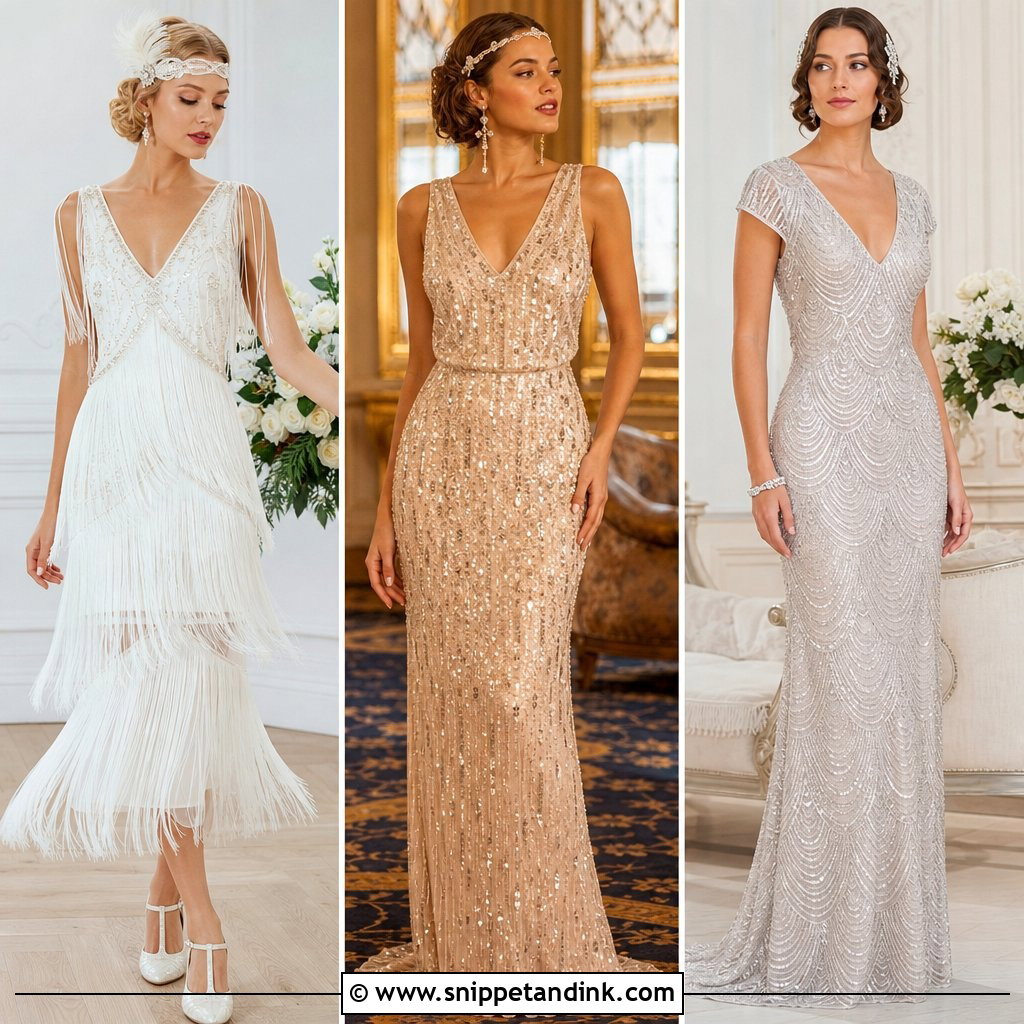
Fringe is the most fun dress on this list to watch on a dance floor. A 1920s fringe wedding dress works best with soft layers of fringe over a simple ivory or champagne base, so it swings when you move. Knee or tea length is the flapper version; a full-length fringe gown reads more bridal. Low metallic heels, a beaded headband and a compact clutch. Skip bold accessories, because fringe already gives you texture. A practical note: fringe tangles when you sit on it and catches in car doors, so give it a gentle shake out before every entrance.
3. 1920s Satin Slip Wedding Dress
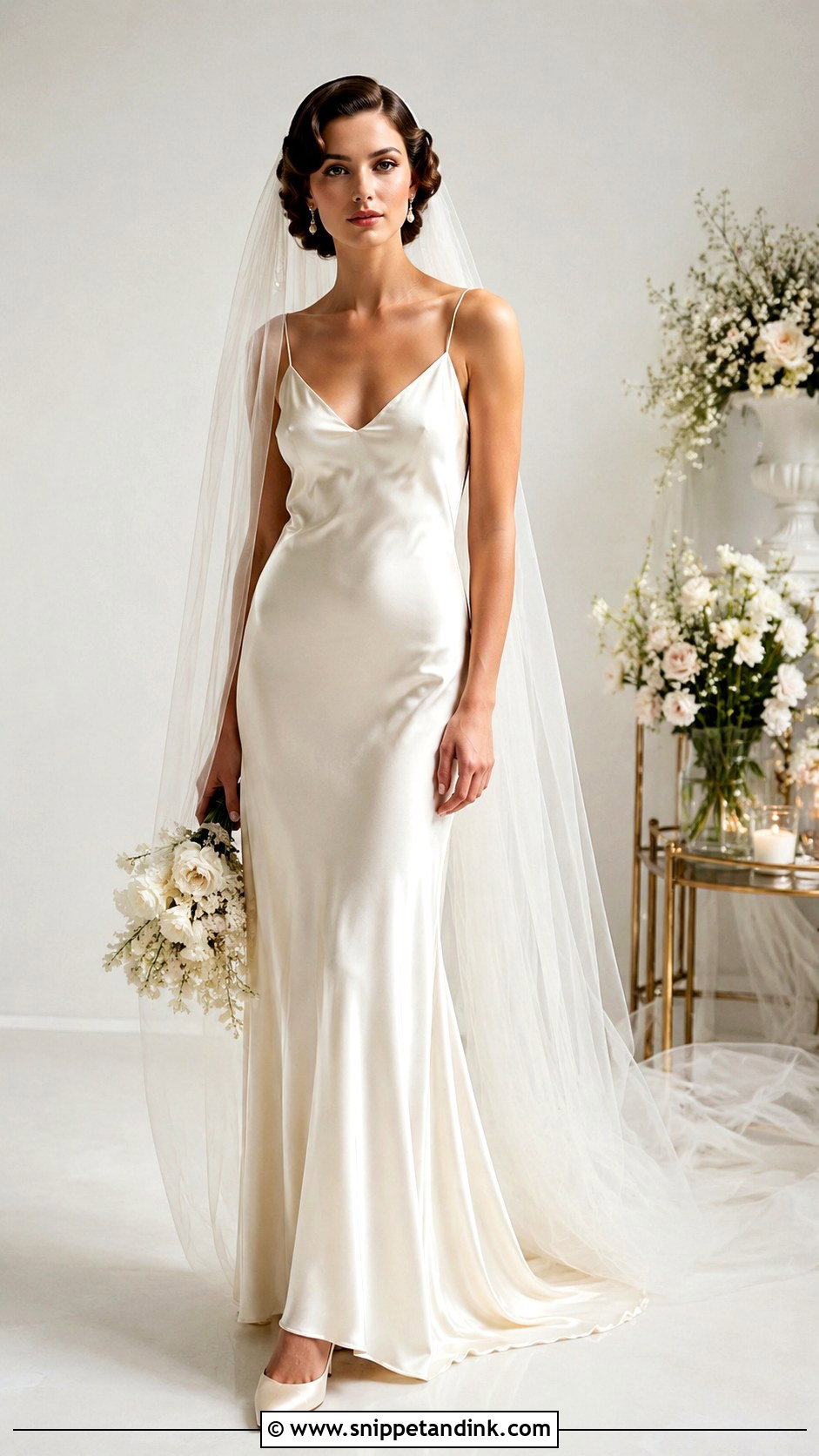
Bias-cut satin is sleek and quiet, and it shows everything. Cutting on the bias lets the fabric drape and stretch over the body, which is why it looks so fluid, but it also means it clings to whatever is underneath. I fit these with the bride’s chosen underwear on and look at her from the side and behind before anything else. Choose ivory, pearl or light champagne with a gentle drape that skims rather than clings, and add pointed satin heels, a long veil and pearl drops. A faux fur wrap or sheer cape helps on a cool evening. Minimalists who still want some romance love this one.
4. 1920s Lace Wedding Dress
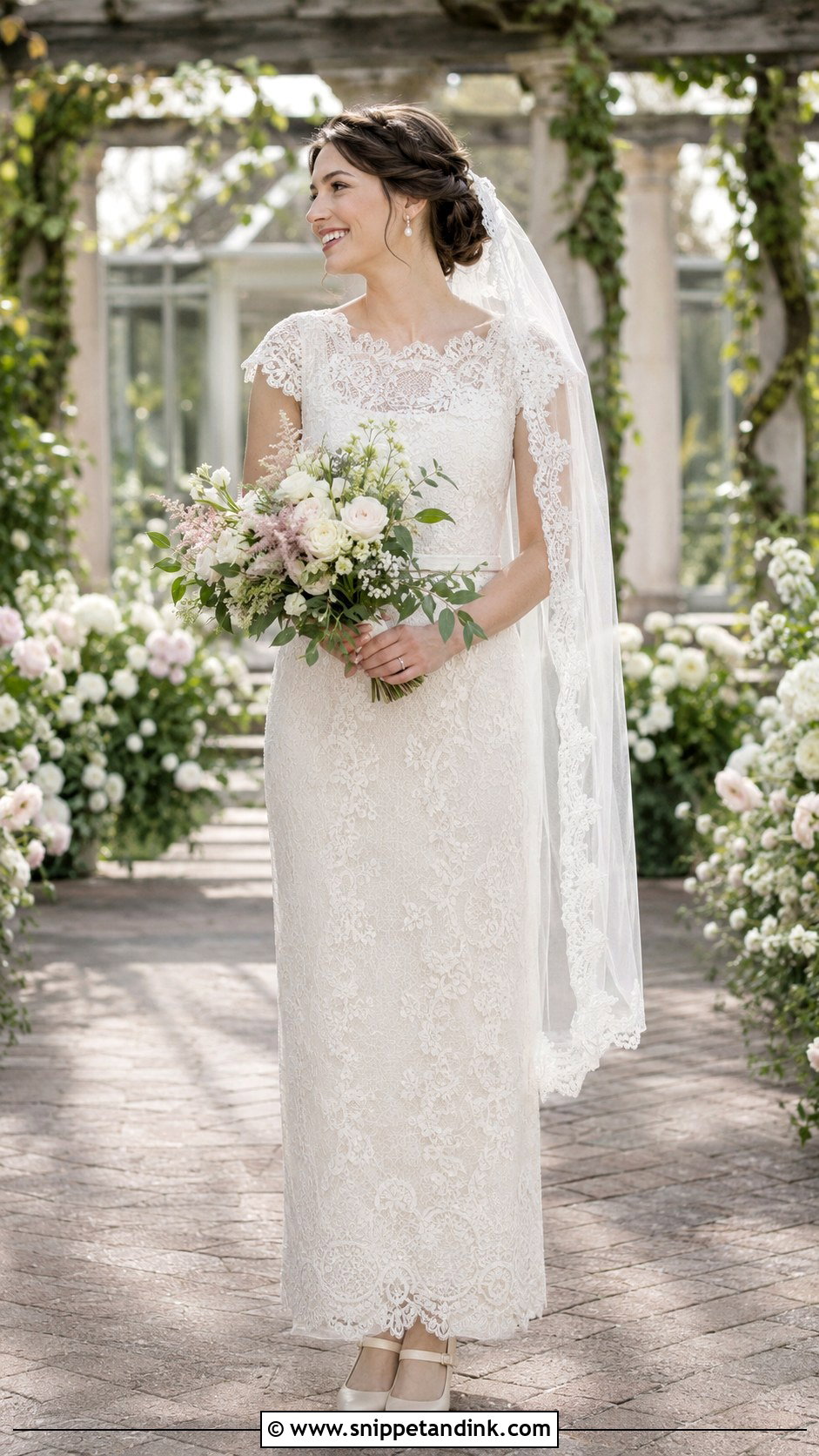
Lace softens the decade’s straight lines. Look for vintage-style lace on a straight silhouette with a scalloped hem and some sleeve detail; cap, sheer long or flutter sleeves all suit the era. Ivory Mary Jane heels, a lace-edged veil and small pearl earrings complete it. When the dress is heavily laced, I keep the bouquet small and the accessories light so it doesn’t become a lot of texture fighting itself. Check that the veil lace and the dress lace don’t clash in pattern scale. It suits gardens, historic buildings and small weddings, and it rarely tips into costume.
5. 1920s Drop Waist Wedding Dress
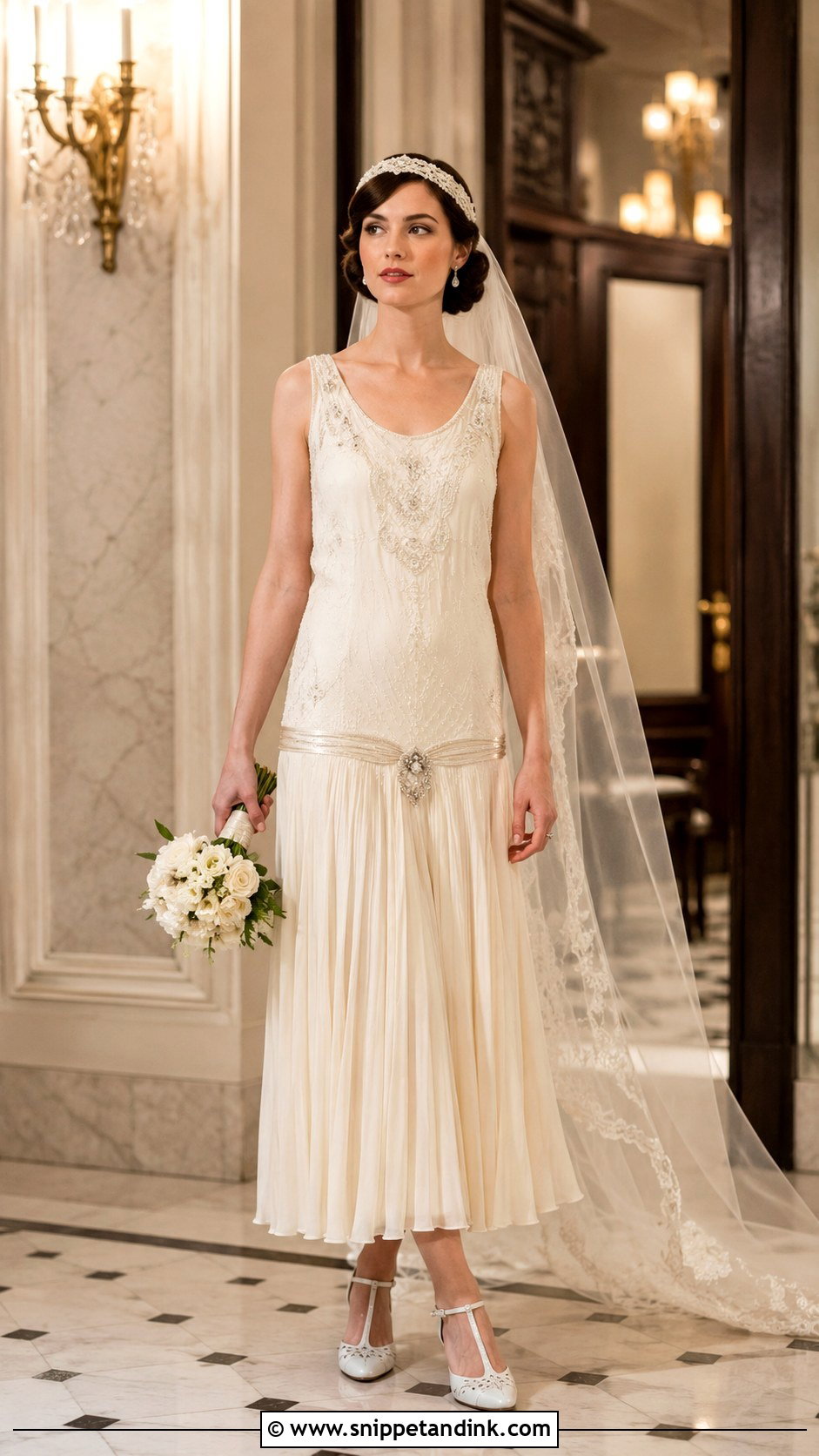
The dropped waist is the decade’s signature shape. The seam sits low on the hips, which lengthens the torso and gives the whole dress an easy line. Choose one with light beading, pleats or a soft skirt that moves, and pair it with ankle-strap heels, a slim headpiece and a veil pinned low at the back of the head. The fabric has to be fluid; stiff fabric sticks out at the low seam and makes the hips look wide. It is the most authentic shape here and very comfortable to wear for a full day.
6. 1920s Art Deco Wedding Dress
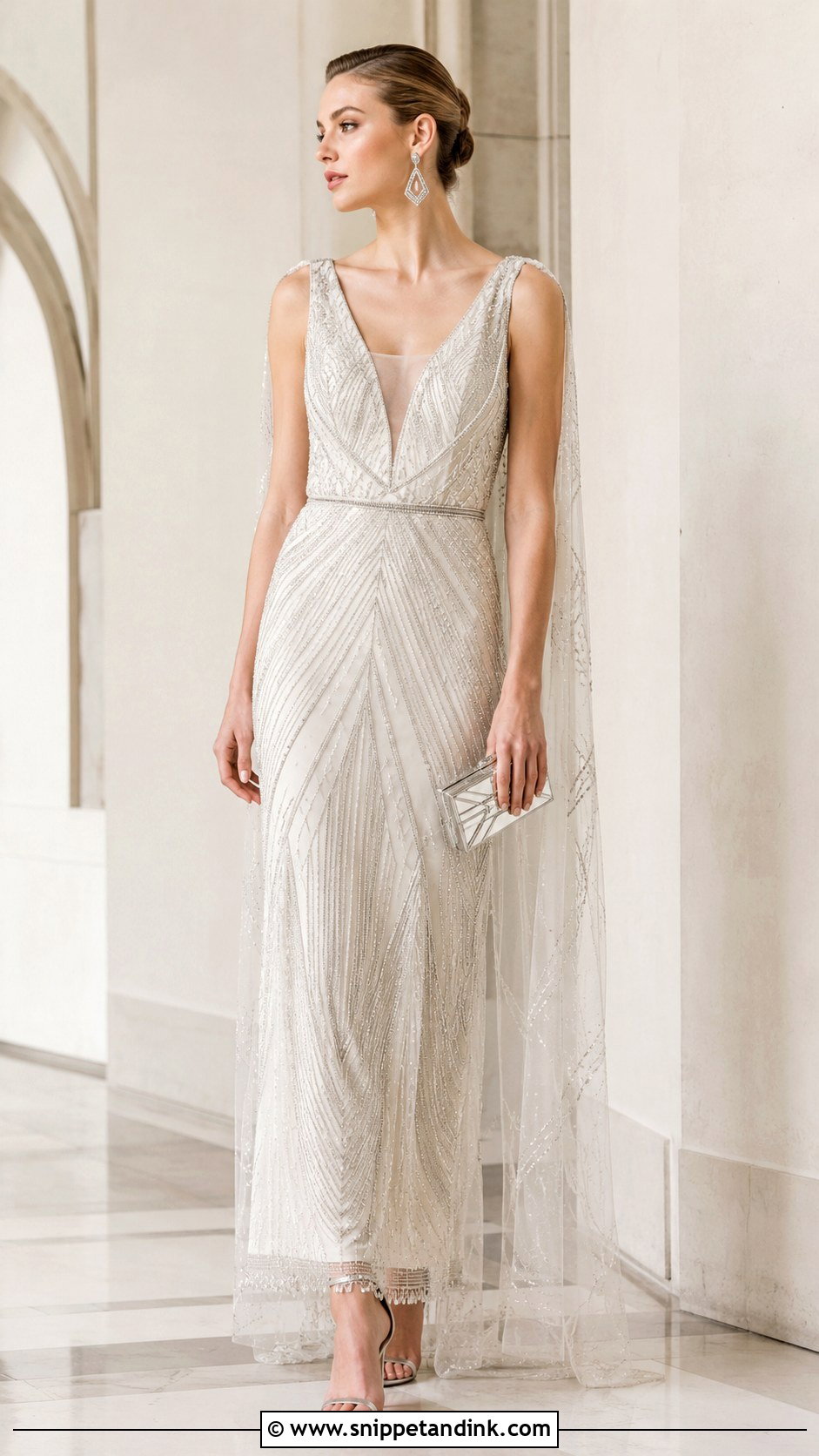
Art Deco is about geometry. A 1920s Art Deco wedding dress carries beaded fans, sunbursts, chevrons or scallops, usually in ivory, silver, champagne or soft gold. Keep the styling sharp: metallic heels, a structured clutch and geometric earrings, with a sleek bob, finger waves or a low bun. I check where the strongest motif lands on the body. A big sunburst centered on the stomach or hip draws the eye exactly there, so I’d move the bride into a dress where it frames the neckline instead. City venues, museums and formal receptions suit it.
7. 1920s Long Sleeve Wedding Dress
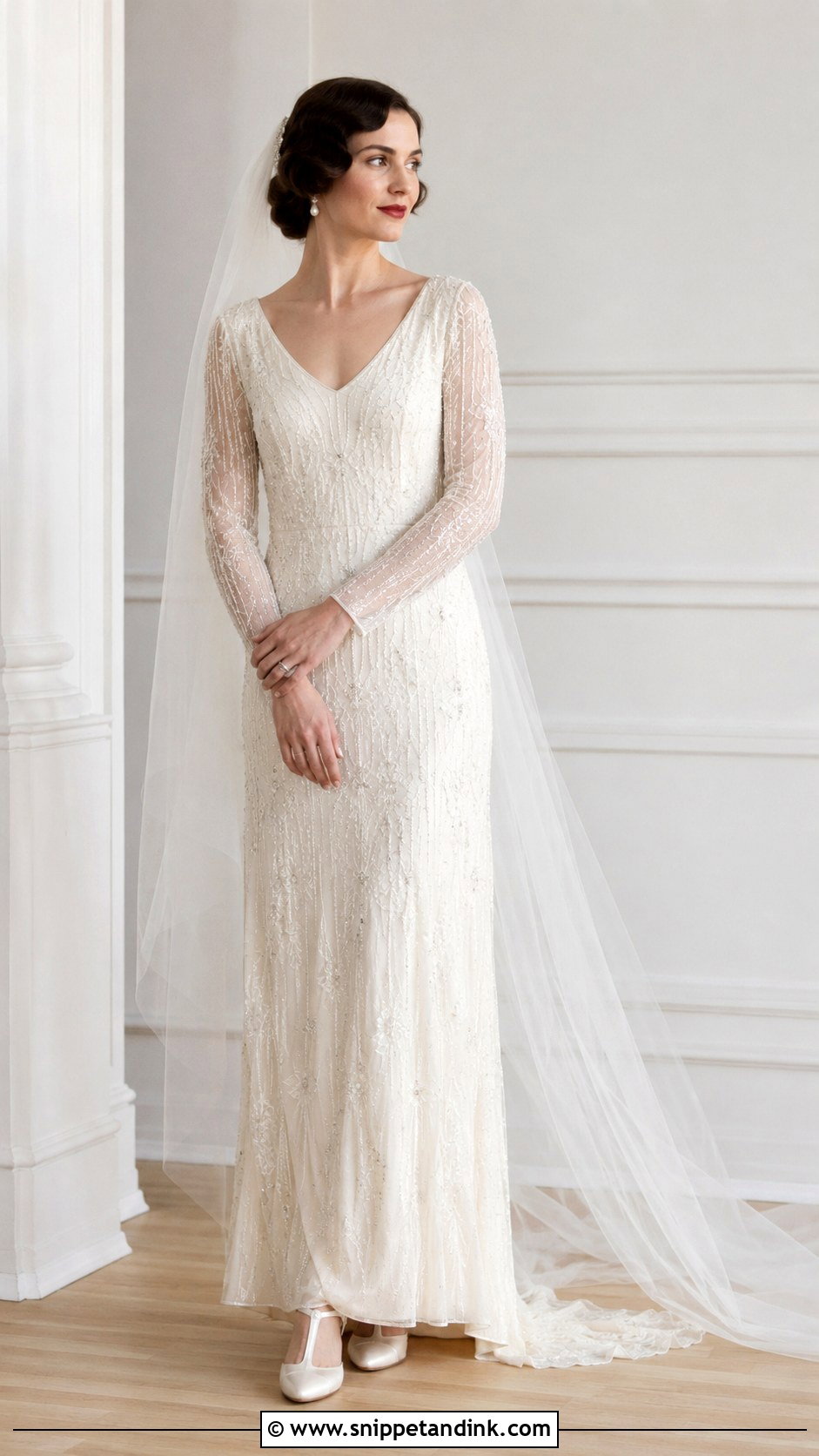
Long sleeves give coverage and still feel soft in this era because they are usually sheer. Sheer lace, beaded mesh or softly draped satin all work. A straight gown with long sleeves lengthens the body, especially with a soft V or bateau neckline. Closed-toe heels, pearl earrings and a long veil that flows behind. Beaded mesh sleeves can scratch the inside of the arm, so I ask for a fine lining at the elbow and underarm. It’s a natural for fall and winter, and works year-round in light fabric.
8. 1920s Cap Sleeve Wedding Dress
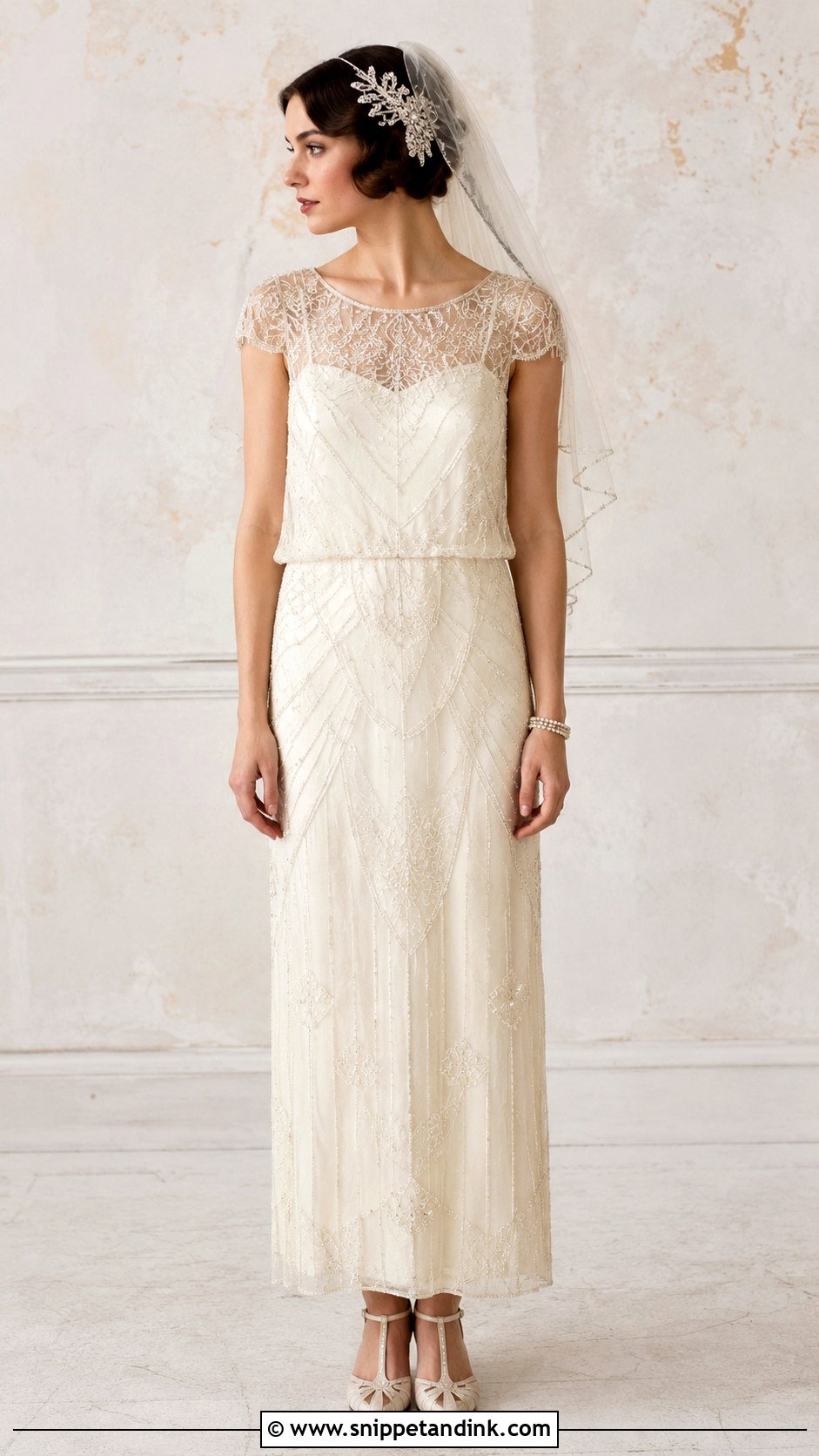
Cap sleeves frame the shoulders and give a little support without a full sleeve. A beaded or lace column with small sleeves over the upper arm, ivory T-strap heels, a beaded comb and a short veil. With a simple neckline, a long pearl necklace looks right. A cap sleeve that sits too tight leaves a red line on the arm in photos, so I make sure two fingers fit under the edge when the arm is relaxed. It’s a practical, classic shape with light coverage.
9. 1920s Tea Length Wedding Dress
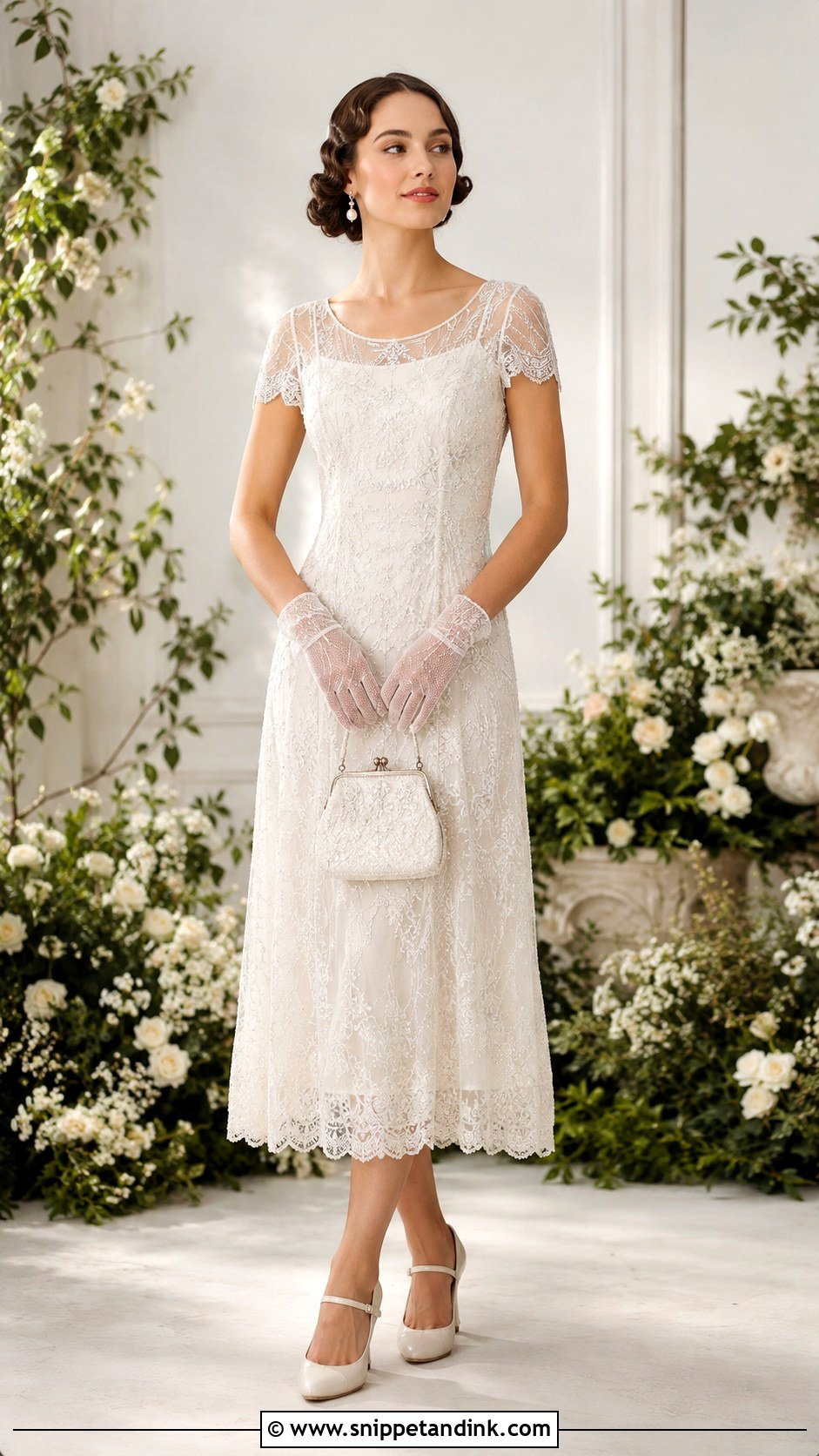
Tea length shows the shoes, which in this decade is half the point. The hem falls between knee and ankle, so pick shoes worth seeing. Choose lace, beading, pleats or soft fringe for period detail, and pair it with Mary Jane heels, sheer gloves and a small structured bag. Hem length is decided with the shoes on, so bring them to every fitting. It’s a great pick for courthouse weddings, brunch receptions and garden parties, and the whole outfit is visible in full-length photos.
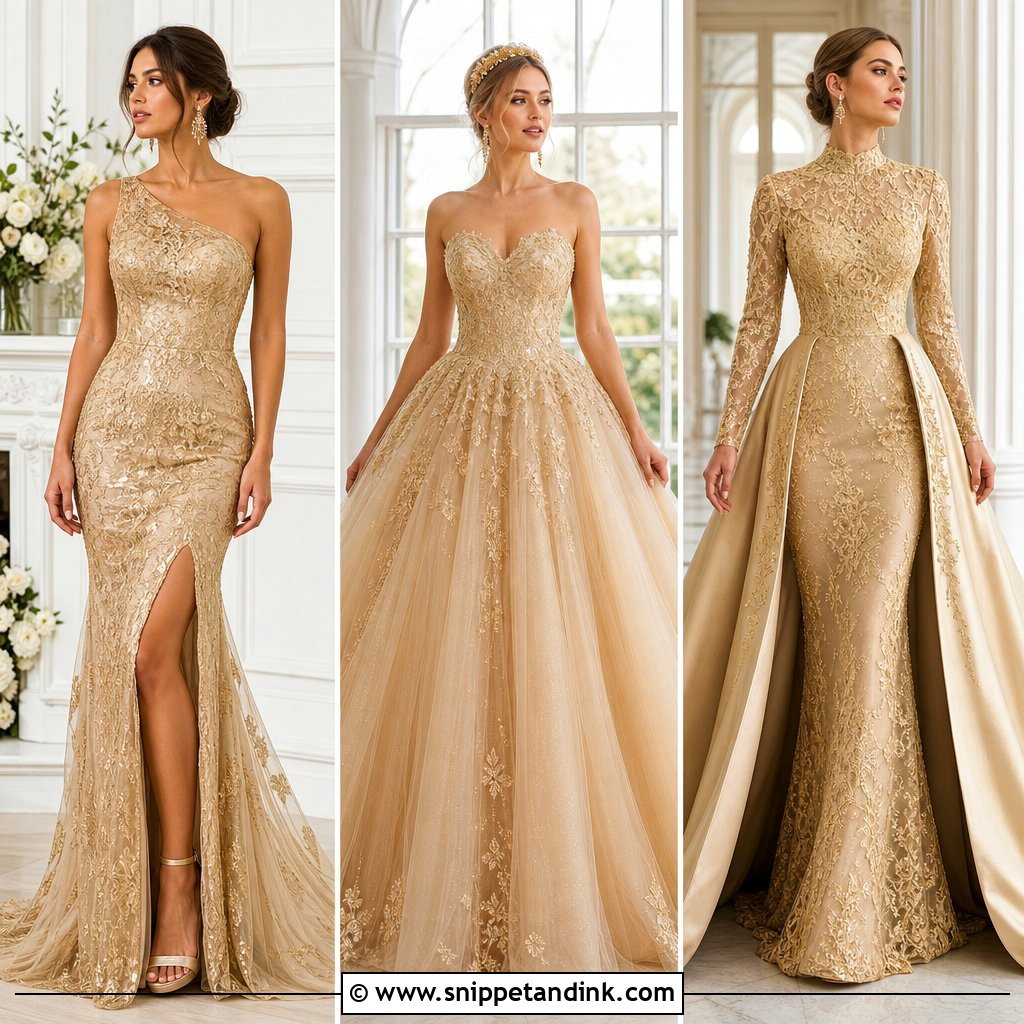
10. 1920s Champagne Wedding Dress
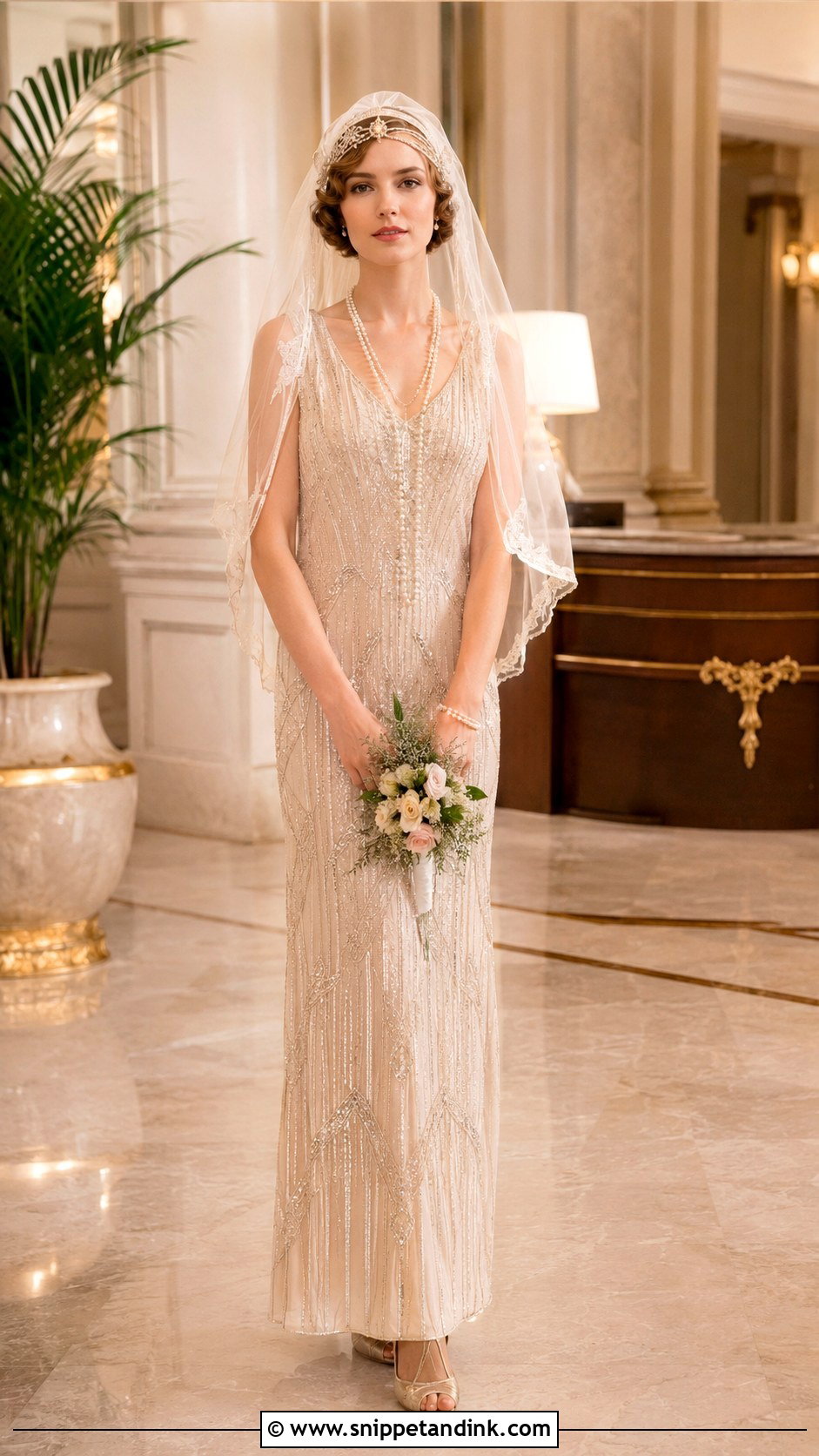
Champagne is warmer than white and kinder to most skin tones. It looks rich with beadwork, satin, lace and soft metallic accessories. Choose a column or drop-waist dress in champagne with gold or ivory heels, pearl jewelry and a delicate veil. The catch: champagne fabrics range from pinkish to grayish to golden, and the wrong one can look like skin from a distance. I hold the swatch at the bride’s face and against her arm in daylight before ordering. Keep the accessories refined and the hair polished so it still reads as bridal.
11. 1920s Ivory Wedding Dress
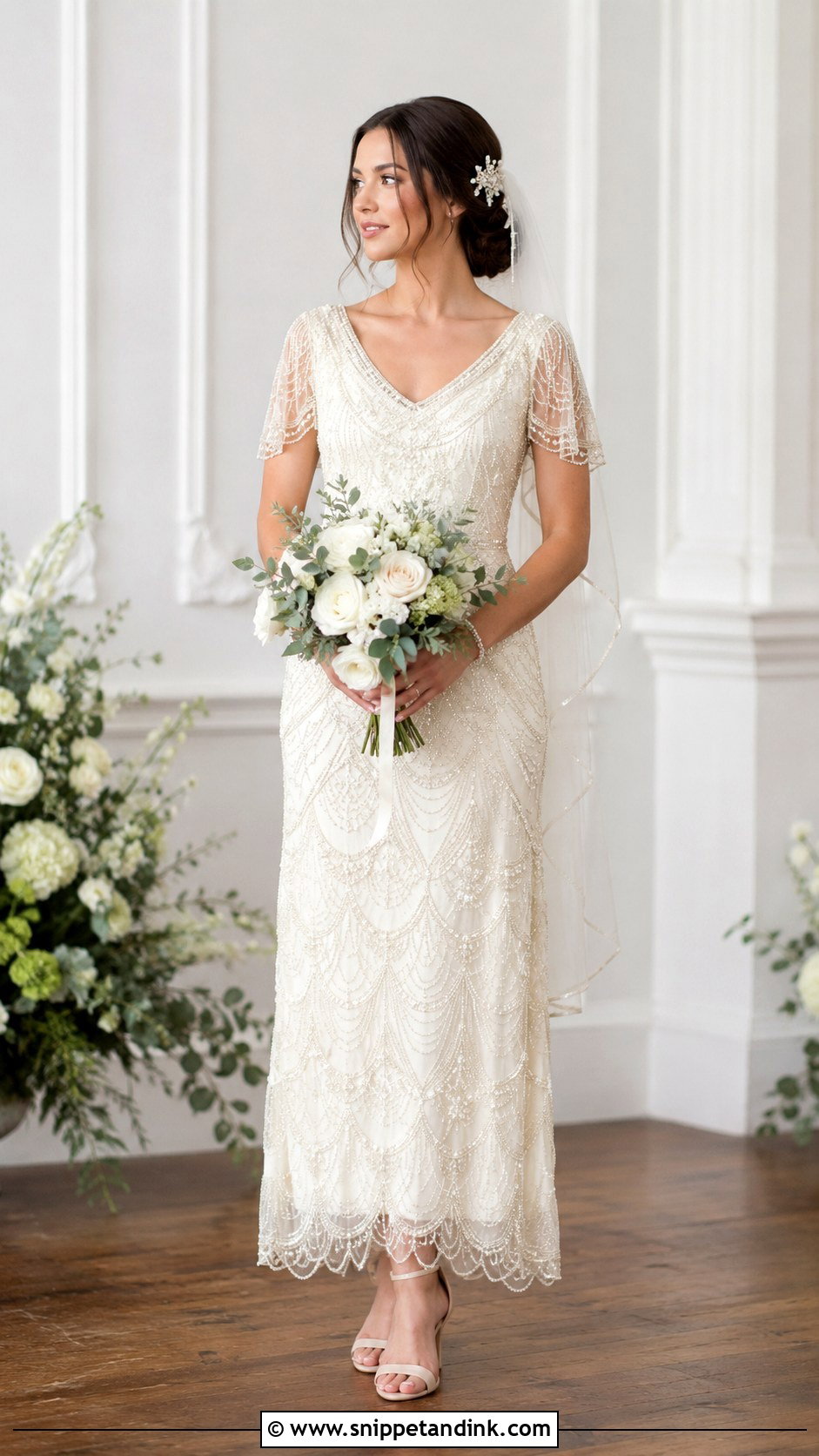
Ivory is the classic route, softening beading, lace and satin so nothing looks harsh. Try a straight gown with pearl embellishment, a scalloped hem and a delicate veil, with ivory or nude heels, a pearl comb and a small bouquet with soft greenery. Lay the veil against the dress before buying both; ivory varies a lot between makers, and a veil a shade whiter than the gown makes the dress look yellow. It suits almost every venue and is easy to personalize, from a plain headband to a dramatic cape.
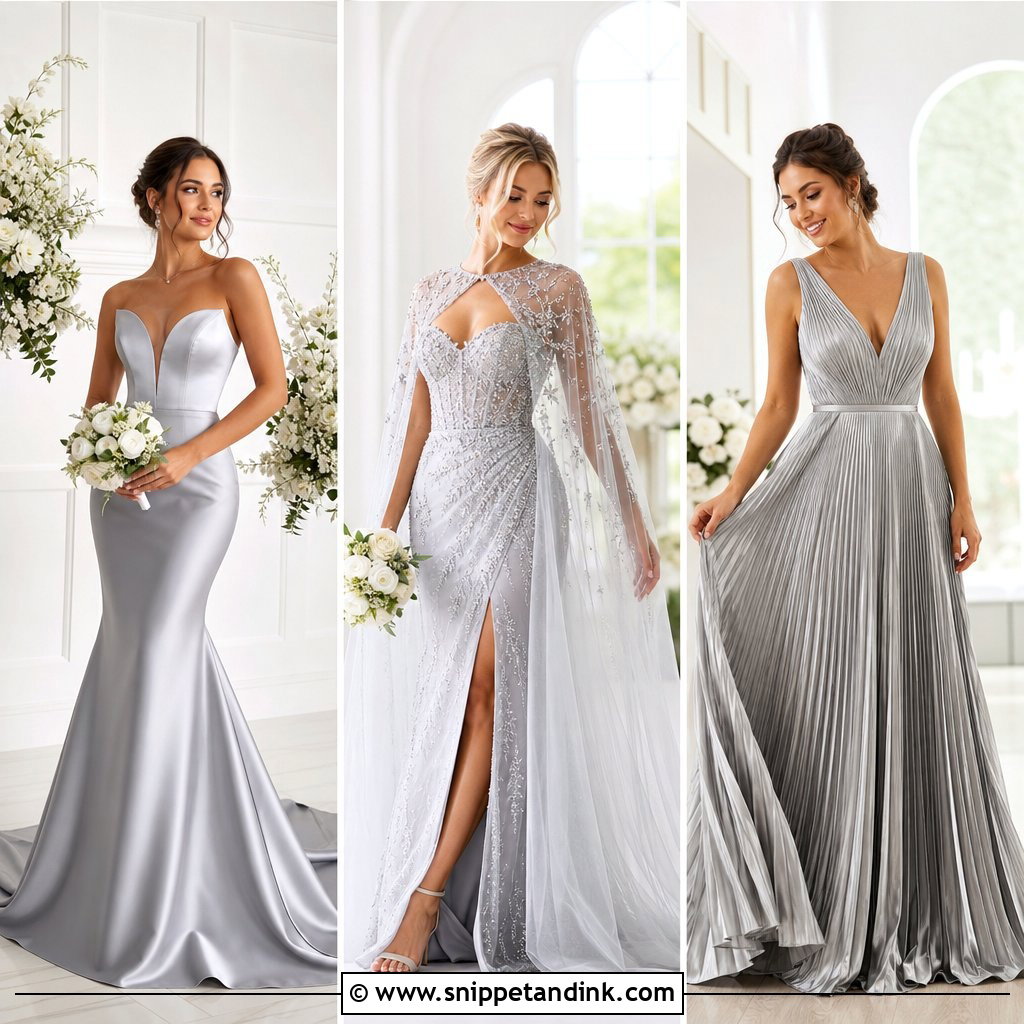
12. 1920s Silver Wedding Dress
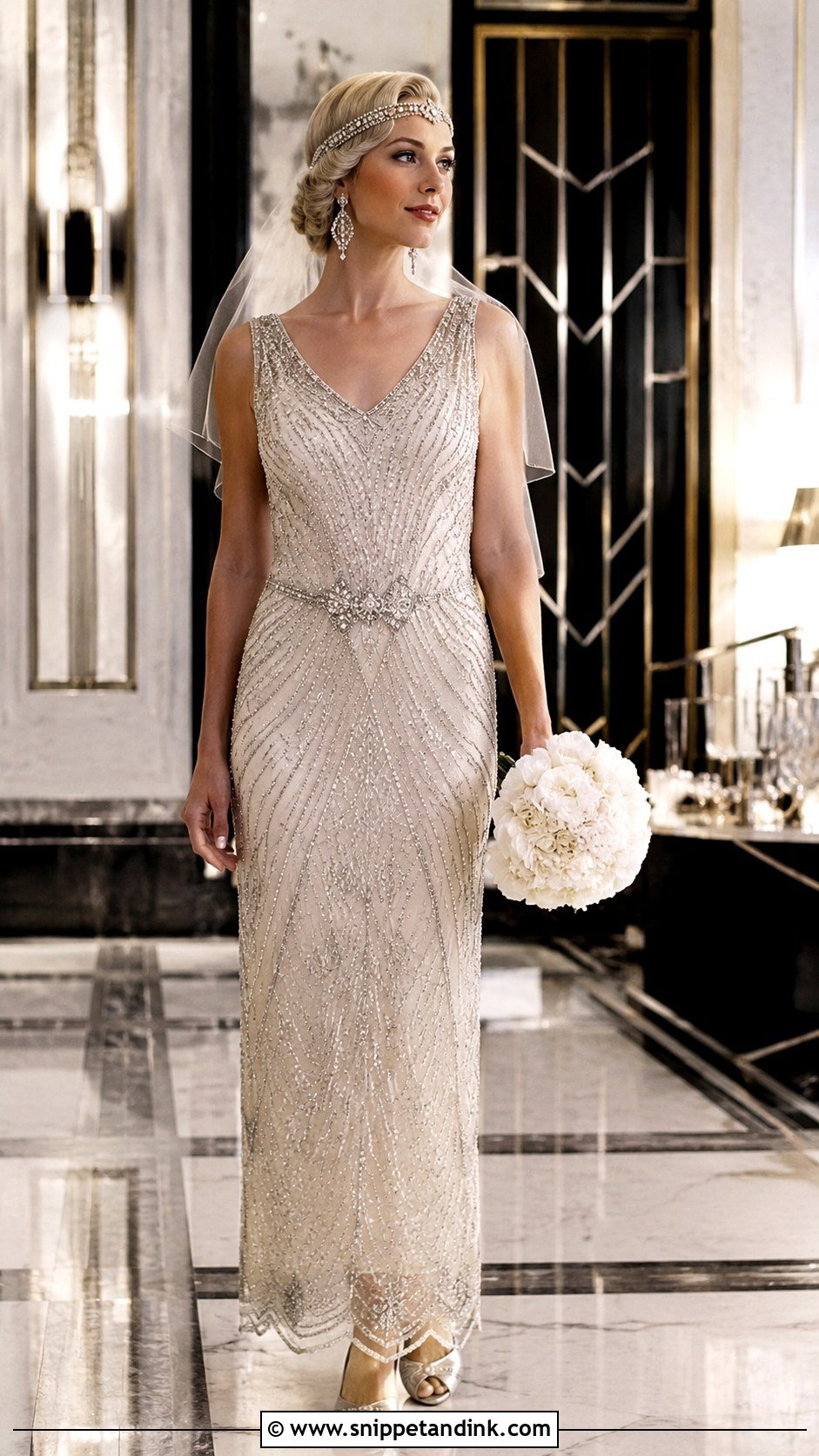
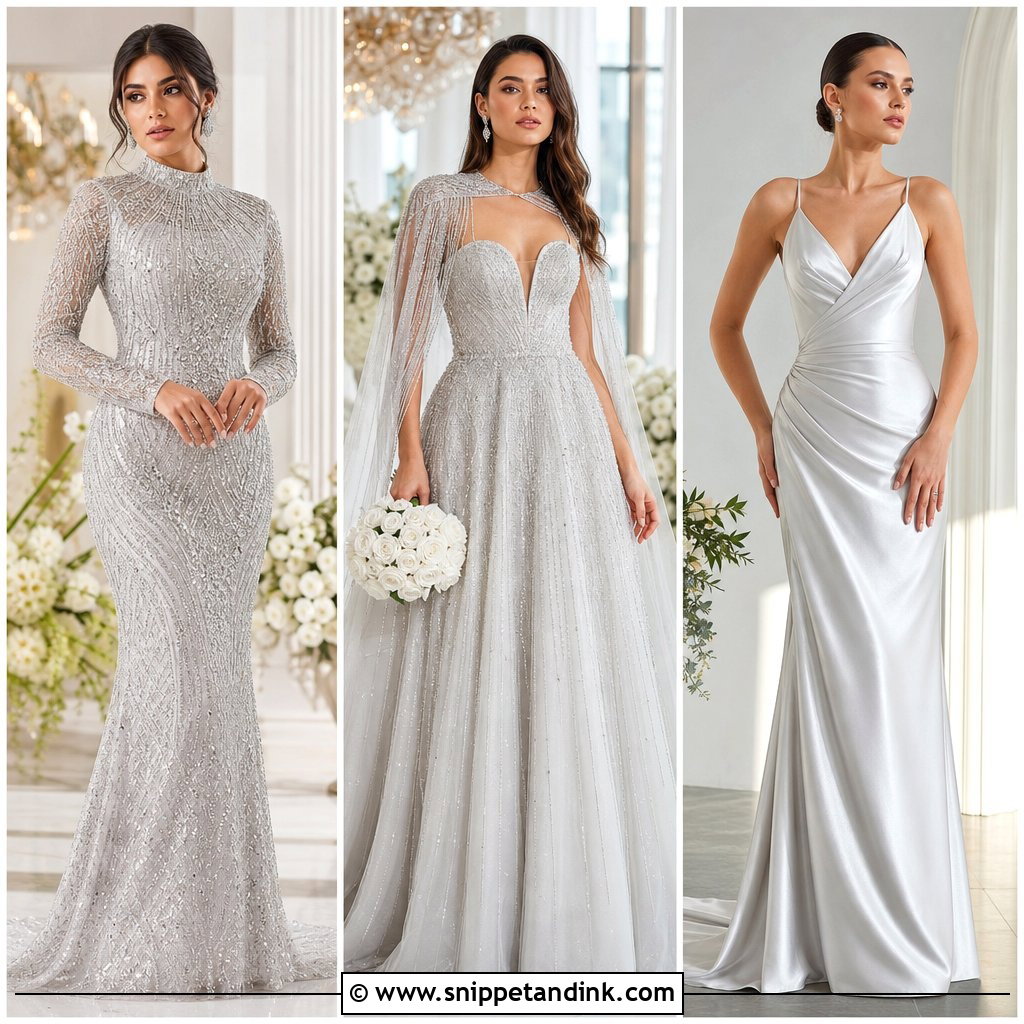
Silver gives shimmer while staying elegant, as long as it isn’t head-to-toe metal. I’d choose silver beading over ivory, pale gray or champagne fabric rather than a fully metallic dress, which can look harsh against skin in daylight. Silver heels, crystal earrings, a sleek clutch, and a short veil or jeweled headband. It shines at evening weddings, winter celebrations and Art Deco venues, where the reflections create a refined, old-Hollywood mood. Keep the makeup fresh and not too frosted, or the face competes with the dress.
13. 1920s Pearl Wedding Dress
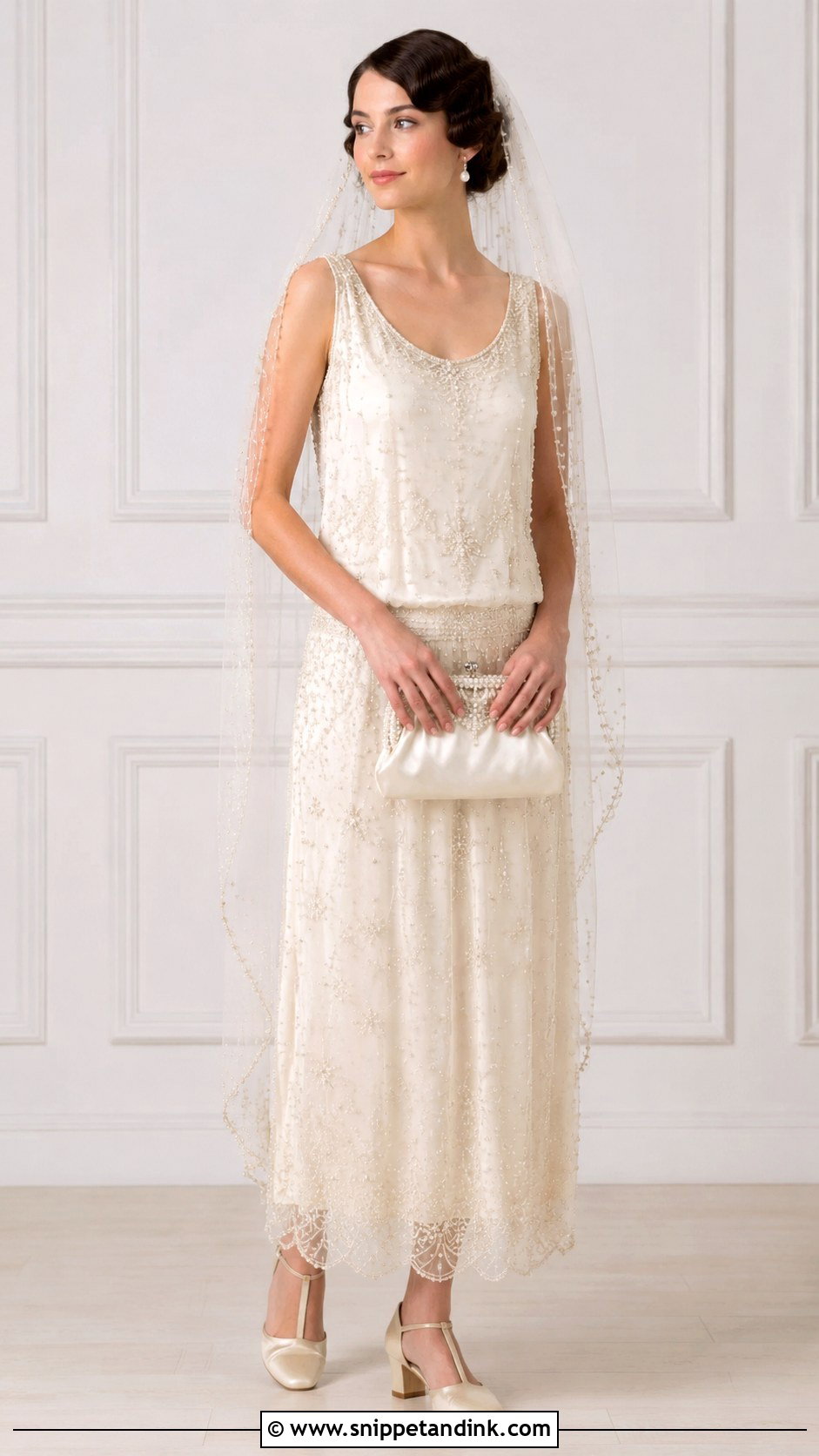
Pearls give a softer glow than crystal or sequins. Look for scattered pearls, pearl straps or pearl embroidery over sheer mesh or satin, and keep the shoes and accessories simple: ivory block heels, pearl drops, a satin clutch, and a veil with tiny pearl accents. Real and glass pearls add weight quickly, so a dress heavily covered in them pulls on the shoulders the same way a beaded one does. I check every strap after the bride has been standing in it for ten minutes. It looks polished up close and from across the room.
14. 1920s Sequin Wedding Dress
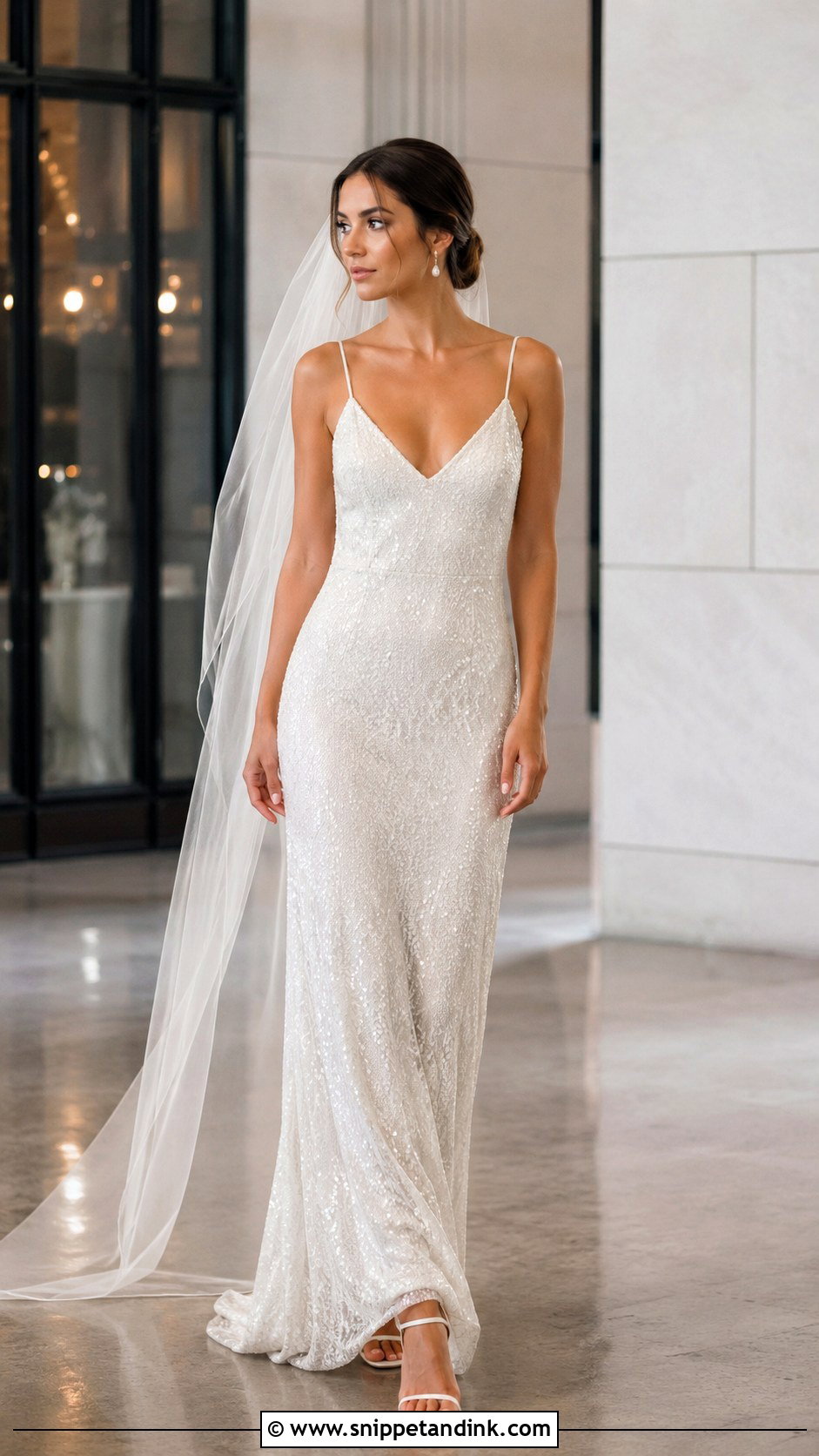
Sequins are all about controlled shine. Small, flat sequins in ivory, silver or champagne look bridal; larger ones look like party wear. A straight or slightly relaxed shape keeps the dress from getting theatrical. Strappy heels, minimal earrings and a plain veil let the sequins lead. Sequined fabric can be scratchy at the underarm and inner arm, especially when you dance, so check the inside of the dress for a lining. For something softer, choose matte sequins or sequin embroidery on lace. Evening receptions and city weddings suit it best.
15. 1920s Great Gatsby Wedding Dress
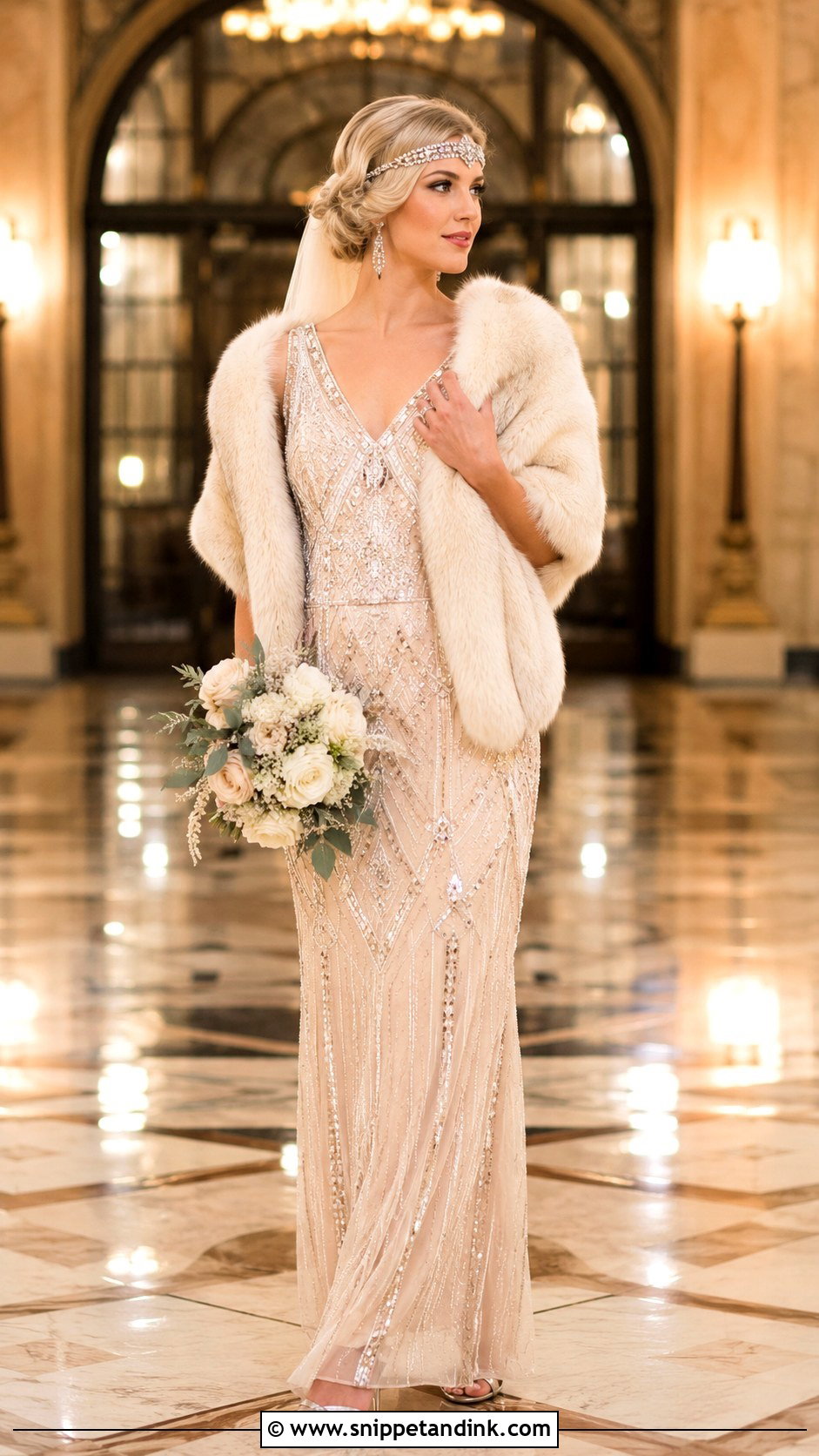
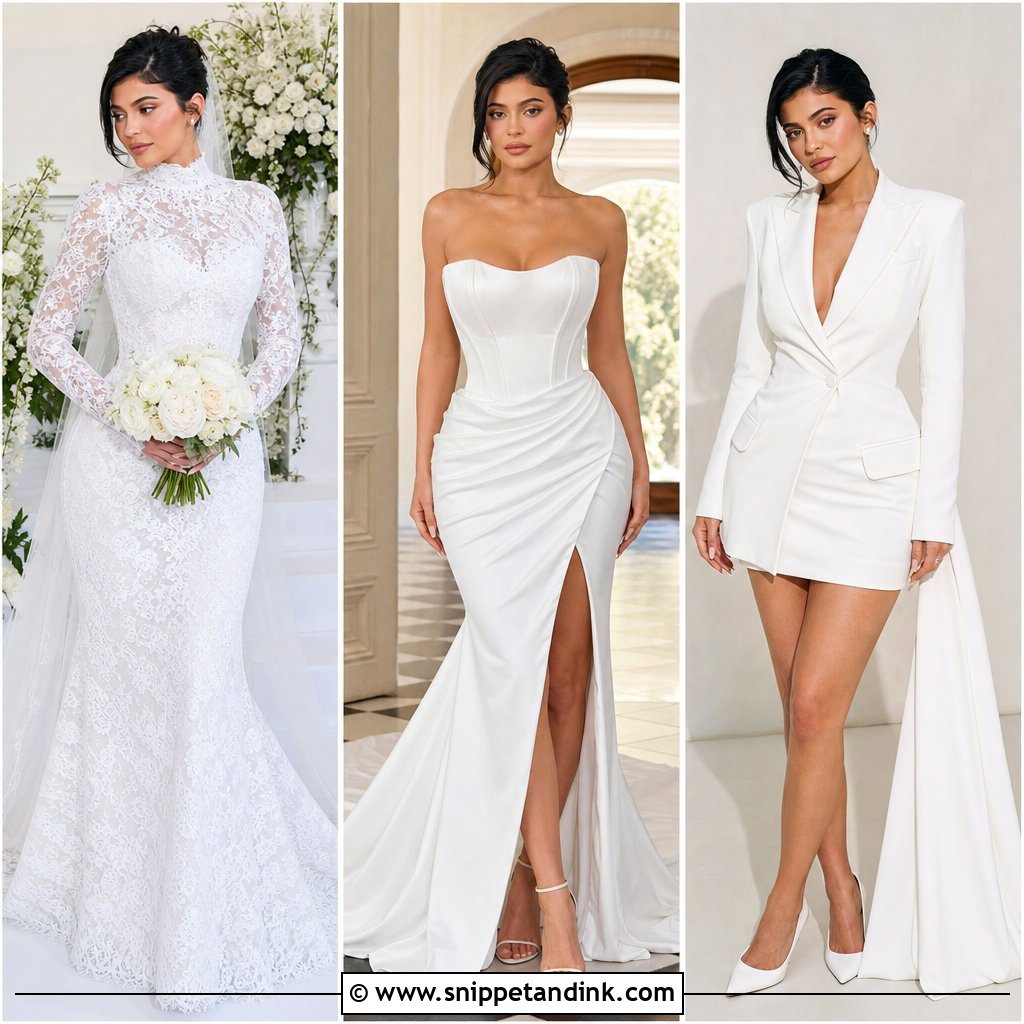
The Gatsby look is the statement entrance. A gown with Art Deco beadwork, a relaxed silhouette and some shimmer in ivory, champagne or silver, plus a jeweled headband, metallic heels and long earrings. A faux fur wrap adds drama in cooler months. Keep the bouquet elegant and small. Long earrings and a jeweled headband together can crowd the face, so I try both on with the hair done and usually lose one of them. Grand hotels and historic venues are the natural setting.
16. 1920s Flapper Wedding Dress
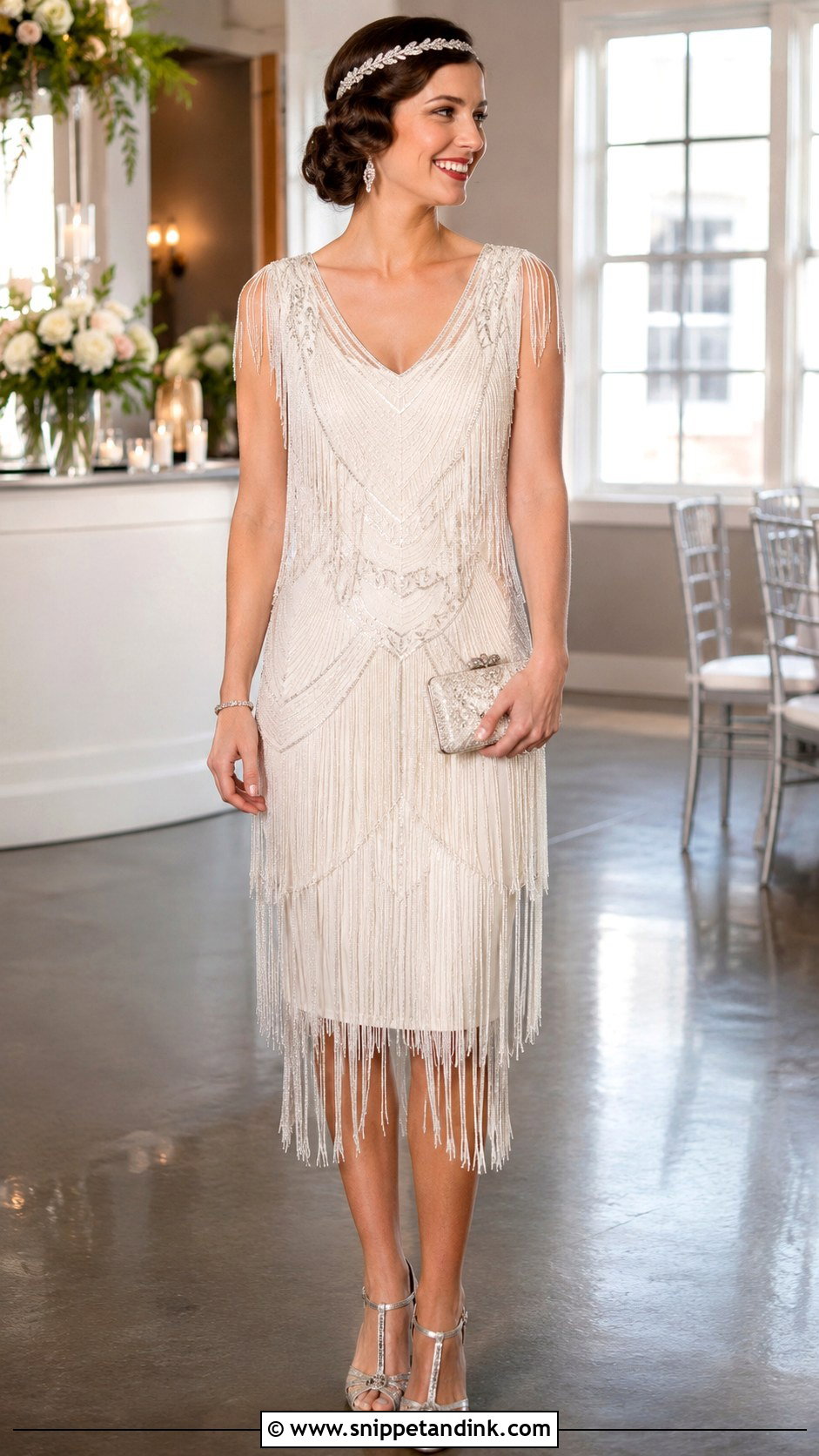
A 1920s flapper wedding dress is the lively, fashion-forward version: relaxed, easy to move in, with fringe, beading or a dropped waist. Short hems feel playful; longer ones look more formal. T-strap heels, a beaded headpiece and a small clutch, with soft waves in the hair. The waves are what keep it from looking like a party costume. A real finger wave set with gel and clips looks deliberate; a loose curling-iron wave looks modern. Ask your hairstylist which one you’re getting before the trial.
17. 1920s Sheer Cape Wedding Dress
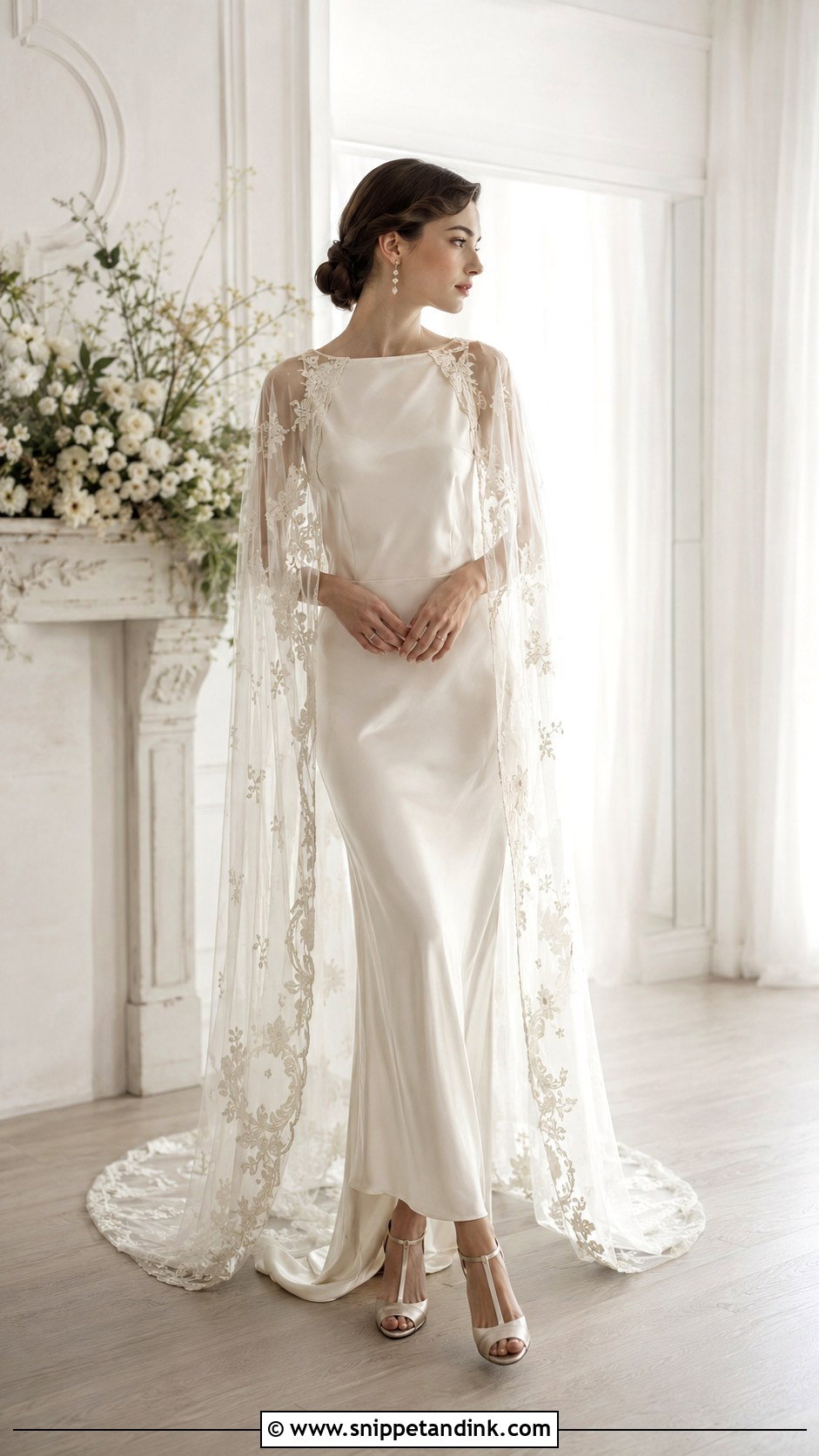
A sheer cape gives drama without a heavy train. Choose a simple satin, lace or beaded gown and add a sheer cape trimmed with embroidery, pearls or Art Deco detail. It floats behind you as you walk and frames the dress in photos. Slim heels, delicate earrings and a low bun or soft waves. Check how the cape attaches. Hooks at the shoulder or a hidden button loop let you take it off for the reception, while a cape sewn into the bodice stays with you all night. Good for shoulder coverage that still feels light.
18. 1920s Feather Trim Wedding Dress
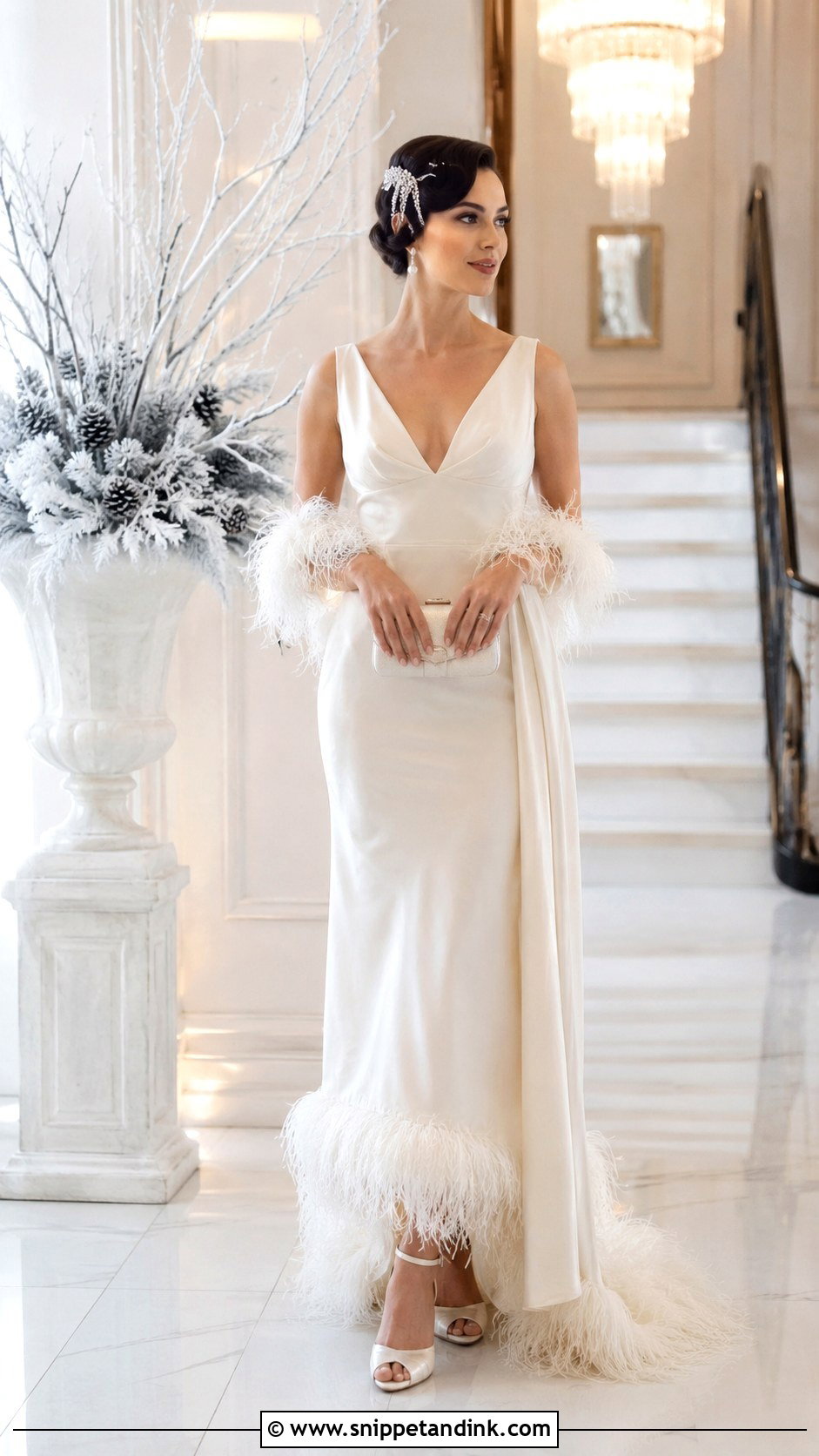
Feather trim brings softness and real vintage glamour, and a little goes a long way. Use it at the hem, sleeves, neckline or cape rather than all over. A slim ivory or champagne dress with feather trim, satin heels, pearl earrings and a smooth clutch; keep the veil simple or swap it for a jeweled comb. Feathers shed, crush in storage and go limp in humidity, so I keep the dress hanging loosely until the morning and avoid feathers for a humid outdoor summer wedding. Winter weddings, formal receptions and editorial-style bridal photos suit it best.
19. 1920s High Neck Wedding Dress
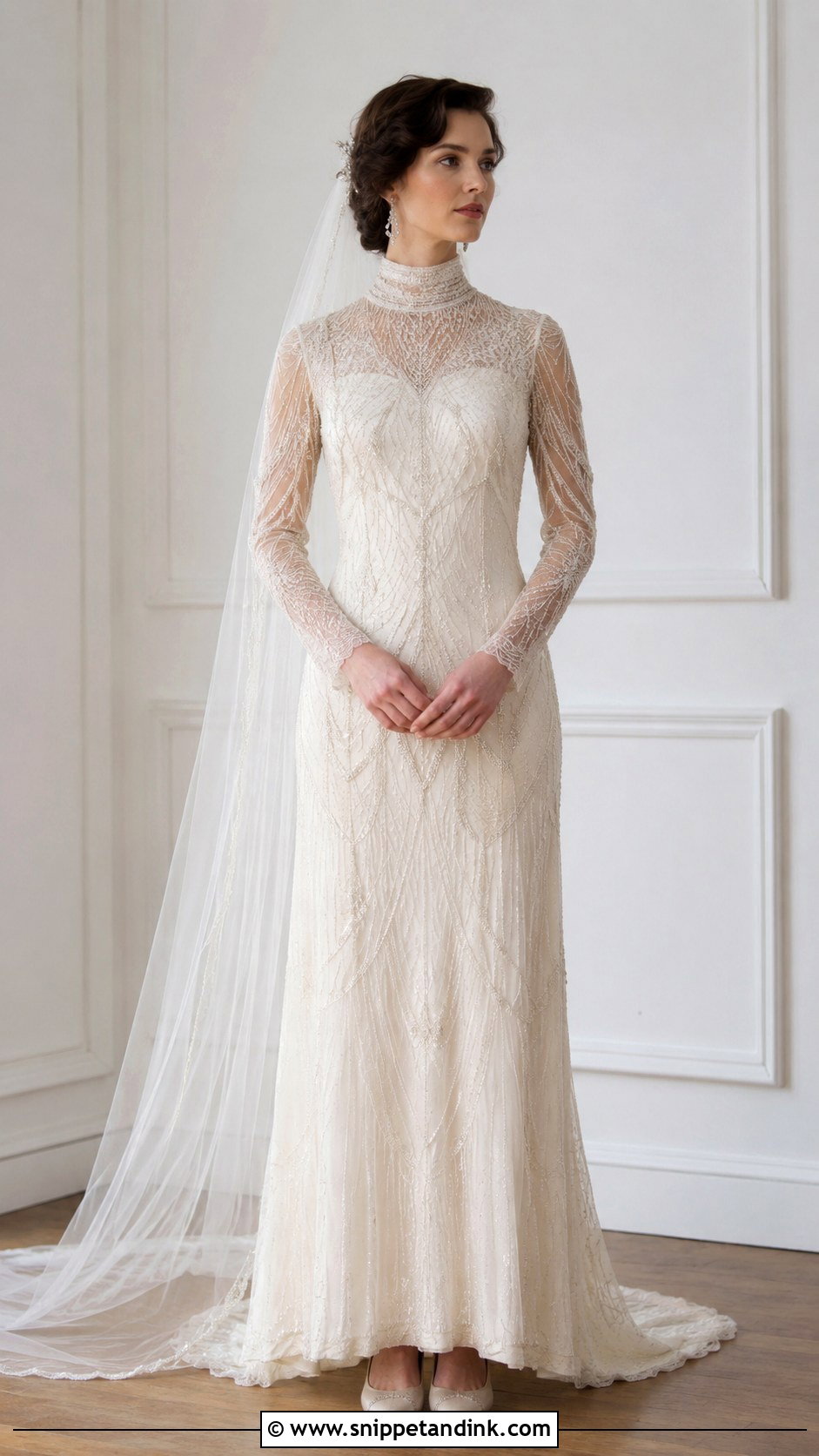
A high neck looks sophisticated and modest. Sheer lace, beaded mesh or soft satin with a high neckline and a straight skirt. The neckline frames the face, so you can skip the necklace and focus on earrings or a hair piece. Closed-toe heels, a sleek veil and a small bouquet. A high neck in a stiff fabric presses against the throat when you look down or sit, so I have the bride turn and nod in it at the fitting. It photographs well from front and side, especially with a detailed bodice.
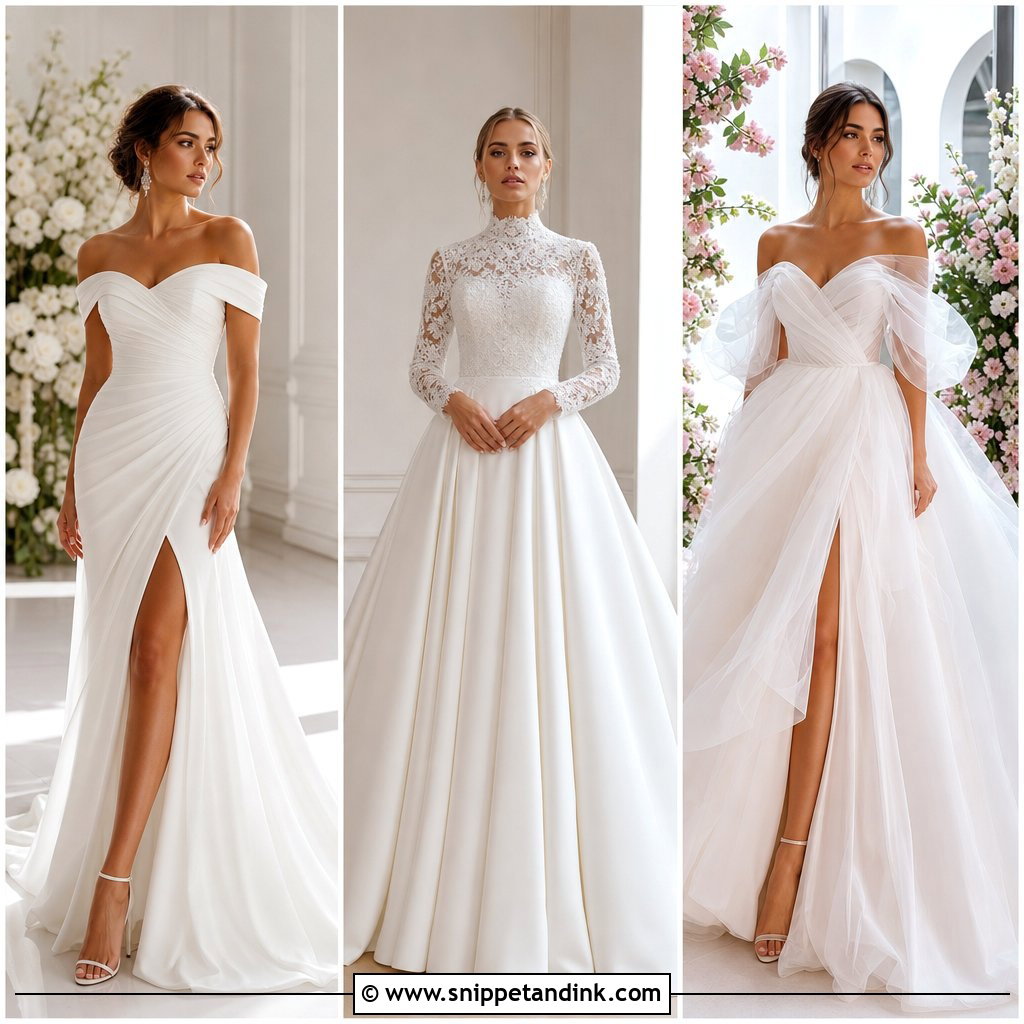
20. 1920s V Neck Wedding Dress
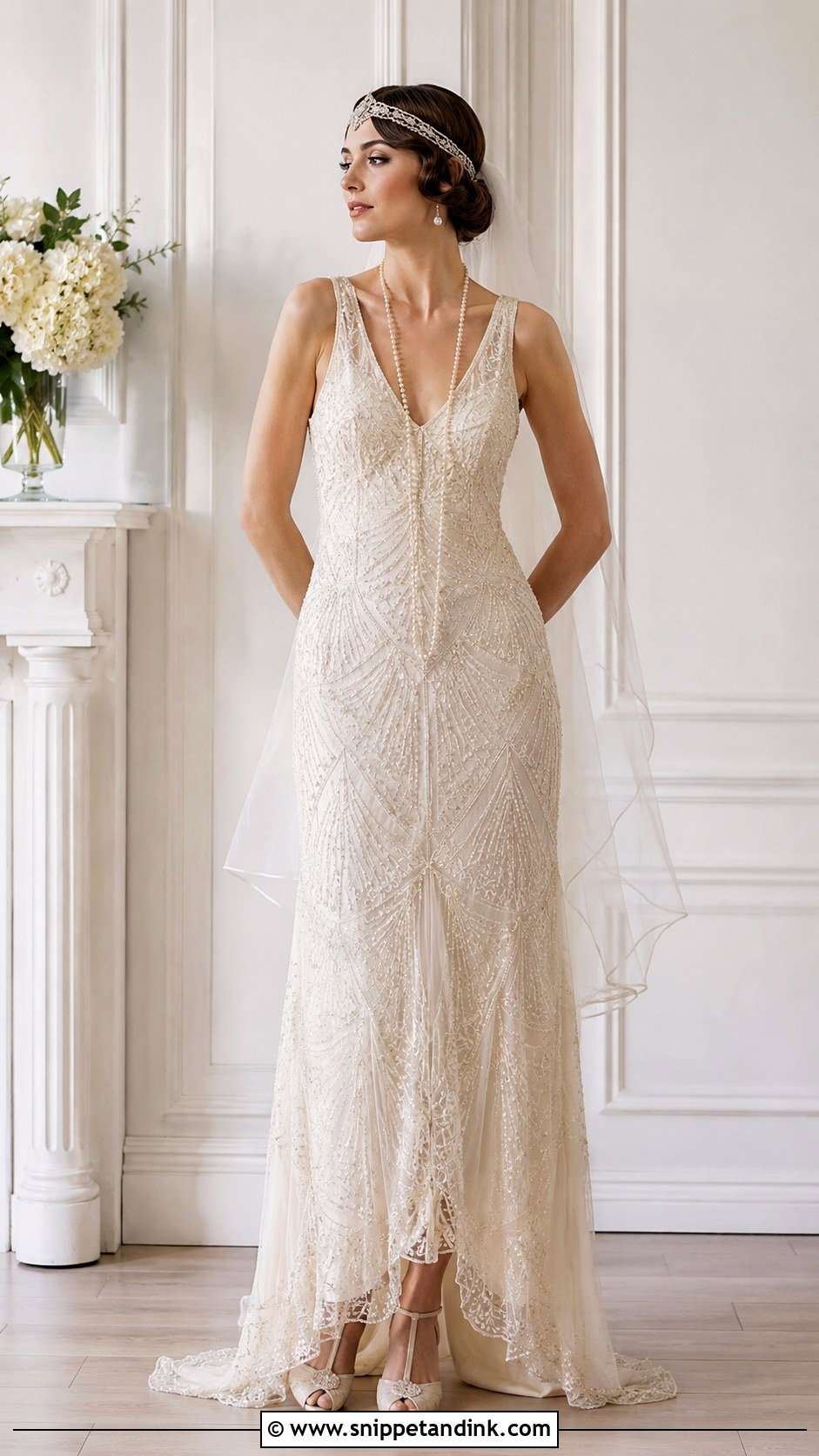
A V neck lengthens the neck and suits a lot of body types, because the relaxed 1920s cut skims rather than grips. Look for a soft V on a beaded, lace or satin gown, and wear drop earrings or a long pearl necklace. T-strap heels, a simple veil and a small clutch. If the V is deep, I’d add wider straps or a sheer modesty panel; double-sided tape works for an hour, but rarely for a whole day of hugging and dancing.
21. 1920s Scalloped Hem Wedding Dress
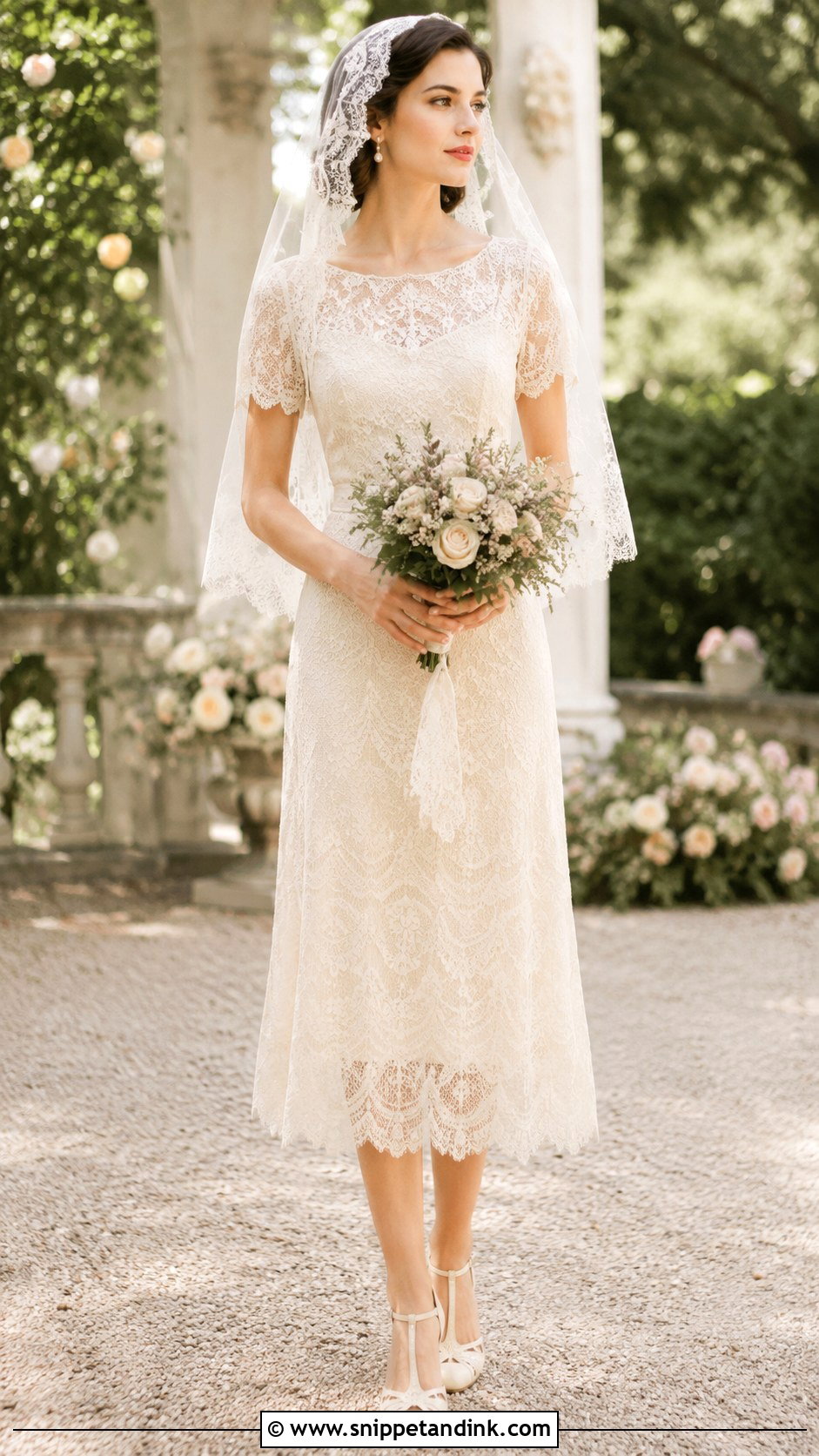
A scalloped hem puts the detail at the bottom of the dress, where it moves with every step. Scalloped lace, beaded edges or soft curved hems keep the silhouette clean. It shows best on tea-length, midi and column gowns, where the hem is visible. Vintage-style heels, a lace veil and small pearl accessories. Because the hem draws attention to the shoes, choose a pair that suits it, and note that a scalloped hem can’t easily be shortened without losing the scallops, so buy a length close to right.
22. 1920s Pleated Wedding Dress
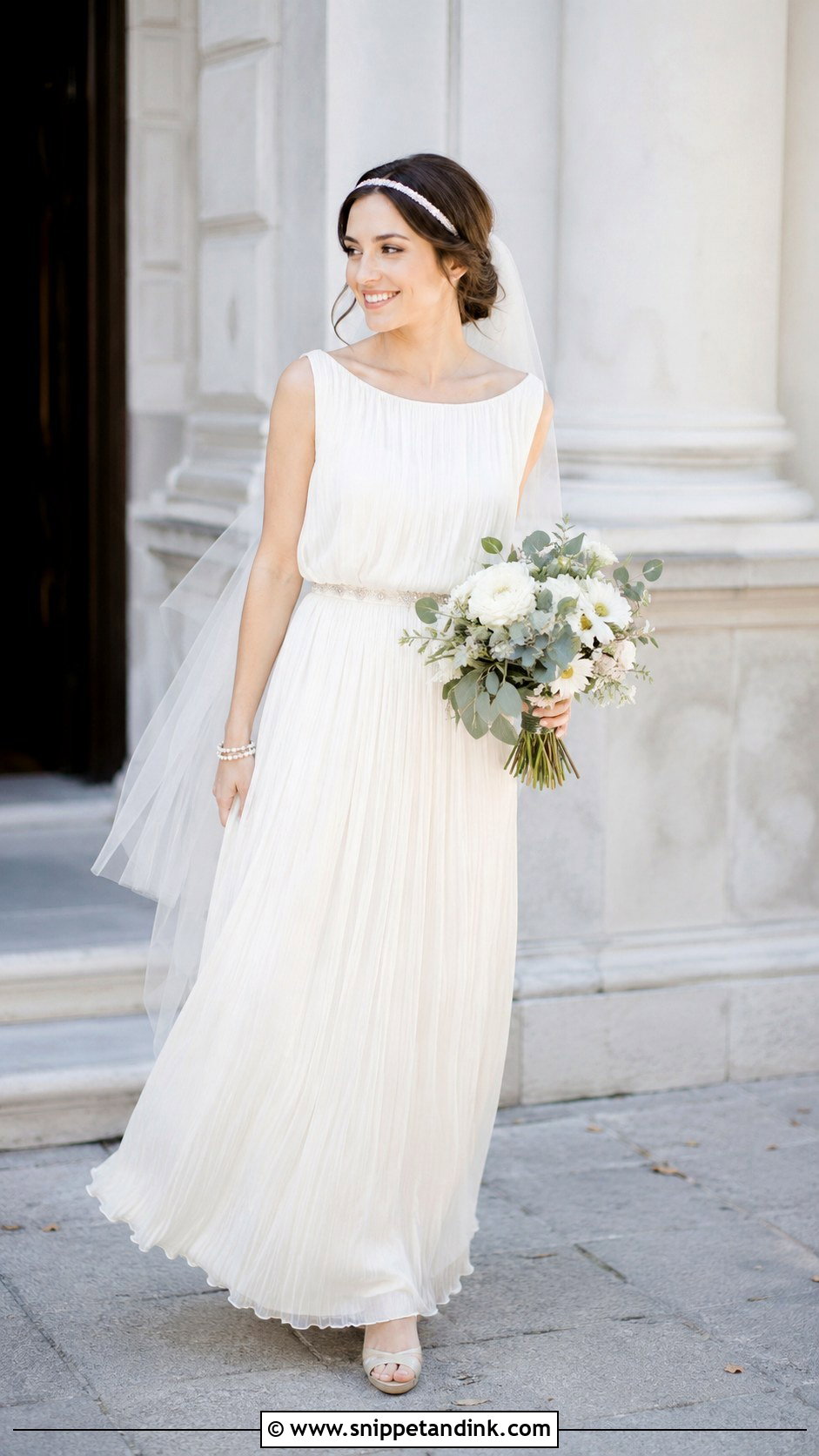
Fine pleats give movement with less weight than beading. Look for pleated chiffon, silk or satin, and a dropped waist or relaxed bodice to tie it to the decade. Low heels, a slim headband and a delicate veil. Pleats need care: they drop and soften if you steam them hard or sit in one position for long, so I’d hang the dress the night before and steam only lightly from a distance. Daytime weddings, gardens and small receptions suit it.
23. 1920s Short Wedding Dress
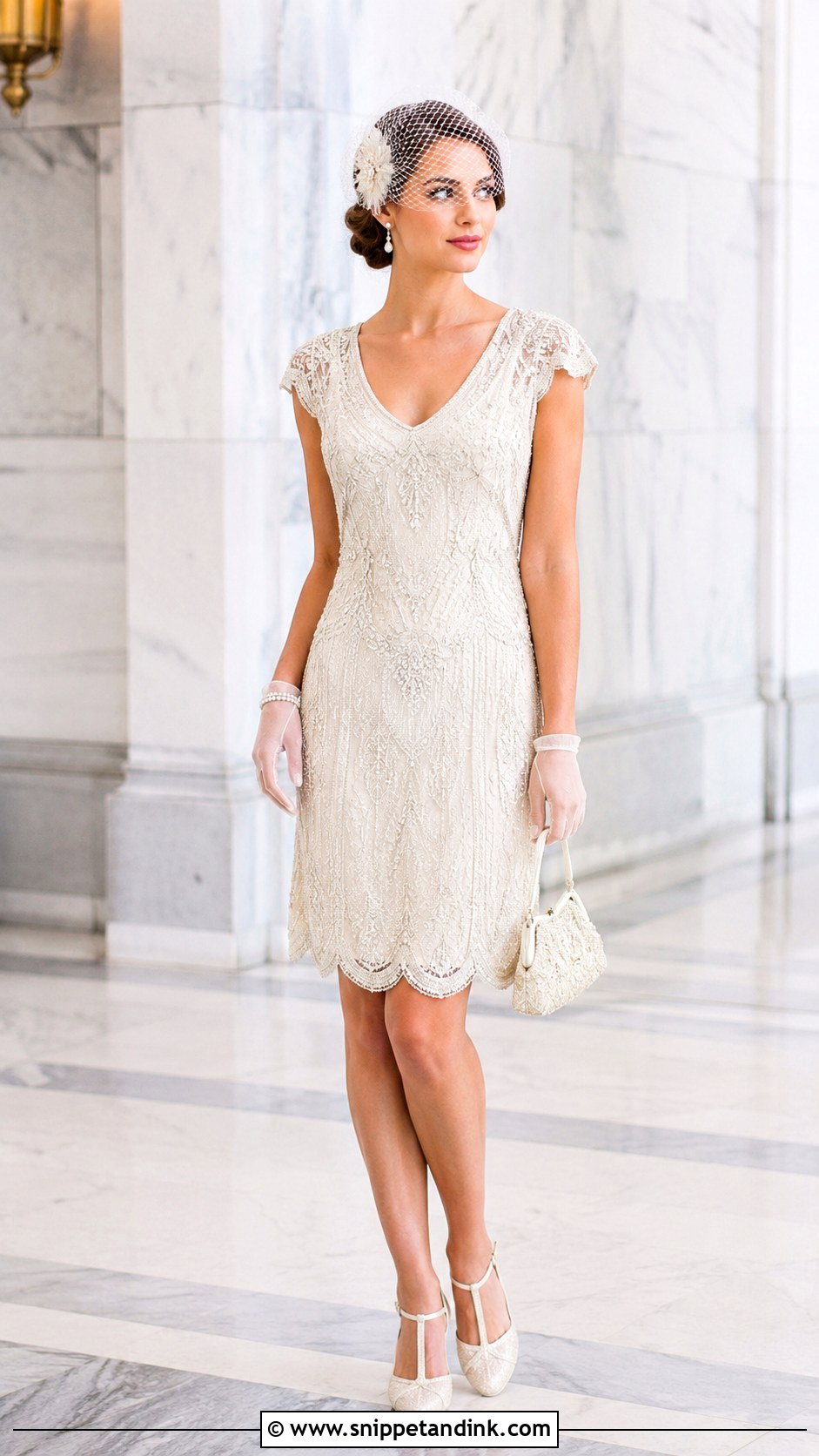
A short dress gives you complete freedom on the dance floor. Knee length or just above, with fringe, beading, lace or plain satin. T-strap heels, sheer gloves and a small bridal bag, with a birdcage veil or jeweled headband to finish without volume. Short hems put the shoes and legs on show, so I treat the shoes as a main piece, not an afterthought. It’s a natural pick for a courthouse wedding or as a reception change.
24. 1920s Bridal Jumpsuit
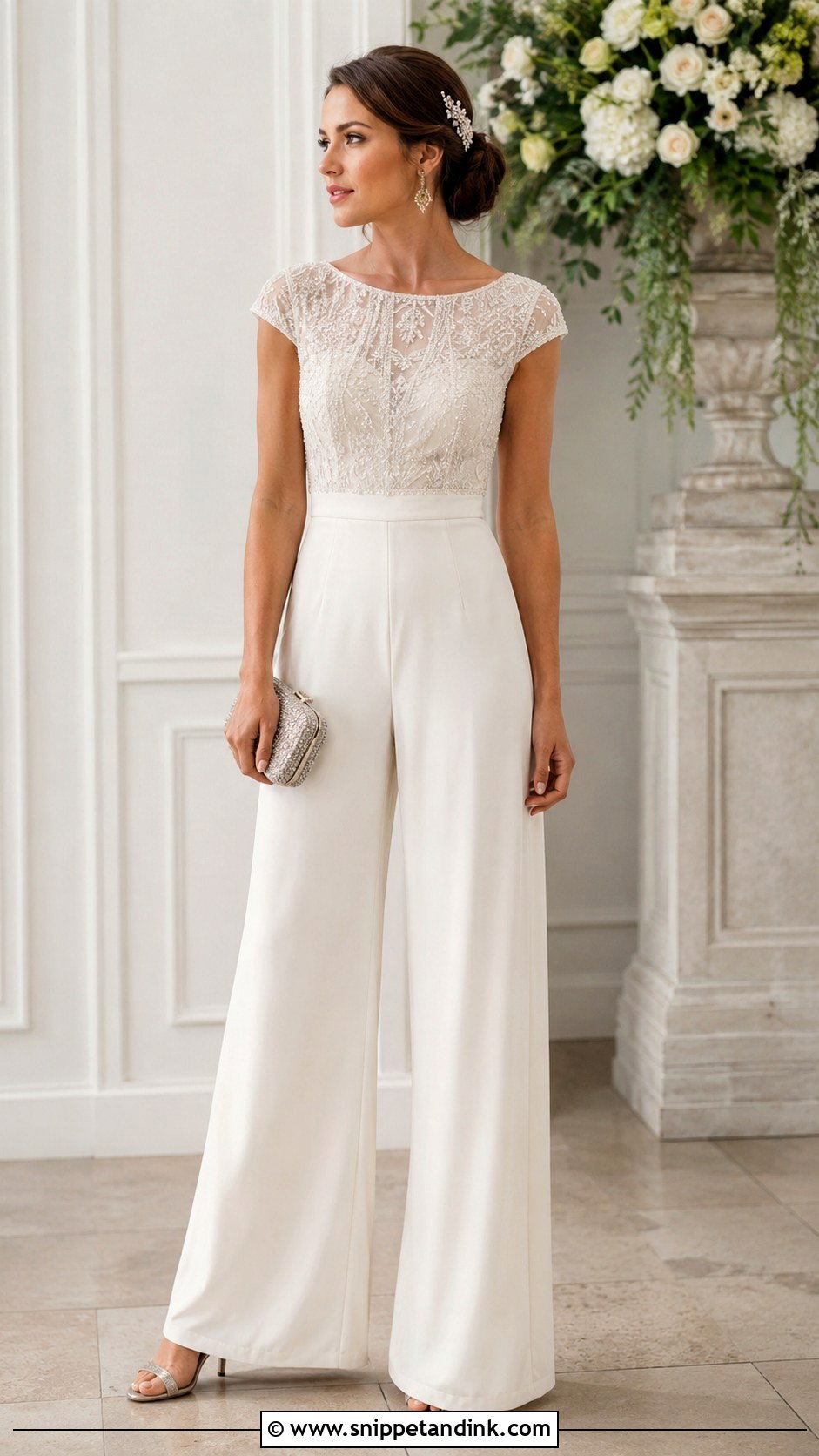
A jumpsuit is a modern nod to the decade and very comfortable. Choose a wide-leg ivory jumpsuit with beaded details, a satin finish or a cape overlay; the wide leg moves like a gown, the structured top keeps it polished. Metallic heels, Art Deco earrings and a sleek clutch, softened by a short veil, a headband or a pearl comb. Hem the legs with your wedding shoes on so they just graze the floor; wide legs that are too long catch under the heel constantly. Courthouse weddings and receptions both suit it.
25. 1920s Reception Wedding Dress
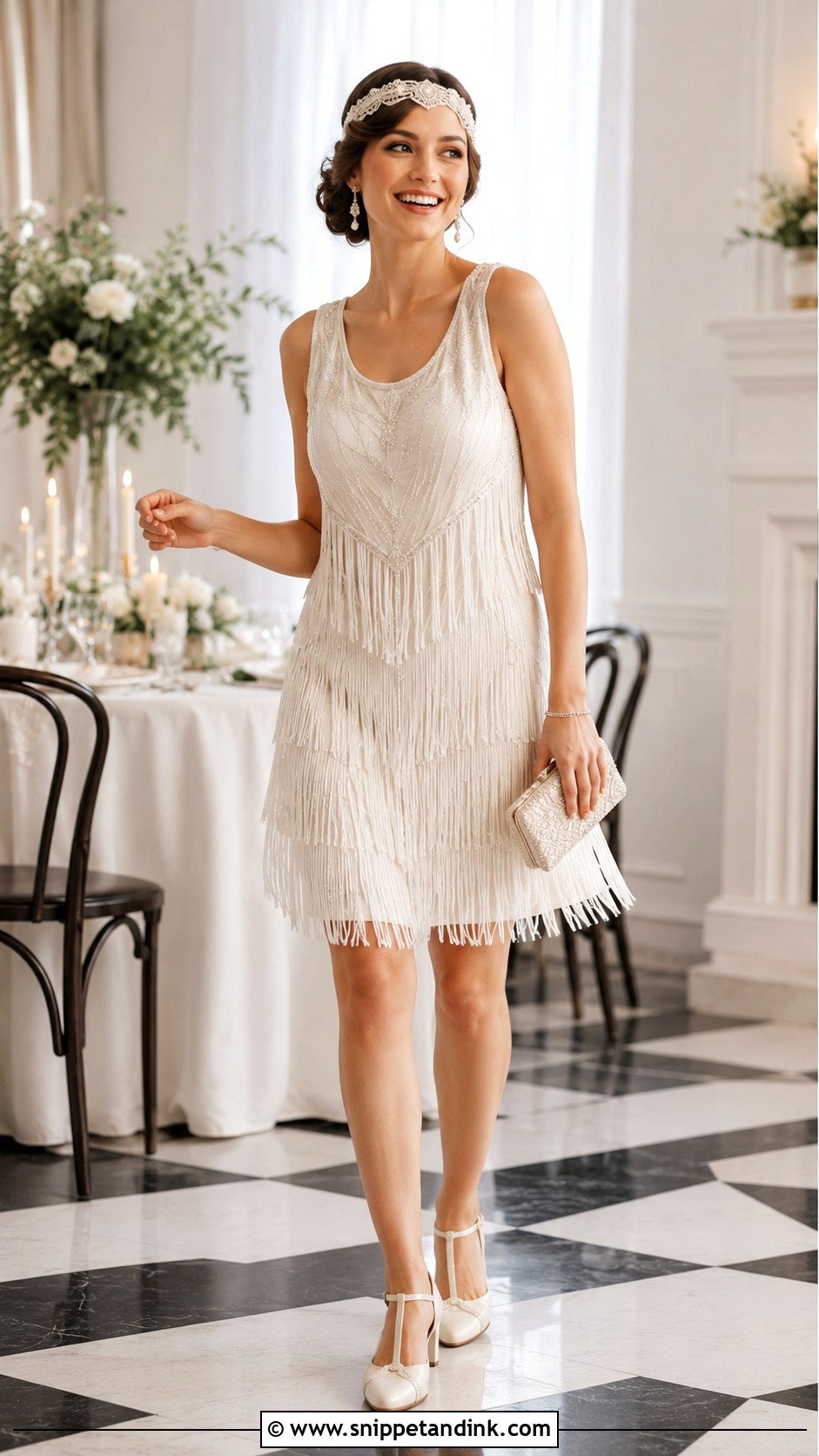
A reception dress should be easy to move in, fun to photograph and still bridal. A shorter fringe dress, beaded mini, tea-length lace or a light satin slip all work as a change from a long or heavily beaded ceremony gown. Comfortable block heels or low T-straps, a headband, pearl earrings and a compact clutch. Plan the change into the timeline; getting out of a beaded gown with a row of buttons takes longer than people think, so allow fifteen to twenty minutes and have someone with you.
A Beaded Dress Weighs More Than It Looks
Glass beads and sequins add real weight, and a heavily embellished 1920s dress can feel surprisingly heavy by evening. All of that weight hangs from the shoulders, which is why the dresses drape so well and also why they stretch if they are stored badly.
Before the wedding
- Never leave a heavily beaded dress on a hanger for weeks. It slowly pulls the fabric longer. Store it flat in a box, folded with acid-free tissue.
- If it must hang for a day, use the inner hanging loops so the weight is spread away from the shoulder seams.
- Ask for a small bag of spare beads and sequins from the maker, and keep a needle and matching thread in the emergency kit.
On the day and afterward
Beads snag lace veils, knitted wraps and the groom’s buttons, so I keep the veil away from the beaded back where I can, or choose a cap veil that sits above it. After the wedding, take the dress to a cleaner who handles beaded garments by hand. Sequins and some vintage beads can dull or melt in solvent, so it is worth asking how they will test it first.
Dance in It Before You Commit
My final test for any 1920s dress is simple: put it on with the shoes and headpiece, then walk, sit and dance for a few minutes. The decade’s dresses are meant to move, and you’ll know quickly whether the beading pulls, the hem catches or the neckline shifts. Some brides want heavy beadwork, fringe and Gatsby glamour; others want satin, lace, pearls, pleats or a simple dropped waist. Both work when the dress, shoes, veil and jewelry belong to the same idea. Whatever kind of wedding you are planning, choose the version you can actually move in.
You'll Like These Ideas:



Leave a Reply