
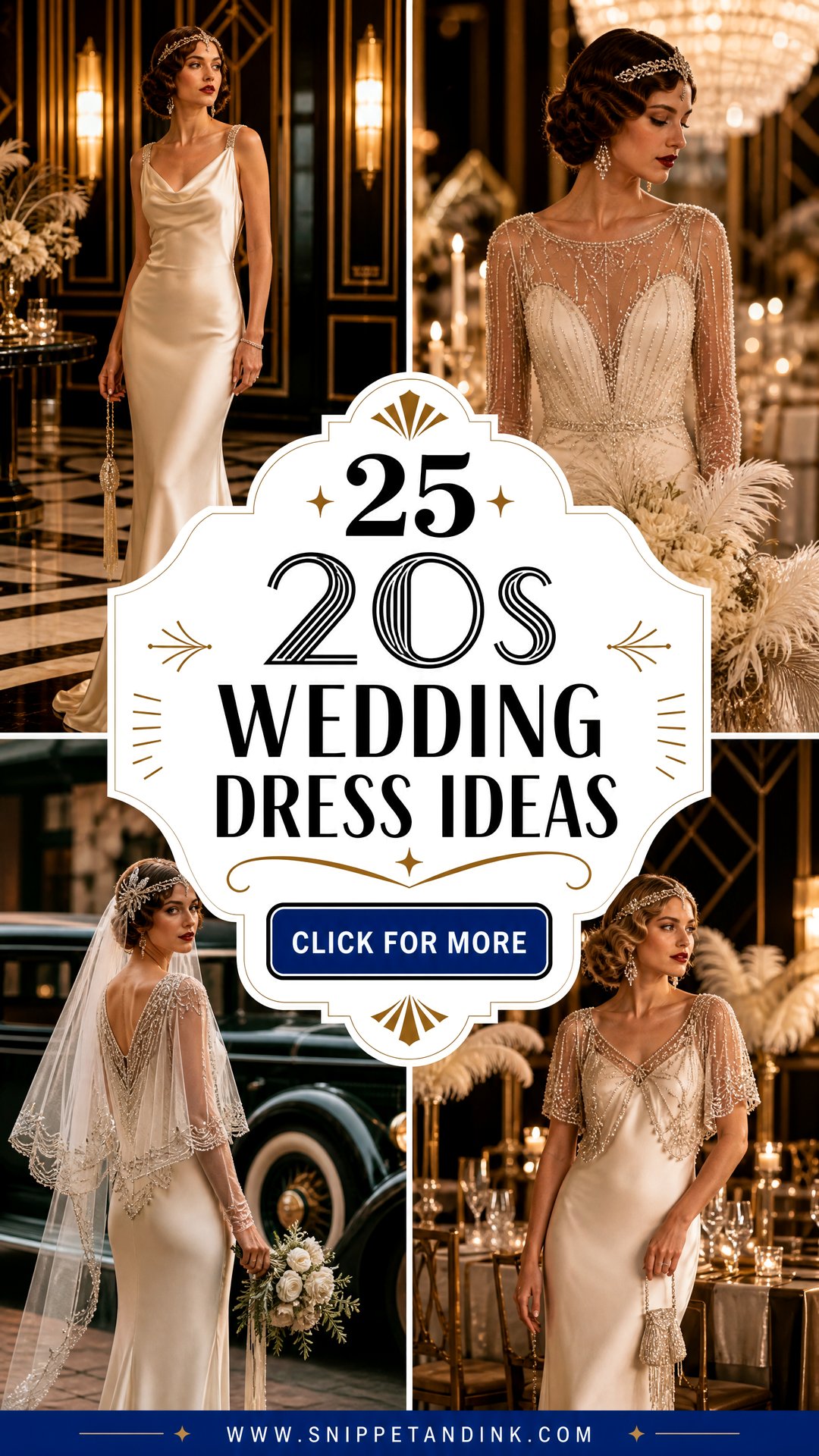
Jazz Age bridalwear is about drape and light, not structure. Art Deco beading, straight column shapes, dropped waists, pearls, lace sleeves and fluid satin are the vocabulary, and 1920s bridal fashion can be read many ways, from modest and quiet to fringe for the dance floor. Some brides want something close to the period; others want a modern gown with one nod to it. Accessories carry a lot of the theme here: cap veils, pearl earrings, metallic heels, a fine hairpiece. Below are 25 directions, each with what I watch for in the fitting room, for ceremonies from ballrooms to courthouses.
Wearing a Straight 1920s Line on a Curvy Figure
The original flapper silhouette was designed to flatten curves, and a lot of brides with a fuller bust or hips assume the whole decade is off limits. It isn’t. The trick is borrowing the details and adjusting the line, which I do for curvier brides all the time.
- Raise the dropped waist. A seam at the high hip, rather than mid-hip, keeps the period feel without boxing in the body.
- Choose vertical beading. Columns of beads or long Art Deco lines lengthen; horizontal bands widen exactly where you may not want it.
- Look for bias-cut or softly draped fabric. It follows curves instead of hanging straight off the bust.
- Add internal support. A built-in bra or light boning under a loose-looking dress gives shape the eye never sees.
- Let accessories do the period work. A cap veil, T-strap shoes and Art Deco earrings say ‘1920s’ even on a fitted modern gown.
If you’re trying on vintage pieces, expect to need alterations: true 1920s dresses were cut on very slim, straight patterns, and many won’t close over a modern bust.
1. Art Deco Beaded Wedding Dress
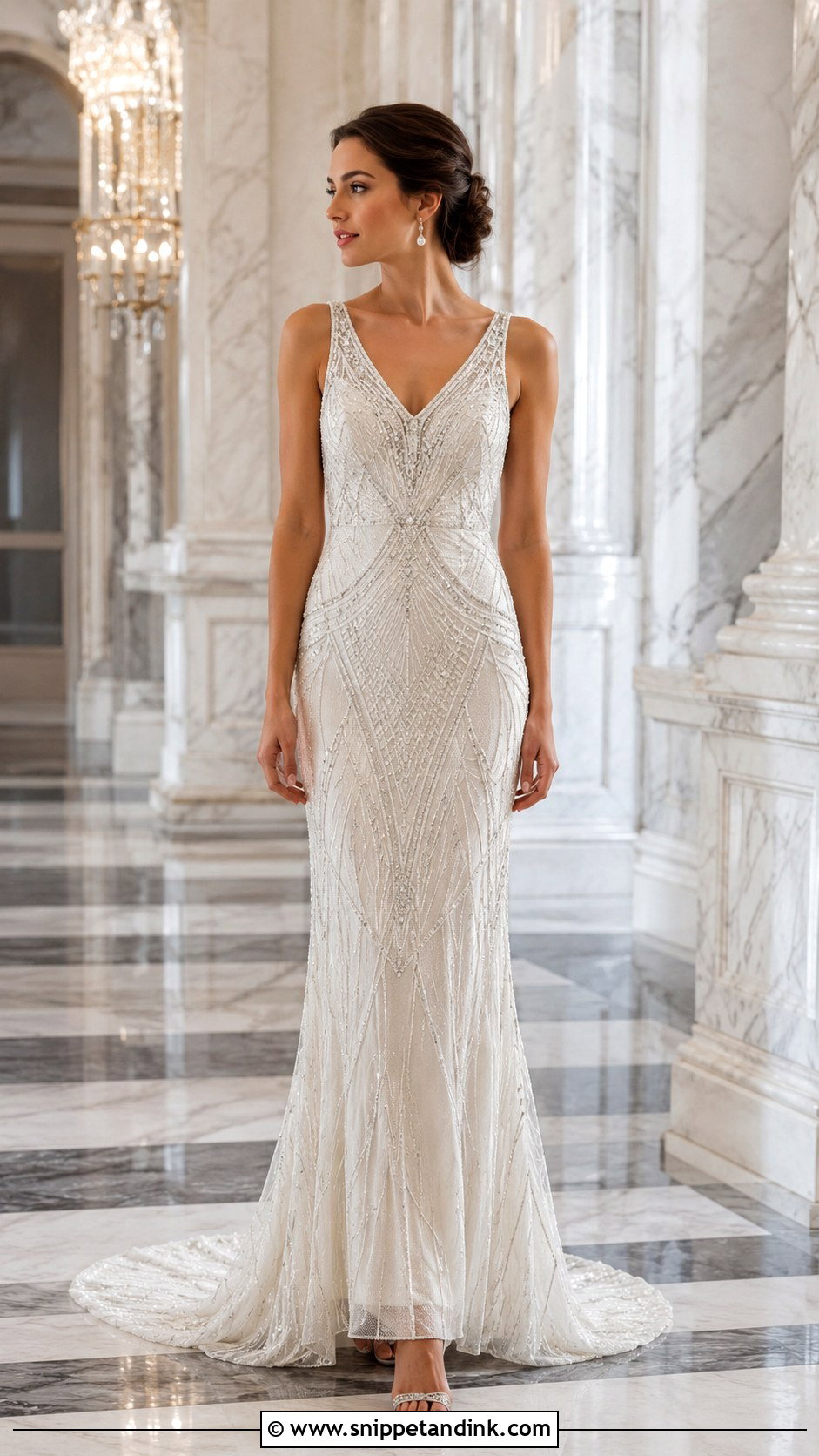
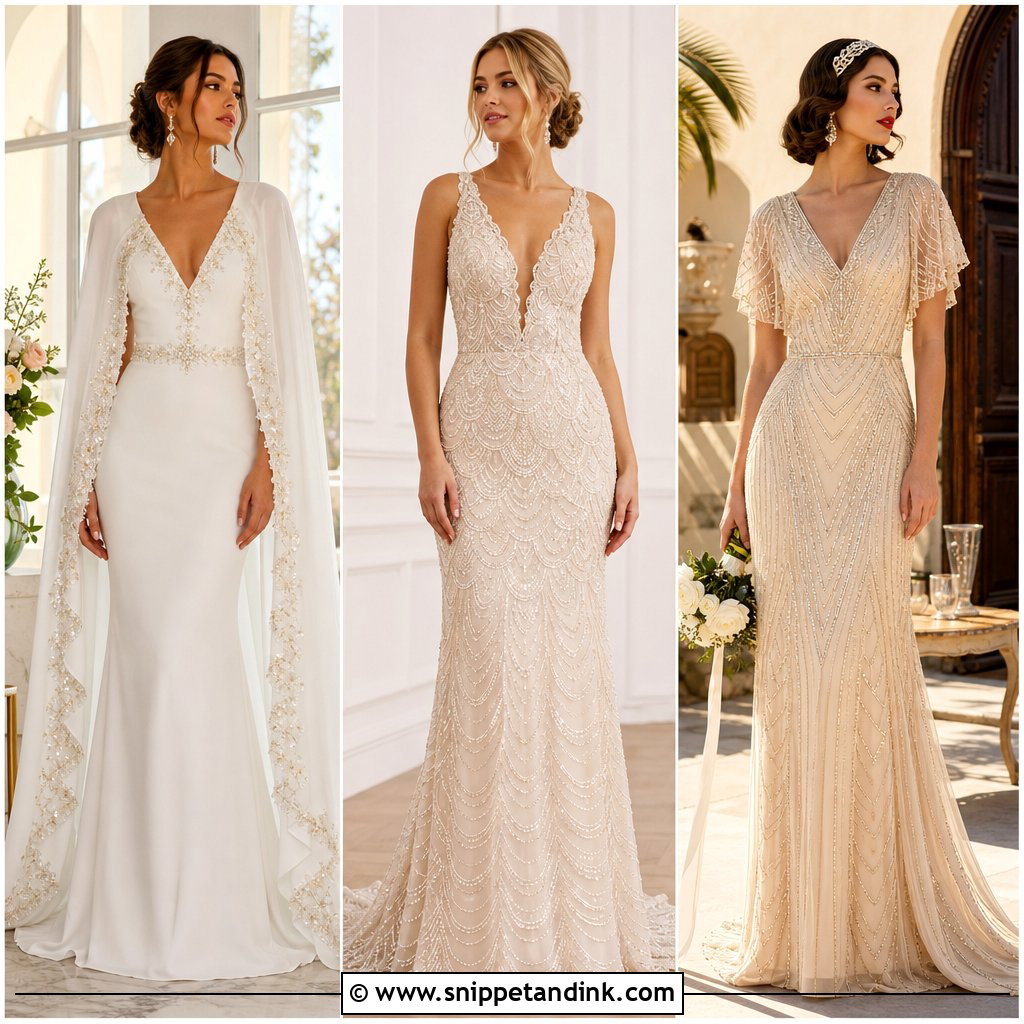
Geometric beadwork on a straight or gently fitted shape is the picture most people have of a 1920s bride. Fans, zigzags, sunbursts and vertical lines are the motifs that work best, because they draw the eye downward and lengthen the body. Heavy beading pulls a dress down from the shoulders over a long day, so I check the shoulder seams are reinforced and the straps are wide enough to spread the load. Pearl drops, silver heels and a small satin clutch are enough. A sleek low bun or soft finger waves keep it from tipping into costume.
2. Flapper Fringe Wedding Dress
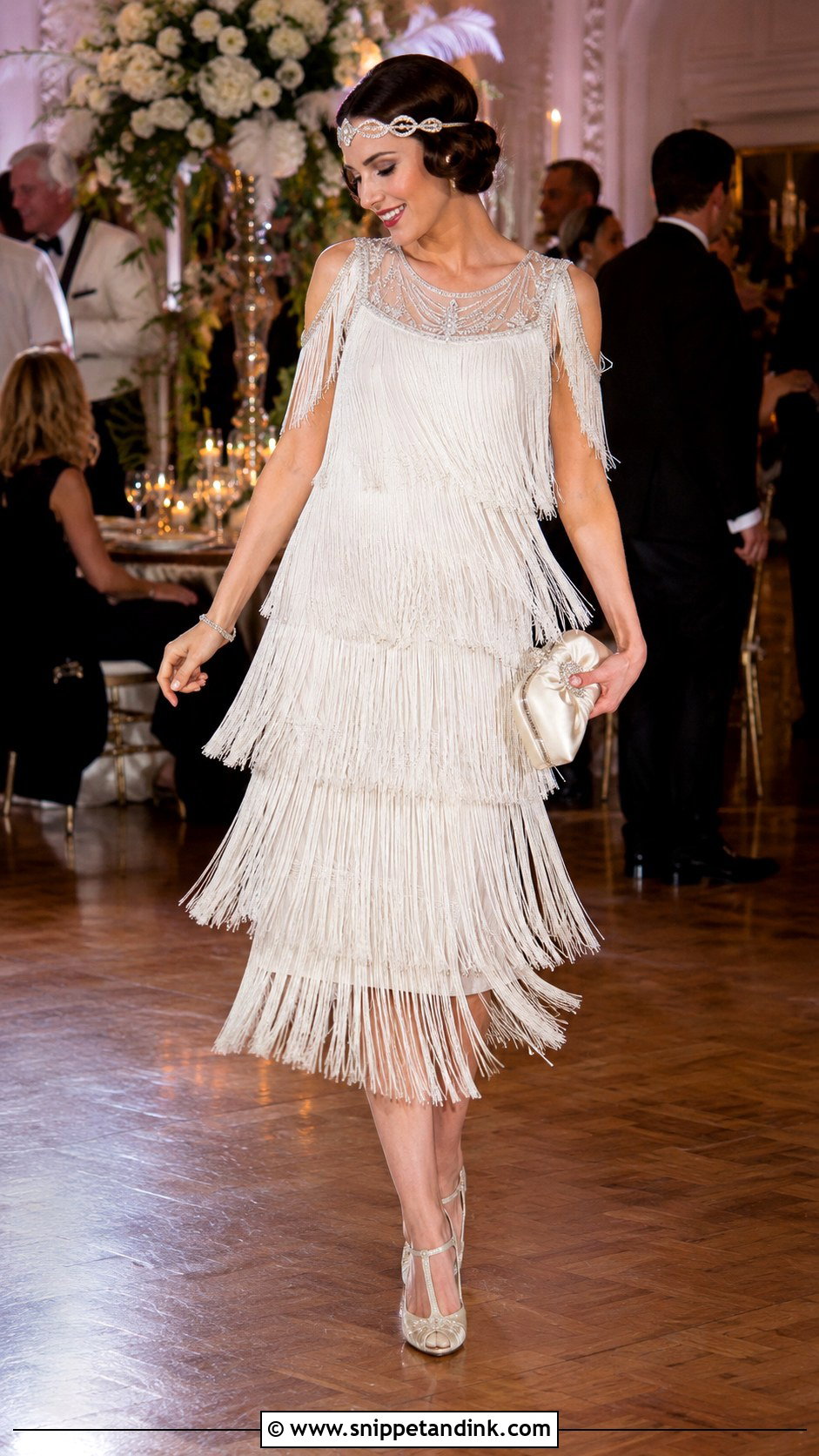
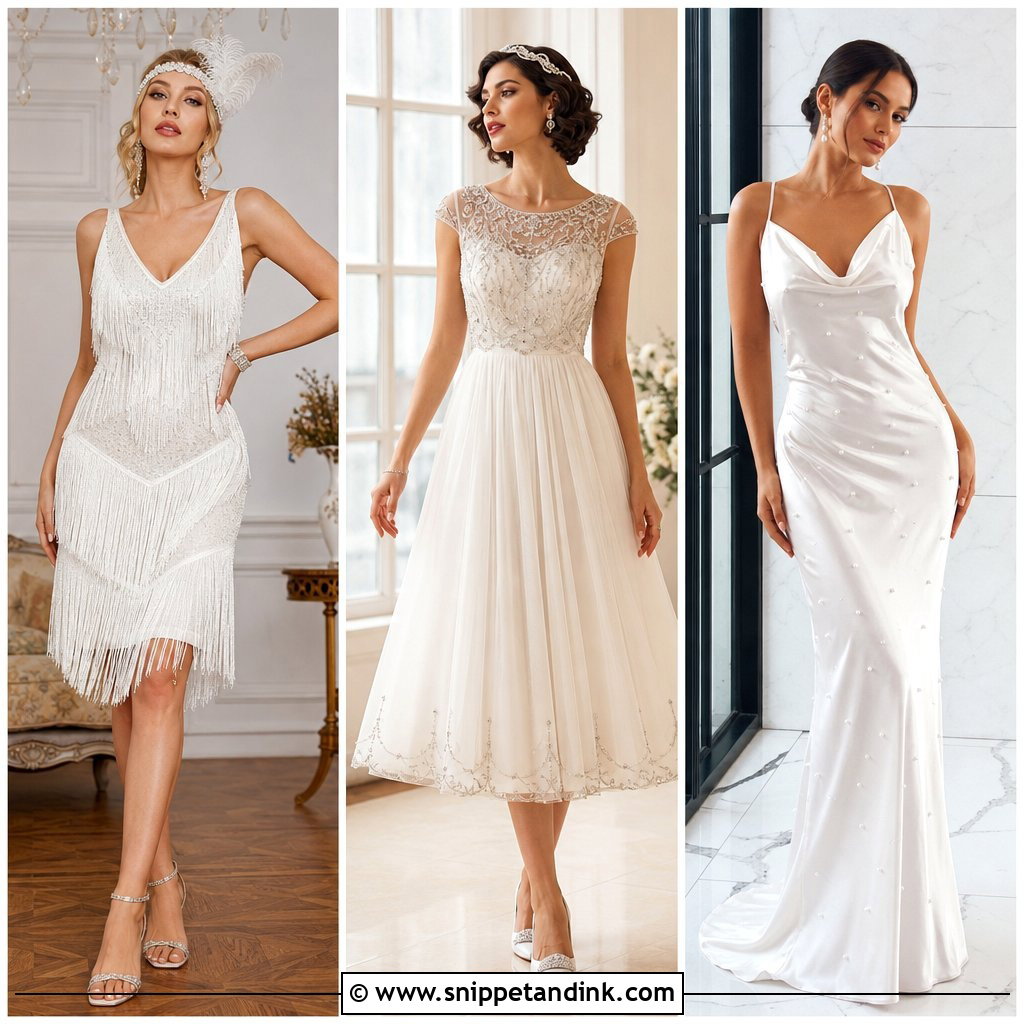
Fringe only looks right in motion, and that’s the point of a flapper fringe wedding dress. Ivory, champagne or soft silver fringe over a simple sheath reads bridal first. It tangles, though, and sitting on long fringe for a dinner crushes it into a flat mat, so I suggest it more often as a reception change than a ceremony gown. Knee or midi length feels playful, floor length more formal. T-strap heels, a beaded headband and simple earrings, nothing more.
3. Drop Waist Lace Wedding Dress
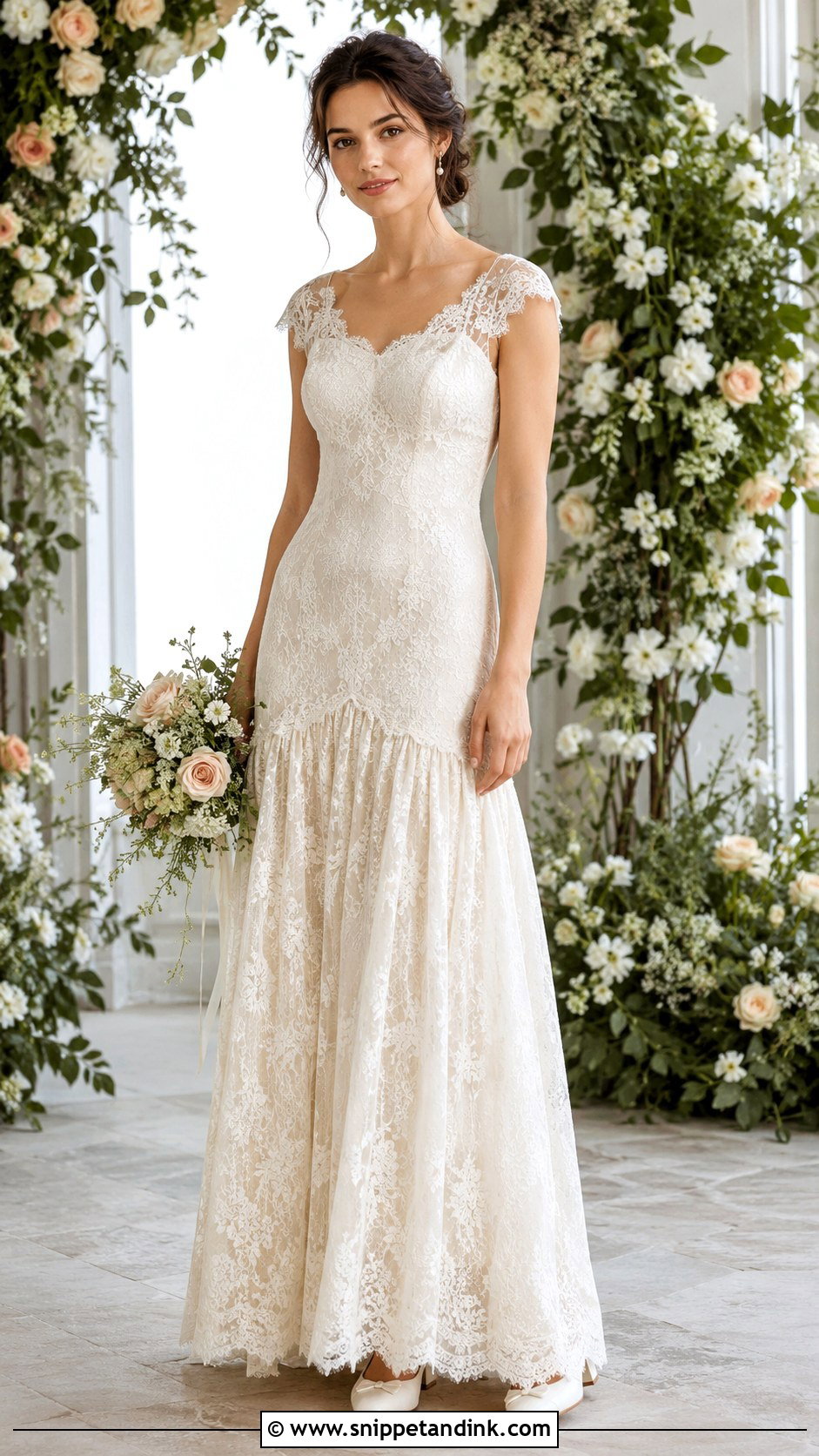
The real 1920s silhouette is the dropped waist: the seam falls well below the natural waist and the body reads long and easy rather than hourglass. In lace, with scalloped edges, cap sleeves or an illusion neckline, it softens further. The seam placement decides whether it flatters. On a short torso, a seam that’s too low makes the legs look shorter, so I move it up until the proportions settle. Soft ivory lace looks antique; crisp white lace is cleaner. Low heels, pearl studs, a fingertip veil. Gardens and old hotels suit it.
4. Satin Column Wedding Dress
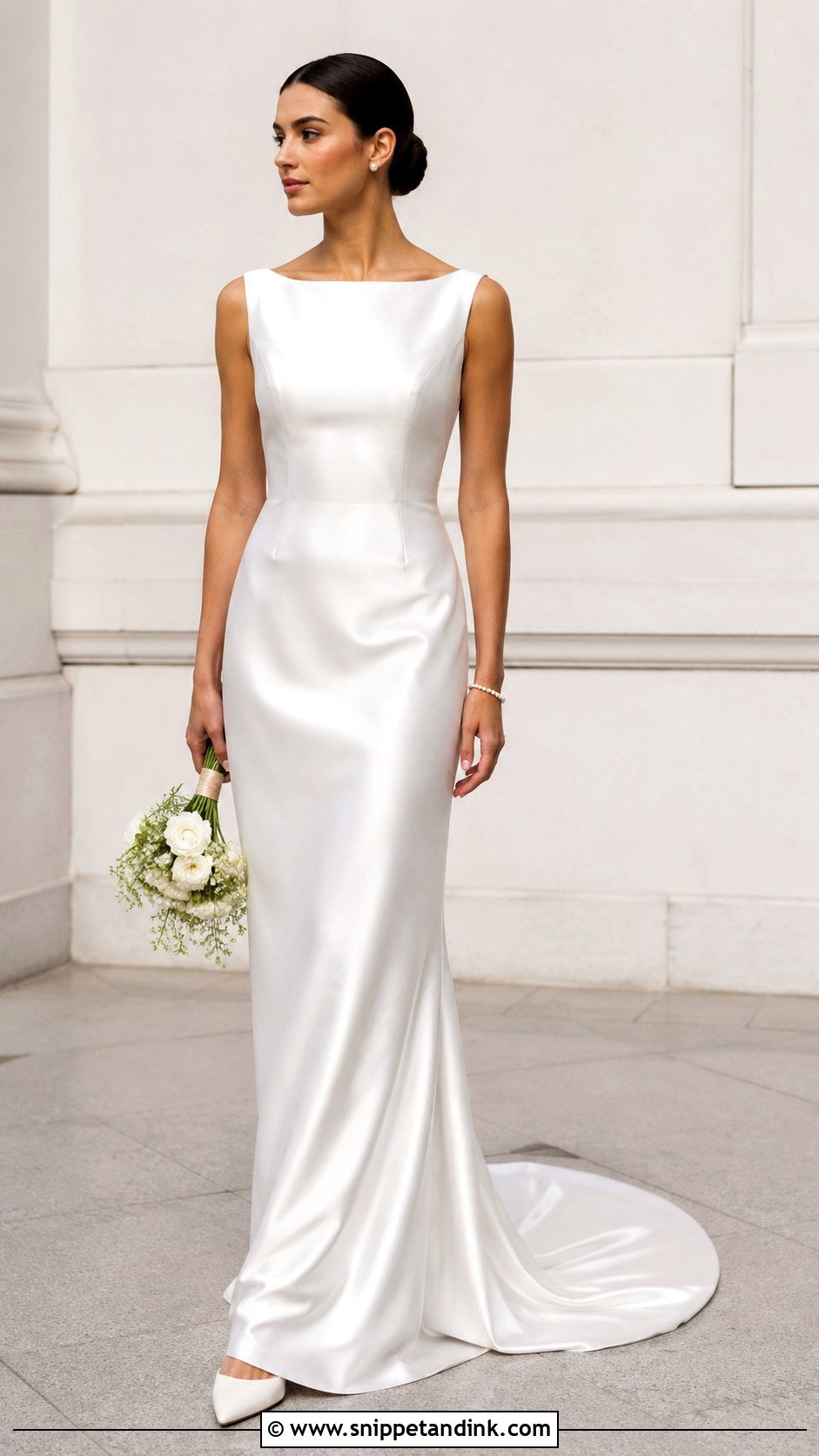
Smooth satin makes a simple dress look expensive, and a column that skims rather than clings fits the decade well. A bateau neck, soft cowl back, small buttons or a short train add enough detail. Satin shows everything underneath, so I fit this dress over the exact shapewear the bride will wear on the day. Pointed satin heels, a pearl bracelet and a sleek veil. City weddings and candlelit receptions suit it. If it feels too plain, a beaded capelet adds a period touch.
5. Pearl Beaded Wedding Dress
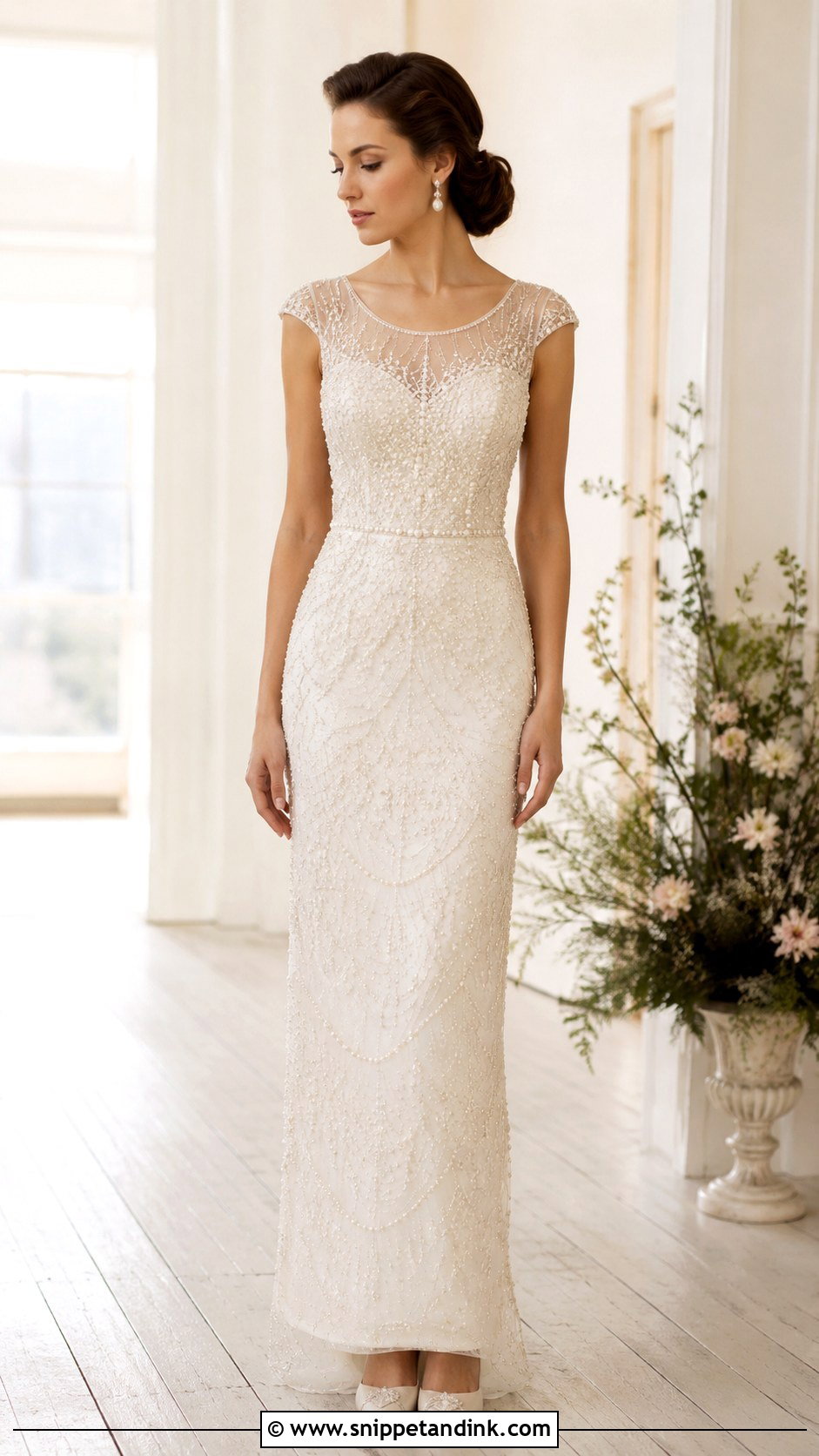
Pearls were central to 1920s bridal styling, and they still look fresh when used with restraint. Scattered pearls read subtle; allover pearl embroidery on tulle or crepe is bolder. A straight cut, cap sleeves and a high or scoop neck tie it closer to the decade. Pearls are heavy compared with seed beads, so allover pearl tulle needs a firm lining or it will sag at the hips. Keep jewellery to pearl studs or small drops. Ivory shoes and a soft veil. Natural light shows the pearl lustre well.
6. Cap Sleeve Wedding Dress
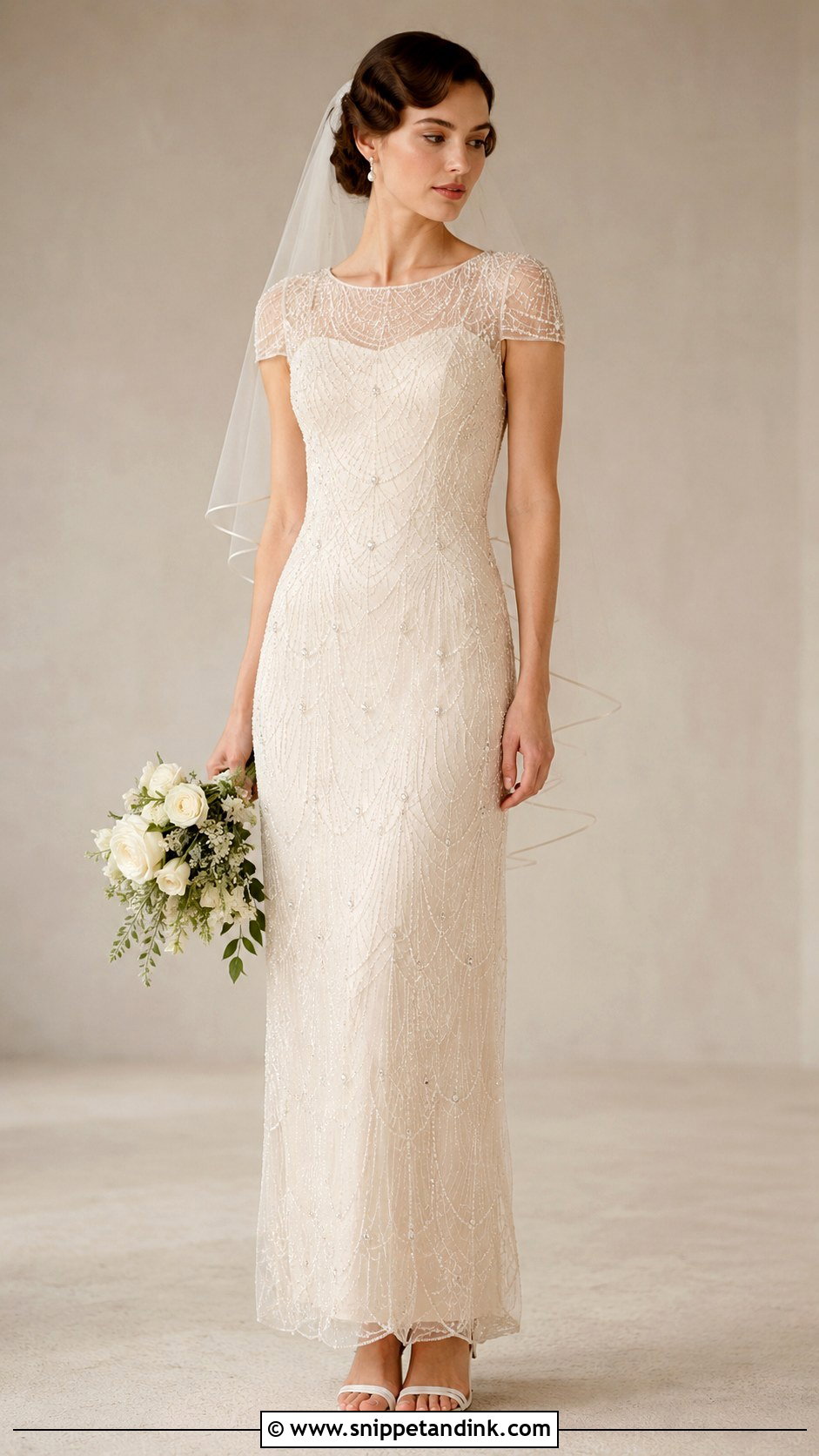
A cap sleeve wedding dress gives light coverage and keeps the look airy, which is why I see it on so many beaded tulle, lace, satin and sheath gowns from this era. Cap sleeves also balance a deep back or a beaded bodice. Watch where the sleeve stops: right at the widest part of the upper arm, it can make the arm look broader, so I adjust it up or down a little. A low chignon, pearl earrings and slim heels. A Juliet cap veil or a beaded comb adds a period finish.
7. Long Sleeve Vintage Wedding Dress
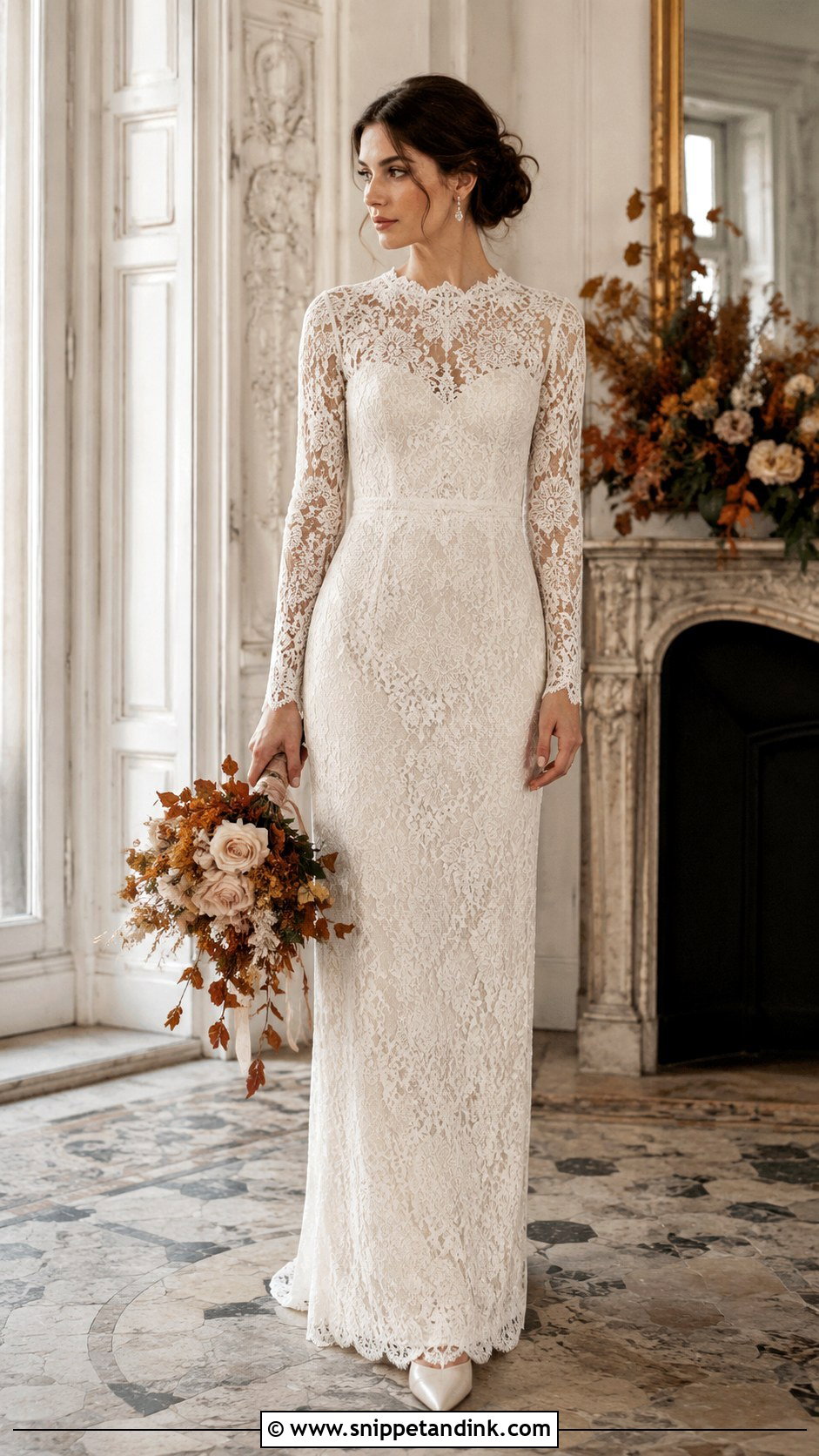
Long sleeves take 1920s style somewhere more formal and covered. Sheer lace, beaded illusion or slim satin sleeves all suit a column gown. The risk is heaviness; chiffon, crepe or beaded tulle that moves keeps the dress from feeling weighed down. Long sleeves on a column need ease at the elbow, because a tight sleeve stops you bending your arm to hold a glass. High neck for formality, V-neck for softness. Closed-toe heels, a structured clutch and delicate earrings. Fall and winter weddings suit it.
8. Beaded Sheath Wedding Dress
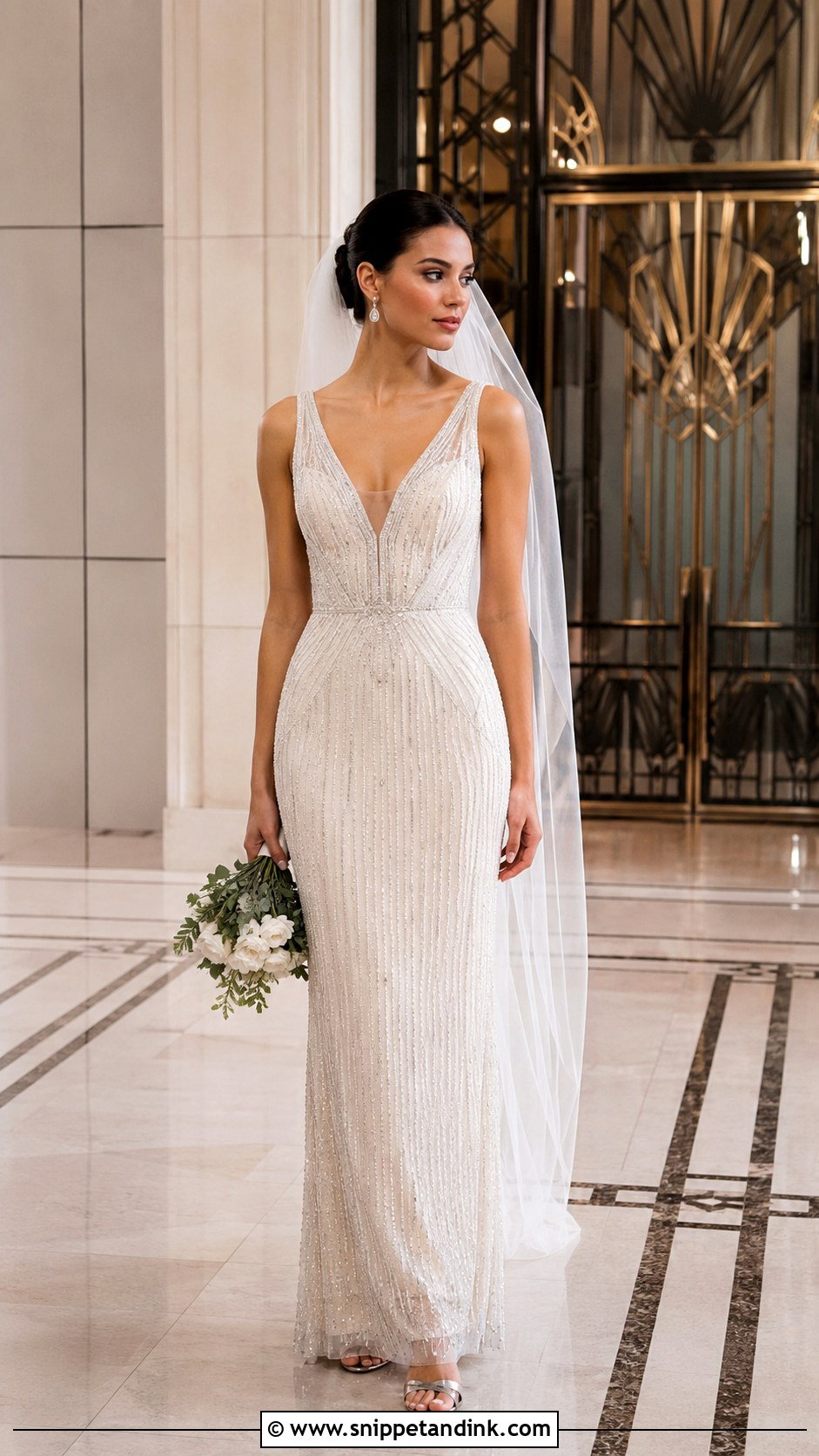
Sparkle without a big skirt: that’s the beaded sheath, following the body gently in the slim, relaxed line of the period. Vertical or geometric beading adds light and lengthens. It flatters many figures because it doesn’t rely on tight structure, but the lining matters; a rough lining under heavy beads rubs the skin raw by evening, so I always turn the dress inside out and feel it. Leave room to walk and dance. Metallic heels and a simple veil, and a sheer beaded topper for extra coverage at the ceremony.
9. Champagne Wedding Dress
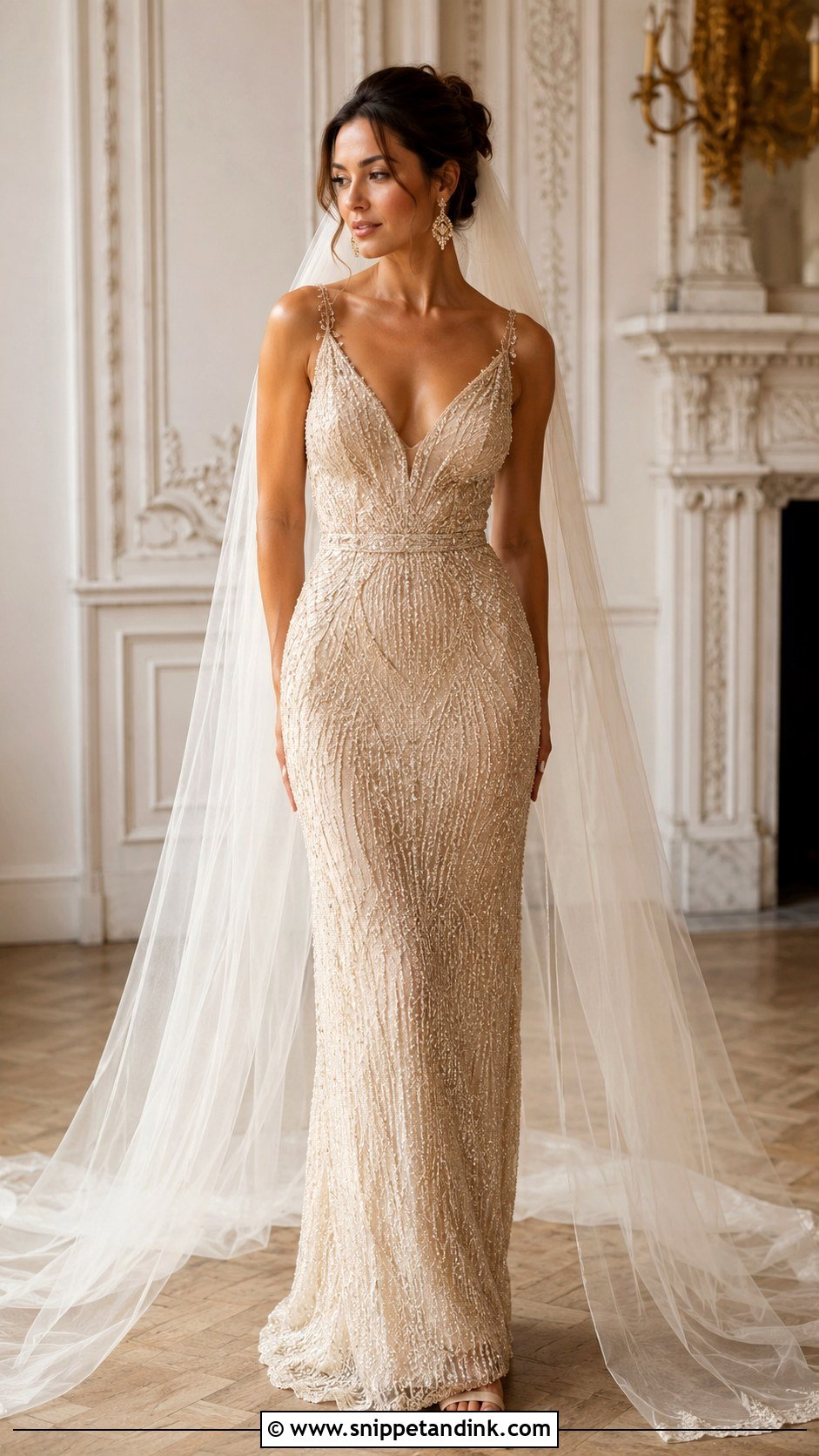
Champagne’s golden undertone sits naturally with sequins, pearls, lace and Art Deco embroidery, and it’s kinder than bright white on many skin tones. In a 20s mood, try a champagne column, a beaded sheath or a dropped-waist satin. Champagne varies a lot between makers, from almost pink to almost gold, so I always compare swatches against the bride’s skin by a window. Gold or nude heels, antique-style earrings and a cream veil that softens without clashing. Ballrooms and candlelit rooms suit it.
10. Silver Sequin Wedding Dress
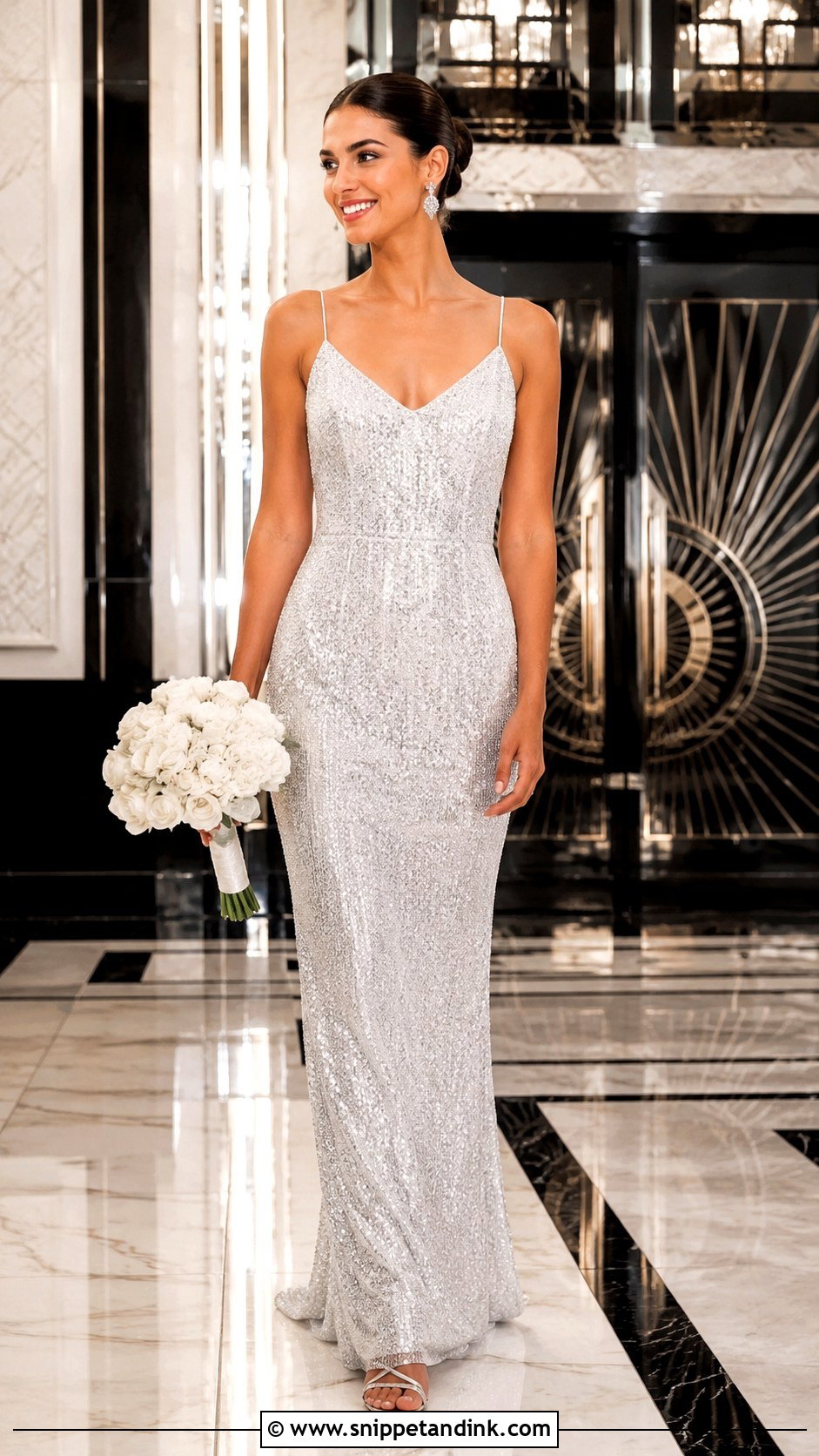
A silver sequin wedding dress is the boldest entrance here, true to the shine of 1920s evening wear. Keep the base pale silver or ivory-silver so it still reads bridal. A simple column or sheath balances the shimmer. Sequins scratch, so a bridesmaid in a silk dress and a groom in wool will both feel it in the hug; I warn people. Silver sandals, crystal earrings and a sleek hairstyle, no oversized extras. Receptions, rooftops and Art Deco venues suit it.
11. Illusion Neckline Wedding Dress
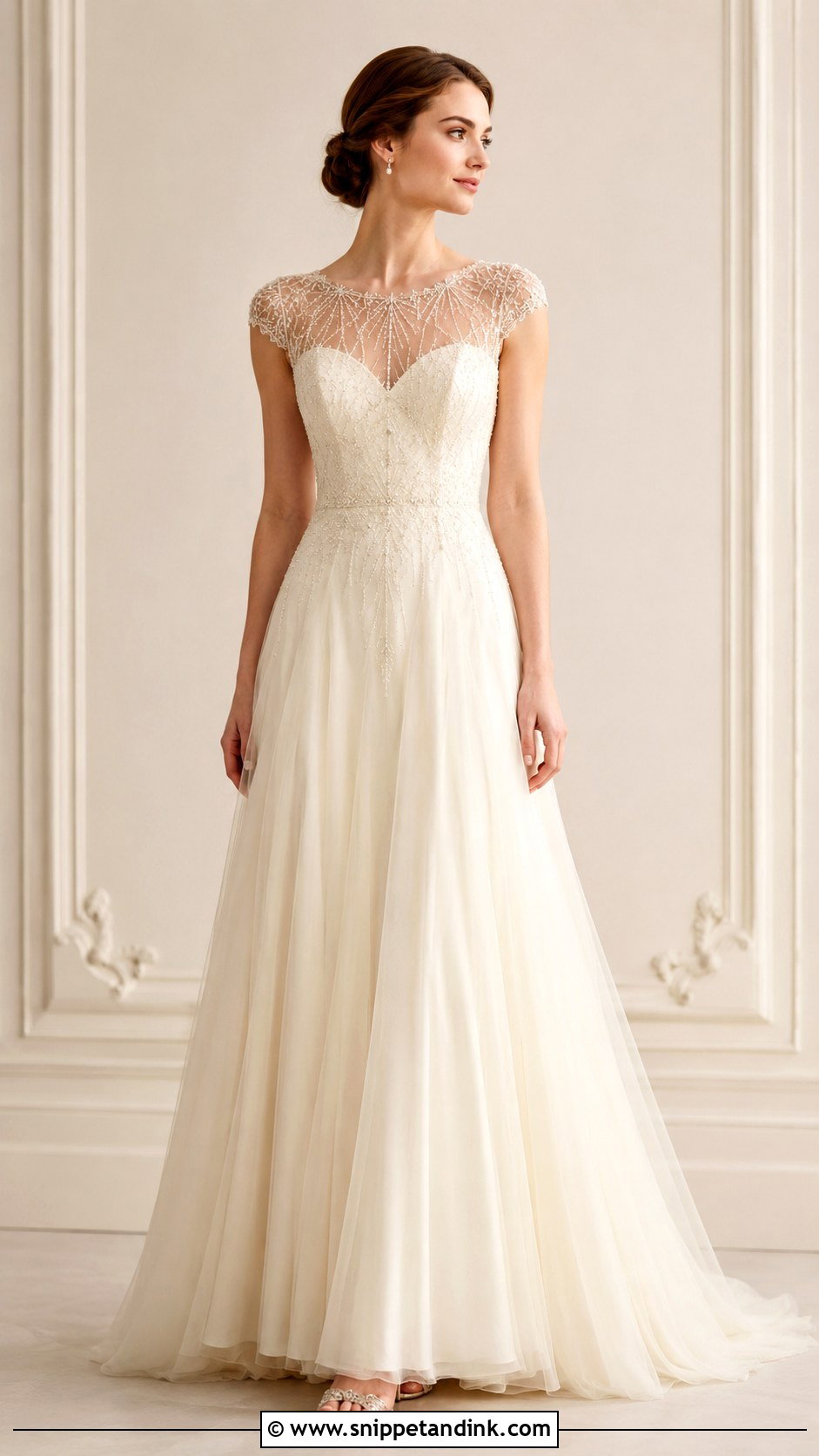
Sheer tulle, fine lace or beaded mesh over the skin gives coverage that still looks light. That’s the illusion neckline, and it suits 20s gowns because it holds fine beadwork without a heavy bodice. Pearls, crystals or lace appliqué look refined at the neck. Illusion mesh comes in many skin tones; I match it to the bride’s skin, not the dress, or it shows as a pale panel in photos. Sleeveless, capped or long-sleeved. Soft makeup, small earrings and a smooth updo keep the neckline on show.
12. Bateau Neck Wedding Dress
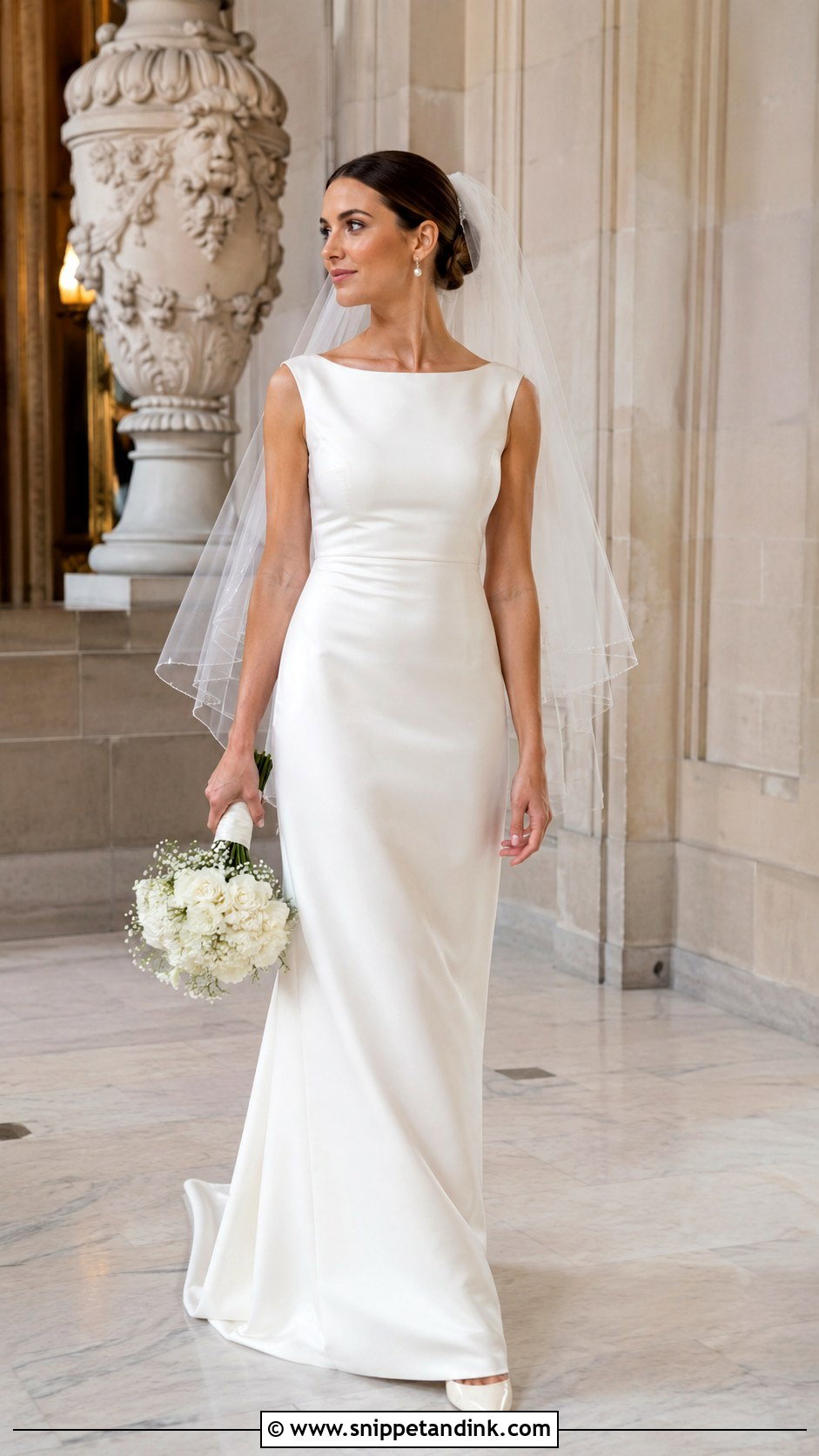
A bateau neck runs straight across the collarbone, a clean frame that suits the quieter side of the decade. Satin columns, lace sheaths and beaded gowns all take it. Because it widens the shoulders a little, on broad shoulders I lower the centre a touch to soften the line. The rest of the dress can stay plain or lightly embellished. Pearl drops, a low bun and a fingertip or chapel veil that doesn’t hide the neckline.
13. Cowl Back Wedding Dress
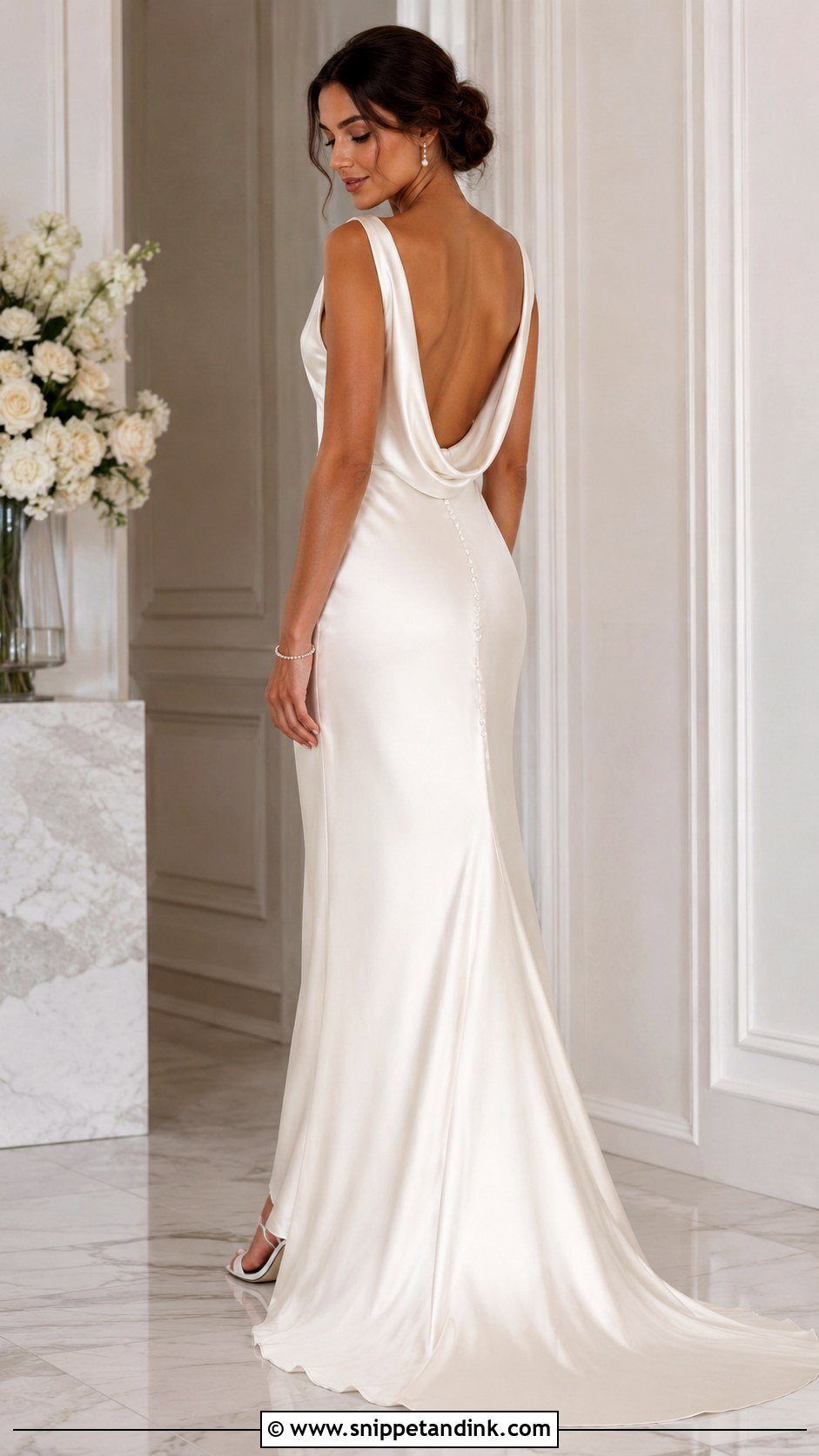
From the front, a cowl-back gown looks simple. Then you turn, and the draped back gives the aisle its moment. Satin, silk or crepe drape best. A deep cowl can gape when you lean forward, so I add a small weight or a hidden tack to keep it in place, and I check what bra solution works, often none. Minimal jewellery, a soft updo to show the back, satin heels and a delicate bracelet. A column or sheath keeps it in the period.
14. Beaded Cape Wedding Dress
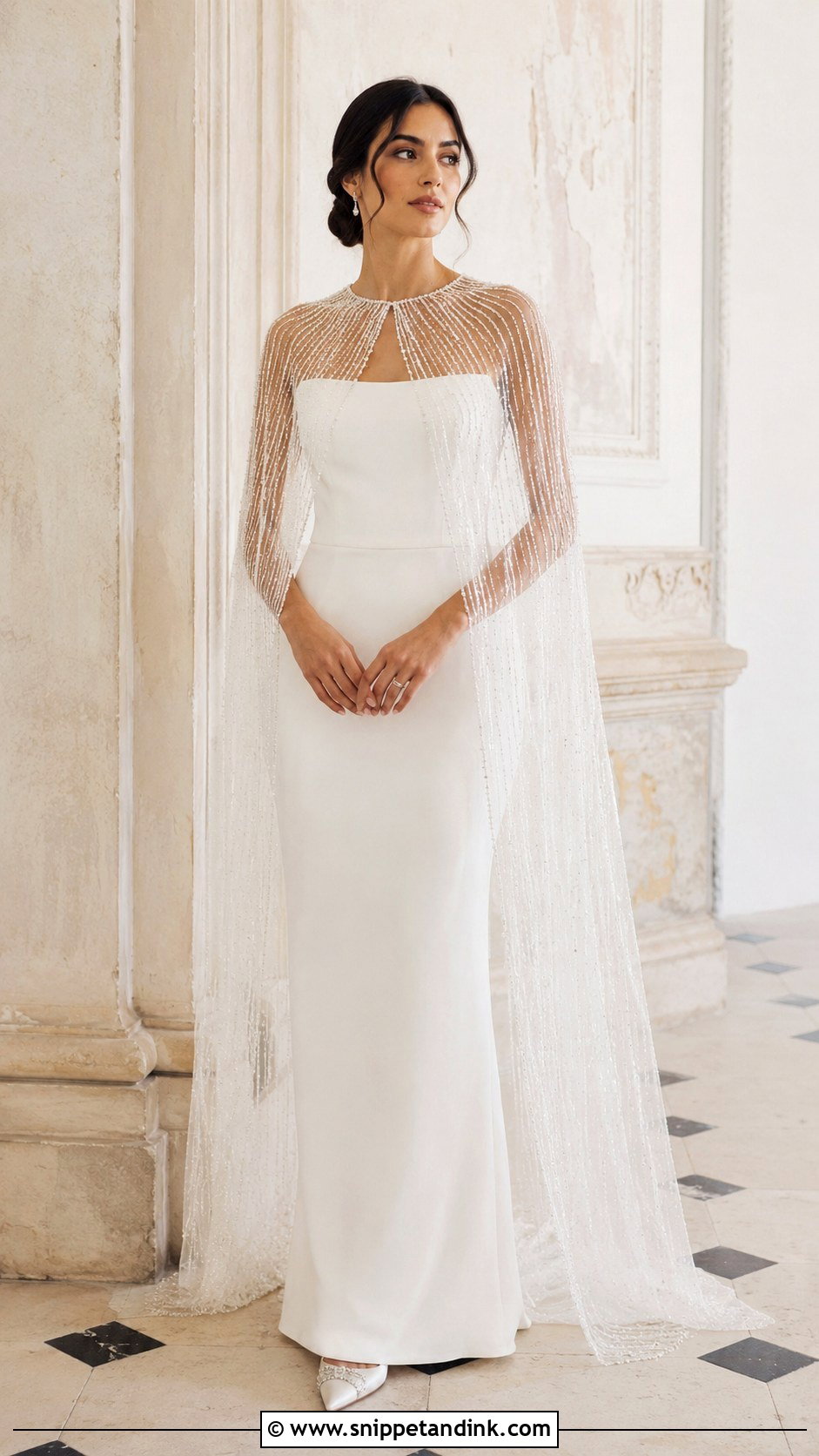
A beaded cape is my favourite swap for a veil on a 20s gown: it adds movement, shimmer and shoulder coverage, attached or worn separately. Pearl trim, crystal embroidery or geometric beading tie it to the period, over a satin column, crepe sheath or plain slip. Beaded capes are heavier than they look, so the fastening needs to sit on the collarbone, not on the throat. Keep shoes and jewellery minimal. It usually moves better than a heavy train.
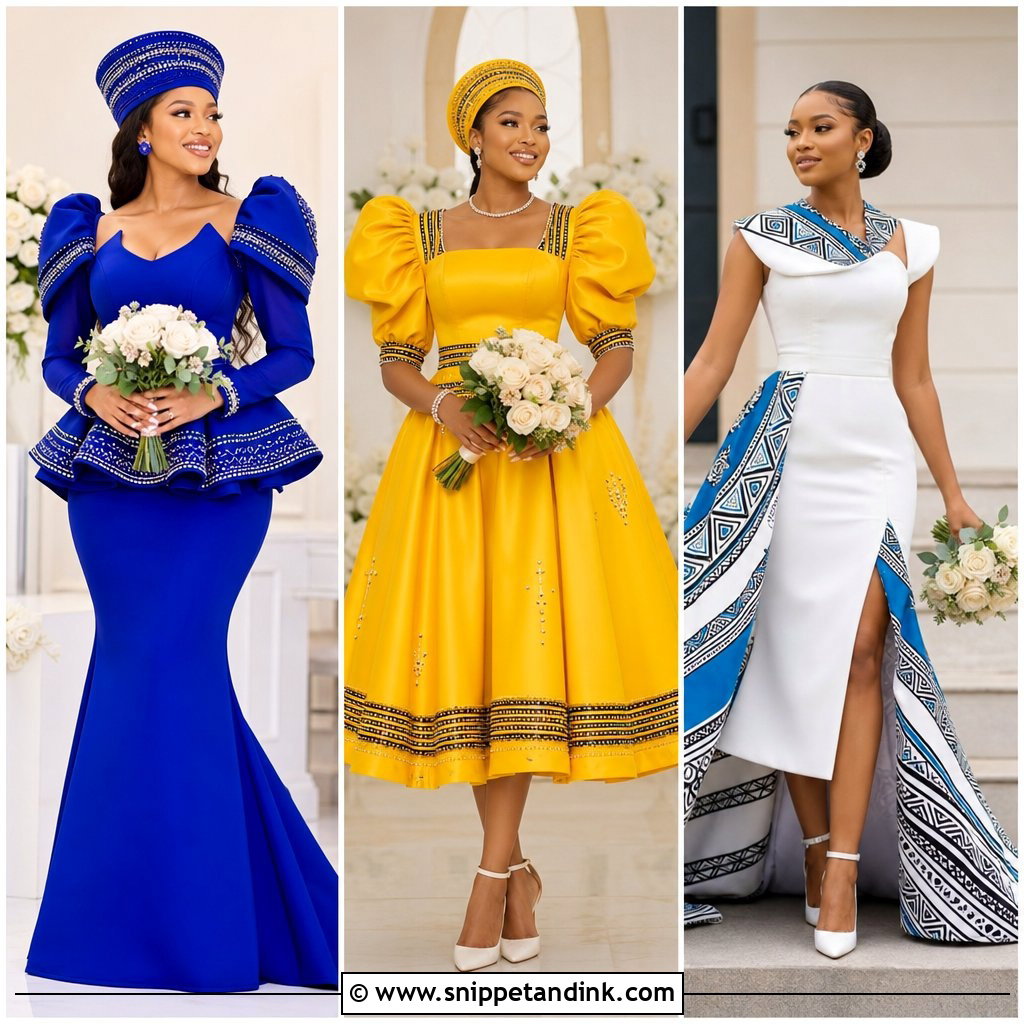
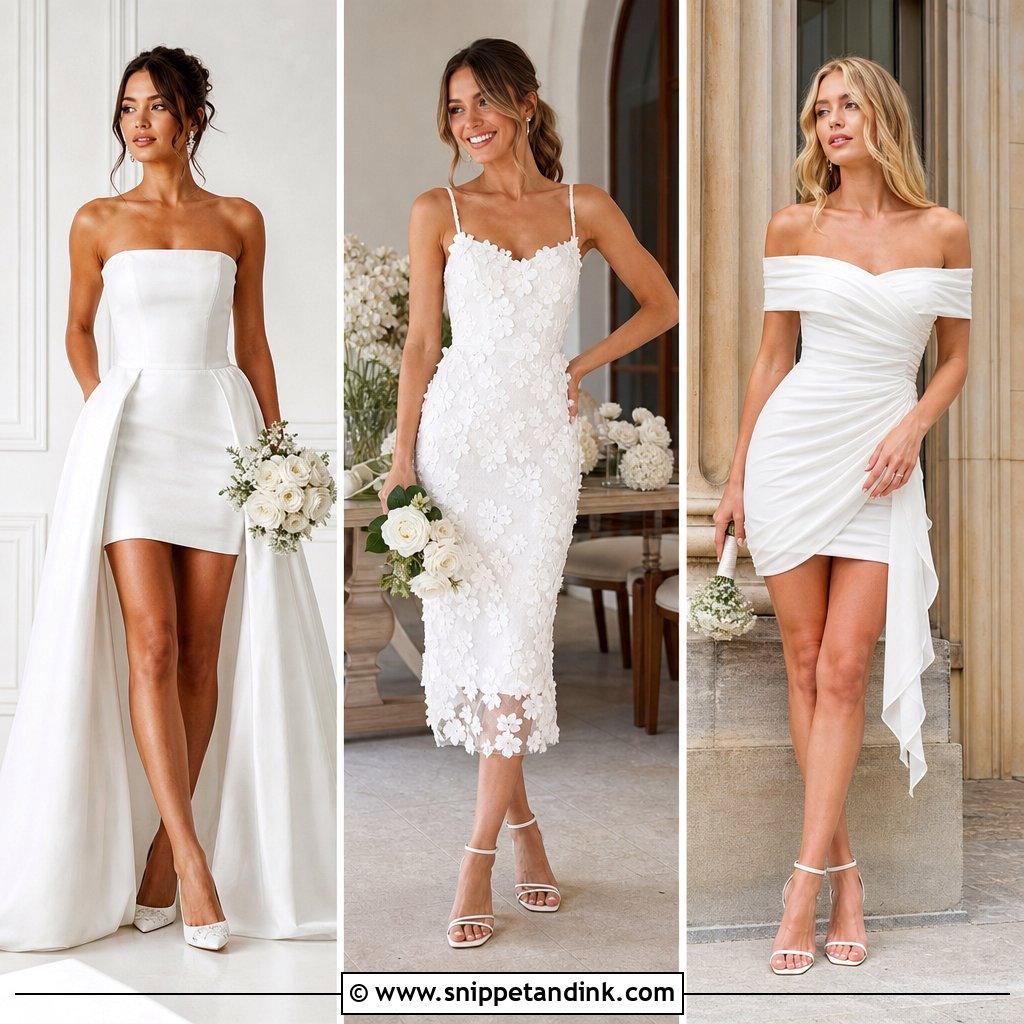
15. Juliet Cap Veil Wedding Dress
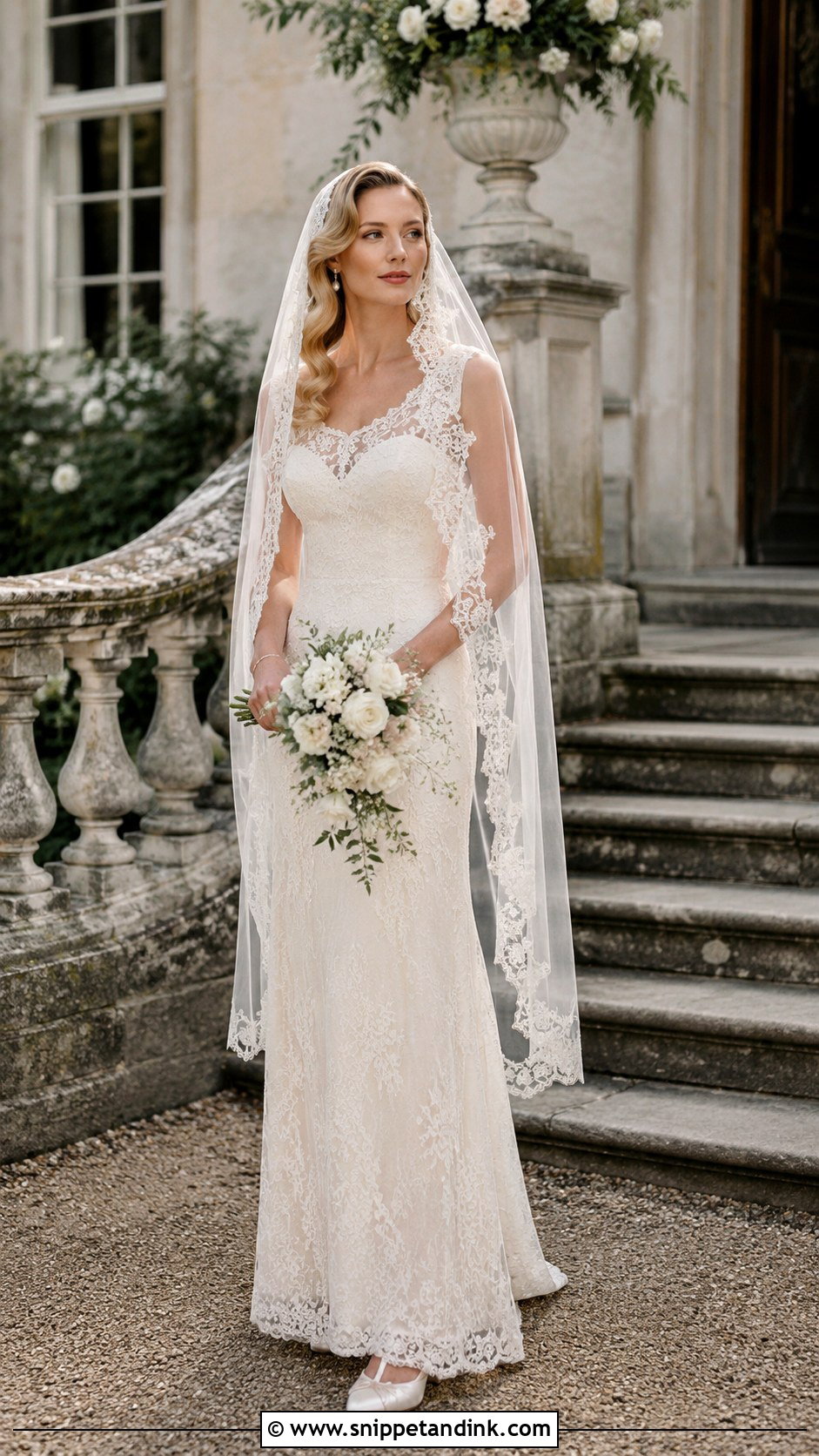
The Juliet cap veil sits close to the head, trimmed with lace, pearls or beads, and turns even a simple gown into something period. It suits lace gowns, satin sheaths and long-sleeve vintage dresses. The cap has to be anchored with combs or pins through a firm base, so I plan the hairstyle around it from the first trial, usually a low, smooth set with waves. Chapel length feels formal, fingertip lighter. Pearl earrings, soft waves and low heels support the mood.
16. Tea Length 20s Wedding Dress
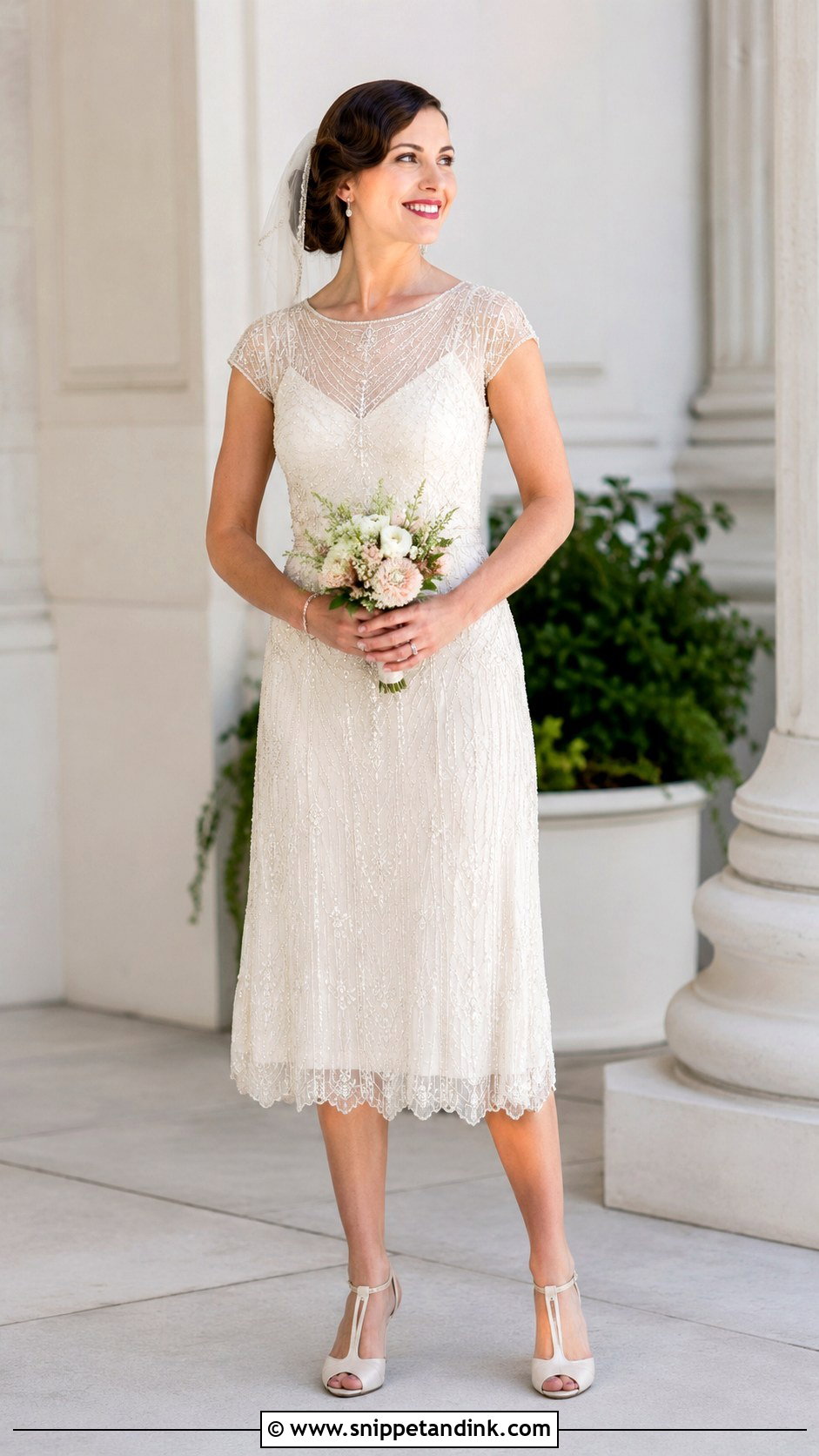
Most 1920s gowns were longer and straighter, so a tea length 20s wedding dress is a modern update, with easy movement. Beading, lace, fringe or a dropped waist keep the link to the decade. The hem shows the shoes, so I set it with the actual shoes on. T-strap heels, satin pumps or embellished sandals all work. A short veil, pearl earrings and a small bouquet. Courthouses, small receptions and garden ceremonies suit it.
17. Slip Wedding Dress With Beaded Topper
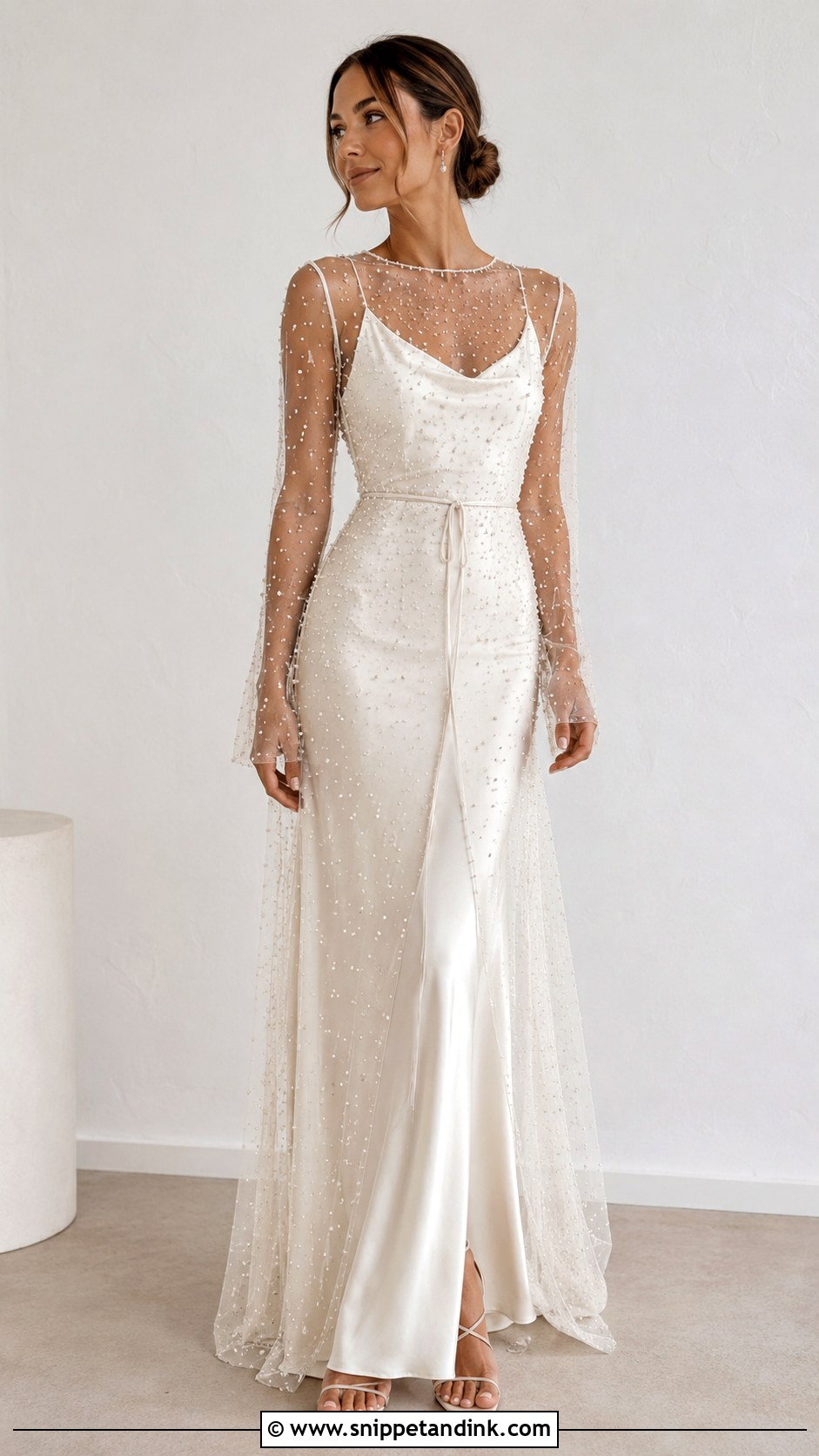
Layer a sheer beaded blouse, capelet or tunic over a silk, satin or crepe slip in ivory or champagne, and you have clean lines with period sparkle. It doubles as two looks: topper on for the ceremony, off for the reception. Beaded toppers catch on fine silk, so the slip underneath should be a slightly heavier weave. Strappy heels, simple earrings and a neat low bun finish it.
18. Lace Tunic Wedding Dress
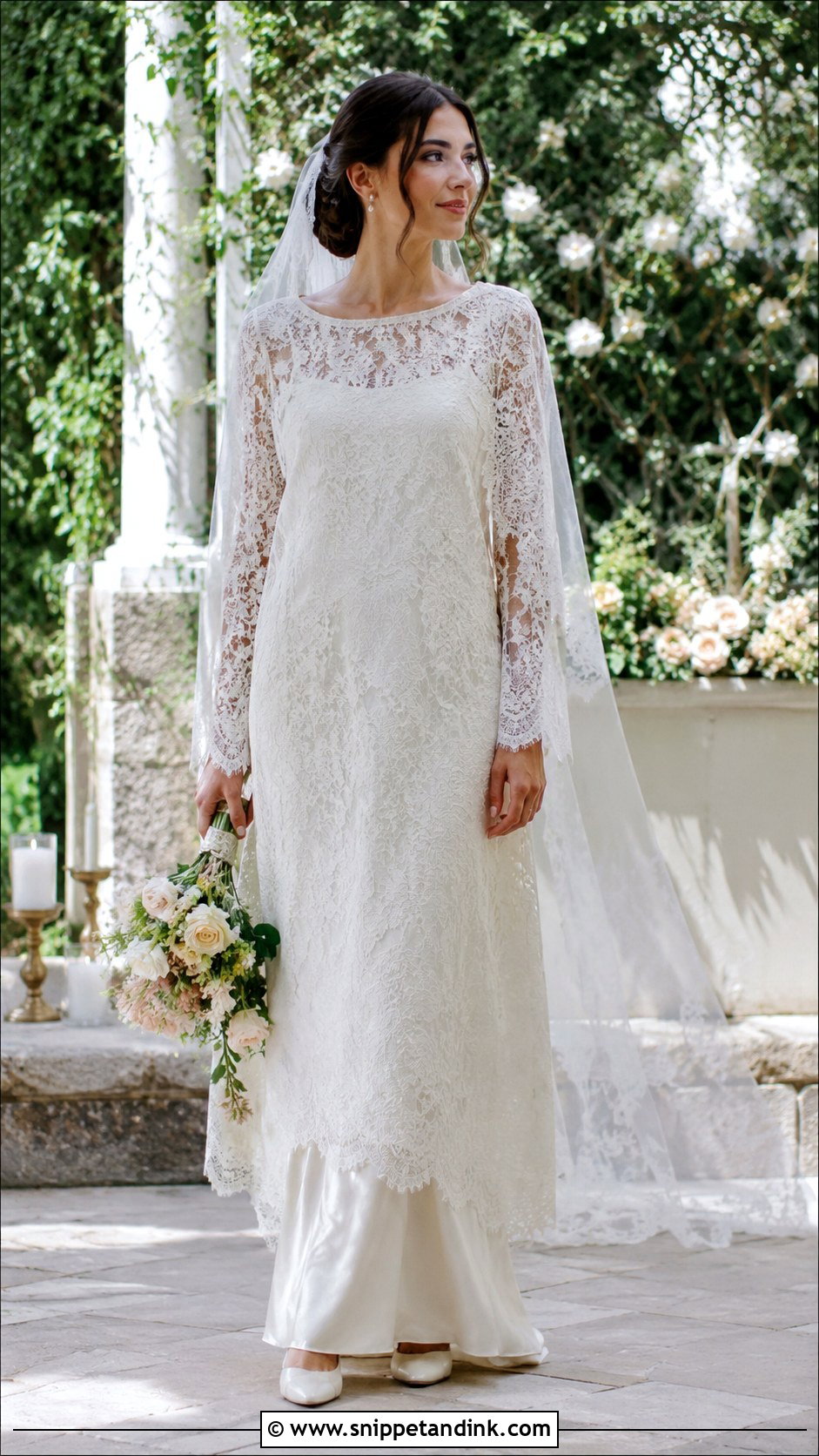
Many 1920s gowns used layers instead of structured bodices, so a lace tunic over a satin or silk underdress is one of the most authentic shapes here. Scalloped hems, floral lace and a slightly loose fit give soft movement. It’s comfortable and covered, and I find it suits brides who dislike boning. The underdress length must match the tunic’s scallops, or a strip of satin shows in the wrong place. Low satin heels, a lace-trim veil and pearl studs. Daytime and garden weddings suit it.
19. Gold Embellished Wedding Dress
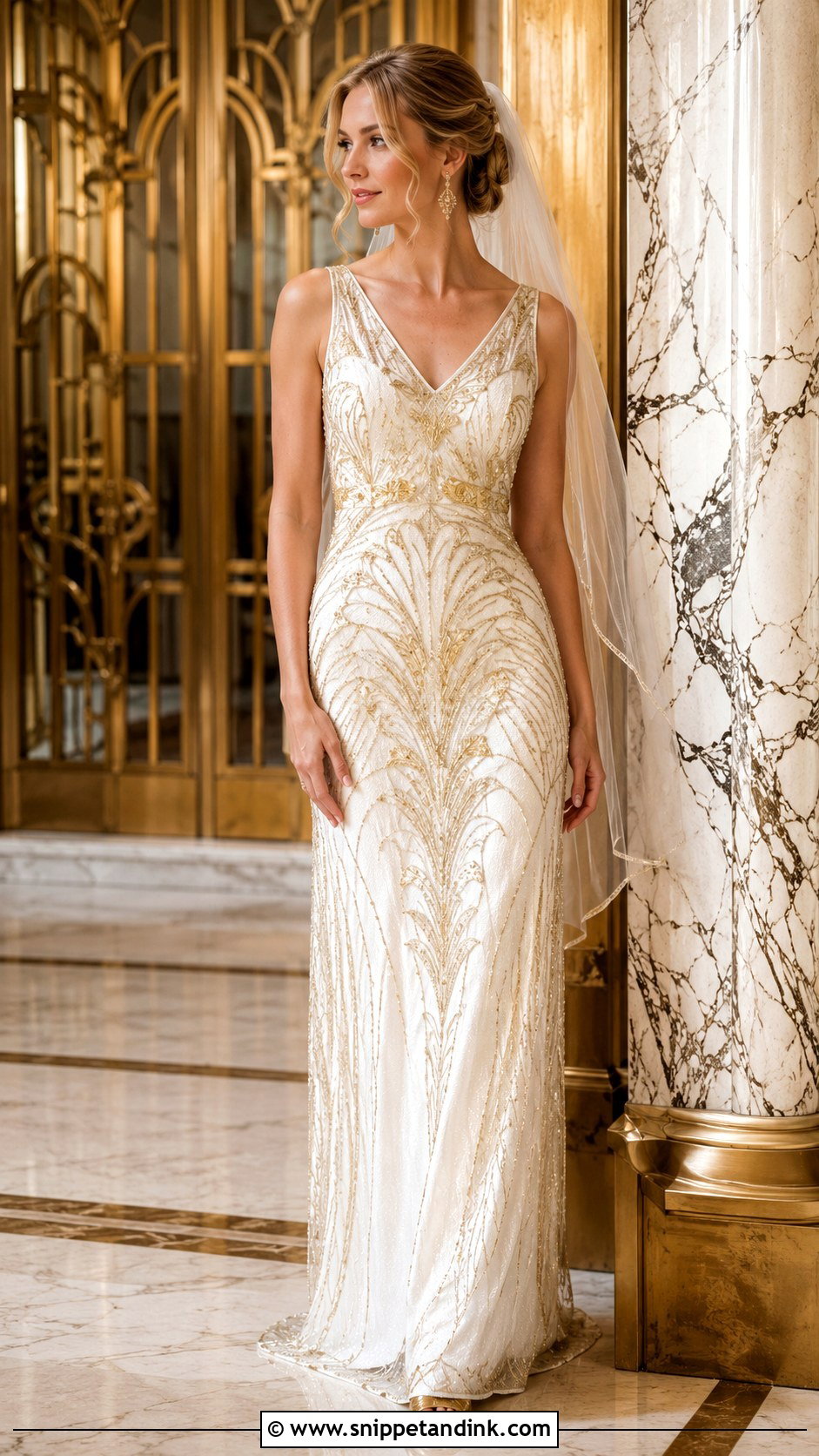
Gold embroidery, metallic thread or champagne beading warms up a 20s gown. Keep the base ivory, cream or pale nude so the gold reads bridal. A column with gold Art Deco patterns is especially striking against marble, brass or old stone. Metallic thread can tarnish if stored damp, so I tell brides to keep the dress dry and wrapped in acid-free tissue afterwards. Gold heels, vintage-style earrings and a simple veil.

20. High Neck Beaded Wedding Dress
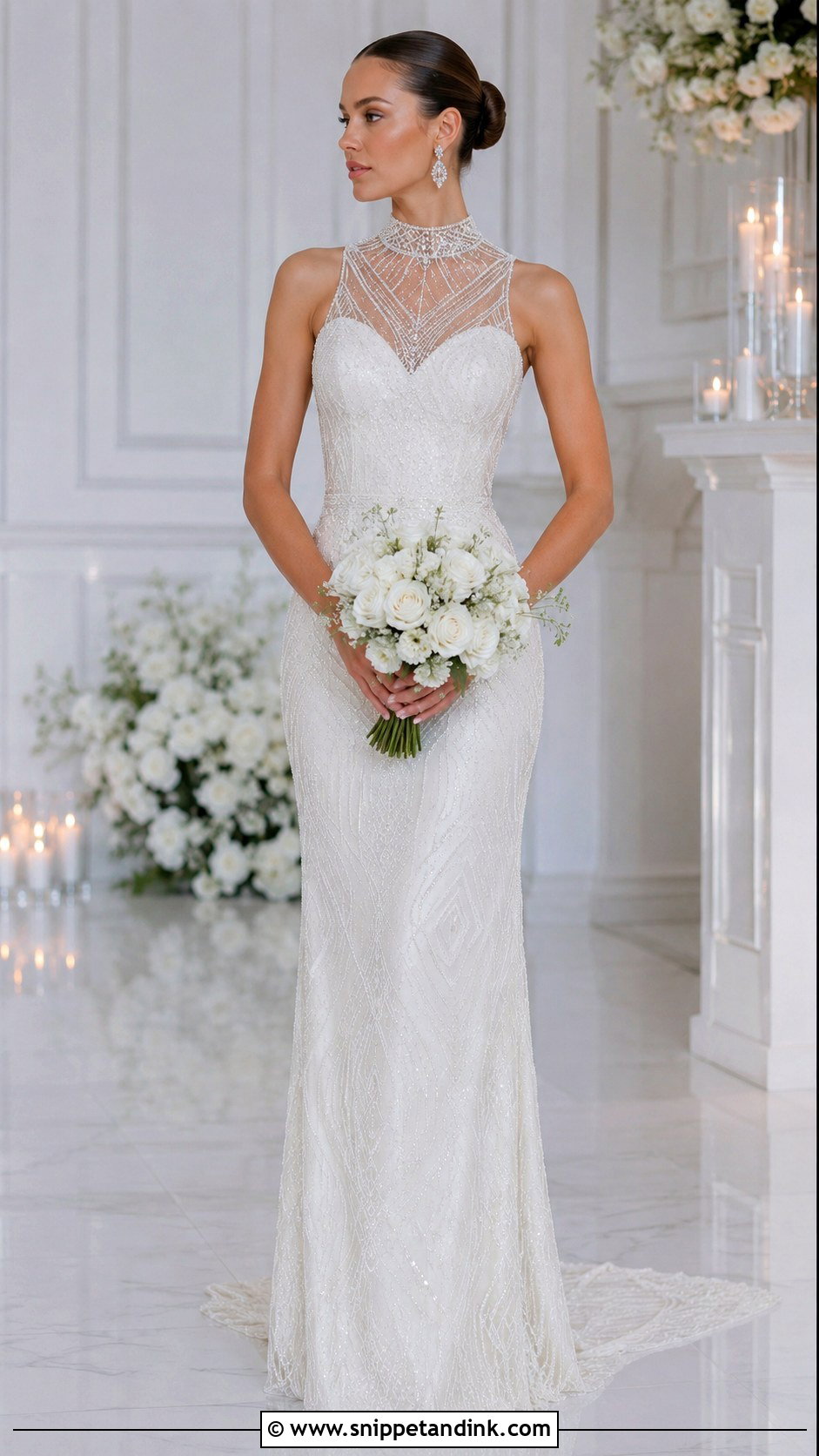
High necks with beading draw the eye up and feel formal and modest at once. Sheer mesh or lace keeps the weight down; beading adds the period. Long sleeves, cap sleeves or sleeveless all work. A beaded collar can scratch the jaw when you turn your head, so I check the inside edge is bound smoothly. No necklace; earrings or a hair accessory instead. A sleek bun, soft waves or a tucked bob-style set suit it, and winter ceremonies suit it best.
21. Bias Cut Satin Wedding Dress
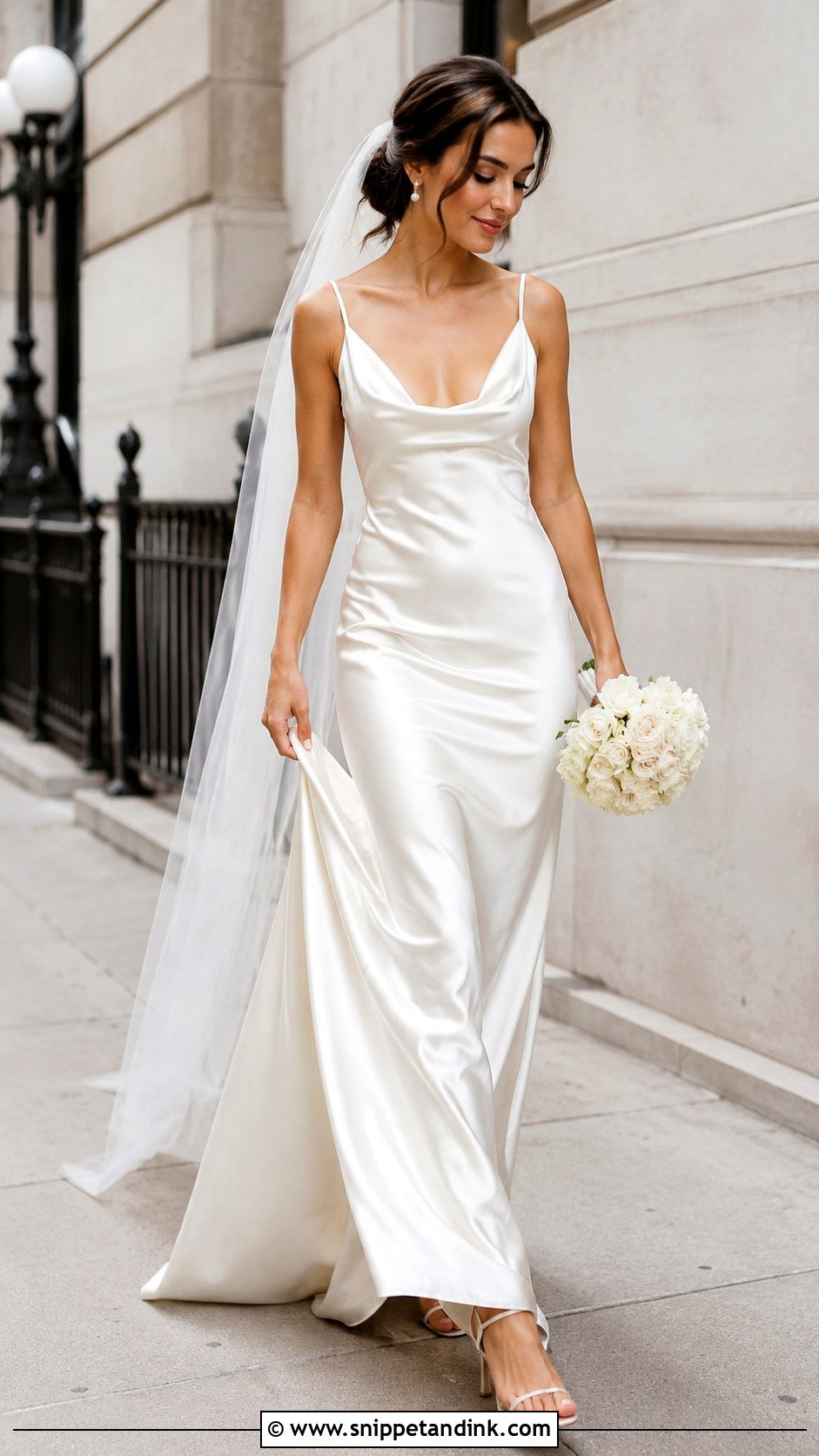
Bias-cut satin falls diagonally across the body and skims it with real fluidity. It’s more associated with early Hollywood, but it sits well with late-’20s styling. Ivory, cream or champagne keep it bridal; a cowl neck, low back or short train add a touch of drama. Bias cut is unforgiving and stretches as it hangs, so hems are set only after the dress has hung for a while. Delicate heels, pearl earrings and a clean veil. At a glance it looks simple; the movement is what people notice.
22. Scalloped Lace Wedding Dress
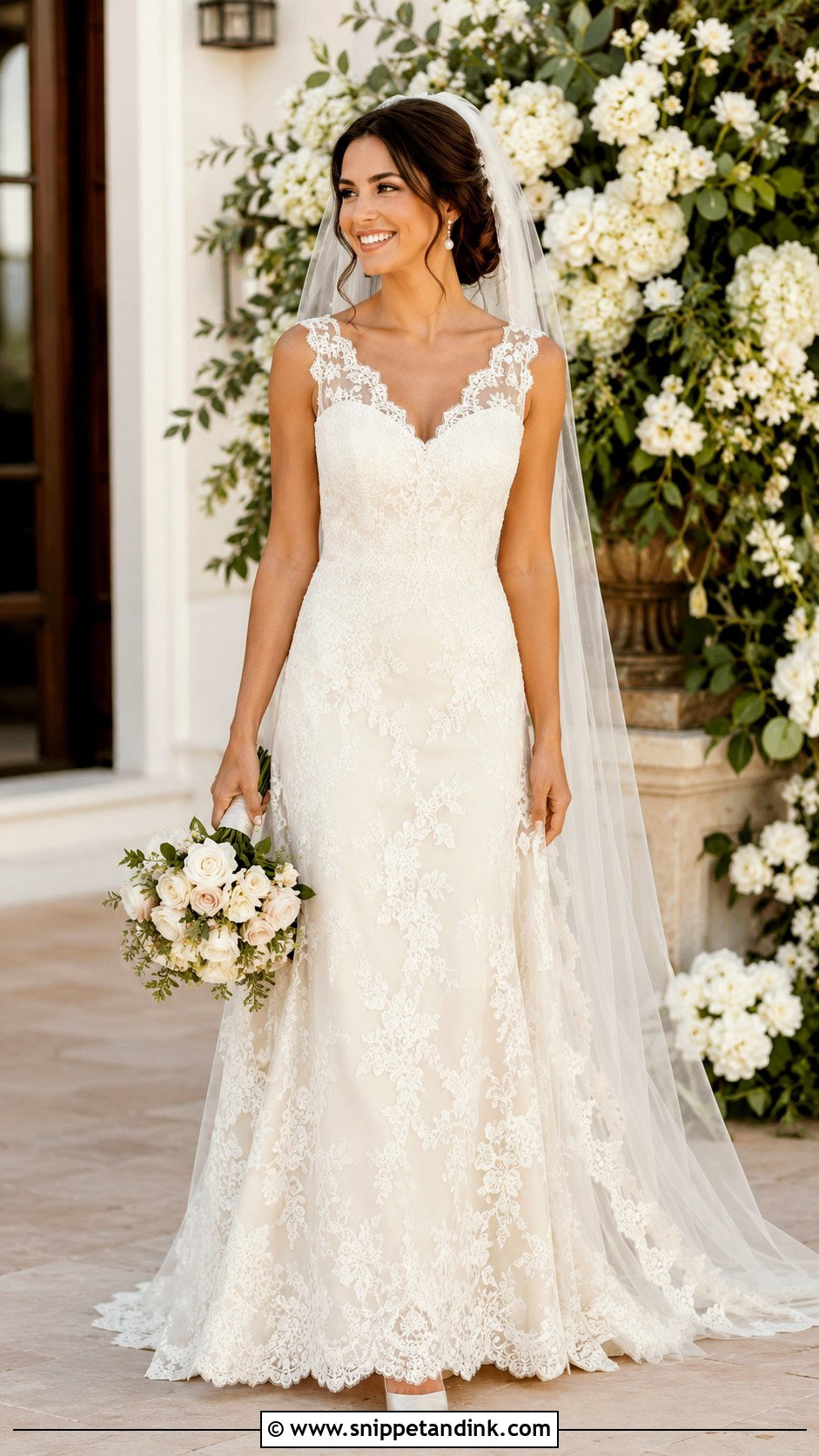
Scallops around the neckline, sleeves, hem or train add detail without sparkle and suit sheath, column and tunic shapes. Fine lace over satin looks antique; beaded lace gives more shine. Taking up a scalloped hem means cutting and re-applying the lace edge, which is skilled work, so I tell brides to check their seamstress has done it before. Pearl earrings, satin shoes and a lace-edged veil. With detailed lace, keep the bouquet simple. Gardens and estates suit it.
23. Beaded Mermaid Wedding Dress
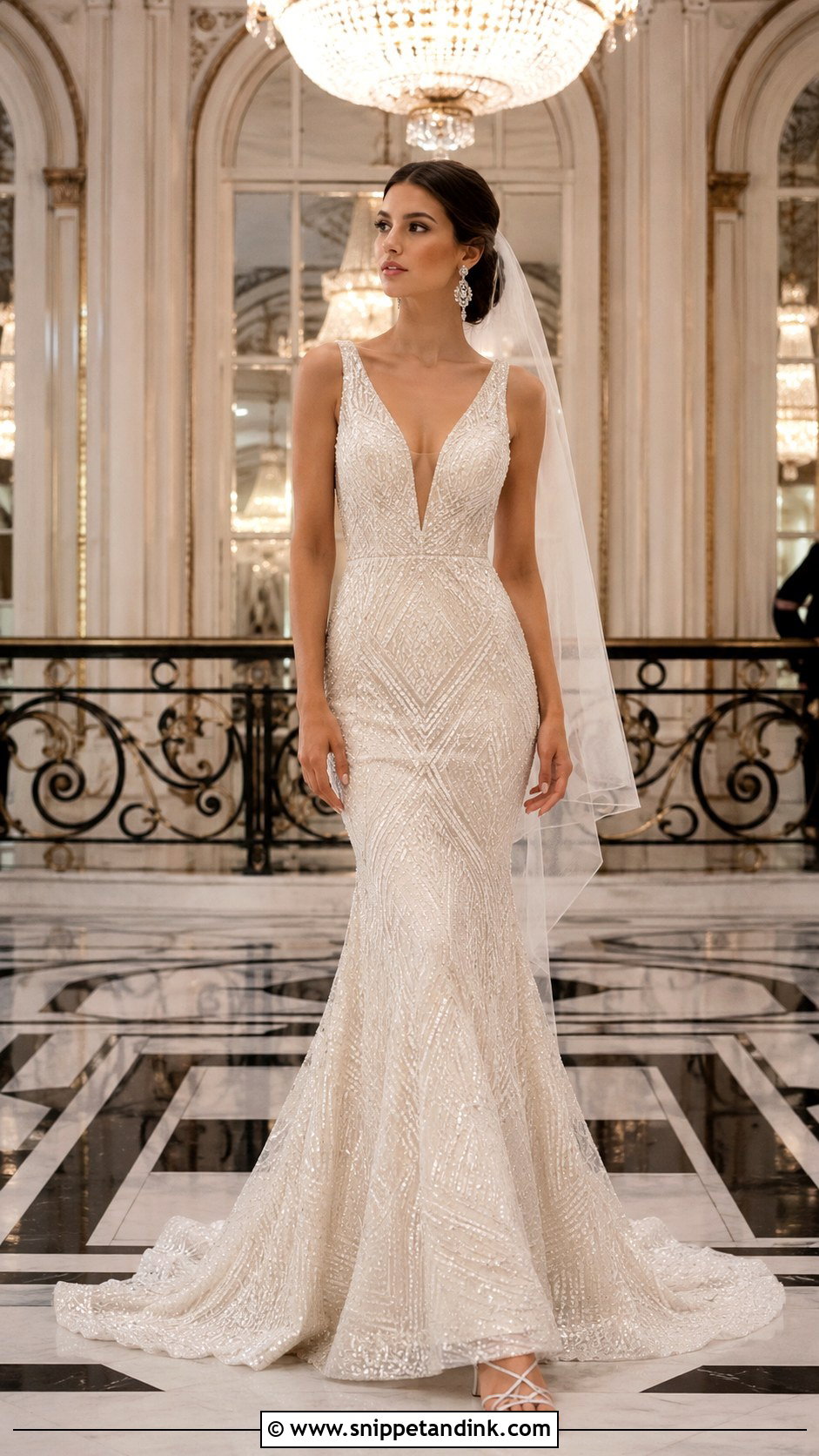
The decade favoured straight shapes, so a mermaid is a modern take on 20s glamour. It works if the embellishment is Art Deco: vertical beading, geometric patterns and a soft flare, not a stiff one. Beaded fabric doesn’t stretch, so a figure-hugging mermaid in it needs a precise fit and enough room to sit; I always have brides sit at the fitting. Crystal earrings, sleek heels and a simple veil, no big headpiece. It reads formal and glamorous.
24. Short Reception Wedding Dress
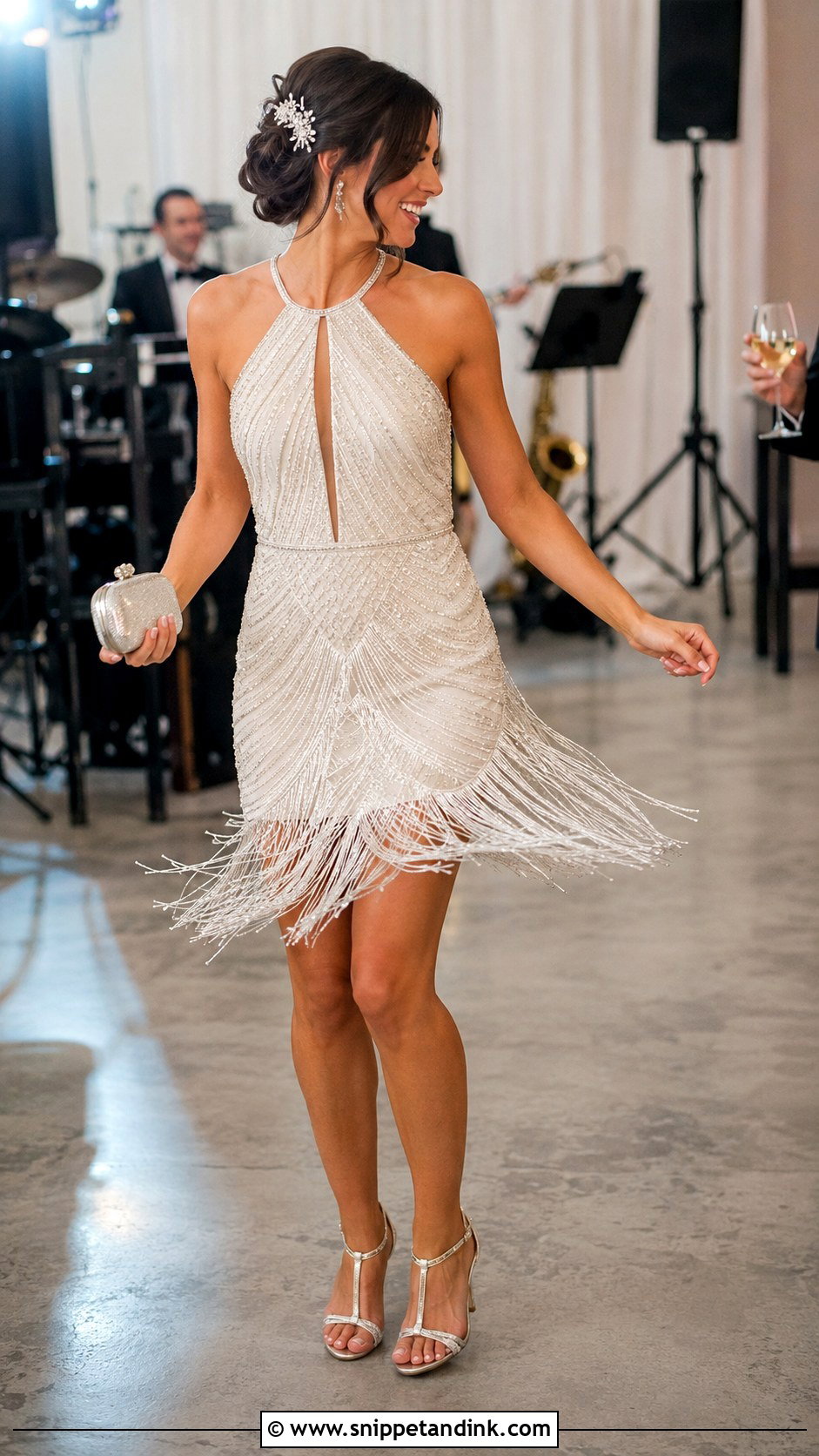
A short reception wedding dress brings 20s sparkle to the party: a mini or knee-length dress with beading, fringe, sequins or pearl trim that lets you dance and show your shoes. It makes sense if the ceremony gown is heavy or traditional. Ivory, cream, silver or champagne keep it bridal. Plan the change in your timeline and have a bridesmaid ready with the zip. T-strap heels, a small clutch, simple earrings and a short veil or sparkly comb.
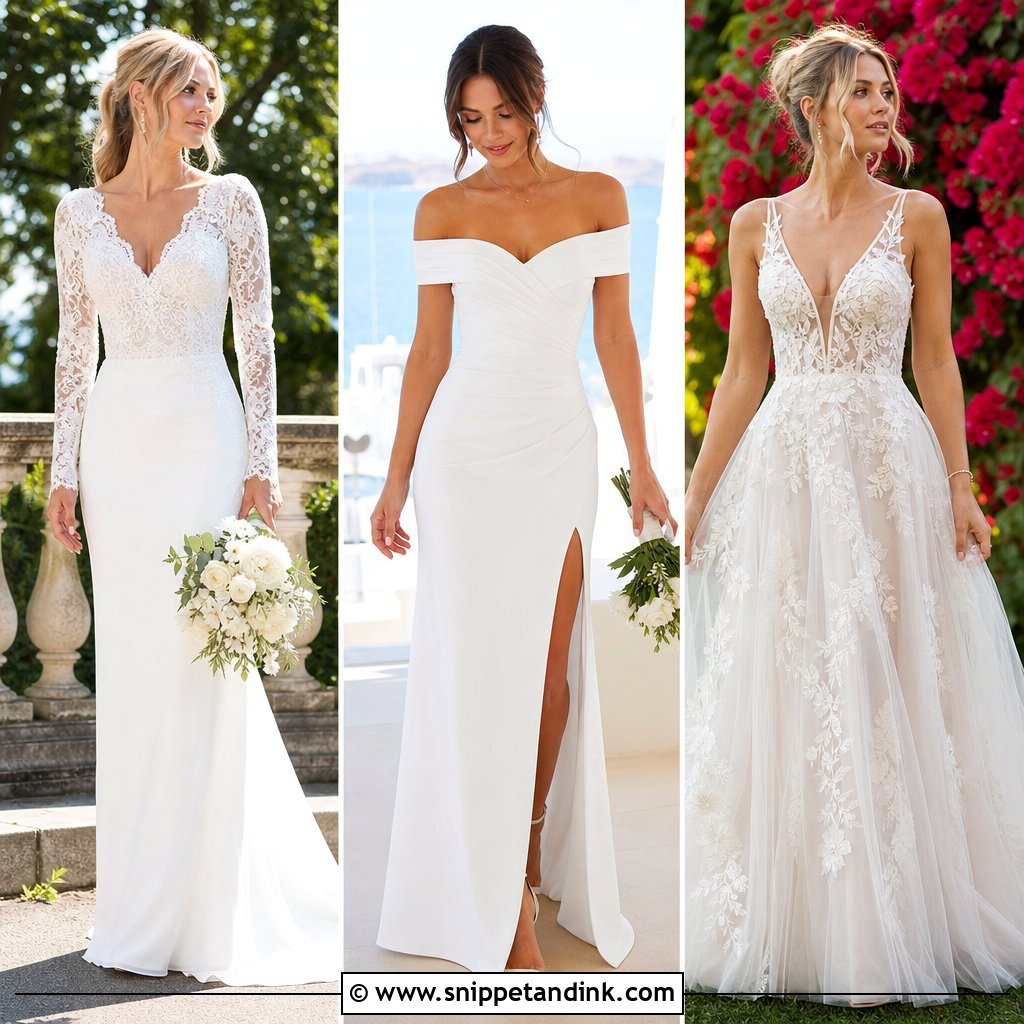
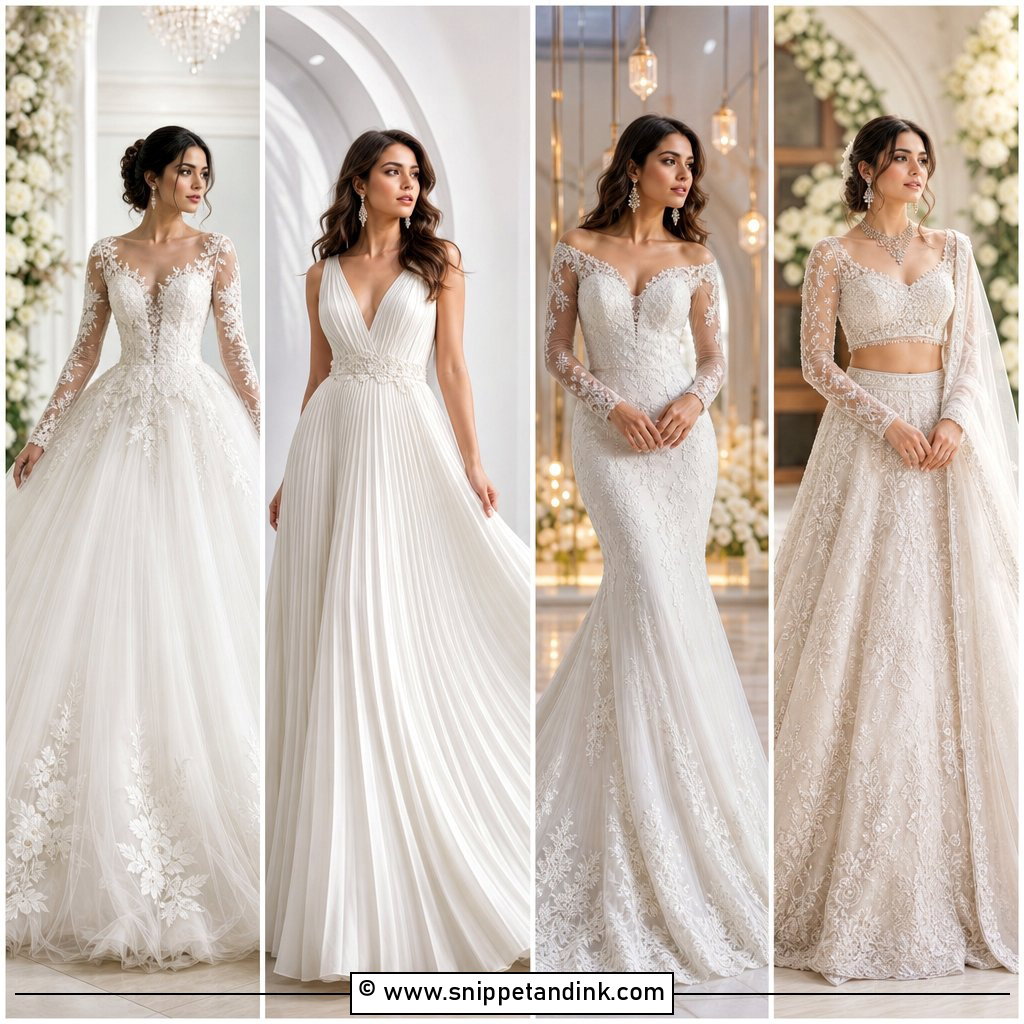
25. Simple 20s Wedding Dress
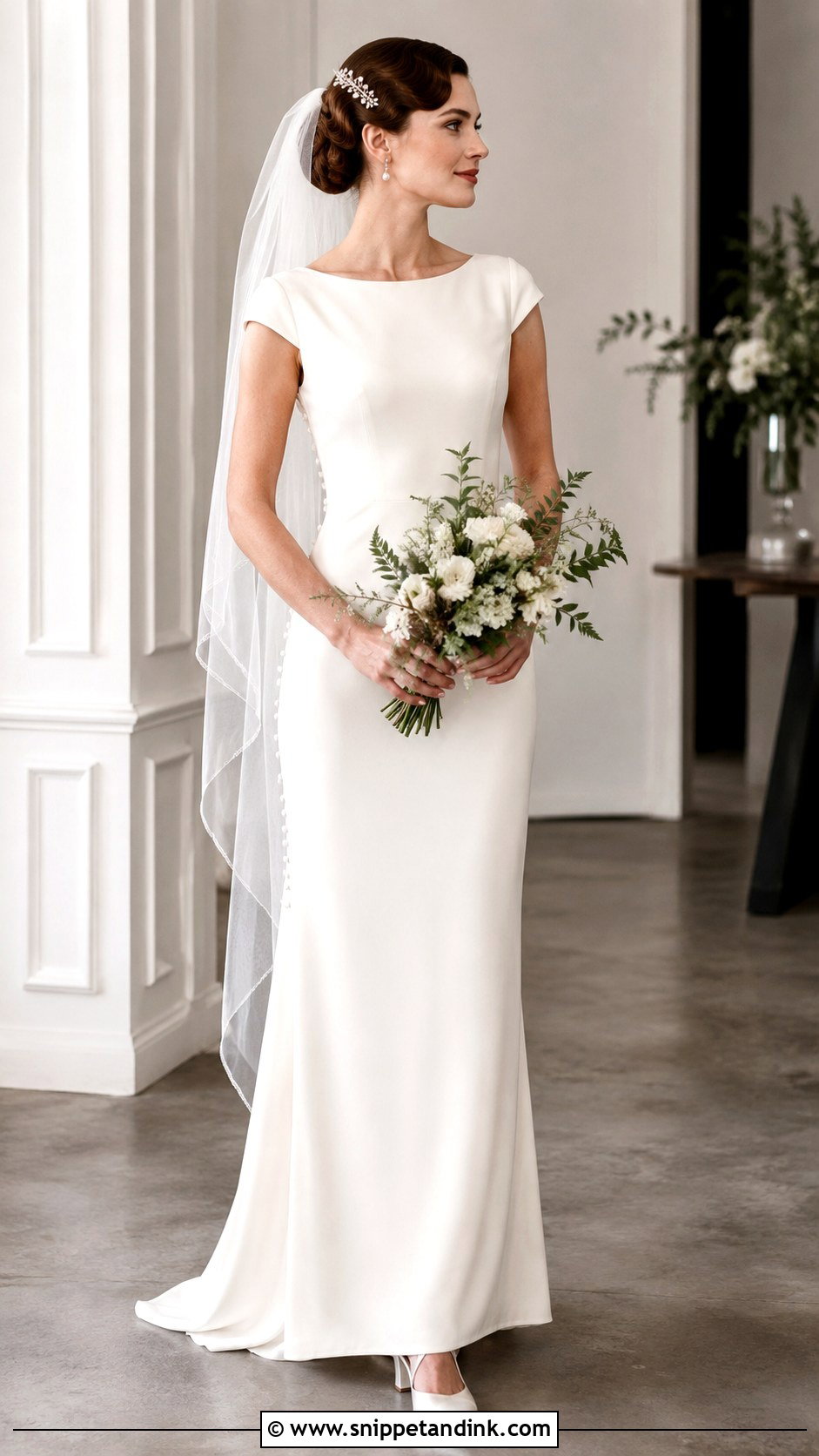
No beading, no fringe, just shape and fabric. A clean column, satin sheath, dropped waist or soft crepe can all feel 1920s when styled right. A bateau neck, cap sleeves, pearl buttons or a fine veil carry the theme quietly. Simple dresses rely on fit and fabric quality more than any other, so I’d put the budget there. Pearl earrings, low satin heels and a slim hair comb. Courthouses and modern venues with old touches suit it.
Heavy Beading Has a Weight Problem Nobody Mentions
Beaded 20s-style gowns are heavier than they look on a hanger, and that weight changes how you wear, transport and store the dress. These are the things I go through with every bride who chooses one.
On the day
- Wear it for at least an hour at a fitting. Shoulders feel heavy beading after a while, and that is the time to ask for wider straps.
- Ask the shop for a small bag of spare beads and sequins, and pack a needle and matching thread in the emergency kit.
- Beads catch on lace, knitwear and brooches. Warn huggers in textured outfits.
Afterwards
Never store a heavily beaded dress on a hanger. Over time the weight stretches the fabric and can tear it at the shoulders. Fold it flat with acid-free tissue between the layers, in a breathable box, somewhere cool and dry. Real vintage beaded pieces on fine silk chiffon are especially fragile and should go to a cleaner who specialises in them.
Gatsby Sparkle or Heirloom Calm? One Focal Point Decides
Fringe, sequins and Art Deco beading on one side; lace, satin, pearls and a quiet column on the other. Both are honest versions of the decade. In my experience the brides who look most like themselves pick one focal point, the beading, the cape, the cap veil or the back, and keep everything else simple, so the look reads as vintage glamour rather than fancy dress. Let your venue and your comfort set the rest.
You'll Like These Ideas:




Leave a Reply