
The first thing I ask a bride isn’t what she likes; it’s where she’s standing, in what month, and for how long. A ball gown and a courthouse mini are both white wedding dresses, but they solve completely different days. Below are twenty silhouettes, from full skirts and lace A-lines to beach maxis and short reception changes, each styled with shoes, veil and jewelry. Plenty of brides now wear more than one outfit across the weekend, for the ceremony, the reception, the rehearsal dinner, or after-party, so a few of these work best as a second look. One more thing before you scroll: bright white, soft white and ivory shift a lot between daylight and indoor bulbs, so judge every fabric by a window.
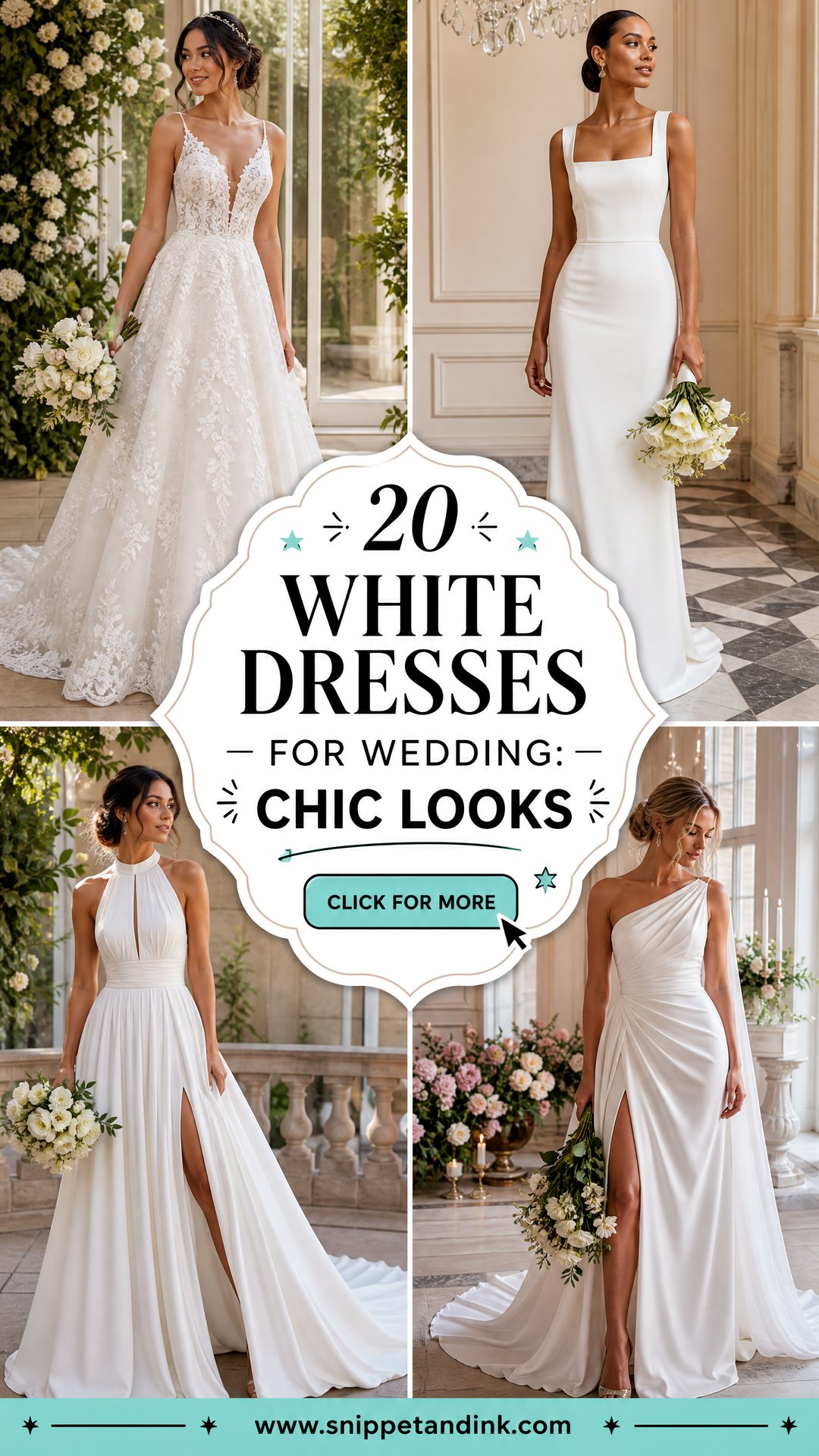
Gown Orders Run on a Longer Clock Than Most Brides Expect
Most bridal gowns aren’t pulled off a rail in your size. The shop orders one from the designer, it’s made, shipped, and then altered, and each of those stages takes time. Production for a made-to-order gown commonly runs several months, and alterations need another two to three months with two or three fittings spread across them. That’s why I tell brides to start shopping roughly nine to twelve months out if they want a full gown.
Shorter timelines are workable, just narrower. Rush production usually costs extra and isn’t offered on every style. Sample sales and ready-to-wear pieces skip the wait entirely, and that’s where most minis, midis and reception dresses come from anyway.
What to bring to the first appointment
- Underwear close to what you’ll wear on the day, in a skin-tone shade
- Shoes at roughly your wedding heel height
- Photos of the venue, so the consultant sees the scale of the room
- An honest budget that includes alterations and the veil
1. White Satin Slip Wedding Dress
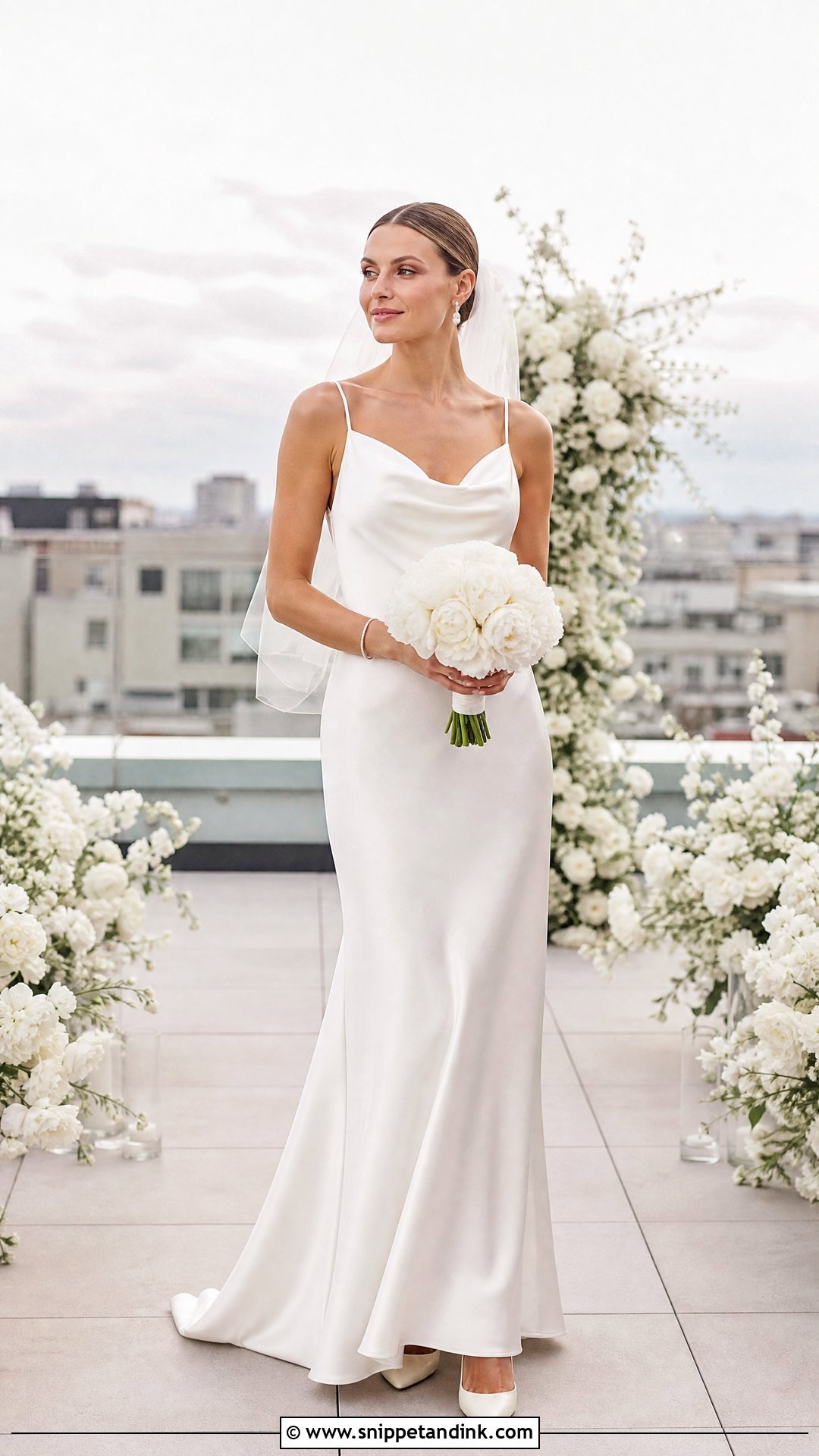
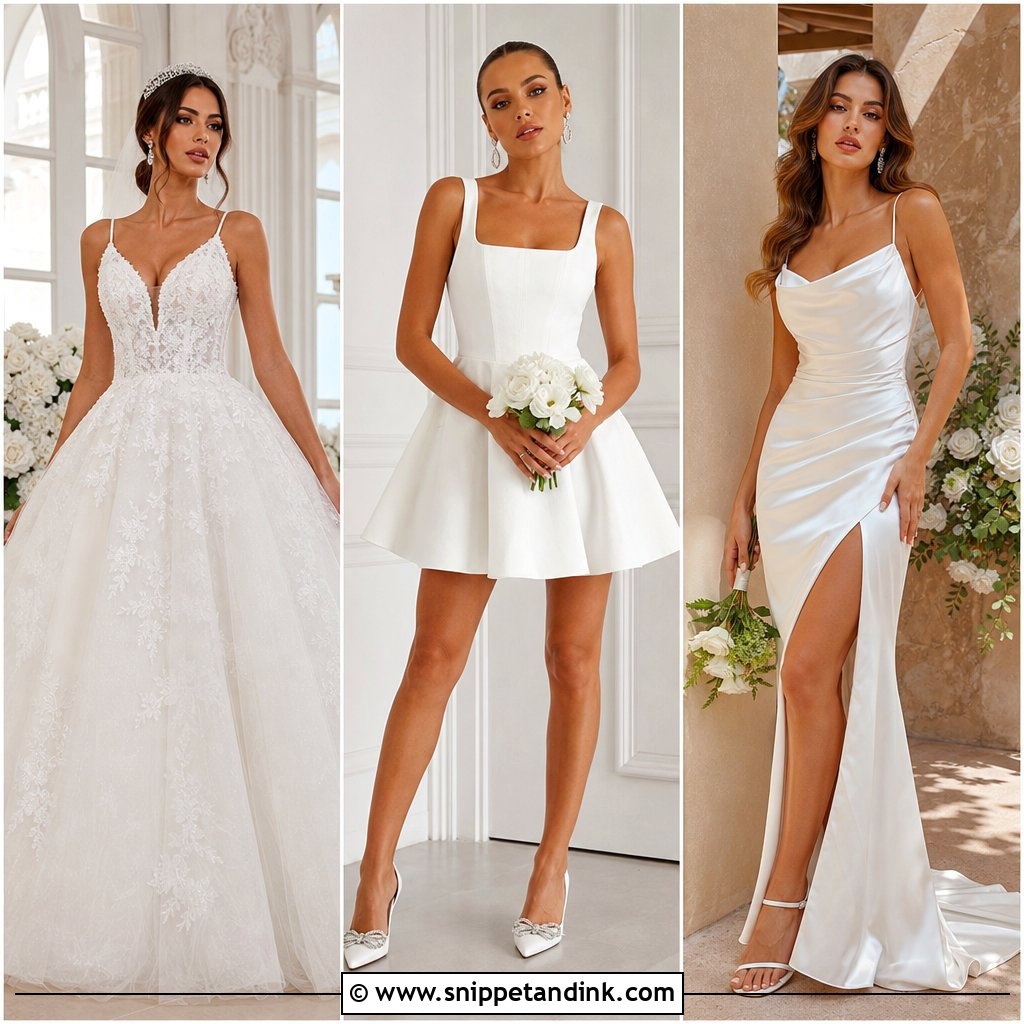
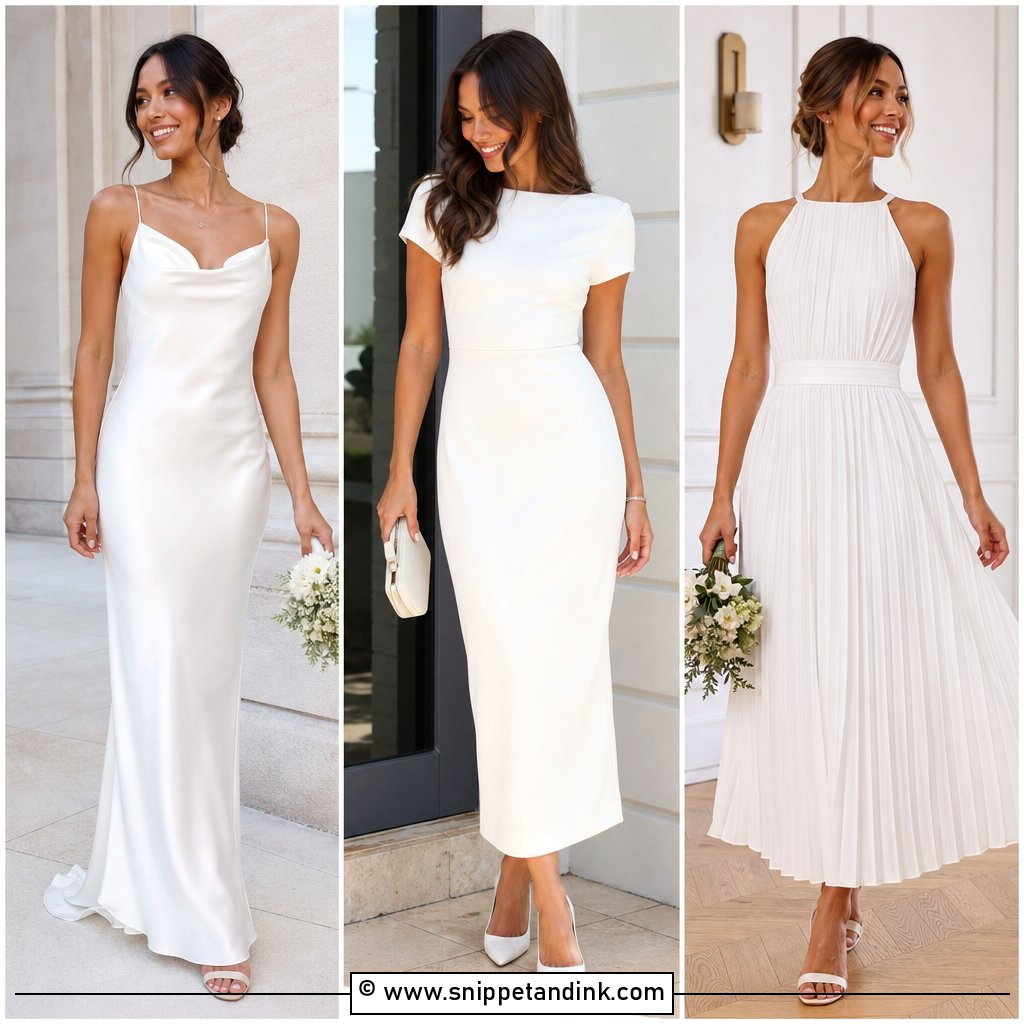
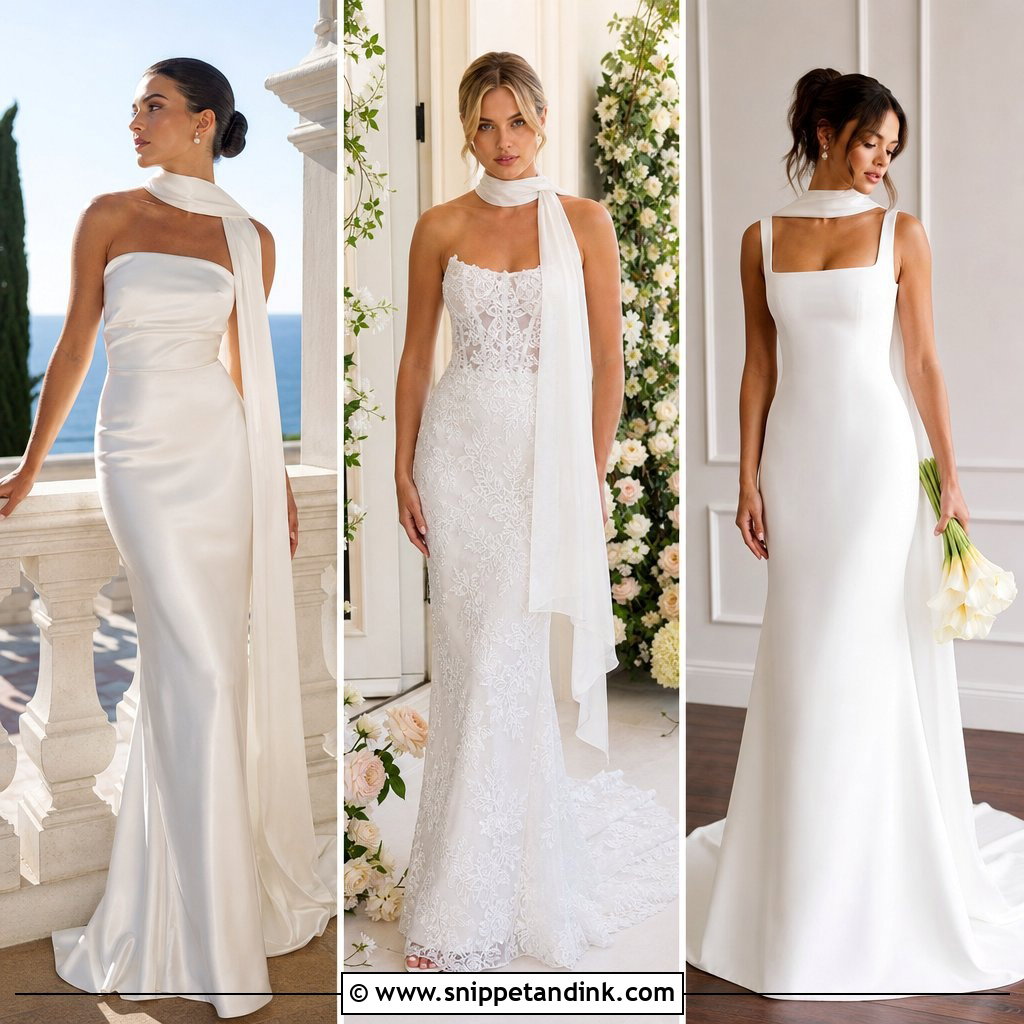
Bias-cut satin is honest fabric. It skims the body, which means it shows creases, damp patches and every seam of what’s underneath, so smooth, seam-free underwear isn’t optional here. A floor-length slip with supportive straps and a softly draped neckline suits rooftops, modern venues and destination weddings. Wear pointed ivory pumps or slim metallic sandals, a short tulle veil, pearl drops and a small white bouquet. I always pack a handheld steamer and blotting papers for satin brides, and a light wrap for the evening.
2. White Lace A-Line Wedding Dress
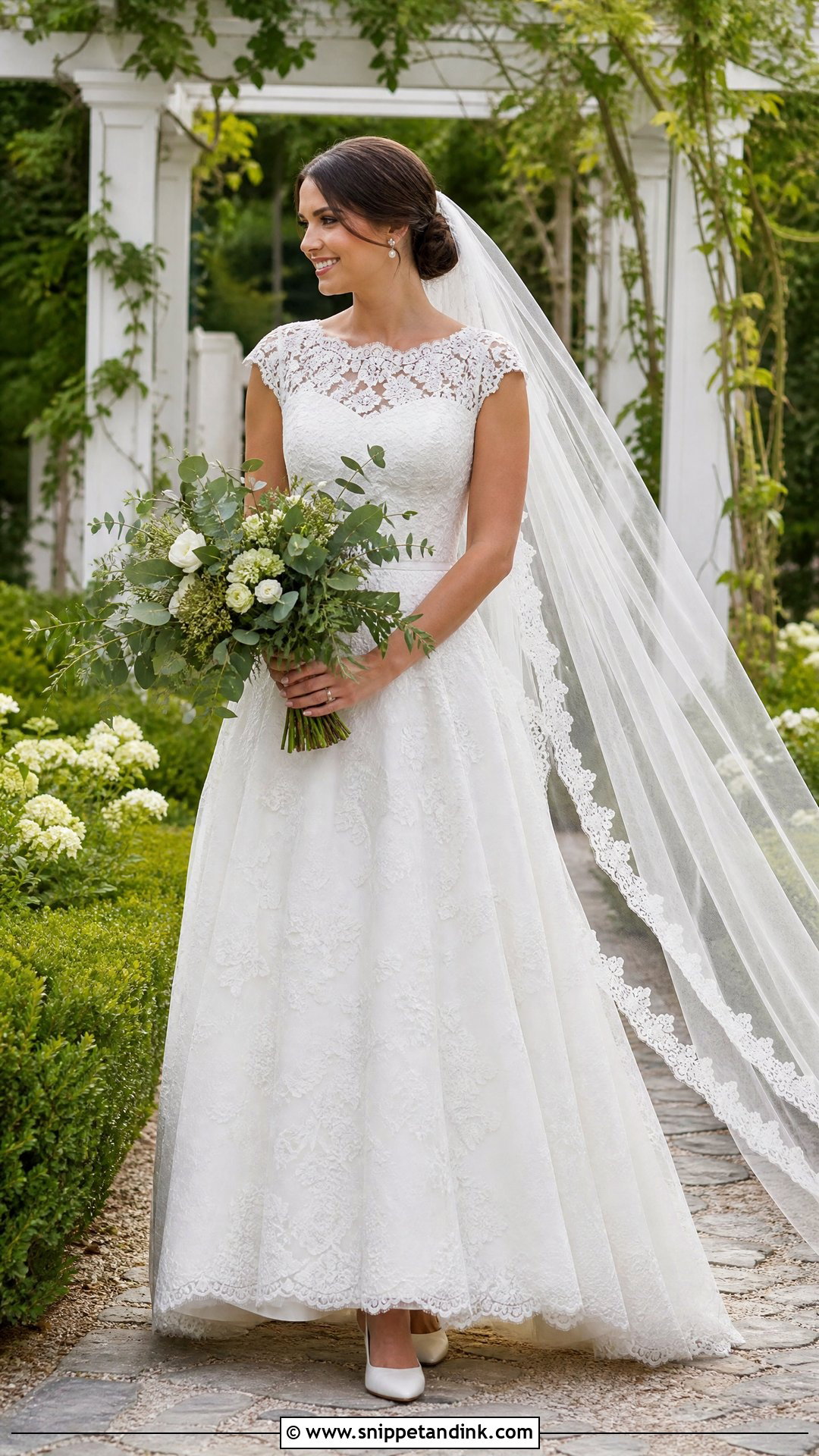
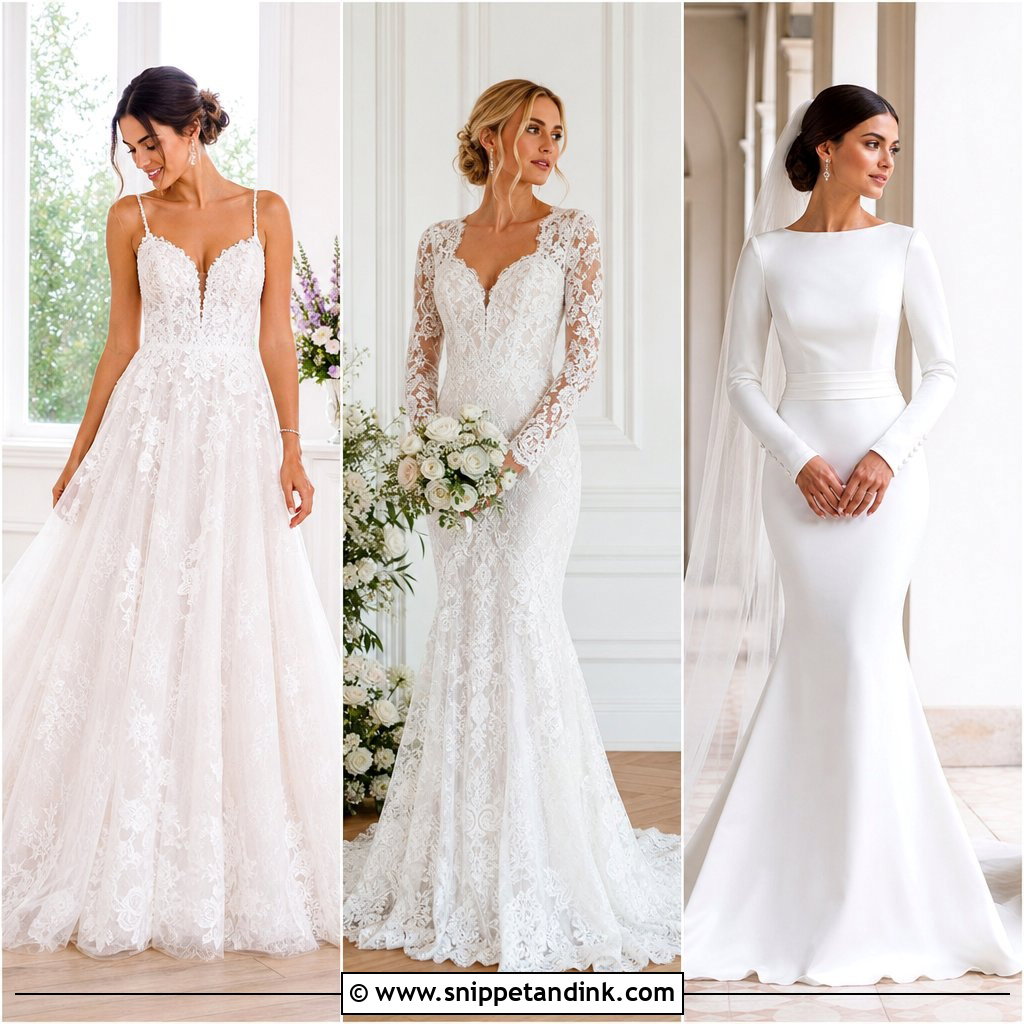
If I had to name the silhouette that suits the most body shapes, it would be a lace A-line with a fitted bodice that opens gradually into the skirt. The gradual part matters; a skirt that juts out stiffly from the waist adds bulk instead of shape. Floral lace brings texture, and the lining underneath decides whether it looks polished or see-through. Closed-toe satin heels, pearl studs and a fingertip veil edged in matching lace suit it. A low chignon leaves the bodice on show. With a busy lace pattern, keep everything else quiet, and use a light underskirt for support rather than extra volume.
3. White Strapless Ball Gown Wedding Dress
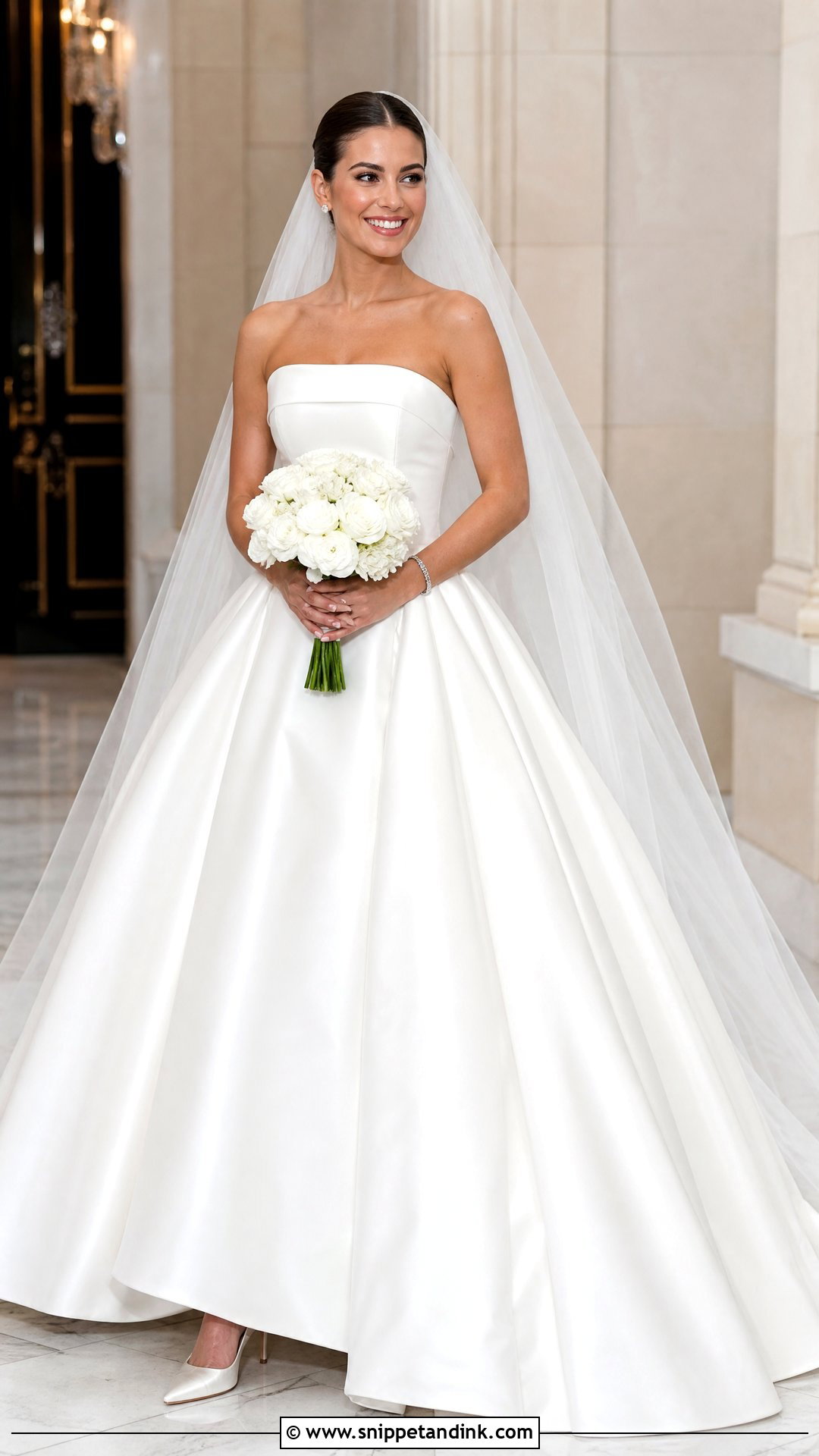
A strapless ball gown is about the entrance, and it only works if the bodice stays put without you hiking it up all night. That comes from alterations, not from wearing a size smaller. Satin gives the classic finish; layered tulle is lighter and moves more. A cathedral veil, sparkling studs and a tennis bracelet suit the scale, with no necklace so the neckline stays clean. Pointed satin pumps feel steadier than strappy sandals under all that skirt. Have the bustle fitted at your last fitting and practise it with whoever will do it on the night. Keep the bouquet compact so it doesn’t swallow the waist.
4. White Long Sleeve Wedding Dress
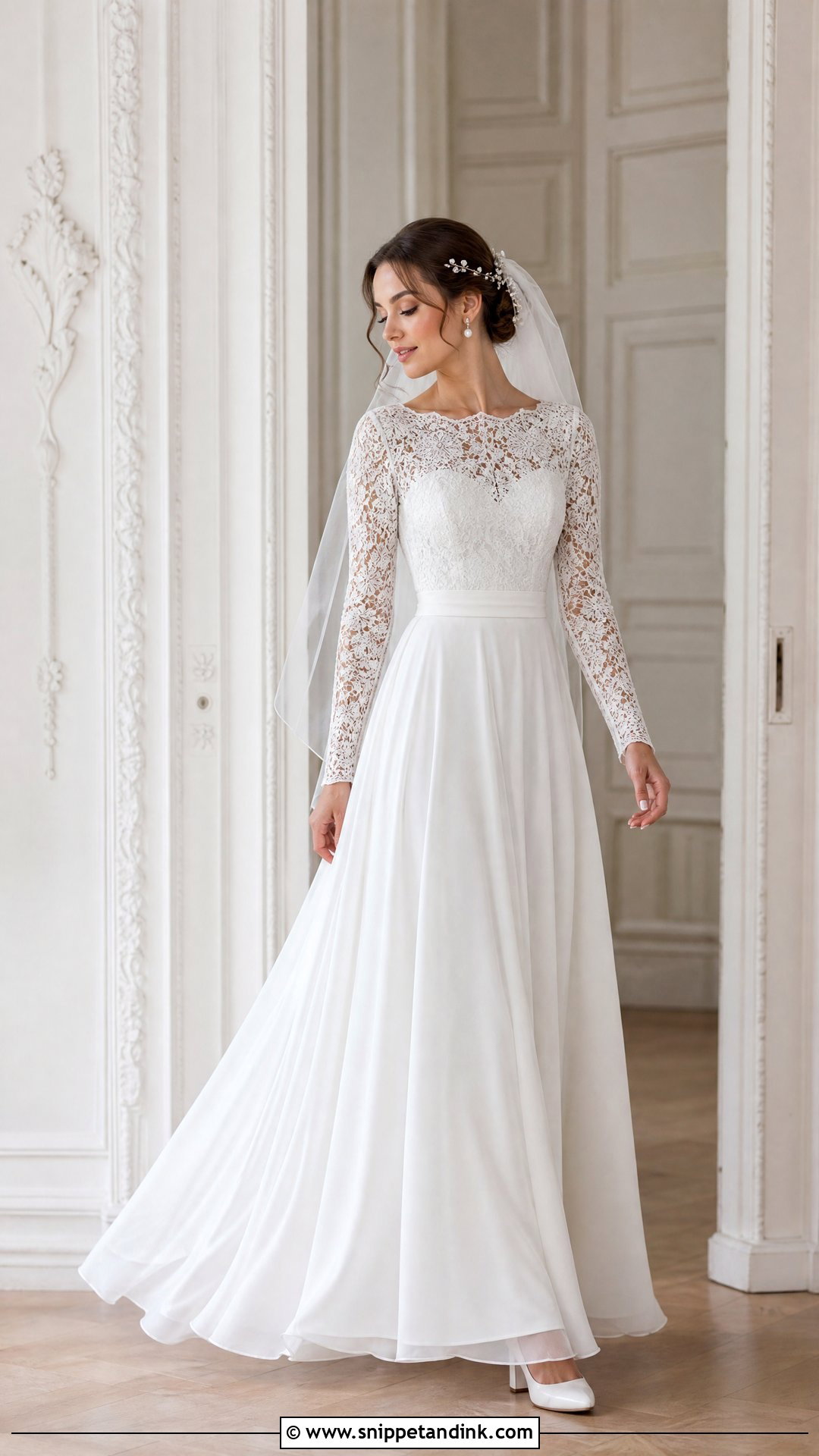
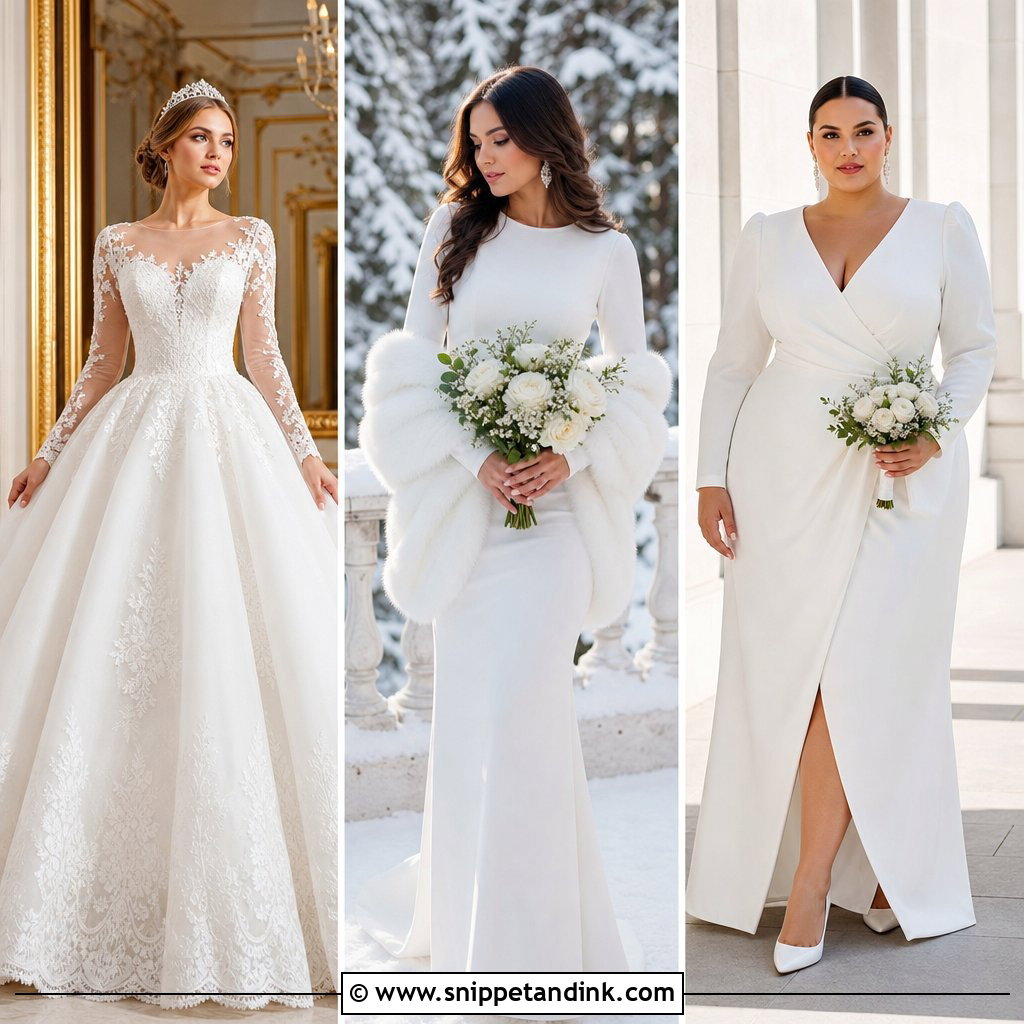
Sleeves are where alterations go wrong most often, because a sleeve fitted with your arms hanging can bind the moment you hug someone. Lift, reach and hold an imaginary bouquet at every fitting. Sheer lace sleeves look soft; opaque crepe ones look sleek and modern. A fitted waist and flowing skirt keep the long-sleeve gown from feeling heavy. Closed-toe block heels, a low bun with crystal pins and small pearl earrings let the sleeves lead. With an open back, choose a medium-length veil; with intricate lace, a simple comb is enough. A structured white coat works over it for outdoor winter photos.
5. White Square Neck Column Wedding Dress
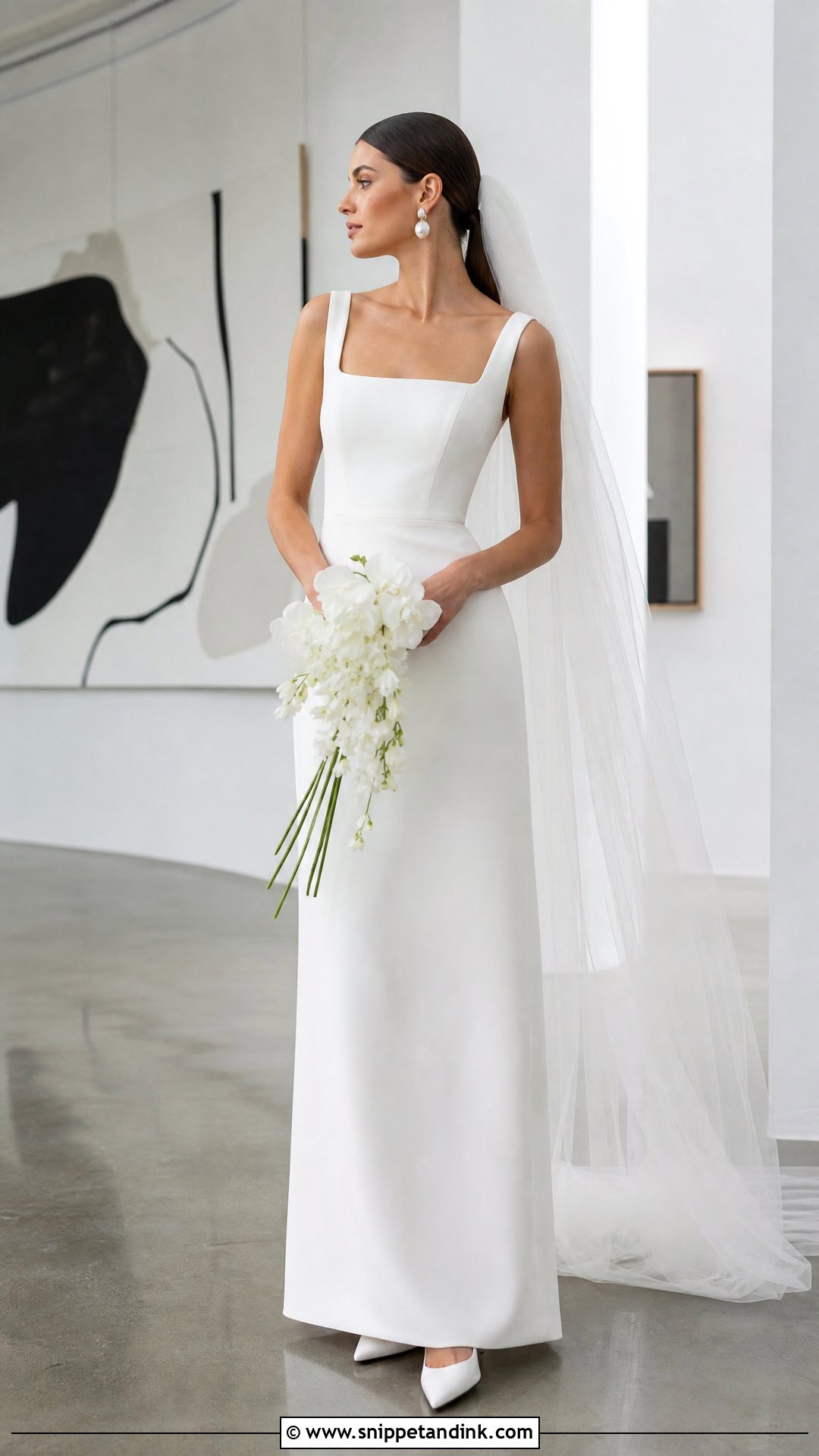
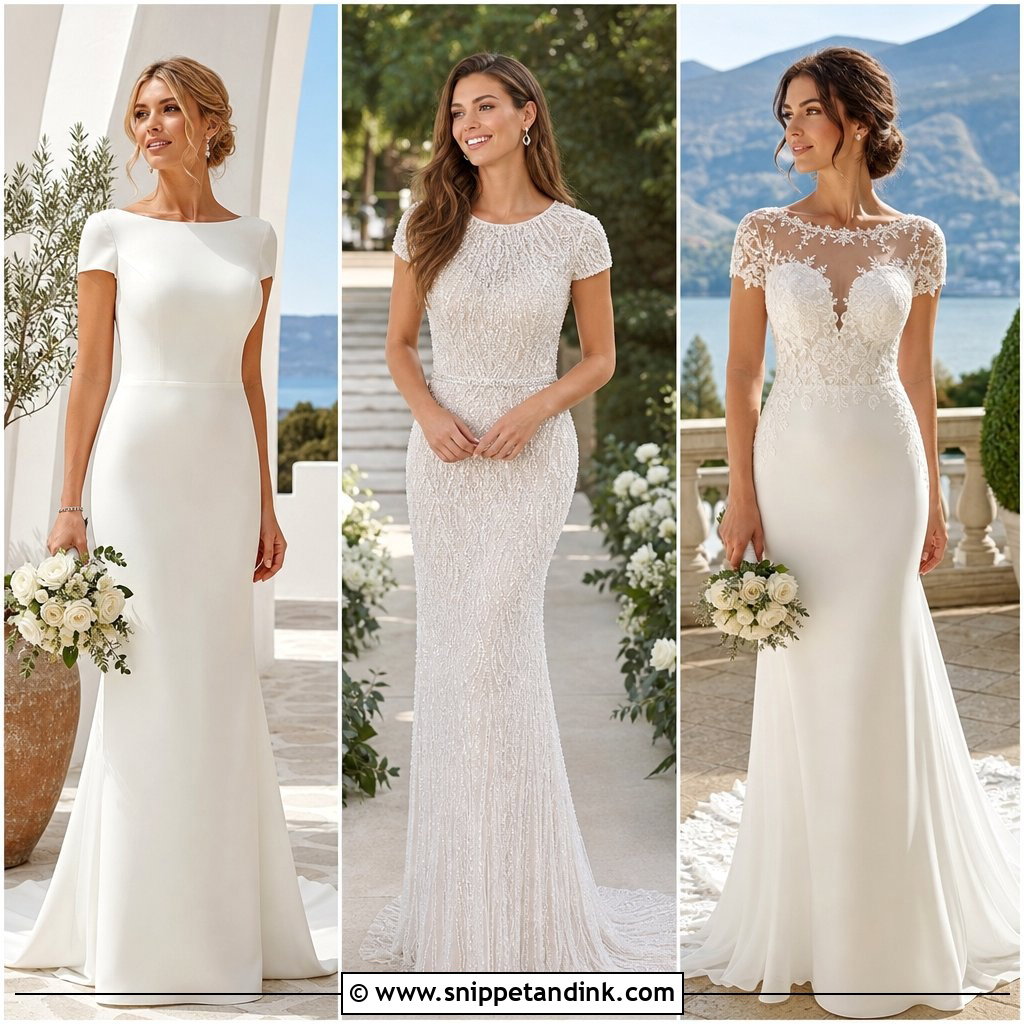
Minimalist brides tend to land on the square-neck column, and it rewards good fabric. Thin crepe clings and shows every line; substantial crepe or lined satin falls straight and smooth. The square neckline frames the collarbones and the narrow skirt makes you look taller. Pointed pumps, a sleek low ponytail and sculptural pearl earrings suit the geometry, and a sheer chapel veil softens it. Long-stemmed flowers fit the vertical line. Check the back slit at every fitting by walking up and down stairs, not just across the room. It works at a courthouse or a formal hotel equally well.
6. White Off Shoulder Wedding Dress
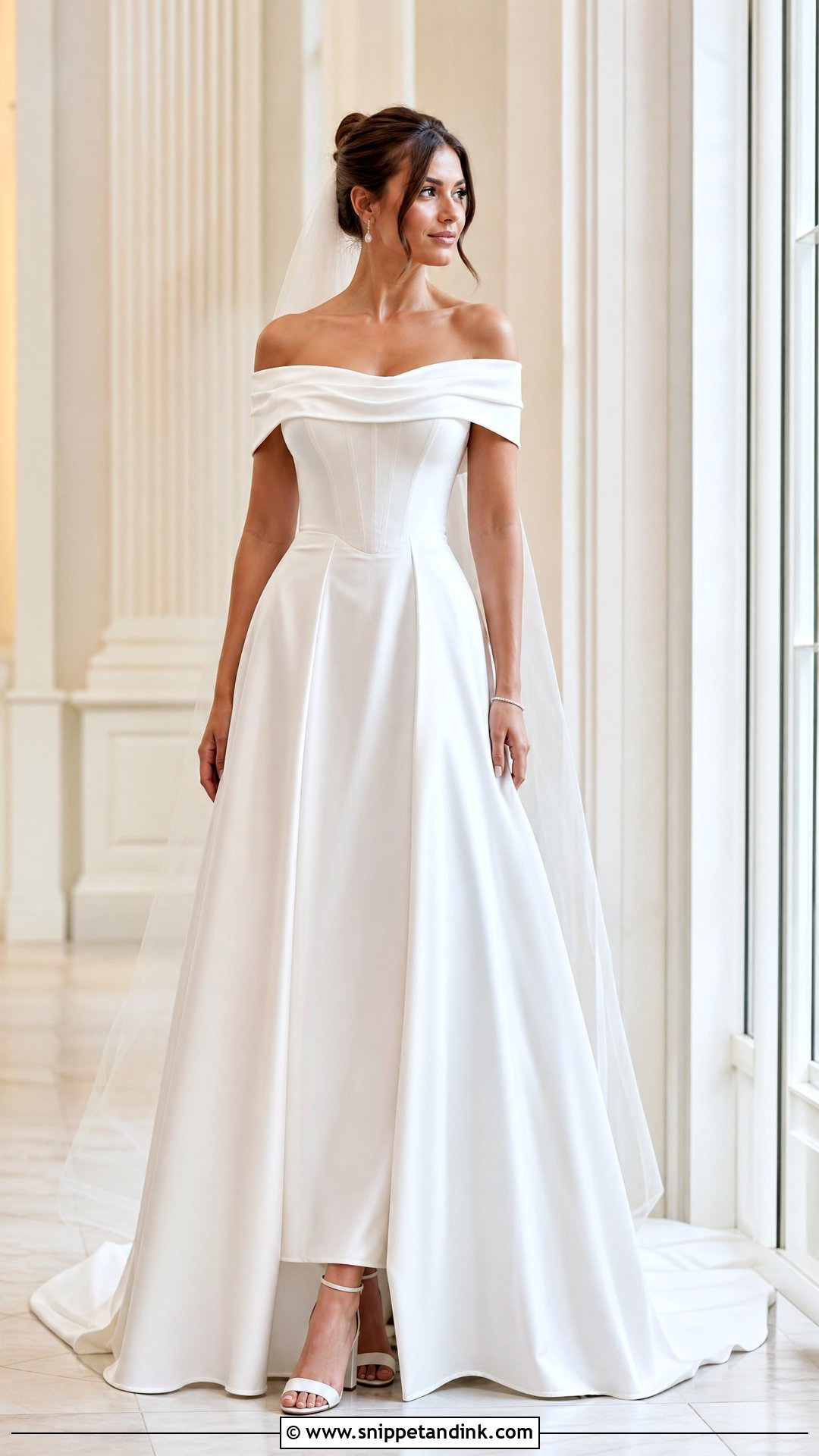
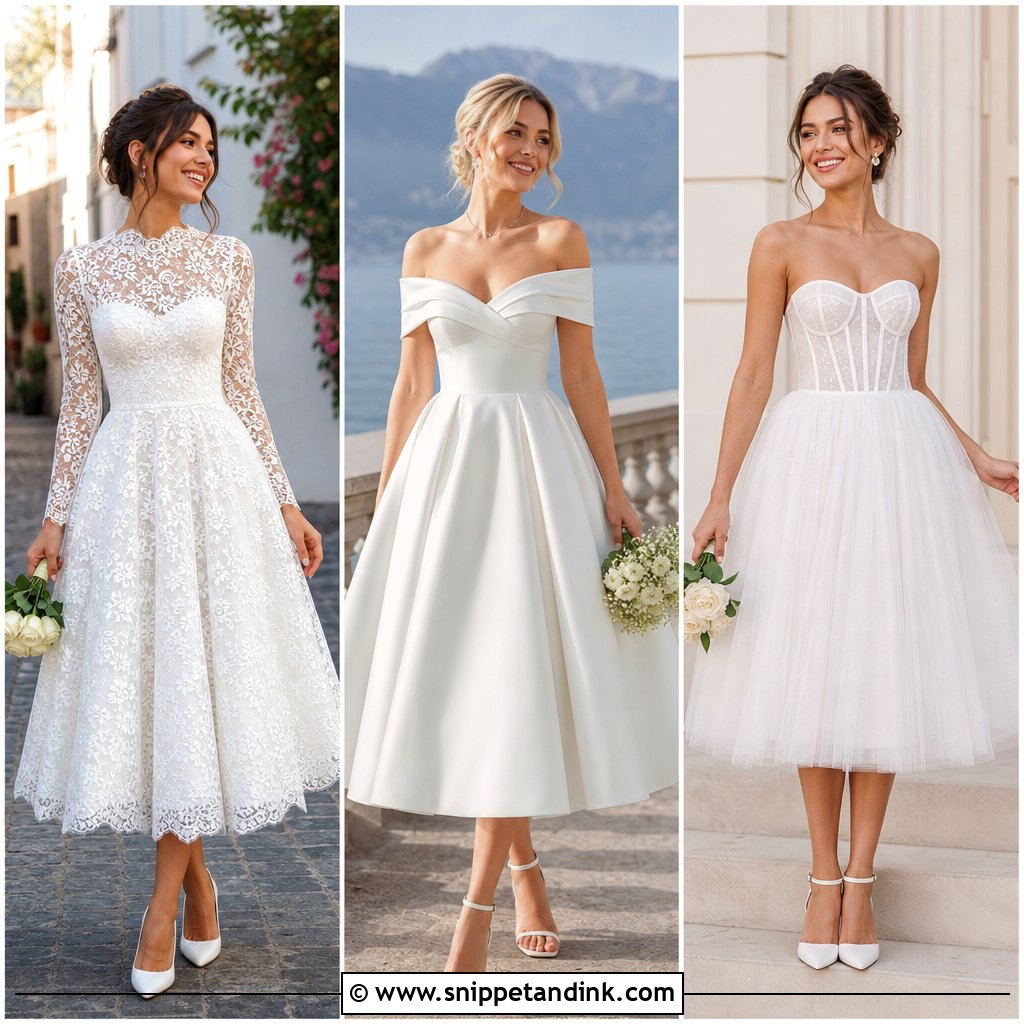
Off-shoulder gowns need a corseted bodice doing the real work, otherwise the sleeves end up carrying the dress and creeping up your arms. Folded fabric or delicate lace around the neckline, with an A-line or gently fitted skirt, keeps the balance right. Pearl drops, a smooth updo and a fine bracelet are enough; a heavy necklace crowds the open neckline. Satin block heels help on lawns. Pick a fingertip veil that falls behind the shoulders. At fittings, raise your arms above your head and check nothing slips. A removable overskirt or tailored wrap adds drama or coverage without changing the gown.
7. White Halter Neck Wedding Dress
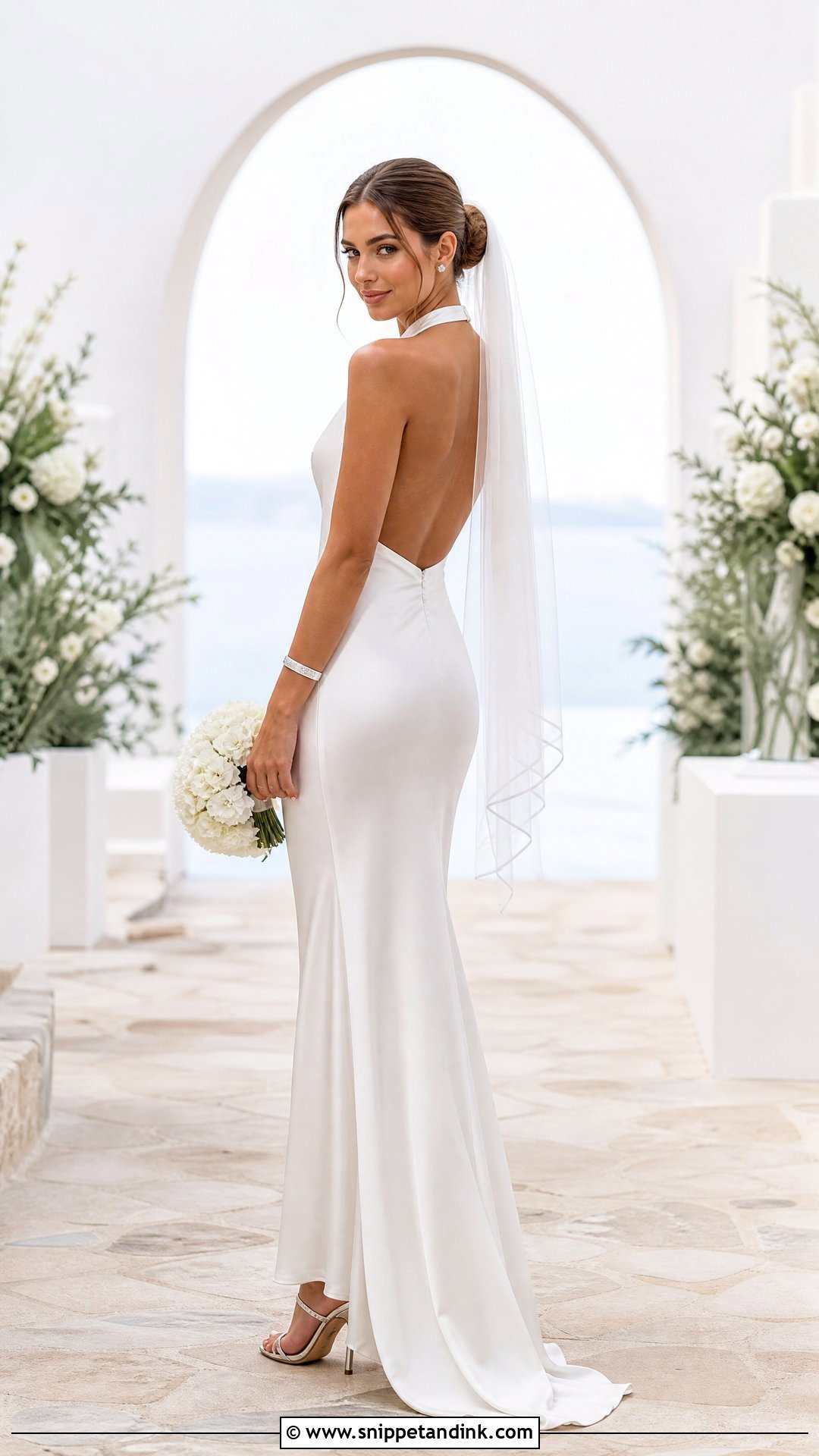
Halters draw the eye straight up to the face and shoulders, and they suit athletic or broad-shouldered brides especially well. Satin and crepe hold the line; chiffon is softer and better for heat. An open back is cooler, while a higher back gives more support if you need it. Wear a sleek bun so the neck strap is visible, small studs, a slim cuff and metallic or ivory sandals. A shoulder-length veil or a sculptural pin is better than a heavily detailed headpiece, which competes with the neckline. Sit with the gown on for twenty minutes before final alterations: pressure at the back of the neck builds slowly. Fashion tape keeps the edges flat.
8. White Tea Length Wedding Dress
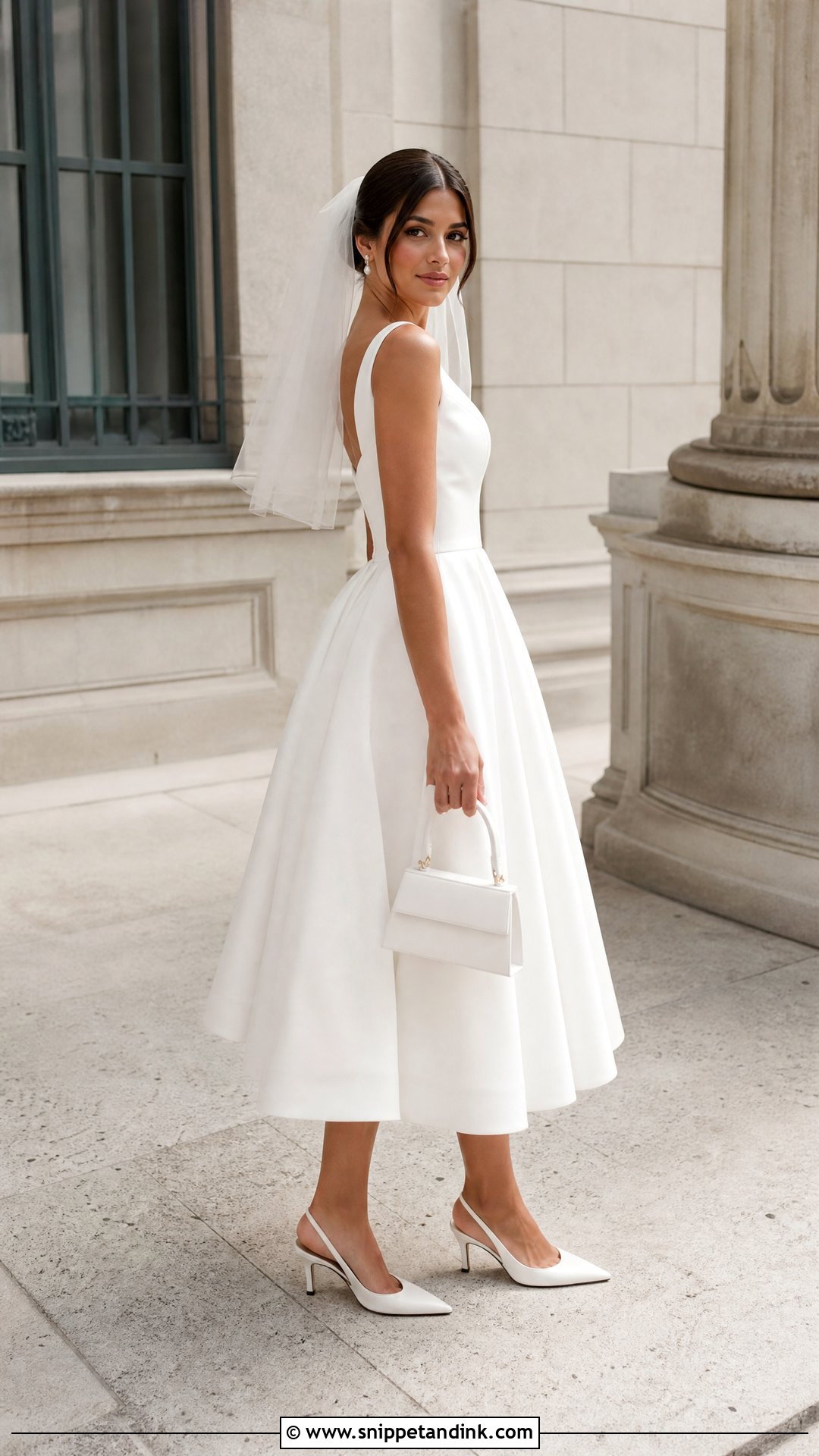
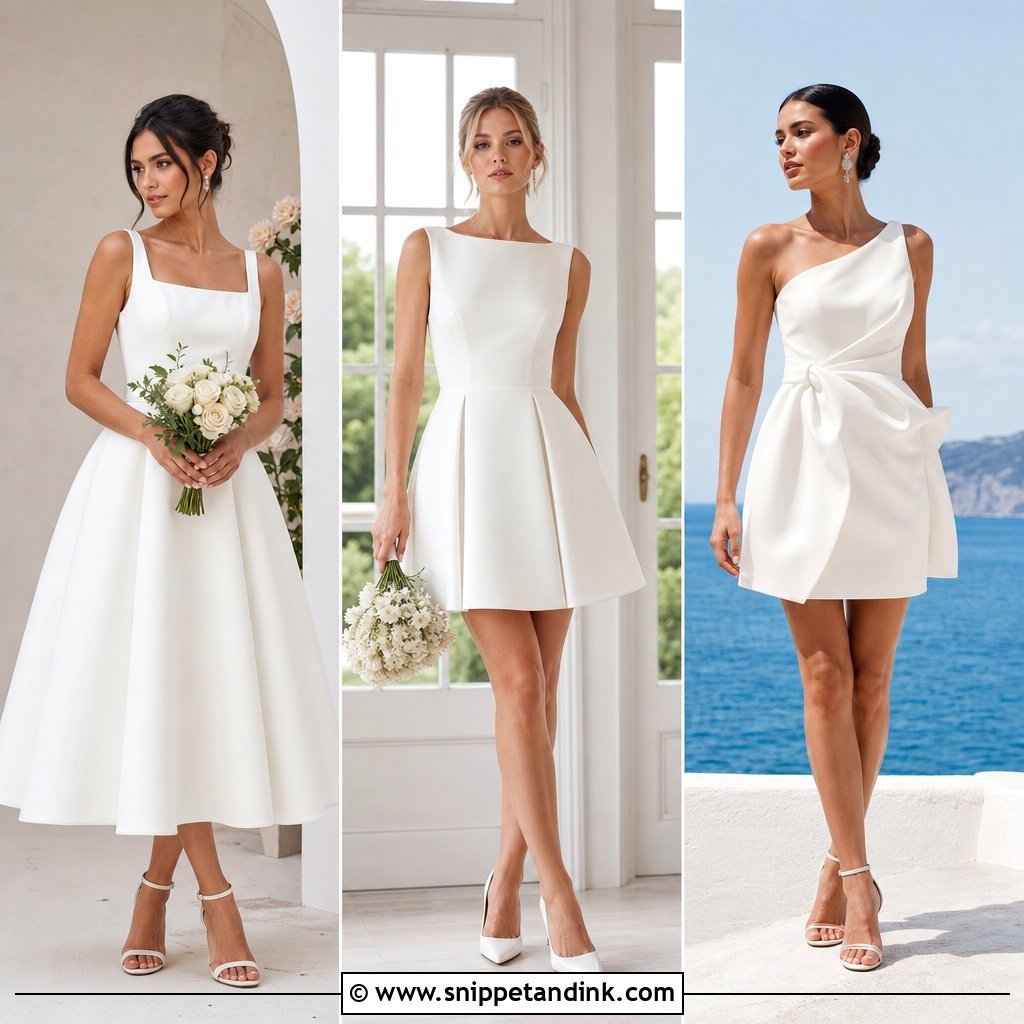
Tea length puts your shoes on display, so I style from the feet up. A fitted bodice and softly flared skirt give the vintage shape; the hem looks best ending at the slimmest point of the calf, which is different on every leg, so have it marked while you stand in your shoes. Pointed pumps, slingbacks or embellished flats all work if they look finished from the side as well as the front. A blue or floral shoe is a nice hidden detail. Add a short veil, pearl earrings and a mini top-handle bag, and a waist-length jacket when it’s cold. It suits courthouses, gardens and daytime receptions.
9. White Mini Wedding Dress
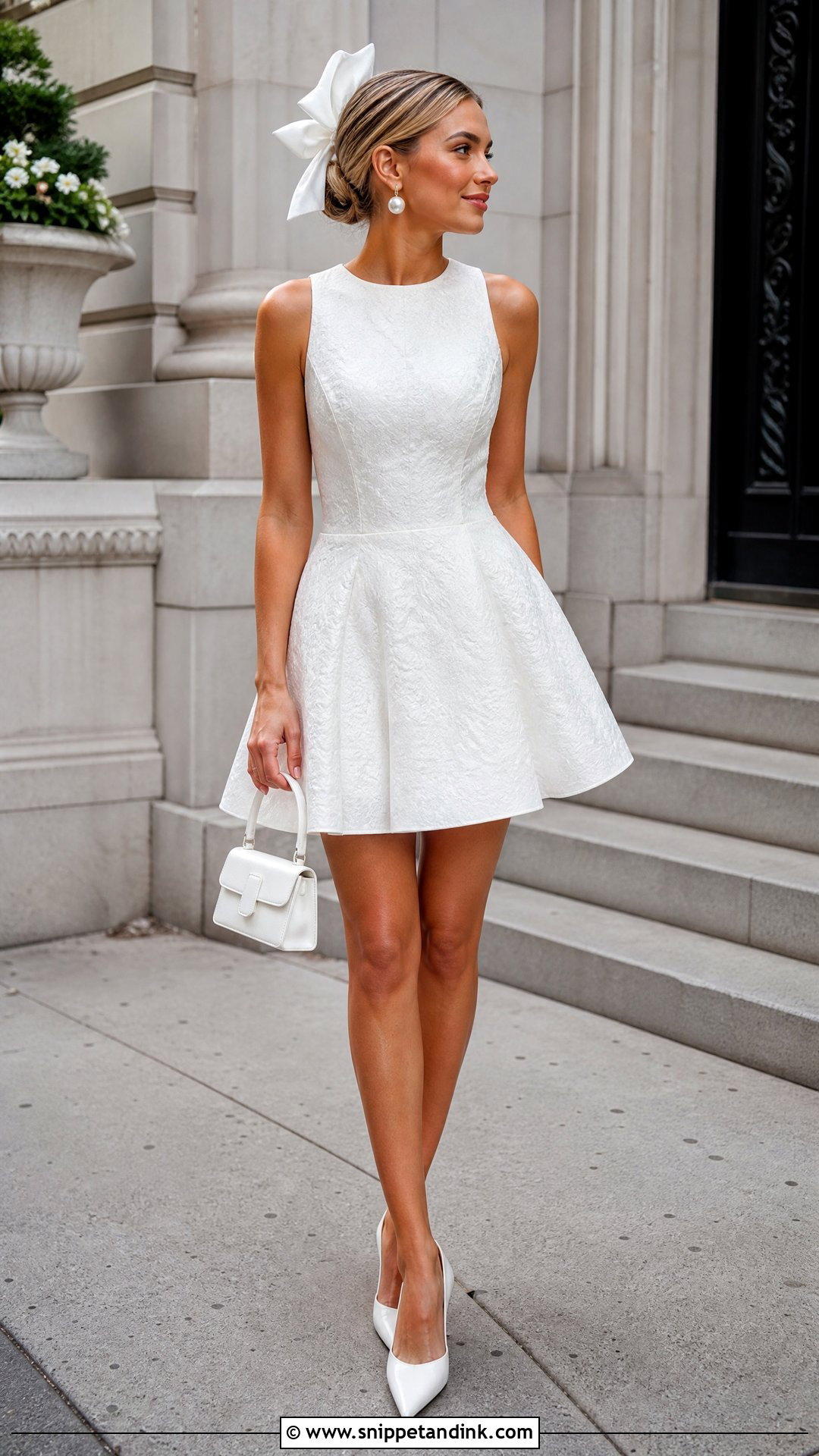
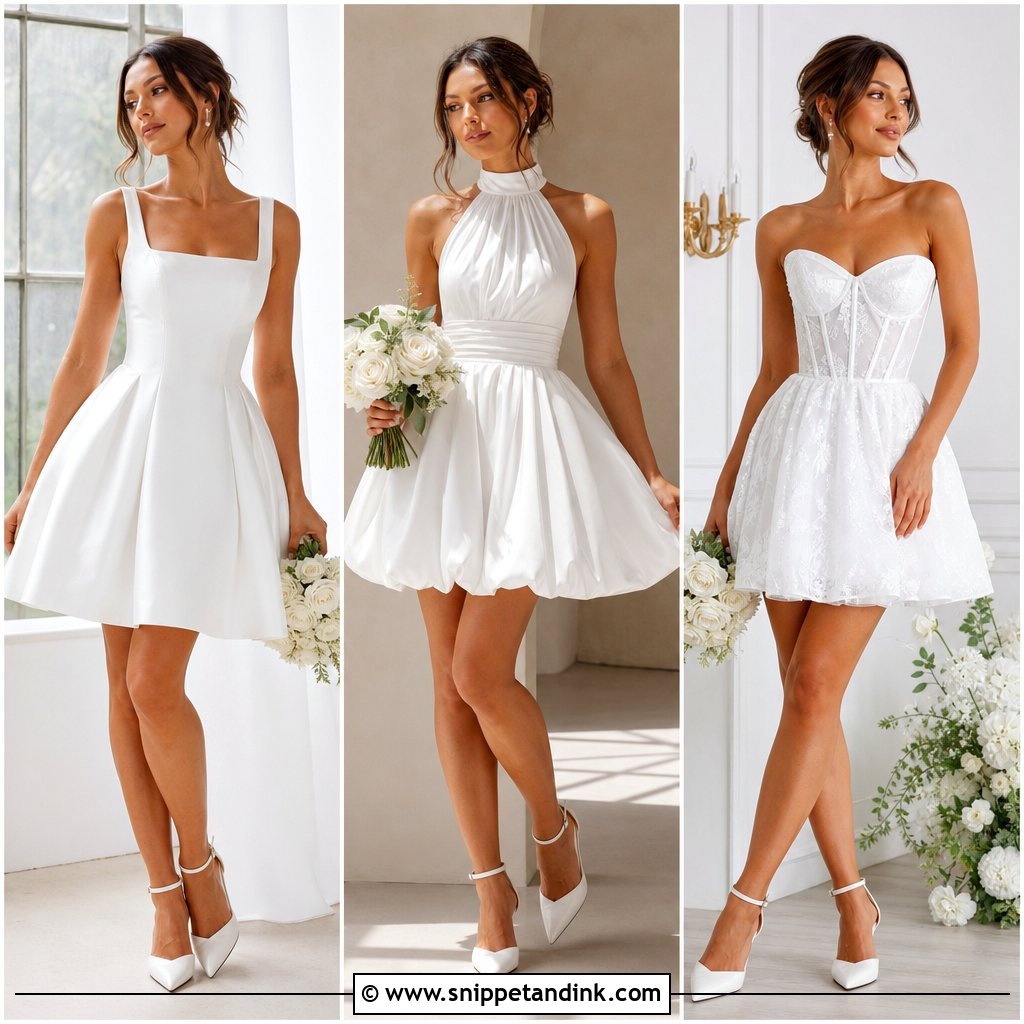
A mini needs more structure than you’d guess, or it can look like a party dress rather than a wedding dress. A tailored shift, a fitted sheath or a softly flared shape in jacquard, lace or feather-trimmed crepe gives it that bridal weight. Pair it with pointed slingbacks, sheer tights in winter or ankle-strap sandals in summer. A short veil or a big bow makes it read as bridal straight away. Sit, walk and dance in it in the shop, because a hem that looks right standing can be inches higher on a chair. Tailored shorts underneath save a lot of tugging.
10. White Courthouse Wedding Dress
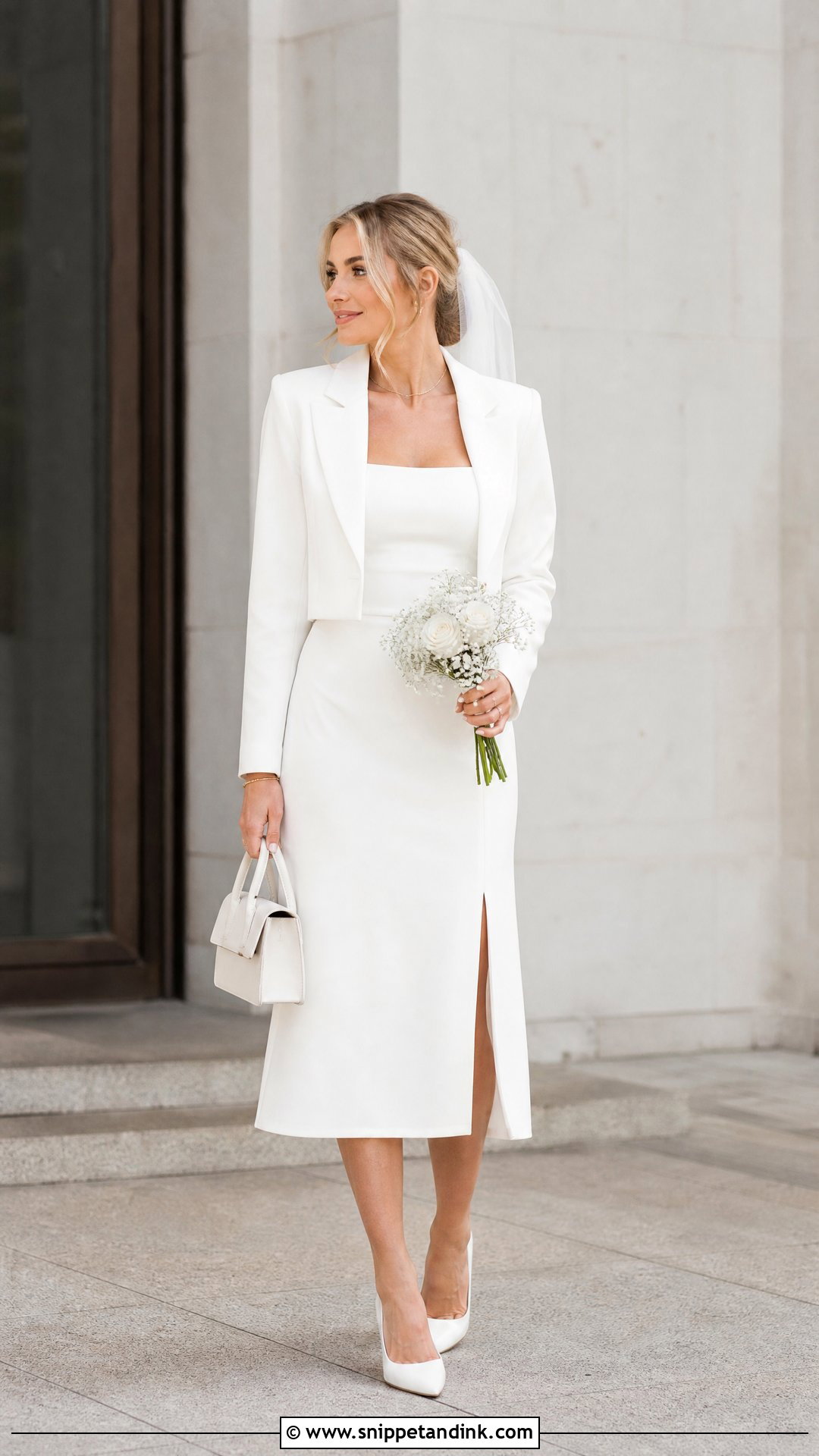
What should a bride wear for a simple civil ceremony? Something that looks special in photos but lets you walk between a car, a building and a lunch table without anyone carrying your train. A tailored midi with a square, bateau or draped neckline is my usual answer. A cropped blazer or long white coat covers the weather. Pointed pumps, slingbacks or smart flats make the walking easy. A pillbox-style headpiece, a short veil or a neat bow marks you as the bride, and a structured bag and small bouquet finish it. Afterward, take off the veil and add statement earrings or a colourful bag for lunch.
11. White Beach Wedding Dress
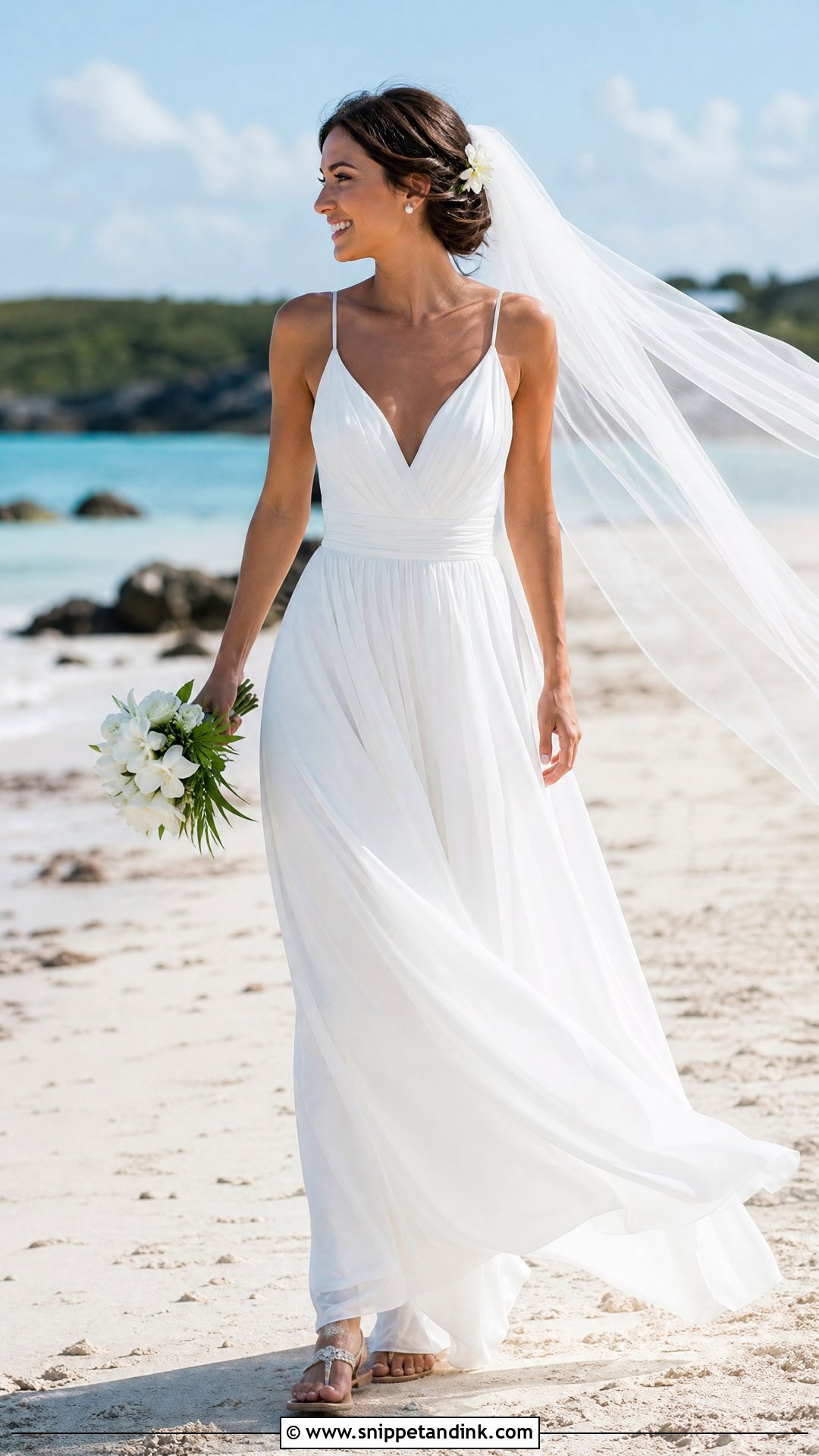
Wind decides everything at the beach. A light veil that looks dreamy at the fitting becomes a sail on a breezy shoreline, so pin it firmly or skip it. Chiffon, silk or lined cotton in a relaxed A-line or column moves well in an ocean breeze, and a dress without a heavy train stays out of the sand and wet. Thick layered skirts trap heat and collect sand in the hem. Wear flat embellished sandals, barefoot jewelry or low wedges only on a firm platform. Pearl studs, loose waves and a floral pin keep it simple, with a small tropical or green bouquet and a breathable wrap after sunset.
12. White Boho Wedding Dress
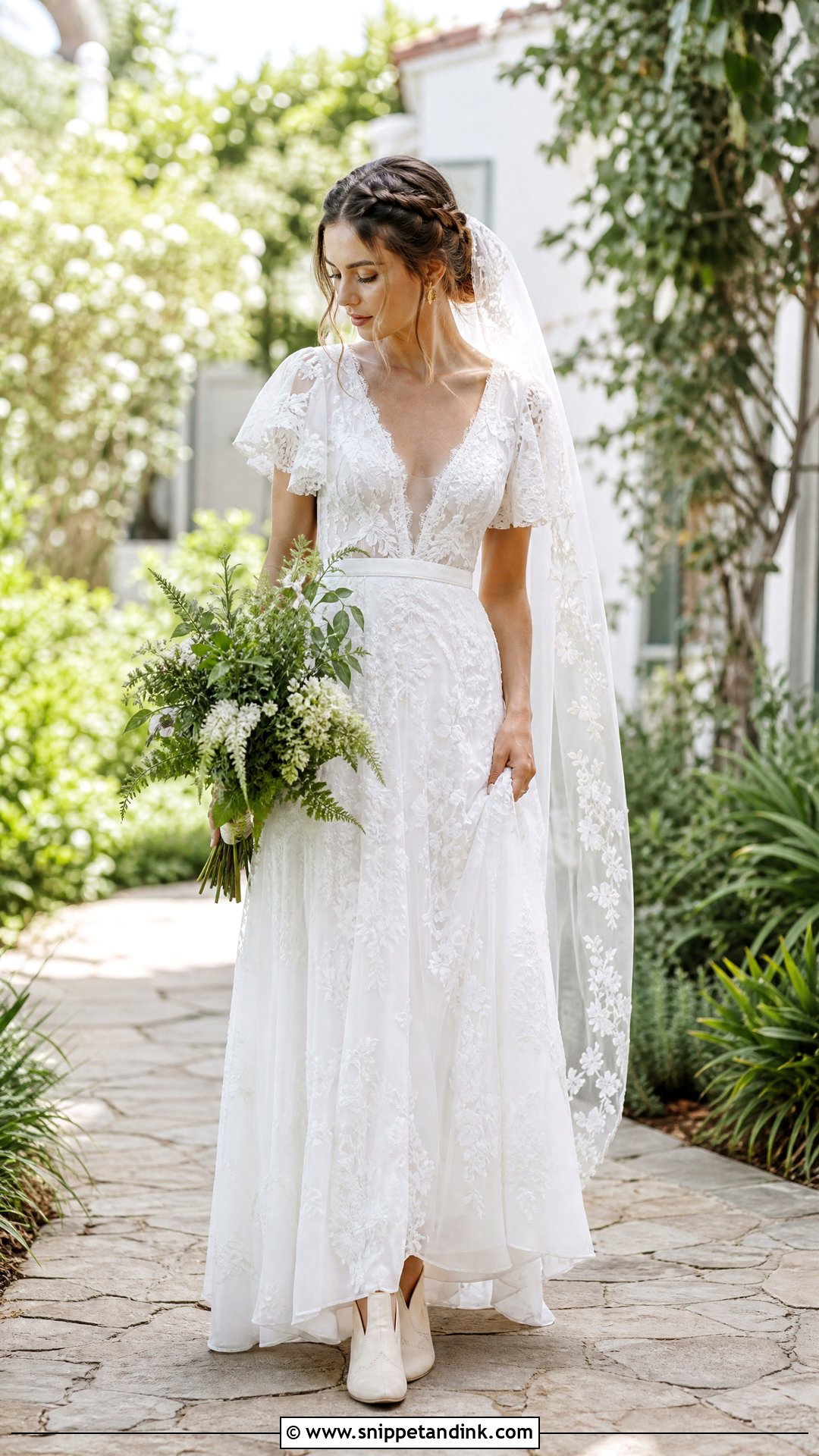
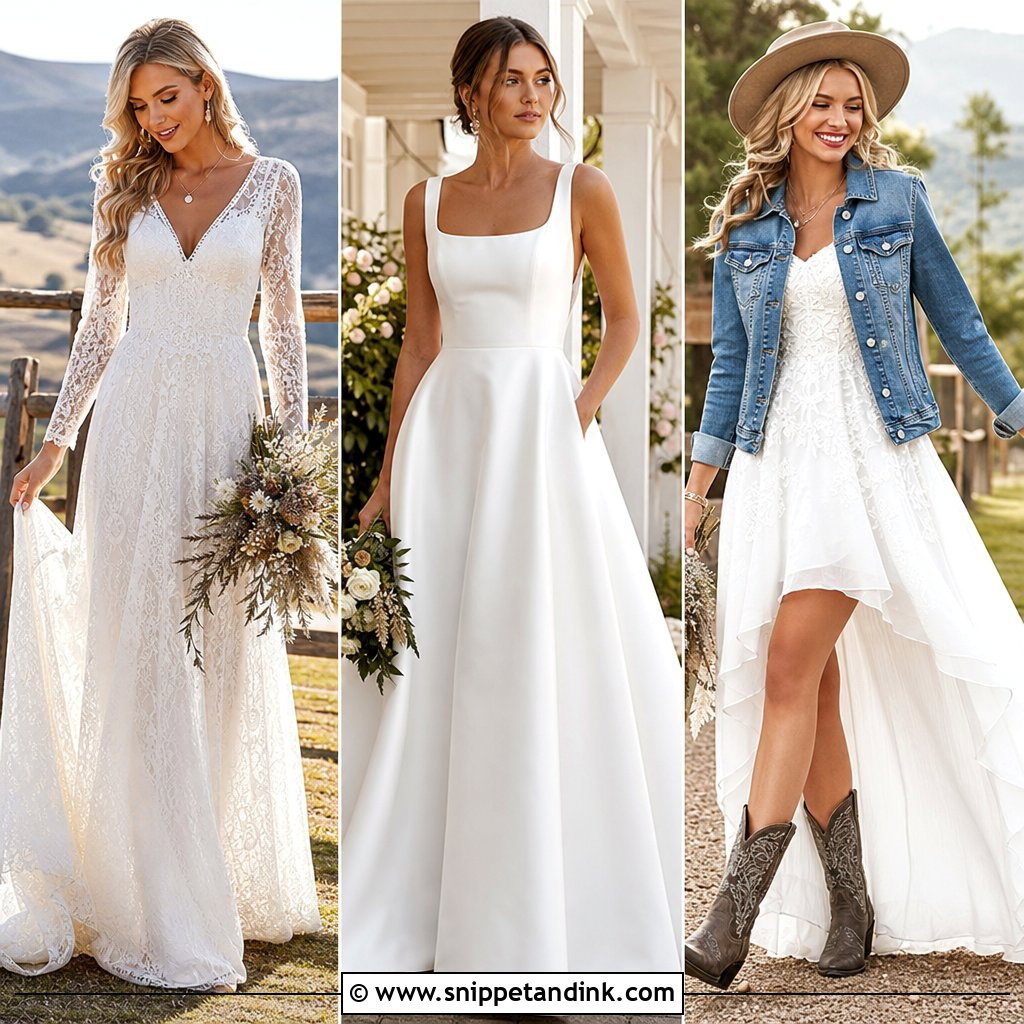
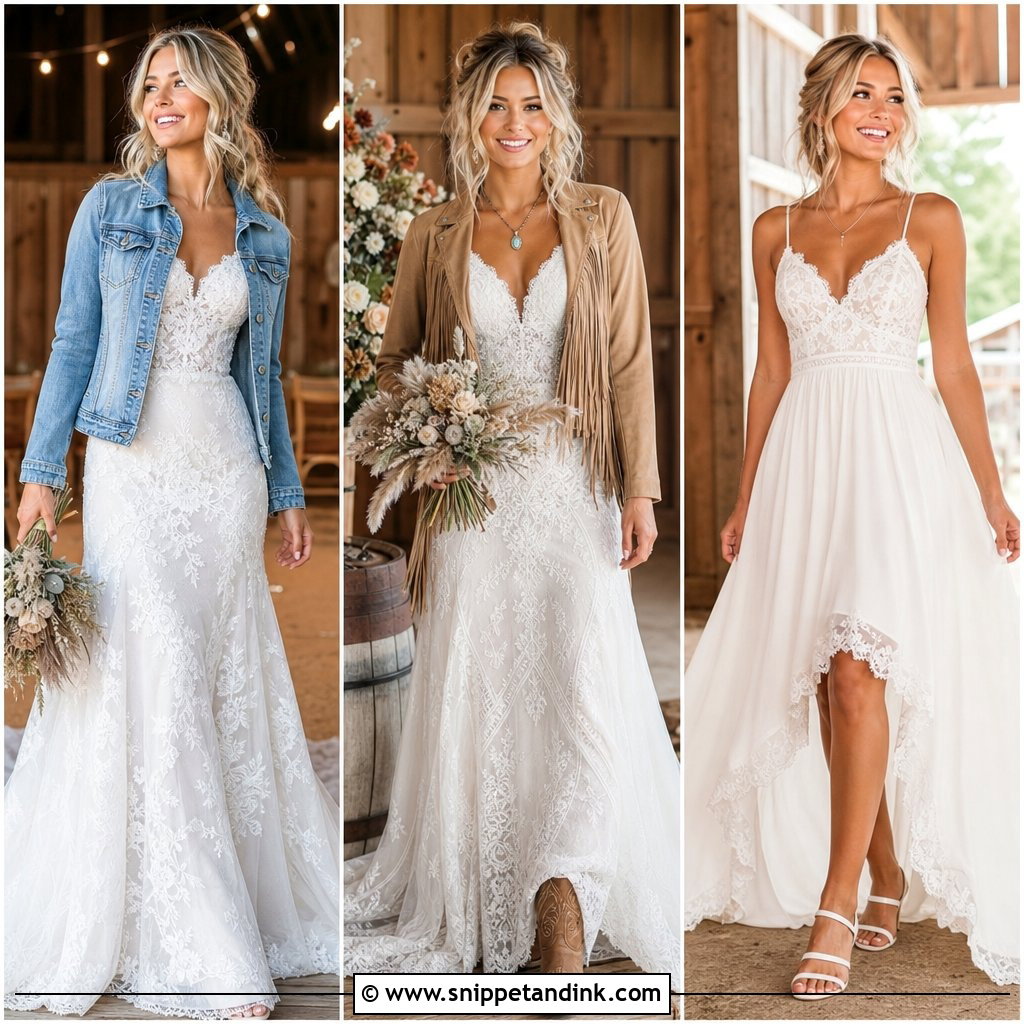
Texture is what gives a boho gown its handmade feel: botanical lace, crochet-style panels, flutter sleeves and a skirt that moves on its own. It should feel easy, not engineered, which is why it sits naturally in gardens and woodland. If the lace is sheer, ask for a lining close to your skin tone; a white lining under open lace flattens the pattern. Leather-toned block heels, refined ankle boots or flat sandals work underfoot. A loose braid, small gold earrings and a veil with light floral embroidery suit it. Keep jewelry minimal, and bring a fringed or embroidered wrap for evening.
13. White Mermaid Wedding Dress
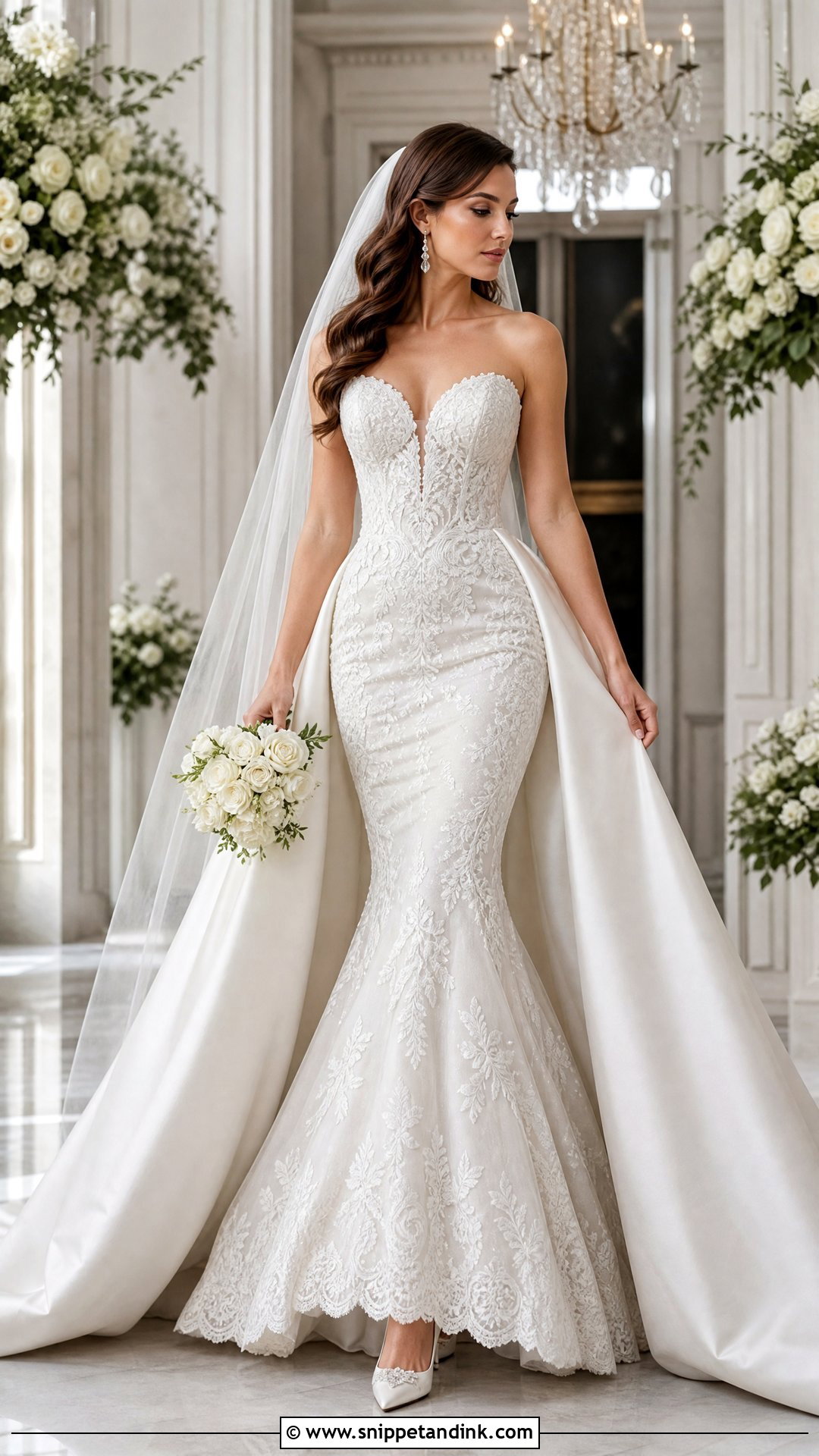
Mermaid gowns are the hardest to alter well. The skirt has to hug through the hips and still let you take a normal step, and the flare point needs to sit at or just below the knee; set it too low and you’ll waddle. Practise sitting and walking in it, ideally on stairs. Structured satin gives a sleek, dramatic finish, and lace a softer one. Supportive pointed pumps or hidden platforms, a long veil and small drop earrings suit the line, with a side-parted wave or a polished bun. A removable overskirt for the ceremony lets you reveal the shape later.
14. White High Neck Wedding Dress
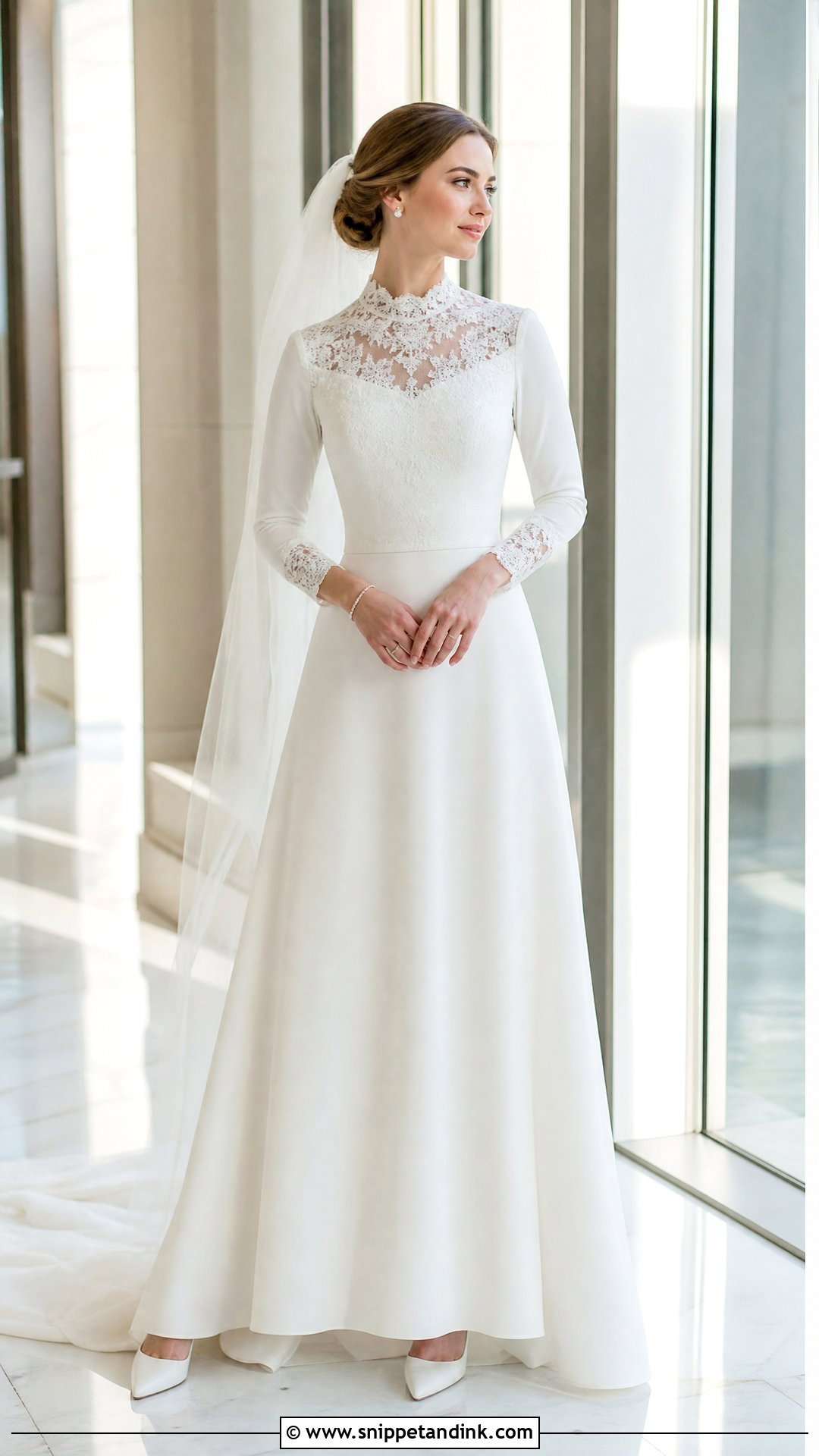
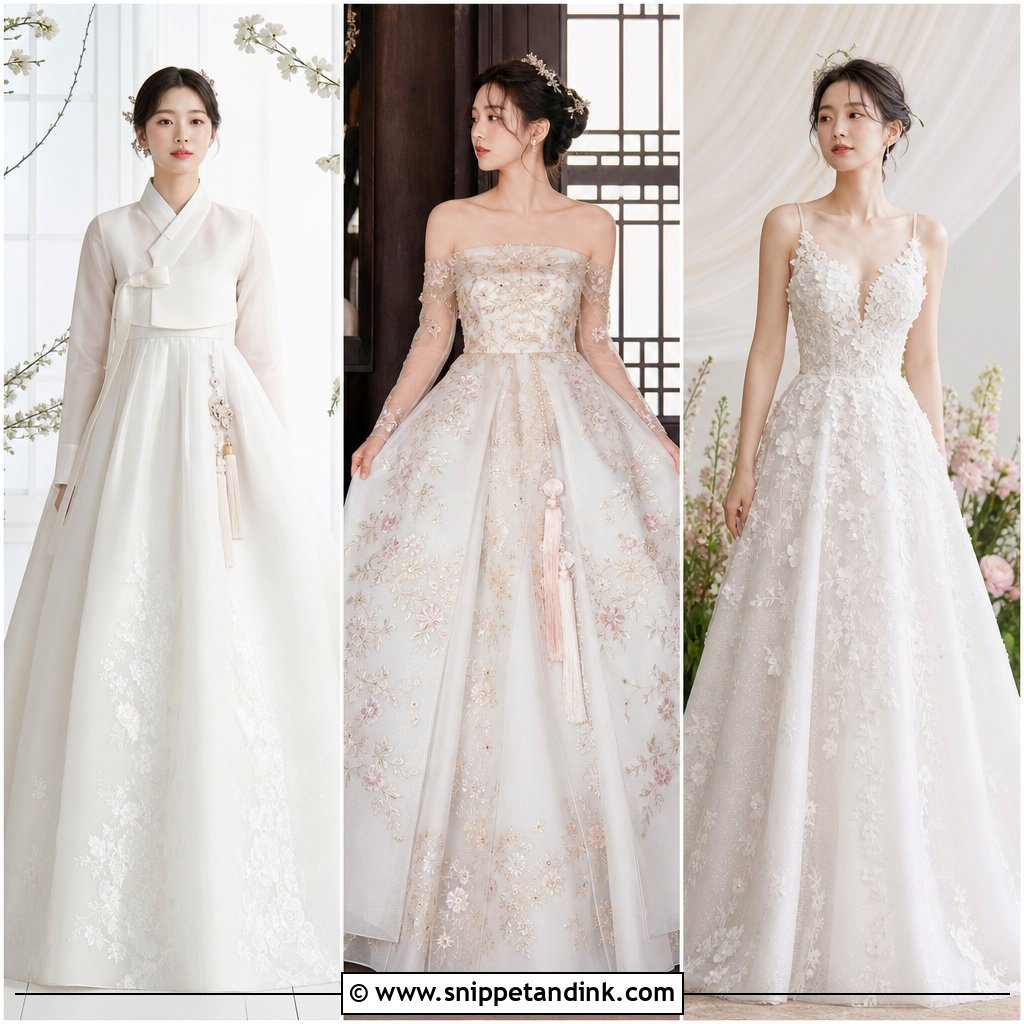
A high neck shifts all the attention to your face, fabric and fit, so the tailoring at the shoulders has to be precise. Sheer lace feels light; smooth crepe or satin looks strongly minimalist. A column skirt reads modern and an A-line softer. Wear a neat updo and pearl studs with no necklace. Pointed heels and a narrow bracelet are plenty. Pin the veil beneath the bun so any back detail stays visible. In summer, a high neck in heavy satin gets hot quickly, so lean toward breathable lace and a light lining, and check that you can turn your head freely.
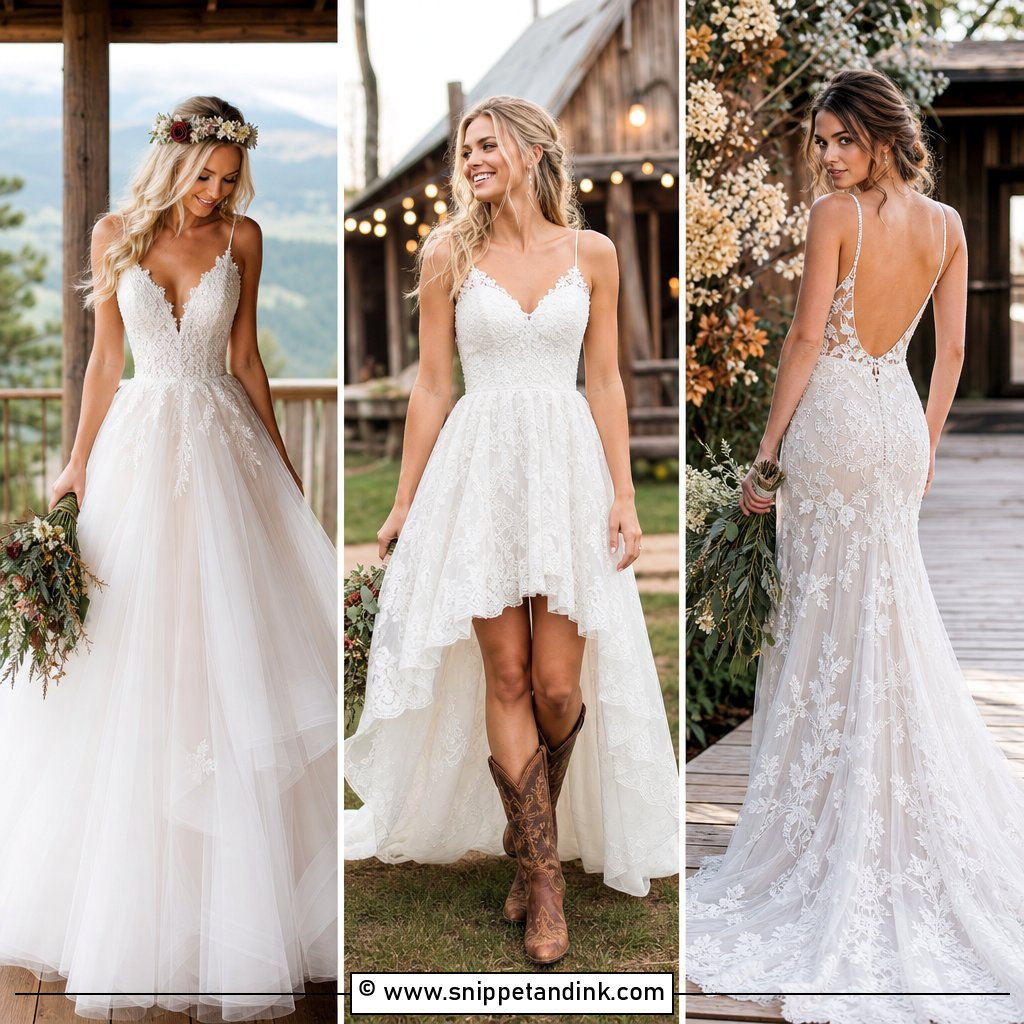
15. White Puff Sleeve Wedding Dress
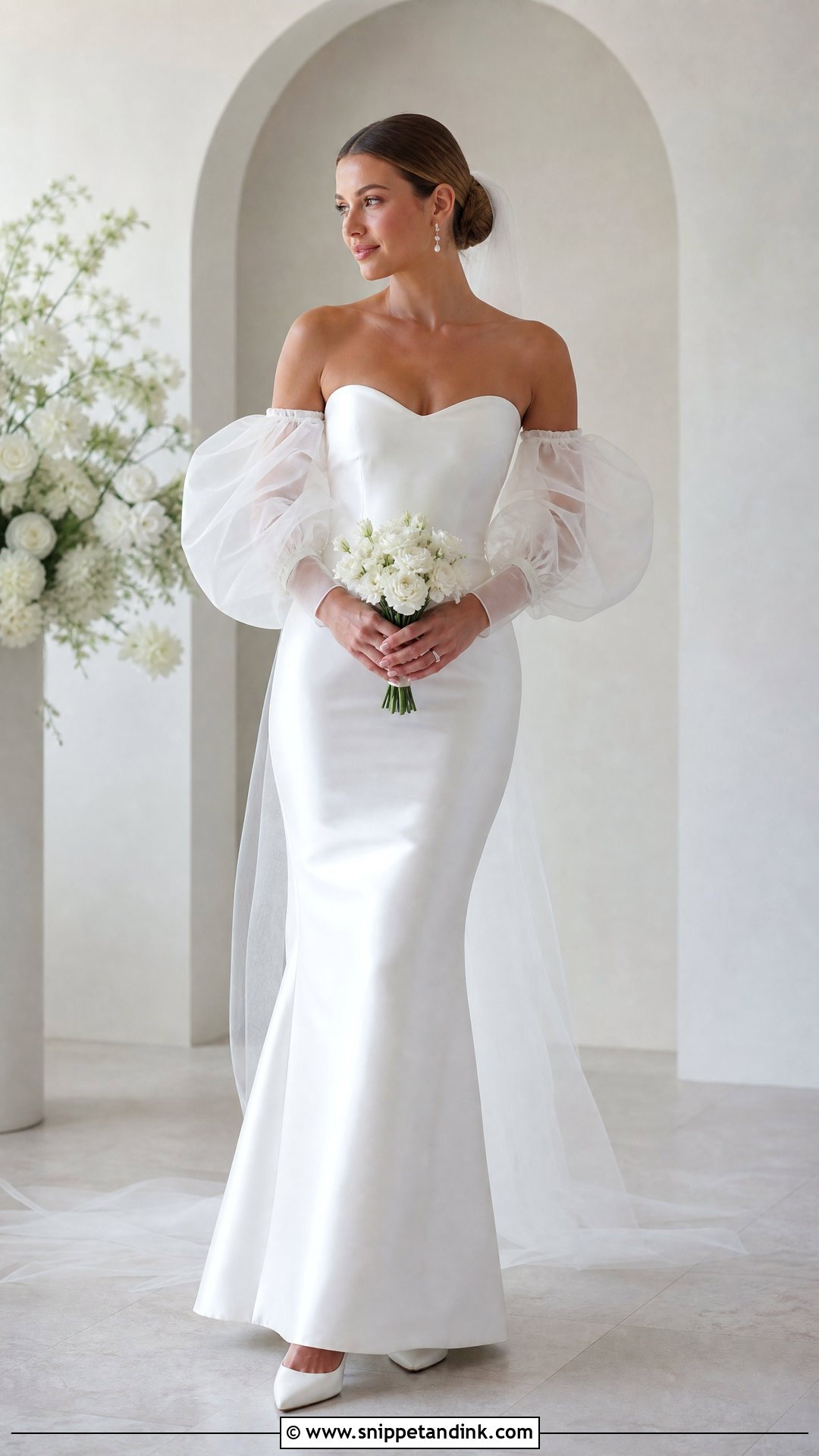
Puffed sleeves change the proportion of your whole upper body. Sheer organza keeps them airy; structured satin makes them dramatic and adds visual width at the shoulder, which is why I balance them with a fitted bodice and a slim skirt. Drop earrings, a low bun and pointed satin pumps keep things clean. Attach the veil behind the hair so it falls clear of the sleeves, and carry a small bouquet. Removable sleeves give you a sleeveless reception look. At fittings, bend and reach; a sleeve set too low on the shoulder slips down every time you raise your arm.
16. White Corset Wedding Dress
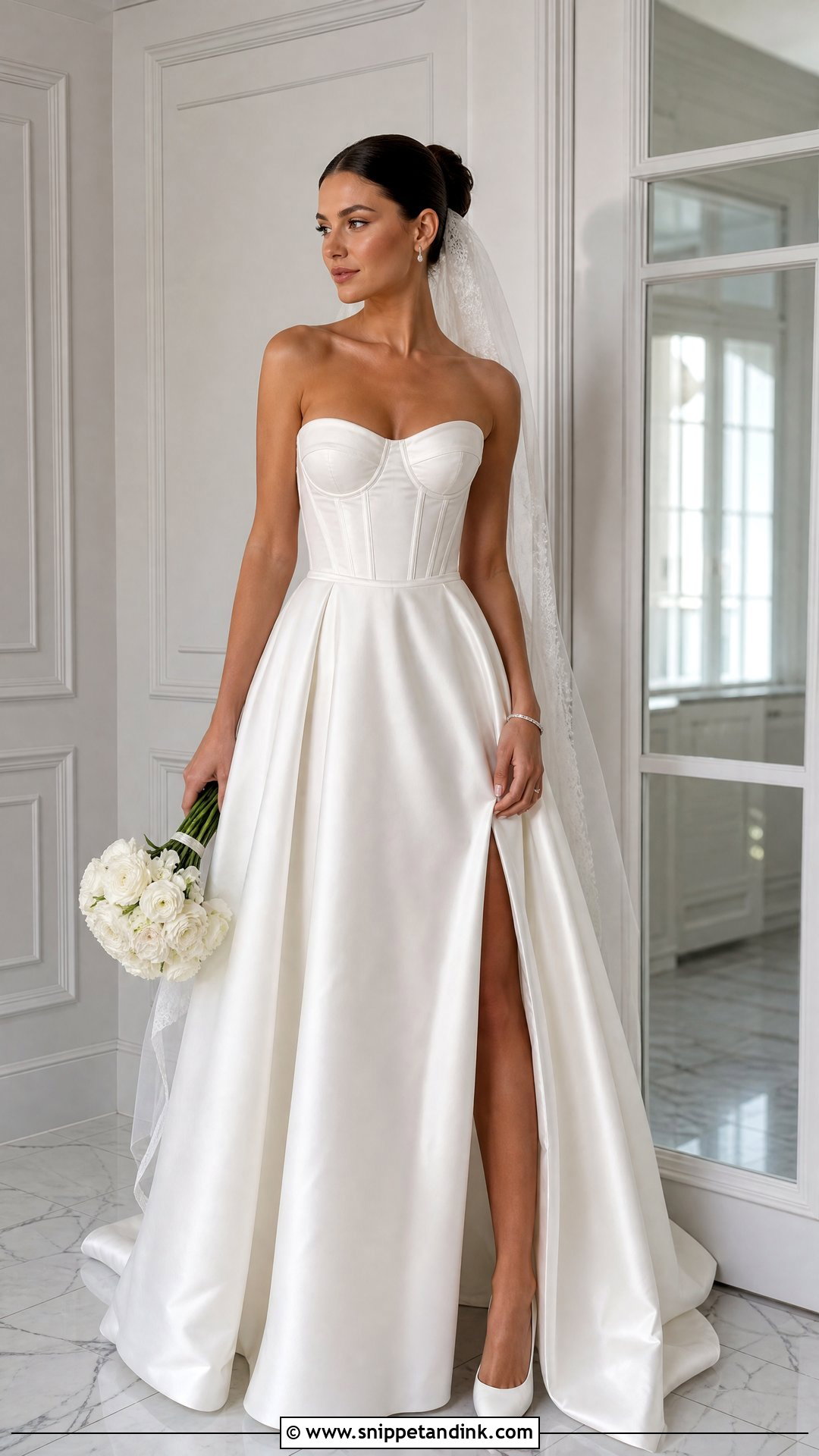
A good corset bodice supports you so well you stop thinking about it, and that comes from properly placed boning and a smooth interior, not from tight lacing. Never size down for extra squeeze; let the alterations specialist fit it to you, and make sure you can breathe deeply and sit to eat. Cups should suit your proportions rather than flatten or gap. Pair the bodice with a full A-line skirt for romance or a slim satin one for a modern look. Pearl or crystal earrings, a delicate veil and pointed pumps are enough. If exposed corsetry feels too bare, look for lace panels or a higher back.
17. White One Shoulder Wedding Dress
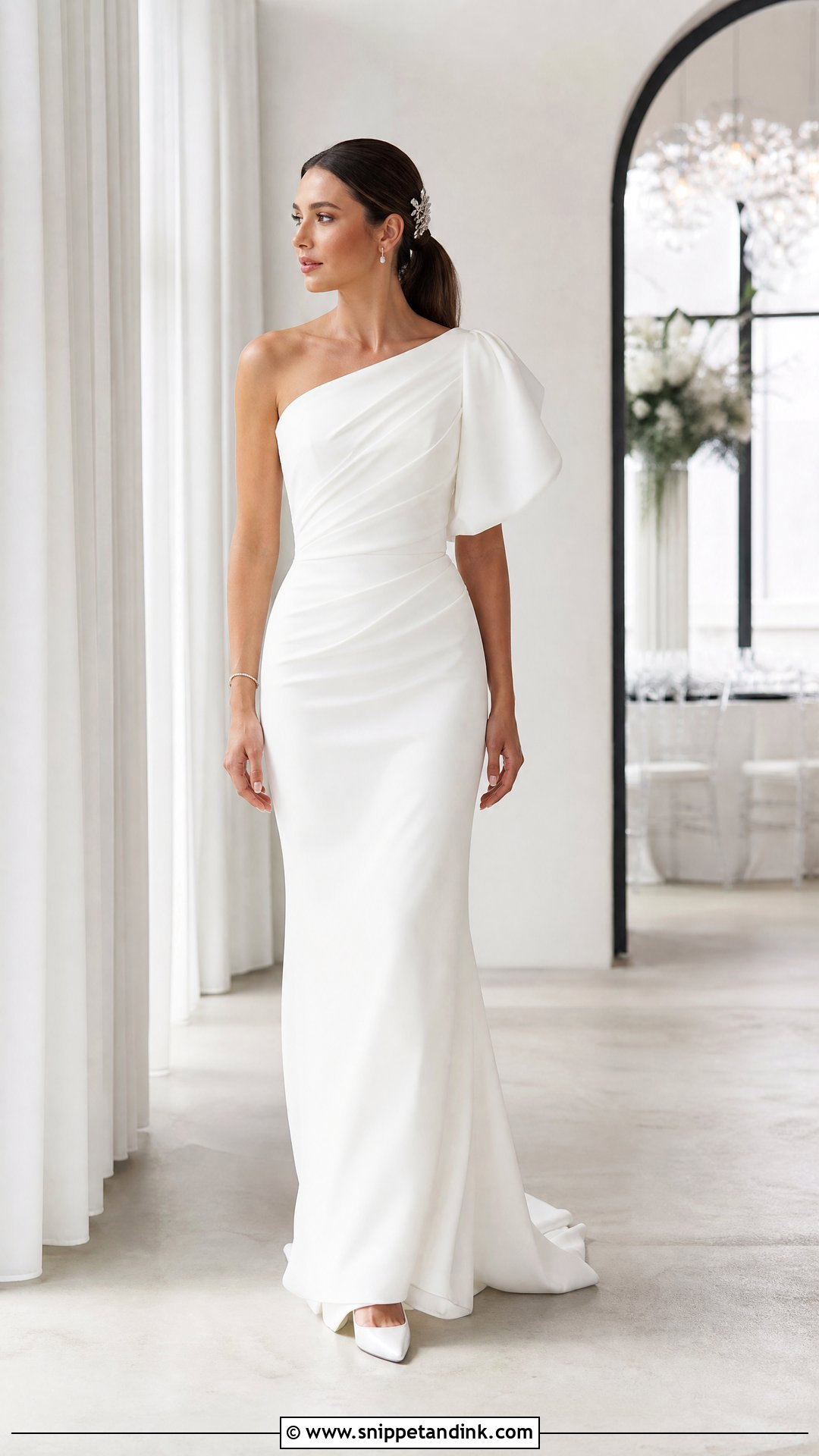
One-shoulder gowns can twist as you move, which you’ll only discover in photos where the neckline slopes. Ask for internal support and confirm the bodice stays level when you walk and hug at fittings. Draped satin softens the asymmetry; fitted crepe sharpens it; a single sculptural sleeve adds drama. Balance it with a column or A-line skirt. Wear a low side bun or a sleek ponytail on the opposite side, a bracelet on the bare arm, small earrings and no necklace. Pointed pumps or slim block heels finish it. A plain veil suits a simple shoulder; a decorative comb suits an ornate one.
18. White Plus Size Wedding Dress
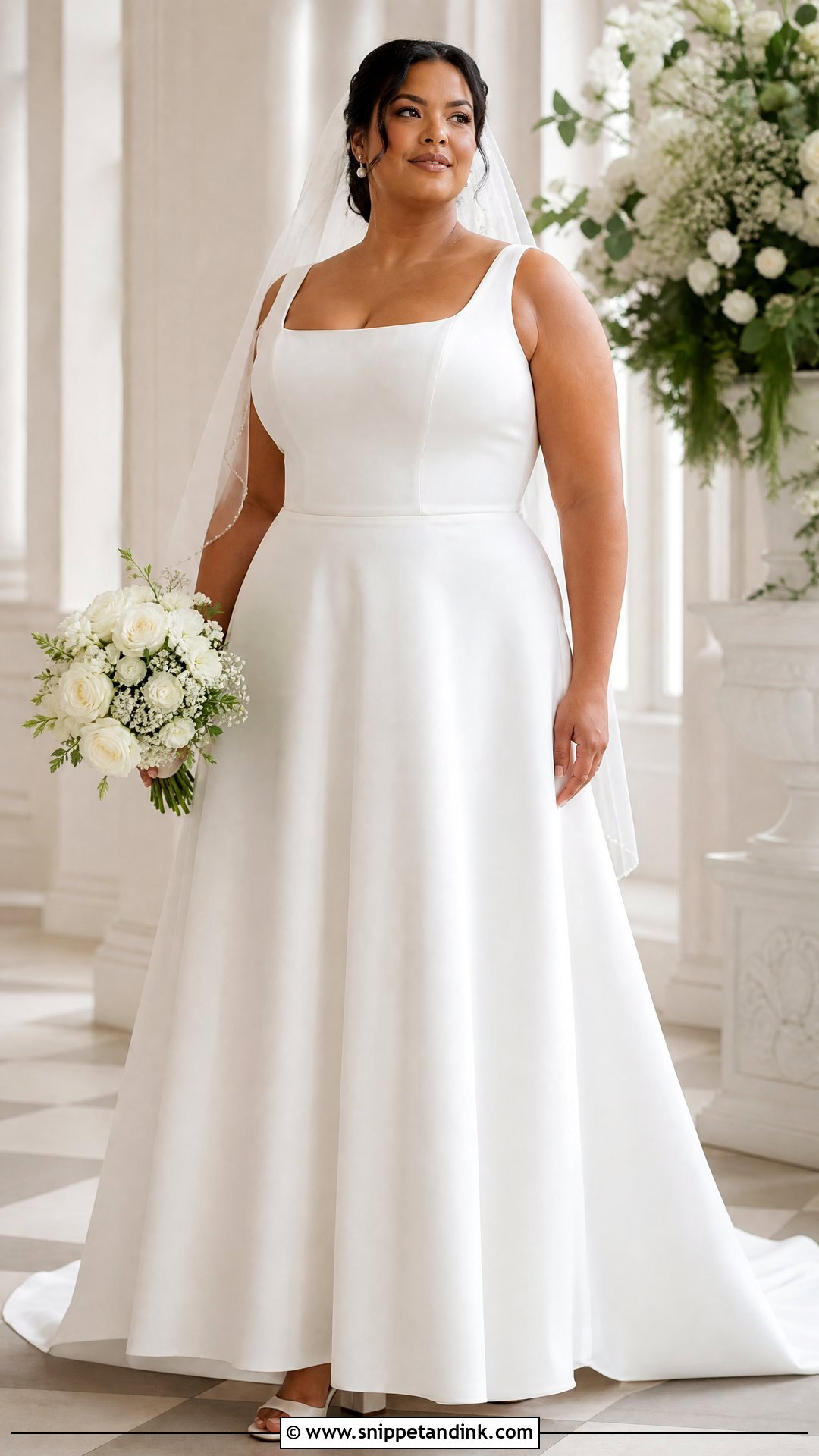
The right gown for a plus-size bride is built to support, and that shows in the construction more than the style. I look for adjustable corsetry, wide or well-anchored straps, a quality lining and seams placed for shape rather than straight up and down. An A-line with a defined waist moves easily; a fitted crepe dress gives a smooth, confident outline. V, square and off-shoulder necklines all frame the face nicely, though comfort should settle it. Stable block heels, pearl earrings and a veil scaled to the gown complete it. Shapewear is optional, worn only if it improves how the dress feels. A good bridal tailor fits the gown to you, not the other way round.
19. White Maternity Wedding Dress
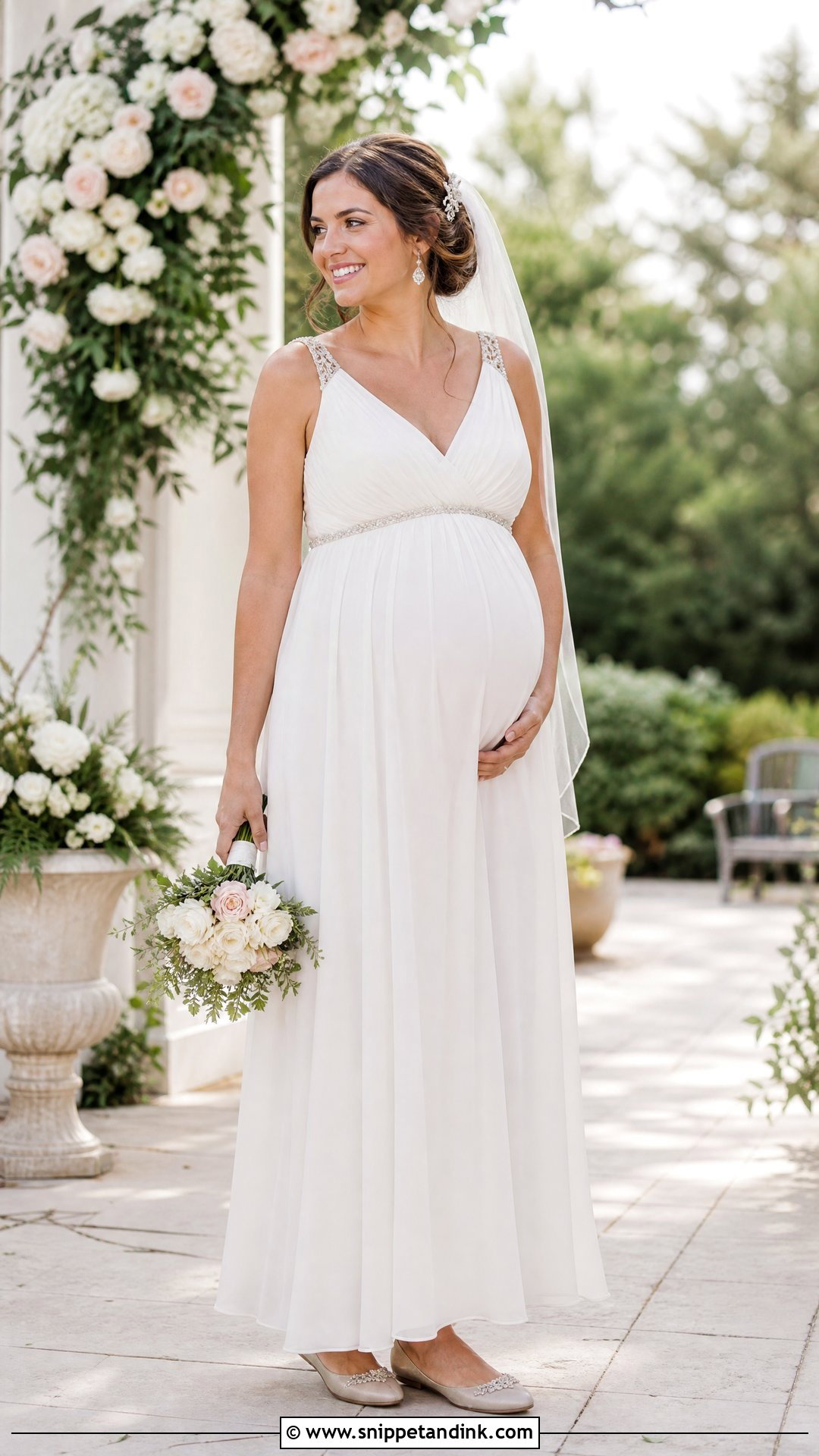
A maternity gown has to allow for a body that will change between fittings, so timing matters as much as style. Book the final alteration as close to the wedding as the seamstress allows. Empire waists are the practical default because they sit under the bust and flow over the bump, and stretch crepe, soft jersey, chiffon or an adjustable wrap all add comfort. Avoid tight waist seams and heavy fabrics. Low block heels, embellished flats or supportive sandals, light earrings, a delicate comb and a soft veil keep you comfortable. A wrap or cropped jacket adds a layer without pressing on the waist, and a light bouquet is easier to hold.
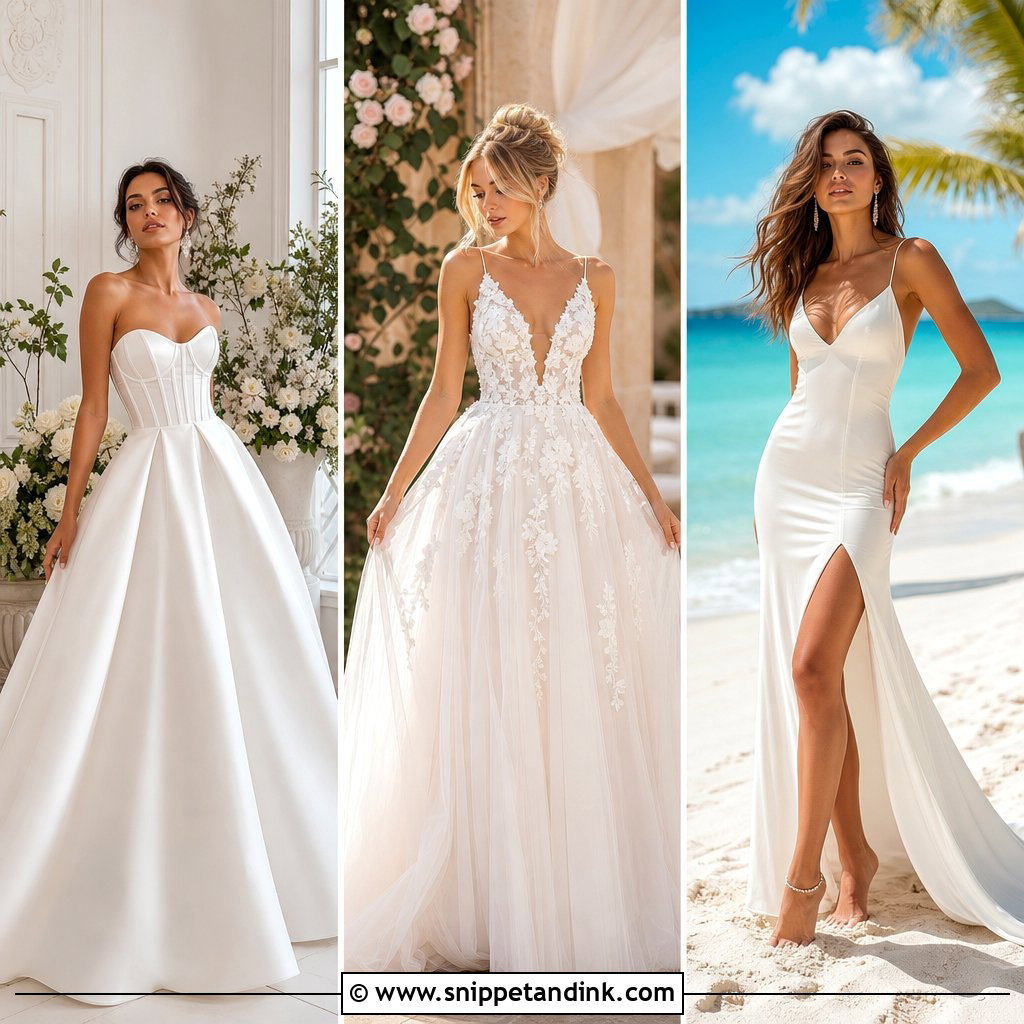

20. White Reception Wedding Dress
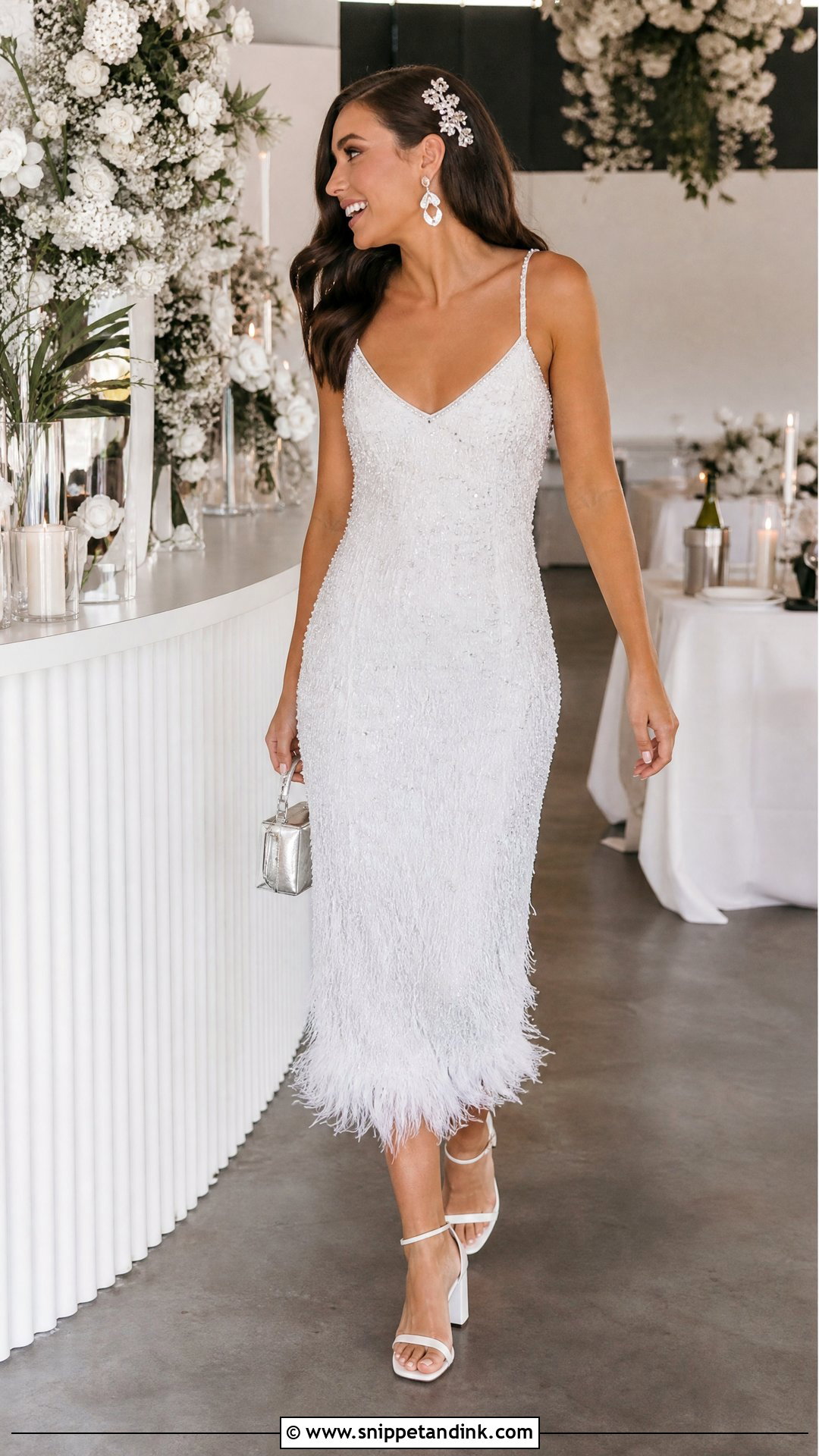
A reception dress has one job: let you dance. A beaded mini, feather-trimmed midi, satin slip or fitted dress with a manageable hem all qualify. Check the inside of beaded and sequinned sleeves, since rough backing scratches the arms after an hour on the dance floor. Comfortable block heels, embellished flats or clean white sneakers work if they fit the event. Swap the veil and bouquet for statement earrings and a small metallic bag, and refresh the hair with a high ponytail, loose waves or a jeweled hair clip. After a detailed ceremony gown, go simpler; to tie the two together, repeat one element like satin or pearls.
Champagne Stains Show Up Later, So Clean the Gown Soon
The marks you can see after the wedding, like grass on the hem or makeup on the neckline, aren’t the ones that worry me. Clear spills of champagne, sweat and sugary drinks dry invisible and then oxidise over months into yellow or brown patches. On white fabric they’re hard to shift once they’ve set. Get the gown to a specialist bridal cleaner within a few weeks, and point out where you remember spills.
For storage, keep it somewhere cool, dark and dry, away from attics and basements. Plastic dry-cleaning covers trap moisture, so use a breathable cotton bag or an acid-free box with acid-free tissue folded into the bodice and between skirt layers. Heavy gowns shouldn’t hang by their straps for years; the weight stretches the shoulders, so either use the inner hanging loops or store the dress flat in a box.
A quick check once a year
Open the box with clean hands, look for any new spots, and refold the dress along slightly different lines so the creases don’t become permanent. Thin satin and silk mark most easily, while lace and tulle are more forgiving.
Shoes On, Arms Up, Then Decide
Start from the setting, the season and how much moving you’ll do, and the silhouette usually becomes obvious. A ball gown belongs to a formal ceremony; a satin slip, tea-length dress or tailored midi sits more naturally at a smaller wedding. Bring the actual shoes and undergarments to every fitting, then sit, walk, lift your arms and dance a few steps before you sign off on alterations. If a dress only appeals because it’s in fashion this year, keep looking. The one you’ll be glad of is the one you can live in for twelve hours.
You'll Like These Ideas:




Leave a Reply