
A choker changes how a wedding dress reads from across a room, because it draws a firm line at the base of the throat and makes the face the first thing people see. That only works when the necklace and the neckline agree. Strapless, sweetheart, square, portrait, off-the-shoulder and deep V shapes leave enough bare skin for a choker to sit clearly; a high lace yoke usually doesn’t. When I help a bride pair one, I look at three things in order: how much open space the bodice leaves, what the fabric reflects, and which metal already appears in the beading. Pearls soften, crystals throw light under evening lamps, and a fabric band looks the most current. The twenty pairings below each start from the dress, then build the jewelry and the rest of the outfit around it.
Measuring Your Neck So the Choker Sits Flat All Day
Most of the choker complaints I hear come down to length, not style. A choker is meant to rest at the base of the throat, close but not pressing, and a quarter of an inch either way changes how it sits on camera and how it feels after dinner.
- Measure with a soft tailor’s tape around the lower neck, where the choker will actually sit, not halfway up. Keep one finger flat under the tape while you read it.
- Add roughly a quarter to a half inch for comfort. Flexible strands and ribbon can sit closer; rigid collars and multi-row pearls need the extra room because they don’t give.
- Ask for a short extender chain of an inch or two. Necks swell slightly in heat and after a long day of talking, and an extender lets you loosen the fit without a jeweler.
- Swallow, tip your chin down and turn your head while wearing it. If the front edge digs in or the clasp rides around to the side, it’s the wrong size or the wrong shape for your neck.
Shape matters as much as length. A wide collar suits a longer neck; on a shorter one, I’d keep the band under about half an inch tall so the chin has somewhere to go. Order early if the piece is custom or vintage, because resizing a strung pearl choker means restringing, and that takes time you won’t want to spend in the final week.
1. Strapless Wedding Dress With Pearl Choker
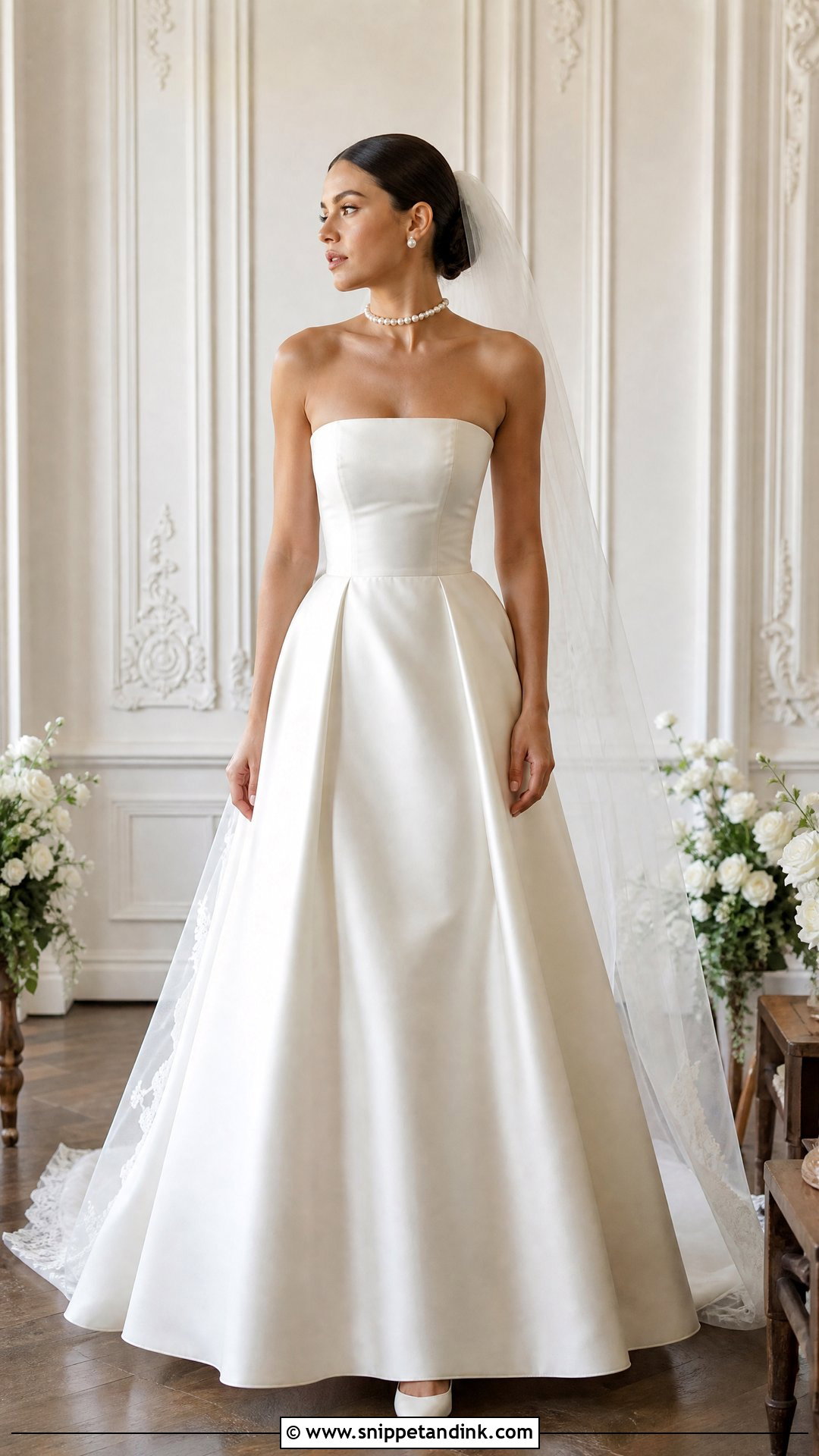
Satin and pearls are the oldest pairing on this list for good reason: a smooth bodice has no texture to fight the pearls’ glow. I’d pick a structured strapless gown with a softly curved top edge and either an A-line or ball-gown skirt. Pearl studs beat long earrings here, since a drop earring swinging just above a pearl collar makes two competing lines. A sleek low bun keeps the neck clear, and a cathedral veil gives the back of the dress movement. Pointed ivory pumps and a small satin clutch finish it. One fitting note from the jewelry side: on a shorter neck, a single narrow strand looks right, while a wide multi-row collar can make the chin seem to rest on the pearls.
2. Sweetheart Wedding Dress With Crystal Choker
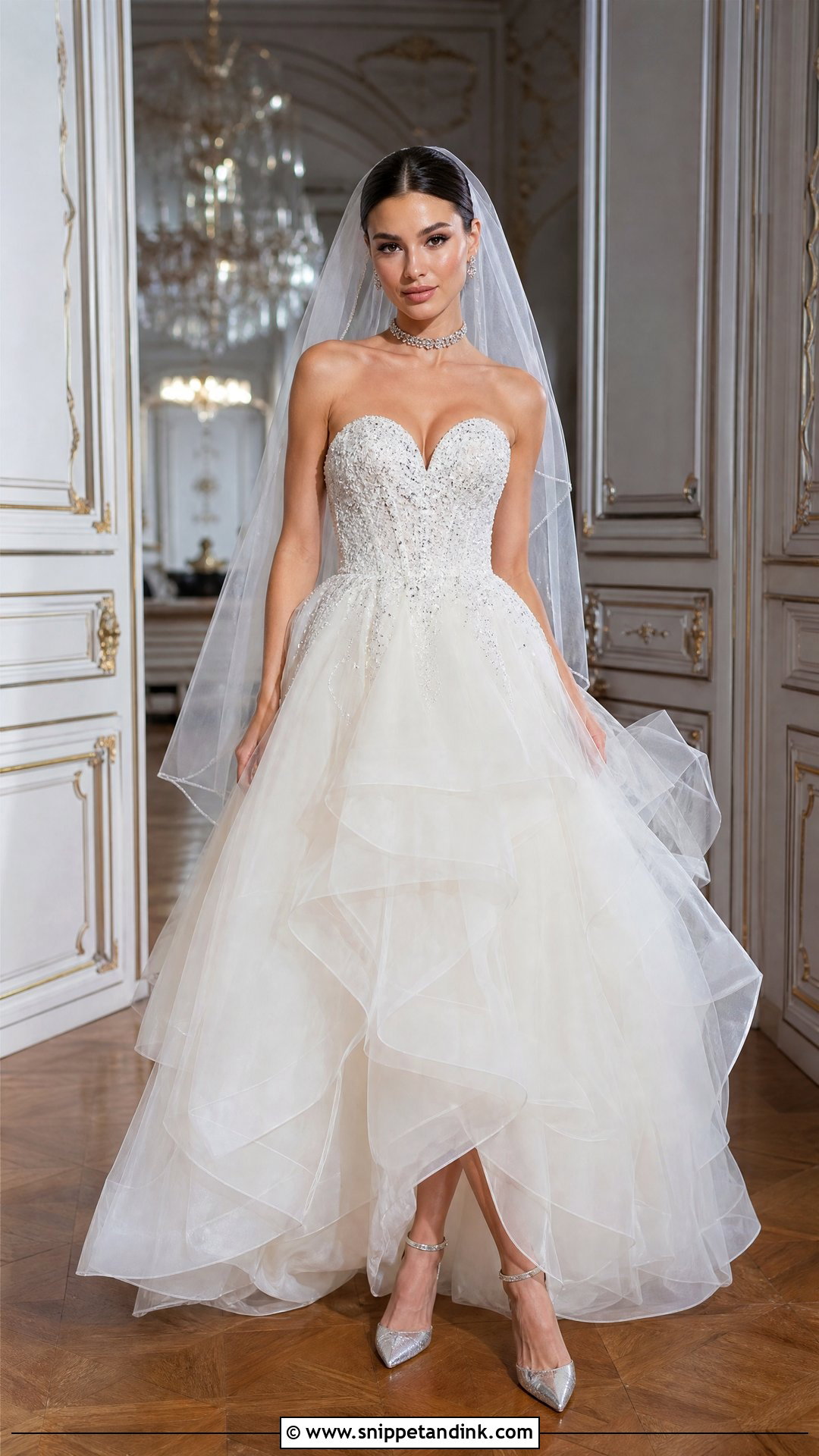
A sweetheart bodice already has two curves, so the necklace should be the straight, calm line above them. Pair a fitted bodice and layered tulle skirt with a slim crystal choker whose stones are evenly spaced. Oversized bib styles fight the neckline instead of framing it. Crystal studs, a polished updo and a fingertip veil with a plain edge keep the sparkle in one zone. If the bodice is beaded, hold the necklace up against it in daylight before buying; silver-toned crystal next to gold-backed beading looks oddly grey in photographs. This one belongs in a ballroom or hotel at night, where chandelier light gives crystal something to reflect.
3. Off-the-Shoulder Wedding Dress With Velvet Choker
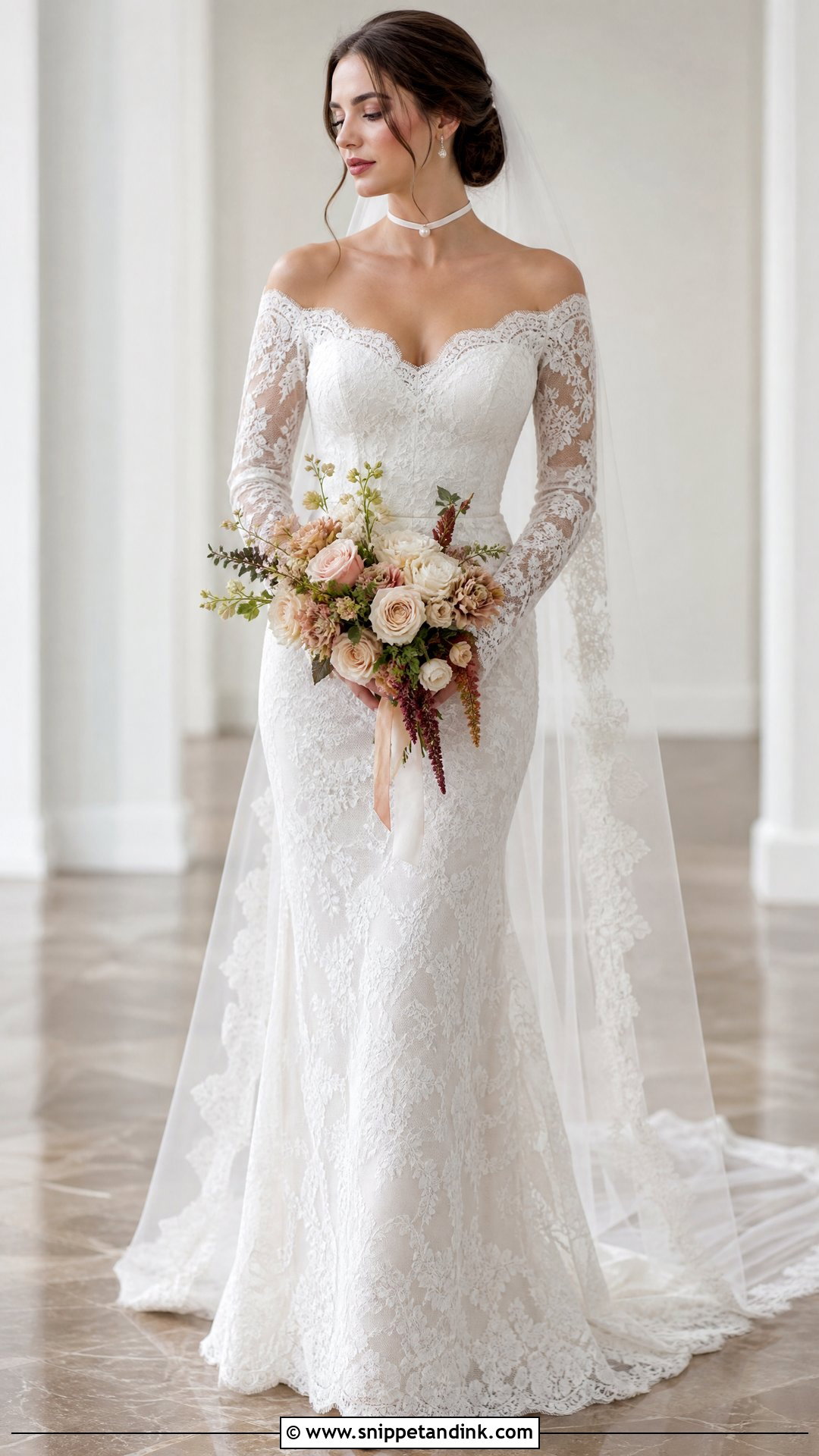
Velvet is a cold-weather fabric, and it looks out of place at a July garden party. For fall or winter, though, a narrow ivory velvet band with a tiny pearl or crystal at the center suits an off-the-shoulder lace gown with fitted long sleeves very well. The band fills the open neckline without breaking the shoulder line. Loose waves gathered low, small pearl drops and a lace-edged veil that complements rather than copies the dress lace keep everything soft. A practical point I always mention: velvet picks up foundation and setting powder, so put the band on after makeup is fully set, and carry a lint roller.
4. Square Neck Wedding Dress With Pearl Collar Choker
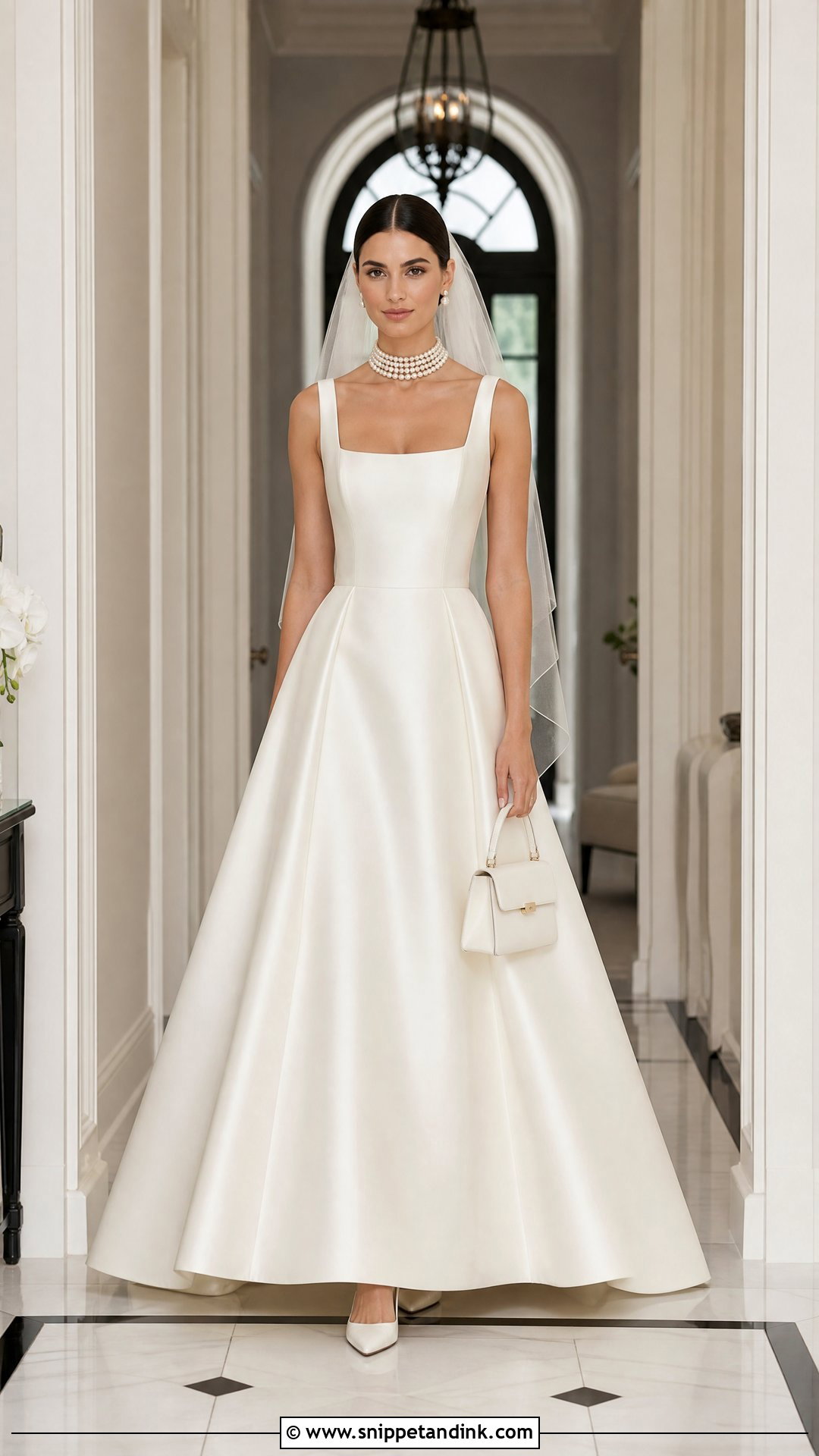
The square neckline is architectural, and a structured pearl collar of two or three rows repeats its horizontal line almost exactly. Mikado or a heavier satin holds that shape best, finished with wide straps and a defined waist. With a collar this present, add nothing else at the neck; small pearl earrings are enough. Keep hair smooth and off the shoulders so the symmetry shows, and choose a medium-length veil, pointed satin shoes and a compact top-handle bag. What I check with multi-row collars is the spacer bars between rows. Good ones keep the strands lying flat when you turn your head; cheap ones let the rows twist and bunch by the reception.
5. Deep V-Neck Wedding Dress With Diamond Choker
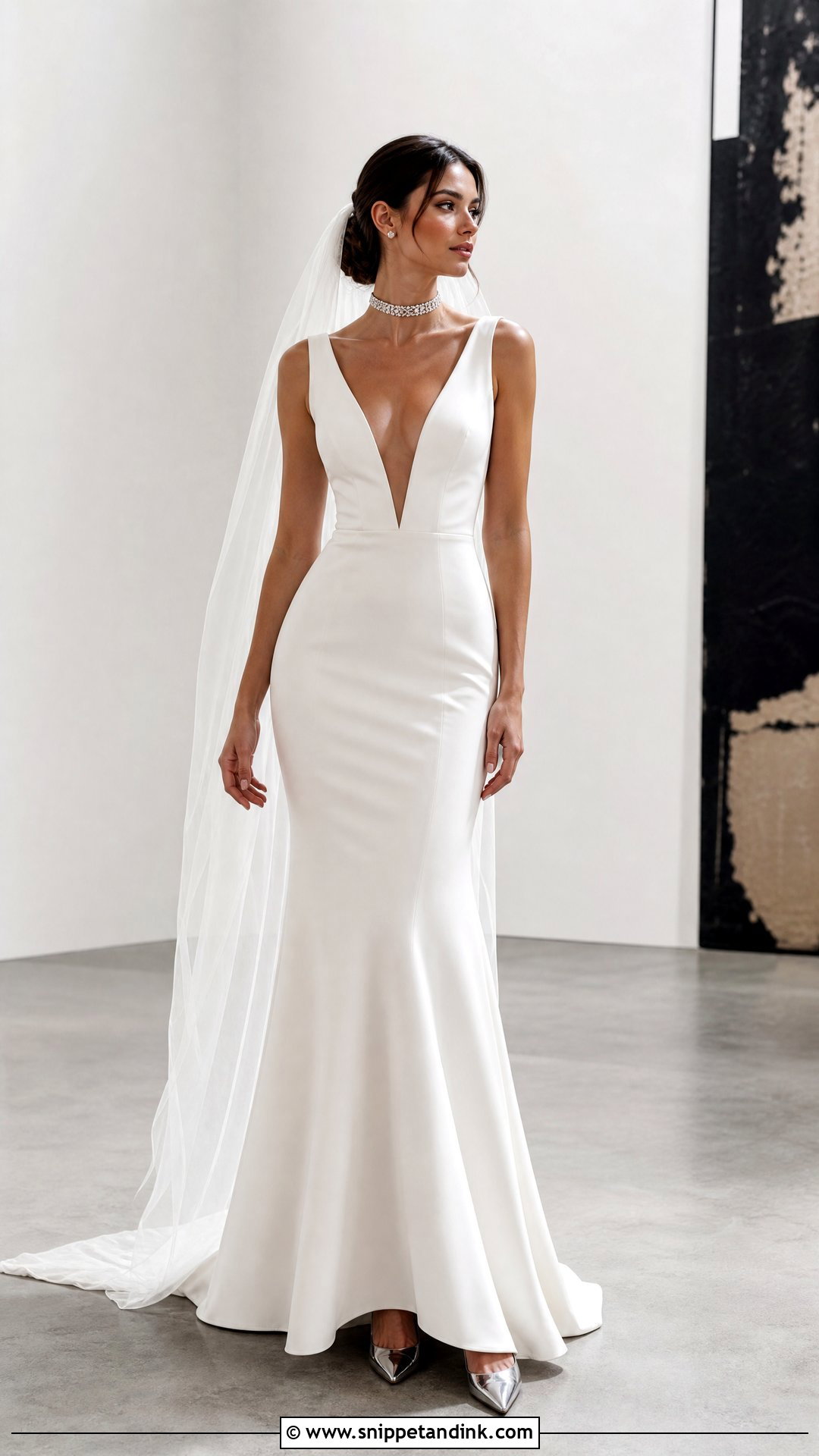
A plunging V and a choker work against each other on purpose: one line runs down, the other circles the throat. The necklace must sit high and tight, never sliding toward the V, or the contrast collapses. A fitted crepe gown with solid internal support and a softly flared skirt gives the cleanest canvas. I prefer a single row of graduated stones here, larger at the center and tapering toward the clasp, because it gives sparkle without a heavy collar look. Small studs, a low chignon and a raw-edge veil keep it quiet everywhere else, with silver sandals or pumps beneath. Ask your seamstress about fashion tape and bodice adjustments early, since a deep V that shifts will pull the whole outfit off balance.
6. Corset Wedding Dress With Floral Choker
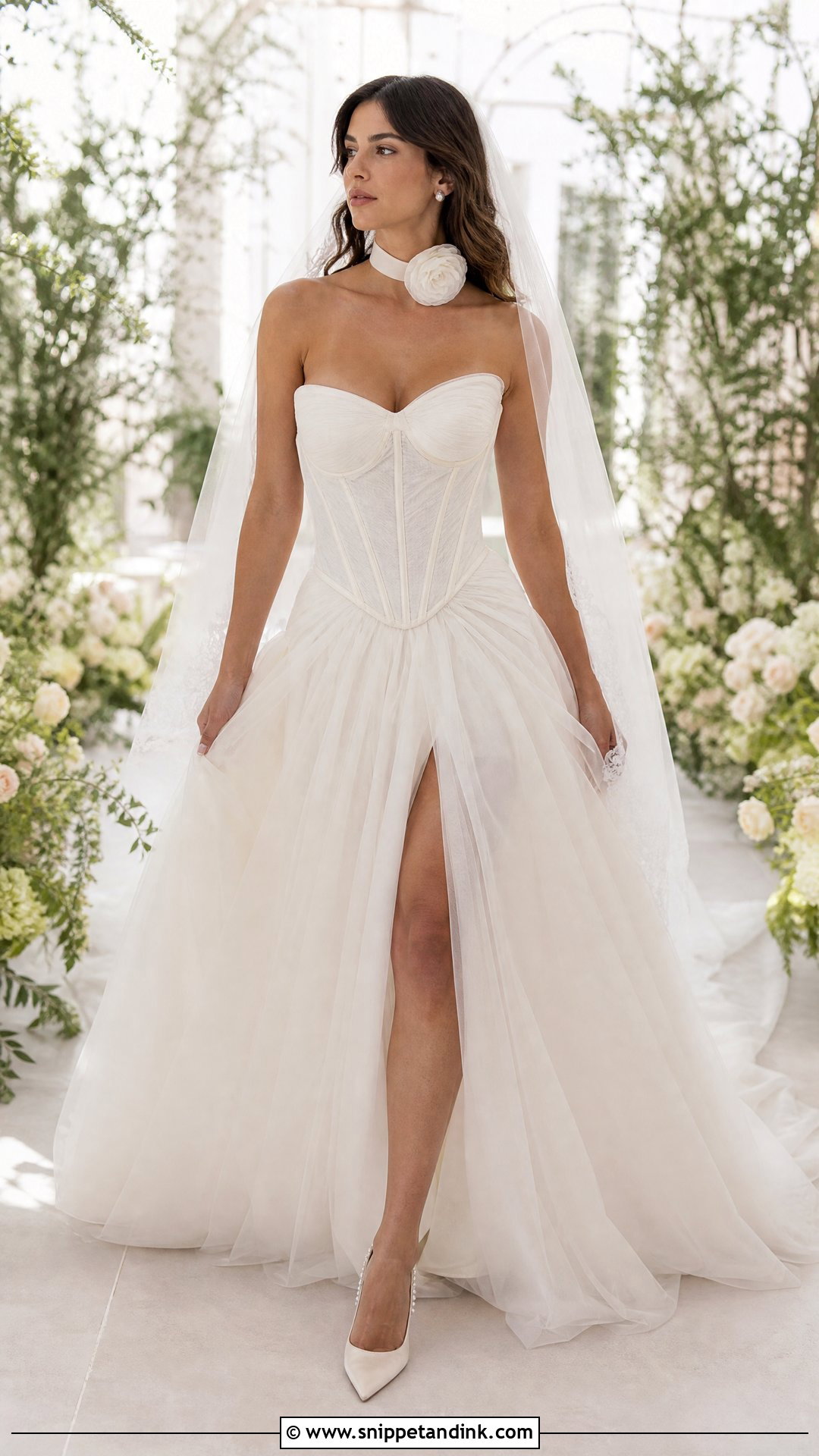
One sculpted fabric flower, placed slightly off center, is the right amount of decoration for a corset gown. More than one starts to look like a corsage. Choose a dress with a defined bodice, light boning, a basque waist and a full tulle skirt, then pair it with an ivory fabric choker carrying that single bloom. Skip floral earrings; repeating the motif crowds the face. Tiny pearl studs, a neat bun, a chapel-length veil and pointed heels are enough. Ask the maker for a hook-and-eye or snap closure rather than a tie, which lets you take the choker off cleanly for the reception without unpinning your hair.
7. Slip Wedding Dress With Ribbon Choker
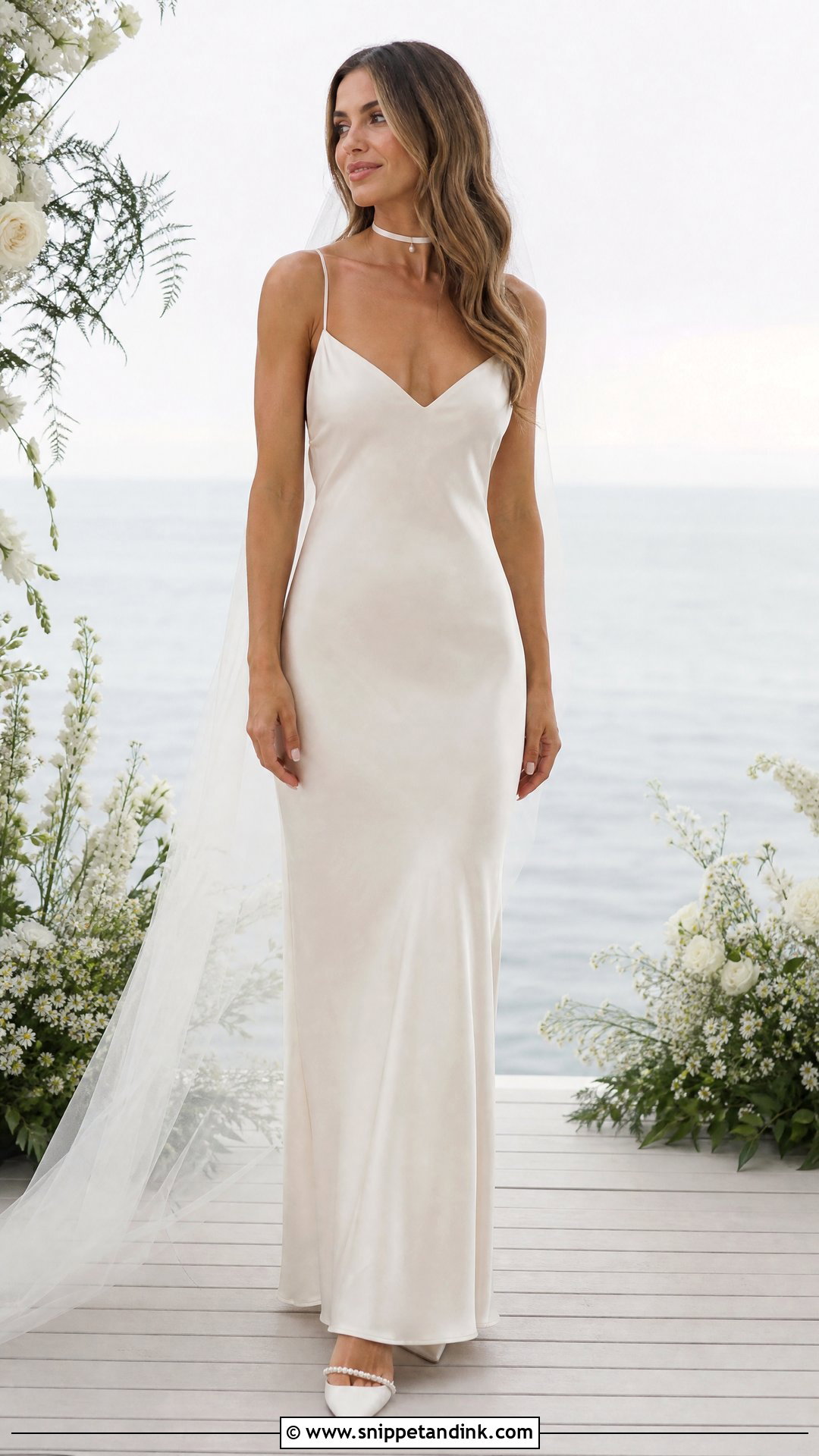
Could a bridal outfit be minimal and still memorable? A bias-cut satin slip dress with a narrow silk ribbon at the throat manages it. Look for slim straps, a softly draped neckline and a skirt that skims rather than clings. Tie the ribbon with a small bow at the back or side, and if you want one point of shine, thread a tiny pearl pendant onto it. Smooth waves, small earrings, a sheer floor-length veil and pointed mules or fine sandals keep the mood quiet. Ribbon is the most forgiving choker for comfort, but it creases where it’s knotted, so steam it the morning of and tie it after your dress is on. Bias satin also shows every seam underneath, which makes smooth undergarments and careful tailoring non-negotiable.
8. Long-Sleeve Wedding Dress With Silver Choker
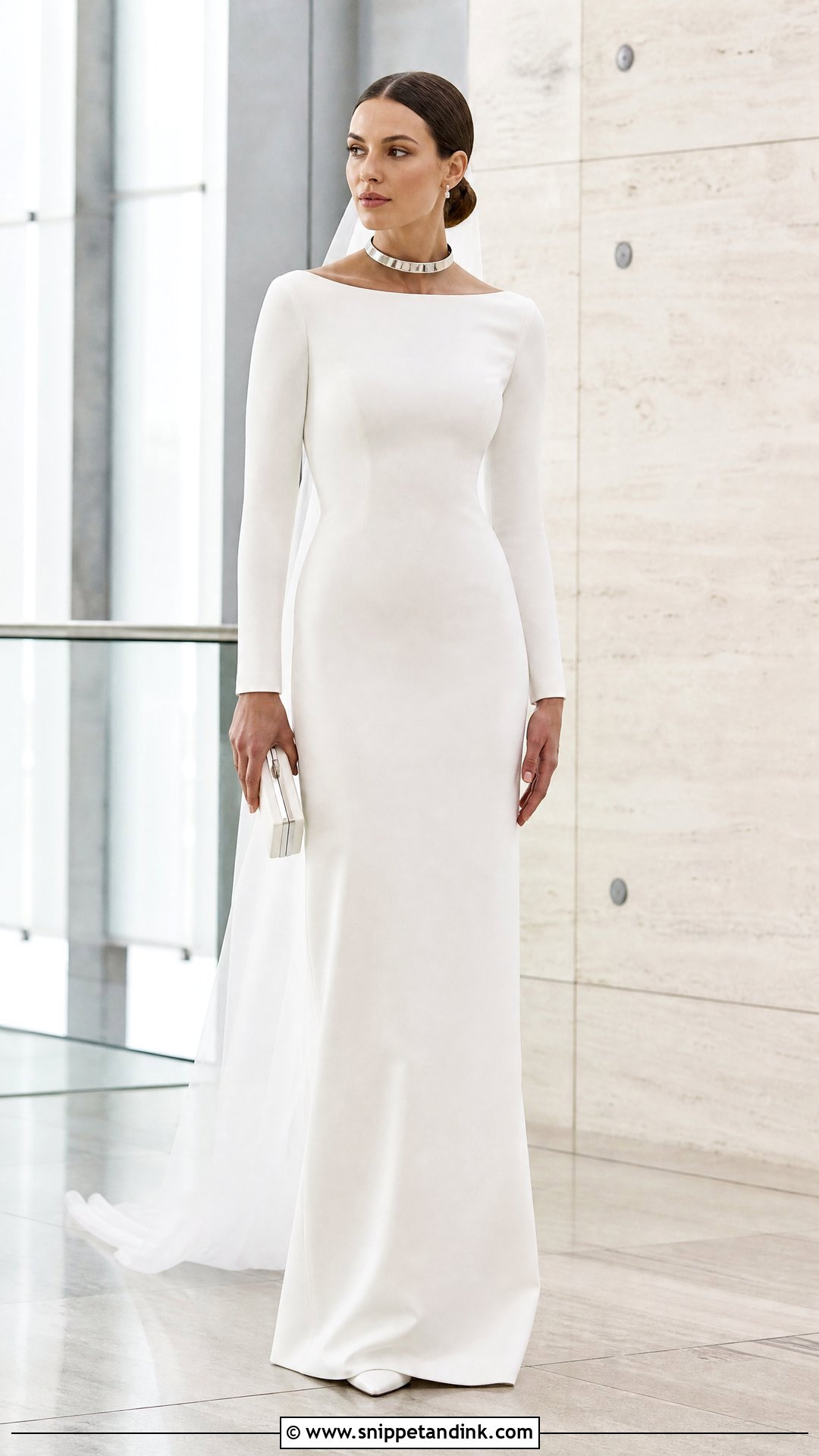
Silver on matte crepe is a cool, modern contrast, and it reads best on a long-sleeve column or sheath gown with a wide bateau neckline. The choker should be smooth and sculptural, following the curve of the neck without bulk. A rigid collar needs to be the right diameter: too small and it presses when you swallow, too large and it slides forward and tilts. Tiny silver earrings, a sleek center-parted bun with the veil tucked beneath it, white pointed pumps and a structured clutch keep everything sharp. The sleeves cover the arms, so the reflective metal at the neck stops the outfit from feeling buttoned up. I’d suggest it to brides who want clean lines and no lace.
9. Tea-Length Wedding Dress With Pearl Choker
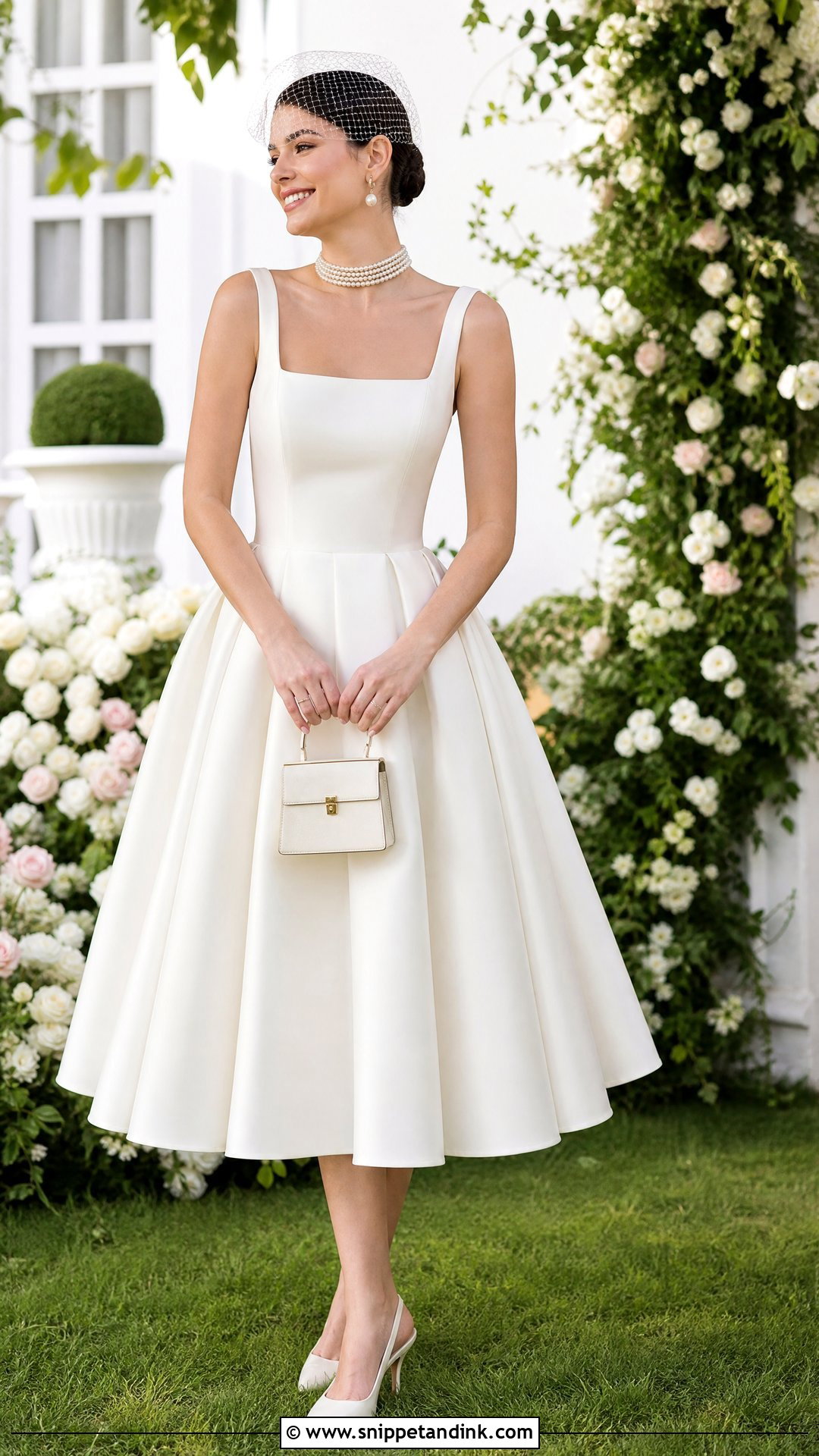
Tea-length dresses give a pearl choker a cheerful, vintage-inspired setting, and a short single strand is the most natural partner. Pick a fitted sleeveless bodice with a bateau or sweetheart neckline and a full skirt that ends between knee and ankle. Pearl button earrings, a birdcage veil and a smooth low bun keep the retro mood without tipping into costume. The shorter hem puts your shoes on display, so slingbacks, embellished flats or block heels with real ankle support matter more than usual. This suits daytime ceremonies and garden venues. On a petite frame, the visible ankle and lighter skirt stop fabric from swamping you.
10. Mermaid Wedding Dress With Rhinestone Choker
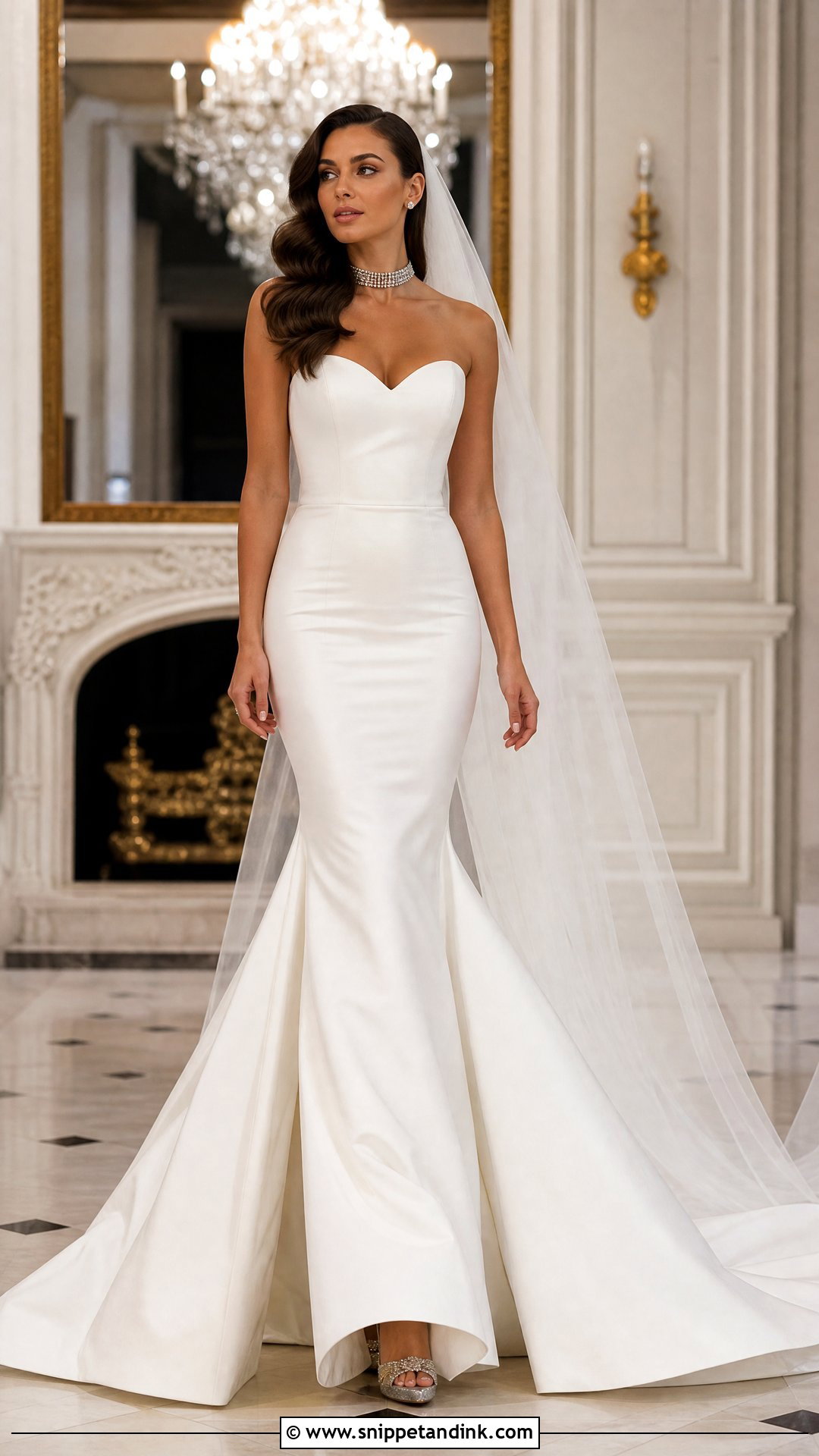
Mermaid gowns are already dramatic, so the choker can match that energy with a medium-width rhinestone band, provided the sparkle is consistent rather than chunky. Strapless or off-the-shoulder crepe that hugs the body before flaring at the knee is the strongest base. Keep earrings small and skip a heavily jeweled headpiece, since rhinestones at both crown and throat split the eye. Waves swept over one shoulder keep the opposite side of the neck open. A long plain veil, crystal heels and a compact silver clutch finish it. Before you commit, sit down in the fitted gown: mermaid shapes push the bodice upward when seated, and a wide choker can end up nudging your jaw.
11. Boho Wedding Dress With Lace Choker
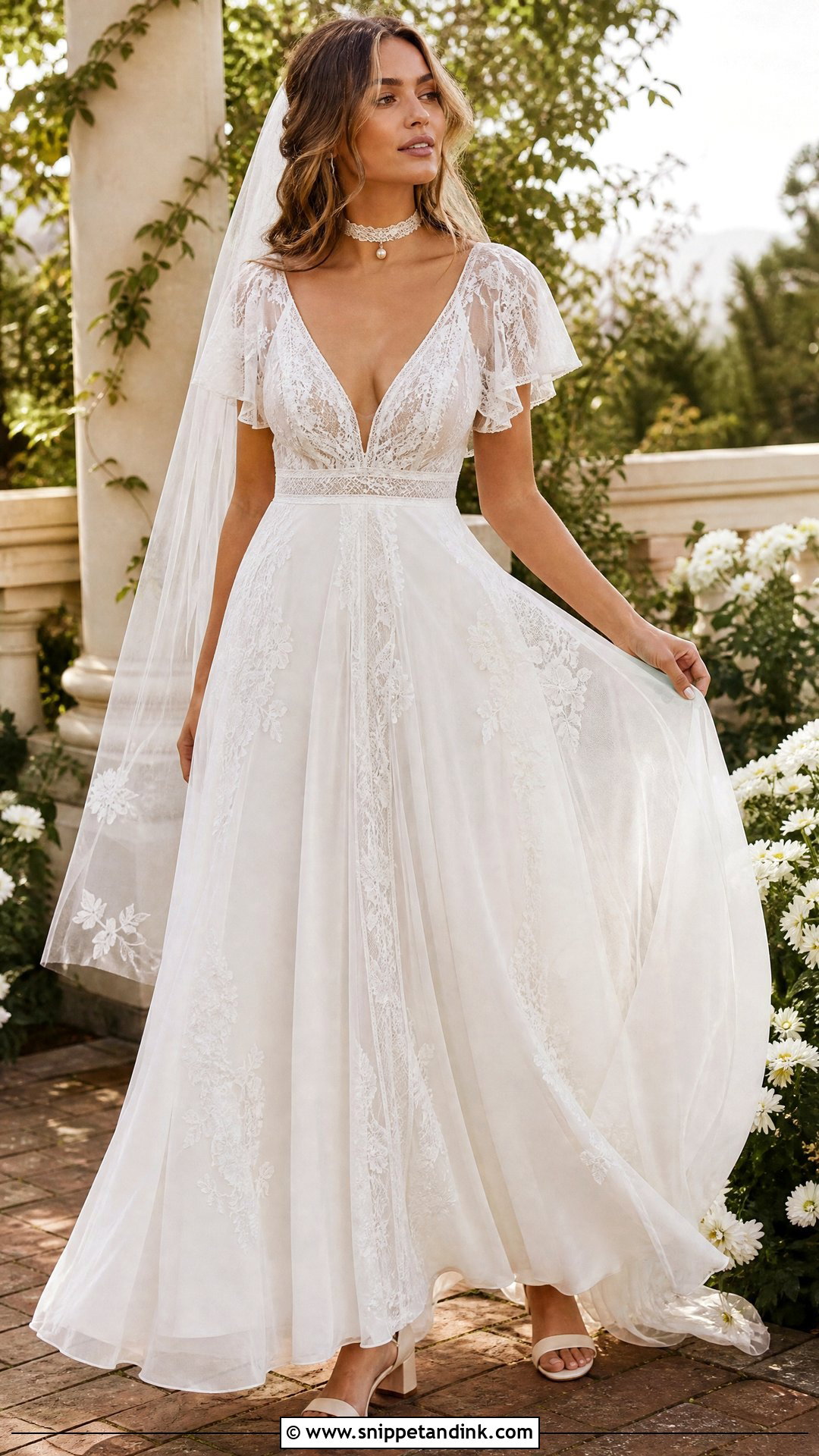
Outdoors, metal can look a little too formal against chiffon, and a narrow lace choker feels more at home. Pair it with a flowing chiffon or lace A-line gown that has flutter sleeves and an open V-neck. Match the lace in tone, not in pattern; two different laces trying to copy each other look like a near miss. A tiny pearl or moonstone centerpiece gives just enough shine. Textured waves, delicate earrings, a light veil or simple comb, block-heel sandals that won’t sink into grass and a woven clutch suit a garden, woodland or destination setting. Lace chokers usually fasten with a small button or tie, and those loosen as the lace relaxes in warm air, so ask for a second hook position.
12. Blush Wedding Dress With Rose Choker
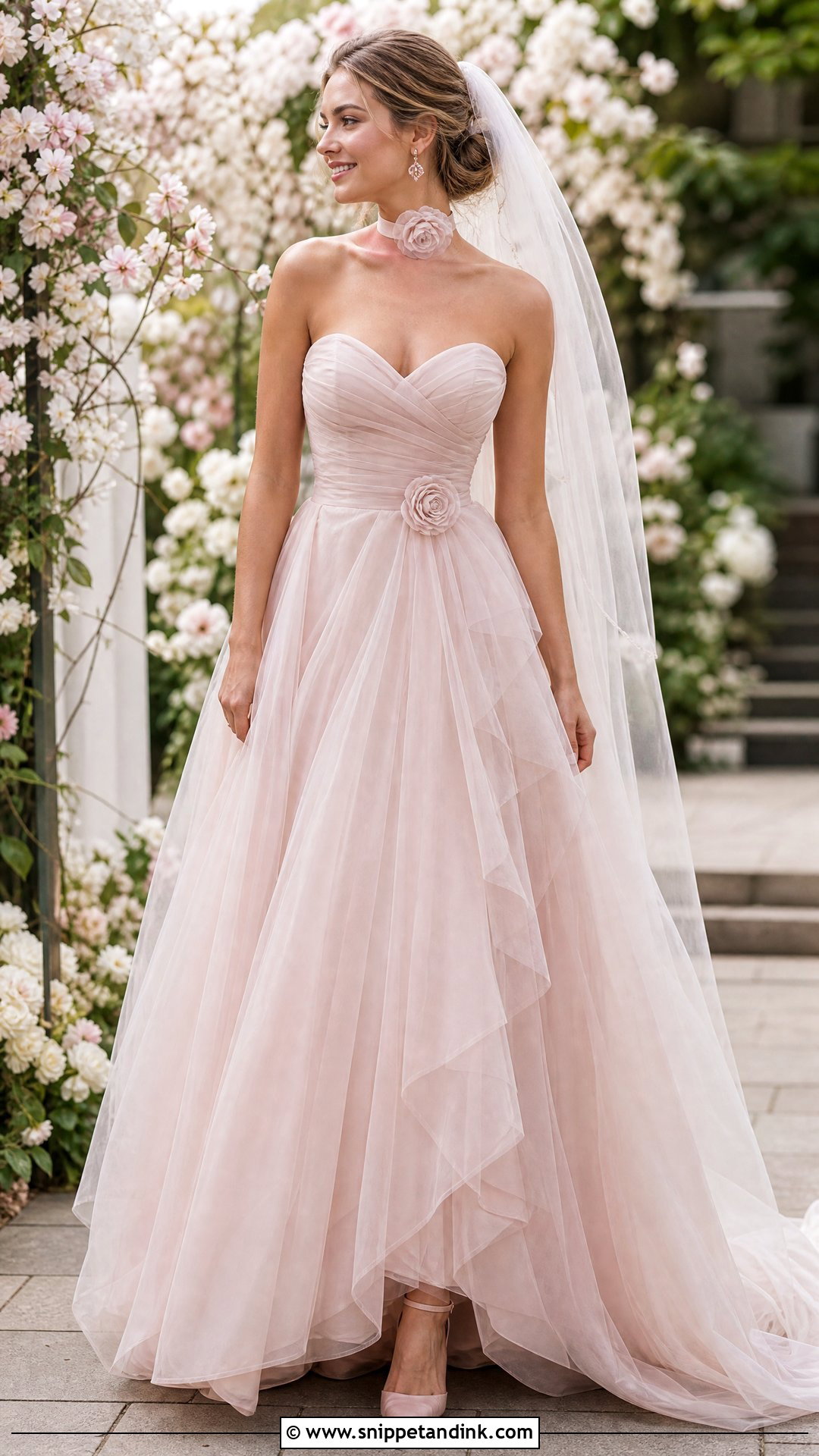
Blush tulle and a handmade rose choker carry color gently, and the main risk is overdoing the flowers. A single fabric rose at the center or just to one side of an ivory or blush band is plenty; a full ring of large roses swallows the neck and the face with it. Choose an A-line or ball gown with a fitted bodice and pale blush layers with little sparkle. Rose-gold earrings, soft pink makeup and a relaxed low bun suit the palette, and a sheer ivory veil keeps the look unmistakably bridal. Blush pumps or neutral metallic heels finish it. I like this for spring, and it gives you color without committing to a saturated gown.
13. Champagne Wedding Dress With Gold Choker
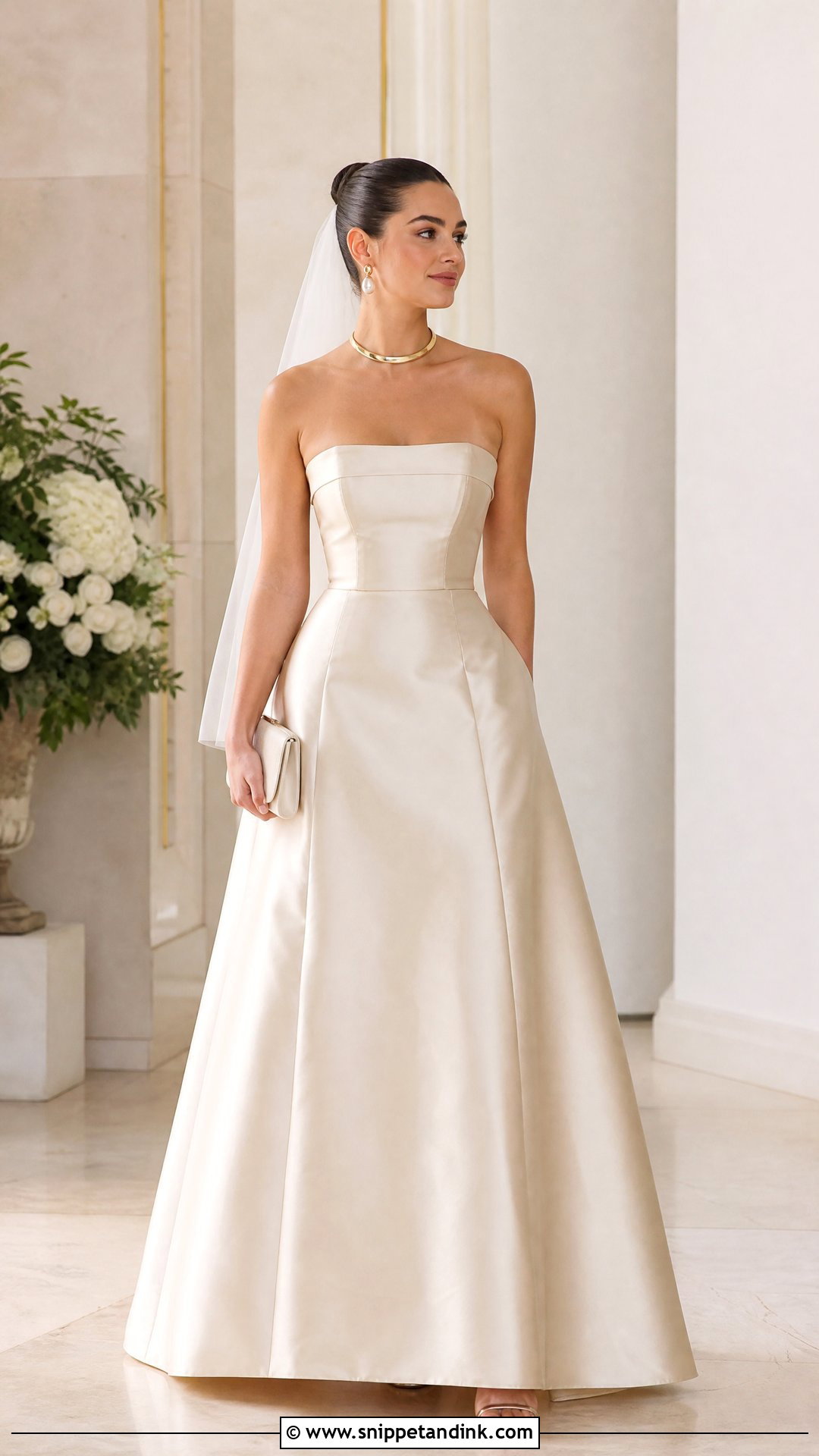
Warm metal flatters warm fabric. Champagne satin or a subtly beaded strapless A-line gown looks richer beside a narrow gold collar than it ever does next to silver. Hold the necklace against the dress in daylight; the gold tone should sit within the fabric’s undertone, not fight it, and yellow gold against a pinkish champagne can clash. A smooth surface or restrained crystal accents keep it refined. Small gold-and-pearl earrings, a low textured bun and a plain ivory veil follow. Gold sandals can extend the color, though a cream clutch is calmer if matching everything feels like too much. For brides who look washed out in bright white, this whole palette is a kinder option.
14. Black and White Wedding Dress With Black Choker
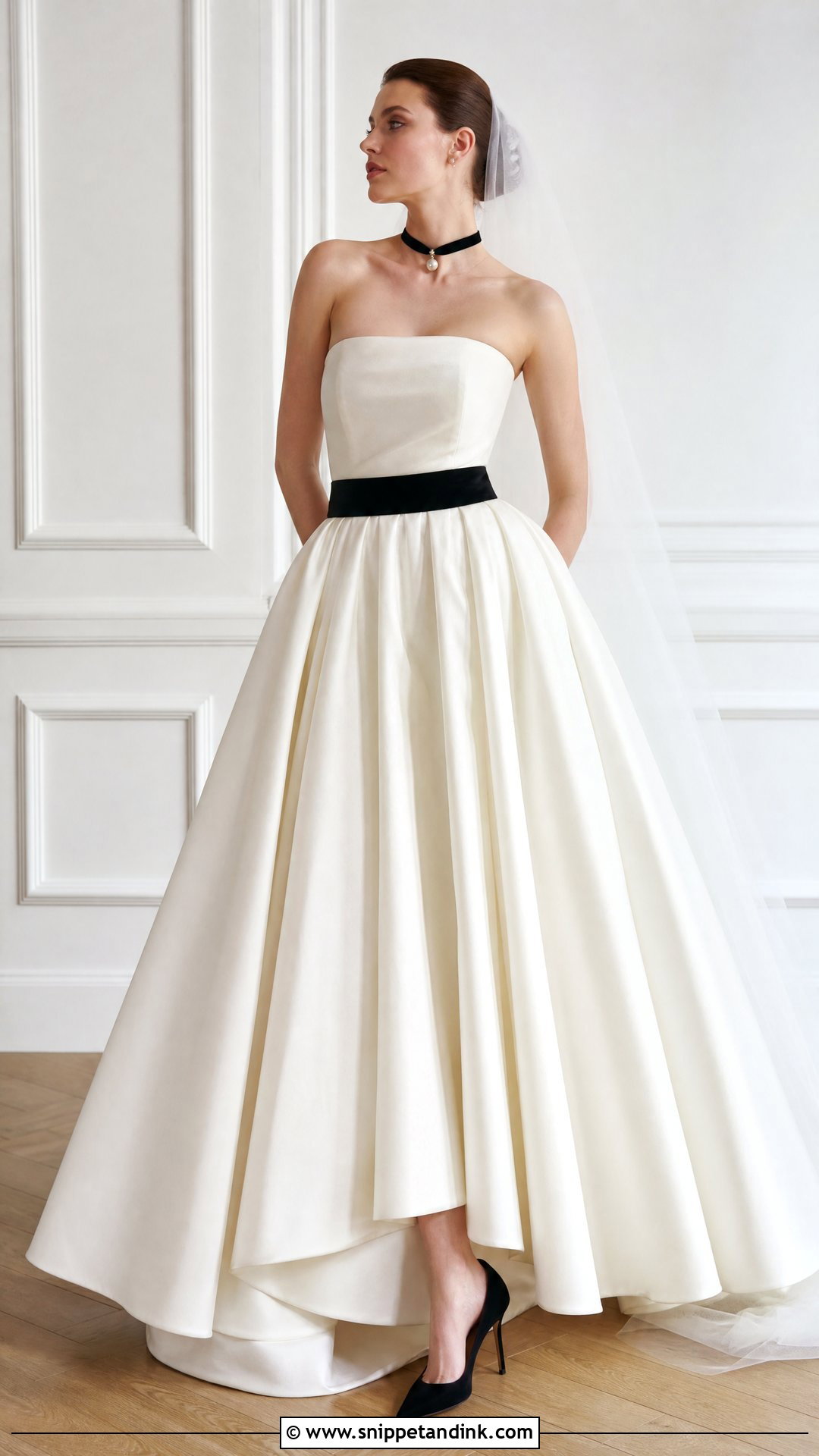
Black at a wedding needs a reason to be there, and that reason is repetition. Start with an ivory strapless ball gown that already has a narrow black sash, bow or trim, then add a slim black velvet choker with a small pearl center to tie the dark accents together. A smooth updo and minimal earrings make the black band look deliberate. A plain ivory veil keeps it bridal rather than theatrical. Black pointed pumps or ivory shoes with small black bows, plus a black satin clutch at the reception, are as far as I’d go. My rule is black in two or three controlled places across the outfit, never more.
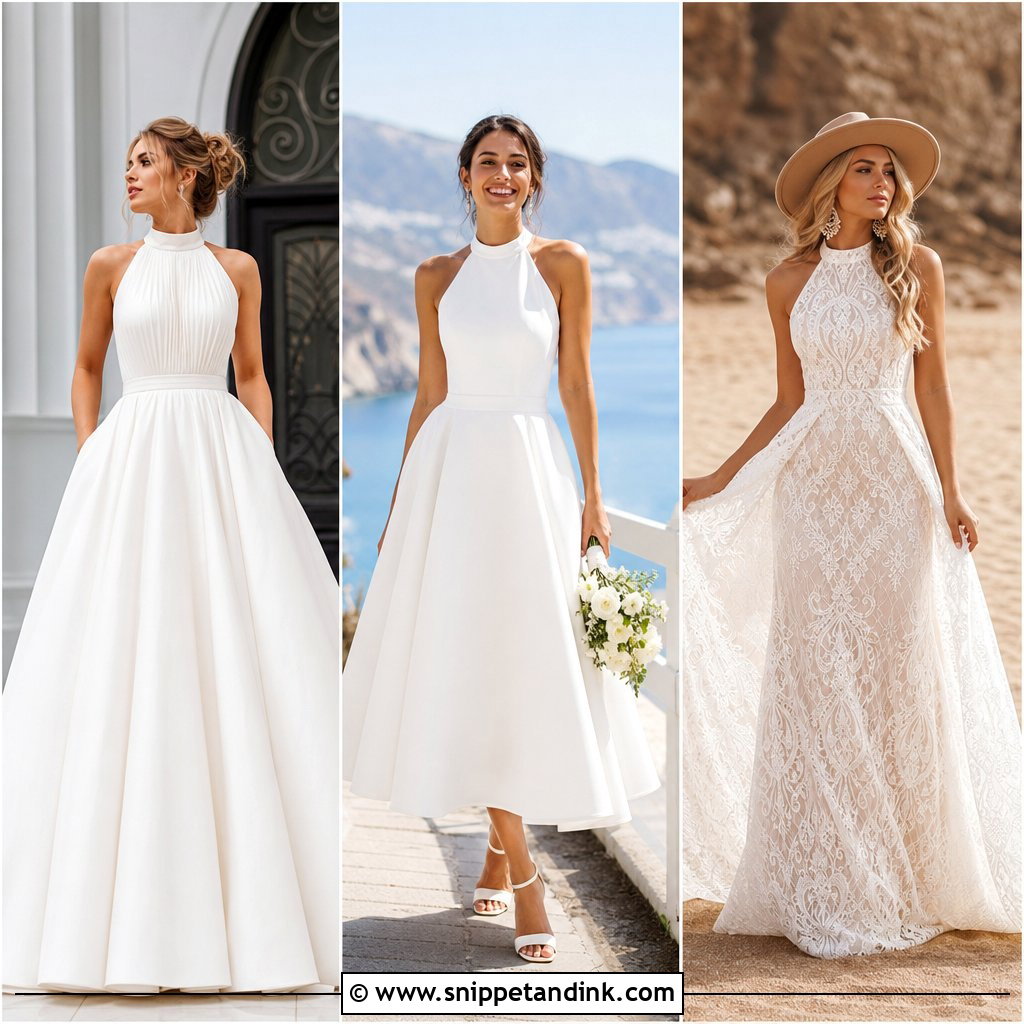

15. Satin Wedding Dress With Matching Fabric Choker
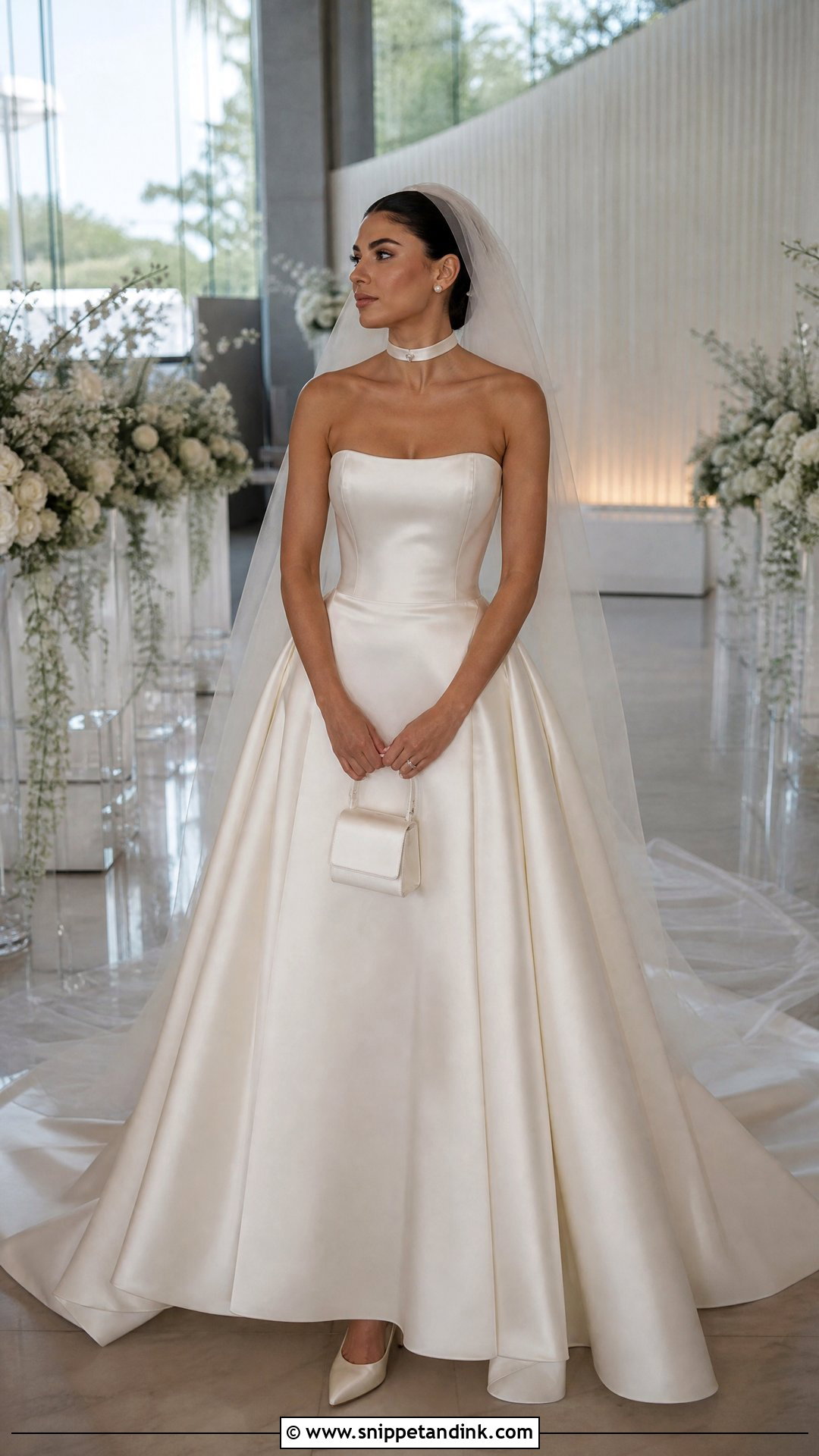
A choker cut from the gown’s own fabric looks like part of the original design, because it shares the dress’s exact sheen. Choose a clean satin dress with a strapless folded neckline, fitted waist and full skirt, and ask your alterations specialist early whether there’s spare fabric from hemming. They’ll need it before the final fitting. Insist on an adjustable closure; satin doesn’t stretch, and a band that fit at 2 p.m. can feel tight after a warm evening of dancing. Add one pearl or small rosette only if the dress truly needs a focal point. Understated studs, a sleek bun, a cathedral veil, satin pumps and a structured mini bag complete the set.
16. Wedding Dress With Bow Choker
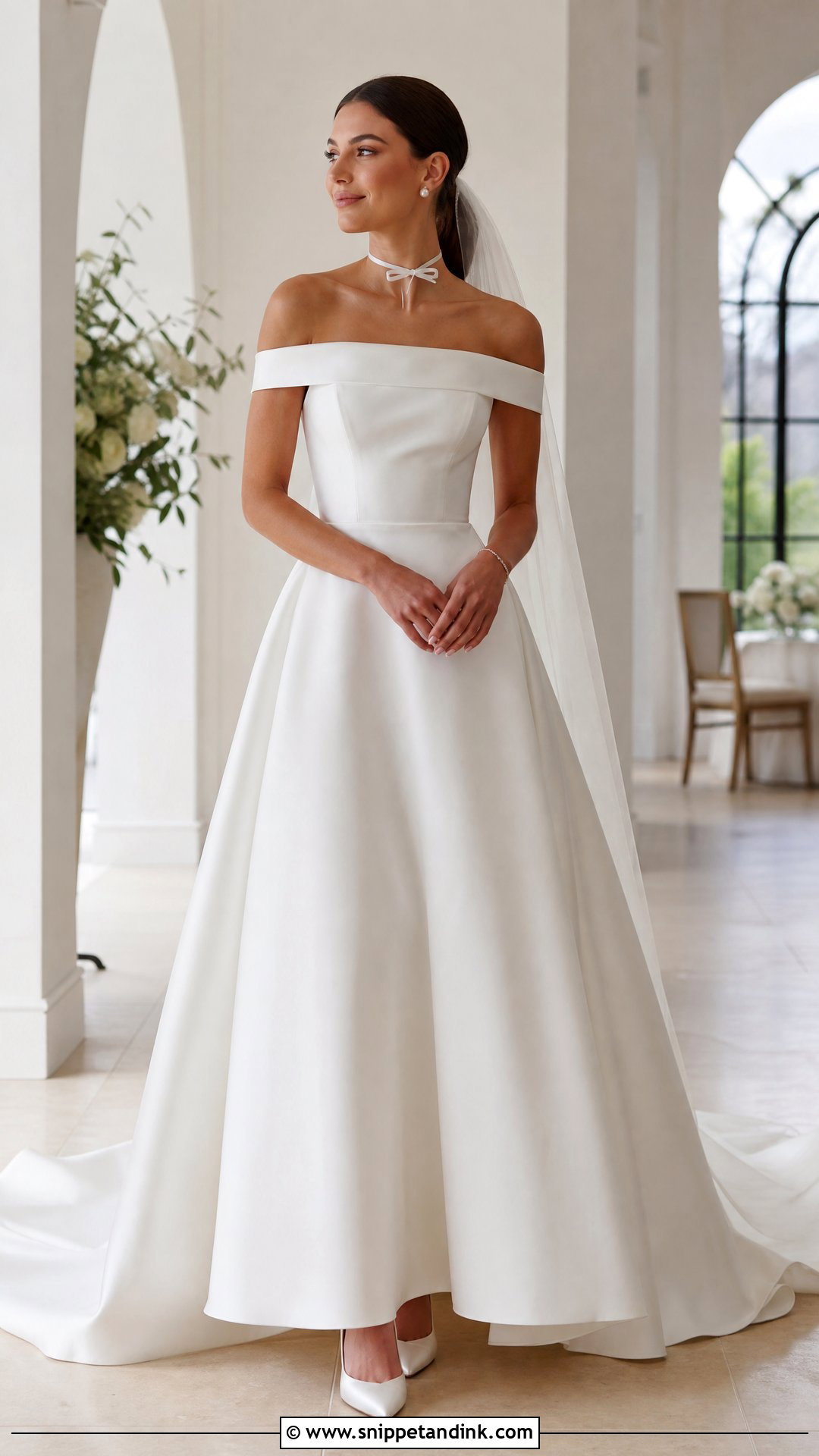
A small silk bow at the throat is playful without being childish, as long as it stays small. Pair it with a clean off-the-shoulder A-line gown or a fitted satin column. Worn at the back, the bow is a surprise for the people behind you during the ceremony; at the front it’s a clear statement. Trim the tails short so they don’t drape onto the neckline. Pearl studs, a smooth ponytail or bun and a sheer veil secured below the hair keep the rest quiet, with pointed pumps and a small satin bag. Choose a front bow and you should drop bows everywhere else, from shoes to sash. One well-placed bow reads polished; four read sugary.
17. Wedding Dress With Drop Pearl Choker
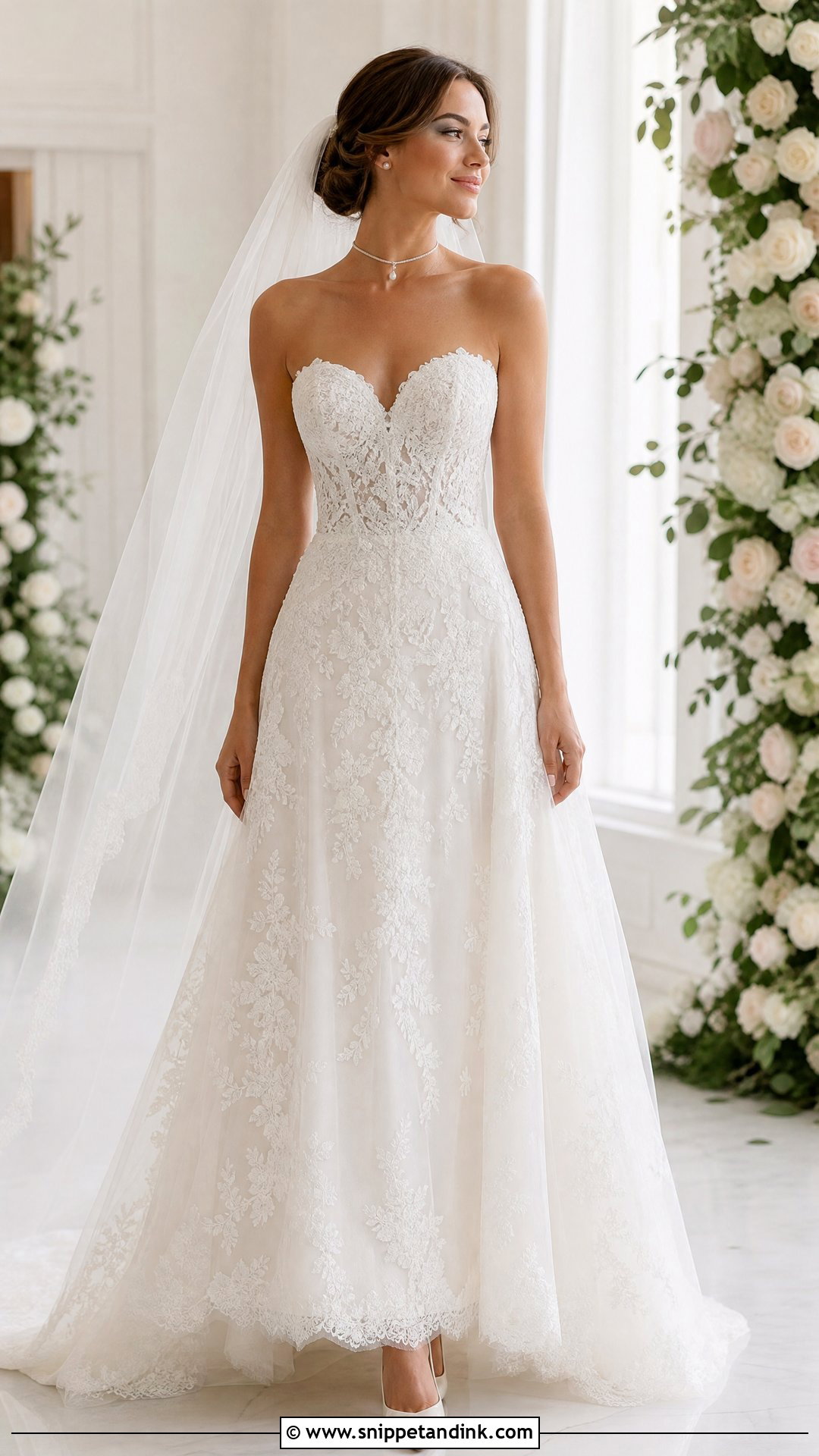
The drop pearl choker sits halfway between a collar and a pendant: the band hugs the neck while one teardrop pearl hangs into the open space above the bodice. That needs a neckline with room, such as a sweetheart, portrait or deep V. A fitted lace gown with a soft A-line skirt keeps it romantic; a satin sheath turns it modern. Look for a delicate chain or single pearl strand carrying the teardrop at the center. I check where the drop lands with the bride standing straight; it should hang clear of the bodice edge, because a pearl that taps against beading all day can scratch. Matching studs rather than long earrings, a low bun, a fingertip veil and ivory heels finish it, and the centered pearl leads the eye straight to your face in close-up portraits.
18. Wedding Dress With Blue Gemstone Choker
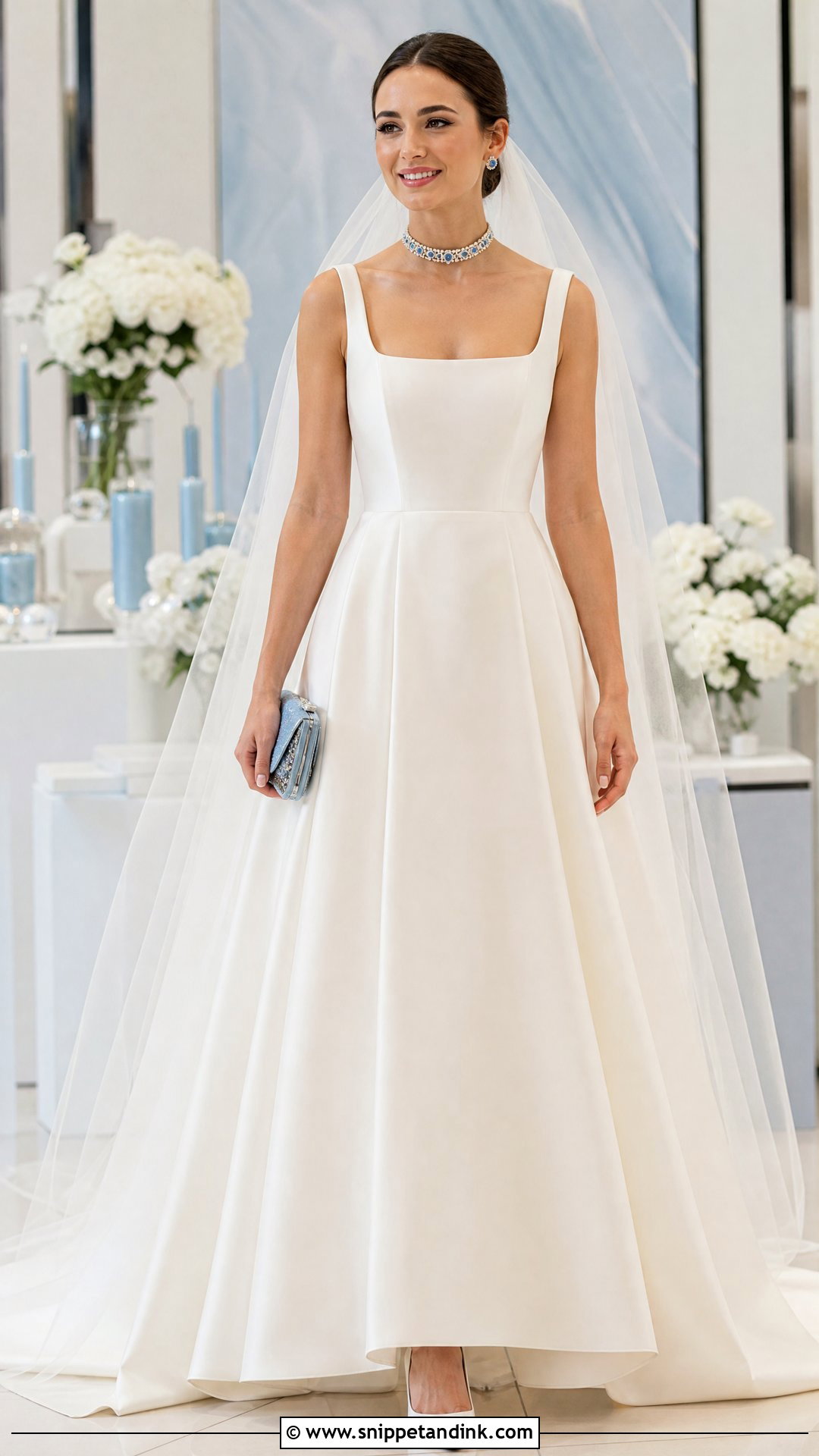
A blue gemstone choker is the most natural way to carry a something-blue at the neckline. Pale blue crystal, sapphire, aquamarine tones or blue enamel each give a different strength of contrast, and the gown should stay plain enough to let them show: a fitted satin bodice and softly flared skirt with a strapless, square or off-the-shoulder top. Natural aquamarine is pale and can almost vanish in bright sunlight, while sapphire and enamel hold their color in photos. Tiny blue or clear studs, a neat low bun and a sheer veil without colored trim follow. A small blue clutch can echo the accent at the reception, but keep blue elsewhere to a minimum.
19. Minimal Wedding Dress With Sculptural Choker
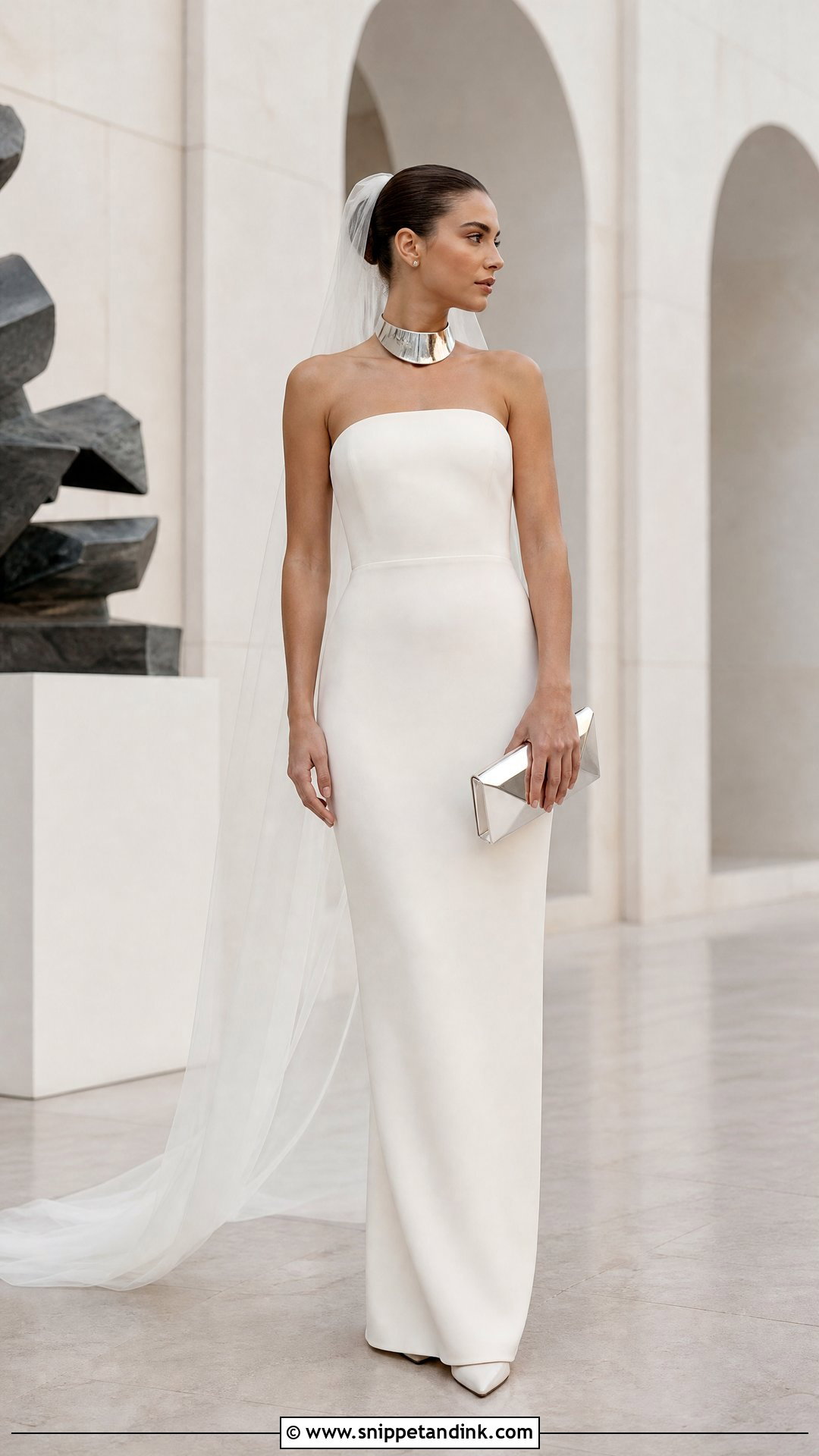
On a truly minimal dress, one sculptural piece of jewelry carries the whole outfit. Start with a strapless crepe column with a straight neckline and a low back, then add a slim curved choker in polished silver, soft gold or pearlized white. Turn your head fully left and right while wearing it; rigid sculptural pieces that look ideal in the mirror can dig in at the side of the neck once you move. No pendant, tiny studs, a sleek bun and a long plain veil let the shape speak, with pointed pumps and a geometric clutch. Galleries and city venues suit it. Because nothing on the gown distracts, every seam and proportion shows, so tailoring has to be precise.


20. Wedding Dress With Choker and Cape
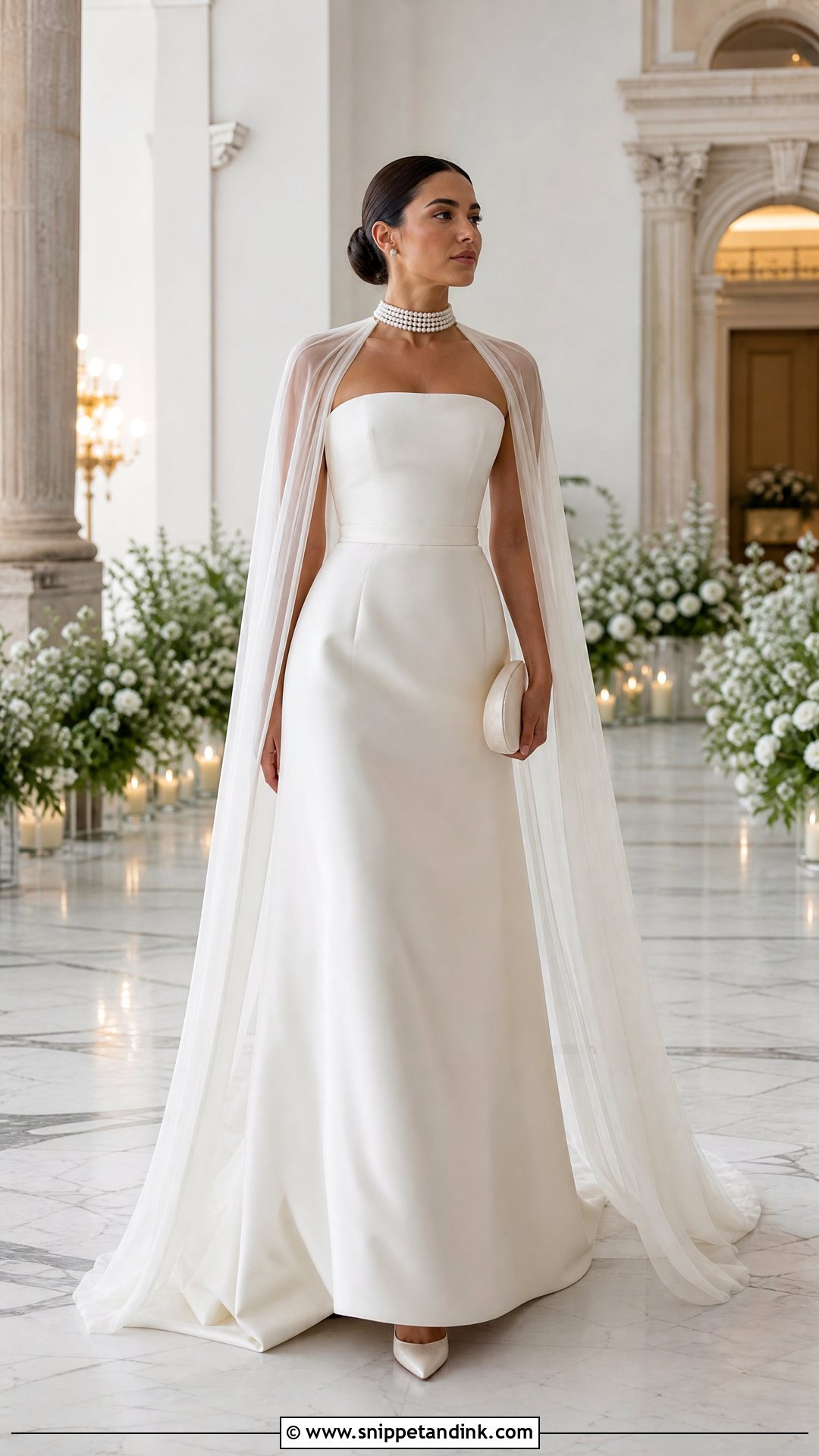
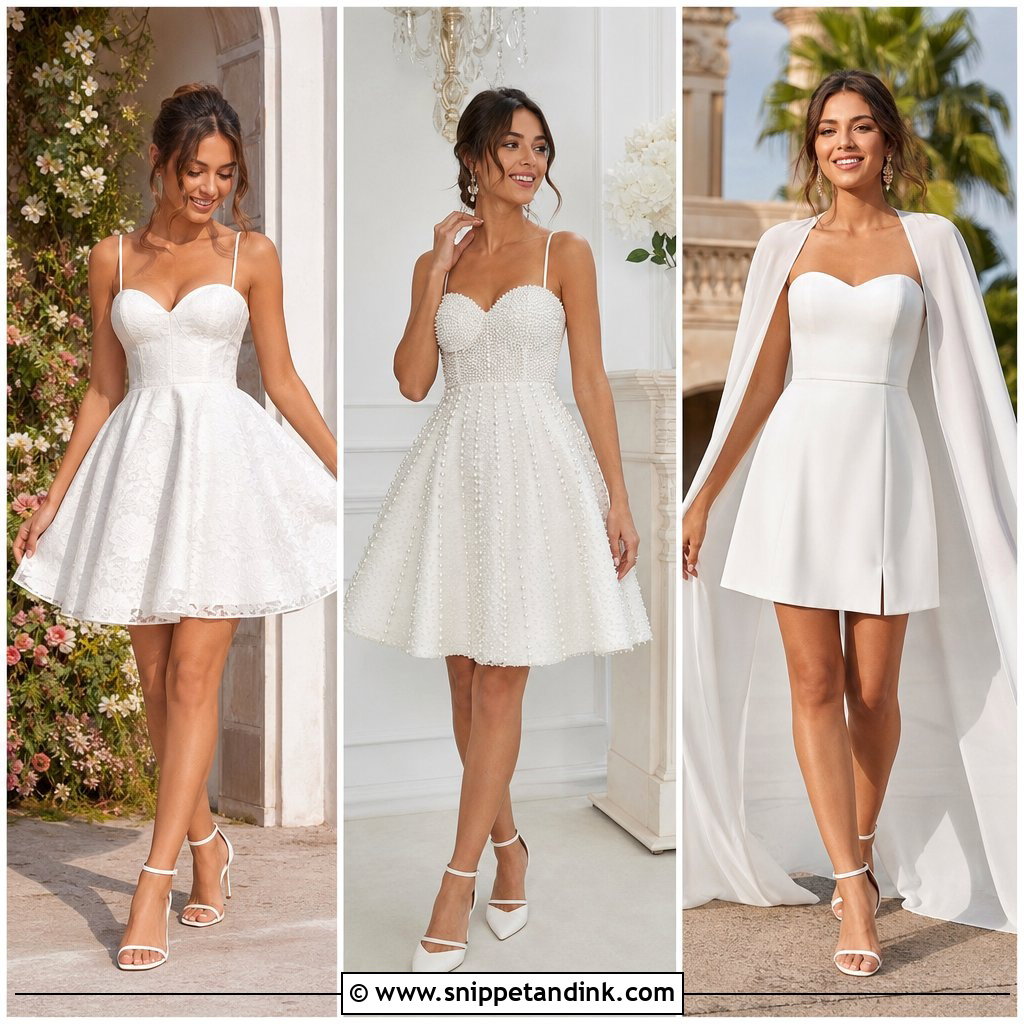
A cape and a choker can share the spotlight if both stay light. Start with a strapless crepe or satin gown with a fitted bodice and gentle A-line skirt, then add a delicate pearl or crystal choker that sits close to the neck. The sheer floor-length cape should attach at the shoulders or the dress, never to the necklace itself. A cape hooked to the jewelry tugs the clasp every time someone steps on its hem, and that’s how strands snap. Keep the cape’s neckline plain so it doesn’t crowd the choker, wear small studs and a smooth bun, and skip a separate veil since the cape provides movement. Ivory pumps and a simple clutch finish it, and taking the cape off gives you a second look for the evening.
Clasps, Veil Combs and Makeup: Where Chokers Go Wrong on the Day
A choker sits right where hair, veil and foundation all meet, which is why I treat the morning-of routine as part of the jewelry plan.
Order of dressing
Pearls and fabric go on last, after hairspray, perfume and setting spray have dried. Hairspray dulls pearl nacre and leaves a film on velvet and satin. Have whoever buttons your dress fasten the choker too, so nobody reaches back through finished curls with their arms up.
The clasp and the veil
A veil comb set low at the nape can catch a box clasp or a lobster clasp every time you turn. Ask your hairstylist to place the comb above the clasp, and choose a clasp that lies flat, such as a fold-over or a hidden magnetic one with a safety catch. Loose hair at the back can also wind itself into fine chain links, which is another argument for an updo with any delicate piece.
After the wedding
Wipe pearls with a soft dry cloth before putting them away, store them flat rather than hanging so the silk thread doesn’t stretch, and keep crystal separate so the stones don’t scratch softer beads. Fabric chokers can be spot cleaned by the same specialist who handles your gown. If a pearl strand felt loose by the end of the night, have it restrung before it goes into a drawer for years.
Start With the Neckline, Then Let the Choker Follow
Every pairing above began with the neckline, and that’s the order I’d keep. Open shapes give pearls, crystal, ribbon, flowers and sculptural metal the clearest space; high or heavily embellished necklines rarely need a choker at all. Once the neckline is settled, match the metal to any beading and the fabric’s undertone, and quiet the earrings and hairpieces if the choker is bold. Then wear the actual piece around the house for an hour, sitting, turning and laughing. A choker that still feels comfortable after that will be fine on the day.
You'll Like These Ideas:






Leave a Reply