
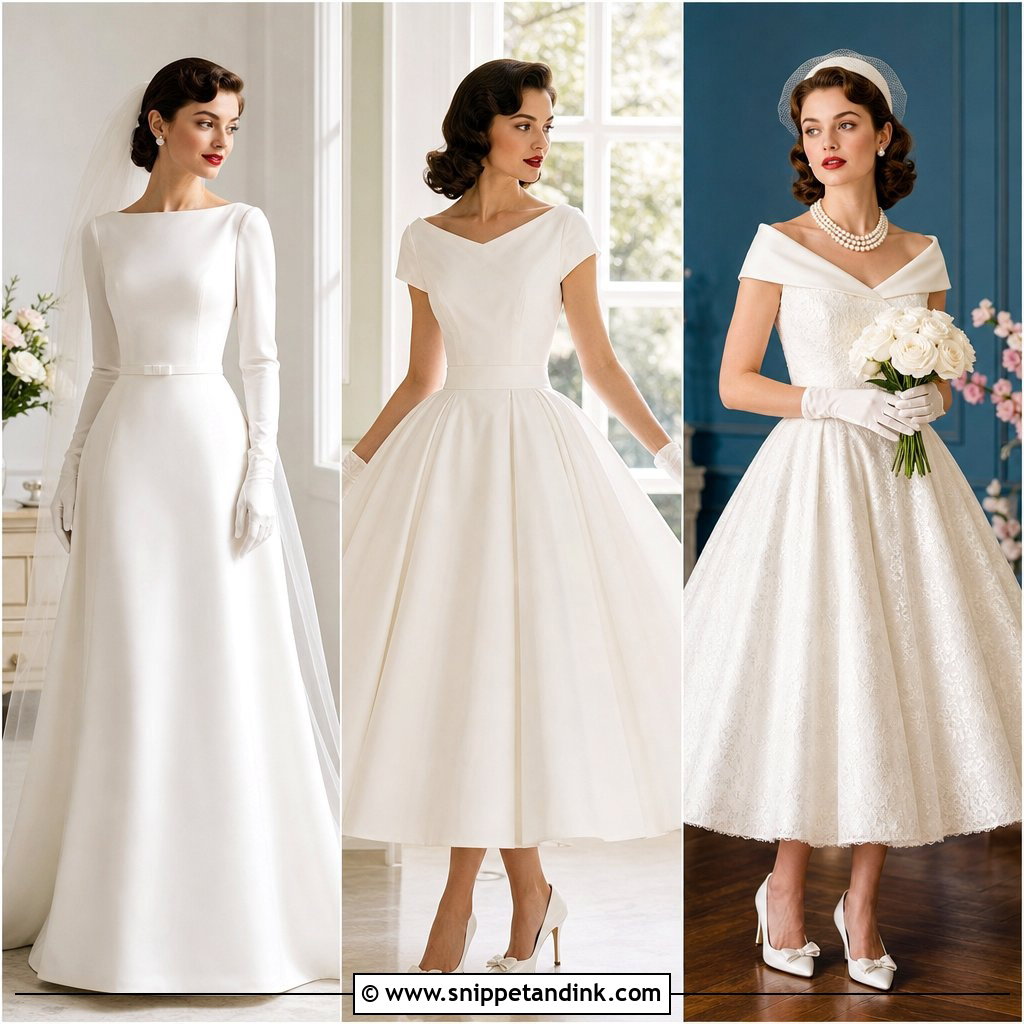
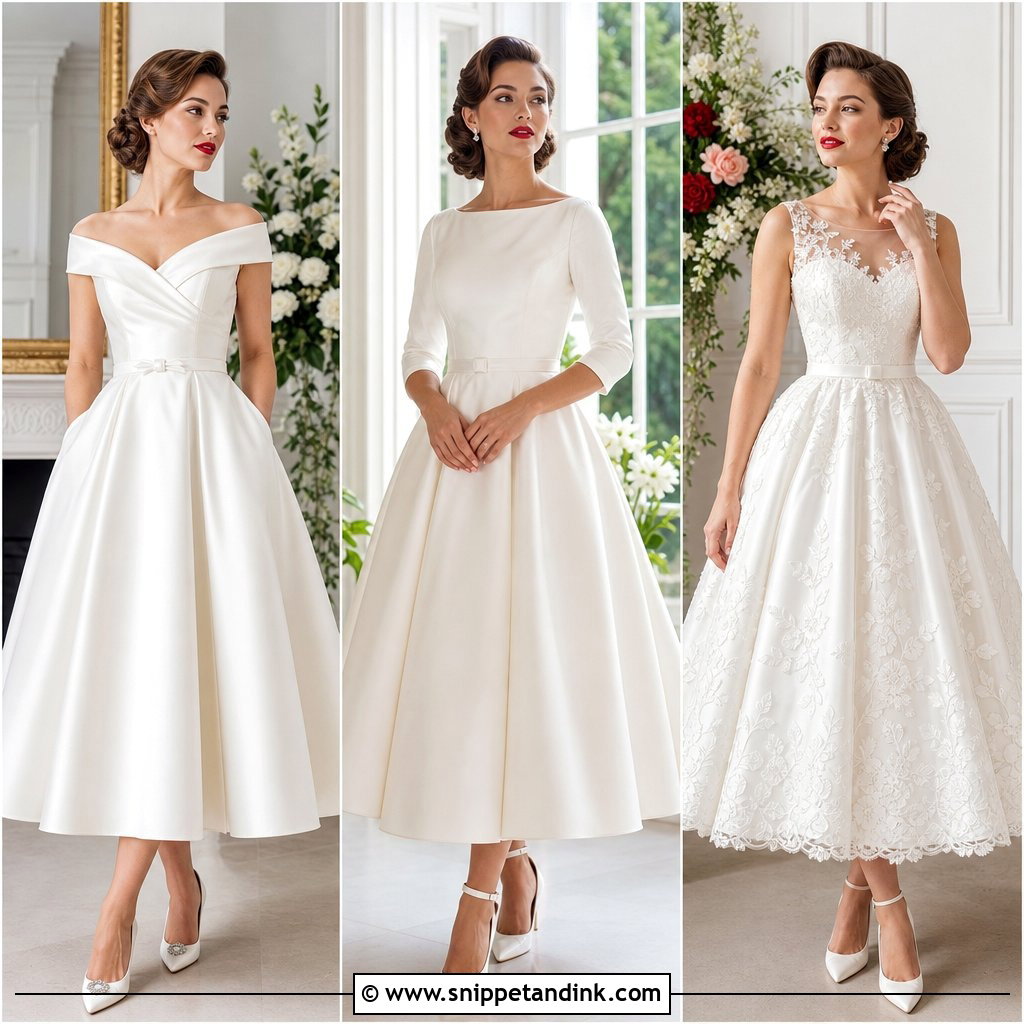
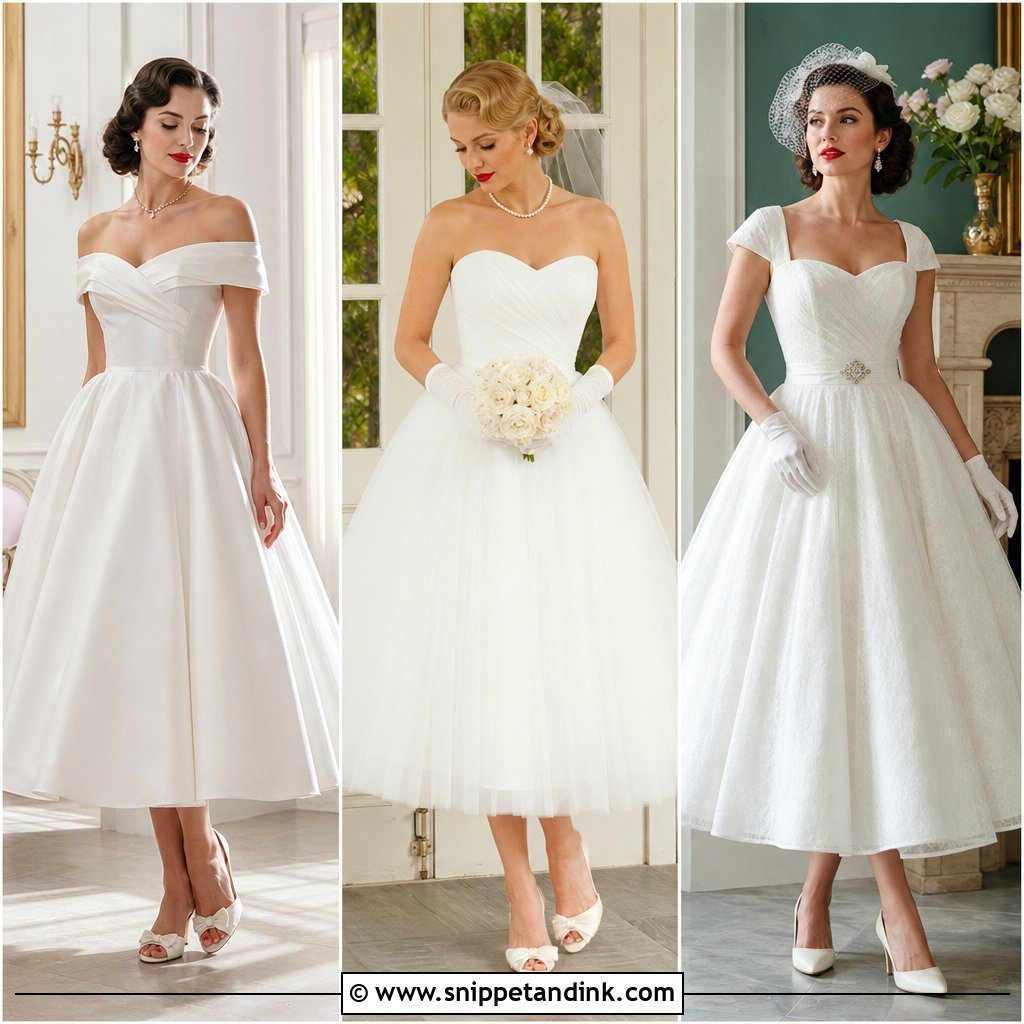
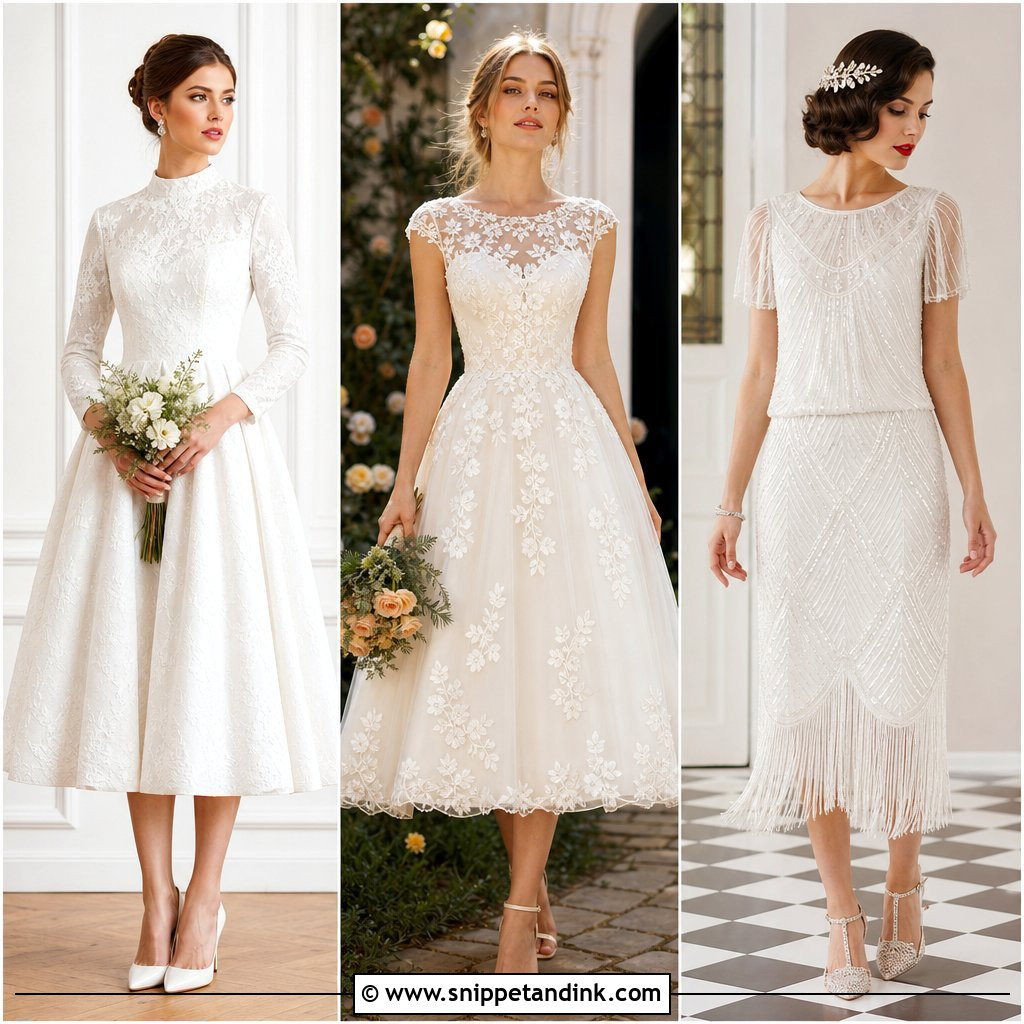
The 1950s gave brides a shape that still reads instantly: a nipped waist, a full skirt and a hem high enough to show the shoes. Dior’s New Look set that silhouette, and bateau necklines, tea-length skirts and crisp structured fabrics went on to become enduring bridal signatures. The challenge I see most with a retro gown is keeping it from tipping into fancy dress. That comes down to fabric weight, how much petticoat sits underneath and how many era accessories you stack on top. Below are twenty dresses, from regal lace ball gowns to short courthouse styles, with the pearls, gloves, veils and shoes I’d pair with each.
The Petticoat Decides Your Hemline
Almost every dress below relies on what’s underneath it. A petticoat, or a crinoline with hoops, is what pushes a 1950s skirt out into that bell shape, and the amount of volume you choose changes the length, the way you sit and even which shoes look right. Sort this out early, before any hemming is done.
- Try the dress with two or three petticoat fullnesses. A soft single-layer slip gives a gentle A-line; a stiff multi-layer net gives the full party-dress swing.
- Pick the petticoat before your first fitting and bring it every time. A fuller petticoat lifts the hem, so a skirt hemmed without it will end up too short.
- Check the petticoat is a few centimetres shorter than the dress. Net peeking out at the hem is the quickest way to make a retro dress look cheap.
- Sit down in it. Stiff net rides up in front when you sit, so practise gathering the back of the skirt as you lower yourself.
- Plan the bathroom. A friend holding the skirt layers up is normal with a full petticoat, and a soft-net one is far easier to manage than a hooped crinoline.
Tea length also means your shoes are on show all day. Break them in at home, and scuff the soles lightly so they don’t slip on a polished floor.
1. Tea Length Lace 50s Wedding Dress
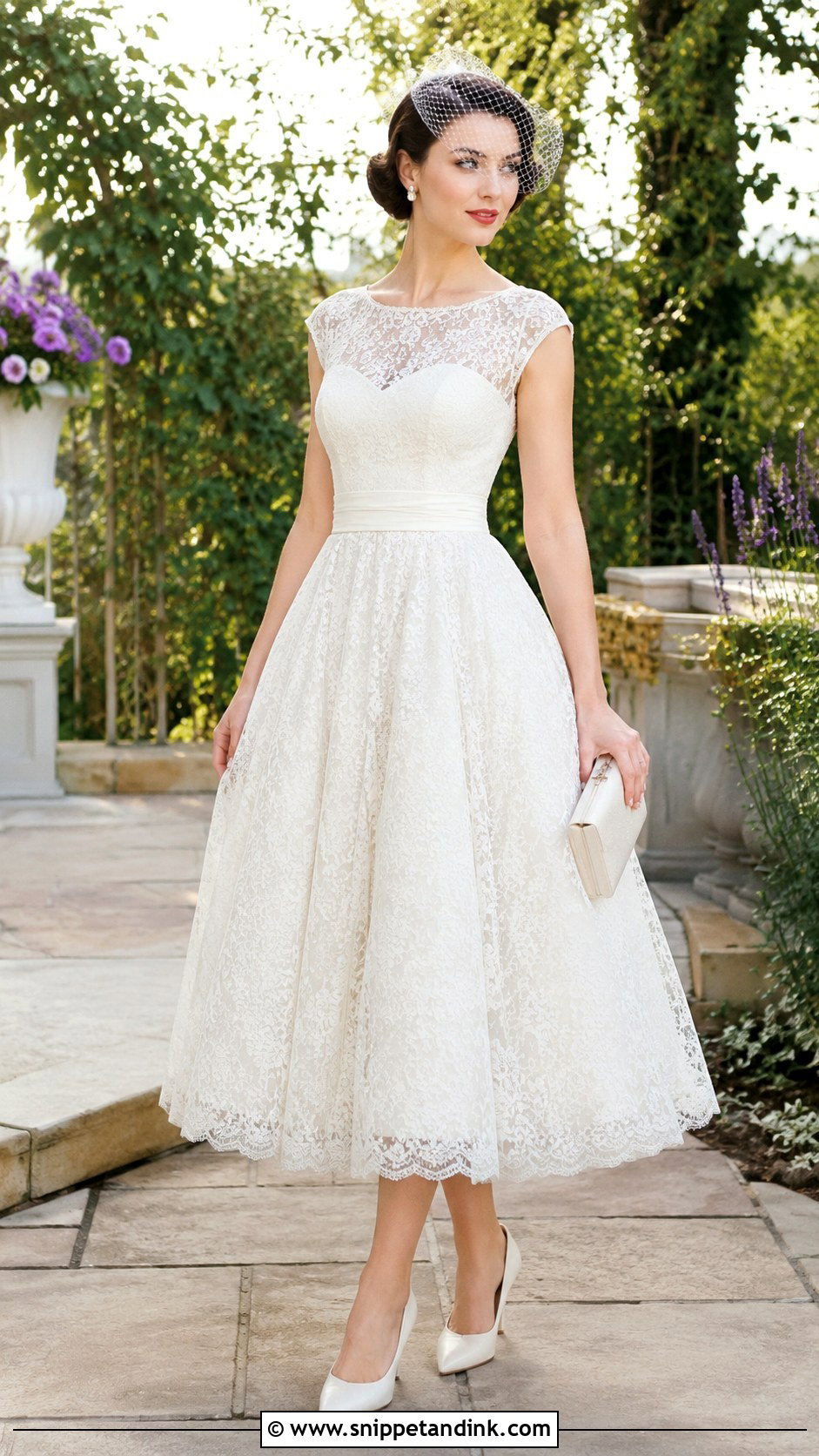
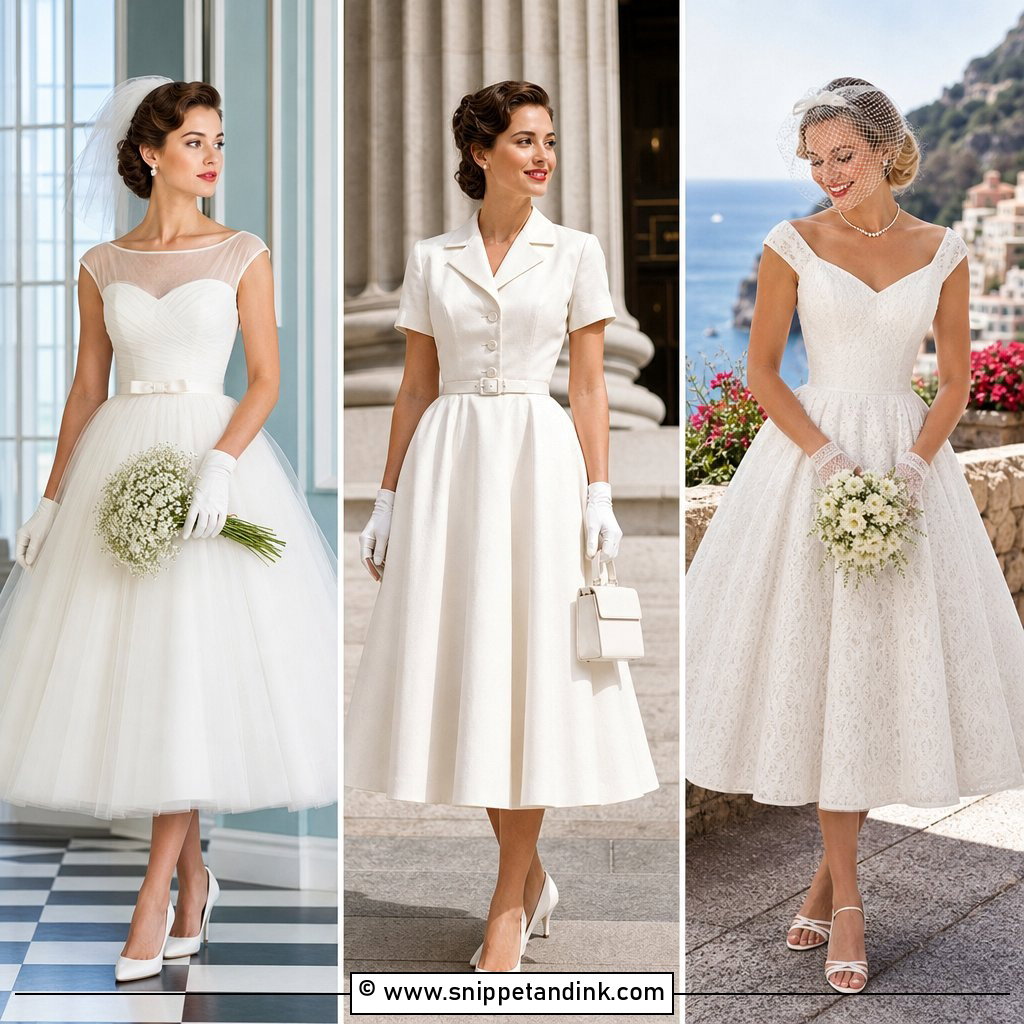
Tea-length lace is the easiest way into the decade. A fitted lace bodice, a natural waist and a skirt ending somewhere between knee and ankle looks vintage without feeling dressed up as someone else. A light petticoat gives fullness and still lets you walk normally. I’d keep the lace ivory over a neutral lining, then add pointed ivory pumps, pearl studs, a small structured clutch and a birdcage veil. Hem placement matters more than brides expect: on a petite frame I’d stop just below the knee, while taller brides usually look better with a longer ballerina hem.
2. Satin Bateau Neck 50s Wedding Dress
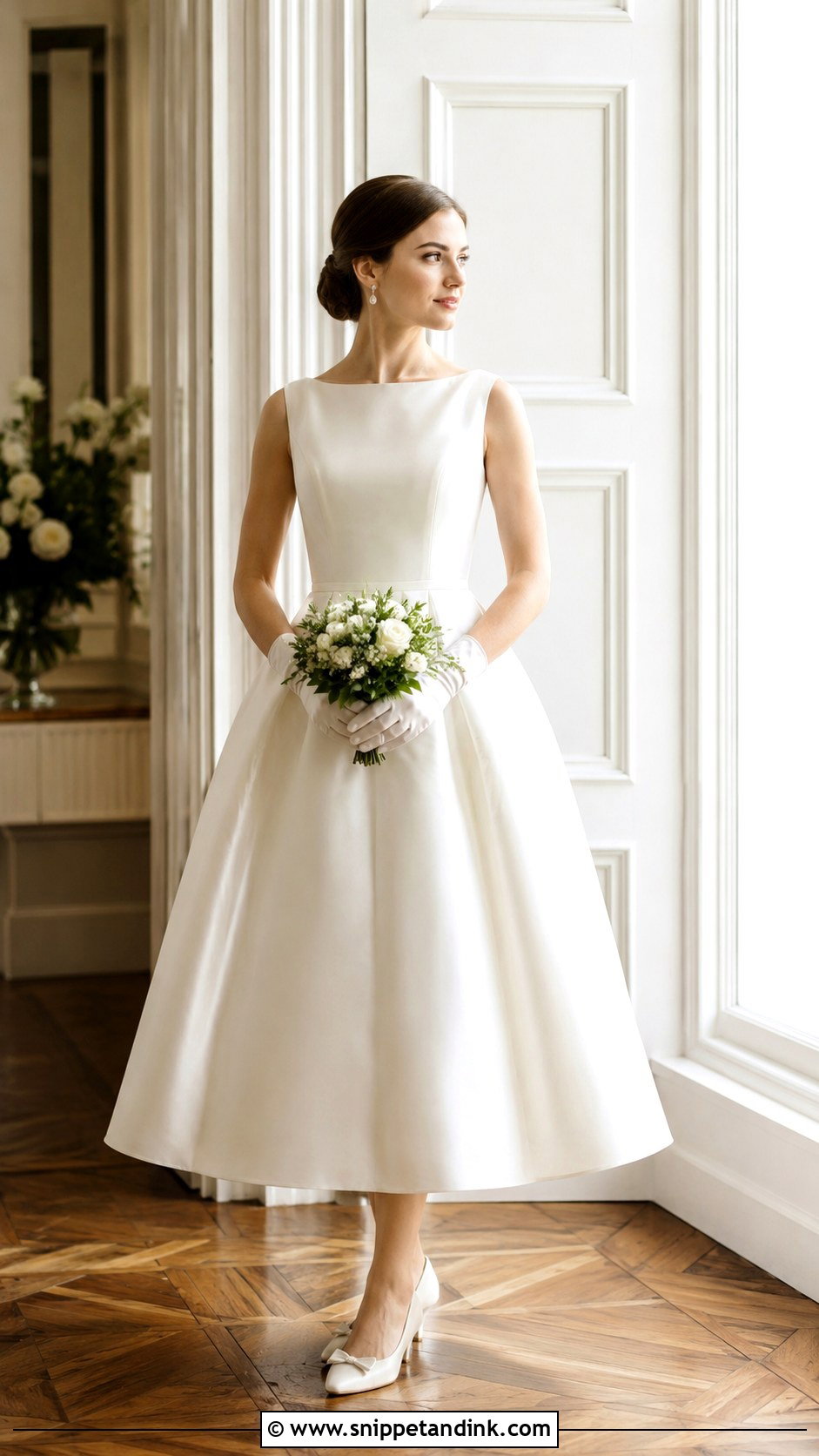
Plain satin has nowhere to hide, so this dress is all about tailoring. The bateau neckline runs along the collarbone, frames the face and covers more than a plunge would. A fitted bodice, a defined waist and a full tea-length skirt in satin or mikado give the classic outline. Kitten heels keep the proportions right and you’ll still be comfortable at the end of the night. Finish with pearl drops, short satin gloves and a compact bouquet, hair in a low bun or soft waves. Ask your seamstress to check the waist seam in profile; on a smooth satin bodice, a waist sitting even a little too high is obvious from the side.
3. Sweetheart Neckline Tulle 50s Wedding Dress
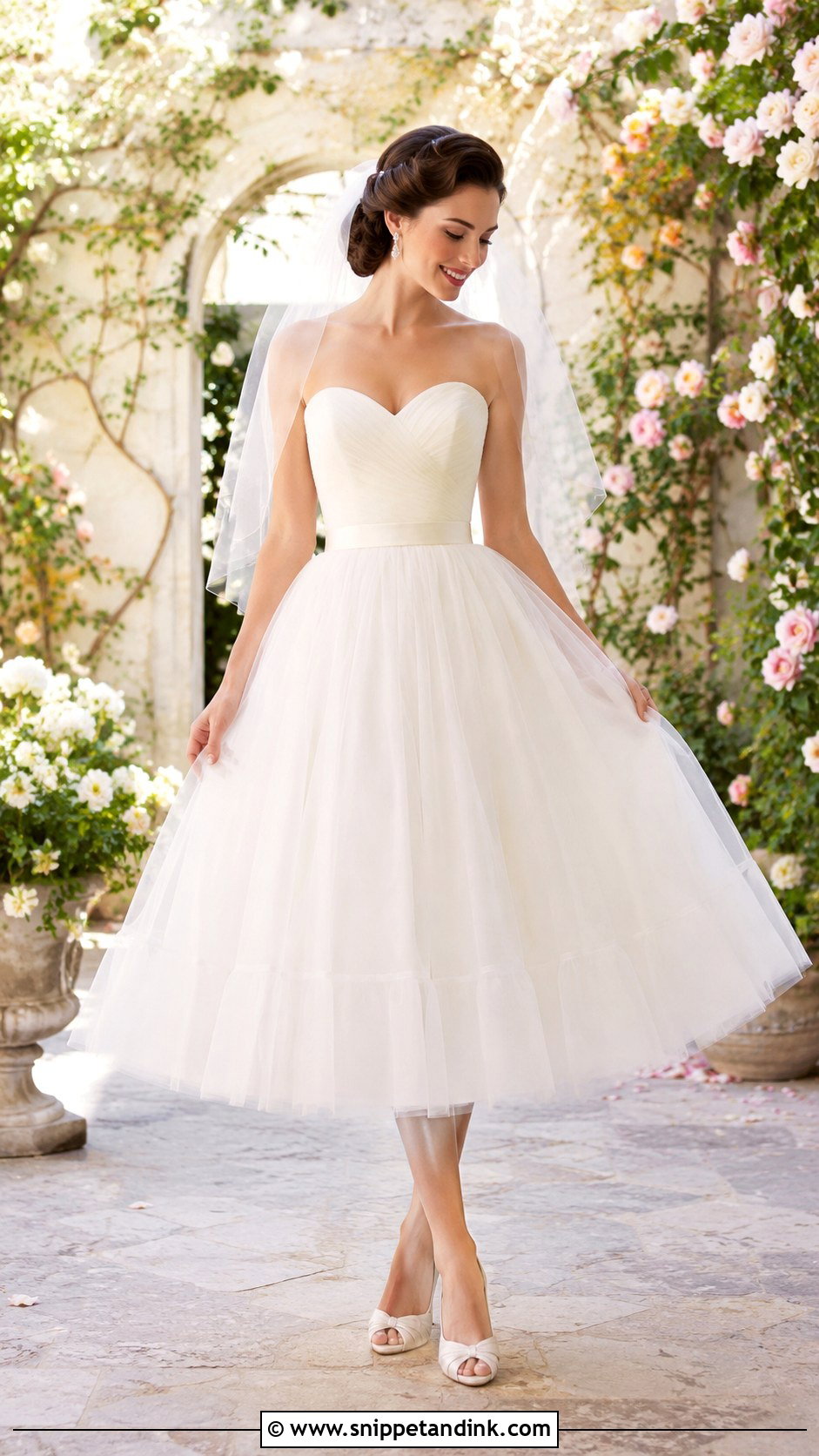
Tulle softens the decade. Over a fitted sweetheart bodice that opens into several light layers, it gives the shape without the stiffness of satin, and a modest petticoat underneath is enough to hold it out. For more coverage, removable cap sleeves or a sheer wrap work well. A narrow satin belt cleans up the join between bodice and skirt. Crystal earrings, ivory peep-toes, a fingertip veil under a neat updo. In spring and summer the layers stay airy. One thing to check: a sweetheart bodice needs real internal support, or you’ll spend the day hitching it up.
4. Grace Kelly Inspired Lace Sleeve Wedding Dress
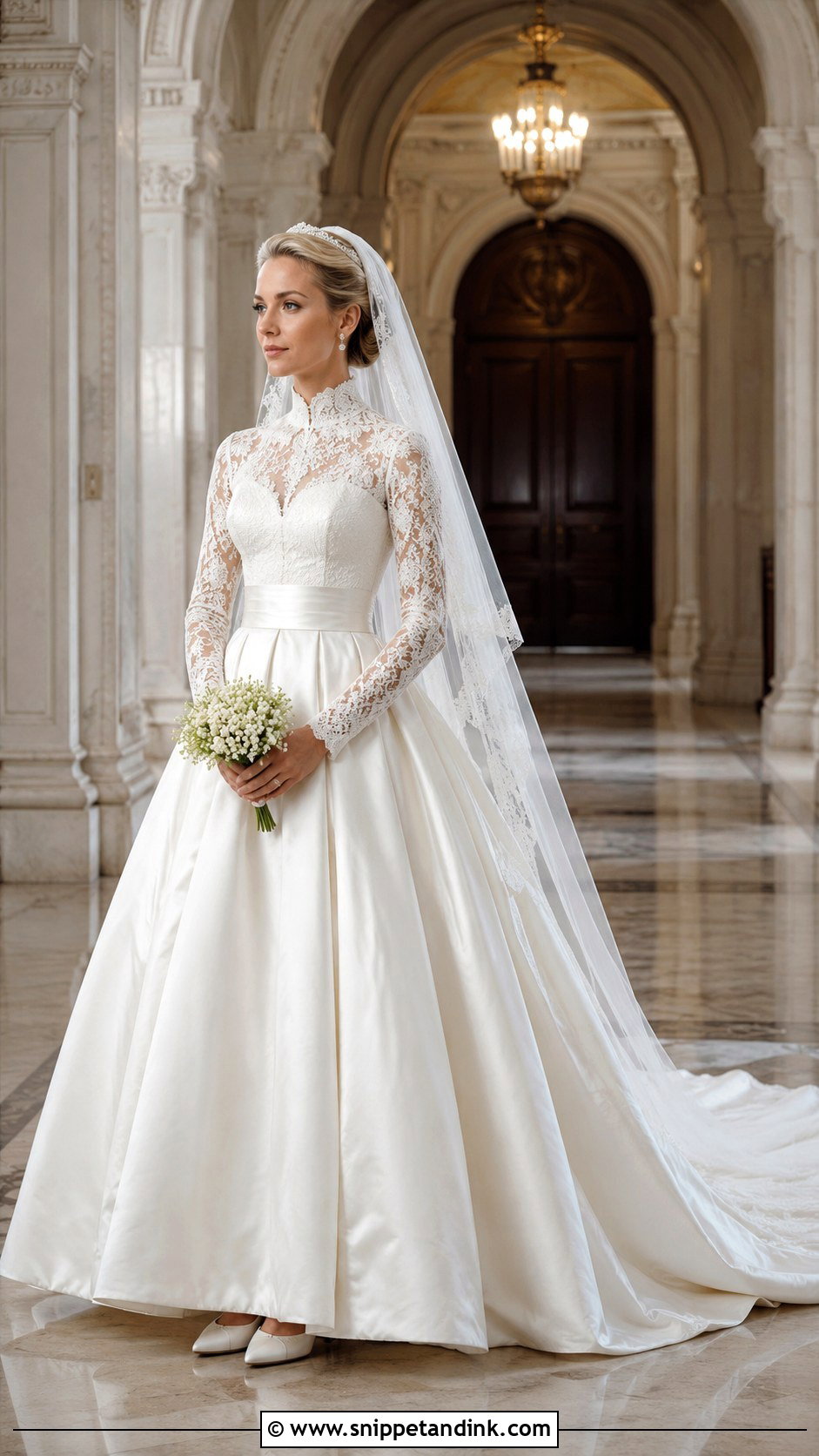
High lace neckline, fitted long sleeves and a structured skirt with a chapel train: this is the most formal of the twenty. Choose lace with clear floral motifs rather than heavy beading, and let a narrow satin waistband mark the waist. Pearl earrings, closed-toe satin pumps, a sheer fingertip veil and a compact bouquet keep it regal without clutter. Long fitted lace sleeves are the part I watch at fittings. Ask for a breathable sleeve lining and a little extra room at the elbow, so you can actually hug people while keeping the elegant, Grace Kelly-inspired shape.
5. Audrey Hepburn Inspired Short Wedding Dress
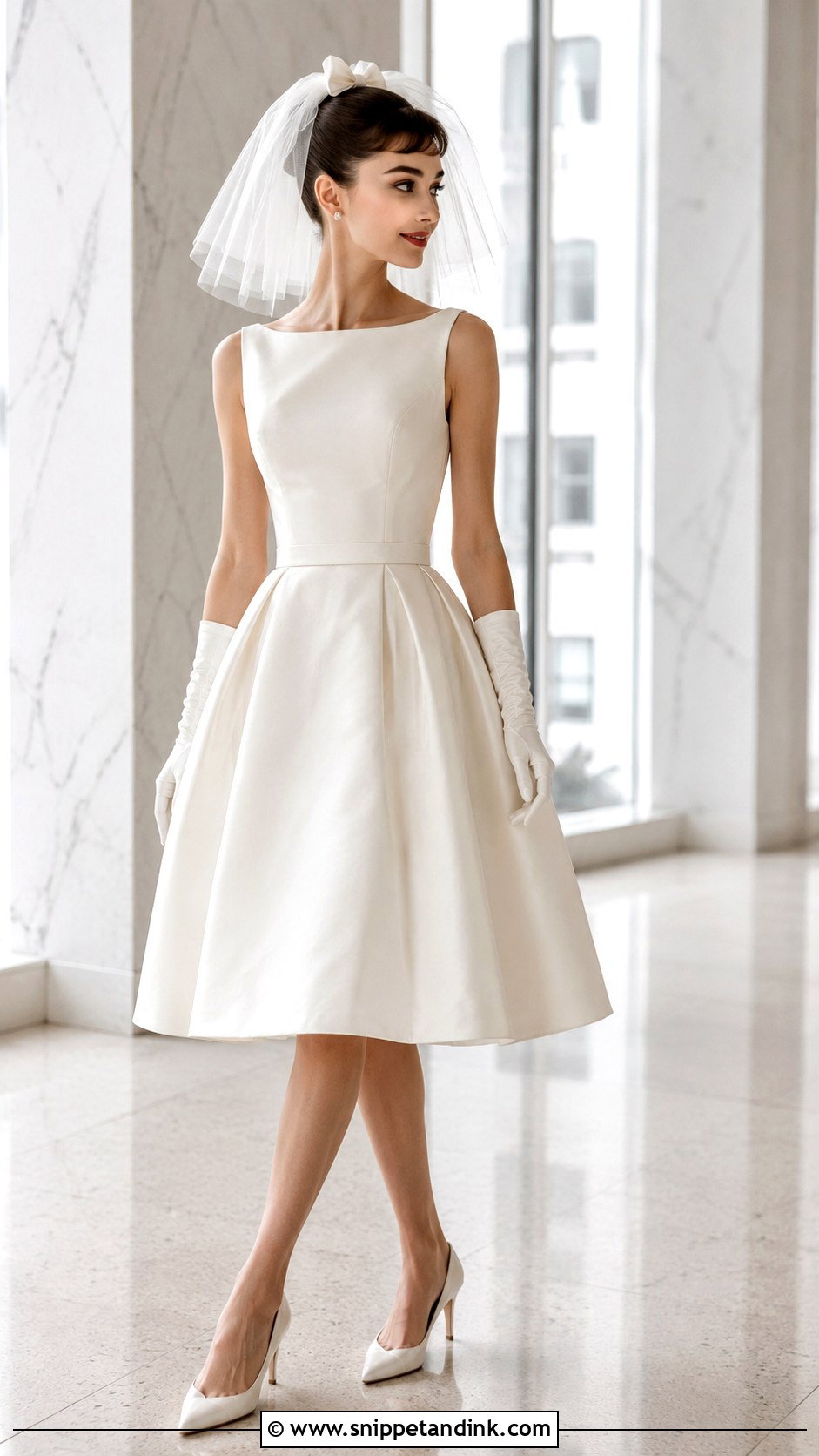
Short and crisp is the spirit of Audrey Hepburn’s polished 1950s wardrobe. A sleeveless or cap-sleeve bodice with a bateau neck, a tight waist and a full skirt at or just below the knee. The fabric has to stand up on its own, so faille, mikado or a firm satin will hold the skirt where a draping fabric would collapse. Pointed kitten heels, pearl studs, wrist gloves and a small bow or birdcage veil keep accessories in scale with the short hem. Hair can be a smooth bun, short waves or a curled bob. Wear your actual wedding shoes to the final fitting; with a knee-length hem, an extra centimetre of heel changes how the whole dress sits.
6. Polka Dot Tea Length 50s Wedding Dress
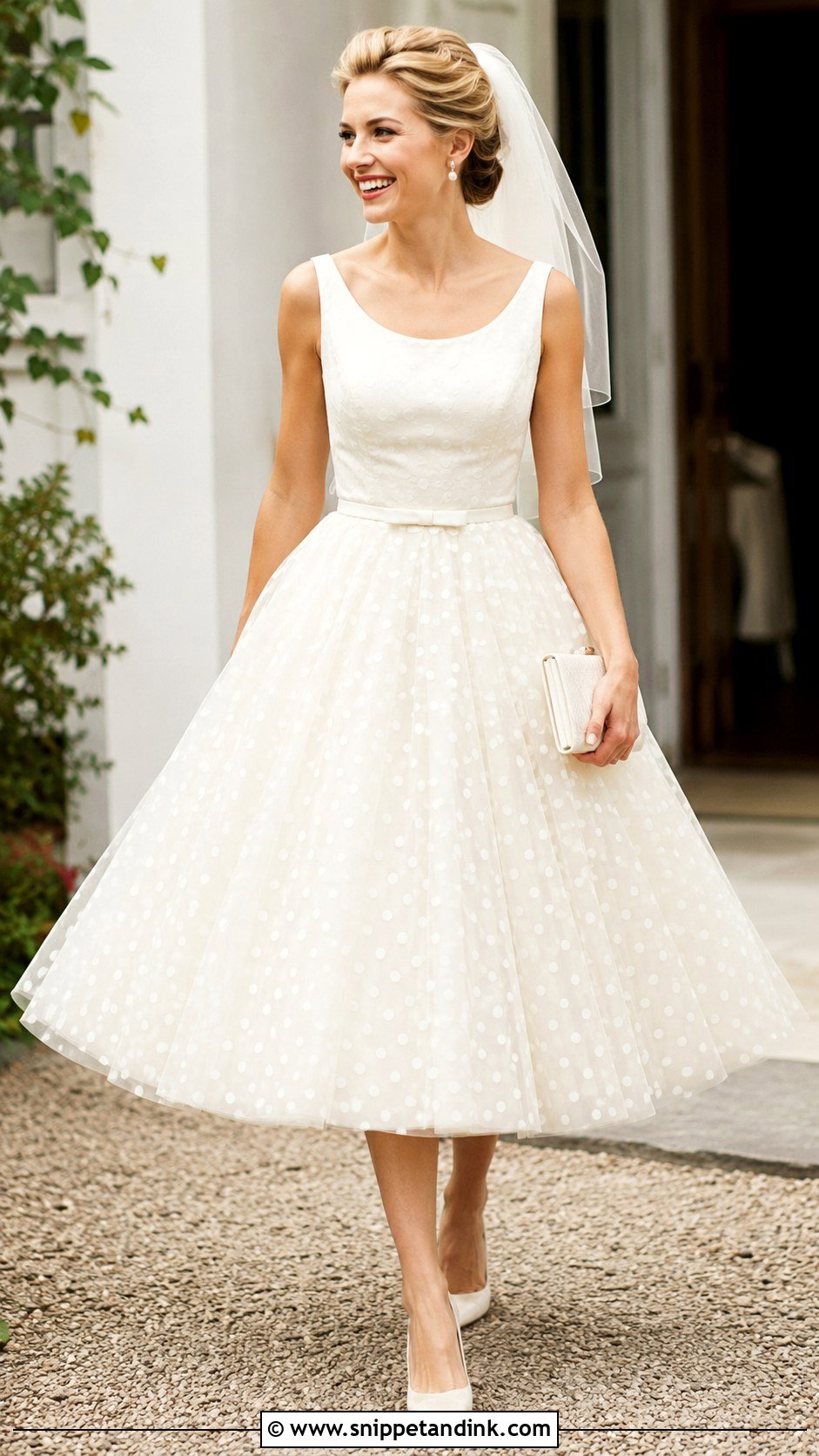
Flocked dots on ivory tulle add a bit of fun and still read as bridal. Layer them over a solid lining, with a fitted bodice and a full circle skirt. A scoop or bateau neckline gives the pattern room. I’d keep everything else plain, so simple ivory pumps, pearl earrings, a satin clutch and a sheer veil without trim. A narrow belt separates the patterned skirt from the bodice. Dot size changes the mood a lot. Tiny dots look like texture until they catch the light; larger ones look playful and suit a relaxed summer party or a retro venue.
7. Halter Neck 50s Wedding Dress
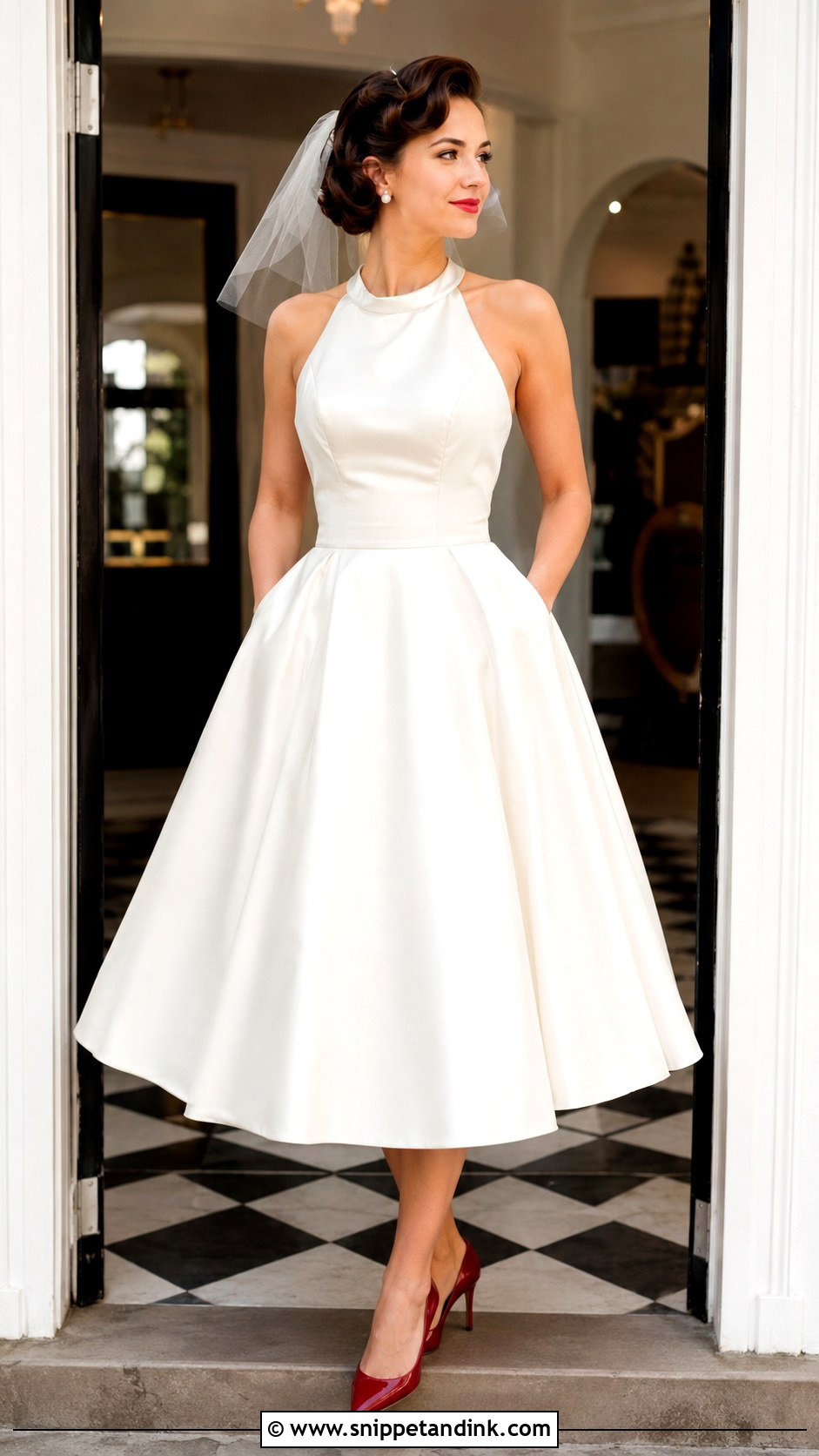
A halter adds a pinup note, but I’d steer you toward a version with wide straps, a covered back and a moderate neckline so it stays bridal. A tea-length circle skirt in cotton satin, mikado or faille balances the fitted top and holds its flare. Red, blue or ivory pumps all work, with small pearl earrings and a short veil behind a curled updo. Skip the necklace. The fitting issue with halters is the neck strap: if the bodice isn’t supported from below, all the weight hangs off your neck, and by evening that gives you a headache.
8. Portrait Collar 50s Wedding Dress
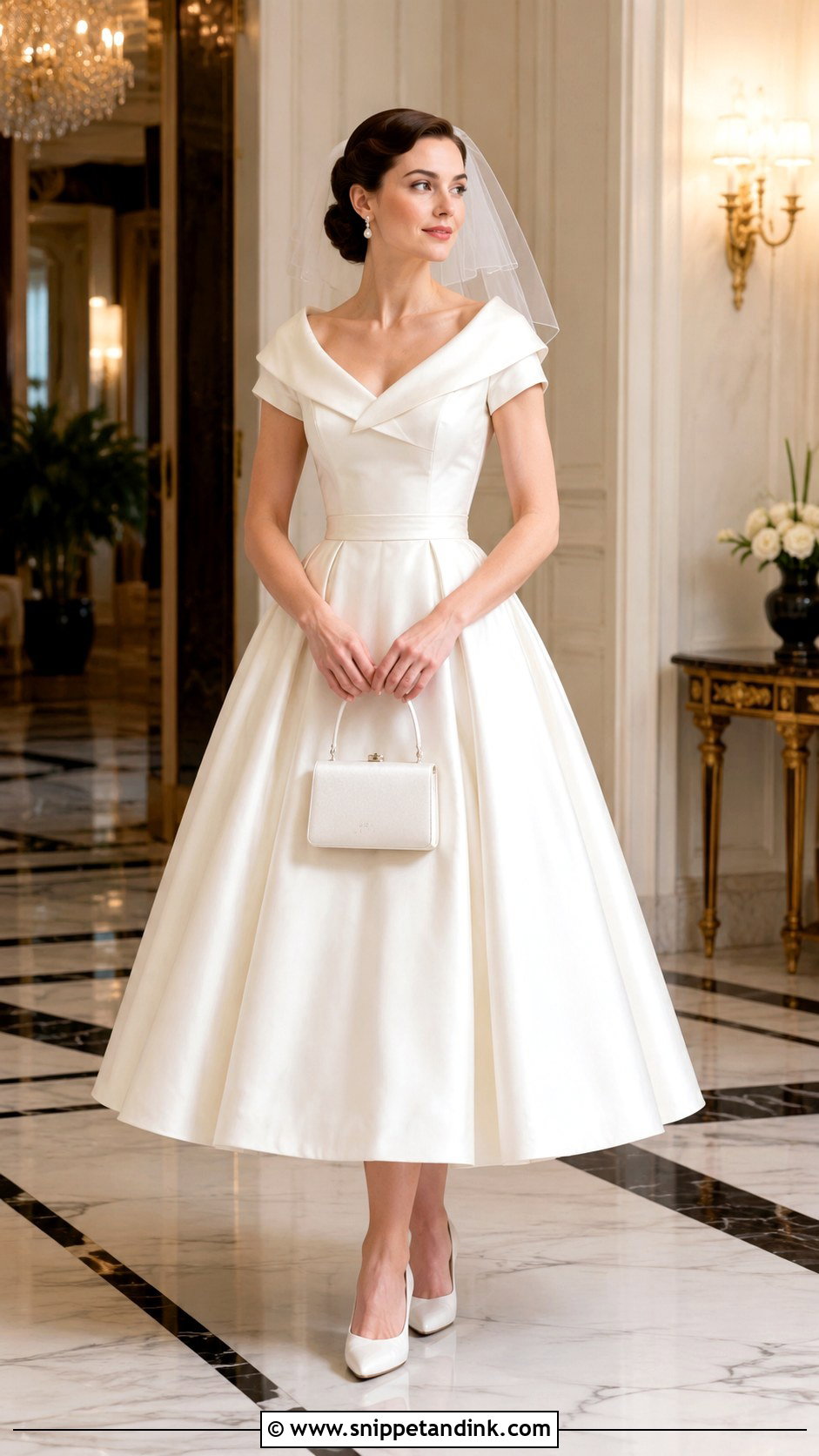
The portrait collar folds wide around the shoulders and frames you like a picture mount. With a fitted bodice and a full satin skirt, tea or floor length depending on how formal the day is, it’s very much of the era. Closed-toe pumps, pearl drops and a structured top-handle bag suit it, and the veil goes behind the hair so the collar stays visible. A wide collar makes shoulders look broader, which balances fuller hips. If your shoulders are already broad, ask for a narrower collar with a gentle V at the front. Interfacing inside the fold keeps it from flipping up when you move.
9. Off Shoulder Tea Length 50s Wedding Dress
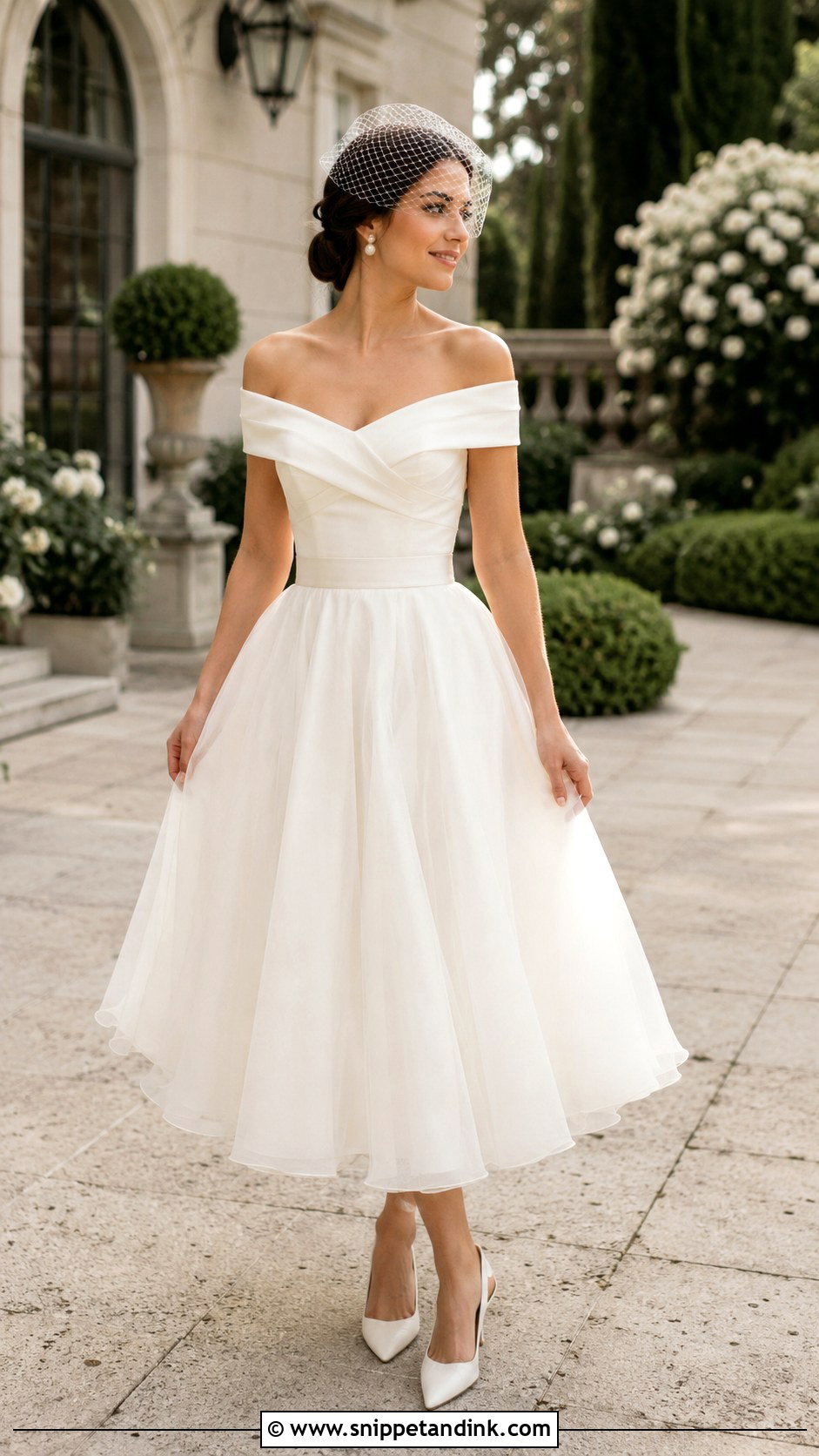
Off-the-shoulder suits a tea-length dress for a dancing wedding. The bodice needs boning so the neckline stays put without pinning your arms down. Satin, tulle or organza in the skirt keeps the whole thing light, and a slim belt adds definition if you want it. Pearl cluster earrings, ivory slingbacks and a birdcage veil, no necklace. At your fitting, sit, raise your arms and give someone a proper hug. If the neckline slips, it’s the bodice fit that needs work, not more tape.
10. Long Sleeve Ball Gown 50s Wedding Dress
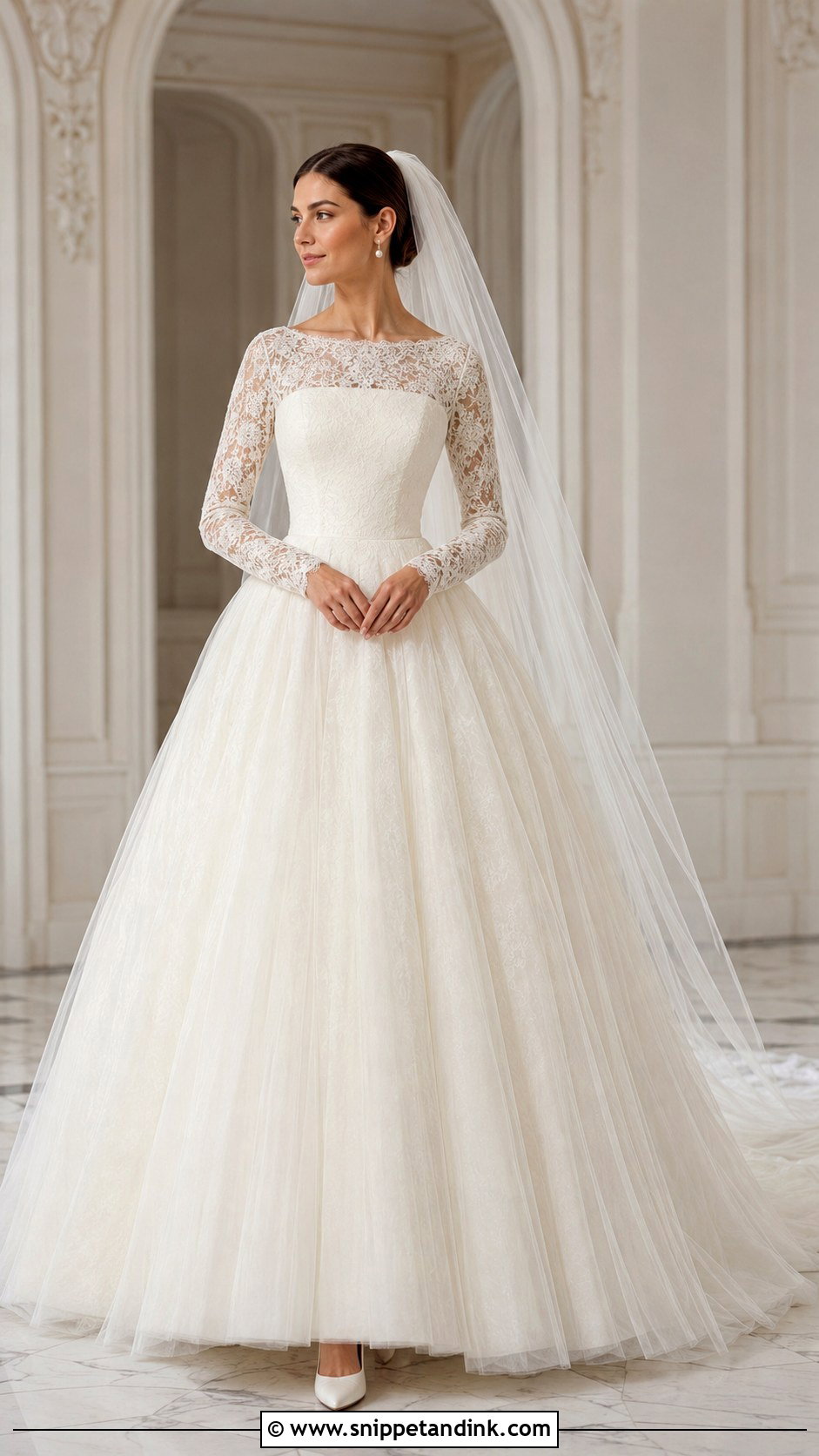
A long-sleeve ball gown is the decade at its most formal. The secret to wearing one comfortably is a skirt built on layers of tulle rather than a pile of heavy fabric; you get the volume without the weight. A scoop, bateau or modest V neckline balances the sleeves. Closed-toe pumps, pearl earrings and a long sheer veil that follows the train. If the lace is detailed, keep accessories bare. It suits cooler months and large indoor rooms. Petite brides can ask for a smaller skirt circumference, which keeps the ball-gown effect while letting you look like you’re wearing the dress, not standing inside it.
11. Cap Sleeve A Line 50s Wedding Dress
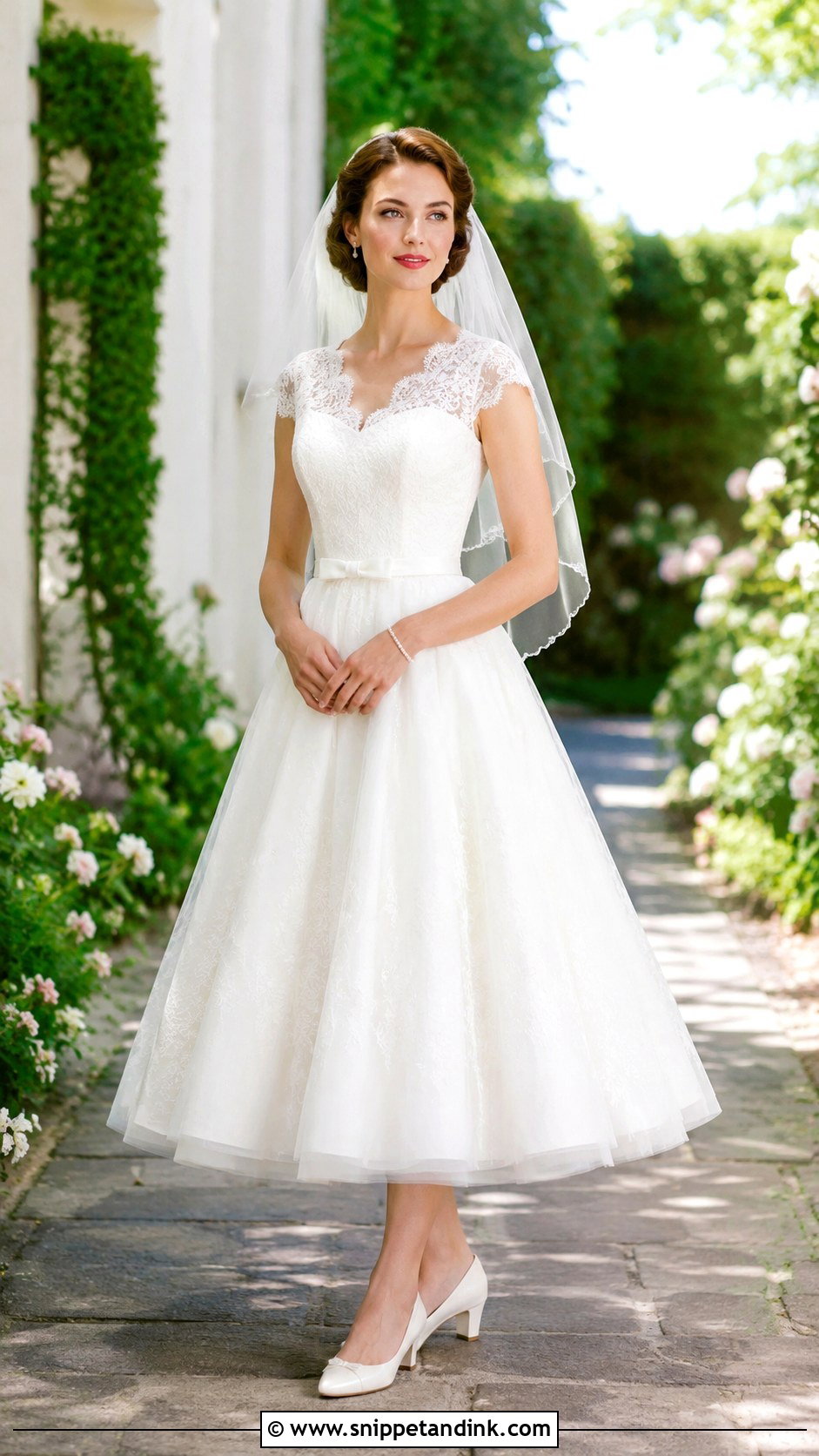
Cap sleeves give a little shoulder coverage without the formality of full sleeves. Pair them with a fitted bodice, a natural waist and a skirt that widens gradually, more A-line than full circle. Lace caps soften a satin gown; self-fabric caps look cleaner. Low block heels, a pearl bracelet, a fingertip veil and a narrow bow belt add a period touch. This shape works at tea, ballerina or floor length, which is why it’s the one I suggest to brides who can’t decide on a hem. Lift your arms forward at the fitting. Cap sleeves set into a tight armhole will pinch, and a tailor can recut the opening.
12. Three Quarter Sleeve Lace 50s Wedding Dress
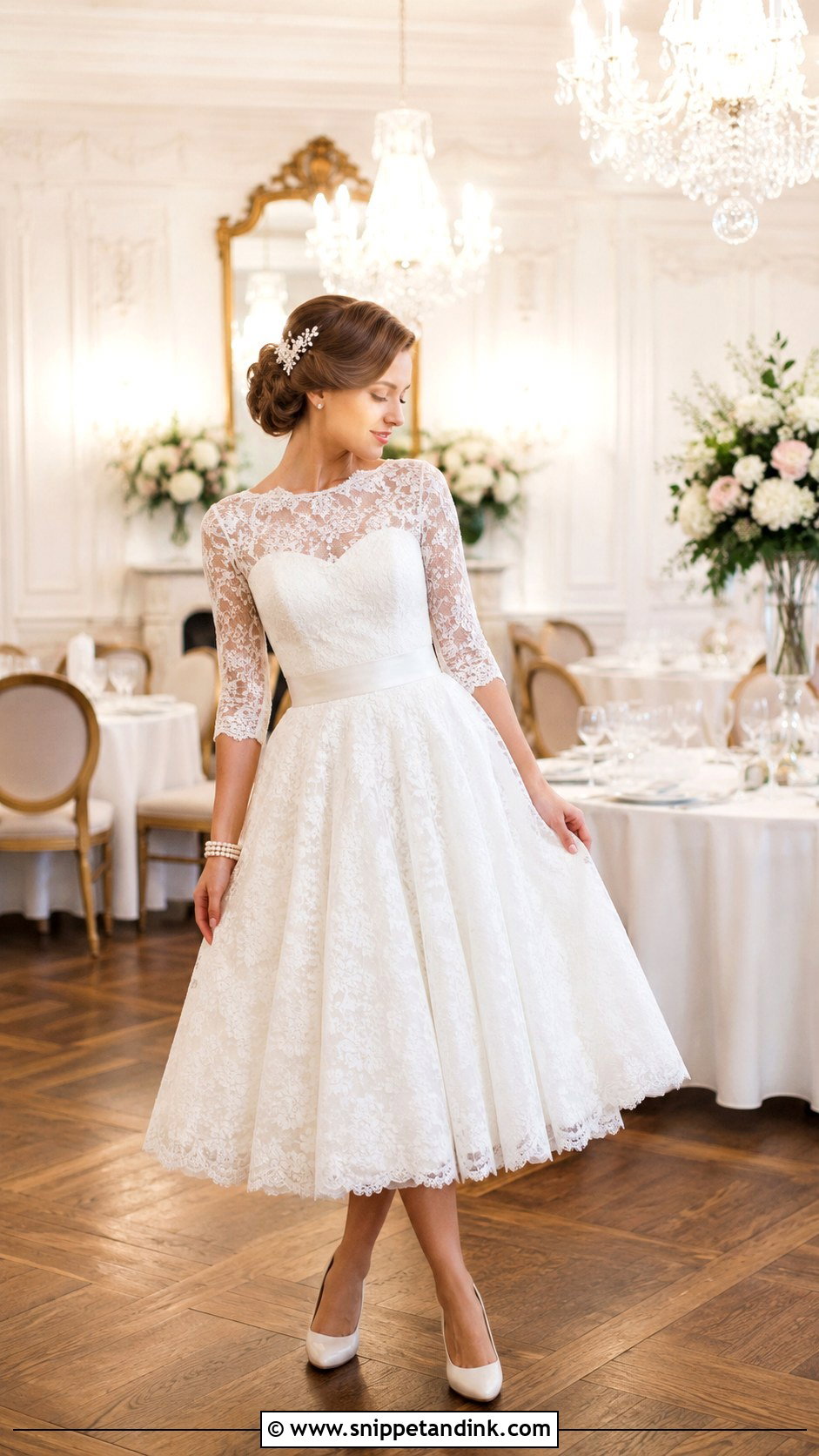
Three-quarter lace sleeves end between elbow and wrist, a useful length for spring or autumn. Over a sweetheart lining with a defined waist and full tea-length skirt, they give coverage without the weight of full sleeves. Gloves are optional here and often too much against lace, so I’d lean toward a pearl bracelet, closed-toe pumps and a small floral comb. A plain satin waistband breaks up the texture. Ask for soft lining in the sleeves if the lace feels rough, and bend your elbow as if you’re eating dinner. That’s when tight lace sleeves start to bite.
13. Square Neck Satin 50s Wedding Dress
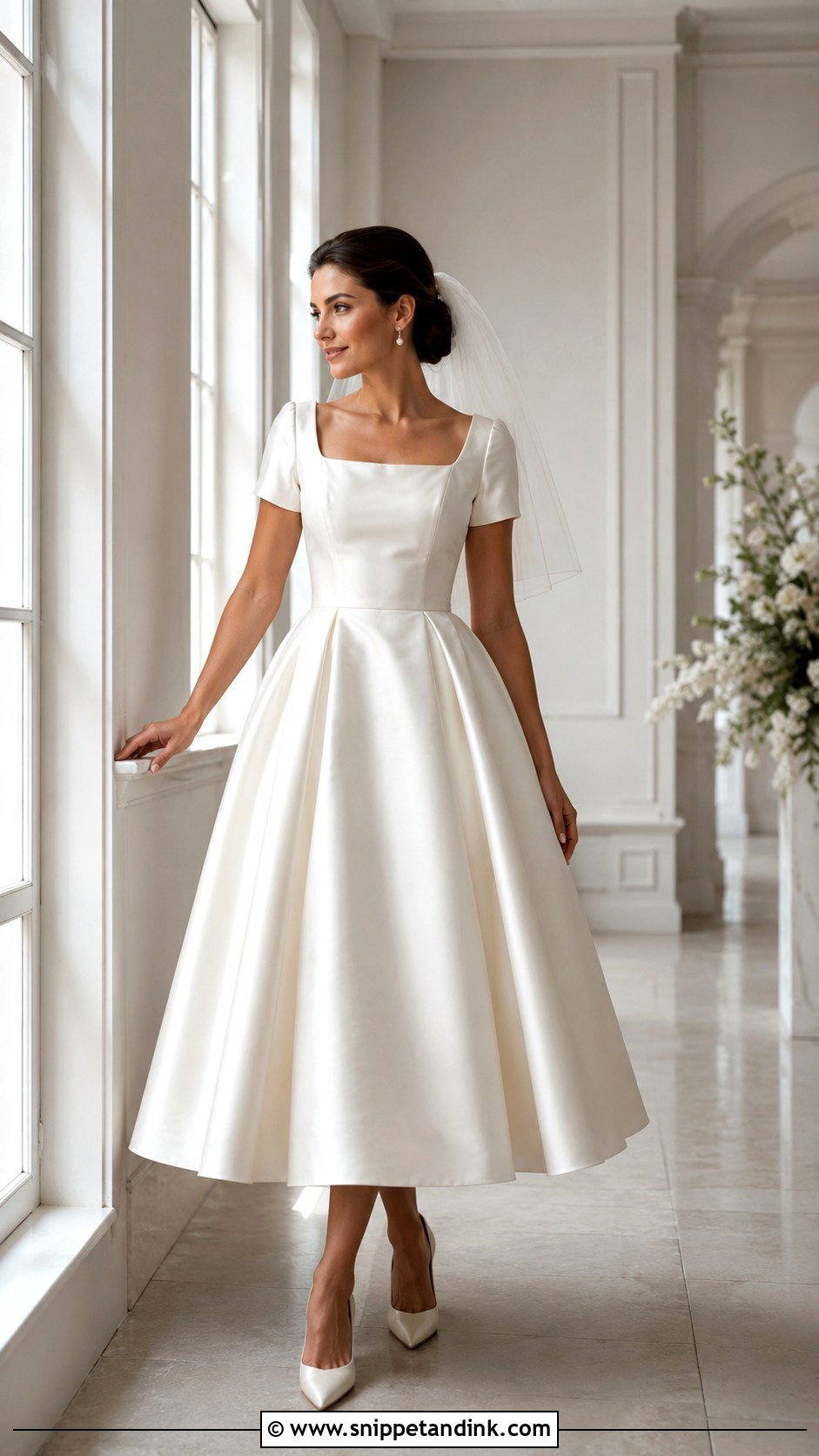
Square necklines suit short sleeves, a fitted torso and a full satin or mikado skirt. The neckline has to sit firmly above the bust and be scaled to your shoulders; too wide and it slides, too narrow and it looks cramped. Tea length is playful, floor length more formal. Pearl drops, ivory pumps and a short tulle veil. A small, centred pendant can sit inside the neckline if you want one. For brides needing more bust support, wider shoulder panels and a structured inner bodice keep the corners of the square from pulling into a curve.
14. Scoop Neck Mikado 50s Wedding Dress
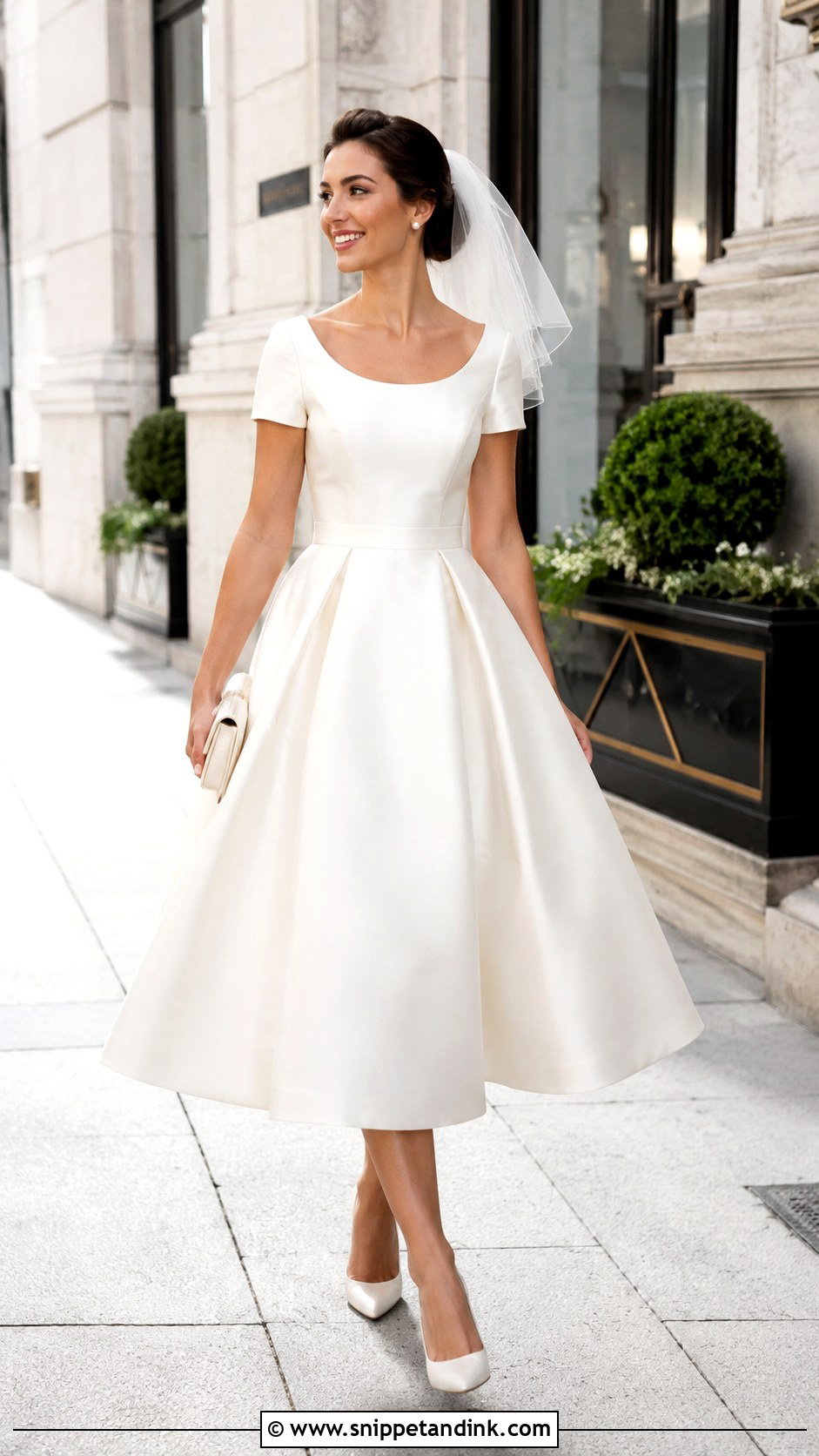
Mikado is the fabric that makes 1950s skirts hold their shape. It’s stiff, with a slight sheen, and keeps pleats crisp all day. A scoop neck with short sleeves or wide straps, a natural waist and a pleated full skirt let the fabric speak. Accessories stay restrained: ivory pumps, pearl studs, a short veil and a satin clutch, plus a covered-button back if you like a vintage detail. Mikado is warm and fairly heavy, so I’d think twice about it for an outdoor summer ceremony. A well-fitted lining stops the stiff waist seam from rubbing over a long day.
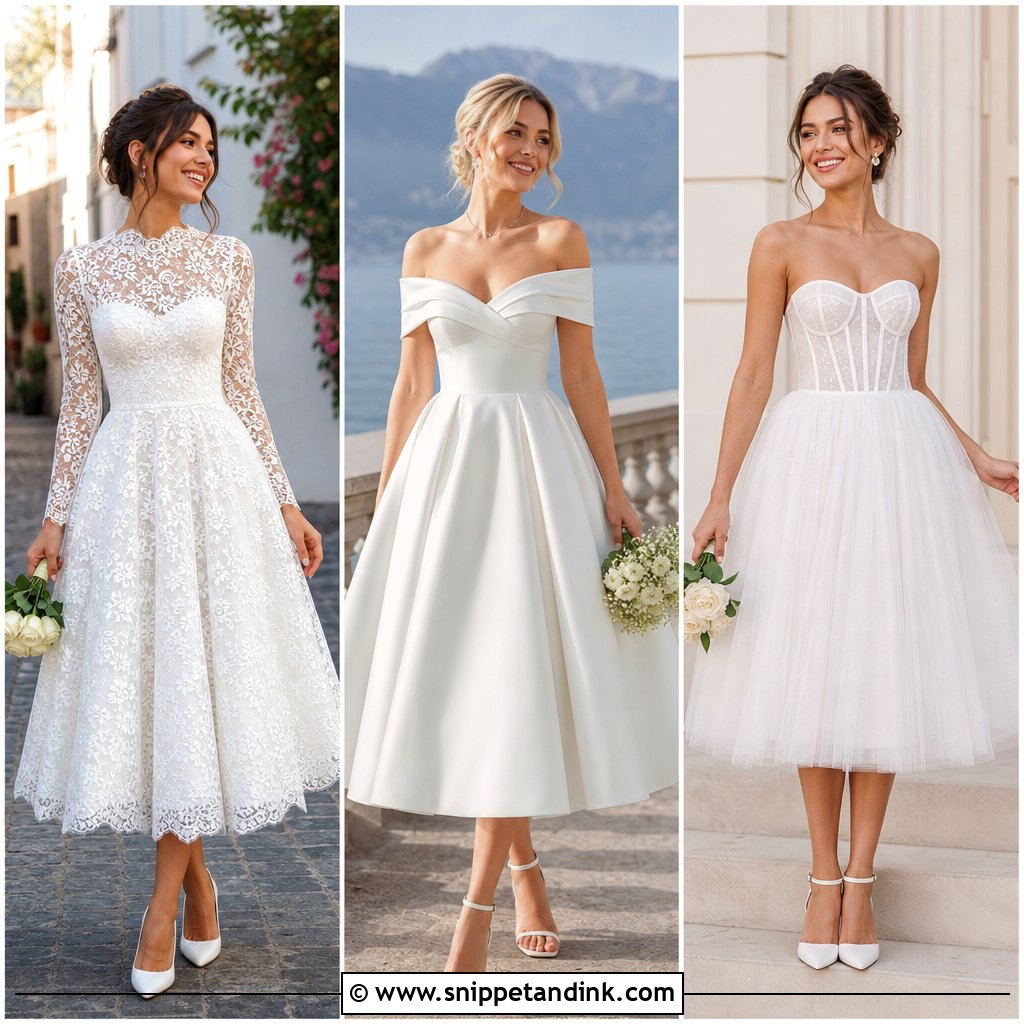
15. High Neck Lace 50s Wedding Dress
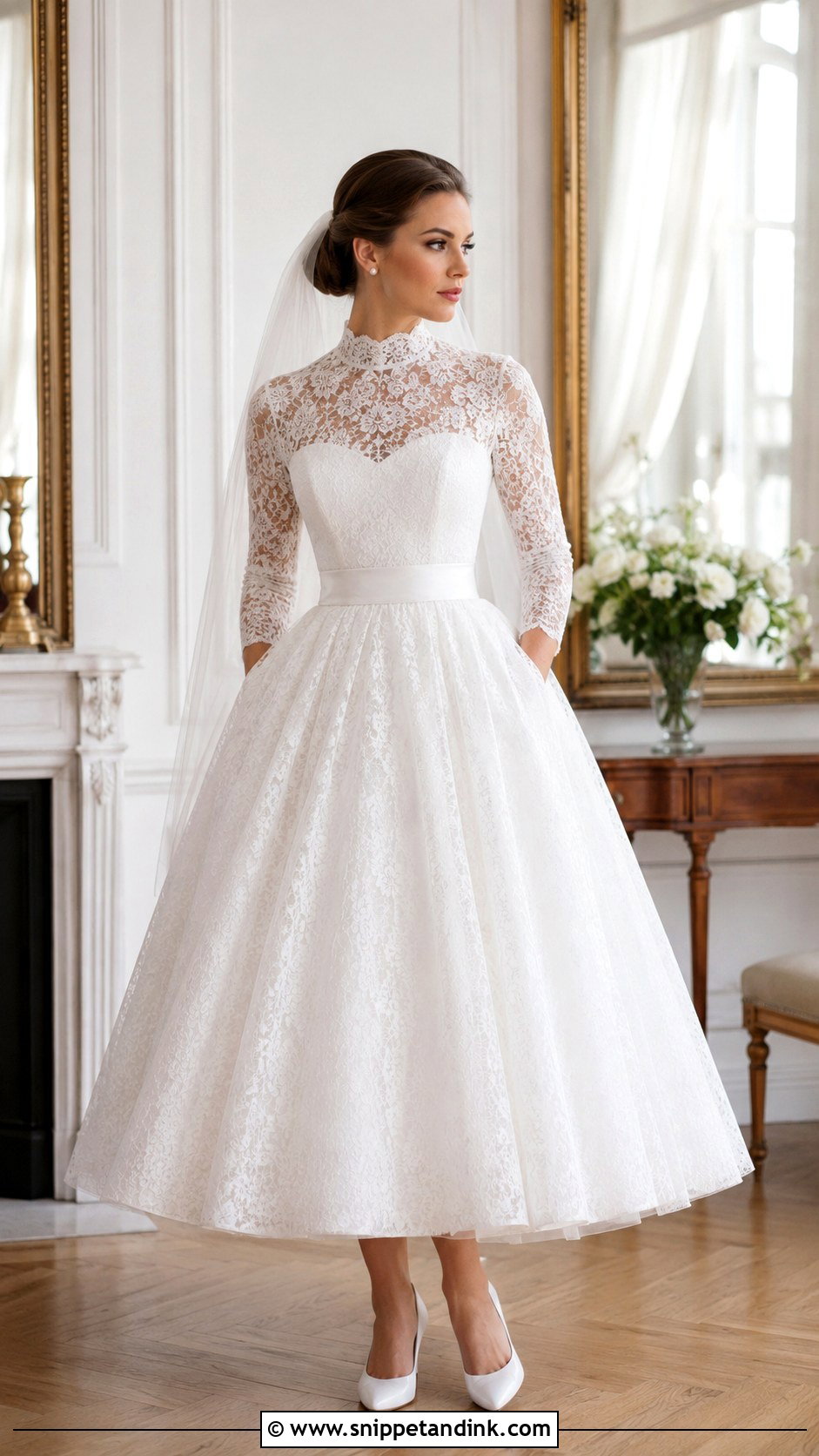
A sheer lace yoke over a sweetheart or scoop lining gives a high neckline with a softer feel than solid fabric. Carry the lace into cap, short or long sleeves, and keep the waist defined and the skirt full so the high neck doesn’t look severe. Pearl studs, a smooth low bun and a veil fixed under the hair; a necklace would just interrupt the lace pattern. If your neck is shorter, a slightly lowered collar or a narrow keyhole at the centre opens things up. Feel the top edge with your fingertips. Scalloped lace with a raw edge right under the chin scratches every time you turn your head.
16. Bow Waist 50s Wedding Dress
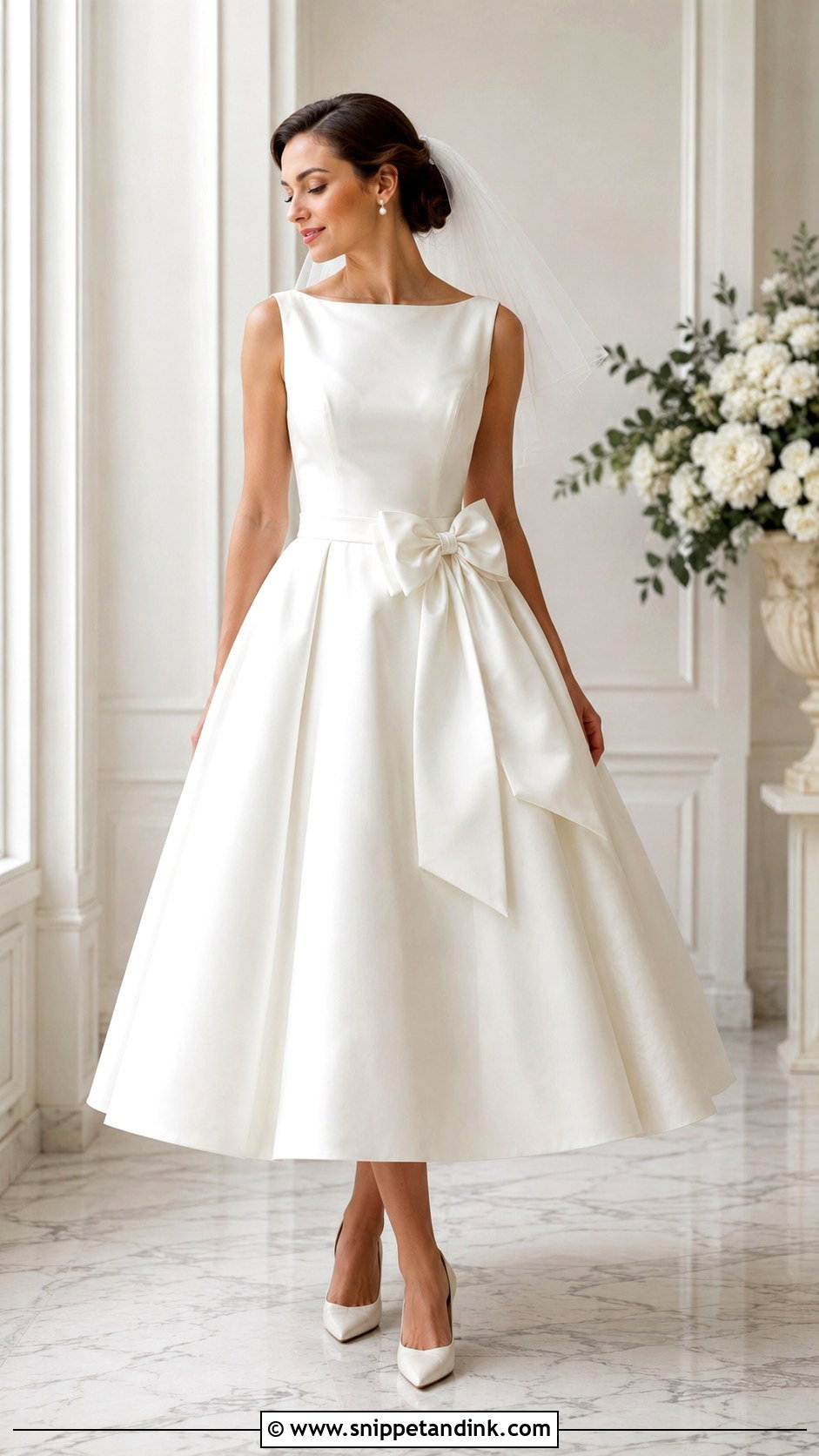
One bow, placed with intent, is the detail here. A fitted bateau bodice and full tea-length satin skirt give you a clean base. A flat bow at the side feels playful; a structured bow at the back is more formal and gives guests something to look at during the ceremony. Pointed pumps, pearl earrings and a plain short veil. If you want it quieter, a narrow self-fabric sash with short tails does the same job. Large bows need interfacing or they droop after you’ve sat on them, so ask how yours is built.
17. Blush Tea Length 50s Wedding Dress
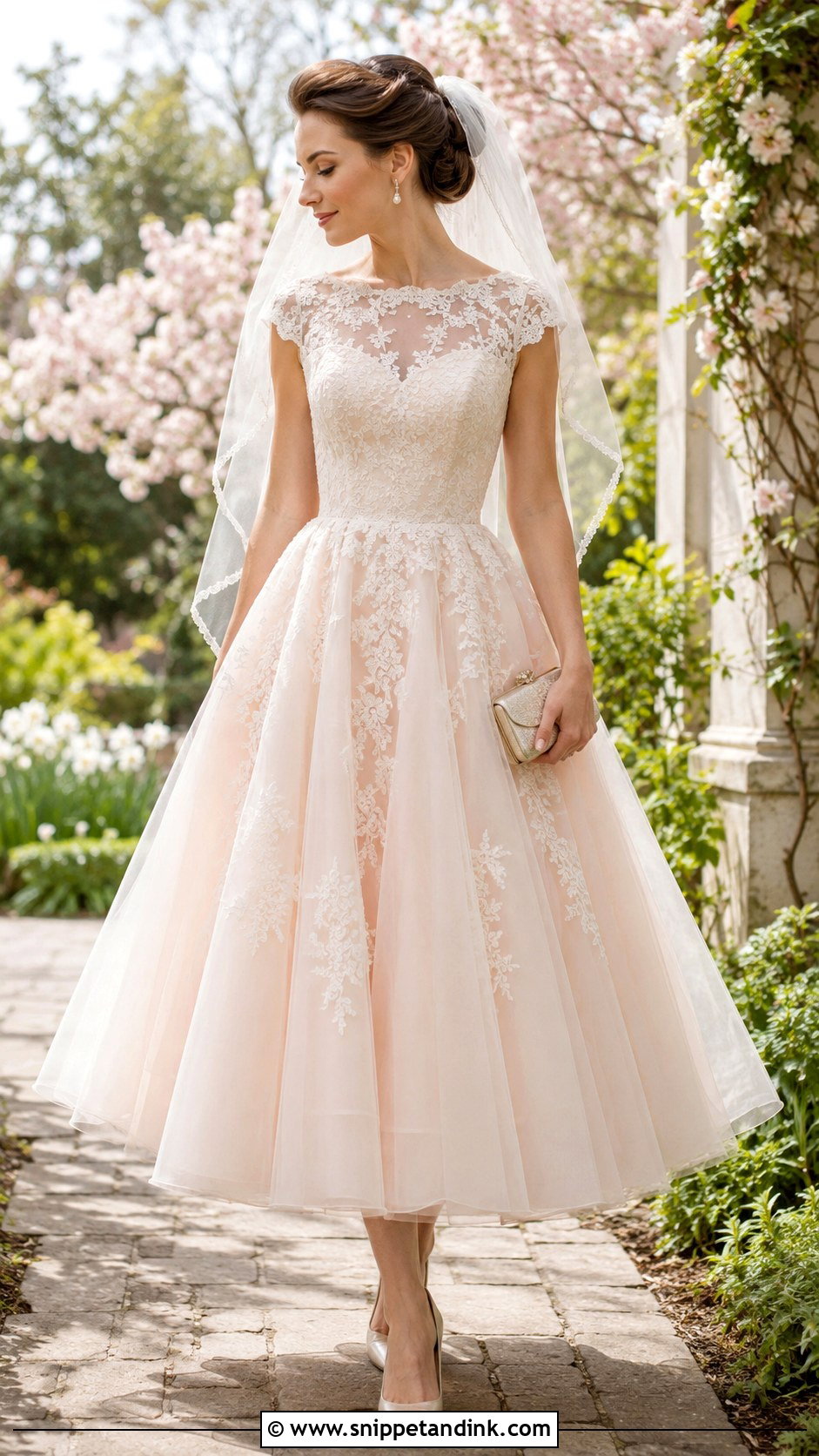
Blush holds the 1950s shape and softens it. Pale pink tulle, organza or satin on a fitted bodice with a tea-length circle skirt is the simple route; ivory lace over blush lining is subtler. Champagne pumps, pearl and crystal earrings and a sheer ivory veil, plus a small structured metallic clutch if you want something modern. Pinks vary a lot against skin. Hold cool pink, peach and dusty rose up to your face by a window and see which one makes you look rested. Then check the chosen shade under indoor light before you finalise flowers and makeup.
18. Plus Size Tea Length 50s Wedding Dress
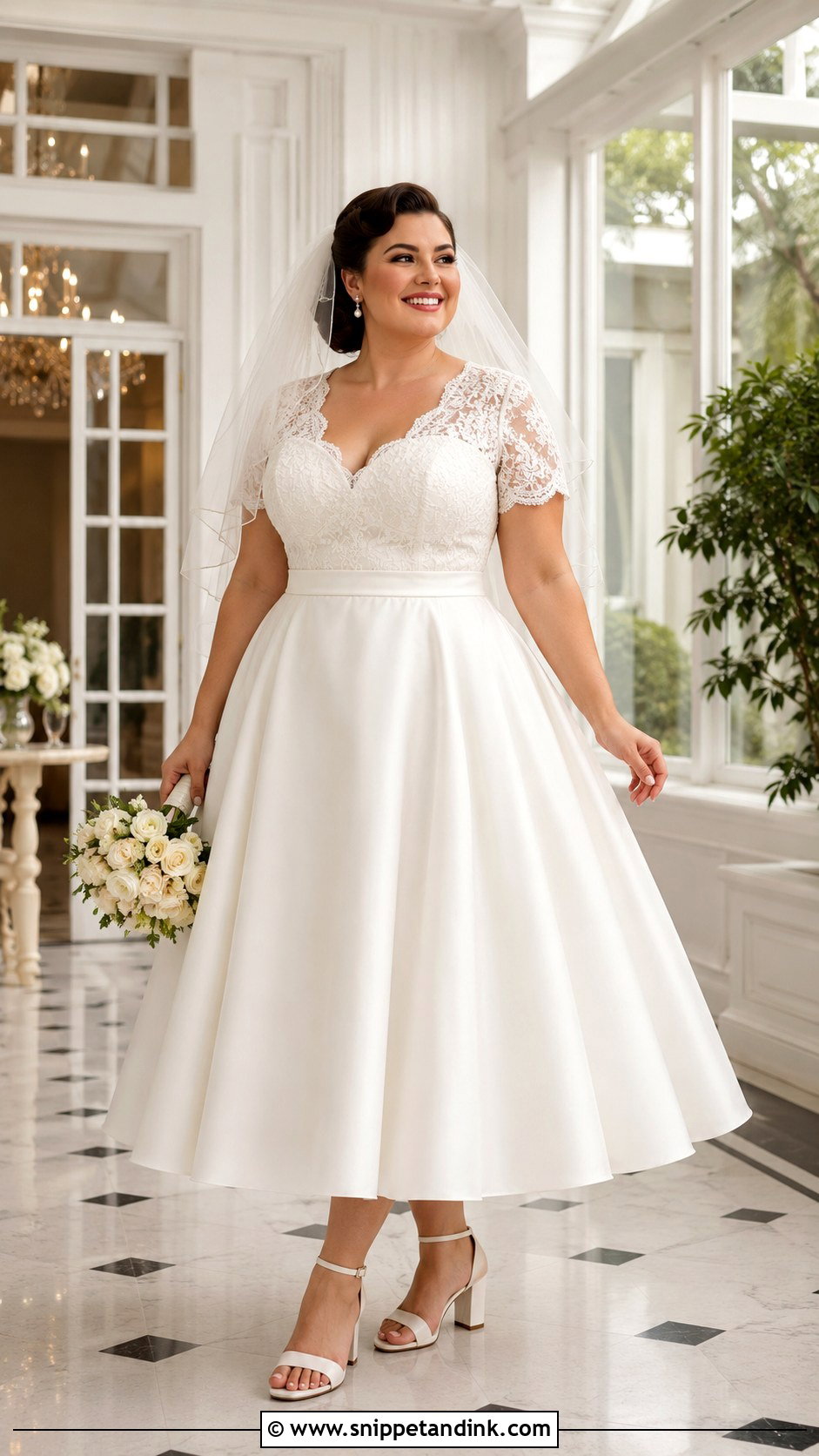
For a plus size 1950s dress, I’d judge the gown on its structure before anything else. Wide straps or sleeves, a well-placed waist seam and a full skirt that falls cleanly over the hips give the classic shape with real support. Tea length shows off good shoes. Breathable satin, lace or mikado with enough body holds the skirt without bulking it. Supportive block heels, pearl earrings and a fingertip veil. A slightly raised waist lengthens the legs; a natural waist plays up an hourglass. Ignore the size on the label and pay for good tailoring, especially at the bust and under the arms.
19. Short Courthouse 50s Wedding Dress
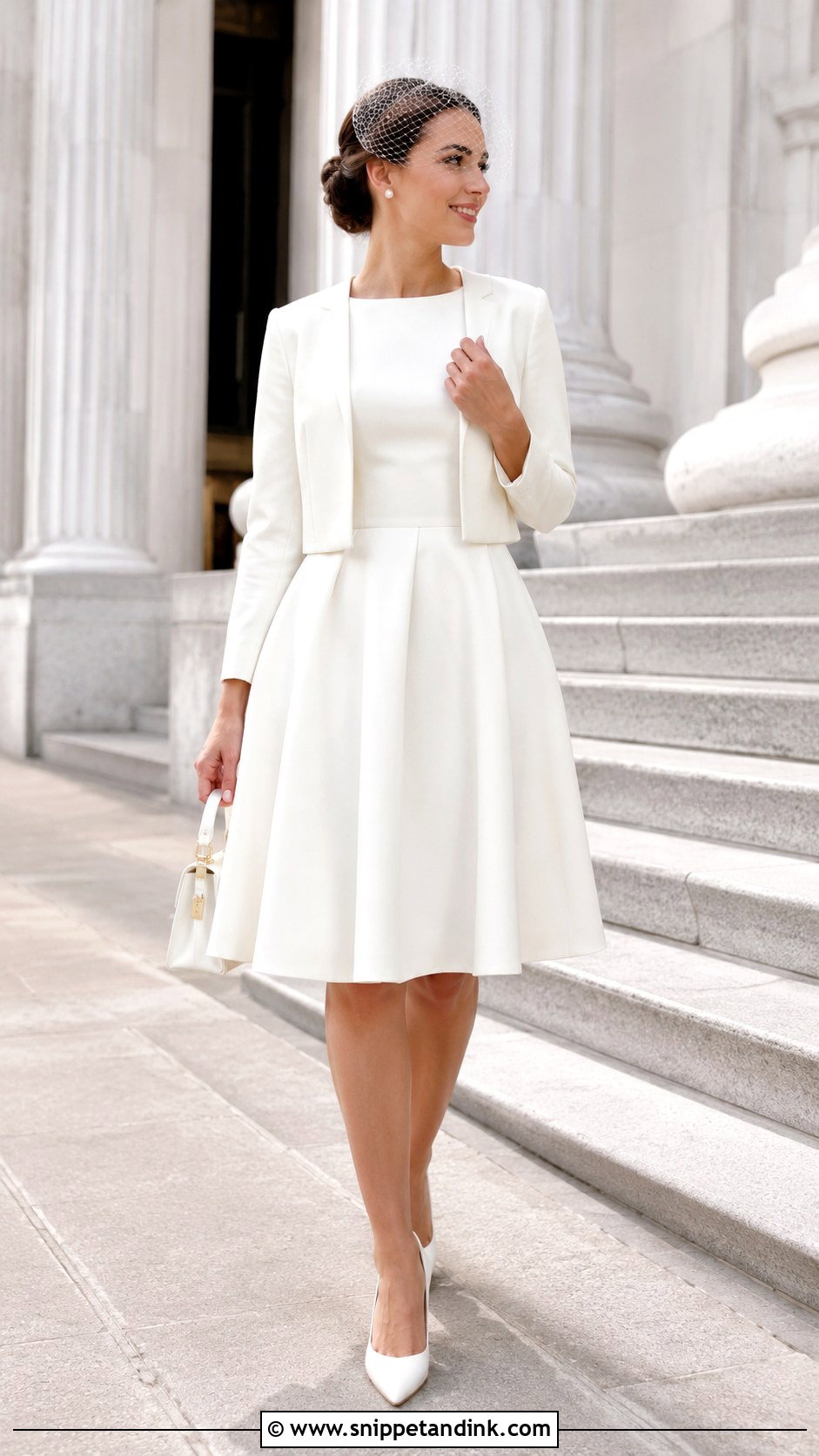
A short dress makes sense for a courthouse. Keep the bodice fitted, the neckline bateau or scoop and the skirt flared to the knee in crisp satin, cotton faille or structured crepe, so it holds shape without a big petticoat to manage in a car or on a city bench. Pointed kitten heels, pearl studs, a top-handle bag and a birdcage veil keep it bridal rather than office party. A cropped jacket is handy for travel and outdoor photos. Courthouse days involve more walking and stairs than people plan for, so choose heels you’ve already broken in.
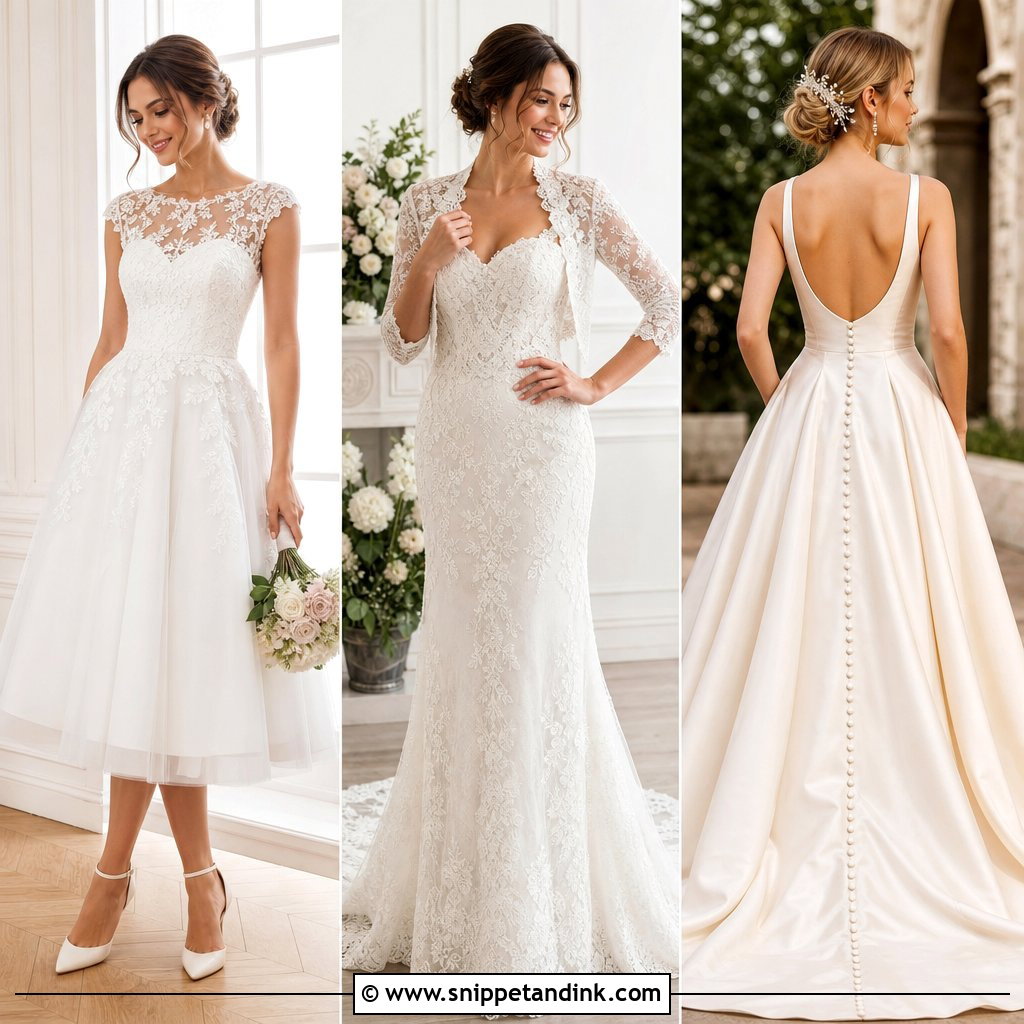
20. Winter Bolero 50s Wedding Dress
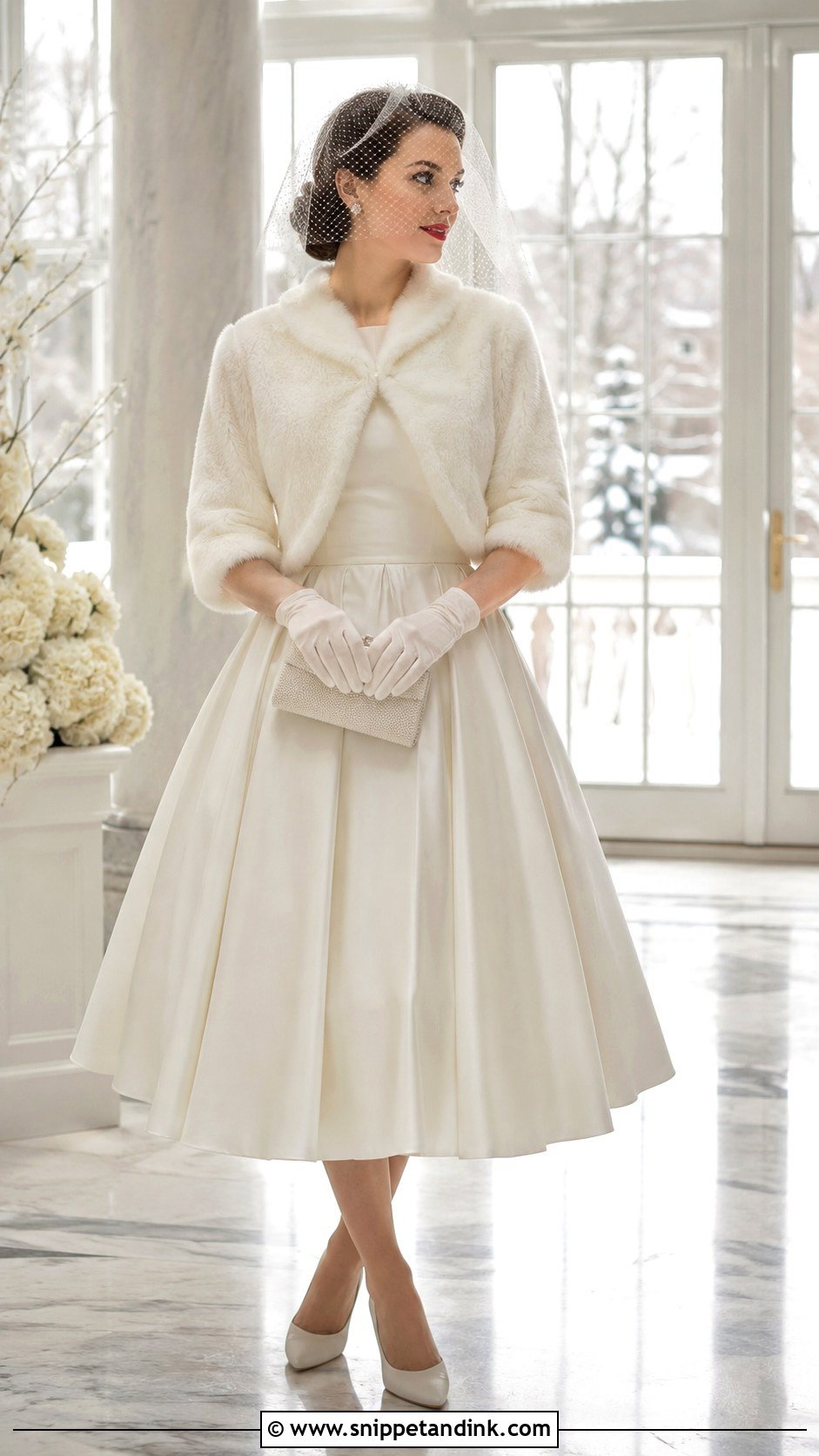
A fitted bolero turns a strapless or sleeveless 1950s dress into a winter outfit. Cropped lace, satin or faux fur ending right at the waist seam keeps the proportions; a longer jacket covers the fullest part of the skirt and shortens you. Closed-toe pumps, pearl earrings, wrist gloves, a structured clutch and a birdcage or fingertip veil. Try the bolero on over the dress, not alone. Beading or lace on the bodice can crush under a tight jacket, and you want to take it off once you reach a warm reception without leaving marks.
Wearing a Real 1950s Gown Instead of a New One
Some brides want the genuine article, a dress actually made in the fifties. It can be wonderful, but it comes with limits that a new reproduction doesn’t have, and I’d go in knowing them.
Sizing is the first surprise. Dresses of the period were cut for firm foundation garments and a small, defined waist, so measure your waist and bust against the garment itself and ignore any label. Seam allowances were often generous, which means a skilled seamstress can sometimes let a bodice out a little, but rarely by much.
Then look at the fabric closely in daylight:
- Yellow or brown spots along seams and the hem usually mean old stains that have oxidised; a specialist cleaner can sometimes lighten them, but not always.
- Fine cracks or splits in satin or silk, especially at folds, mean the fibres are breaking down. That fabric won’t take alterations.
- Smell the underarms and the lining. Mustiness can usually be cleaned out; a strong odour often can’t.
If the fabric is sound but the fit isn’t, you can still borrow from it: many brides have a dressmaker copy the bodice shape of an original onto new fabric, or wear the vintage piece for portraits and change into something sturdier for dancing.
A Petticoat, Pearls and Shoes You Can Dance In
A 1950s look works best when the shape is vintage and the construction is modern: proper support, breathable linings and room to move. Tea-length hems, fitted waists, bateau necks, lace sleeves and stiff satins all say ‘the fifties’ in different ways. Get the silhouette right first, then tune the hem, neckline, support and skirt volume to you, and add era accessories one at a time until it stops looking like you and starts looking like a costume. Then take one away. Bring your petticoat, underwear and wedding shoes to every fitting, because all three change where the hem and waist should sit.
You'll Like These Ideas:




Leave a Reply