
Victorian bridal fashion gave us so much of what still says “wedding” today, including the white gown itself, which became fashionable after Queen Victoria married in white in 1840. The details from that era are instantly recognizable: high necklines, lace sleeves, corseted bodices, covered buttons, full skirts, pointed basque waists, gloves and long veils. The hard part is wearing them without looking like you’ve come from a costume fitting. In my experience the answer is restraint, picking a couple of period details and letting modern tailoring carry the rest. Some brides go full cathedral drama, others want a soft garden gown or a sleek lace dress with a single vintage nod. These looks suit historic estates, formal rooms and winter weddings especially well.
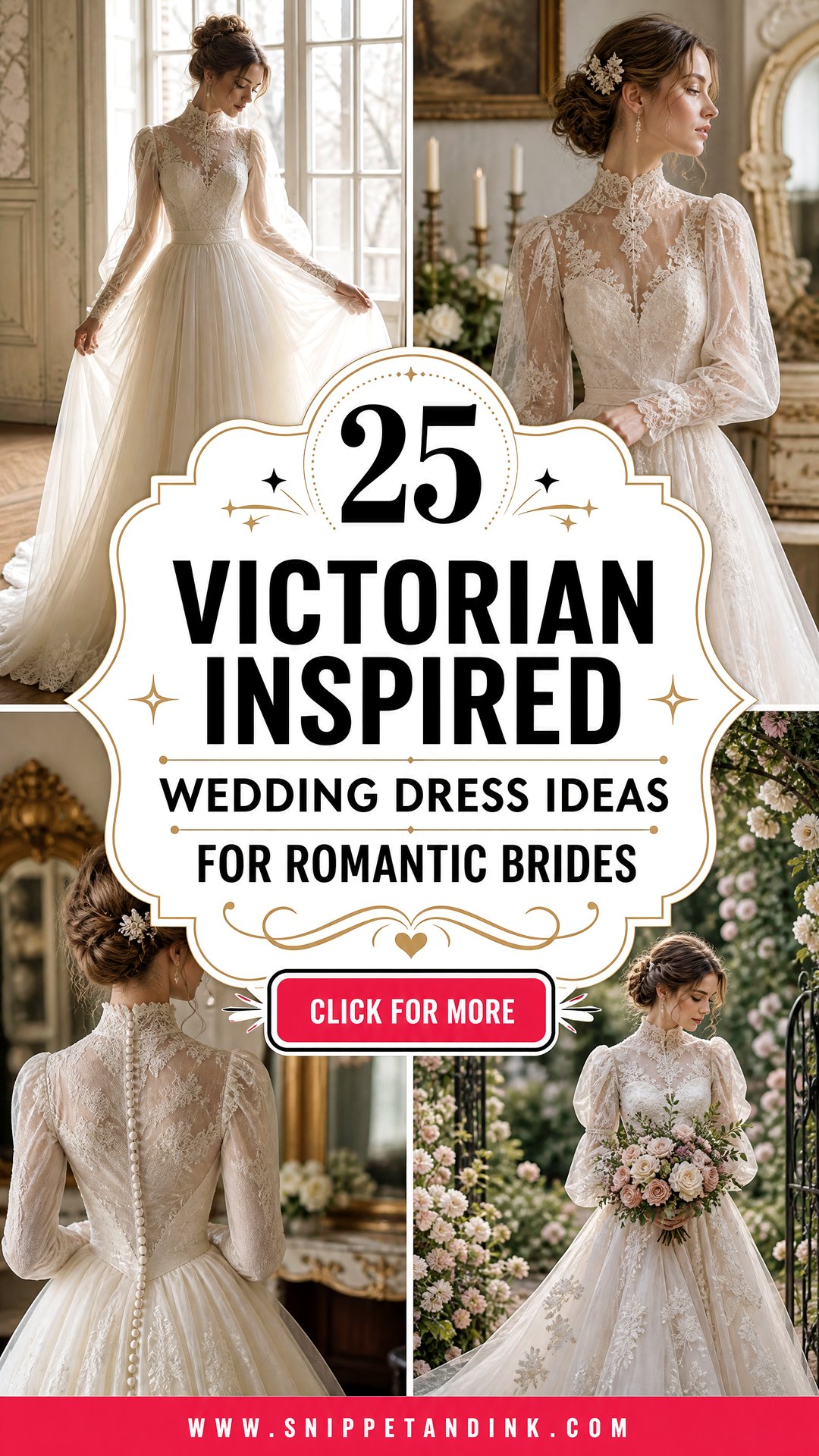
Two Victorian Details Are Usually Plenty
When a bride brings me a Victorian mood board, I ask her to circle the two details she loves most. Stacking all of them, a high collar plus puff sleeves plus a bustle plus a cameo, is what tips a dress into costume. Pick from these and let the rest of the gown stay modern.
- Neckline: a high lace collar or an off-shoulder band.
- Waist: a pointed basque or a structured corset bodice.
- Sleeves: puffed shoulders or long fitted lace to the wrist.
- Back: a row of covered buttons or a bustle.
- Fabric: brocade, heavy satin or antique-toned lace.
Hair and makeup help too. A soft, modern updo and fresh skin keep even a heavily detailed gown looking current, while ringlets and dark lips push it toward period drama.
If you find a genuine antique gown
Real nineteenth-century dresses are tiny by modern standards and the silk is often fragile, so most can only be worn after careful restoration, if at all. Many brides get closer to the look by keeping one antique piece, such as a lace collar or a length of old veiling, and having it set into a new gown. Ask a specialist to check the fabric before anyone cuts or cleans it.
1. Victorian High Neck Lace Wedding Dress
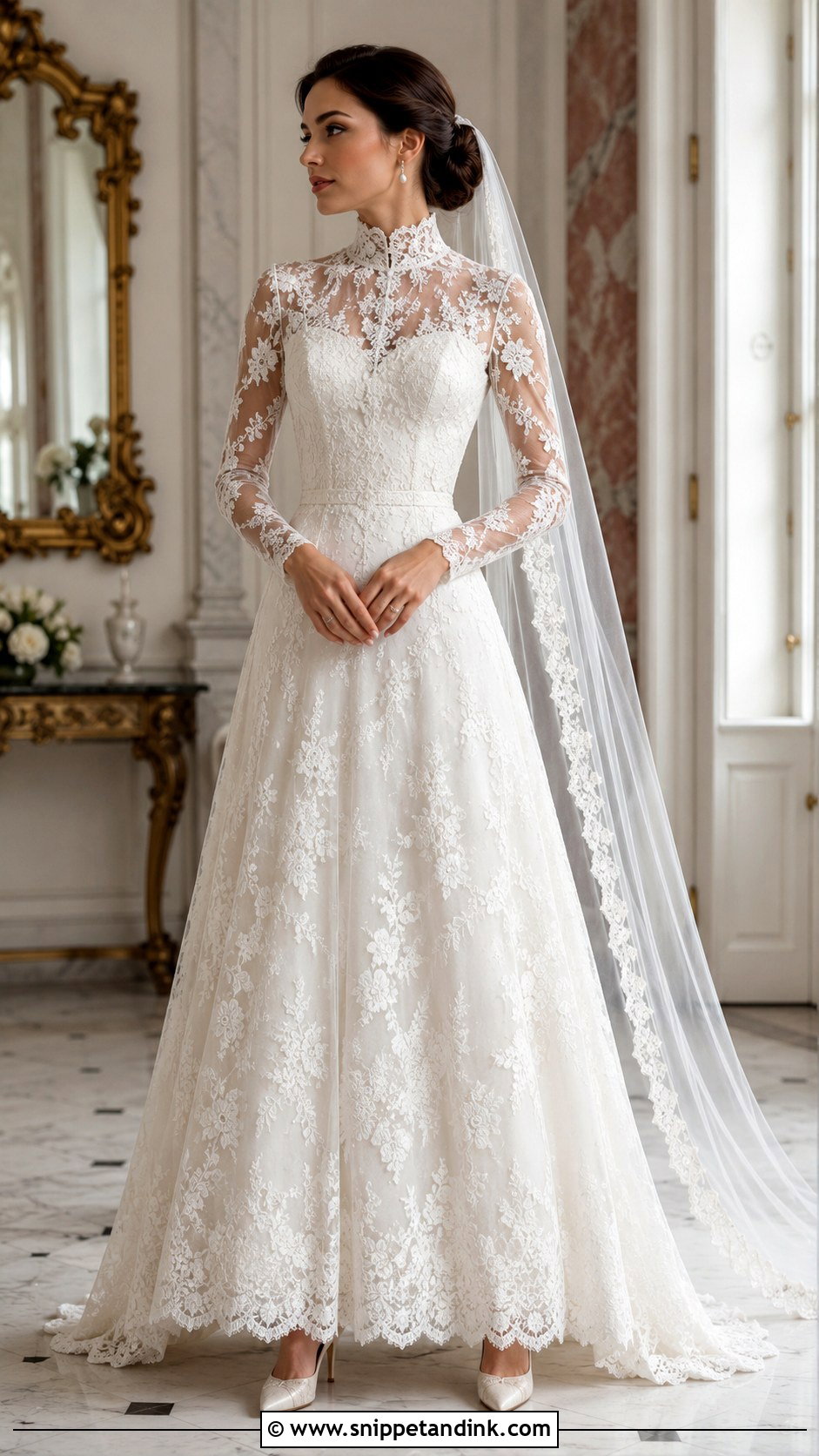
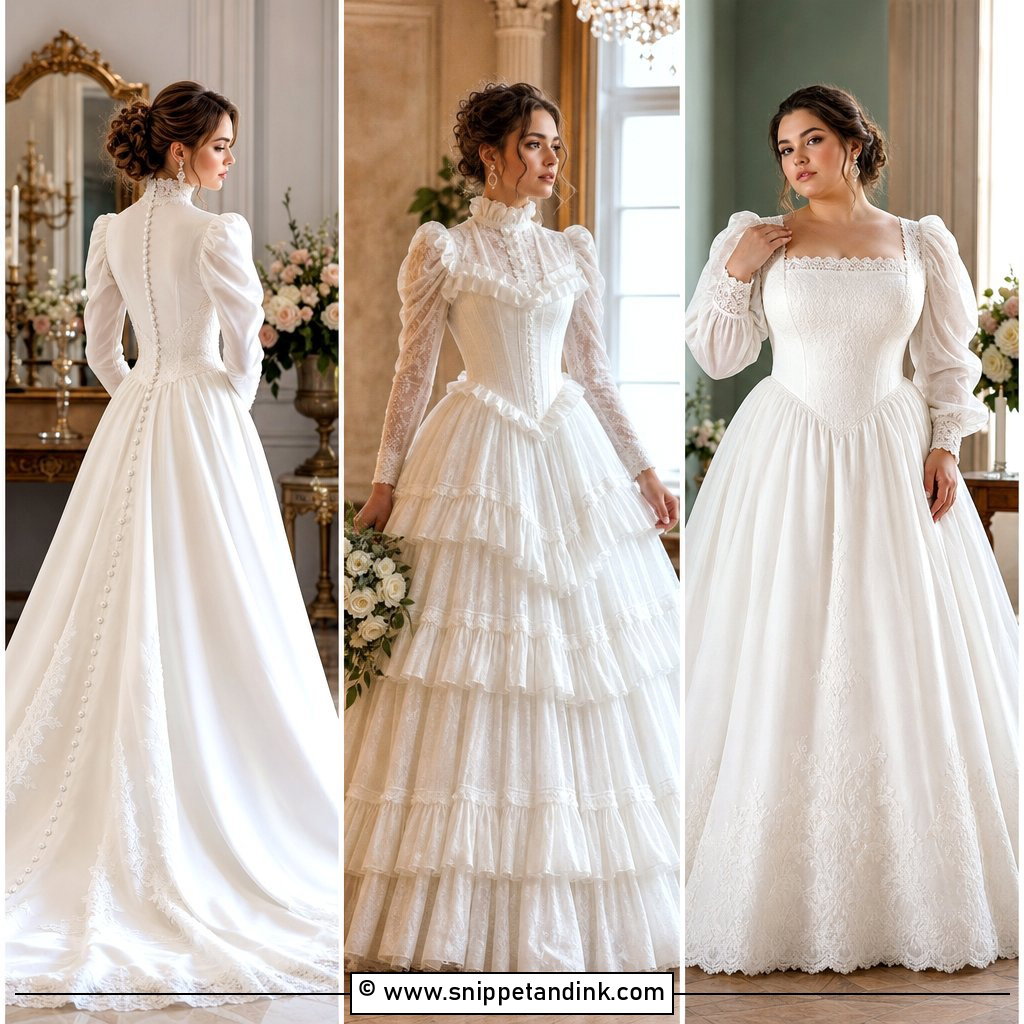
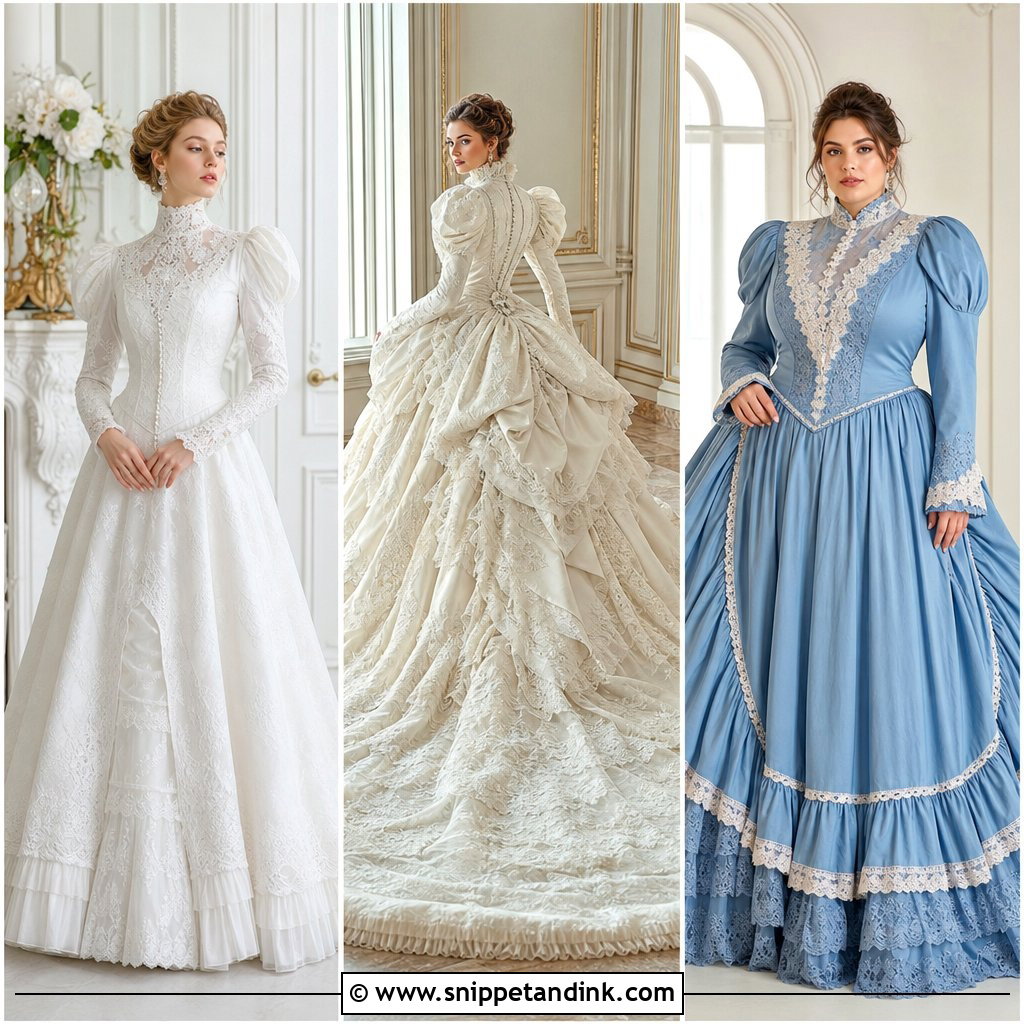
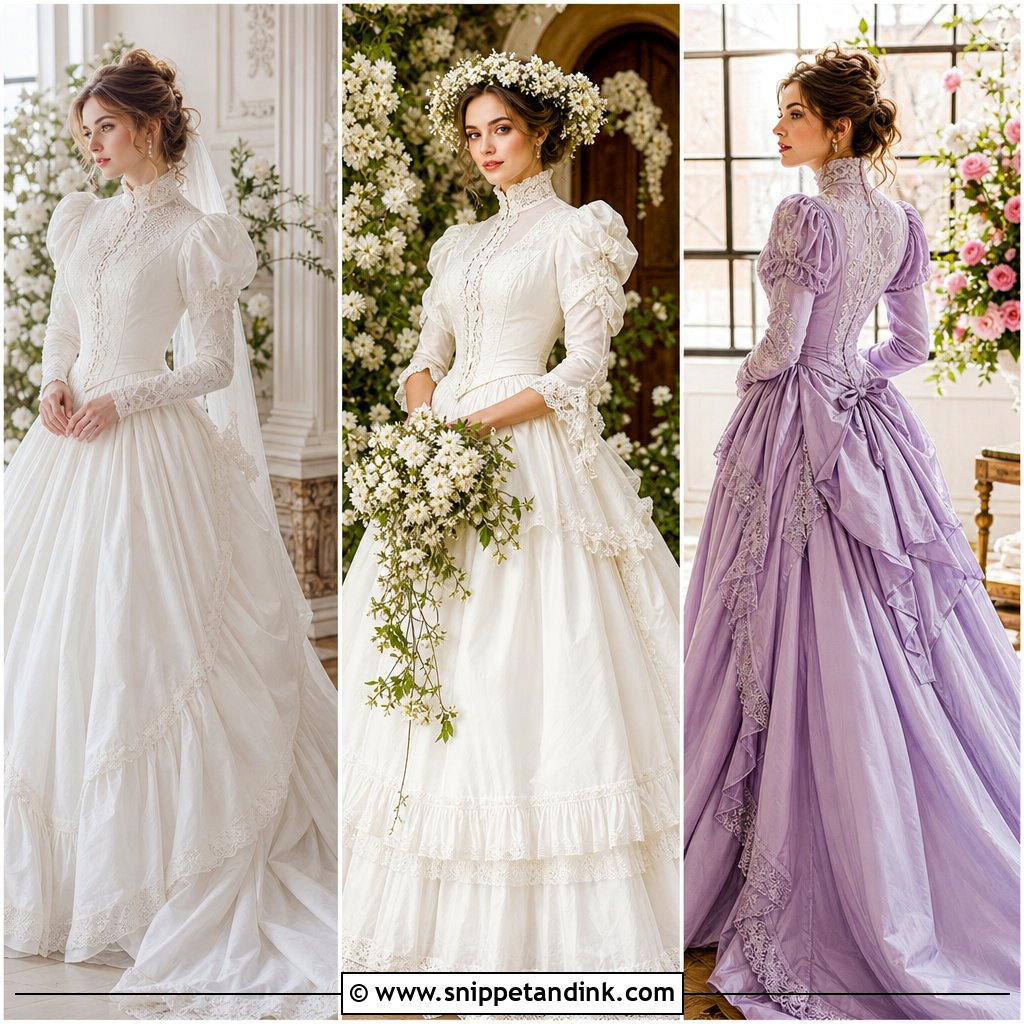
The high lace neck is the most direct way into the era, and it frames the face like an old portrait. Floral lace over a fitted bodice, long sheer sleeves and a softly flowing A-line skirt keep the proportions balanced, and covered buttons down the back add a traditional finish. I’d style it with pearl drops, a low bun and a chapel veil, plus ivory satin pumps or lace pointed heels. The collar is where fit matters most. It should sit close without pressing, and a soft boned support inside stops the lace from folding over by the afternoon. Brides who want modest coverage tend to fall for this one.
2. Victorian Corset Wedding Dress
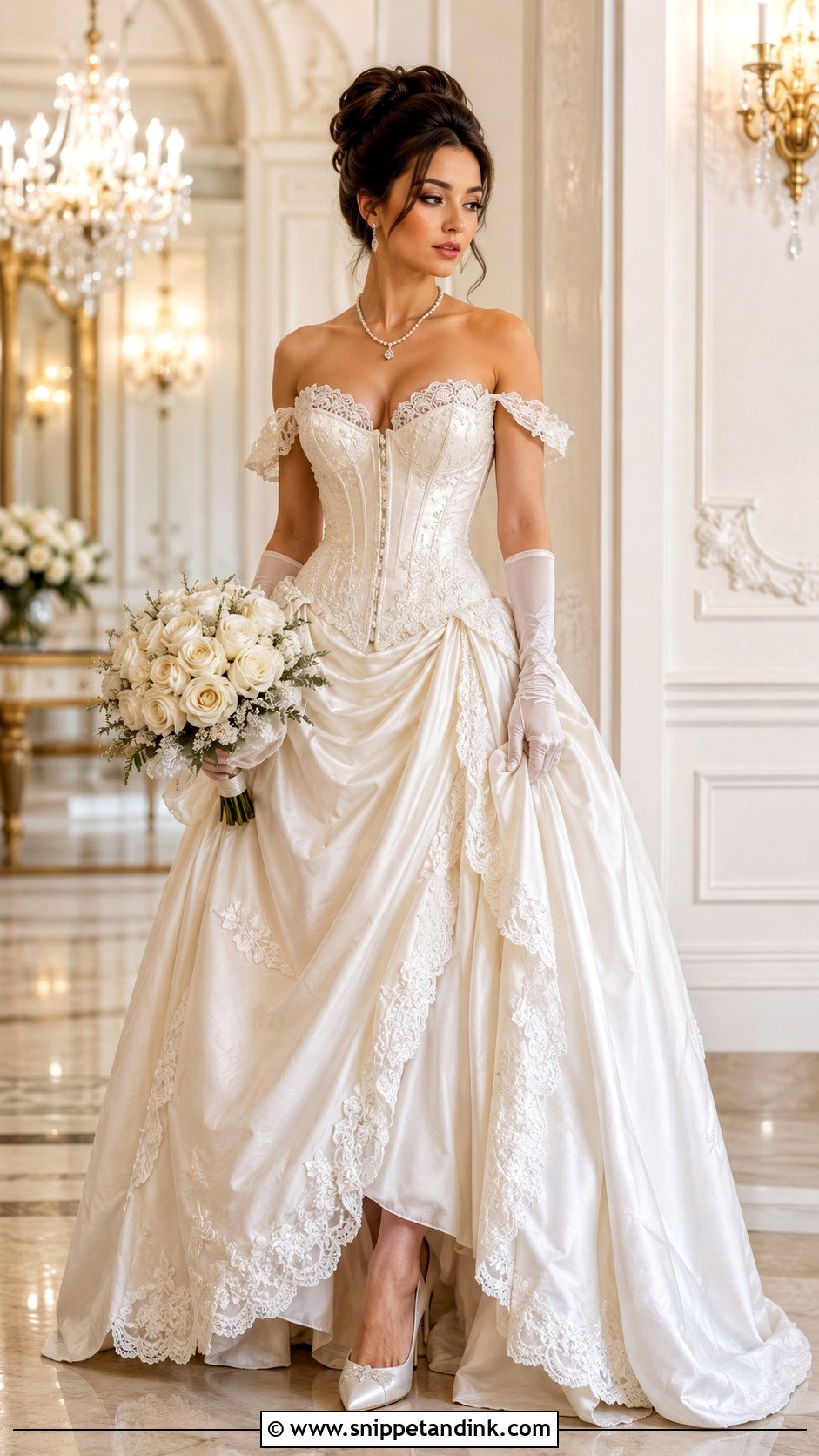
Real Victorian corsets shaped the body hard. A modern bridal corset only needs to define the waist and support the bust. The bodice can be softly boned, laced up or built with visible seams for a historical touch, and a full satin or tulle skirt balances the fitted waist. For a lighter take, I’d choose an illusion corset with lace appliqué over a heavy period-style bodice. Long gloves, pearl studs and a simple veil keep it elegant rather than theatrical. Ask whether the boning is spiral steel or plastic, because steel bends with you when you sit and plastic tends to warp after hours of wear.
3. Victorian Long Sleeve Wedding Dress
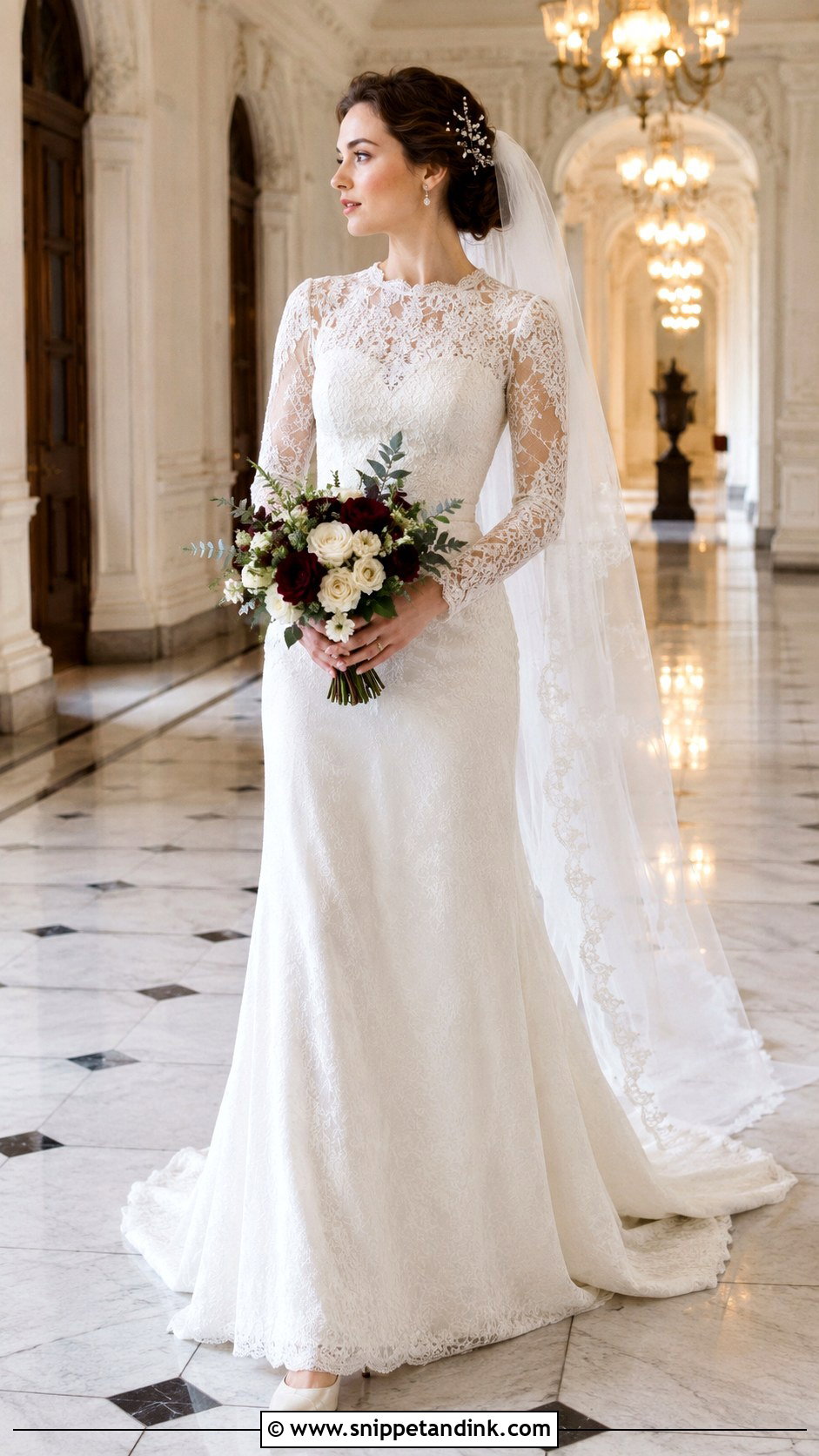
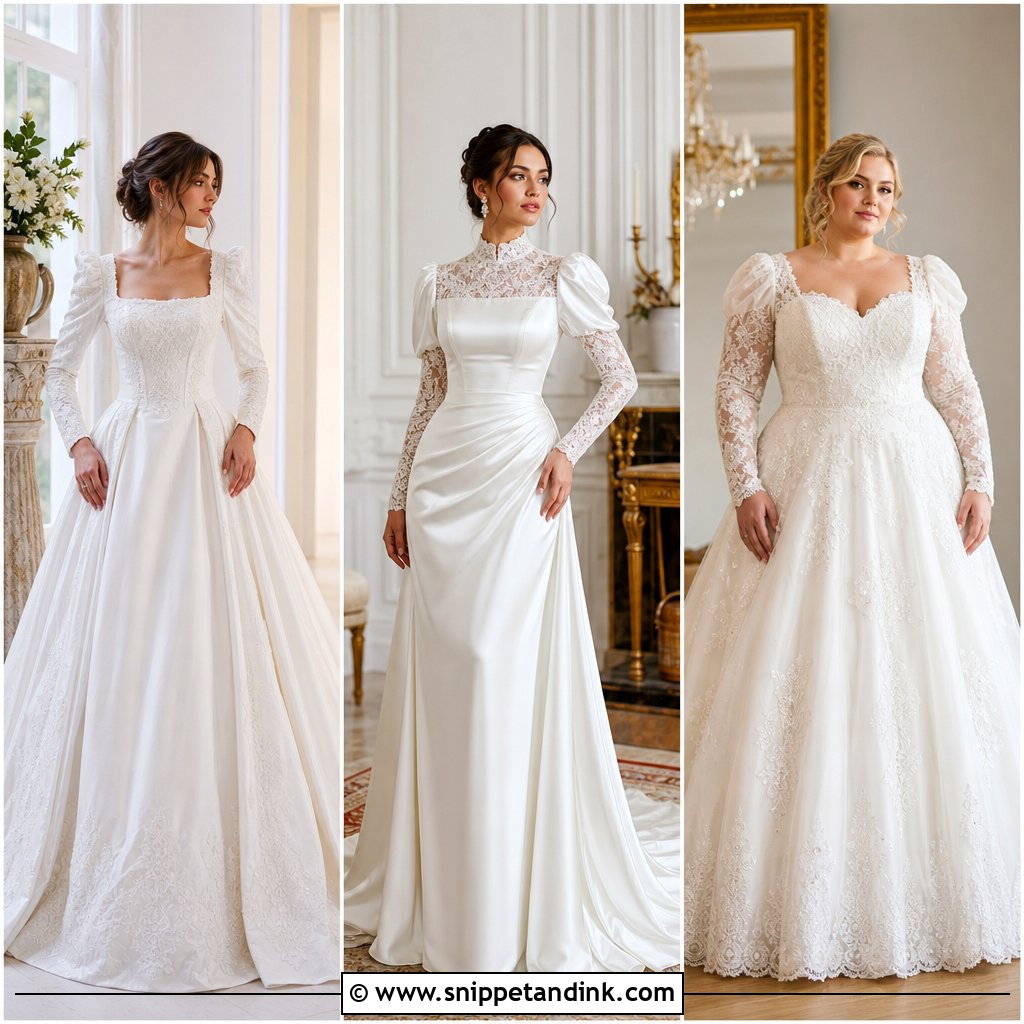
Long sleeves give coverage while keeping the look soft. Lace is the most traditional choice, especially slightly sheer lace with floral motifs. Fitted satin sleeves feel more formal, and puff sleeves lean harder into the period. A slim bodice and full skirt keep the shape balanced. Style it with a center-parted updo, pearl hair pins and ivory heels, and a long veil for ceremony drama. Fitted Victorian-style sleeves look best when they reach just past the wrist bone, so check the length with your arms bent, not only hanging straight. It suits fall, winter and early spring.
4. Victorian Ball Gown Wedding Dress
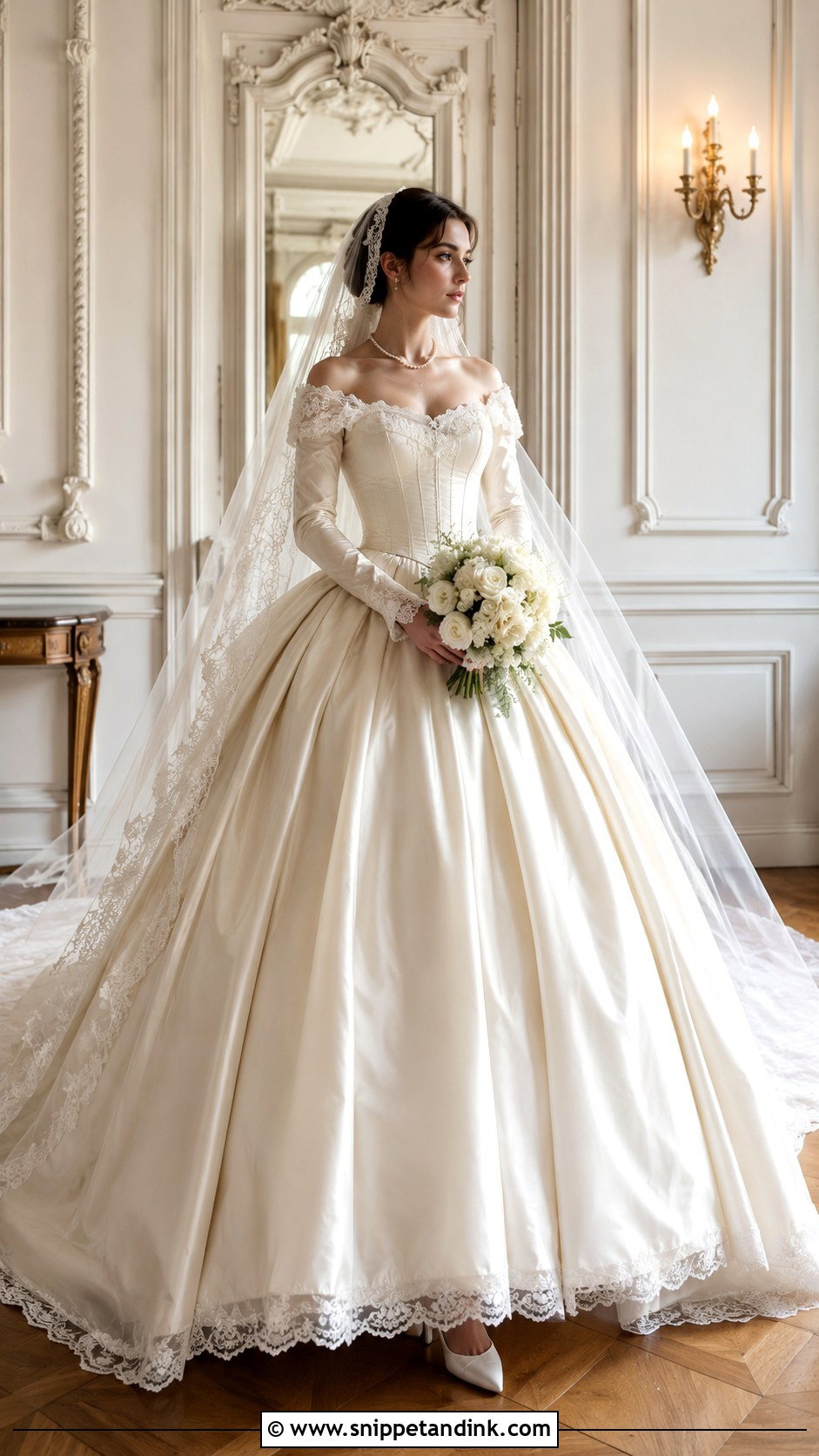
Full skirt, fitted waist, structured bodice: this is the Victorian silhouette at its grandest, and it needs a historic hotel or ballroom to make sense. Satin, brocade, organza or layered tulle can build volume without stiffness. A high neck and an off-the-shoulder bodice both work, depending on how much skin you want to show. Add a cathedral veil, a pearl necklace and classic white heels, with a soft round bouquet of white roses or peonies. Under that much skirt, you’ll need a petticoat or hoop, so bring it to every fitting. The hem can only be set accurately with the real underskirt in place.
5. Victorian Bustle Wedding Dress
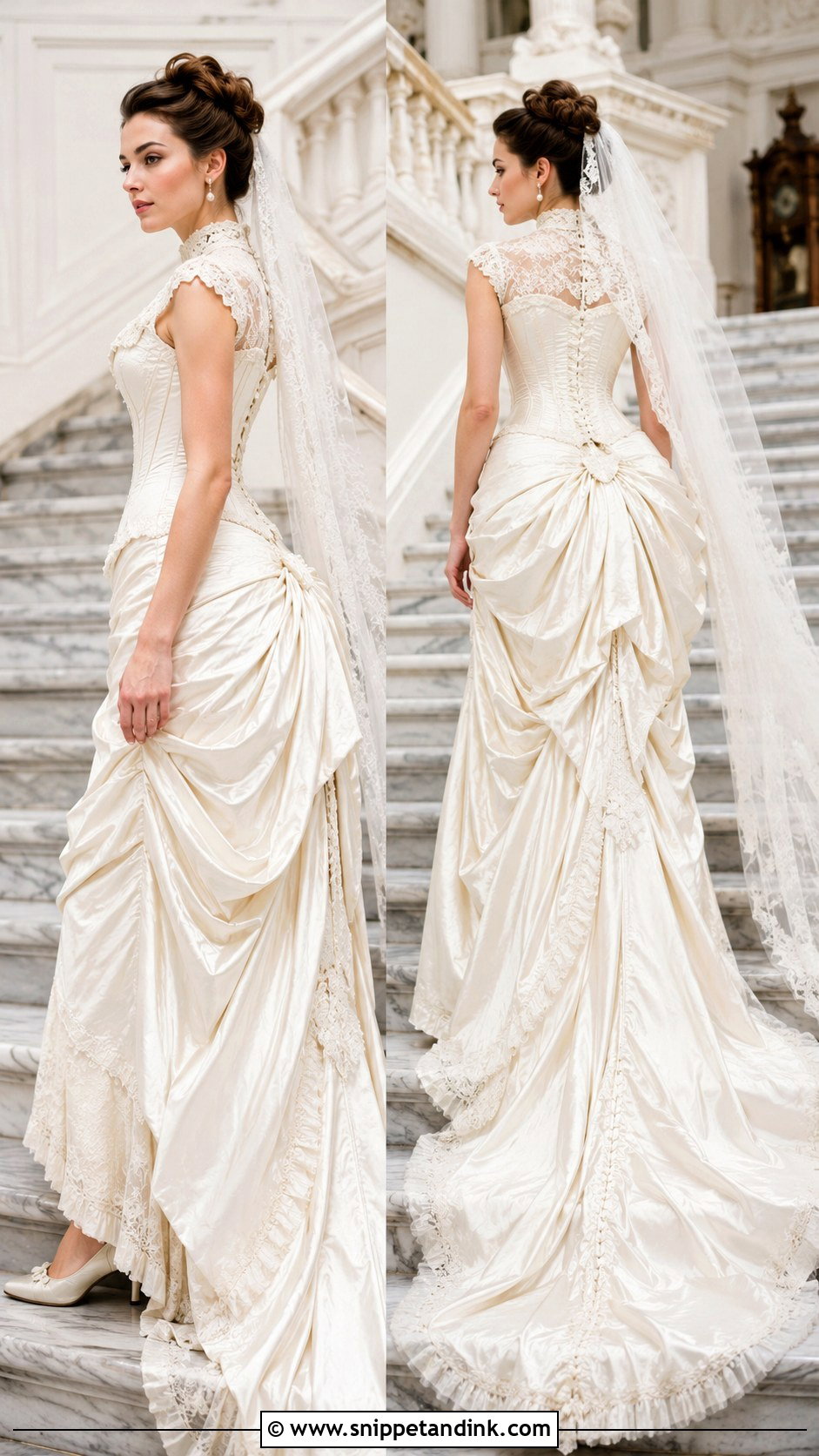
A Victorian bustle wedding dress is all about the view from behind. The volume sits at the back waist, which gives you a strong profile as you walk the aisle. Modern versions are usually subtle, built from gathered satin, layered tulle or soft draping. A fitted corset bodice keeps the shape defined, and a lace veil, pearl earrings and satin shoes complete it. Wear your hair up, since loose hair hides the detail you chose the dress for. Sitting is the practical issue. A structured bustle doesn’t like chairs, so check whether it compresses and springs back before you commit. Staircases show it off best.
6. Victorian Off Shoulder Wedding Dress
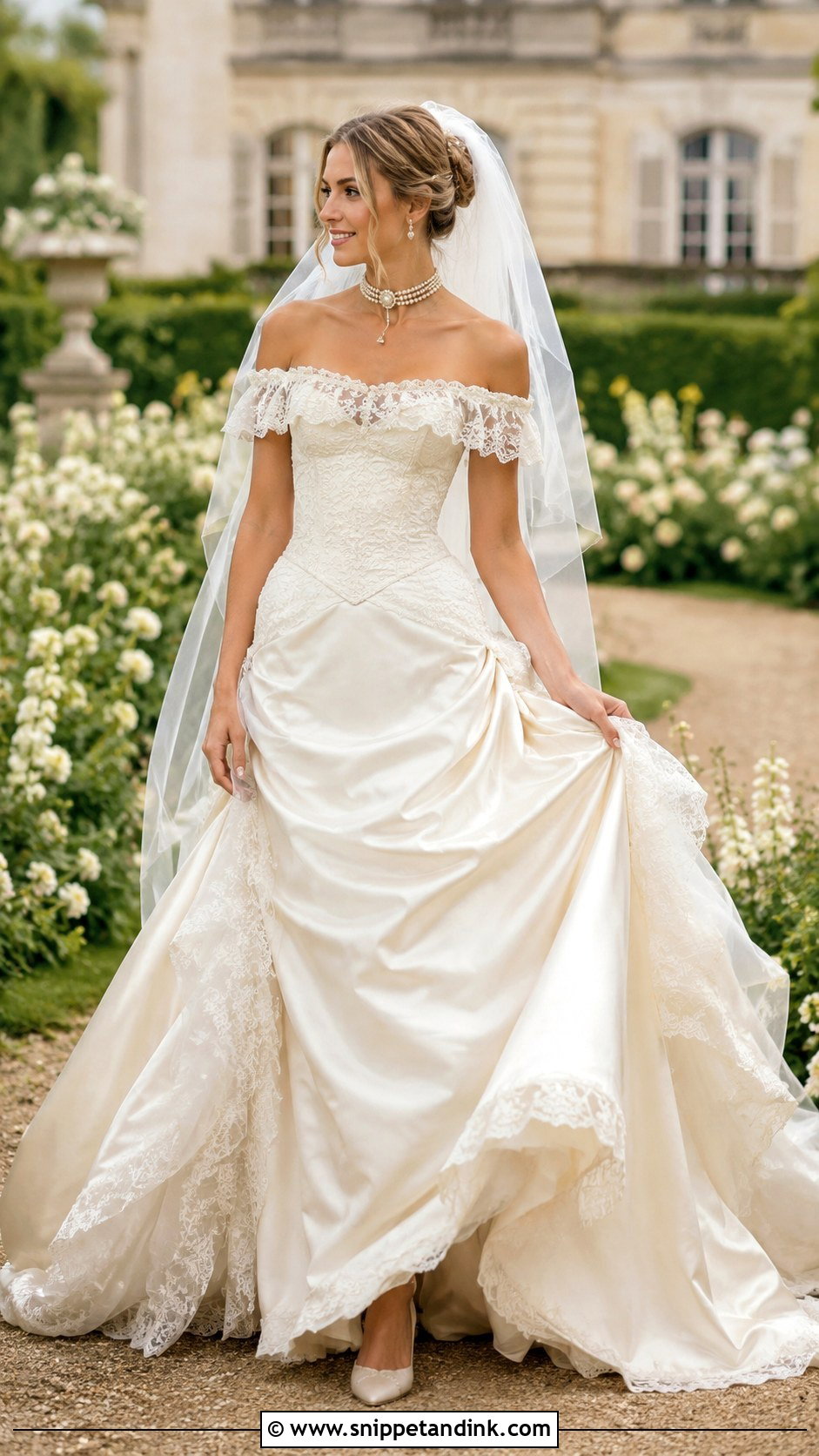
Victorian eveningwear often bared the shoulders, so an off-shoulder gown is more period-accurate than many people assume. Choose an off-shoulder neckline with lace trim, a structured bodice and a flowing skirt. Long fitted sleeves or detachable puff sleeves add vintage character. A pearl choker fills the open neckline nicely, with swept-up hair and ivory heels. The band needs to grip, so ask for silicone tape inside it or the neckline will creep up whenever you lift your arms. It’s a feminine choice for brides who find a high collar too confining.
7. Victorian Puff Sleeve Wedding Dress
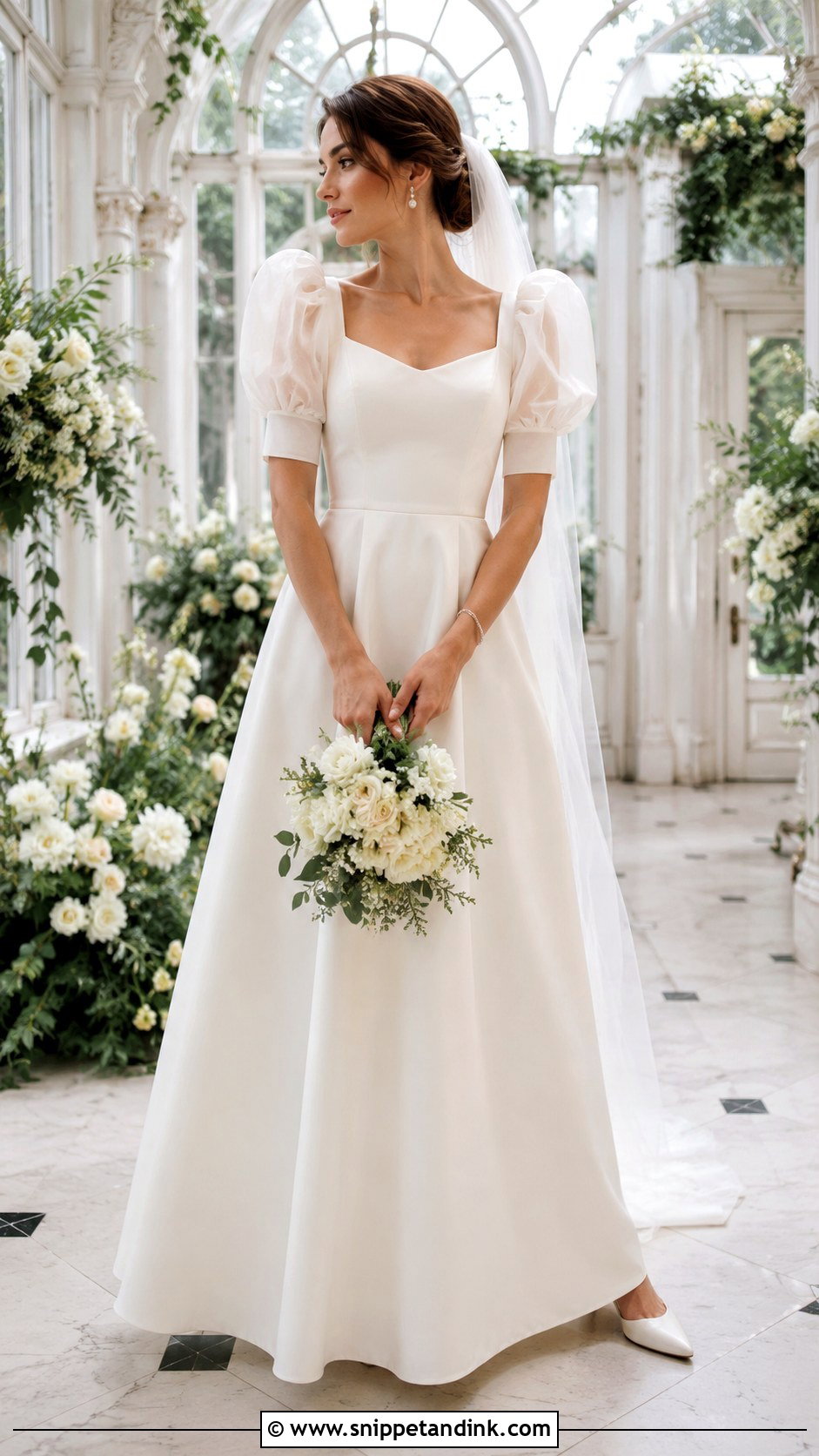
Puff sleeves are the most visible period detail on this list, and they change the whole shape of the shoulders. Sheer organza puffs feel light and modern, and lace puffs read more historical. Keep the skirt a simple A-line or full shape, and let the sleeves lead with pearl earrings, a slim bracelet and classic pumps. Proportion is the thing to watch. A large puff on a small frame can swamp the face, so try a few sizes at the shop, and know that organza puffs crush in a car seat belt, so travel with a light jacket over them. They’re charming in spring and in gardens.
8. Victorian Basque Waist Wedding Dress
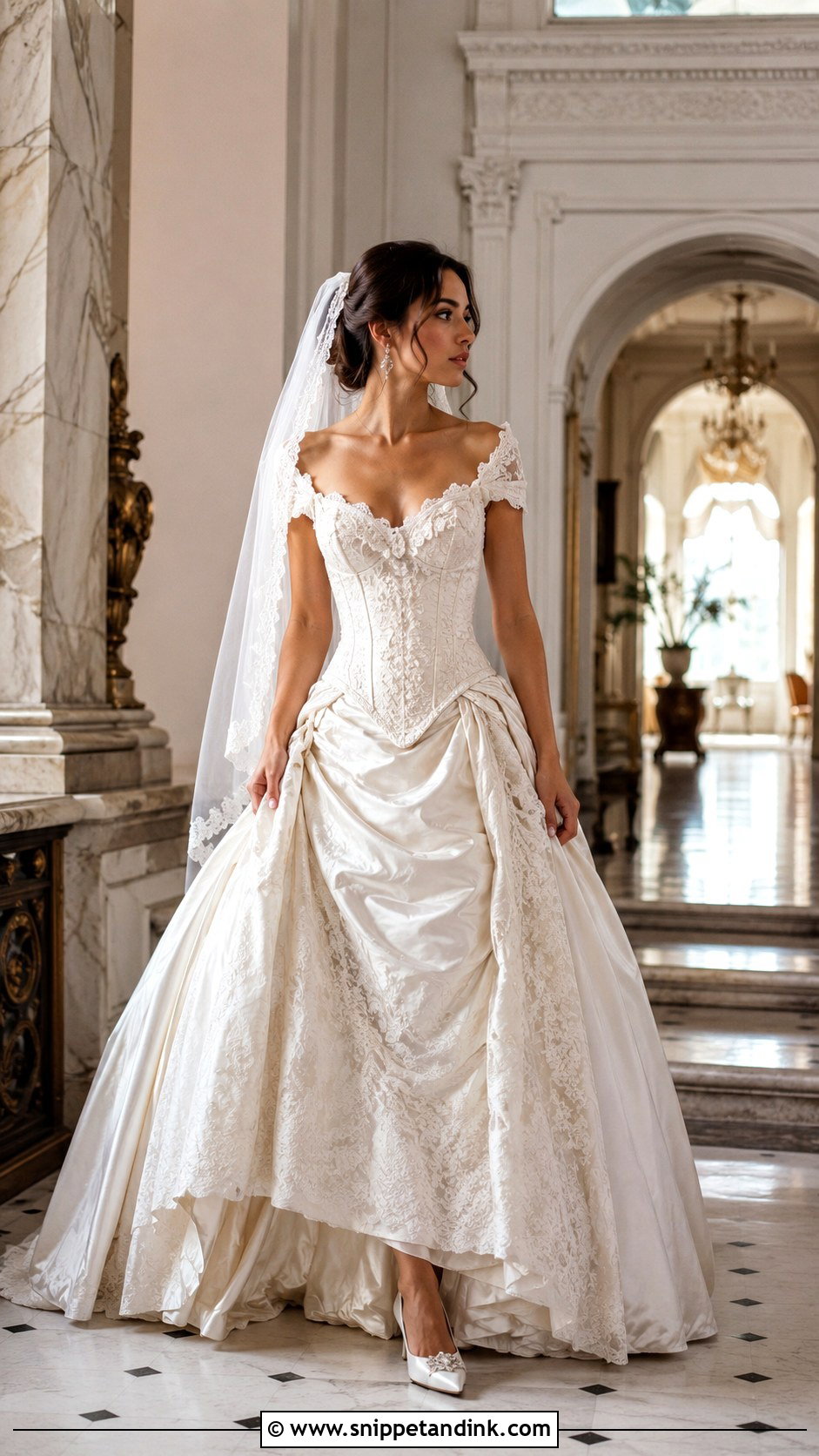
A Victorian basque waist wedding dress has a bodice that dips into a V or U below the natural waist, which lengthens the torso and sculpts the silhouette. It’s one of the most flattering period details I know, especially for shorter torsos. Pair it with a full skirt in lace, satin or brocade. A high neck makes it more traditional, while off-shoulder feels softer. Add drop earrings, a delicate veil and ivory pointed heels. The point of the basque has to sit centered, and it’s worth checking in the mirror while seated, since a tight skirt seam can twist it sideways.
9. Victorian Lace A Line Wedding Dress
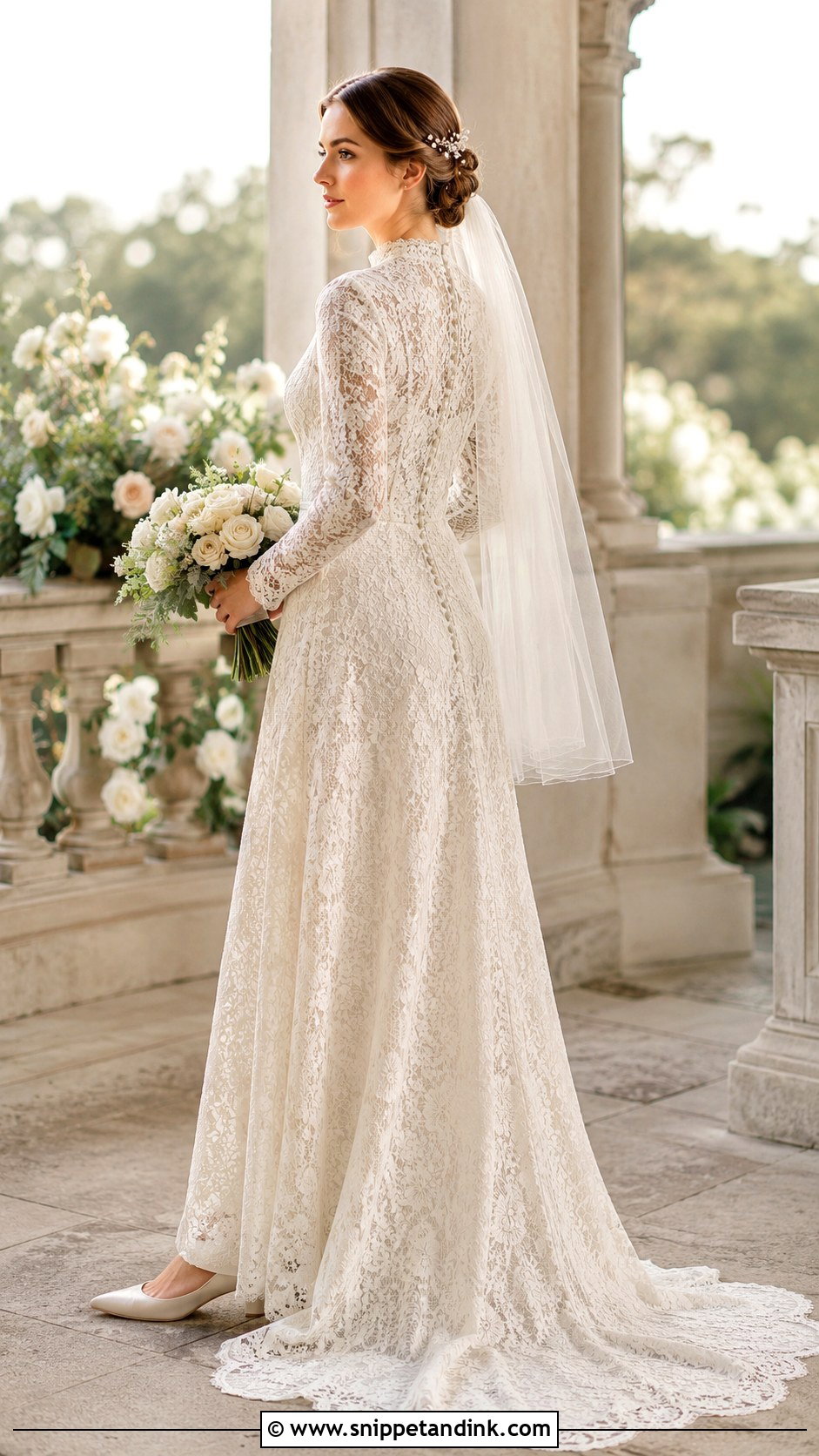
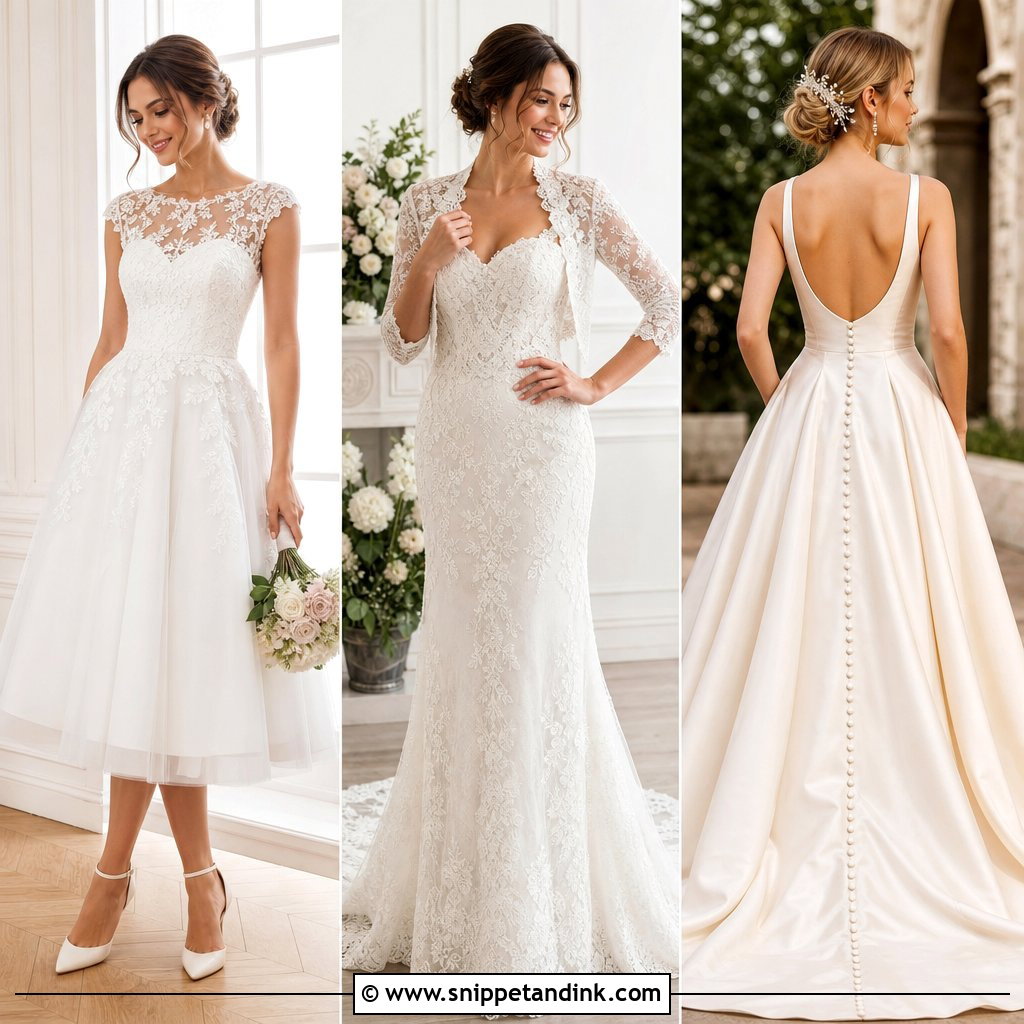
Lace and an A-line skirt are the most practical way to wear the era, and the shape suits a wide range of figures. The skirt skims the waist and hips and moves easily. Choose allover lace for a traditional look, or lace sleeves with a plain skirt for something cleaner. A high neck, covered buttons and a scalloped hem push it further toward Victorian. Pearl hair pins, a soft veil and low ivory heels keep you comfortable. Lace hems drag and catch on grass and gravel, so ask your seamstress to add horsehair braid or a protective underlayer if you’re outdoors. It suits estates, gardens and small venues.
10. Victorian Satin Wedding Dress
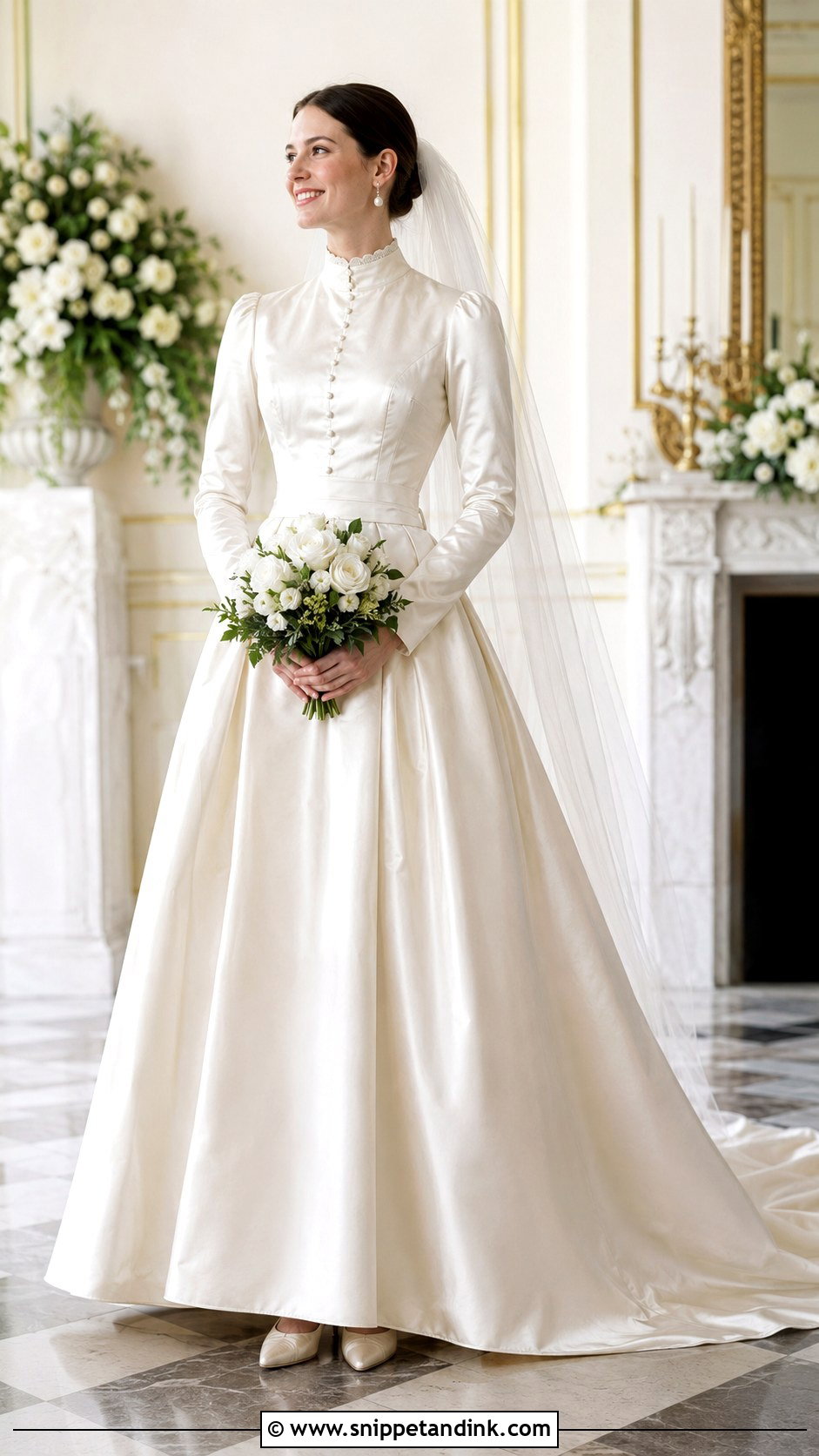
Satin holds its shape well, which is why heavy satin was a favorite for nineteenth-century wedding gowns. For a Victorian mood, choose a fitted bodice, long sleeves, a high collar or a basque waist, and a full skirt with a small train. Keep accessories classic with pearl earrings, a clean bun, a simple veil and satin pumps or embroidered heels. Satin shows creases and water spots, so steam it carefully and never iron it directly. It suits brides who care more about fabric and shape than beading.
11. Victorian Tulle Wedding Dress
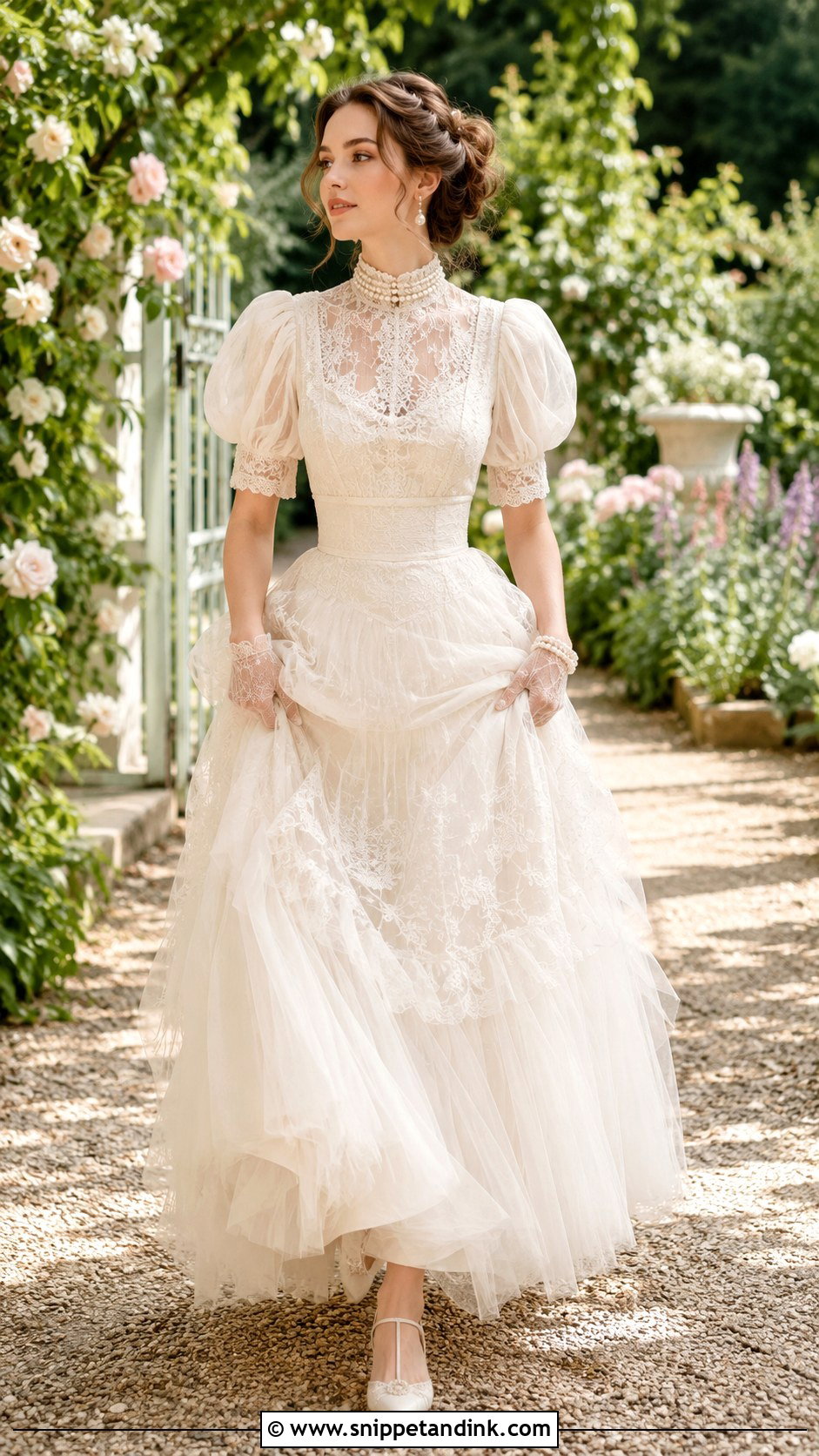
Tulle gives the era a lighter, airier feel than satin or brocade. Layers of it build volume without the weight. A corset bodice, a lace high neck or puff sleeves bring in the Victorian part. Ivory, antique white or champagne tulle reads vintage, and delicate pearls, sheer gloves and ballet-style bridal shoes finish it. Tulle skirts snag on rough surfaces and catch on shoe buckles, so choose shoes with smooth straps. It’s at its best in gardens, conservatories and soft daylight.
12. Victorian Brocade Wedding Dress
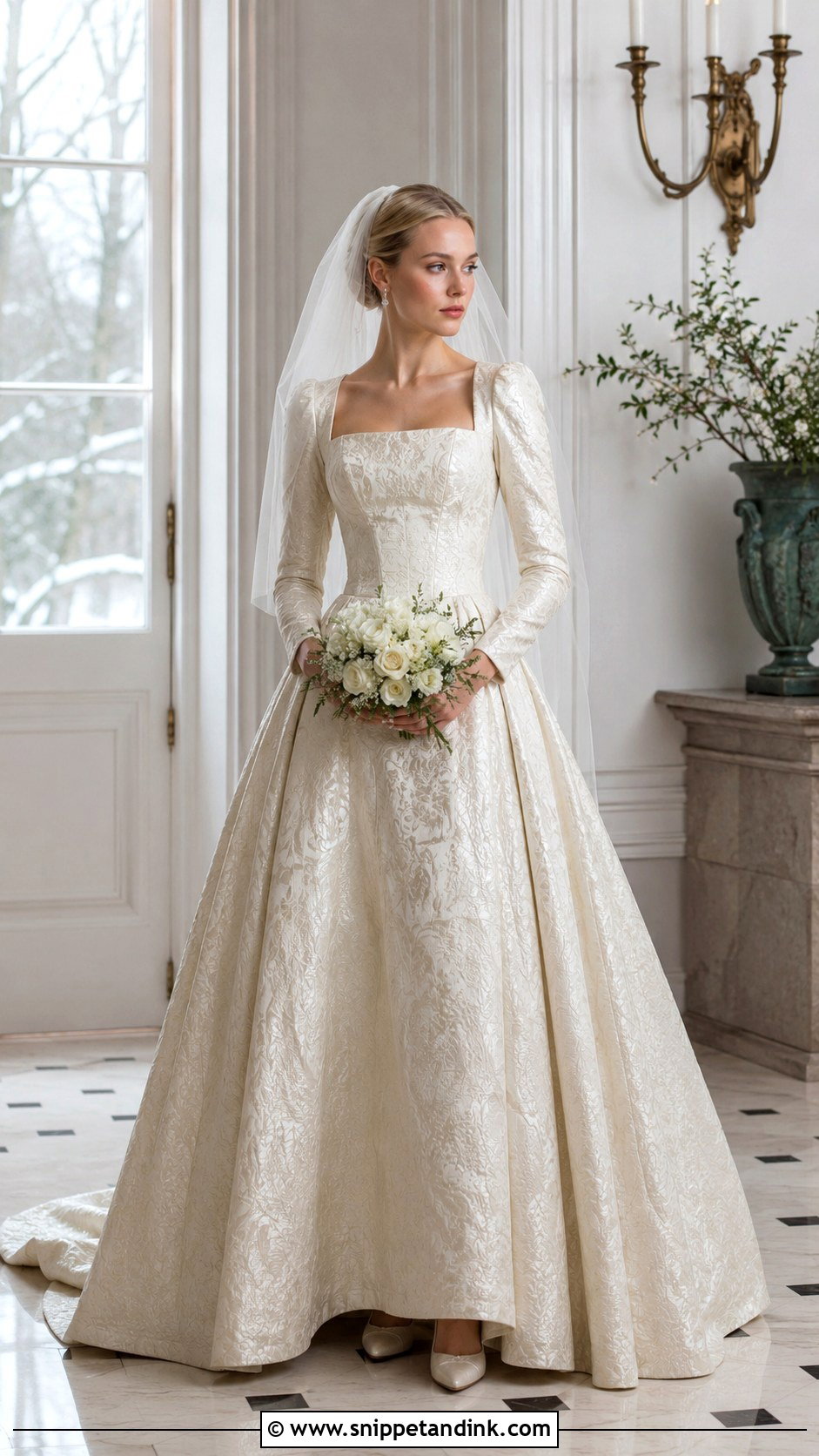
Brocade has a woven pattern, usually raised florals or scrolls, so it gives depth without any added embellishment. A structured bodice and full skirt make it look regal. Keep the neckline simple, whether high, square or a modest off-shoulder, and stick to pearl earrings, a sleek veil and plain ivory shoes. Brocade is stiff and fairly heavy, which works in winter and in formal evening rooms but can feel warm in summer. When cutting, a good dressmaker matches the pattern across seams. Look at the side seams before buying, because mismatched motifs there are the clearest sign of rushed work.
13. Victorian Tea Length Wedding Dress
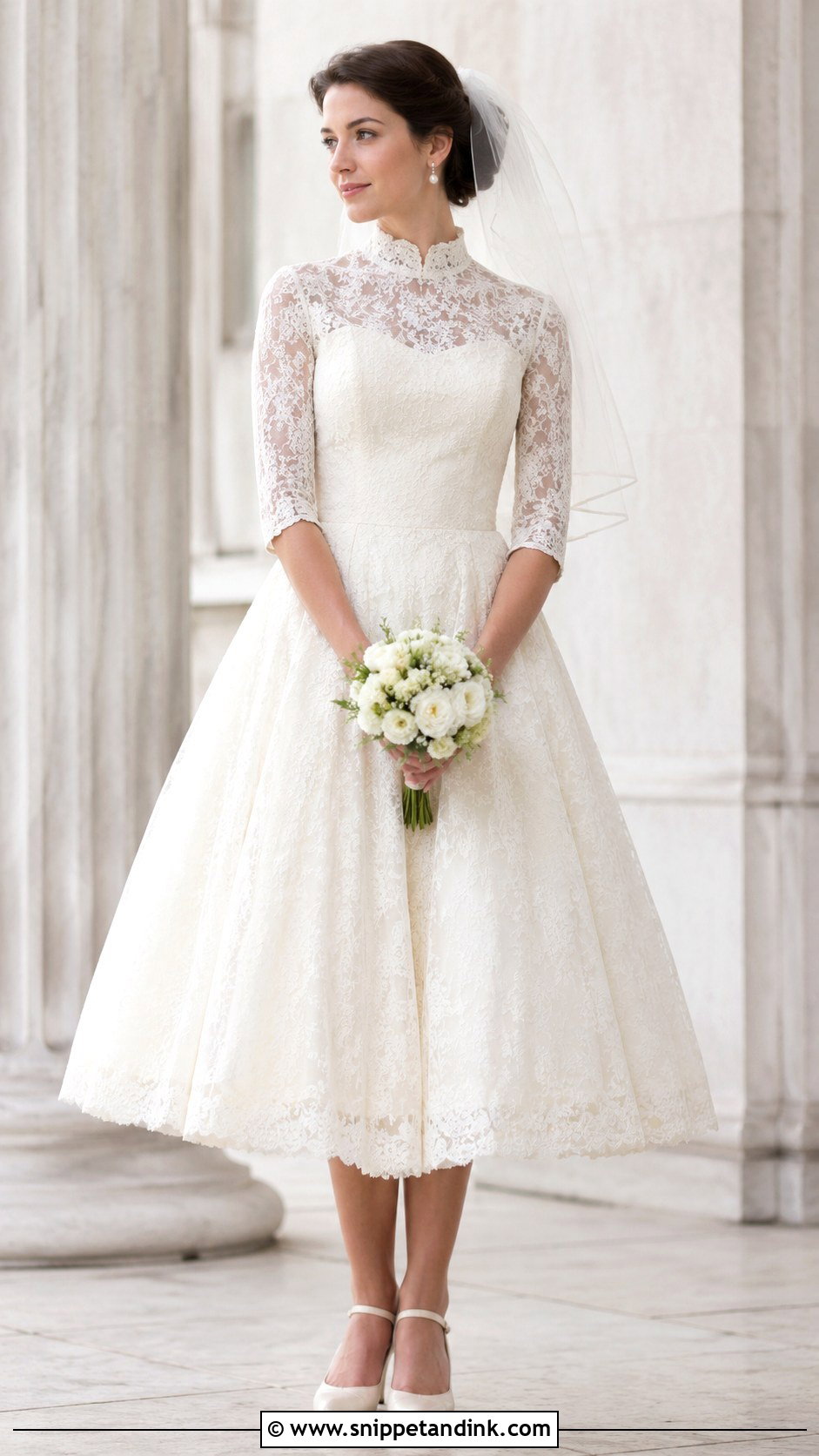
Floor length is more traditional, but a tea-length dress can still feel Victorian with lace sleeves, a high neck, a corset bodice or a structured skirt. Pair it with ivory Mary Jane heels, pearl earrings and a short veil. It’s easy to dance in and suits courthouse weddings, garden ceremonies and brunch receptions. Antique lace or satin keeps it refined. Your shoes and ankles are on view, so the hem needs to hit the same spot all the way round. Have it checked while you stand on a flat floor in your actual shoes.
14. Victorian Square Neck Wedding Dress
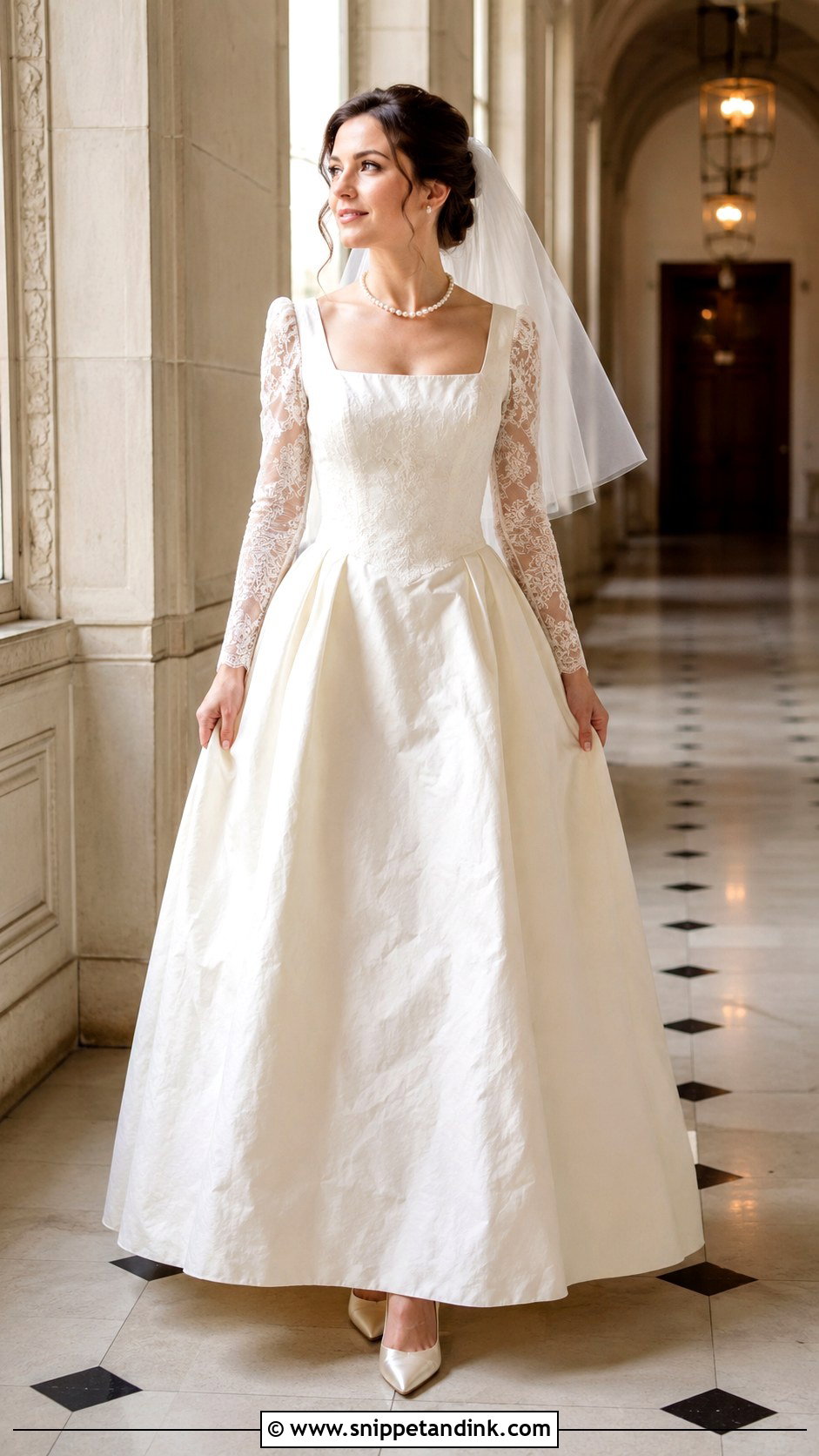
A square neckline adds structure to the bodice and pairs well with long or puff sleeves, balancing a full skirt so the dress doesn’t feel heavy. Lace trim, covered buttons or a corset-style waist strengthen the Victorian mood. A pearl necklace or drop earrings sit neatly inside the neckline, with satin pumps and a soft veil. The edges of a square neck should lie flat against the chest. If they gape when you lean forward, the bodice needs taking in. It gives you a vintage line without much ornament.
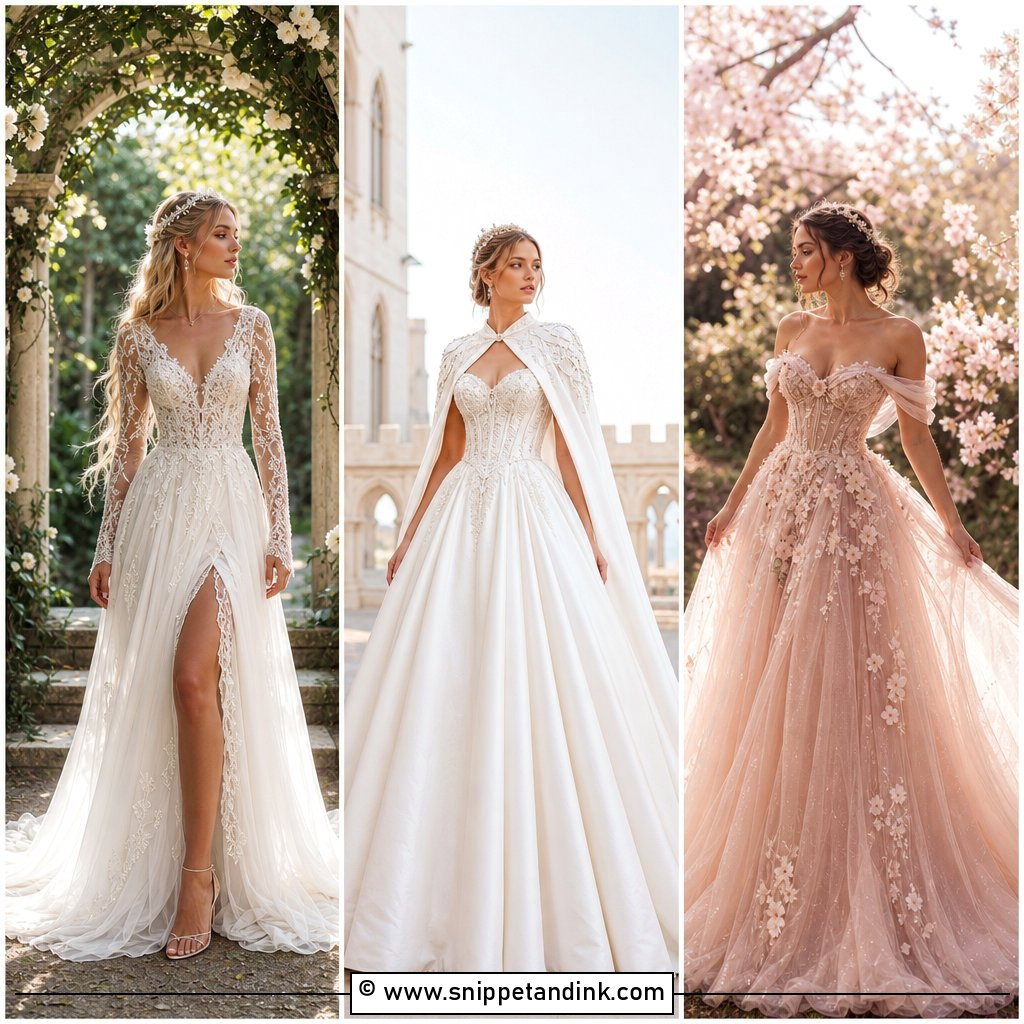
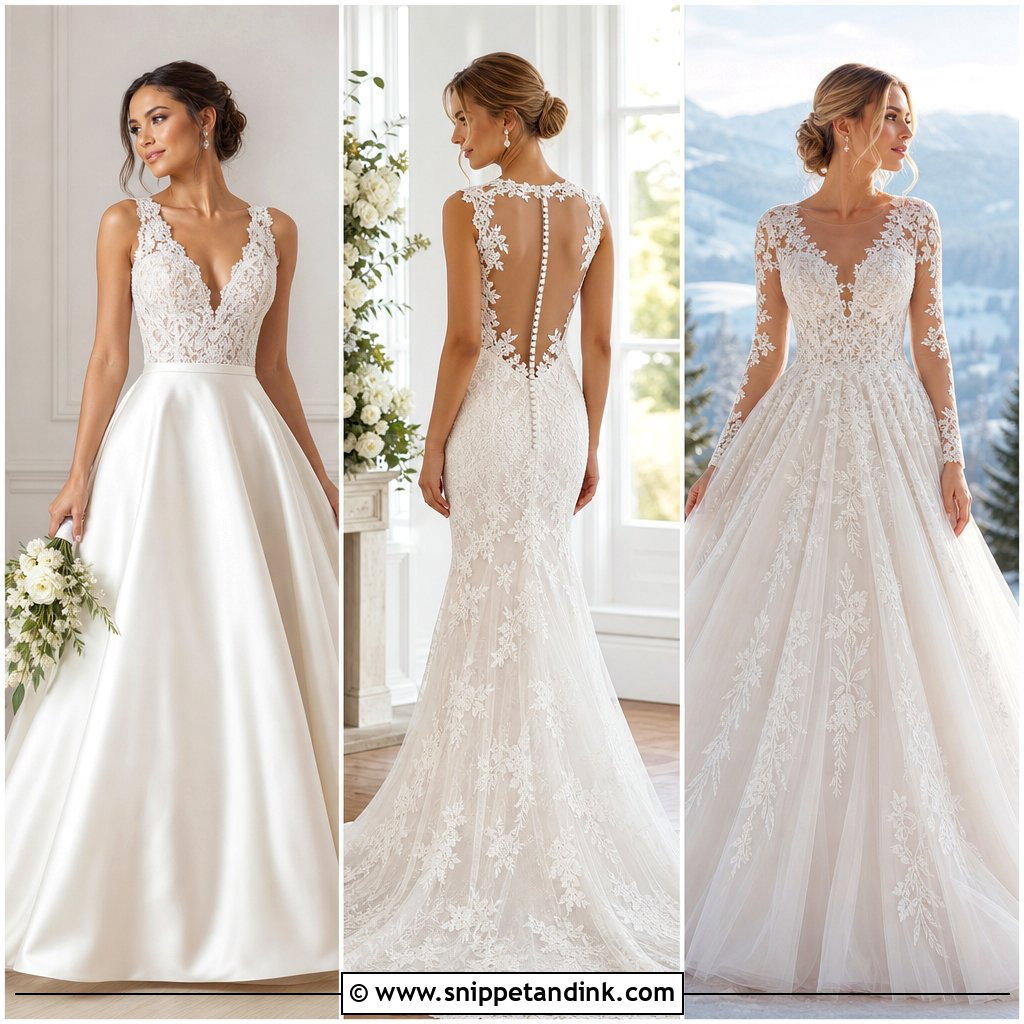
15. Victorian Sheer Sleeve Wedding Dress
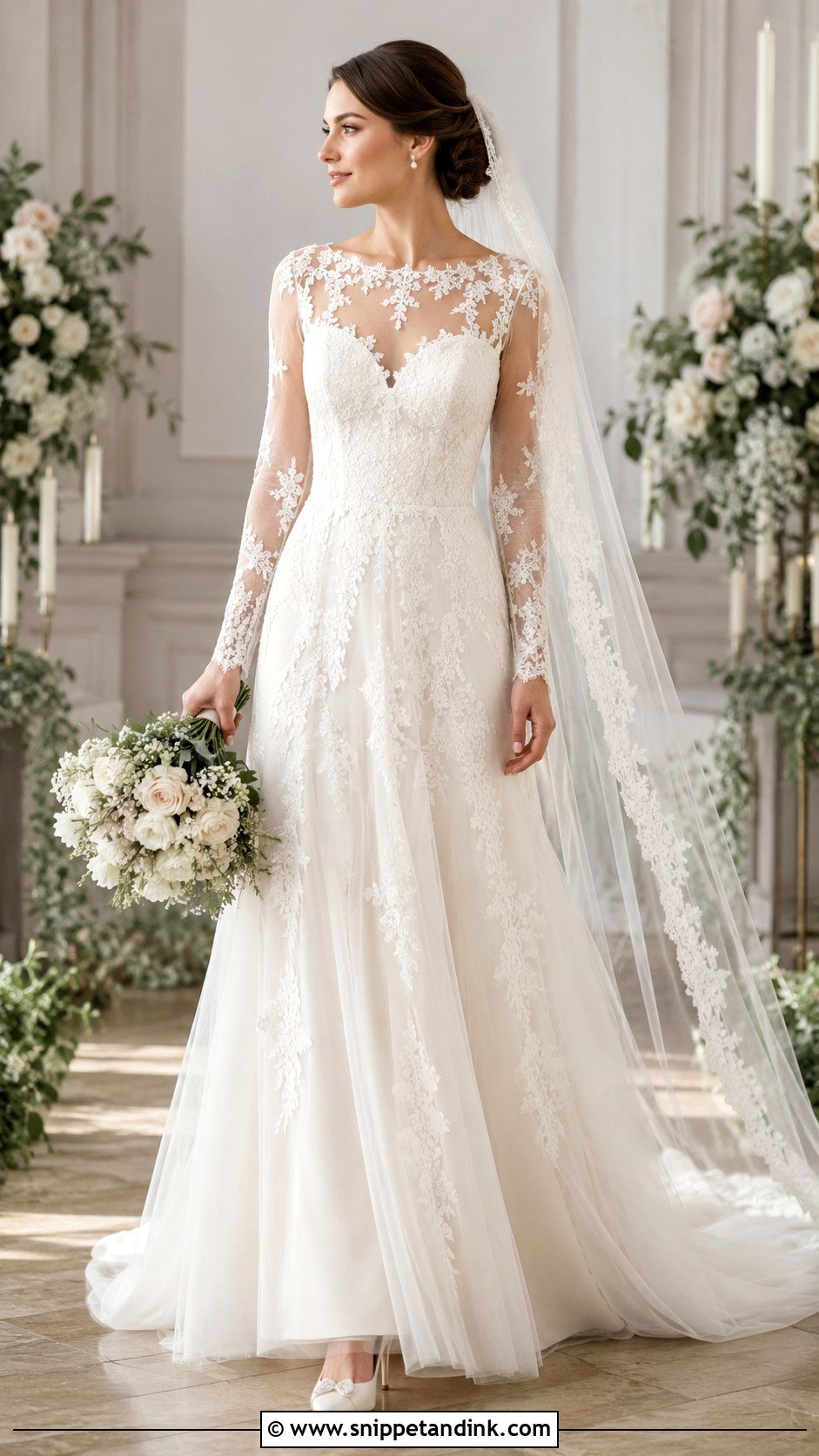
Sheer sleeves give coverage while staying light. Lace or tulle can carry delicate floral embroidery without bulk, and the detail suits a high neck, fitted bodice or flowing A-line. Smooth-fitting sleeves look refined, while a soft puff at the shoulder adds vintage character. Pearl studs, a low chignon, simple ivory heels and a lace-edged veil complete it. Sheer fabric shows skin tone through it, so match the sleeve’s base color to your arms, ideally with a nude tulle lining. A mismatched one looks gray in photos.
16. Victorian Button Back Wedding Dress
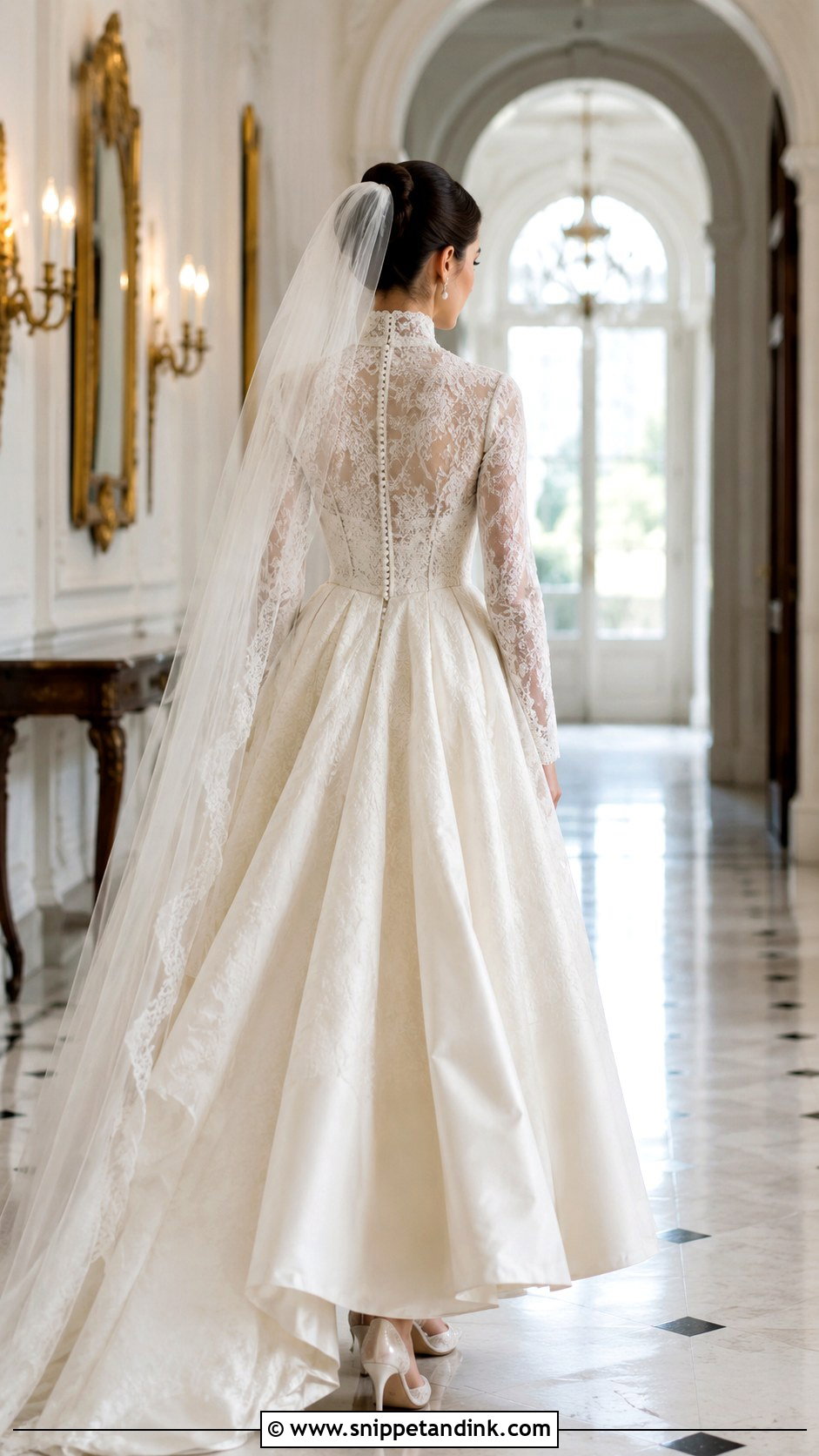
A long row of covered buttons is a quiet detail that photographers love. The front can stay simple with a high neck, lace bodice or satin long sleeves, and a full or A-line skirt keeps the shape classic. Wear your hair up or half-up so the buttons stay visible, and add pearl earrings, a long veil and classic heels. Fastening thirty or forty loops takes time, so allow fifteen to twenty minutes in your morning schedule and give your helper a small crochet hook to pull loops over. Many gowns hide a zipper under the buttons, which I always recommend asking about.
17. Victorian Cathedral Train Wedding Dress
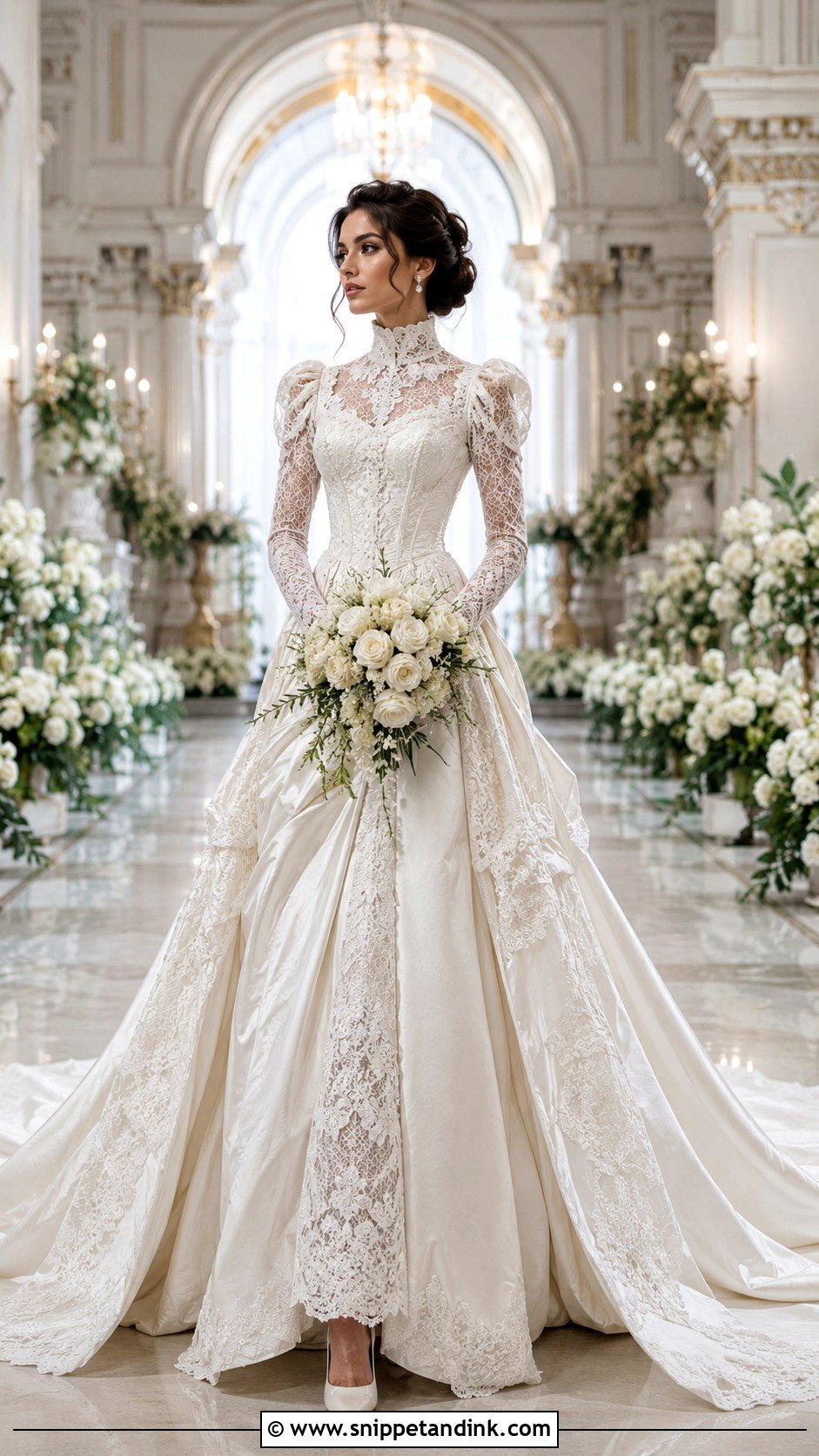
A Victorian cathedral train wedding dress is built for a dramatic aisle walk. The long train suits lace, satin, tulle or brocade. A high neck and long sleeves keep it traditional, while a corset bodice adds shape. A cathedral veil can match the train, or a simpler veil can let the gown lead. Ivory heels, pearl earrings and a structured bouquet finish it. Plan the bustle at your final fitting. Someone has to lift and hook a cathedral train for the reception, and that person should practice before the day. It needs a venue with space to show the train.
18. Victorian Cape Wedding Dress
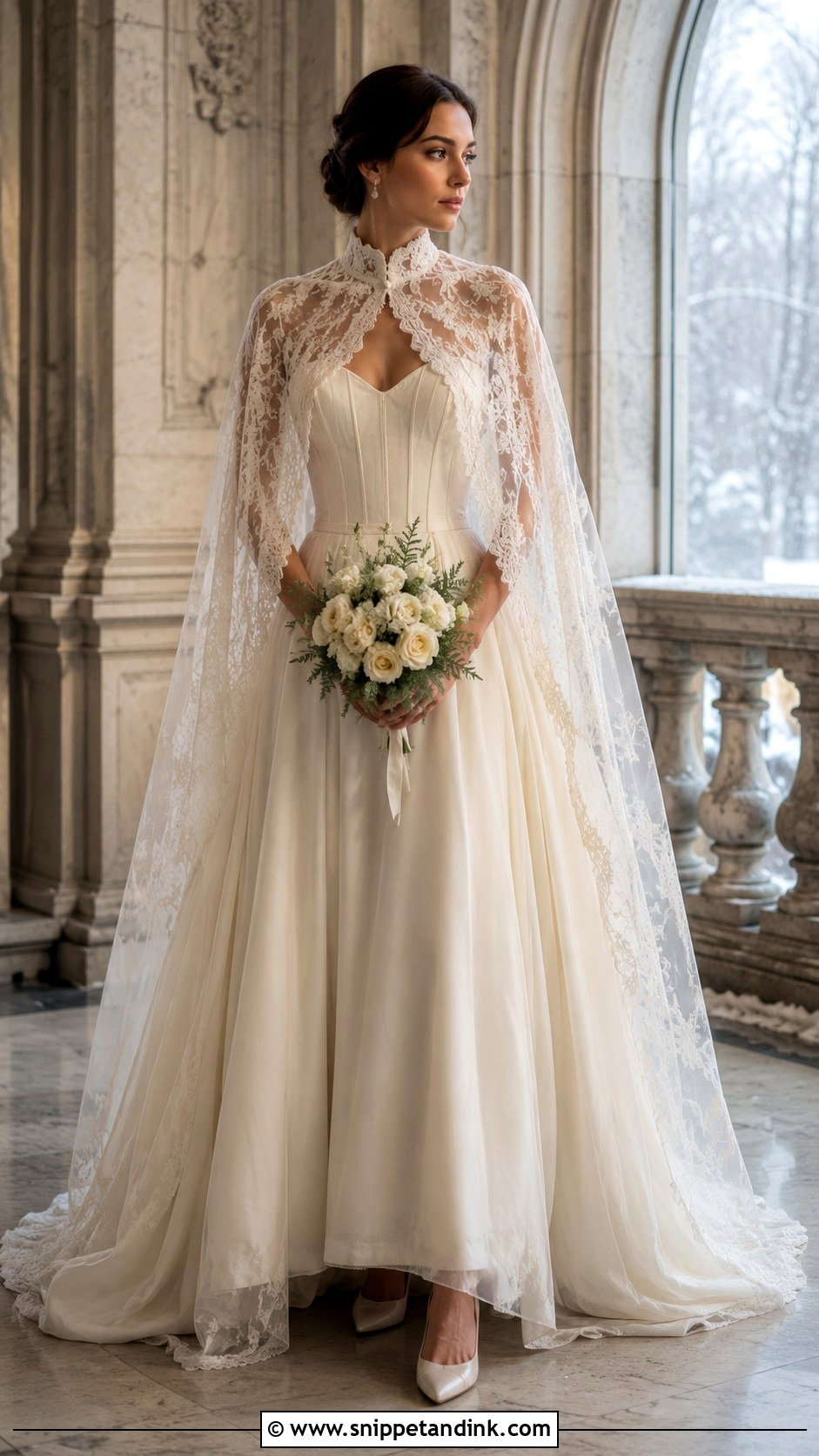
A cape can replace a veil altogether. Lace or tulle adds movement and coverage without hiding the gown, and it works over a corset dress, satin gown or simple A-line. A high-neck cape feels more historical, while a shoulder cape is softer. Keep jewelry minimal so the cape stays the feature, with ivory heels and a neat updo. Check how the cape attaches. Small hooks at the shoulder seams hold it steadier than a single clasp at the throat, which tends to pull backward as you walk. It’s ideal in historic halls and for winter or outdoor ceremonies.
19. Victorian Pearl Wedding Dress
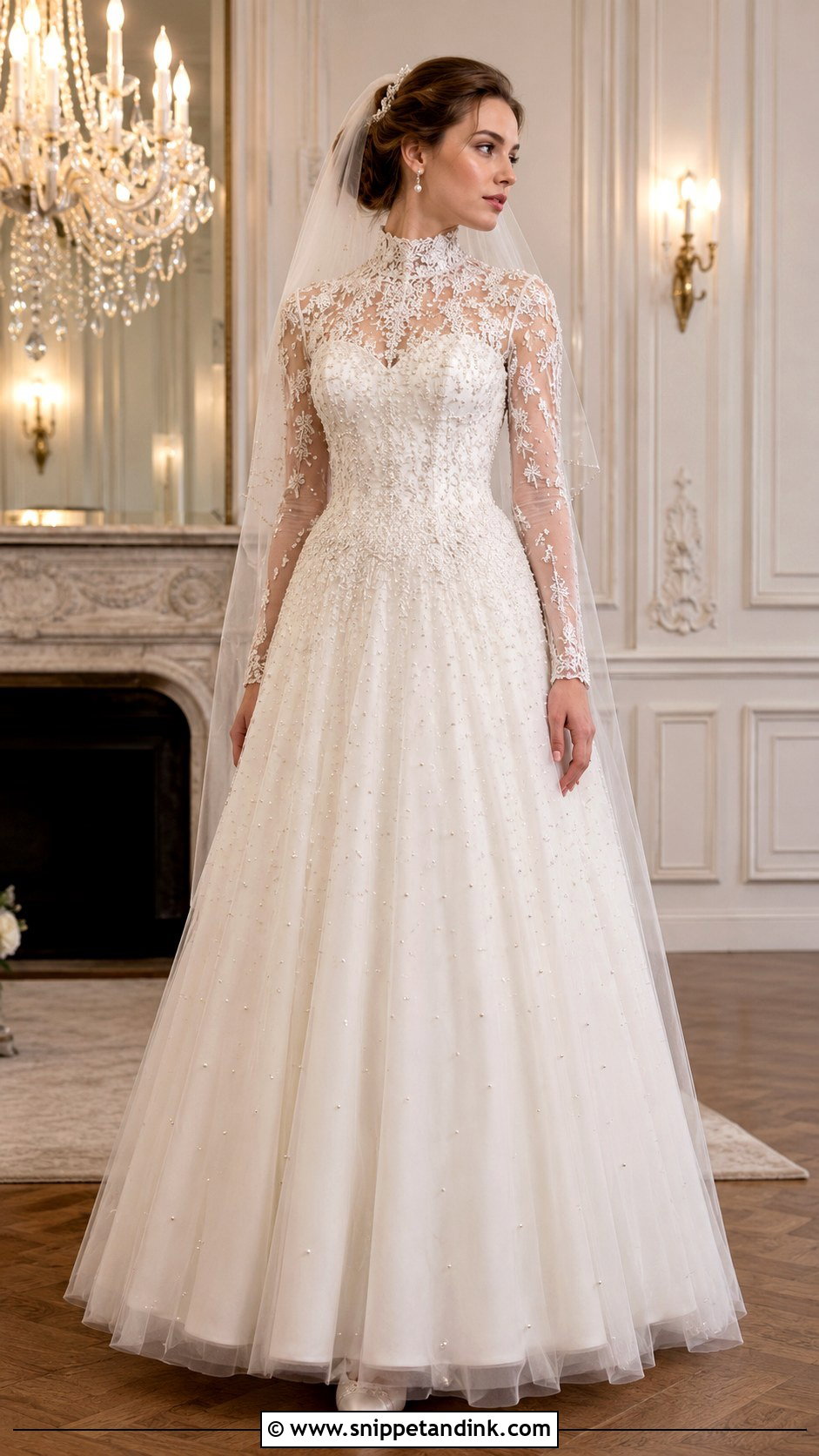
Pearls add soft shine and an heirloom feel. Pearl beading can run along the neckline, sleeves, bodice, waist or veil. I prefer scattered pearls over lace or tulle to heavy allover beading, because the dress stays lighter and moves better. A high neck or corset bodice ties it to the era, with pearl drop earrings, satin shoes and a simple bouquet. Ask how the pearls are attached, since hand-sewn pearls survive a full day of hugs and glued ones can pop off. It suits formal indoor weddings and evening ceremonies.
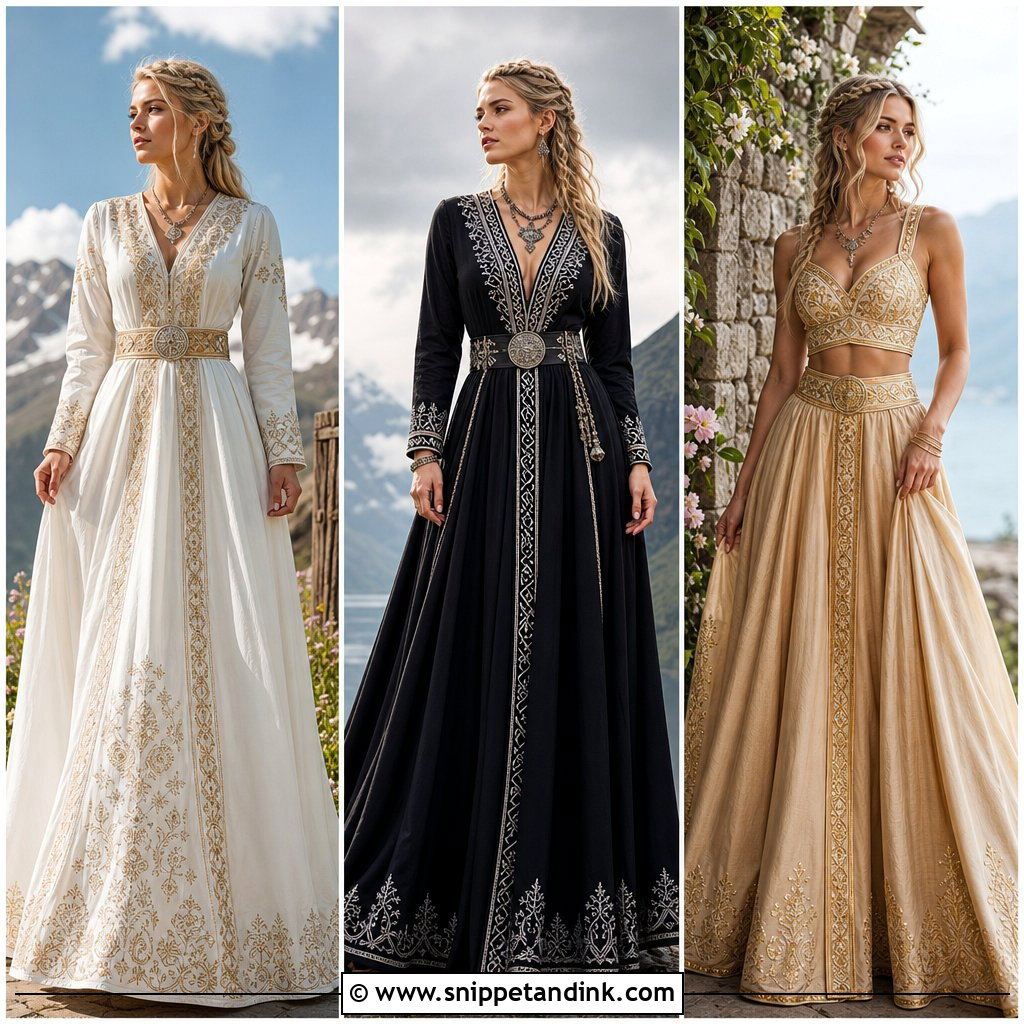
20. Victorian Embroidered Wedding Dress
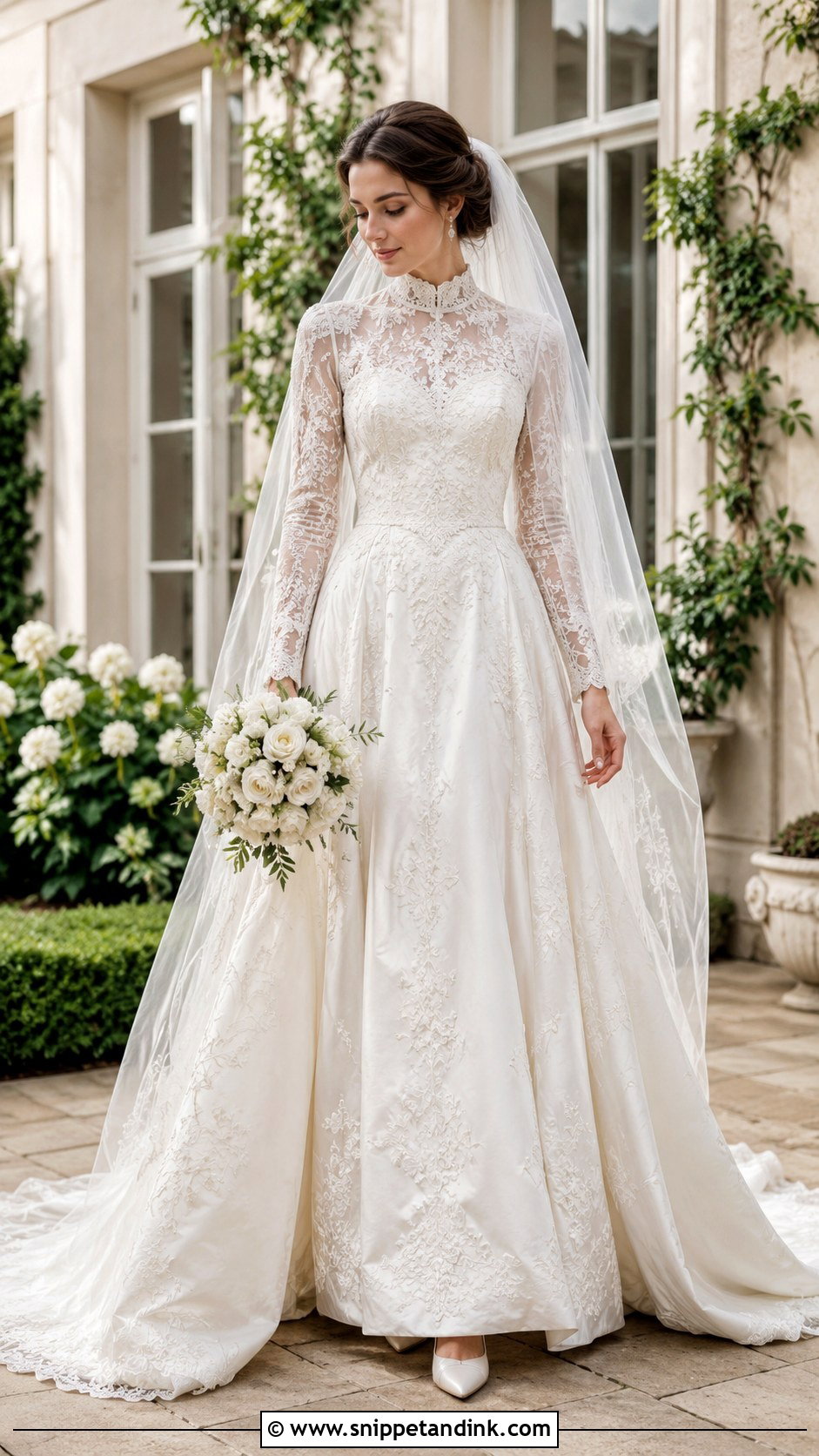
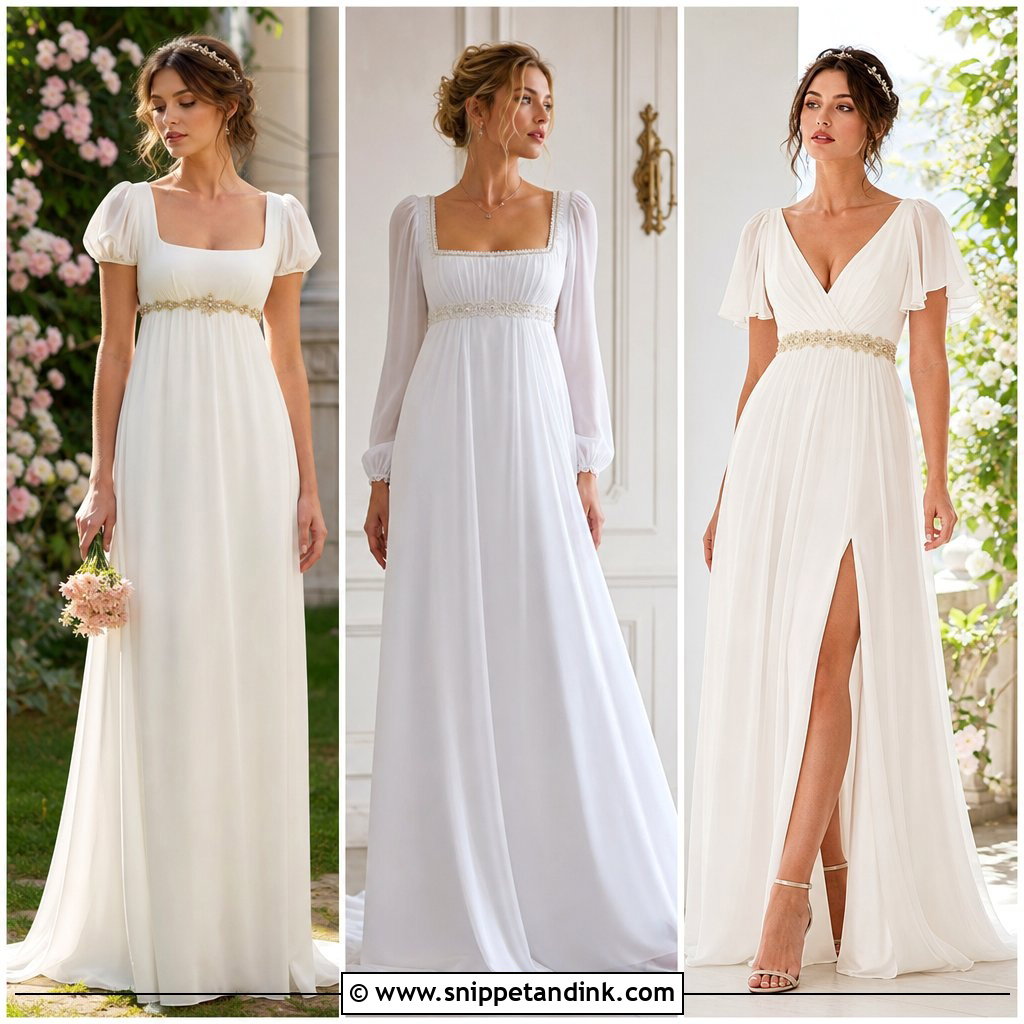
Embroidery is where you see real craftsmanship. Floral vines, leaves, scrollwork or delicate raised patterns can run across the bodice and sleeves. Ivory-on-ivory embroidery is subtle, while soft champagne thread adds antique warmth. A fitted bodice and flowing skirt keep it elegant, with simple earrings, a soft veil and classic pumps so the stitching stays the focus. Raised embroidery can catch fine veil tulle, so test your veil over the bodice at a fitting. Done well, it can make the dress feel like an heirloom made just for you.
21. Victorian Ruffle Wedding Dress
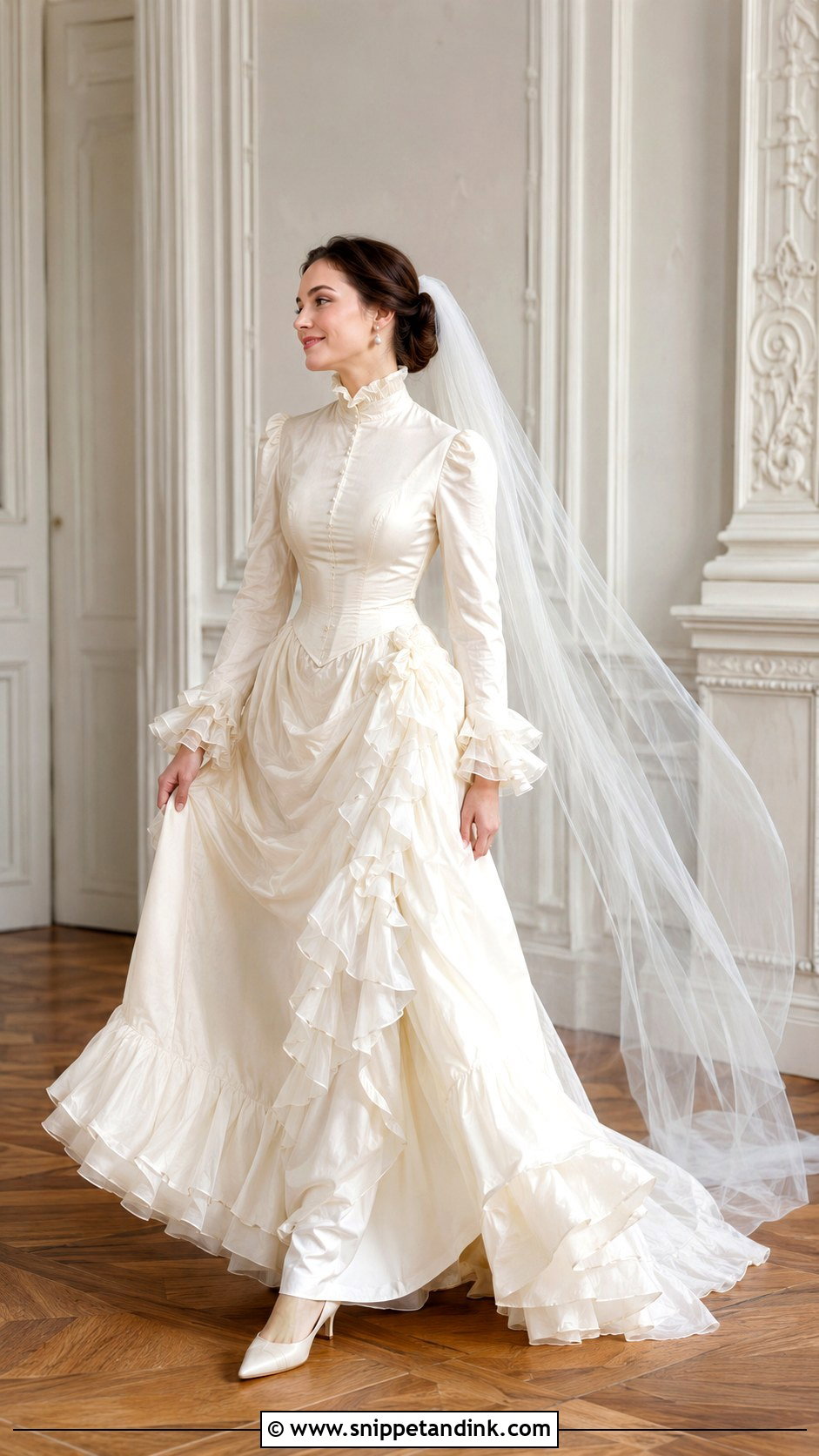
Ruffles add movement without sparkle. They can sit along the skirt, neckline, cuffs or train. For a modern version, I’d pick soft organza or tulle ruffles over stiff layers, which can look like a petticoat. A fitted bodice balances the volume. Add pearl earrings, a smooth updo, simple ivory shoes and a plain veil if the skirt is busy. Ruffles flatten in a garment bag, so the gown needs hanging and steaming a day or two before. It comes alive in photos taken while you’re walking or turning.
22. Victorian Modest Wedding Dress
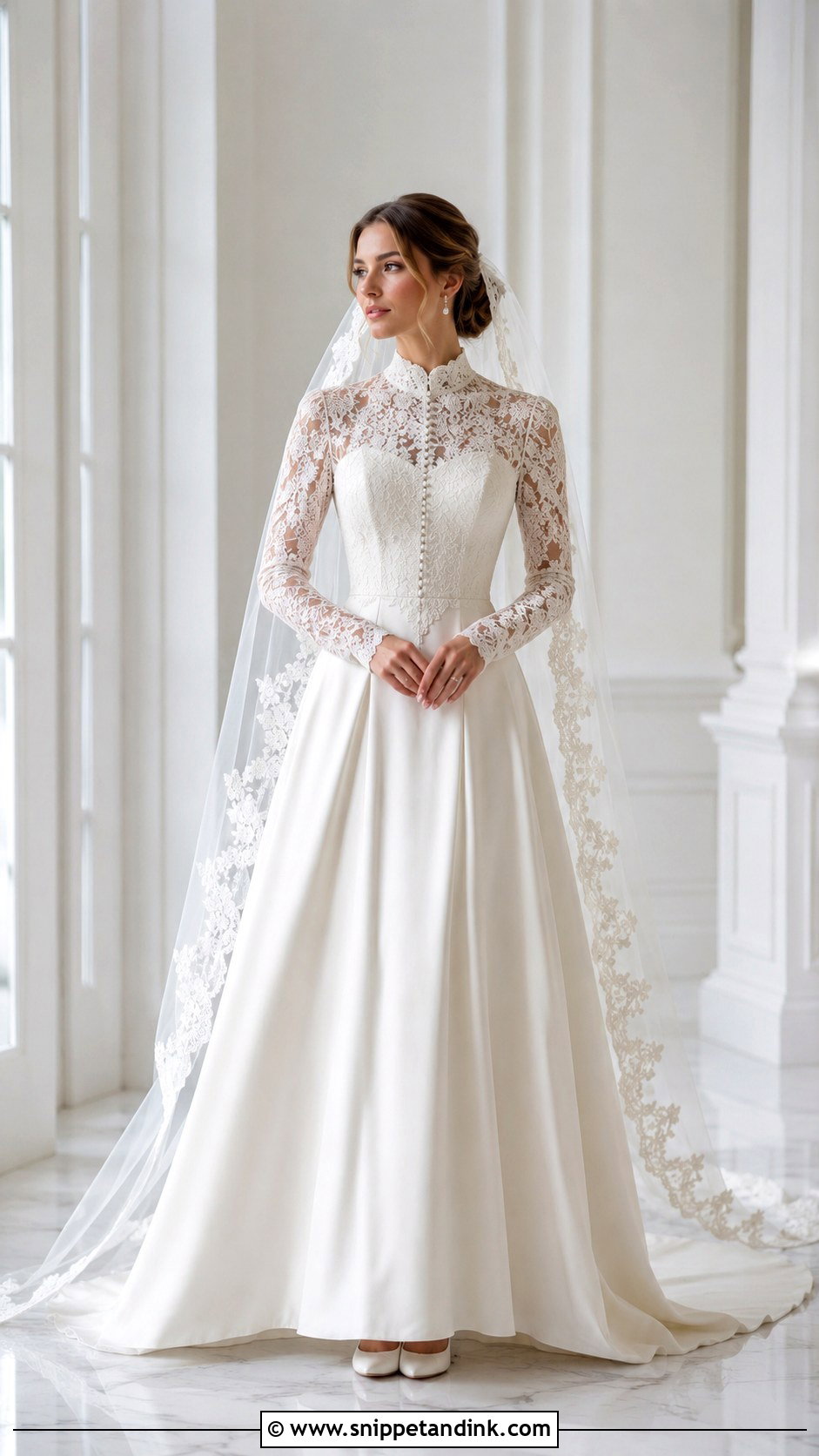
Coverage doesn’t have to mean plain. Look for a high neckline, long sleeves, a fitted waist and a flowing skirt, ideally in lace or satin, which carry detail without any revealing cut. Covered buttons, scalloped cuffs or a delicate collar make it feel special. Pair it with closed-toe heels, pearl earrings and a long veil. The fit at the shoulders and sleeves matters more in a covered gown, since there’s no bare skin to distract from a pulling seam. It suits formal ceremonies and family-centered celebrations.
23. Victorian Winter Wedding Dress
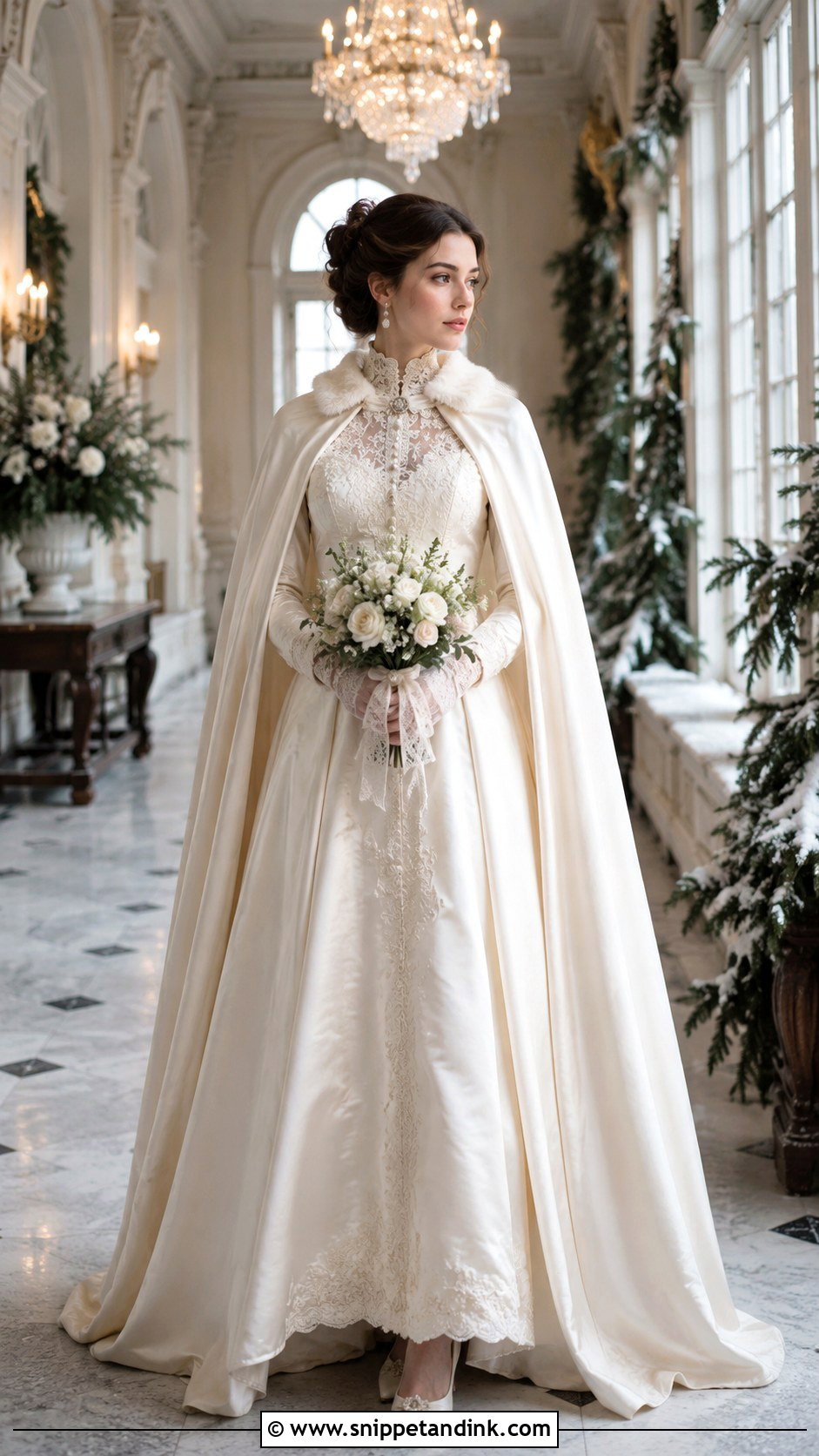
Winter is the season Victorian style suits best. Long sleeves, heavier satin, brocade, velvet trim or a detachable cape all make sense in the cold. A high neck lace bodice keeps it classic, with closed-toe satin heels, pearl earrings and a soft updo. A faux fur wrap can work in real cold, but keep it ivory and close-fitting. Snow and wet ground mark satin hems, so bring a clean towel and have someone lift the hem for outdoor portraits. It looks regal in historic hotels and at candlelit receptions.
24. Victorian Garden Wedding Dress
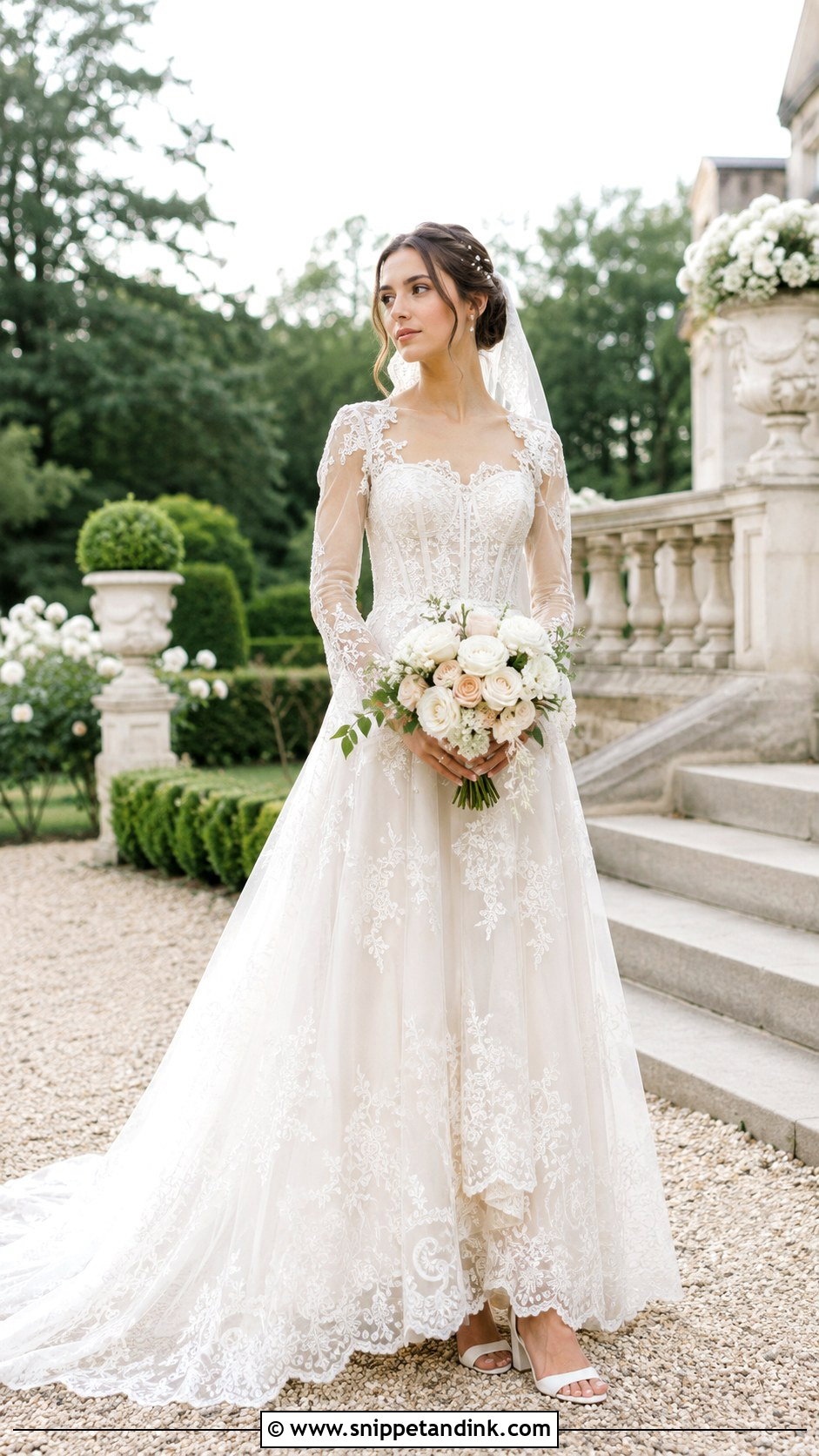
Outdoors, comfort and movement have to come first. Choose lace, tulle or embroidered organza with floral details that echo the setting, and bring in the era through a high neck, sheer sleeves or a corset bodice. An A-line or soft full skirt works better than a heavy train on grass, which picks up stains and drags. Pearl hair pins, comfortable block heels and a lightweight veil help, with a bouquet of white and blush flowers. Block heels matter on lawns because stilettos sink. It belongs in estate gardens, conservatories and spring ceremonies.

25. Victorian Black And White Wedding Dress
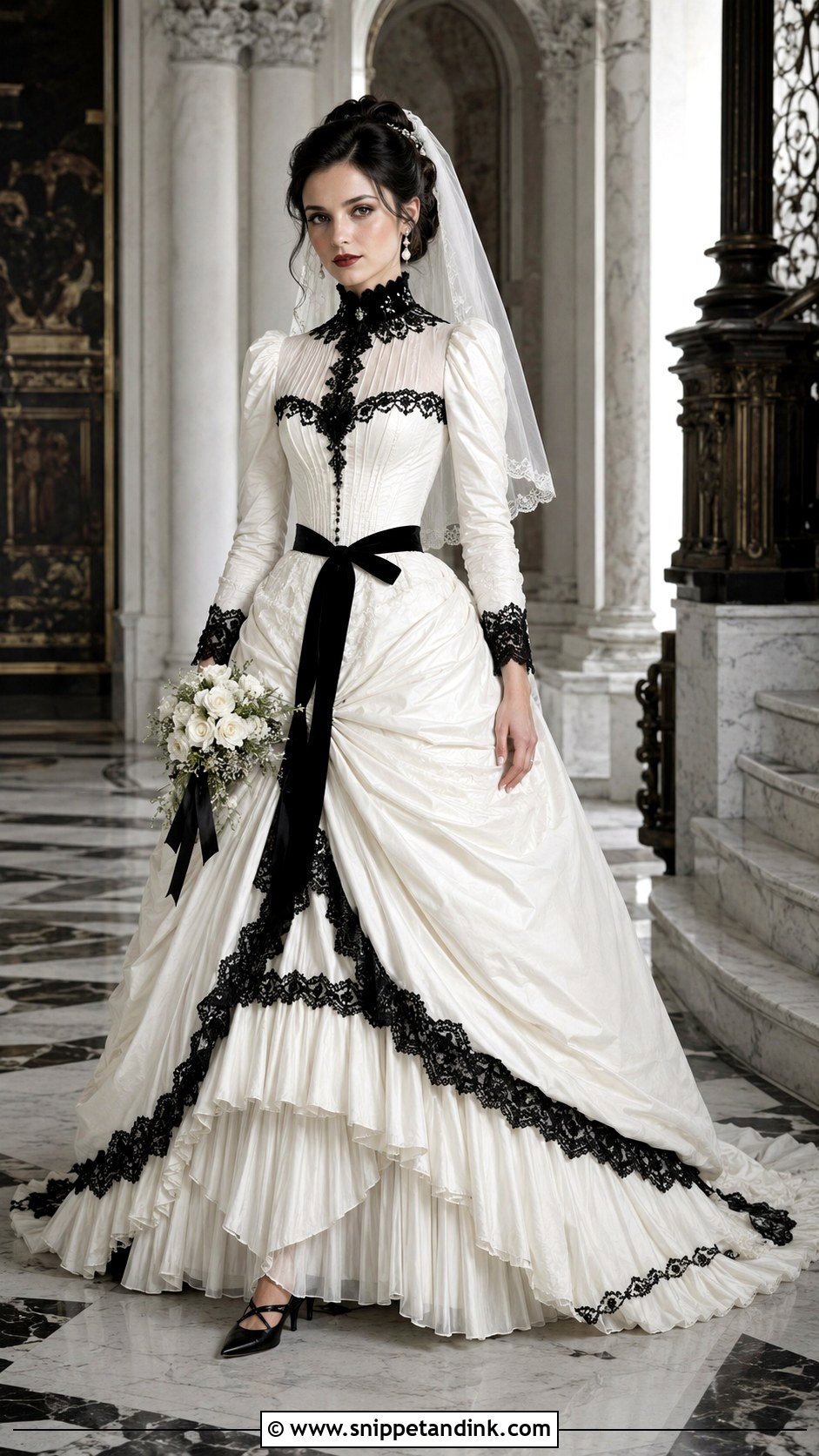
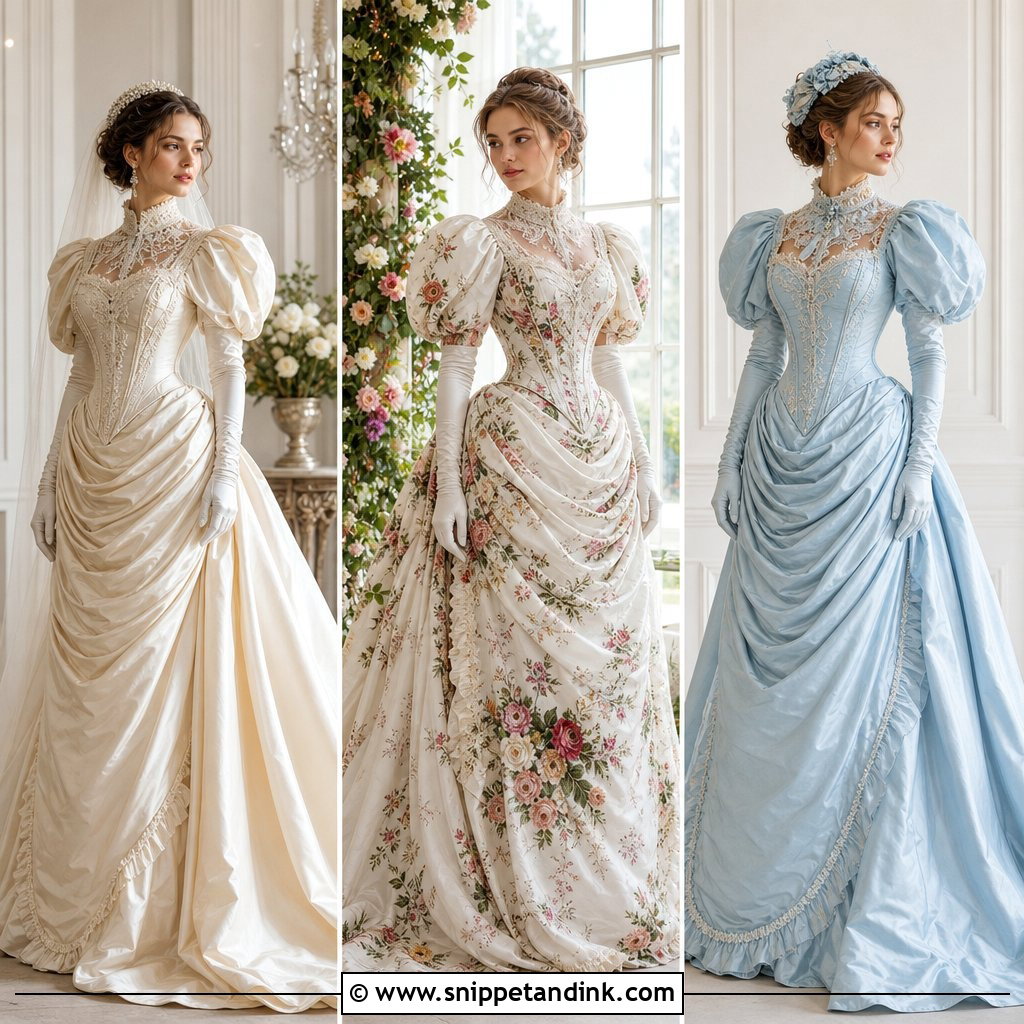
A Victorian black and white wedding dress leans into vintage drama, and black trim was common in Victorian fashion, so it’s not as unusual as it looks. The black can appear as velvet ribbon, lace trim, embroidery, buttons or a waist sash. Keep the base gown ivory or white so it still reads as bridal. A high neckline, corset bodice and full skirt make the contrast feel intentional. Pair it with black satin heels, pearl earrings and a simple veil with matching trim. Avoid dark makeup or extra black accessories so it stays elegant rather than gothic costume.
Buttons, Boning and the Bathroom Question
Victorian-style gowns are more structured than most modern dresses, and that affects the whole day. Corset bodices are comfortable when fitted well, but you’ll breathe higher in your chest and eat smaller portions. Have your final fitting after a normal meal, not on an empty stomach, so the bodice isn’t taken in too tight.
Full skirts and bustles make bathroom trips a two-person job. Practice with a bridesmaid at your last fitting: you step in facing the toilet, and she gathers the skirt up and toward you. Some brides also wear a bridal slip, a nylon underskirt that gathers the layers up for you. It feels silly to rehearse, and it saves real stress later.
Bustling a long train
A train has to come up off the floor for the reception. An over-bustle hooks it up to the back of the dress, while an under-bustle tucks it underneath with ties. Ask your seamstress which suits your fabric, and have her show your helper how to do it, because it’s easy to mix up the ties in a crowded room.
Borrow From the Era, Then Stop
The Victorian look puts romance and structure into one dress. High necks, corsets, puff sleeves, satin ball gowns and dramatic trains can all be adapted to different venues and comfort levels. My advice is the same every time: choose one or two historical details and let modern tailoring handle the rest. That keeps the gown elegant instead of costume-like. Think about the season, the venue, how much you’ll move and how long you’ll wear it, and test those details at your fittings.
You'll Like These Ideas:




Leave a Reply