
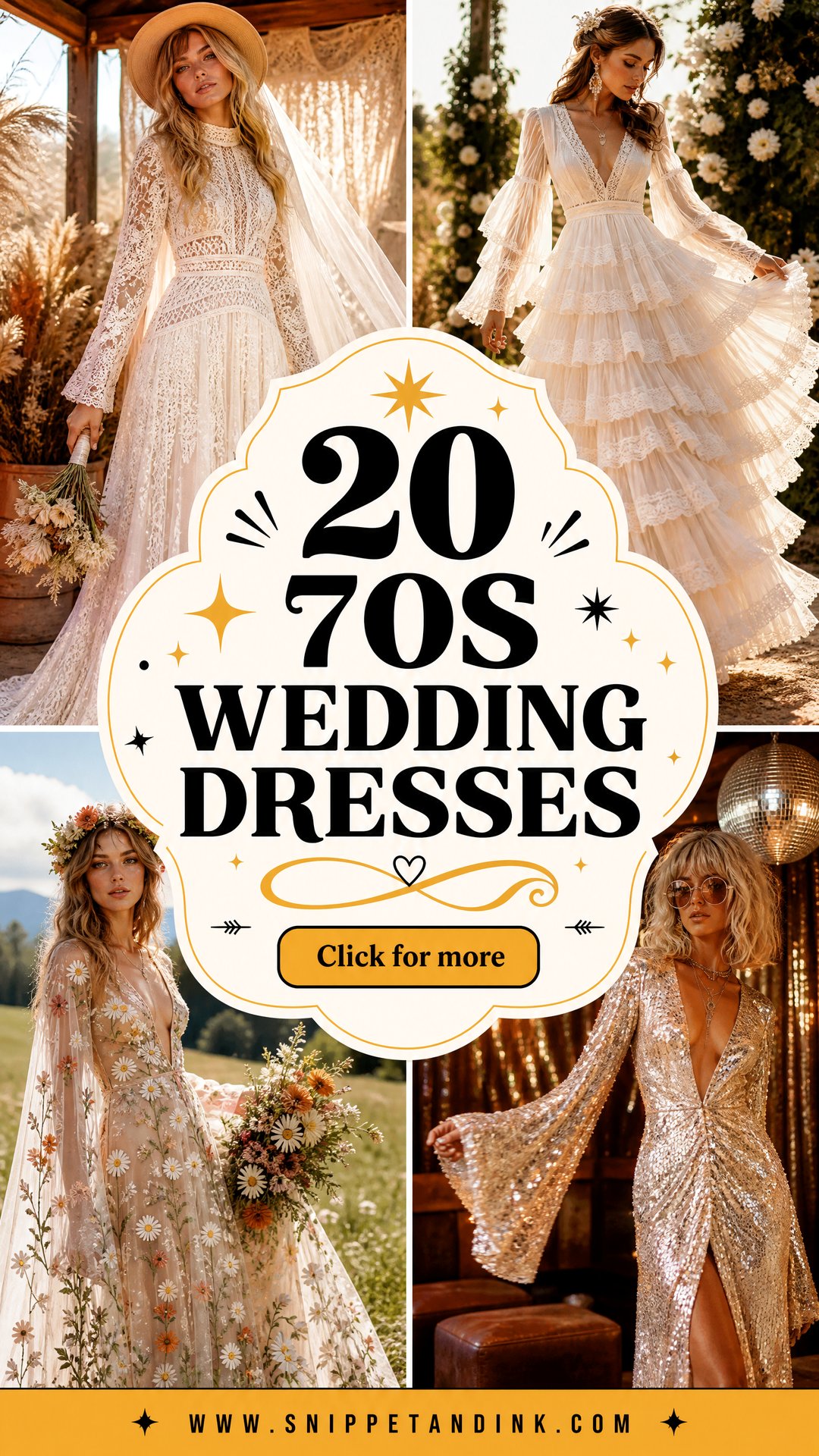
The 70s keep returning to bridal for a simple reason: the decade’s dresses were built for moving, sitting on grass and dancing barefoot, and that’s exactly what most brides want now. Today’s versions keep the flowing shapes, sleeves and lace, then add better linings, hidden structure and cleaner tailoring than the originals ever had. That leaves room for a modest prairie gown in a garden, sleek satin at a city loft or full sequins at a disco reception. Accessories set the tone from there, from a flower crown or wide-brim hat to platform sandals and a soft veil. As a stylist I’d choose two retro elements at most and pick them for your venue and proportions. Any more and guests start asking about the theme.
Hat, Flower Crown or Veil With a 70s Gown?
The headpiece changes how retro a dress looks more than almost anything else. The same lace gown reads modern with a plain veil and very 1970s with a crown of daisies, so decide this early and take it to your fittings.
Wide-brim hats
A hat suits crochet, prairie and kaftan styles at outdoor ceremonies. Choose a brim that doesn’t shade your eyes completely, or your face goes dark in photos, and have your hairstylist anchor it with pins through the inner band. Wind is the real risk on a beach or a hilltop.
Flower crowns
Fresh crowns wilt fast on a warm day. Ask your florist for hardy flowers and small blooms over big heavy heads, and keep the crown cool until you put it on. A crown suits off-shoulder, bell-sleeve and tiered dresses; with a high neck or a hood it starts to crowd the face.
Veils
A plain veil is the safest partner for any detailed dress. Match the length to the sleeve: a fingertip or shoulder veil with bell and kaftan sleeves so they don’t tangle, and a longer cathedral veil with sleek halters and columns.
1. High Neck Lace 70s Wedding Dress
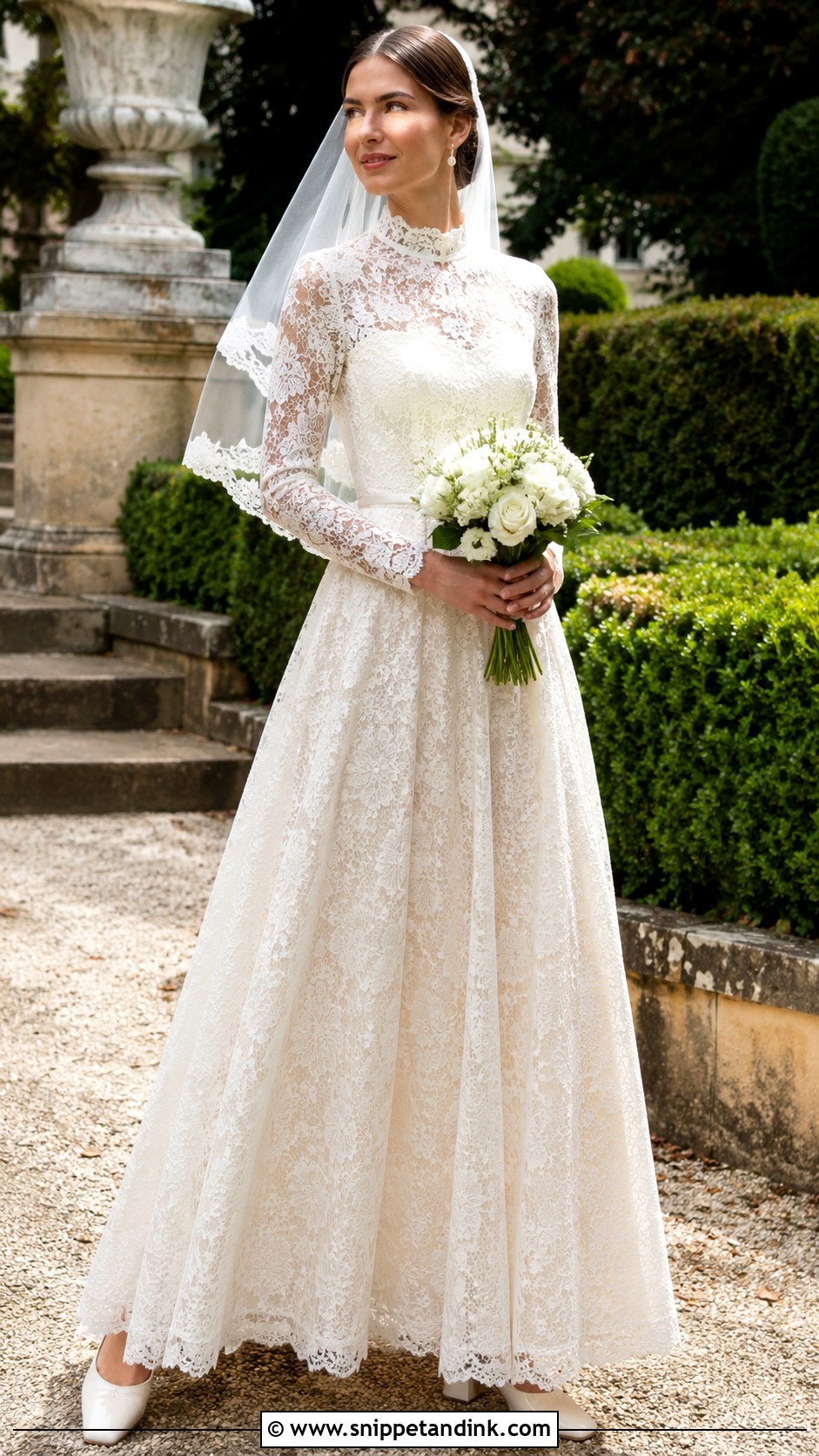
High necks are the modest side of the decade, and they’re more forgiving than they look on a hanger. Look for a fitted lace bodice, a raised collar, sheer long sleeves and an airy A-line skirt, with a lightly marked waist so it doesn’t read as one column of fabric. The collar decides your hair. Anything worn down sits on the lace and hides it, so a soft low bun with the fingertip veil tucked underneath is my default. Ivory block-heel pumps, pearl drops and a bouquet of white cosmos, daisies and greenery suit fall ceremonies, historic venues and formal gardens. Ask for a light lining and a short train, because a long one on a dress this covered adds heat and weight.
2. Bell Sleeve Boho 70s Wedding Dress
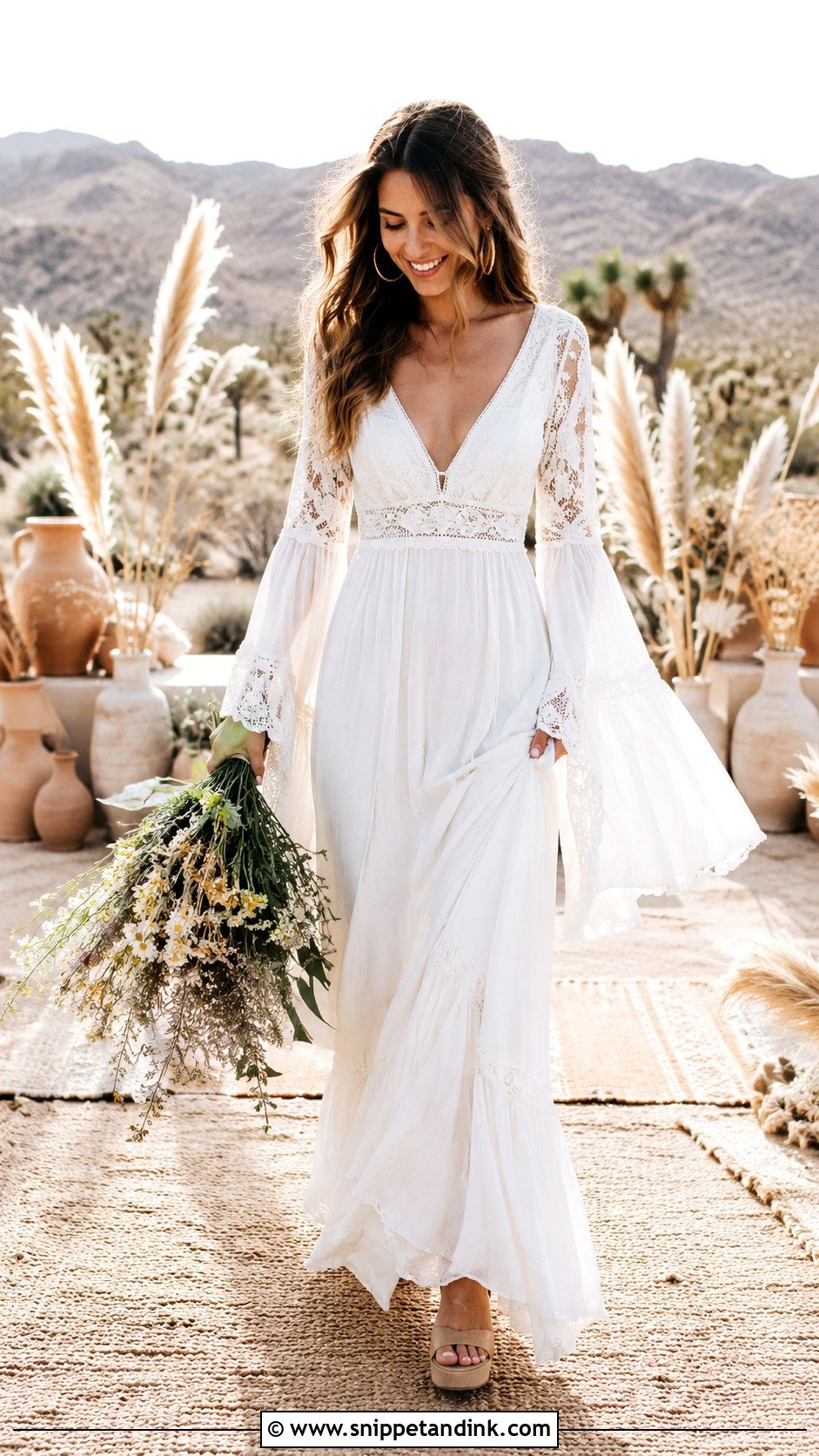
Bell sleeves widen below the elbow and swing with every step. Pair them with a fitted waist, a V-neck and floral lace panels, and keep the skirt relaxed rather than full so the arms stay the statement. What catches brides out is the ring exchange. A deep bell covers your hand, so practise sliding it back with the other hand, or have the sleeve taken up slightly. Tan or ivory platforms, gold hoops, a small suede-look clutch and wildflowers tied with cream ribbon finish it, with loose waves. If the sleeves are dramatic, trade an ornate veil for a small floral comb. Desert, woodland and summer outdoor ceremonies suit it best.
3. Empire Waist Chiffon 70s Wedding Dress
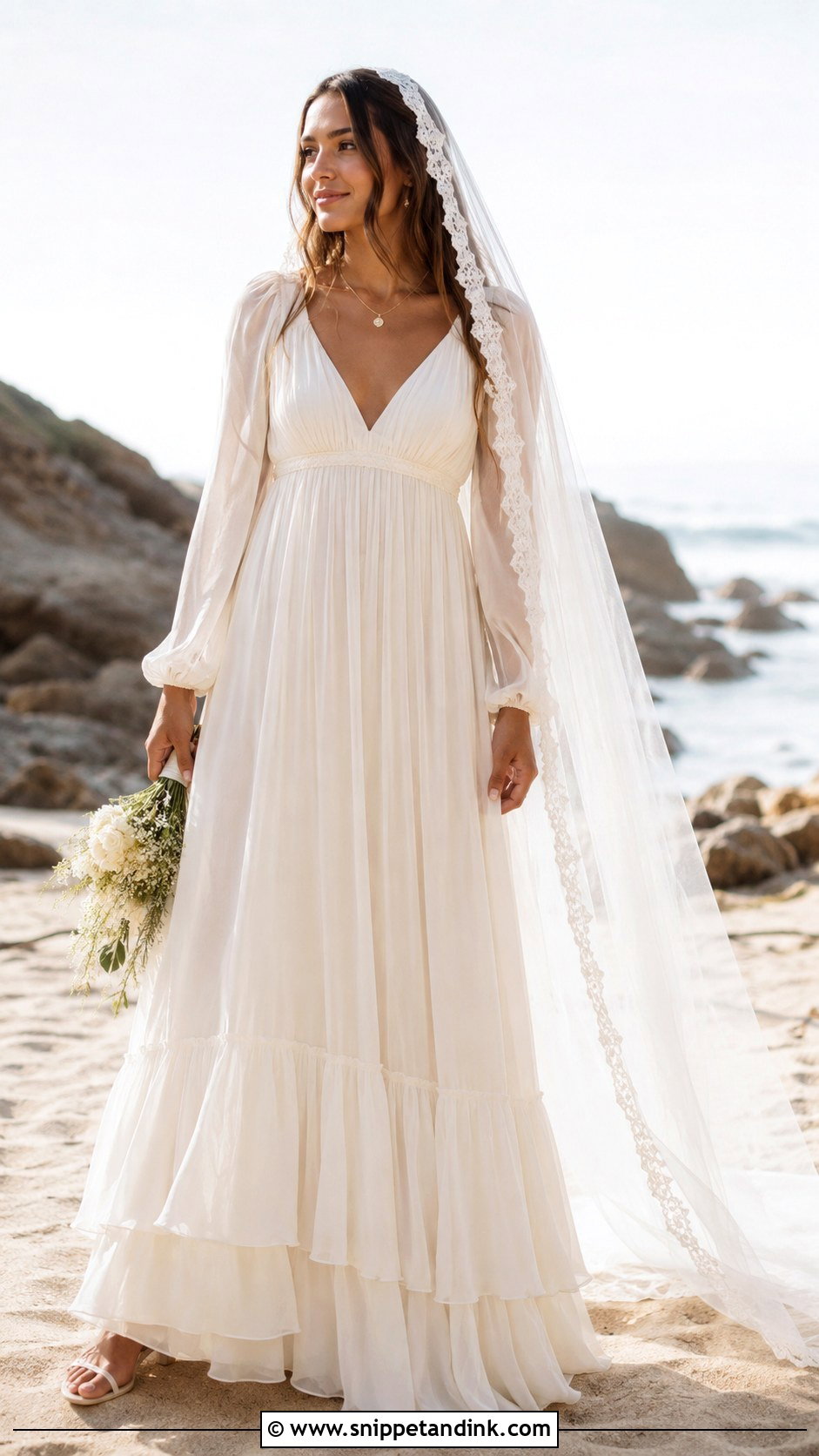
Empire chiffon skims instead of clinging, and that’s the whole appeal. A gathered bust, a narrow band under the chest, sheer sleeves and a floor-length skirt in several fluid layers; the raised waist also makes the legs look longer. Chiffon layers can turn see-through in strong backlight, which matters on a beach at golden hour, so stand in front of a bright window at your fitting and check. Simple ivory sandals, a fine gold pendant and a long lace-edged veil keep it understated. Loose curls or a center-parted low ponytail, plus baby’s breath, white roses and trailing greenery. Warm-weather and beach ceremonies are where it shines.
4. Prairie Lace 70s Wedding Dress
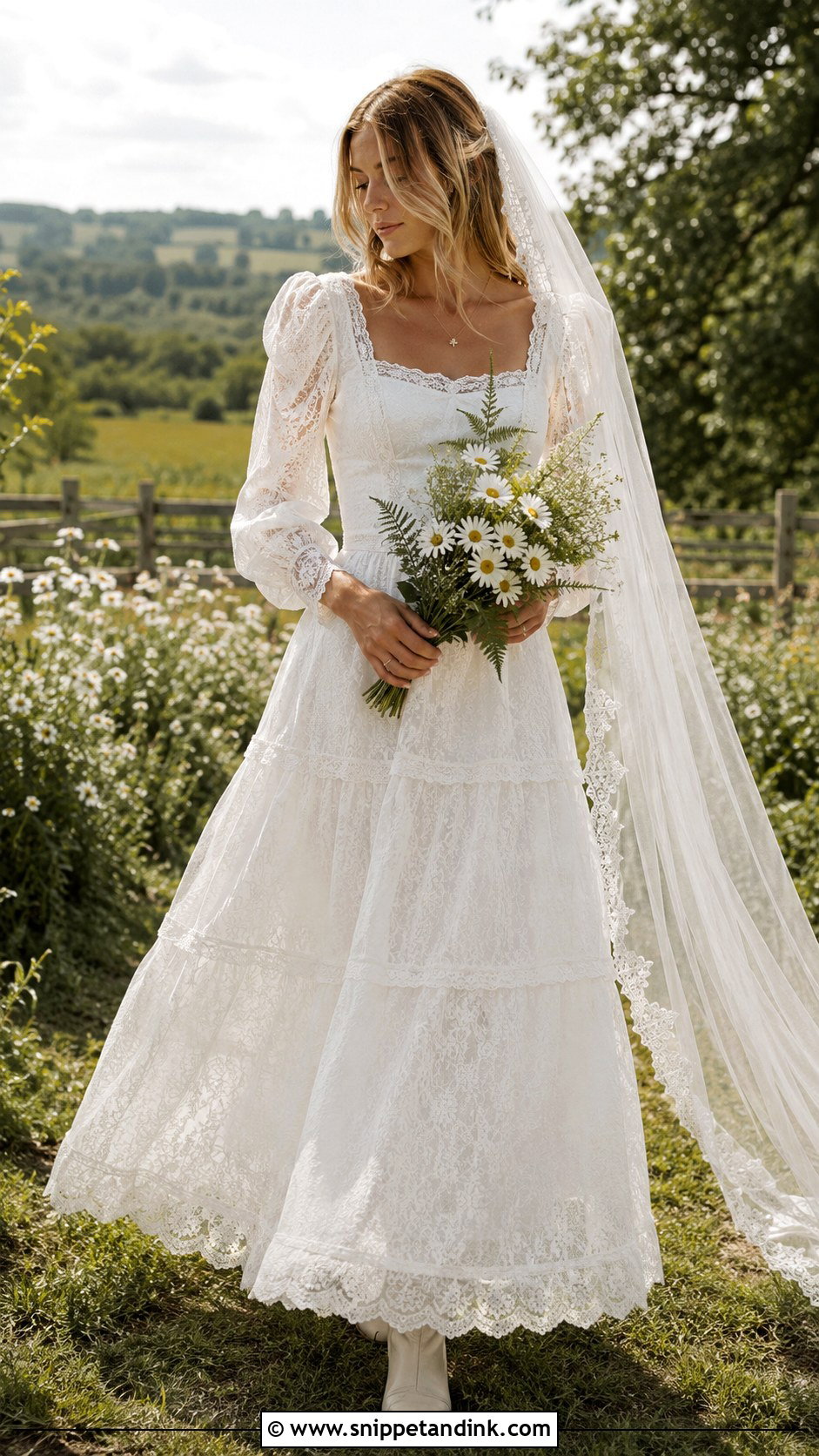
Prairie dresses belong among flowers and open fields. A prairie-inspired wedding gown usually has a high or square neck, a fitted waist, puffed sleeves, lace trim and a softly tiered skirt. Fabric keeps it bridal: ivory cotton lace, Swiss dot or light chiffon. Heavy printed-cotton weights tip it toward costume. The fit point I’m firm on is the waist. The bodice must fit neatly and the skirt must start at your natural waist, otherwise all those gathers add width exactly where you don’t want it. Cream ankle boots, a lace-edged fingertip veil and a small pendant. A braided updo or waves with tiny flowers, and daisies, chamomile and fern in hand.
5. Crochet Lace 70s Wedding Dress
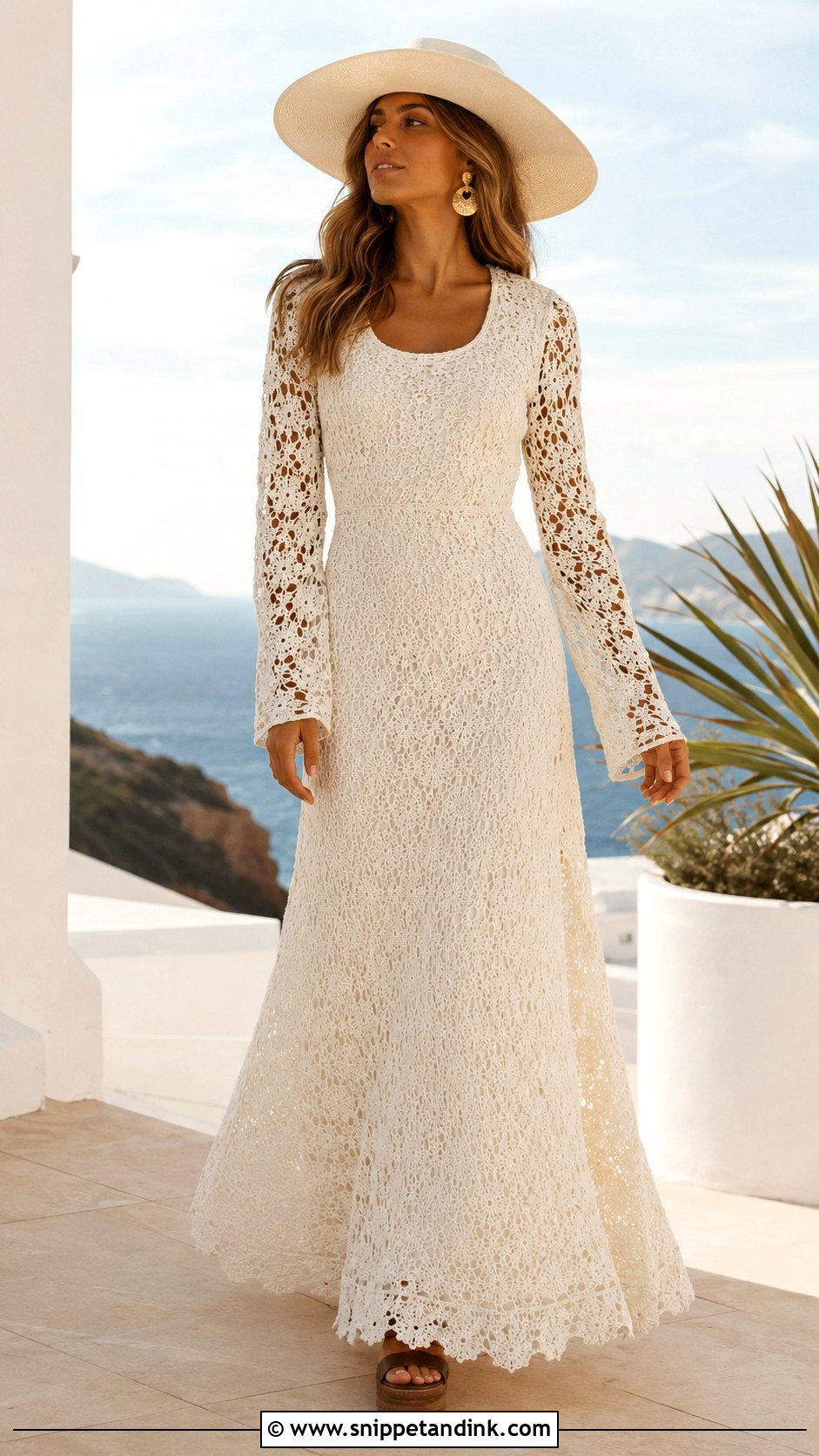
Textured crochet lace has a handmade quality that machine lace rarely matches. Choose a lined maxi with an openwork overlay, fitted bodice, long sleeves and a straight or gently flared skirt. The lining color is the decision most brides skip. A lining close to your skin tone makes the pattern look like it’s floating on you; an ivory lining makes the dress read solid and more traditional. Leather platform sandals, hammered gold earrings and a structured ivory bag balance rustic with refined. Outdoors, a wide-brim cream hat can stand in for the veil. Keep the bouquet loose, and save it for a coastal venue, an art space or a small destination wedding.
6. Hooded Jersey 70s Wedding Dress
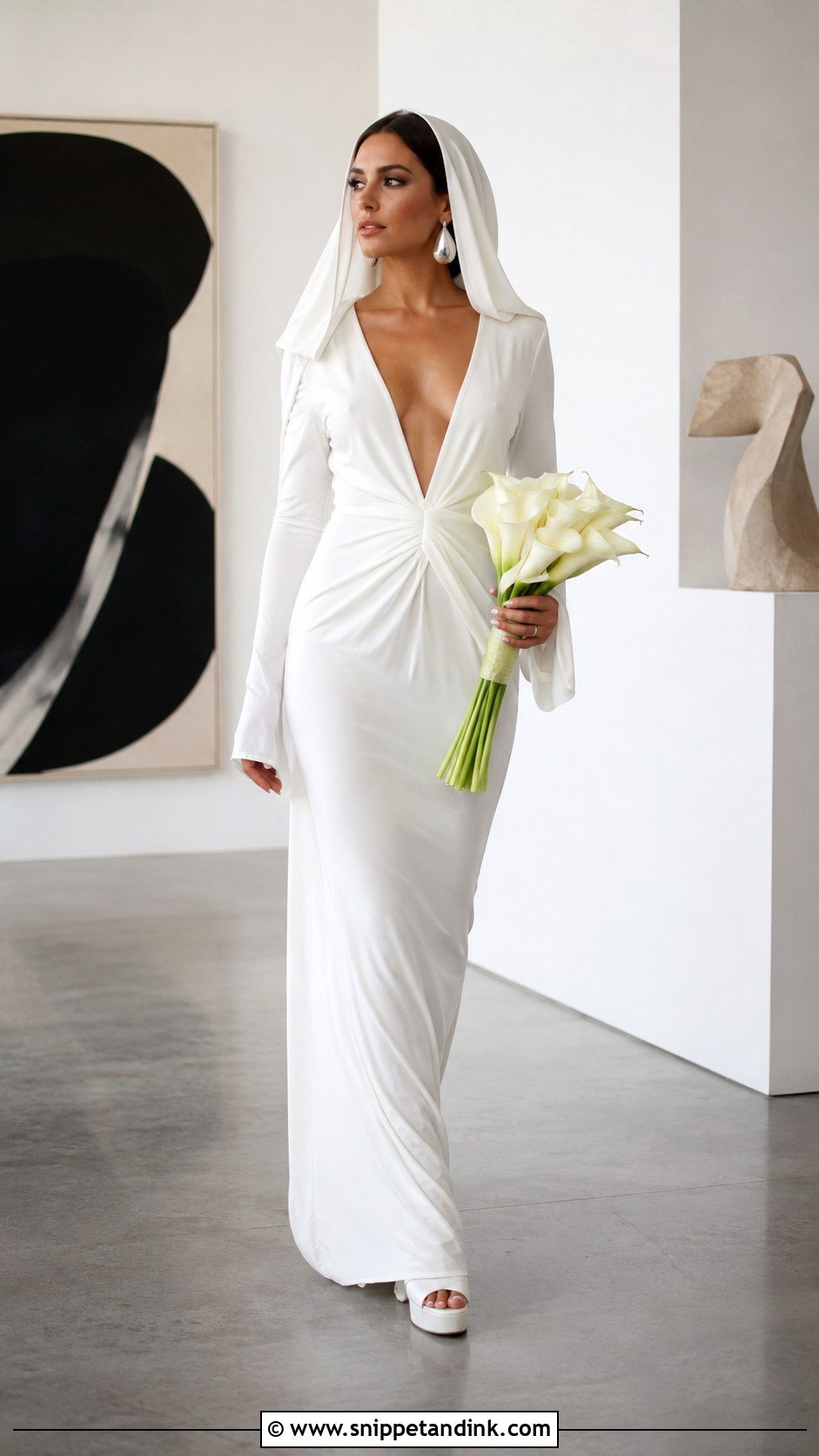
A hooded bridal gown is the most unusual dress on this list, and jersey is what makes it wearable. Soft ivory jersey or matte crepe drapes without bulk over a slim long skirt, fitted waist, deep V and attached hood. Jersey’s weakness is gravity: it shows every line underneath and lengthens if left hanging for weeks, so store it folded flat until the day and choose underwear carefully. Wear the hood loosely for portraits, then lower it at the reception to show a sleek center-parted bun. Silver drops, white platforms and a narrow metallic cuff, no veil, and sculptural calla lilies. City venues, galleries and evening ceremonies suit it.
7. Cape Sleeve 70s Wedding Dress
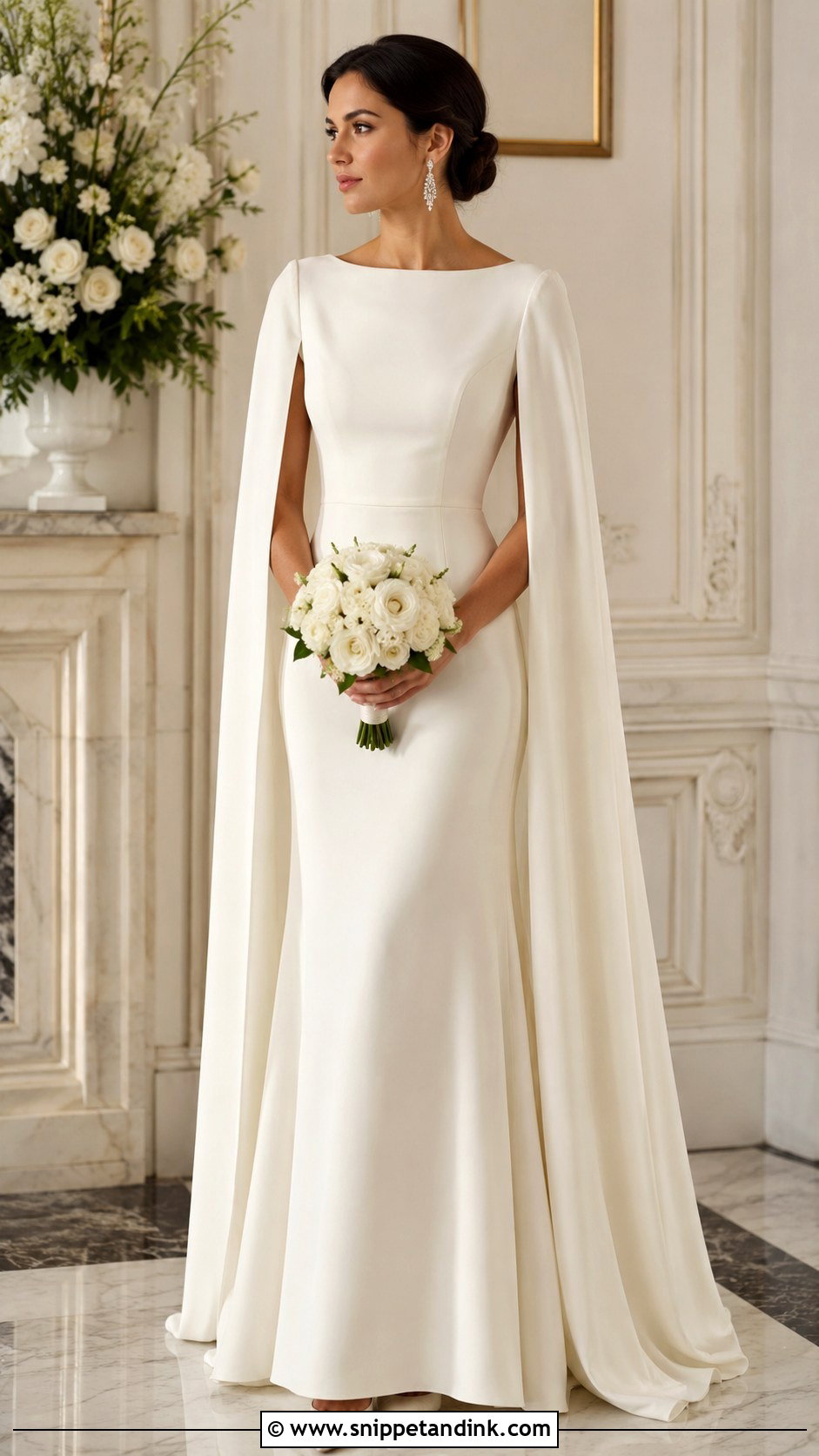
Cape sleeves give the drama of a bridal cape without a separate layer to manage. Picture a fitted crepe or lace gown with fabric falling from the shoulders into long airy panels, a V or bateau neckline and a gently flared skirt. Brides who want their upper arms covered but dislike tight sleeves often end up here, since the panels hide the arm without touching it. A caution from fittings: hold a big bouquet high and the panels bunch behind it in photos. Keep the flowers compact, such as orchids or white roses. Pointed ivory pumps, crystal studs and a smooth low chignon, with no large necklace. It moves easily from ceremony to dance floor.
8. Tiered Ruffle 70s Wedding Dress
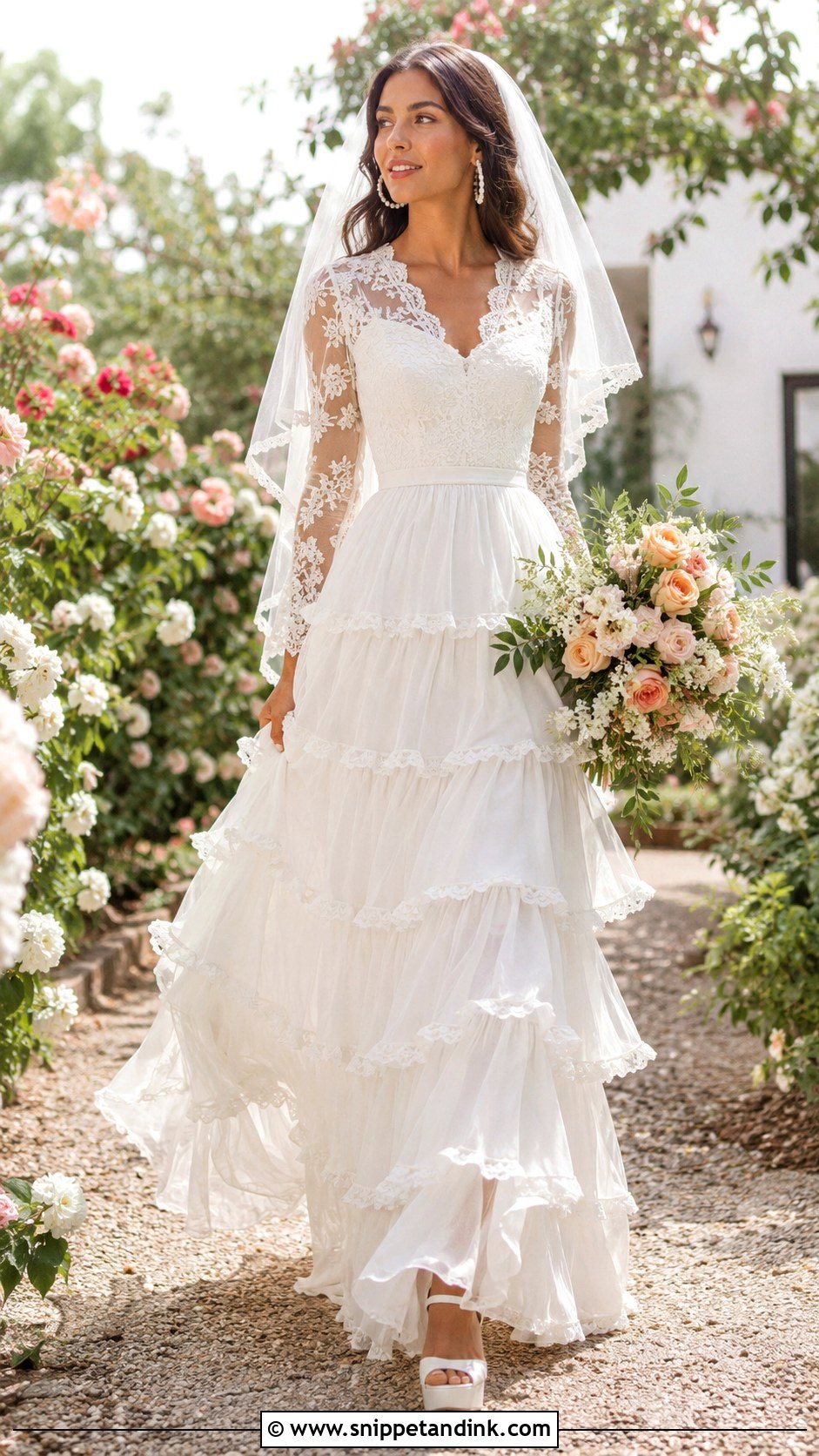
Tiers are about texture in motion. A fitted bodice, defined waist, sheer sleeves and several softly gathered tiers to the floor; small ruffles look refined, wide tiers lean prairie. Every tier seam adds width at that height, so if you’re petite, ask where the first one starts. A seam at mid-thigh shortens the leg, while one lower down doesn’t. Ivory platforms, pearl hoops and a ribbon-trimmed veil falling behind the shoulders. Garden roses, cosmos and greenery, with simple waves or a loose bun so the dress isn’t fighting the hair. Because each layer swings on its own, your photographer will get plenty of movement on the walk. Gardens, barns and historic homes suit it.
9. Satin Column 70s Wedding Dress
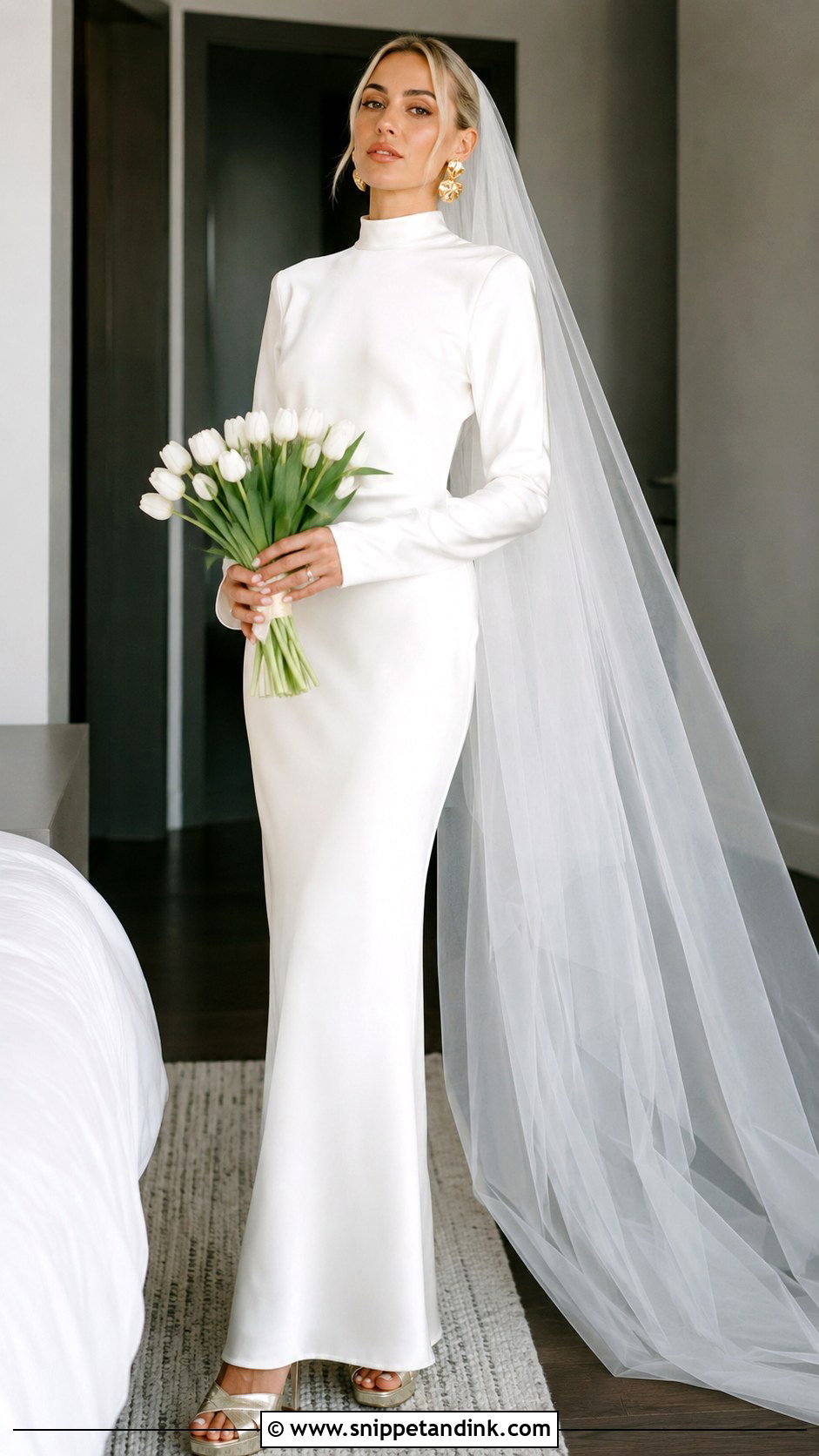
Not every 70s dress needs lace or volume. A satin column gives you long lines and a little shine: bias-cut or softly structured, with a high neck, fitted waist, long sleeves and a narrow skirt. I steer brides to ivory over bright white here; it looks closer to the period and is kinder to most skin tones. Tailoring is everything. Plain satin shows every pucker, pulled thread and uneven seam, so use an experienced fitter and plan on an extra appointment. A narrow skirt also shortens your stride, so check any stairs at the venue. Metallic platforms, sculptural gold earrings, a smooth center part, a long sheer veil and white tulips or callas. Hotels, lofts and formal indoor rooms.
10. Floral Embroidered 70s Wedding Dress
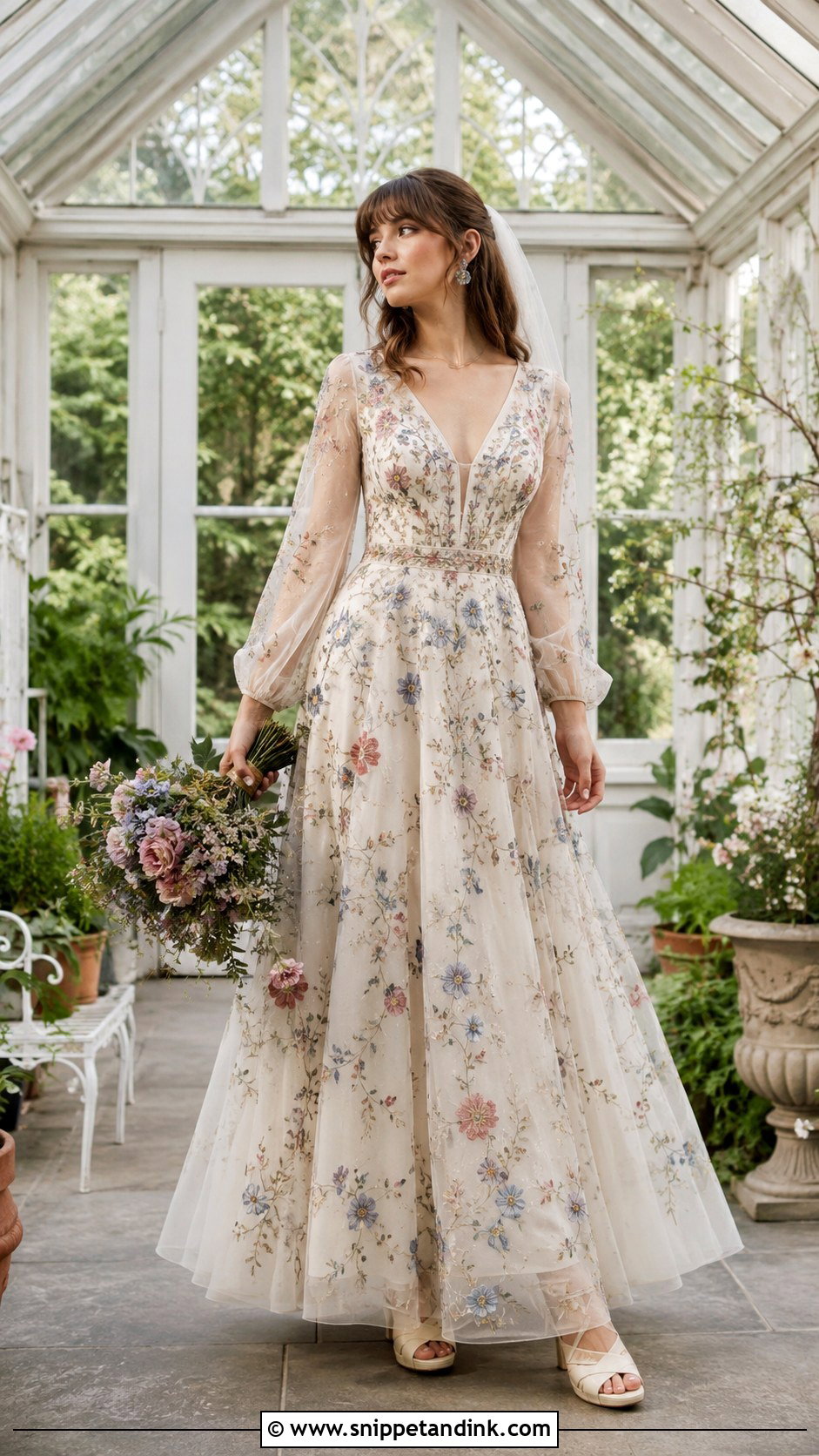
Embroidery brings color while keeping the bridal base. Start with cream tulle or chiffon carrying flowers across the bodice, sleeves and skirt; muted blush, sage, lavender and pale blue coordinate far more easily than saturated thread. On tulle, the stitching weighs more than the net holding it, so look closely at the seams for any puckering around dense motifs. Ivory block heels, small gemstone earrings and a plain tulle veil keep the pattern visible, and a loose half-up style suits the mood. Repeat a few of the gown’s colors in the bouquet and keep the bag and jewelry minimal, since the embroidery already works as the accessory. Spring gardens, conservatories and country estates.
11. Bishop Sleeve 70s Wedding Dress
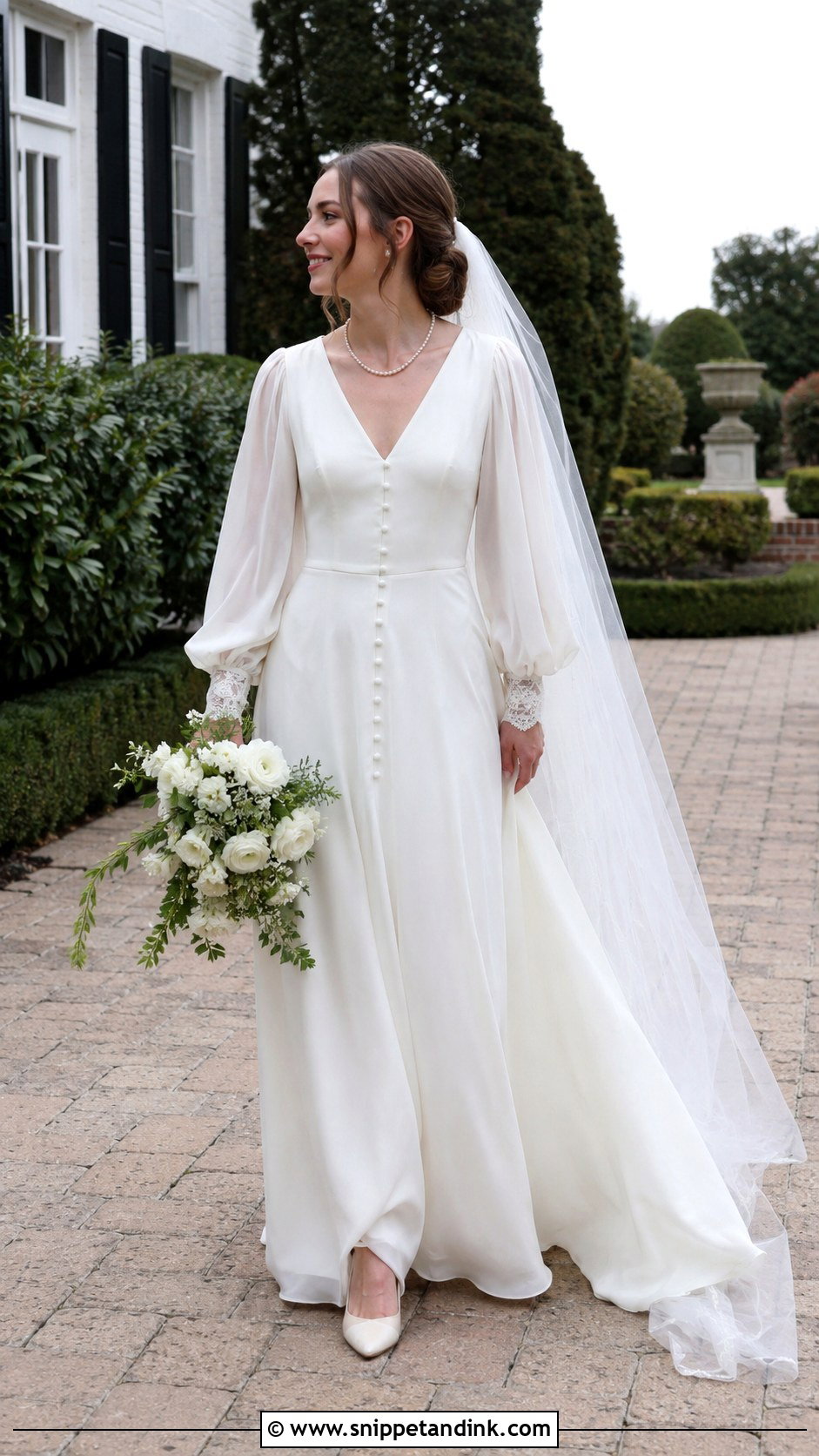
Bishop sleeves fill out through the forearm and gather into a fitted cuff. Pair them with an A-line skirt in chiffon or crepe, a defined waist and a modest V, with lace cuffs or covered buttons for detail. They cover more seasons than you’d guess, because sheer fabric gives coverage without the warmth of fitted lace. The shoulder seam is where the fit lives. If it sits even slightly past your shoulder point, the whole sleeve twists when you raise your arms. Ivory almond-toe pumps, a fine pearl necklace and a long veil under a softly twisted bun. White ranunculus and trailing greenery echo the sleeve’s movement.
12. Square Neck Puff Sleeve 70s Wedding Dress
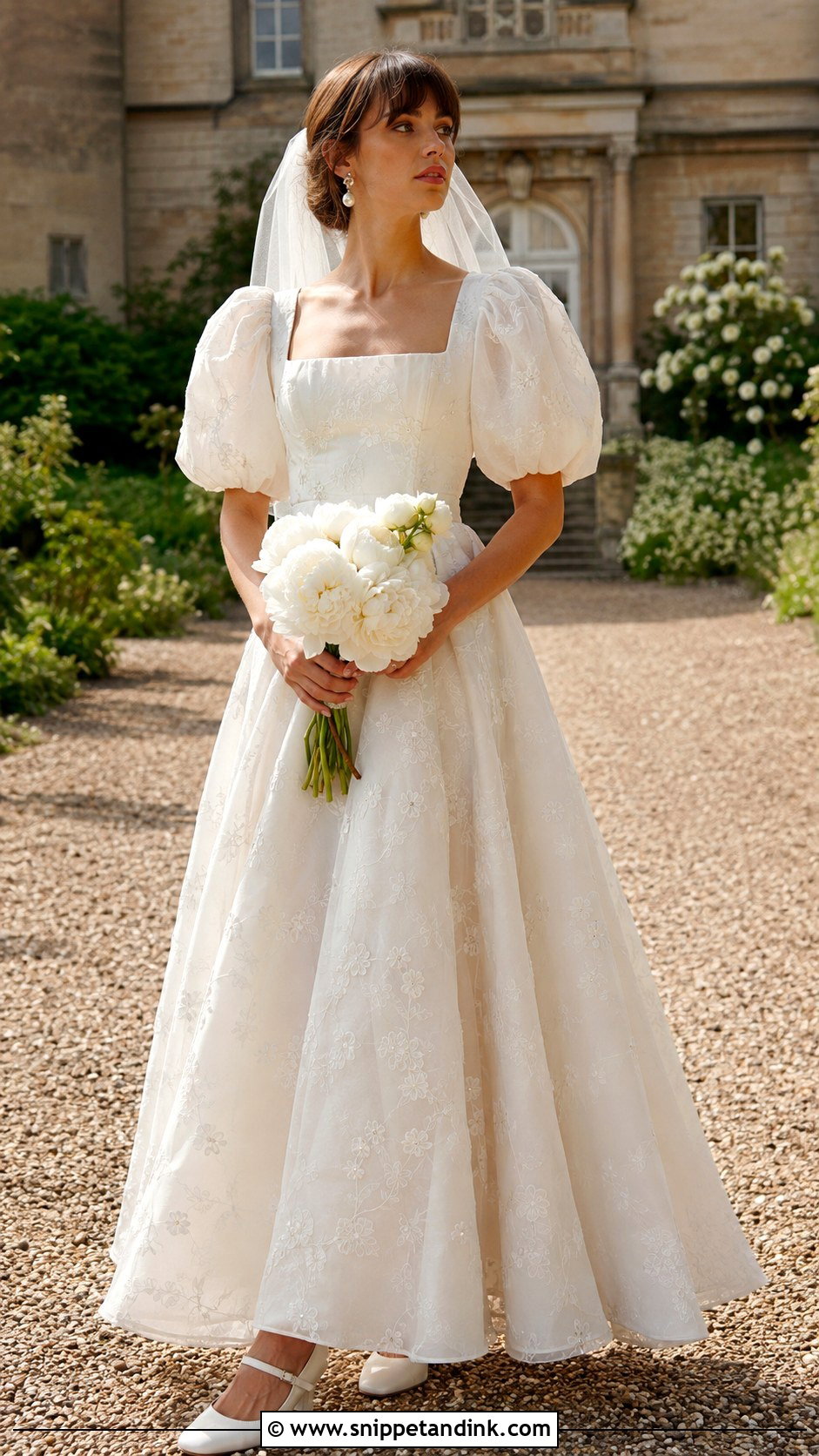
A square neck frames the collarbones and balances puffed sleeves. Choose a fitted bodice, natural waist, gathered sleeves and a full but fluid skirt in cotton lace, embroidered organza or matte satin. Puff sleeves need something inside them, usually a layer of stiff tulle, or they slowly collapse flat by the evening. Ask what’s holding yours up. If they’re very full, skip wide necklaces and big headpieces. Pearl drops, ivory Mary Jane heels and a short veil at the back of a low bun. White peonies with greenery keep it fresh. Gardens, country venues and old houses with character suit the shape.
13. Off Shoulder Boho 70s Wedding Dress
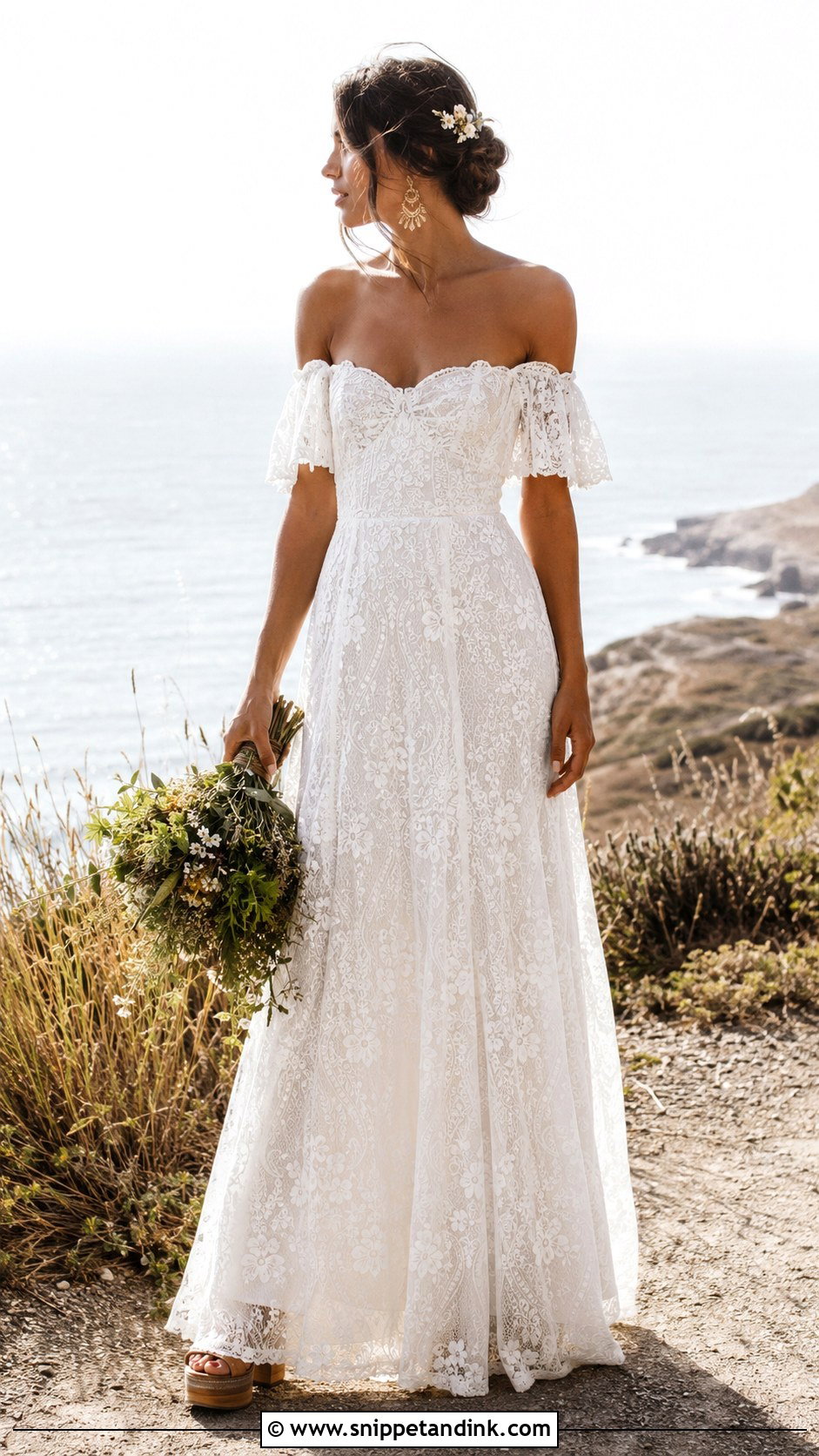
Off-shoulder lace shows the collarbones and feels relaxed. A flowing lace gown with shoulder bands, flutter sleeves, a fitted waist and an easy A-line. The bands are the real question. Elastic is comfortable but can creep upward over a long day; structured bands stay exactly where they’re put but limit how high you can lift your arms. Try both styles if you can before deciding. Stacked platform sandals, gold drops and loose center-parted waves. A flower crown makes a strong boho statement, while a comb is quieter. Wildflowers, greenery and dried grasses suit coastal, forest and summer weddings. Leave the necklace off.
14. Halter Neck 70s Wedding Dress
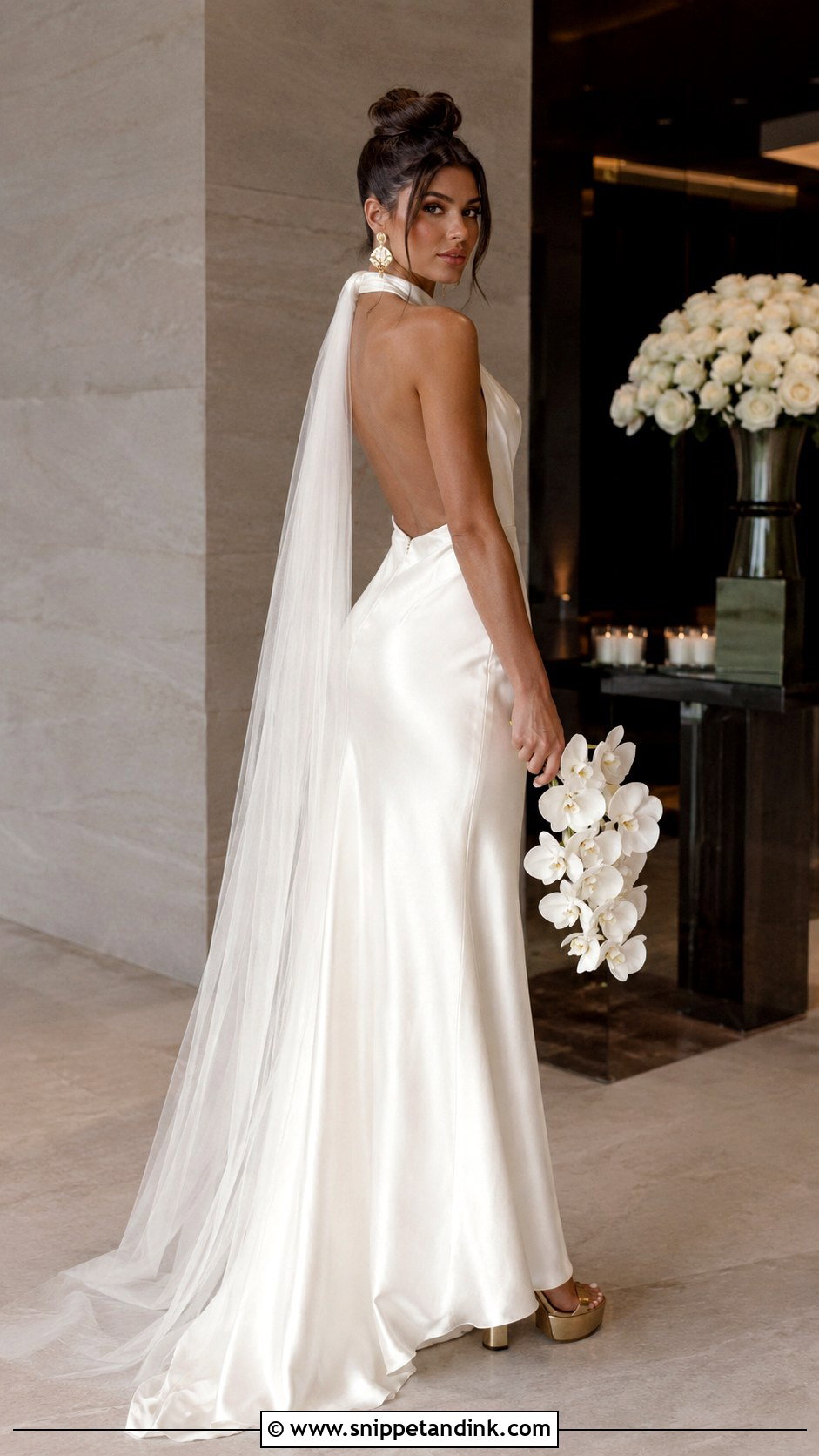
A halter is the decade’s sleek glamour: high and clean at the front, open at the back. Ivory satin or crepe, a fitted waist and a gently flared skirt. Because the back is the feature, the hair goes up. My usual pairing is a polished high bun with a narrow cathedral veil attached just below it, which lifts out cleanly after the ceremony. Support is the tailoring job here. On a fuller bust, a halter needs built-in cups and a waistband that carries weight, or the strap round your neck ends up holding everything. Gold platforms, bold drop earrings and white orchids. Warm venues and evening receptions suit it.
15. Kaftan Sleeve 70s Wedding Dress
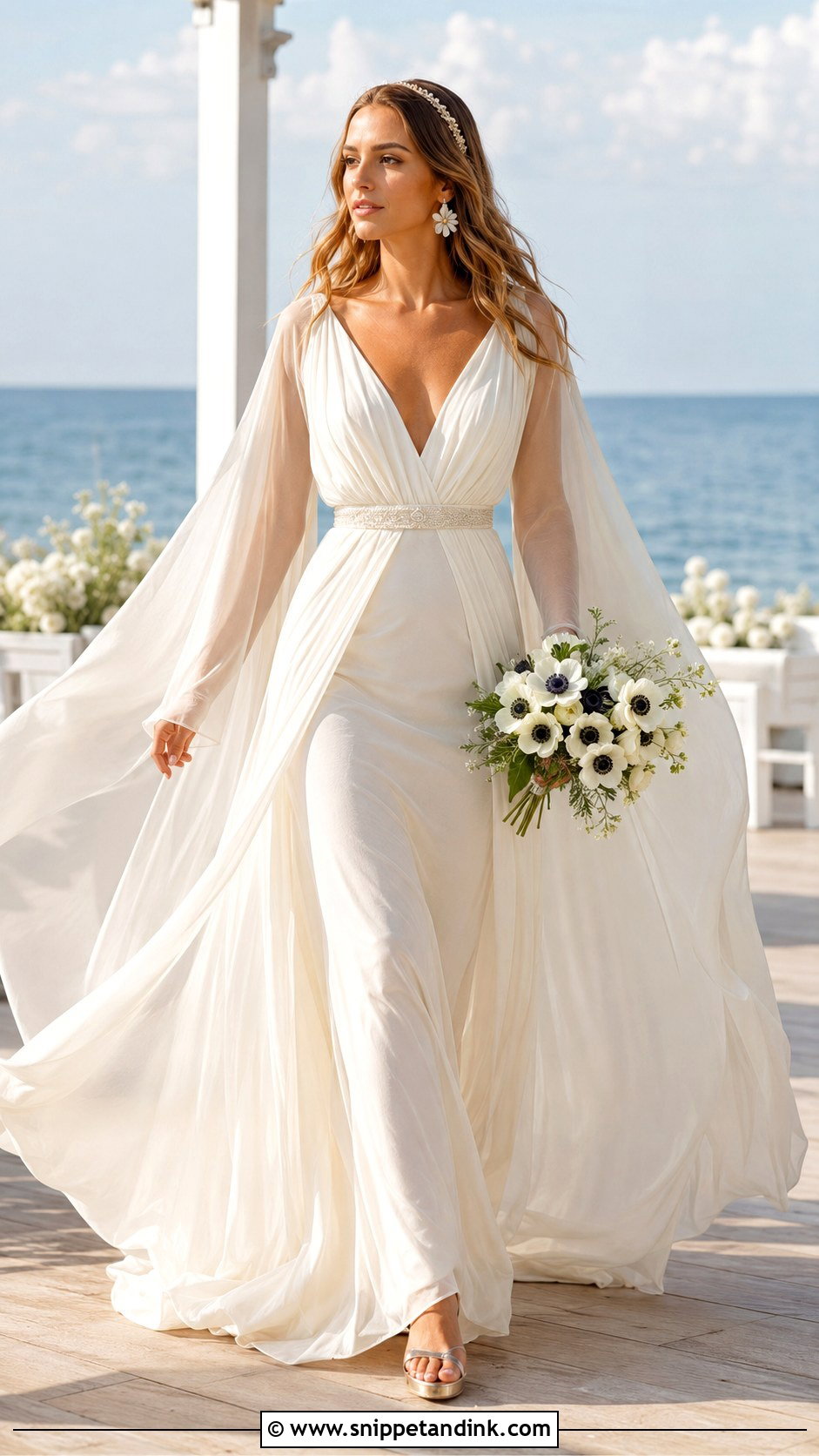
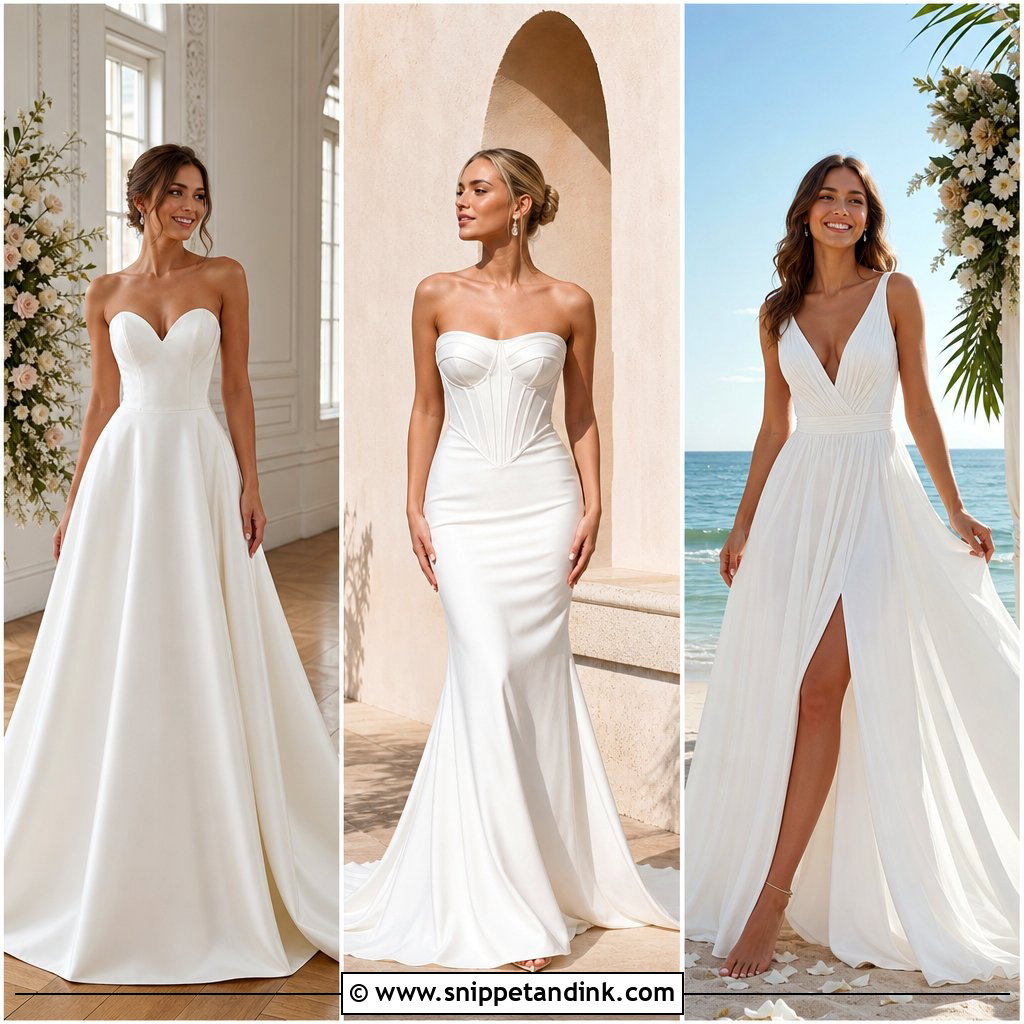
Kaftan sleeves make this the most comfortable dress here. A floor-length gown with a lightly fitted inner layer and a sheer chiffon or lace overlay falling wide from the shoulder, plus a V-neck and a defined waist so the fabric doesn’t hide you. Think about the reception table. Wide sleeves trail across plates, sauces and candles, and resting a forearm on the sleeve edge while eating keeps it out of the way. Low metallic sandals, oversized floral earrings and a slim jeweled headband over center-parted waves. White anemones and greenery. Beach, destination and relaxed weddings, with drama in motion and no heavy train.
16. Short Sleeve Lace 70s Wedding Dress
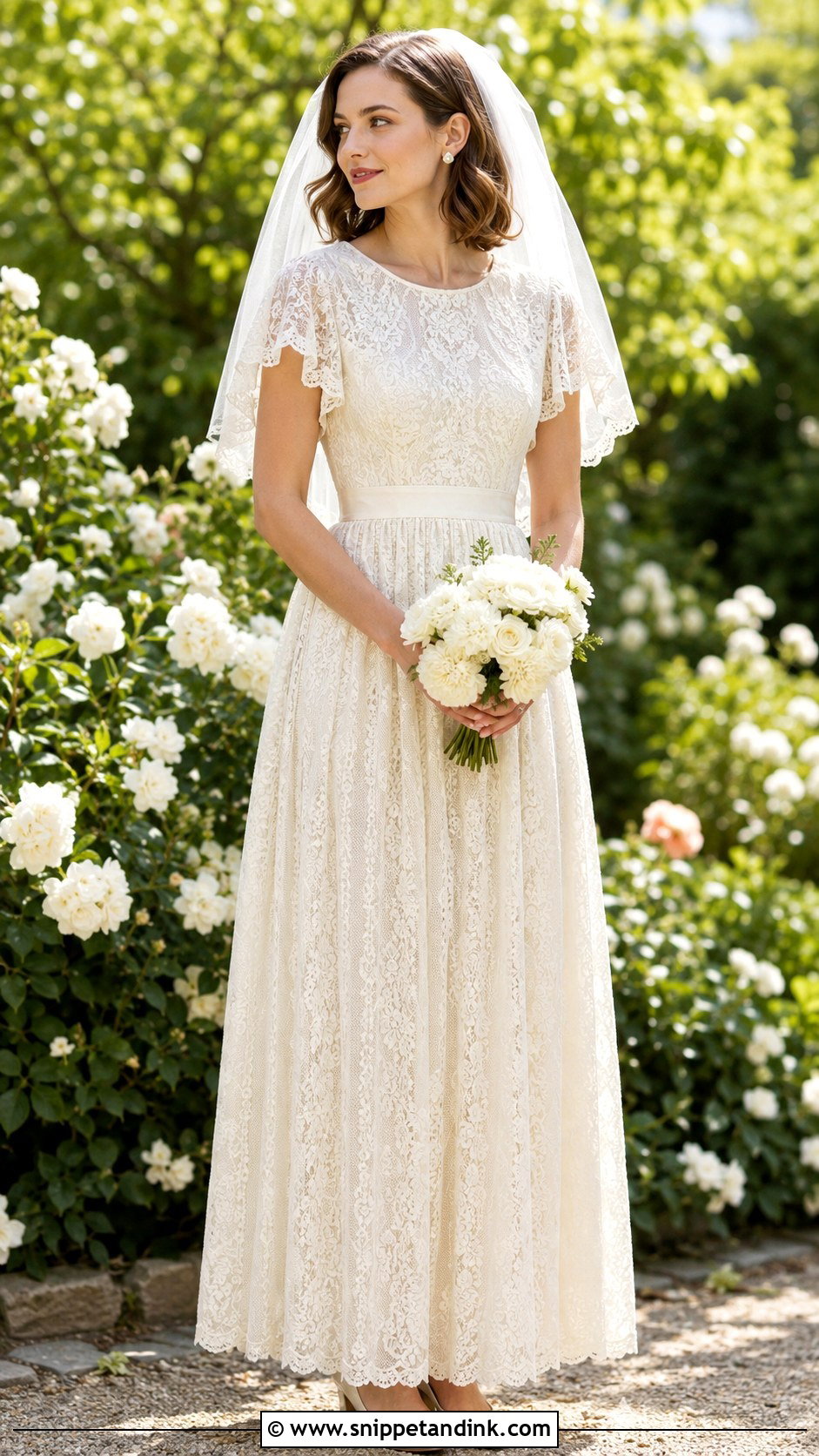
Short sleeves suit brides who love vintage lace but run warm. Floor length, a high or rounded neck, a fitted lace bodice, cap or flutter sleeves and a softly gathered skirt. Allover lace can look flat from across a room, and a satin ribbon at the waist breaks it up while marking your shape. On sleeves, a cap sits right on the widest part of the upper arm; a flutter that falls a little lower is usually the more flattering choice. Ivory block heels, pearl studs and a shoulder-length veil, with a neat low bun or a curled bob. Carnations, roses and fern feel properly retro, and bracelets, gloves or an heirloom watch stay in view.
17. Mini 70s Wedding Dress
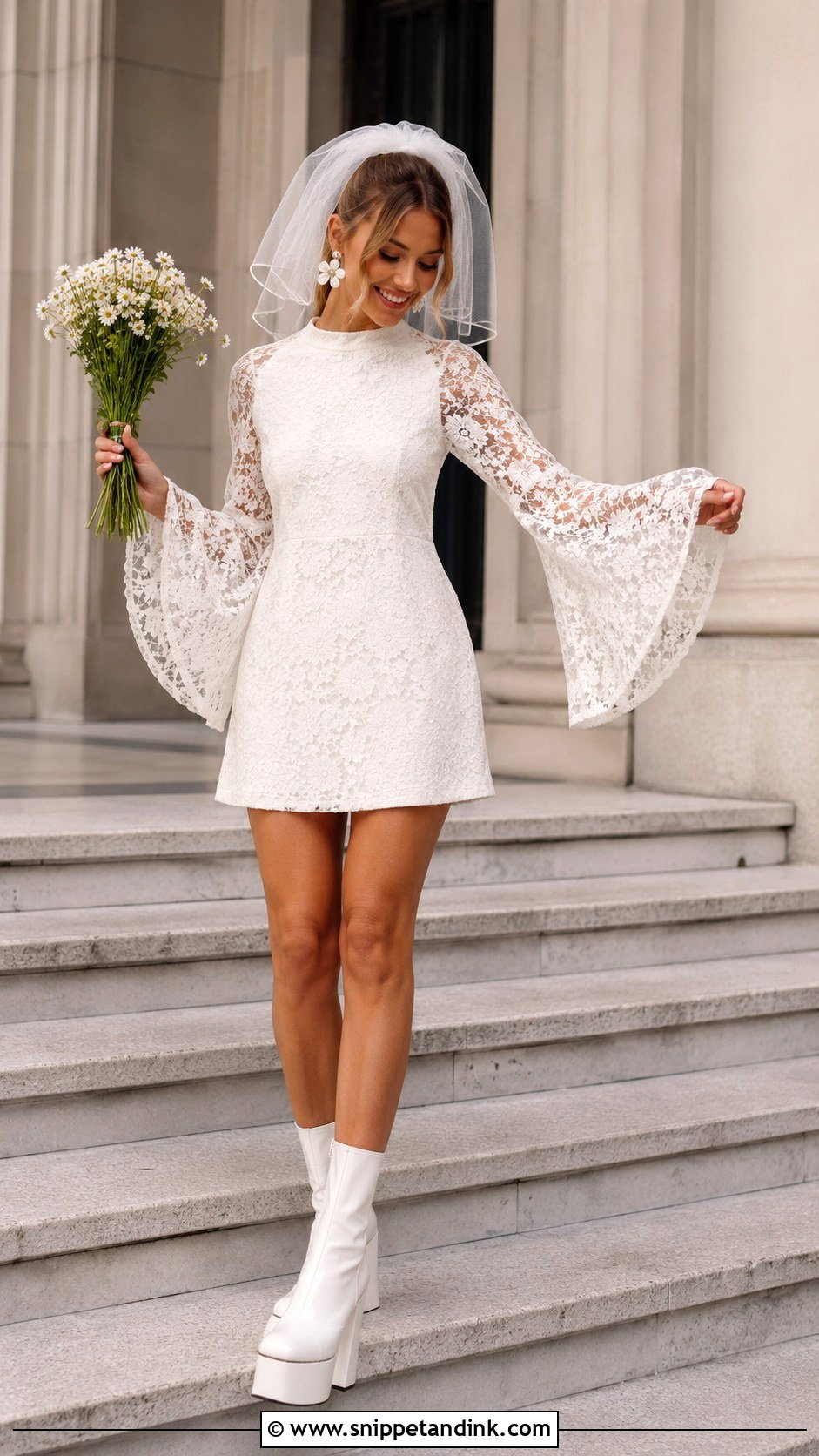
A bridal mini is pure fun for a civil ceremony or a reception change. Choose an A-line with a high neck, long bell sleeves and textured lace or embellished fabric; the sleeves and neckline are what keep a short hem bridal rather than nightclub. Sit down in it before you buy, because an A-line mini rises further seated than standing. White platforms or block-heel boots, statement earrings and a short bubble veil. A sleek ponytail or flipped bob, and daisies or white tulips in a compact bouquet sized to the shorter dress. Fitted shorts underneath make the dance floor easier.
18. Sequin Disco 70s Wedding Dress
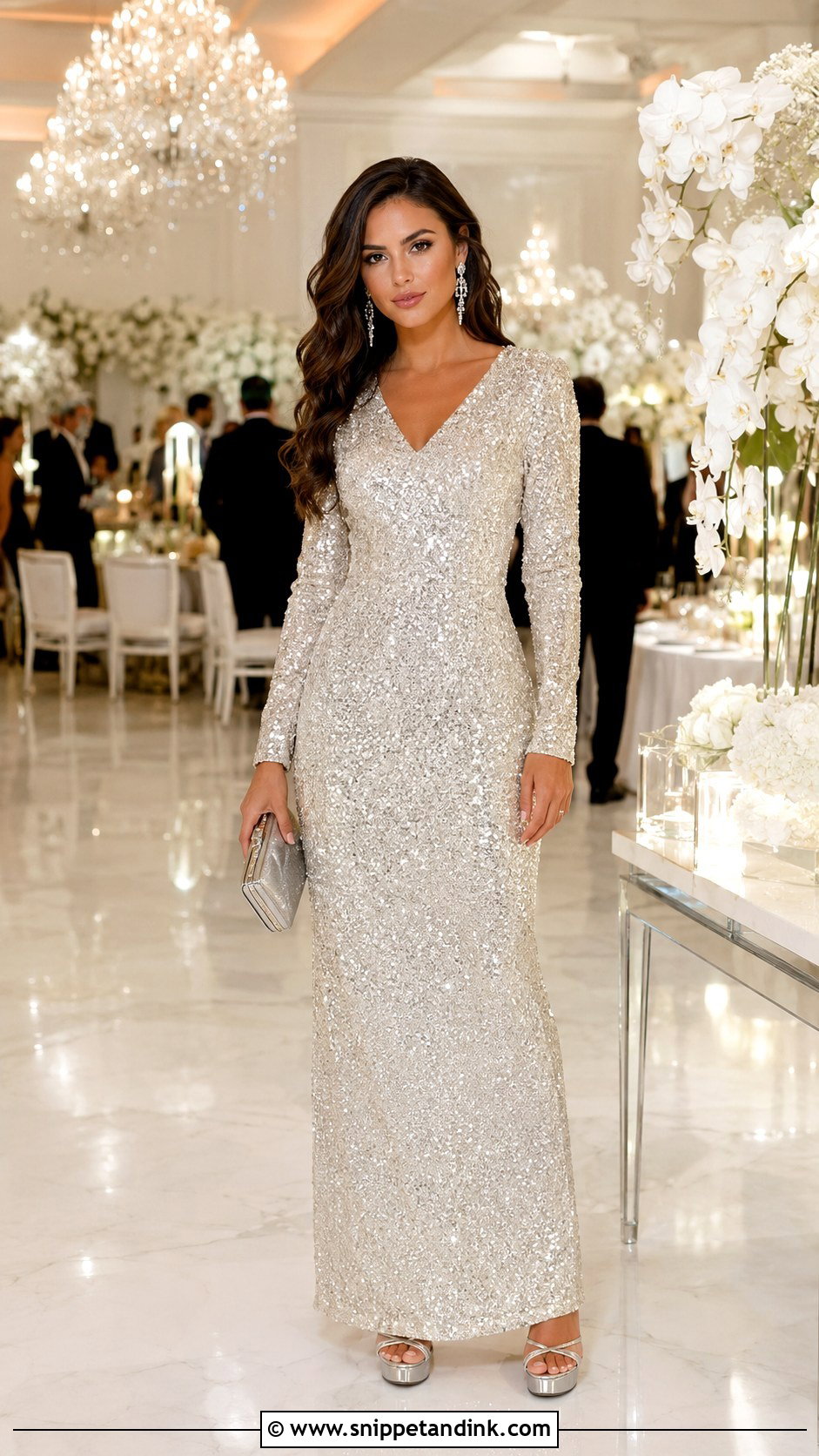
Sequins turn a gown into a disco statement, and the lining decides whether you’ll enjoy wearing it. Go for a column or gentle flare, long sleeves, a modest V and evenly spread embellishment. Ask how the sequins are attached. Chain-stitched rows can unravel a long run if one thread breaks, while individually secured sequins only ever lose a few. Silver platforms, crystal drops and a smooth metallic clutch. Glossy waves or a sleek low ponytail, and no veil. White orchids soften the shine. Evening receptions, modern ballrooms and music-heavy parties suit it, as long as the neckline and accessories stay simple.
19. Plus Size Lace 70s Wedding Dress
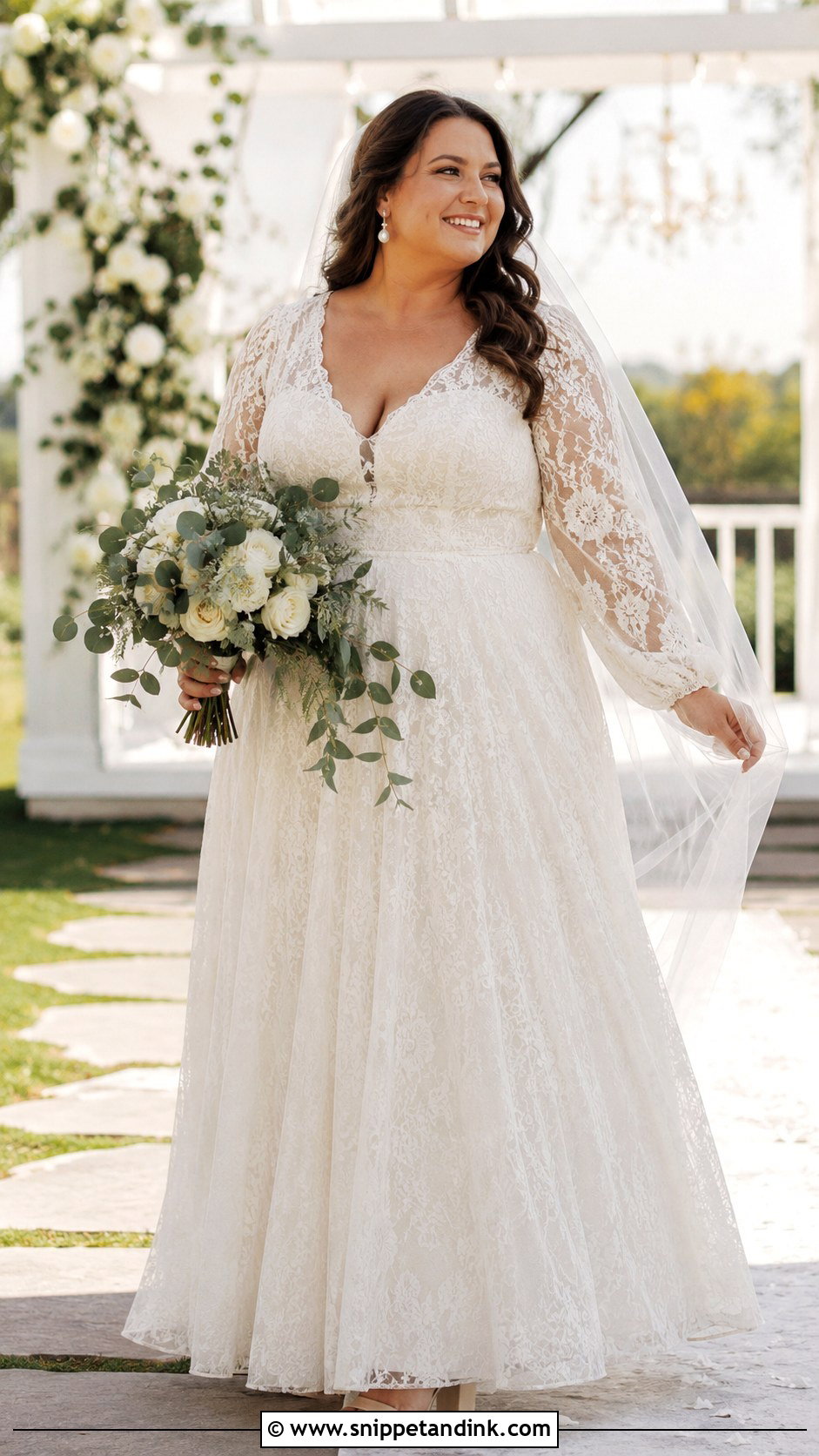
Support and proportion decide how a plus-size 70s dress looks. An A-line with a structured lace bodice, an empire or natural waist, bishop sleeves and a fluid skirt that follows without clinging is a strong starting point. A V-neck lengthens the upper body, and a high lace back can hide a supportive band. Bishop sleeves are a good match because the gathered cuff defines the wrist while the sleeve skims the arm; just check the armhole isn’t cut too high or tight, which is common in sample sizes. Cushioned ivory block heels, pearl earrings and a light fingertip veil. Roses, eucalyptus and greenery. Judge the dress by fit and movement, never by the label, and budget for alterations.

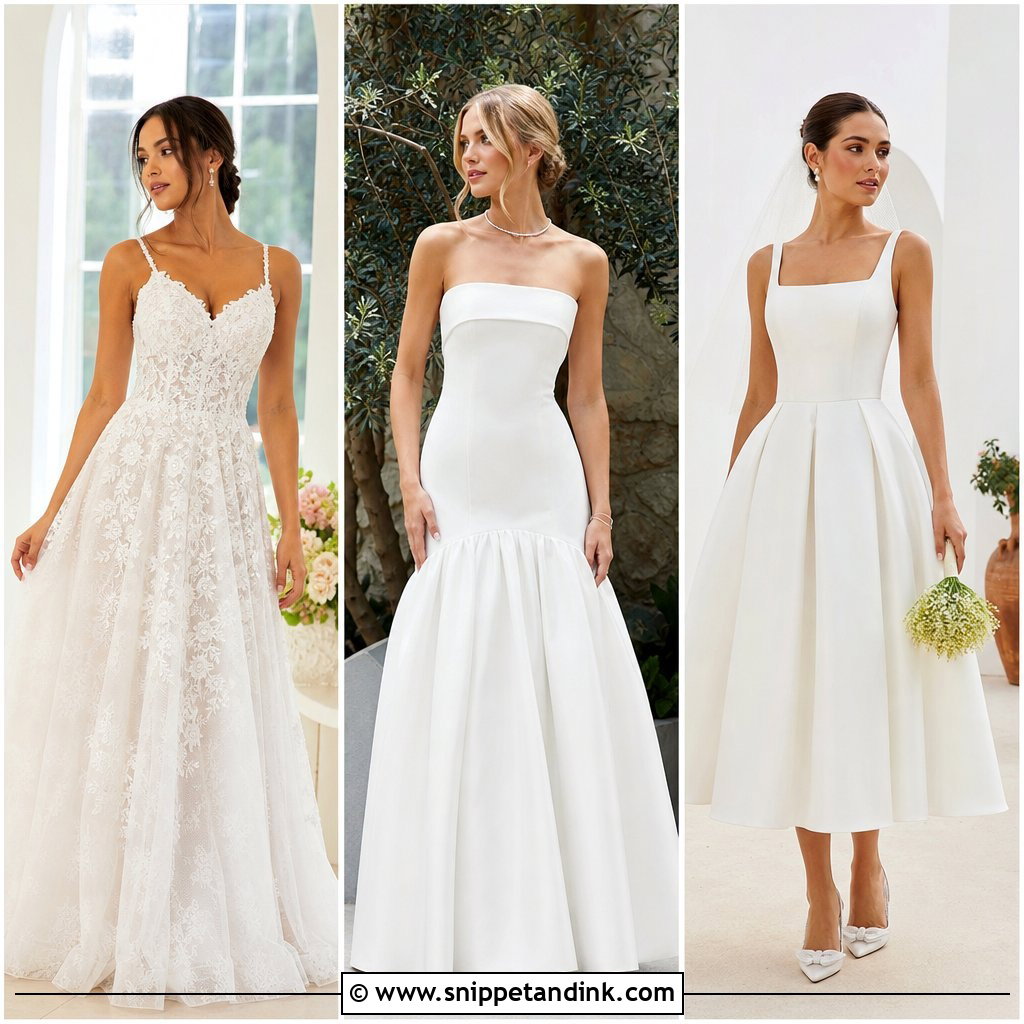
20. Vintage Courthouse 70s Wedding Dress
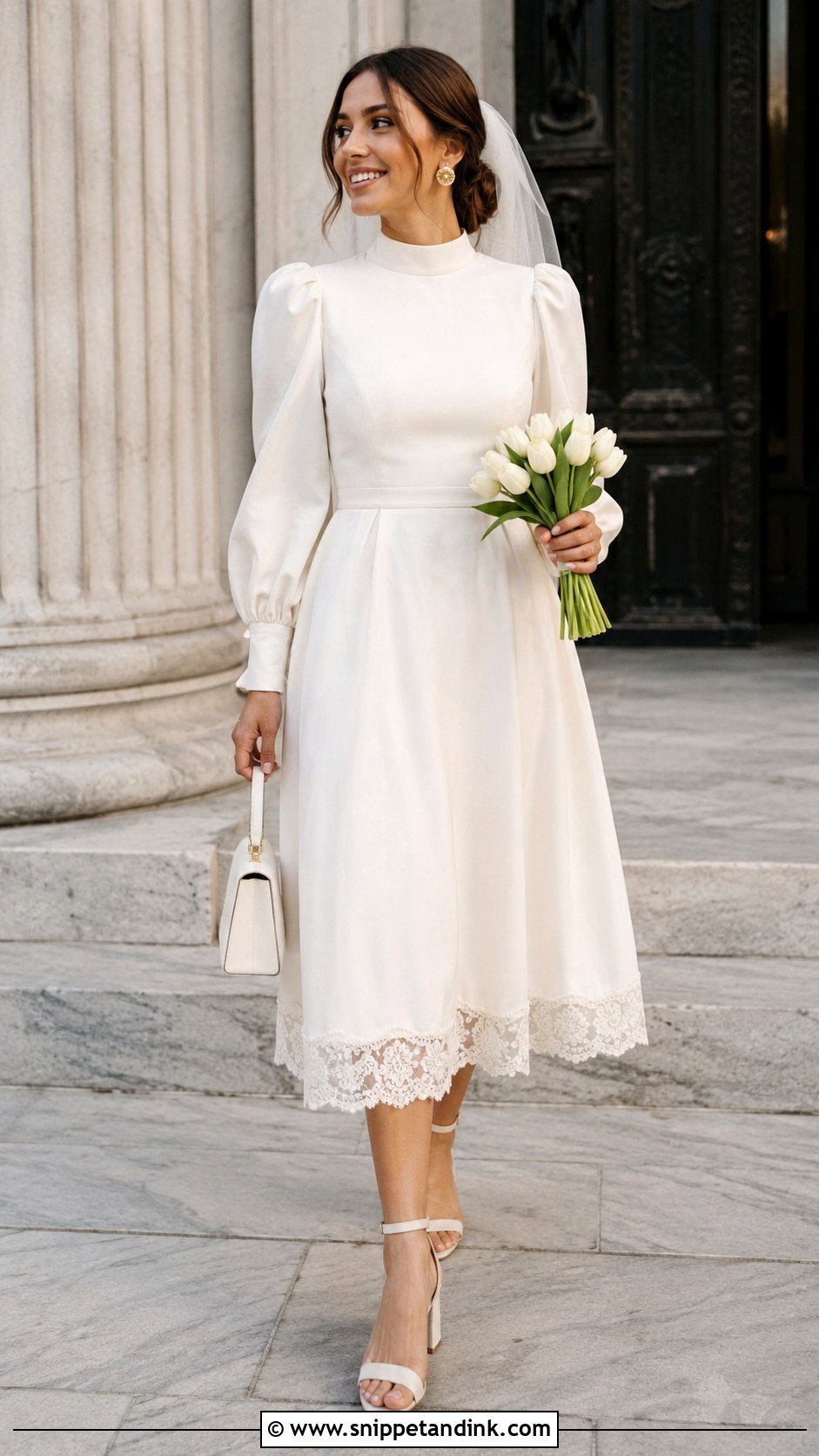
Tea length suits a courthouse: special without being formal. Look for ivory with a modest high neck, softly puffed sleeves, a fitted waist and a lace-trimmed hem. Midi is the hardest length to get right. The hem should land at or just below the slimmest point of your calf, and an inch either way changes the whole proportion, so take your shoes to the hem fitting. Cream ankle-strap block heels, a structured top-handle bag and small gold earrings. A short veil or a floral comb. Daisies, tulips or white roses in a compact bouquet travel easily between city hall, portraits and a restaurant reception.
A Dress Timeline Built Around Alterations
Sleeves, tiers and lace all take more work to alter than a plain gown, and most of the dresses above have at least one of them. Lead times vary by designer and seamstress, but this is the rough order I plan around.
- Order a made-to-order gown several months ahead, since many take four to eight months to arrive. Vintage and ready-to-wear dresses skip this step.
- Start alterations roughly two to three months before the date, and book them as soon as the dress is ordered, because good seamstresses fill up in peak season.
- Expect two or three fittings. Bring your real shoes and underwear to every one, and the headpiece to at least one.
- Have the final fitting a week or two before the wedding, then leave the dress alone. Last-minute changes are where hems go wrong.
If your weight tends to shift with stress, tell the seamstress at the first fitting. She can leave seam allowance in the right places so the last adjustment stays small.
Made to Move, Then and Now
Seventies dresses still work because they were made to move and to feel personal. High necks, bell sleeves, empire waists, prairie skirts, crochet, satin and sequins each take the theme somewhere different. Start with a silhouette that supports your body and suits the venue, then add a few retro details through shoes, jewelry, hair or veil. Careful tailoring is what makes either a genuine vintage gown or a new design look finished. Quiet boho or full disco, the right dress still lets you sit, eat and dance at eleven at night.
You'll Like These Ideas:








Leave a Reply