
Songket is woven, not embroidered. Gold or silver threads are laid into the cloth on the loom as it’s made, which is why the pattern sits slightly raised and catches light the way print never can. It has dressed Malay brides for generations, and the modern versions below keep the cloth but change what’s around it: cleaner tailoring, detachable trains, gowns, two-piece sets and even trousers. You’ll find quiet ivory weaving next to jewel tones, high-neck modest cuts next to reception dresses. With each one I’ve added the shoes, veil or hijab, jewellery and headpiece I’d pair with it, and the fitting detail that matters most for that shape.
Is It Handwoven? Turn the Songket Over Before You Pay
Shops use the word songket for three quite different fabrics, and the price gap between them is large. Handwoven songket is made on a traditional loom, metallic thread added by hand row by row. Machine-woven songket copies the look much faster. Printed or foil-stamped cloth only imitates it. All three can look good in photos, but you should know which one you’re paying for.
- Turn the cloth over. Handwoven pieces show loose floats of metallic thread on the back where the weaver carried it between motifs.
- Look closely at the motifs. Small irregularities from one repeat to the next are normal in handwoven cloth; machine weaving is perfectly even.
- Run a fingertip across the pattern. Woven thread is raised, while printed or foil designs feel flat and can crack along a fold.
- Ask whether the thread is real metal-wrapped or metallic polyester. Both are used, and they age differently.
Commissioning a handwoven length can take weeks or months depending on the motif and the weaver’s queue, so ask early if you want something made for you. Machine-woven songket is a sensible choice for a train, cape or overskirt that takes a lot of wear, keeping the handwoven piece for the skirt or bodice.
1. Modern Ivory Songket Baju Kurung
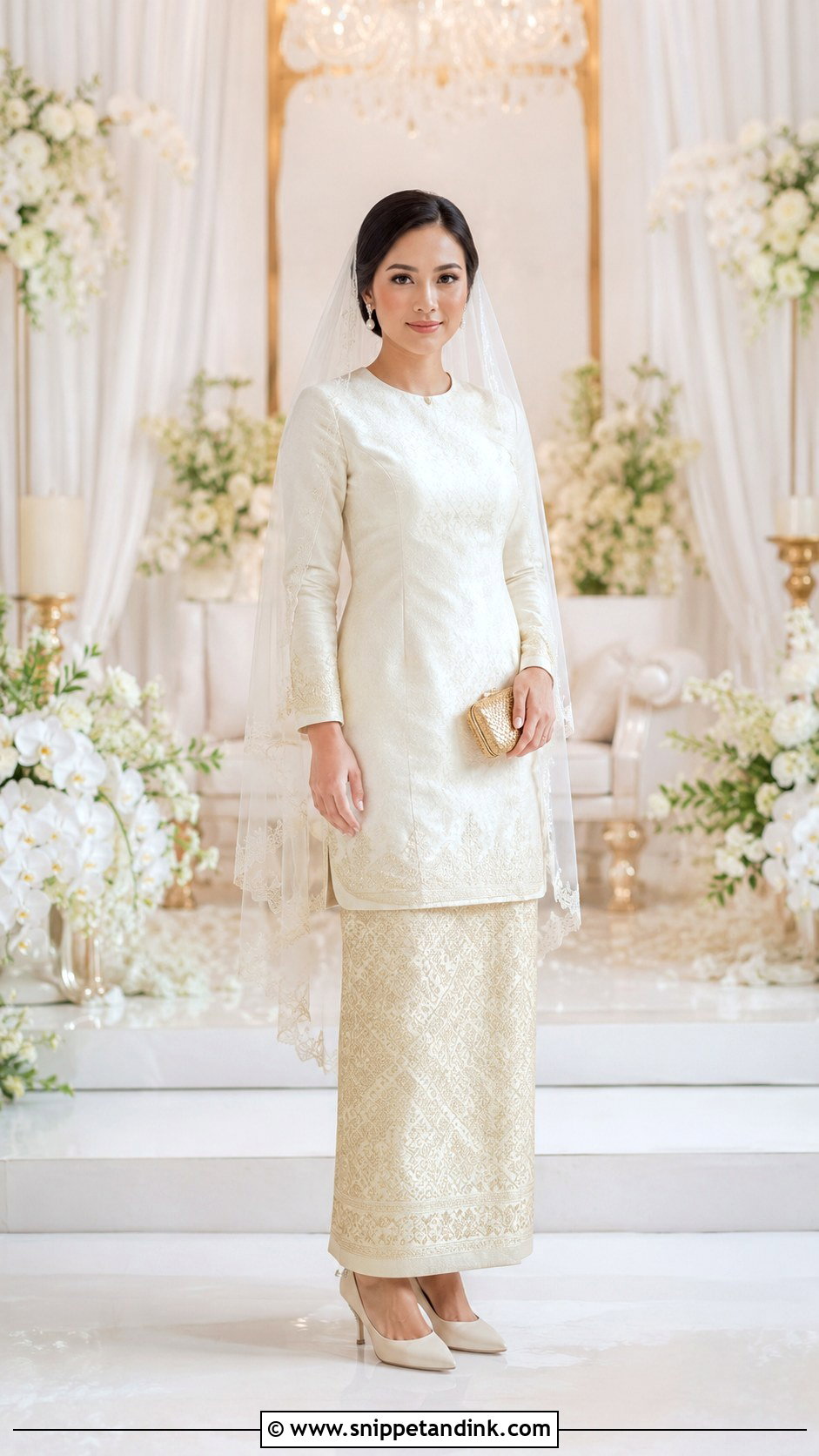
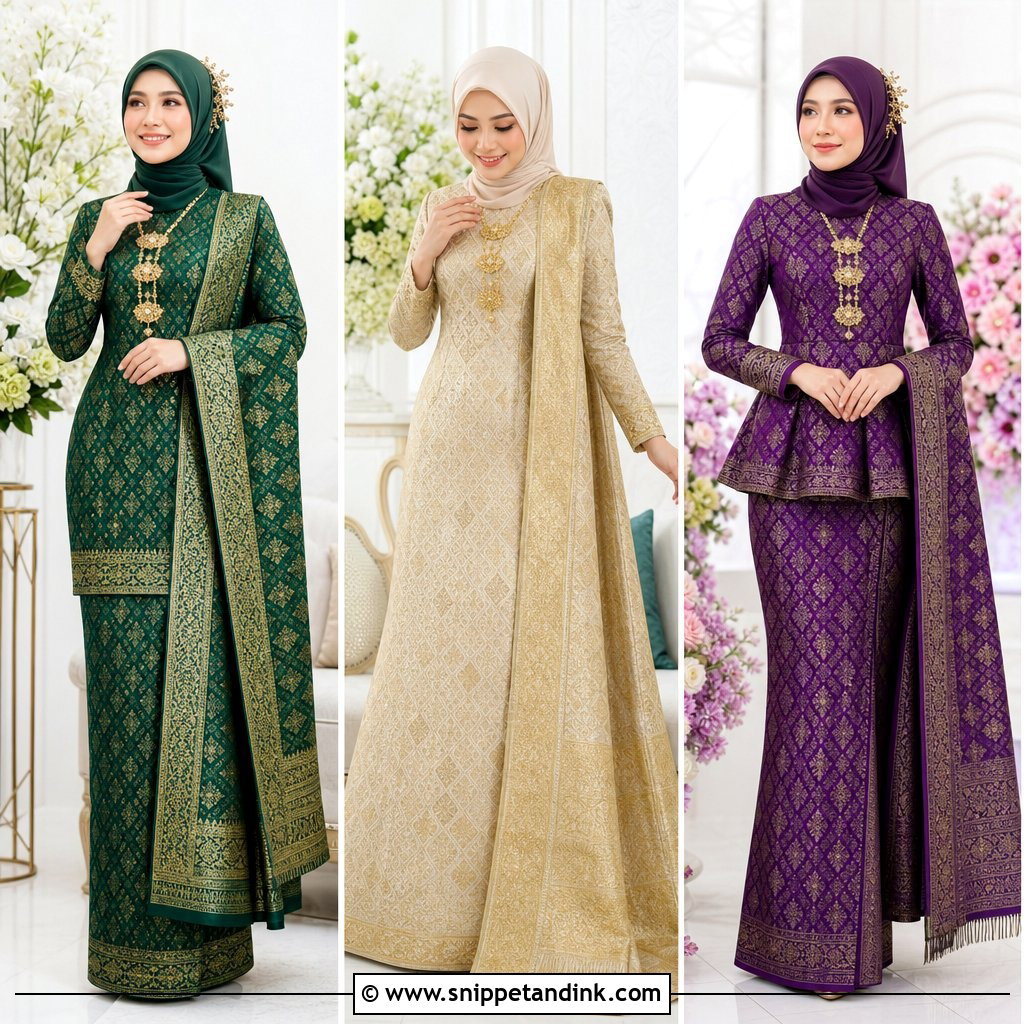
For a nikah, an ivory songket baju kurung is the shape I trust most, because it is modest, comfortable to sit in and reads clearly in photos. I’d fit the long top gently at the shoulders and waist and keep the songket for the straight skirt, where fine gold weaving shows up well on the pale ground. A scalloped neck or a little beading at the cuffs is enough decoration. Pair it with an ivory hijab or long sheer veil, pearl drops, a compact gold clutch and pointed ivory pumps. Keep makeup luminous and light; the weaving should be the first thing anyone looks at.
2. White Songket Wedding Gown With Train
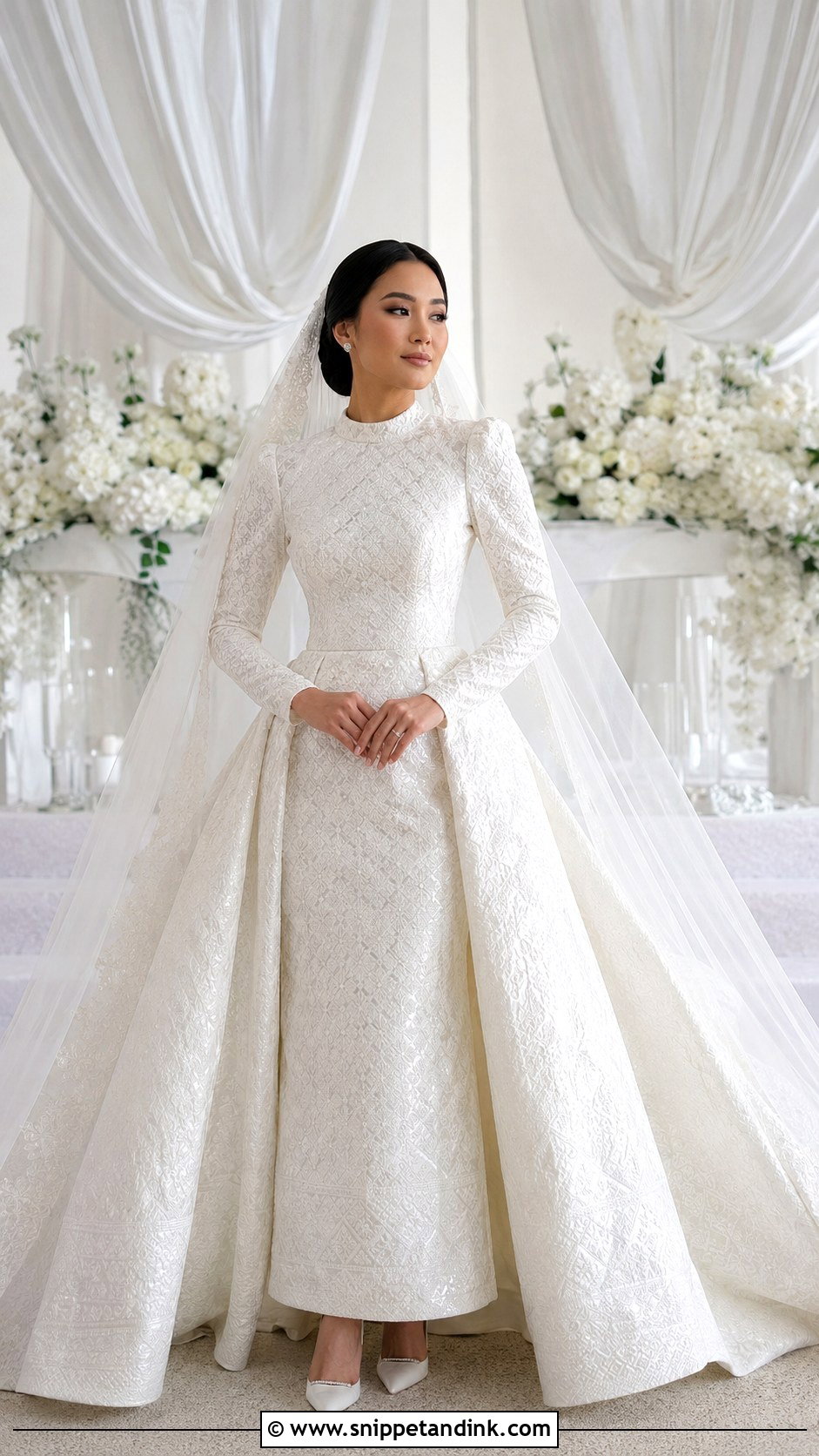
A fully songket gown would be very heavy, so the version I like keeps the woven cloth for a fitted bodice and puts a satin or mikado skirt below it. Run the motif along the waist, the cuffs and the border of a detachable train so the white skirt still feels connected. Long fitted sleeves and a high neck make it suitable for a modest ceremony. Style it with a plain cathedral veil, crystal studs and white pointed heels, plus a structured white-and-green bouquet. Check that the train attaches with sturdy hooks or buttons rather than snaps; songket borders are weighty and snaps pull loose when someone steps on the edge.
3. Gold Songket Mermaid Wedding Dress
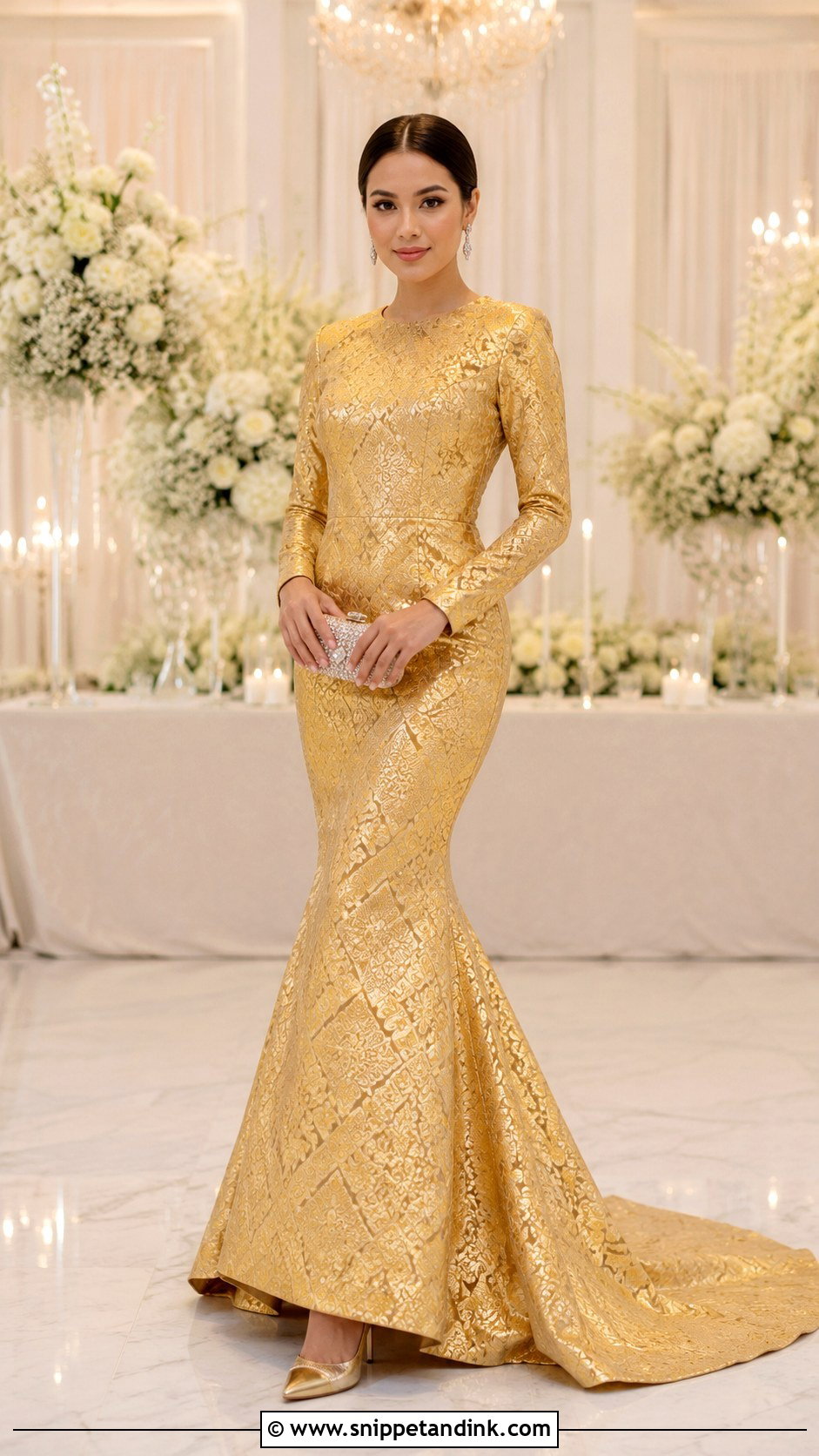
Gold songket in a mermaid cut is pure reception drama, and it only works when the bodice follows the figure smoothly before the flare below the knee. Songket is stiffer than crepe, so a tight knee will restrict you more than you expect. Choose a pattern with some space between motifs, since dense gold over a tight shape looks crowded. A bateau neck, fitted sleeves and covered back buttons finish it. Metallic pointed pumps, a small crystal clutch and slim drops are plenty. For a hijab, I’d pick matte champagne fabric to calm the reflective threads; otherwise a low sculpted bun keeps the neckline clear.
4. Songket Kebaya Wedding Dress
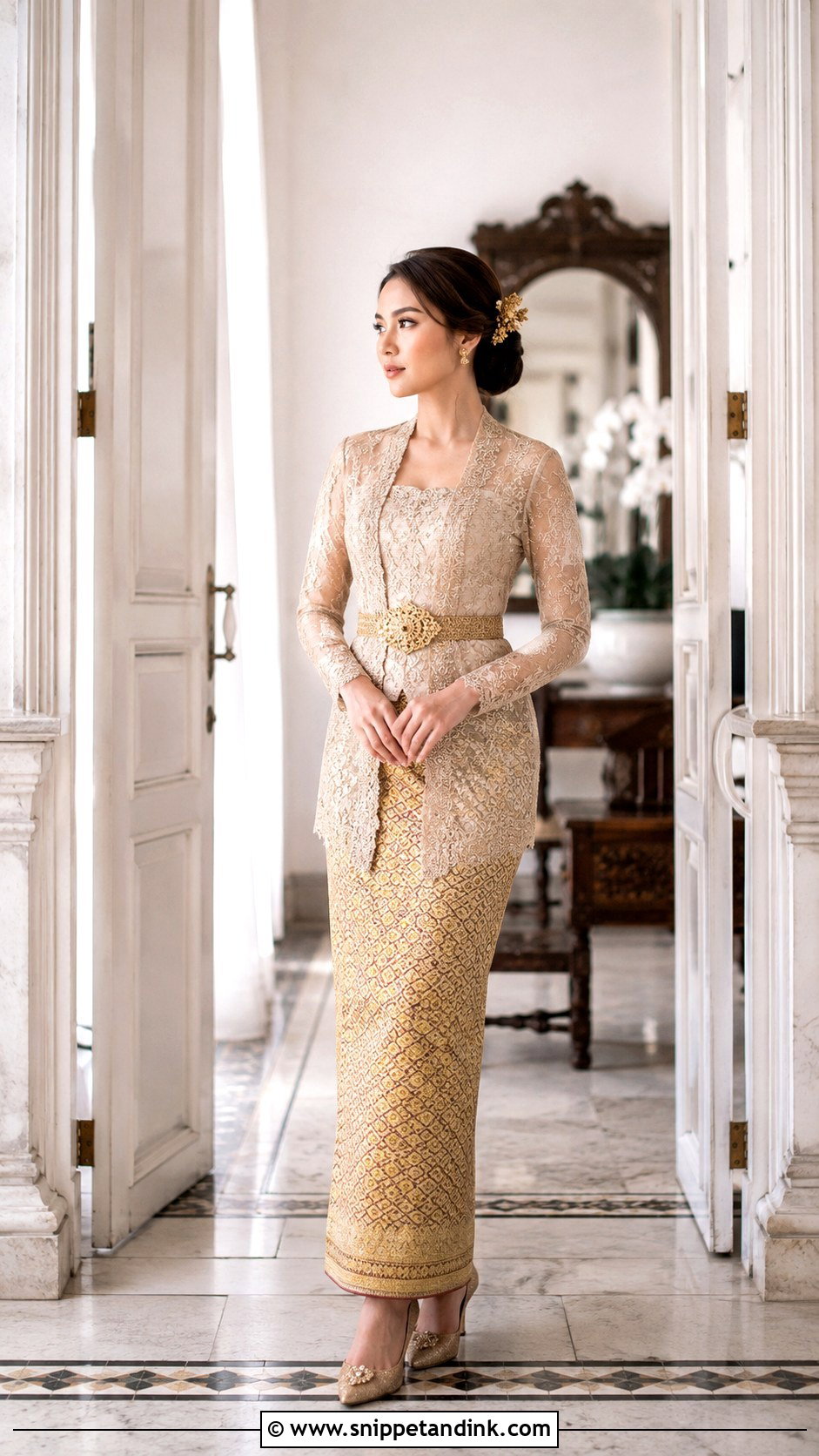
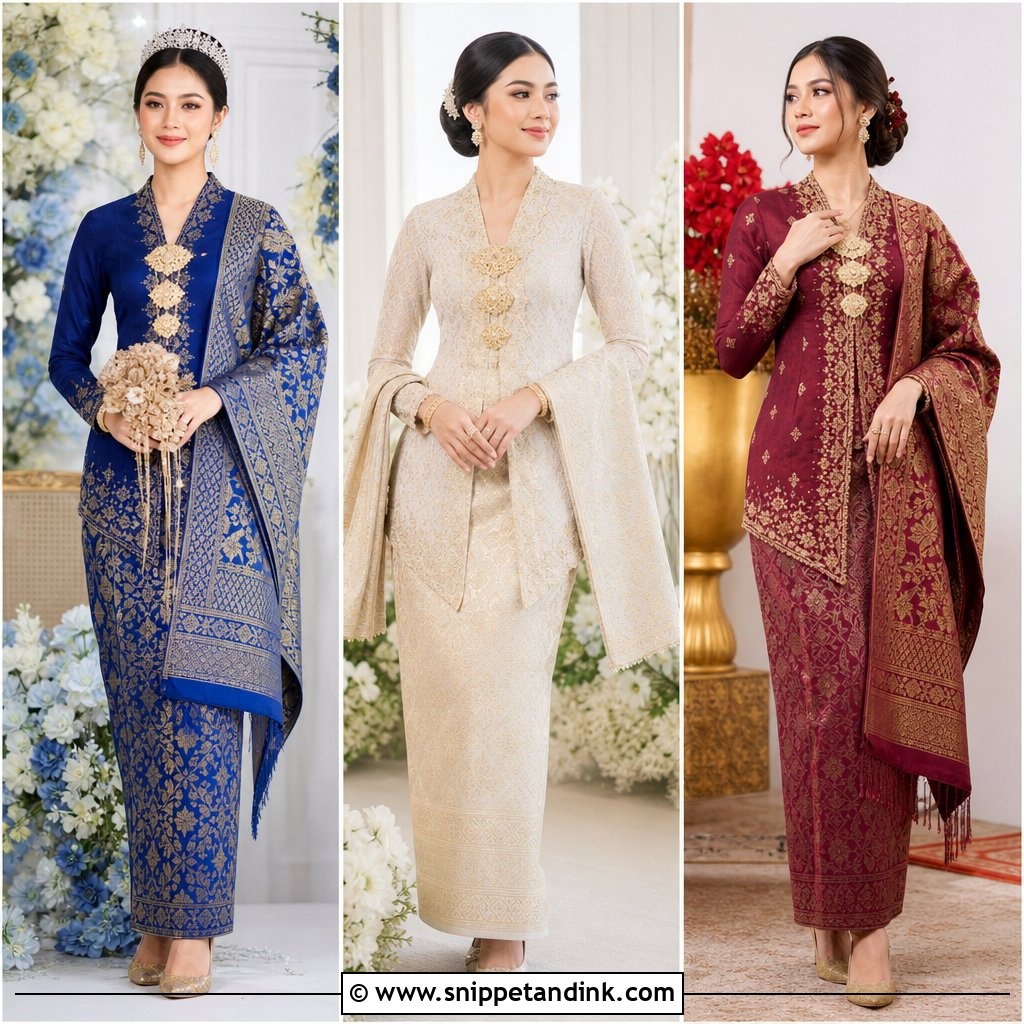
A kebaya feels modern when the tailoring is sharp and the decoration is held back. I’d use a fitted ivory or champagne top with a clean front opening, long sleeves and a little embroidery at the neck, over a slim songket skirt in gold floral or geometric motifs. A structured belt ties the two pieces together. Closed-toe gold heels, a small embellished bag and fine earrings suit it, with a neat bun and decorative comb or a light veil. The slim skirt needs a back slit or a hidden pleat. Without one, walking down a pelamin step is a careful shuffle.
5. Songket Wedding Dress With Cape
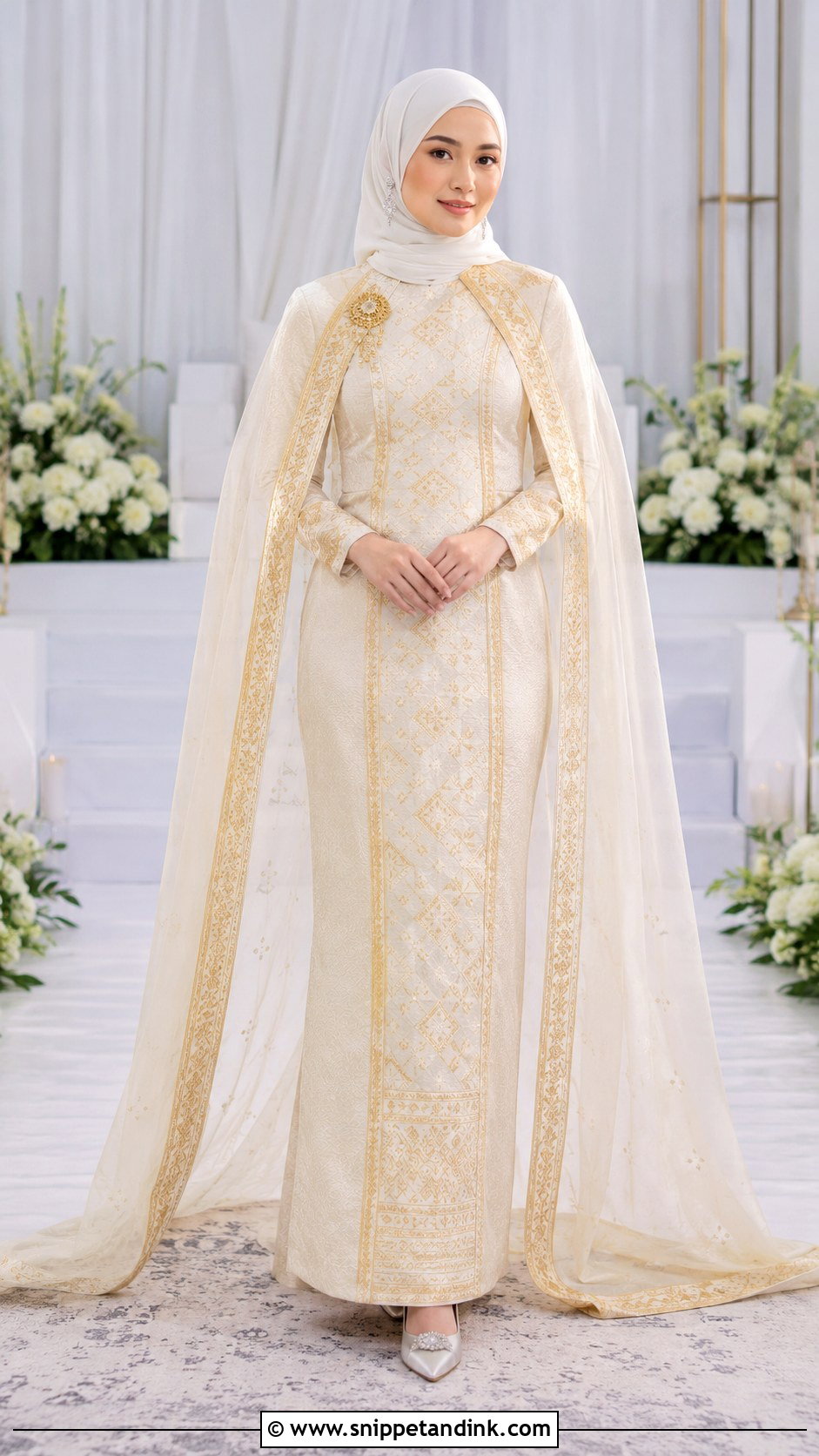
A cape changes a plain column into something ceremonial, and it lets you take the drama off for dinner. Start with a streamlined gown in ivory, soft grey or muted gold with songket panels on the bodice and lower skirt, then add a sheer shoulder cape running into a soft train. A narrow woven border or scattered beading on the cape is enough. Pointed satin heels, a crystal comb and studs finish it. With a hijab, tuck the cape neatly under a smooth bridal wrap; layering it on top creates a bulky ridge at the shoulders that shows in every side shot.
6. Pastel Pink Songket Wedding Dress
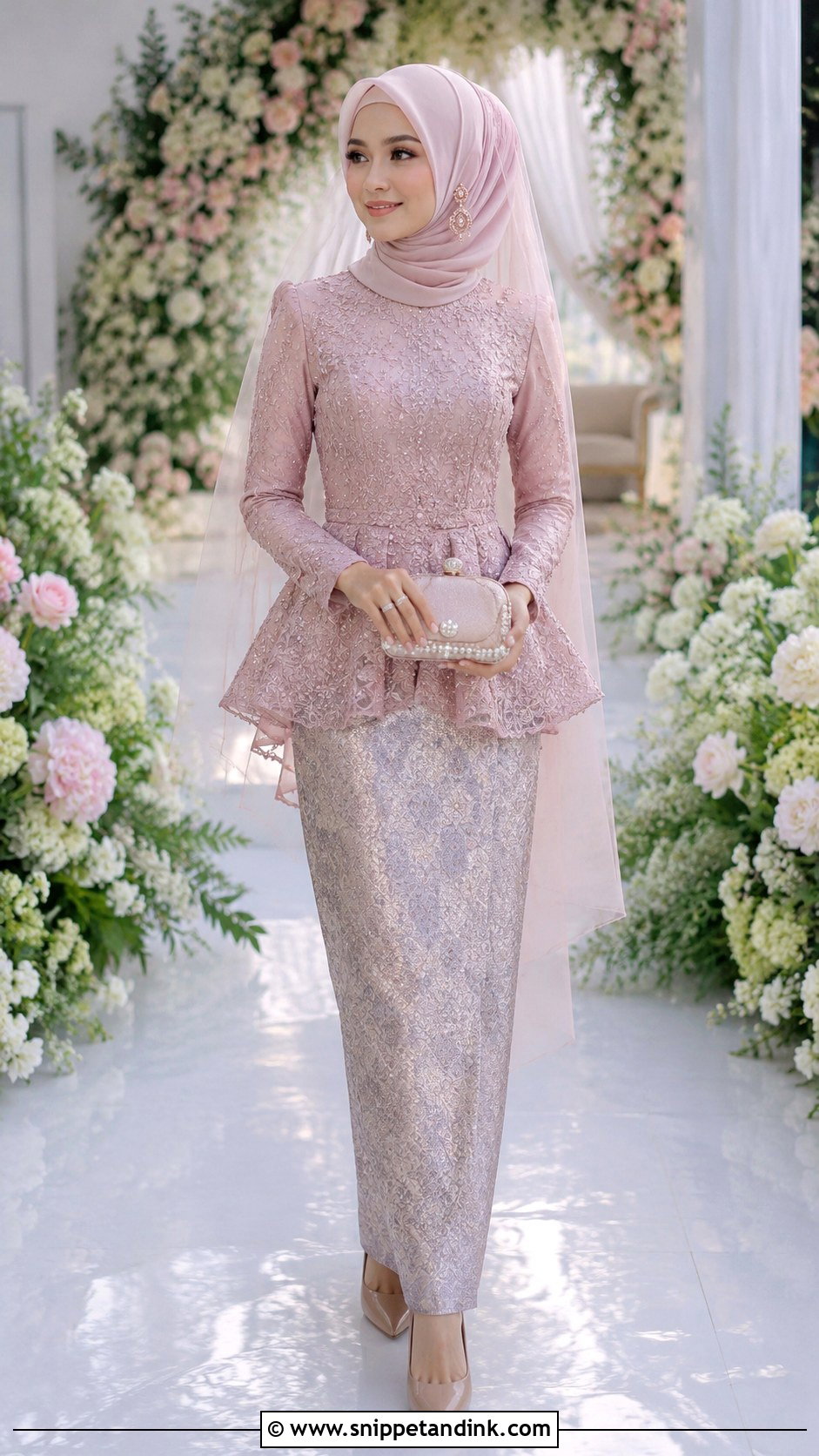
Pink songket stays formal as long as the metallic thread is chosen carefully. Champagne or silver thread sits more softly on blush or dusty rose than bright yellow gold, which can look brassy against pink. A baju kurung moden with a shaped bodice, a light peplum and a straight woven skirt is the cut I’d start from. A tonal hijab, sheer shoulder veil or smooth low bun keeps the colour story together, with nude pointed heels, a pearl-trimmed clutch, rose-gold earrings and a narrow bracelet. Keep embroidery to the neck and cuffs. Pink and songket already draw the eye, and a third focal point is one too many.
7. Emerald Green Songket Wedding Dress
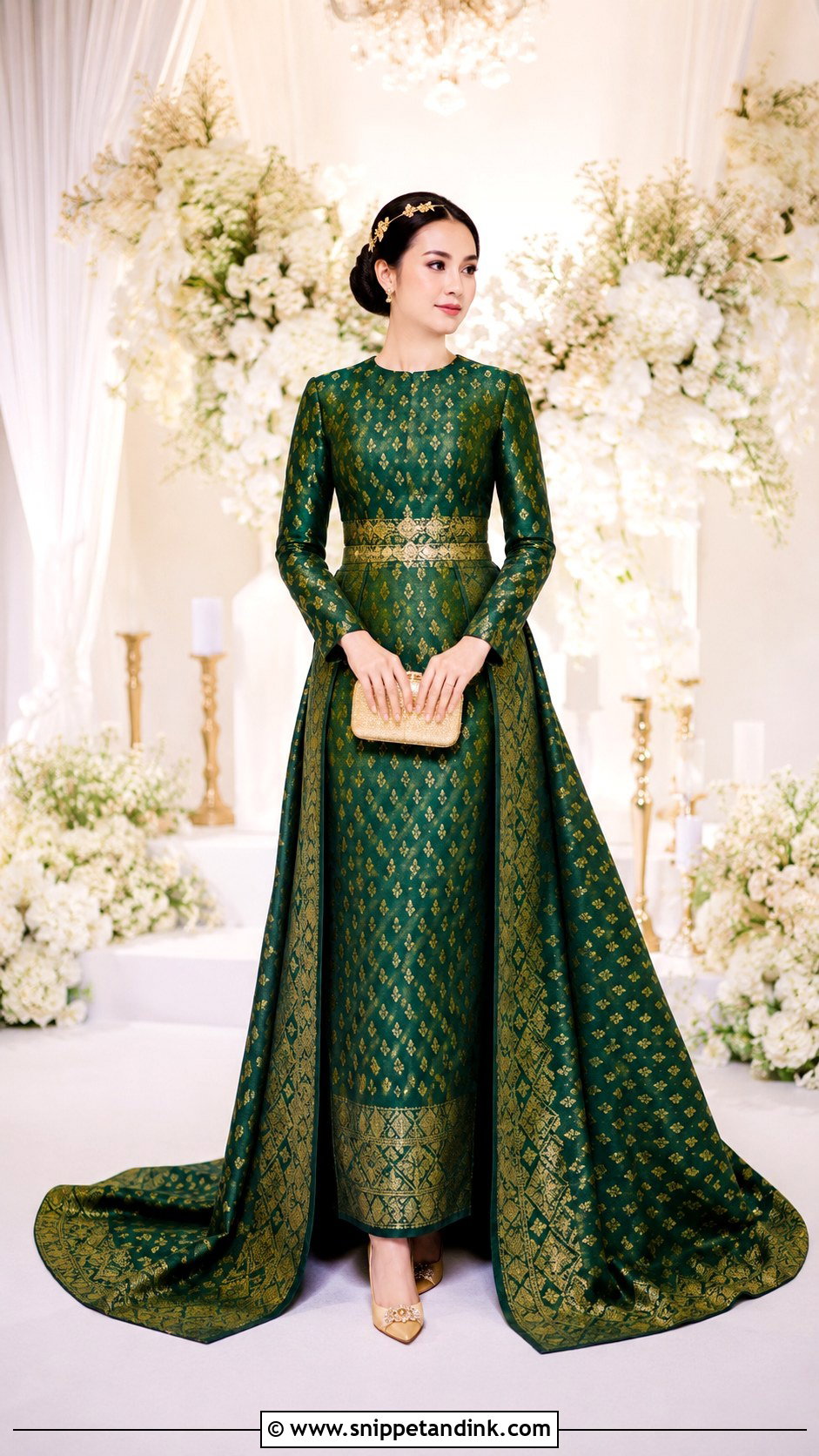
Emerald is the ground colour that makes gold motifs glow hardest. An A-line gown is the gentlest way to wear such a strong shade, since the fitted bodice balances the fuller skirt. Long sleeves, a high round neck and a defined waistband give it a polished outline, and a detachable emerald train with a gold woven border brings ceremony for the entrance only. Gold pumps, a structured metallic clutch and emerald earrings suit it. Pair it with a plain satin hijab in matching green; a patterned scarf next to patterned songket fights. Without a head covering, a smooth low bun and a minimal gold comb work well.
8. Maroon Songket Wedding Dress With Detachable Train
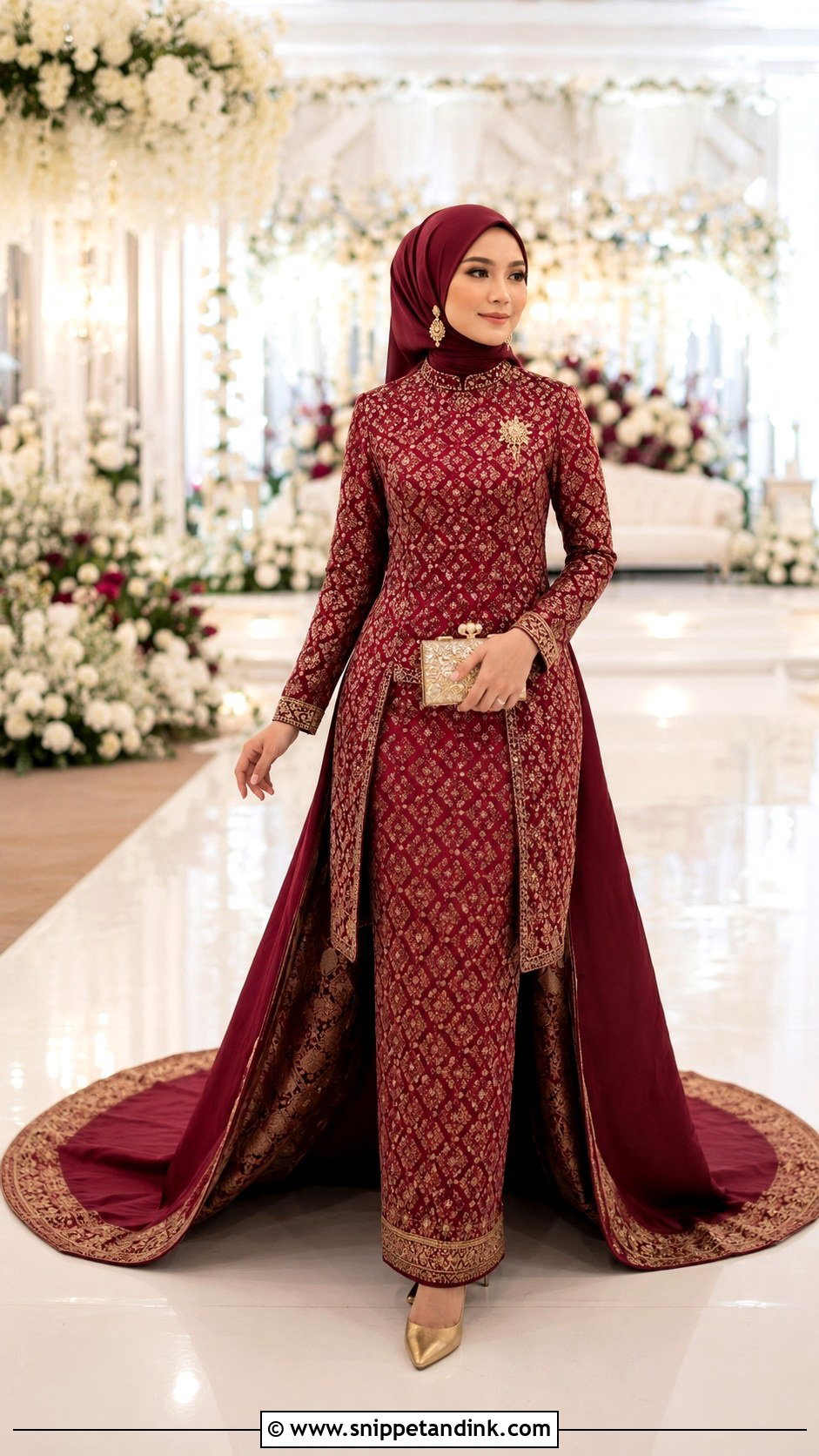
Maroon is richer and calmer than bright bridal red, and it hides the slight unevenness of handwoven cloth better than pale shades do. I’d build it as a two-piece, a long fitted top over a straight skirt or wide-leg trousers, with a plain-fabric train attached at the waist and finished in a maroon-and-gold border. Take the train off after portraits and you can move freely. Gold pointed heels, a small box clutch and refined drops suit it, with a matching maroon hijab or sleek bun. Pick one statement piece only, such as a belt, brooch or headpiece; this shade plus several heavy accessories quickly looks costume-like.
9. Silver Songket Column Wedding Dress
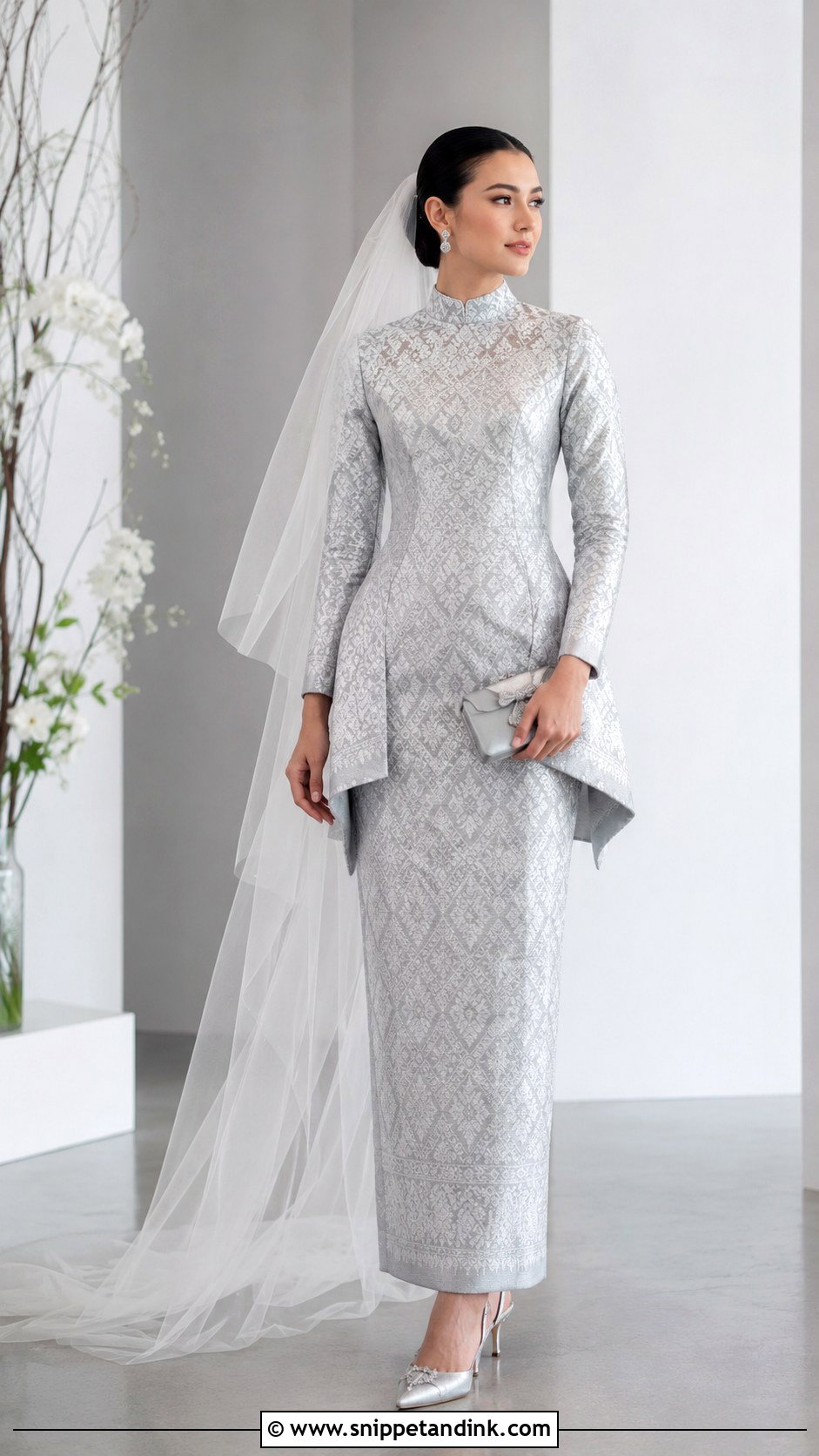
Silver songket on a pale grey, pearl or icy blue ground is the coolest, most understated version here. The column should skim the body and be shaped only at the waist, with a back vent, because woven metallic cloth doesn’t stretch at all. A high neck and slim sleeves keep it refined, and a narrow overskirt can add some volume for the ceremony. Keep every accessory in the same cool family: silver slingbacks, crystal earrings, a satin clutch and a plain tulle veil. Mixing in warm gold jewellery is the most common slip I see with this palette, and it makes the silver look grey.
10. Songket Princess Wedding Gown
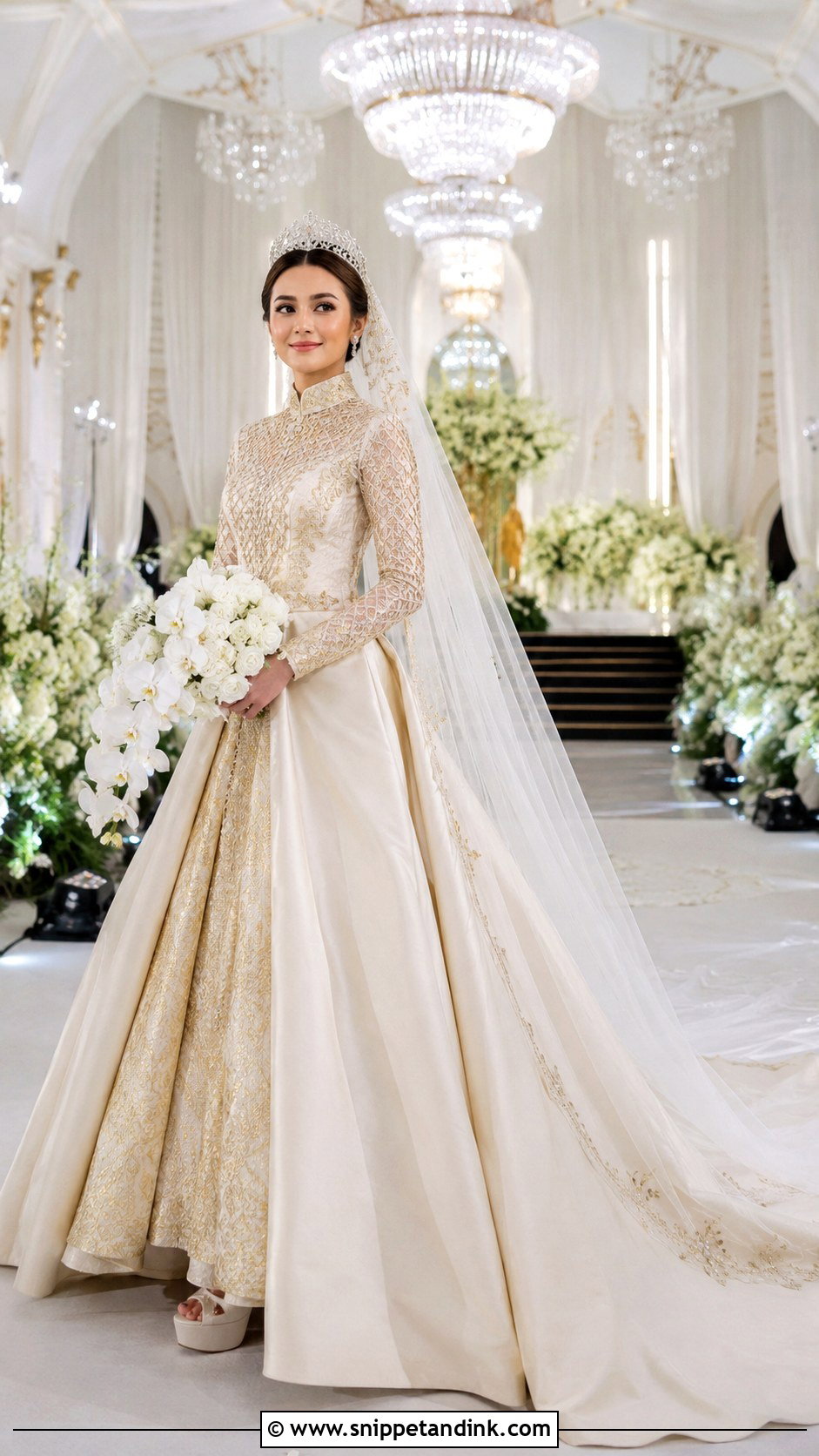
A princess gown made entirely of songket would weigh a great deal and barely move. The trick is a structured corset-style bodice covered in placed motifs, with a full plain skirt carrying songket inserts, a border or one ornate central panel. That keeps the volume while the skirt still swings. Long sleeves or a modest illusion neck balance the size of the skirt. Hide comfortable platform heels under the hem, add a jewelled tiara and a sheer veil longer than the train, and skip the necklace if the bodice is busy. Have a pageboy or bridesmaid ready to lift the train on stairs.
11. Songket Peplum Wedding Dress
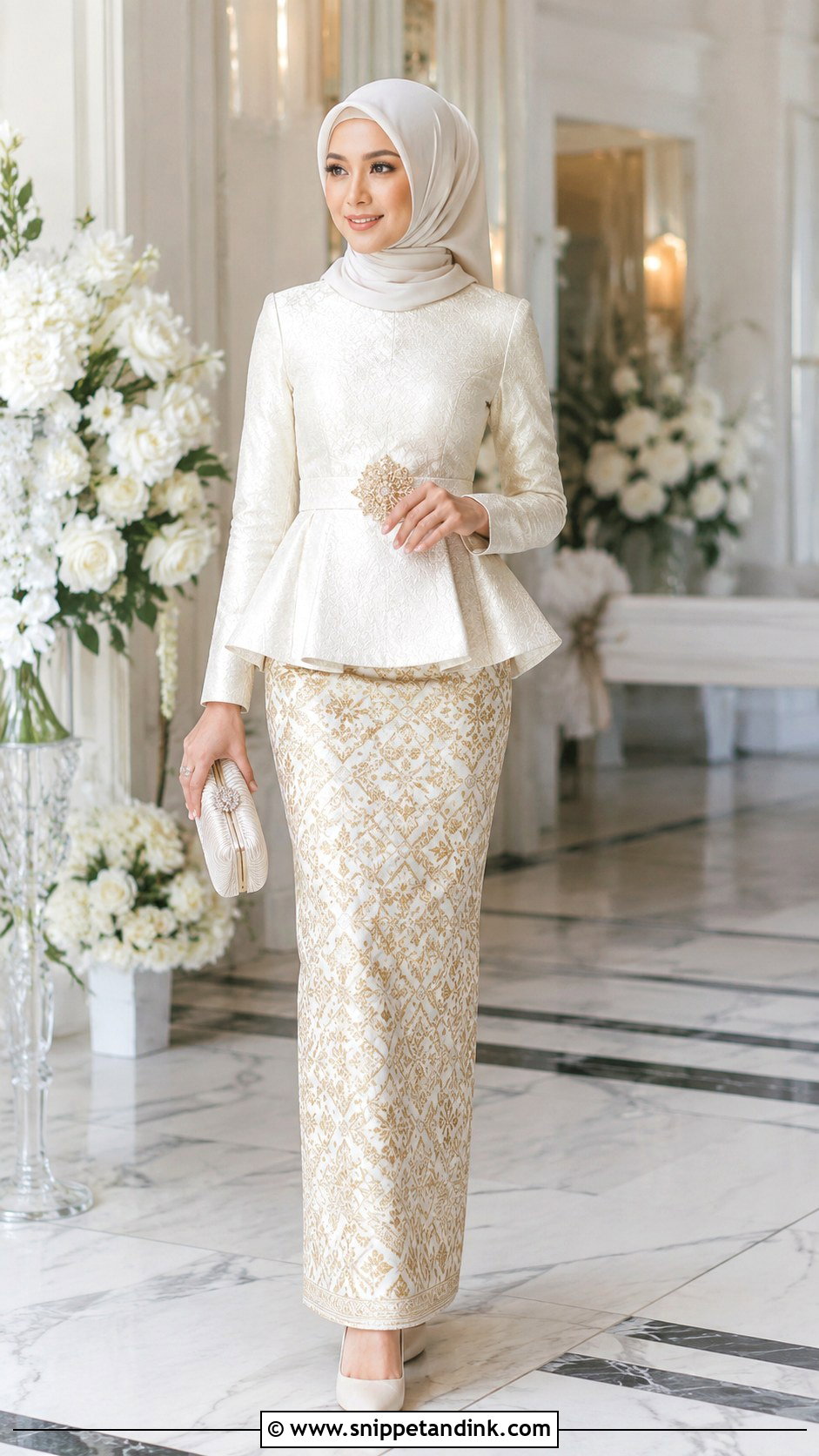
Peplum suits songket because the cloth is crisp enough to hold a clean flare. Start the peplum at the natural waist on a fitted long-sleeve top, and keep it narrow; heavy songket in a wide peplum stands out like a shelf. A straight ankle- or floor-length songket skirt balances it. Ivory with gold weaving is the classic bridal version, while navy, plum or forest green suits a formal reception. Pointed pumps, a structured clutch and one brooch at the waist are enough. A hijab that matches the plain part of the top, not the woven part, keeps the face calm.
12. Songket Wedding Dress With Puff Sleeves
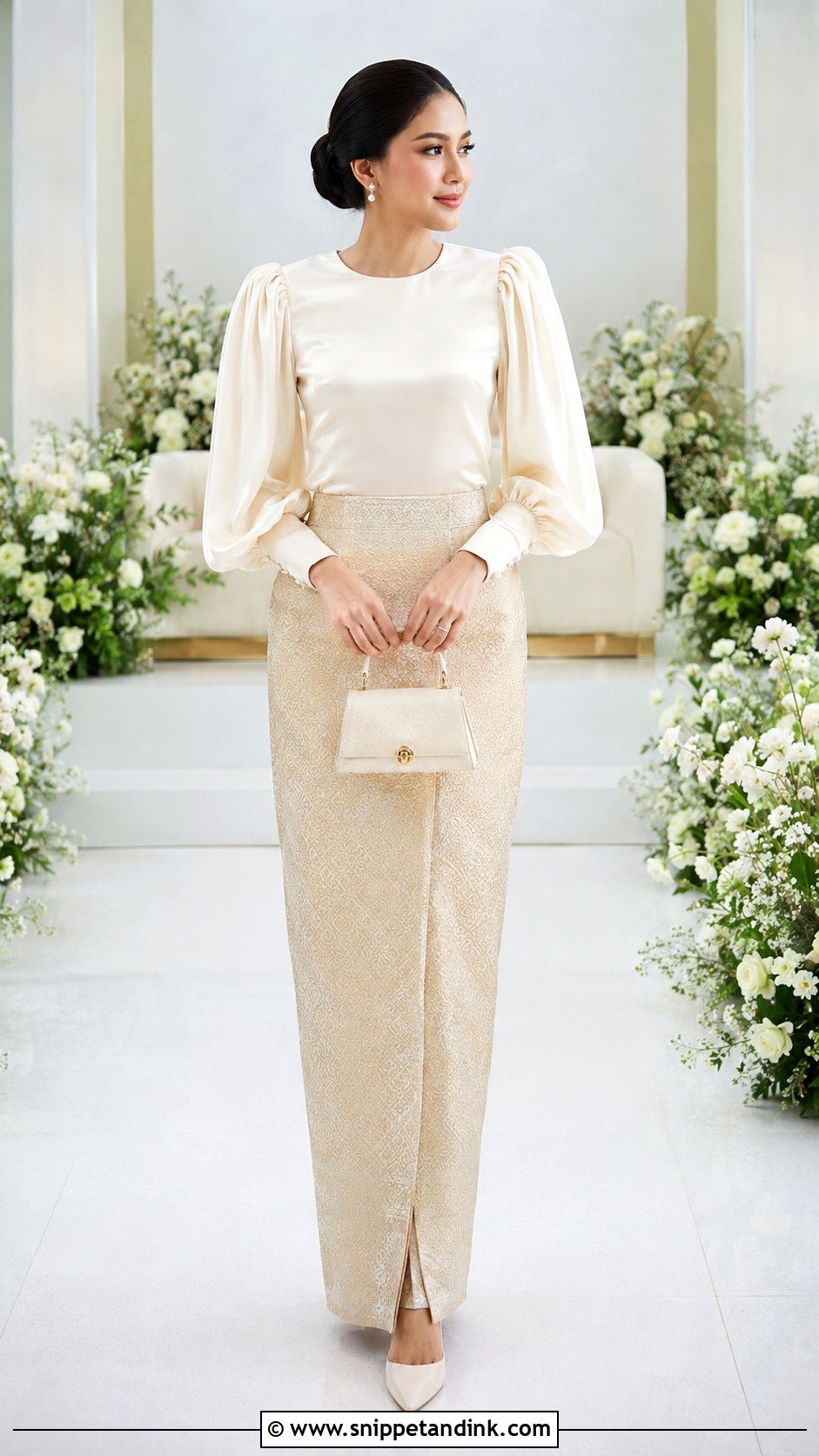
Puff sleeves add personality to a songket bridal outfit without more embellishment. I’d gather them softly at the shoulder and taper them into fitted cuffs on a streamlined gown or baju kurung moden. Make the sleeves and bodice in plain satin and keep songket for the skirt. Woven puff sleeves are too stiff to gather well and end up boxy. Ivory, pale gold and muted sage all suit the shape. Closed-toe heels, pearl earrings and a compact bag complete it, and a low bun or neatly wrapped hijab protects the shoulder line. Keep the veil narrow so it doesn’t compete with the sleeves.
13. Songket Wedding Dress With Overskirt
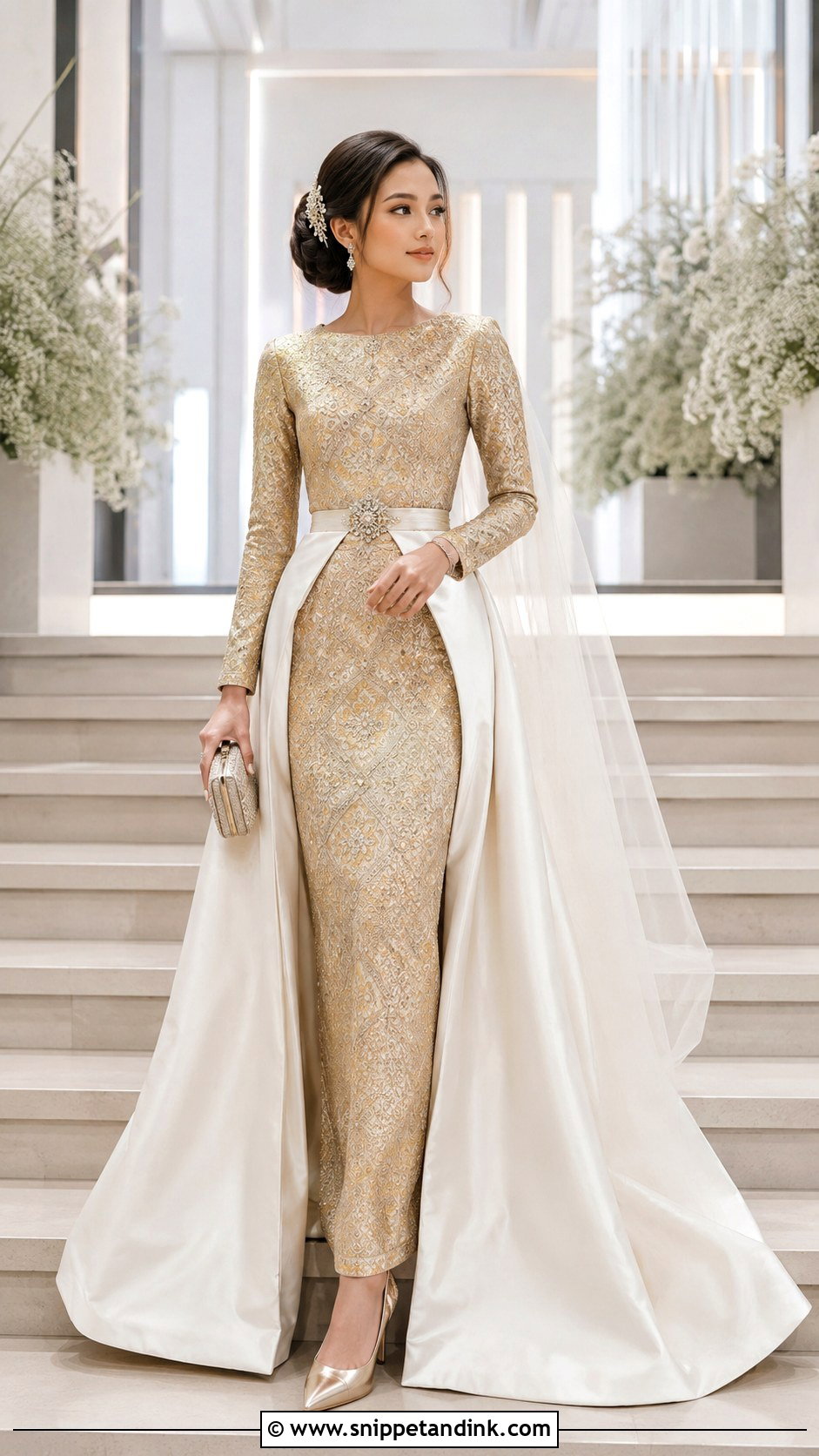
An overskirt gives you two looks from one outfit. Underneath, a fitted column or mermaid dress with woven panels at the bodice and hem; on top, a removable full skirt in plain satin, organza or lightly patterned songket, hooked at the waist. Wear both for the akad and formal portraits, then unhook the overskirt for the reception. Ask your tailor to stitch a flat waistband over the hooks so there’s no visible ridge once it’s off. Metallic pumps, a structured clutch and fine drops suit both looks, with a long veil first and a jewelled comb after.
14. Navy Blue Songket Wedding Dress
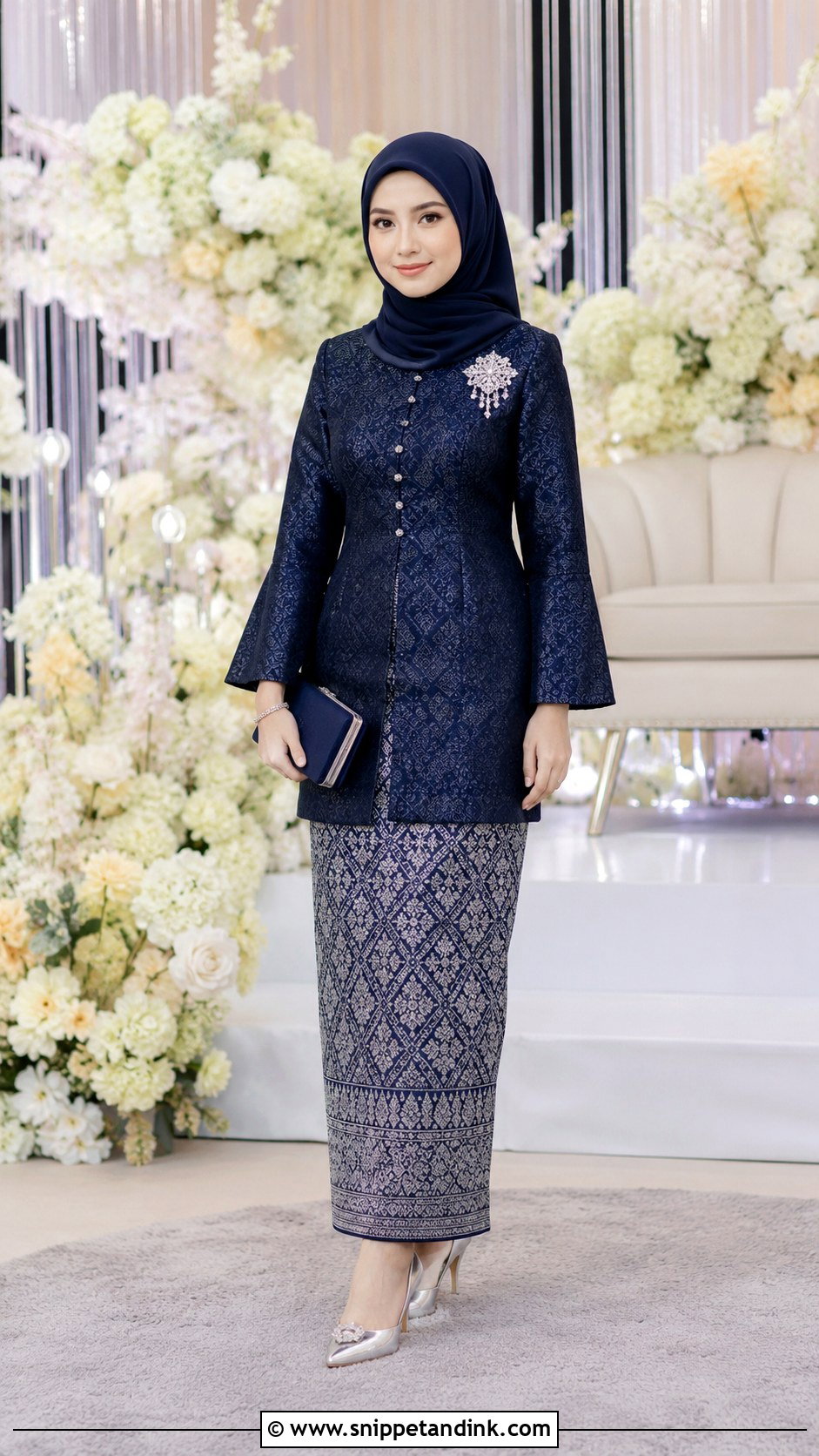
Navy gives silver or antique-gold weaving a composed, rich base, and it suits an evening reception where white or pastel feels too quiet. A modern baju kurung with a structured long top, slightly flared cuffs and a straight skirt with a strong border is my first choice. An A-line gown with plain navy panels breaking up the pattern also works. Silver heels cool it down; muted gold pumps warm it up. Add a small navy clutch, slim earrings and one jewelled brooch, with a plain matching hijab or sleek pulled-back hair. Navy holds its depth in photos against pale décor and flowers.

15. Songket Wedding Dress With Long Jacket
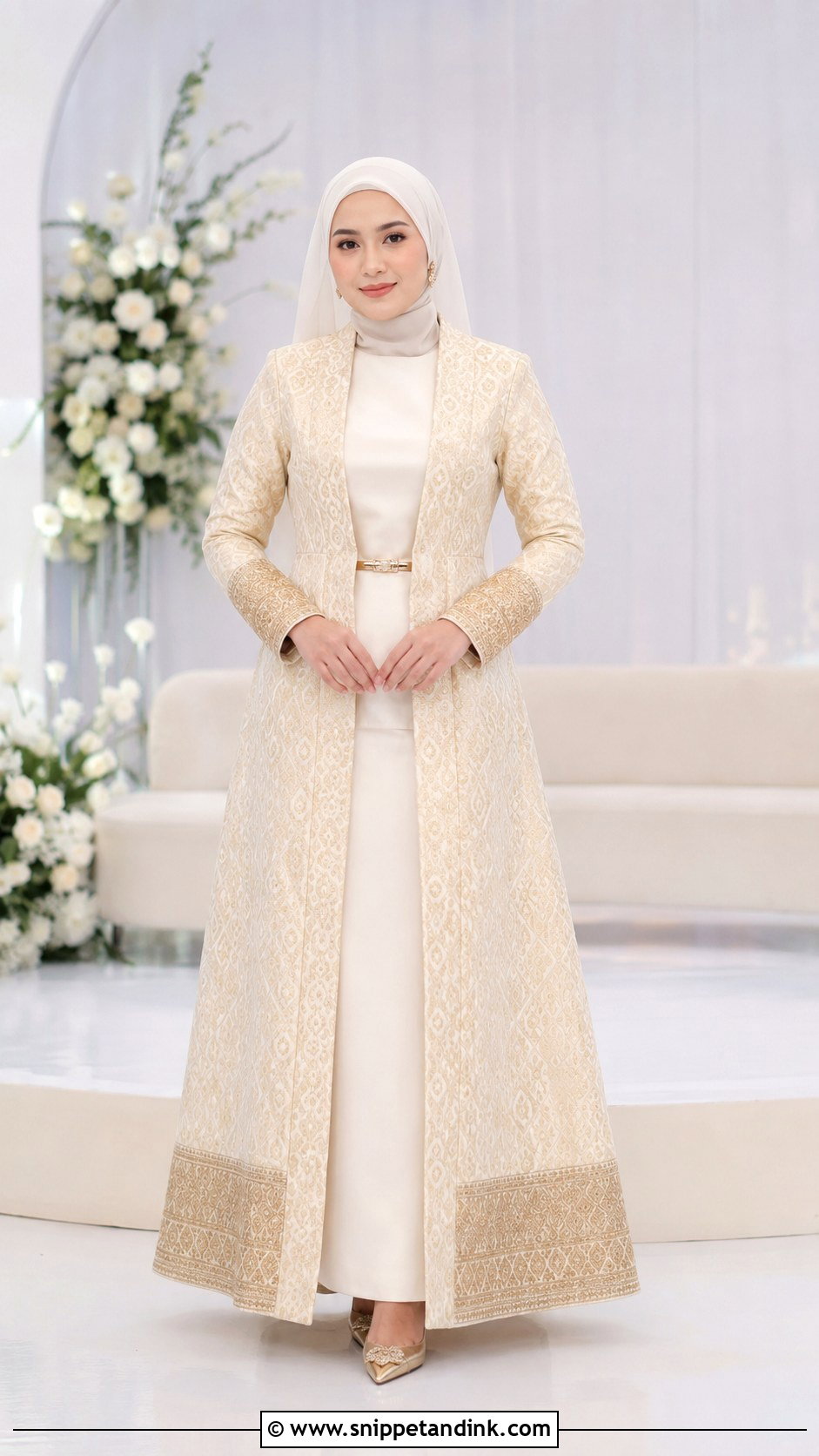
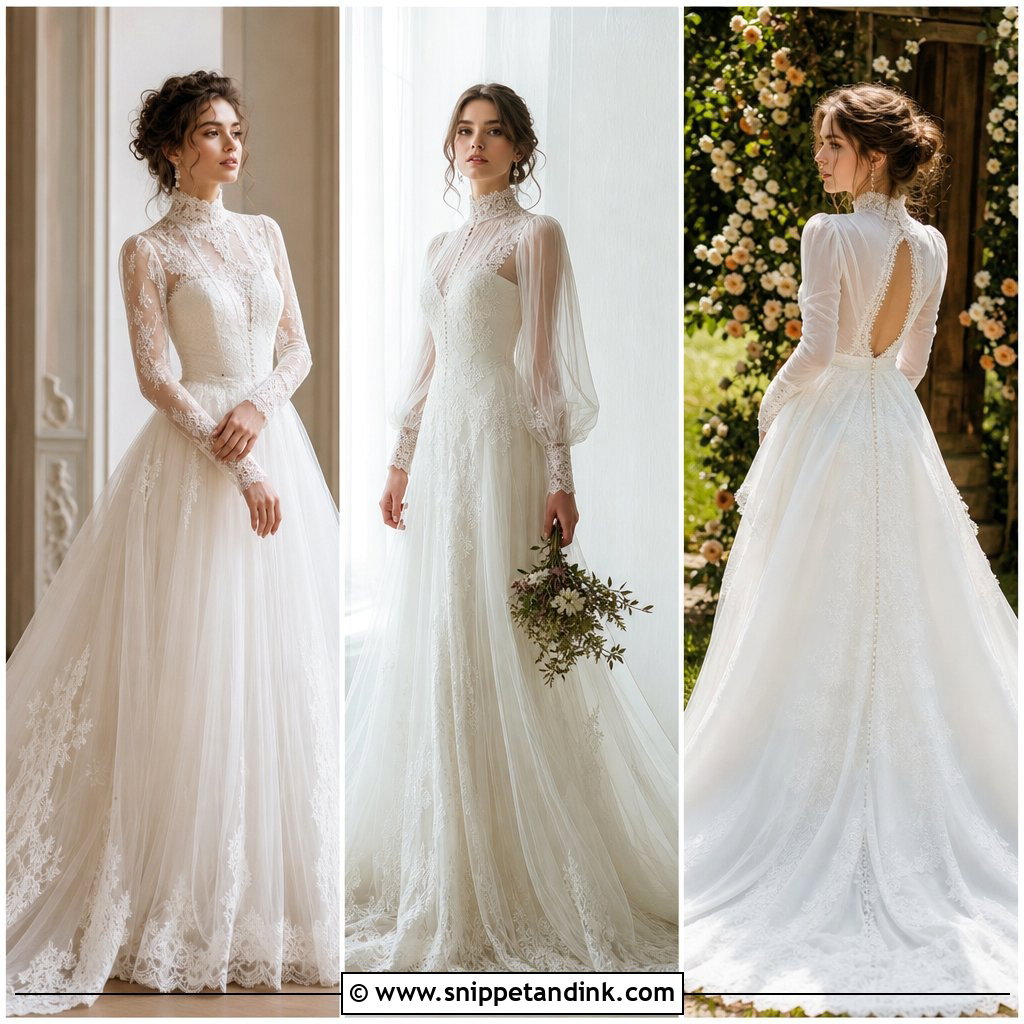
A long open-front jacket over a simple fitted gown or a top-and-skirt set adds coverage and a tailored line. The jacket can be lightly patterned songket all over or carry woven panels on the cuffs, collar and hem; whichever carries the motif, keep the other layer plain. Pointed heels, a slim metallic belt and small earrings are enough. It sits naturally with a smooth hijab, as both form long vertical lines. Knee length is easier to move in; floor length feels more ceremonial. Line the jacket fully in a slippery fabric so it slides off cleanly after photos instead of dragging on the gown underneath.
16. Minimalist Songket Wedding Dress
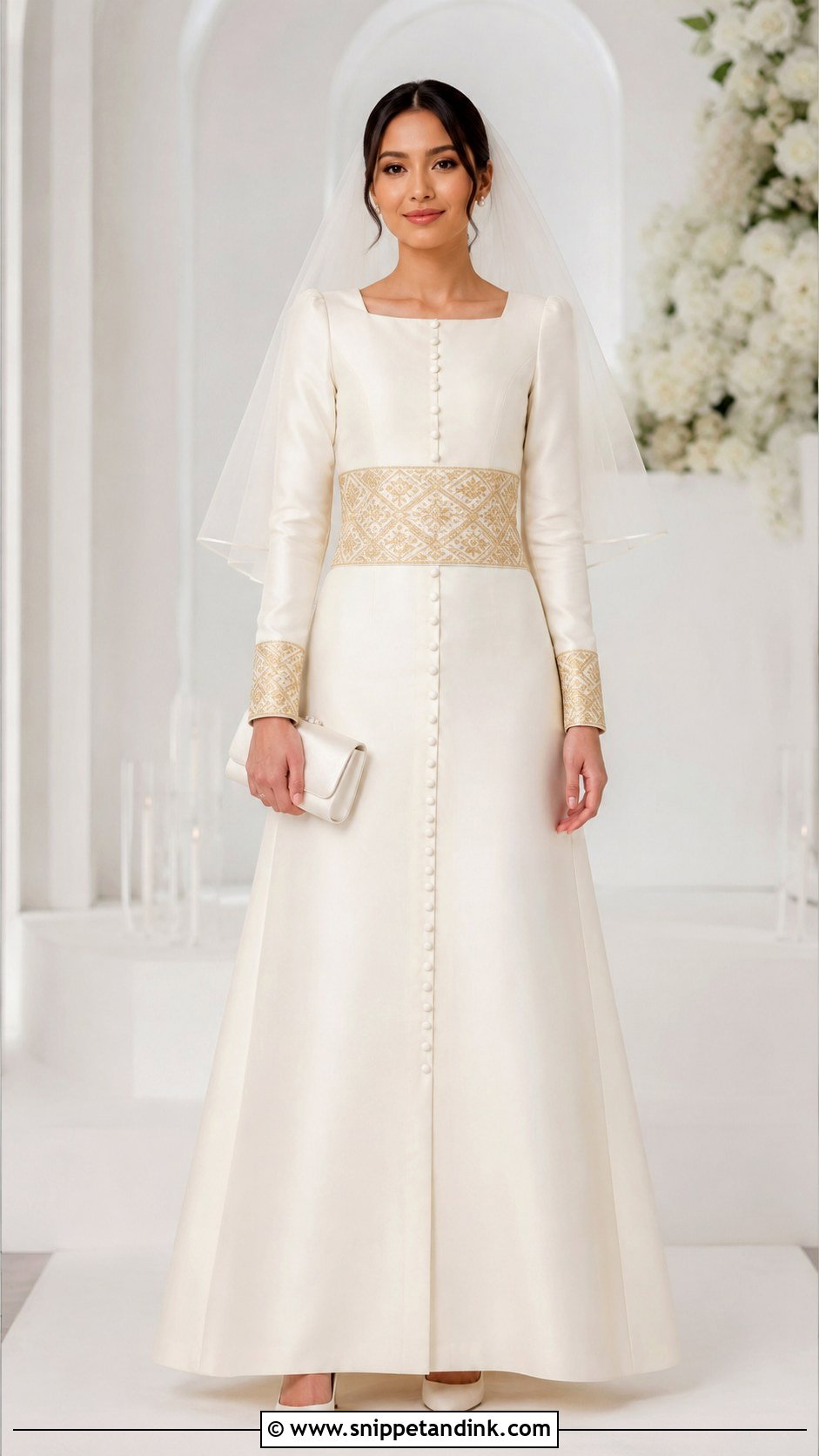
For a minimalist bride, I’d let songket appear in only one or two places: the waist, the cuffs, side panels or the lower hem of a clean ivory sheath or A-line. A square neck, covered buttons and precise seams make the rest feel modern. With so little weaving, each piece needs space around it, so pair plain ivory pumps, pearl studs, a small satin clutch and a smooth shoulder-length veil or a hijab without crystals. It suits an intimate ceremony or a contemporary venue. Finish with natural makeup, a simple bouquet and one sentimental accessory instead of a full jewellery set.
17. Songket Two-Piece Wedding Dress
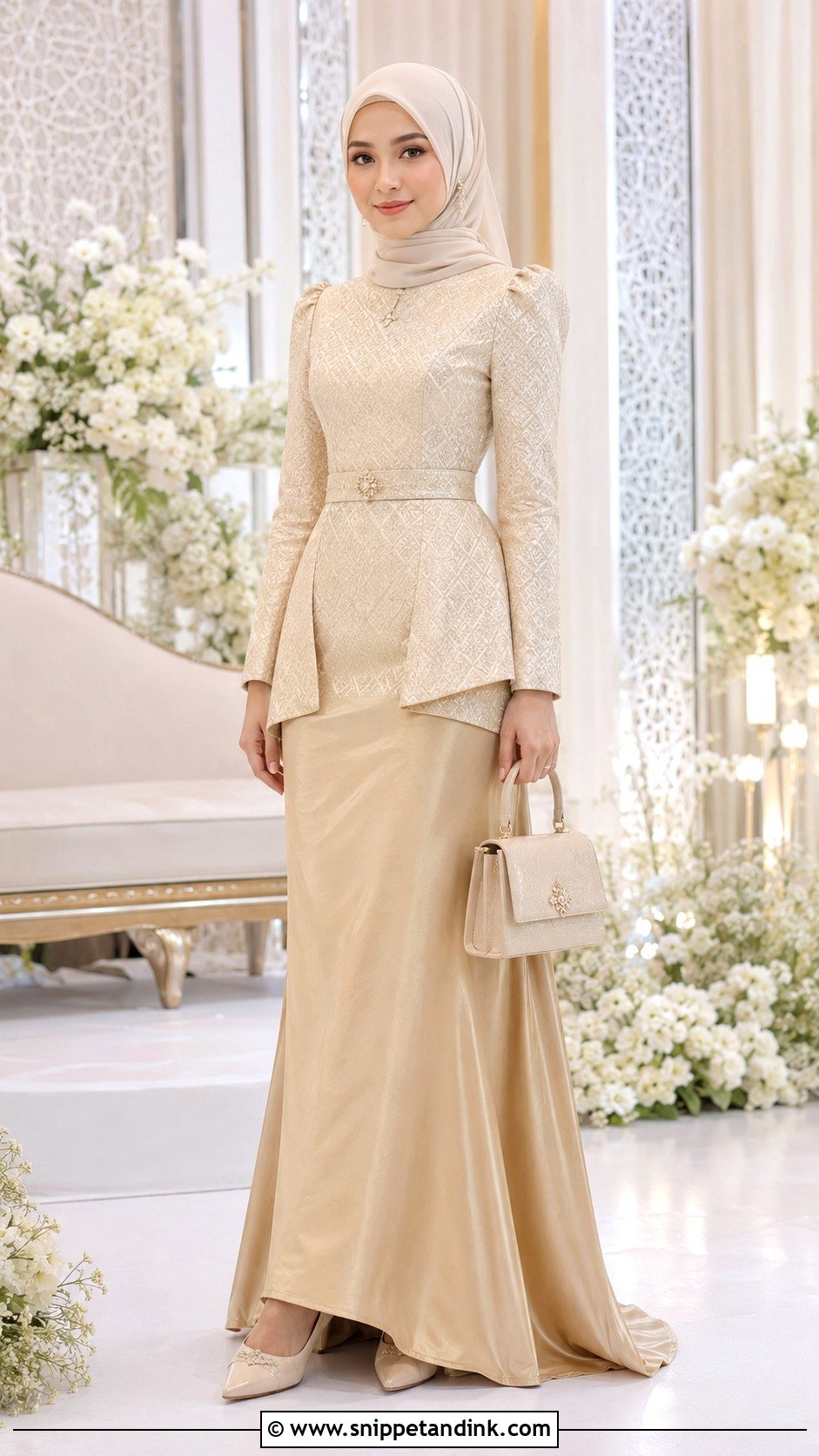
A coordinated two-piece outfit lets you decide where the weaving goes. A structured songket top over a plain floor-length skirt puts the focus near your face; a minimal bodice over a richly woven skirt does the opposite. A cropped top layered over a fitted inner piece gives full coverage, and a longer tunic looks more traditional. Cream with gold, teal with silver and burgundy with antique gold are reliable pairings. Pointed pumps, a waist belt, a small top-handle bag and a matching hijab or low bun hold it together. Check both fabrics side by side in daylight and under warm indoor light, because dyed satin and woven songket rarely match in both.
18. Songket Wedding Dress With Wide-Leg Pants
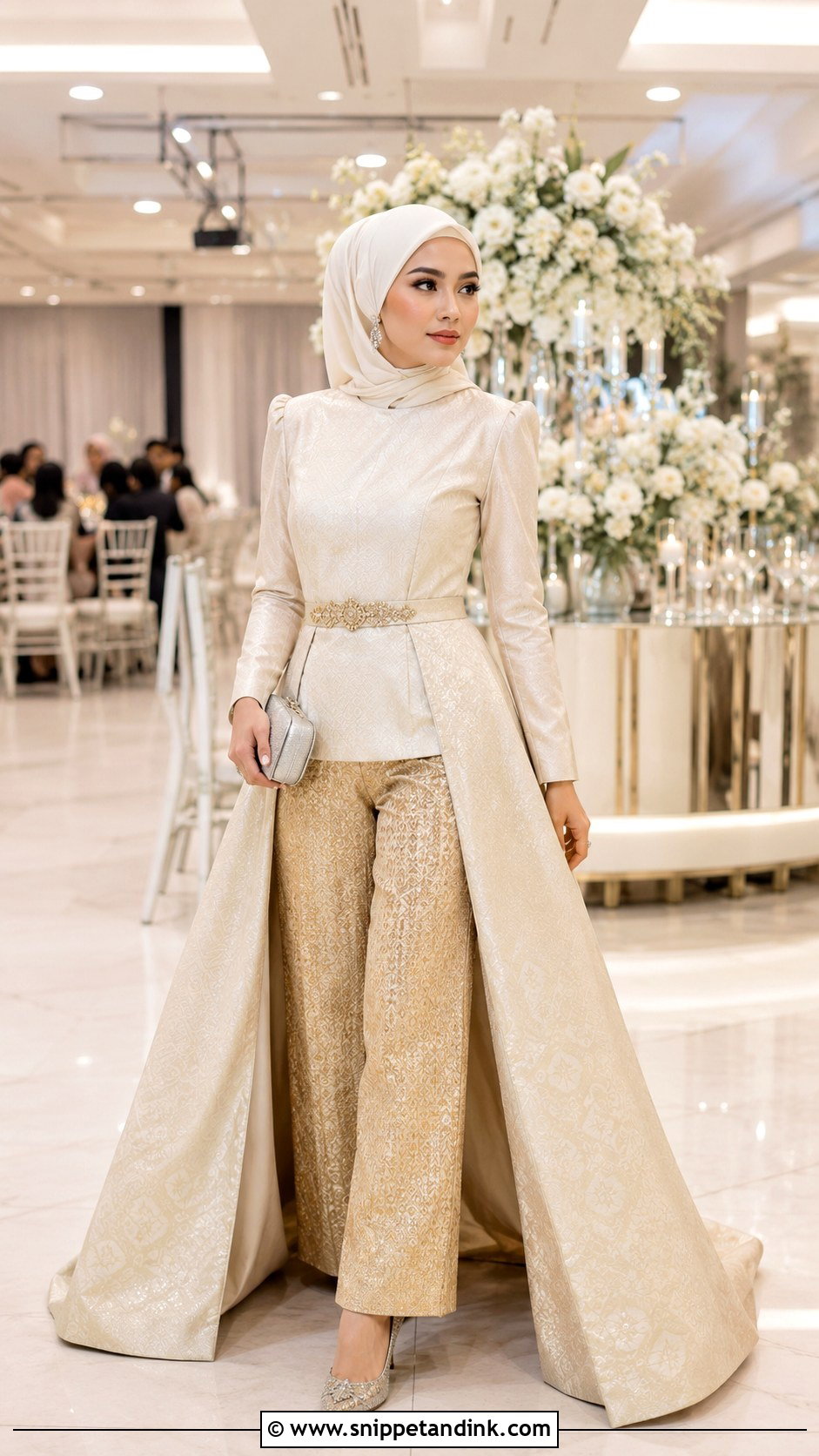
Wide-leg songket trousers are the most comfortable bridal option here, and they’re ideal for a day with lots of greeting and moving between venues. Wear high-waisted woven trousers under a long fitted tunic, an asymmetric top or a short structured jacket. The hem should just brush the top of metallic heels, and the leg should be wide enough to move without looking oversized. A detachable side train adds bridal drama. Finish with a slim belt, drops and a compact clutch. If you wear a hijab, match it to the plain top, not the trouser pattern. Precise fitting at shoulders and waist balances all that fabric below.
19. Black And Gold Songket Wedding Dress
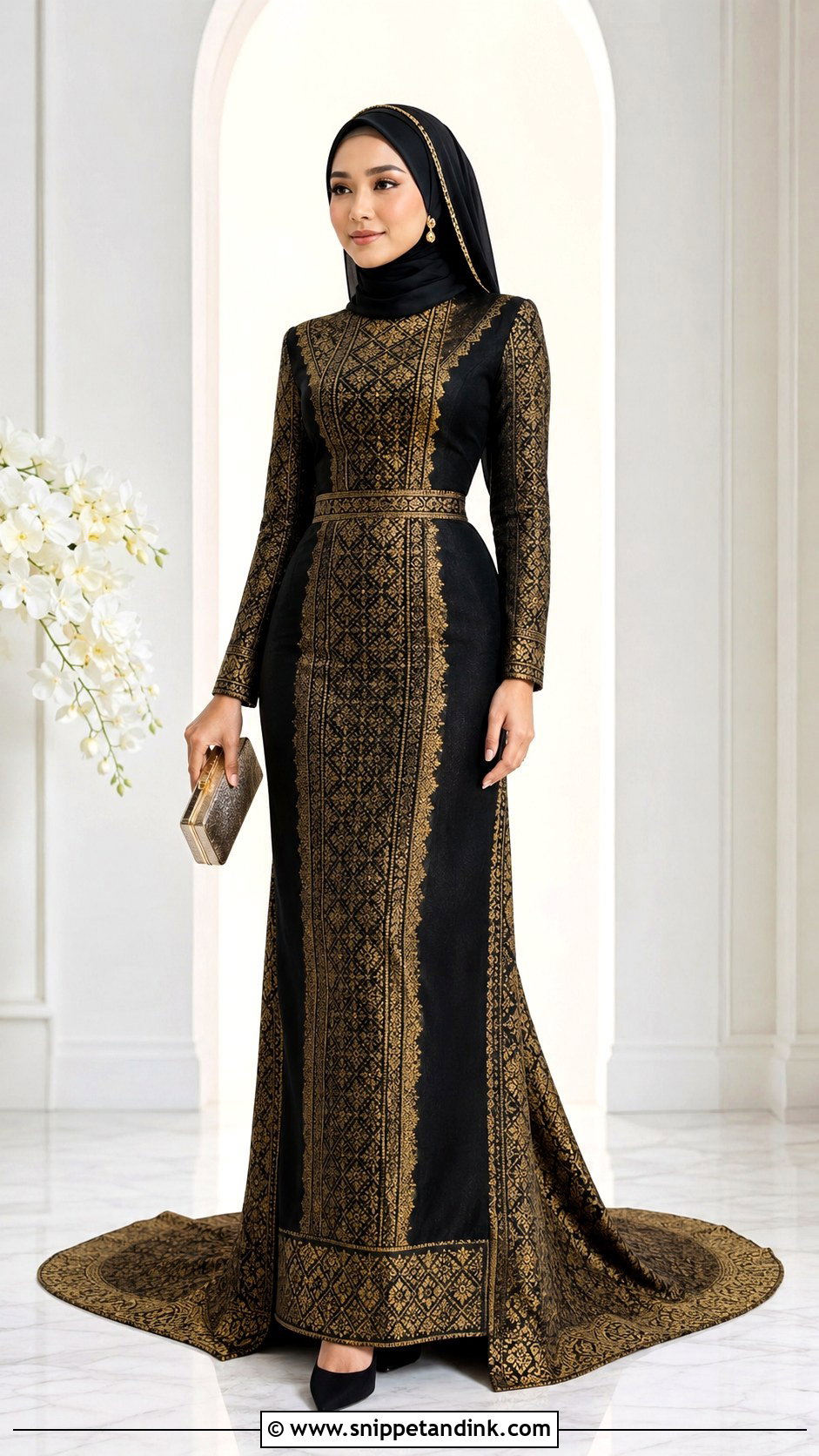
Black and gold songket is bold and very good for evening, but ask both families first, since black carries mourning associations for some relatives. Where it’s welcome, use black as the base and place gold weaving on a fitted bodice, straight skirt, cuffs and train border, with a high neck, long sleeves and a defined waist. Black pumps with small gold hardware, a metallic box clutch and small gold earrings are enough. A black hijab edged in fine gold suits a modest look; otherwise a sculpted bun with one decorative comb. Black loses detail in dim rooms, so plan portraits against a bright background.
20. Champagne Songket A-Line Wedding Dress
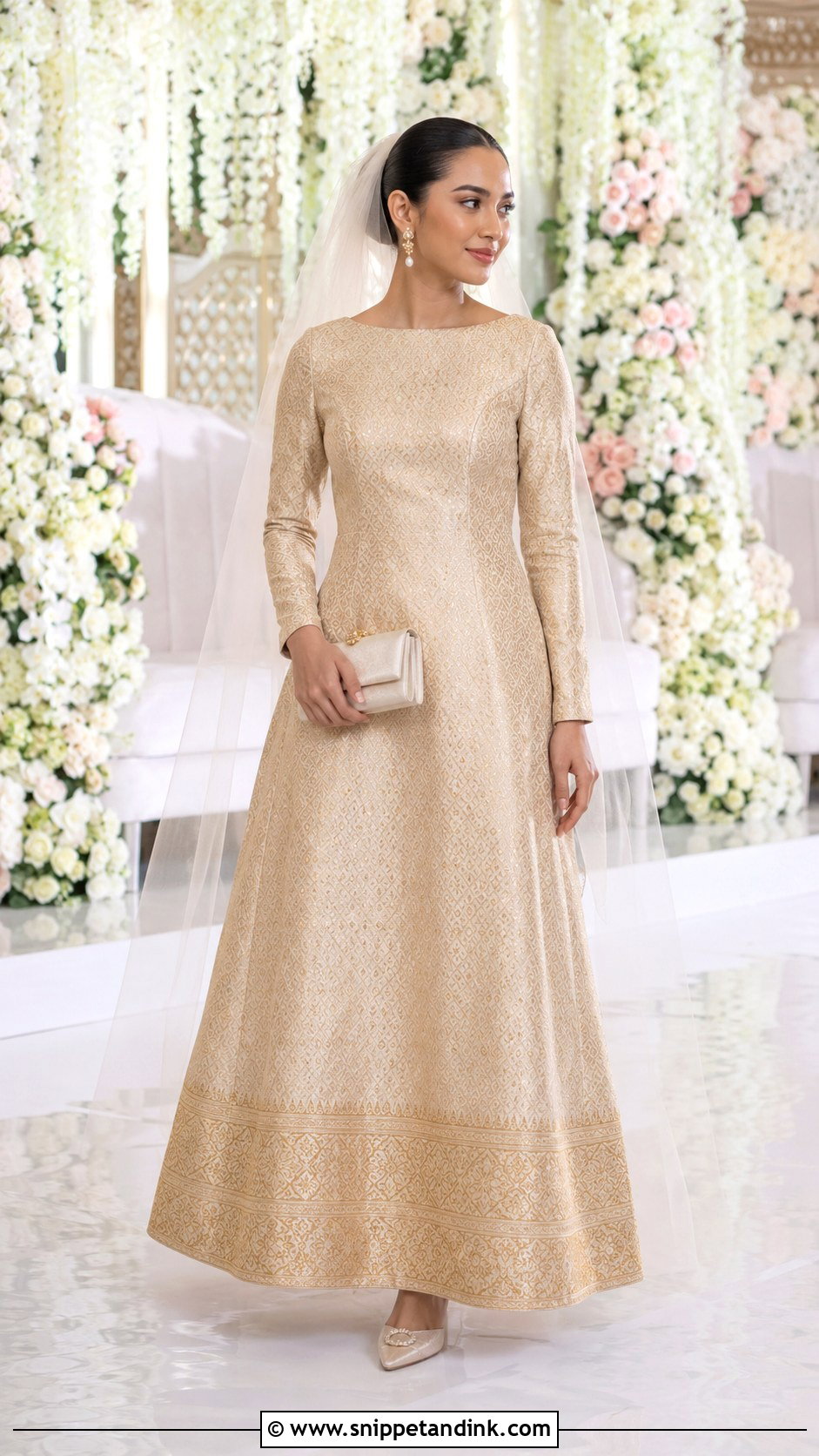
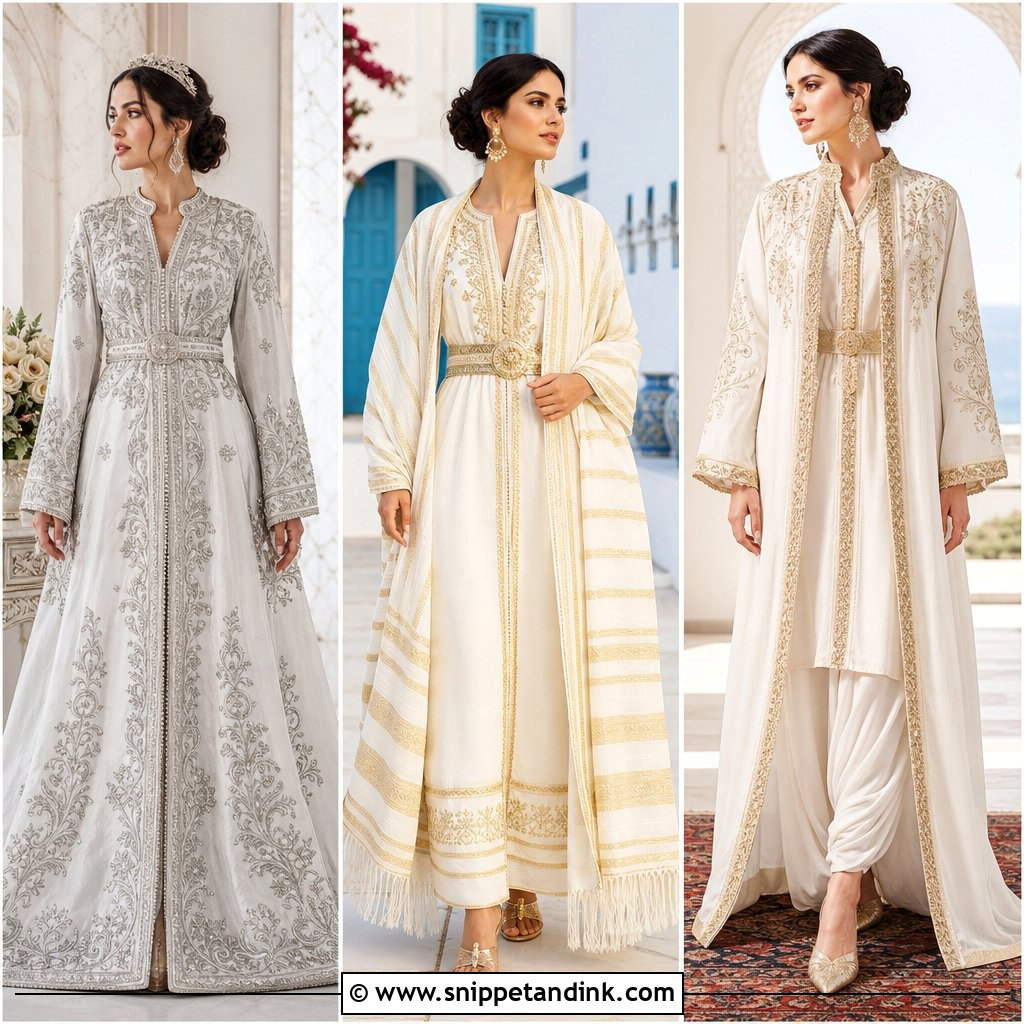
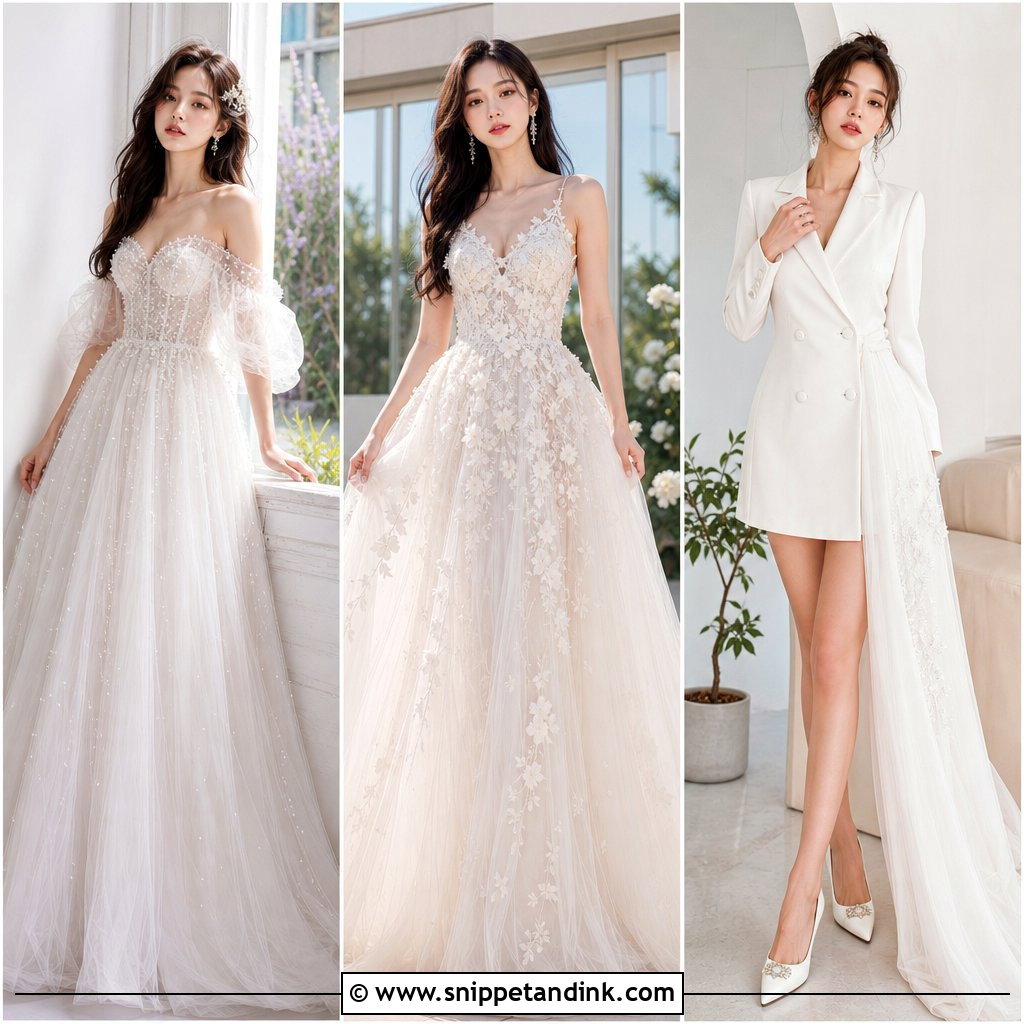
Champagne songket sits between ivory and gold, and it flatters a wide range of skin tones because it’s warm without being yellow. An A-line shape defines the upper body and falls easily over the hips. I’d choose a fitted long-sleeve bodice with a modest V or bateau neck and motifs that grow denser toward the skirt border. Nude or champagne pumps, pearl-and-gold earrings and a structured satin clutch suit it, with a soft ivory veil for gentle contrast. A hijab in matte champagne pinned with a small vintage brooch works well. It moves easily from a daytime akad to an evening reception.
Sewing an Heirloom Songket Into a Modern Dress
Many brides want to wear a songket that belonged to a mother or grandmother. It can be done, but woven cloth frays fast once cut, and the metallic thread can’t be rewoven if a tailor makes a mistake. If the family would rather the piece stay uncut, design the dress around it: wrap it as the skirt, or add it as a detachable sampin or shoulder drape instead of cutting it into panels.
When cutting is agreed, ask the tailor to plan the layout around the decorated end panel so the strongest motif lands at the front hem or centre of the skirt. Inside, a soft full lining stops the floats on the back from catching on jewellery and scratching your skin through a long day.
Rolled, Never Folded: Putting Songket Away Afterwards
- Air the outfit for a day before storing it, so perspiration doesn’t sit in the fibres.
- Roll the woven pieces around a cardboard tube wrapped in acid-free tissue. Folding the same line again and again breaks metallic threads over time.
- Never press directly on the weaving. Steam from a distance, or iron on the reverse through a cotton cloth.
- Keep it away from damp, plastic garment bags and perfume sprays, which all speed up tarnish. A breathable cotton bag in a dry cupboard is best.
- For a stain, go to a cleaner who handles metallic and handwoven textiles, and point out the woven panels before they start.
Woven Gold That Still Lets You Sit Down at the Pelamin
A good songket bridal look respects the cloth and still fits the bride, her comfort and her venue. Baju kurung, kebaya sets, capes, removable trains, trousers and gowns are all honest ways to wear it. Settle the silhouette first, then the colour, the motif scale, how heavy the finished piece will be and how much metallic thread you want near your face. Choose shoes you can stand in and accessories that leave the weaving alone. And book fittings where you sit, kneel and walk in the full outfit, because songket’s stiffness only really shows when you move.
You'll Like These Ideas:


Leave a Reply