
The 1970s never settled on one bridal look, and that’s what makes the decade so much fun to dress from. Boho lace sat alongside prairie gowns, empire waists, bishop sleeves, high collars, crochet and floating chiffon, with some brides going earthy and handmade and others leaning Victorian or quietly glamorous. Most of these shapes were built for movement rather than structure, so they suit gardens, meadows, beaches, courthouses and small receptions especially well. Vintage 70s wedding dress ideas come in every mood, so I’ve gathered 25 below, with notes on fabric, fit and the styling choices that keep each one looking bridal rather than like a costume.
An Original 1970s Gown or a New One Cut in the Style?
Brides often ask me whether they should hunt for a real 70s dress. It can be wonderful, and it’s usually cheaper than a new gown, but an original brings its own checklist.
Sizing runs small
Labels from the decade don’t match modern sizes, and an old size 12 can fit like a modern 6 or 8. Ignore the label and buy by measurements: bust, waist, hip, back length and sleeve length. Check the seam allowances inside, because there is often very little room to let a vintage dress out, while taking one in is usually straightforward.
Condition checks before you pay
- Hold the fabric up to daylight and look for yellowing along the folds, the hem and under the arms.
- Test the zip gently. Metal zips from the period can be stiff, and a seamstress can swap one quite easily if you know in advance.
- Smell it. Storage odors and old perfume can often be cleaned out, but mildew rarely leaves completely.
- Many dresses of the era used polyester, nylon lace and acetate linings. They are tough but warmer than modern fabrics, so think about your season.
If you love the shape but not the condition, a dressmaker can copy an original pattern in new fabric. That gives you the decade without the worry about a fragile seam on the dance floor.
1. Bell Sleeve Lace Wedding Dress
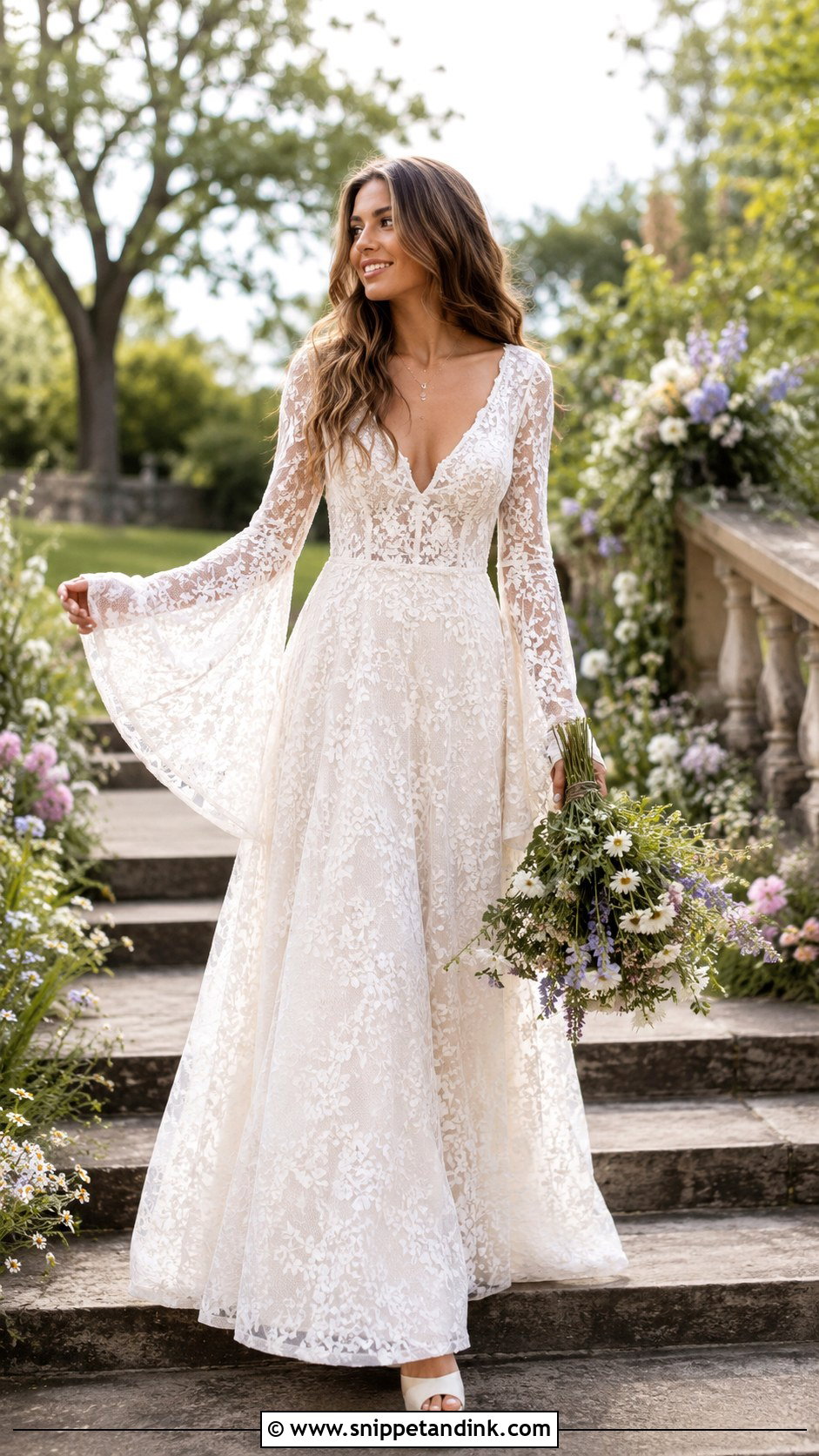
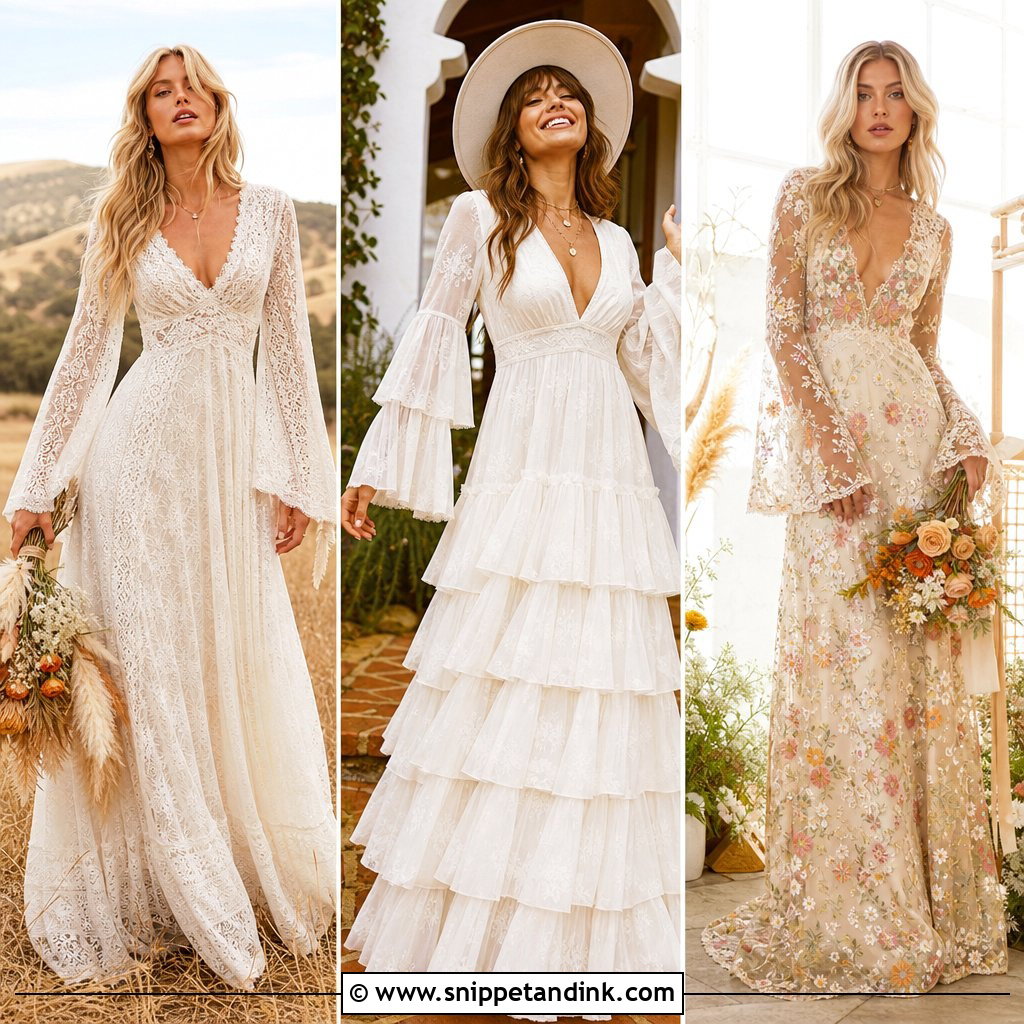
Few details say 1970s faster than a bell sleeve. The sleeve widens from the elbow, so it moves when you do, and lace keeps it soft. I keep the body of the dress simple, an A-line or a sheath, so the sleeves stay the feature. Larger floral lace, scalloped cuffs and a slightly open neckline suit the decade. The practical catch is that a wide lace cuff will trail through cake, candle flames and bouquet stems, so I ask brides to practice eating and signing the register in it. Wear block heels or low platforms, a loose veil, soft waves and a small wildflower bouquet.
2. High Neck Prairie Wedding Dress
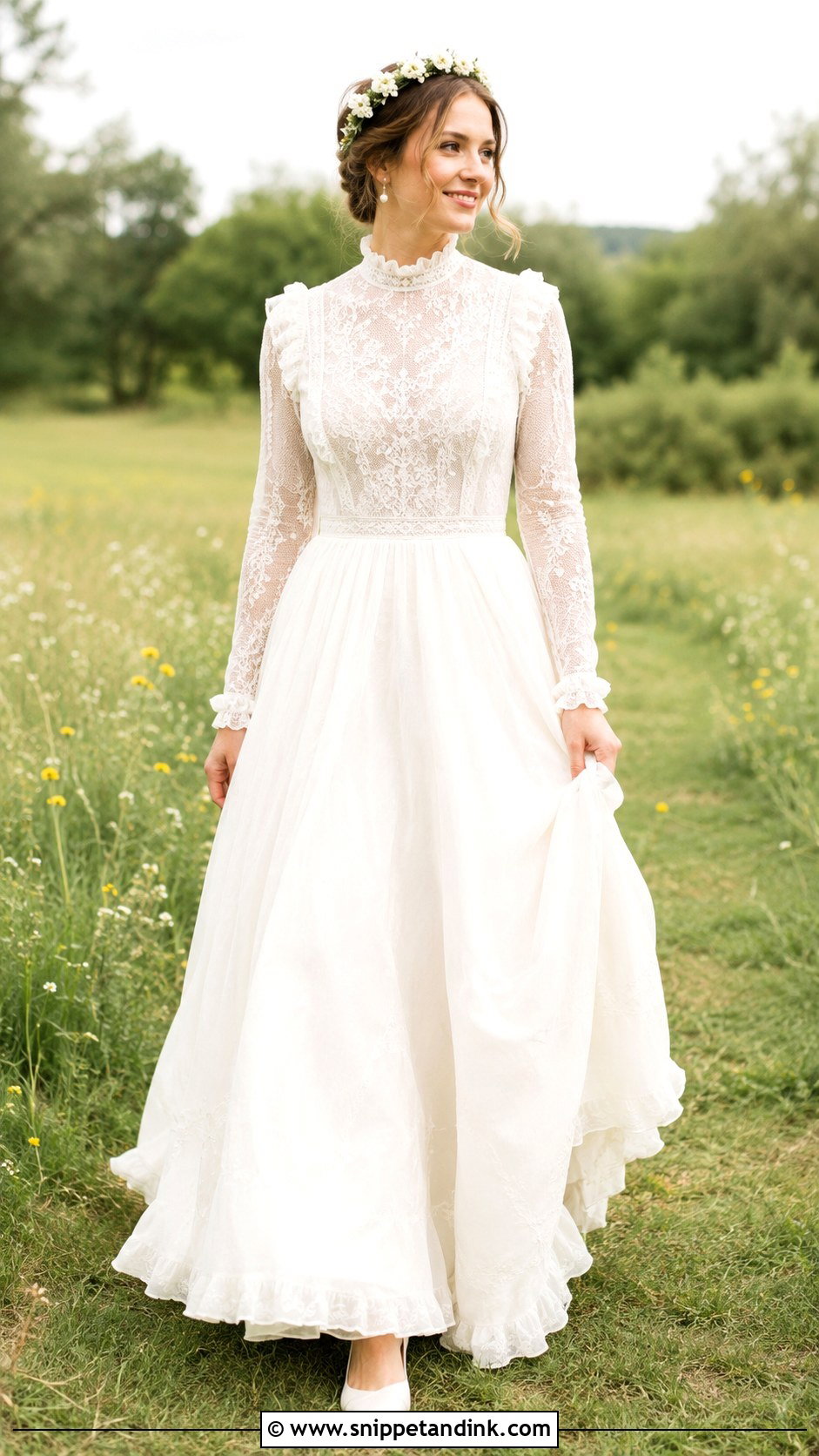
Prairie gowns were everywhere in the late 70s, and the high neck prairie wedding dress remains the most recognizable of them. A fitted bodice, lace trim, long sleeves and a gathered skirt are the essentials, with sheer lace panels or tiny covered buttons around the high neck. Too many ruffles and a calico-style print push it toward costume, so I keep the fabric ivory and plain. Soft leather or satin shoes, pearl drops and a flower crown suit a barn or meadow ceremony. Brides who love the Gunne Sax look usually find their dress here.
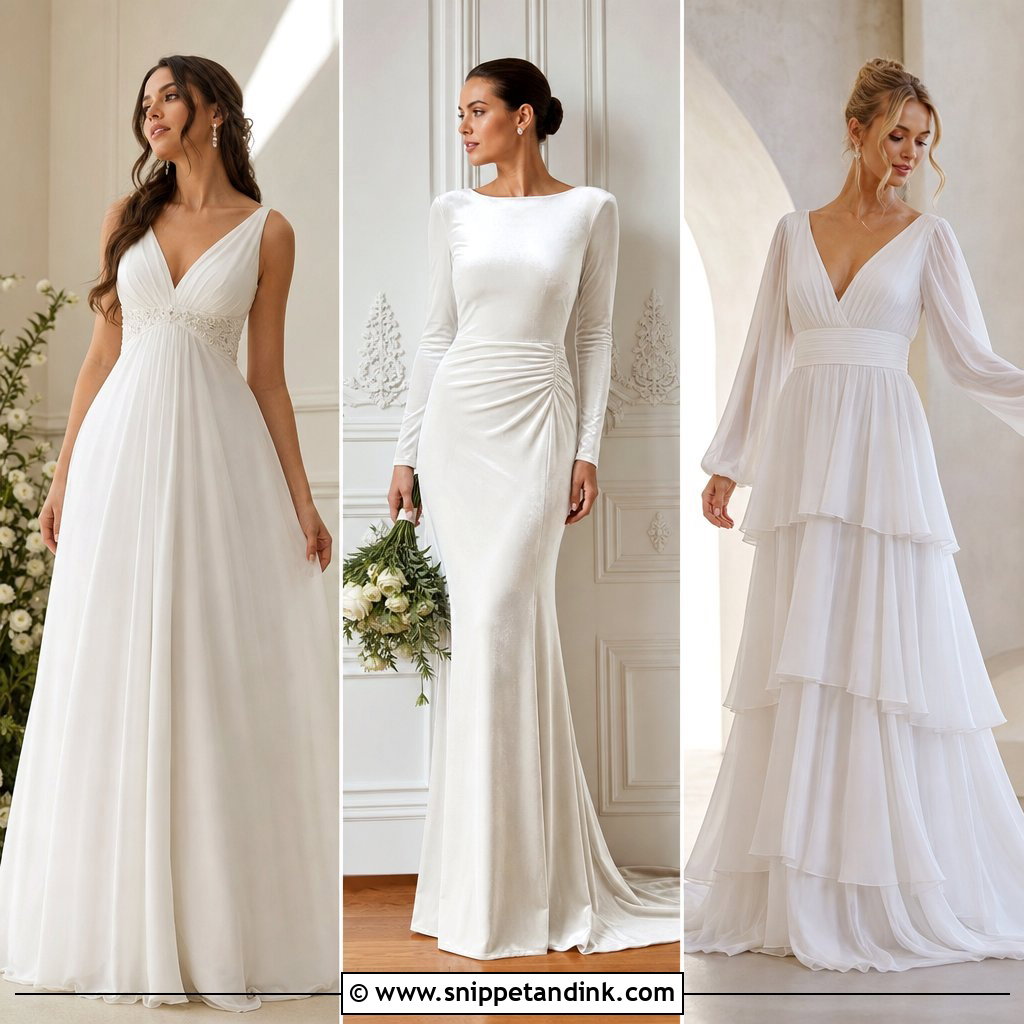
3. Empire Waist Chiffon Wedding Dress
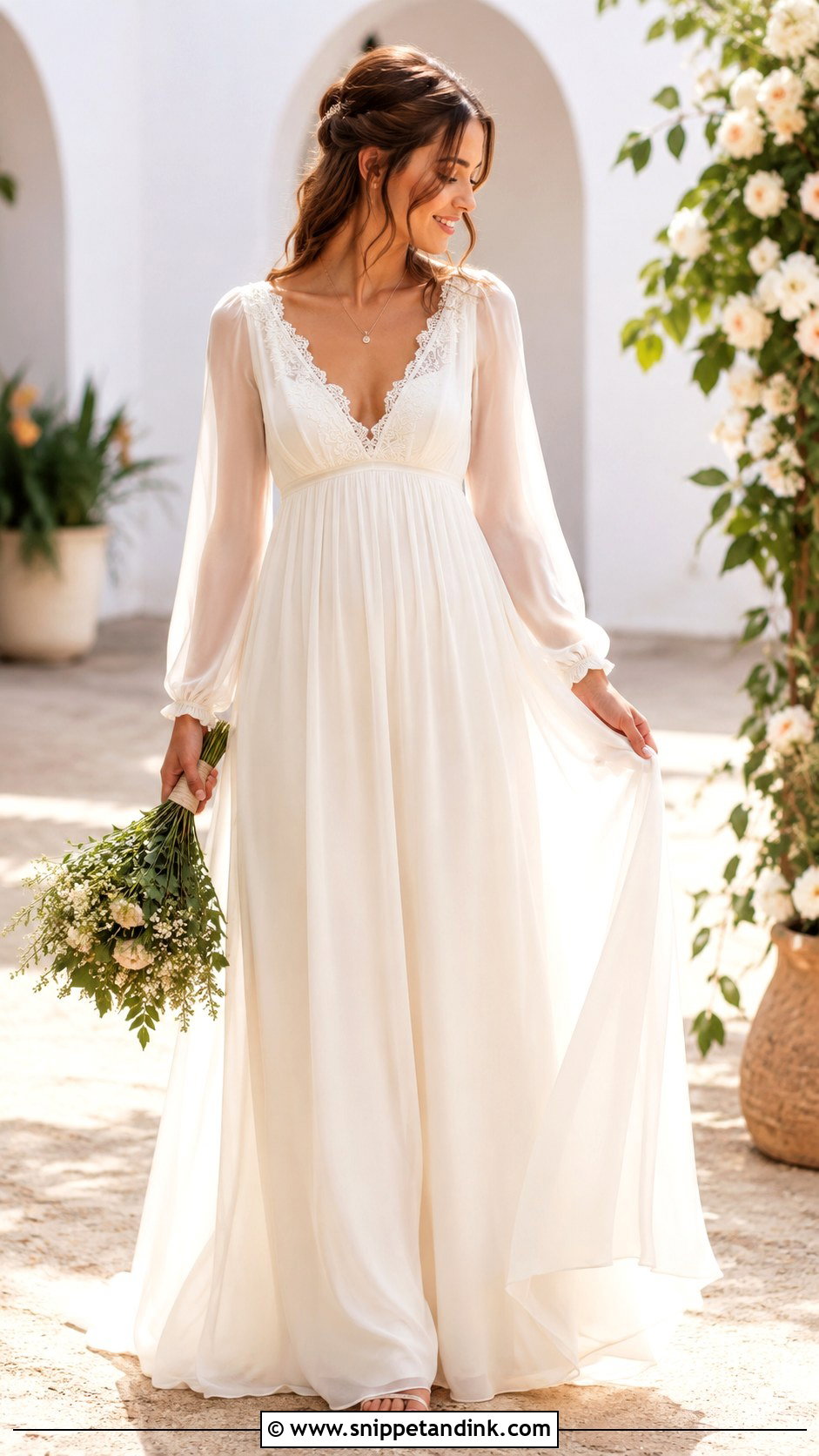
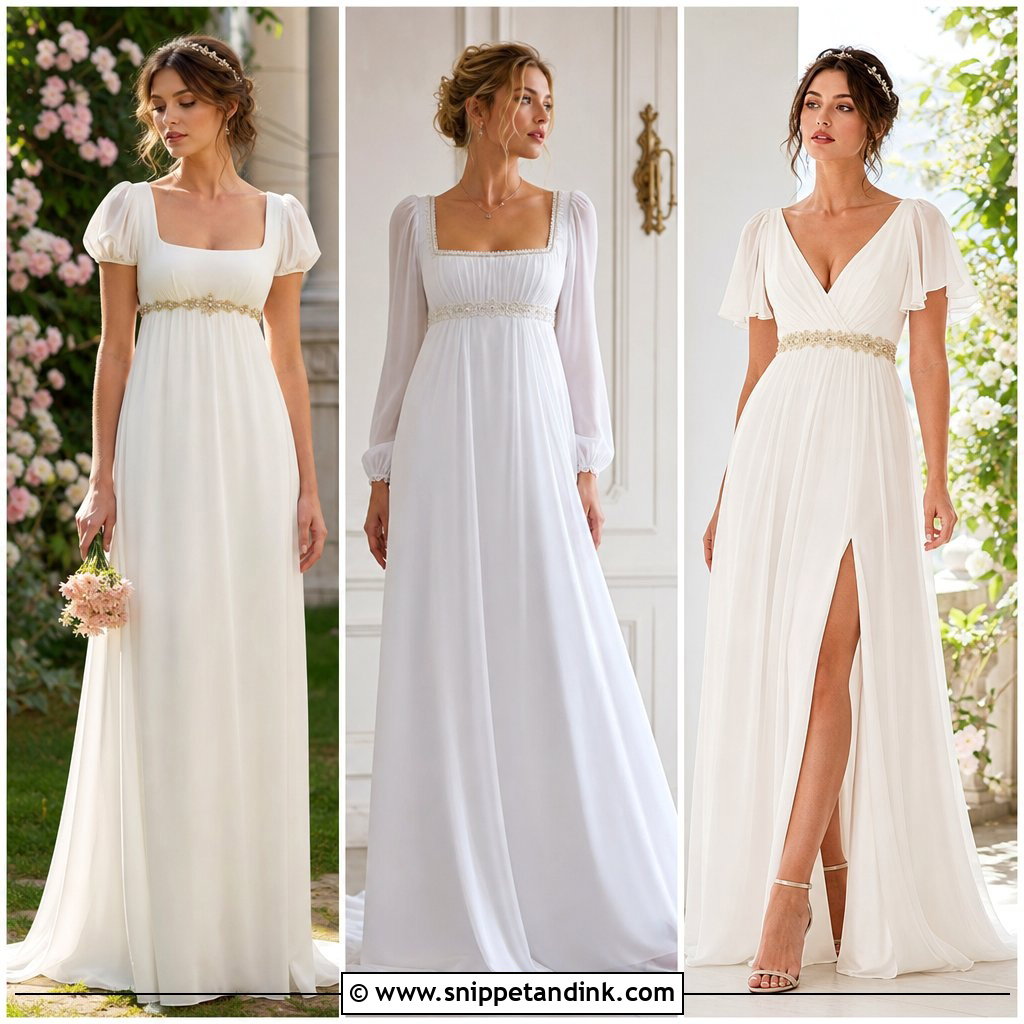
An empire waist sits just under the bust and lets the skirt fall from there, which means nothing presses on your stomach all day. That comfort is why it was so common in 70s bridal wear. Chiffon in ivory, cream or pale champagne gives the softest version; sheer long sleeves, lace insets or a delicate V-neck add period detail. One thing to watch: a high waistline needs a well-fitted bust, or the seam slides down and the skirt starts to look like a nightgown. Simple sandals, a dainty pendant and a loose half-up style finish it for a warm-weather wedding.
4. Crochet Boho Wedding Dress
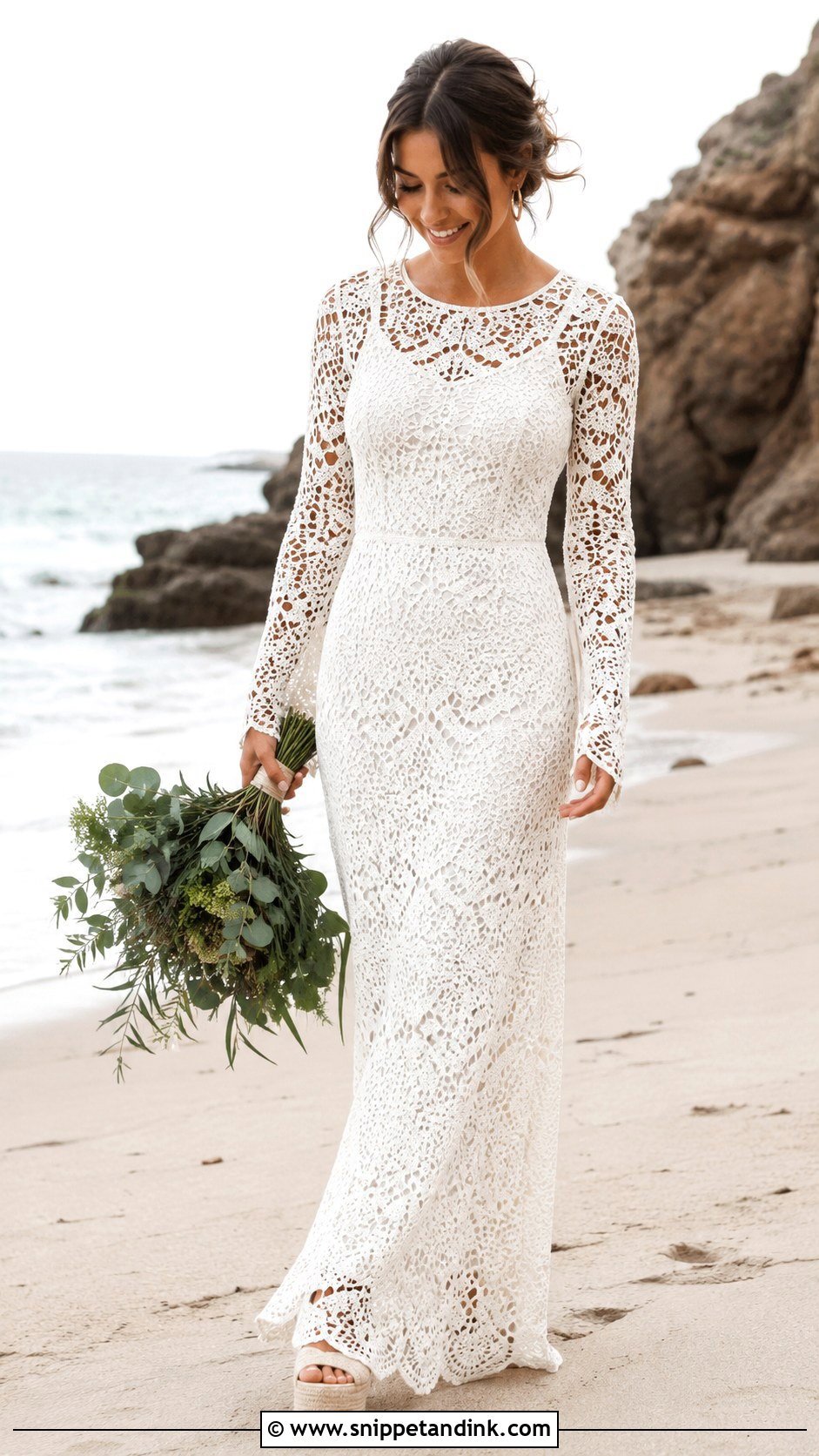
Crochet is the most handmade-looking fabric you can wear down an aisle. The same open stitch can look like a beach cover-up or a real wedding dress, and the difference is almost always the lining and the fit. I ask for a full, skin-toned or ivory lining and a fitted or lightly flared shape. Crochet is heavy and stretches lengthwise as it hangs, so set the hem with the dress on and never store it on a hanger. Long sleeves, a scalloped hem and an open back give enough detail. Woven platforms, gold hoops and greenery suit a beach, backyard or desert wedding.
5. Bishop Sleeve Wedding Dress
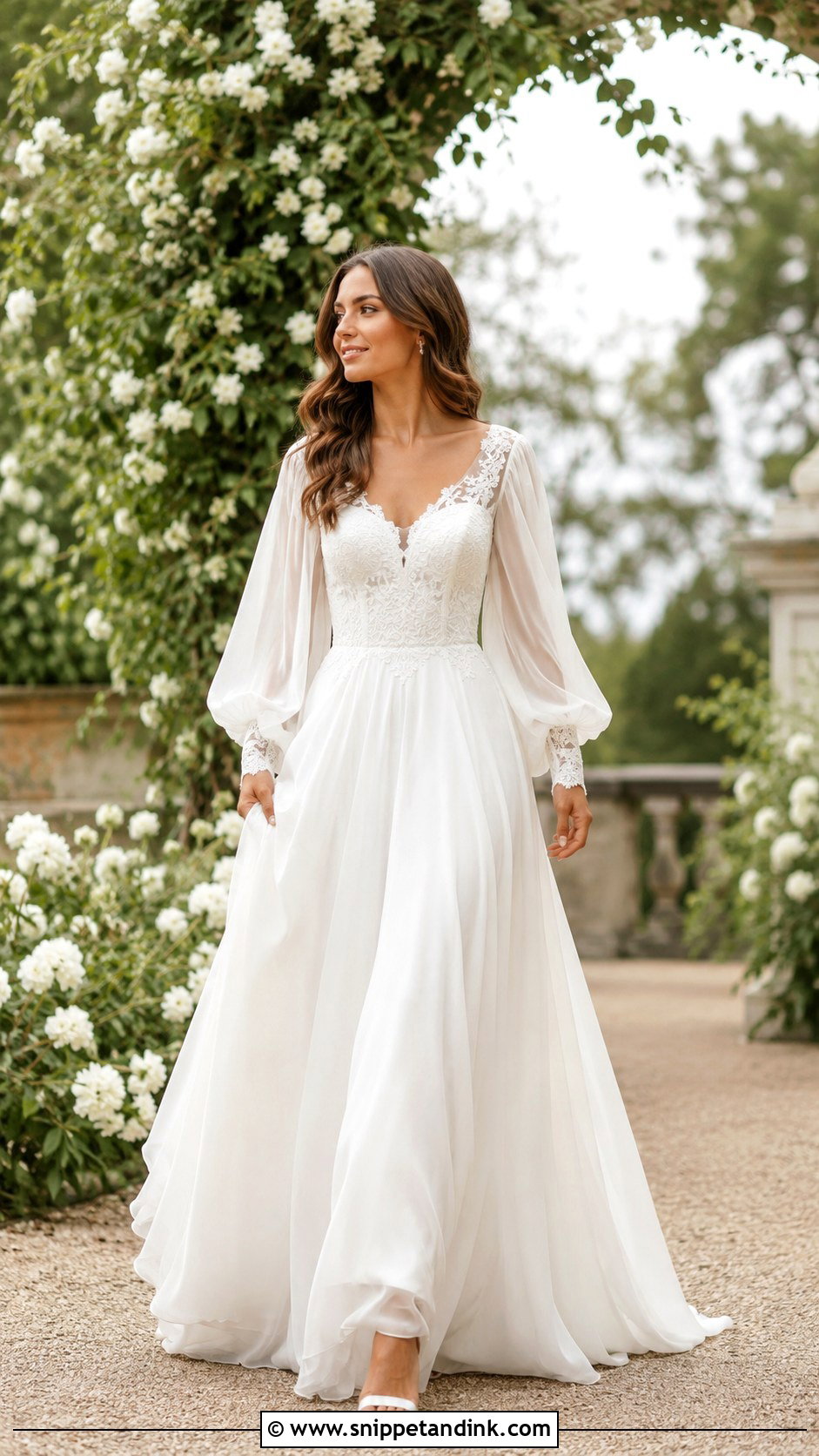
Bishop sleeves are full through the arm and gather into a cuff at the wrist, so you get volume without anything trailing. They work in lace, chiffon, organza or crepe. For a sleeker version, keep the bodice slim and the skirt flowing; for a boho mood, add lace trim, a tied waist or floral embroidery. Because the cuff closes snugly, check you can fit your hand through it once it is buttoned, and ask for an extra loop if not. Keep jewelry minimal. A center part, a low bun or loose curls balance the sleeve.
6. Tiered Lace Wedding Dress
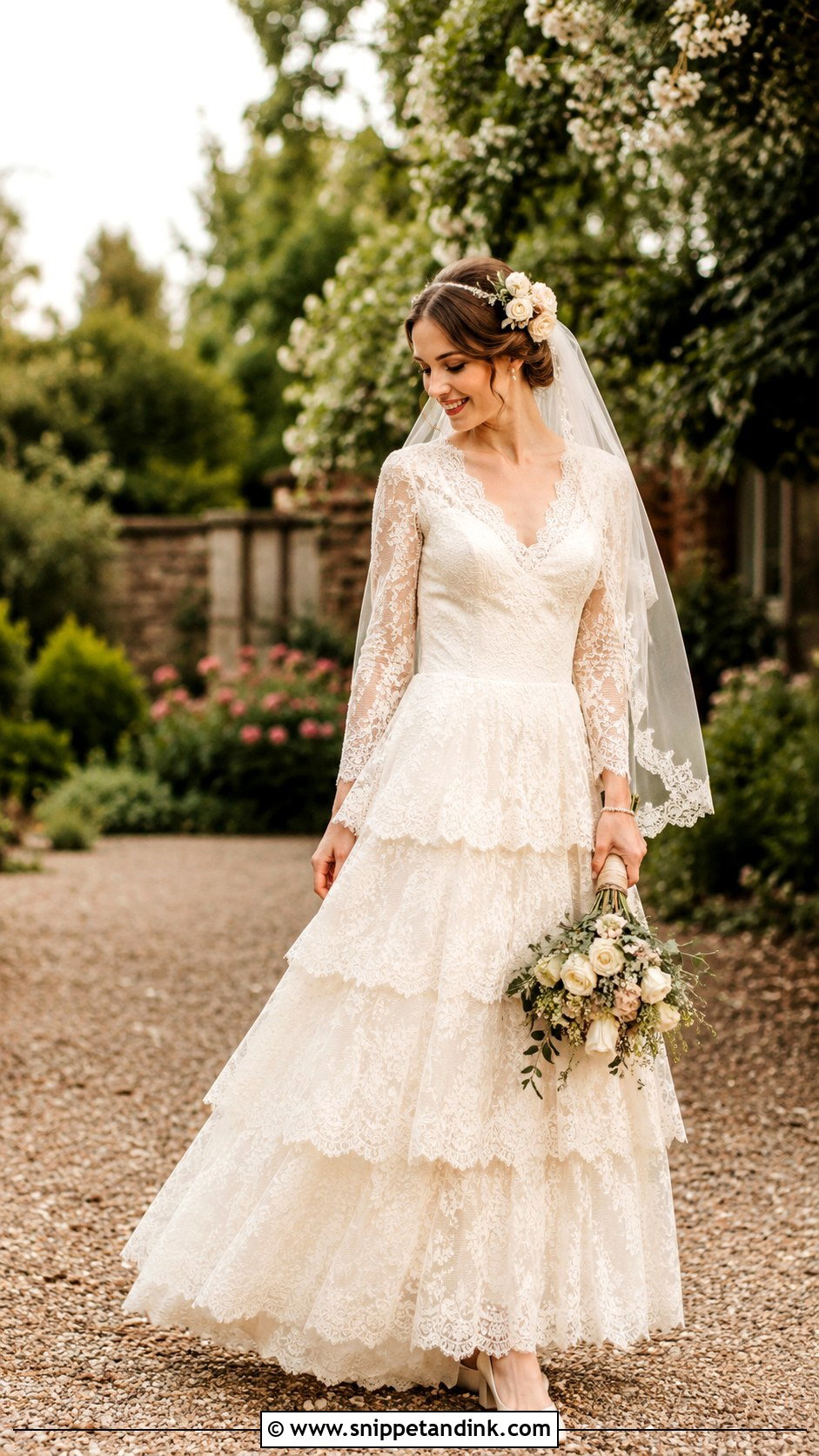
Tiers add movement from the waist to the hem, and that is the whole point of this dress. In the 70s, tiered skirts usually came with lace trim, high necklines and long sleeves. Today I prefer soft ivory lace with tiers that fall rather than puff out, since several stiff layers quickly add width at the hip. Each tier seam sits slightly heavier than the fabric around it, so the skirt swings well when you walk on a lawn. Block heels or low sandals keep it grounded, and a fingertip veil or floral hairpiece finishes it.
7. Long Sleeve Floral Lace Wedding Dress
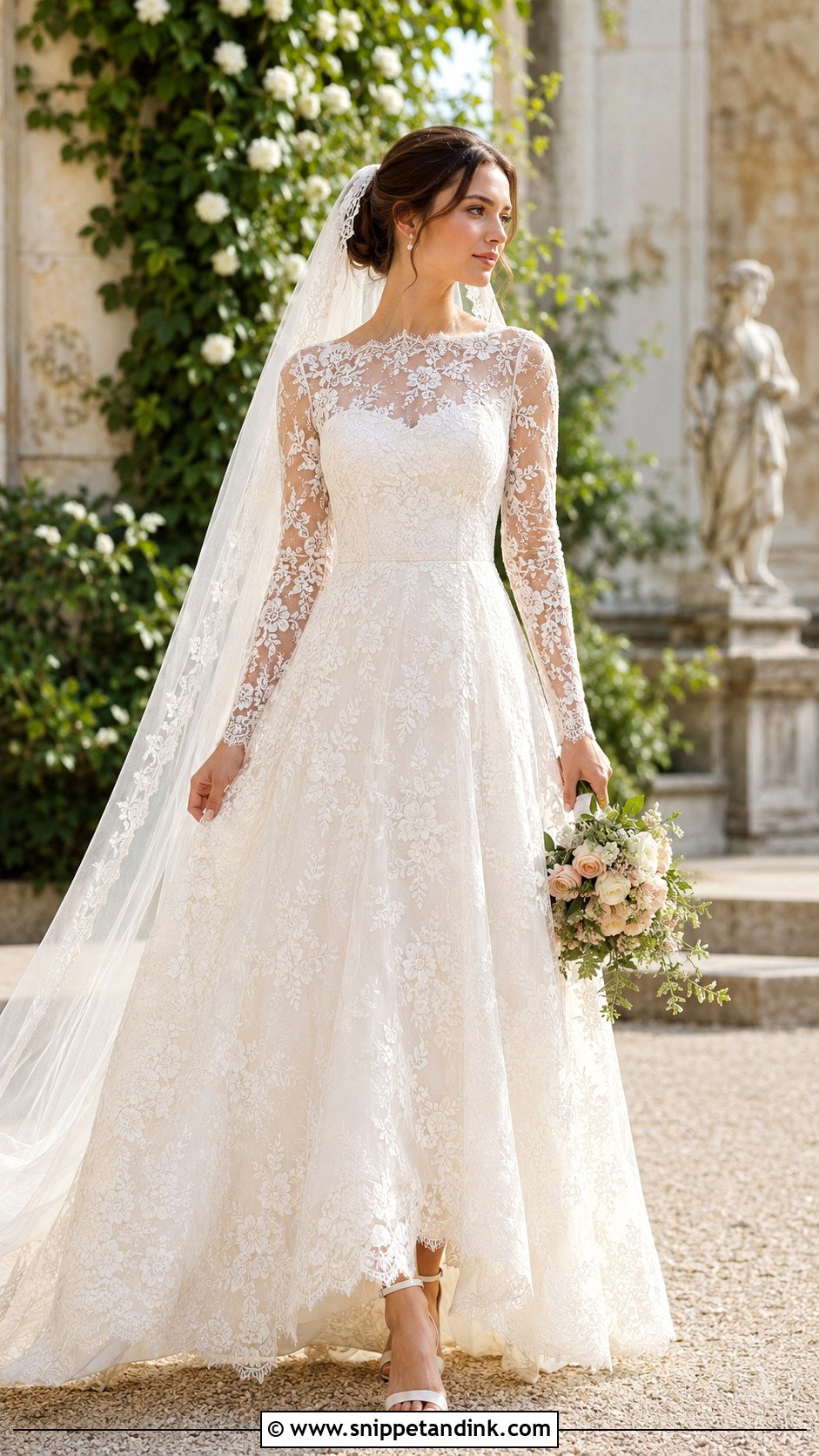
Long lace sleeves are a classic anywhere, so the 70s feel comes from the details: bigger floral lace motifs, sheer sleeves, a softer waist and a relaxed skirt. A fitted sheath reads sleeker; an A-line feels softer. I always look at where the lace motifs land on the body before buying. On a large-scale pattern, a big flower sitting across the bust or stomach is the first thing people see. Ivory ankle-strap heels, pearl studs and a lace-edged veil complete it for a historic house or garden lawn when you want coverage.
8. Peasant Sleeve Wedding Dress
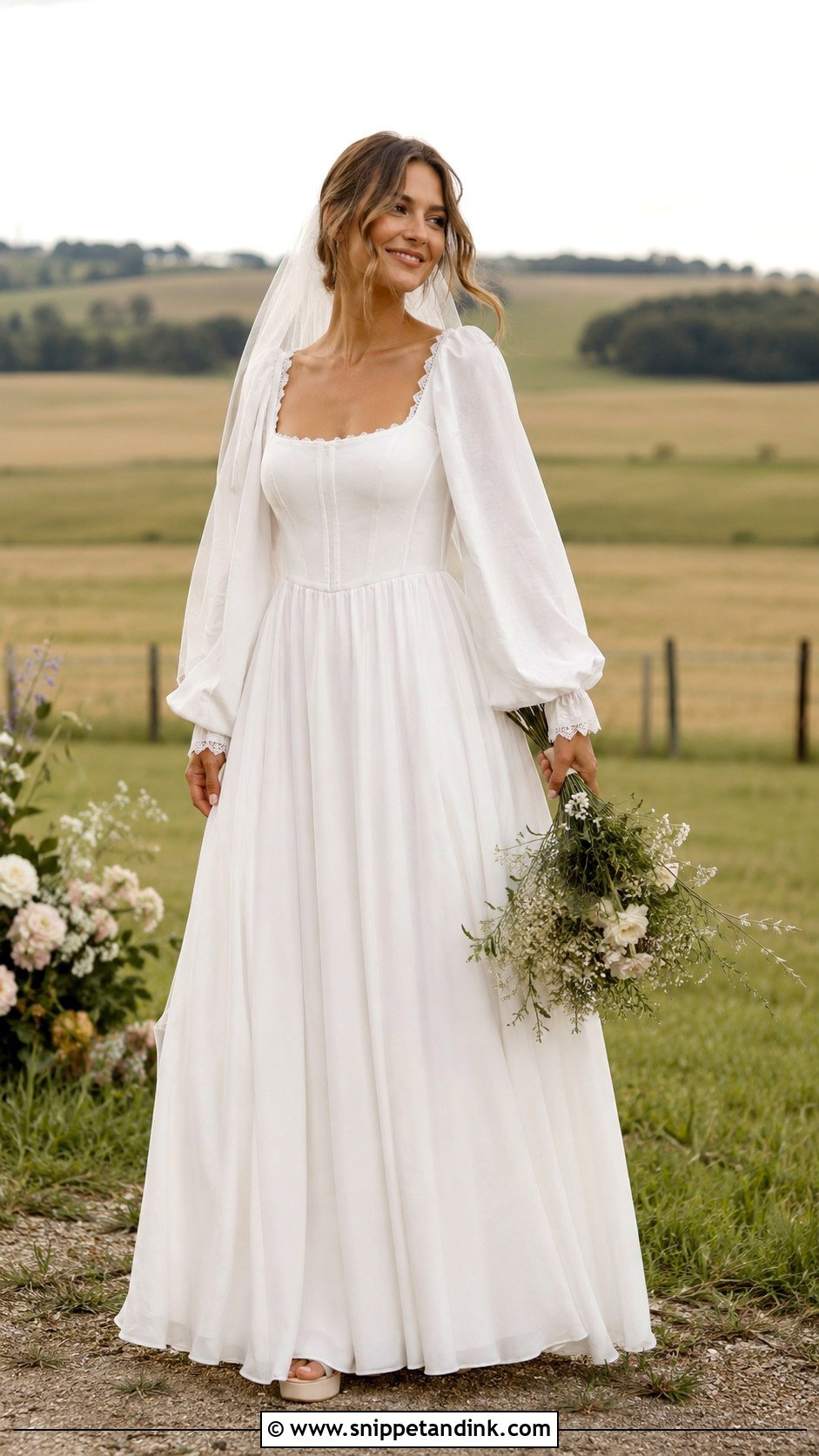
A peasant sleeve wedding dress has loose, gathered sleeves, often with a square or scoop neckline, and it’s the easiest dress on this list to move in. Cotton voile, lace trim, embroidery and ribbon ties keep it true to the decade. Cotton creases quickly, though, so plan to steam it on the morning and expect a softer, lived-in look by the evening. To keep it bridal, choose ivory and a floor-length skirt rather than a midi. Platform sandals, a soft veil and loose waves suit outdoor or countryside ceremonies.
9. Victorian Inspired 70s Wedding Dress
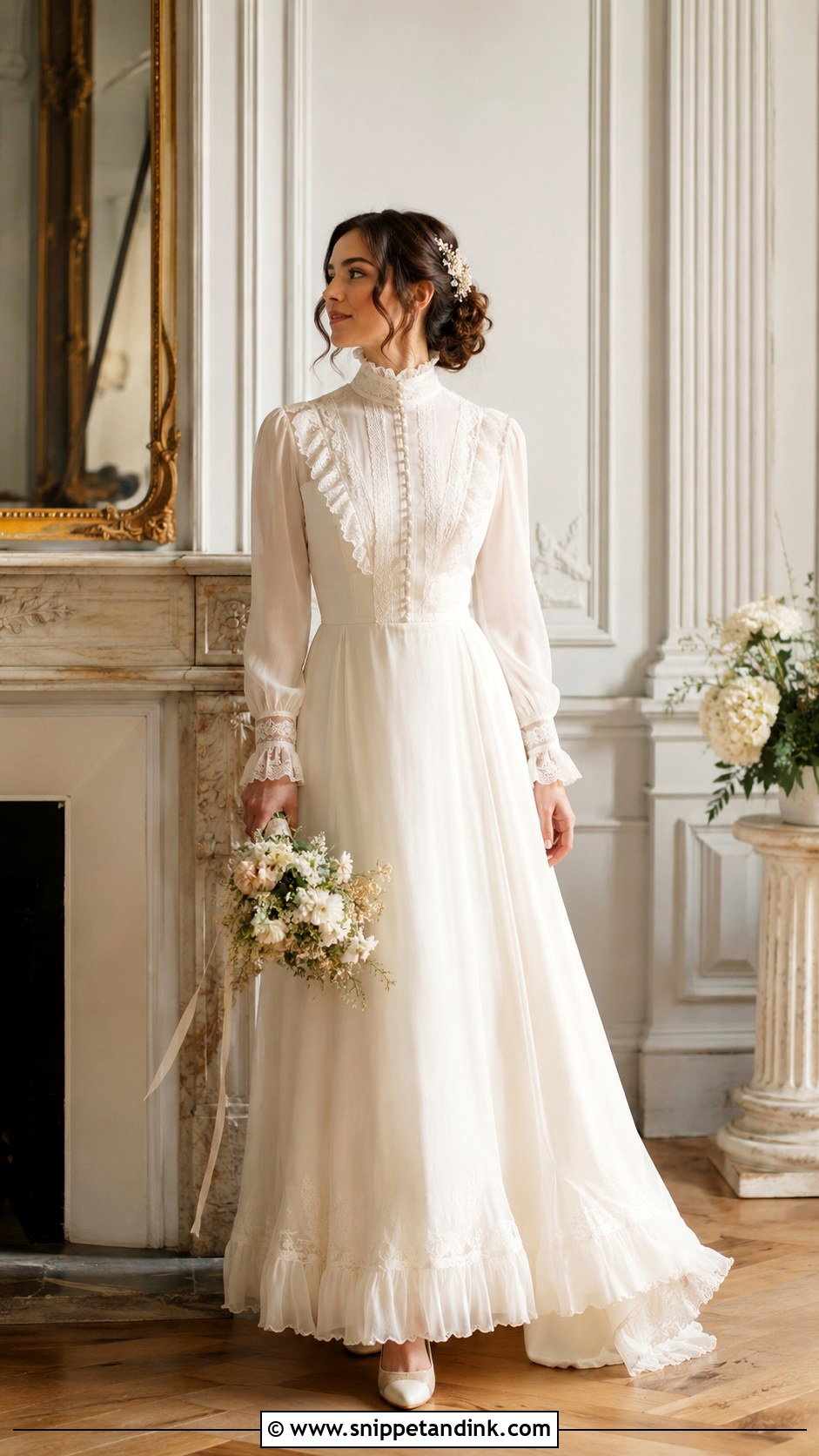
This mix takes the high collars, ruffle trims, lace sleeves and covered buttons of the 1890s and softens them the way 70s designers did. The fabric decides whether it feels romantic or heavy. Lightweight lace and chiffon keep it airy; stiff satin with all those details starts to look historical. A gently fitted waist and soft skirt make it wearable. High collars are warm, so in summer I suggest an unlined lace collar rather than a stiffened one. Simple ivory shoes, a delicate comb and a bouquet with trailing ribbons finish it.
10. Drop Waist 70s Wedding Dress
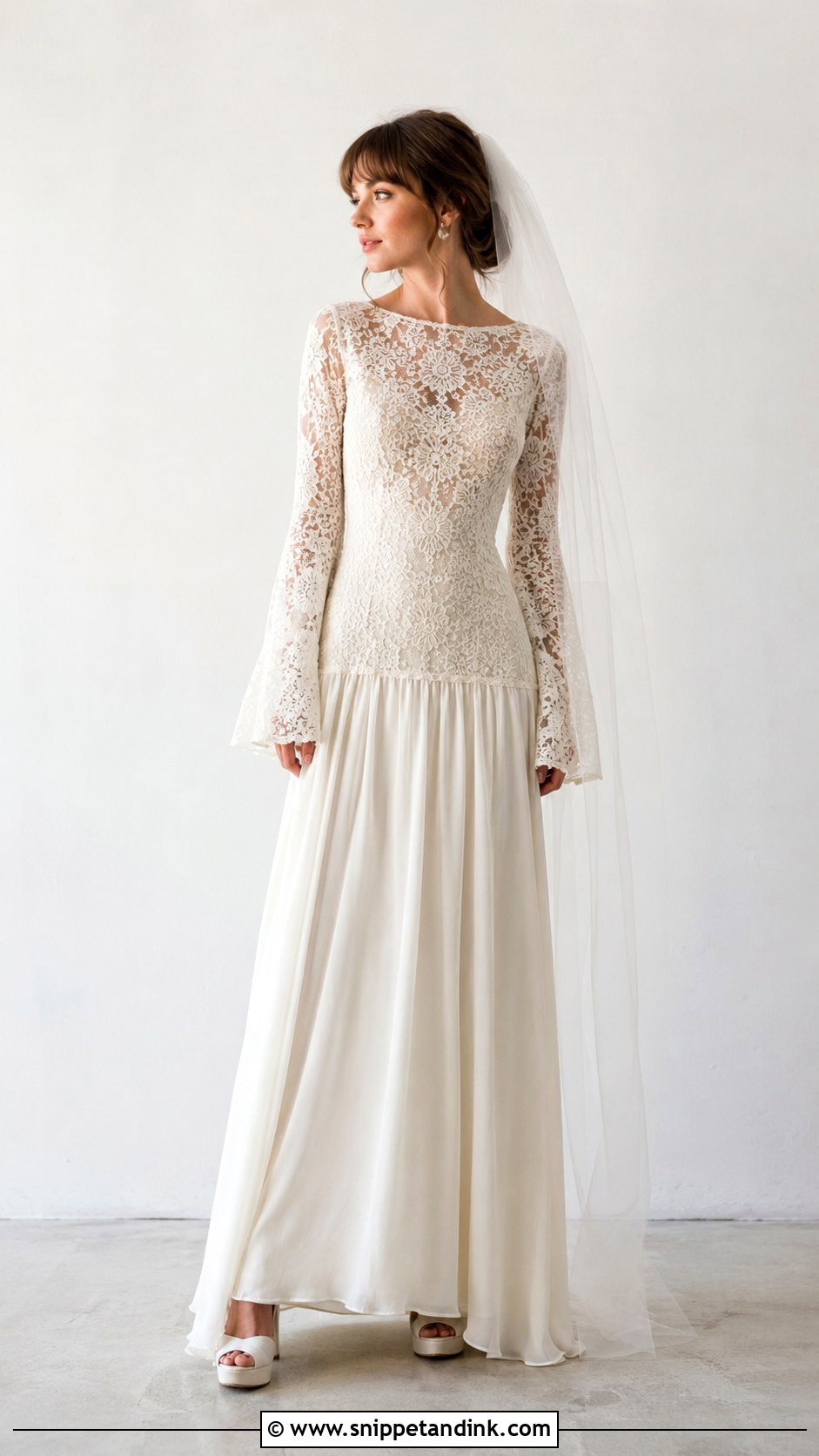
A dropped waist sits low on the hips and gives a long, relaxed torso. It’s one of the more unusual shapes on this list, and I’ll be honest that it isn’t for everyone: on a shorter torso it can shorten the legs. Platform heels help lengthen the line. Lace, chiffon and lightweight crepe all drape well, and the bodice should skim rather than cling. Bell sleeves, flutter sleeves or lace panels add vintage detail. Keep accessories clean, with small earrings and a smooth veil.
11. Angel Sleeve Wedding Dress
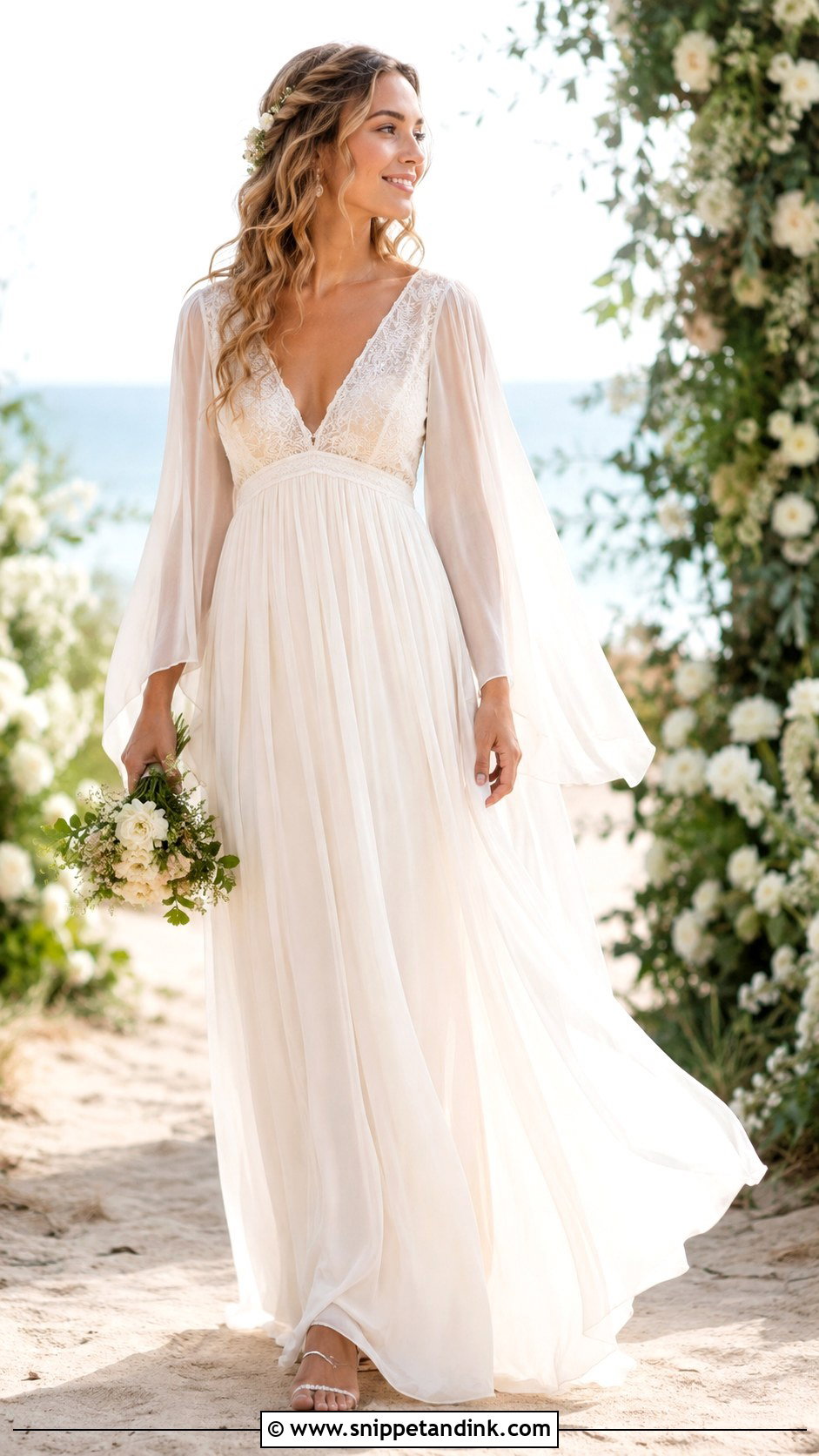
An angel sleeve wedding dress has sleeves that fall open from the shoulder like soft wings. Because the sleeves add width, I keep the dress underneath simple, usually an empire waist or a sheath. Chiffon, georgette or soft lace lets the fabric float. The thing I always mention is wind: on a beach or clifftop, angel sleeves blow straight up and catch on the bouquet, so a few photos may need a pause. Delicate sandals, loose curls and a minimal veil suit it for a warm garden or beach day.
12. Square Neck Lace Wedding Dress
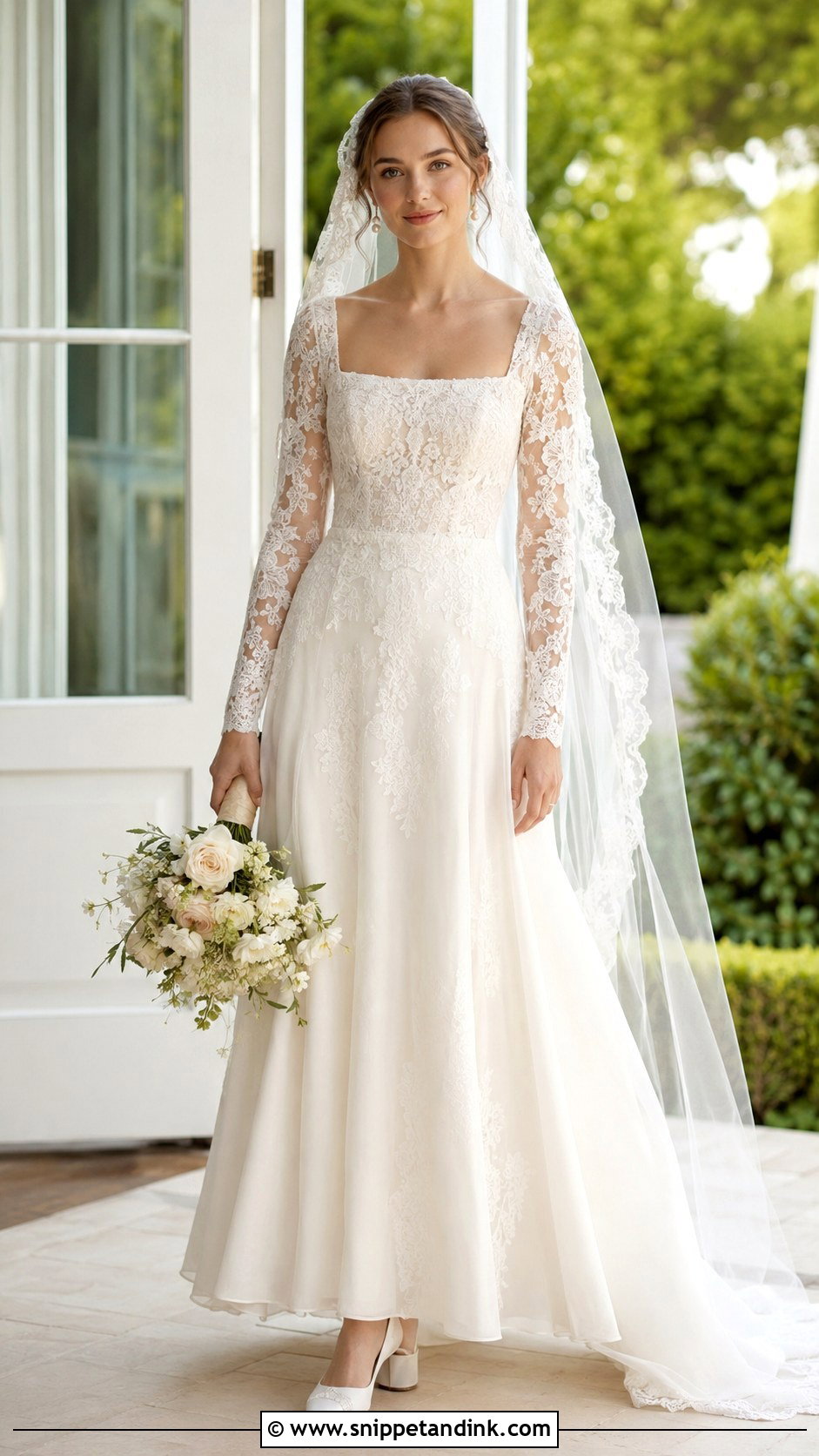
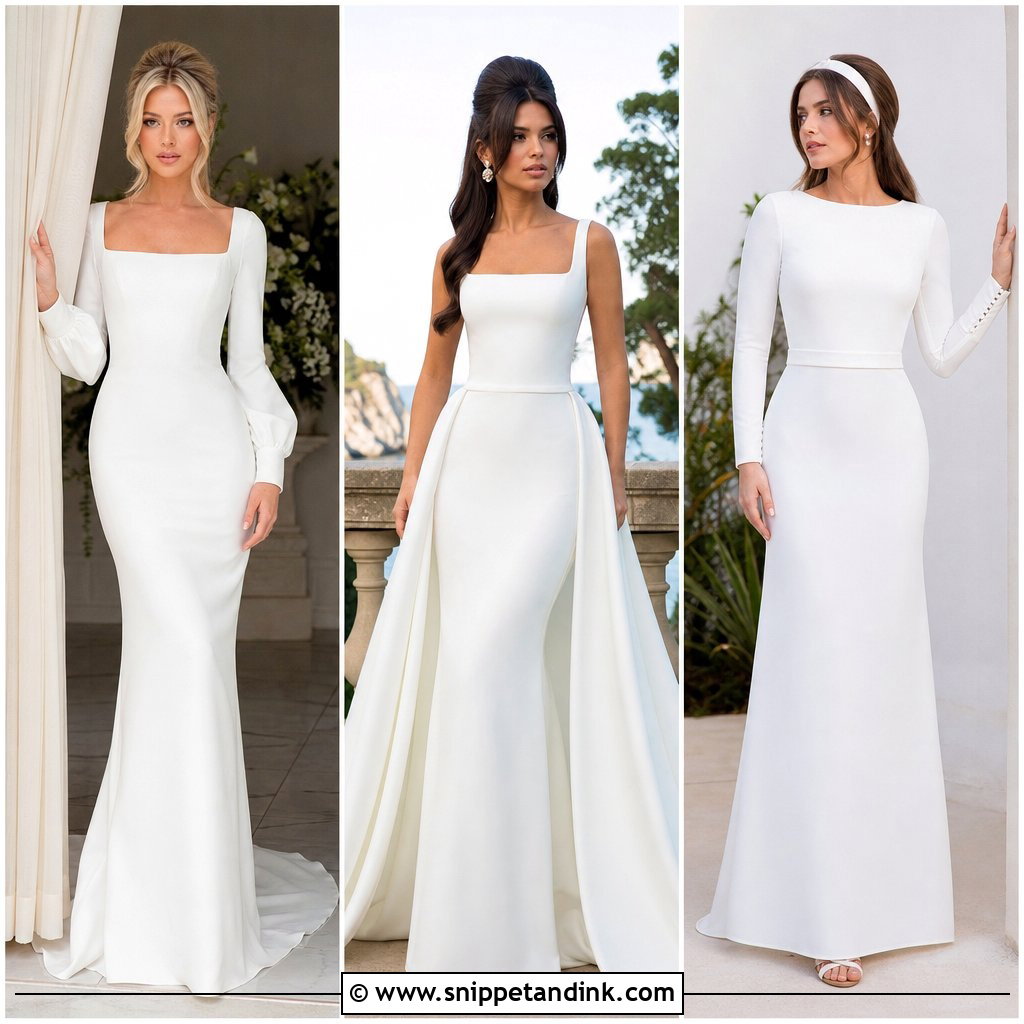
A square neckline frames the collarbones and gives definition to the upper body without plunging. It sits well with long sleeves or puffed shoulders, and lace trim, a fitted bodice and a flowing skirt keep it soft. The fitting note I always give is to bend forward at the trial: square corners gape easily on a smaller bust, and a tiny tuck at each corner fixes it. Low block heels, pearl earrings and a soft updo suit it, with a lace-edged veil if you want more bridal feel. It reads vintage without looking themed, indoors or out.
13. Ruffle Neck Wedding Dress
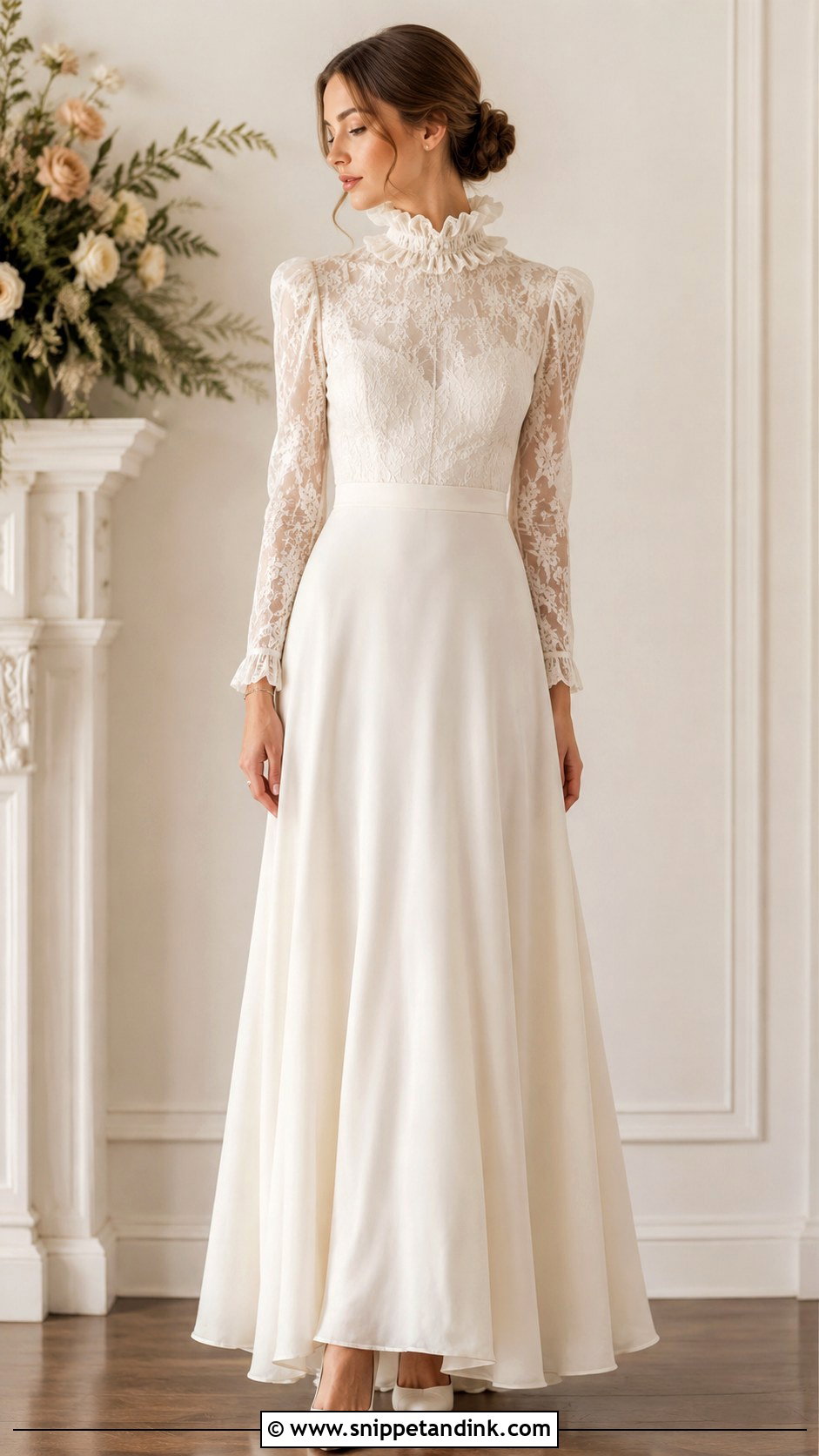
Ruffles at the neck add texture right around the face. They can be small and refined or fuller for a prairie mood, and they look best with long sleeves, lace panels and a soft skirt. If the neckline is high and ruffled, keep the bodice fitted to avoid adding bulk to the chest. I’d steer a bride with a shorter neck toward a smaller ruffle, since a deep one can make the neck disappear. Ivory pumps, a slim bracelet and a low bun let the neckline do the work in photos.
14. Simple Satin 70s Wedding Dress
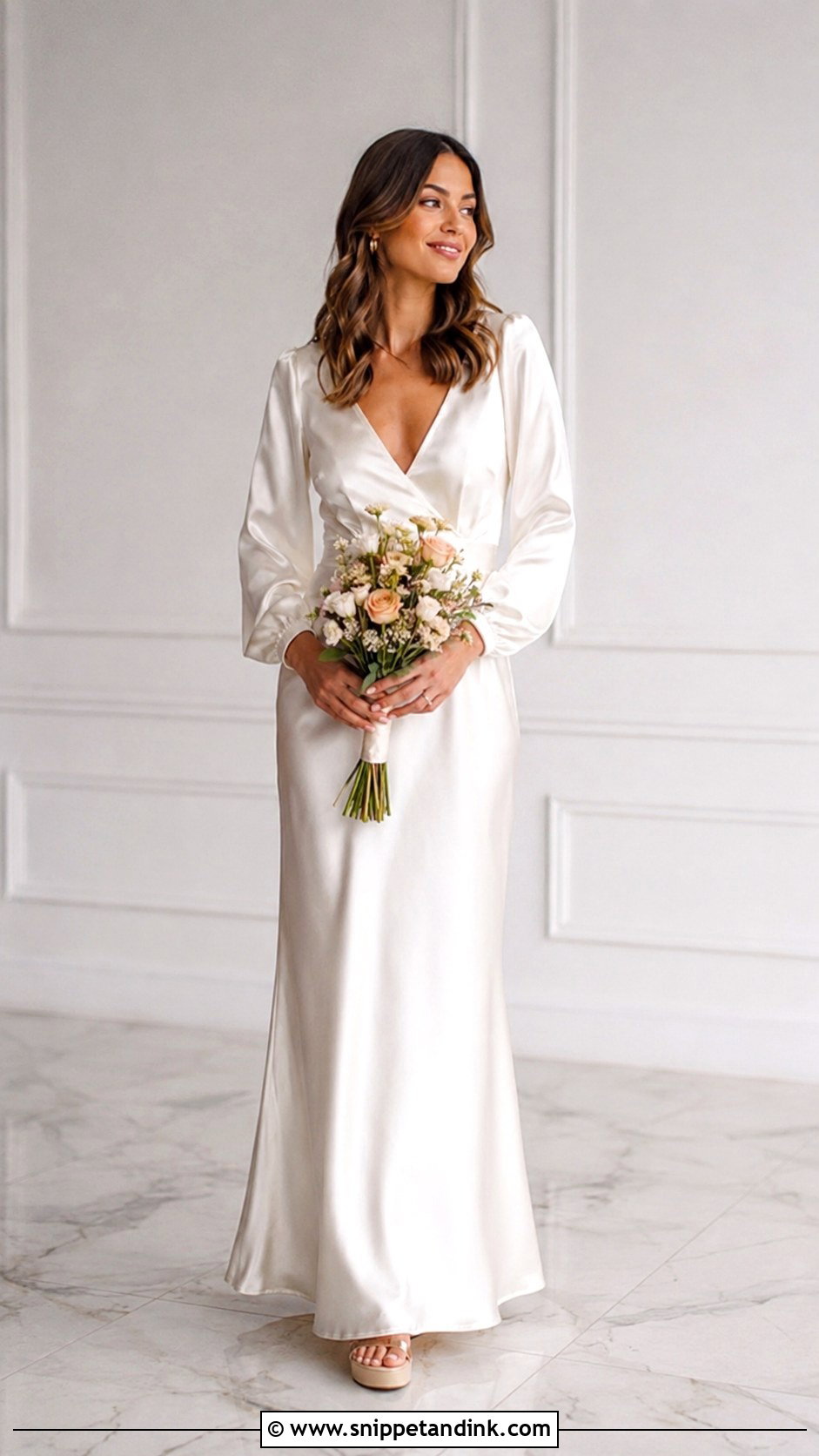
Not every 70s dress needs lace. A plain satin gown with a bias-style cut, long sleeves, a gentle V-neck or a slim A-line can feel sleek and quietly glamorous. The satin has to drape, though: a stiff polyester satin will stand away from the body and lose the effect, so look for a fluid fabric that falls into folds. Bias-cut satin also shows every line underneath, so plan smooth, invisible underwear early. Ivory platforms, small gold earrings, a simple veil and a middle part give it a retro edge for a courthouse or intimate ceremony.
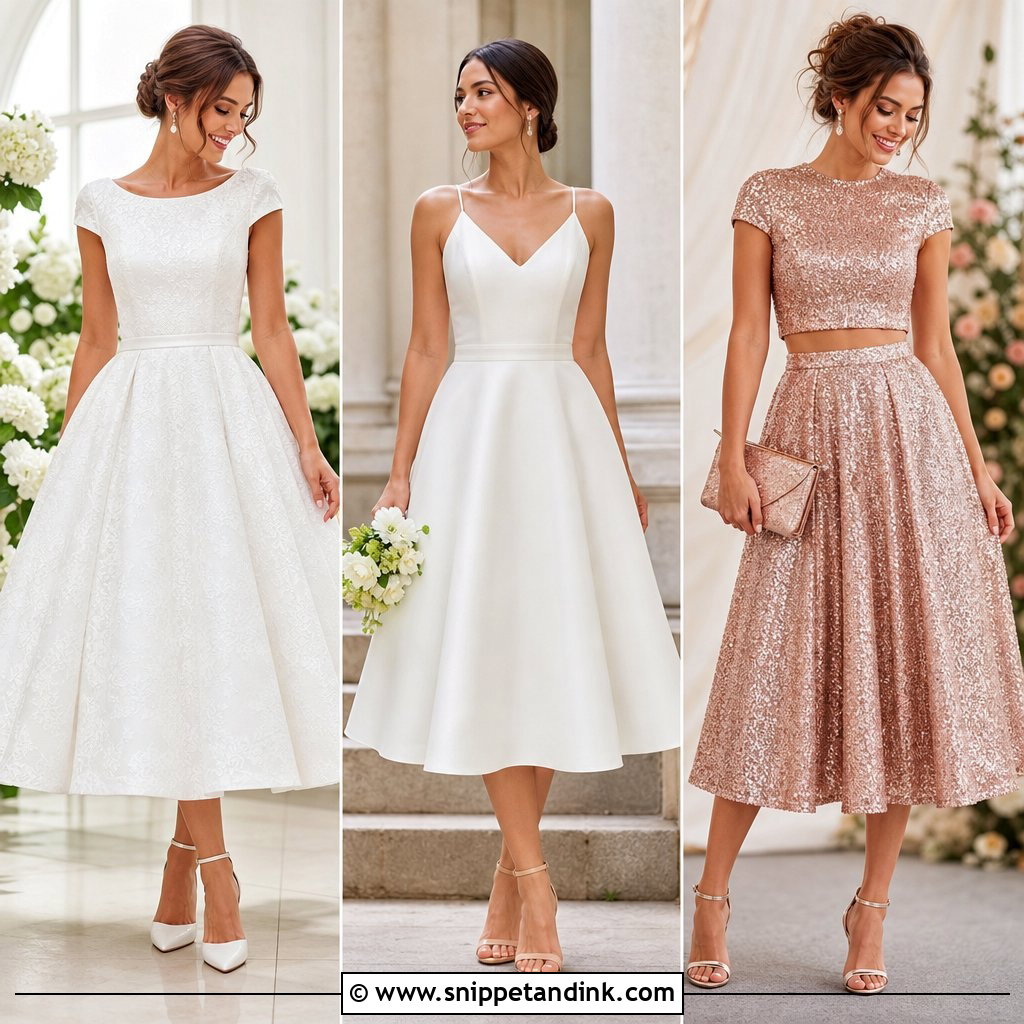

15. Two Piece 70s Wedding Dress
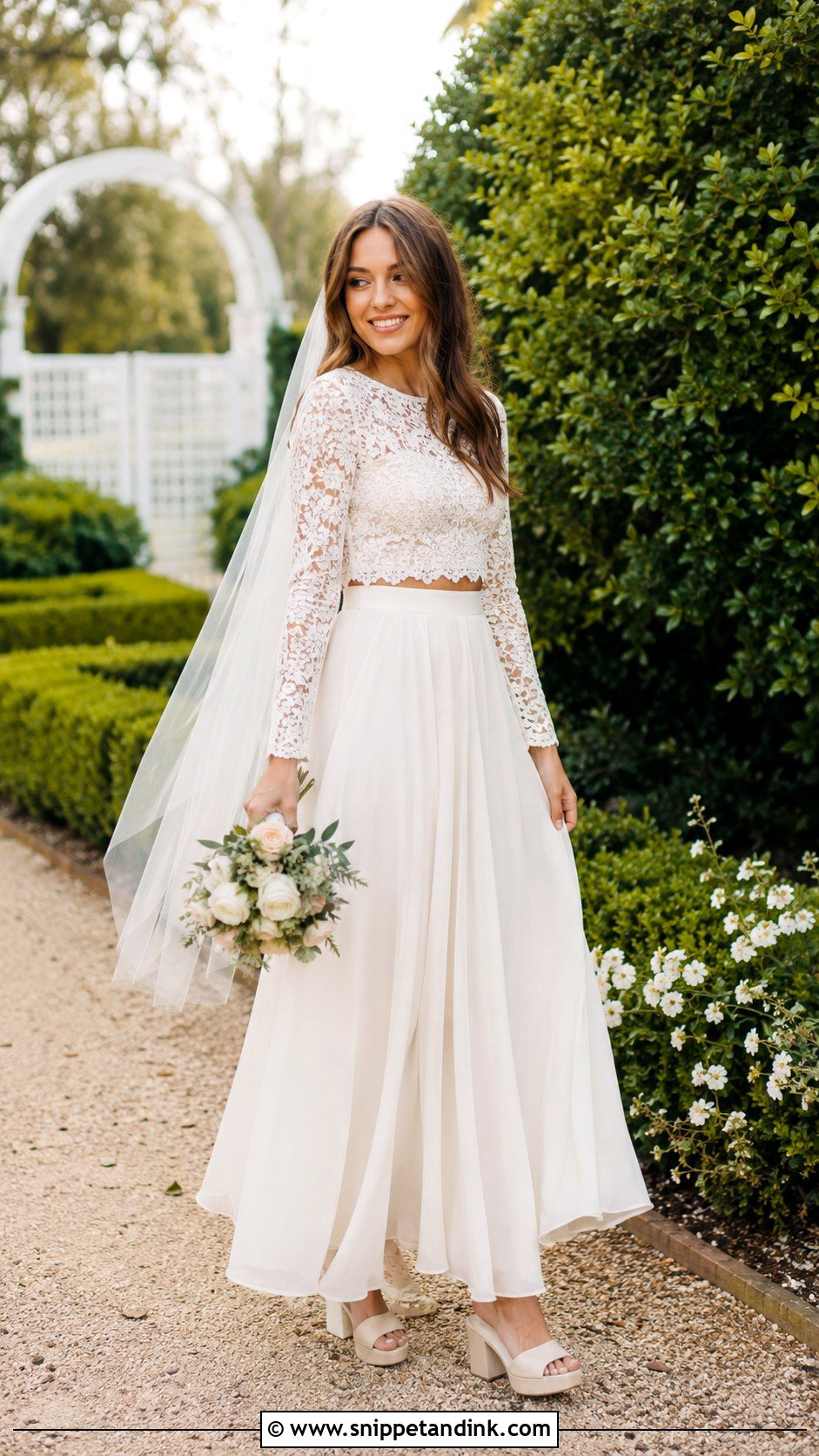
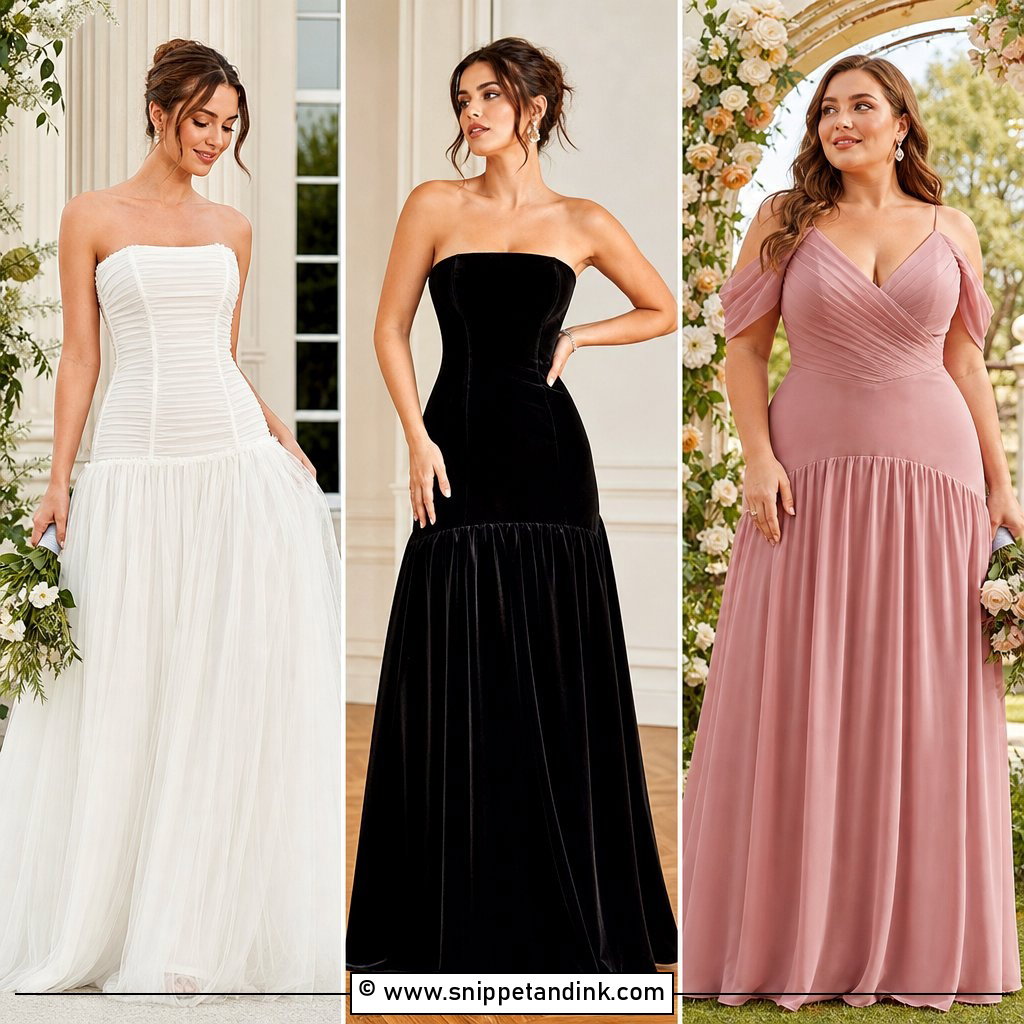
Separates feel relaxed and slightly unexpected: a lace crop top with a high-waisted skirt, a long-sleeve blouse with a maxi skirt, or a structured top over soft chiffon. Keep both pieces in the same ivory tone and in refined fabrics, because two whites that don’t match look like a mistake in daylight photos. Lace sleeves, covered buttons or embroidery bring in the vintage feel. The practical bonus is fit: you can buy the top and skirt in different sizes, which helps many pear and apple shapes. Block heels or platform sandals suit an elopement or outdoor ceremony.
16. Sheer Sleeve Wedding Dress
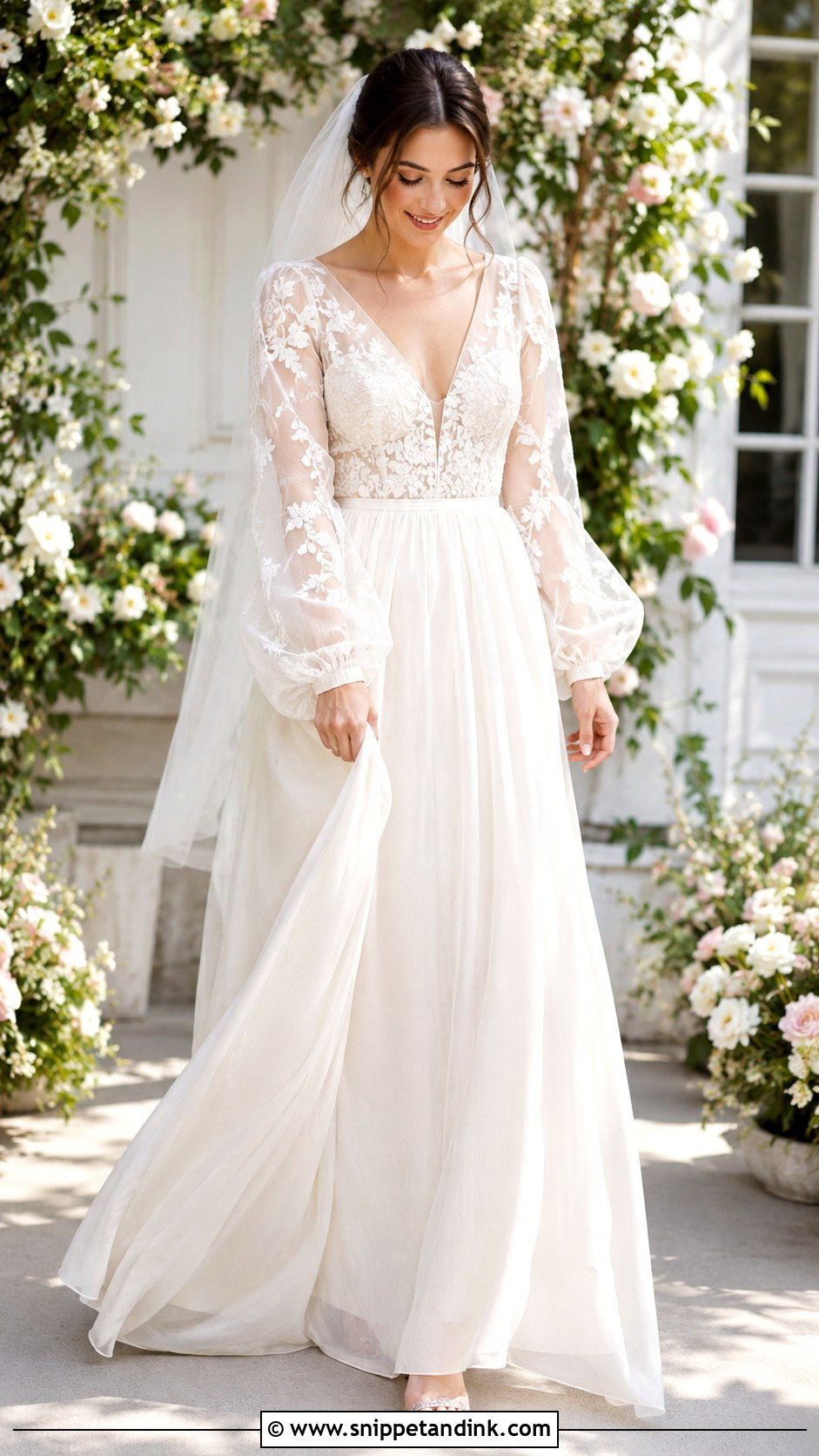
Sheer sleeves give coverage while keeping the dress light. In a 70s look they often come with lace cuffs, floral appliqué, a bishop shape or gentle volume. Line the bodice and skirt for comfort and let the sleeves supply the texture. Sheer tulle and chiffon sleeves are delicate, so I warn brides that bracelets and ring prongs will catch and pull threads, especially during hugs in the receiving line. A narrow waist or empire seam keeps the line balanced. Simple heels and a soft veil that doesn’t cover the sleeves suit a spring or autumn wedding.
17. Lace Cape Wedding Dress
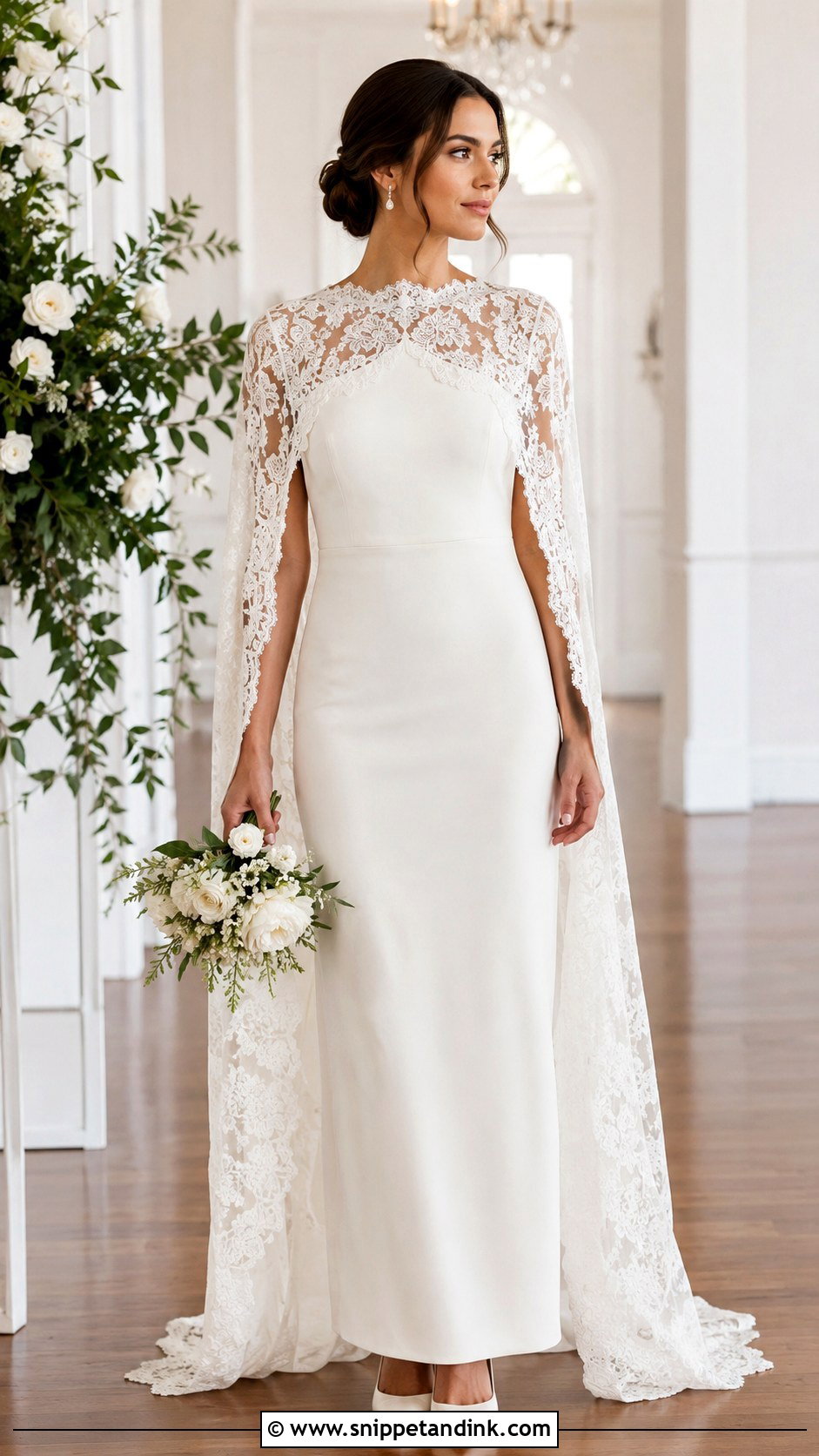
A lace cape can replace a veil and adds movement across the shoulders and down the back. For a 70s feel, choose floral lace, scalloped edges or a capelet that drapes softly over a simple sheath, slip or A-line gown. I prefer a cape that fastens with a hook rather than a tie, since ties loosen during the day and the cape slips sideways in photos. Keep shoes simple with ivory heels or sandals. A low bun or smooth waves keeps the neckline visible, and you get a romantic entrance without a heavy train.
18. Embroidered Boho Wedding Dress
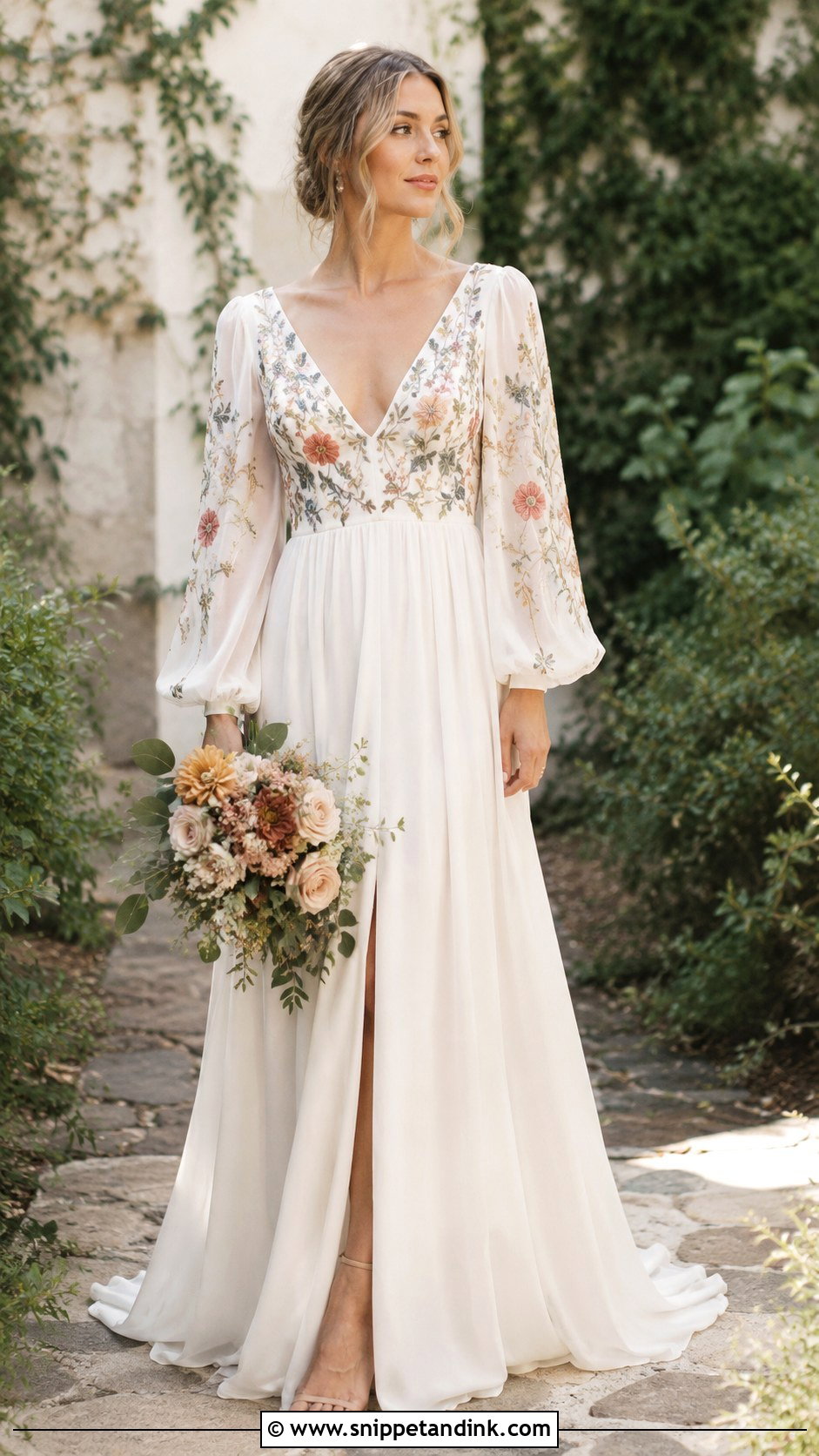
Embroidery is where 70s brides added color, and it still gives a dress real personality. Floral embroidery on the bodice, sleeves or hem in white, cream or muted pastels stays bridal; sage, blush or dusty blue in small details is bolder. Check how the embroidery thread is fixed before cleaning, because some colored threads run in dry cleaning, and ask the cleaner to test a hidden spot. Simple sandals, natural makeup and a bouquet that repeats one embroidery shade tie it together for an outdoor or creative ceremony.
19. Flutter Sleeve Wedding Dress
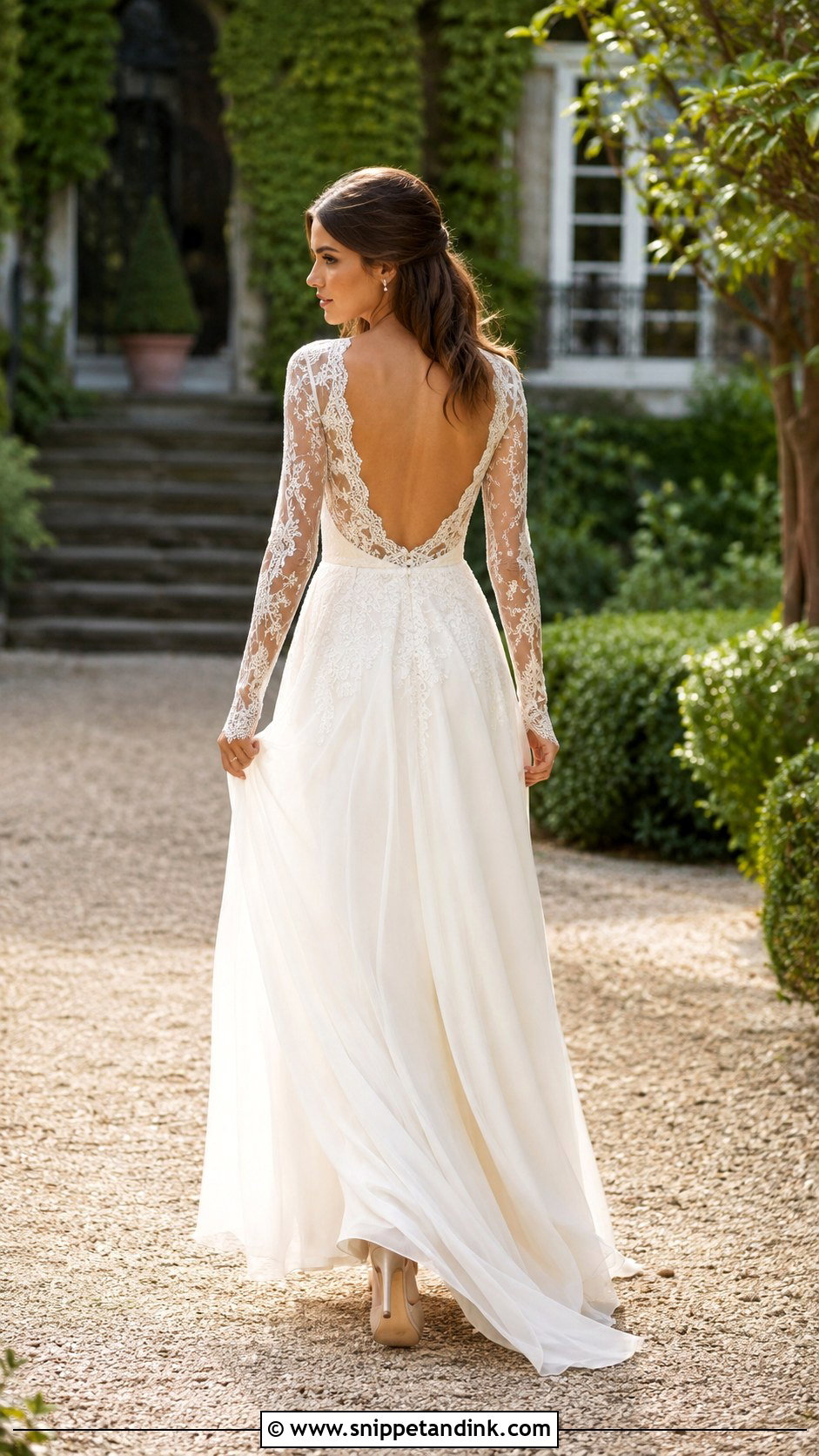
A flutter sleeve wedding dress gives a short, light ruffle at the shoulder, so you get a 70s hint without the volume of bell or bishop sleeves. It pairs well with an empire waist, chiffon skirts and lace bodices. This is my go-to recommendation for a bride who wants sleeves in a hot climate, because the arm stays almost completely free. Ivory sandals or low heels, a delicate necklace and a loose floral hairstyle suit a garden, beach or daytime ceremony.

20. Open Back Lace Wedding Dress
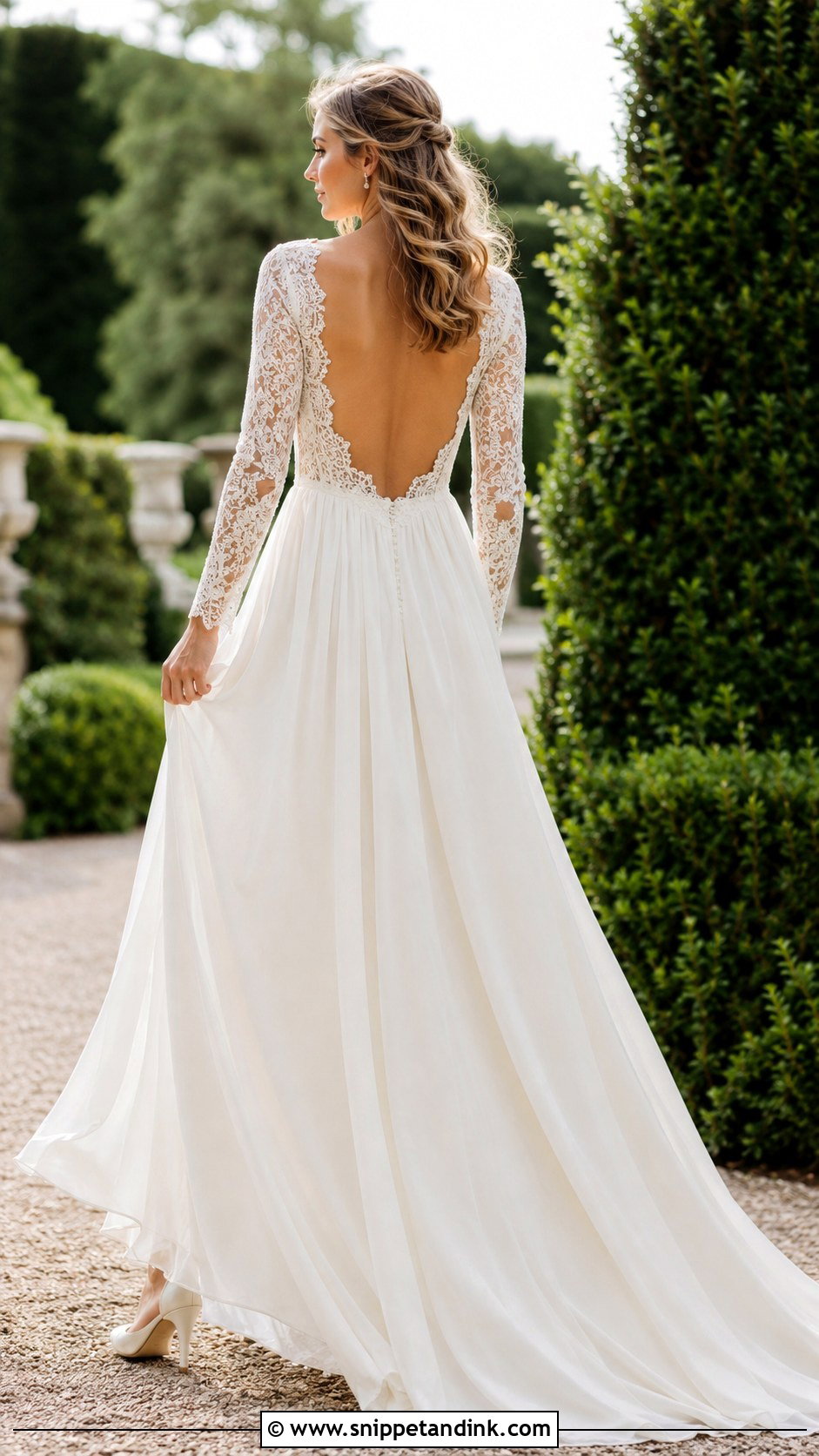
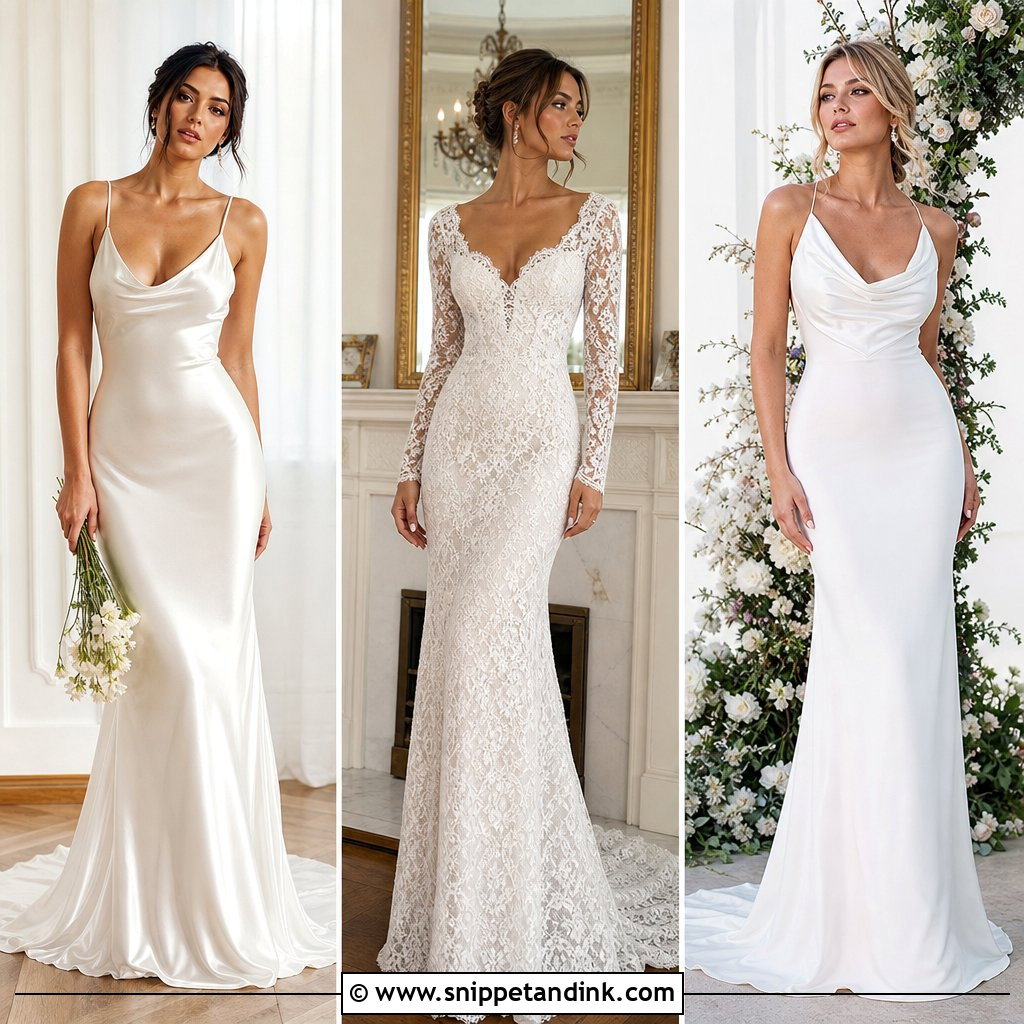
The back is the surprise here. The front can stay simple with long sleeves, a high neck or a soft V, while lace trim, tie closures or covered buttons keep the open back vintage rather than trendy. Support is the question I always raise: a deep open back limits bra options, so we either build cups into the bodice or plan a low-back alternative before the first fitting. A flowing skirt or slim sheath keeps it elegant. Wear your hair up or half-up, with simple earrings and delicate heels, and ask for aisle shots from behind.
21. Maxi Slip Wedding Dress
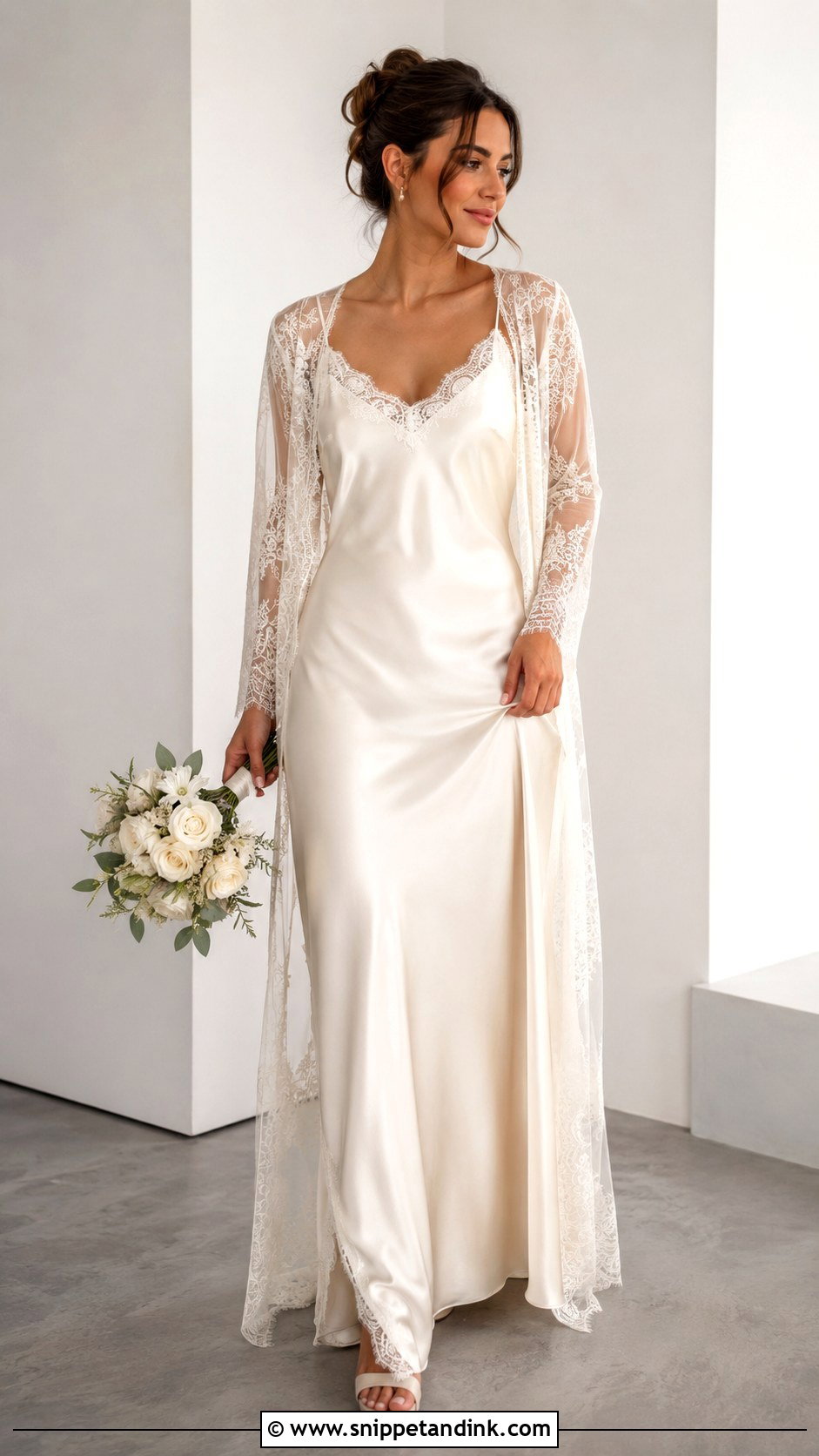
Draped, easy shapes defined late-70s eveningwear, and a long slip-style gown captures that. Satin, silk or crepe with a soft sheen is the base; lace trim, a cowl neckline or a long scarf-like veil adds a period note. A slip dress is honest about the body underneath, so if you want more coverage, layer a lace kimono, crochet capelet or sheer long-sleeve topper over it for the ceremony and take it off for dancing. Low platforms or strappy sandals finish it for a courthouse, a small reception or a warm destination.
22. Button Front Wedding Dress
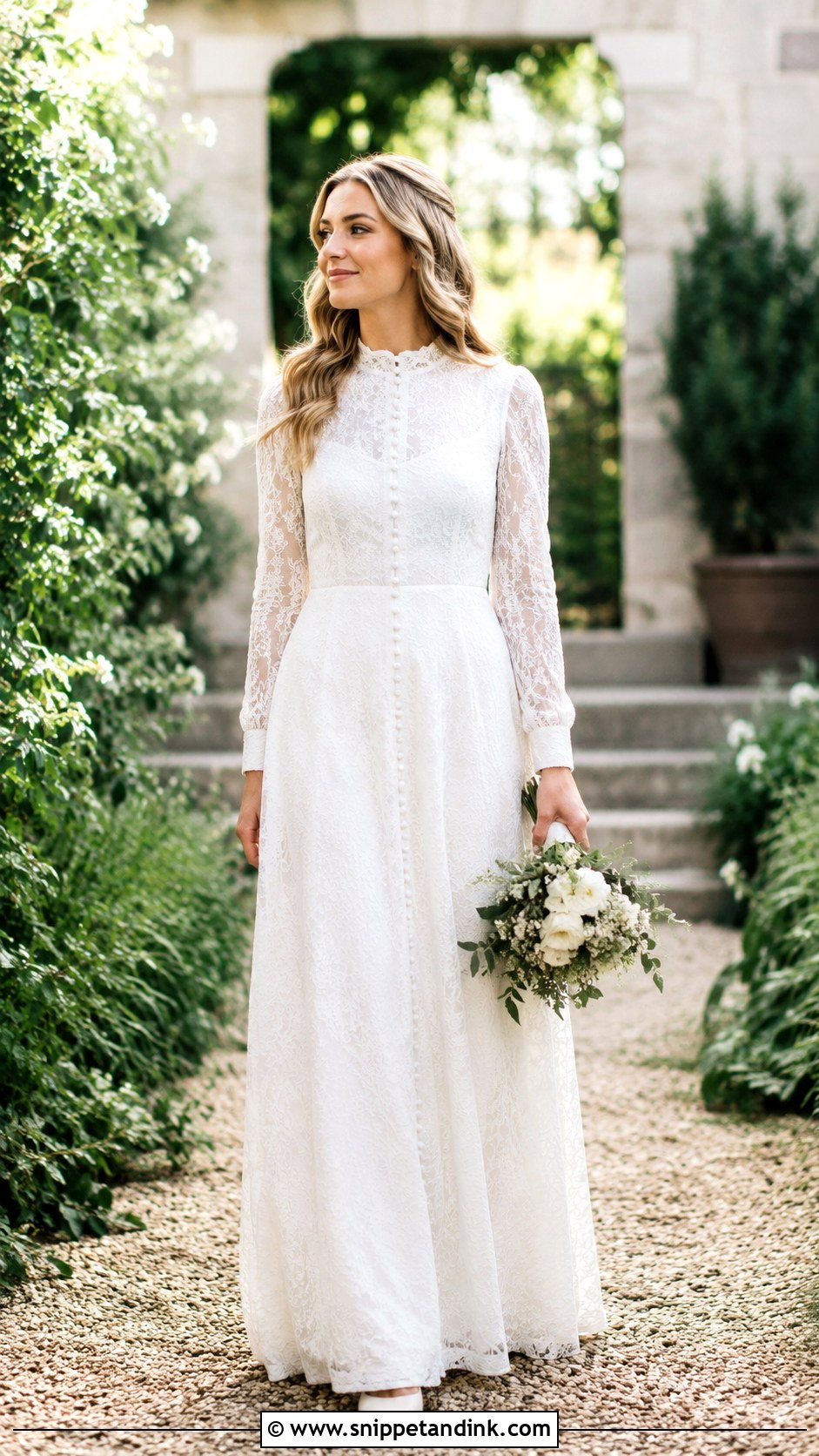
A button front wedding dress belongs to the prairie and Edwardian-revival side of 70s bridal fashion. Buttons running from the neck to the waist, or all the way down the skirt, add structure without any sparkle. Soft cotton lace, chiffon and crepe keep it light. Make sure the buttons are backed by a hidden placket or snaps, because a row of real buttonholes across the bust can pull open when you sit. Long sleeves, a high neck and a defined waist finish the look, with simple ivory shoes and soft waves.
23. Flowy A Line Wedding Dress
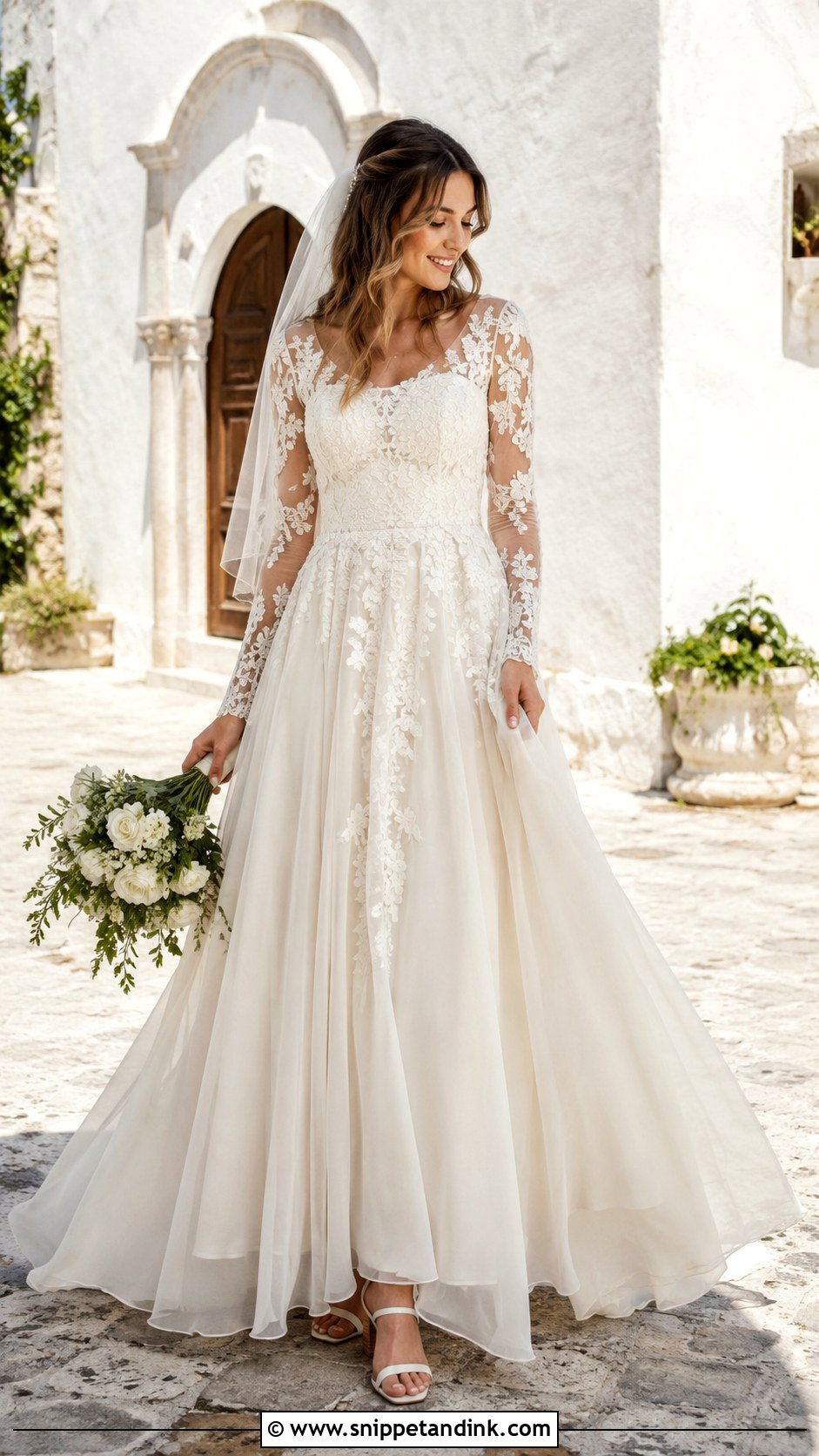
The A-line is the safest way into this decade. It’s fitted through the bodice and widens gently through the skirt, so it suits most figures and moves comfortably. Lace sleeves, an empire waist, floral appliqué or soft chiffon layers bring the 70s in. I’d keep the structure light, with soft boning or none at all, so it doesn’t fight the relaxed feel. Block heels, a simple veil and relaxed hair finish it. It works at almost any venue and will look right in your photos decades from now.
24. Short 70s Reception Wedding Dress
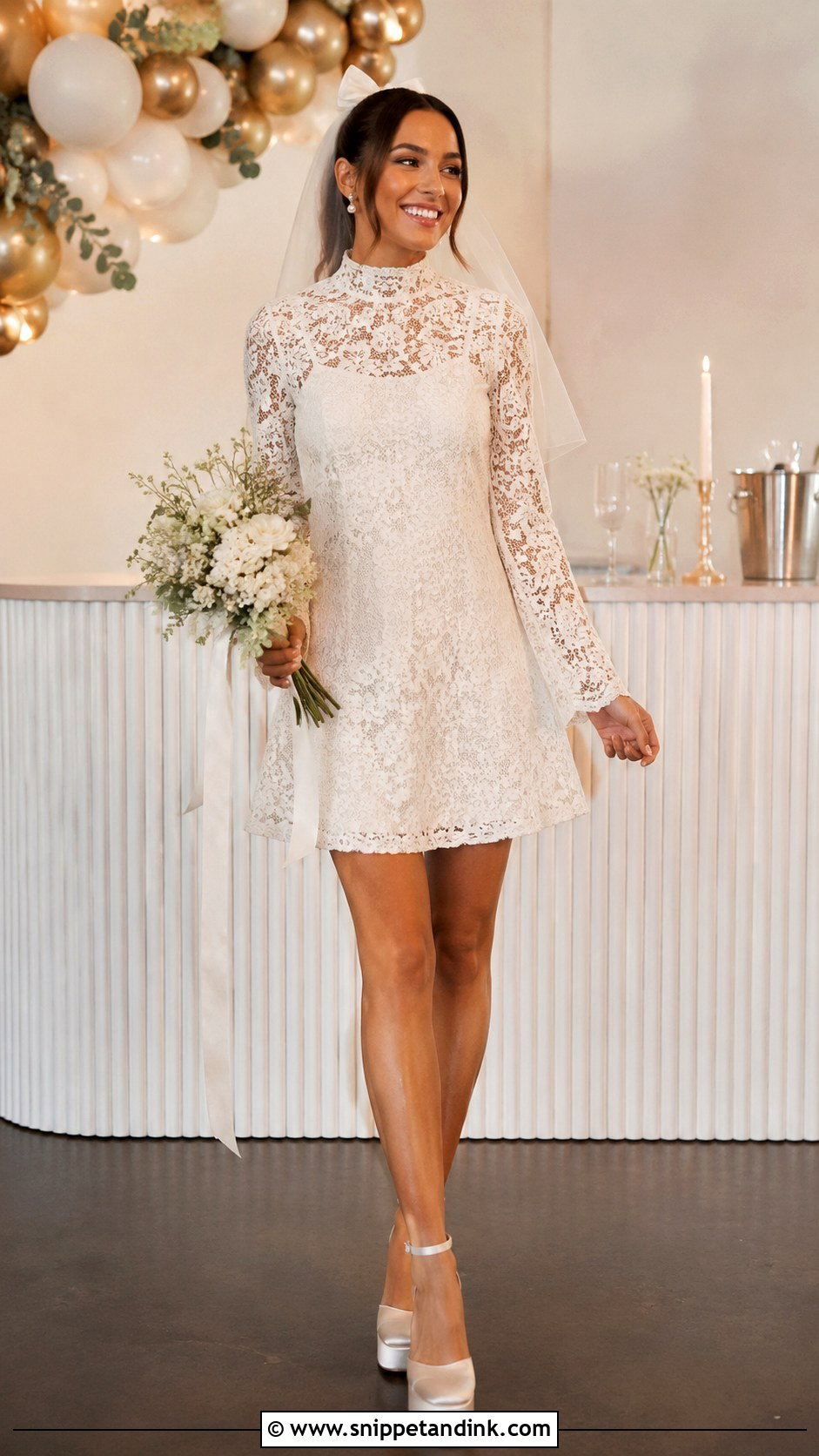
A short dress is the most practical thing you can change into for dancing. A mini or knee-length shape with lace sleeves, a high neck, a shift cut or a soft A-line keeps the retro spirit. Ivory fabric, a bit of texture and polished accessories keep it bridal. Platform heels or block-heel sandals suit it. A headband, bow veil or flower clip adds a festive touch. If this is your second look, plan the change: have someone hang the main dress straight away and allow time for a quick hair adjustment.
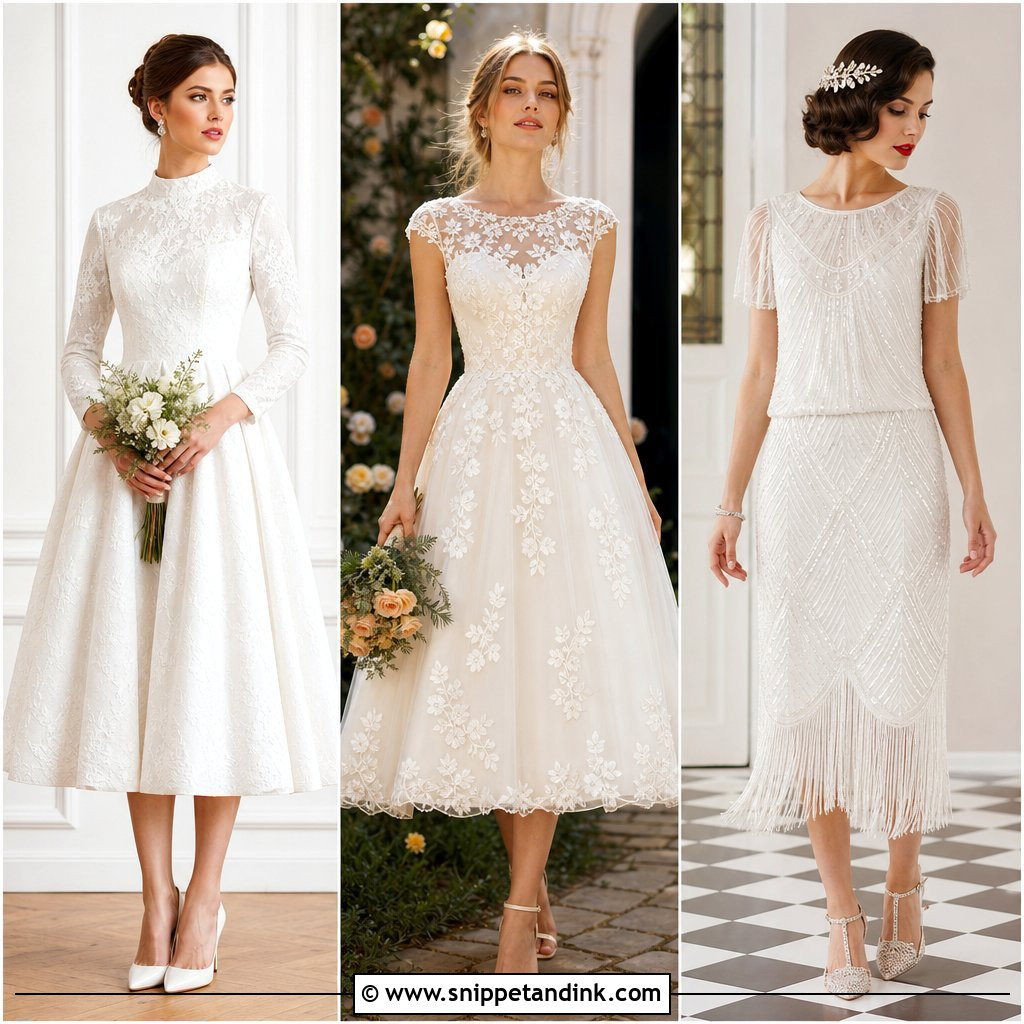
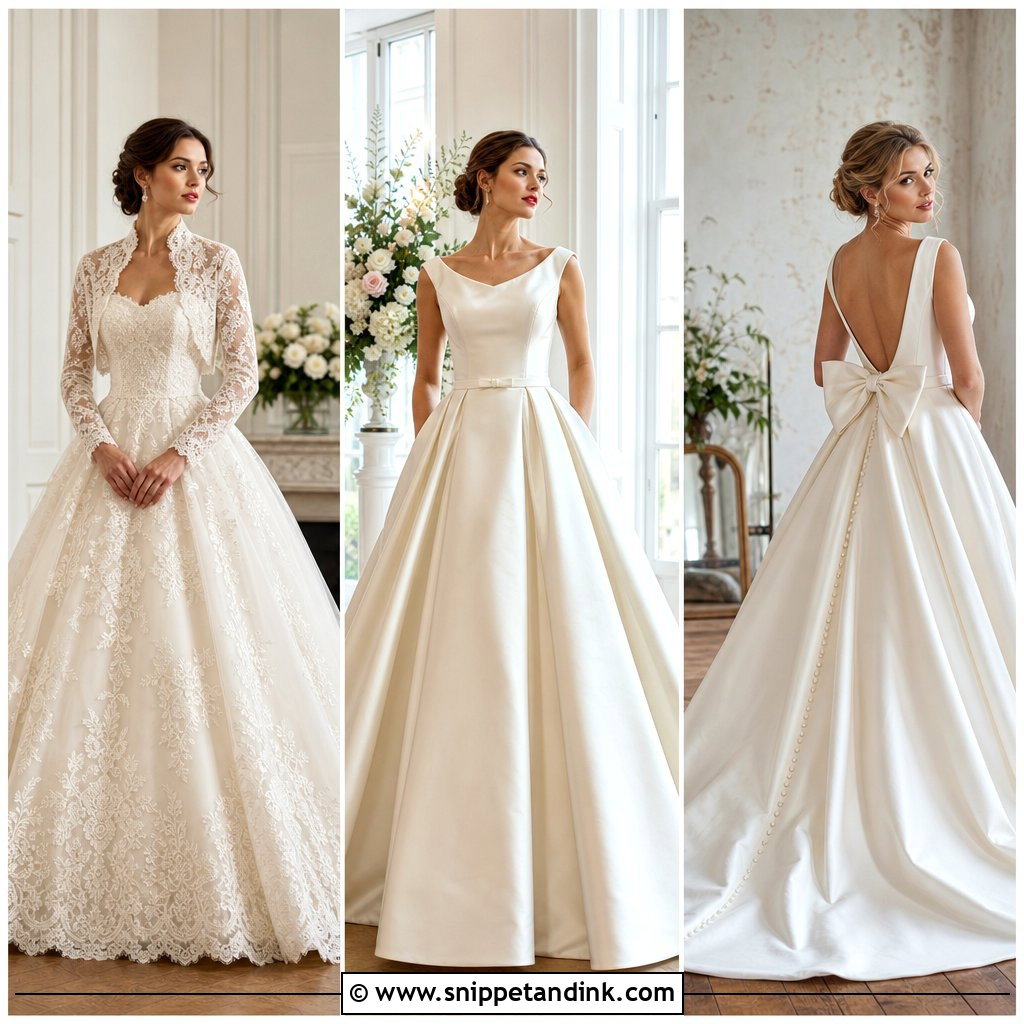

25. Hooded 70s Wedding Dress
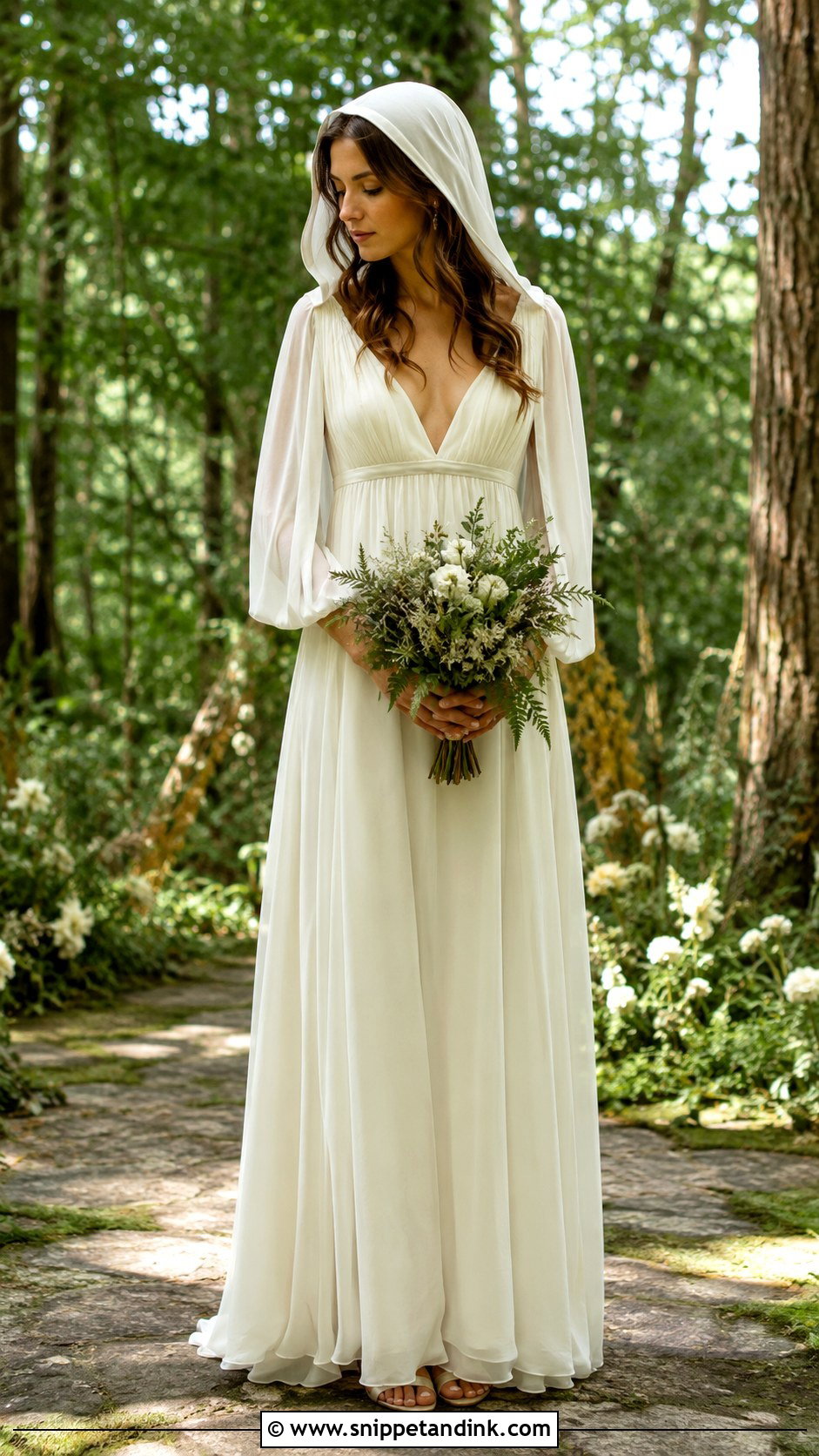
A hood can replace a veil entirely and creates one of the most unusual bridal silhouettes of the decade. It drapes best in chiffon, lace or lightweight jersey; stiff fabrics stand up away from the head. Choose a simple gown beneath, such as an empire waist, a sheath or a flowing A-line. Hair needs planning: a low bun or loose waves sit well under a hood, while a high updo pushes it into a point. Simple sandals, small earrings and a natural bouquet are enough for a woodland or outdoor ceremony.
Wind, Wet Grass and a Long Evening in Chiffon
Most of the dresses on this list are made for the outdoors, and the outdoors tests light fabrics differently from a church aisle. These are the things I sort out with brides before the day.
- Weight the hem. Chiffon and georgette lift in the breeze, and a few small drapery weights sewn inside the lining stop the skirt from wrapping around your legs in photos.
- Hem for the ground you will stand on. On grass or sand, a floor-length skirt picks up damp and stains, so I hem outdoor dresses to just clear the ground in your wedding shoes.
- Test the platforms. Wooden and cork platform soles slip on wet grass and polished floors, so scuff the soles or add grip pads.
- Bring a layer. Sheer sleeves and open backs feel cold once the sun goes down, and a crochet shawl or lace jacket keeps the look in period.
- Keep a stain kit. A stain pen, baby wipes and white chalk lift grass marks and small spills from ivory lace well enough for evening photos.
After the wedding, have the dress cleaned within a few weeks, before sugar or sweat marks set and turn brown. Store lace and crochet folded flat in acid-free tissue rather than hanging, because both stretch under their own weight over time.
Two Details From the Decade Are Usually Enough
What ties these dresses together is softness, movement and texture, whether you fall for bell sleeves, prairie lace, crochet, chiffon, an empire waist or plain satin. My best advice is to pick one or two details from the decade and let them carry the look, which keeps the dress wearable and current. Finish with shoes you can stand in for hours, natural hair, simple jewelry and a bouquet that suits the mood. Try the dress in daylight, walk in it outdoors if you can, and choose the one that moves the way you do.
You'll Like These Ideas:







Leave a Reply