
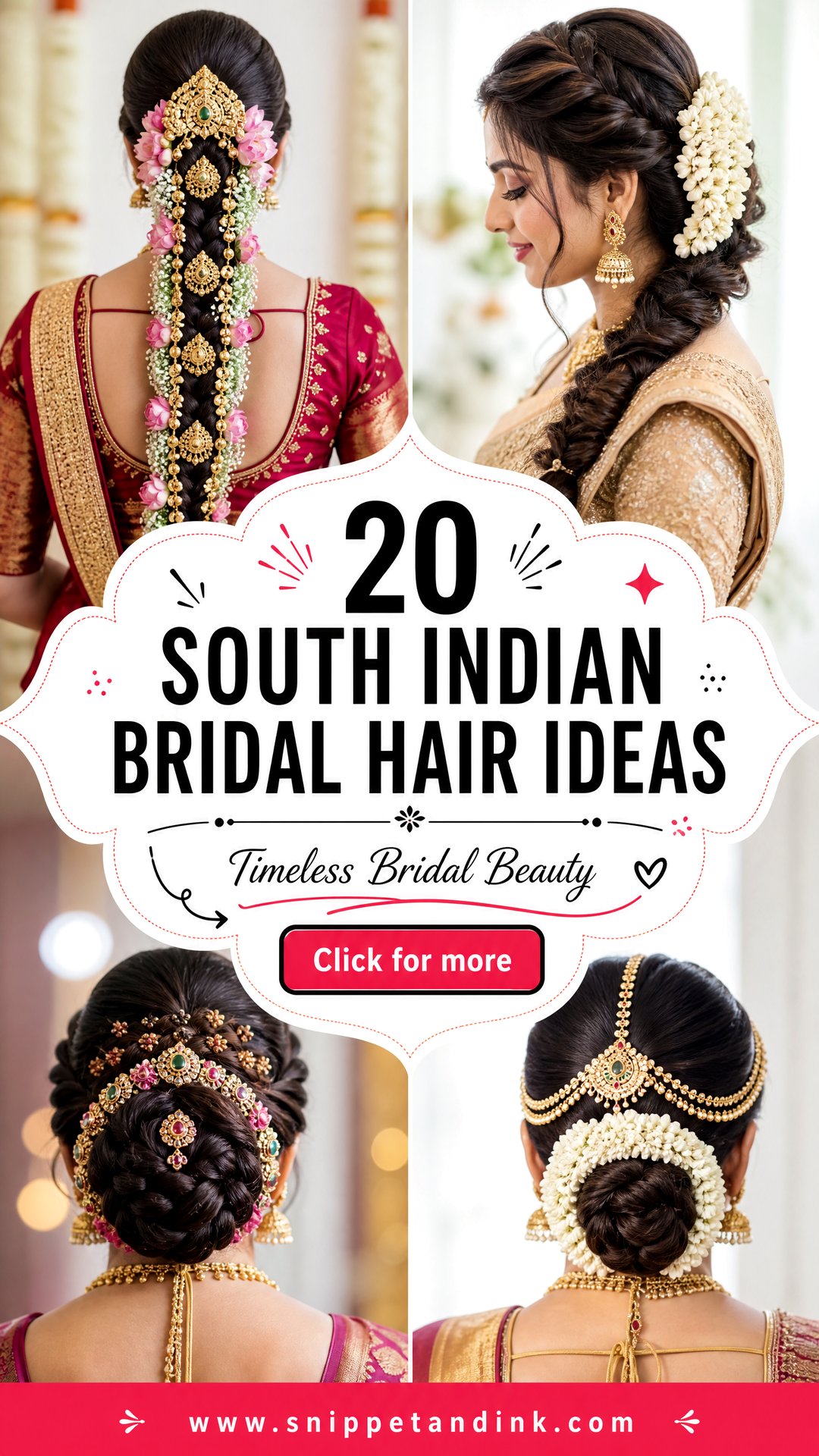
A South Indian wedding hairstyle is mostly an engineering job hidden under flowers. Long braids, low buns, jasmine by the metre, gold ornaments that can weigh more than you expect: all of it has to stay put through a muhurtham, a long photo session and a lot of hugging. Below are twenty styles I’d happily build for a bride, from the full poolajada to softer half-up reception looks, with notes on what each one asks of your hair and how it behaves once the flowers go on.
Ordering Jasmine So It Arrives Fresh on the Morning
Fresh malli poo looks best within a few hours of being strung. The buds open through the day, and fully opened jasmine starts to brown at the edges once it has been warm for a while. So I ask families to order strings for early on the wedding morning, not the evening before, and to keep them wrapped in a damp cloth in a cool room rather than in the fridge, where the buds can bruise and darken.
Quantity is easy to underestimate. A full poolajada or a long garland braid takes a lot more than a bun does, so give your flower supplier the length of the braid and the style you want, and let them work out the strings. Ask for a little extra for touch-ups.
- Order tight, half-closed buds. They open on you and last longer.
- Separate the bride’s flowers from the decor order, so they are strung to hair weight.
- Have someone collect them and bring them straight to the room where hair is being done.
- Mist lightly once they are in the hair, never soak them, or the water runs down your neck.
1. Jasmine Garland Braid
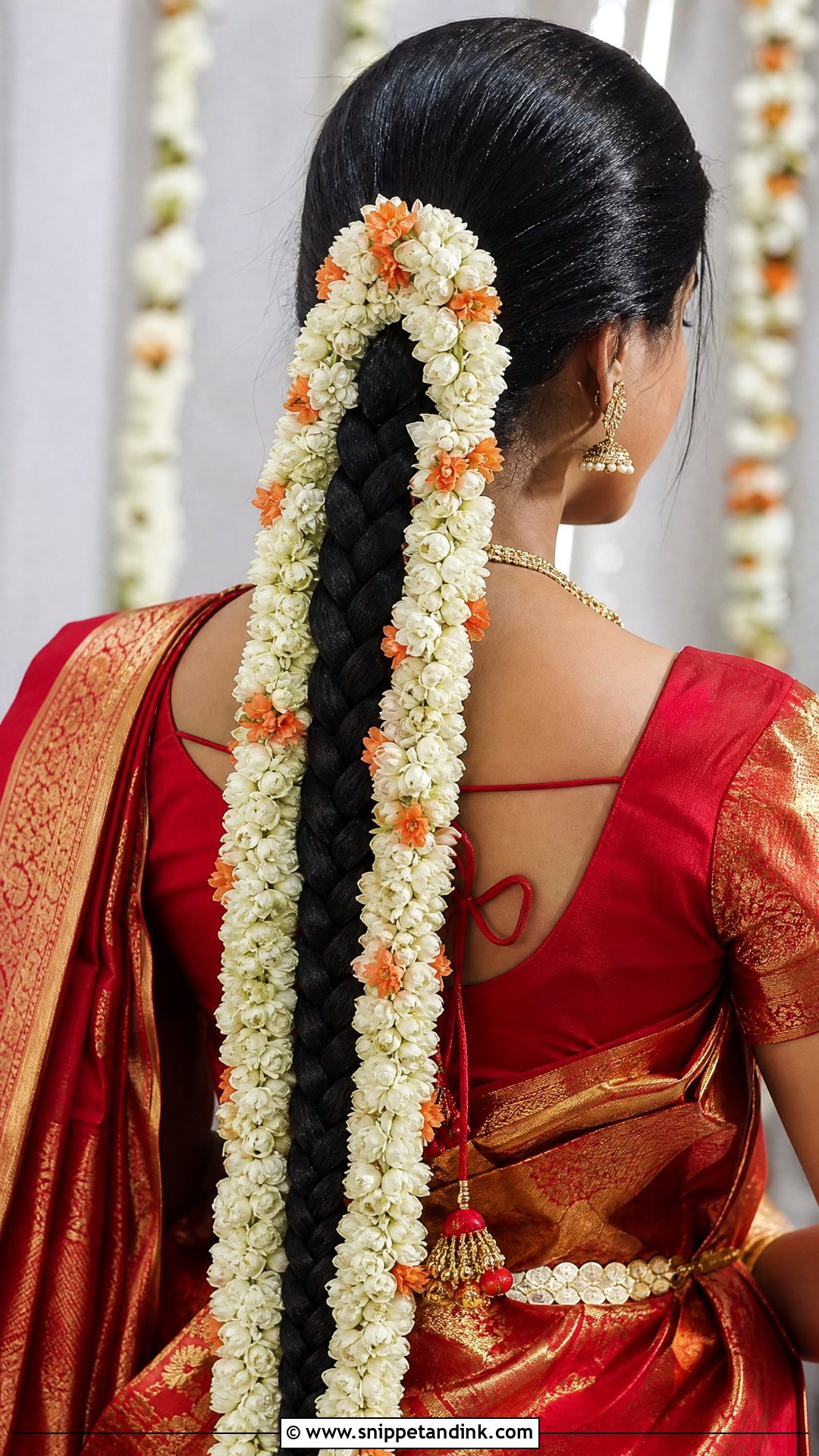
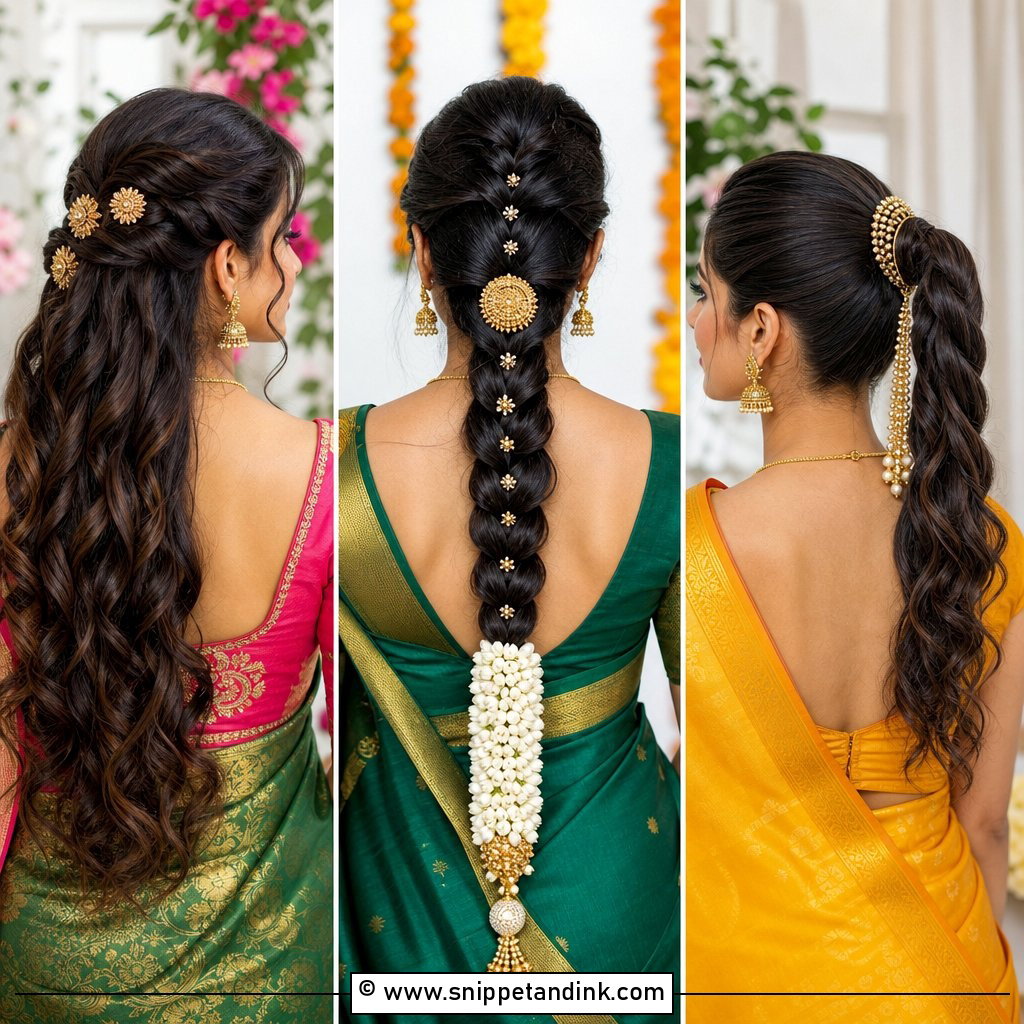
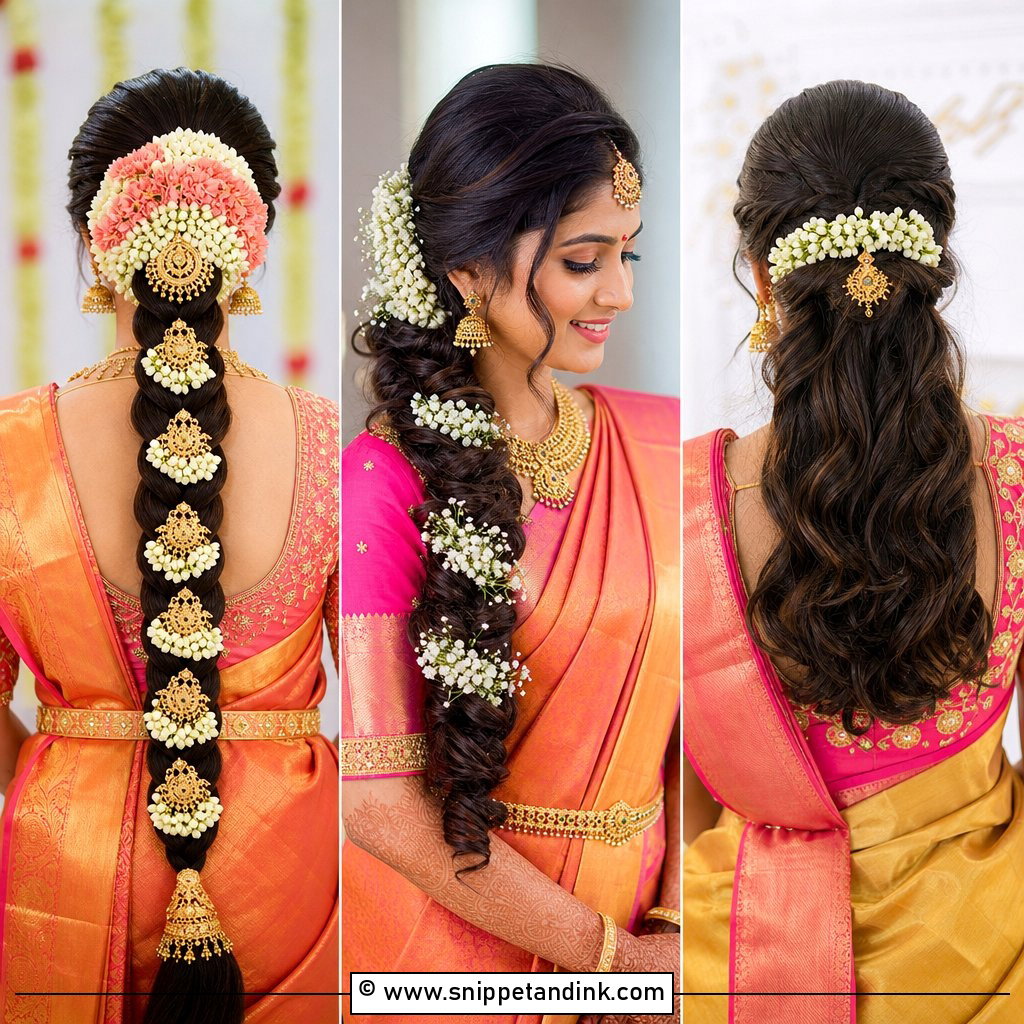
This is the look most families picture first: a centre parting, one long three-strand braid down the back, and strings of malli poo running from crown to tip, sometimes broken up with roses or orange kanakambaram. Its meaning is about purity and harmony, and it sits naturally with a Kanjeevaram and temple jewellery. The practical catch is the parting. A centre part shows every gap, so I smooth it with a tiny amount of gel and set it before the braid goes in. I also braid slightly tighter than you’d wear day to day, because the garland adds weight and a relaxed braid widens and sags by the second hour.
2. Poolajada Braid
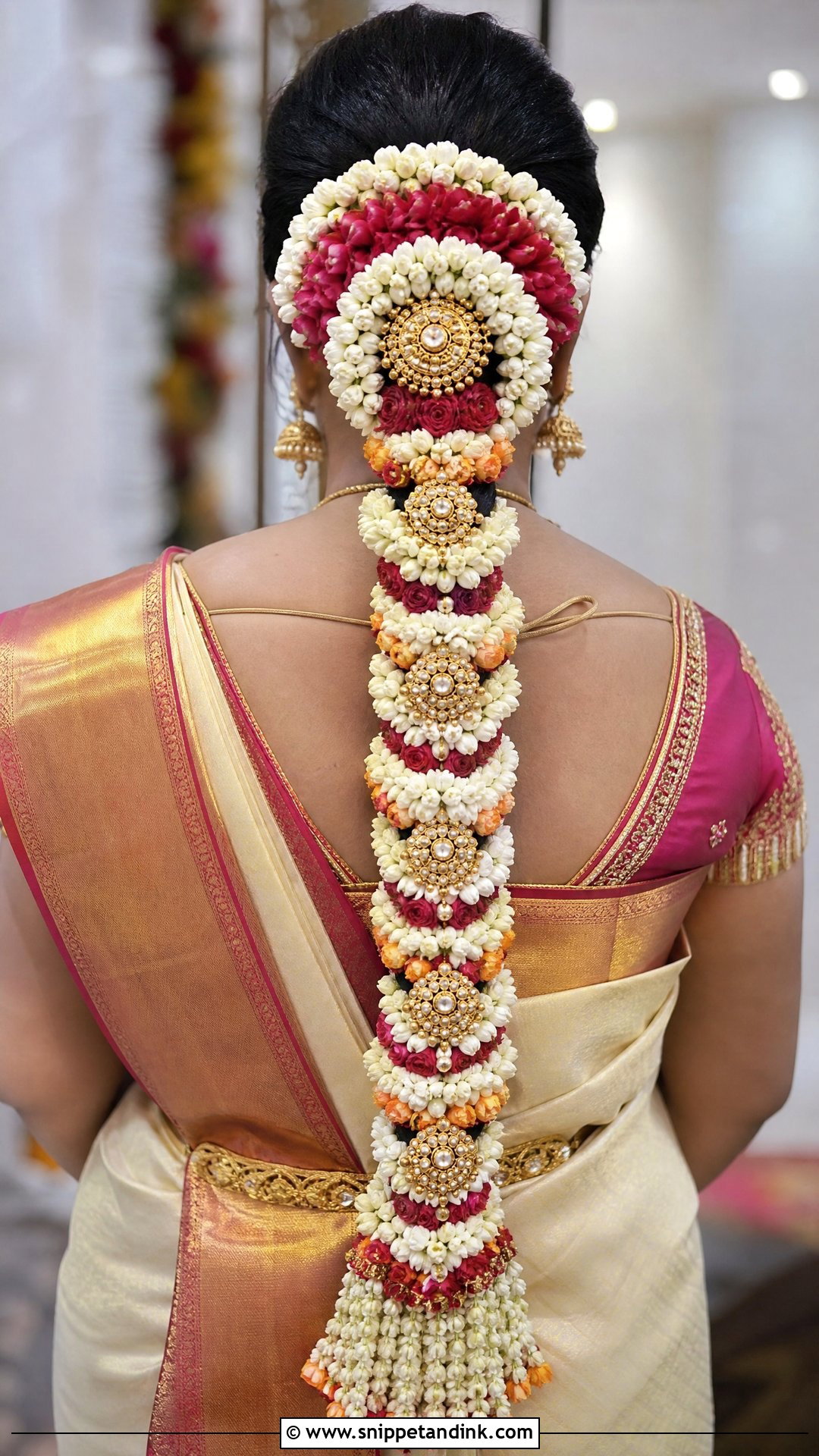
The poolajada is a braid covered entirely with flowers in tidy rows, usually jasmine with roses or marigolds, tapering to a flowered point or kunjalam tassels. Today most of us build the floral panel separately on a backing and attach it to the braid, rather than sewing flowers onto the hair itself. That makes the bride’s job far easier: it goes on in minutes and comes off without tearing hair. Ask whoever supplies it how long the panel is and what it weighs, because a full-length one pulls on the crown and needs a firm anchor there.
3. Rose and Gajra Bun
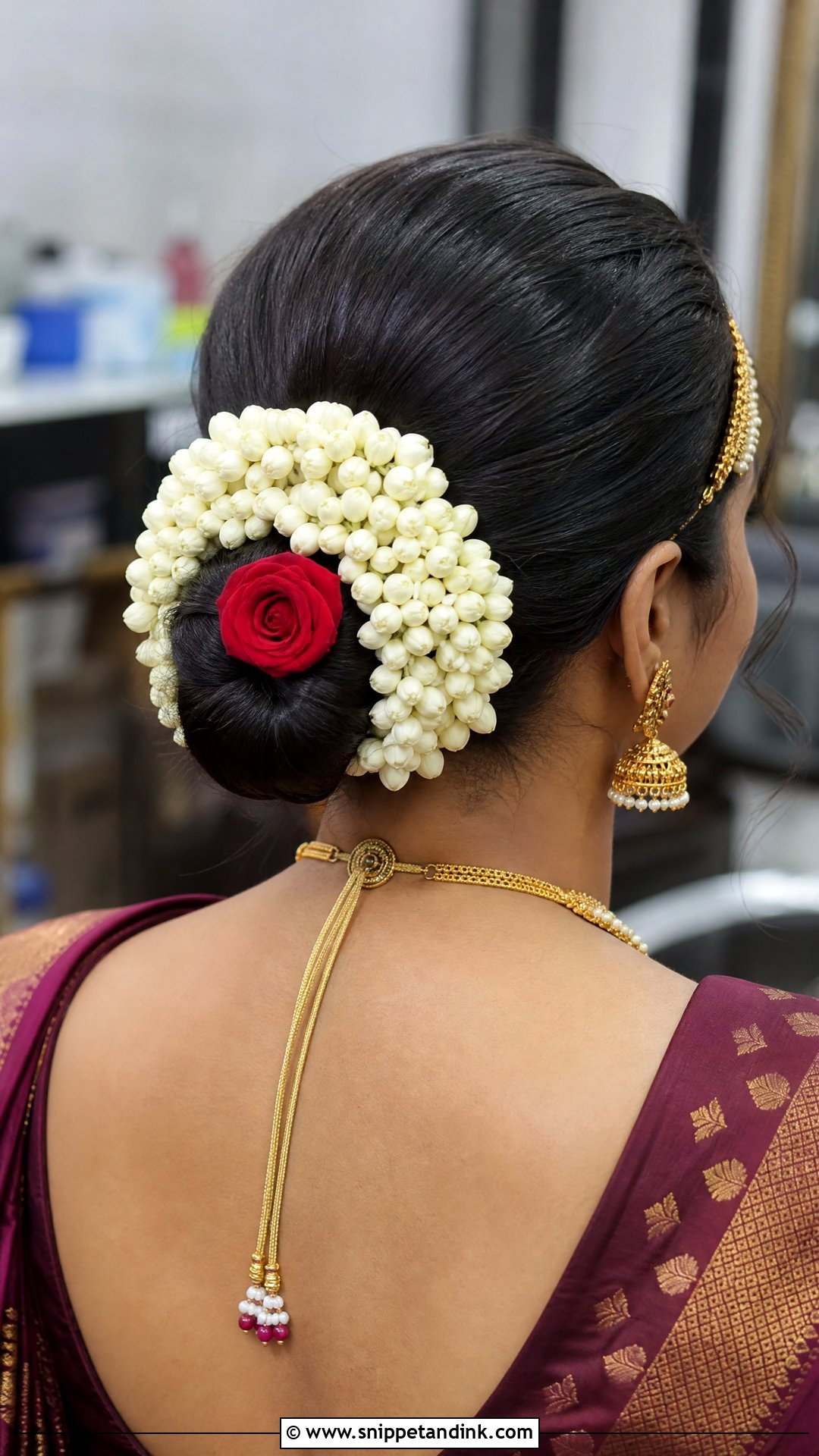
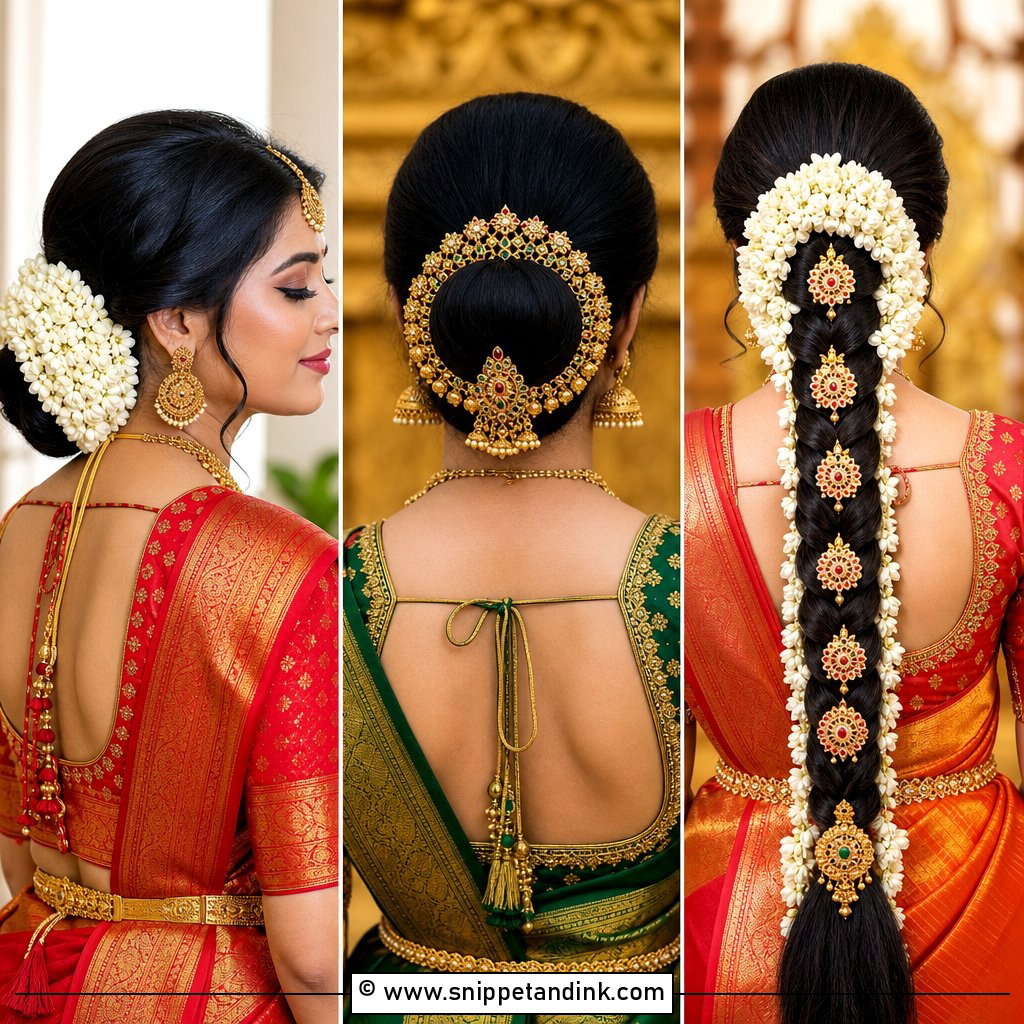
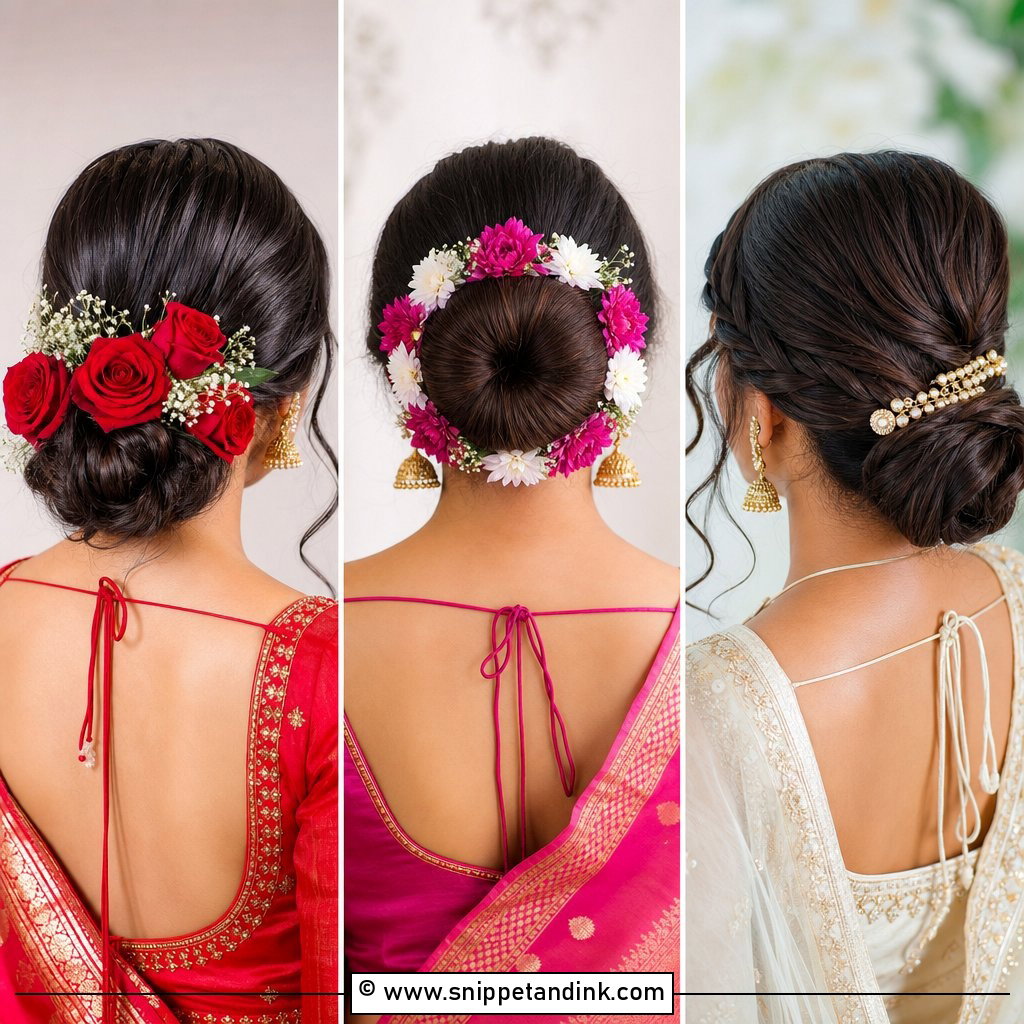
Round strings of jasmine coiled around a low bun, with one rose or a small cluster set in the middle. It’s the style I suggest when a ceremony runs long, because a nape bun lets you sit back against a chair or the mandapam pillar without pressing on anything. Pin the bun with U-pins pushed toward the scalp rather than bobby pins alone; jasmine strings are heavier than they look and will slide a loosely anchored bun downward. Jhumkas and a matha patti both sit well with it.
4. Kondai Bun With Jasmine
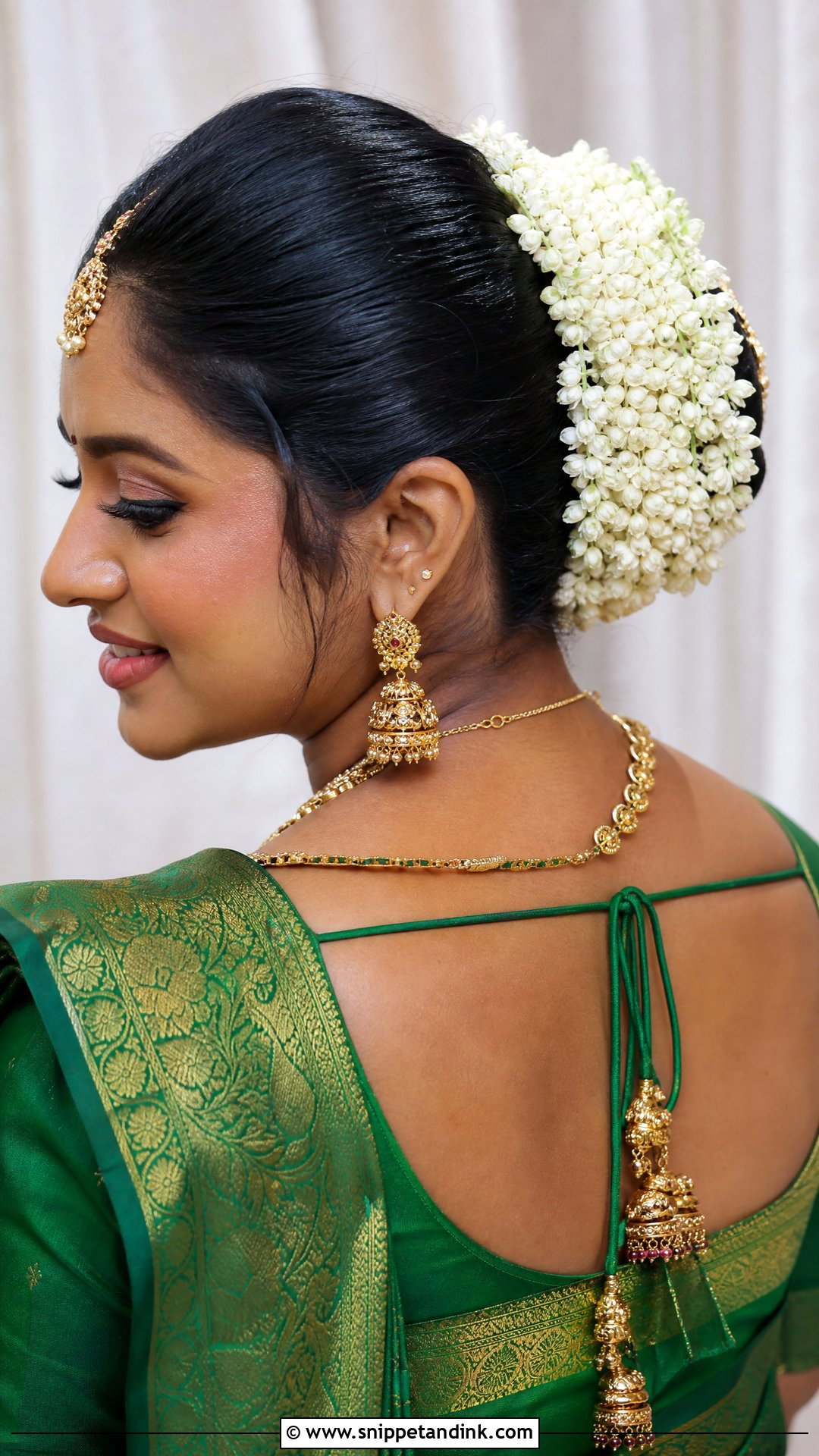
The kondai is the temple-wedding staple: a rounded bun, high or low, with multiple thick layers of jasmine stacked around it until it reads as a full floral crown. Nethichutti and a rakodi at the back finish it with gold. I build the kondai over a firm base, either the bride’s own hair backcombed or a bun filler matched to her colour, because jasmine wrapped around a soft bun collapses into an oval. A well-made one holds through every ritual and every family photograph without needing a single touch.
5. Half-Up Half-Down With Curls
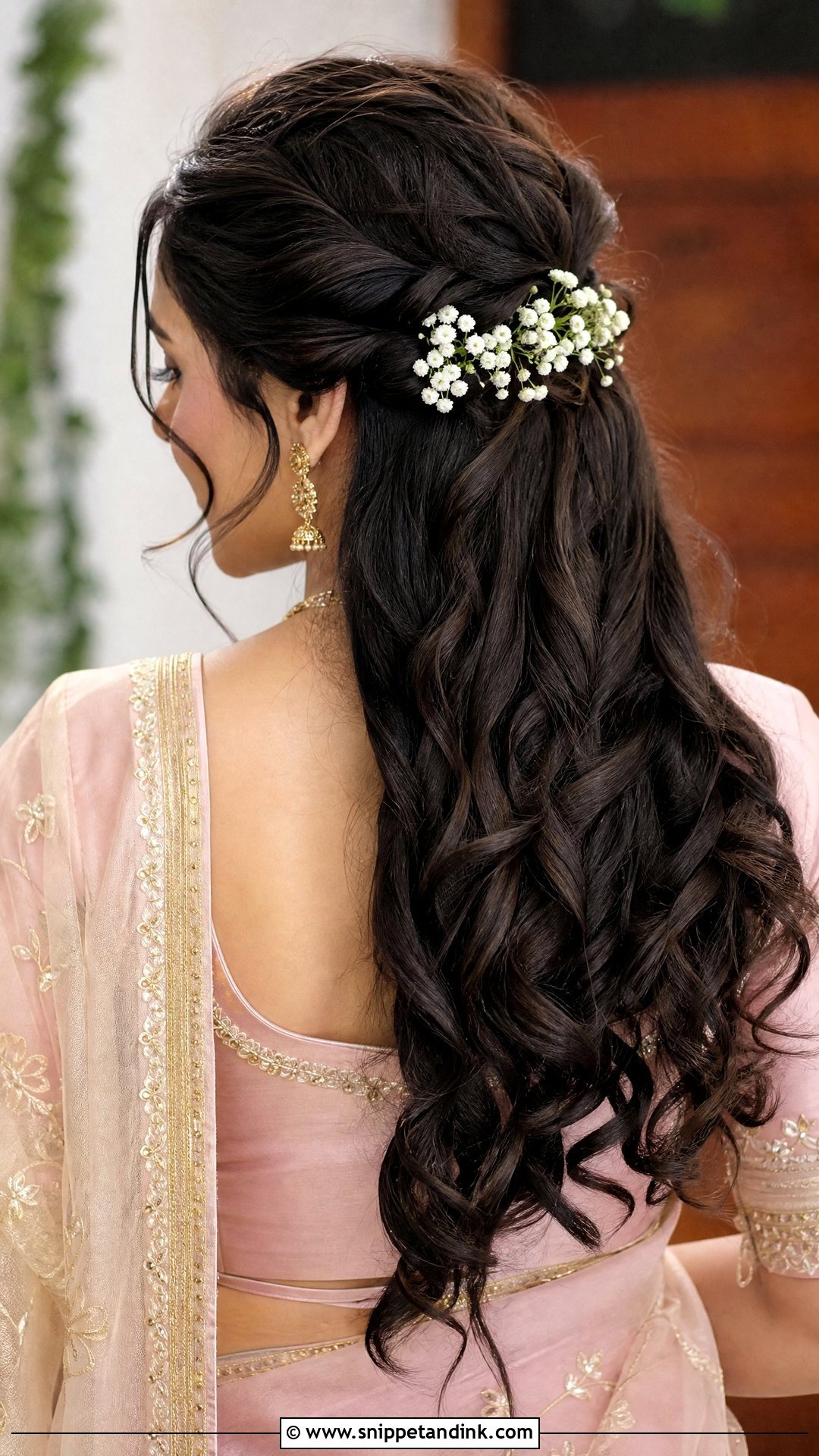
Half-up, half-down pulls the top section back into a twisted crown, leaves curls loose over the shoulders, and tucks jasmine or small roses into the twist. It suits receptions and engagement functions more than the main ceremony. Be honest with yourself about humidity: coastal and monsoon weddings drop curls fast, so I set them with heat and let them cool fully in pin curls before touching them. Fine hair benefits from a few clip-in wefts underneath, mostly to give the curls something to rest on.
6. Hybrid Floral and Gold Braid
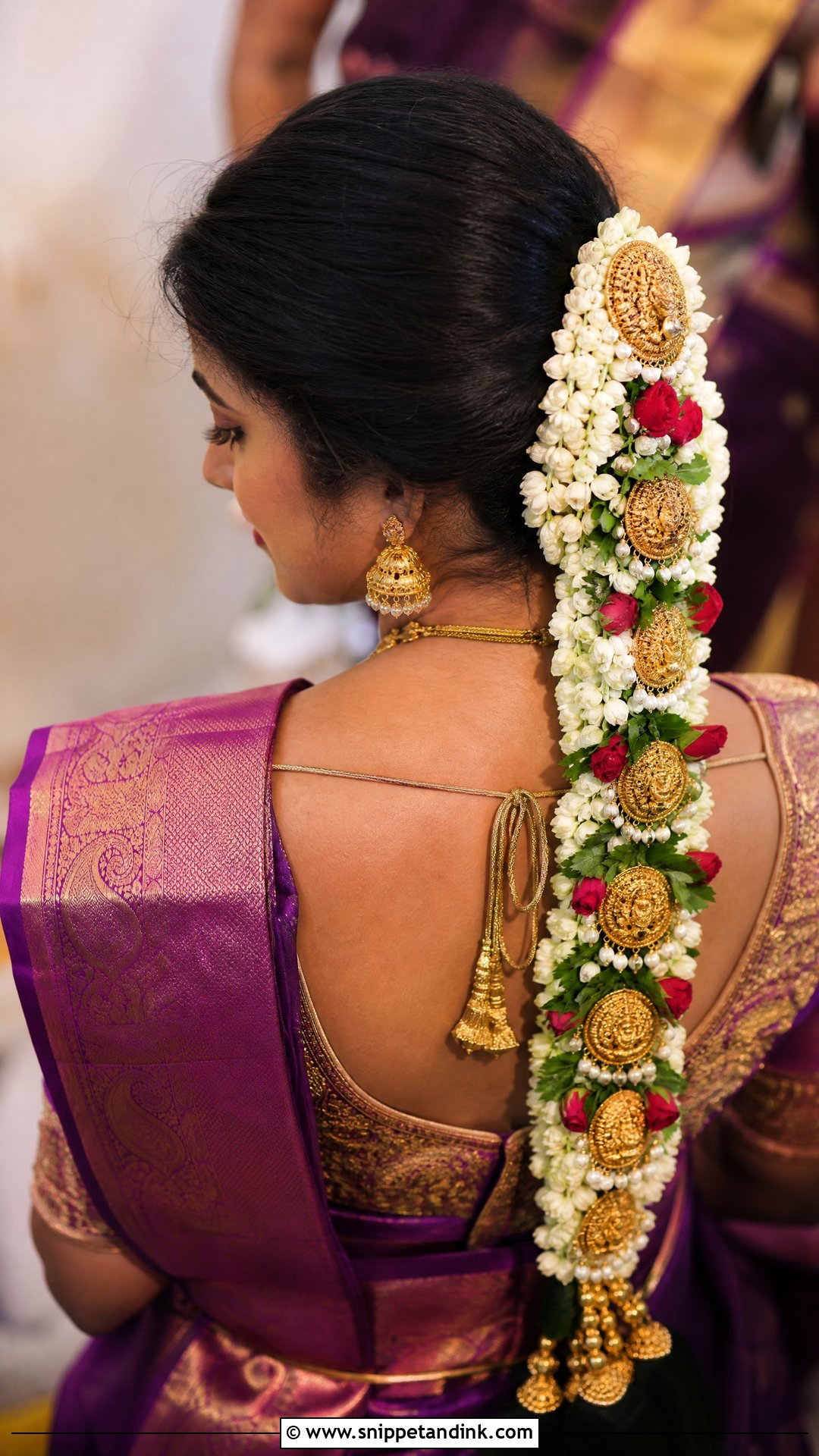
Here fresh jasmine, roses and leaves share the braid with golden jada billalu hair pieces, so you get alternating softness and shine down the length. Gold reflects flash strongly, which is why it shows up so clearly in evening photos. The planning work is colour: I ask brides to bring a swatch of the saree border so the flowers and gold pieces relate to it rather than fighting it. Every ornament also adds weight, and too many billalu on a thin braid will twist it sideways. Count them at the trial.
7. Bubble Braid With Flowers
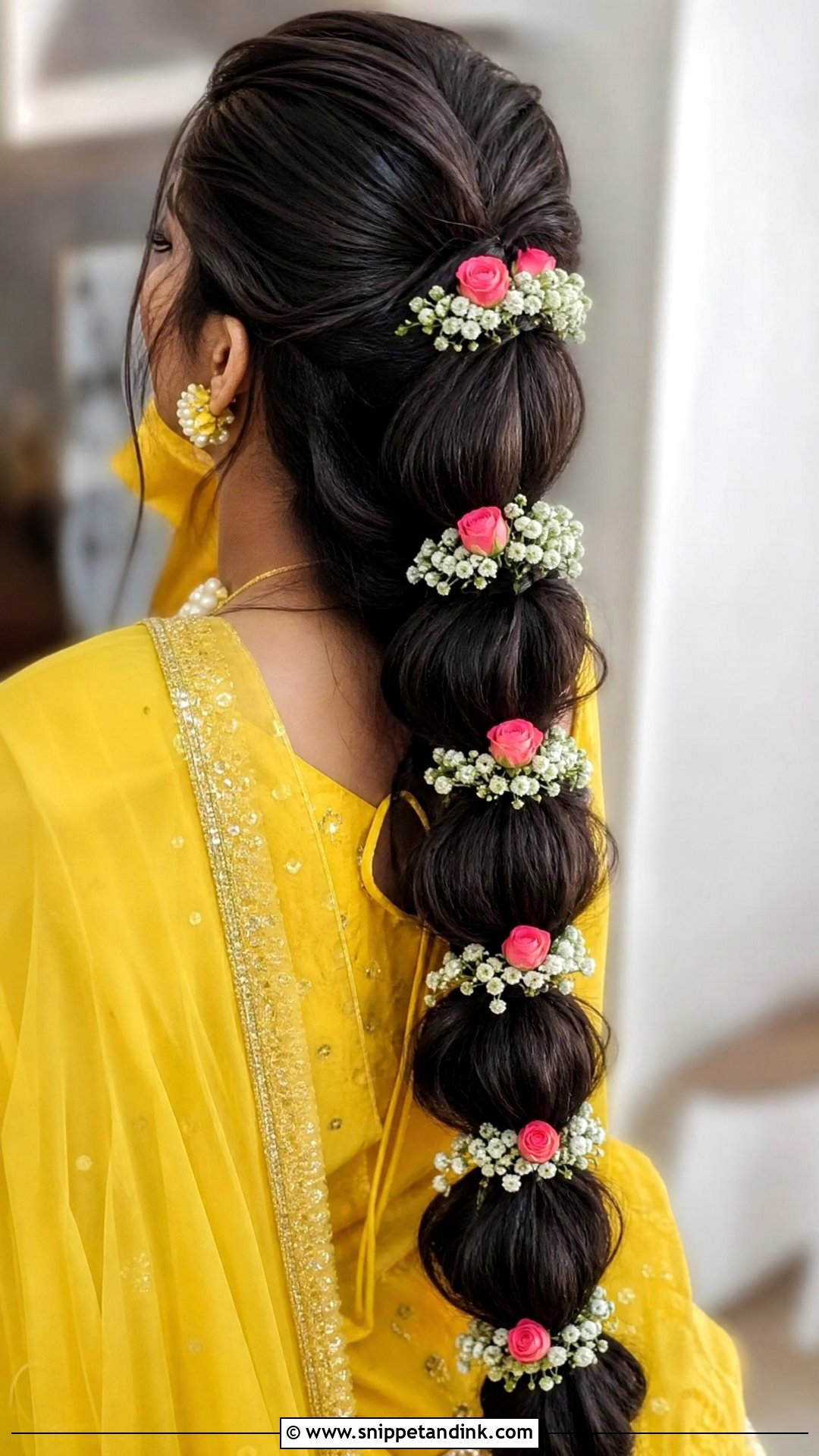
Bubble braids skip the weave altogether. The hair is gathered at intervals with small elastics and each section is pulled outward into a round bubble, then dotted with jasmine clusters or tiny rose buds. I like it most for haldi and mehndi, where a bit of fun is welcome and turmeric paste is likely to land on everything. Use clear or hair-coloured elastics. Bright ones show between the flowers in close-ups, and pulling the bubbles wide makes fine hair look twice as thick.
8. Floral Crown Bun
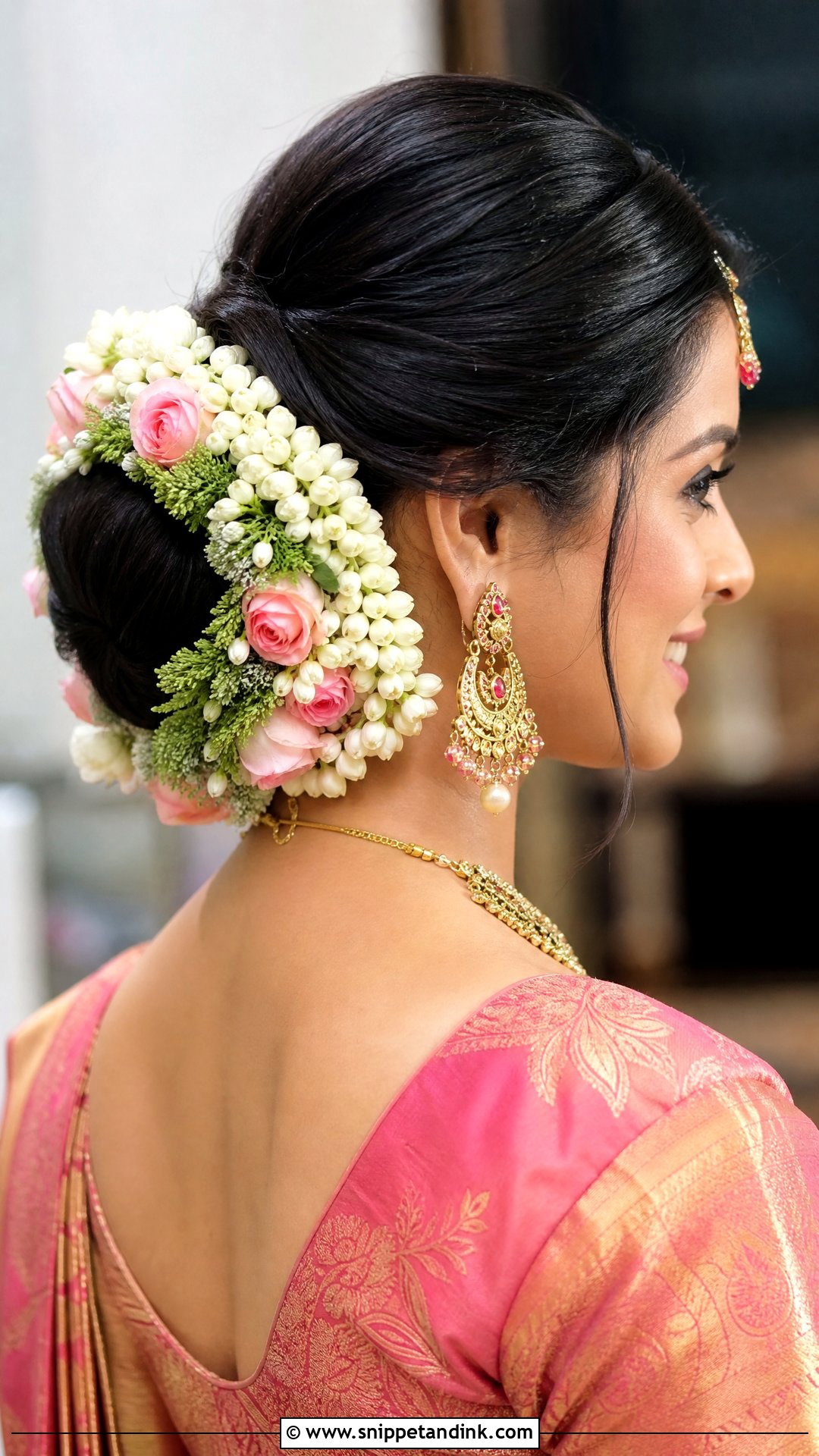
Picture a bun sitting at the back of the head with a full ring of jasmine, roses and greenery around it, so it reads as a halo from behind. Because the flowers circle the bun completely, it works under a dupatta or veil as well, which hides the front of the arrangement anyway. I wire the ring before it goes on rather than pinning loose blooms one by one; it sits flatter and survives guests leaning in. Maang tikka and statement earrings carry the front of the look.
9. Side Swept Braid With Gajra
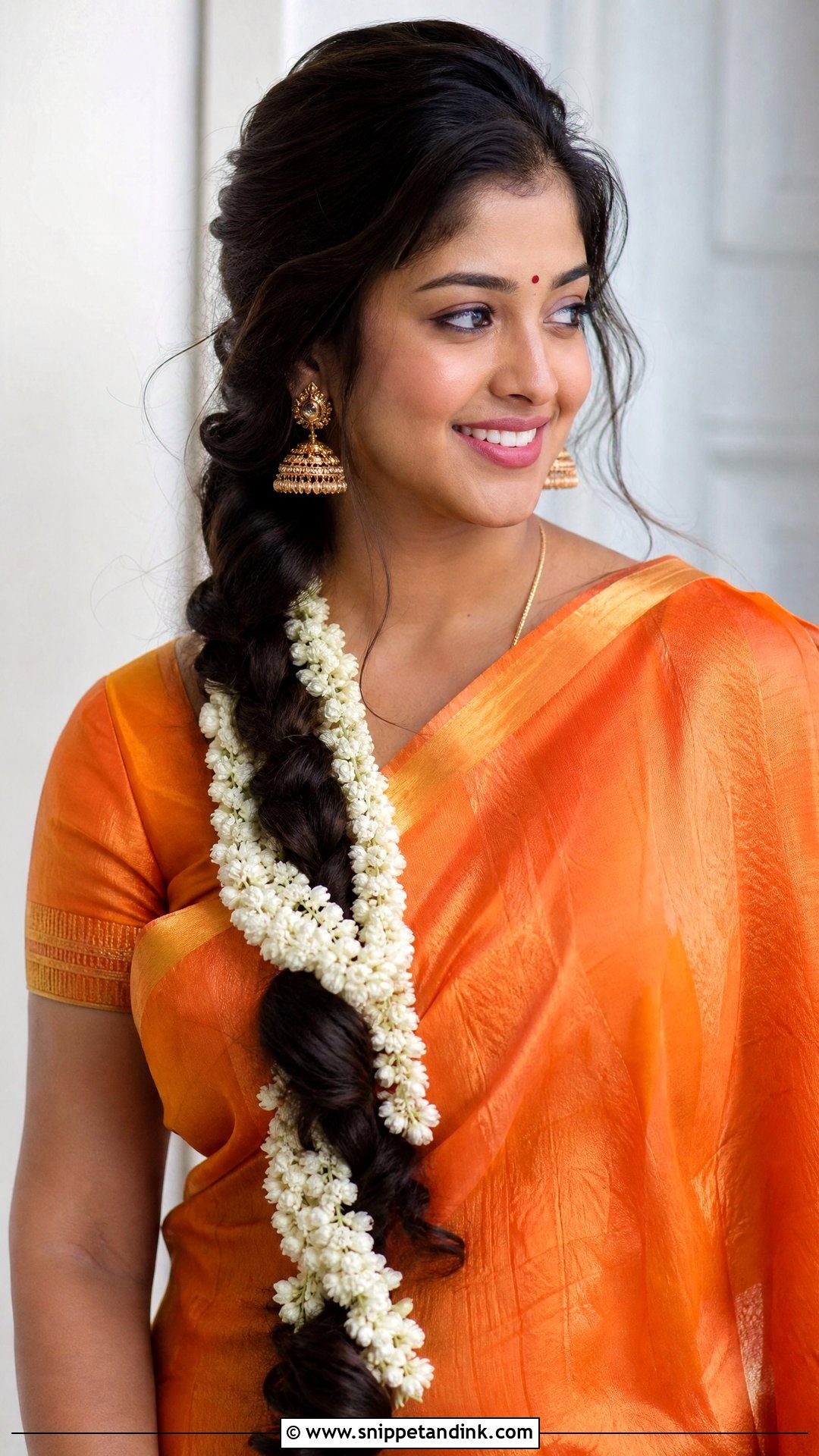
A side-swept braid comes forward over one shoulder, wrapped along its length in gajra, so the flowers face the camera and the opposite earring stays visible. It’s a softer outline than the centre braid and suits receptions and sangeet nights. Decide which side before the day. I braid toward the side your photographer will usually shoot from, and I anchor the braid behind the ear with two crossed pins so it doesn’t swing back the moment you turn your head.
10. Pearl and Jasmine Bun
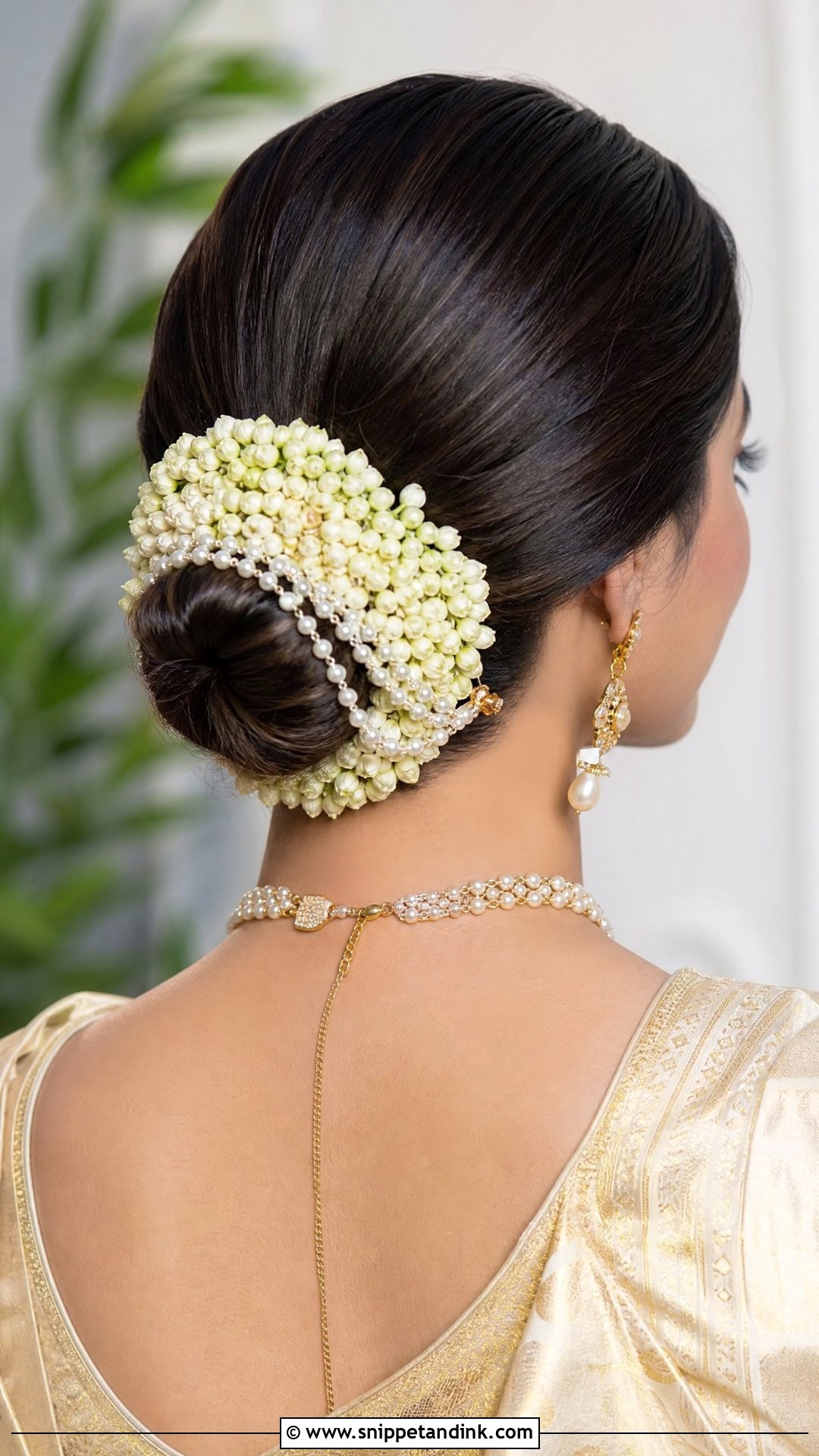
Pearls threaded through a jasmine-wrapped low bun give an almost tonal look, white on white, with a little extra shine. It sits most naturally with pastel and cream sarees and pearl jewellery, and engagement ceremonies suit it well. The detail most people miss: real jasmine yellows slightly as the hours pass, while pearls don’t. By the evening the contrast between them grows, so I keep the pearl strings fine and let the flowers do most of the work.
11. Marigold Decorated Braid
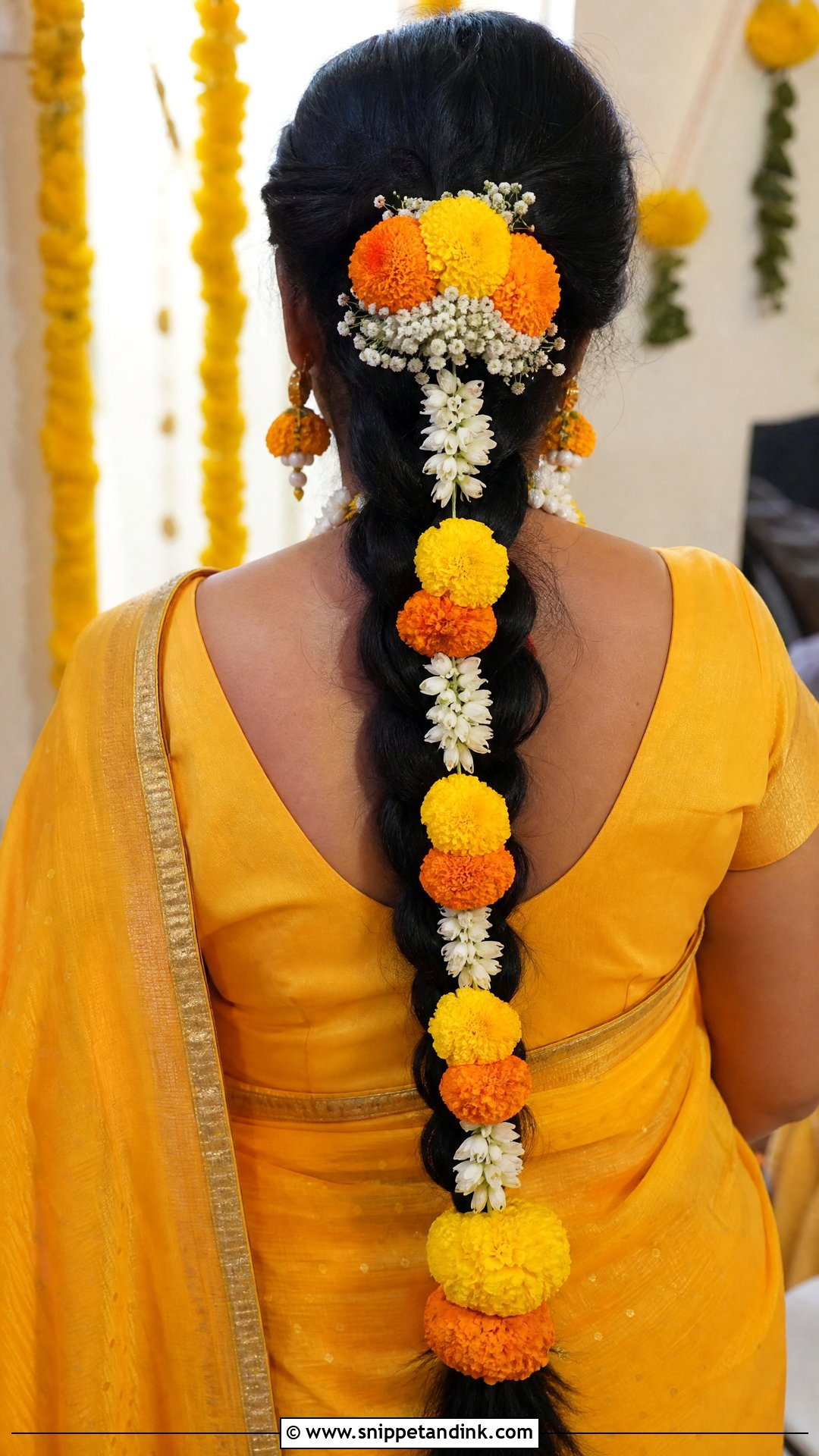
Marigolds bring the colour and the auspiciousness: bright orange and yellow blooms set down the braid, often alternated with jasmine. They show up strongly against dark hair and saturated sarees, and they hold their shape in heat better than jasmine does, which is why I reach for them at daytime functions and haldi. Marigold heads are bulky, so space them out. A braid packed tightly with them gets heavy and starts to bend at the nape.
12. Messy Bun With Flowers
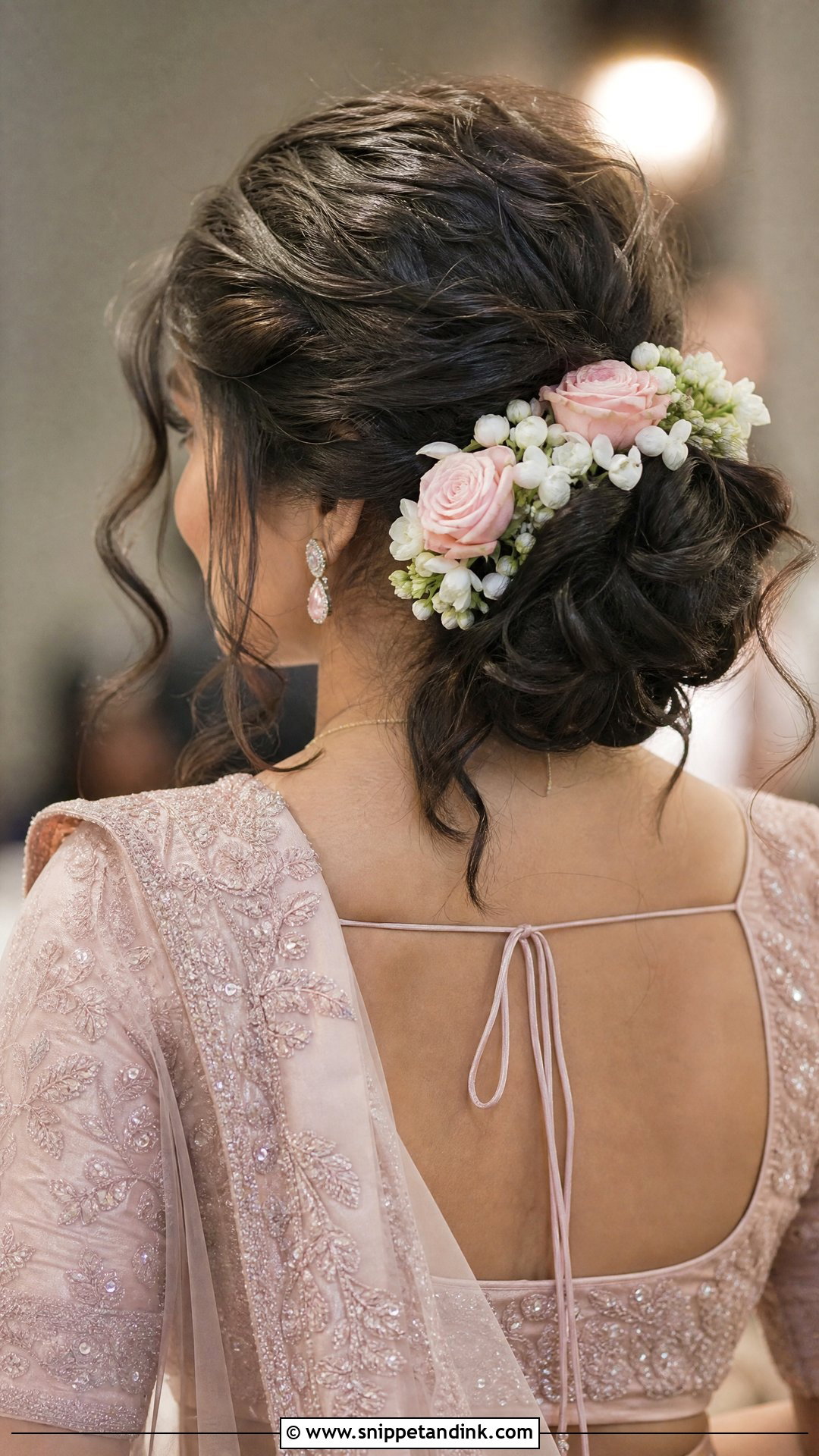
A messy bun relies on texture and a few loose strands rather than polish, with jasmine or roses tucked in. It’s comfortable, and it suits receptions and smaller weddings. The word messy is misleading, though. Every loose piece in a bridal version is placed on purpose, and the bun underneath is pinned as firmly as any formal updo. On very silky hair I add a texture spray first, or the whole thing slips out within an hour.
13. Braided Bun With Jewels
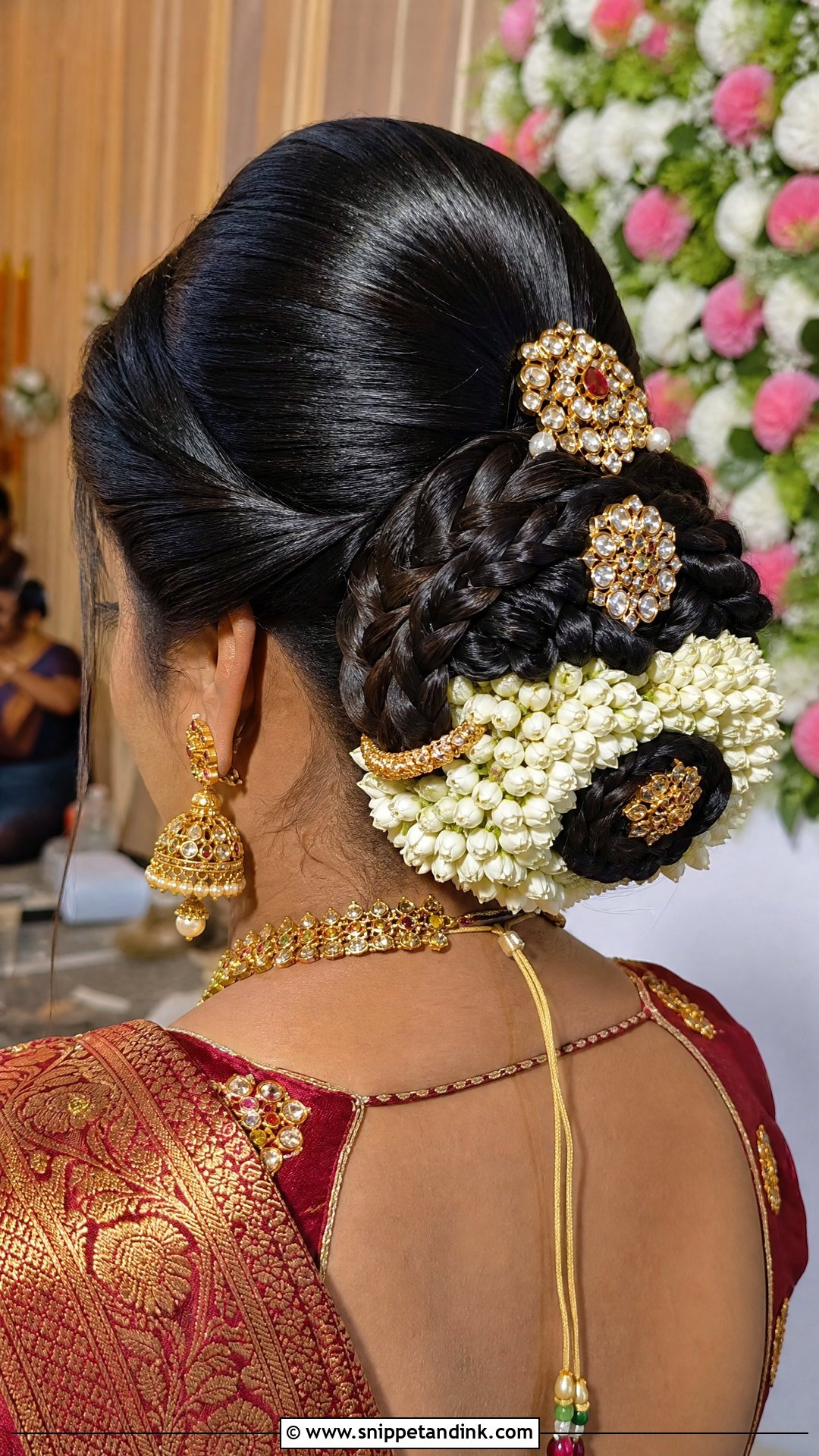
Several small braids are made, then coiled together into a structured bun, finished with gold jewels, kundan pins or pearl clips and a ring of jasmine at the base. It’s the most detailed look on this list and pairs with heavy temple jewellery. Expect it to take longer in the chair than a plain bun. The upside is security: interlocked braids grip each other, so this is one of the steadiest styles I know for a very long day.
14. Fishtail Braid With Jasmine
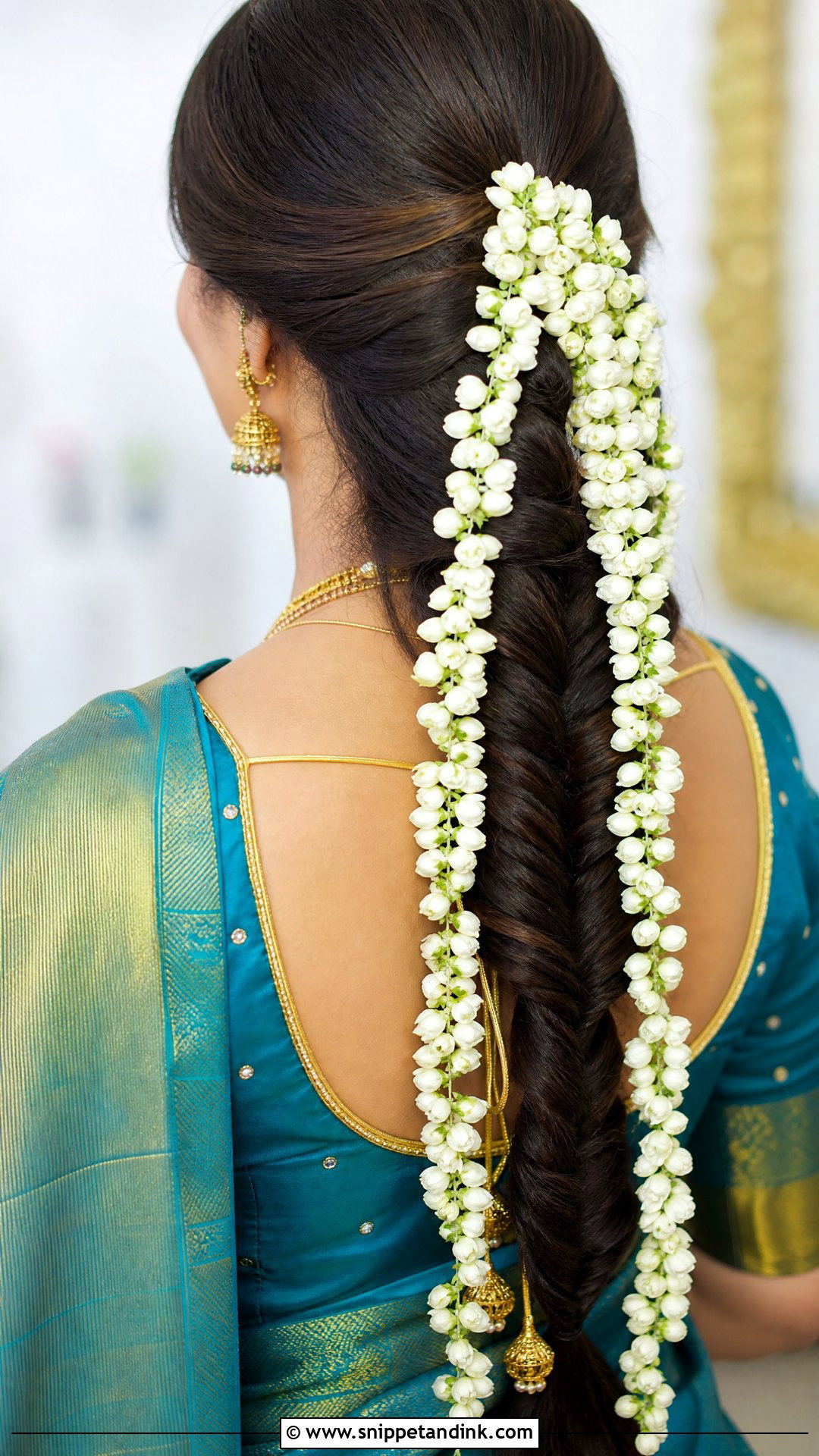
A fishtail braid splits the hair into two sections and crosses tiny pieces between them, which gives that fine woven texture. Gajra can wrap along it, or small blooms can sit between the sections. It needs real length and density to show the pattern, so I wouldn’t push it on short or thin hair. You can wear it sleek or pancaked slightly for width; I only loosen it after the flowers are placed, otherwise they pull the loosened sections apart.
15. Low Bun With Matha Patti
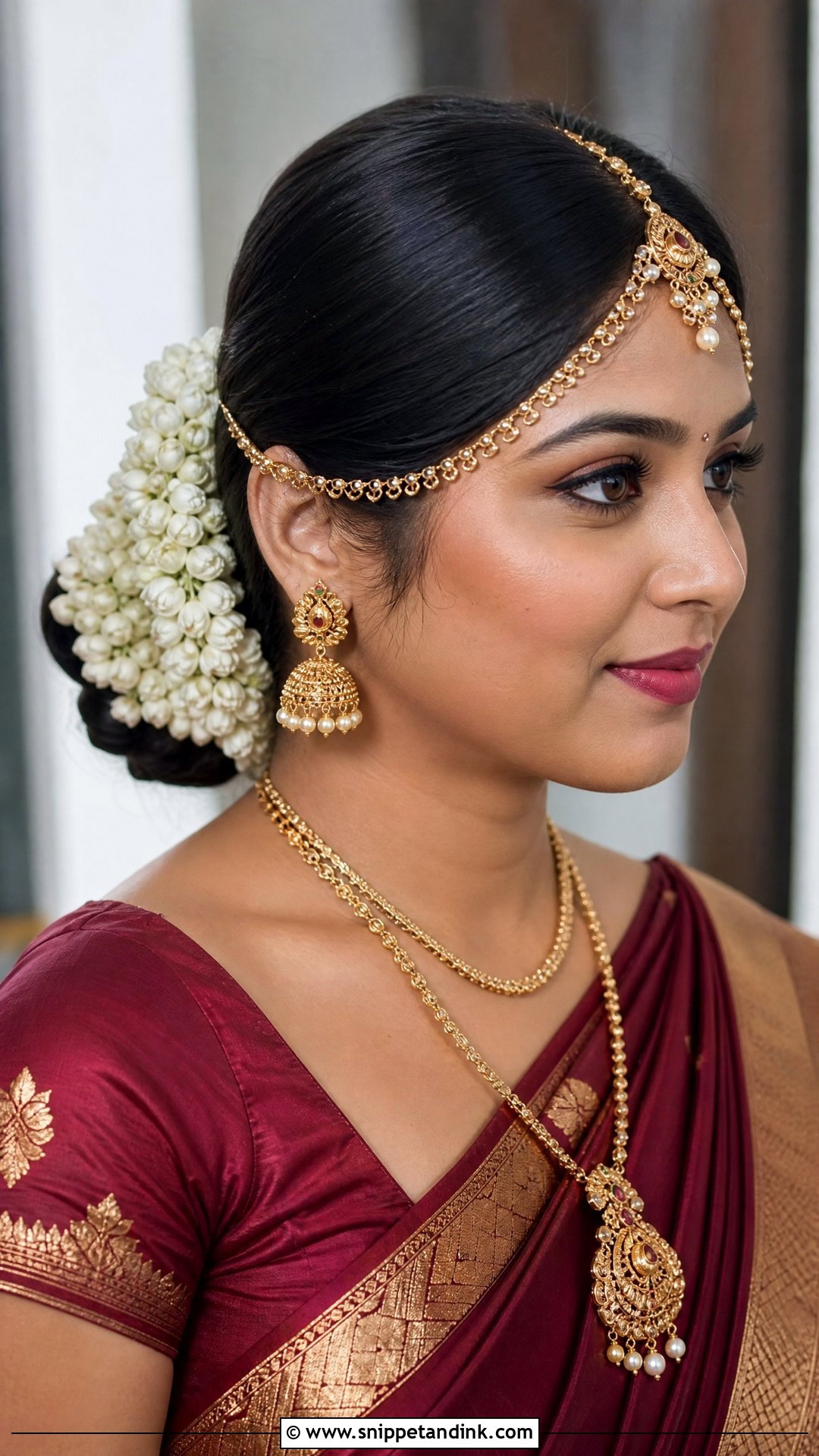
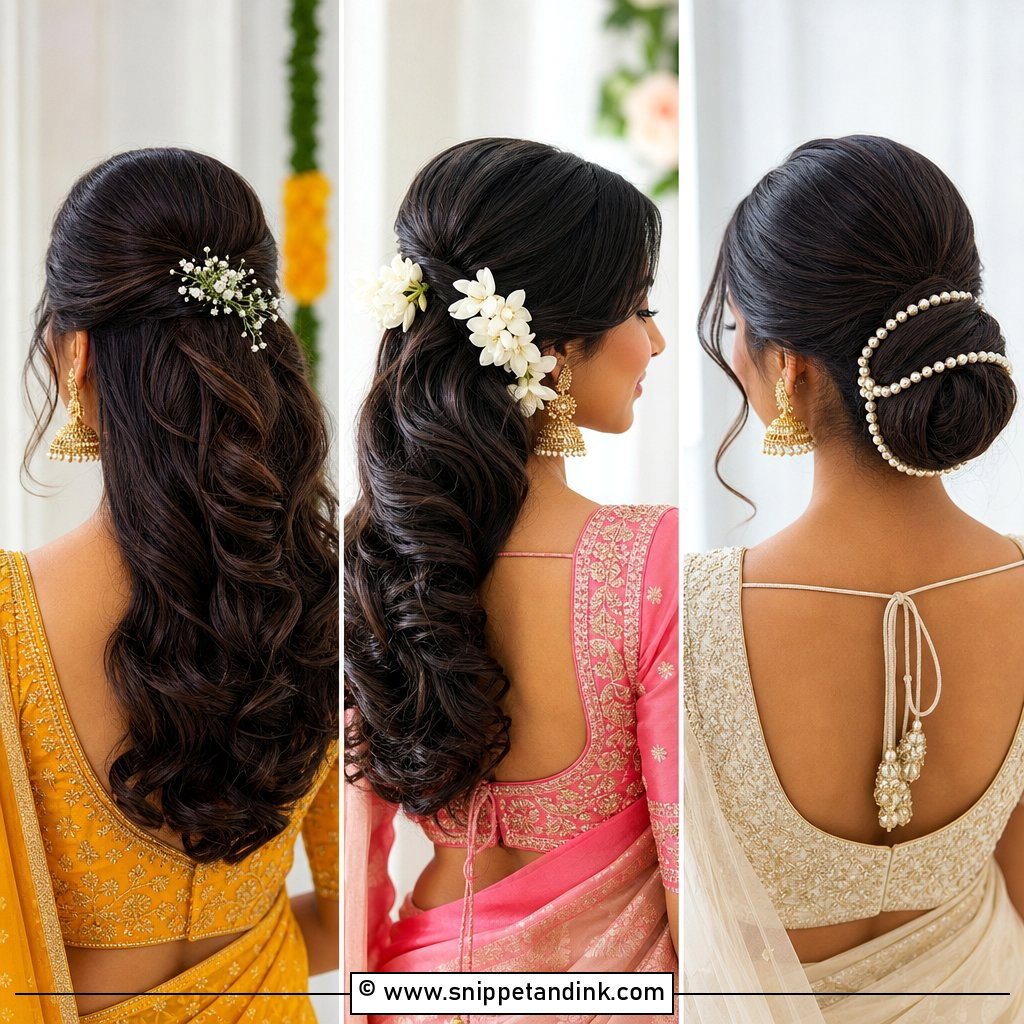
A low bun paired with a matha patti divides attention neatly between hair and jewellery. The bun sits at the nape wrapped in jasmine or roses, and the forehead chain frames the face from the front. The matha patti has to be pinned into the hair at both sides, and I place those pins before the bun goes in, so the chain sits level on the forehead. Set it last and it tends to tilt toward whichever side was pinned first.
16. Flower Bun With Gold Leaf Accents
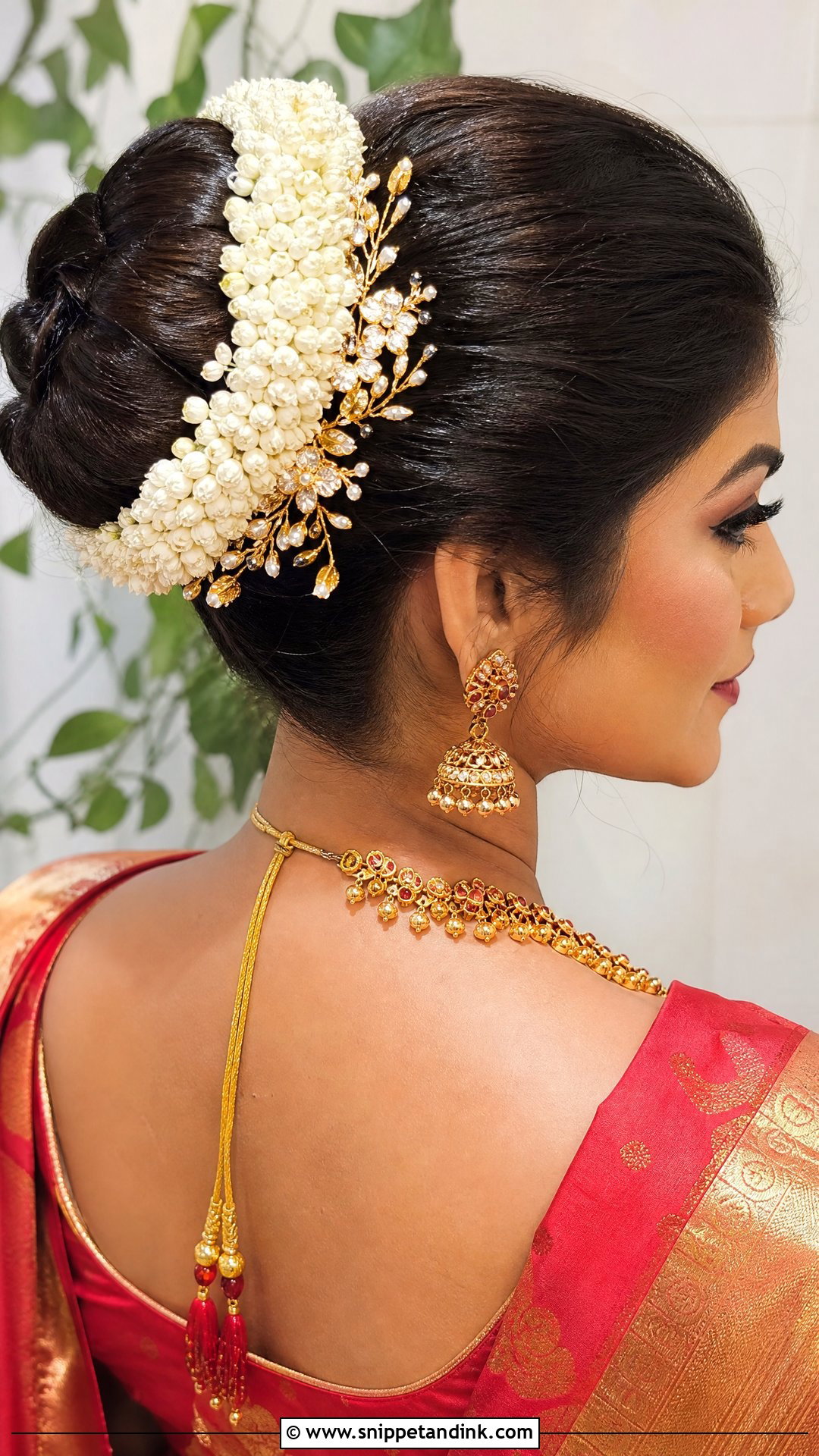
Gold leaf pieces set into a jasmine-wrapped bun add metal to the flowers without turning it into a full jada. The white and gold contrast reads especially well under strong evening lighting. I match the tone of the gold to the bride’s jewellery, since yellow gold and antique finish side by side look like a mistake on camera. Keep the leaves to the back and sides so they don’t compete with a heavy necklace.
17. Curly Open Hair With Flowers
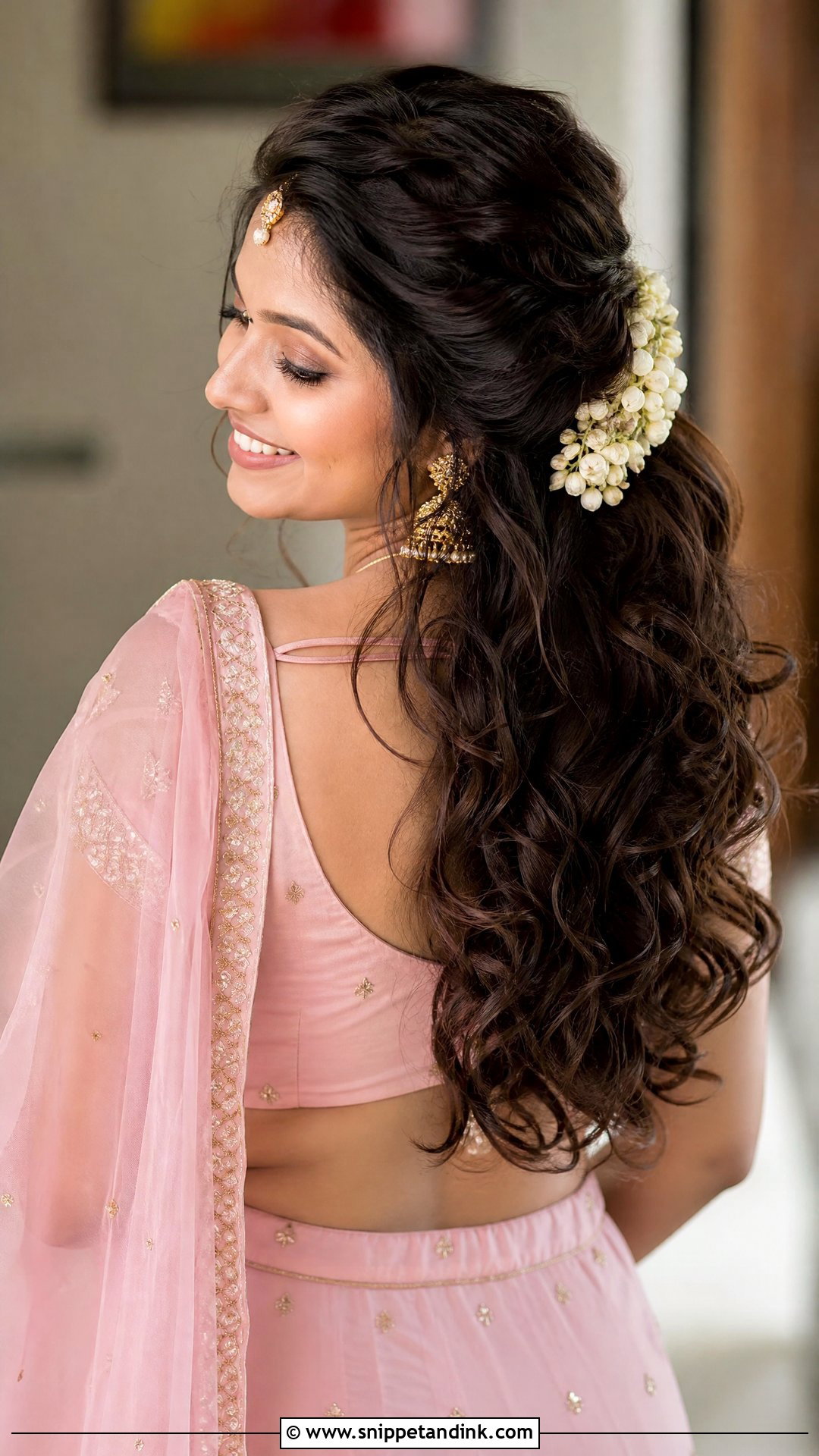
Open hair with soft curls down the back and a few flowers tucked on one side suits receptions and pre-wedding shoots. It shows off length and natural texture, and it goes well with lighter lehengas and sarees. Open styles are also the least forgiving in heat. I build the curls on a base of setting product and put a couple of hidden pins under the flowers, so the side detail stays where it was placed while the curls relax around it.
18. Twisted Crown Braid
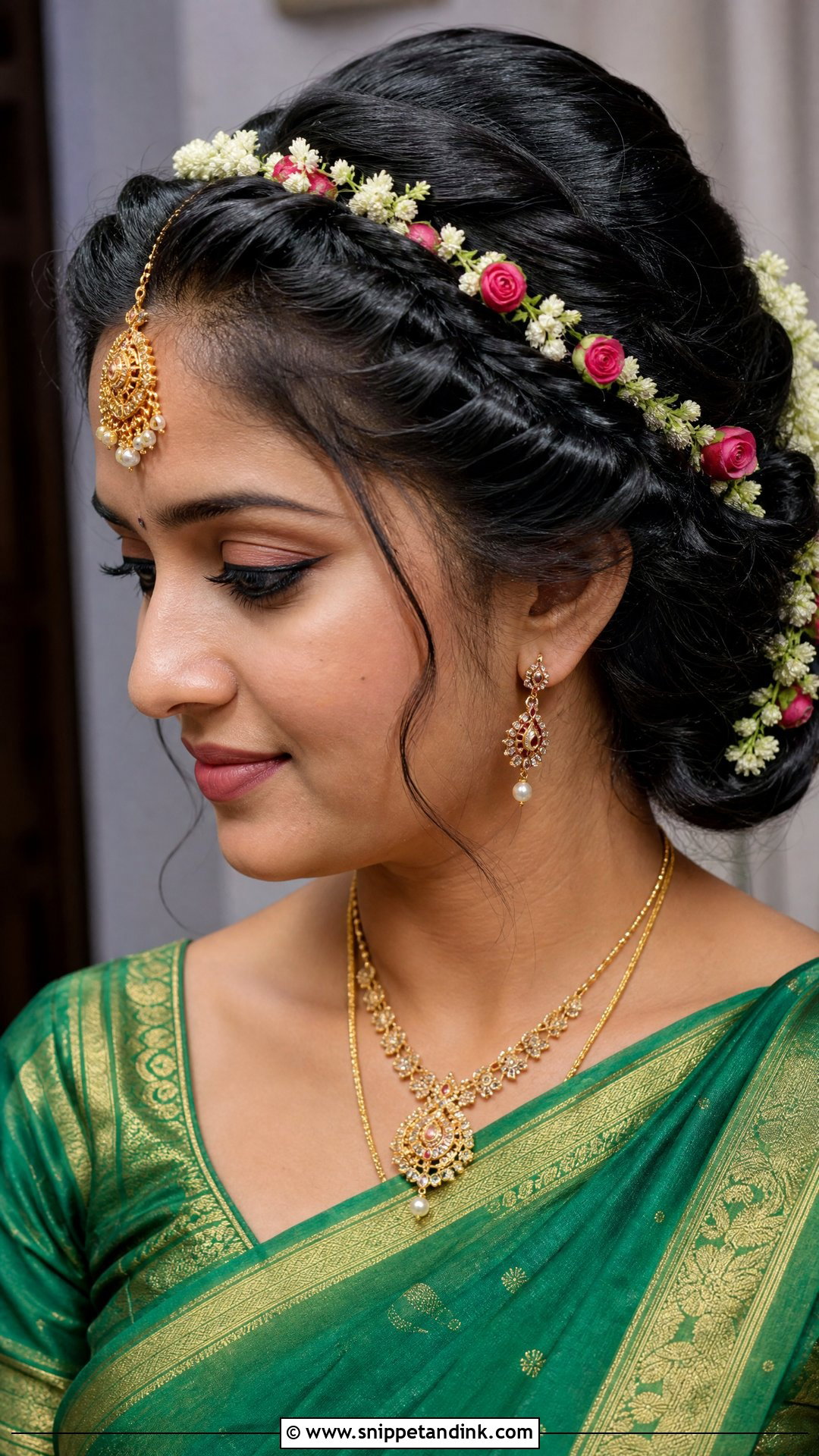
Twisted sections pinned around the head form a crown that keeps every strand off the face and neck, which matters at a warm-weather wedding. Jasmine or small roses run through the twist, and a maang tikka sits in front. Because the crown is twisted rather than braided, it relies entirely on pins. I set them in a zig-zag along the twist so the weight is shared, and I check the back with a hand mirror before any flowers go in.
19. Donut Bun With Floral Wrap
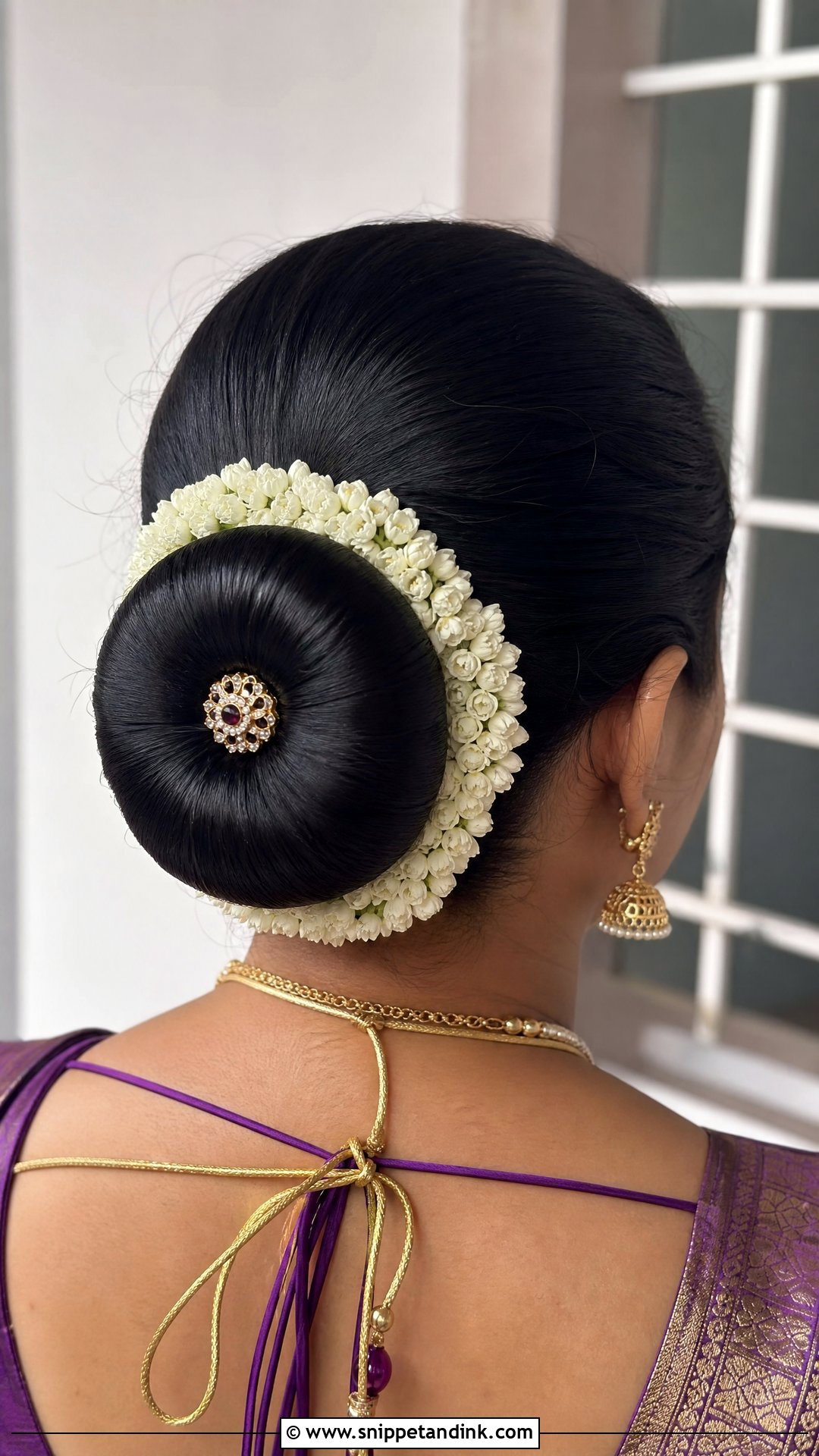
A donut base gives the bun its full, even shape; the hair wraps around it and jasmine is coiled on in rings, often with gold pins or a rakodi in the centre. The result looks tidy from every angle and holds for hours. The trick is choosing a donut close to your hair colour and slightly smaller than you think you need. An oversized one shows through the hair at the edges and makes the bun look artificial in side profile.

20. Reception Updo With Roses
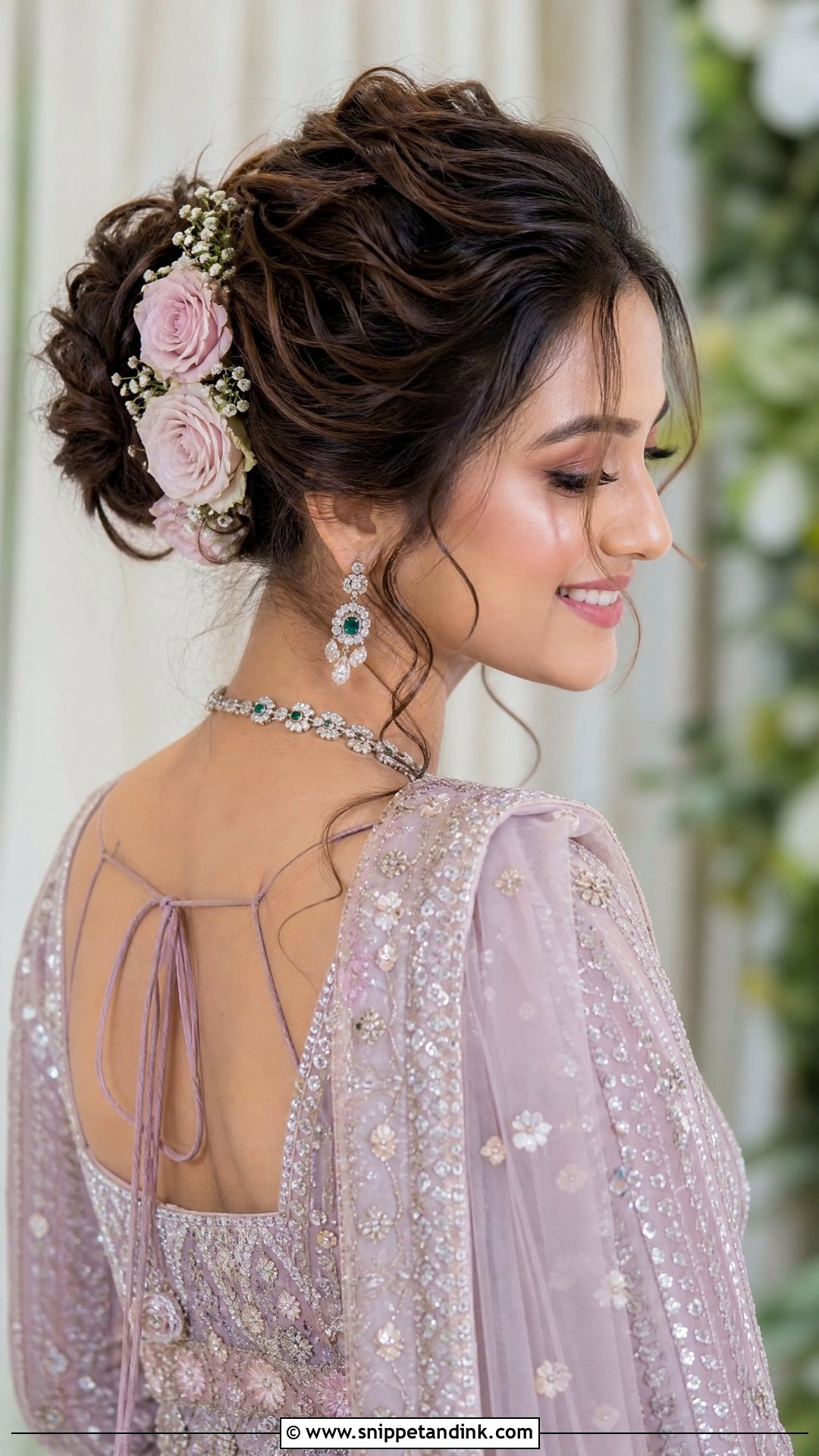
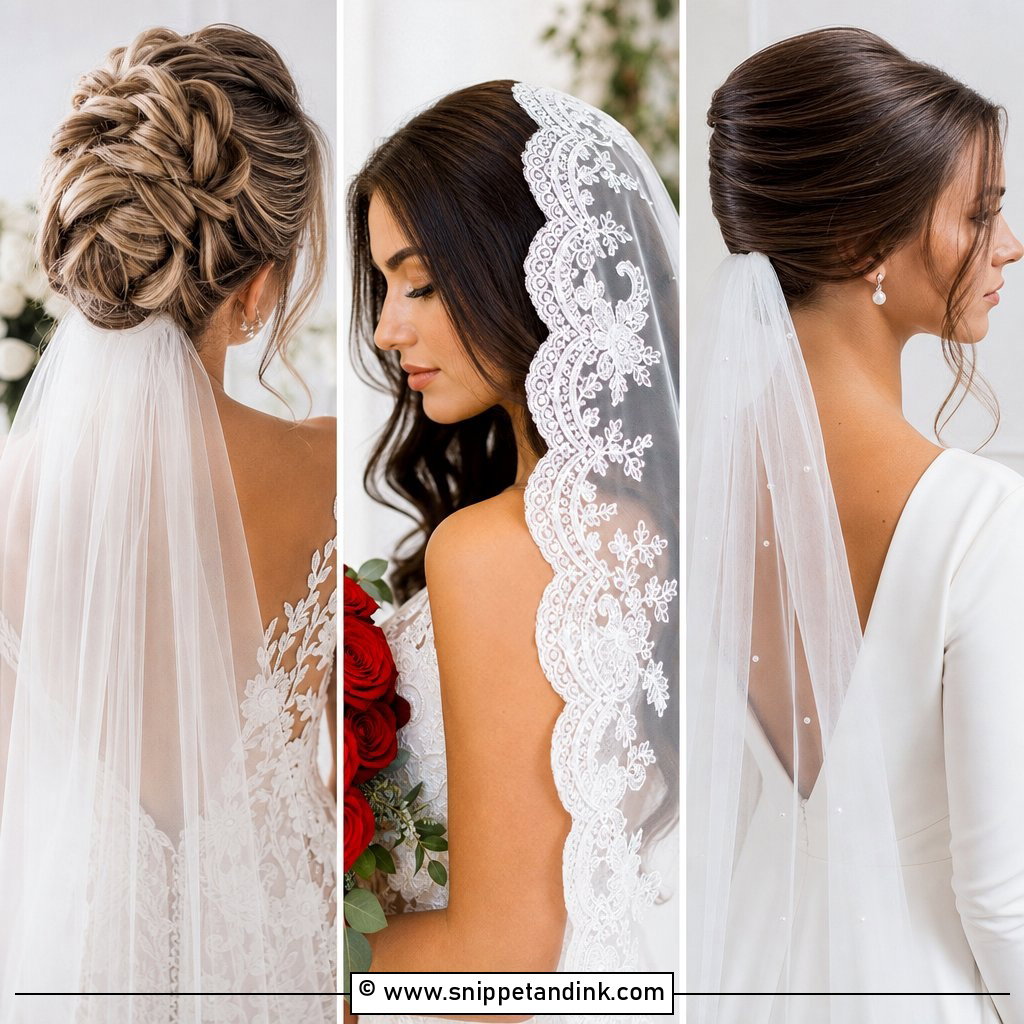
Many brides change to a looser updo for the reception: hair swept up into a textured bun or twist, roses placed where they catch the light, a few curls left around the face. It works with gowns and contemporary sarees as well as lehengas. If you’re changing from a ceremony braid, tell your stylist early. Taking down a jasmine-wrapped braid, brushing out the product and rebuilding takes a realistic forty minutes, and it is much quicker when the morning style was planned with that change in mind.
Hair Length, Extensions and the Weight of a Floral Braid
Long thick braids photograph the way they do partly because many of them are extended. A full-length poolajada on natural hair needs a lot of length and density, and plenty of brides simply don’t have that. There’s nothing wrong with adding a braided extension or clip-in wefts; I match the colour at the trial and blend it into the top of the braid, where the parting stays your own hair.
The other thing to plan for is weight. Jasmine, a jada set and a flower panel together can pull steadily on the crown for hours. If you have a sensitive scalp or get tension headaches, tell your stylist. I spread the load across two or three anchor points instead of one, and I keep the heaviest ornament low on the braid.
If your hair is shoulder length or shorter
Buns are your friend. A kondai, a donut bun or a braided bun can all be made fully from short-to-medium hair with a filler, and they hold flowers just as well as a long braid. If you have your heart set on a long braid, a clip-in braid attached under a small bun is the most secure option I know.
Jasmine Wilts by Evening: Planning the Reception Switch
By mid-afternoon, morning jasmine has usually softened and started to colour at the tips. If the reception is the same day, I plan for fresh strings to go on for the evening, or a change of flowers altogether. Roses hold up much longer in heat. Keep a spare string and a small box of U-pins with whoever is looking after you.
Taking flowers out at the end of the night needs care too. Undo the pins first, unwrap the strings rather than pulling them, and soak the hair with conditioner before you brush. Pulled jasmine tangles badly into a braid, and rushing it is how most post-wedding breakage happens.
Where the Flowers End and Your Own Hair Begins
All of these styles start from the same place: hair that has been prepared to take weight, and flowers that are fresh when they go on. Pick the look that suits your hair’s length and density first, then the ceremony, then the jewellery you already own. A poolajada on fine shoulder-length hair can be done with extensions, and a messy bun can be made formal with the right flowers. Book a trial with real jasmine, wear it for a few hours, and notice where it pulls. That tells you more than any photo.
You'll Like These Ideas:



Leave a Reply