
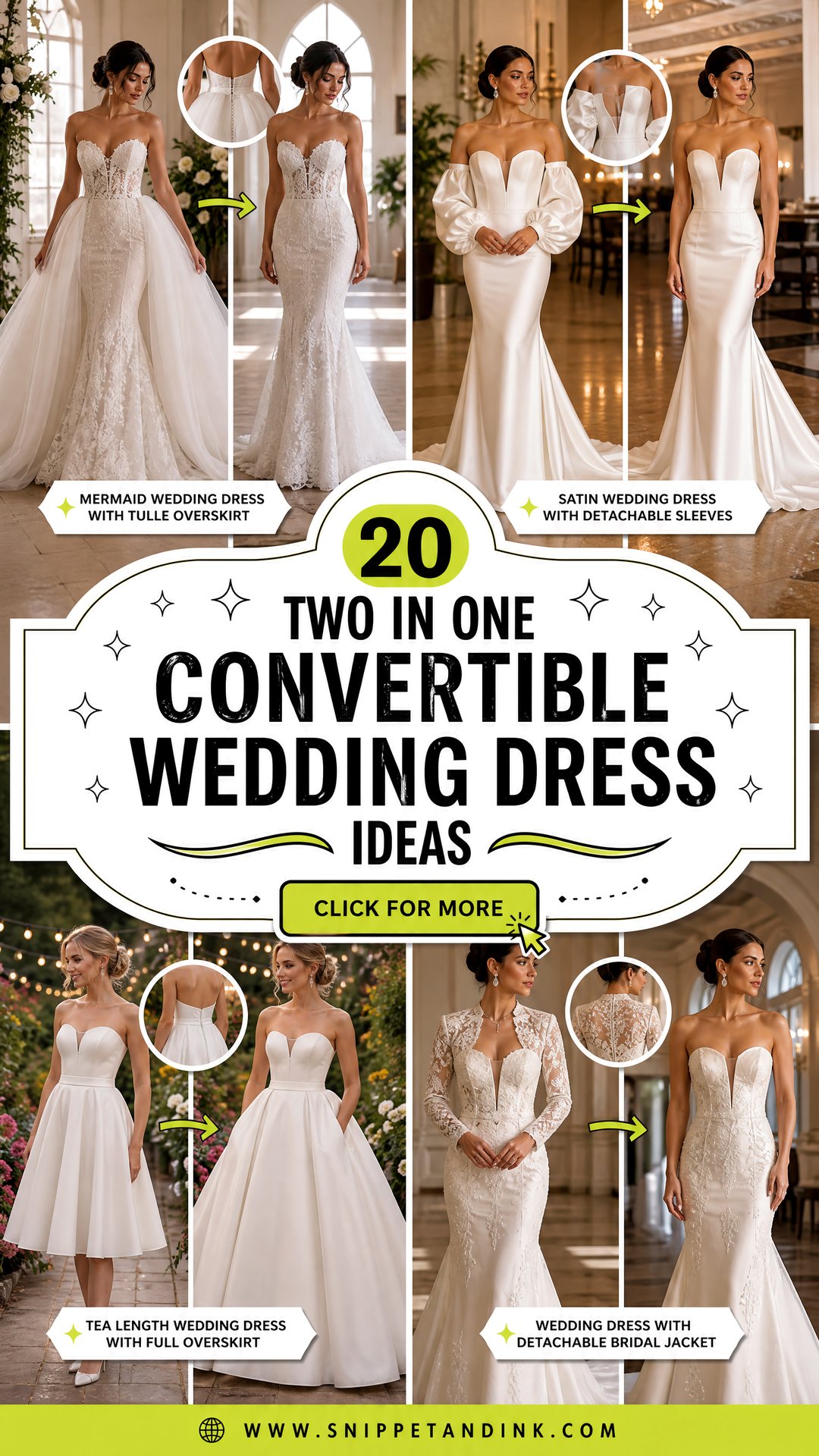
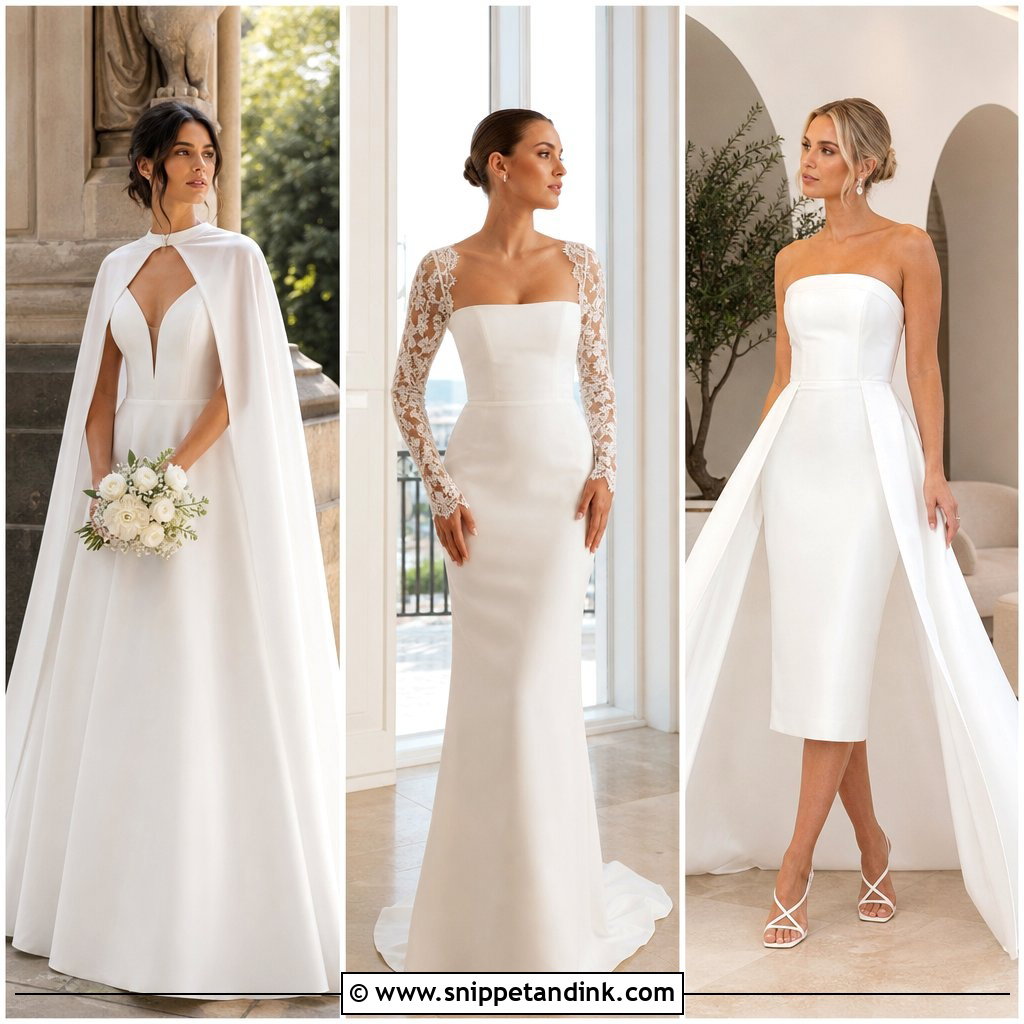
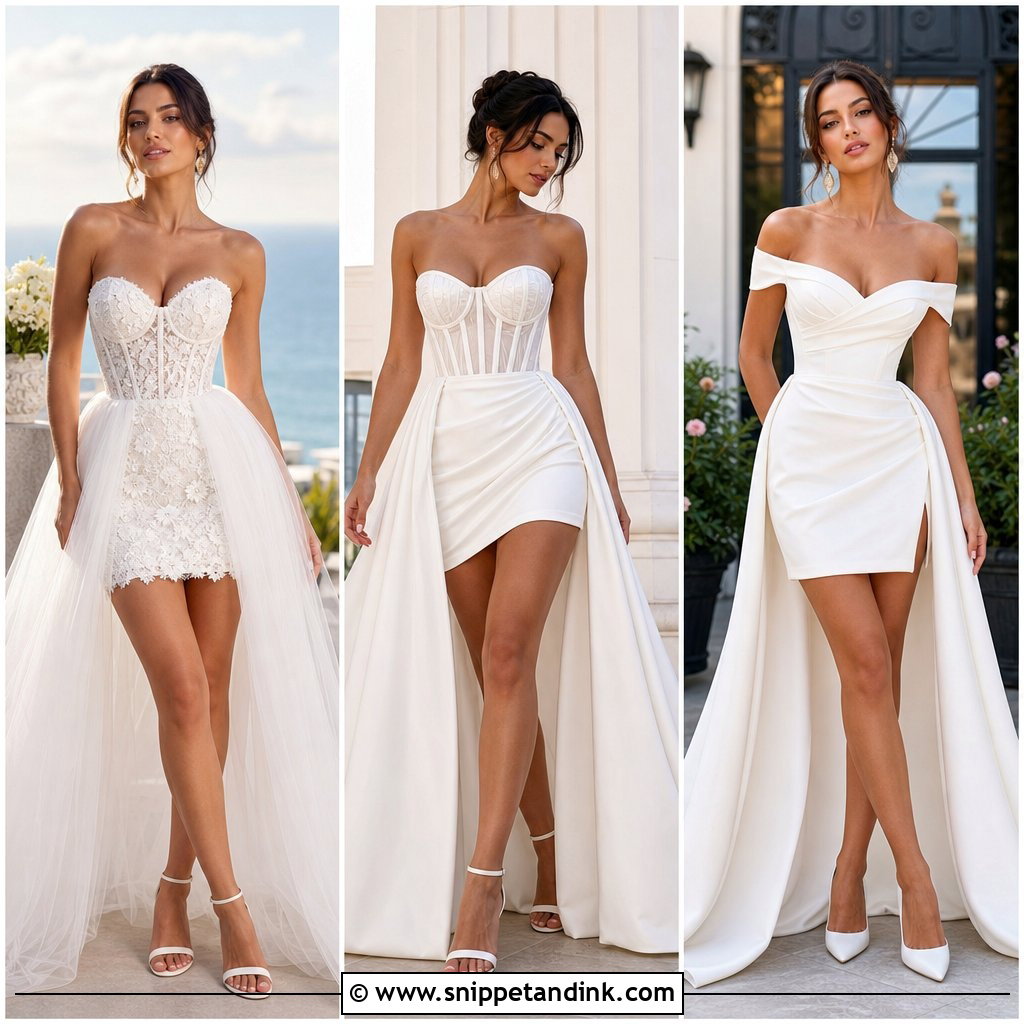
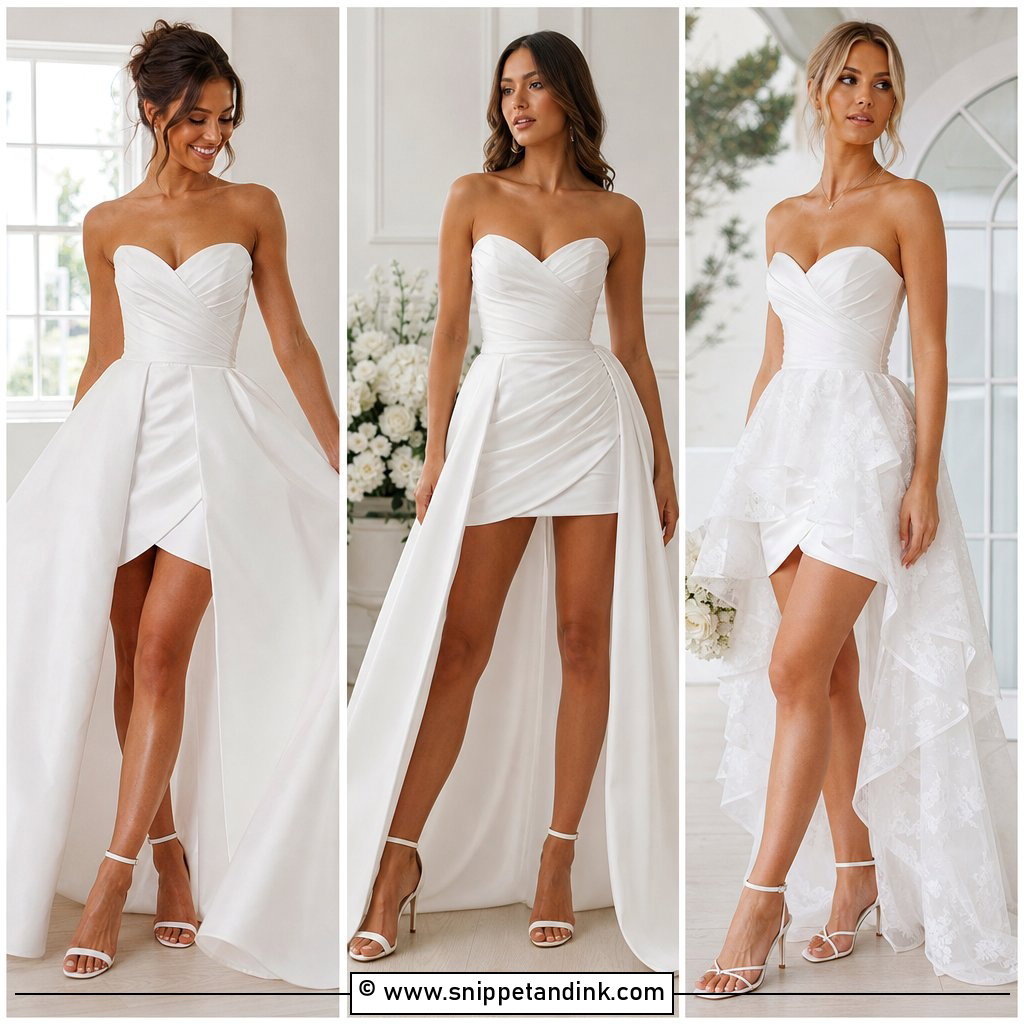
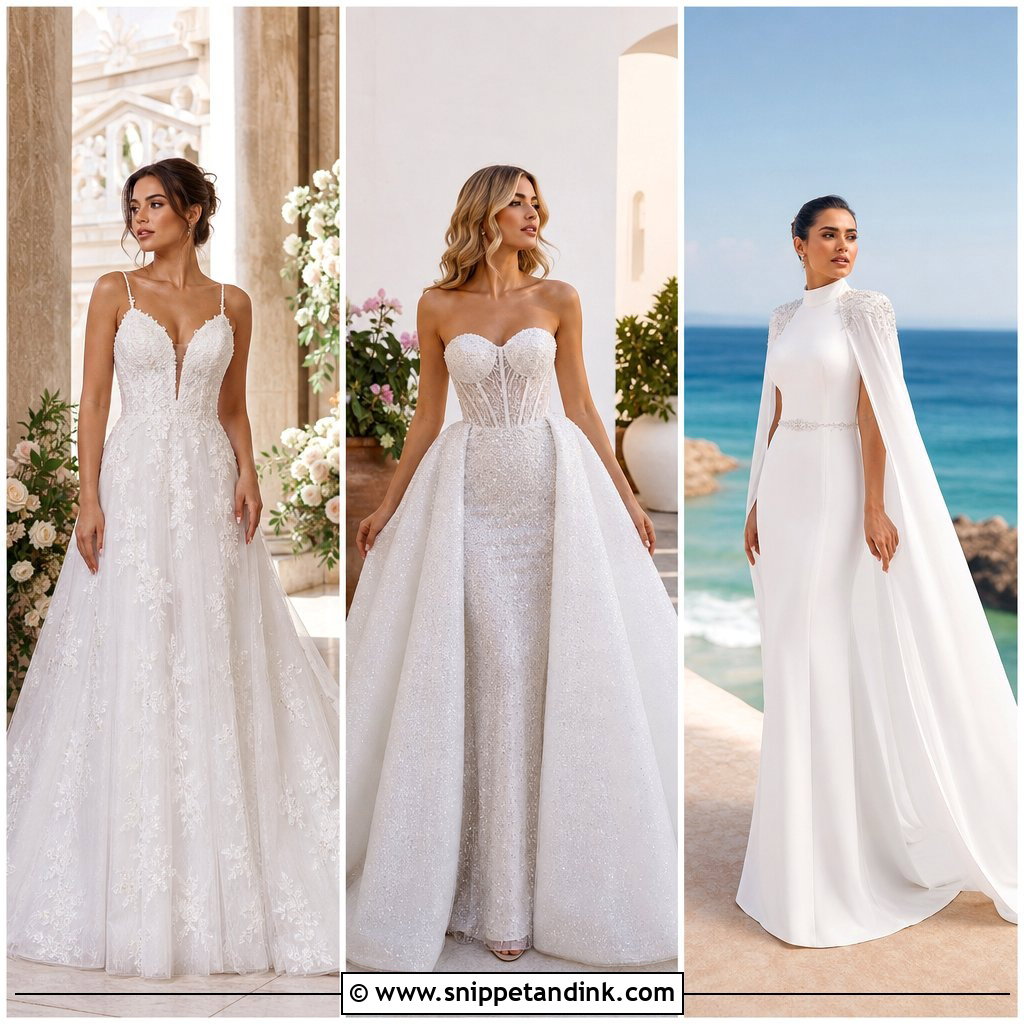
A convertible gown solves a problem I hear about at almost every first appointment: the bride wants a grand dress for the vows and something she can actually dance in. Detachable overskirts, sleeves, trains, capes, toppers and hidden mini dresses let one outfit do both jobs without a full change in a bathroom stall. The catch is engineering. A two-in-one only works if both versions look finished on their own and the removable part comes off quickly without damage. Below are twenty designs, from lace and crepe to a bridal jumpsuit, with the fitting checks I’d make on each one.
Snaps, Hooks or Hidden Buttons? How the Pieces Attach
The fastening decides whether your conversion takes one minute or fifteen, and whether it leaves a mark on the dress underneath. When a bride shows me a two-in-one, I ask what holds it on before I ask anything else.
- Snaps: quick and invisible, the usual choice for sleeves and light toppers. They can pop open under strain, so they’re less suited to heavy skirts.
- Hooks and bars: strong and flat, often used along an overskirt waistband. Slower to undo, so a helper needs to know where each one is.
- Buttons with loops: pretty and secure for capes and boleros, but fiddly in a hurry. Fine if the switch isn’t rushed.
- Zips: common on detachable skirts, smooth to remove, but they can leave a ridge on thin crepe or silk.
- Ribbon ties and hidden ties: kind to delicate fabric, adjustable, and slower than everything else on this list.
Heavier pieces generally need stronger closures spread over more points. If you’re buying separates from different makers, ask your seamstress to fit the attachment on the actual gown rather than trusting what came in the box.
Already Bought a Gown? A Seamstress Can Convert It
You don’t need to start with a dress sold as convertible. Most experienced bridal seamstresses can make a detachable overskirt, sleeves or a cape to go with a gown you already own, or adapt a separate topper so it fastens properly. The earlier you ask the better, since sourcing matching fabric takes time and a made-to-order add-on needs its own fittings. Bring a fabric swatch from the hem allowance if your gown has one; matching ivory by eye is unreliable.
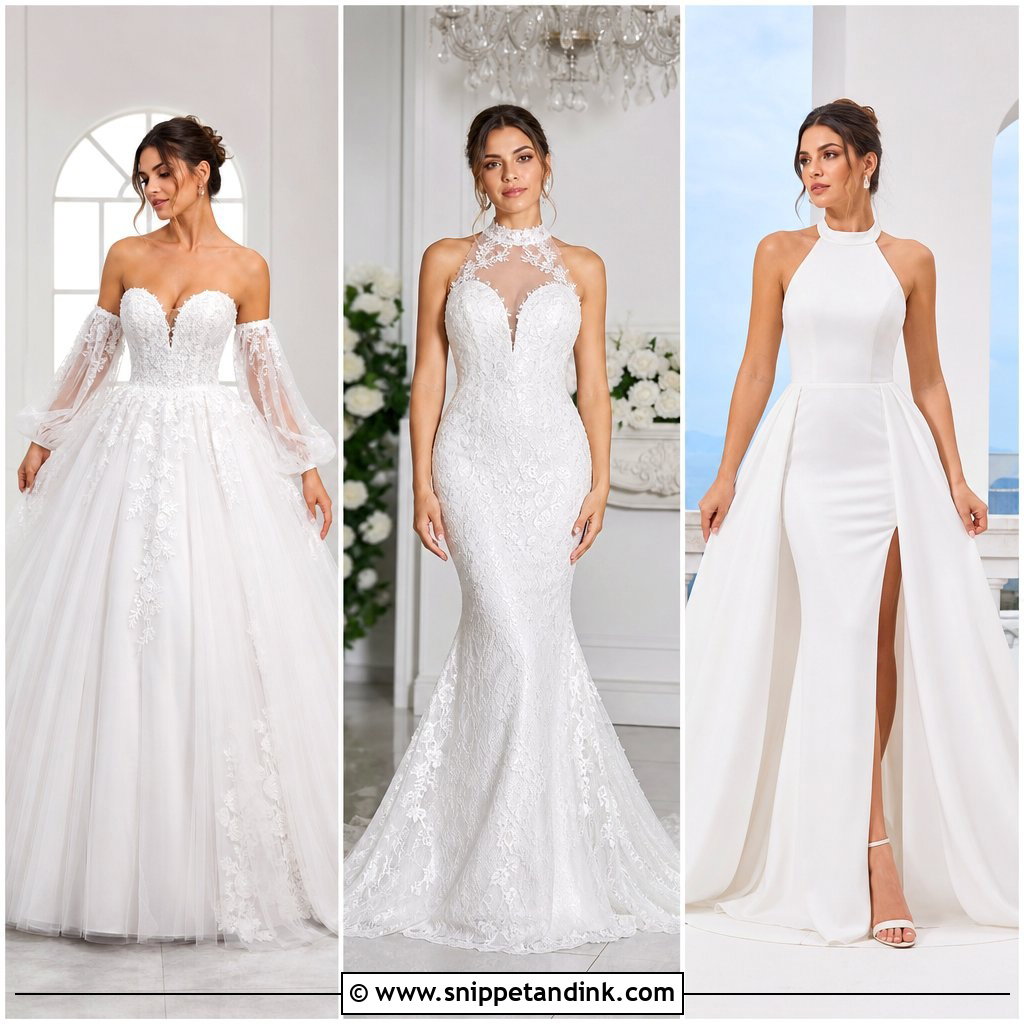
1. Wedding Dress With Detachable Overskirt
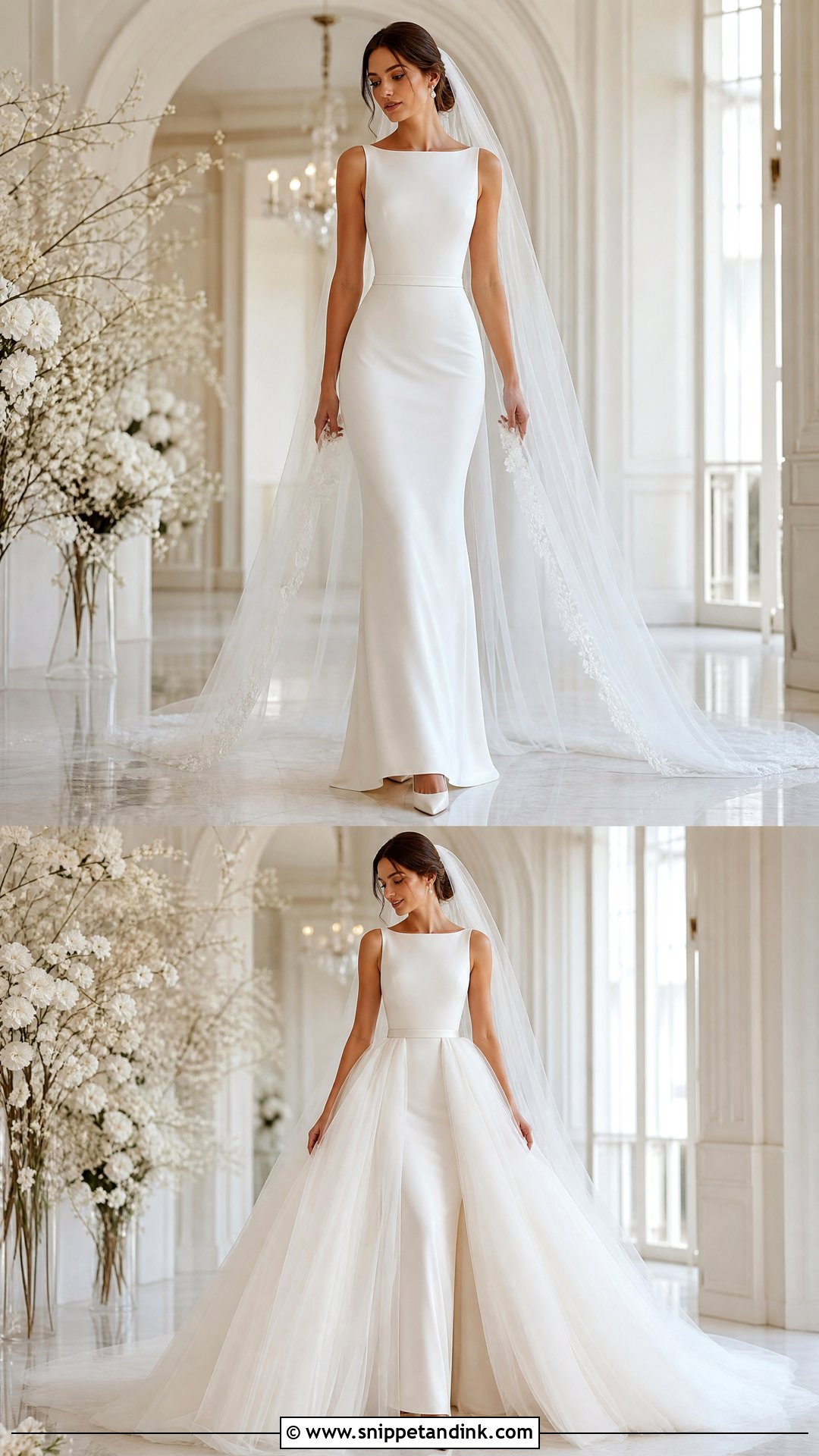
The detachable overskirt is the most common conversion, and the one I’d point a first-timer toward. Underneath goes a fitted crepe, satin or lace gown; over it, a full tulle or organza skirt that turns the silhouette into an A-line or ball gown. The base dress has to be finished as if nothing will ever cover it, including a proper waist seam. Ask your seamstress to hide the overskirt fastenings under a narrow waistband. Pointed pumps, pearl earrings and a simple veil suit the ceremony; block heels and bolder earrings suit the party.
2. Mini Wedding Dress With Long Overskirt
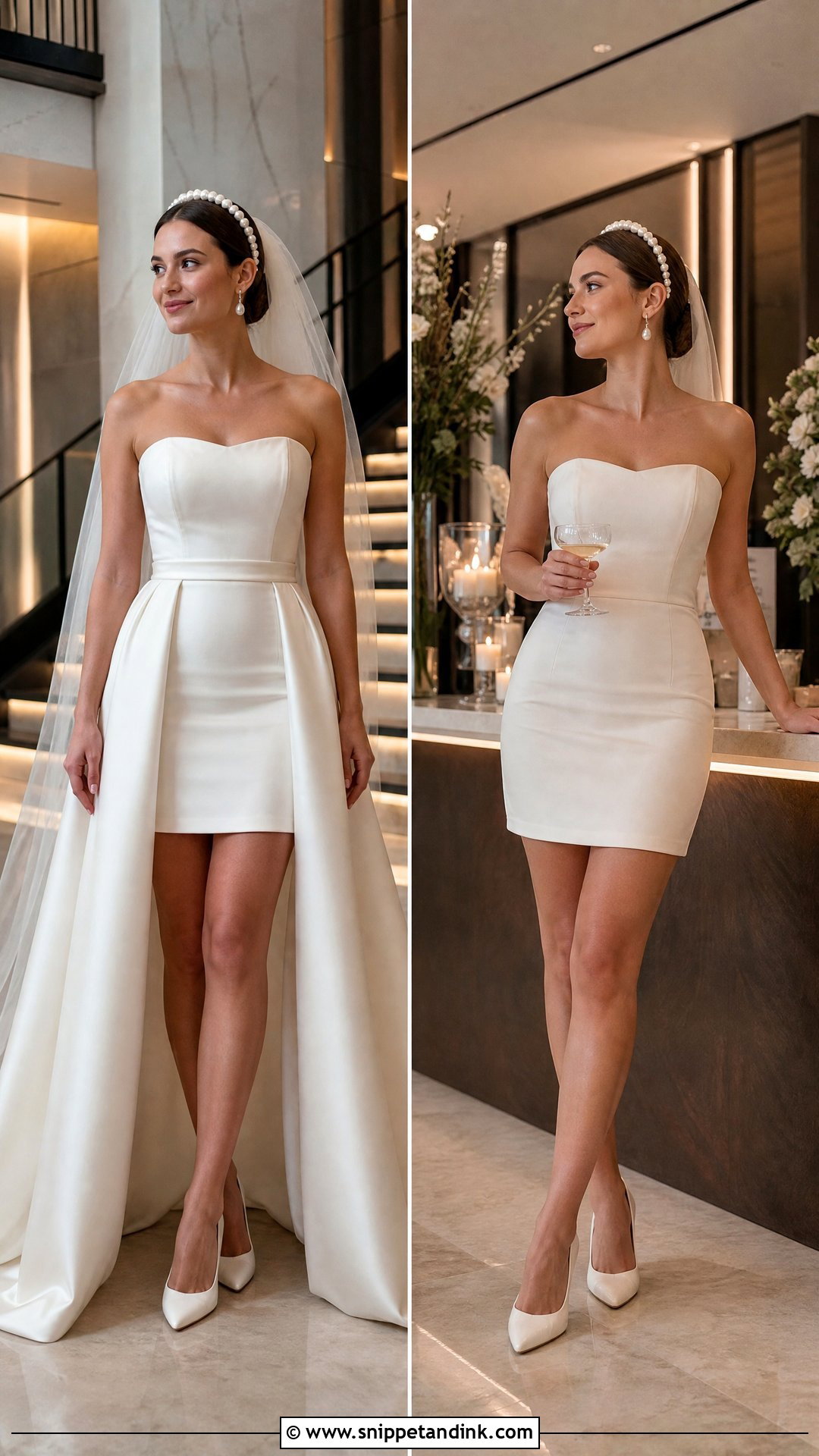
A structured mini under a floor-length overskirt is the boldest reveal on this list. I like a corset bodice and square neckline here, because the mini needs structure to stand up to the drama of the long skirt. Before you buy, sit down in the mini in a fitting-room chair and look in the mirror, then raise your arms. Short skirts ride up more than you expect when seated at a head table. For the ceremony, a cathedral veil and closed pumps; after the switch, a pearl headband and slingbacks you can dance in. It suits ballroom and city hotel weddings especially.
3. Mermaid Wedding Dress With Tulle Overskirt
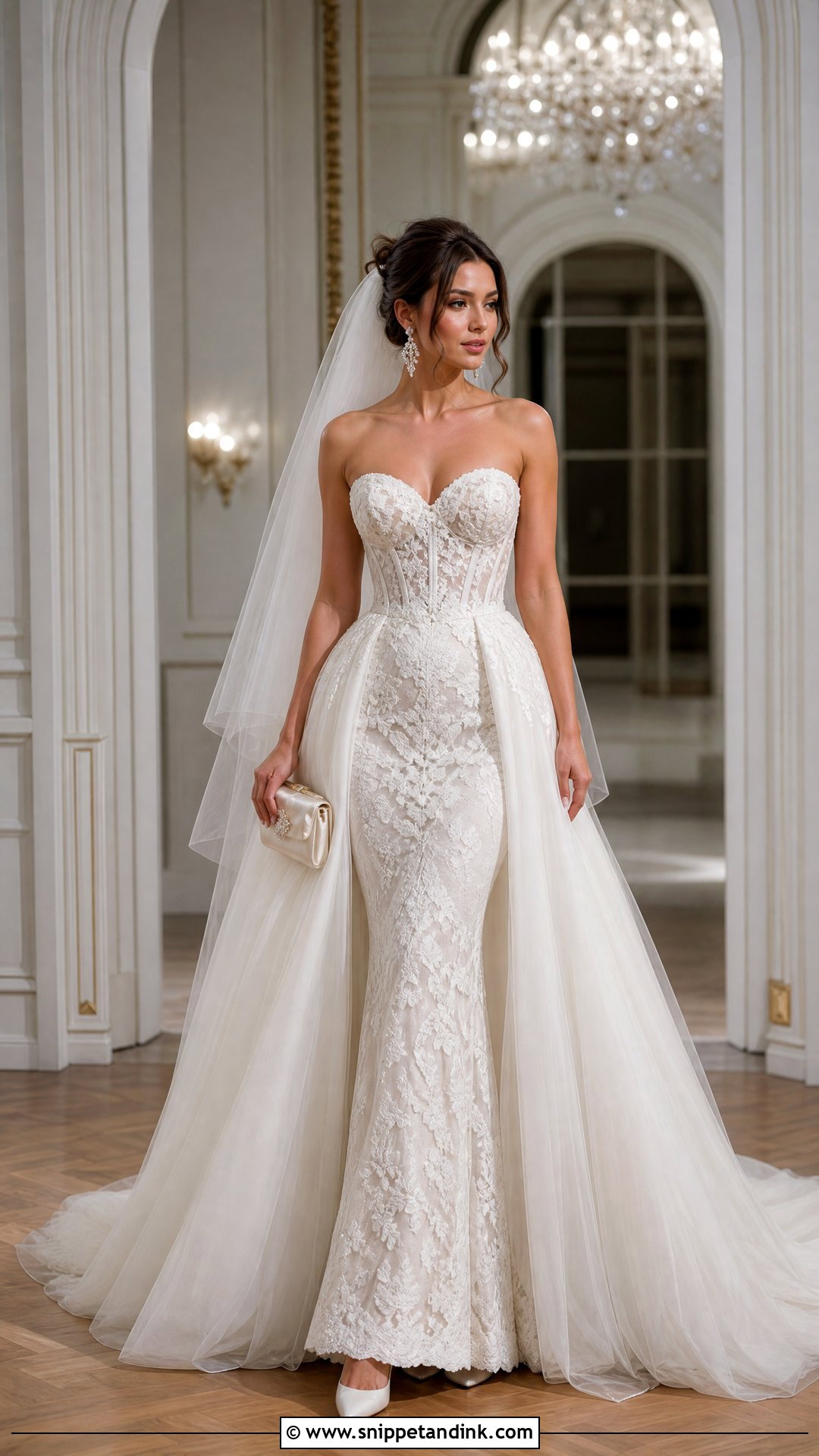
Putting tulle over a mermaid gives you a soft ball gown for the aisle and a sculpted fitted shape for the reception. The detail people get wrong is colour. Tulle comes in many whites and ivories, and an overskirt a shade off from the gown looks grey or yellow next to it in photos, so ask for both pieces cut from matched stock. A strapless corset bodice keeps the top clean. The fitted base must allow a real stride, so walk briskly across the shop before committing. Crystal earrings, a fingertip veil and pointed heels finish it.
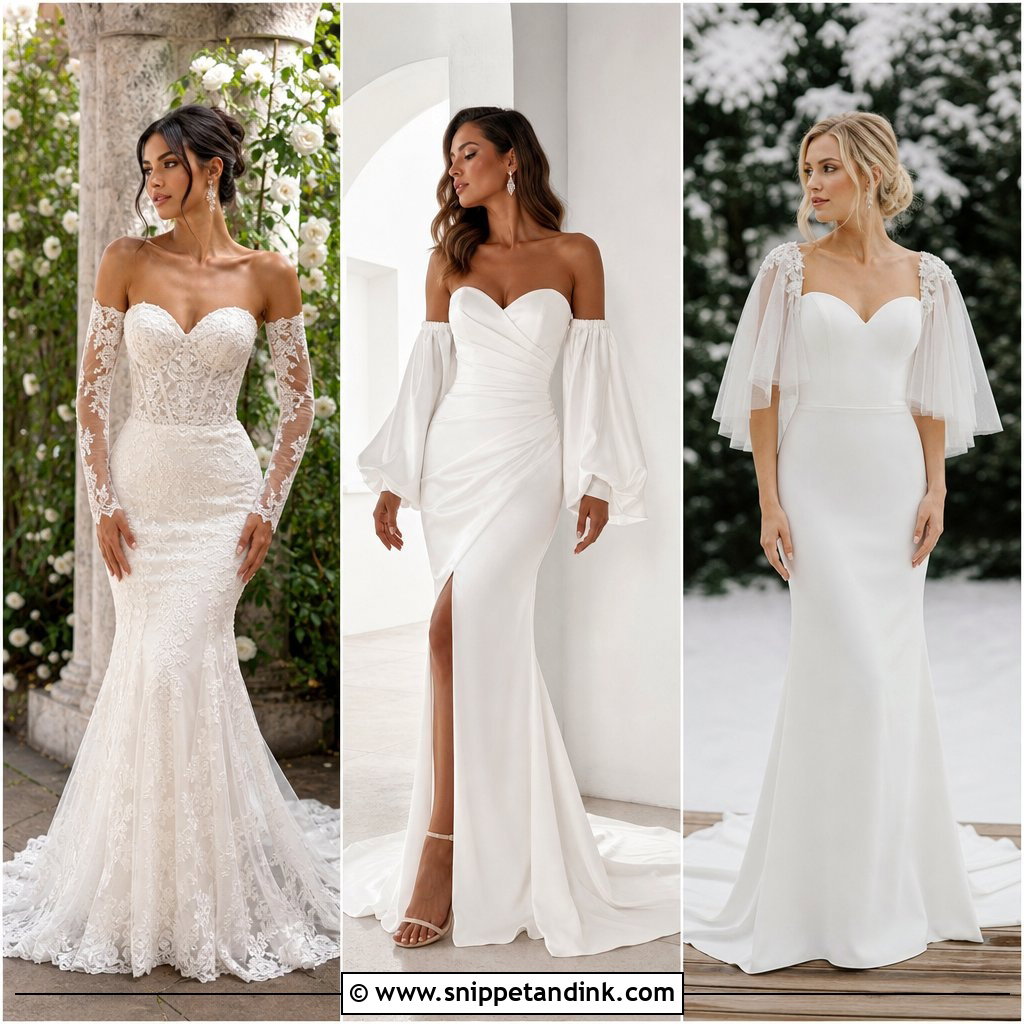
4. Satin Wedding Dress With Detachable Sleeves
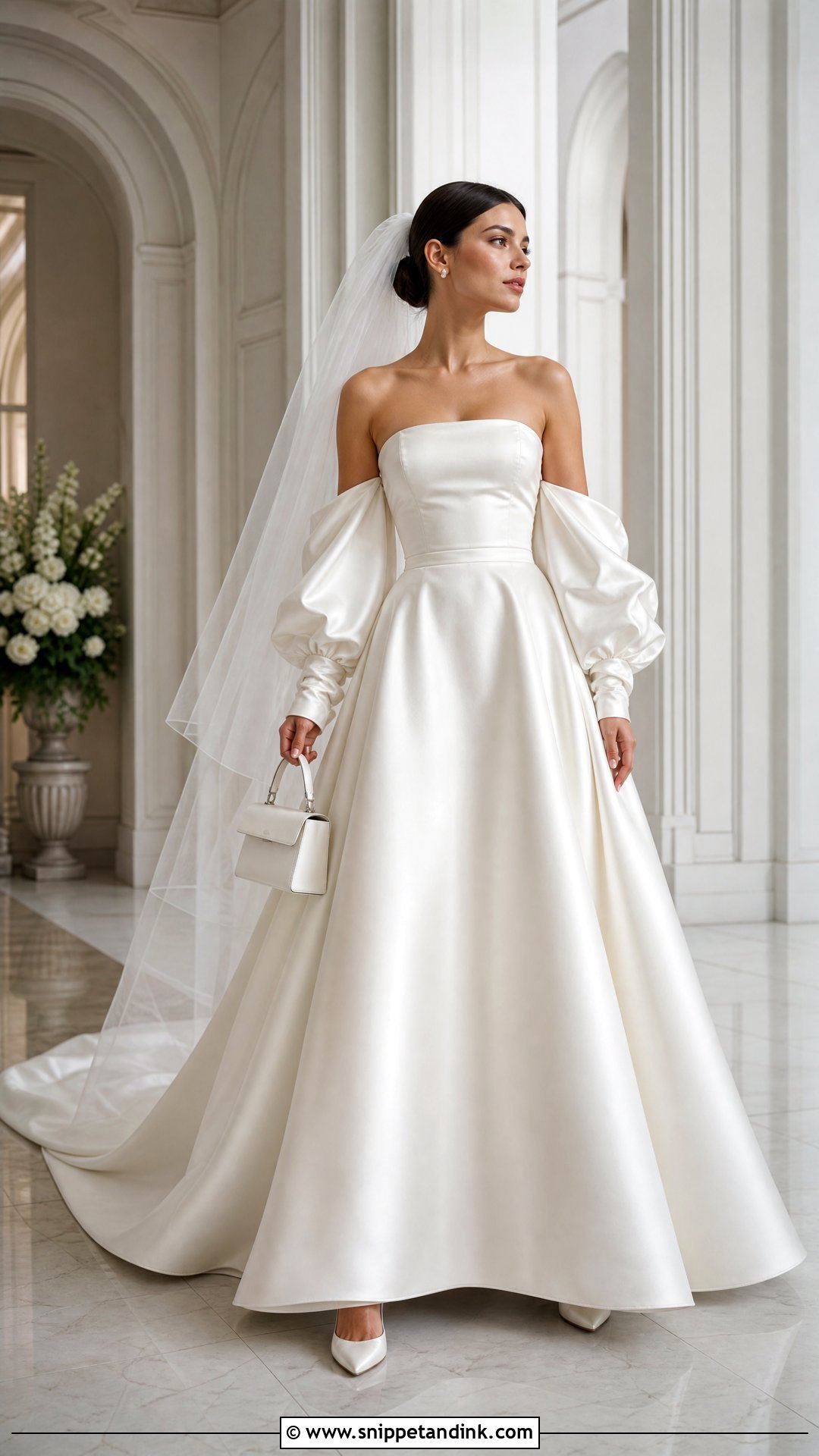
Detachable sleeves are the subtle conversion: a covered satin gown for the ceremony, a clean strapless dress after dinner. They work best on a gown with a firm strapless bodice, because the sleeves need something stable to attach to. Long fitted sleeves or draped off-shoulder ones both photograph well. My test is a big hug at the fitting. If the sleeve band slides down or lifts away from the arm, the fastening needs reinforcing. Once they come off, the bare shoulders can look unfinished, so swap in a tennis bracelet or bolder earrings.
5. Lace Wedding Dress With Removable Bolero
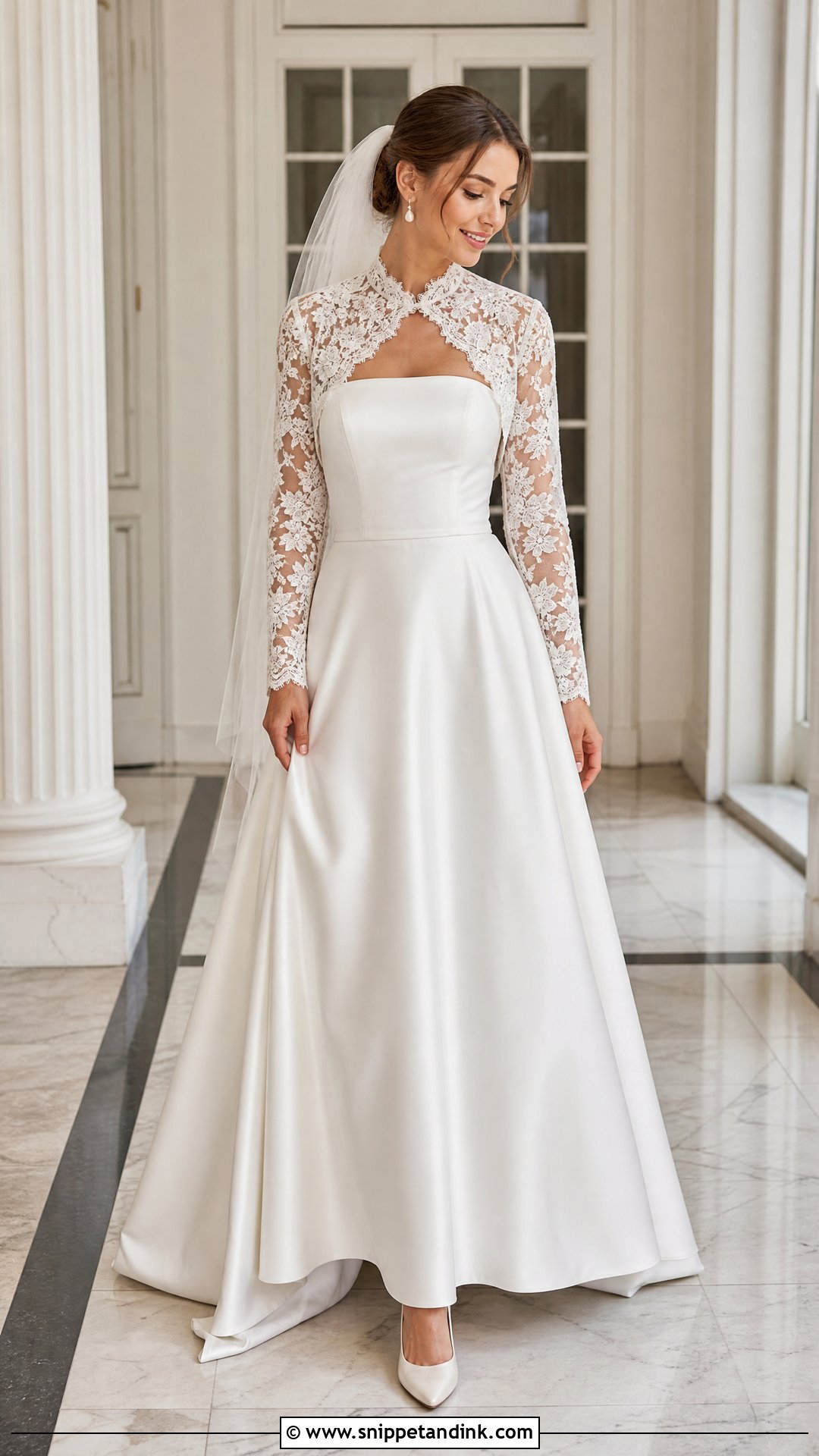
A removable lace bolero turns a plain strapless or sleeveless satin gown into what looks like an intricate long-sleeve lace dress. Its hem should land exactly at the gown’s waist; a bolero that ends a few inches above looks like a separate jacket. Match the lace motifs to anything on your veil or skirt. Pearl buttons, low pumps and a classic updo suit the ceremony. Here’s a trick I like: because the bolero hides the shoulders, you can loosen the hair a little for the reception and add sparkly earrings, and the change reads as a new outfit.
6. Strapless Wedding Dress With Puff Sleeves
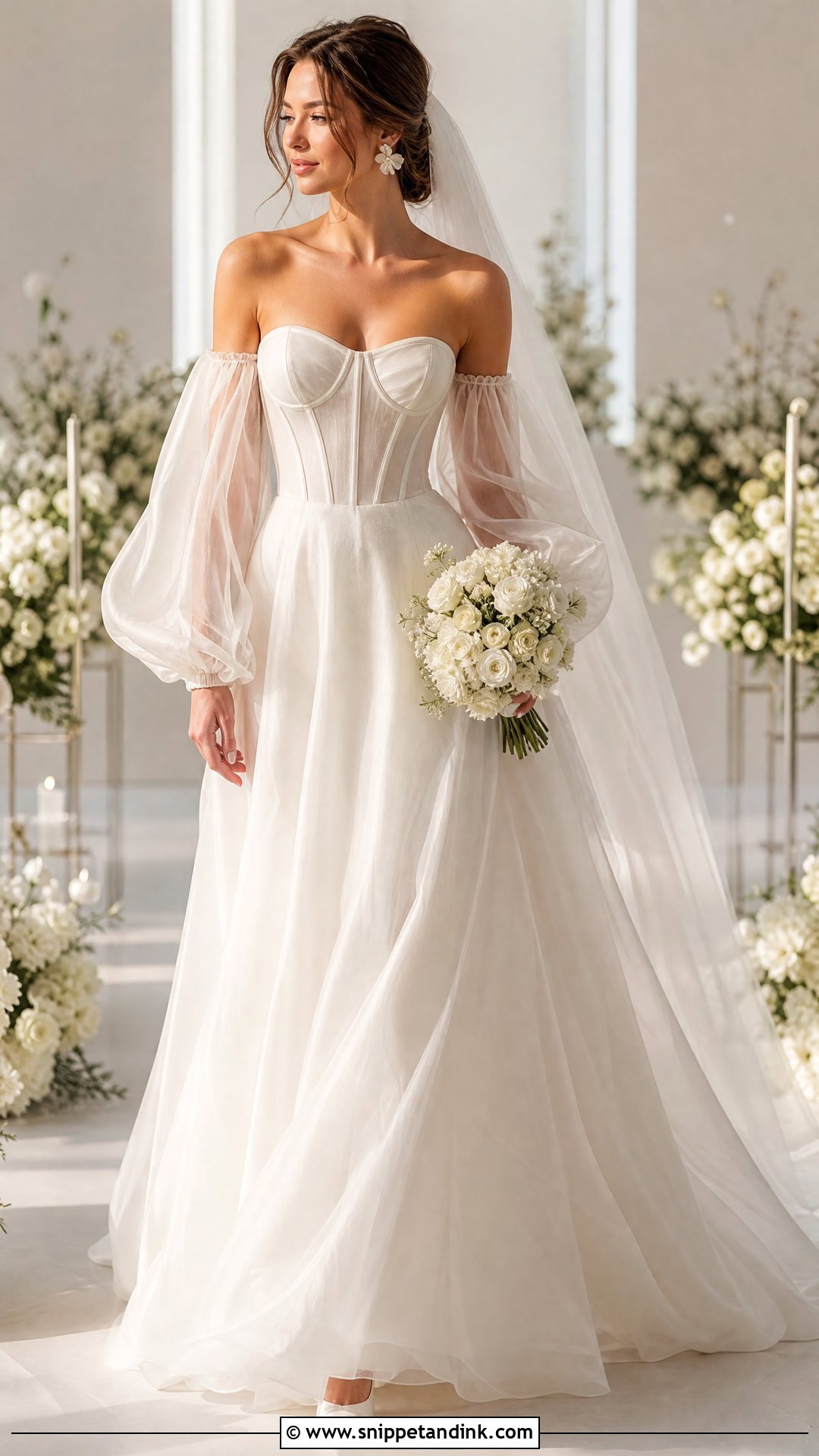
Detachable puff sleeves give a strapless gown romance for the ceremony and then let you cool off for dinner. Organza or tulle holds a puff without weight; satin puffs collapse if the fabric is too soft. The common failure is sleeves that creep down the arm, so ask whether there’s a discreet elastic or snap at the inner arm. Lift your arms above your head at the fitting to test them. A fitted bodice with an A-line skirt keeps the proportions balanced. Chapel veil, floral earrings and pointed pumps finish it.
7. Sheath Wedding Dress With Detachable Cape
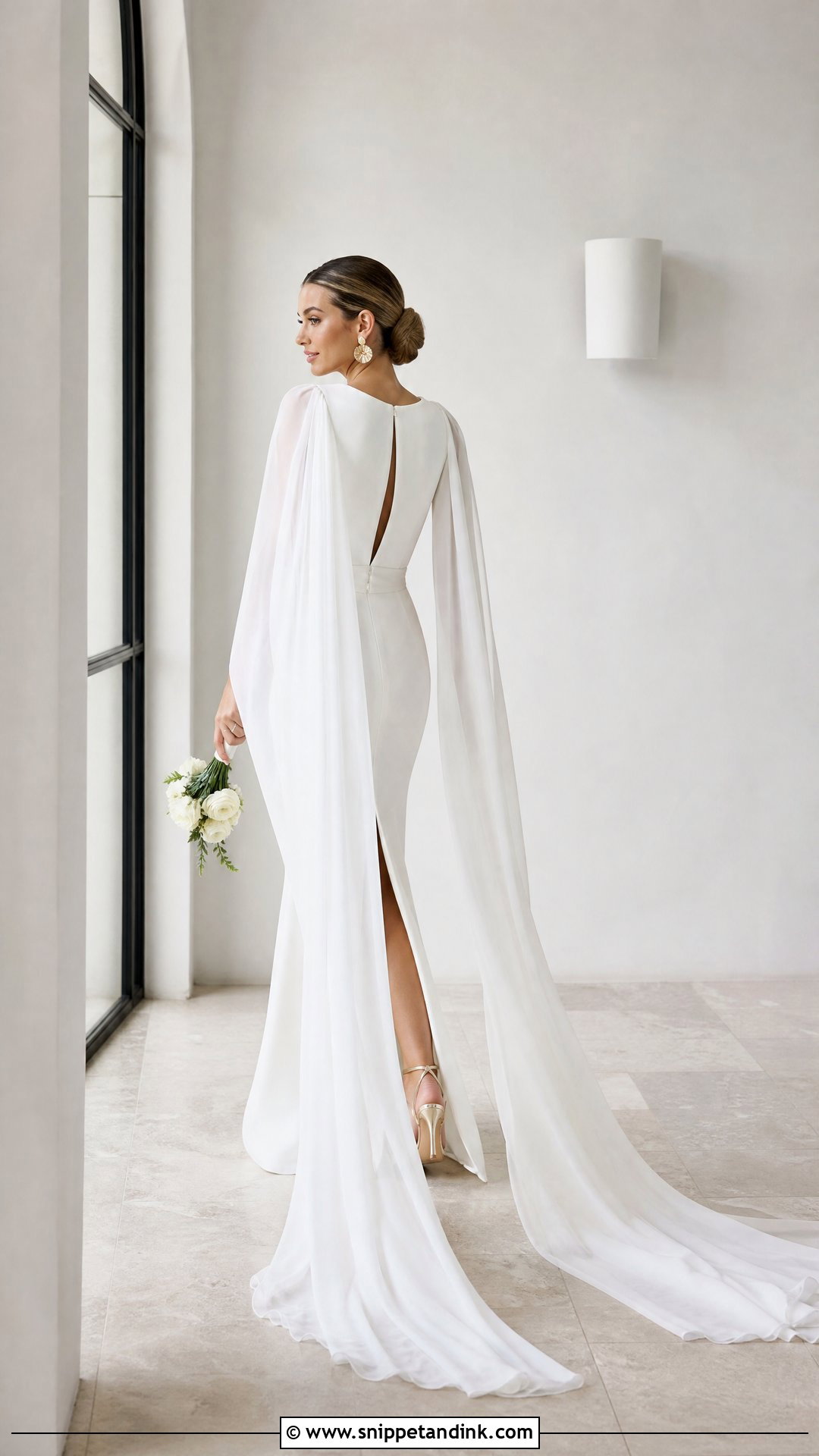
A cape over a sheath gives drama without a heavy skirt. Choose a crepe or satin column with clean seams and a back slit for walking, then a sheer chiffon or embroidered tulle cape that falls from the shoulders into a train. Wind is the real issue outdoors. A light chiffon cape lifts and wraps in a gust, so shoulder fastenings need to be strong, and a few small weights in the hem help. The cape does the work of a veil, so keep jewellery restrained: sculptural earrings, a low bun and metallic sandals.
8. Crepe Wedding Dress With Detachable Train
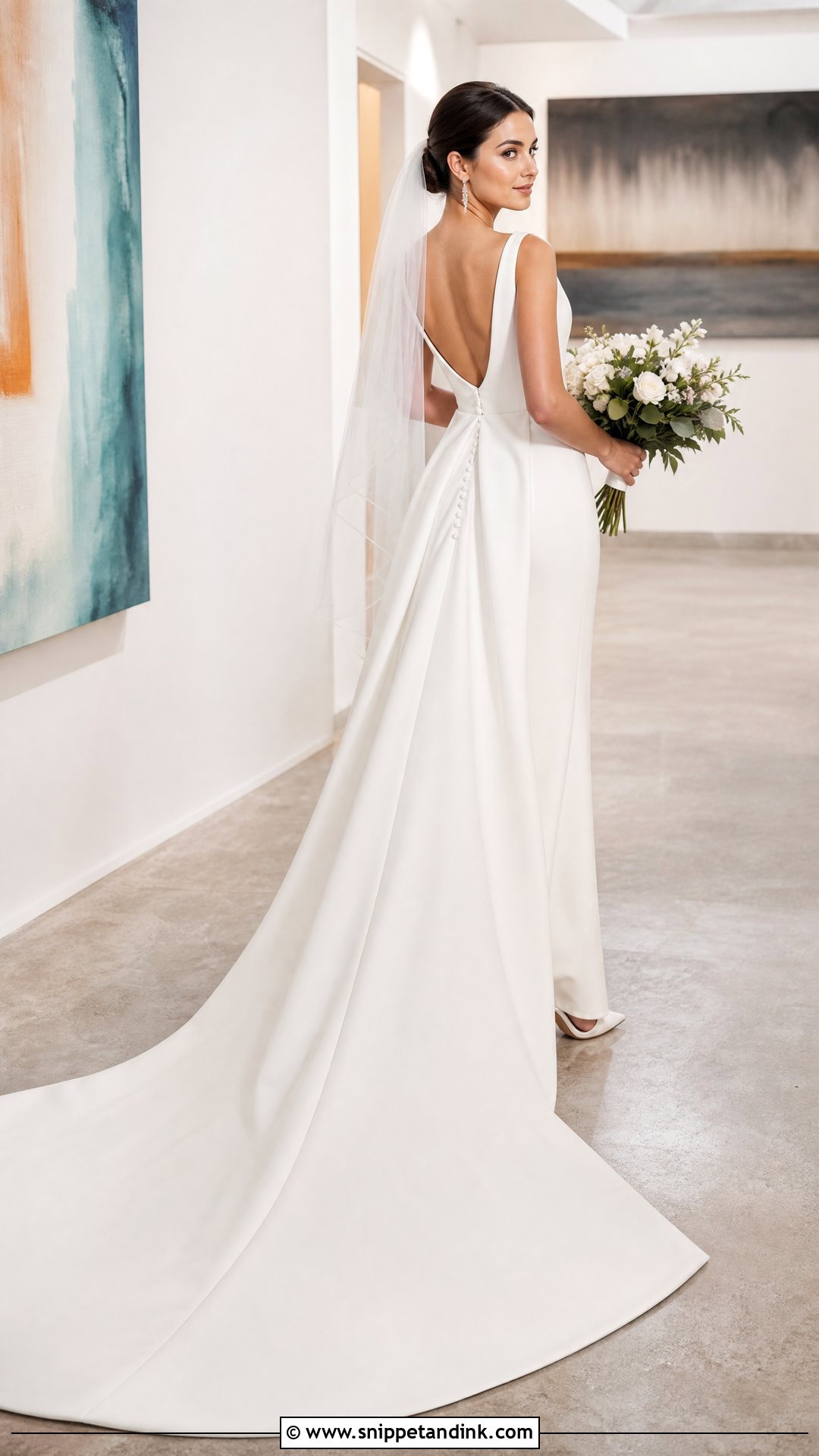
A detachable train is the simplest way to get an entrance from a fitted crepe dress. It attaches at the waist or lower back, and it should come off with one person’s help in a minute or two. The uncovered gown needs its own finished hem and enough shape to stand alone; a plain crepe trumpet with nothing at the back can look bare once the train is gone. Practise sitting and turning while the train is on. Pointed heels, crystal studs and a structured bouquet suit the ceremony; switch to block heels and a cuff bracelet later.
9. Tea Length Wedding Dress With Full Overskirt
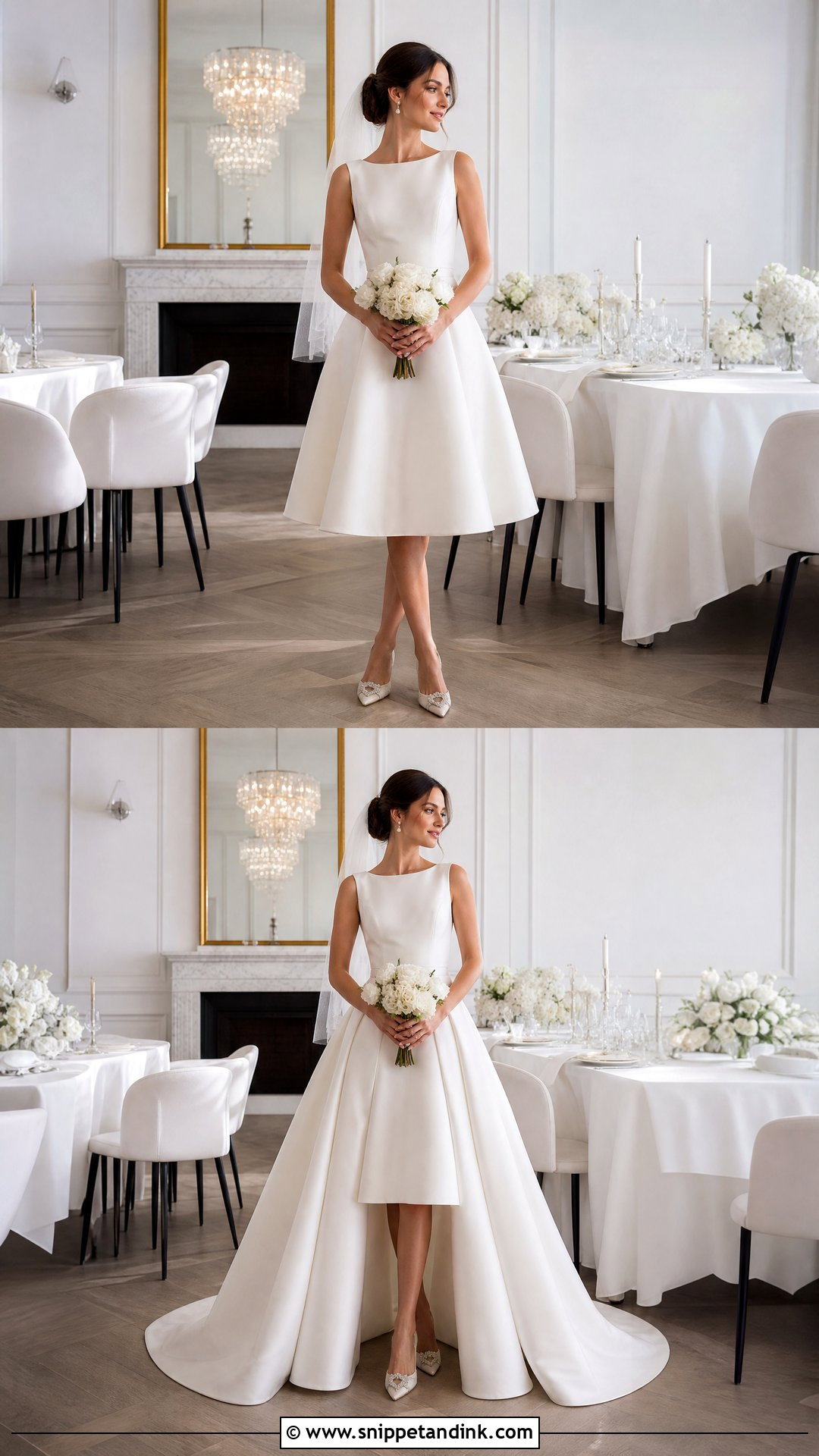
Tea length hidden under a full overskirt gives you two hemlines: classic floor length for the vows, then ankles and shoes for the party. That means the shoes matter twice. I tell brides to choose the reception pair first, because they’ll be in every dancing photo. Satin and mikado hold a crisp tea-length skirt; lace is softer. The overskirt should open without catching the shorter layer, and the base hem should land at a flattering mid-calf, which a good seamstress will mark with you standing in the actual shoes. A short veil and pearl earrings suit the ceremony version.
10. Bridal Jumpsuit With Detachable Skirt
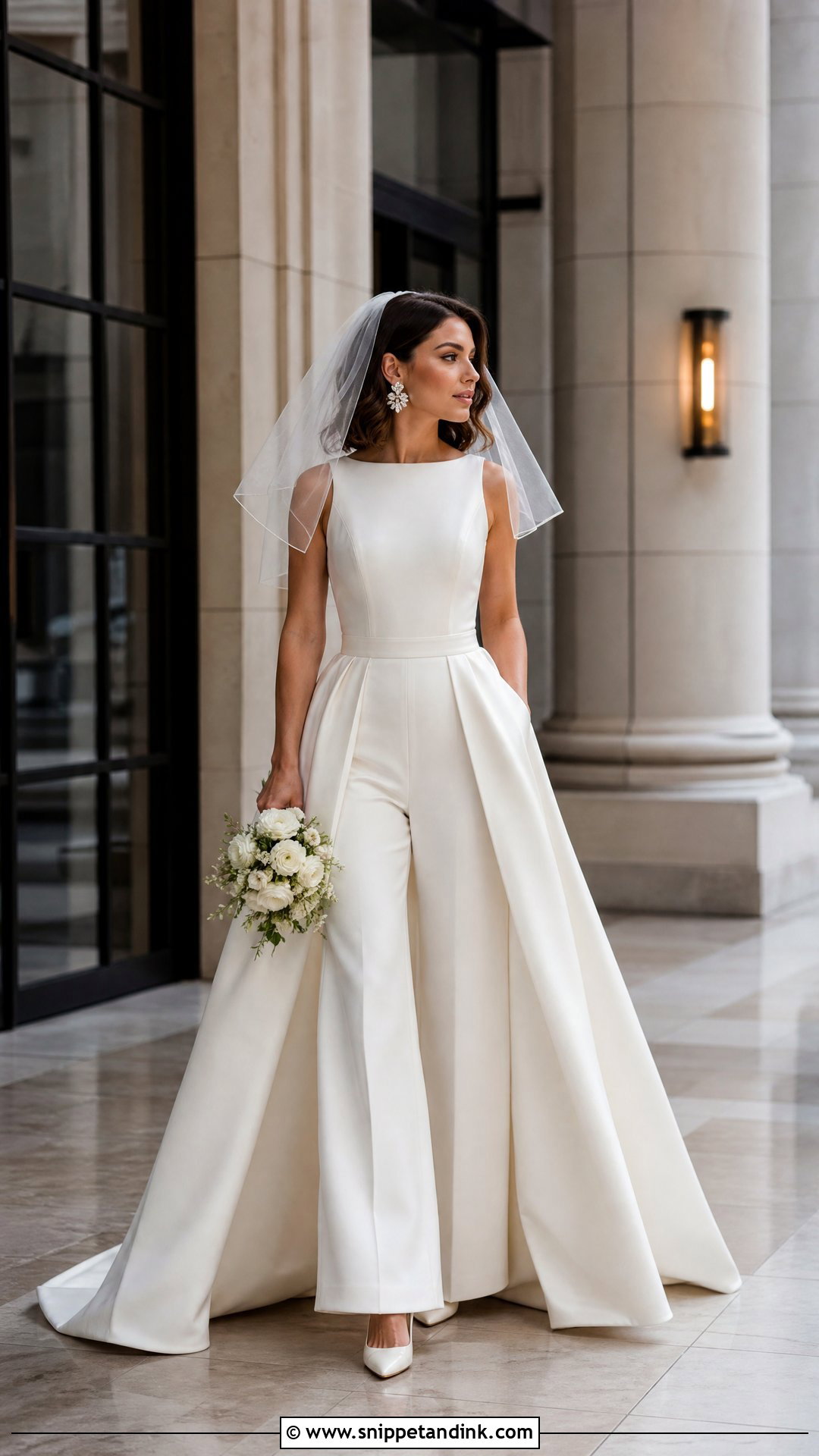
A full skirt over a tailored white jumpsuit is the most practical conversion I know. You get a formal gown silhouette at the altar and trousers you can dance, sit cross-legged and run around in later. Look for a structured bodice, a defined waist and legs that skim the shoe without dragging. Satin, crepe and light mikado photograph cleanly. Check where the overskirt waistband sits relative to pockets and the jumpsuit zip, since a waistband over a zip leaves a visible ridge. Once it’s off, a metallic belt sharpens the tailoring.
11. Wedding Dress With Detachable High Neck Topper
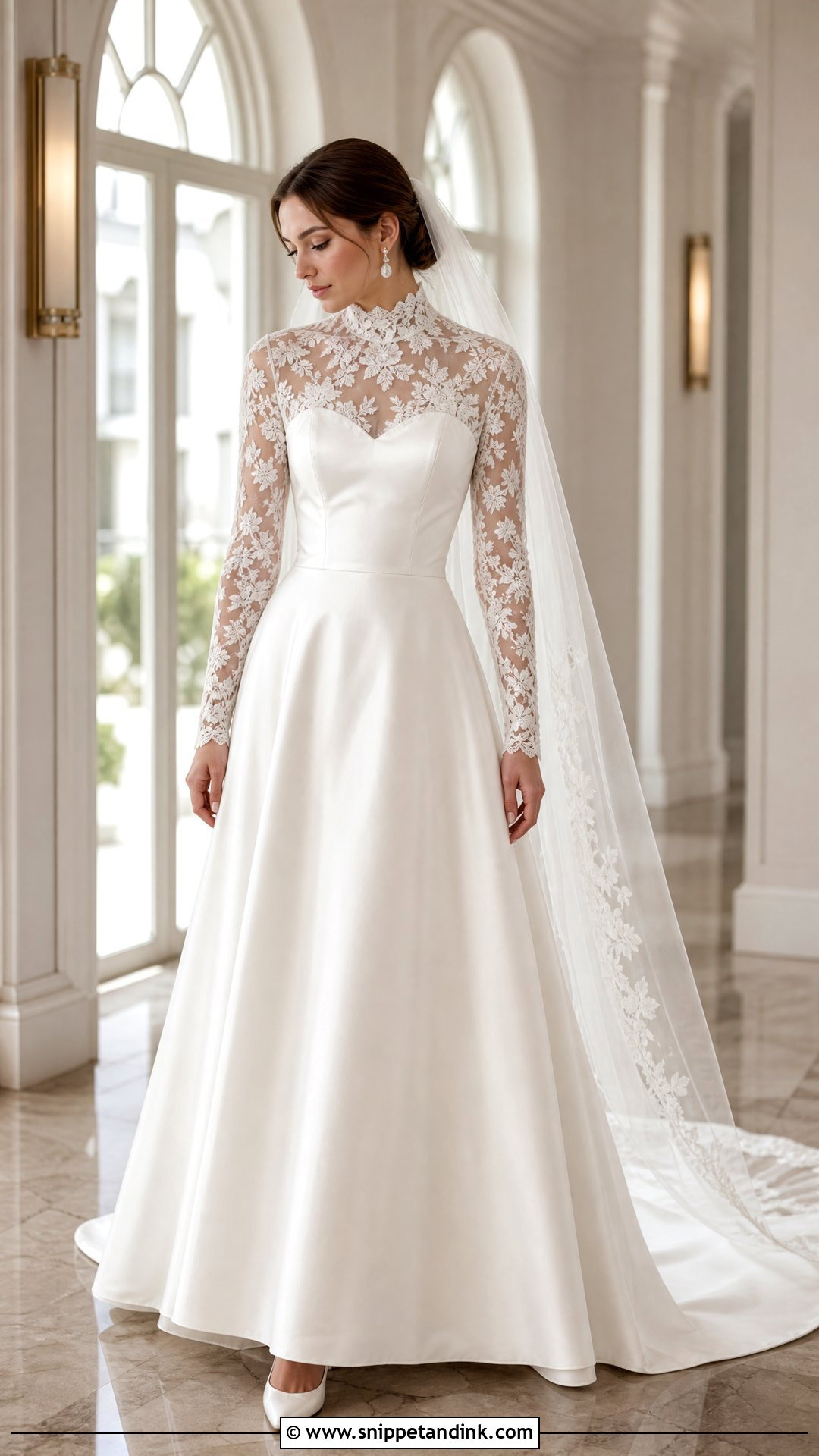
A sheer high-neck topper lets one gown move between covered and open. It goes over a sweetheart or straight neckline, with long sleeves, appliqués and covered buttons, and it makes the bodice look entirely different. For ceremonies where coverage is expected, this is often the easiest answer. The fit check is the underarm. Toppers bunch there if they’re cut generously, so ask your seamstress to shape that seam closely. Low chignon, pearl drops and a fingertip veil for the ceremony; when the topper comes off, a fine necklace fills the open neckline.
12. Off Shoulder Wedding Dress With Removable Neckline
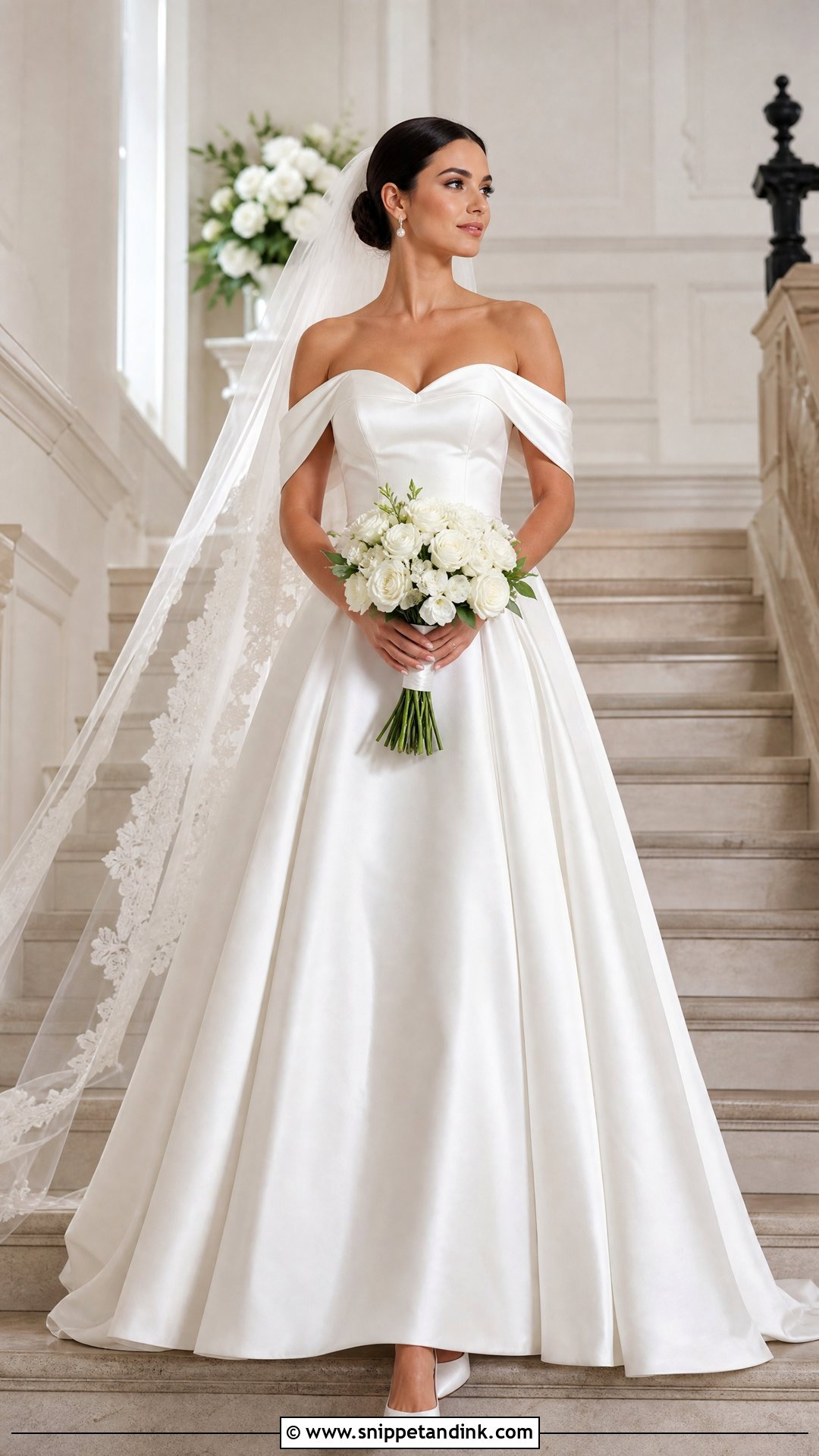
A removable off-shoulder band turns a strapless gown into a softer ceremony look by framing the collarbones. It might be a draped satin band, a lace shoulder piece or a sculpted cuff. These bands are the conversion that pinches most often, because they sit across the upper arm. At your fitting, roll your shoulders, sit down and hug someone; the band should stay level and leave no red marks. Once it’s removed, the strapless base feels modern. Swap the cathedral veil for a decorative comb and add a statement bracelet for the party.
13. Wedding Dress With Removable Lace Overlay
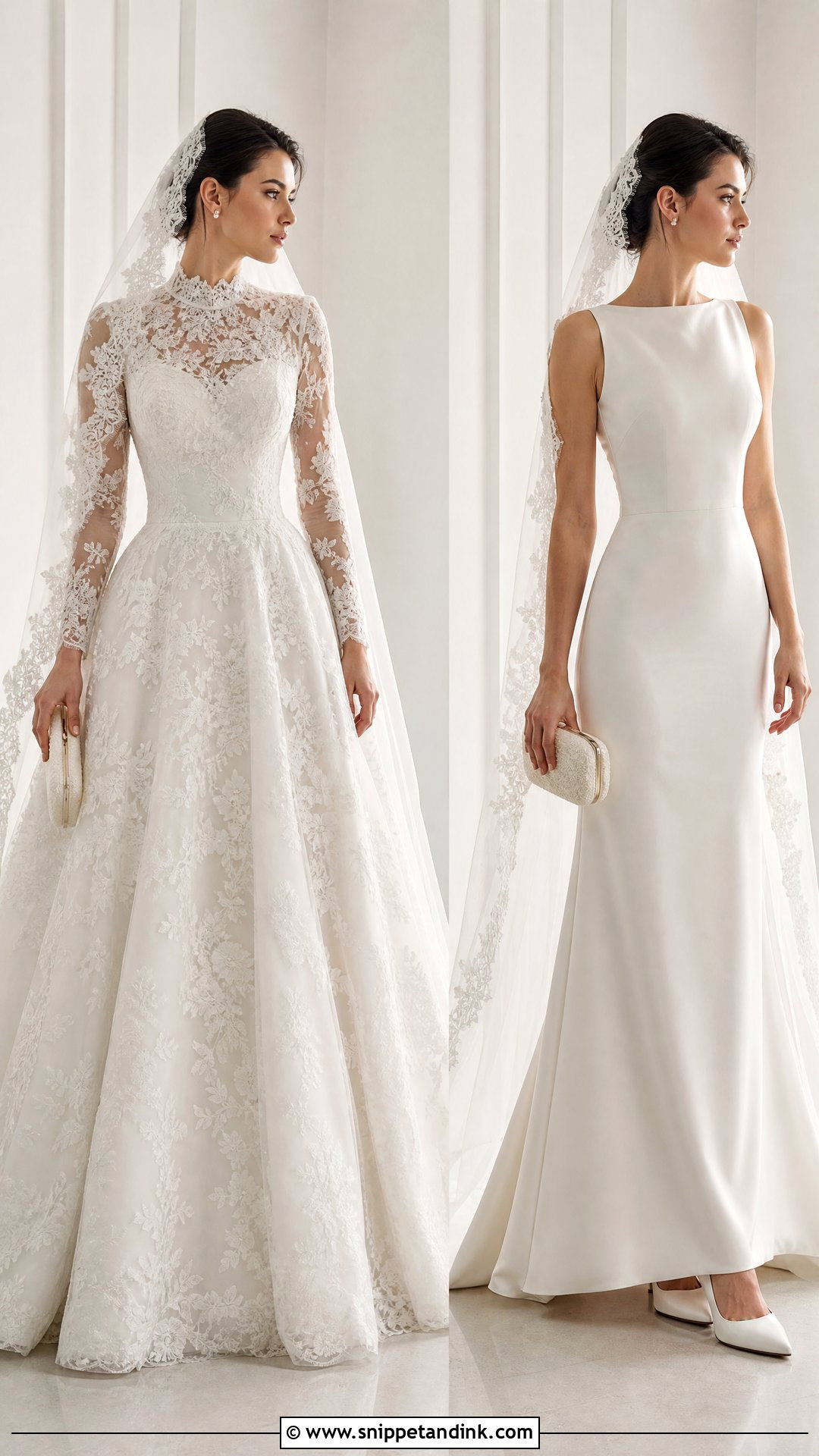
A removable lace overlay gives you ornate texture at the ceremony and a smooth slip, sheath or A-line underneath. It can cover just the bodice, just the skirt or the whole gown. If it’s a full overlay, plan how it comes off: lace that slides over your head will catch on pins and a veil comb, so I prefer an overlay that opens down the back. Ask the seamstress to match the lace pattern across seams, so the first look reads as one gown. Lace-edged veil and pearl studs before; modern earrings and a sleek clutch after.
14. Wedding Dress With Detachable Bow Train
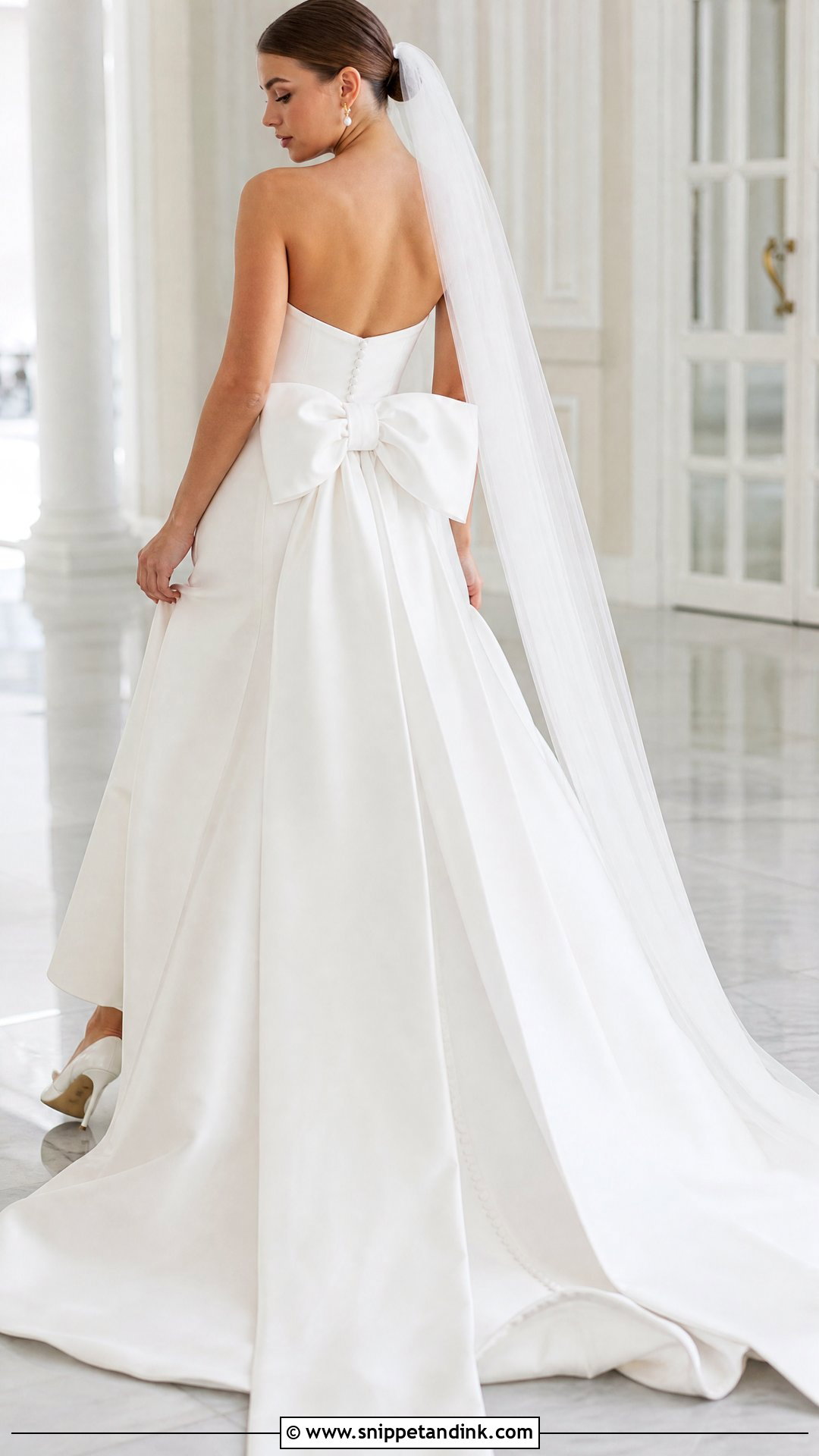
A detachable bow train gives a memorable back view without dragging fabric all night. An oversized bow sits at the back with long tails running into a train, on a clean satin, crepe or mikado gown. Weight distribution is the thing to check. A heavy bow fastened at one point pulls the gown’s back neckline down, so it needs to be anchored across the waist at several points. Keep the ceremony accessories simple so the bow leads: a plain veil, pearls and pumps. Afterwards, a sparkling hair accessory and comfortable heels.
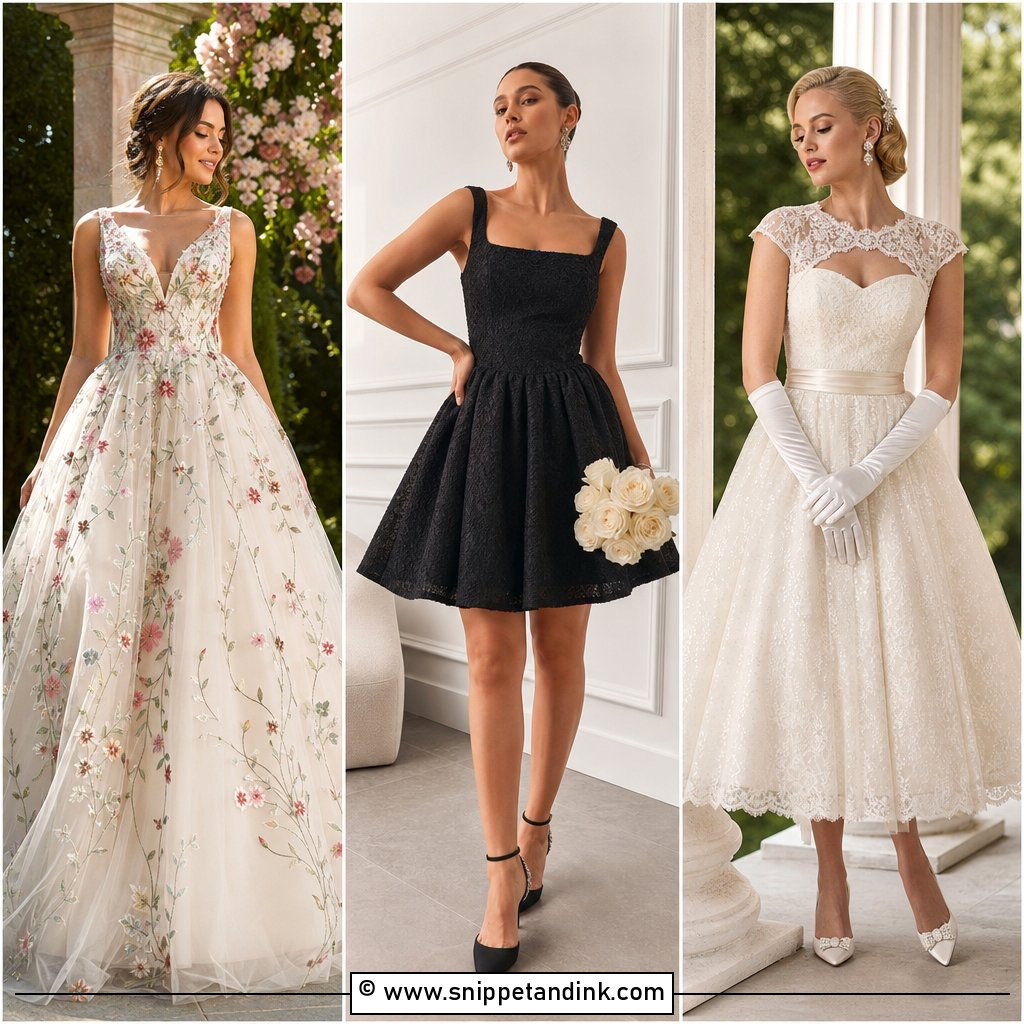

15. Wedding Dress With Detachable Bridal Jacket
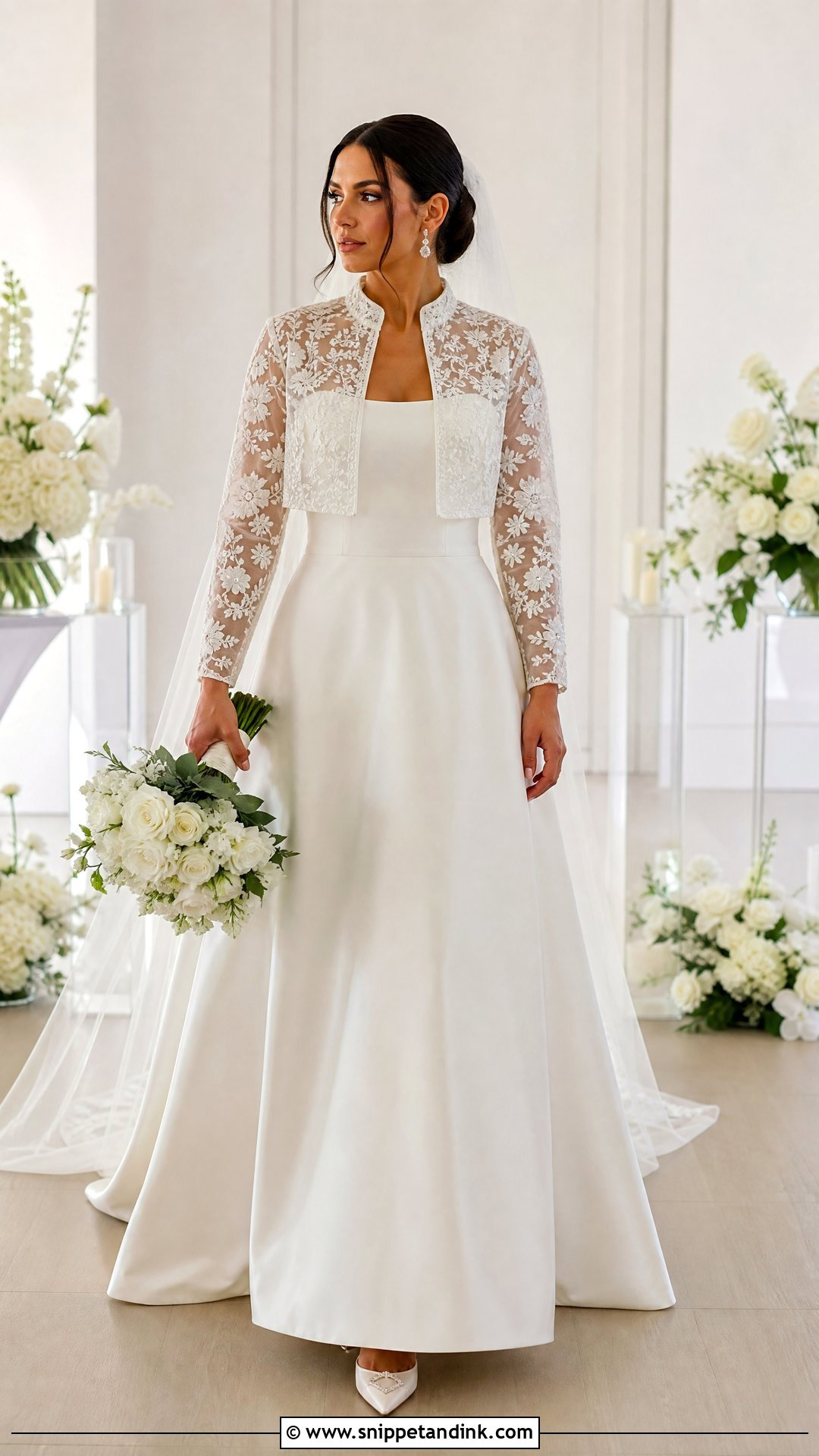
A detachable jacket is the practical choice for a cool church or a spring evening. A cropped satin jacket, embroidered organza or fitted lace layer goes over a sleeveless gown, ideally meeting it at the natural waist so the two look designed together. Watch the seams: a heavy jacket seam can leave a temporary mark on delicate silk underneath, which shows once the jacket is off. Sleeves need room to move without looking oversized. Crystal earrings and a chapel veil for the ceremony; decorative hairpins and a bracelet once it comes off.
16. Sparkly Wedding Dress With Removable Tulle Layer
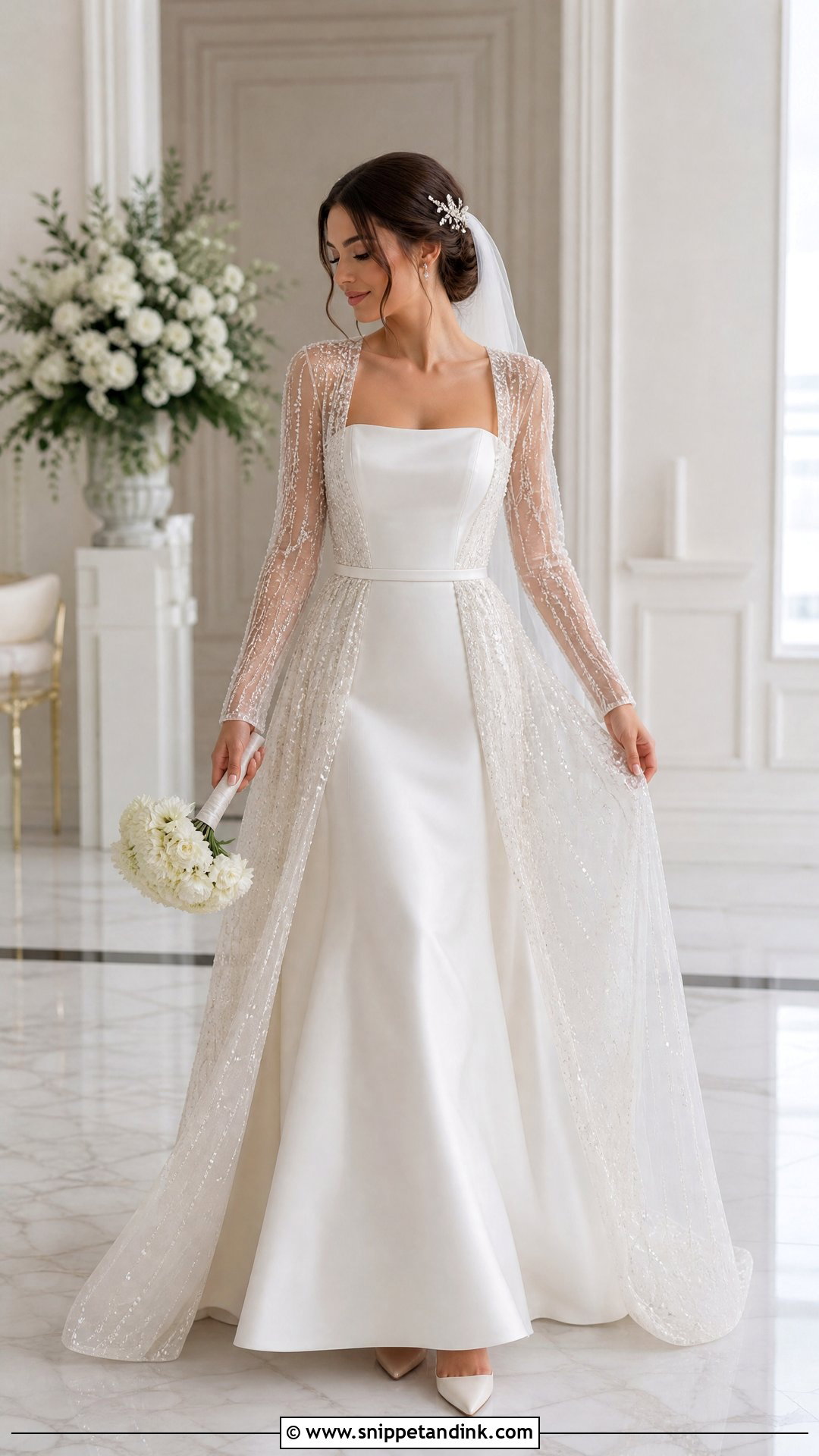
A beaded or glittering tulle layer over a smooth satin A-line gives you sparkle for the ceremony and a quieter dress for the party. The structure stays in the base gown, so the overlay can be light. Inspect the beadwork carefully at fittings. Sequins and beads catch on hooks, snag a tulle veil and scratch the inner arm as the layer comes off, so ask for the inside edges to be bound. Keep the first look simple, with a plain veil and neutral pumps. Once the sparkle is off, crystal hairpins or a jewelled belt can add definition back.
17. High Low Wedding Dress With Detachable Skirt
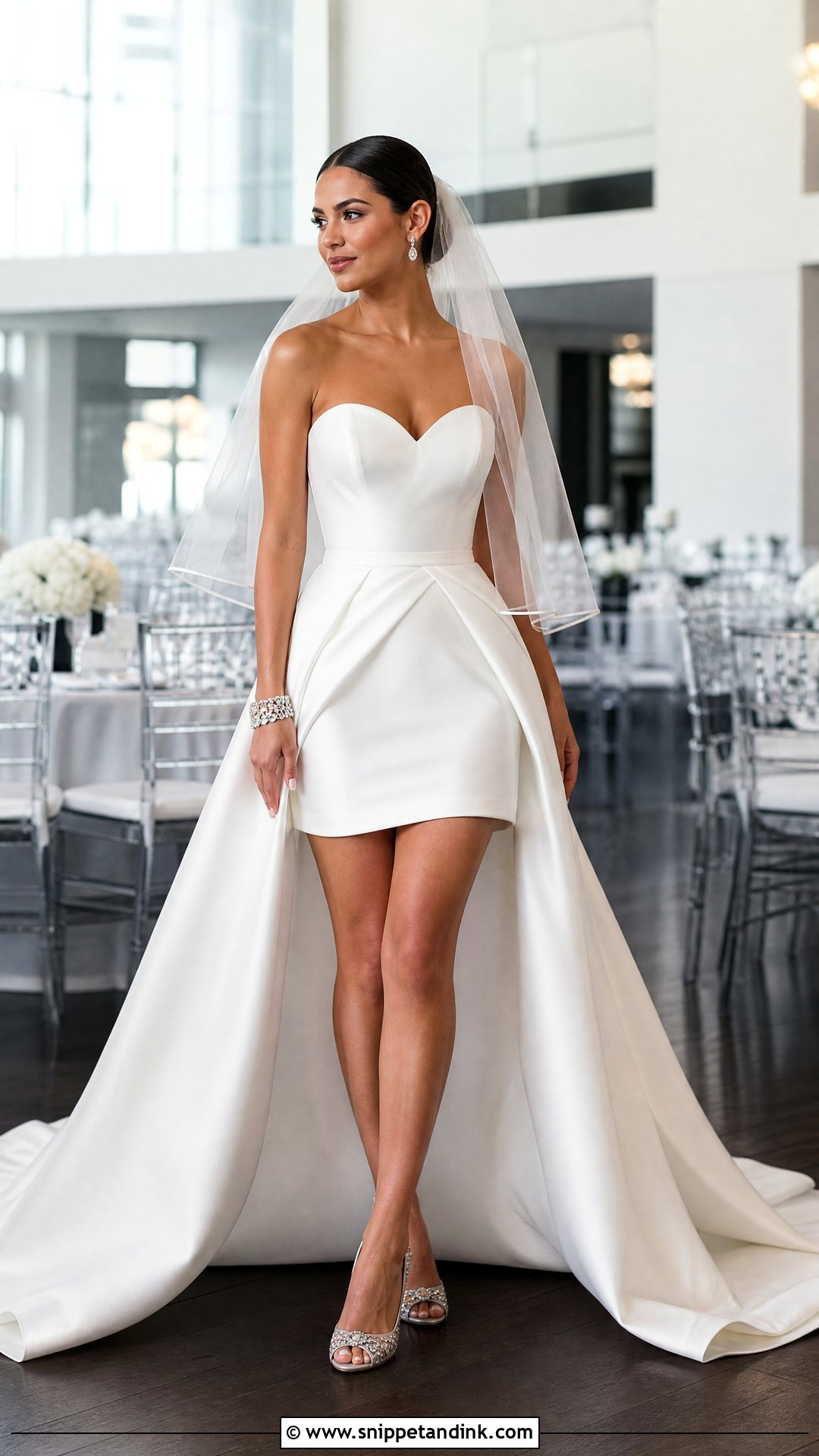
A high-low dress under a long detachable skirt gives a traditional hem for the aisle and a playful shorter front for the reception. A structured bodice and gently flared skirt keep the proportions right after the change. Mikado, satin and layered organza hold shape without bulk. The tricky part is where the front hem falls; set it too high and it looks like a mistake rather than a design. I mark it with the bride in her reception shoes, usually just below the knee at the front. Fingertip veil and closed pumps before; embellished heels and a bold bracelet after.
18. Wedding Dress With Detachable Pearl Cape Sleeves
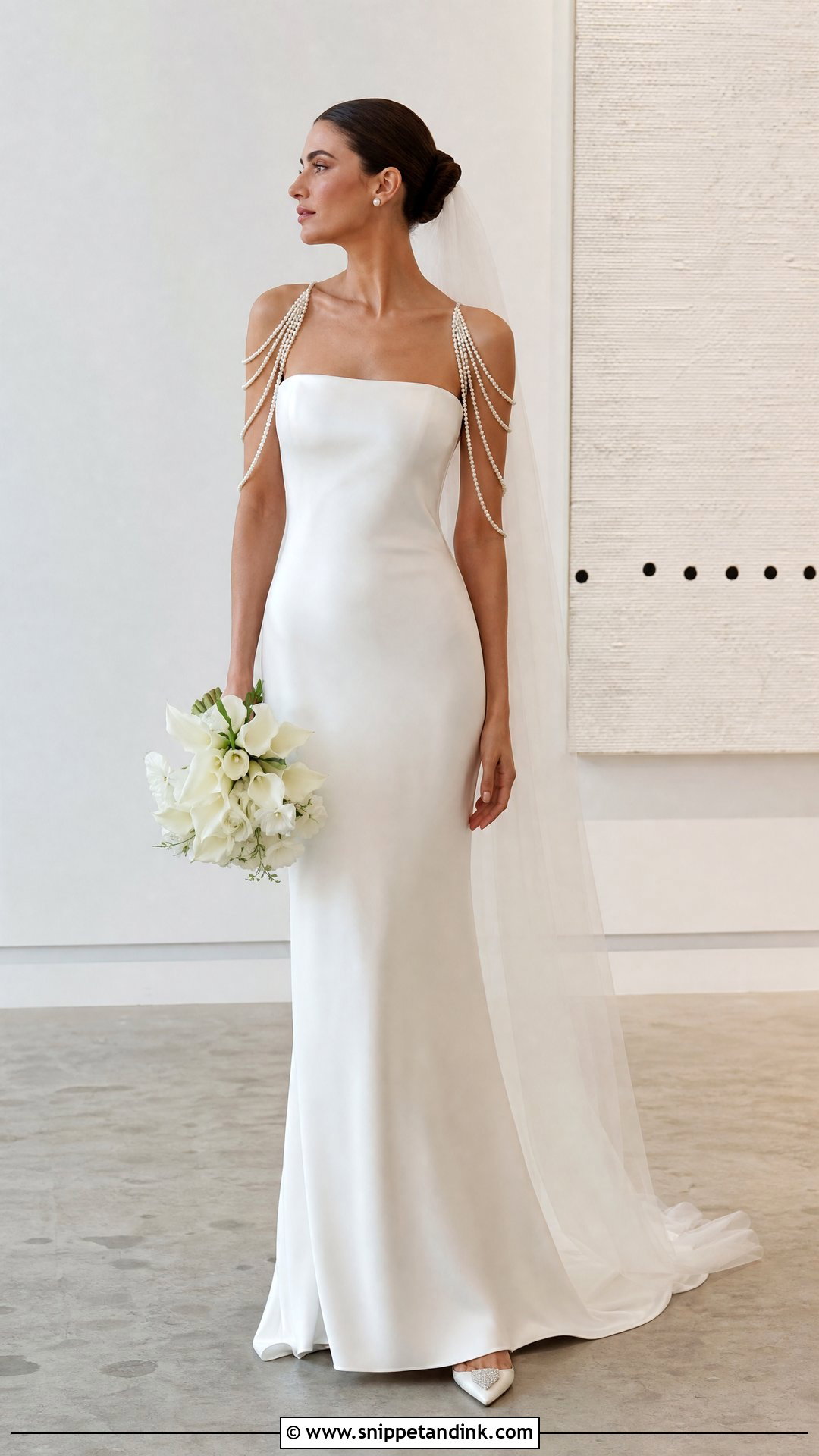
Pearl cape sleeves are delicate strands or sheer panels that drape from the shoulders, part sleeve and part short cape. They suit a strapless satin column or a square-neck crepe dress. Weight is the risk. Many pearl strands pull on their attachment points, tangle with long hair and get uncomfortable after several hours, so I look for lightweight pearls spaced evenly on fine mesh. A sleek bun keeps hair away from them. Small studs and a plain veil before; a crystal bracelet or modern drop earrings once the sleeves are off.
19. Ball Gown Wedding Dress With Removable Skirt
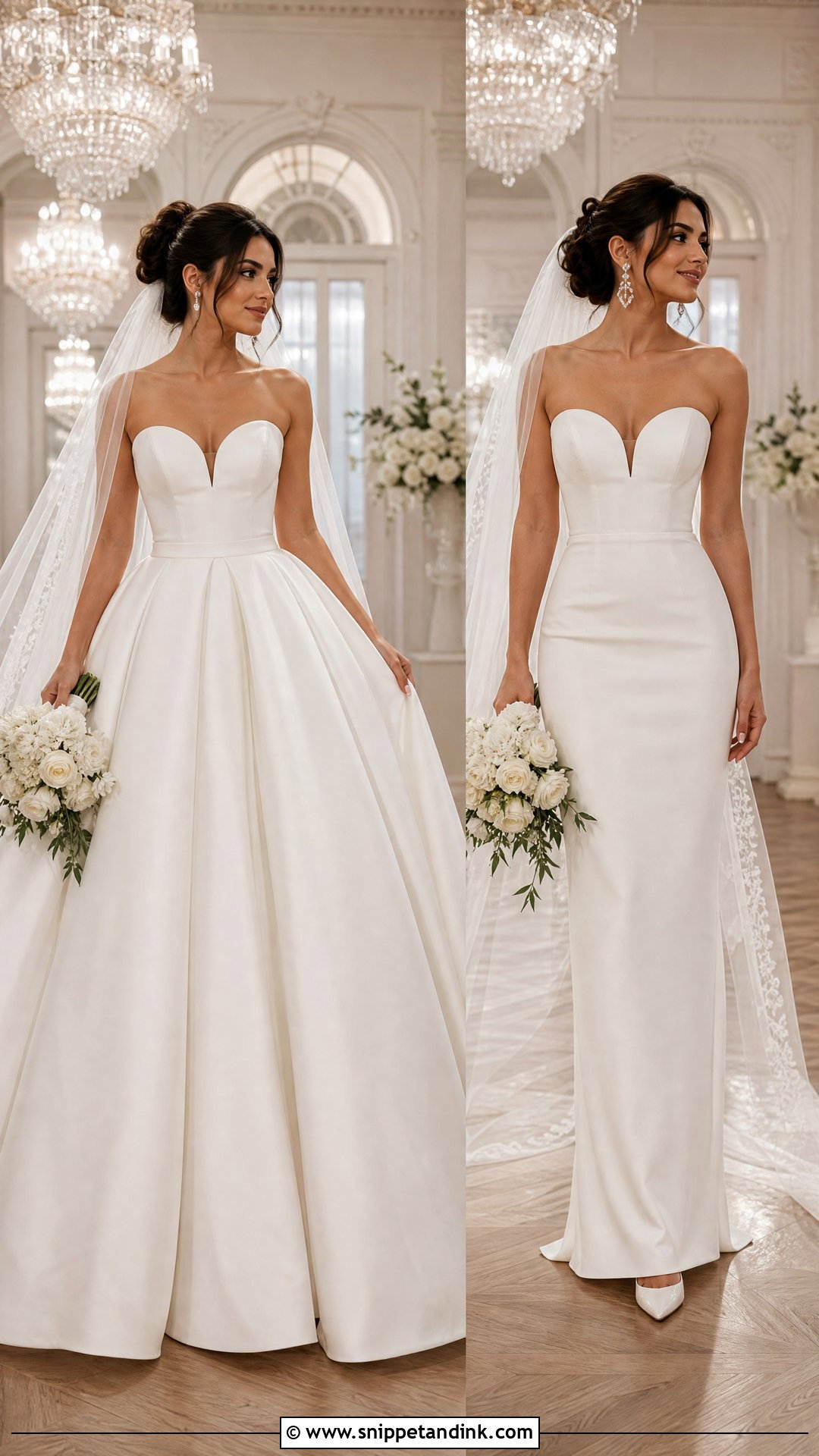
Walking in as a ball gown and dancing in a fitted column is the biggest transformation here. A structured satin or crepe base sits under a full mikado or layered tulle skirt attached at the waist. That outer skirt is heavy, often several layers deep, and after hours of wear it can crush the base dress at the waistband. Ask your seamstress to minimise bulk there and to add a stay so the weight hangs from the waist, not the bodice. Cathedral veil, pearls and classic pumps for the ceremony; statement earrings and supportive heels later.


20. Wedding Dress With Removable Feather Topper
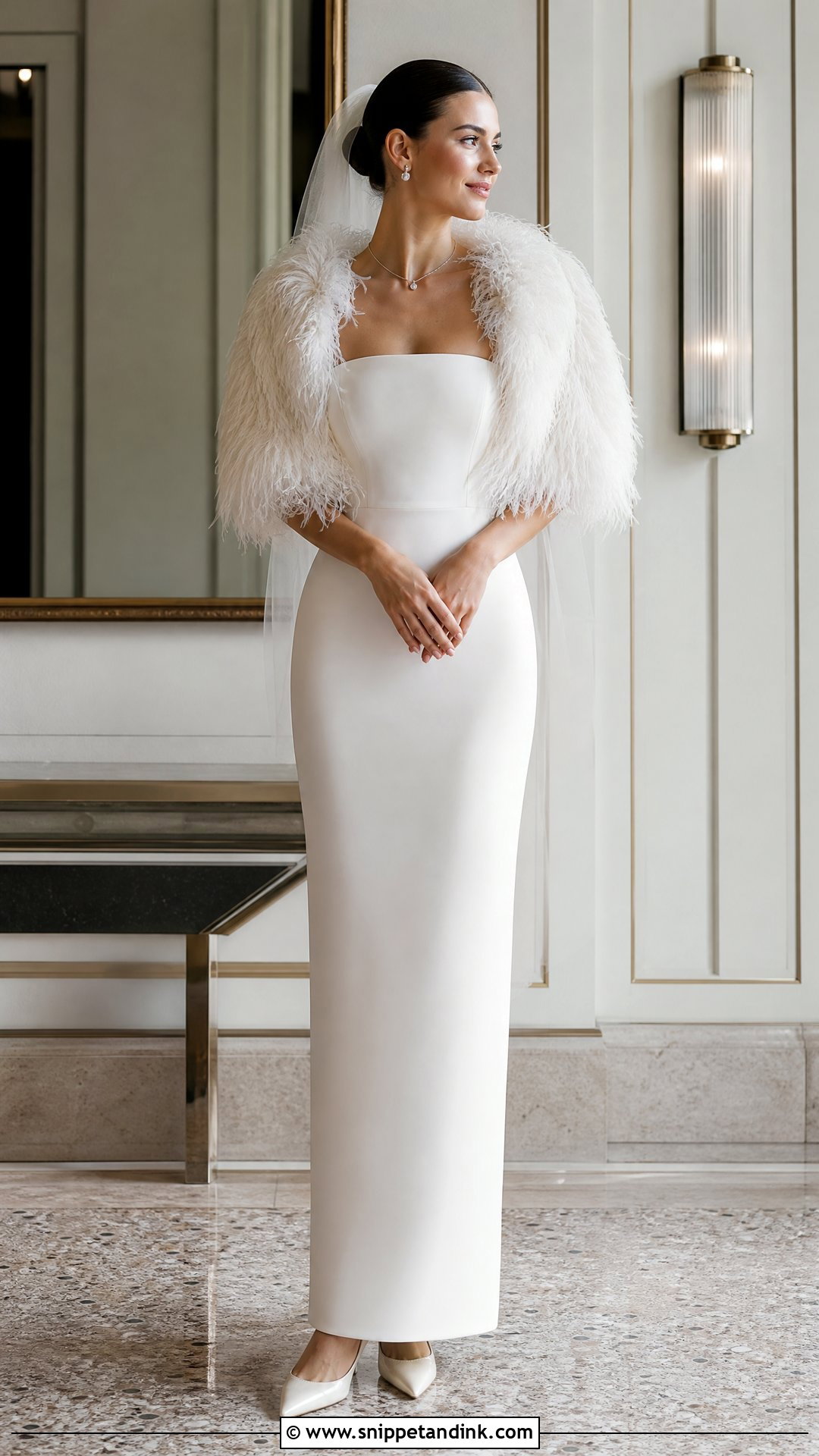
A feather-trimmed topper over a sleek strapless gown gives a fashion-led entrance. Choose fine, neatly arranged feathers in an ivory that matches the dress; bulky or bright-white feathers tip into costume. Feathers shed a little, so keep a lint roller handy and avoid pairing them with a tulle veil that will collect strays. The topper should be snug enough to stay put but not so tight it presses marks into the bodice. A smooth bun, small earrings and a short veil first; sparkling drops or a fine necklace once it’s off.
When and Where the Switch Actually Happens
Brides plan the reveal and forget the logistics, so here is the timeline I sketch with them. Most switch after formal portraits and before the grand entrance or first dance, often during cocktail hour, when guests are busy and the photographer can step away.
Ask your venue for a private room close to the reception, with a full-length mirror and a clean hanging rail. A detachable piece is still part of your gown, and leaving it crumpled on a chair is how tulle ends up stepped on. Choose one helper, usually a bridesmaid or your planner, and have her practise the switch with you at the last fitting. Write the order of fastenings on a card for her bag.
Allow fifteen minutes even if the switch takes two, because hair often needs a touch-up once a topper or cape comes off. And ask the photographer to catch a quick shot of the second look in good light before the dancing starts.
Two Looks, One Dress: What to Confirm Before Your Final Fitting
A convertible gown has to do more than deliver a dramatic reveal. It has to fit securely in both versions and look complete before and after the removable piece comes off. Think about your venue, the weather, when you’ll change and what you’ll do at the reception, then pick the conversion that serves that, whether it’s a skirt, sleeves, a cape, a topper or a train. Bring both pairs of shoes and all accessories to alterations. Practise the switch with the person who will help you, and take phone photos of both looks so you can spot visible closures or uneven layers while there’s still time to fix them.
You'll Like These Ideas:








Leave a Reply