
Crochet is the most forgiving texture I style for a bohemian bride, and also the one with the most quirks. The open stitches read relaxed on a beach and surprisingly polished in a ballroom, depending on the shape, the lining and the shoes under them. Bell sleeves, A-lines, sheaths, minis and long trains all exist in crochet, and every one of them catches light differently because the stitches throw small shadows. When you shop, think about the setting, the season, what sits underneath the openwork, how large the pattern is and how much skin you want to show. Each look below comes with the veil, shoes and bouquet I’d put with it.
The Layer Under the Crochet Changes Everything
With openwork, you are really wearing two dresses: the crochet and whatever shows through the gaps. Brides often fall for the pattern and only think about the lining at the first fitting, but it decides how the dress looks in person and in photos.
- Nude or skin-tone lining makes the motifs stand out the most and gives an illusion effect. Hold the fabric against your arm in daylight, since a shade that matches indoors can look grey or pink outside.
- Ivory lining under ivory crochet is the softest and most traditional. The pattern is still there, just quieter.
- Champagne or blush lining adds a warm tint and some contrast, and it hides a slight color mismatch between yarn and fabric.
- Partial lining, such as a short slip under a long skirt, is airy and beachy, but check it against camera flash, which can see through more than you expect.
Ask whether the lining is separate or stitched to the crochet. A separate slip is easier to alter and replace, while a stitched one keeps the two layers from shifting against each other as you move.
1. Boho Crochet Wedding Dress With Bell Sleeves
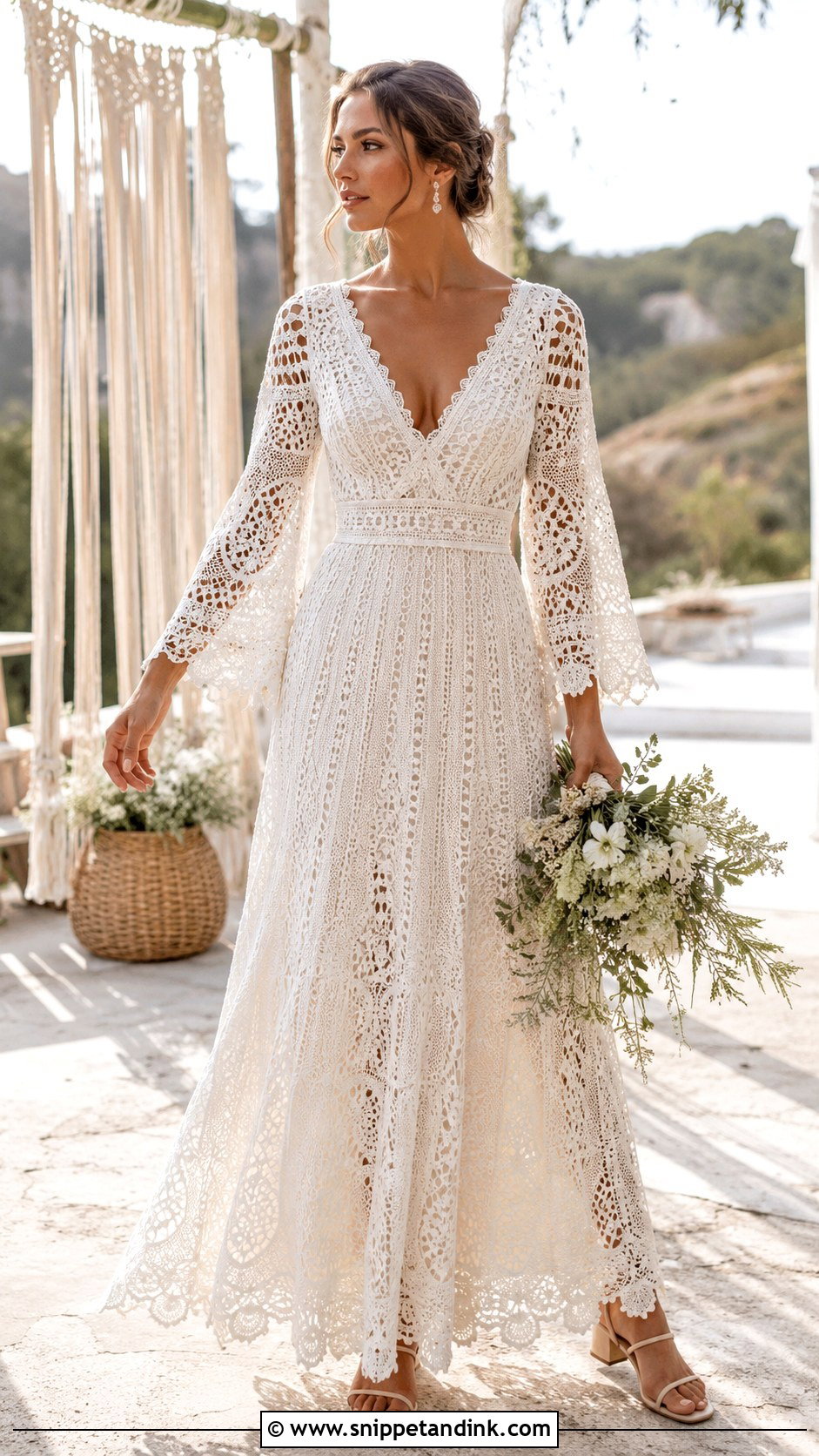
If you picture a boho bride, you are probably picturing this one. An ivory gown with a fitted bodice, deep V and softly flared skirt needs very little added. The sleeves are the feature, so I keep the hair in soft waves or a textured low bun and use a flower comb or a plain fingertip veil that stops short of the sleeve edge. Low block-heel sandals, fine drop earrings and a loose white-and-green bouquet finish it. Bell sleeves in crochet are heavier than chiffon ones, and they will dip into the cake if you lean over the table, so hold them back with your free hand.
2. Crochet Beach Wedding Dress With Halter Neck
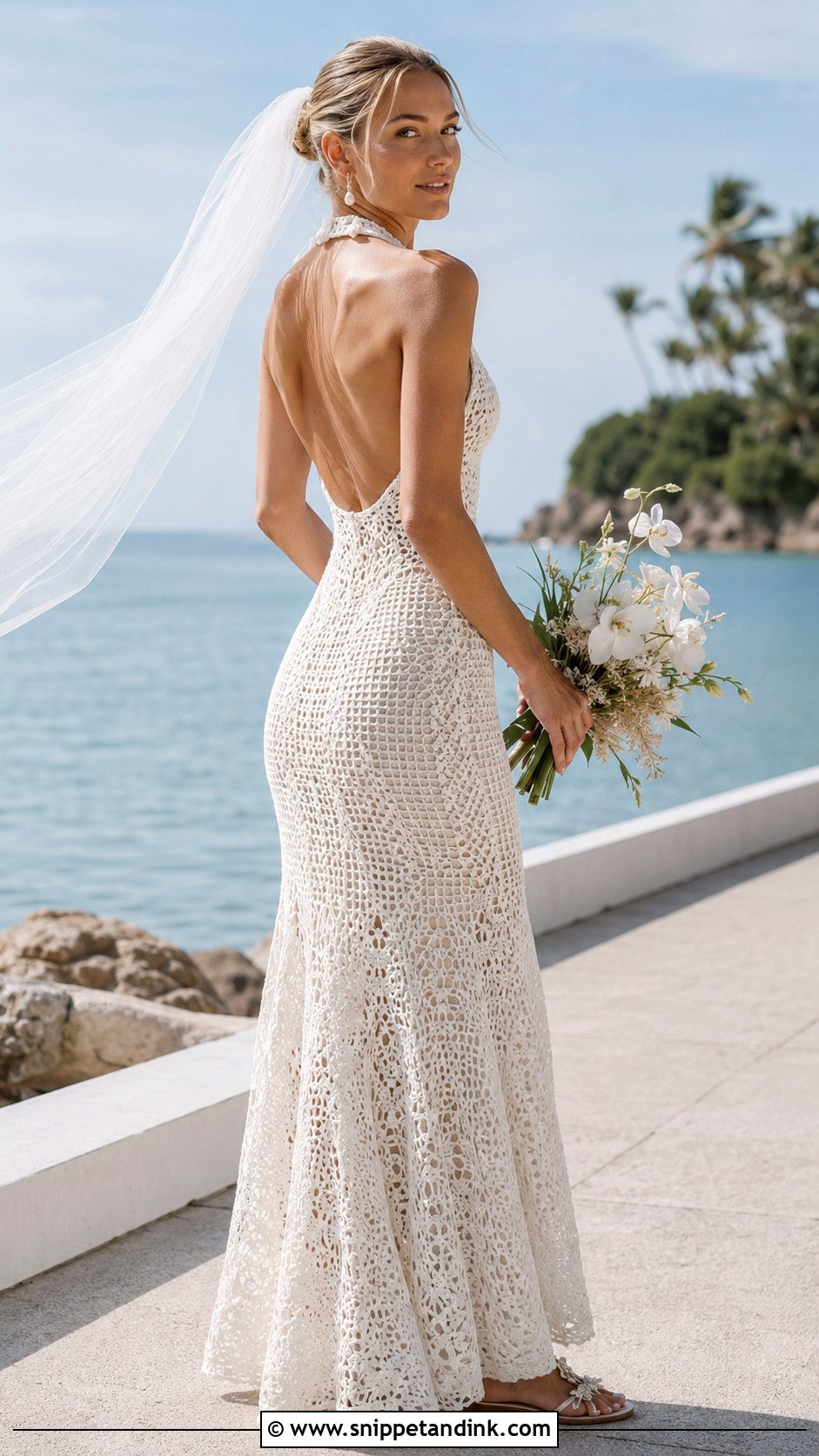
Halter crochet is built for a coastal ceremony: it breathes, it doesn’t wilt in humidity and the open back keeps you cool. A short underslip gives a little peekaboo dimension under the skirt; a full-length lining is more traditional. Flat embellished sandals or bare feet with anklets work on sand. A tight braided updo is the only hairstyle I trust in sea wind, and a light veil stays under control. Skip big jewelry, because the neckline already does that work. One warning: wet sand clings to crochet hems, so keep the hem an inch off the ground.
3. Long Sleeve Crochet Wedding Dress With Train
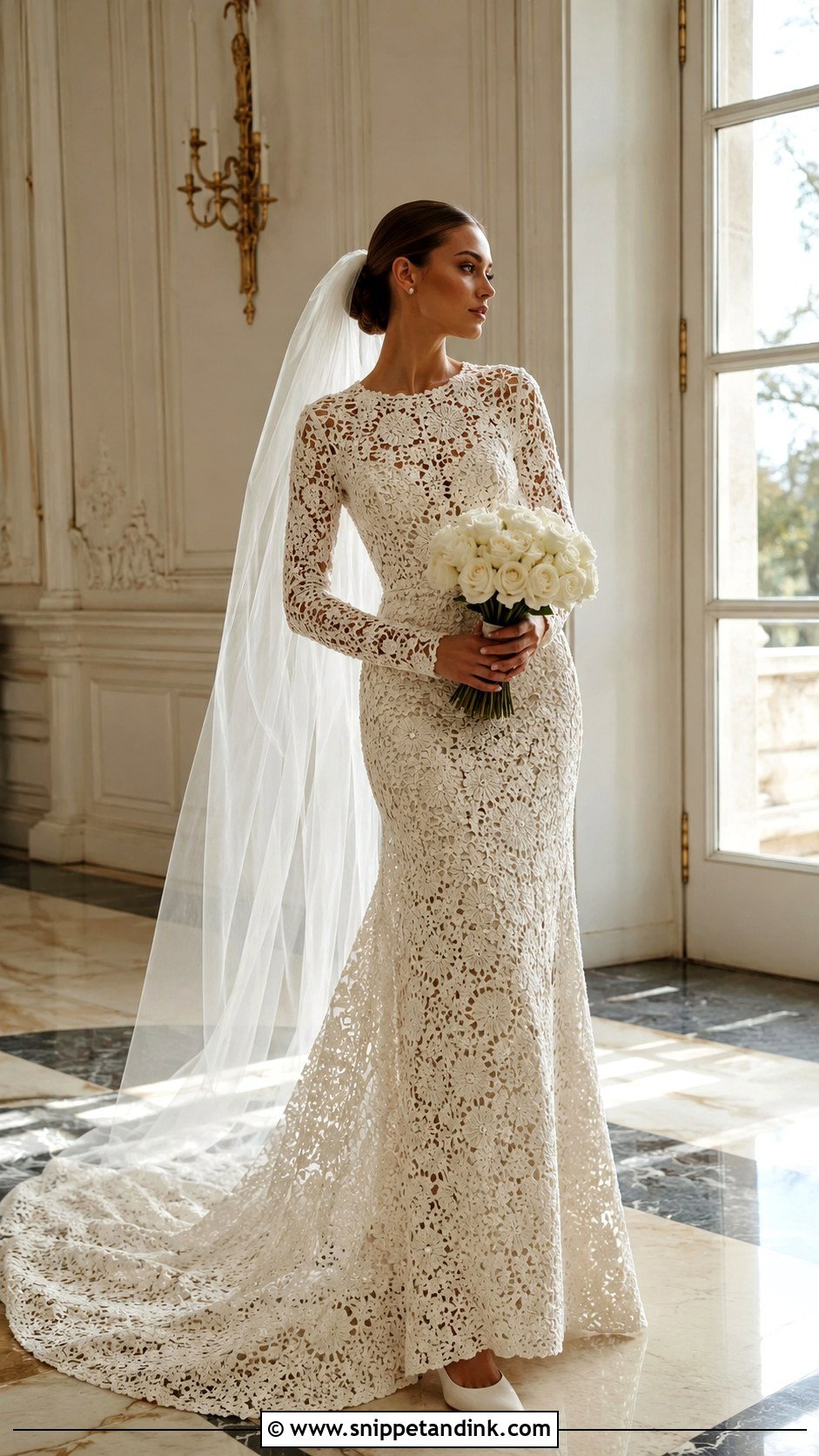
Crochet can be formal. Dense floral motifs across the bodice give coverage, lighter work through the sleeves softens it, and a smooth ivory lining keeps the train from looking busy. Pointed satin pumps, pearl studs and a structured white-rose bouquet push it toward evening. I’d choose between a cathedral veil and a detailed crochet back, not both; if the back is the best part, a single comb in a low chignon is better. This is the crochet gown I’d send to an estate or a hotel ballroom.
4. Crochet A-Line Wedding Dress With Cap Sleeves
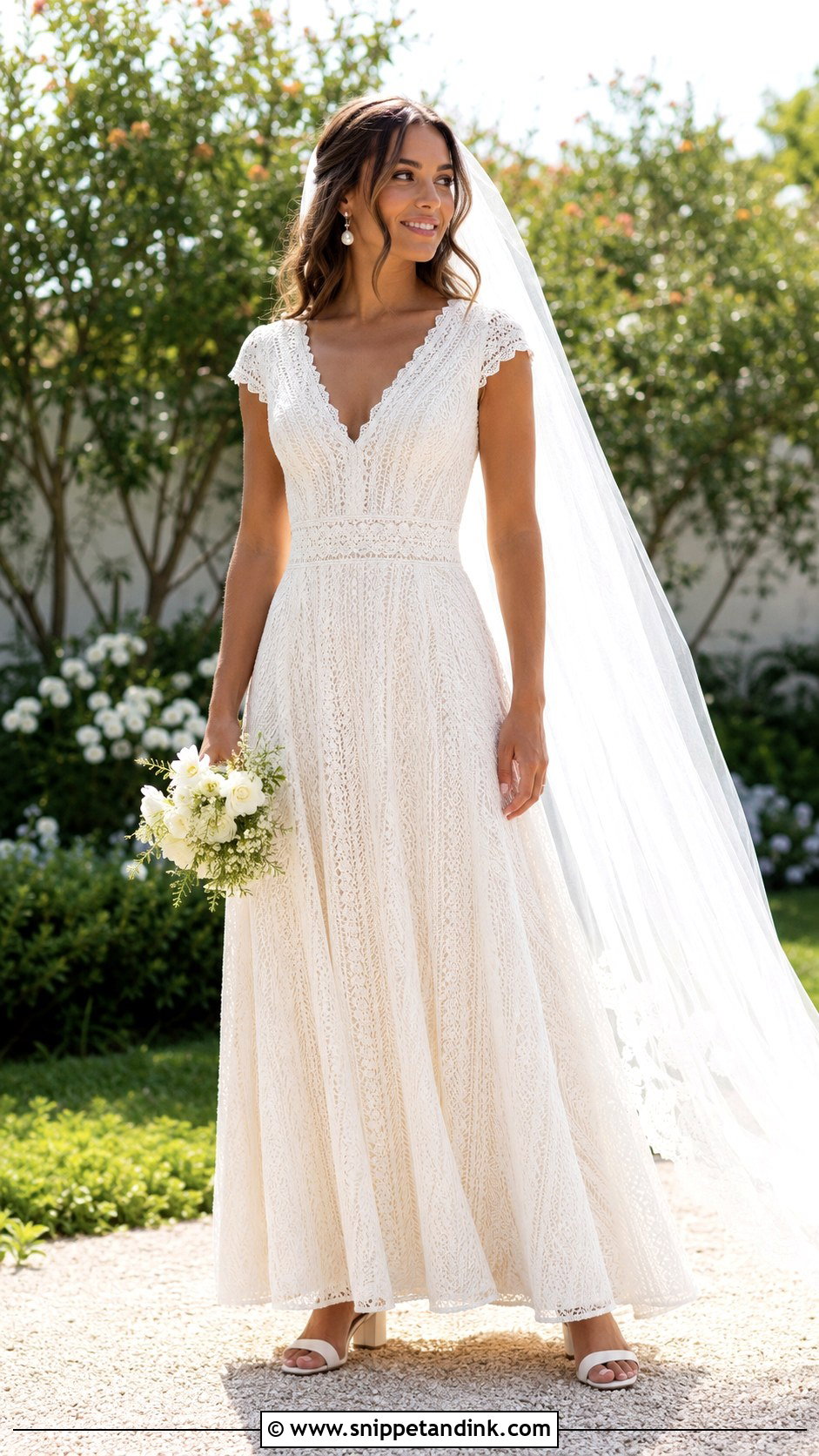
An A-line is the safe shape in crochet because the skirt hangs away from the hips and the stitches don’t stretch over curves. Cap sleeves, a natural waist and floral or geometric motifs keep it classic. This cut can flatter many body shapes since it marks the waist without clinging. Mid-height block heels, small pearls and a waist-length veil keep the proportions tidy. The lining is where you get to choose: ivory looks traditional, champagne pushes the pattern forward with a little contrast.
5. Fitted Crochet Wedding Dress With Low Back
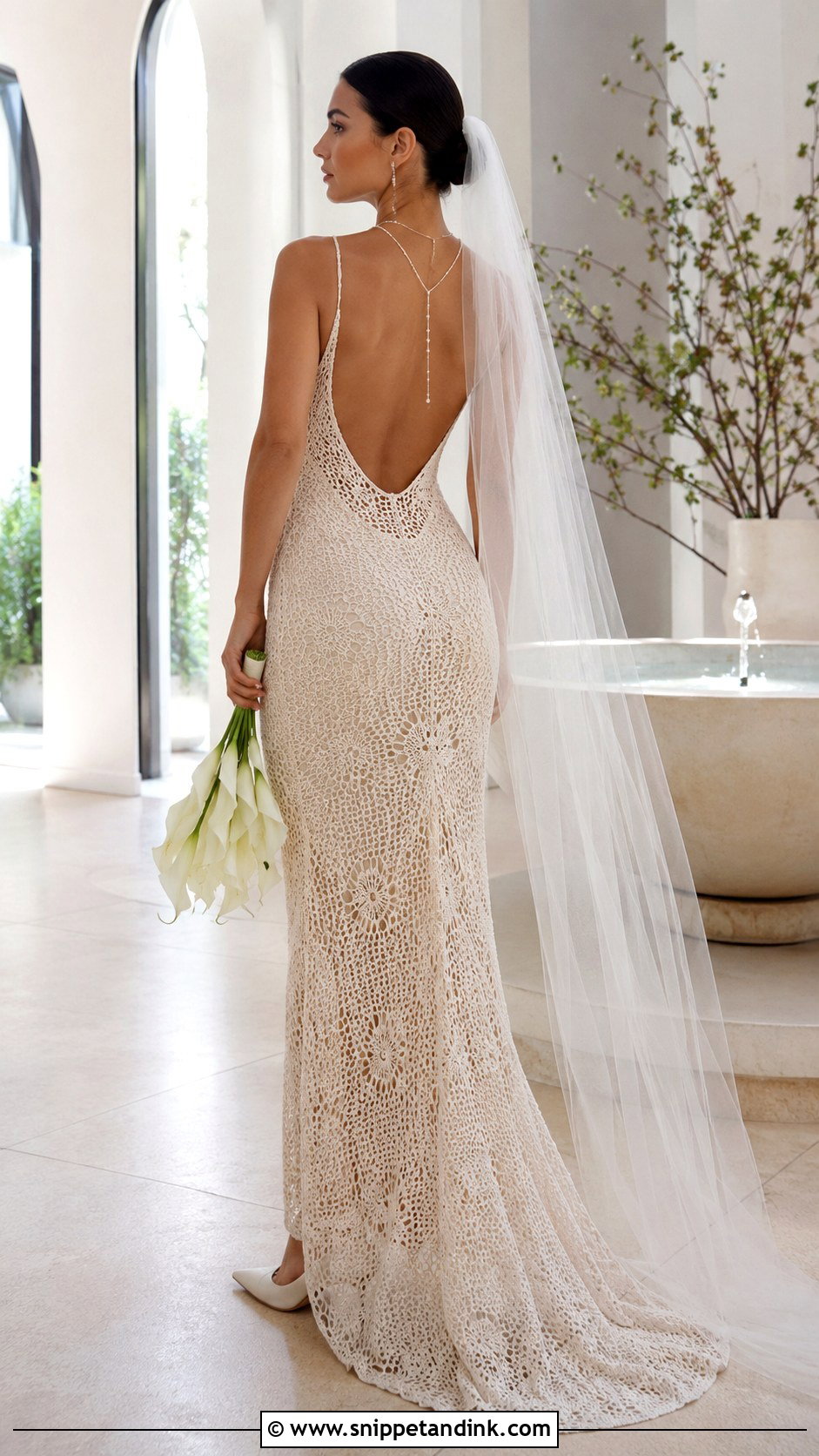
Fitted crochet is the hardest kind to alter. The open fabric can’t simply be cut and resewn like satin, because cut crochet unravels, so the fit has to come from the side seams and the lining underneath. Look for strong inner construction, a low back and a gently flared hem you can walk in. A lining close to your skin tone makes the motifs pop; ivory reads softer. Pointed heels, a back necklace, small earrings and a narrow calla bouquet suit the line, with a low bun to show the back. Smooth, no-line underwear makes a visible difference here.
6. Vintage Crochet Wedding Dress With High Neck
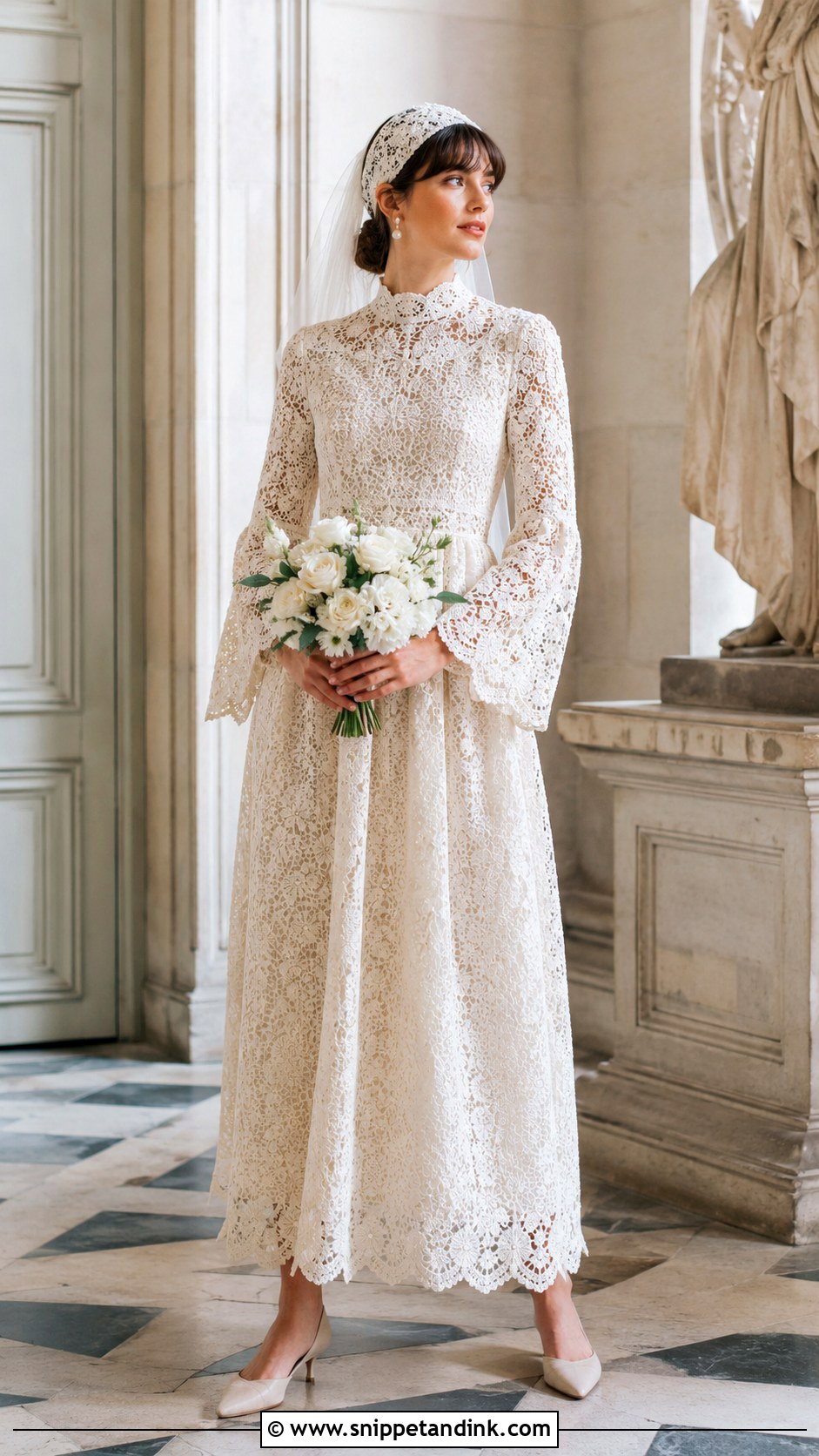
High necks and scalloped edges give crochet its most vintage feel. A fitted bodice, elbow or long sleeves and a softly gathered skirt over an ivory slip let the handmade pattern show clearly. Closed-toe kitten heels and heirloom-style pearl earrings suit it, and a Juliet cap veil fits the era without tipping into costume. A neat low bun keeps the neckline clear. Check the scallops at the collar during the fitting; if they flip outward when you turn your head, the tailor can tack them down with a few invisible stitches.
7. Crochet Wedding Dress With Flutter Sleeves
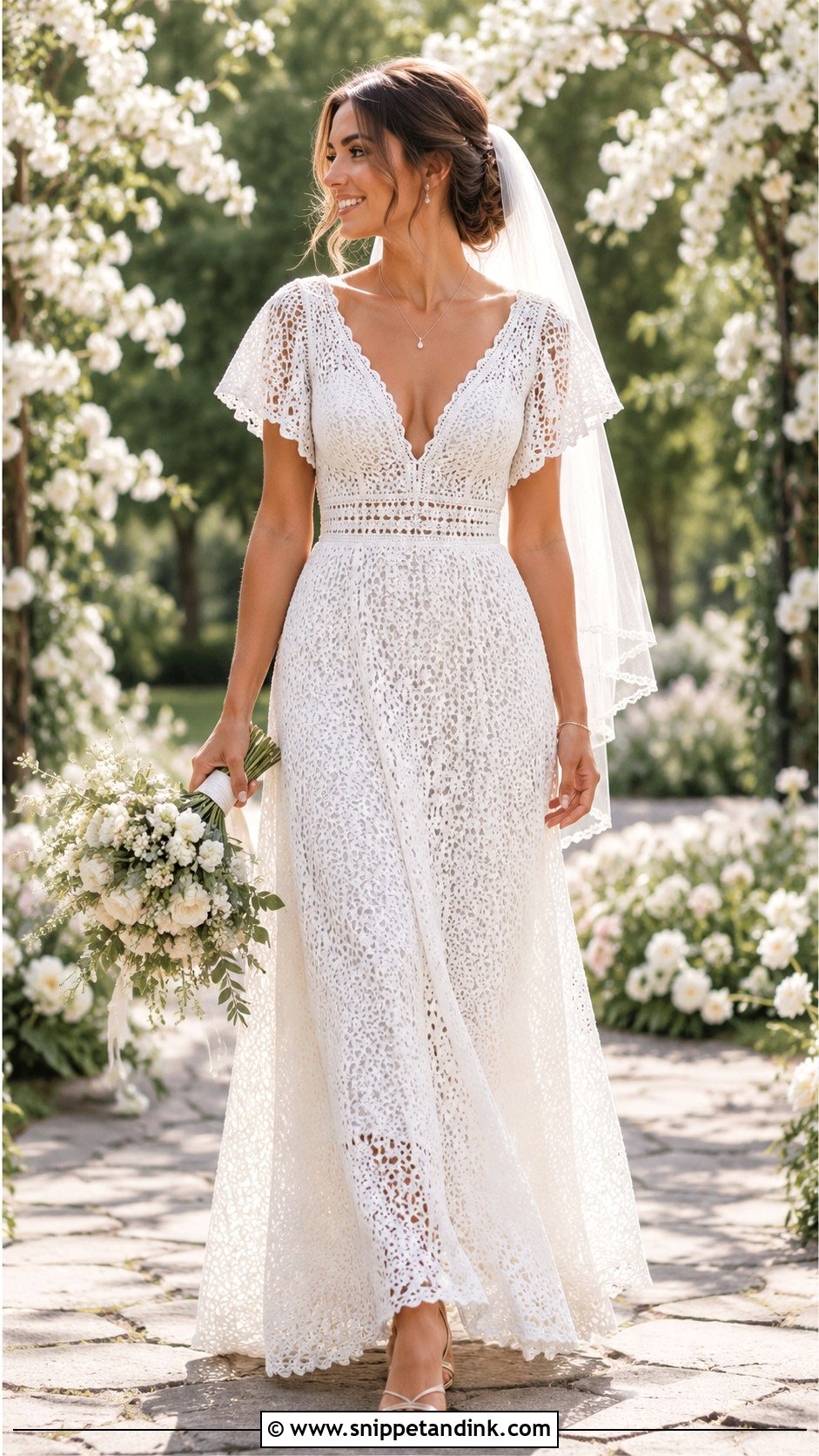
Flutter sleeves are lighter than any full sleeve, which is why I suggest them for warm spring and summer ceremonies. They should fall naturally off the shoulder, not stand up stiffly. A V-neck bodice, defined waist and airy A-line skirt balance them. Low metallic sandals, a slim pendant and seasonal white flowers finish it, with half-up loose waves. If the stitch pattern is very open, ask for a matte lining with seams placed under the motifs, not between them, so nothing shows through the gaps.
8. Crochet Mermaid Wedding Dress With Scalloped Hem
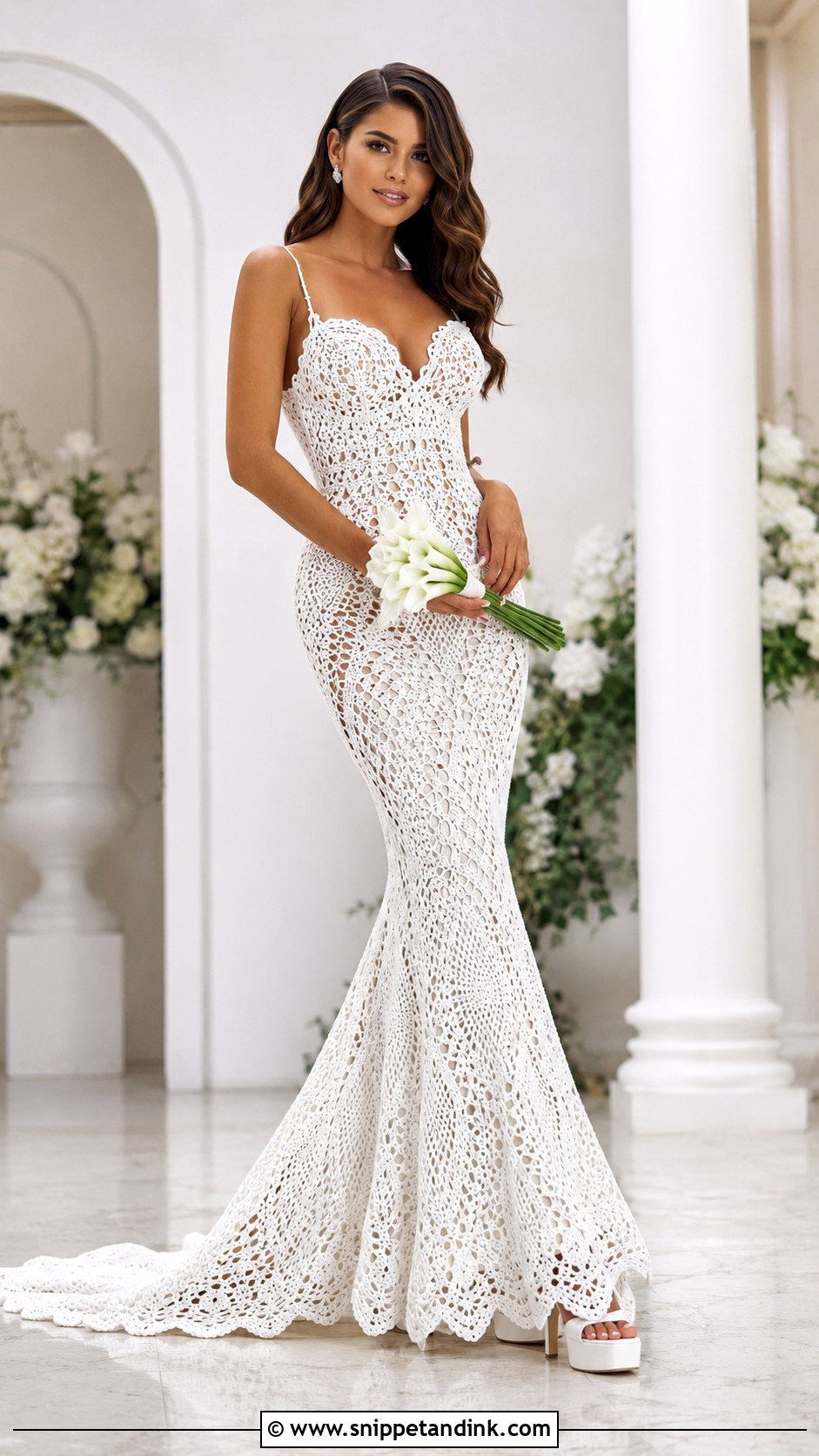
Mermaid crochet is glamorous but unforgiving. The bodice follows the waist and hips before the flare at the knee, and a scalloped hem makes that flare read clearly in full-length shots. Platform heels give height while staying comfortable, and crystal studs, a sleek clutch and a narrow bouquet keep the silhouette clean. Let the veil finish above the flare or well past it. In fittings, sit and walk a lot: a crochet layer and its lining stretch at different rates, and if they aren’t tacked together the outer layer can bag at the knees by evening.
9. Crochet Wedding Dress With Detachable Overskirt
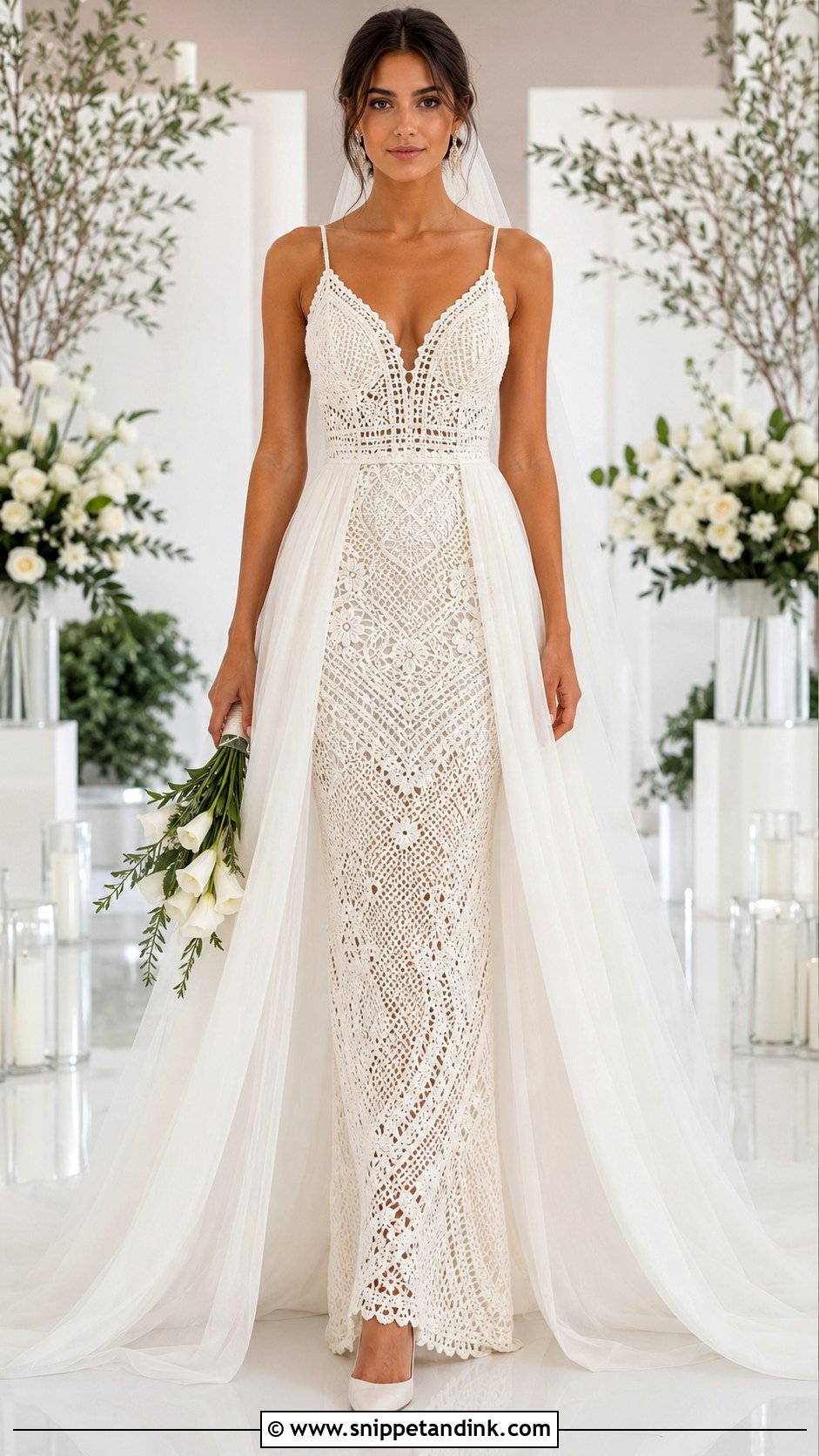
Why settle for one silhouette? A slim crochet column with a clean neckline turns into a full A-line when a light tulle or chiffon overskirt is clipped on at the waist for the ceremony. Take it off for the reception and the stitchwork is back on show. A long veil, drop earrings and pointed pumps carry the ceremony look; a jeweled comb and block heels take over later. The fastening should hide under a narrow waistband. Hooks pulling on open crochet will distort the stitches, so I prefer them sewn into a solid band.
10. Crochet Wedding Dress With Square Neckline
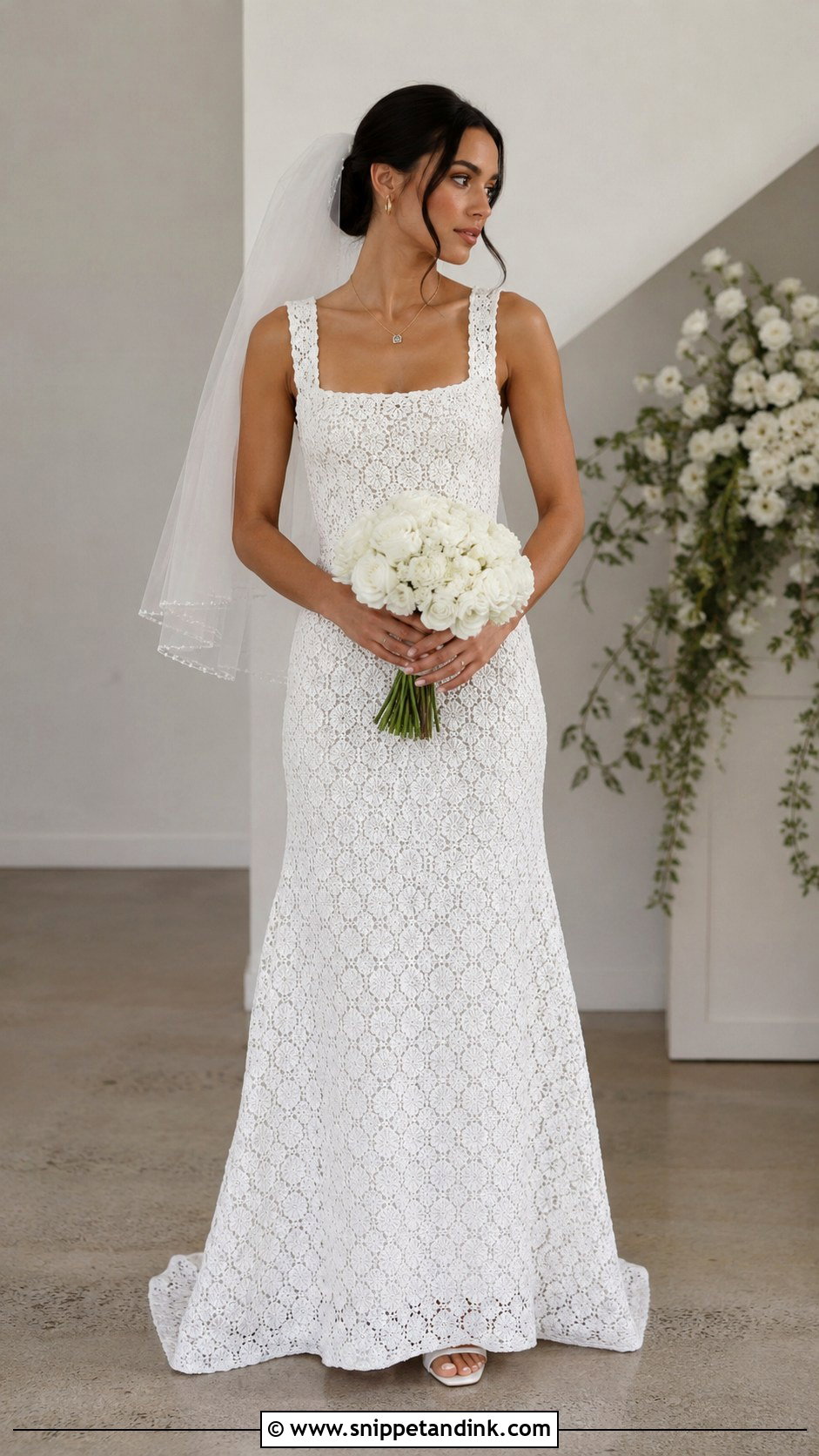
Square necks give crochet a clean frame. Wide straps hold the bodice better than spaghetti straps, which can drag the stitches out of shape over a long day. A fitted bodice over a straight or gently flared skirt keeps it modern. A short pendant, small hoops and slingback heels suit it, with a structured white bouquet and a fingertip veil to soften things. Wear the hair up or tucked behind the shoulders. Match the lining to the crochet for a quiet finish, or go a shade paler to bring every motif forward.
11. Plus Size Crochet Wedding Dress With V-Neck
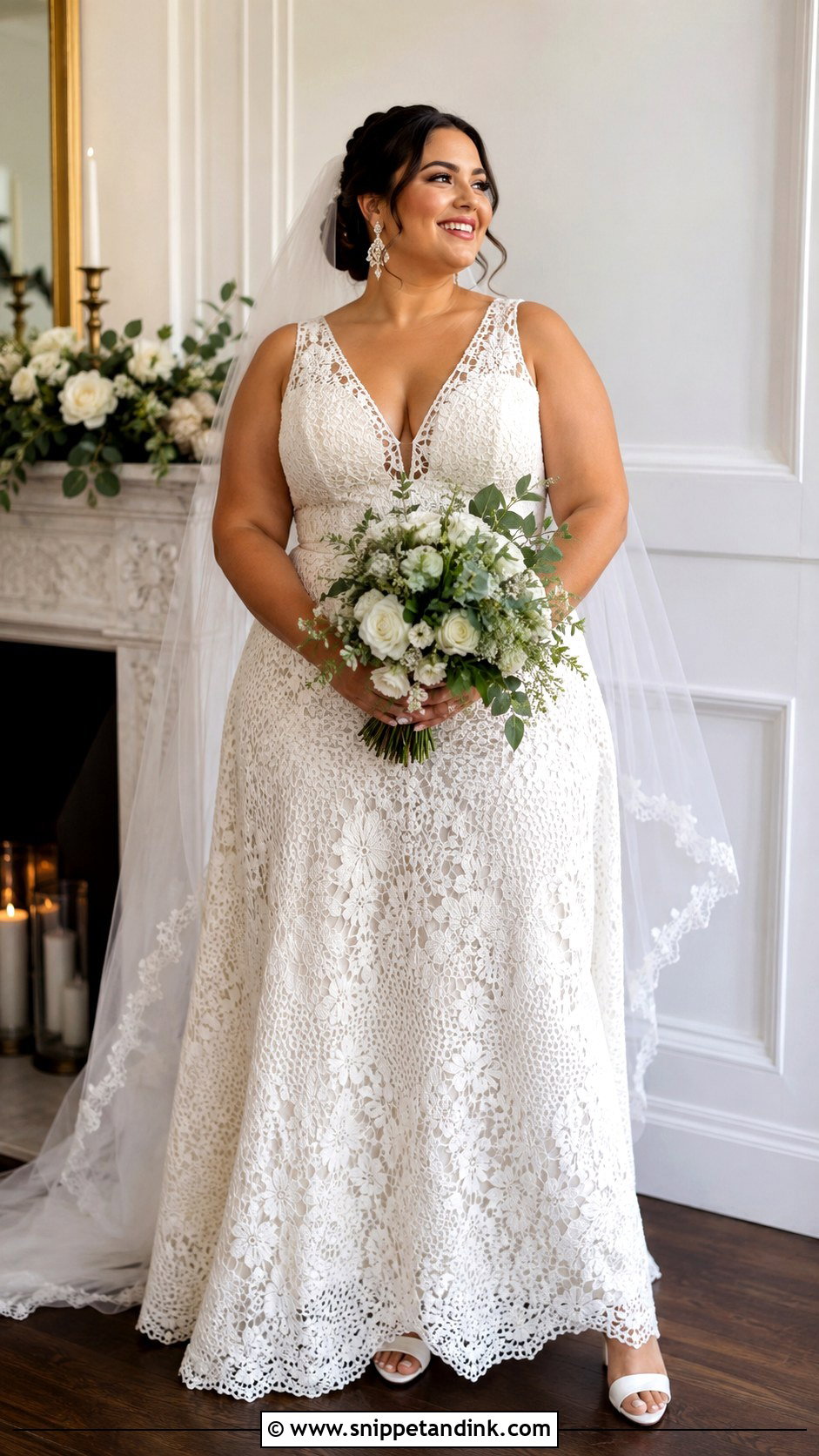
For a plus-size bride, crochet needs reinforcement, not less fabric. I look for a lined, structured bodice, wide straps or sleeves, and a waist seam placed where it’s comfortable for you rather than where the sample sits. An A-line or soft fit-and-flare skirt gives room to walk and sit. Medium-size motifs stay visible in photos without breaking up the line. Supportive block heels, statement earrings, a proportionate bouquet and a chapel veil complete it, with side-swept hair to keep the V open. Bust support, sleeve placement and lining length are all things a good tailor can refine.
12. Crochet Wedding Dress With Off-Shoulder Sleeves
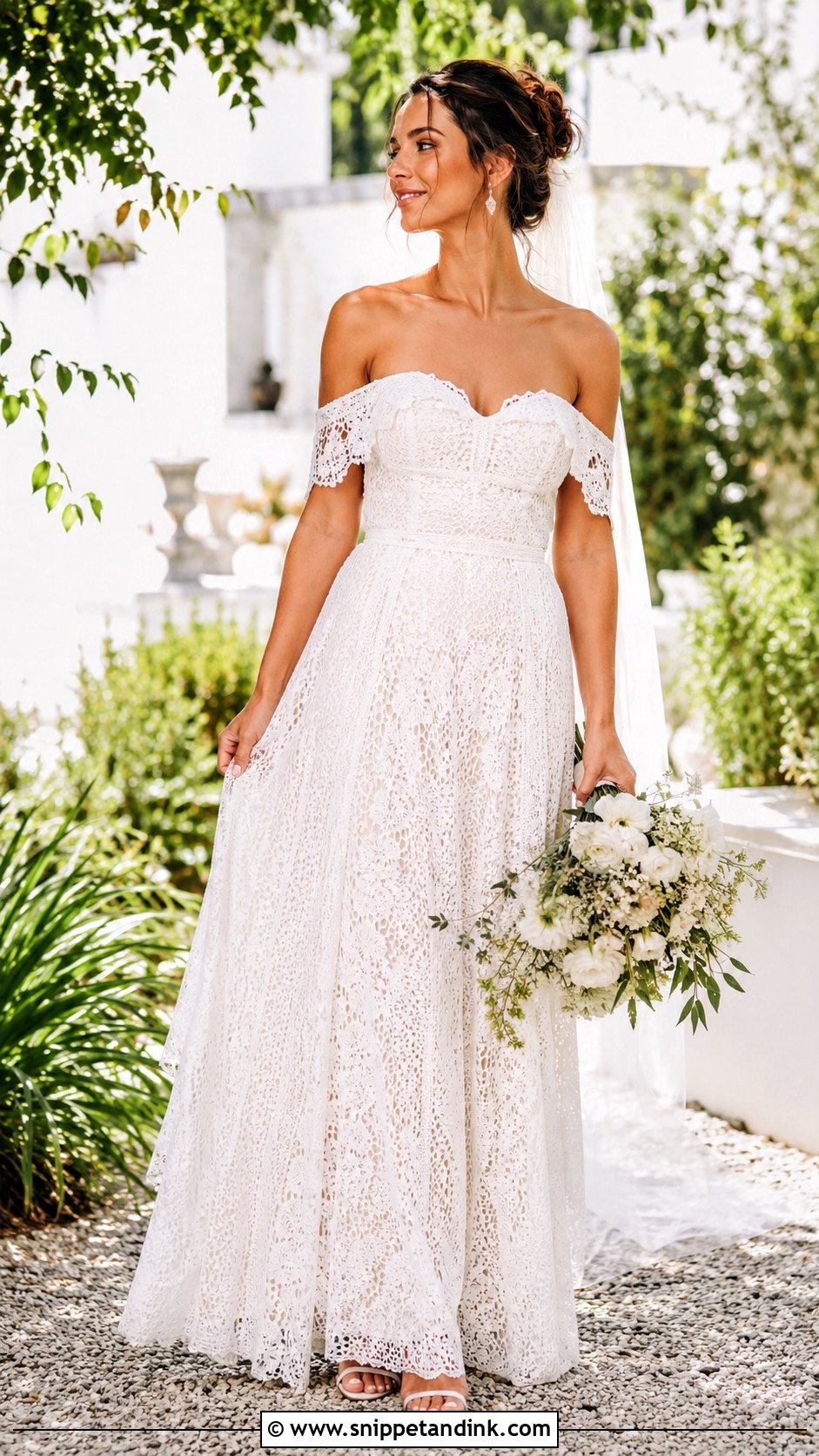
Off-shoulder crochet needs more internal support than you’d think, because the stitches stretch where the sleeve rests on the arm. A fitted bodice with real boning and sleeves that sit comfortably are the starting point, with a flowing skirt to balance the open neckline. Wear either a short pearl necklace or statement drops, not both. Low heels, a loose bouquet and a sheer veil under a textured updo finish it. At fittings, raise and swing your arms. Fashion tape can help, but tailoring should be doing the holding.
13. Crochet Wedding Dress With Puff Sleeves
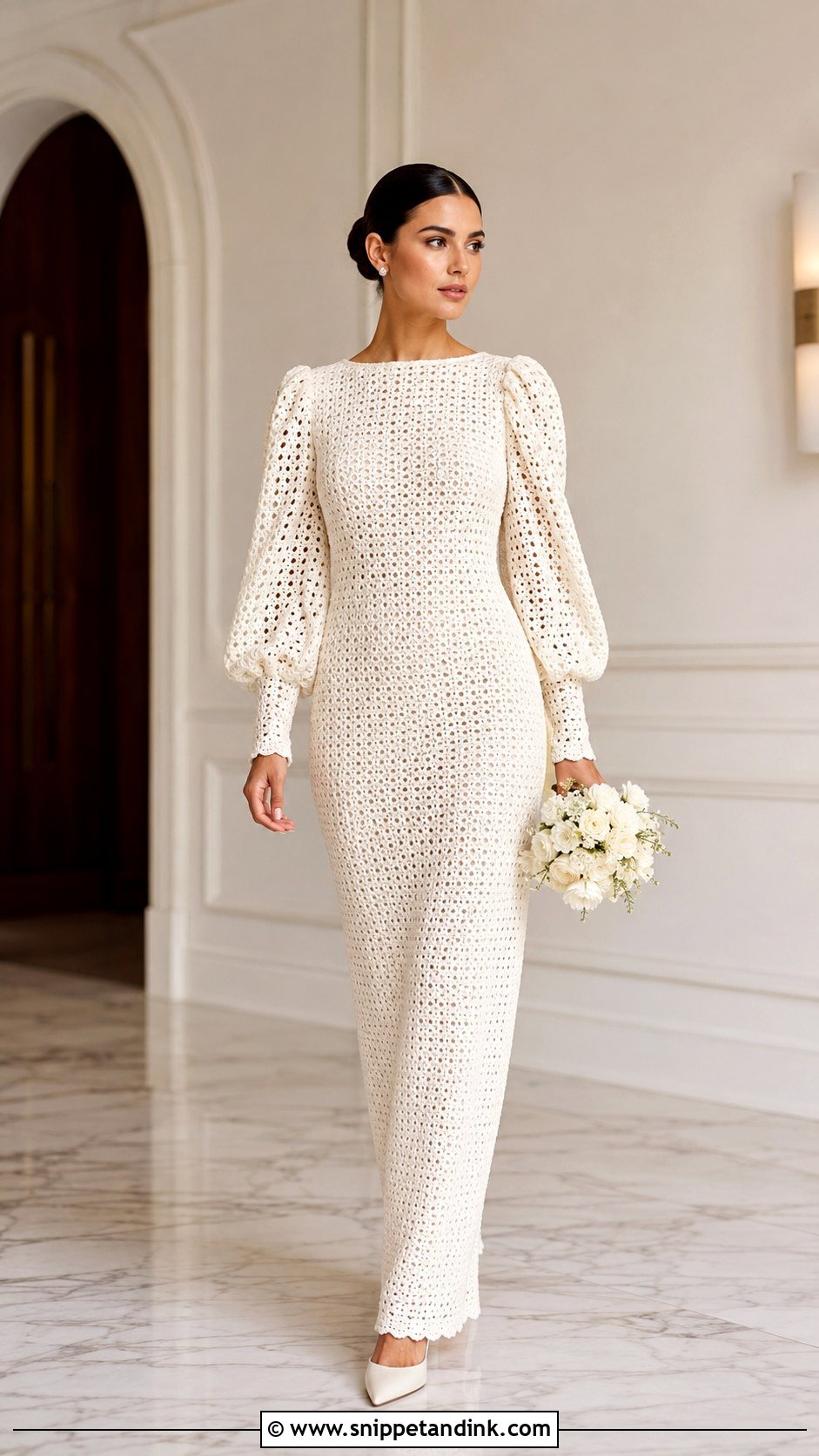
Puff sleeves give crochet a fashion edge. Gathered shoulders with fitted cuffs over a streamlined bodice, plus a column or slight A-line skirt, keep the volume from taking over. Sleek pointed heels, small studs and a clean-lined bouquet suit it, with a low ponytail or center-parted bun. Choose a plain veil without lace edging; there is already plenty of texture. It’s a strong dress for editorial photographs and modern venues. Thick yarn makes puff sleeves collapse or go stiff, so look for a fine thread in the sleeve.
14. Crochet Wedding Dress With Tiered Skirt
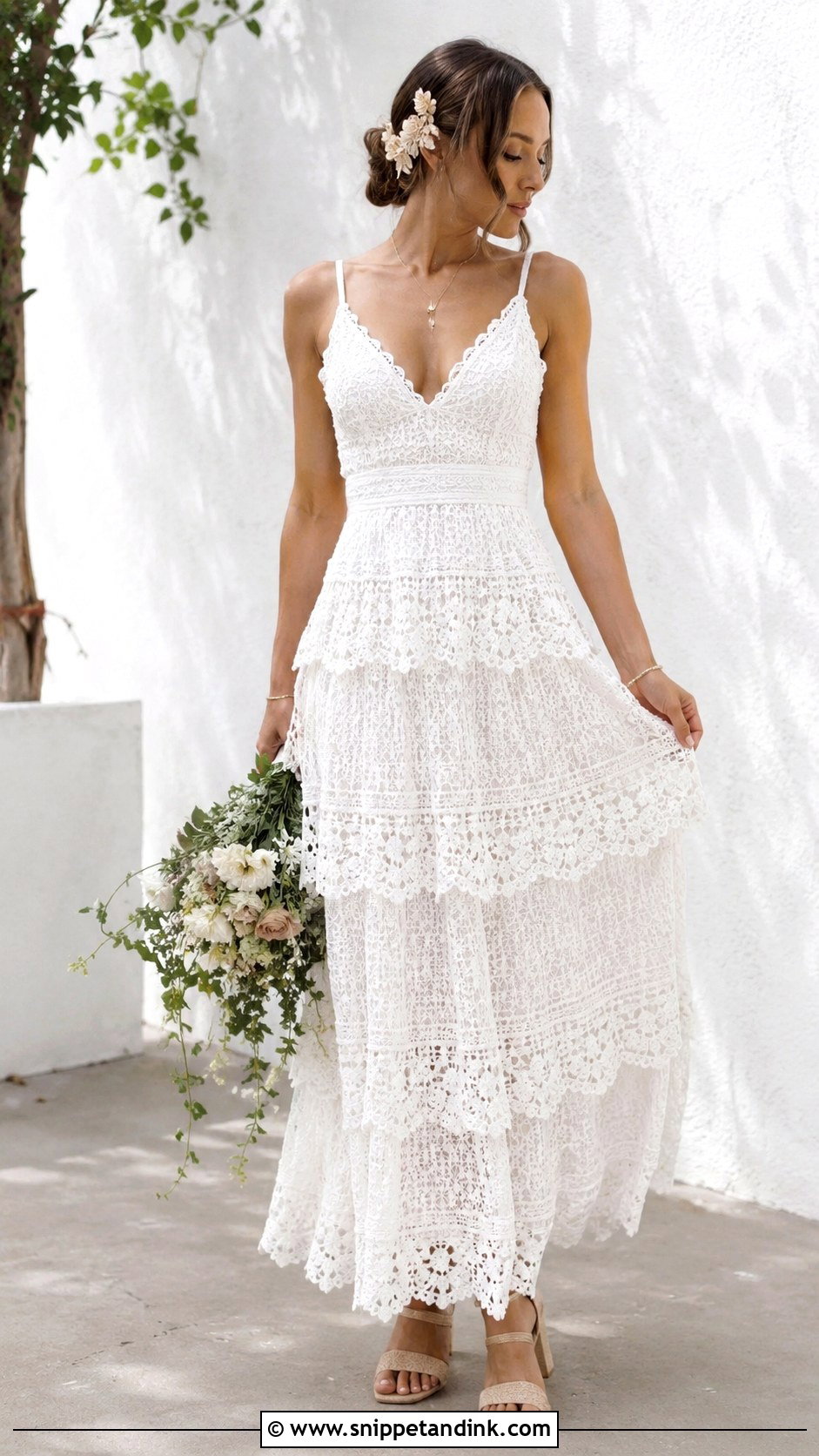
Tiers move easily and suit an outdoor wedding that would feel overdressed with a long train. Two or three placed tiers under a fitted top, each defined by a scalloped edge or a change of stitch, are enough. Sturdy block-heel sandals, fine bracelets and a loose bouquet with trailing greenery keep it light, along with a short veil or floral comb. If you want a smoother line, check that the first tier starts below the widest part of your hips. The lining should follow the tiers loosely so it doesn’t flatten their swing.

15. Crochet Wedding Dress With Corset Bodice
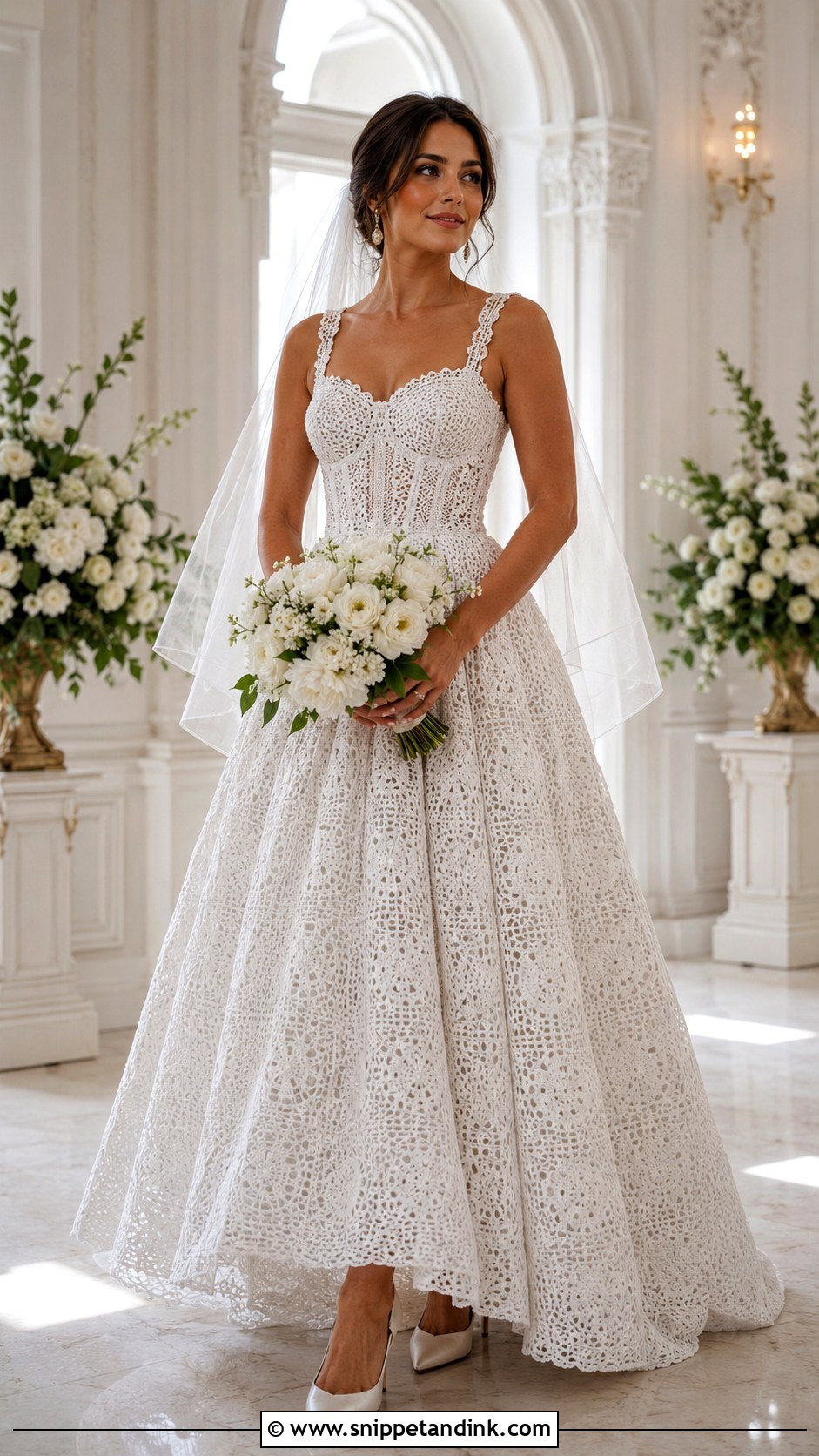
Structure under softness. Boning covered by floral crochet, supportive straps and an A-line or full skirt give a defined shape that holds through dancing. It should feel secure, and you should still be able to breathe and sit through dinner. Satin pumps, pearl drops, a neat bouquet and a medium-length veil keep it traditional, with a sleek updo. The best versions use a simpler stitch on the skirt than on the bodice, which gives depth without looking busy. Have the tailor check cup placement and the waist, since crochet over boning can twist slightly if the lining isn’t anchored.
16. Crochet Wedding Dress With Cape Sleeves
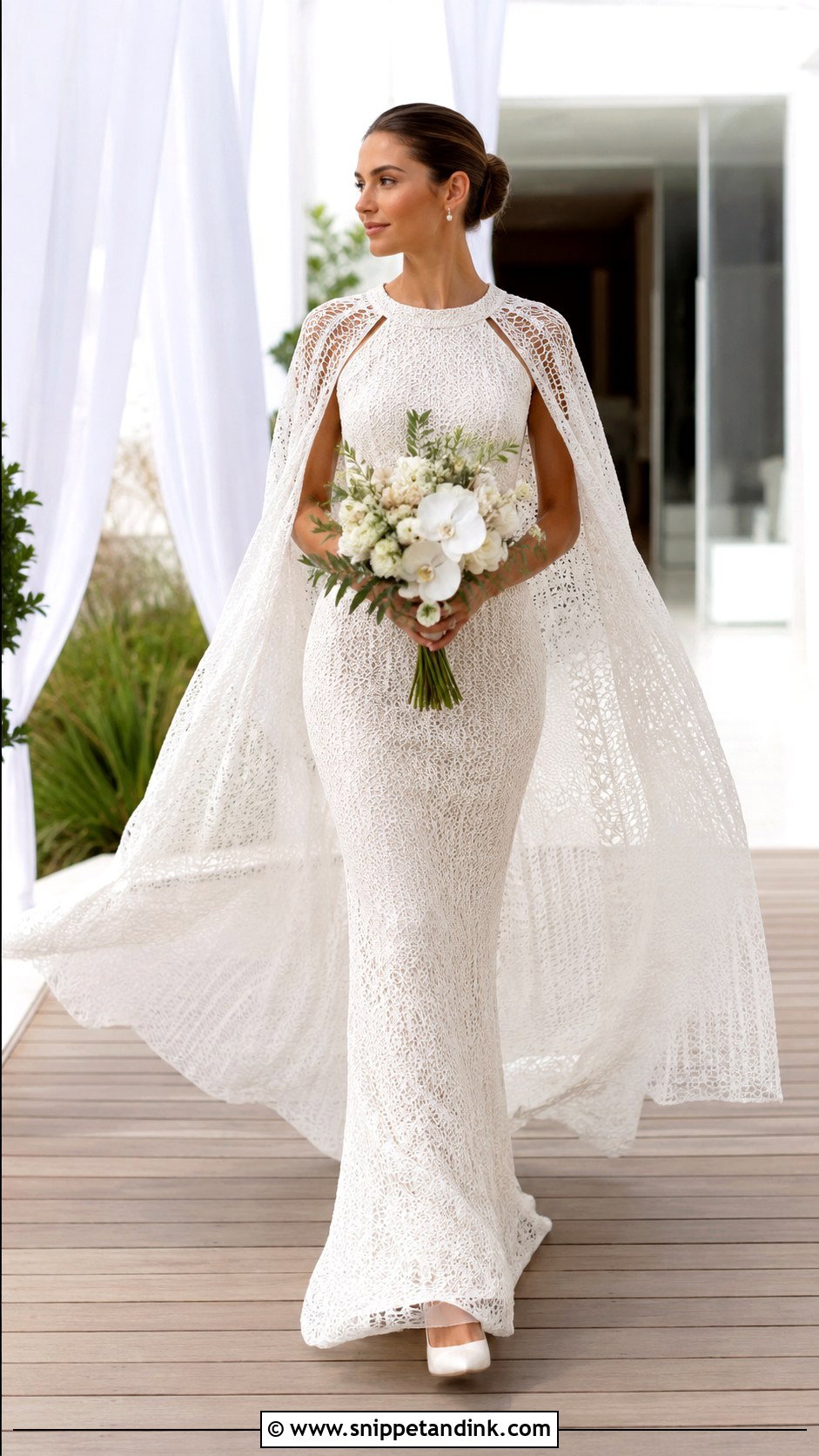
Cape sleeves can replace a veil altogether. A fitted base with a clean waist and light panels falling from the shoulders, in matching crochet, sheer chiffon or both, moves well as you walk. Keep the jewelry tiny, because the shoulders already act as an accessory. Pointed heels, a structured bouquet and a polished bun let the cape fall cleanly. If you still want a veil, keep it short and plain so it doesn’t catch on the crochet. Heavy crochet panels pull the neckline back, so check that they are lightweight and firmly sewn at the shoulder.
17. Crochet Midi Wedding Dress With Block Heels
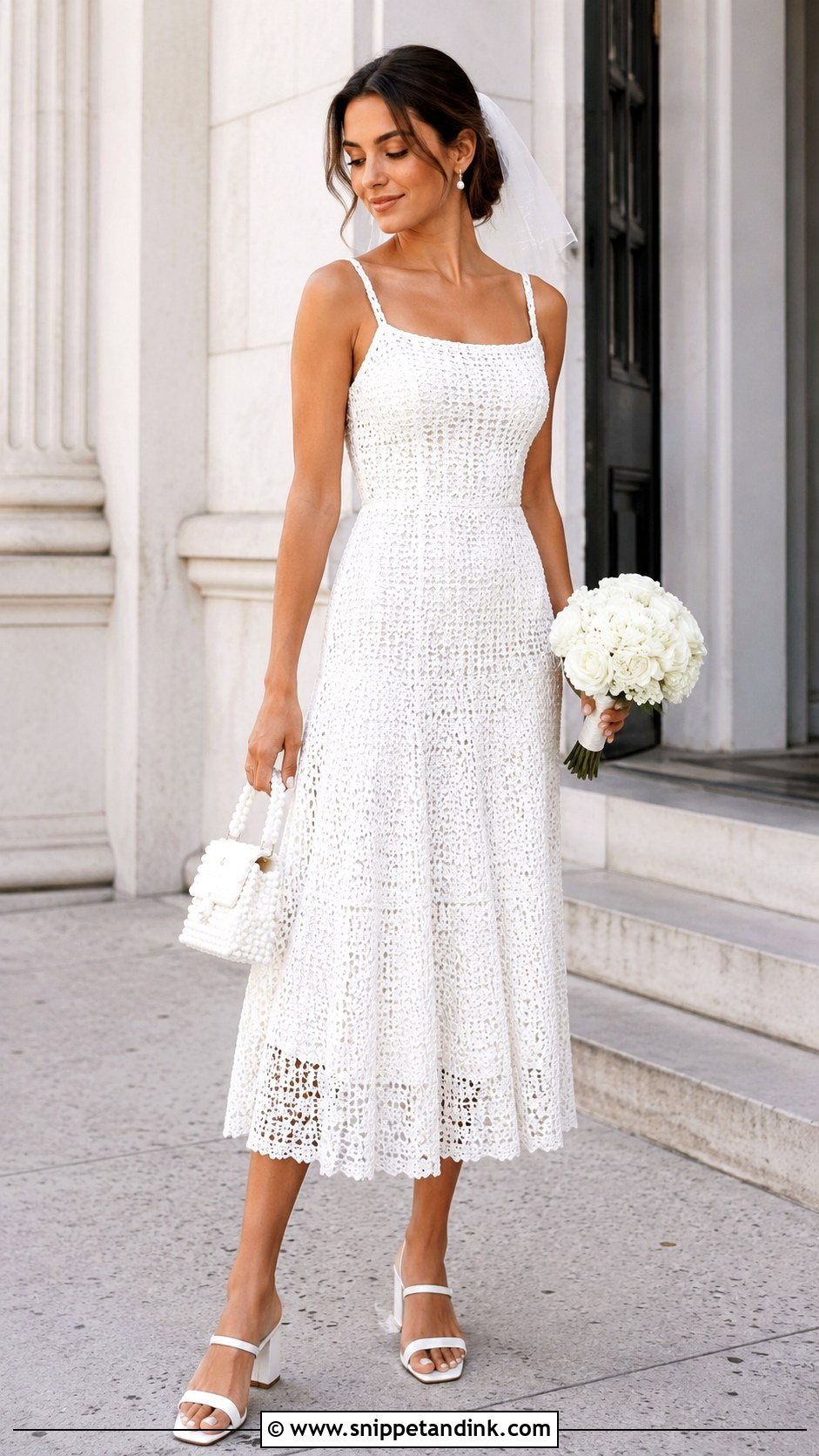
Midi crochet is my suggestion for a courthouse wedding, a small dinner or a second outfit. A fitted waist and softly flared skirt ending between knee and ankle put the shoes on show, so choose block heels, slingbacks or ankle straps you actually like looking at. Pearl earrings, a small top-handle bag and a compact bouquet finish it, with a birdcage veil for a vintage note or a simple headband for a modern one. The lining should end level with the crochet; a slip showing below the hem looks like a mistake.
18. Crochet Mini Wedding Dress With Long Sleeves
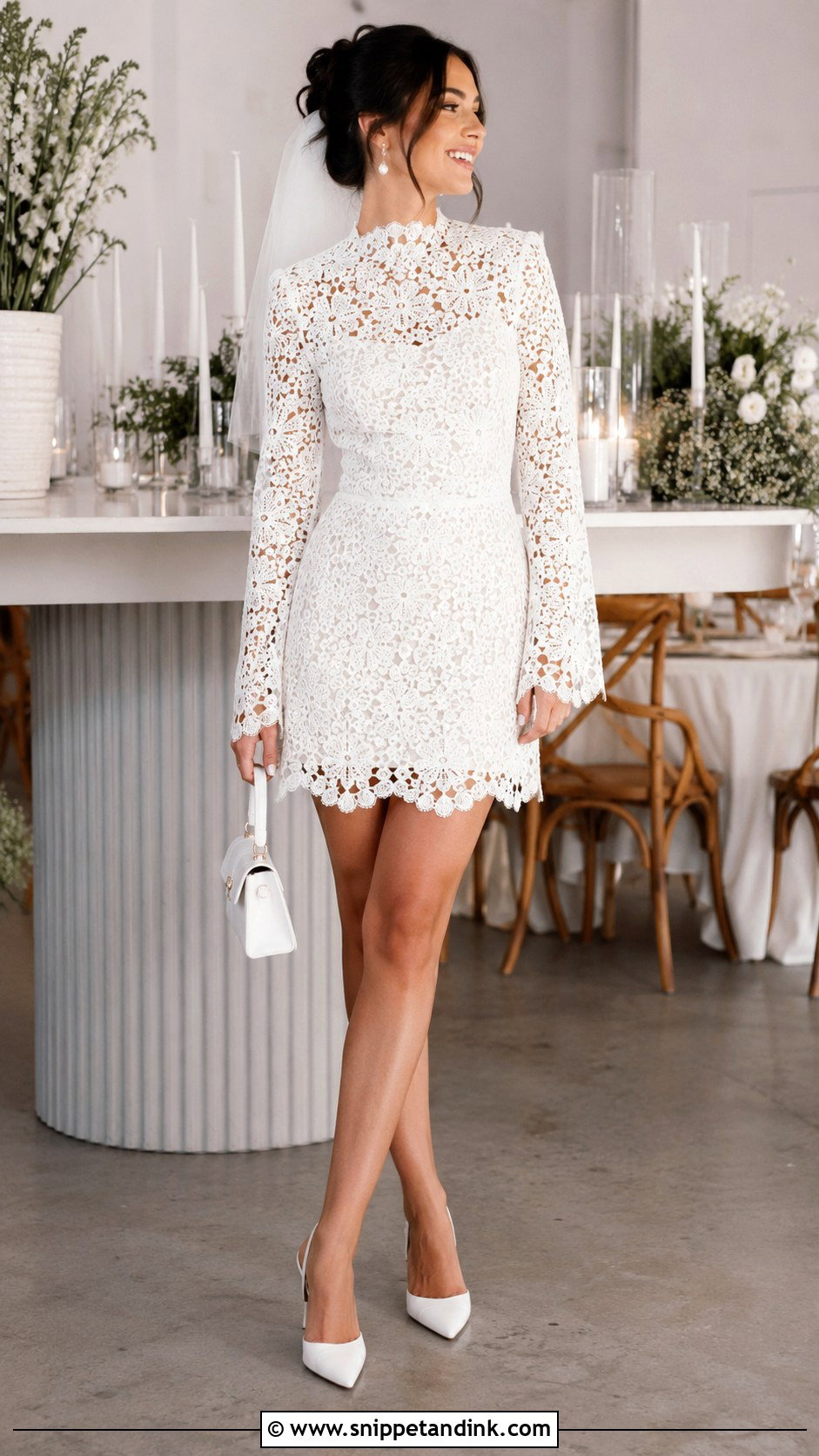
Short and sleeved is a smart balance. A crochet mini wedding dress with long fitted sleeves, a high neck or a structured bodice looks bridal rather than like a beach cover-up, as long as it is tailored through the shoulders and waist. A scalloped hem finishes it. Pointed slingbacks, pearl drops, a small white bag and a bow veil or short tulle veil complete the look. Under open crochet, wear smooth shorts or a secure slip so you can dance without thinking about it.
19. Crochet Wedding Dress With Open Back
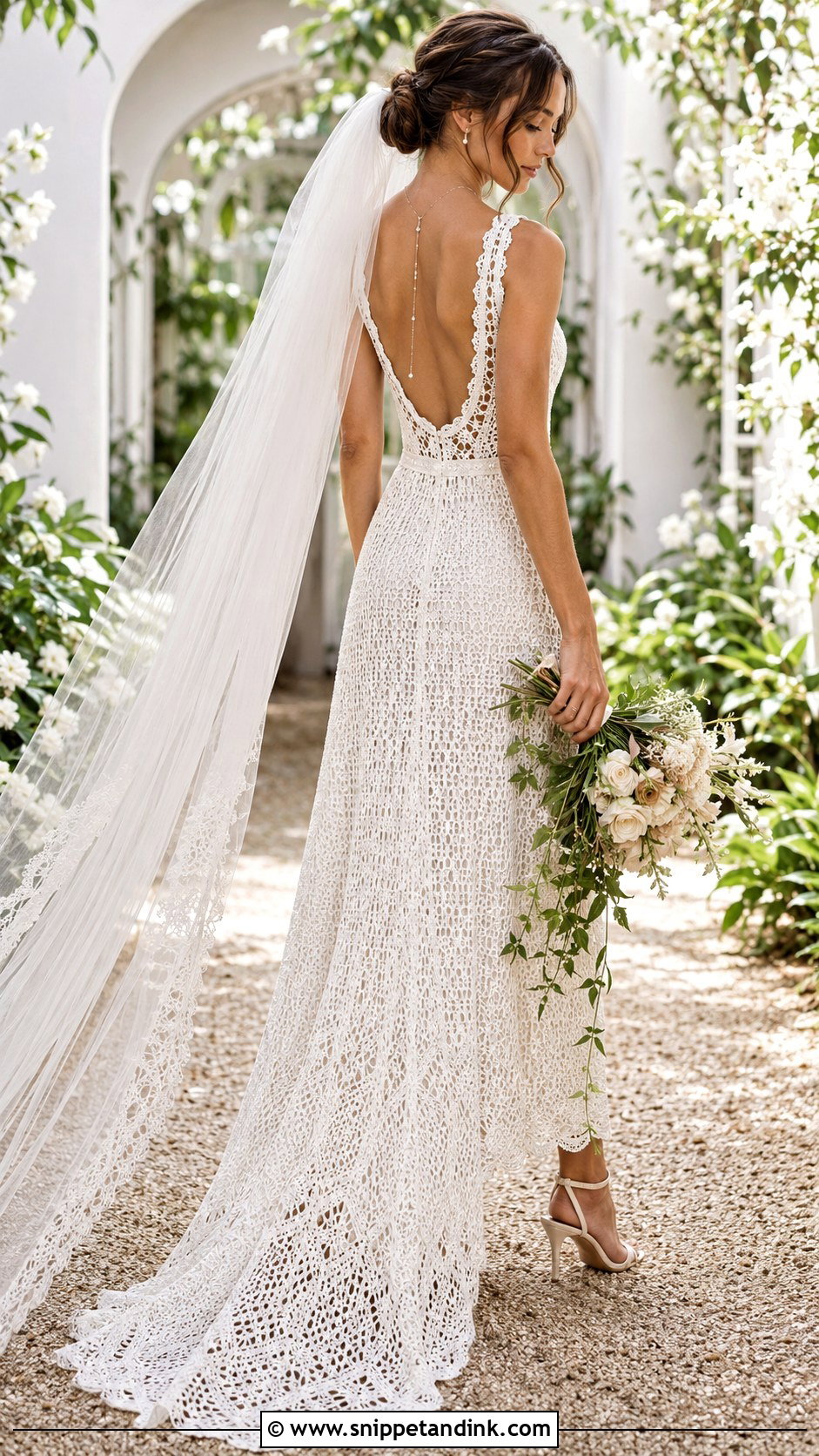
Open backs look best framed: crochet straps or a line of buttons around the open section, with a secure neckline and strong side seams. A fitted sheath or soft A-line keeps it balanced. A back necklace, subtle studs and heels matched to the lining finish it. Set the veil below a low chignon so it lifts out easily after the ceremony. Depending on the cut you may need adhesive cups, sewn-in support or a low-back bra. The edge of an open back in crochet gapes when you lean forward, so ask the tailor to check it while you’re seated.

20. Crochet Wedding Dress With Dramatic Train
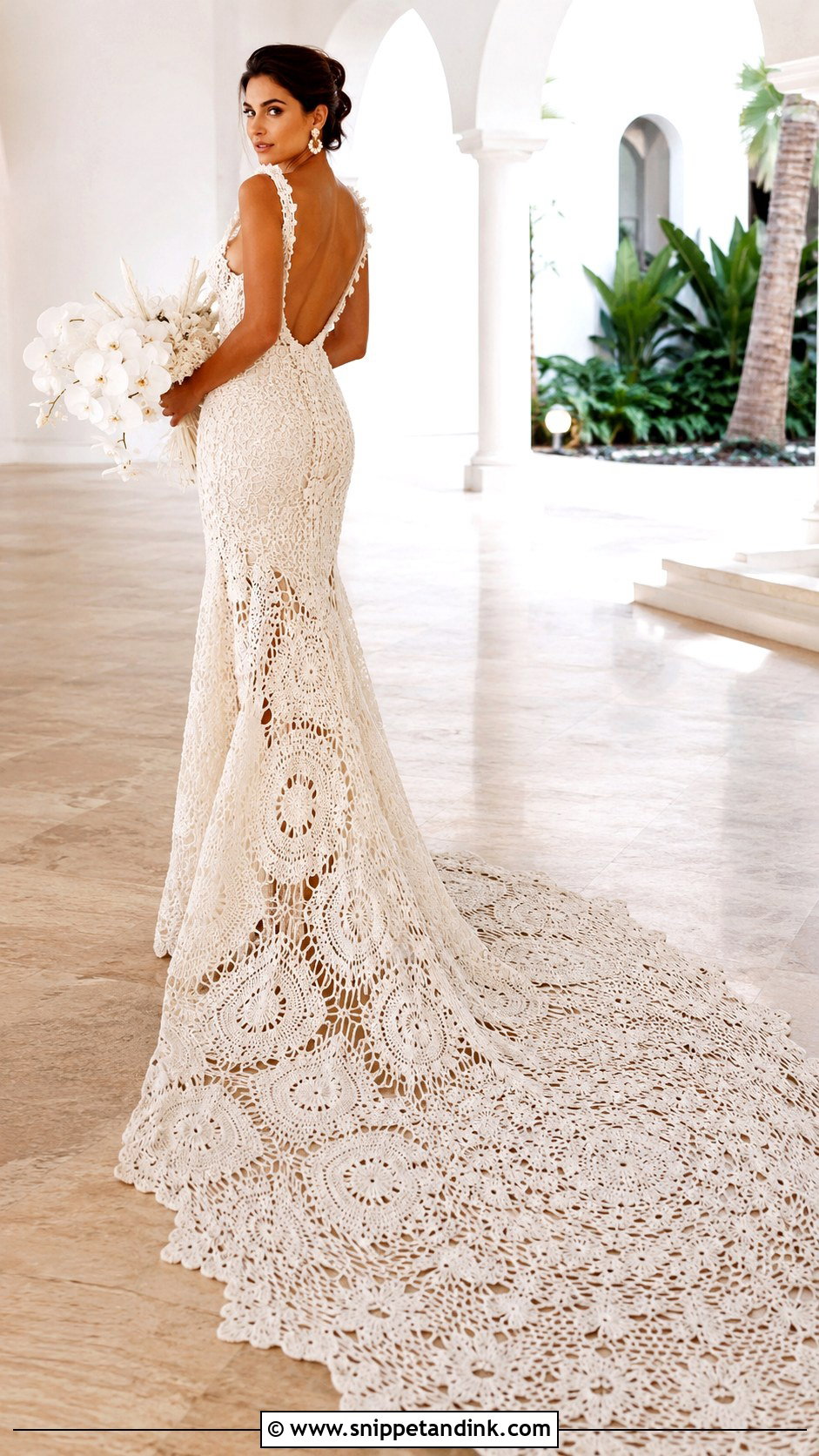
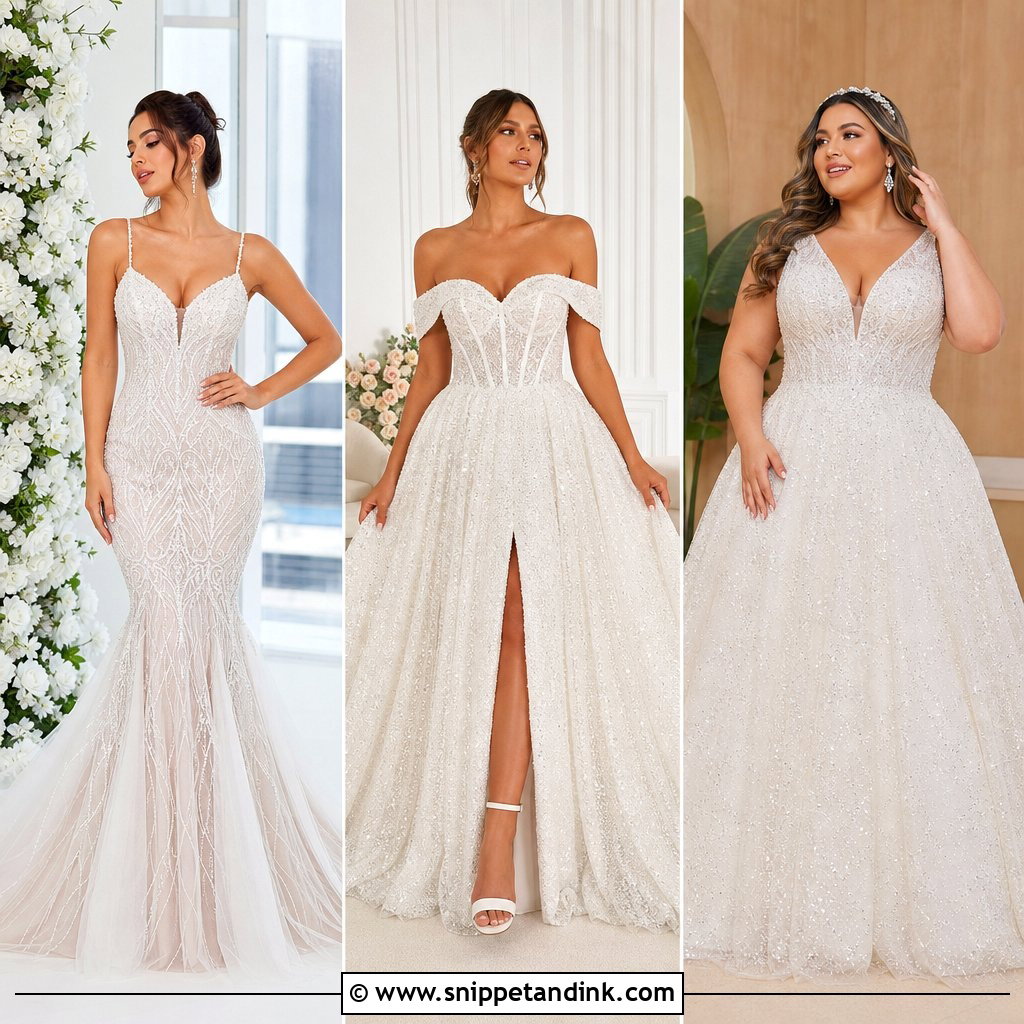
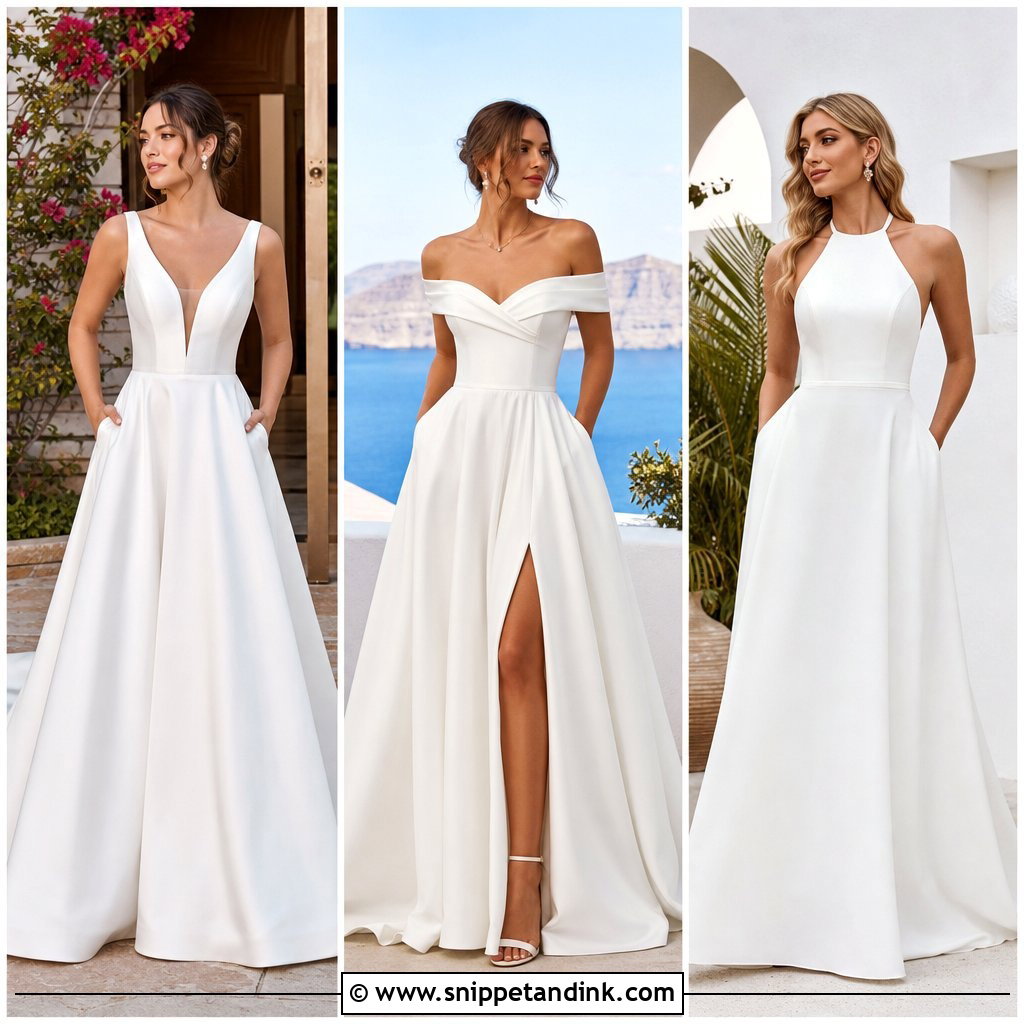
A long crochet train is pure drama, and larger motifs near the hem make the work visible in photos from the back of the aisle. A fitted or softly structured gown running into a chapel or cathedral train, with a smooth lining giving it weight, falls neatly behind you. Comfortable platform heels, refined earrings, a structured bouquet and a short veil keep the focus on the train, with the hair up. A crochet train catches on twigs, gravel and stair edges far more easily than satin, so plan a discreet bustle and practice turning in it before the day.
Why Crochet Grows on a Hanger, and Other Care Quirks
Crochet stretches under its own weight. Hang a long, heavy gown by its straps for weeks and the bodice can drop and the hem lengthen, which throws off a careful alteration. Between fittings, I store crochet dresses folded loosely in a box with acid-free tissue, or on a padded hanger with the skirt supported, never by thin straps alone.
Snags on the day
Open stitches catch on bracelets, chair edges and bouquet wire. If a loop pulls out, don’t cut it. Ease the slack back along the row with your fingers, or push the loop through to the inside with a pin or small crochet hook, then let the tailor secure it later. A tiny crochet hook weighs nothing in the emergency kit.
Steam, never press
An iron flattens the raised texture that makes crochet worth wearing. Steam from a short distance and shape the motifs with your hands while they’re warm. After the wedding, a specialist cleaner who has handled knits is safer than a general dry cleaner, and the gown should be stored flat for the long term.
Stitches, Lining and Fit Matter More Than the Trend
The crochet dresses that wear best pair good stitchwork with solid construction underneath. Start with the shape you are comfortable in, then look at the neckline, sleeves, motif size, lining and support. Match the shoes to the ground you’ll walk on, and let jewelry and veils sit back from the texture. Leave time for alterations, because crochet and its lining stretch at different rates and need a tailor who has handled open fabric before. A flowing boho gown, a fitted mermaid, a vintage high neck or a mini can all be the right answer, as long as it feels like yours from head to toe.
You'll Like These Ideas:





Leave a Reply