
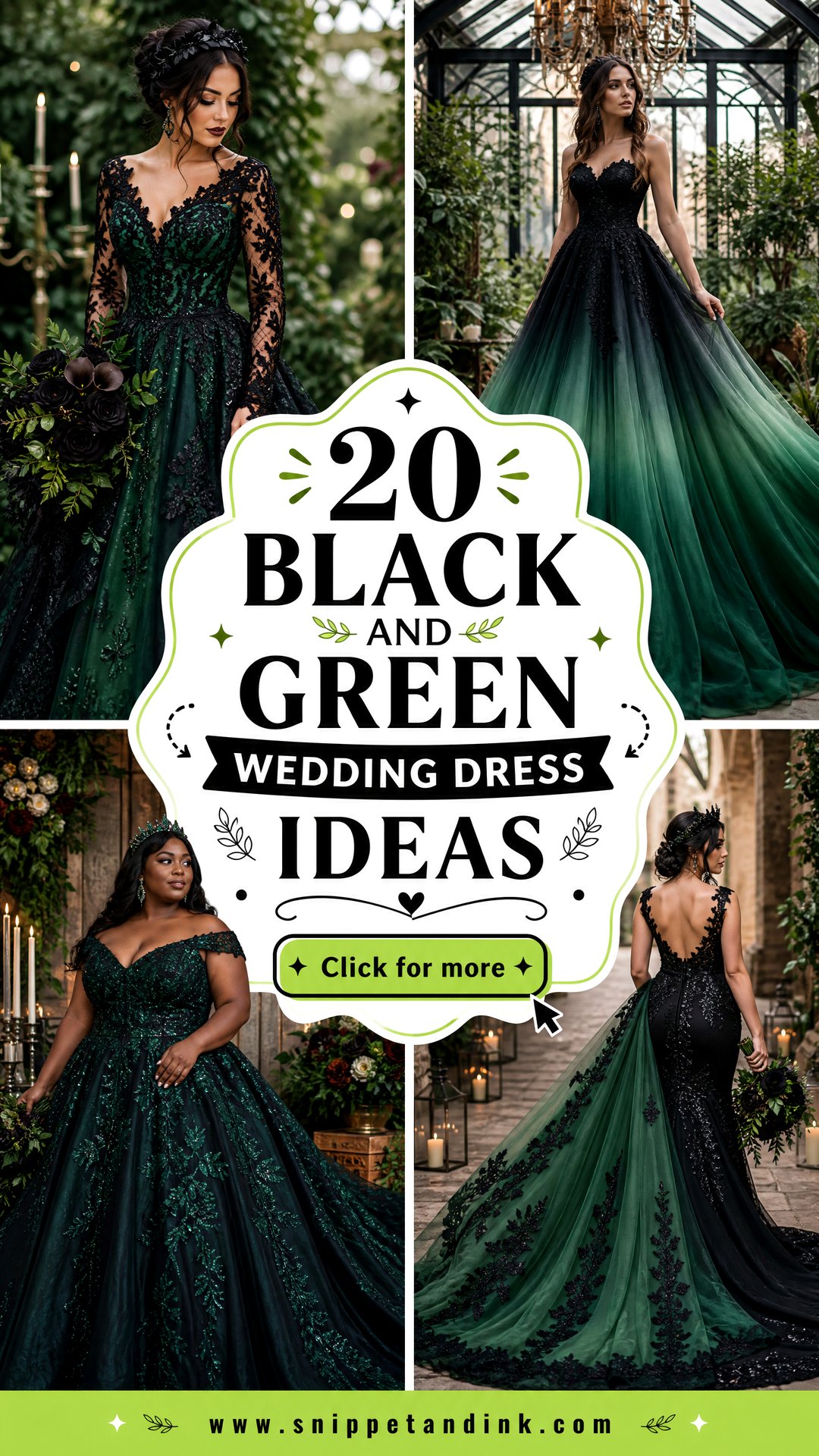
Black and green is one of the few bridal palettes I’d call genuinely moody. Green carries the depth and the nod to nature; black draws the outline of the dress and decides where the eye lands. The twenty gowns below run from emerald satin under black lace to forest velvet, sage tulle and two-tone separates, and they suit candlelit evening venues, woodland ceremonies and late-season weddings far better than a bright June garden. Silhouettes vary widely, from ball gowns to a reception mini. Before you fall for a picture, read the section on matching greens, because that is where most of these looks succeed or quietly fail.
Matching Greens That Were Dyed in Different Places
The biggest problem with a black and green gown is rarely the black. It’s the green. Satin, velvet, lace and tulle take dye differently, so an emerald satin and an emerald tulle bought from two suppliers can sit side by side and look like cousins rather than twins. Velvet always reads darker than satin because its pile absorbs light, and sheen shifts a color depending on the angle.
When I put a two-tone look together, I collect physical swatches of every green piece, including sash, cape, shoes and bouquet ribbon, and look at them together in three kinds of light: window daylight, warm indoor bulbs and a phone flash. Flash is where mismatches show up most, and guests will be taking flash photos all night.
- Order every green element early enough to swap one if it arrives in the wrong shade; dye lots vary even from the same maker.
- Let one green lead and treat the others as darker or lighter steps of it, rather than trying to match exactly.
- Black has undertones too. A blue-black lace next to a brown-black velvet looks off once you notice it.
- Ask your florist for a sample of the foliage; eucalyptus can read grey-blue beside emerald satin.
1. Emerald Green and Black Lace Wedding Dress
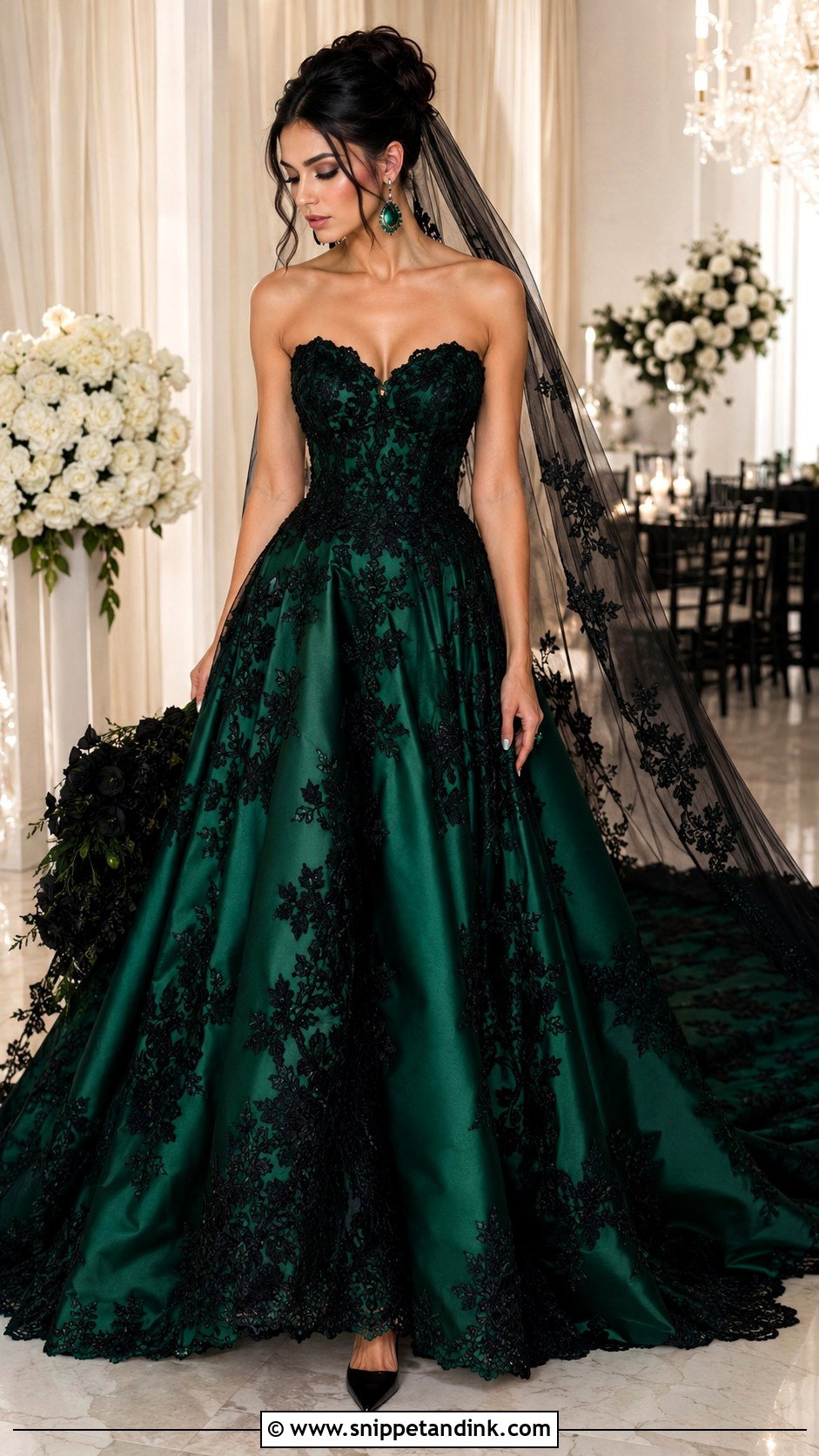
This is the two-tone look most brides picture first: emerald satin glowing through black floral lace. A fitted sweetheart bodice into a soft A-line and a chapel train keeps it classic. The thing I check at the first fitting is how much green the lace actually lets through. Dense corded lace can swallow the satin under evening light, so I’d hold the lace against the satin by a window and again under warm bulbs before committing. A sheer fingertip veil keeps the drama in the dress, while a black cathedral veil pushes it toward gothic. Black pointed heels, emerald drops and a bouquet of white anemones with dark foliage finish it without adding another color.
2. Forest Green Velvet and Black Corset Wedding Dress
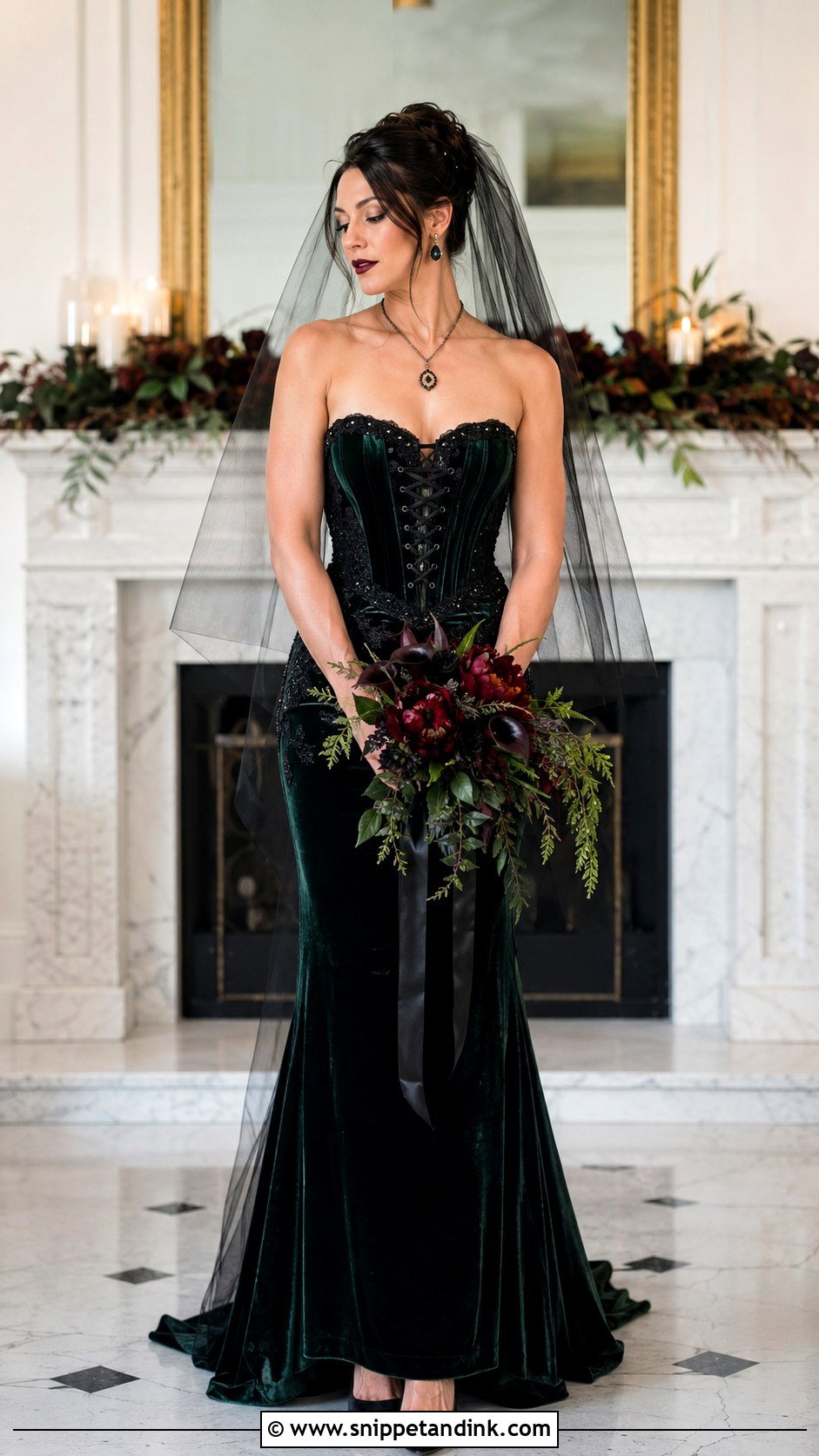
Velvet is a cold-weather fabric, full stop. A forest green velvet gown with a boned black corset gives you a defined waist and a skirt with real weight. That weight is why I steer brides toward a trumpet or soft mermaid rather than a huge ball skirt: velvet piles up fast and gets hot. Velvet also marks wherever it’s pressed, so it should travel hanging, never folded in a box. A plain black tulle veil, an antique gold pendant and a bouquet of ferns, dark callas and ivory roses keep the focus on that pile catching candlelight.
3. Black Tulle and Green Floral Wedding Dress
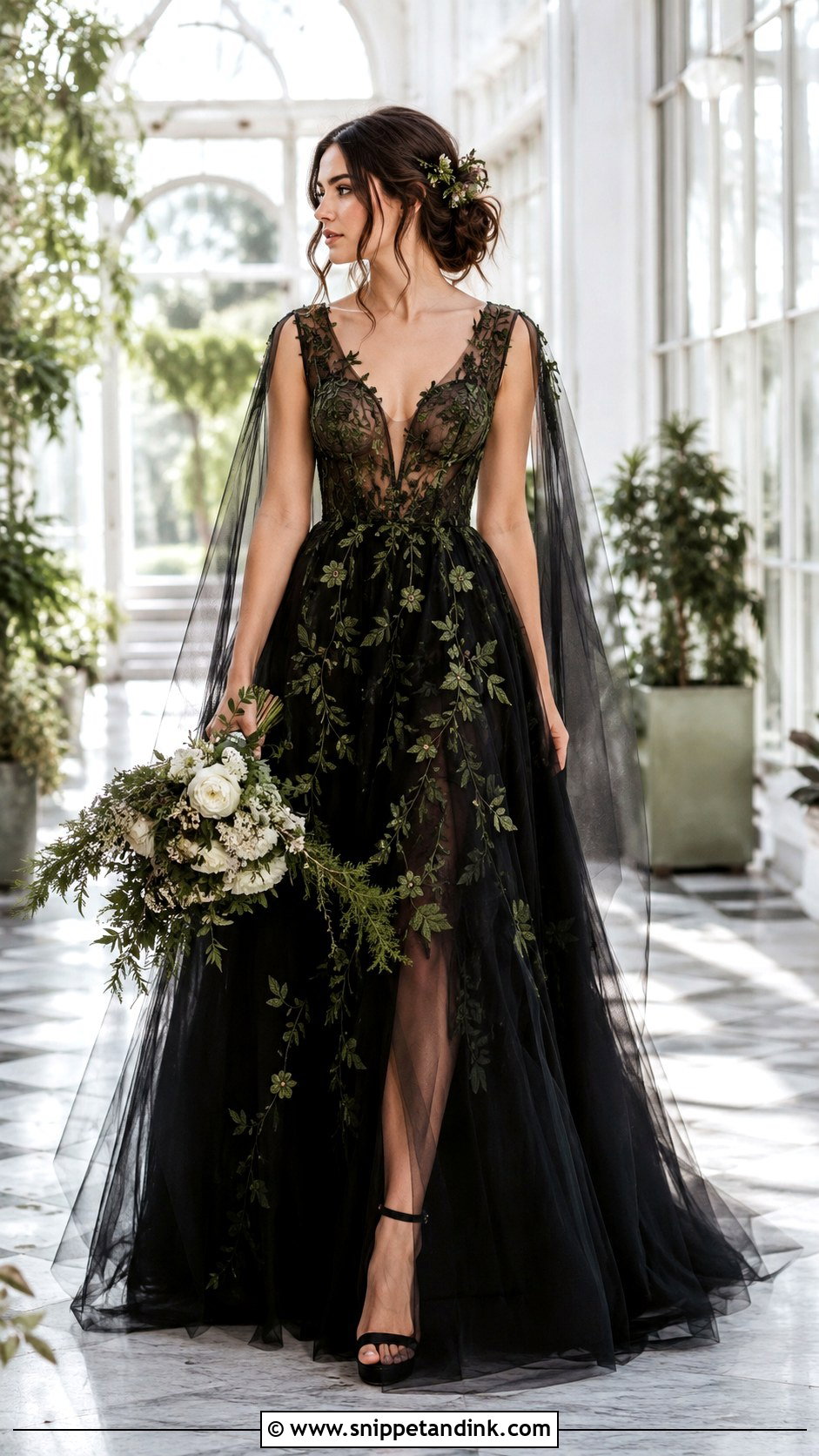
Green appliqué vines climbing from the bodice into black tulle give this dress its movement. I like the embroidery dense at the waist and thinning toward the hem, because it pulls the eye in where most brides want shape. Ask how the appliqués are attached: hand-stitched pieces sit flat and survive a day of hugging, while glued ones can lift at the edges after hours of wear. Botanical pins through a loose updo echo the vines, and a plain black veil stays out of the way. It belongs in a garden or a glasshouse.
4. Emerald Green and Black Off-the-Shoulder Wedding Dress
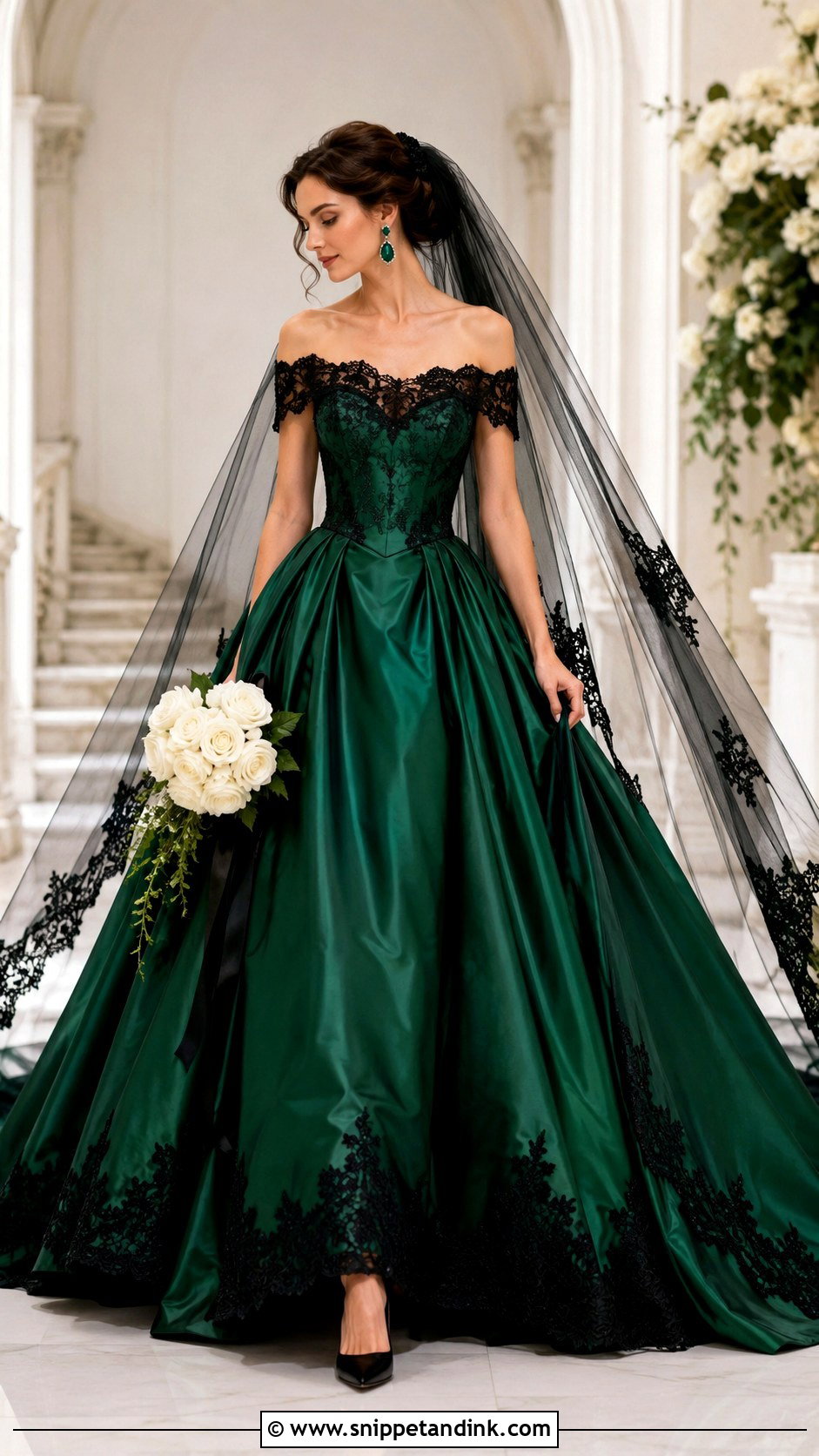
An off-the-shoulder emerald ball gown softens all that color, and black lace along the fold, waist and hem ties the two shades together. The fit issue I watch for is the neckline itself. An off-the-shoulder band needs to be snug enough that it doesn’t creep up when you raise your arms to hug, and loose enough to breathe. Test it by lifting both arms in the fitting room. Keep the neck bare or wear a short emerald necklace, and choose a sheer veil with a narrow lace edge so the shoulders stay the feature.
5. Black and Green Ombre Wedding Dress
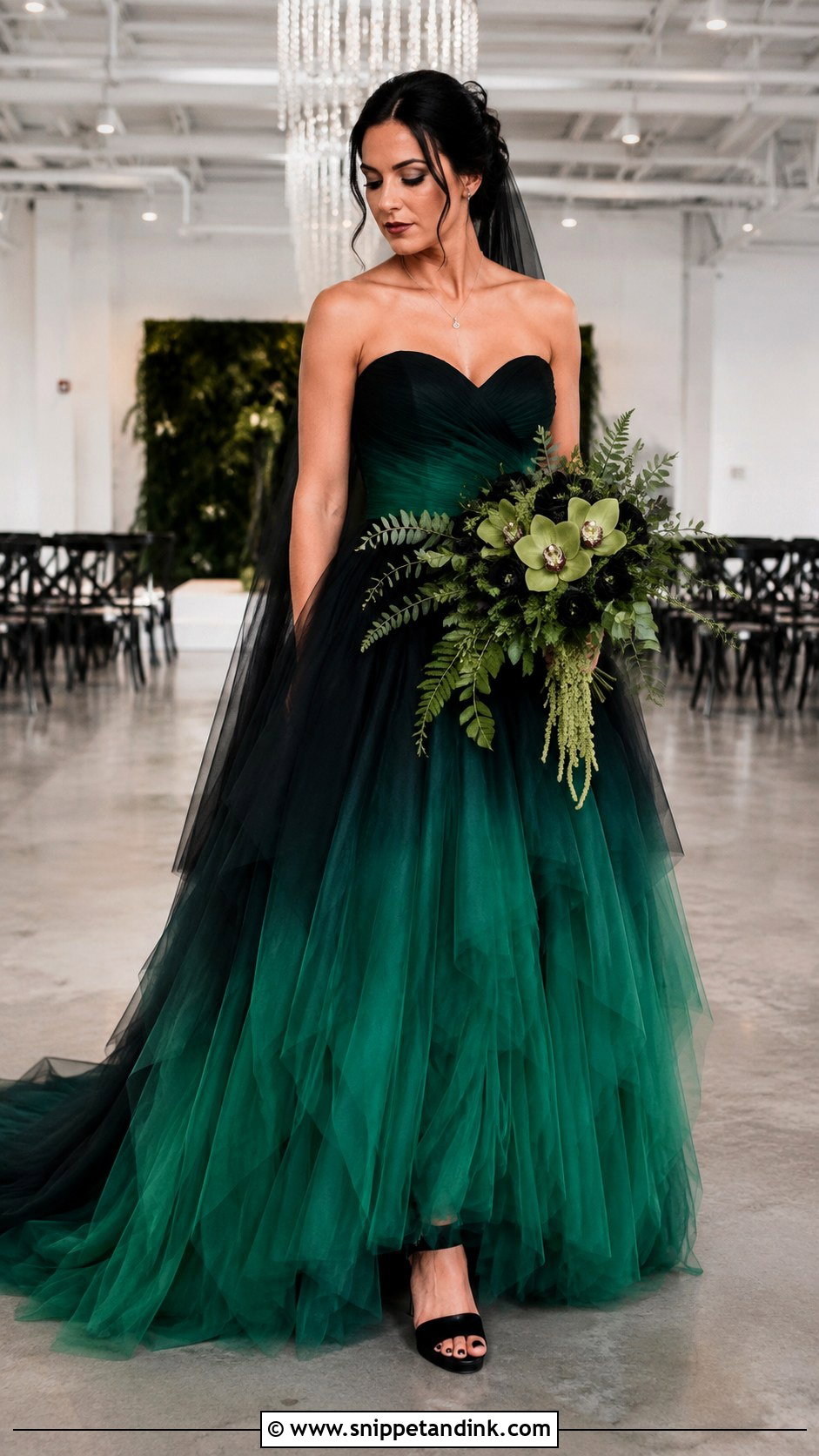
Ombre puts the color change into the cloth itself, either black at the bodice dissolving into emerald and moss, or green at the top sinking to a black hem. Dyed gradients vary from piece to piece, so I always ask to see the actual sample rather than a photo. Keep the shape plain, a strapless A-line or a soft ball gown, because seams and heavy embellishment break the fade. Open-air venues with even daylight show the transition best; dark rooms flatten it into one muddy shade.
6. Sage Green and Black Botanical Wedding Dress
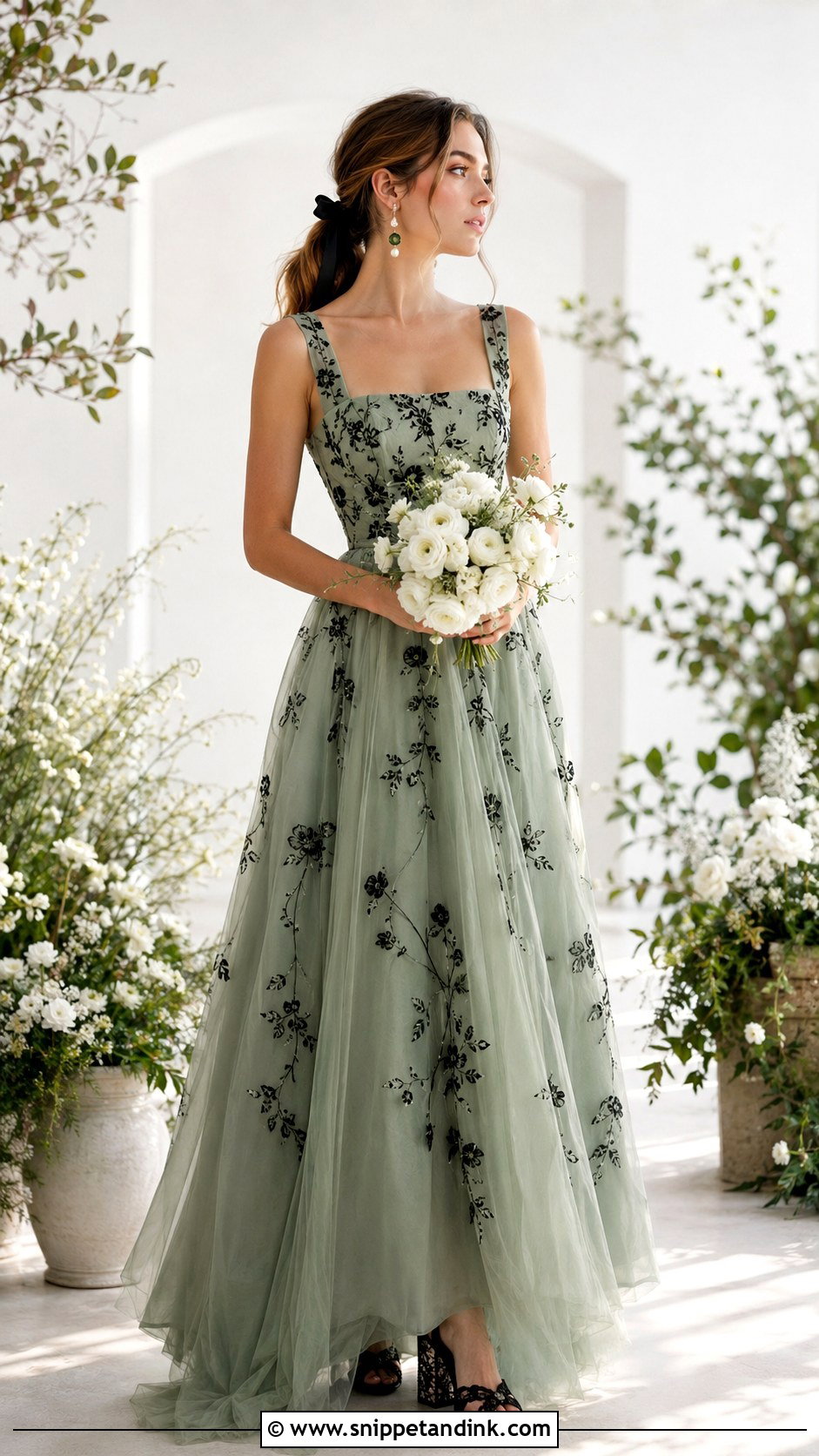
Sage is the gentle end of this palette. A pale sage tulle gown with black botanical embroidery and a square neckline reads spring rather than gothic. The caution with sage is skin tone: on some complexions it can pull slightly grey near the face, so I’d always see it on you in daylight. Low block heels or lace flats help on grass, and a black ribbon in a low ponytail picks up the embroidery. It is the softest route into a nontraditional wedding dress for a bride who is not ready for full black.
7. Hunter Green and Black Long-Sleeve Wedding Dress
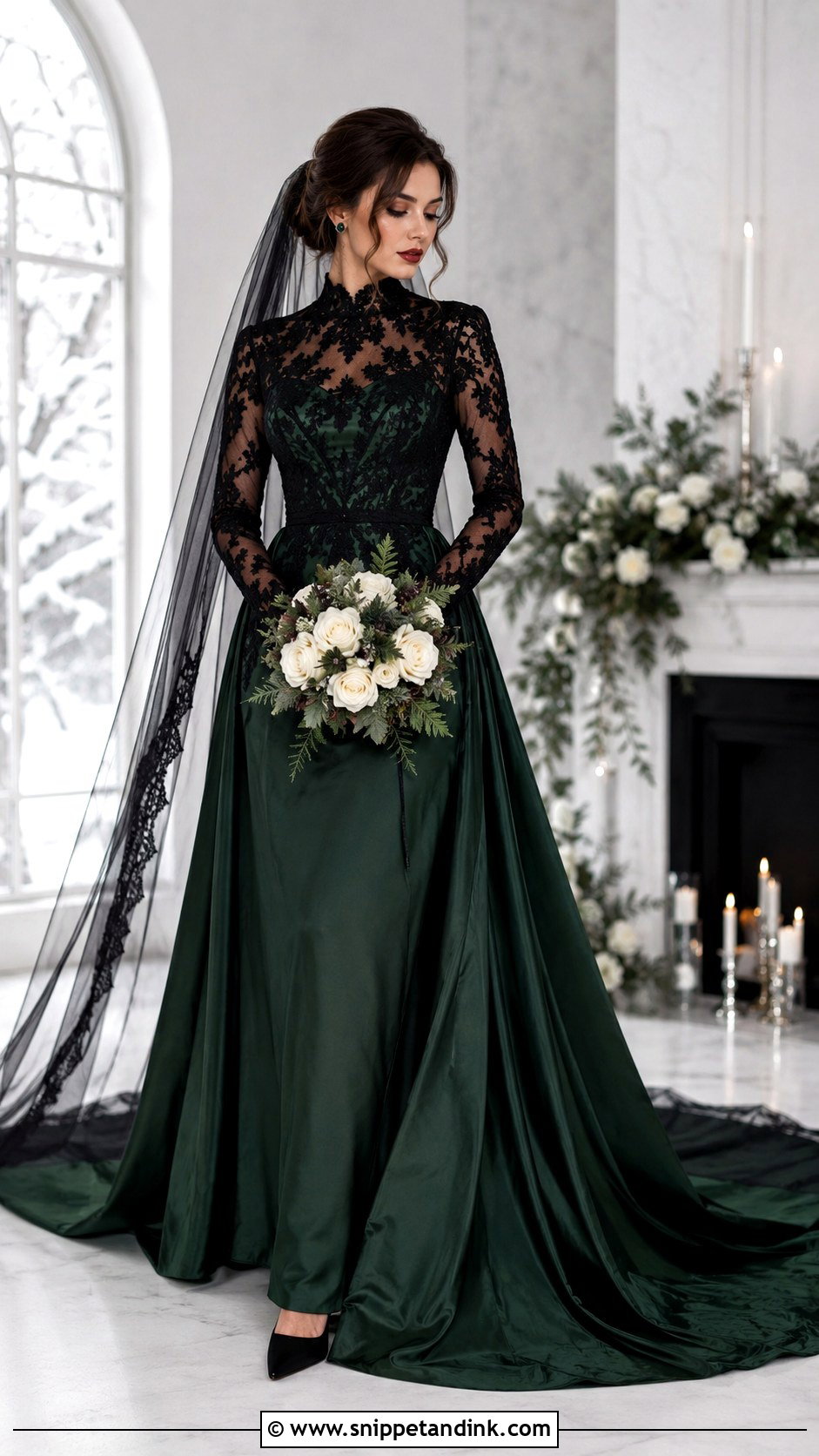
Sleeves change how a dark dress feels on a cold day. Here, a hunter green bodice sits under sheer black lace, with an illusion neckline over a lined sweetheart shape. When I fit lace sleeves, I have the bride reach forward as if hugging someone. If the lace pulls at the back of the arm, the sleeve needs more ease, because tight lace sleeves tear at the seam long before the night ends. Wear a low bun so the neckline stays visible, then add a black chapel veil and ivory roses with dark greenery.
8. Black Wedding Dress With Emerald Green Cape
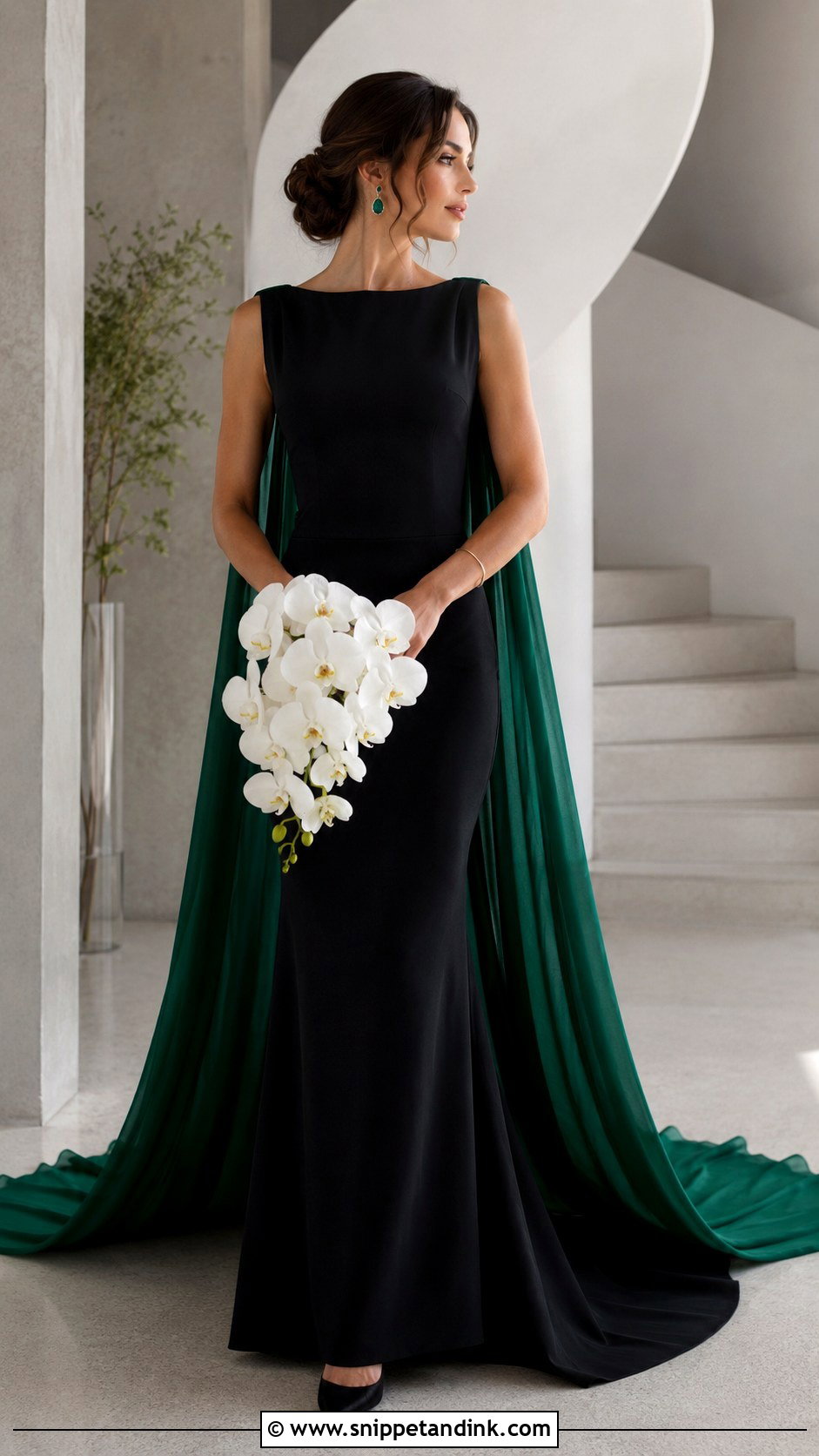
Sometimes the dress itself stays simple and a removable emerald cape does the talking. Start with a sleeveless black crepe or satin column, then add a cape in chiffon for warmer months or velvet for winter. Capes attach at the shoulders or neckline with hooks or snaps, and I always have a bride walk and turn with it on, since a heavy velvet cape drags the neckline back. Skip the veil; two long layers fight each other. White orchids, emerald earrings and black pumps keep everything else quiet, and the cape comes off for dancing.
9. Emerald Sequin and Black Overskirt Wedding Dress
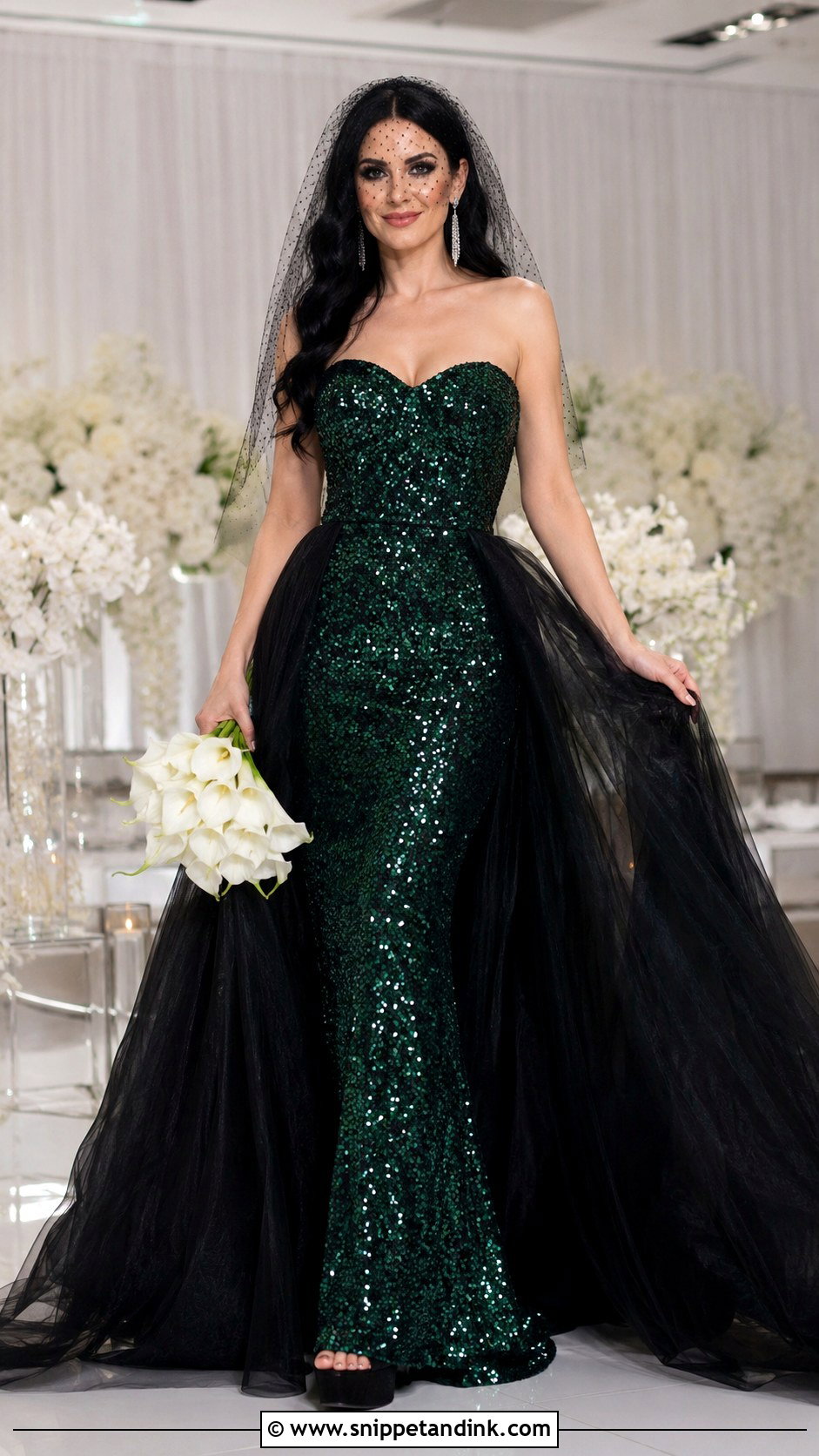
Emerald sequins alone read as party wear. Add a sheer black tulle overskirt at the waist and the same dress turns ceremonial. The base is a fitted emerald column or mermaid gown; the overskirt comes off after the ceremony to leave a sleek reception look. Sequins scratch the inside of the arms, so I check where the arm rests against the side seam and ask for a smooth panel there if it rubs. Platform heels, small crystal earrings and a plain black comb are enough sparkle.
10. Black Velvet Wedding Dress With Green Sash
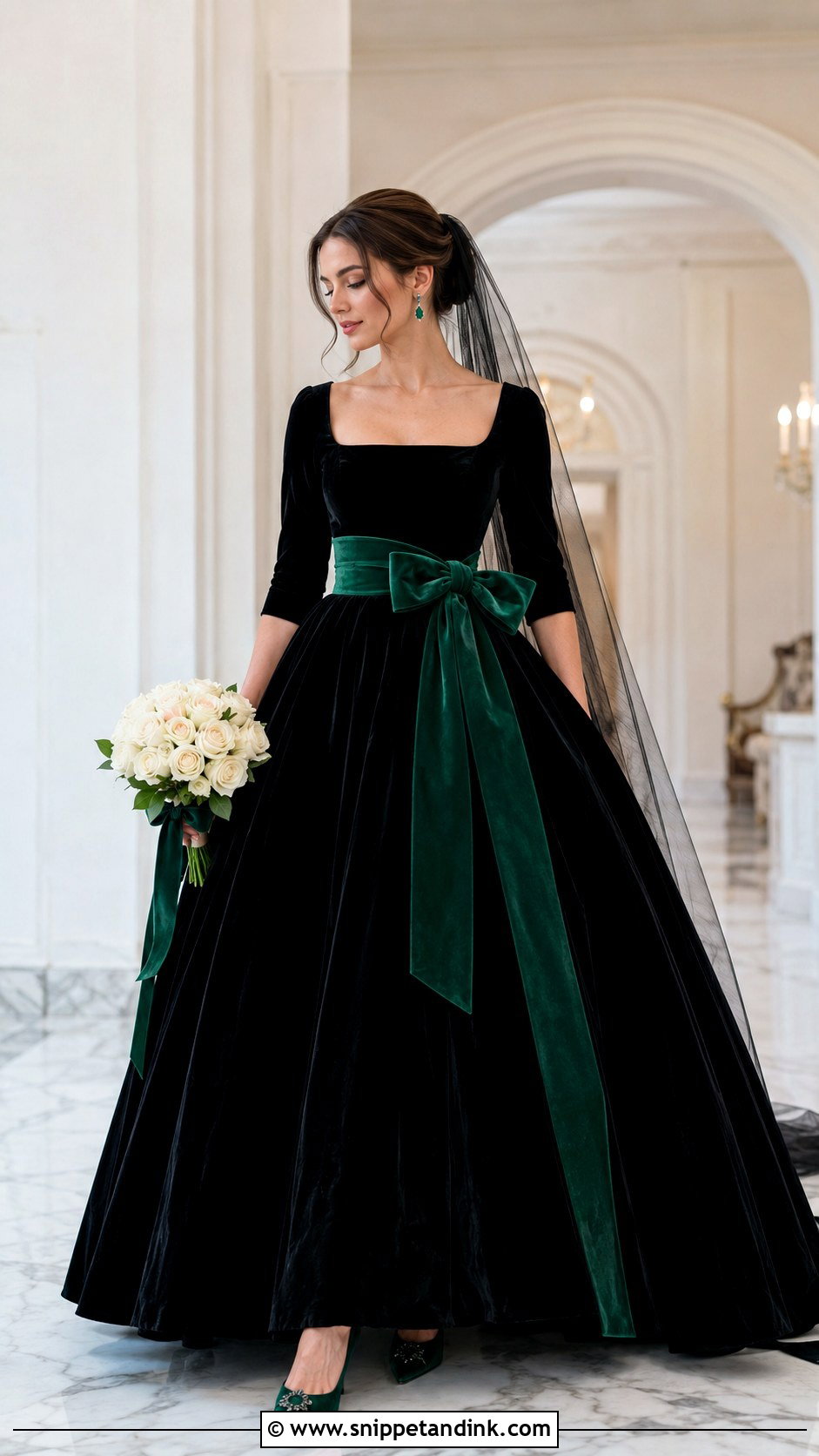
One green detail can be enough. A black velvet ball gown with a wide emerald or forest green sash keeps black dominant and gives the waist a clear line. A sash should be stitched or tacked at the side seams; loose sashes slide up as you sit and turn. Square neckline, three-quarter sleeves and emerald pumps peeking from the hem balance the volume. Tie the bouquet with a matching green ribbon, and swap the sash for a narrow one at the reception if you like.
11. Tea-Length Black and Green Wedding Dress
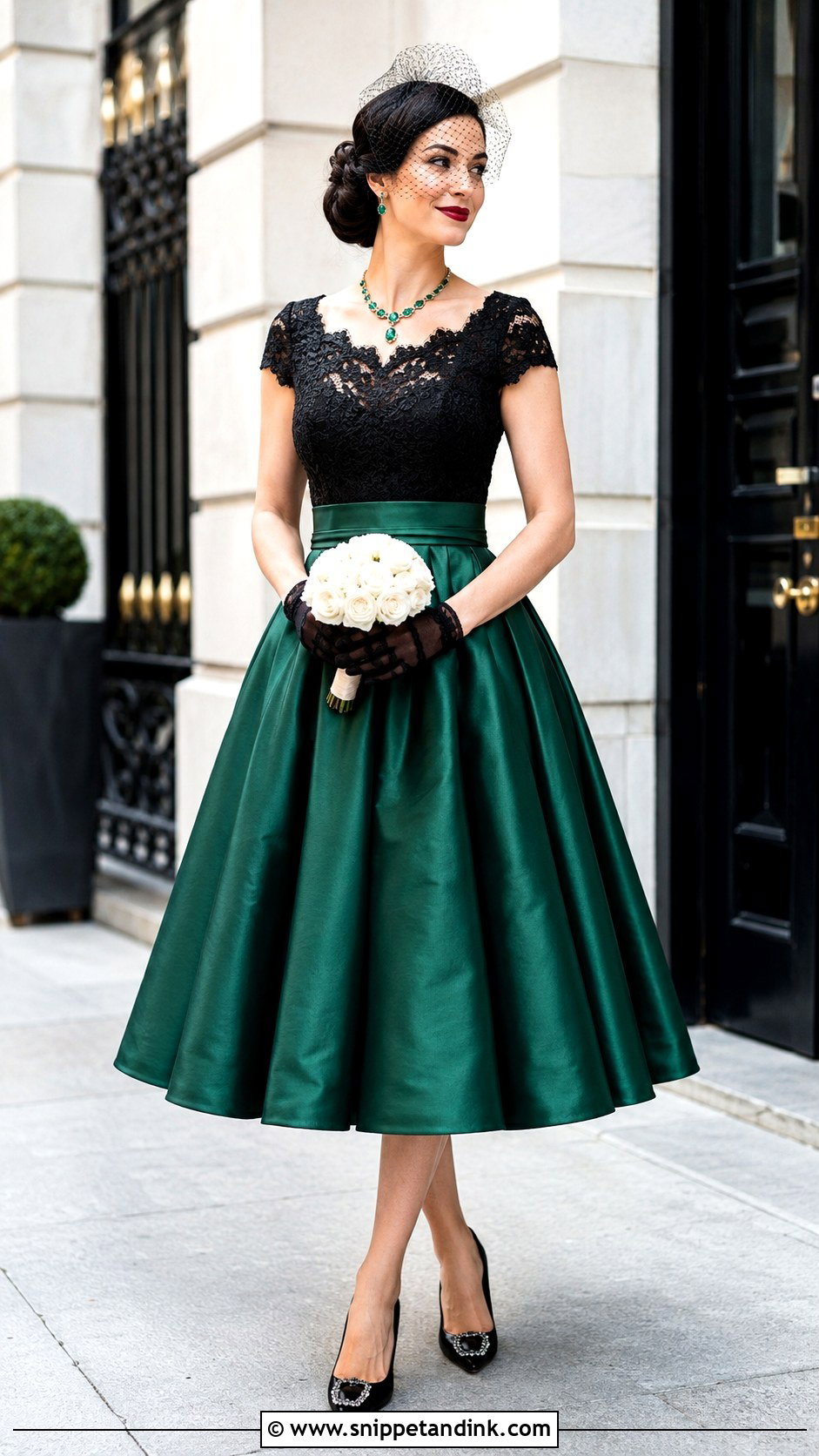
Tea length shows the shoes, so treat them as part of the dress. An emerald satin skirt ending between knee and ankle under a black lace bodice works best with a clear waistband, which stops the two halves looking like separate garments. Short gloves, a birdcage veil and black velvet heels or Mary Janes give it a vintage lean. Satin creases where you sit, and on a short skirt those creases sit right at eye level in photos, so a lining with a bit of body helps. Good for city halls and small daytime weddings.
12. High-Low Black and Emerald Wedding Dress
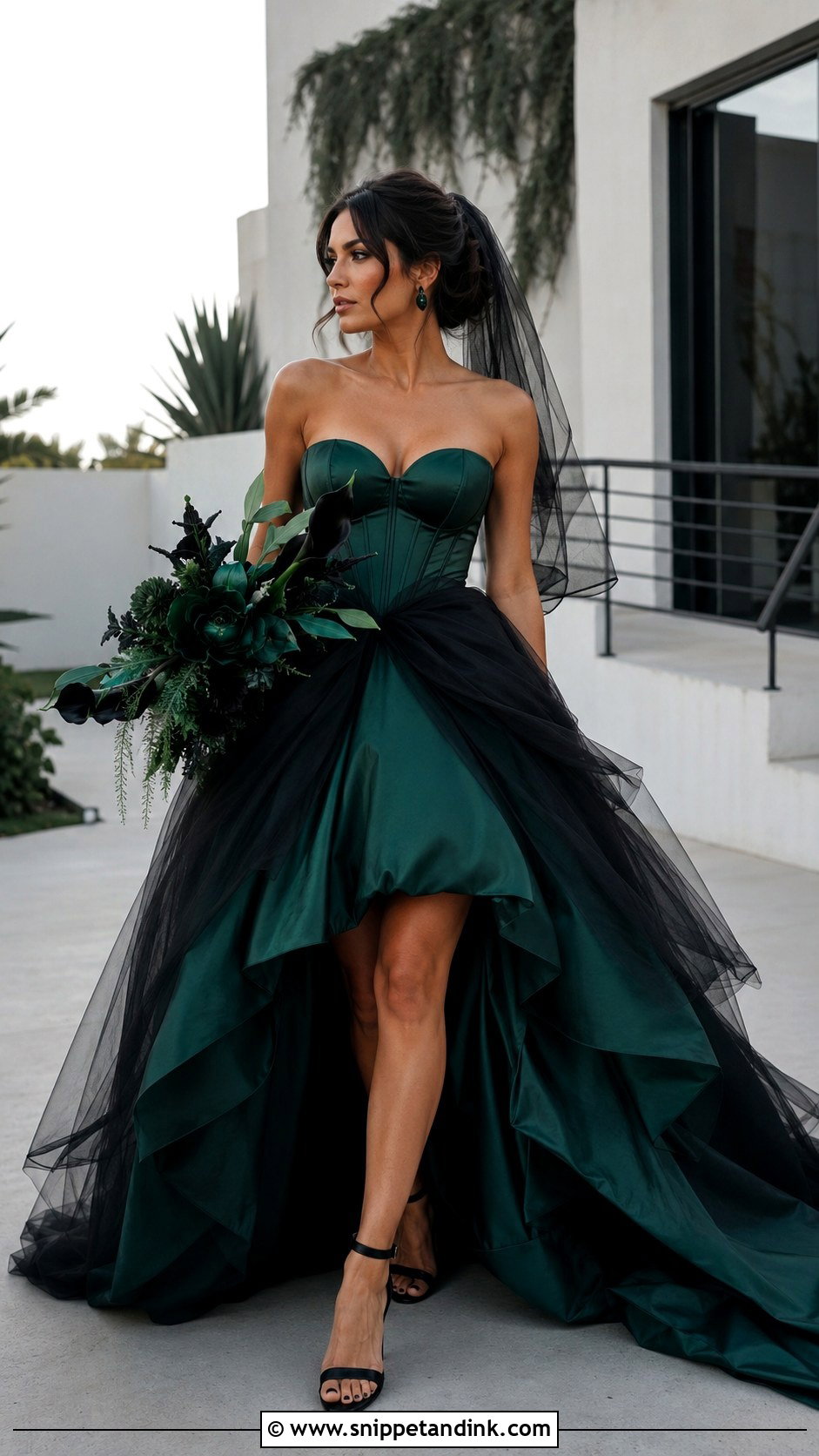
A high-low hem gives the front easy movement and leaves the drama for the back train. Emerald satin under a black tulle overlay, shorter in front, with a fitted corset or off-the-shoulder top keeps the shape balanced. My usual concern here is the curve of the hem: if the drop from front to back is too steep it looks unfinished when you stand still. Show your legs and shoes, keep jewelry to studs, and choose a short veil so the train is not competing with another long layer.
13. Plus-Size Black and Green A-Line Wedding Dress
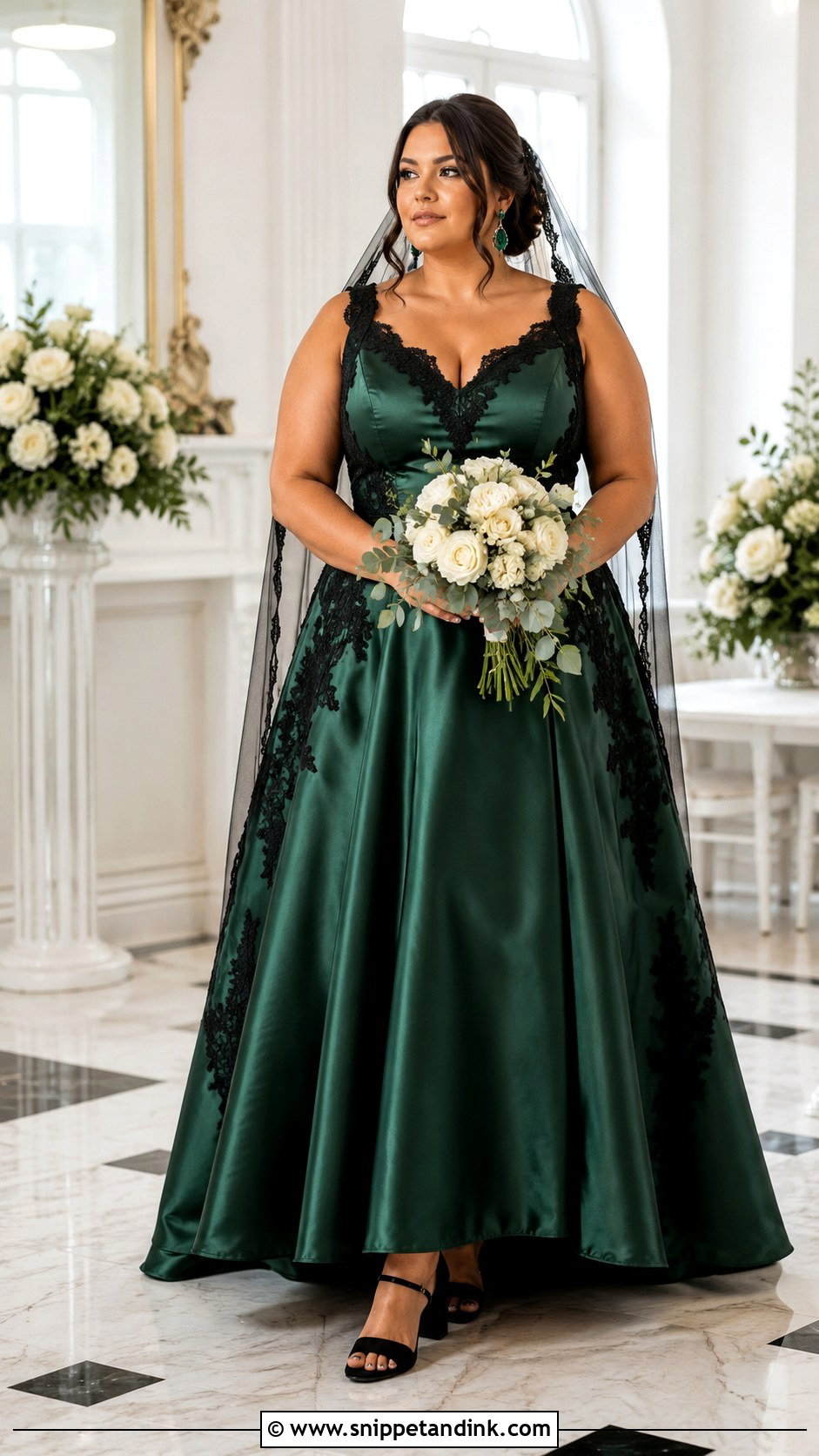
A well-built A-line supports and moves on any body, and on a plus-size bride the construction matters more than the silhouette label. Deep green satin with black lace along the neckline, side panels and waist lets the lace shape the eye without tight tailoring. I look for an internal corset and wide straps that are anchored to it, not just to the outer fabric, because that is what keeps the bodice from dropping by evening. Ivory blooms near the face brighten the dark colors. Spend the effort on alterations, not on body-shape rules.
14. Modest Black and Green Wedding Dress
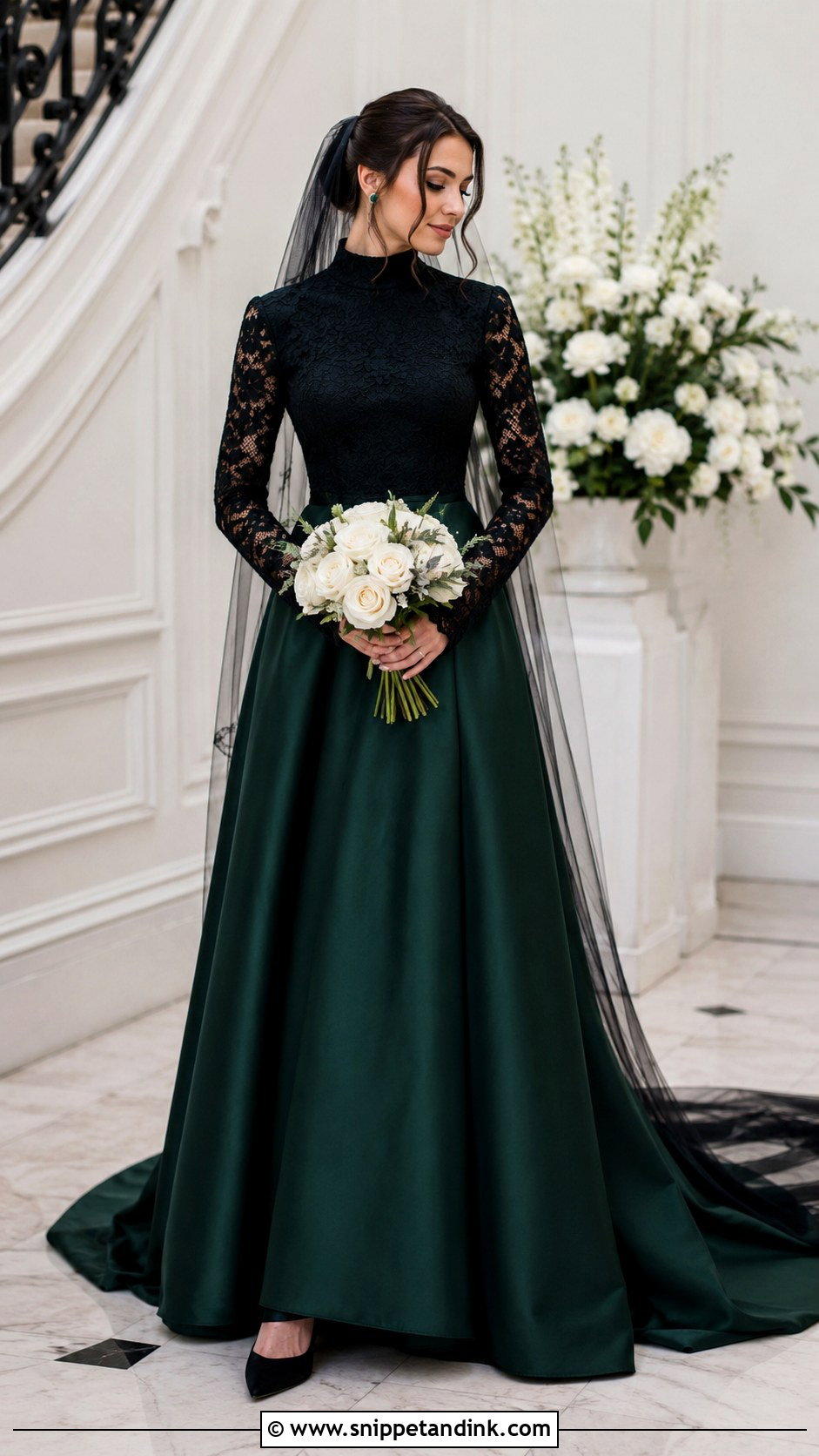
Coverage and drama are not opposites. A forest green A-line with a high neck, full black lace sleeves and black appliqués trailing down the skirt has detail from every angle. With a high neckline I check that it sits flat when the bride looks down, because a collar that buckles shows in every candid. Closed-toe pumps, a simple comb and a long black veil with a finished edge keep the line clean. White roses, ferns and dark leaves bring in light.
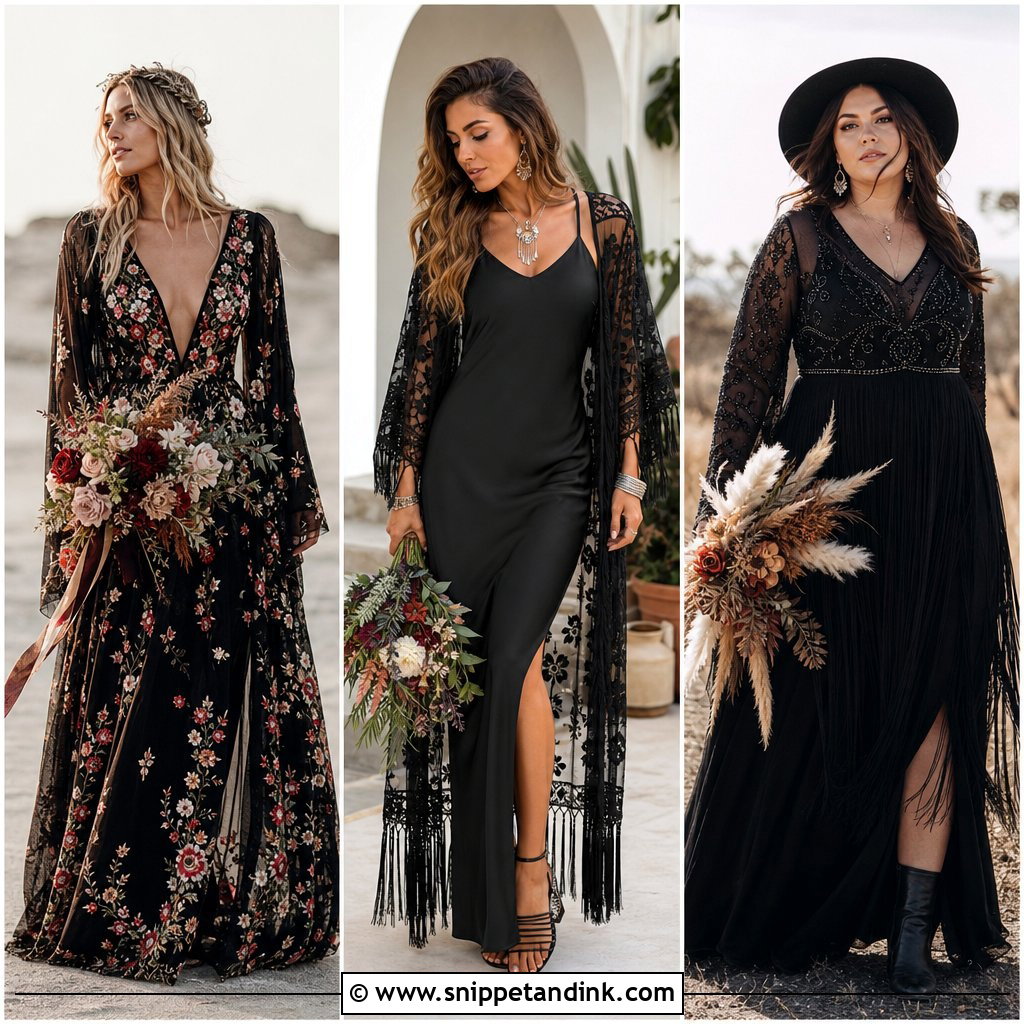
15. Boho Black and Green Woodland Wedding Dress
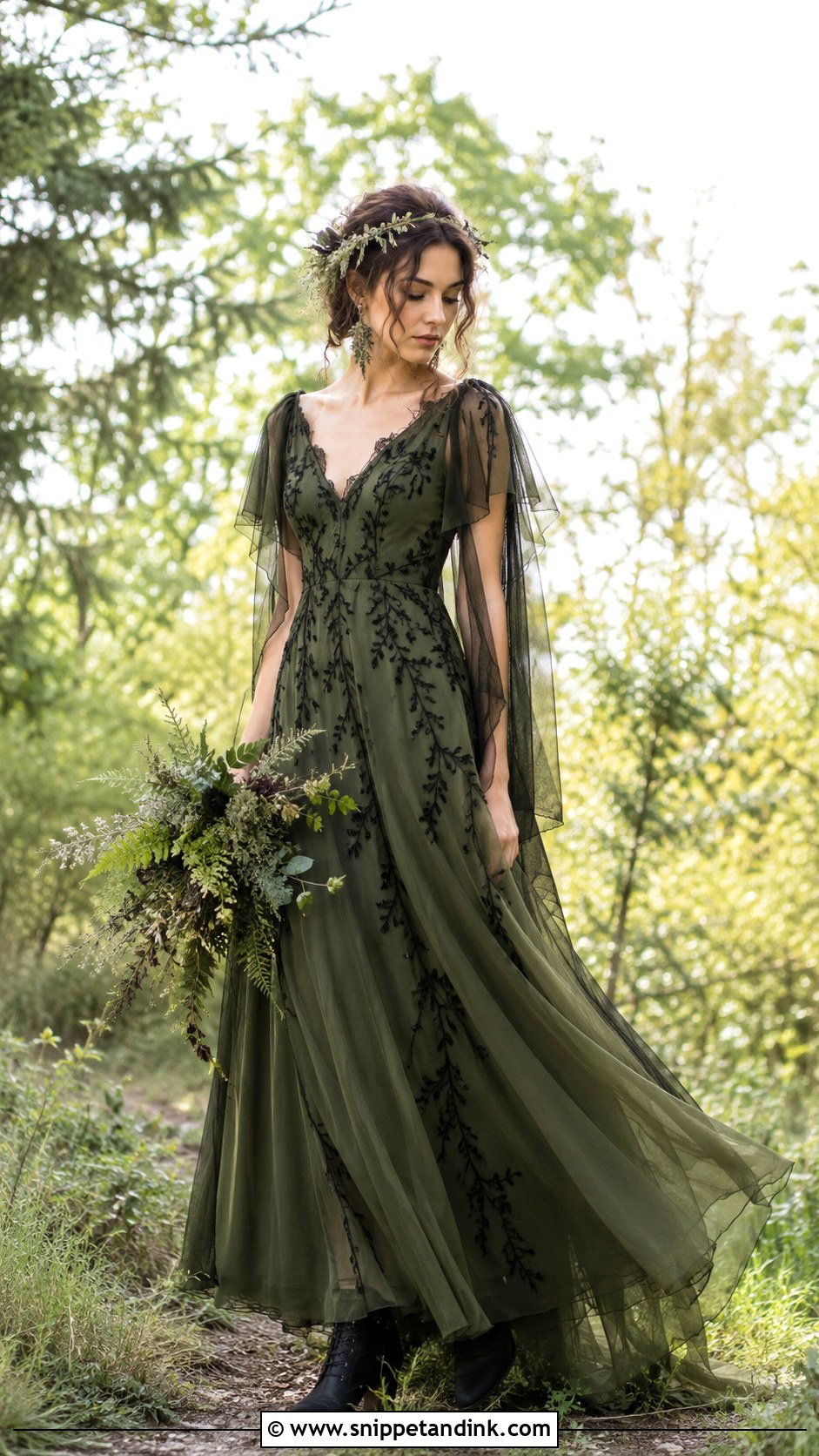
Moss green chiffon with flutter sleeves and black vine embroidery gives this palette a woodland ease. Chiffon is forgiving outdoors because it moves in wind rather than fighting it. On soft ground, Black leather ankle boots are the practical choice; stilettos sink. Loose waves or a textured braid with green pins, a sheer black capelet in place of a veil, and a loose bouquet of ferns and wildflowers keep it from tipping into costume. Have the hem taken up a little higher than you would indoors so it does not drag through mud.
16. Gothic Black and Green Wedding Dress With Long Train
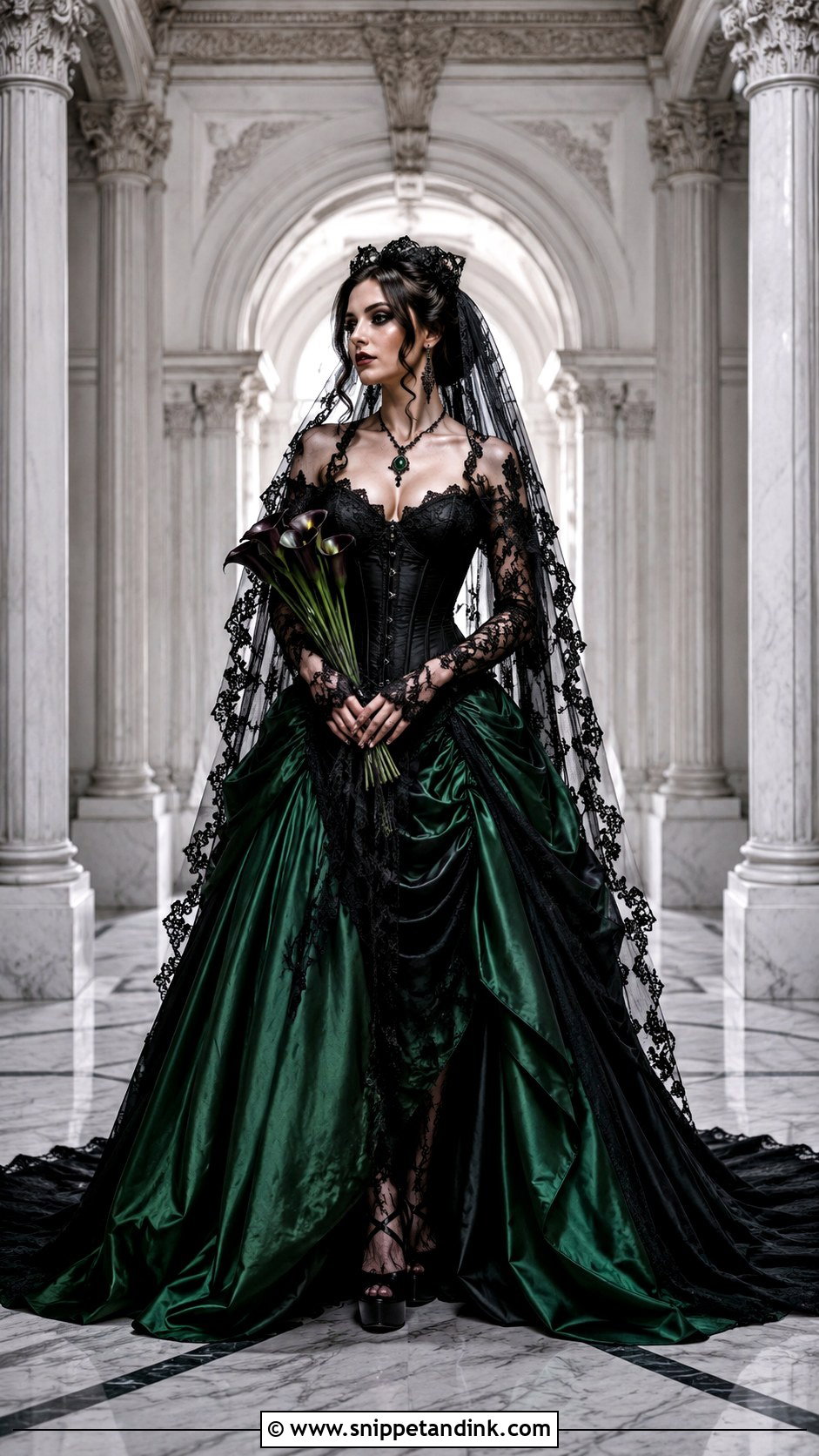
For the full gothic version, a black corset meets an emerald skirt with a long black lace train. A pointed waist makes the color change look deliberate. Long trains need a bustle plan before the wedding, not on the day: I ask the seamstress to show the bustle points and have someone in the bridal party practice them. A long black veil with scattered green appliqués should stop short of the train’s lace so the two do not tangle. Choose a large formal venue where the train has room to lie flat.
17. Minimalist Black and Green Column Wedding Dress
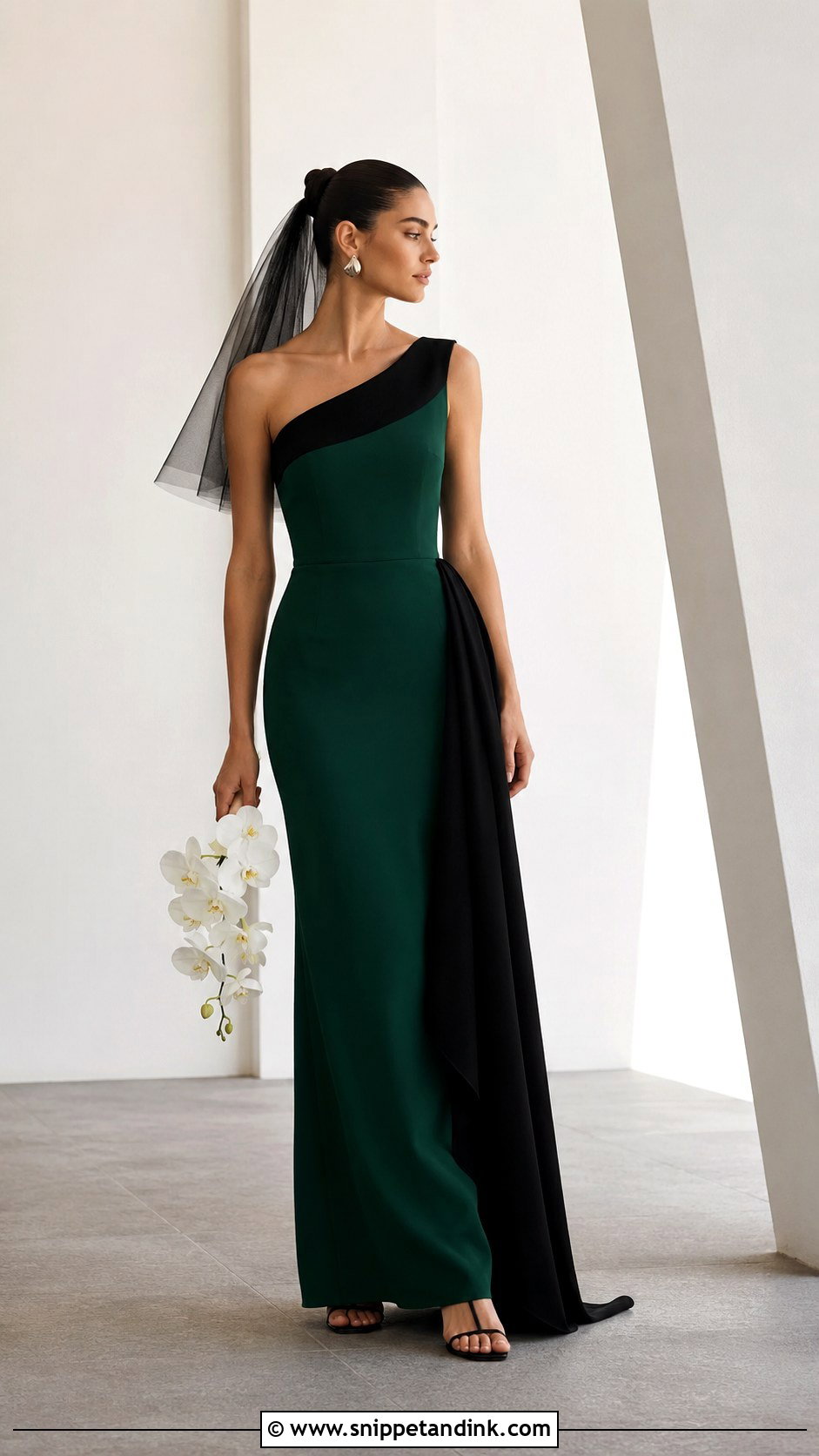
Clean lines keep black and green from looking themed. An emerald column with a black asymmetric neckline or side drape, cut in crepe or matte silk, is all architecture. Matte fabrics hold their shape without sheen, which matters on a dress with no embellishment to hide wrinkles. A sleek bun, quiet makeup and either a plain shoulder veil or none at all keep attention on where the colors meet. Rooftops and galleries suit it best.
18. Black and Green Two-Piece Wedding Dress
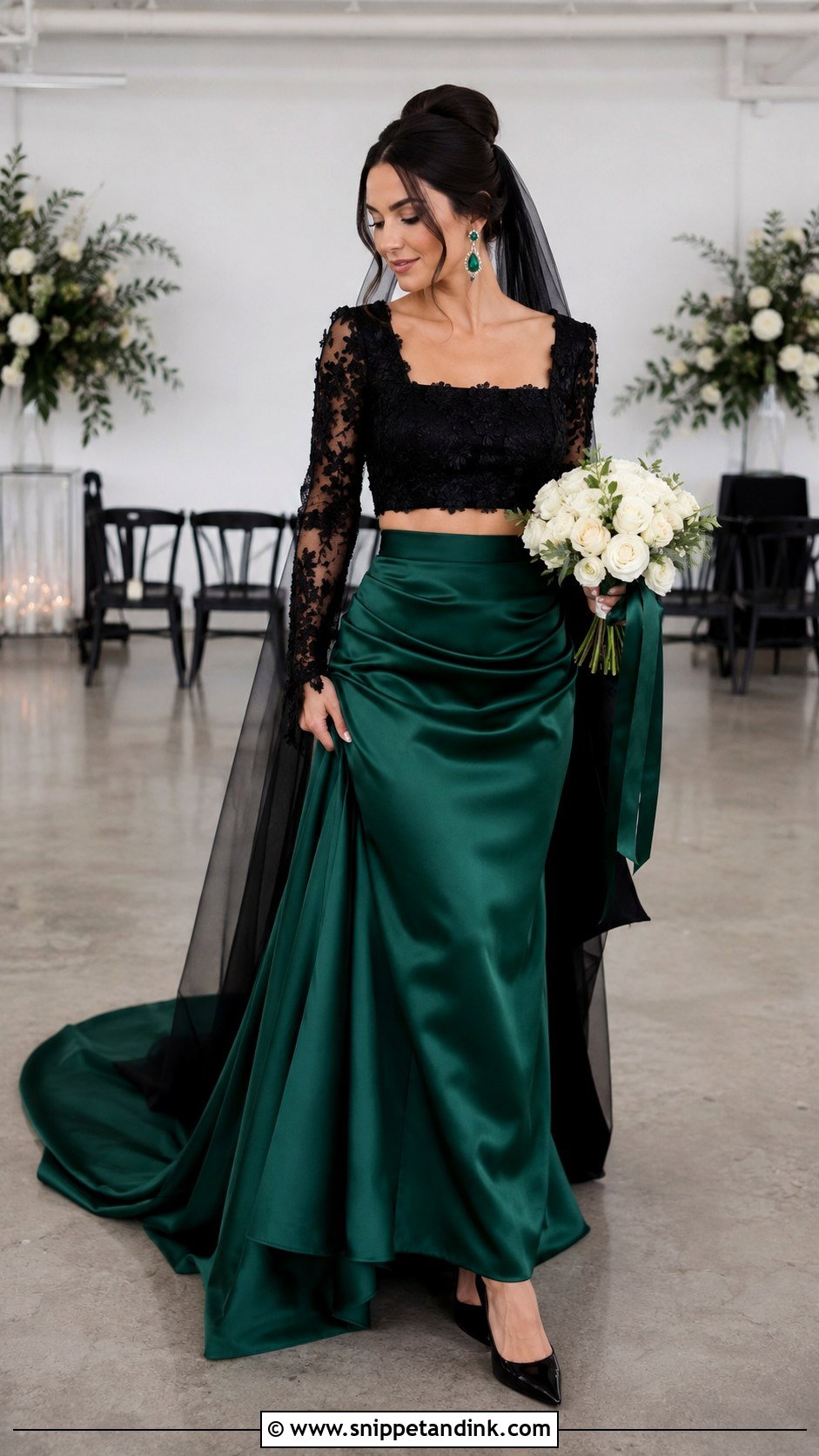
Separates let each color stay itself. A structured black lace top with a high-waisted emerald satin skirt only reads as one outfit if the waistline is fitted carefully, so I’d do both pieces at the same fittings rather than separately. The top can have a square neckline, cap sleeves or an illusion panel. Check the gap when you raise your arms; a flash of skin at the waist is fine on purpose and awkward by accident. Both pieces can be worn again later, which is the real bonus.
19. Black and Green Wedding Dress With Detachable Train
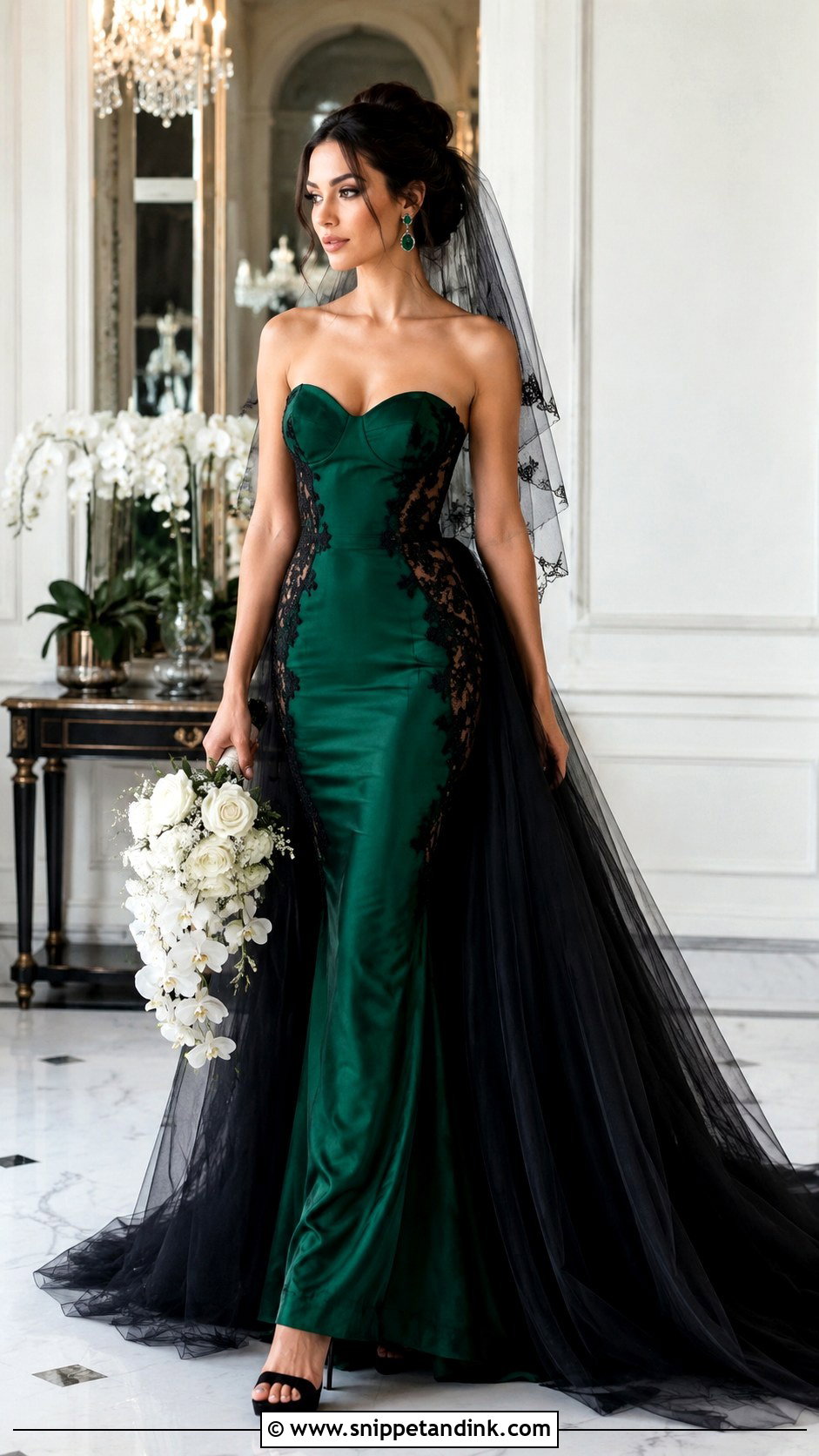
A detachable train gives you two looks from one gown. The base is a fitted mermaid with green satin through the center and black lace at the sides; a full tulle or satin train hooks on at the waist for the ceremony and comes off after portraits. Hidden hooks or buttons hold better than snaps on heavy satin. Practice taking it off before the day, and make sure the waist still looks finished without it. Short veil, simple bracelet, comfortable heels.
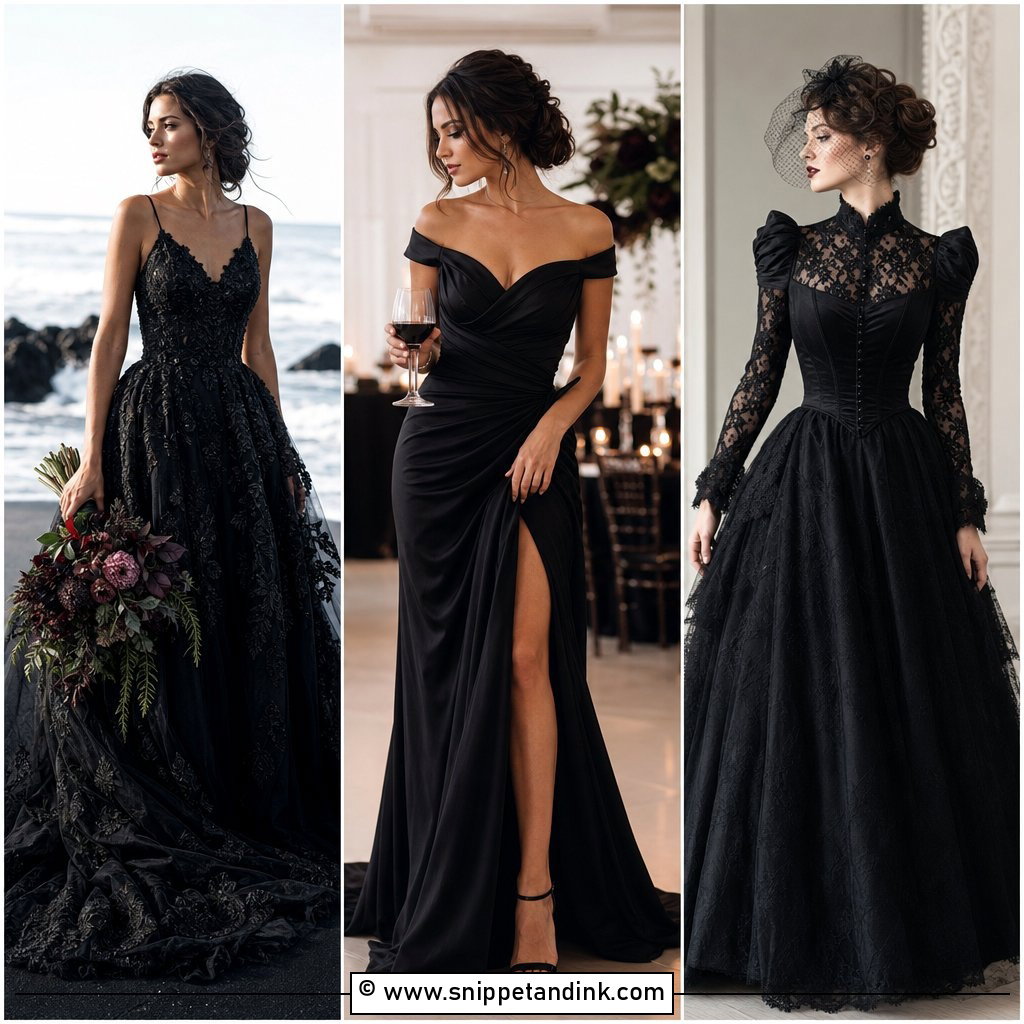
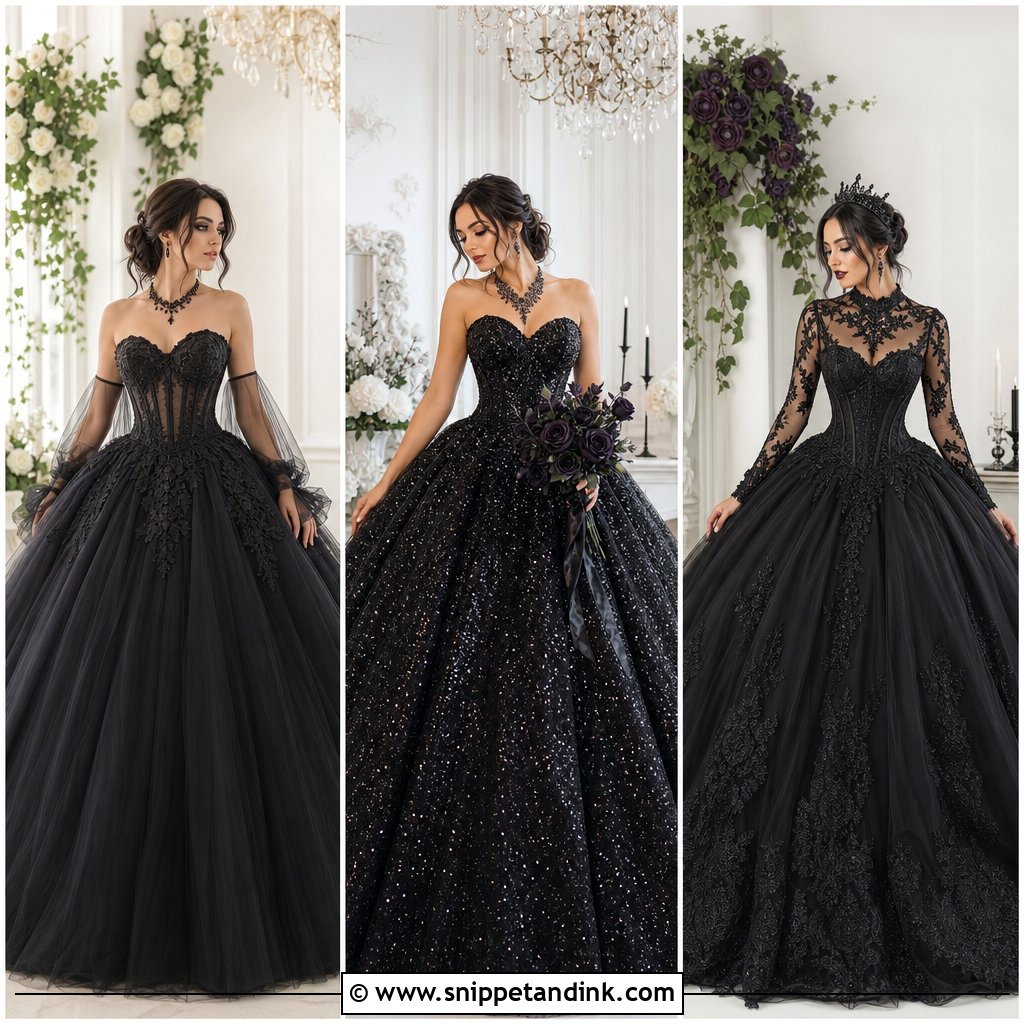

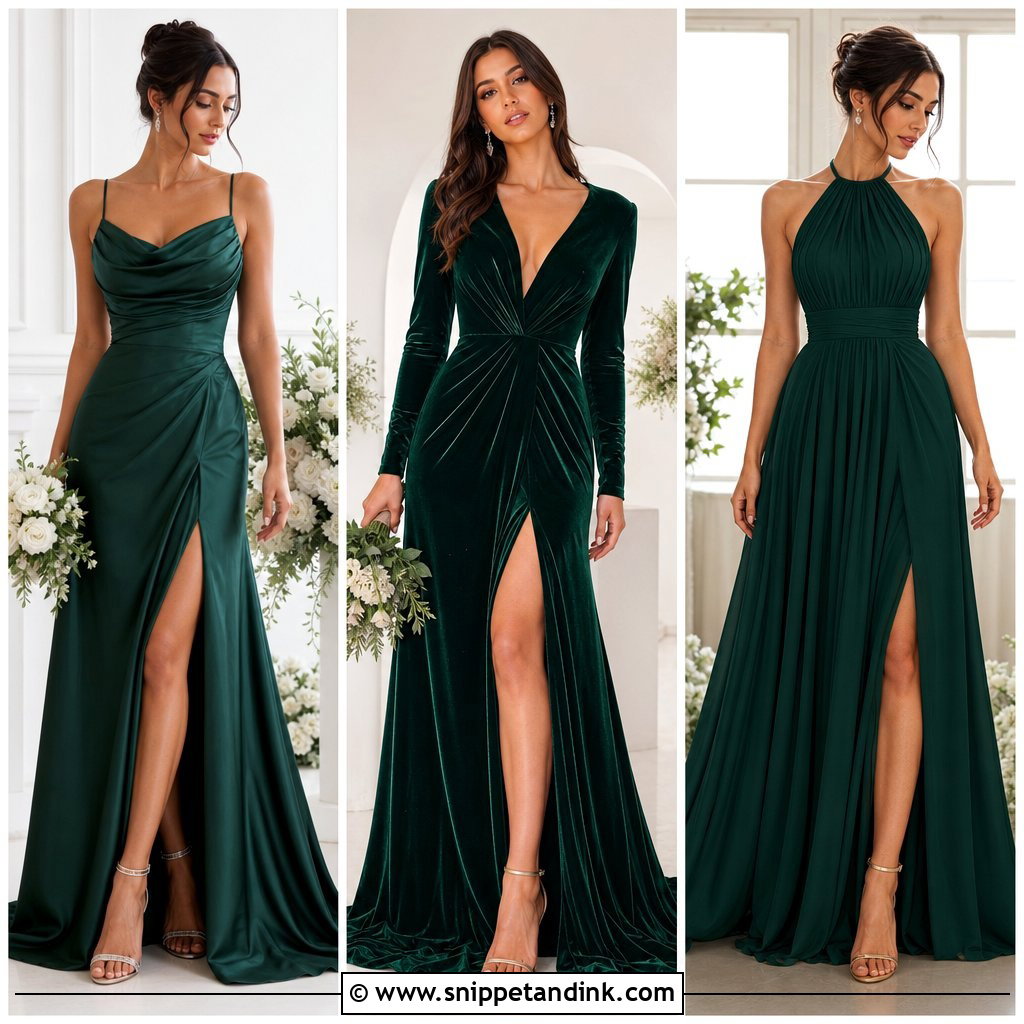
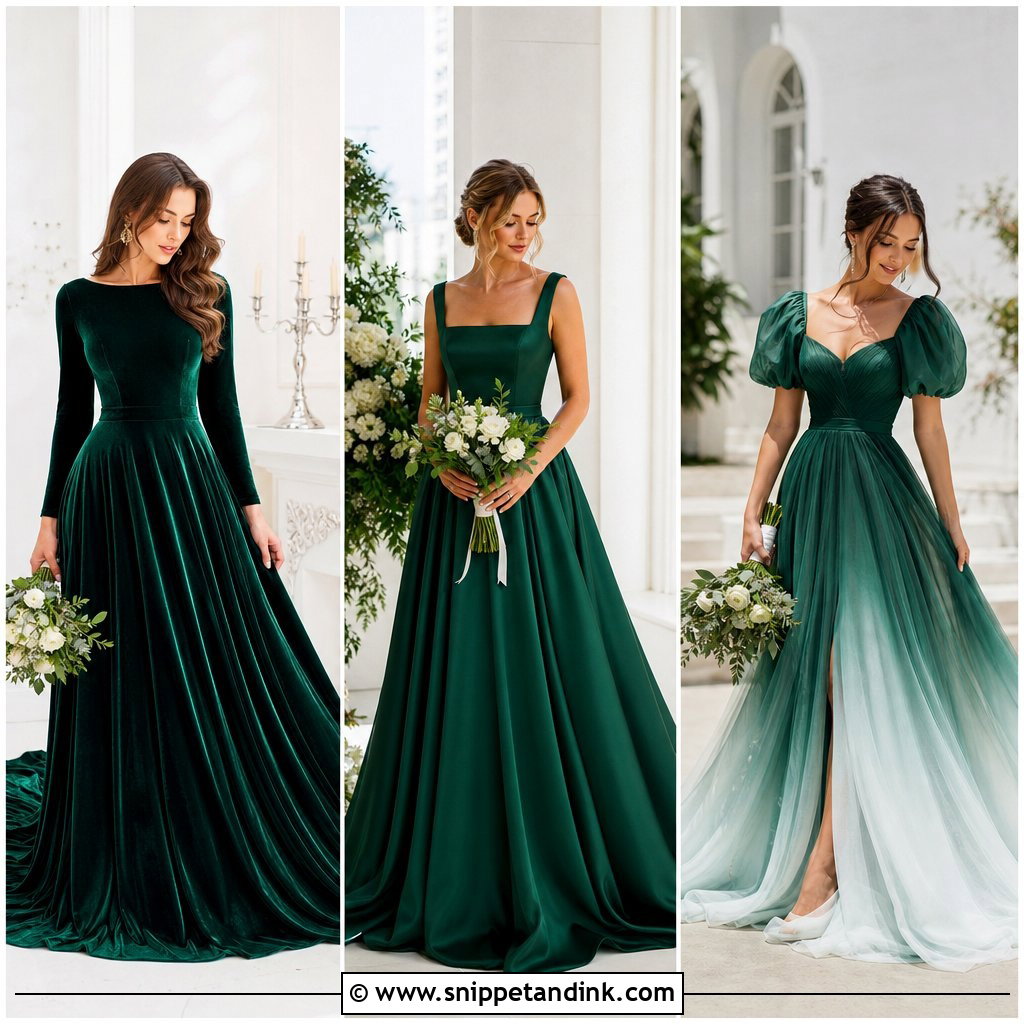
20. Black and Emerald Green Reception Wedding Dress
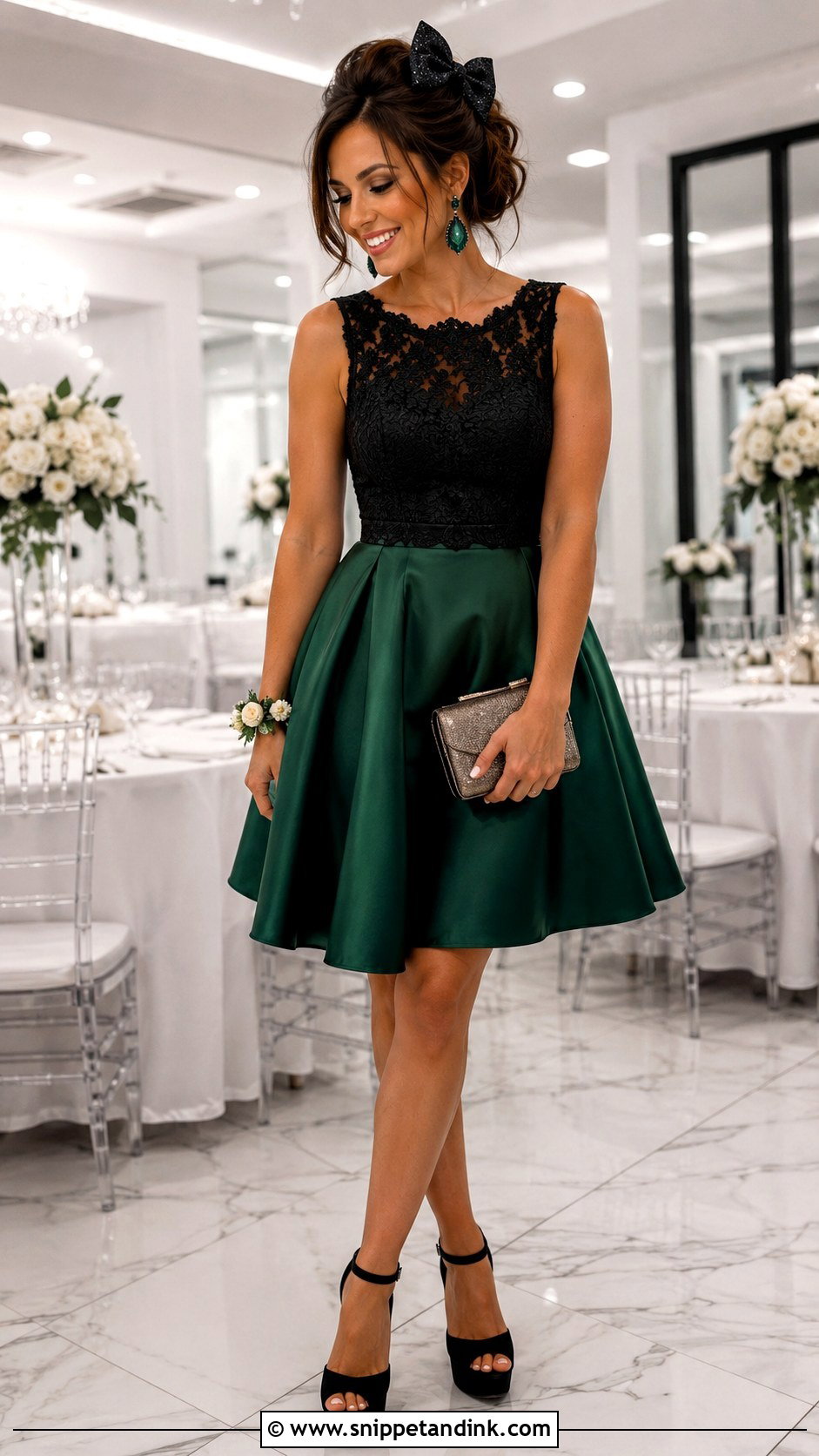
A reception dress keeps the palette while letting you dance. An emerald satin mini or knee-length with a black lace bodice and a flared skirt is the simplest version; a green sheath with removable black tulle sleeves is another. I’d tie it to the main gown with the same lace or the same green, so the second outfit looks planned. Trade the veil for a bow or crystal clip, and a wrist corsage keeps both hands free for the dance floor.
Dark Dye, Pale Skin and Other Wear-Day Surprises
Deeply dyed fabrics behave differently from white ones over a long day, and a few small precautions save a lot of trouble.
Dye transfer
New dark velvet and some saturated satins can leave color on damp skin, light shoes or an ivory bouquet wrap, especially in warm weather. I rub a damp white cloth on an inside seam at the fitting; if any green or black comes off, wear a lining layer against the skin and keep pale accessories away from the bodice.
Lint and deodorant
Black shows every speck of white fluff, petal dust and deodorant mark. Keep a lint roller and a dry microfiber cloth in the emergency kit, put deodorant on well before dressing, and step into the gown rather than pulling it over your head.
Steaming and storage
Steam velvet from the inside, never pressing the pile, and hang it with room around it. Satin can be steamed lightly at a distance. After the wedding, a specialist cleaner who handles colored and embellished gowns is worth the cost, and the dress should be stored away from sunlight, which fades saturated greens faster than you’d expect.
Seeing the Whole Outfit Under Evening Light
A dark bridal palette rewards brides who test it in the real light of their venue. Emerald satin, forest velvet, sage tulle and botanical embroidery each tell a different story, and black can lead the gown or simply outline it through lace, veils and shoes. Put the whole outfit on together at a final fitting, shoes and veil included, and stand under lighting close to the evening setting. If the greens still look like the same family and the black still frames you, the dress is ready.
You'll Like These Ideas:





Leave a Reply