
A gown you love can still feel unfinished if your arms are bare and you’d rather they weren’t. Before sketching any sleeve, I look at four things on the dress: the neckline, how the bodice is built, the weight of the fabric and the overall silhouette. Those decide whether the sleeves get sewn in permanently, fixed with hidden fasteners, or worn as a separate layer on top. The aim is a result that looks designed, not patched on a month before the wedding. Lace, illusion tulle, satin, chiffon and crepe each behave differently on the arm, and length changes how freely you move. Here are twenty ways to do it, each with the fitting detail that tends to make or break it.
Does Your Ceremony Venue Expect Covered Arms?
A lot of sleeve requests start with a phone call to the officiant rather than a style preference. Some churches, cathedrals, mosques, temples and gurdwaras ask that shoulders, and sometimes upper arms, be covered during the service, and the expectation can differ between congregations of the same faith. Ask the person marrying you directly, and ask early, because the answer decides whether you need permanent sleeves or just a cover for an hour.
- If covering is needed only for the ceremony, a bolero, topper or detachable sleeves solve it without altering the gown.
- If family members expect coverage all day, sewn-in or bodysuit sleeves are more reliable than a layer you’ll be tempted to take off.
- For temple or gurdwara ceremonies where you sit on the floor, check that the sleeves and bodice still feel comfortable when seated low for a long time.
- A long veil or shawl draped over the shoulders can satisfy a modesty rule for the ceremony itself, but it slides, so pin it.
Long sleeves in a hot month
If you’re marrying in summer and need full coverage, choose the most open fabric that still covers: illusion tulle, fine chiffon or an open lace on mesh. Lined satin and heavy lace sleeves trap heat, and you’ll feel it during outdoor photos long before the reception starts.
1. Lace Long Sleeves for a Wedding Dress
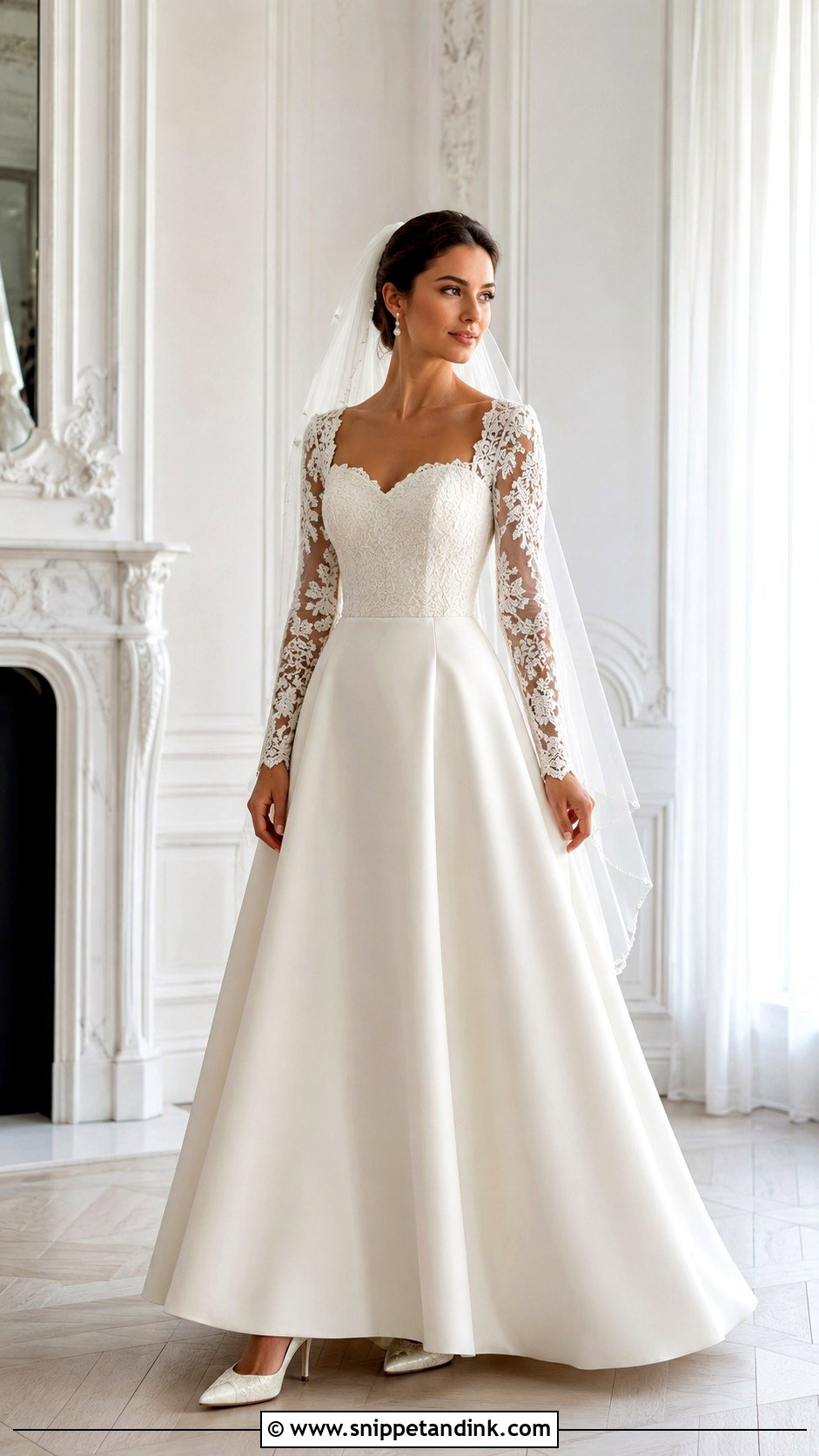
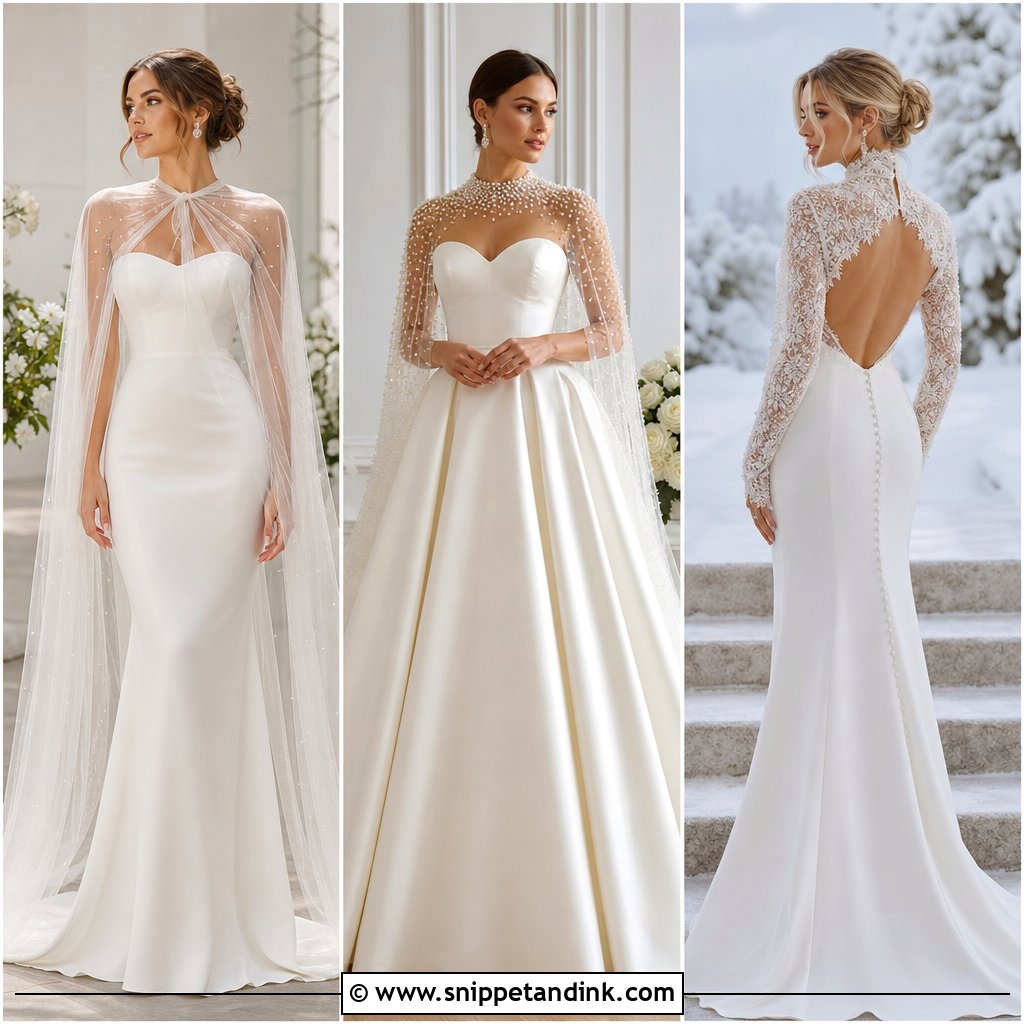
Long lace sleeves are the classic request, and the secret is continuity. The lace pattern should flow from the bodice over the shoulder and down the arm, as if it had always been there. A seamstress can order matching lace or reuse appliqués from the hem once the dress is shortened. Fitted lace suits A-line and fit-and-flare gowns best; pointed ivory pumps, pearl earrings and a plain fingertip veil let it lead. Long lace sleeves need a little more length than you’d guess, because the arm gets longer when the elbow bends. I check this by having the bride reach for a glass: if the cuff rides up past the wrist bone, the sleeve is short.
2. Detachable Sleeves for a Wedding Dress
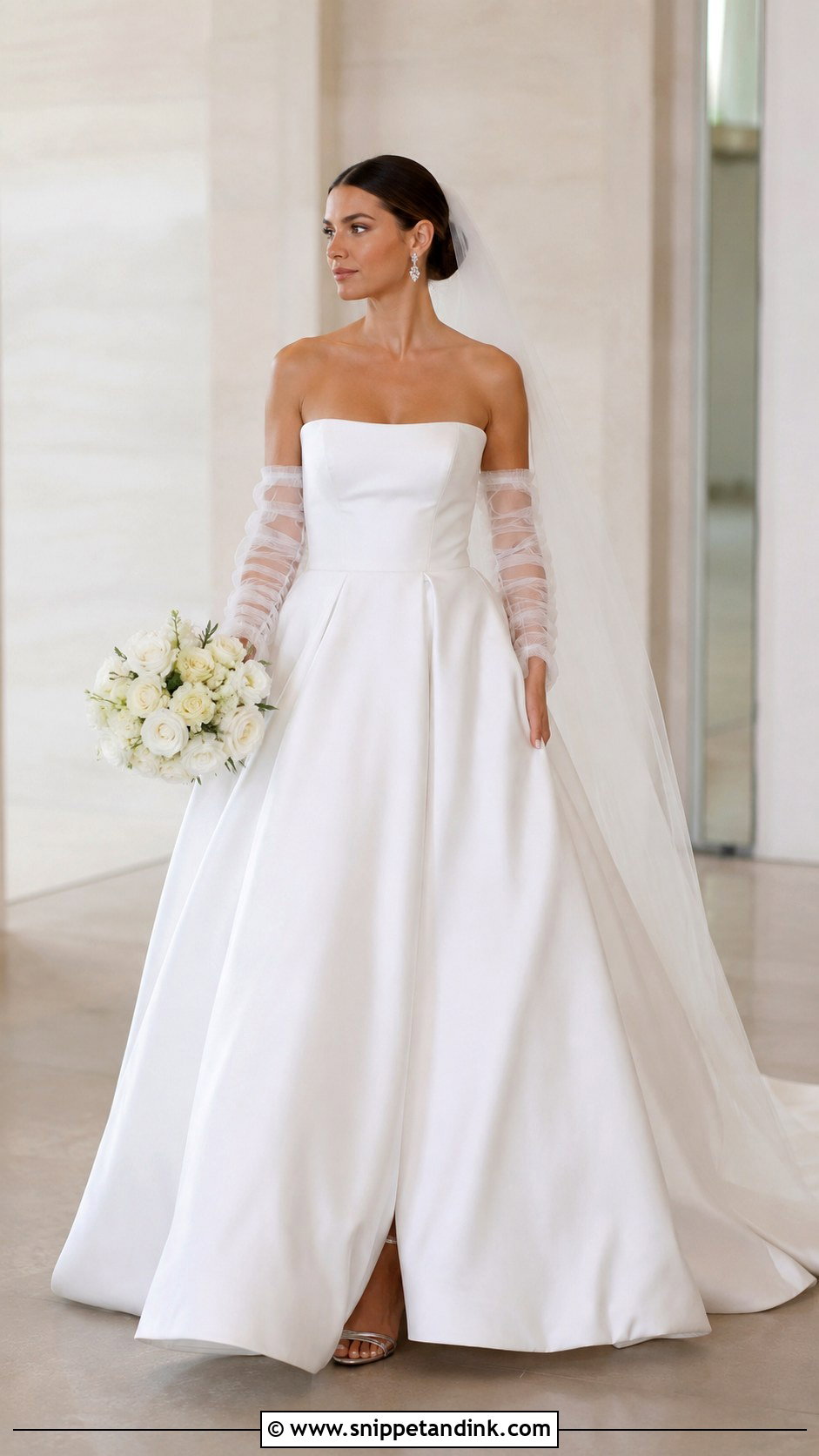
Two looks, one dress. Detachable sleeves connect under the neckline with clear snaps, tiny buttons, hidden hooks or a band of elastic, and come off between the ceremony and the dancing. Long tulle sleeves on a sleek strapless gown feel formal for the vows, then the dress returns to its original shape. Crystal earrings, a low bun, metallic heels and a clean-edged veil keep both versions consistent. The attachment points must lie flat and vanish once the sleeves are gone. Have a bridesmaid practise removing them at the last fitting, since a rushed tug at a snap can tear delicate bodice lace.
3. Illusion Sleeves for a Wedding Dress
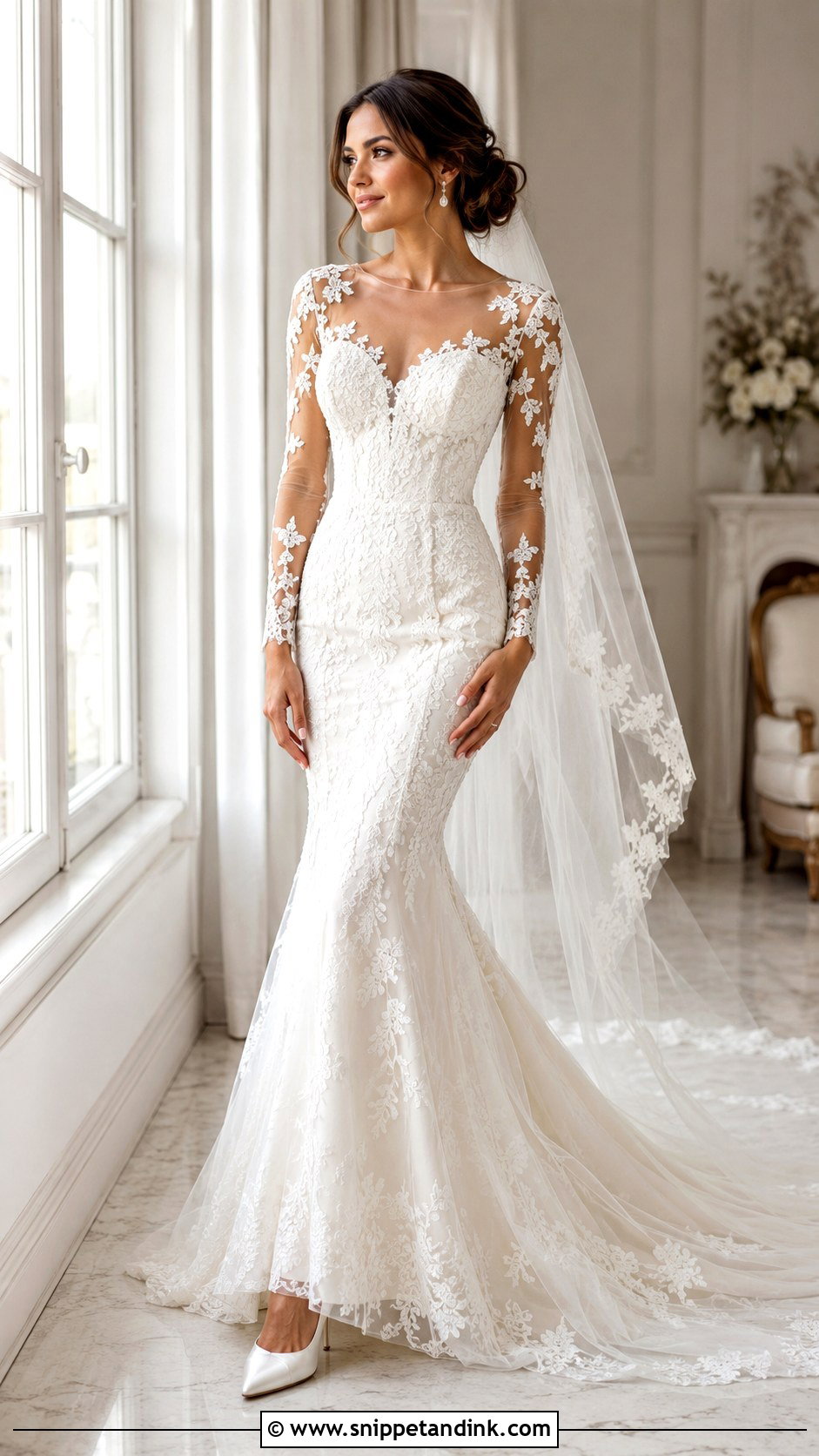
With illusion sleeves, lace or beading seems to float on bare skin because the tulle underneath is barely there. They’re the answer for a bride who wants long sleeves without the visual weight of solid fabric. The tulle colour is the decision that matters: matched to your skin, it disappears; matched to the gown’s ivory, it reads as a soft veil over the arm. Appliqués placed at the wrists, shoulders and outer arms tie the sleeves to the bodice. Drop earrings, satin pumps and a sheer cathedral veil suit it. Fit is unforgiving here; too loose and the tulle wrinkles, too tight and it cuts in. View it in daylight before you approve the final version.
4. Off-the-Shoulder Sleeves for a Wedding Dress
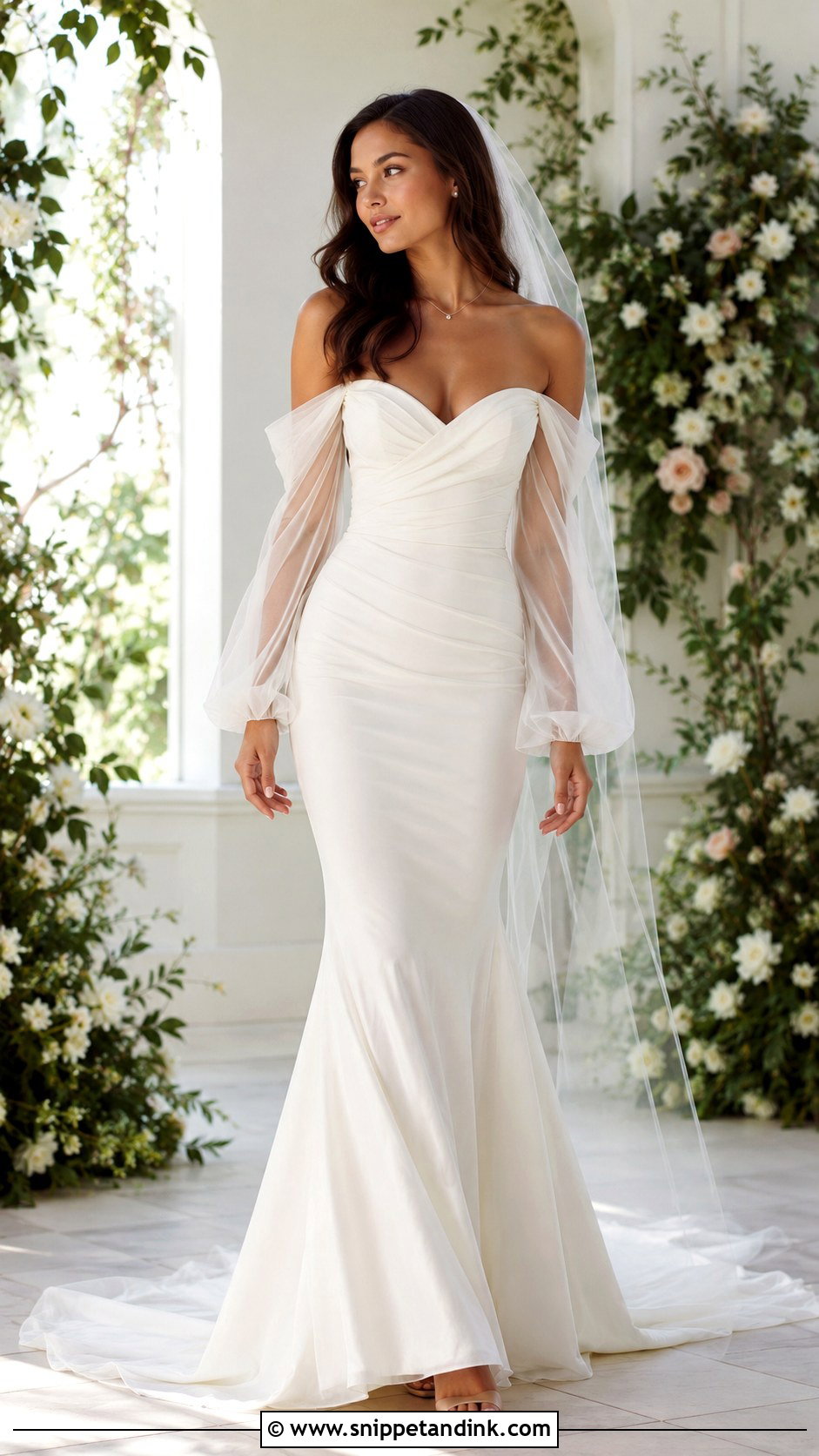
Off-the-shoulder sleeves frame the shoulders and soften a strapless neckline. The fabric should follow the gown: neat folded bands on a fitted mermaid, softer draped tulle or chiffon on an airy A-line. A collarbone-length necklace, pearl studs, low heels and a veil tucked under loose waves finish it, and the sleeves can be permanent or removable. Here’s the catch I explain to every bride: a sleeve sitting on the upper arm limits how high you can lift it. Hug, reach and hold your bouquet during the fitting. If the band cuts into your arm or drags the bodice down, it needs more ease.
5. Cap Sleeves for a Wedding Dress
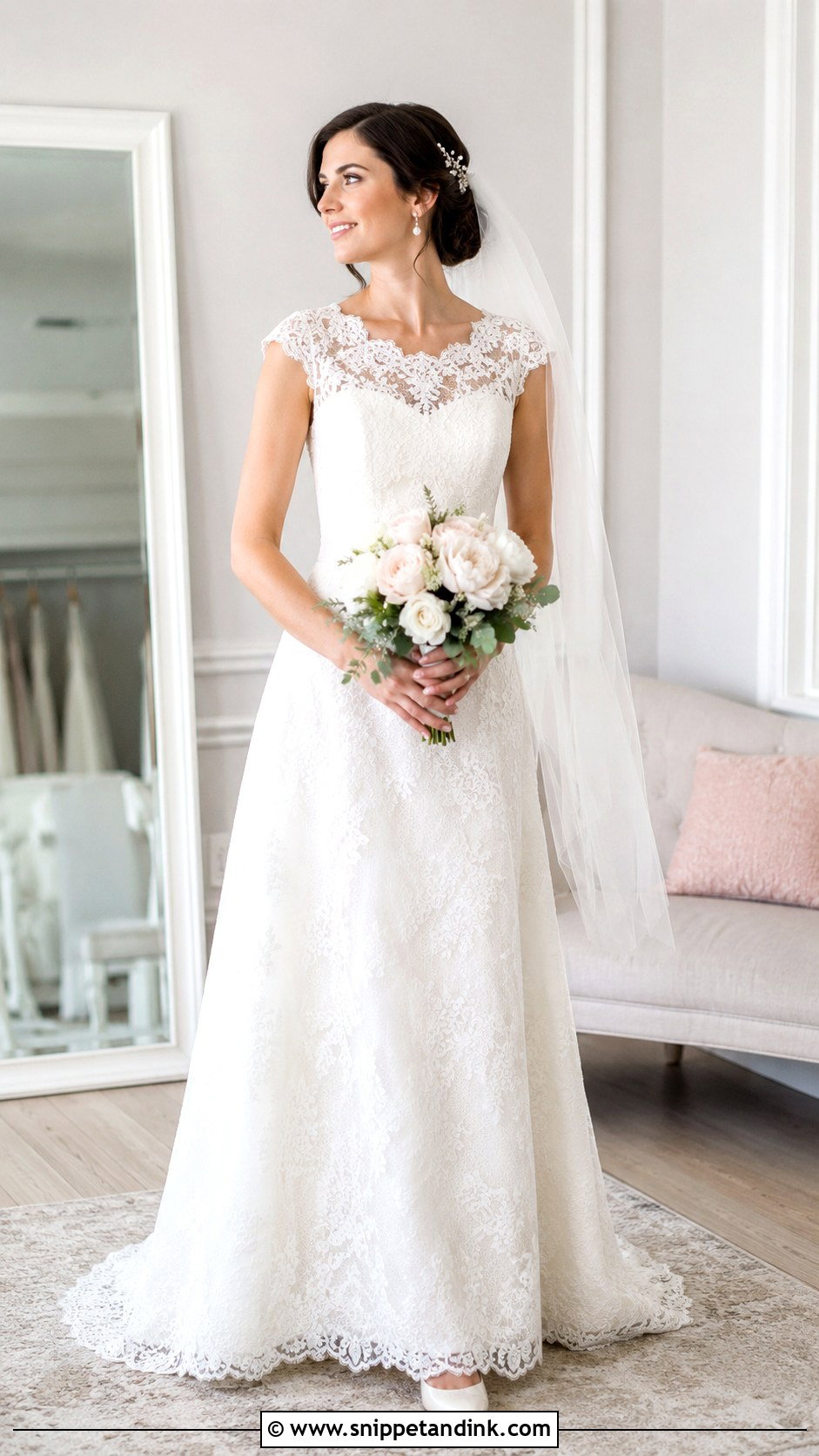
Cap sleeves cover just the top of the shoulder and barely change the gown’s shape. They need something solid to attach to, such as existing straps or a supportive bodice. Scalloped lace gives a soft edge; satin caps look cleaner and more structured. An A-line gown, closed pumps, a small floral comb and a waist-length veil suit them. The angle is what separates good cap sleeves from awkward ones. Set too far out, they stick away from the body and restrict the arm. A seamstress should shape each cap directly on you, blending its edge into the bodice, and they should frame the shoulder without pinching it.
6. Flutter Sleeves for a Wedding Dress
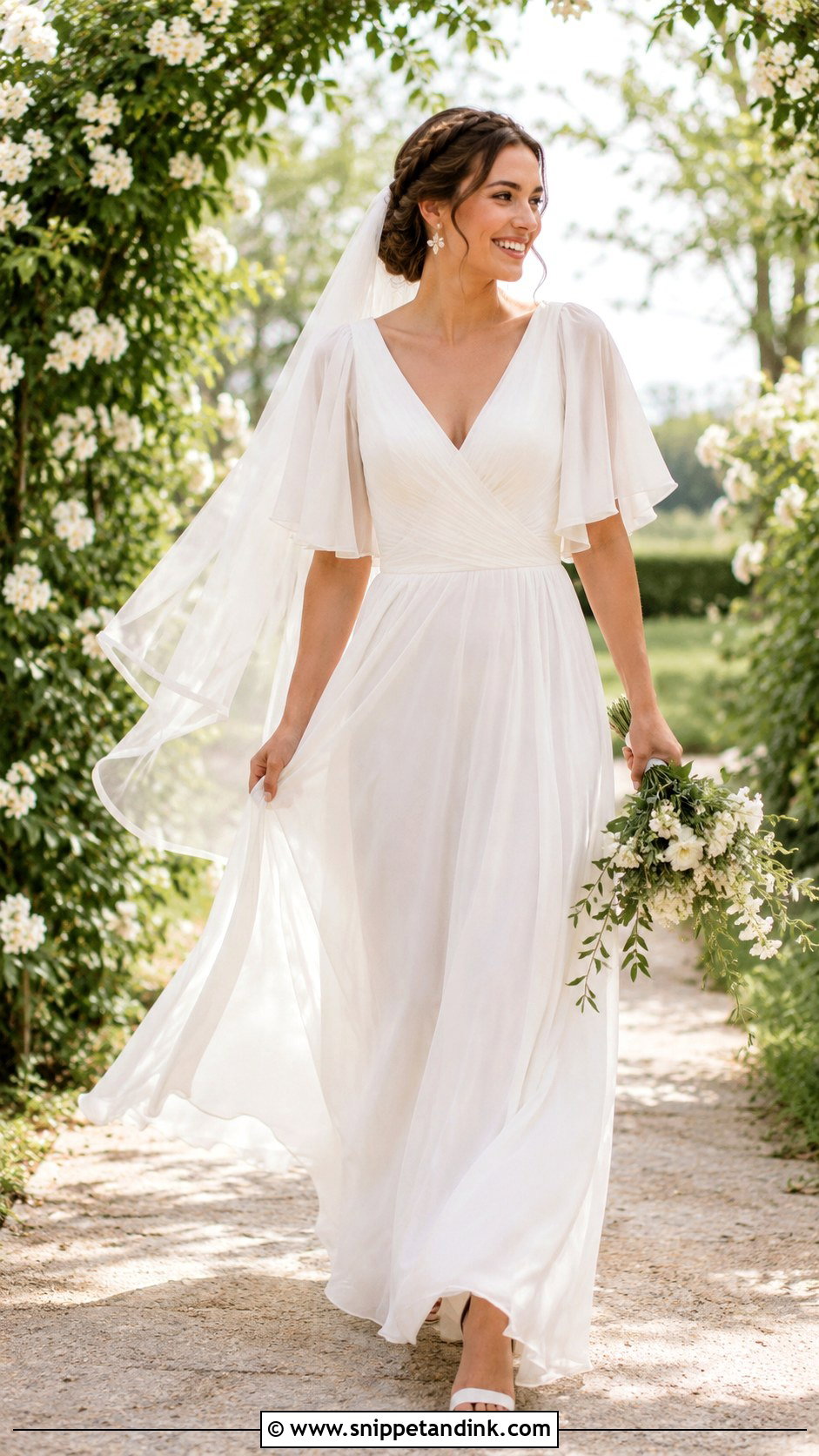
Flutter sleeves fall from the shoulder in loose layers and hardly touch the arm, which is why they’re so comfortable outdoors. They suit flowing A-lines and empire waists, and they look most natural when made from a fabric already in the dress. Block-heel sandals, a loose braid, botanical earrings and a light veil keep the mood easy. Fullness needs a firm hand. A short flutter gives a little movement; an elbow-length one changes your silhouette noticeably, and on narrow shoulders it can look like more fabric than bride. I’d ask the seamstress to pin both lengths and photograph each before choosing.
7. Bishop Sleeves for a Wedding Dress
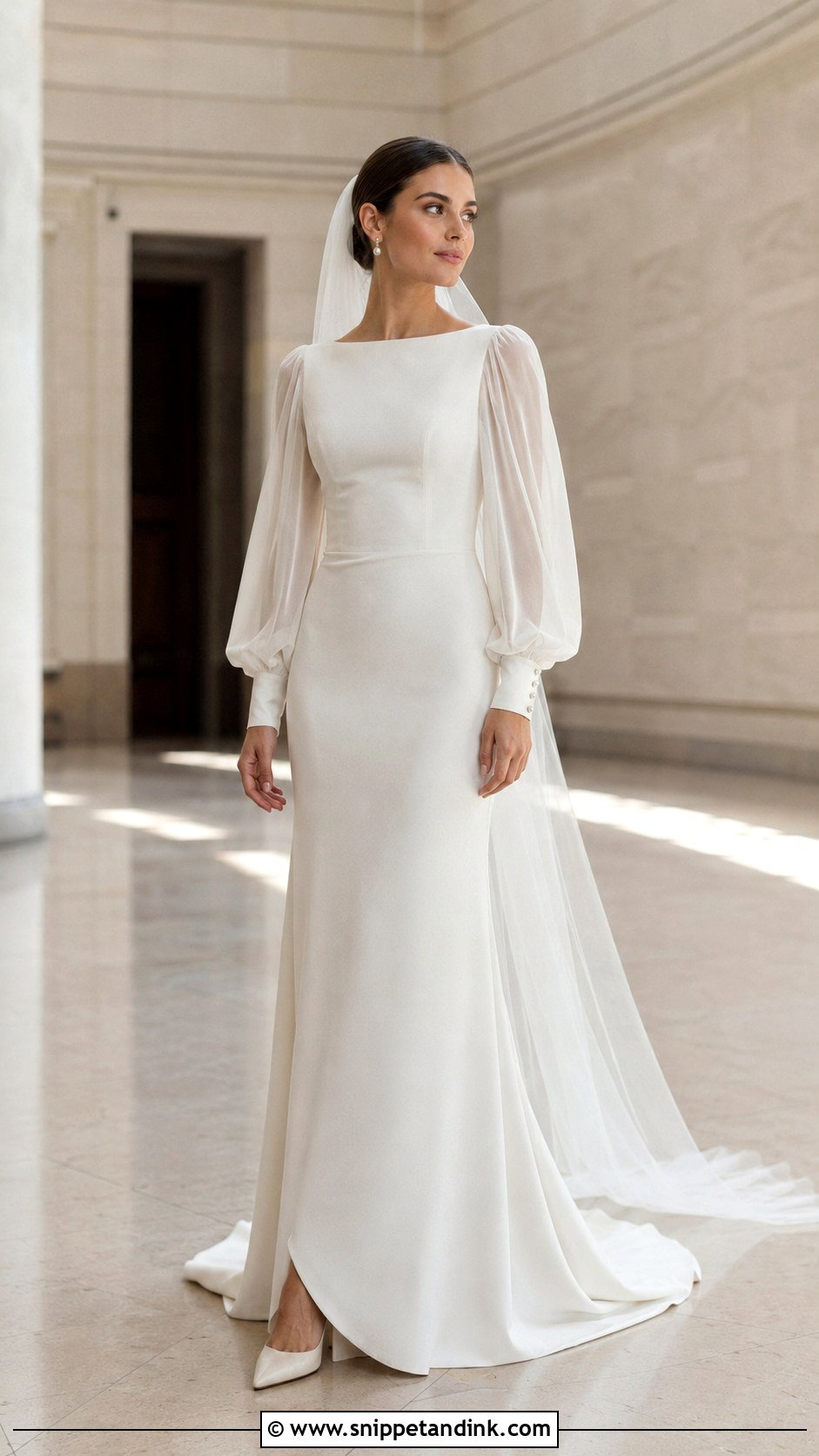
Bishop sleeves sit close at the shoulder, widen through the arm and gather into a cuff at the wrist. They soften a minimalist gown or add to the romance of a lace one. Sheer tulle and chiffon keep the volume light, while organza gives a crisper outline. Sleek hair, small earrings, pointed heels and a plain veil stop the outfit from becoming crowded, since the sleeves already say a lot. Cuffs can carry covered buttons, pearls or lace trim. Two things to check: that the fullness falls evenly without twisting toward the back, and that the armhole is sturdy enough to carry the extra fabric all day.
8. Puff Sleeves for a Wedding Dress
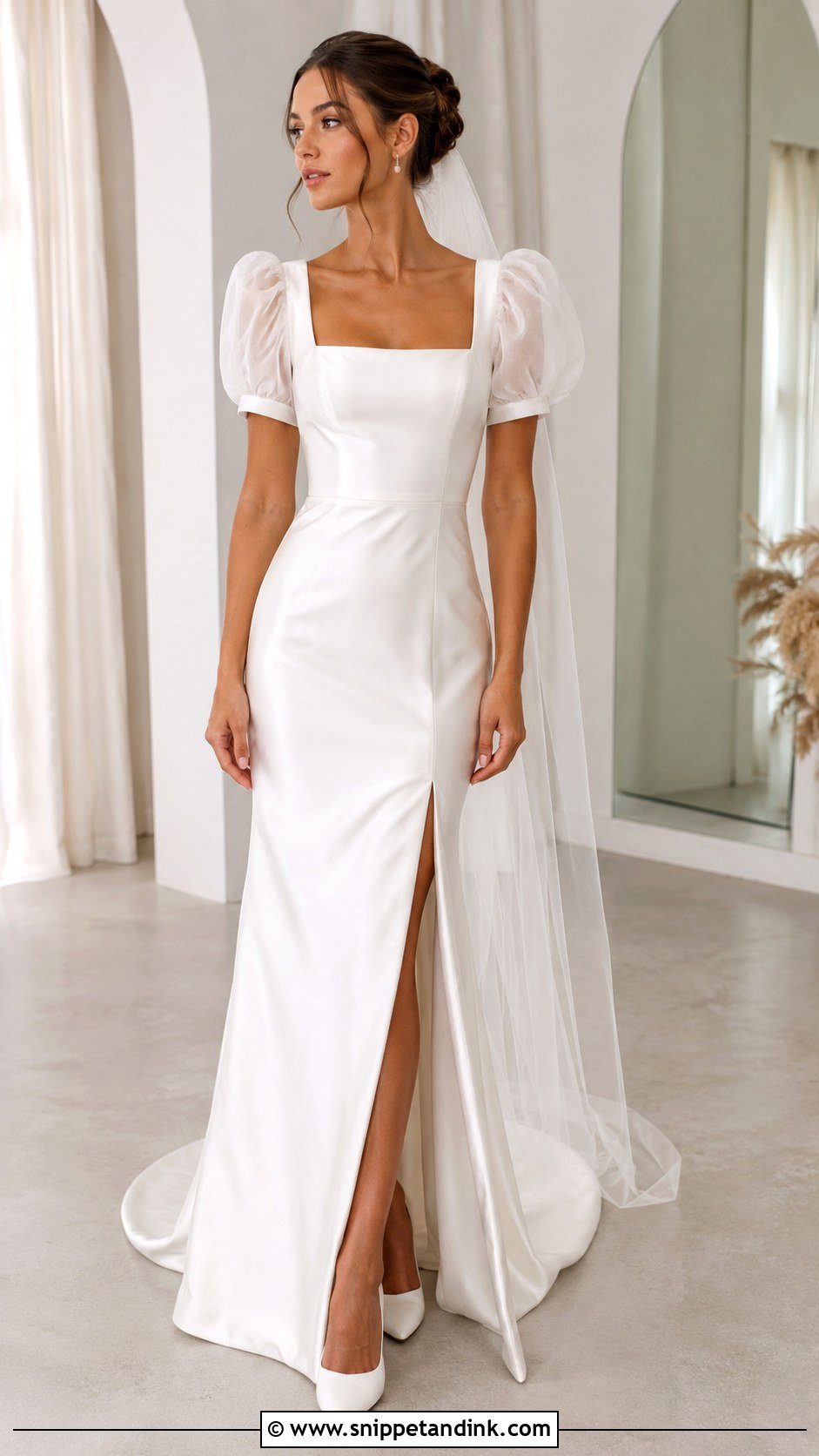
Puff sleeves add shape to a plain square, straight or sweetheart neckline. Short organza puffs look structured and a bit playful; longer tulle versions are softer. Match the volume to the skirt. A slim sheath can handle a strong shoulder, but a full ball gown plus big sleeves can overwhelm a bride. Refined pumps, a small pendant, a neat updo and a narrow veil keep the rest quiet. Removable puff sleeves let you simplify later in the evening. If they’re held by elastic, I check the arm after an hour of wear, because elastic that feels fine at first can leave a red line by the speeches.
9. Bell Sleeves for a Wedding Dress
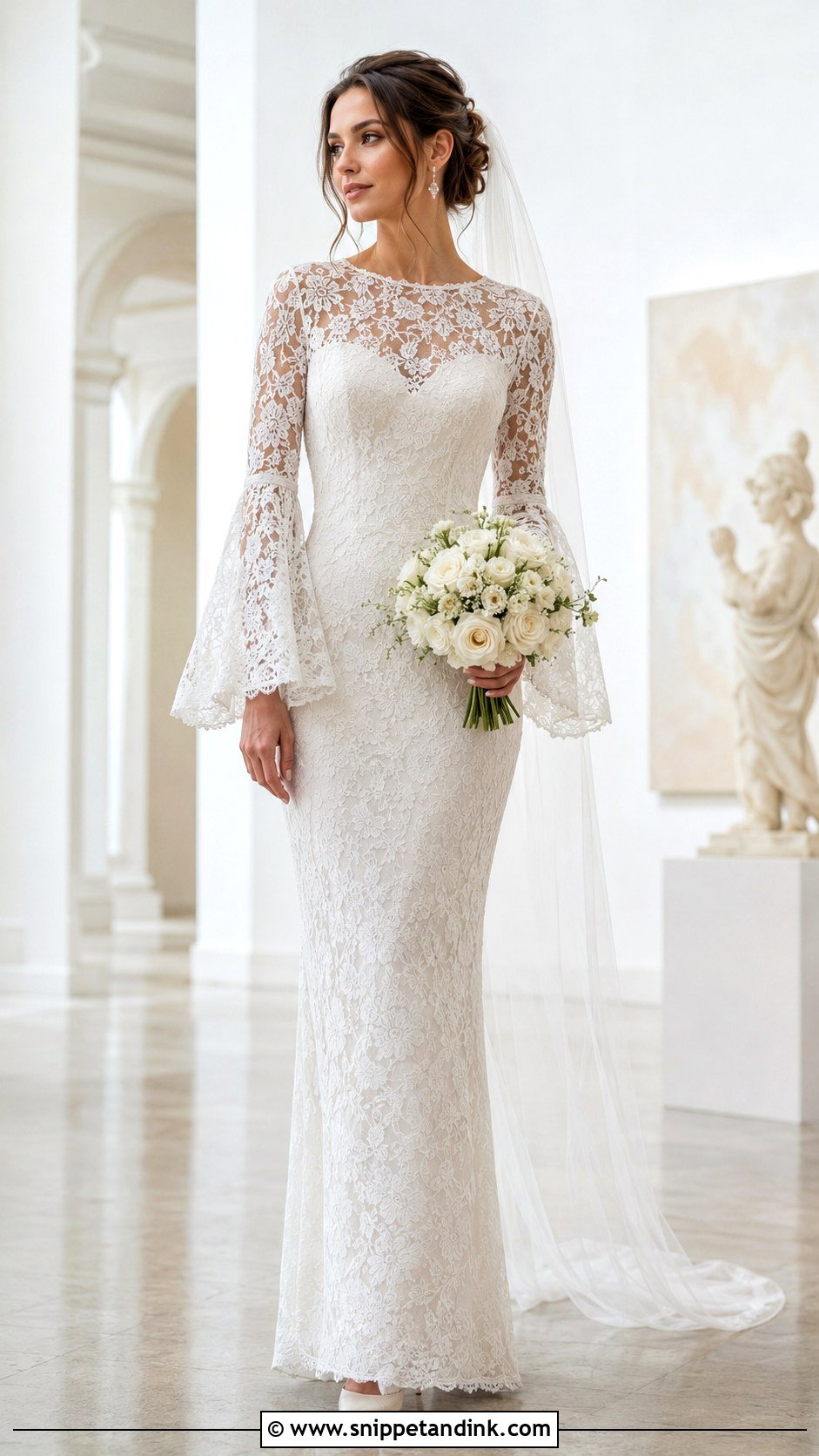
A bell sleeve is fitted to the elbow and widens below it, giving the gown movement every time you lift your hand. Lace bell sleeves look most at home on sheath, column and softly flared dresses; for a cleaner version, a light crepe with a modest flare works. Keep accessories delicate. The real planning is length, because a long lace edge drags through flowers, catches on table settings and dips into dinner. Bring your bouquet, or something the same size, to a fitting and hold it naturally. Your hands should stay visible and the flare should swing freely.
10. Three-Quarter Sleeves for a Wedding Dress
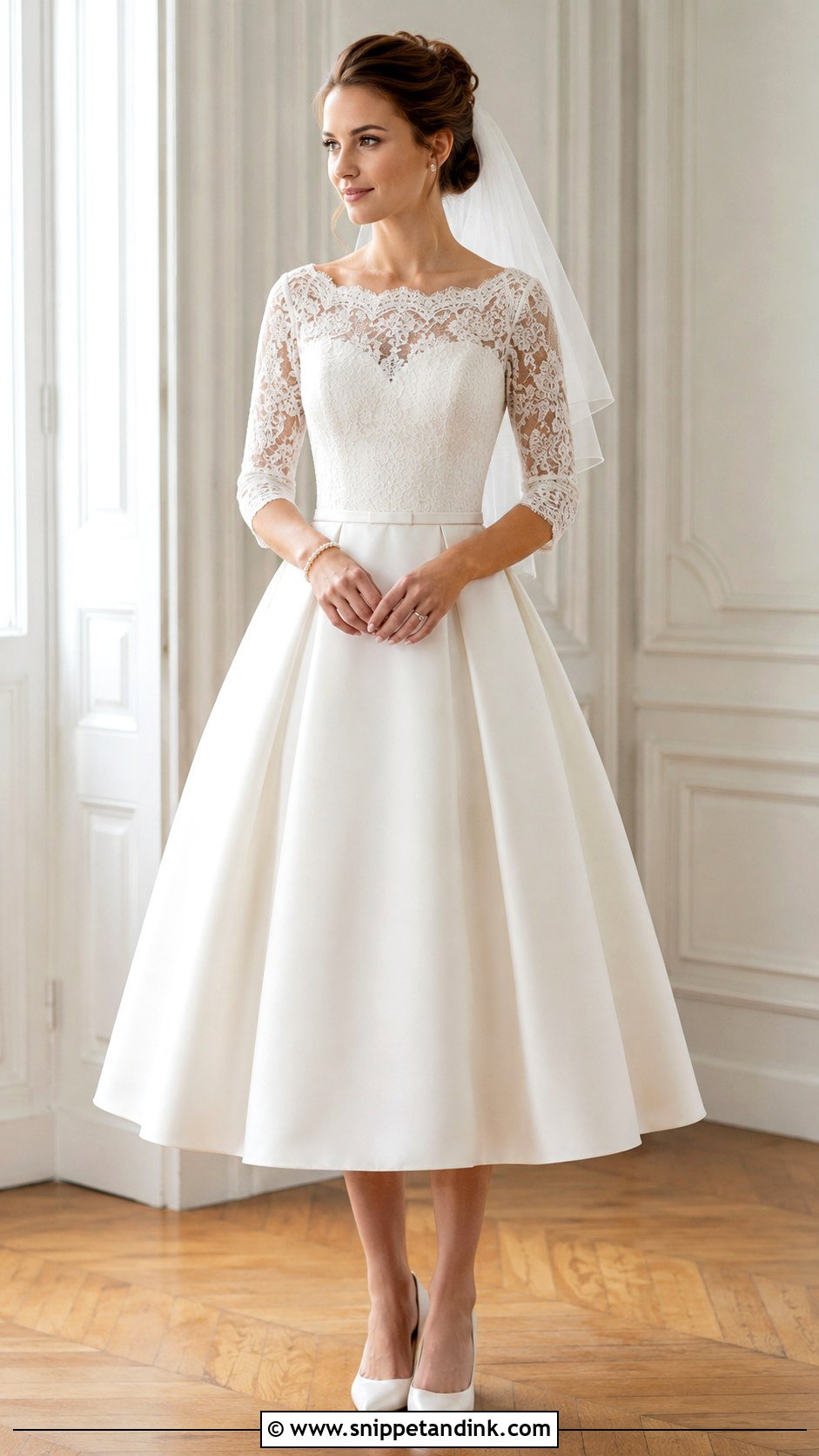
Three-quarter sleeves are the practical middle ground. They cover the upper arm, leave the wrists free for a bracelet or a family piece, and keep fabric away from your hands while you eat and sign. Tea-length, A-line, sheath and fit-and-flare gowns all take them well. Lace reads traditional; crepe or stretch satin reads modern. Low pointed pumps, pearl earrings, a structured bouquet and a short veil suit the length. Measure both arms at the fitting, as many people have one arm slightly longer, and a hem that sits evenly when straight can look uneven when you bend. A scalloped edge or a row of covered buttons can echo details already on the gown.
11. Short Lace Sleeves for a Wedding Dress
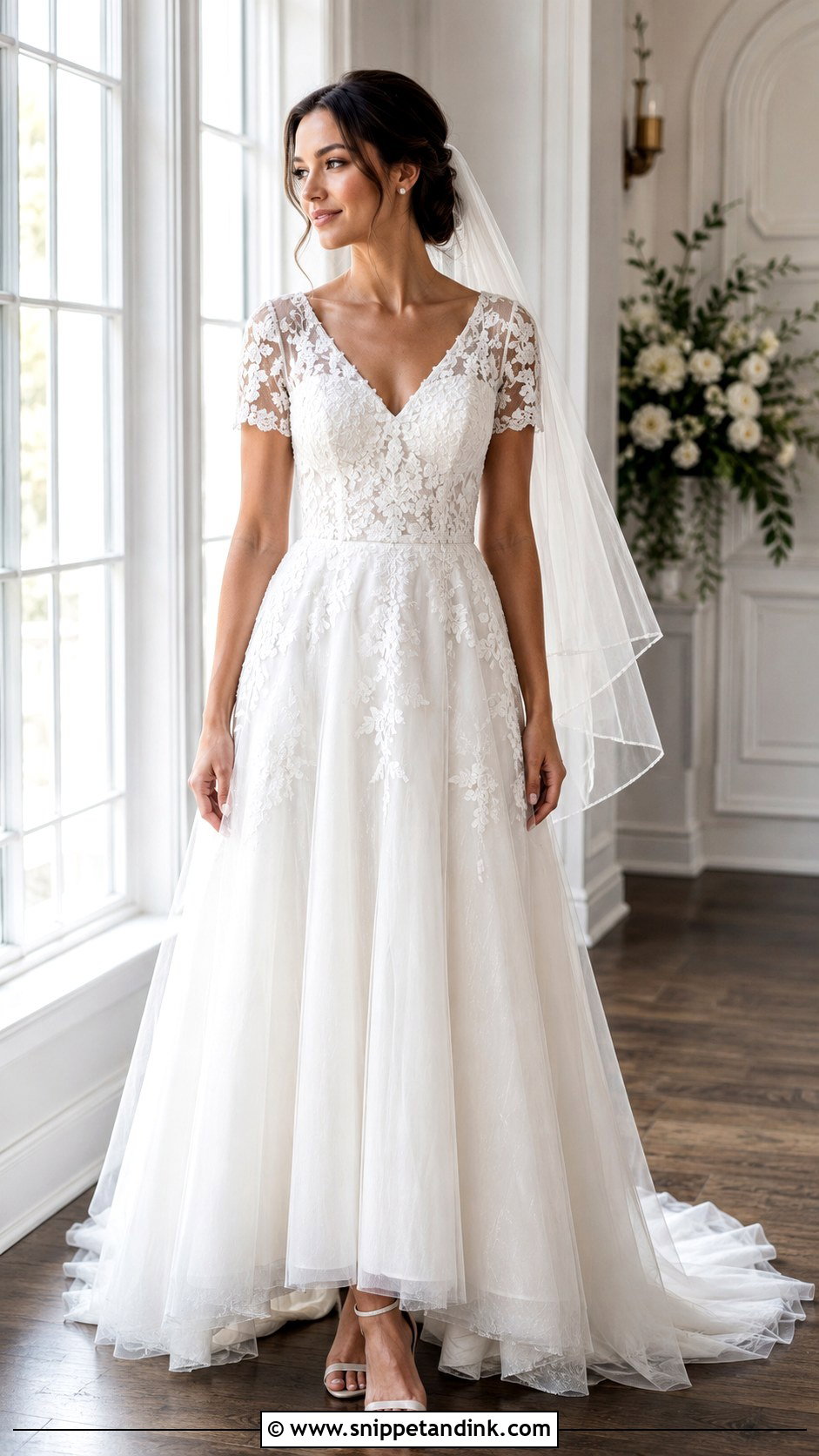
Short lace sleeves keep the outfit light and easy. V-neck, scoop and illusion necklines are the best candidates, since there’s already a stable upper bodice to sew into. Pick lace that resembles the dress, and place the motifs symmetrically on both shoulders. An A-line gown, ivory ankle-strap heels, pearl studs and a fingertip veil keep it relaxed. Where the hem lands matters: ending above the fullest part of the upper arm is more flattering than cutting across it. Some lace feels scratchy on skin, so ask for a soft lining or bound seams. You’ll notice that rub far more by evening than you do in a ten-minute fitting.
12. Fitted Crepe Sleeves for a Wedding Dress
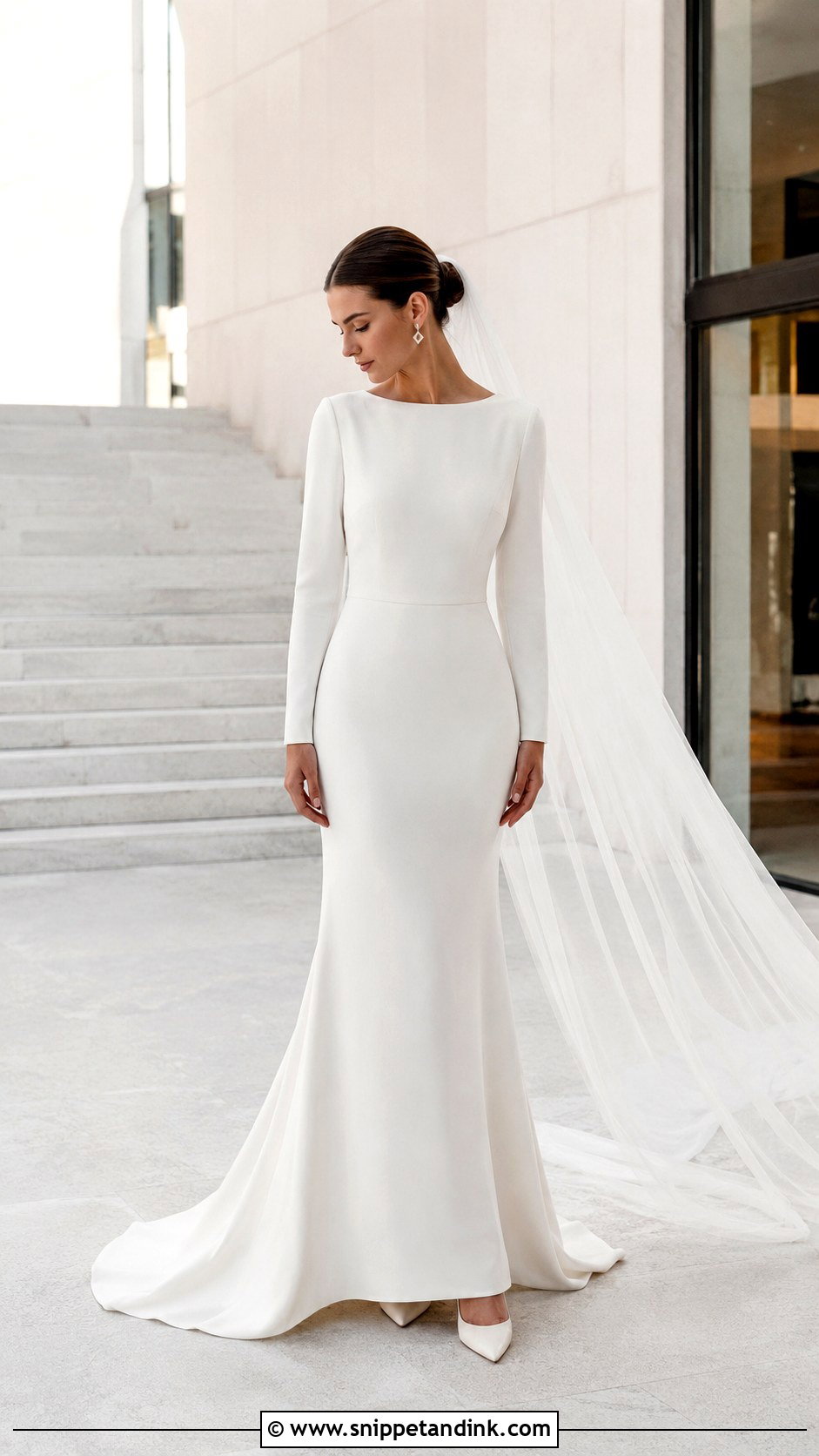
Crepe sleeves give a clean, modern finish on a minimalist gown, but only if the crepe matches the dress in colour, stretch, weight and surface. Long fitted sleeves suit a sheath or fit-and-flare, with pointed pumps, geometric earrings and a sleek low bun, plus a plain cathedral veil for some ceremony drama. Crepe shows every pucker and pull, so the pattern has to be drafted precisely, and the bodice needs enough structure for a proper armhole. I prefer a crepe with a little stretch for sleeves. It keeps the tailored line and still lets you raise your arms for a first-dance spin.
13. Satin Sleeves for a Wedding Dress
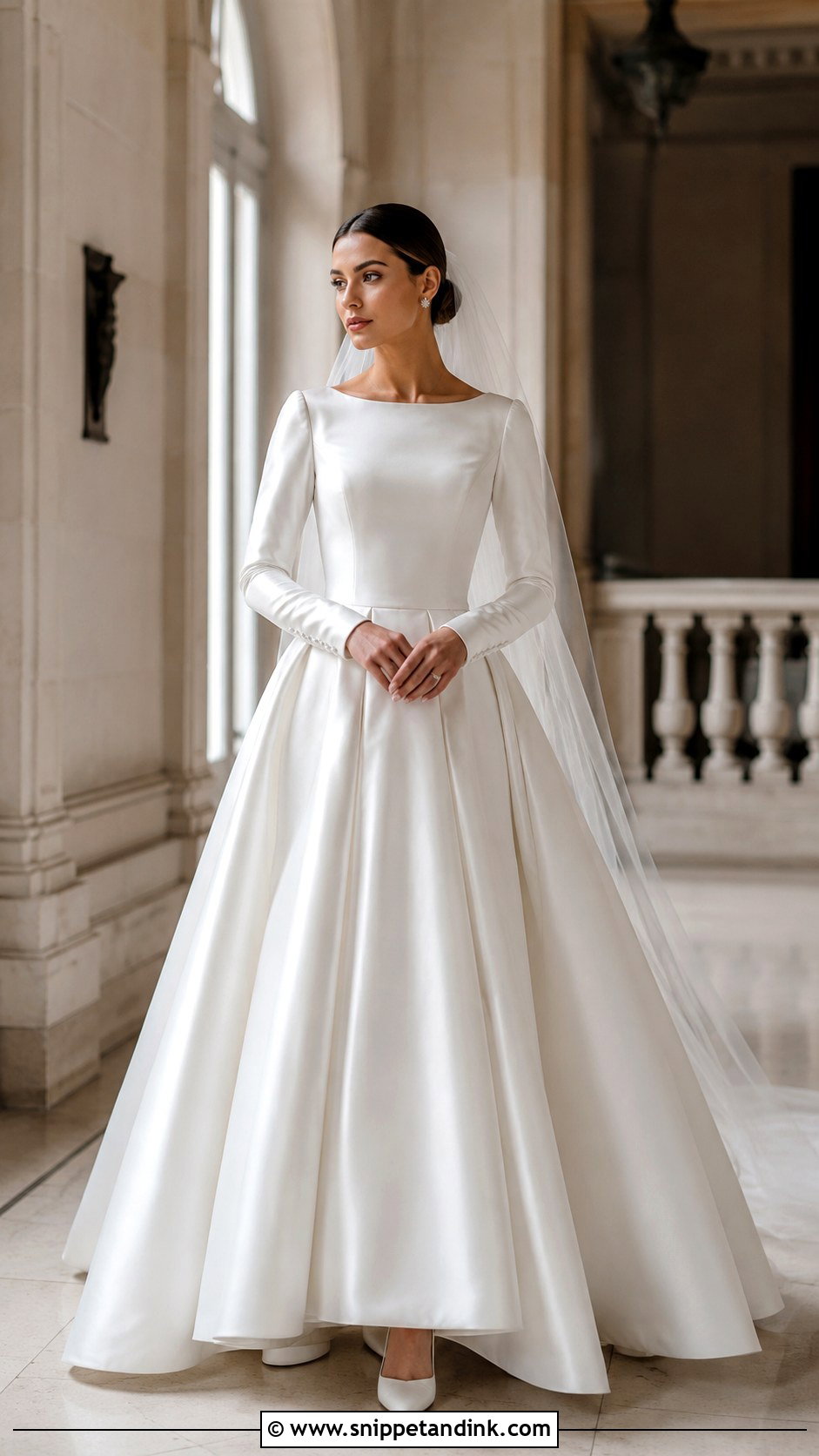
Satin sleeves make a simple gown look polished and properly finished. They pair with satin, mikado and other smooth fabrics, as long fitted sleeves, short sleeves or folded off-shoulder bands. Satin pumps, crystal studs, a smooth bun and a clean tulle veil keep the look tidy. Sheen is where satin sleeves go wrong: two ivory satins can reflect light so differently that the sleeves look borrowed. Hold the new fabric against the gown by a window and under indoor light. Satin also shows tension at seams, so the pattern needs room for your arms. Neat cuffs with covered buttons finish it.
14. Tulle Sleeves for a Wedding Dress
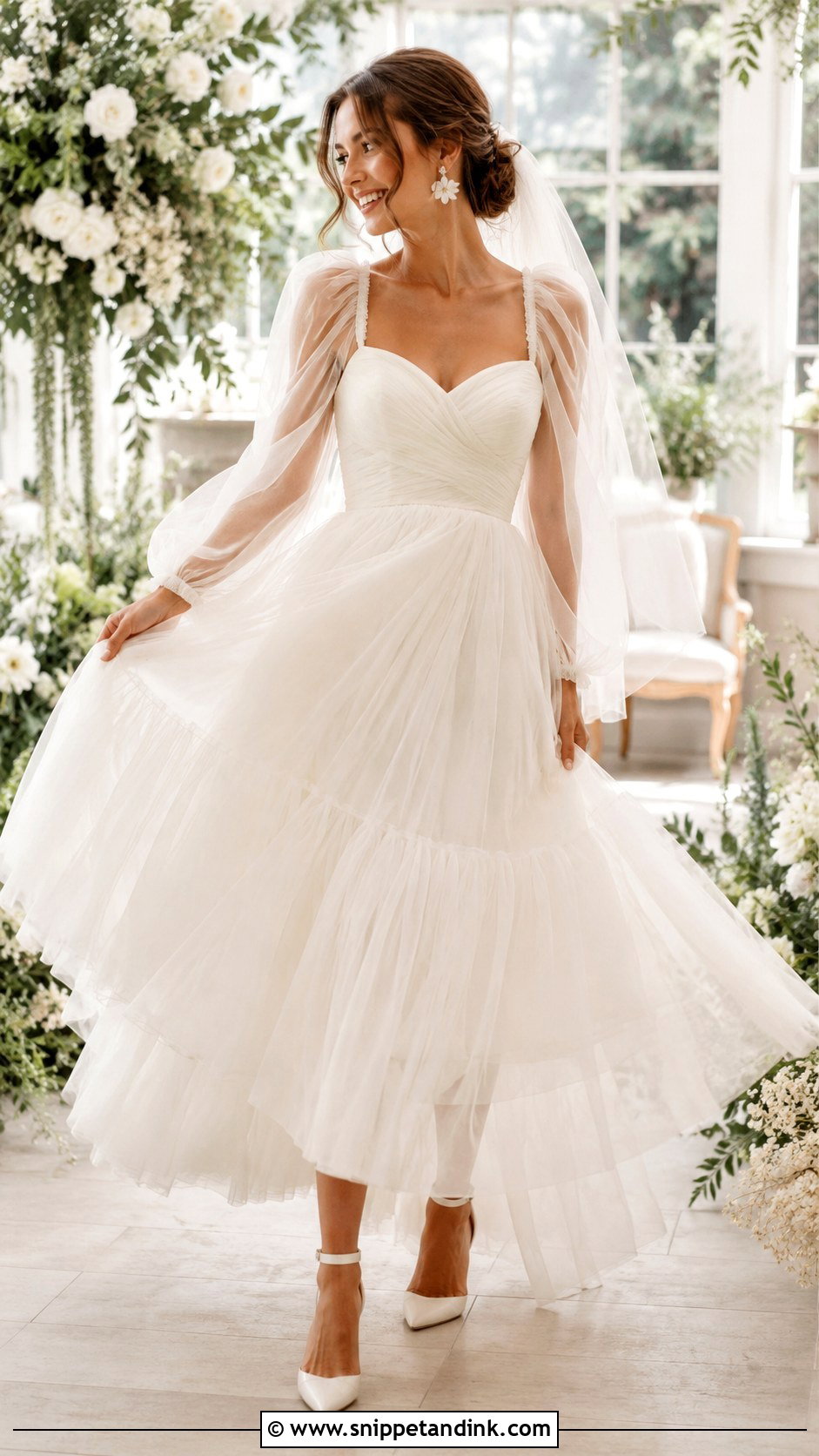
Tulle sleeves add softness without hiding the arm’s shape. They can be gathered into puffs, fitted as an illusion layer or draped below the shoulder, and they make most sense when the dress already has a tulle skirt, sheer bodice or overlay. Ivory heels, a light veil, floral earrings and a low bun complete it. Tulle comes in different weights and stiffness, and a net that’s coarser than the skirt’s will look out of place. Raw edges need finishing so they don’t scratch. Ask the seamstress to show you one layer, then two: a single layer is almost transparent, while two give visible coverage and a little structure.
15. Beaded Sleeves for a Wedding Dress
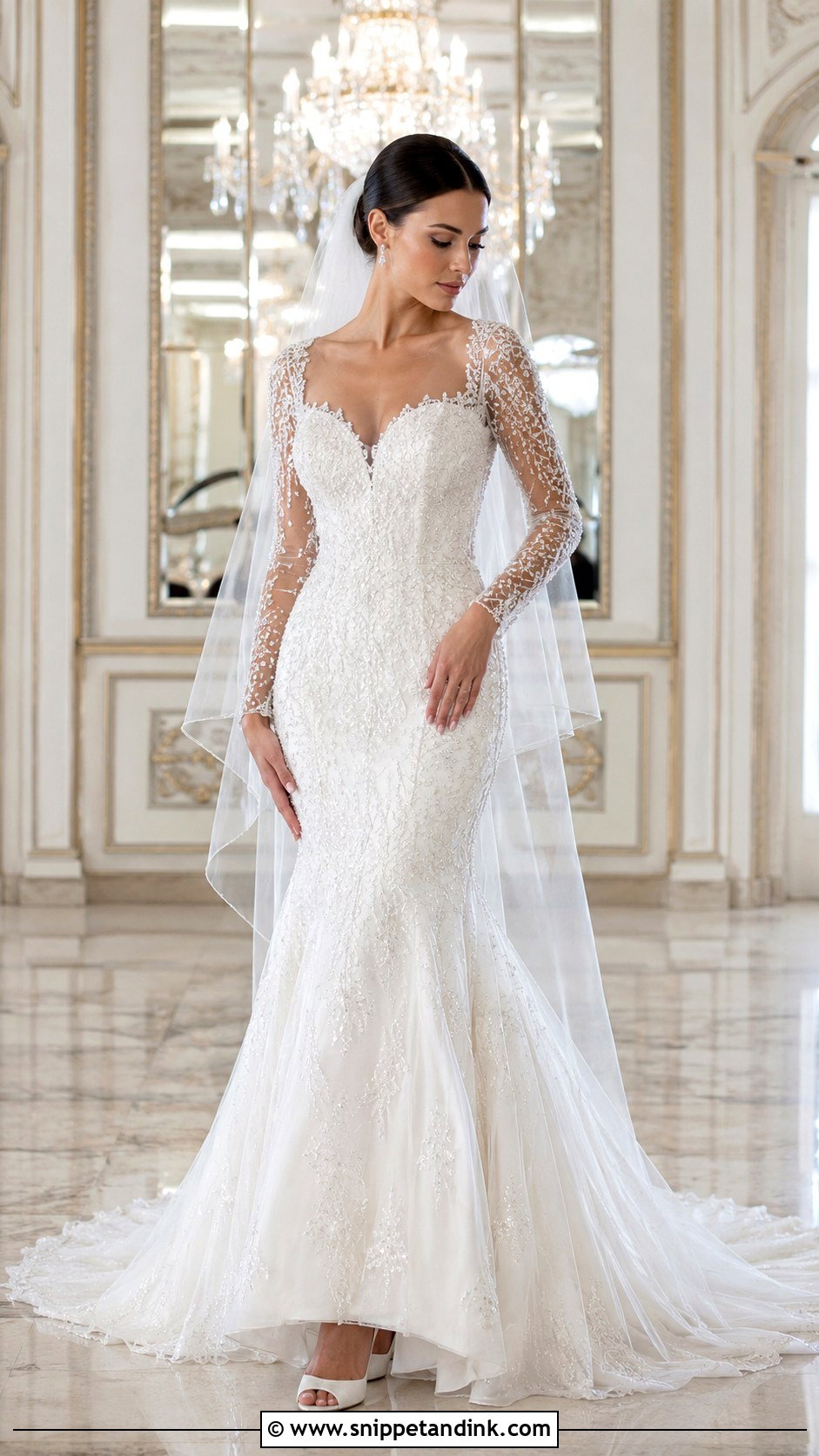
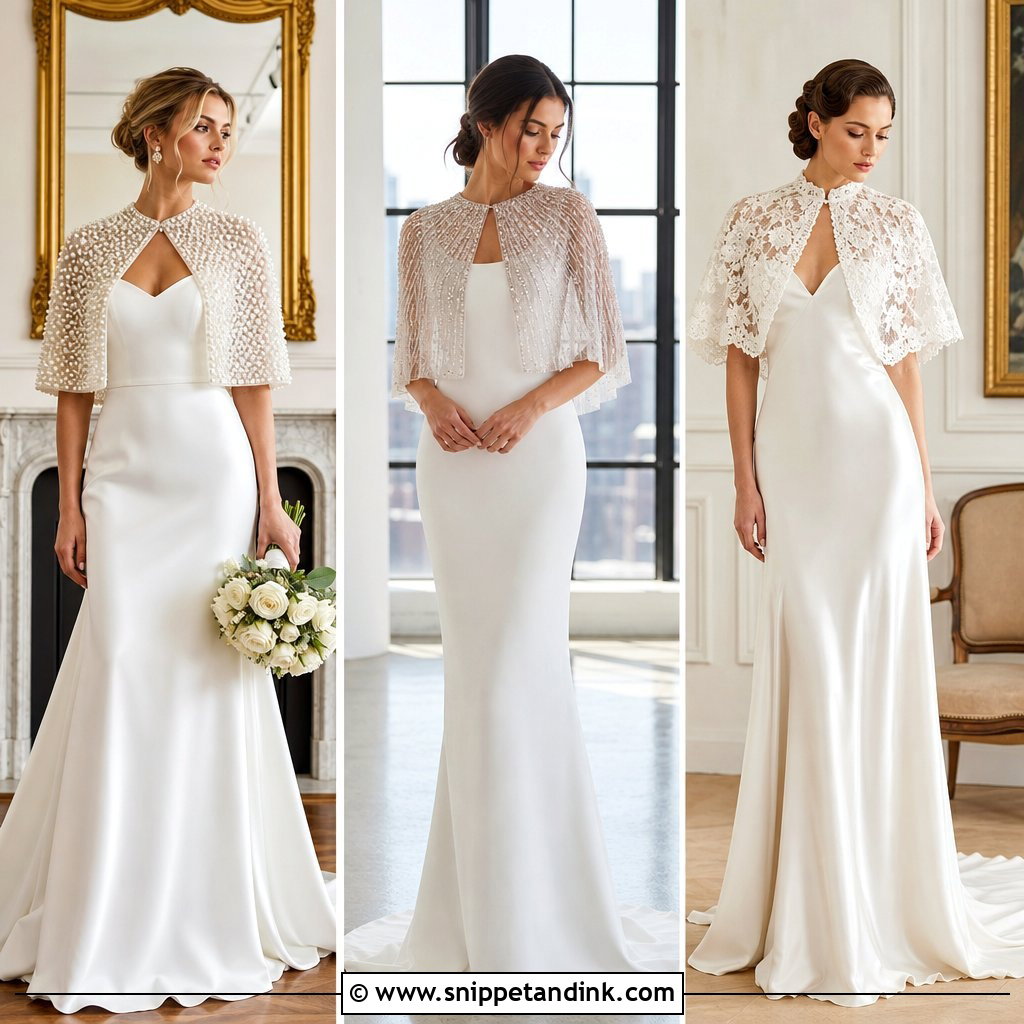
Shimmering beaded sleeves carry an embellished bodice down the arms and make the gown look custom. Put the heaviest decoration at the shoulders or cuffs and space it more lightly through the arm, so the sleeves don’t look dense. Simple satin heels, small crystal earrings, smooth hair and an unembellished veil balance them. Bead colour, size and shine need matching as closely as the base fabric; a slightly warmer crystal shows next to the original. Beads add weight, which changes how the sleeve hangs. Ask for a smooth inner finish, and take your rings off at fittings so they don’t catch the tulle.
16. Pearl Sleeves for a Wedding Dress
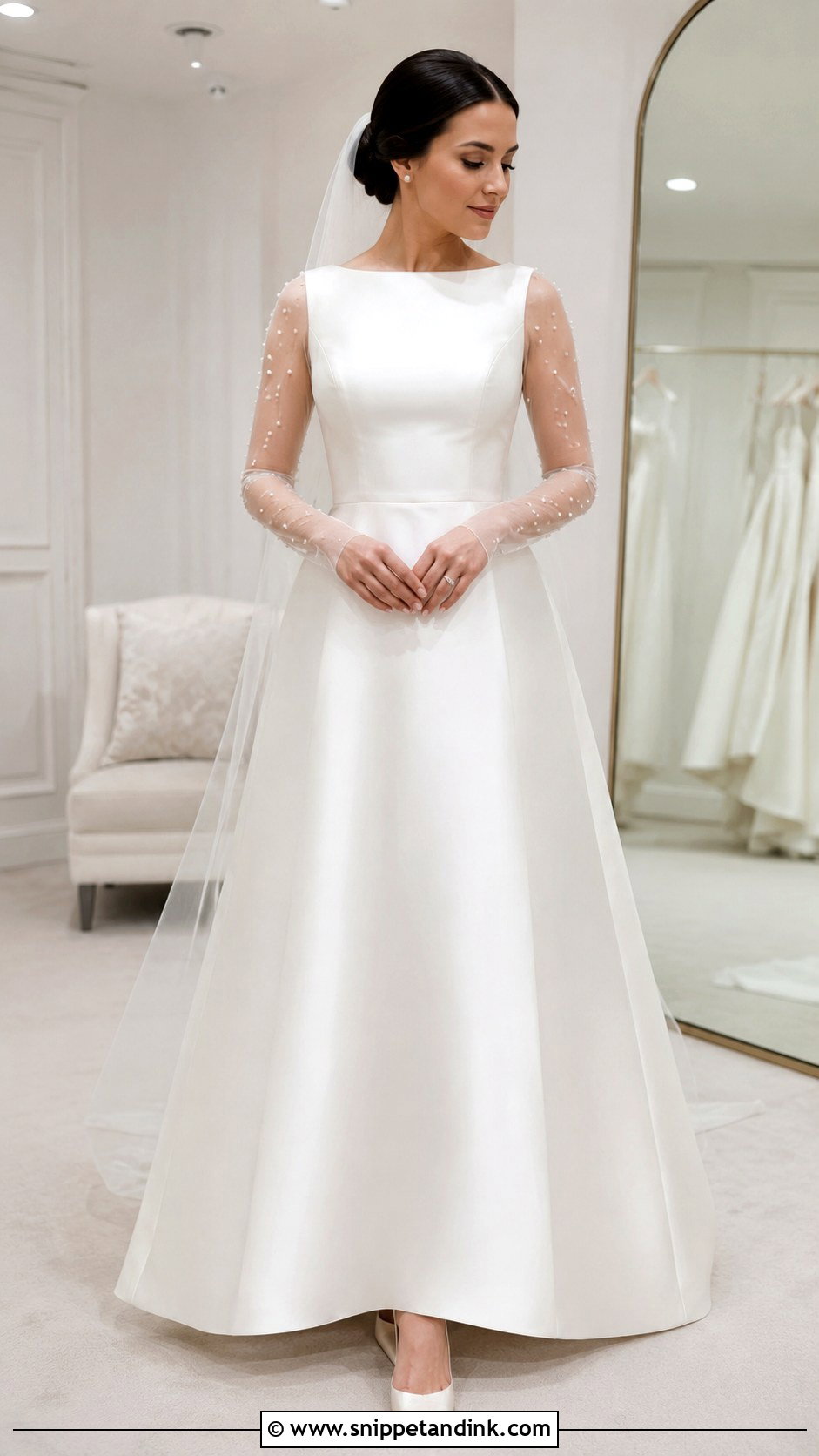
Pearls scattered over sheer sleeves give texture without lace. They suit pearl bodices, smooth satin skirts and pared-back gowns that need one quiet detail. Use illusion tulle as the base and vary the spacing so it looks natural. Pearl studs, ivory pumps, a low chignon and a plain-edged veil complete it. More pearl jewelry tips it into looking too matched, so I’d skip a pearl necklace. Insist the pearls are sewn, not glued, and keep them sparse around the elbow and underarm. Fewer pearls at the bend points keep the sleeve supple.
17. Appliqué Sleeves for a Wedding Dress
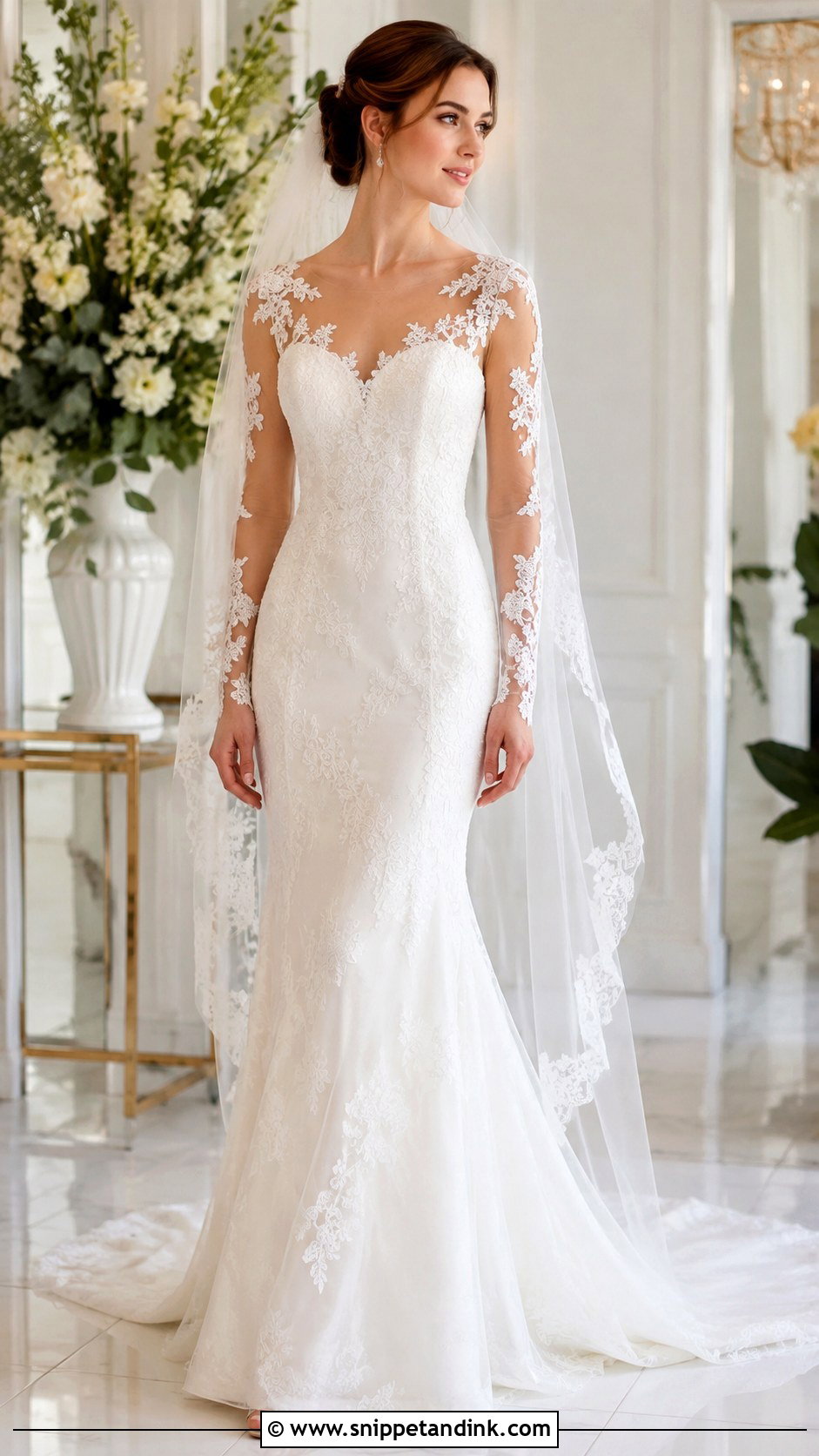
Appliqués are how a seamstress makes new sleeves speak the same language as the gown. Single motifs can travel from the bodice across illusion tulle and thin out toward the wrist, so there’s no visible line at the shoulder. Delicate heels, quiet earrings, a lace-trimmed veil and softly pinned hair suit it. If the dress is being shortened, ask whether appliqués can be lifted from the hem; extra motifs can also be ordered through the shop. Place them on your body, not on a flat table. Perfect symmetry can look stiff, and a little variation between arms often looks more like the original handwork.
18. Cold-Shoulder Sleeves for a Wedding Dress
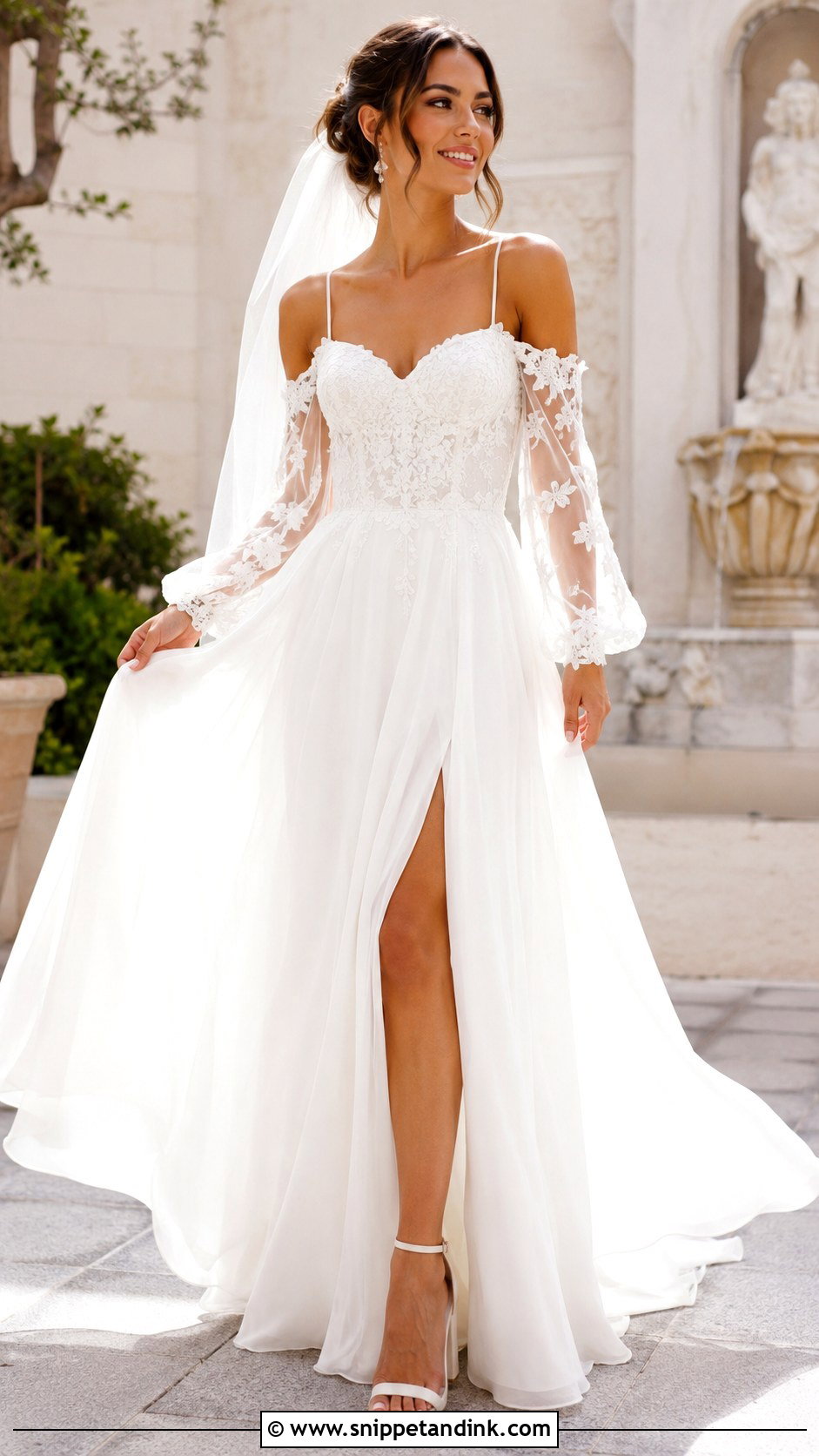
Cold-shoulder sleeves cover the arm and leave a small window of shoulder bare. They’re useful when a gown has no full armhole for a set-in sleeve, attaching to existing straps or starting just under a structured bodice’s top edge. Soft lace, chiffon and tulle drape best. An A-line gown, block heels, drop earrings and a veil under an updo complete it. The opening has to look deliberate and match on both sides. Move around a lot at the fitting and watch whether the sleeves rotate or slip. Hidden elastic, small loops or a couple of snaps usually stop that.
19. Bridal Bolero Over a Wedding Dress
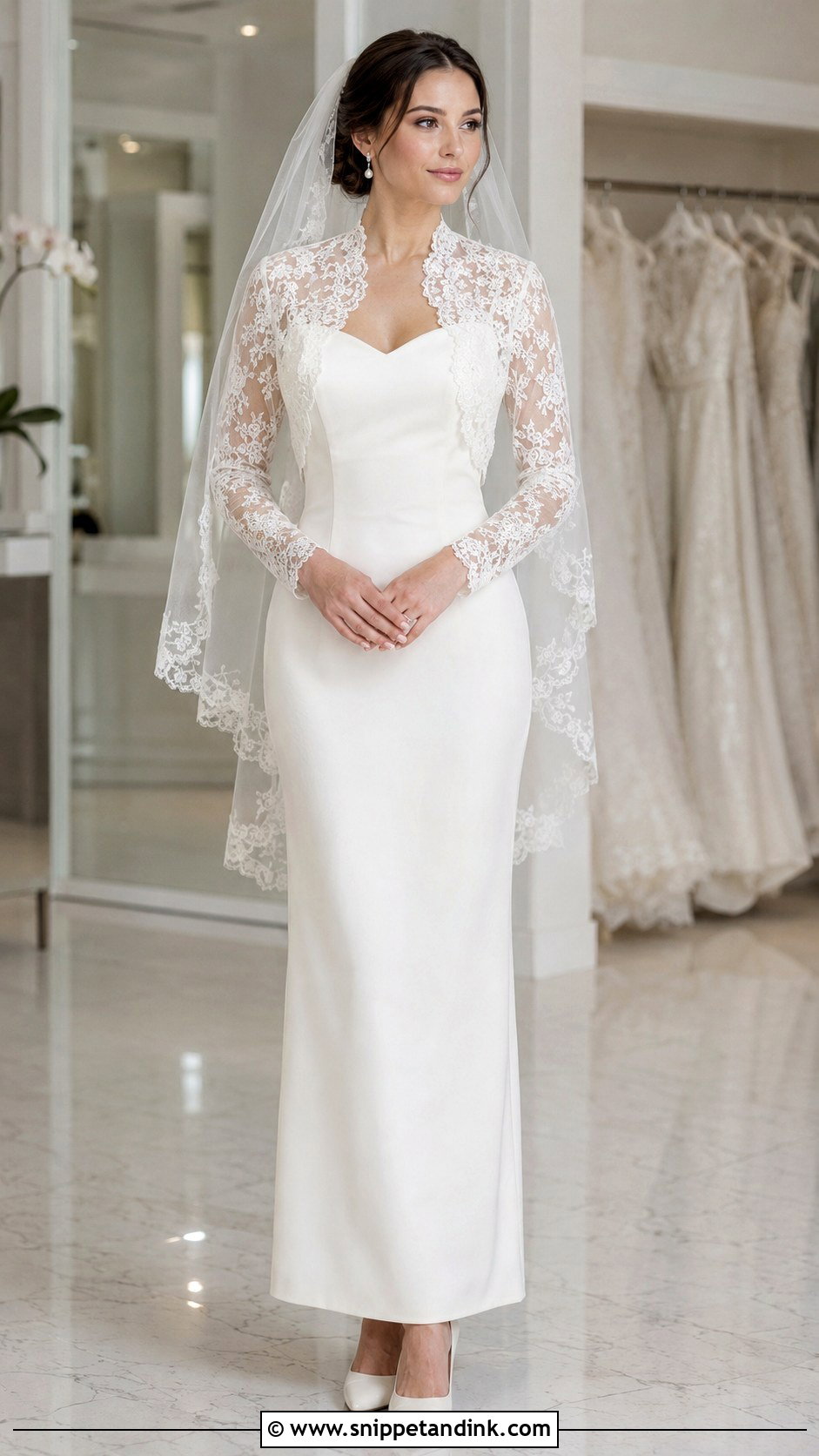
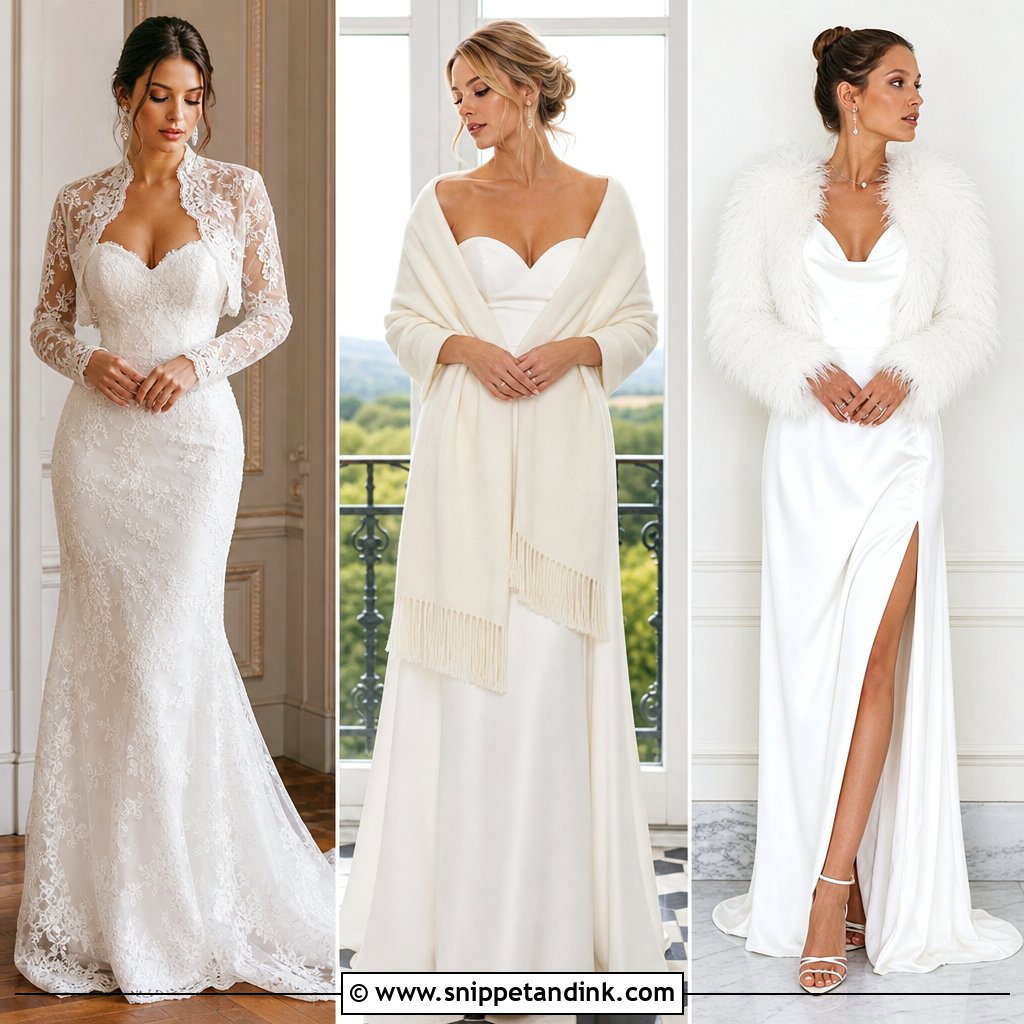
A bolero gives you sleeves without changing the dress at all. It can be lace, tulle, chiffon, crepe or satin, covering the shoulders, arms and upper back, and it suits a covered ceremony followed by a strapless reception. A lace bolero over a sheath or A-line gown with closed heels, pearl earrings and a classic veil looks traditional. End it at a natural line, such as the waist or the top of the bodice, so it reads as part of the outfit. Shop with the gown, or at least a good swatch. Ivory tones and lace patterns that seem close apart can clash once they’re layered.
20. Lace Bodysuit Under a Wedding Dress
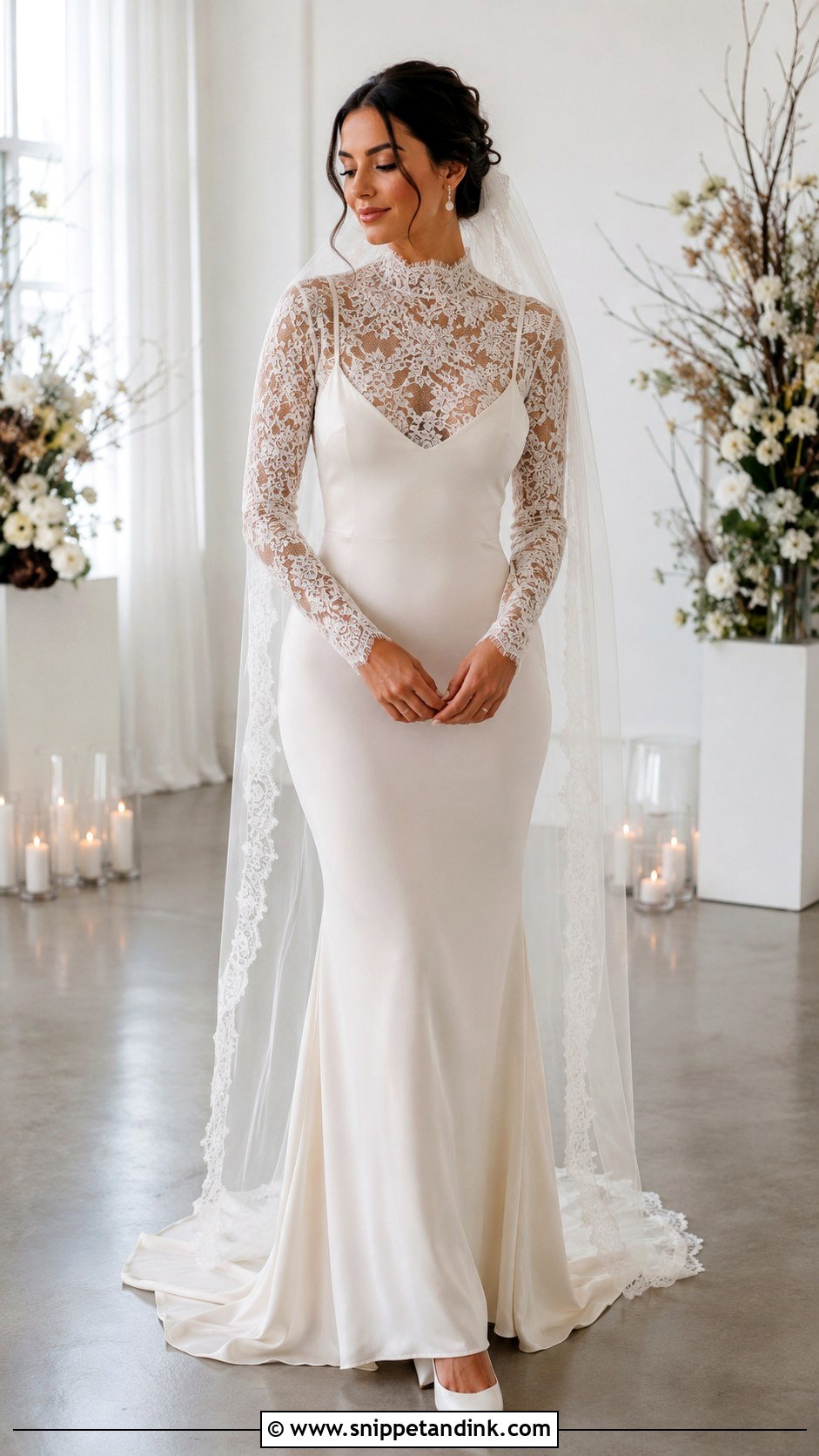
A lace bodysuit under a sleeveless dress adds long sleeves and a higher neck without rebuilding anything. It needs a bodice with a little room and a neckline that lets the lace look intended. Choose a smooth, fitted bodysuit with flat seams and closures that won’t show under the skirt. A slip or A-line gown, ivory pumps, delicate earrings and a veil echoing the lace suit it. The bodysuit adds a layer, so the dress may fit more snugly over it; try them together at every alteration appointment. Sit and move to make sure nothing rolls, and choose a lace tone that makes the two pieces read as one.
Rethinking Veil, Jewelry and Hair Once the Sleeves Are On
Adding sleeves changes what the rest of the outfit should do, and brides often keep accessories they chose for a strapless dress. A few adjustments I suggest after the sleeves are fitted:
- Bracelets fight long sleeves, catching lace and hiding under the cuff. Move the focus to earrings instead.
- A veil with a lace or beaded edge can snag on lace sleeves as you turn. A cut edge or narrow ribbon edge glides over them.
- Hair worn up or swept to one side shows the shoulder line of the new sleeves; long loose waves can hide the work you paid for.
- With high necklines and sleeves, statement necklaces usually come off, which frees budget for earrings or a hair piece.
- Check gloves and sleeves together. Wrist-length gloves under three-quarter sleeves can look bulky at the gap.
Wear the full set, including the veil and shoes, at the final fitting. It’s the only time you’ll see everything together before the day, and it’s when the little clashes show up.
Start With the Bodice, Then Draw the Sleeve
Sleeves can bring coverage, character, texture and warmth to a gown, but the plan starts with the dress, not the sleeve. Look at the neckline, armhole, bodice support, fabric and existing details with a seamstress who handles bridal work often. Lace and illusion sleeves feel romantic, satin and crepe read clean, and detachable sleeves, boleros and bodysuits are the answer when sewing in isn’t practical. Leave enough time for an extra fitting, and test every option while reaching, sitting, hugging and holding the bouquet. Close matching and sensible proportions are what make the finished gown look like one piece.
You'll Like These Ideas:


Leave a Reply