
A green velvet bridal gown is about as far from a standard white dress as you can get while still looking unmistakably bridal. The looks below run through A-lines, mermaids, ball gowns, vintage cuts and minimalist columns. Emerald and forest green feel richest in autumn and winter; moss, olive and sage soften the effect. Velvet changes the styling rules a little. It drinks in light, so gold jewelry warms it, pearls make it read as bridal, and crystal brightens the darker shades. I’ve written each one up the way I’d talk a bride through it at an appointment, including what tends to go wrong with this fabric.
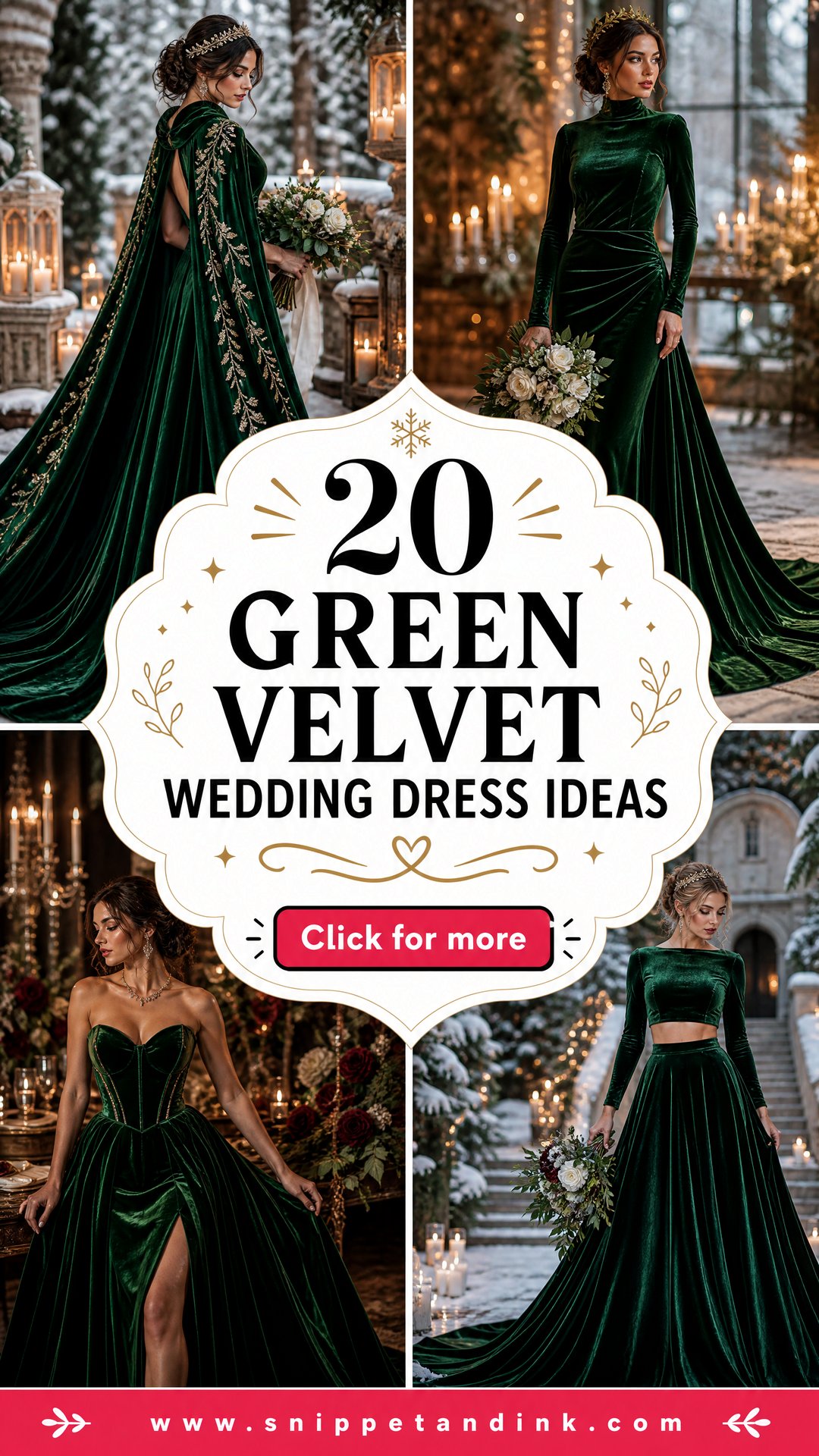
Silk, Stretch or Crushed: The Velvet Under the Color
Brides tend to fall for the color, then get surprised by the fabric. Velvet isn’t one thing, and the type decides how the gown drapes, how warm it feels and how it photographs. When a bride brings me a picture, I first work out which velvet it is.
- Silk or silk-blend velvet: very fluid with a soft sheen. It drapes beautifully in bias and cowl cuts but marks easily and is the most expensive.
- Polyester or rayon velvet: denser and more structured, holds A-line and ball gown shapes well, and is easier to care for.
- Stretch velvet: contains elastane, so it suits fitted mermaid and plus-size cuts that need movement. It clings more, so a good lining is non-negotiable.
- Crushed or panne velvet: the pile is pressed in different directions, giving a shimmery, uneven surface. Looks romantic in boho styles but can read as costume in a formal ball gown.
Ask for a swatch and look at it under a lamp from several angles. Velvet has a nap, and its color shifts as the pile turns. A darker, richer tone usually means the pile runs upward on the garment, which is how most good bridal velvet gowns are cut.
1. Emerald Green Velvet A-Line Wedding Dress
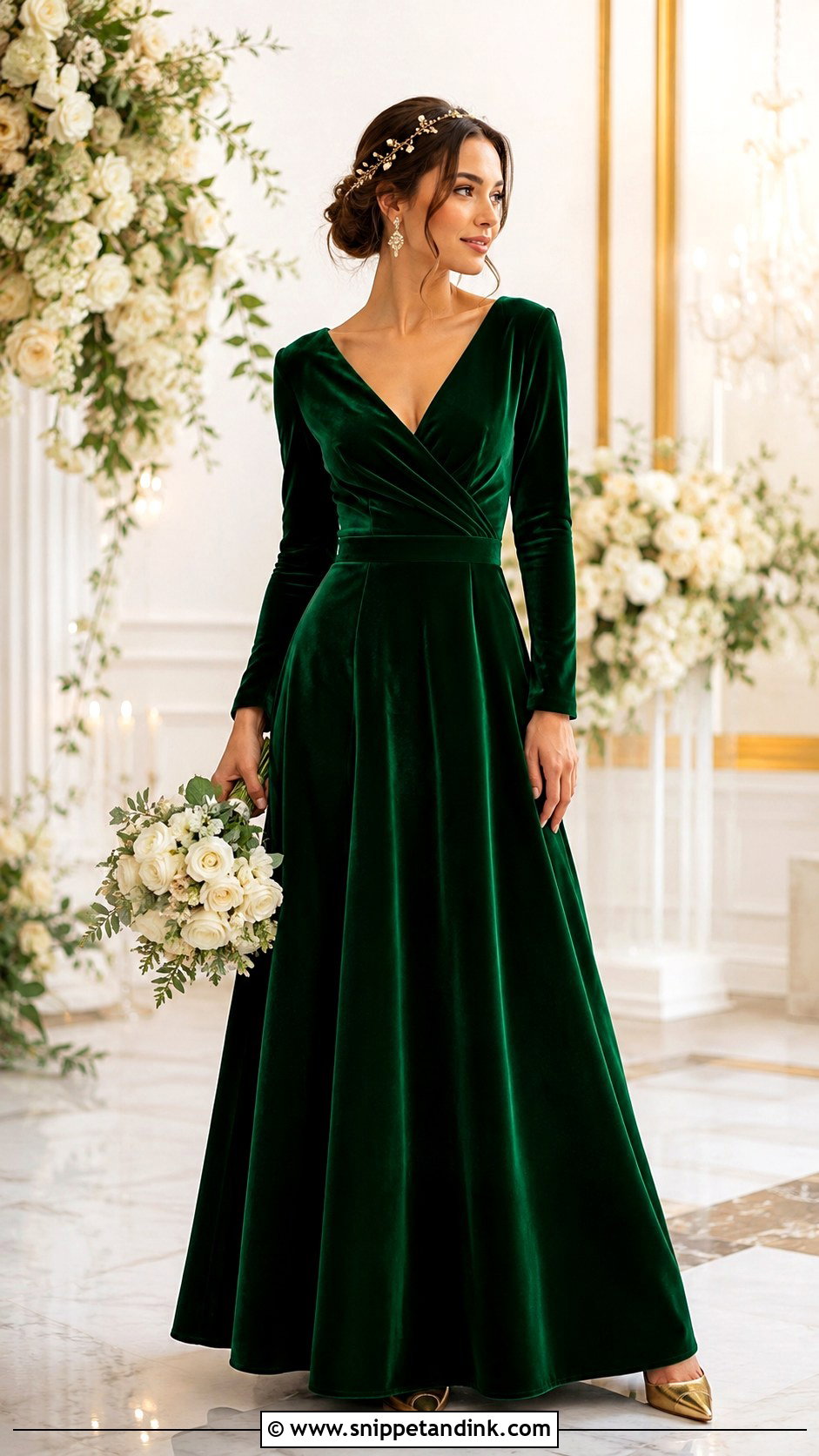
Emerald velvet in an A-line is where I’d start most brides who are new to colored velvet. A fitted V-neck bodice that defines the waist and then releases into a softly structured skirt suits a wide range of figures, because it skims the hips rather than gripping them. Long sleeves make it winter-ready, and a modest front slit helps a lot with velvet’s weight when you walk. Gold pointed heels, small drops and a thin gold hair vine are plenty. If you want more coverage, a sheer green veil or plain ivory cape keeps the color story intact.
2. Forest Green Velvet Mermaid Wedding Dress
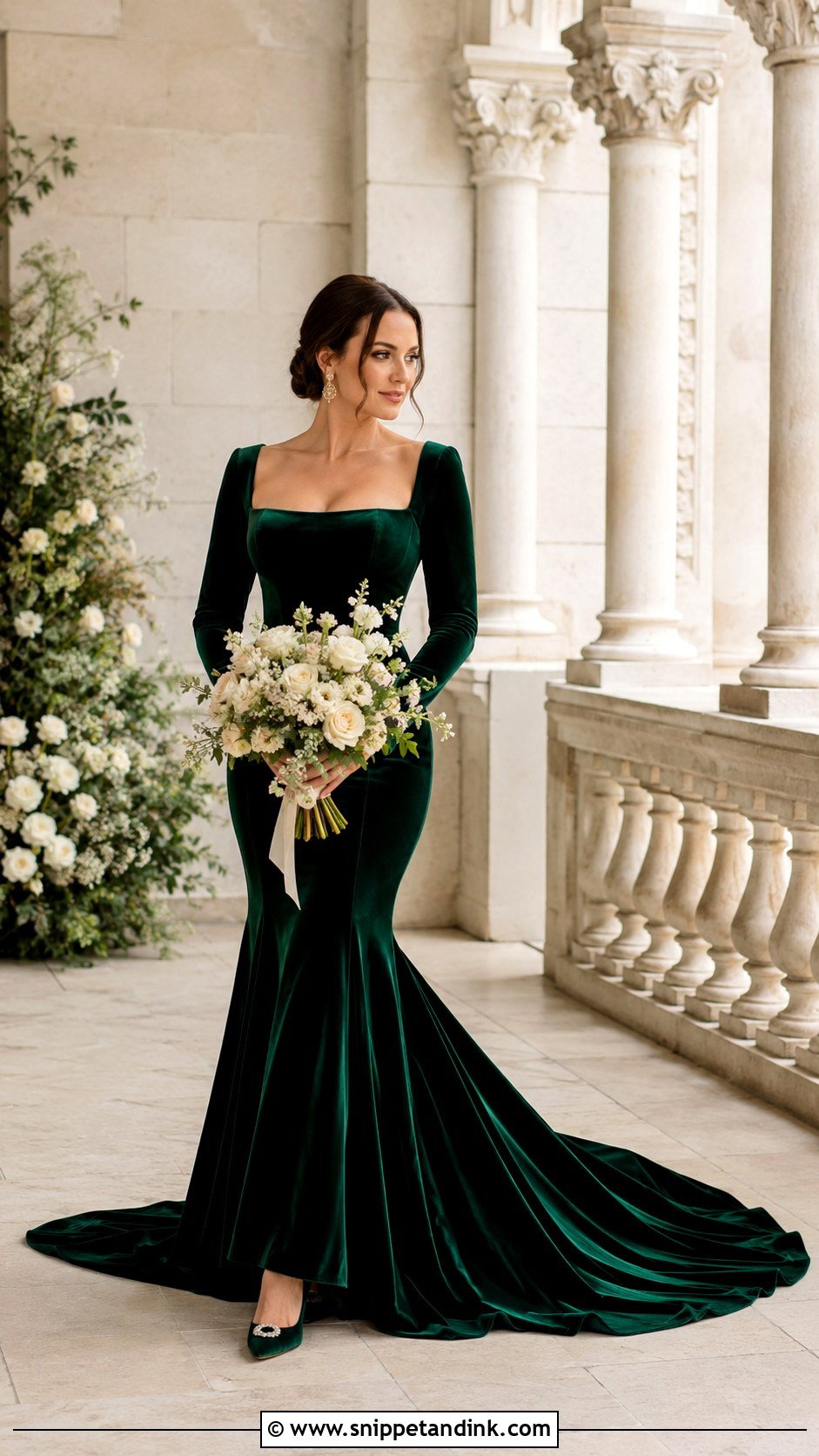
A forest green velvet mermaid is the most dramatic shape here and the most demanding to fit. The gown follows you through the waist and hips and opens below the knee, so every millimeter of tailoring shows. Velvet’s pile also catches light differently as it wraps over curves, which highlights any ripple at the seams. A square neckline and full fitted sleeves balance the shape; antique gold earrings and a low bun with a small comb keep it polished. Practice walking and sitting in it early. Mermaid knees are where velvet gowns feel tightest by evening.
3. Green Velvet Off-The-Shoulder Wedding Dress
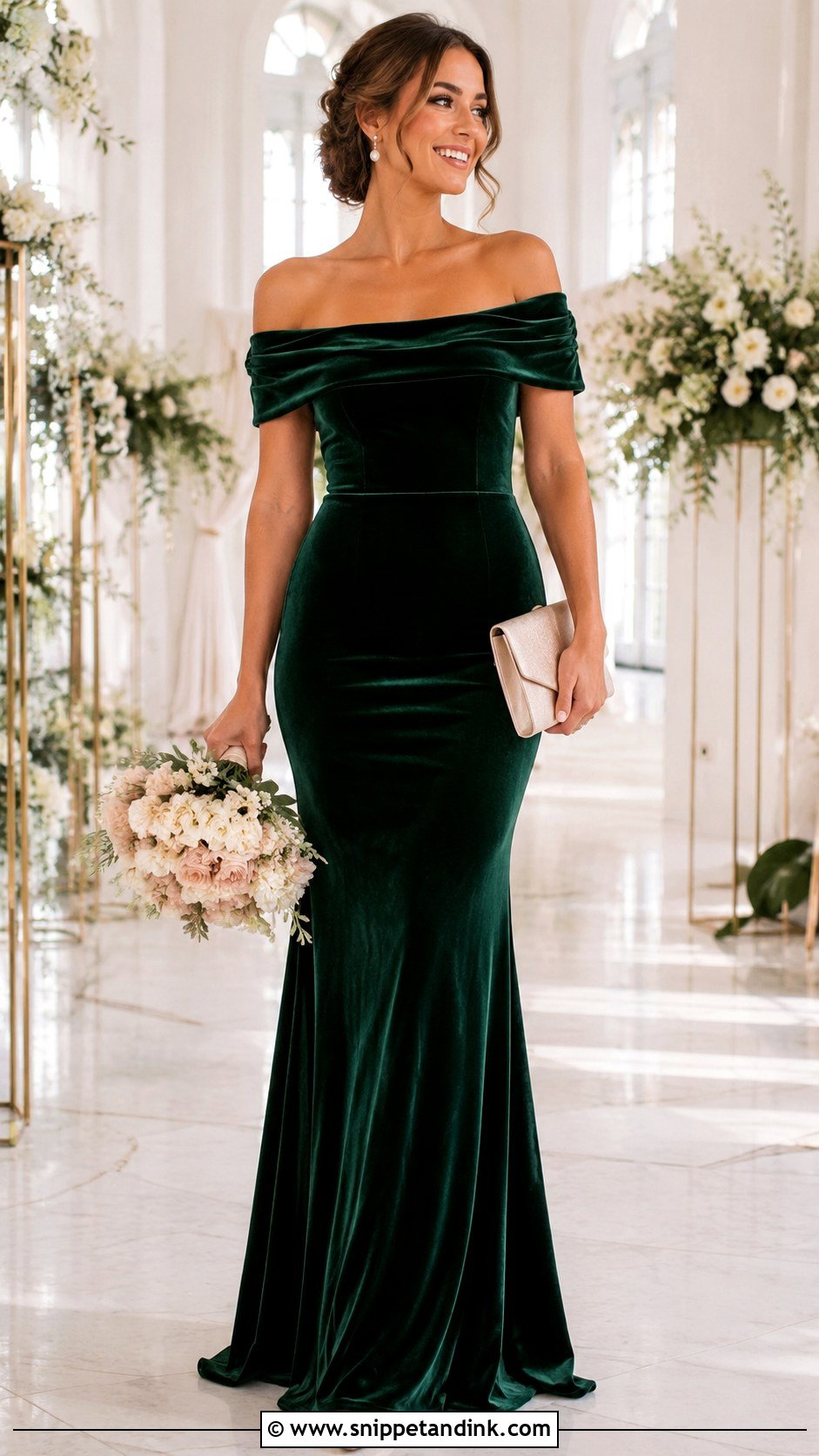
Off-the-shoulder velvet looks soft, but the neckline needs real structure to stay put. I look for a folded neckline anchored into a boned bodice, with a gripper band inside, because velvet is heavy enough to drag a loose neckline down the arms. A gently flared skirt keeps it from feeling too formal. Pearl drops, champagne heels and a low curled style leave the shoulders clear. In a cold venue, a matching velvet wrap that comes off indoors is more practical than a jacket.
4. Green Velvet Long Sleeve Wedding Dress
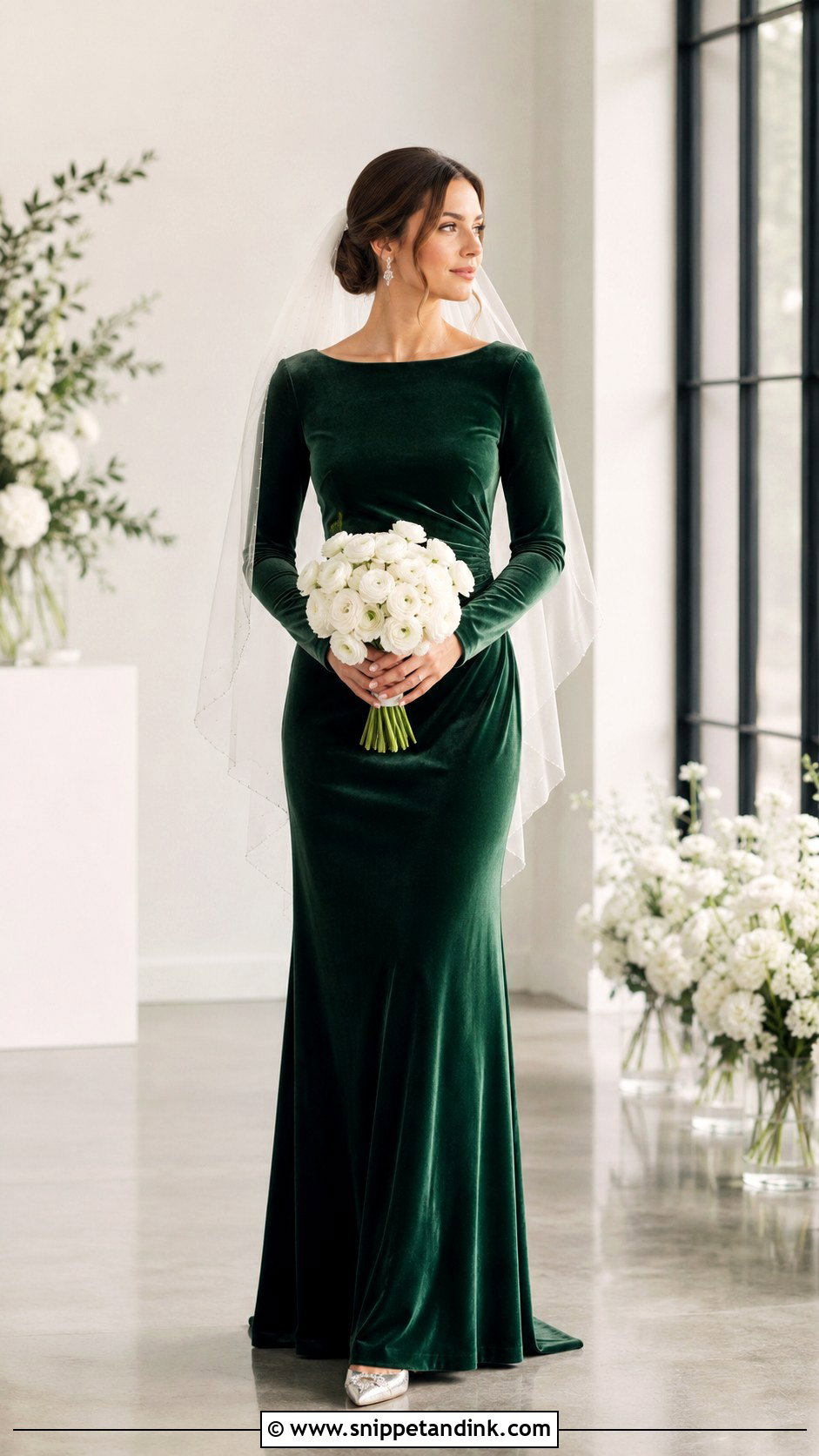
Deep green velvet with long fitted sleeves, a high bateau neckline and a clean floor-length skirt lets the fabric do everything. Covered buttons down the back add the bridal detail; the front stays bare. Crystal studs, silver pointed heels and a neat chignon with a fingertip ivory veil bring in tradition. One thing I flag with fitted velvet sleeves: there’s no stretch unless the velvet has elastane, so test lifting your arms and hugging. If the sleeves pull, ask for a slightly roomier armhole before anything else gets altered.
5. Dark Green Velvet Ball Gown Wedding Dress
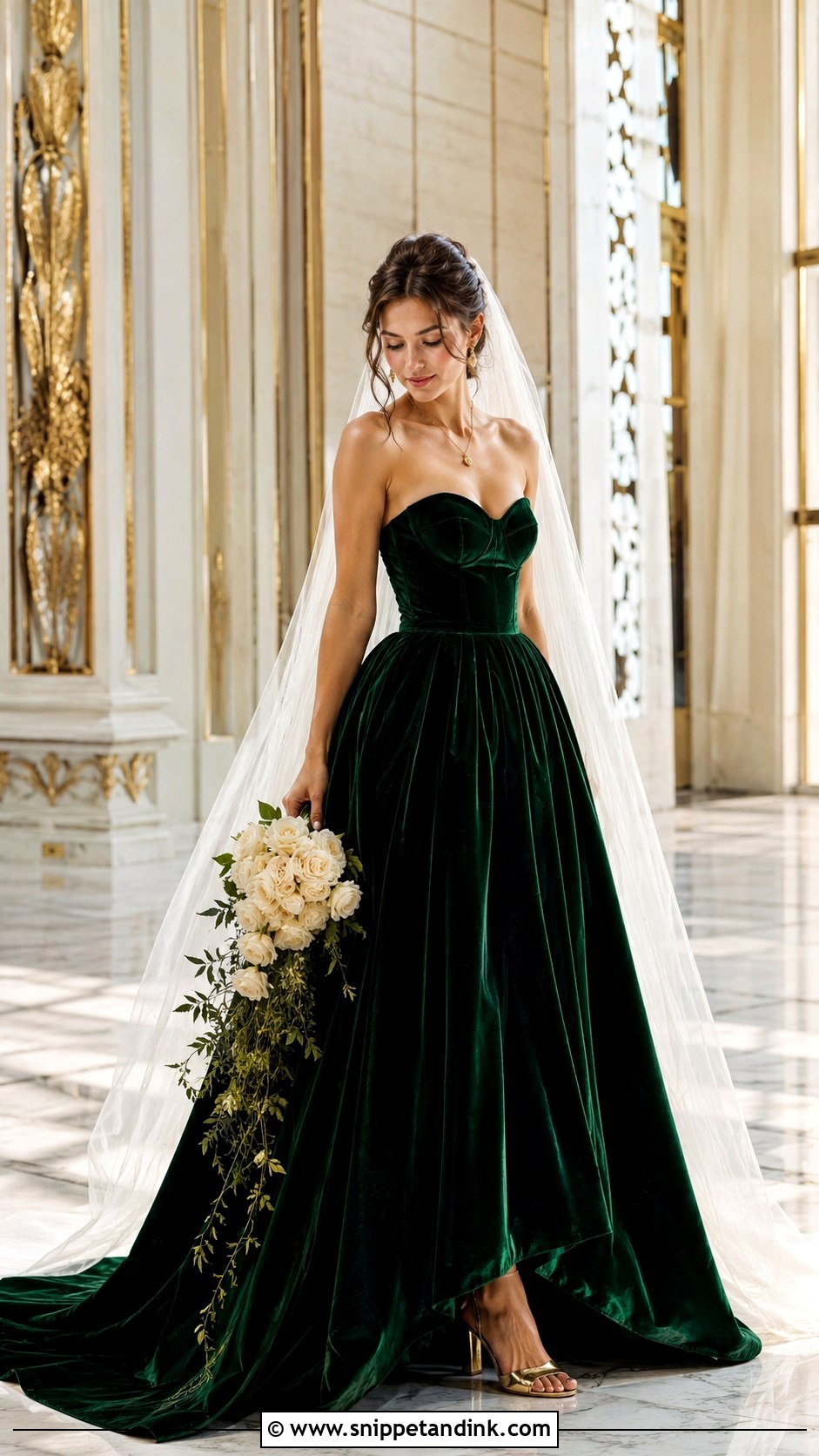
A dark green velvet ball gown belongs in a grand room. A structured sweetheart bodice with proper internal support and a full, carefully pleated skirt gives the drama; a fine gold necklace and metallic block heels under the hem are all it needs. Velvet ball gowns are heavy, and that weight hangs from your waist, so I check that the bodice has a waist stay holding the skirt rather than letting it pull on the shoulders. An ivory cathedral veil gives contrast. Keep hair sleek or in smooth waves; this dress is busy enough already.
6. Sage Green Velvet Wedding Dress
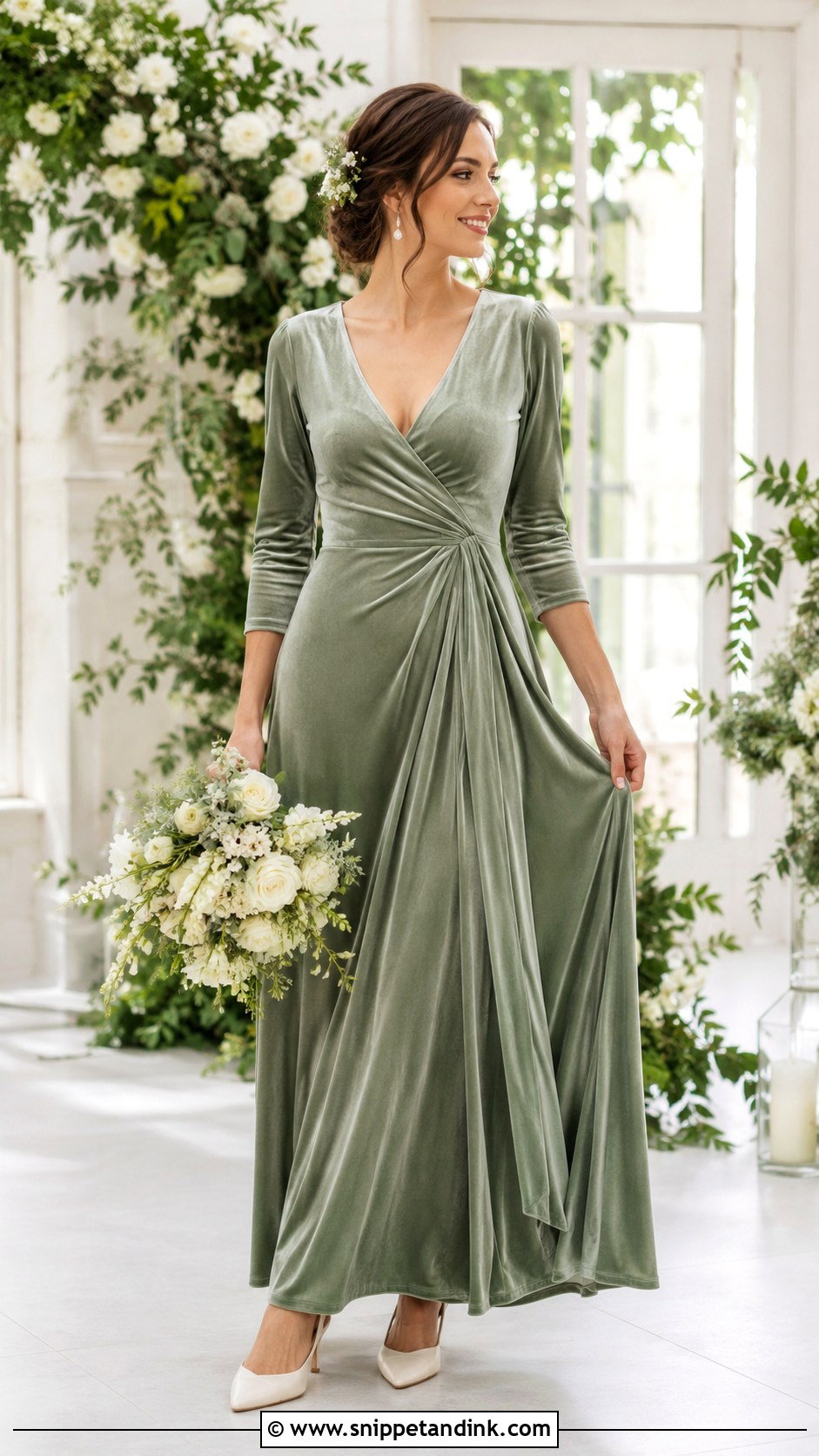
Soft sage velvet is the quiet option in this collection, closer to a botanical mood than a jewel tone. A wrap-style gown with a V-neckline, gathered waist and fluid skirt moves well through a long day, and three-quarter sleeves keep it from feeling heavy in early spring or autumn. Pale velvet shows marks and nap shading more than dark velvet does, so be gentle with it before the ceremony. Pearl earrings, ivory slingbacks and a loose bun with tiny white flowers suit it, and an ivory chapel veil adds definition without hiding the color.
7. Olive Green Velvet Boho Wedding Dress
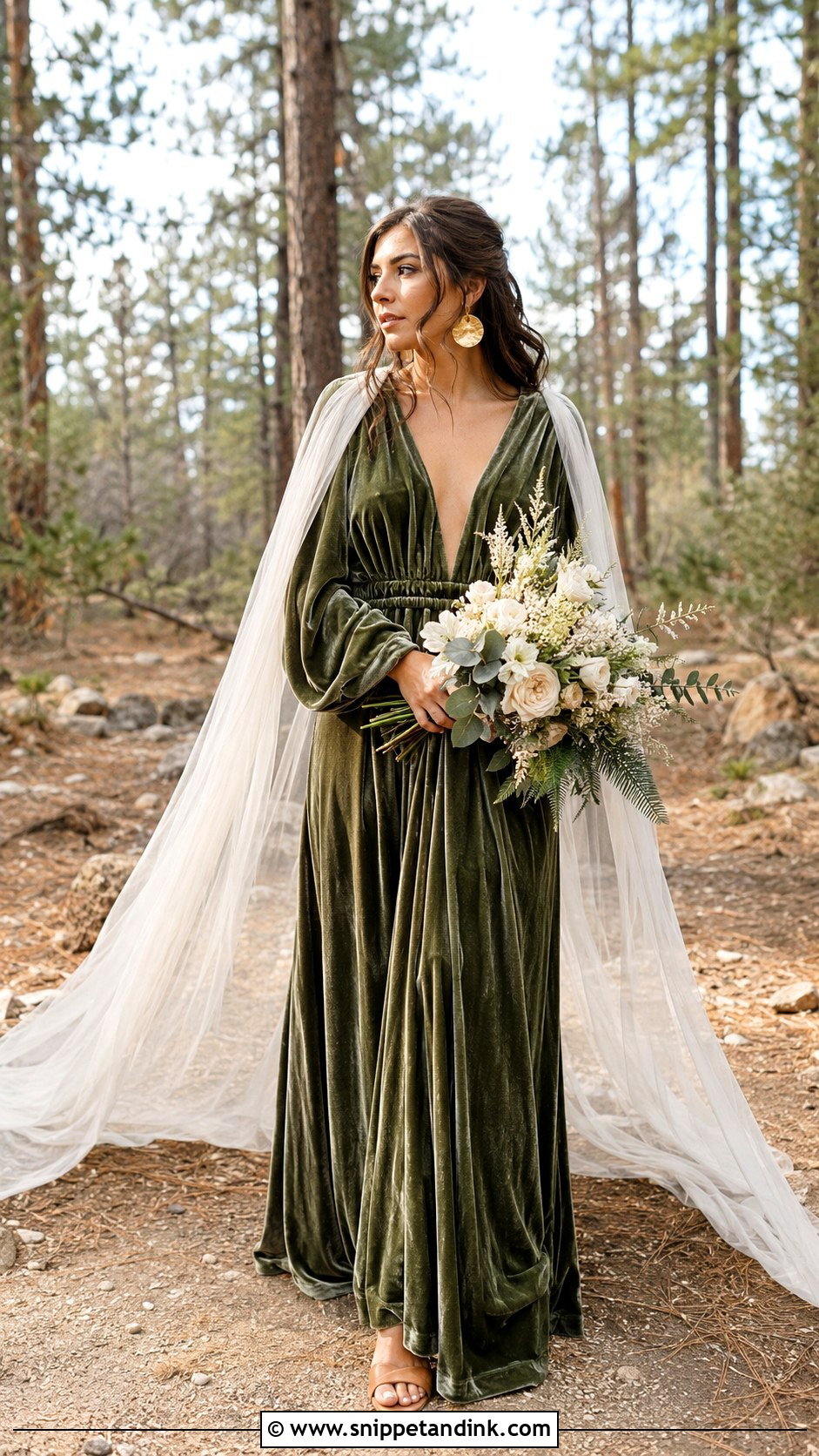
An olive green velvet boho wedding dress with a deep V, blouson sleeves and a soft gathered waist is the relaxed end of velvet. A slightly raised front hem shows tan block-heel sandals and keeps the skirt out of mud at a woodland venue. Hammered gold earrings, stacked fine rings and a loose braid fit the mood; a light tulle cape or dried-flower comb can replace a veil. I’d keep embellishment off this one entirely. Velvet already has depth, and beading on a boho cut quickly reads as costume.
8. Green Velvet Wedding Dress With Cape
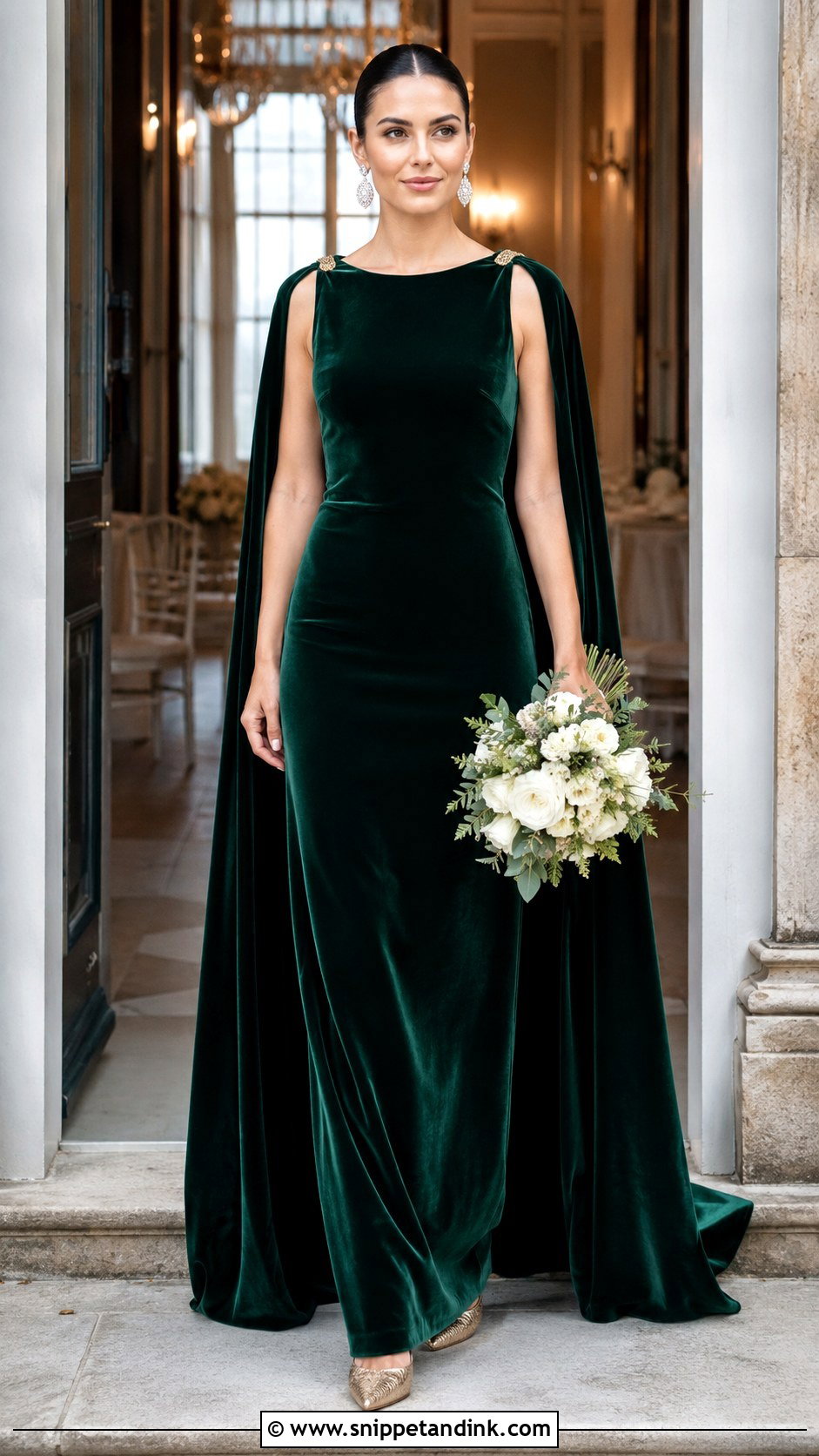
A floor-length cape turns a plain sleeveless velvet column into a full entrance. I attach it at the shoulders with discreet clasps and have it open at the front so the gown stays visible as you walk. Gold pointed heels, small crystal earrings and an updo finish it, and I’d drop the veil since the cape gives all the movement you need. Velvet capes are heavy. Check that the clasps are sewn into a reinforced strap, not just the shoulder seam. It’s warmer and much easier to handle than a long, layered train.
9. Green Velvet Wedding Dress With Lace Sleeves
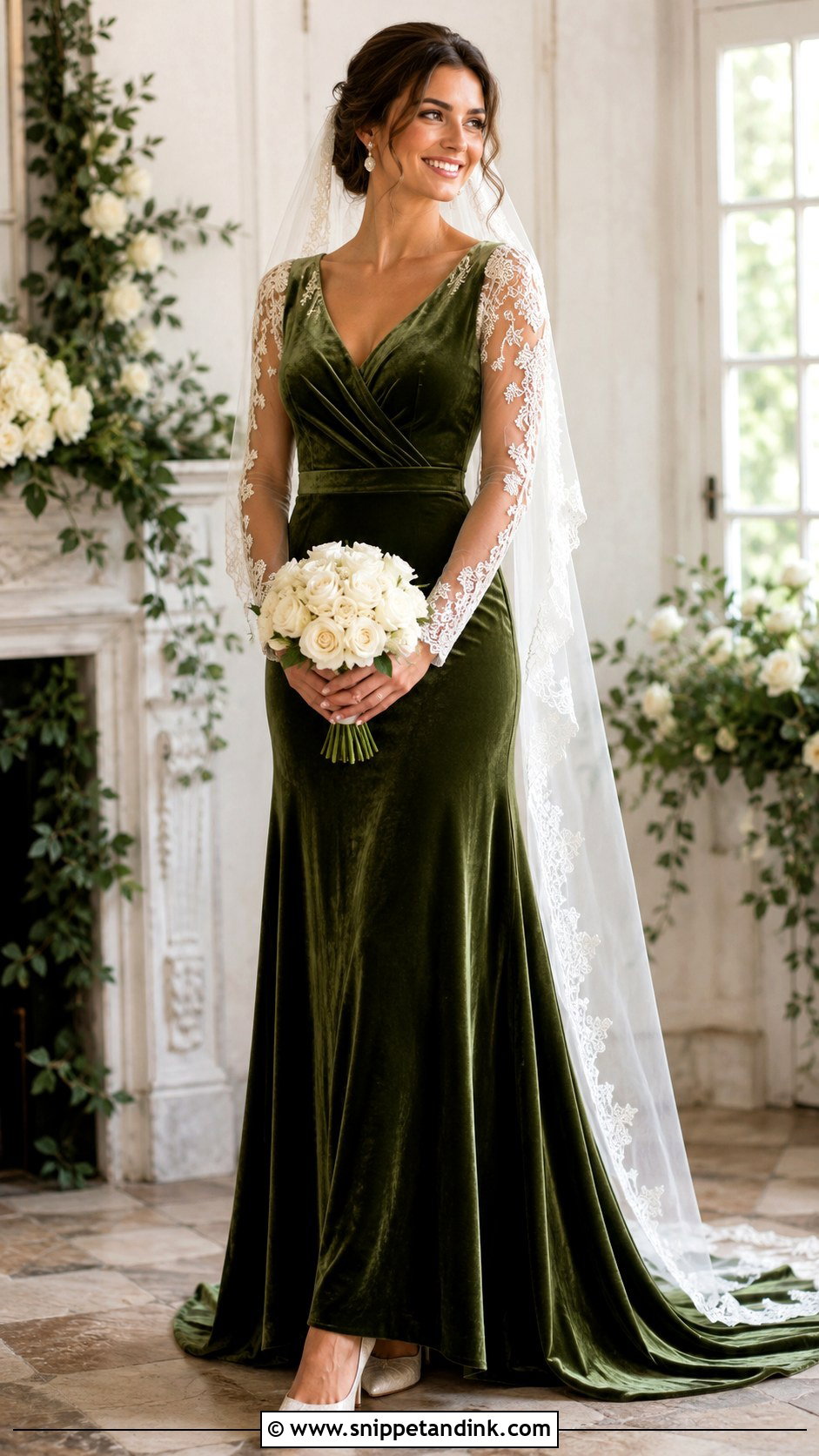
Green velvet with ivory lace sleeves gives you color and still looks like a wedding dress. A fitted velvet bodice, V-neckline, sheer lace sleeves and a softly flared skirt are the bones; small appliqués spilling onto the bodice link the two fabrics. The lace is where I’d be picky. A fine, refined pattern keeps it light, while heavy guipure next to velvet looks crowded. Ivory pumps, pearl studs and a pearl comb with a lace-edged veil continue the theme, and a compact white rose bouquet keeps the front of the look bright.
10. Green Velvet Wrap Wedding Dress
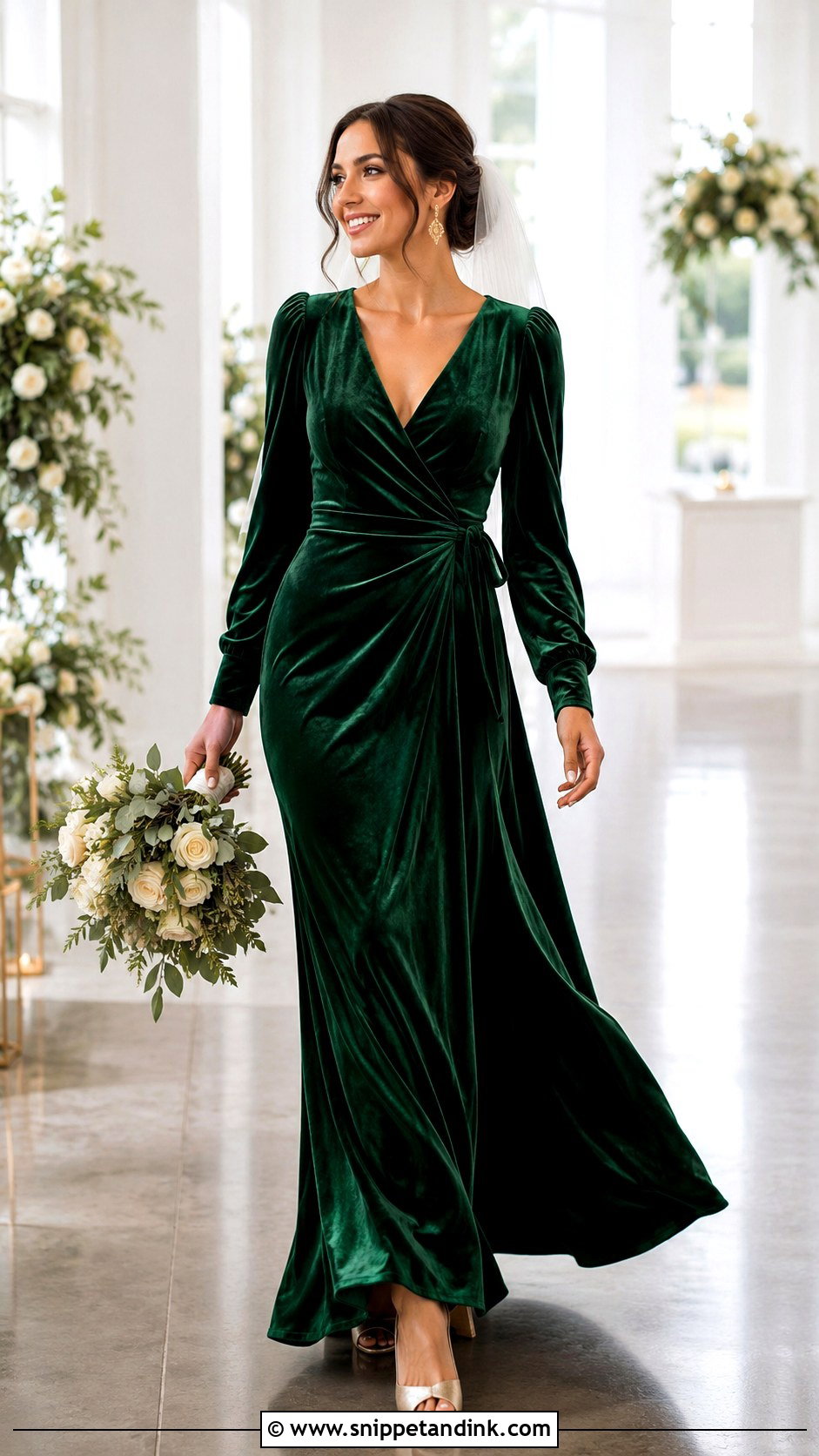
A wrap dress is the most forgiving silhouette on this list. It shapes the waist naturally and copes with small changes in measurements between fittings far better than a corset. Choose a true wrap or a well-secured faux wrap with long, slightly gathered sleeves. The risk is the overlap opening when you sit or dance, so I’d ask the seamstress to tack the neckline and add a hidden snap at the skirt. Champagne block heels, gold hoops and a side-swept style suit the diagonal line, with a short sheer veil.
11. Green Velvet Wedding Dress With Slit
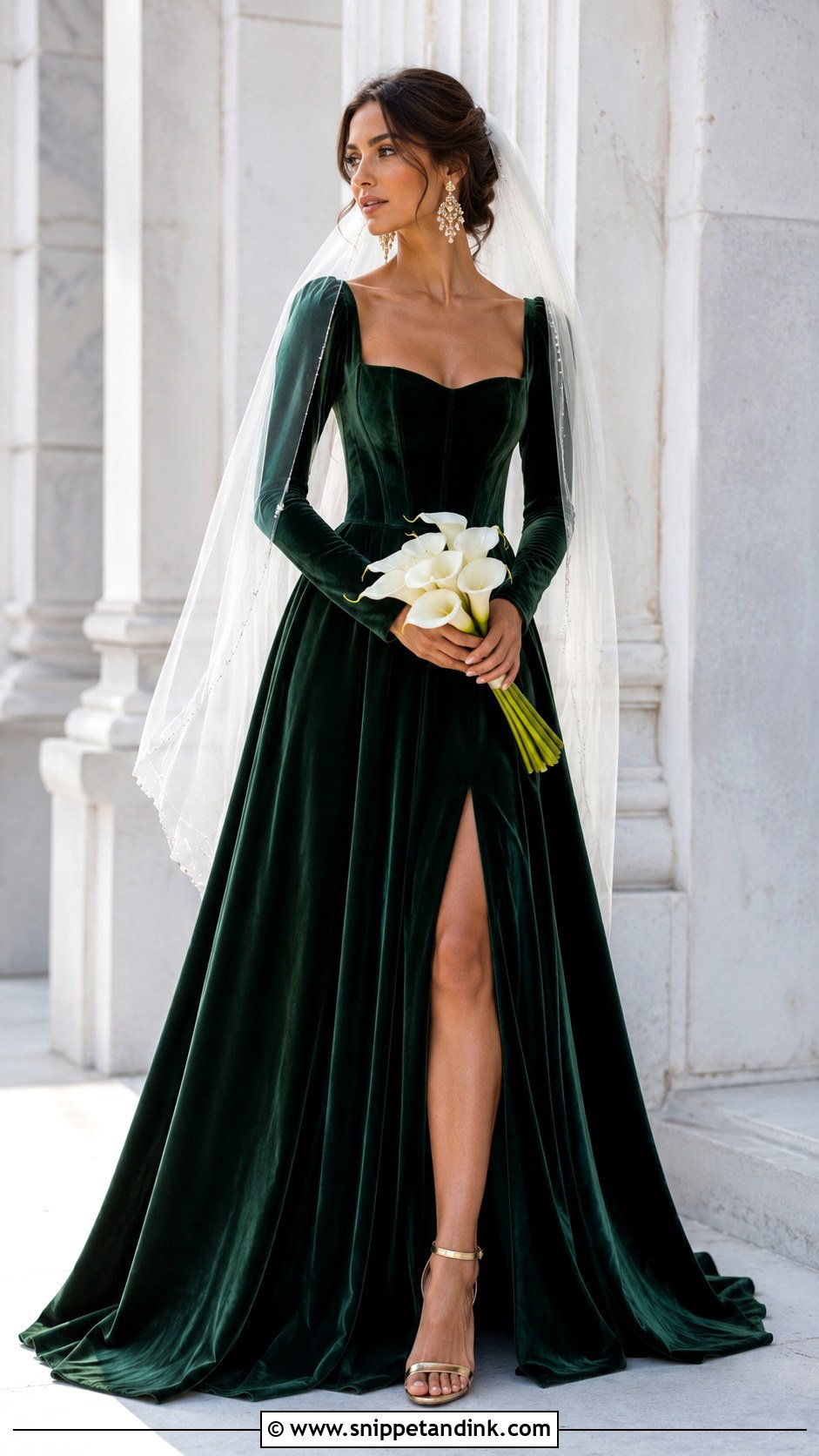
A front slit takes the heaviness out of a floor-length velvet gown. On an A-line or softly fitted dress with a structured bodice and long sleeves, I like the slit ending just above the knee so it shows your shoes when you move without opening too far when you sit. Try sitting in front of a mirror at your fitting to check. Gold ankle-strap heels, chandelier earrings and a sleek low ponytail keep it modern; white callas with little greenery suit the clean line.
12. Green Velvet Cowl Neck Wedding Dress
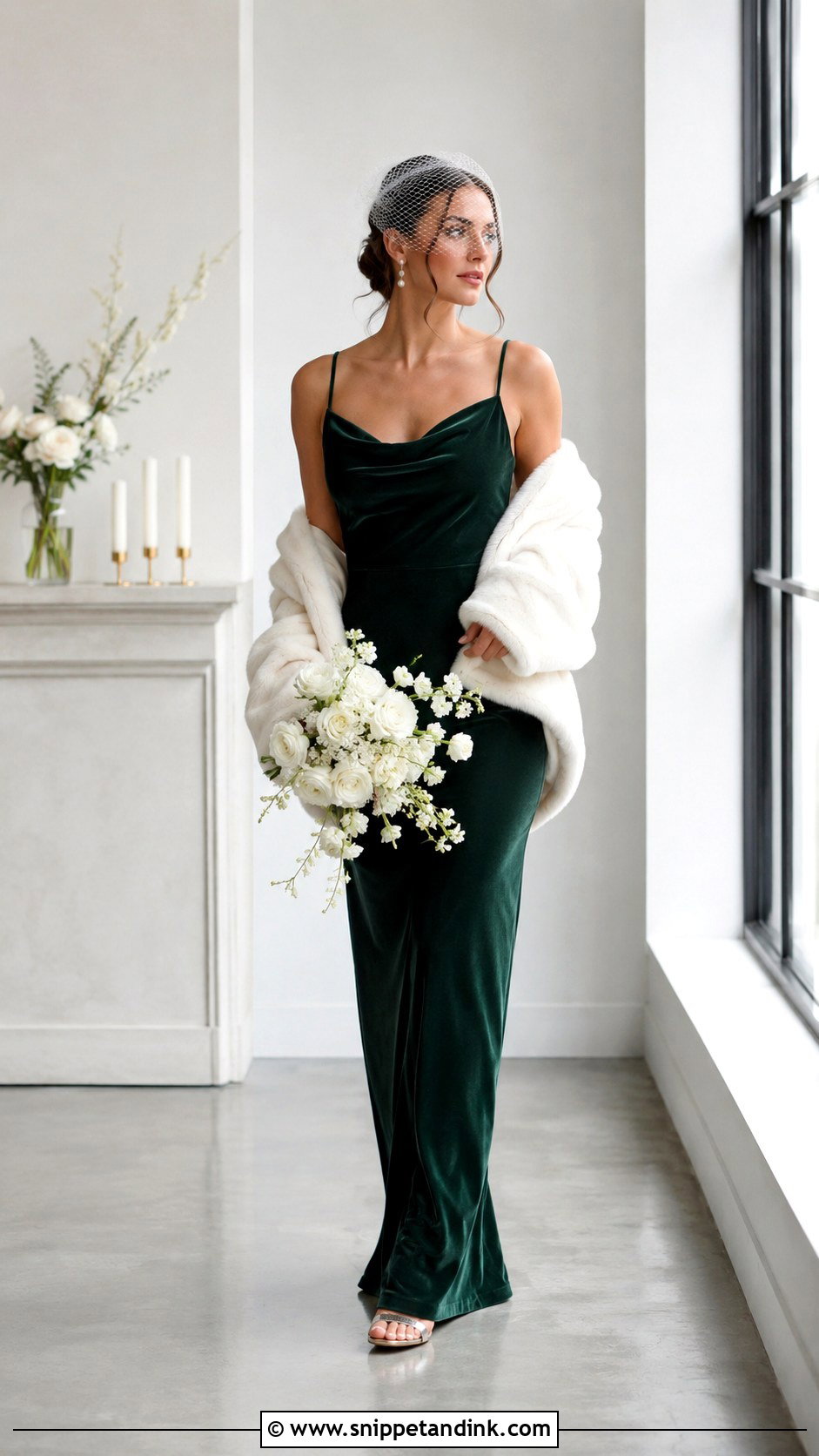
A cowl neck makes velvet look fluid. A bias-cut column with a draped neckline, slim straps and a low back is minimalist and quite sensual. Bias-cut velvet clings and shows every line underneath, so the undergarments need sorting before the first fitting, not after. For cold weather, layer a removable ivory faux-fur wrap or a green velvet bolero. Pearl drops, silver sandals, a smooth bun and a birdcage veil add a little vintage, and a loose white bouquet keeps it fresh.
13. Green Velvet Square Neck Wedding Dress
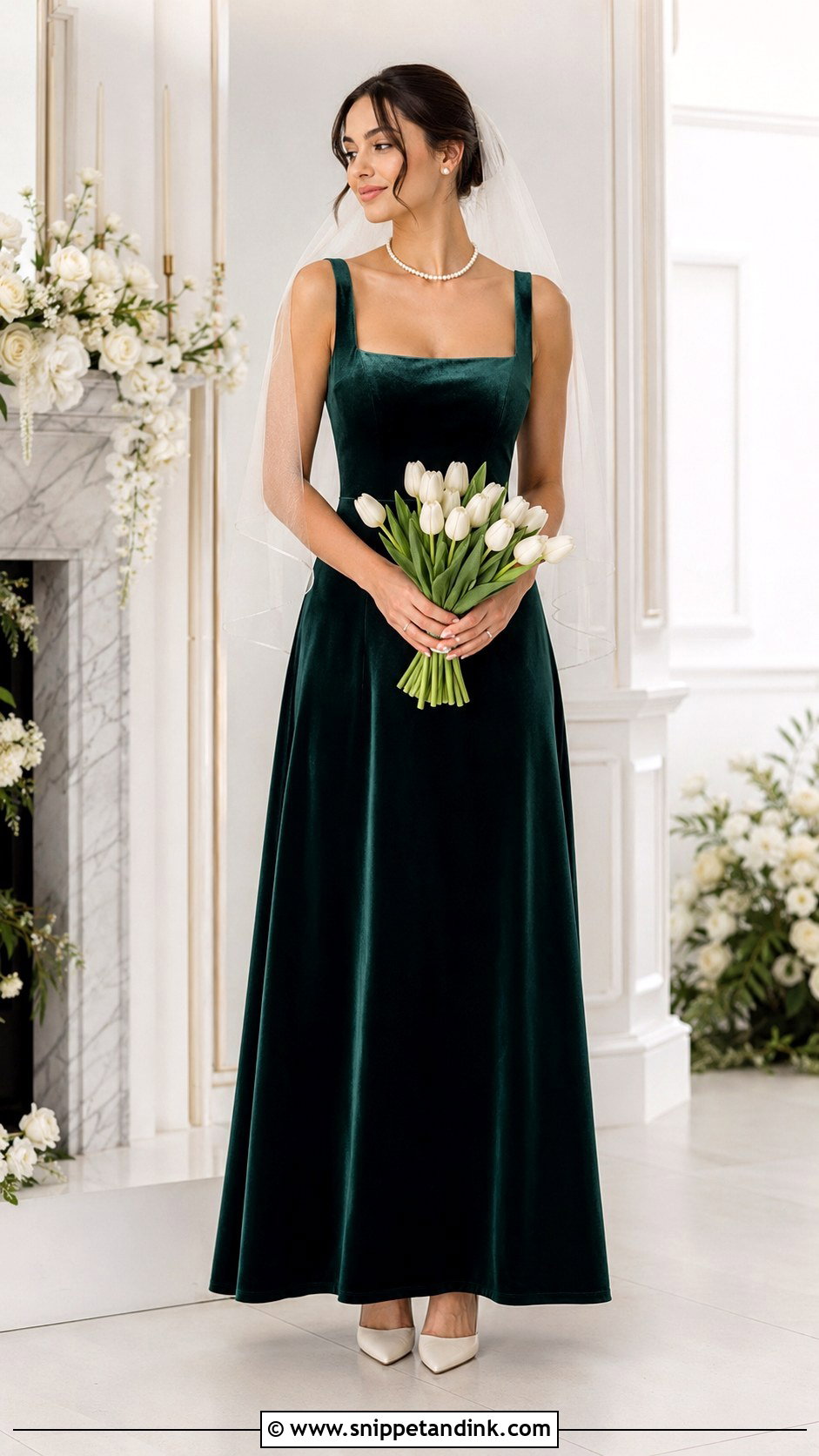
A square neckline gives green velvet a current look. A fitted bodice with wide straps or sleeves and an A-line skirt from the natural waist is simple to wear and easy to alter. The neckline frames a short pearl strand or single pendant nicely. Ivory pumps, pearl studs and a center-parted low bun keep it clean, while a sheer veil softens the straight line. If you want detail, I’d put covered buttons down the back rather than adding anything to the front.
14. Green Velvet Puff Sleeve Wedding Dress
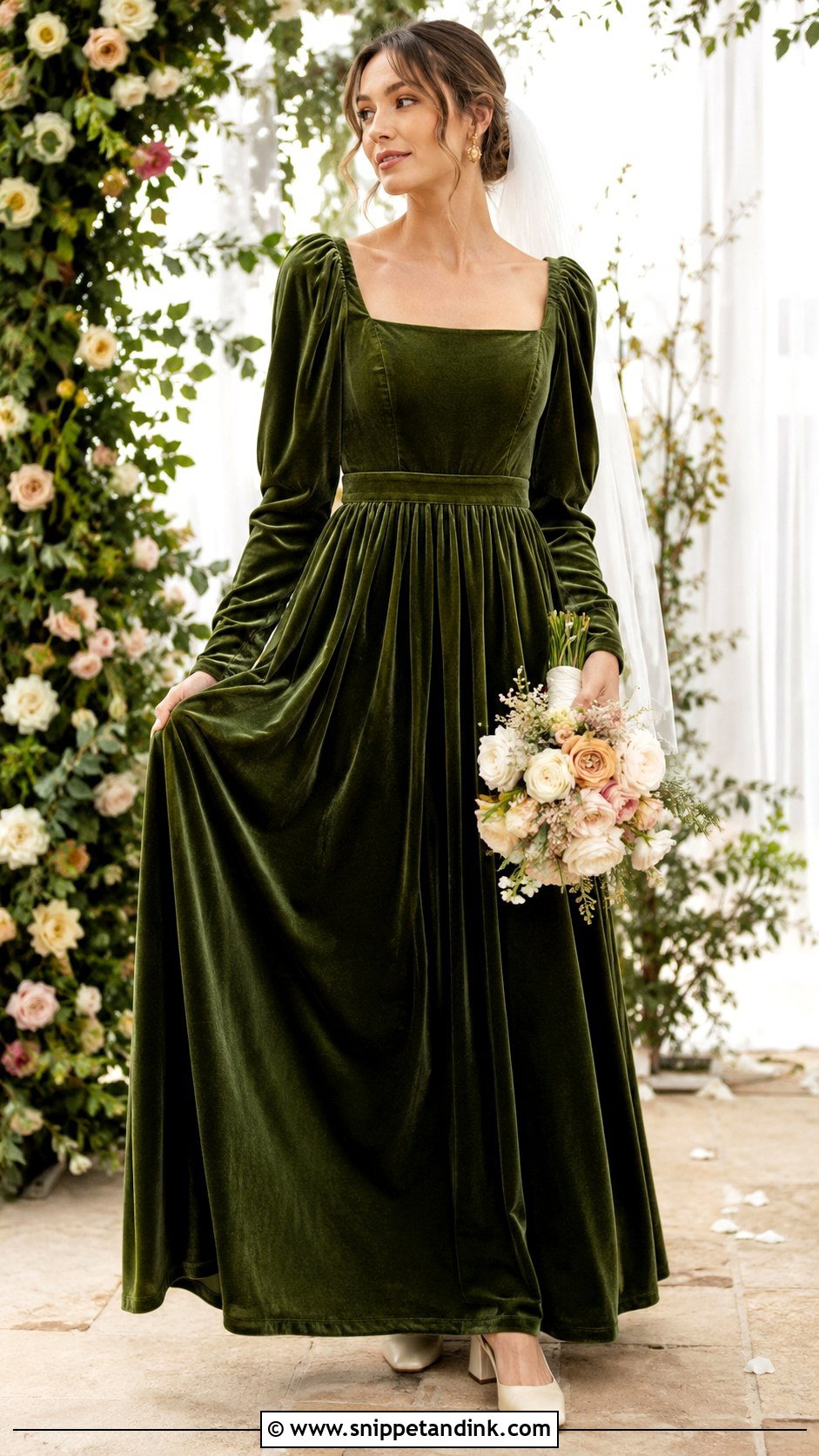
Puff sleeves give velvet a vintage feel, but in a heavy fabric they need restraint. Gathered sleeves that narrow at the cuff, a fitted waist and a square neckline make a balanced shape. Oversized velvet puffs add a lot of bulk to the upper body and can look heavy in photos taken from above. Structured shoulders can balance curvier hips and add definition to a straighter frame. Gold drops, cream block heels and a half-up style with soft waves complete it, along with a plain ivory veil.
15. Green Velvet Tea Length Wedding Dress
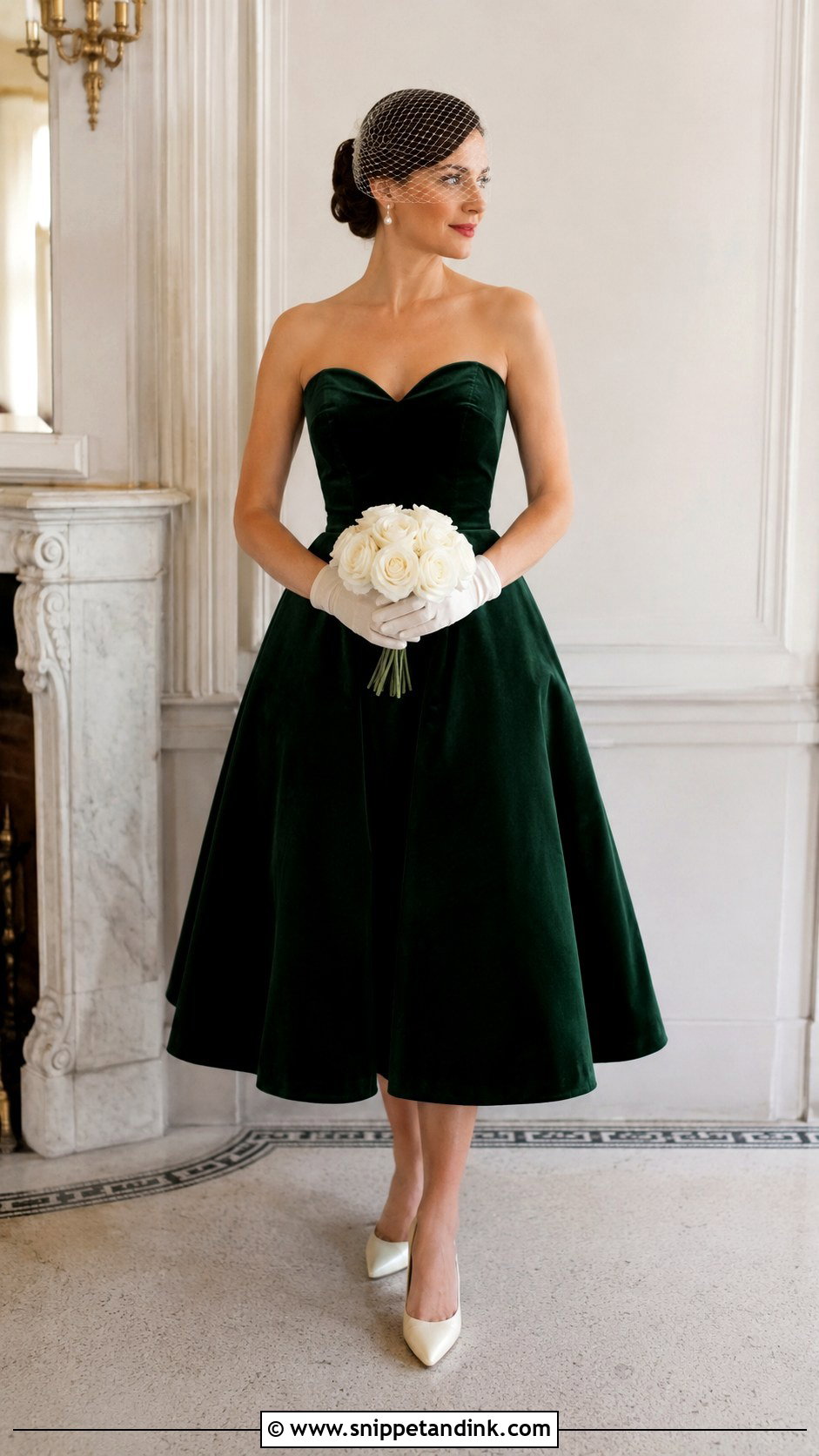
Tea length is the playful version of a velvet wedding dress. A fitted sweetheart or portrait bodice with a full skirt ending at mid-calf puts the attention on your shoes, so wear something worth seeing: ivory or gold pumps with a buckle. Short gloves, pearl earrings and a birdcage veil give a polished vintage feel. It suits a small wedding, a courthouse ceremony or a second look for the reception. I’d also ask for pockets and a smooth lining; velvet against bare legs can feel warm and catch on tights.
16. Green Velvet High Neck Wedding Dress
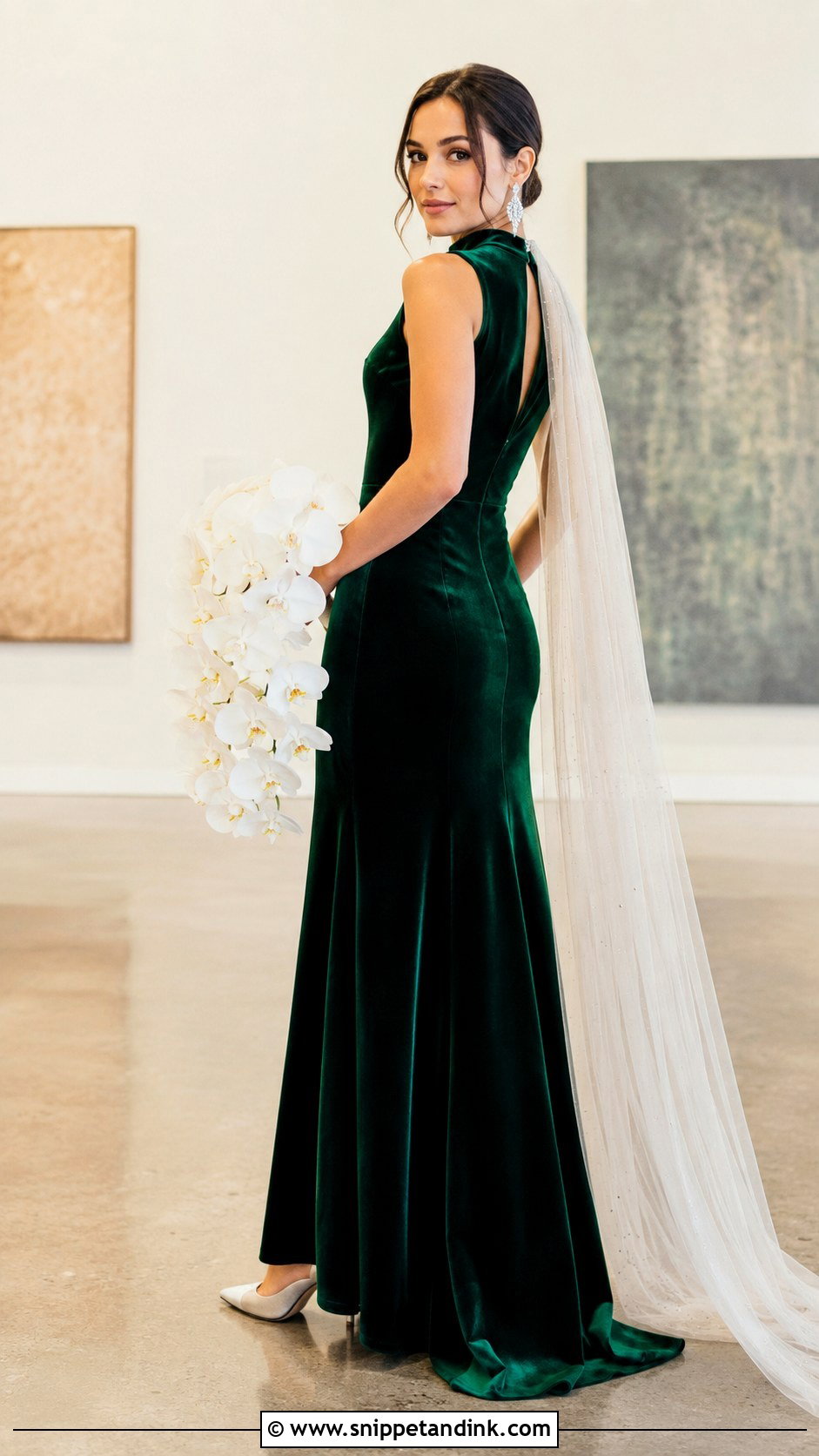
A high neckline in velvet looks refined and covers well. Sleeveless with a fitted bodice and lightly flared skirt is the cleanest version; sheer fitted sleeves suit cold weather. A small keyhole at the back keeps it from looking severe. With a high neck, skip the necklace entirely and let crystal earrings and a slim bracelet do the work. Put your hair in a high bun to keep the neckline clear, and attach a cape veil beneath it so it doesn’t bunch at the shoulders.
17. Green Velvet Corset Wedding Dress
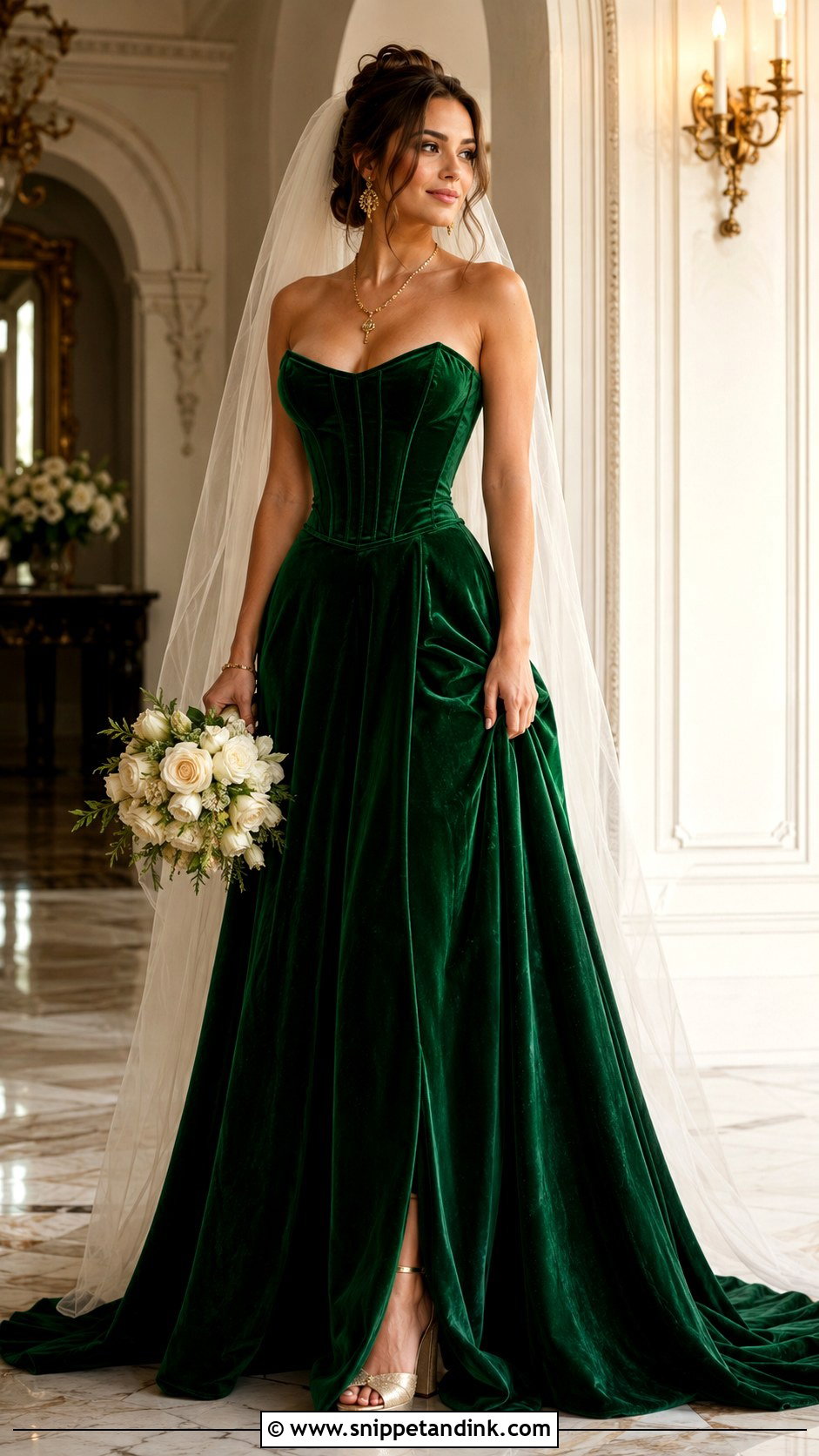
A velvet corset bodice gives the strongest waist definition in this collection. Supportive cups and real boning, rather than tight lacing, are what make it work. Visible seam lines add interest, but keep the construction tonal so it reads as bridal, not theatrical. A full A-line skirt, antique gold earrings, a fine pendant and stable champagne platforms finish it. When I fit a corset, the test is simple: sit, take a deep breath, then reach across a table. If any of those is difficult, it needs loosening before the day.
18. Green Velvet Wedding Dress With Train
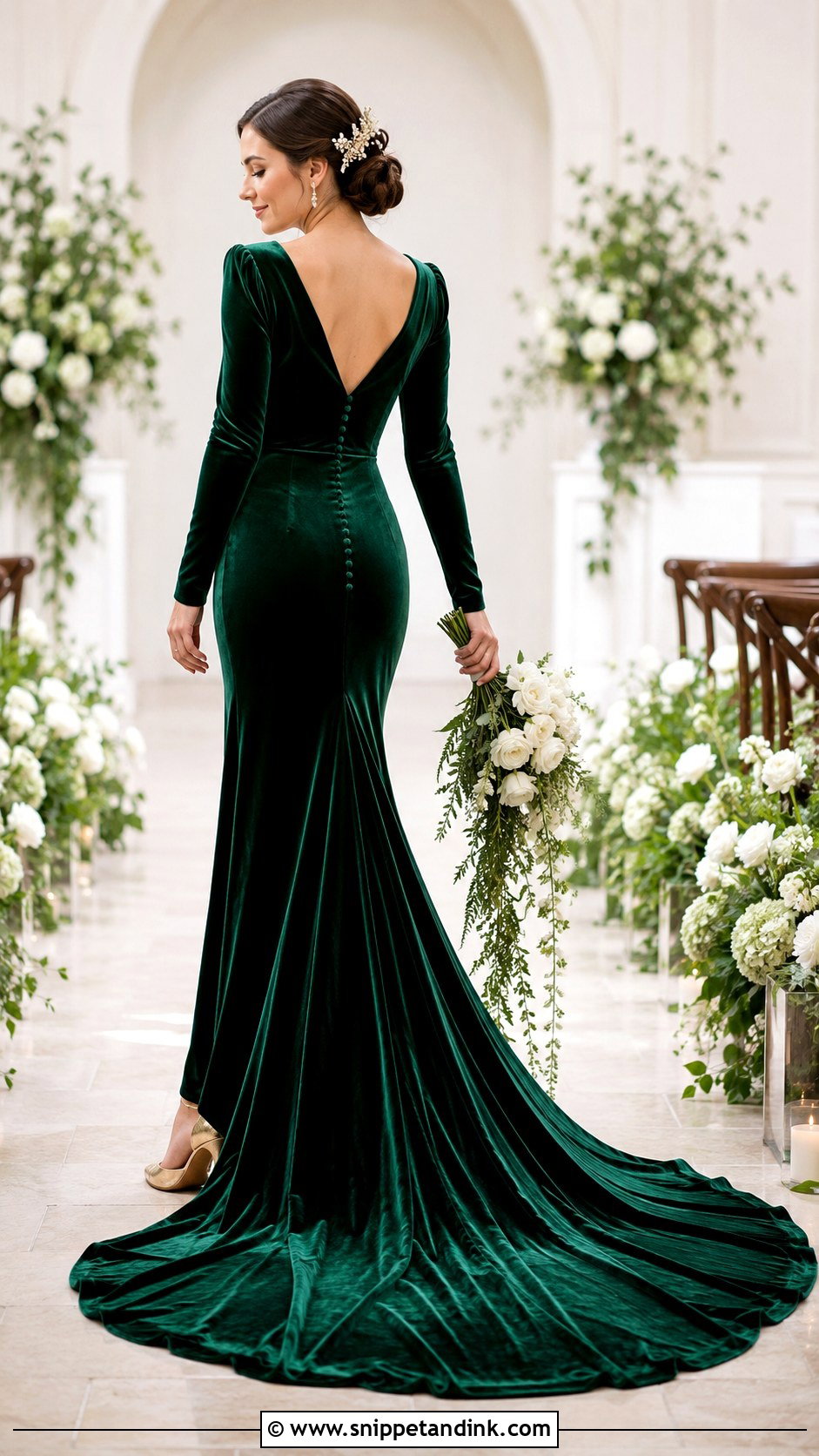
A chapel train in velvet makes a strong aisle moment. A fitted gown with a V-neck and clean long sleeves lets the shape of the train show. Velvet trains are heavy, and the drag pulls back on the waist and shoulders all day, so I ask for a properly lined train with internal support. Get a secure bustle; I’d do a practice bustle at the final fitting with whoever will be doing it on the day. Gold pumps, small studs and a low bun keep attention on the back of the dress.
19. Green Velvet Plus Size Wedding Dress
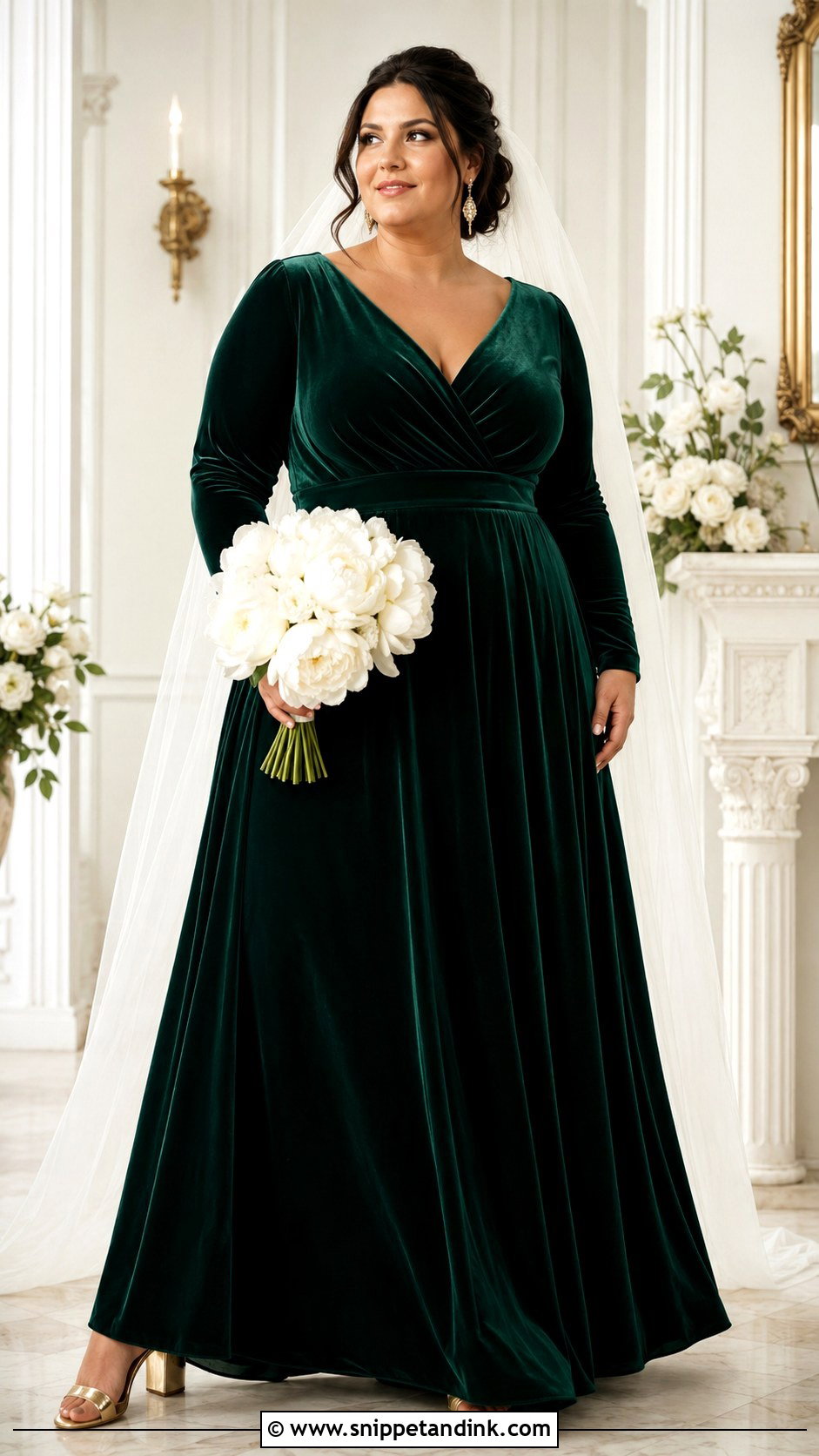
For a plus-size bride in velvet, support and drape matter more than anything else. An A-line gown with a crossover neckline, structured waistband and elbow or full sleeves is a reliable starting point. Stretch velvet gives flexibility, but it needs a good lining so it glides over the body rather than clinging. I’d always choose internal boning or built-in bra structure over a tight external belt, which creates bulges in velvet. Gold block heels, drop earrings and an ivory veil under a soft updo complete it. The right fit stays put at bust, waist and shoulders without you adjusting it.
20. Green Velvet Two-Piece Wedding Dress
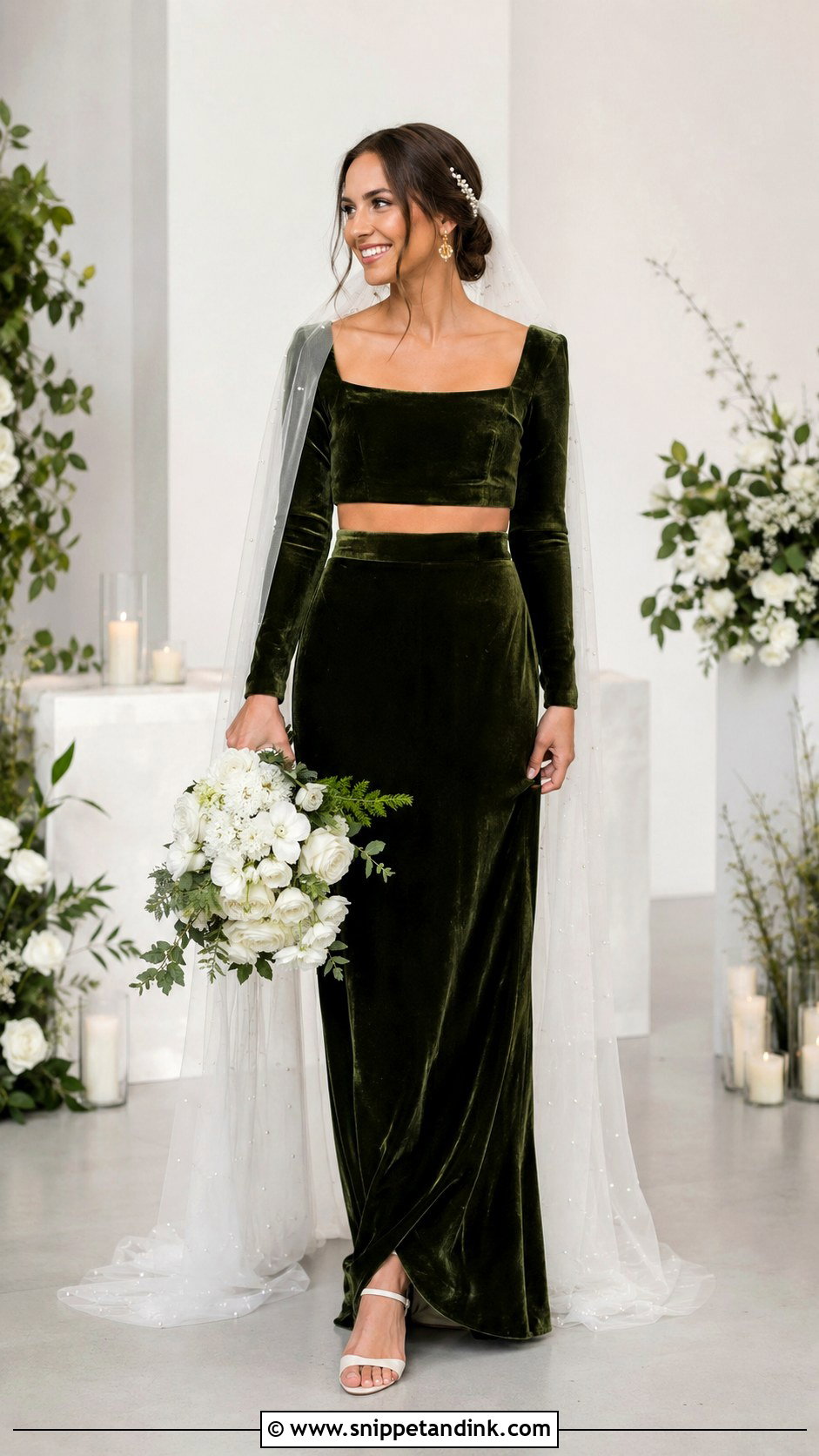
A velvet two-piece is the most adaptable option: a fitted top with a square neck and long sleeves, and a high-waisted floor-length skirt. A slim strip of skin can show at the waist, or the pieces can overlap. A sheer cape veil from the shoulders visually joins the separates. Here’s the detail many people miss: the top and skirt must be cut with the velvet pile running the same way. Otherwise one piece looks a shade darker than the other. Both pieces can be worn separately later, which makes it practical too.
Altering Velvet Takes Longer Than Satin, So Book It Earlier
Velvet is one of the hardest fabrics for a seamstress, and that affects your timeline. Needle holes and unpicked seams can leave marks in the pile that don’t fully disappear, so letting a gown out is limited. Get the size right at ordering, and aim to size slightly larger rather than smaller.
Pressing is also different. A good alterations specialist uses a needle board or velvet board so the pile isn’t crushed flat, and steams rather than irons. I’d ask whoever does the alterations whether they’ve worked with velvet before; if they hesitate, look elsewhere. Plan your first fitting earlier than you would for a satin dress, and leave room for an extra one.
Lint, Flattened Pile and Warm Rooms on the Wedding Day
Velvet behaves differently through a long day, and a few small preparations stop the problems I see most often.
- Pack a soft clothes brush and a lint roller. Dark green velvet picks up pet hair, petals and ivory veil fibers, and every speck shows in close-up photos.
- Sitting flattens the pile at the back of the skirt. A quick pass with a handheld steamer held a few inches away lifts it again before portraits.
- Velvet is warm. For a heated indoor venue, ask about the room temperature and consider a lighter-weight velvet or shorter sleeves.
- Velvet absorbs light. Mention the fabric to your photographer, since deep green can lose detail in dim rooms without extra light.
Is Green Velvet Right for Your Winter Wedding?
Velvet rewards a simple silhouette and quiet accessories. Emerald, forest, olive, and sage each give a different mood, and the A-line, mermaid, ball gown, wrap and two-piece shapes cover most figures and wedding styles. See the fabric under your venue’s lighting before you commit, and make sure you can walk, sit and dance in it. Keep jewelry, shoes, veil and bouquet coordinated but restrained. Then put your effort into tailoring; on velvet, fit is what makes it look expensive.
You'll Like These Ideas:








Leave a Reply