
Black on a wedding gown does one job better than any other color: it draws a line. A velvet bow at the waist tells the eye where your shape turns, and black embroidery across a white skirt reads like ink on paper. I’ve fitted plenty of brides who walked in sure they wanted pure white and walked out with a black sash, because the contrast gave the dress a structure the mirror had been missing. Below are twenty-five ways to bring black into a bridal look, each with the fitting-room notes I’d give you if you were standing on the platform.

Matching Black to an Ivory or White Gown
Not all blacks are the same, and that’s the first thing I sort out with a bride who wants contrast. Velvet absorbs light and reads as the deepest black. Satin reflects it and can look almost navy in daylight. Lace is mostly holes, so it reads as grey from a few feet away. If your dress mixes two of these, hold them together outdoors before you commit.
The base color matters as much. Stark white with black gives a crisp, graphic result. Ivory or champagne with black looks softer and more vintage, but it can also make the white look yellow if the black is very cold. Bring a swatch of your gown fabric to every accessory appointment.
A quick test before you buy
- Take one phone photo in daylight and one with flash. Black satin often turns shiny and flat under flash.
- Squint at the mirror from across the room. If the black reads as a smudge rather than a shape, it needs a cleaner edge.
- Rub a white tissue firmly on the black trim. Any color on the tissue means it can transfer onto the white fabric with sweat or rain.
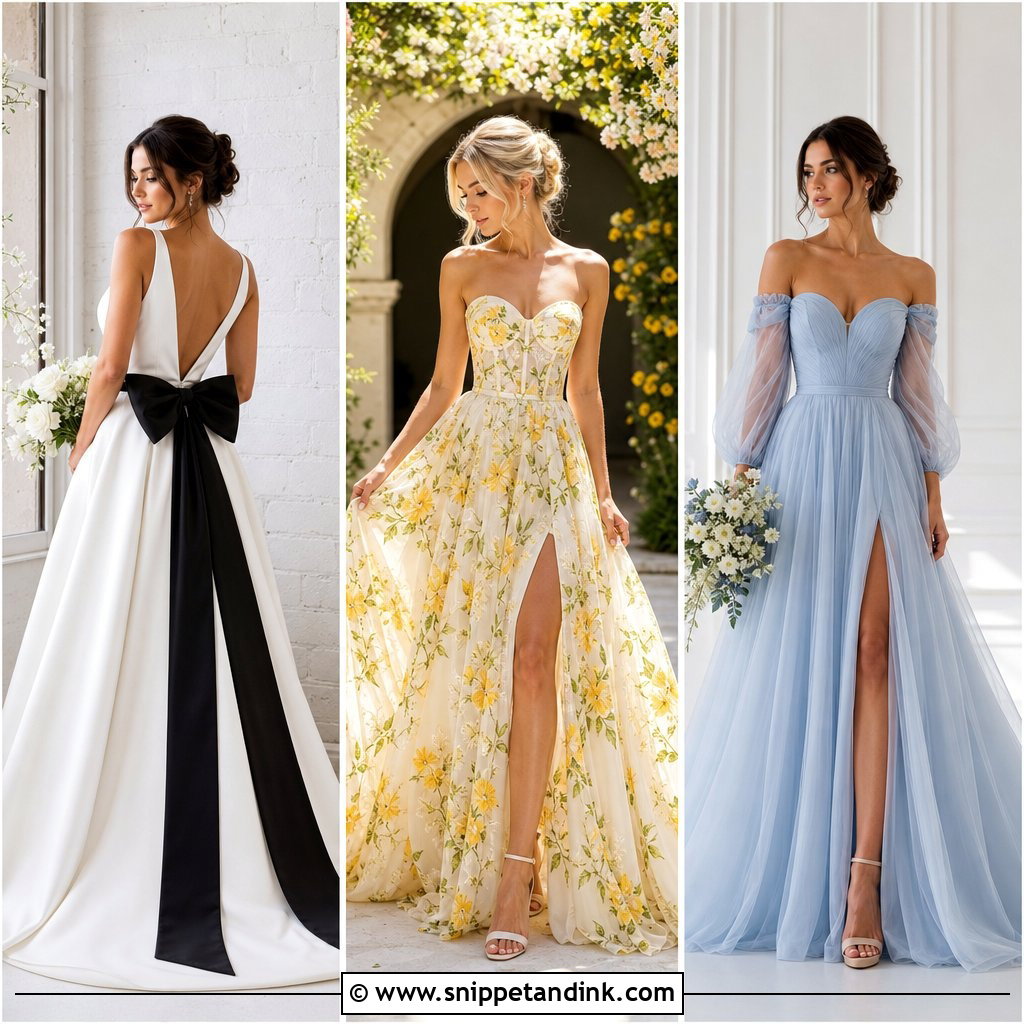
1. White Wedding Dress With Black Bow
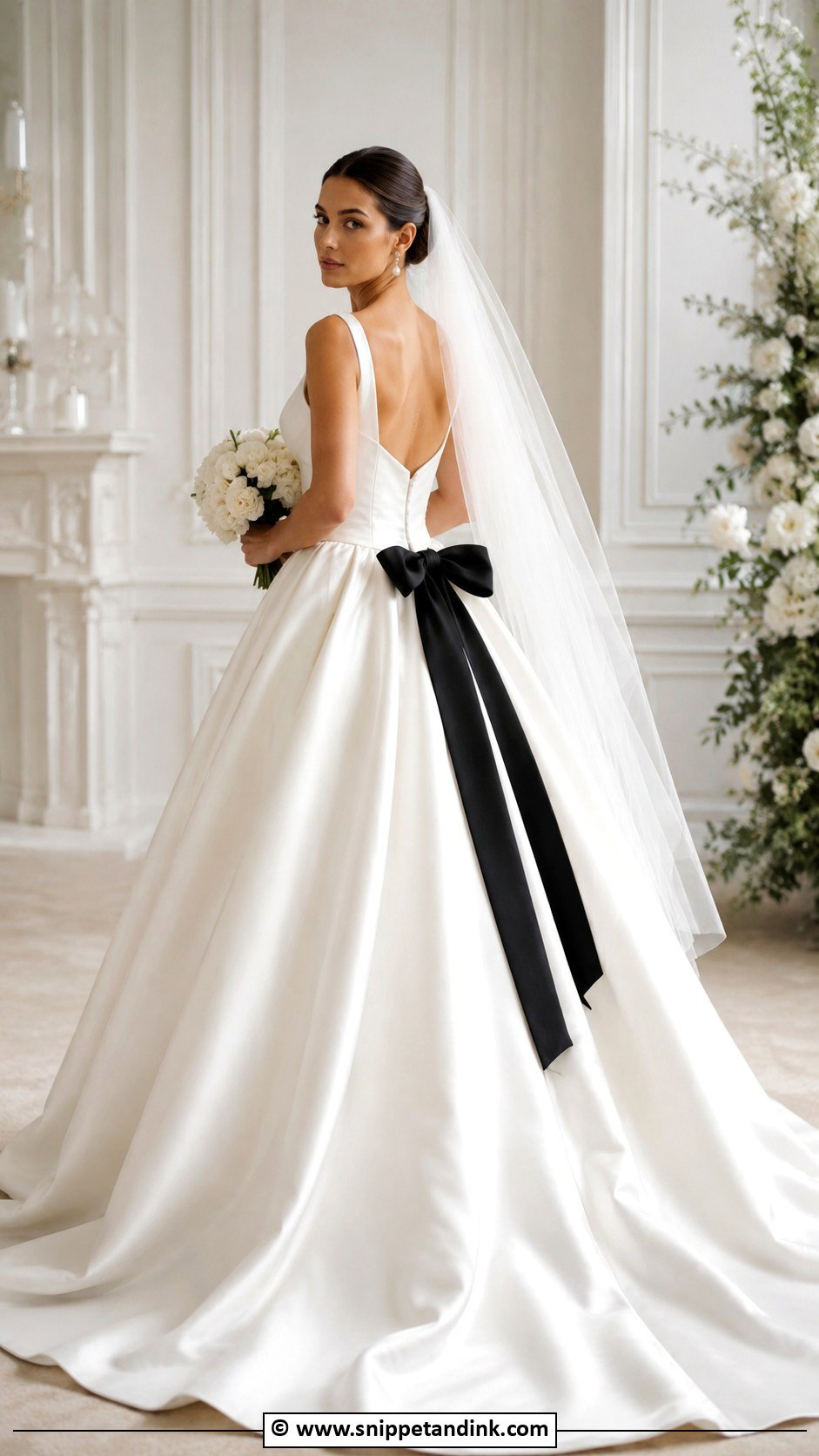
A black bow is the gentlest way into contrast, and where it sits changes the whole dress. On a mikado or heavy satin gown, a back bow gives you a classic exit shot, while a bow at the waist pulls the eye in and adds shape. The thing I check first is the bow’s scale against your frame: a bow wider than your shoulder blades swallows a petite bride from behind. Keep the rest quiet with pearl studs, a sleek veil and ivory pointed heels.
2. Wedding Dress With Black Lace Sleeves
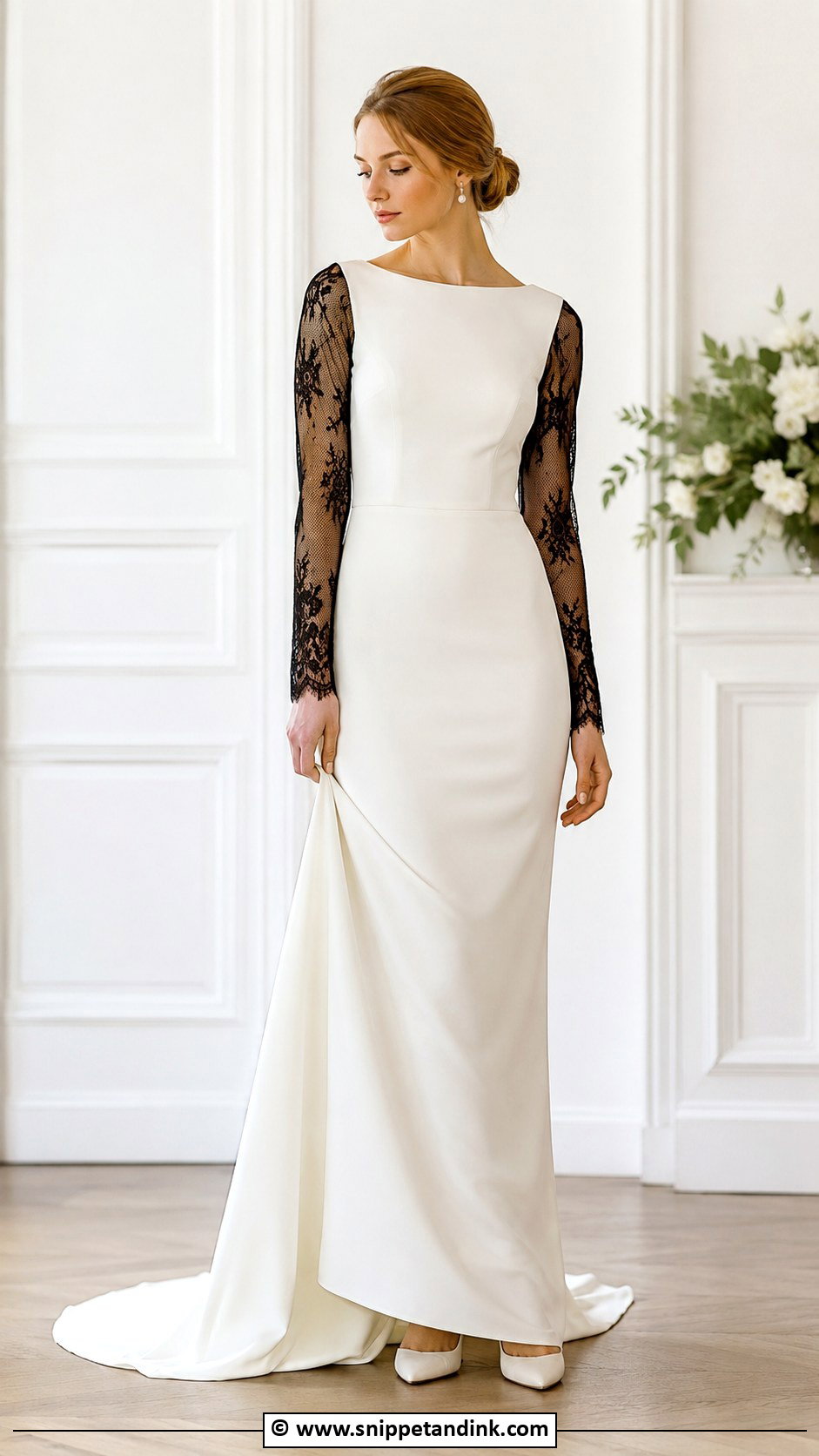
Black lace sleeves need a calm body to sit against, so I pair them with ivory crepe, satin or chiffon rather than another lace. Long illusion sleeves look refined; flutter sleeves feel lighter. Watch the sleeve seam at a fitting. Black lace is unforgiving where it meets ivory mesh, and any pucker at the shoulder shows far more than it would in all-white. Add a low bun and small earrings, and you have a look built for a fall or evening ceremony where the arms need some cover.
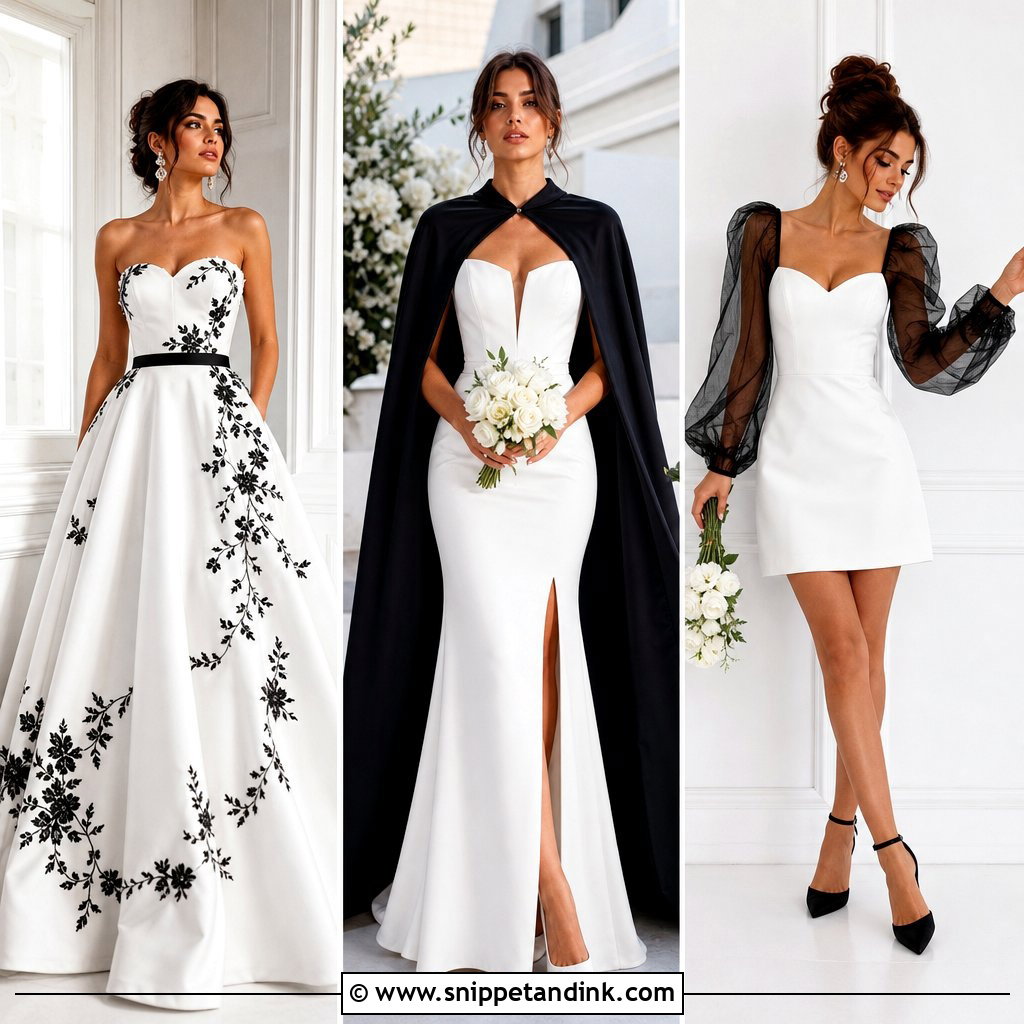
3. Wedding Dress With Black Floral Embroidery
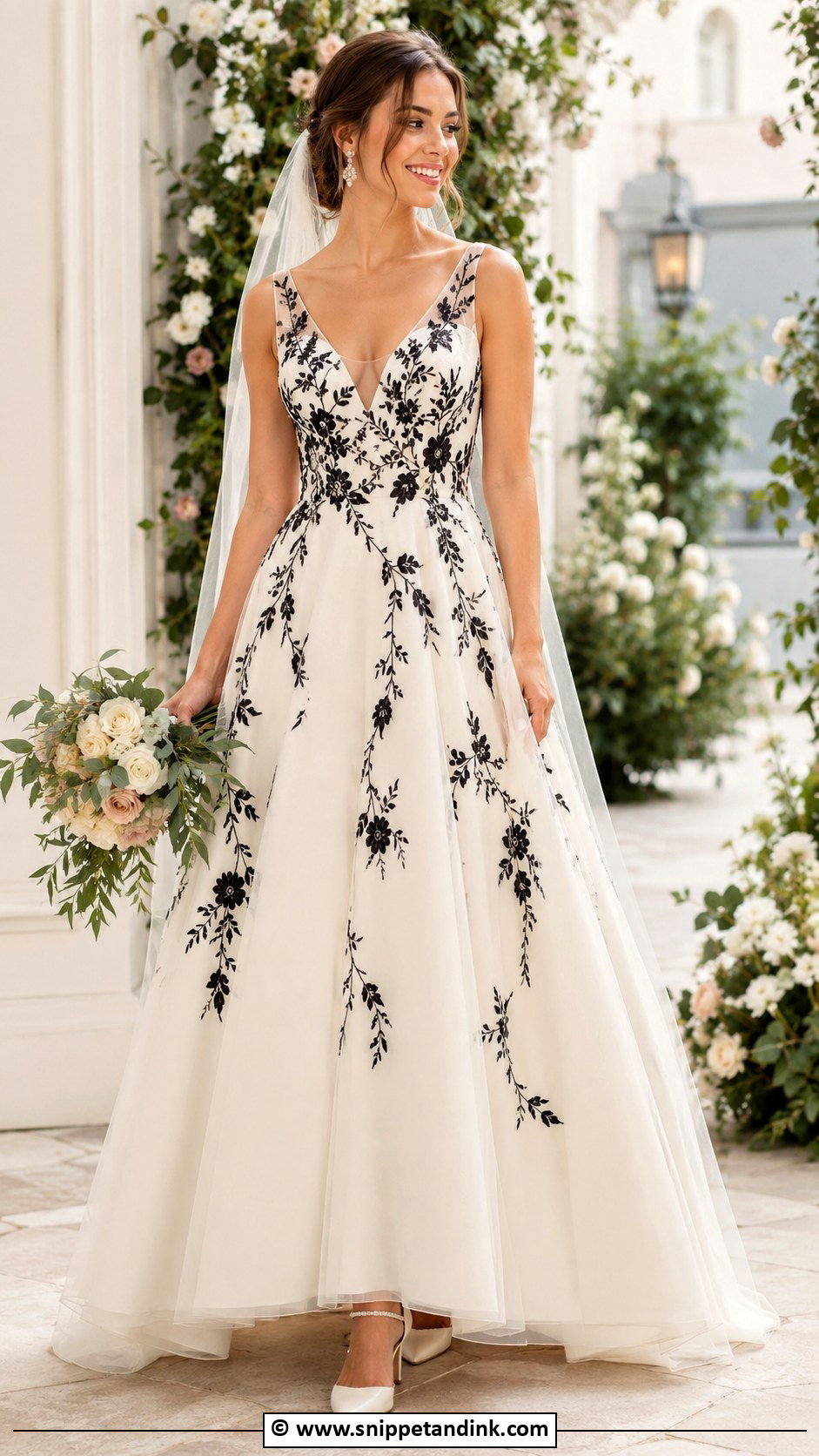
Embroidery in black thread reads like a drawing on the gown, so placement matters more than quantity. Trailing up the bodice, scattered over the skirt, or framing the hem each changes where people look. I’d keep the silhouette simple, an A-line or fit-and-flare in ivory or nude, and stop adding things there. A bouquet of white blooms with dark greenery echoes the stitching without fighting it. One honest caution: on very sheer tulle, black thread shadows through to the lining, so ask to see a sample against your skin tone.
4. Wedding Dress With Black Sash
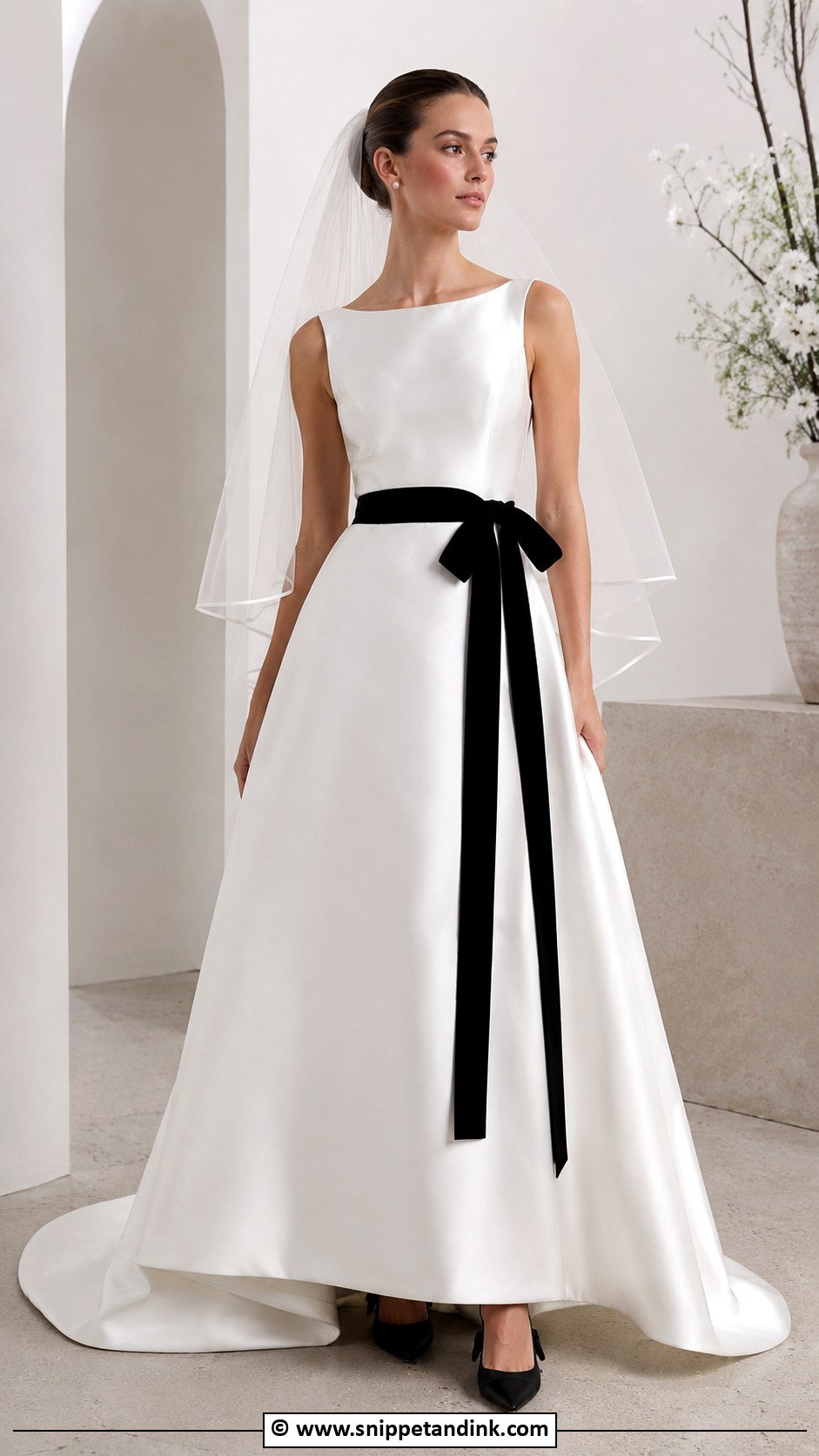
The easiest black accent to add or take away is a black sash. Satin or velvet around the waist defines your shape and makes a plain white dress look made for you, and it suits ball gowns, slip gowns and tea-length cuts alike. Tie it at the back for a classic finish or keep it flat for a modern line. Get the sash cut a few inches longer than you think: once you sit for dinner, a short sash rides up and the knot slips sideways.
5. Wedding Dress With Black Buttons
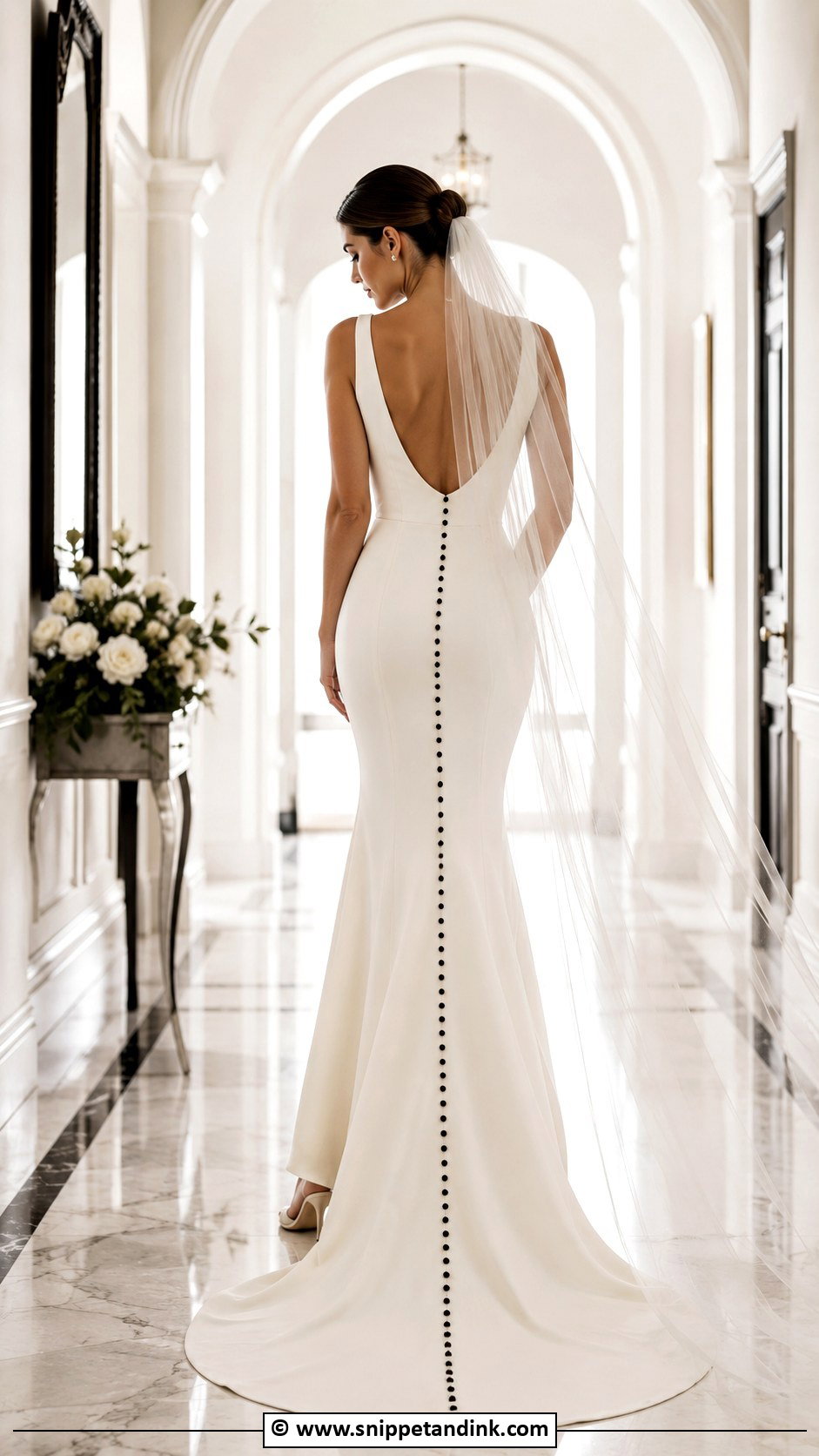
Tiny black buttons barely register from the front. From the back, running from the neckline down to the train, they make the aisle shot. They suit fitted crepe, lace and long-sleeve gowns, and a smooth updo with a long veil lets them show through. Practically, real covered buttons with loops take a while to fasten, so I always add a hidden zip underneath and keep the buttons decorative. Your maid of honor will thank you.
6. Wedding Dress With Black Tulle Overlay
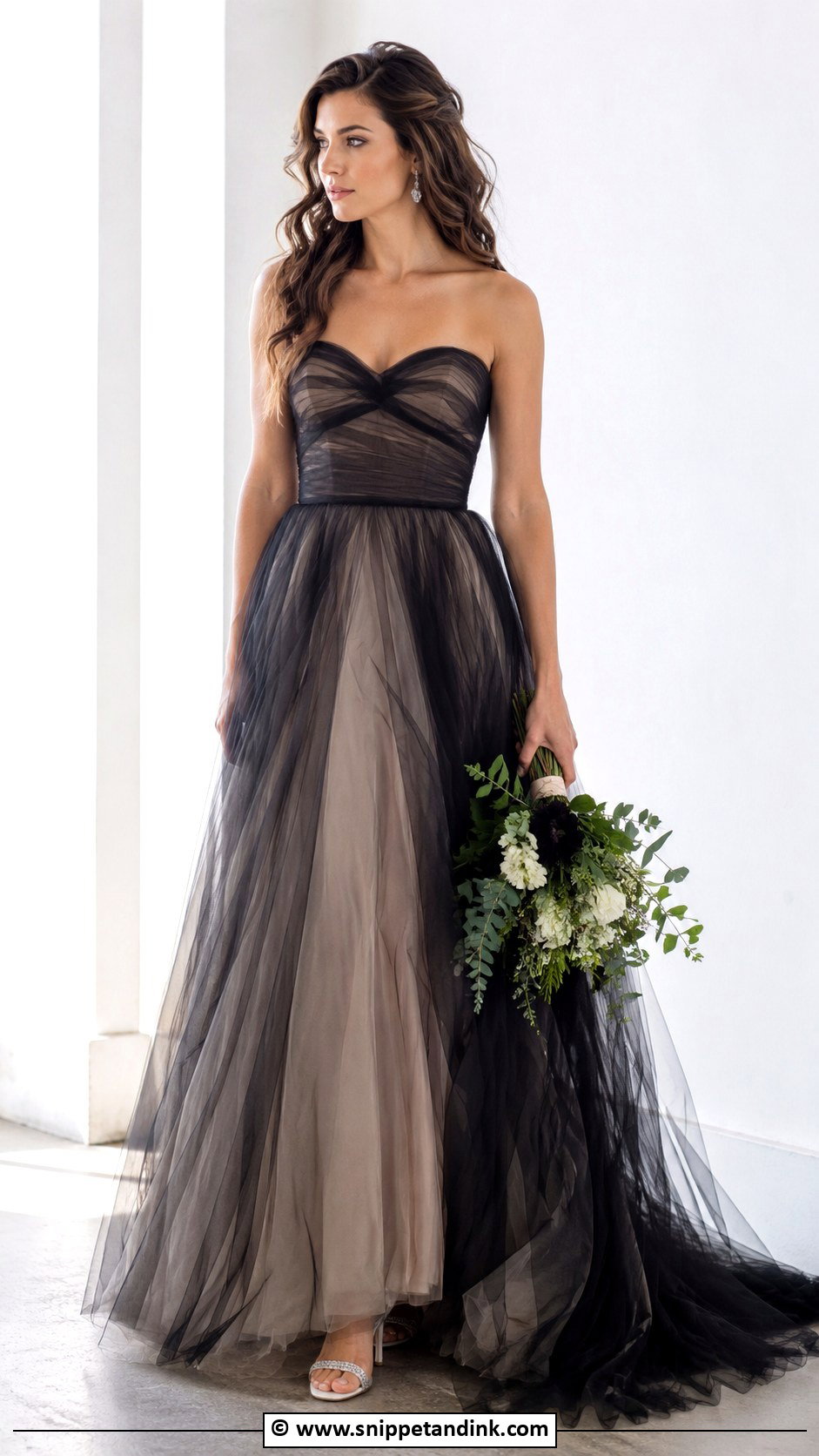
Sheer black tulle over a white or nude base gives depth without weight, because the layer is see-through and moves. It needs a fitted bodice and a skirt with some swing, otherwise the tulle just hangs. A strapless or sweetheart neckline keeps it romantic. Expect the color to shift with the light: one layer of black over white reads as soft grey in daylight and as near-black by candlelight, which I love but some brides don’t expect.
7. Wedding Dress With Black Lace Bodice
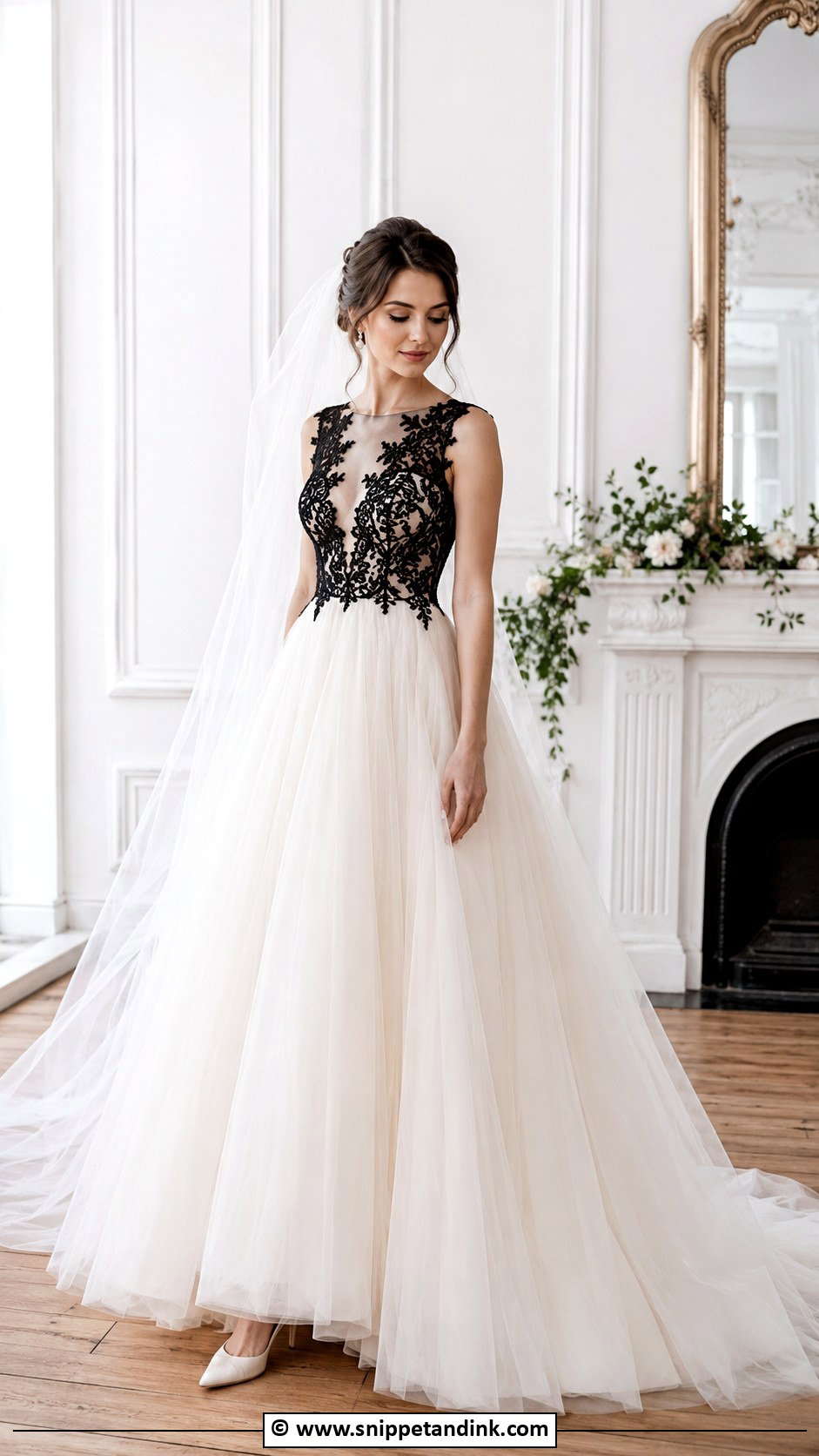
A black lace bodice over a white skirt is high contrast, so the proportions have to be right. An A-line or ball gown skirt balances the darker top; on a slim column it can look like separates. Floral, vine or scroll lace all work, and an illusion neckline softens where black meets skin. Because the bodice holds all the attention, I keep the veil plain and the bouquet small, and I check the bodice seams twice at fittings since black lace shows any stretch at the side seams.
8. Wedding Dress With Black Hem
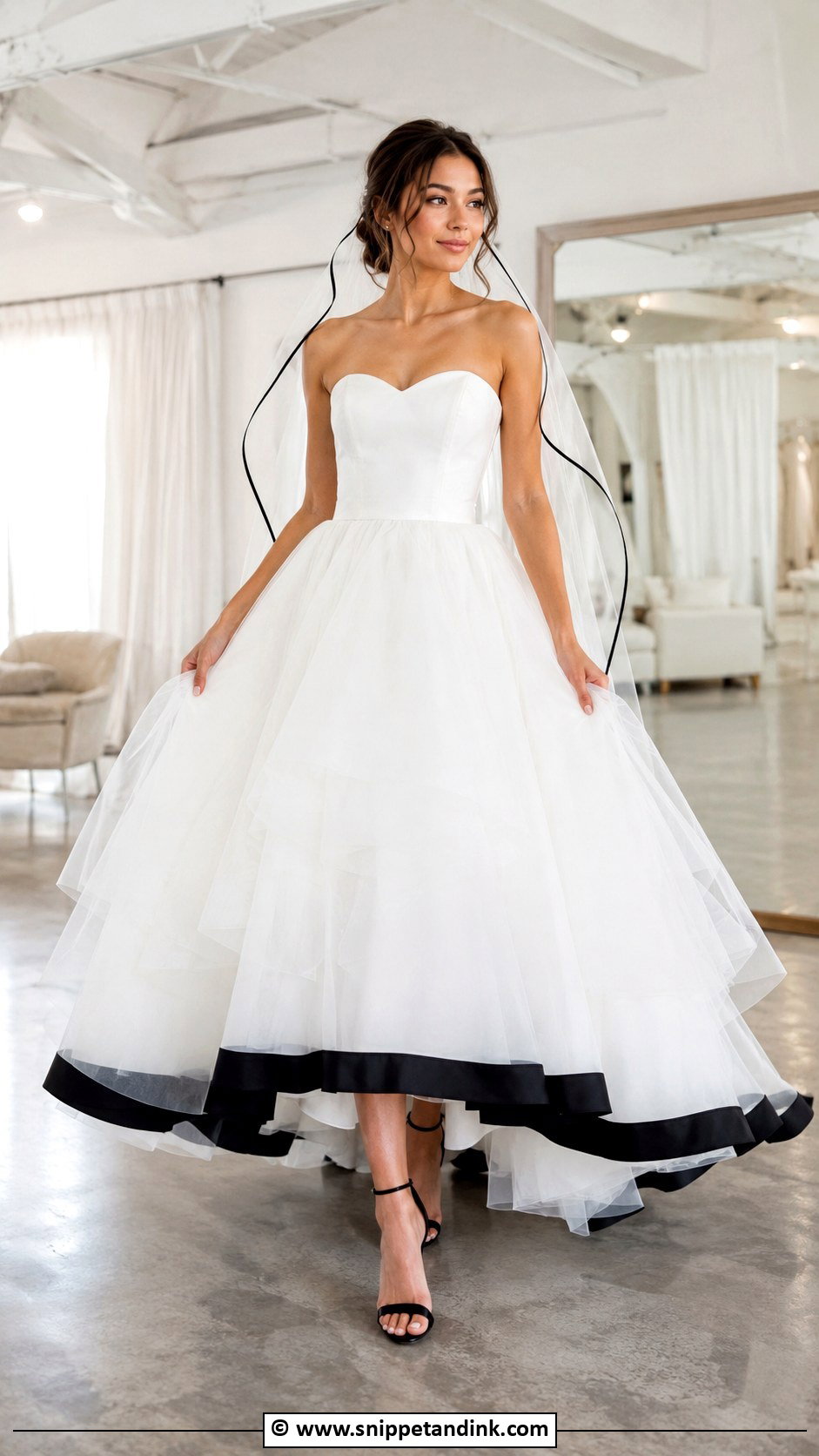
Putting the black at the hem keeps contrast away from your face, which matters to brides who worry about looking harsh up close. A thin trim feels tailored; a wide band is more graphic and frames the whole skirt as you walk. On ball gowns and layered tulle it moves with every step. The trade-off nobody mentions: the hem drags, and a black band shows grass stains and dust less than white but shows chalky pavement marks more, so plan your outdoor route.
9. Wedding Dress With Black Veil
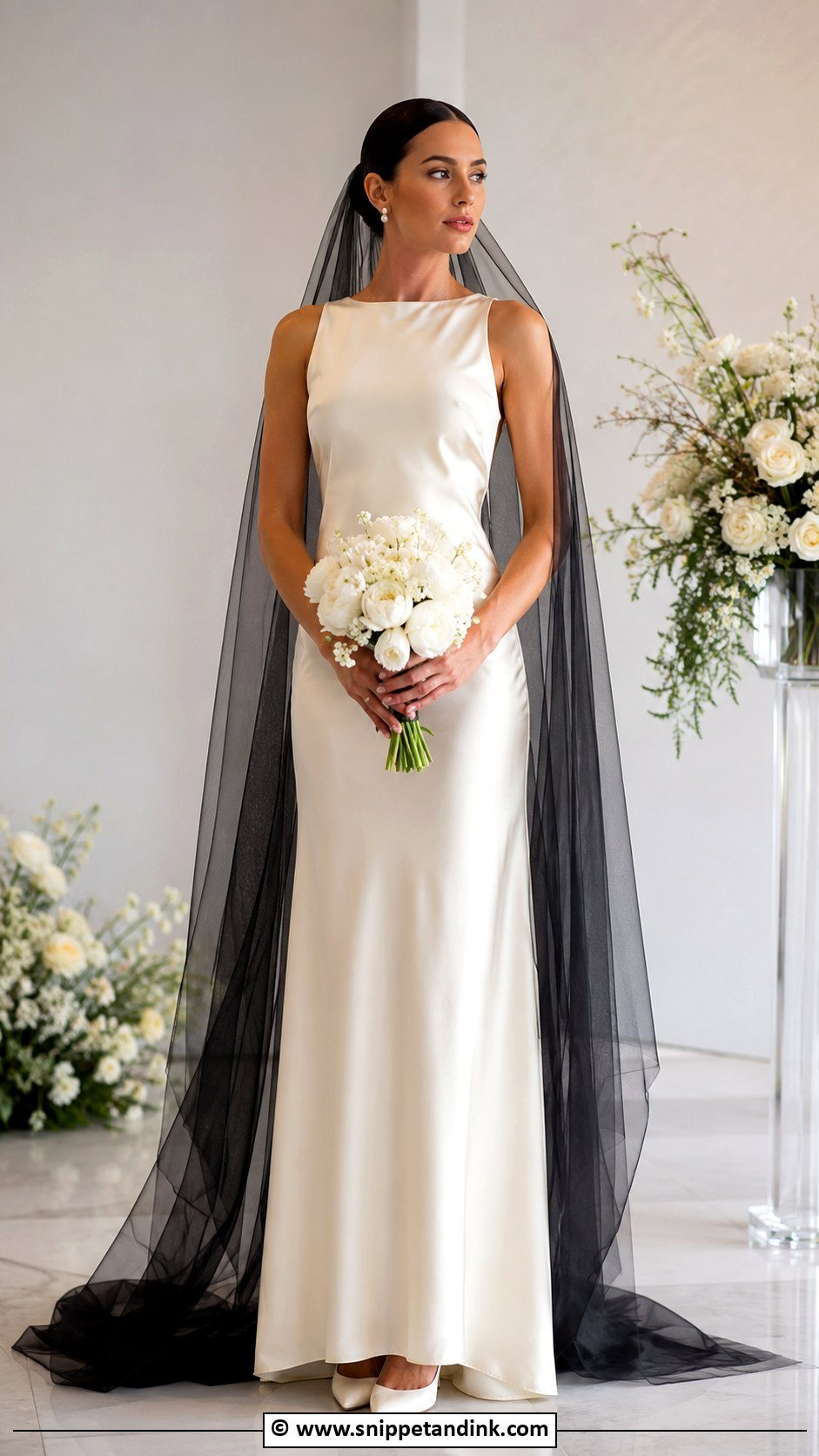
Let the veil carry the black and leave the dress alone. Over a satin slip, crepe column or strapless ball gown, a fingertip black veil looks modern and a cathedral length makes a real entrance. If full black feels like too much, try white tulle with a black lace edge. Have your hairstylist anchor a dark veil a little lower than usual; dark tulle sitting high on the crown reads heavier in photos than white does.
10. Wedding Dress With Black Gloves
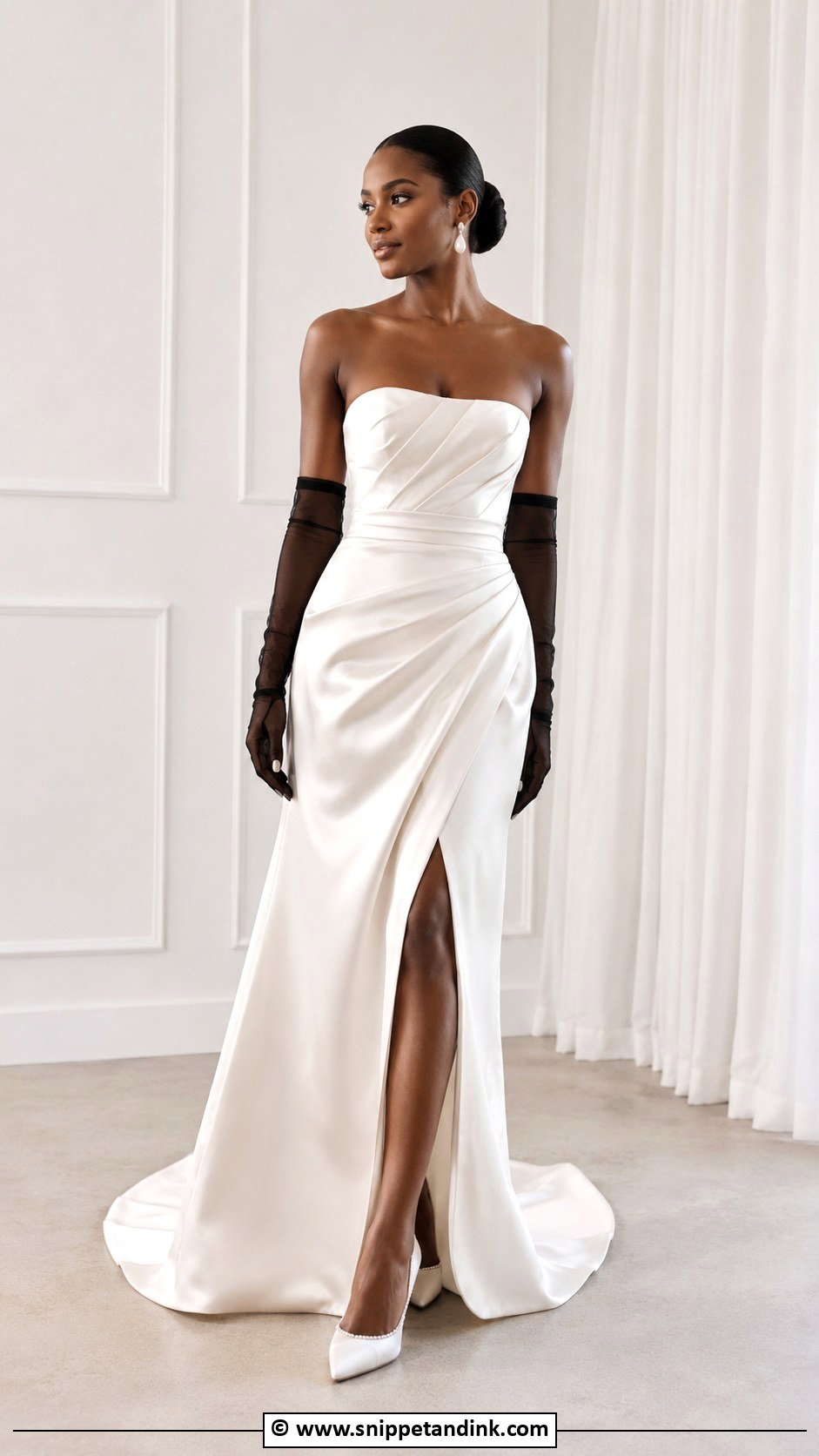
Gloves change how you hold your hands all day, which is why I suggest trying them on with the actual bouquet. Sheer tulle feels soft, satin looks polished, lace adds pattern. They suit a strapless satin dress, off-the-shoulder gown or clean column because the arms are bare. Skip rings over the gloves and keep jewelry minimal. Plan the ring exchange, too: either slit the ring finger seam or take the left glove off and hand it to your maid of honor before the vows.
11. Wedding Dress With Black Corset
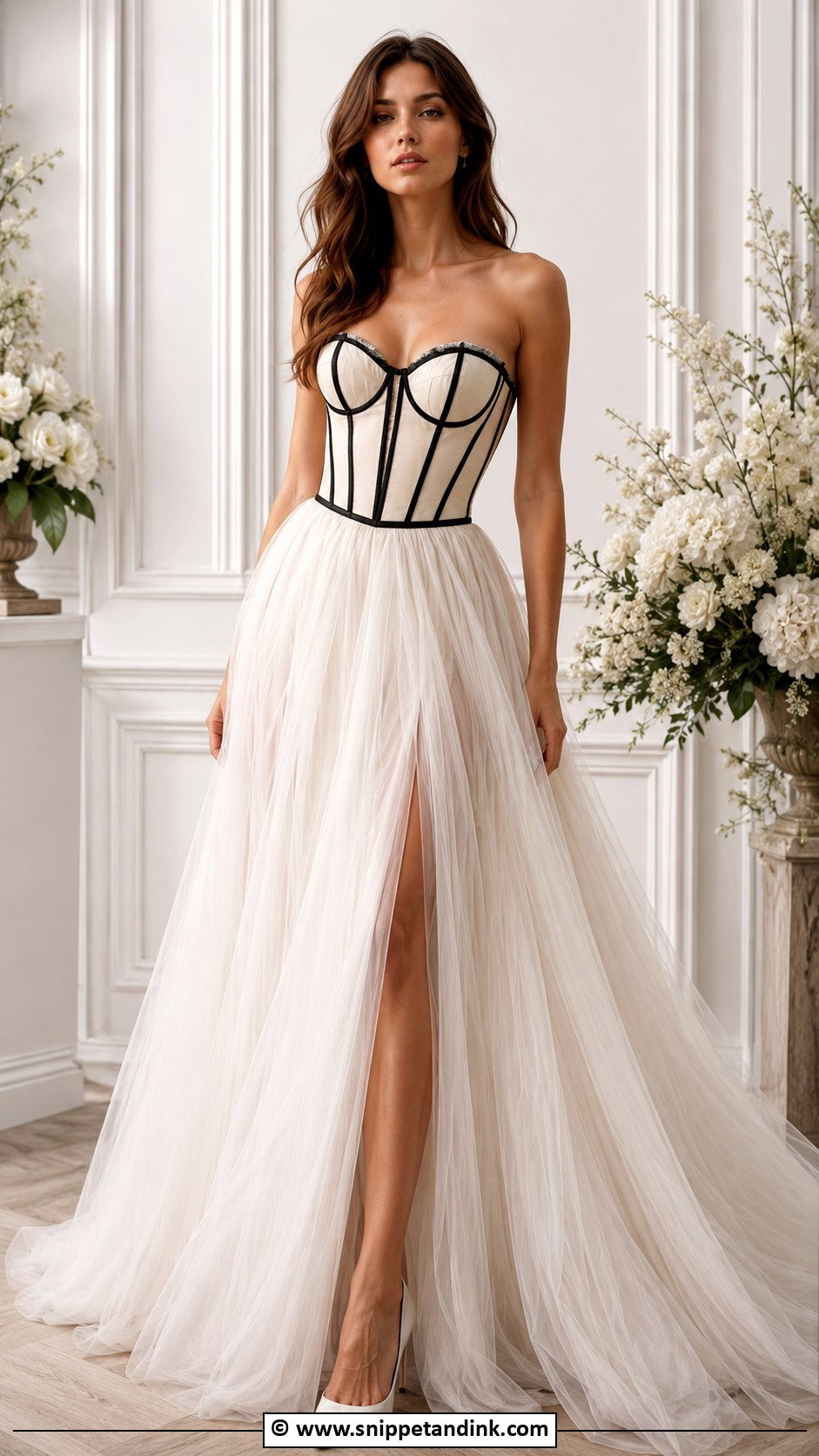
A black corset gives the waist a definite shape, and you can have it two ways: fully black over a white skirt, or black boning visible through an ivory bodice. A full tulle skirt keeps it romantic and a crepe skirt makes it sharper. I fit corsets with the bride sitting as well as standing, because spiral steel boning that feels fine upright can dig in when you sit for a three-course dinner. Soft waves and small earrings balance the harder lines up top.
12. Wedding Dress With Black Beading
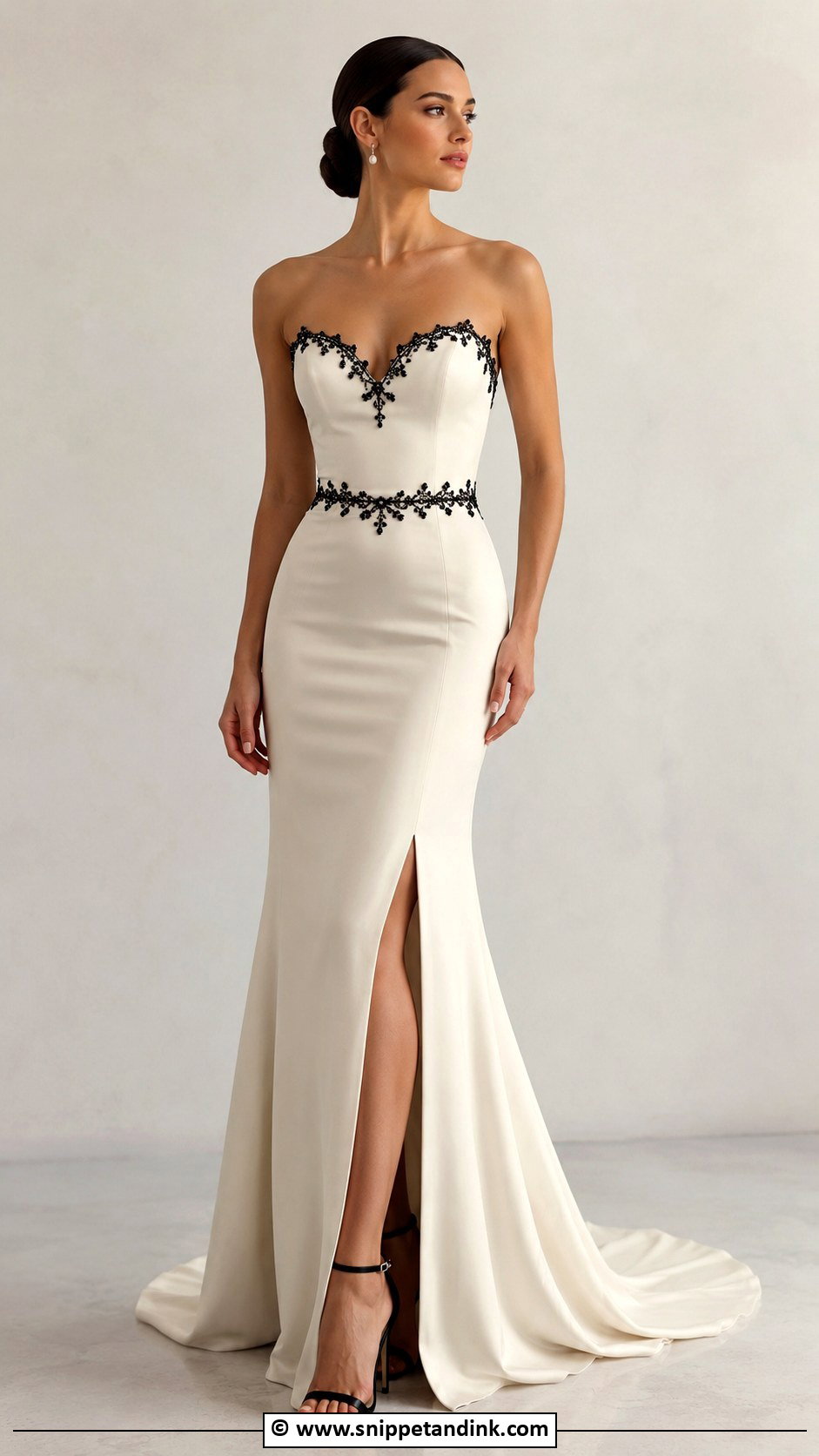
Black beading sparkles without the sugary feel of crystals, and it reads especially well at evening receptions where the beads catch candlelight. Placement is where it succeeds or fails. Beading that frames the neckline, waist or train looks deliberate; scattered beads all over just look busy. I’d keep hair sleek and earrings small. Check the weight, too. A heavily beaded bodice can pull the straps down by the evening, so ask your seamstress about adding a waist stay.
13. Wedding Dress With Black Appliques
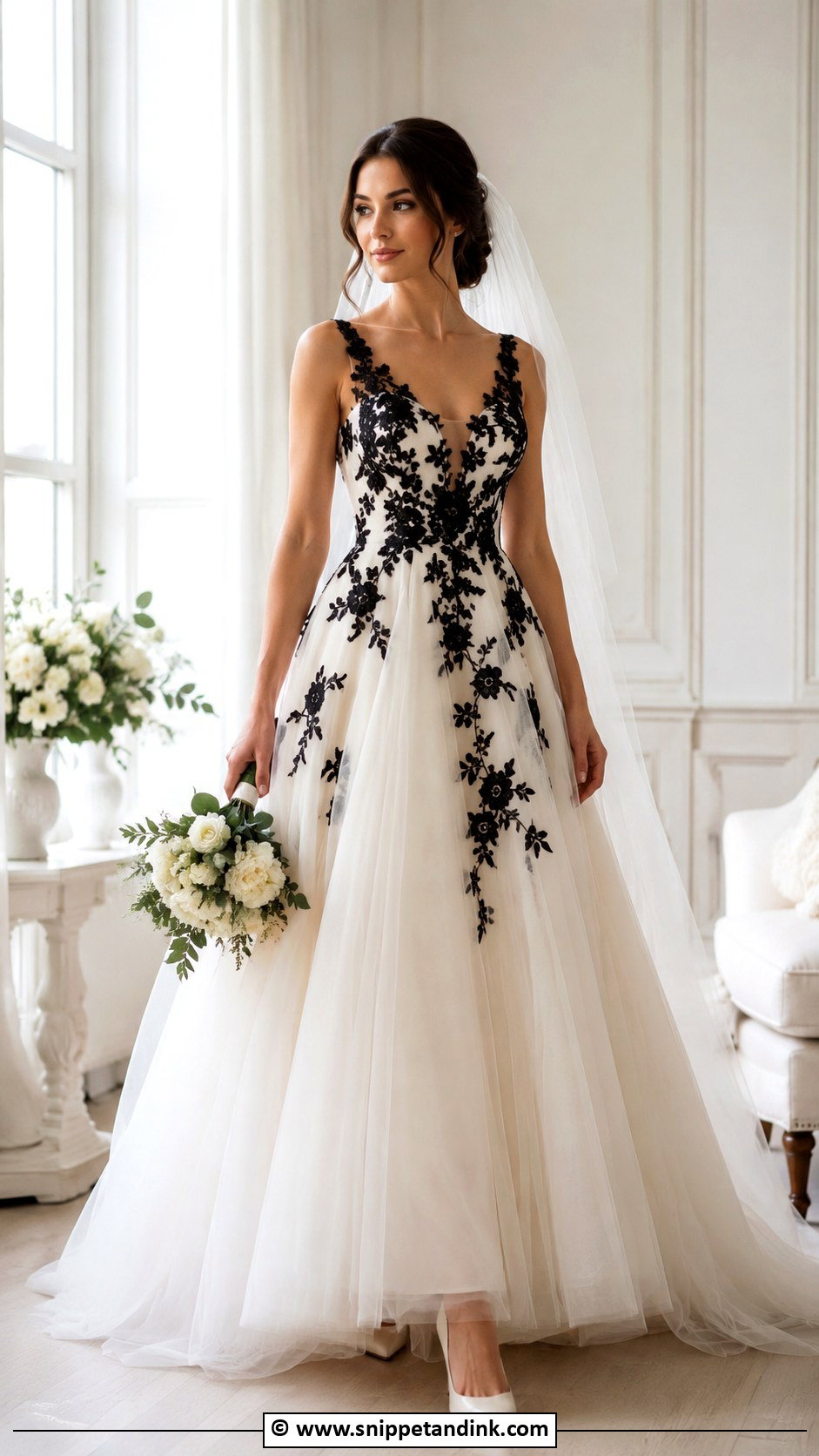
Appliqués add raised texture, and the motif sets the mood: florals feel romantic, vines feel organic, geometrics feel modern. A sheer neckline or soft tulle skirt keeps black appliqués from looking stamped on. What I look at closely is the edge of each piece. Good appliqués are hand-tacked with a fine thread and the edges lie flat; cheaper ones are glued and lift at the corners after a few hours of movement. Keep the bouquet pale so the dress stays the focus.
14. Wedding Dress With Black Belt
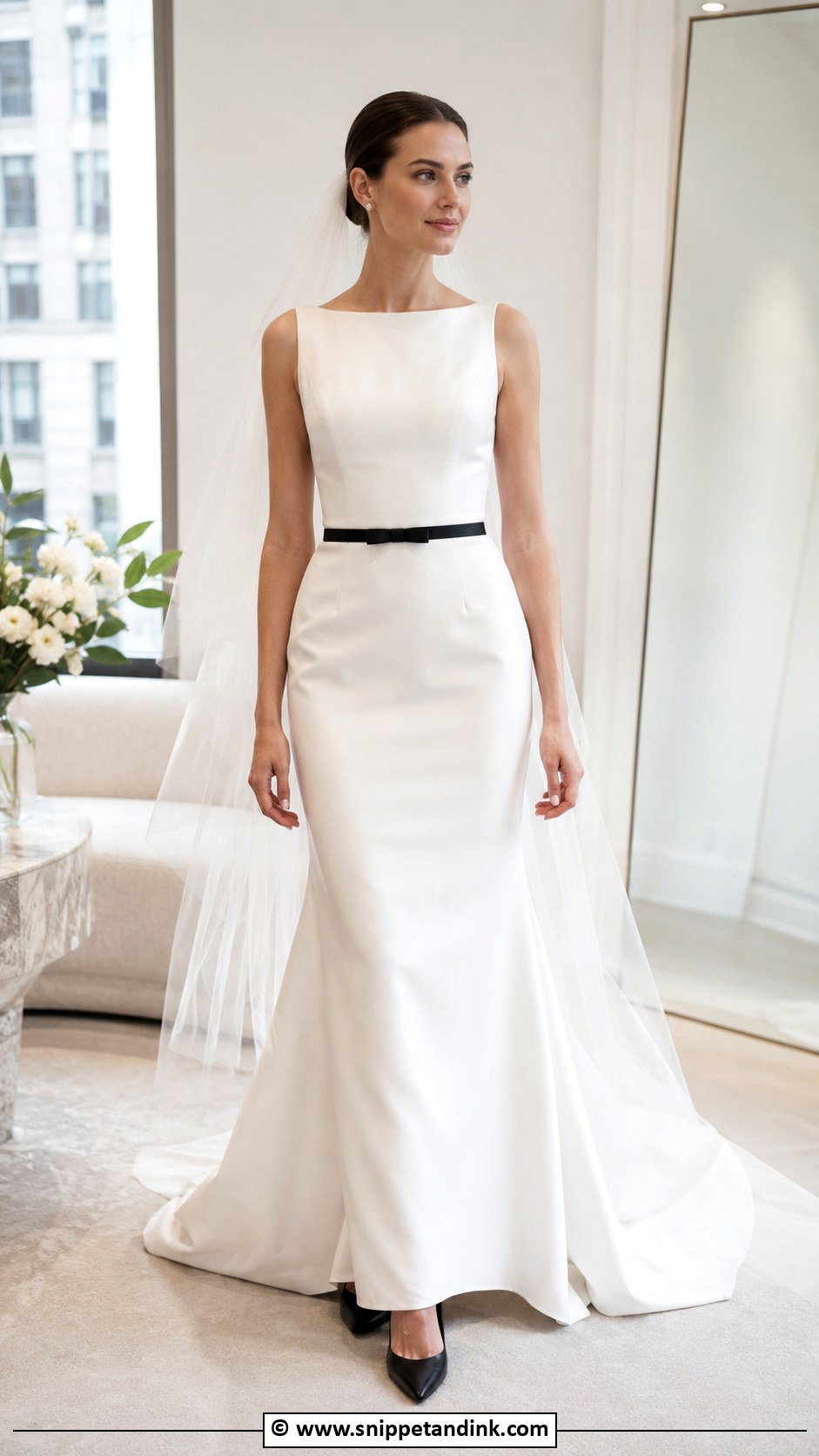
A black belt makes a simple dress look sharper in one move. It suits sheath dresses, minimal satin gowns and bridal jumpsuits. Thin belts read sleek; wide ones make the waist a feature. Velvet softens, satin shines and grosgrain looks tailored. I steer petite or short-waisted brides toward the thin versions, because a wide black band can visually shorten the torso by a couple of inches. Black pumps and pearl studs finish it.
15. Wedding Dress With Black Train
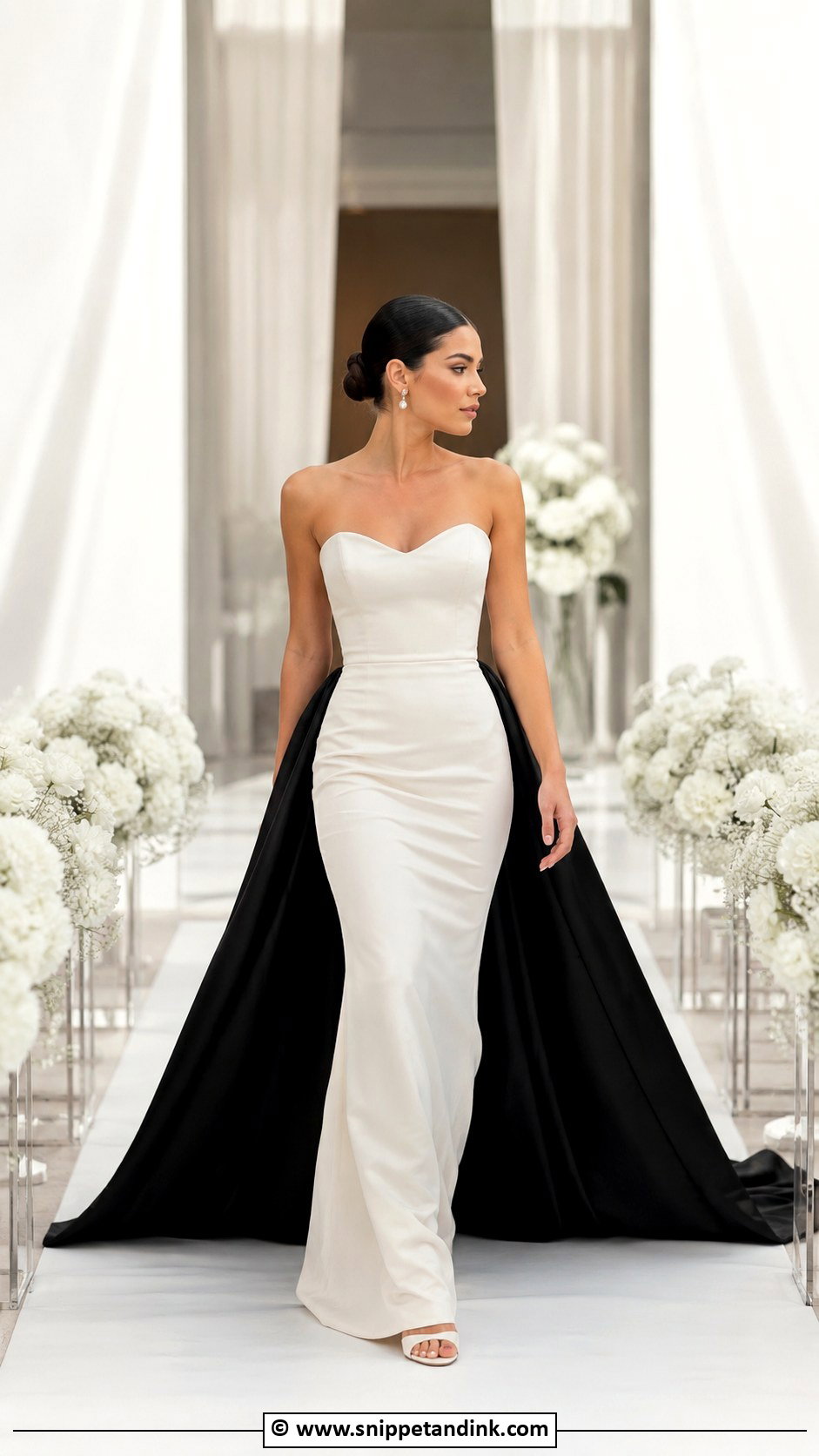
A black train puts the drama behind you and leaves the front of the dress alone, which is why it works so well on fitted gowns. It can be a detachable black overskirt or a black lining that flashes as you walk. I like the detachable route for practical reasons: you get your aisle moment, then you unhook it and dance without anyone stepping on it. Ask for heavy-duty hooks rather than snaps, since snaps pop open under the weight of a long train.
16. Wedding Dress With Black Off Shoulder Detail
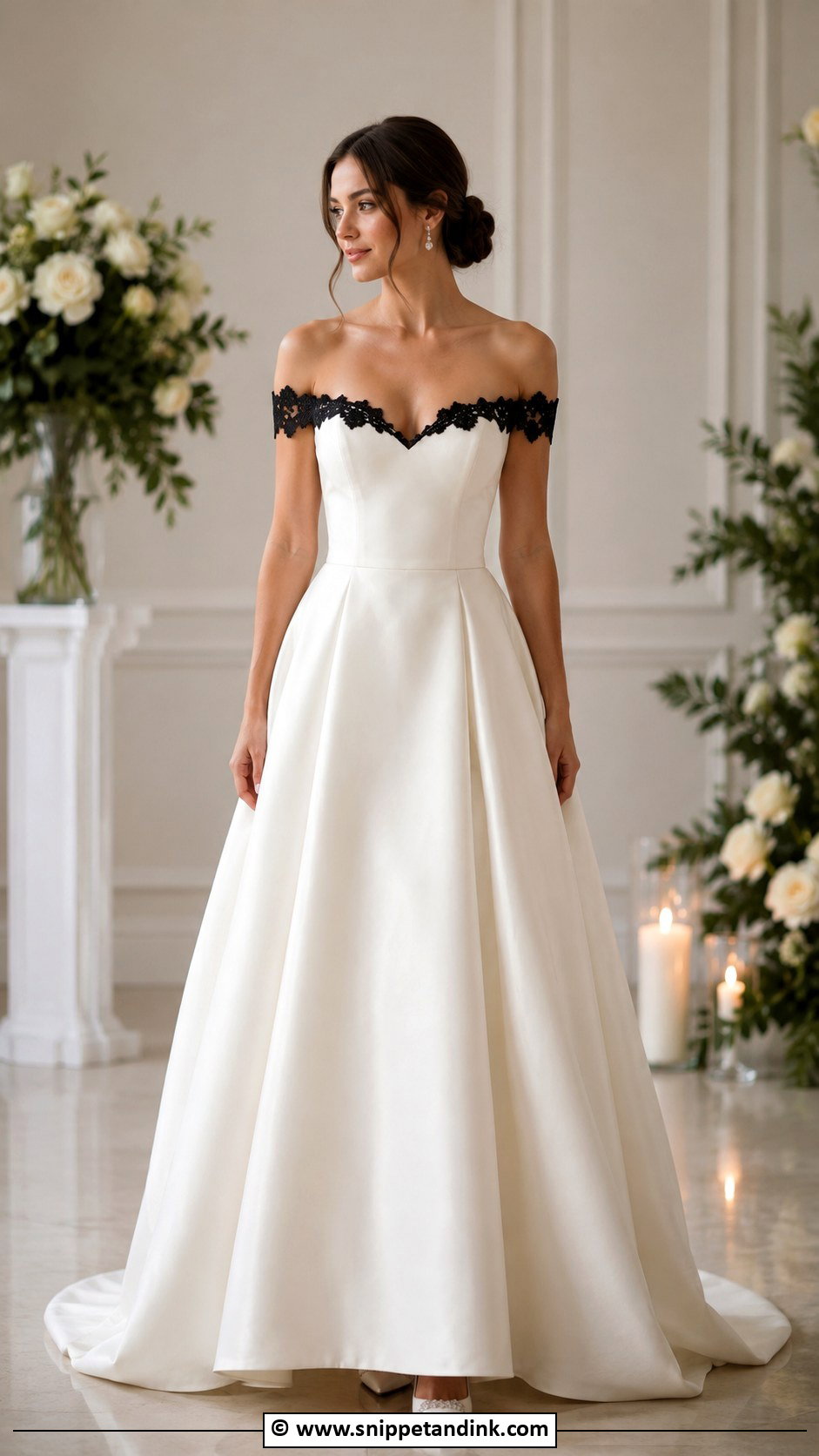
Black along an off-the-shoulder neckline frames the collarbones and face. It might be lace, a folded satin band or a line of embroidery. A mermaid skirt makes it dramatic; an A-line keeps it gentle. Skip the necklace and wear drop earrings with a low chignon. The fit point I worry about here is the band itself. If it’s even slightly loose it slides down your arms every time you hug someone, so I fit it snug and add silicone grip tape inside.
17. Wedding Dress With Black Strap Detail
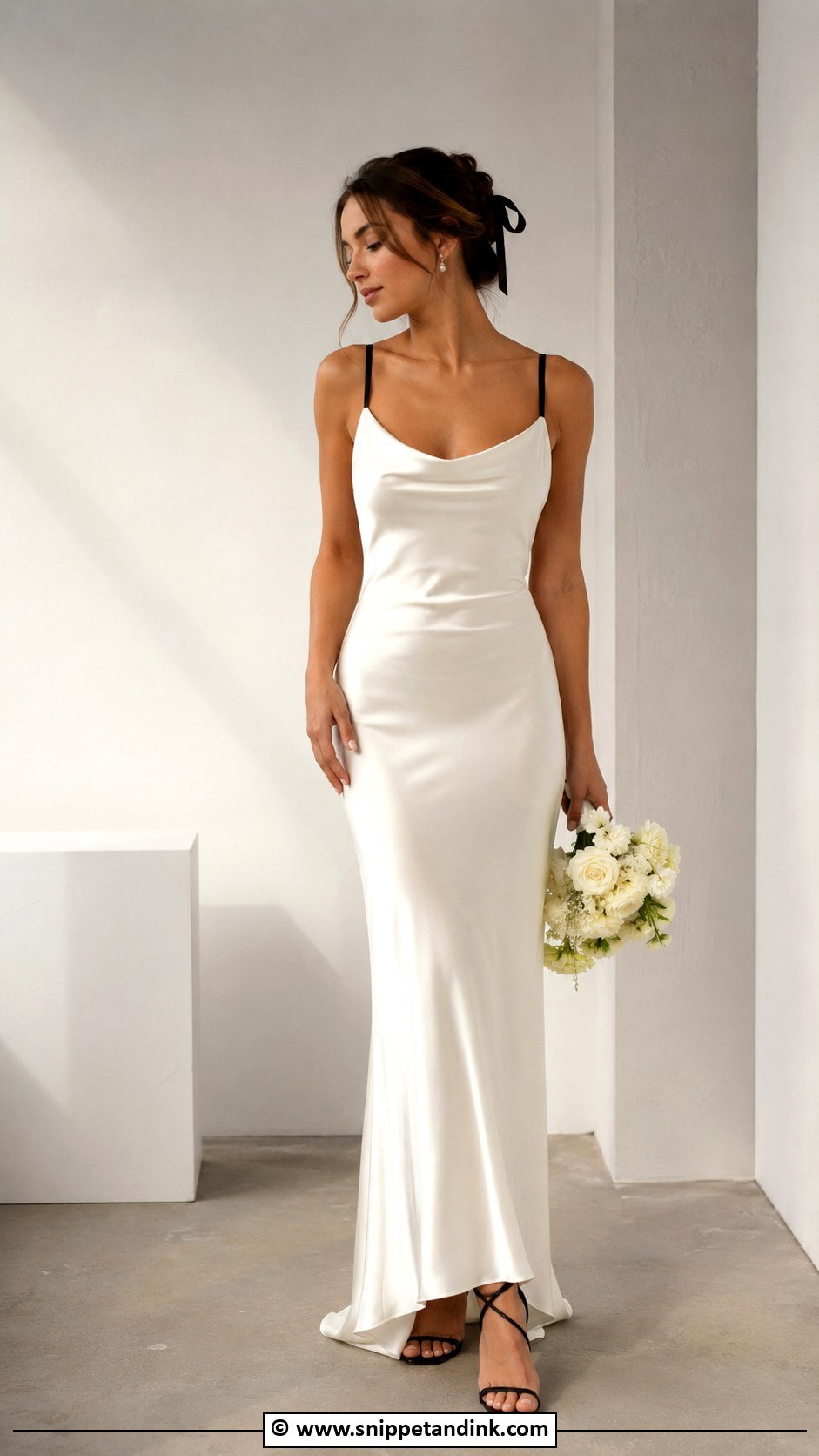
Thin black straps draw clean lines against the skin and add contrast without covering the dress in detail. They suit slip dresses, square necks and plain satin, and they’re a good fit for warm weather and city venues. A black hair ribbon ties the look together. If you have broad shoulders, ask for the straps set slightly inward; set at the shoulder edge they can make the frame look wider.
18. Wedding Dress With Black Ruffle Skirt
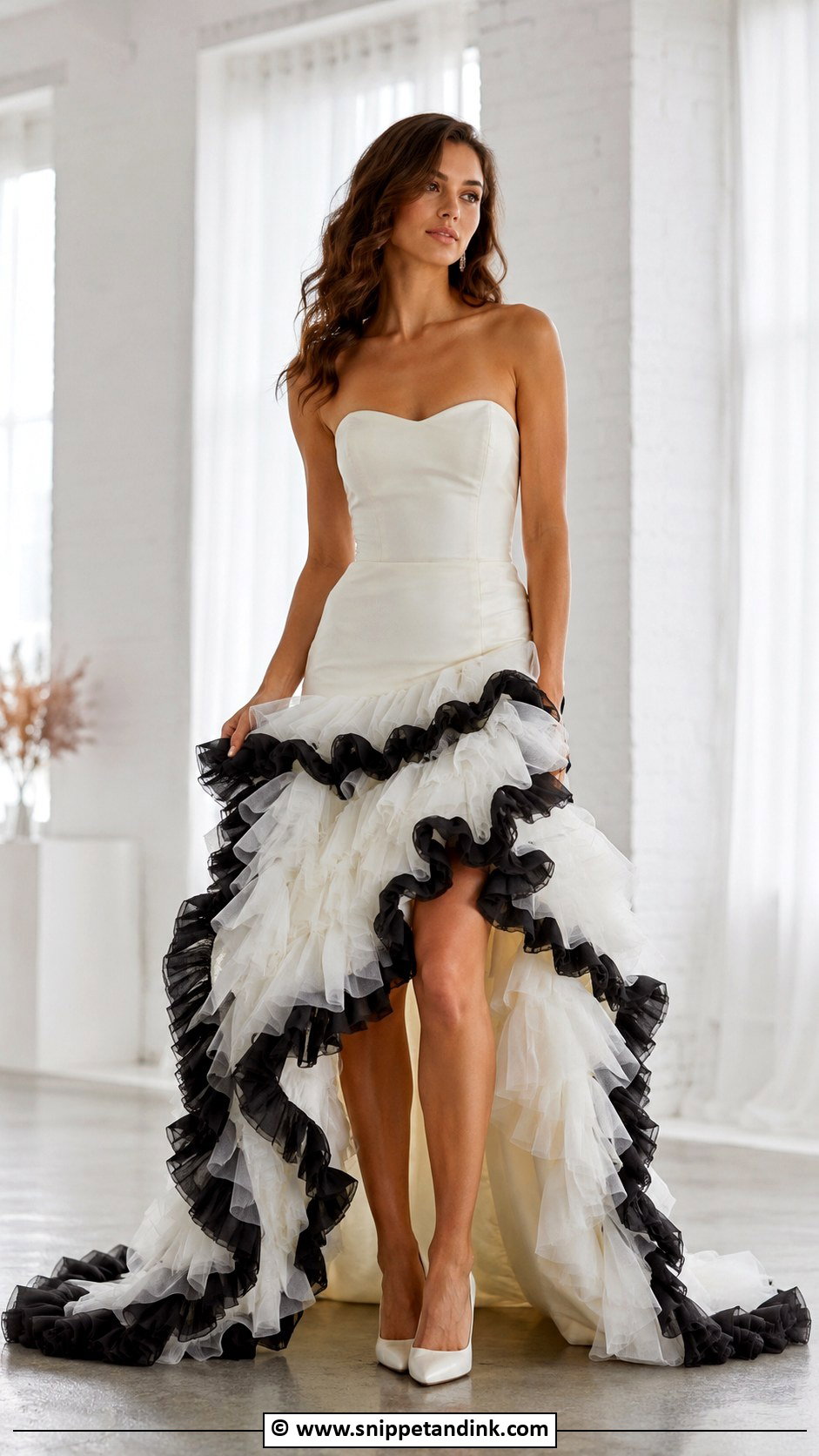
Ruffles in black bring movement: layers under a white skirt, black edging on each tier, or a full overskirt. Keep the bodice plain and structured so the skirt takes the attention. A strapless neckline or a clean square neckline does that best. Heads up on volume, though. Tiered ruffles add width at the hip, and a skirt that looks right standing can take up a whole car seat, so check how you’ll travel to the venue.
19. Wedding Dress With Black Pearl Detail
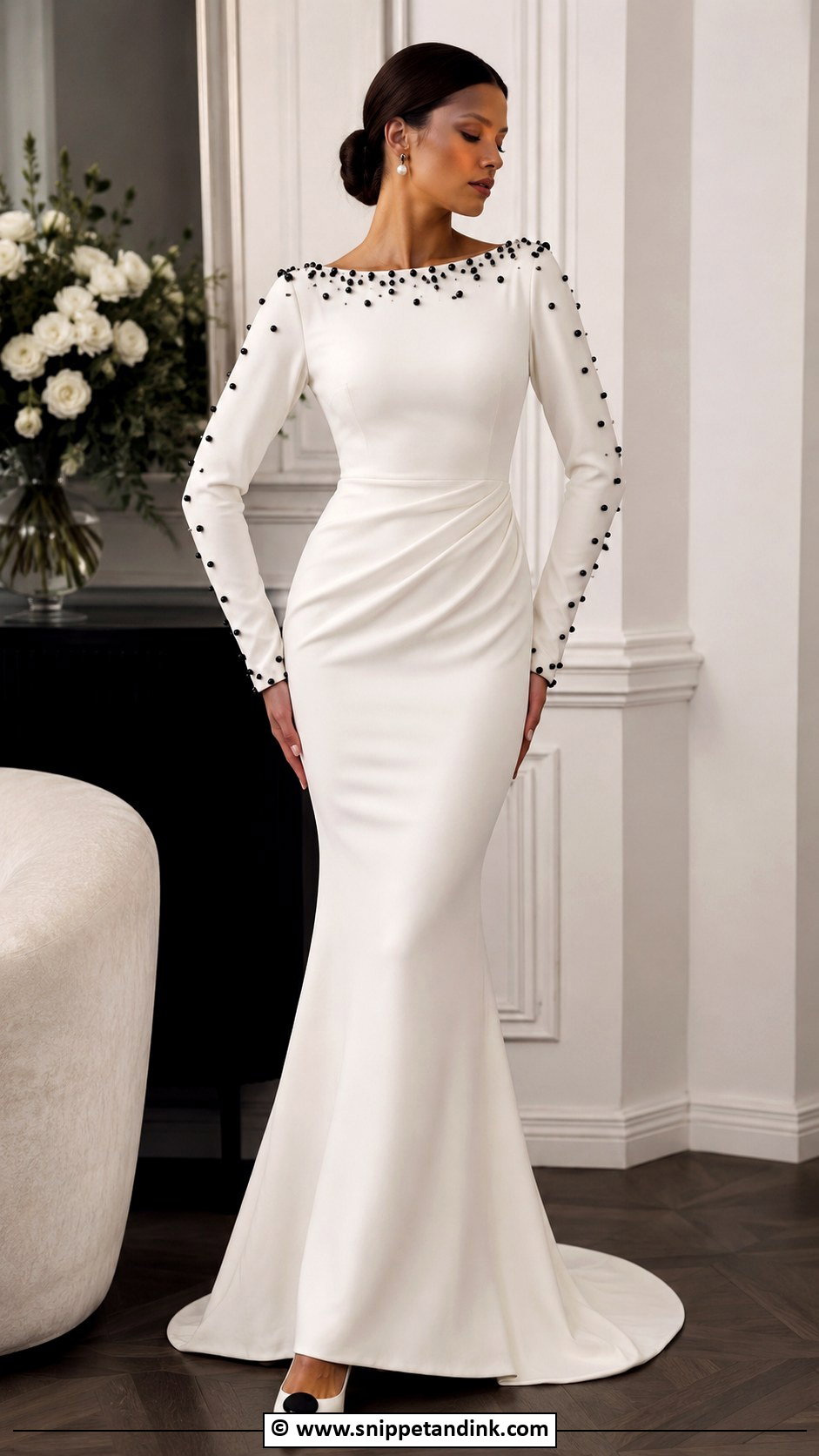
Black pearls look rarer than crystals and give a soft sheen instead of sparkle. Sewn onto the neckline, sleeves, bodice or veil, they should be spaced out rather than clustered. A fitted crepe dress or a satin gown with sheer sleeves keeps the effect refined. I’d choose matte-finish glass pearls over plastic ones; plastic pearls catch the flash and look shiny and cheap in photos.


20. Wedding Dress With Black Ribbon Back
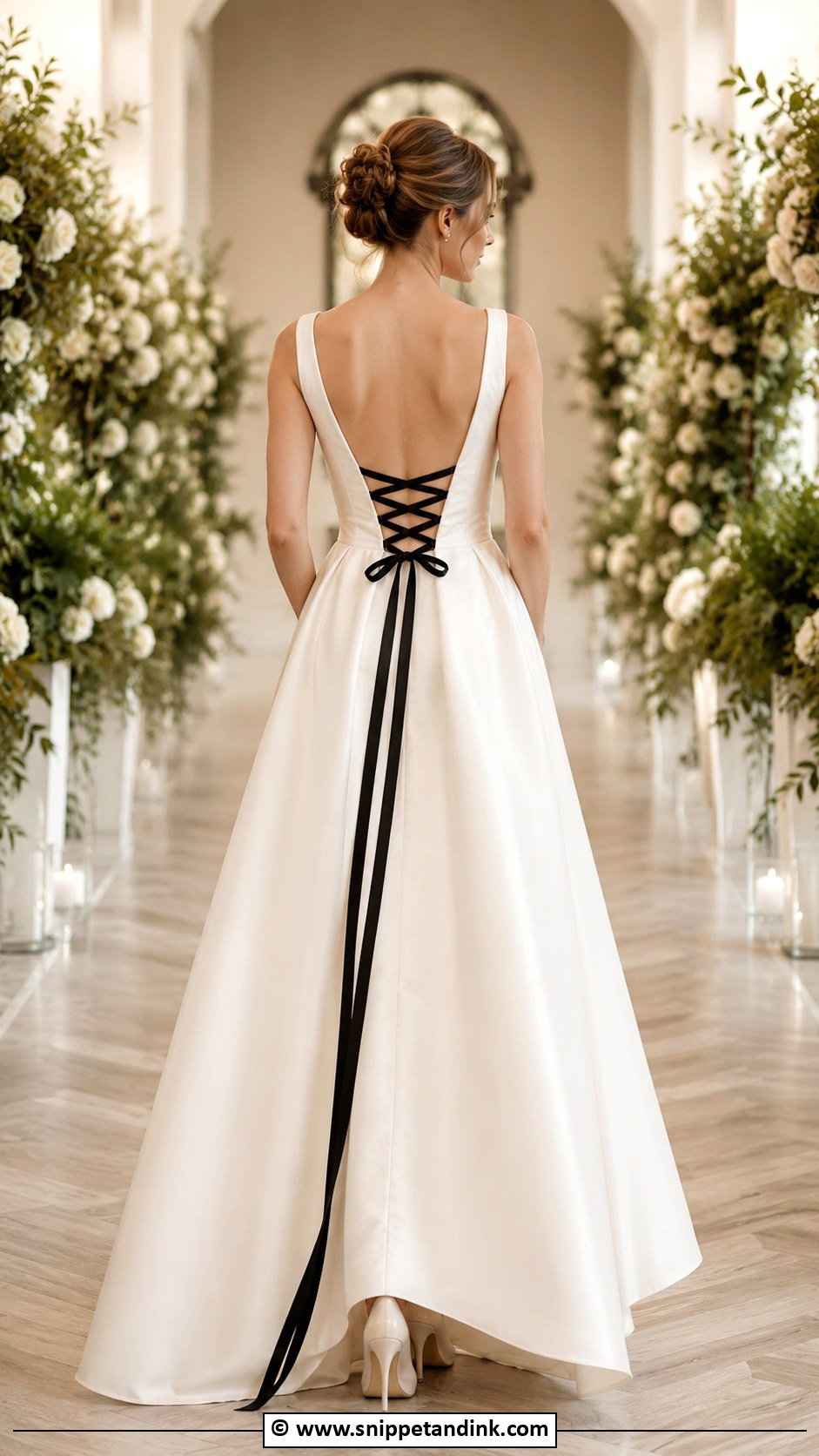
A ribbon back is a surprise detail that only shows when you turn. It can lace up a corset, tie across the shoulders or trail from the waist in long streamers. Wear your hair up so it stays visible. Lace-up backs also have a real fitting advantage: they adjust by an inch or so either way, which helps if your weight shifts in the weeks before the wedding. Practice the lacing with whoever is dressing you, because a crossed loop shows clearly in black.
21. Wedding Dress With Black Cape
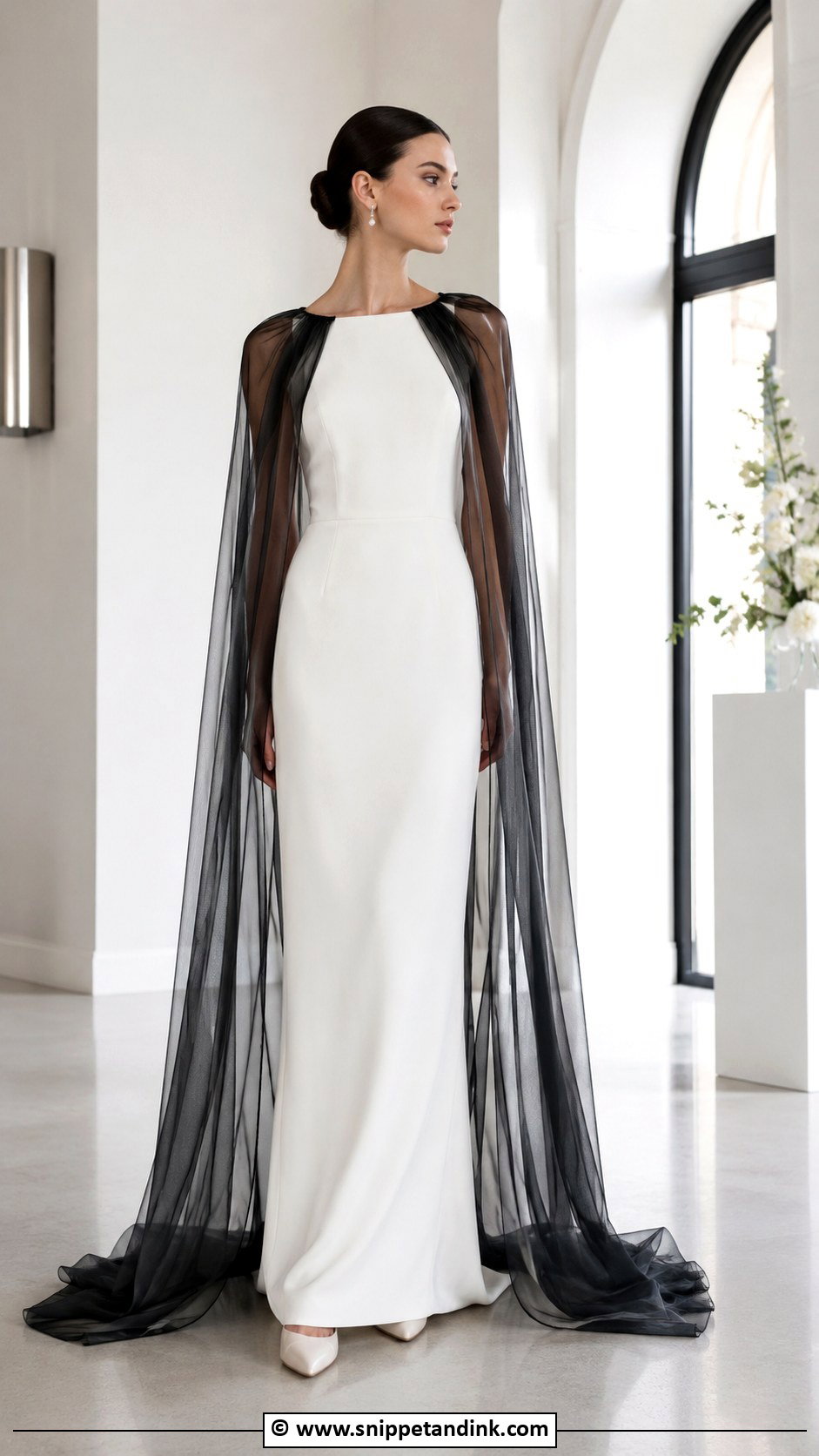
A black cape gives you drama over a very simple dress, like a white column, satin slip or fitted crepe. Sheer tulle feels airy, a structured cape looks editorial. Shoulder length is subtle; floor length makes an entrance. Many brides wear it in place of a veil. It also solves coverage for a religious ceremony, and you can take it off for the reception. Fasten it with a hook and bar at the neck, not a button, so it doesn’t pull open when you raise your arms.
22. Wedding Dress With Black Neckline
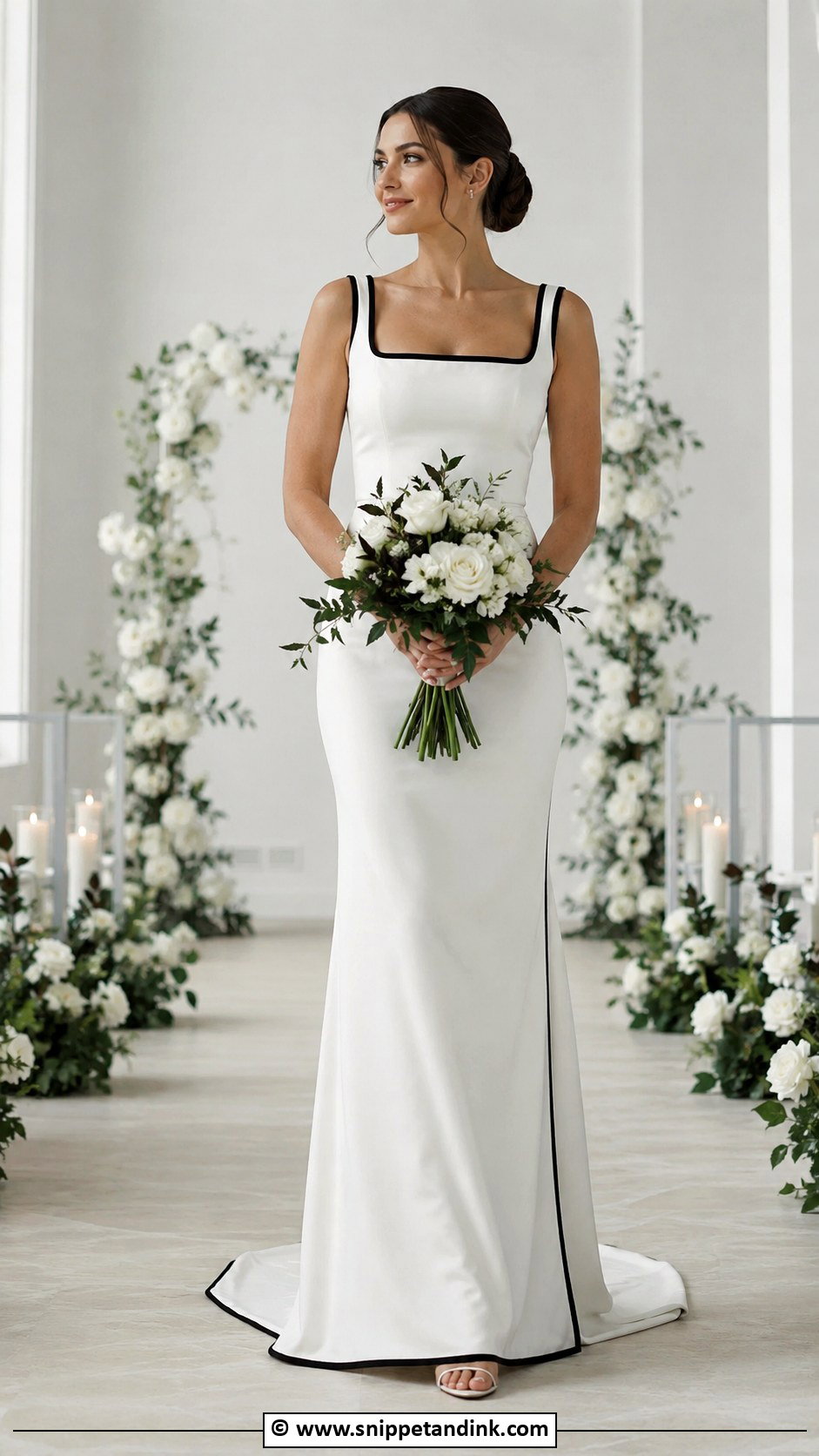
Contrast at the neckline frames the face, so every close-up ends up featuring it. It might be lace trim, satin piping, a velvet band or embroidery, and it suits square, sweetheart, bateau and halter necks. Skip the bold necklace, which only competes. Small earrings and a soft updo are plenty. Do try it under your actual makeup: black next to skin makes undertones look stronger, and I sometimes suggest a slightly warmer foundation to compensate.
23. Wedding Dress With Black Waist Bow
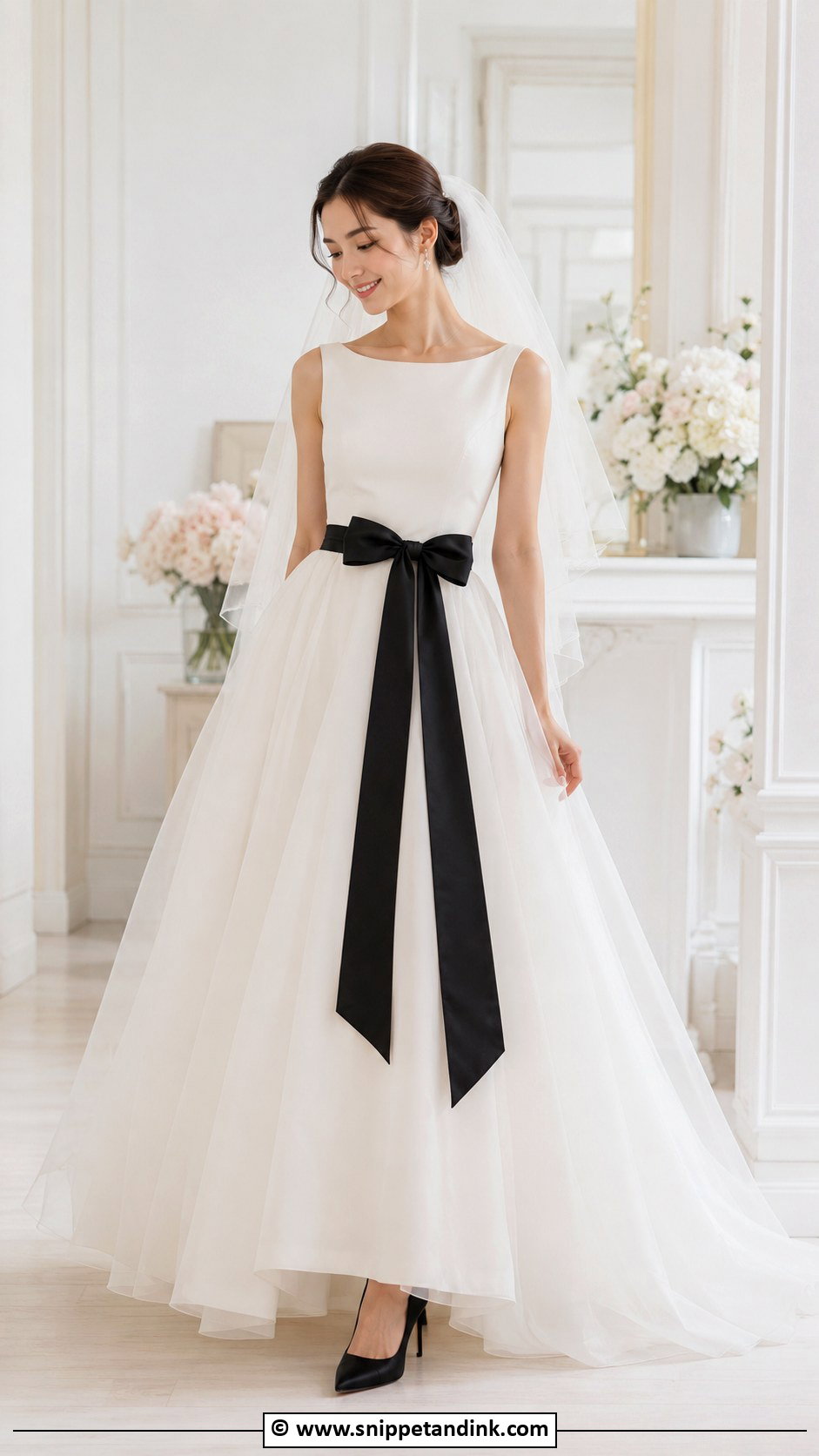
Somewhere between a belt and a sash sits the black waist bow. It’s softer than a belt and more visible than a thin sash. It suits satin ball gowns, organza A-lines and tea-length dresses. Set it at the natural waist, or slightly off-center for a modern twist, and let long tails move with the skirt. A bow like this makes an off-the-rack gown look custom without major alterations, which is a real budget saver.
24. Wedding Dress With Black Lace Trim
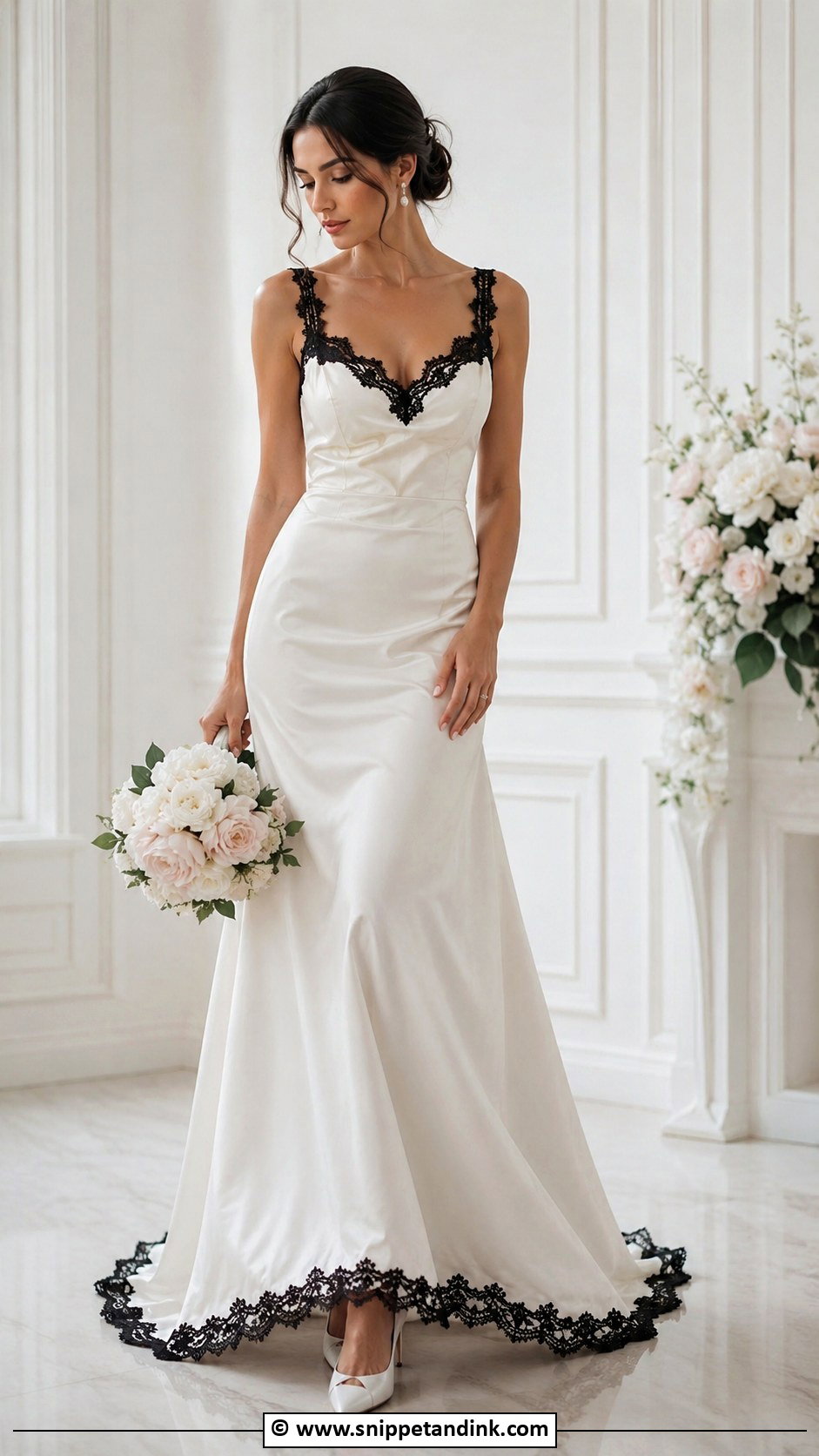
Black lace trim has a vintage feel, and the trick is restraint: pick one or two places, like neckline and sleeves, rather than edging everything. Against plain satin or crepe it stands out clearly. I prefer fine Chantilly-style lace here; heavy guipure can look costume-like in black. Black or ivory heels, pearl earrings and a low bun keep it soft.
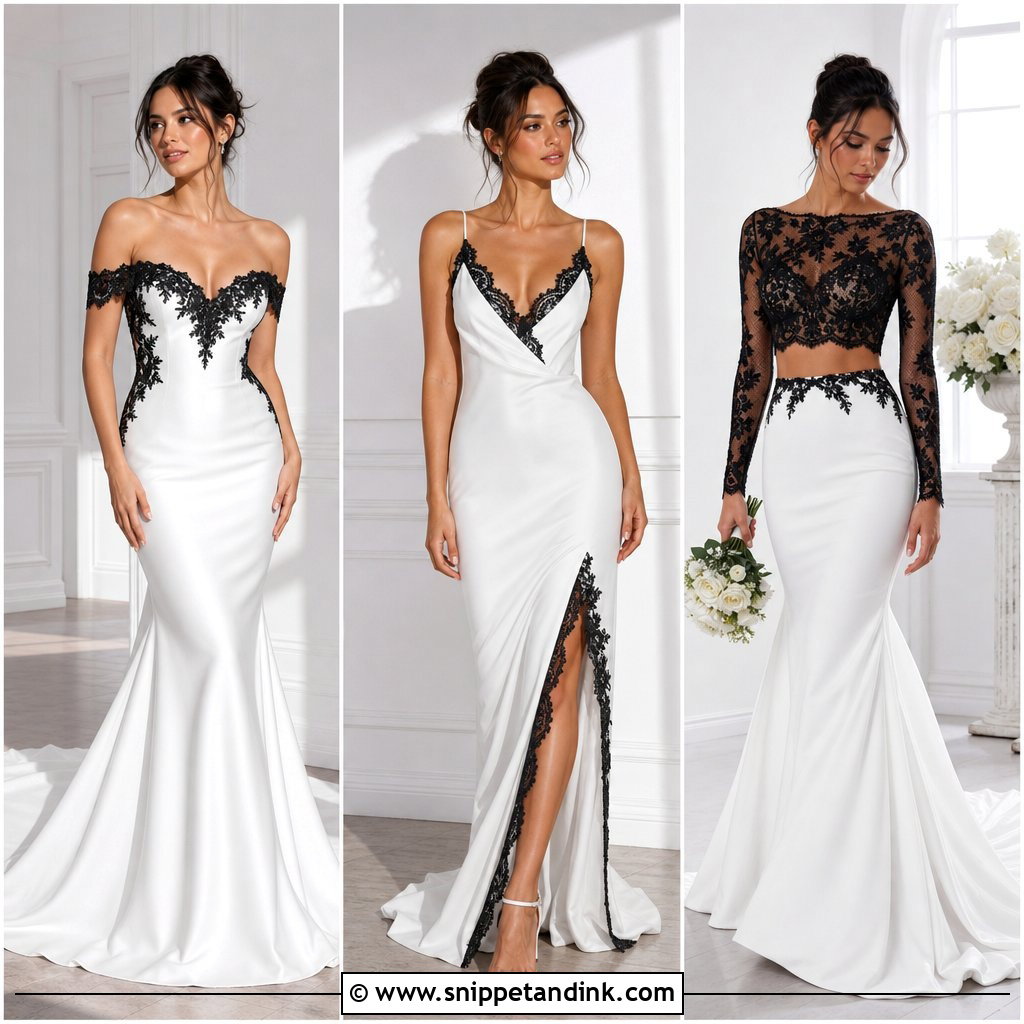
25. Wedding Dress With Black Overskirt
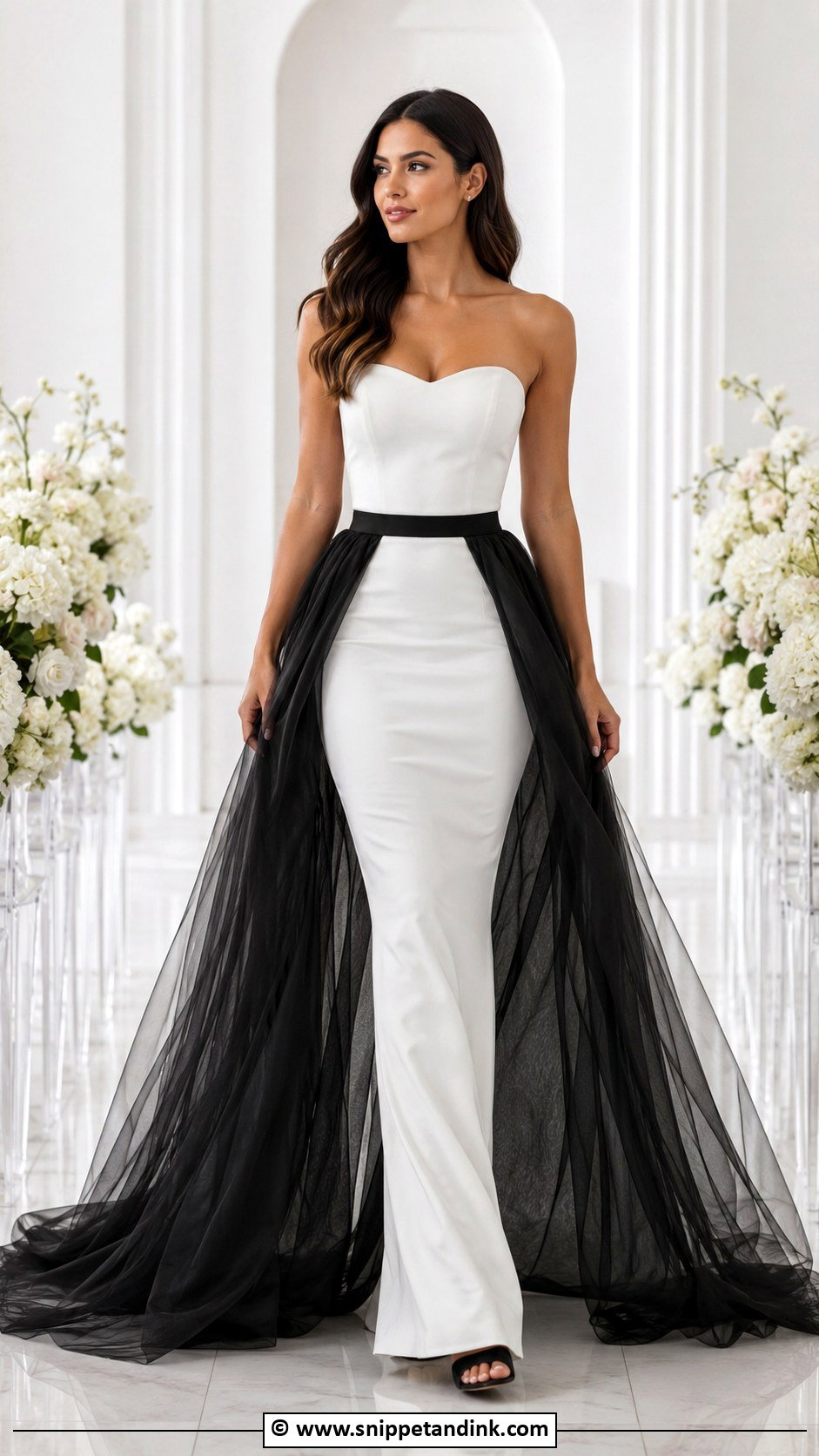
Two looks in one dress is the appeal of a black overskirt: wear it over a fitted white gown for the ceremony, then take it off for the reception. It can be sheer tulle, heavy satin or embroidered organza. Strapless or square-neck bases work best underneath. Rehearse the removal with your attendant. Most overskirts fasten with hooks hidden in the waistband, and fumbling with them in a restroom between courses is avoidable with five minutes of practice.
Can a Black Trim Bleed Onto White Fabric?
It can, and it’s the problem I take most seriously with these gowns. Dyed velvet, cheap ribbon and some lace trims release color when wet. A spilled drink, rain or a steamer held too close can leave a grey halo on the white fabric next to them. Ask your seamstress whether the trim has been pre-washed or colorfast-tested, and if you’re adding a bow or sash yourself, test a scrap with a damp white cloth first.
Steaming and spot cleaning on the day
Steam the white sections and the black sections separately, and keep the nozzle a hand’s width away from velvet so the pile doesn’t flatten into shiny patches. For spills near the trim, blot with plain water and a white cloth, working away from the black. Never rub, and never use a stain pen on the line where the colors meet.
Storing the dress afterward
Tell the cleaner about the black detail before they quote you, since mixed-color gowns sometimes need a different process. For storage, fold acid-free tissue between the black and white layers so they never rest against each other for months. Velvet should not be pressed flat under the skirt; let it sit on top where nothing crushes it.
Where the Black Goes Matters More Than How Much
The best black-accent dresses I’ve seen put the contrast in one place and let the rest of the gown stay calm. Bows, sashes and buttons are the gentle options. A cape, corset, train or full embroidery is a bigger commitment. Decide first whether you want the black near your face, at your waist, or behind you, and choose from there. Then take the dress to a fitting and look at it sitting down, walking and from the back, because black shows every seam and every shift in a way white forgives.
You'll Like These Ideas:




Leave a Reply