
White with black is a contrast I love because it’s so easy to tune. A velvet belt or a row of covered buttons reads as a quiet signature, while a black corset bodice, an oversized bow or a detachable train turns the whole gown graphic. The contrast can sit at the neckline, waist, sleeves, back or hem, which is why it suits a minimalist city ceremony as easily as a formal ballroom. Each of the twenty dresses below comes as a complete outfit, with ideas for the veil, jewelry, bouquet and shoes. Keep white as the main colour and let the black do the drawing.

Adding Black to a Gown You’ve Already Bought
Plenty of brides fall for this look after their dress is ordered. That’s fine, because many black accents can be added afterwards. The first thing I ask is whether you want the change to be permanent.
Removable, with no sewing into the gown
- A black satin or velvet sash, held in place by small thread loops at the side seams.
- Opera gloves, a black veil or a cape.
- A detachable overskirt or train on its own waistband.
- Black shoes and a ribbon-wrapped bouquet, the lightest touch of all.
Permanent, done by a seamstress
Appliqués, piping, neckline ribbon, swapped buttons and black sleeves are all possible, but they’re real alteration work. Book them alongside your other fittings, ideally before the hem is finished, and ask to see a sample of the black fabric against your dress in daylight. Black beside ivory looks quite different from black beside bright white, and a deep black ribbon can make an ivory gown look noticeably creamier.
1. White Wedding Dress With Black Bow
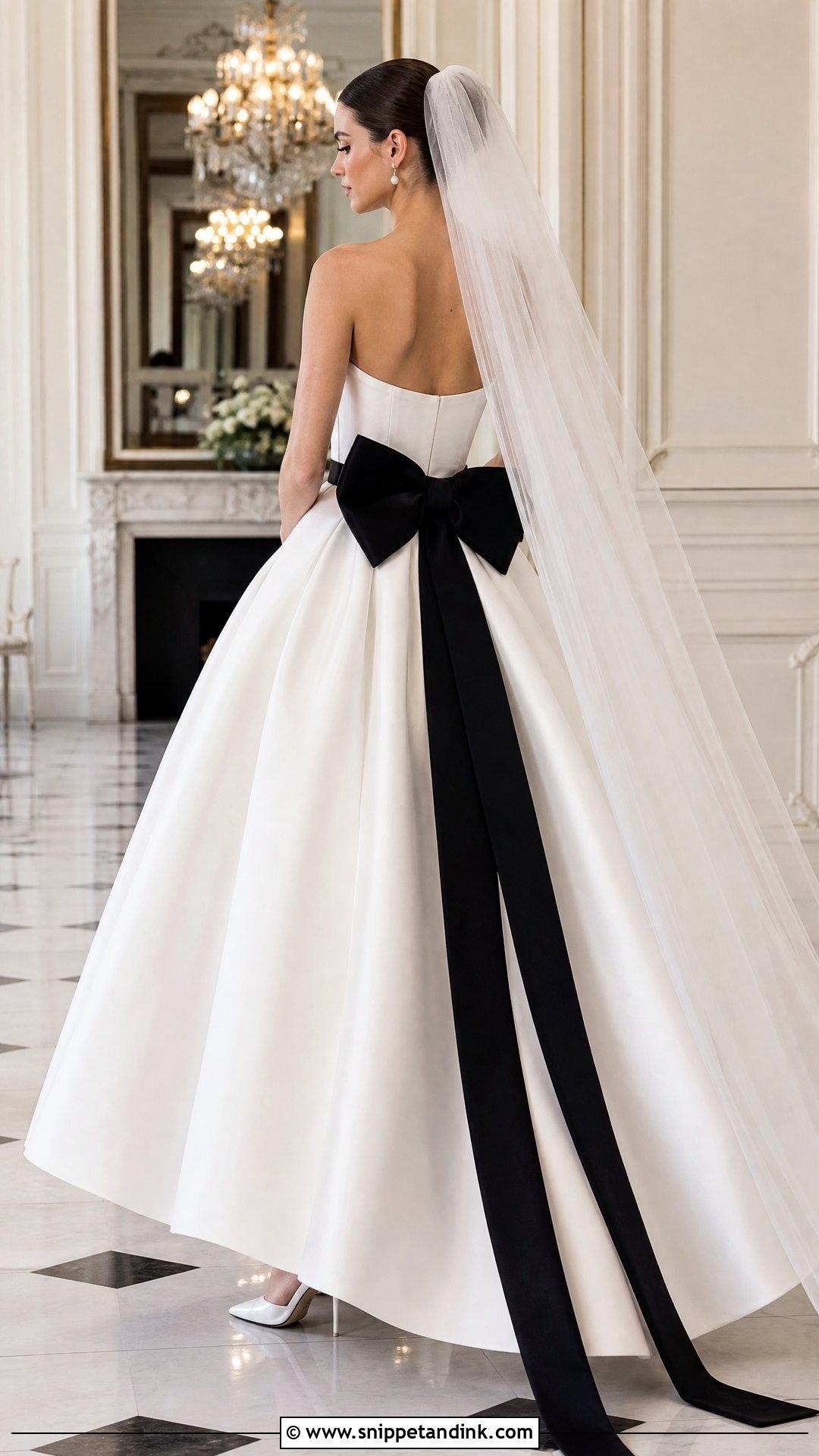
An oversized bow has to be engineered, not just tied. A large black satin bow at the back waist of a structured ball gown needs interfacing inside the loops, or it droops by the first dance. Keep the front of a strapless or straight-neck gown plain so the bow arrives as a surprise when you walk past the guests. Long tails can trail down the skirt, as long as their ends are cut on a slant so they don’t fray. A plain cathedral veil softens the drama. Pearl drops, a low bun and white pumps keep everything else quiet, and roses or callas tied with narrow black ribbon repeat the accent.
2. White Wedding Dress With Black Lace Appliqués
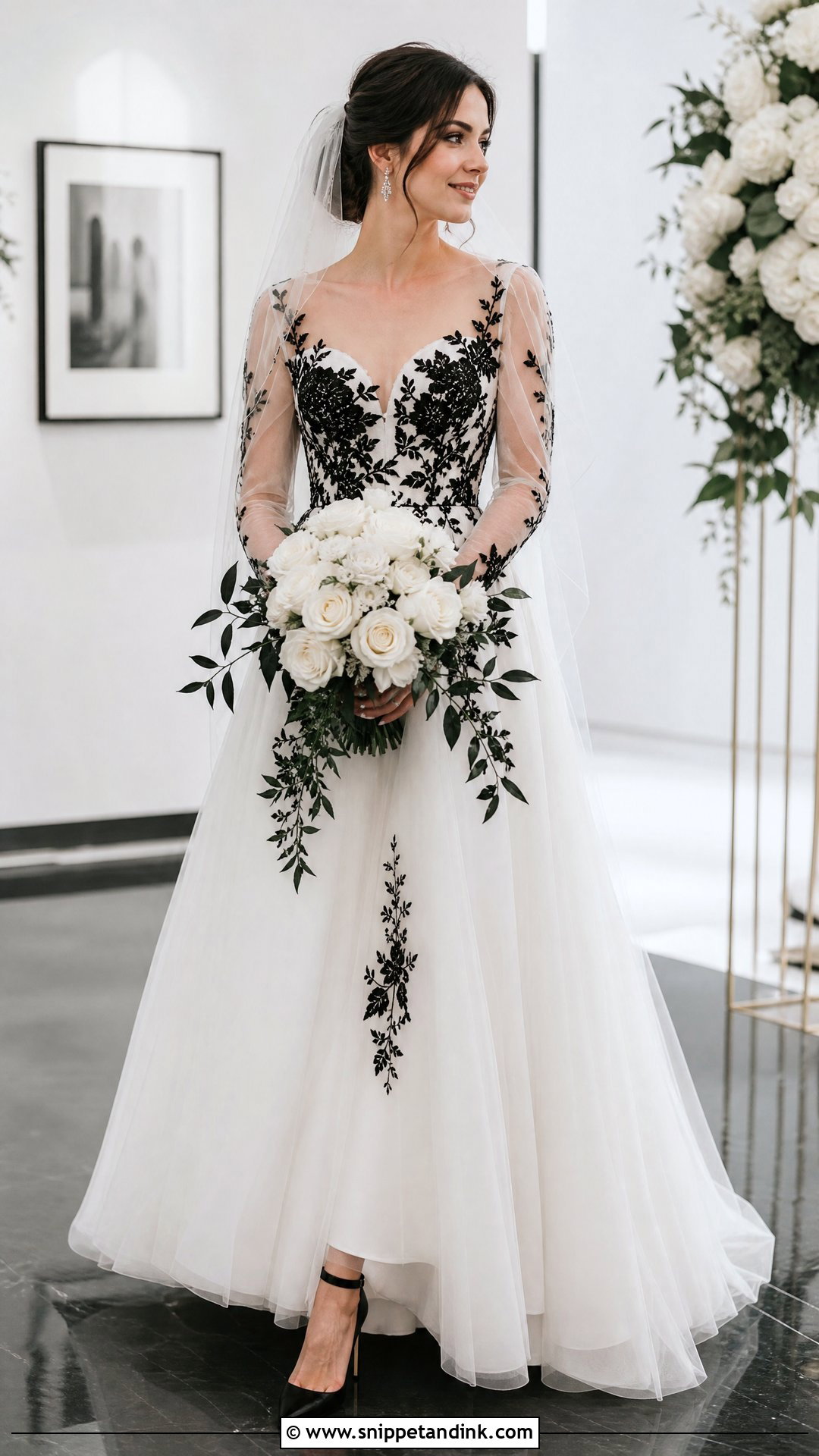
Placement is what makes black lace appliqué look designed instead of stuck on. I like the motifs concentrated on the bodice and thinning as they trail onto the skirt, so the eye moves downward. A sweetheart neckline and sheer lace sleeves suit it, with a soft tulle skirt to keep the shape light. Black lace on white tulle shows every stitch, so ask how the appliqués are attached; hand-sewn edges lie flatter than glued ones. Black satin heels peek out as you walk. Skip the necklace, since the appliqué already frames the face.
3. White Wedding Dress With Black Sash
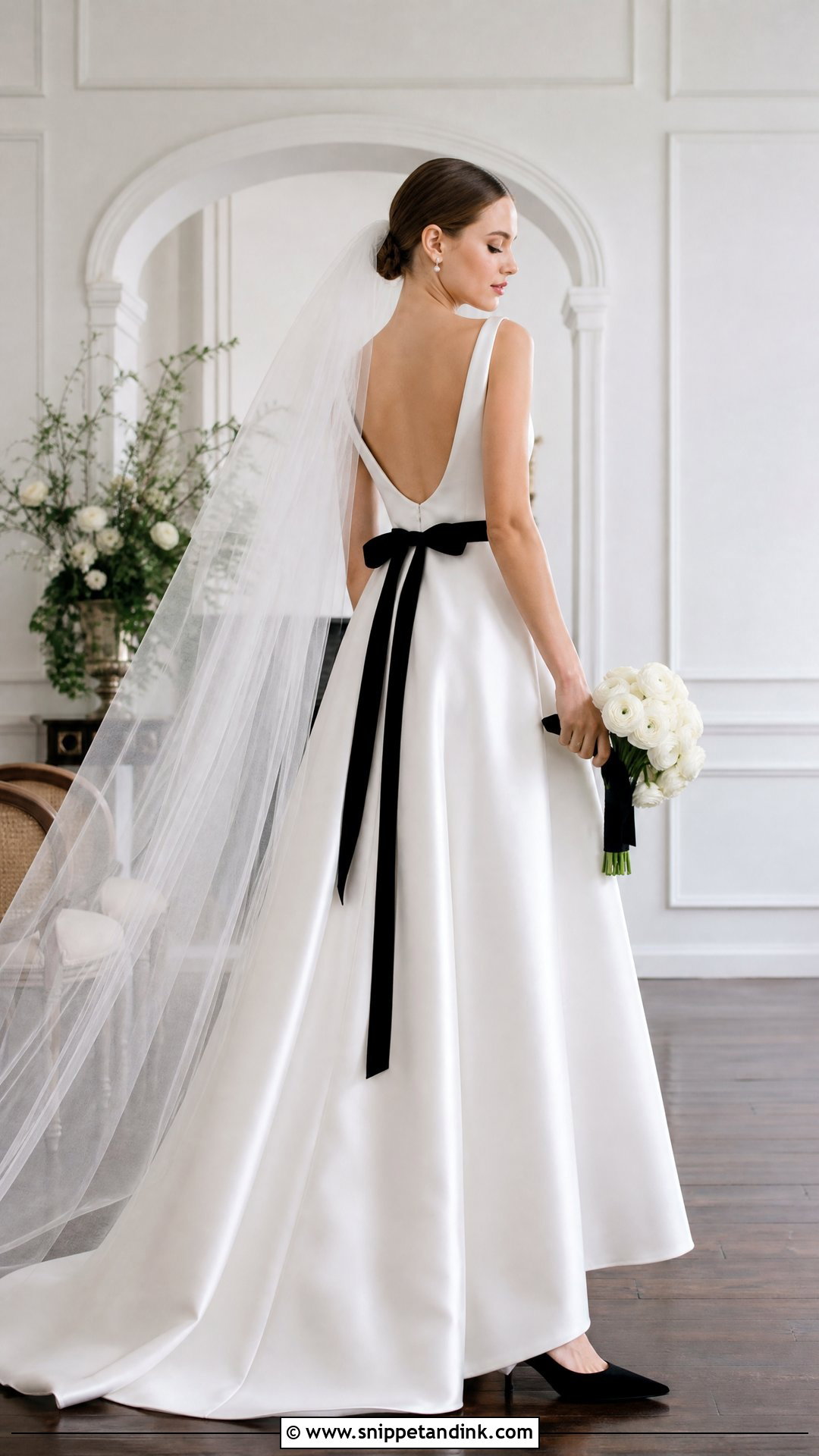
A black sash is the easiest way to add black without touching the dress itself. It suits a sleeveless satin A-line or a softly pleated chiffon gown. I’d go for a medium width that sits at your natural waist and ties at the back; too narrow and it vanishes in photos, too wide and it cuts you in half. A small bow is classic, while long ends add movement. Have your seamstress add two thread loops at the side seams so the sash can’t ride up during the day. Pearl studs, a light tulle veil and white ranunculus wrapped in black ribbon complete it.
4. White Wedding Dress With Black Corset Bodice
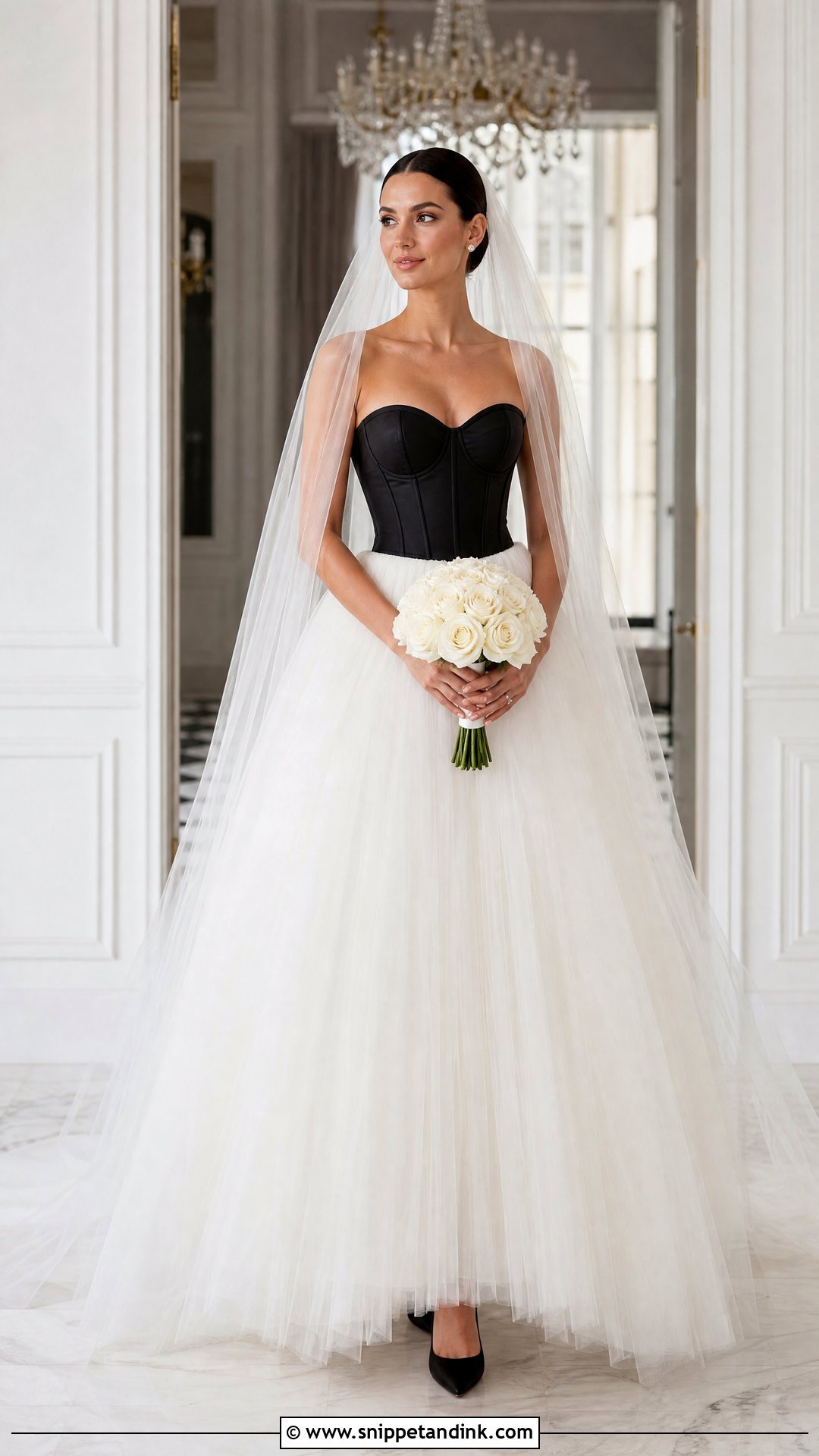
A black corset bodice over a full white skirt is the strongest two-tone look here, so the construction has to be clean. Choose subtle boning and a straight or gently curved neckline, with an ivory satin or layered tulle skirt below. Dark fabric hides less than people expect: any wrinkling at the waist catches flash as a pale streak, so the fit through the ribcage must be close. A sheer white cathedral veil at the back of a sleek bun softens the dark top. Black pumps, diamond studs and a structured white bouquet finish it, and removable white off-shoulder straps add coverage for the ceremony if you want it.
5. White Mermaid Wedding Dress With Black Trim
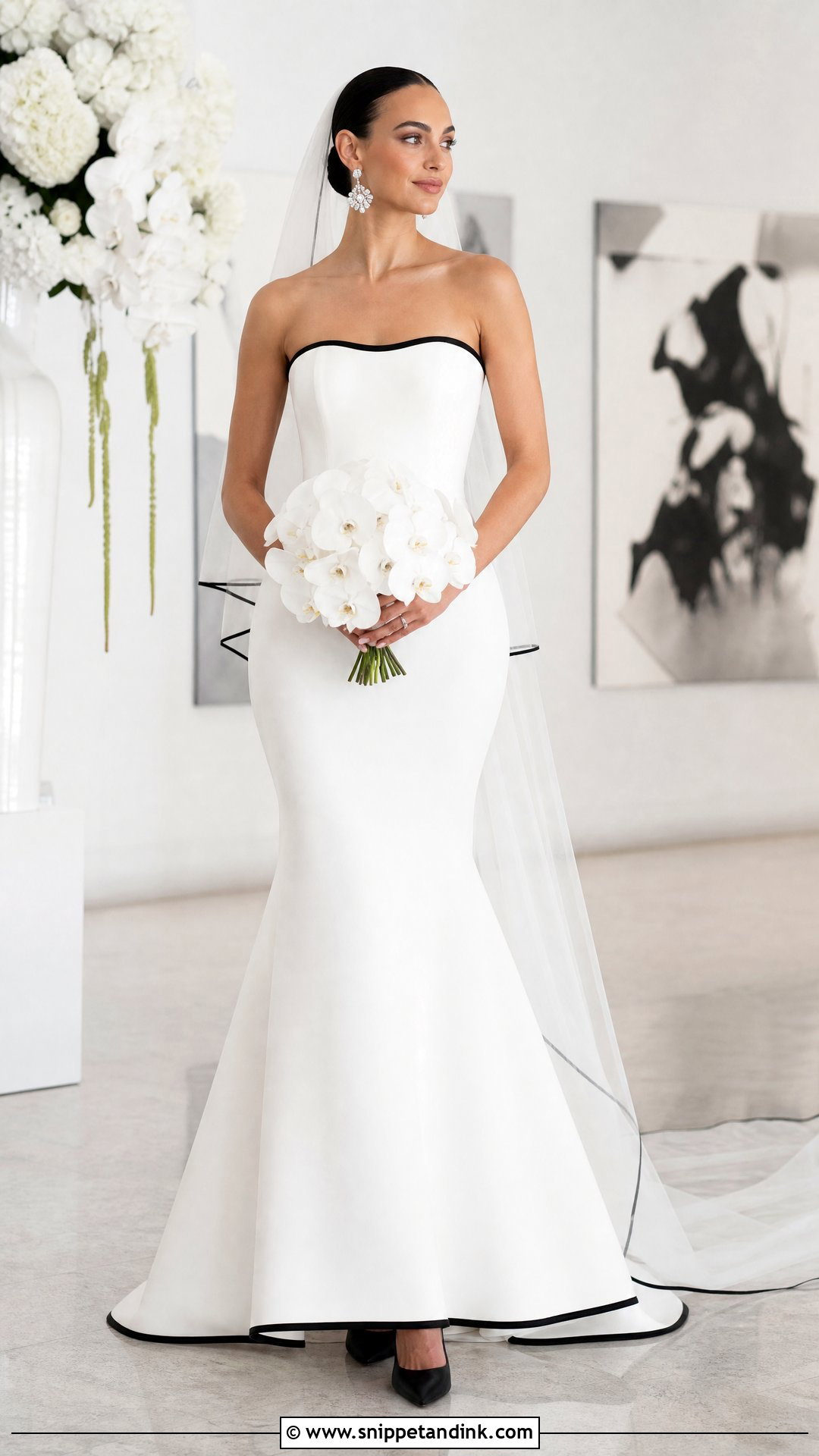
Narrow black piping only works when the seams underneath are perfect, because it traces every line of a mermaid gown and exaggerates any wobble. Look for piping at the neckline, the side seams or the flare of the skirt, in crepe, satin or mikado for a crisp edge. Stand side-on to a mirror at your fitting. If the piping kinks where the skirt flares, the seam needs re-sewing. Pointed black heels, crystal earrings and a fitted fingertip veil keep it sleek, with a low ponytail. White orchids with very little greenery suit a hotel, a loft or a gallery.
6. White Wedding Dress With Black Floral Embroidery
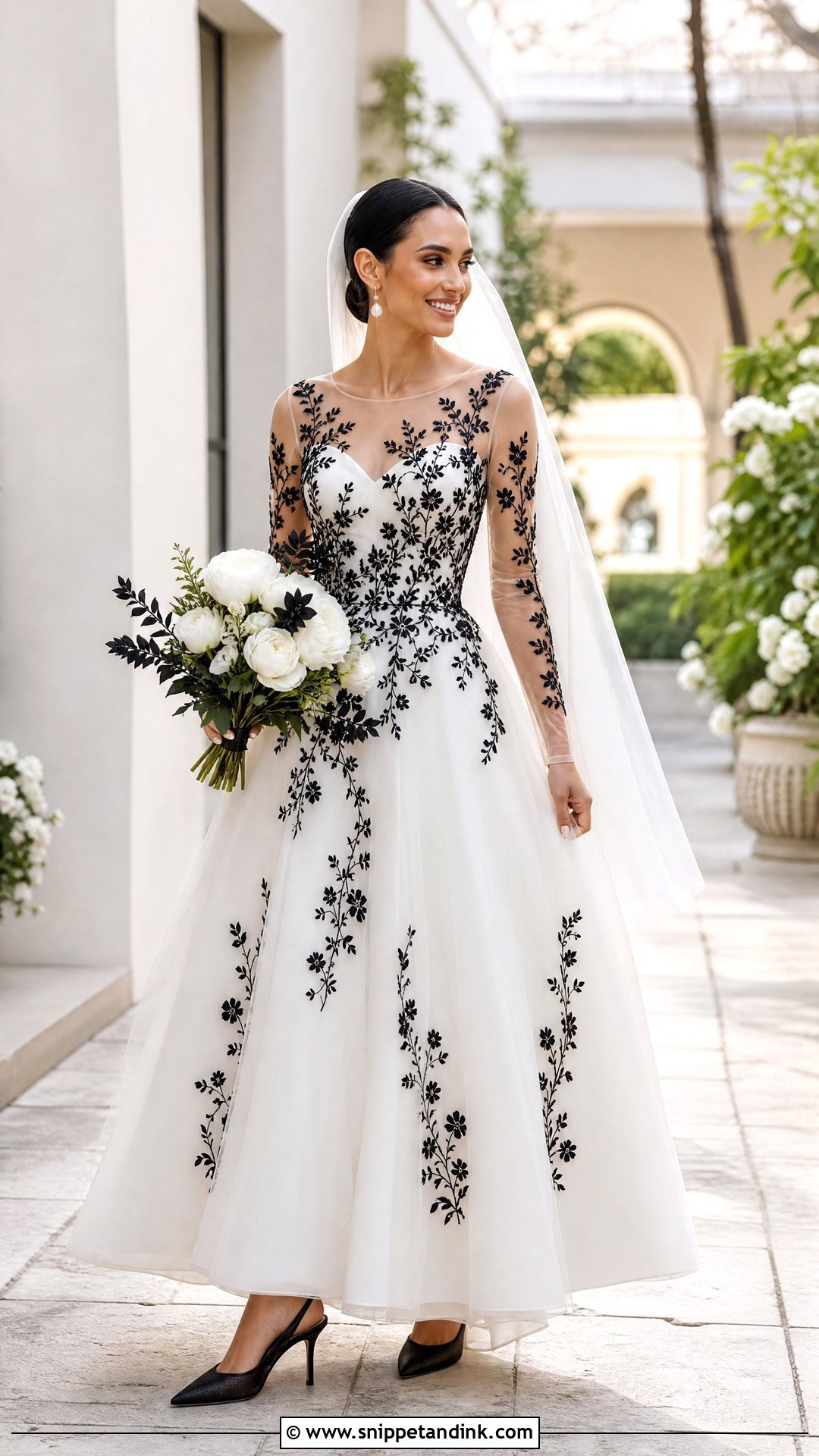
I’m partial to vines and flowers stitched in black across a fitted bodice and fading out lightly onto an A-line skirt. It gives a white gown detail without leaning on white lace. On long illusion sleeves the black stitching seems to float on the skin, and that’s where this look is at its strongest. For a softer effect, ask for embroidery with plenty of open space between motifs. Simple black slingbacks and small pearl earrings balance it, and a plain white veil frames the pattern without adding another one. Peonies with dark leaves and a black ribbon wrap suit indoor and garden weddings alike.
7. White Wedding Dress With Black Off-Shoulder Straps
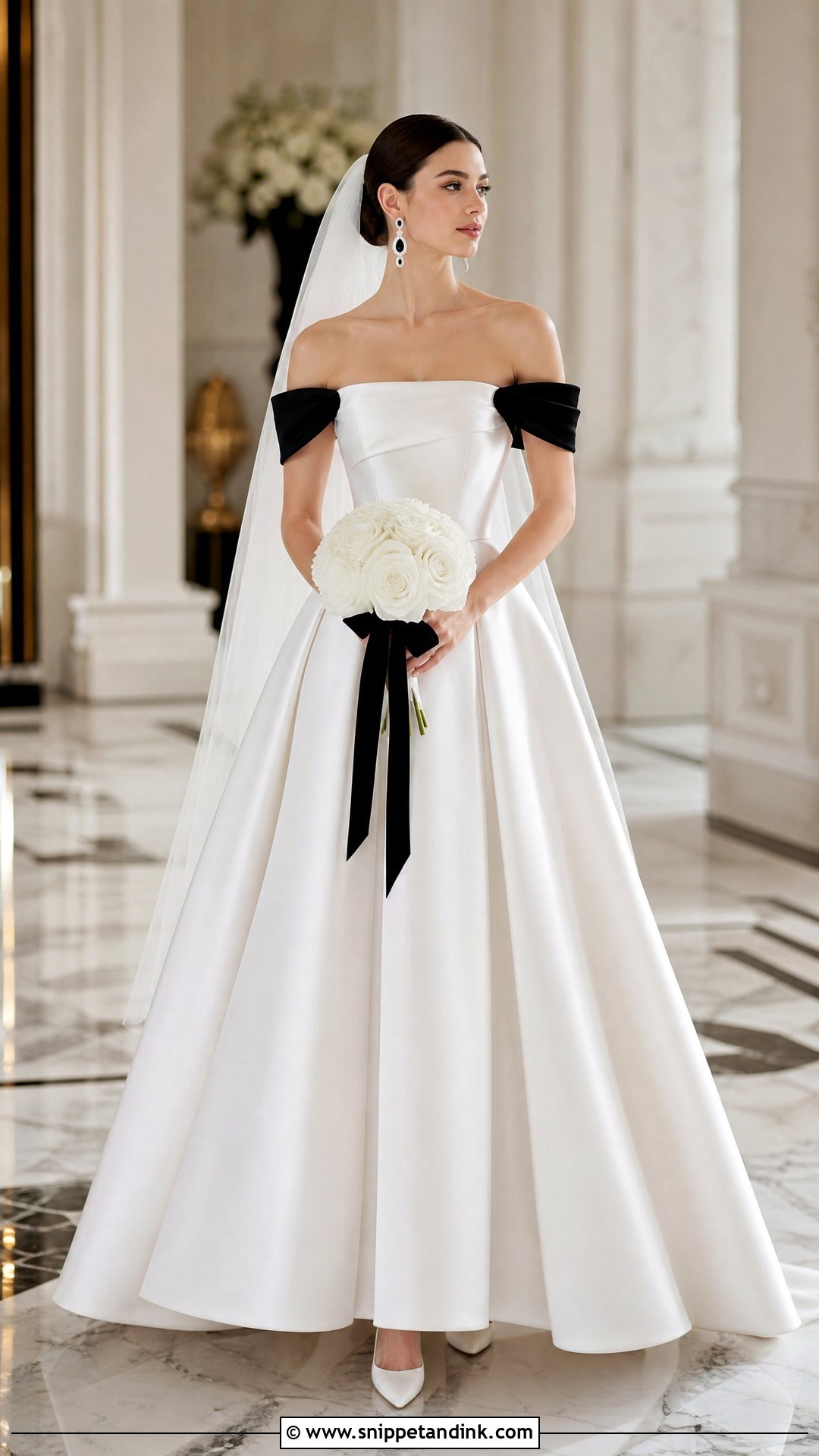
Off-shoulder straps have to sit exactly right, and black makes any slip obvious. Folded satin, velvet or tulle straps across the upper arm frame a simple strapless ball gown or fit-and-flare well, but they need anchoring to the bodice with elastic or a hidden stay. Otherwise they creep down every time you raise your arms to hug someone. Keep the rest of the dress plain. A soft updo keeps the shoulder line clear, with black-and-white drop earrings and a chapel veil fixed below the hairstyle. White roses tied with black velvet repeat the contrast.
8. White Wedding Dress With Black Velvet Belt
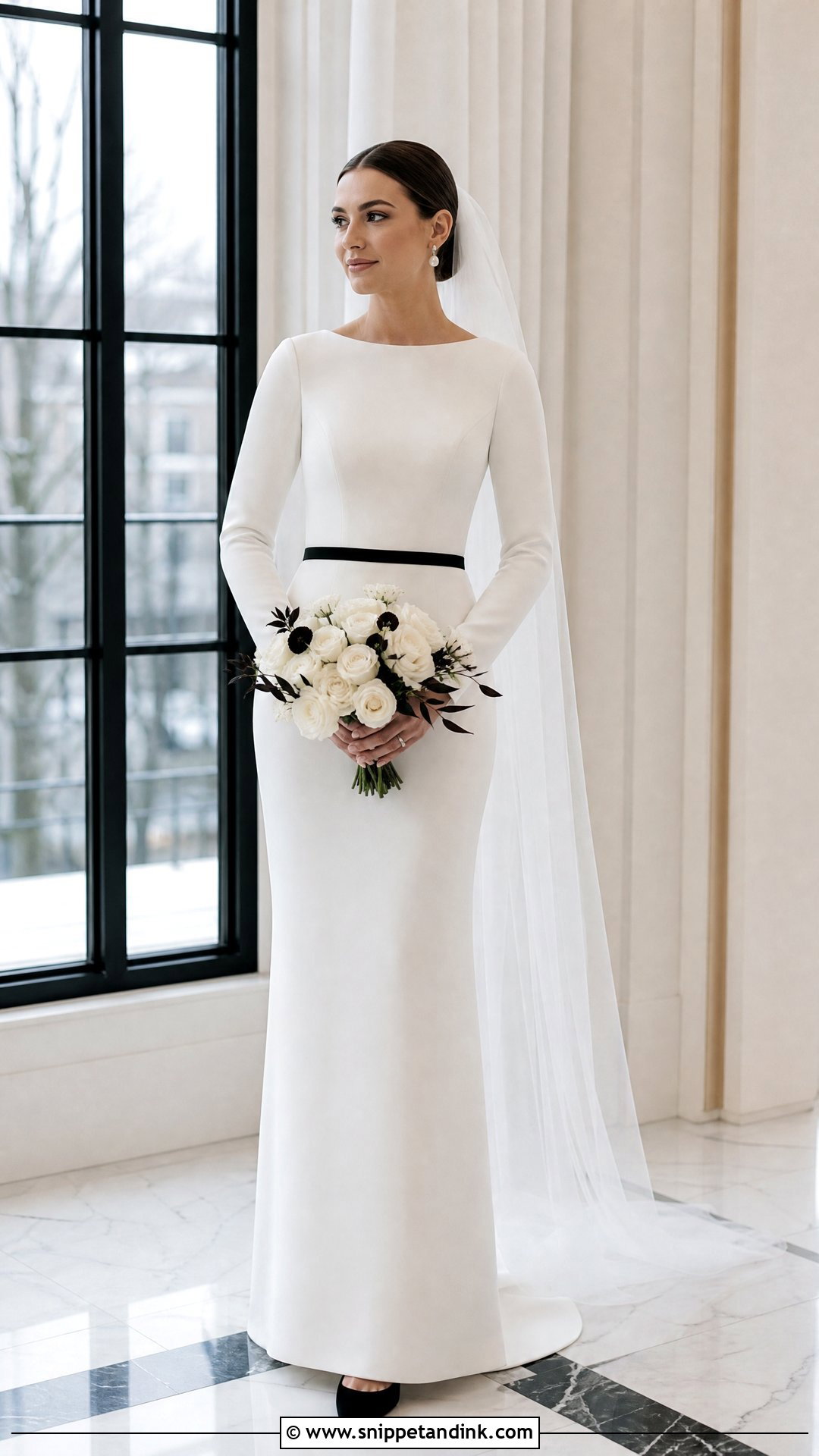
Velvet carries visual weight, so a little goes a long way. A narrow black velvet belt on a long-sleeved crepe column, a satin A-line or a square-neck gown defines the waist without breaking the line. Close it with a covered button, a flat bow or a small crystal buckle, and let velvet pumps echo the texture. In cool weather, a structured white coat or faux-fur wrap sits well over it. Keep other black elements small; a velvet belt plus velvet gloves plus a velvet bow starts to feel heavy. A plain veil and white roses with dark foliage finish it.
9. White Wedding Dress With Black Tulle Overskirt
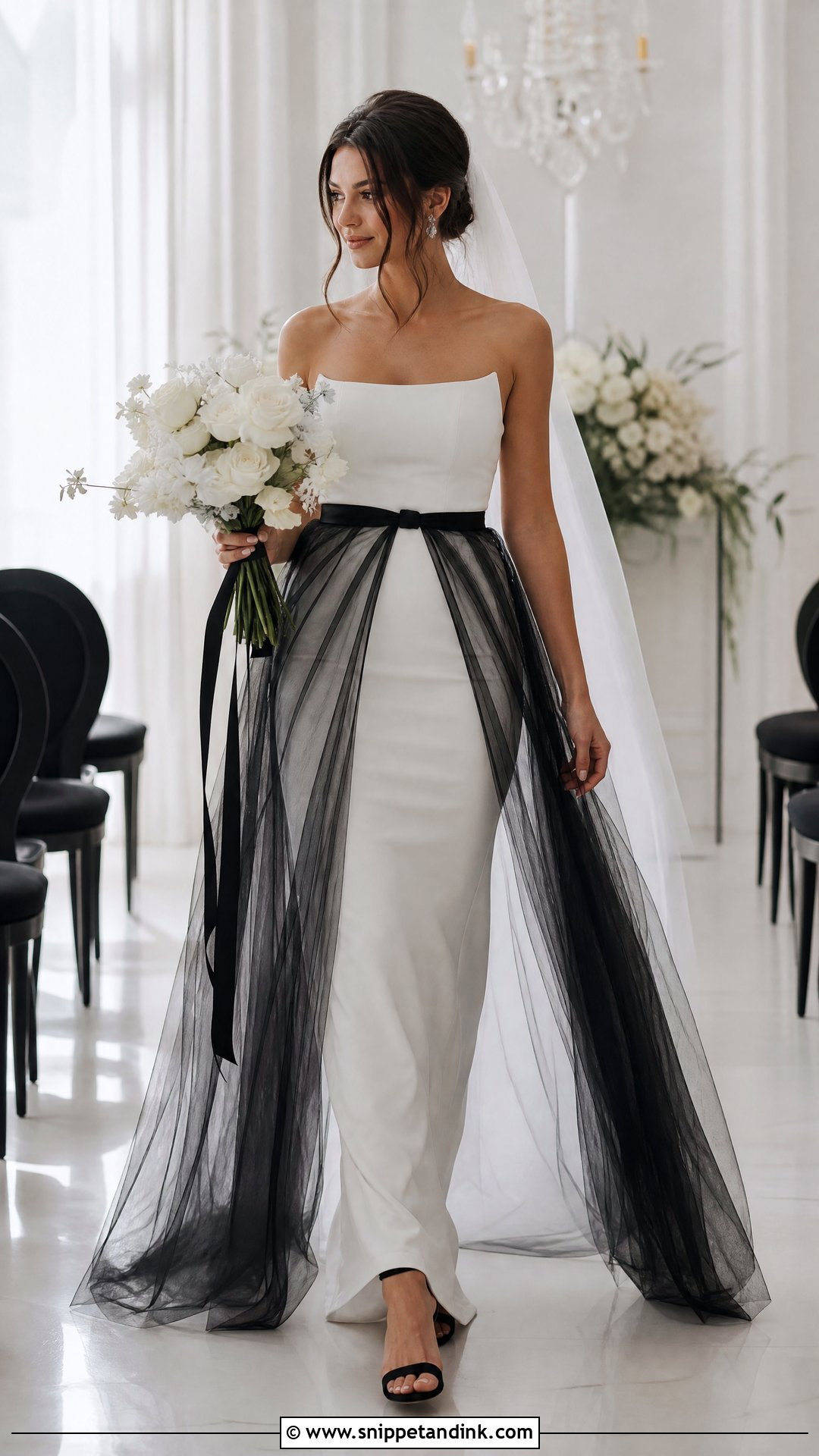
A sheer black tulle overskirt gives you two looks in one day. Wear it over a fitted white crepe, satin or lace gown, choosing tulle sheer enough that the dress shows through, with an open front for movement. Fasten it at the waist with a slim ribbon or hidden hooks, and practise taking it off with whoever is helping you. Black heels, crystal earrings and a simple white veil finish the ceremony look; afterwards, the overskirt and veil come off for a cleaner reception outfit. Tulle catches on beading, so if your gown is beaded at the waist, ask for a smooth waistband on the overskirt.
10. White Wedding Dress With Black Hem
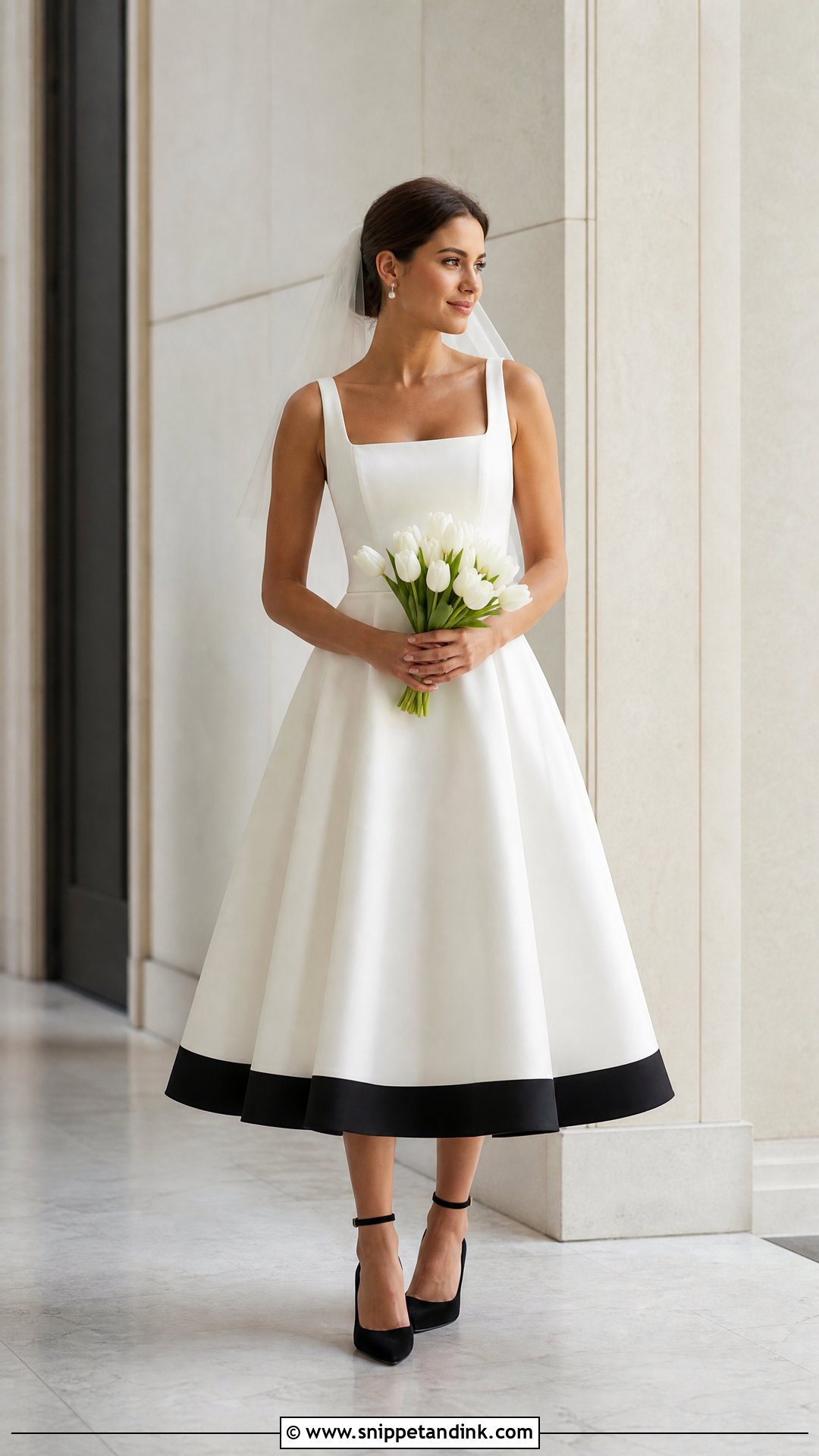
Hems get dirty, and that’s the hidden advantage of a black one: it hides the grey line a white skirt picks up from floors and pavements. It suits a tea-length gown, a high-low skirt or a modern satin ball gown. A narrow band is subtle, a wider panel graphic. Because the eye goes straight to your feet, the shoes matter more than usual, and black pumps, slingbacks or ankle straps all hold their own. Keep the bodice simple with a square, bateau or strapless neckline, plus pearl earrings and a short plain veil.
11. White Wedding Dress With Black Back Bow
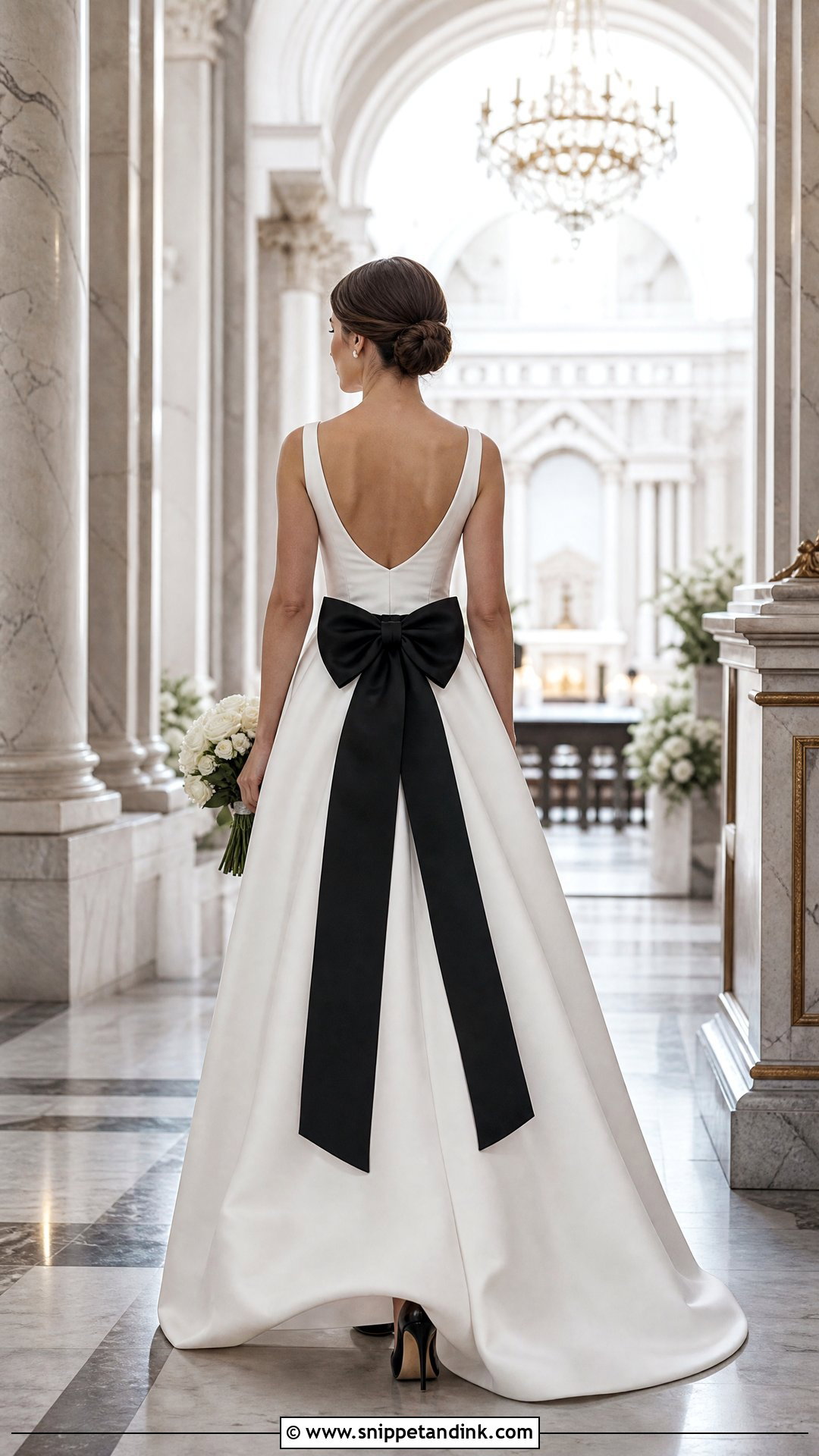
If you want the front of your dress to stay classic, put the drama on the back. A white mikado or satin gown with a fitted bodice, a full skirt and a low or square back gives the bow a stable base. Position a structured black bow right at the waist, with tails reaching partway down the train. Then decide the veil length around the bow. It should end clearly above or below it, never halfway, or the tulle bunches over the loops. Pearl studs, black pointed heels and a low chignon keep the rest quiet.
12. White Wedding Dress With Black Cape
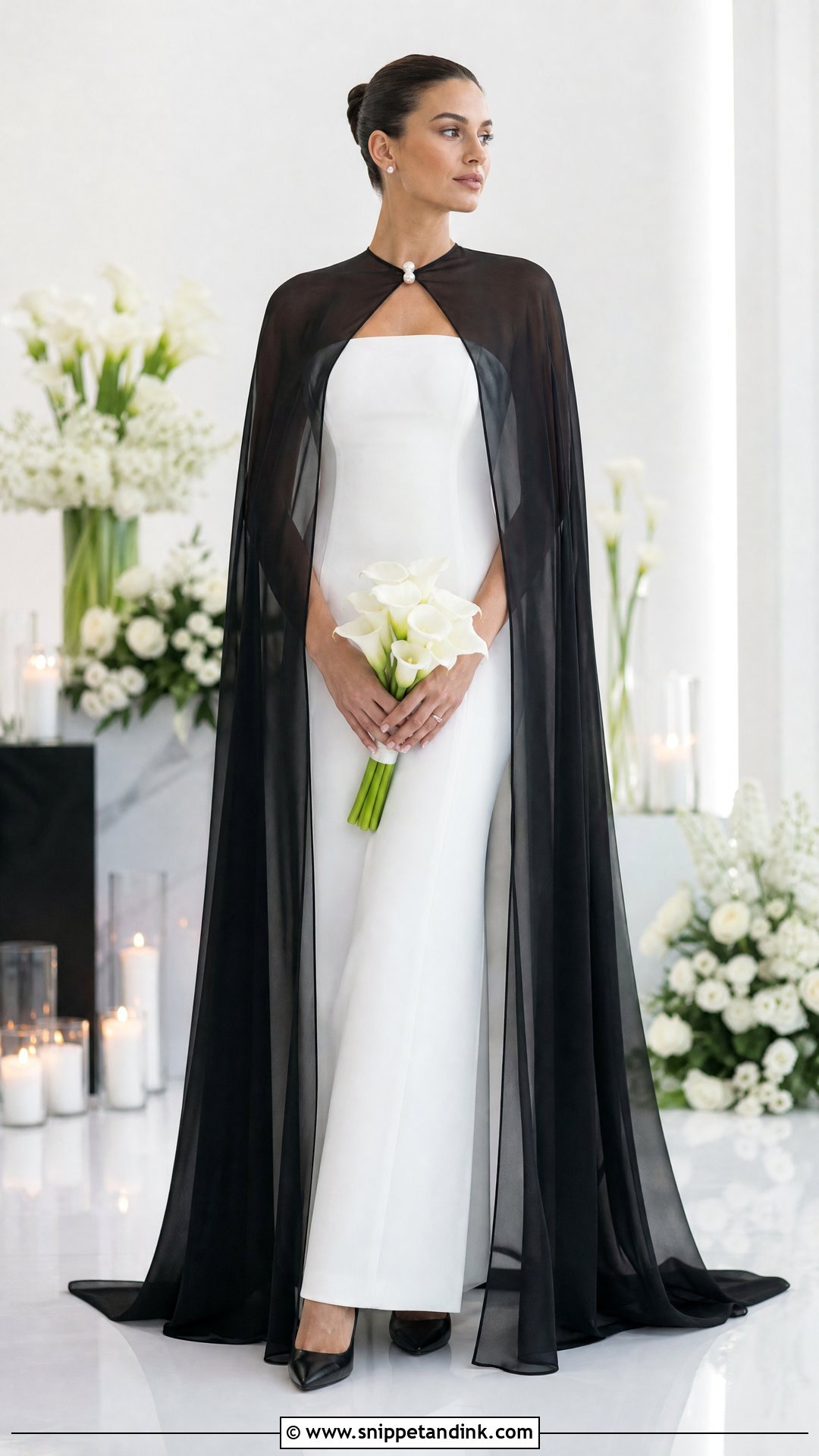
A black cape gives contrast while leaving a completely white dress underneath. Choose a simple sheath, column or A-line with minimal beading, then add a sheer black tulle or light chiffon cape; floor length is dramatic, a shorter capelet practical. Fasten it at the neck with a small pearl or crystal clasp, and check that the clasp doesn’t pull the cape tight across your throat when you look down at your vows. Skip the veil, since the cape already moves behind you. Black heels, stud earrings and a sleek bun suit it. Take the cape off later for a brighter reception look.
13. White Wedding Dress With Black Gloves
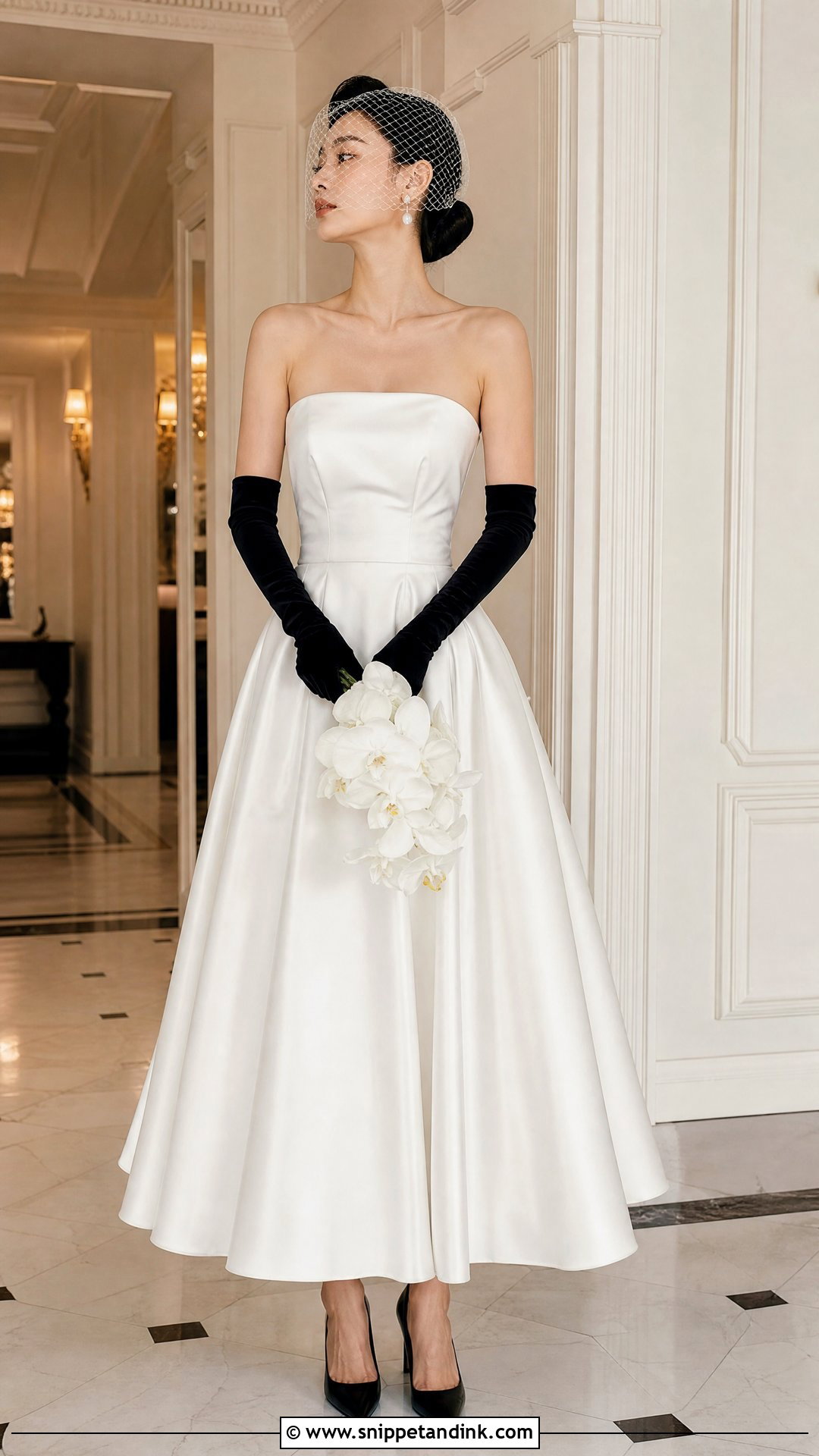
Long black gloves bring a vintage, formal touch without a single change to the gown itself. Opera-length satin or velvet gloves suit a strapless ball gown, a sleeveless column or an off-the-shoulder shape with little or no beading. Match the glove’s sheen to the dress: satin with satin, matte velvet with crepe. Plan the ring exchange too. Either the gloves come off beforehand and go to a bridesmaid, or the ring-finger seam is opened so the ring can slide on. A birdcage veil feels retro, a cathedral veil ceremonial. Skip bracelets.
14. White Wedding Dress With Black Veil
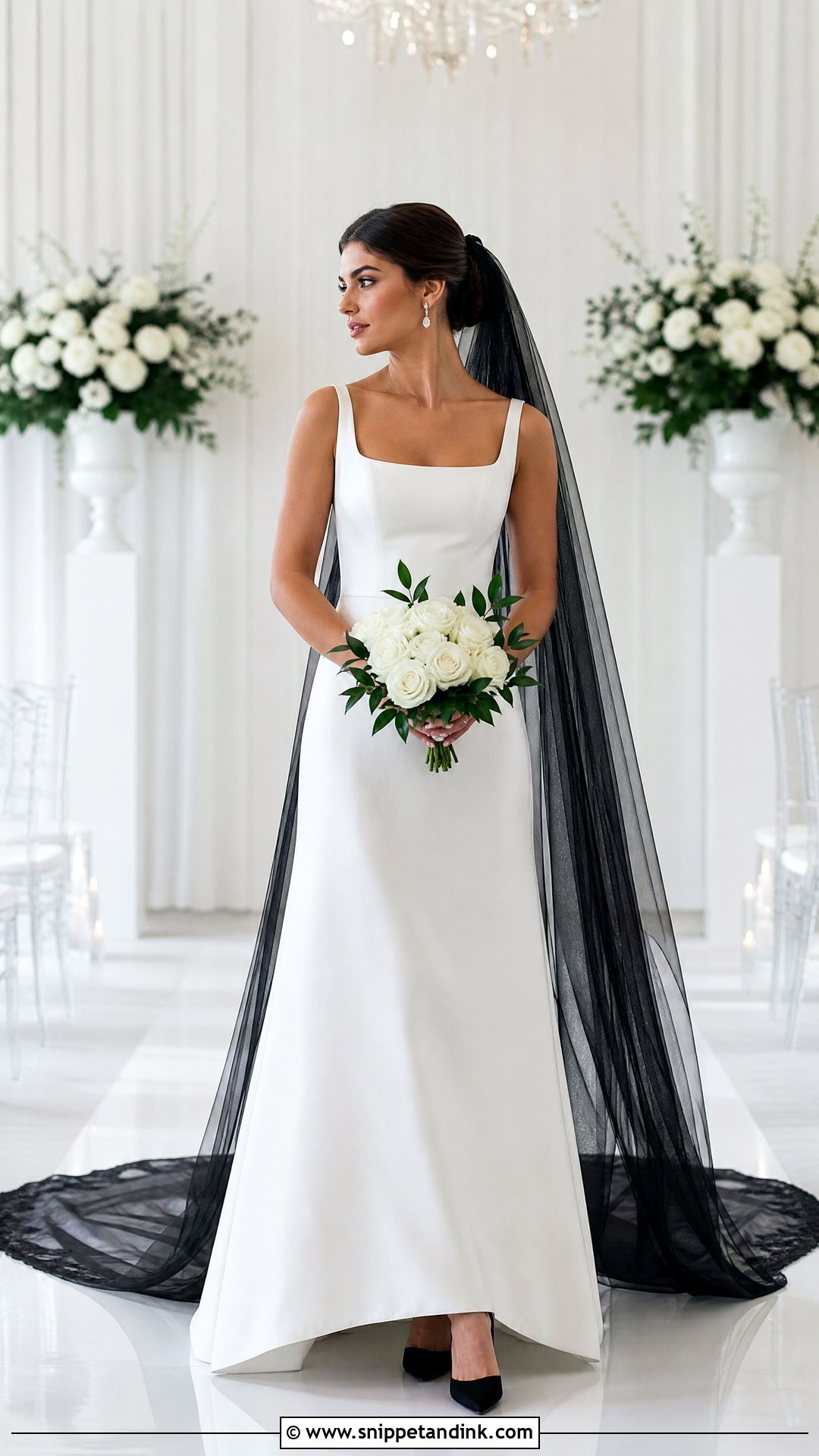
A black veil changes the whole mood while the gown stays traditional. A clean cut edge looks modern, and fine lace edging adds detail. Pair it with a white satin A-line, a fitted crepe gown or a lace ball gown, in chapel or cathedral length for graceful movement. Dark tulle shows fold lines more than ivory does, so hang it and steam it gently the day before. Wear black heels and understated diamond earrings, with no heavy necklace. A polished updo holds the comb securely and shows the contrast clearly. The veil comes off after the ceremony for a lighter reception look.
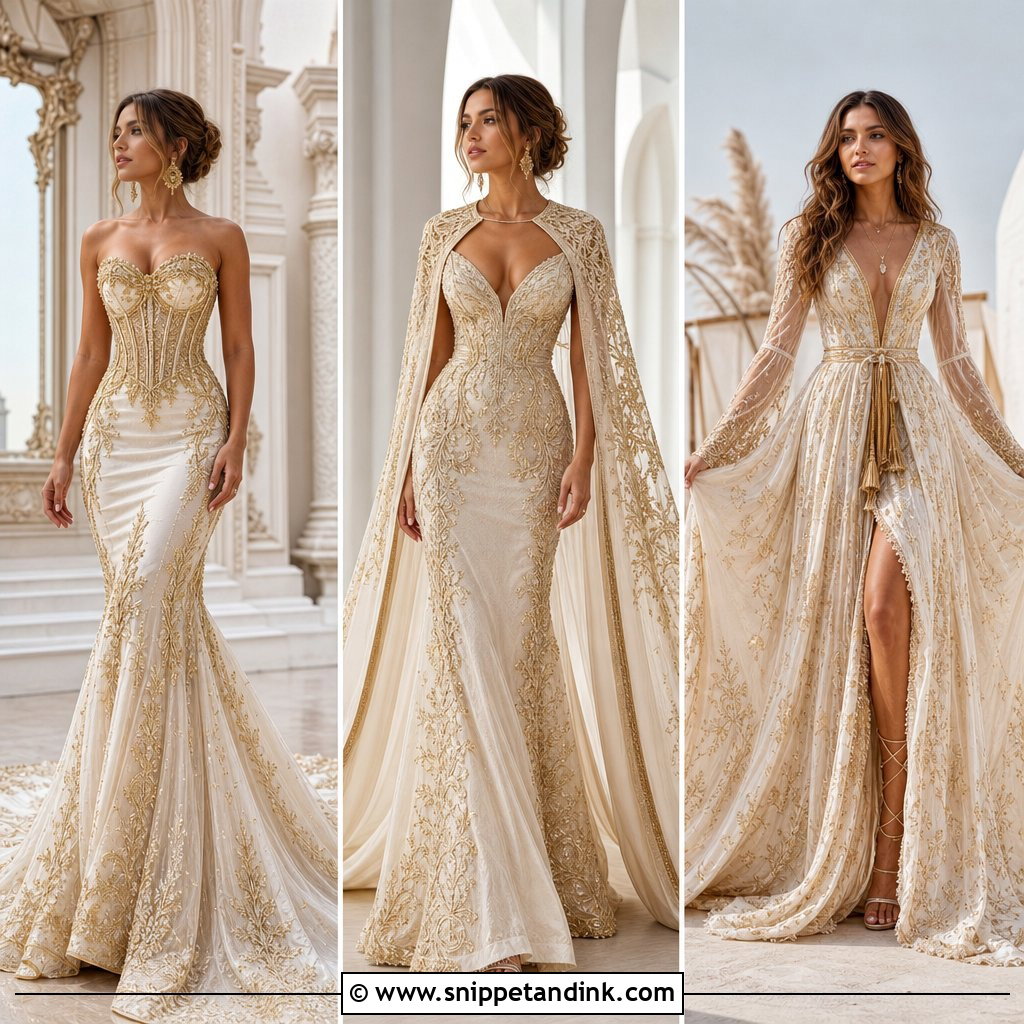
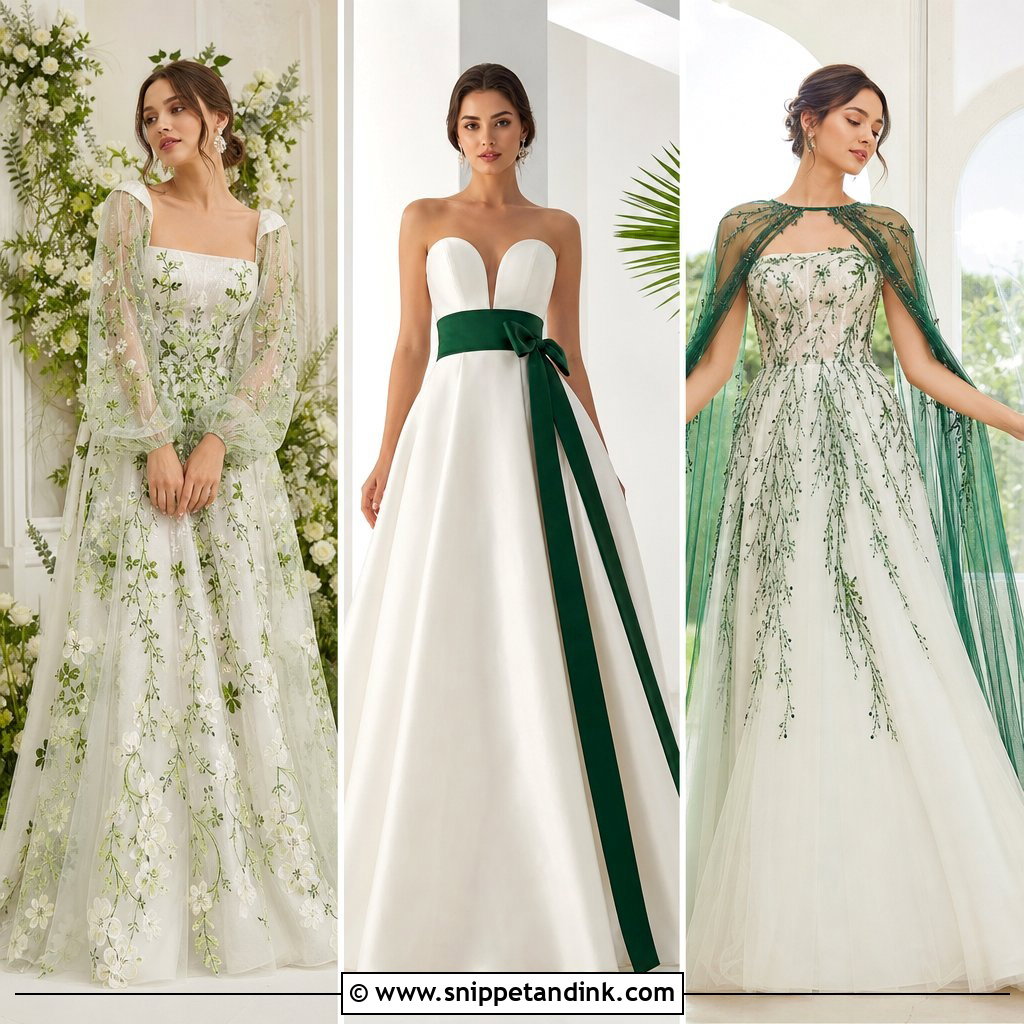
15. White Wedding Dress With Black Polka Dot Tulle
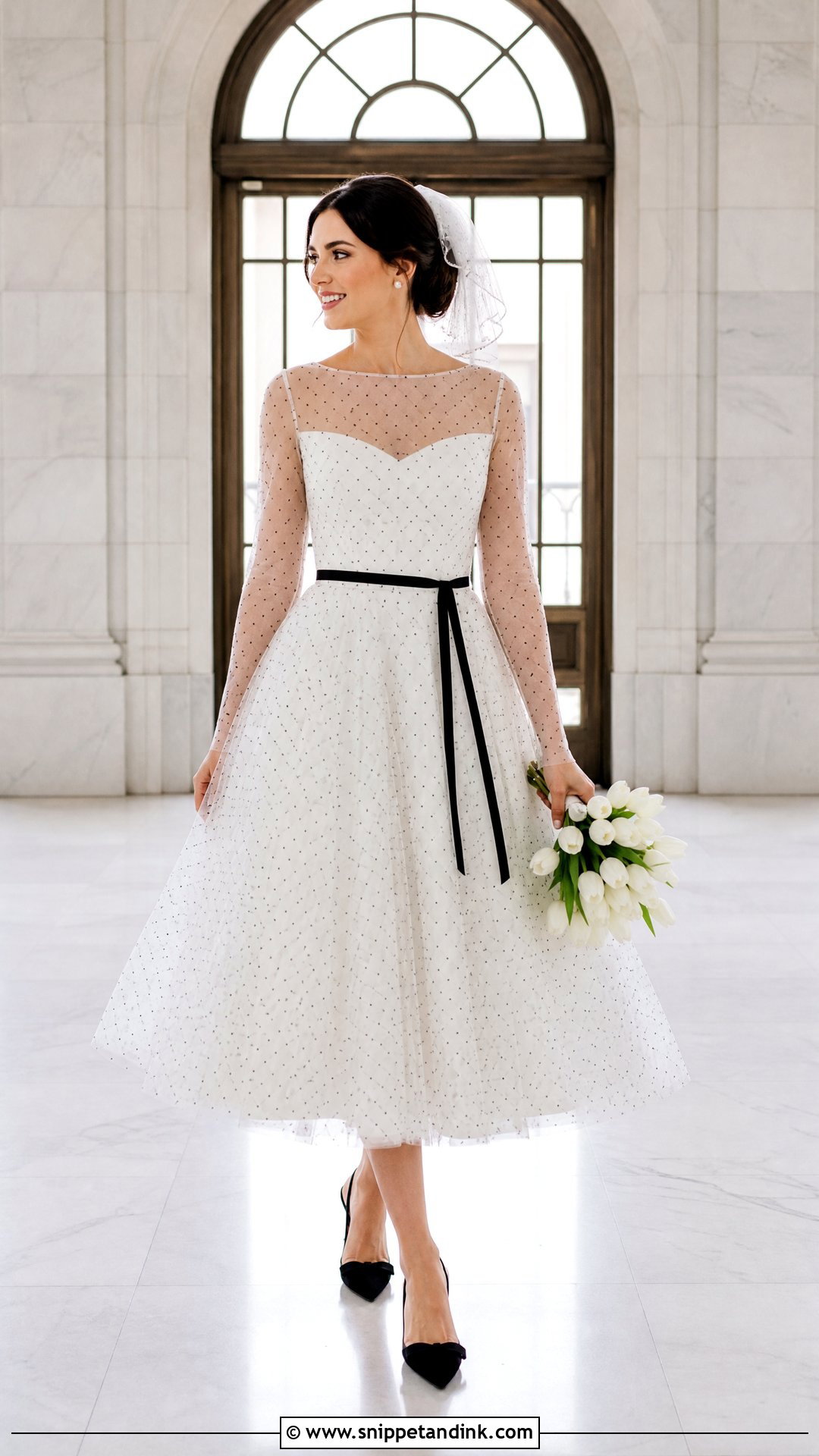
Black polka dot tulle adds a playful pattern without hiding the bridal shape. Look for a white tea-length or full-skirt gown with a dotted overlay on the sleeves, the neckline or the upper skirt. Small, evenly spaced dots look refined, while larger ones are bolder. When two dotted layers overlap, the pattern can look busy in photos, so have someone take pictures at your fitting and check them. Black slingbacks, pearl studs and a slim black waist ribbon finish it, with a short plain veil and white ranunculus. A daytime ceremony suits it best.
16. White Wedding Dress With Black Beading
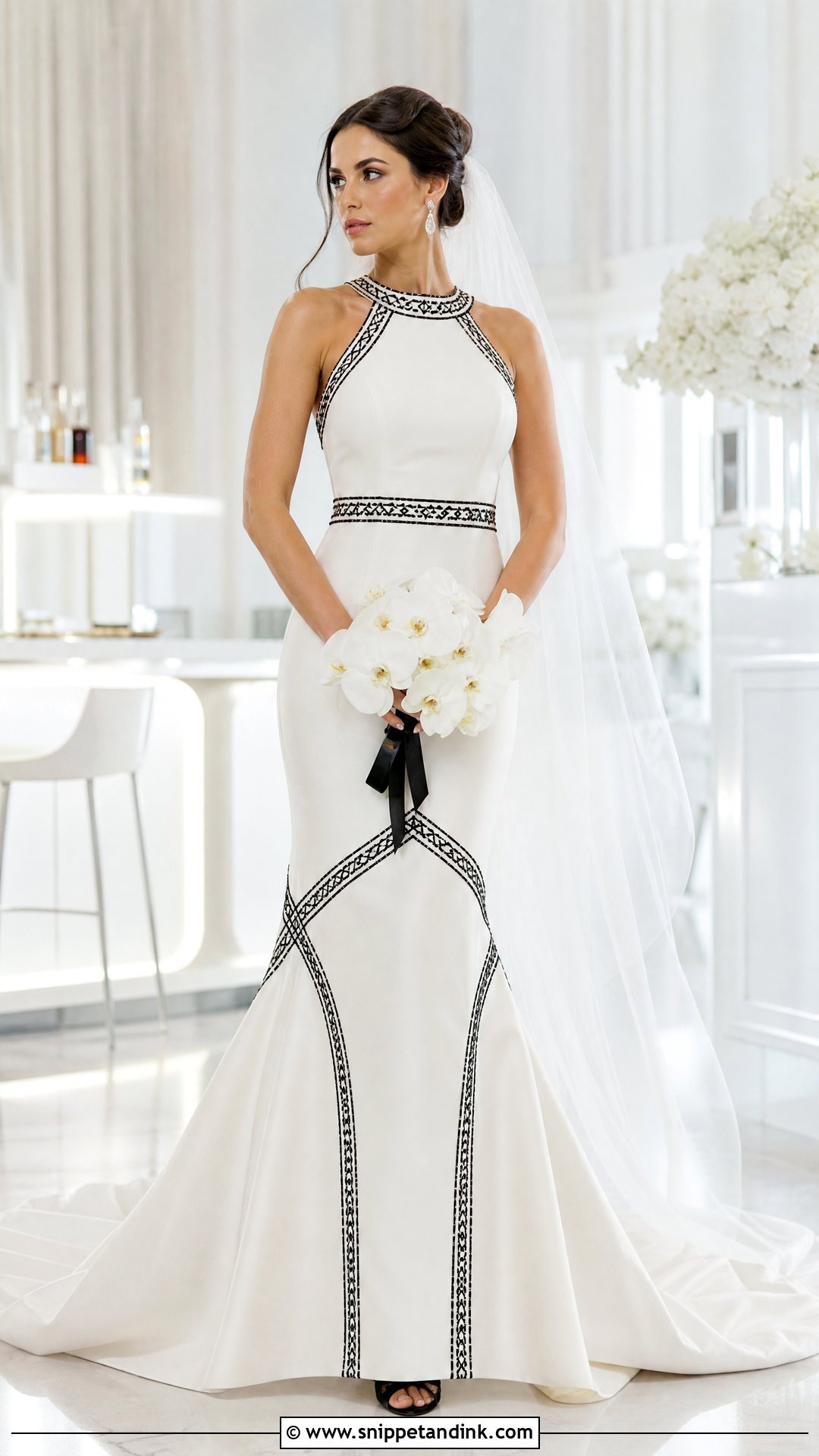
Black beading makes a white gown evening-ready. Choose an ivory sheath or fit-and-flare with linear beads around the neckline, waist and skirt. Geometric beadwork gives an Art Deco feel, while scattered black crystals shimmer more softly. Keep the silhouette sleek so the pattern reads clearly. A loose row of black beads on ivory is obvious from across a room, so I always check the stitching at the waist, where sitting puts the most strain. Black satin heels, crystal drops and a plain tulle veil finish it, with no large necklace or jeweled headpiece.
17. White Wedding Dress With Black Ribbon Neckline
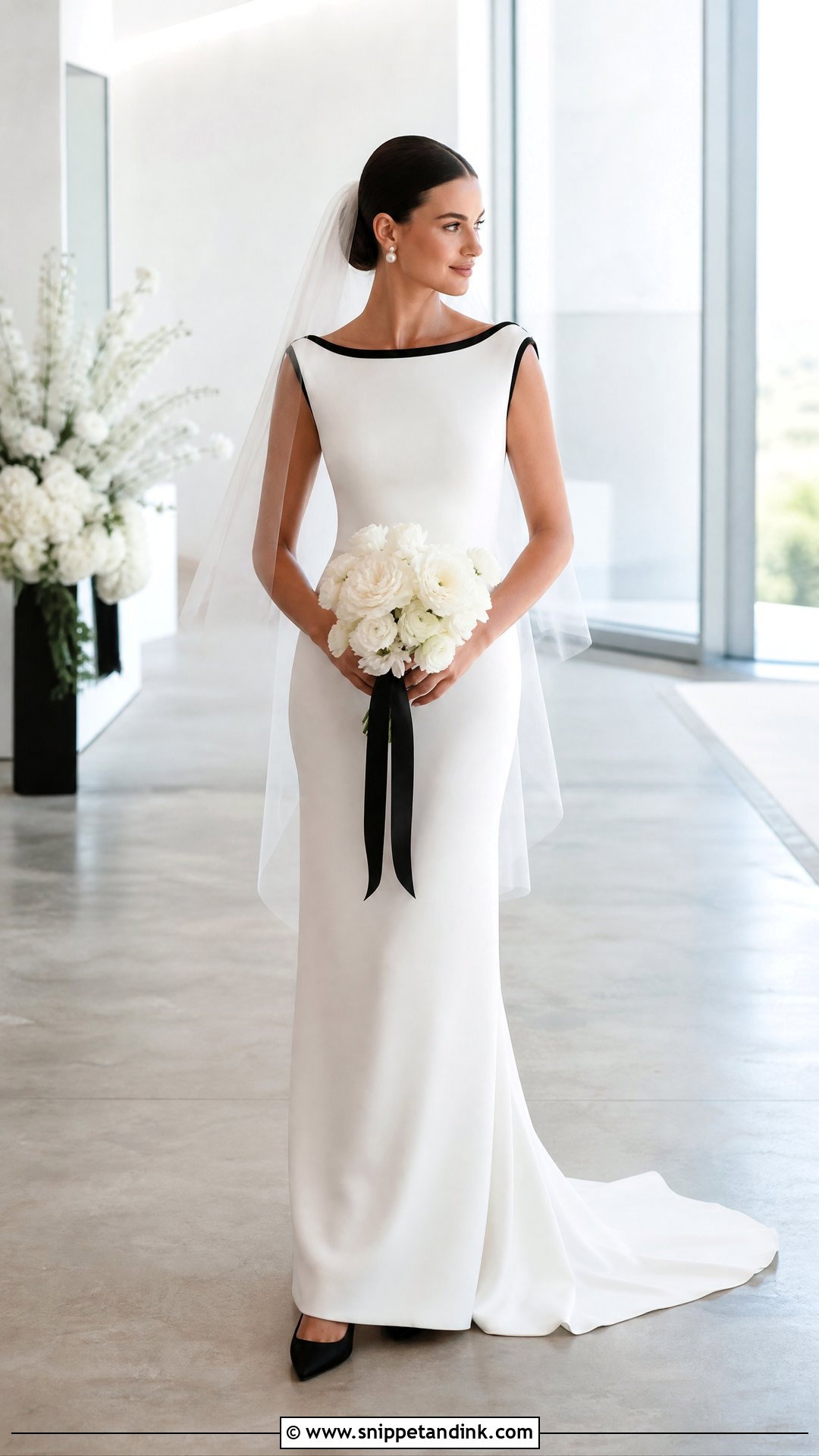
A narrow black ribbon around the neckline is one of the most minimal ideas here, and it lives on precision. On a bateau, halter or square-neck gown in crepe or satin, the ribbon has to follow the neckline exactly; a few millimetres off at one shoulder and the whole thing looks crooked. Ask your seamstress to hand-stitch it so it curves smoothly. Black pointed pumps and small pearl earrings suit it, along with a bun or ponytail that keeps the trim visible. Skip necklaces on a high neckline, and let a plain fingertip veil finish the look.
18. White Wedding Dress With Black Buttons
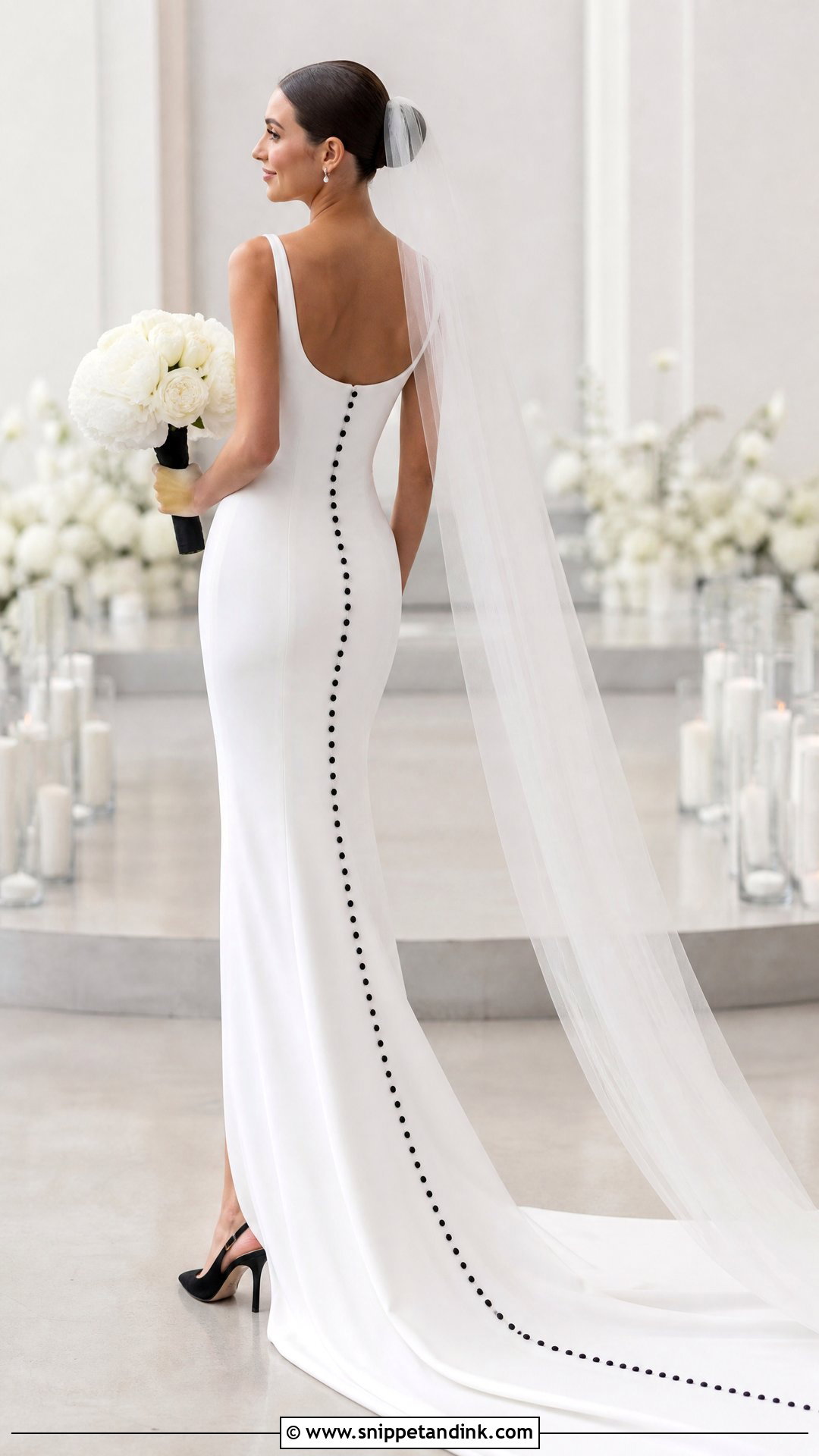
Covered buttons are the quietest way to add black. A row on a fitted crepe or satin gown, from the neck to the waist or down the train, creates a strong vertical line from behind. Match the finish: matte buttons on crepe, glossy satin buttons on satin. Allow time for dressing, because a long row of loop closures is slow to fasten and someone patient should be doing it. Many gowns with decorative buttons close with a hidden zip, so ask which yours has. Black slingbacks, small diamond earrings and a low bun suit it, with a sheer veil fixed above the bun.
19. White Mini Wedding Dress With Black Sleeves
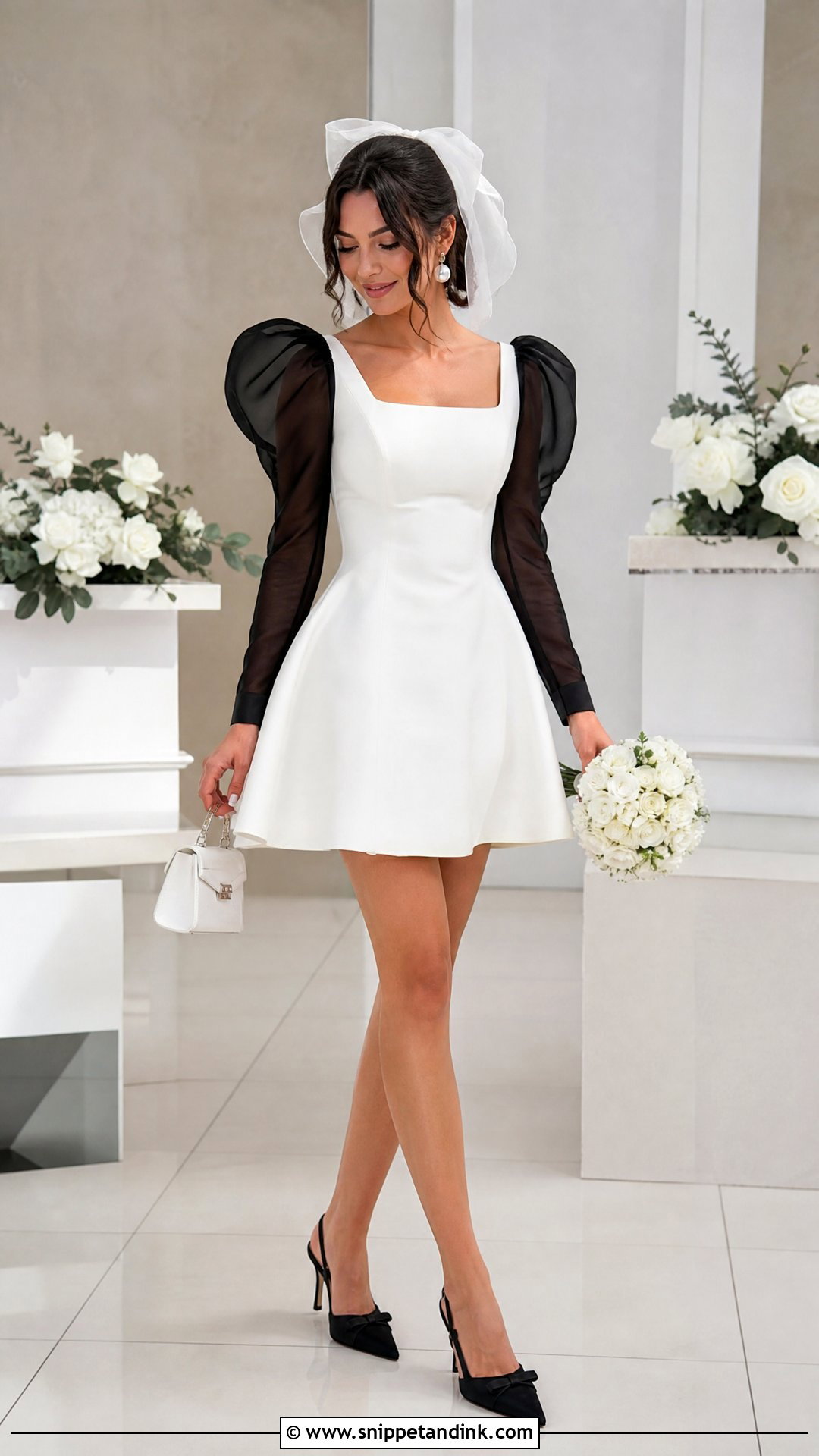
A white mini with black sleeves makes a confident civil ceremony or reception outfit. A structured white shift, fit-and-flare mini or blazer dress gives the sleeves a clean base, whether they’re sheer, puffed or fitted. The join between the white body and the black sleeve has to be crisp, because that seam is exactly where the eye lands. Black slingbacks, a small white bag and pearl earrings finish it. A short bow veil or a simple headband suits the short hem far better than a cathedral veil. Keep the bodice uncluttered, and you’ll have the most rewearable dress on this list.
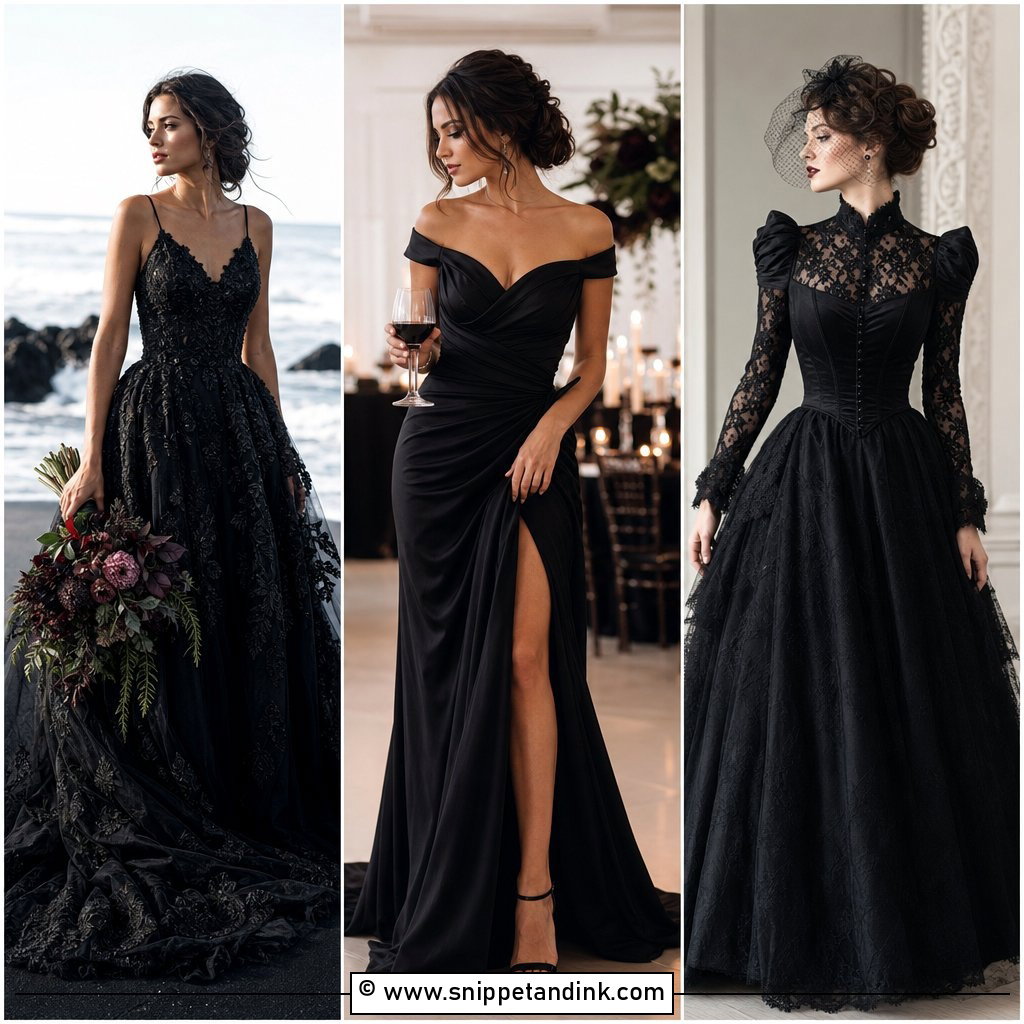
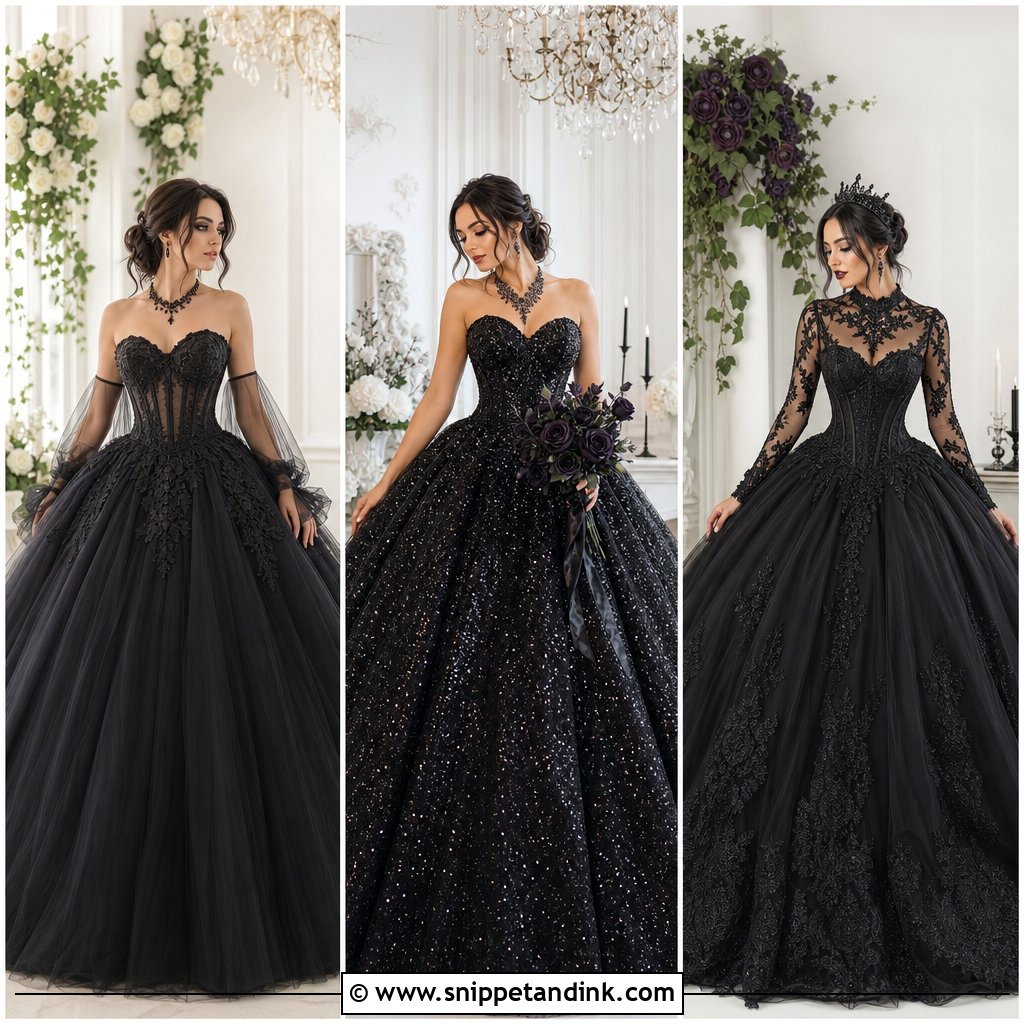


20. White Wedding Dress With Black Detachable Train
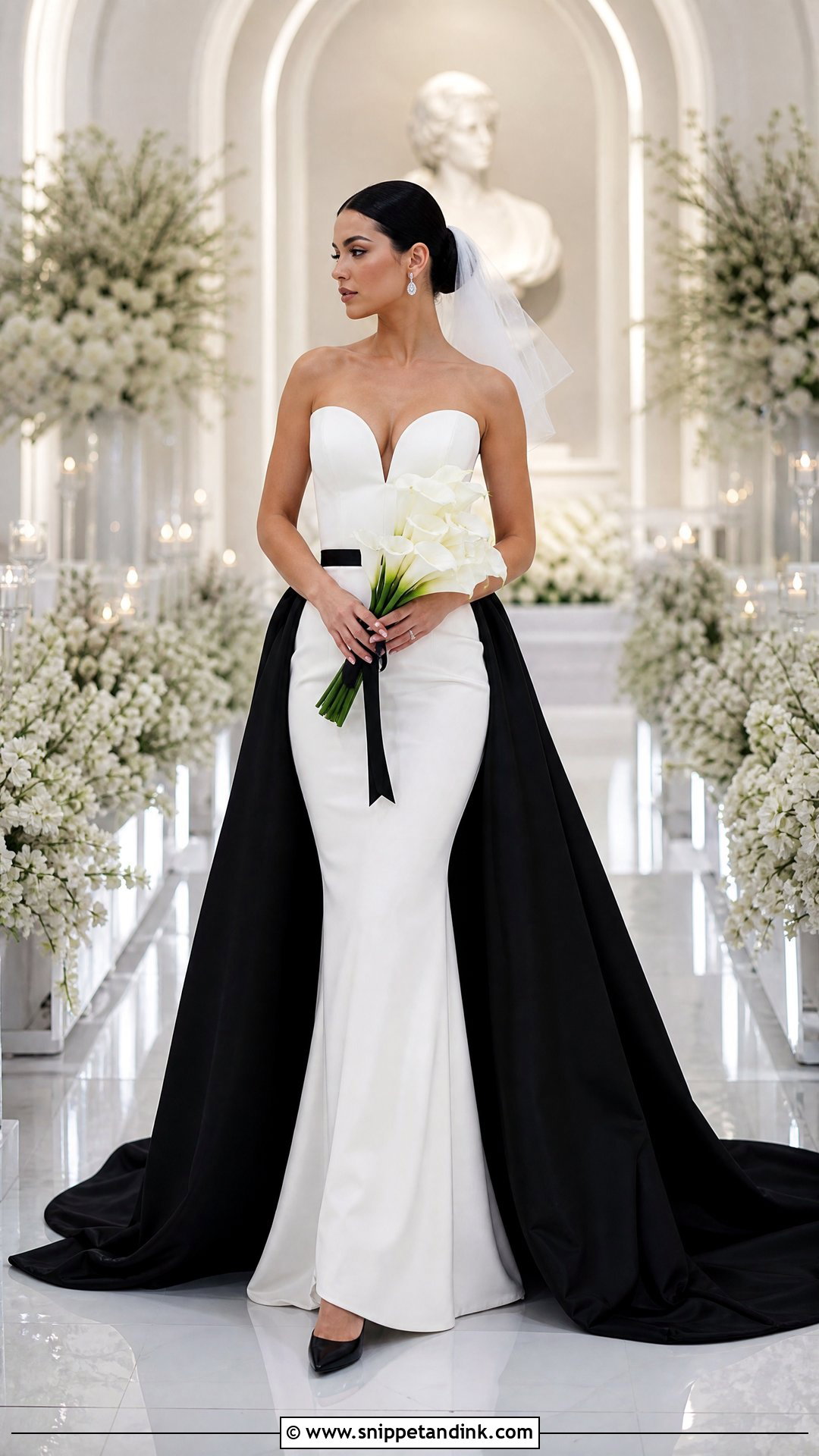
A detachable black train gives the most drama of all, with the option to lose it by dinner. Start with a fitted white column or mermaid gown, then attach a sweeping black satin or tulle train at the back waist, with an open front so the white skirt stays visible. Wear it for the ceremony and formal portraits, then remove it for dancing. A heavy satin train pulls backward on its attachment point, so I’d ask for a firm waistband with hooks over snaps. Black heels, diamond earrings and a sleek updo finish it. A small white veil can sit above the train, or skip the veil altogether.
Will the Black Rub Off on the White?
This is the question I wish more brides asked. Dark dye can transfer onto pale fabric through friction, heat and moisture, and a wedding day has plenty of all three.
- Ask whether the black trim is colourfast. Rub a damp white cloth on a spare piece or an inside seam; any grey on the cloth is a warning.
- Velvet and cheap satin ribbon are the usual culprits, especially where they sit against warm skin at the waist or underarm.
- Keep a damp black stem wrap away from the bodice, because it can bleed when you hold the bouquet against you.
- Rain is the biggest risk for a black hem. Pack a white towel and blot, never rub.
Afterwards, tell your dry cleaner exactly where the black sits, and store the dress with acid-free tissue between black and white sections so they don’t lie pressed together for years.
Warn Your Photographer About the Contrast
Black and white side by side is a hard exposure problem. A camera tends to lose detail either in the bright white or in the deep black, and the photographer has to choose which. Mention the black details when you book, especially velvet, which soaks up light and can turn into a flat dark shape. Ask for a few close shots of the lace, buttons or beading so that detail survives in at least some of your images.
How Much Black Is Enough?
Black detailing takes nothing away from a white gown. Placed well, it defines the waist, frames the neckline, marks the train or turns a simple silhouette into something people remember. Think about your venue, your dress fabric, your comfort and how much drama you actually want. Buttons, ribbon and piping keep the contrast restrained; bows, capes, veils and overskirts make it loud. Tie the shoes, jewelry, bouquet and hair back to that one decision instead of adding black everywhere. The right amount is whatever still lets the white read as bridal.
You'll Like These Ideas:




Leave a Reply