
A sharara already does a lot. The flared pants move, the kurti catches light and the dupatta adds another layer, so the hair’s job is to settle all of that rather than add to it. Before I pick a style for a sharara, I ask three things: how the dupatta will be draped, how heavy the jewelry is, and which function it’s for. A mehendi sharara can carry soft, loose hair; a reception one usually wants something sleeker. That holds for the bride’s sisters, bridesmaids and guests too. These sharara hairstyles cover buns, braids, ponytails, curls and open hair, with notes on what each one needs to hold through a long Indian wedding day.
Where the Dupatta Sits Decides the Hairstyle
With a sharara, I ask about the dupatta before I pick up a comb. Its drape decides what the hair has to support and where the pins can go.
Dupatta over the head
Go for a low bun, a middle part bun or a braided bun. They give the fabric a firm base to pin into at the crown and on either side of the bun, so it doesn’t slip back during rituals. High puffs and high ponies push the dupatta into a peak.
Dupatta over one shoulder
Side braids, side partition buns and swept curls all work. Put the hair on the opposite shoulder from the dupatta so the embroidery and the hair aren’t competing for the same space.
Dupatta across both arms or pinned at the front
Open hair is safest here, since nothing sits behind the shoulders to catch it. Waves, curls and half-up styles all suit this drape.
Whatever the drape, pin the dupatta through the foundation of the style, never just the top layer of hair, and use pins in your hair color or clear ones so they disappear in photos.
1. Sharara Side Partition Bun
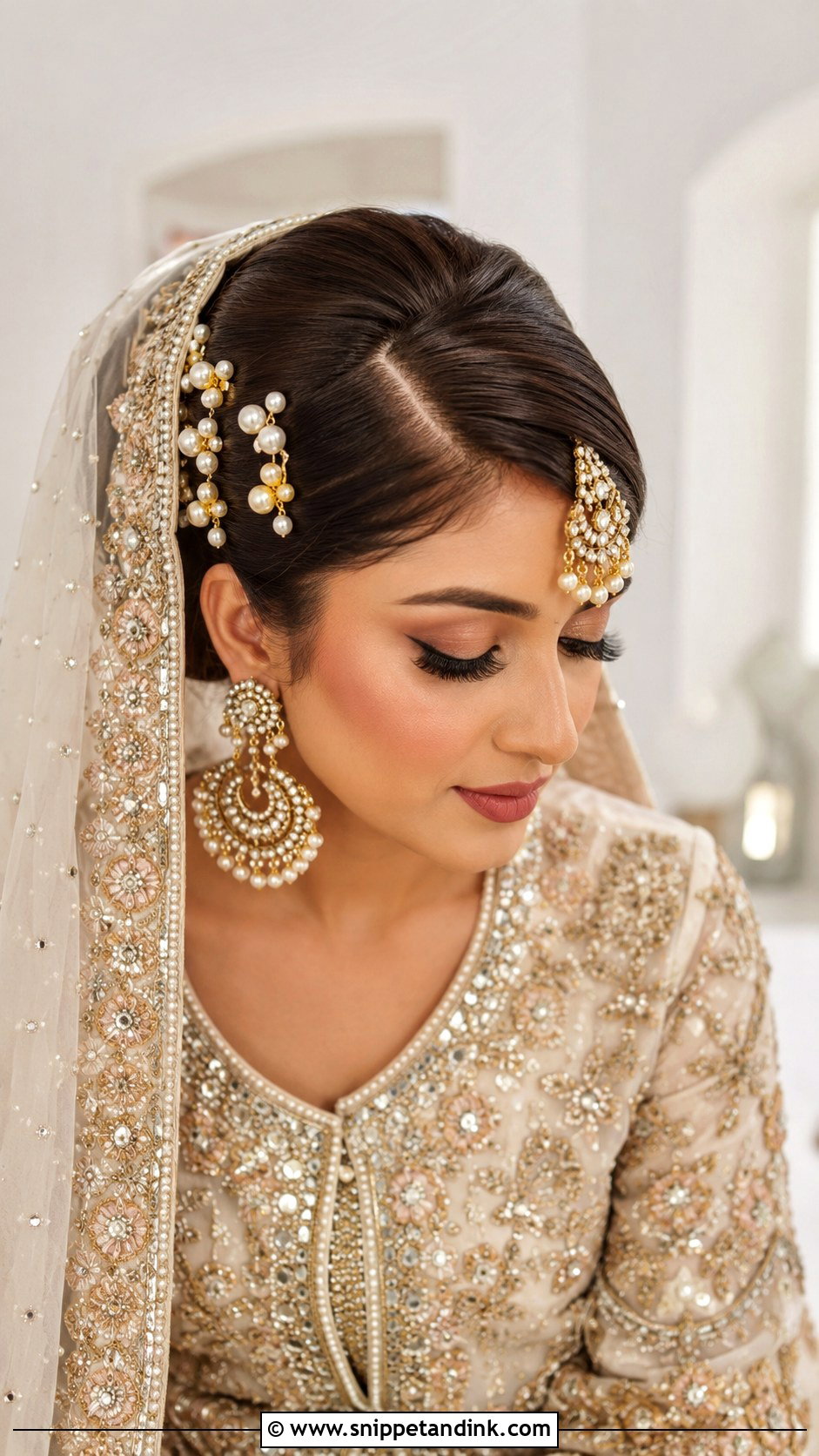
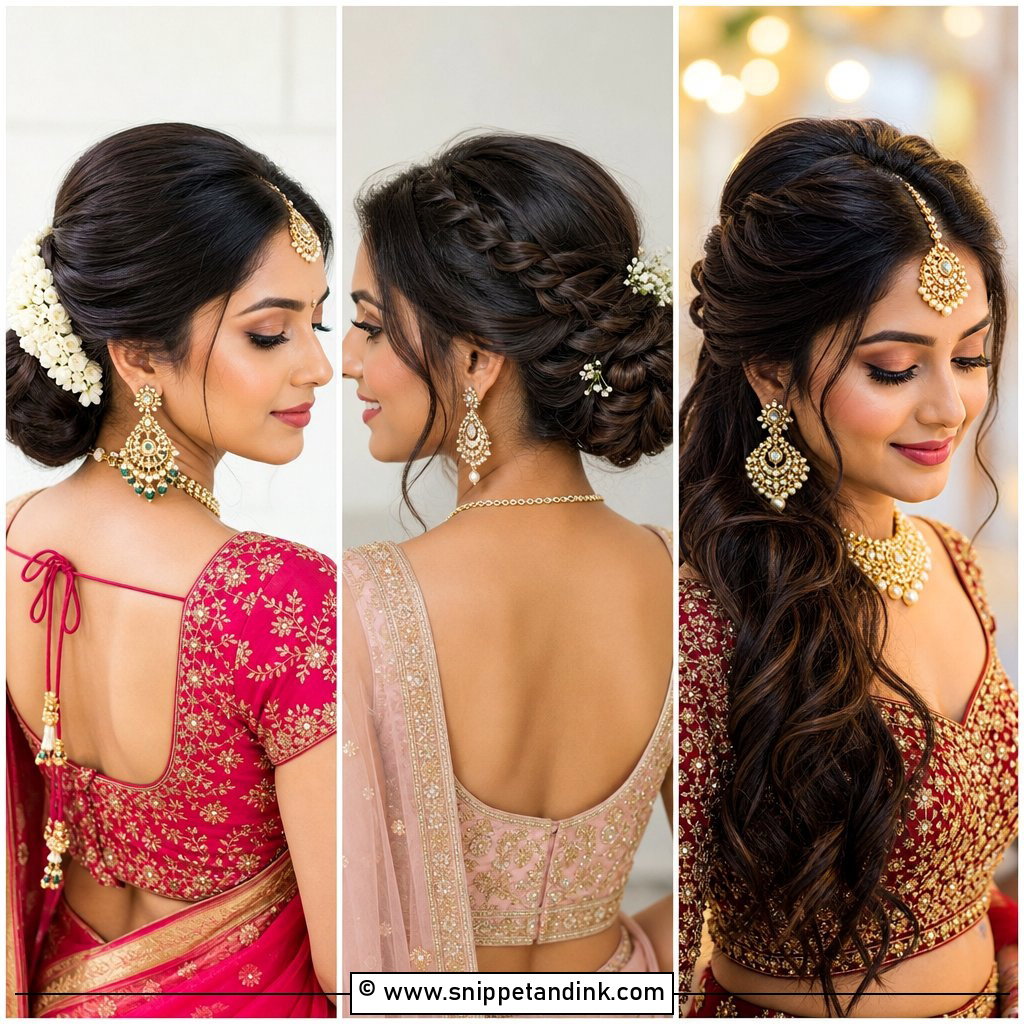
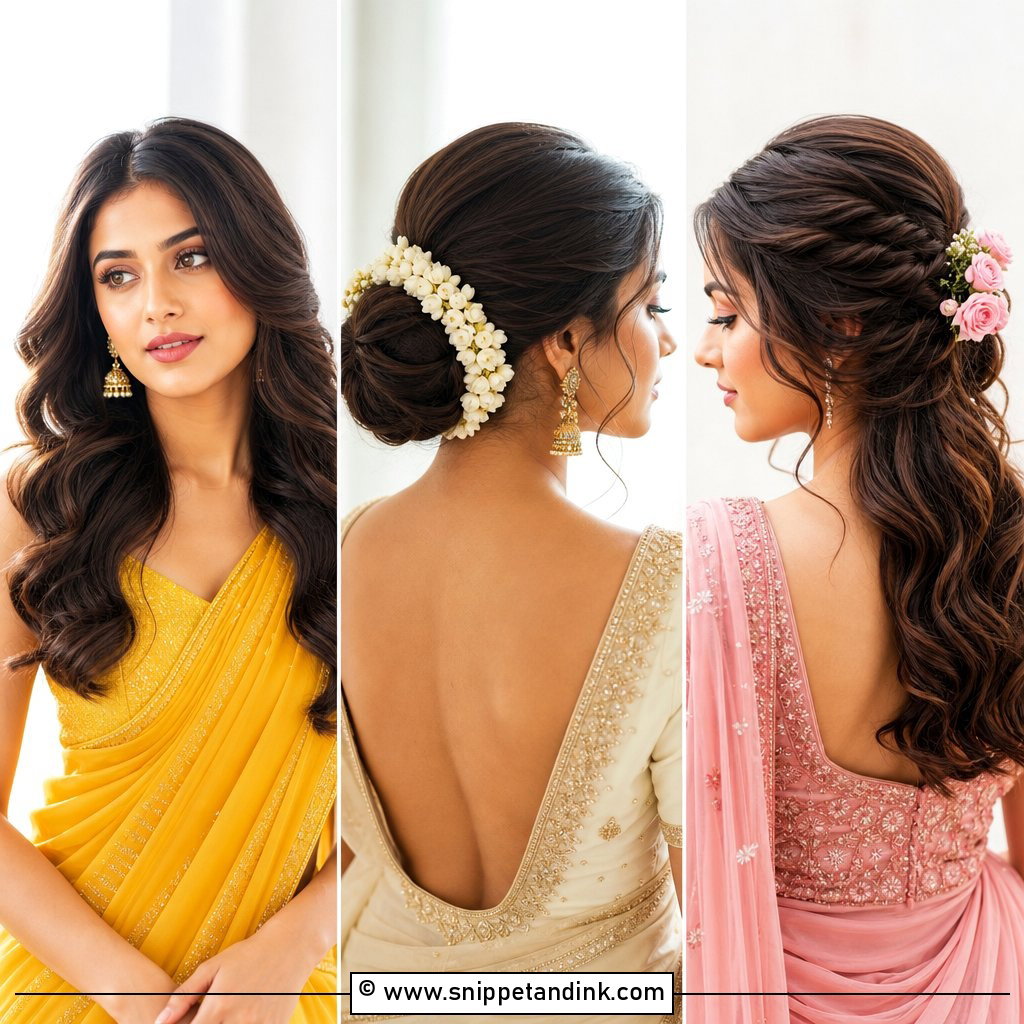
The side partition bun is what I reach for when the jewelry is the main event. With the face clear, earrings, a passa and the neckline embroidery all get room. It sits comfortably with heavy sharara suits, high necklines and dupattas pinned over one shoulder. A side part softens a strong forehead better than a center part, and it reads traditional without feeling dated. I place the bun low or mid-height depending on thickness, because thick hair placed high pulls on the scalp over a long ceremony. Fresh flowers, pearl pins or a single matha patti finish it. On the side with the deeper part I add an extra pin or two, since that’s where the hair’s weight wants to drag.
2. Sharara High Puff With Curls
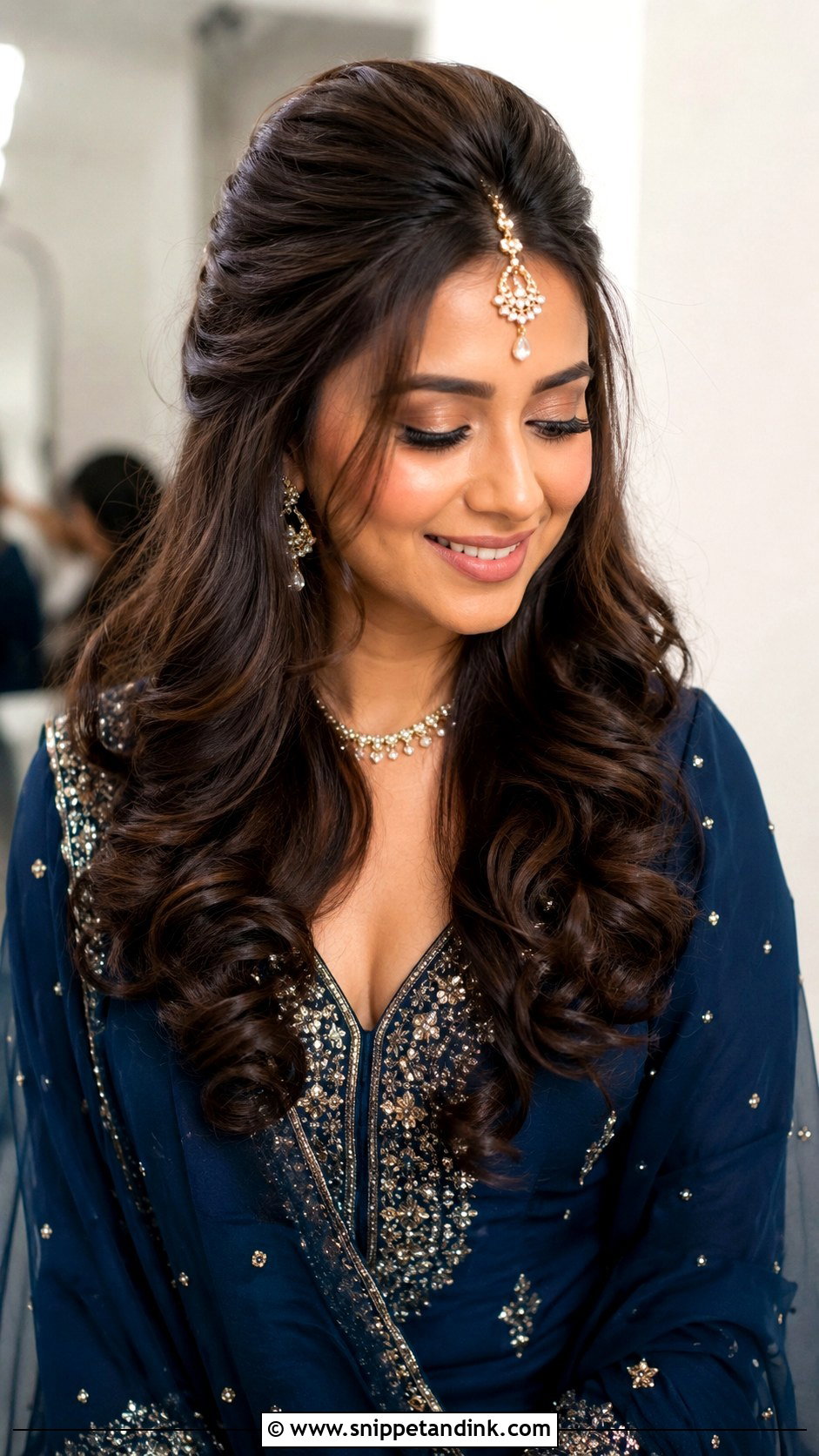
A sharara high puff with curls gives height at the crown and festive volume with very few accessories. Round and deep necklines suit it, and so does a dupatta draped dramatically across the body. The puff lifts the face while the curled length keeps the shape soft. I backcomb the puff at the roots only, then smooth the top layer over it, because teasing that shows on the surface looks frizzy in flash photos. A small maang tikka sits neatly in the space the puff opens at the center. If the dupatta goes over your head at any point, keep the puff modest or it lifts the fabric into an odd peak.
3. Sharara Braided Bun
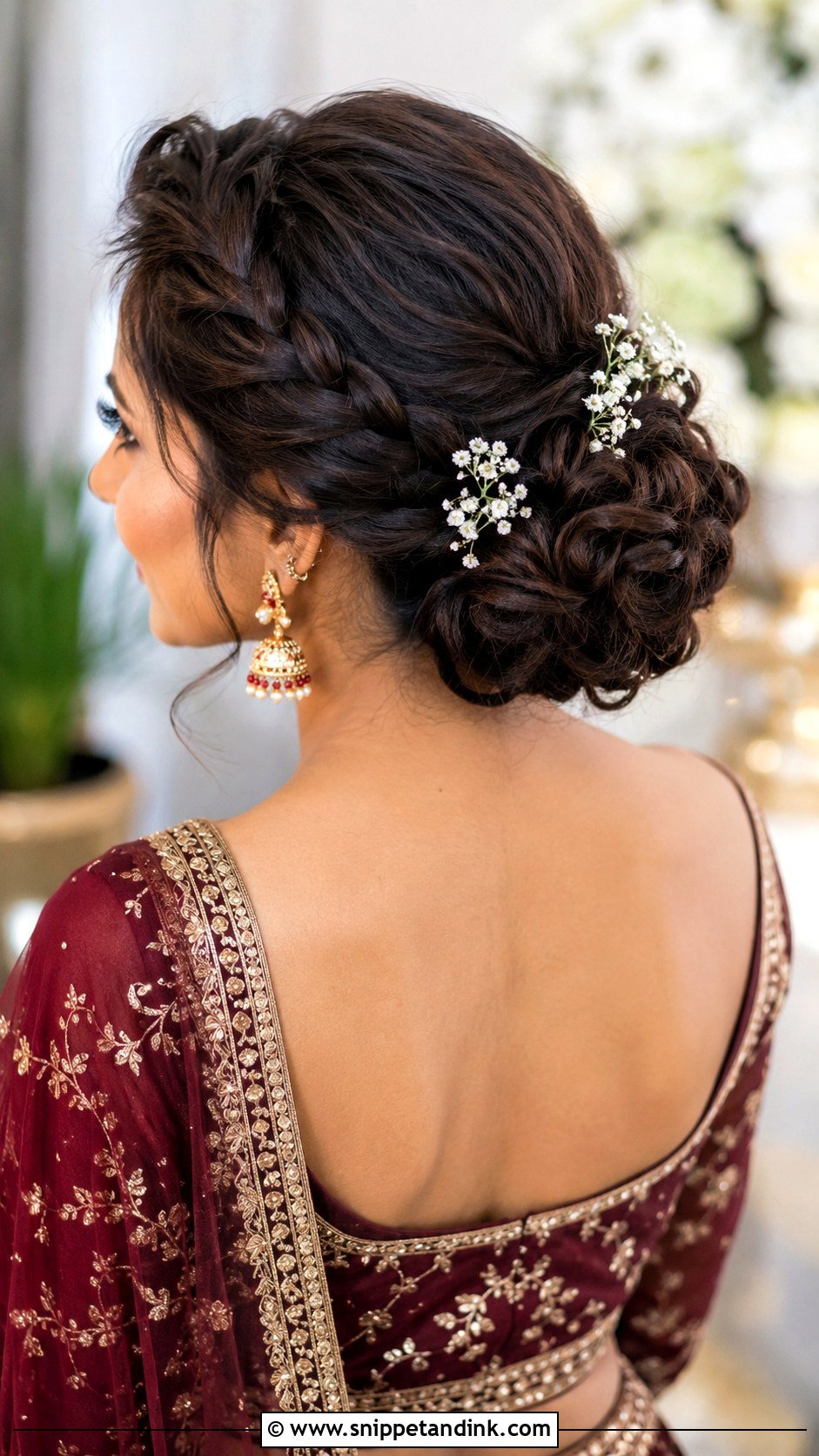
Braided buns hold through dancing, rituals and long receptions better than almost anything else here, because the braid locks every strand before the bun is even pinned. It’s my usual suggestion for silk, velvet, brocade and heavily embroidered shararas, worn by brides, bridesmaids or close family. A side braid wrapped into a bun looks soft; a crown braid running into a low bun looks more formal. Passa, jhumkas and layered necklaces all sit well with it. I pin through the braid itself, not around it, so the bun can’t rotate when you bend during the rituals. Tiny flowers soften the finish.
4. Sharara Backcombed Open Hair
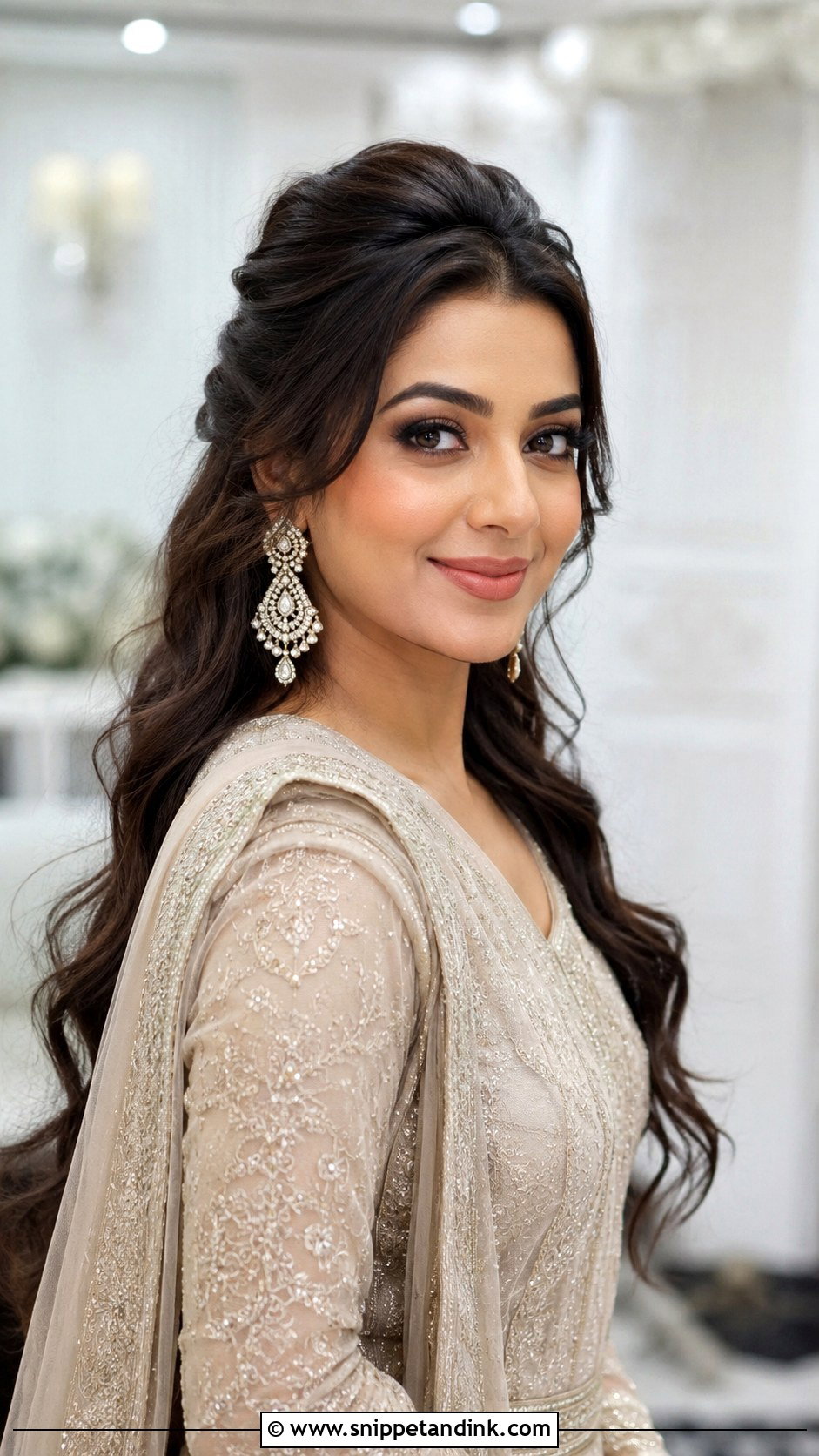
Backcombed open hair is the modern pick, with a bit of drama at the crown. The crown is gently teased for lift while the lengths stay smooth, wavy or softly curled. Fitted kurtis, cape tops and structured blouses suit it, and tucking the front slightly behind the ears gives statement earrings room. Keep accessories off this one. Fine hair loses backcombed lift fastest, so on fine hair I tease in small sections and set each with a light spray before smoothing the top. Be honest about the dupatta, too. Open hair under a dupatta draped over both shoulders tangles in sequins and embroidery, so this works best with a pinned or one-shoulder drape.
5. Sharara Crown Twist Open Hair
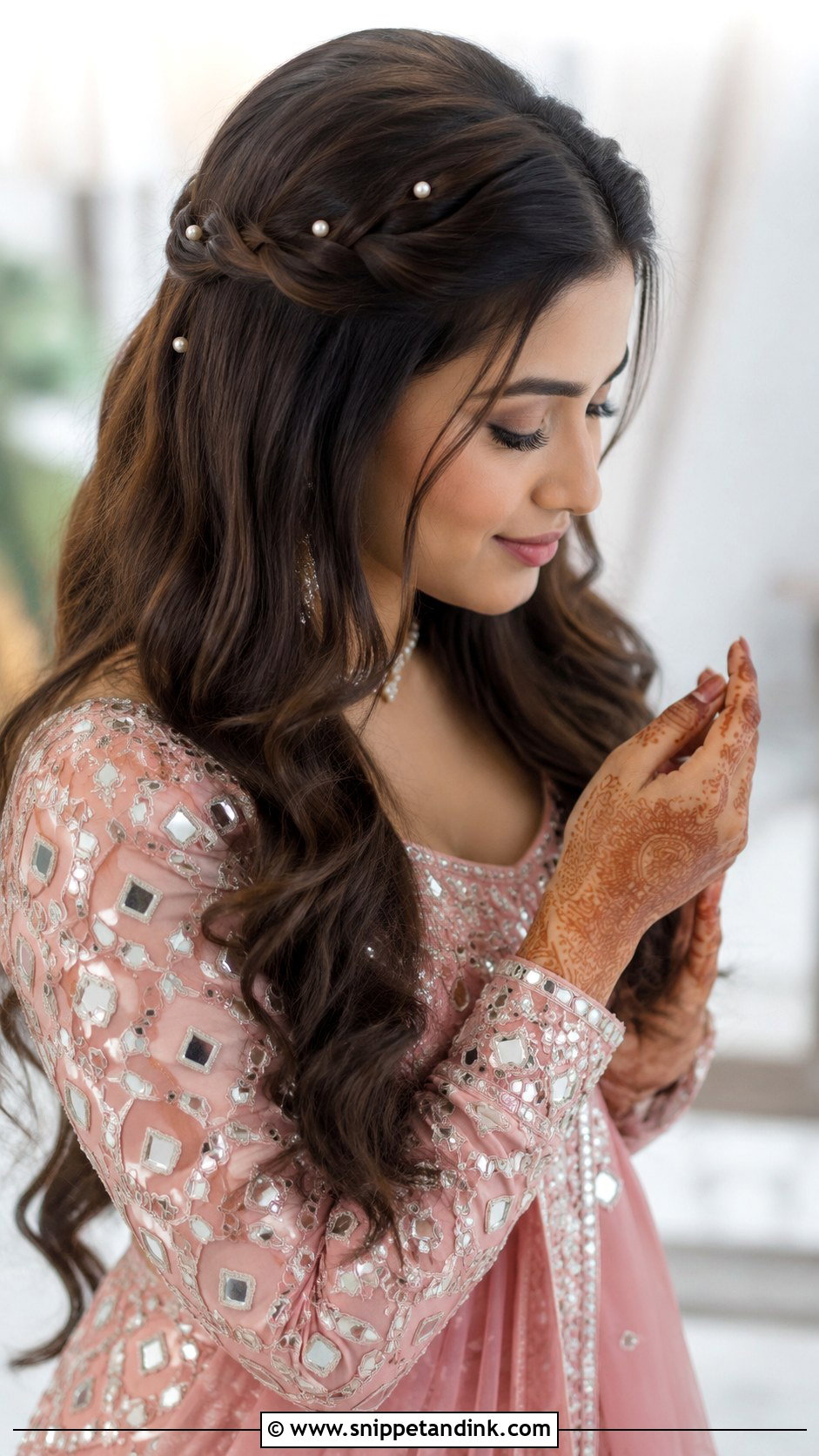
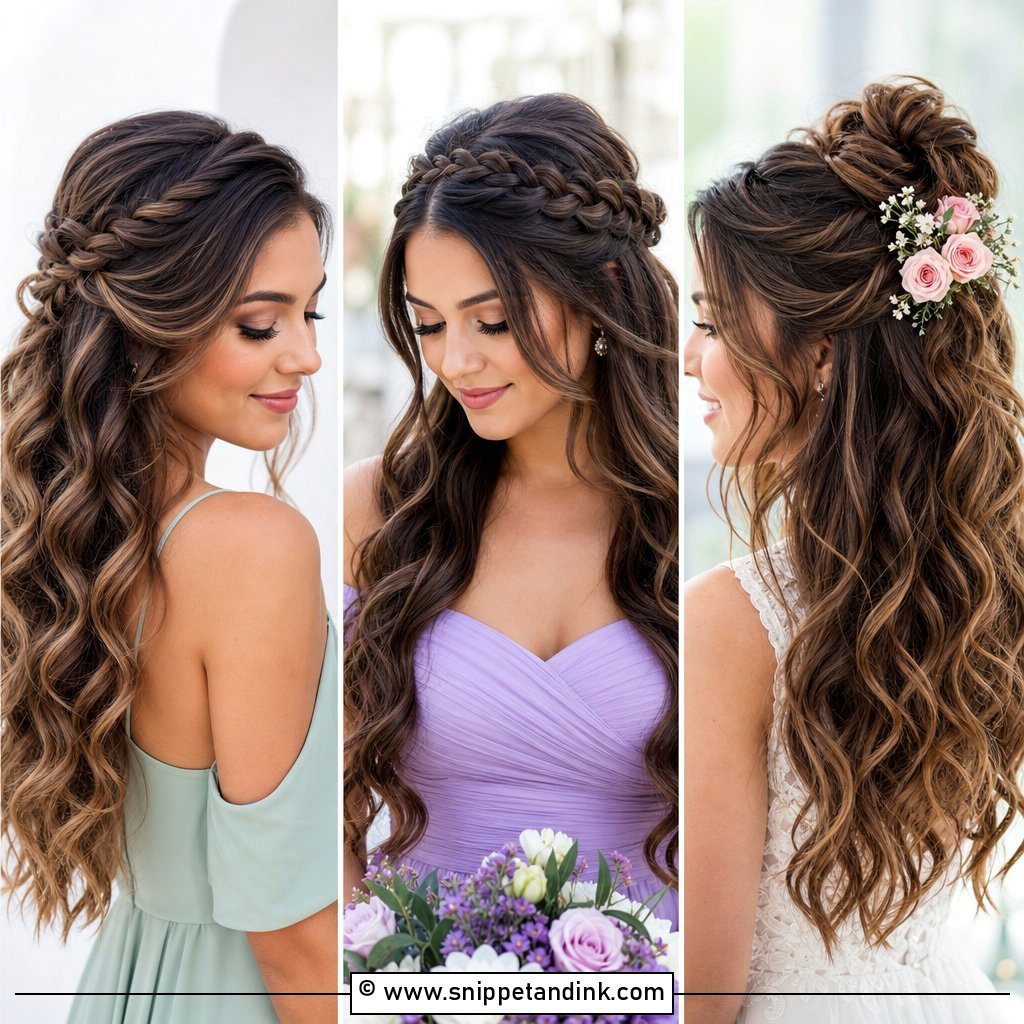
Twisting small sections from each side and pinning them at the back gives a half-up shape with the rest left open. It’s well suited to mehendi, sangeet and daytime functions, and to anyone who wants loose waves with the front kept off the face for dancing. Pastel shararas, mirror work, floral embroidery and lightweight dupattas sit easily with it. I twist each section away from the face and cross the pins where the twists meet at the back, which holds far better than one pin per twist. Tiny pearl pins, fresh baby’s breath or a delicate maang tikka finish it. It’s light to wear and suits most face shapes.
6. Sharara Sleek High Ponytail
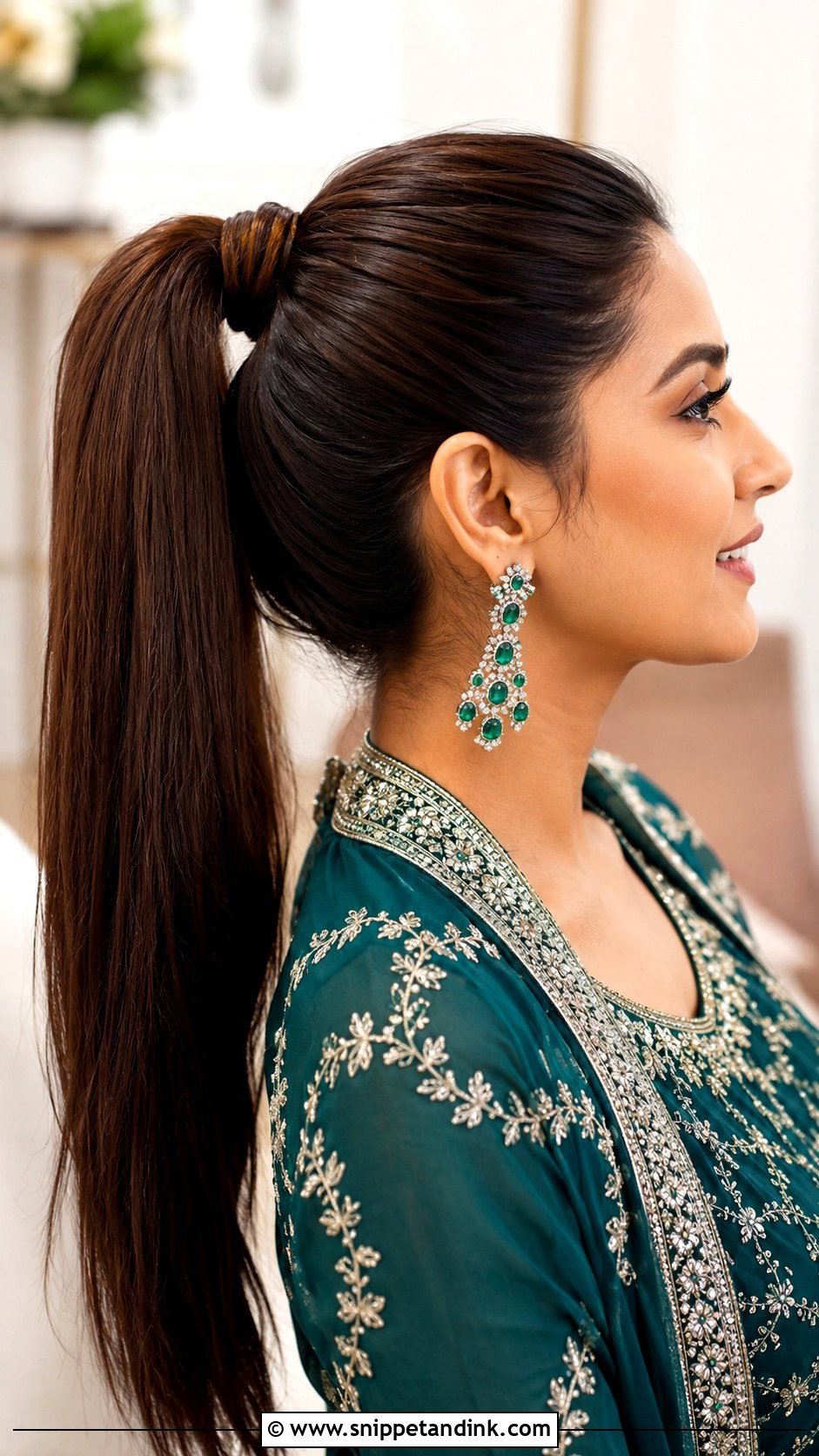
For a reception, a cocktail-style sangeet or a fashion-forward guest look, a sleek high ponytail shows off the makeup, the earrings and the neckline all at once. The high placement sharpens the whole outfit. I straighten or smooth the hair first, then add waves to the length only, and wrap a section of hair around the base for a clean finish. A center part looks current; no part gives more height. The honest drawback is the dupatta. If it’s meant to go over your head for any ritual, a high pony gets in the way, so save this for functions where the dupatta stays on the shoulders.
7. Sharara Low Ponytail With Waves
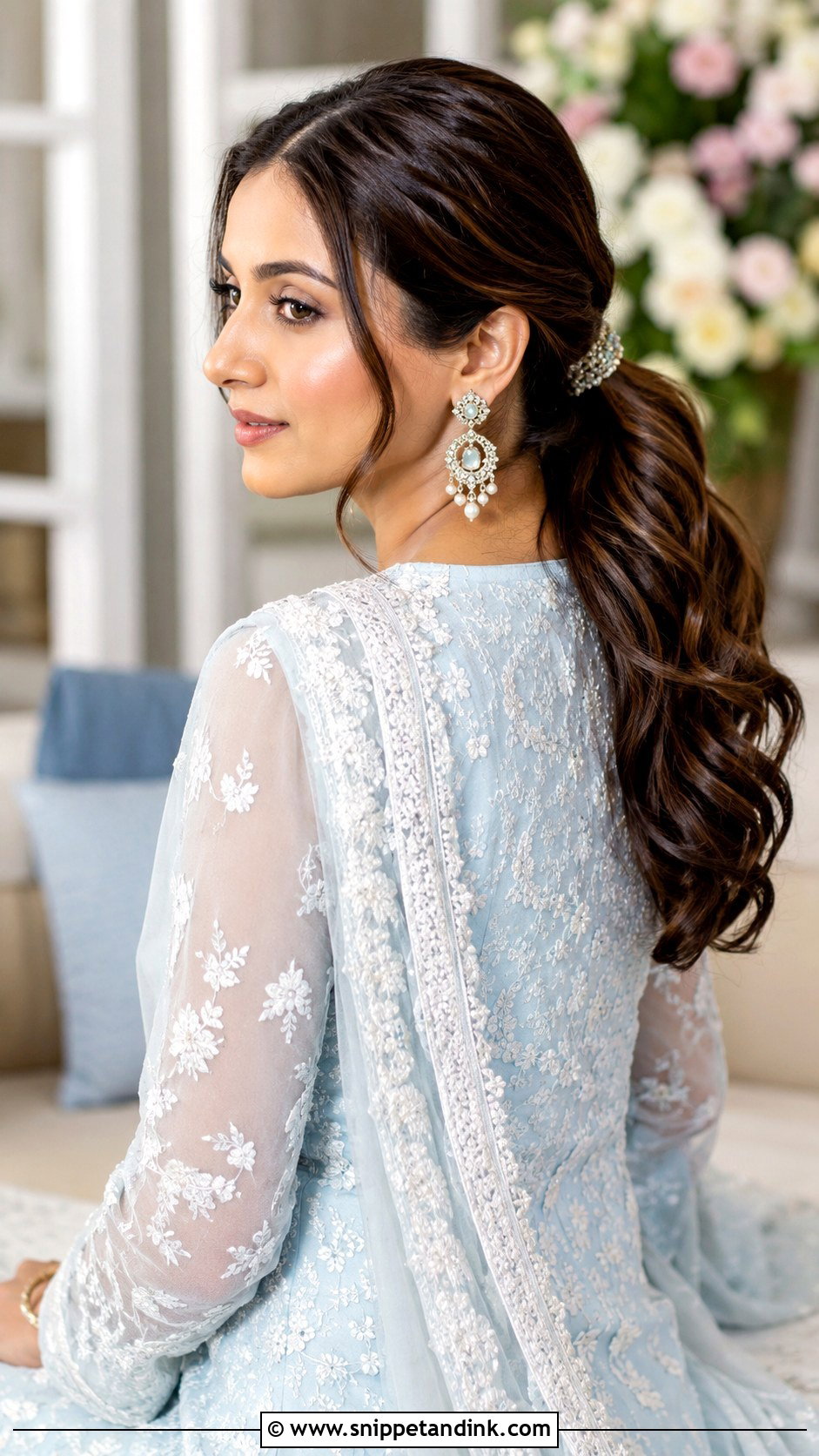
Long functions are where a low wavy ponytail earns its place. Heavy dupattas are the reason: with the hair gathered at the nape, nothing tangles in the embroidery when the fabric shifts. Waves through the length give movement while a smooth crown keeps it refined. A middle part looks classic, a side part frames the face more softly. It suits shararas with chikankari, sequins or pastel tones. If the outfit is plain, I add one small accessory at the base, pinned over the elastic so it can’t slide down the length.
8. Sharara Side Braid Hairstyle
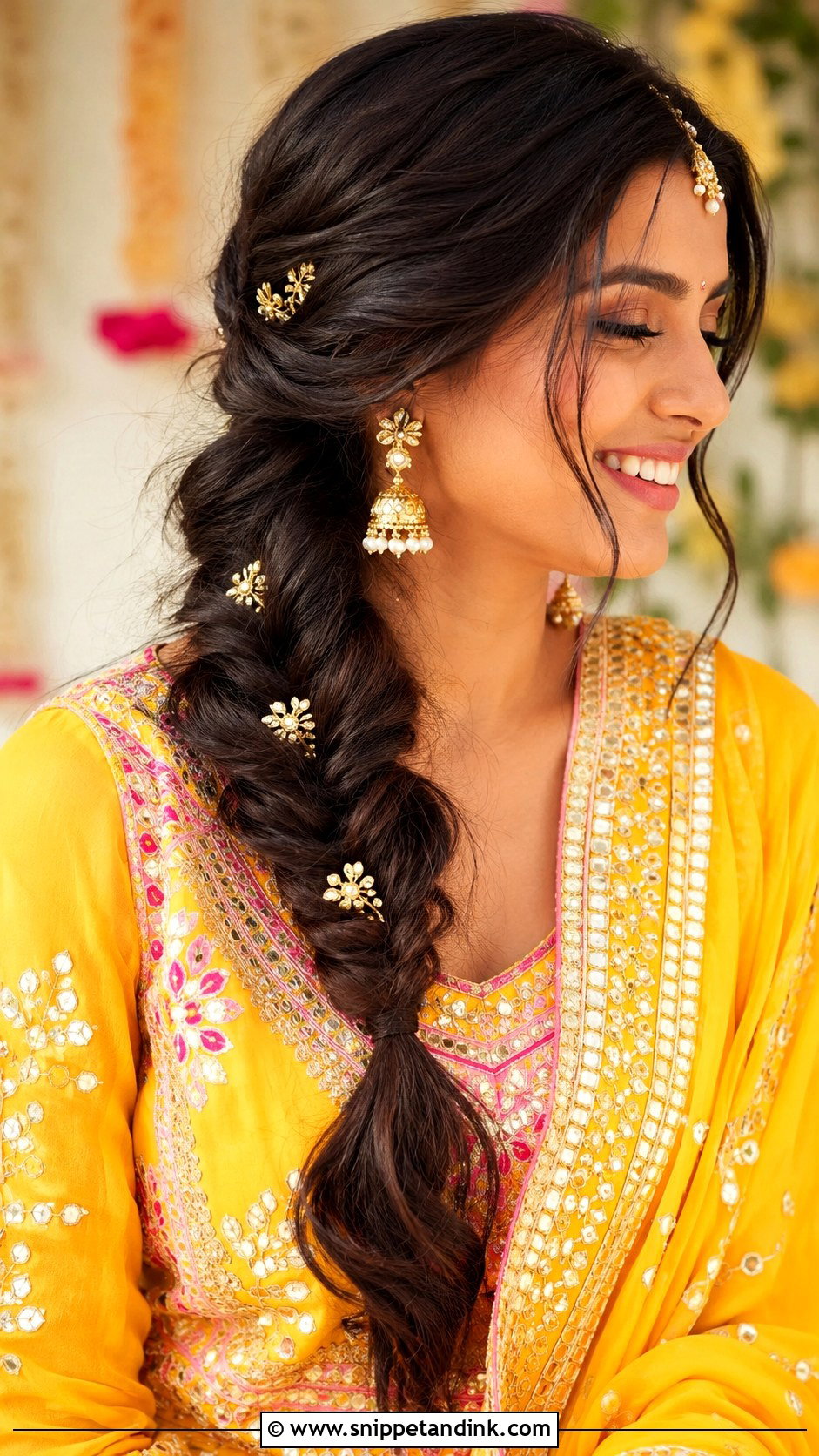
Haldi, mehendi and daytime ceremonies are where a side braid feels most at home. Loose, fishtail or classic three-strand all work, chosen by thickness: thin hair looks fuller in a loosened three-strand than in a tight fishtail. Worn to one side, it shows off the full length and stays out of the way. Gota patti shararas, bright dupattas and festive jewelry suit it. For a richer look, add paranda, fresh flowers, small gold pins or pearl accents. A paranda is braided in with the hair, so I start the braid lower at the nape to give its tassels a clean line. Leave a few soft strands around the face so it doesn’t look strict.
9. Sharara Fishtail Braid
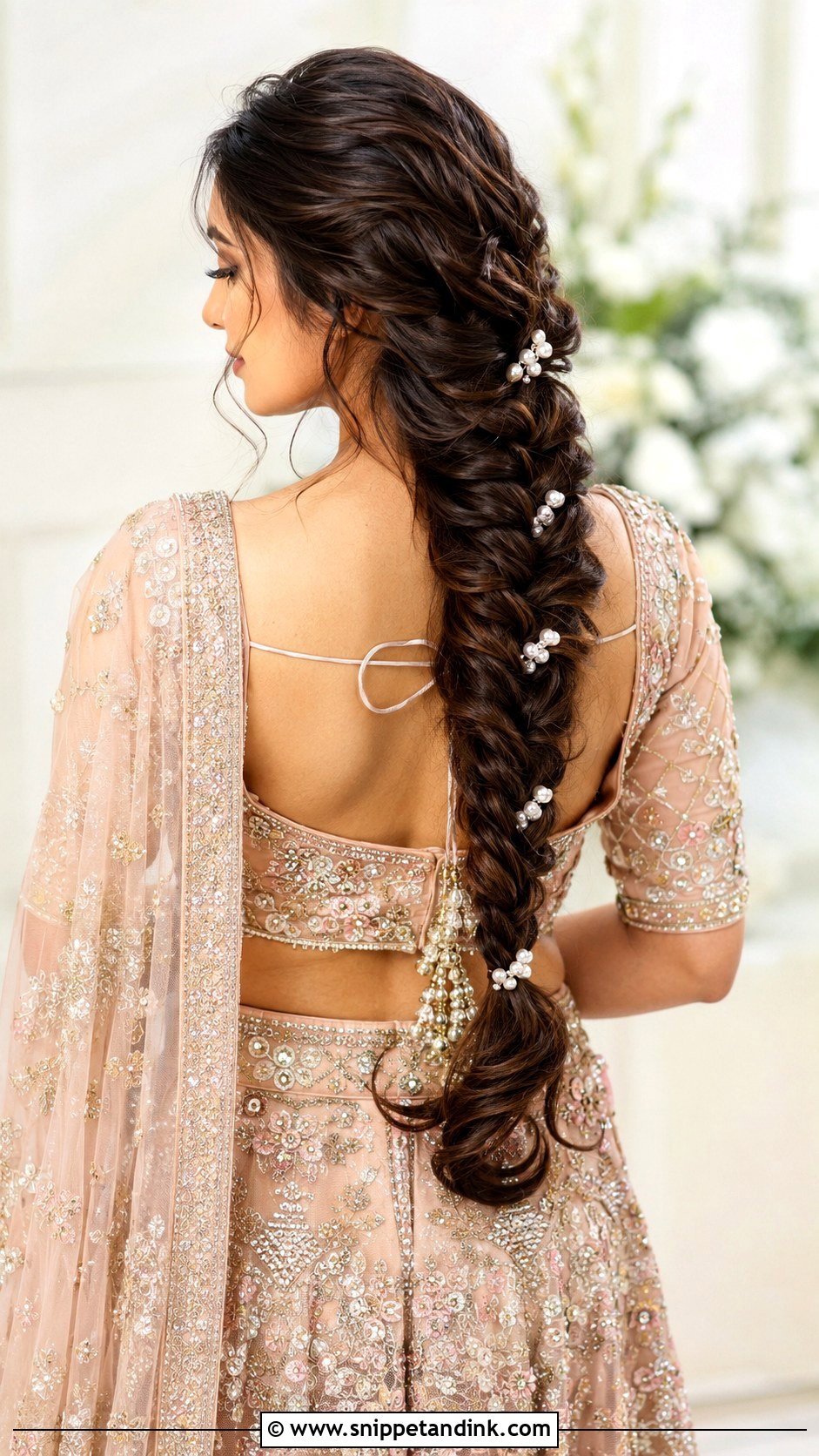
A fishtail gives detail without bulk. The woven pattern holds its own next to an ornate sharara because it has the same kind of texture embroidery has. Long hair or extensions make the best fishtail; on shoulder-length hair the weave runs out too quickly to read. I braid it tight and then pull the edges gently for width, starting at the bottom so the top doesn’t loosen. Worn to the side it looks softer, down the back cleaner and more formal. Space any floral pins or pearl clips well apart so the weave stays visible.
10. Sharara Loose Curls Open Hair
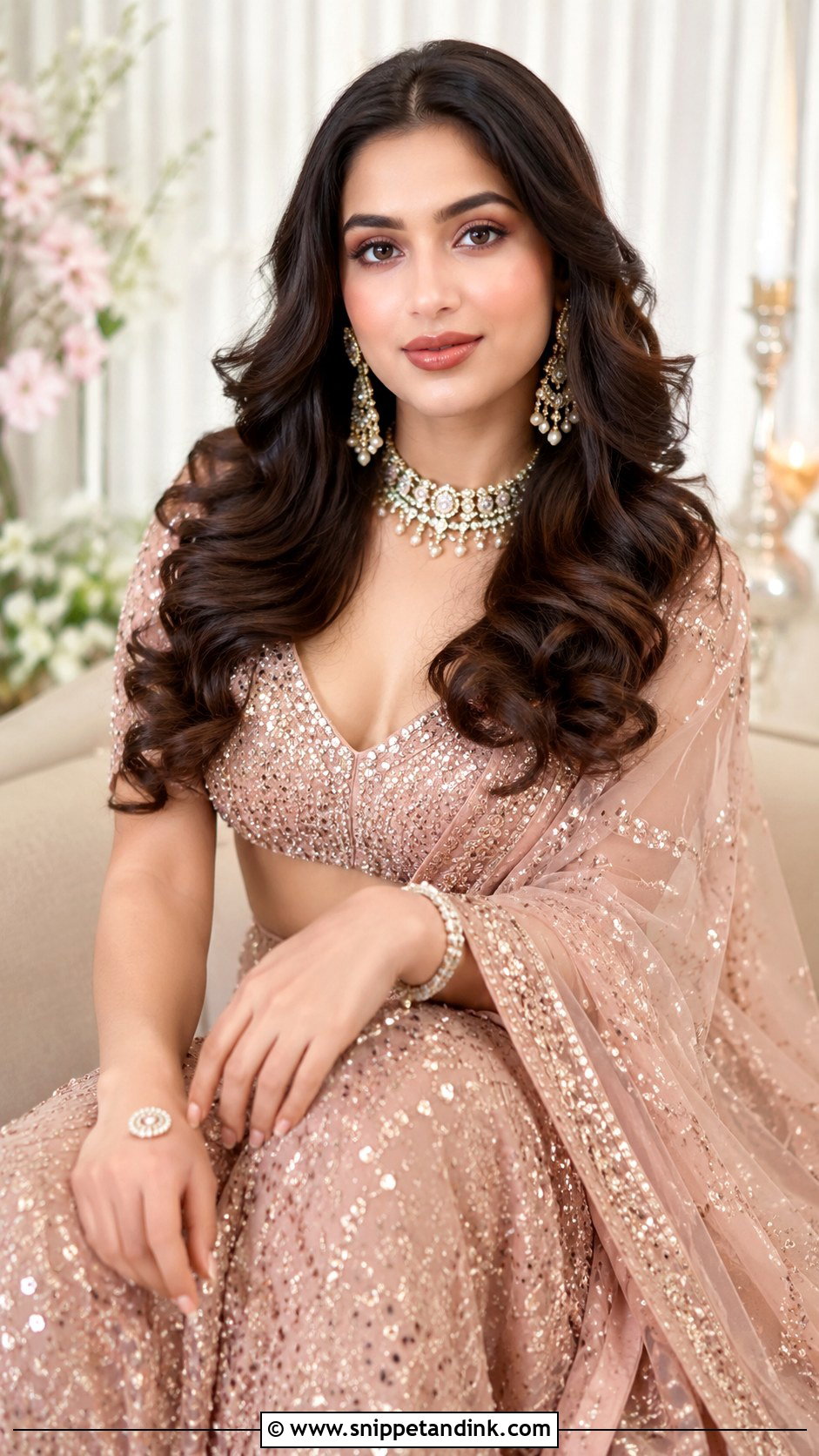
Loose curls are a wedding favorite because they look glamorous with very little structure. The bounce suits flared sharara pants and flowing dupattas, and it works at nearly every function from engagement to reception, as long as the neckline isn’t too heavy. I keep the top smooth and curl away from the face so the eyes stay open in photos. A center part pairs with a maang tikka; a side part gives a softer guest look. Humidity is the risk. A drop of anti-frizz serum smoothed over the cooled curls keeps them shiny without dragging them flat.
11. Sharara Middle Part Bun
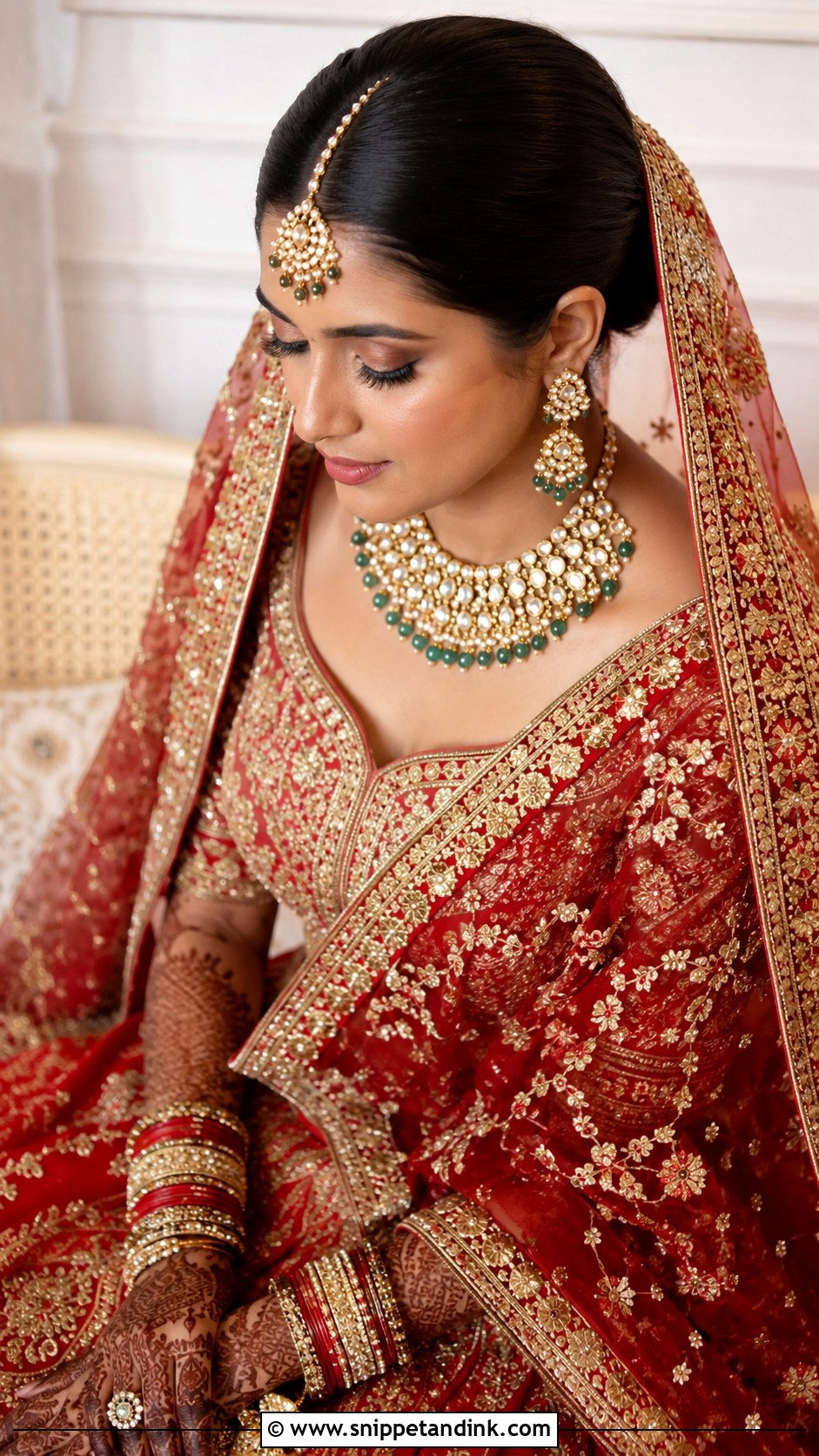
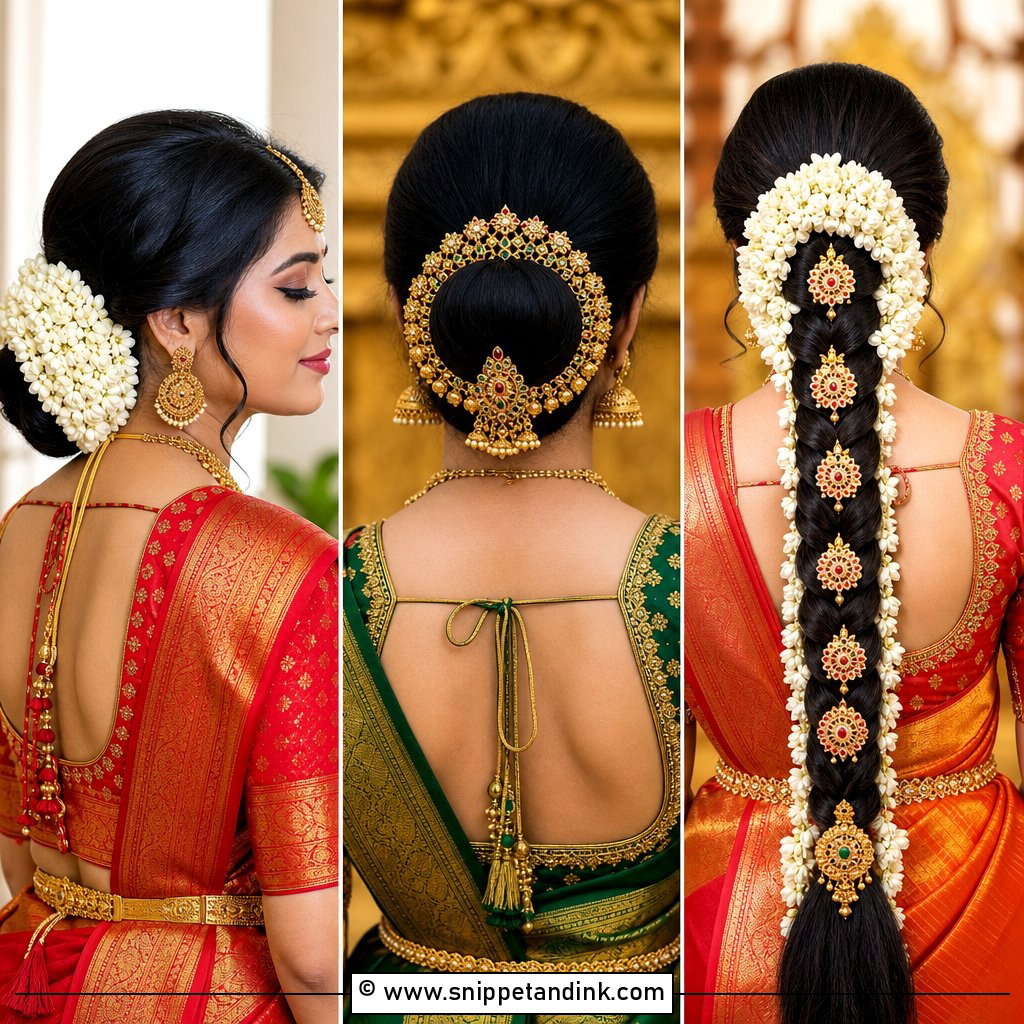
Center-parted buns give the most regal finish and are the natural base for traditional jewelry, since the part lines up a maang tikka, matha patti or jhoomar exactly. Low placement looks graceful; slightly higher adds height at the crown. It suits heavy bridal shararas, nikkah looks and formal family events, and it keeps the hair tidy under an embroidered dupatta. I line the part up with the bridge of the nose rather than judging by eye, because a crooked part pulls the tikka off center for the whole day. Keep the bun full, smooth the flyaways, and a ring of gajra makes it more festive.
12. Sharara Messy Low Bun
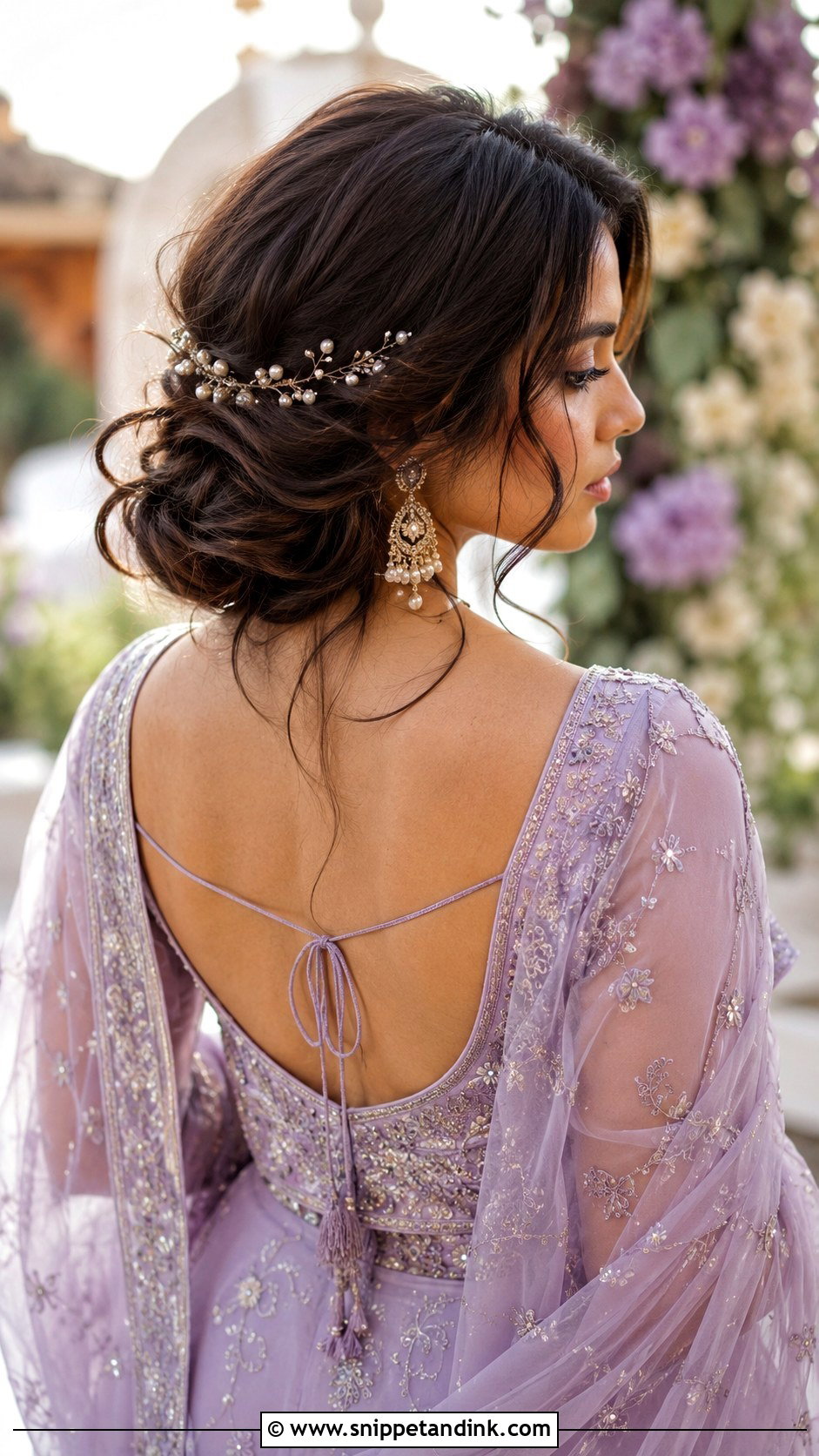
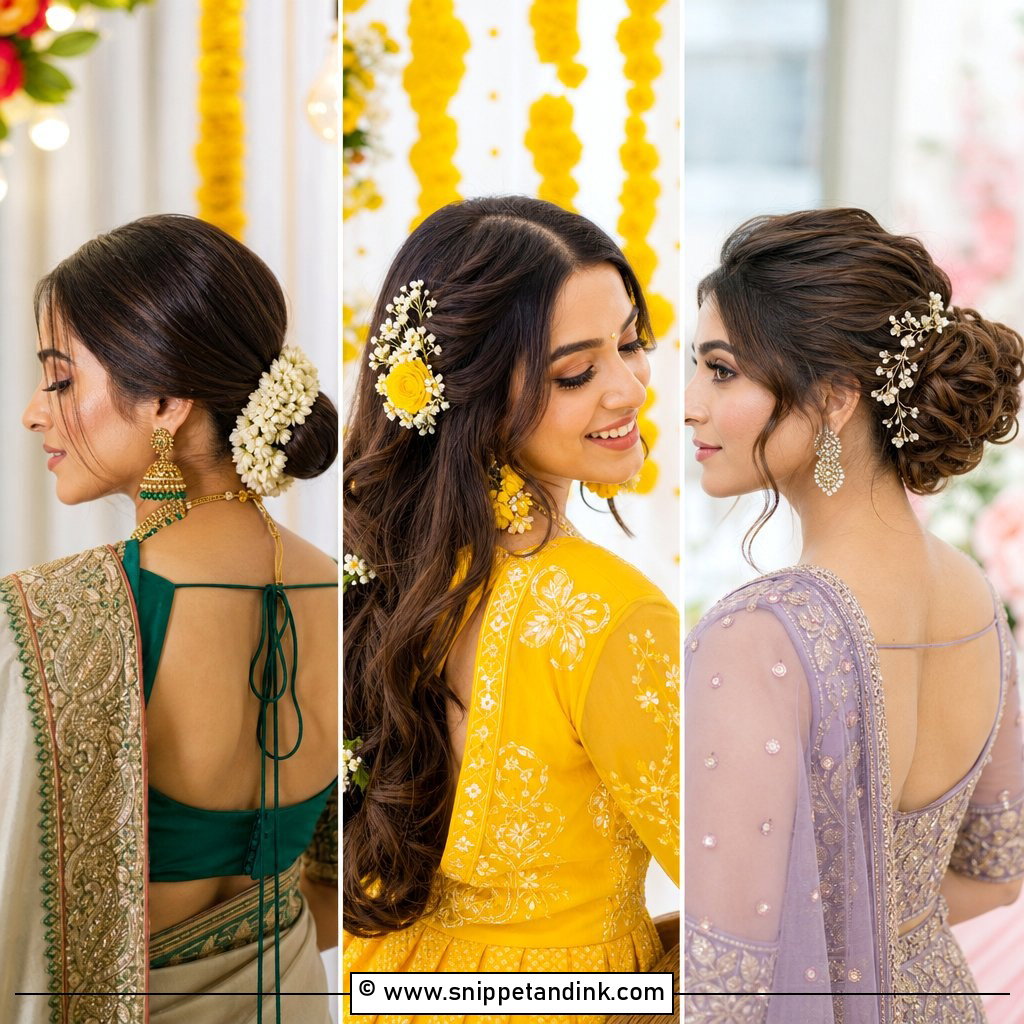
A messy low bun is soft but still dressed. It sits at the nape with loose face-framing strands and gentle texture through the crown, and it pairs well with pastel shararas, organza dupattas and pearls. Being less strict than a sleek bun, it suits outdoor events, mehendi and daytime ceremonies. Ask for controlled texture, not frizz. I build the bun with every strand secured first and pull the loose pieces out last, so nothing structural is left hanging. Small flowers or a fine hair vine finish it.
13. Sharara Half Up Half Down Curls
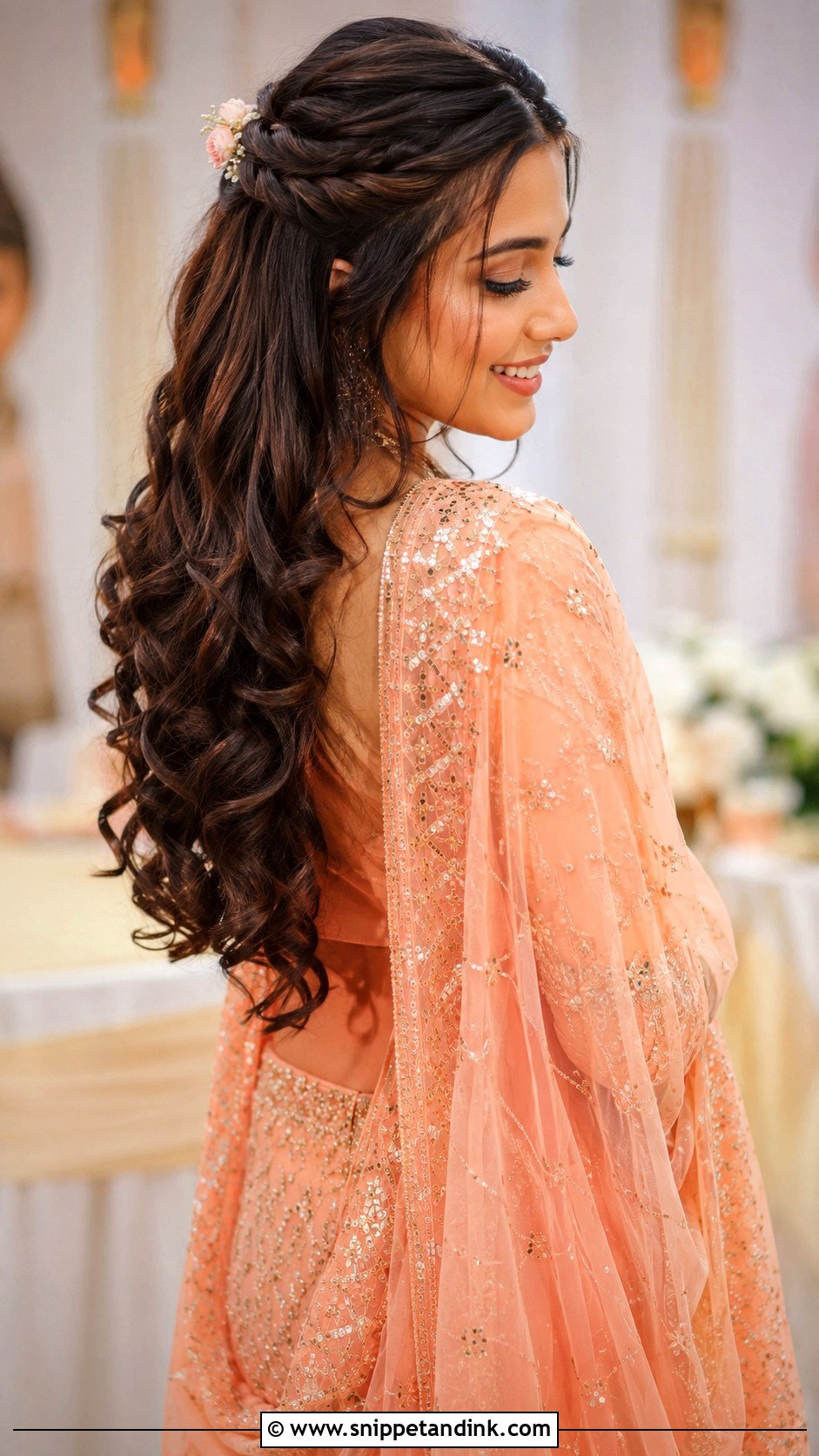
If you can’t decide between open and pinned hair, half-up curls split the difference. The top section is secured back for lift and control while the curls fall over the shoulders, which suits sangeet, engagement and guest looks. I usually twist or braid the half-up section rather than pinning it flat; that gives detail at the back for photos and a firmer anchor for any clip. On straight, slippery hair a small hidden elastic goes under the twist before any pins. It keeps hair off your face during the dancing.
14. Sharara Gajra Bun
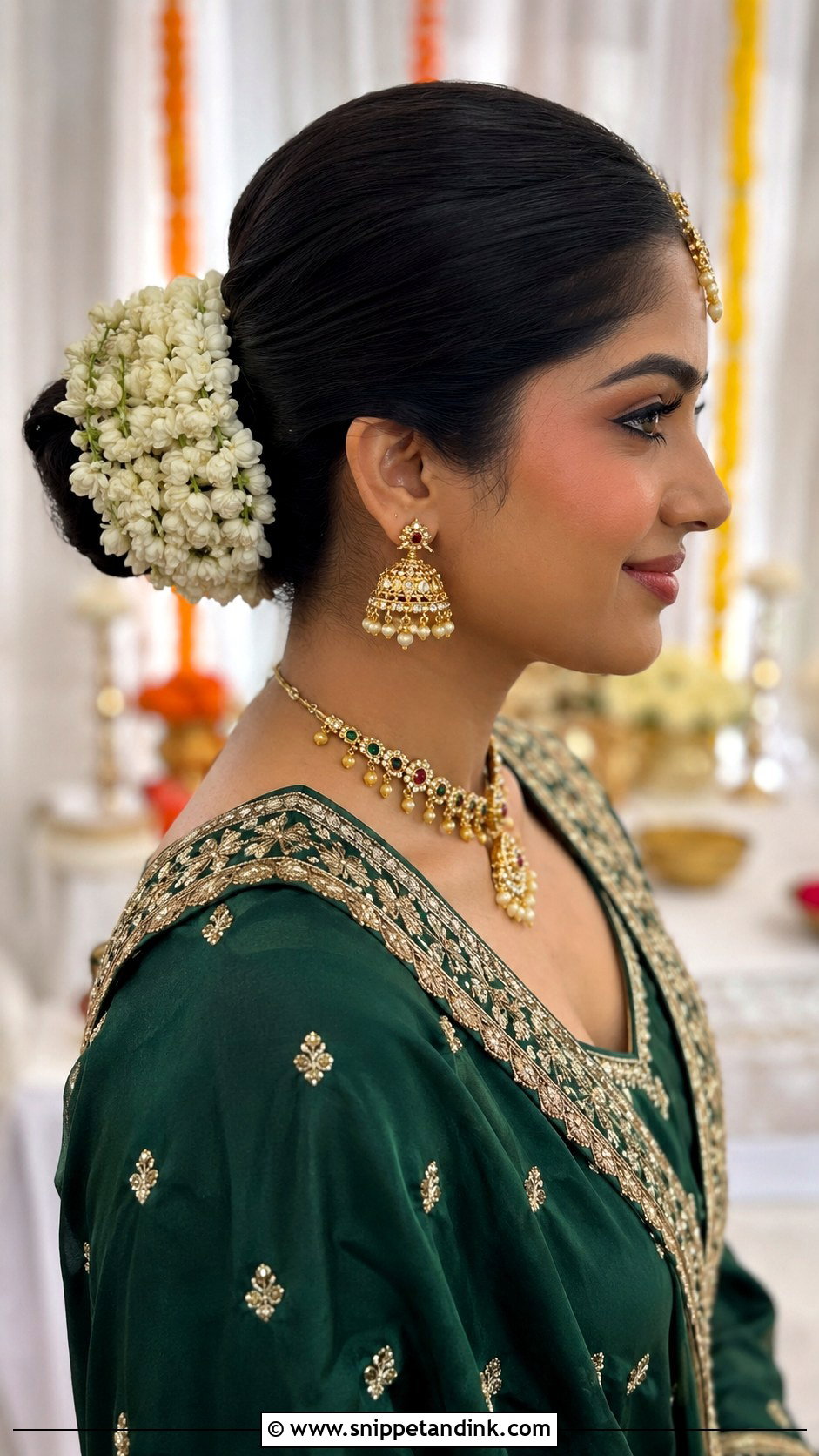
Gajra buns tie straight into Indian wedding tradition, and nothing else smells like them. Sleek, braided or softly textured, the bun turns festive the moment the gajra goes on. Temple weddings, nikkah functions and richly embroidered bridal shararas all suit it, alongside gold jewelry, silk dupattas and classic makeup. Wrap the gajra right around the bun for the full traditional look, or tuck a shorter length to one side for a lighter one. Fresh jasmine is heavier than it looks, so I pin the strand every few centimeters through the bun, not only at the ends. Keep the front clean so the flowers don’t compete with the face.
15. Sharara Soft Waves With Maang Tikka
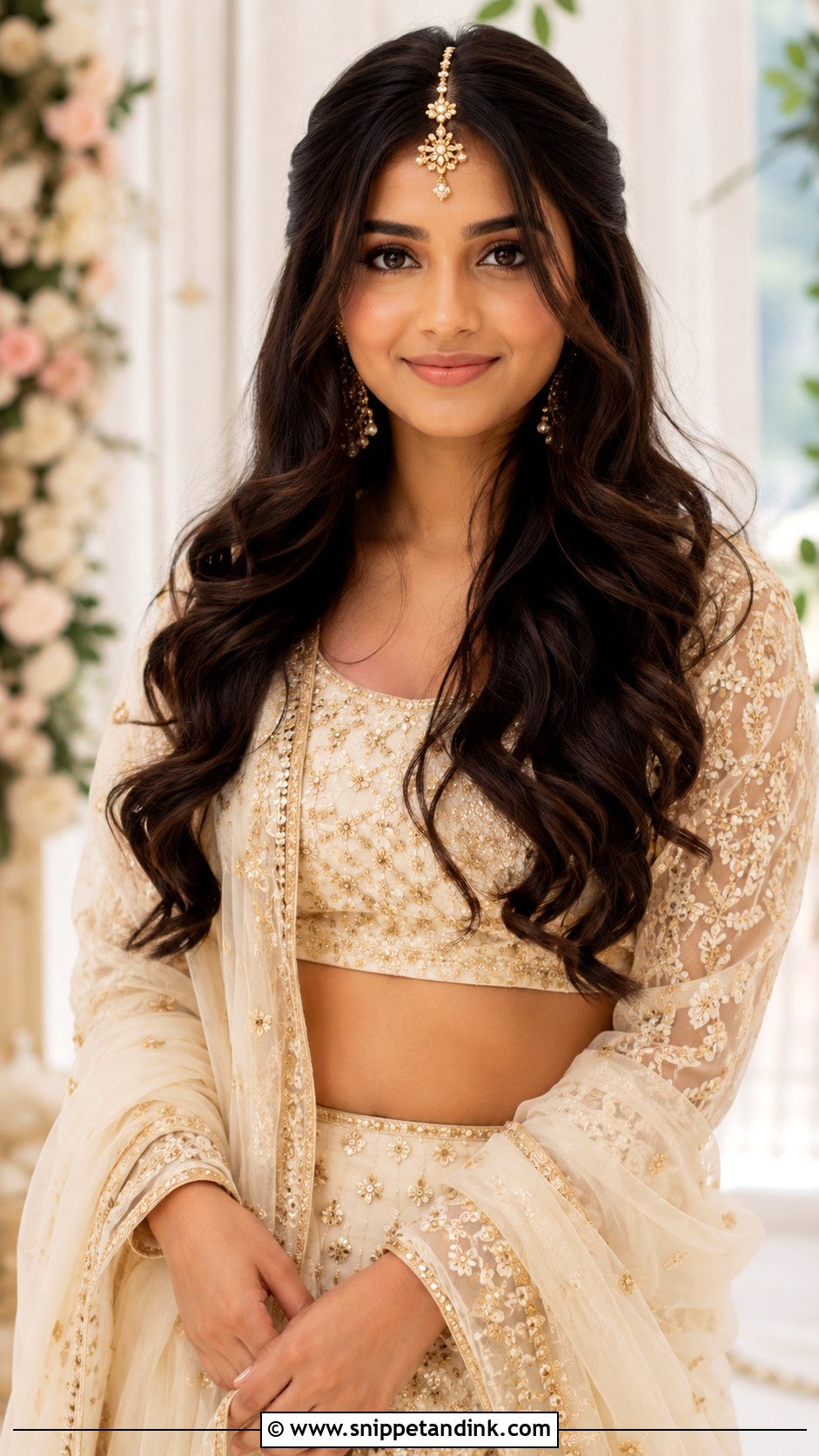
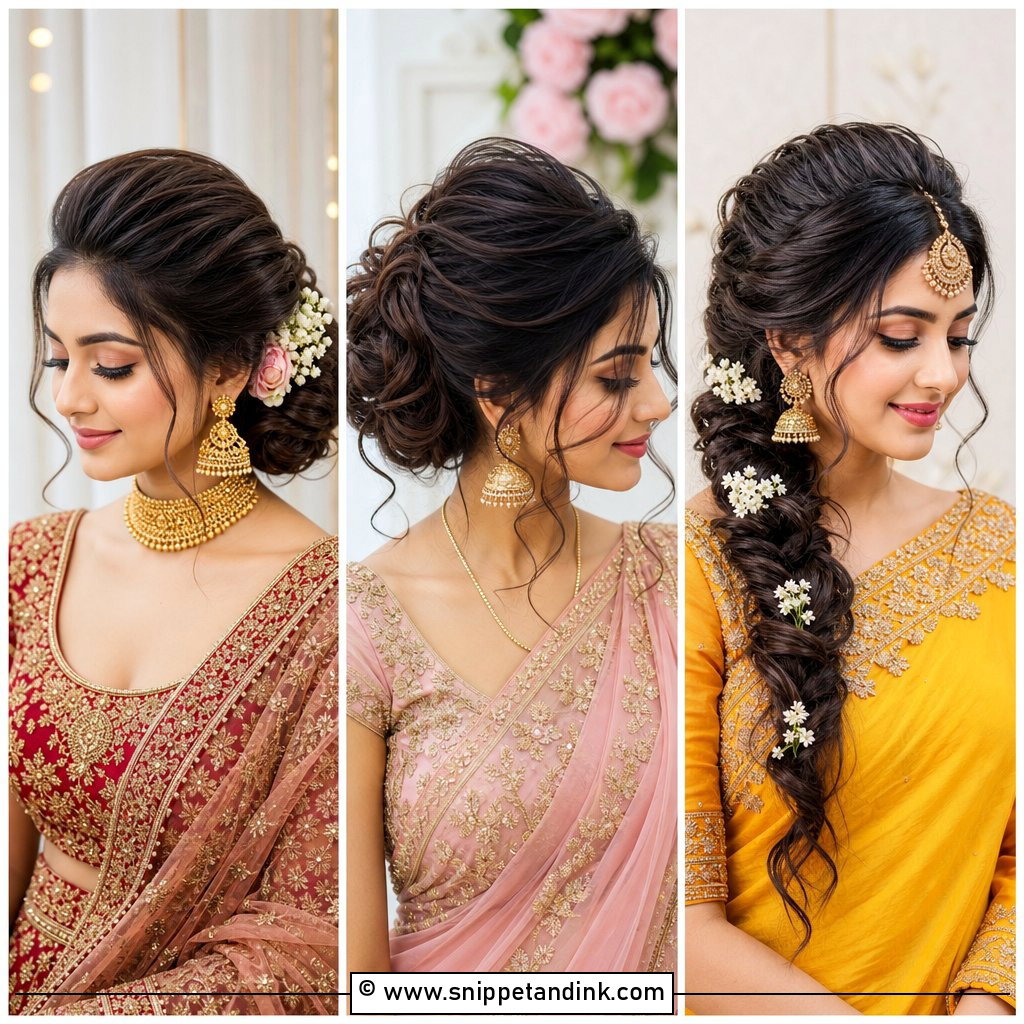
Pairing soft waves with maang tikka gives open hair the ceremonial detail a sharara calls for and keeps the look fresh. A center part lets the tikka hang straight and draws attention to the eyes. Bridesmaids, sisters and brides in lighter shararas for pre-wedding functions all wear it well. Keep the waves brushed out and glossy rather than tight. The tikka is the part that fails: its chain has to be pinned into a small hidden backcombed section at the crown, otherwise it slides forward and sits crooked by the second hour.
Anchoring Tikka, Passa and Gajra Through a Long Function
Jewelry and flowers add real weight to a hairstyle, and most of the slipping I fix during functions comes from them rather than from the hair.
- Maang tikka: backcomb a small section at the crown, pin the chain into it, and hook the tikka so the stone rests just below the hairline at the center.
- Passa: it hangs heavier on one side, so it needs two or three pins through its loops into the hair above the ear, ideally on the side with the deeper part.
- Matha patti: pin both side chains behind the ears before fixing the center piece, so it sits level across the forehead.
- Gajra: buy fresh jasmine on the day if you can, keep it in a damp cloth in the fridge until you dress, and pin it on after the hairspray, which browns the petals.
Do your trial with the real jewelry, not a lighter stand-in. A tikka that feels fine for ten minutes can start pulling after three hours, and that’s far easier to sort out a week before than in the middle of the ceremony.
Heavy Sharara, Quieter Hair
The right hairstyle on sharara follows the mood of the function, the weight of the outfit and the way you’ll wear your dupatta. Buns are traditional and secure. Braids add ethnic detail, ponytails look modern and open curls soften everything around them. When the sharara is heavily embroidered, I keep the hair cleaner so the two don’t fight. When the outfit is simple, flowers, texture or jewelry in the hair can carry more of the look. Bride, bridesmaid or guest, the same balance applies.
You'll Like These Ideas:




Leave a Reply