
Long sleeves are the part of a bolero that gets tested hardest. You’ll hug, reach, raise a glass and hold out a hand for a ring, and a sleeve that’s cut wrong fights you through all of it. Get it right and a long-sleeve bolero gives a simple dress coverage, texture, warmth and an easy second look. The pairings below cover lace, sheer tulle, satin, faux fur, crepe and heavier embellishment, over everything from ball gowns to jumpsuits. Two things I always check first: that the bolero’s undertone matches the gown, and where its cropped hem meets the waist.
Where a Long Sleeve Should End on Your Wrist
A long bolero sleeve has more jobs than a dress sleeve. It has to let you hold out a hand for the ring, sign a register, and hug forty people without riding up to the forearm. In fittings I measure sleeve length with the arm bent, not hanging straight, because a sleeve that looks right at rest climbs a couple of inches once the elbow bends.
Three wrist finishes and how they behave
- Ending at the wrist bone: the safest length. The ring hand stays clear and lace cuffs don’t drag through food.
- A point over the back of the hand: elegant in portraits, but it needs a small finger loop or it twists around.
- Button cuffs: close the last button after your nails and rings are on, and leave the button loops slightly loose so your hands still slide through.
Mind the armhole as much as the cuff. A high, narrow armhole actually lets you lift your arm further than a low, roomy one, because the whole sleeve doesn’t drag the body of the bolero up with it. If you can’t raise your hand above your shoulder in the fitting room, the armhole is the thing to change.
1. Chantilly Lace Bolero With Satin Ball Gown
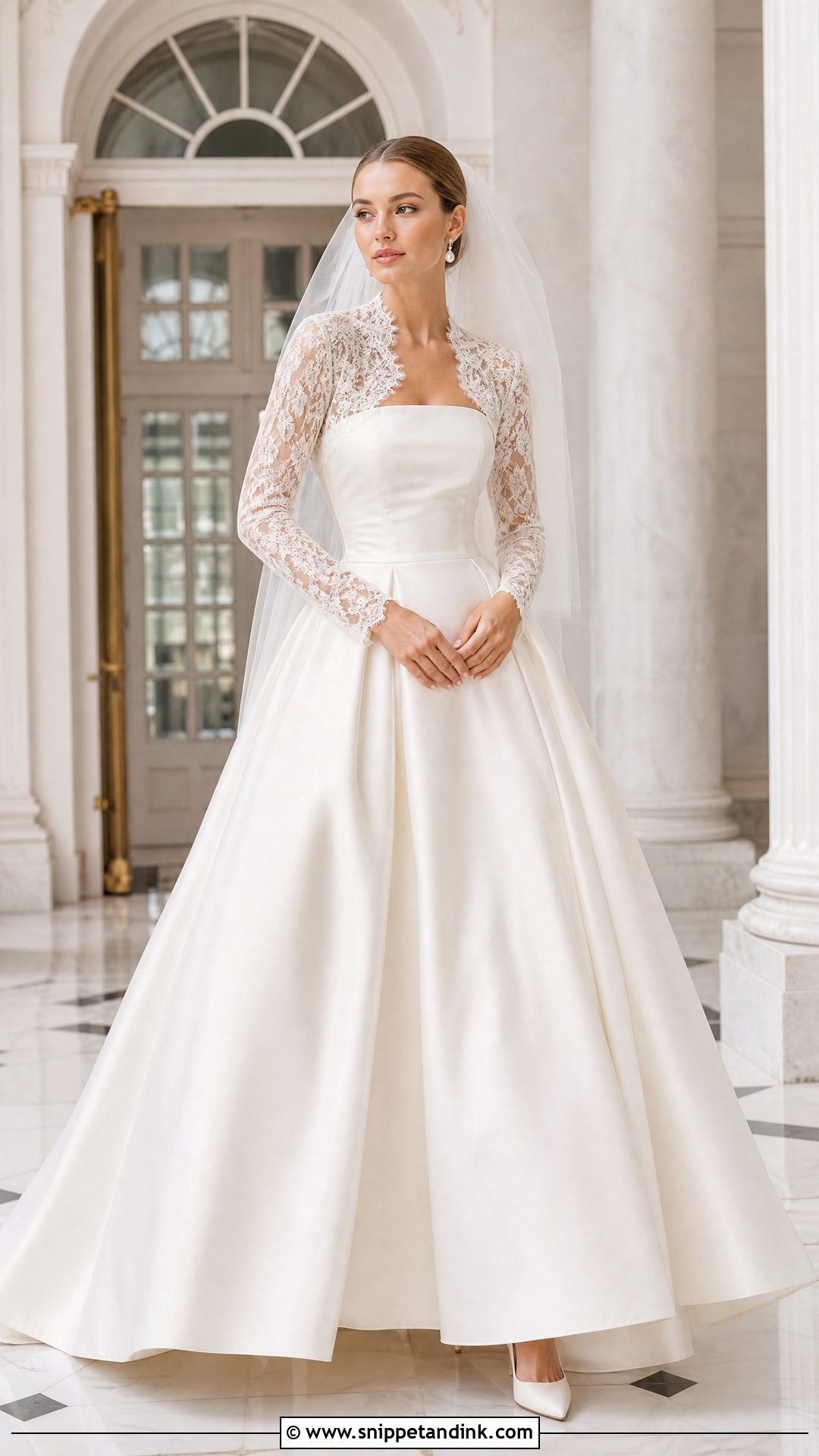
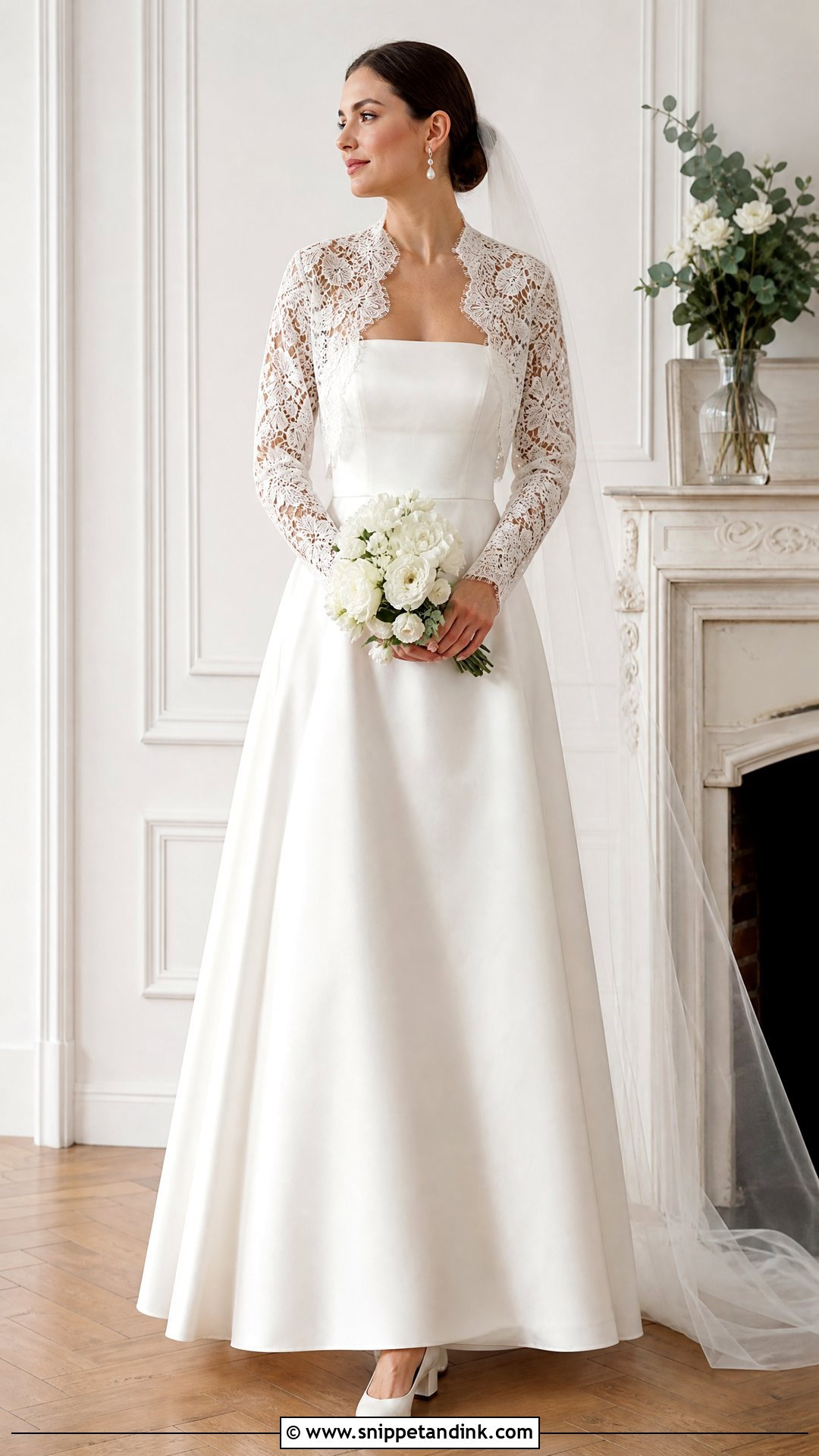
Fine Chantilly against a smooth satin ball gown is a contrast of surfaces, and it’s why this pairing has lasted so long. A fitted long-sleeve bolero with small floral motifs and scalloped cuffs, ending near the natural waist, lets a strapless or sweetheart bodice show through without crowding it. Pearl drops, a low bun, a plain tulle veil and pointed satin pumps finish it, and with a high lace neck I’d leave the necklace at home. Chantilly is so fine that it tears where it’s pulled, so I have the seamstress add a narrow tulle backing at the elbow. Ask her to match the ivory or white to the dress as well.
2. Sheer Tulle Bolero With Strapless A-Line Dress
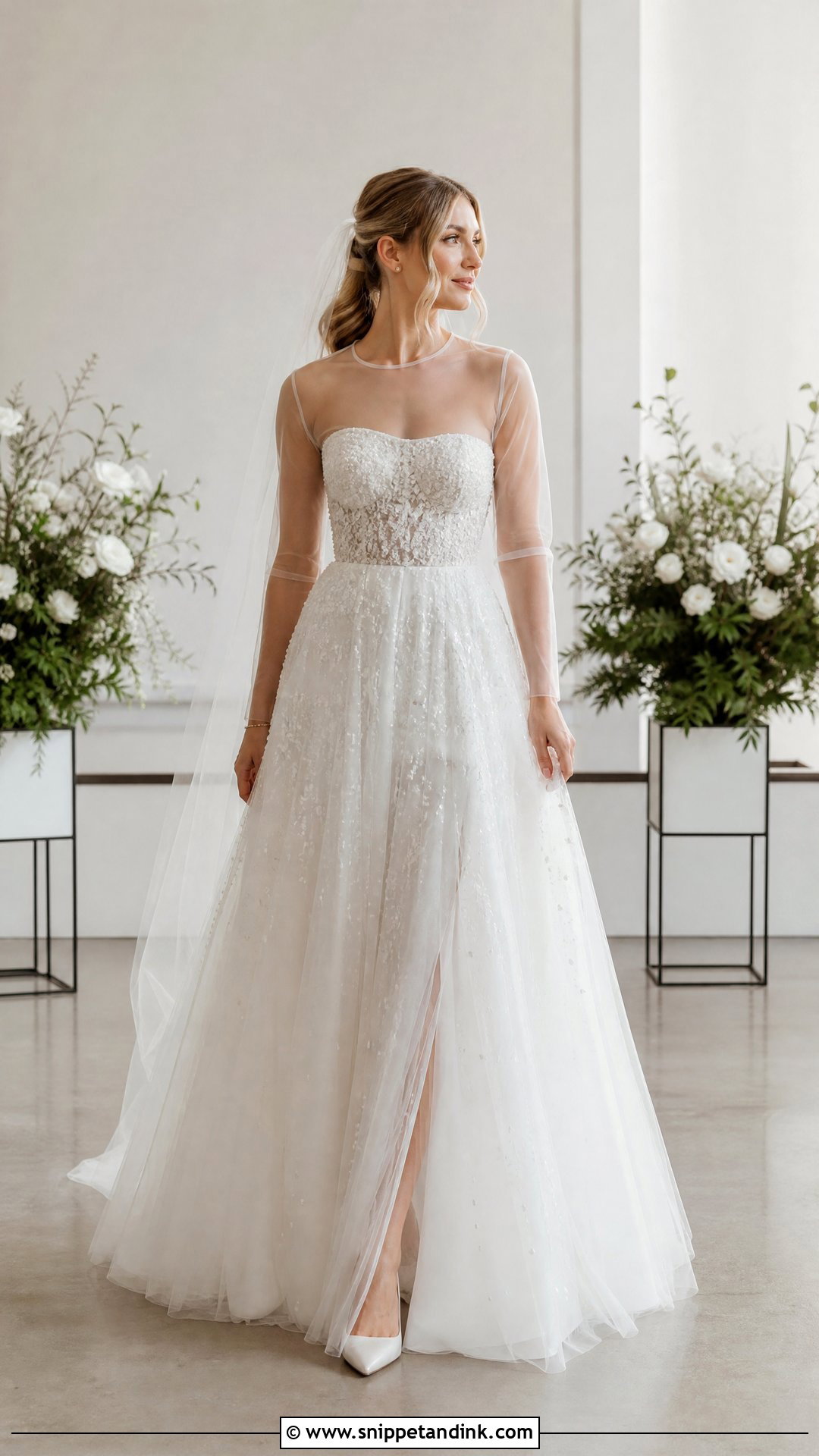
Illusion tulle is the lightest way to cover arms over a strapless A-line, and the right one is almost invisible from a few feet away. Clean seams and a barely-there closure matter more here than anywhere, because every join shows through sheer fabric. It suits a gown that already has beading, lace or a decorated waist. Crystal studs, a fingertip veil, a fine bracelet and low pointed heels finish it, with a soft ponytail. Tulle has no stretch on the straight grain, so a sleeve fitted tight at the elbow wrinkles and can tear. I leave a little ease there. Take it off after the ceremony for a second look.
3. Pearl Beaded Bolero With Crepe Column Gown
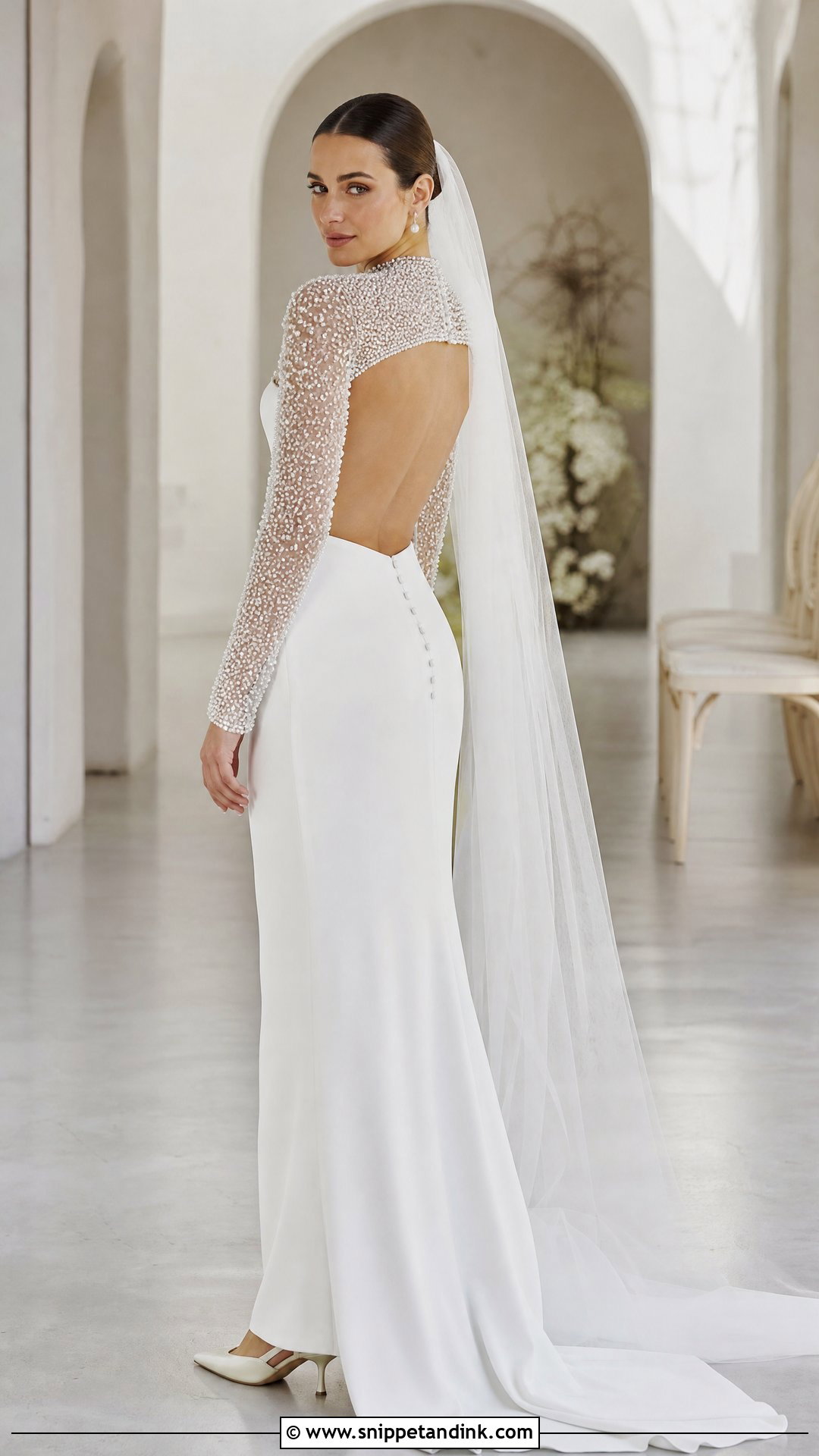
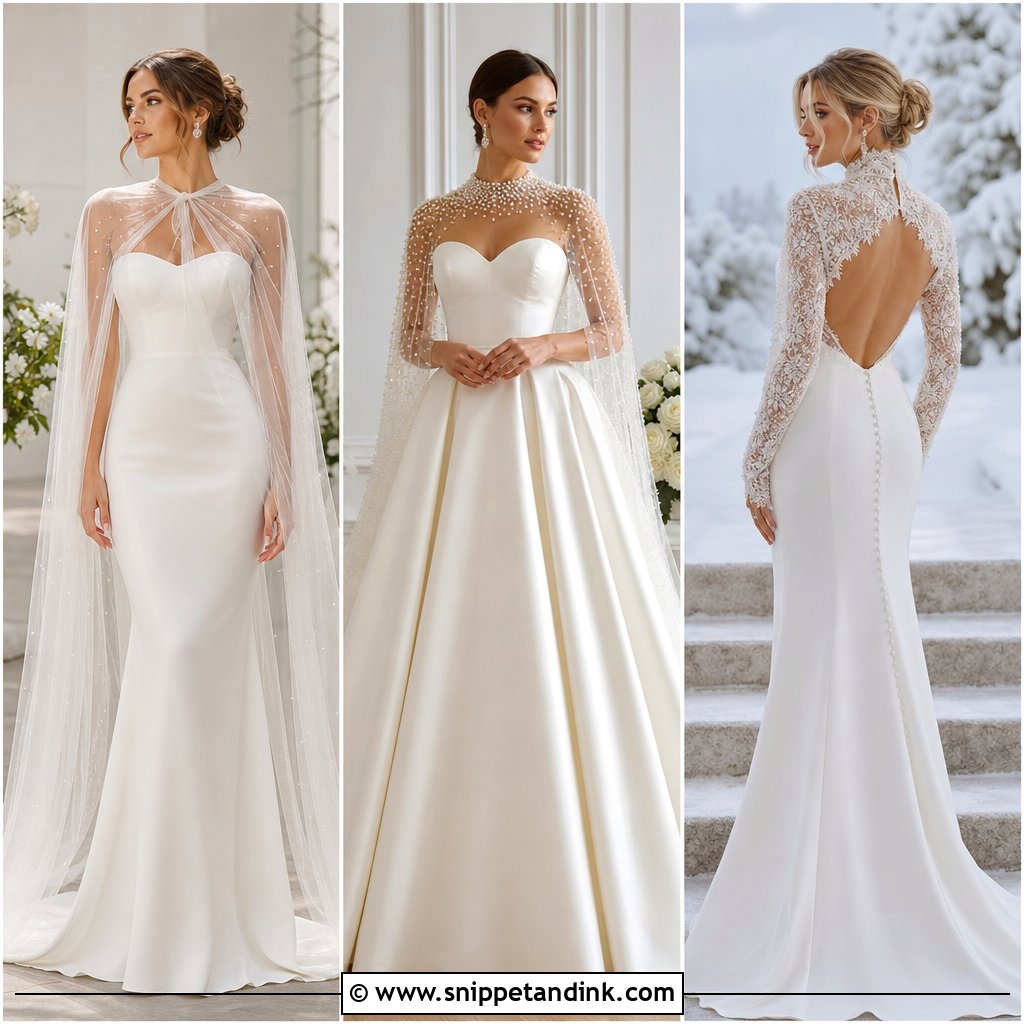
On a crepe column, scattered pearls beat dense beading every time; dense beading on a sheer sleeve drags the shoulders down by evening. An open front or open back keeps the bolero modern and lets the fitted dress lead. It looks best over a straight, square or strapless neckline. Pearl earrings, a sleek chignon, an untrimmed veil, ivory slingbacks and a small clutch are enough. When I fit these, I turn the bride’s head side to side with the veil on, because loose pearls at the collar catch fine veil tulle and pull threads.
4. Satin Bolero With Mikado Wedding Dress
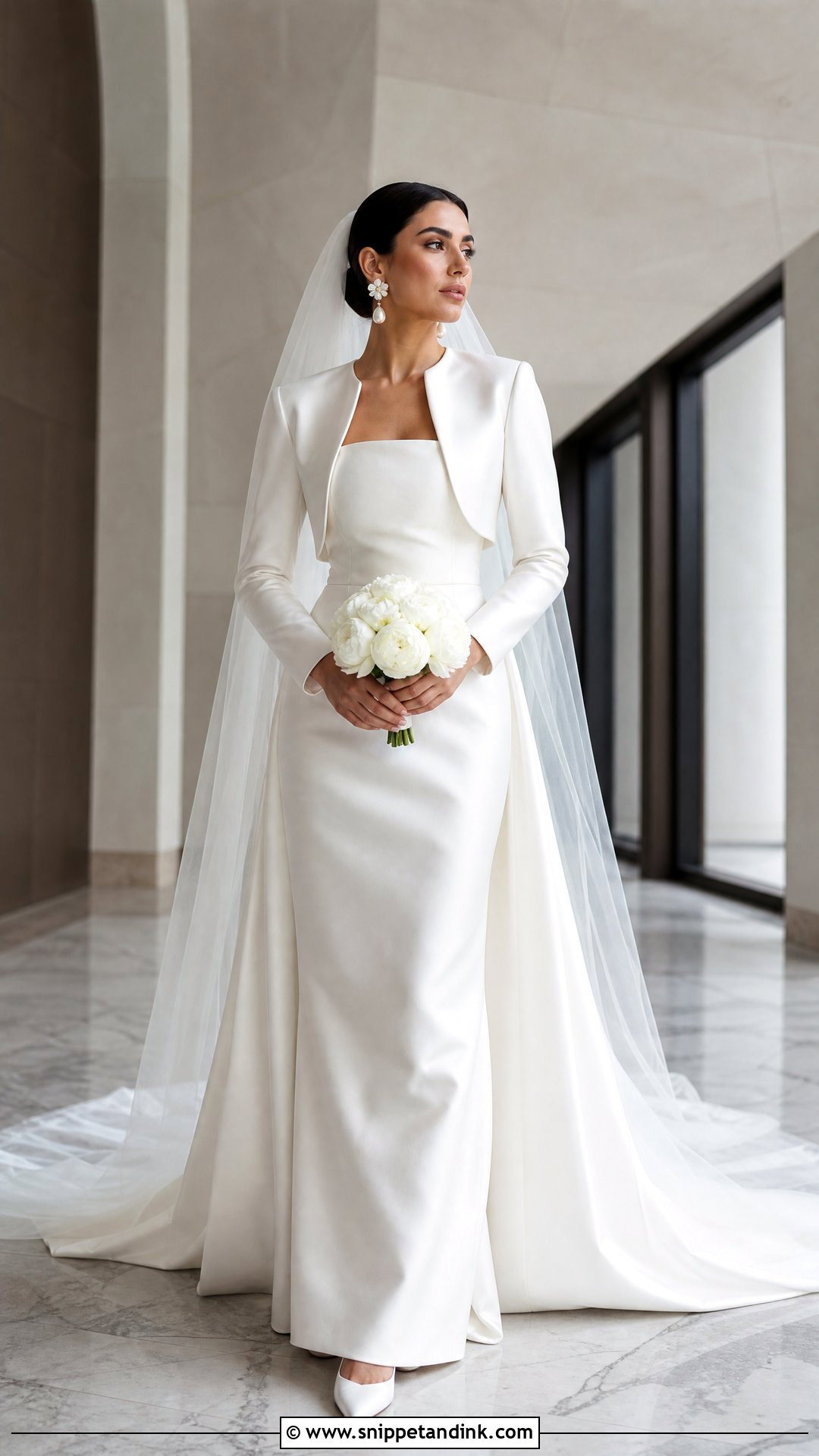
Mikado is stiff and architectural, and a plain satin bolero respects that instead of softening it. Choose tailored long sleeves, a clean open front, narrow cuffs and almost no decoration. A cathedral veil, sculptural pearl earrings, pointed pumps, a tidy bouquet and a center-part bun suit the shape. Compare fabric samples by daylight, because bright white, soft white and ivory separate clearly in photos. The hem should land at or just above the waist seam; any lower and you add bulk where mikado already stands away from the body.
5. Faux Fur Bolero With Winter Ball Gown
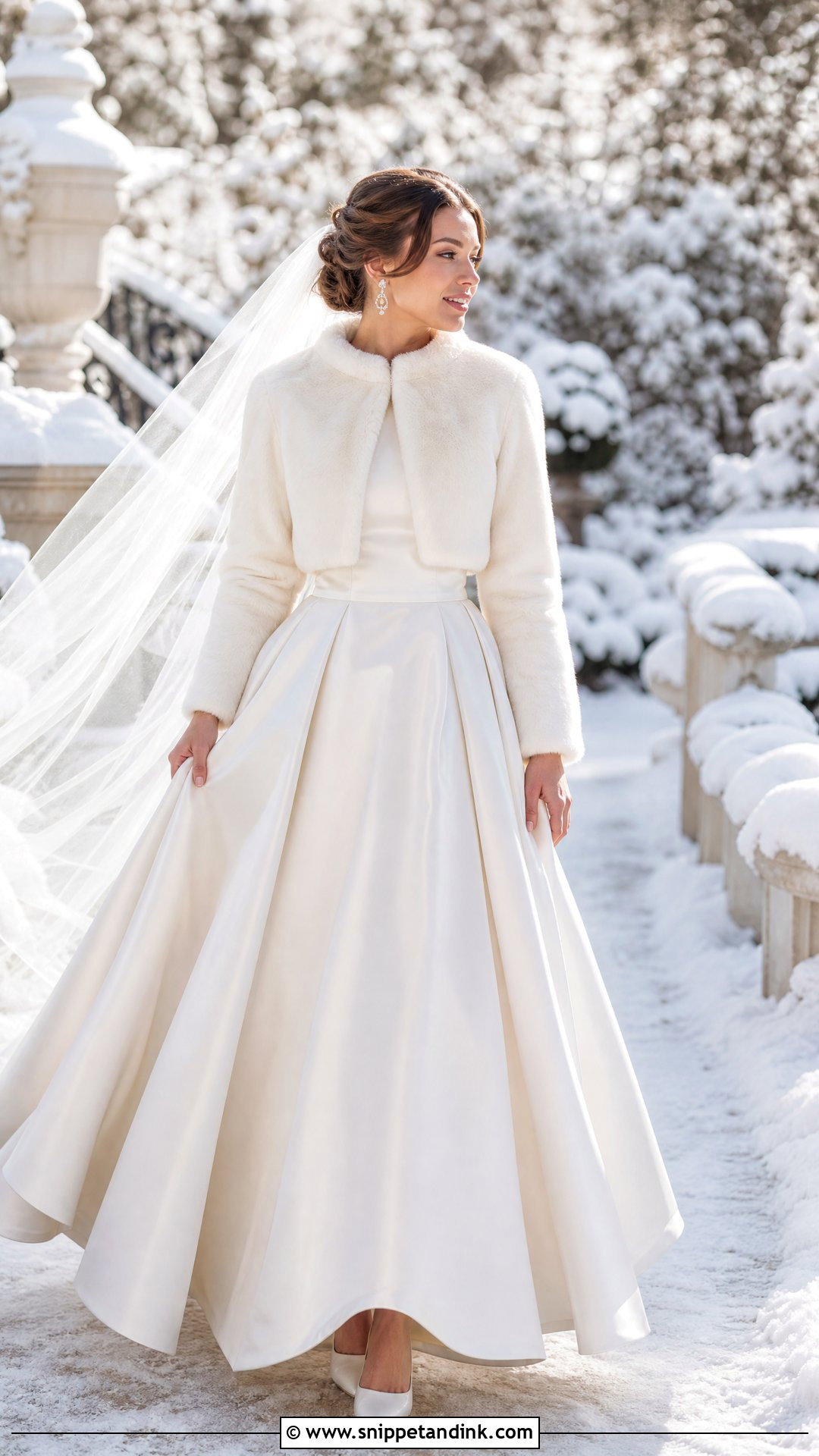
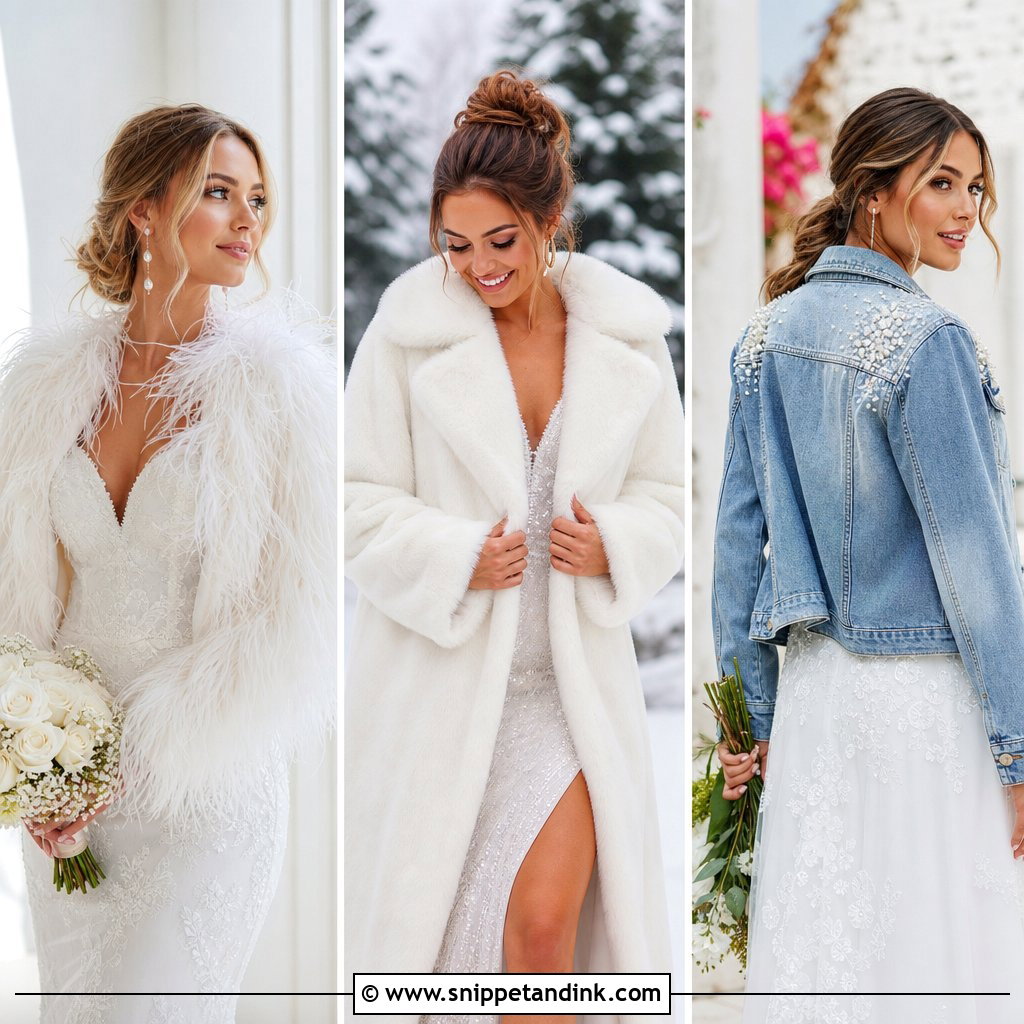
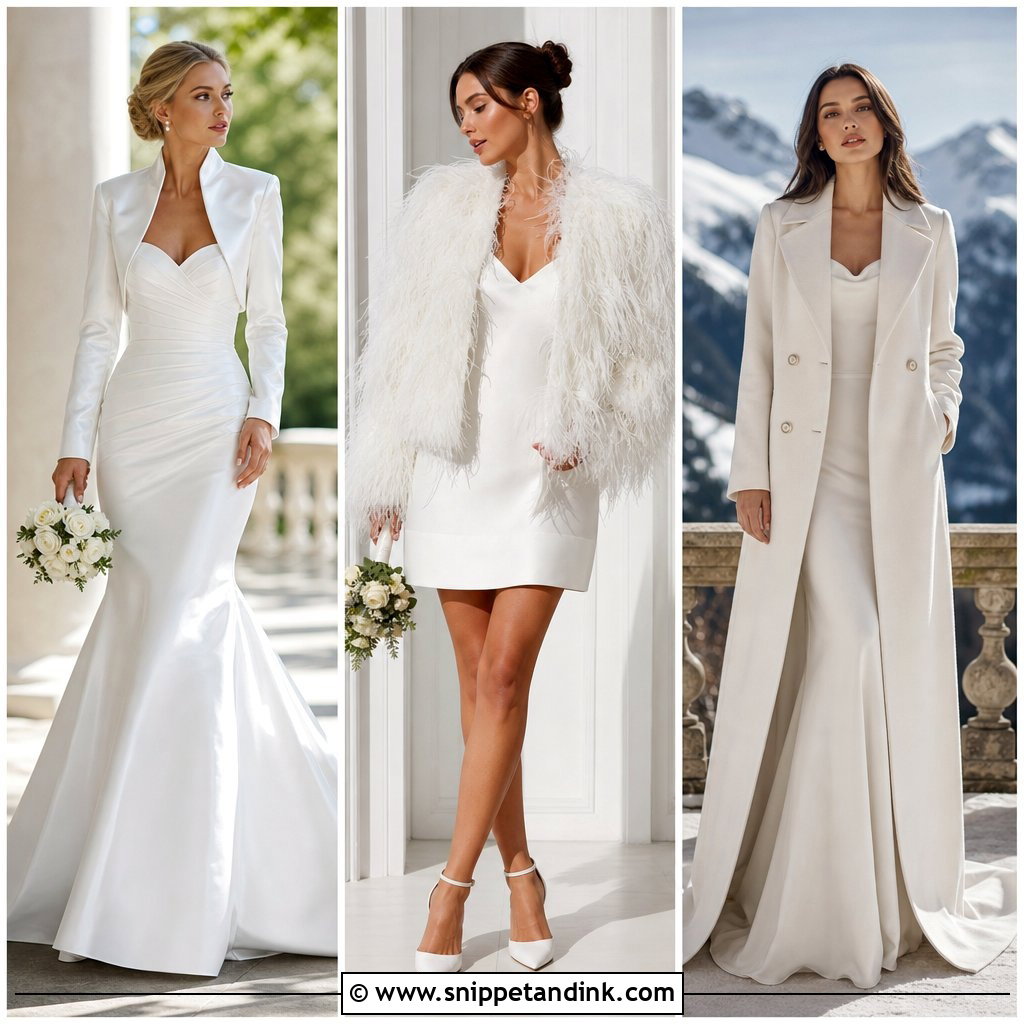
Faux fur with long sleeves is the warmest bolero you can wear, which is exactly why I tell brides to treat it as an outdoor layer. Wear a cropped version over a satin or tulle ball gown with a fitted bodice. Collarless cuts frame the neckline better, and hook-and-eye fastenings keep the front flat. Crystal earrings, closed satin heels, a soft updo and a long veil that falls below the fur complete it. White, ivory and pale champagne are traditional, but match the undertone to the dress. Pick fur with a soft, dense base that moves when you walk and doesn’t leave fibers on your hand.
6. Cashmere Bolero With Minimalist Slip Dress
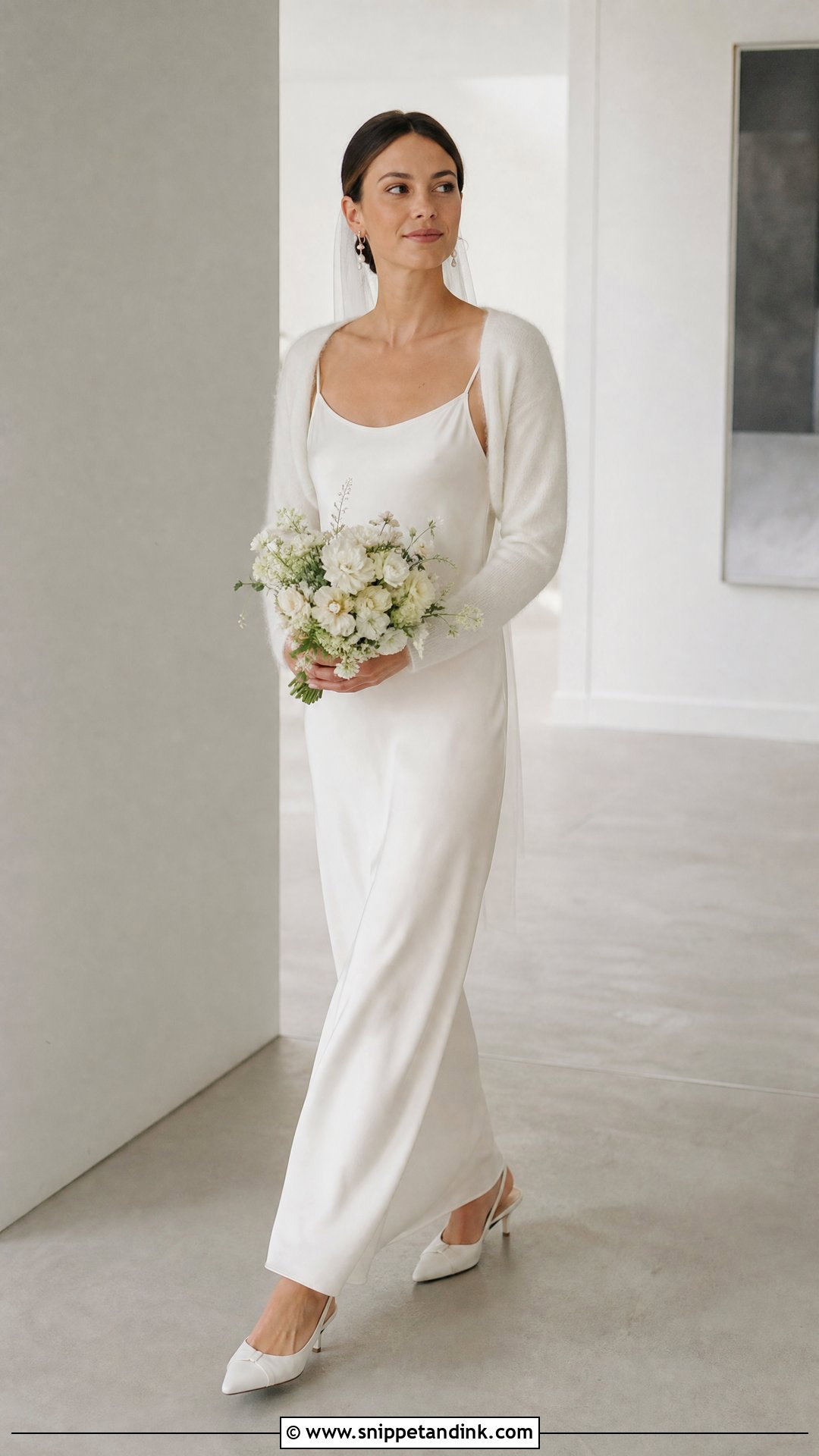
Can knitwear sit next to silk without looking casual? Yes, when it’s fine and closely fitted. A fine cashmere bolero, cropped, with a smooth knit, open front and slim cuffs, makes the contrast with a slip dress look deliberate. Chunky ribbing does the opposite. Drop earrings, a narrow veil, slingbacks and a loose bouquet suit it, with waves or a low bun. It’s a good layer for a cool spring or fall ceremony. Cashmere pills where it rubs, mostly under the arms, so I’d de-pill and gently steam it the day before, and keep perfume off it.
7. 3D Floral Bolero With Tulle Wedding Gown
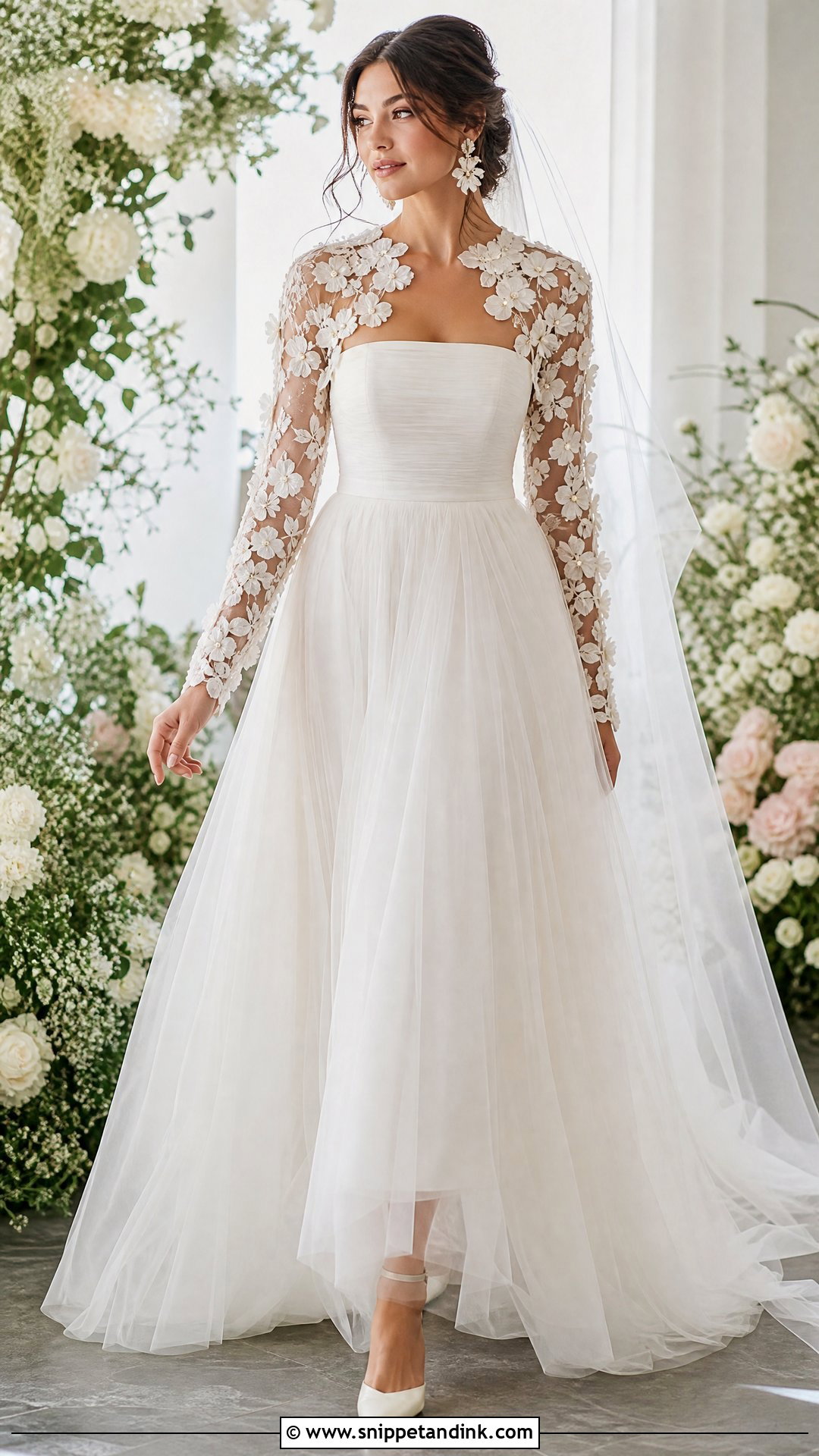
Raised flowers on a sheer sleeve can carry an otherwise plain tulle gown. Keep the appliqués to the shoulders, neckline or cuffs, and pair them with an unembellished strapless A-line so the textures don’t pile up. Small floral earrings, a soft veil, pointed ivory heels and a textured low bun finish it, with a bouquet in restrained colors. I always lift the bride’s arms in a fitting to check that no flower sits in the armpit, where it gets crushed and scratches. Scale matters too: small flowers on a petite frame, larger motifs on taller or fuller figures.
8. High Neck Lace Bolero With Sweetheart Dress
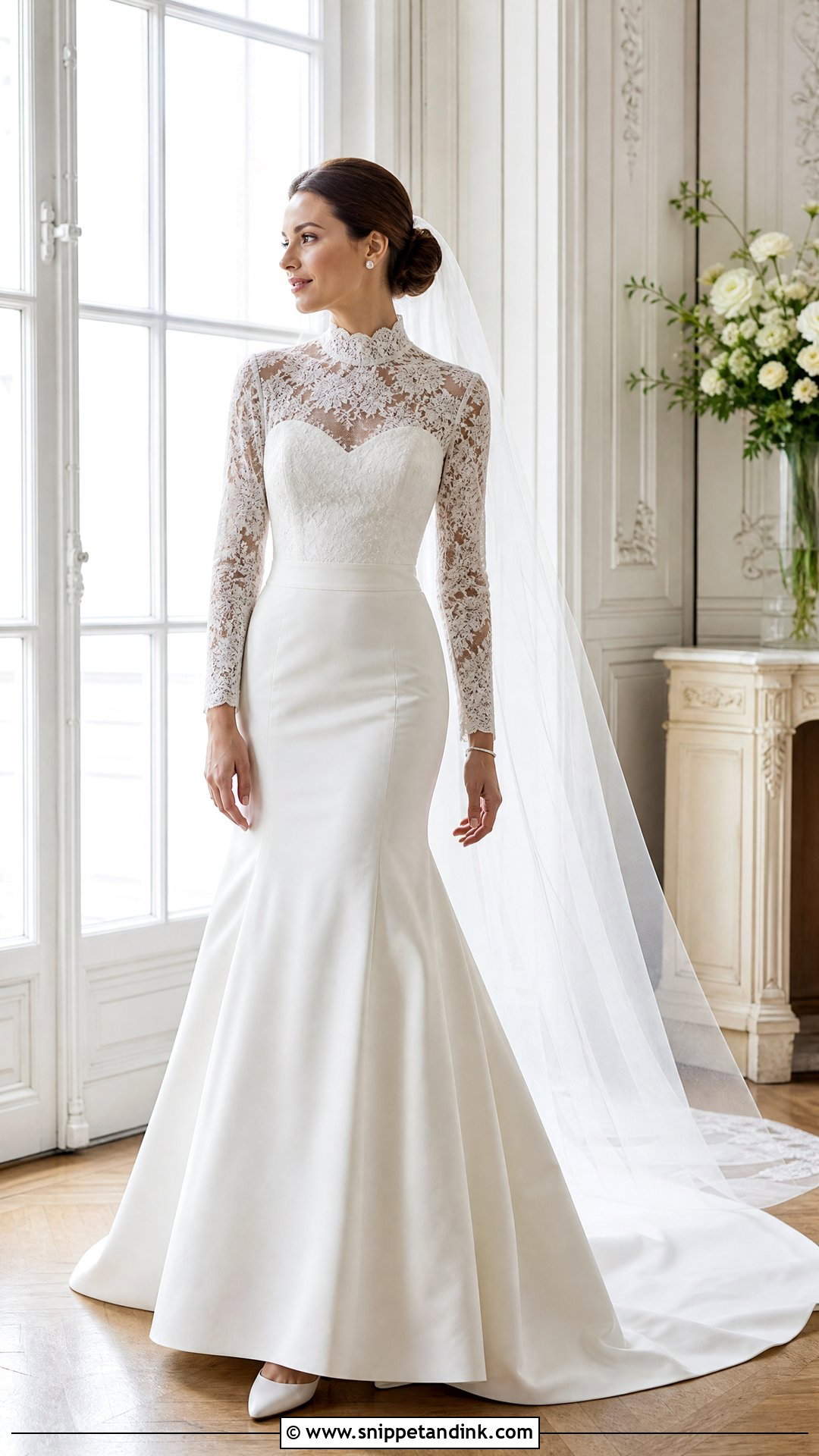
Put a high-neck lace bolero over a sweetheart dress and you’ve changed the gown without touching it. Fitted sleeves, a scalloped neck and small covered buttons down the back are the details to look for, with the sweetheart faintly visible underneath. A clean updo, pearl studs, a narrow bracelet and closed pumps keep it classic; anchor the veil under the bun so the buttons stay on show. At fittings I watch the bust. A high-neck bolero that’s even slightly small pulls into lines across the chest, and that’s the alteration most often needed for a built-in look.
9. Off Shoulder Bolero With Fitted Mermaid Gown
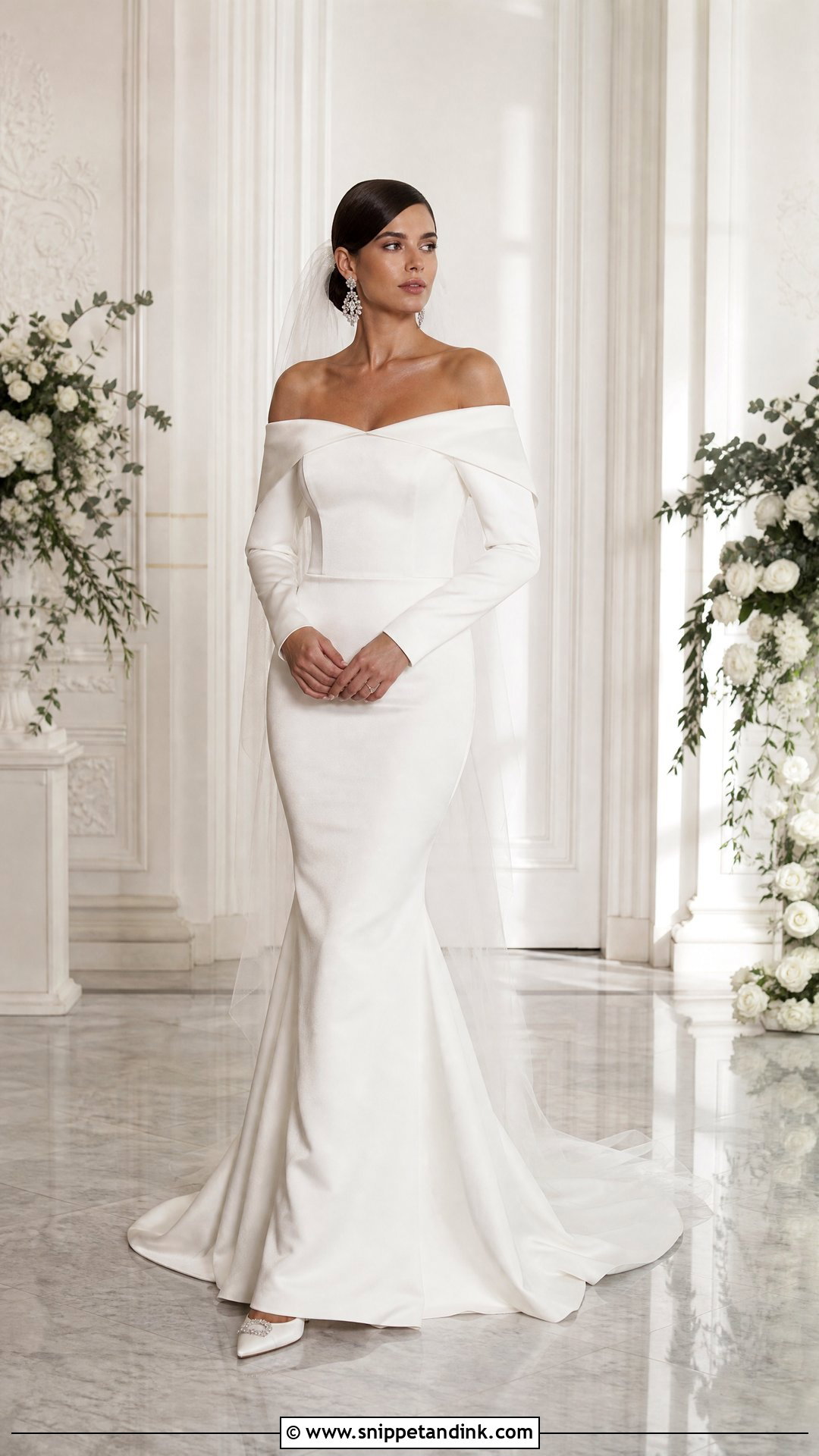
Long sleeves that sit off the shoulder soften a mermaid gown’s drama. Structured tulle, crepe or lace that holds the upper arm without sliding is what you want, with the cropped hem meeting the bodice cleanly so the flare stays the star. Statement earrings, a side part, a plain veil and pointed heels you can walk in finish it. No necklace; the bare shoulders do that job. This is the hardest sleeve on the list to move in. The band across the arms limits how high you can lift them, so I make brides practice raising their arms and sitting down before the final fitting.
10. Puff Sleeve Bolero With Simple Wedding Dress
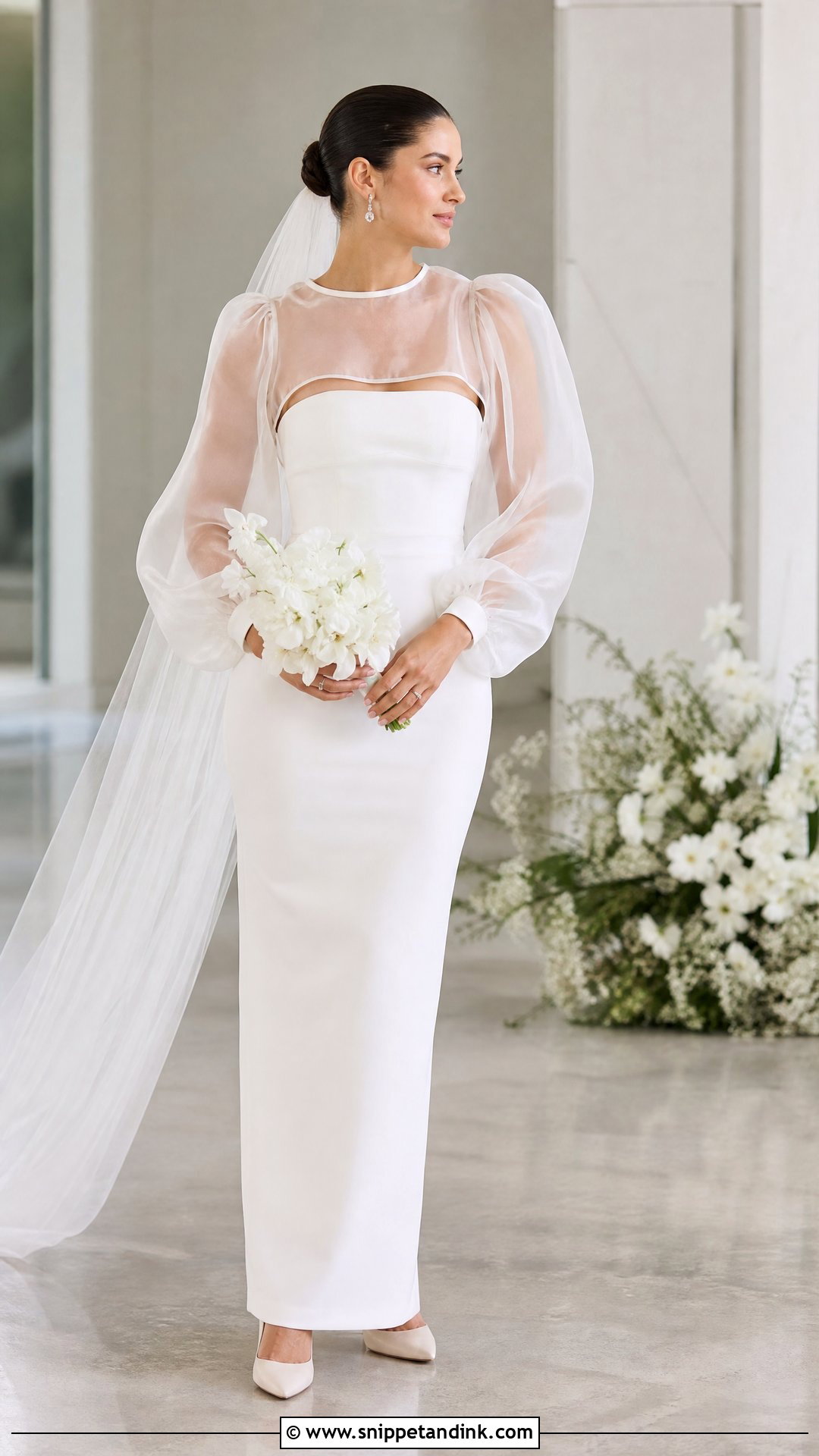
A puff-sleeve bolero gives you volume for the day without altering the dress itself. Sheer organza or tulle sleeves with a fitted cuff, on a streamlined cropped body, sit well over a strapless column, sheath or A-line. Small crystal earrings, a polished bun, an airy veil and minimal pumps keep it calm. With broader shoulders, start the puff just below the shoulder line; on a narrow frame, a structured upper sleeve adds width where it helps. I always check the side view, since a puff set too far back bunches up behind the shoulders.
11. Bell Sleeve Lace Bolero With Boho Wedding Gown
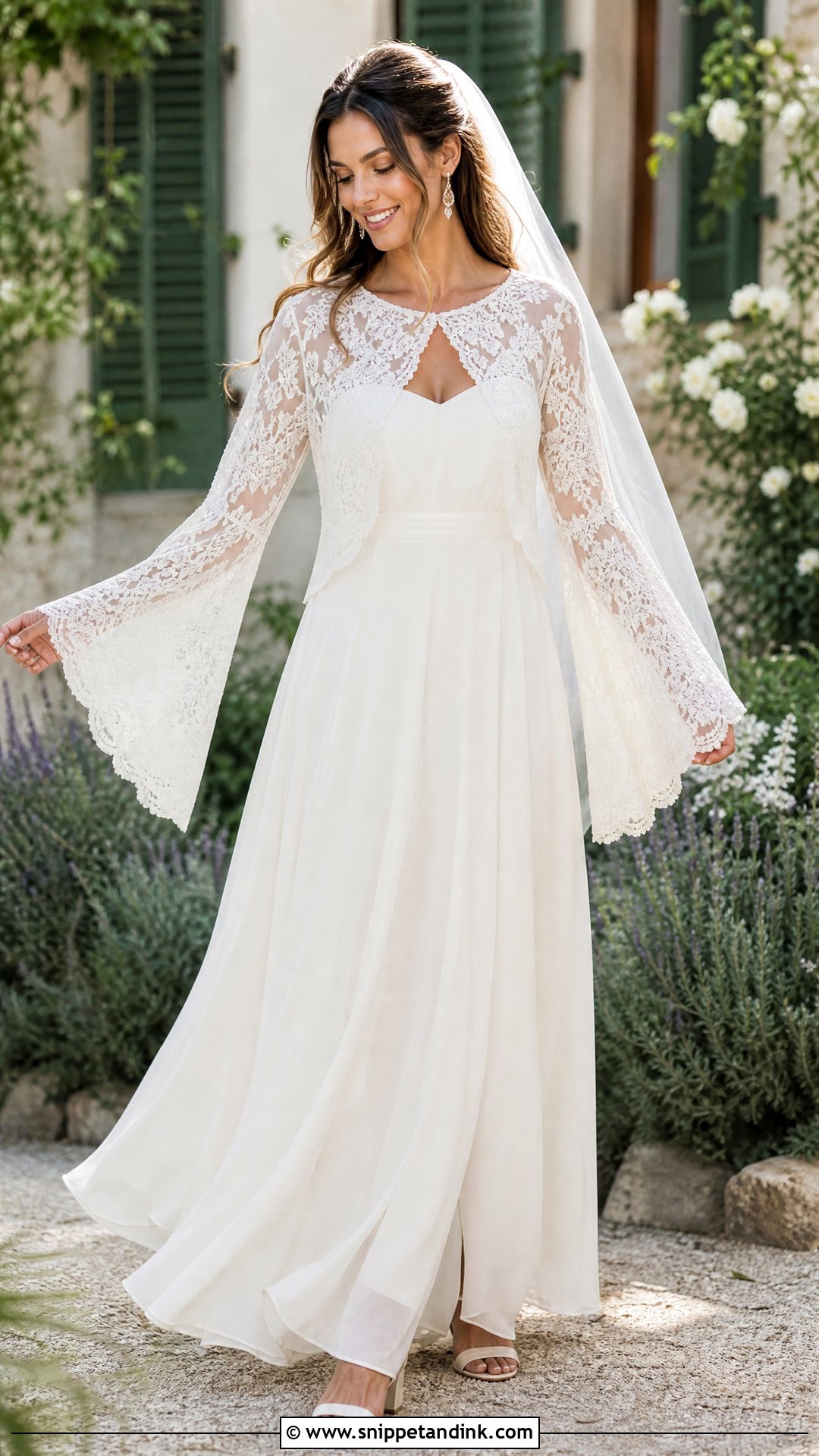
Bell sleeves fit close to the elbow and then flare, which gives a lace or chiffon gown easy movement. Floral lace, crochet-style patterns or embroidered mesh suit the shape. Loose waves, small drops, a light veil and block-heel sandals keep it relaxed, and a softly gathered A-line or bias-cut gown moves with the sleeve. Keep the bouquet moderate in size, or stems tangle in the cuffs. The length I aim for stops at the wrist bone. Longer and the lace trails through cake, guest book ink and table candles, and open lace near a flame is a real risk at candlelit receptions.
12. Button Back Bolero With Strapless Dress
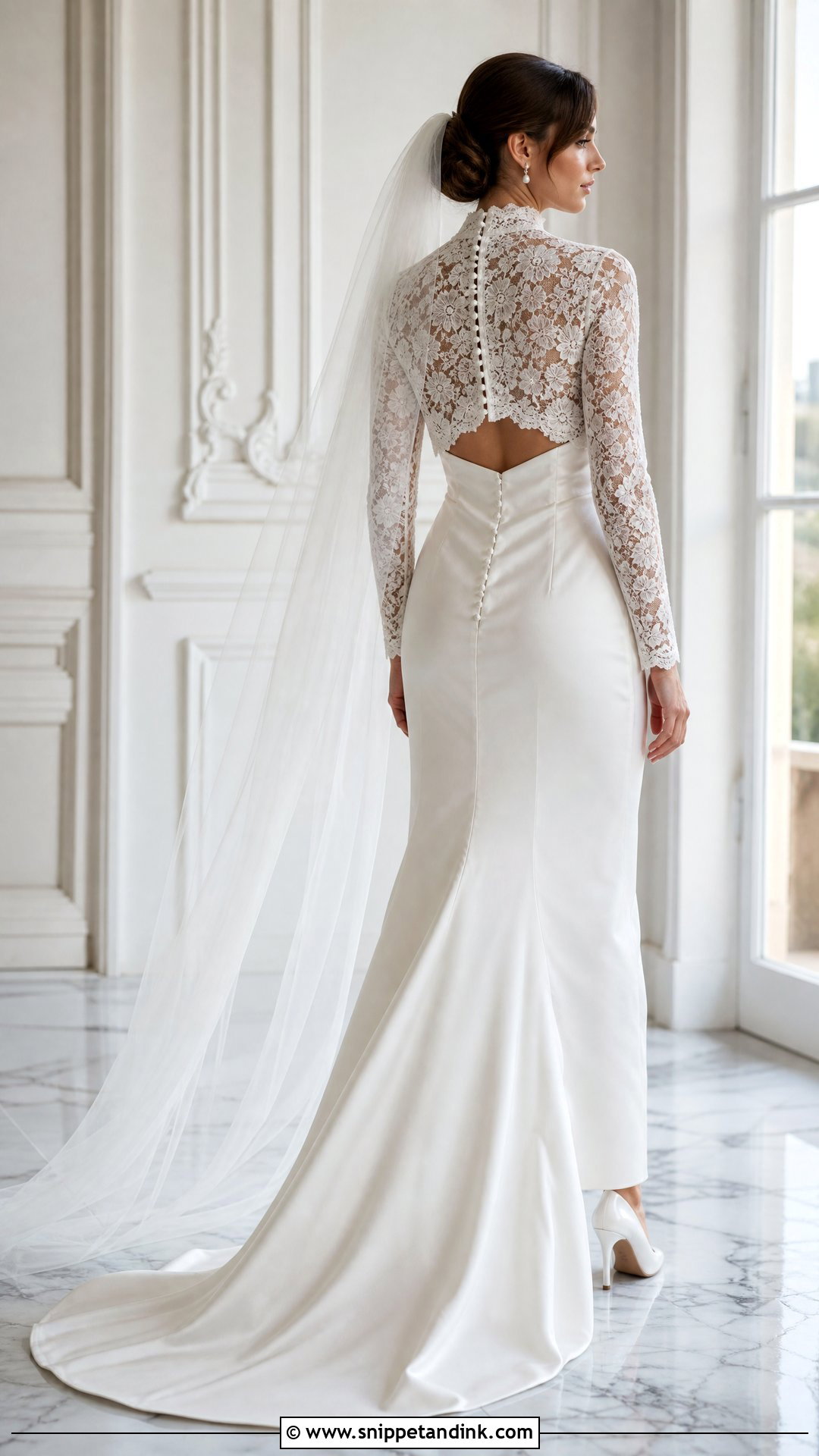
Guests spend the ceremony looking at your back, and a button-back bolero gives them something to see. Sheer lace or tulle with long fitted sleeves and a row of pearl or fabric-covered buttons, with a minimal front, lets the strapless neckline show. A low bun, a veil anchored under it, pearl earrings and satin heels finish it. Match the buttons to any on the dress. Functional loops take a few minutes to close, so build that into the dressing schedule. Loops that are too tight strain the fabric; too loose and they gap along the spine.
13. Crystal Bolero With Clean Crepe Gown
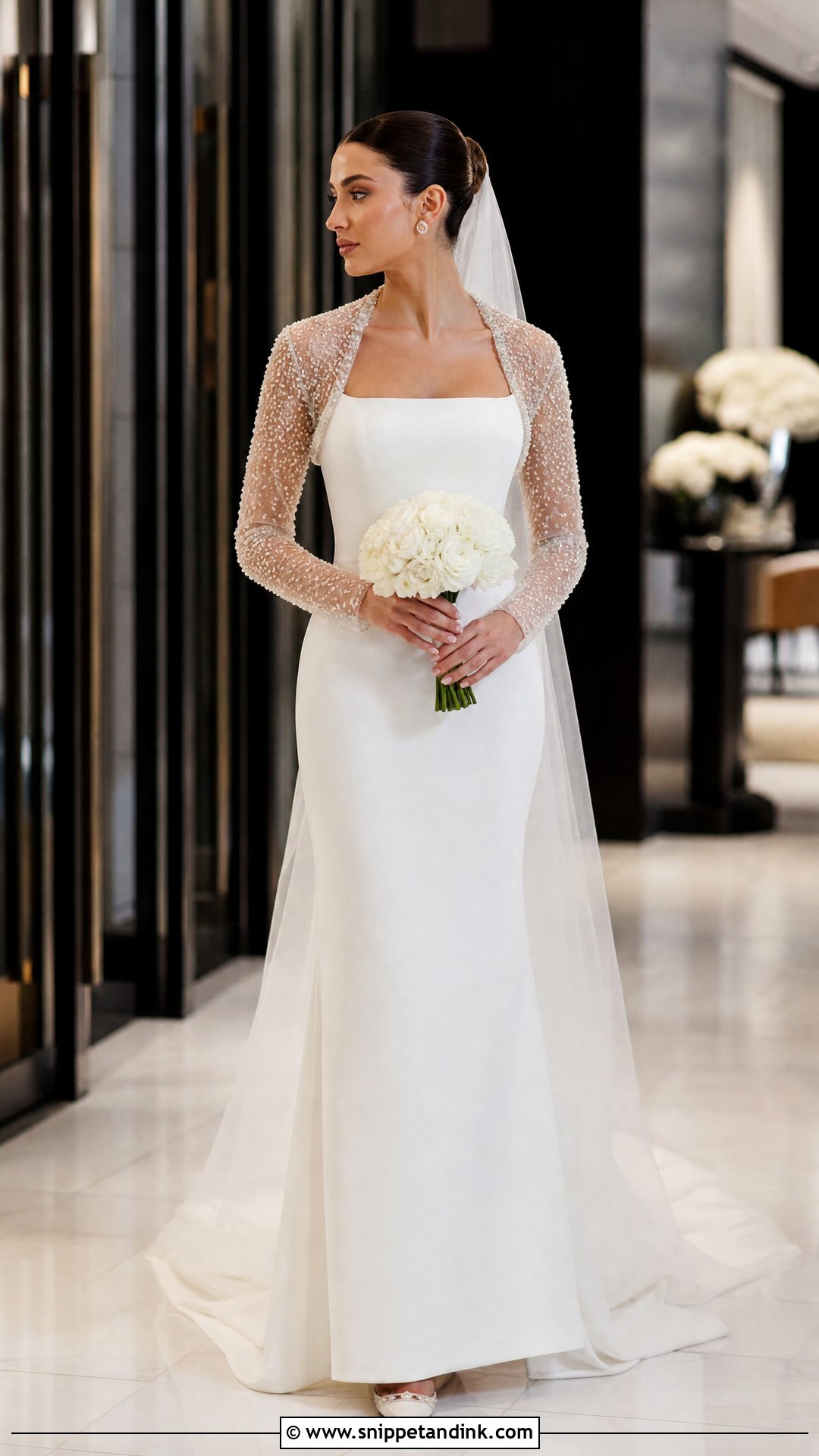
A sheer bolero with crystals placed only at the neckline, shoulders or cuffs gives a crepe gown controlled sparkle. Covering every inch would bury the dress’s clean lines. Crystal studs, a sleek ponytail or bun, a plain veil and pointed metallic or ivory heels complete it, with a compact bouquet so the sleeves stay visible. It works with square, strapless or simple V necks. Crystals are set in metal claws or glued to backings, and both can scratch. I check the inside for smooth lining and run a veil sample over the cuffs to see whether anything catches.
14. Feather Trim Bolero With Bridal Jumpsuit
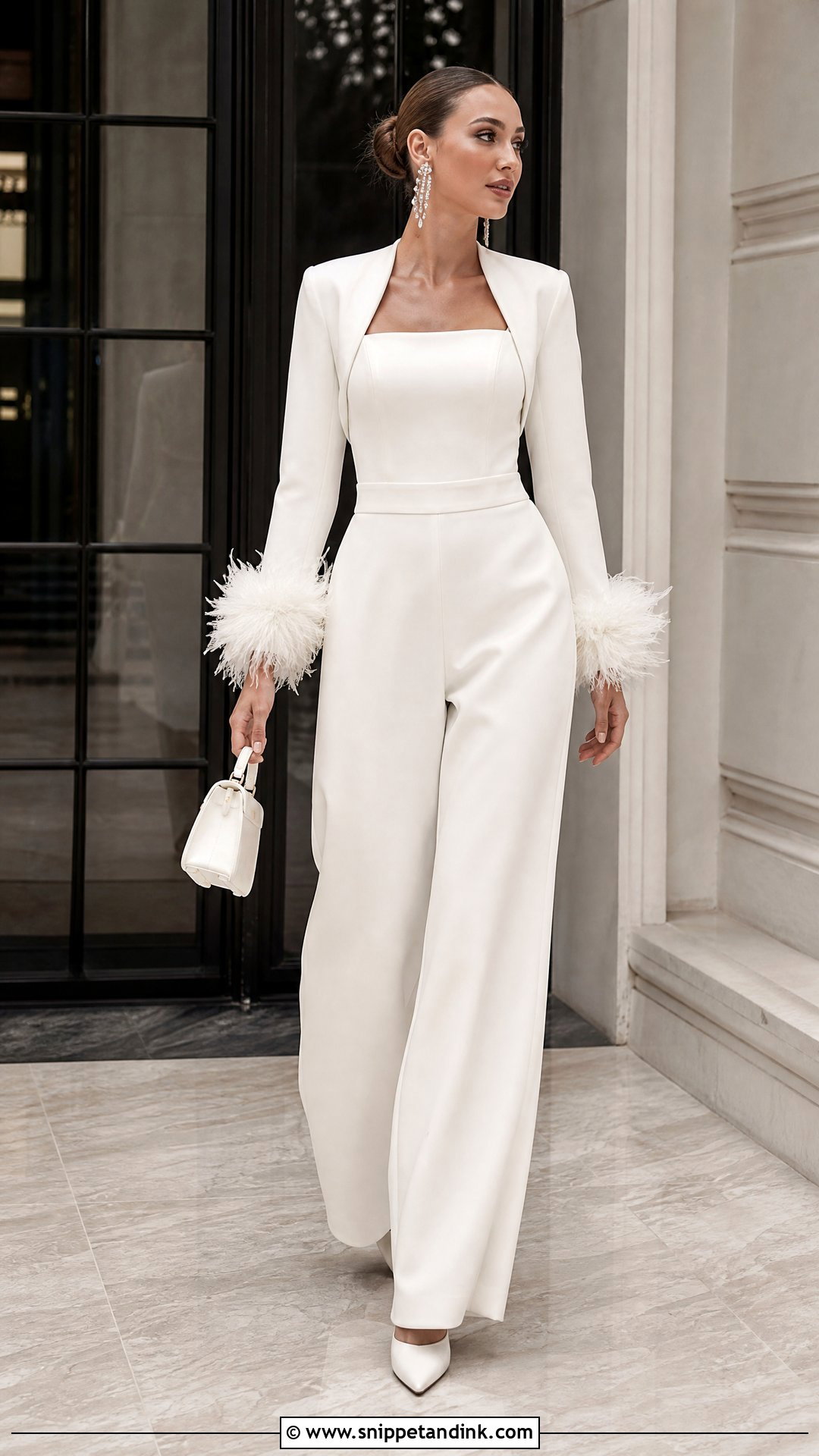
A feather-trimmed bolero adds party energy to a tailored jumpsuit, and trim only at the cuffs or along the edge keeps it wearable. Pair it with a wide-leg crepe jumpsuit, pointed heels, statement earrings and a structured mini bag, with a slick bun or polished waves. Courthouse ceremonies and reception entrances suit it. The jacket should end above the jumpsuit waistband, so the legs keep their length. I’d skip dense feather cuffs if you’ll be signing a register or eating at a seated dinner; ostrich trim dips into everything.
15. Cropped Blazer Bolero With Wedding Pantsuit
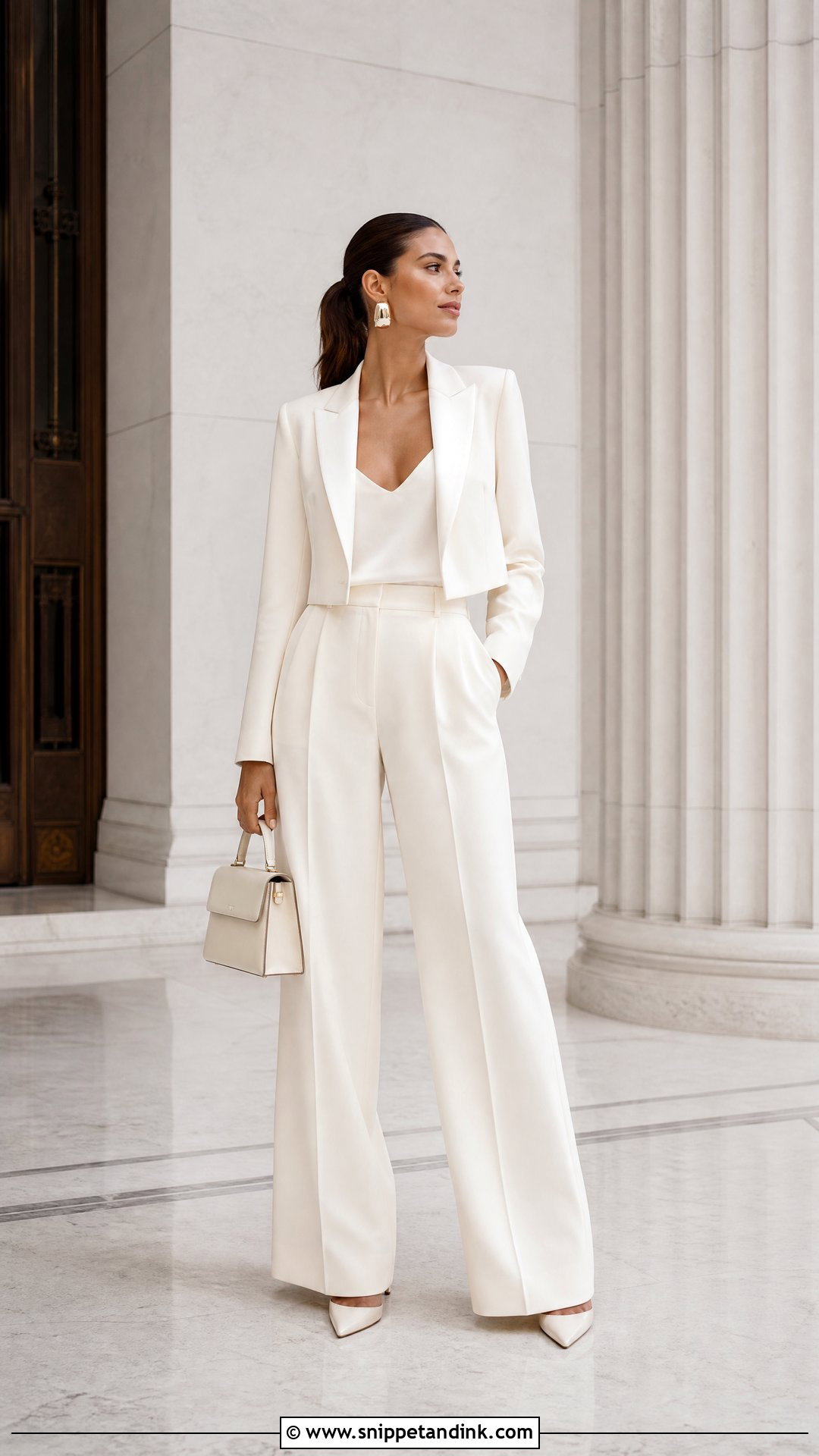
Tailoring is a confident alternative to lace. A cropped blazer bolero with long sleeves goes with a high-waisted bridal pantsuit, single-breasted or collarless, ending just above the waistband, over a silk camisole or a structured corset top. Pointed pumps, a top-handle bag, sculptural earrings and a sleek ponytail finish it. Matching whites look formal; a slight texture difference adds depth. Trousers should skim the floor without hiding the shoes. Petite brides can go shorter on the jacket and higher on the rise. I always alter sleeves, shoulders, waist and hem in the same fitting, because changing one shifts how the others hang.
16. Ribbed Knit Bolero With Tea Length Dress
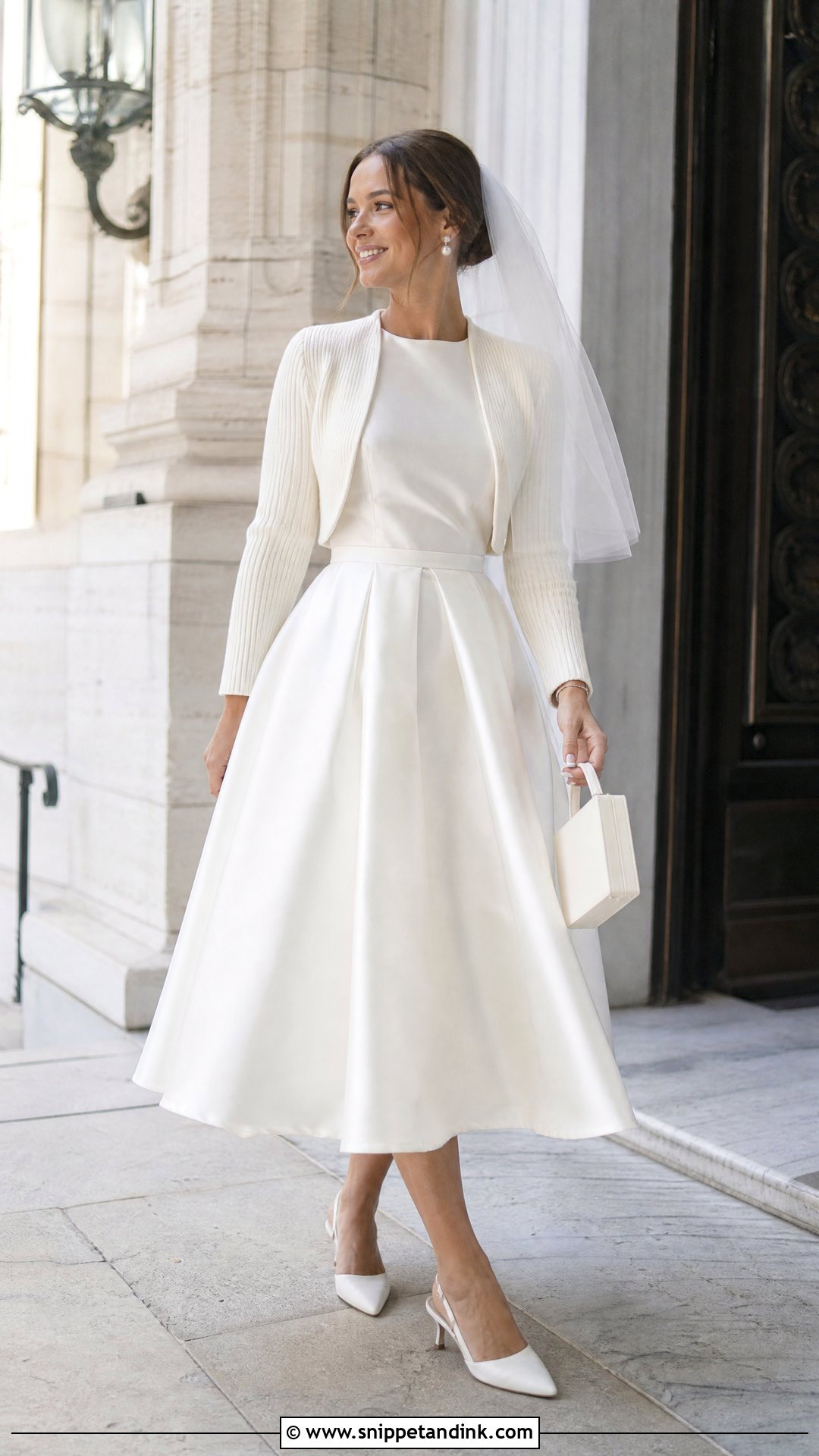
A fine ribbed knit bolero over a tea-length dress has a vintage feel. A cropped ivory knit with fitted cuffs and an open front sits over a satin or mikado dress with a defined waist and full mid-calf skirt. Pearl earrings, slingbacks, a short veil and a small structured bag finish it, and the shorter hem puts the shoes on show. City weddings and cool-weather ceremonies suit it. Thick cable knit looks like weekend wear and adds bulk at the bodice. Ribbing relaxes and widens with wear, so buy it fitted and you can wear it again with everyday dresses.
17. Guipure Lace Bolero With Square Neck Gown
Guipure has a bold, raised pattern held together without a net background, and its geometry pairs well with a square-neck gown. Medium-scale motifs, a cropped edge and little extra beading suit a plain satin or crepe A-line. A low bun, small gold or pearl earrings, a plain veil and block-heel pumps complete it. Guipure is heavier and has almost no give, so I fit it comfortable rather than snug and check the shoulder and elbow for movement. Its density also exaggerates any undertone difference from the gown, so color matching is less forgiving than with fine lace.
18. Pleated Tulle Bolero With Embellished Dress
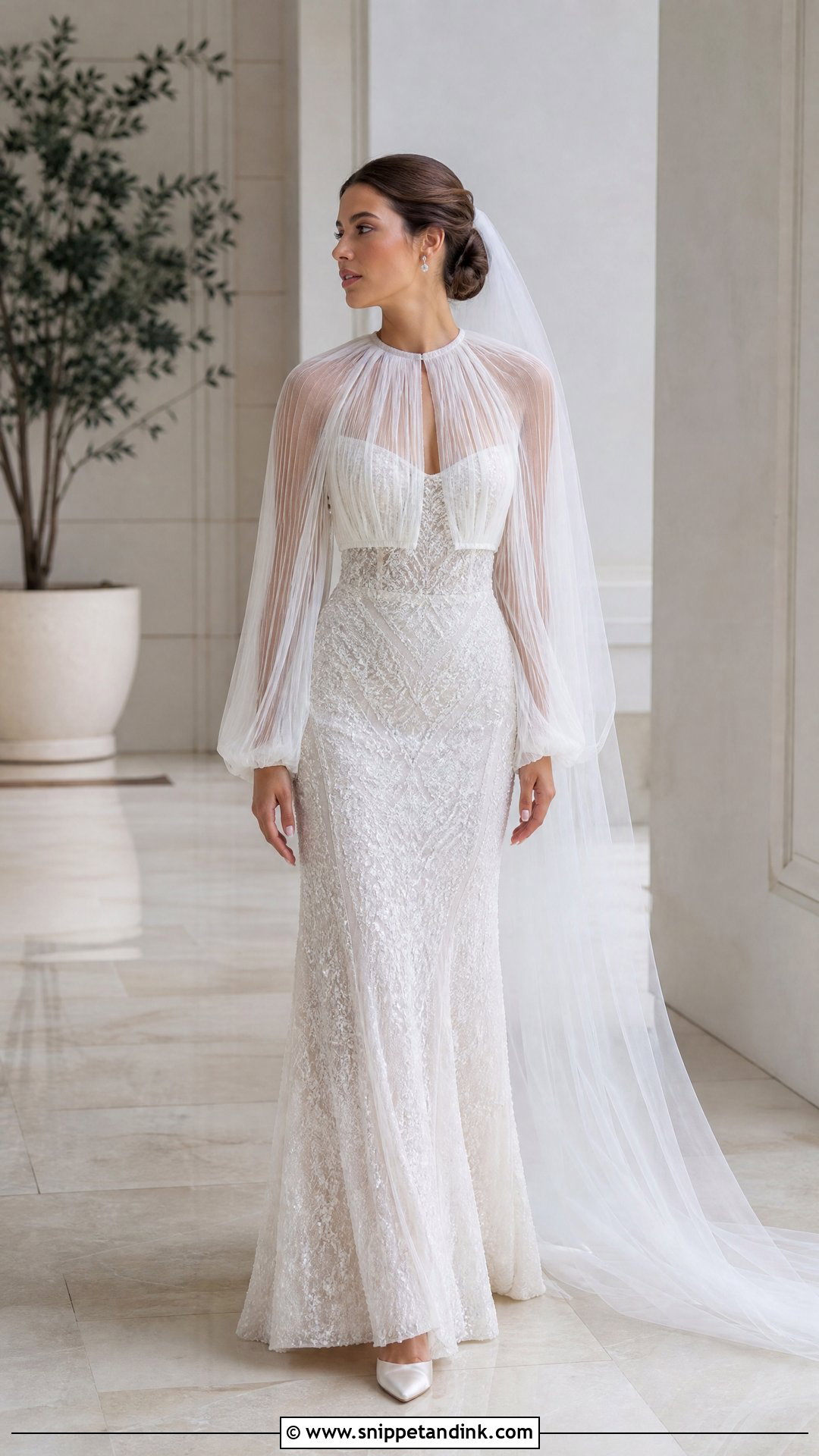
When a gown is already covered in lace, sequins or beads, a plain pleated tulle bolero adds coverage without adding pattern. Long sheer sleeves, an open neckline and small pleats gathered across the back or shoulders give quiet texture. Simple earrings, an unembellished veil, satin pumps and a low bun finish it. Choose a soft tulle that drapes; stiff tulle stands away from the arms and looks like packaging. The hem should meet a visible waist seam or tuck under a belt. Step back across the room in the fitting: from a distance, the bolero should frame the dress and nothing more.
19. Open Back Bolero With Silk Slip Gown
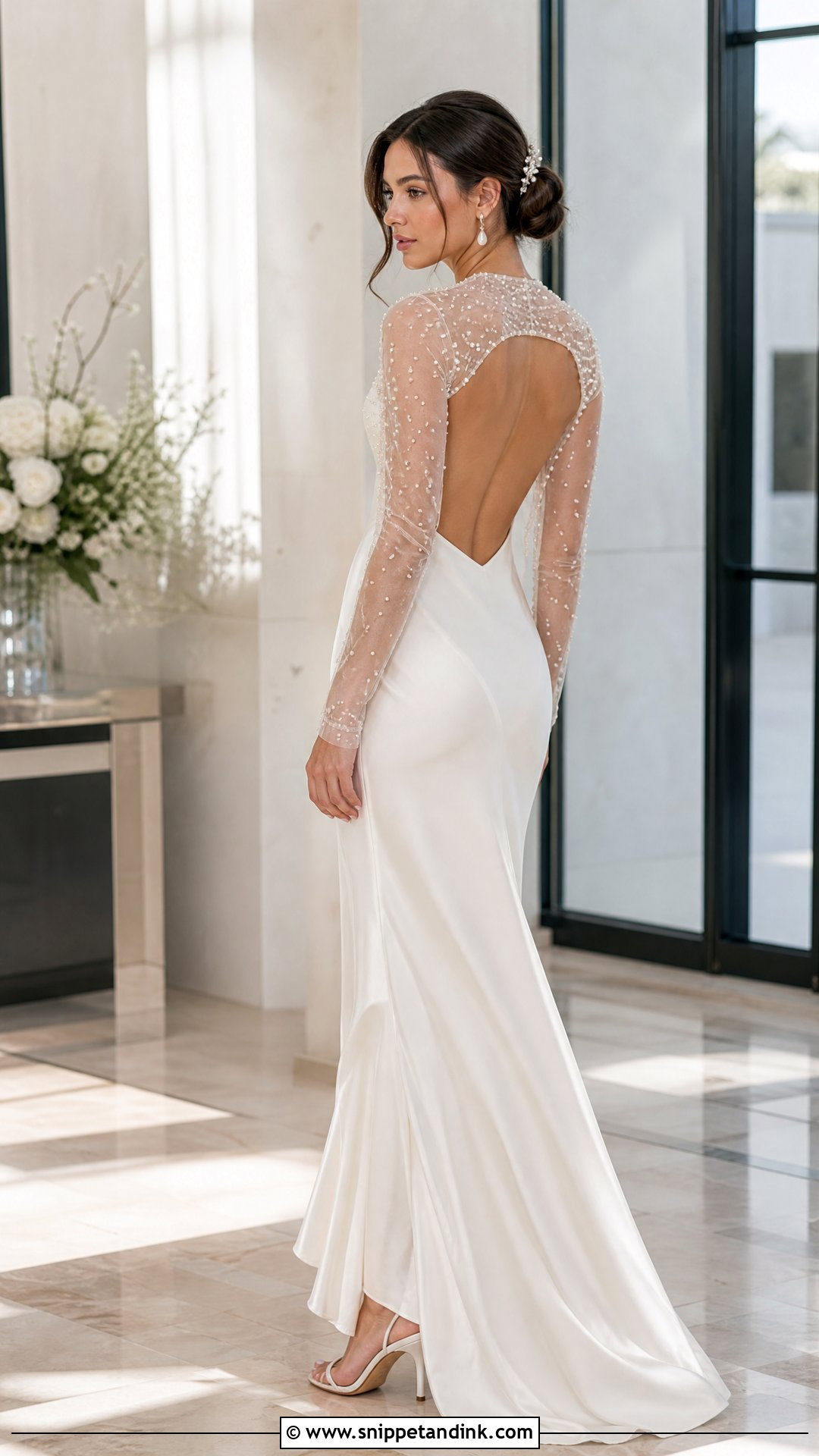
An open-back bolero keeps the low back of a bias-cut silk slip on display while adding long sleeves. Sheer tulle, lace or pearl mesh with a small neck closure and an open section across the back suits it. Delicate heels, drop earrings and a single hairpin with a low bun complete it, and a plain veil avoids snagging. The openings of jacket and dress must line up, which usually means professional alterations. I sort the support question in that same fitting: adhesive cups or sewn-in support, so nothing shows through the open back.
20. Navy Embroidered Bolero With White Wedding Dress
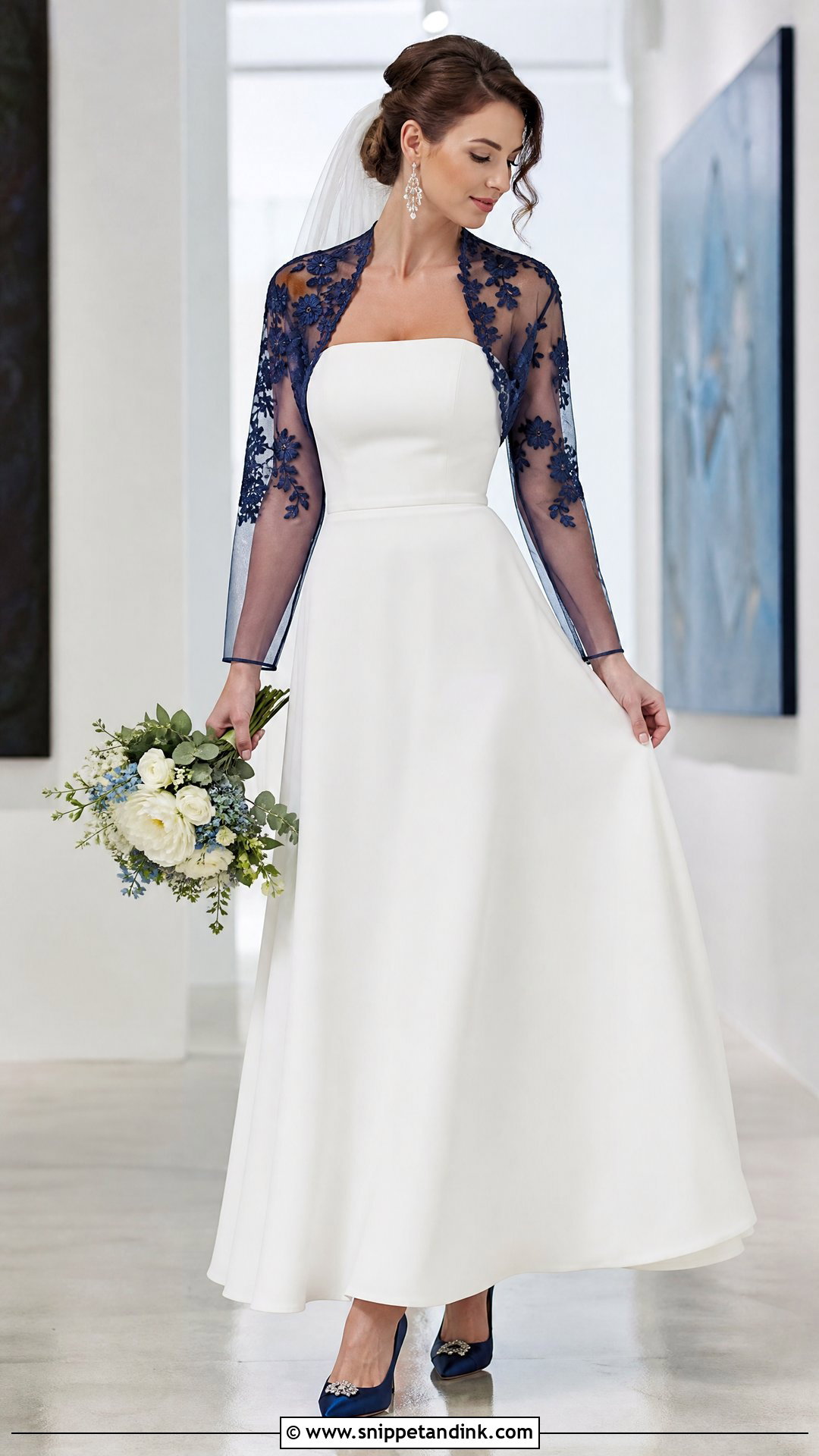
A navy embroidered bolero brings in color while the dress stays white or ivory. Sheer tulle with long sleeves and fine blue floral embroidery, sequins or beads goes best over a plain strapless column or A-line. Navy satin heels, small silver earrings, a plain veil and a few blue stems in the bouquet complete it without overmatching. It also marks the shift from ceremony to reception when you take it off. Dark embroidery thread can bleed onto white fabric if it gets damp, from rain or a warm room, so I ask whether the thread is colorfast and make sure the inside is lined.
Sleeve Fabric by Season and Room Temperature
Long sleeves change how warm you feel more than any other layer, and brides often pick fabric for the photos without thinking about a packed reception hall. I sort the options roughly like this:
- Coolest: illusion tulle, fine Chantilly and sheer mesh. Comfortable for most summer ceremonies indoors.
- Middle: guipure, embroidered tulle and crepe. Fine for spring and fall, warm in a crowded room.
- Warmest: satin, velvet, cashmere and faux fur. Best kept for winter, outdoor portraits and drafty venues.
Synthetic satins and polyester linings trap heat more than silk or cotton linings, so if you run warm, ask what the inside is made of. And keep a fallback: if the bolero will come off for dancing, decide in advance who carries it and where it hangs.
Does Your Bolero Pass the Hug Test?
The best bridal topper suits the dress, the season and how much you plan to move. Lace, tulle, satin, crepe, fur, knitwear, pearls, crystals and feathers each change a gown differently. Start from the neckline, where the waist sits, the fabric and how much decoration the dress already has, then pick a bolero that balances those rather than repeating them. Compare whites by daylight, and test every movement you’ll make on the day before alterations are final. Let shoes, jewelry, hair and veil follow the same direction.
You'll Like These Ideas:


Leave a Reply