
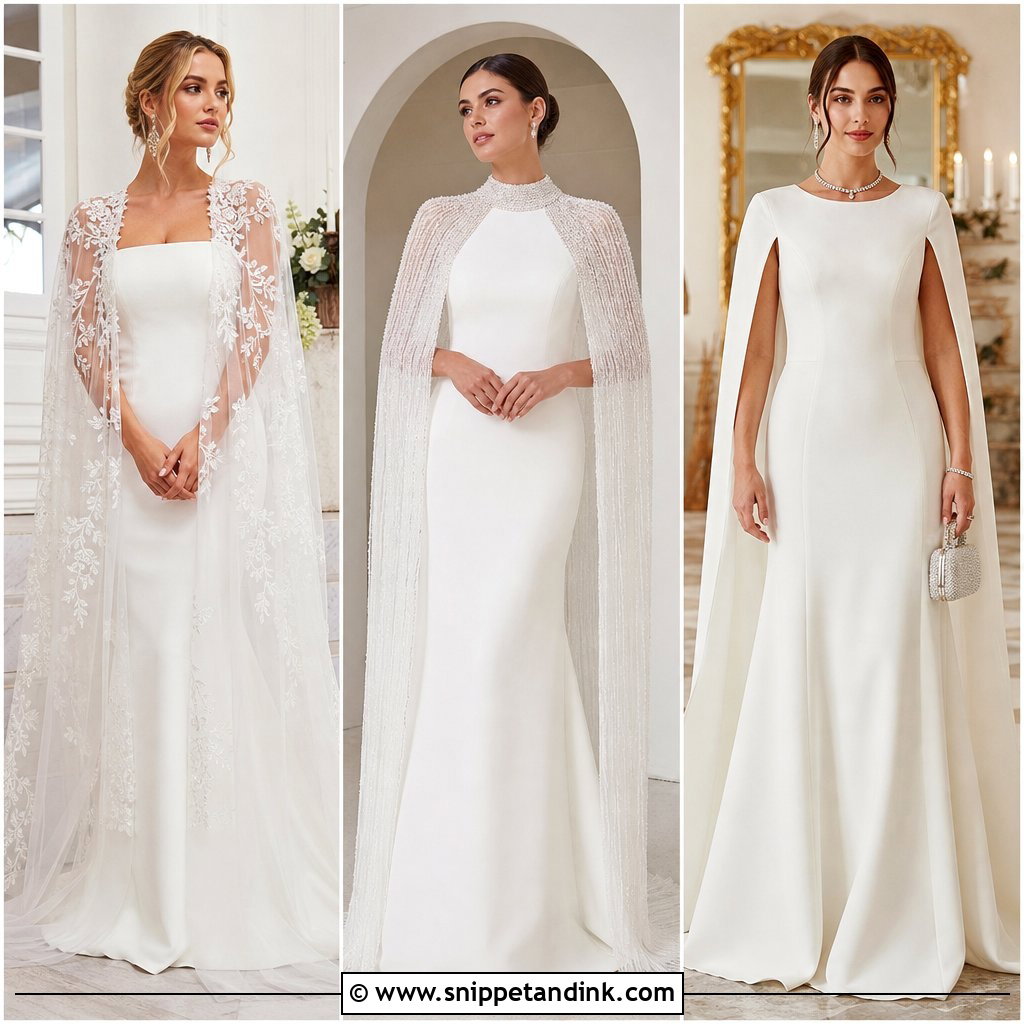
A cape is the simplest way I know to get two looks out of one gown. It adds coverage and movement for the ceremony, often doing the job a veil would, and then it comes off to reveal a lighter, more comfortable outfit for dinner and dancing. The pairings below run from satin columns and lace mermaids to a jumpsuit, a mini and a velvet winter cape. What makes any of them work is how well the cape matches the dress in tone, weight and fastening, so it looks designed together rather than added on the morning of the wedding.
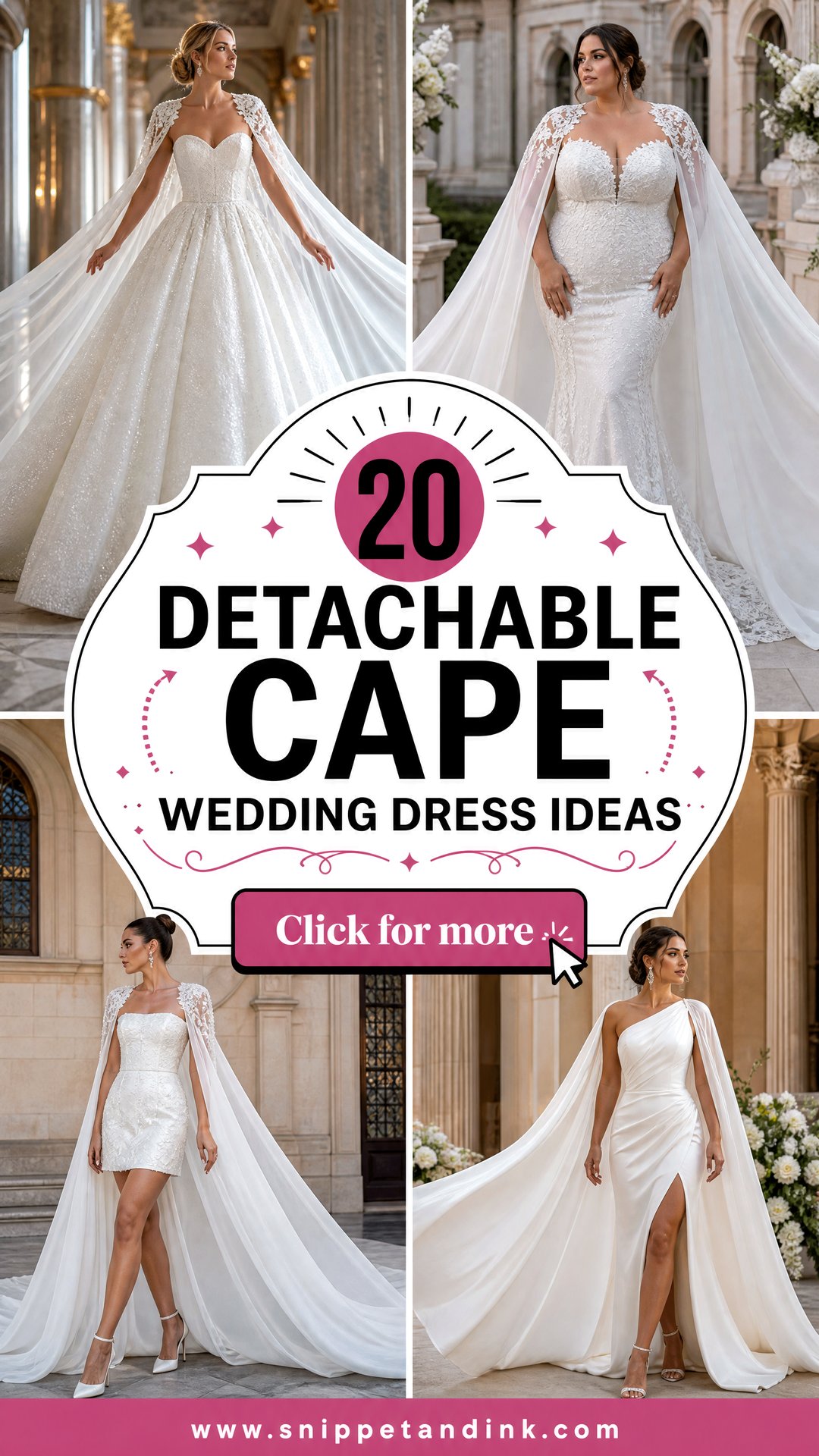
Shoulder, Collar or Back Neckline? Where a Cape Fastens
The attachment point changes how a cape hangs, how it moves when you walk and how quickly it comes off. I decide this before the fabric, because some gowns simply don’t have a place that can carry the weight.
At the shoulders
The most common option, and the most stable. It needs a strap, a sleeve or a solid off-shoulder band to hook onto. On a strapless gown there’s nothing to fasten to, so the cape usually comes with its own collar or neckband instead.
Around the collar or neck
A cape on its own band sits like a necklace, and it works with almost any neckline. It’s the easiest to put on and remove. The trade-off is that all the weight rests on your neck, so I keep these to light tulle or chiffon.
Inside the back neckline or bodice
Hooks sewn inside the back of the dress hide the join completely. This needs a seamstress to fit both pieces together and takes longer to undo, so it suits a bride who keeps the cape on for most of the day rather than one planning a quick change.
1. Satin A-Line Wedding Dress With Detachable Tulle Cape
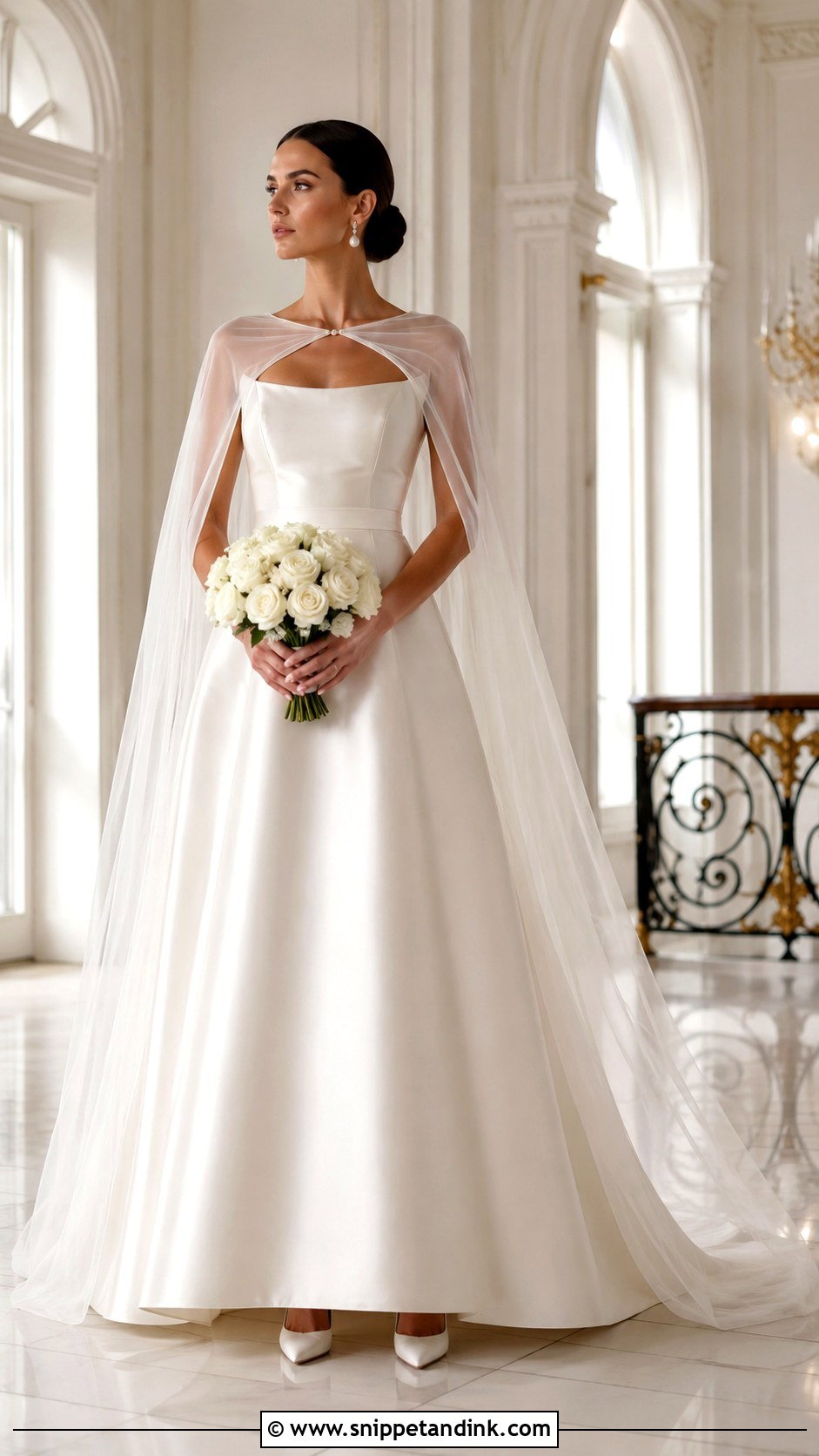
Satin and tulle are an easy pair because the tulle floats while the satin stays smooth and structured. I’d pick an A-line with a defined waist and a gently flared skirt, which balances the cape’s volume instead of disappearing under it. Fingertip or chapel length is the safe range; anything longer starts to compete with the train. The fastening is where I look first. Hidden shoulder loops or tiny covered buttons keep the join invisible, while clear plastic snaps can catch the light in flash photos. A low bun keeps the attachment points visible and tidy, and once the cape is off, a pair of statement earrings is all the reception needs.
2. Strapless Ball Gown With Detachable Cathedral Cape
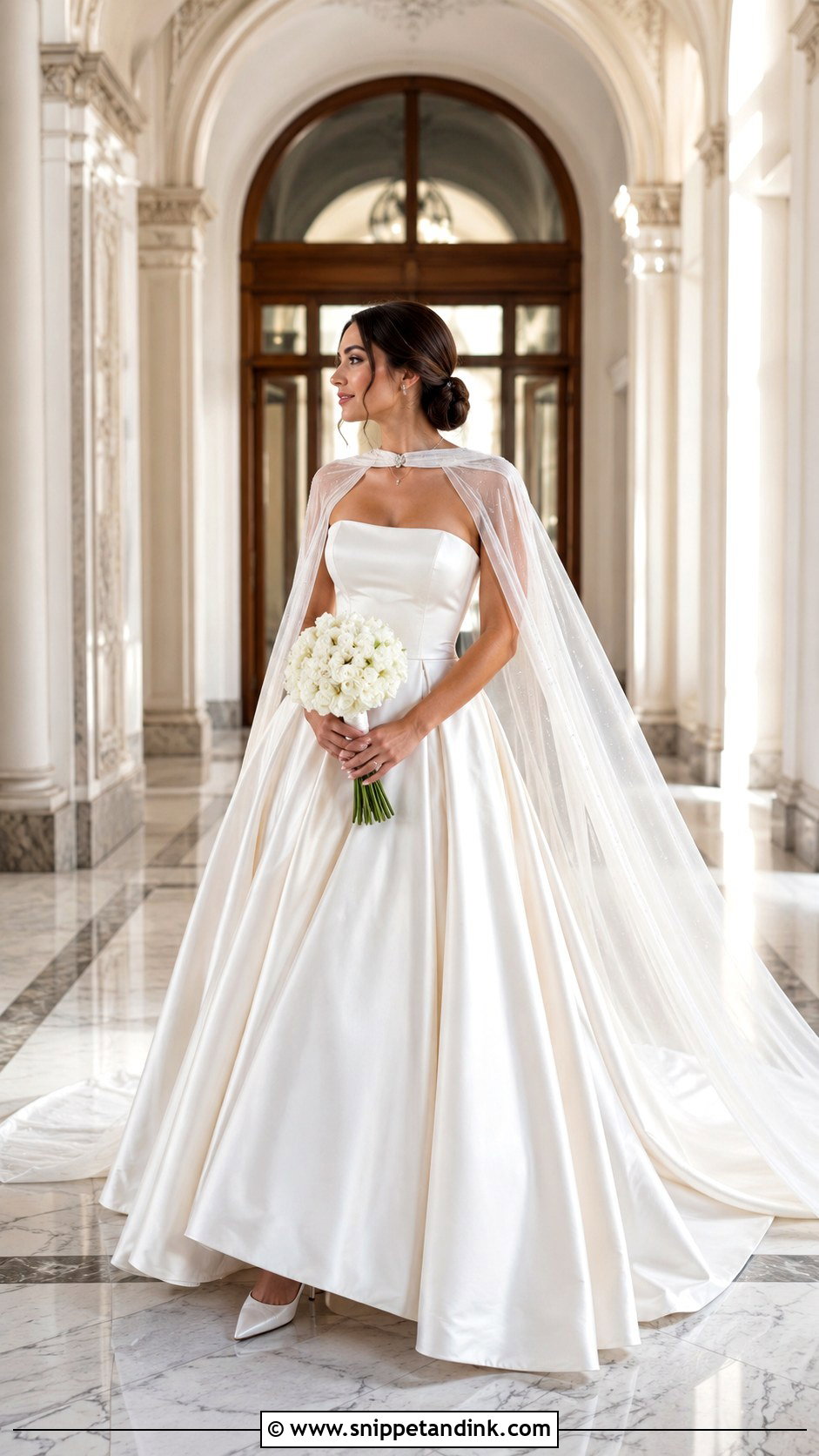
For a big entrance, it’s hard to beat a strapless ball gown with a cathedral cape trailing behind like a second train. The corset has to carry the full skirt alone, so it needs proper boning and a firm fit before the cape is even considered. Keep the tulle sheer so the back of the gown still shows. Volume is the real test here: a cathedral cape plus a full skirt takes up a lot of aisle, so I ask brides to walk it in the actual ceremony space if they can. A smooth chignon stops loose strands snagging on the closures, and a tennis necklace adds a little light without crowding the neckline.
3. Lace Mermaid Wedding Dress With Detachable Lace Cape
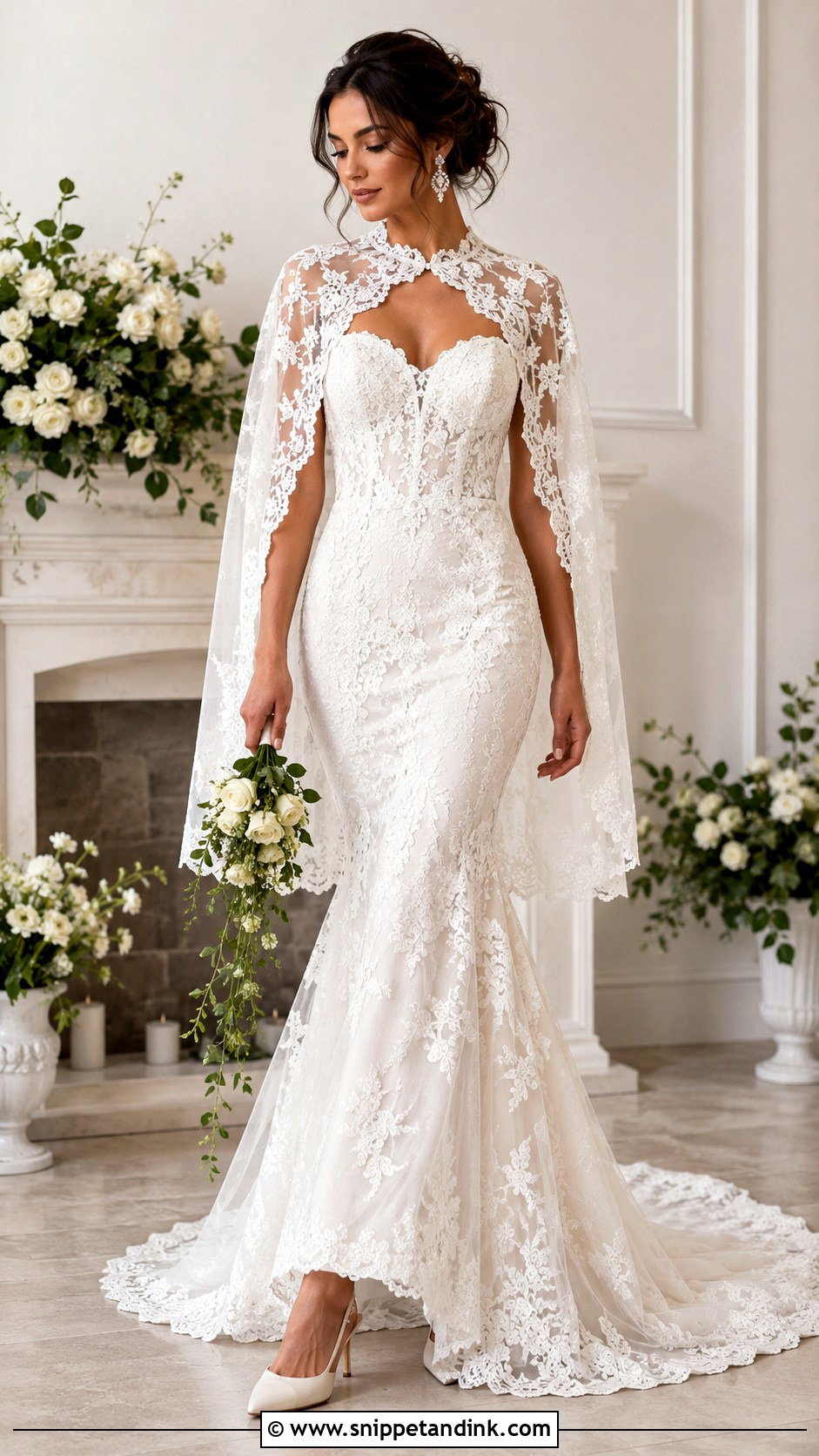
A lace mermaid only looks cohesive with its cape when both share the same floral lace. Matching lace after the fact is genuinely difficult, because dye lots and motif scale vary between batches, so I always advise ordering the cape with the dress. Let the gown follow the body through the hips before flaring, and keep the cape falling straight from the shoulders. A scalloped edge that echoes the hem ties them together. Nude lining behind the lace makes the motifs stand out in photos. Slingback heels and a loose updo with a few face-framing pieces suit it, and when the cape comes off, the detailed back finally gets its moment.
4. Crepe Column Wedding Dress With Detachable Chiffon Cape
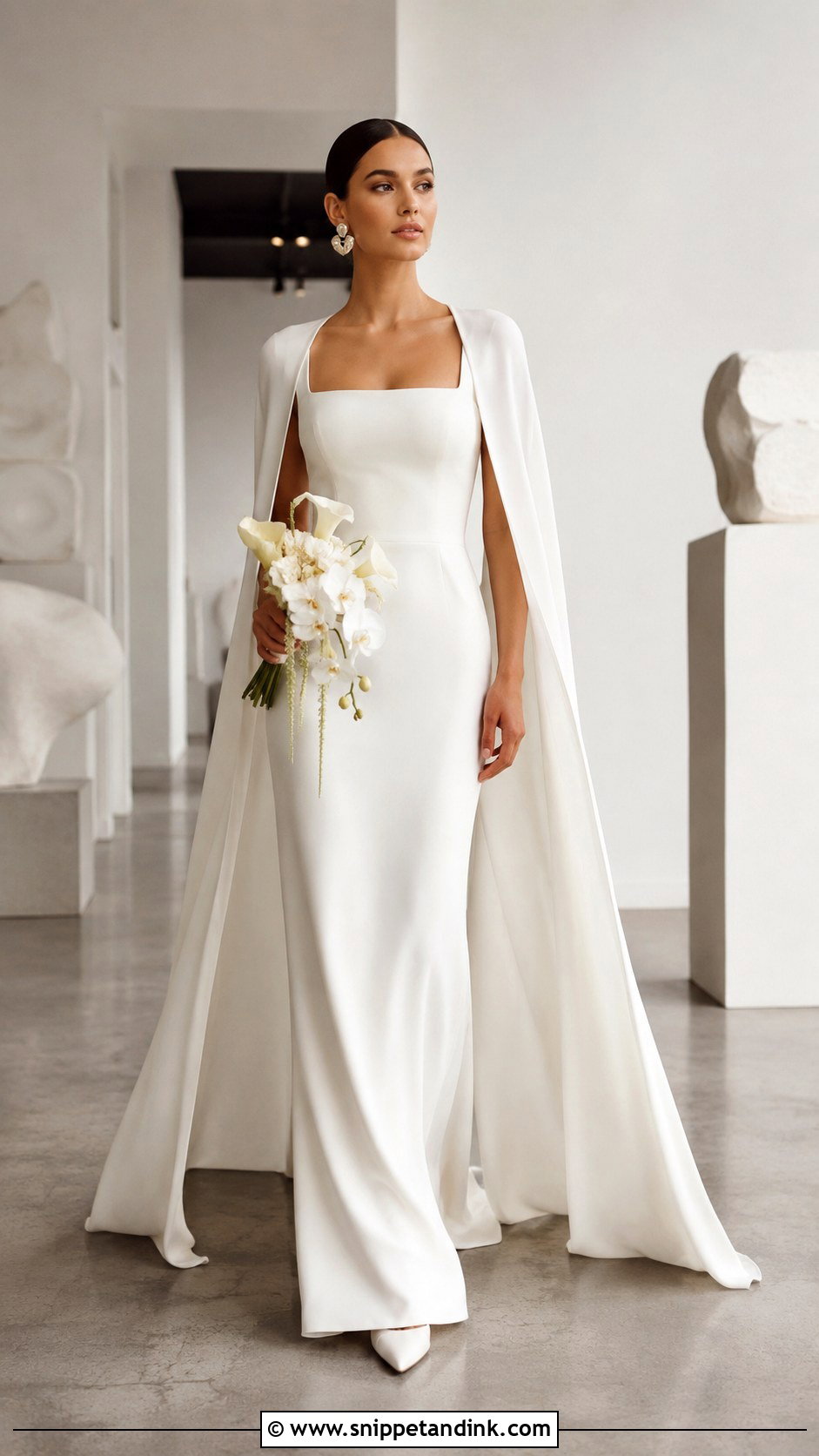
Crepe is clean and quiet, and a floor-length chiffon cape gives it movement without changing its shape. Look for a column with a square, bateau or draped neckline and minimal seaming. Keep the chiffon matte; a shiny or heavily embellished cape breaks the modern feel. Colour is the thing I check twice. Bright white chiffon next to ivory crepe looks obviously mismatched in daylight, even when it seemed fine in a shop’s warm lighting. Sleek hair, sculptural earrings and an architectural bouquet suit this, and a metallic clutch or cuff updates it after the cape comes off.
5. Square Neck Wedding Dress With Detachable Floral Cape
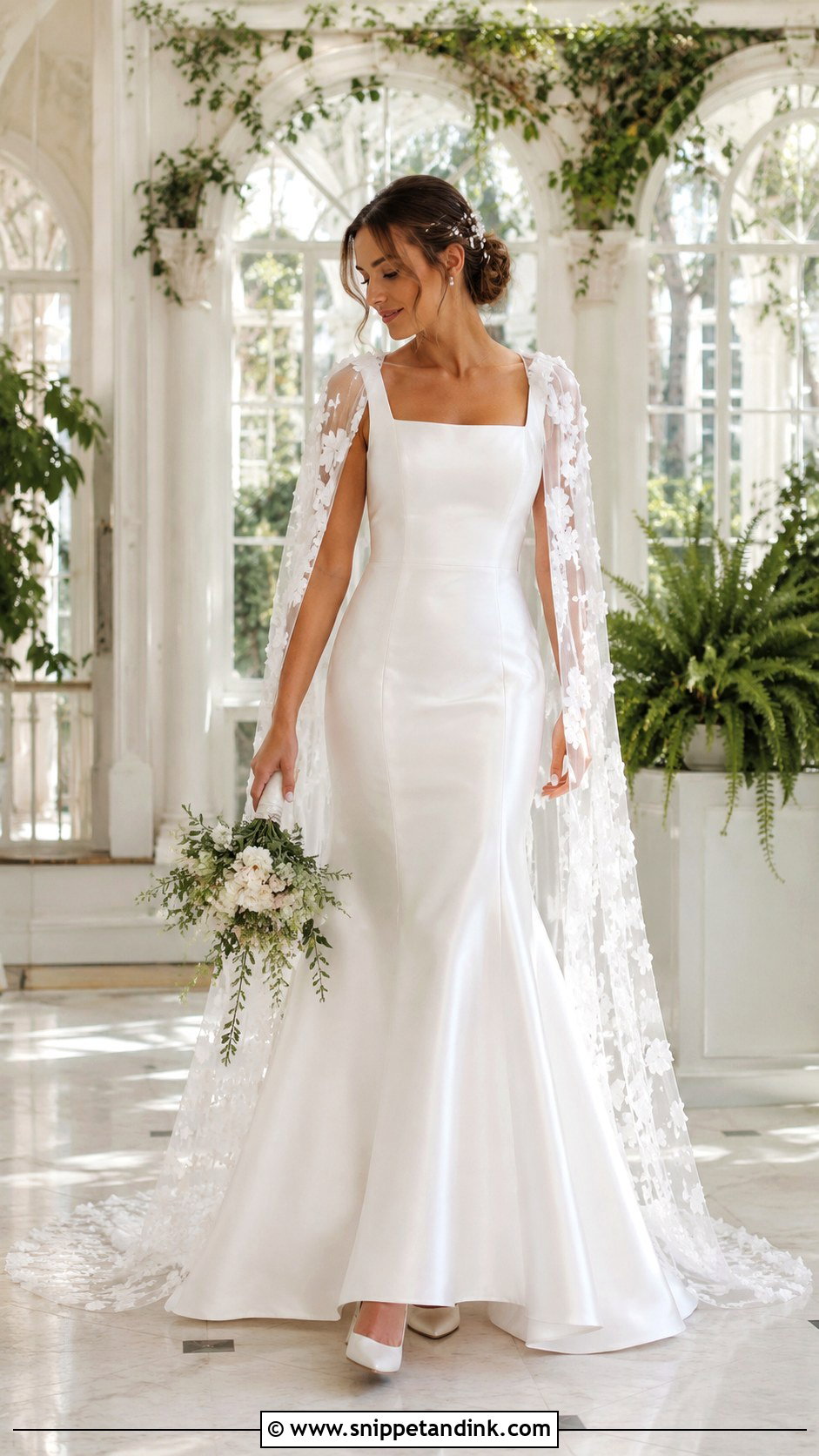
A square neckline gives a floral cape a firm frame to sit on. Choose a smooth satin or crepe fit-and-flare and pair it with sheer tulle carrying dimensional petals or scattered appliqués. I’d keep the flowers clustered at the shoulders and hem with the middle left light, otherwise the cape hides the dress you chose. Three-dimensional petals crush easily if the cape is packed tightly, so it should travel on a hanger, not folded in a box. Pearl hairpins and a low twisted bun leave space at the neck. Without the cape, that strong neckline holds the reception look by itself.
6. Off-Shoulder Wedding Dress With Detachable Cape Sleeves
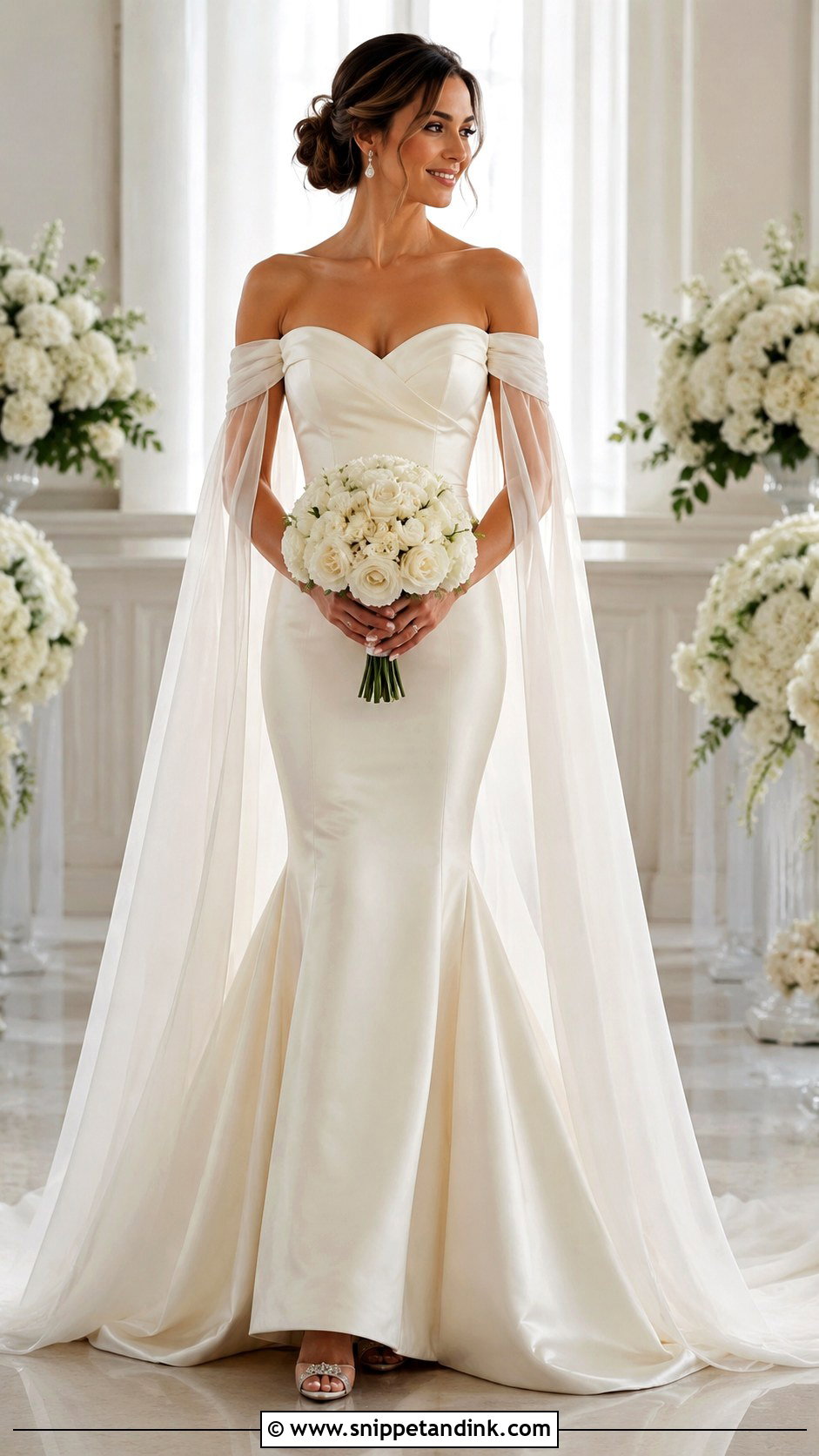
Cape sleeves give an off-shoulder gown the impression of long flowing sleeves without the restriction of real ones. The cape fastens at the upper arms or along the back neckline, with sheer tulle or organza draping behind. My fitting test for this is simple and non-negotiable: arms up, arms forward as if hugging, arms out for the first dance. If the cape pulls the dress’s shoulder line down, the attachment point needs moving. A fit-and-flare satin dress keeps the look polished, and a loose bun shows the shoulder line. Remove it and you’re left with an open neckline that’s easier for the evening.
7. Long-Sleeve Wedding Dress With Detachable Sheer Cape
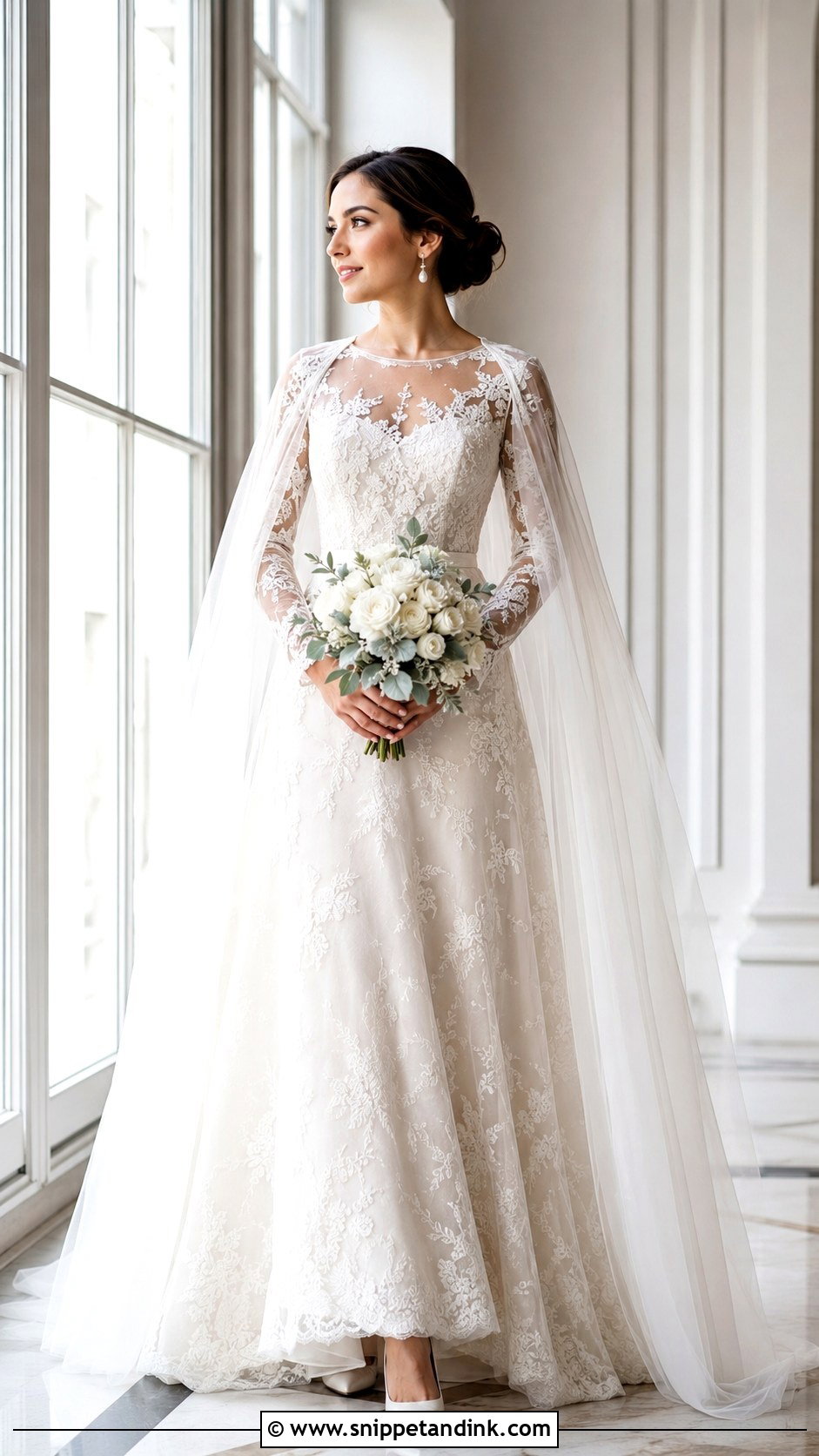
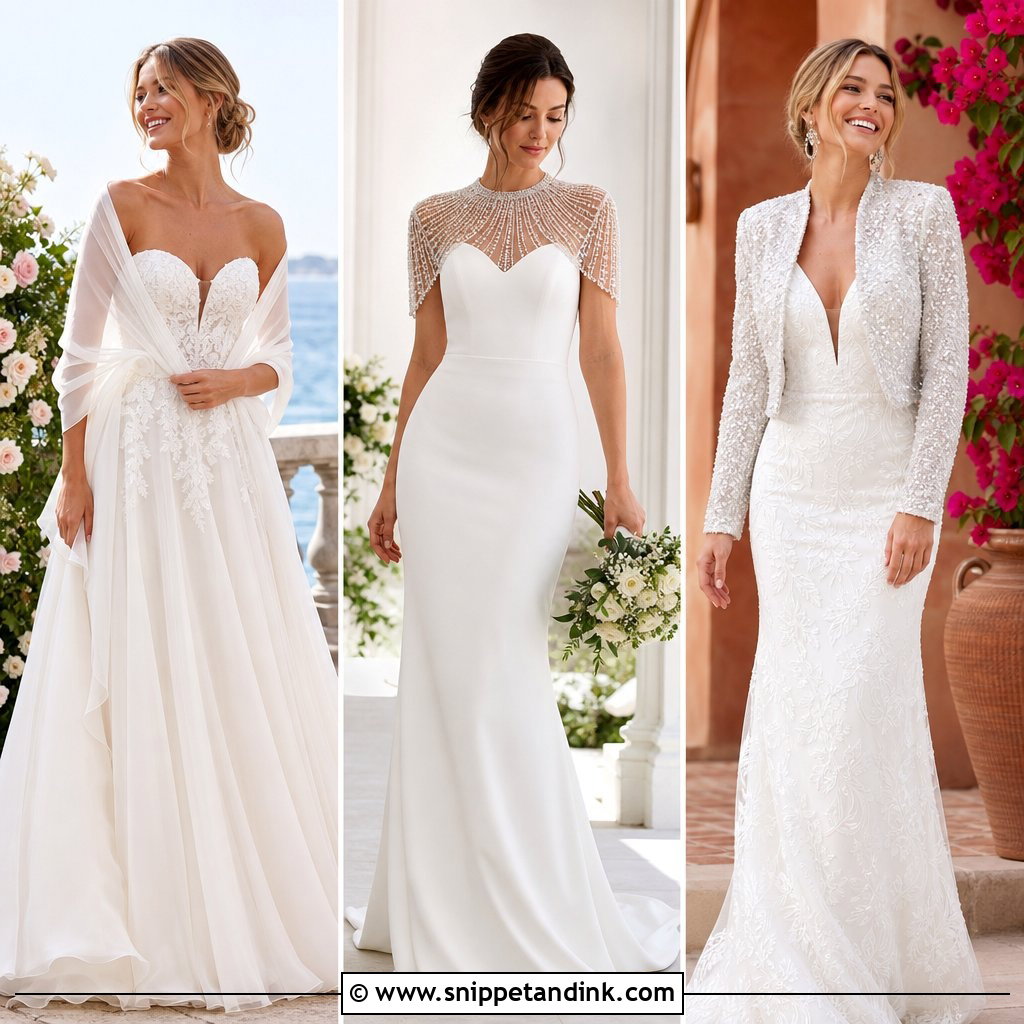
Long sleeves and a cape can coexist, but only when both stay light. Illusion sleeves with a few appliqués and a plain sheer cape that doesn’t cover every detail is the version I’d recommend; a beaded cape over textured sleeves just looks heavy. The fasteners should sit outside the sleeve seams. Placed on top of them, they create a lump at the shoulder that shows in every side profile. A soft A-line skirt keeps the outfit from looking severe. With the cape removed, the long-sleeve gown is exactly right for a cool venue or a late evening.
8. Corset Wedding Dress With Detachable Pearl Cape
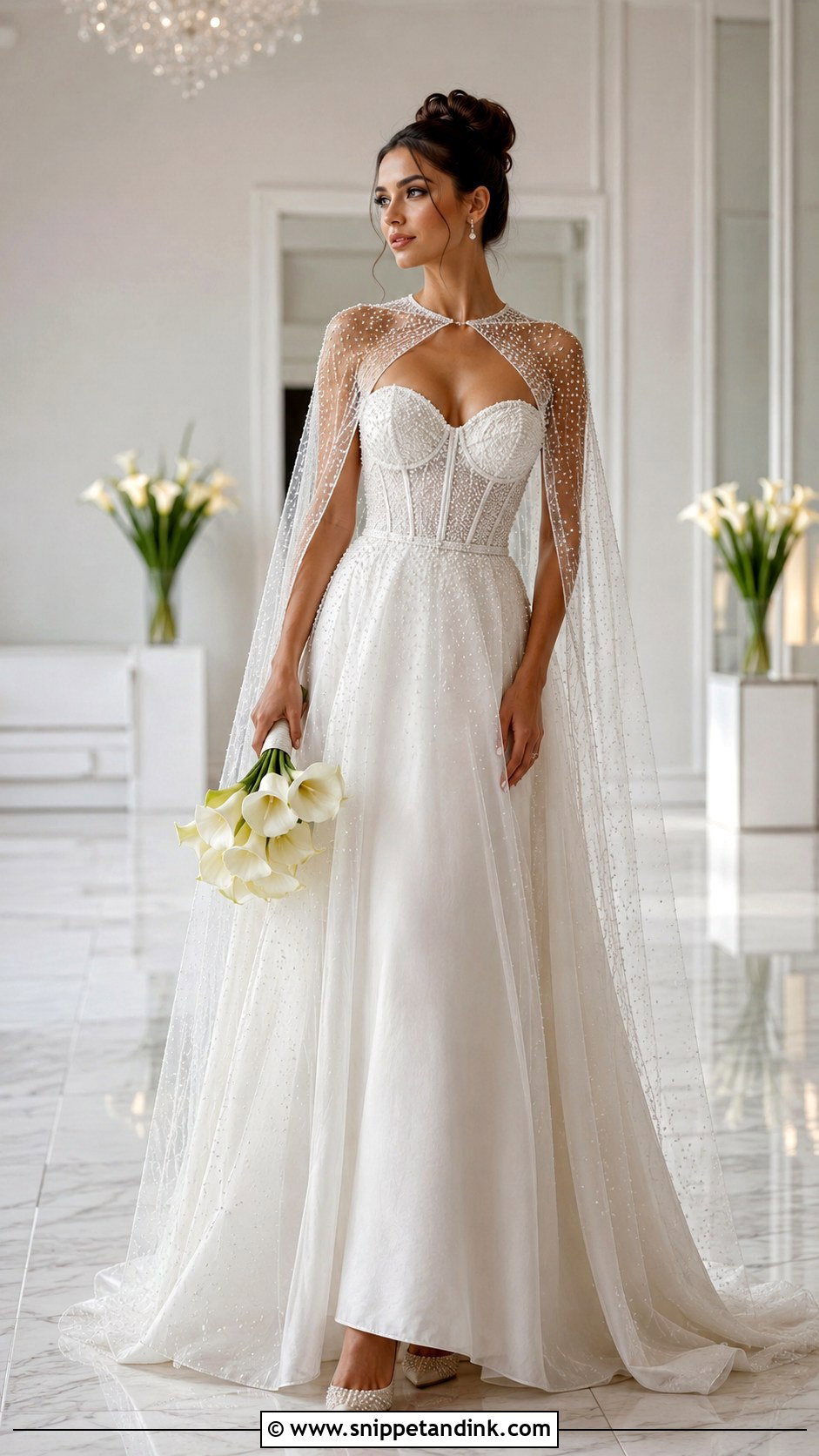
Pearls catch light softly, which suits the structure of a corset gown with visible boning. Spacing is what I watch: widely spaced pearls on sheer tulle let the corset show through, while dense pearl work adds real weight and drags at the shoulders by mid-afternoon. Reinforced attachment points are essential with any pearl cape. A high bun gives the cape’s neckline room and draws the eye upward. Pearl-accented pumps and small drops are plenty. After the ceremony, a slim belt or brighter earrings sharpen the corset for the party.
9. Minimalist Slip Wedding Dress With Detachable Cape
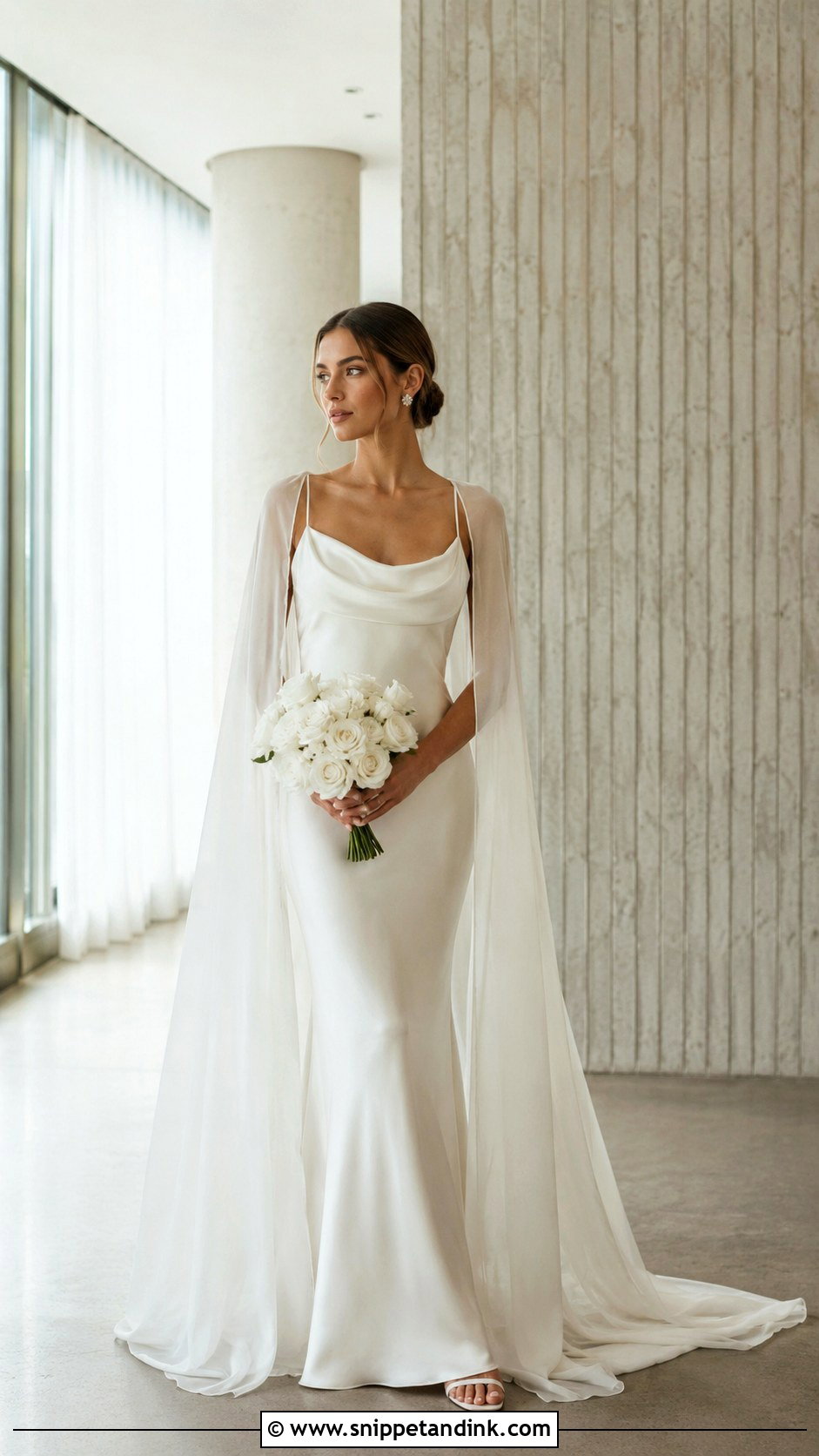
Can a plain slip dress hold a dramatic ceremony moment? With a long, narrow cape over it, yes. Choose a bias-cut satin slip with fine straps and a fluid skirt, and pair it with a sheer cape that has clean edges and a slim train. The risk is the straps. Bias-cut slips have delicate straps, and a cape fastened directly to them can pull them out of line or tear the stitching. I’d anchor the cape to a discreet band or hook inside the back neckline instead. Soft waves or a low ponytail suit the relaxed shape, and a statement cuff gives the reception version a little weight.
10. Plus-Size Wedding Dress With Detachable Cape
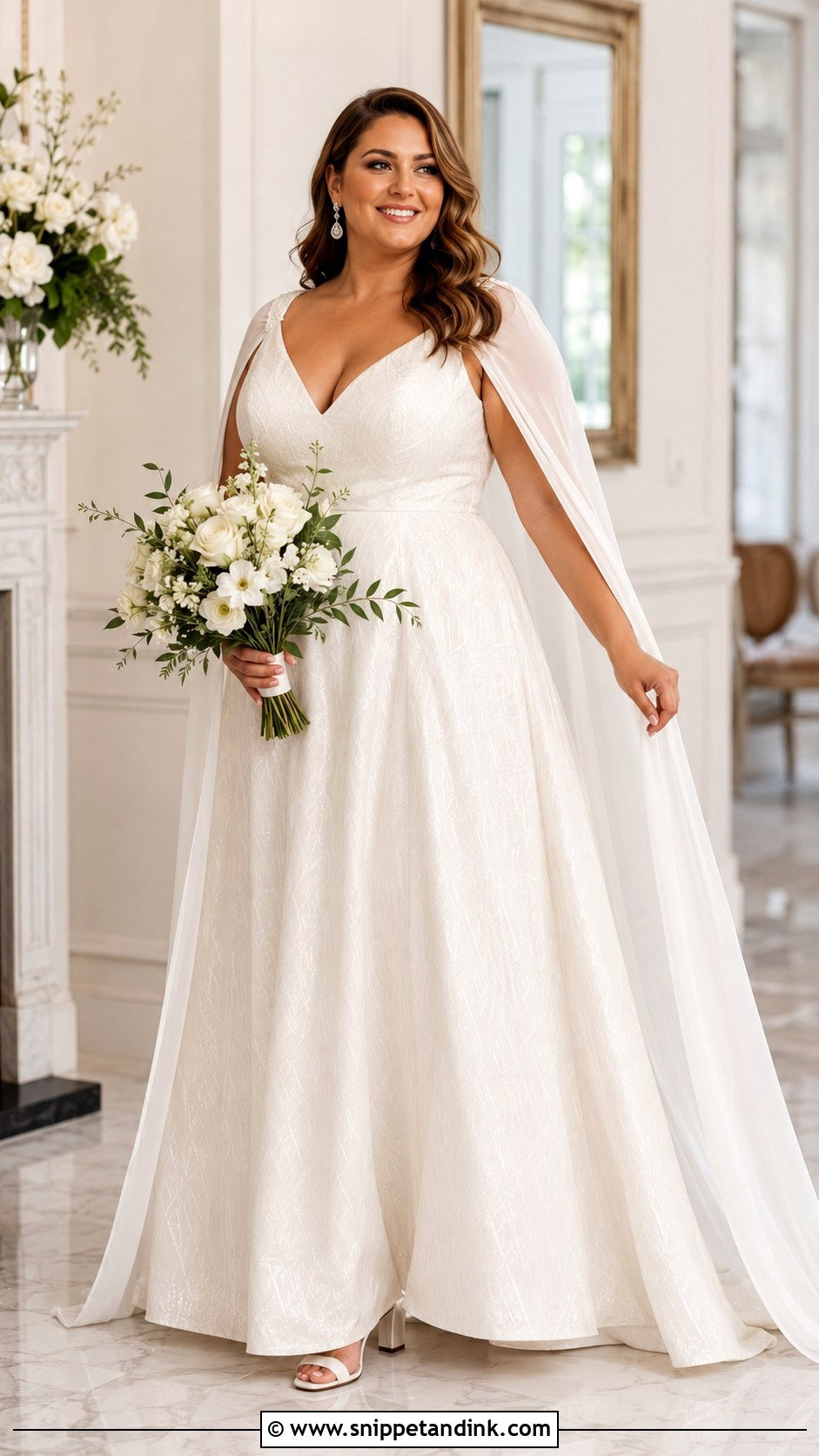
A cape on a curvier bride should fall straight from the shoulders, not wrap around the body. Start with a supportive A-line or fit-and-flare with a defined waist and a bodice that feels secure. Soft tulle or chiffon gives movement without bulk. Length is the detail I adjust most carefully here: I end the cape below the widest point of the gown so it draws one long line rather than a horizontal break. Medium-scale earrings and a bouquet sized to the dress keep the proportions right. Check the fasteners from every angle, including seated, before the final fitting.
11. Modest Wedding Dress With Detachable Capelet
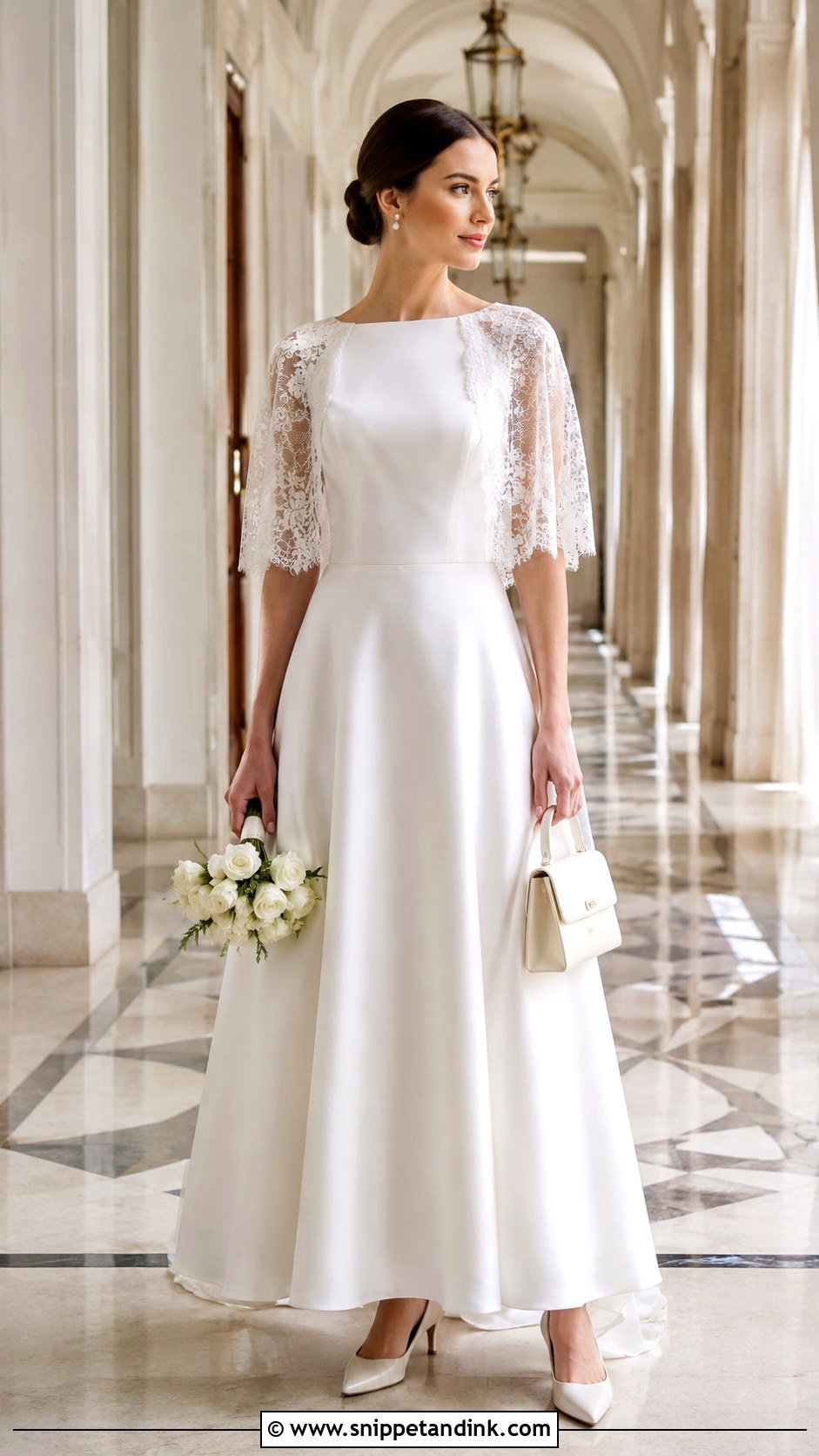
A detachable capelet gives a modest gown extra coverage without the weight of a full layer. Pair a high-neck or bateau A-line dress with a sheer capelet reaching the elbows or waist, edged in lace to define the shape. With a high neckline already in play, I keep the capelet itself plain so the upper body doesn’t look crowded. Closures should lie flat: tiny hooks, covered buttons or a discreet ribbon. A ribbon tie is the friendliest choice if the capelet will come on and off during a long religious ceremony, because it’s quick and anyone can redo it neatly. Underneath, the gown’s own sleeves and bodice carry the later part of the day.
12. Boho Wedding Dress With Detachable Lace Cape
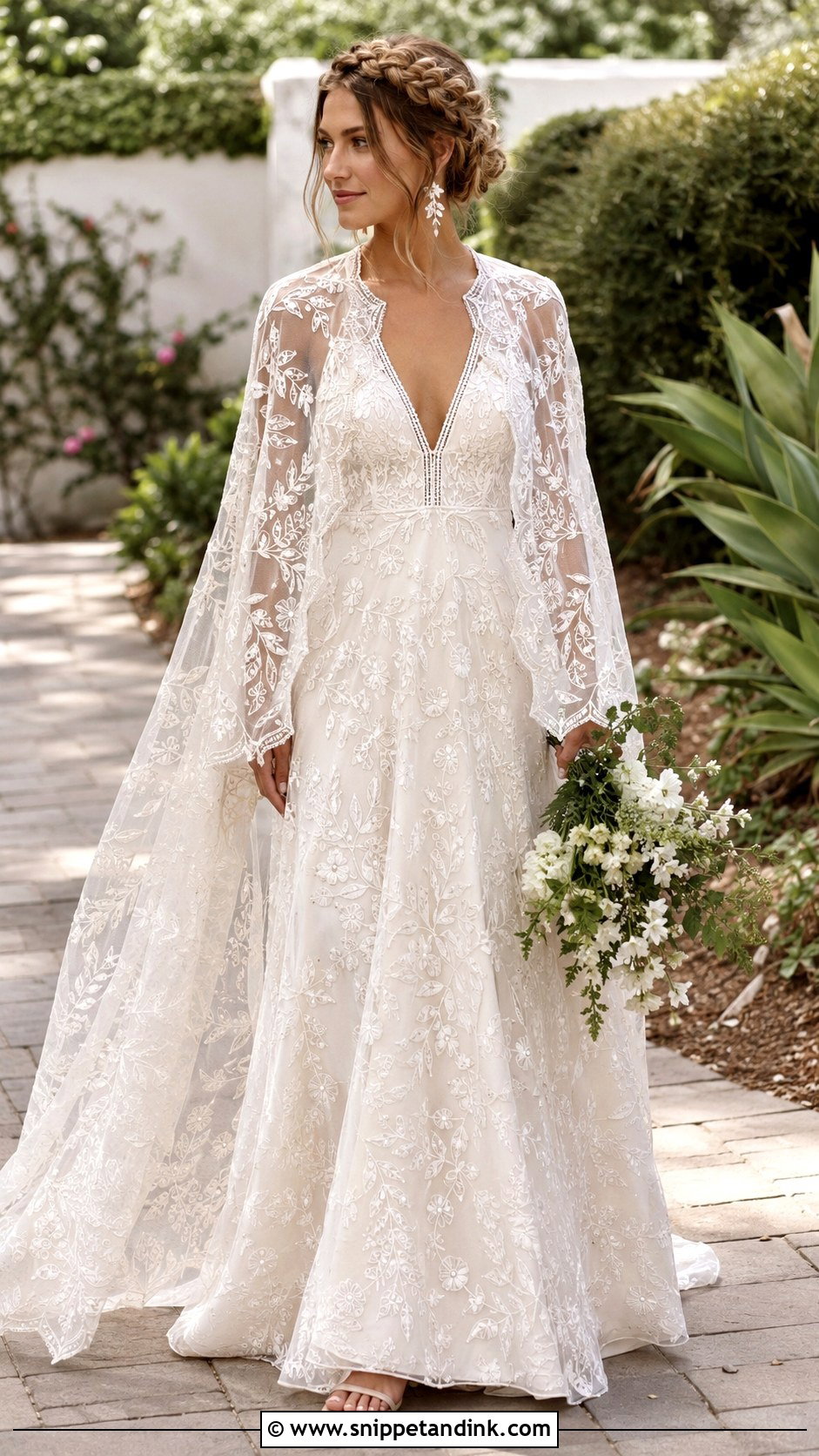
Outdoors, a cape needs to move without fuss. Open-pattern lace or embroidered tulle with a soft scalloped hem, over an A-line gown with botanical lace, suits a garden or field ceremony. I keep the train moderate here, because a long lace cape picks up grass, seeds and gravel and drags them along. One lace motif across both pieces looks coordinated; mixing two unrelated patterns rarely does. Low block-heel sandals stop you sinking into lawn. A braided updo or textured waves fit the relaxed mood, and the gown underneath stays comfortable once the cape is put away.
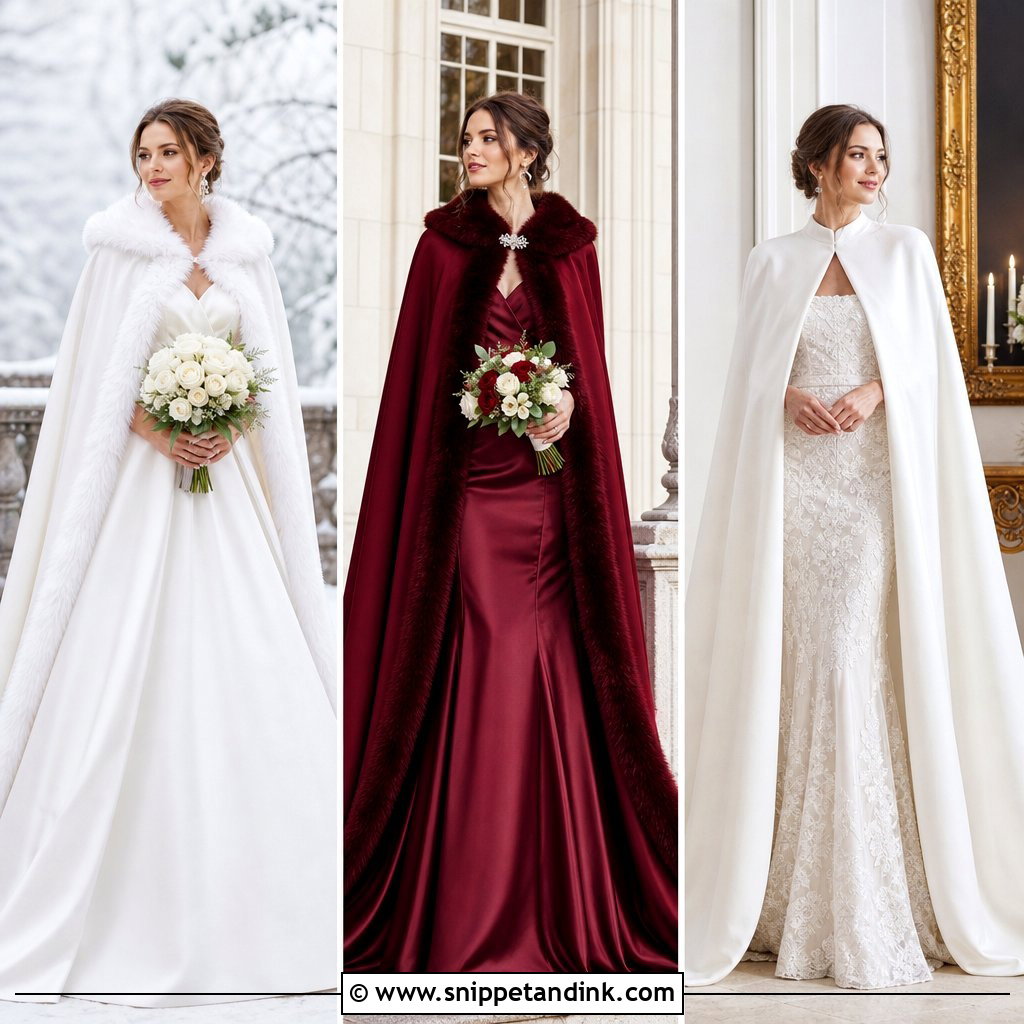
13. Winter Wedding Dress With Detachable Velvet Cape
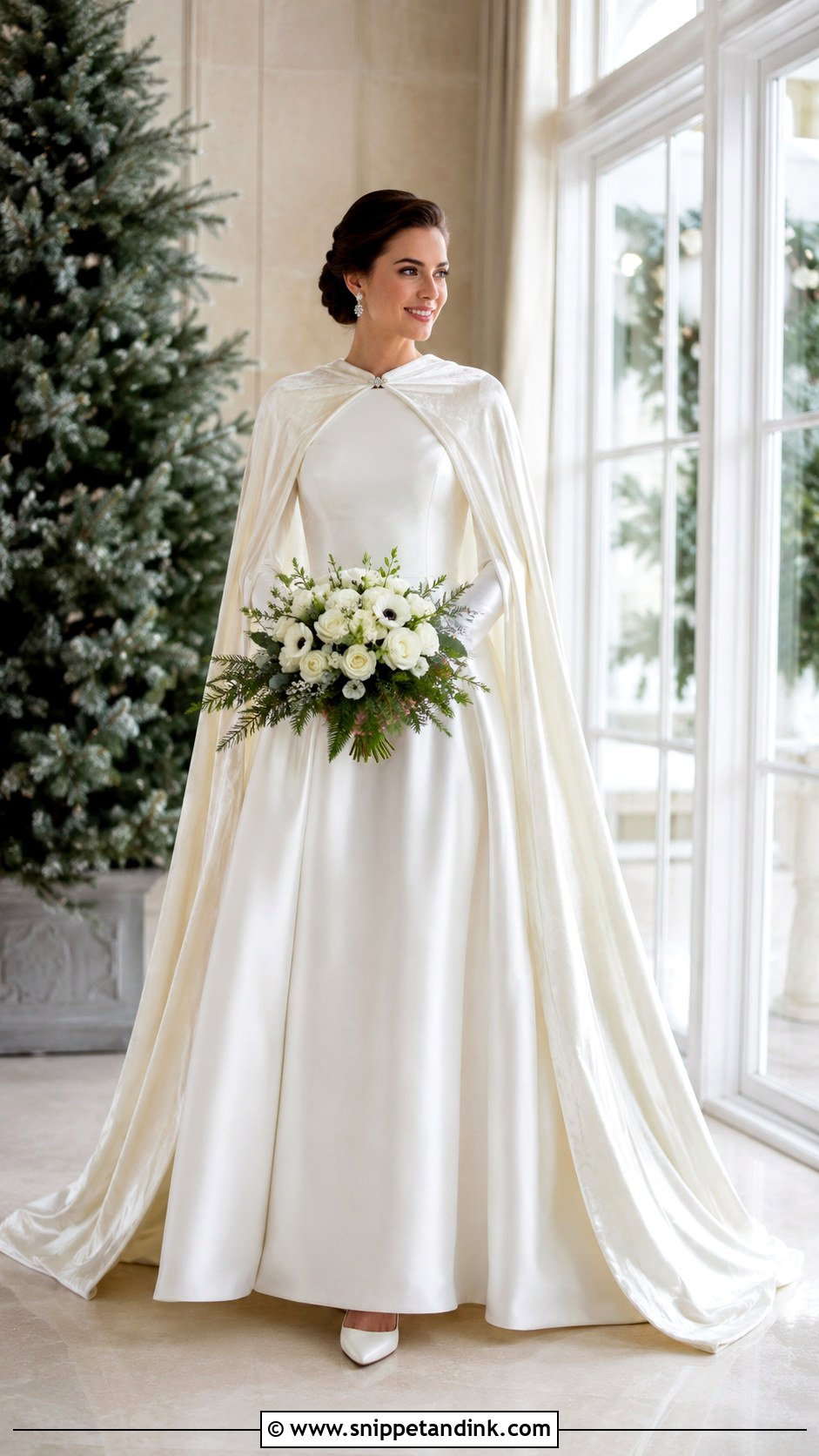
Velvet is the one cape that’s as much about warmth as looks, which makes it ideal for winter. Pair it with a long-sleeve satin ball gown or a structured A-line. Ivory is the classic choice; pale blue, deep green or burgundy make a bold contrast if your colour scheme allows. Velvet is heavy, so the fastenings need to be reinforced hooks rather than delicate loops, and a soft lining stops it clinging to the dress. Velvet also shows crush marks where it’s sat on, so I’d take it off before sitting for a long dinner. A polished updo prevents hair rubbing against the pile.
14. Beach Wedding Dress With Detachable Chiffon Cape
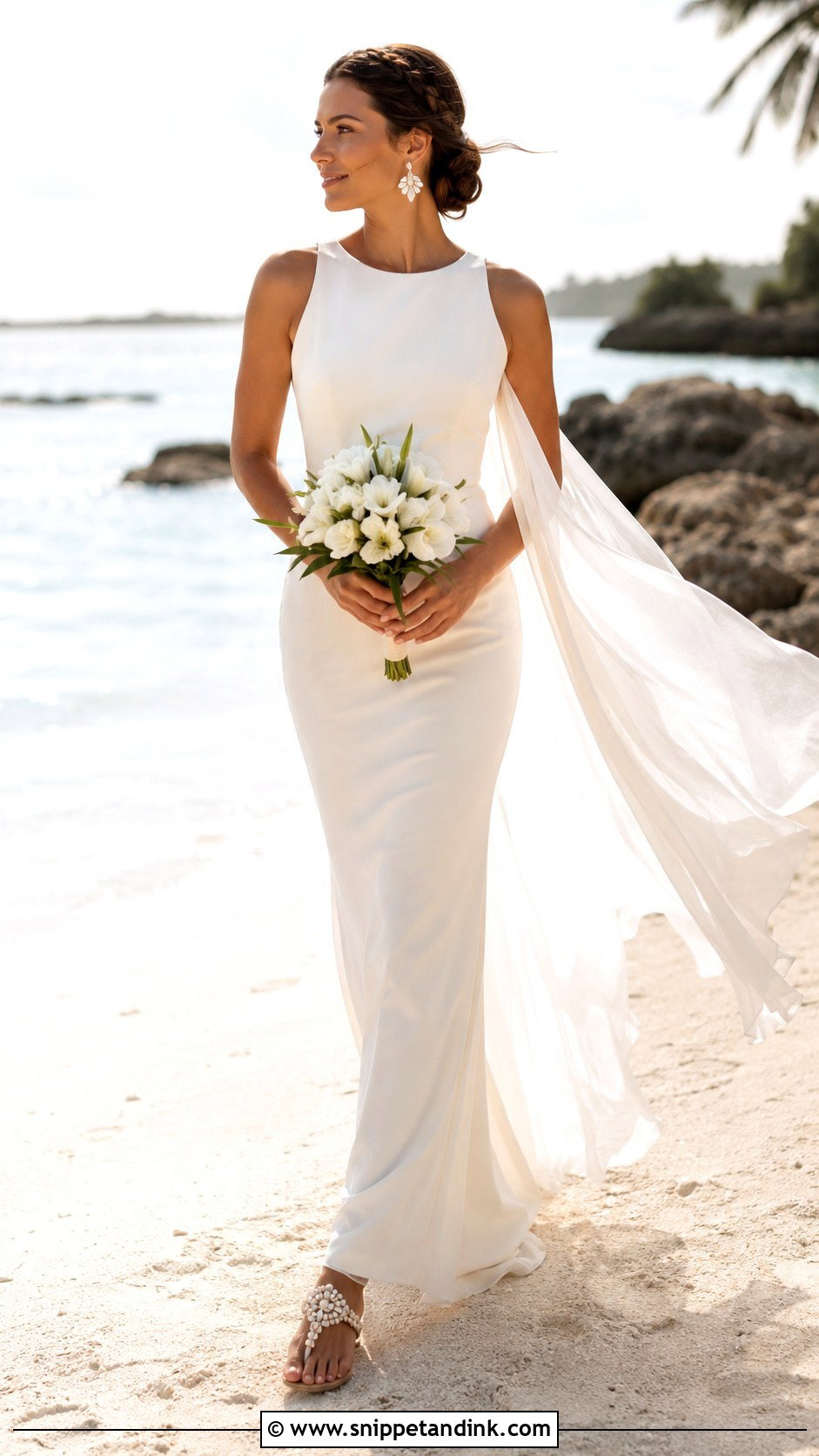
Chiffon behaves better on a beach than a veil does: it moves with the wind instead of whipping across your face. Pair an ankle or floor-length cape with a light sheath or slim A-line in crepe, satin or chiffon, and keep the bodice simple underneath. A very long train collects sand and seawater, so I steer brides away from it. Coastal wind is the other issue. The shoulder attachments need to be firm enough that a gust can’t twist the whole cape sideways, so I’d use hooks over snaps. Flat sandals and a secure low bun or braid handle the conditions, and the cape can come off before you walk near the water.
15. Garden Wedding Dress With Detachable Floral Cape
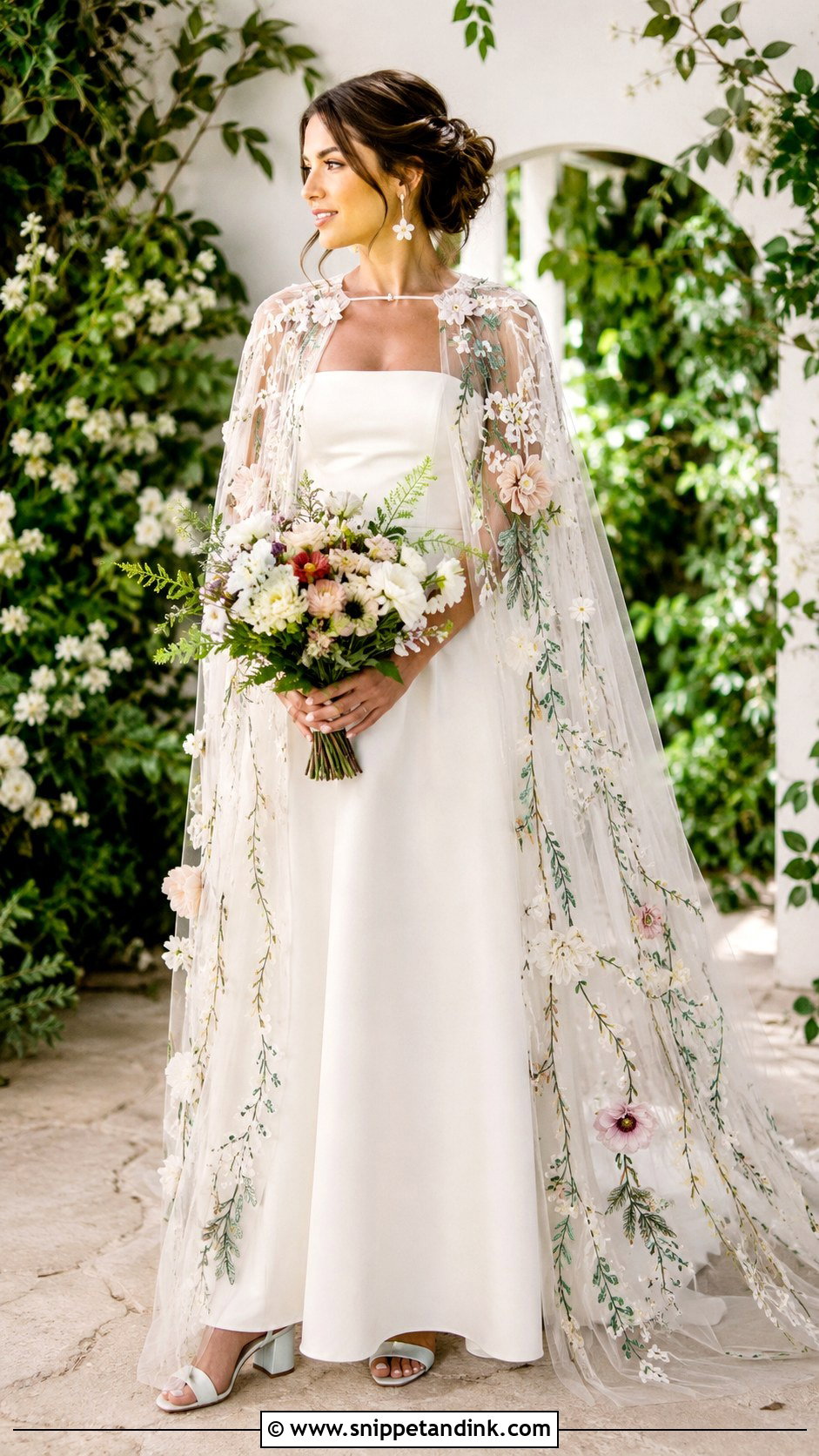
Spaced botanical embroidery on sheer tulle, over a simple strapless or sleeveless A-line gown, fits a green garden setting. Concentrate the flowers around the neckline and let them thin out toward the hem so the cape frames the face rather than hiding the dress. Picking up one or two of the cape’s colours in the bouquet links the two. Chapel length is about as long as I’d go on grass. A low textured bun keeps the closures reachable for whoever helps you take it off, and a small hair accessory refreshes the reception look.
16. Black Wedding Dress With Detachable Tulle Cape
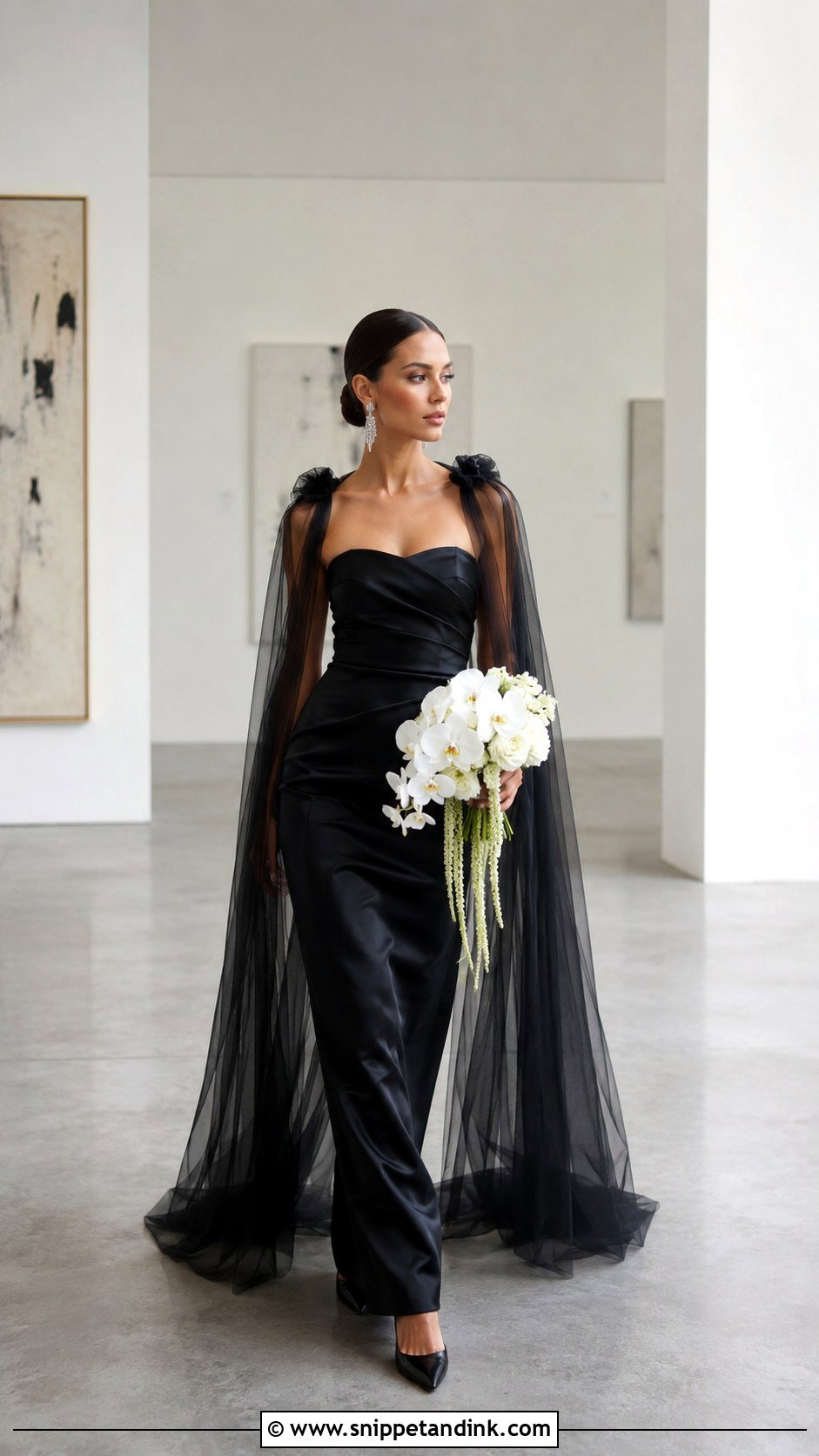
Black gowns get even more drama from a sheer cape, either tonal black or smoky grey for a softer contrast. Start with a fitted satin or crepe dress with a clear neckline and a controlled skirt. Black tulle is less predictable than ivory, though: some weaves look almost opaque indoors and very sheer in sunlight. I check every black cape in both lights before committing. White flowers in the bouquet give a clean colour break against all that black. Sleek hair keeps the silhouette the focus, and a sparkly belt or metallic clutch makes the reception version feel new.
17. Short Wedding Dress With Detachable Floor-Length Cape
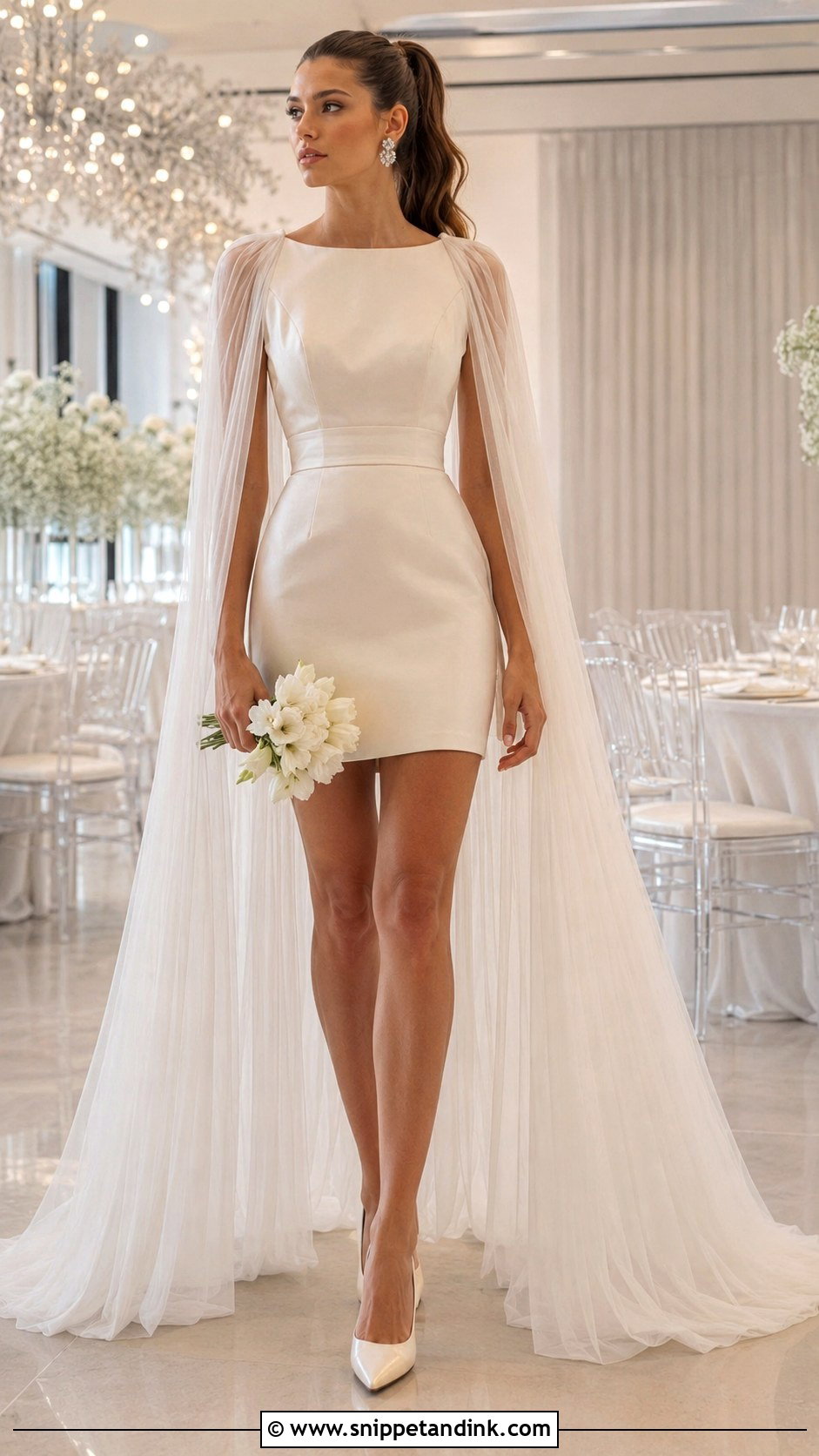
Pairing a short dress with a floor-length cape gives you a traditional sweep from behind and legs and shoes on show from the front. Choose a tailored mini or knee-length dress with a structured neckline and a clean hem. The cape must attach at the shoulders, not the waist, so it flows freely behind without bunching around the hips. I’d think about proportion with the bouquet; a large one hides most of a short dress, so keep it small. After the ceremony the cape comes off and you’re straight into a party outfit. Bring embellished flats for when the dancing starts.
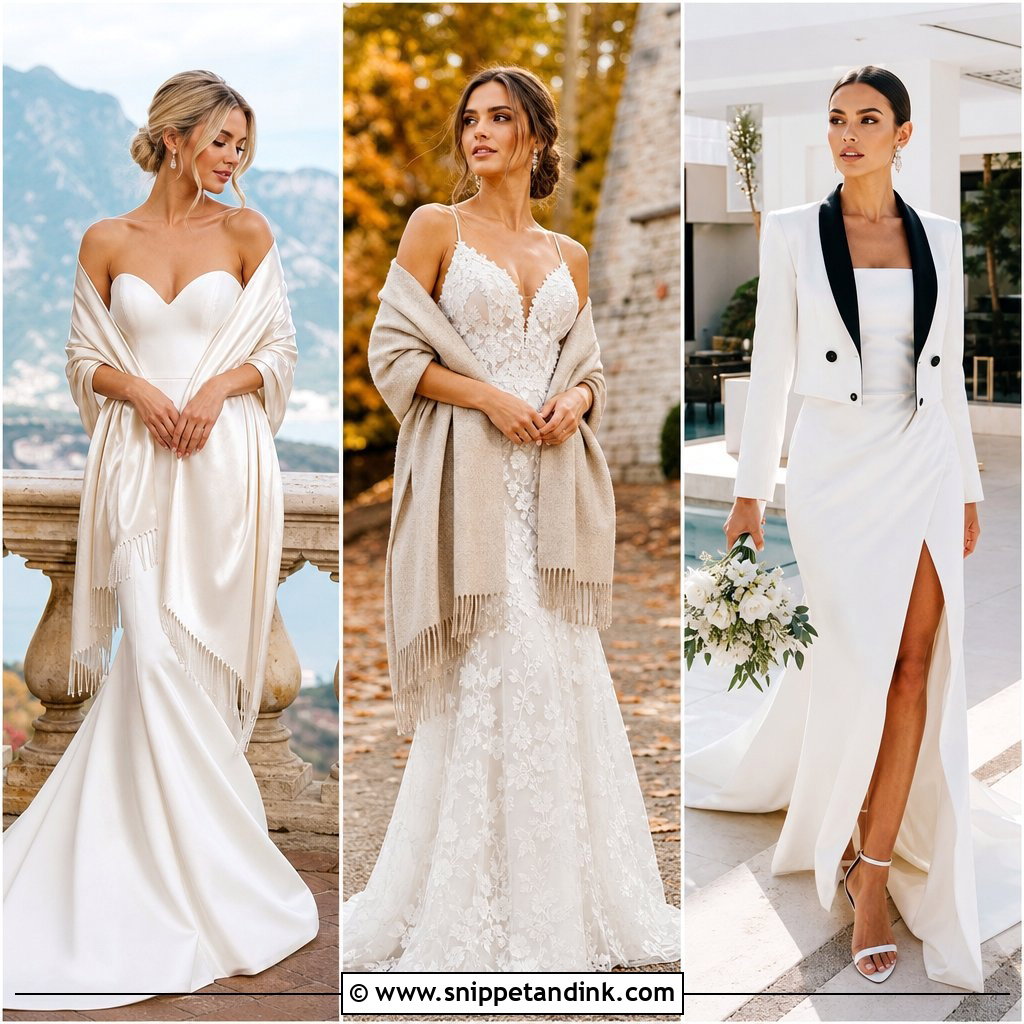
18. Jumpsuit Wedding Outfit With Detachable Cape
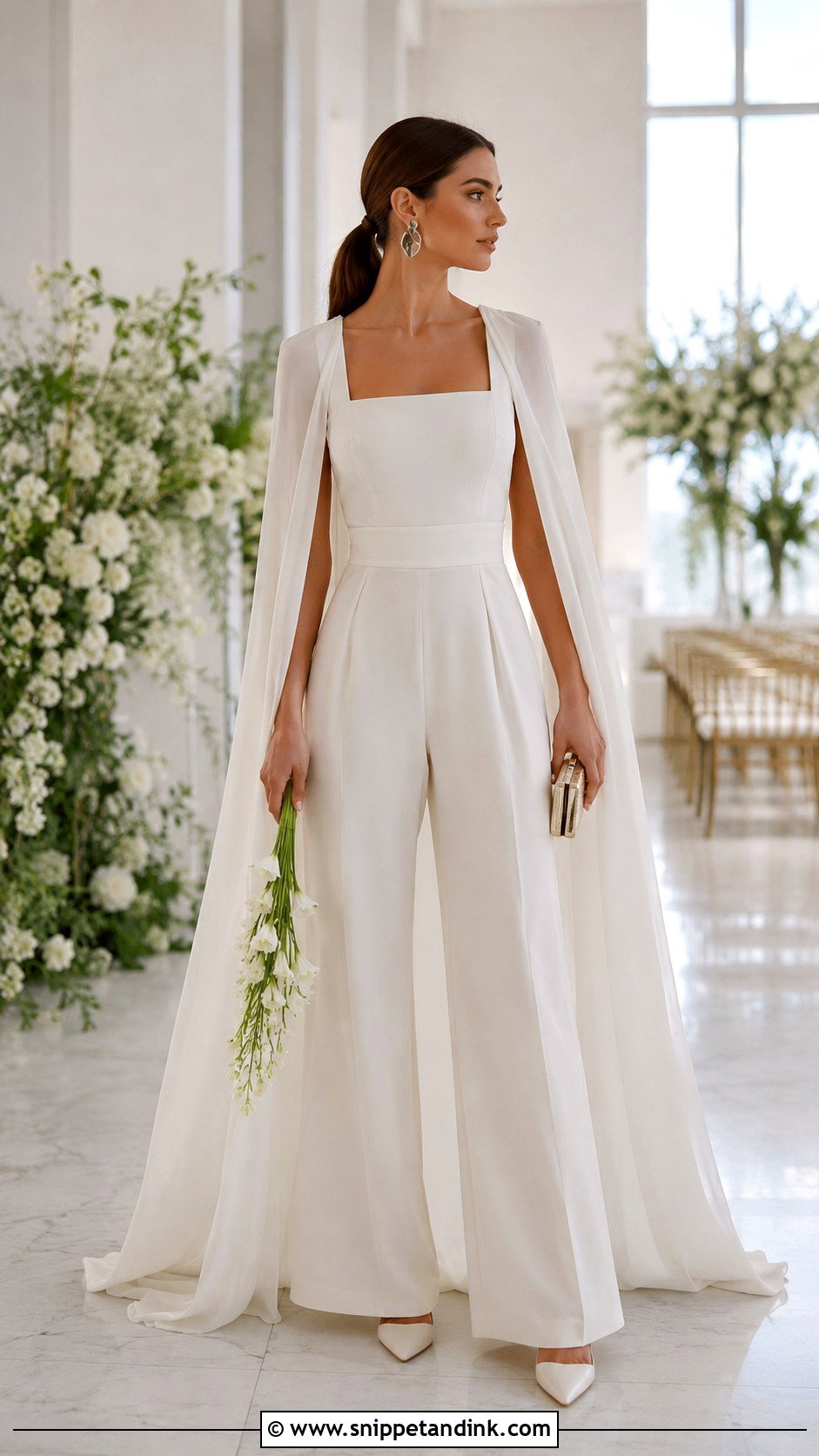
A tailored bridal jumpsuit with a long cape reads as ceremony-ready without a skirt in sight. Wide-leg trousers, a defined waist and a fitted bodice give the cape a strong base. The cape fabric should coordinate with the jumpsuit and stay light, chiffon or a thin crepe. Watch where the fasteners sit: a cape pulling on a strapless or one-shoulder bodice can drag the neckline out of shape, so I prefer it anchored at the back. Carry a narrow bouquet that leaves the tailoring visible. Without the cape you have a reception outfit that needs no bustling at all.
19. One-Shoulder Wedding Dress With Detachable Cape
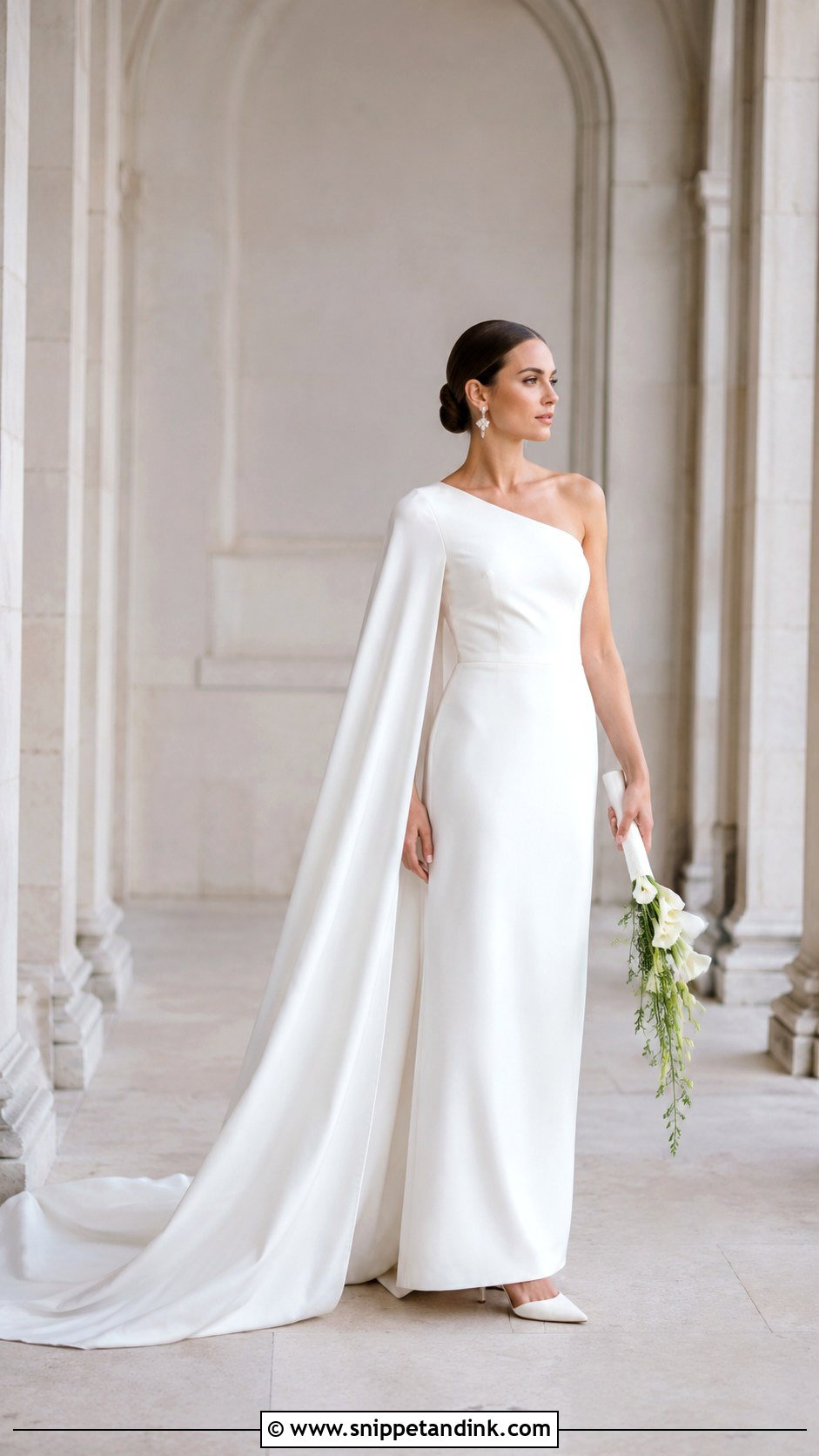
One-shoulder gowns already lead the eye diagonally, so the cape should follow that line rather than fight it. Attach it along the raised shoulder and upper back of a fitted crepe or satin column, letting it sweep across before falling to the floor. Weight is the issue I test for: all the cape’s pull lands on one side, and a heavy cape will slowly tip the bodice sideways over the day. A lighter fabric and an extra hidden anchor point at the back usually solve it. Wear one statement earring on the bare side, and swap it for a matching pair once the cape comes off if you prefer.
20. High-Neck Wedding Dress With Detachable Beaded Cape
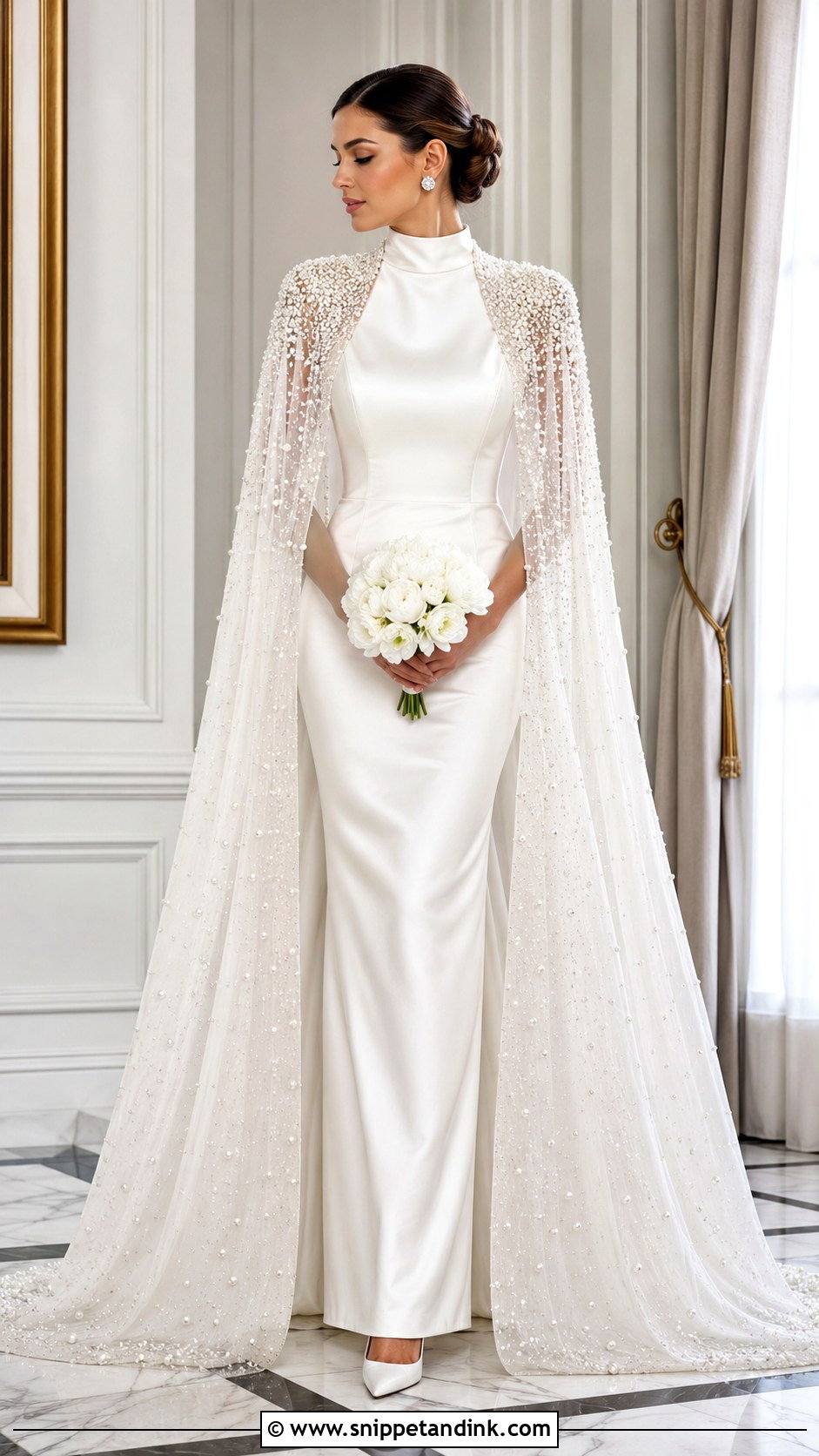
Scattered crystals, pearls or bugle beads on a cape over a high-neck crepe or satin column give formal sparkle against a plain background. The cape attaches behind the collar and falls straight to the floor. Beading adds real weight, so I always ask for the collar and attachment points to be reinforced during alterations, or the neckline sags by the evening. Lift the hair away from the neck in a bun or twist so nothing catches. Keep the rest quiet: crystal studs, closed-toe pumps, a compact white bouquet. A jewelled comb or bracelet freshens the gown once the cape is off.
Wearing a Cape With a Veil, or Instead of One
This is the question I’m asked most at fittings. A cape already covers the back of the gown, so adding a full-length veil doubles the layers and can make the outline look heavy. If you love both, I’d choose a short veil, elbow length or shorter, placed high in the hair so it sits above the cape’s neckline rather than tangling with it. Two layers of tulle in slightly different whites will also show in photos, so ask for them in the same shade.
Many brides skip the veil altogether, and a sheer cape gives the same soft, floating effect down the aisle. A hairpiece or comb then fills the role a veil would have played in the hair.
Planning photos around the cape
Tell your photographer when the cape is coming off so the full ceremony look gets photographed first, including a few walking shots where it moves. A cape spread out on the ground behind you looks wonderful from above, but it needs someone to arrange it and a clean surface. On a windy day, have a bridesmaid hold the hem until the camera is ready.
Fabric, Tone and Weight Before Anything Else
If I had to reduce every pairing above to one rule, it would be this: match the cape to the gown in tone, embellishment, length and weight before you think about anything decorative. Practise putting it on and taking it off during alterations. See how it moves outdoors if you’re marrying outside, and check that it never drags the neckline. Satin, lace, chiffon, velvet, pearls or appliqués can all work. The cape gives you ceremony drama and coverage without a second dress, and a cleaner outfit for the rest of the night.
You'll Like These Ideas:


Leave a Reply