
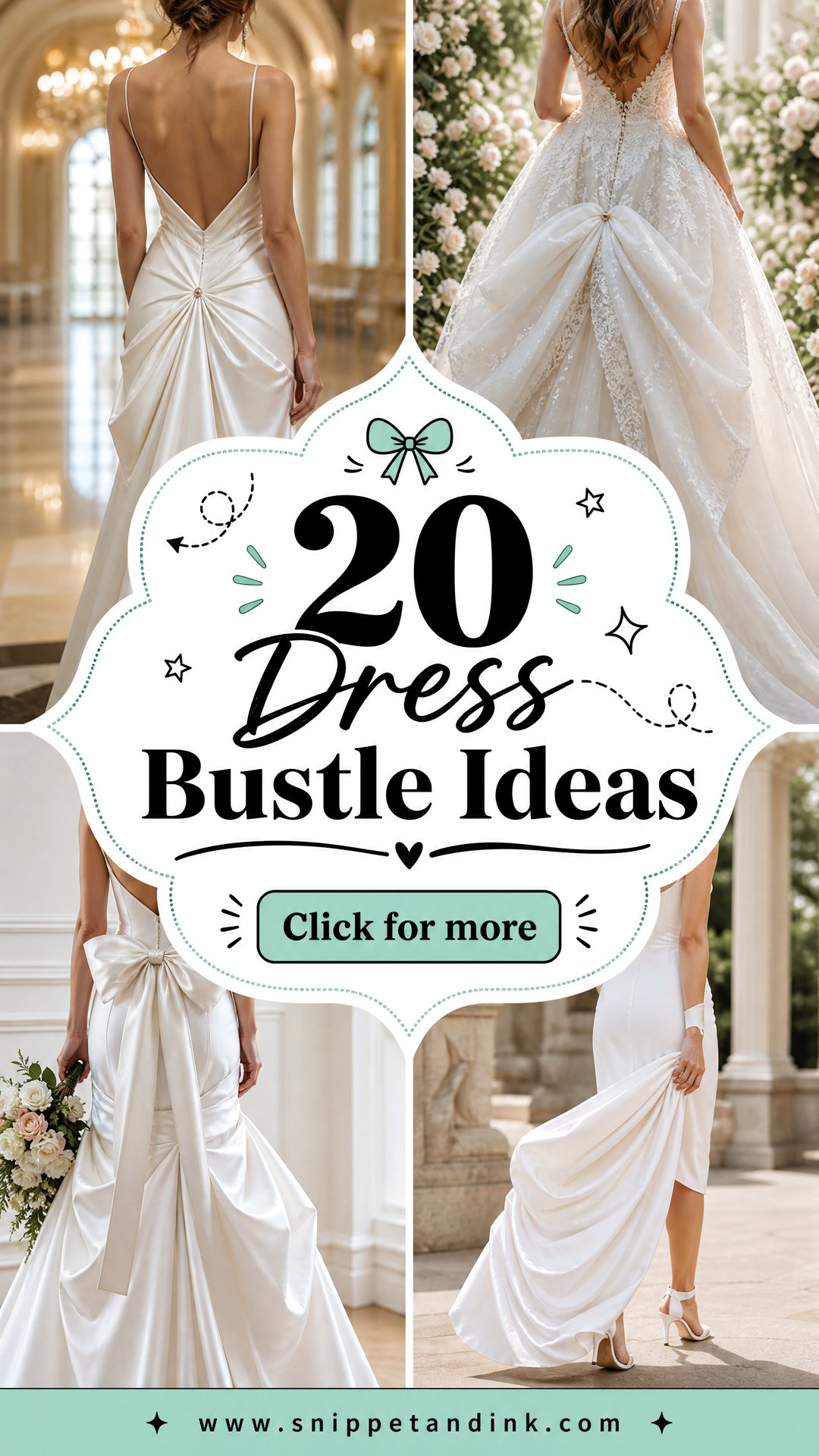
A train is wonderful for the aisle and a nuisance by the cake table. The bustle is how you keep both, and the right type depends far more on your fabric and train length than on taste. Satin shows every pull, lace has motifs that shouldn’t fold, tulle snags on hooks, and a heavy ball gown needs its weight spread across many points. The twenty bustles below are grouped from simple over-bustles to tucked and decorative styles, each with the styling I’d put with it. Whatever you pick, the seamstress has to test it on you, in your shoes, before the wedding.
Over, Under or Gone? Read the Train Before Anyone Pins It
Before I talk about styles, I pick up the train and feel it. Its weight, its fabric and what is printed or sewn on it narrow the options fast.
- Light and plain (chiffon, soft crepe, a short sweep): one or two points, or an Austrian pull. A big multi-point bustle is overkill here.
- Heavy or long (mikado, thick satin, cathedral length): several points so no single loop carries the load. Over or under both work; under hides the attachments better.
- Lace or beaded across the back: usually a French or under style, so the motifs aren’t folded into a swag.
- Fitted through the hip: keep the gathering low, at or below the flare.
- Very full ball gown: ballroom or train flip, which hide the most fabric.
Bustles are usually decided at the fitting where the hem is set, since the hem length changes where the train lifts from. If you change shoes after that, the bustle points may need moving too, so settle your heel height early.
1. American Bustle for A-Line Wedding Dress
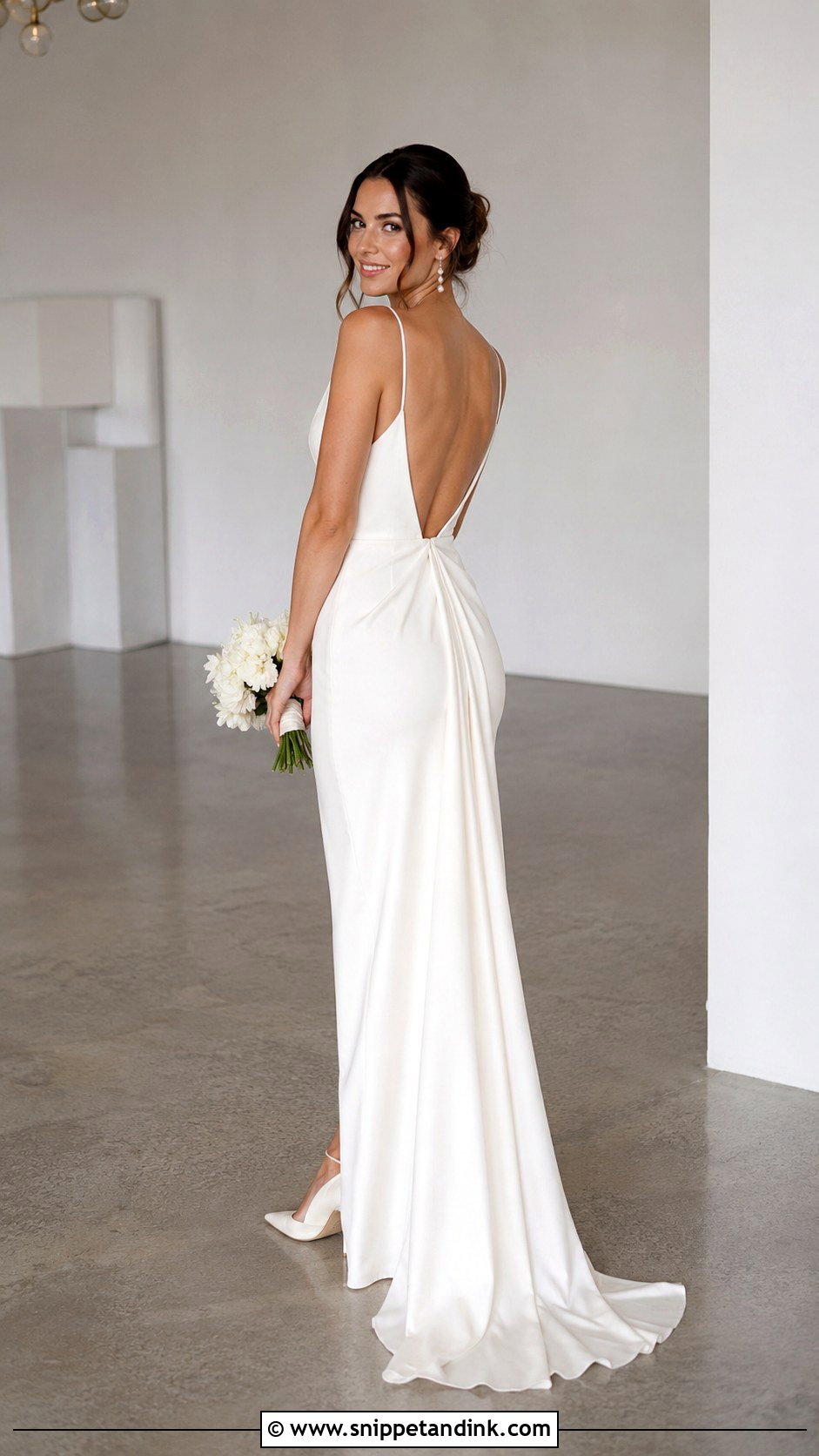
This is the bustle most seamstresses suggest first, and for an A-line it usually is the right call. The train is lifted over the skirt and fastened near the waist with covered buttons, hooks or loops, so the folds sit on top and echo the flare. One pickup point handles a chapel train; a wider train wants several. I ask for the attachments to sit inside lace appliques or beside existing buttons so they disappear. Fingertip veil and pearl studs for the ceremony, then swap the veil for a jeweled comb once the train goes up.
2. Single-Point American Bustle for Simple Wedding Dress
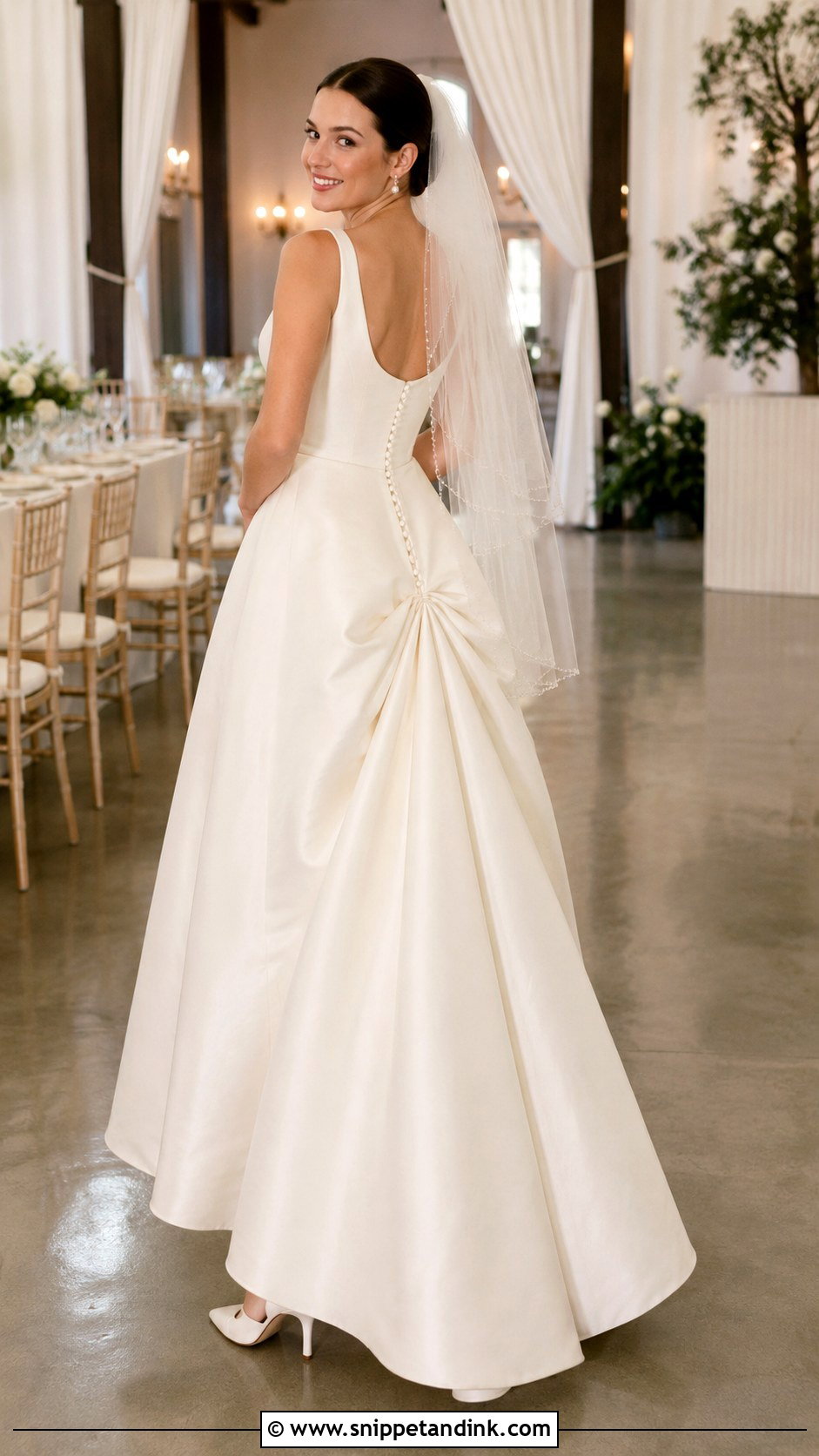
One fold, one button, one loop. A single-point American bustle lifts the center of a light sweep or chapel train and makes a single relaxed swag, which keeps a plain gown looking plain in the good sense. The risk is that every ounce of train hangs on one spot, so the button needs a reinforced backing, not just a stitch through the outer fabric. Walk, sit and turn at the fitting; if the sides of the hem dip, it needs a second point. Sleek ivory heels and a low bun keep the look modern.
3. Three-Point American Bustle for Satin Wedding Dress
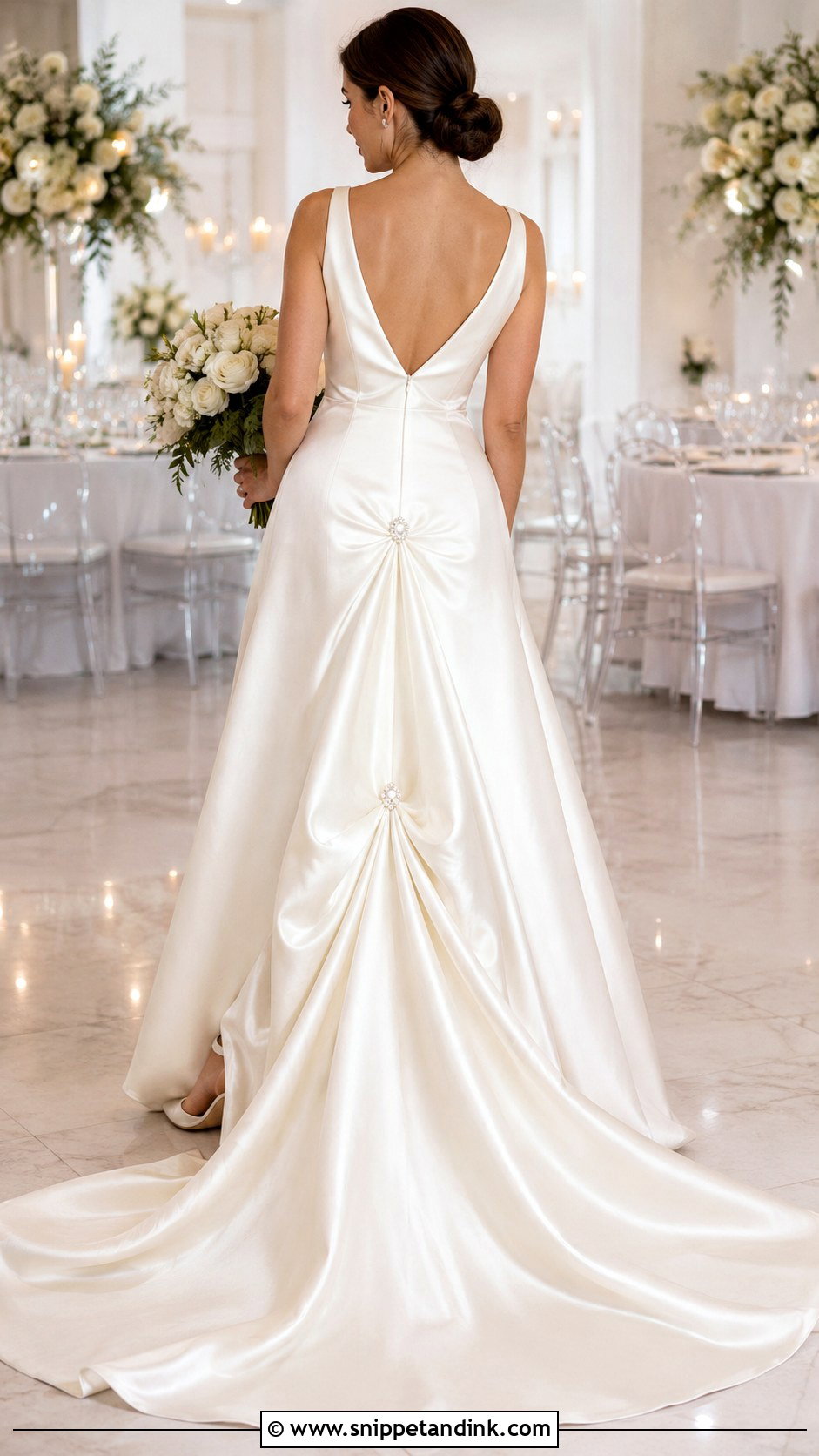
Satin is where I’d choose three points over one. The weight spreads across the back, and the folds come out fuller and more even than a single swag. Covered buttons in the dress fabric hide well on a satin fit-and-flare or structured A-line. The thing to watch is tension: satin puckers the moment one point pulls harder than the next, so look at the bustle from the back and both sides in the fitting mirror. The center seam should hang straight and the bodice shouldn’t drag down. Satin pumps, crystal studs and a sleek chignon match the polish.
4. Five-Point American Bustle for Cathedral Train Dress
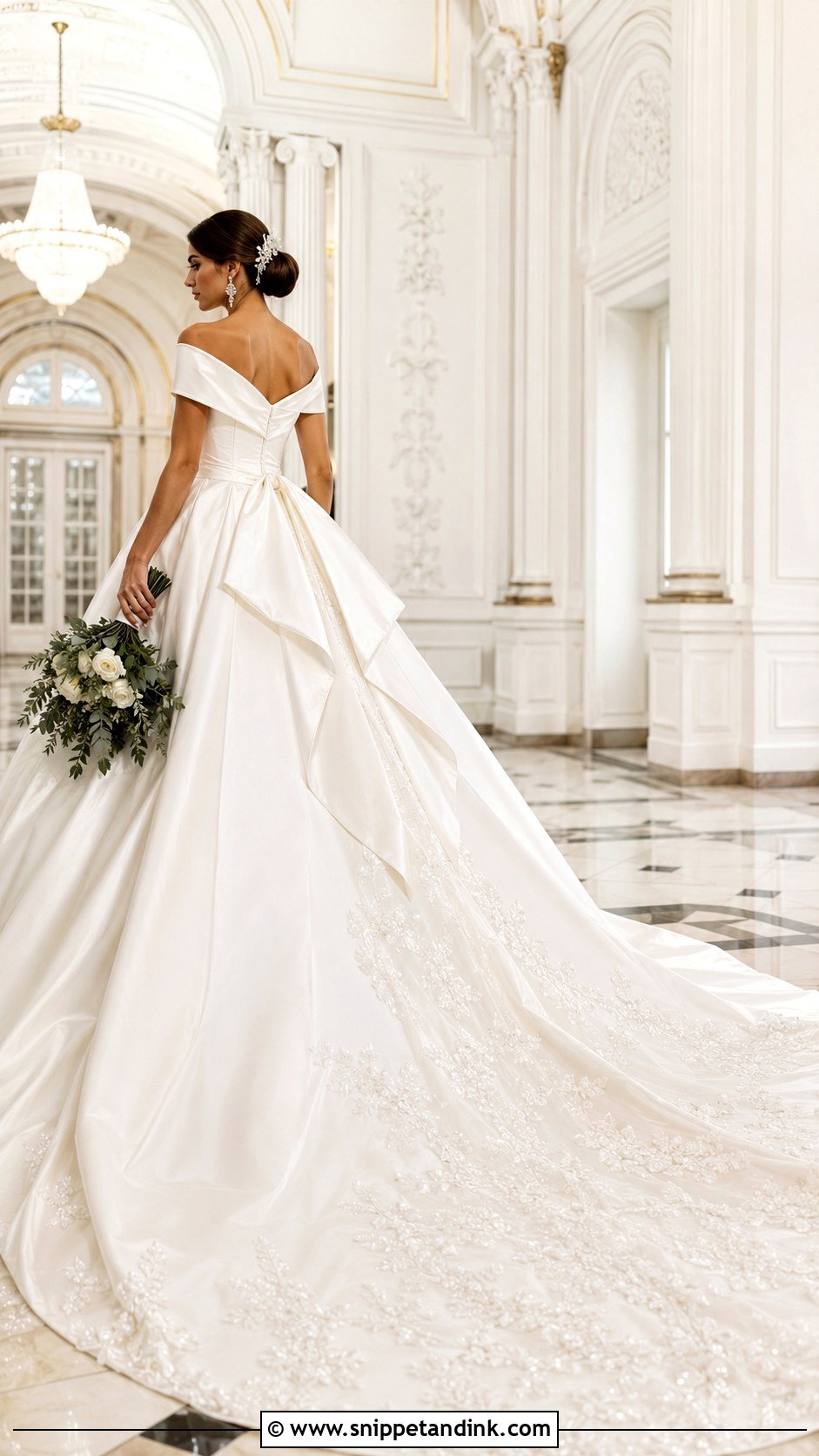
Cathedral trains are heavy, and five points is often the minimum to stop any one loop tearing. Each point should follow the seams and lace pattern of the train rather than a neat grid, or the folds look stamped on. Numbered or color-coded loops help whoever fastens it, because five similar ribbons in a dim corridor are easy to mismatch. Block heels give you footing under the extra weight. I’d photograph the finished back at the last fitting so your helper has something to compare against.
5. French Bustle for Mermaid Wedding Dress
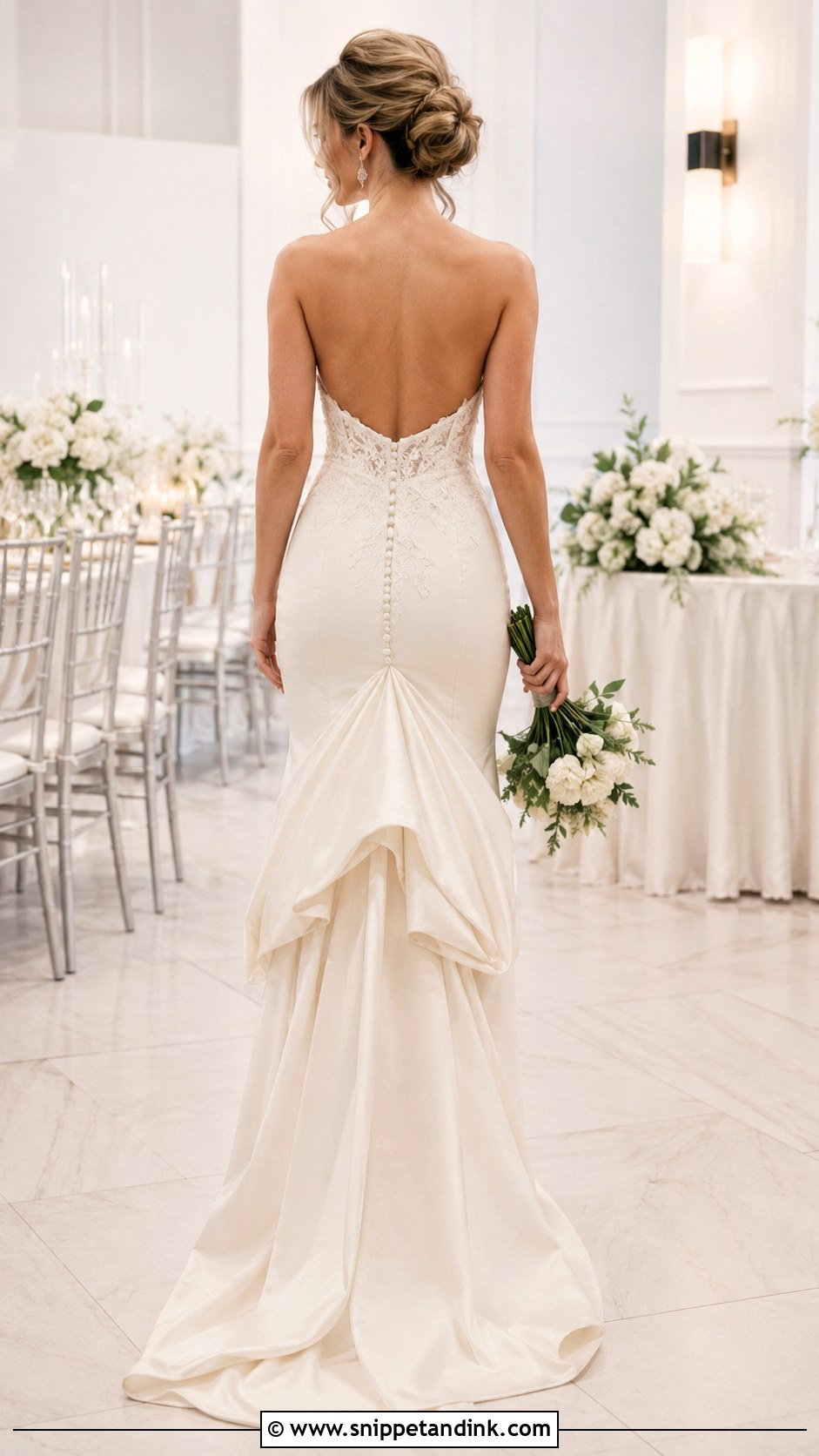
On a mermaid gown the bustle has to start below the hip, never across it. A French bustle pulls the train underneath with hidden ribbons, so the fitted seat and open back stay clean while soft folds form lower down. If it begins too high, the hip line looks lumpy in profile. Fitted dresses also leave little room for bulk, so this one depends on an experienced bridal seamstress adjusting the depth of each tie. Narrow heels, a streamlined bouquet and a side-parted updo let the back stay the focus.
6. French Bustle for Lace Wedding Dress
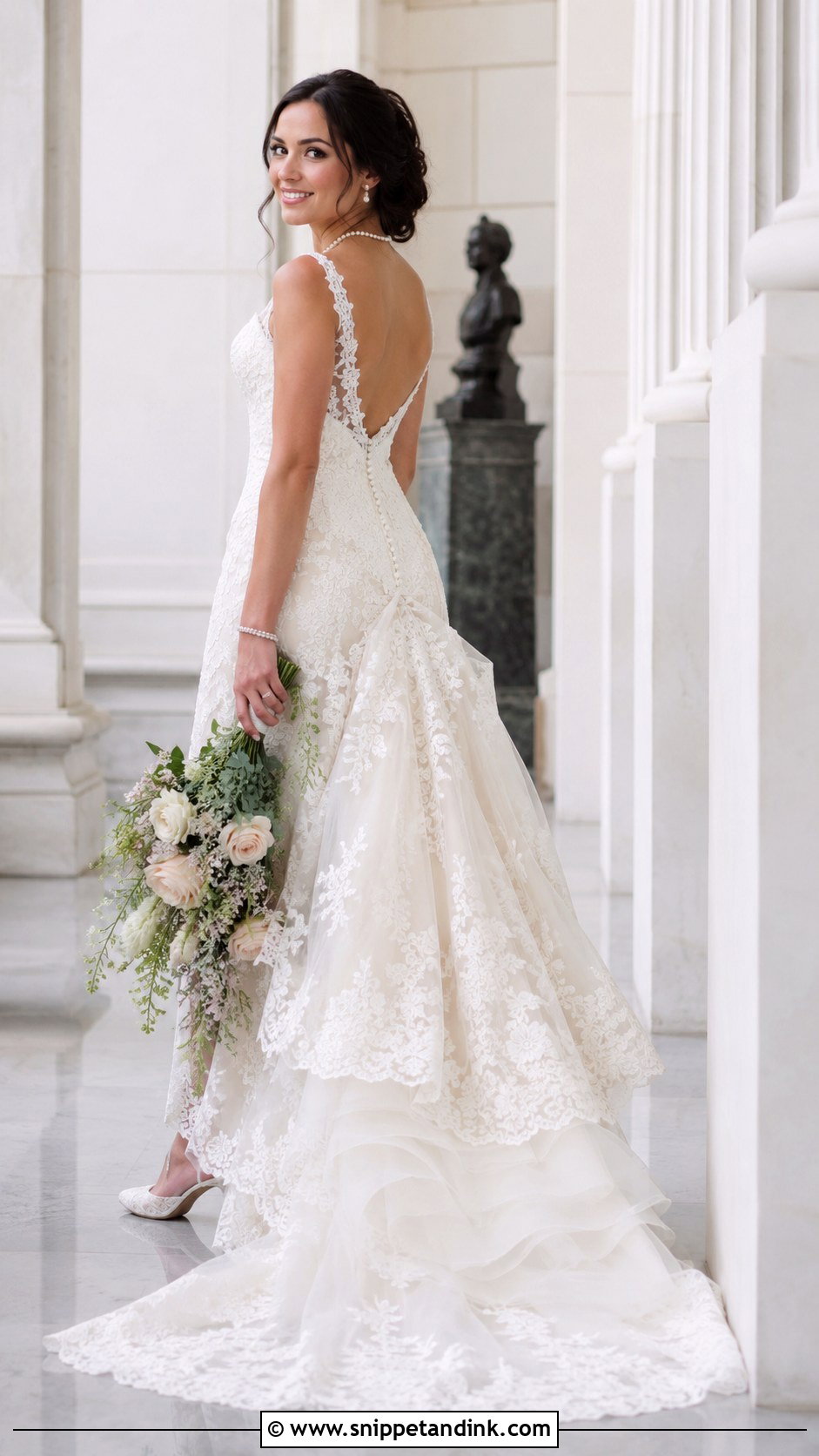
Lace patterns are the reason I like a French bustle on a lace gown: the train tucks underneath, so motifs on the upper back stay visible instead of being folded into a swag. Ask your seamstress to check the lace layer and the lining separately, because they often hang at different lengths once lifted. Ties should anchor into seams or solid motifs, never open lace, which tears under weight. Look for any big motif turned inward or a hem that dips at one side. Lace-trimmed shoes, pearl jewelry and a low textured bun suit it.
7. Multi-Point French Bustle for Heavy Wedding Dress
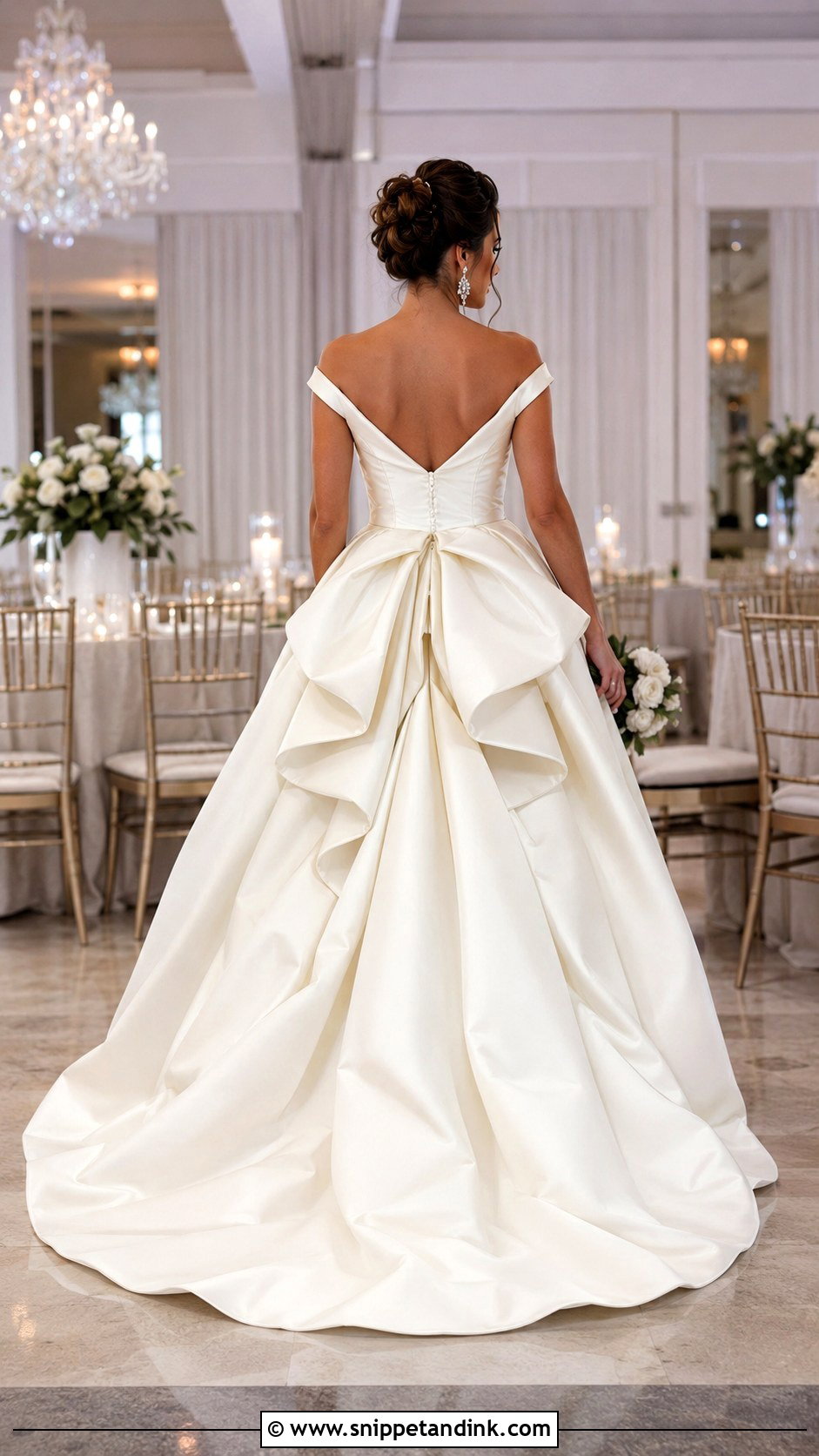
Mikado, heavy satin and layered ball gowns pull hard on any single tie, which is why a multi-point French bustle spreads the load underneath. Done well, it gives a full, controlled drape. I always ask for numbered or color-coded ribbons here, since there may be seven or more and your helper will be working fast. Practice bustling while the dress is on you, not on a hanger, and check the waist for pressure; a bustle that pulls the bodice down is tied too tight. Comfortable block heels and a smaller bouquet help with the overall weight.
8. Ballroom Bustle for Ball Gown Wedding Dress
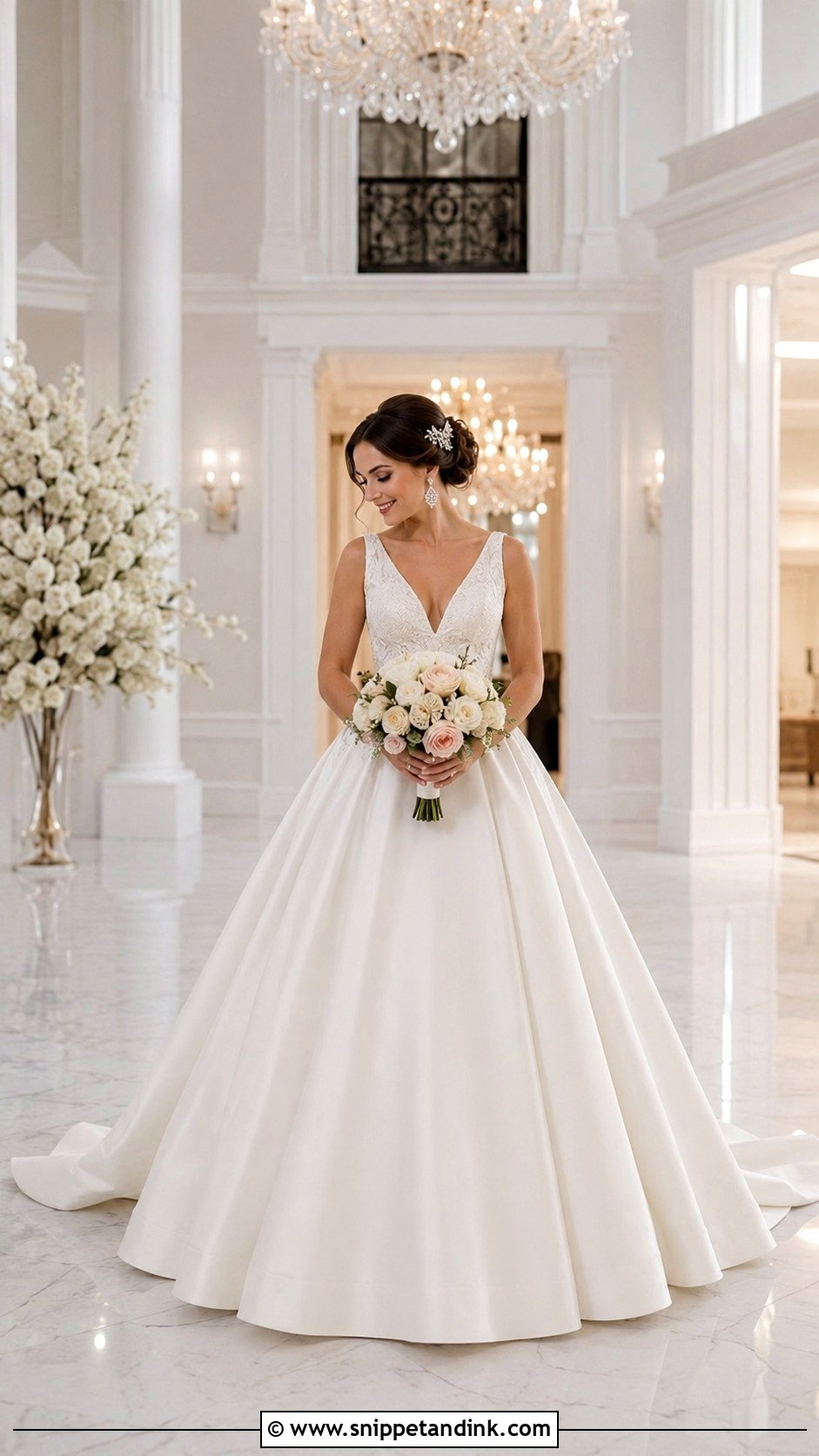
If you want the reception to look as if the gown never had a train, a ballroom bustle does that. The train is secured underneath at several points, and the volume of a full ball gown hides the tucked fabric. It does require many fastenings, so mark every loop and its partner. I have brides walk across both carpet and hard floor at the fitting, because a hem that looks level on carpet can show the shoes on a smooth dance floor. Supportive block heels and a tiara or comb in place of the long veil finish the reception look.
9. Ballroom Bustle for Minimal Satin Dress
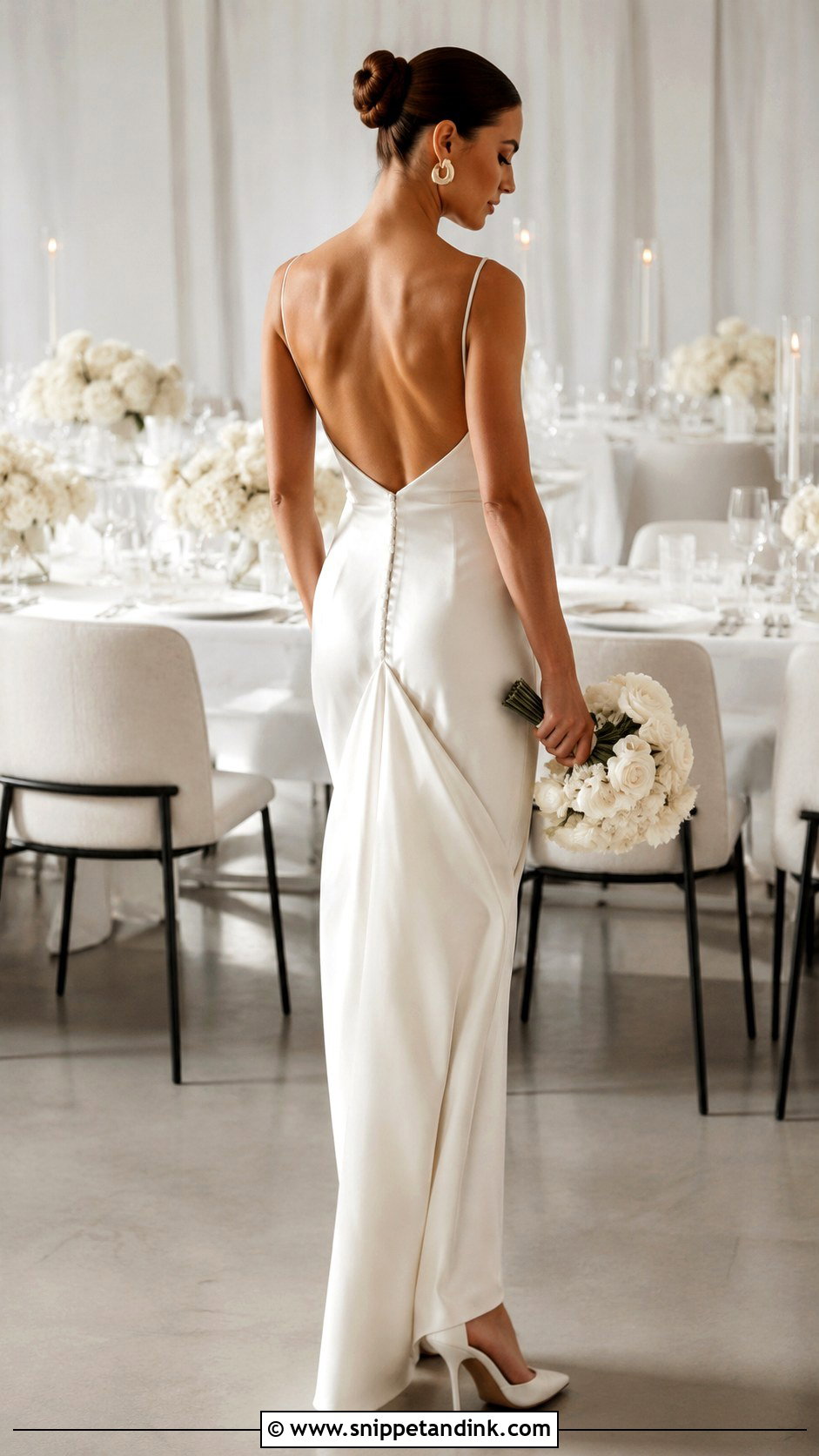
A minimal satin gown has nowhere to hide a bad fold, which makes the ballroom bustle both the best option and the trickiest. The train folds under so the outside stays one smooth, floor-length shape, but every hidden tie needs matching tension or the hem ripples. I view it in daylight and take phone photos from several angles, because a slight ripple is easier to see on a screen than in a mirror. Sit down in it too; a bunched underlayer shows as a bump on the seat. Pointed satin pumps and a sleek bun keep the restraint going.
10. Train Flip Bustle for Full Skirt Dress
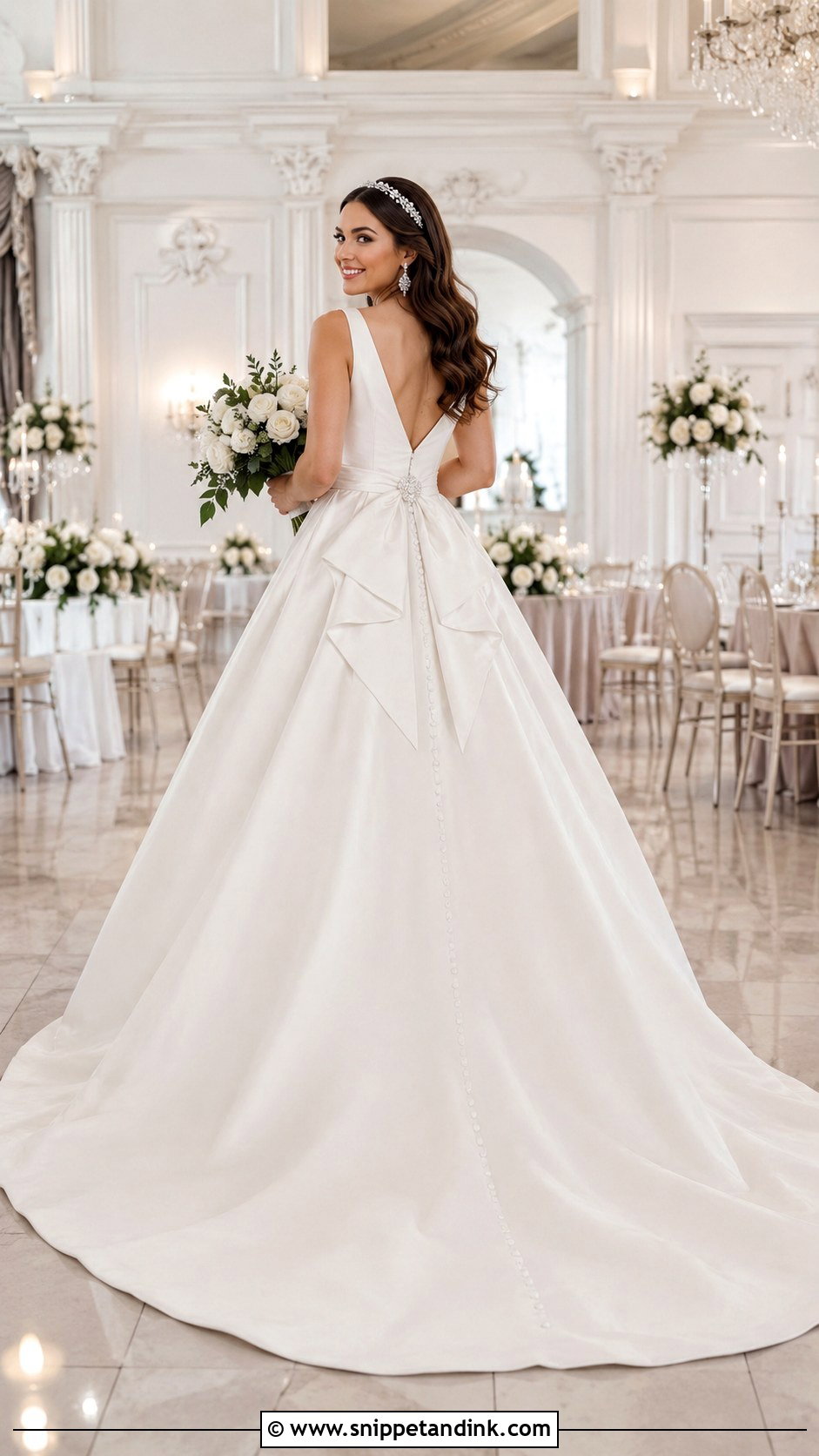
The train flip is the trick for structured ball gowns: the train turns under and is secured inside, so the skirt looks round and trainless. It only works when there is enough skirt volume to absorb the extra fabric. The flipped train must be spread evenly; bunched in one place it makes a hump at the back. Check the side profile, since this style can shorten the back hem more than expected. Embellished block heels and a jeweled headband once the veil comes off make a fresh second look.
11. Austrian Bustle for Chiffon Wedding Dress
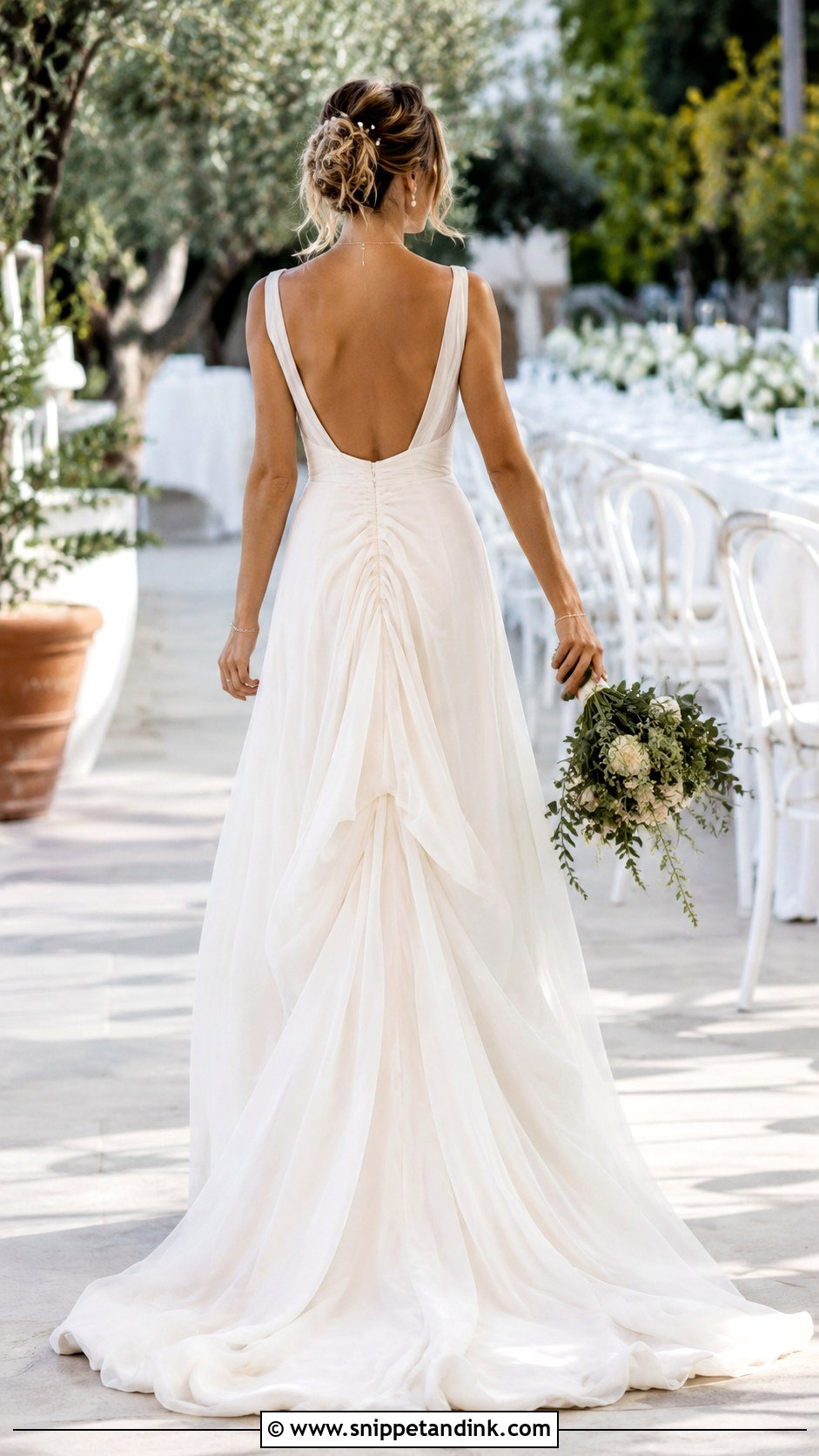
Chiffon gathers into the vertical ruching of an Austrian bustle better than almost any fabric. Cords sewn inside the center back draw the train upward, so you get fine ripples rather than wide swags. On a sheer fabric the cords must match the dress and sit behind the lining, or they show through. I try two or three heights during fittings; a low pull looks relaxed, a high pull gives obvious ruching and volume. Low heels, fine jewelry and a loose updo suit an airy A-line or empire waist.
12. Bow Bustle for Sash Wedding Dress
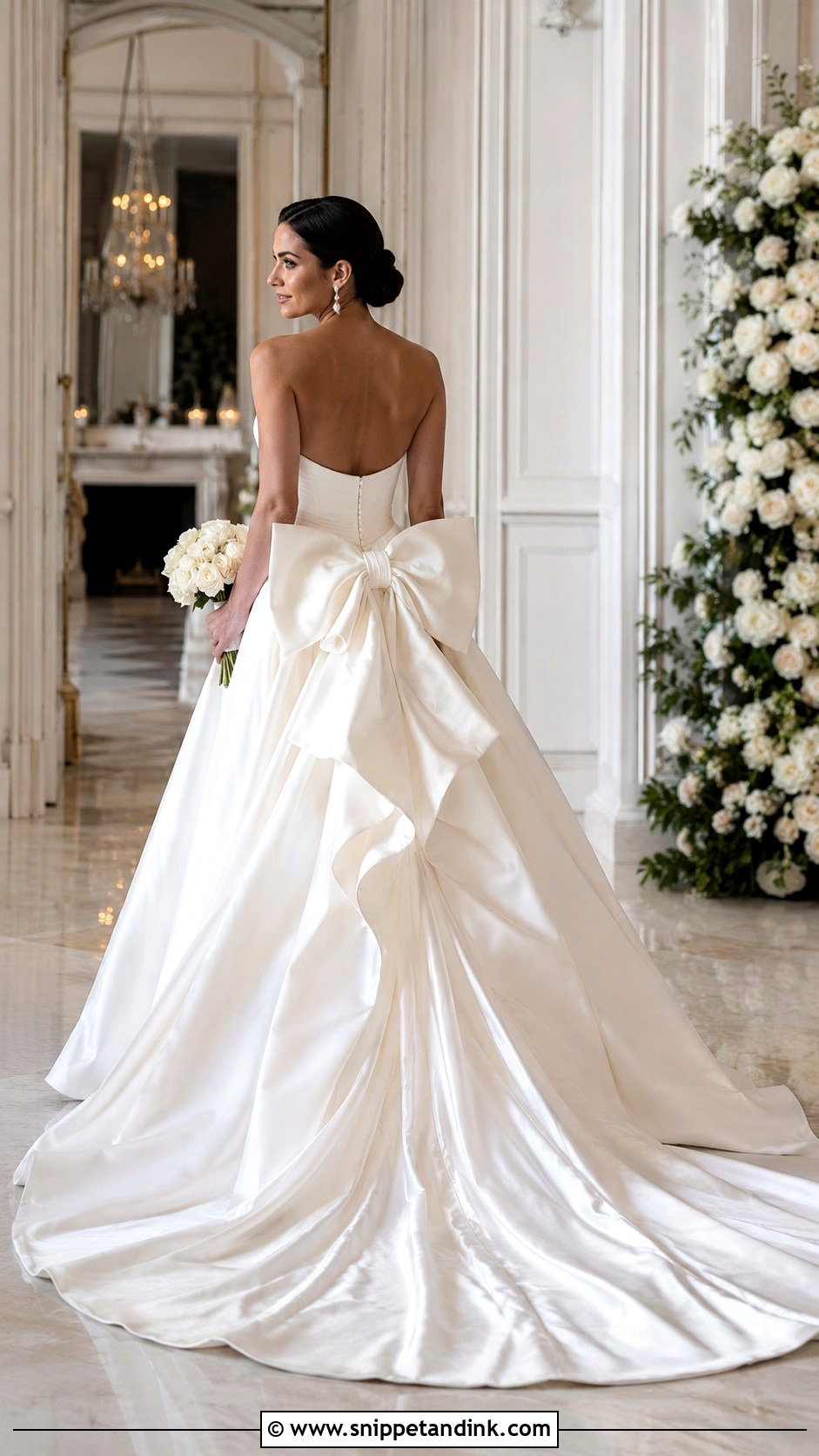
Here the bow does the work of hiding the hooks. The train is lifted and fastened beneath or around a statement bow at the back waist, and the fabric falls evenly from it. It suits an A-line with a sash or structured waist detail. The bow itself shouldn’t carry the train’s weight; ask for the attachment points to be reinforced separately behind it. After walking and sitting, check the bow is still centered, because a heavy train tends to tilt it. Pearl drops and a smooth bun keep attention on the back.
13. Royal Bustle for Cathedral Train Dress
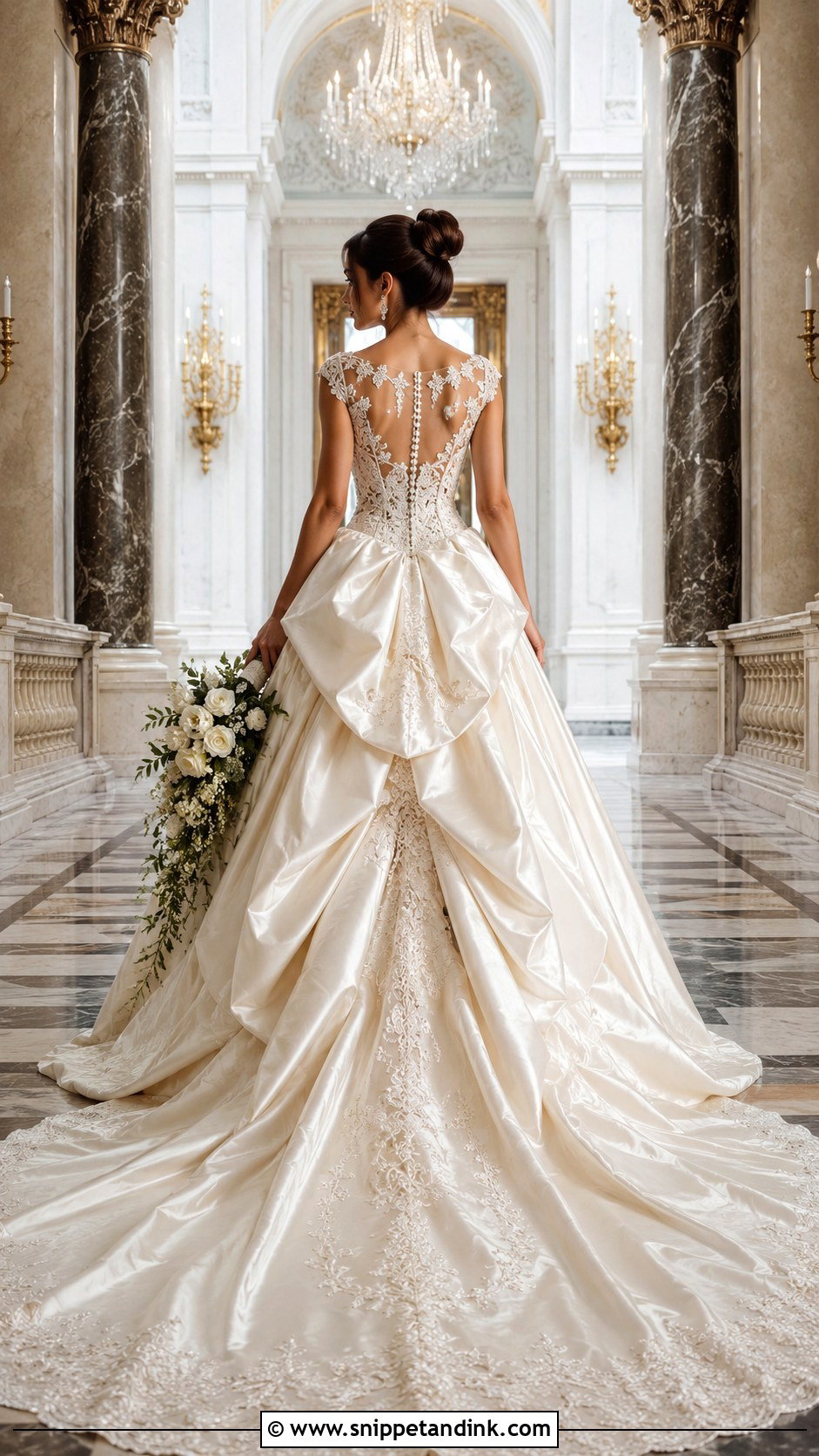
A royal bustle is the most sculptural option in this list, and the most complicated to fasten. Pickup points go both vertically and horizontally across a cathedral train, lifting it into tiered folds suited to ornate lace or a formal ball gown. Label every loop discreetly and have your helper practice the exact order, ideally twice. When it’s done right, the folds are evenly spaced; when it’s rushed, they crowd at the center back. Chandelier earrings and supportive heels balance the drama.
14. Victorian Bustle for Layered Wedding Dress
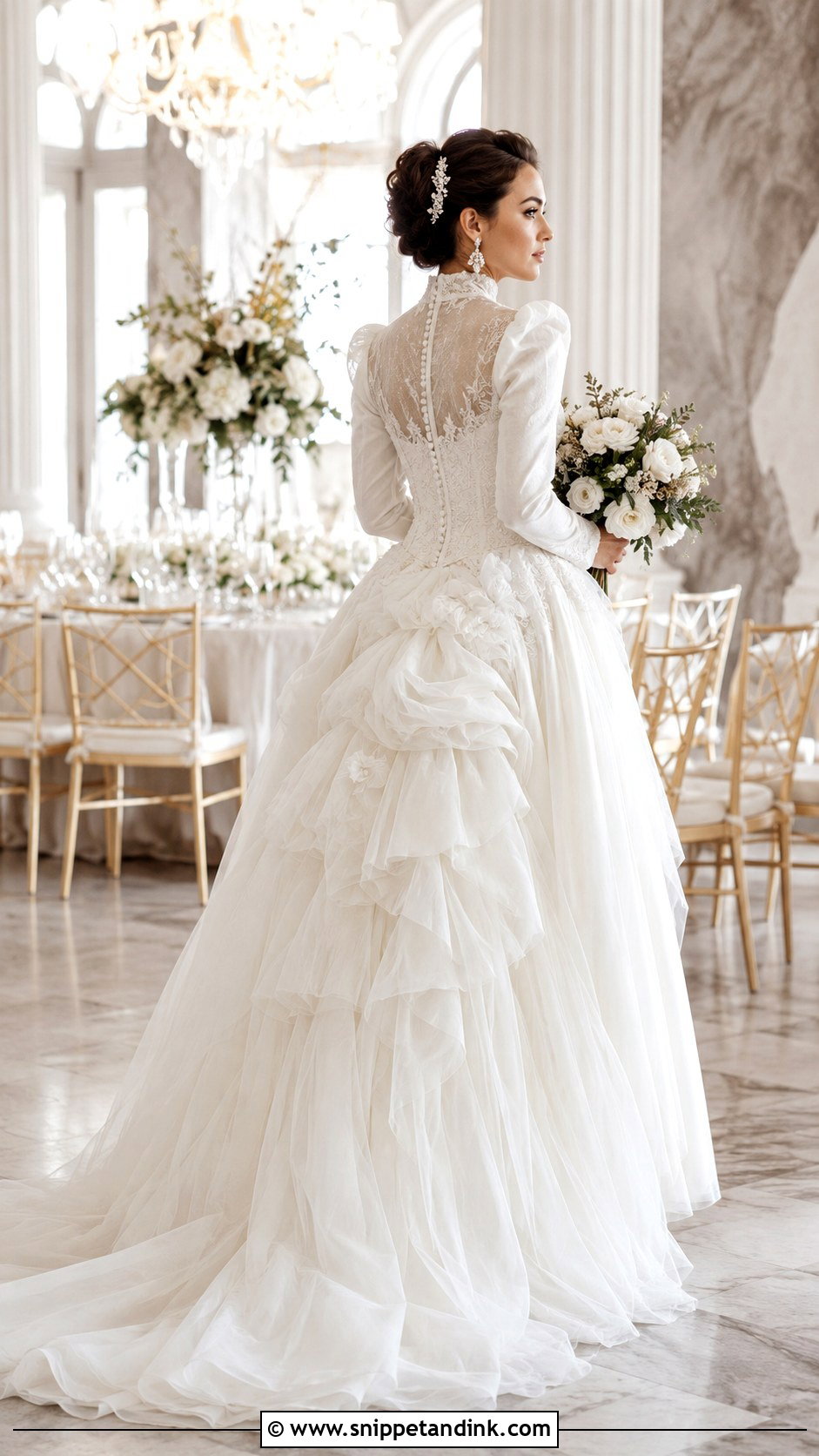
Layered tulle, organza or lace can turn a Victorian bustle into a feature rather than a fix. Several hidden points lift sections of the train into deep, dimensional folds, so the reception back looks as detailed as the ceremony one. The question I put to the seamstress is whether each layer should be attached separately. Separate attachments drape better but take longer to fasten. Dance in it at the fitting, since loose layers can drop and catch under a heel. Closed-toe heels and a decorative comb suit the vintage feel.
15. Waterfall Bustle for Tulle Wedding Dress
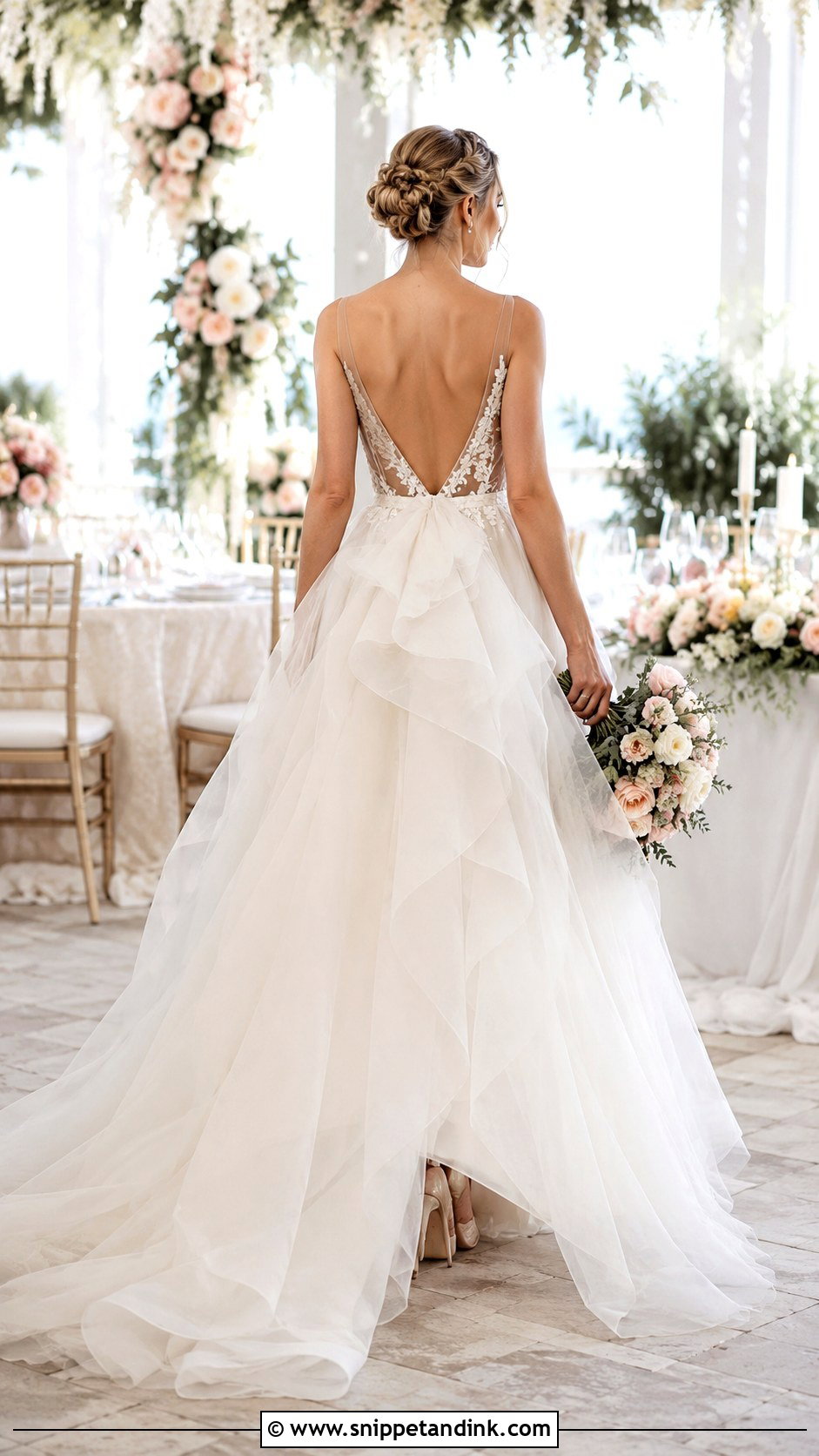
Tulle and hooks don’t mix: netting catches on anything with an edge. For a waterfall bustle, pickup points sit at slightly staggered heights so the train falls in overlapping cascades, and the loops and buttons need to be tucked between layers where they won’t snag. Too much tulle at one point looks bulky and strains the net. After fastening, fluff and separate each layer by hand; that last step is what makes the cascade show. Delicate heels and a braided updo keep it romantic.
16. Low Bustle for Fit-and-Flare Wedding Dress
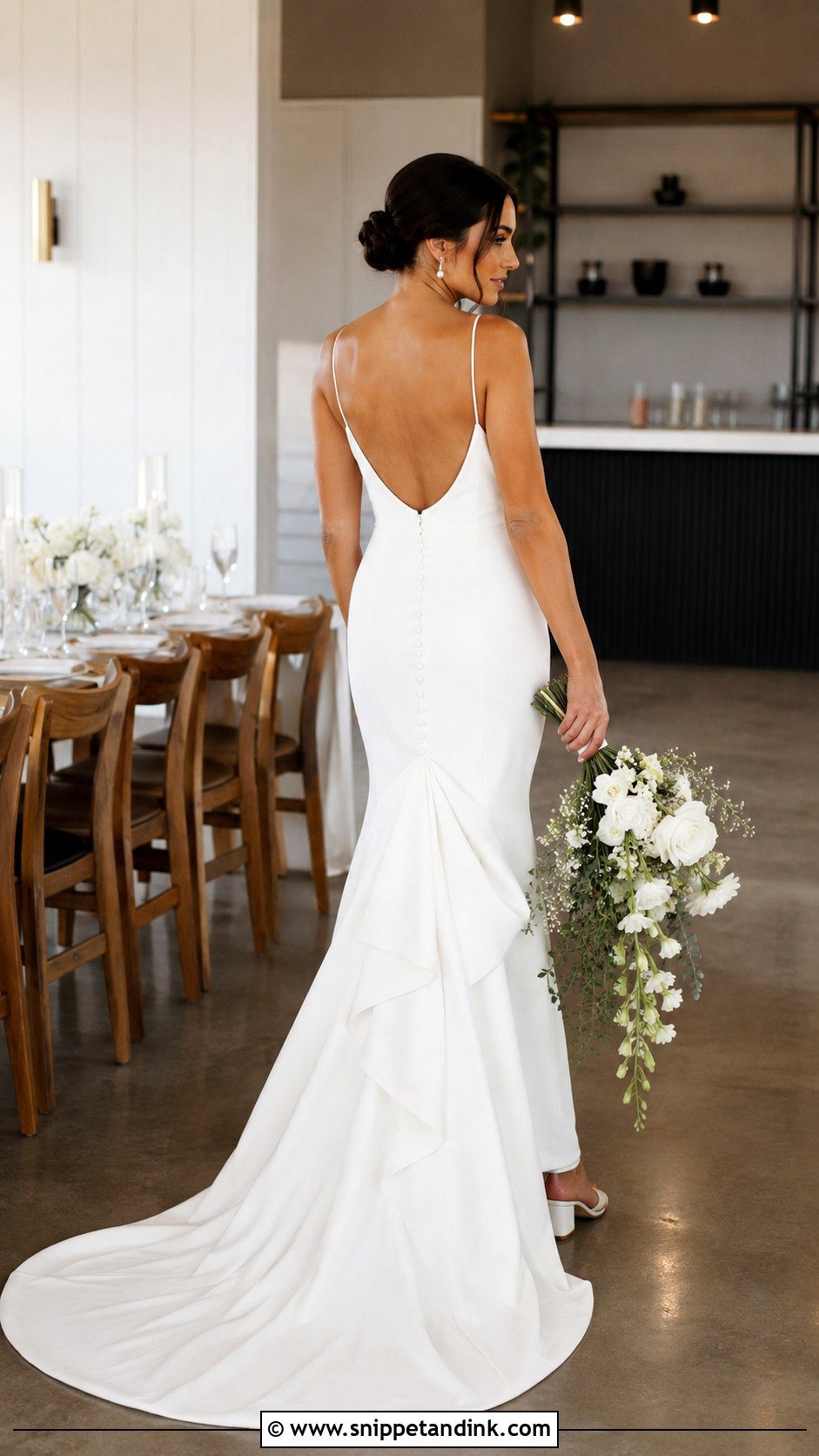
Height is everything on a fit-and-flare. Keep the gathering low, starting near the flare rather than the fitted seat, or the bustle breaks the body-skimming line. Depending on the fabric, the train can go over or tuck beneath the lower skirt. I always ask for test pinning at two or three heights before anything is sewn. Walk, turn and sit to make sure the folds don’t restrict your stride at the knee. Narrow block heels, a shoulder-length veil and a low chignon suit the shape.
17. Hidden Under Bustle for Crepe Wedding Dress
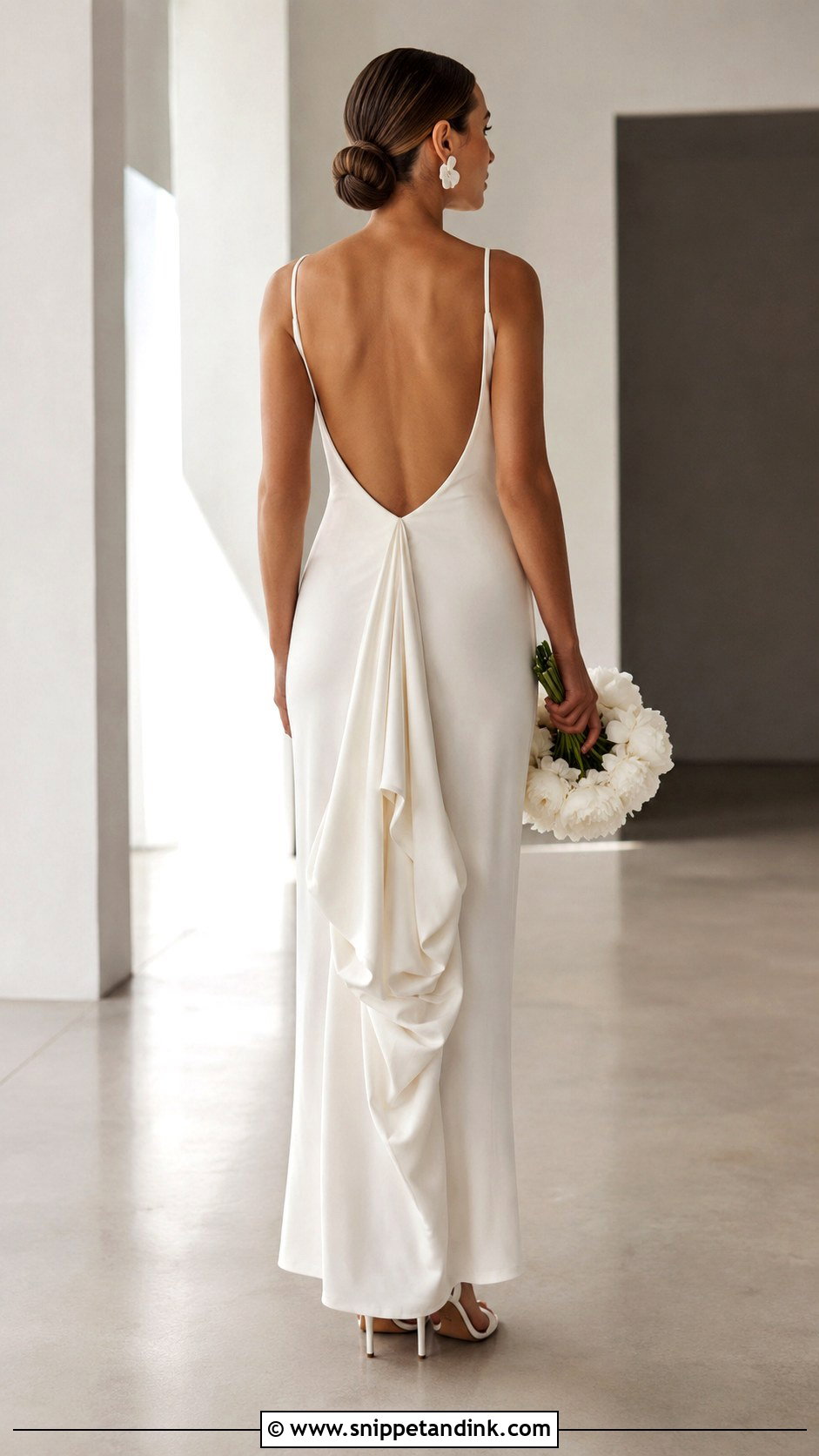
Crepe falls in clean vertical lines and shows anything bulky underneath, so the bustle has to stay invisible. A hidden under bustle lifts the train from inside the skirt and keeps loops and gathers off the smooth exterior, which suits a sheath or column with a short to medium train. Ask for low-profile attachments on reinforced seams and no thick knots. Then look at the side view; an uneven bump at the back of the knee is the usual giveaway. Sleek heels and a low bun keep it modern.
18. Asymmetrical Bustle for Draped Wedding Dress
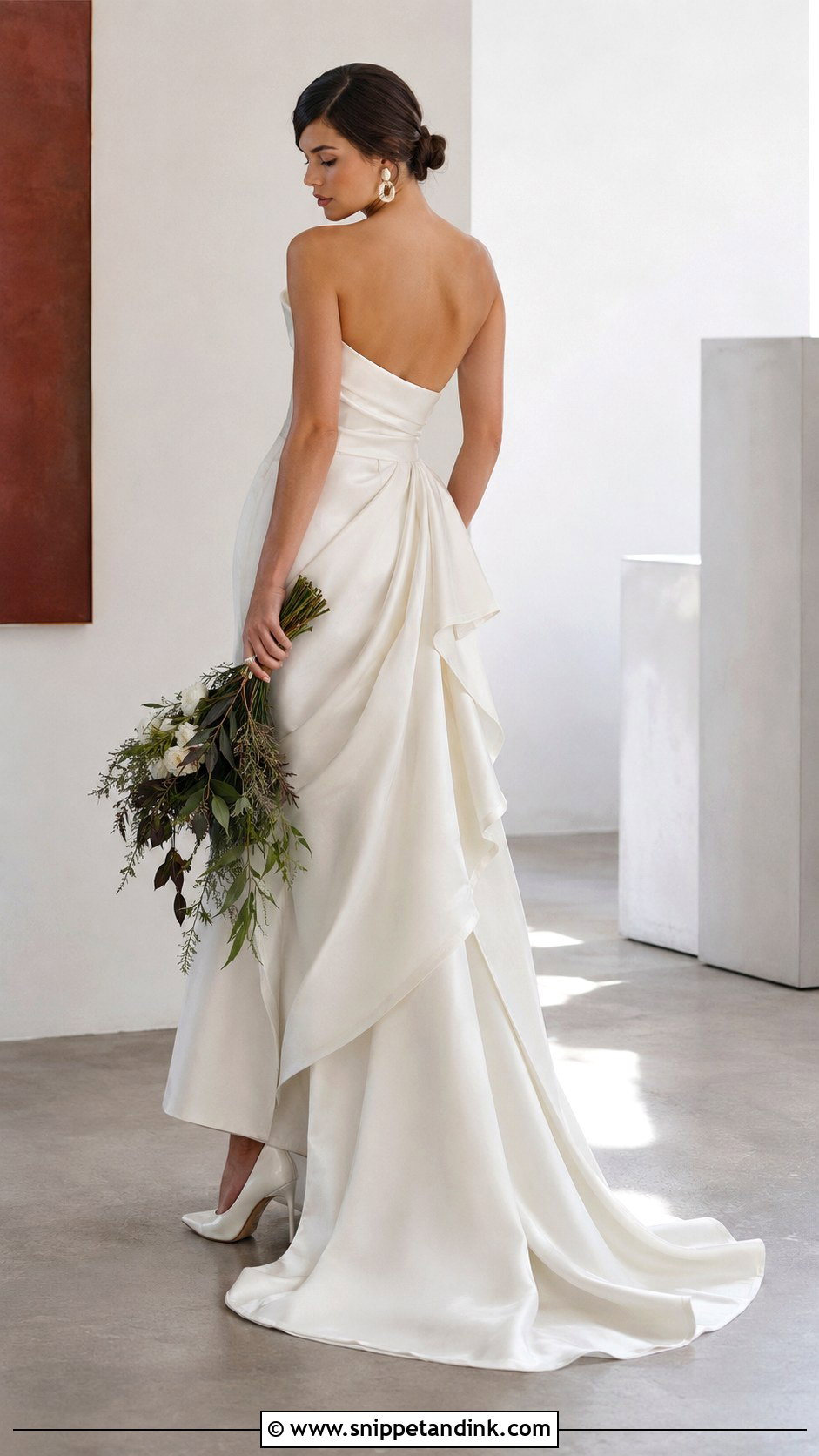
When a gown has diagonal pleating or an offset train, a centered bustle fights the design. An asymmetrical bustle lets custom pickup points follow the direction the fabric already runs, so the reception look still belongs to the dress. It needs careful fitting, because uneven placement can unbalance the hem. I ask the seamstress to pin two or three versions and photograph each before sewing. The finished bustle should look deliberately angled with every part of the train clear of the floor. Minimal heels and a side-parted bun suit the modern shape.
19. Wrist Loop Bustle for Short Train Dress
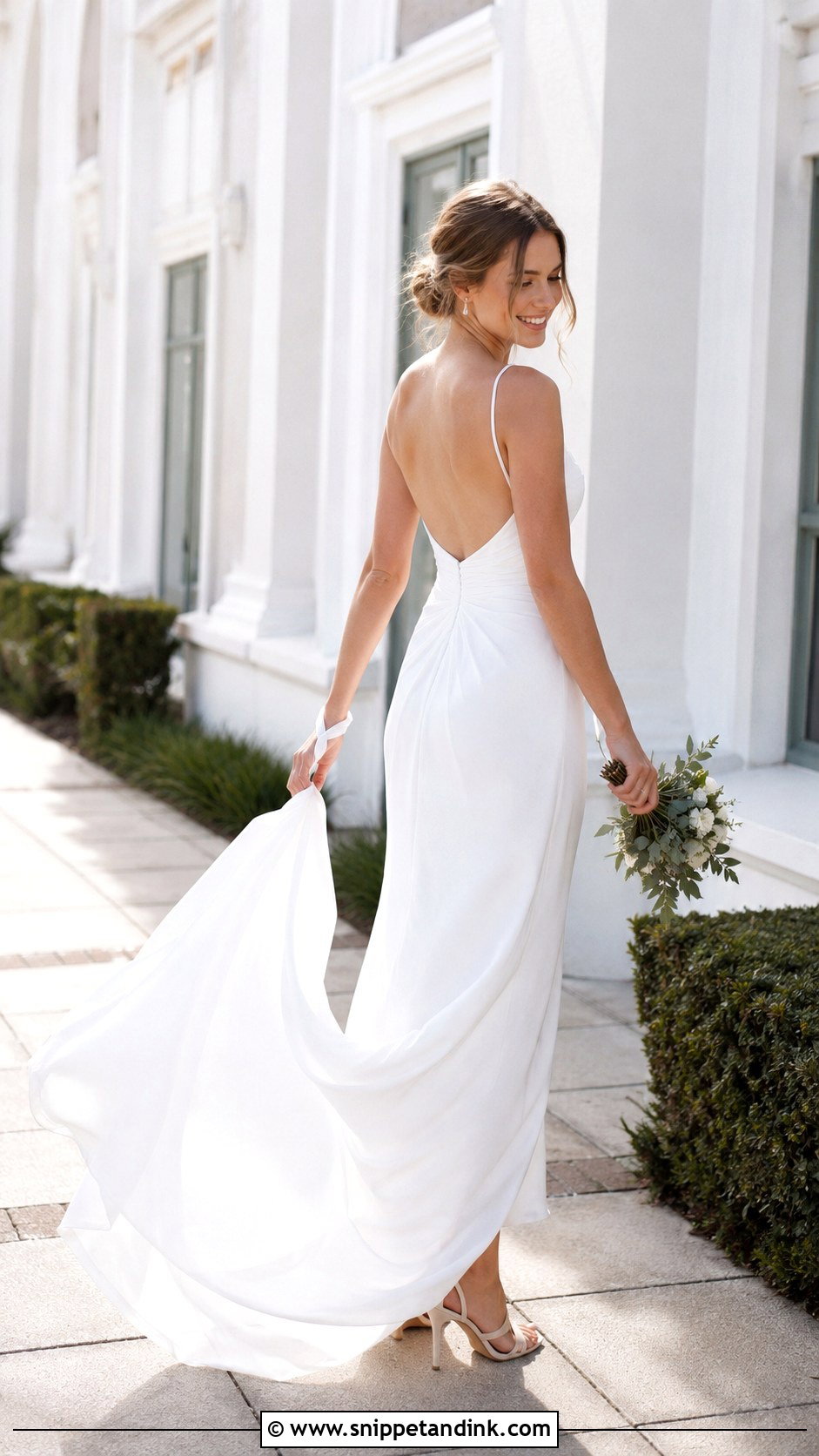
A wrist loop is a stopgap rather than a true bustle. A small loop is fixed to a reinforced spot under a light sweep or court train and slipped over your wrist when you need to move. It suits chiffon, soft tulle, organza or light crepe. The downside is that it takes up one hand, which gets tiring and doesn’t work for a full evening of dancing. I see it used best for walking between locations and for photos. Make sure it isn’t the hanger loop, which isn’t built for that pull, and have the seamstress place it.
20. Detachable Train Alternative to a Dress Bustle
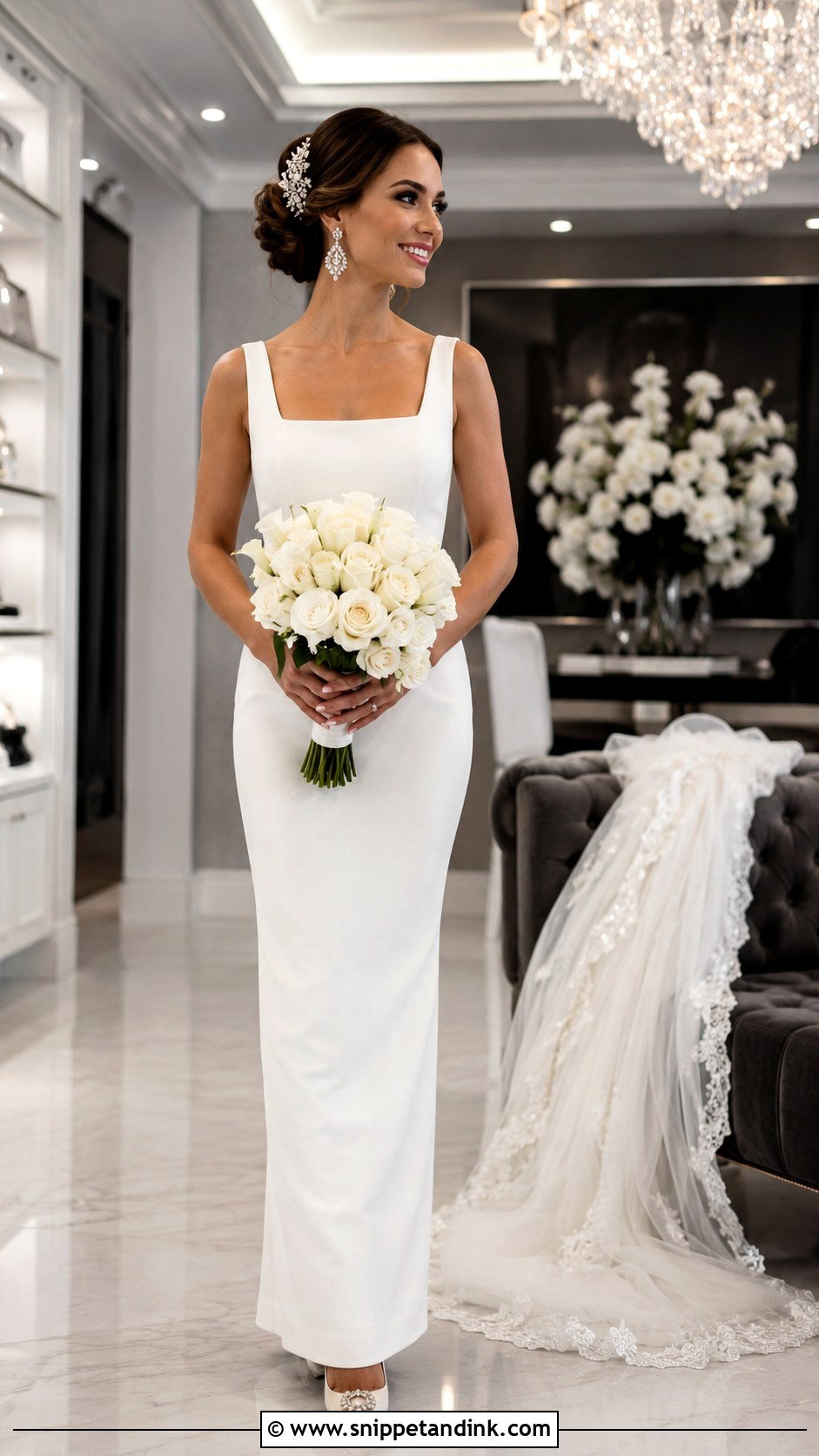
A detachable train skips the bustle question entirely. It clips on with hidden hooks, buttons or a removable overskirt and comes off after the formal photos, leaving a clean floor-length or tea-length hem. The base dress needs to be hemmed with your actual shoes, and the attachment line should vanish once the train is off. I’d change earrings or add a hair piece for the reception so the switch feels intentional. Bring a garment bag for the train so it doesn’t end up on a chair in a busy room.
The Helper, the Corridor and What to Do When a Loop Snaps
The bustle usually goes up right after portraits, often in a hallway with poor light and a coordinator hurrying everyone toward the entrance. Plan for that, not for the calm of the fitting room.
Teach one person, not three
Bring one helper to the final fitting and have the seamstress walk her through it while you wear the dress. Let her do it twice herself. She should film it on her own phone, back view, slowly. A maid of honor and a mother each half-remembering the order is how a dress ends up fastened button three to loop five.
Small fixes that save the evening
- Pack two or three large safety pins in the bridal emergency kit. If a loop tears, pin the train underneath at that point; nobody will see it on the dance floor.
- Carry a needle already threaded in the dress color.
- A matching ribbon length can stand in for a broken tie on a French bustle.
- If the bustle is uncomfortable after an hour, it is usually one point pulling harder than the rest. Loosen that tie rather than undoing the whole thing.
Shoes On, Phone Recording, One Last Dance at the Fitting
The right bustle starts with your gown’s shape, fabric, train and decoration. American bustles sit the folds on top, while French and ballroom styles tuck the train underneath for a cleaner hem. Bow, Austrian, royal, and custom arrangements add character when the construction supports them. Whichever you choose, it needs a professional to sew the attachments and level the hem. Bring your wedding shoes to every fitting, film the bustling at the last one, and dance a few steps in it before you take the dress home.
You'll Like These Ideas:


Leave a Reply