
Most brides I dress end up needing far more outfits than the gown. Engagement photos, a shower, the bachelorette, a welcome party, the rehearsal dinner, maybe a courthouse ceremony, an after-party and a farewell brunch all come with their own venue and dress code. Building a wedding wardrobe for all of that is easier when each dress has one job. White and ivory still carry the bridal signal, but texture, silhouette, a soft print or a hint of color keeps the looks from blurring together. And comfort counts more than people expect, because these events involve walking, sitting through dinner and dancing. Here are 20 dresses, lace midis to satin minis, with what I’d check before buying each one.
Mapping the Events Before Buying a Single Dress
When a bride brings me her calendar, the first thing I do is list every event with three notes beside it: indoor or outdoor, day or night, and how long she’ll be on her feet. That list usually shows two or three events that can share a dress with a change of shoes and jewelry, and one or two that really need something new.
Buy for the most formal event first, then work down. A dress that suits the rehearsal dinner often works for an engagement dinner too, while the bachelorette and after-party look rarely crosses over to anything else. Order early enough to leave room for returns and alterations; a hem or a strap adjustment can take a week or two at a busy tailor, longer in peak season.
I also build a small shared kit that travels between every event, so each new dress isn’t a fresh shopping trip. It saves money and makes the photos from the whole week look like they belong together.
- One pair of comfortable nude or ivory block heels for daytime and one dressier pair for evenings.
- Pearl studs plus a single statement earring pair, which covers almost every neckline here.
- A cropped jacket or blazer in ivory for cold restaurants and evening terraces.
- Skin-tone underwear in two or three styles, including one strapless bra that you’ve already tested.
1. White Satin Bridal Event Dress
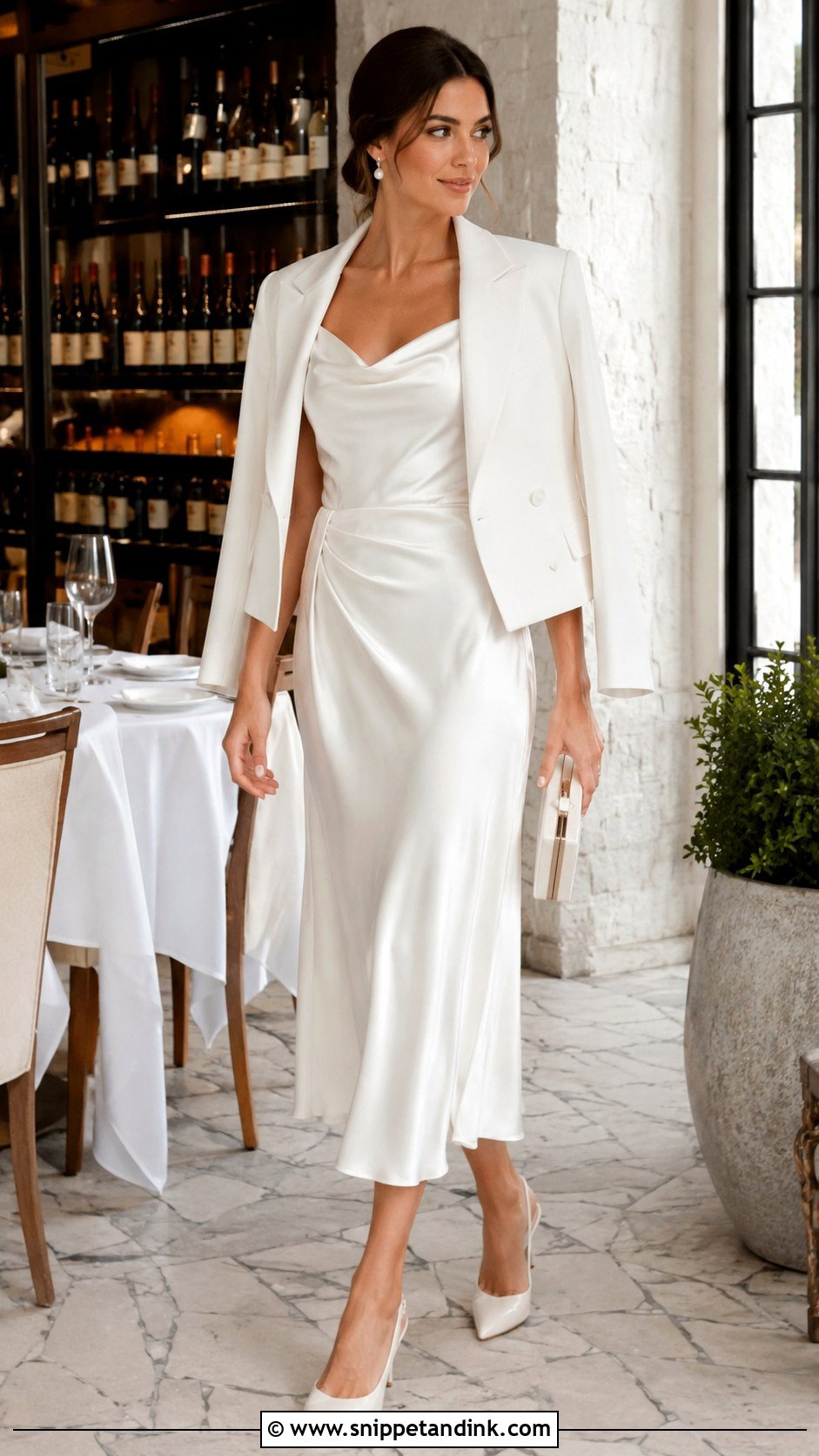
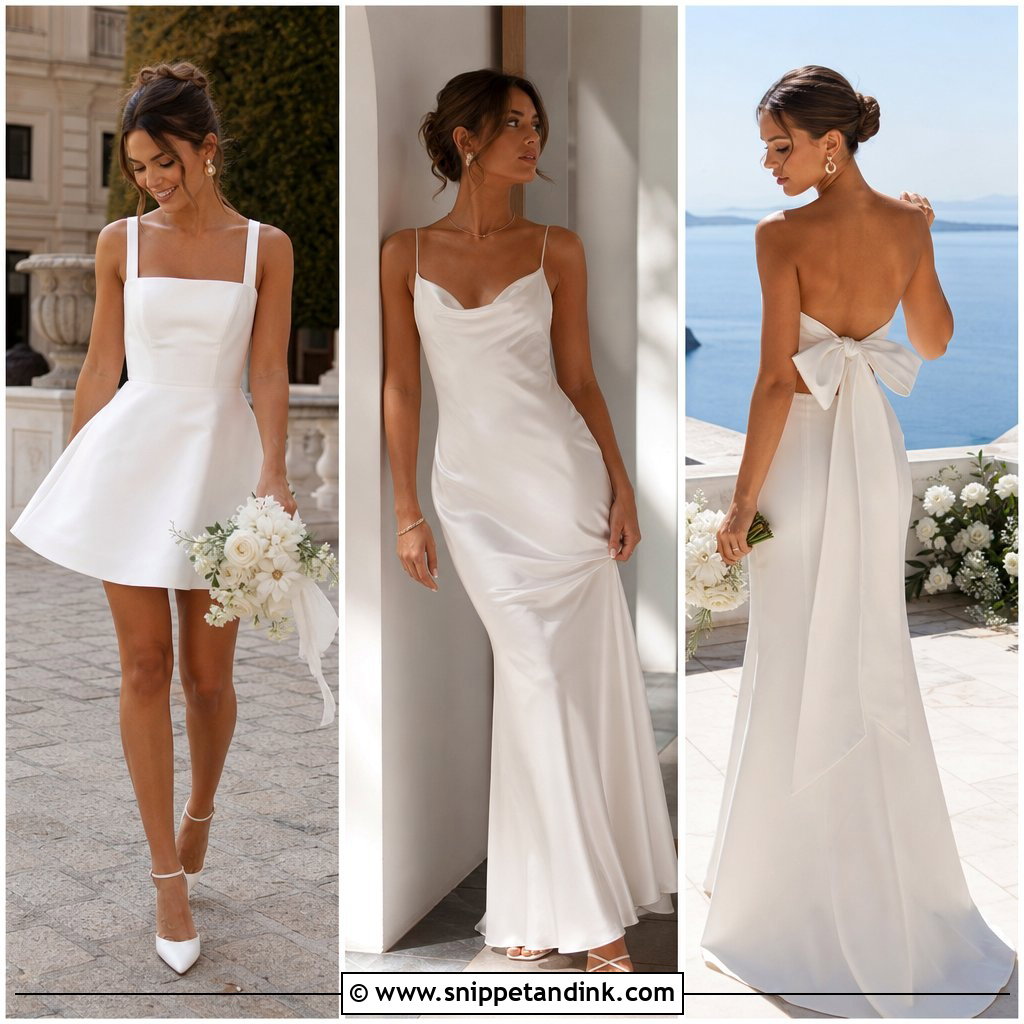
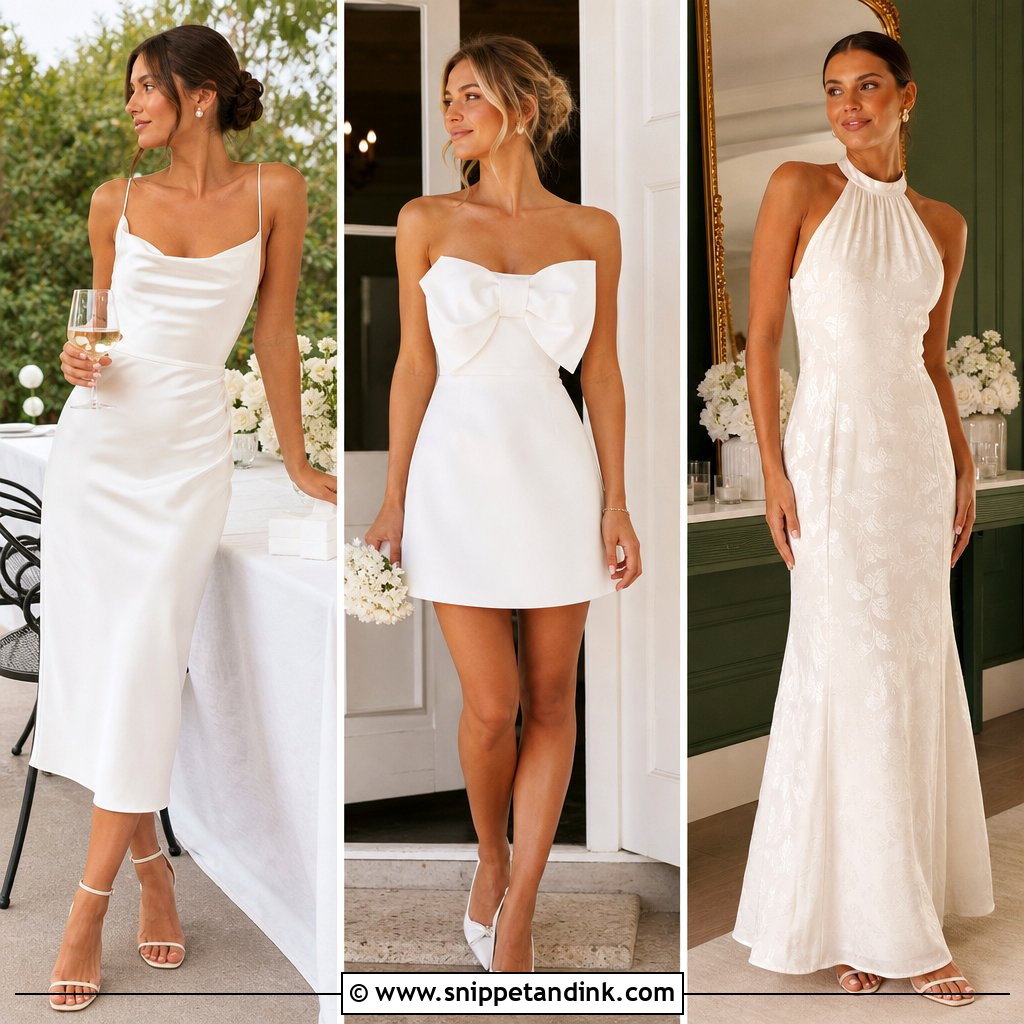
The satin slip is the dress I reach for when a bride wants something clean and grown-up for an engagement dinner or welcome drinks. A midi length and a soft cowl neckline do most of the work; adjustable straps make the fit easy to fine-tune. Satin shows every line underneath, and that is its one real drawback. I always have brides try it with their planned underwear under bright light, and switch to no-show pieces or light shapewear if needed. Petite brides should keep the hem just below the knee so the dress doesn’t swallow them. Pearl drops, slingbacks and a cropped blazer for an over-chilled restaurant finish it.
2. White Lace Bridal Event Dress
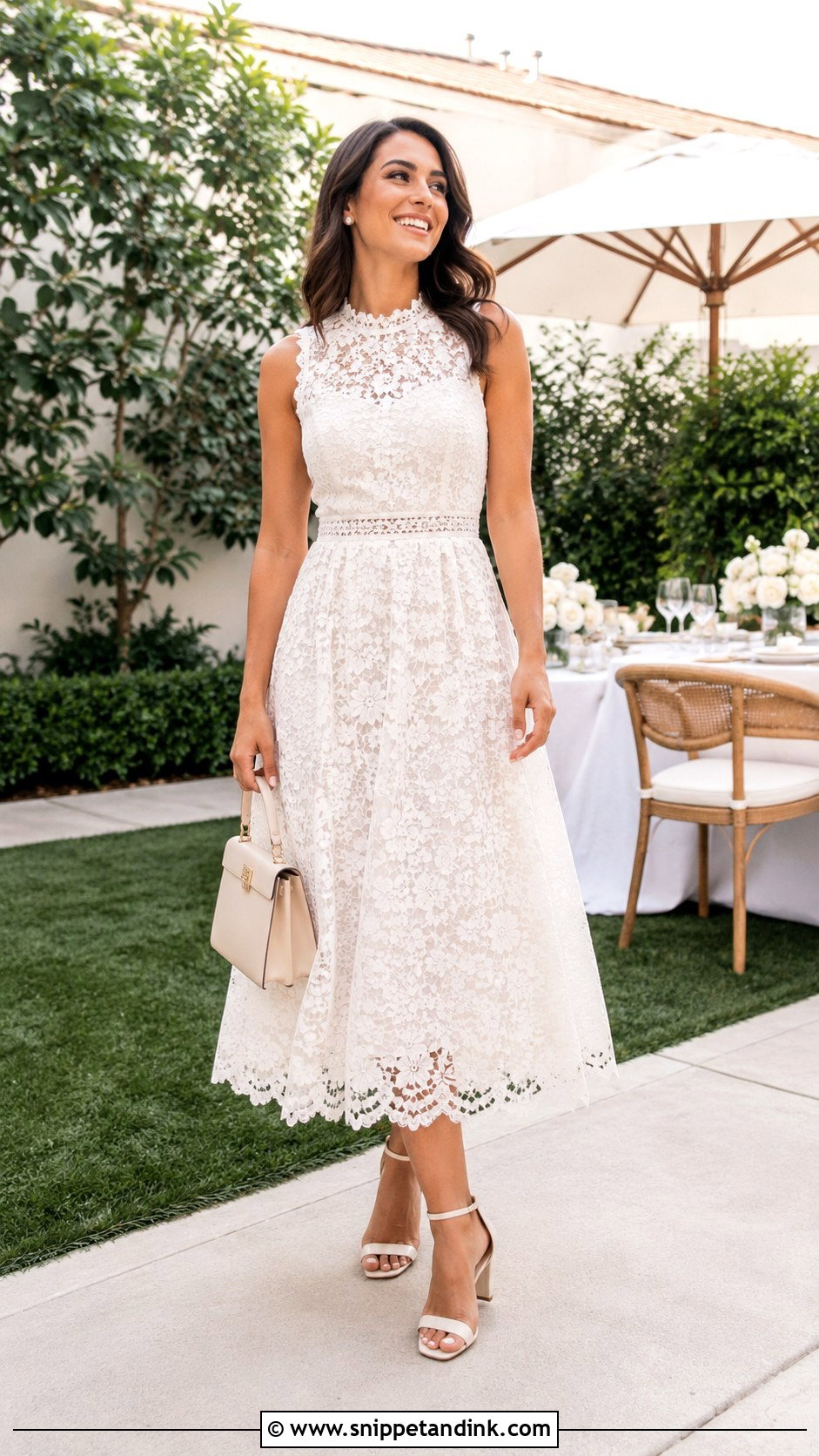
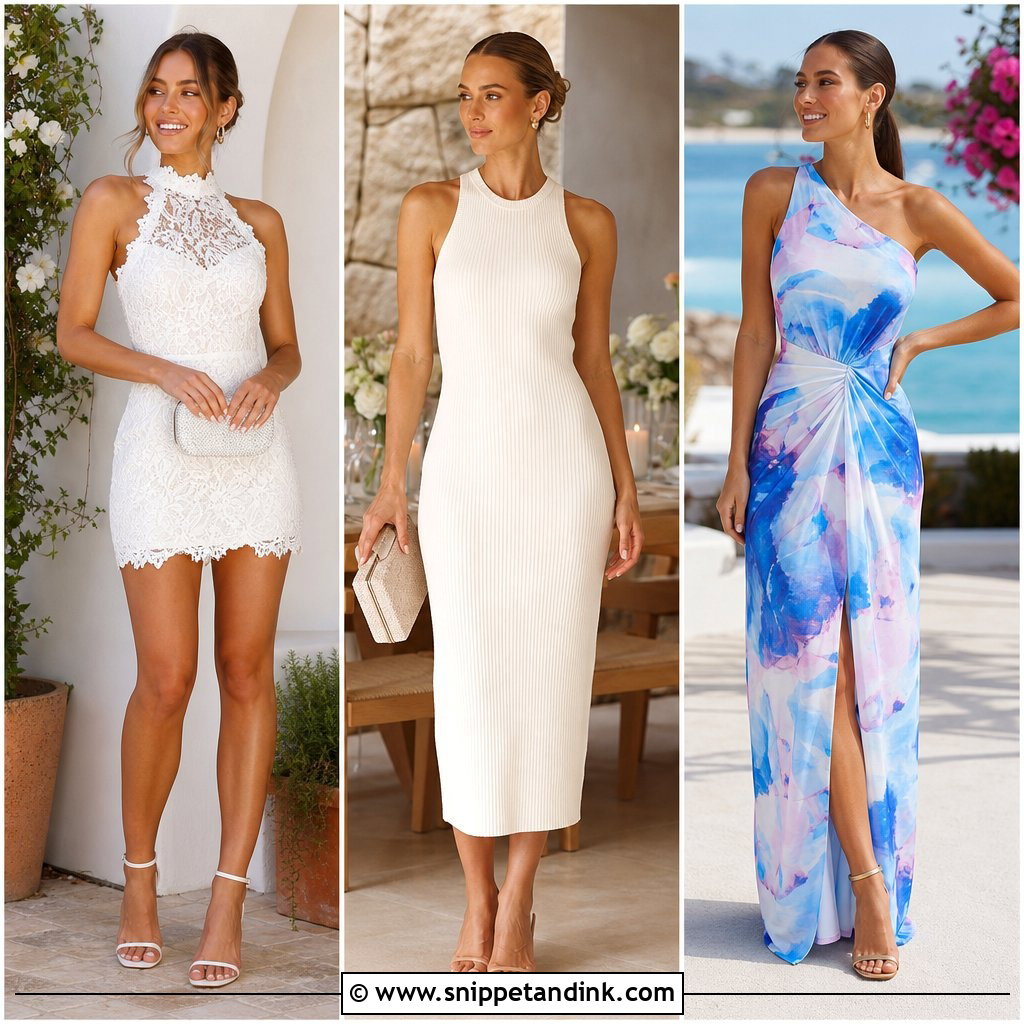
Lace reads as bridal from across a room, which is why it suits a shower or garden party so well. I look for a lined fit-and-flare midi with clearly defined floral lace, not a very sheer mesh that turns see-through in sunlight. A square or scooped neckline leaves room for a small pendant. Busy lace needs quiet accessories: block heels, pearl studs, a structured bag, done. Elbow sleeves and a higher back are easy options if you want more coverage for a family-heavy event.
3. White Mini Bridal Event Dress
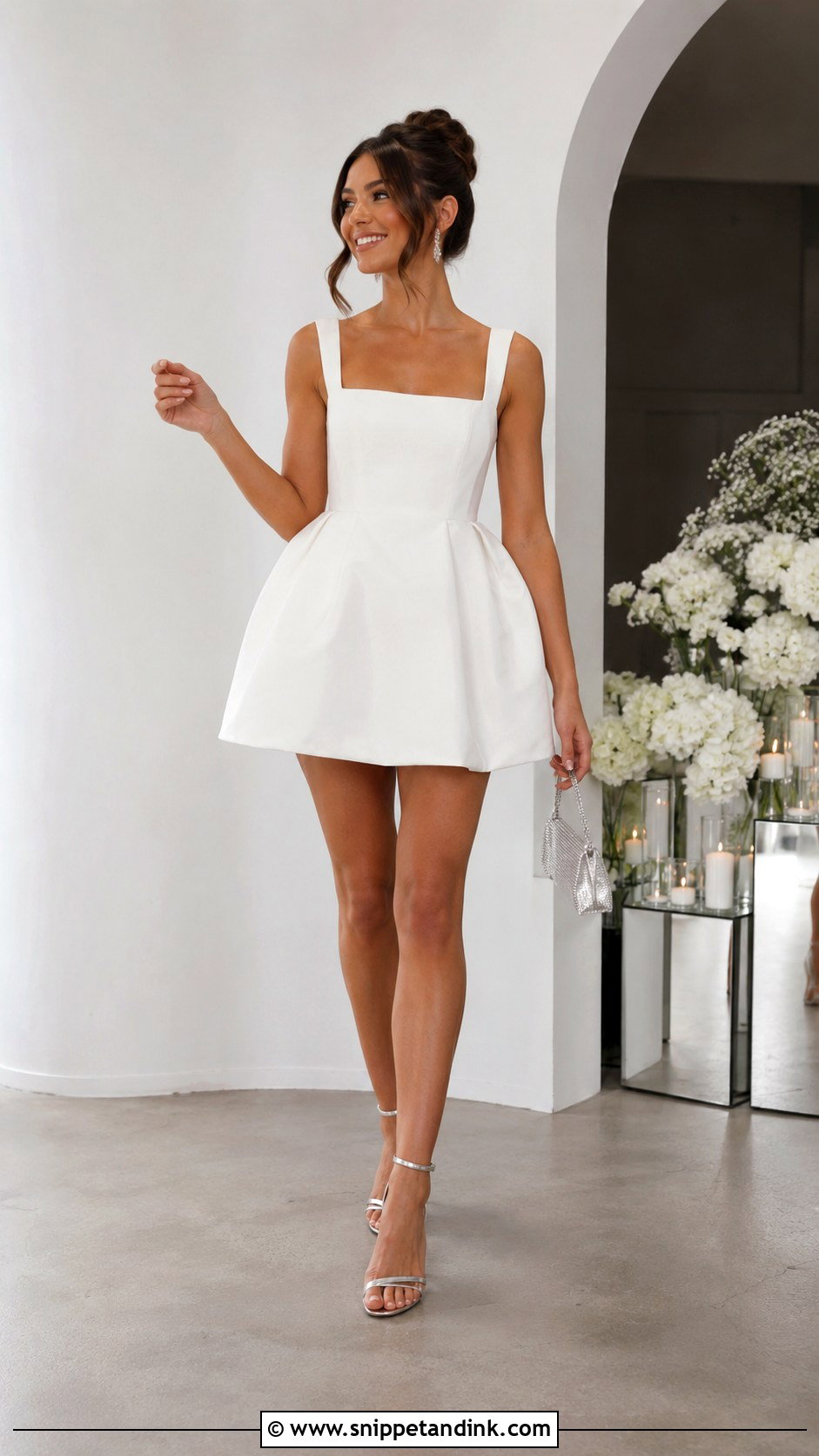
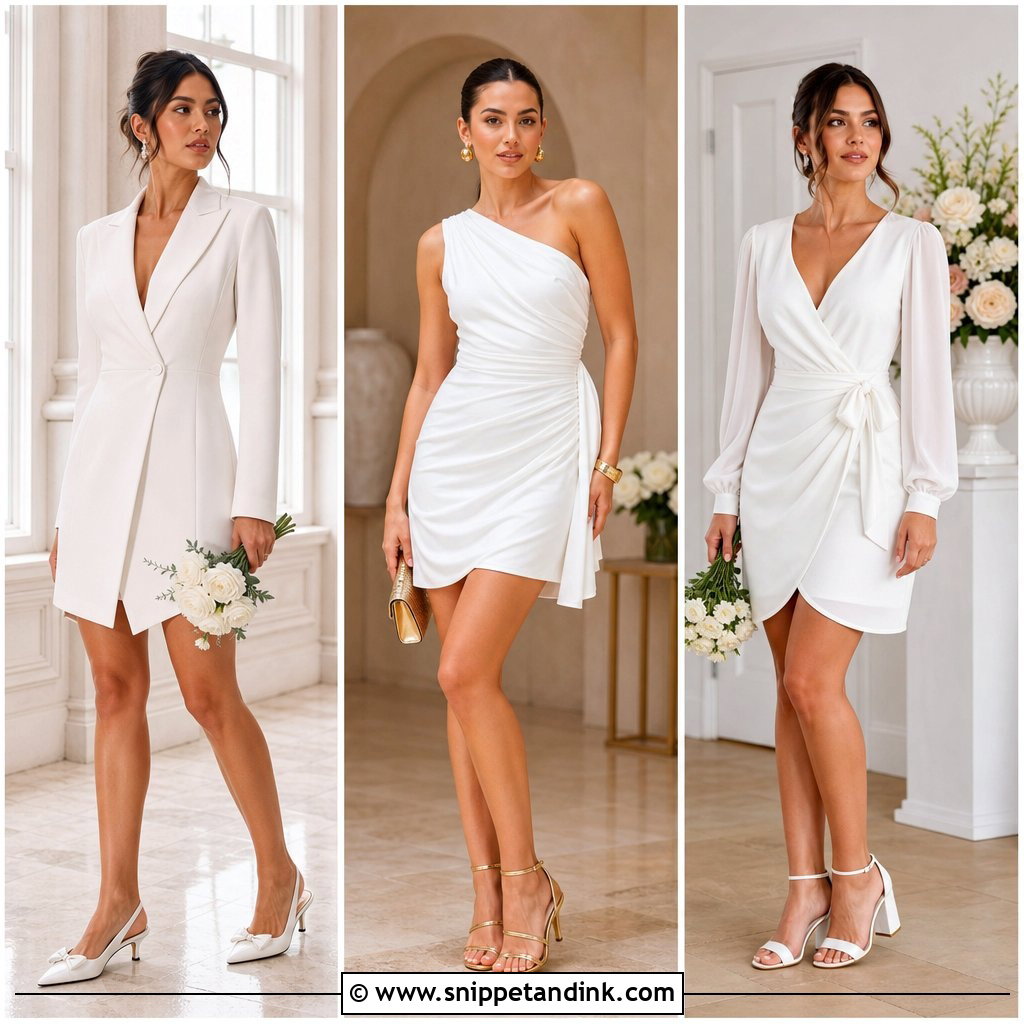
A structured mini has more energy than anything else on this list, so it belongs at the bachelorette or the after-party. The thing I check first is the hip room. If you can’t sit on a bar stool or take a full stride, the dress will ride up all night. A square neck and tailored waist keep it modern without a pile of embellishment. With a short hem, I balance the proportion with a higher neckline or long sleeves, and fitted shorts underneath make dancing far less stressful. Metallic heels, a sleek ponytail and a bright lip give it a party finish that doesn’t look like a cut-down wedding gown.
4. White Puff Sleeve Bridal Event Dress
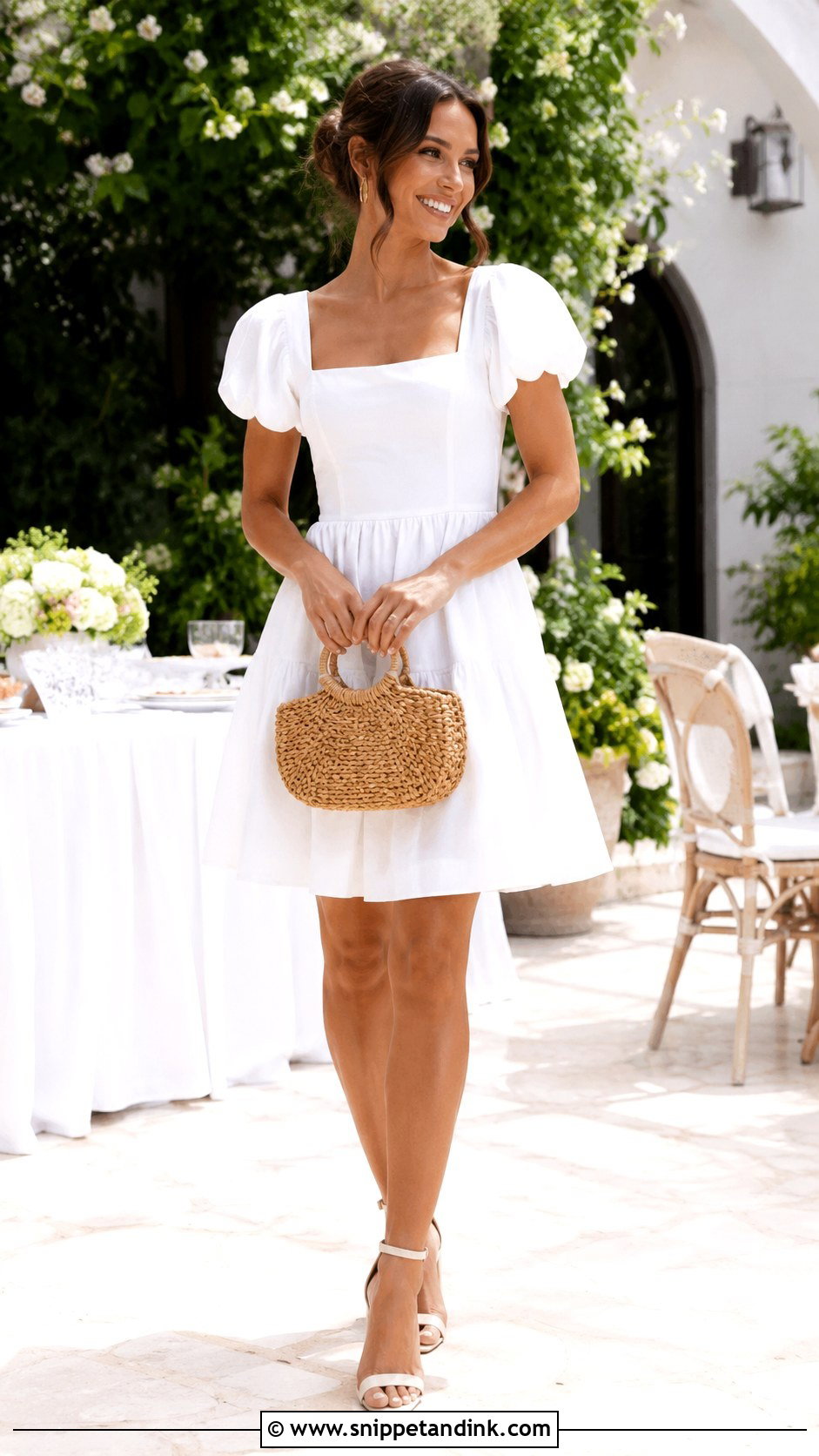
Puff sleeves add shape at the shoulder, and that’s useful: they visually balance fuller hips, as long as the waist stays defined. For a daytime shower, a knee or midi length with a fitted bodice and gathered skirt is right. Sweetheart and square necklines both sit well under the volume. I’d avoid puffed sleeves in very stiff fabric if you’ll be hugging a lot of guests; they crush flat and look tired by the end. In warm weather, cotton poplin or a linen blend breathes. Add block-heel sandals and small gold hoops, plus a cropped cardigan that stops at the waist for outdoor shade.
5. White Blazer Bridal Event Dress
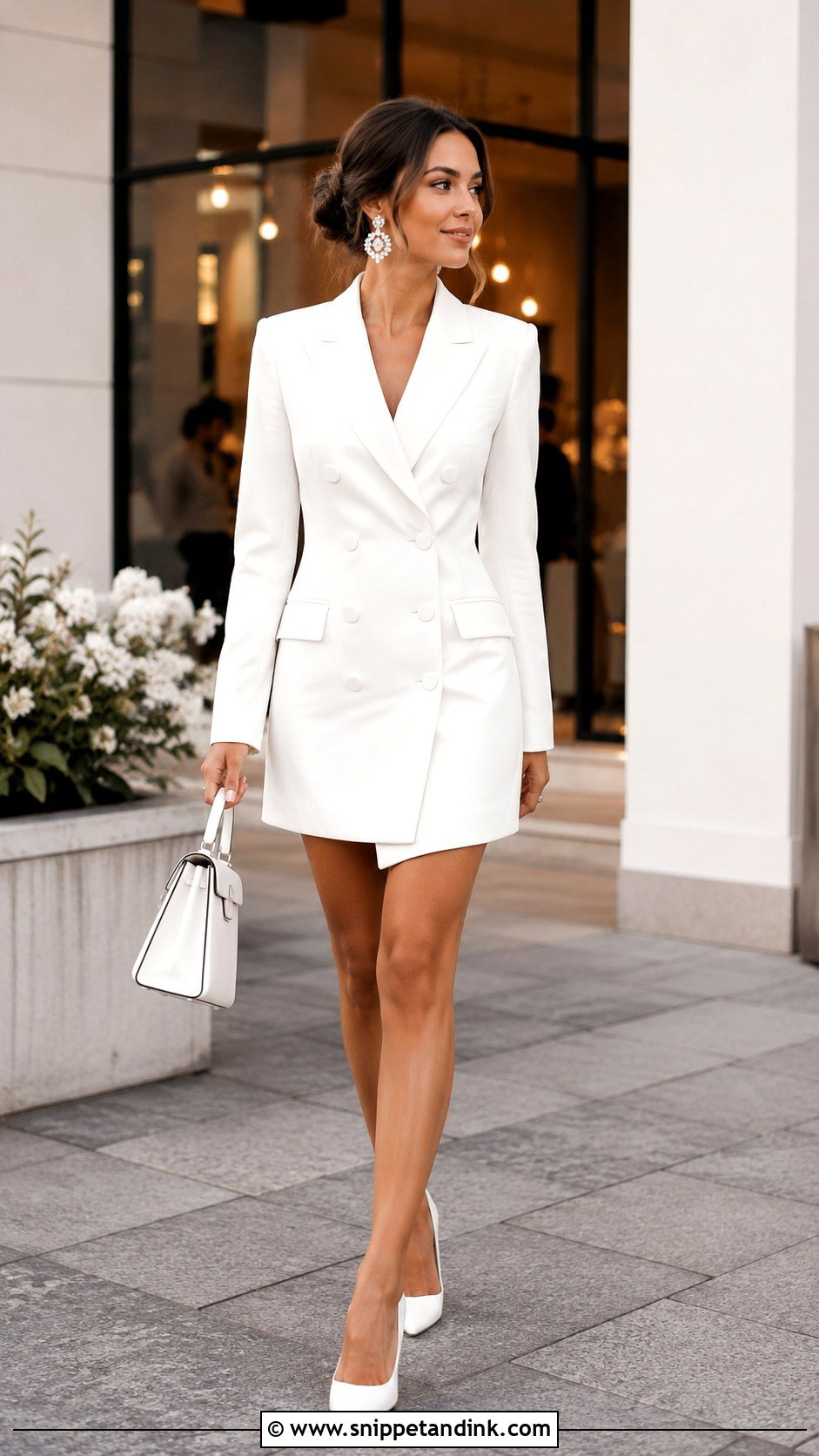
Tailoring suits brides who feel awkward in frills. A white blazer dress is right for a city engagement party, a courthouse appointment or a cocktail rehearsal. Fully lined, with secure buttons and a shaped waist, it holds its line all evening. The common problem is the neckline gaping when you sit, so I tape the lapels with fashion tape before the first photo. A thin belt can add definition, but keep it slimmer than the lapel width. Pointed pumps and sculptural earrings finish it. If you prefer more length, blazer-style midis exist and work the same way.
6. White Floral Bridal Event Dress
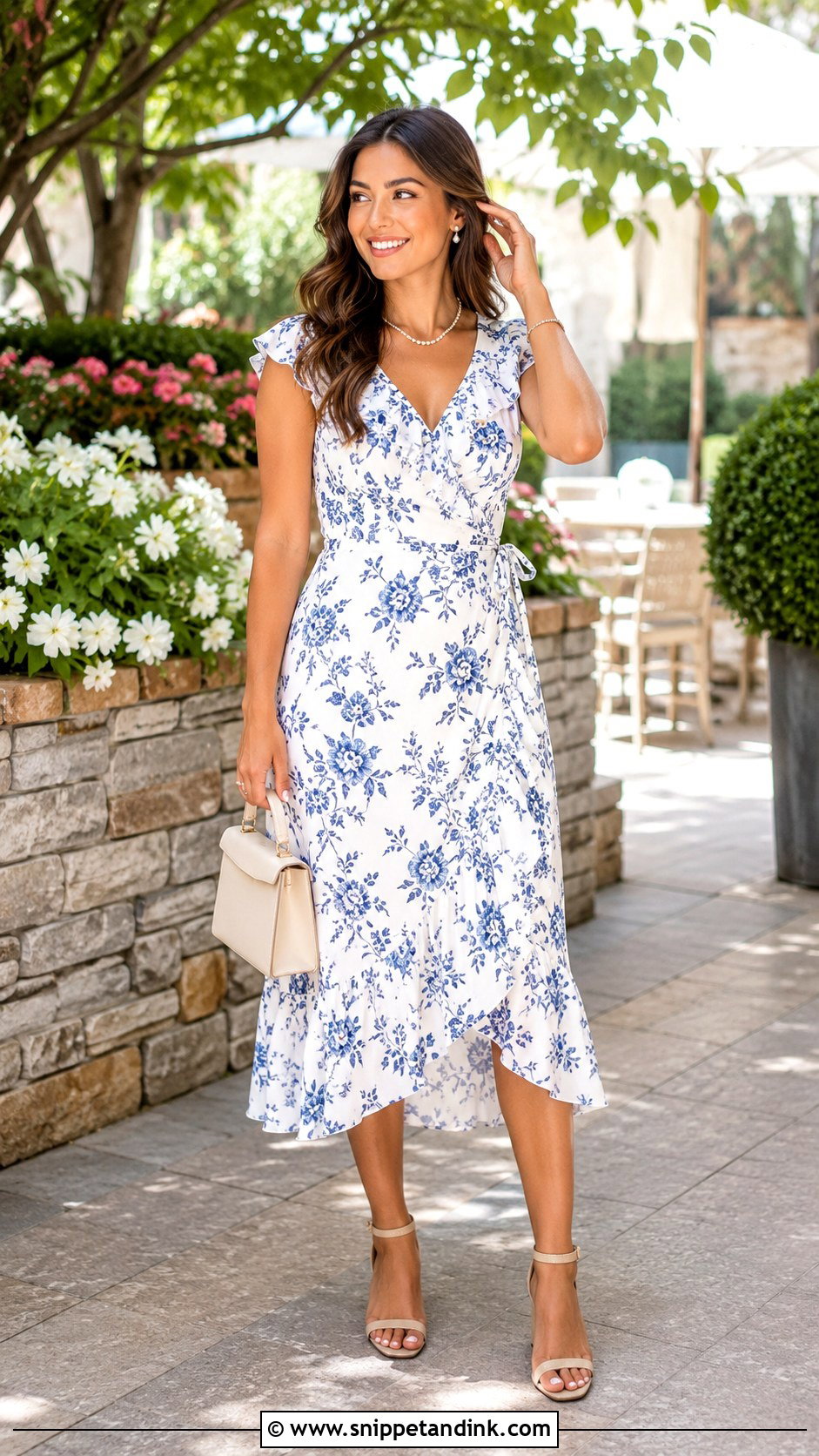
A floral print with lots of white ground still reads bridal, and it’s the dress my brides wear again most often after the wedding. Soft blue, blush or green flowers suit engagement photos, a garden shower or the farewell brunch. Wrap and fit-and-flare midis both adjust well to different shapes. I pick one quiet shade from the print for the accessories, never every color, otherwise the outfit looks costumed. A light wrap covers shoulders outdoors without fighting the pattern.
7. White Halter Bridal Event Dress
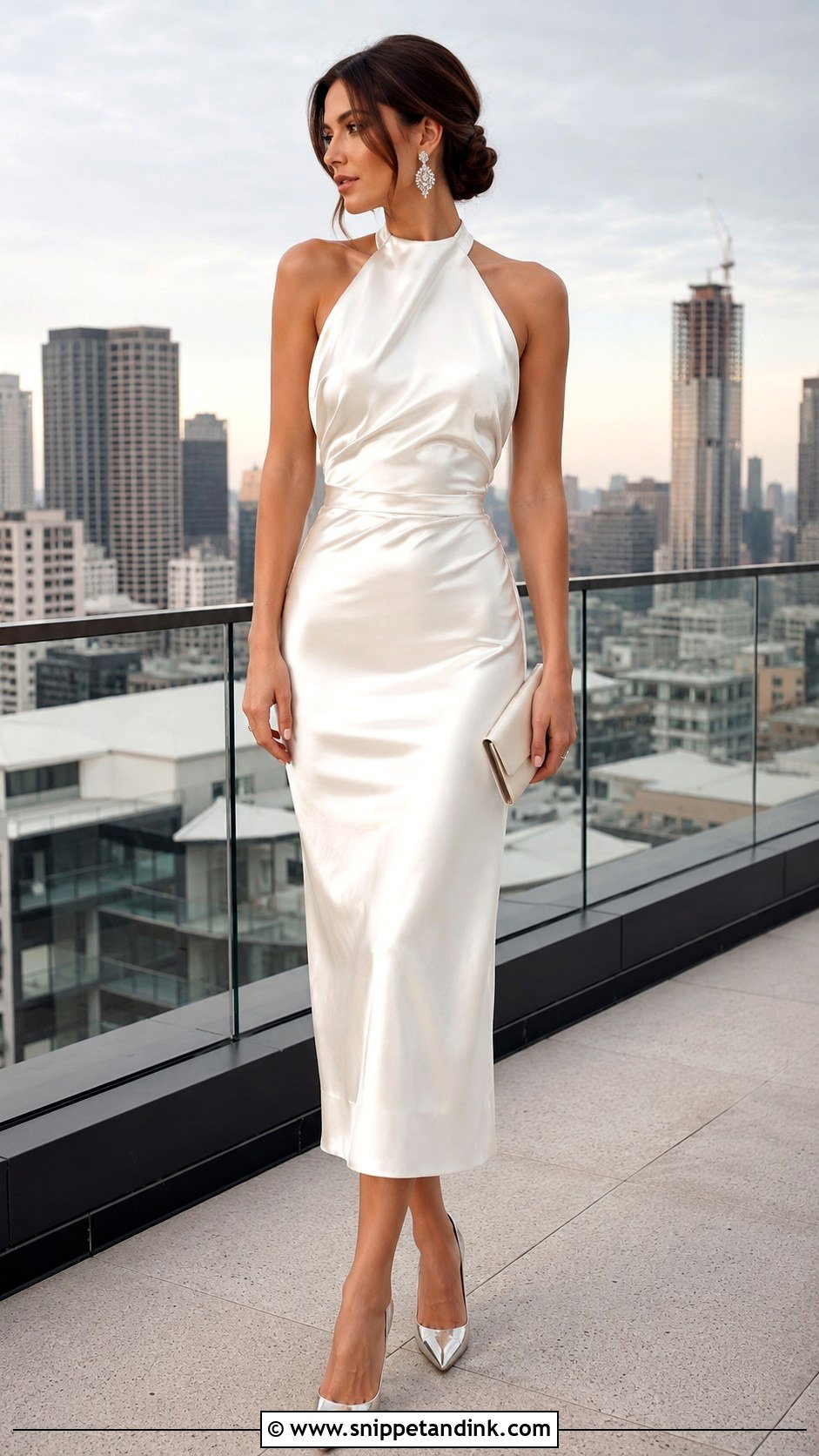
A halter neckline makes shoulders the feature, so I save it for evening events like a rehearsal dinner or a rooftop welcome party. Satin or crepe at midi length keeps it formal. Skip the necklace; statement earrings and a low twist show the neckline properly. Fit is everything here. A halter that pulls at the back of the neck becomes a headache after a couple of hours, so test it for at least twenty minutes at home. If you need real bust support, look for built-in cups or wider straps rather than relying on tape.
8. White Off Shoulder Bridal Event Dress
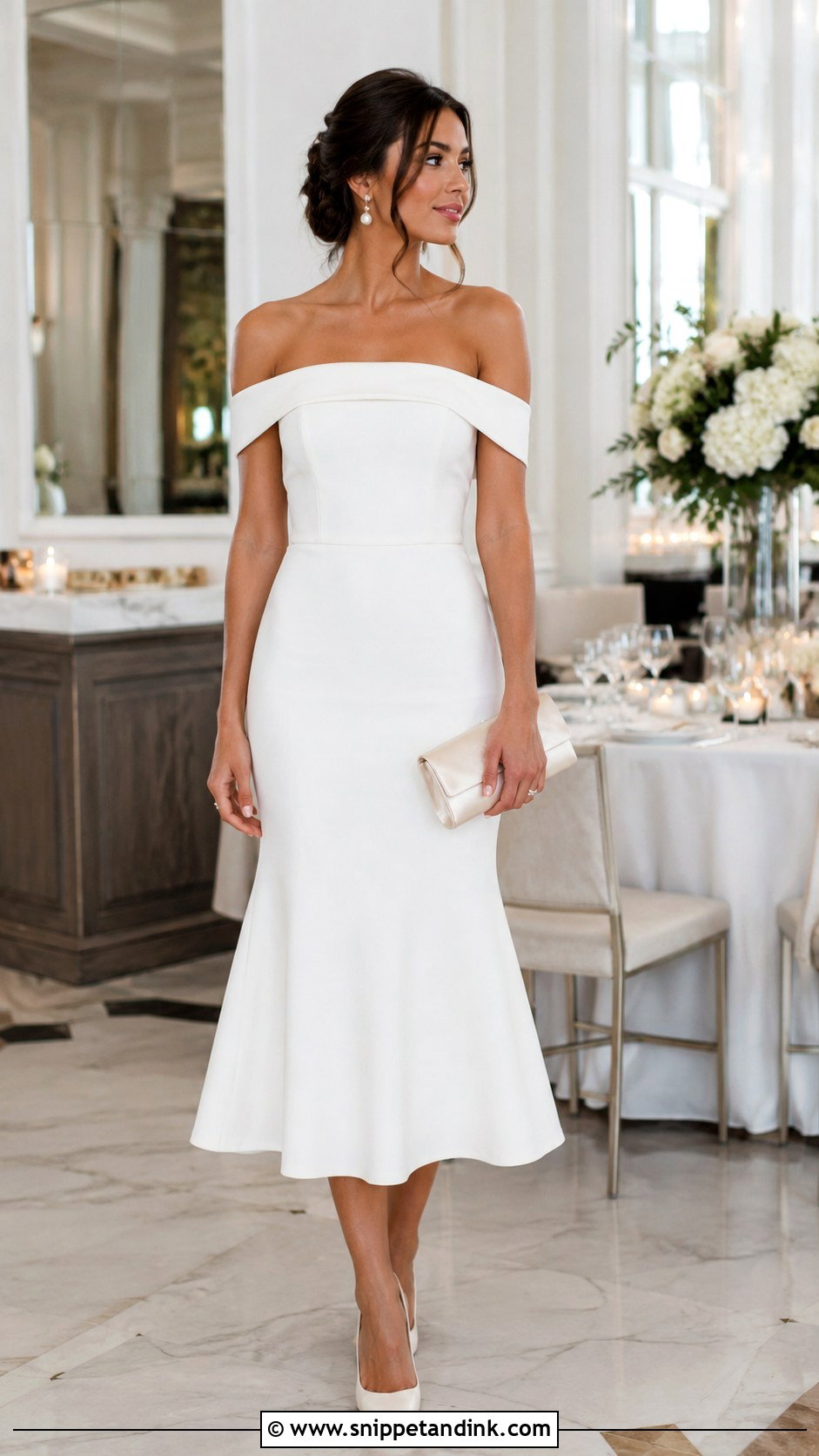
Off-the-shoulder bodices slip. That’s the honest starting point, so I only choose ones with internal boning or a grip strip along the band. When it stays put, the neckline frames the collarbone and draws the eye up, which is lovely for a shower or engagement dinner. Crepe looks refined; a flared skirt gives more room to move. Broader shoulders usually suit a gently curved band better than a dead-straight one. Leave the neck bare, wear pearl earrings and a slim bracelet, and put the hair in a neat updo.
9. White One Shoulder Bridal Event Dress
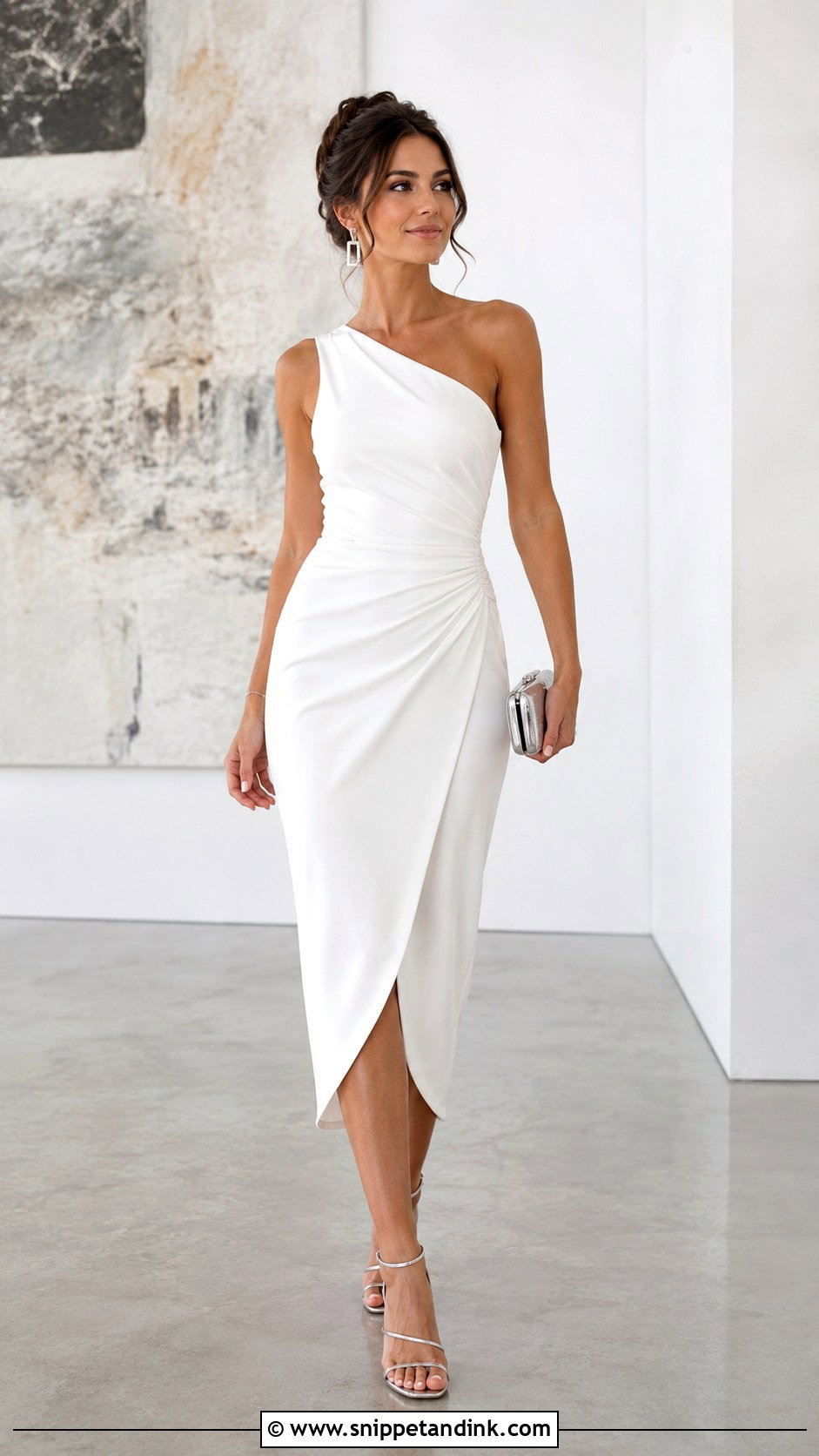
Asymmetry does the decorating on a one-shoulder midi, so the fabric should be smooth crepe or satin and nothing else should compete. It suits a cocktail engagement party or a formal rehearsal. I check the underarm on the strapless side first; if it gapes or cuts in when you raise your arm to wave, the size or the cut is wrong. Sweep the hair to the opposite side or into a sleek ponytail so the bare shoulder stays clear. Geometric earrings, strappy heels and gentle ruching at the waist add definition without fuss.
10. White Wrap Bridal Event Dress
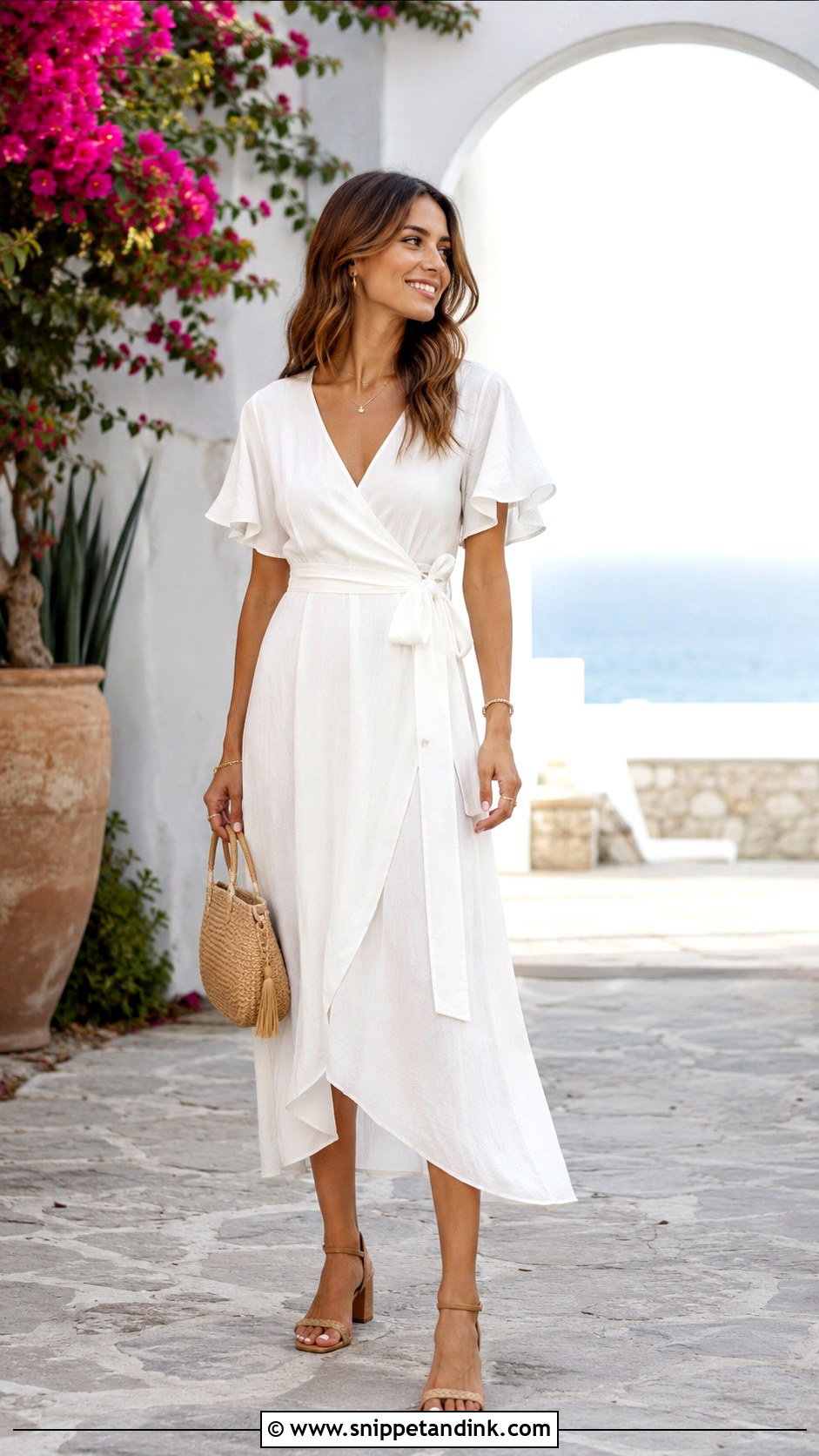
The wrap dress is the most forgiving shape here. It adjusts to bloating, a big lunch and normal weight changes in the months before a wedding, which is why I suggest it for brunches, showers and destination welcome events. A true wrap needs a secure inner tie, and if the neckline worries you, a faux wrap stays put better. Flutter sleeves and a midi skirt give it movement. Fashion tape at the cross-over point or a thin camisole underneath stops the front opening when you lean over to sign a guest book.
11. White Pleated Bridal Event Dress
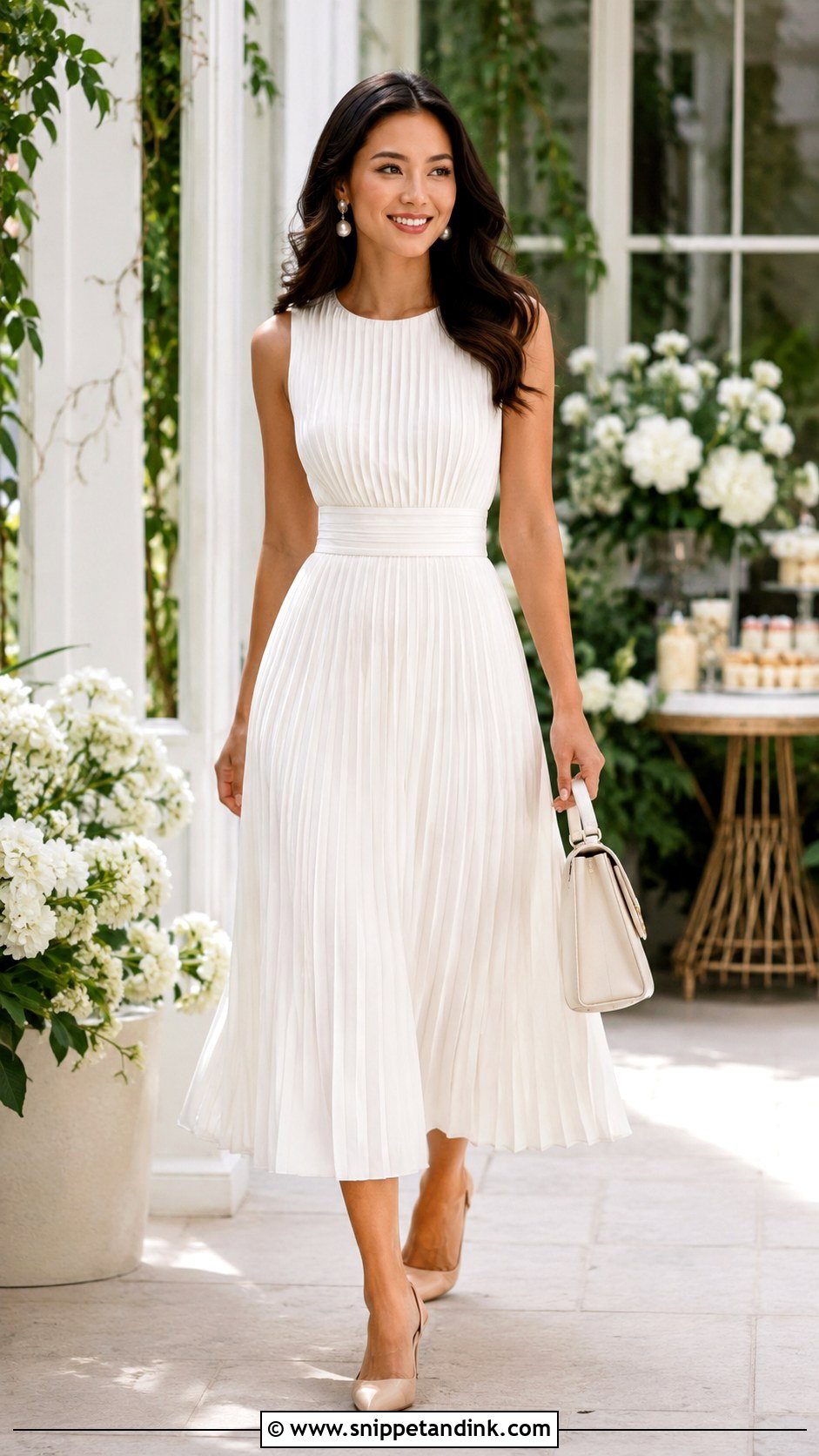
Fine pleats come alive when you walk, so this is the dress I suggest for engagement photos with movement. Look for a defined waistband and fabric that falls smoothly rather than puffing out. A sleeveless bodice with a gathered neckline keeps it clean. Pleats lose their crispness when packed, so steam them gently before the event, holding the steamer a little away from synthetic fabric. In cooler weather, a cropped jacket that stops at the waist leaves the pleats visible. Nude slingbacks and pearl earrings are enough.
12. White Long Sleeve Bridal Event Dress
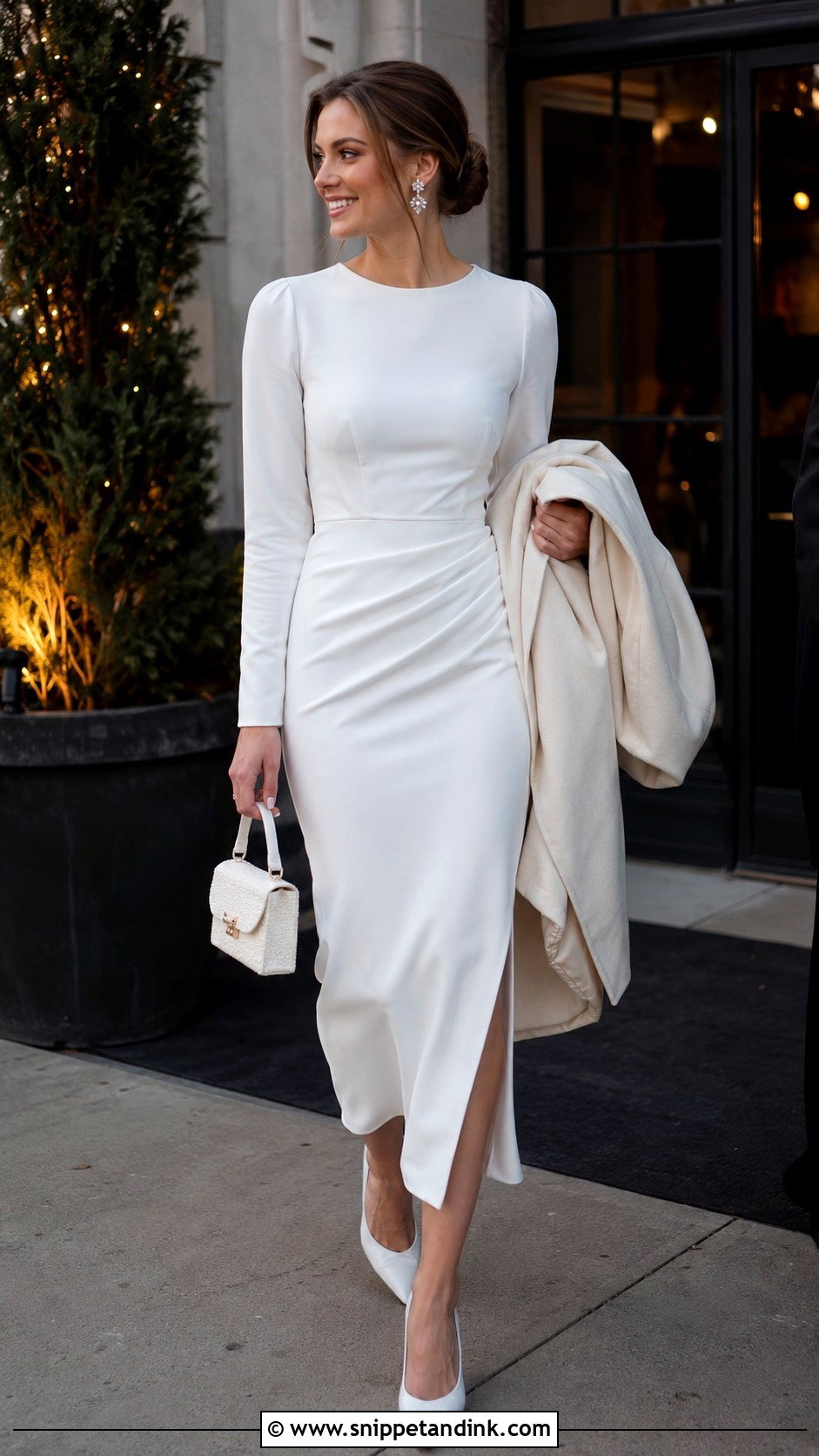
A long-sleeve white dress keeps a winter rehearsal dinner warm without looking heavy. I go with a fitted knit midi for casual gatherings and a lined crepe for formal ones. Structured shoulders and a defined waist stop all that coverage from looking shapeless. The test I insist on is raising both arms and reaching across a table; tight sleeves pull the whole dress up when you hug people. A side slit balances the covered top and helps you walk. An ivory wool coat over it keeps the outdoor photos in one color family.
13. White Feather Trim Bridal Event Dress
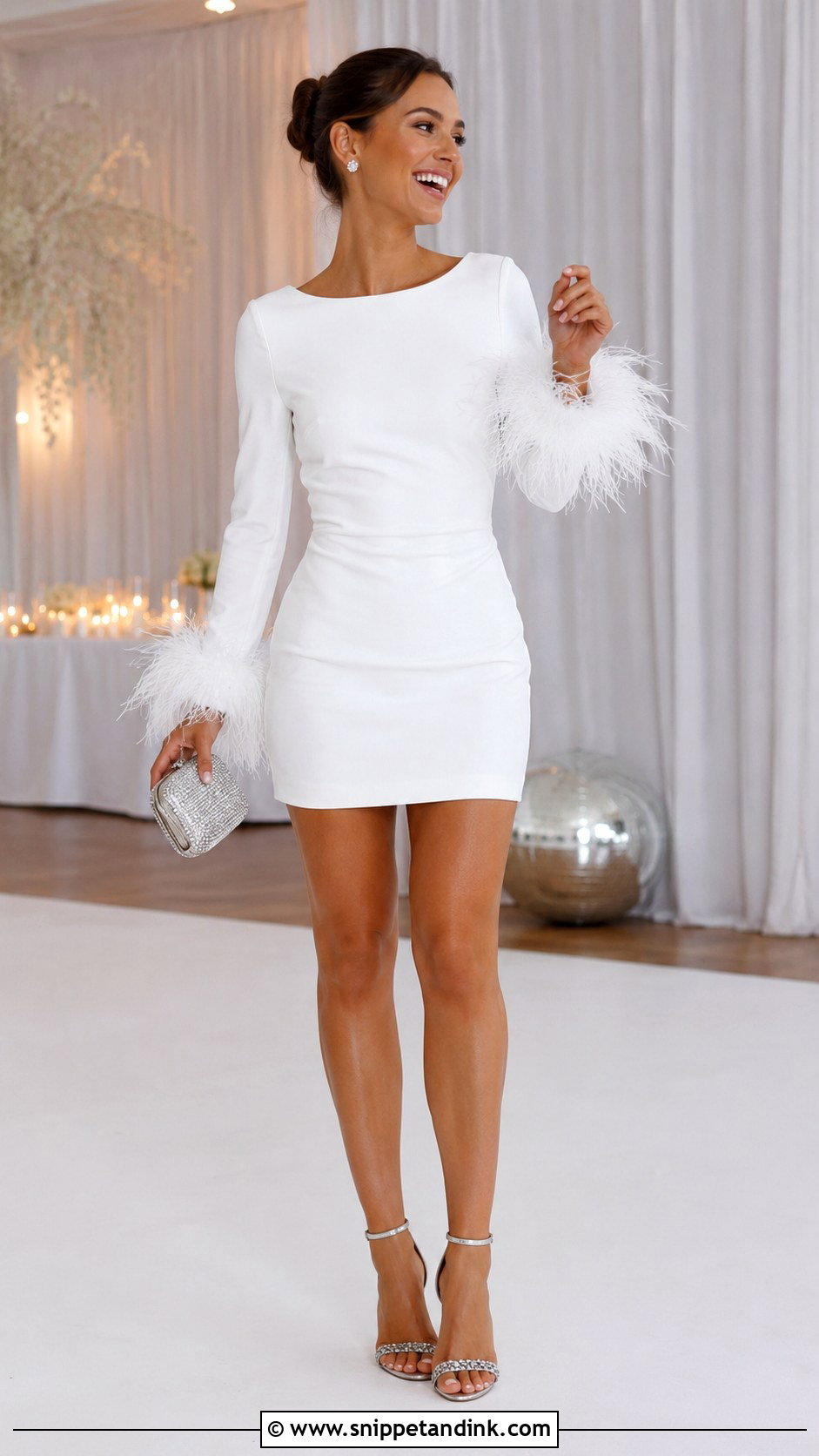
Feather trim is pure fun on a bridal mini or midi dress, as long as it stays at the cuffs or hem. Full feather coverage sheds, catches on chairs and gets in your food. A simple crepe mini with feathered cuffs, crystal heels and a silver clutch is plenty. Watch where cuff feathers fall when you eat; they dip into sauces more often than anyone predicts. A high ponytail or sleek bun suits the mood, and a comfortable heel height matters for a long night out.
14. White Sequin Bridal Event Dress
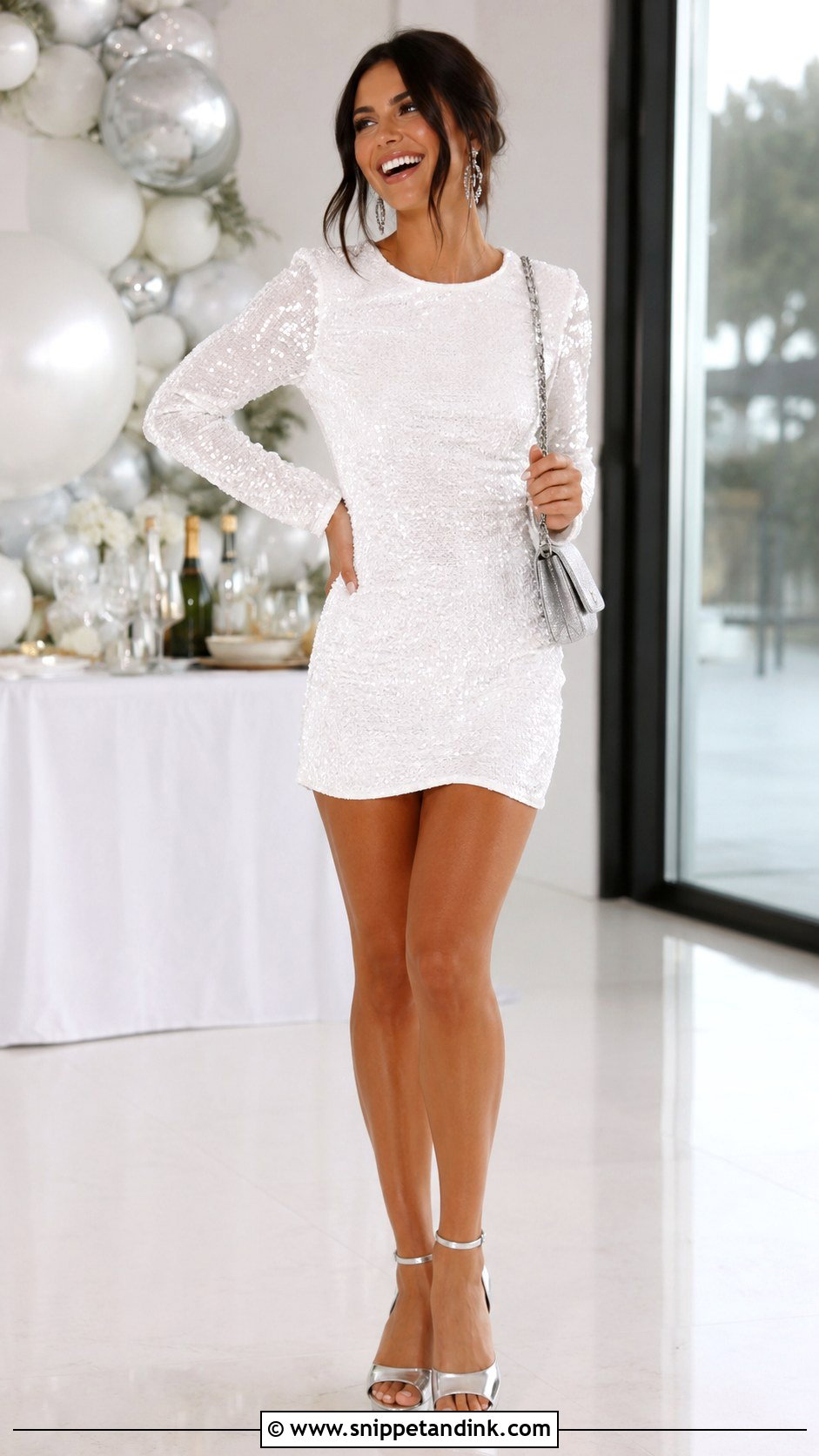
For the dance floor, a white sequin dress is the obvious pick, and a lined long-sleeve mini balances the shine with coverage. Small sequins look smoother and move better than large paillettes. Check the underarm seams before buying, because cheap sequin edges scratch with every arm movement. Since the dress already reflects light, keep jewelry minimal. A straight cut with a little stretch lets you dance; smooth bike shorts underneath help with a short hem. Sleek hair and soft eyes are all it needs.
15. White Bow Bridal Event Dress
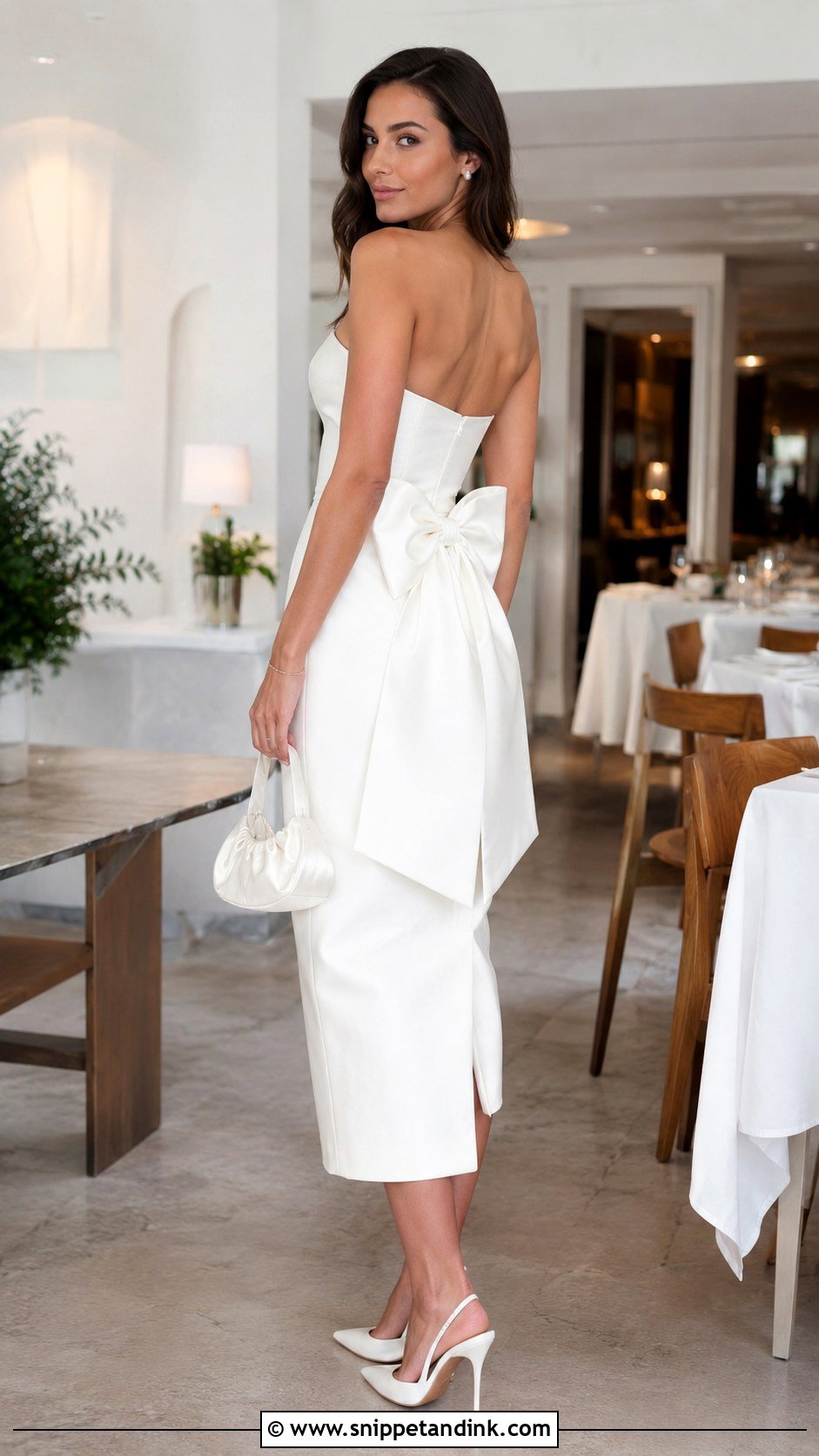
A bow gives a plain dress a focal point, and placement decides whether it flatters. A small shoulder bow lifts the eye; a waist bow defines; a large back bow is dramatic in photos but can be uncomfortable against a dining chair, so sit on a hard chair in it before committing. If the bow is at the back, wear your hair up. Some designs have removable bows, which makes the dress easier to wear again. Slingbacks, pearl studs and a satin bag keep the rest clean.
16. White Ruffle Bridal Event Dress
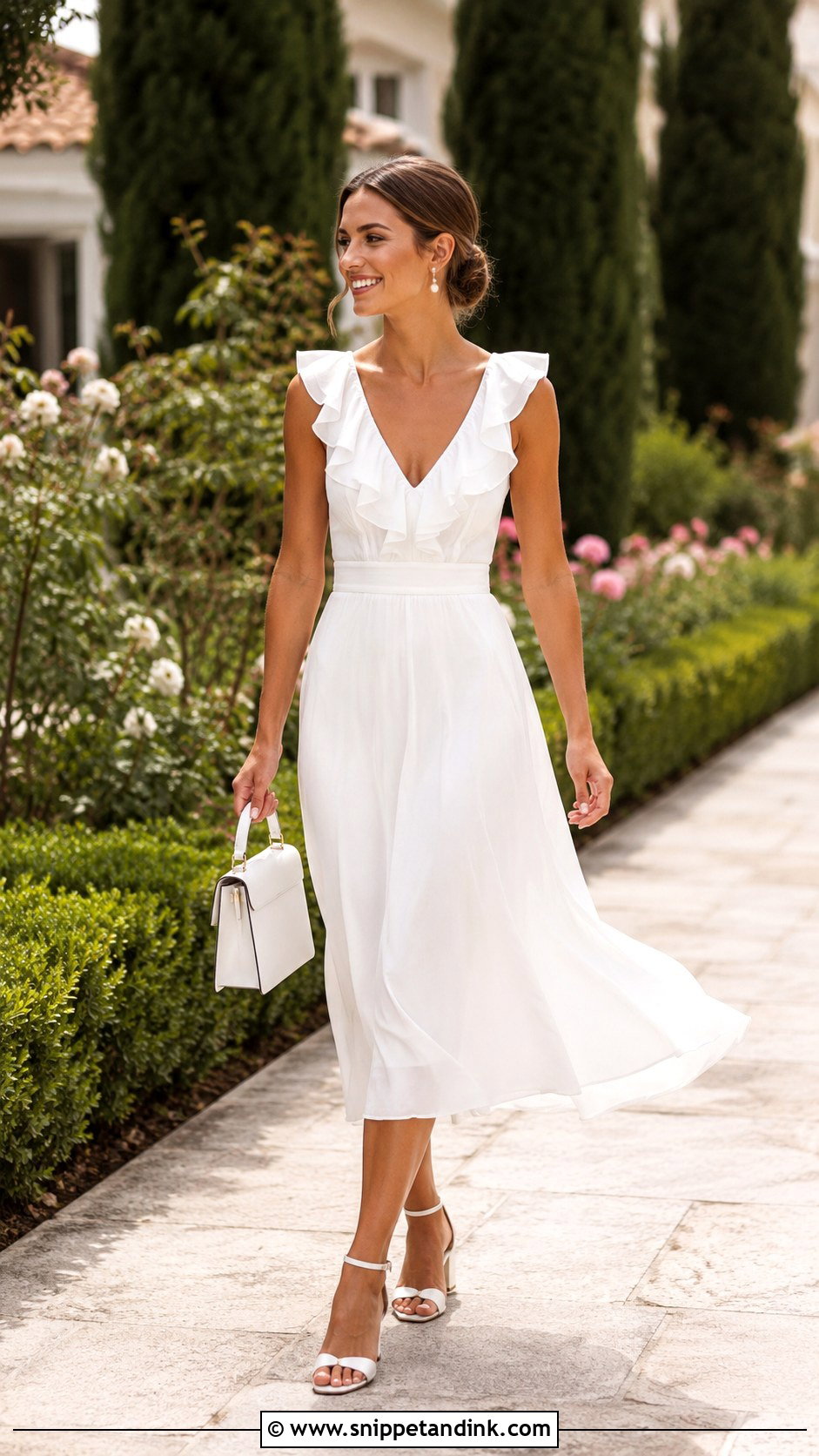
Ruffles work when there’s one of them. A ruffled neckline, flutter sleeves or a softly tiered hem, chosen alone, keeps a shower or welcome-party dress fresh; stacking all three tips it into costume. Petite brides usually suit smaller ruffles, while taller brides carry a long tiered skirt well. The fabric must drape. Stiff ruffles stand away from the body and add width you didn’t ask for. A defined waist balances the volume. Light curls and slim block-heel sandals keep the mood easy.
17. White Drop Waist Bridal Event Dress
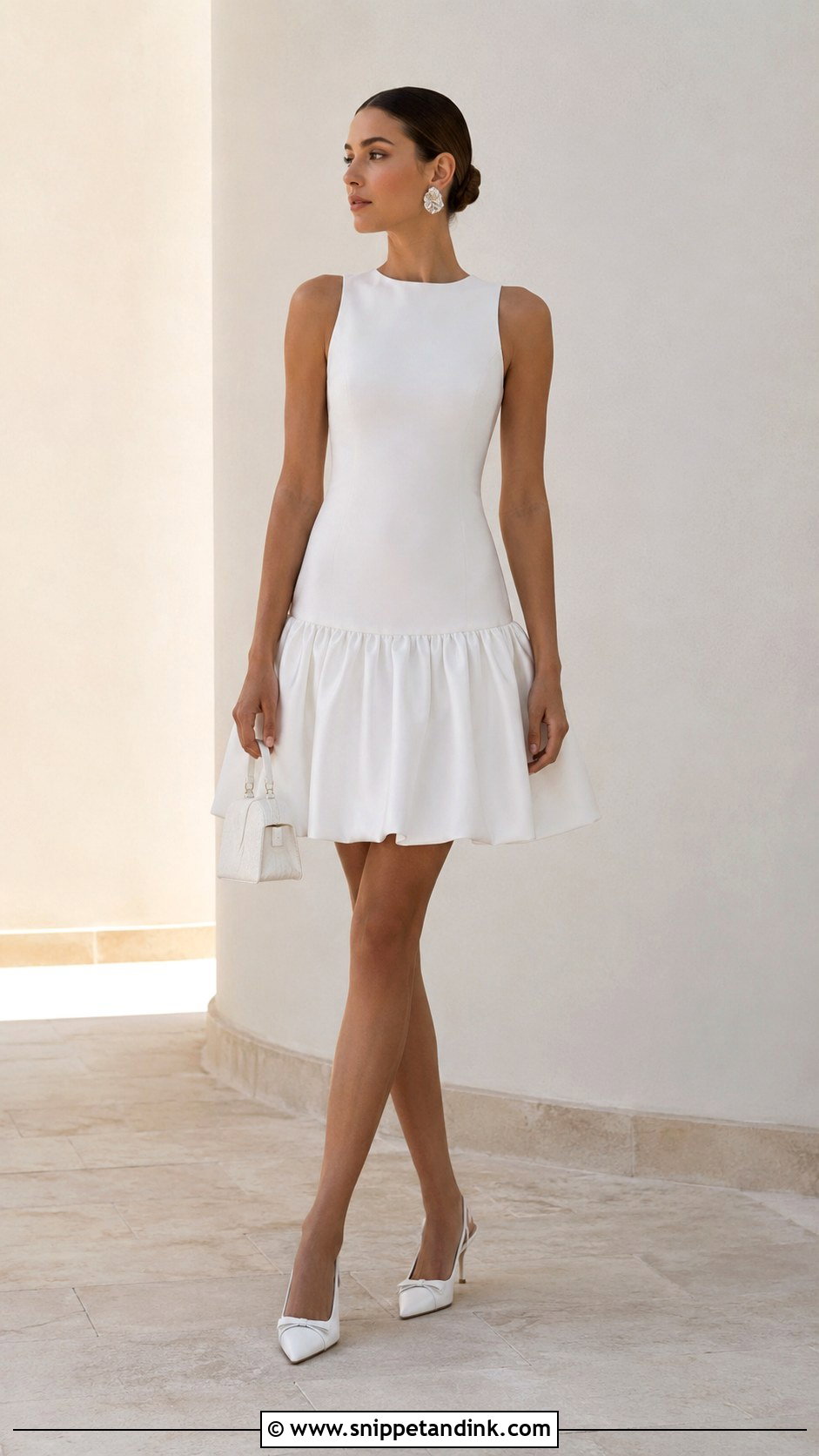
The drop waist is the most fashion-led shape here, and also the one I’m most careful about recommending. The bodice runs below the natural waist before the skirt opens, which suits brides with a longer torso and can shorten a petite frame unless the skirt is kept short. For an engagement party or a modern shower, choose mini or midi depending on formality. The bodice should skim, not squeeze. Keep accessories minimal so the proportions read as deliberate: kitten heels, sculptural earrings, a compact bag.
18. White Corset Bridal Event Dress
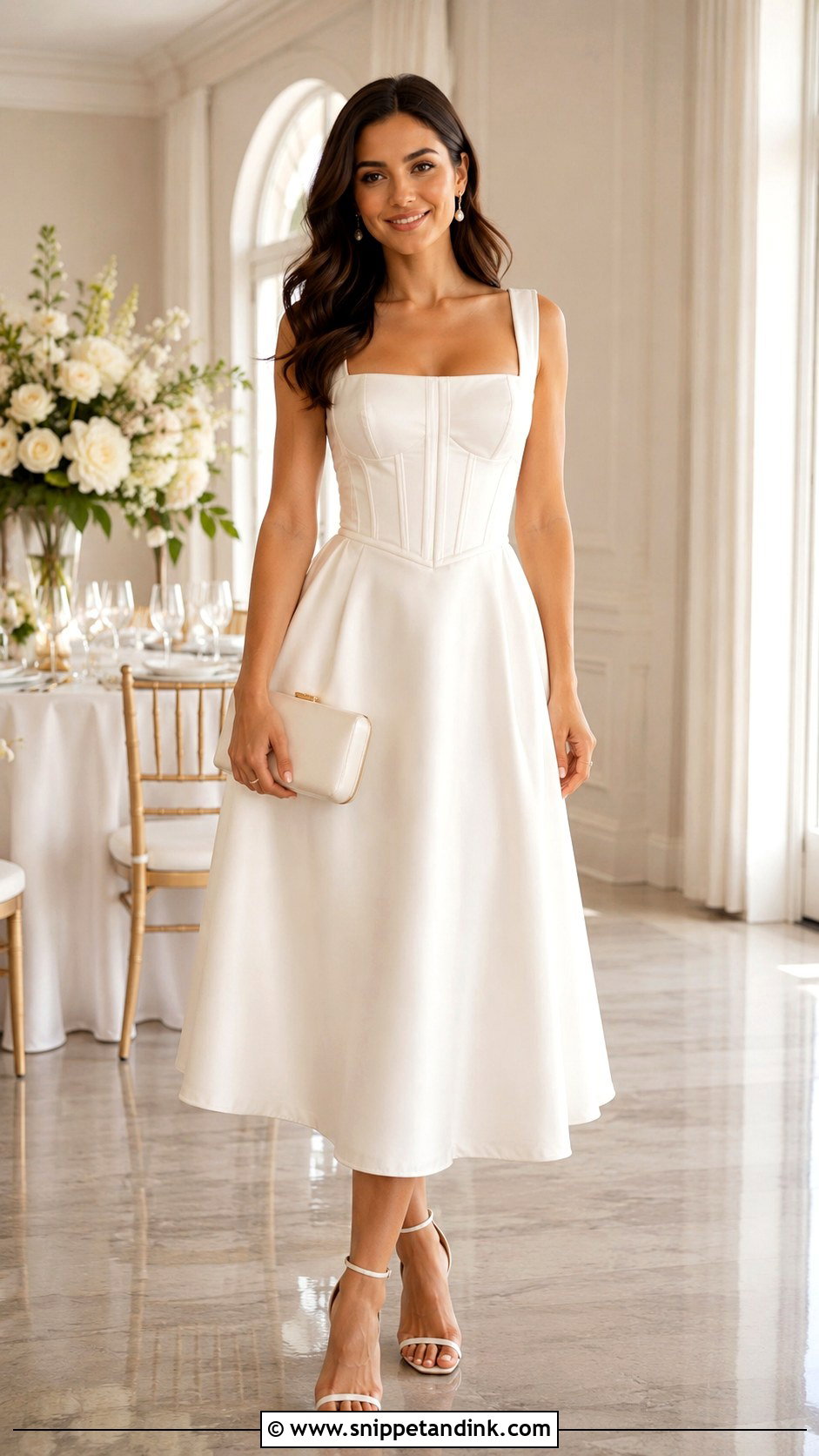
A corset bodice gives structure on its own, so this dress needs very few accessories. Look for real internal boning, wide straps and a softly flared skirt for a shower or formal engagement dinner. The test I always run is sitting down and eating something. If you can’t breathe comfortably seated, the bodice is too tight, no matter how it looks standing. A good tailor can reshape the boning to your bust and waist. Detailed seaming means no necklace; pearl drops and a low bun are enough, with a light shawl for a cold room.
19. Ivory Maxi Bridal Event Dress
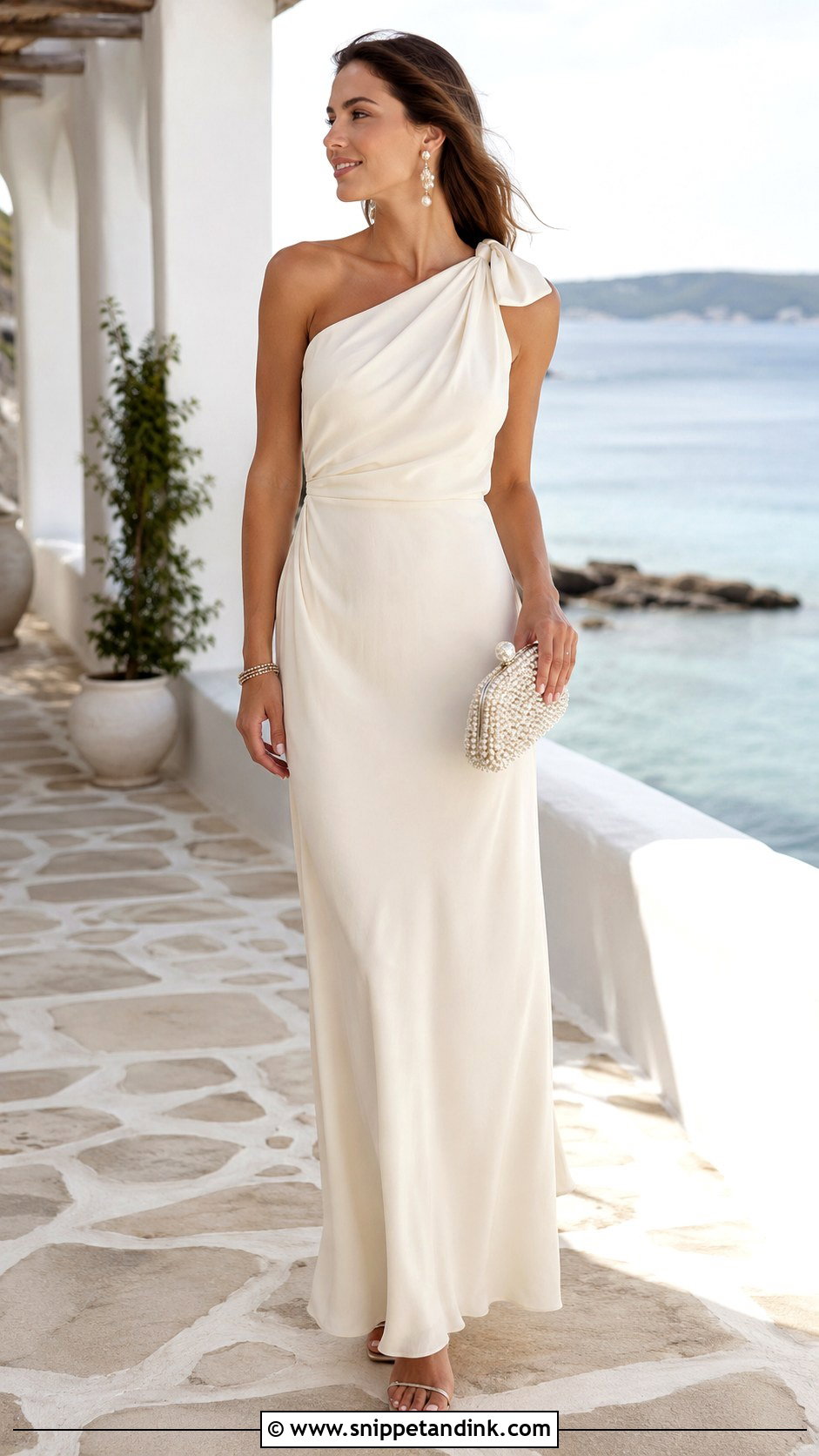
An ivory maxi dress is the right level for a formal welcome party, a destination rehearsal or an intimate civil ceremony. Choose a fluid column or a softly draped A-line, not a full skirt, so it’s clearly a dress for the events around the wedding. Have the hem set with your actual shoes on; a maxi that drags catches on stairs and picks up dirt outdoors. Ivory is kinder than bright white to many skin tones, and I always compare swatches in daylight. Wider straps balance a low neckline.
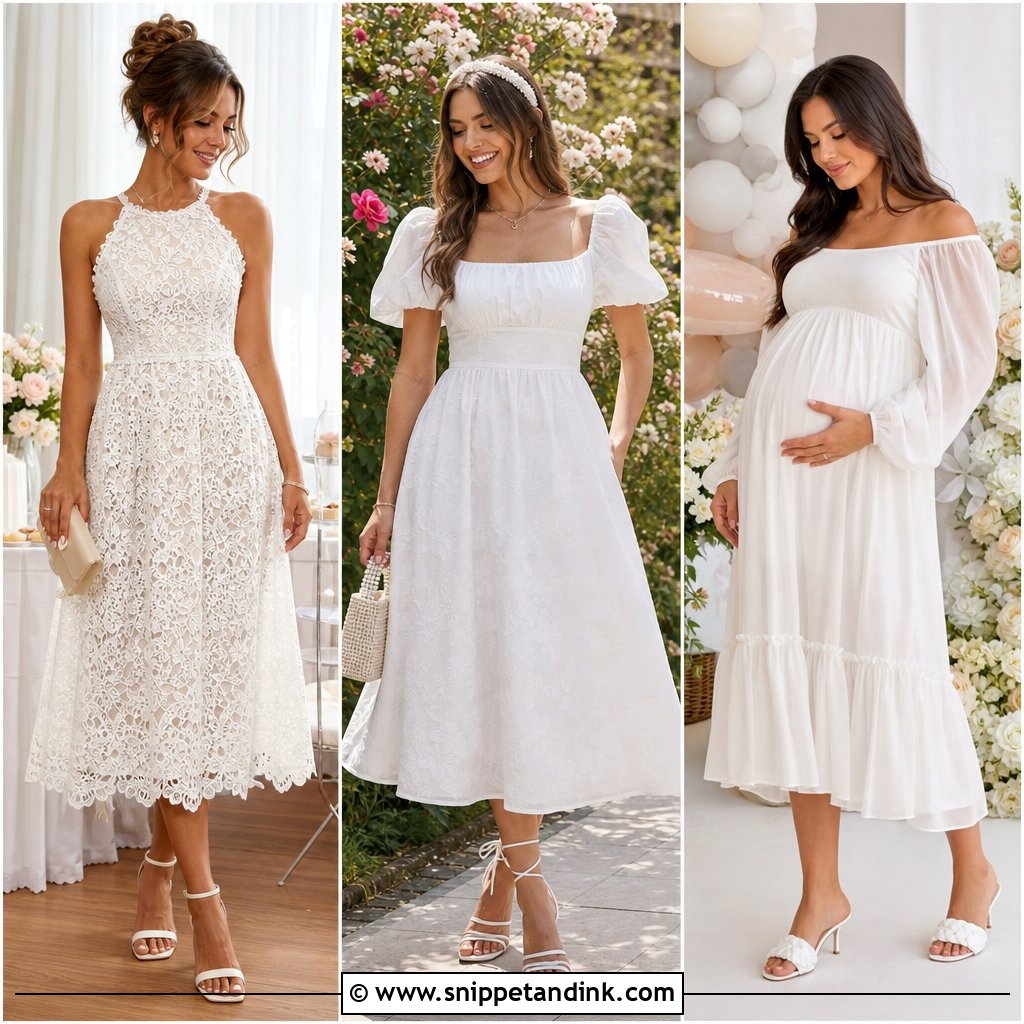
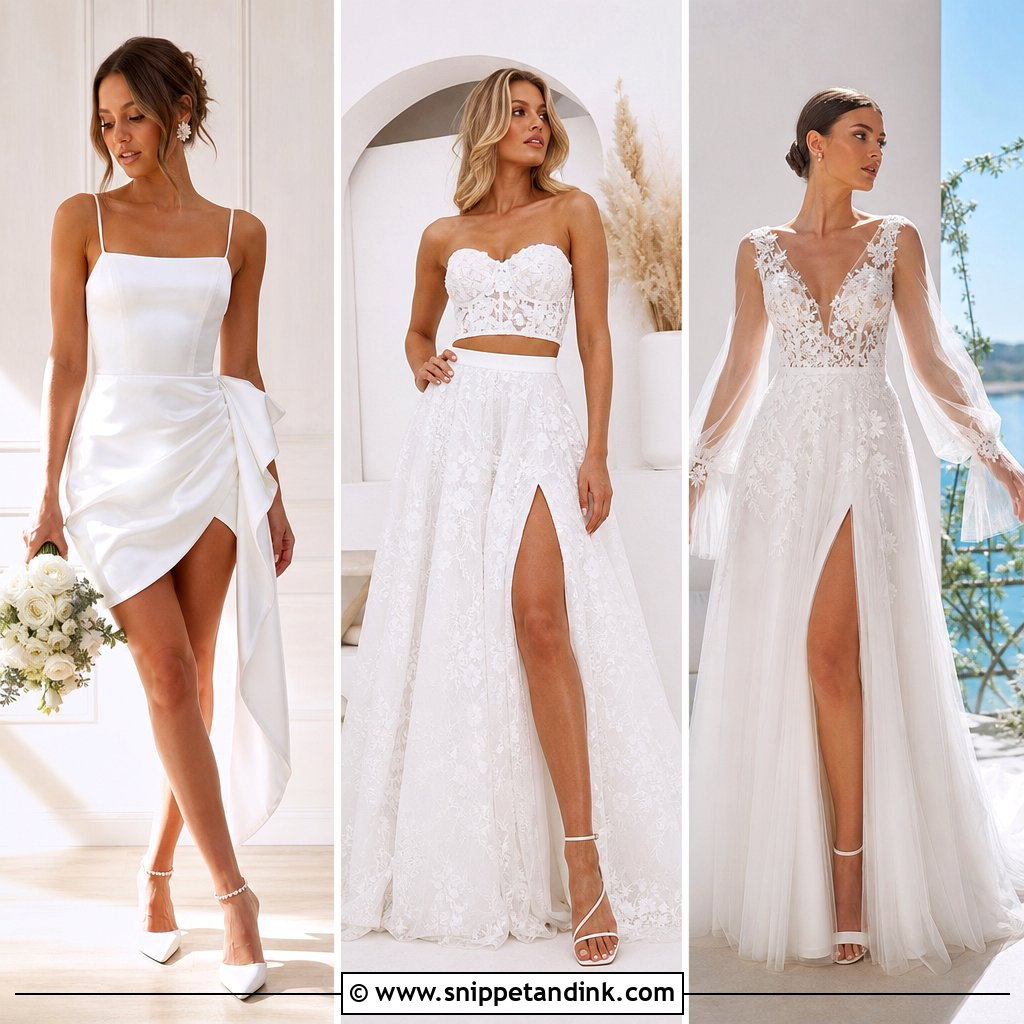
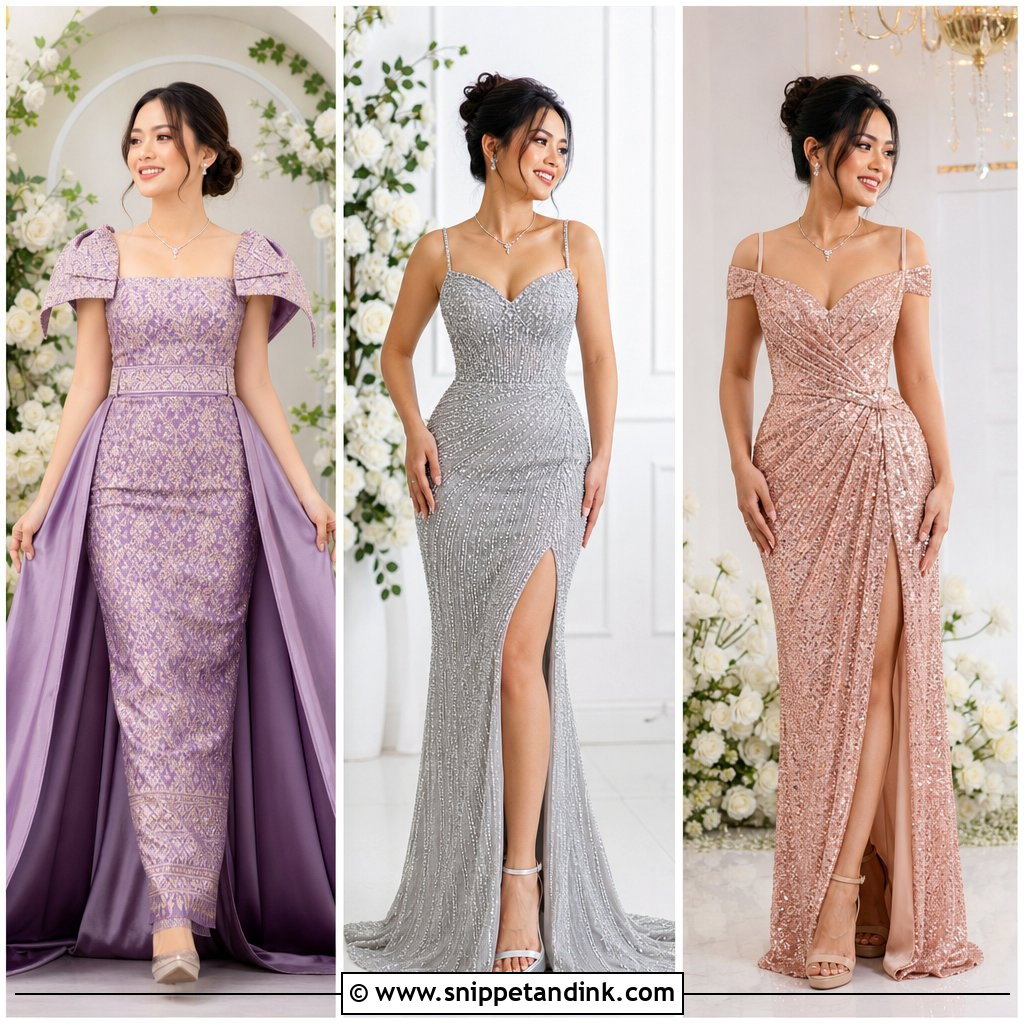
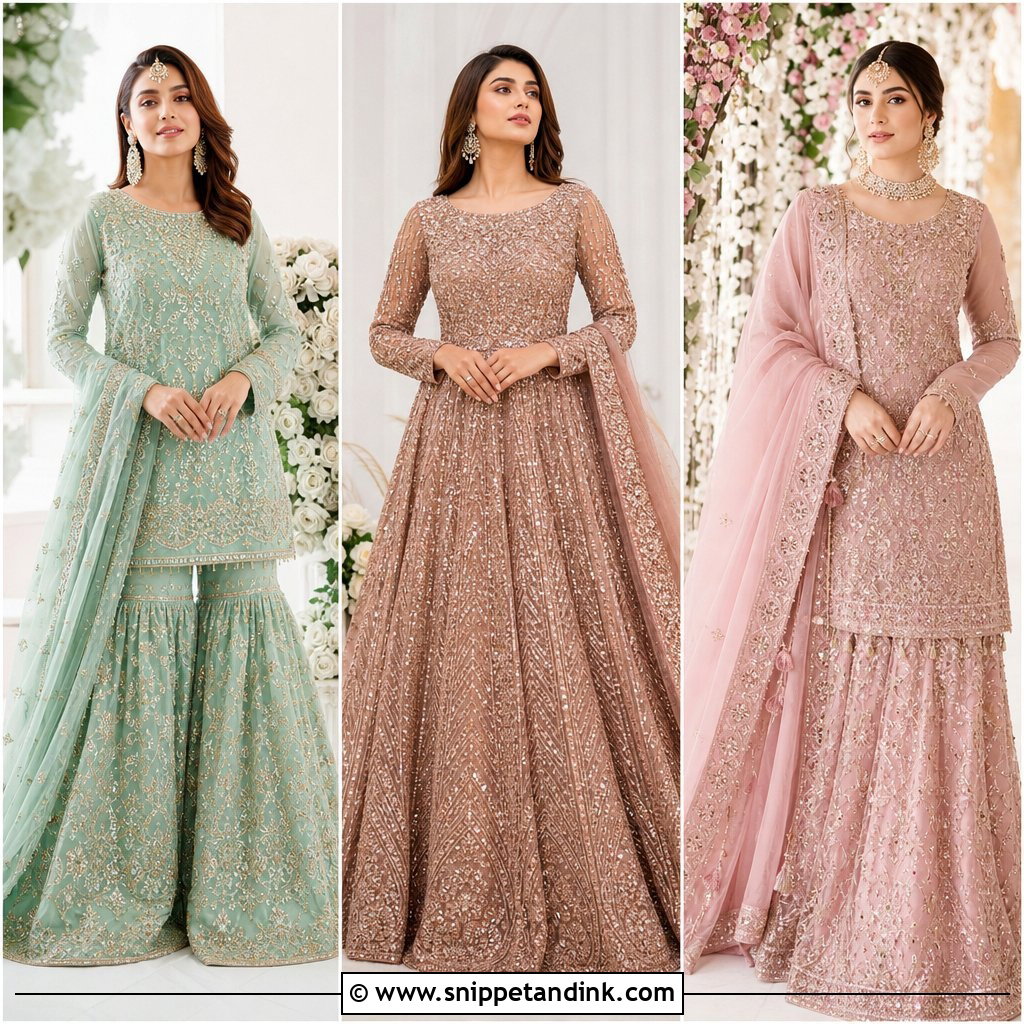
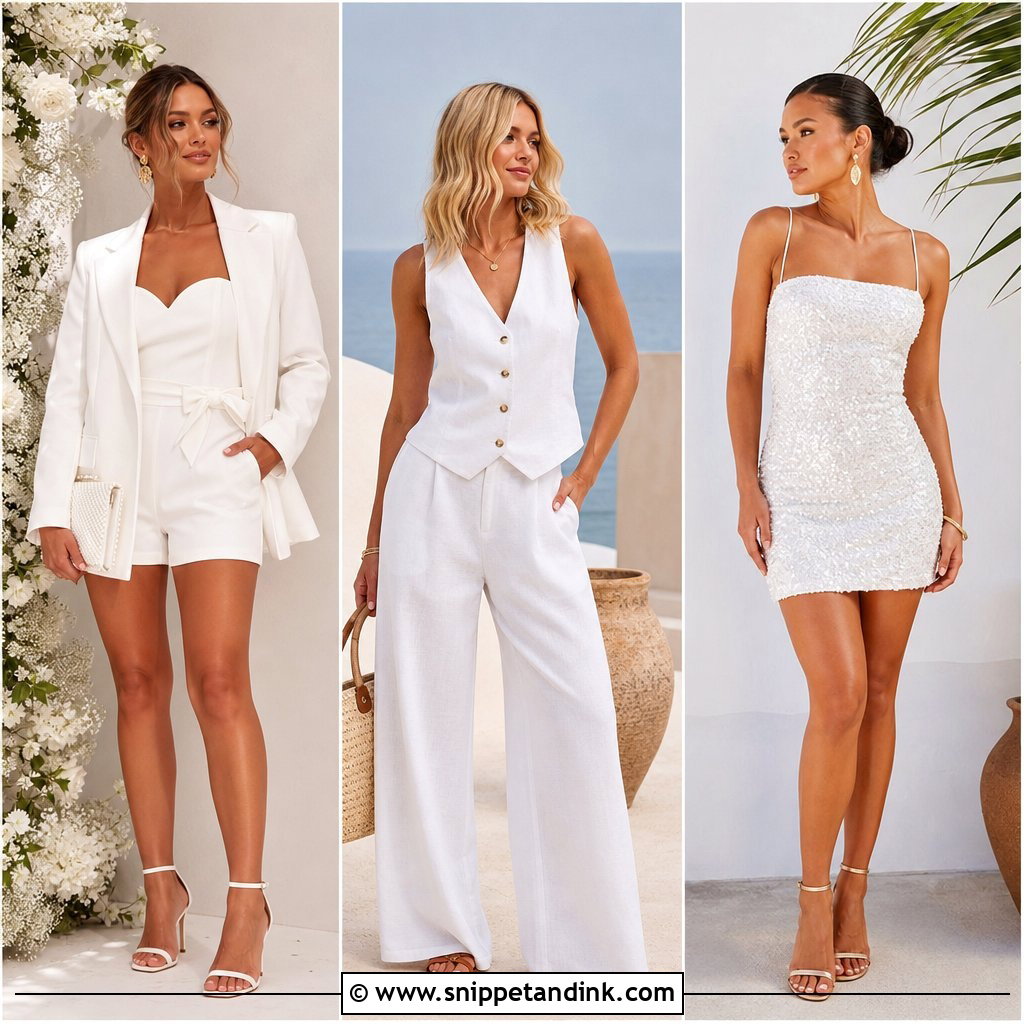
20. White Tea Length Bridal Event Dress
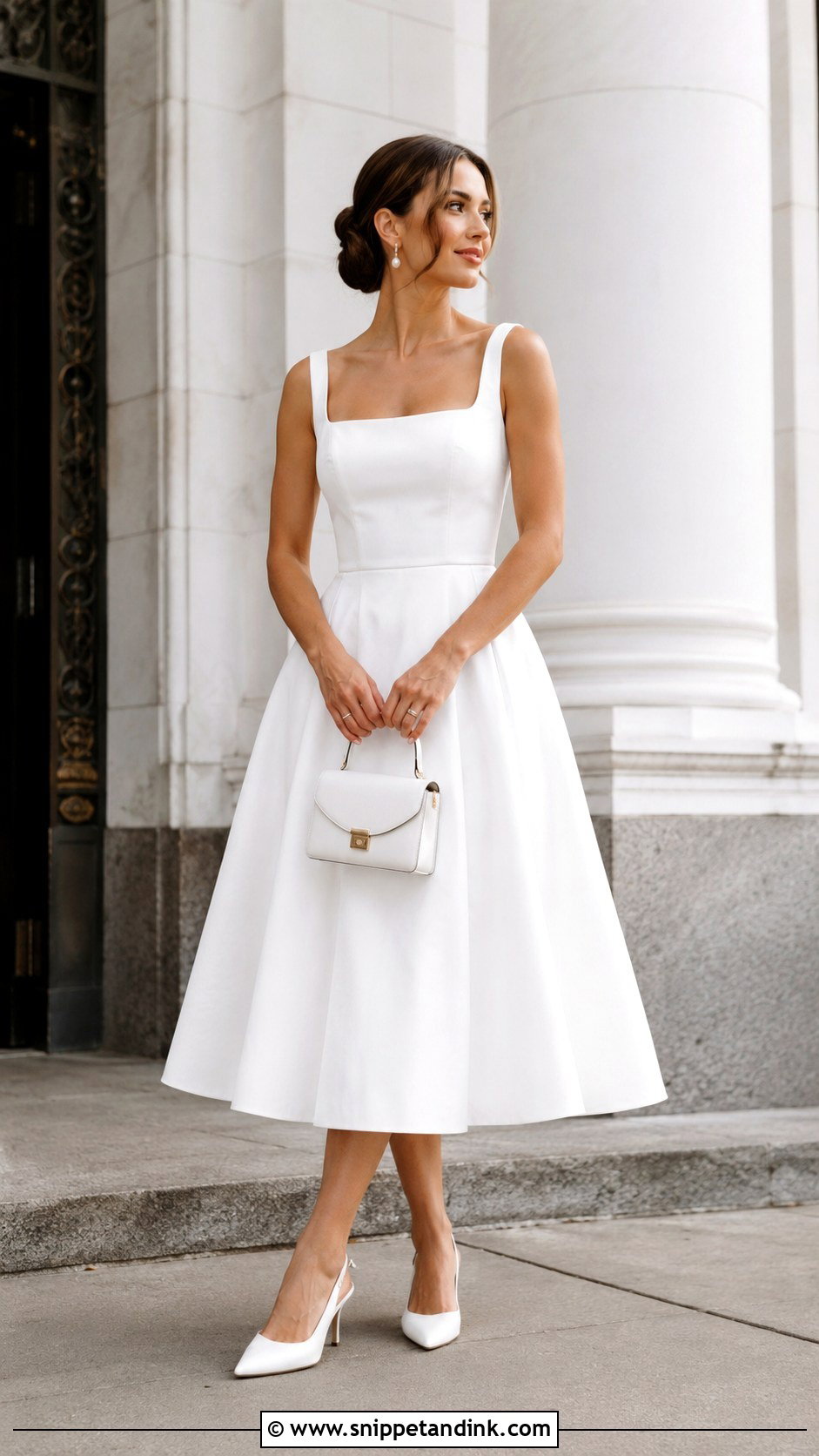
Tea length, falling between knee and ankle, has a vintage charm that suits a courthouse ceremony, a formal shower, a rehearsal dinner or a post-wedding brunch. It also shows off your shoes, so choose them deliberately. A fitted bodice with a gently flared skirt is the classic version. The exact hem point matters more than with any other length, and a few centimetres up or down changes how the calf looks. I have brides try two or three heights with a tailor before cutting. Short gloves are optional, and a cropped jacket keeps the waist visible.
Wearing White Through a Long Day of Food and Sunlight
White is unforgiving in ways that only show up on the day, so I prepare for three things.
See-through fabric
Stand by a bright window or have someone take a photo of you with the flash on. Unlined white crepe and lace can turn sheer in both. Wear skin-tone underwear rather than white; white shows through white.
Stains
Red wine, lipstick, makeup on the neckline and grass at garden parties are the usual culprits. Keep a stain pen, a white cloth and a few safety pins in your bag. Dab, never rub, and test the pen on an inside seam first. Put your dress on after your makeup, with a scarf over your face.
Heat and creasing
Satin and linen crease the moment you sit in a car. If photos happen after travel, hang the dress at the venue and steam it there. In hot weather, natural fibres and a lining will keep sweat marks off the fabric far better than polyester.
Give Each Party Its Own Dress, Then Repeat the Details
Planning several bridal looks gets simpler once every dress has a clear job. Some events are relaxed daytime gatherings, some are polished dinners, and one or two are loud and late. Start with each venue, its dress code, the season and how much you’ll be moving. Then put the money into supportive construction, the right undergarments, shoes you can stand in and alterations. You don’t need a new style for every event. Repeating a favorite pair of earrings or keeping to one color family ties the week together, and the dresses most worth buying are the ones you’ll want to wear long after the wedding.
You'll Like These Ideas:


Leave a Reply