
An updo is the most engineered thing a bride wears after her dress. It has to sit with the neckline, carry a veil, survive hugs and heat, and still look soft in photos ten hours later. Some of these are classics I build every season, like a sleek ballerina bun or a low chignon; others are softer, braided or deliberately undone. For each one I’ve noted what it needs from your hair, who it suits and where it tends to fail, so you can walk into your trial knowing what to ask for.
Let the Neckline Decide How High the Updo Sits
Before I look at any photos, I ask about the dress. The neckline and the back of the gown tell me roughly where an updo should sit.
High necks and collars
A high neck, a collar or a lace illusion yoke hides a nape bun. I move the updo up to mid-height or the crown so it’s visible above the fabric.
Strapless, sweetheart and off-shoulder
These leave the neck and shoulders bare, so almost any height works. A low chignon gives a long, clean line; a high bun makes the neck look longer still.
Low and open backs
An open back is often the most photographed part of the dress. I keep the updo neat and lifted enough that loose pieces don’t fall across it.
The veil adds one more rule: the comb needs solid hair to grip. A heavy cathedral veil wants a firm updo with the comb placed just above or below it. A very loose, tousled style may need a hidden anchor inside it.
1. Classic Low Chignon Bridal Updo
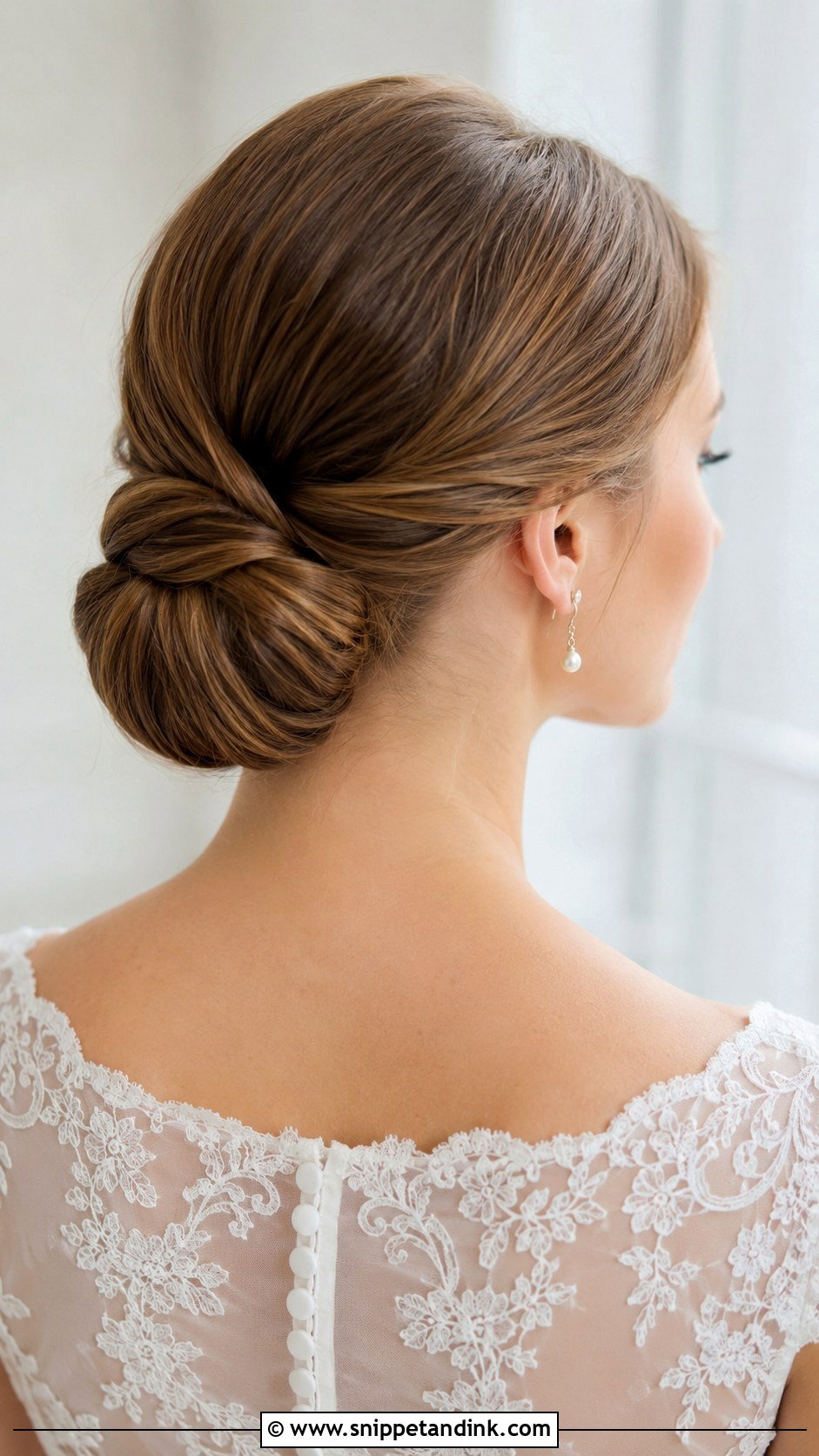
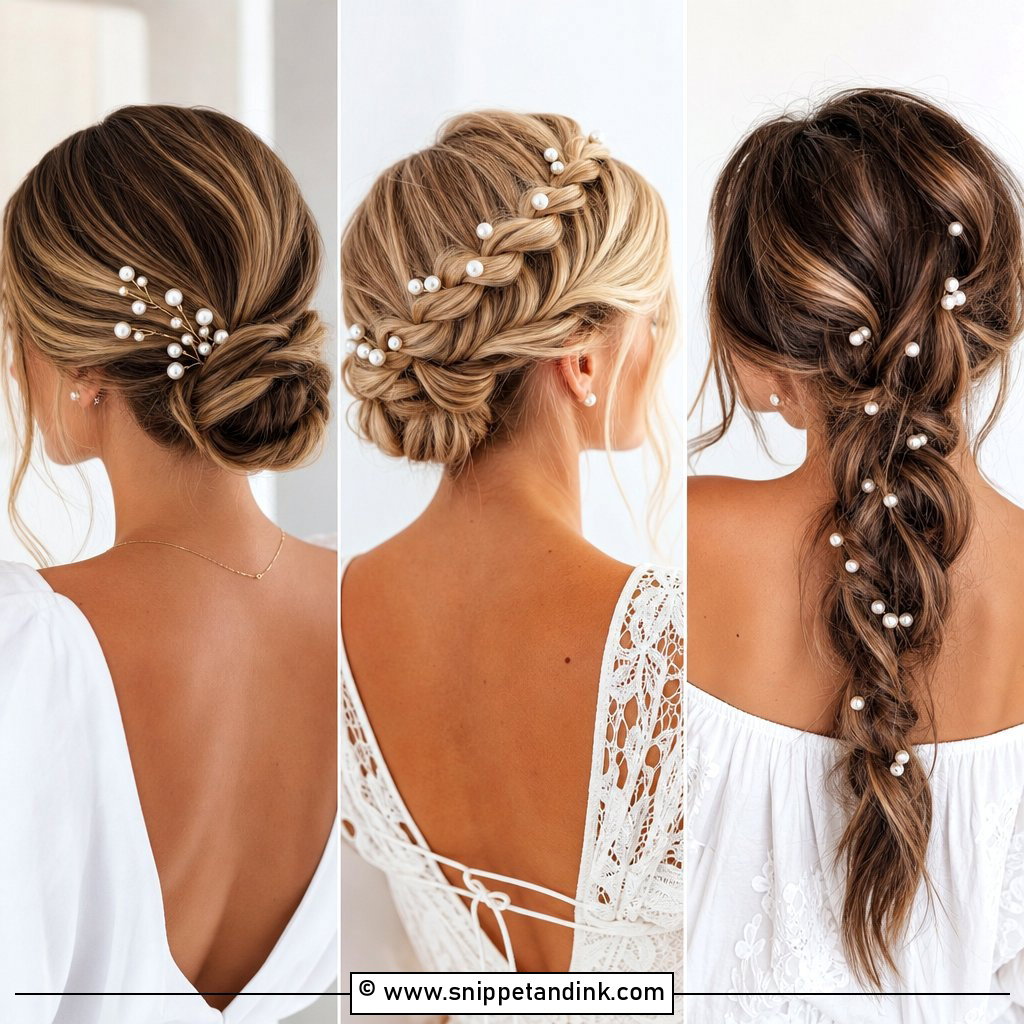
The low chignon is the updo I’m asked for most, and the one that suits the widest range of dresses. Hair is gathered and rolled into a smooth shape at the nape, so the weight sits low and stable. It can be sleek for a formal ceremony or softened with a couple of face pieces. Under a cathedral veil it’s ideal, because the comb slides in just above the roll and the veil falls cleanly. The thing I watch is the profile: a chignon set too low disappears behind a high collar.
2. Messy High Bun for Brides
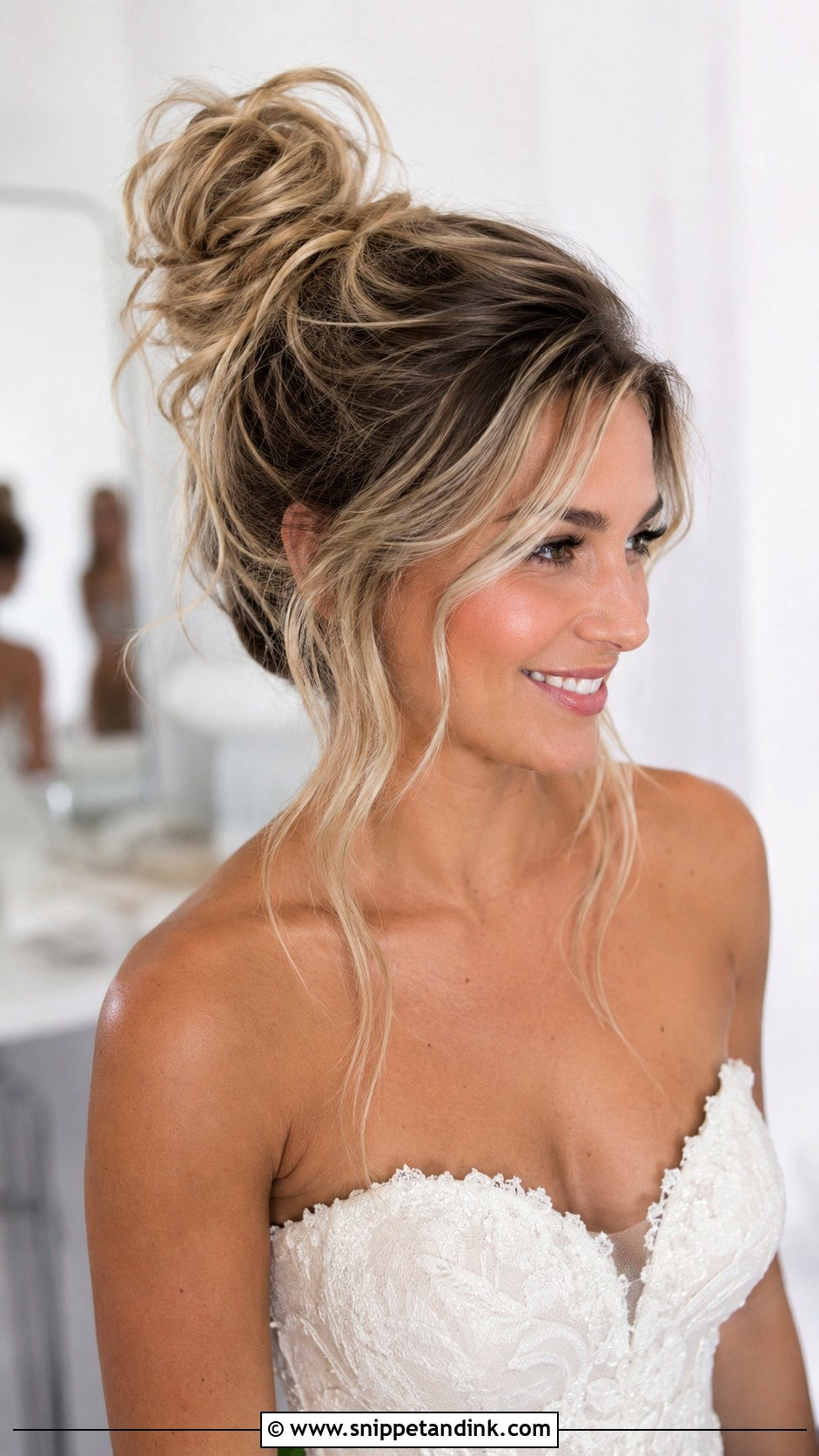
A messy high bun looks careless and isn’t. I build it on a secure ponytail base, backcomb the length for volume, then wrap and pin it loosely so the texture stays airy. The height lifts the whole silhouette, which works with strapless and high-neck wedding gowns alike. Where it goes wrong is fine, silky hair: it slides and flattens by evening. If that’s you, I’d add a small padding or a clip-in piece inside the bun. Fresh flowers or a single pin finish it.
3. Sleek Ballerina Bun With Center Part
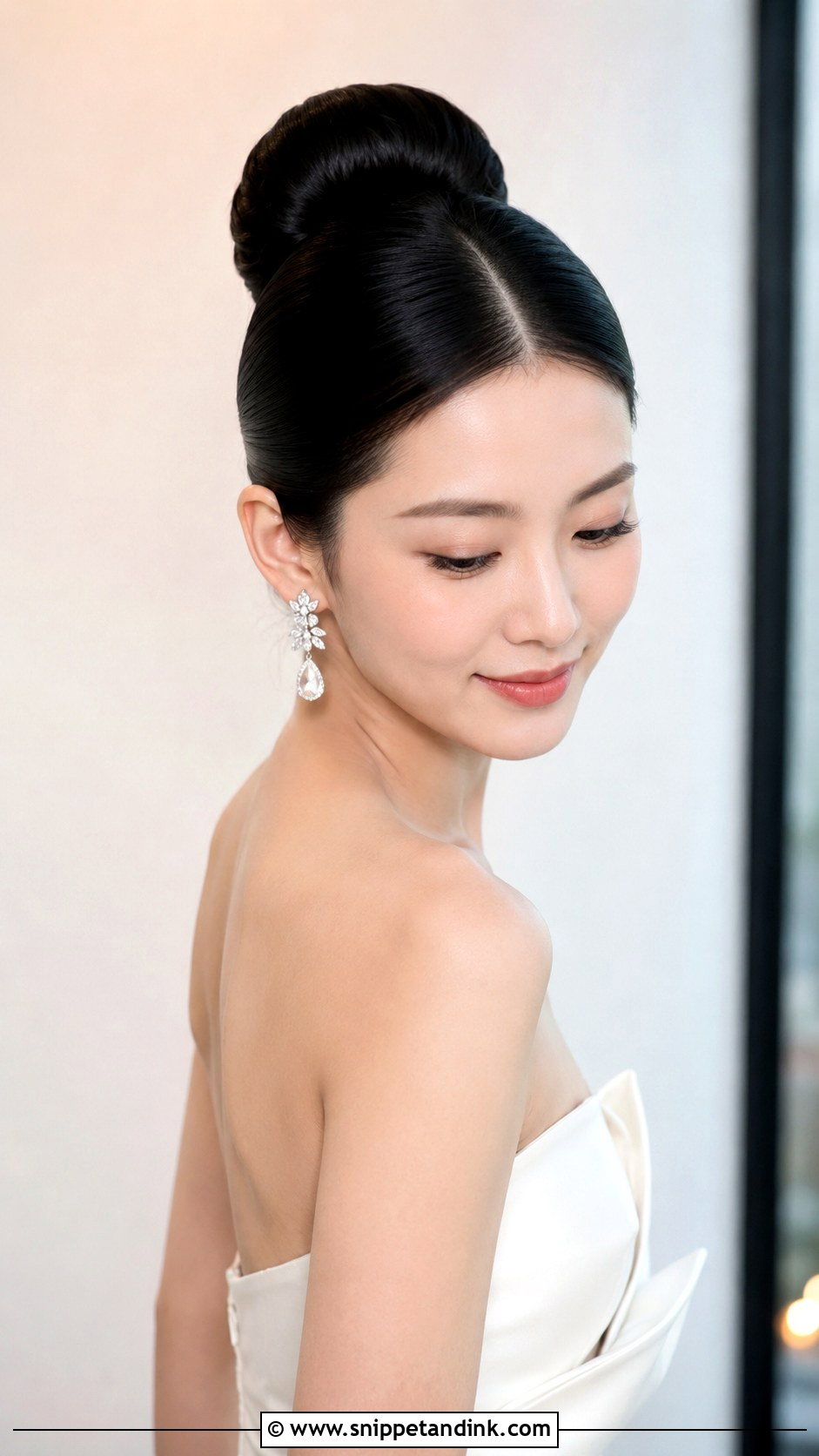
Sleek and high, with a center part: the ballerina bun leaves nowhere to hide. Every strand is brushed back to the crown, so the part has to be dead straight and the hairline smooth. I use a boar bristle brush and a little gel at the roots, then shine spray at the end. It suits satin gowns and structured dresses and lets earrings carry the jewelry. One honest warning: a tight high bun pulls on the scalp all day, so if you’re prone to tension headaches, ask for it a fraction looser and a touch lower.
4. French Twist Wedding Updo
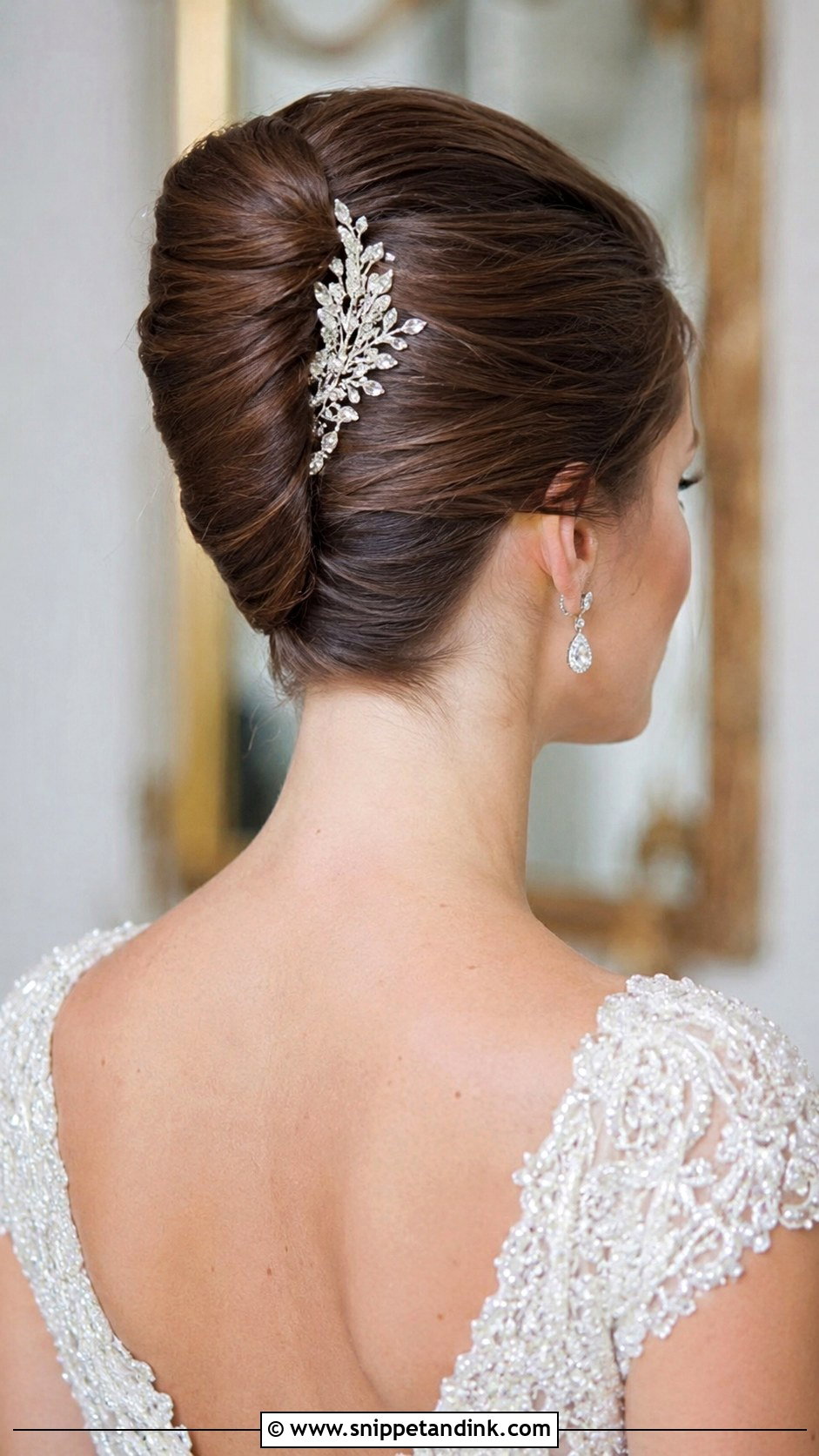
A French twist rolls the hair vertically up the back of the head, with the seam hidden along one side. It’s formal and very secure once it’s built, because the pins run along the seam and lock the roll against the scalp. I usually prep with a light backcomb underneath so the roll has something to grip. Keep it sleek or loosen a few pieces at the front. An ornate comb sits well at the top of the seam, and a veil comb goes in just above it.
5. Braided Crown Bridal Updo
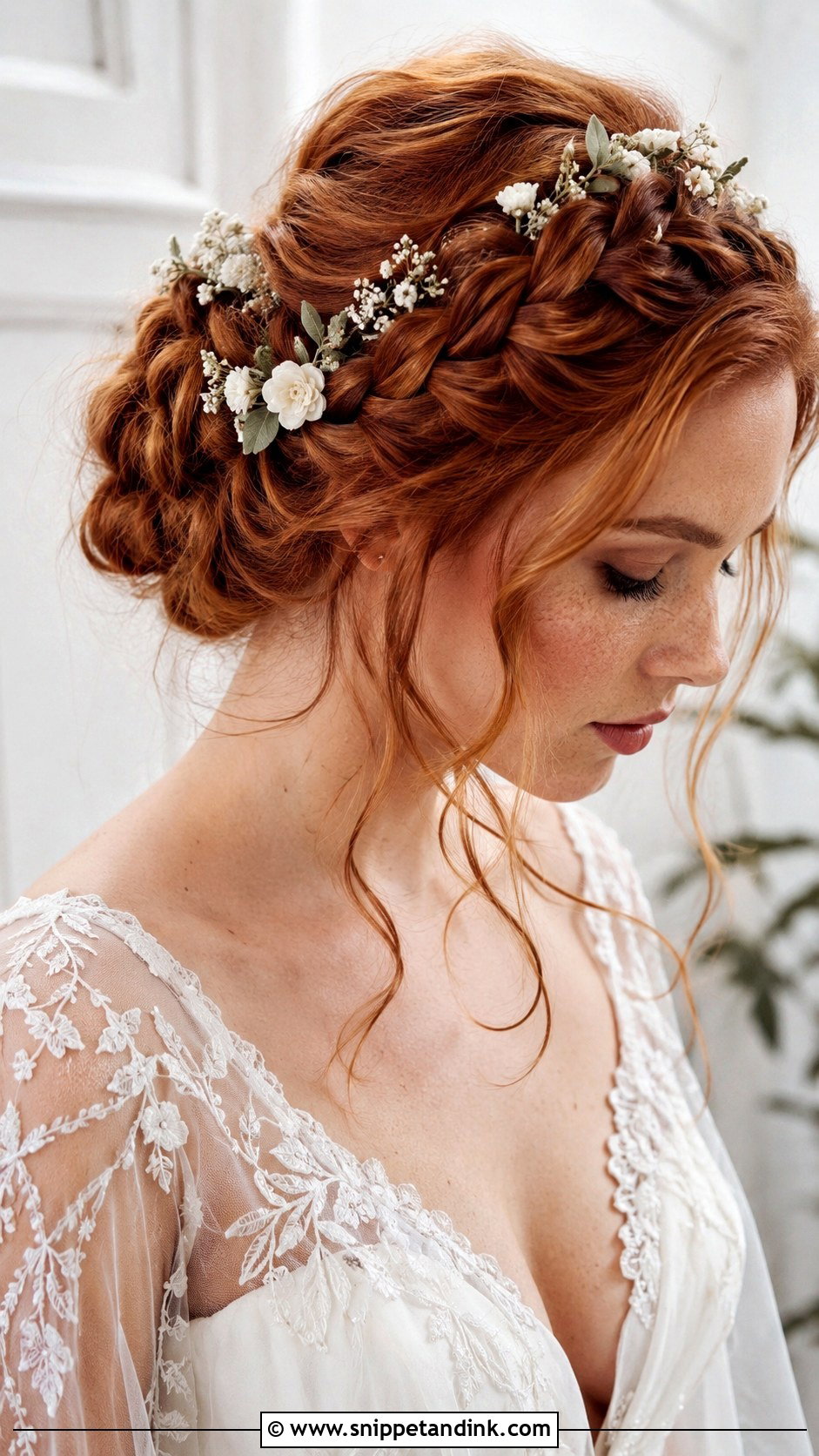
A braided crown wraps a braid around the head like a halo and keeps every bit of hair off the face. It’s lovely at garden and outdoor weddings, and small flowers, baby’s breath or greenery tuck into the plaits easily. Fine hair can do this, but the braid looks thin unless I pancake it out after pinning; thick hair braids beautifully but can feel heavy pinned on top. I leave a few tendrils loose so it doesn’t look too tidy.
6. Textured Low Bun With Loose Pieces
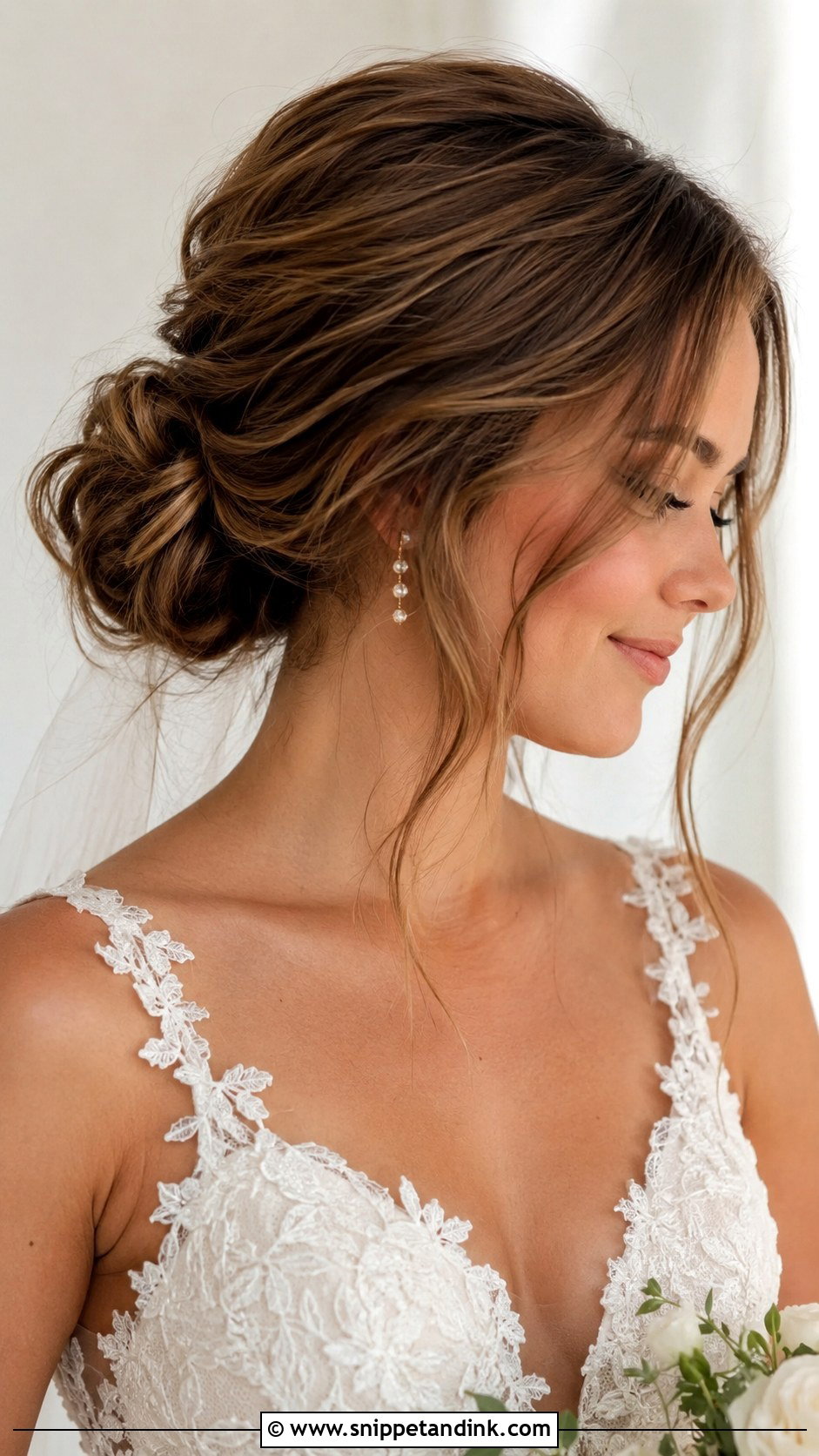
This is the updo I’d suggest to a bride who isn’t sure she likes updos. A textured low bun is gathered loosely at the nape with plenty of tousle and a few wispy face-framing pieces. The texture usually comes from curling the hair first and brushing it out before pinning. Ask your stylist to curl those face pieces separately, or they hang limp by the speeches. It works with most necklines.
7. Half-Up Half-Down Bridal Style
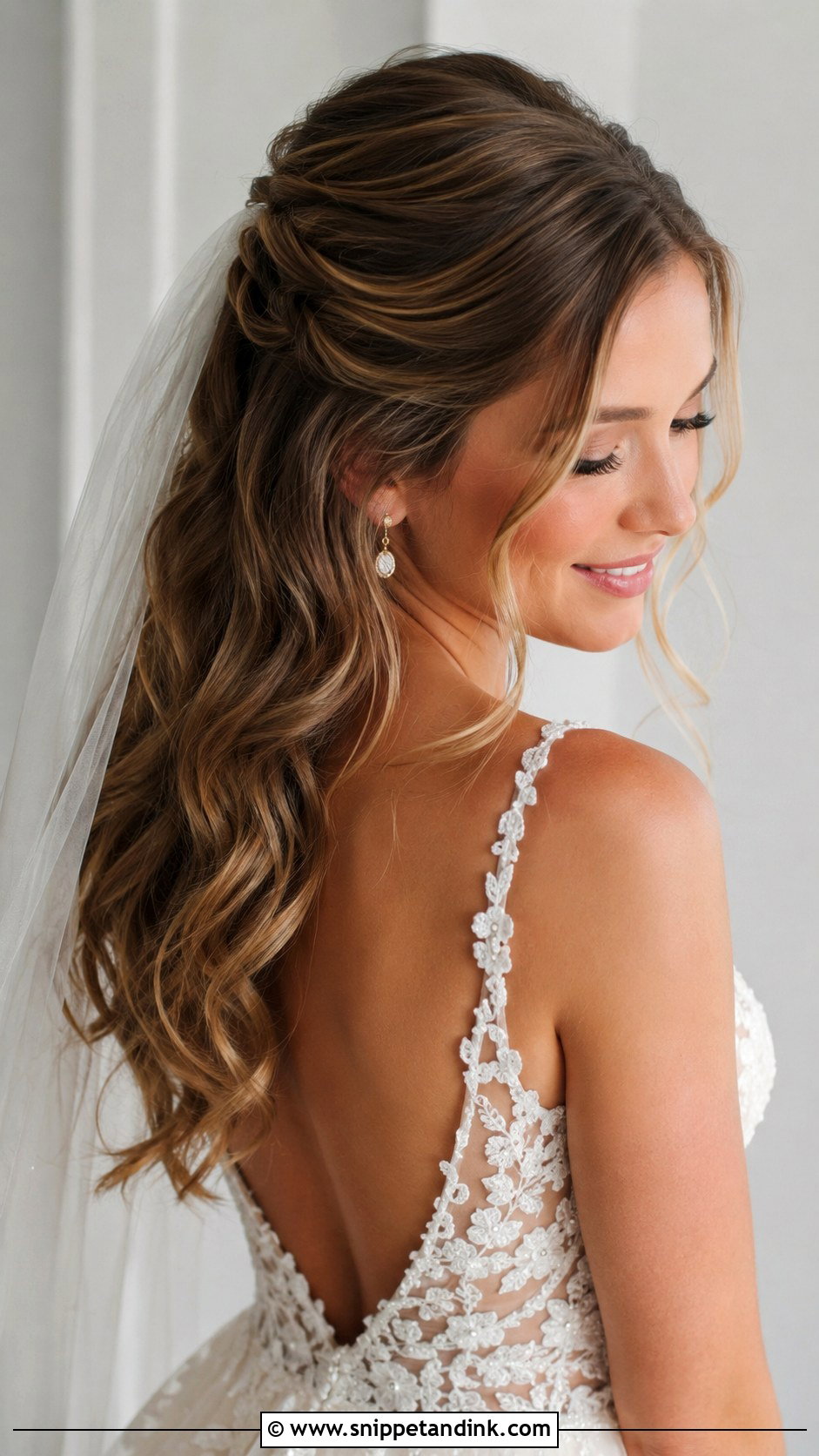
Half up, half down isn’t strictly an updo, but it’s often the compromise brides land on. The top and front sections are pinned back while the rest falls in waves. The current version is softer, with looser waves and fewer stiff curls than it used to have. A small twist or braid where the sections meet adds interest. It suits medium and long hair and takes veils, flower crowns and pins. For hot or humid days I’d still lean toward a full updo, since the loose lengths are what drop first.
8. Curly Bridal Updo for Natural Hair
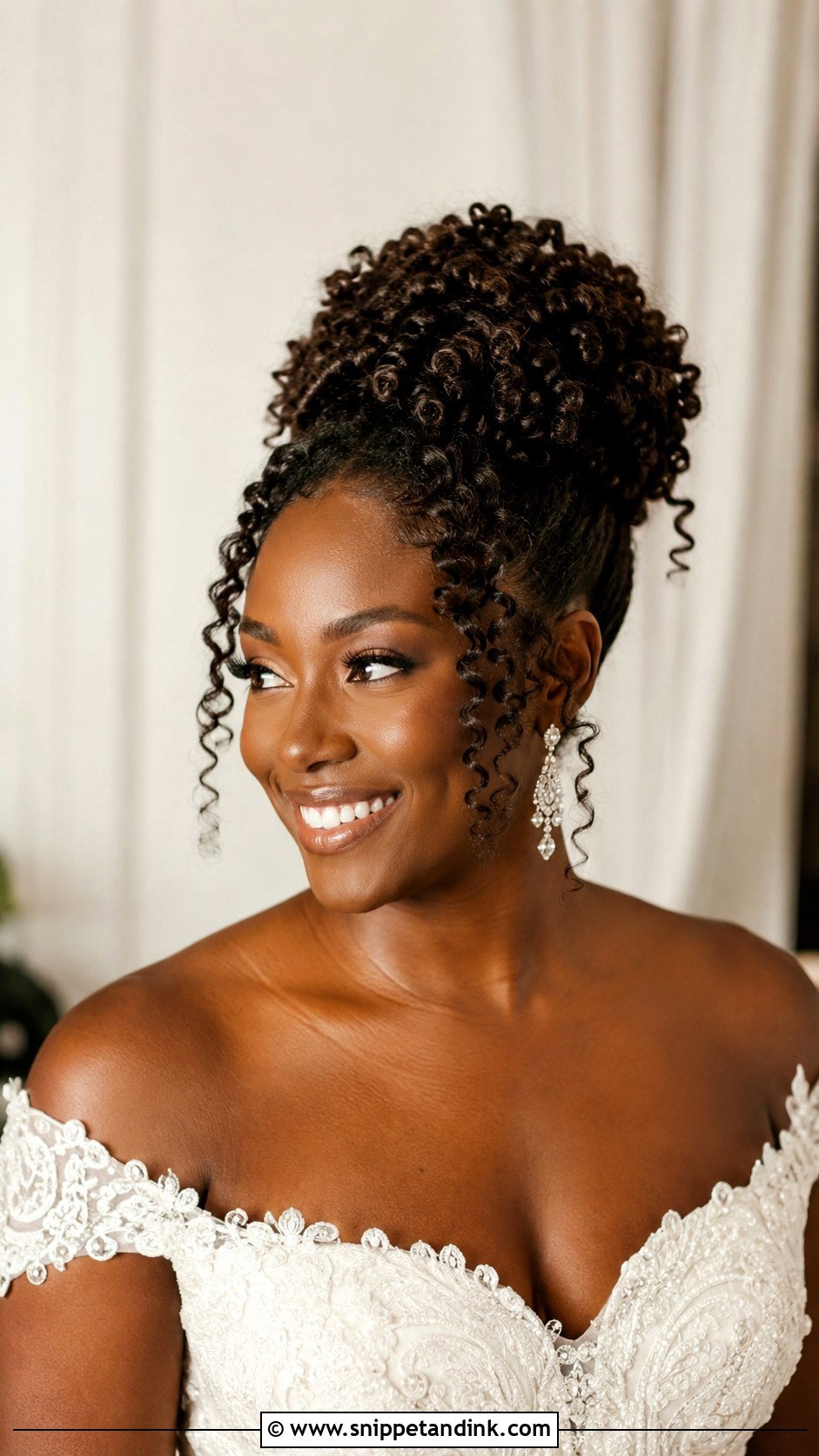
With natural curls, the worst thing a stylist can do is brush them out to make pinning easier. I gather the curls into a soft, voluminous updo at the crown or nape, pinning under the curl pattern so the shape stays defined. Moisture matters more than hold here: a leave-in conditioner and a defining cream keep curls from frizzing during the day. A few curls left loose at the face soften it. Statement earrings or fresh blooms both suit this look, at any kind of venue.
9. Fishtail Braid Updo for Weddings
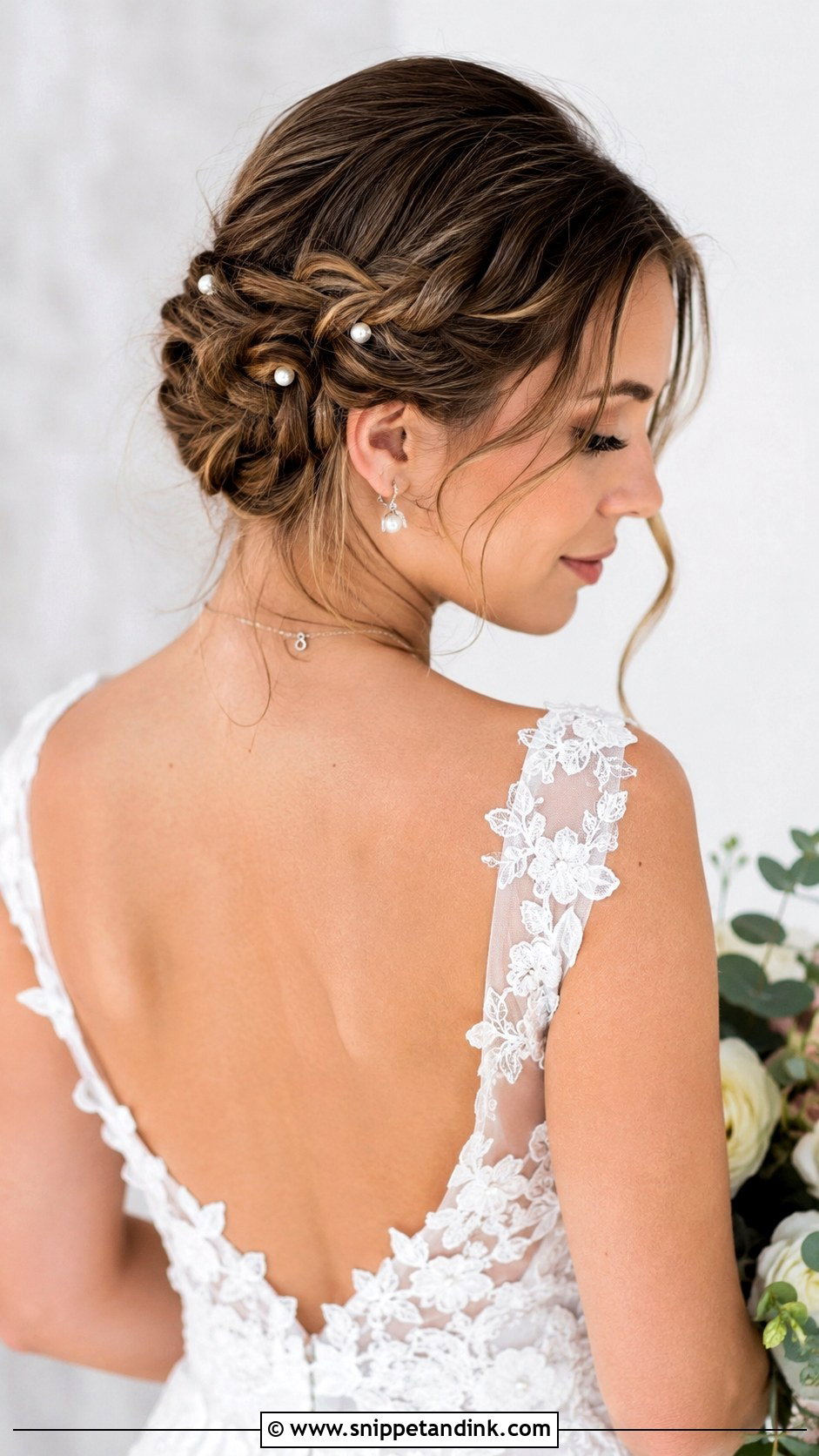
A fishtail updo starts with a fine, tight braid, usually two fishtails, which are then coiled or pinned into shape. The small woven pattern catches light, so it reads well in close-up photos. Spring and summer weddings suit it. I loosen the braid carefully after pinning, never before, otherwise the coil collapses when I shape it. Pearl pins or small flowers along the braid are enough.
10. Vintage Finger Wave Updo
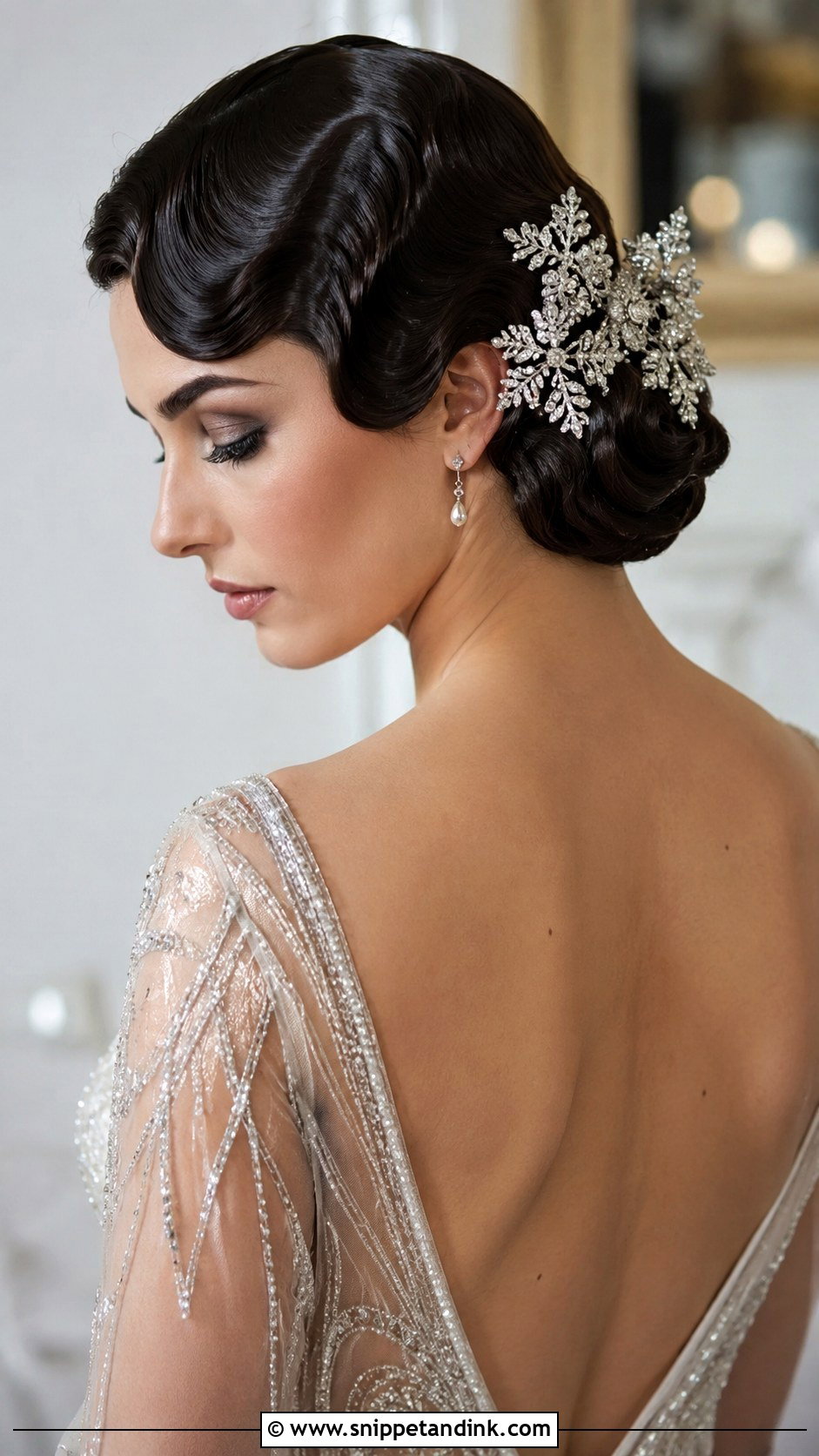
Finger waves are a precise, old-fashioned technique: the S-shaped ridges are sculpted with setting lotion and fingers or clips while the hair is wet or set with heat, then the back is pinned into a sleek low updo. It’s dramatic and suits art deco or very formal weddings. Fair warning: this takes longer than almost anything else here, so allow extra time on the morning. A birdcage veil or a sparkling comb completes it.
11. Twisted Updo Bridal Hairstyle
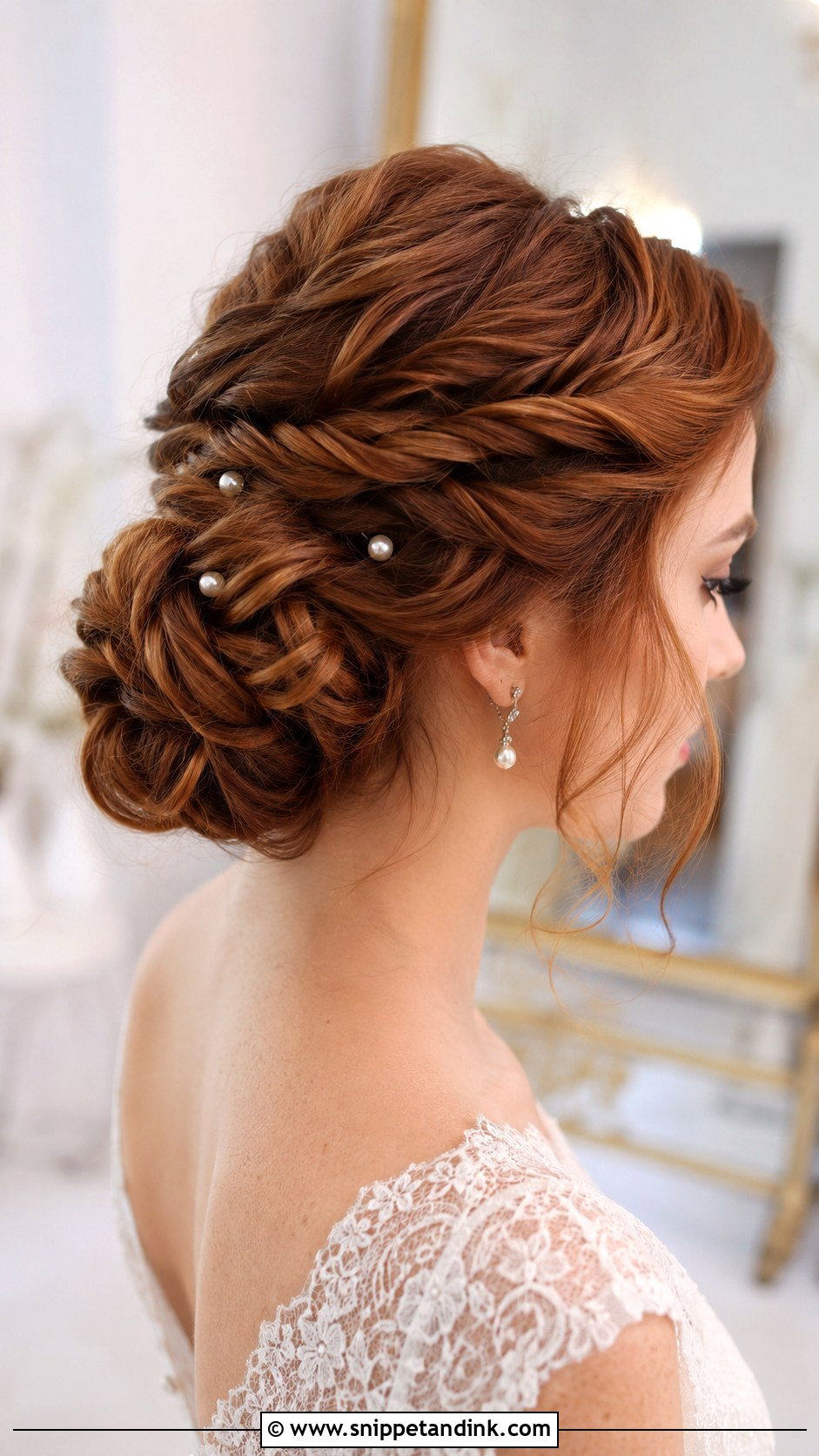
Twists are the easiest route to texture without braiding. I take sections, twist them, then pin them into a soft roll or bun, letting each twist overlap the last so they hold each other in place. It suits most hair types, formal or casual. Keep it smooth or pull a few pieces loose. Pearl pins or small flowers tucked between twists add detail without adding weight.
12. Low Bun With Side Braid
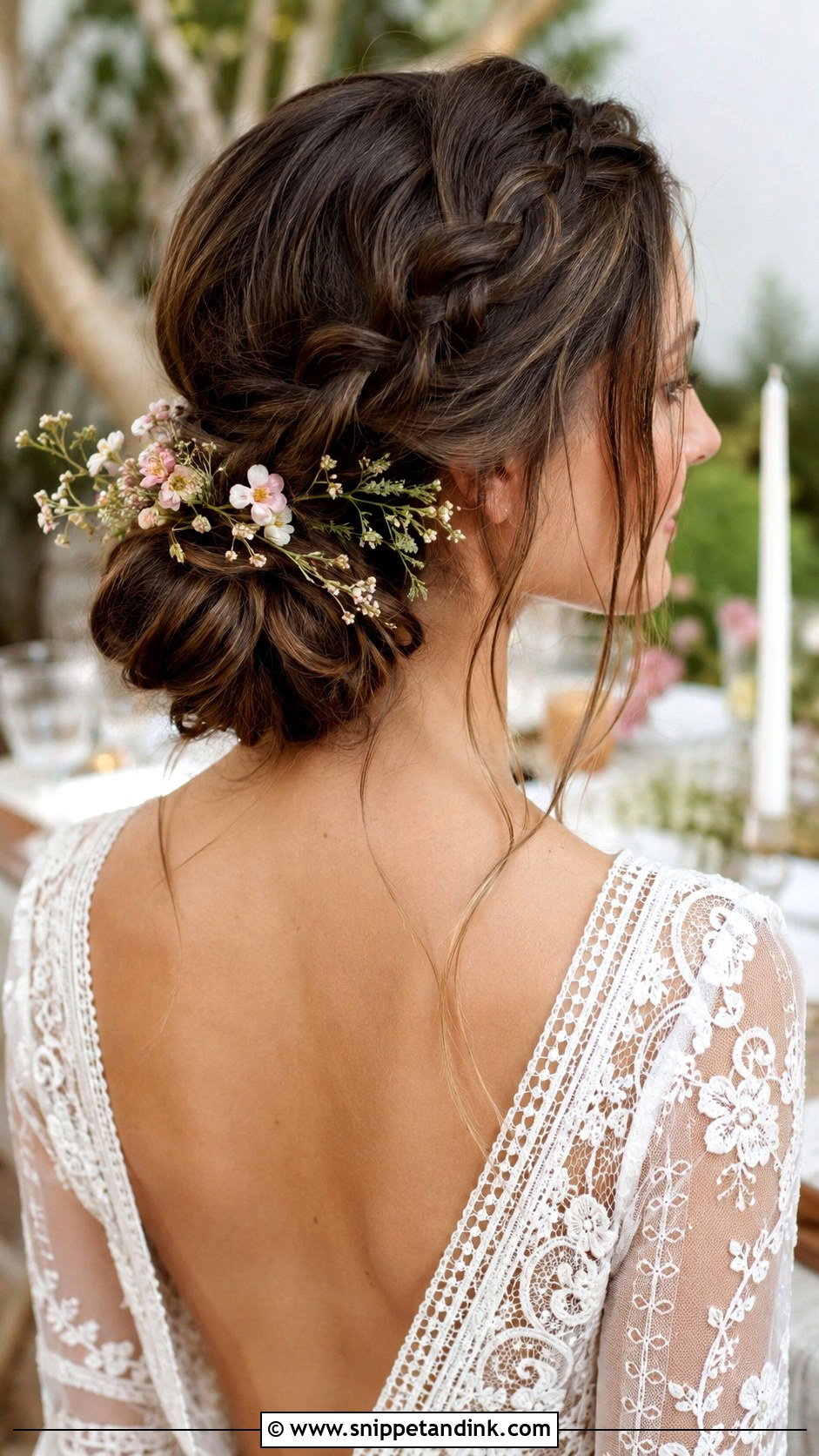
A braid runs along one side of the head and flows into a soft bun at the nape. The braid does double duty, adding detail and anchoring the side hair so it can’t fall out. I usually start it just behind the front hairline rather than right at the part, which keeps it from looking like a school plait. It suits garden parties and outdoor ceremonies. Loose tendrils or a few flowers soften it.
13. Sleek Wrapped Ponytail Updo
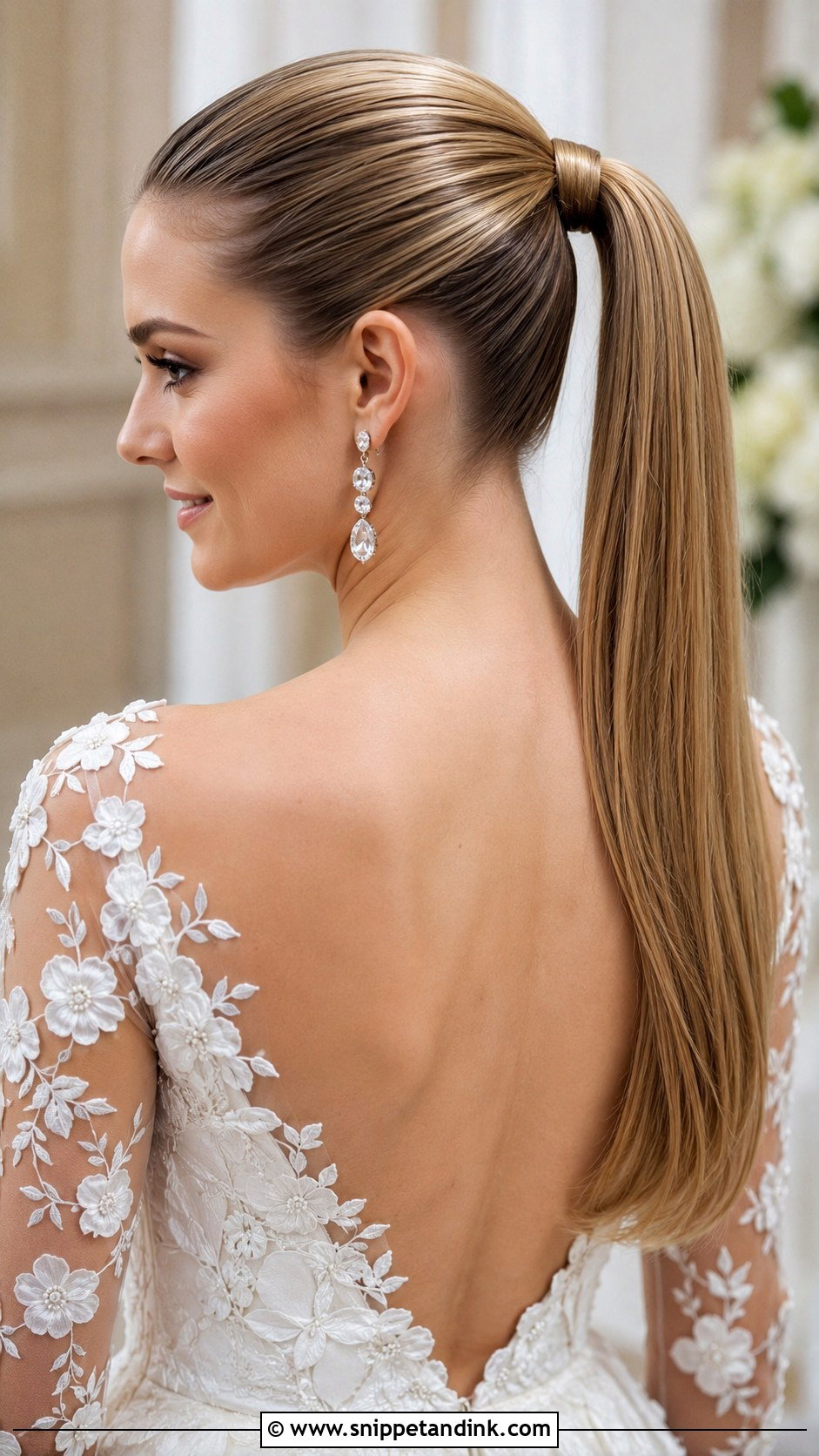
The wrapped ponytail is clean and modern: hair is pulled into a smooth high ponytail, and a section is wrapped around the base to hide the elastic. I secure the wrap with a pin pushed upward into the base, which stops it unwinding during the dancing. Keep the length glossy and straight or give it soft waves. Statement earrings and a sleek gown suit it. Brides with very thick hair should know it gets heavy by late evening; a lower placement helps.
14. Romantic Updo With Face-Framing Tendrils
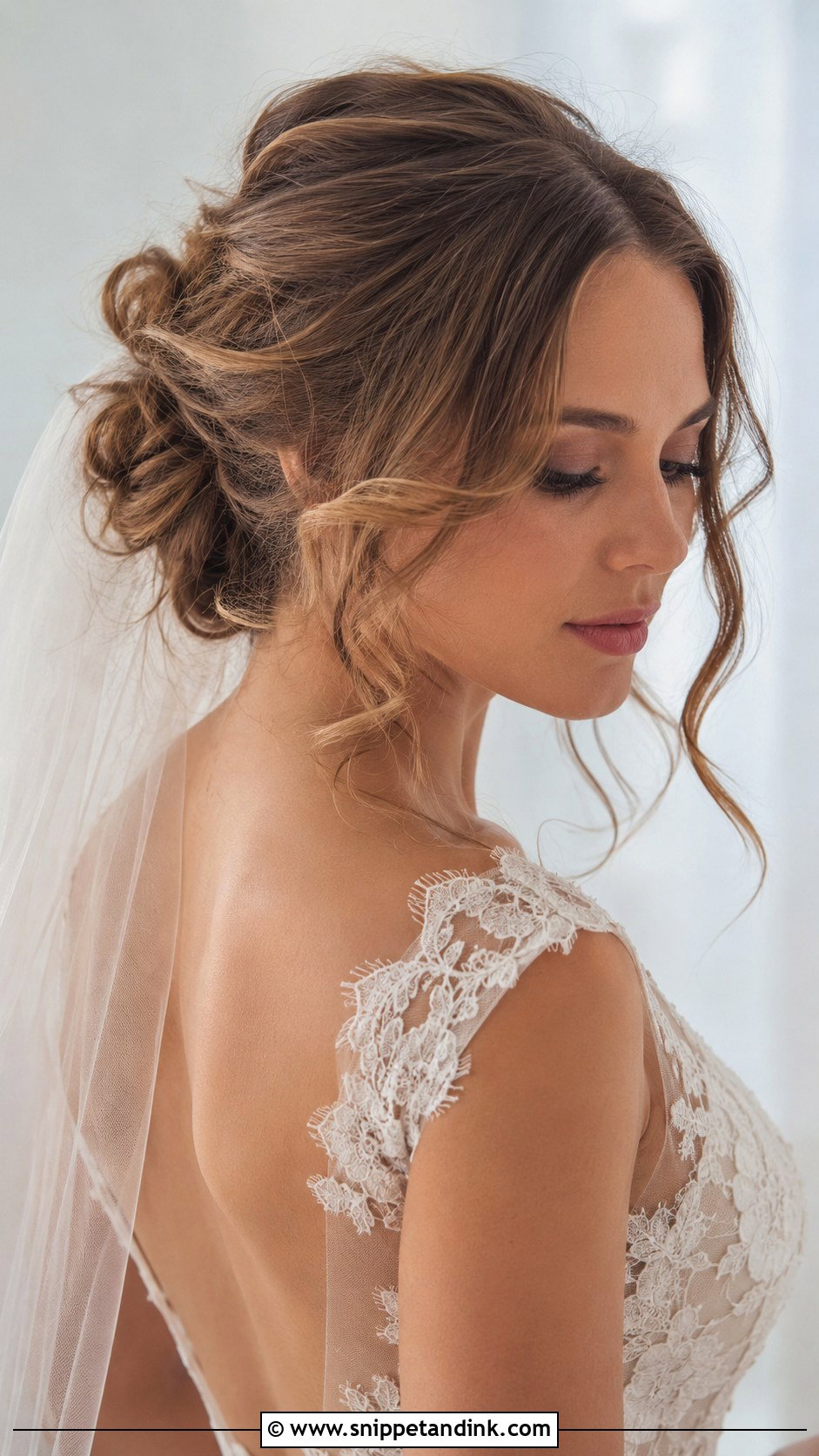
The tendrils make or break this one. The bulk of the hair is swept into a loose bun or chignon, and wispy pieces fall around the temples and neck. Too many tendrils and it looks unfinished; too few and it looks severe. I usually pull out two or three on each side, curl them with a small iron and leave the back of the neck mostly clear. It sits well with veils, hairpins and fresh flowers.
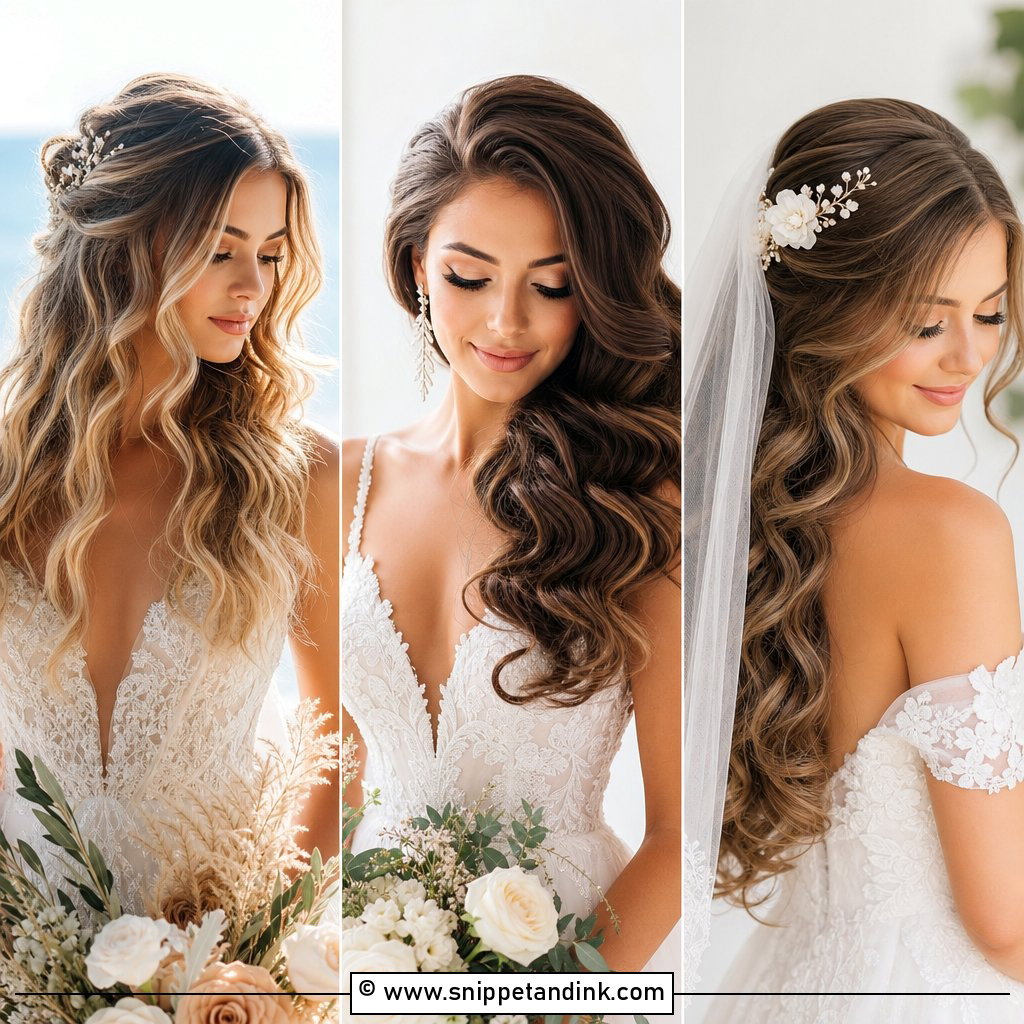
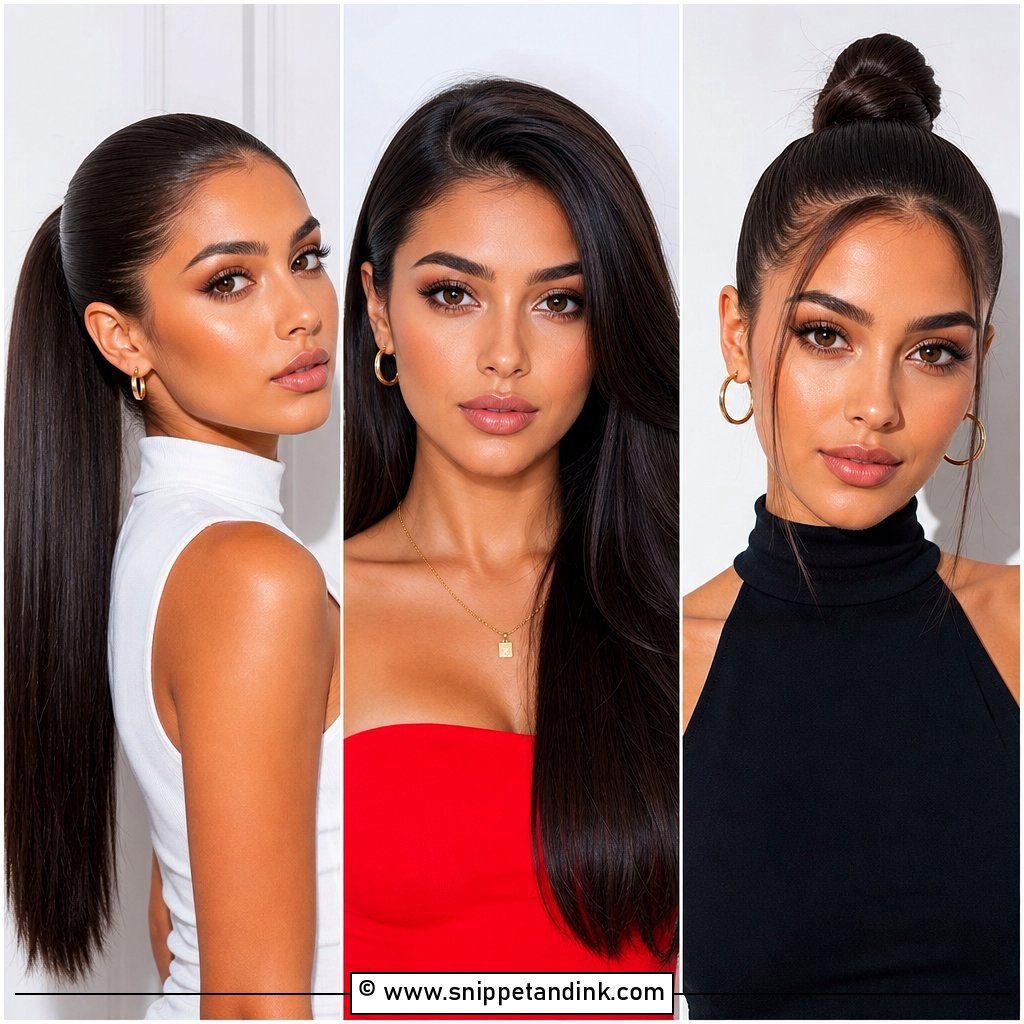
15. Halo Braid Bridal Updo
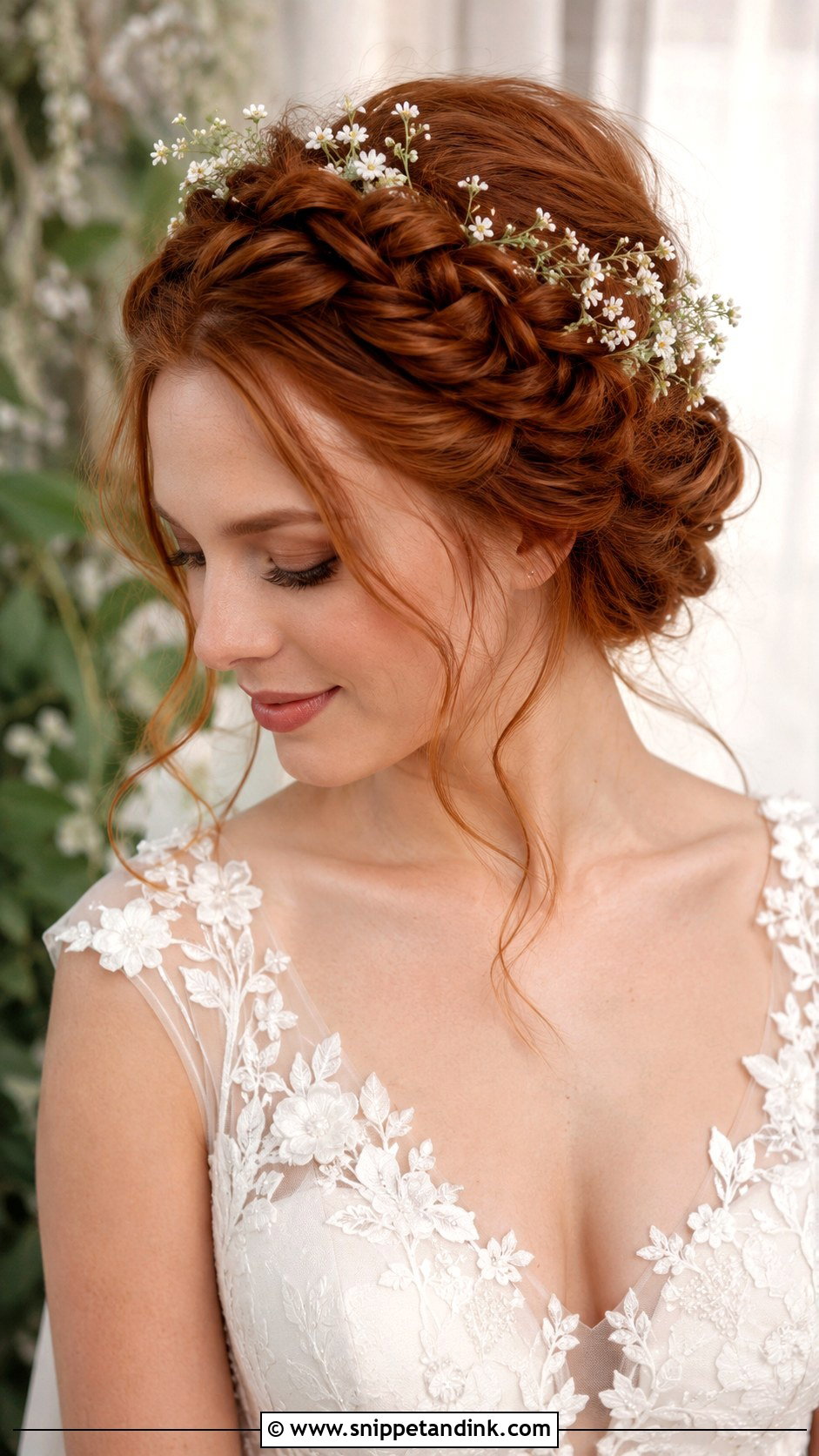
The halo braid wraps around the head with soft volume beneath it. Unlike a flat crown braid, it’s usually a Dutch braid pancaked out wide, so it sits up from the head like a band. That needs reasonably long hair; shoulder-length hair often doesn’t reach all the way round, and I’ll add a small clip-in piece to finish the circle. Tiny flowers or pearls woven through suit outdoor and fairytale-themed weddings.
16. Pinned Back Curls Wedding Updo
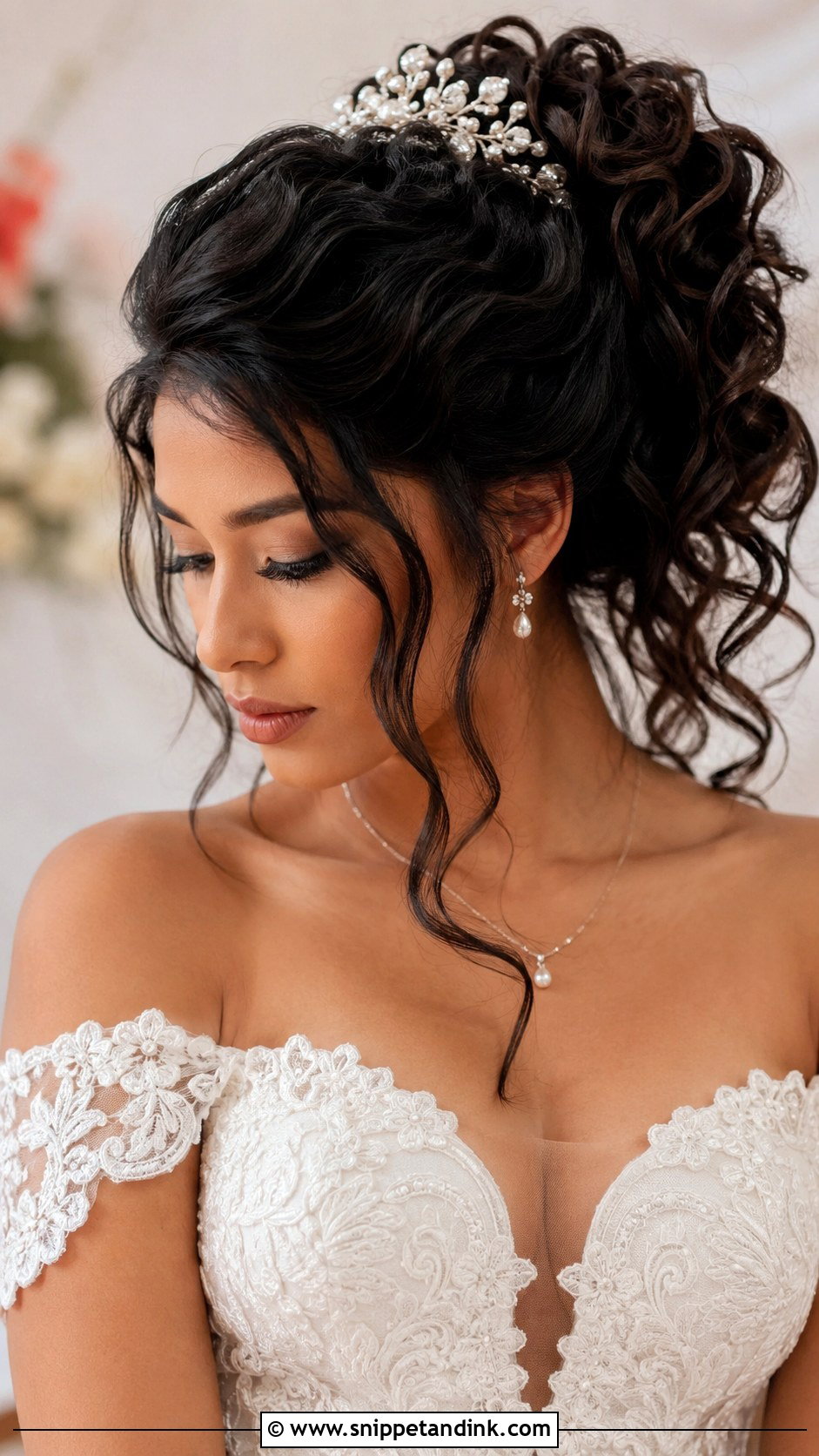
Pinned-back curls are gathered at the crown or nape while keeping their bounce. It’s the version I recommend for brides with naturally curly or well-set hair who want volume without a structured shape. I pin each curl at its base rather than through the middle, so it keeps its spring. Decorative pins, combs or fresh blooms suit it, and it works with most necklines.
17. Glossy Clean Low Bun
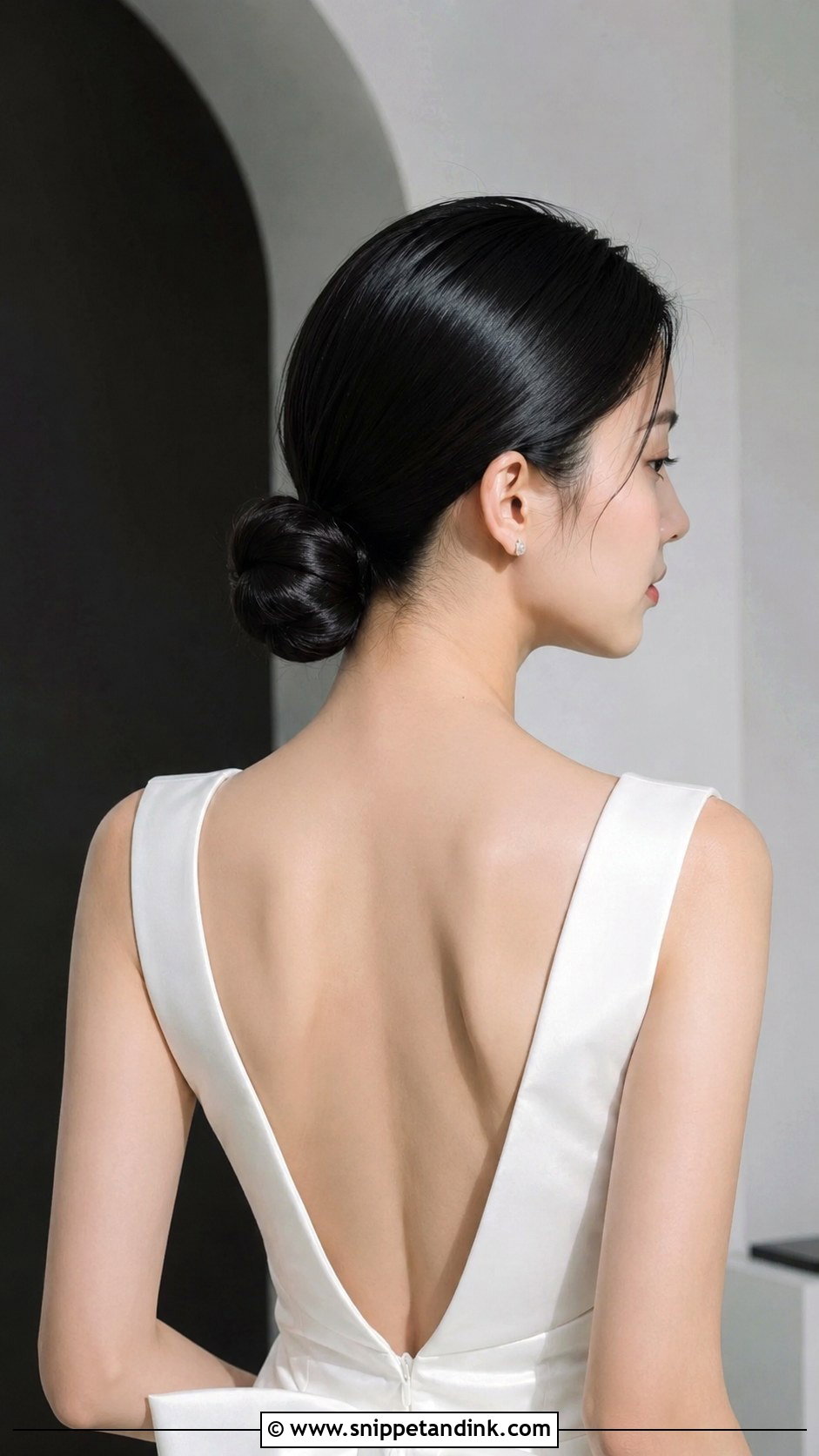
A glossy low bun is pure precision. The hair is brushed into a tight, smooth bun at the nape with almost no decoration, so the shine is the whole look. I blow-dry the hair straight first, use a little smoothing balm and finish with shine spray. It lets jewelry stand out against a minimalist or structured gown. It’s also one of the most durable updos on this list, because nothing is loose enough to drop.
18. Boho Updo With Flowers
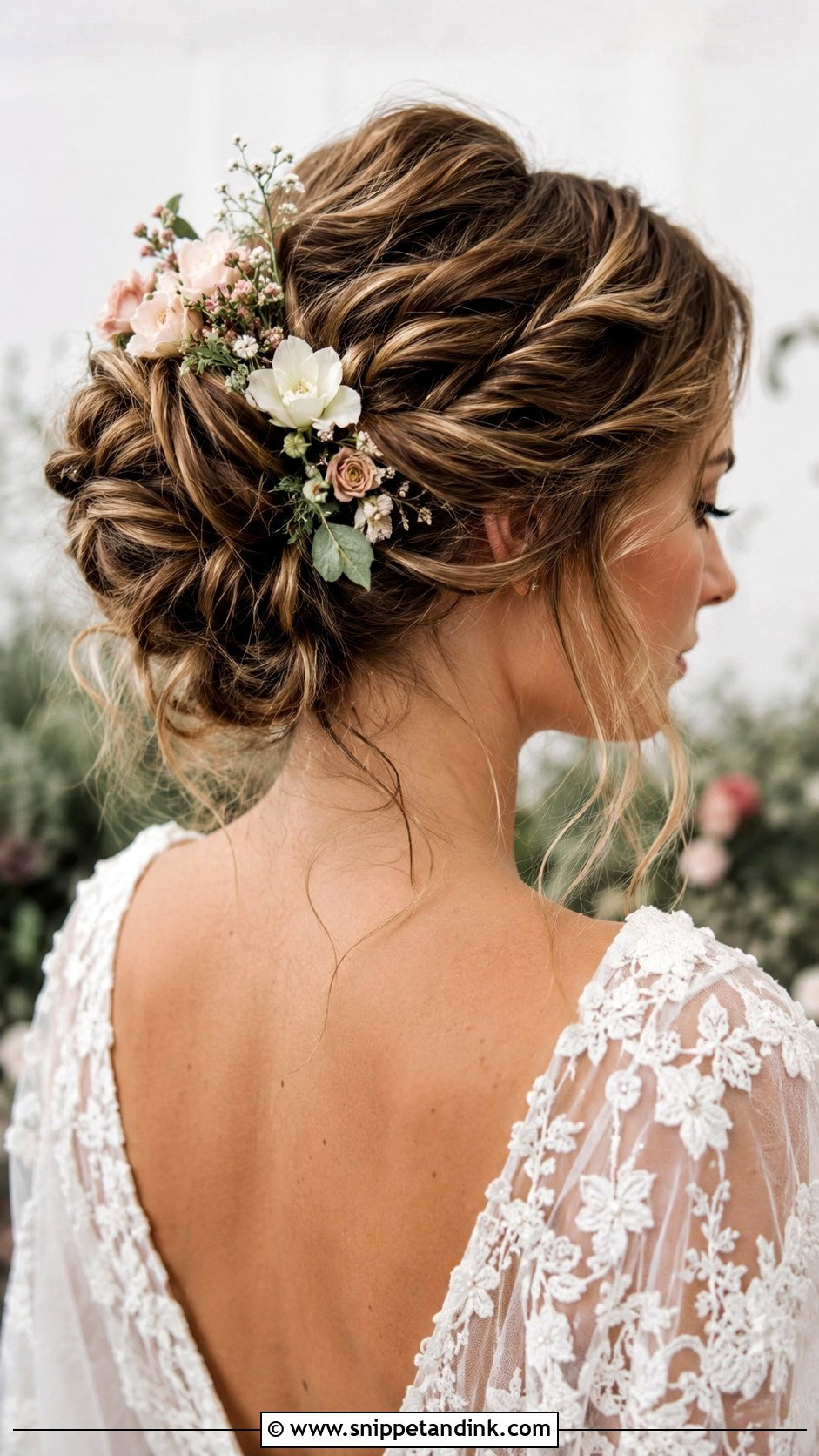
A boho updo with flowers mixes loose twists, braids or a soft bun with fresh blooms tucked through it. Baby’s breath reads delicate; larger blooms read bold. I wire stems into the hair rather than relying on pins alone, because petals add weight and slip once the day warms up. Ask your florist for flowers that hold up out of water. Loose tendrils finish it.
19. Dutch Braid Updo for Brides
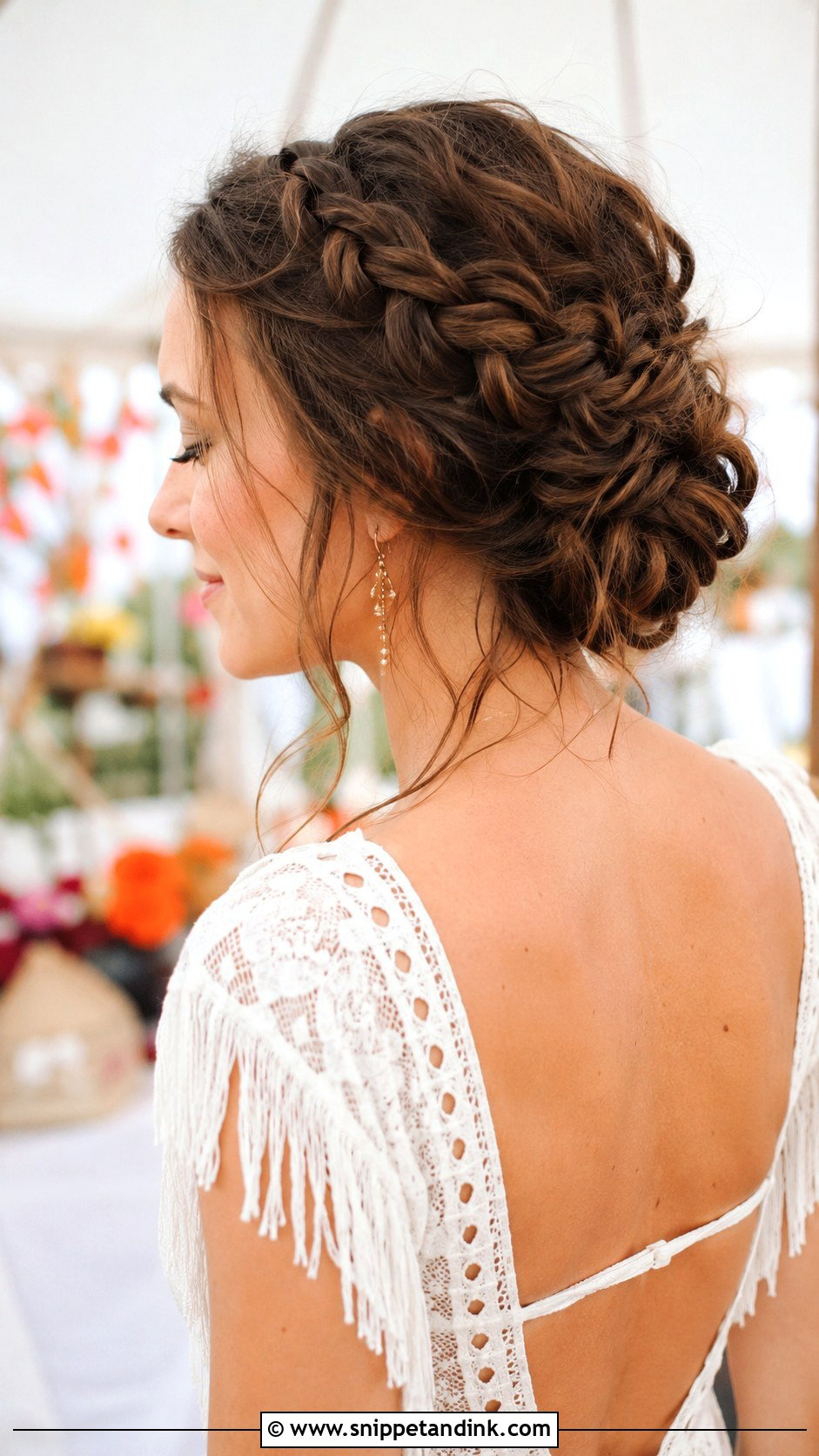
Dutch braids are plaited under rather than over, so the braid sits raised on top of the hair. That’s what makes them so visible in an updo. One bold braid or several woven together both work, then gathered into a bun at the nape. They hold extremely well, which is why I like them for outdoor and festival-style weddings with lots of movement. Loosen the braids slightly after they’re pinned for a softer finish.
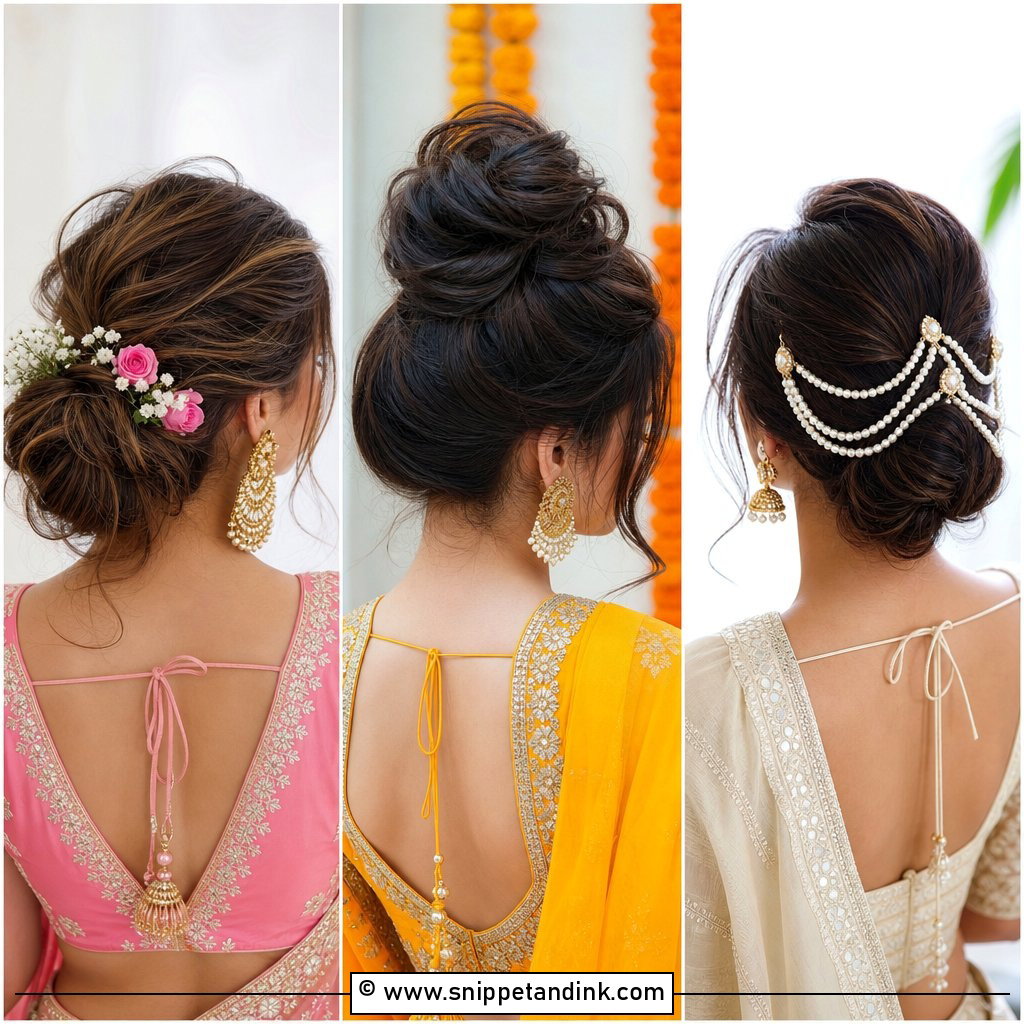
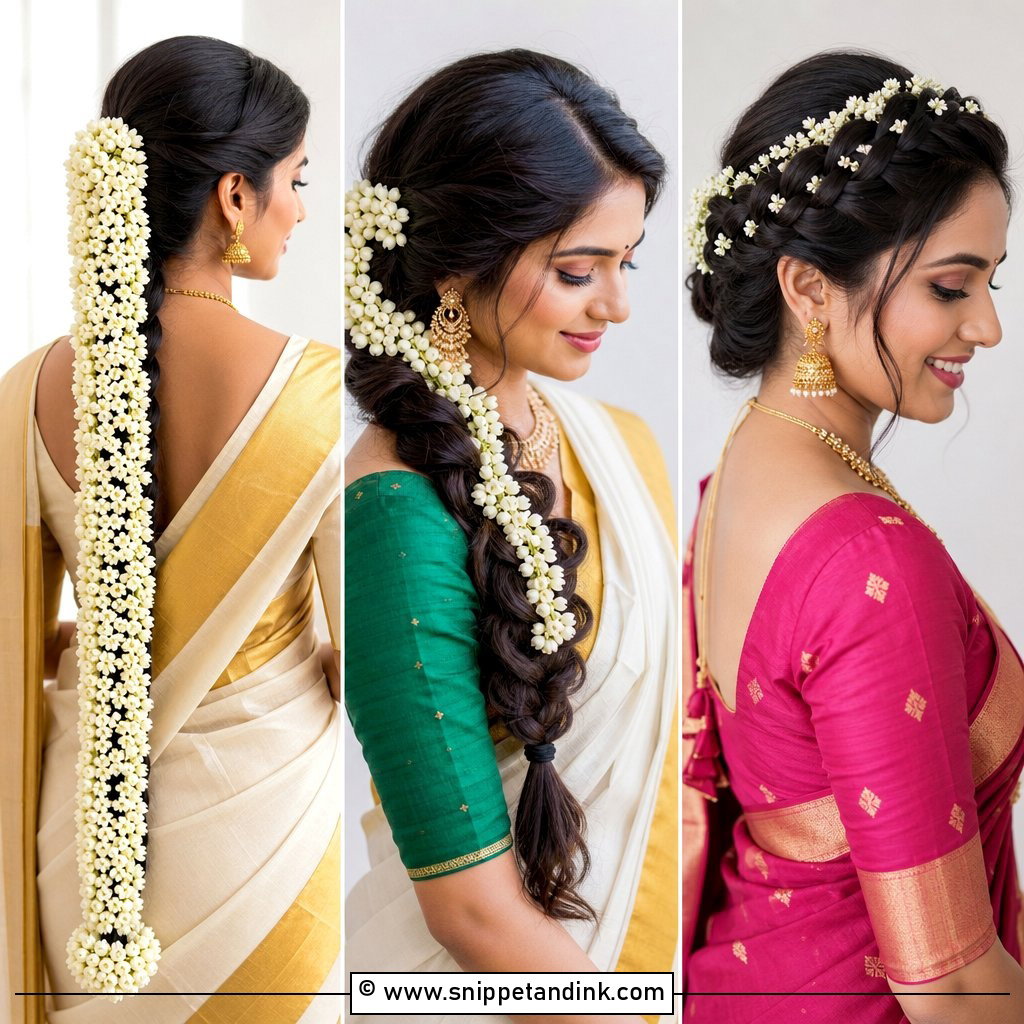
20. Side-Swept Updo With Soft Waves
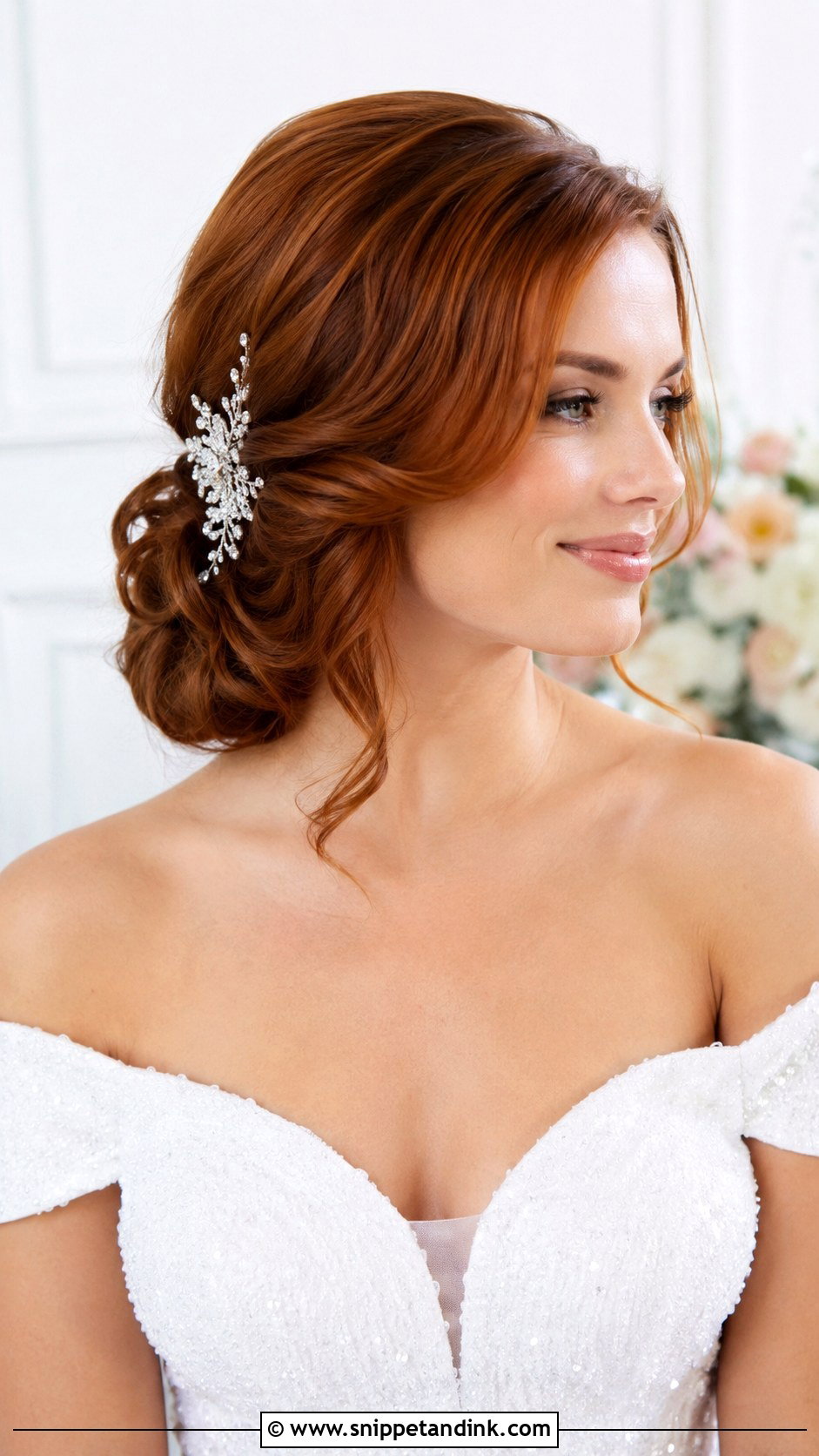
Hair is gathered to one side and secured in a soft low bun or twist, with waves left framing the face. Put it on the side opposite your best side for photos, since the open side faces the camera. It suits one-shoulder and off-shoulder gowns, with the bun on the covered shoulder so the neckline stays clear. A sparkling comb or a few fresh flowers can sit where the waves meet the bun.
Arriving With Hair an Updo Can Grip
Freshly washed, conditioned hair is slippery, and slippery hair doesn’t hold pins. Ask your stylist how they’d like your hair prepared, but this is what most of us want: washed the night before or the morning of, fully dry, with no conditioner on the roots and no oil or serum anywhere. Dry shampoo at the roots the night before adds grip on fine hair.
If your hair is short or very fine, consider clip-in extensions for the trial and the day. Even a couple of wefts give a bun or braid enough bulk to look full, and they’re easy to remove at night. Get them matched to your color well ahead, not the week before.
Getting the Pins Out at Midnight
A well-built updo can hold dozens of pins, and pulling them out tired and in a hurry tangles everything. Take out any accessories first, then find the pins with your fingertips, working from the outside of the shape inward. Slide each one out gently rather than tugging. Once they’re out, rinse the spray out with warm water and use plenty of conditioner before you brush. Brushing a sprayed, backcombed updo dry will snap hair you’ll miss later.
An Updo Is Only as Good as Its Trial
From a low chignon to a messy high bun, there’s an updo here for most hair types and most weddings. Think about your gown, your veil and the weather before you fall for a picture. Bring photos of the ones you like to your trial, along with your real accessories, and wear the result for a few hours afterward. If it still feels secure and comfortable by evening, you’ve found your updo.
You'll Like These Ideas:


Leave a Reply