
Ask me which Indian bridal style does the most work and I’ll say the bun. It can hold a dupatta, take the pull of heavy earrings off your ears, leave the blouse neckline clear and still look tidy after the last ritual. The trick is matching it to the event: sleek and low for pheras or a reception, flowers and looser texture for a haldi, mehndi or daytime wedding. Below are fifteen buns I build regularly for brides, bridesmaids, sisters and guests, with what each one needs from your hair.
Bun Placement Starts at the Neck and the Dupatta Line
Before I talk about flowers or finish, I look at three things: the length of your neck, the blouse neckline and where the dupatta will sit. A low nape bun suits most brides and keeps weight off the crown, but on a short neck with a high collar it can push against the fabric. A mid bun, level with the tops of the ears, often solves that. High buns suit long necks and outfits that need extra height.
Then I check the dupatta. If it drapes over the head and is pinned at the crown, the bun has to sit high enough to take those pins. If it falls from the shoulders, the bun is free to sit low.
- Wear the actual blouse, or one with the same neckline, to your trial.
- Bring the dupatta, not a photo of it. Weight and stiffness change everything.
- Look at the side profile in a hand mirror; that’s how most ceremony guests see you.
1. Indian Wedding Low Bun With Gajra
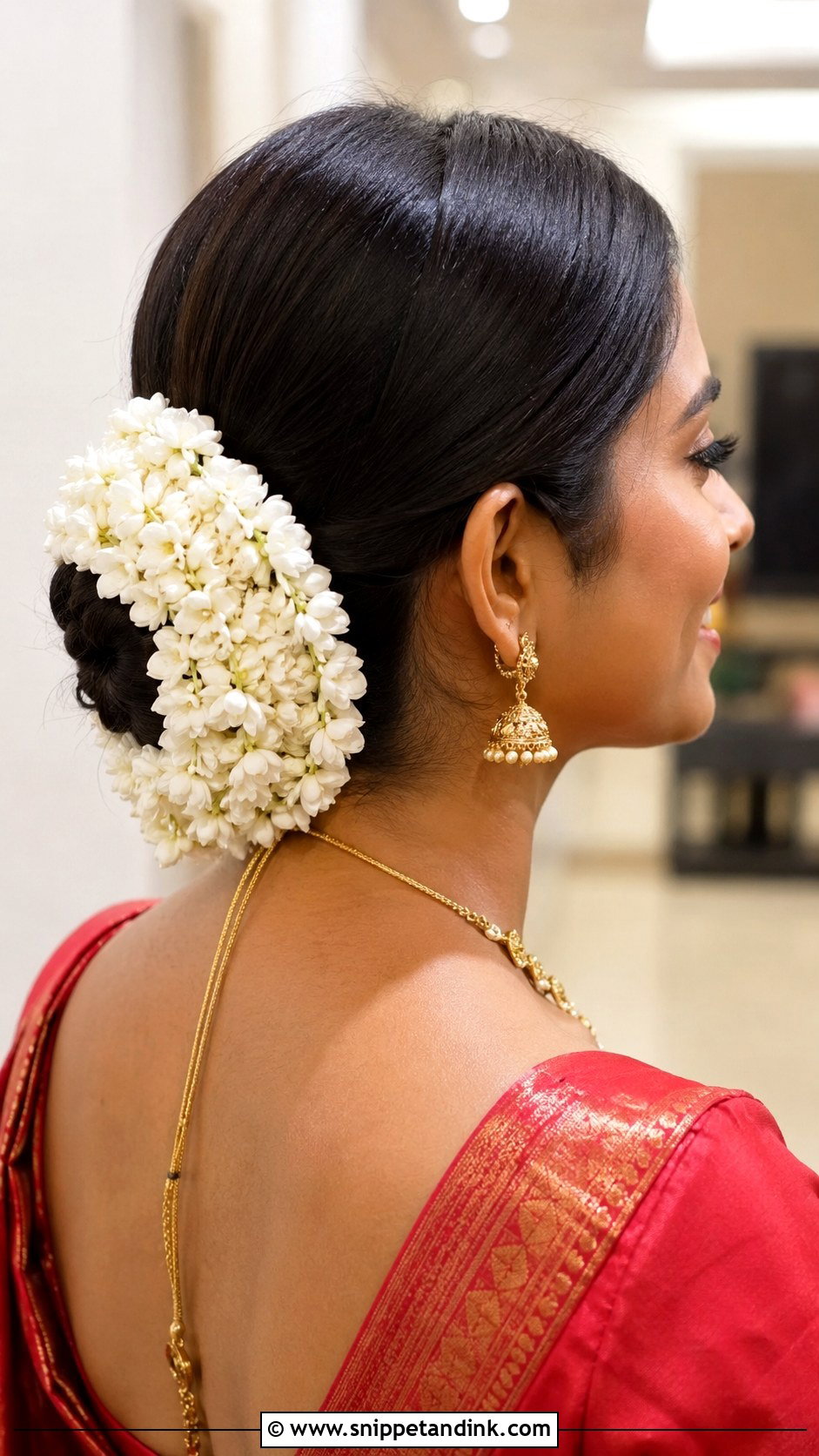
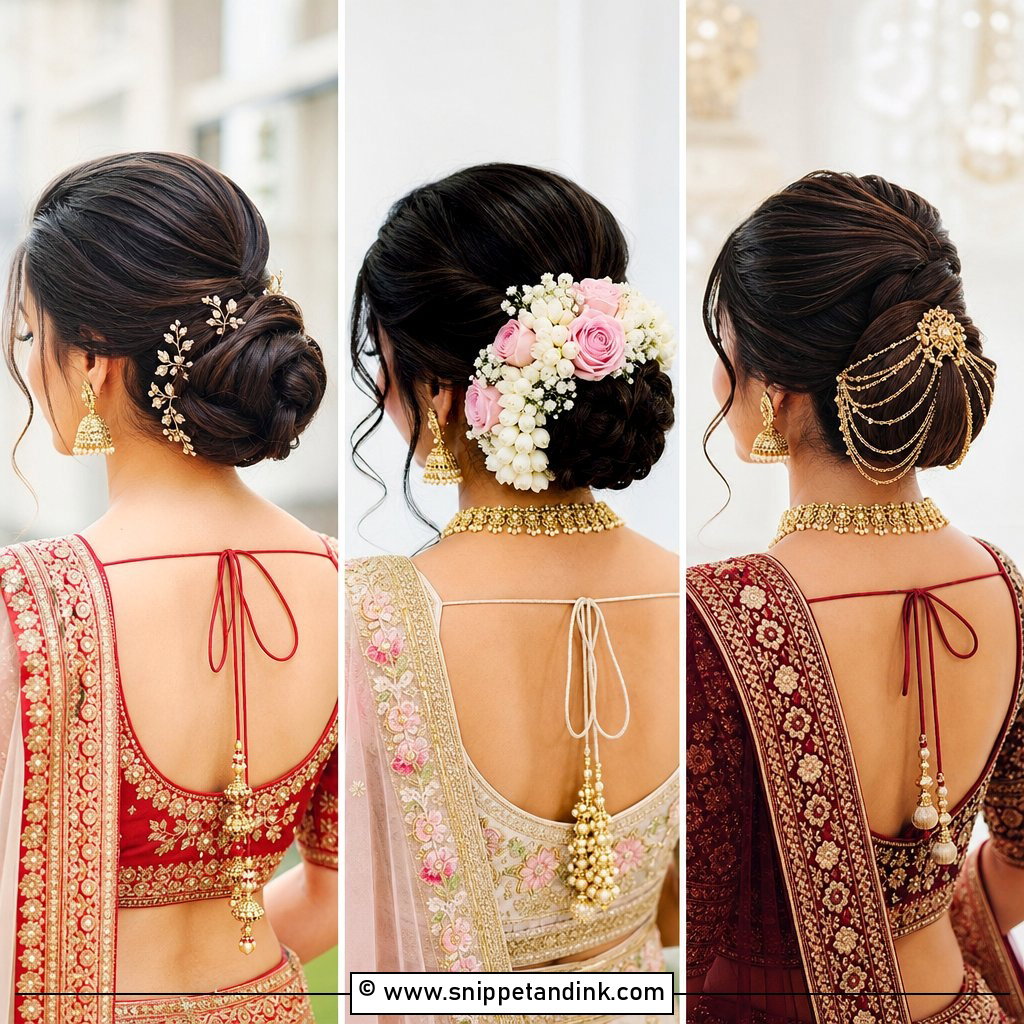
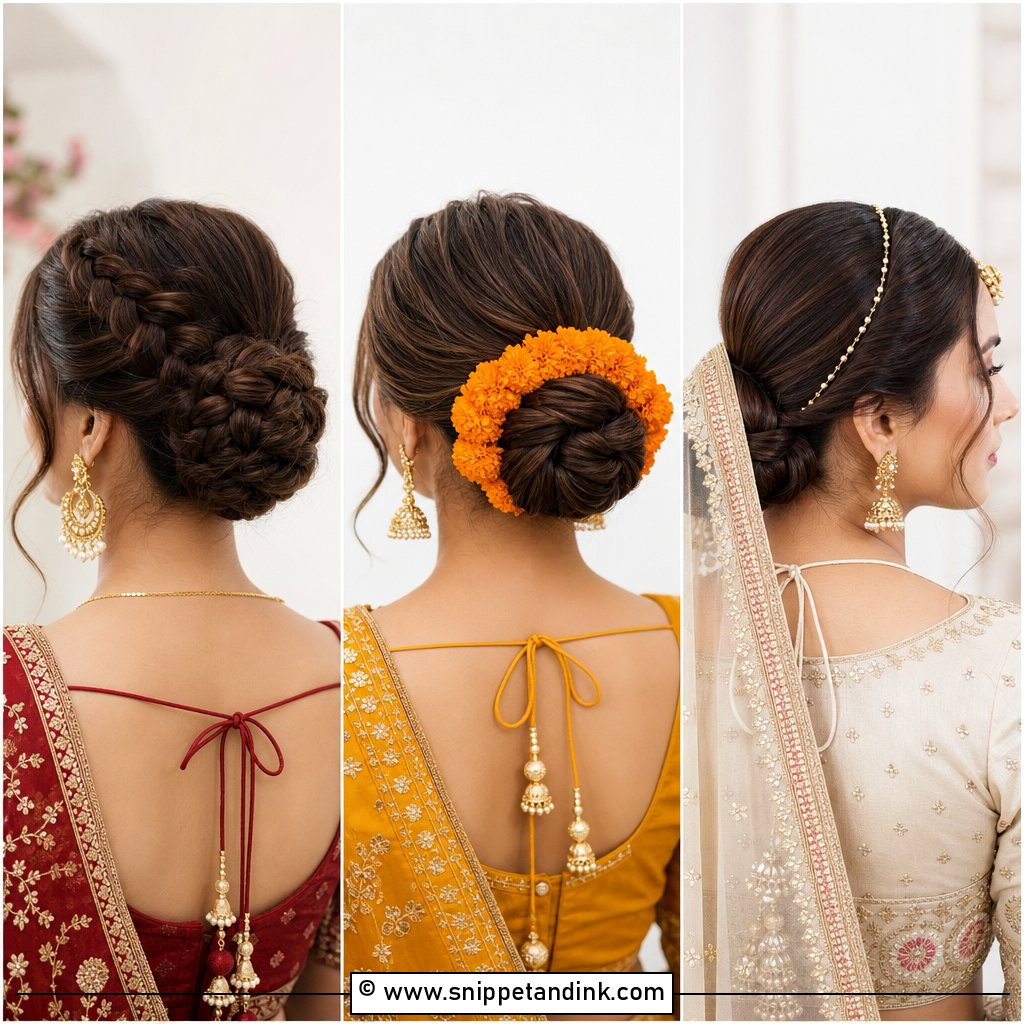
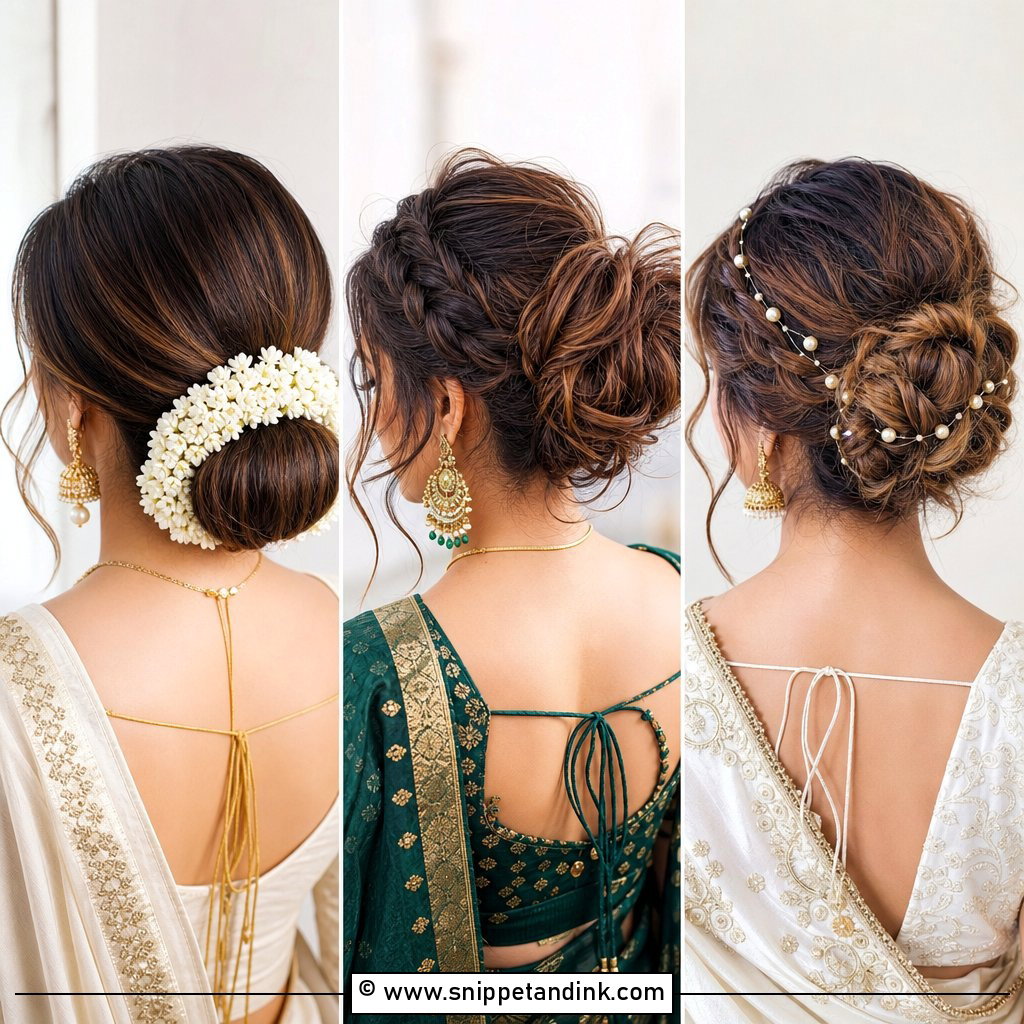
The low bun with gajra sits at the nape and gives a dupatta, maang tikka and heavy earrings a steady base. The fresh jasmine wrap softens it without crowding the look. Silk sarees and classic lehengas suit it best. A centre part keeps it traditional; a few loose strands at the front modernise it. I wrap the gajra around the bun in a spiral and pin it every few centimetres, so it can’t slip down your neck halfway through the ceremony.
2. Indian Wedding Sleek Low Bun
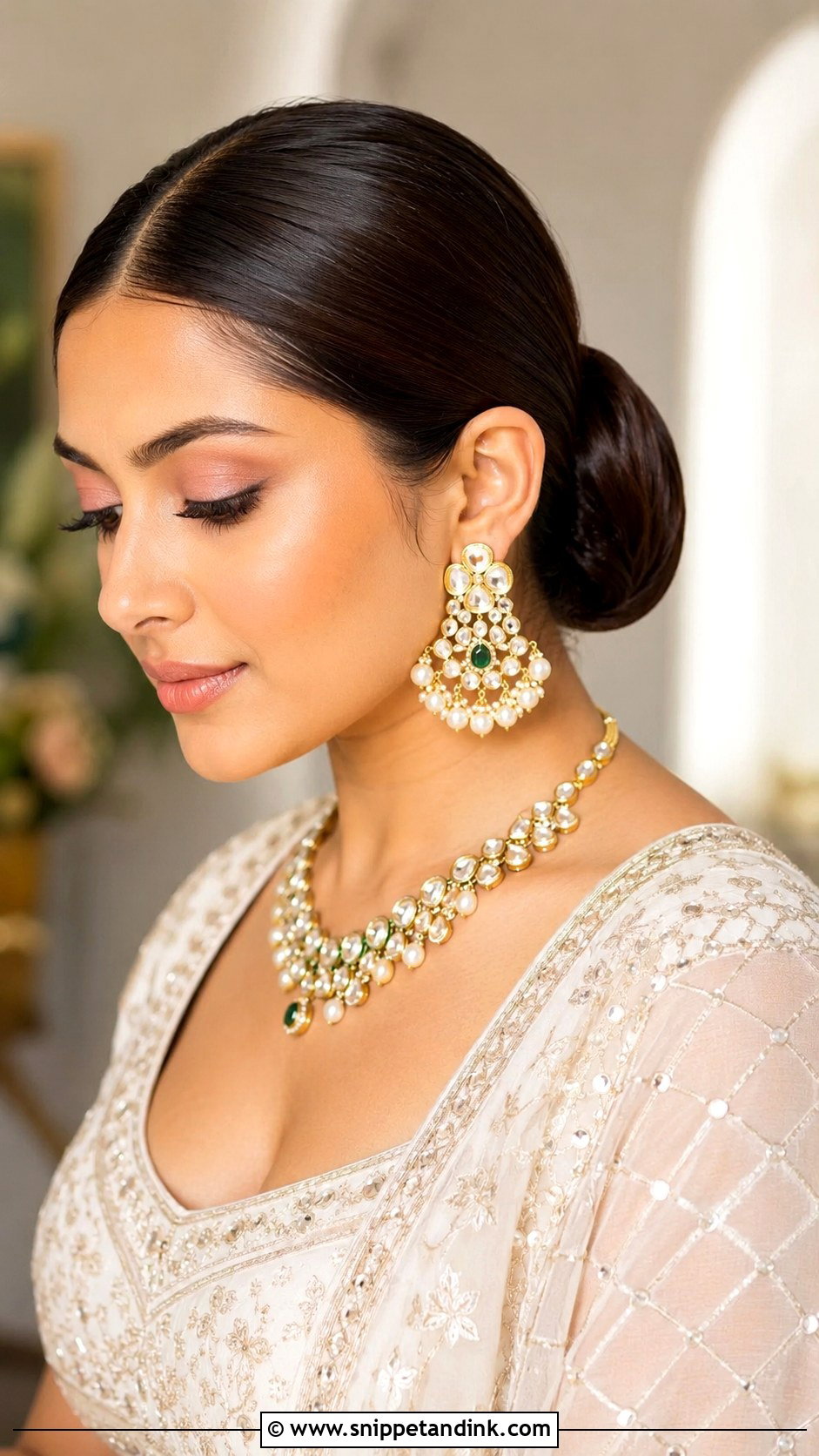
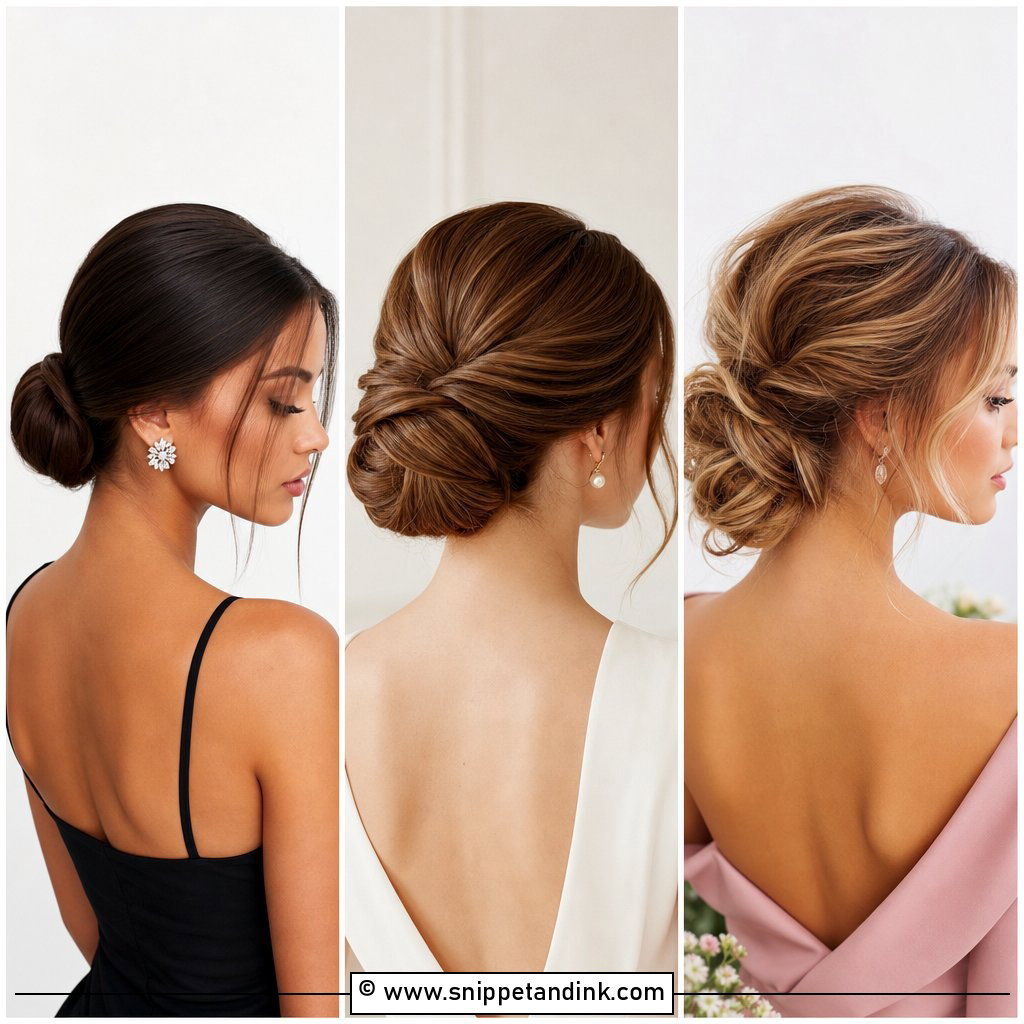
Go sleek when the outfit, jewellery or makeup is already doing a lot. A smooth low bun with a middle part and a sharp sindoor line looks clean and confident, and the dupatta sits flat because there’s no extra volume at the crown. It suits receptions, pheras, engagements and formal portraits. Fair warning: sleek styles show every bump and flyaway, so I smooth the hair with a fine-tooth brush while it’s damp with product, then finish with serum and a light mist of spray.
3. Indian Wedding Messy Bun With Flowers
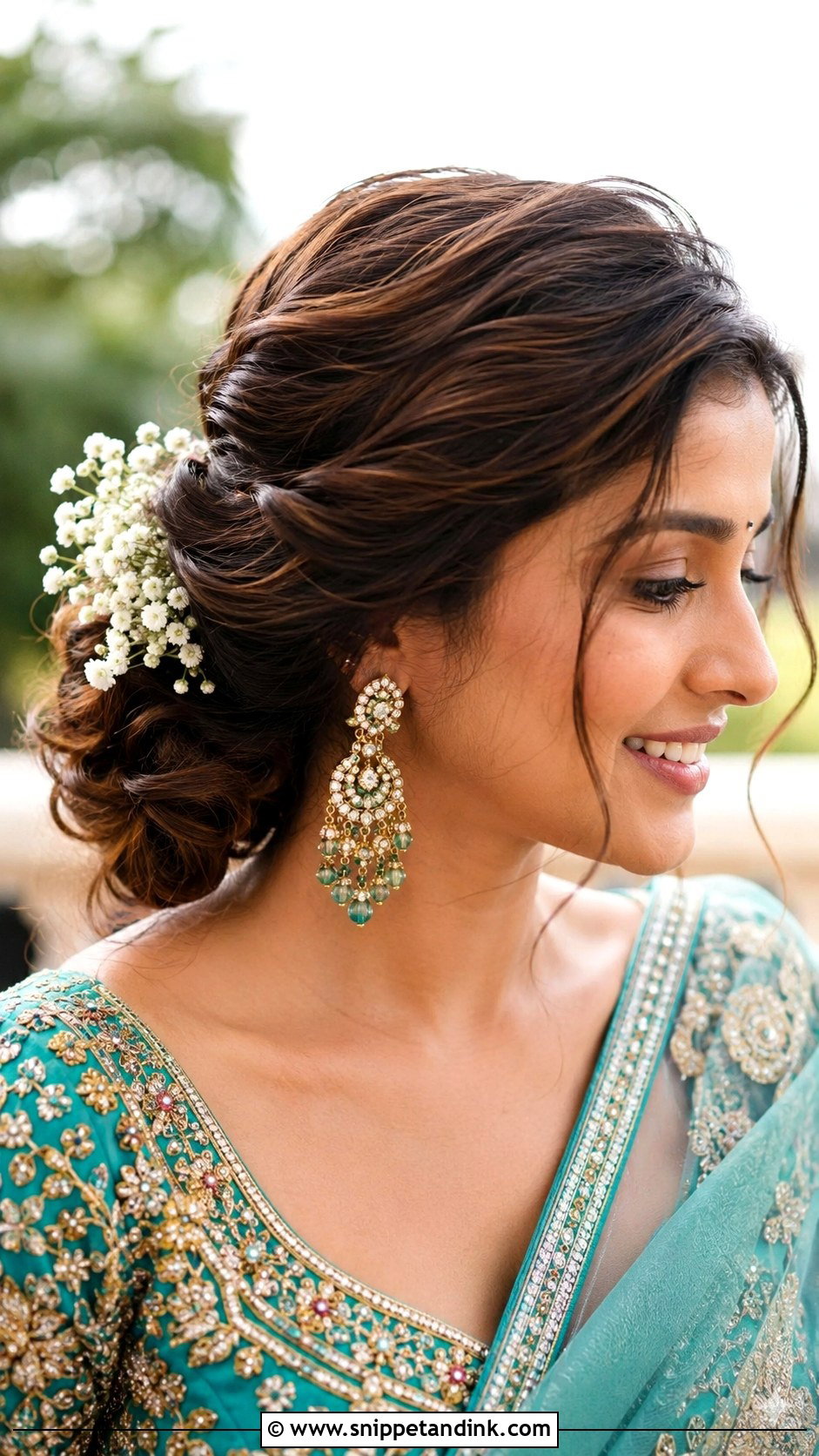
Soft texture makes a bun romantic, but only if every loose piece is placed on purpose. I curl the hair first, twist it into the shape and leave chosen strands out near the cheeks. Small roses, baby’s breath, jasmine buds or mogra tucked into the gaps finish it. It belongs with pastel lehengas, floral sarees and lighter functions like mehndi or haldi, and it’s a favourite with bridesmaids and guests. Heavy humidity is its enemy; the loose strands frizz first, so I keep fewer of them on muggy days.
4. Indian Wedding Braided Bun
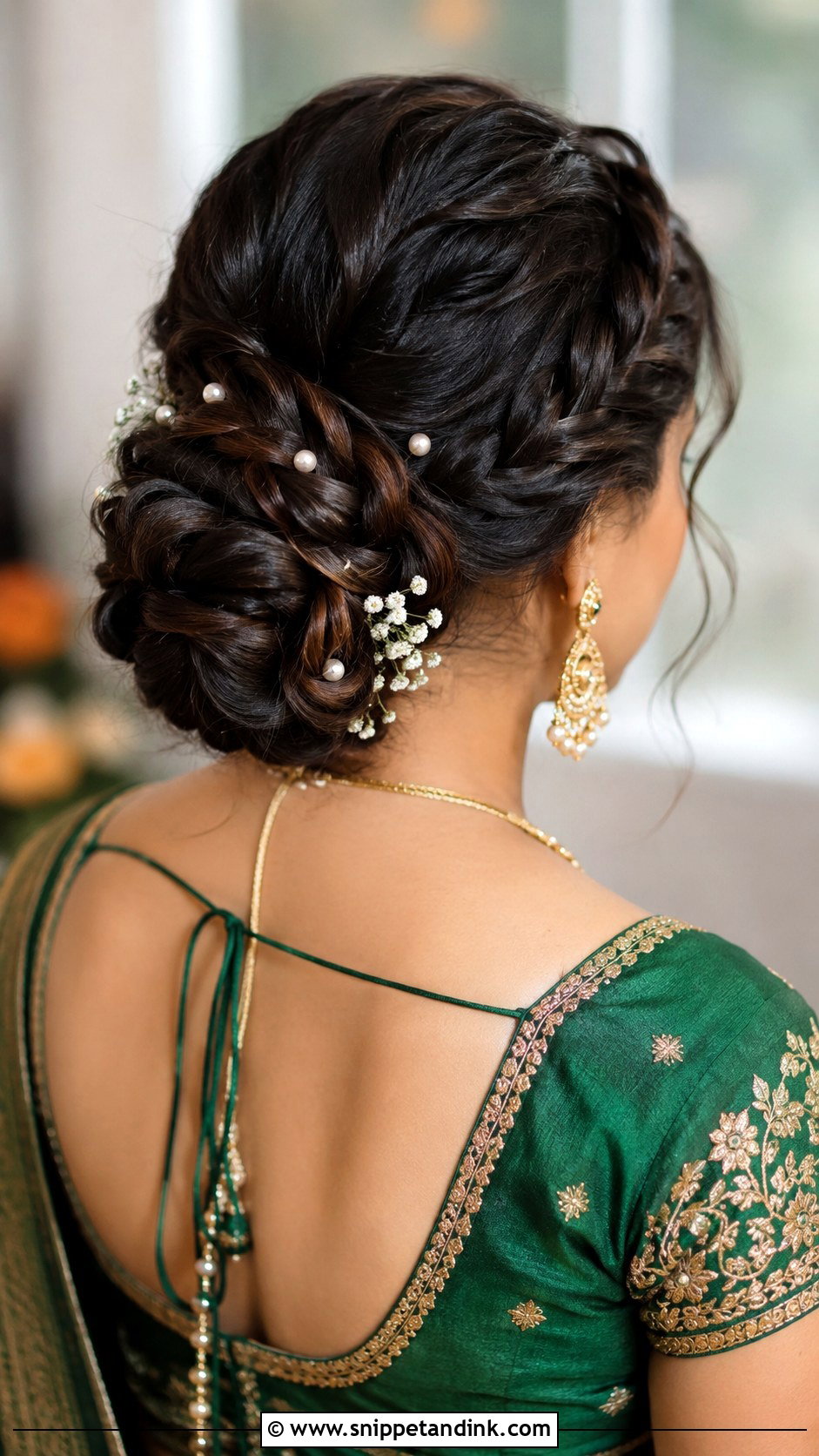
A braid wrapped around the bun, across the crown or twisted into it makes the whole thing look fuller. That’s why I lean on braided buns for fine or medium-density hair: the plaits bulk the shape out without extra padding. It reads especially well from behind with an open-back blouse or an embellished dupatta border. Small pearl pins, kundan clips or fresh flowers can sit right in the braid’s grooves, where they stay put better than on a smooth bun.
5. Indian Wedding High Bun With Dupatta
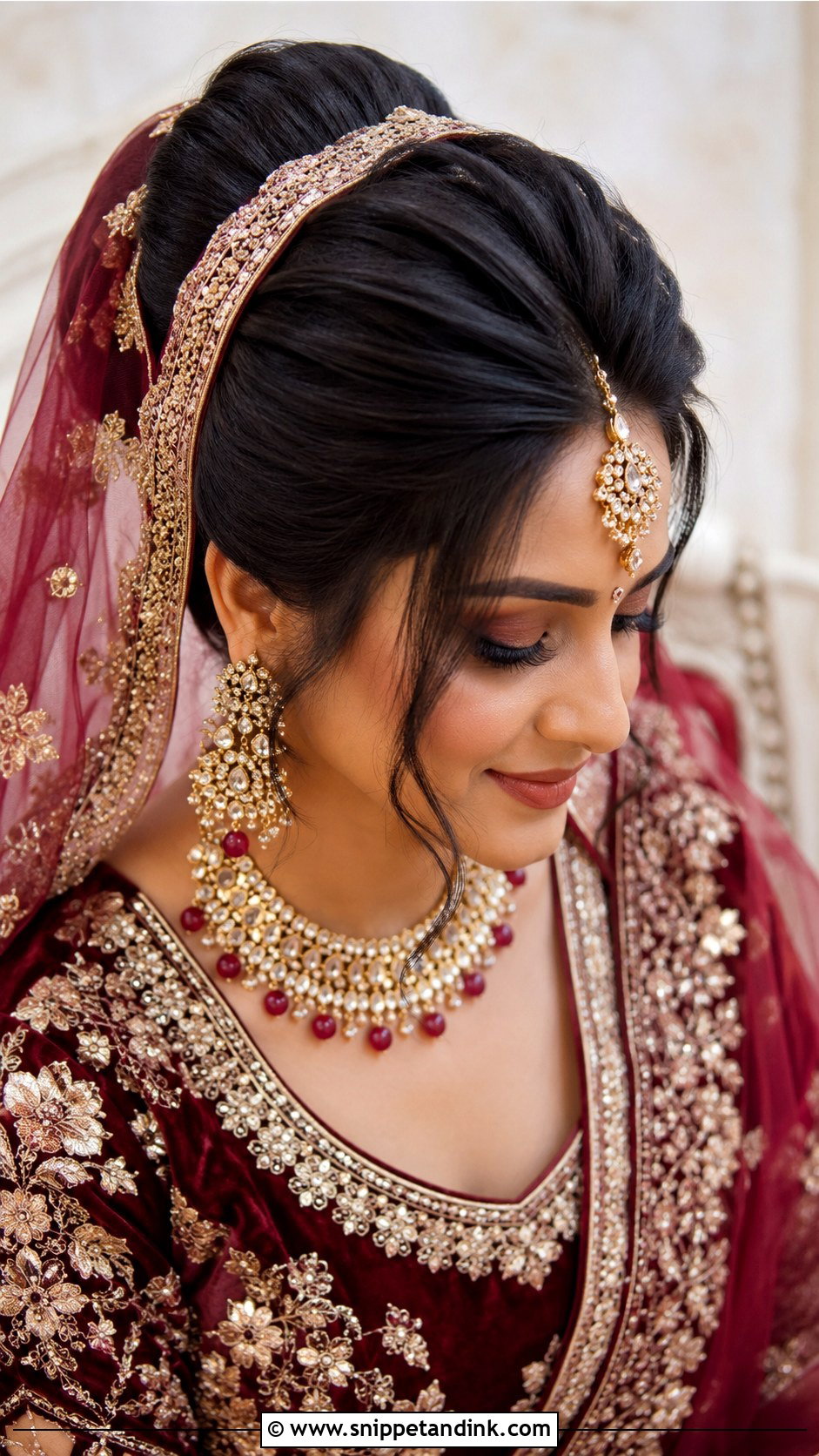
A high bun is the right call when the dupatta needs anchoring at the crown or the outfit is heavy enough that a low bun looks lost. It lifts the face, shows the neckline and gives a regal silhouette. Round, oval and heart-shaped faces all suit it with a softly styled front. This is the bun I build most carefully. It carries weight from above, so I use firm padding, crossed pins and setting spray, and I always have the bride sit, bow and stand at the trial to check it doesn’t tilt.
6. Indian Wedding Bun With Maang Tikka
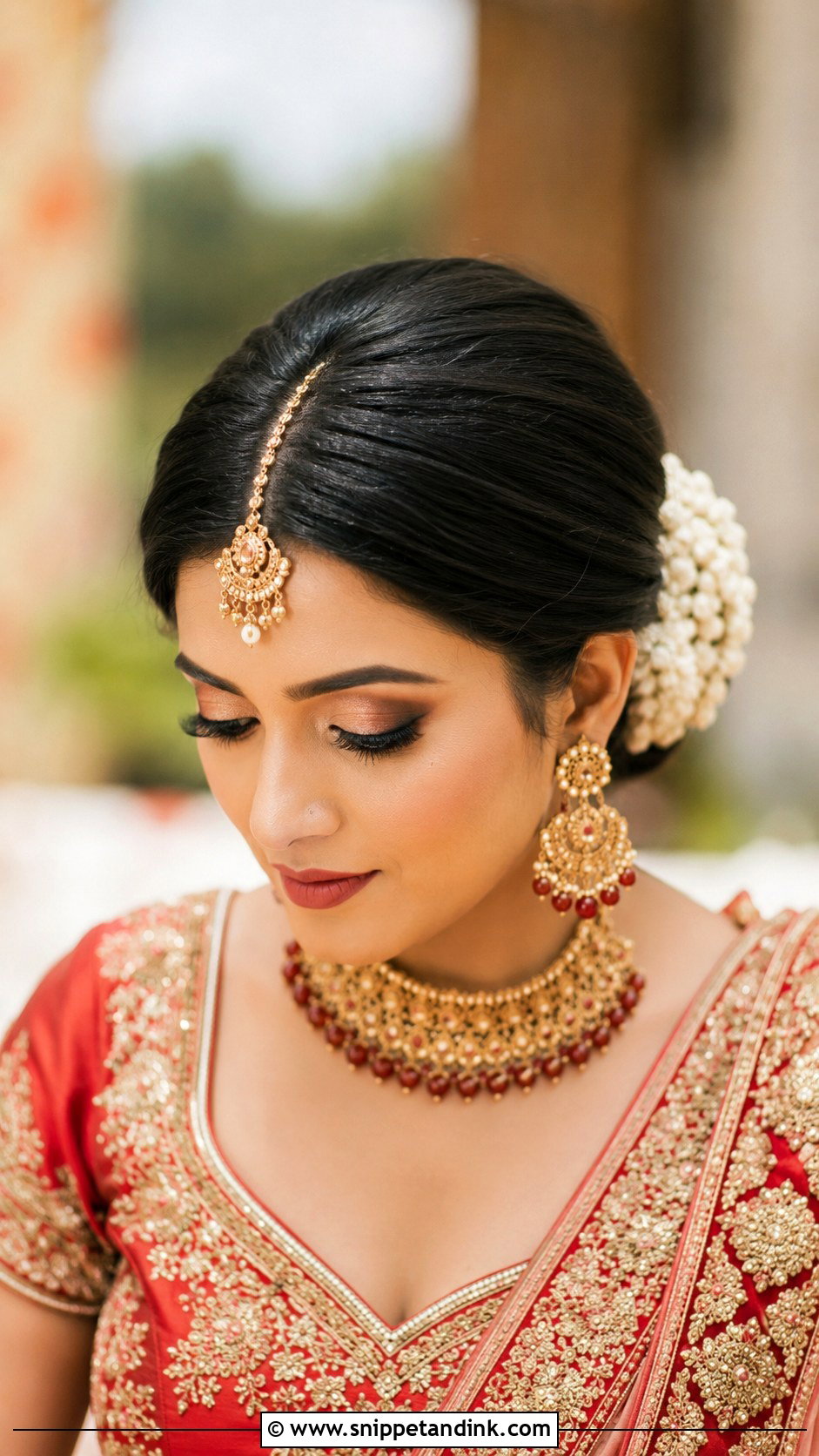
A bun with a maang tikka is judged from the front. The parting has to be precise, and the tikka’s chain needs to hook into something firm at the crown, which is why I prefer a low or mid bun here. With a large tikka, I keep the bun plain. With a delicate one, flowers or pearl pins at the back carry some of the interest. Lehengas, sarees, shararas and anarkalis all work; what matters is that the jewellery and the hair look like they were planned together.
7. Indian Wedding Bun With Matha Patti
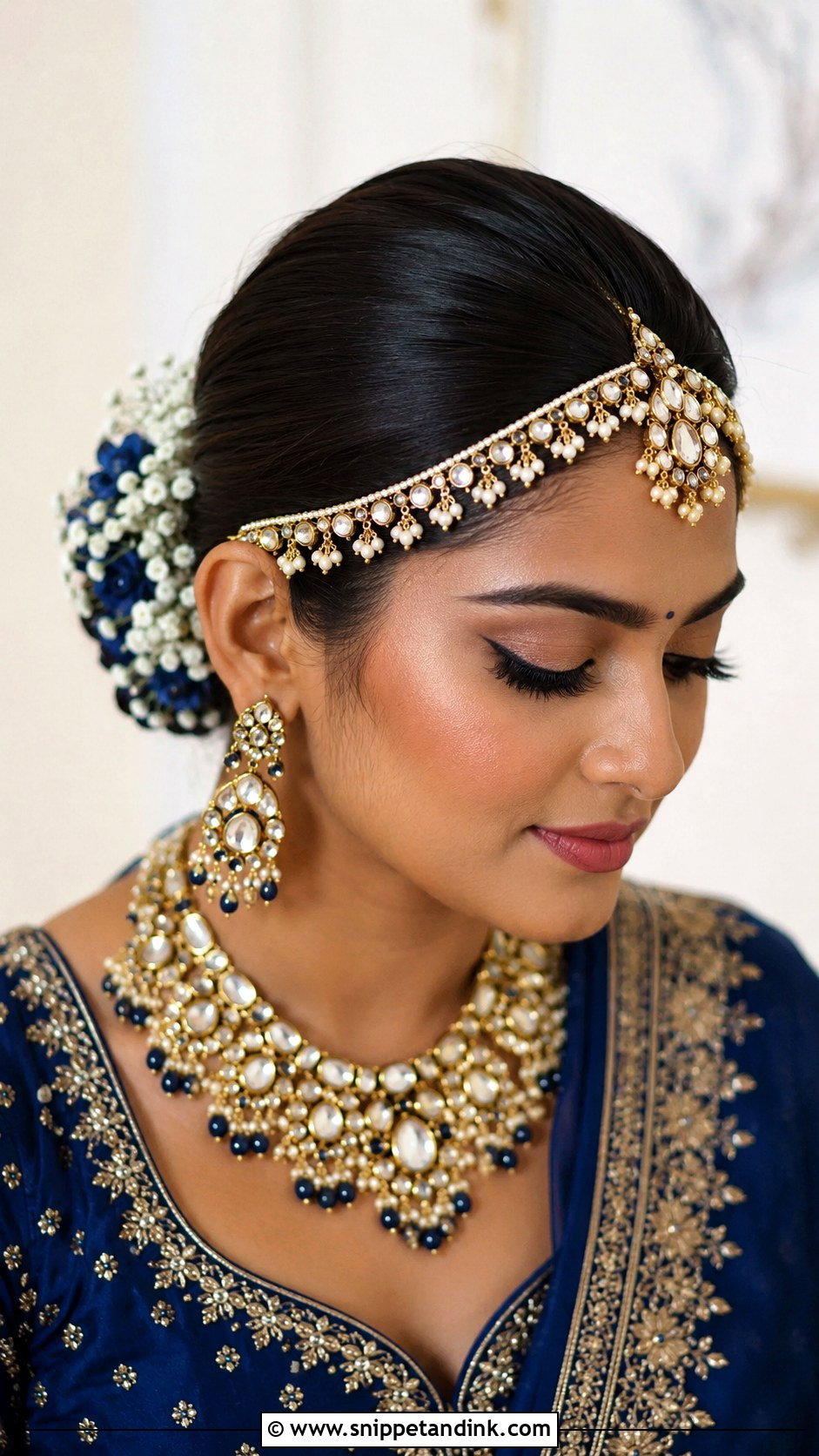
A matha patti covers far more of the head than a tikka, so the bun behind it should be calm. A centre part and a smooth crown let the side chains lie flat along the hairline instead of lifting over bumps. Low, rounded or slightly full buns all suit it depending on the outfit, and it pairs naturally with traditional lehengas, heavy dupattas and temple or kundan jewellery. I keep the back to a small gajra, a few pearl pins or one floral accent. Anything more starts to compete.
8. Indian Wedding Bun With Roses
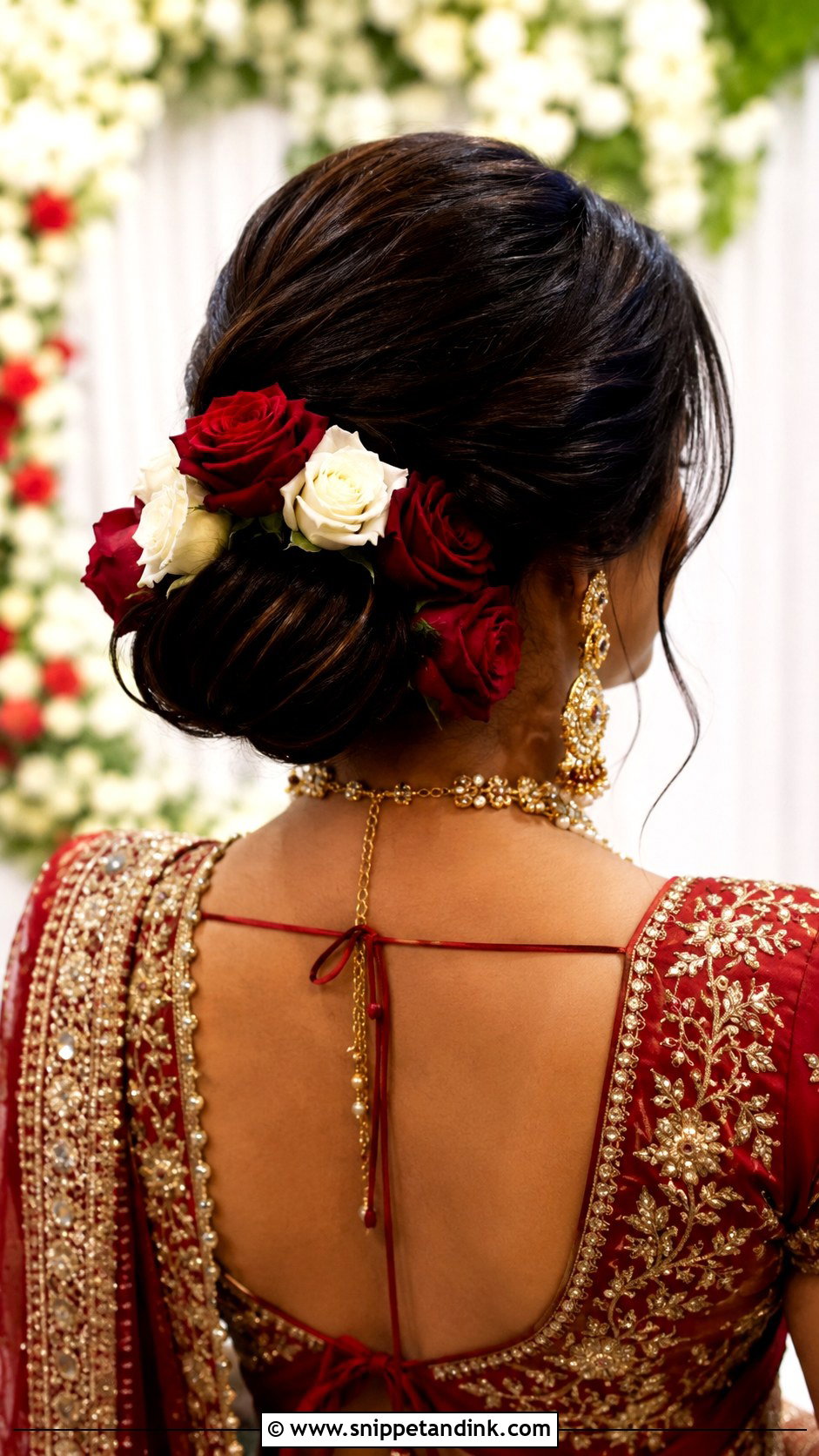
Roses make a bun rich. Red reads classic, while pink, peach or ivory feel softer and more current. They can ring the bun, cluster at the base or sit to one side for a strong back-view photo, and they suit velvet lehengas, silk sarees and deep jewel tones. Scale is the thing to get right. Large blooms are dramatic but heavy, and they bruise if you lean back against a chair; smaller roses are easier to wear for a long event. I wire each stem short before pinning so nothing pokes your scalp.
9. Indian Wedding Side Bun
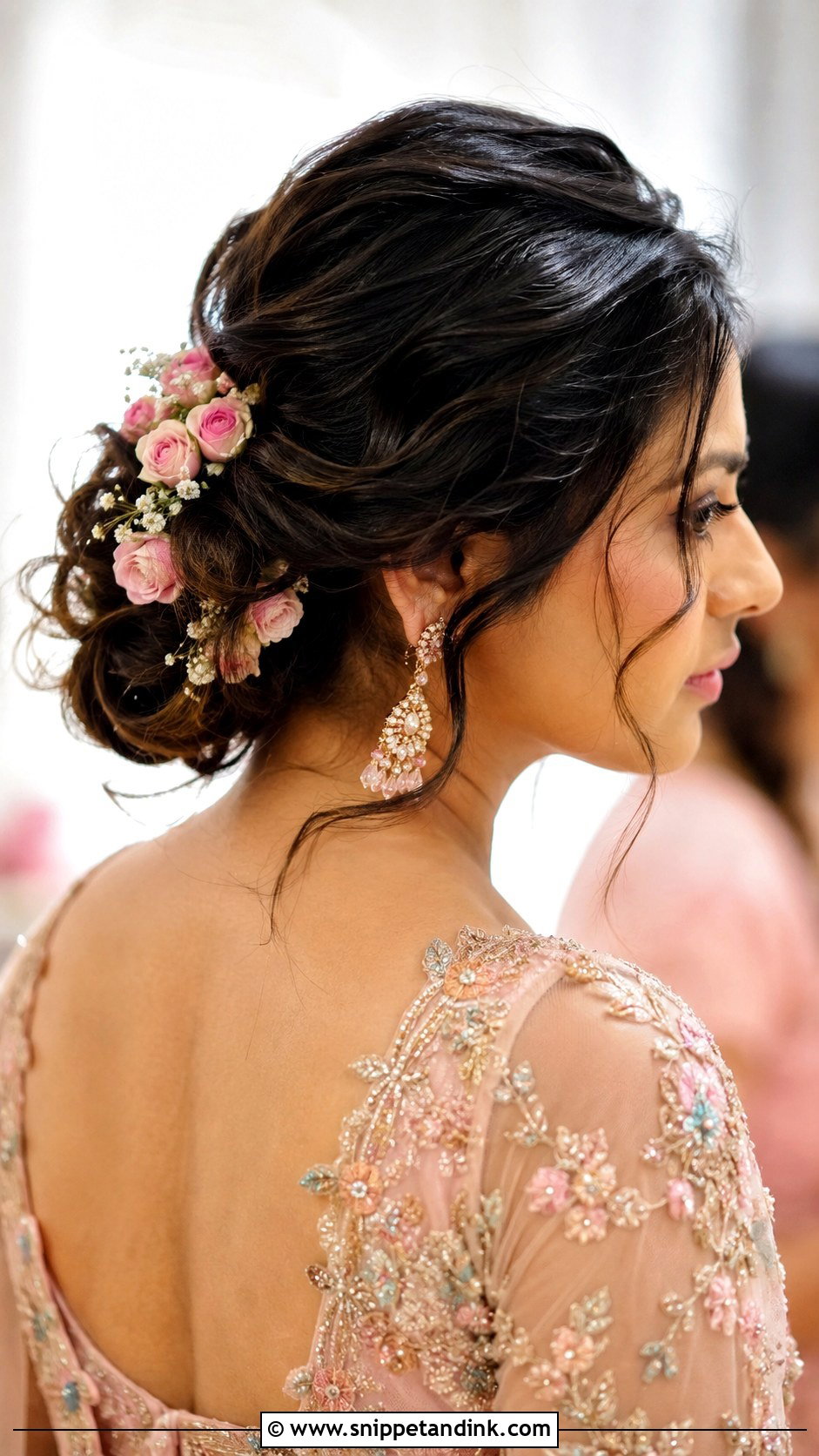
Moving the bun slightly off-centre, near one side of the nape, lets people see it from the front. It softens the face and suits side-parted hair, statement earrings and sarees with detailed borders. Bridesmaids and guests often choose it to look different from the bride’s centre-back bun. I’d avoid it if the dupatta or pallu is pinned on that same shoulder. Keep the volume modest, add curls, twists or small flowers, and it reads as deliberate rather than lopsided.
10. Indian Wedding Textured Low Bun
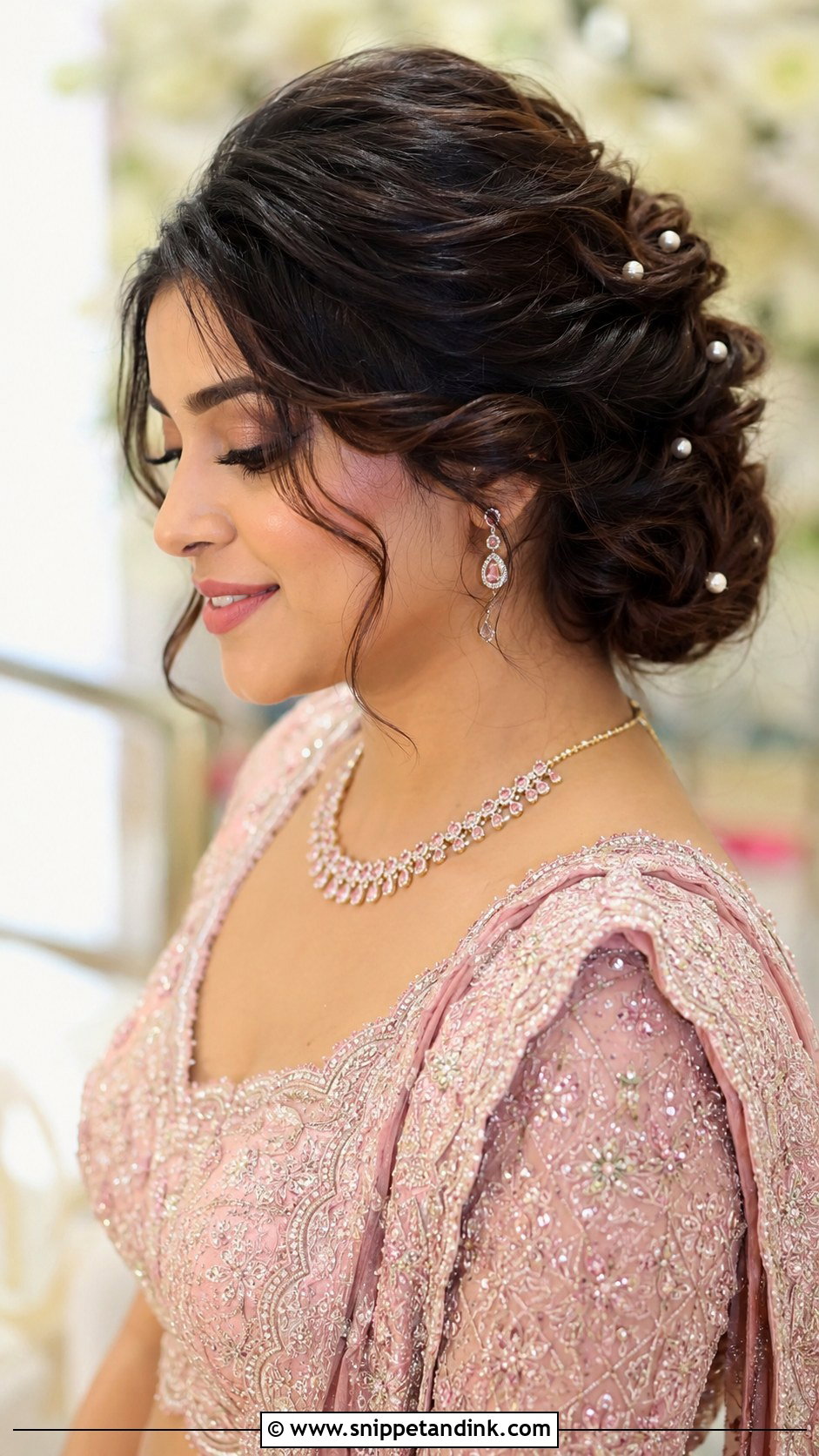
For a textured low bun, I curl or wave the hair first and then pin it so the movement stays visible. That gives a fuller, more dimensional shape than a tight bun, and it’s kinder to layered hair because shorter pieces tuck into the waves instead of sticking out. It suits modern blouses, pastel sarees and reception gowns. Minimal pearl pins or one floral accent is plenty.
11. Indian Wedding Bun With Pearl Pins
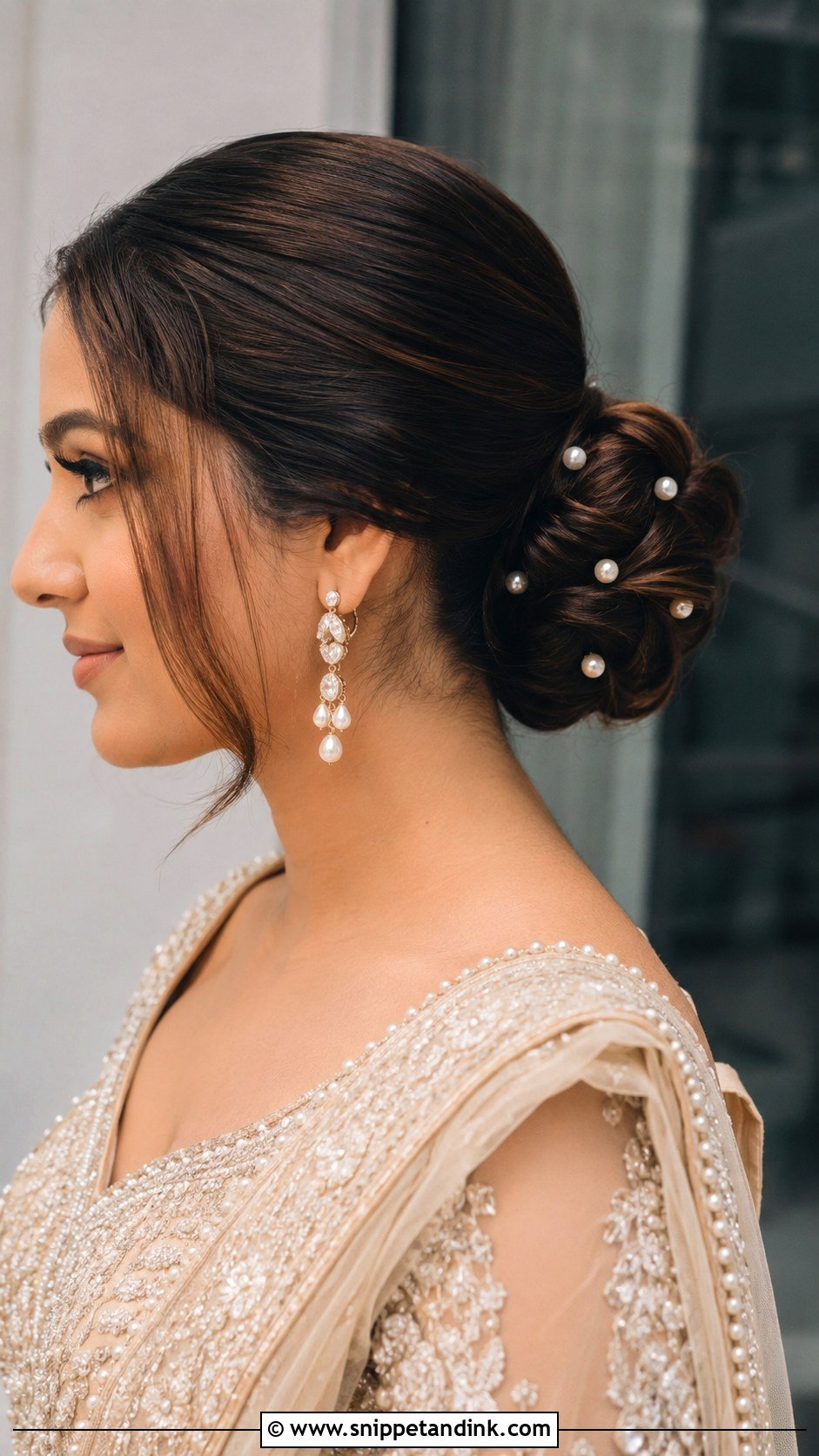
Pearl pins add shine without fighting heavy jewellery, which makes them my usual pick when a bride wants something less traditional. Tiny scattered pearls look romantic, larger pins more formal. The bun underneath can be sleek, braided or textured, and the palette suits ivory, gold, blush, champagne and pastels. Under reception lights they catch a soft glint. The placement should look deliberate: I map them in a loose curve or an even scatter before pushing any in.
12. Indian Wedding Bun With Kundan Accessory
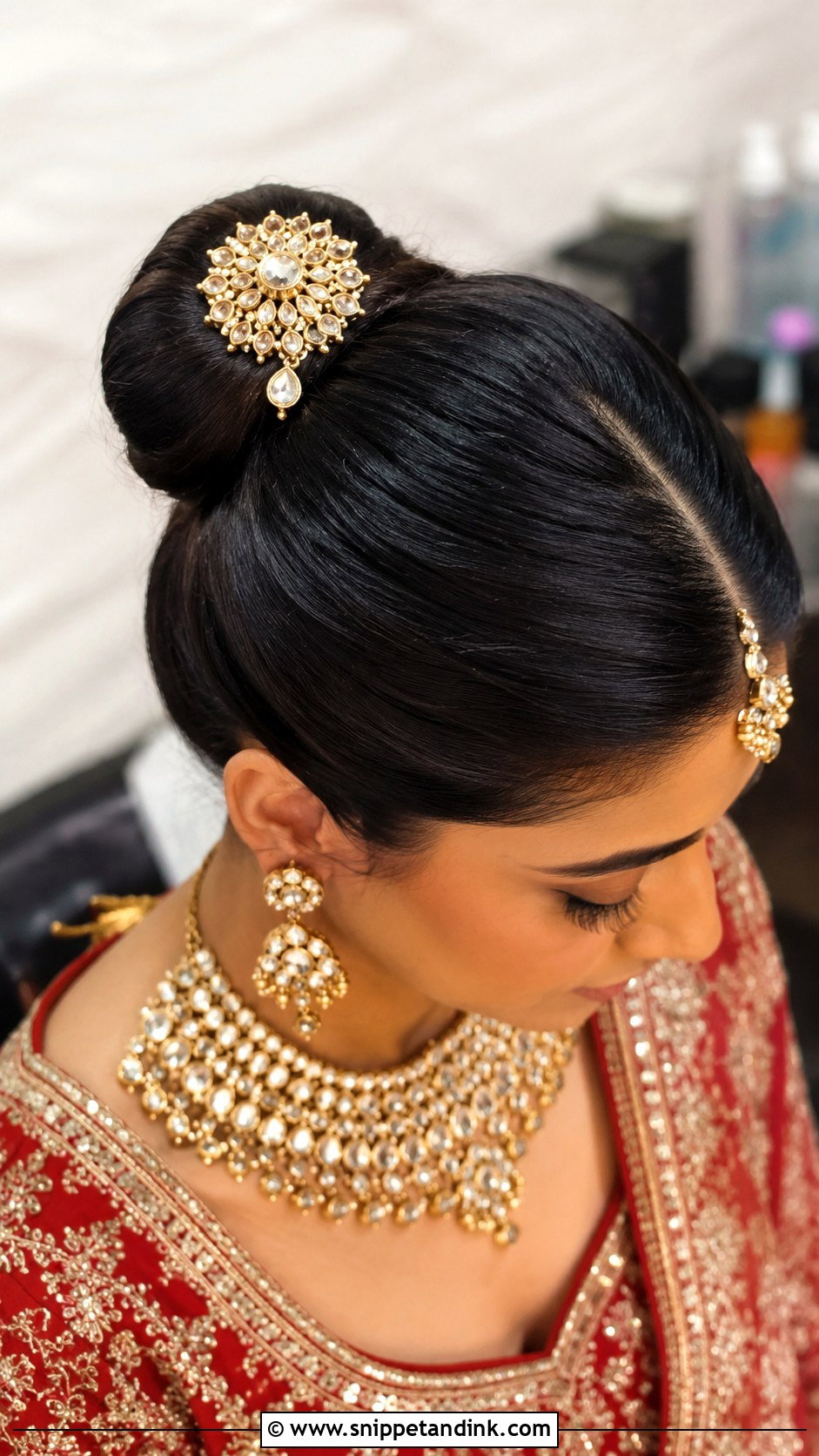
A single kundan piece can change a plain bun into bridal hair: a bun pin, a passa-style clip, a crescent comb or a chain looped around the bun. It needs a neat background to show, so I keep the bun smooth. It pairs with kundan necklaces, jhumkas, matha pattis and heavily embroidered lehengas. With a detailed outfit, choose one strong piece over several small ones. Heavy kundan combs need a firm bun to grip; on a soft, textured bun they tend to droop by the end of the pheras.
13. Indian Wedding Bun For Saree
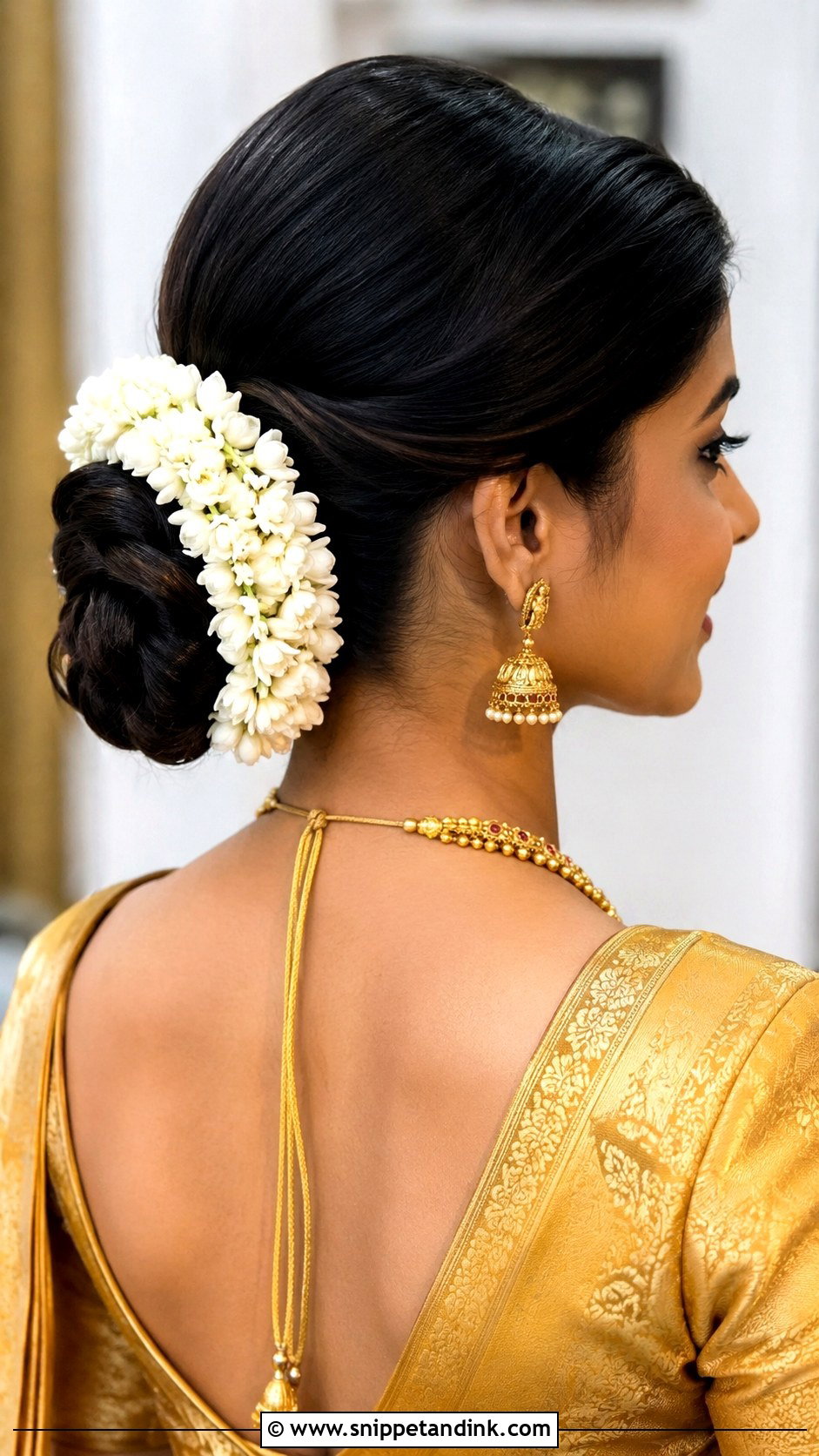
A saree changes where a bun should sit. Low and mid buns usually look best because they sit near the neckline and show the blouse. For silk, a smooth bun with gajra is the classic. For chiffon, georgette or organza, a softer textured bun with flowers matches the lighter fabric. It works for brides, mothers, sisters and guests alike. If the pallu is pinned high on the shoulder, keep the bun lower so the two don’t crowd each other at the back.
14. Indian Wedding Bun For Lehenga
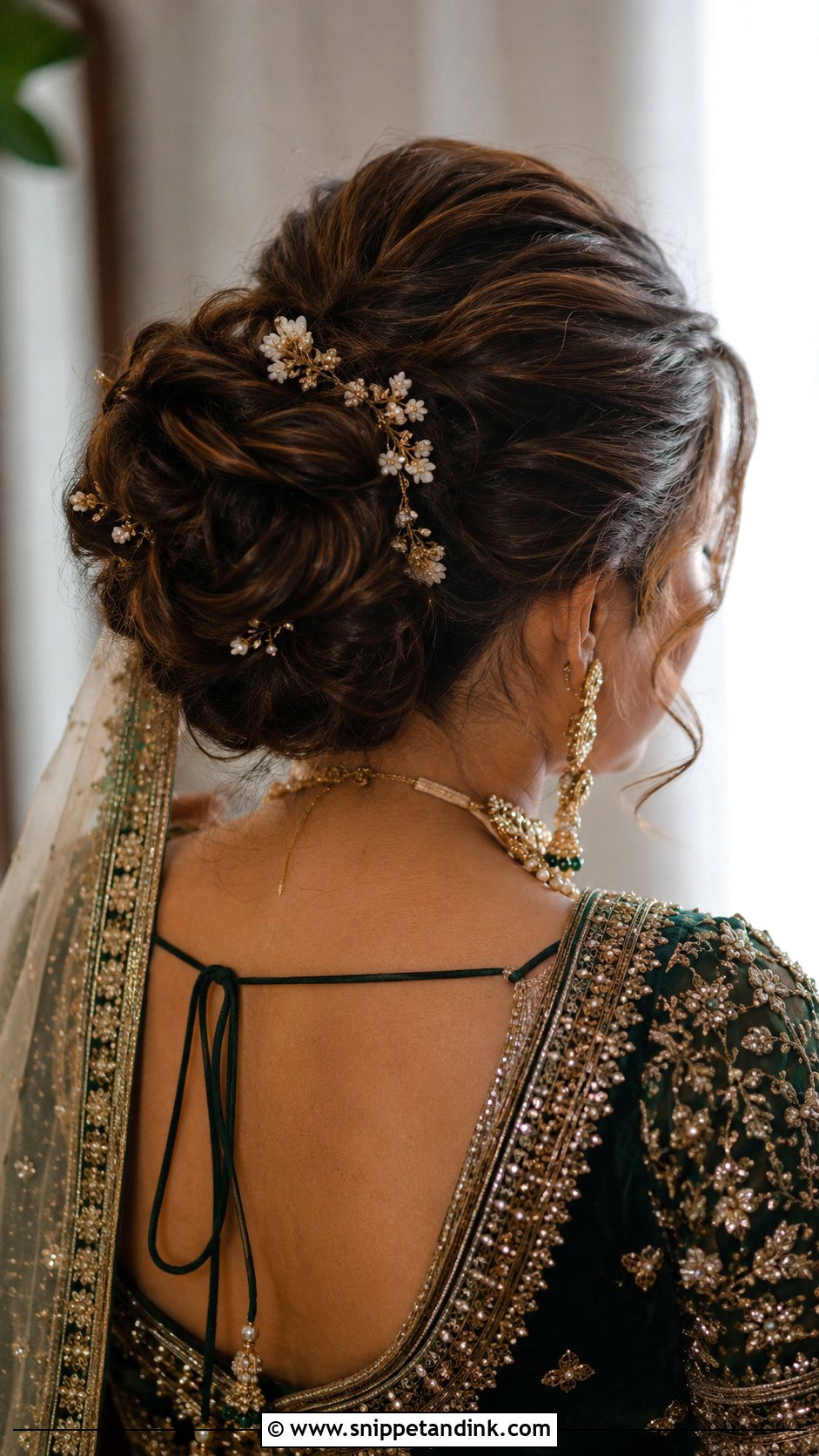
A lehenga brings volume, jewellery and a dupatta all at once, and the bun has to cope with that. Rounded low buns, textured buns and braided buns give structure without hiding the outfit. With a heavy neckline, I keep all the hair lifted off the shoulders. With a minimal blouse, flowers or pins can add detail. Sleek leans royal, soft leans romantic. Either way, a bun keeps chokers, earrings and the tikka in clear view.
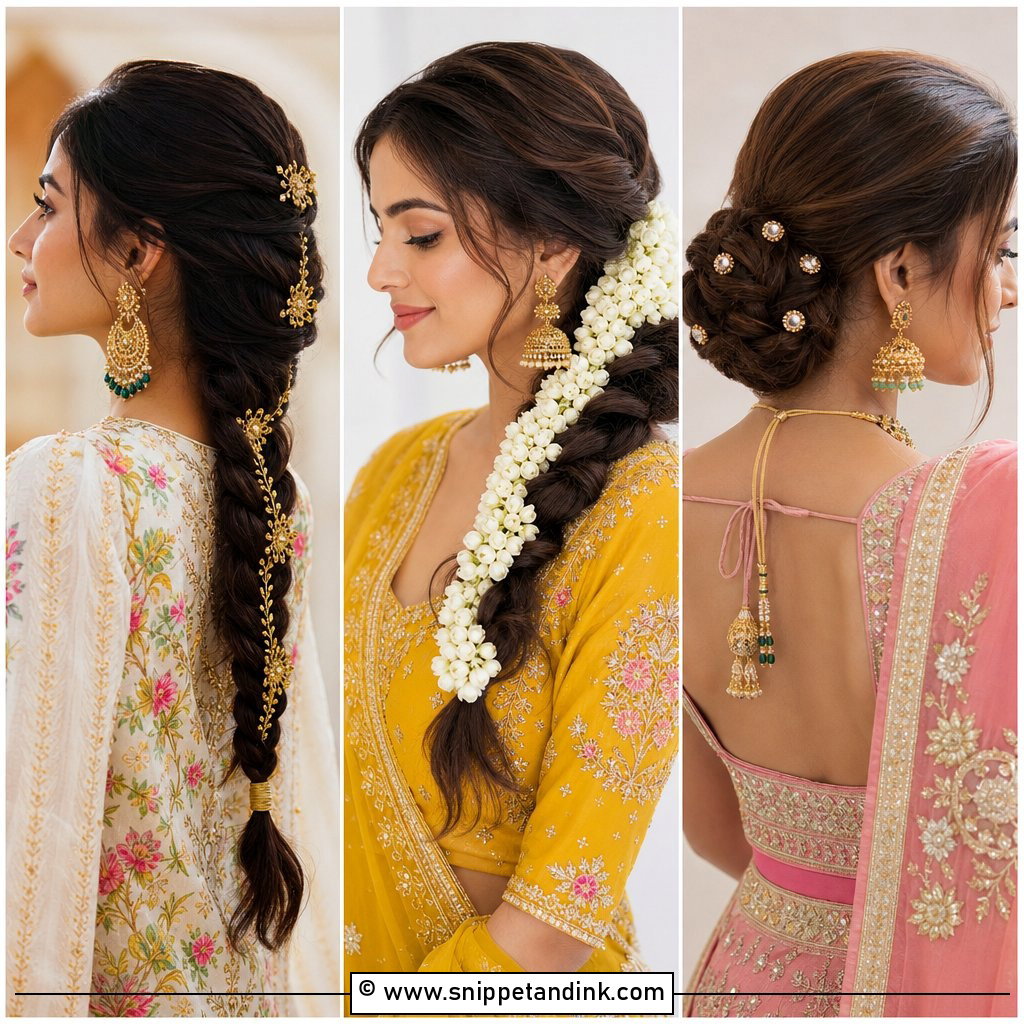

15. Indian Wedding Bun For Short Hair
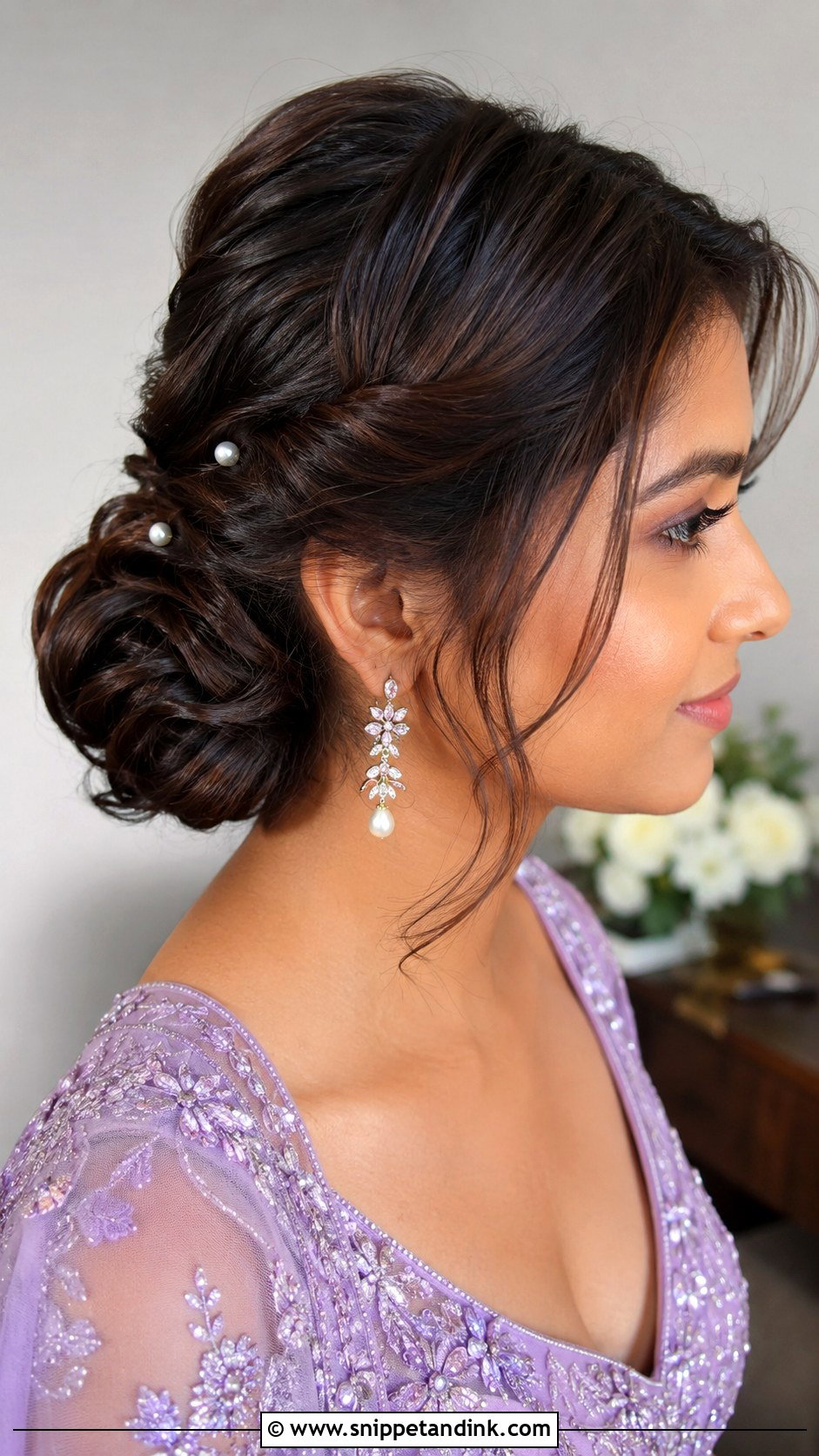
Short hair can absolutely wear a bridal bun. I use a low faux bun, padding or clip-in extensions to create the shape, then twist the sides to blend shorter layers into it. Flowers or pins cover any small gaps where the hair doesn’t quite reach. It’s useful for bridesmaids, guests and brides with bobs or lobs. Very short layers at the nape are the hardest part, so I pin those first, flat against the head, before building anything on top.
Padding, Mesh and Pins Under the Flowers
What you see is the surface. Underneath most bridal buns there’s a foundation: a ponytail secured with an elastic, a doughnut or padding piece to set the size, and pins that lock the hair to the base. A hairnet in your shade over the top keeps the shape tidy and gives gajra and accessories something extra to hold.
Adjusting for your hair type
Silky, straight hair slides out of pins, so I add texture spray or a light curl first to give it grip. Very thick hair can make a bun too large and heavy; I thin it out by pinning some of the length flat underneath. Curly hair holds pins well and often needs less padding than people expect.
Taking it out at night
Remove the flowers and accessories first, then find the pins with your fingers rather than tugging. Work from the outside in, release the elastic last, and brush with a little oil or conditioner through the ends. Pulling a set bun apart in a hurry is how brides lose hair on their wedding night.
A Bun Built for Your Hair, Your Dupatta and Your Day
Buns earn their place because they can be shaped around the outfit, the jewellery, the ceremony and your comfort. A gajra bun brings tradition, a sleek bun feels modern, a braided bun adds texture and a floral bun softens a daytime event. The best one isn’t the prettiest photo you’ve saved. It’s the bun that suits your hair length, dupatta weight, face shape and schedule. Book a trial, bring every accessory, and wear the result for a couple of hours before you commit.
You'll Like These Ideas:


Leave a Reply