
The dresses brides ask me about this season are more personal and far easier to move in than the ones I was pinning a few years ago. Corset waists, clean satin, sculptural bows, pearls, soft colour, minis, tea lengths and romantic sleeves all keep coming up. But a trend is only useful if it suits your venue, your body, your budget and the way you’ll spend the day, from the ceremony through to the last dance. Below are 25 current styles, each with how I’d finish it head to toe and what I watch for when a bride tries it on.
Will You Still Like This Trend in Your Anniversary Photos?
It’s the question I ask every bride who comes in with a screenshot from this season. Some trends are details layered on a classic shape, and they age gently. Others are the shape, and they date the photos quickly. A pearl strap on a satin column will look fine for decades. A dropped waist with a huge bubble hem tells everyone exactly which year it was.
Neither is wrong. If you love the fashion-led look, wear it. But if you’re unsure, put the trend in something you can change: the veil, a removable bow, gloves, a cape, or a reception dress. The ceremony gown can stay simpler.
- Ages slowly: lace, clean satin, long sleeves, square necks, pearl details.
- Dates faster: very dropped waists, bubble hems, oversized bows, heavy feather trim.
- Easy to swap: gloves, capes, detachable sleeves, overskirts, a second dress.
One more thing I ask: how does the trend feel at hour eight? A sculptural bow you love in the mirror can dig into your back through a seated dinner, and a structured drop waist can make dancing feel stiff. Try the shape seated and moving, not just standing still.
1. Lace Wedding Dress
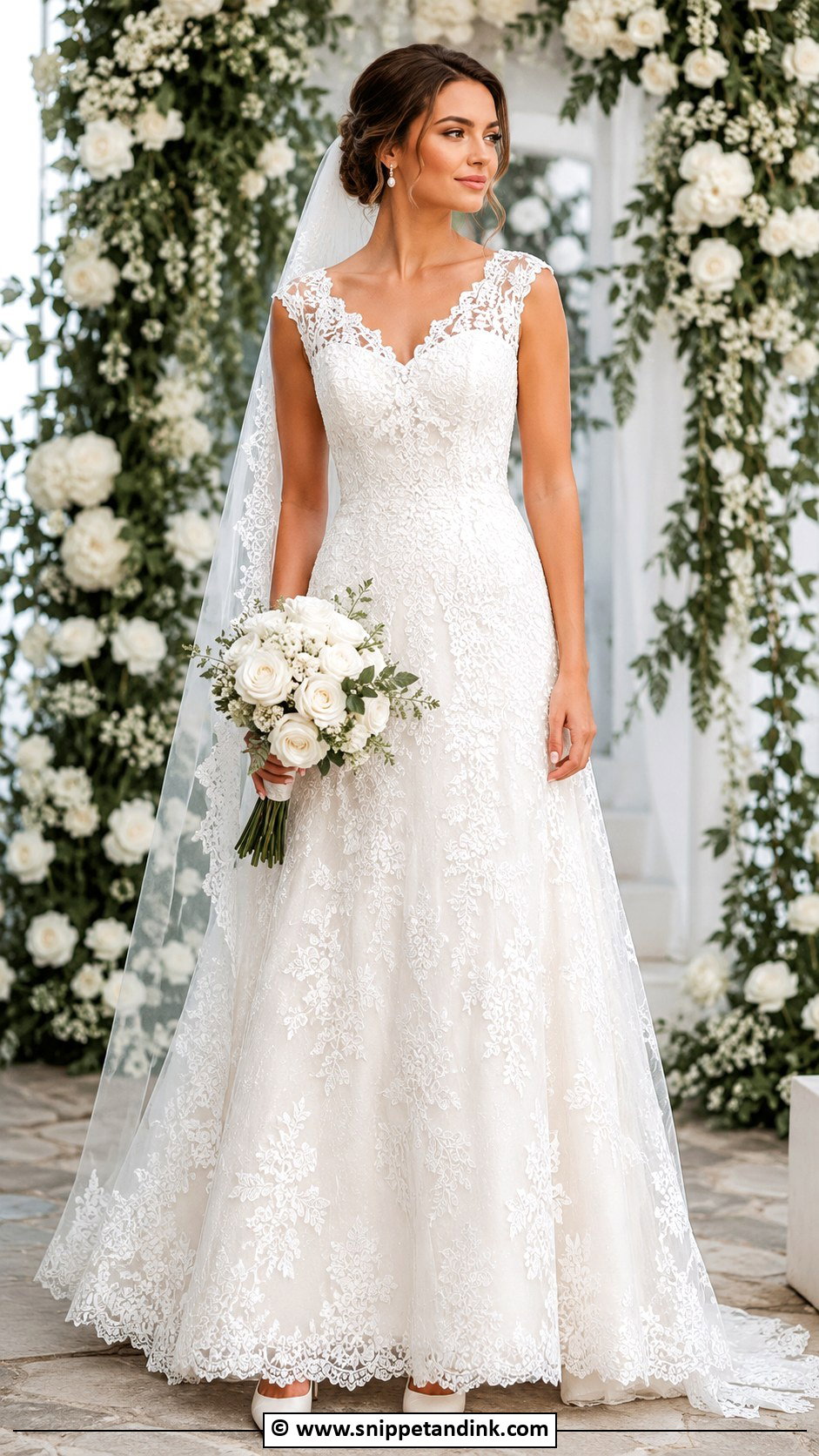
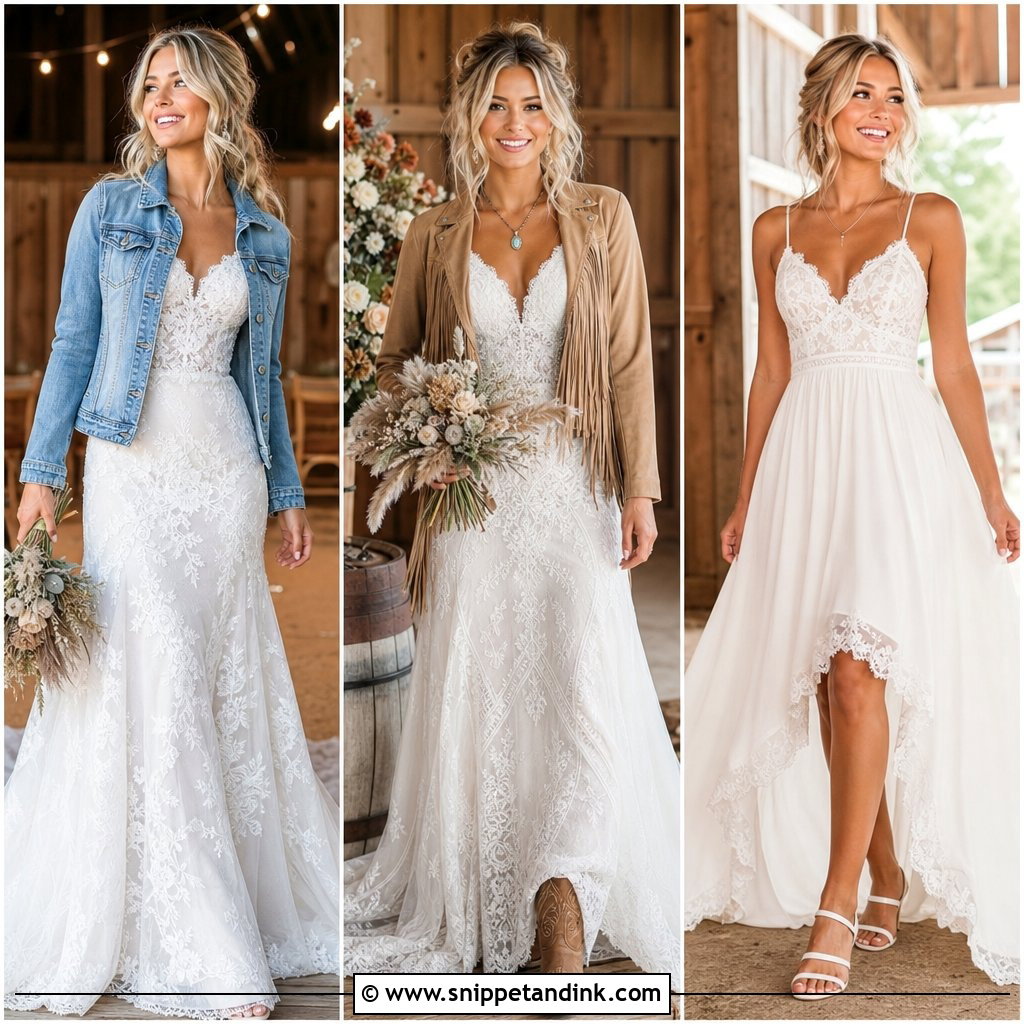
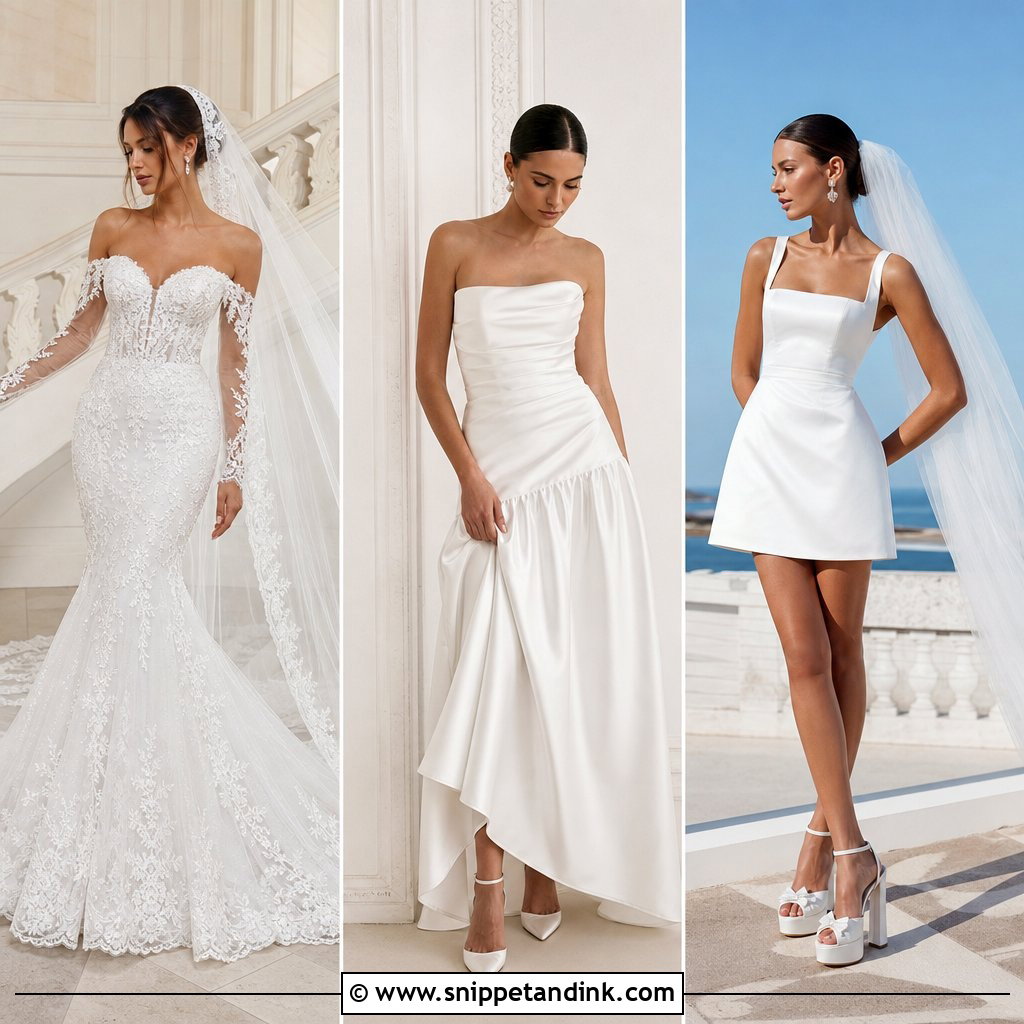
Lace has never really left, and the modern versions stop it looking dated. Allover lace suits a classic ceremony; floral lace laid over a nude or ivory lining gives more depth. I’d put a fitted lace sheath in a garden and a lace ball gown in a ballroom. The lining colour changes everything, so I always have brides try the same lace over two linings before choosing. Pearl studs, a fine veil and pointed ivory heels. With very detailed lace, leave the heavy jewellery at home.
2. Drop Waist Wedding Dress
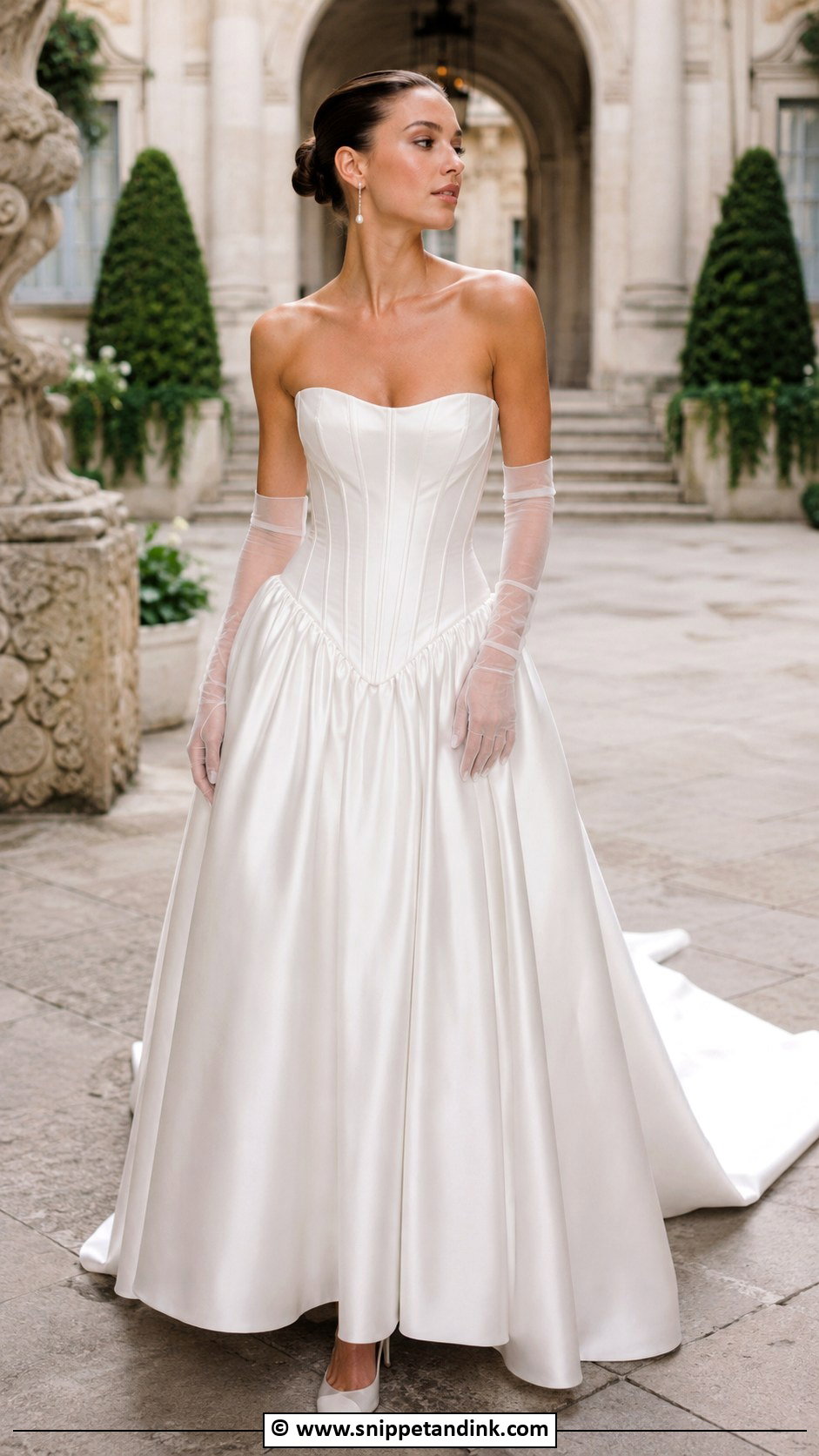
The drop waist wedding dress draws a long, sculpted line through the torso before the skirt opens out, often with a corset bodice, basque seam and full skirt. It’s a fashion-led shape, and honestly it’s not for every frame: on a short torso the dropped seam can sit almost at the hip and cut the legs short. A smooth updo, sheer gloves and simple drops keep the waistline visible. A cathedral veil adds ceremony; a shorter one keeps it clean. Satin pumps or block-heel sandals.
3. Satin Slip Wedding Dress
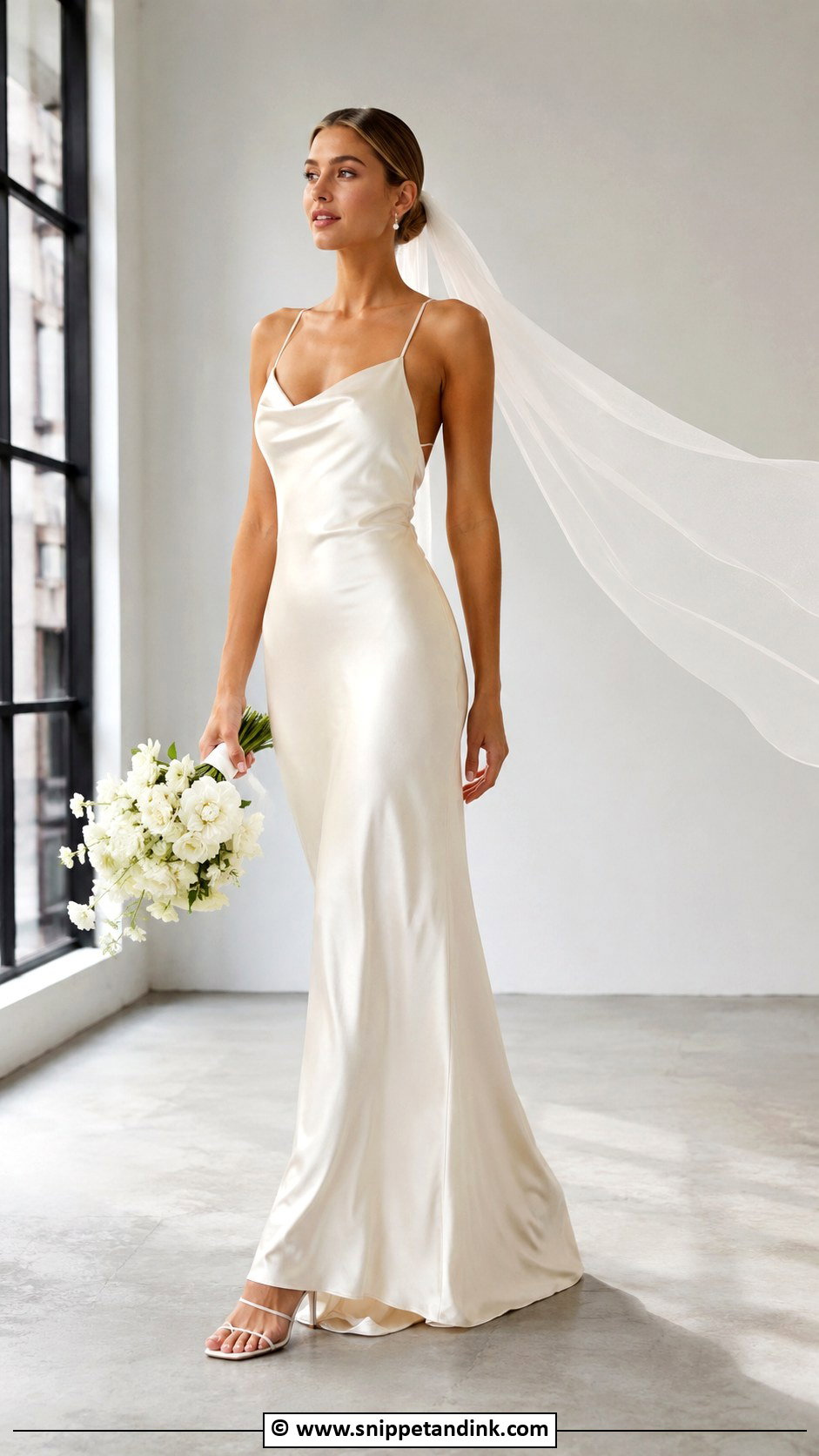
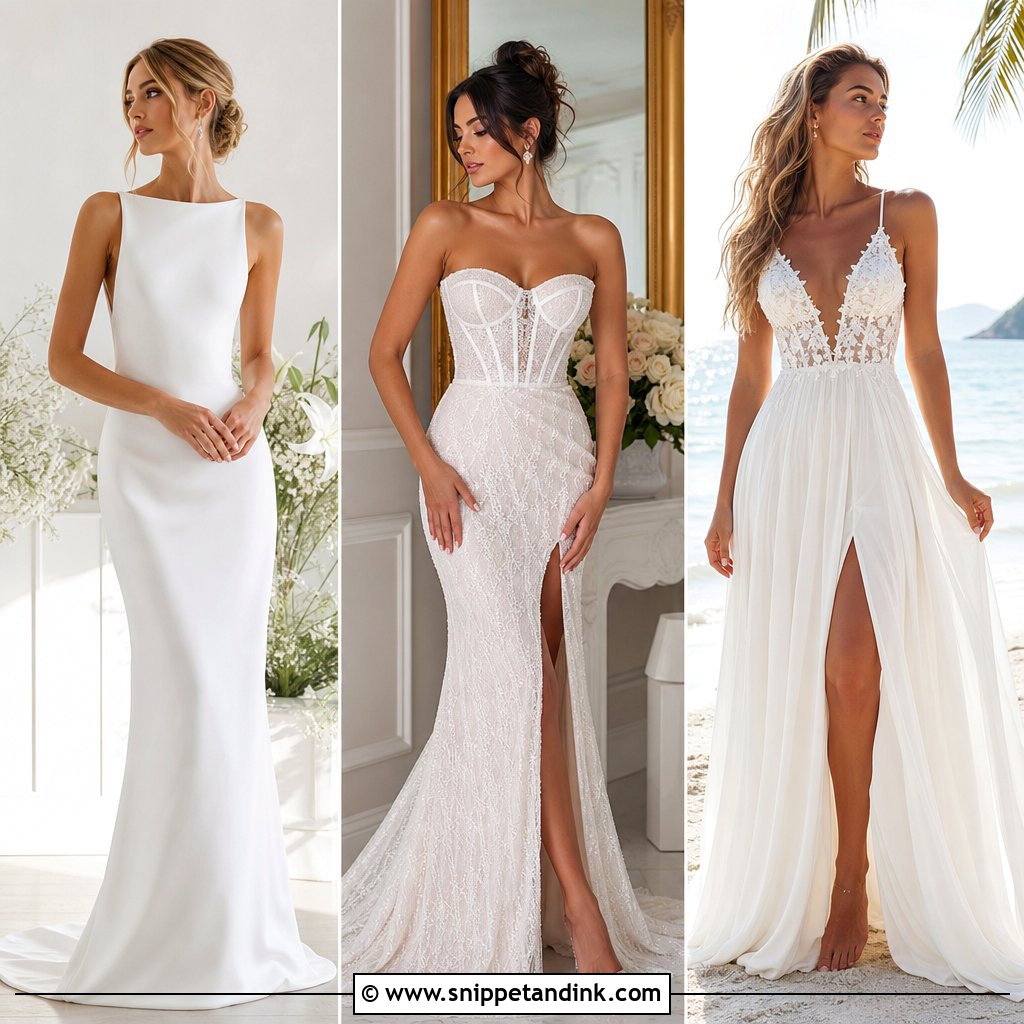
Everything about a satin slip wedding dress depends on fit and fabric, because there’s nothing to hide behind. Bias-cut satin skims the body and shows every seam and every line of underwear, so I plan the undergarments before the first fitting, not after. Look for a soft cowl or fine spaghetti straps. Strappy heels, a silk scarf veil, pearl earrings and a small bouquet keep it minimal. It’s at home in the city, on a beach or on a rooftop. Add a sheer cape, cropped jacket or long gloves if you want coverage for the ceremony.
4. Corset Wedding Dress
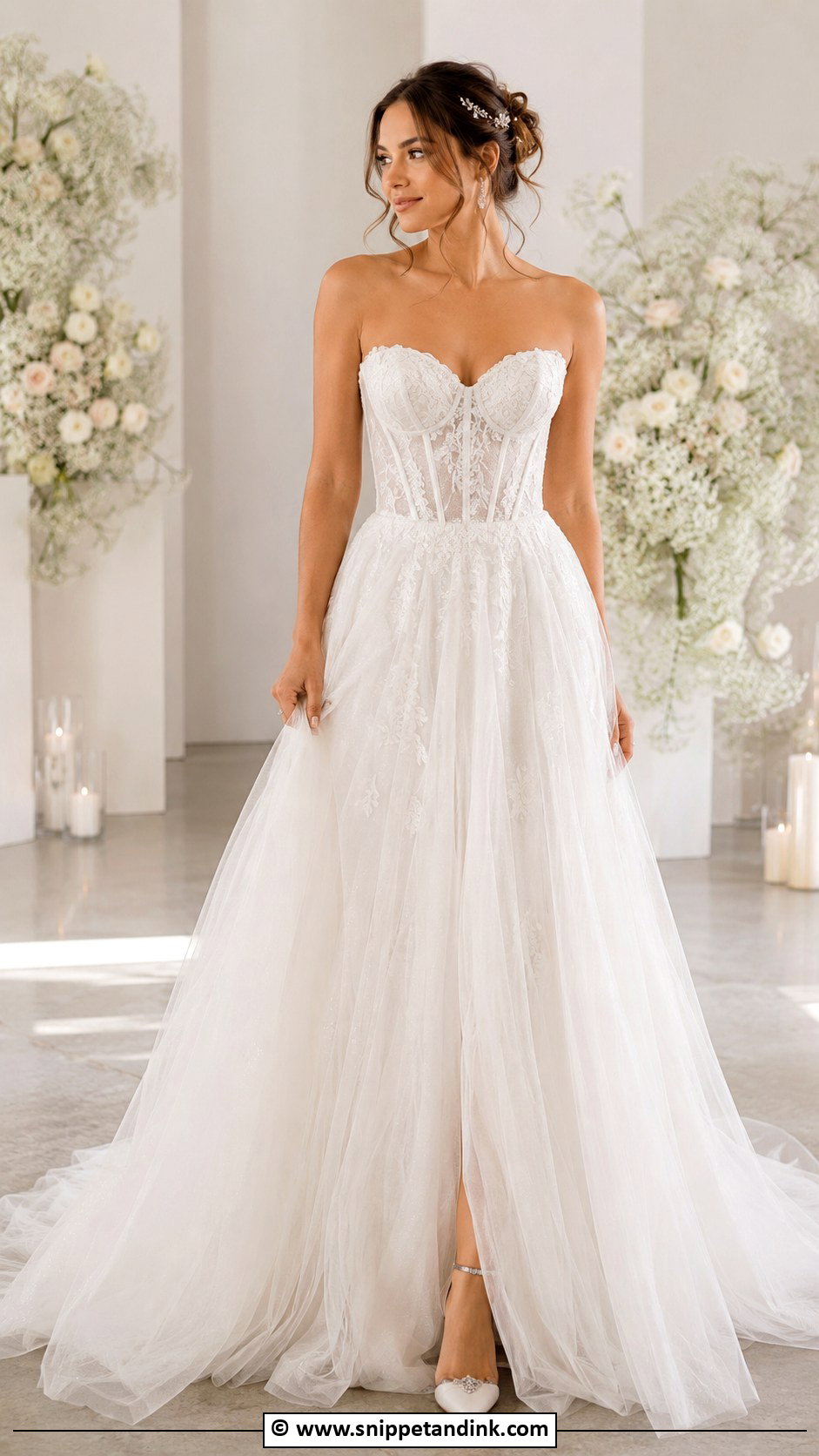
A corset wedding dress gives structure and real support, which is why strapless, off-shoulder and sweetheart necklines feel more secure on one. Modern corsets look soft when paired with tulle, lace, satin or organza skirts. The boning should follow your body, not fight it: if a bone digs in under the bust when you sit, it needs shortening at a fitting. A fine veil, crystal hair pins and elegant heels. Visible boning is already the statement, so keep the rest simple.
5. Basque Waist Wedding Dress
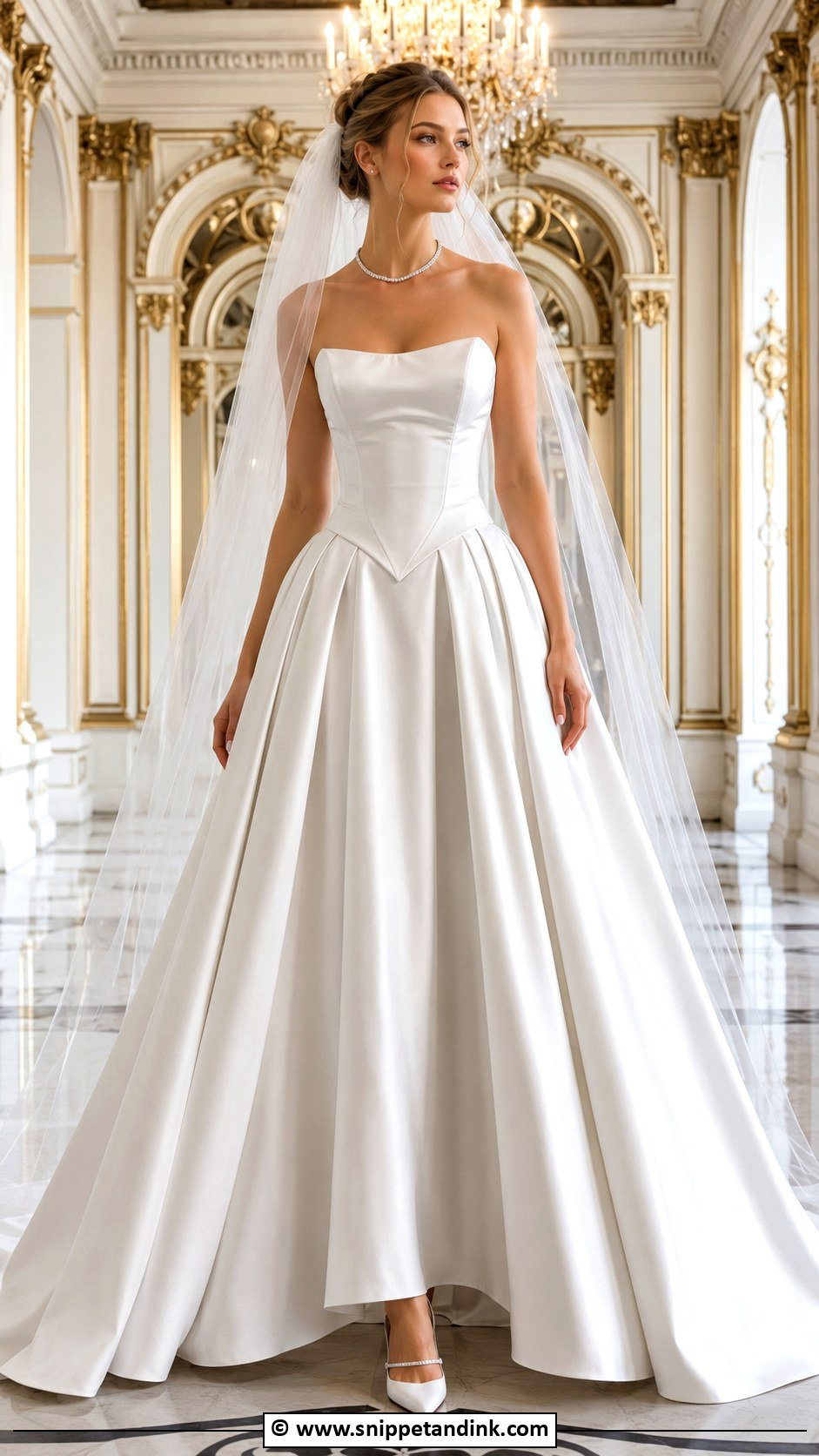
The basque waist dips into a point at the front, lengthening the torso and making the waist look smaller. It’s regal and very current, especially over a full skirt or soft pleats, and it suits formal venues and estate weddings. Clean satin feels classic; lace and tulle feel romantic. I’d never add a belt to this one; the point is the detail. A long veil, a simple necklace and polished heels. Make sure the point sits centred when you’re seated, since some bodices twist slightly as you sit.
6. Ball Gown Wedding Dress
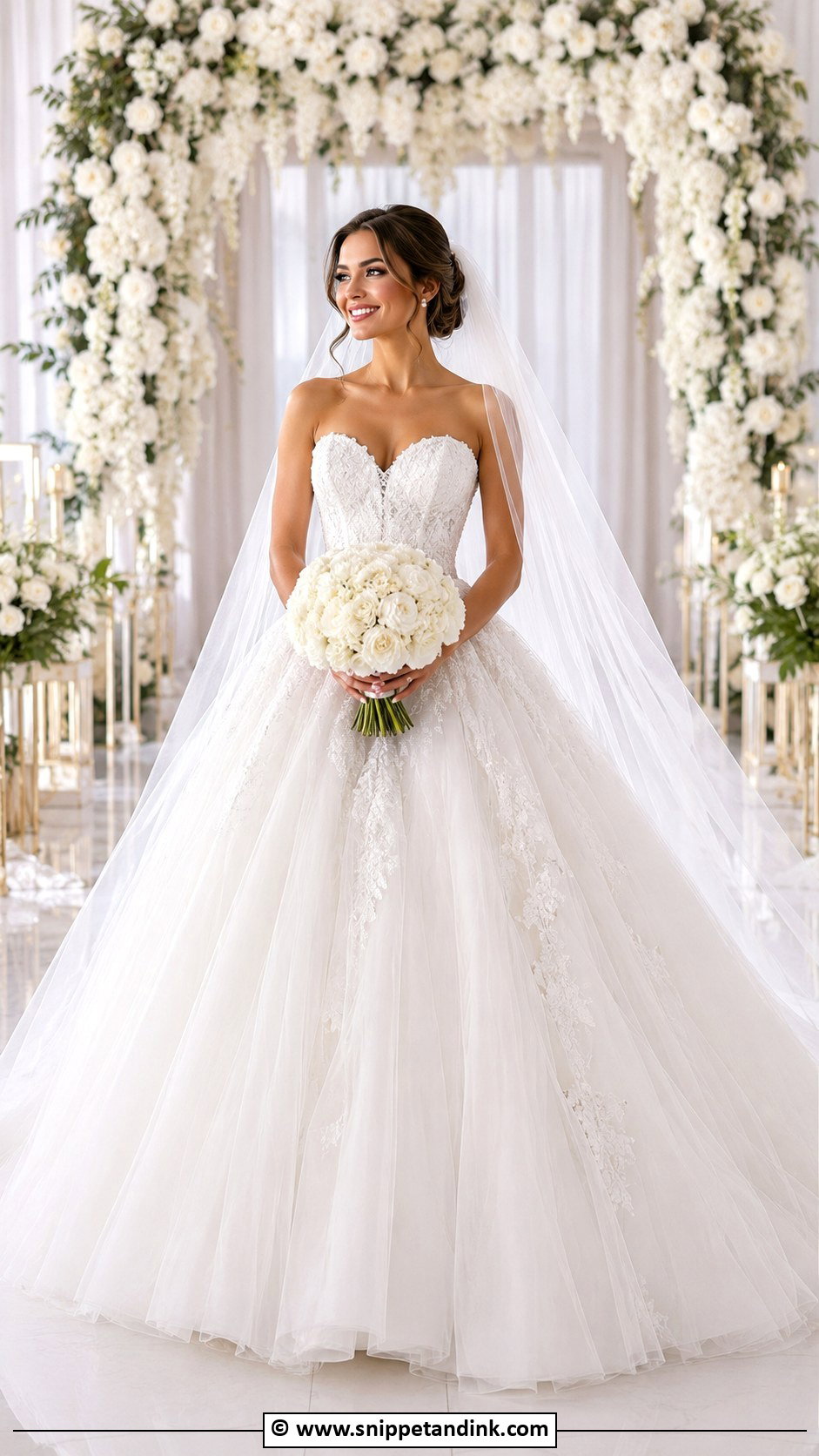
Ball gowns are still the biggest ceremony entrance there is. Current versions feel lighter, with layered tulle, clean mikado, lace bodices or sculptural necklines. Everything rests on the bodice fit, because a full skirt drags a loose bodice down all day, so plan for proper alterations. A cathedral veil, soft glam makeup and comfortable heels hidden under the skirt. Ask how the gown bustles before you buy; a big skirt with a weak bustle is hard work at the reception. Formal weddings and large rooms suit it best.
7. Tea Length Wedding Dress
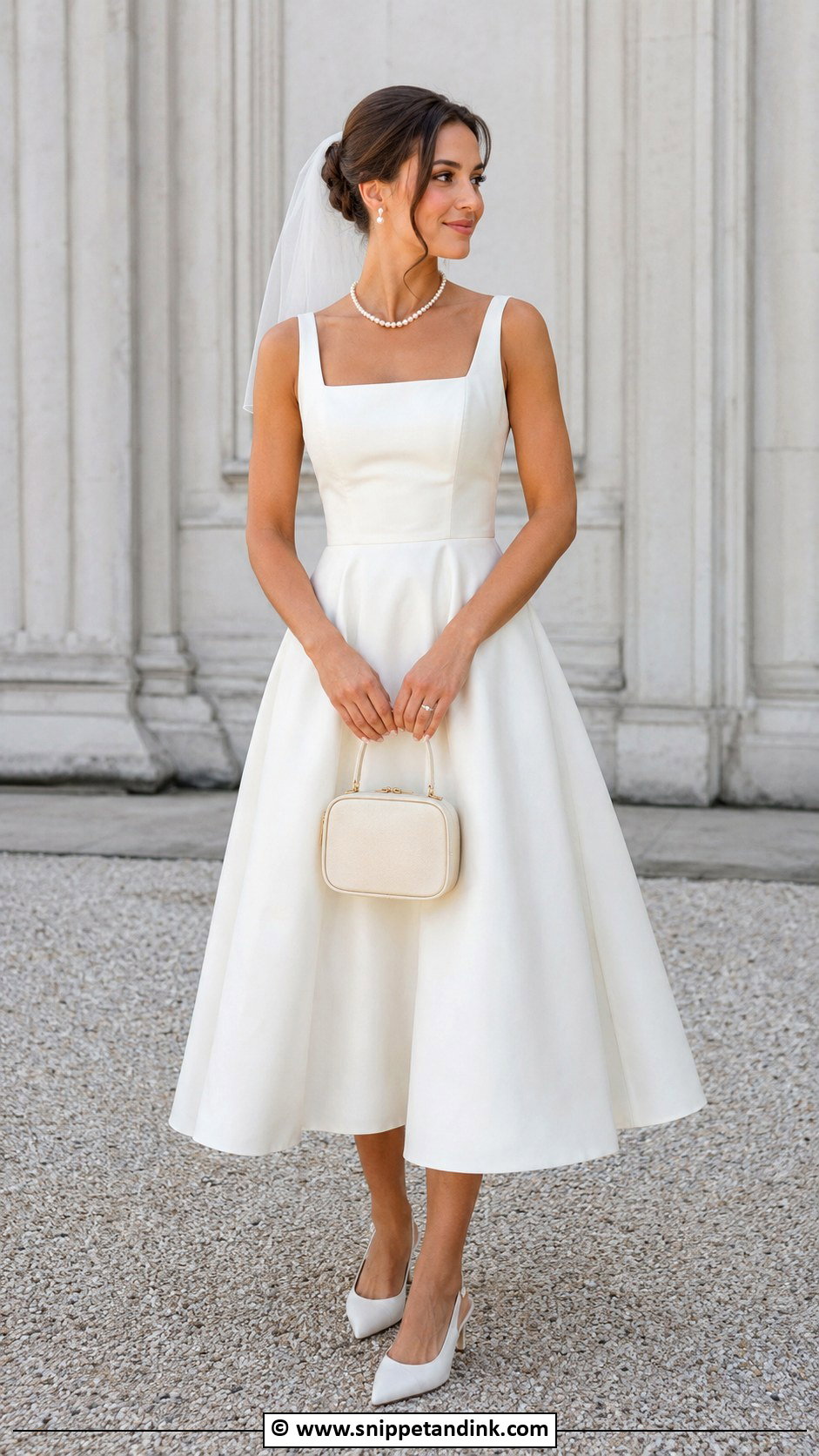
Tea length lands between knee and ankle and shows your shoes, so budget for good ones. A fitted bodice with a flared skirt gives a vintage shape; clean satin feels modern. Courthouse weddings, garden receptions, brunches and second looks all suit it. The hem length is the whole look, and I set it with the actual shoes on, because an inch too long reads as an ill-fitting full-length dress. Slingbacks, a short veil, pearls and a structured mini bag.
8. Mini Wedding Dress
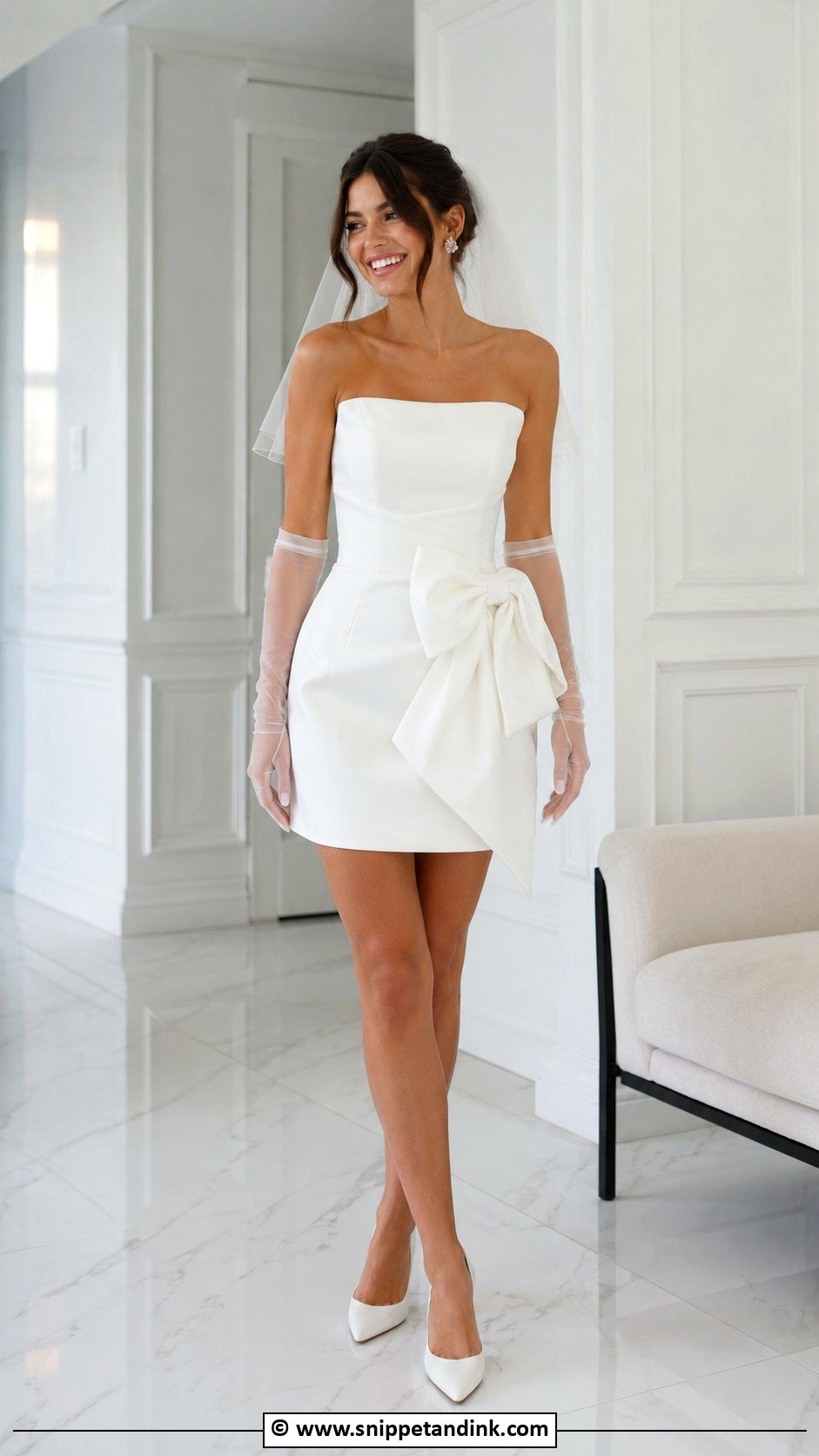
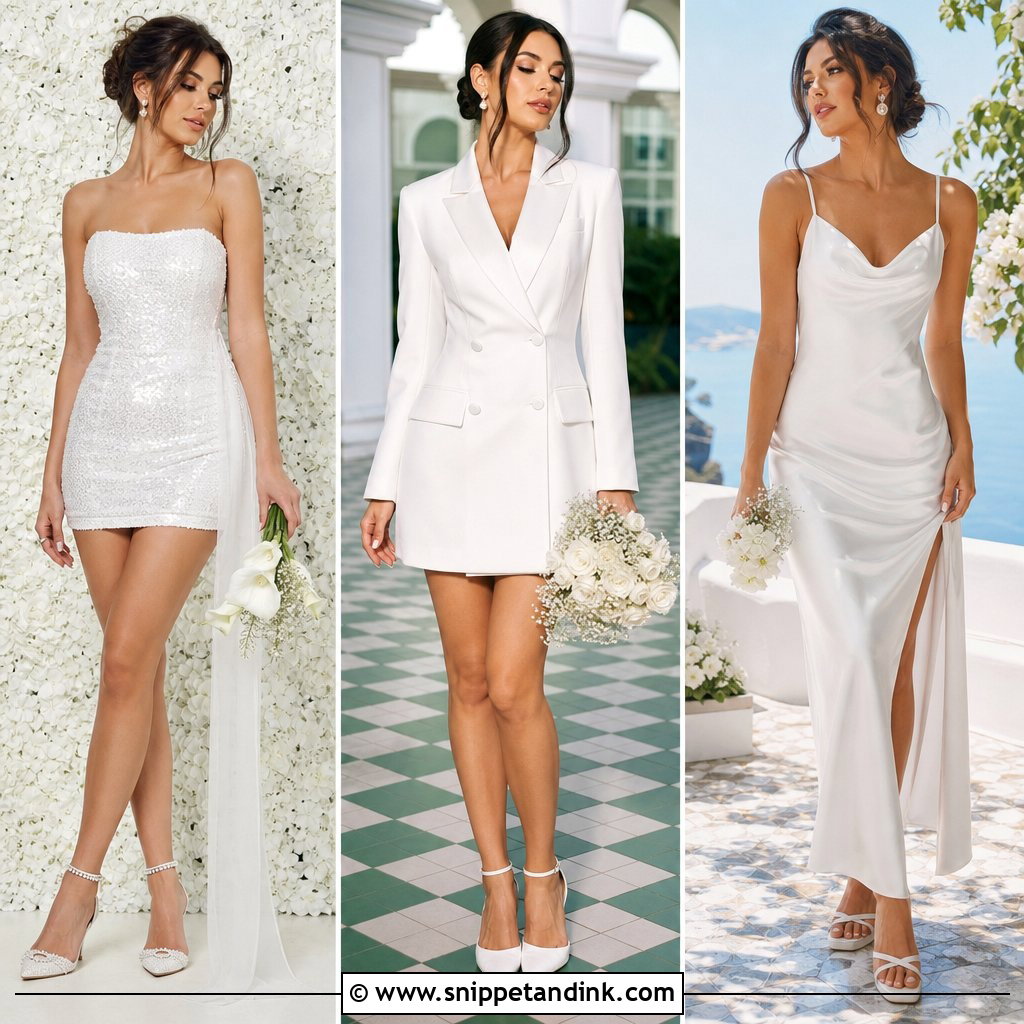
Minis are for civil ceremonies, receptions, after-parties and destinations. Choose a structured mini with a bow, feather trim, lace overlay or clean satin so it stays polished. Pointed pumps, sheer tights if you want them, statement earrings and a short veil. Gloves or a sleek blazer make it more editorial. Try sitting in it before you buy: some minis ride up sharply when seated, which matters at dinner and in photos taken at the table.
9. Bubble Hem Wedding Dress
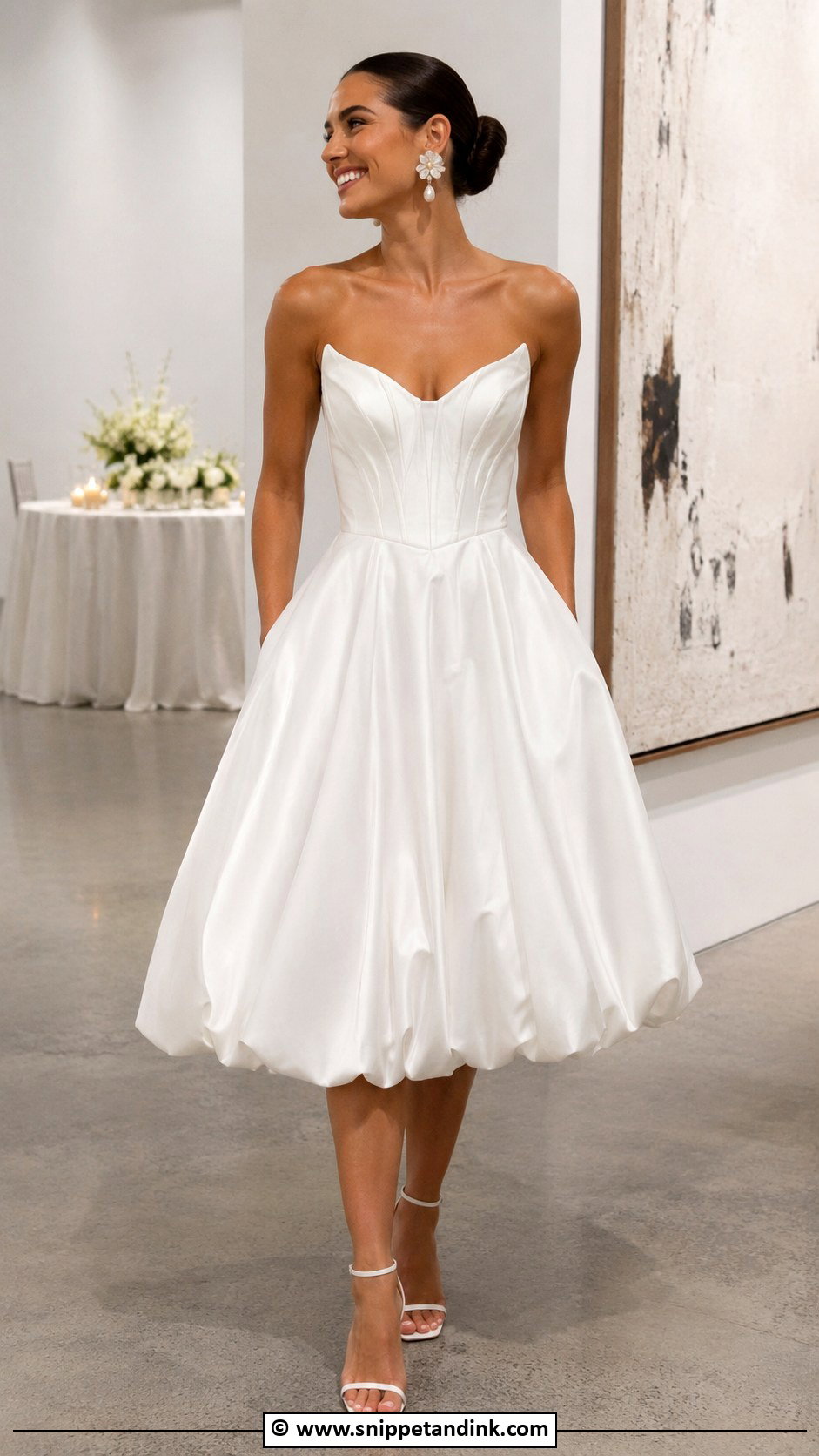
A bubble hem wedding dress gives volume without ball gown weight. The rounded hem is gathered into an inner lining, which holds its shape on minis, midis and tea lengths. Balance it with a fitted bodice. Simple heels, sculptural earrings and a smooth bun keep it modern. When you sit, a bubble hem pushes up and forward, so it’s worth checking how it behaves on a chair. Side-on, the hem gives photos real dimension.
10. Off Shoulder Wedding Dress
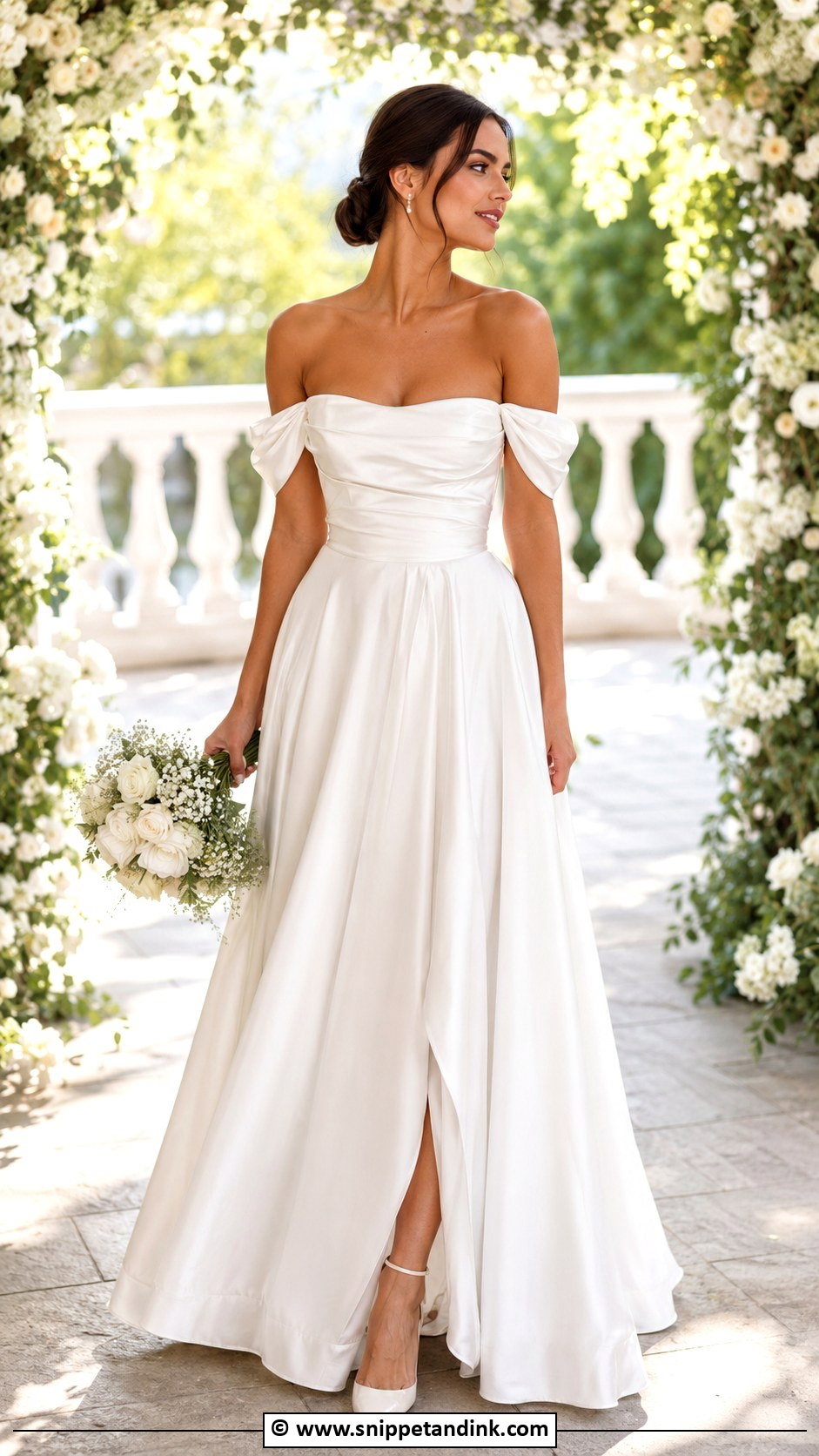
Off-shoulder necklines frame the collarbone and give some arm coverage. They work on fitted gowns, ball gowns, lace and satin columns. The problem I see most is the band slowly sliding up onto the shoulder or down the arm, which means it wasn’t fitted snugly enough; it should sit with no gap at the back of the arm. A low bun, small drop earrings and a veil placed behind the shoulders. Skip the necklace if the neckline is draped.
11. Halter Wedding Dress
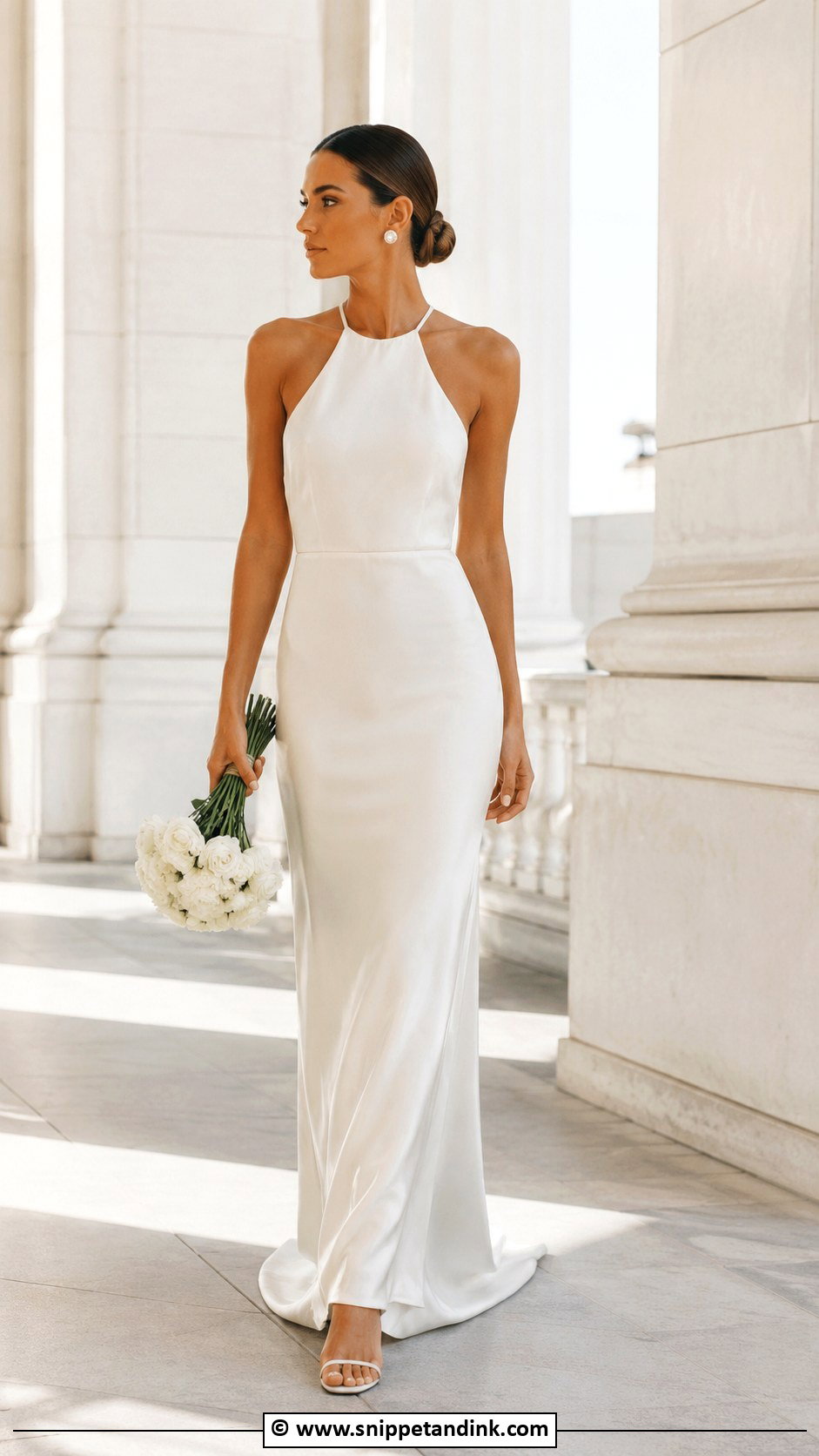
Sleek and slightly unexpected, a halter puts the focus on the shoulders and gives support without traditional straps. Satin, crepe, lace and high-neck sheer versions all exist. Pulled-back hair, statement studs and clean heels keep the neck sharp; a low open back adds drama. The strap around the neck carries weight, so heavy fabric can pull on the neck after a few hours. Halters suit city venues, destinations and receptions, since the neckline stays put through dancing and hugs.
12. Square Neck Wedding Dress
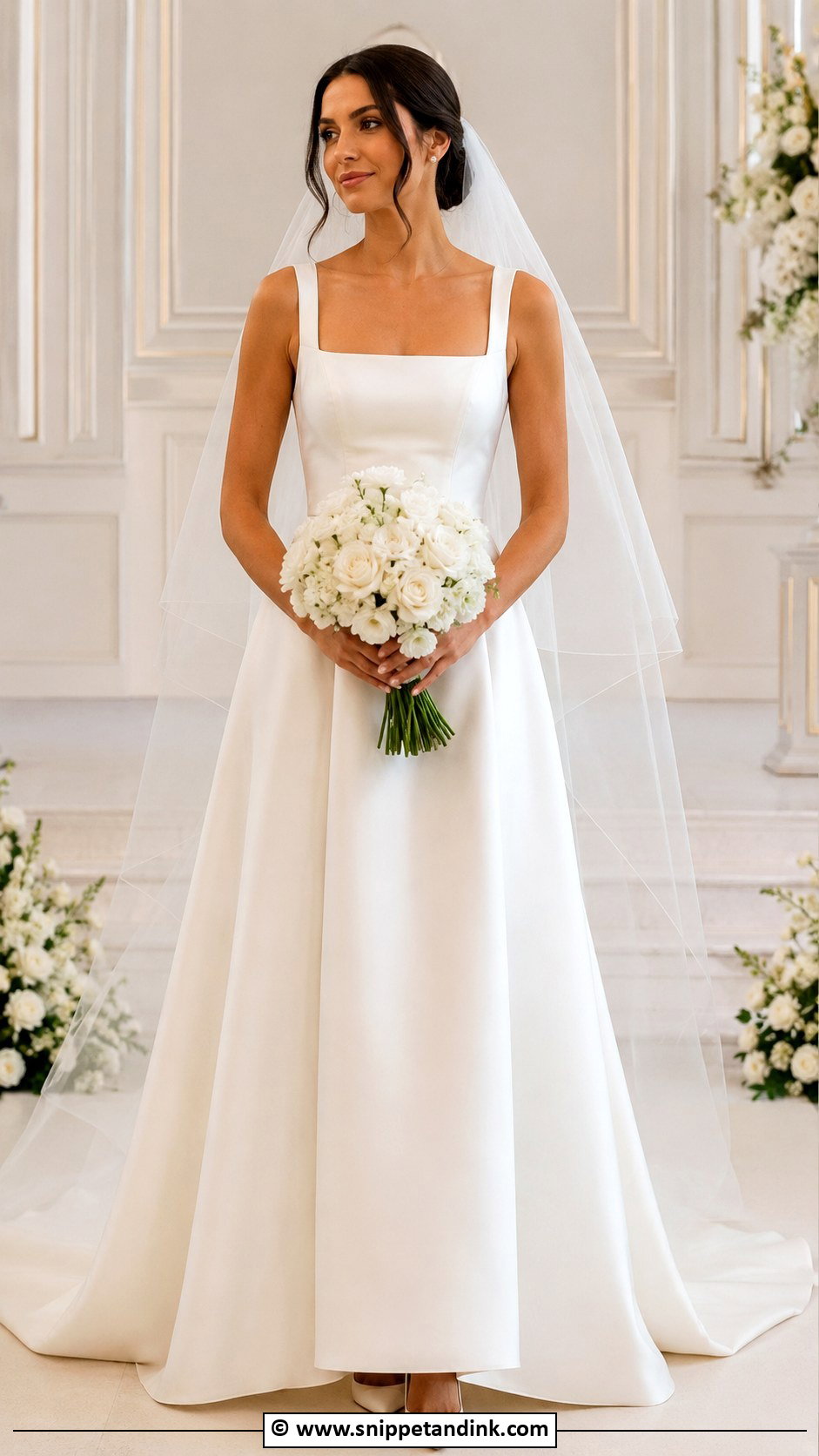
A square neck gives a clean, structured frame that suits straps, long sleeves, fitted bodices and full skirts alike. It suits brides who want a simple shape that still looks deliberate. Crepe, satin and lace all show the line neatly. Check the corners when you lean forward: a square neck that’s even slightly too wide gapes, and it’s a quick fix if caught early. A smooth veil, pearl studs and a low heel or satin pump.
13. Long Sleeve Wedding Dress
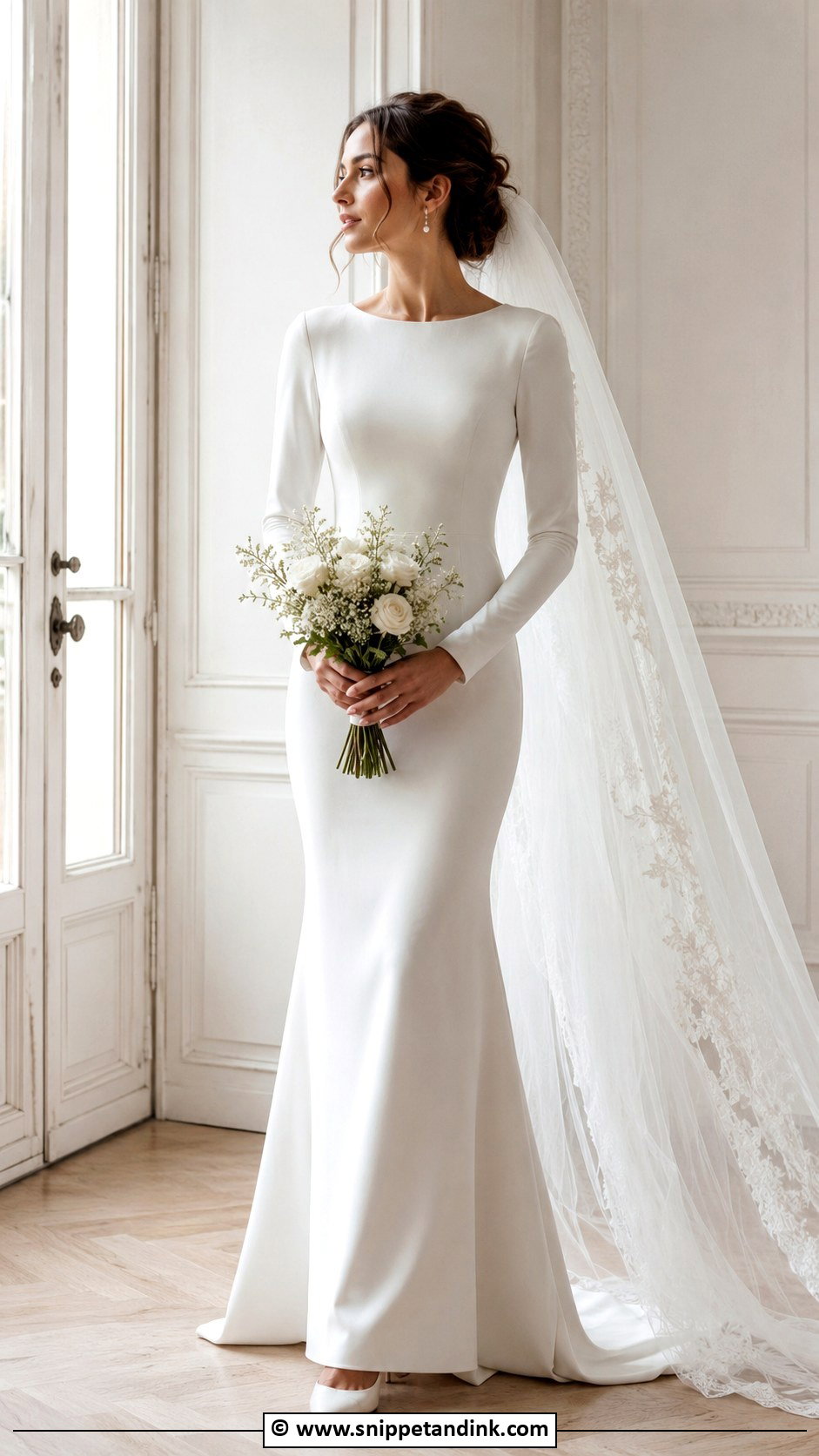
Sleeves suit cooler weather and formal settings. Sheer lace reads romantic; satin looks polished; fitted crepe gives a modern line. Balance is the rule I give everyone: detailed sleeves want a simple skirt, and a minimal gown can carry dramatic sleeves. A long sleeve wedding dress also brings texture into close-up shots around the hands and bouquet. Make sure you can raise your arms; fitted sleeves set without movement allowance make hugging and bouquet tosses awkward. A soft updo, delicate earrings and pointed heels.
14. Sheer Sleeve Wedding Dress
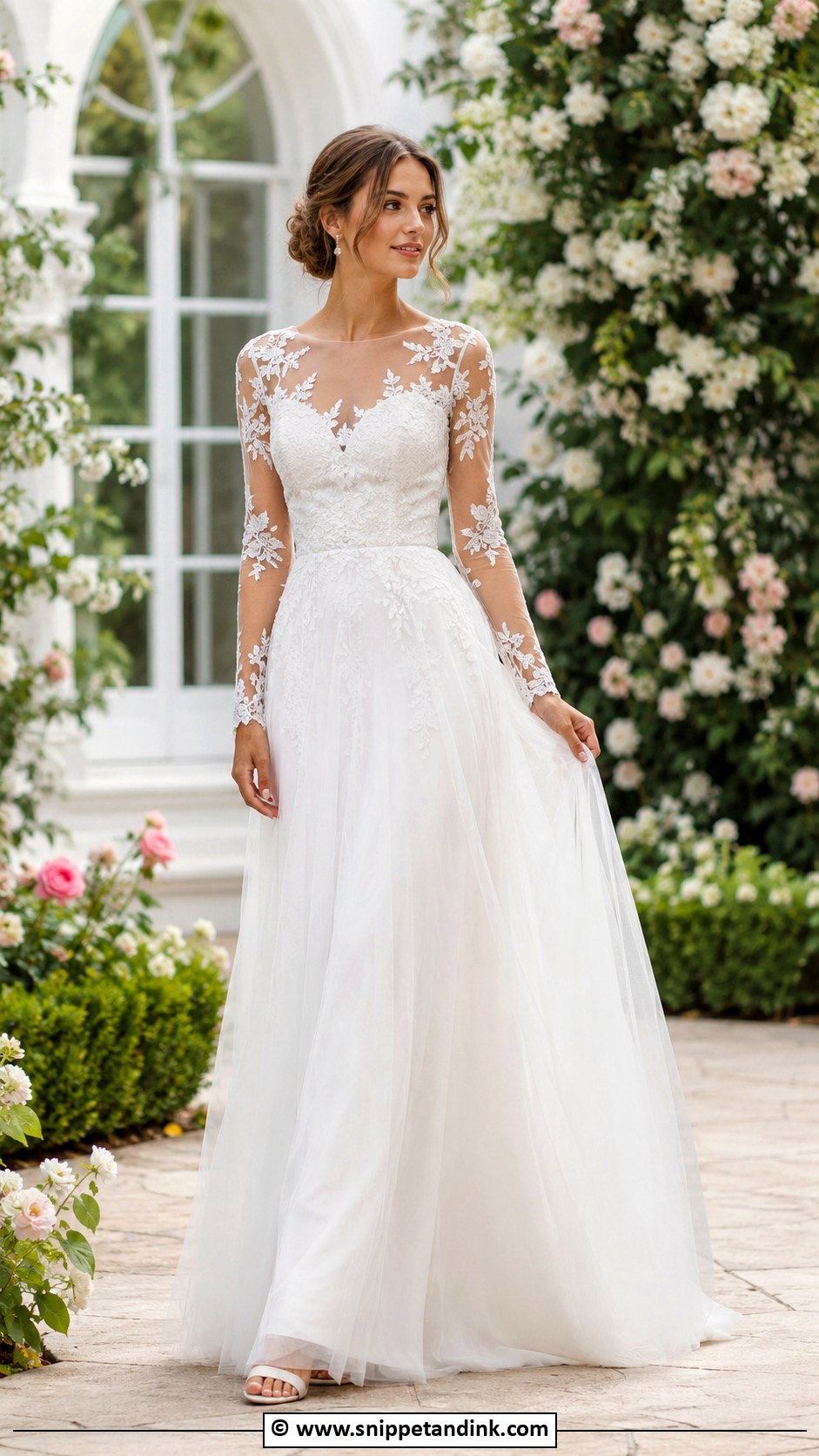
Sheer sleeves give coverage without weight, in tulle, lace, organza or illusion mesh, often with appliqué or tiny pearls. A fitted bodice, flowing skirt and simple veil finish the look. Illusion mesh comes in several skin tones, and I match it to the bride’s arm rather than the dress, otherwise it reads as a grey film in photos. Keep bracelets light so the sleeve detail shows. Spring, gardens and soft indoor light suit them best.

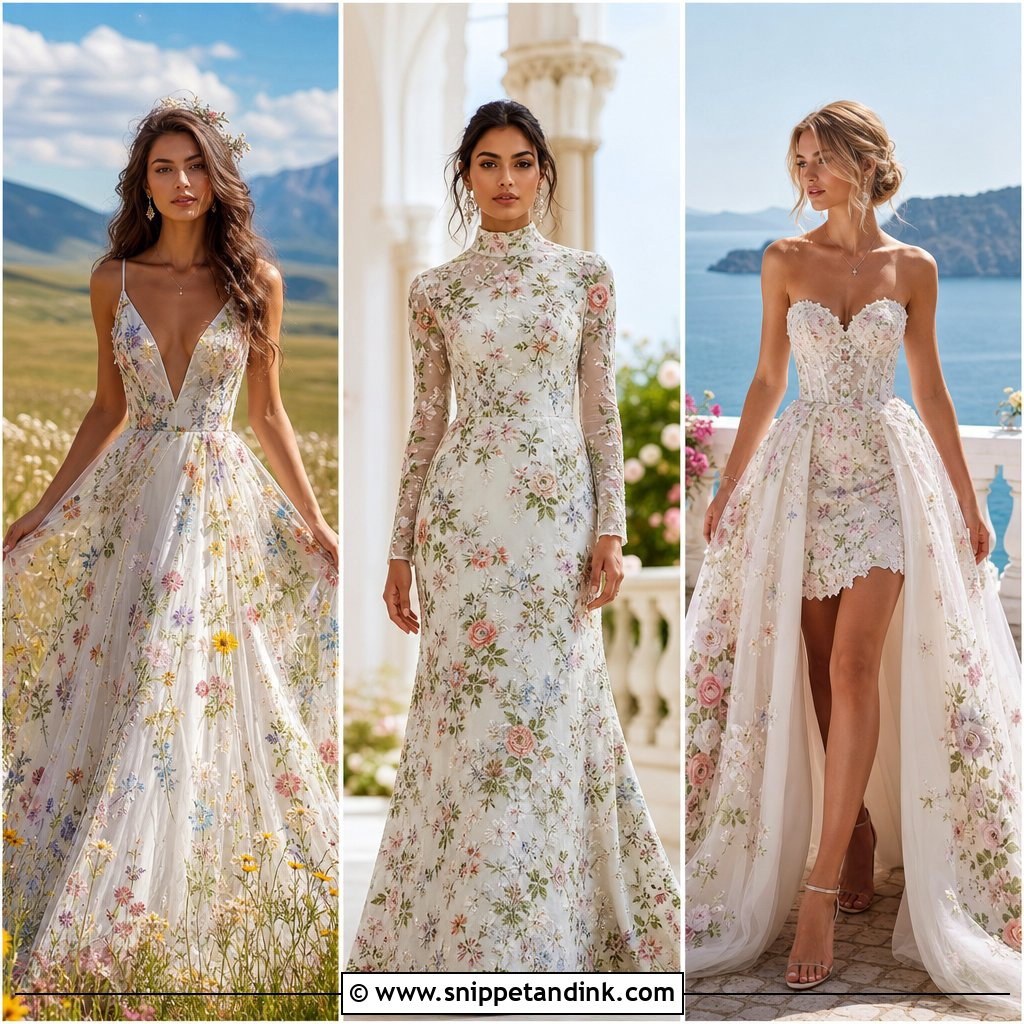
15. Floral Applique Wedding Dress
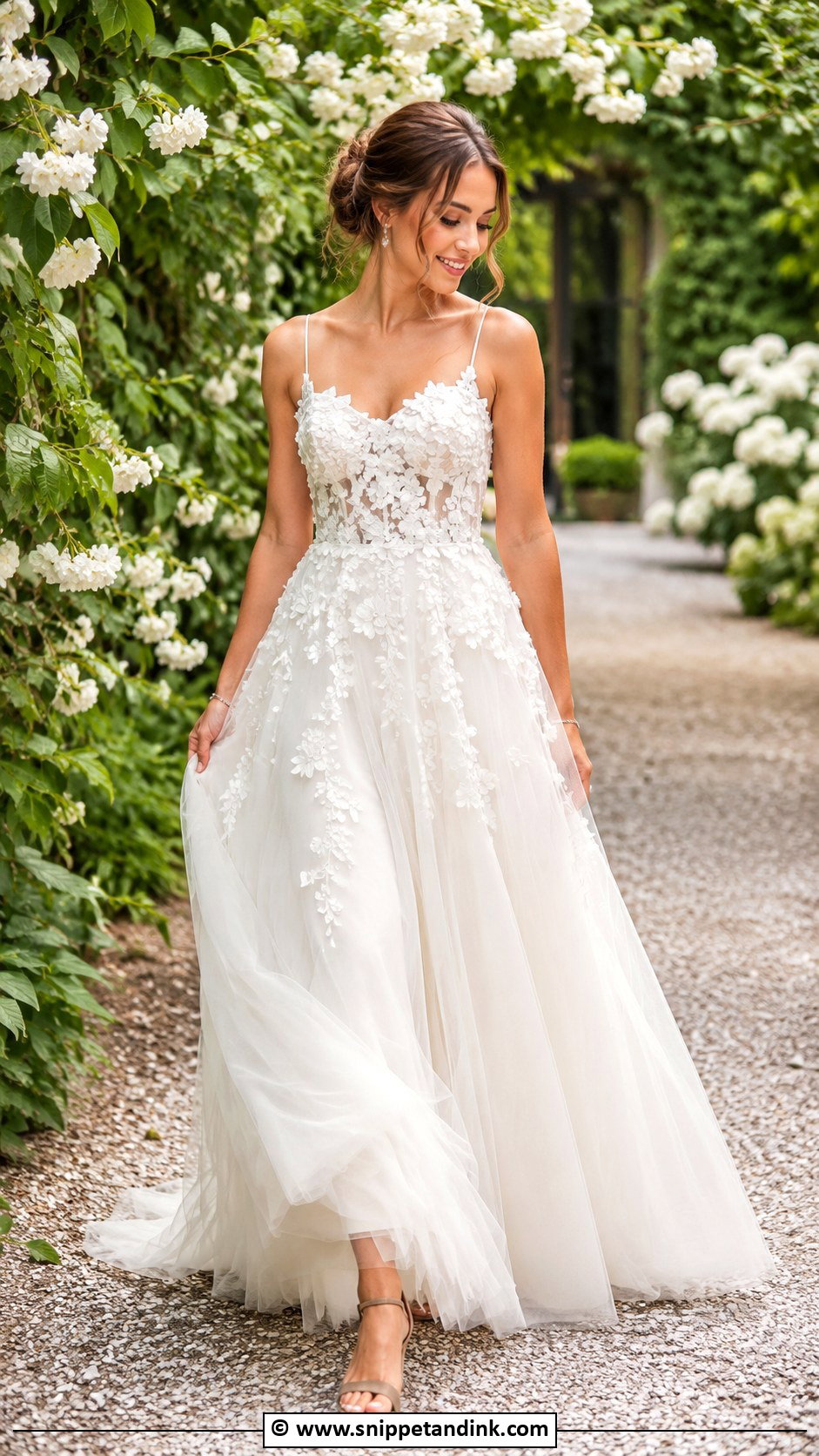
Appliqués sit on top of the fabric rather than being printed, so they catch light and cast tiny shadows. Delicate on a sheer overlay, bold on a full skirt. Look closely at how they’re attached: hand-tacked appliqués lie flat and move with the fabric; glued ones can lift at the edges after a day of wear. Simple earrings, a loose updo and neutral heels. Large appliqués want a simple bouquet. Gardens and outdoor ceremonies suit this style, especially if you’d rather have detail than sparkle.
16. Pearl Wedding Dress
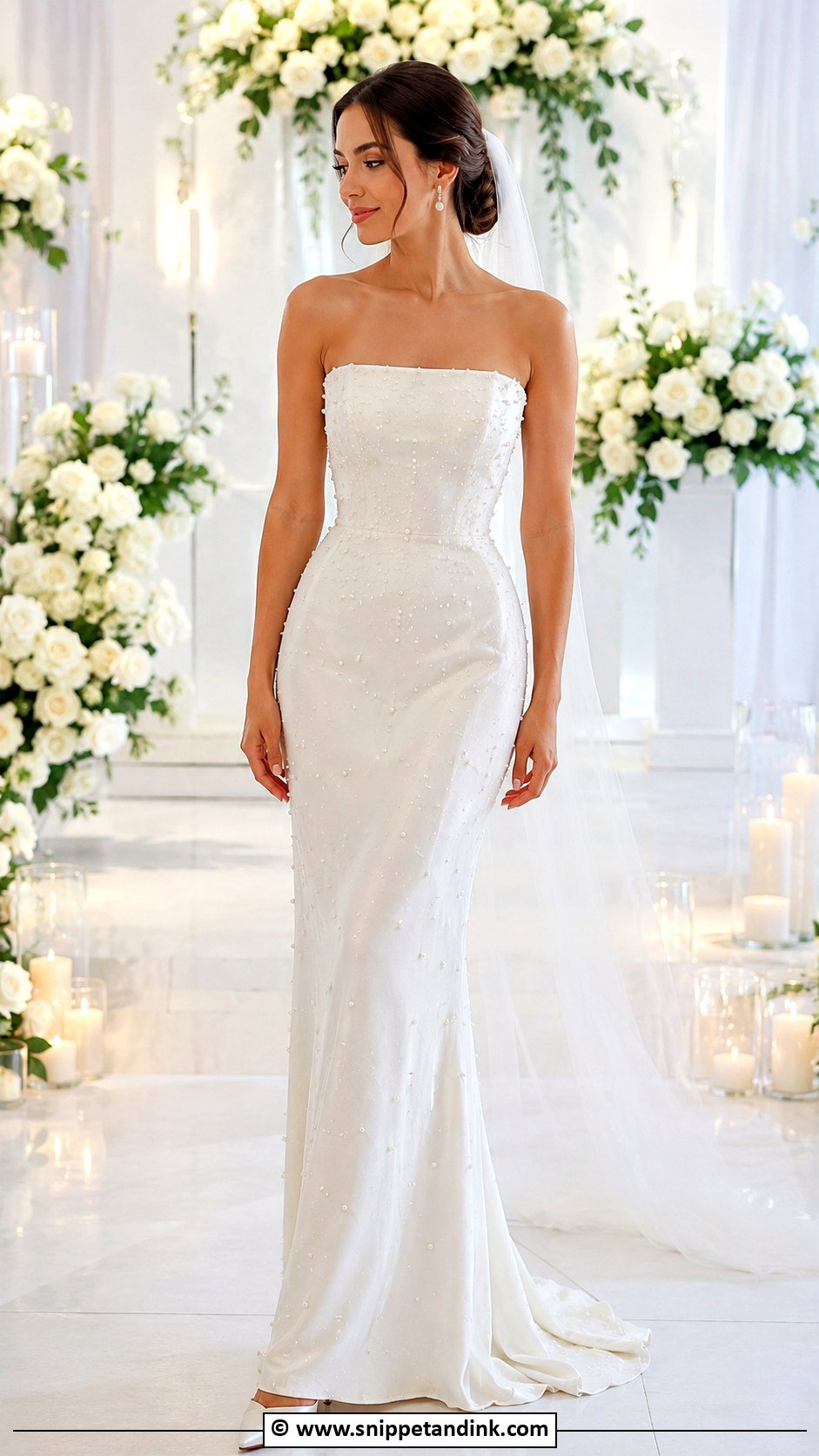
Pearls give a soft shine that isn’t flashy. They can be scattered accents, beaded straps, neckline trim or full embellishment. For a modern look I’d keep the silhouette clean and the pearls deliberate. Real beadwork adds weight, especially along a hem, so a heavily pearled skirt will feel heavier by evening. Pearl earrings, satin heels and a soft veil, and no more pearls if the dress is already beaded. Candlelit receptions and formal ceremonies show it at its best.
17. Bow Wedding Dress
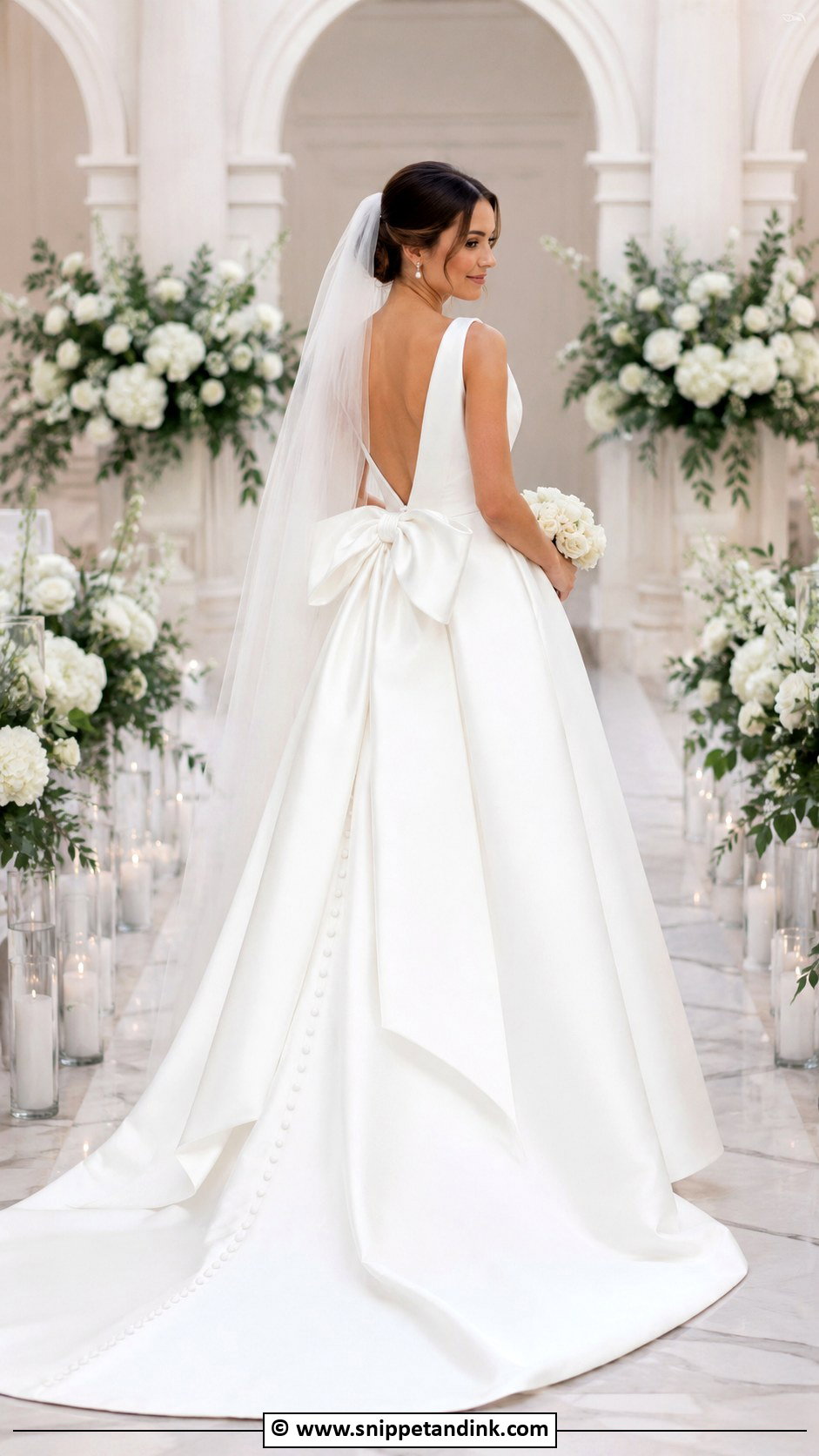
One well-placed bow can carry a whole dress. It might sit at the back, shoulder, waist, neckline or train. A large back bow makes the ceremony shots; a small shoulder bow is softer. The fabric decides whether it works: mikado, satin and taffeta hold a bow’s shape, while soft crepe makes it droop by the afternoon. Clean jewellery, a simple veil and classic heels, and let the bow do the talking.
18. Draped Wedding Dress
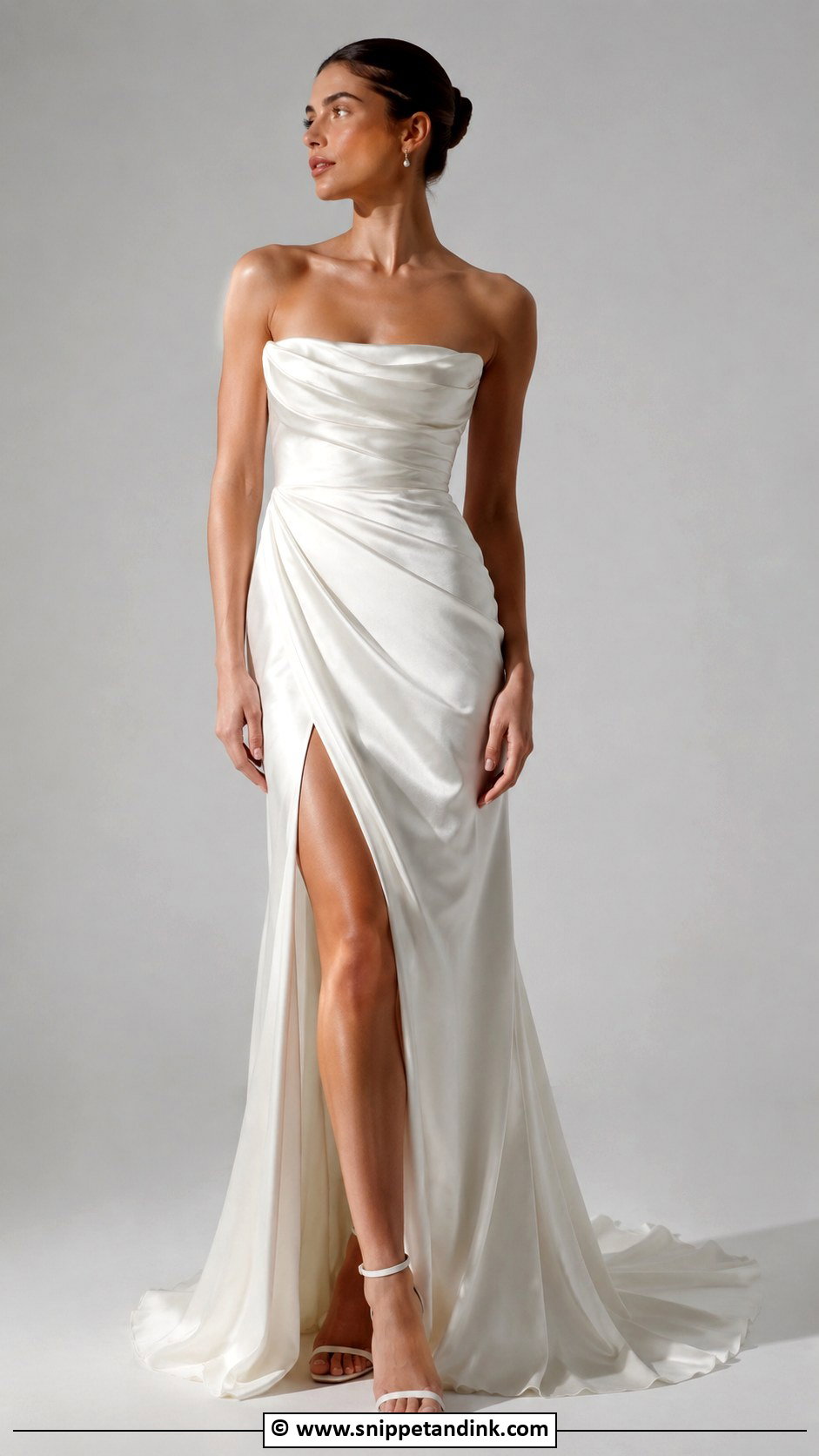
Draped fabric folds across the body to define the waist, neckline or hips without tightness. Satin, crepe, charmeuse and light silk blends drape best. Side draping adds shape; cowls add softness; gathered waist draping adds comfort. I like draped gowns for brides who dislike structure, but the drapes need tacking inside or they shift as you move. Sleek heels, a smooth bun and minimal jewellery. They suit many body types because the shape comes from fabric, not seams.
19. Sheer Overlay Wedding Dress
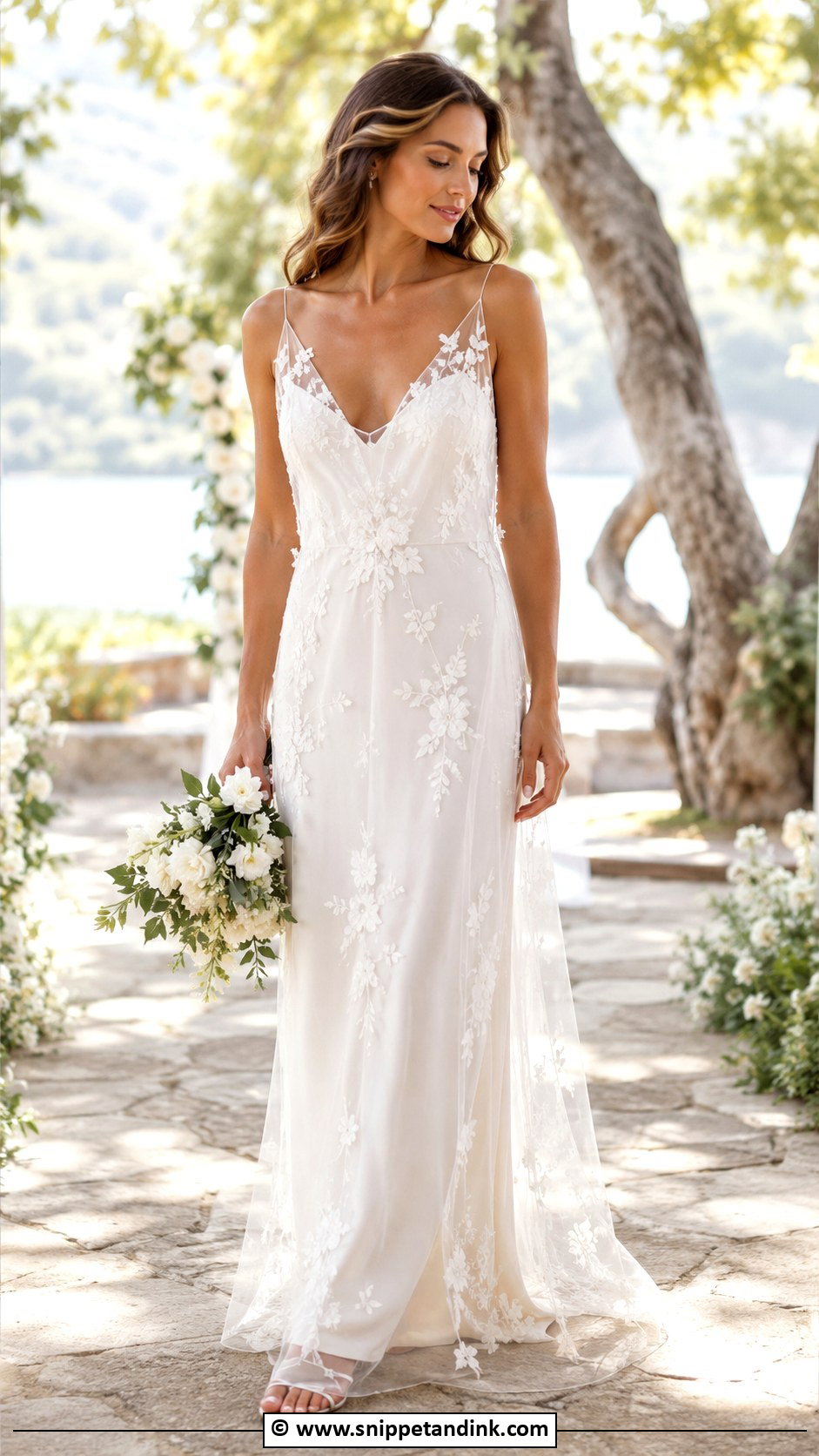
A sheer overlay of tulle, organza, chiffon or lace over a fitted lining or slip gives depth to even a simple silhouette. It photographs with a soft glow. Delicate earrings, soft waves and elegant sandals or pumps. If the overlay sparkles or has appliqué, keep the veil plain. Ask how the overlay is anchored at the waist; a floating layer can twist when you walk, and a few hidden tacks stop it.
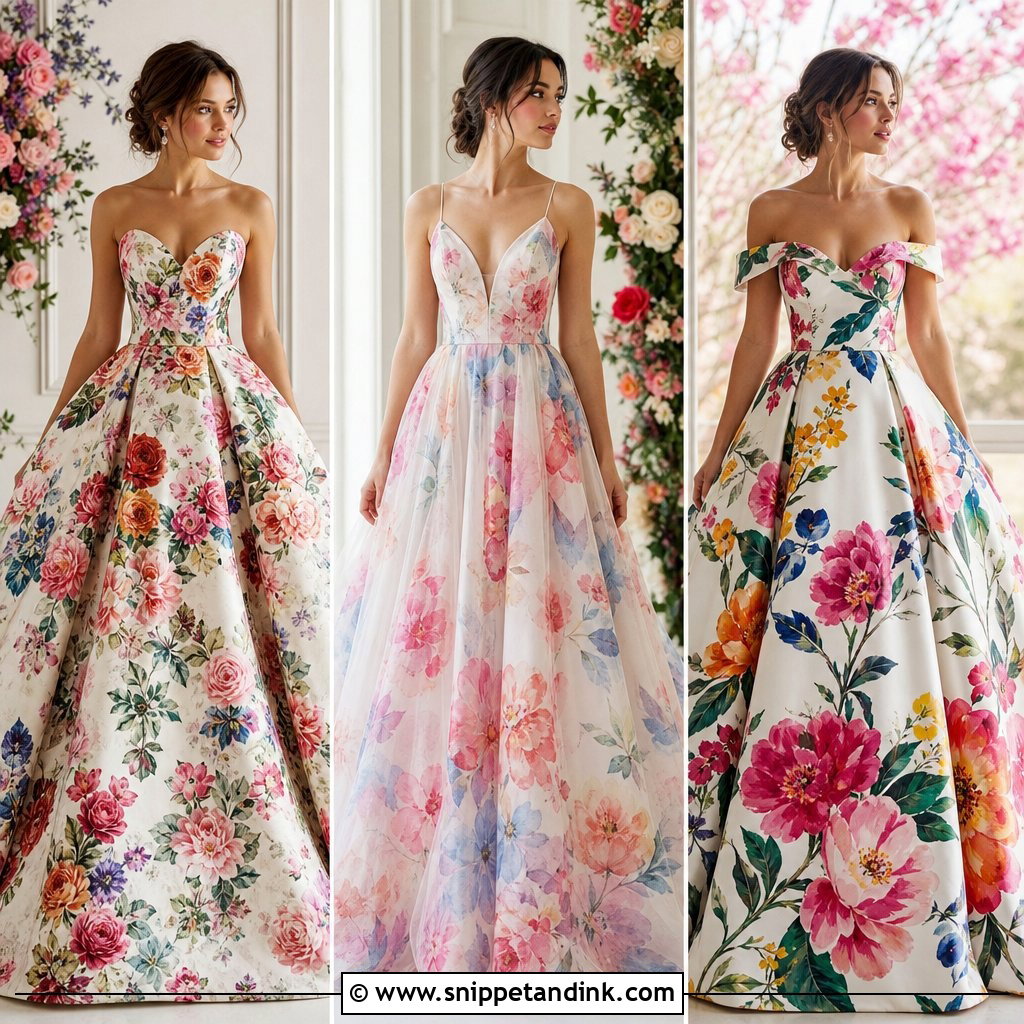

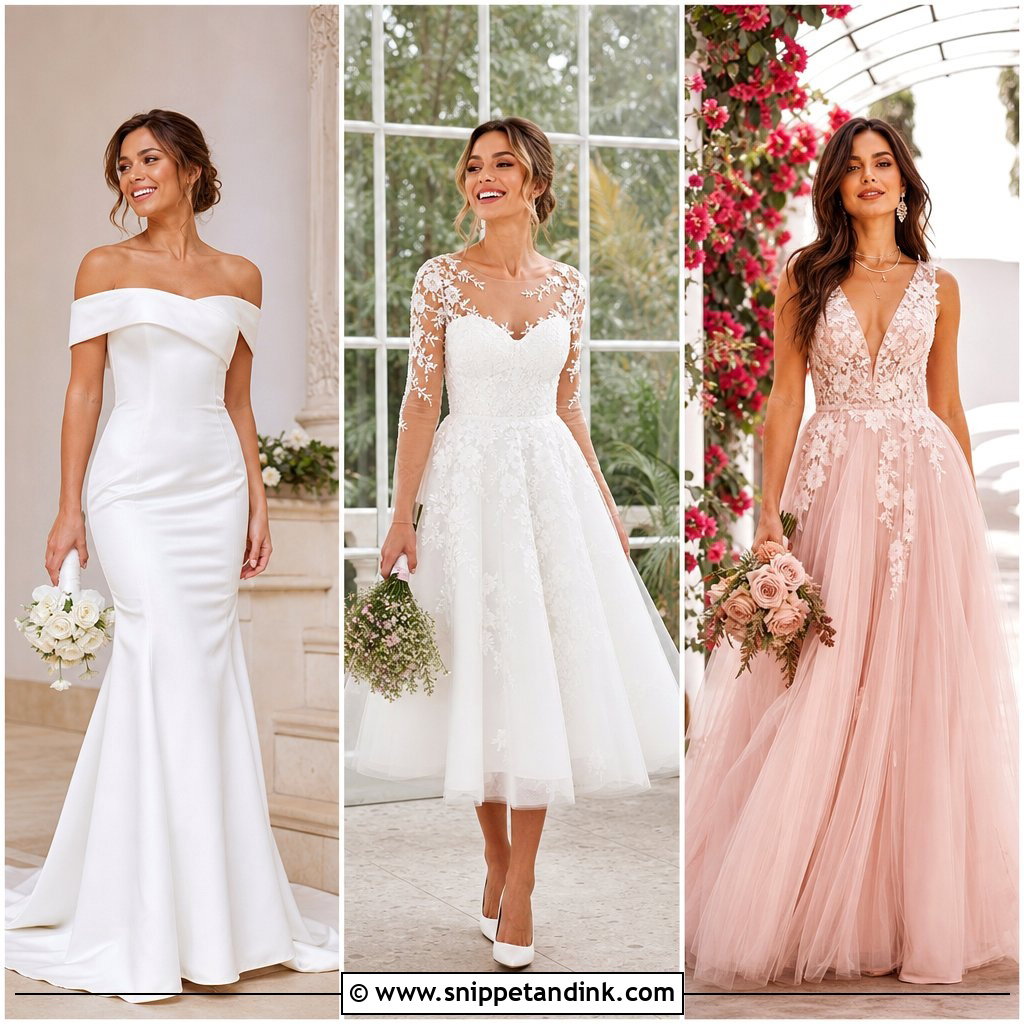
20. High Neck Wedding Dress
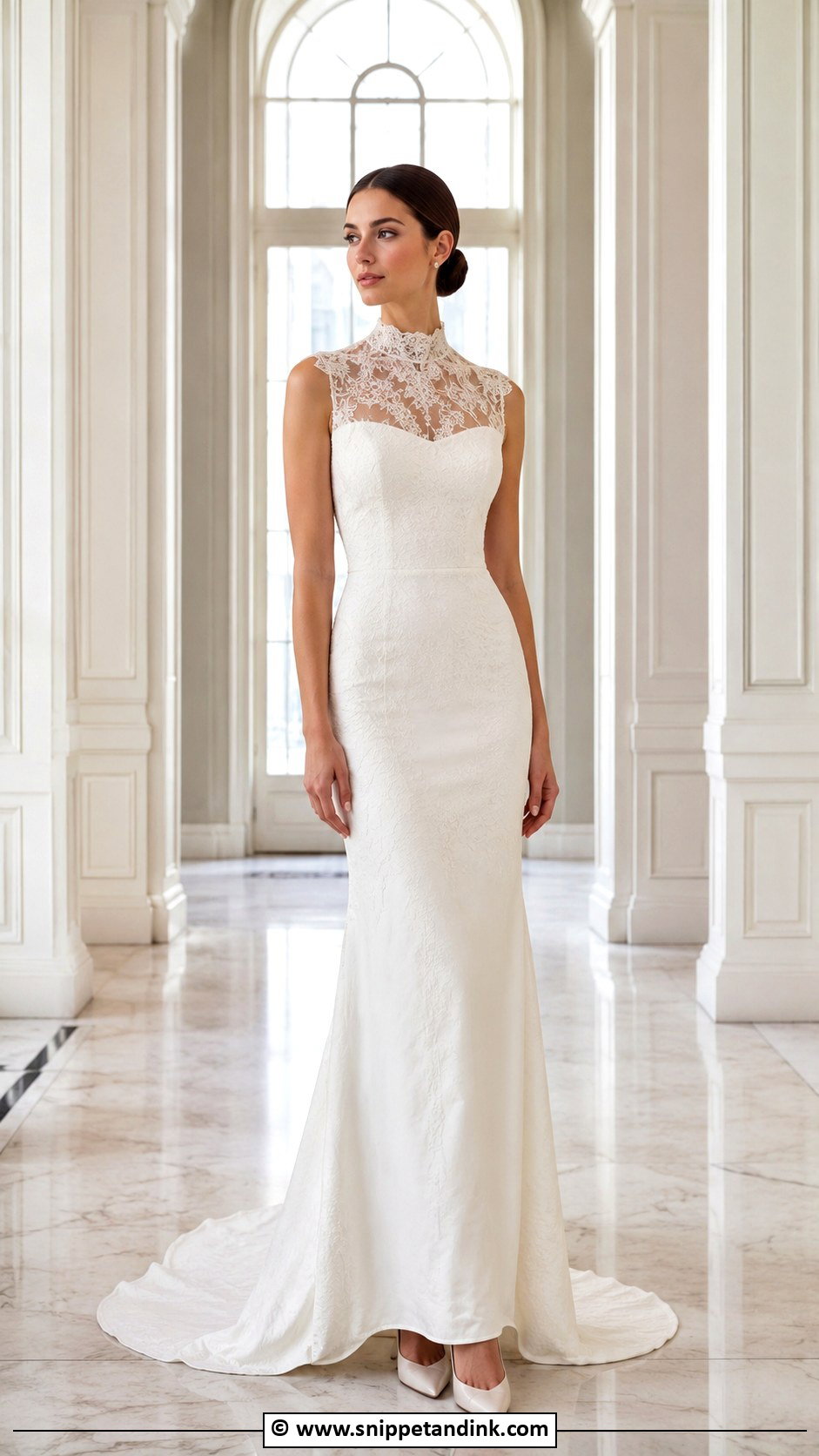
A high neck is modest without being plain, in lace, satin, crepe or illusion fabric. It can balance an open back, a fitted skirt or a long train. Sleek hair, small earrings and no necklace keep the line clean. I check high necks with the bride seated and turning her head, because a collar that feels fine standing can press at dinner. Choose a lighter fabric if you want it soft rather than stiff. It suits formal venues and anyone tired of sweethearts.
21. Strapless Wedding Dress
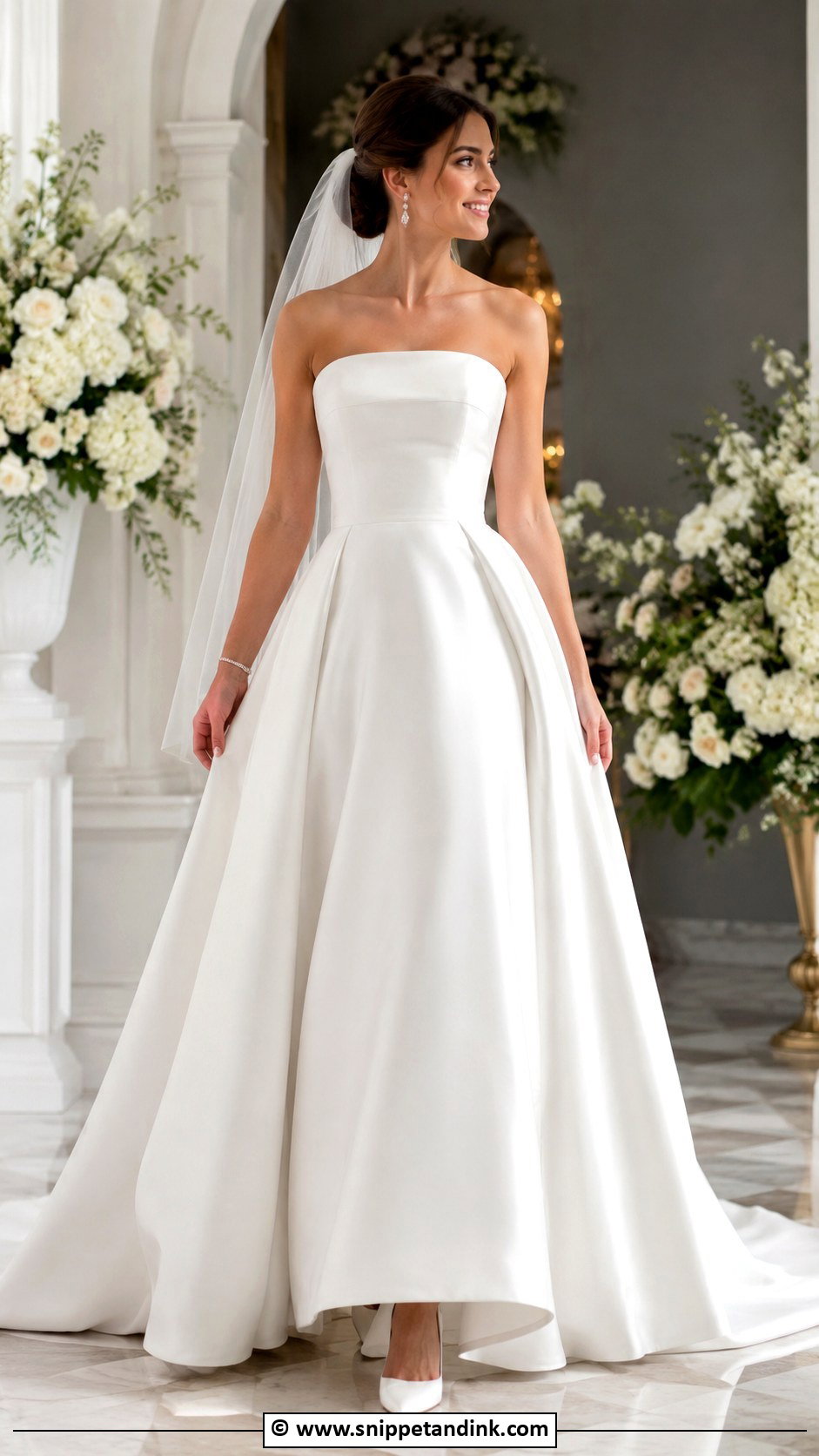
Strapless is a classic, now cleaner and more structured. The thing that makes or breaks it is inner support: proper boning, a waist stay and a bodice fitted snugly enough that you never tug it up. If you’re adjusting the neckline in the mirror at the fitting, it isn’t tight enough yet. Sleek in satin, romantic in lace, dramatic with a full skirt. A veil and drop earrings; a necklace is optional. It suits almost any venue.
22. One Shoulder Wedding Dress
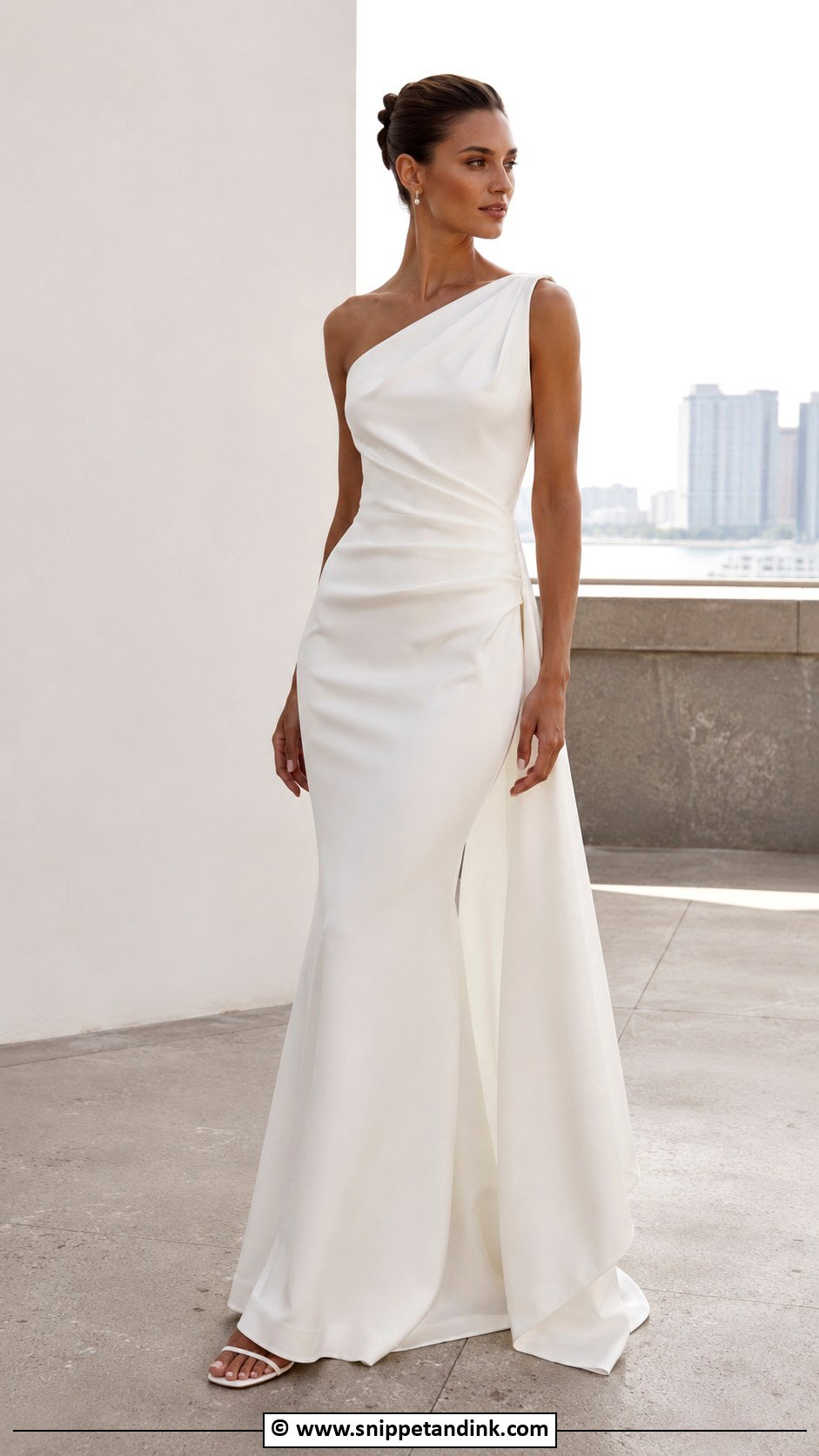
One shoulder is modern and sculptural, and the asymmetry adds interest without embellishment. Smooth satin, clean crepe and mikado show the shape clearly. Swept-back hair, one statement earring or small studs and simple heels; leave the necklace off. The single strap carries more weight than two would, so it should be cut slightly firmer than feels natural at first. City weddings, museum venues and rooftops suit it.
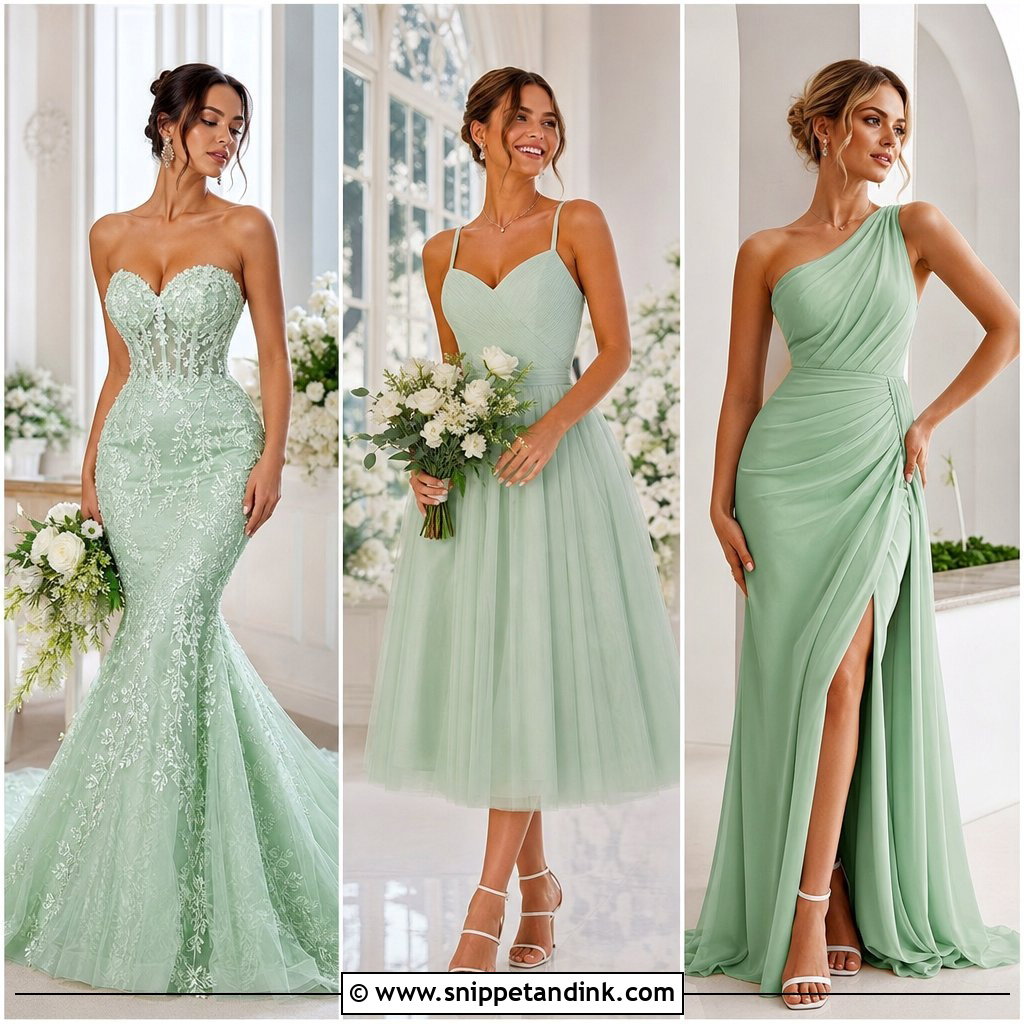
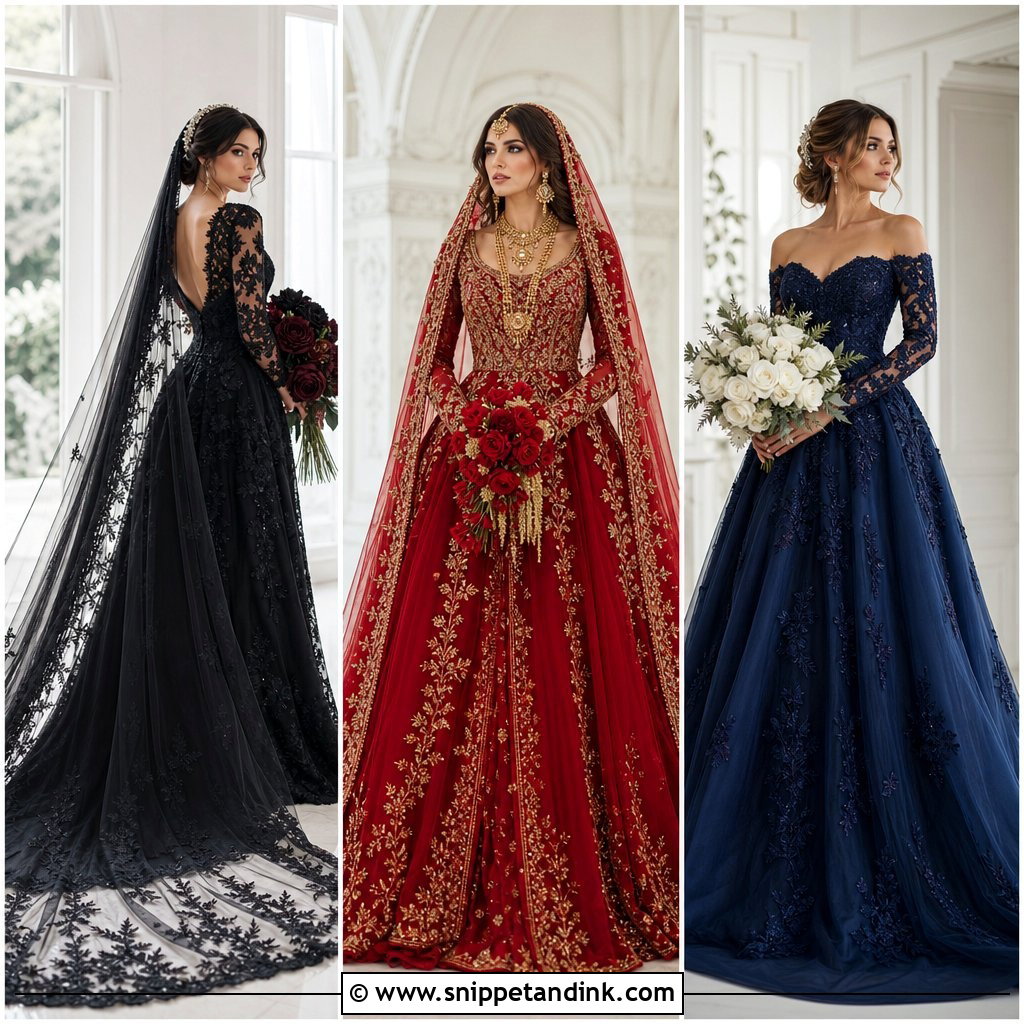
23. Colored Wedding Dress
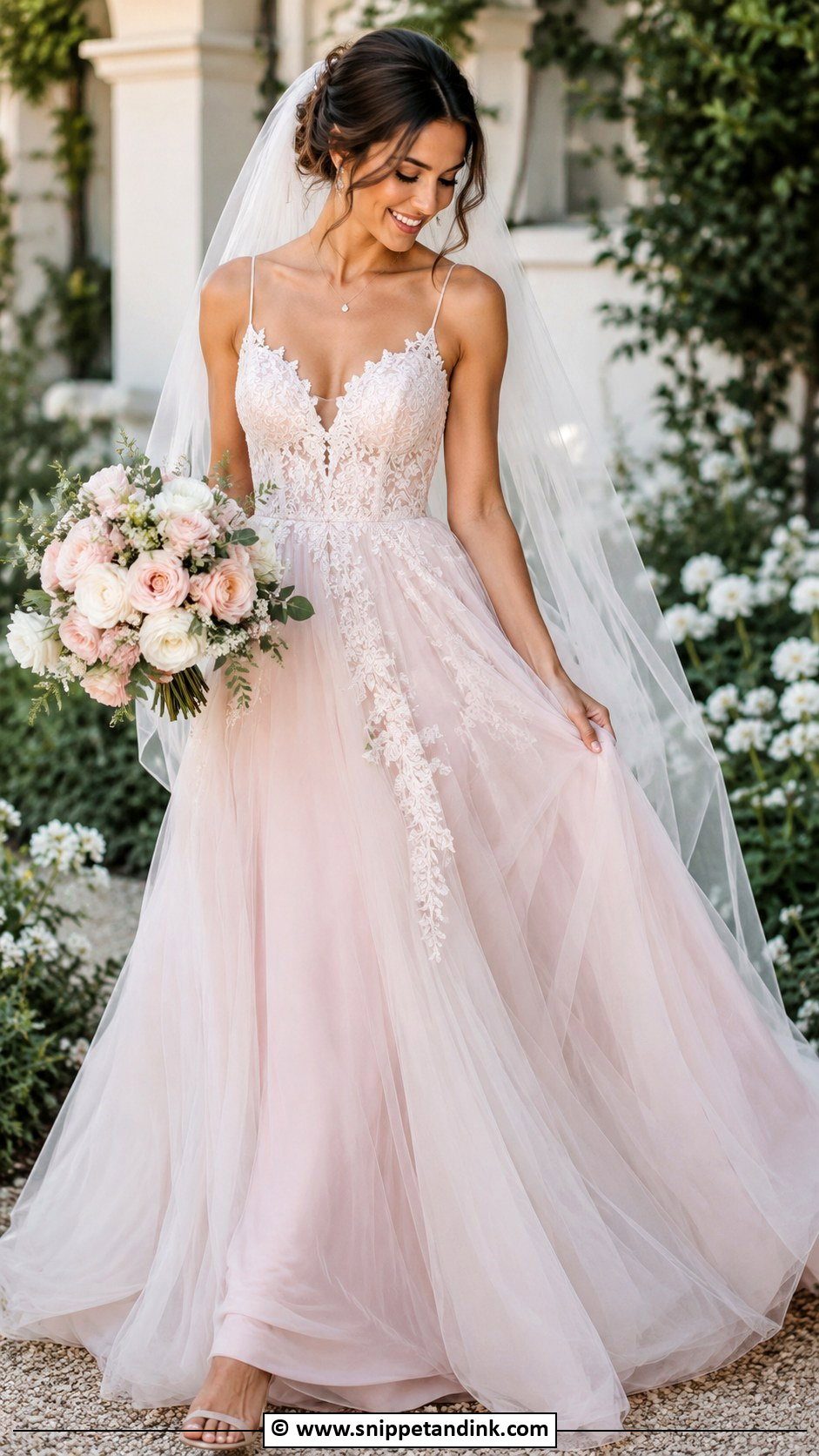
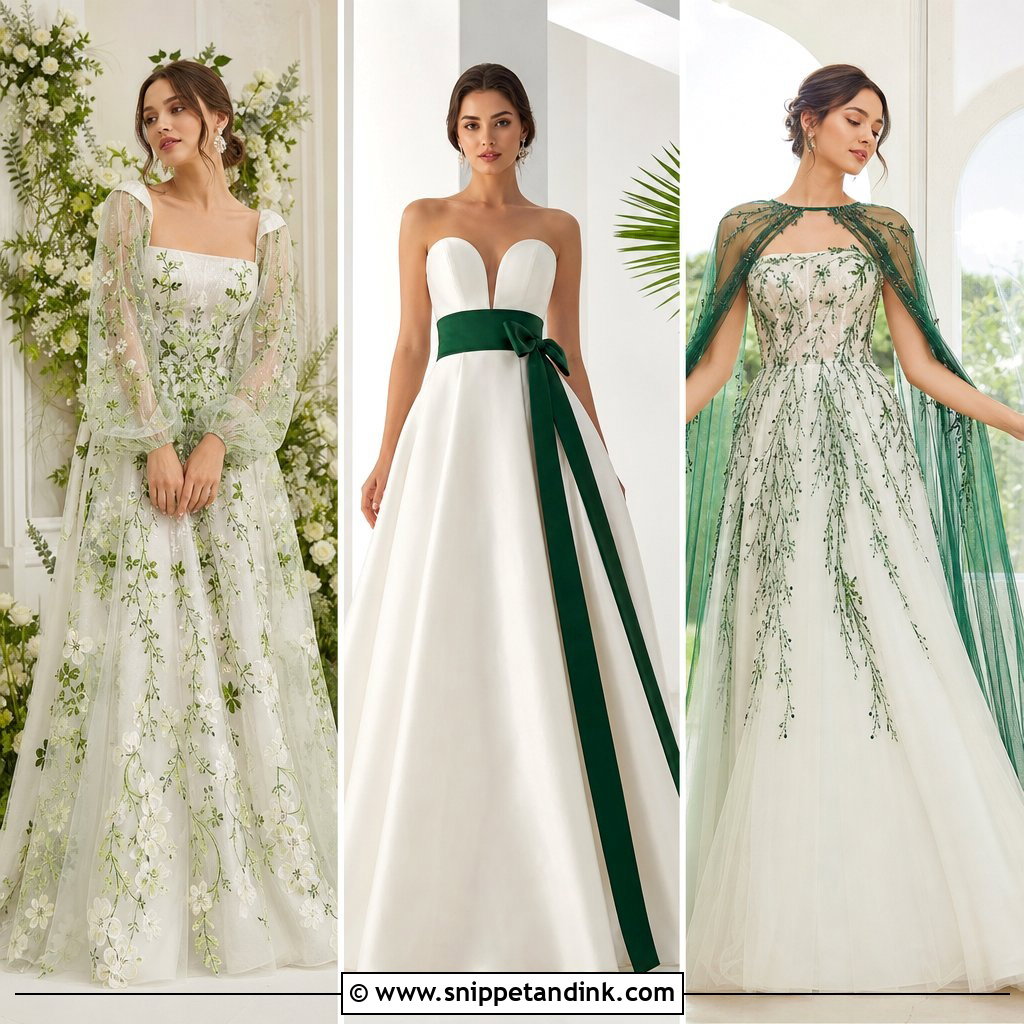
Colour lets you be personal and still look bridal. Blush, champagne, pale blue, buttercream and misty grey are the soft shades brides ask about most. Hold the fabric against your face in daylight first, since some shades that look good on a hanger wash out certain skin tones. Coordinate it with your flowers, venue and season, and choose a veil in a matching tone or sheer ivory. Neutral heels and delicate jewellery. Outdoor light suits colour best.
24. Feather Trim Wedding Dress
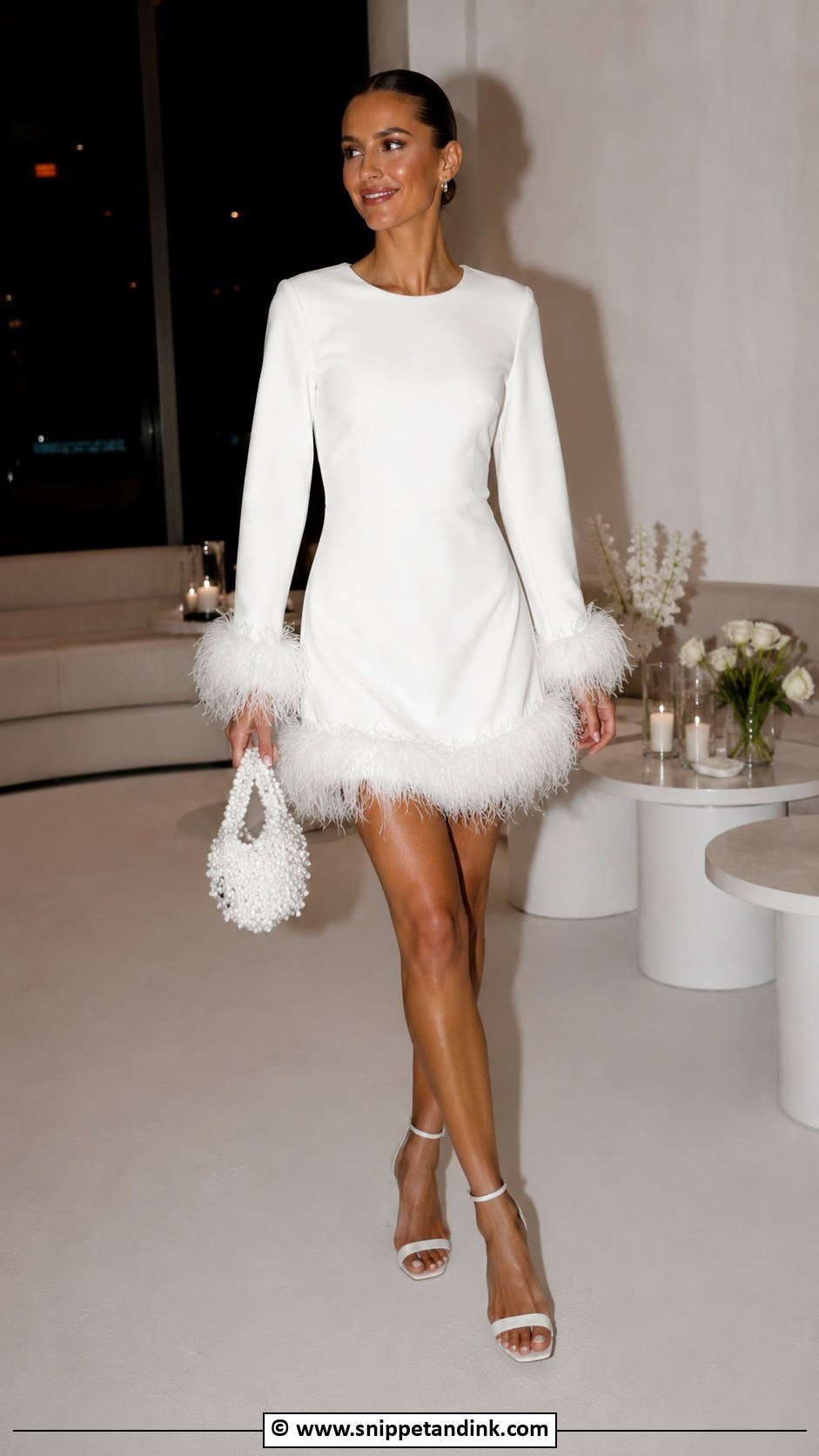
A feather trim wedding dress moves every time you do. Feathers are most wearable on cuffs, hems, necklines or minis rather than covering the whole gown. Be aware that ostrich feathers shed a little and go limp in rain or high humidity, so I’d keep them for an indoor reception or after-party look. Simple satin heels, minimal jewellery and smooth hair. Place the feathers in one strong area on otherwise clean fabric.
25. Two Piece Wedding Dress
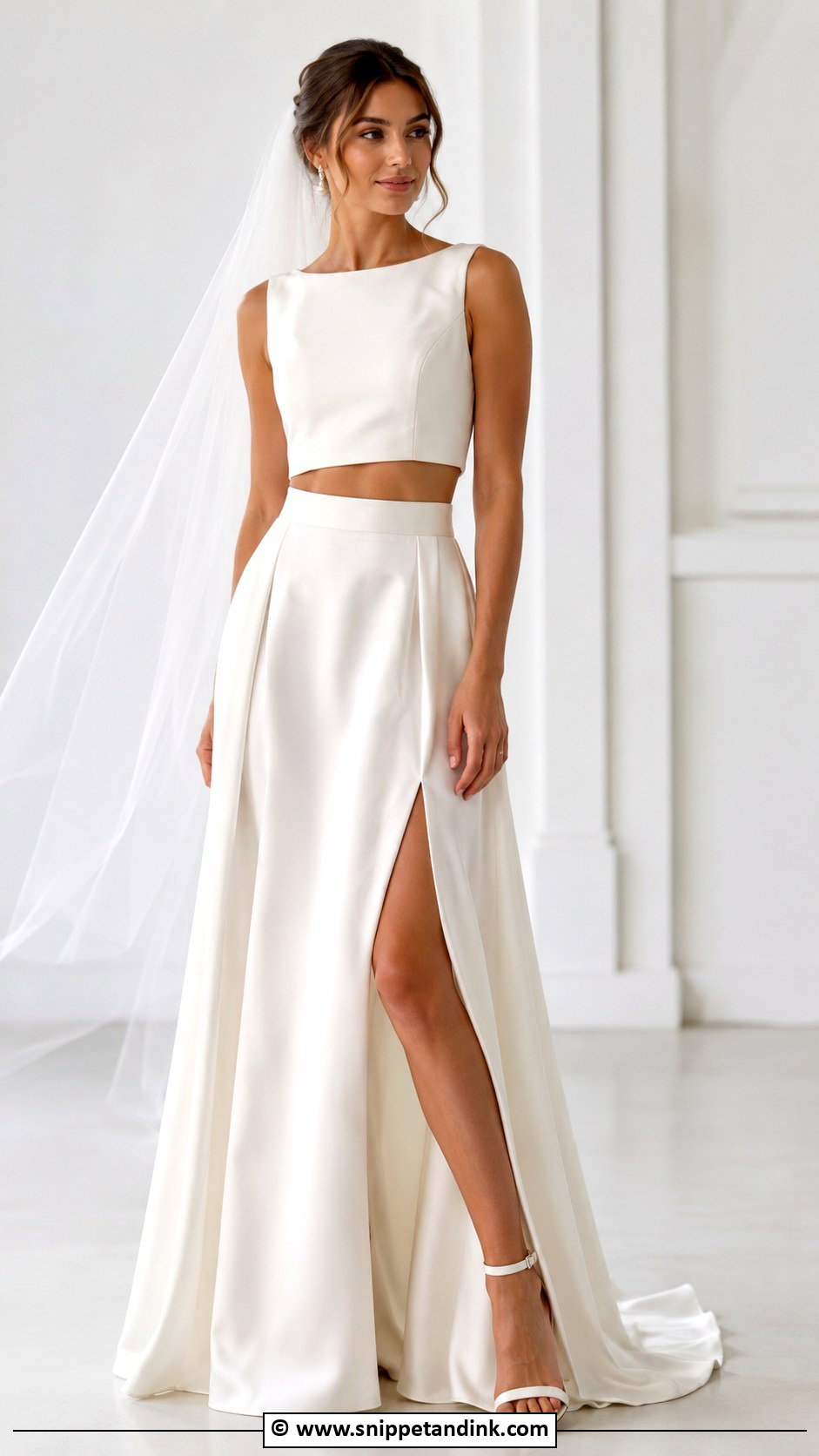
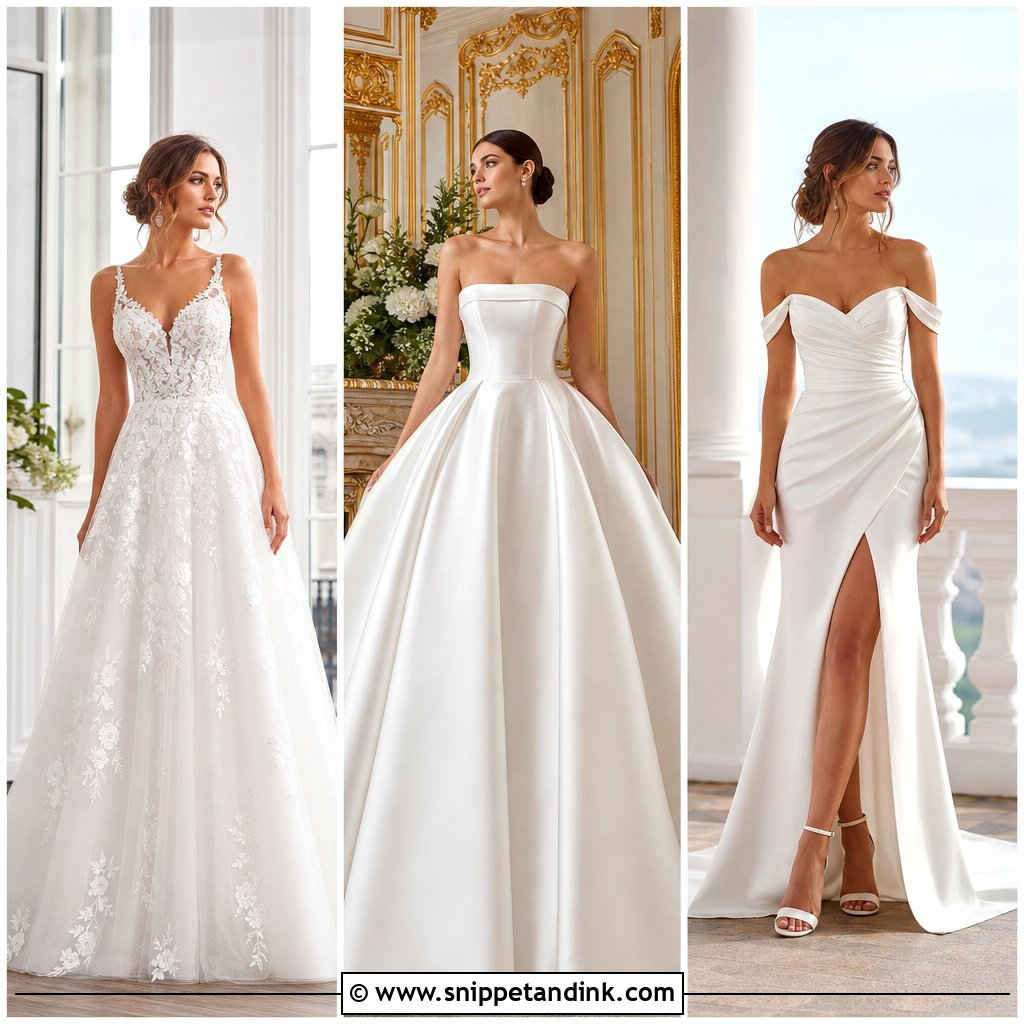
Separates give you flexibility. A cropped top with a full skirt, a lace bodice with a satin skirt, or a structured top over a column skirt all mix textures in a way that feels custom. A veil ties the pieces together, with refined heels and simple jewellery. Separates also make outfit changes easier: swap the top or skirt for the reception. The fitting point to watch is the gap between pieces; a top that lifts when you raise your arms needs a hidden hook to the skirt waistband.
Why the Sample Looks Different From Your Dress
Shop samples are usually one size and clipped at the back to fit whoever is trying them on. That’s fine for judging a silhouette, but it hides a lot. A clipped corset looks smoother than an unaltered one will, and a sample that’s been tried on many times has softer fabric than a new gown arrives with.
Your own dress is made or ordered to your measurements, then altered to fit. Expect it to look a little stiff at the first fitting and to come right as alterations progress. Most gowns take several months to arrive, and alterations usually need two or three fittings spread over the last couple of months, so leave room in the calendar.
Fabric and the month you marry
- Summer outdoors: crepe, chiffon, light tulle and lace breathe; heavy mikado gets hot.
- Winter: mikado, heavy satin and long sleeves hold up in the cold and look rich in low light.
- Humid climates: satin shows sweat marks more than lace or tulle, so plan for it.
- Long days: ask how the skirt bustles and what the dress weighs before you commit.
Trends Fade, Fit Doesn’t
Bridal fashion now gives you real choice: lace, satin, pearls, bows, colour, sleeves, structure or a shorter hem can all look properly bridal. What lasts is how the dress moves, how it sits when you’re seated, and how it holds up from the ceremony to the dancing. Pick a trend you’d still like if nobody else were wearing it, try silhouettes you didn’t expect to love, and give the fittings the time they need.
You'll Like These Ideas:





Leave a Reply