
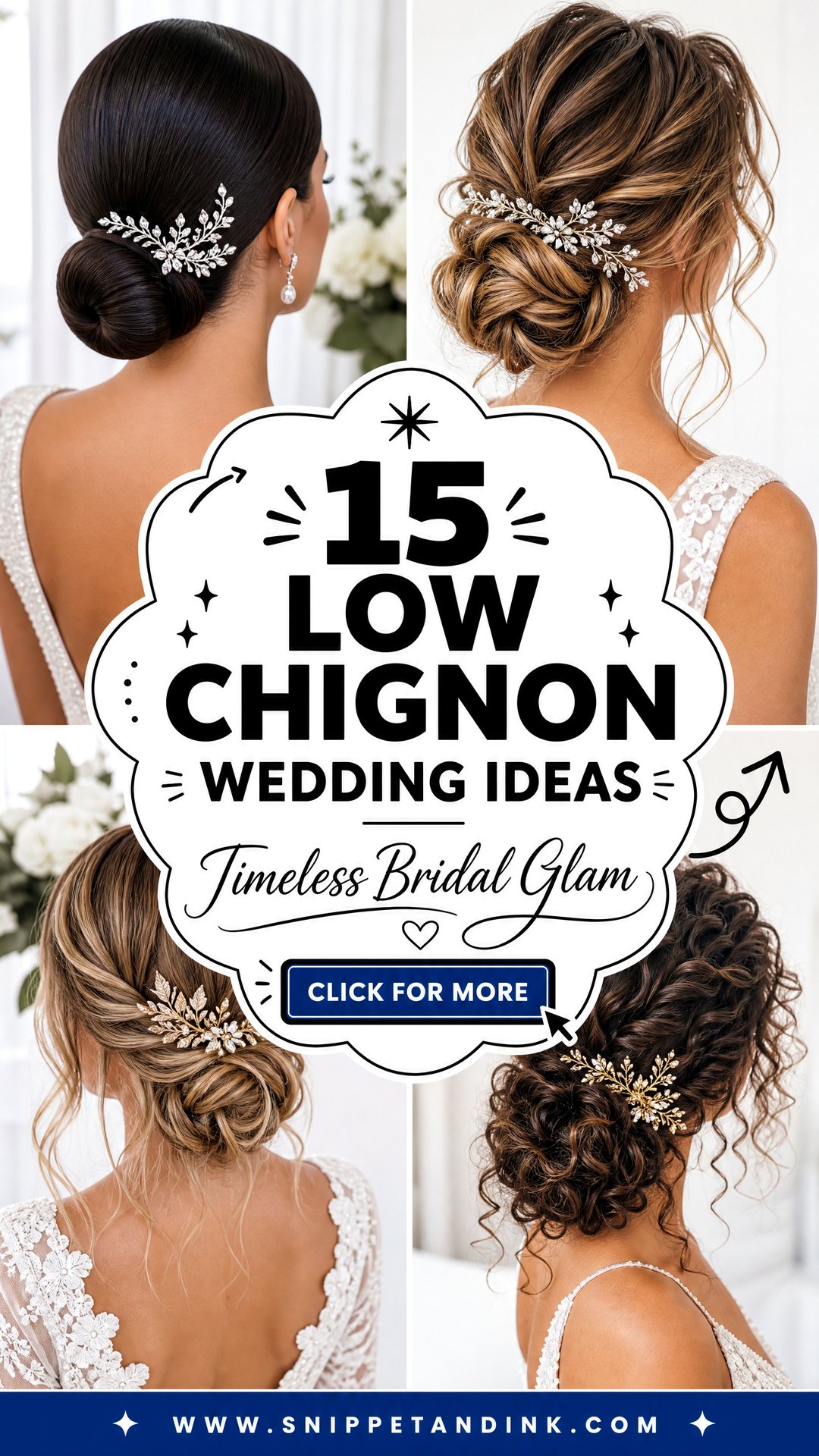
A chignon is a bun that hides its ends, and that small difference is why I trust it on wedding days. Among wedding hairstyles, it’s one of the calmest: it sits close to the nape, leaves the neckline and earrings clear, and gives a veil comb a firm place to grip. Pinned properly, it handles hugs, dancing and warm weather better than most updos. The fifteen versions here run from sculpted and glossy to loose and undone, with notes on the hair each one suits.
Roll, Knot or Figure Eight: How a Chignon Gets Built
Brides often bring me two chignon photos that look alike but were made in completely different ways. Knowing the method helps you ask for the right one, because each suits a different length and density.
The Tucked Roll
The ends are folded inward and rolled up toward the nape, then pinned along the seam. It makes the smoothest, flattest shape and suits shoulder-length and medium hair. It’s also the easiest to sit back in a chair with.
The Wrapped Knot
A low ponytail is twisted and wrapped around its own base. It’s quick, very secure and good for thick hair, but the shape is rounder and stands further off the neck.
The Figure Eight
The hair is split and looped into two interlocking sections. It takes longer and needs hair past the shoulders, but the result has that sculpted, twisted look that reads well from the aisle. On very fine hair, I’ll pad it, since the loops show gaps.
If you can’t tell which one is in your photo, show it to your stylist and ask her to name the method out loud. Hearing “that’s a tucked roll, and your hair is long enough” or “that needs a pad on your density” tells you far more than nodding at a picture, and it means nobody is surprised at the trial.
1. Classic Low Chignon Wedding Hair
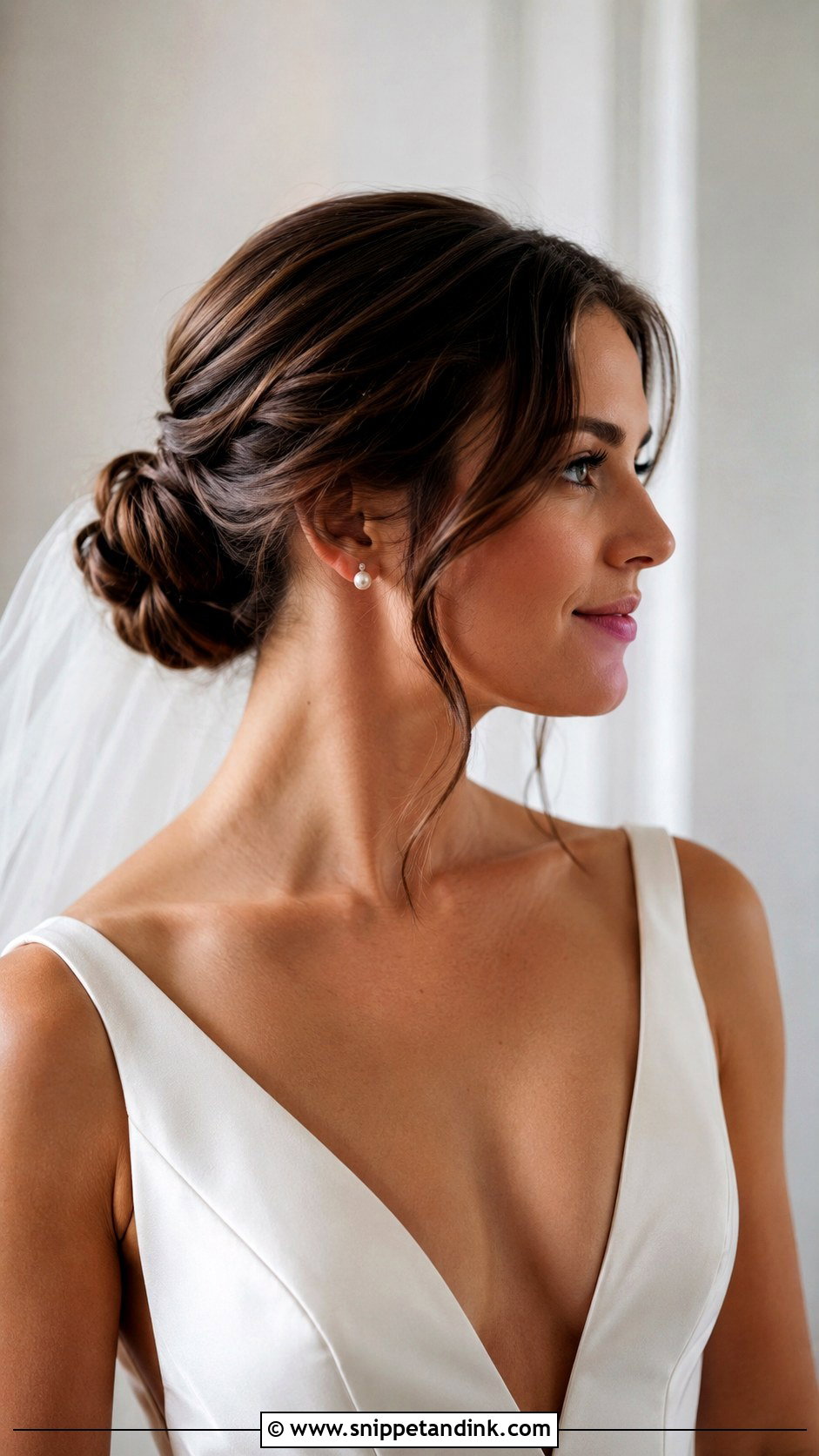
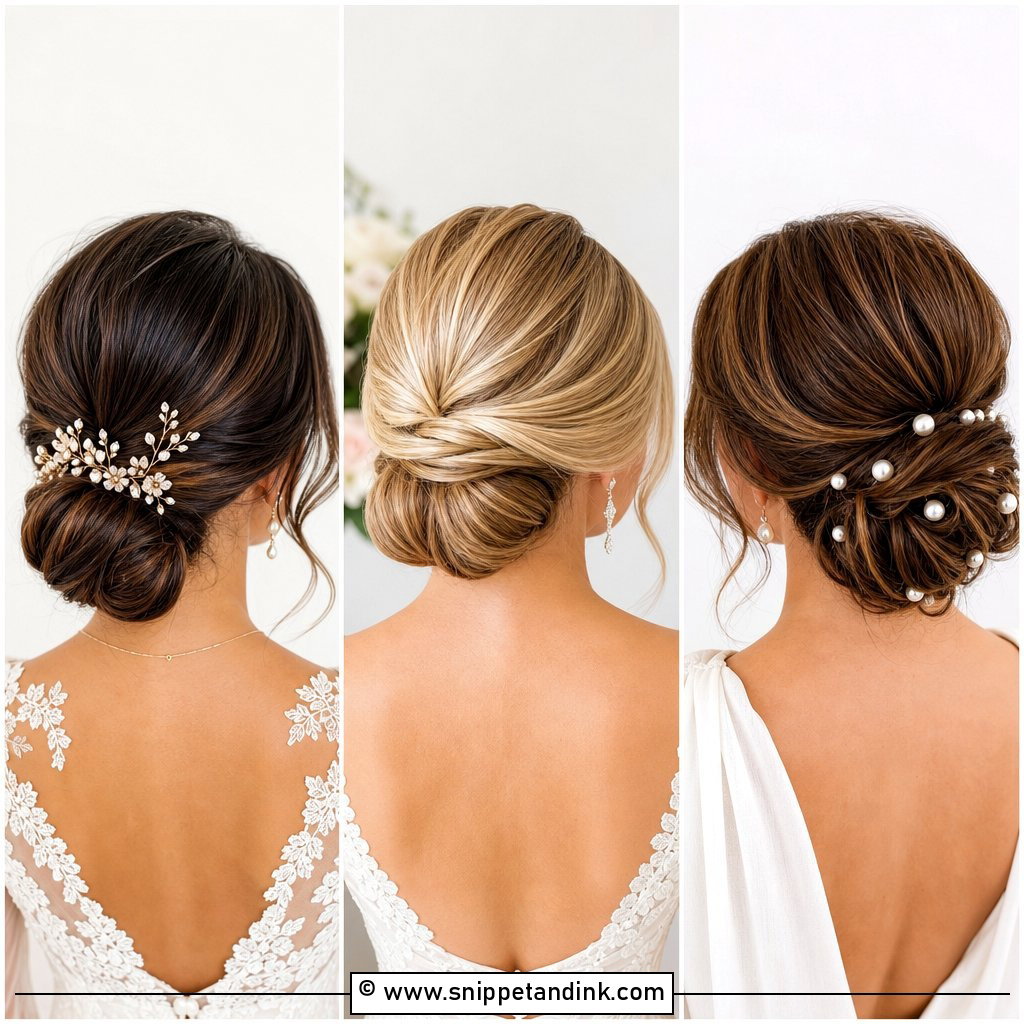
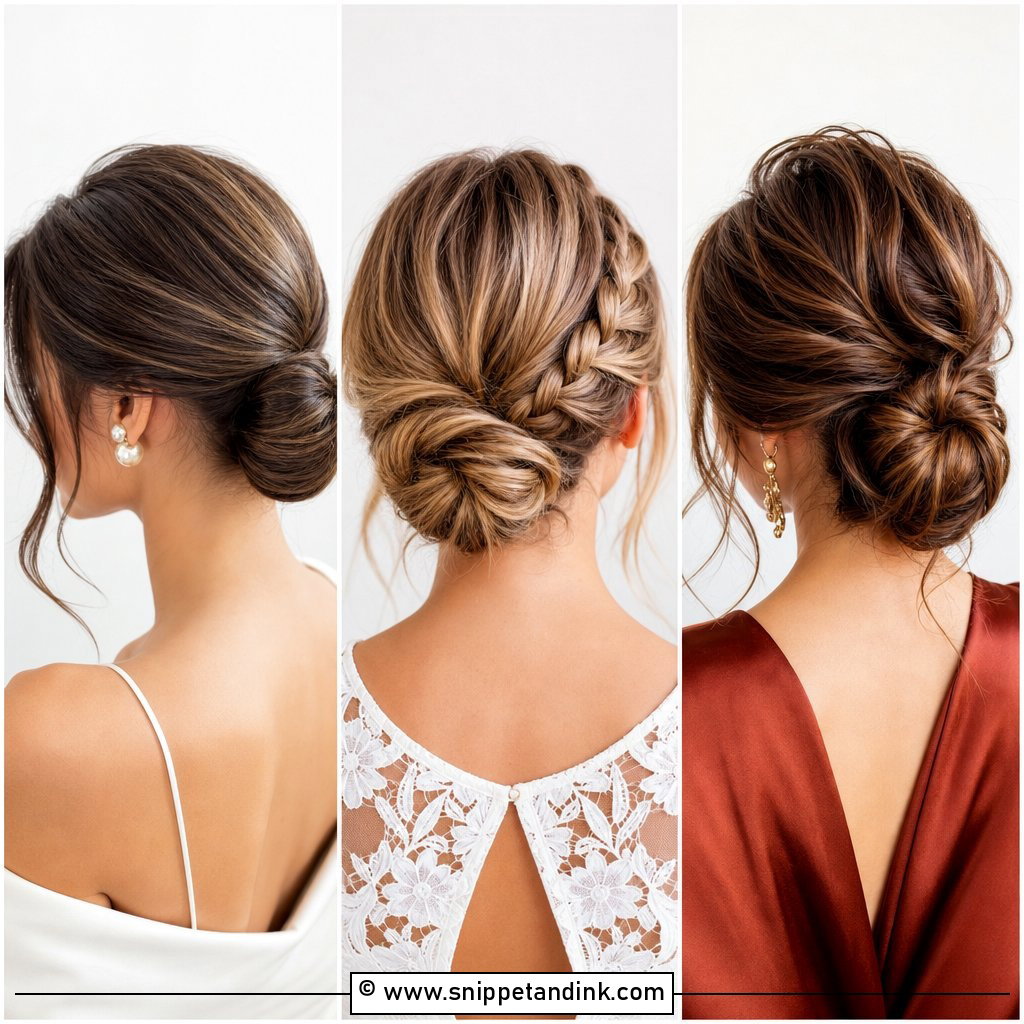
The classic chignon starts with a little height at the crown, smooth sides and a neat roll at the nape. I tease only the hidden layer under the crown, so the surface stays clean. It sits quietly under a cathedral veil and suits satin, lace and square necklines without competing with any of them. Ask for soft hold and hidden pins. If I can see a single bobby pin from the aisle, I haven’t finished.
2. Sleek Low Chignon Wedding Hair
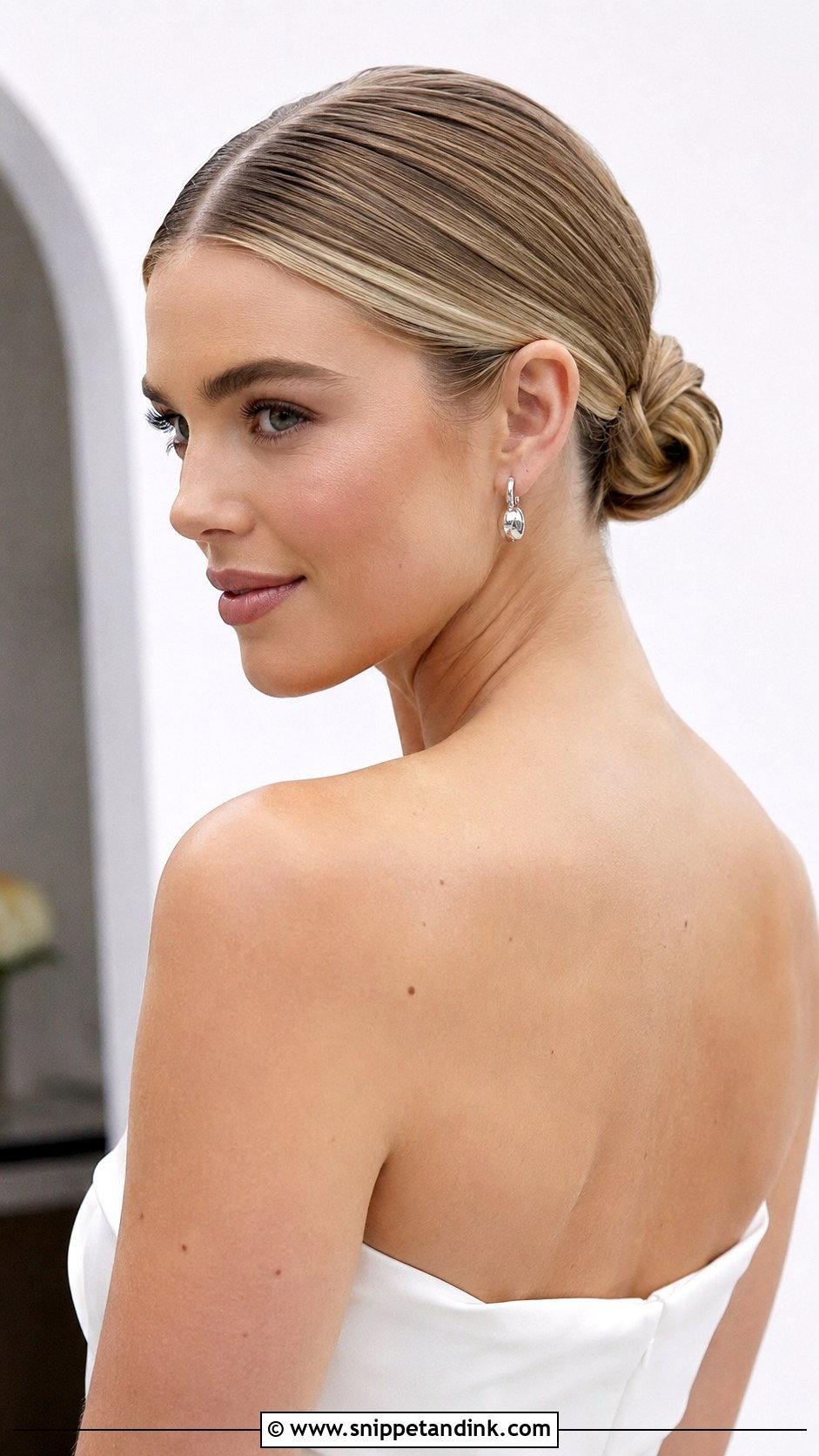
Sleek chignons are about tension and gloss. I set a sharp centre or clean side part, blow-dry the roots flat, then shape a tight roll low at the neck. It suits minimalist gowns, strapless dresses, high necklines and bold earrings. I finish with shine spray instead of heavy gel, which can crack and flake by the evening. Very curly or very fine hair struggles to stay this smooth all day, and I’ll say so at the consultation.
3. Messy Low Chignon Wedding Hair
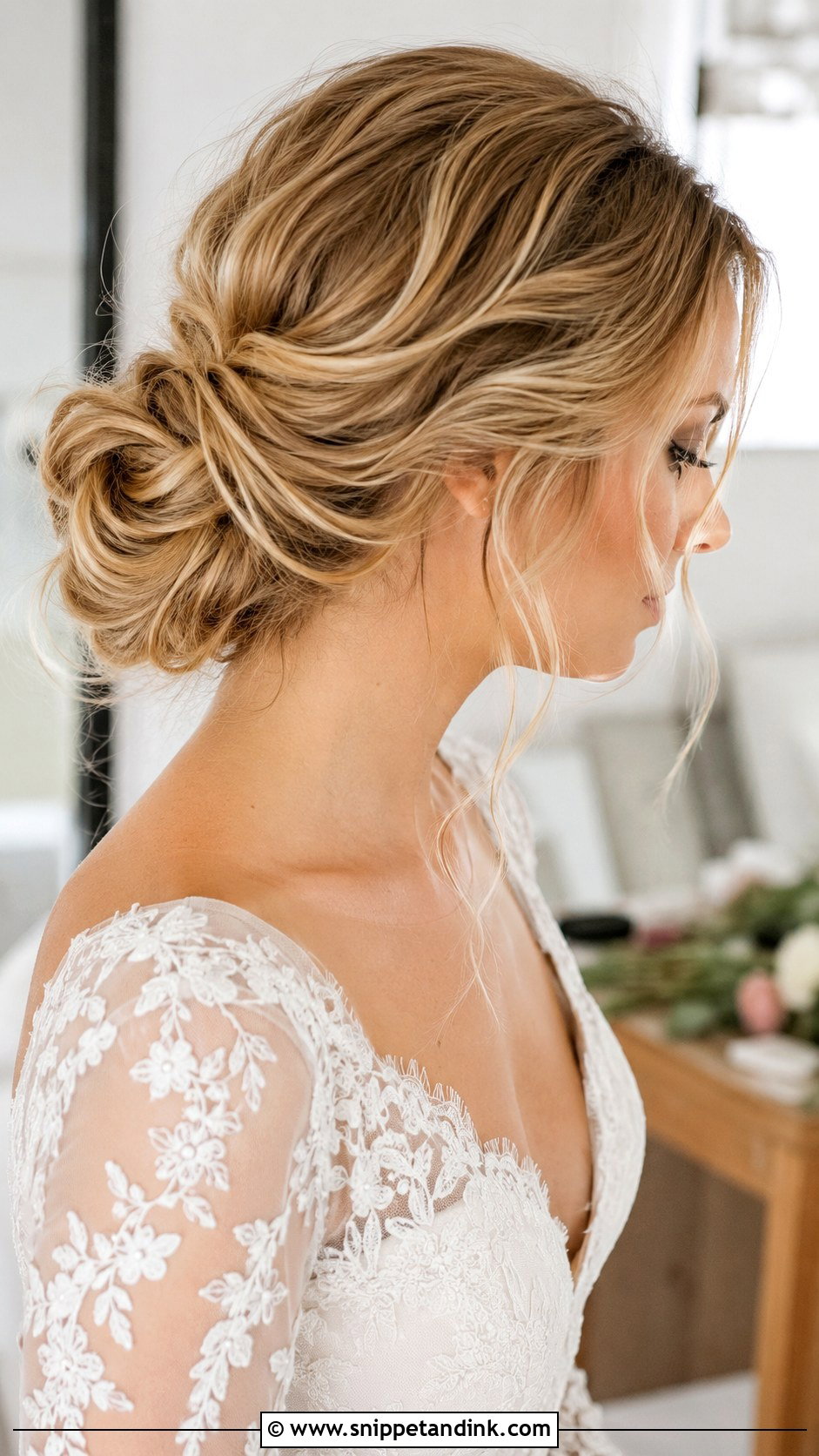
Loose, not messy, is the brief I give myself. I curl the hair first, then pin it gently into a low roll and pull airy pieces out around the face and nape. Garden weddings and lace gowns suit it, as does anyone who dislikes a fully pulled-back look. The bit people don’t see is the base: an elastic or tight pin cluster underneath keeps the soft surface from sliding out of shape.
4. Twisted Low Chignon Wedding Hair
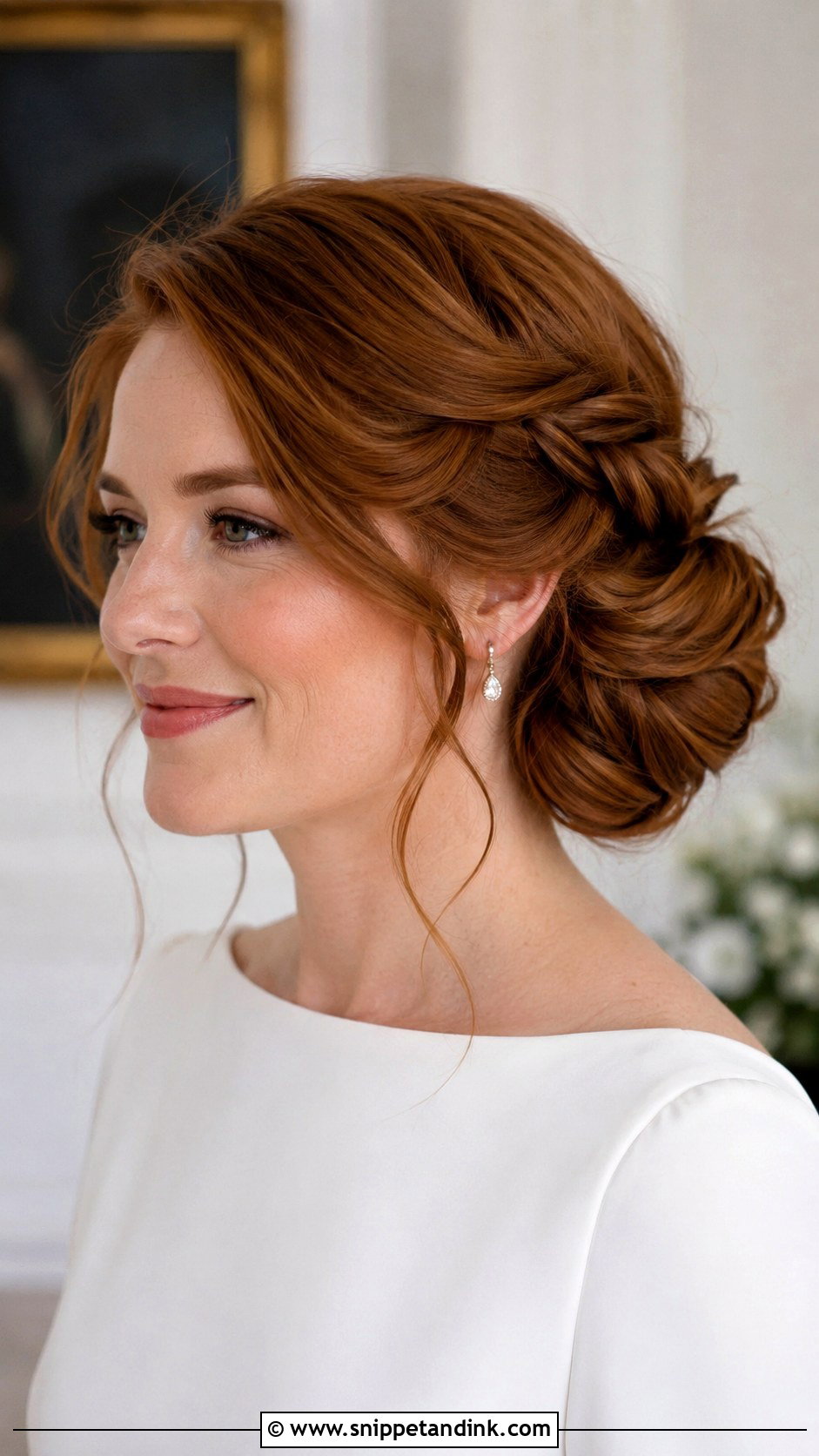
Twisting the sides back before they’re wrapped into a low bun gives the head some movement and a lot of detail from the side and back. It’s my go-to for medium hair with layers, because each twist traps the short pieces that would otherwise escape. Fine hair looks fuller twisted than smoothed flat. A few curled strands at the cheekbones keep the front soft.
5. Braided Low Chignon Wedding Hair
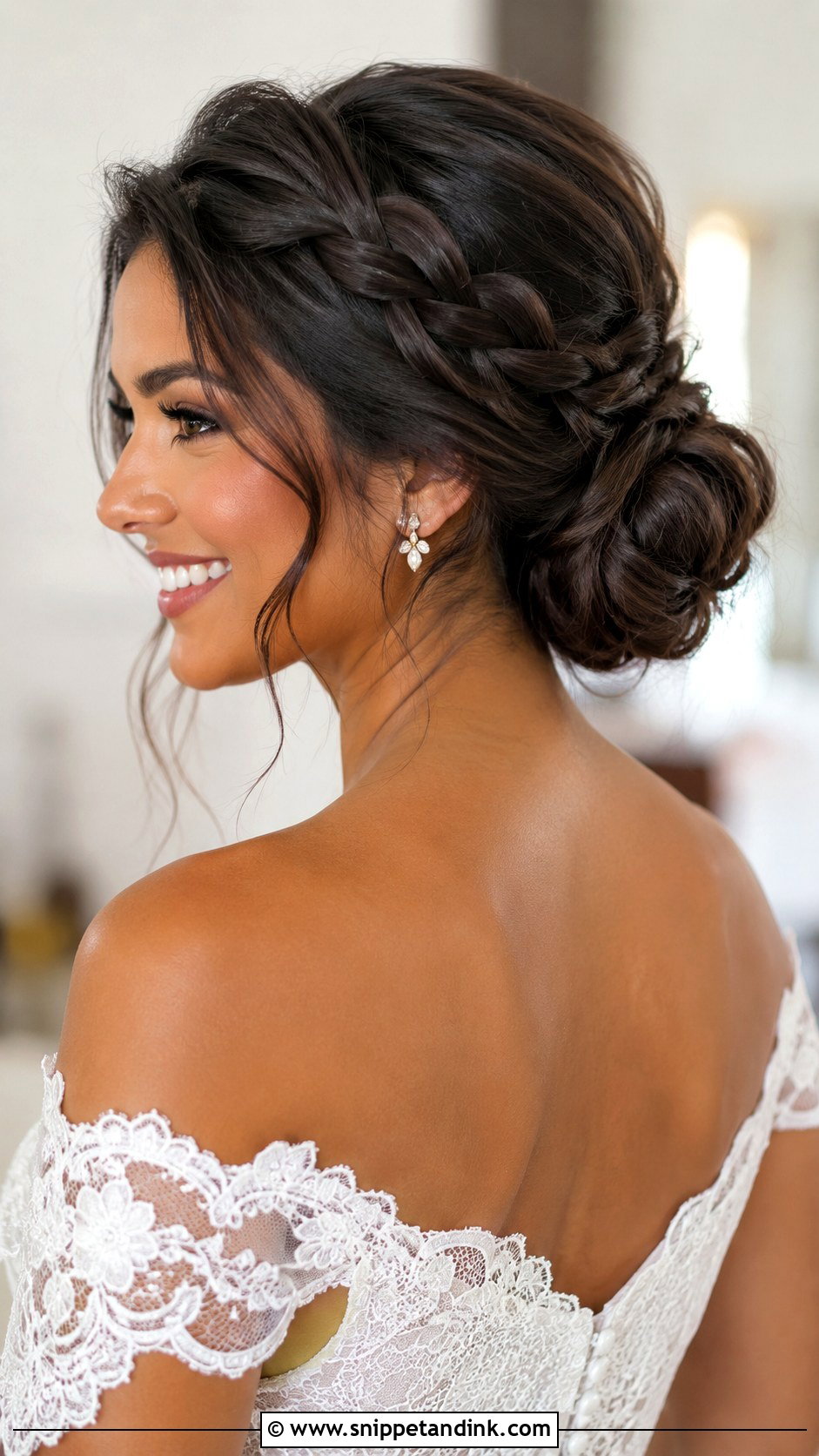
A braid adds grip, which is why I use it on slippery or freshly coloured hair that won’t hold pins well on its own. It can cross the crown, wrap the chignon or fold into it. Boho dresses, lace sleeves and outdoor venues suit it. Once it’s pinned, I loosen the braid gently with my fingertips so it looks full rather than tight.
6. Low Chignon Wedding Hair With Veil
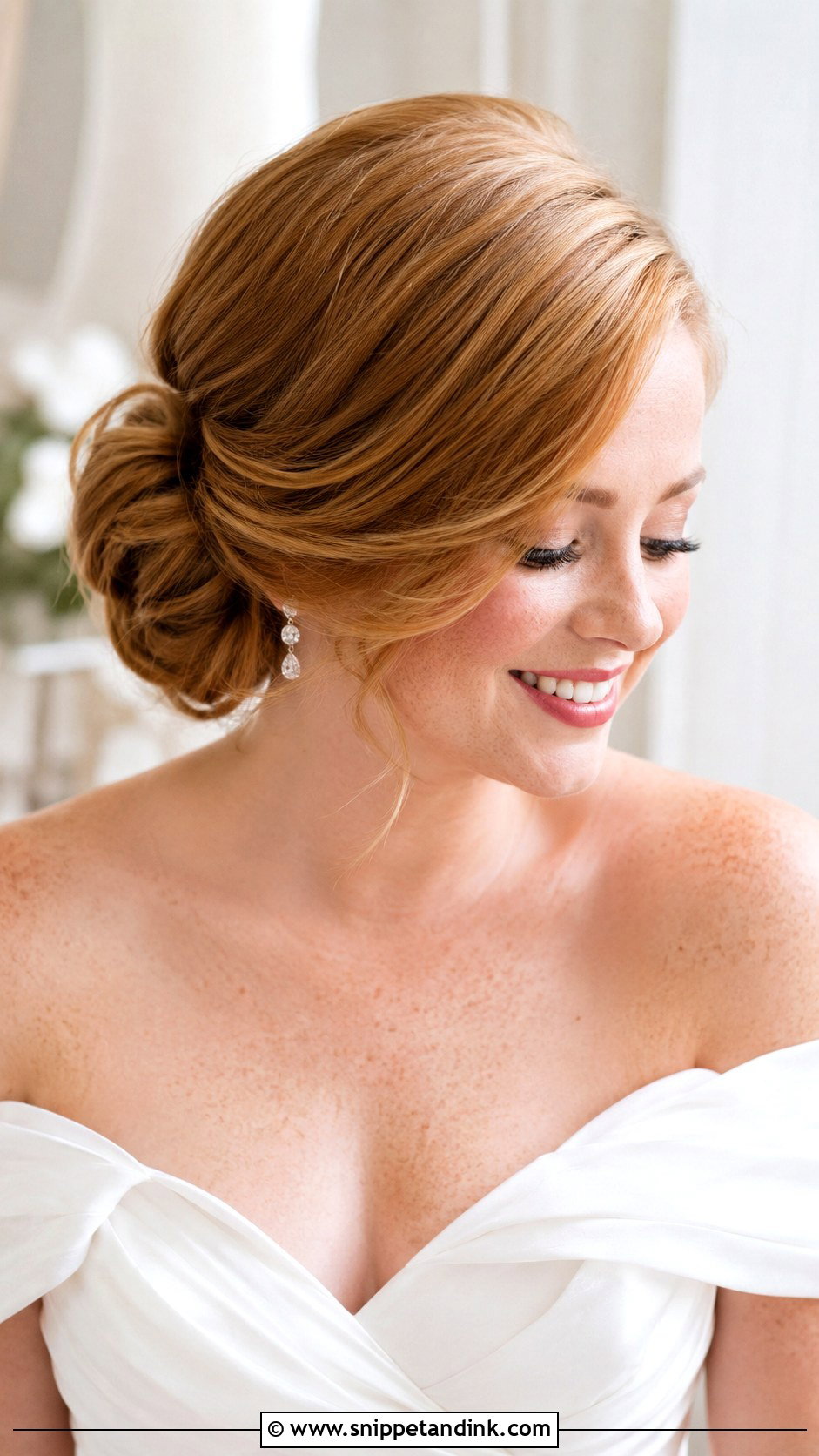
With a chignon, the veil can sit above, below or straight into the roll. Above gives the traditional fall; below shows off the hair more. It works with simple and lace-edged veils, and with long cathedral lengths. Long veils are heavy, though, and they lever the comb backward. I anchor a cross of pins first and slide the comb over them. Try your real veil at the trial, not a stand-in.
7. Low Chignon Wedding Hair With Pearls
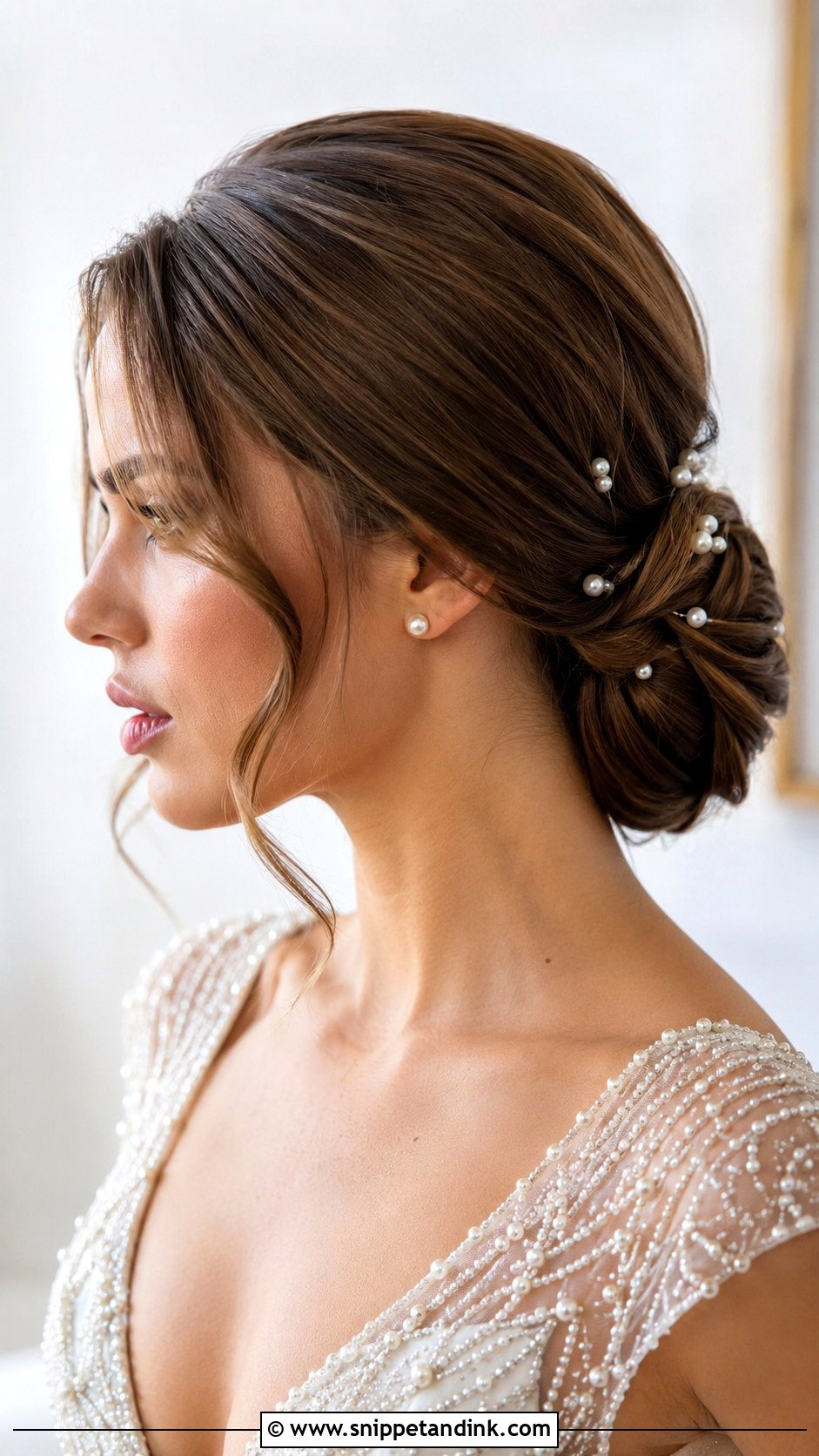
Pearls are the accessory I suggest most for a simple dress, since they add detail to the hair rather than the gown. Small pins scattered around the roll look modern; a pearl comb above it reads more formal. Ivory pearls next to bright white fabric can look yellowish, so hold them against your dress before you buy. I place them last, after the final spray, so they don’t get a dull film of lacquer.
8. Low Chignon Wedding Hair With Flowers
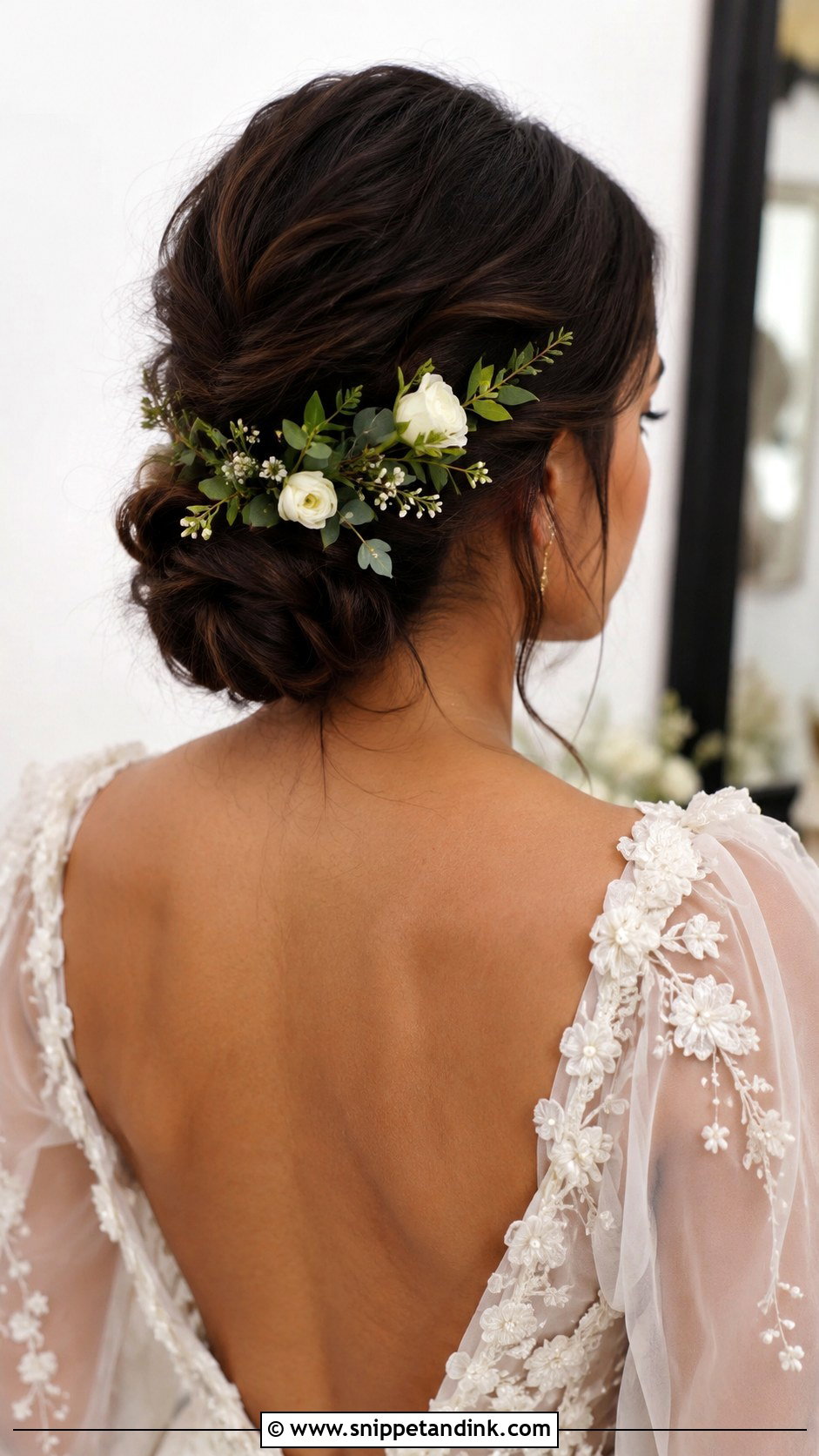
Flowers suit a chignon best when they follow its line, tucked along one side, set in a twist or circling the base. Match them to the bouquet but keep them light. Baby’s breath, small roses, orchids and a little greenery are sturdy choices. Fresh blooms out of water begin to droop within a few hours on a hot day, so I put them in last, after pinning and spraying, and keep the hairspray away from the petals, which it browns.
9. Side Part Low Chignon Wedding Hair
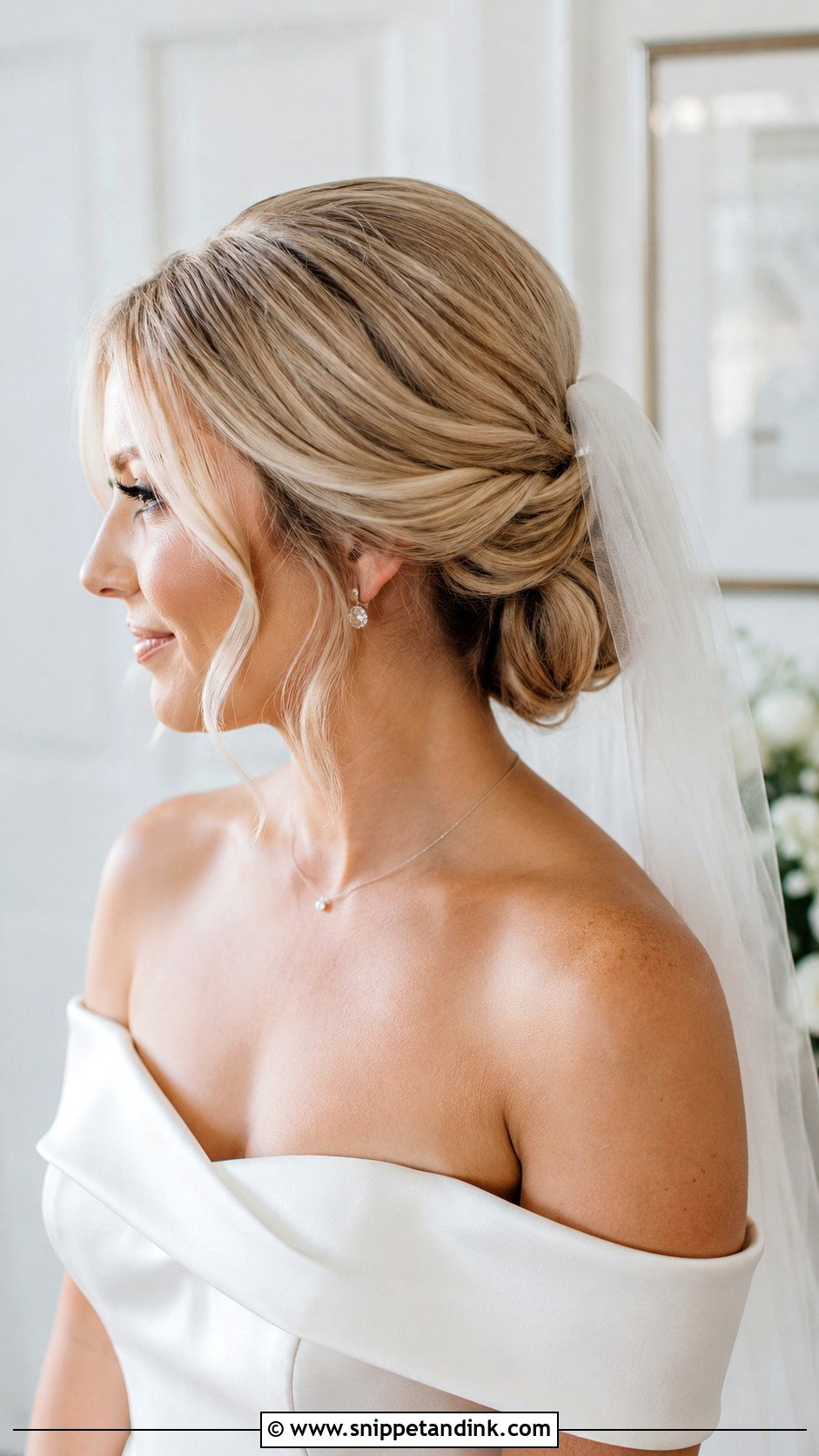
A side part softens the face and can balance strong cheekbones, a round face or asymmetrical dress details. The hair can be smoothed or curled first, and the roll can sit centred or drift toward one side. The front section is the delicate part; it needs to be shaped and pinned at the temple, or it falls flat and droops over the eye by the reception. Drop earrings and off-the-shoulder gowns sit well with it.
10. Center Part Low Chignon Wedding Hair
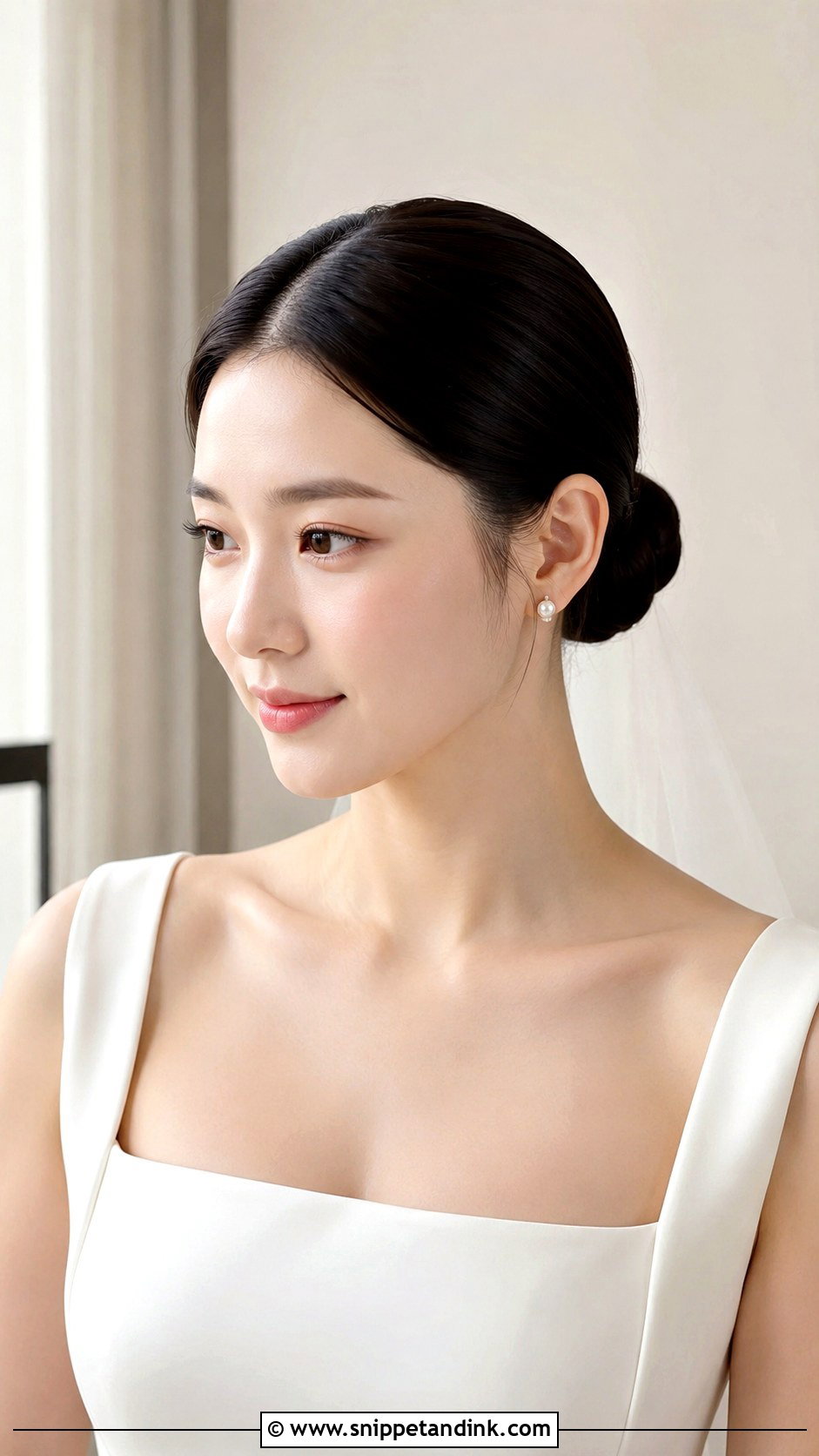
A centre part pulls attention to the eyes and cheekbones and leaves the chignon to keep things classic. It suits sleek gowns, structured dresses and pearls. Wear it very smooth, or soften the front with a gentle wave. The part has to be dead straight and the crown smooth on both sides, because any lump or tilt is obvious in a symmetrical style. That precision is what makes it look confident rather than severe.
11. Textured Low Chignon Wedding Hair
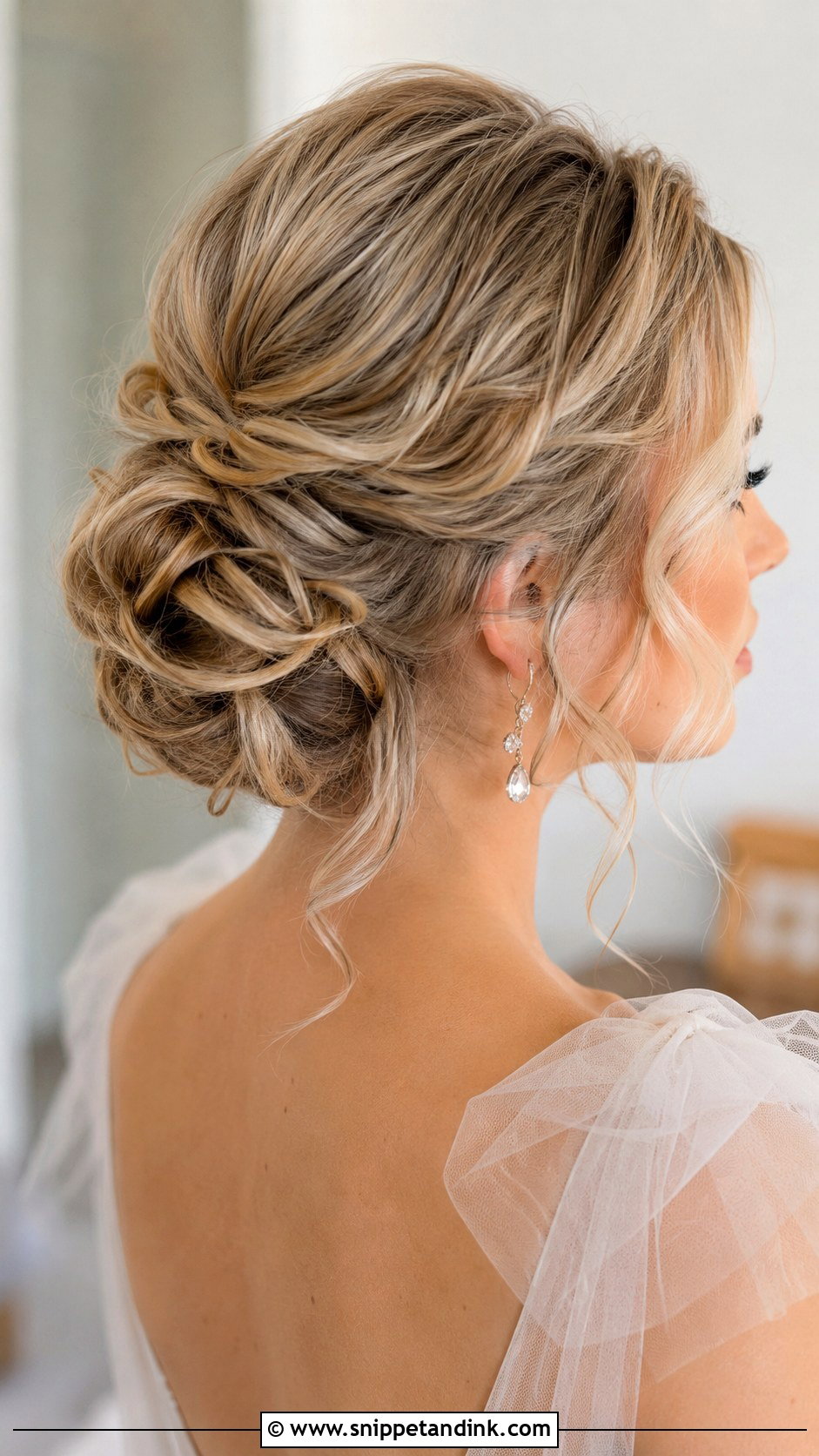
Texture is where highlights earn their money. I curl the hair first, then pin it in sections so the different tones show through the twists and rolls, which gives far more dimension than a flat chignon. Layered cuts and fine hair gain body this way. A soft, flexible finish keeps it full without looking sprayed. Lace and tulle suit it well.
12. Loose Low Chignon Wedding Hair
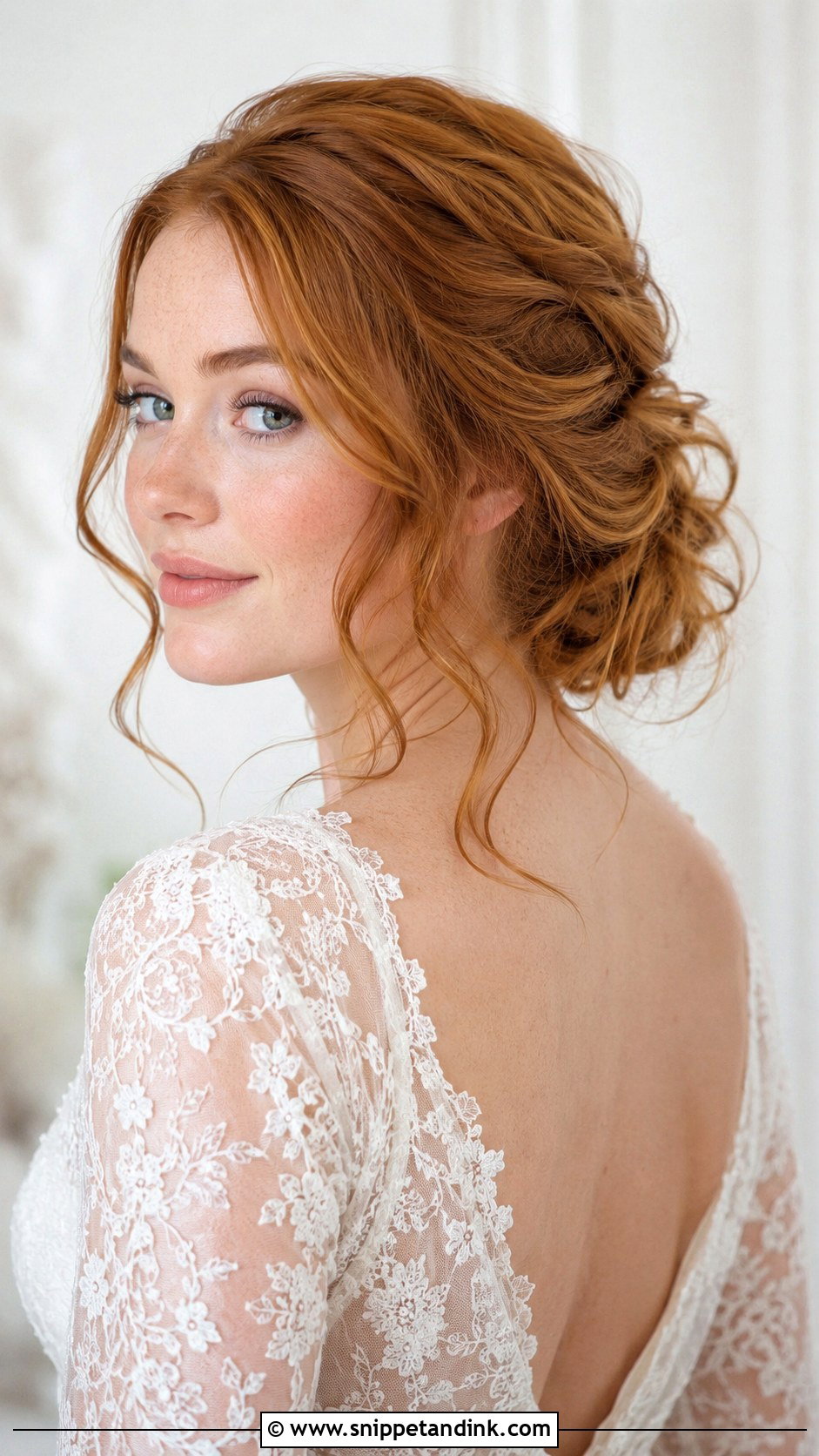
This is the gentlest chignon on the scalp, which matters over a twelve-hour day. It has a relaxed shape, some volume and light pieces around the face, but the base still needs to be secure even when the surface is soft. I’d steer brides away from it in strong wind or at a beach ceremony, where loose pieces end up across the face in every photo.
13. Curly Low Chignon Wedding Hair
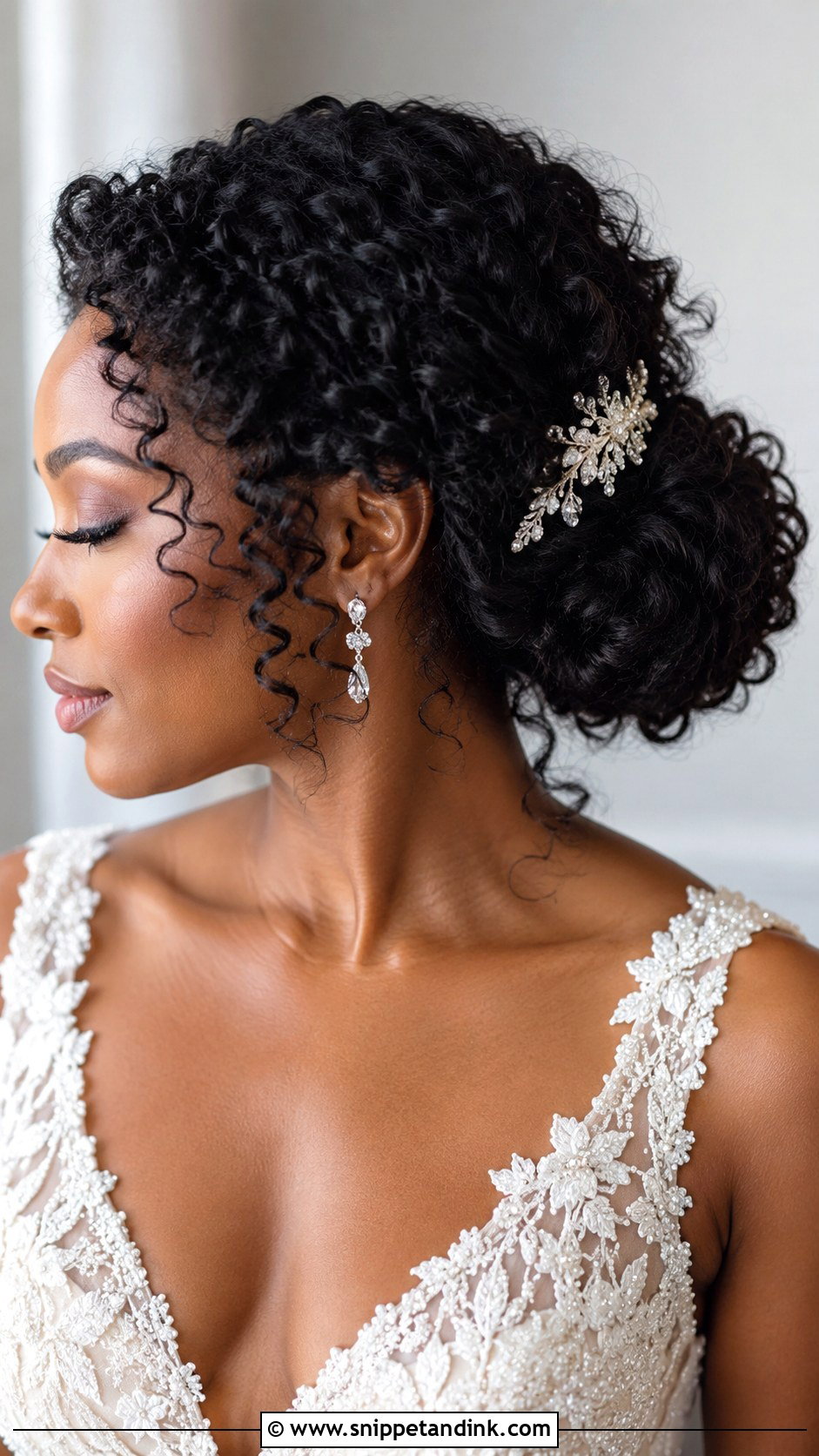
With curls, I shape and define first, then pin them low so the pattern stays visible right across the chignon. Brushing would turn it into frizz. Naturally curly, wavy or iron-curled hair all work. In humid weather, moisture control matters most: a leave-in and a gel cast set the day before will hold through the afternoon better than anything applied that morning. Floral pins and delicate combs suit the texture.
14. Low Chignon Wedding Hair For Thin Hair
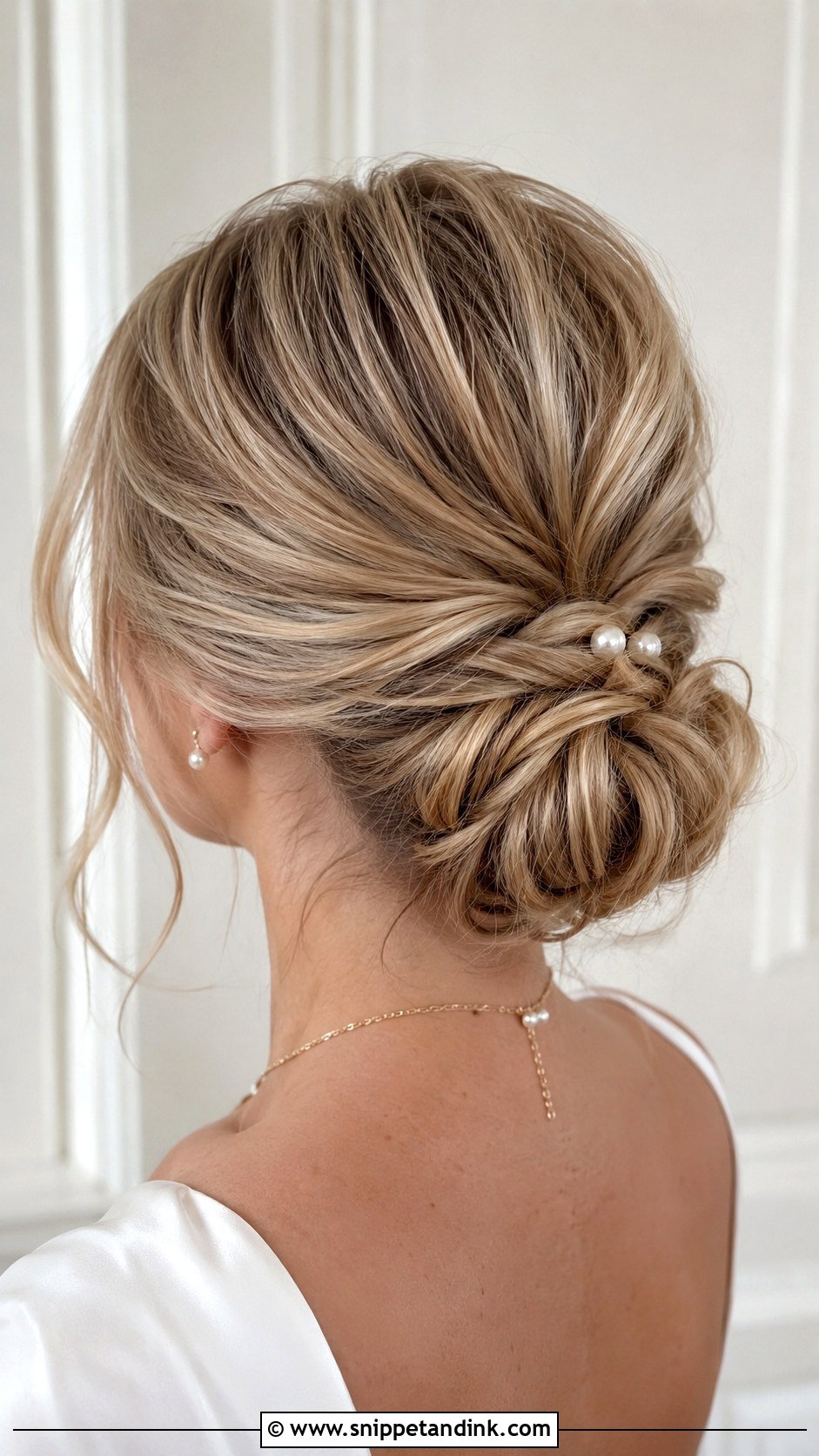
Thin hair can carry a full chignon with the right build. Volumizing mousse, soft curls and teasing at the crown come first, then careful pinning in small sections. A hidden bun form or small pad gives extra size if it’s matched to your hair colour. Twists and pearl pins add depth. I avoid pulling it tight, since tension on fine hair opens up scalp lines along the part and crown.
15. Low Chignon Wedding Hair For Long Hair
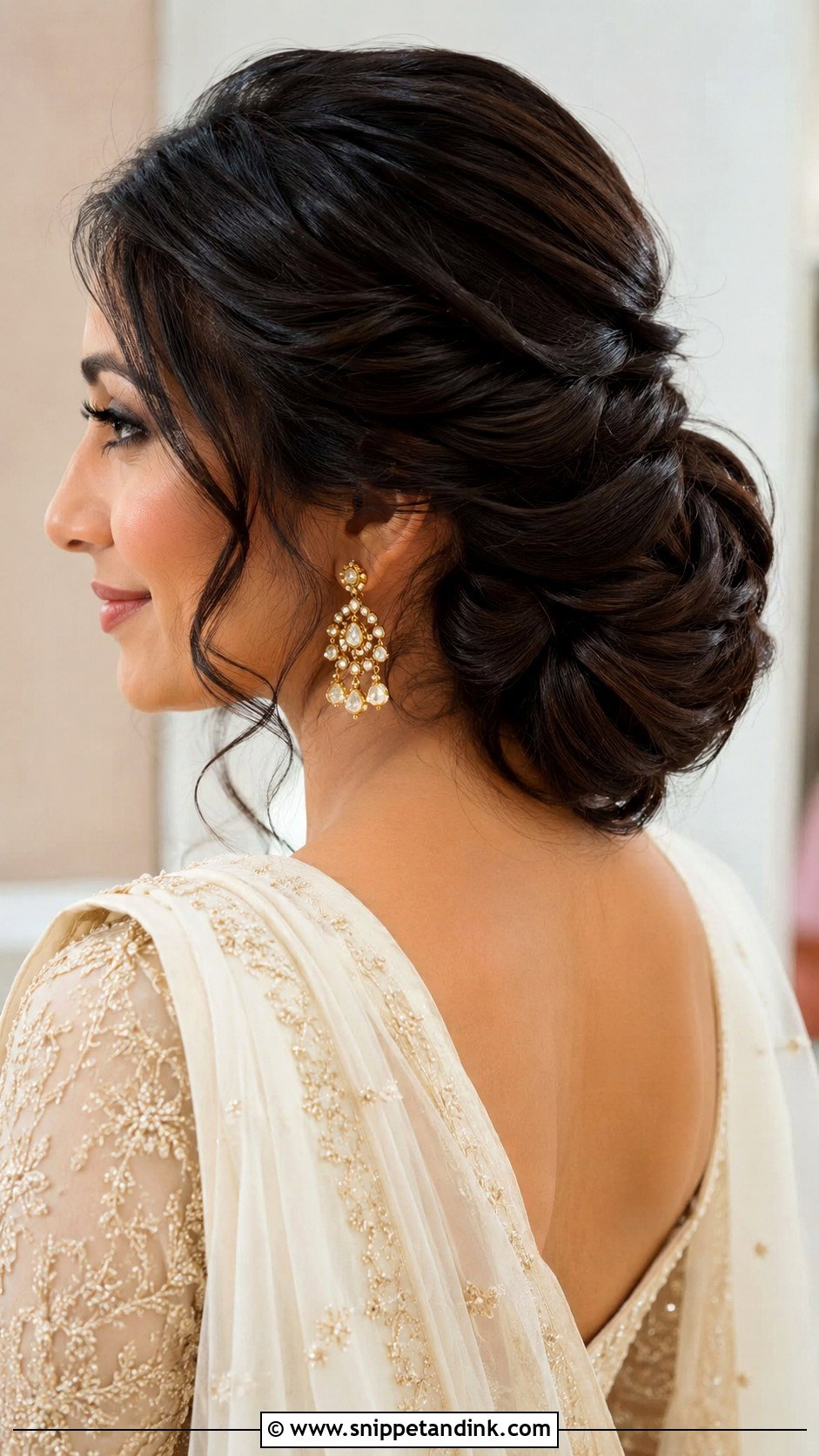
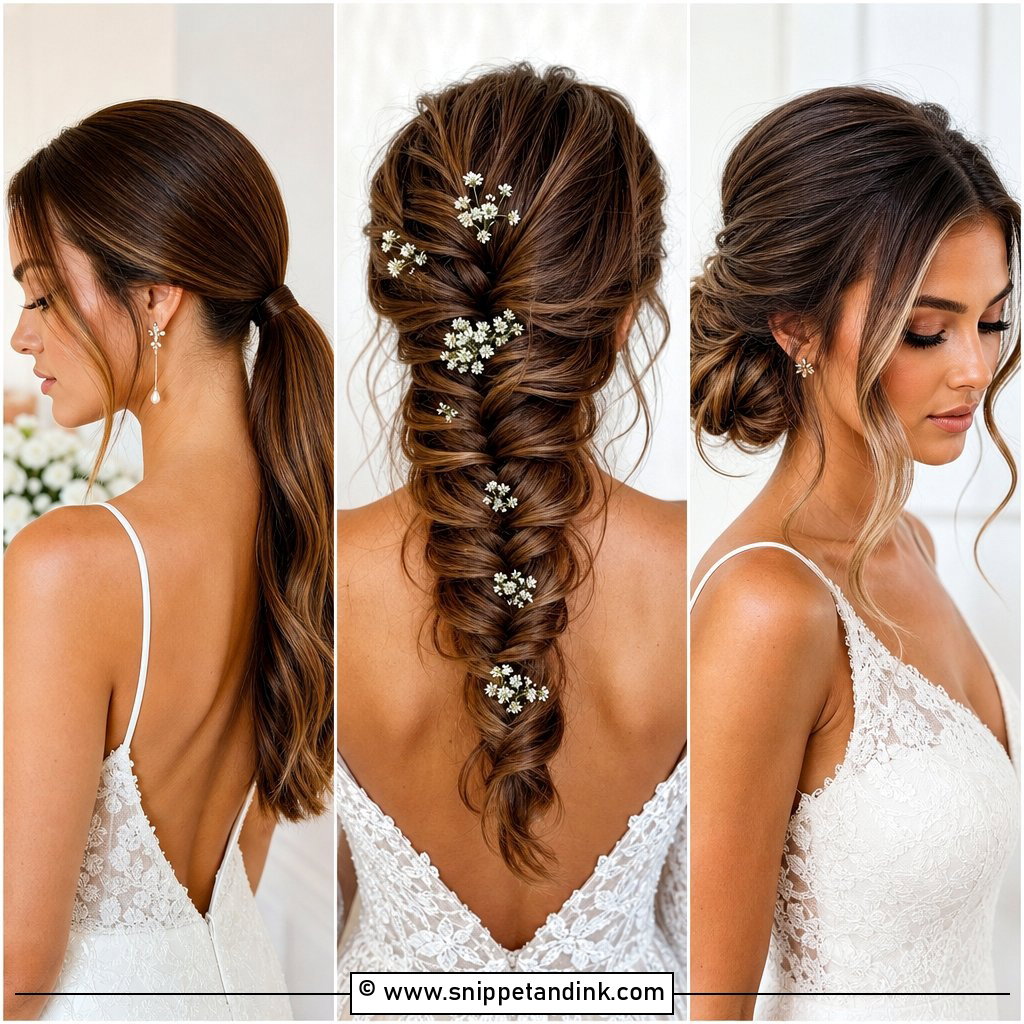
Long hair has length for wraps, braids or a larger, softer roll. The trade-off is weight. I add more pins than you’d think necessary and build the chignon in two parts so the load spreads, rather than one heavy coil hanging off the nape. Keeping it low helps balance it. Veils, floral pieces and detailed gowns all suit it.
Heat, Heavy Earrings and What Else Loosens a Chignon
A chignon rarely falls apart at once. It loosens slowly, and the causes are almost always the same few things.
- Heat and sweat at the nape soften the hairspray and relax curls; in summer, I set the chignon a touch higher, away from the neck.
- Long, heavy earrings brush the roll every time you turn your head; clip-ons and shorter drops are kinder to it.
- Leaning back on a car seat or chair squashes it. Sit forward where you can until the photos are done.
- Freshly washed, conditioned hair is too slippery; wash the day before, not the morning.
If it does start to slip, push it back into place and re-cross two pins through the base. Leave it softer than it started; chasing the morning’s exact shape with lots of fresh spray usually makes it look stiff.
Is a Chignon Too Plain for Your Dress?
A chignon is elegant, comfortable and easy to make your own. Keep it smooth and classic, soften it with texture, add a braid, tuck in flowers or finish it with pearls. Because it sits low, it leaves the shoulders, back and jewellery fully in view. Test the shape, veil placement and comfort at your trial, and give the stylist a clear picture of how your dress looks from behind.
You'll Like These Ideas:


Leave a Reply