
The ceremony is the shortest part of the day and the hardest on your hair. You stand still under every eye in the room, then you’re hugged, kissed, rained on with petals and photographed from behind for most of the vows. What brides ask me for right now is calmer than it was a few years ago: sleek buns, clean waves, soft twists and natural texture, with small details that leave the dress in charge. Any of the fifteen styles below can hold through that half hour and the party after it. Read each one against your own hair, your neckline and the veil you plan to wear, because those three things decide more than any trend.
The Back of Your Head Gets the Longest Look
Most brides judge a hairstyle in a mirror, from the front. During the ceremony almost nobody sees you that way. Your guests sit behind you, the officiant faces you, and the photographer spends much of the vows shooting from the aisle or from the side. So when I plan a ceremony style, I start with the back and the profile.
Bring a photo of the back of your dress to your trial. A low back or button detail usually wants the hair lifted off it; a plain back can carry a braid or a side sweep without competing. I also ask where the veil will sit, because the comb placement decides where I build the strongest anchor.
- Check the profile in a hand mirror. A bun that looks centered from the front can lean when seen from the side.
- Look at the nape. Short hairs there tend to escape, and they show in every aisle photo.
- Turn your head as if you were looking at your partner. If the style pulls or shifts, it needs another pin.
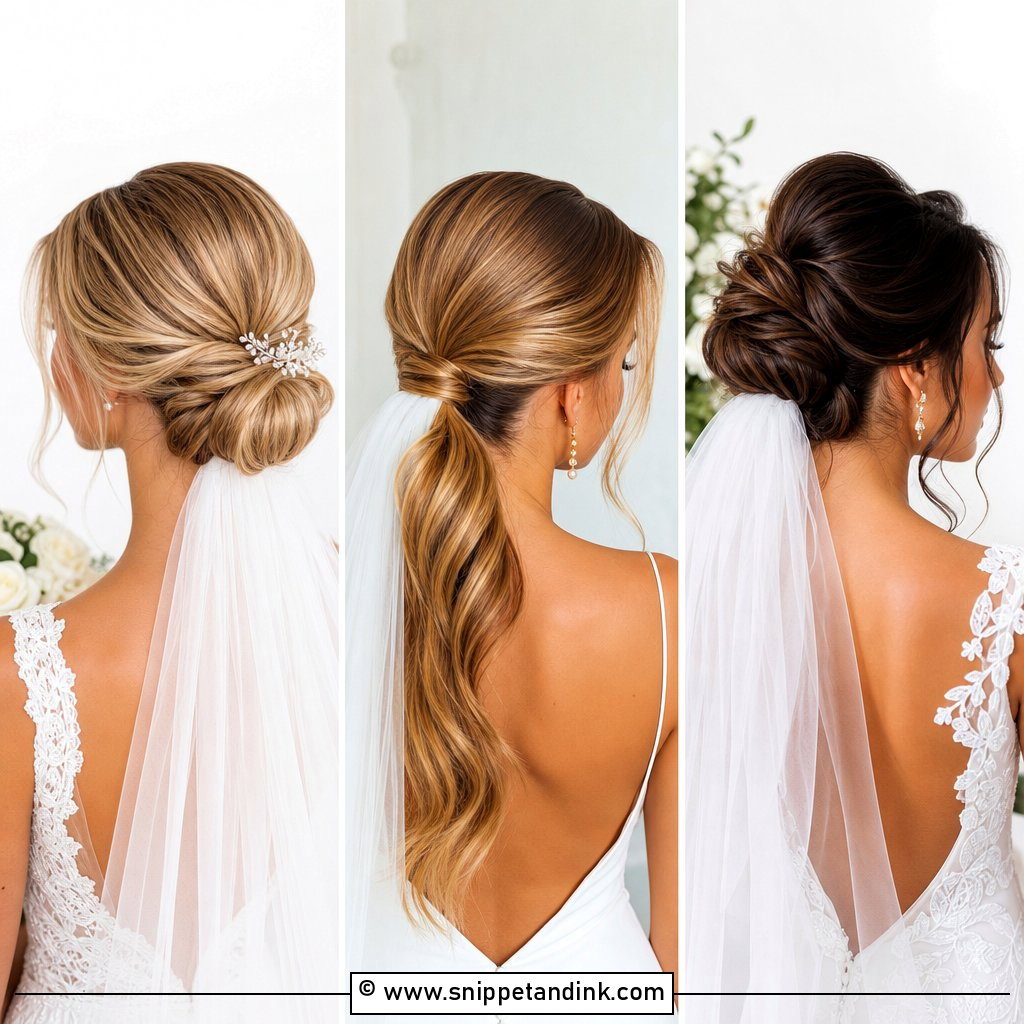
1. Low Bun Wedding Hairstyle
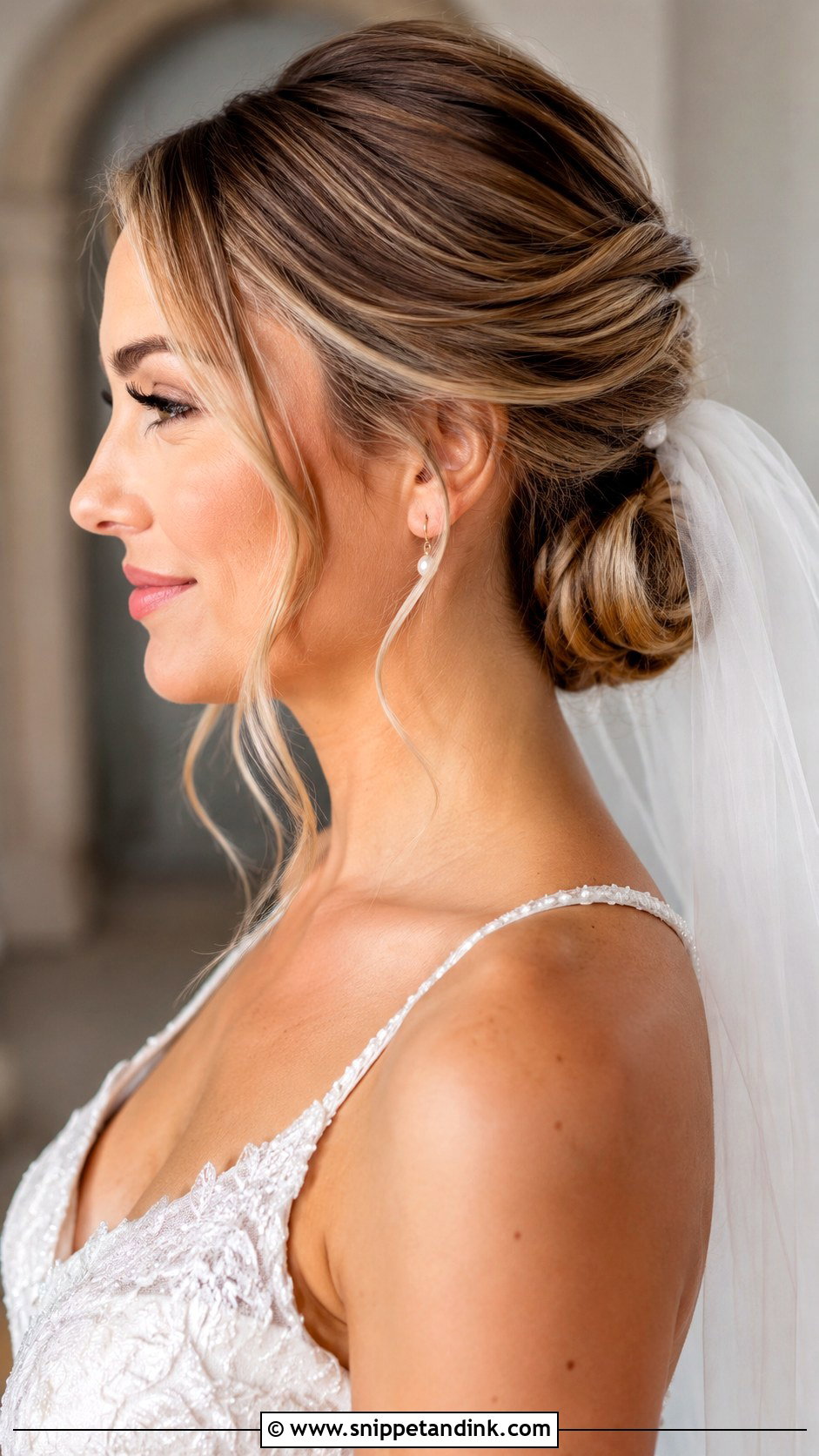
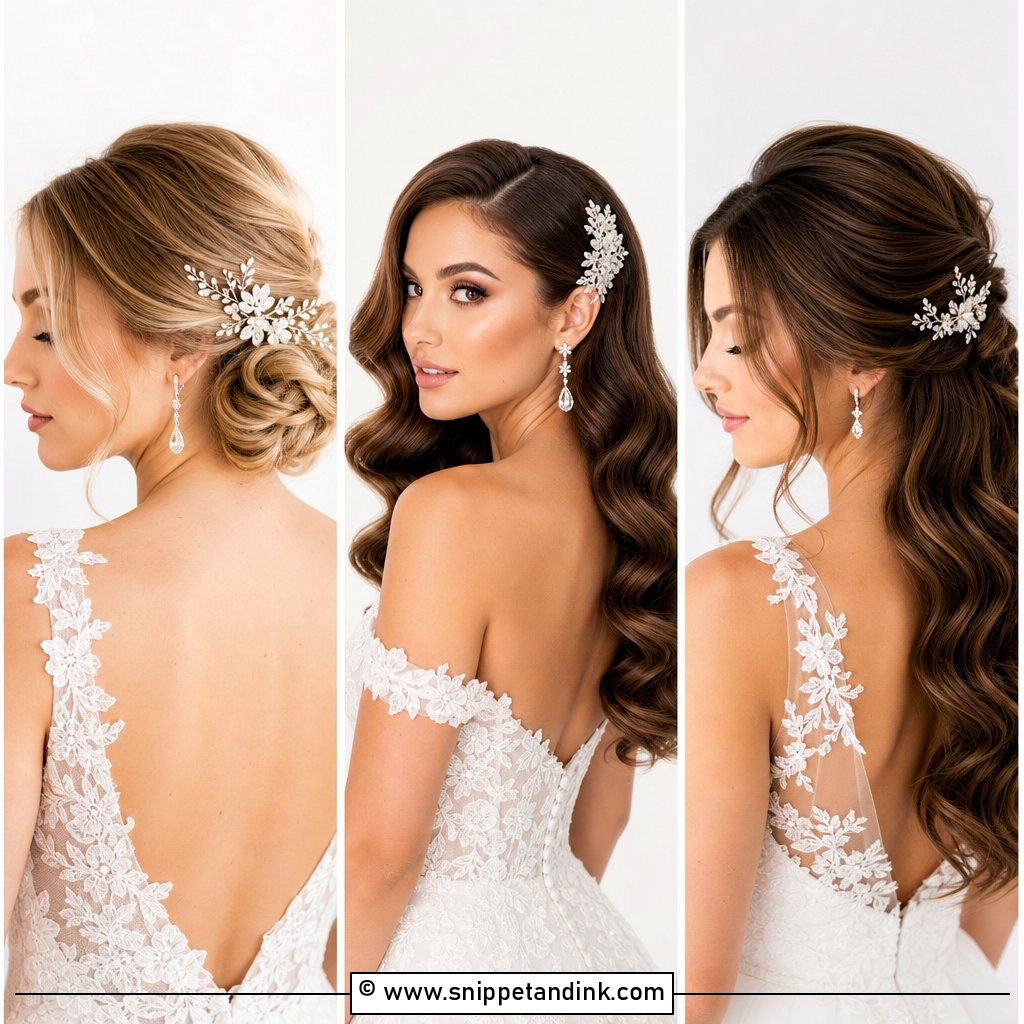
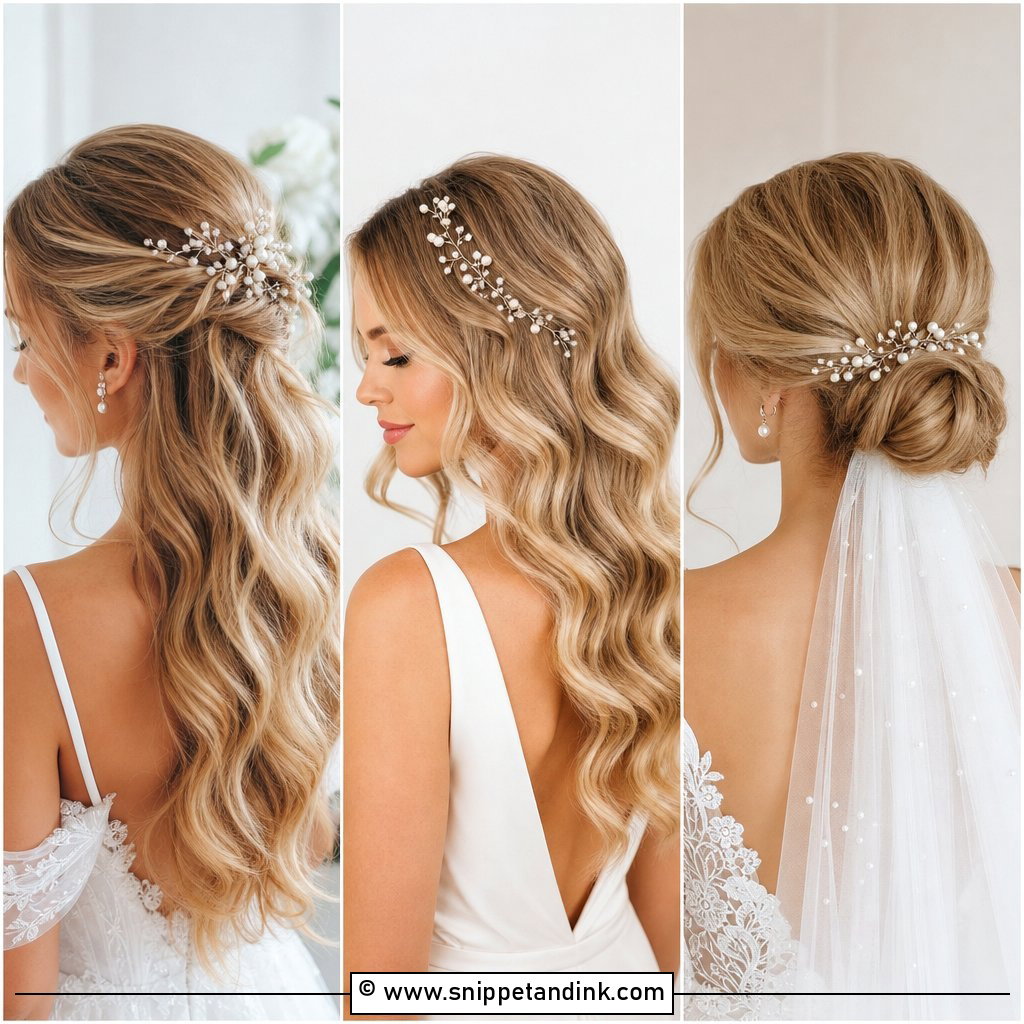
If a bride can’t decide, this is where I start her. A low bun sits right on the nape, so a veil comb slides in above it and the weight of the tulle rests on something solid instead of loose hair. It keeps strapless, off-the-shoulder and high necks clear, and lace bodices don’t snag on it. I build it on a small hidden ponytail or a pair of crossed pins, never on the hair alone, which is why it still looks the same at the cake cutting. Ask for a little lift at the crown if your face is round; leave it flat if you want the clean modern version.
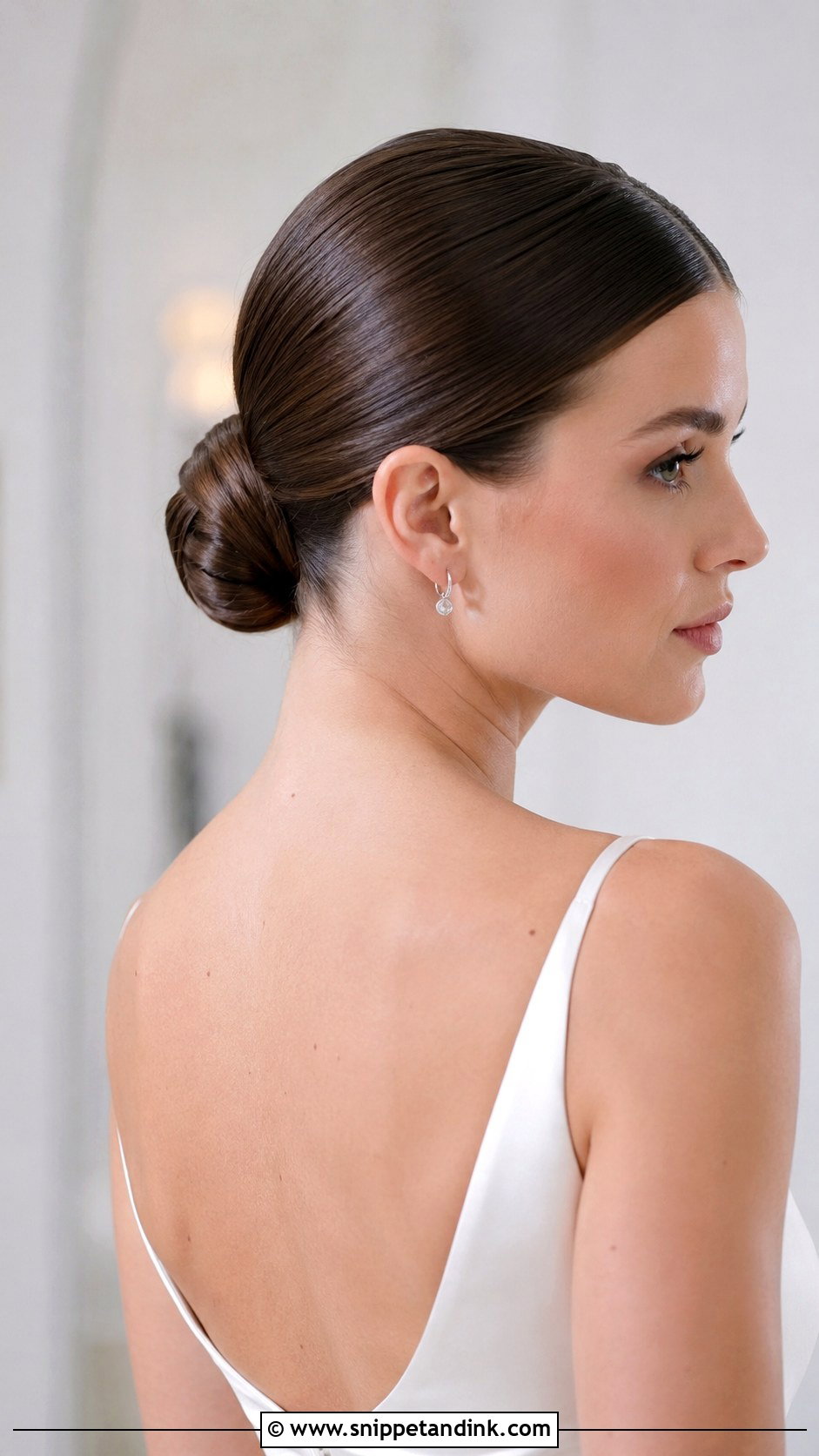
2. Sleek Bridal Bun
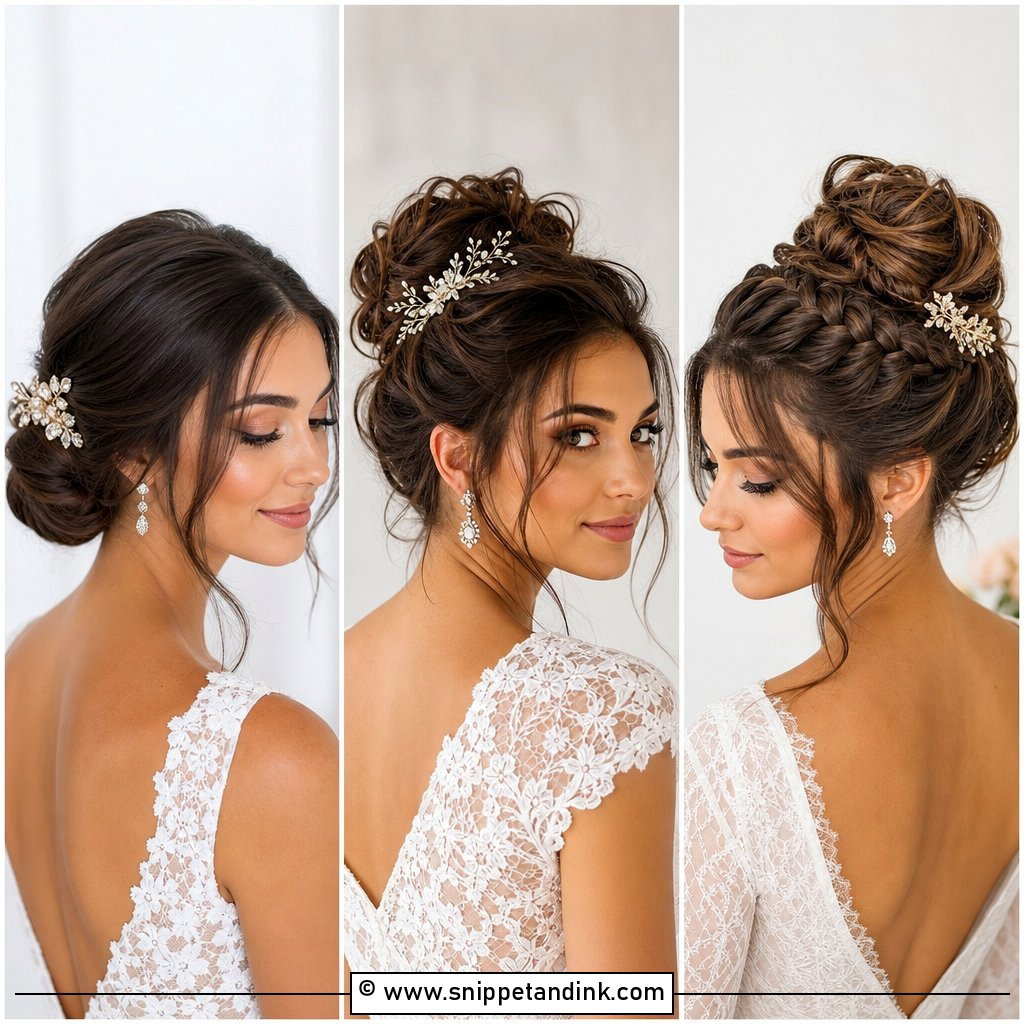
A sleek bun is all about the surface, so I spend more time on prep than on the bun itself. The hair is blow-dried smooth, brushed back with a boar bristle brush and pinned tight at the nape or a touch higher. It suits a dress that’s doing the talking already: a sculpted bodice, an open back, big earrings. The risk is a severe look on an angular face, so I set the part last. Center reads modern, a deep side part softens the jaw. I finish with a light gel along the hairline and a shine spray from a distance, because a heavy spray turns sleek hair dull under flash.
3. Textured Chignon Wedding Hairstyle
Where a sleek bun is all tension, a textured chignon is all air. I curl the hair first, let it cool completely, then pin it into loose folds so you see bends and gaps instead of a solid knot. It sits low, which keeps it comfortable under a veil for hours. Fine hair usually needs a backcombed base or a small padding to stop the folds collapsing by the reception. Because guests and the photographer look at the back of your head through most of the vows, this is a style where the back carries the picture, so a single pin or a small comb is plenty.
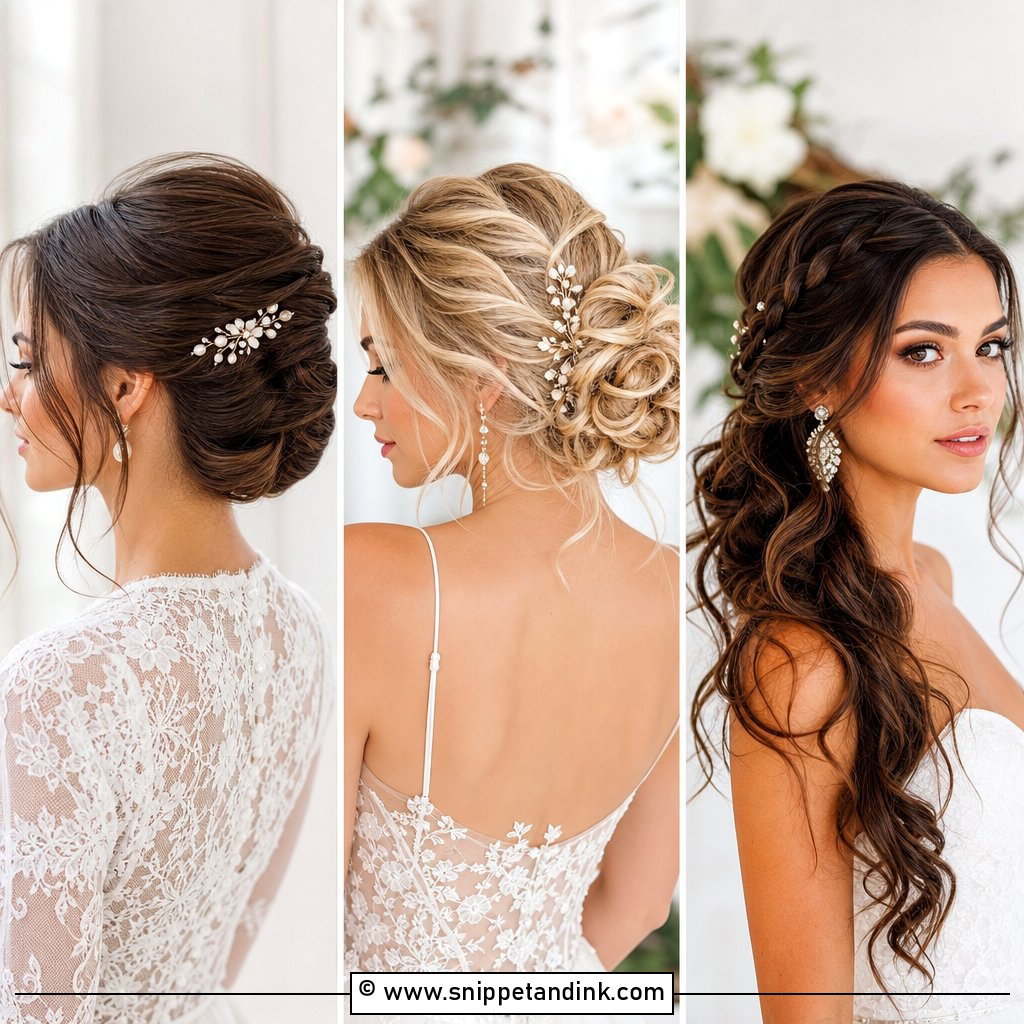
4. French Twist Wedding Hairstyle
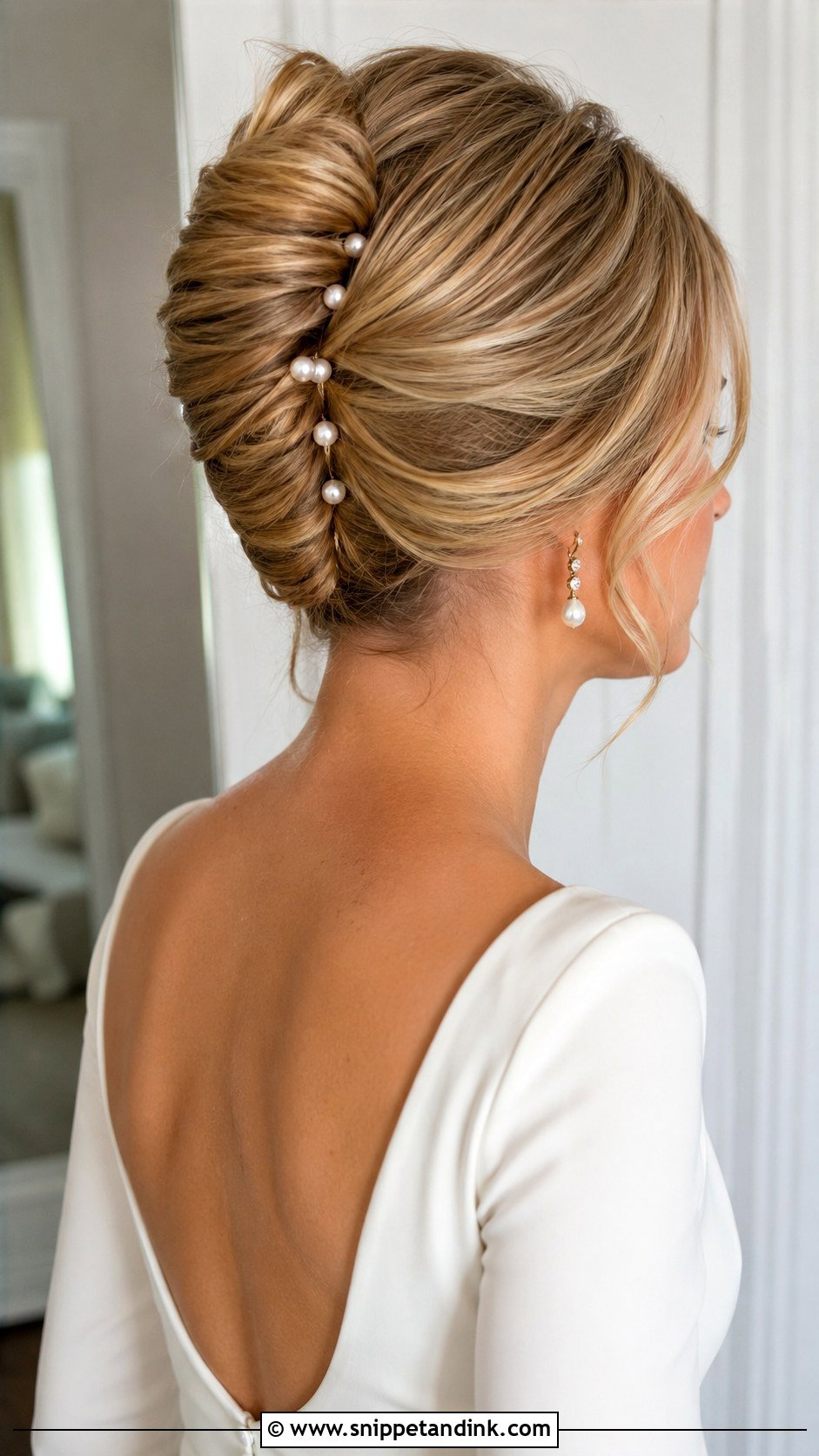
A French twist is a vertical fold, gathered at one side and tucked up the back of the head, and it’s the most structured style on this list. I’d steer you away from it if your hair sits above the shoulder; there isn’t enough length to wrap, and the pins show. On medium and long hair it’s secure enough to forget about. Today I leave a little height at the crown and a couple of loose pieces at the temples so it doesn’t look set in 1962. It sits naturally with minimalist gowns, satin and long sleeves. If you want decoration, keep it to pearl pins along the seam so the fold stays visible.
5. Half Up Half Down Wedding Hairstyle
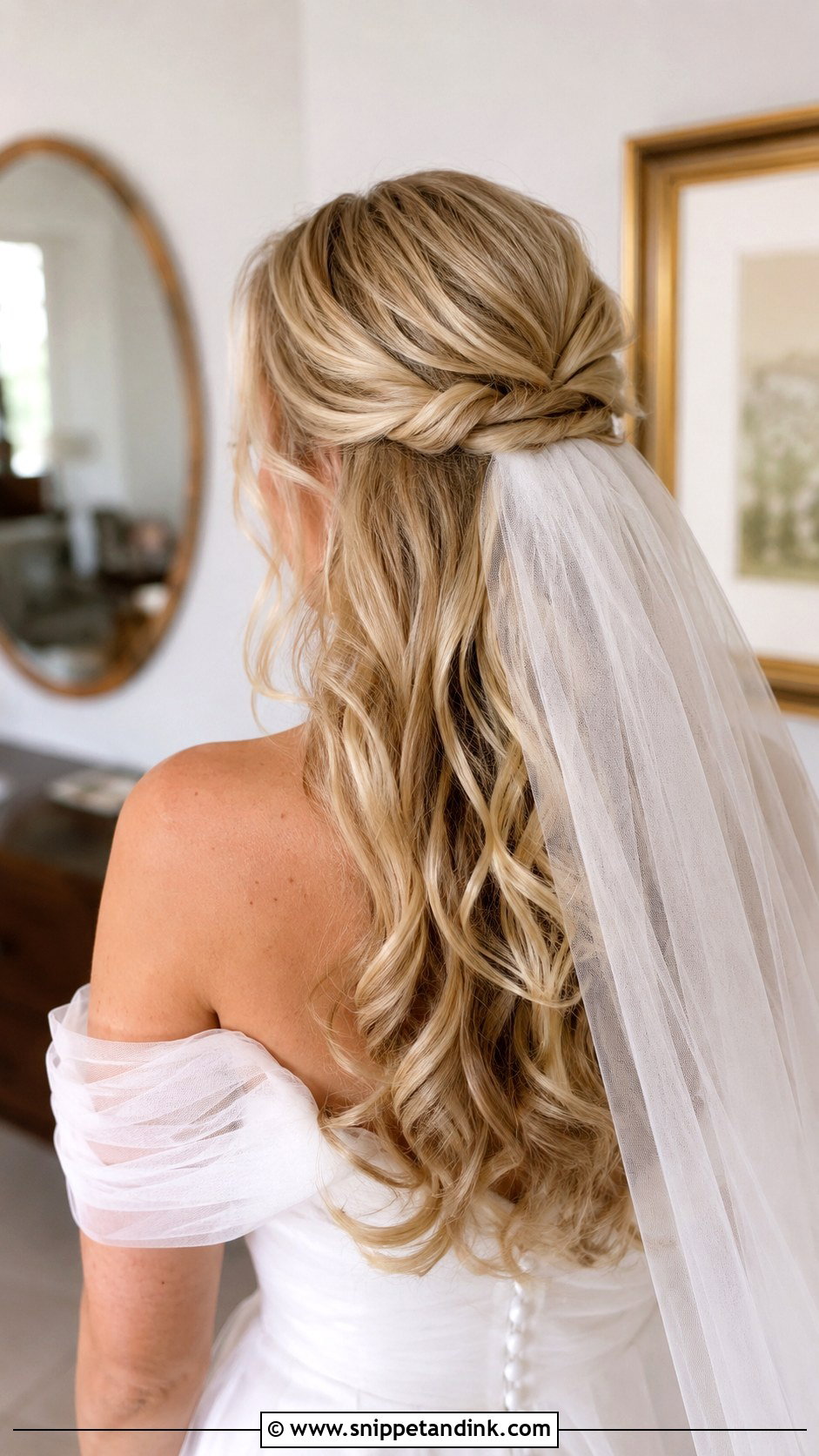
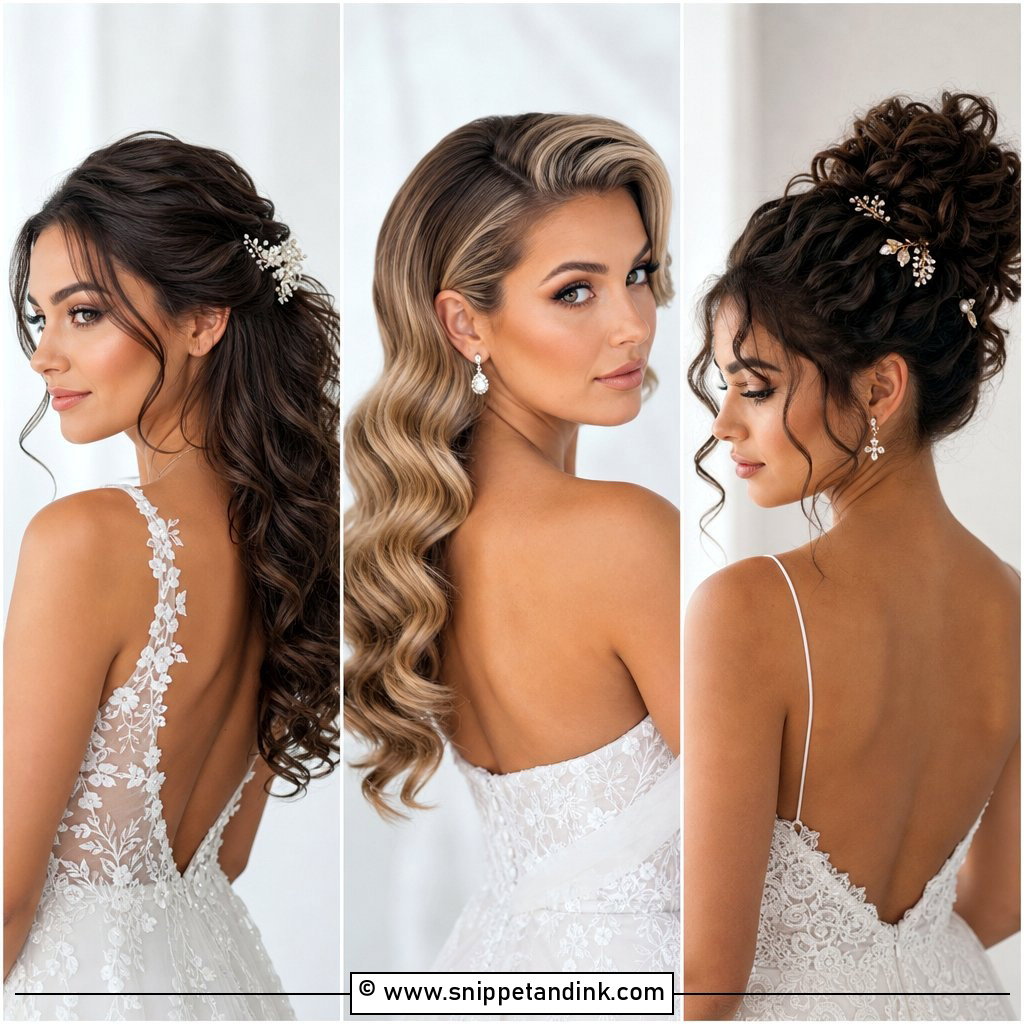
Half up keeps the length on show but locks down the section around your face, which is the part that misbehaves first in wind or during hugs. I pin the top section to a small anchor, either a mini braid or crossed pins, because that is also where your veil comb or hair vine will grip. The rest falls in waves or bends. Fine hair benefits from a few clip-in wefts at the ends so the lengths don’t look thin next to the volume on top. Very thick hair needs the opposite: I thin the bottom curls out a little so the shape doesn’t turn triangular by evening.
6. Hollywood Waves Wedding Hairstyle
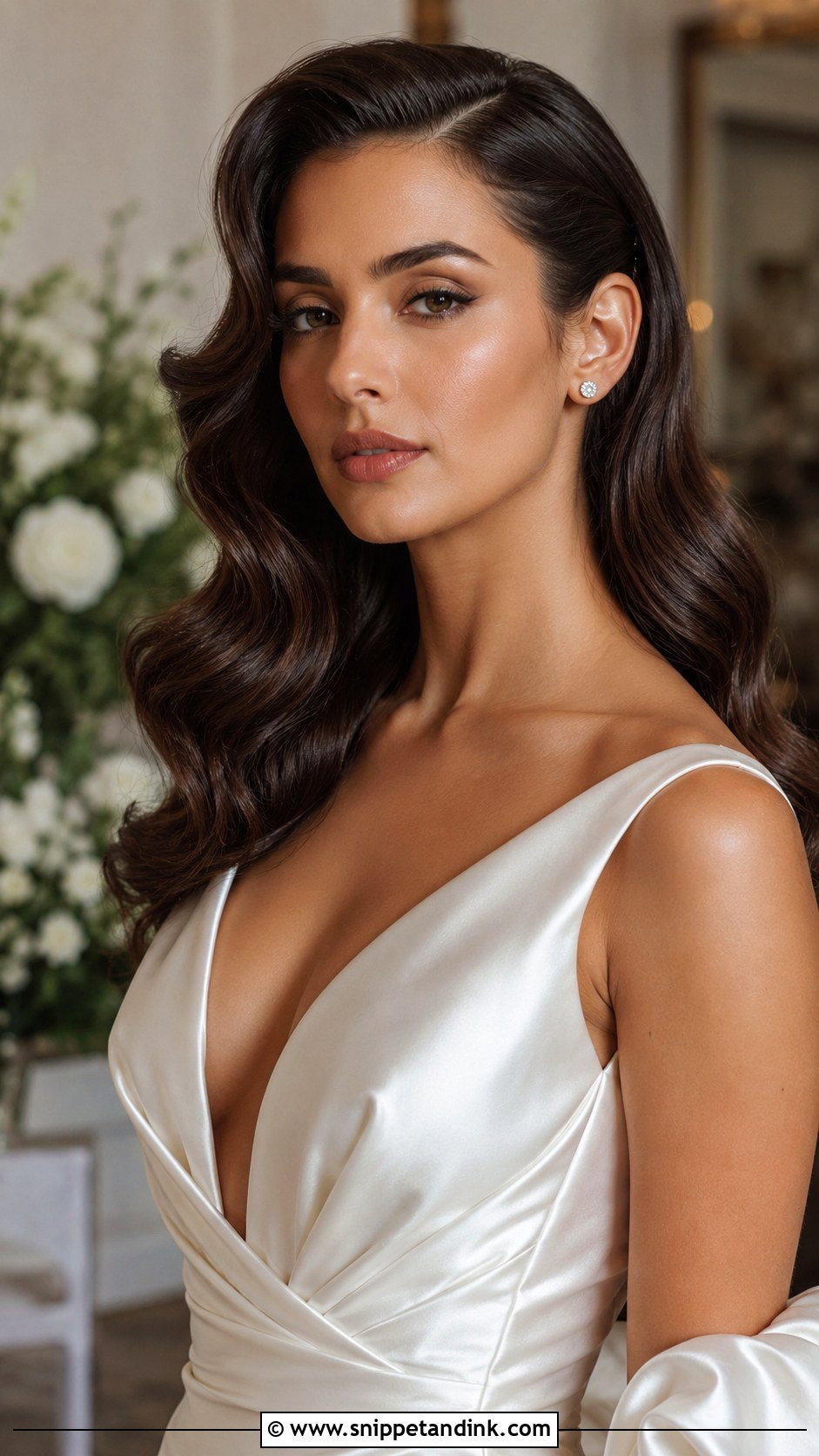
Hollywood waves are the most disciplined way to wear your hair down. Every curl is wound the same direction from a deep side part, pinned flat to cool, then brushed until the sections merge into one glossy ripple. Any uneven curl shows, which is why I only promise this look after a trial. It’s at home with fitted gowns, vintage cuts, plain satin and bold earrings, and it reads far more formal than beach texture. For a long ceremony I place a couple of hidden pins behind the ear on the swept side; they hold the S shape without the stiffness of extra spray.
7. Soft Waves Wedding Hairstyle
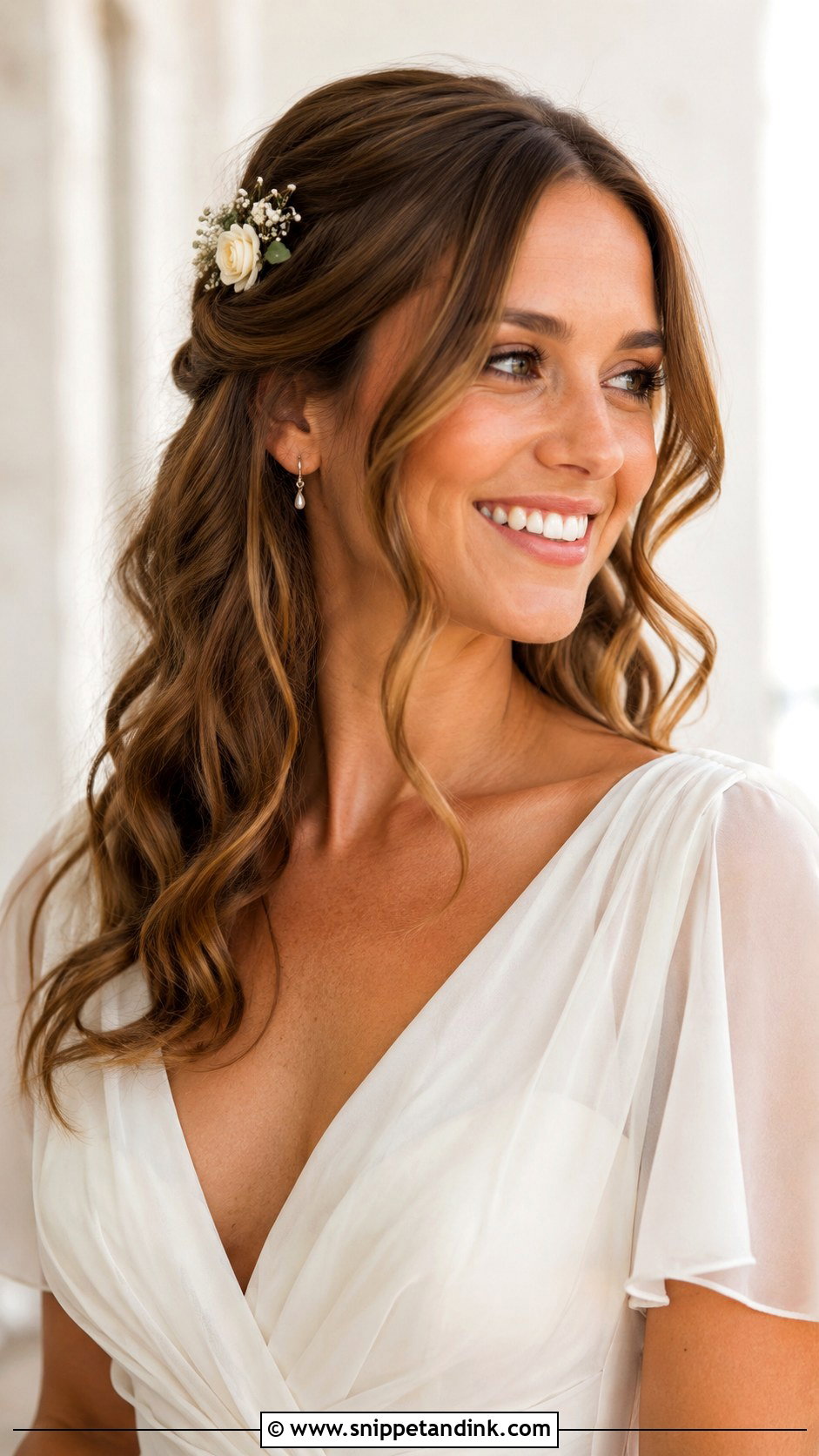
Soft waves sit between Hollywood polish and beach texture, and they’re the most requested look in my chair. The curls are brushed out until they read as movement rather than ringlets. That also makes them the quickest to drop, so outdoors I curl a little tighter than the finished look and add a humidity barrier before a flexible spray, timing the drop to land around the vows. Layered cuts and extensions take them well. Whatever you wear with them, a comb, a clip or a veil, keep the face pieces light and let the crown stay smooth.
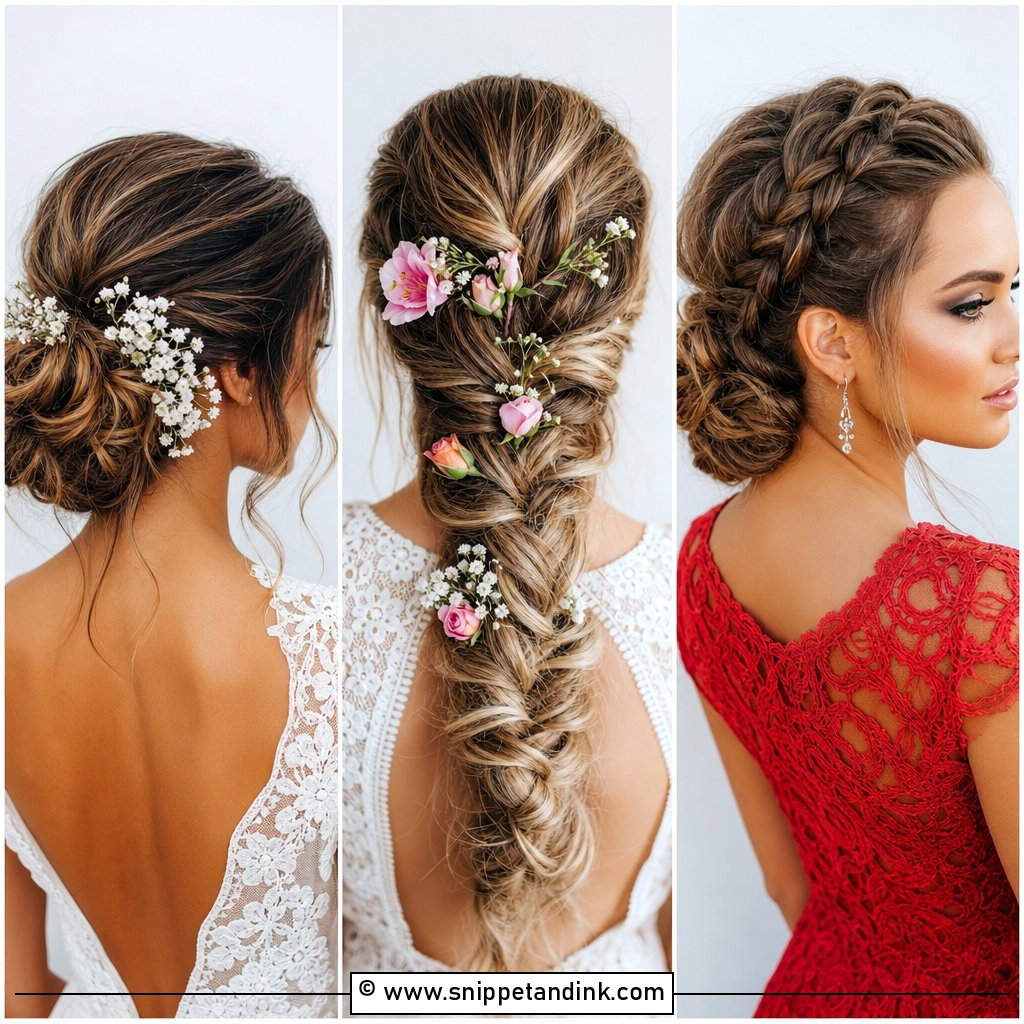
8. Braided Updo Wedding Hairstyle
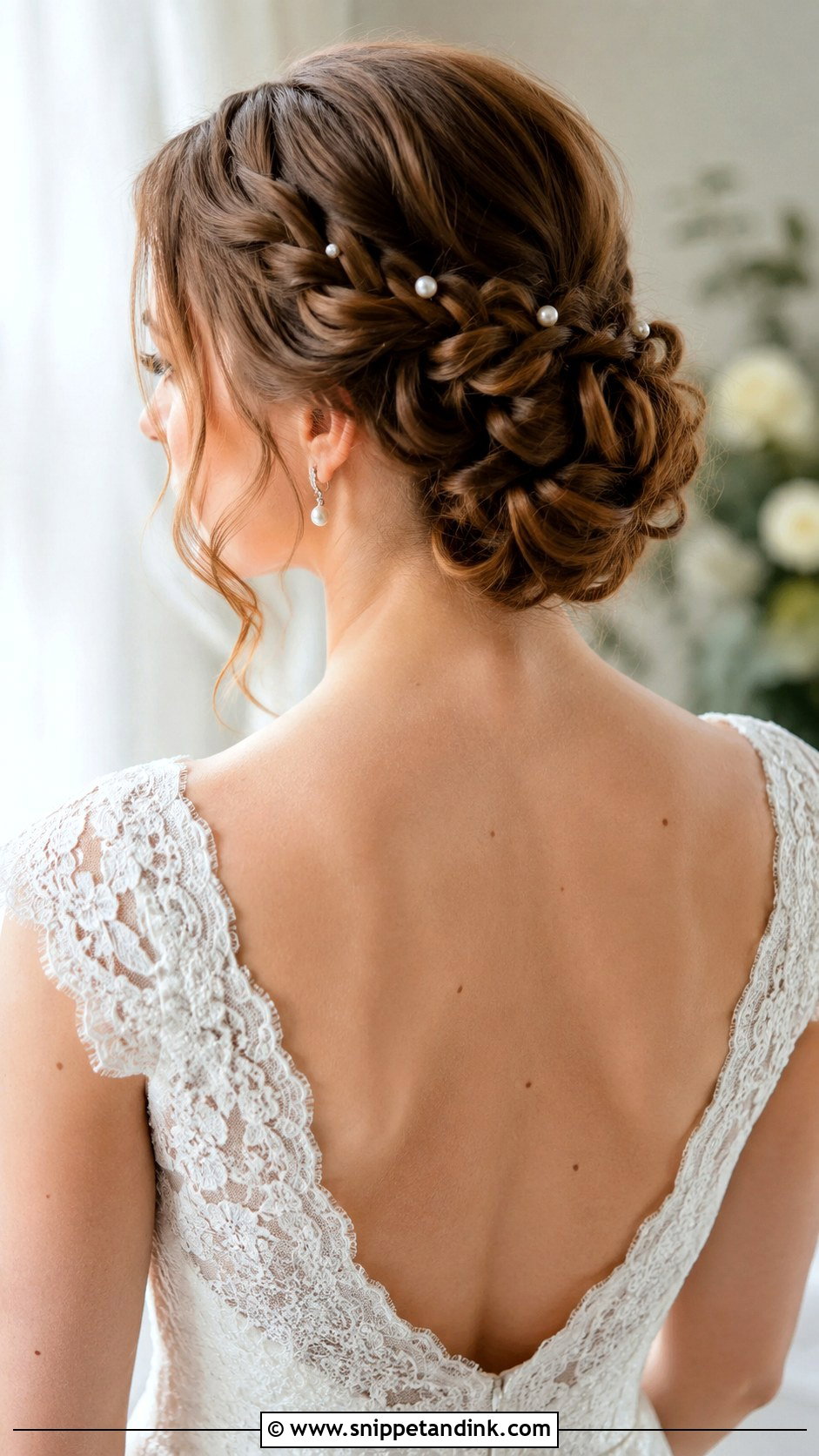
A braided updo gives the guests sitting behind you something to look at, which matters more than people think, because they watch the back of your head for most of the ceremony. The braid can wrap the bun, cross the crown or fade into a low pinned shape. I reach for it on thick hair, since braiding packs the bulk down that would otherwise make a bun huge. Once it’s in, I gently pull the edges of each section so it looks full but tidy. Keep accents small, a few pearls or tiny blooms, because baby’s breath-inspired sprigs tucked everywhere can bury the braid that should be the detail.
9. Crown Braid Wedding Hairstyle
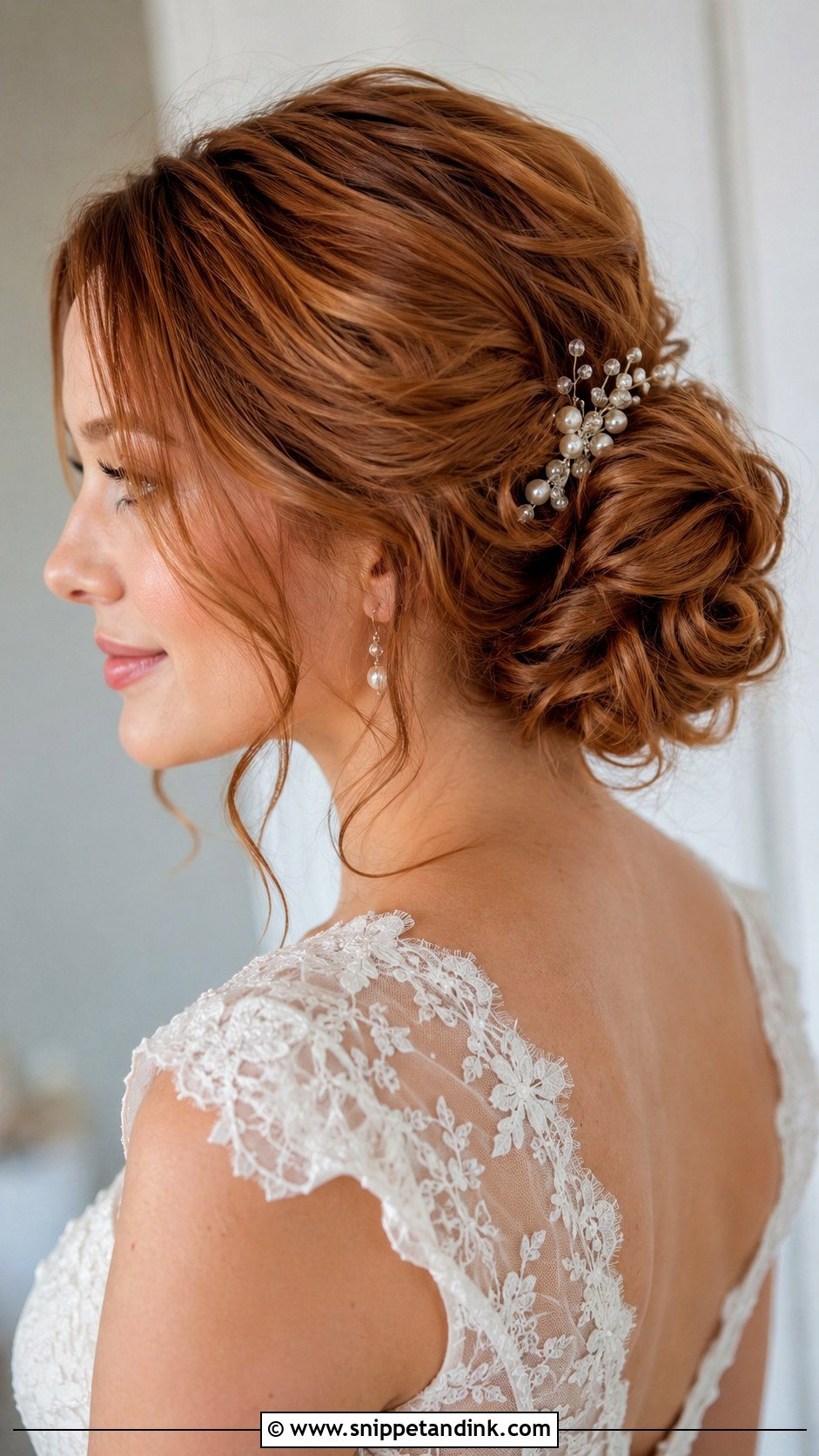
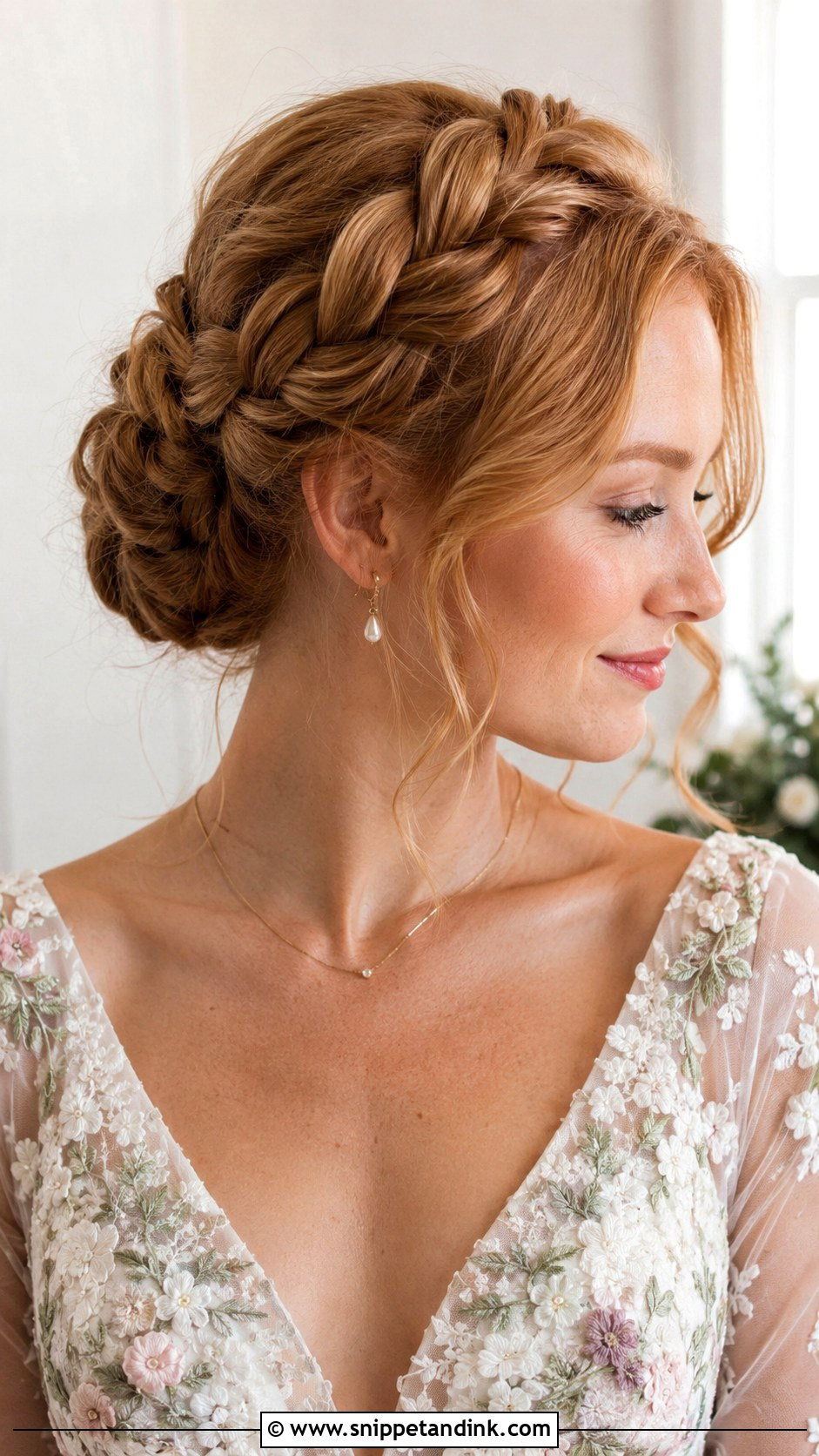
A crown braid circles the head like a band, so it frames the face and needs nothing on top. I find it holds best at garden and outdoor ceremonies, since a braid barely reacts to wind. It can be full and pancaked, neat and tight, or joined to a low bun at the back. The thing I watch at a trial is tension at the temples: if it’s braided too tight, you’ll have a headache before the photos are done. A couple of loose strands near the temples keeps it gentle. Layered hair with short pieces at the front will poke out of the braid, so plan for a few pins there.
10. Bridal Ponytail Wedding Hairstyle
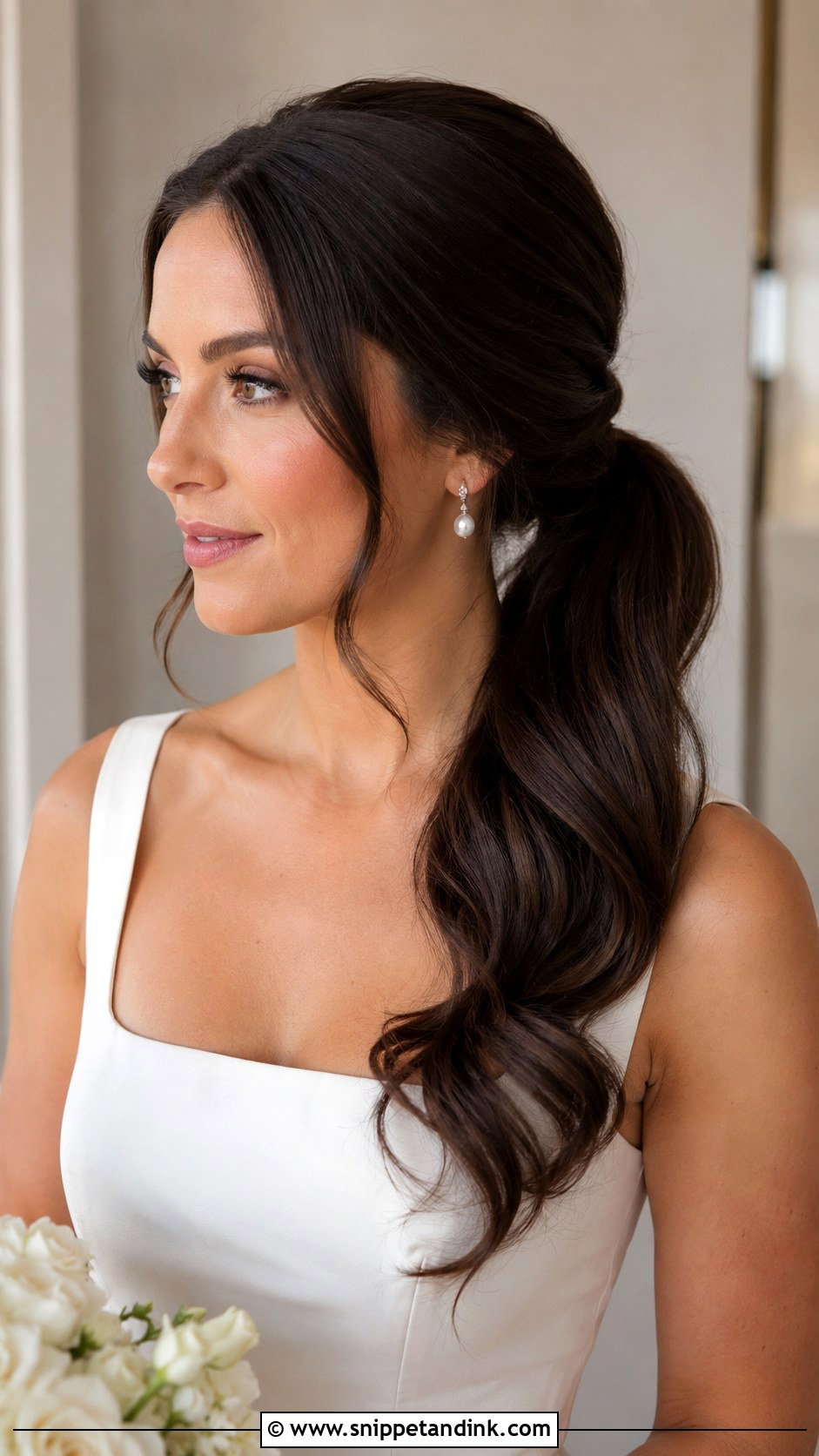
The ponytail only looks bridal when every part of it looks deliberate. I smooth the crown, wrap the base with a strand of hair to hide the elastic and curl or wave the length so it moves. Low ponytails read classic and work under a veil; mid-height ones add lift and swing but leave less room for a comb. It keeps the neck clear while still showing length in photos, which is why it pairs well with square necklines and statement earrings. On fine hair I usually add a clip-in ponytail piece so it doesn’t thin out after the first dance.
11. Curly Wedding Hairstyle
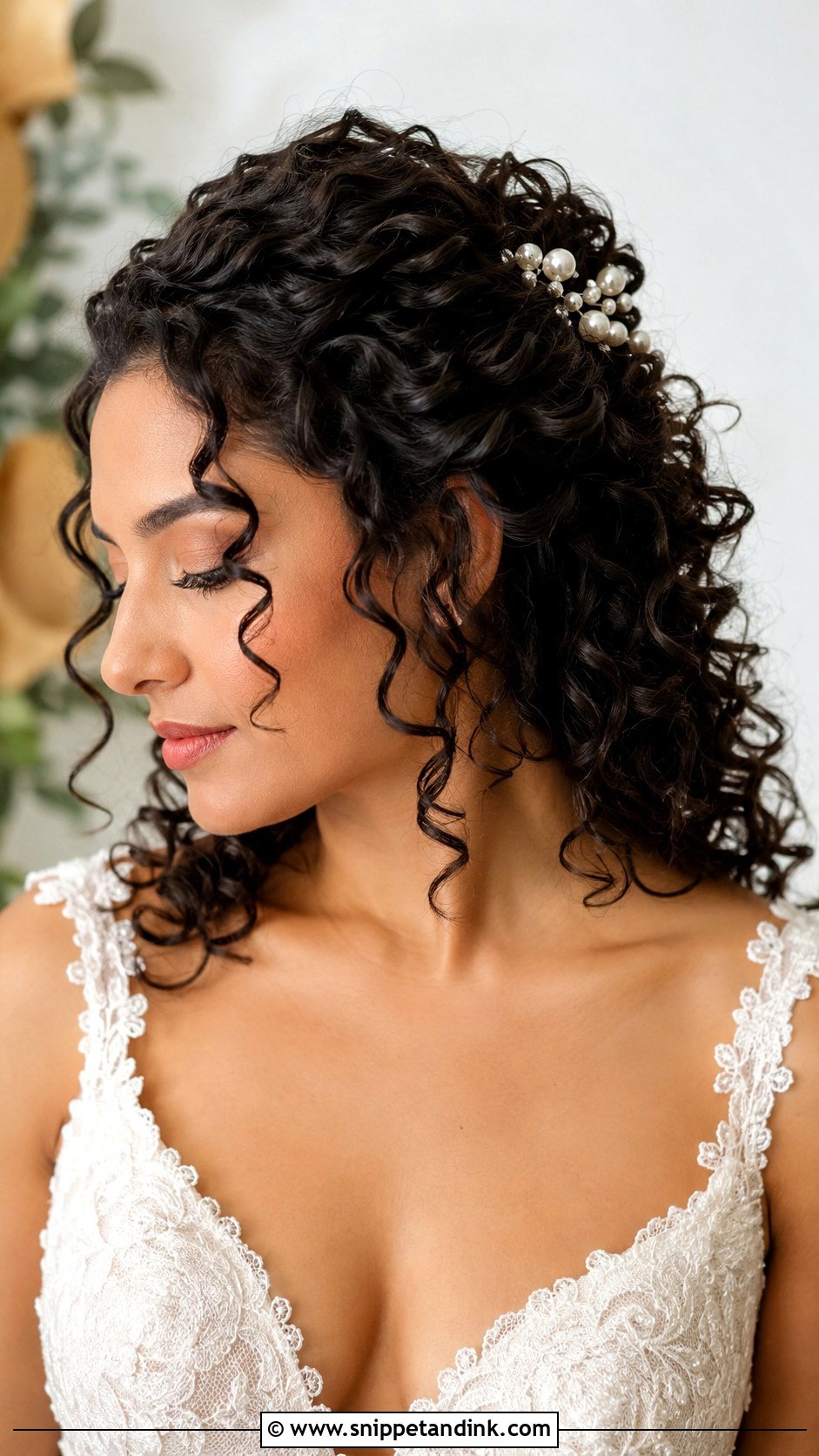
With curls, I work with the pattern you have instead of forcing a new one. That means defining the curls on damp hair, sealing in moisture and shaping the outline so it frames your face, then leaving it alone to set. They can stay loose, go half up, sweep to one side or gather into a soft updo. Floral pins and pearls sit easily in curls, and a veil comb needs a small hidden anchor at the crown. A trial matters more here than anywhere, because shrinkage, humidity and product weight all change the shape. What we’re after is bounce, definition, and softness that lasts past midnight without crunch.
12. Natural Hair Wedding Updo
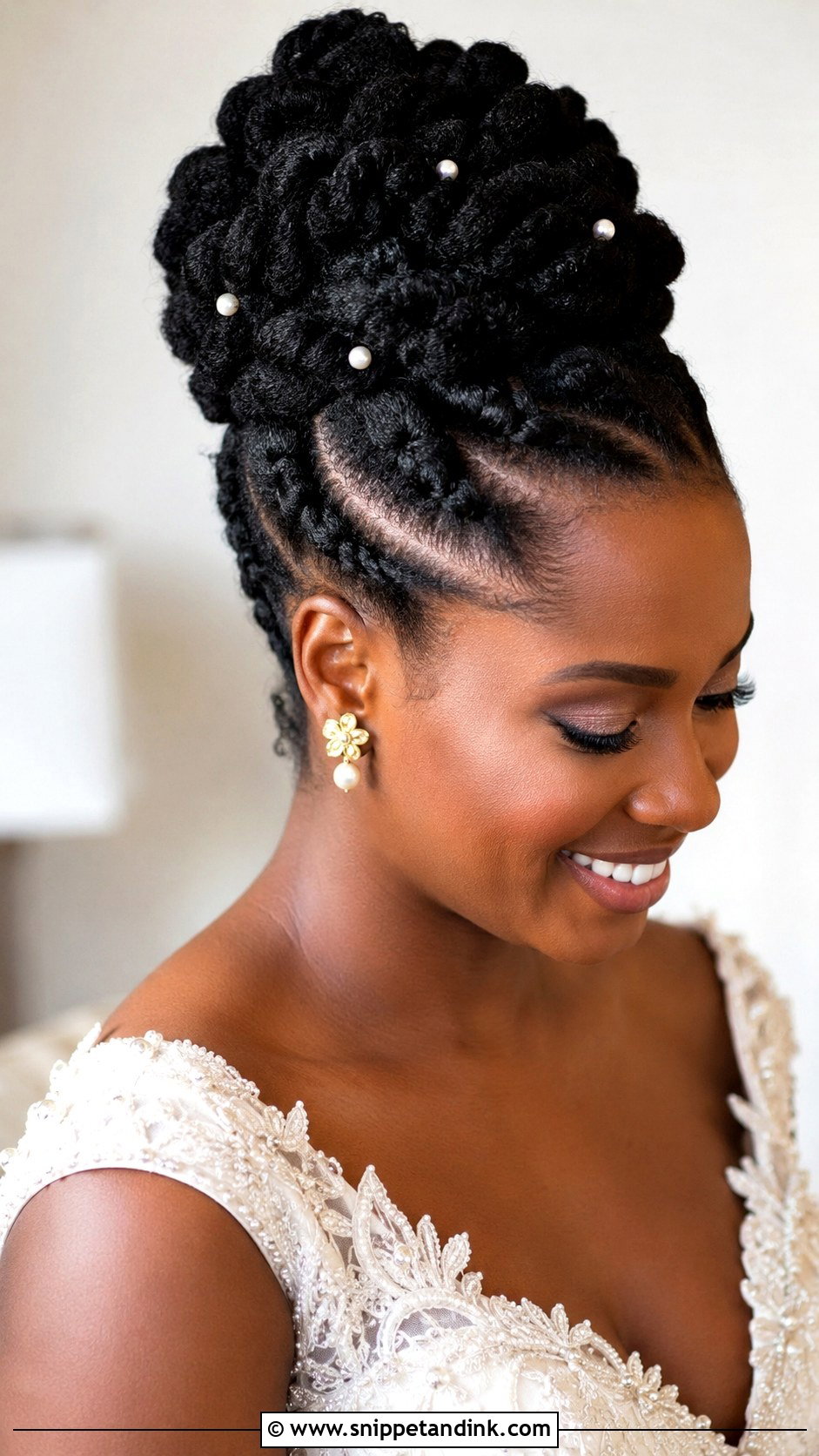
A natural hair updo protects the ends and shows off volume at the same time. It might be a textured puff, a sculpted bun, flat twists, pinned coils, or a soft crown shape. The prep starts days before: a deep condition and a stretched set give me something to shape without heat damage on the morning. Coily hair holds pins well, so it stays secure, but the weight of a long veil pulls on the edges, which is why I anchor combs into a braid or a twist rather than the hairline. Gold pins and pearls show up crisply against dark, dense texture.
13. Short Hair Wedding Hairstyle
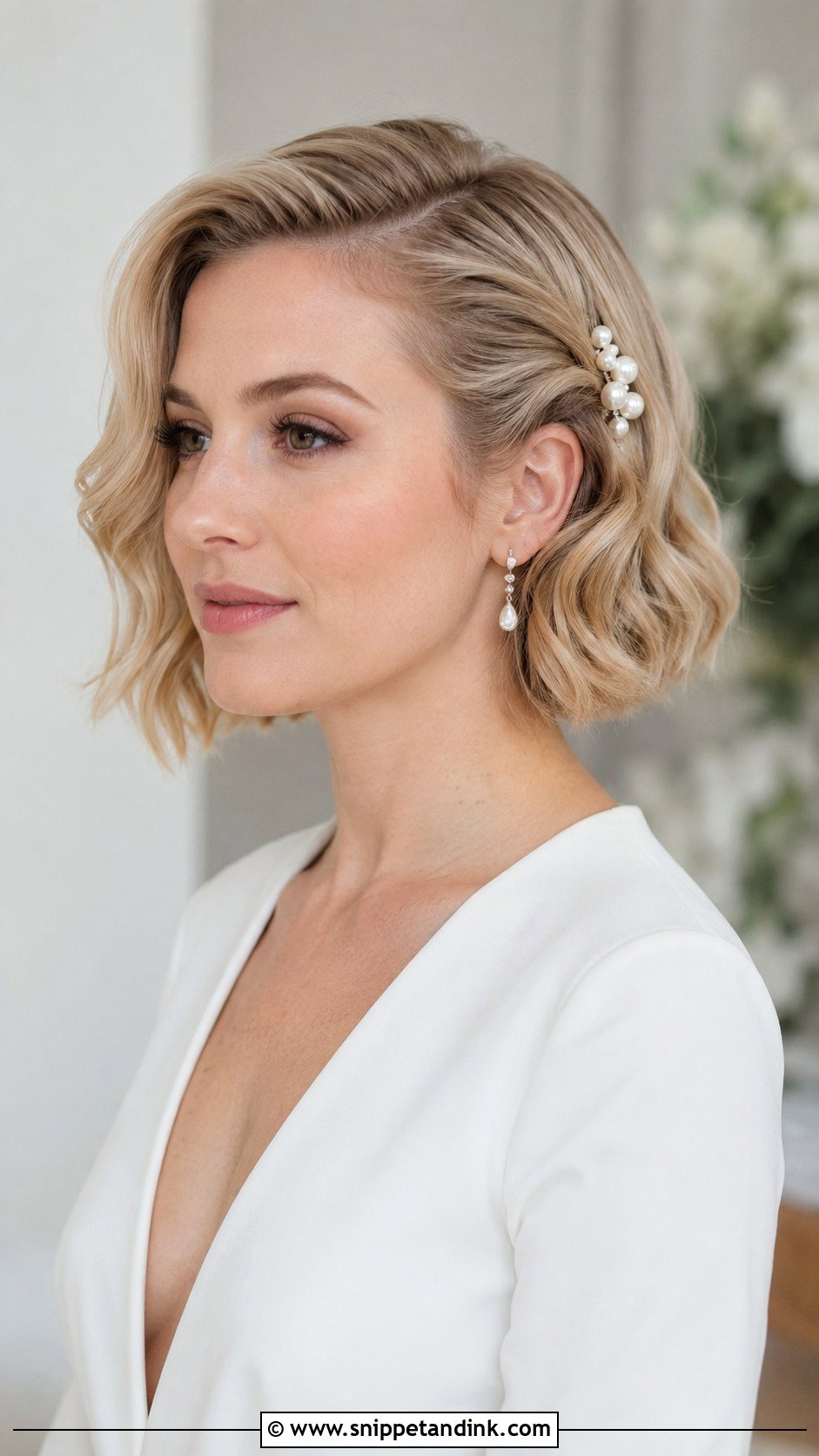
Short hair doesn’t need to grow out for a wedding. A bob, pixie, bixie, or cropped cut can be waved, smoothed, tucked or pinned, and the details matter more because there’s less hair to carry the look. I put waves into a bob and a sharp side part into a pixie, then add shine. Get your last cut about two weeks before, so the edges have softened but haven’t grown out. Small combs and headbands sit beautifully on short hair; a veil needs a comb with teeth short enough to grip, or a few pins crossed underneath it. You’ll also be the only one not taking pins out at midnight.
14. Side Swept Wedding Hairstyle
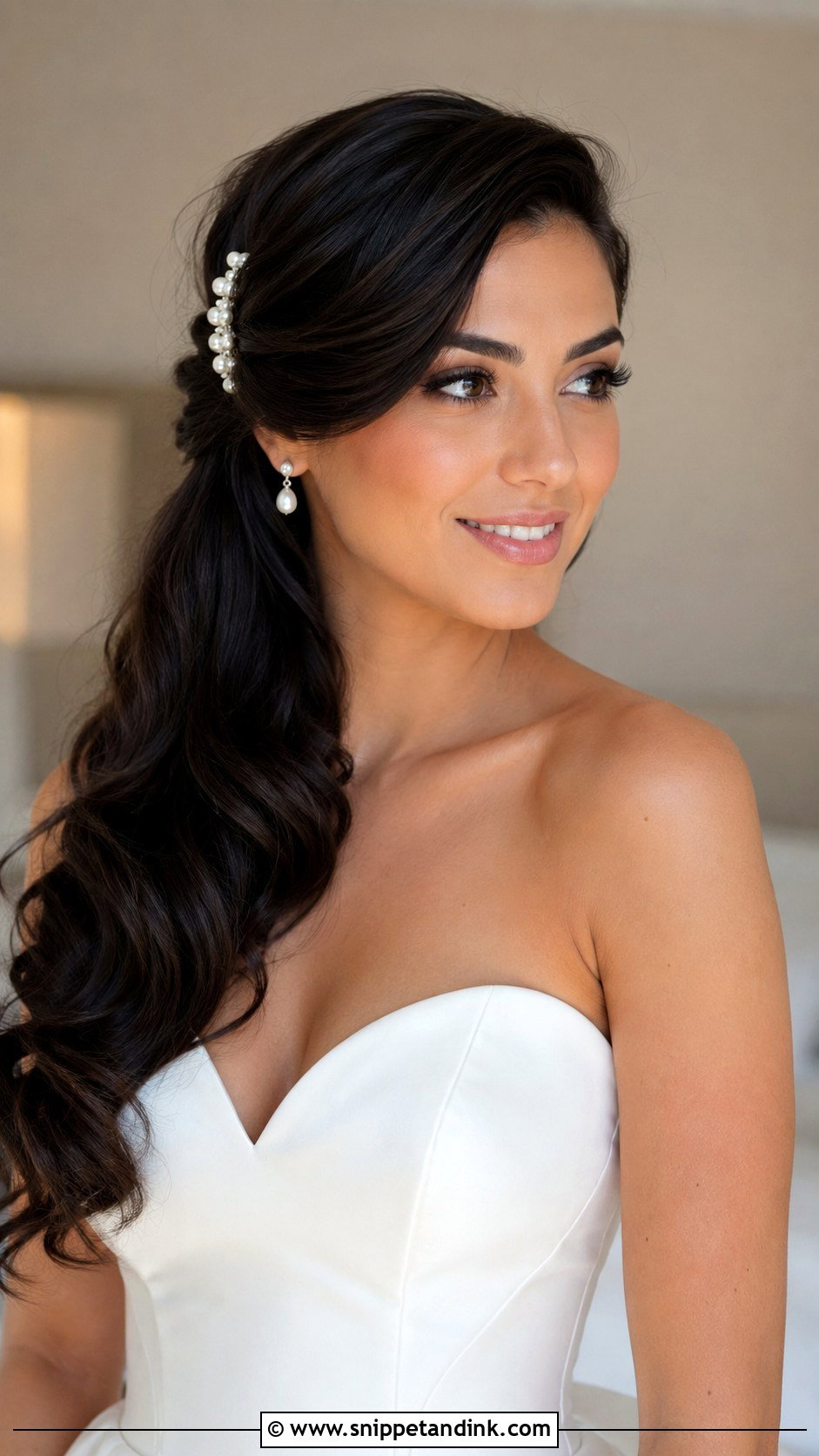
A side swept style brings everything over one shoulder, with waves or curls and a pinned detail behind the opposite ear. That pinned side is my anchor: I crisscross pins under it so a comb, a flower or a pearl clip has something firm to grip. It shows off one-shoulder gowns, sweetheart necks and detailed backs. Decide which side the photographer will mostly see during the vows, because that’s the side you want the hair to fall away from. The waves need to connect into one shape, otherwise a single hug turns them into separate strands.
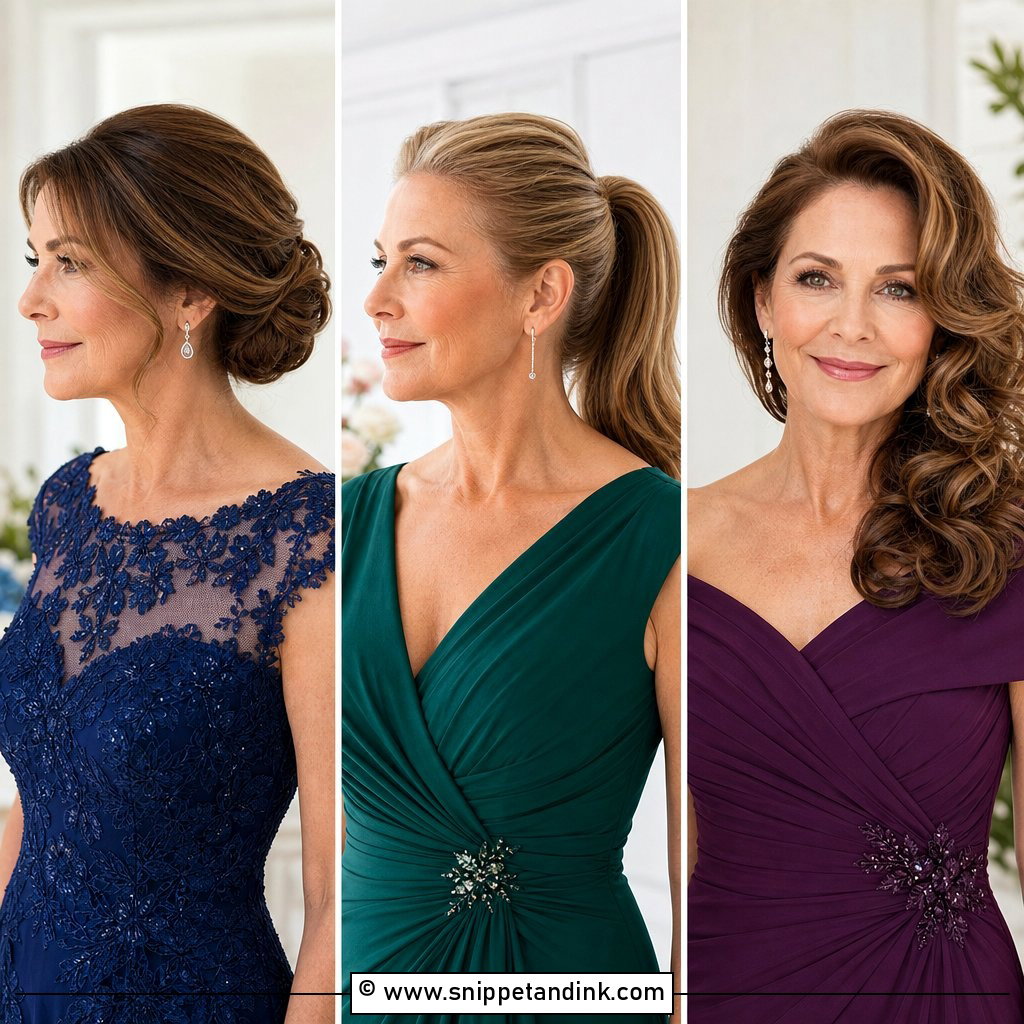
15. High Bun Wedding Hairstyle
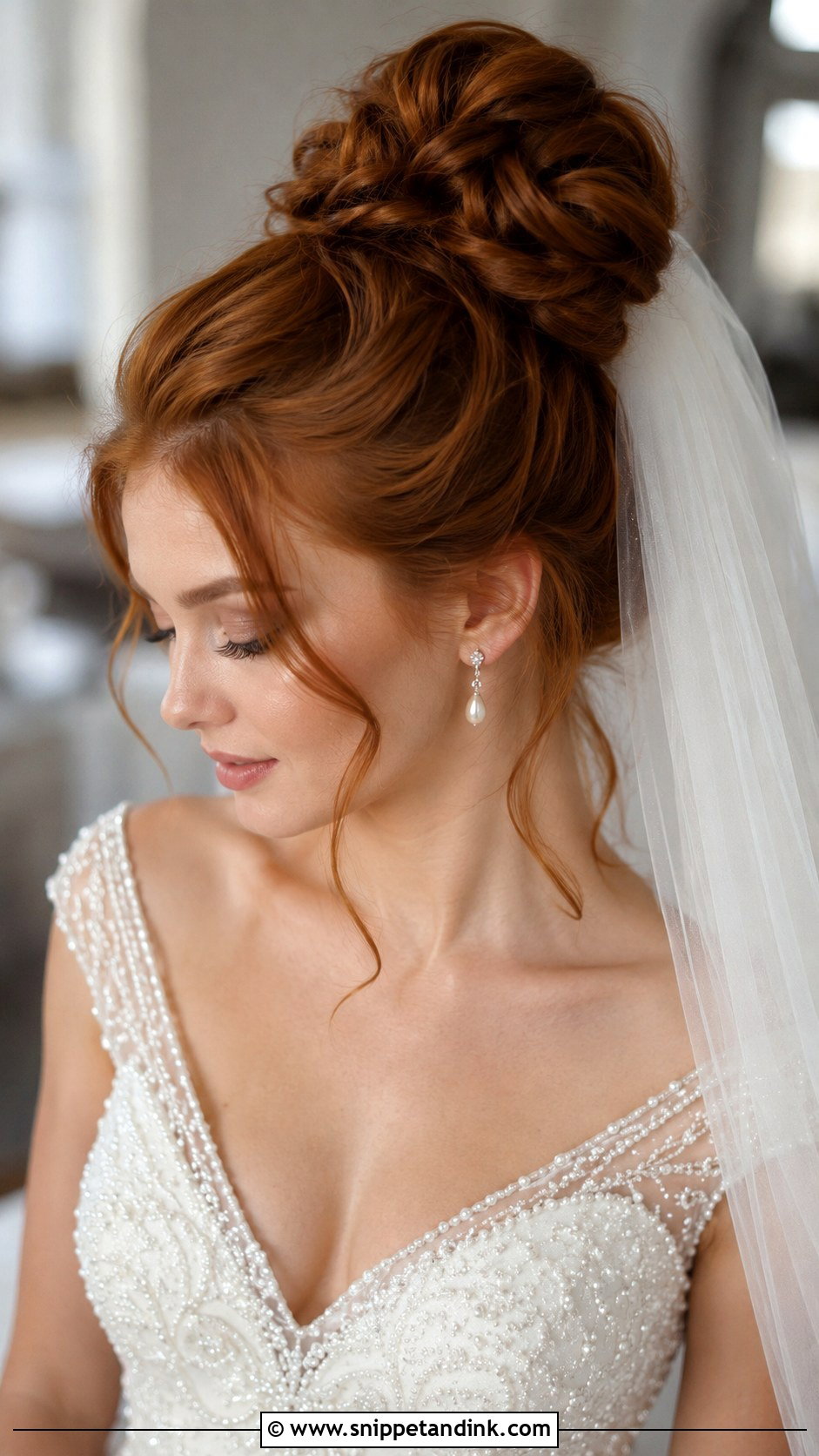
A high bun puts the shape at the crown, which lengthens the neck and pulls the eye up to your face. It balances ball gowns and high necklines because it adds height where the skirt adds width. Tiaras and hair vines sit in front of it easily. A cathedral veil is trickier, since a heavy veil anchored high will drag the bun backwards over an hour; I place the comb underneath the bun instead. It can be sleek, textured or slightly voluminous depending on your dress and face shape. I build it on a tight base ponytail with strong pins so it feels light, not heavy.
Pinning a Veil So It Leaves Without the Hair
Most brides take the veil off after the ceremony or after portraits, and that’s when a style gets ruined. A comb pushed straight into loose hair will grab strands on the way out. I always give it something to bite: a small hidden braid, a mini ponytail or two bobby pins crossed into an X. The comb goes in teeth down, then flips and slides into that anchor.
Show your maid of honor how it comes out. She should hold the style with one hand and slide the comb out the way it went in, never pull it straight up. If you plan to keep the veil on all night, choose a lighter one; a long double layer gets heavy, and the comb starts to drag on the crown.
Covering Your Hair for a Religious Ceremony
Some ceremonies ask the bride to cover her hair, whether with a dupatta, a lace mantilla, a scarf or a full head covering. Tell your stylist early, because it changes the whole plan. Volume at the crown gets flattened under fabric, so I keep the top smoother and lower, and place the bun where the covering will drape over it instead of tenting off it.
Heavy fabric needs its own pins, separate from the ones holding your hair, or every adjustment loosens the style underneath. Practice putting the covering on and taking it off at the trial. If you’ll uncover for the reception, ask for a few curls or a soft front that can be quickly refreshed, so the second look takes minutes instead of a full restyle.
One Ceremony, Many Angles, One Style That Holds
Start from how you wear your hair now. If you live with it down, soft waves or half up will feel like you; if you’re always tying it back, a bun, chignon or twist will feel natural instead of formal. Then check it against your dress, your venue, your texture and how long the ceremony runs. At your trial, bring photos of the dress from the back, wear your veil or accessories, and stay in the style for a few hours afterwards. A ceremony style that still looks right on the walk back up the aisle, and still feels comfortable, is the one to book.
You'll Like These Ideas:


Leave a Reply