
An Indian wedding usually means several functions, several outfits and a great deal of jewelry, and your hair has to carry all of it. For a bride that’s a maang tikka, often a passa, and a dupatta pinned to the head for hours. For guests it’s dancing at the sangeet and sitting cross-legged through long ceremonies. The 25 styles below are matched to the functions they suit and to whatever you’re wearing, whether that’s a lehenga, saree, or gown. Where it matters, I’ve noted how each one copes with weight and heat.
Building a Base Strong Enough for a Dupatta and Tikka
Bridal hair at an Indian wedding is engineering as much as styling. A heavy dupatta pinned to the head pulls backward for hours, and a maang tikka or passa needs a firm point to hook into. If the base underneath is soft, everything shifts by the end of the pheras.
Here’s the order I work in, and why:
- Hair first, fully set and sprayed. Any updo is built on a secure ponytail or a padded base so the pins have something to bite into.
- Jewelry next. The tikka goes on the parting, the passa usually on the left side, each pinned in place with crossed bobby pins.
- The dupatta last. It’s pinned into the bun or the padded section at the back, never only into loose hair, which slides.
- Fresh flowers at the very end, so draping doesn’t pull them out.
This is also why open hair is a hard choice for the main ceremony. With nothing to pin into, a heavy dupatta drags at the roots all day. Save open styles for the reception and sangeet, when the dupatta comes off or stays on the shoulder.
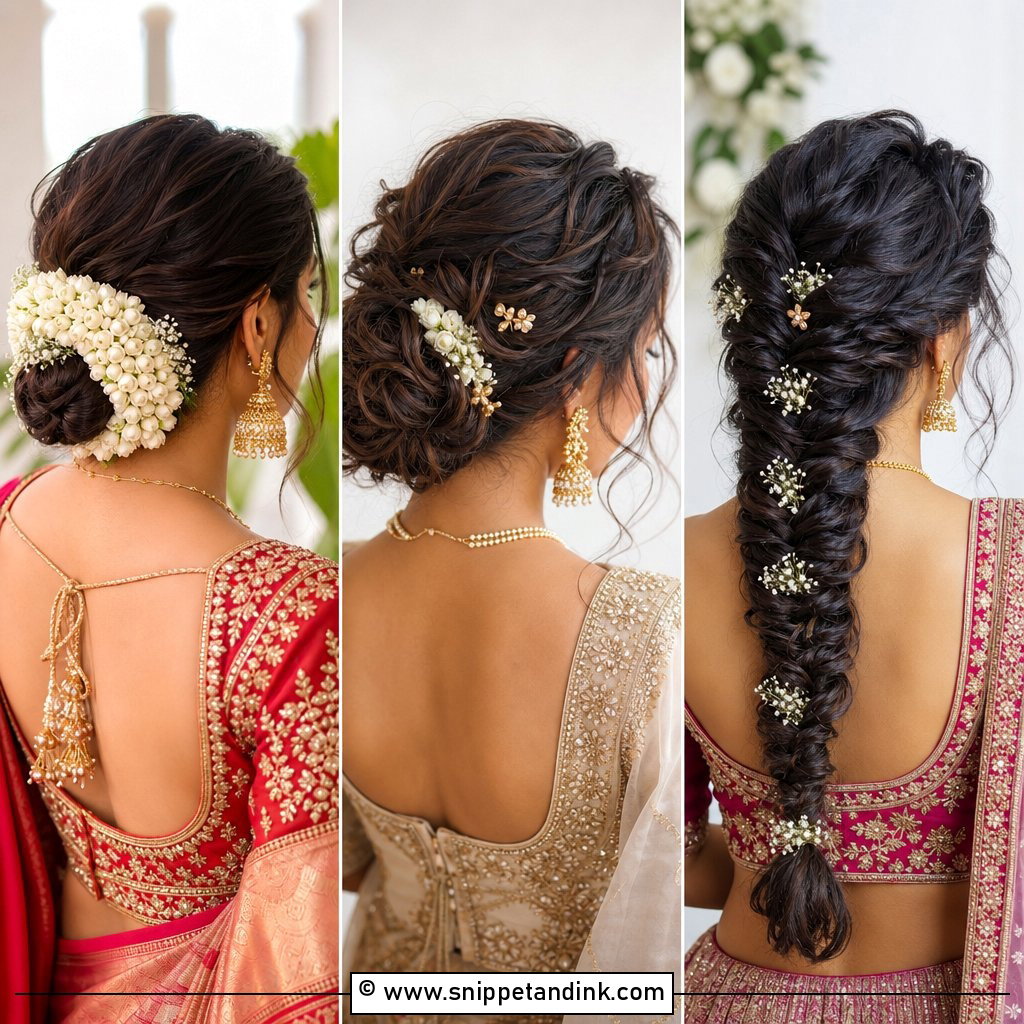
1. Floral Low Bun for Indian Bride
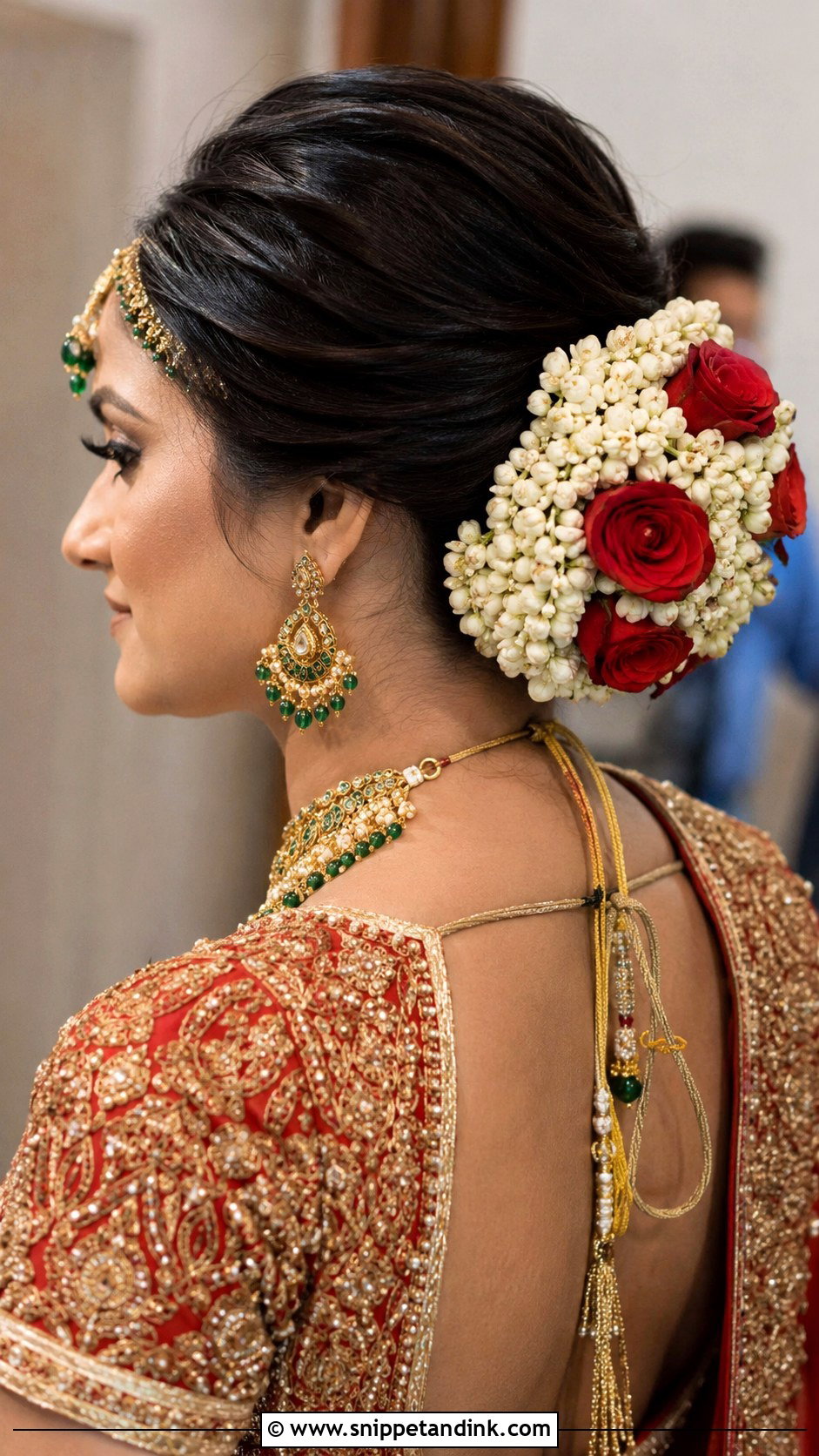
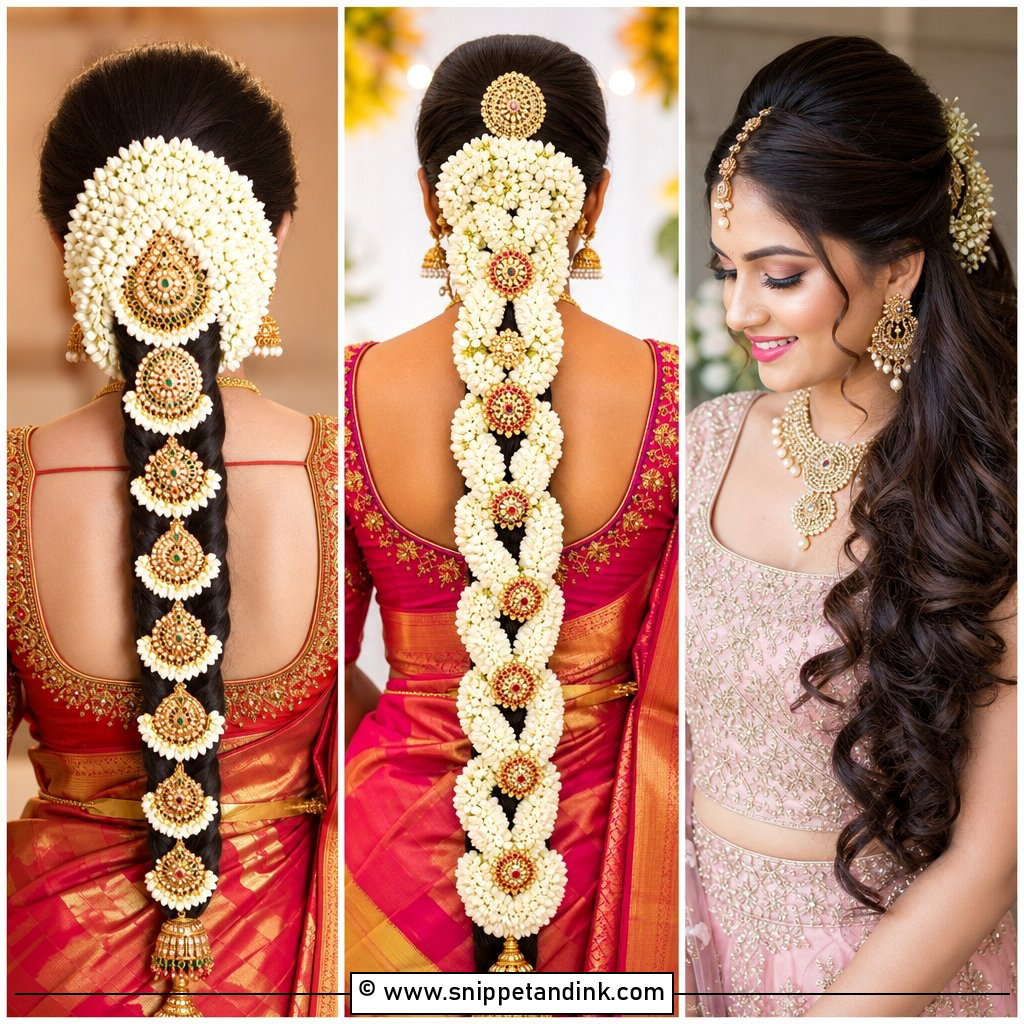
The floral low bun is still the style I build most often for the pheras. It sits at the nape, which is exactly where a bridal dupatta needs something solid to pin into, and the flowers wrap around the bun rather than sitting on top, so the fabric doesn’t crush them. On finer hair I back-comb the base and add a bun filler matched to the hair color. Jasmine is traditional, though roses or seasonal blooms bring in color. I add fresh flowers last, once the dupatta is set, so nothing gets pulled out during draping.
2. Fishtail Braid With Pearls
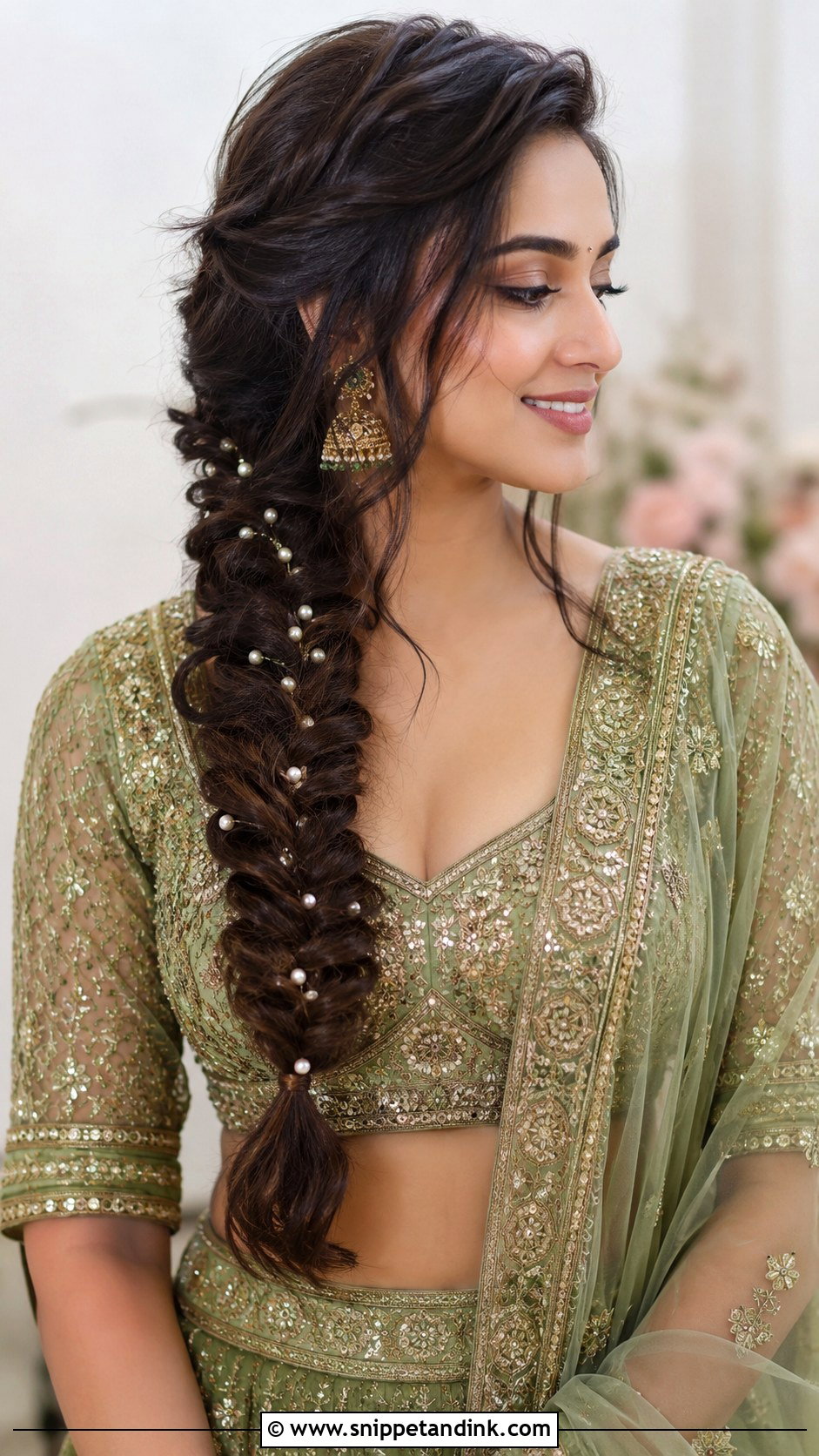
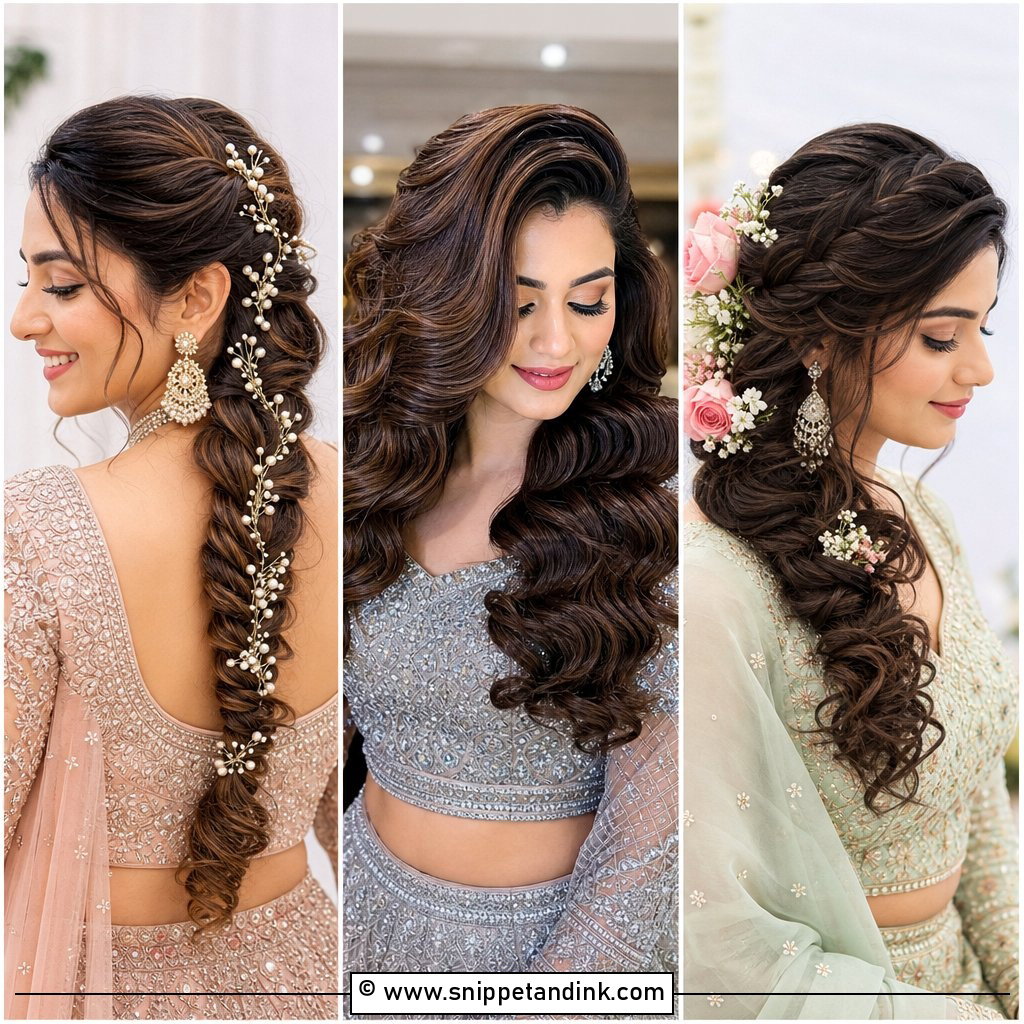
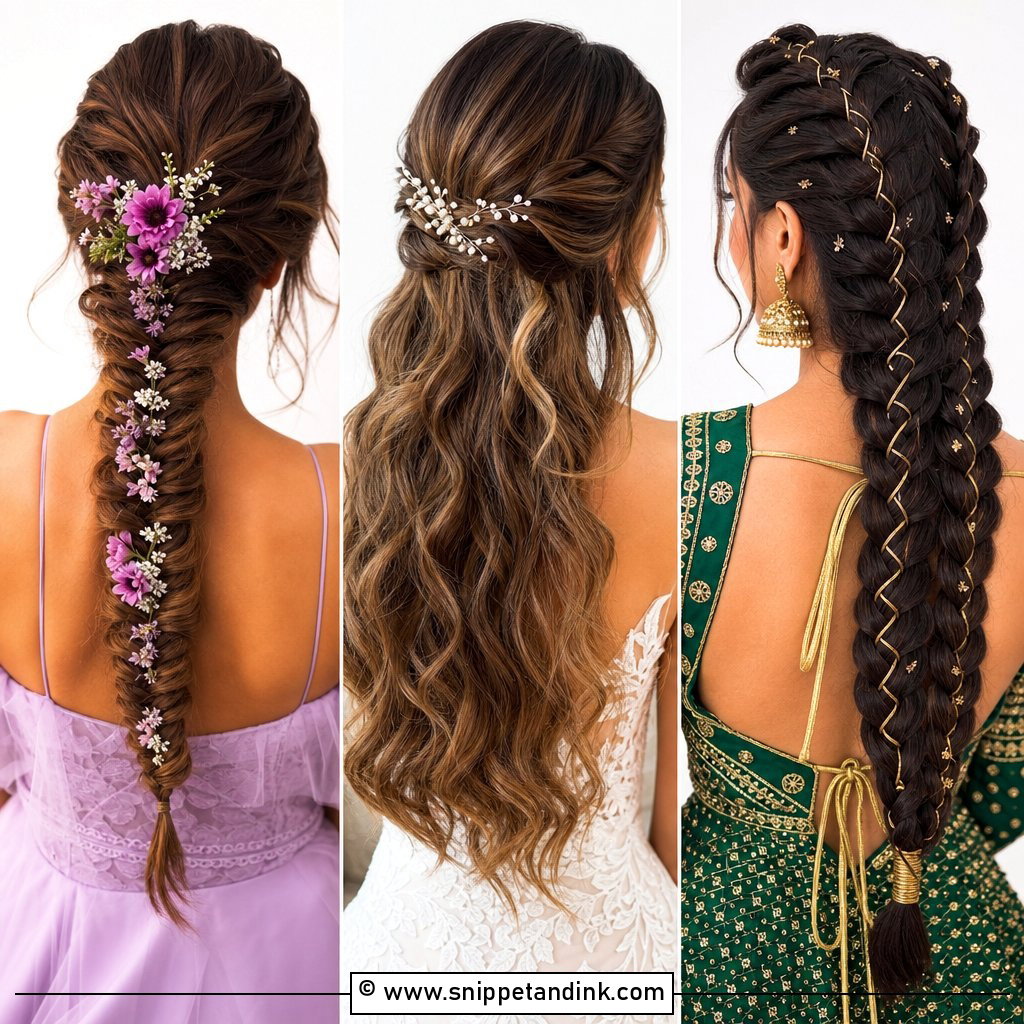
Looking for something regal but relaxed? A pearl-woven fishtail starts at one side and falls over the shoulder, and it moves well at the mehendi and sangeet. Pearls on pins slide neatly between the crossings once the braid is done. A full, long fishtail needs length, so many brides with shoulder-length hair add clip-in extensions underneath before I start braiding. Braid it tight, then loosen. Pair it with jhumkas and a fine maang tikka rather than heavy pieces, which would fight with the braid for attention.
3. Sleek High Ponytail for Sangeet
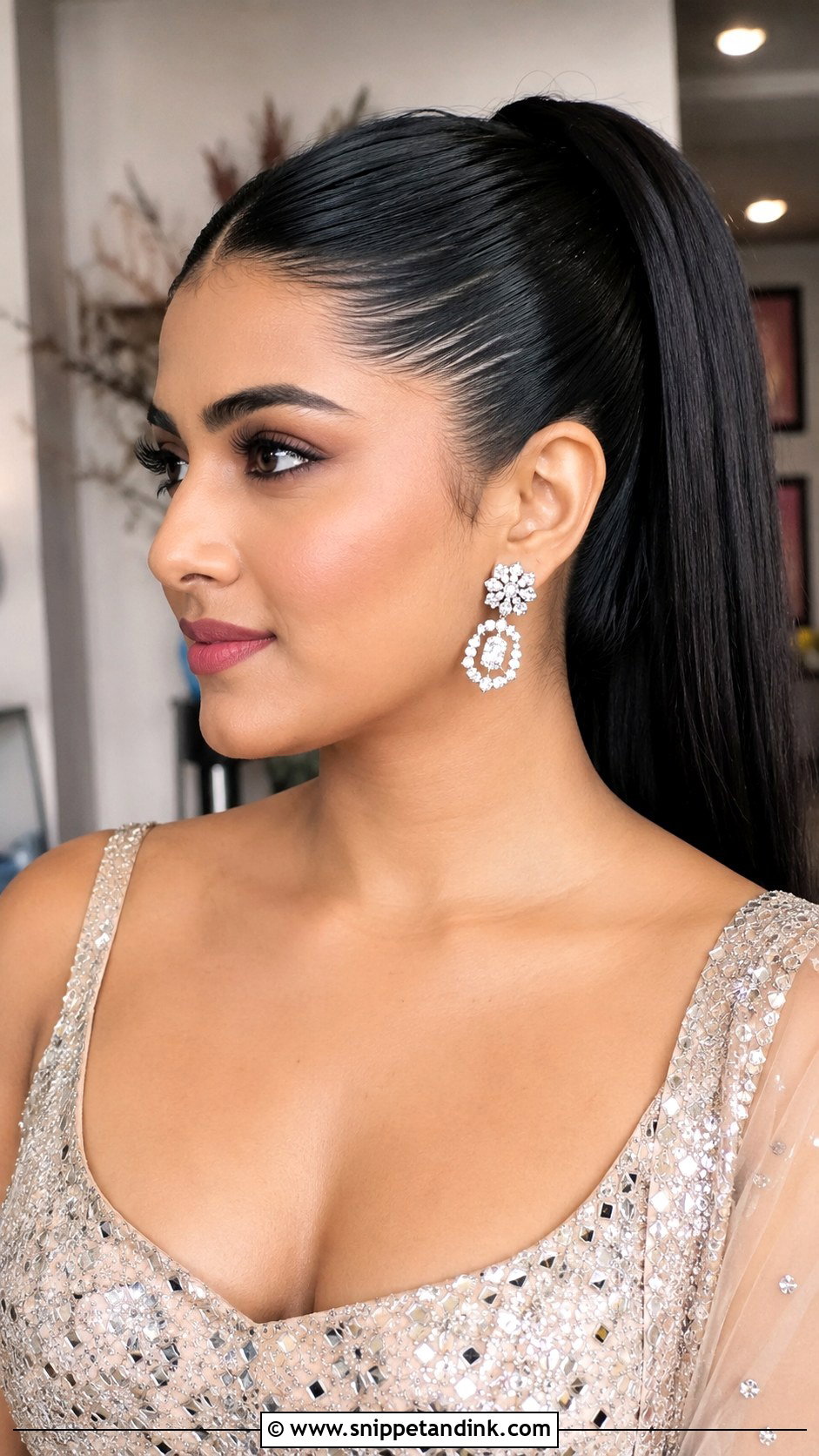
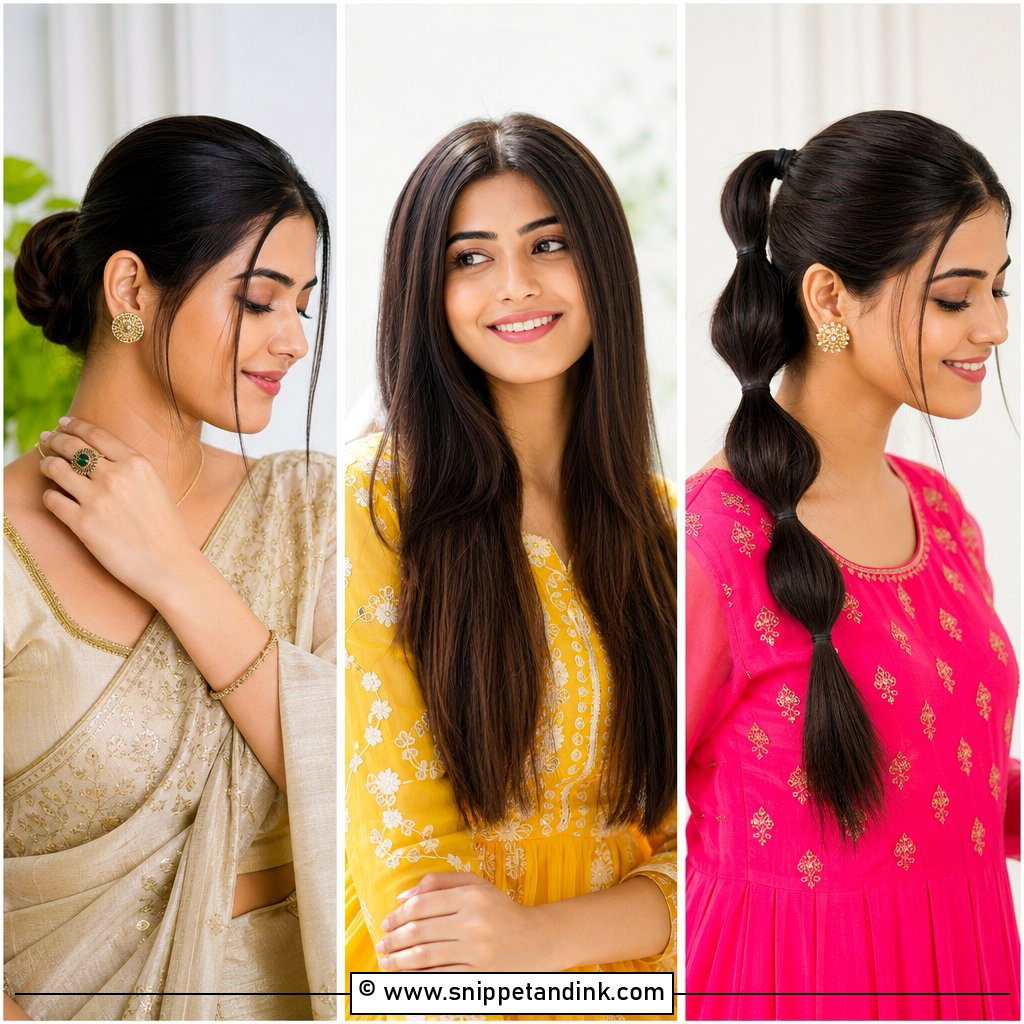
I suggest the sleek high ponytail to brides who want to dance hard at the sangeet without hair sticking to their neck. The glassy finish comes from flat ironing every section before gathering, then brushing it up with a boar bristle brush. Wrap a strand around the base or slide on a jeweled cuff. A long, heavy ponytail can start drooping by midnight, so I push two bobby pins upward into the base, hidden under the wrap, to hold its height. It suits Indo-Western gowns and modern lehengas, with a clean center part.
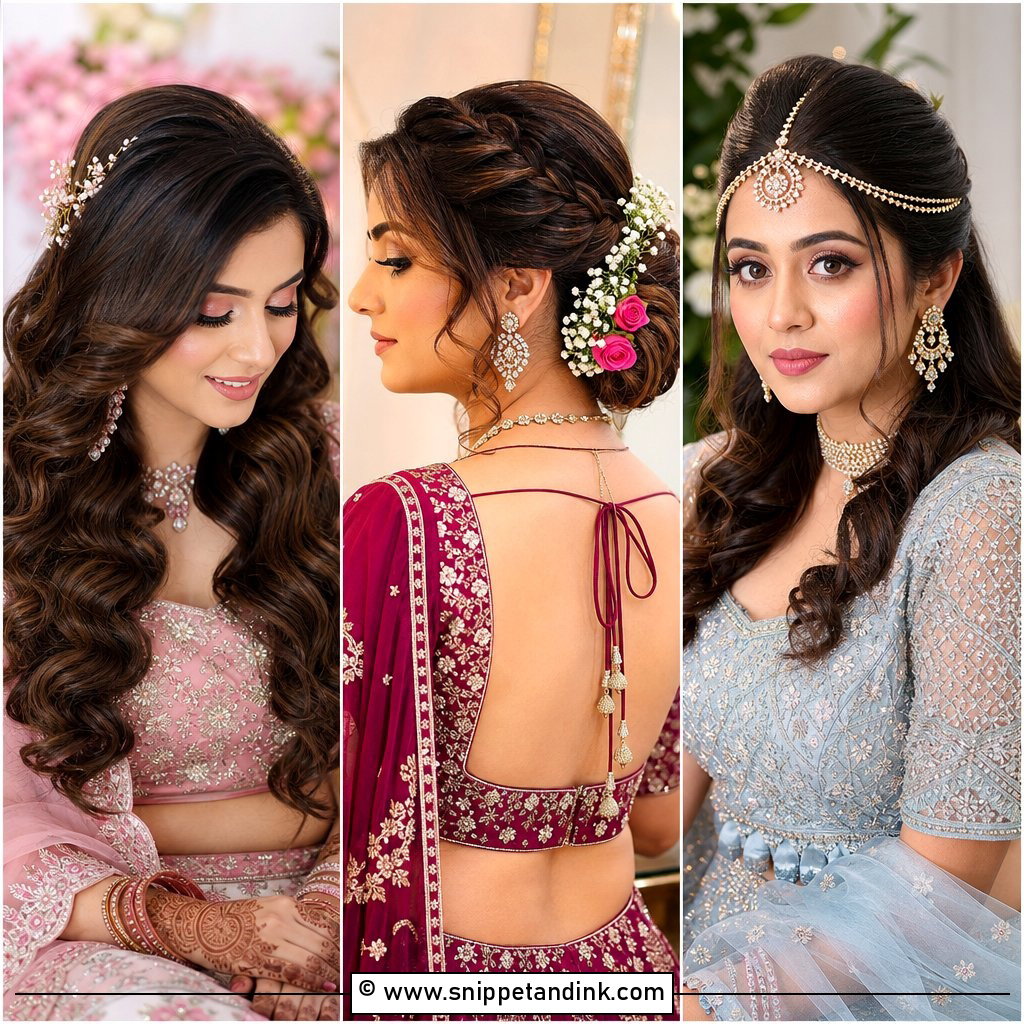
4. Half-Up Half-Down With Curls
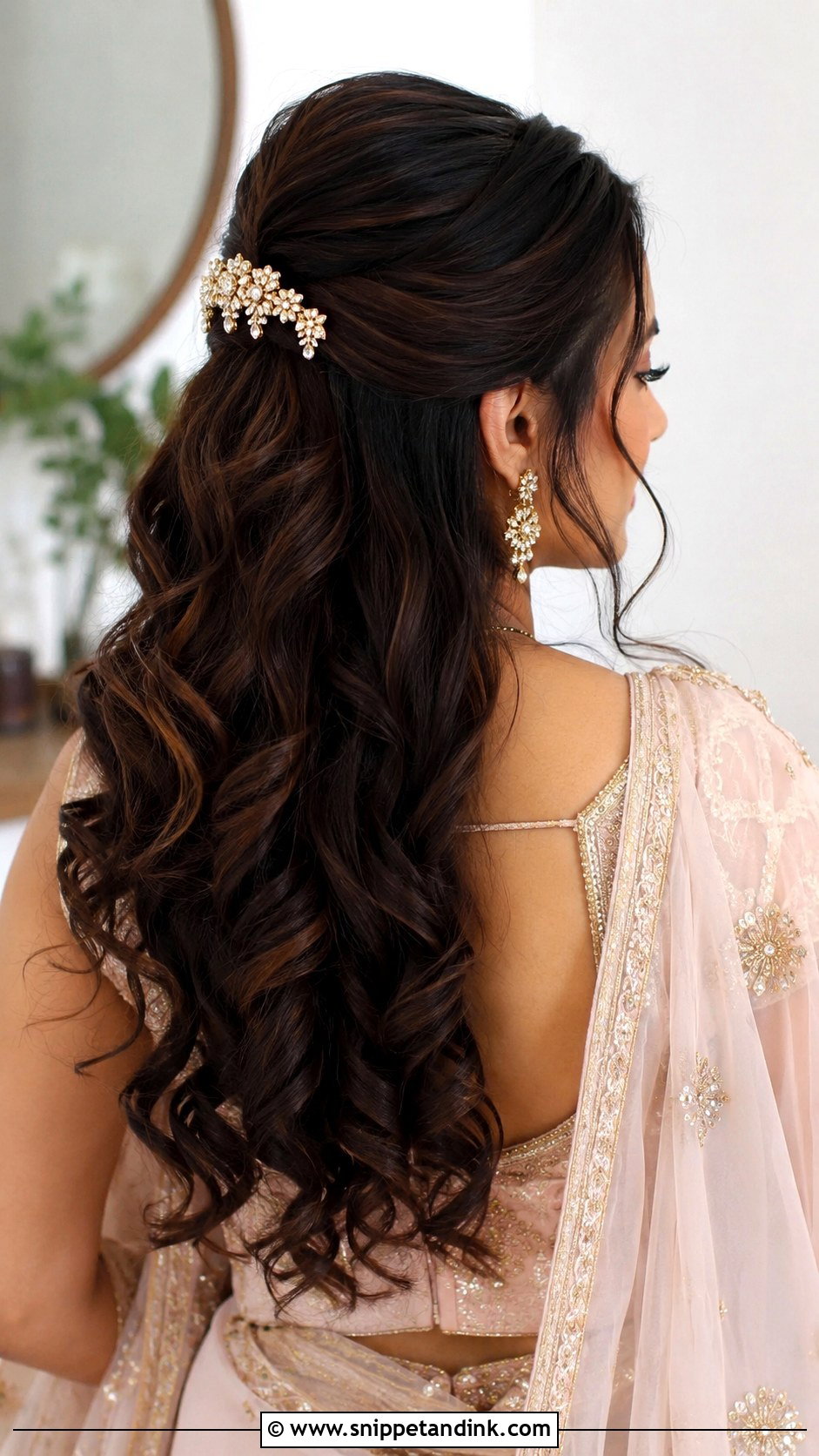
Half up with curls gives you volume and length without a full updo. Heat is the problem: in a warm venue, curls on long, heavy hair drop quickly, so I spray each section before it goes on the iron and pin the curl while it cools. A jeweled clip or a few tiny flowers dress the top section. It’s a great choice for guests and for a reception look. Under a heavy head dupatta, though, the loose length gets flattened, so I’d keep it for functions where the dupatta stays on the shoulder.
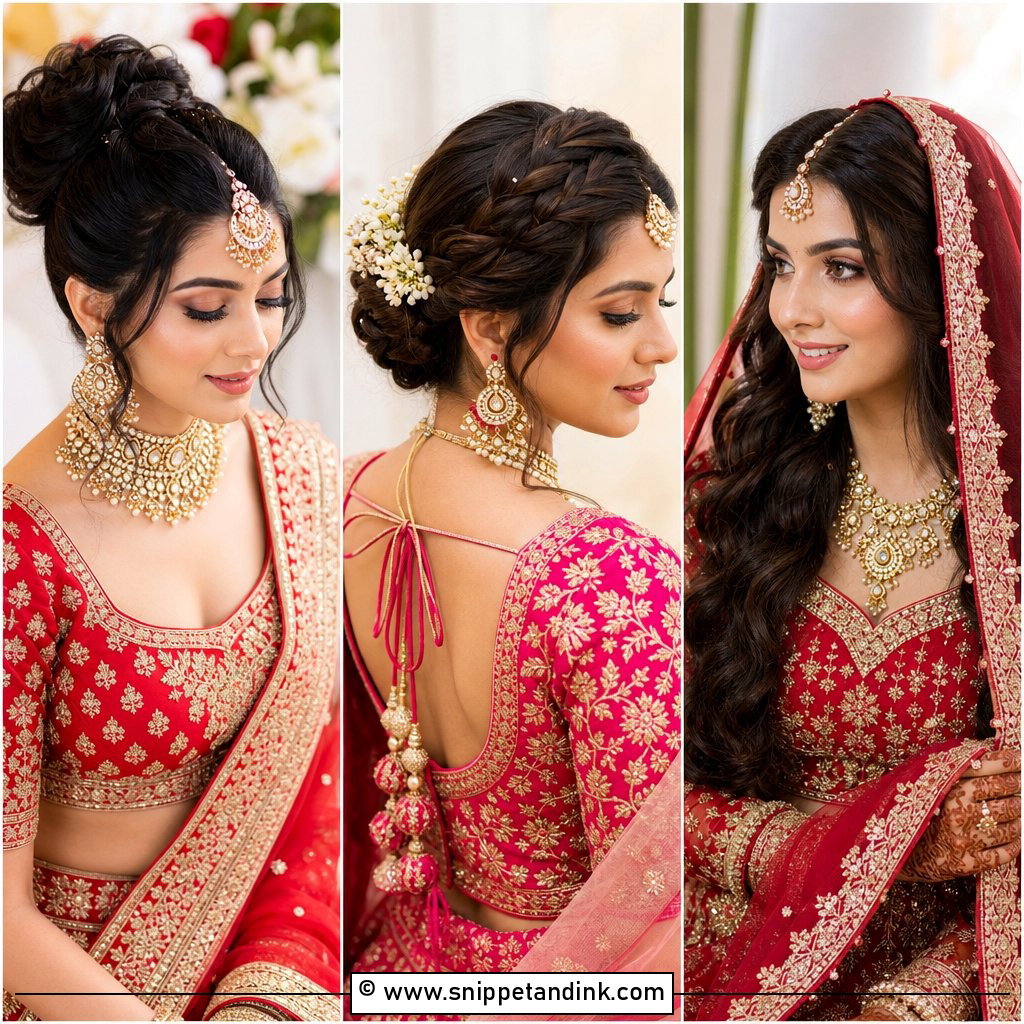
5. Traditional Maang Tikka Bun
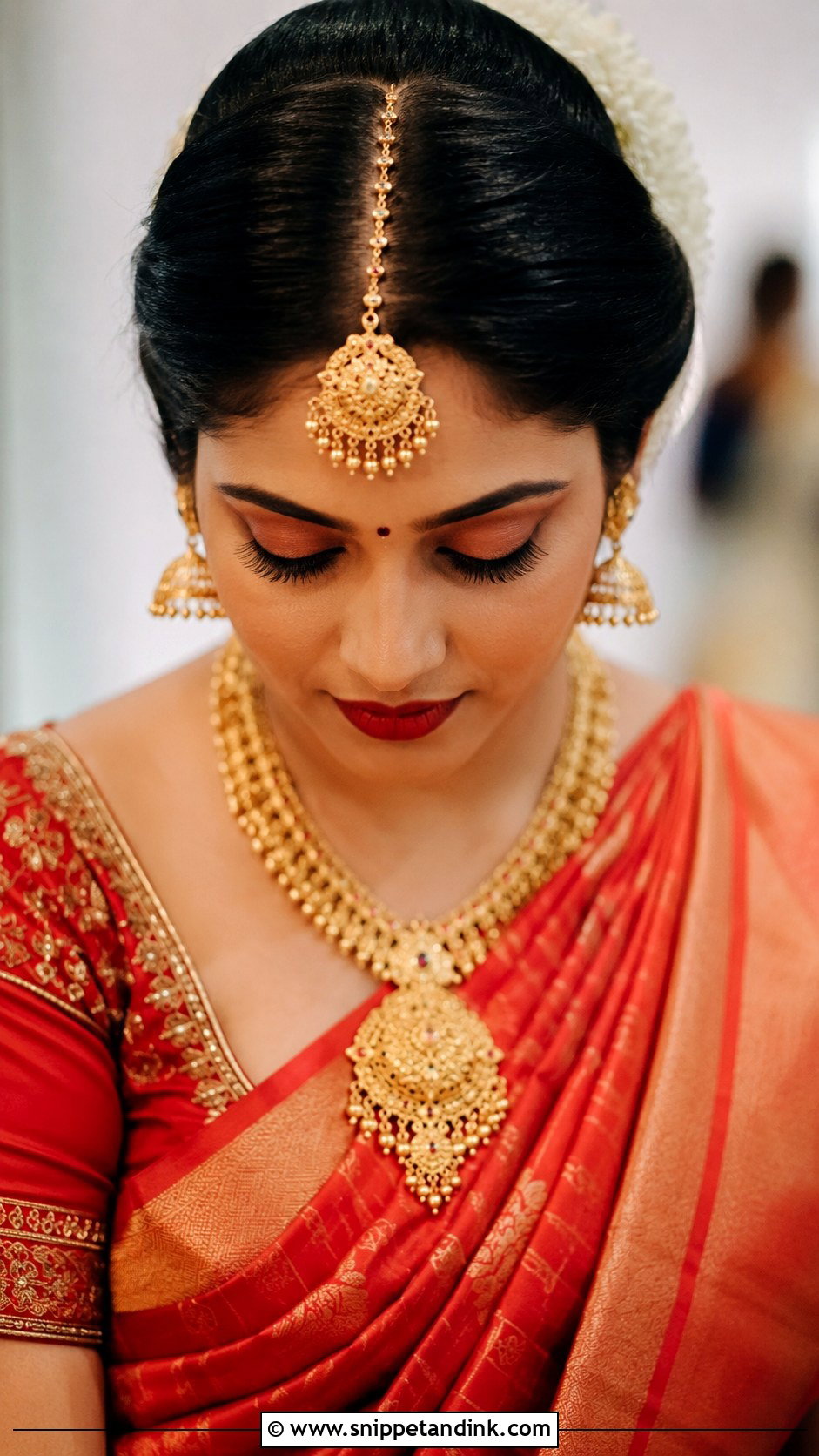
A center-parted bun with a statement maang tikka is the most traditional look on this list and suits temple weddings and ceremonies. The parting has to be exact, so I line it up with the bridge of the nose before anything else. The tikka’s hook clips in at the crown, and two crossed bobby pins under the chain stop it sliding sideways when you bend forward during rituals. Wrap the bun with gajra or keep it sleek. It sits naturally with a Kanjeevaram saree or a classic lehenga.
6. Hollywood Waves for Reception
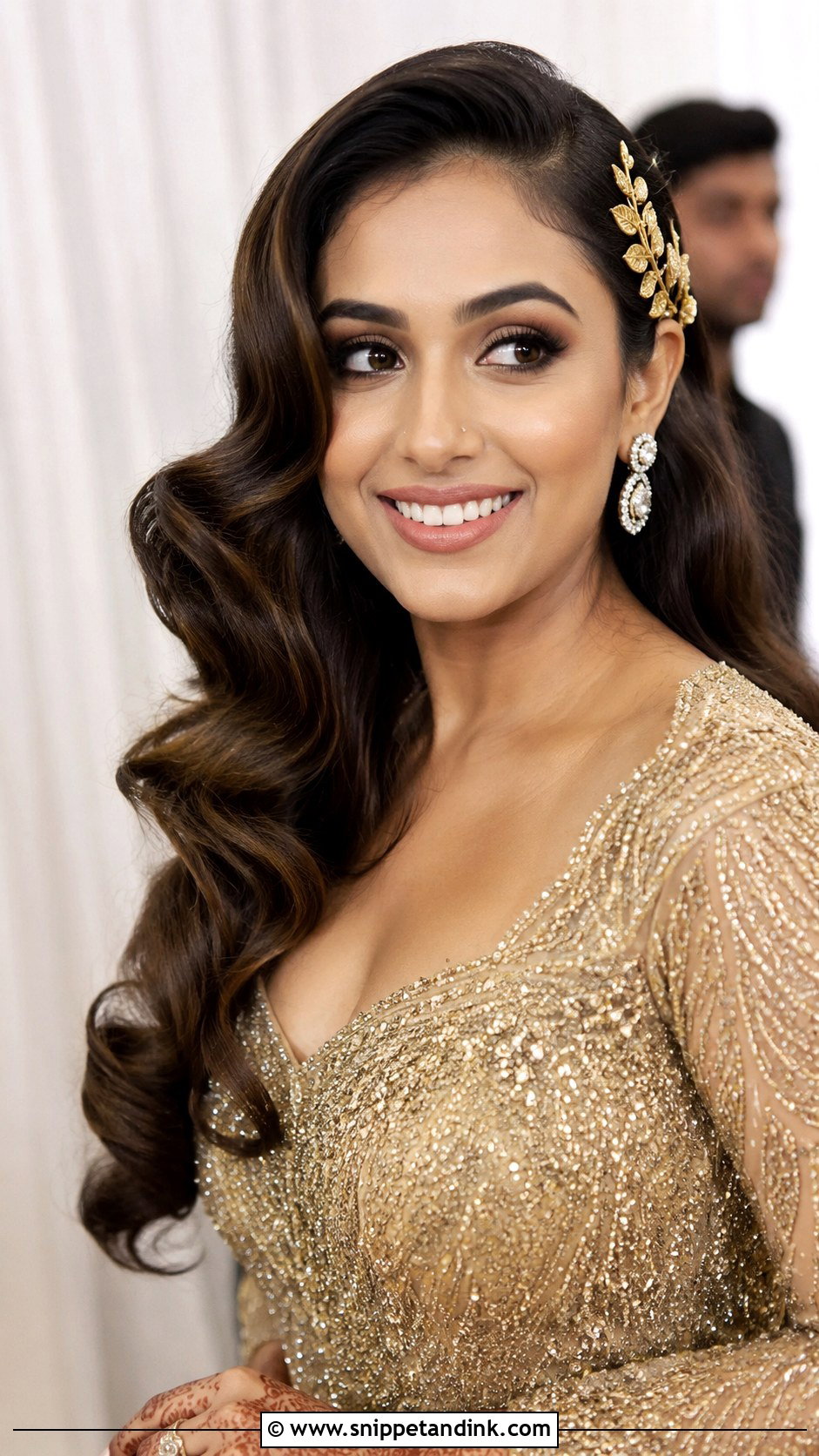
Side-parted Hollywood waves bring red-carpet glamour to a reception. Thick, heavy hair holds a set curl well but takes longer to curl, and sections wider than about an inch won’t heat through and will drop. Embellish the shorter side with jeweled pins that pick up your outfit. One thing brides rarely expect: long necklaces and loose curls tangle. If you’re wearing a rani haar or layered chains, keep the curls swept behind the shoulders, or choose an updo for the reception.
7. Gajra Wrapped Braid
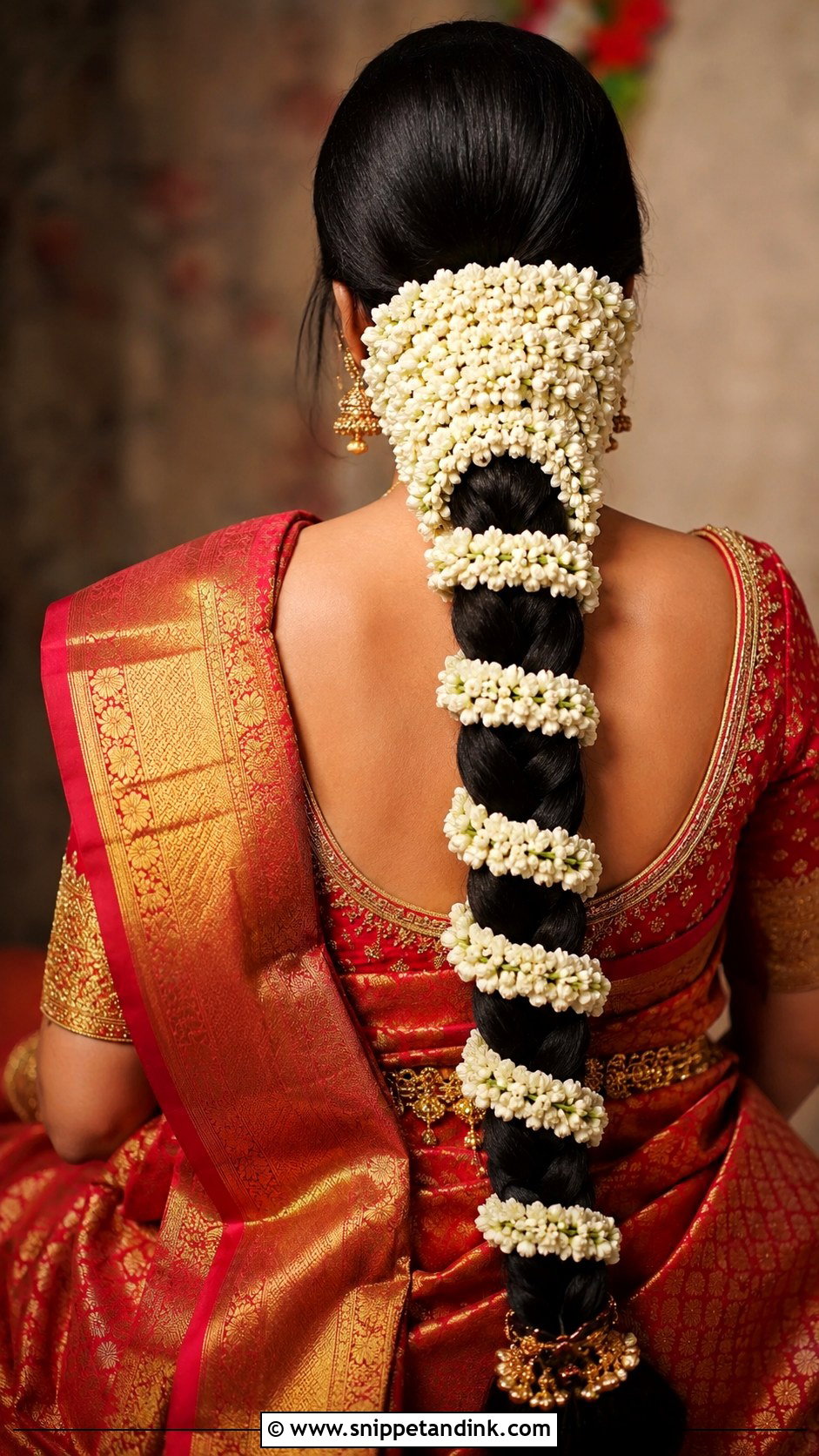
The gajra-wrapped braid belongs to South Indian bridal tradition: a long, thick braid with jasmine running its full length and a kunjalam tassel at the end. Because the braid traditionally reaches past the waist, many brides add a braid extension woven in from the nape. A full flower braid is heavy, so the flowers are usually stitched onto the braid with thread rather than pinned, which keeps them from sliding during the ceremony. Buy jasmine as tight buds; they open over the day and give off their fragrance as they do. It pairs naturally with a silk saree and temple jewelry.
8. Messy Bun for Haldi Ceremony
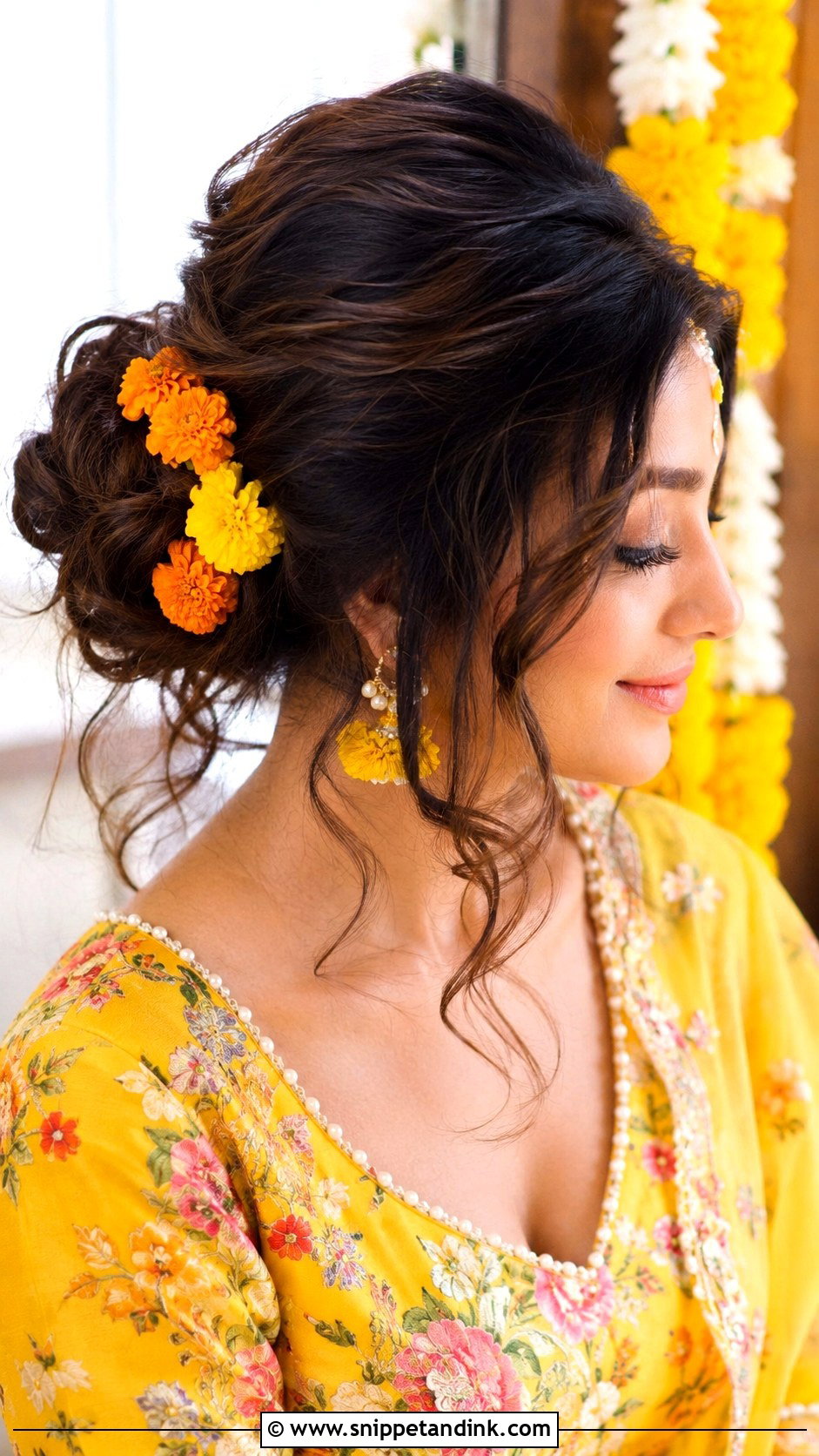
At a haldi, your hair simply needs to be off your face, because the turmeric paste goes everywhere. It also stains light or color-treated hair yellow, so I work a little oil through the lengths beforehand to help it rinse out. A messy bun does the job: knot it loosely, pin it, pull a few tendrils, tuck in some marigolds to match the mood. Plan to wash your hair straight afterward. Please don’t book a blowout for haldi day; it won’t survive.
9. Braided Crown for Mehendi
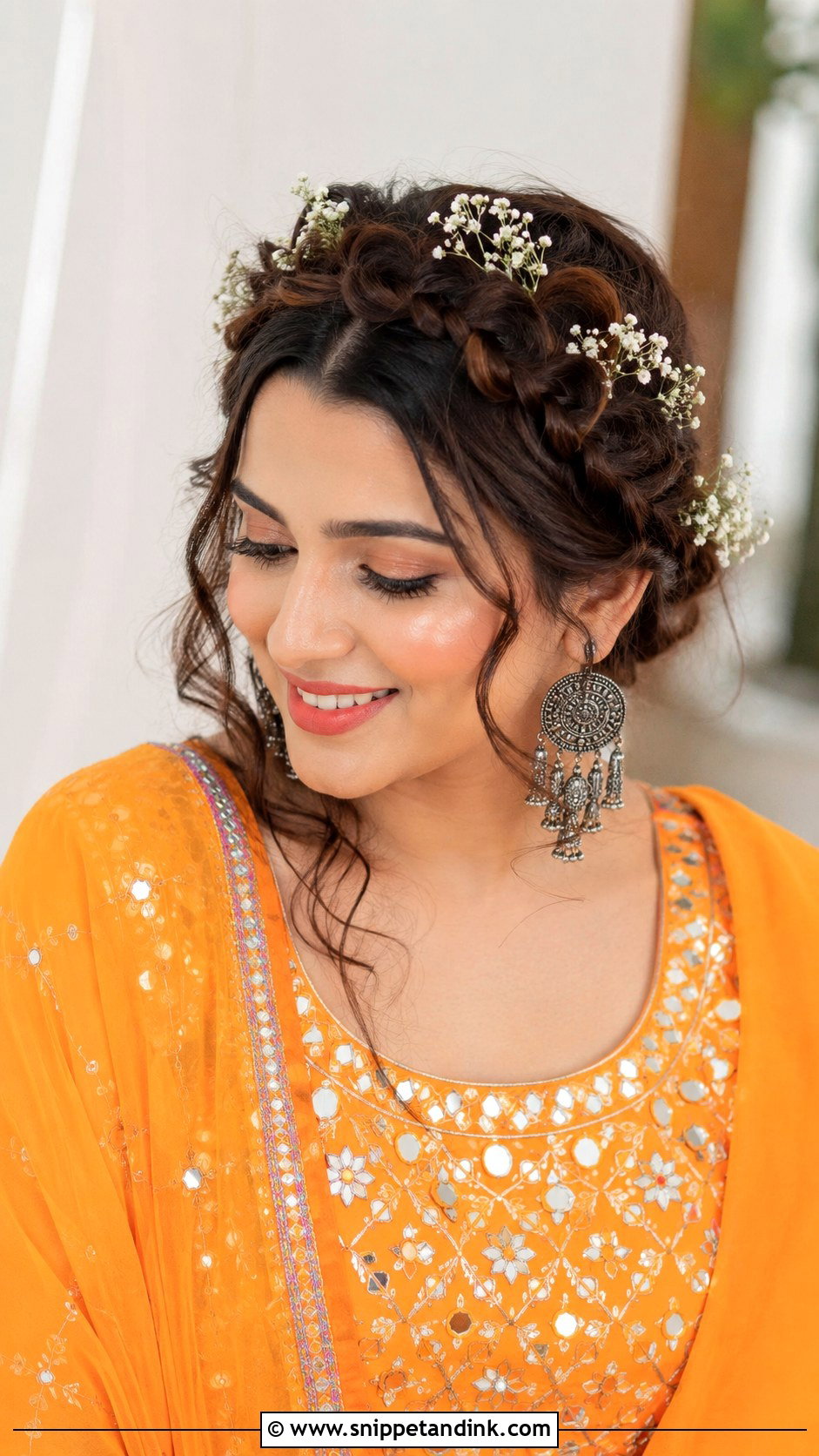
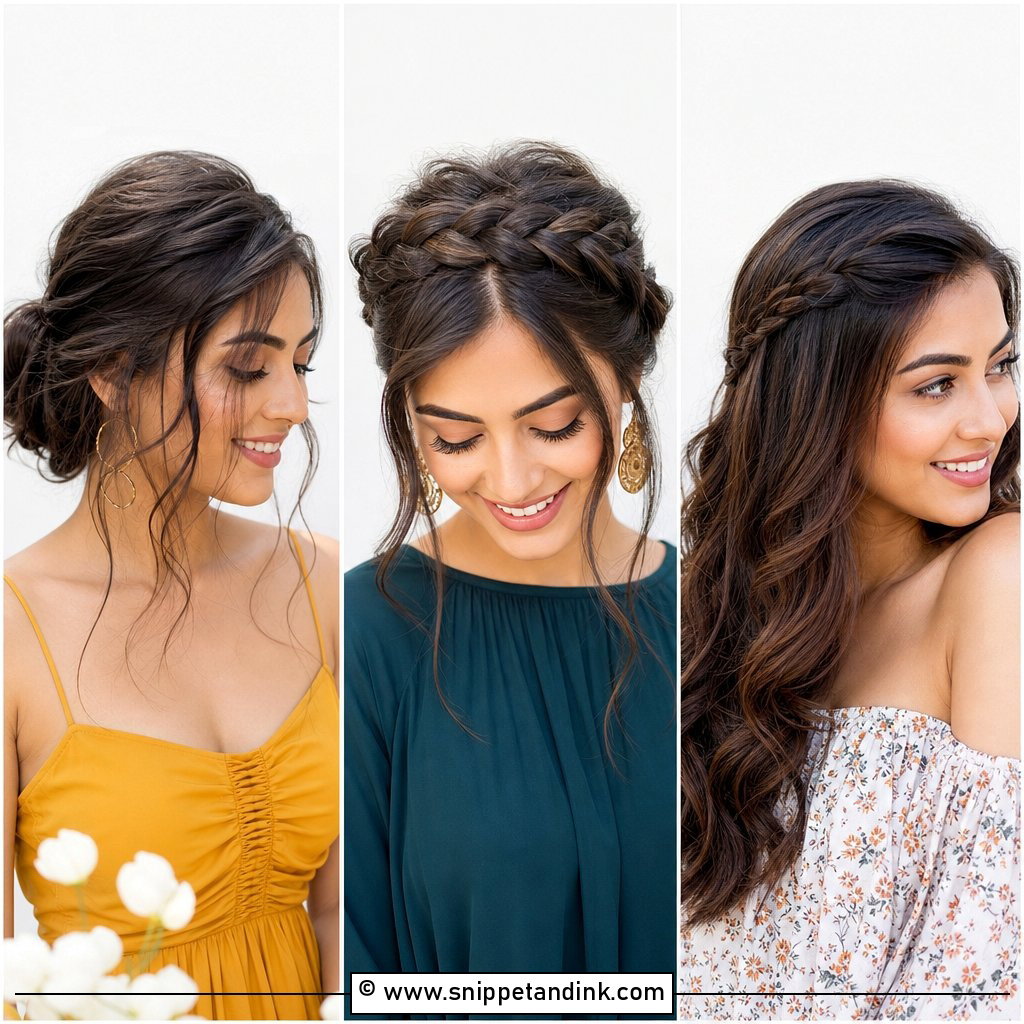
During henna you sit still for hours with your hands out while the paste dries, and you can’t touch your hair at all. That’s why I like a braided crown for the mehendi: once it’s pinned, it needs no fixing. Decorate it with tiny flowers, beads or colorful threads to suit bright, flowy Mehendi outfits and oxidized jewelry. Shorter hair that can’t reach around the head can use two Dutch braids crossed at the back instead.
10. Side Swept Open Hair
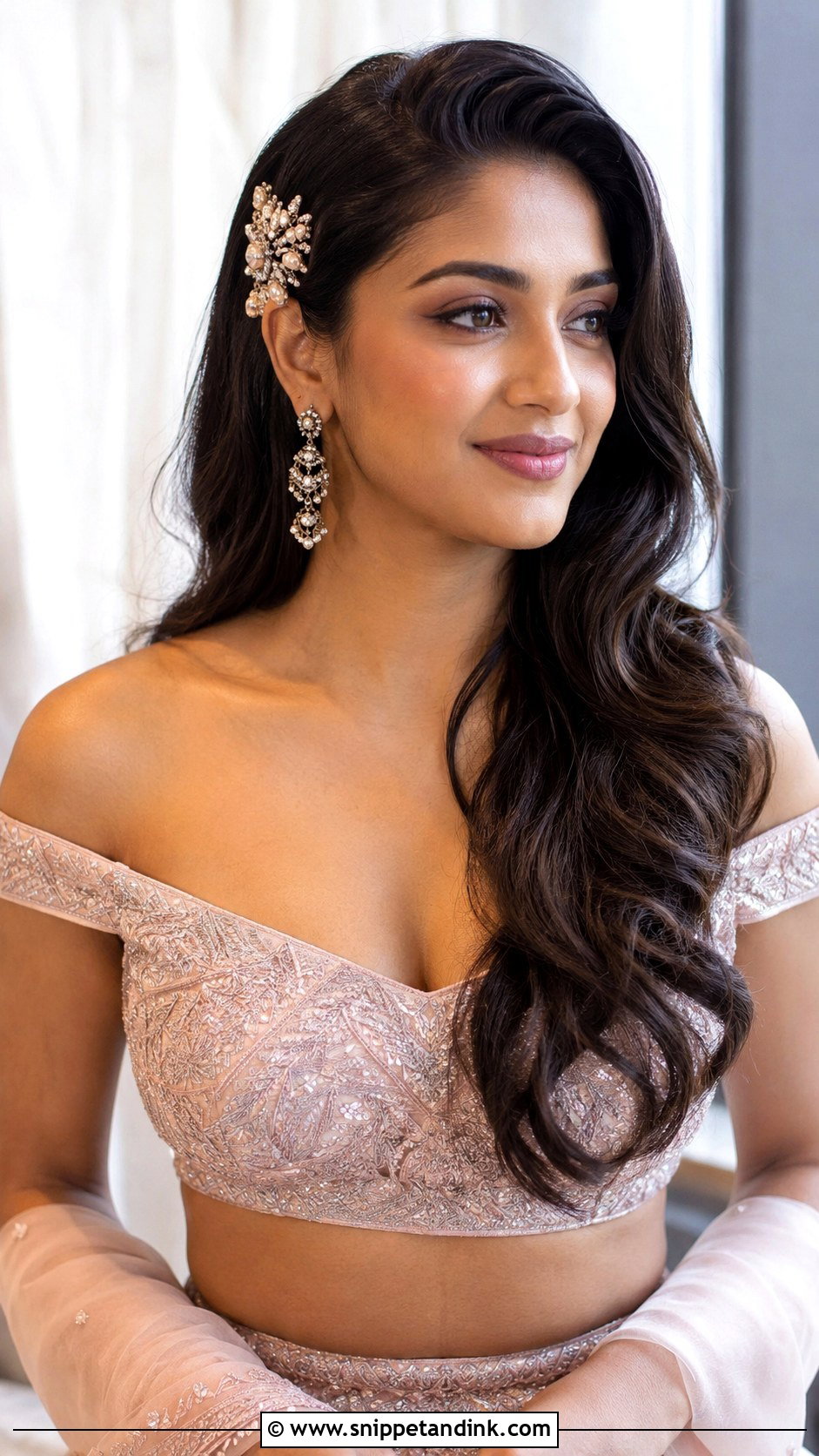
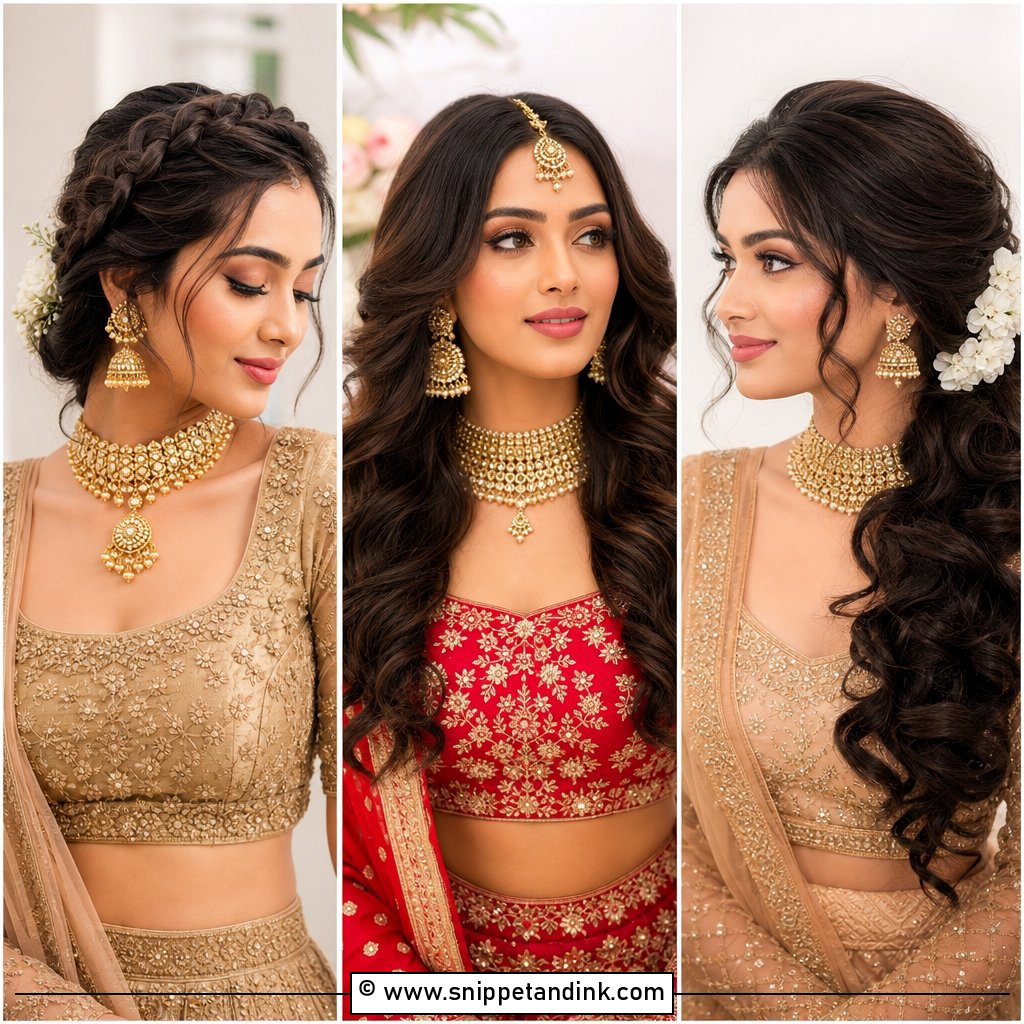
Side-swept open hair gathers everything over one shoulder for a soft, asymmetrical shape at a reception or sangeet night. Curl first, then hold the swept side in place with a jeweled clip and a hidden row of crossed pins behind the ear. It suits off-shoulder gowns and modern lehengas on medium to long hair. If you’re wearing a lehenga with a dupatta draped over one shoulder, sweep the hair to the other side, or the two will compete all evening.
11. Floral Tiara Updo
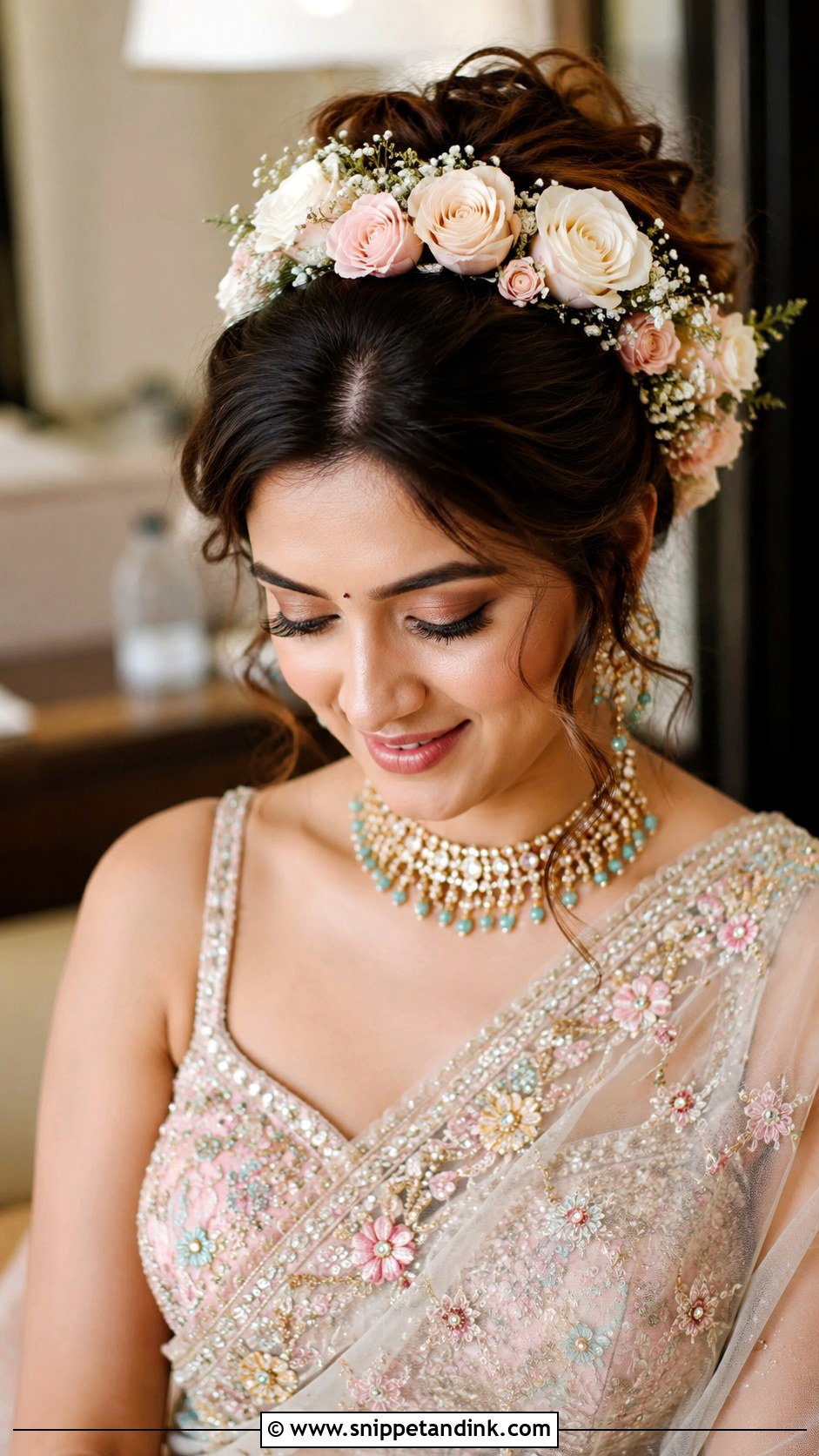
A floral tiara updo places a band of flowers across the front of a soft updo, like a crown. With a maang tikka, the flowers sit just behind it, never on top. Fresh blooms near the face wilt quickly in daytime heat, which matters at an outdoor or destination wedding; orchids and baby’s breath hold up best, and for a long afternoon outside I’d consider good silk flowers. Pastel lehengas suit it well. The updo underneath needs to be firm, since the flowers add weight at the front.
12. Dutch Braid With Gold Accessories
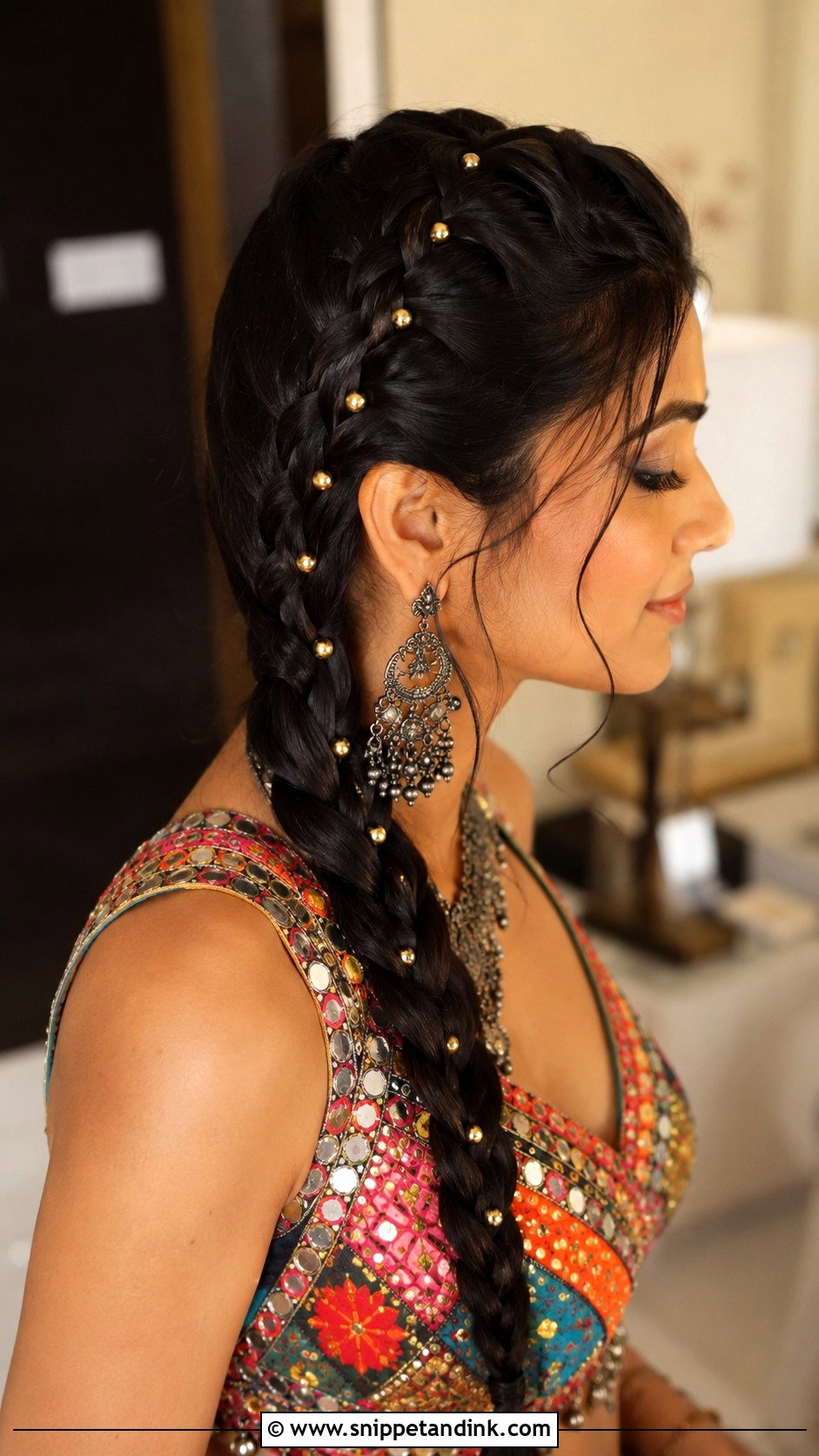
In a Dutch braid the strands cross under rather than over, so the braid stands up off the head, and that raised texture is what shows up in photos. Gold beads or cuffs go on after braiding; threaded beads must go on as you braid. Day-old hair grips best. Wear one braid to the side or two for a younger look at the sangeet or mehendi, with vibrant lehengas and oxidized jewelry. It’s one of the most secure styles here, so it’s a strong pick if you’ll be dancing.
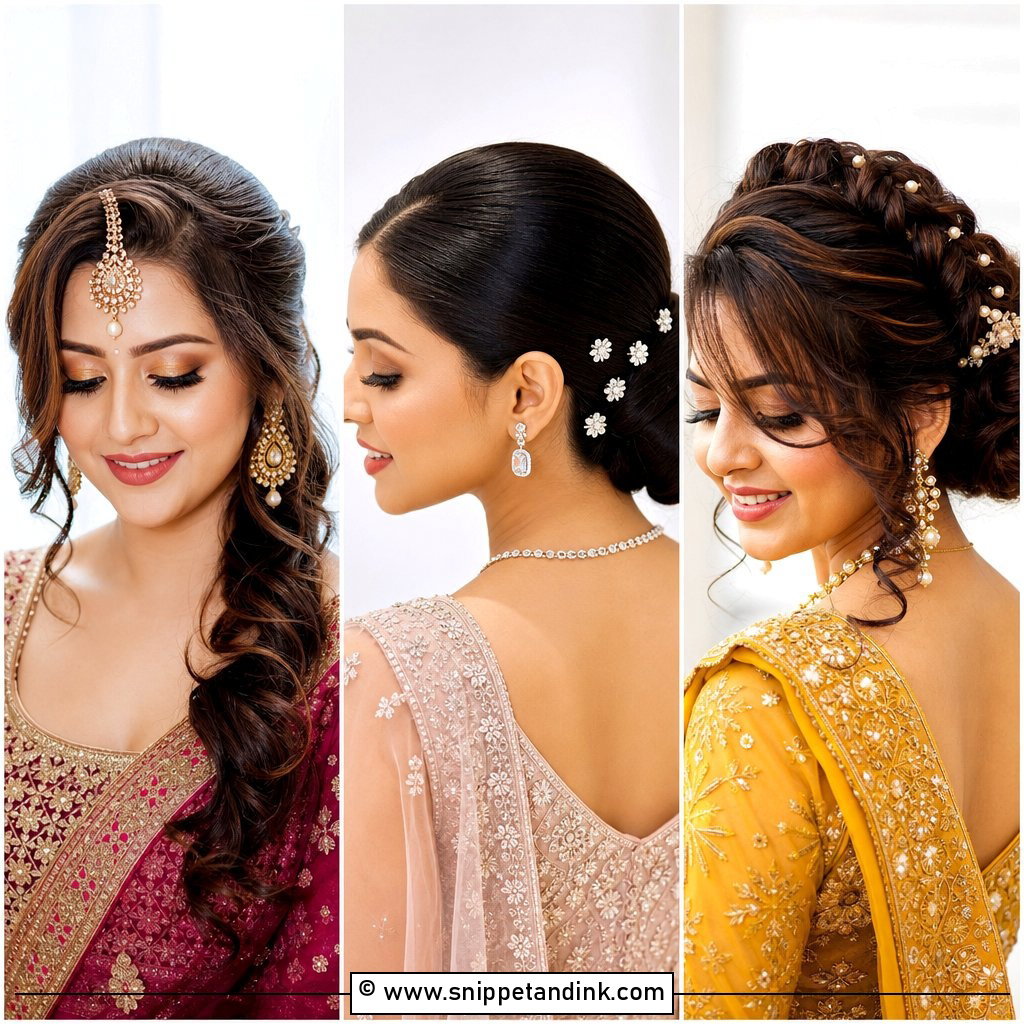
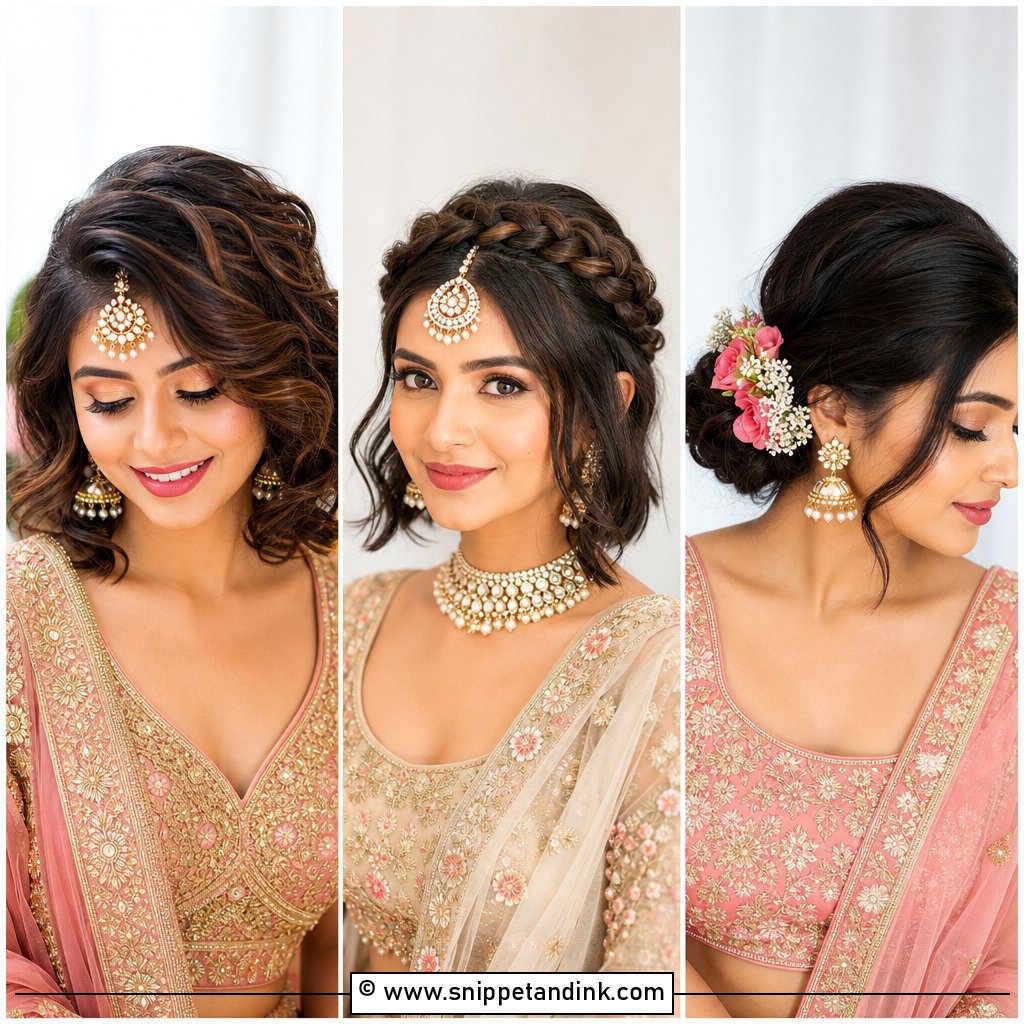
13. Low Chignon With Maang Tikka
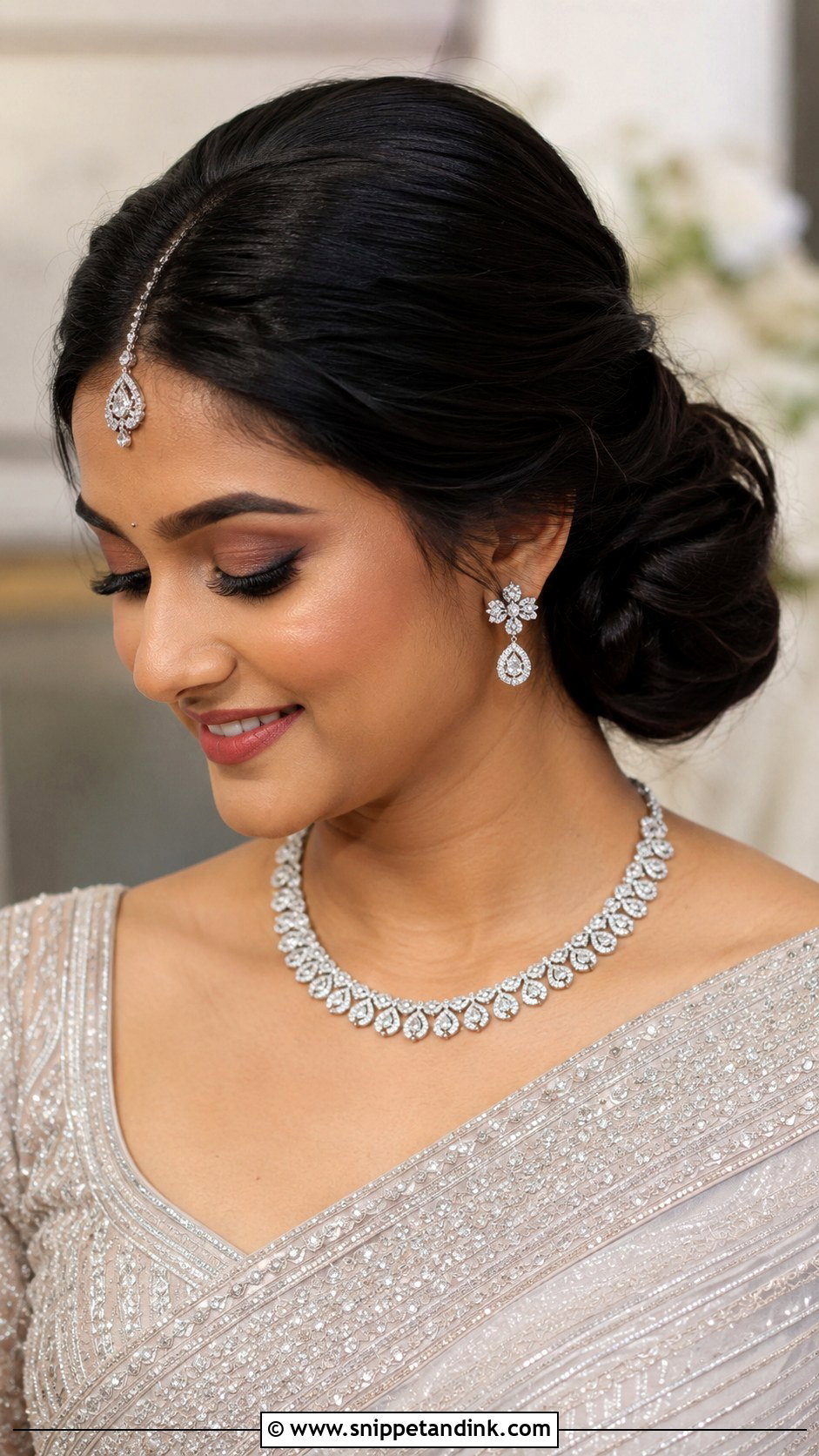
A low chignon with a maang tikka is quiet next to heavy bridal jewelry, which is exactly the point. The twisted bun sits low at the nape. Because the surface is so smooth, any wobble in the parting or the tikka chain is obvious, so I set the parting with a little gel and pin the chain flat. Receptions and engagement ceremonies suit it, and it works with a saree, a gown or a lehenga.
14. Curly Open Hair With Headband
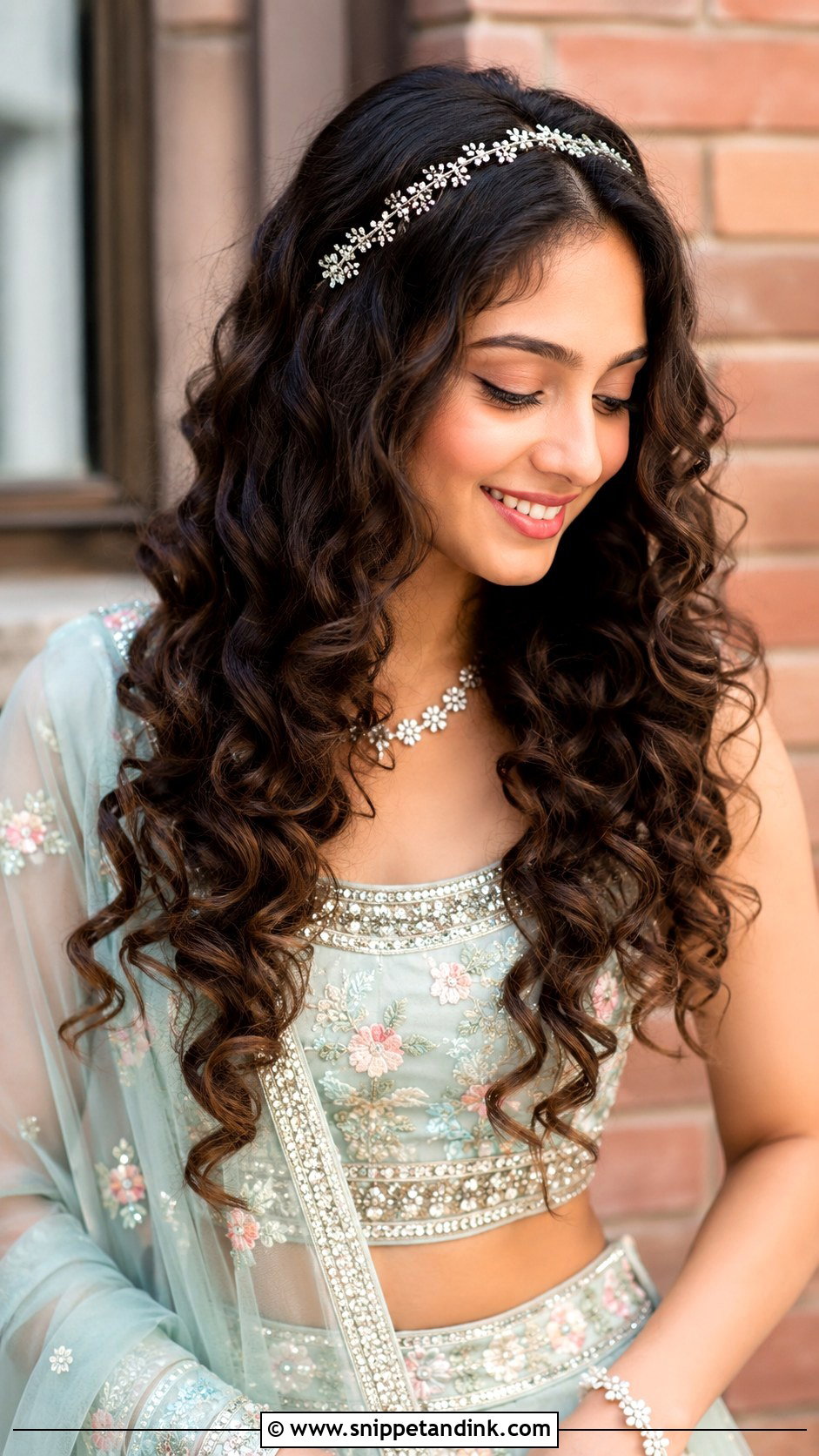
Curls under an embellished headband give a fresh, modern alternative to florals for the sangeet, cocktail night or a destination wedding. Headbands tend to press curls flat at the crown, so I curl first, place the band, then lift the roots just behind it with a tail comb. Headbands that grip hard behind the ears start to ache after a few hours; a flexible one, pearls or crystals or gold, is kinder. Flowy gowns and contemporary lehengas suit this look on most hair lengths.
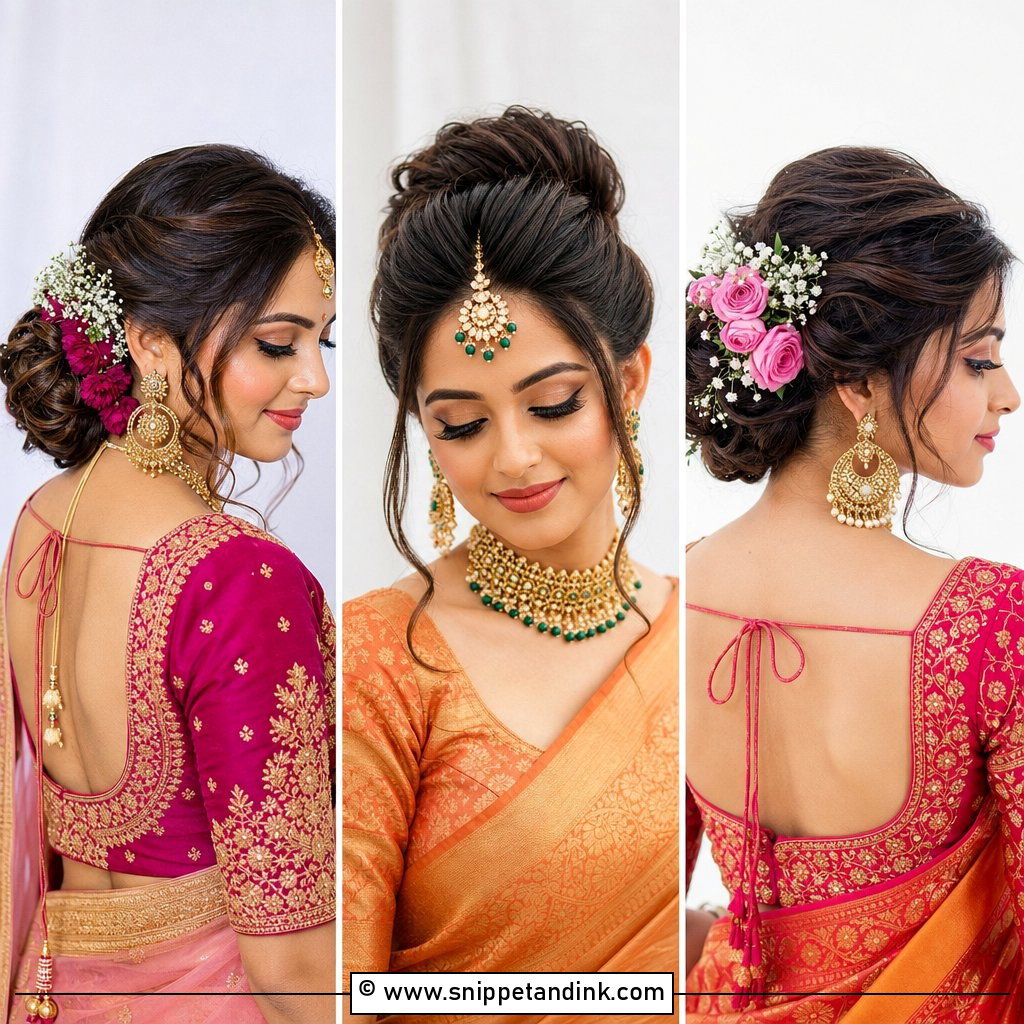

15. Bridal Bun With Fresh Flowers
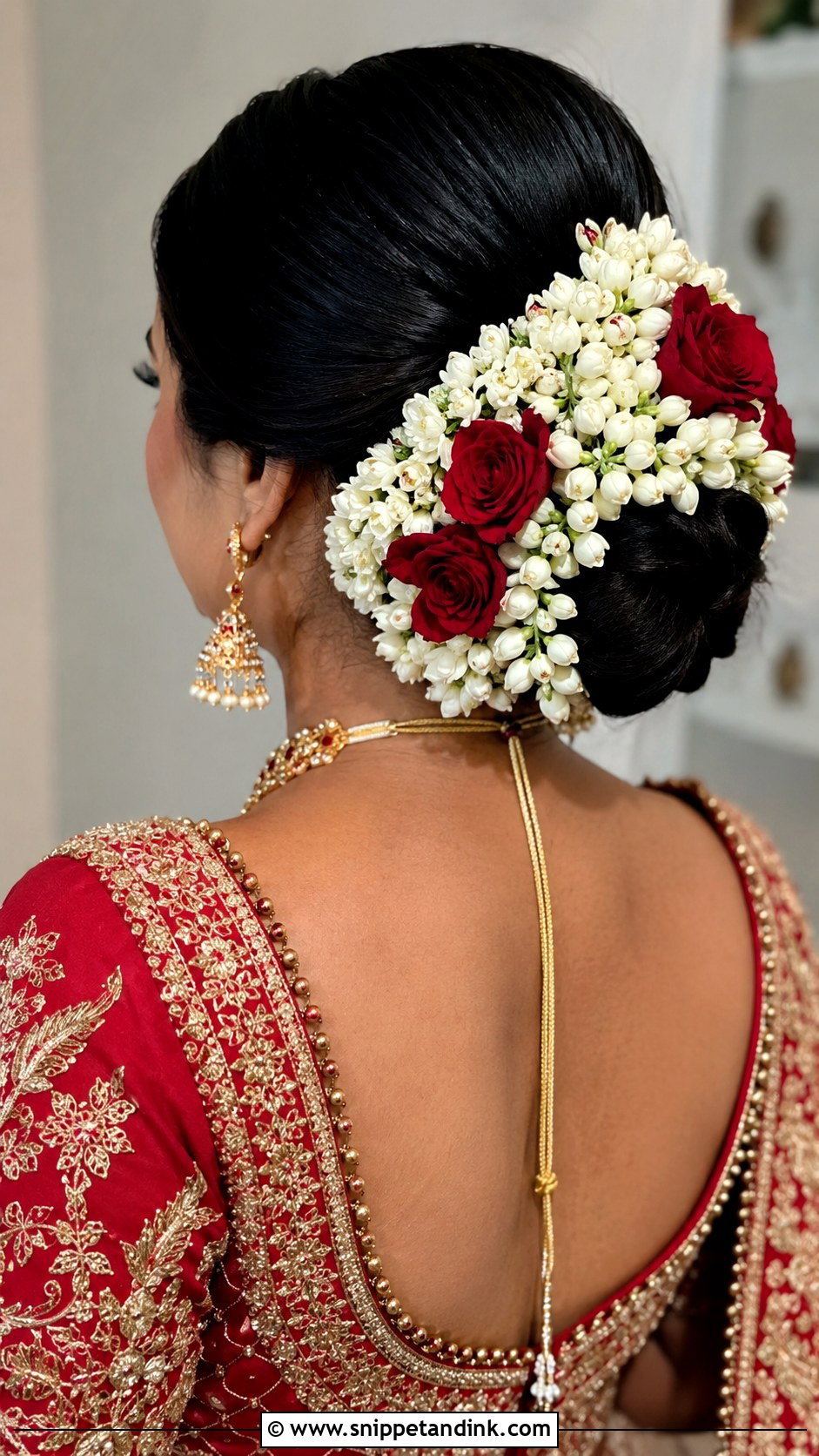
A voluminous bridal bun wrapped with fresh roses or jasmine sits at the back of the head and lets the jewelry and dupatta take the attention. Fresh flowers add real weight, and so does the dupatta, so I pin the bun into the base with U-pins as well as bobby pins; a heavy bun pinned loosely will slide down over a long ceremony. Match the flowers to your outfit and ask for them to be delivered the morning of the wedding, kept cool until they go in.
16. French Braid Into Bun
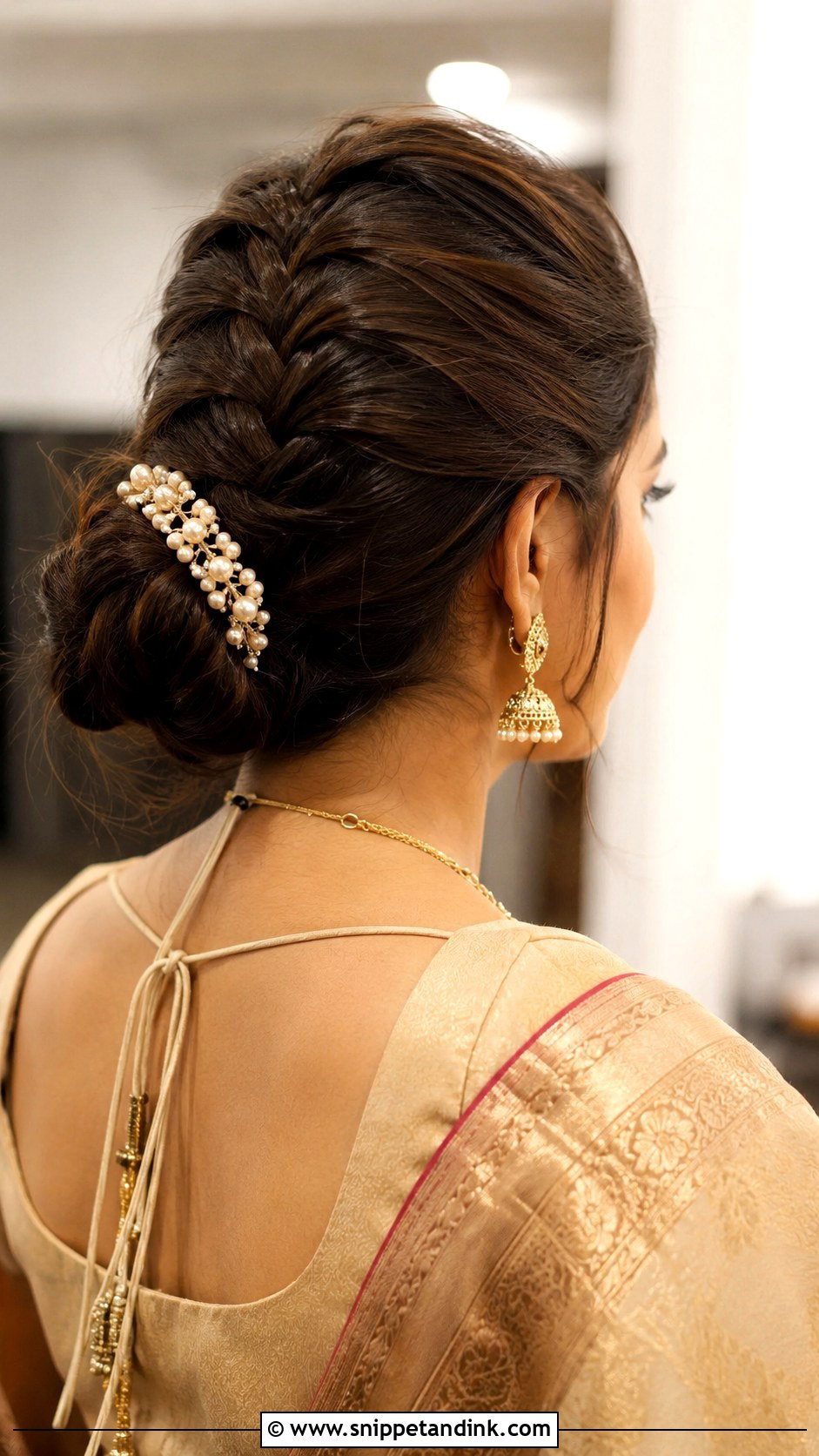
Leading a French braid into a bun gives the bun a built-in anchor, which is why this style lasts through a whole day of functions. The braid runs down the back of the head and wraps into the bun at the nape. Pearls in the braid and flowers in the bun dress it up. Bear in mind that a head dupatta pinned near the crown will hide most of the braid, so if you love the braid detail, ask for the dupatta to sit further back.
17. Boho Waves With Jasmine
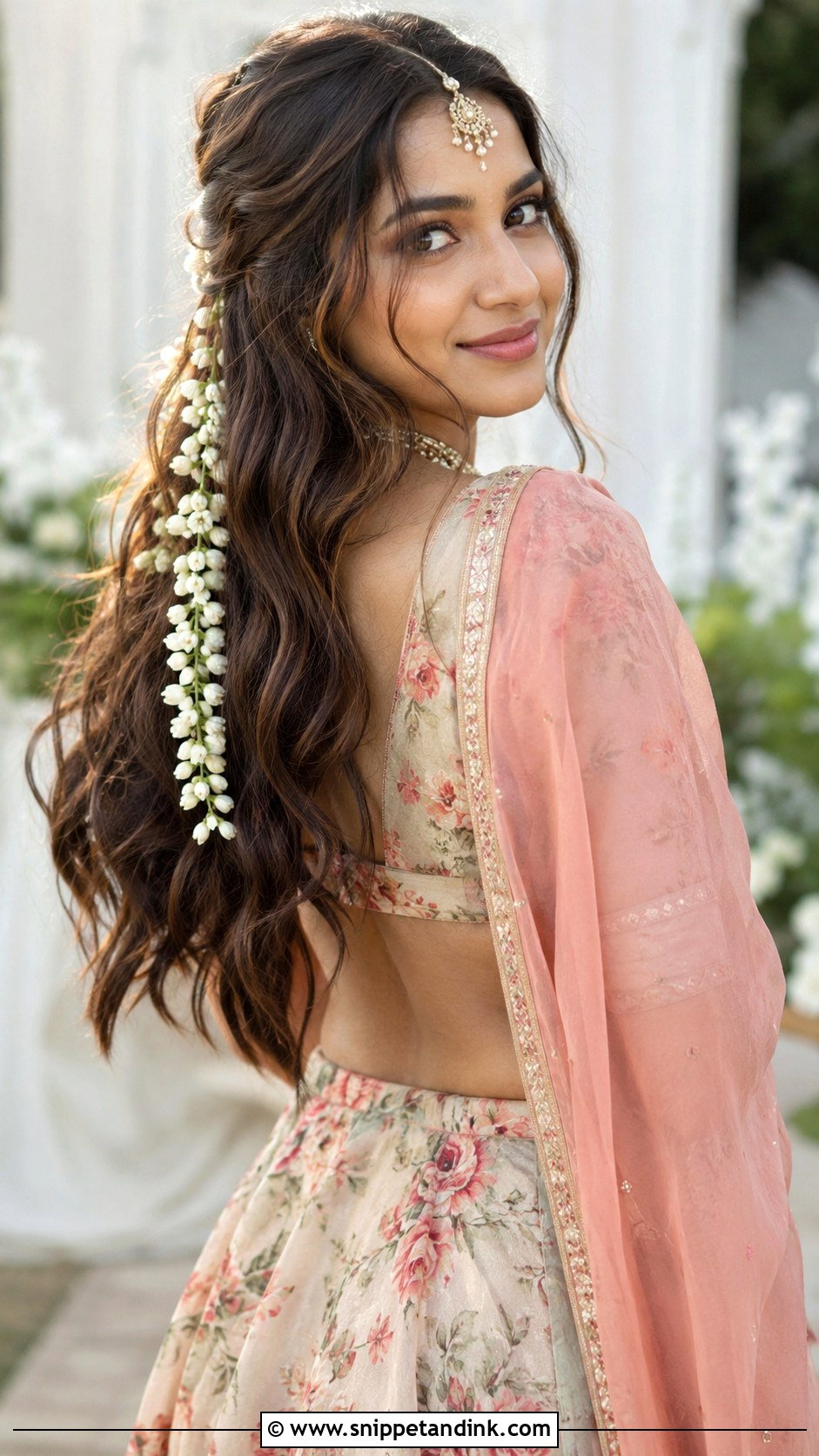
Boho waves with jasmine are open and light, with strands of jasmine tucked into loose waves. Jasmine slides out of loose hair easily, so I make a small hidden braid or a cluster of crossed pins underneath and anchor each strand to that. It suits a mehendi or an outdoor destination function with floral lehengas and minimal jewelry. At the haldi itself I’d tie the hair up, though; open hair and turmeric paste aren’t a good mix.
18. Pulled Back Bun for Saree
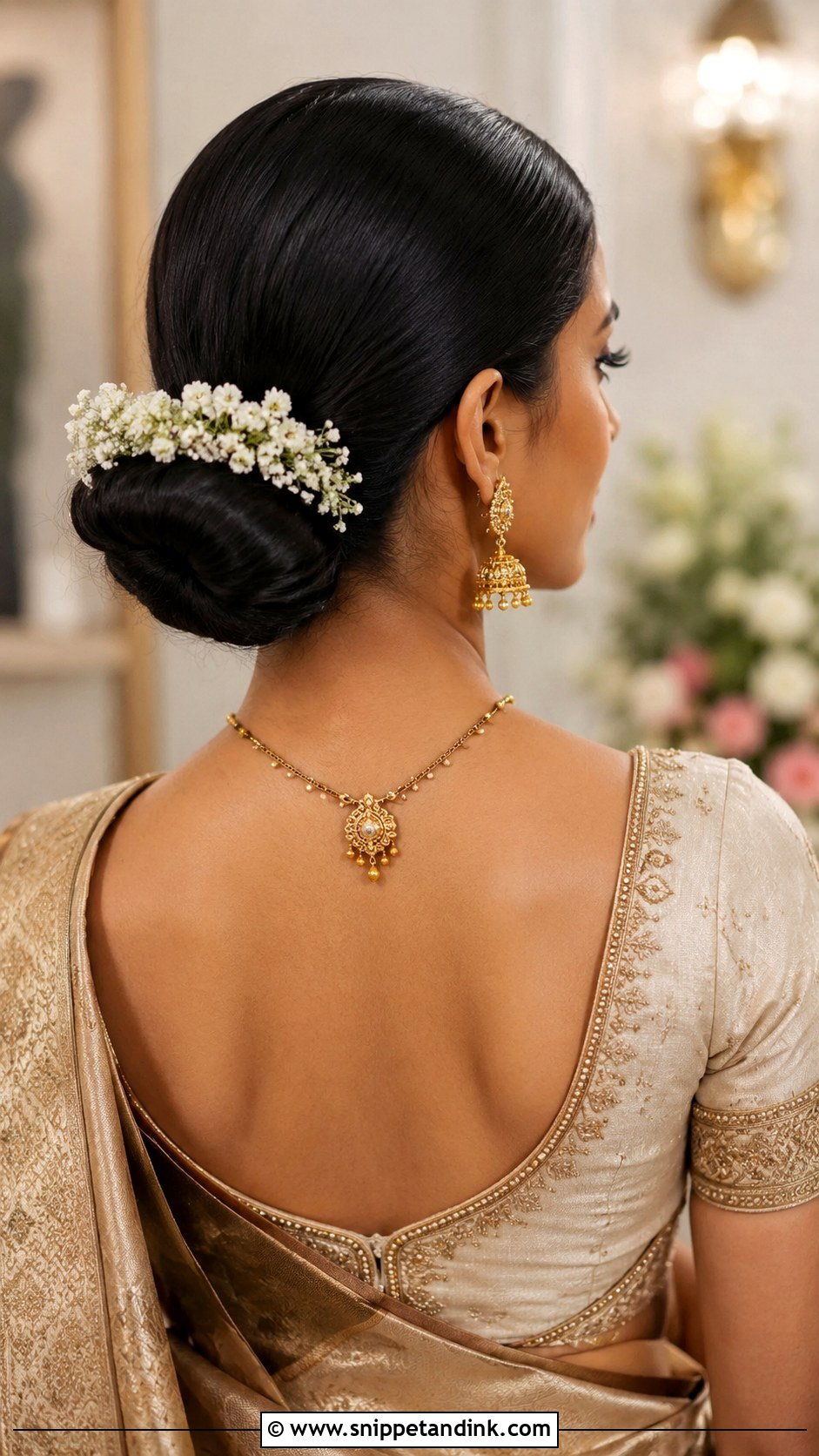
With a saree, a sleek pulled-back bun keeps the nape clear for the pallu and blouse back, so the drape sits cleanly. Gather everything into a smooth bun with a little gel and a firm brush. It suits pujas and formal ceremonies, holds for hours, and works on any hair texture. A small gajra adds tradition. It looks particularly right with Kanjeevaram and Banarasi sarees, where the silk and zari border are the focus.
19. Twisted Side Braid
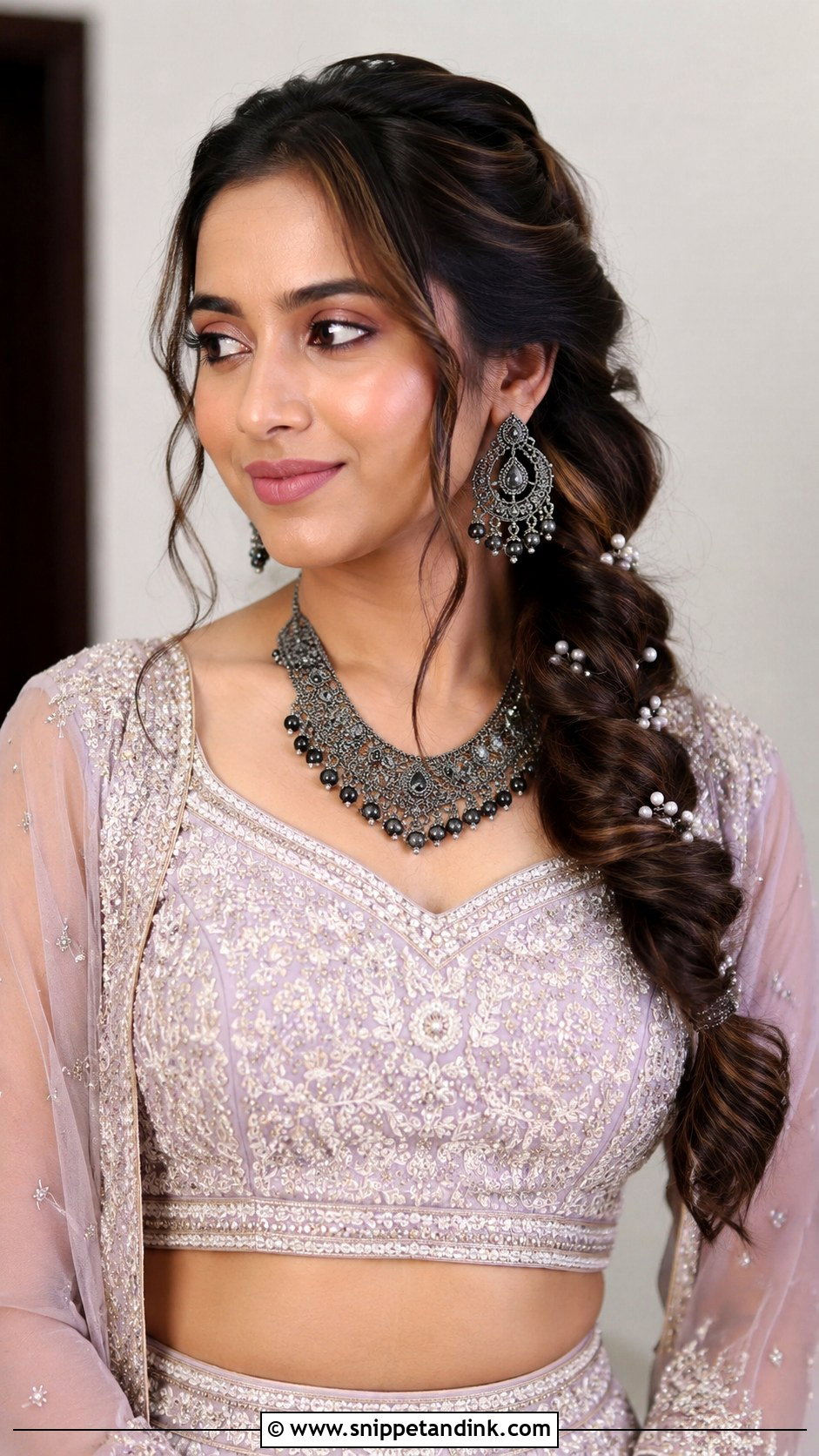
A twisted side braid is softer than a plaited braid, with rope twists gathered to one side and tendrils at the face. Place it on the shoulder opposite your pallu or dupatta drape so they don’t fight. Pearls, beads or small flowers sit well in the twists. Twists unravel more easily than braids, so I secure each one with a pin as I go. Mehendi and sangeet suit it, with lehengas or Indo-Western outfits.
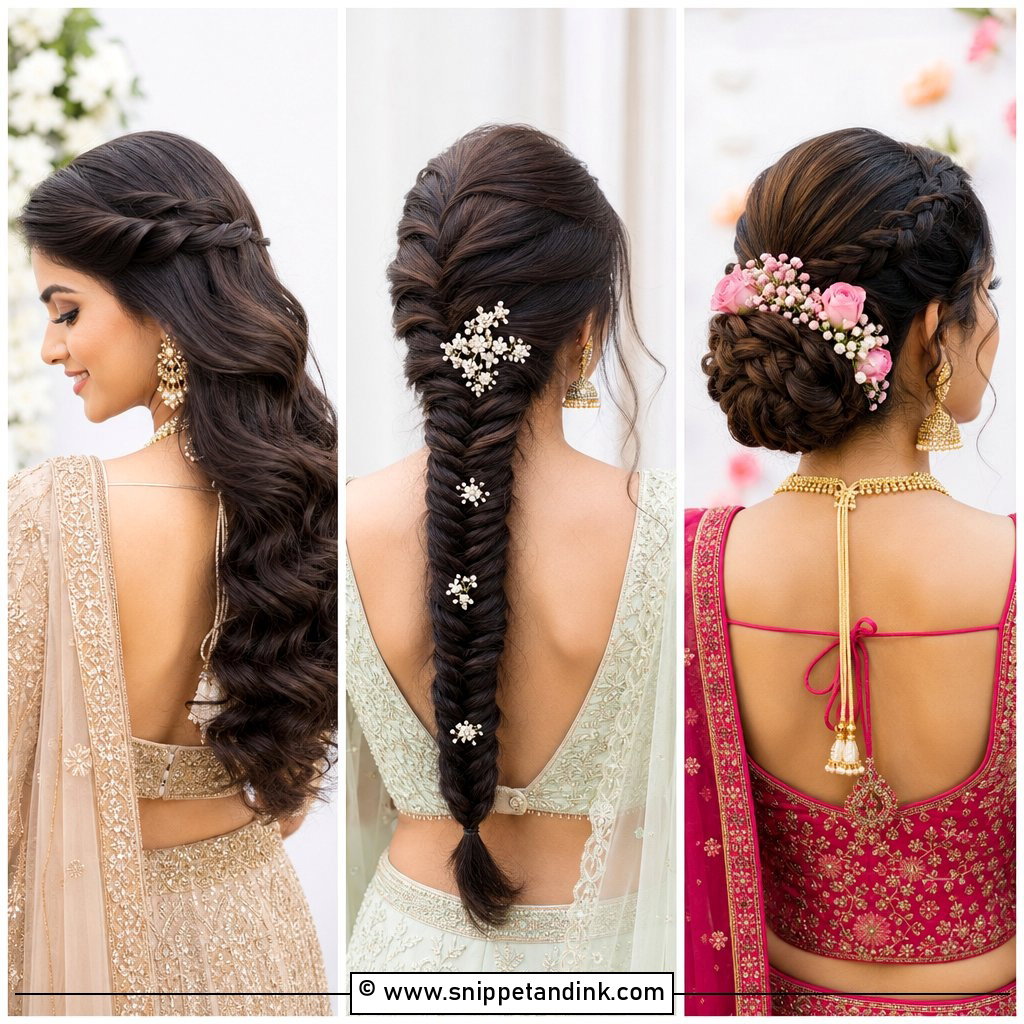

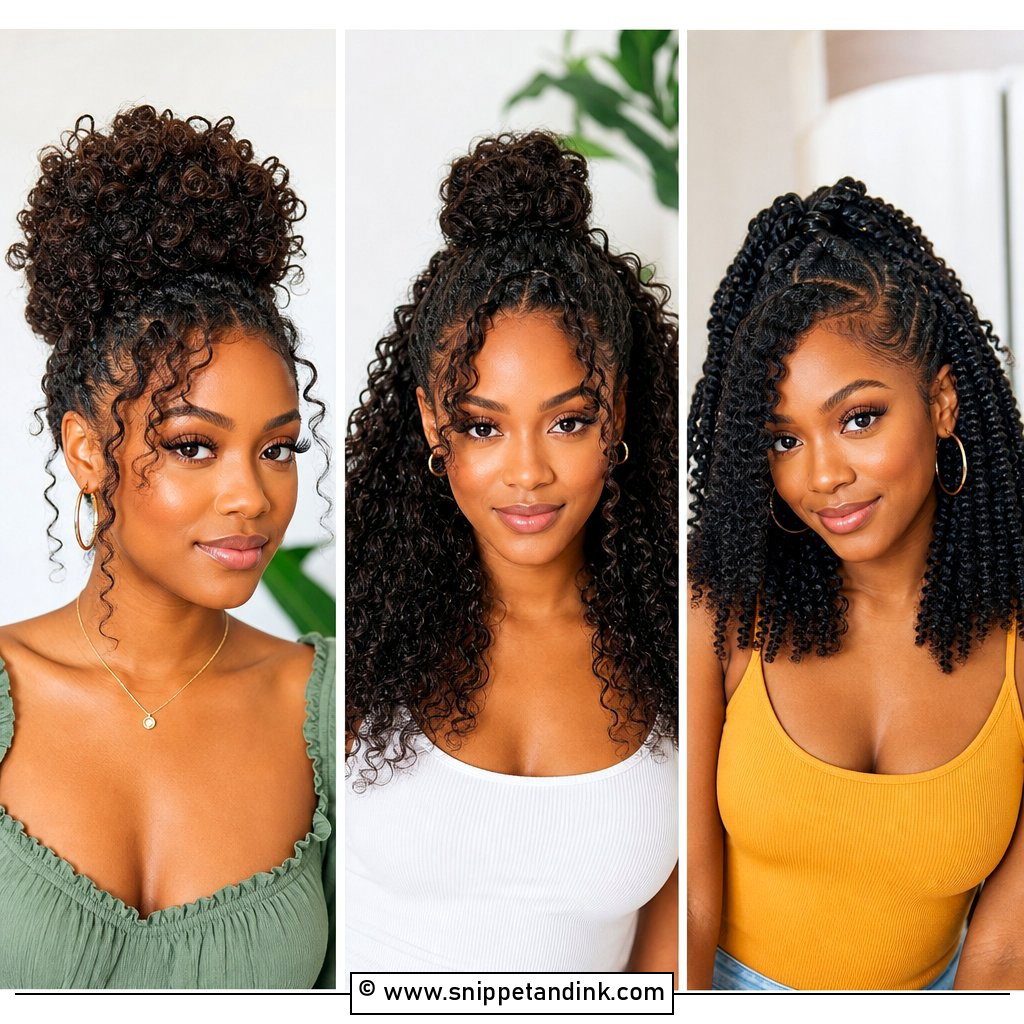
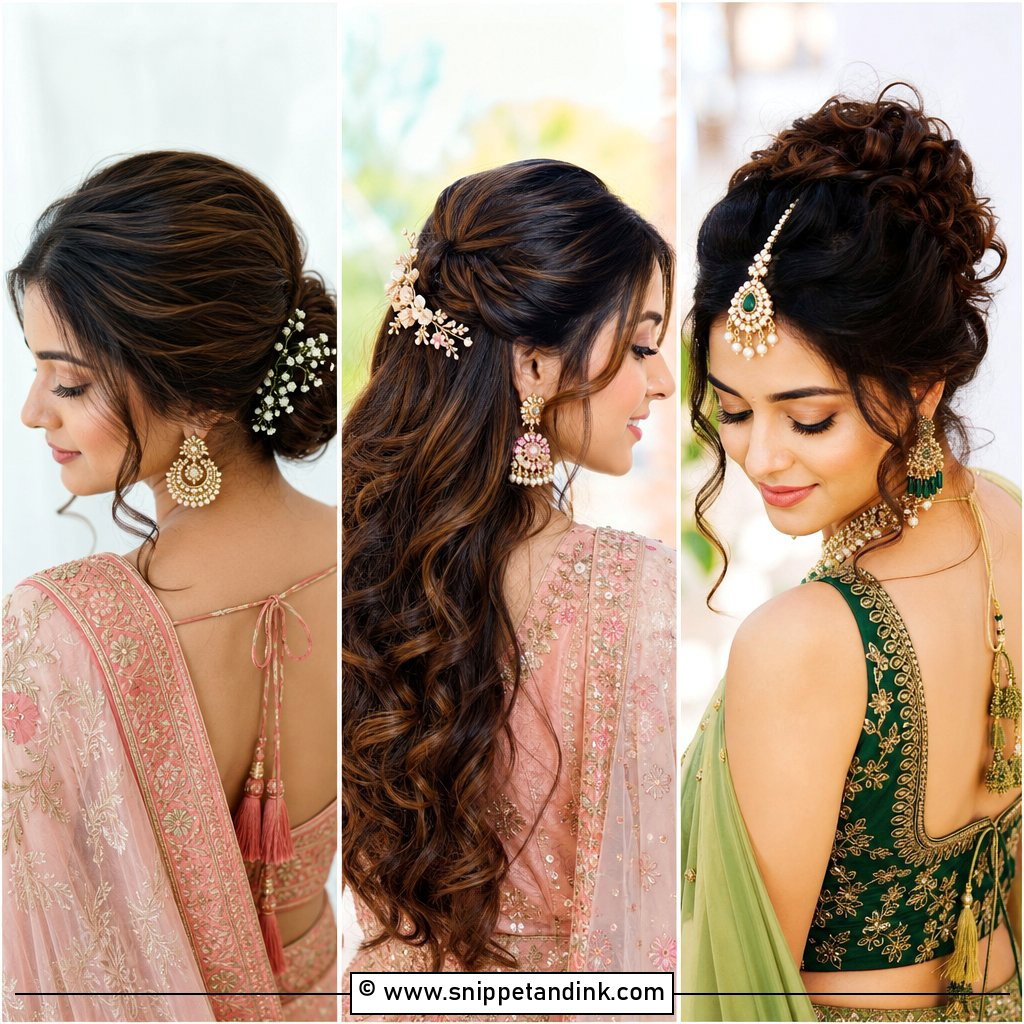
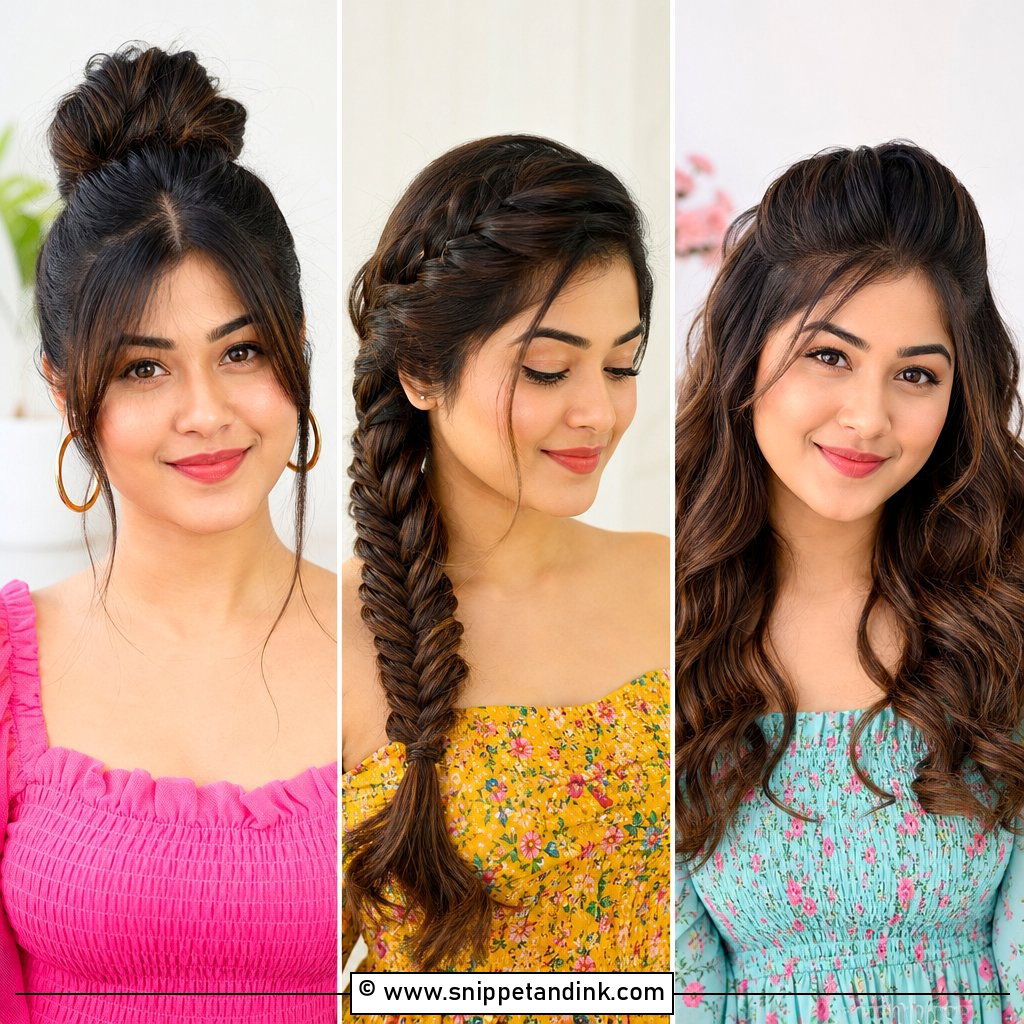
20. Voluminous Curls With Hair Charms
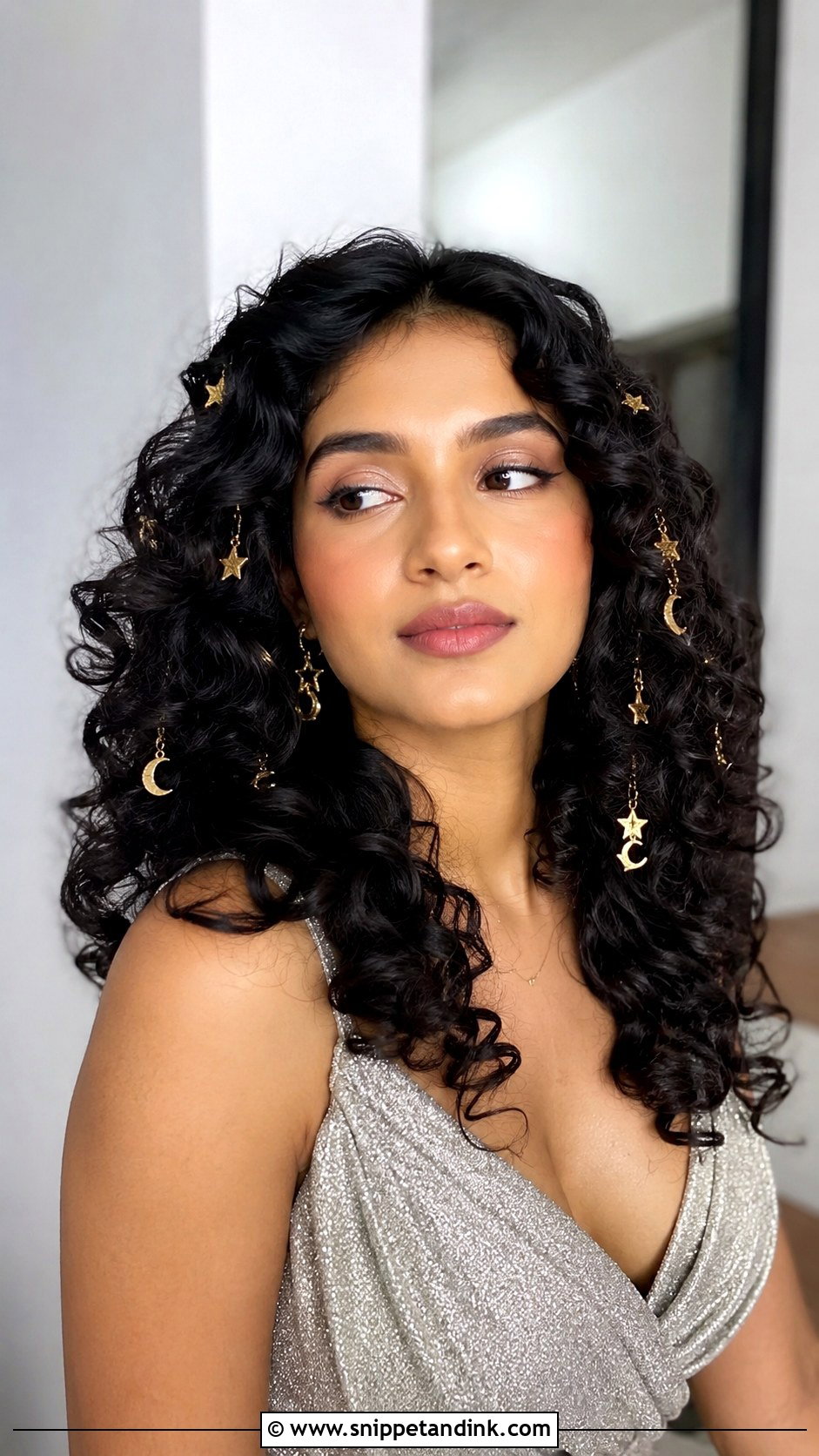
Big curls scattered with celestial charms are a playful sangeet or cocktail look, with stars, moons or butterflies clipped through the hair. On very silky hair, clip charms slide down, so I place each one under a curl where the curl itself holds it. Match the charm color to your outfit and keep them to a handful. With shimmery gowns and modern lehengas, voluminous curls with charms suit anyone who enjoys a bold, trend-led look.
21. Bun With Pearl Strings
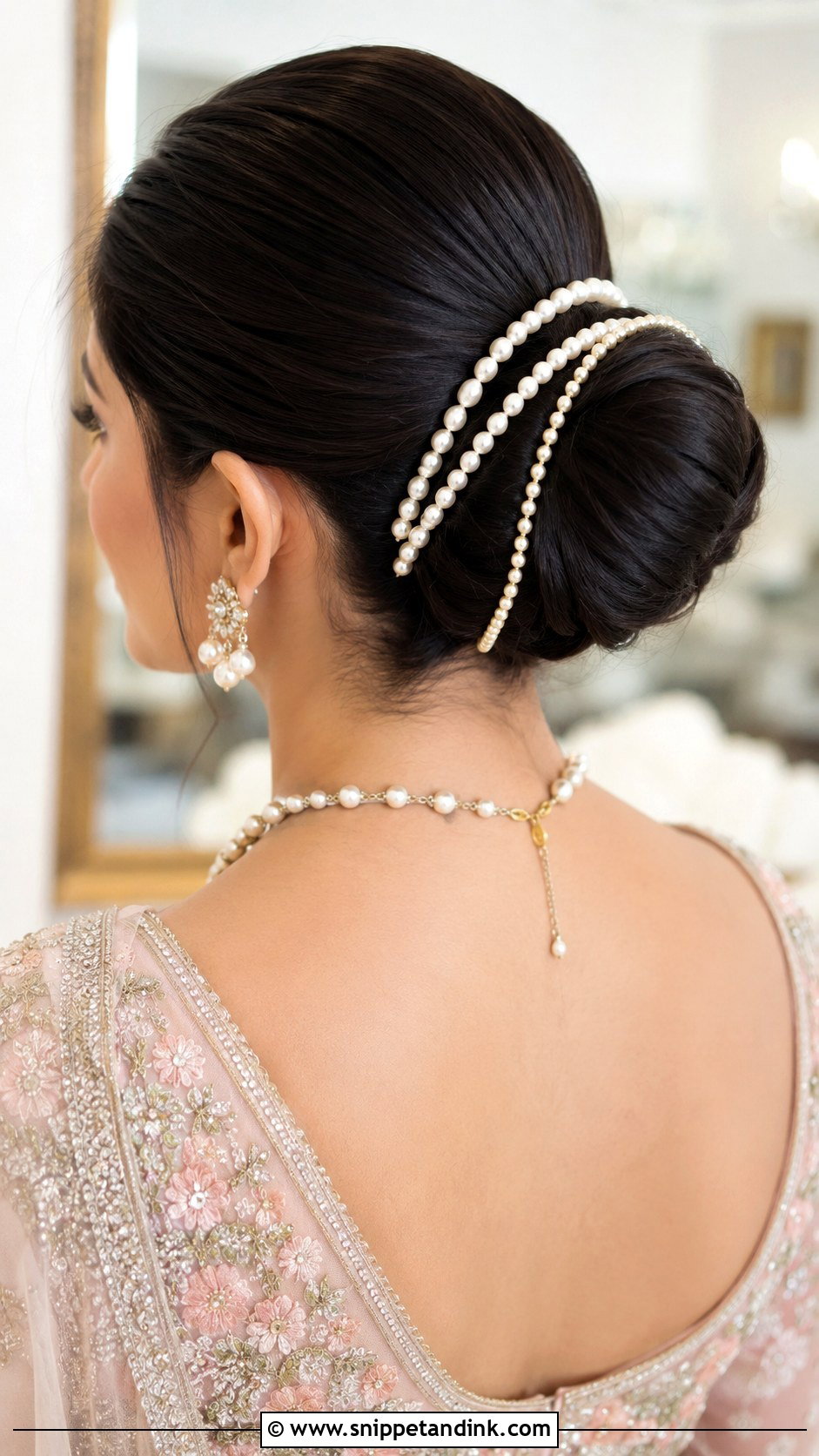
Pearl strings wrapped through a classic bun give a soft glow without competing with your necklace. I pin the start of the string inside the bun, wrap it around in loose loops, then tuck and pin the end so no clasp shows. It suits receptions and engagement ceremonies, and works especially well with pastel lehengas and pearl jewelry. The neat base keeps it secure through long events.
22. Open Hair With Side Parting
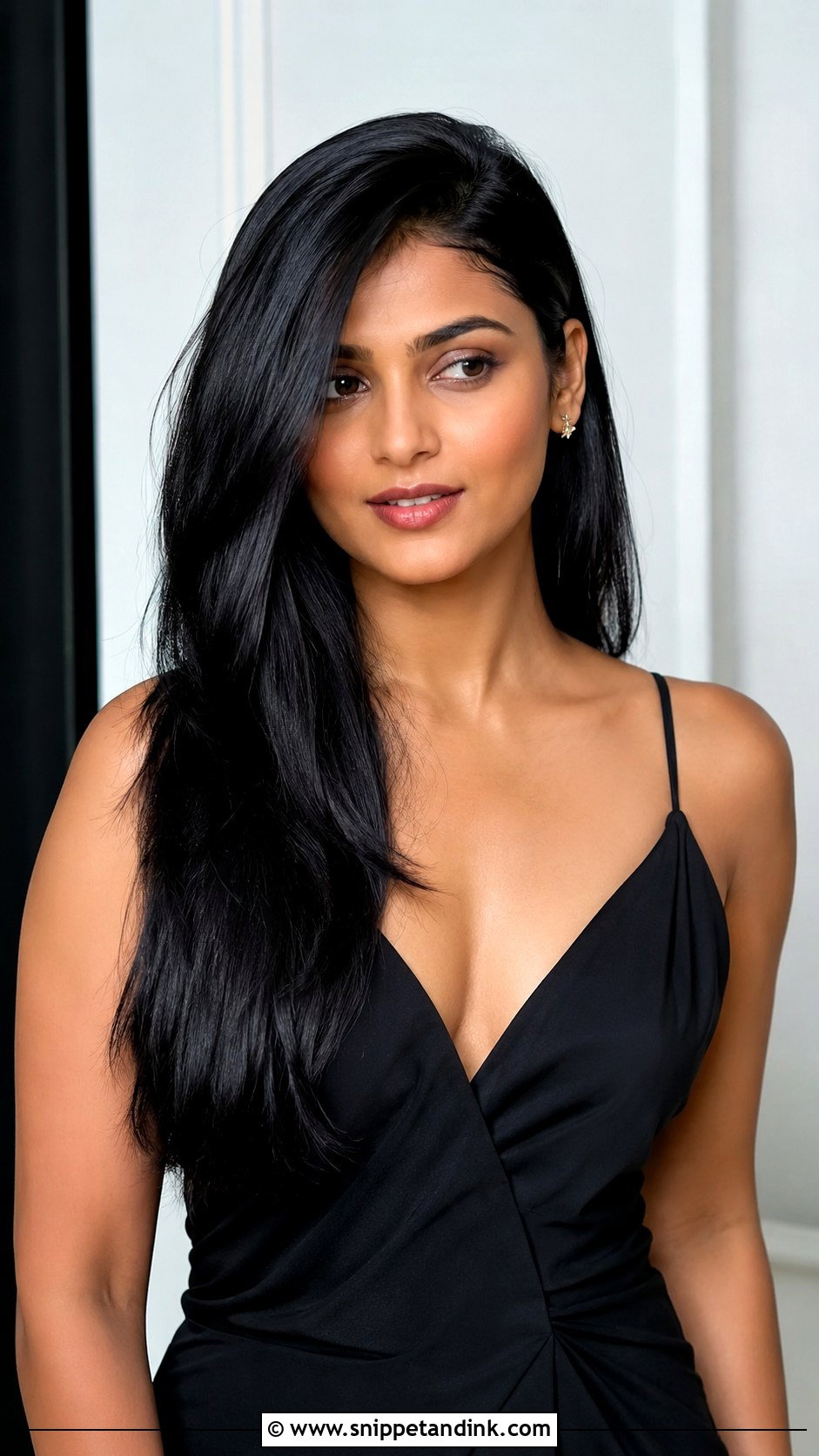
Open hair with a deep side part is simple and sleek: glossy, smooth, with the part adding drama. Keep it straight for a sharp finish or add soft waves. It suits contemporary gowns and minimalist lehengas at receptions and cocktail functions. One trade-off: many lehenga blouses have detailed backs with dori ties and tassels, and open hair covers all of that. If your blouse back is the best part, put your hair up.
23. Floral Half Bun
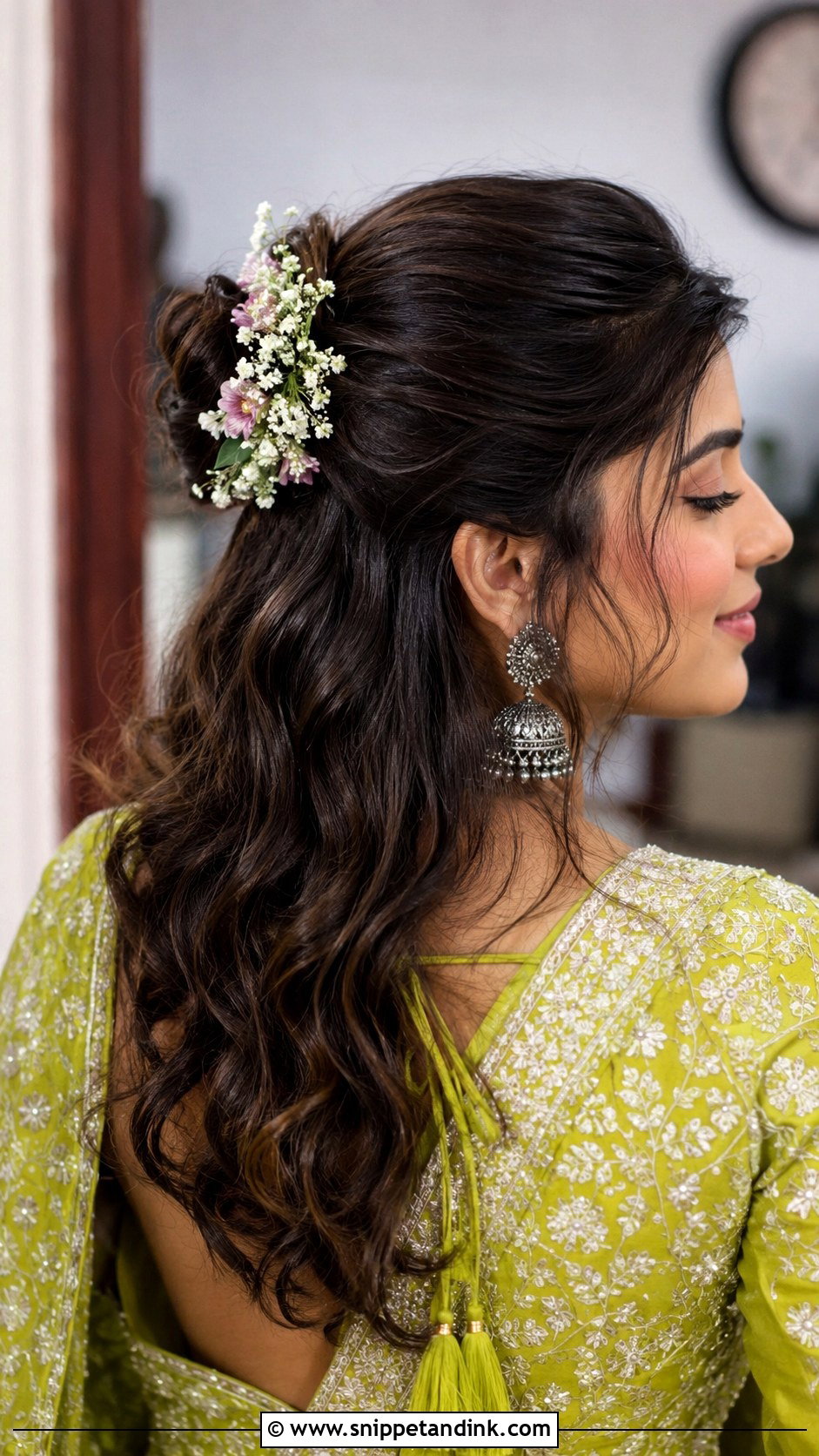
A floral half bun pulls just the top section into a small bun with fresh flowers and leaves the rest of your hair down. It keeps hair out of your face at the haldi or mehendi without the work of a full updo. Bright, flowy ethnic wear suits it. Under a head dupatta, though, the bun makes a bump at the crown, so it’s better for functions where the dupatta stays on your shoulders.
24. Braided Bun With Maang Tikka
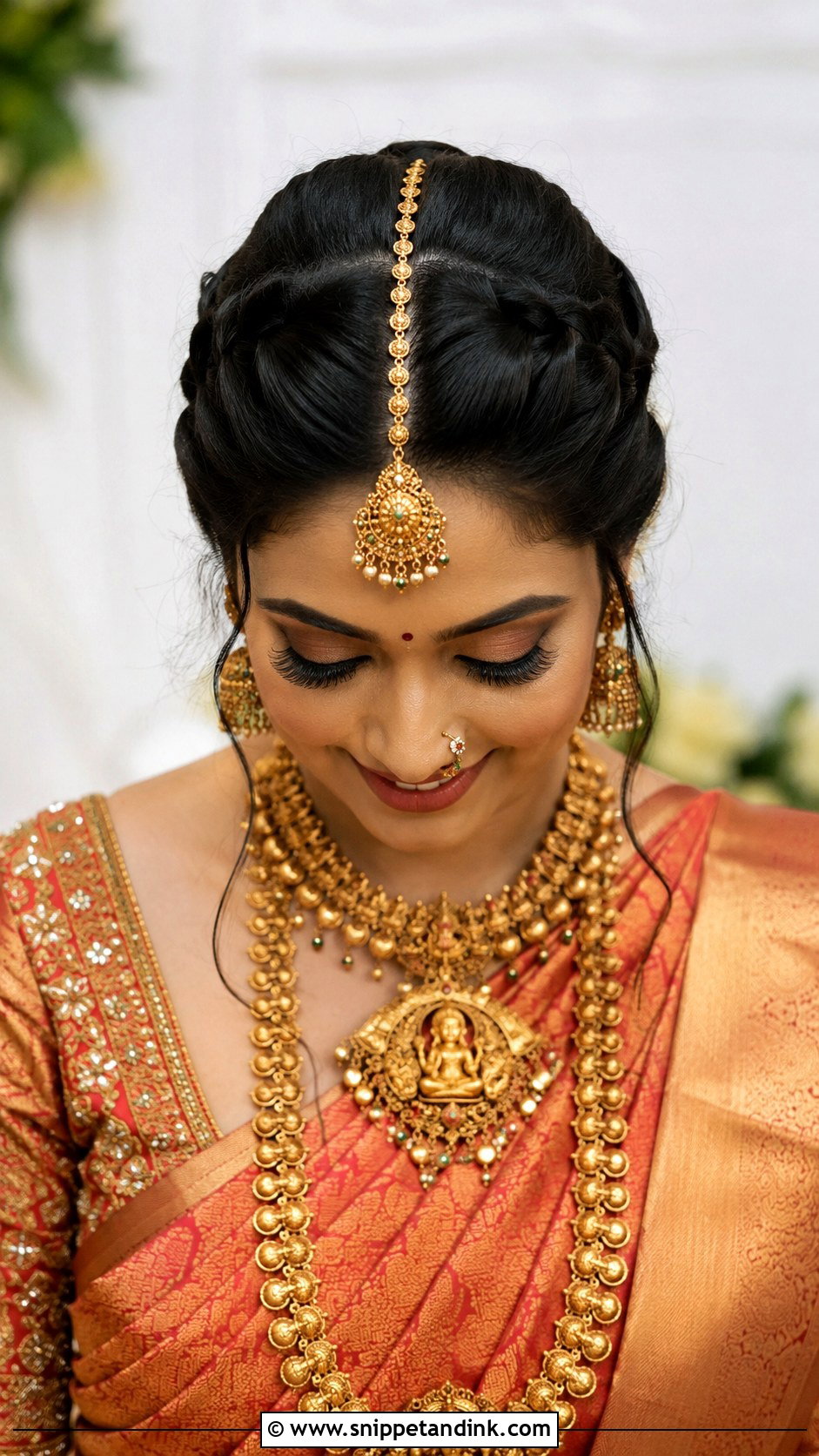
A braided bun is woven from several braids wrapped into one structured shape, with a center-parted maang tikka as the focal point. It suits ceremonial functions and temple weddings, and pairs with heavy lehengas and silk sarees. Thick hair makes the fullest braided bun; fine hair usually needs extensions braided in to get the same size. It takes noticeably longer than a plain bun, so make sure your stylist has time for it on the schedule.
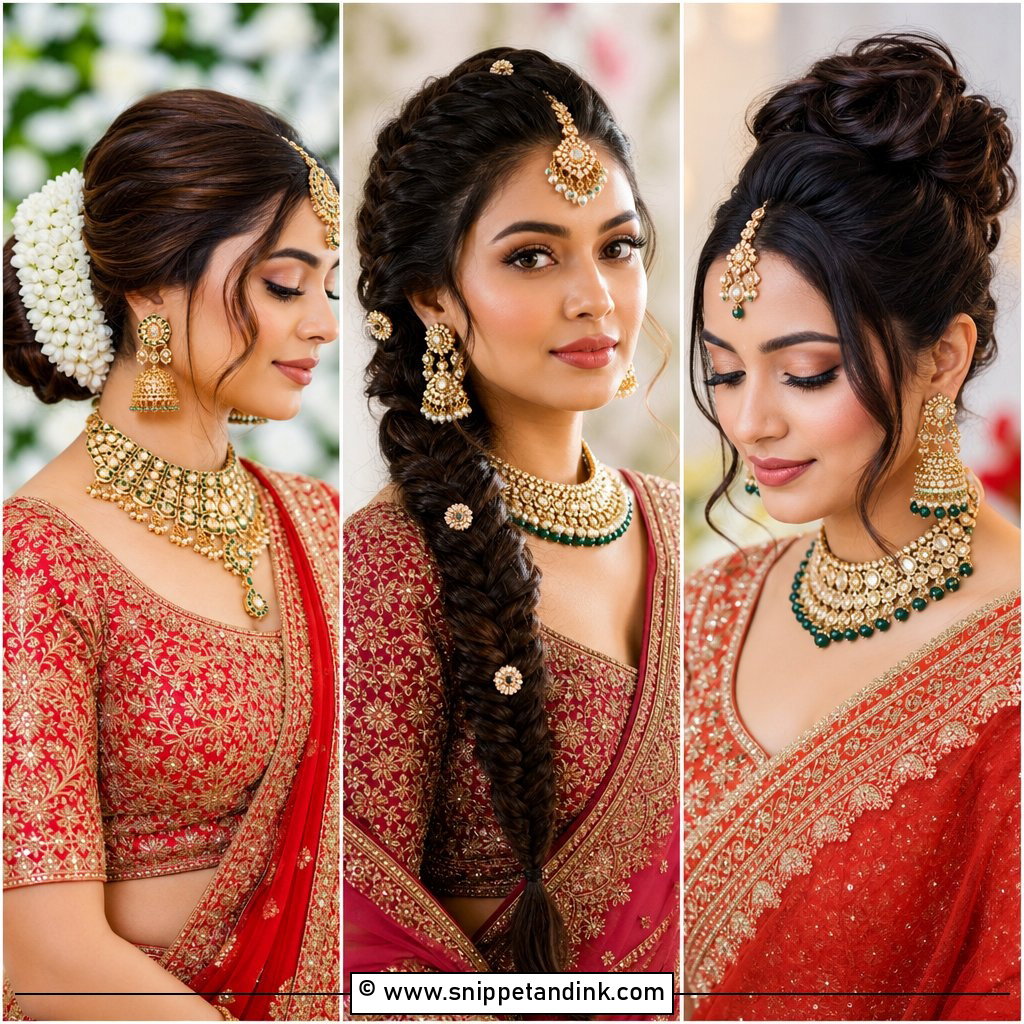

25. Soft Updo With Loose Tendrils
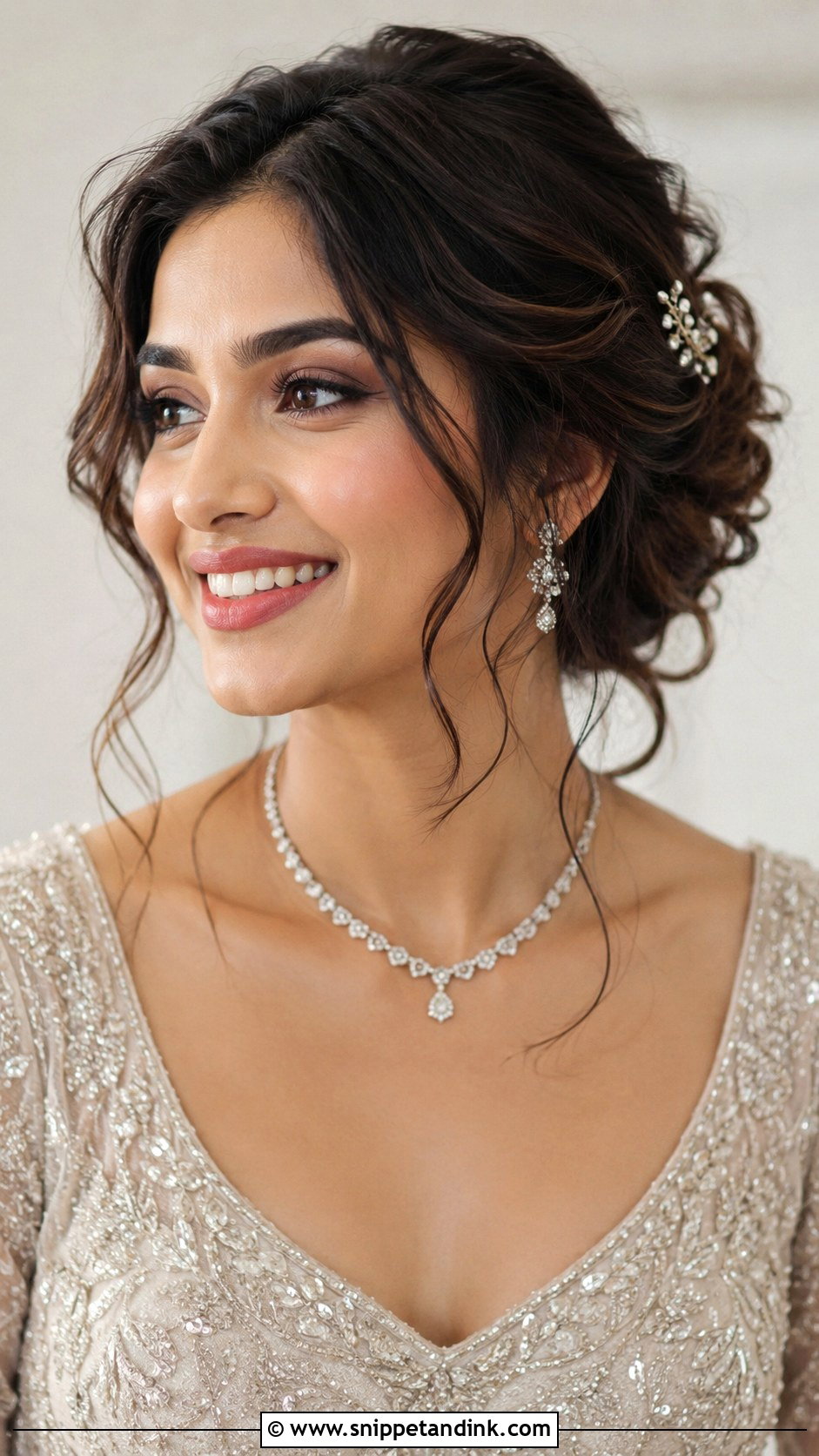
A soft updo with loose tendrils softens a reception or engagement look. Tendrils and heavy earrings don’t always mix, since chandbalis and jhumkas catch on loose strands, so I keep the tendrils in front of the earrings rather than over them. Small flowers or jeweled pins add a festive touch. It suits gowns, sarees and lehengas alike.
Four Functions, Four Days of Hair
Back-to-back functions are hard on hair: repeated heat, product, turmeric and late nights. A little planning keeps it in good shape for the day that matters most.
- Haldi: oil the lengths beforehand, tie everything up and wash it out the same day.
- Mehendi: choose a style you won’t need to touch, since your hands will be covered in drying paste for hours.
- Sangeet: this is the night for open styles and ponytails. Use heat protection and don’t go over the same section twice.
- Wedding day: most updos hold better on hair washed the day before than on hair washed that morning, so plan the last wash accordingly.
How Long a Gajra Really Lasts
Fresh jasmine looks its best for a few hours. Bought as closed buds in the morning, it opens through the day and starts to brown by late evening, sooner in heat. Keep it wrapped in a damp cloth in the fridge until it goes into your hair. For a ceremony that runs through the night, many brides switch to a fresh gajra between functions or wear a good artificial one for the longest stretch.
Let the Jewelry Decide How Much Hair You Show
The right hairstyle for an Indian wedding depends on the function, the outfit and the jewelry you’ll wear. Floral buns and gajra braids carry the ceremonies; Hollywood waves and sleek ponytails come into their own at the reception and sangeet. Think about your hair length and how much weight the style will need to hold. Bring your outfit photos and your jewelry to the trial, so your stylist can build the hair around them.
You'll Like These Ideas:


Leave a Reply