
Braids solve a problem I see at nearly every trial: a bride wants softness but also needs her hair to survive photos, vows, hugs and a long night of dancing. A good braid gives structure without stiffness. Right now the requests I get lean wearable rather than sculpted, with crown braids, fishtail details, low buns, half-up braids and braided ponytails at the top of the list. Below are fifteen I’d recommend, with what each one asks of your hair and how I’d adapt it to your dress and veil.
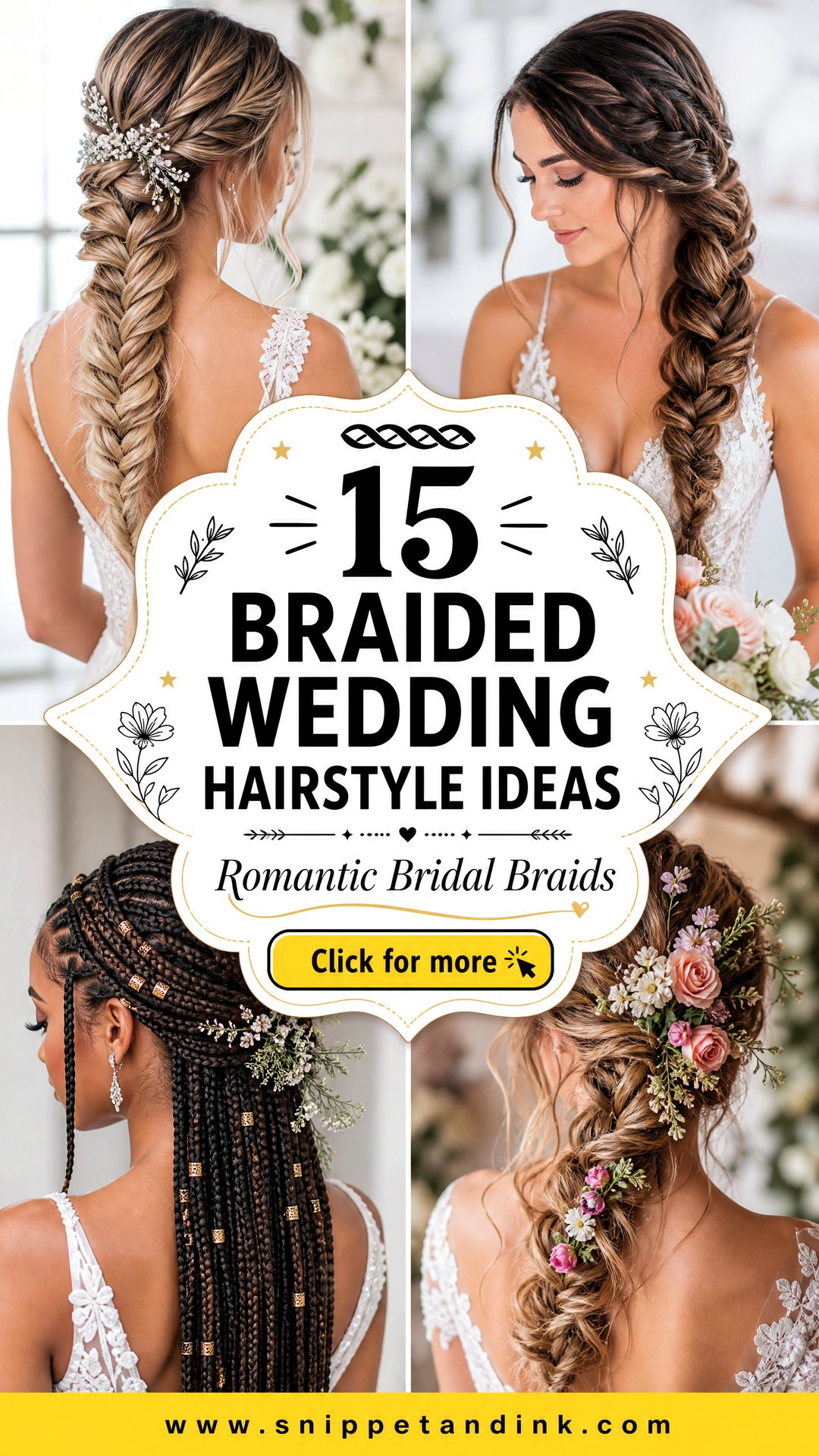
Dark Hair Can Swallow a Fine Braid in Photos
Inspiration photos rarely show this: the same braid looks different on different hair colors. On blonde, balayage or highlighted hair, every twist catches the light, so even a delicate fishtail reads from across a room. On one-tone black or deep brown hair, a flat, tight braid can blur into a solid band in photos.
That’s no reason to skip braids on dark hair. It changes how I choose and finish them:
- I favor raised styles like Dutch braids, which cast their own small shadows and show their shape.
- I pancake the braid wider so each section has room to catch light.
- A light shine spray helps; a matte texture spray can flatten the detail on dark hair.
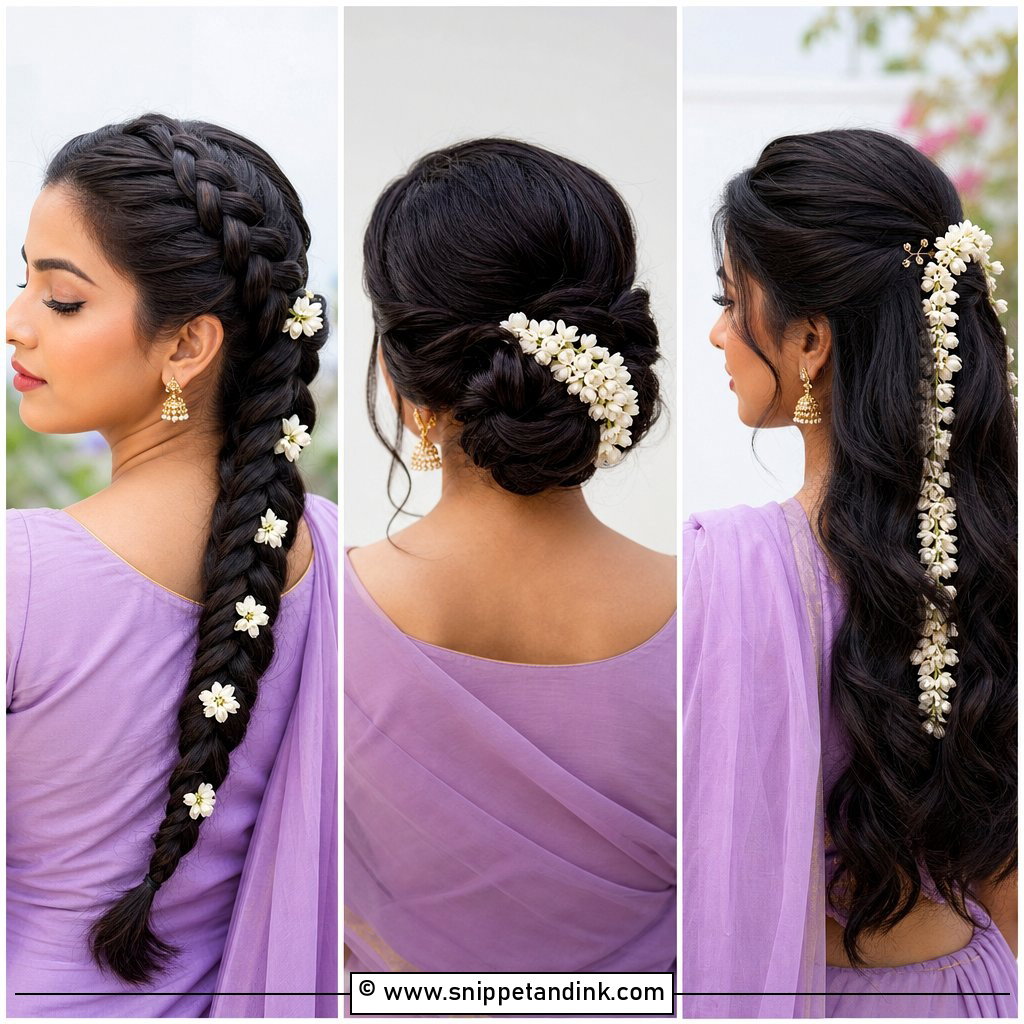
- Pearls or gold pins along the braid give the eye a pattern to follow.
1. Braided Wedding Updo
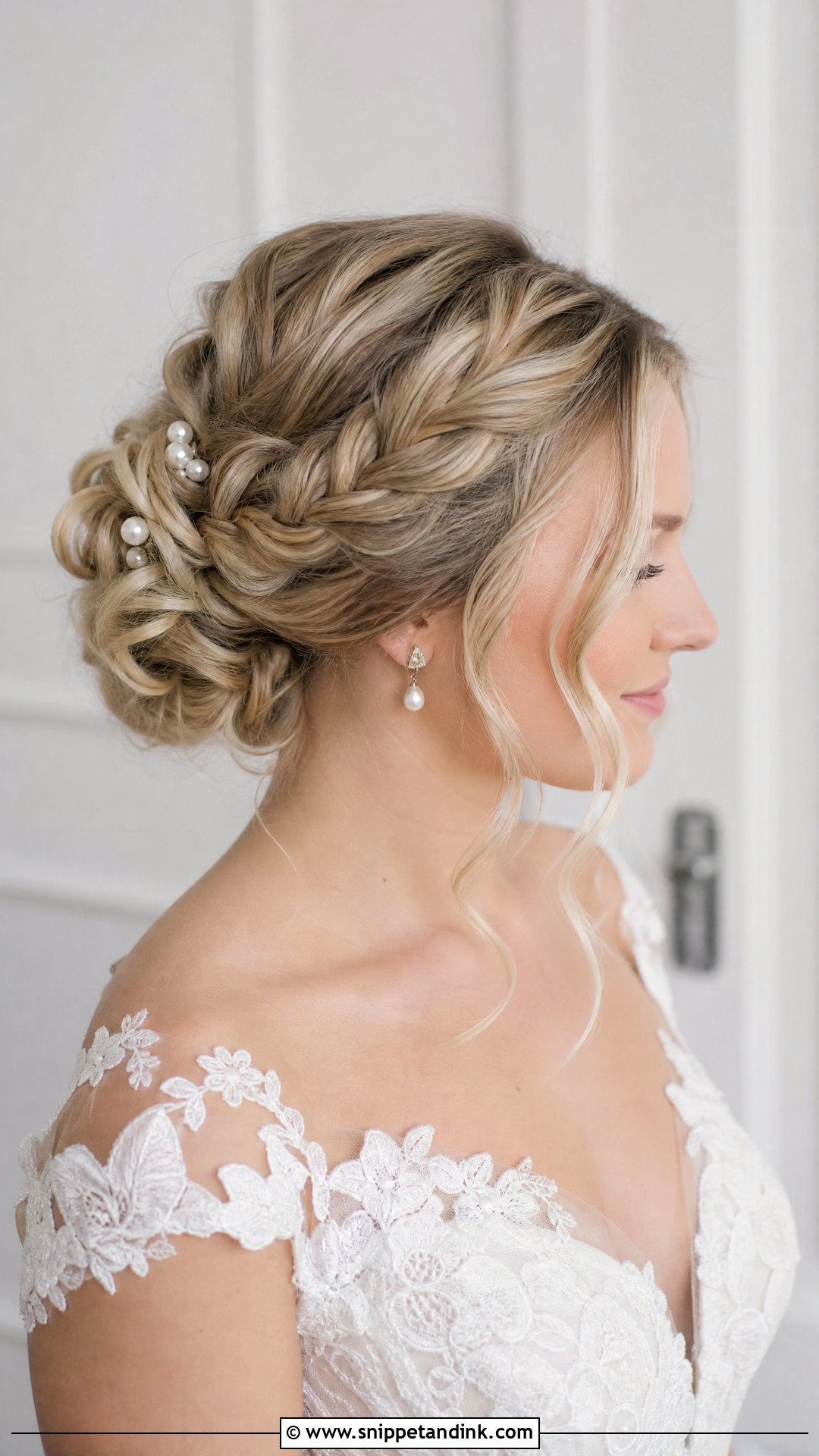
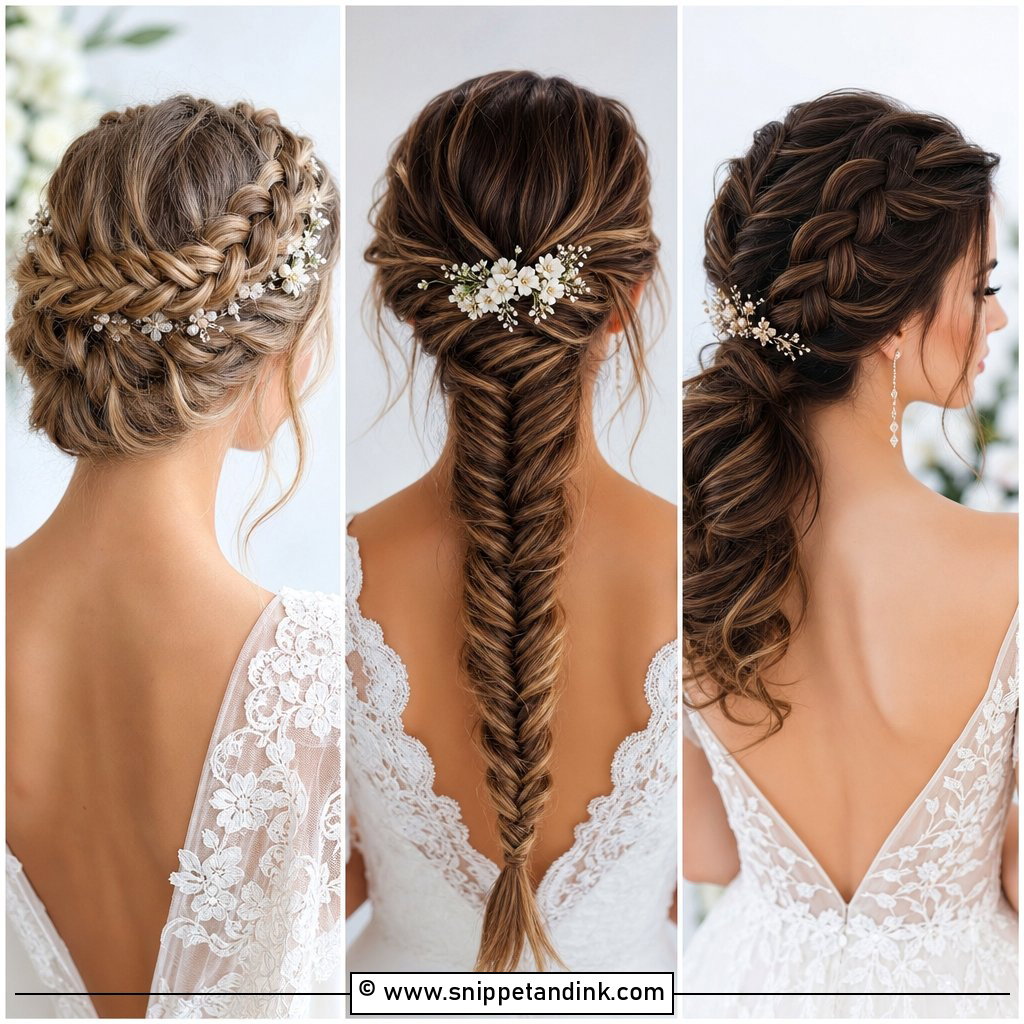
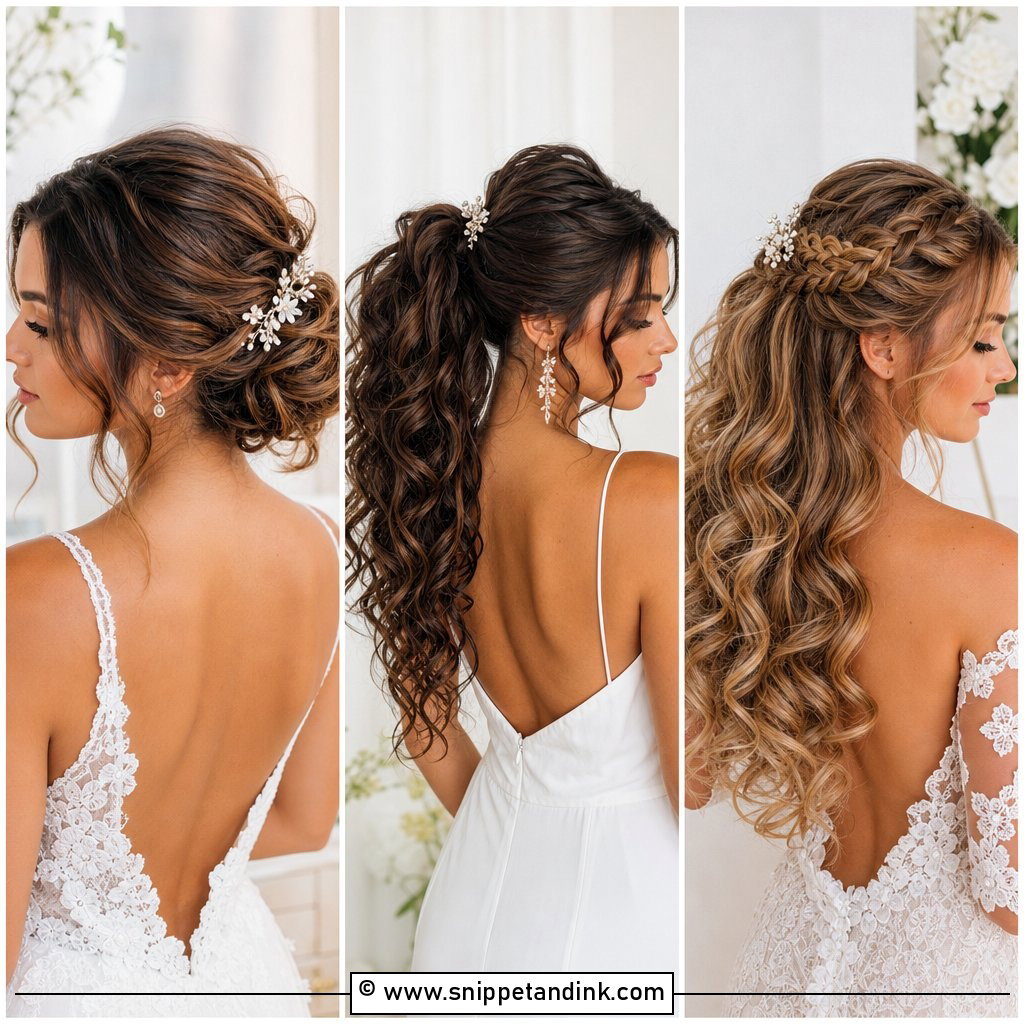
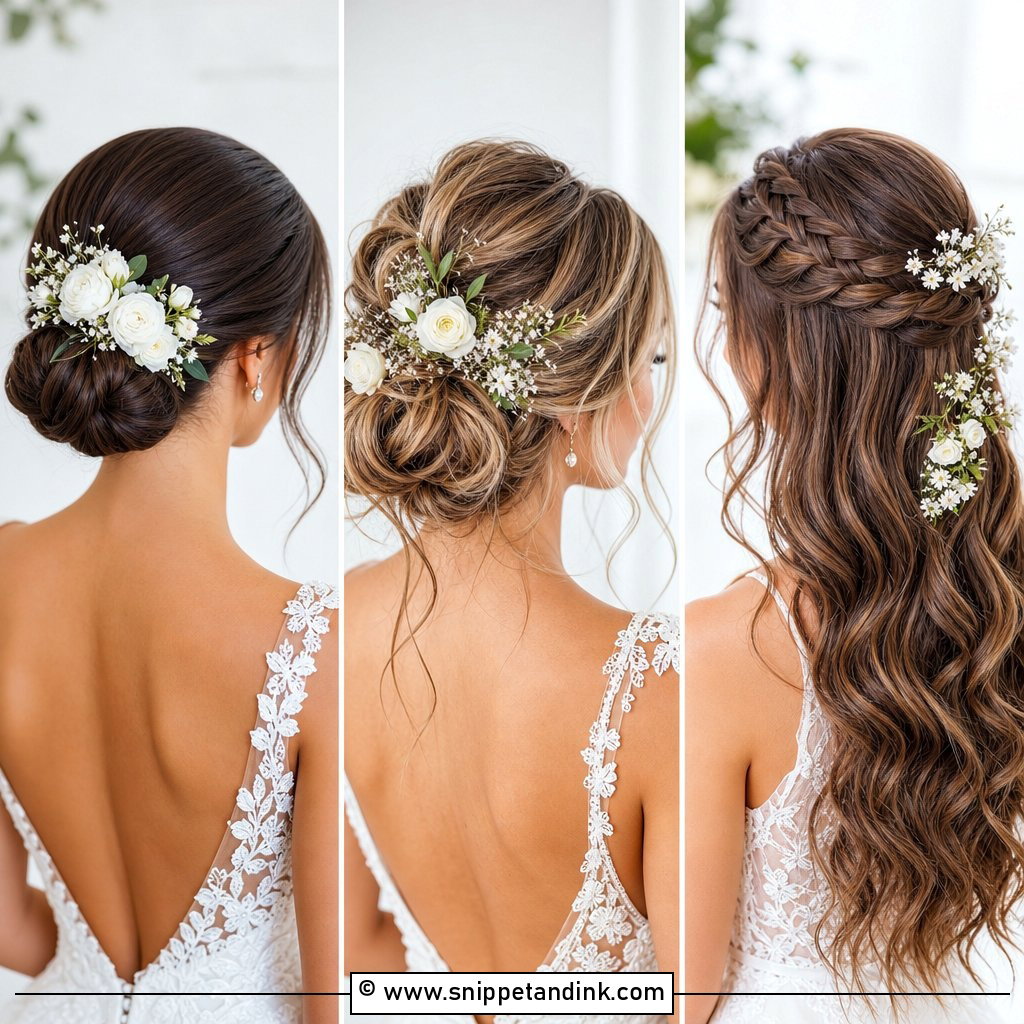
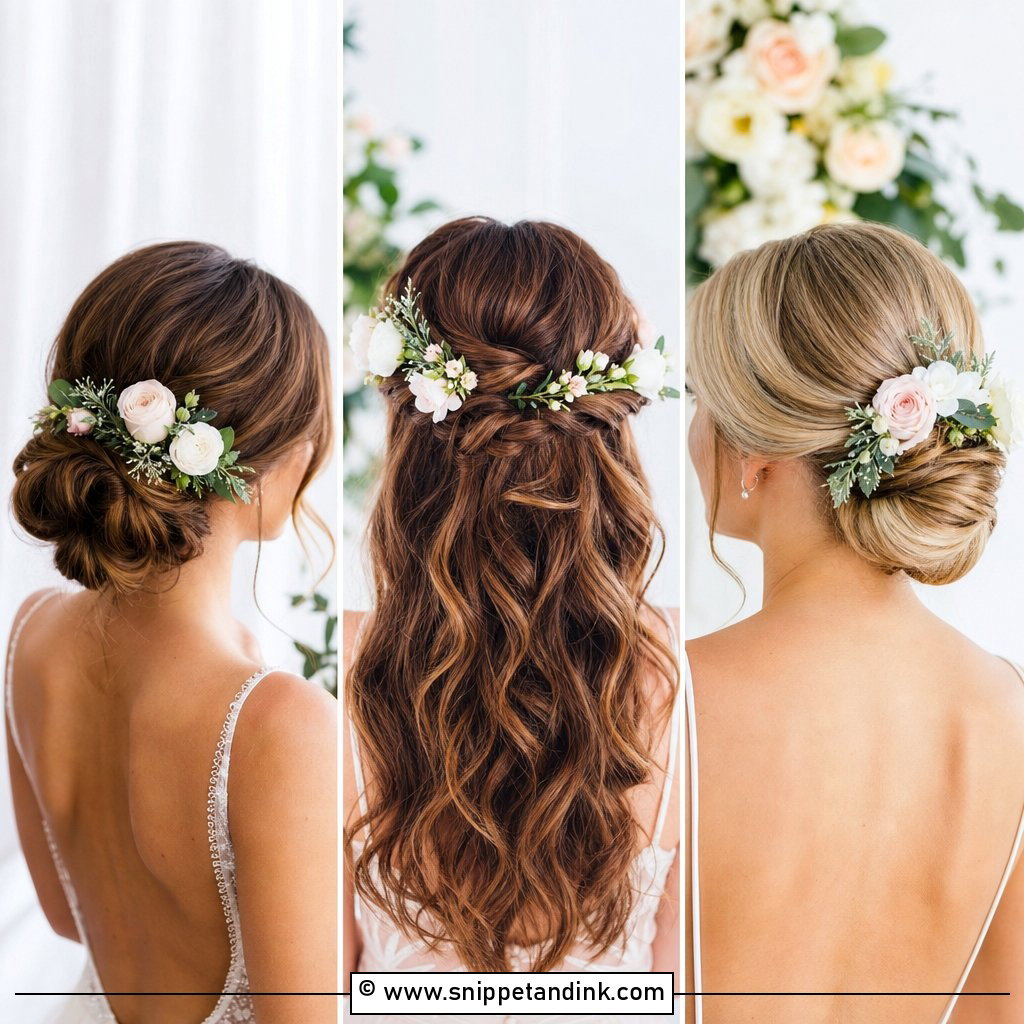
If you asked me for one style that holds from the first look to the last song, it would be this: soft side braids, a textured crown and a low pinned bun at the nape. The bun gives a veil comb a solid place to sit, and lifting the hair shows off lace sleeves, open backs and earrings. I build the bun on a base of crossed pins, not just an elastic, which is why it doesn’t sag. Ask for loose face-framing pieces for a softer finish, or keep everything tucked close for a cleaner one.
2. Half Up Braided Wedding Hair
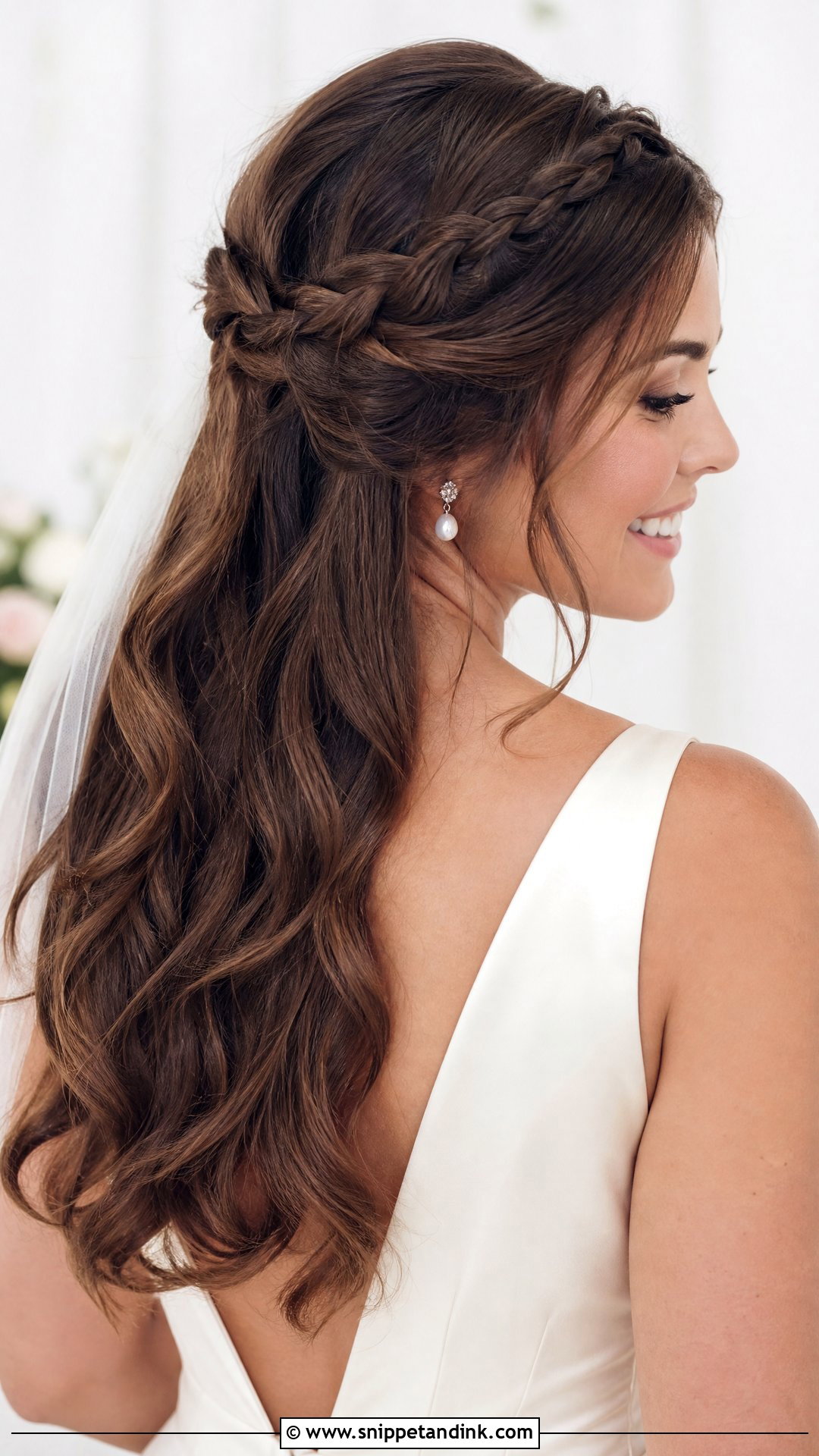
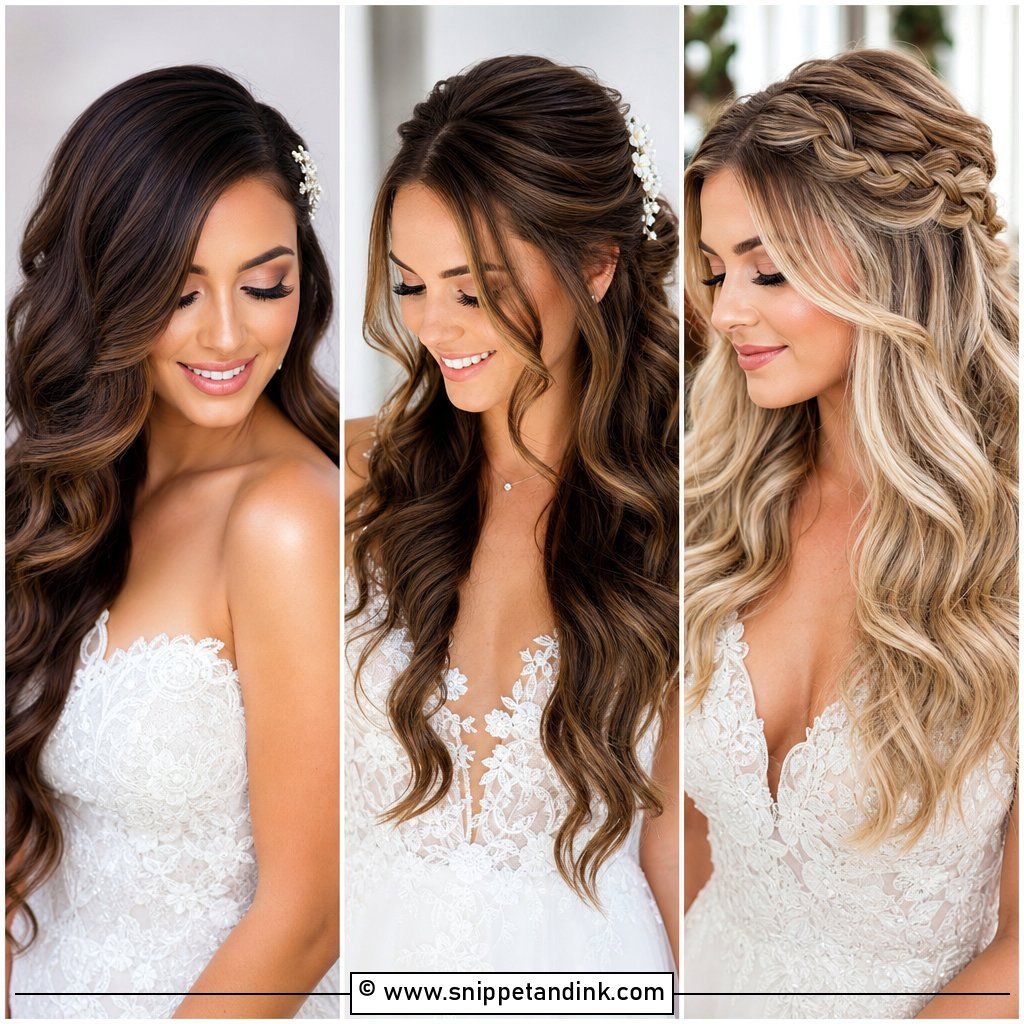
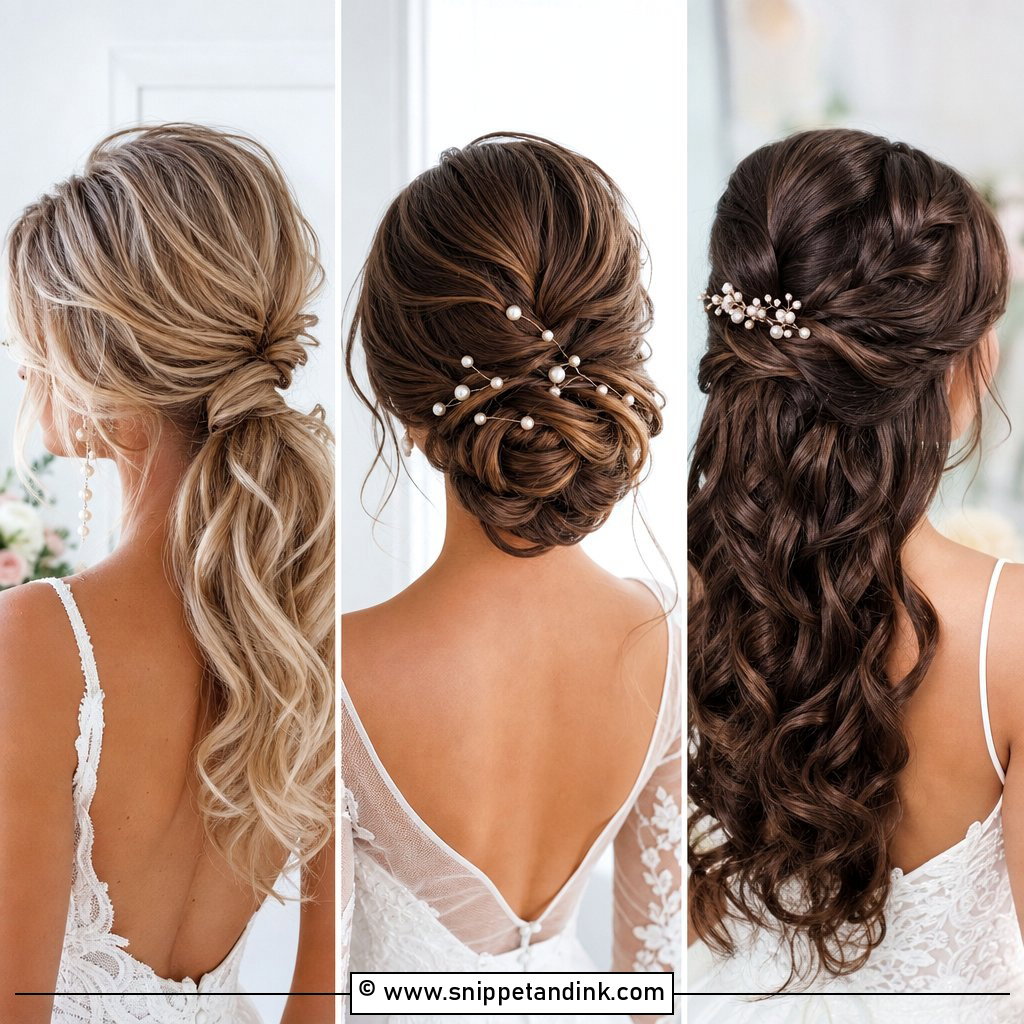
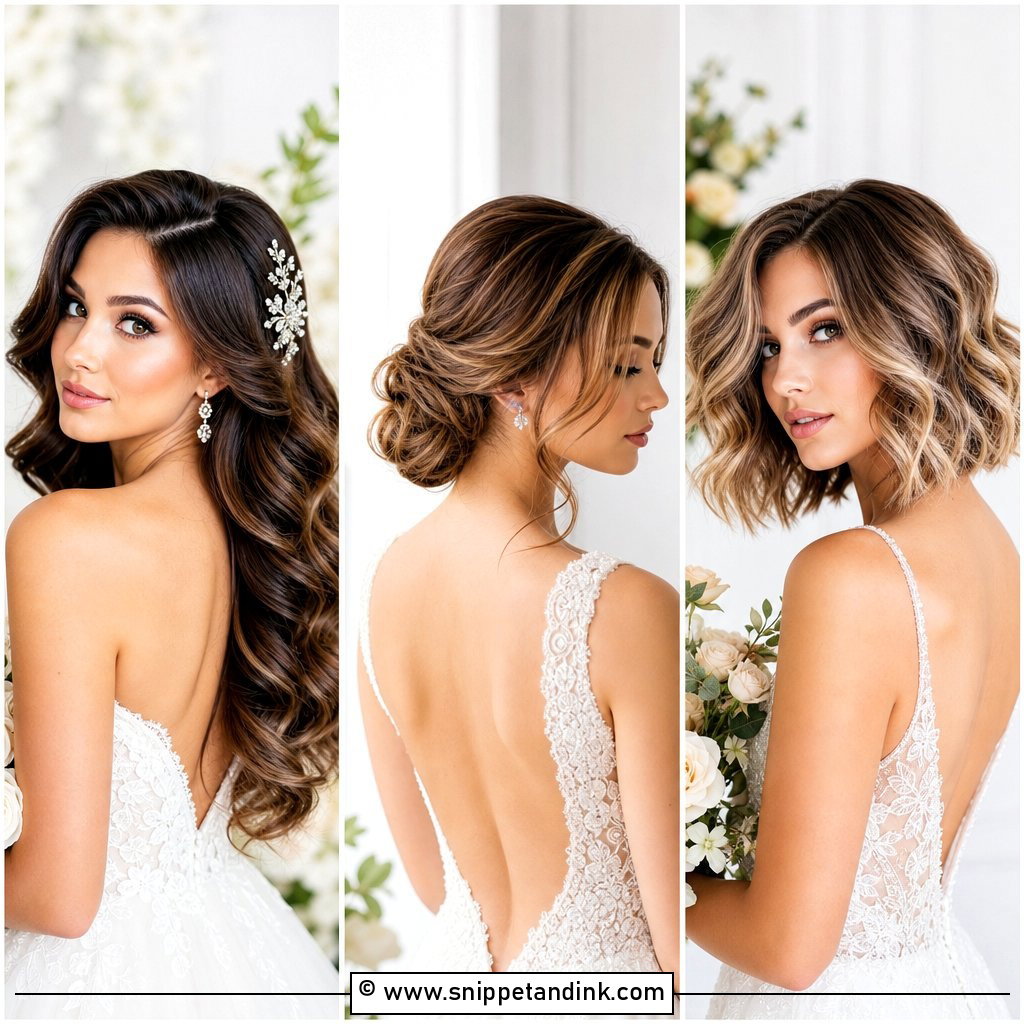
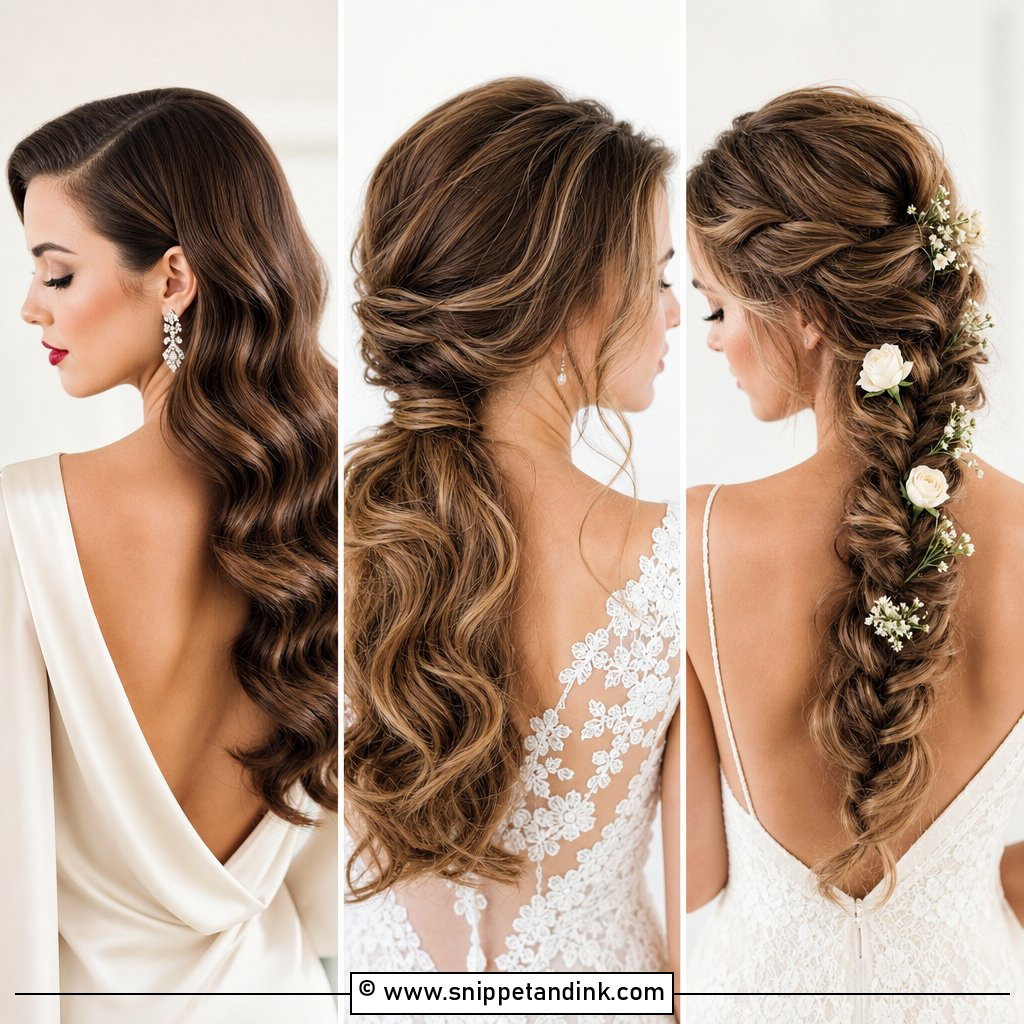
Half-up braiding keeps the front lifted and lets the length fall in curls behind. The braid can cross the crown, come from both sides, or blend into the curls. It suits long and medium hair, and anyone who wants a veil or floral pins without hiding their waves. I spray texture through the hair before braiding, since clean, slippery hair lets braided sections slide out by evening. Brush the curls out so they move; tight, crunchy ringlets look dated in photos.
3. Braided Wedding Bun
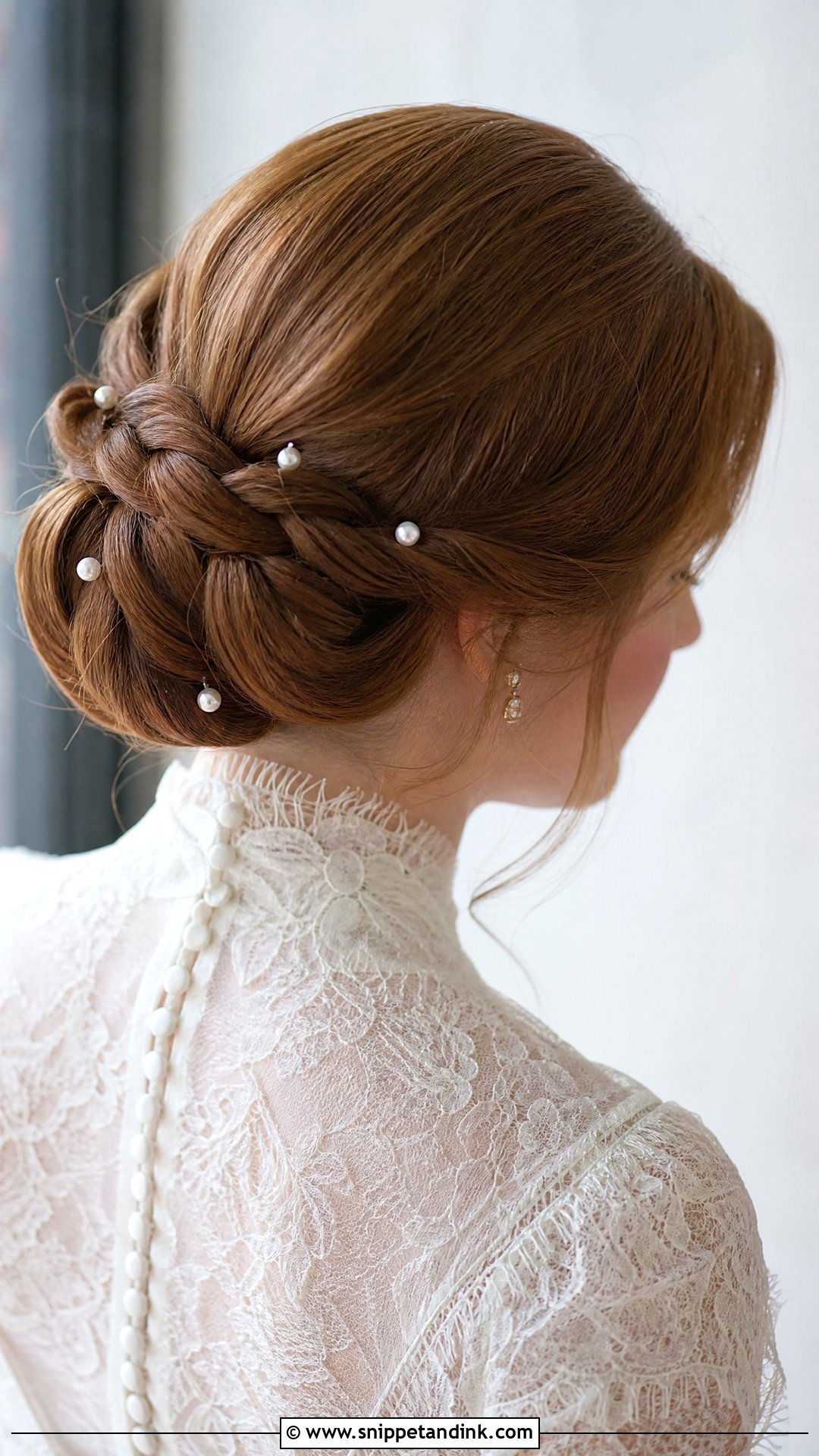
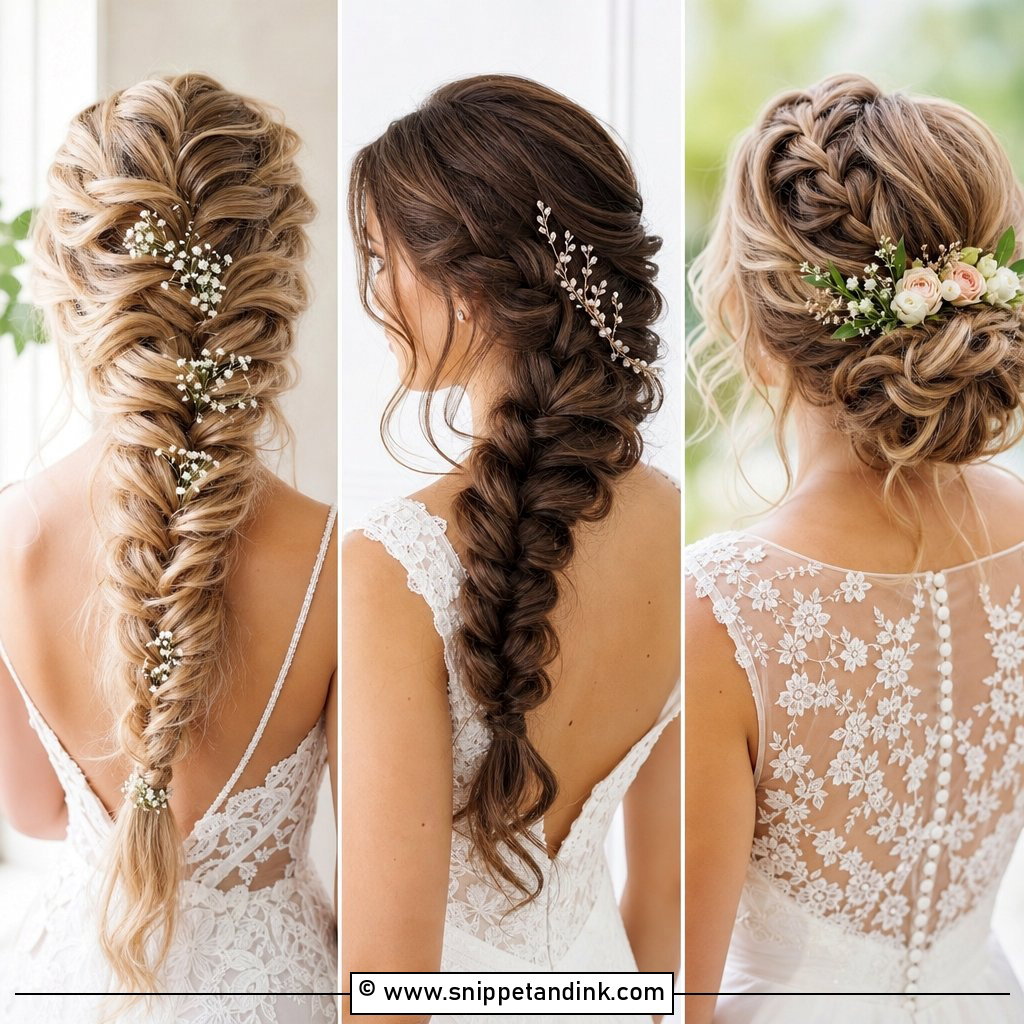
The braid can wrap the bun, run along the sides, or form the texture of the bun itself. Formal ceremonies and minimalist gowns suit it because it’s clean from the front and detailed from the back, which is the view guests get at the altar. On fine hair I use light padding or extensions so the bun has real size; a small bun can look tiny next to a full skirt. It stays lifted and cool on warm days. Small pearl pins or a comb are enough decoration.
4. Fishtail Braid Wedding Hair
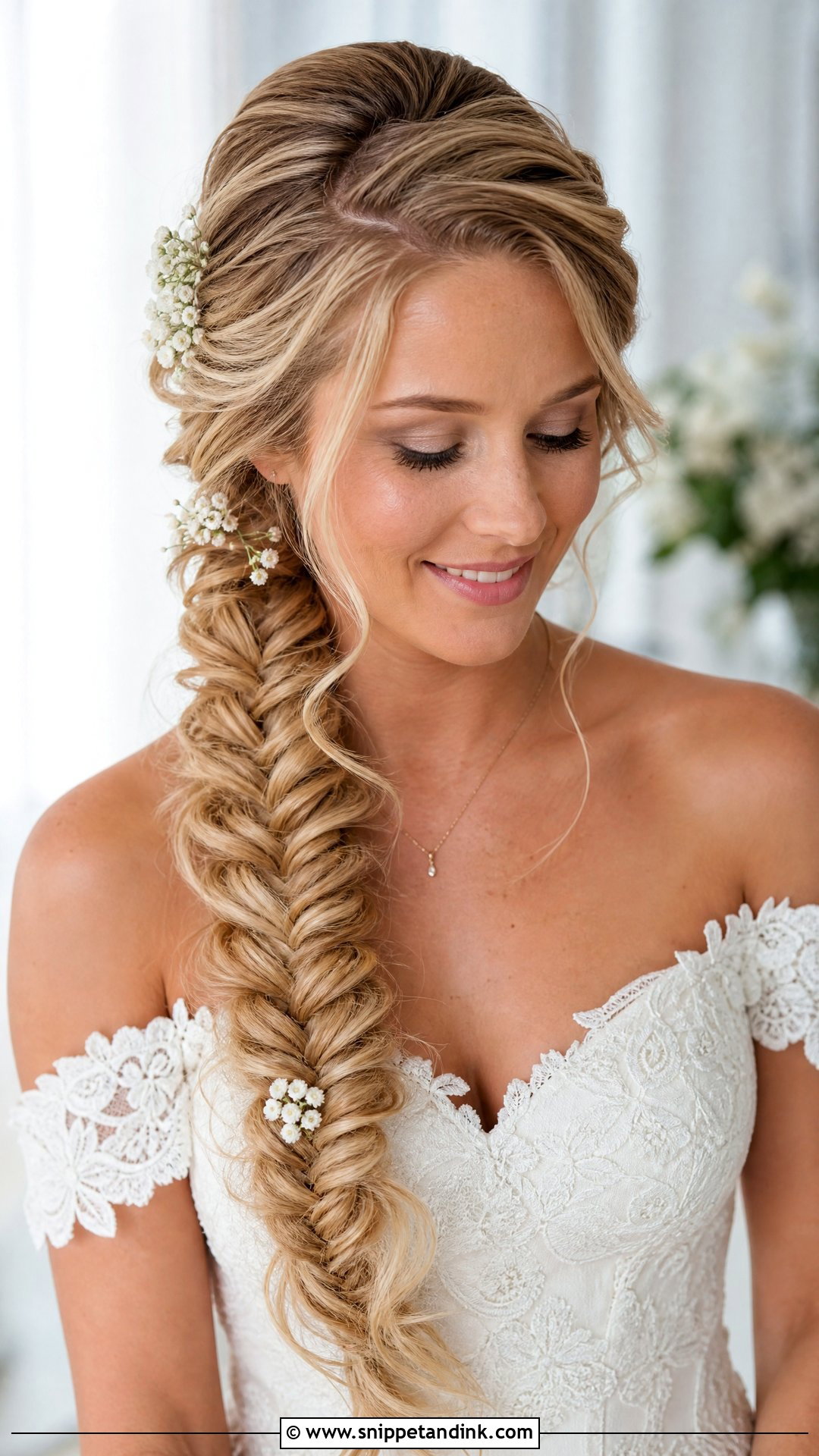
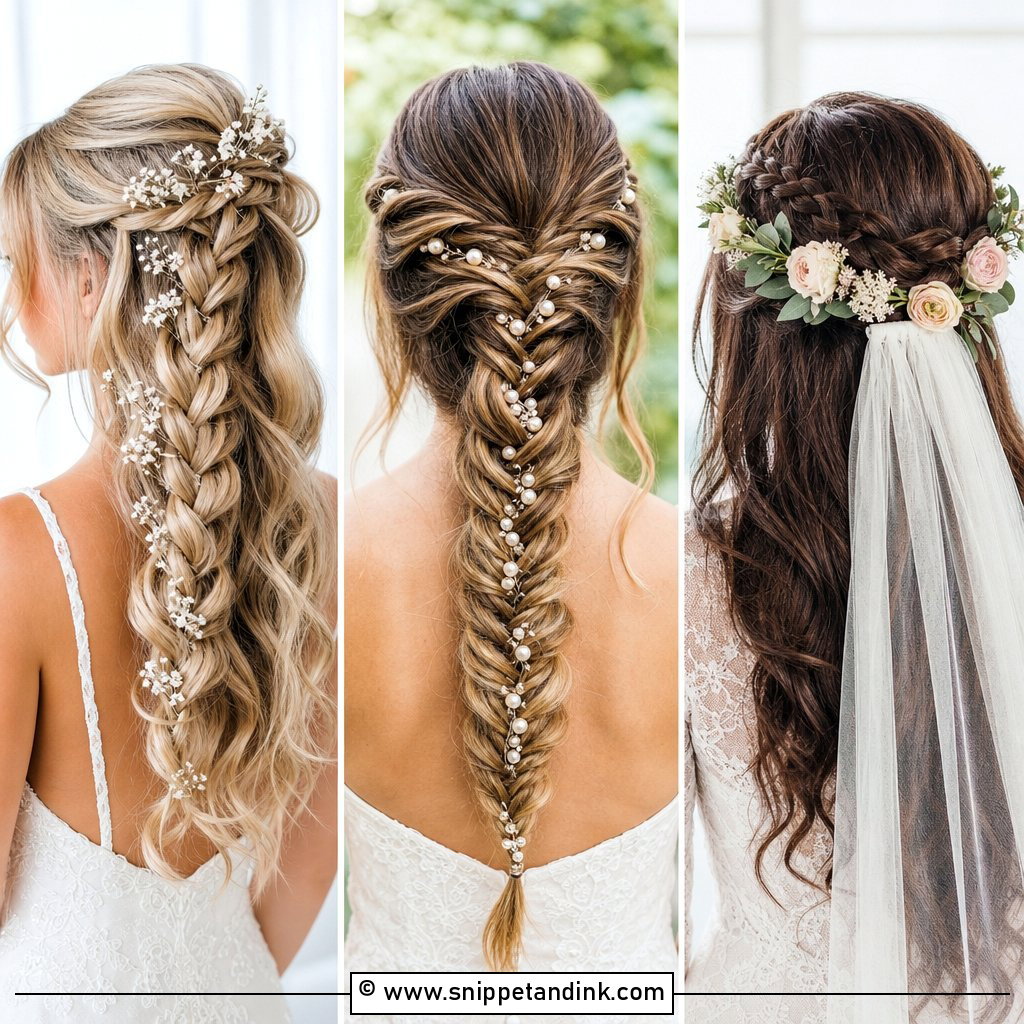
Fishtail braids have a woven, almost lace-like texture that holds up in close-up photos. They can go down the back, over one shoulder or into a half-up look. Pulling the edges apart after braiding is what gives the bridal shape, and it makes thin hair look thicker. My caution: a heavily pancaked fishtail frizzes faster in humidity, so for a beach wedding I’d keep it a little tighter. Tiny blooms, pearl pins or a sheer ribbon suit a garden or outdoor feel.
5. Crown Braid Wedding Hair
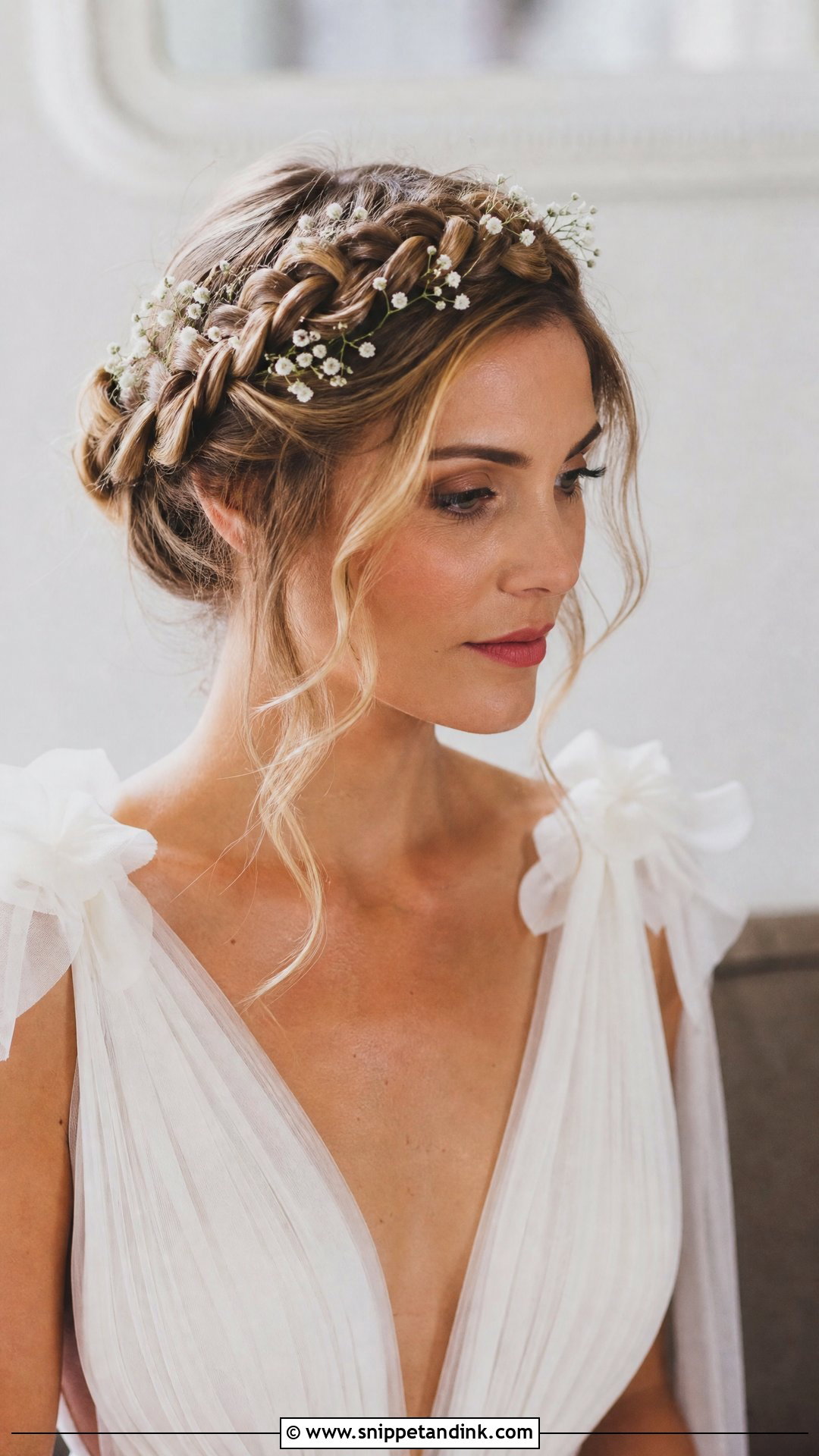
A crown braid wraps the head like a halo and keeps every strand secure, which is why I suggest it for outdoor weddings where wind is a worry. It lifts the face and looks romantic with small flowers or a veil set low at the back. It needs medium to long hair to make the full circle; shorter hair can use two braids pinned to meet. I keep the front pieces relaxed, because a tight crown braid can read as severe rather than bridal.
6. Side Braid Wedding Hair
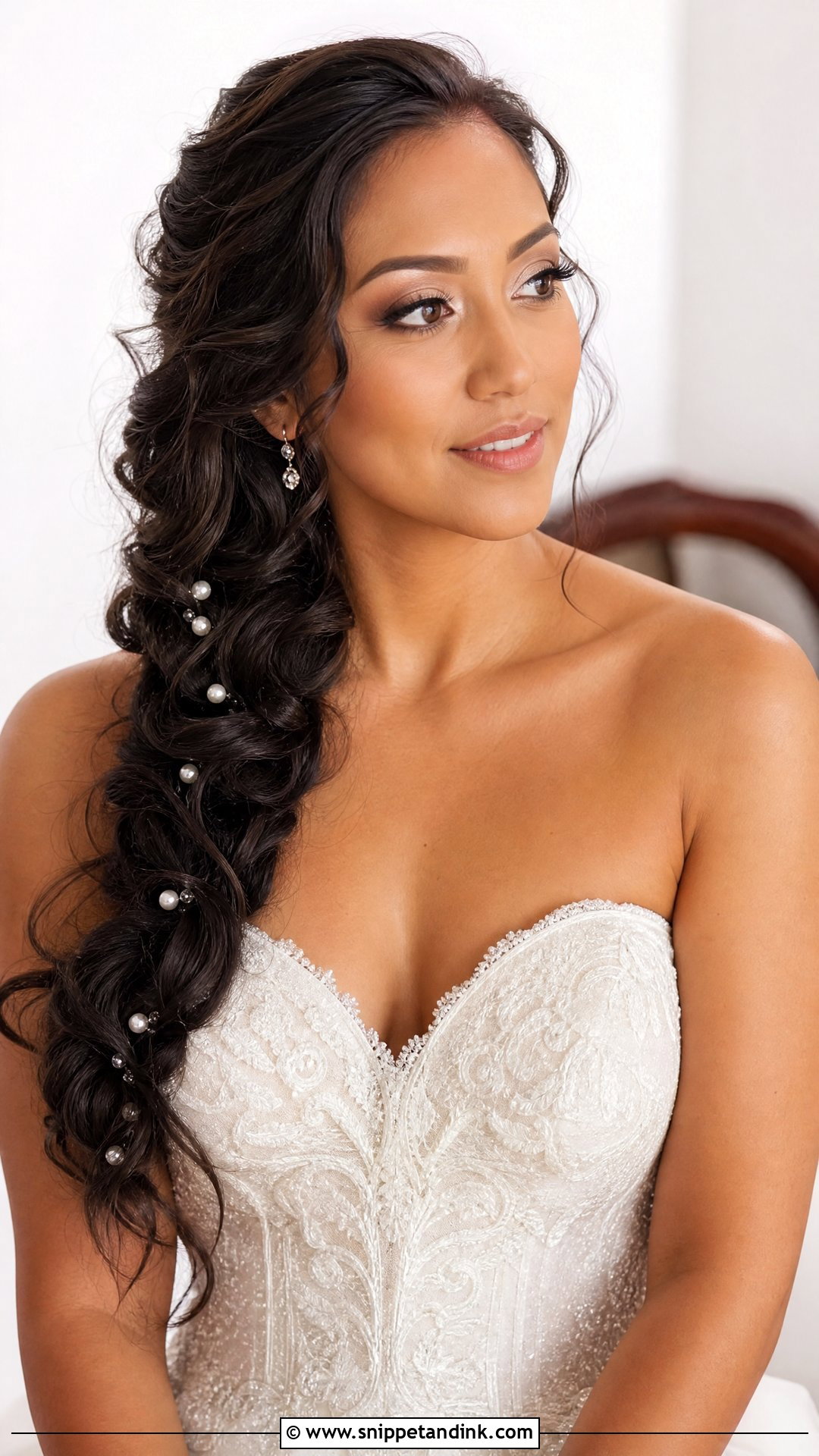
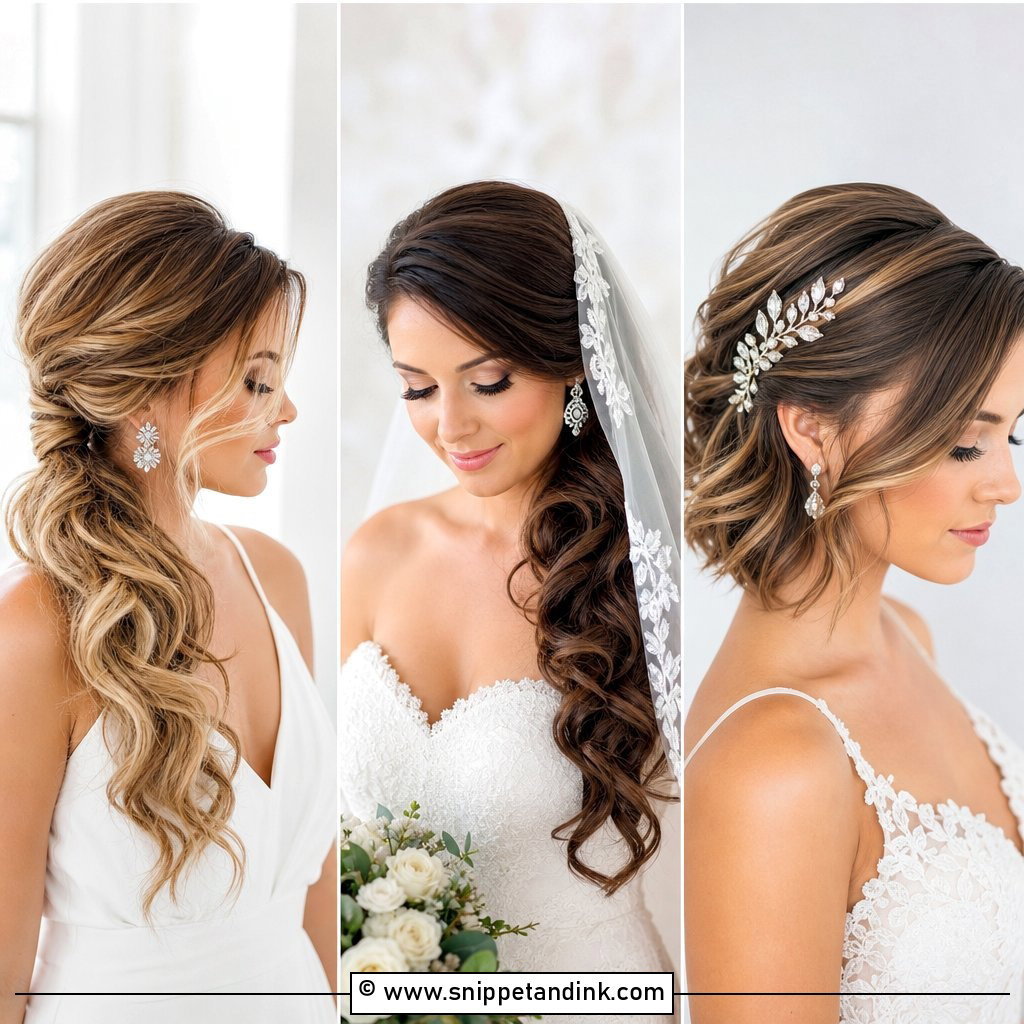
Bringing the braid over the shoulder keeps it visible from the front. It flatters one-shoulder, strapless and sweetheart necklines, and it manages very long hair by gathering the length without hiding it. With a one-shoulder dress, I put the braid on the bare side so it doesn’t fight the strap. Pancake it for fullness and leave soft pieces near the face. A few pins or fresh flowers along the braid finish it.
7. Boho Braided Wedding Hair
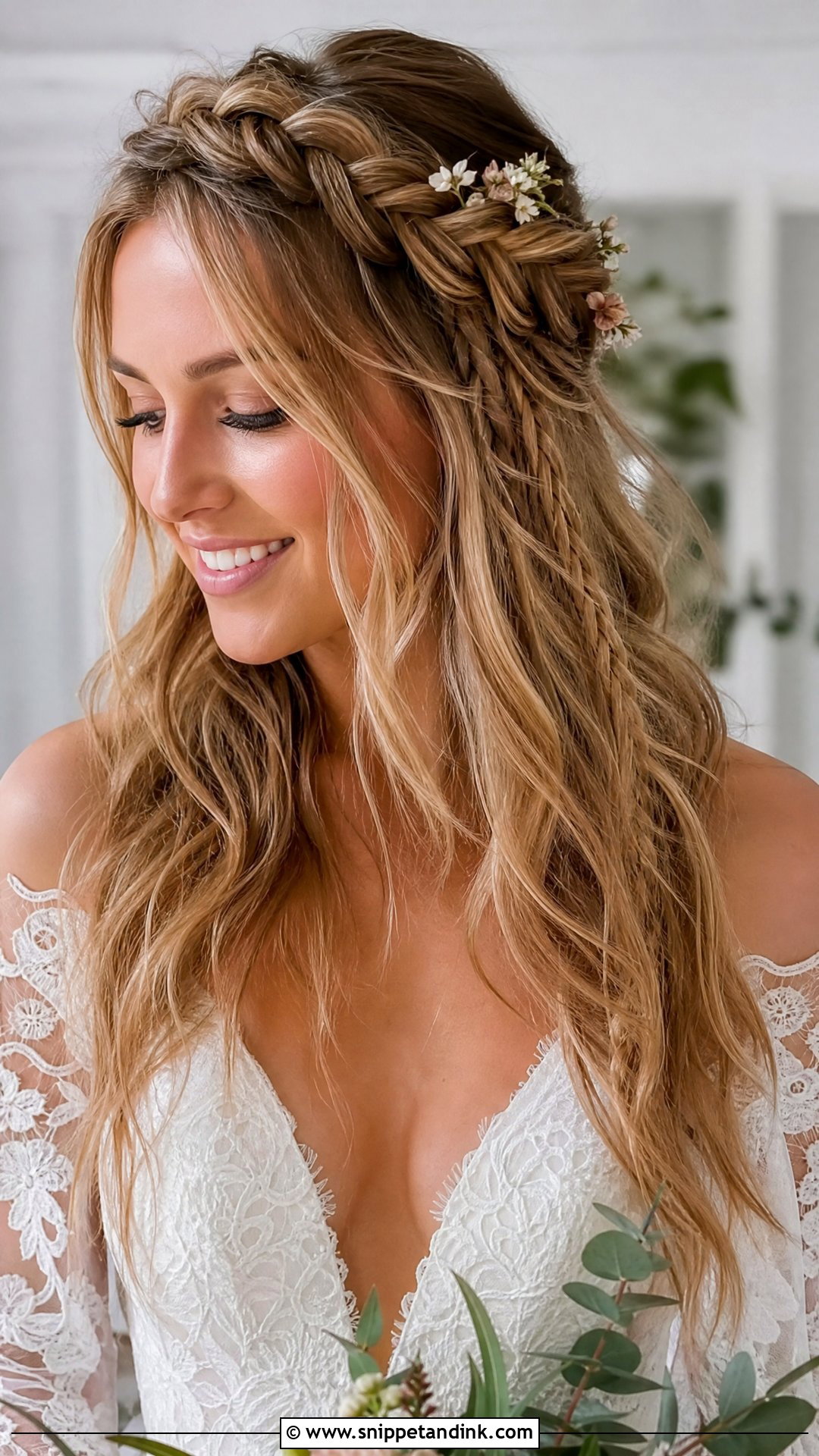
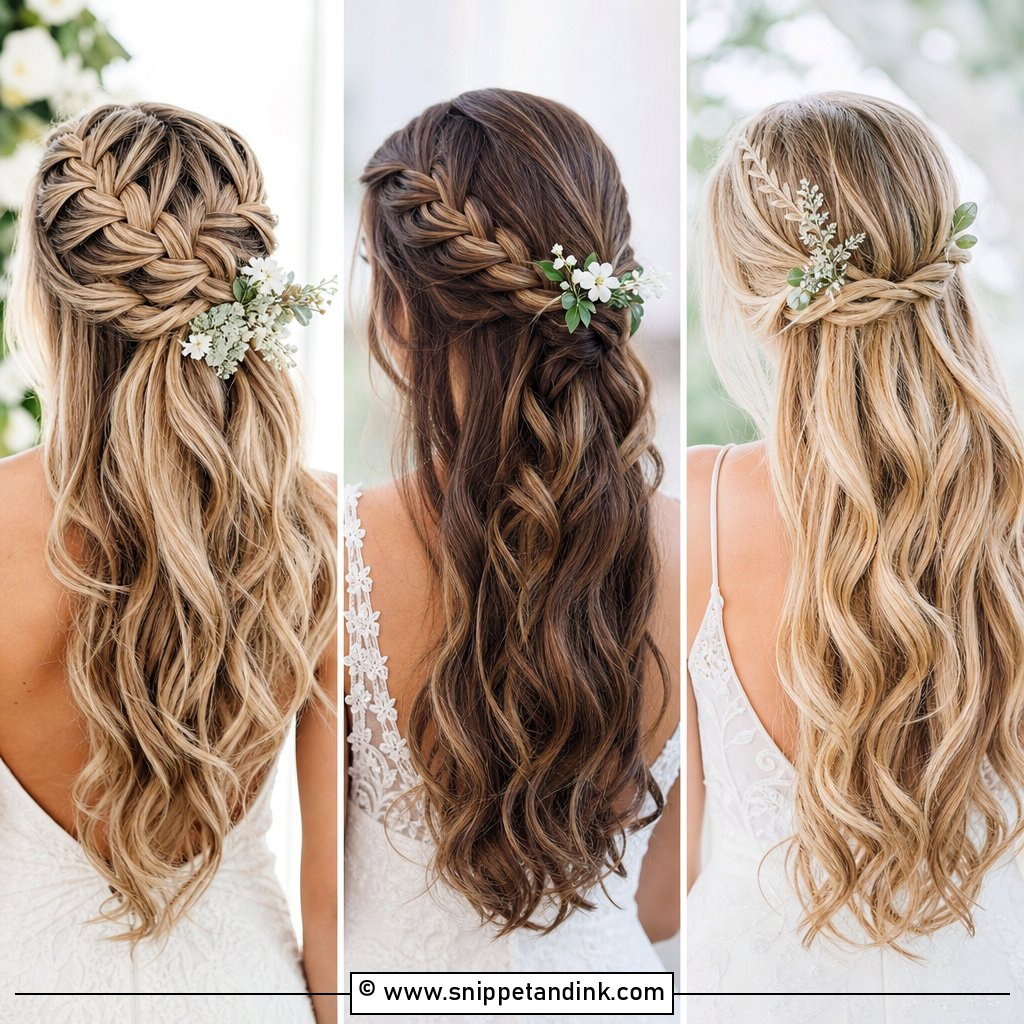
Boho braiding mixes loose waves, small accent braids, a soft crown braid or a messy braided bun. It sits comfortably at garden, beach and barn weddings. Relaxed doesn’t mean unstructured, though: I pin every loosened braid from underneath so the look survives the whole day. Floral pins, baby’s breath or a thin ribbon add charm. Keep accessories light so the braid stays the focus.
8. Waterfall Braid Wedding Hair
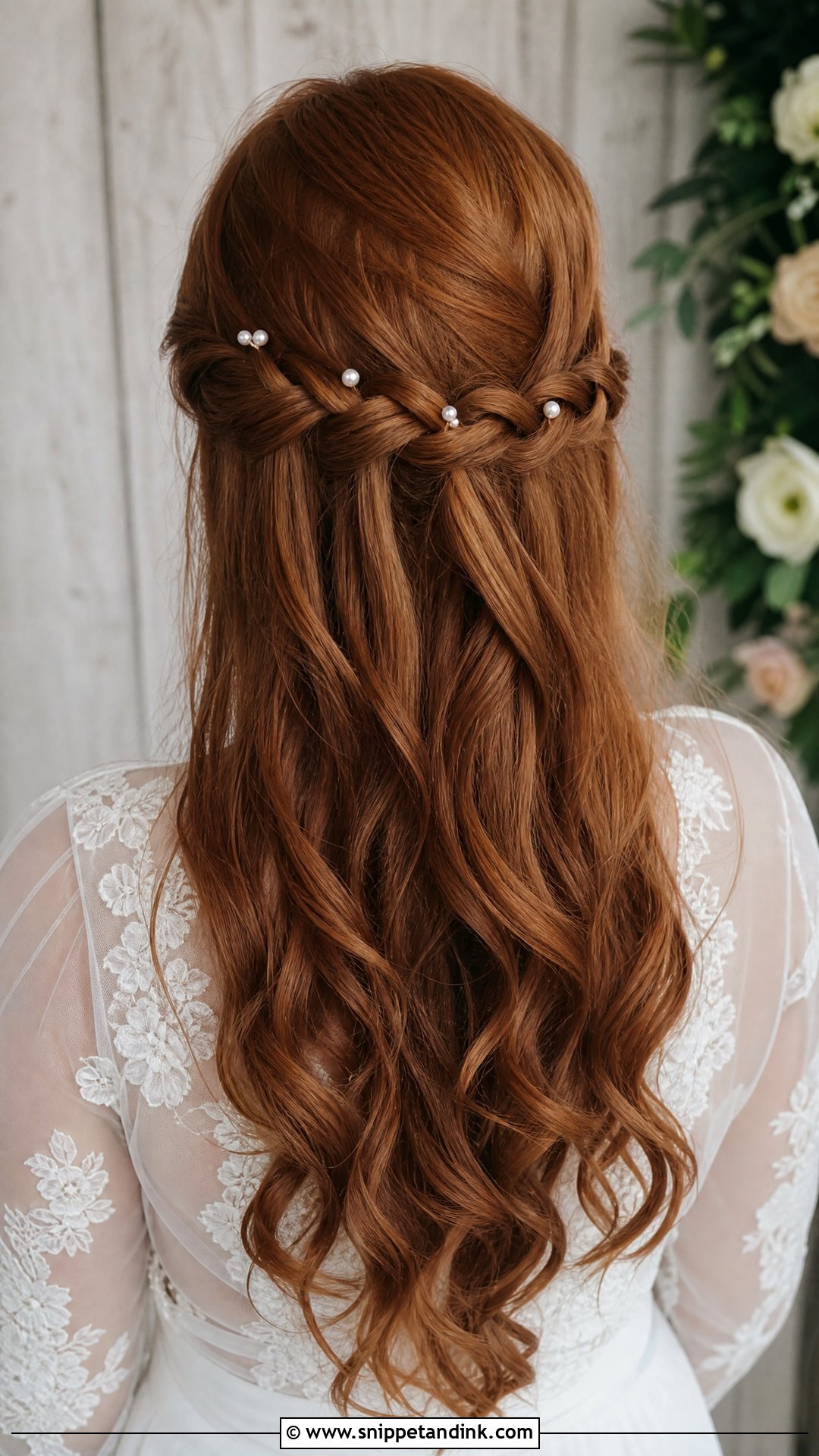
Waterfall braid wedding hair lets strands drop through a braid that crosses the back or side of the head, so most of the length stays loose. It depends on the waves under it; if the curls drop, the braid looks lost. I set curls with a light hold product and let them cool fully before touching them. It also works for bridesmaids, since it looks polished without competing with the bride.
9. French Braid Wedding Updo
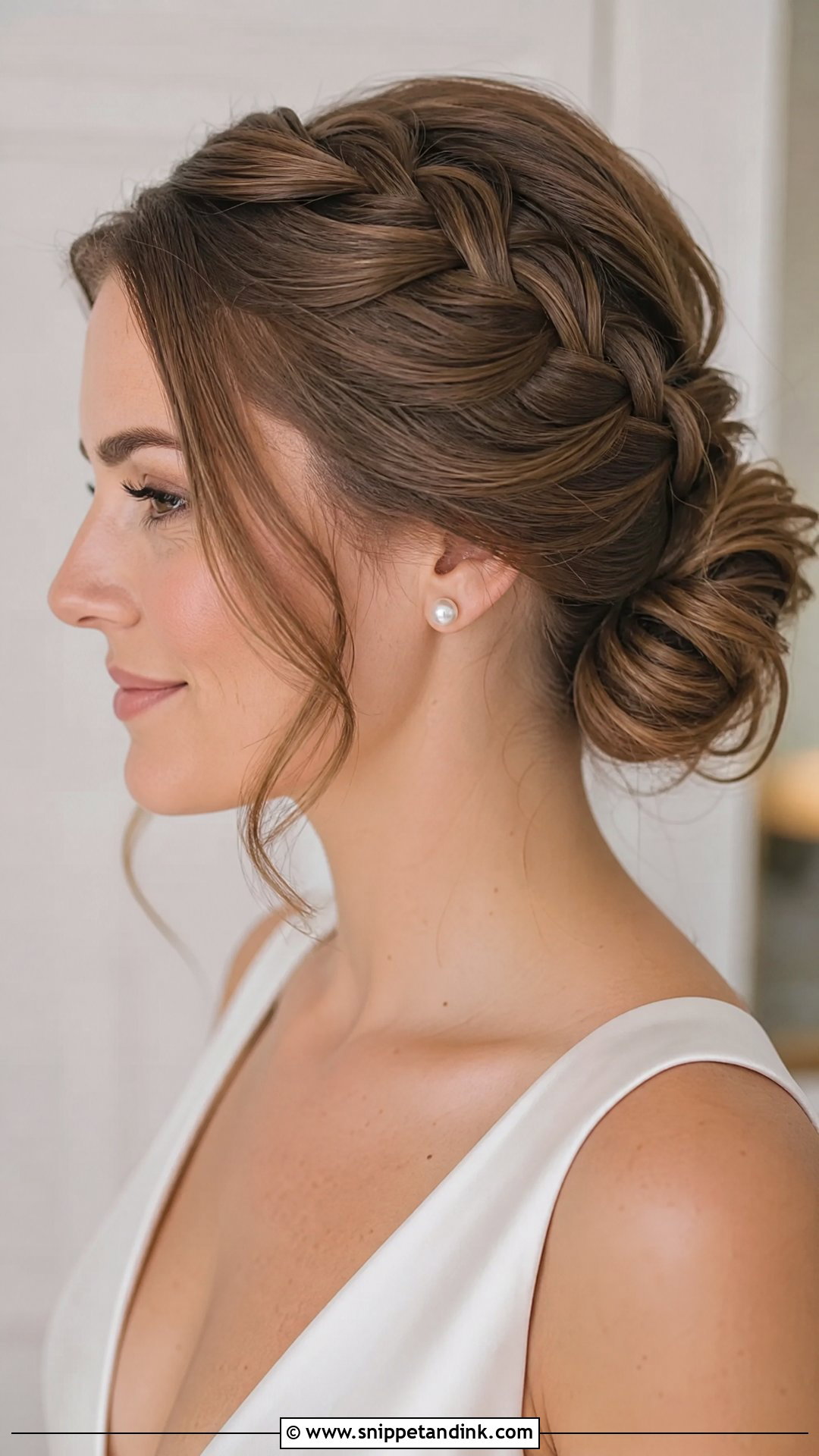
A French braid can start at the crown, run down the back and tuck into a low bun, or come from one side for an asymmetrical shape. It holds strongly without looking heavy once it’s gently loosened. Layered cuts are the challenge: short pieces poke out of a French braid, so I smooth them in with a little styling cream as I go. Classic gowns and lace sit well with it. A few soft tendrils around the face keep it from looking too neat.
10. Dutch Braid Wedding Hair
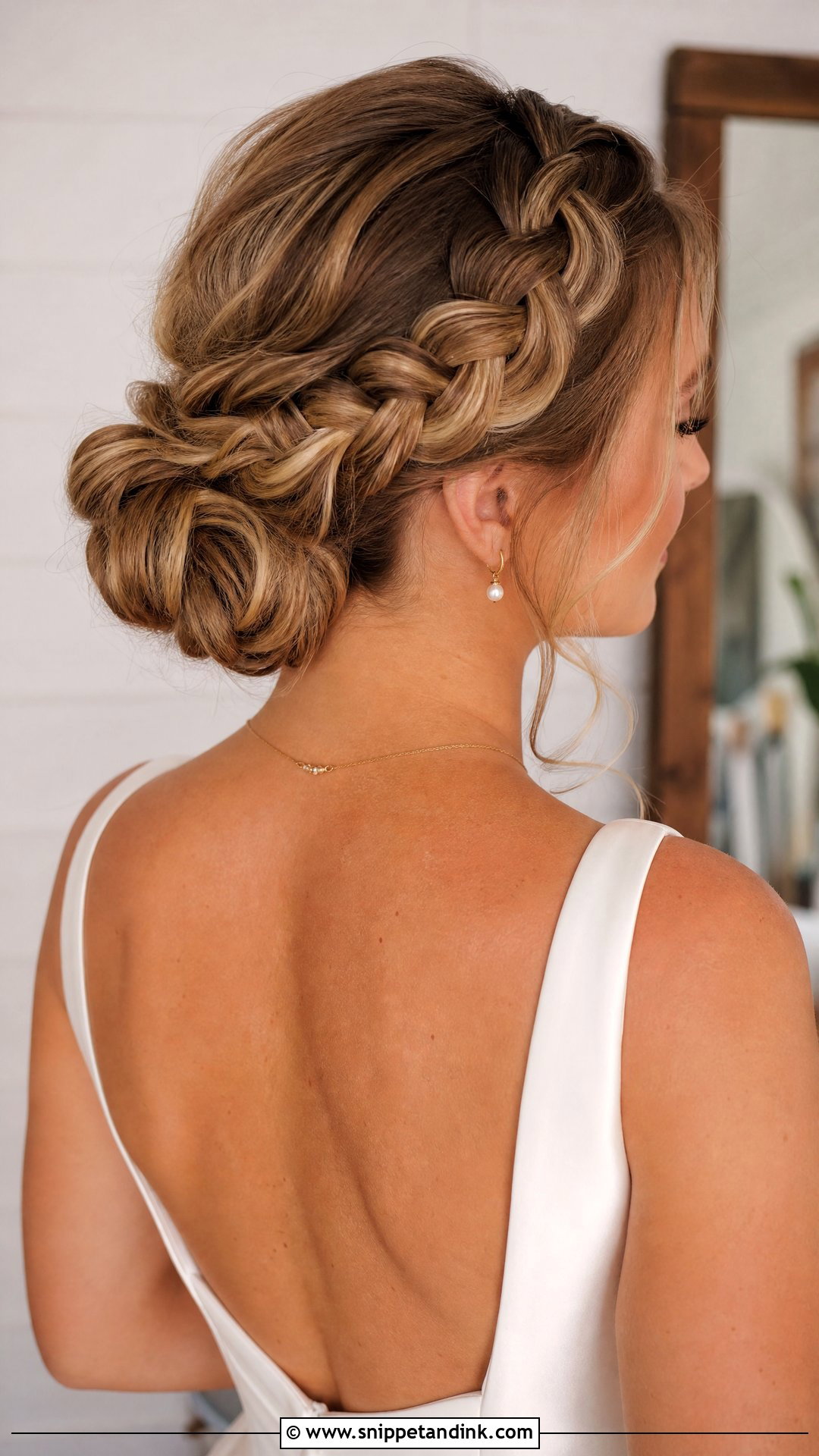
Because the strands cross under, a Dutch braid sits raised on top of the hair and shows clearly in photos. It can be a double braid into a bun, a single braid down the back, or a bold crown. Thick hair suits it well, since the braid controls volume while showing texture. I expand it slightly for a bridal softness and keep the hairline smooth so it doesn’t look athletic.
11. Braided Ponytail Wedding Hair
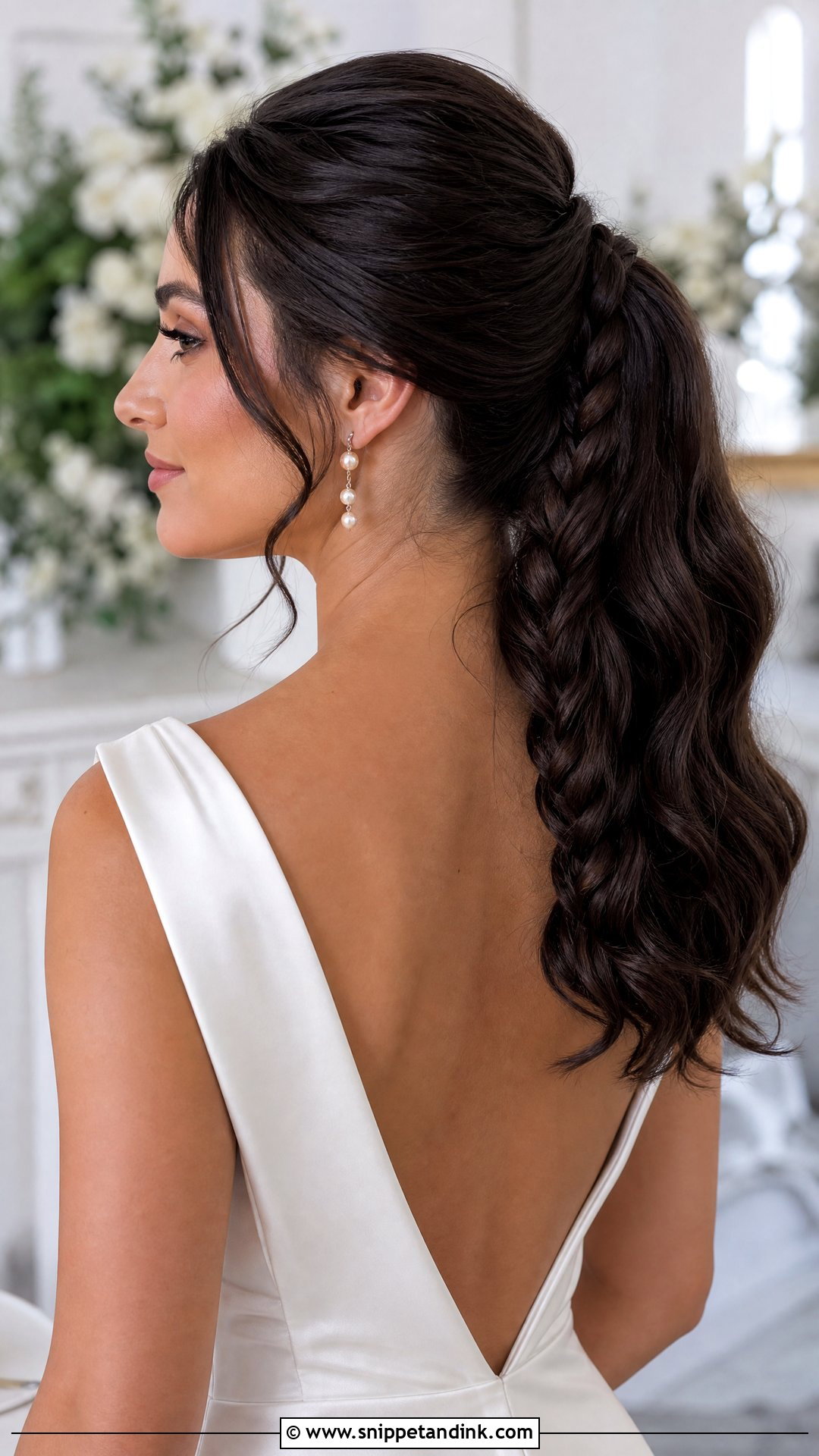
A braided pony sits well with sleek gowns, square necklines, satin and modern accessories. It can be low, mid or high; the higher it goes, the more it pulls on the scalp over a long day, so I test the height at the trial. A braid wrapped through the ponytail adds texture and keeps the length under control while you dance. I wrap a section of hair around the base to hide the elastic, wave the ends, and finish with shine spray.
12. Box Braids Wedding Updo
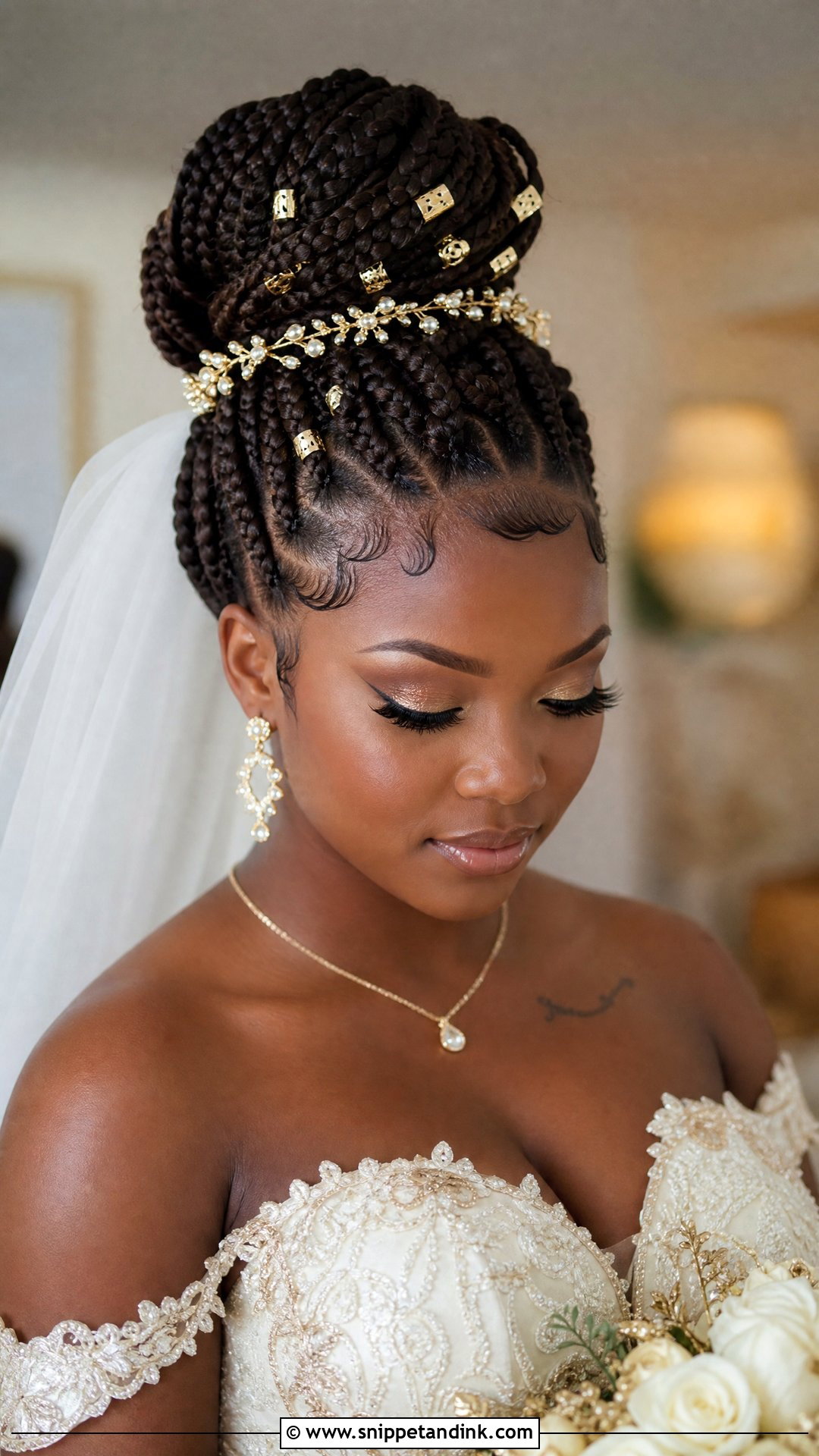
A box braids wedding updo can be swept into a high bun, twisted into a low chignon or shaped into a crown. It feels personal and secure, and it takes tiaras, pearl pins, gold cuffs or a veil under the bun easily. Shape is about balance with the dress: a high bun lengthens the neck, a low one feels softer. A full head of braids is heavy when piled up, so I pin it in sections and keep tension light at the edges.
13. Knotless Braids Wedding Hair
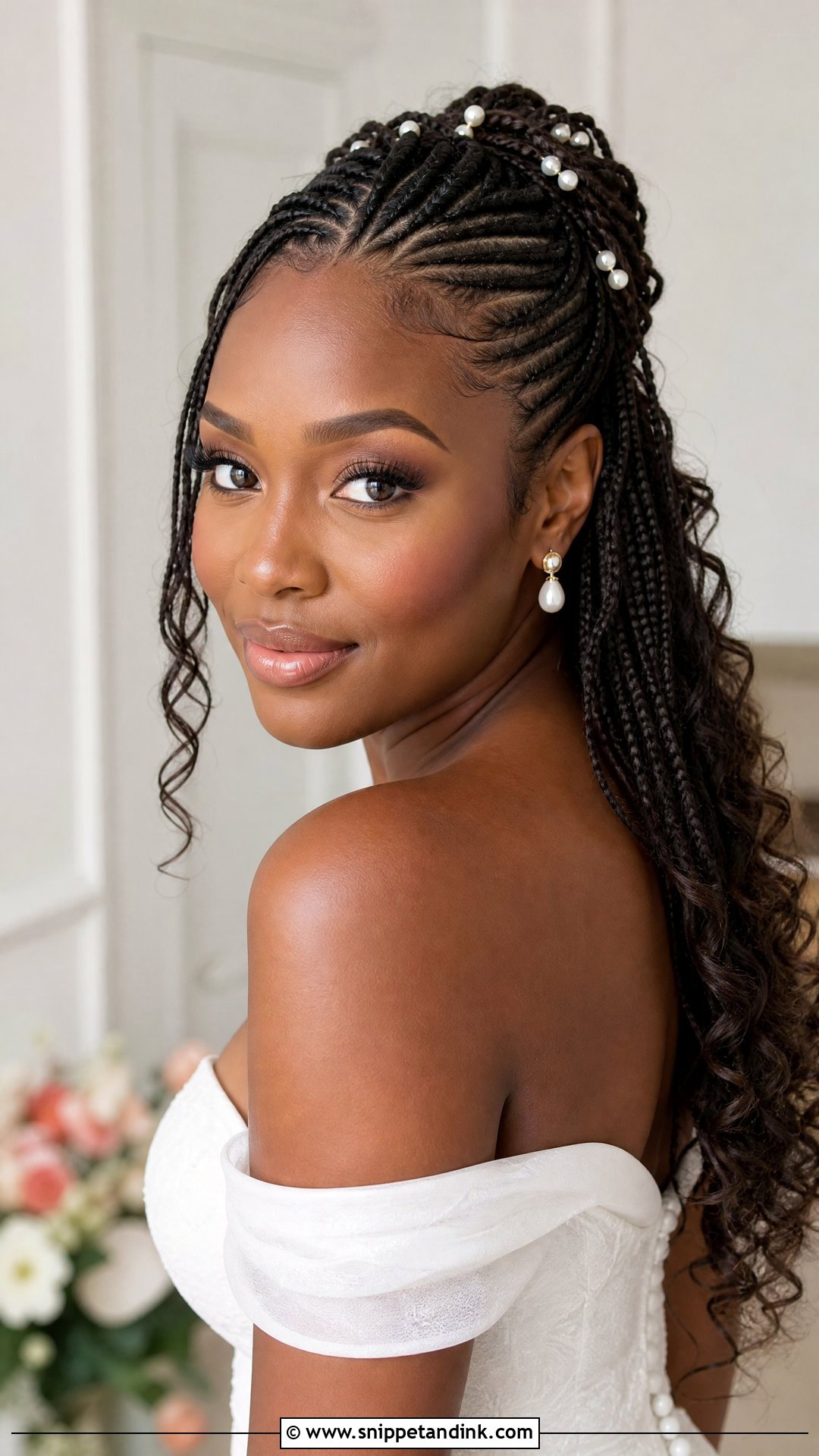
Knotless braids start with your own hair at the root rather than a knot, so they lie flatter and put less pull on the scalp than traditional box braids. That makes them comfortable for a long wedding day. They can be worn in a low bun, a half-up pony, swept to the side or long with curled ends. Having them installed before the wedding week means less stress on the actual day, with just a styling session that morning. Pearl accents, gold cuffs or a delicate headpiece make them bridal.
14. Braided Wedding Hair With Flowers
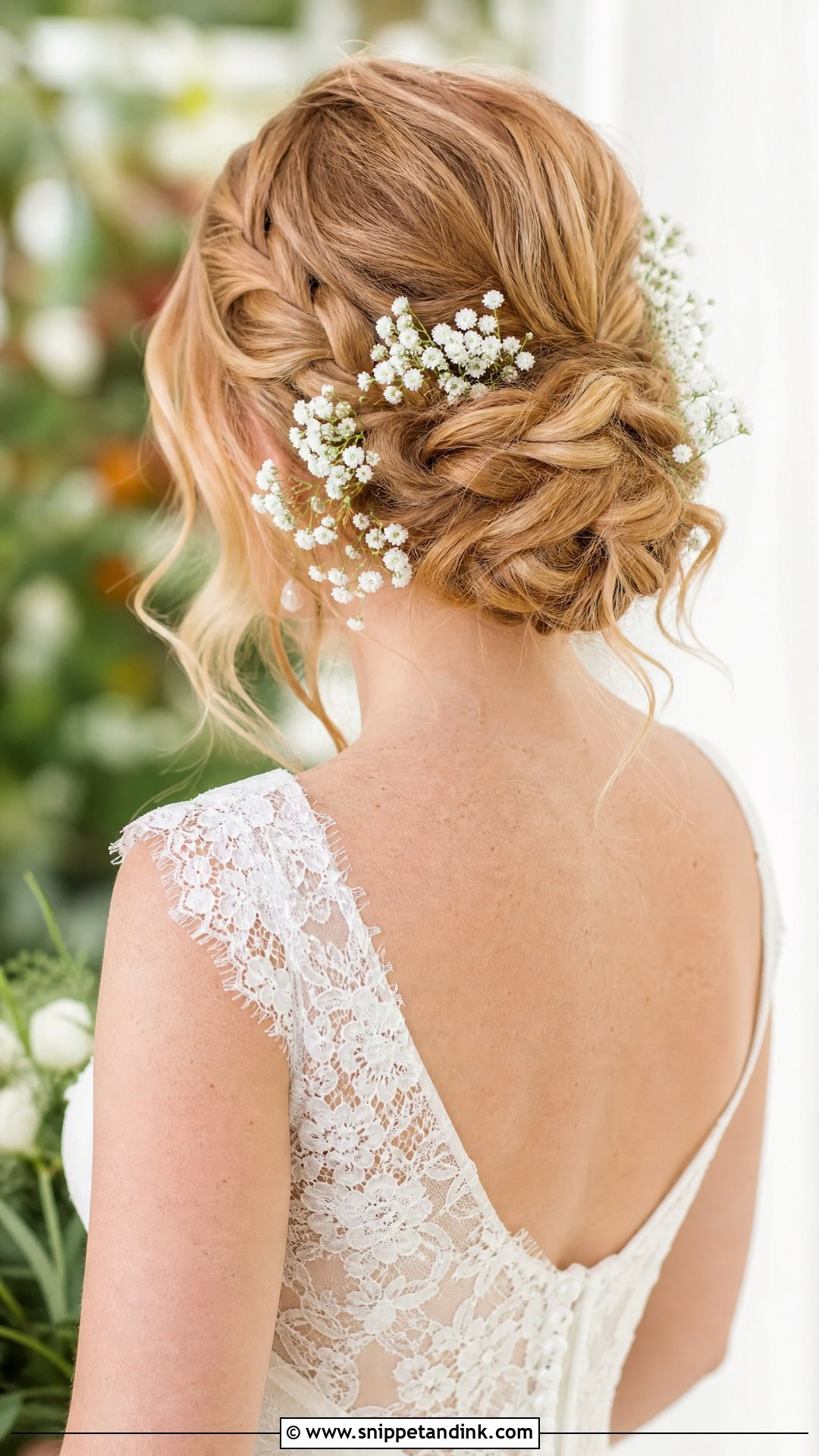
Flowers can sit in a crown braid, along a side braid or around a braided bun. I keep the blooms small so the braid still shows. Some flowers wilt within hours out of water while others last all day, so I ask the florist which of their stems will hold up in your weather, and to wire them for me. Lace gowns and soft waves suit this. Keep the braid loose and softly pinned so the flowers have something to sit in.
15. Braided Wedding Hair With Veil
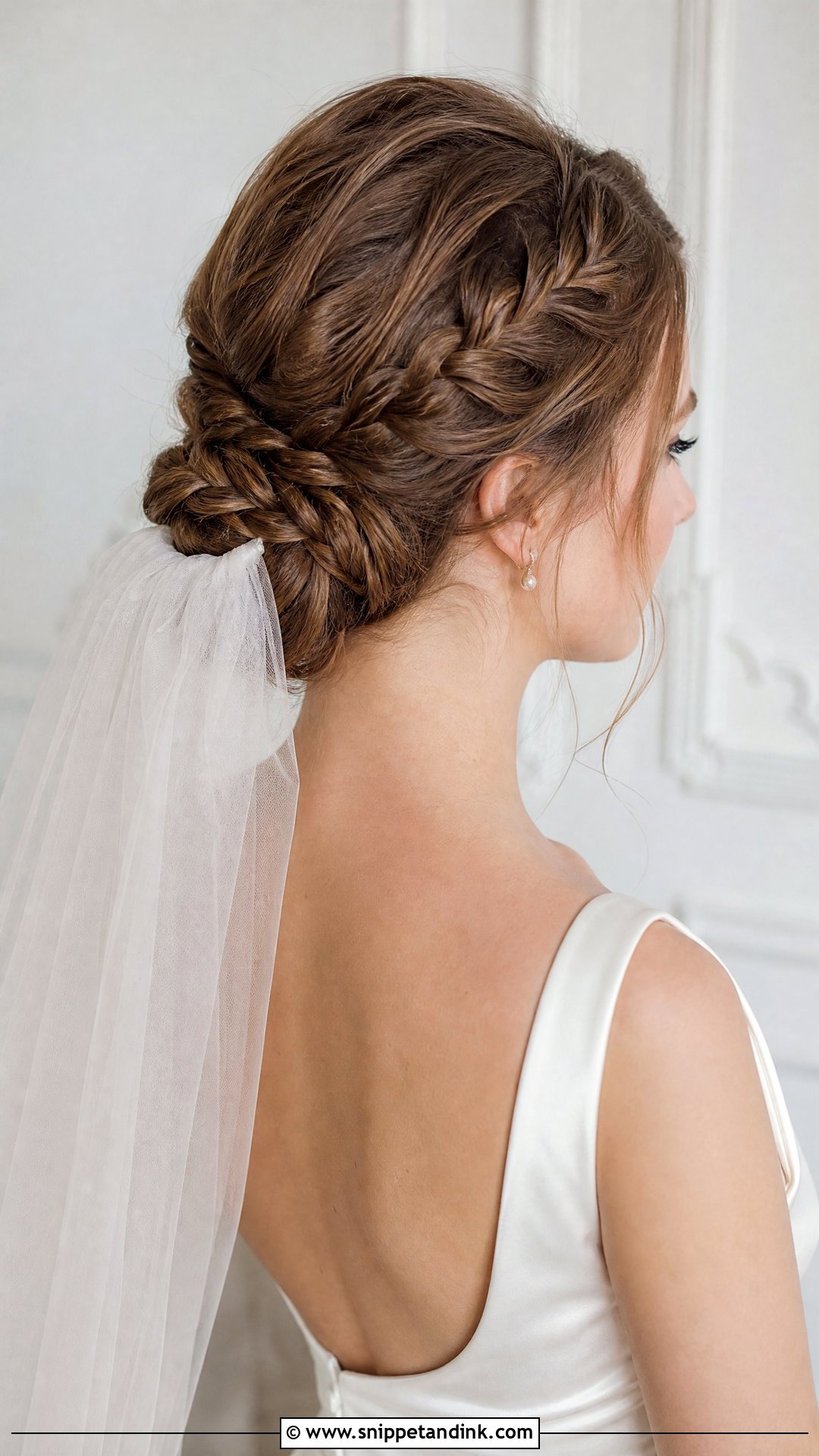
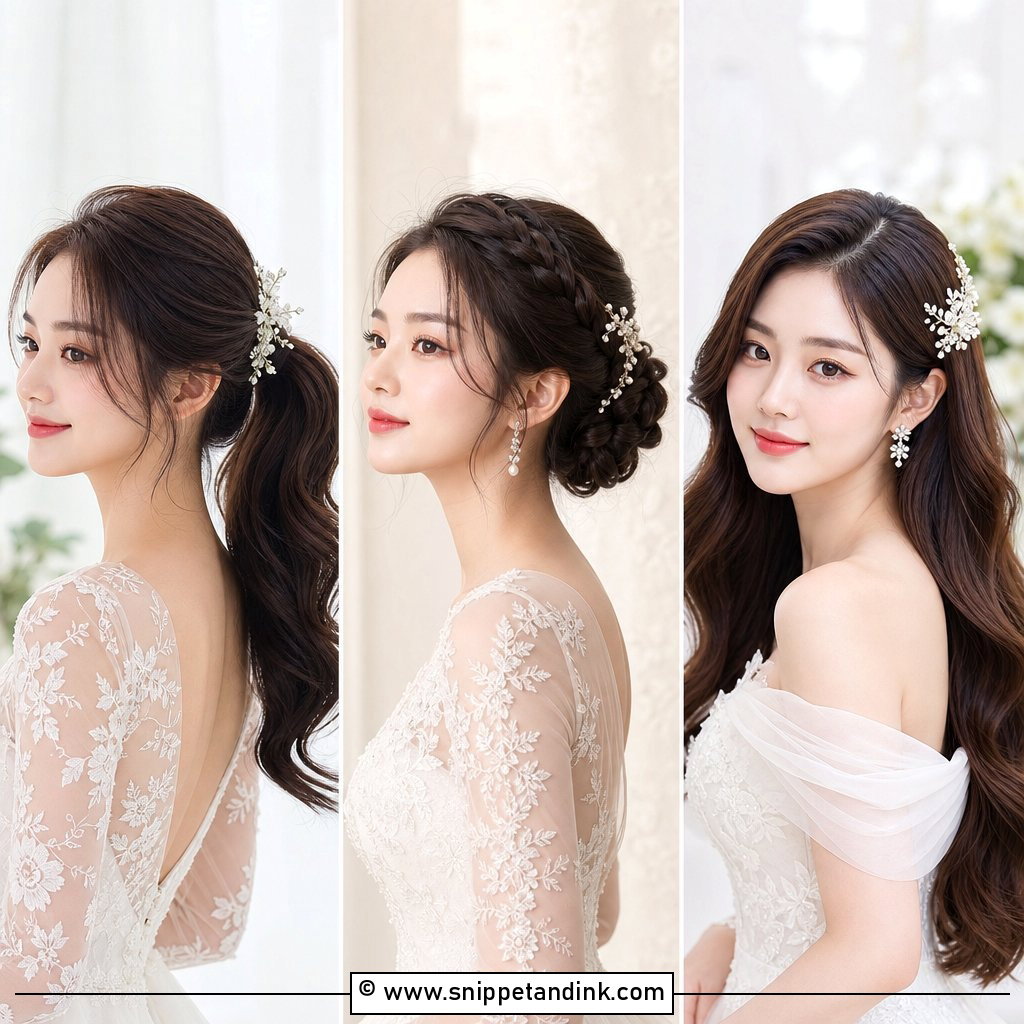
A braid gives a veil comb something solid to grip, whether it’s a low bun, half-up style or crown braid. For a high veil, I add a little volume at the crown and secure a braided section underneath for the comb. For a low veil, a braided bun at the nape does the job. Bring your veil to the trial so we can test the exact placement, and plan a style that looks finished without the veil too, since it usually comes off before the reception.
Your Hair’s Last Month Before the Wedding
A braid’s look depends on how your hair behaves on the morning, and that’s shaped in the weeks before. I tell brides to get a trim about two to four weeks out, so ends are healthy but not blunt and freshly cut. Color is best done a week or two ahead so the tone has settled. Avoid trying new products in the final week; a new conditioner can make hair slippery enough that braids loosen. Wash the night before unless your stylist says otherwise.
Turning a Ceremony Braid Into Party Hair
Many brides want a small change for the reception, and braids make that easy if it’s planned at the trial. A half-up braid can be pulled into a ponytail in a few minutes. A braided bun can be let down into braided waves if the braid was done first and the bun pinned over it. The veil should come out from the bottom of the comb upward, so it doesn’t drag the braid. Ask me to show a bridesmaid the switch so you’re not hunting for help when it’s time.
One thing I avoid is promising a full restyle mid-reception. Brushing out a braid that has held all day leaves crimped, puffy hair, and without heat tools it rarely settles. Small changes made with the braid still in look far better than starting over.
Test One Braid on Your Real Hair Before the Day
Braids cover a wide range, from boho to sleek, classic to protective. What decides it is your neckline, your hair length and texture, your veil, your venue and how much you want around your face. A braided bun gives polish, a half-up braid shows length, a crown braid holds up in wind, and a ponytail feels modern. Bring two or three favorites to your trial and ask me how each one will hold on your actual wedding day. Your hair’s real behavior counts for more than any picture.
You'll Like These Ideas:


Leave a Reply