
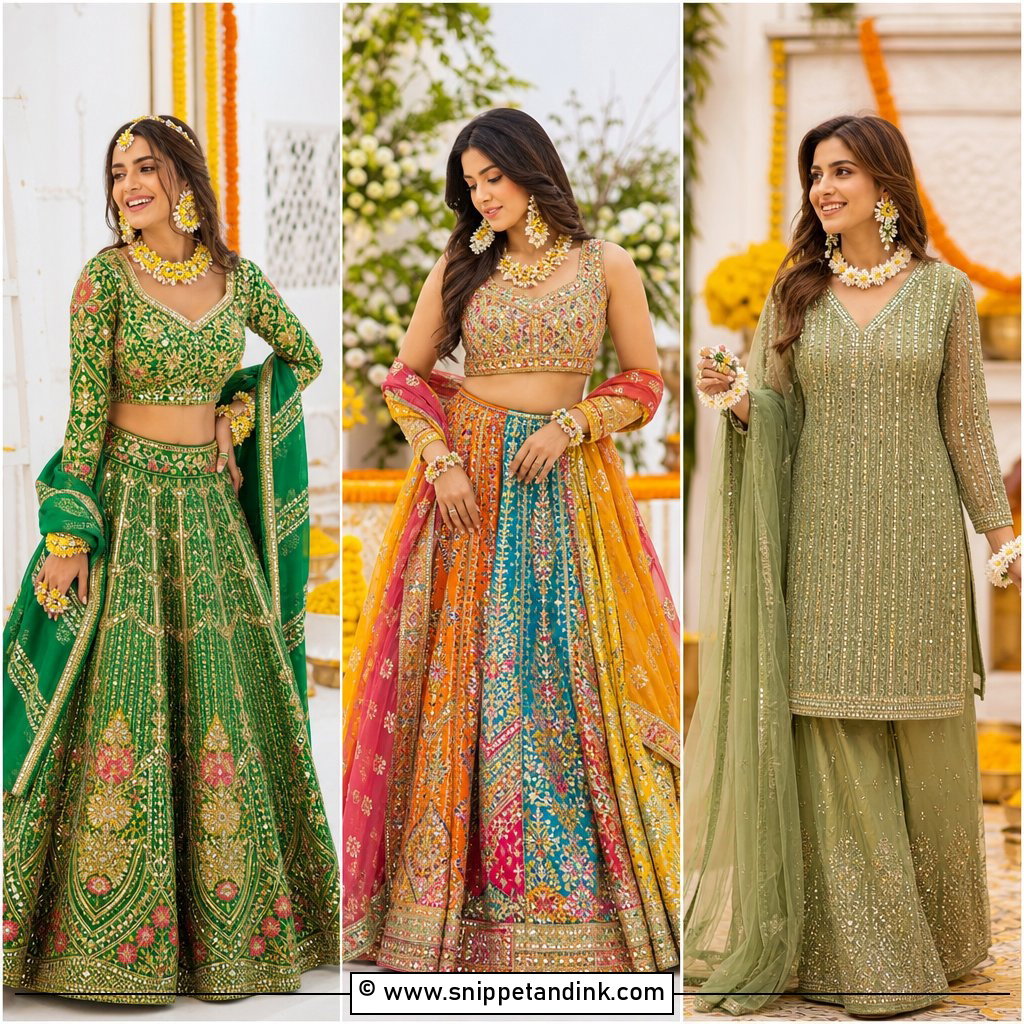
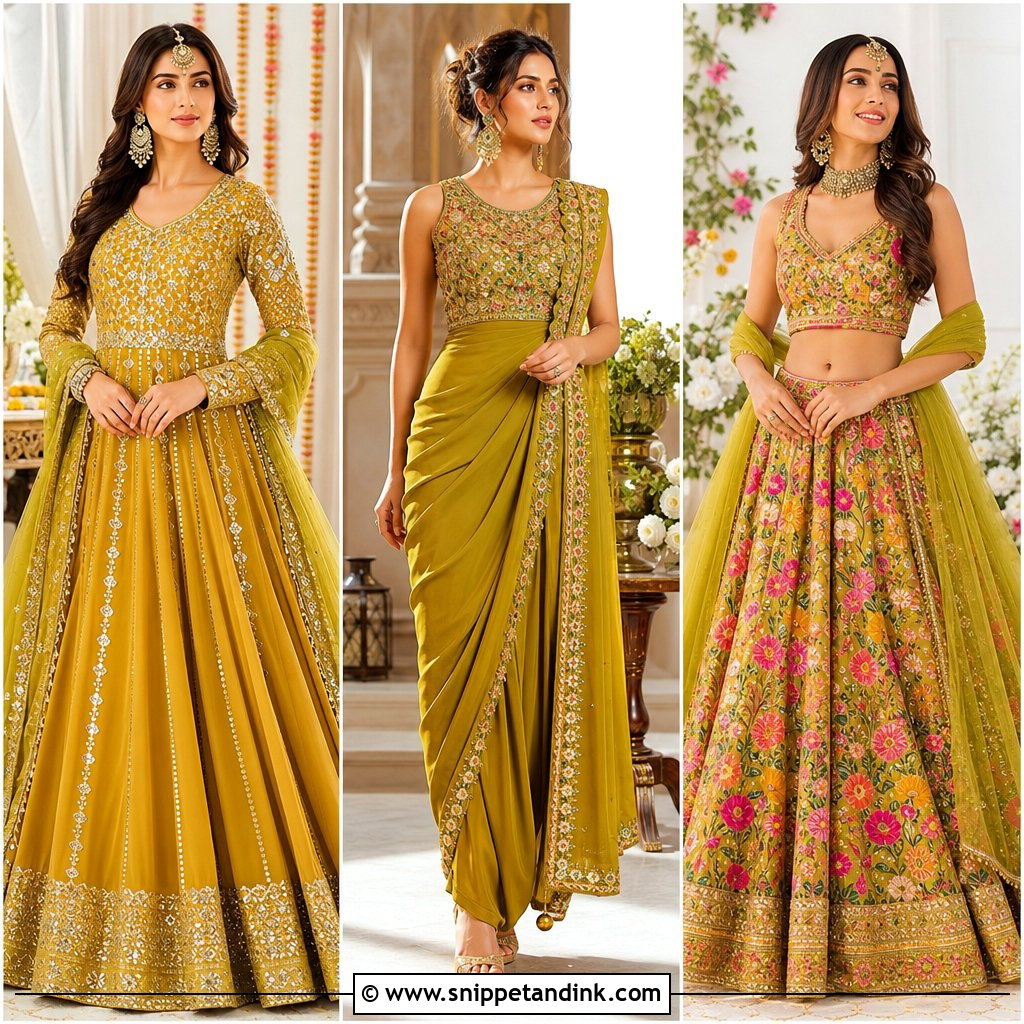
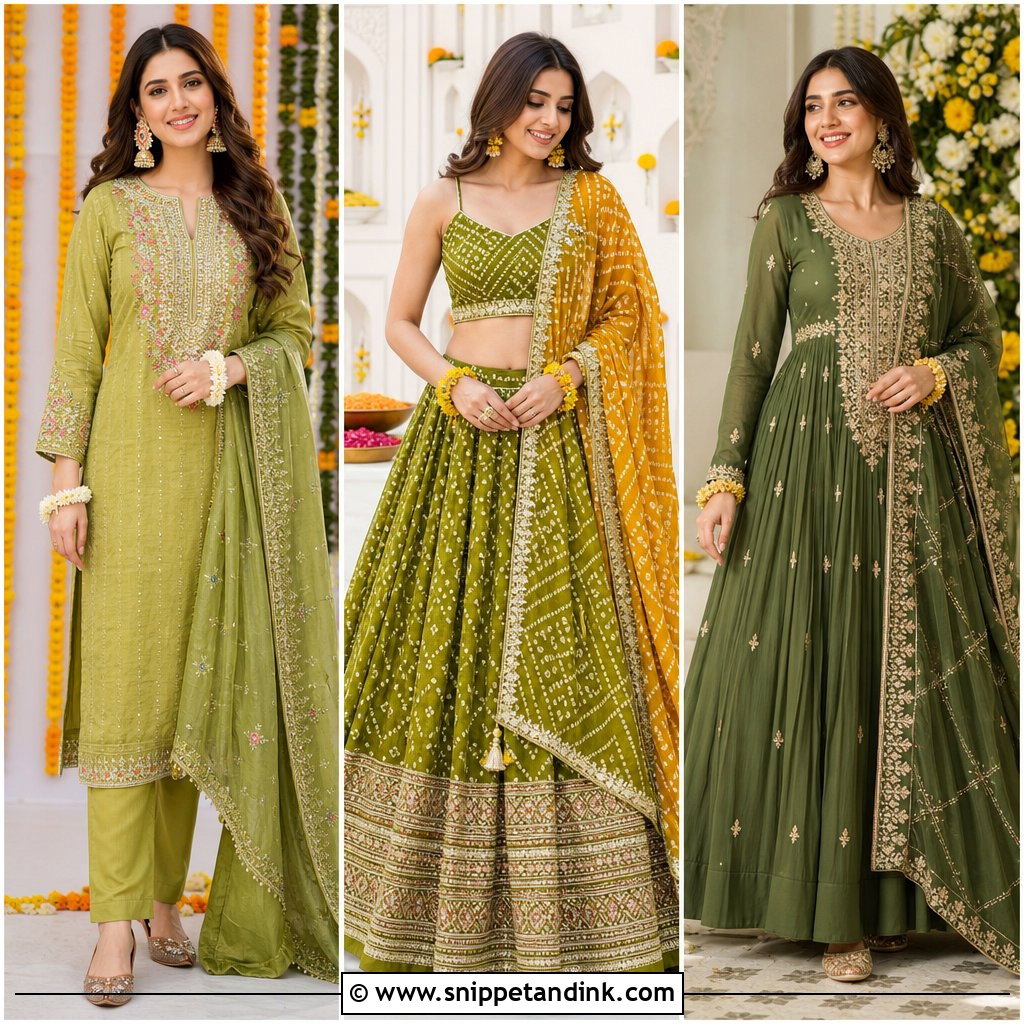
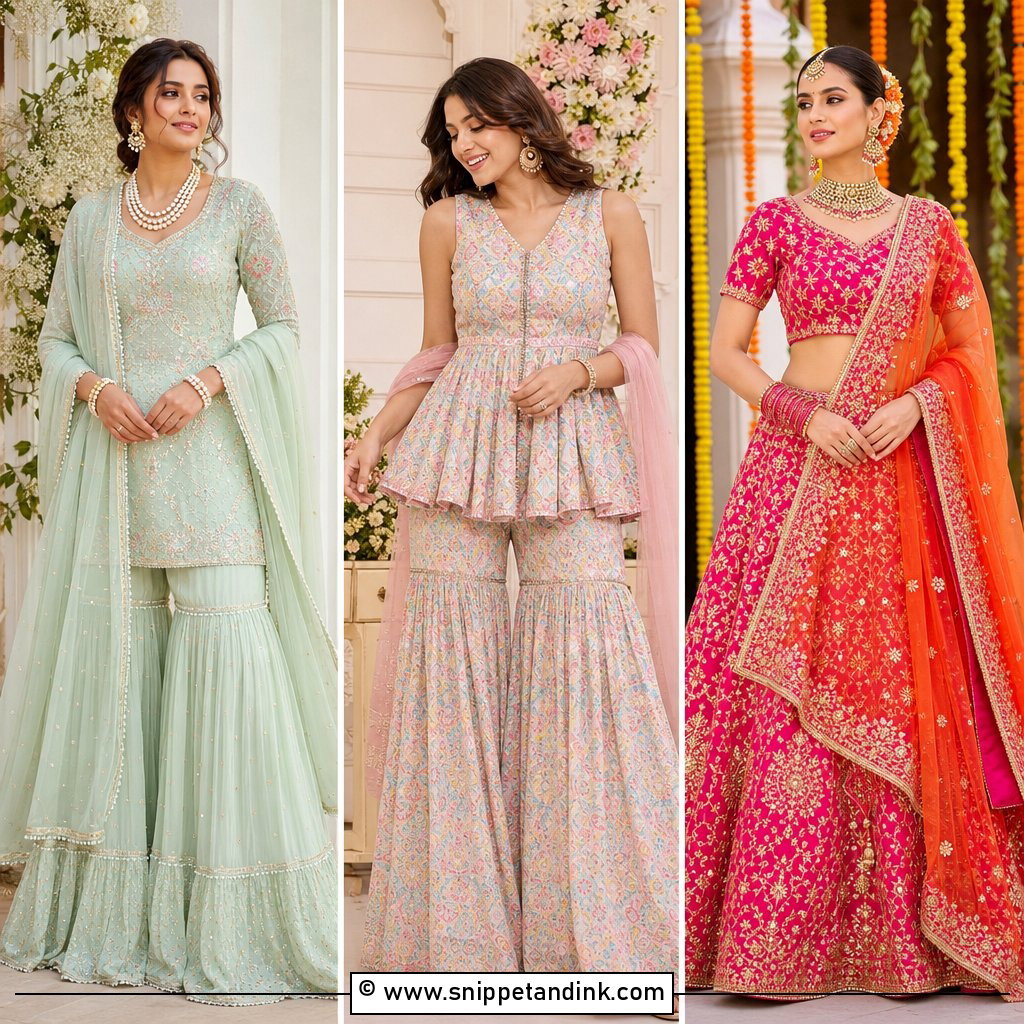
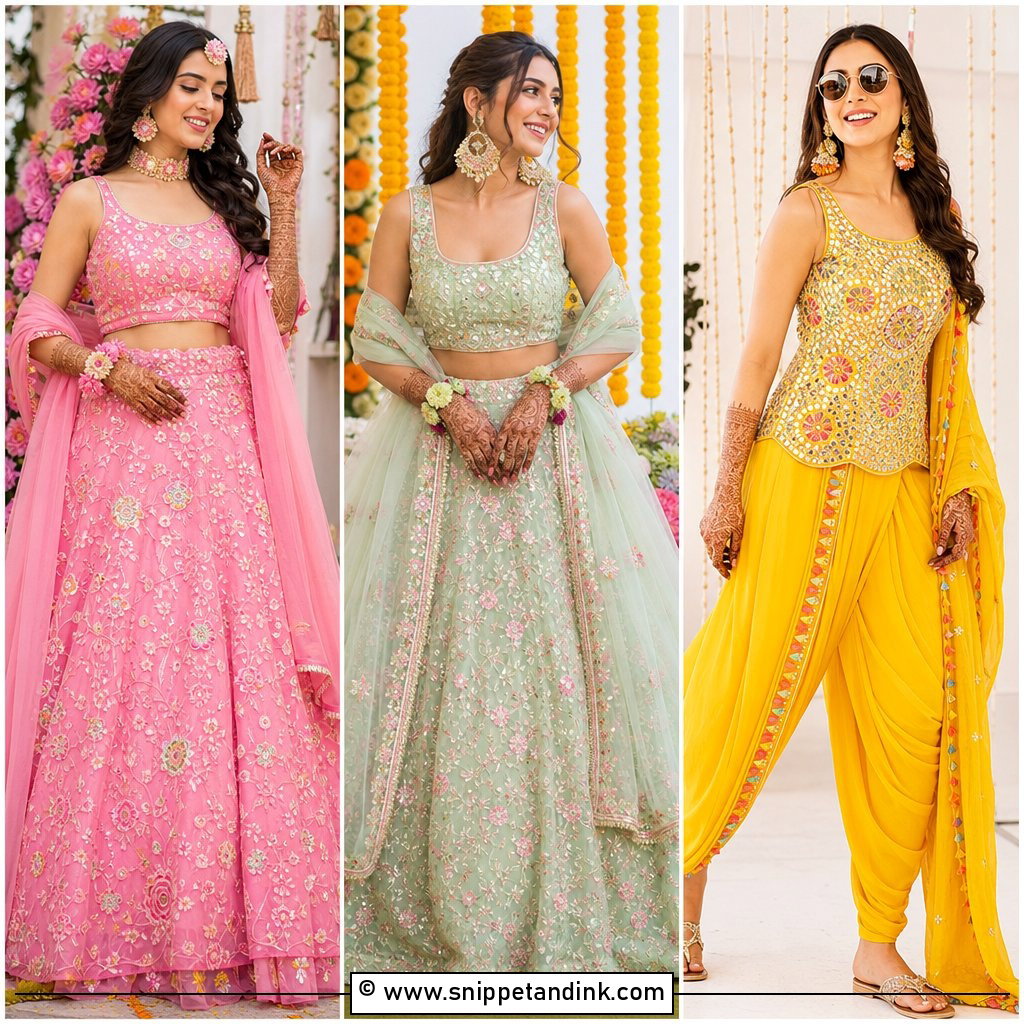
I see the bride’s Mehendi outfit from closer than anyone else does: I sit in front of her for hours with her hands in my lap. So when brides ask me what to wear, I think about sleeves, hems and fabric before I think about color. The outfit needs to leave your arms free to the elbow (or higher), let you sit still for a long time, and still look festive when the paste is dry and the dancing starts. Yellow and green are traditional, but pink, orange, ivory, lavender and blue all work. Mirror work, gota, bandhani and tassels bring the celebration without much weight. Here are the 20 Bridal Mehendi Dress Ideas I’d happily work on, each with a note on how it behaves in my chair.
Sleeves, Hems and Sticky Lemon Sugar
A bridal design takes a long time to apply, and that’s before the paste dries. Here is what the outfit actually goes through during a session, so you can choose with it in mind.
Tell your tailor how high the design goes
Most bridal designs reach at least the mid-forearm, and many go to the elbow or above. The sleeve needs to end a few inches above the highest point, because the fabric shifts up and down when you move. If you’re unsure, decide the design length with your artist first, then finalize the blouse.
Plan for the drying time
The surface of the paste dries in roughly twenty to thirty minutes, but I ask brides to keep it on for several hours, or overnight, for a deeper stain. Many artists dab on a lemon and sugar mix to keep the paste moist and stuck to the skin. It’s sticky, and it will glue a loose dupatta or a floppy sleeve straight onto your arm. Keep fabric away until it’s set.
Feet and ankles
If I’m doing your feet, choose pants or a skirt that lifts well above the ankle without effort, and footwear you can slip off. You’ll walk on your heels for a while afterward, so have someone nearby to help you move around.
1. Yellow Gota Patti Mehendi Lehenga
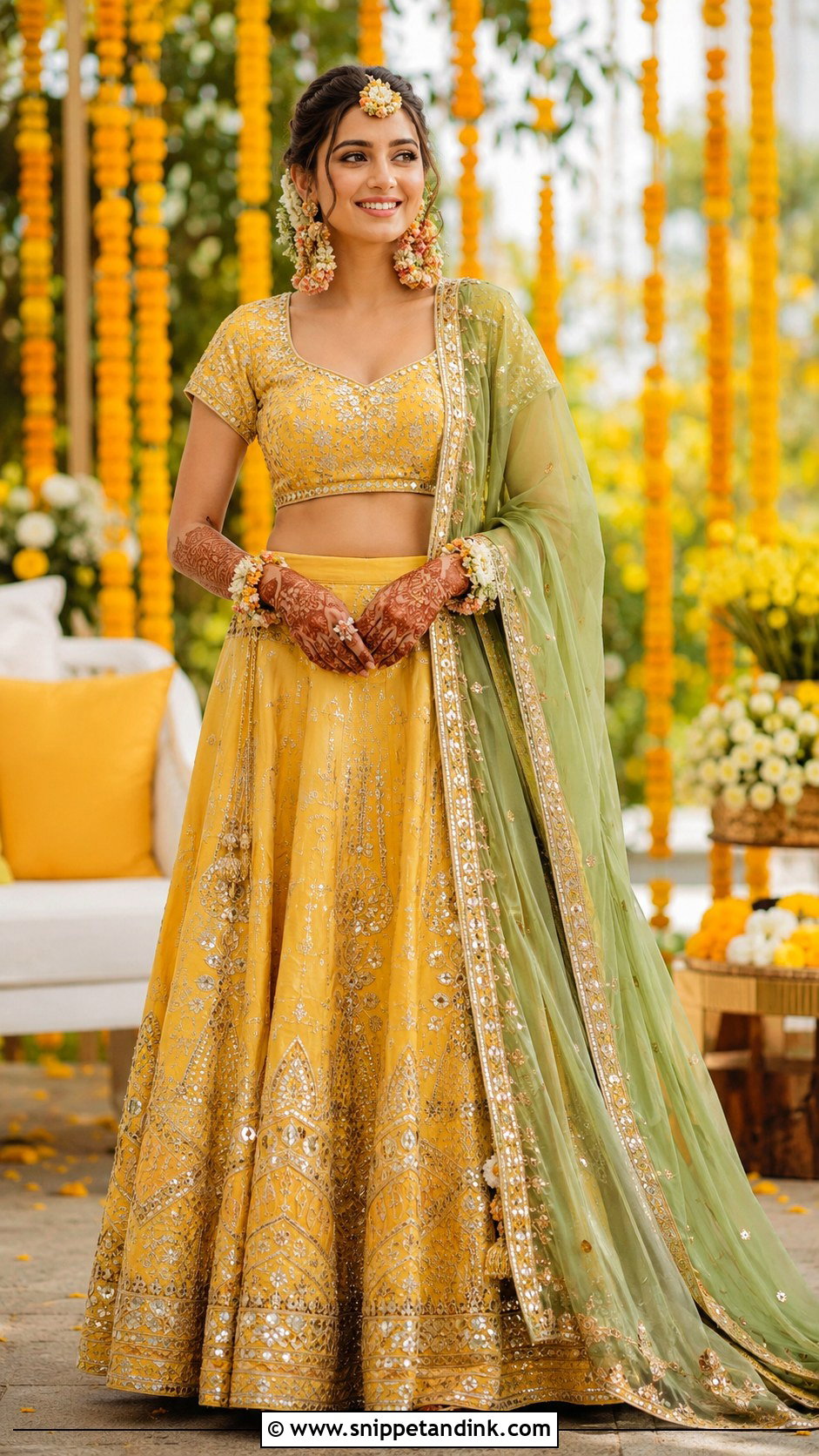
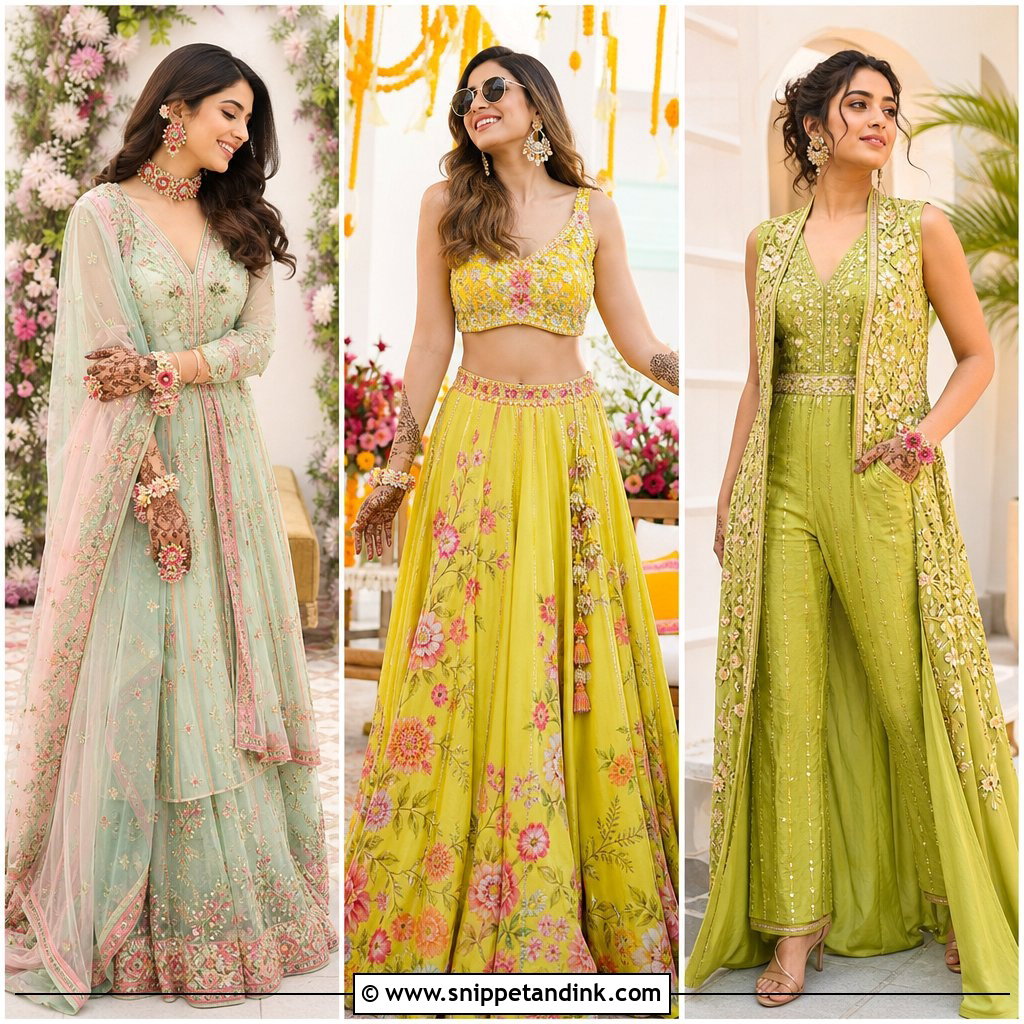
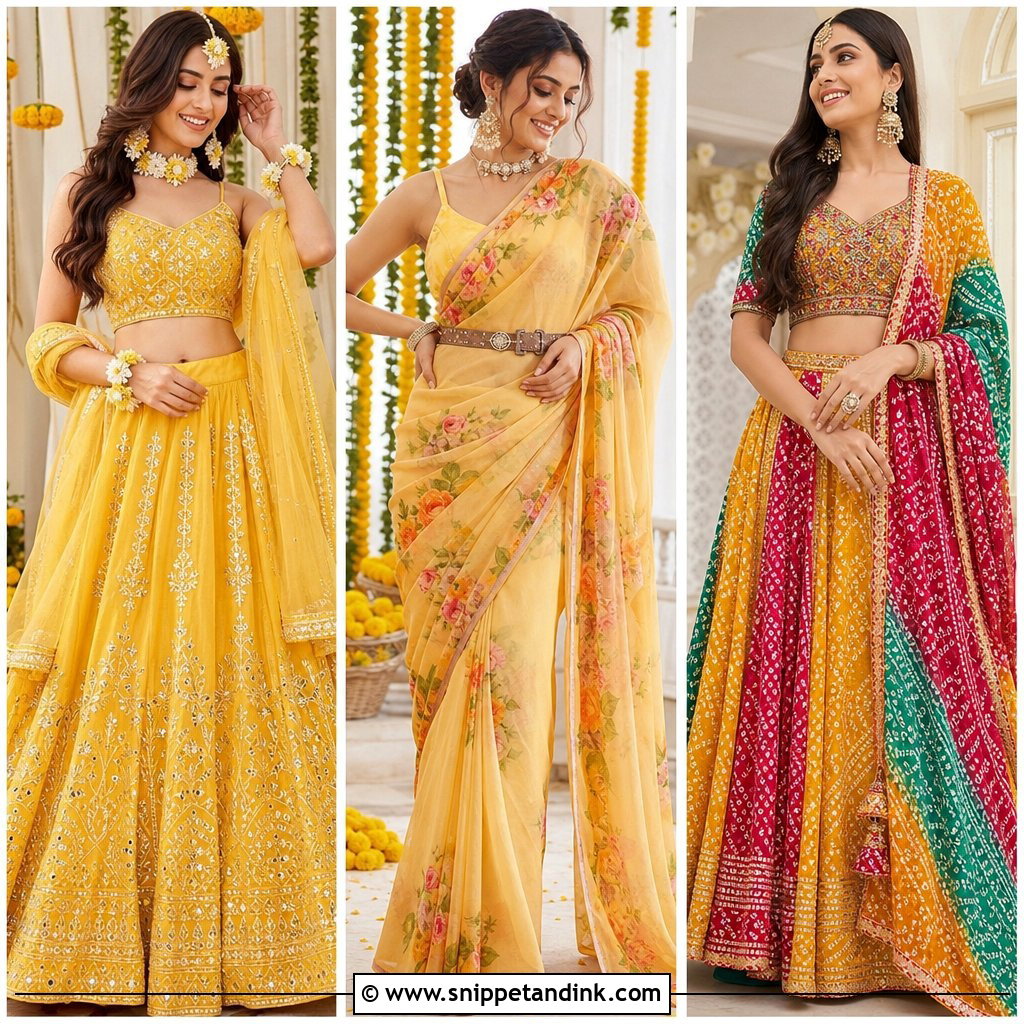
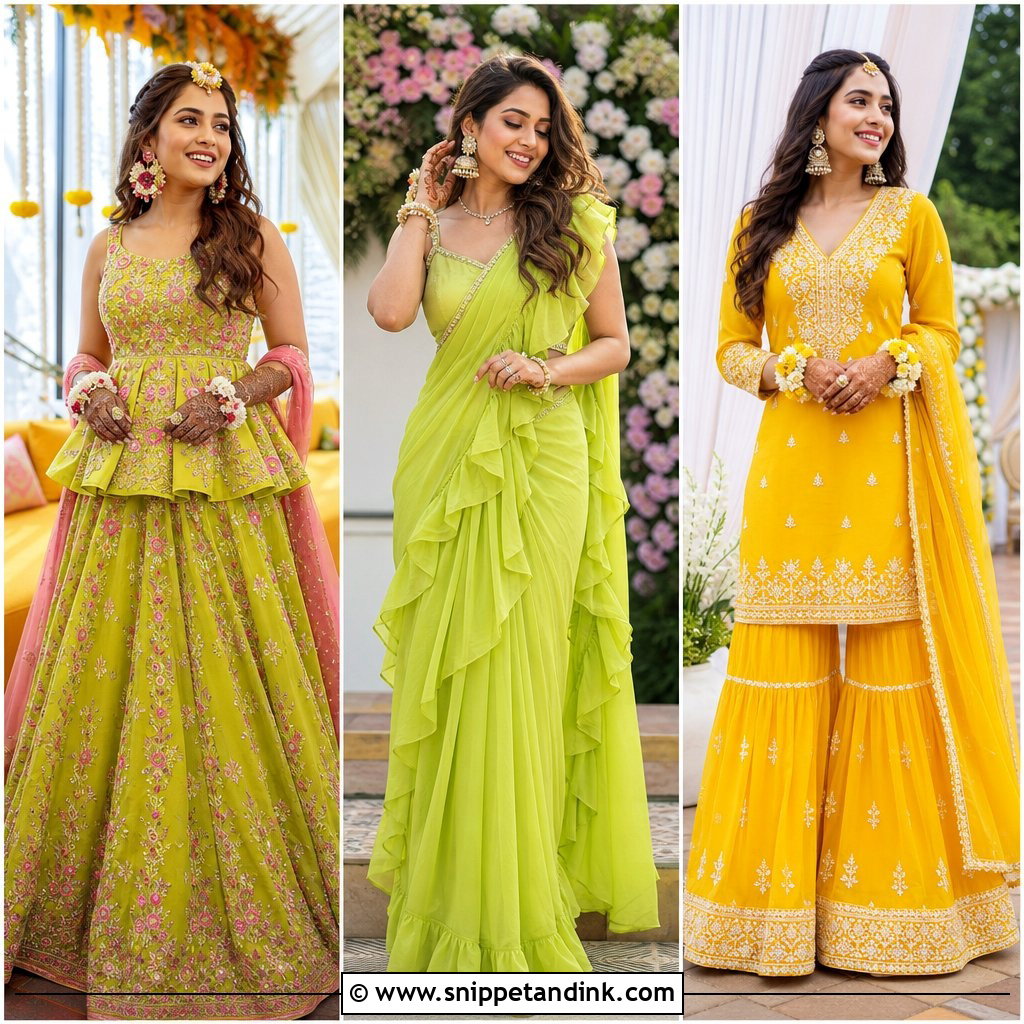
Gota patti on yellow is the classic daytime Mehendi look, and gota is a good choice from my side too: the flat metallic ribbon doesn’t snag on my cones or catch drying paste the way loose sequins do. Choose a light georgette, organza or cotton-silk skirt so you can sit cross-legged for hours. A sleeveless or short-sleeve blouse keeps your arms clear. A green or pink dupatta adds contrast. Keep your wrists bare until the paste is completely dry; slim bangles can go on for photos later. A loose braid with small flowers keeps hair off your face and off your fresh designs.
2. Green Mirror Work Mehendi Lehenga
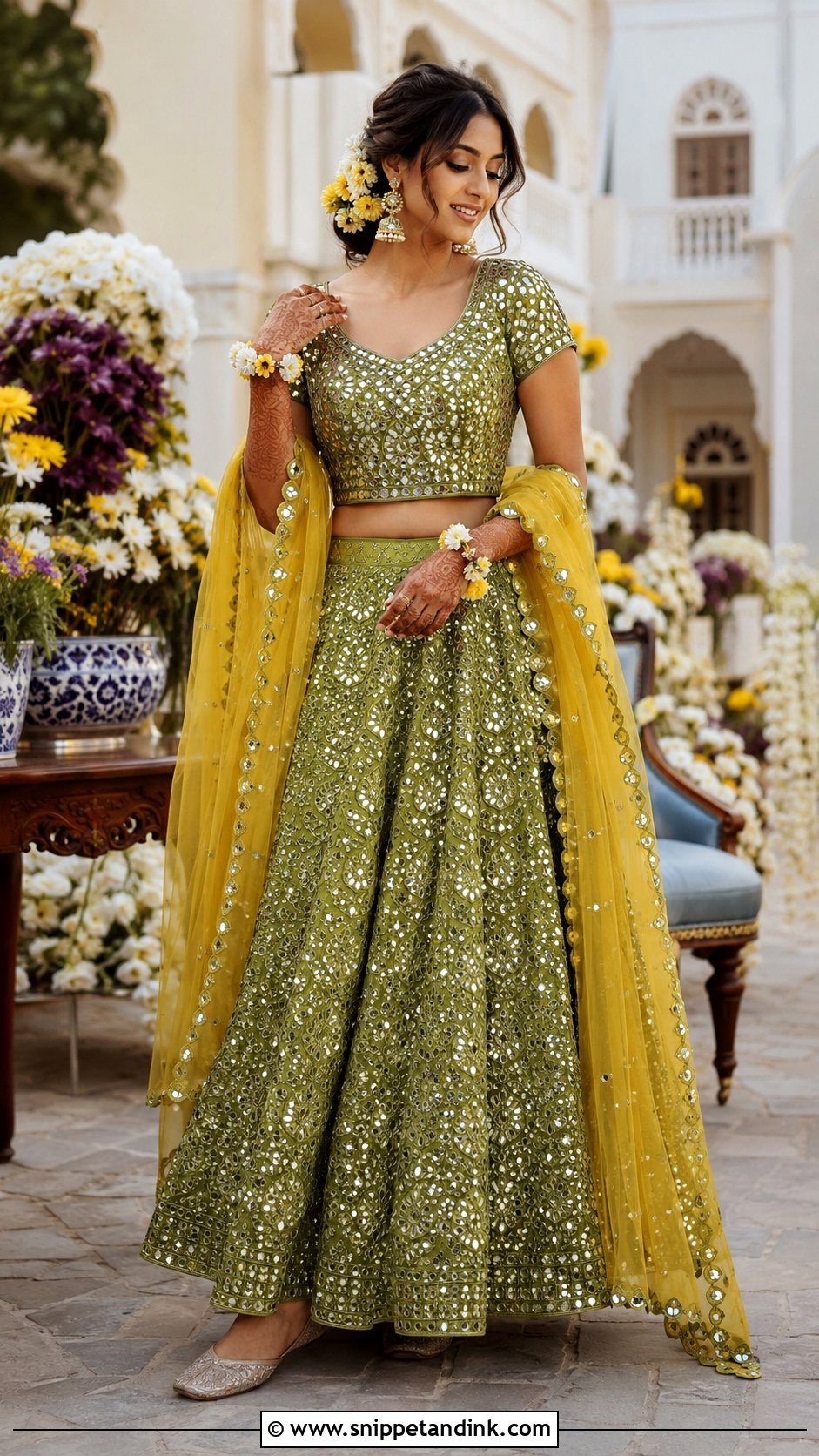
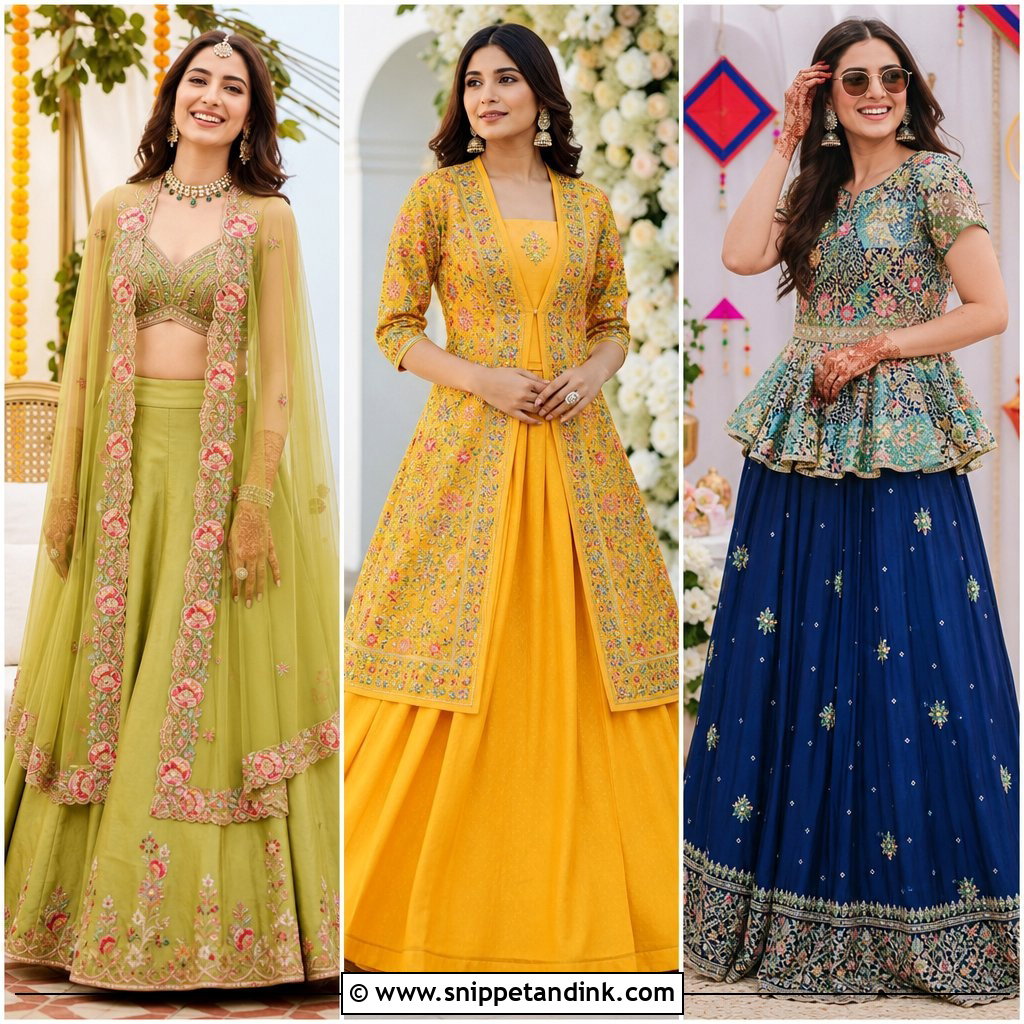
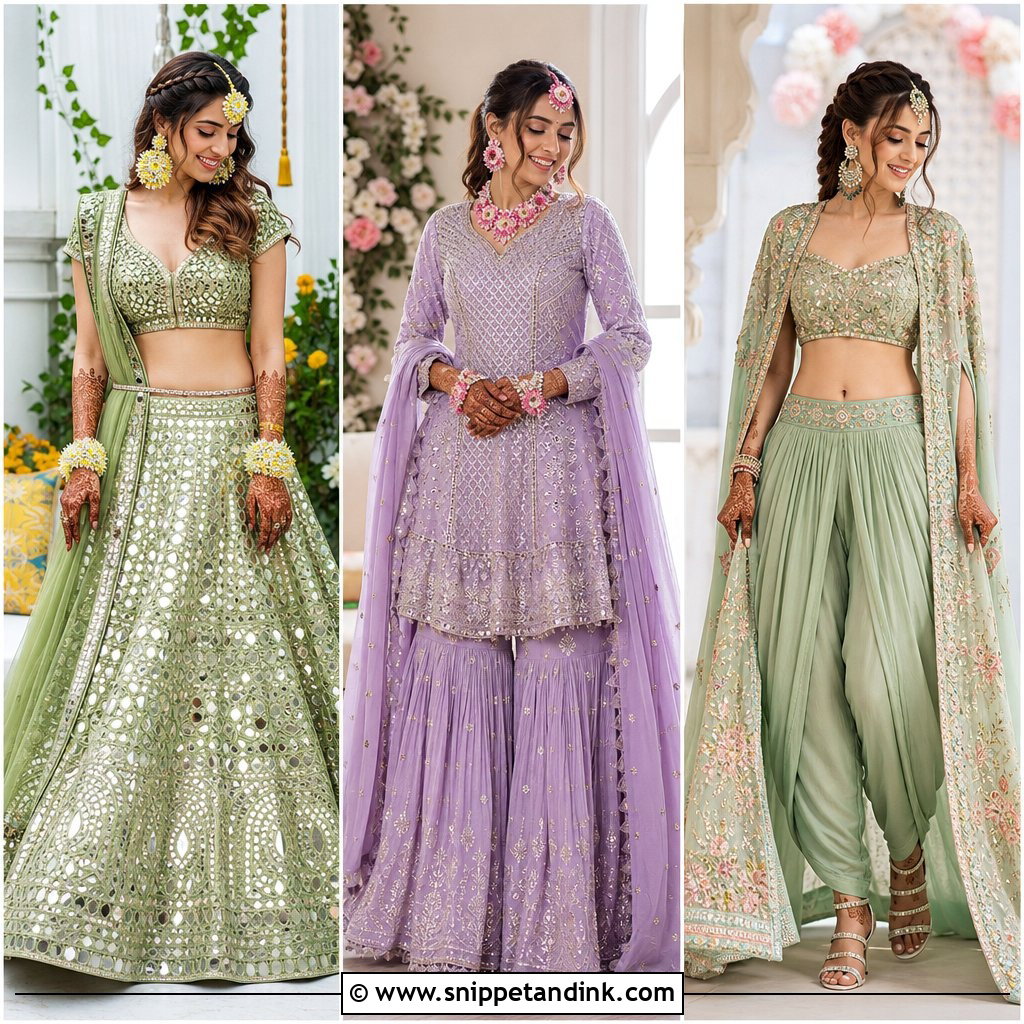
Deep henna looks especially rich against emerald or leaf green. I like a flowing lehenga with small mirrors, thread embroidery or scattered sequins, but not dense embellishment on the sleeves, because heavy work at the elbow rubs on the forearm design while it’s still wet. A fitted short-sleeve blouse balances the full skirt. Drape a sheer yellow dupatta over one shoulder so it lifts off in one move before I begin. Kundan earrings, a matching tikka and a floral hair accessory. Metallic juttis or open sandals. Soft waves or a textured ponytail for dancing once the paste has set.
3. Floral Print Mehendi Lehenga
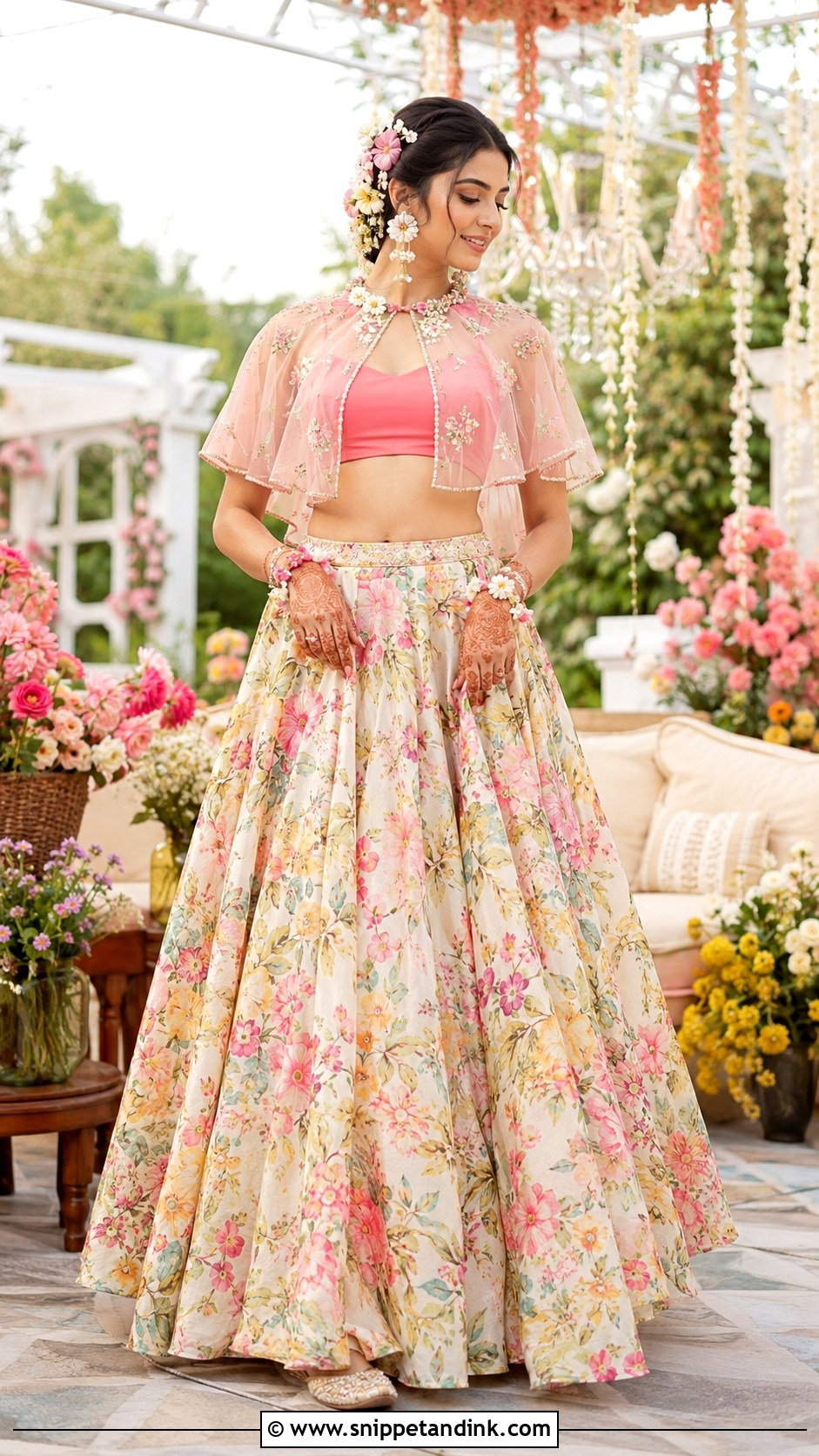
For a garden Mehendi, a floral print lehenga fits right in without heavy embroidery. Pink, yellow, green or coral blossoms on an ivory or pastel ground, with a solid cropped blouse picking up one shade from the print. A short cape or a light organza dupatta adds movement and comes off easily. One honest warning about light grounds: a fallen drop of henna paste on ivory fabric leaves an orange mark that rarely comes out completely. I lay a cloth over the bride’s lap for exactly this reason. Pearl earrings, flower bracelets after the paste dries, and neutral juttis.
4. Multicolor Patchwork Mehendi Lehenga
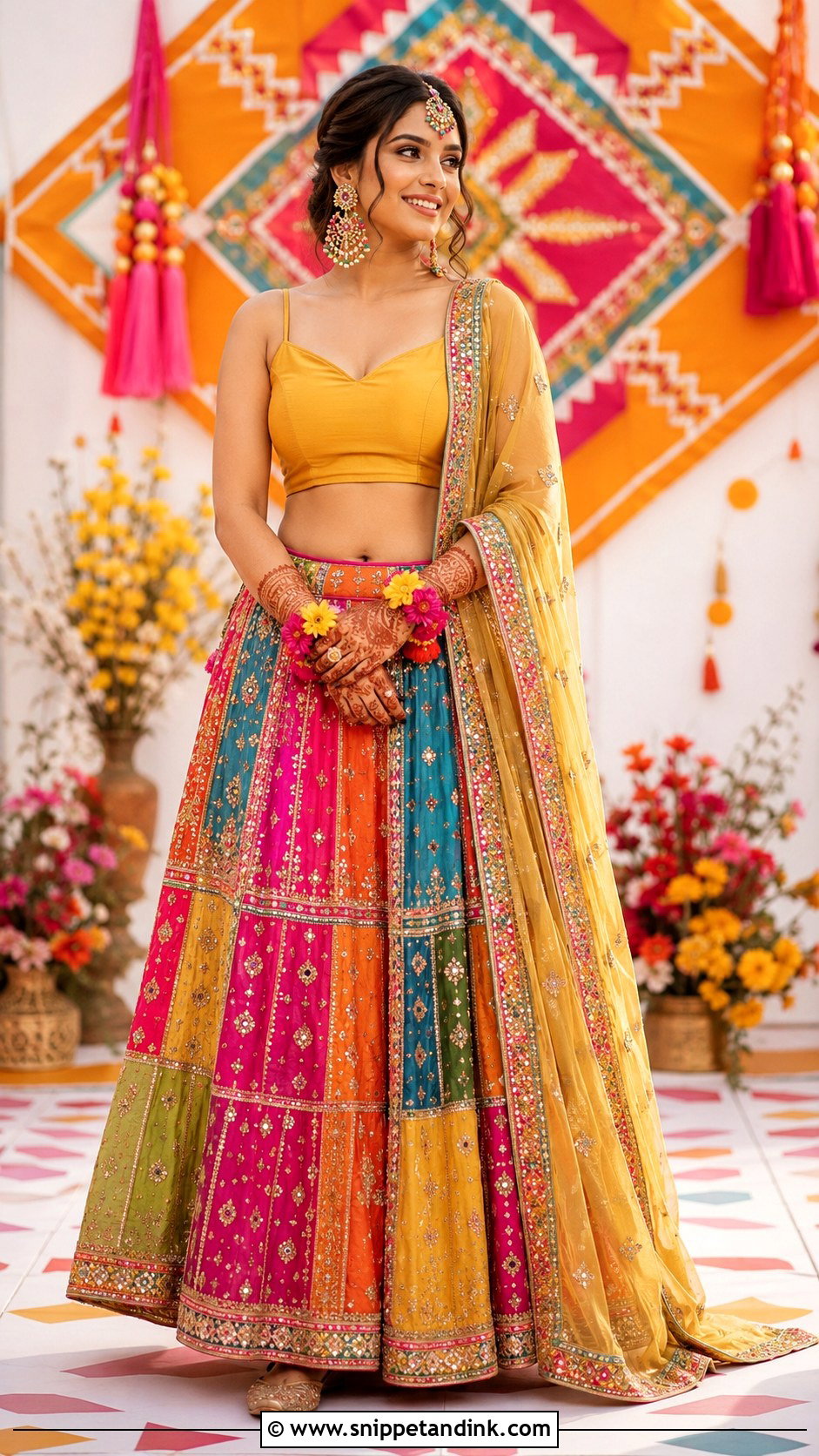
A multicolor patchwork lehenga is pure joy, panels of fuchsia, orange, turquoise, yellow and green tied together with mirror borders or embroidered motifs. Keep the blouse solid in one of those shades; the skirt already has plenty going on. Swap the heavy dupatta for a light drape pinned at the shoulder and waist. Patchwork also hides small henna smudges better than any plain fabric, which I appreciate when guests lean in to look at the design. Bold earrings, a colorful tikka, neutral juttis. A sleek braid wrapped with bright thread.
5. Pink Sharara Mehendi Dress
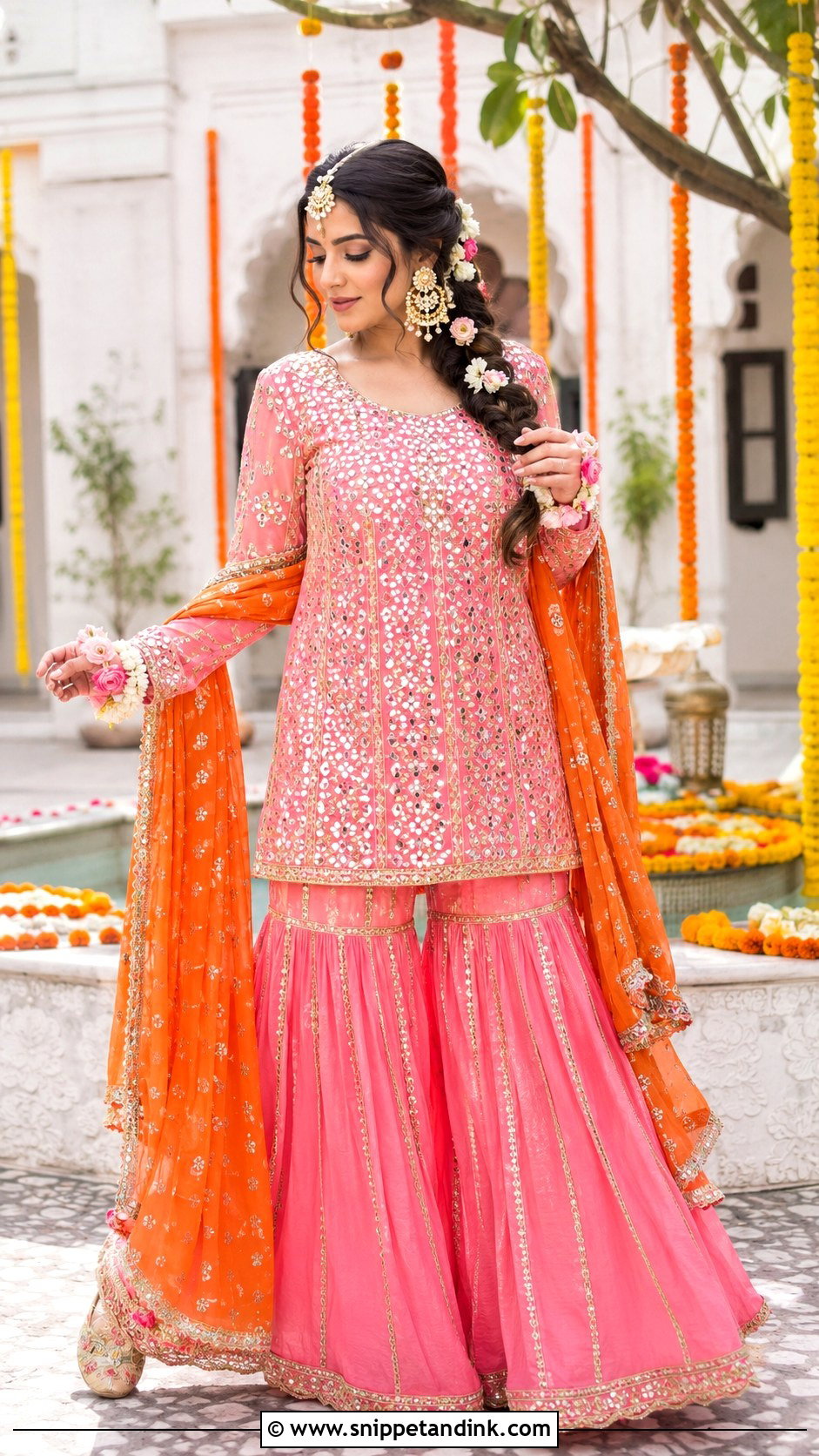
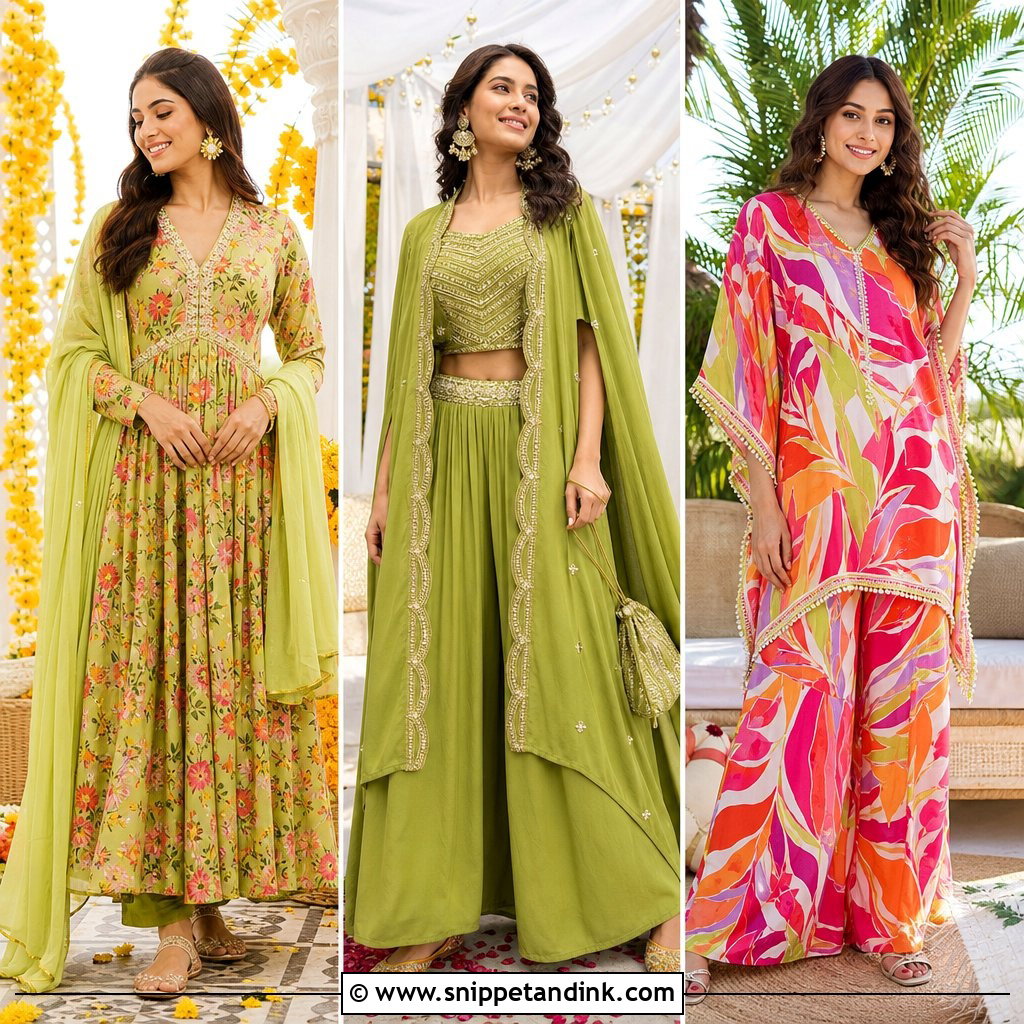
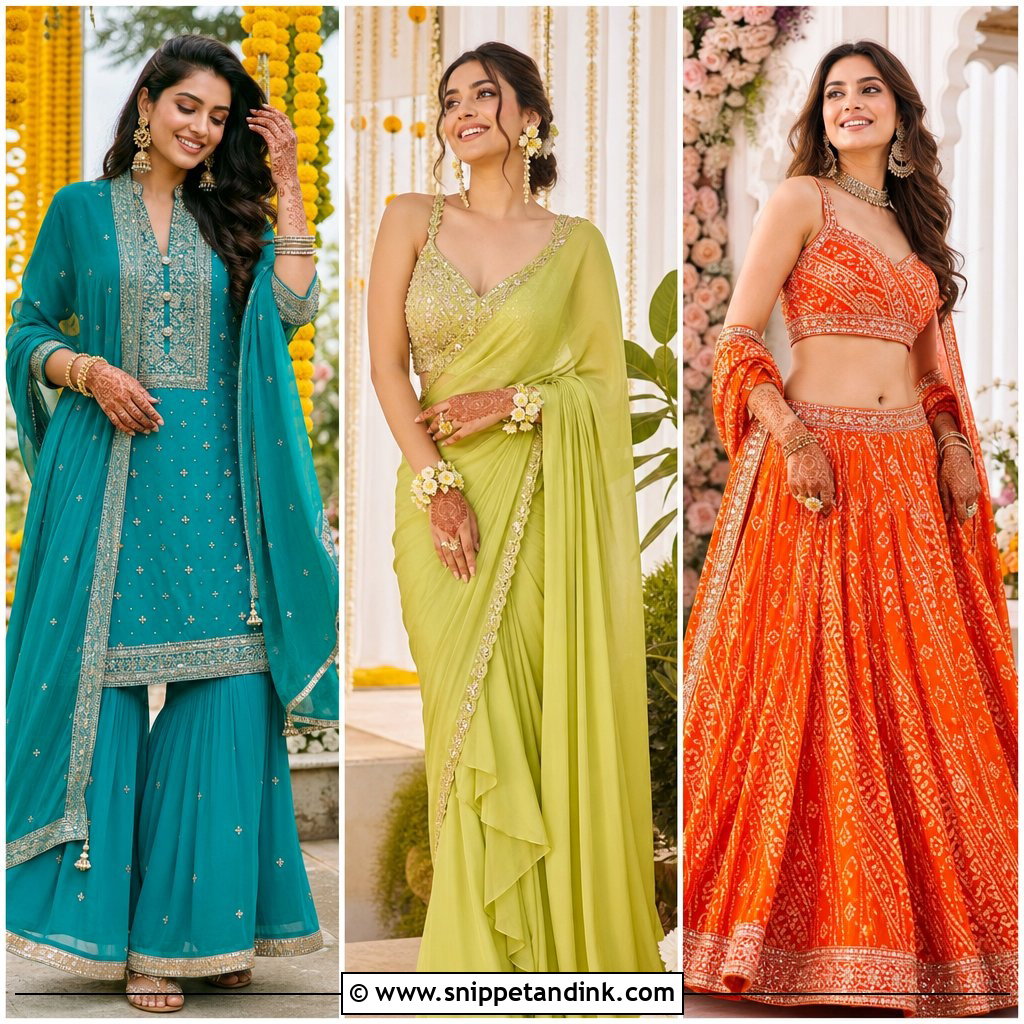
Sharara sets are what I recommend most often to brides having foot and leg Mehendi, because the wide pants lift away from the ankle easily. A vivid pink sharara with a short kurta in mirror work, gota or fine floral embroidery. If your design goes above the wrist, short sleeves are a must; three-quarter sleeves sit right where I need to work. Add an orange, yellow or green dupatta, draped loosely so it comes off before we start. Statement earrings, a small forehead piece, embellished juttis. A flower-studded braided ponytail. It’s comfortable through a long afternoon of sitting and then dancing.
6. Yellow Floral Sharara Mehendi Dress
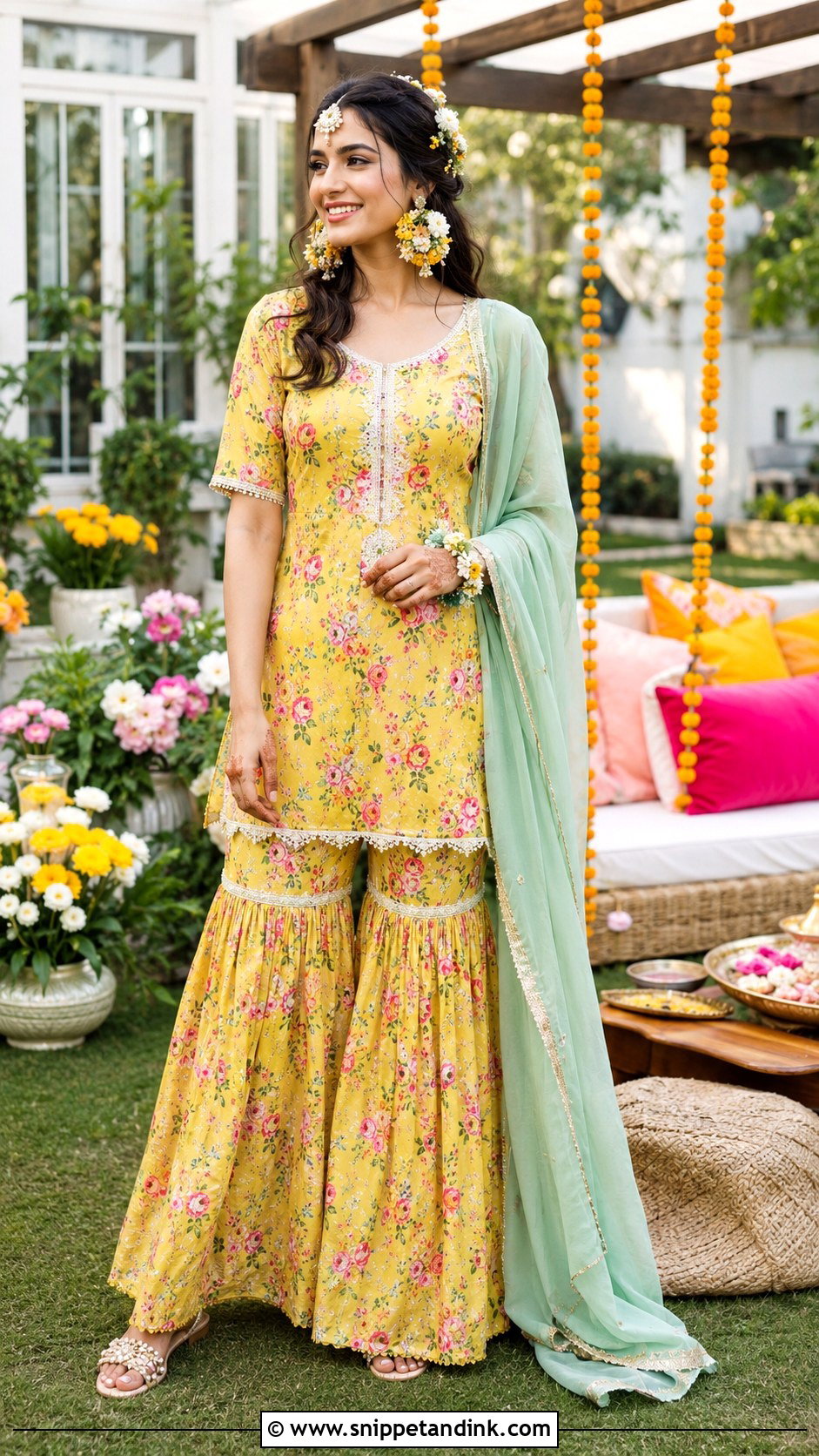
Soft, light fabric makes those hours go much faster. A yellow floral sharara set gives you that comfort with the brightness of the day. Pick a cropped or hip-length kurta with sleeves that stop well above the elbow, plus wide printed pants. A light pink or mint dupatta for contrast. If I’m doing your feet, wear slip-on sandals you can kick off, and bring open slides for later; closed juttis smudge fresh foot designs. Floral earrings, a small tikka and a half-up style with fresh flowers. Lovely for an intimate home or garden function.
7. Green Anarkali Mehendi Dress
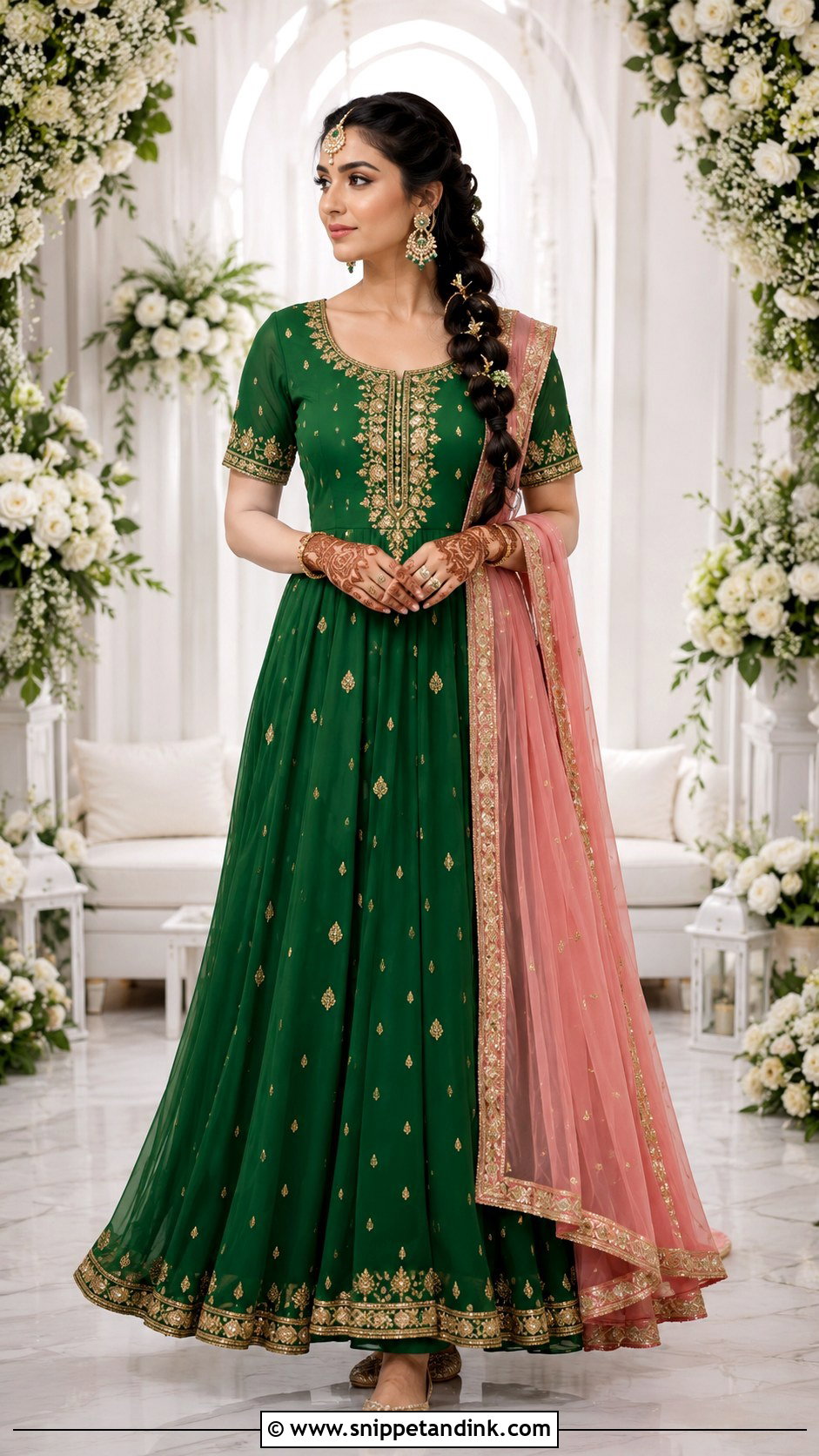
An Anarkali gives you a graceful long line without the weight of a heavy lehenga. Georgette, chiffon or light silk with a comfortable flare, gold work at the neckline and hem, and short sleeves. The thing I check with an Anarkali is the hem when the bride sits on the floor or a low cushion: a full skirt spreads out around you, and guests walking past step on it, so I’d make sure it sits just above the floor. A breathable lining keeps you cool while seated. A pink or yellow dupatta over one shoulder for early photos, kundan earrings, a tikka and metallic flats.
8. Mustard Bandhani Mehendi Lehenga
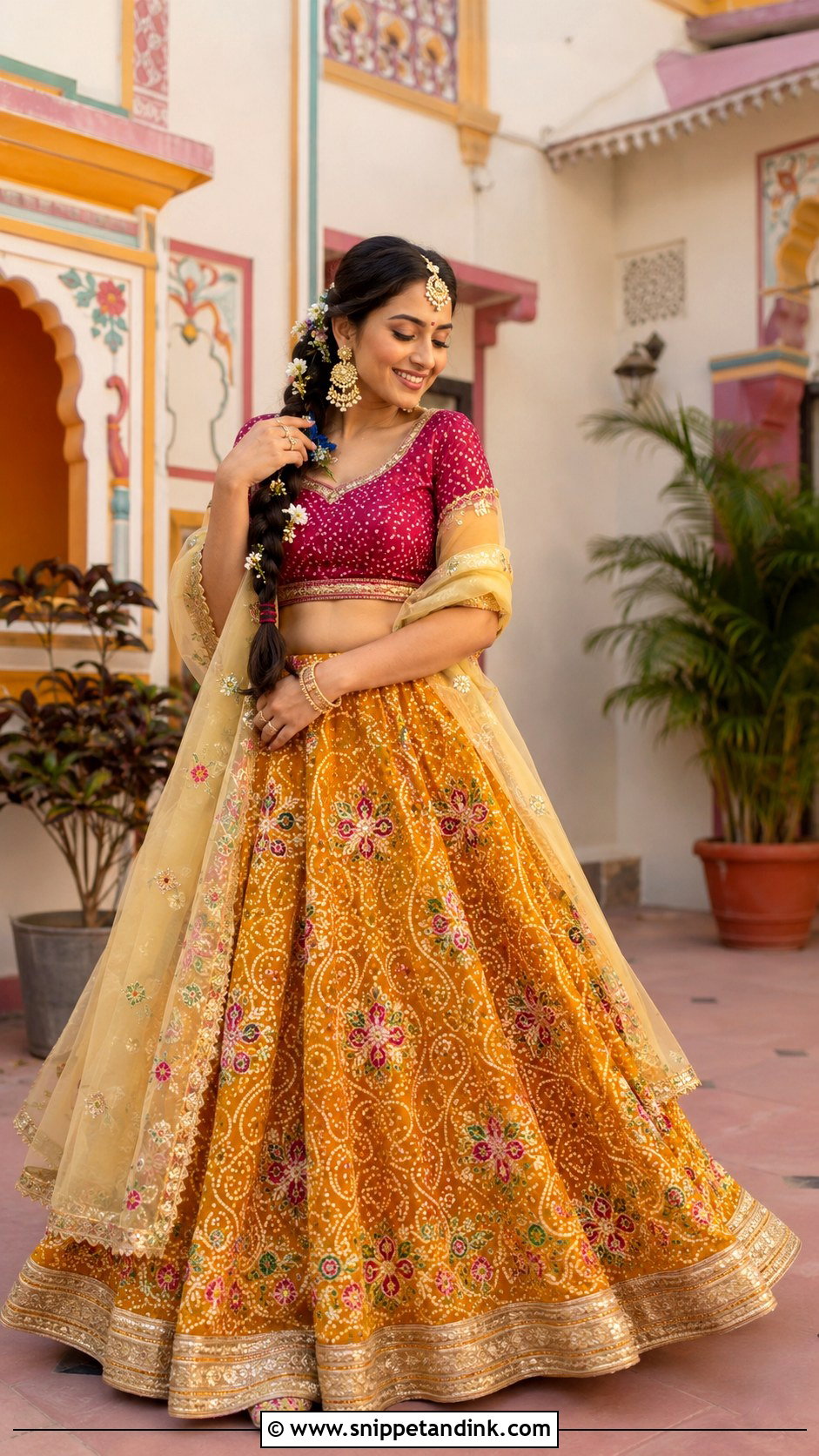
Bandhani is tie-dye made by hand, with thousands of tiny resist-tied dots, and mustard bandhani with a broad gota border is a rich alternative to lemon yellow. A magenta, green or rust blouse gives contrast. For a full-arm design, sleeveless is easiest; short sleeves give you a little more coverage. Pin a light bandhani dupatta for the arrival and take it off before I begin. Oxidized gold earrings, a small borla or tikka, and embroidered juttis suit the textile. The busy dotted pattern is forgiving if a little paste falls on it. A loose braid with tassels or flowers.
9. Orange Peplum Mehendi Lehenga
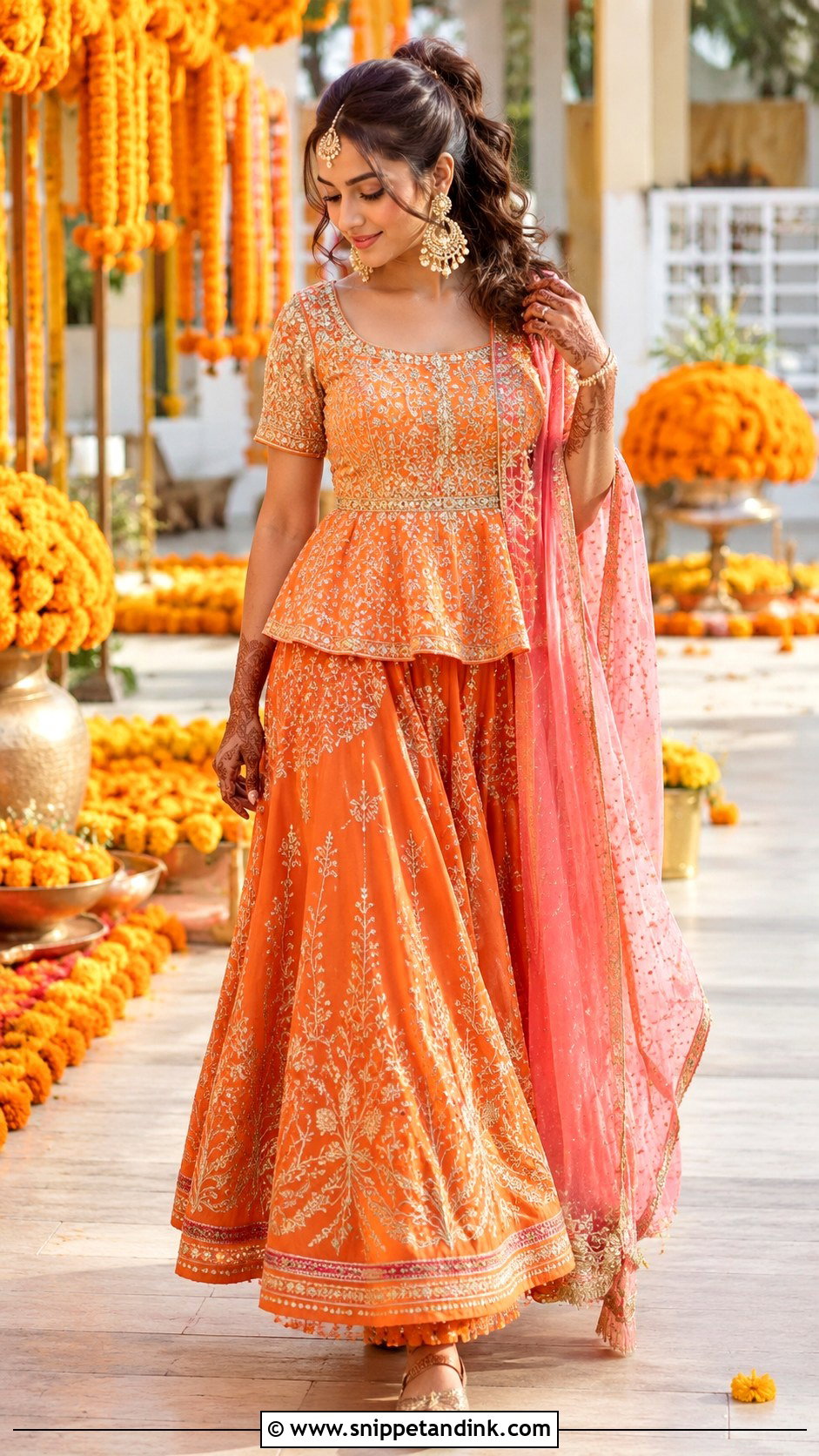
An orange peplum blouse with a matching lehenga gives structure without restricting you. The fitted waist and flared peplum shape the top while the skirt stays easy to move in. Ask for embroidery at the neckline, waist and hem only, not on short sleeves, so there’s nothing scratchy against the inner arm while the design dries. Drape a pink or green dupatta behind the shoulders for portraits. Polki earrings, a small tikka and gold juttis. A high ponytail or loose braid. Orange against marigold décor on a sunny afternoon is a very cheerful picture.
10. Ivory and Green Mehendi Lehenga
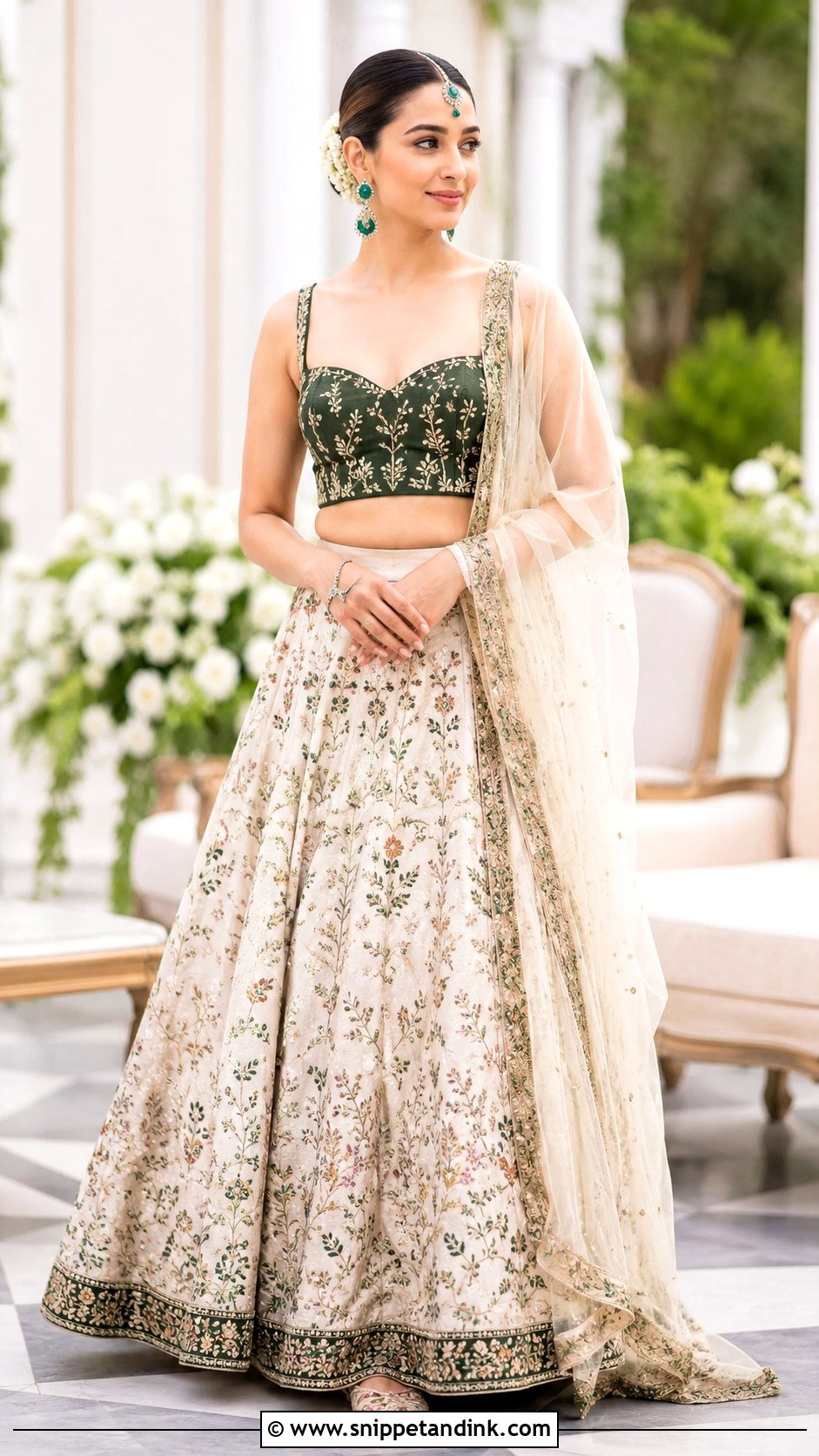
If yellow isn’t you, ivory with green embroidery is the lighter, quieter option. Botanical threadwork, mirror accents or small floral motifs on the skirt, with a green cropped blouse and a sheer ivory dupatta edged in matching work. Ivory needs more care around henna than any other color on this list. I’d suggest a cotton cloth over your lap during the session and a dupatta you can hand off completely. The payoff is in photos: dark henna shows strongly against ivory. Emerald earrings, a delicate tikka, neutral juttis and a soft bun with white flowers.
11. Lavender Cape Mehendi Dress
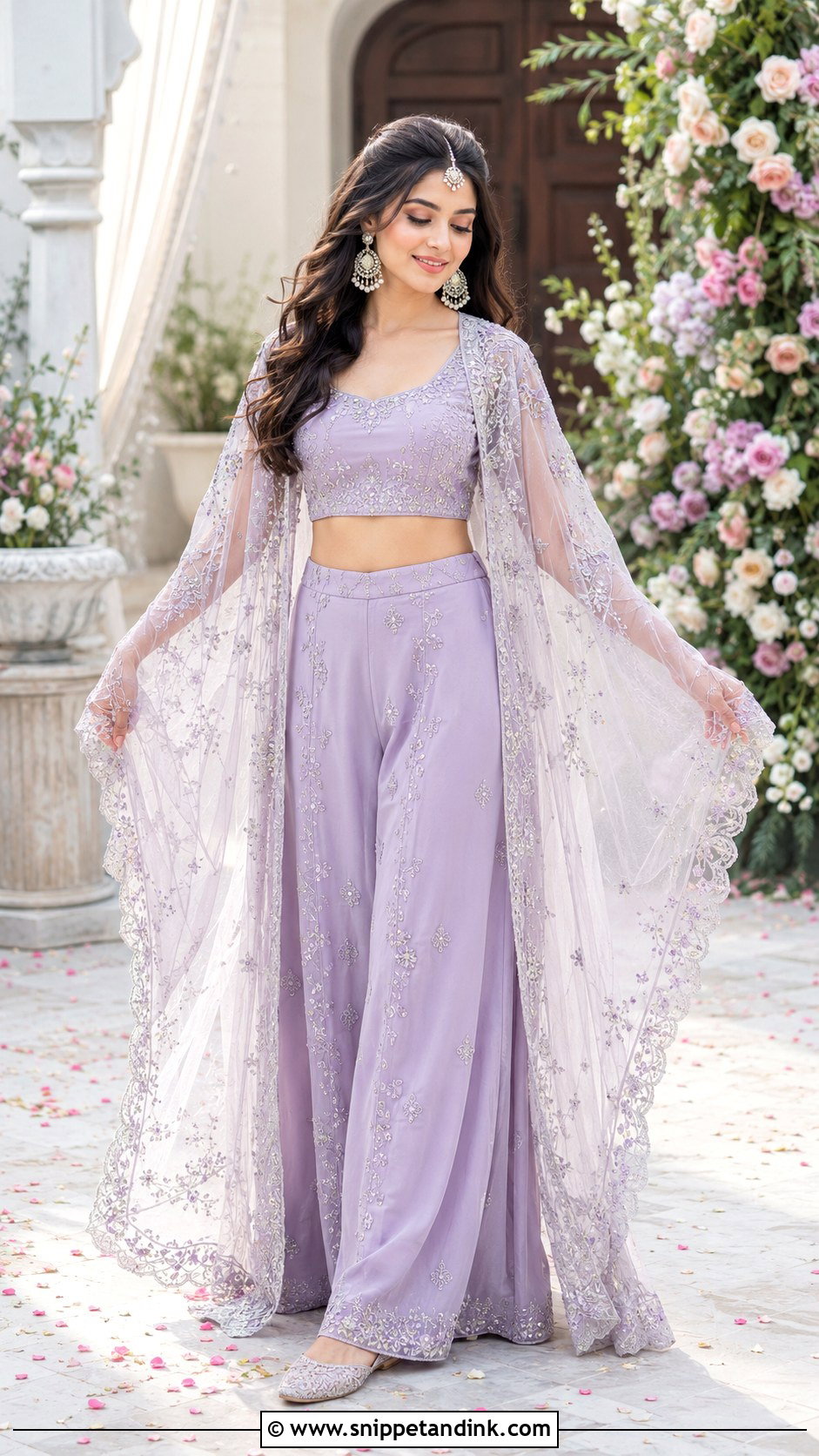
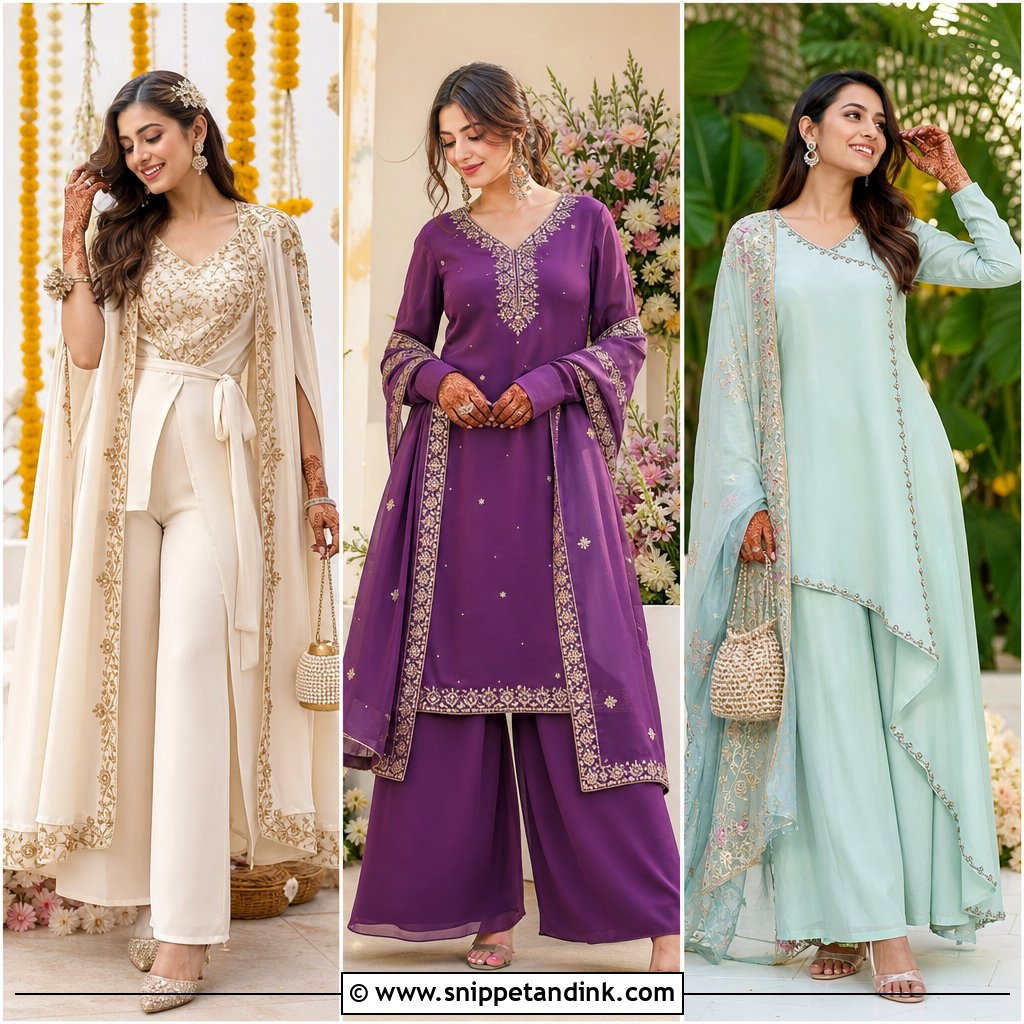
Lavender is unexpected at a Mehendi and quite romantic. A cropped blouse and a flowing lehenga or wide palazzos in the same pastel, with a sheer embroidered cape instead of a dupatta. Make sure the cape has open sides or removable fastenings. A cape that falls over the arms brushes wet paste every time you shift, and that leaves faint drag marks in the finished design. Pearl-and-kundan earrings, a slim headpiece and silver or ivory flats. Soft waves or a polished ponytail. Small pink, lilac and white flowers link the accessories to the outfit.
12. Blue and Yellow Mehendi Lehenga
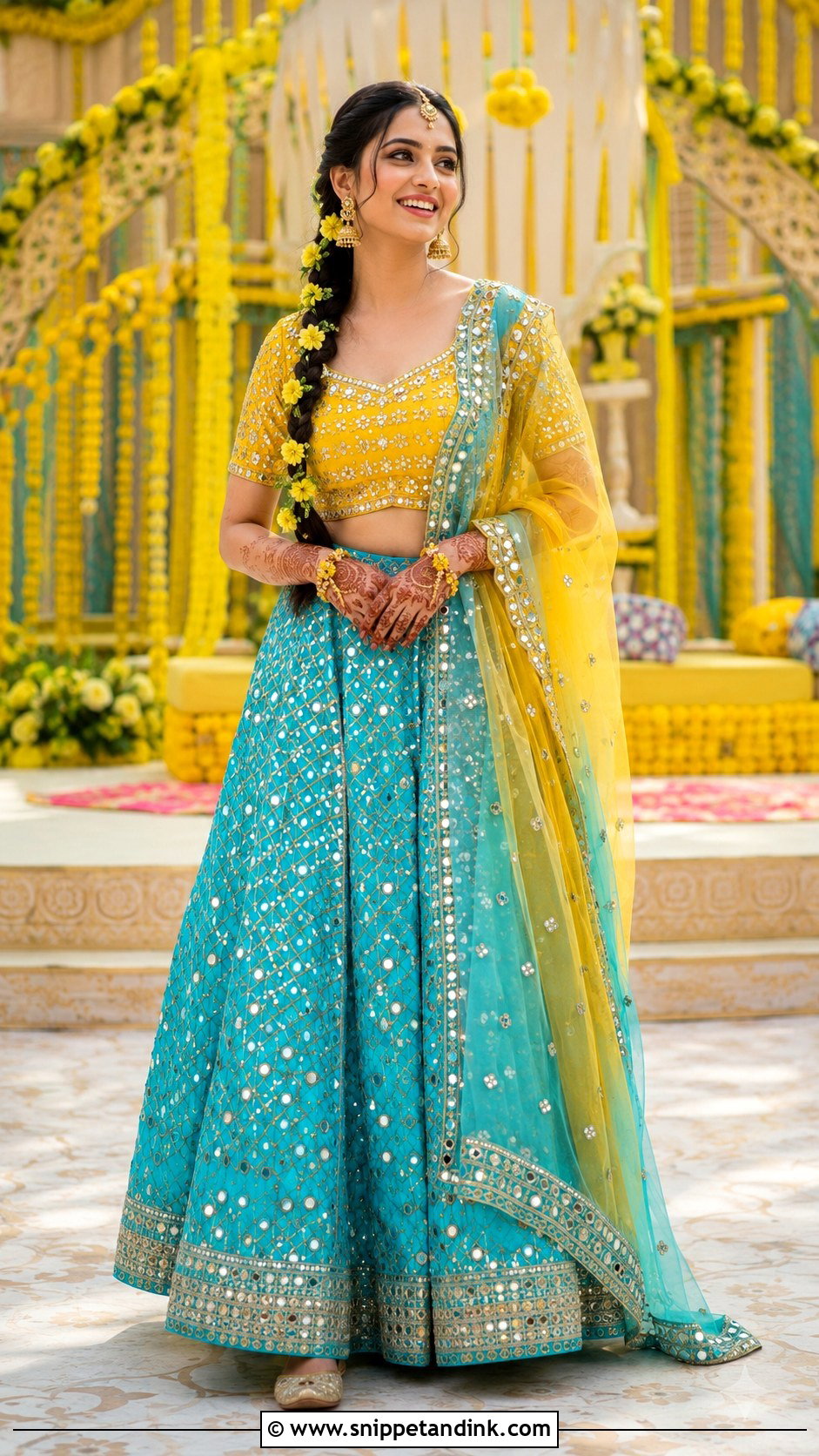
Blue and yellow stand out among the usual single-color outfits. Turquoise, royal blue or cobalt for the lehenga with subtle mirror work, a yellow embroidered blouse, and a light dupatta carrying both colors. Let one shade lead and the other accent, otherwise the pairing looks busy in group photos. Sleeve length depends on how high your design goes, so tell me your plan before you finalize the blouse. Gold earrings, a small tikka, blue or neutral juttis. A long braid tied with yellow flowers brings the colors together without extra jewelry.
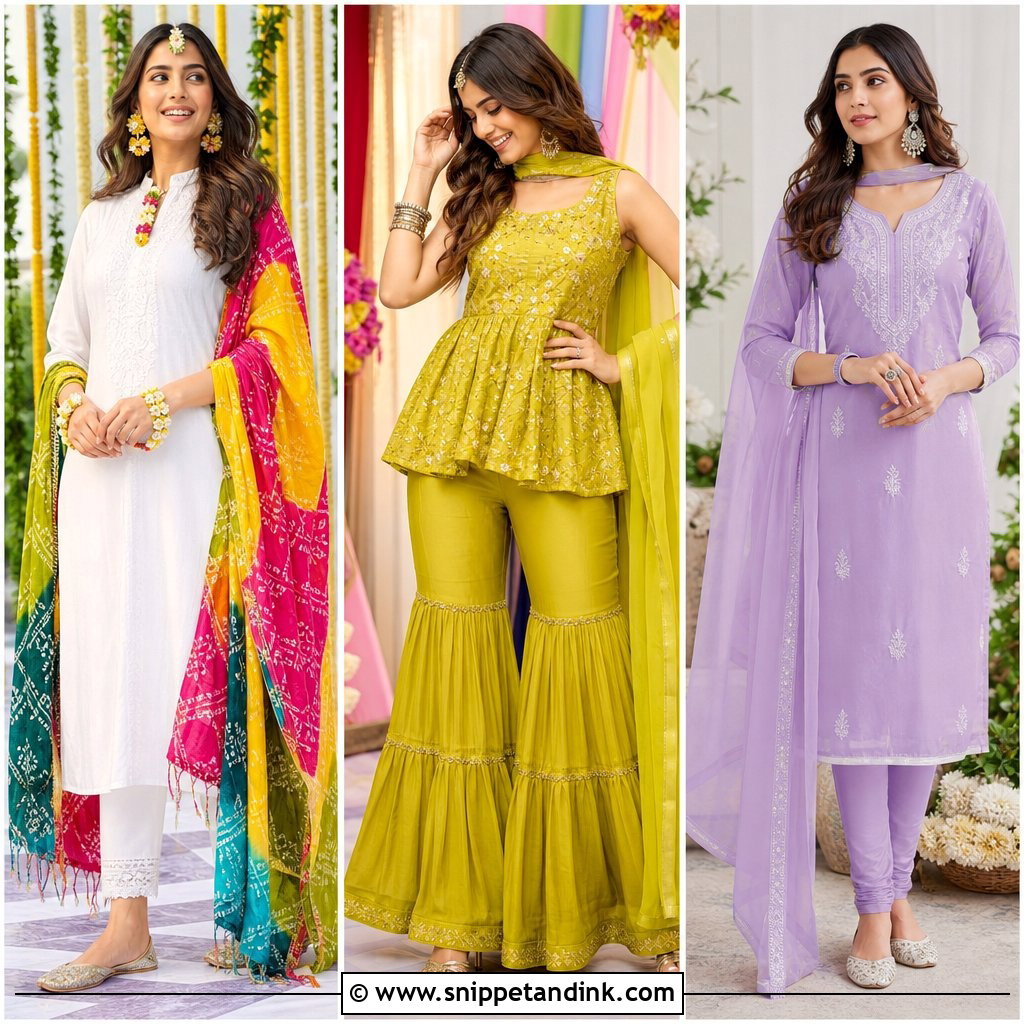
13. White Chikankari Mehendi Sharara
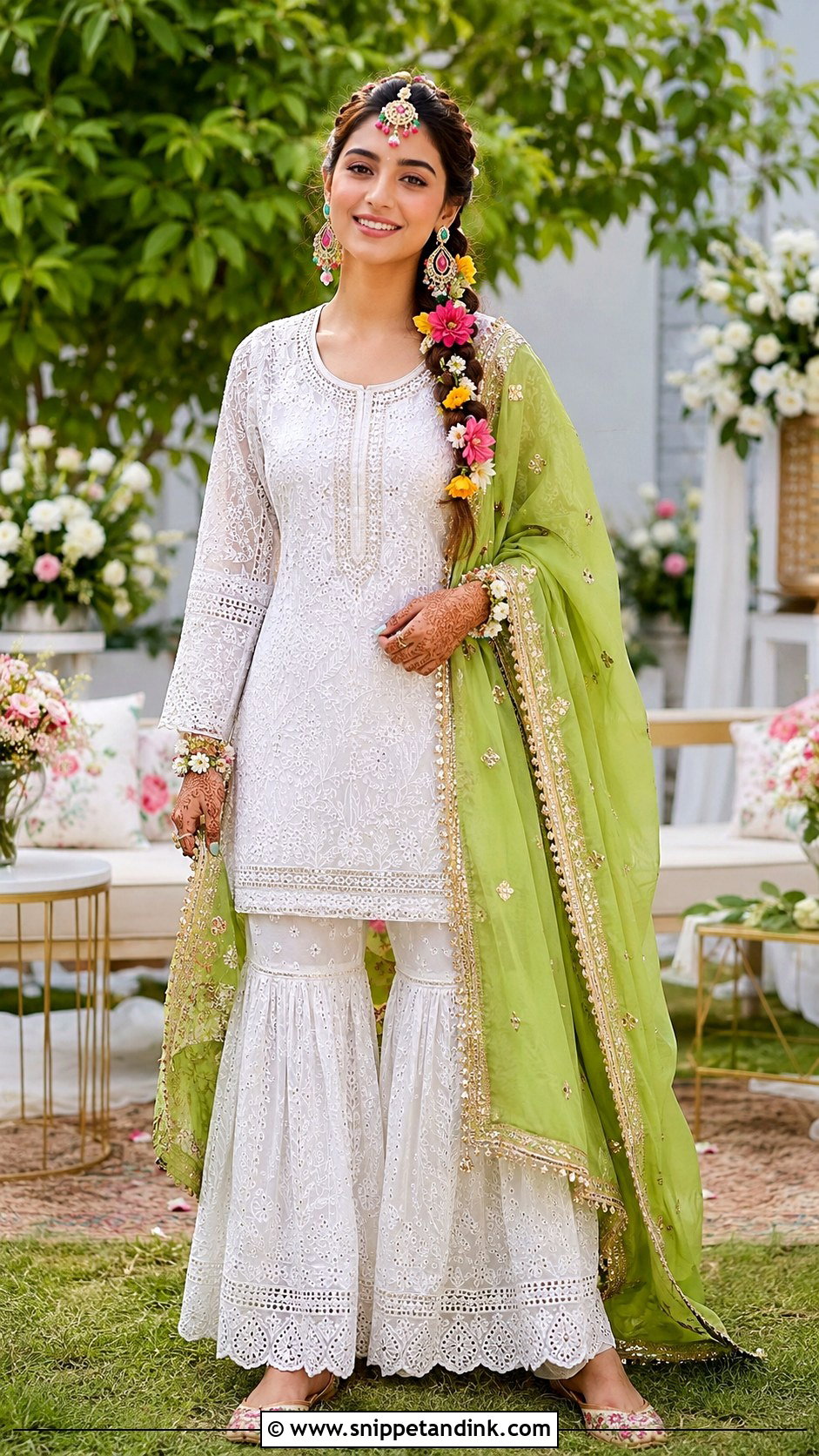
A white chikankari sharara is airy and cool for a summer function, and chikankari, the fine hand-embroidered whitework from Lucknow, feels soft on the skin. Choose a short kurta and wide pants lined in soft cotton. A bright green, pink or yellow dupatta with gota gives it Mehendi color. My caution here is plain: henna paste and white cotton are a risky mix, since a stain on cotton soaks in fast. Keep the dupatta and hem away from fresh paste and from food. Colorful enamel earrings, a floral tikka, embroidered juttis and a braid with multicolor flowers.
14. Rani Pink Mehendi Lehenga
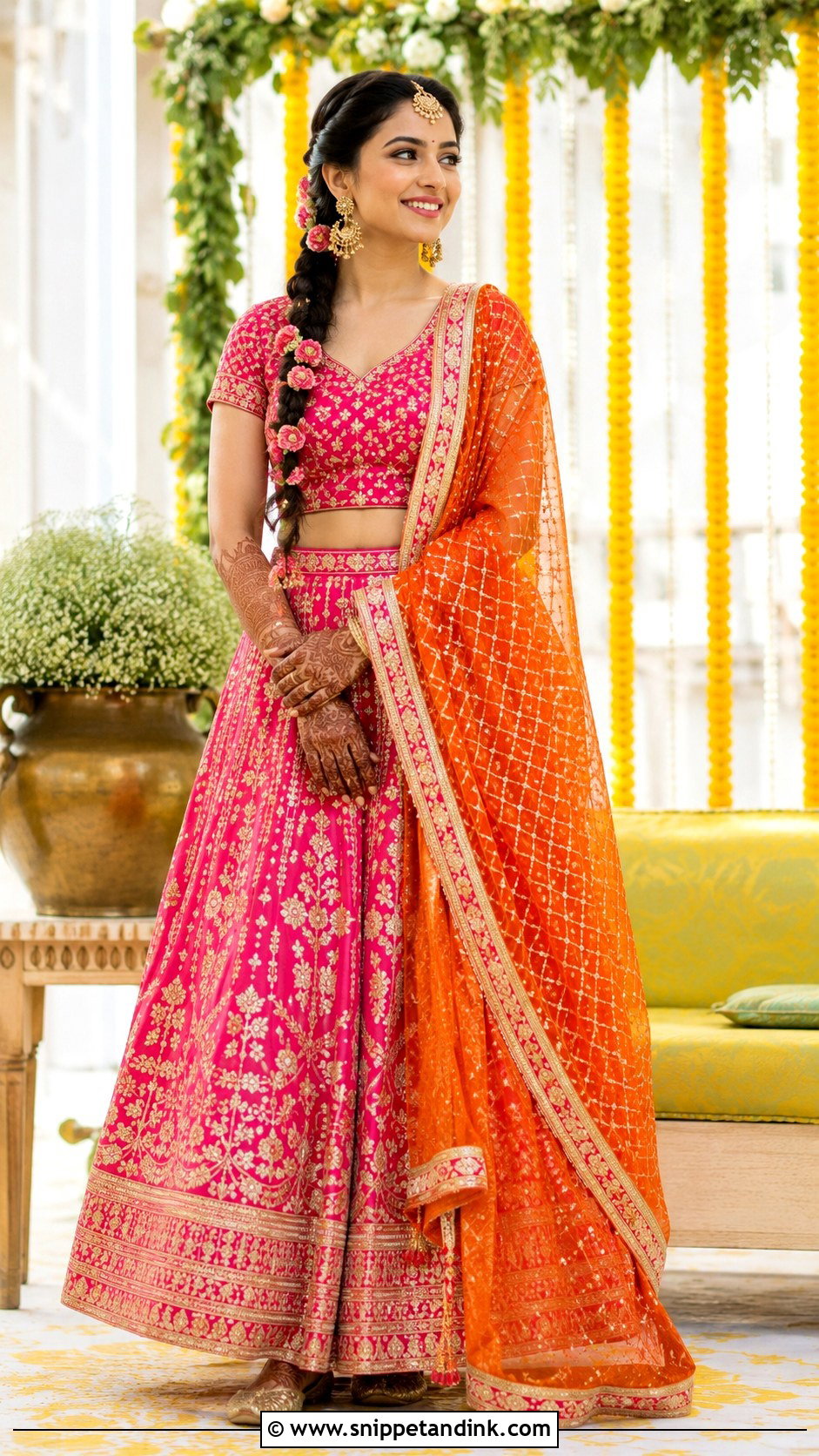
Rani pink is a deep, bright pink that looks bridal with very little embellishment. A light lehenga with gold gota, mirror details or fine threadwork, a short-sleeve blouse, and an orange or green dupatta for strong contrast, or a tonal pink one with a bright border if you prefer it matched. Kundan earrings, a central tikka, gold juttis. A sleek braid with pink flowers keeps your hair under control. No rings or bangles until the paste is dry and scraped off; jewelry presses into soft paste and leaves gaps in the pattern. It works day or evening.
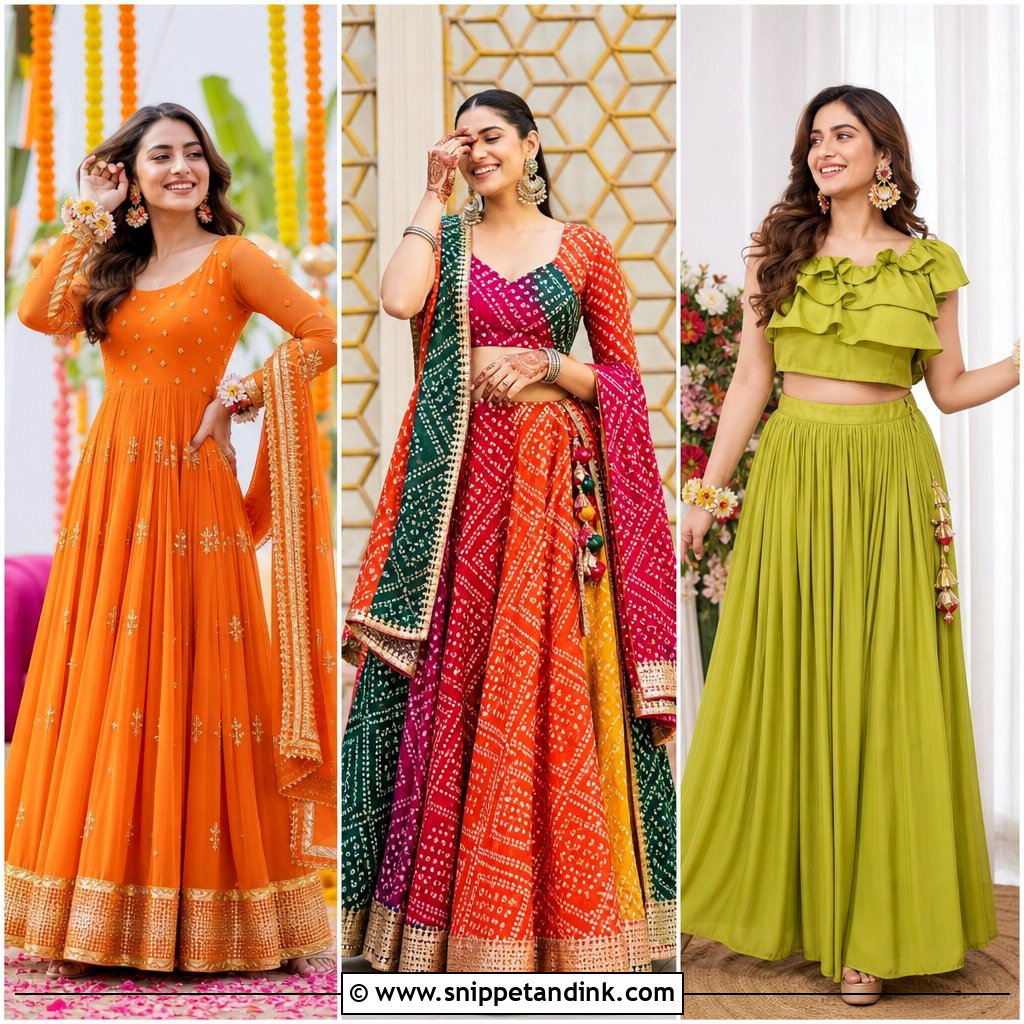
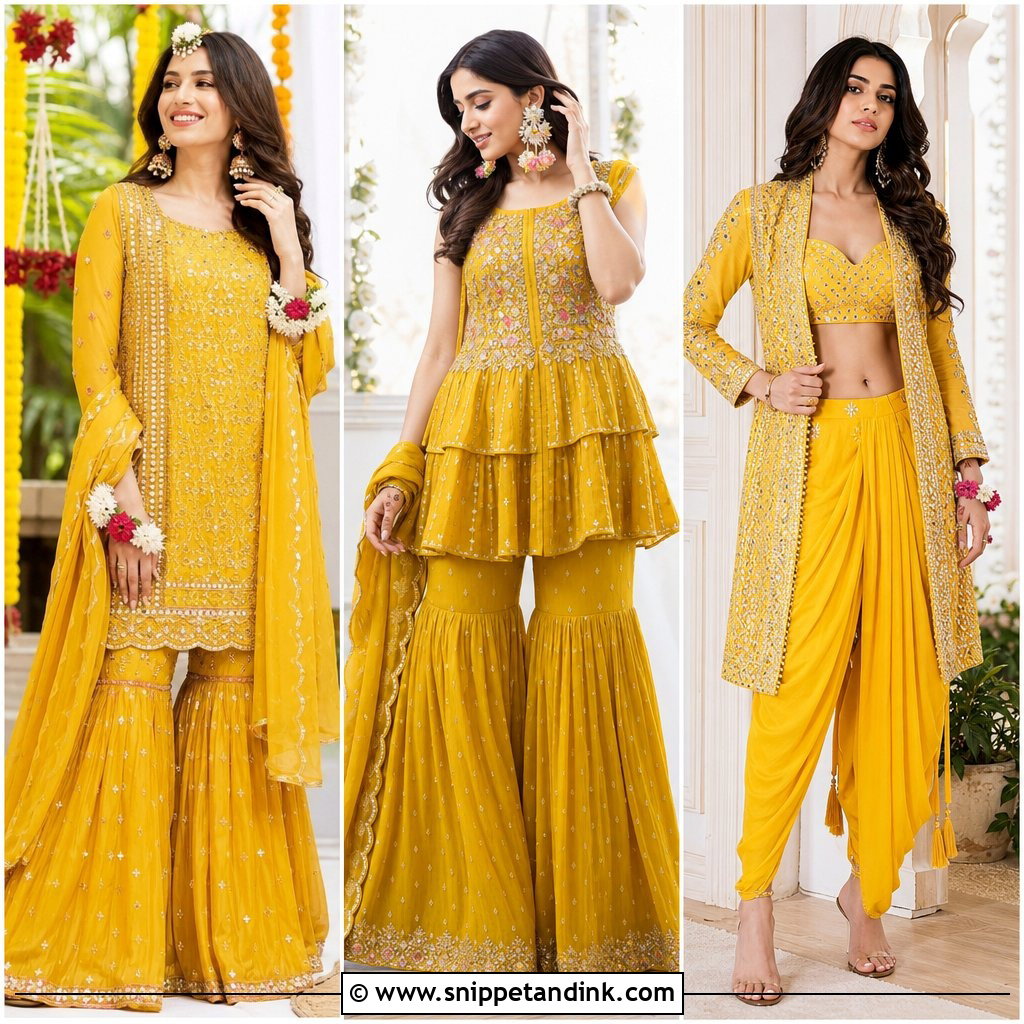
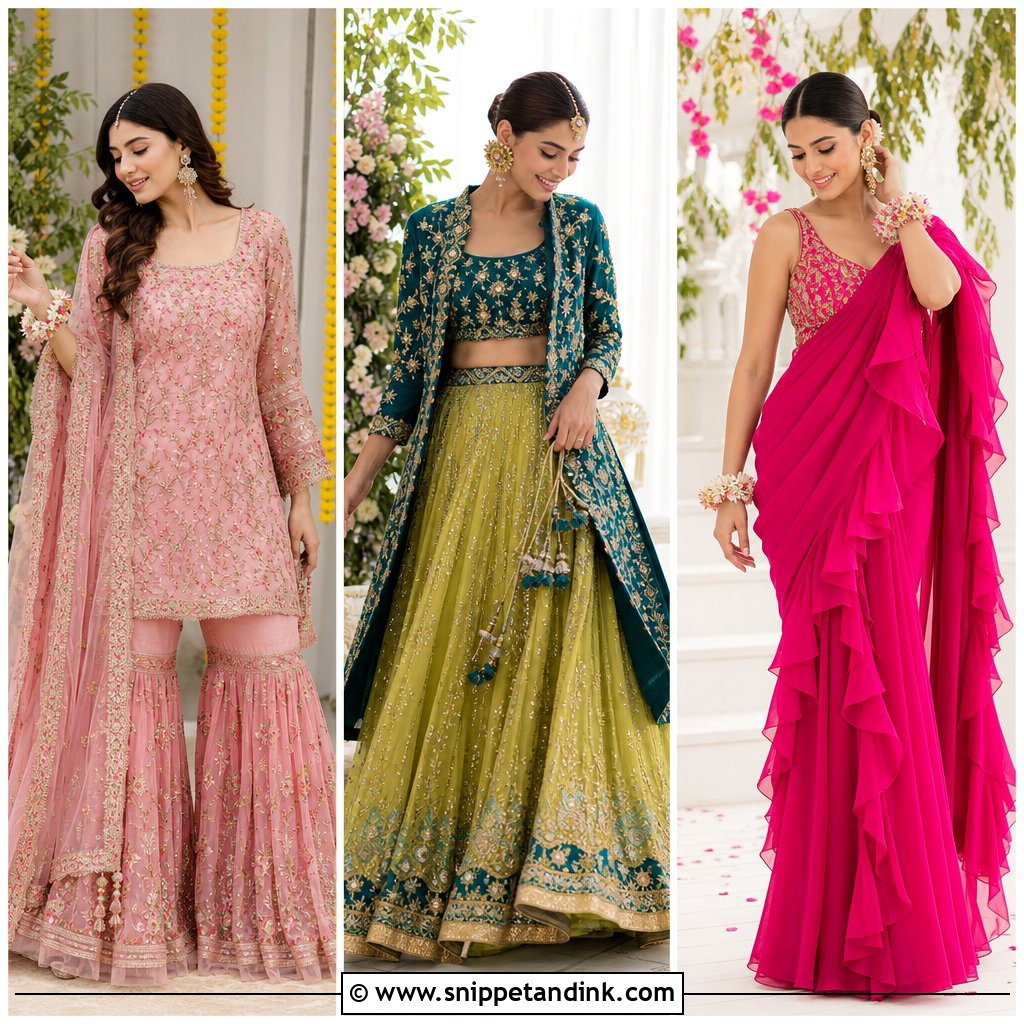
15. Yellow Dhoti Pant Mehendi Dress
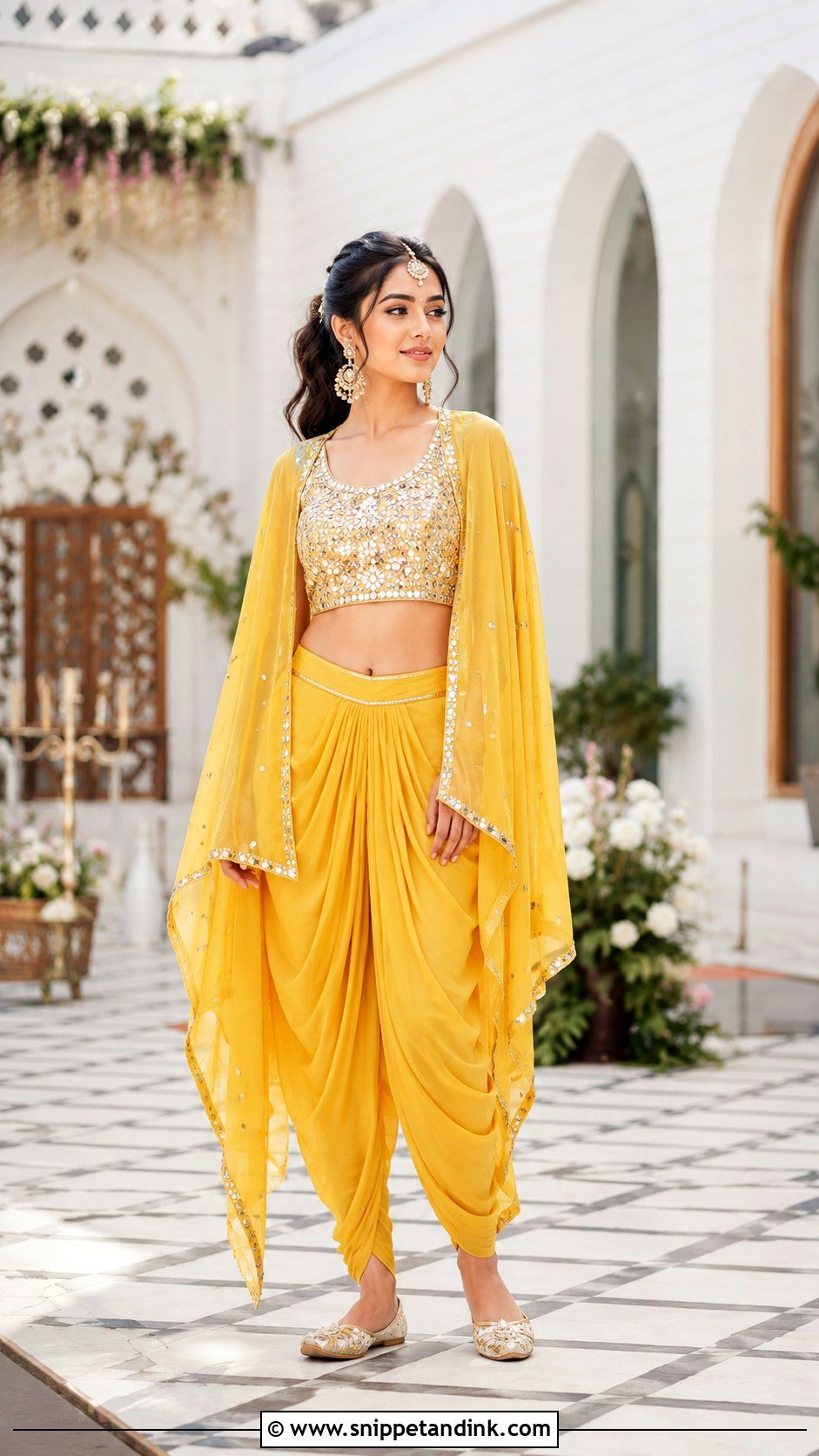
Not every bride wants a full skirt. A yellow dhoti pant set is the Indo-Western route: draped pants with a fitted cropped blouse or a short embroidered kurta, plus a light cape or shoulder drape instead of a bulky dupatta. Mirror work, threadwork and tassels make it festive. The detail I always check is room through the hips and thighs. Draped dhoti pants pull tight when you sit cross-legged, and you’ll be holding still while I work on hands, arms, ankles and feet. Statement earrings, a small tikka and flat juttis or open sandals. A textured ponytail.
16. Green Palazzo Mehendi Suit
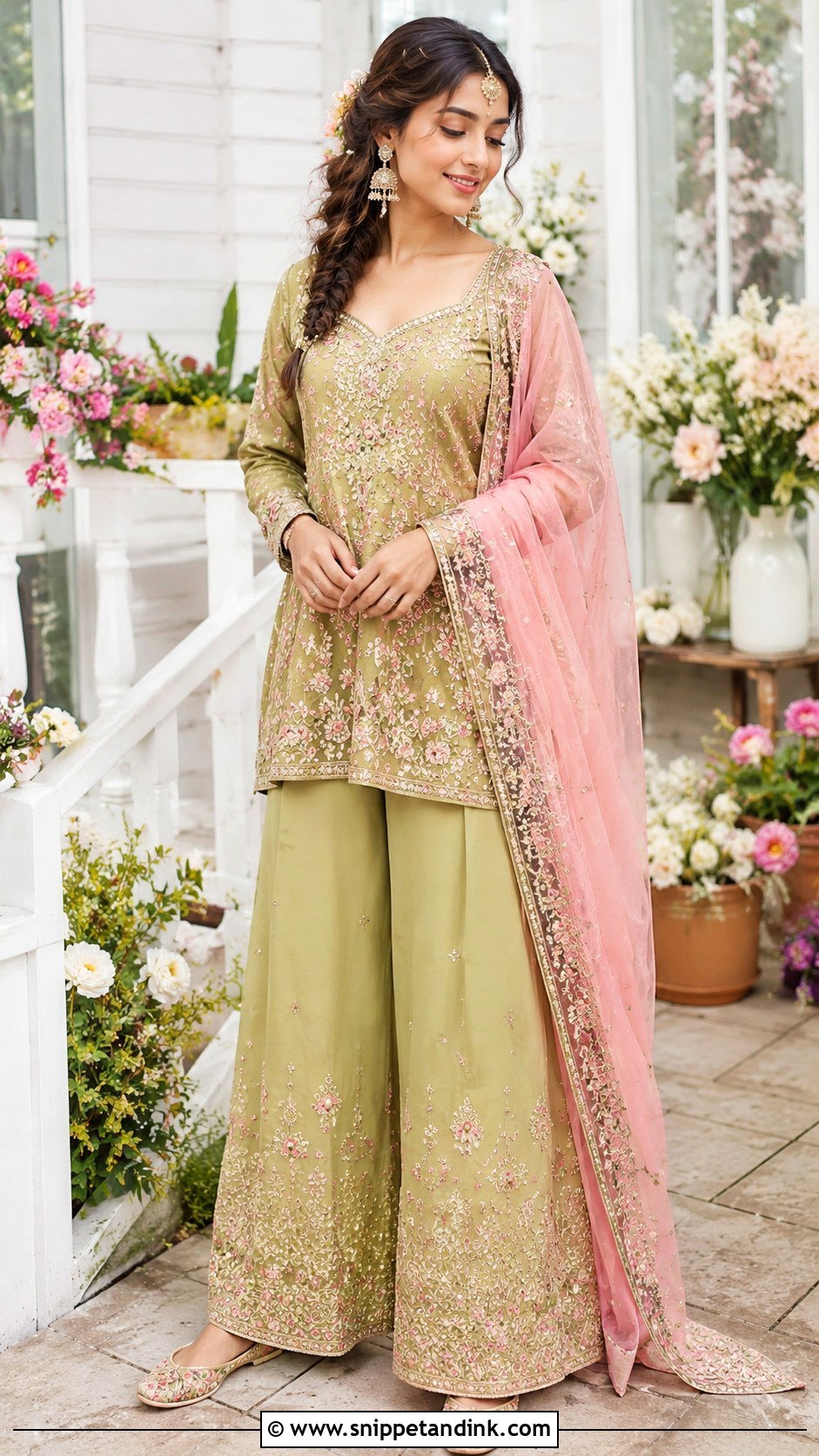
A green palazzo suit is about as light as a Mehendi outfit gets. Wide pants and a short embroidered kurta in mint, pistachio, parrot green or emerald, with side slits for movement. A pink or yellow dupatta with a narrow border for portraits, removed before we start. Watch the palazzo length if you’re having foot designs: long hems drag over wet paste on the top of the foot. Cropped palazzos solve that completely. Jhumkas, a light tikka and embroidered flats. A half-up braid or low ponytail.
17. Floral Crop Top Mehendi Skirt
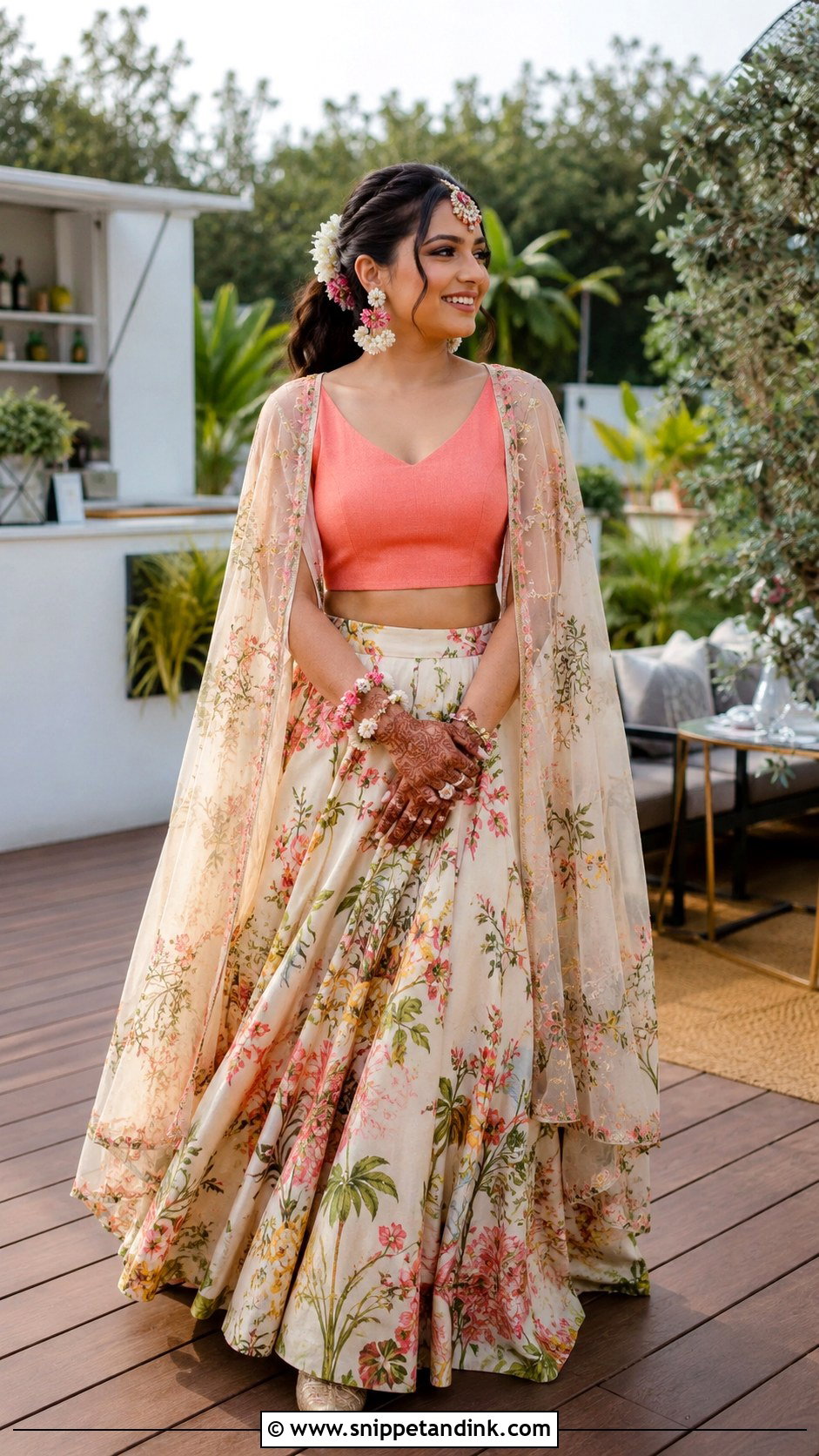
A floral crop top and flowing skirt is the most relaxed look here, and it suits a daytime Mehendi brunch. A printed or embroidered skirt with plenty of swing, and a solid cropped top. Short sleeves, wide straps or off-shoulder all leave the arms clear. Keep the waistband easy, not tight; after a few hours sitting cross-legged, a snug waistband is all you’ll be thinking about. Add a sheer cape or a detachable dupatta for family photos. Flower earrings, a delicate tikka and neutral juttis. A loose ponytail with small blossoms.
18. Embroidered Mehendi Jumpsuit
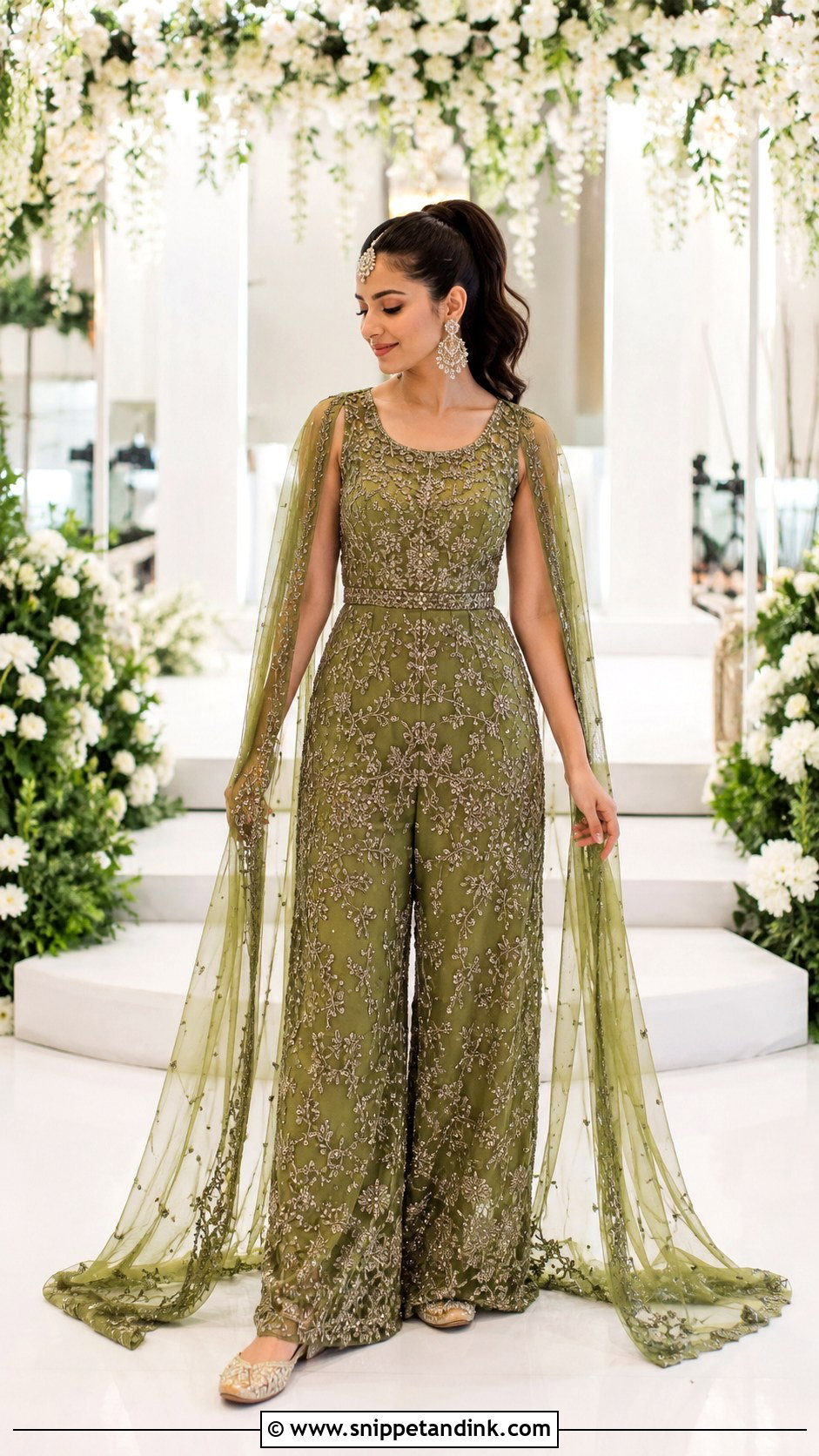
An embroidered jumpsuit is the cleanest modern alternative. A wide leg in green, yellow, coral or pink with a defined waist and embroidery around the neckline and upper body. Sleeveless or cap sleeves let me work freely. Now the practical part, because it matters: once your hands are covered in wet paste, you can’t use them for hours. A jumpsuit means someone has to help you in the restroom, so think about fastenings and plan ahead. A detachable cape for photos, chandelier earrings, a slim tikka and embellished flats. A high ponytail or smooth low bun.
19. Multicolor Mehendi Co-Ord Set
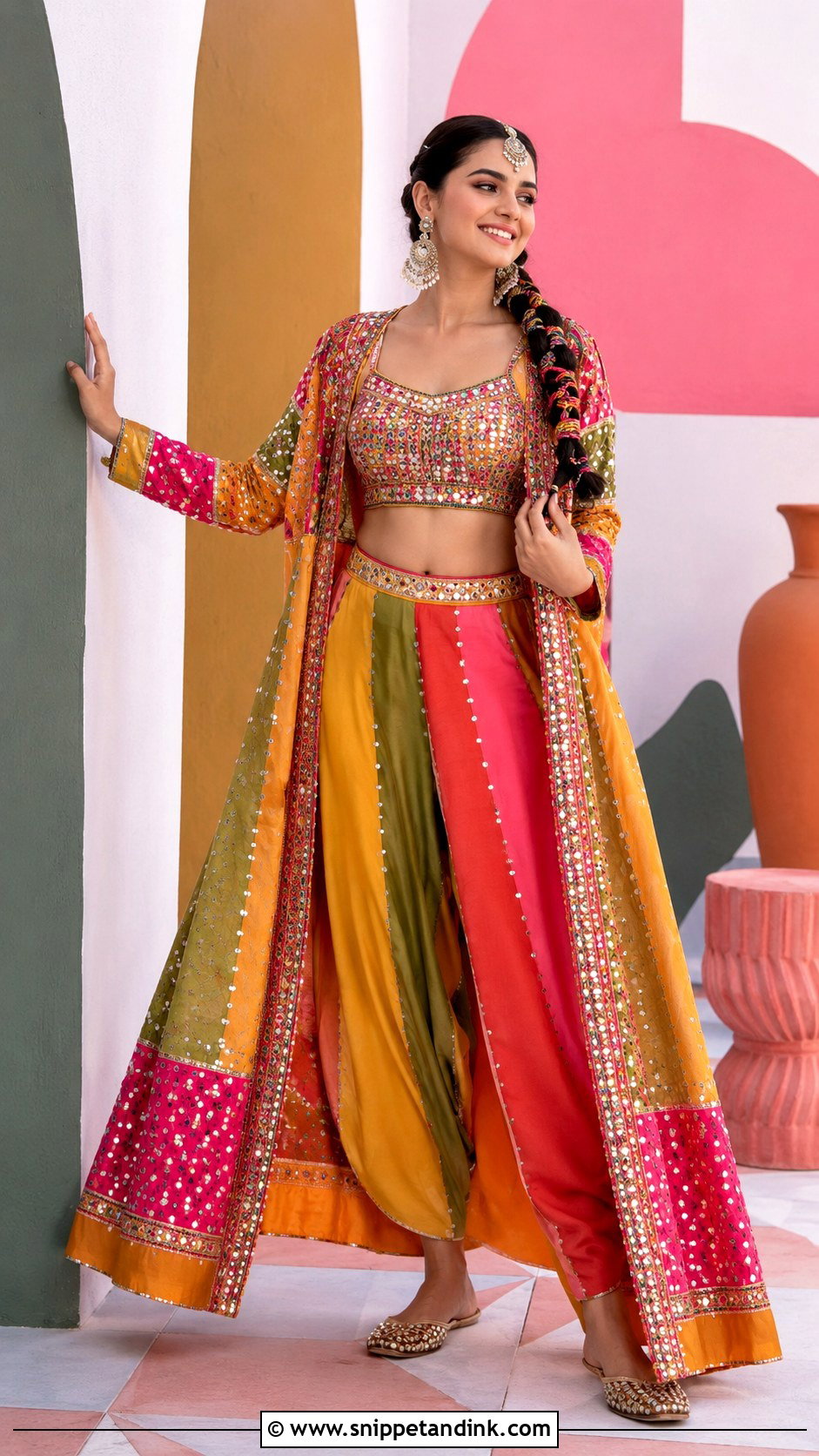
A multicolor co-ord set is playful and practical. A short mirror-work top with wide pants, a long skirt or a layered dhoti bottom, in color-blocked orange, pink, green and blue. Add a cropped jacket or open cape that comes off before I begin. Hold off on bracelets: the stain keeps developing for a day or two after the paste comes off, and bangles rubbing the wrist in that time can lighten the design there. Oversized earrings, a forehead piece and metallic flats. A bubble braid with colorful threads. Separates restyle easily after the wedding.
20. Red and Yellow Mehendi Gharara
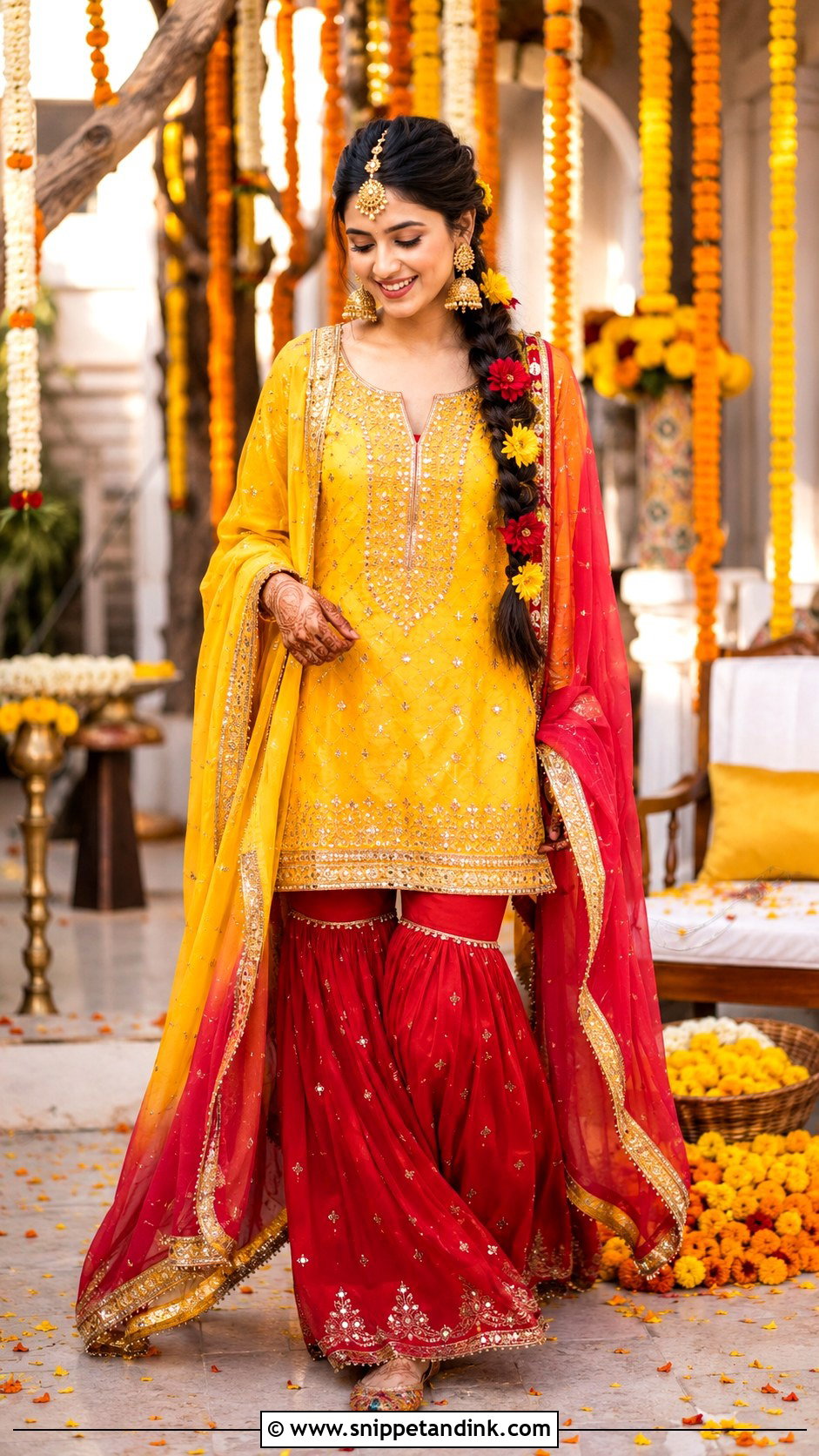
Red and yellow bring wedding color into a gharara, which is built for dancing: the pants are fitted to the knee and then flare out. A yellow short kurta with a red gharara, or the reverse for more red. Gota borders, small mirrors and traditional embroidery define each layer without weight. A light dupatta in both colors over one shoulder for photos. Gold jhumkas, a tikka and embroidered juttis. A traditional braid with red and yellow flowers. I’d ask for a short-sleeved, relaxed kurta, because a long session of arm, hand, ankle and foot work is much easier when you can sit loosely.
When Paste Lands on Your Lehenga
It happens at almost every Mehendi: a guest bumps your elbow or a blob of paste falls from a fingertip. Henna is a dye, so act quickly and gently.
- Lift the paste off with a cotton bud or the edge of a tissue. Don’t wipe, since rubbing pushes the dye deeper into the weave.
- Blot the spot with cold water on a clean cloth. Skip hot water, which helps the dye set.
- Leave the rest to a dry cleaner, and tell them it’s henna. Silk, organza and anything with zari or gota shouldn’t be scrubbed at home.
- Accept that light cotton and ivory fabrics may keep a faint orange shadow. Prints and darker colors hide it far better.
One more thing to know when you look at photos from the day: the stain is bright orange when the paste first comes off and darkens toward deep red-brown over the next day or two. So the color of your hands in Mehendi photos will look lighter than it will at the wedding. Outfits in deep green, pink and red set off that early orange nicely, while very pale yellow can make it look washed out.
Comfort for the Henna Chair, Color for the Dancing
A good Mehendi outfit has two jobs. It has to keep you comfortable through hours of sitting still while the paste goes on and dries, and then it has to look festive when you’re posing, hugging guests and dancing. Light fabric, sleeves above the elbow, an easy waist and a dupatta you can take off in one move handle the first job. Color handles the second, and that part is entirely yours: yellow and green, or pink, blue, ivory, orange, lavender. Leave your hands and wrists free, enjoy the music, and let your stain deepen overnight.
You'll Like These Ideas:


Leave a Reply