
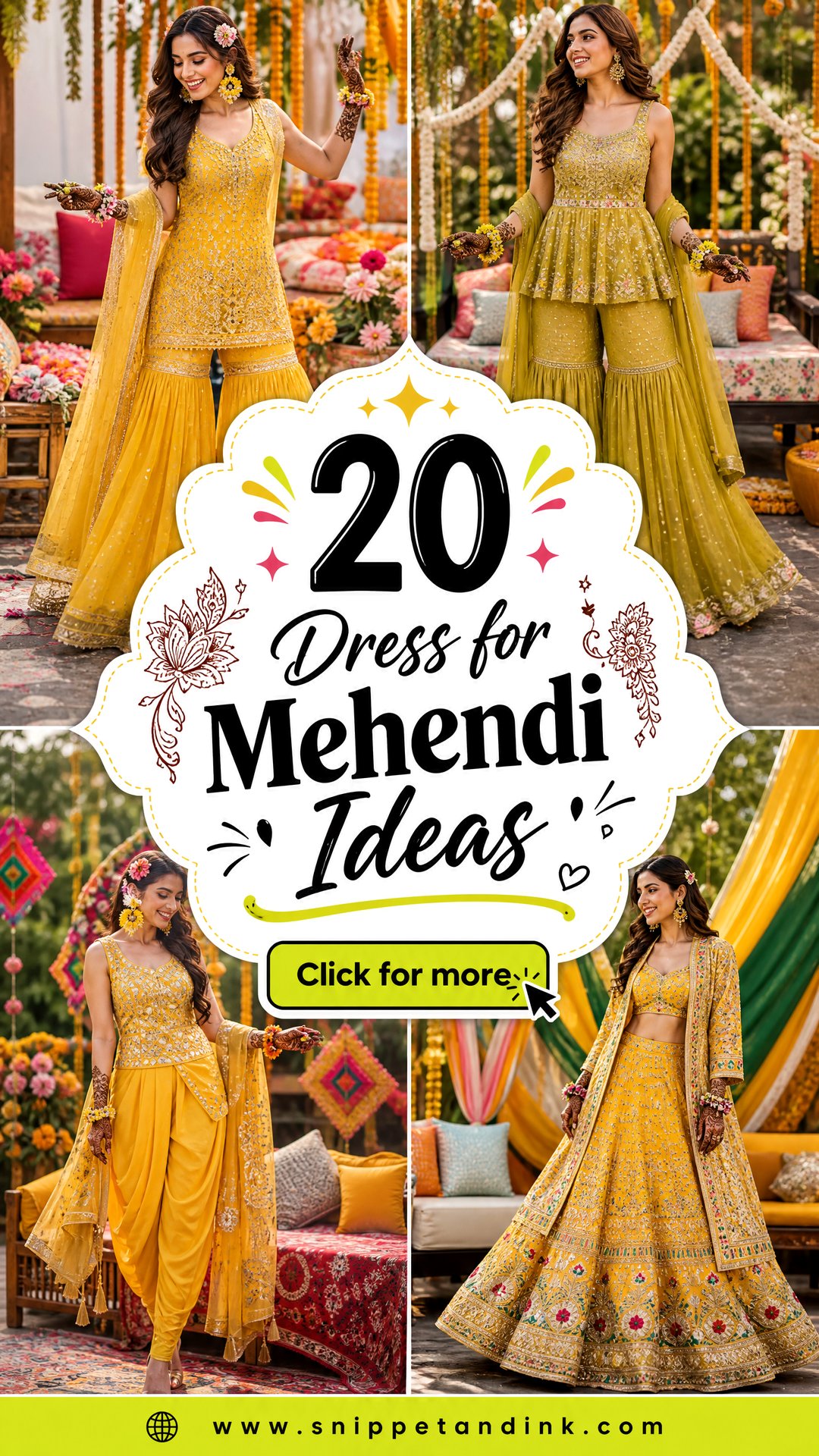
A Mehendi function asks more of an outfit than most wedding events do. You may sit on a low cushion for hours while paste dries on your hands, then get up and dance in the same clothes. Below are twenty outfits I’d actually put a bride, a bridesmaid or a guest in, from traditional lehengas and sharara sets to sarees and modern fusion looks. Yellow and green are the classic shades, but coral, pink, turquoise and lavender sit just as comfortably among marigolds. For every one I’ve noted where the sleeves end, how the hem behaves on the floor and what the fabric does when it gets warm, because that is what decides whether you enjoy the evening or spend it adjusting your dupatta.
Dressing Around Wet Henna Paste
The bride at a Mehendi is usually the last to be finished and the first to be stuck. Bridal henna on both hands and feet can take several hours to apply, and the paste is best left on for hours afterward while it darkens. Everything you wear has to work around that, and I plan the outfit backward from the henna rather than forward from the color.
Sleeves and necklines
I keep a bride’s sleeves above the elbow if the design runs up the forearm. Henna paste stains cotton and silk easily, and a sleeve brushing a fresh pattern smudges the design and marks the fabric at the same time. Guests getting a small design on the palm can wear any sleeve they like.
Fastenings you can work without fingers
- Elastic or drawstring waists on shararas and palazzos, so a quick bathroom trip doesn’t need help.
- Front or side zips on jumpsuits and kurtas, never a row of back hooks.
- A dupatta pinned before the artist starts; you won’t be able to fix it later.
- Flat juttis or sandals you can slip on without bending to buckle a strap.
Once the lemon and sugar sealant goes on, the paste becomes sticky and catches on anything loose. That is the stage when a free-flowing dupatta does the most damage, so I tuck or pin it well away from the hands.
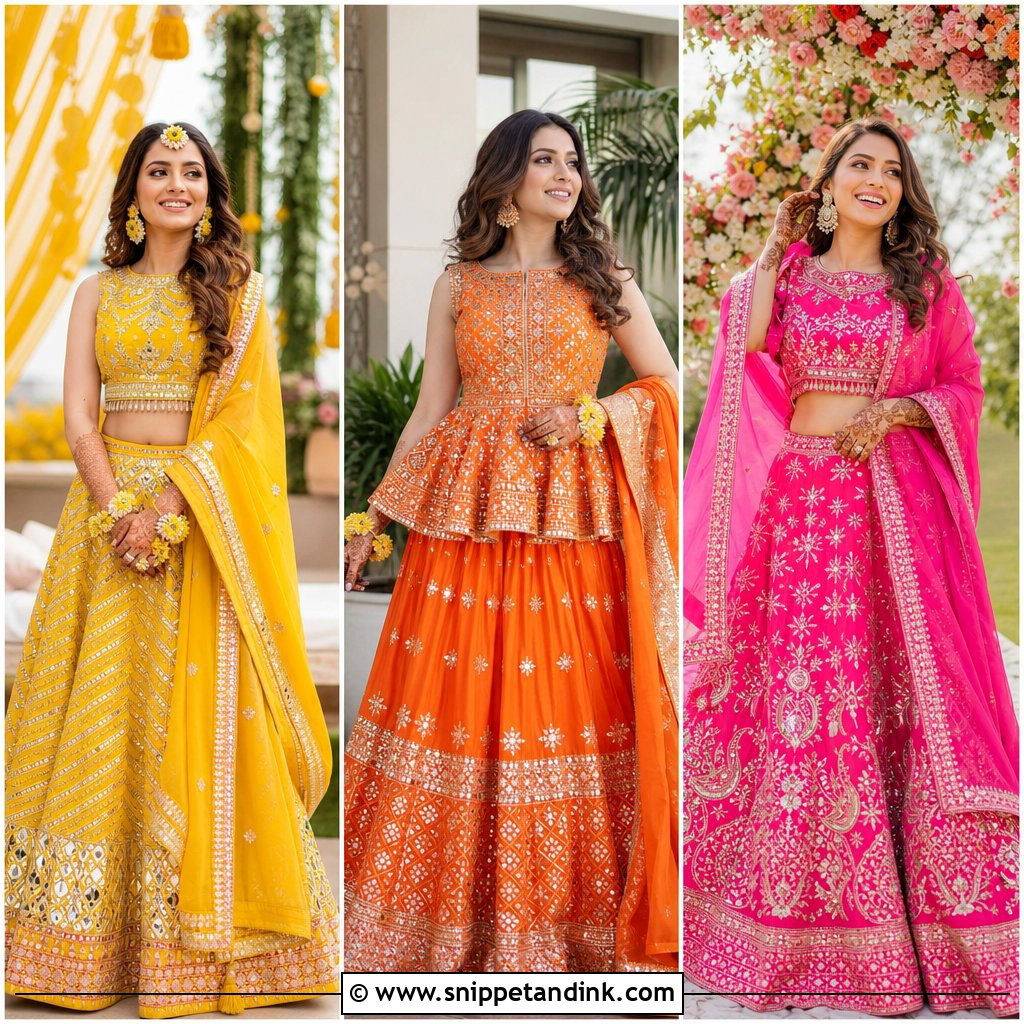
1. Yellow Lehenga Mehendi Dress
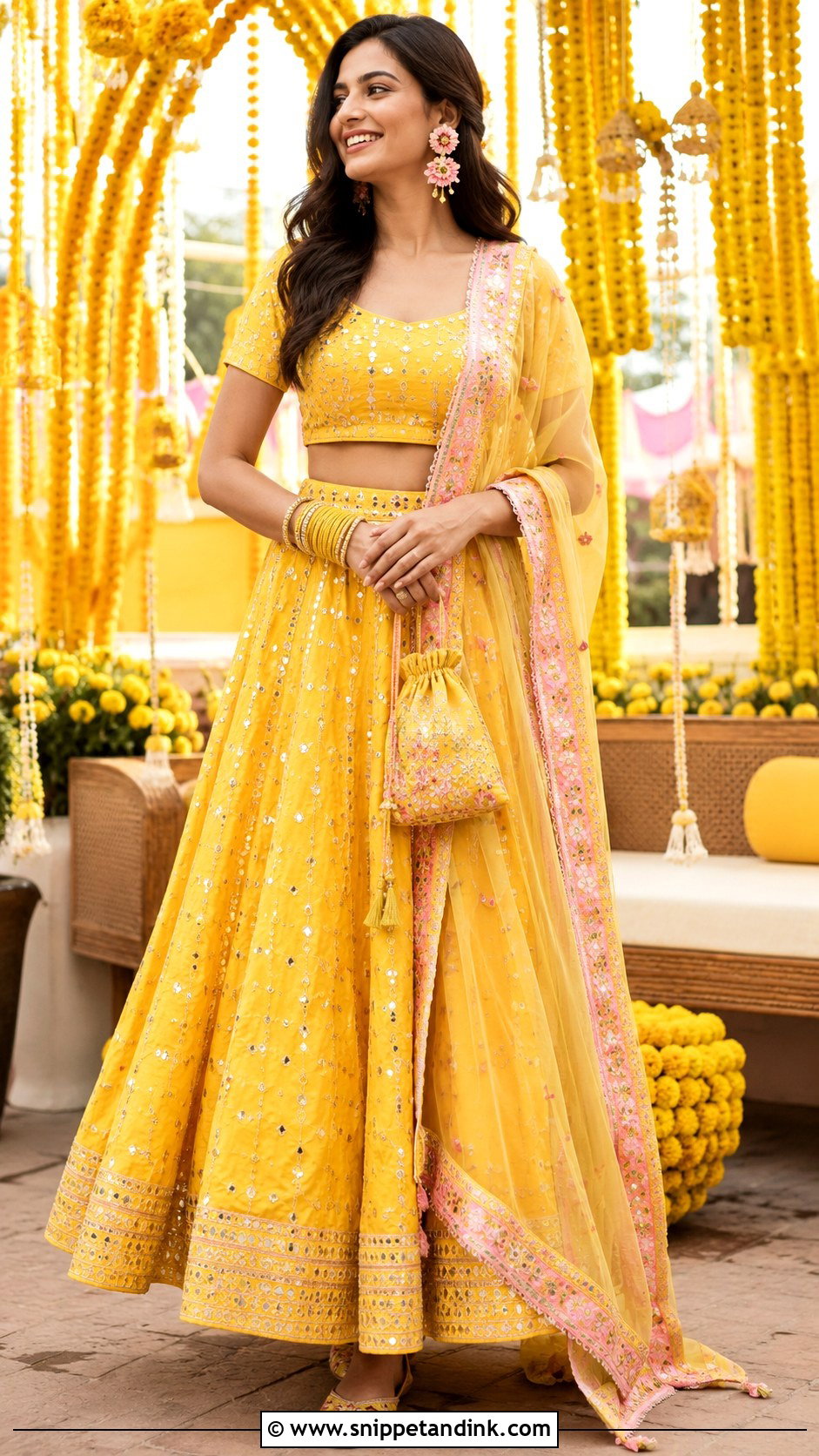
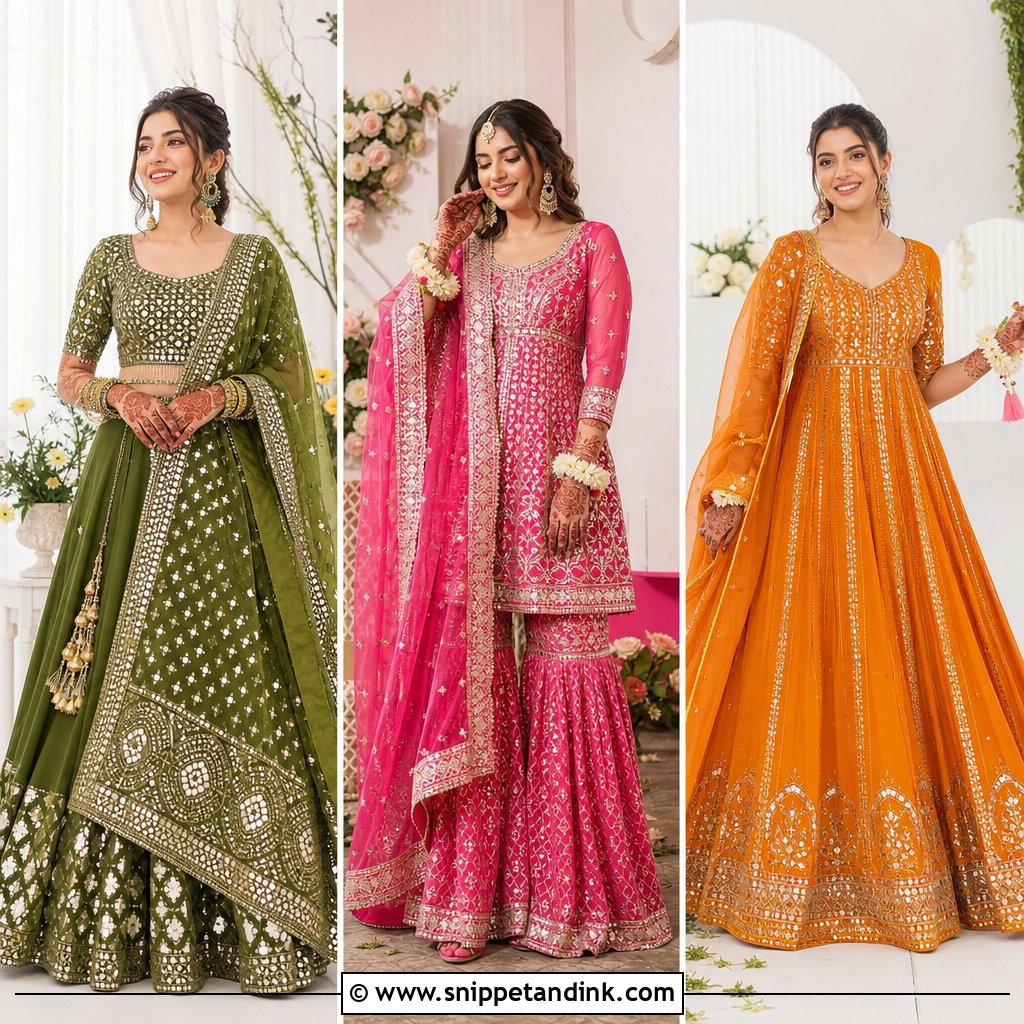
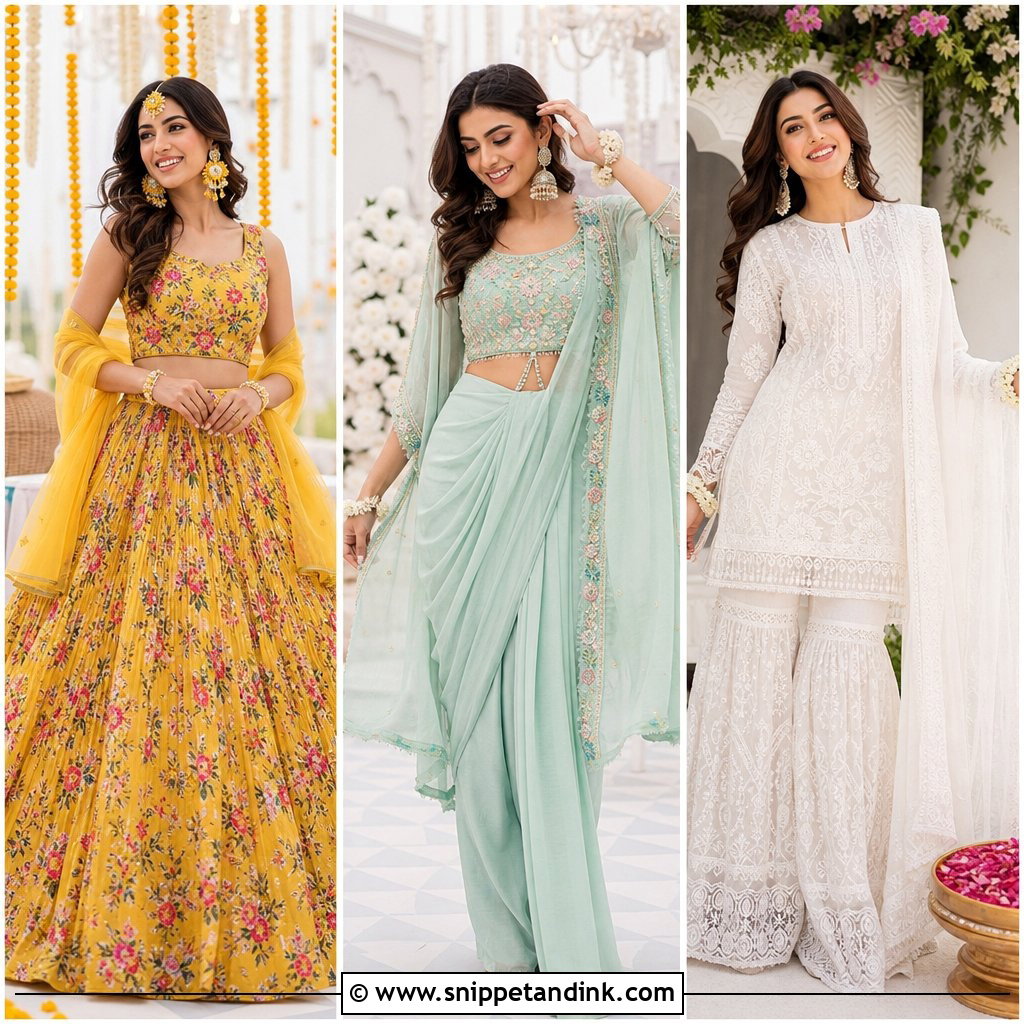
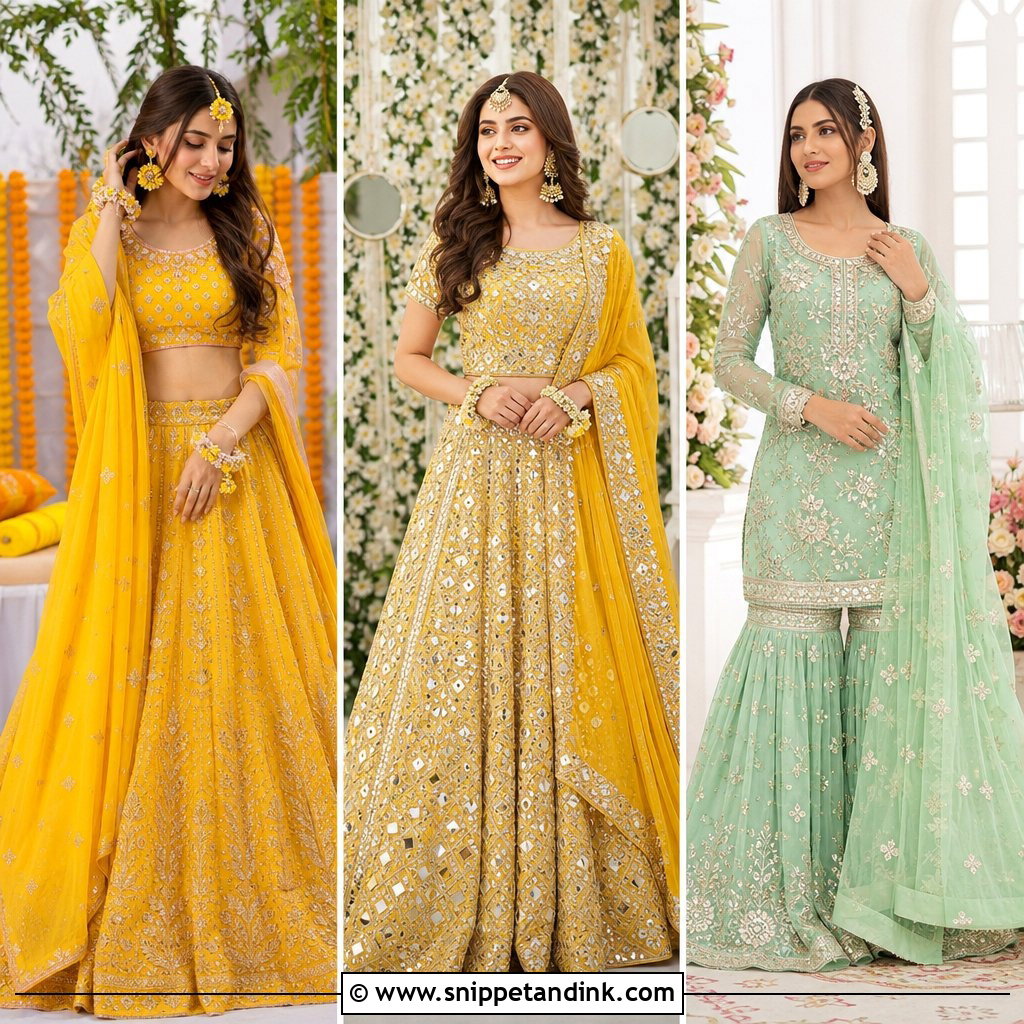
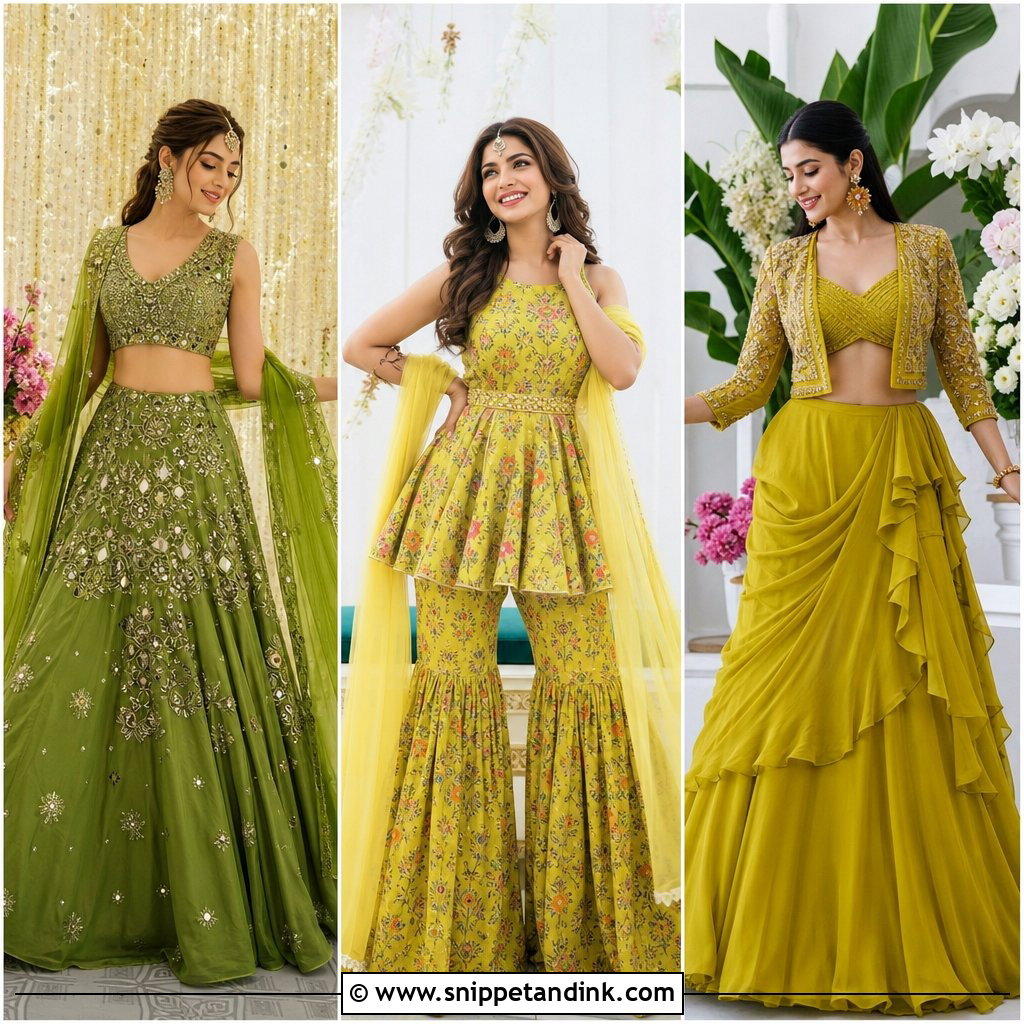
Yellow is the safest shade I know for a Mehendi because it reads festive in daylight and under string lights alike. I steer brides toward georgette, cotton-silk or chanderi with gota borders or fine thread embroidery, since heavy zardozi gets hot and scratchy on the inner arm while you hold still for the artist. Keep the blouse sleeve short or cap length so the henna can run past the wrist without touching fabric. A pink or green dupatta gives the yellow some depth. Floral earrings, stacked bangles, embroidered juttis and a small potli finish it. Brides can go heavier with a maang tikka; guests should keep the embroidery quieter so they don’t compete. Curls or a braid will hold far better than loose straightened hair in a warm, crowded room.
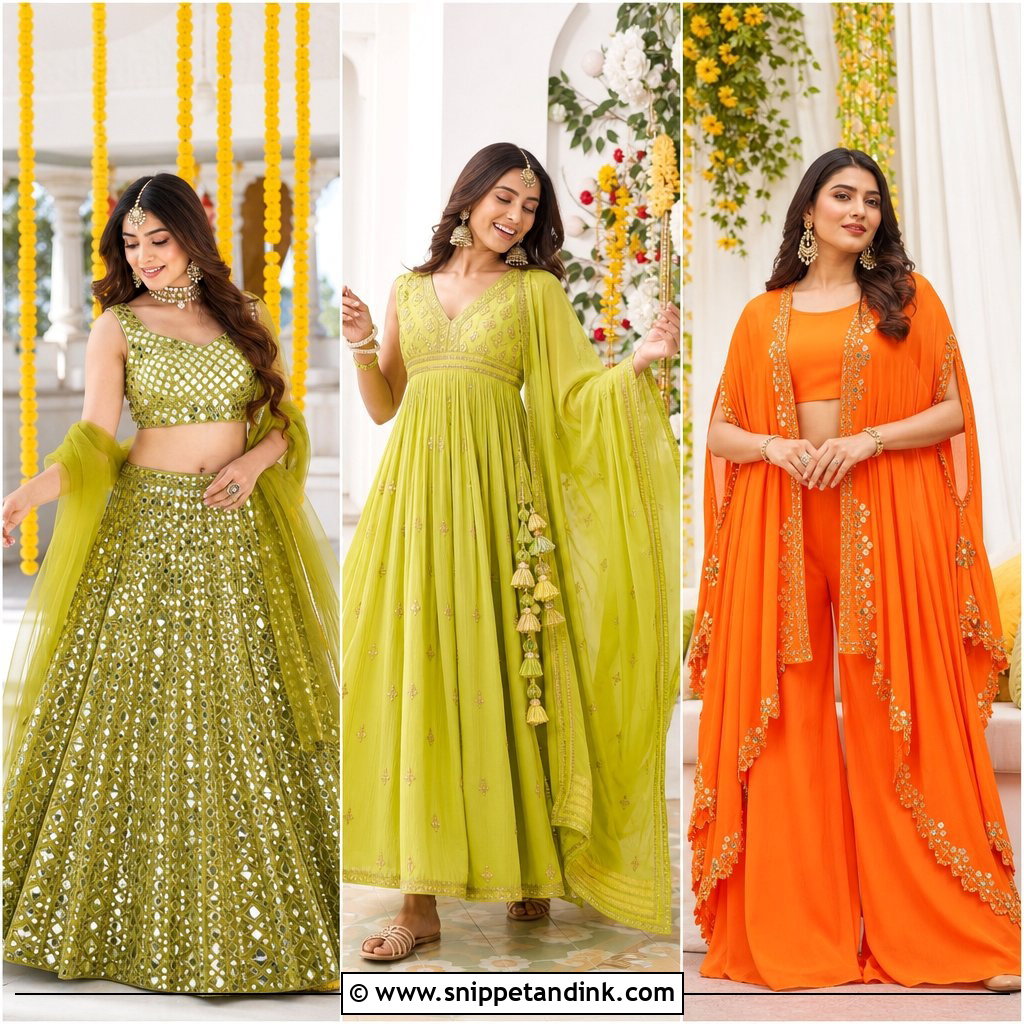
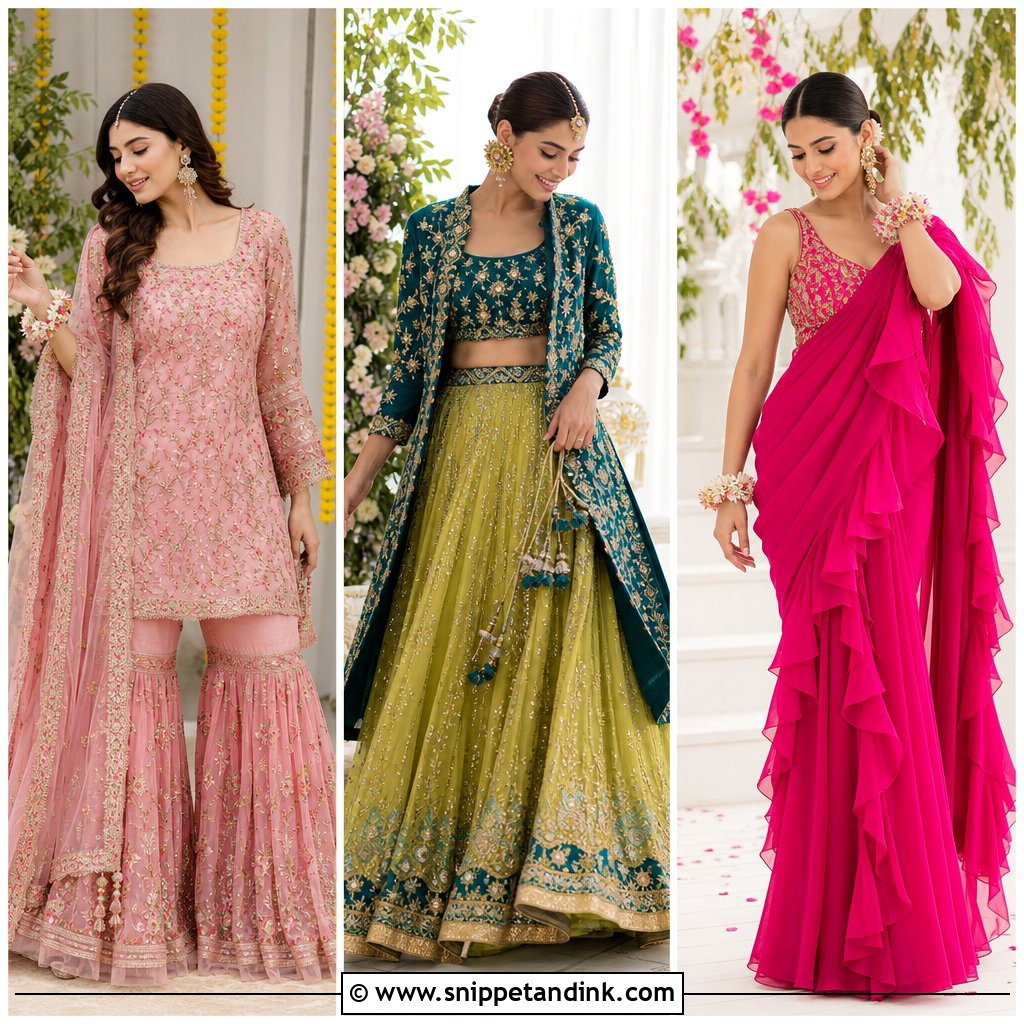
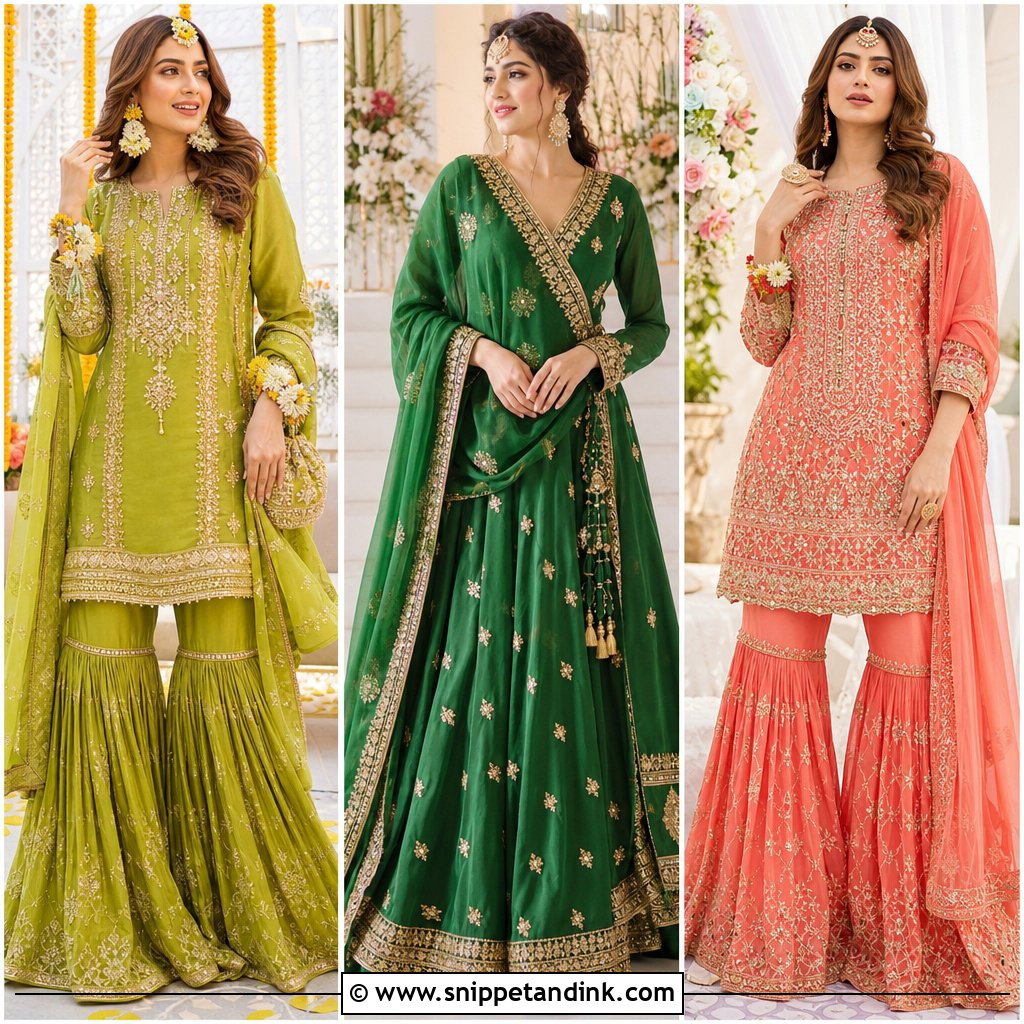
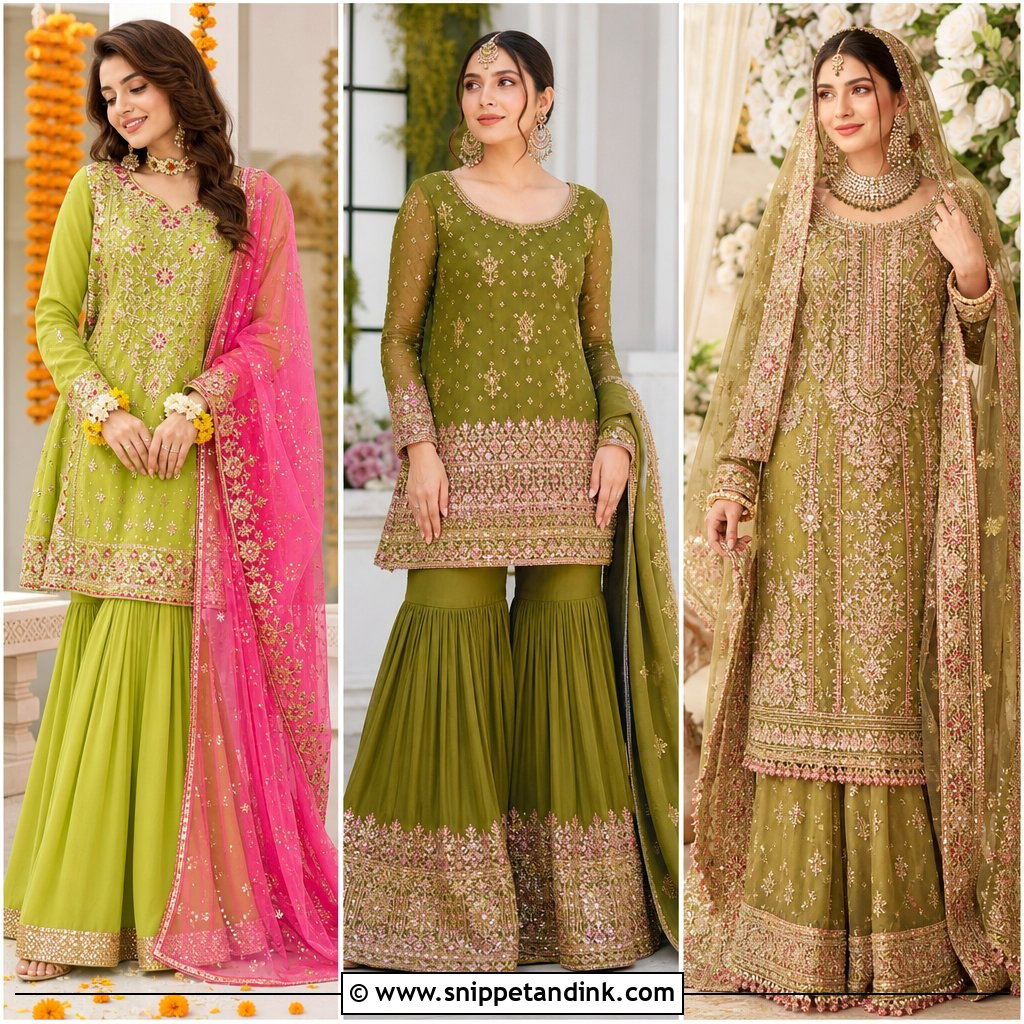
2. Green Sharara Mehendi Dress
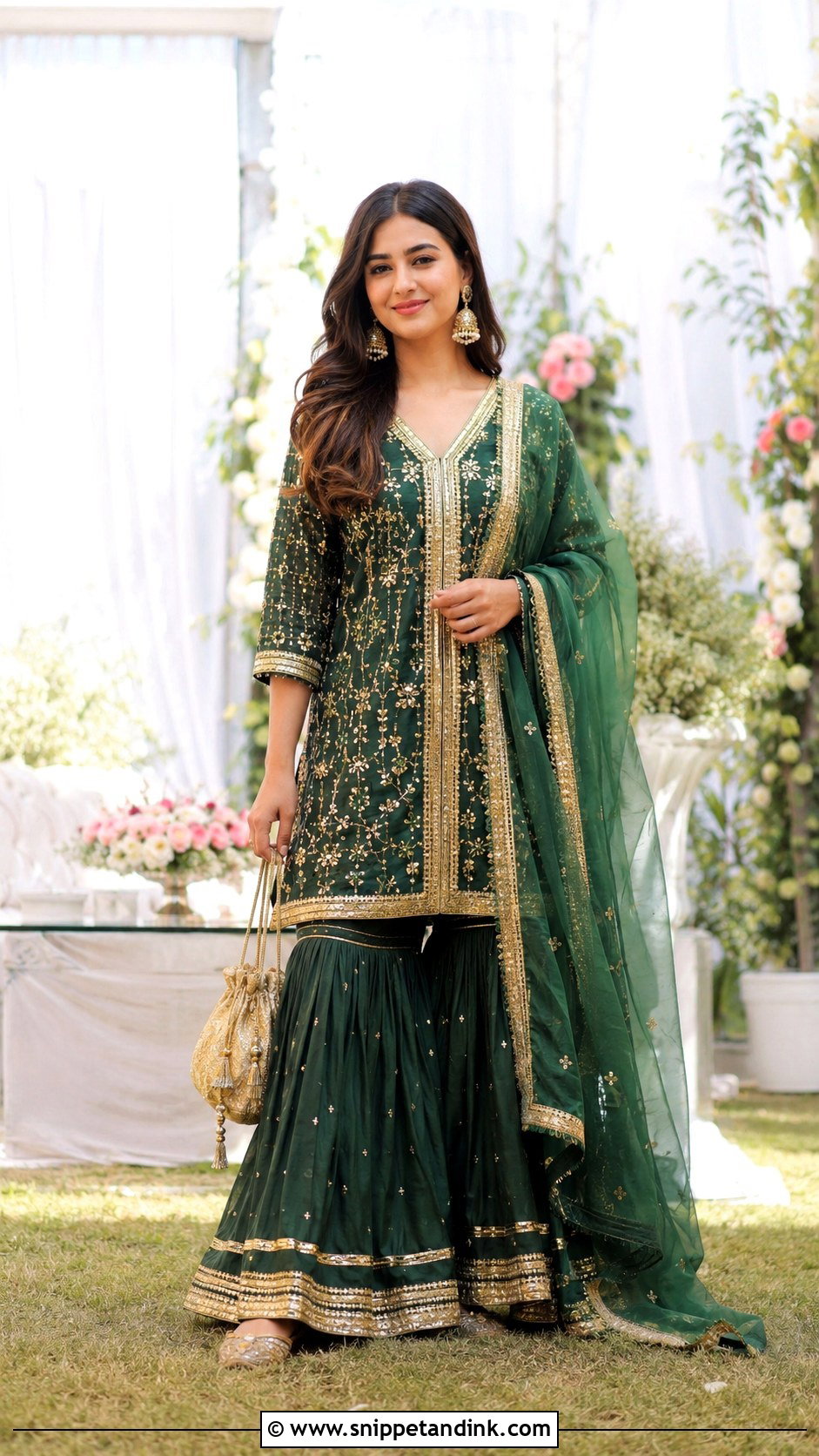
Shararas are my first suggestion for anyone who dreads managing a full skirt on a floor cushion. The flare starts at the knee, so you can fold your legs under you without crushing anything. Pick an emerald, lime, mint or pistachio green sharara with a hip-length kurta; a longer kurta bunches when you sit. Gota patti and small mirrors give sparkle without the weight of beadwork. Wear the dupatta over one shoulder and pin it at the back so both hands stay free. With gold jhumkas and a slim maang tikka you rarely need a necklace, especially if the neckline is already embroidered. Sisters, bridesmaids and daytime guests are the people I’d dress in this first.
3. Floral Lehenga Mehendi Dress
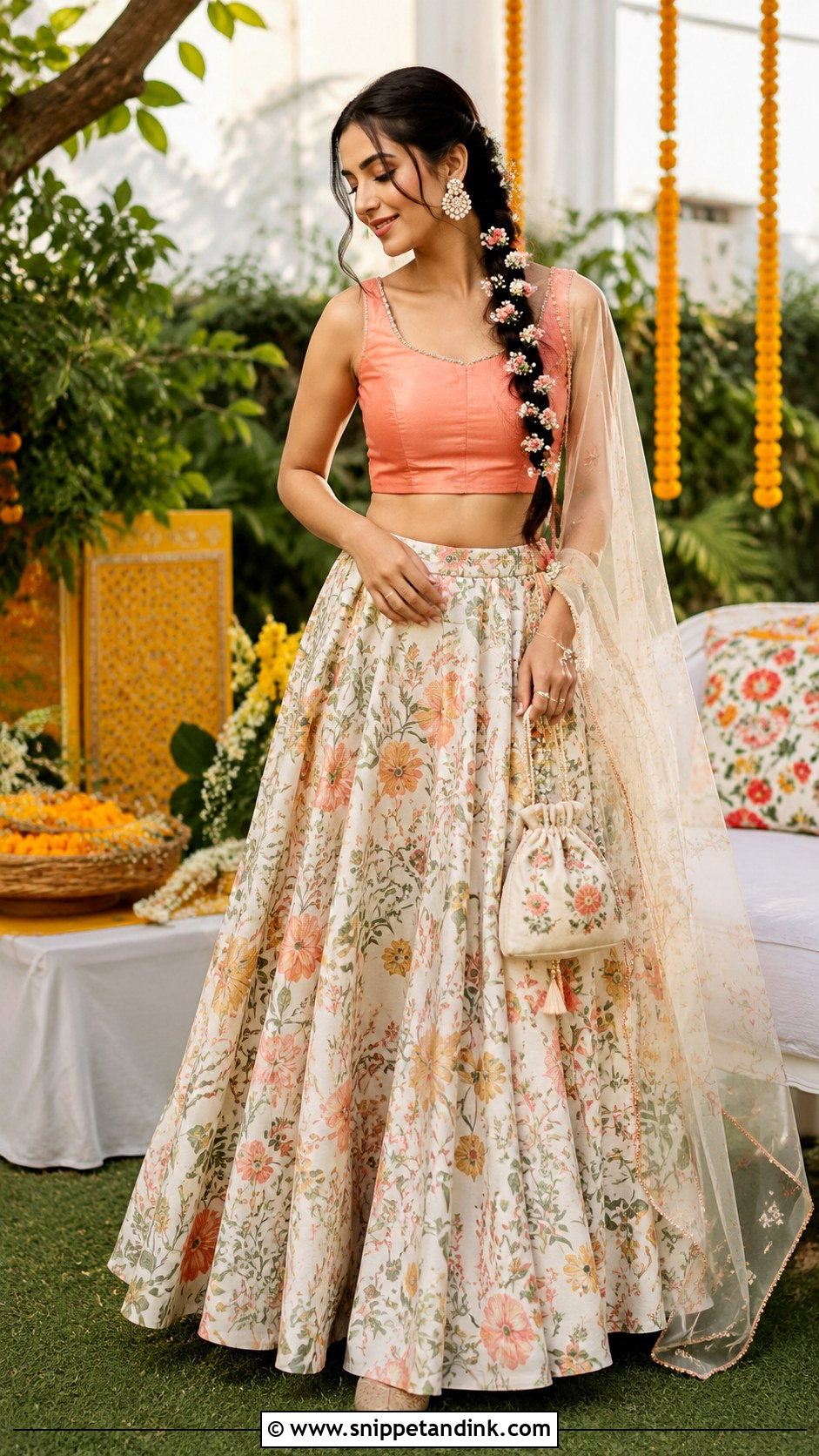
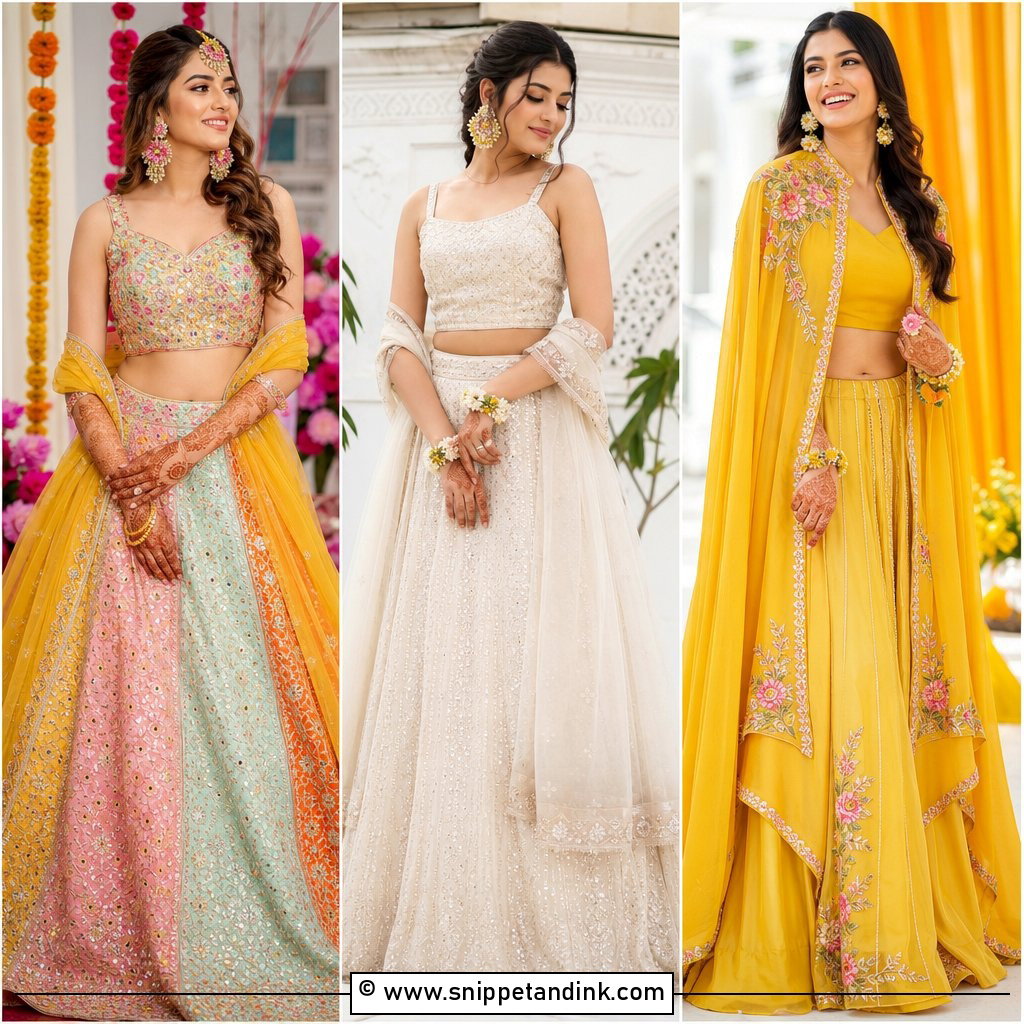
Floral prints soften a daytime function, but the scale of the print matters more than people expect. A large botanical repeat on a lehenga can swallow a petite frame, while a small ditsy print can read as flat from across a lawn. I look for pink, yellow, coral and green blooms on a pale base, then pull one shade out for a plain cropped blouse. An organza dupatta with a narrow embroidered edge holds its shape without adding heat. Pearl earrings, a few fresh flowers in the hair and neutral juttis keep the focus on the print. A low ponytail or loose braid suits the relaxed mood. Brides can push the print bigger and embellish the blouse; guests look more at ease in smaller patterns, and the print sits happily against marigold garlands and greenery.
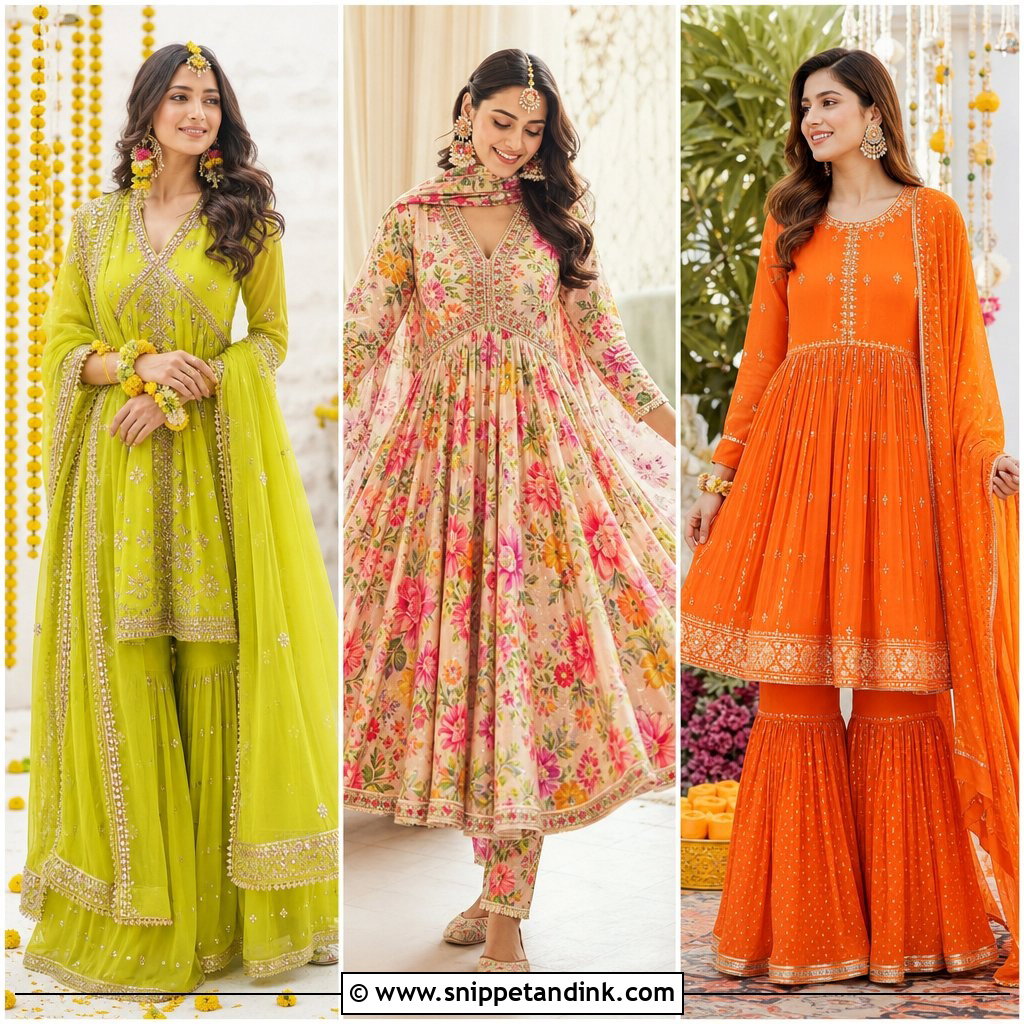
4. Pink Anarkali Mehendi Dress
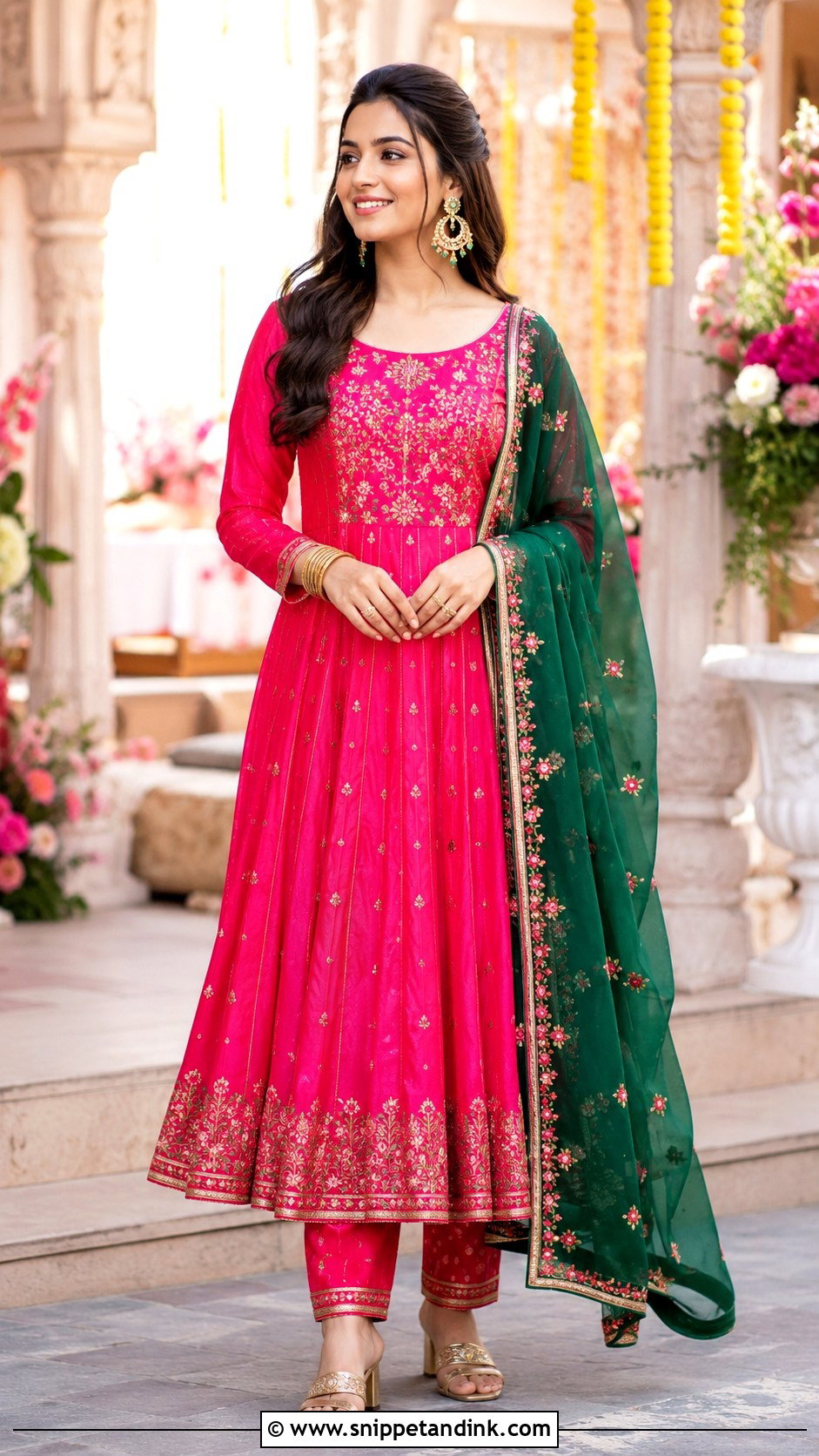
One garment, nothing to coordinate: that is the appeal of an Anarkali. The thing I check first is the hem. If the function has floor seating, a floor-sweeping flare ends up under someone’s knee or dragging through spilled paste, so I prefer knee or calf length. Three-quarter or short sleeves, a fitted bodice and a flare that doesn’t need a can-can underneath make it easy to move. Rani pink is loud and festive; blush or rose pink is gentler for the afternoon. Slim pants underneath and a green, orange or yellow dupatta add contrast. Kundan earrings, gold bangles and low block heels are enough. Guests who want something traditional but don’t feel at home in a lehenga usually relax the moment they try one of these on.
5. Multicolor Lehenga Mehendi Dress
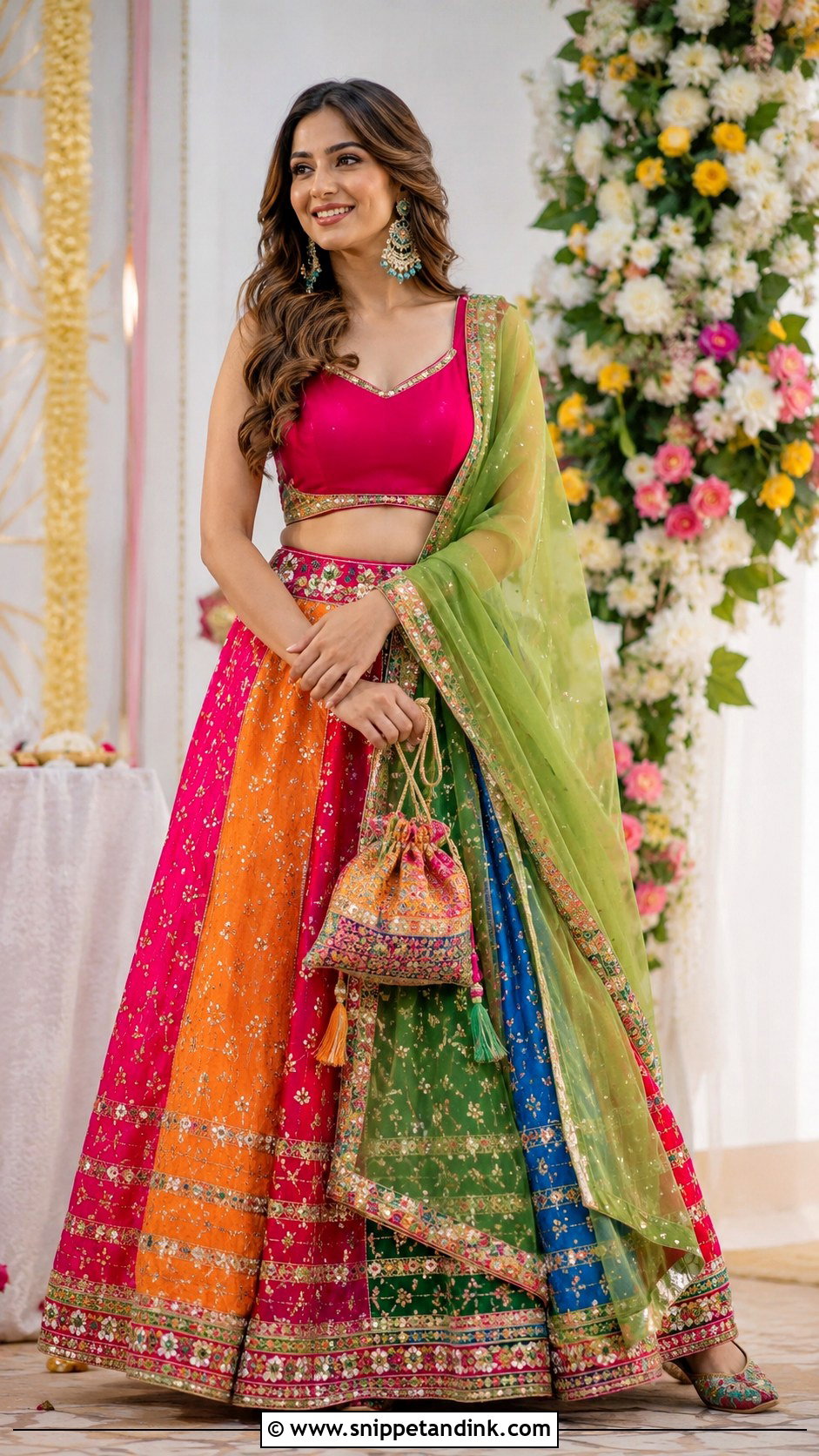
A multicolor lehenga carries the noise of a Mehendi well, and in group photos it’s easy to spot. The risk is too much happening at once. Choose color-blocked panels, patchwork or bands of pink, orange, green and blue, then calm everything above the waist with a solid blouse in the strongest color of the skirt. A plain net or organza dupatta stops the outfit tipping over. I usually ask the wearer to pick one feature piece of jewelry, earrings or a hairpiece, rather than three competing ones. Gold juttis and a compact potli pull the colors together. For a bridal party, I like the same patterned lehenga with a different solid blouse on each bridesmaid: coordinated without looking like a uniform.
6. Yellow Gharara Mehendi Dress
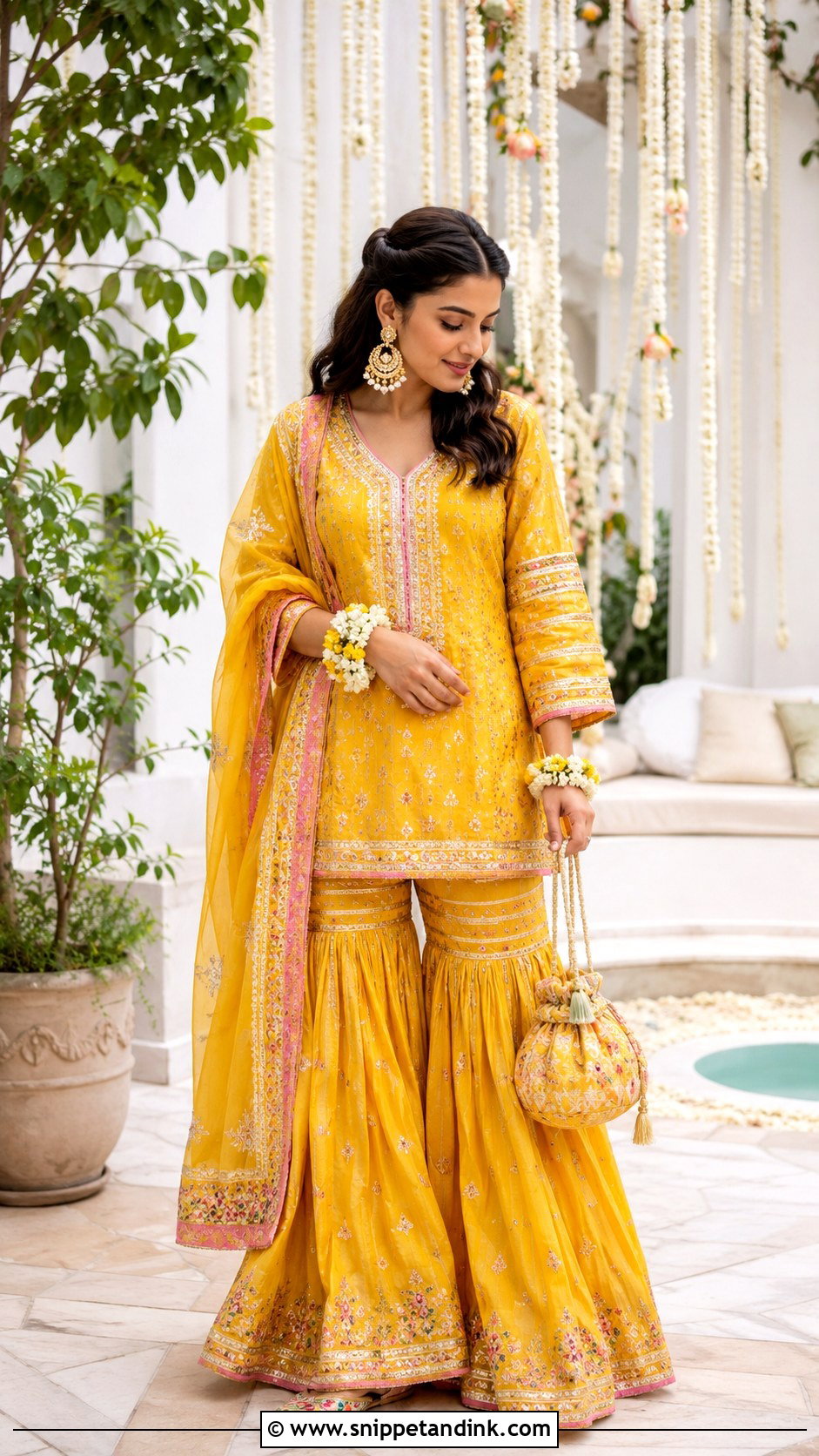
The gharara looks like a sharara at first glance, but it is cut differently: fitted through the thigh, then gathered into a big flare at the knee, usually under a band of trim. That fitted section is why I ask for a fitting while seated, not just standing. Pair it with a short kurti carrying gota trim, small mirrors or light embroidery, and let a pink-bordered dupatta add contrast. Chandbalis, a small passa or maang tikka and embroidered flats complete it. If you are having full-arm henna, keep the kurti sleeves short. Brides can add floral jewelry and a decorated braid; guests do better with simpler accessories. It suits a small home function as easily as a big hall.
7. Cape Lehenga Mehendi Dress
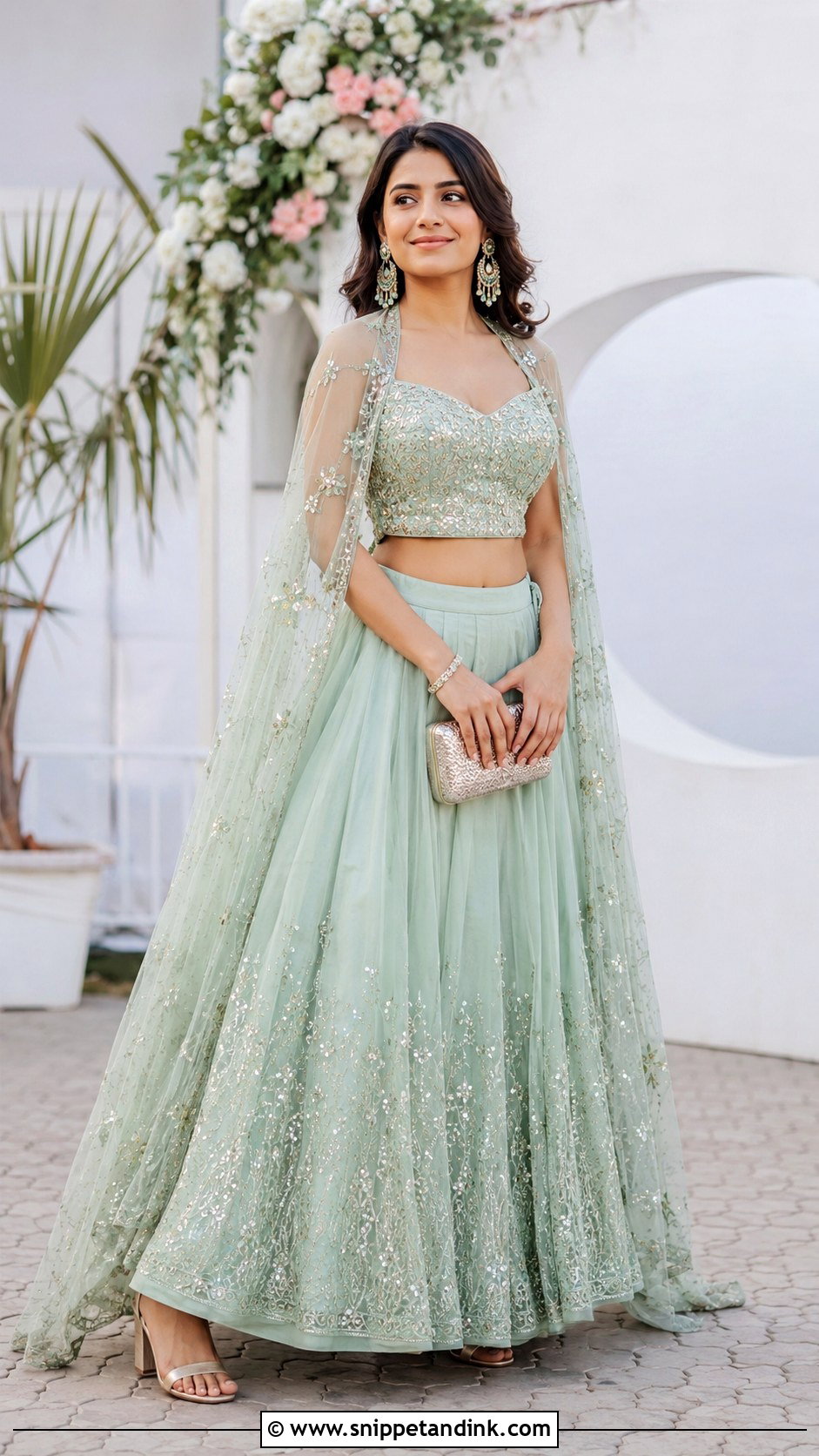
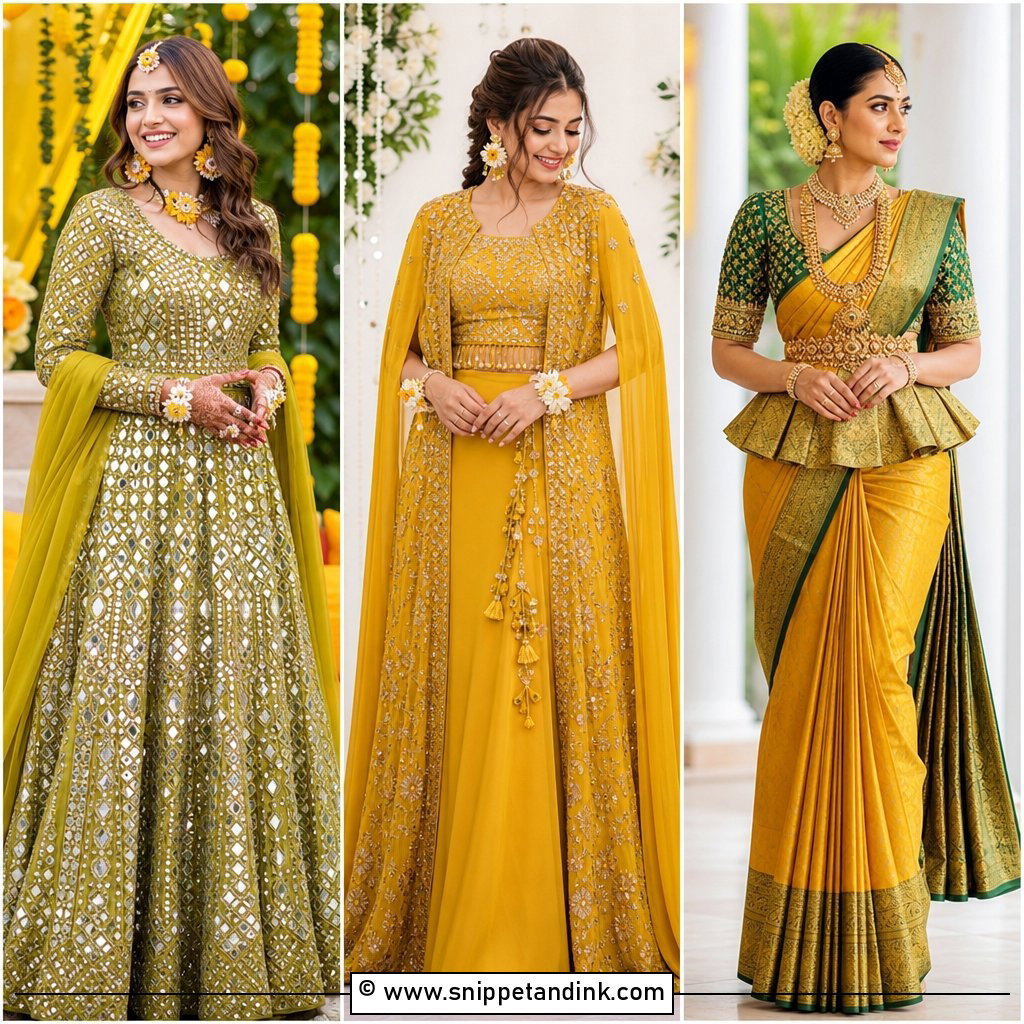
A cape replaces the dupatta, which is the main reason I recommend it for anyone getting henna on both hands. Start with a lightweight solid or printed skirt, a fitted sleeveless top and a sheer embroidered cape over it. Mint, coral, lime and turquoise all suit the setting. Check the cape length while sitting: it should end above the floor and not slide under you, or you’ll be tugging it every time you stand. Shoulder-grazing earrings, a slim bracelet, metallic block heels and a small clutch are plenty. A sleek ponytail shows off the neckline. It reads as polished, so I’d keep it for bridesmaids and guests at an afternoon function rather than the bride herself, unless she wants a modern look.
8. Palazzo Suit Mehendi Dress
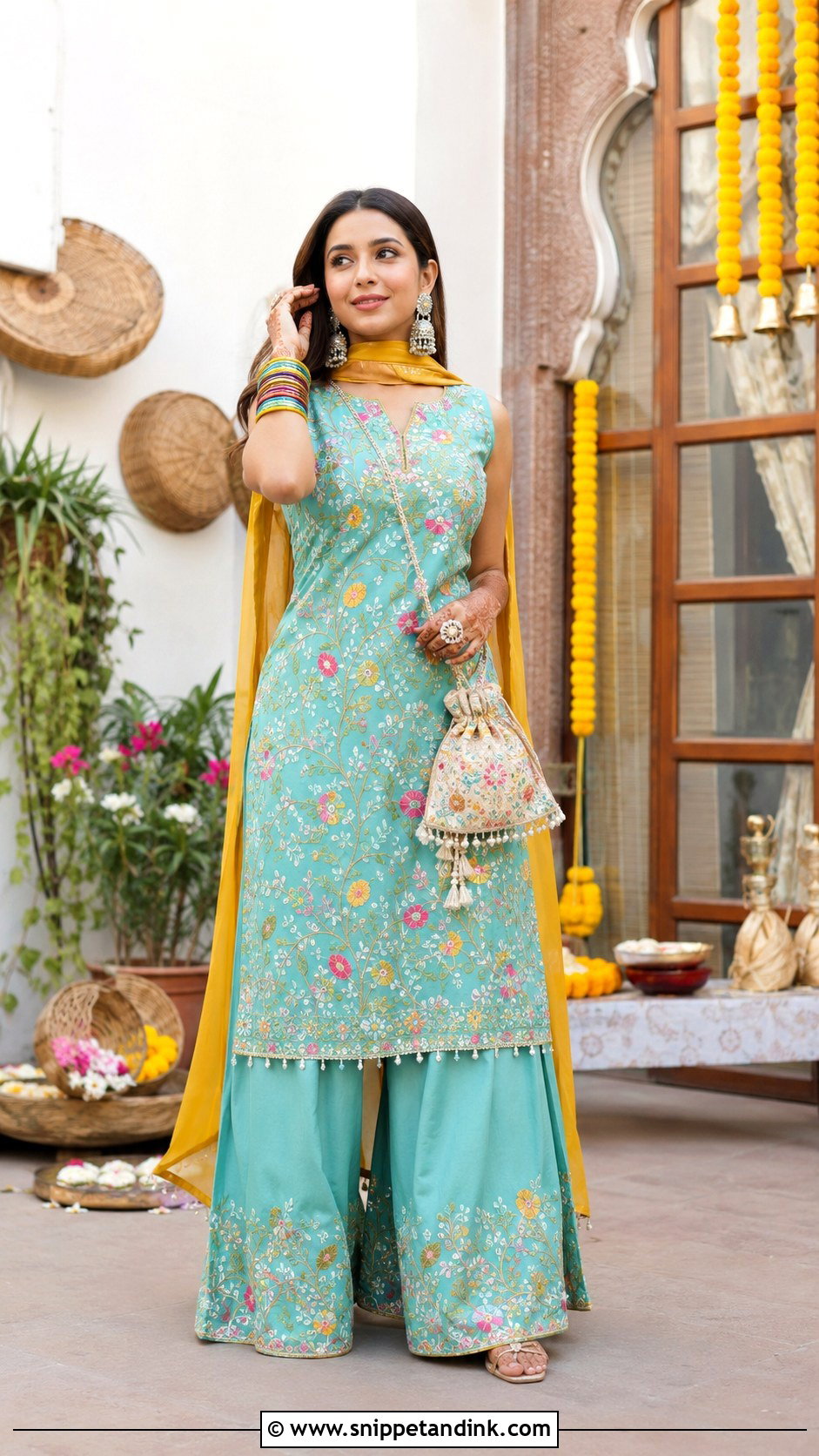
Palazzo suits get underestimated. Wide-leg pants under a straight or slightly flared kurta give you more freedom on the floor than almost anything else here, which matters if your henna turn comes late and you wait for hours. Turquoise, mustard or green with floral embroidery looks festive without effort. I ask for side slits on the kurta and sleeves that stop above the elbow. Drape the dupatta behind the shoulders or pin it to one side. Oxidized silver earrings, stacked bangles, embellished sandals and a crossbody potli keep it light. Adjust the kurta length and neckline and the same silhouette works for a teenage cousin and a grandmother.
9. Bandhani Lehenga Mehendi Dress
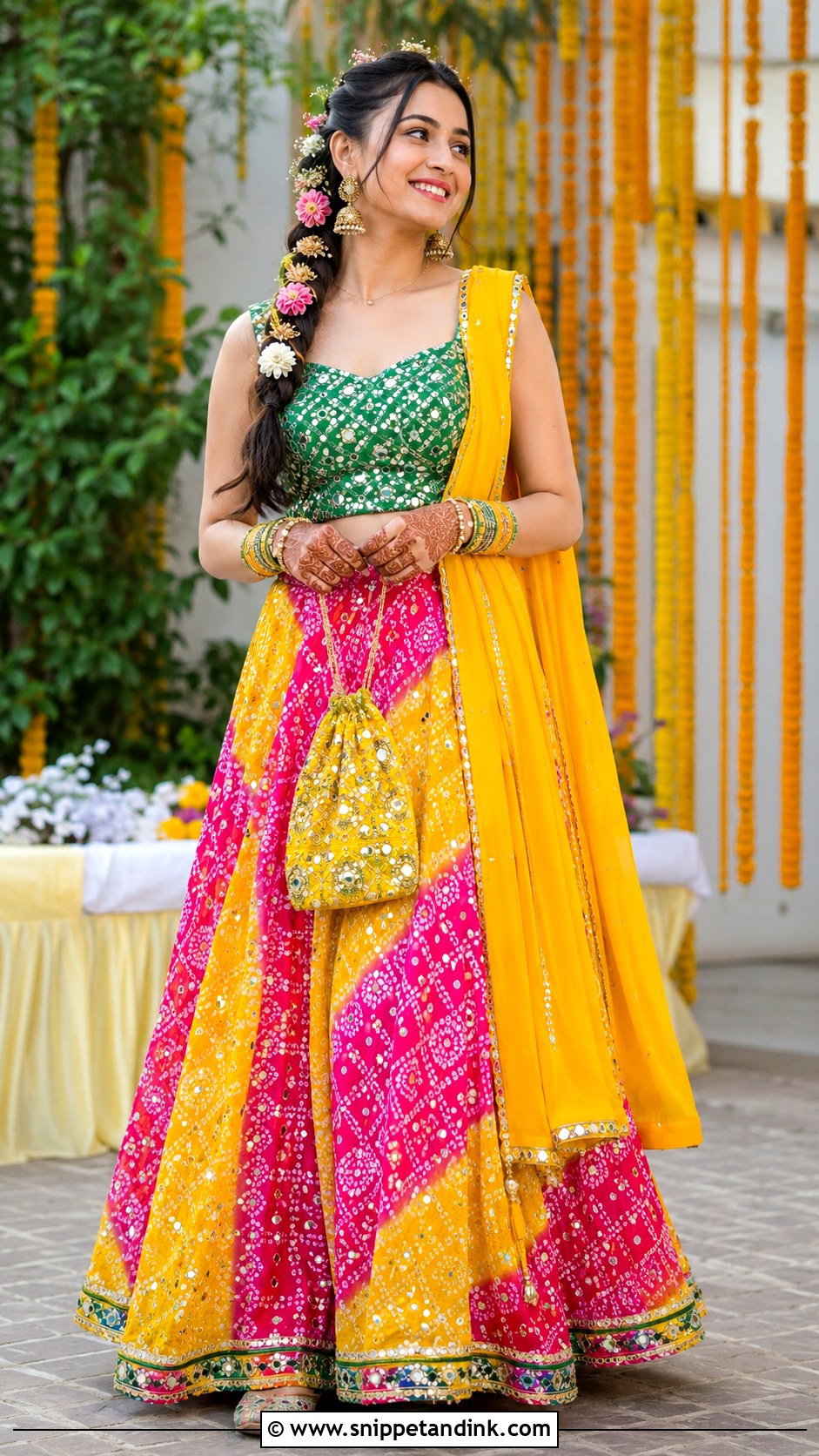
Bandhani is tie-dyed by hand, thousands of tiny pinched dots, so no two pieces are identical and the color can vary slightly from what you saw online. A bandhani lehenga in red, pink, yellow or green needs a contrasting blouse in raw silk or cotton-silk; mirror work or a gota neckline adds shine without fighting the print. A plain dupatta with a matching border keeps it balanced. One practical warning from me: older or cheaply dyed bandhani can bleed if it gets damp, so don’t let wet henna or a spilled drink sit on it. Gold jhumkas, glass bangles, juttis and a fabric potli suit it, and tiny flowers in a braid finish it. A bride wears it with statement jewelry; a guest goes lighter.
10. Mirror Work Lehenga Mehendi Dress
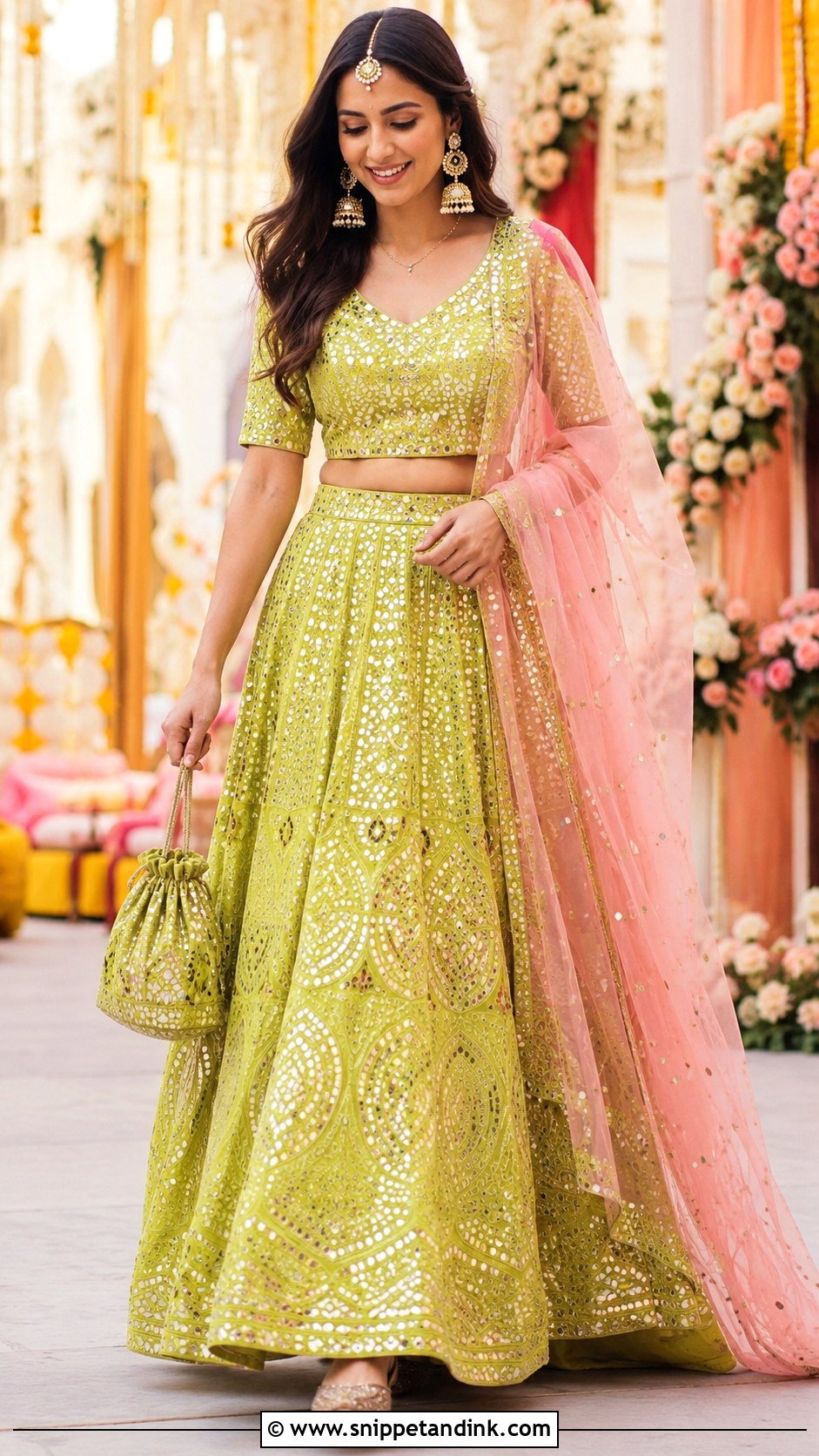
Mirror work throws light around every time you move, which is why it comes alive on the dance floor. The catch is weight and snagging. Real glass mirrors stitched densely make a skirt heavy, so I look for lighter embroidery on a lime, fuchsia, orange or aqua base. A coordinated short-sleeve blouse and plain chiffon dupatta are enough alongside it. Because the mirrors already sparkle, keep jewelry to bold earrings, a few bangles and maybe a fine maang tikka. Brides can choose an all-over pattern; guests often look better with mirrors kept to the borders. Braid or tie long hair back, because loose strands catch on the mirror edges and pull.
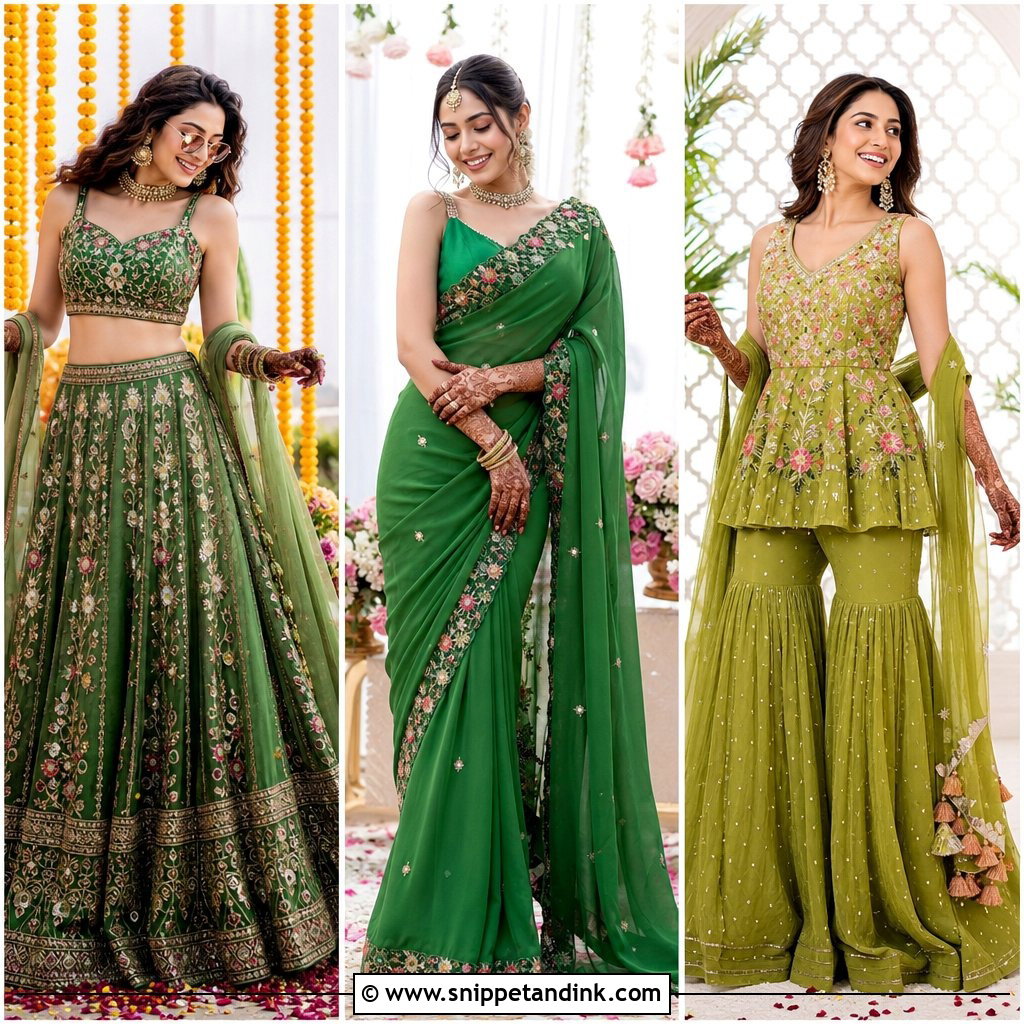
11. Saree With Crop Top Mehendi Dress
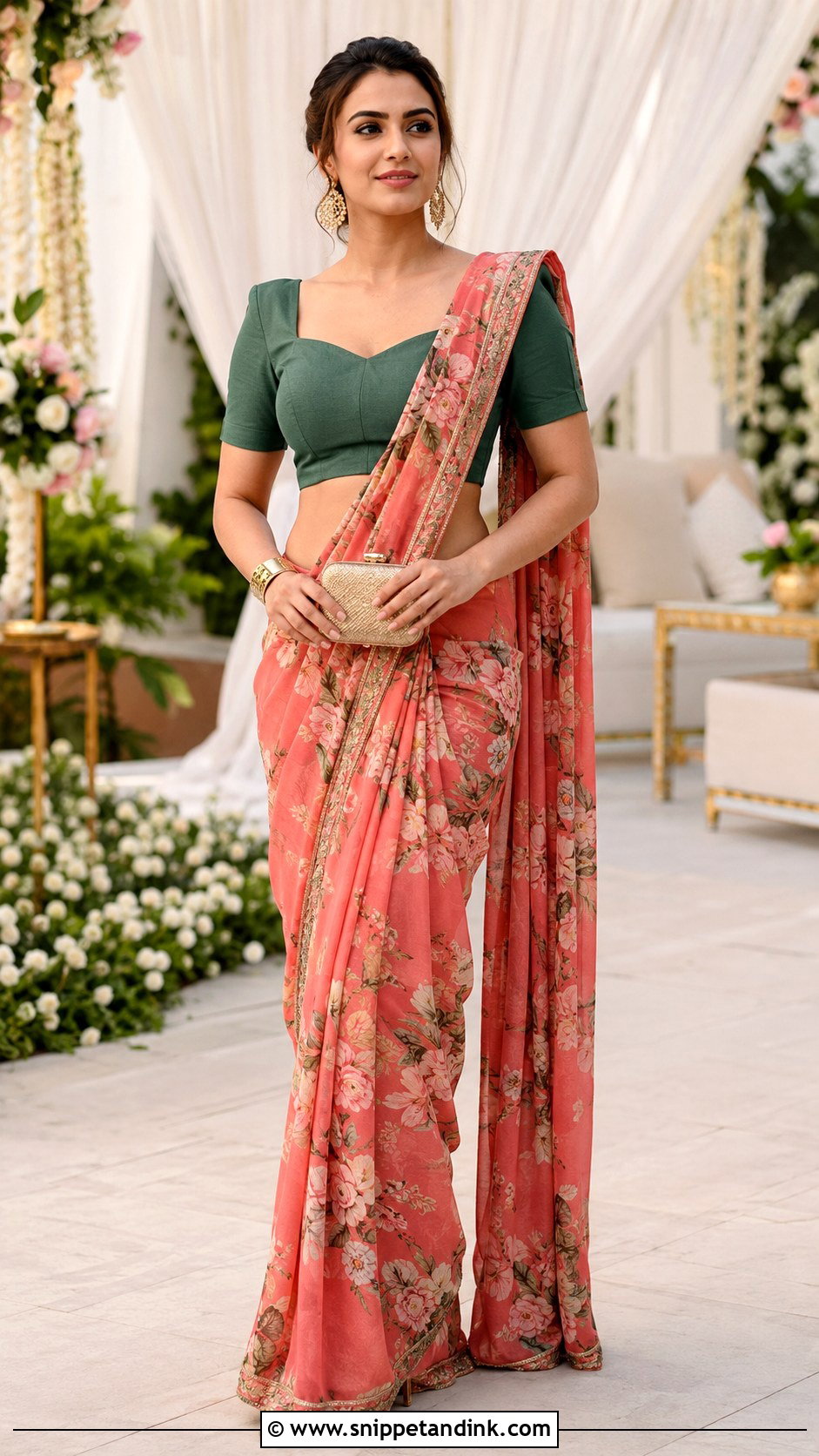
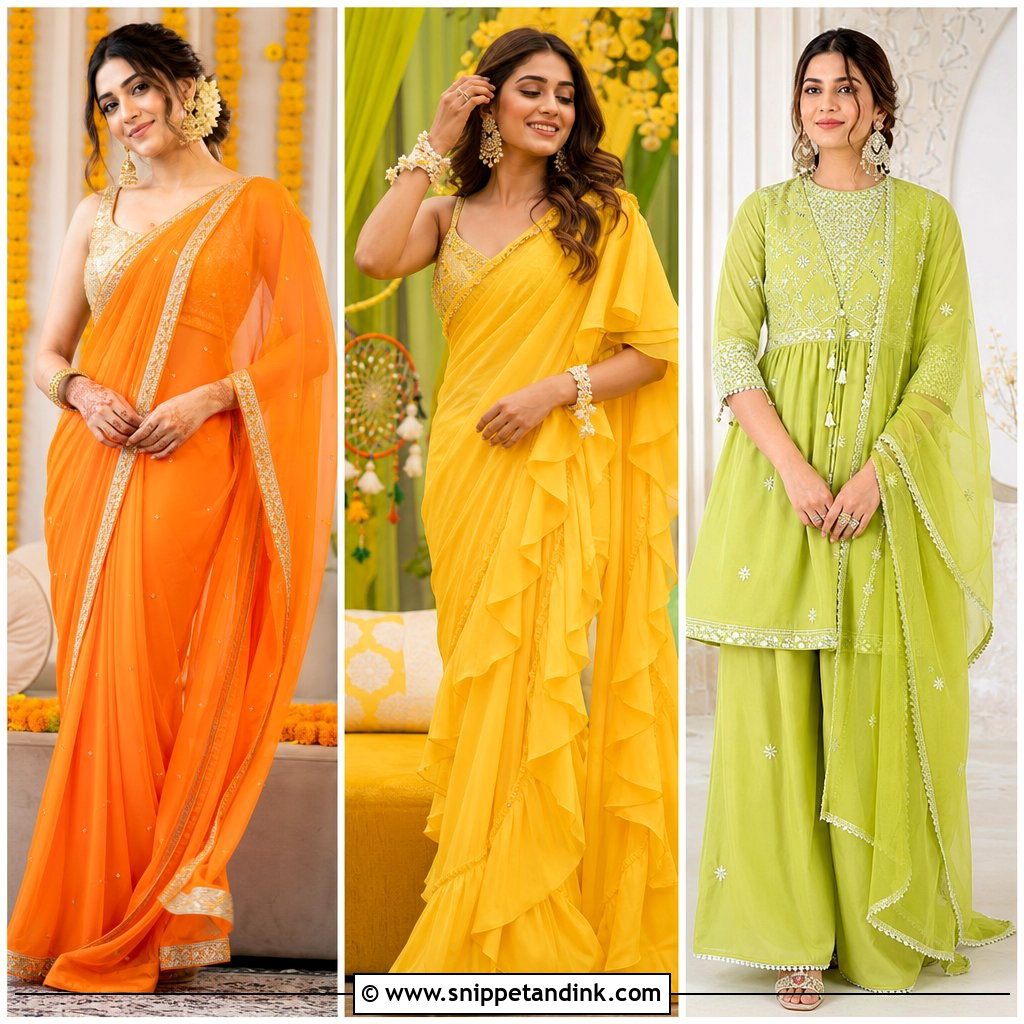
A saree with a crop top keeps the saree’s drape but swaps the blouse for something structured. Chiffon, georgette or organza in green, yellow, coral or a bright floral print stays light. A crop top with short sleeves, a square neckline or subtle mirror embroidery gives it a fresh edge. The part I always do for the wearer is pinning: pleats pinned at the waist and the pallu pinned at the shoulder, because sitting cross-legged and dancing will undo an unpinned drape inside an hour. Statement earrings, a cuff, block heels and a clutch finish it. A sleek bun or low ponytail stops hair hiding the top. I’d only suggest this to guests who already wear sarees comfortably.
12. Peplum Sharara Mehendi Dress
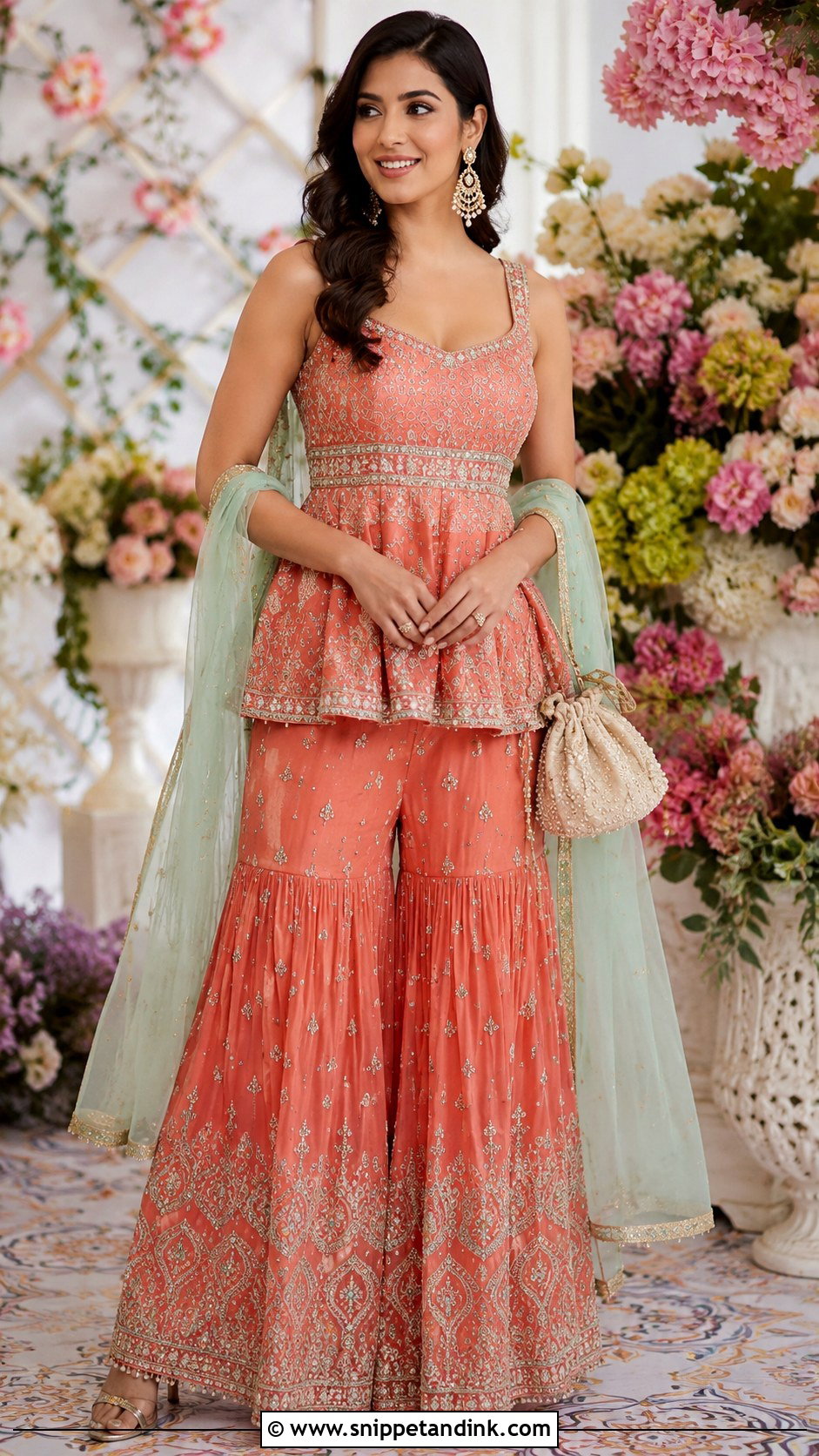
Peplum tops flatter because the seam marks the waist and the flare skims the hips. Where I see it go wrong is length: a peplum ending below the hip makes the sharara look short and the wearer look shorter. I aim for the hem to land near the upper hip. Coral, mint, pink or mustard sets with embroidery at the neckline, waist and pant borders are a good starting point. A sheer dupatta pinned behind the shoulders is optional if the top is detailed. Chandelier earrings, metallic sandals and a small potli are all you need. Bridesmaids can match the silhouette in different colors. Soft waves or a side braid suit the shape.
13. Dhoti Pant Mehendi Dress
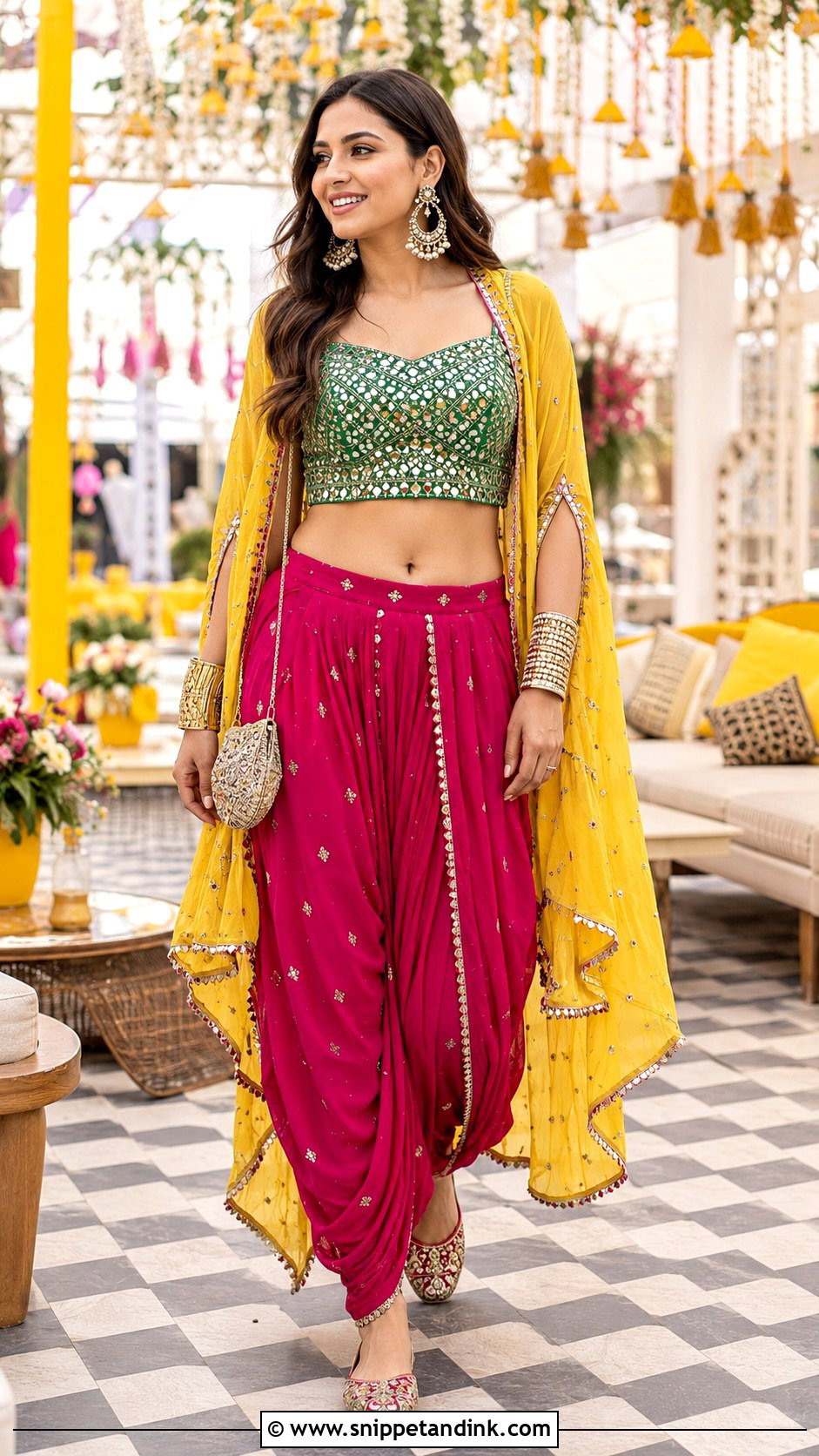
Dhoti pants give a Mehendi outfit an Indo-Western feel, and nothing beats them for dancing because the legs and waist move freely. The drape must be tailored, though. A ready-made dhoti in stiff fabric can look bulky at the hip, so I ask the tailor to set the folds flat and stitch them. Bright green, yellow or magenta pants pair with a fitted embroidered crop top or a short asymmetric kurta. A light jacket or shoulder cape adds coverage without a dupatta to manage. Statement earrings, stacked cuffs, a sling bag and juttis complete it. Keep embroidery restrained for a home function and add metallic detailing for a bigger evening.
14. Jacket Lehenga Mehendi Dress
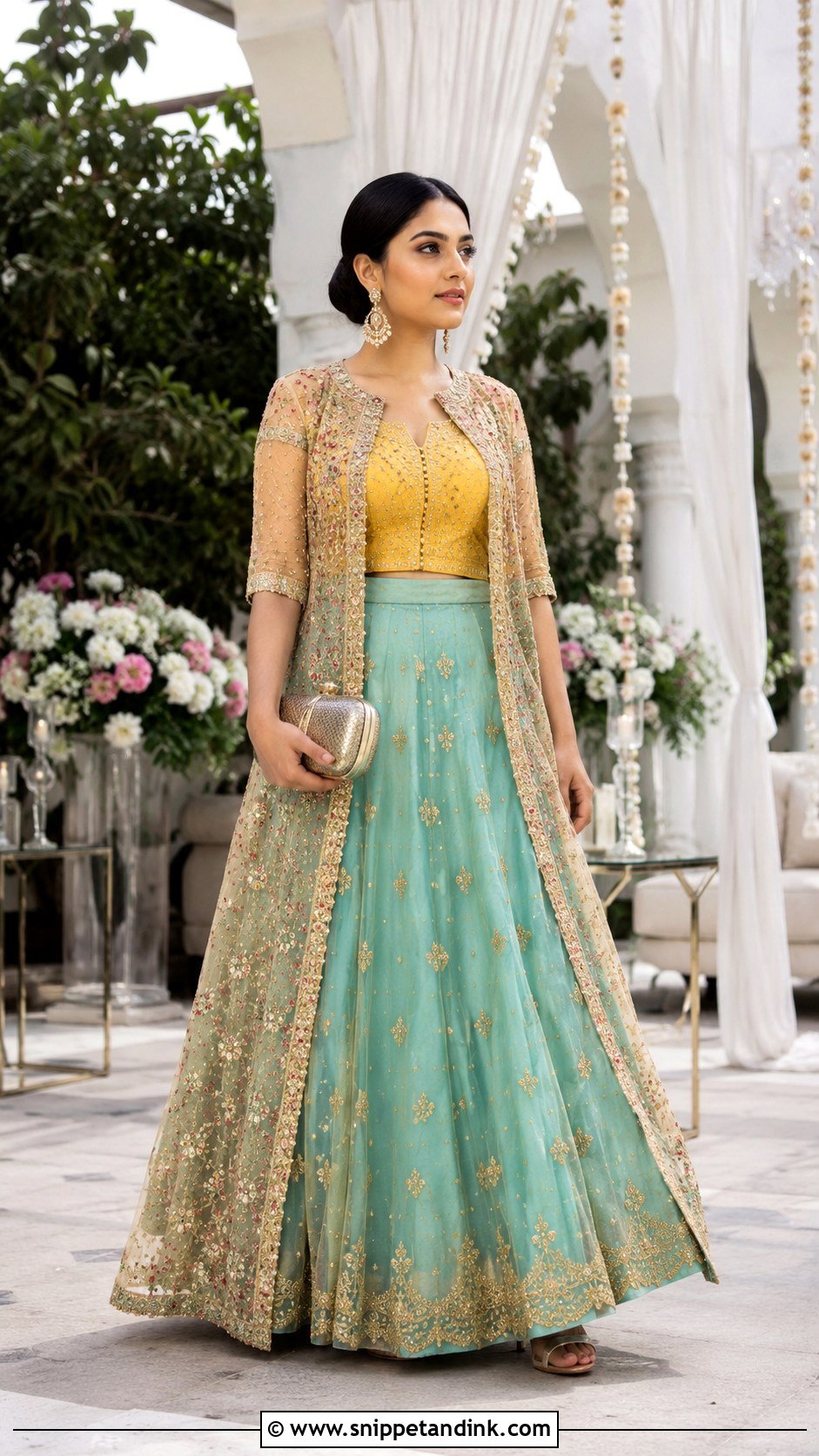
A long open jacket over a lehenga moves well when you walk and covers more than a cropped blouse alone, which older relatives often appreciate. Organza, embroidered georgette or light net keep it from becoming hot. Jewel green, mustard, turquoise and deep pink all suit the setting. The detail I fuss over is sleeve length: if henna is going on your arms, short or elbow sleeves only, or the cuffs will smear the paste. Drop earrings, low block heels, a slim clutch and minimal bangles let the jacket lead. A center-parted ponytail or low bun keeps the line clean. The bride’s sister or close family tend to love this one.
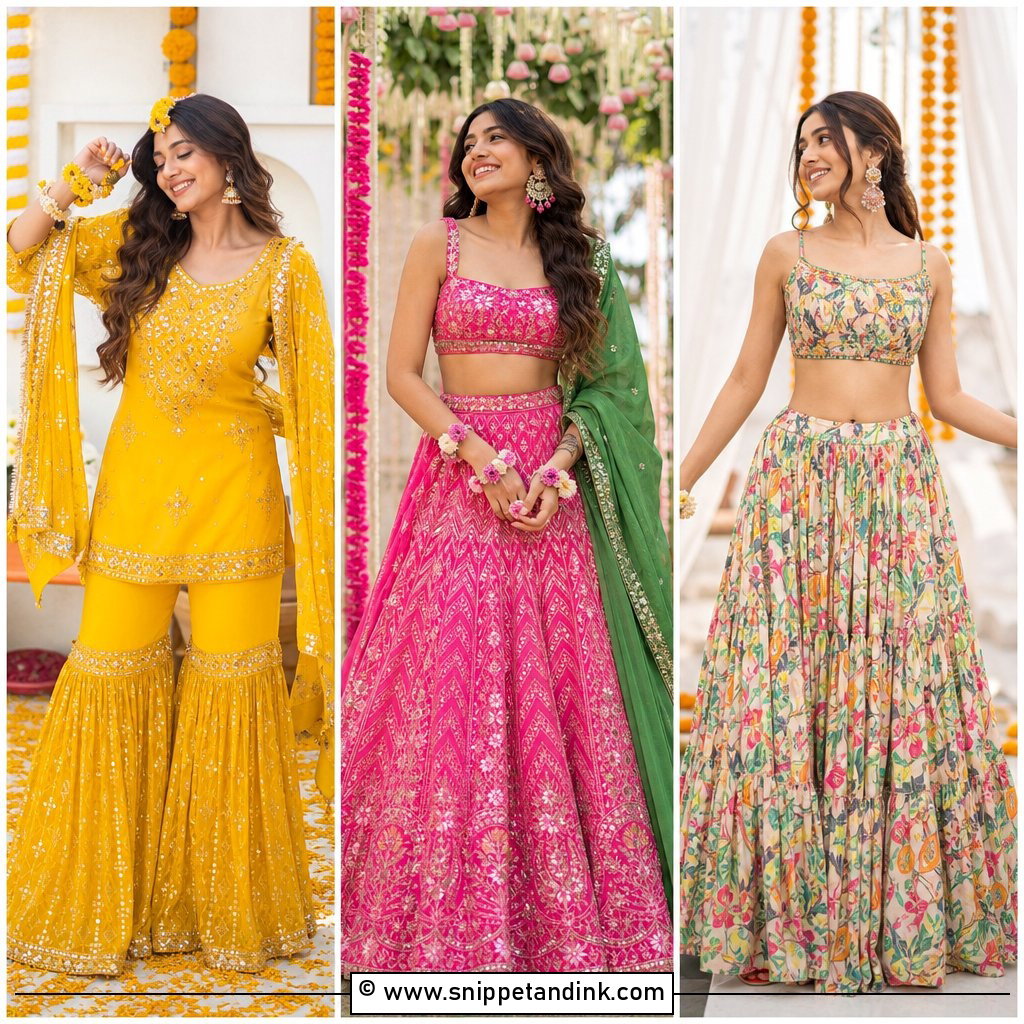
15. Printed Kurta Skirt Mehendi Dress
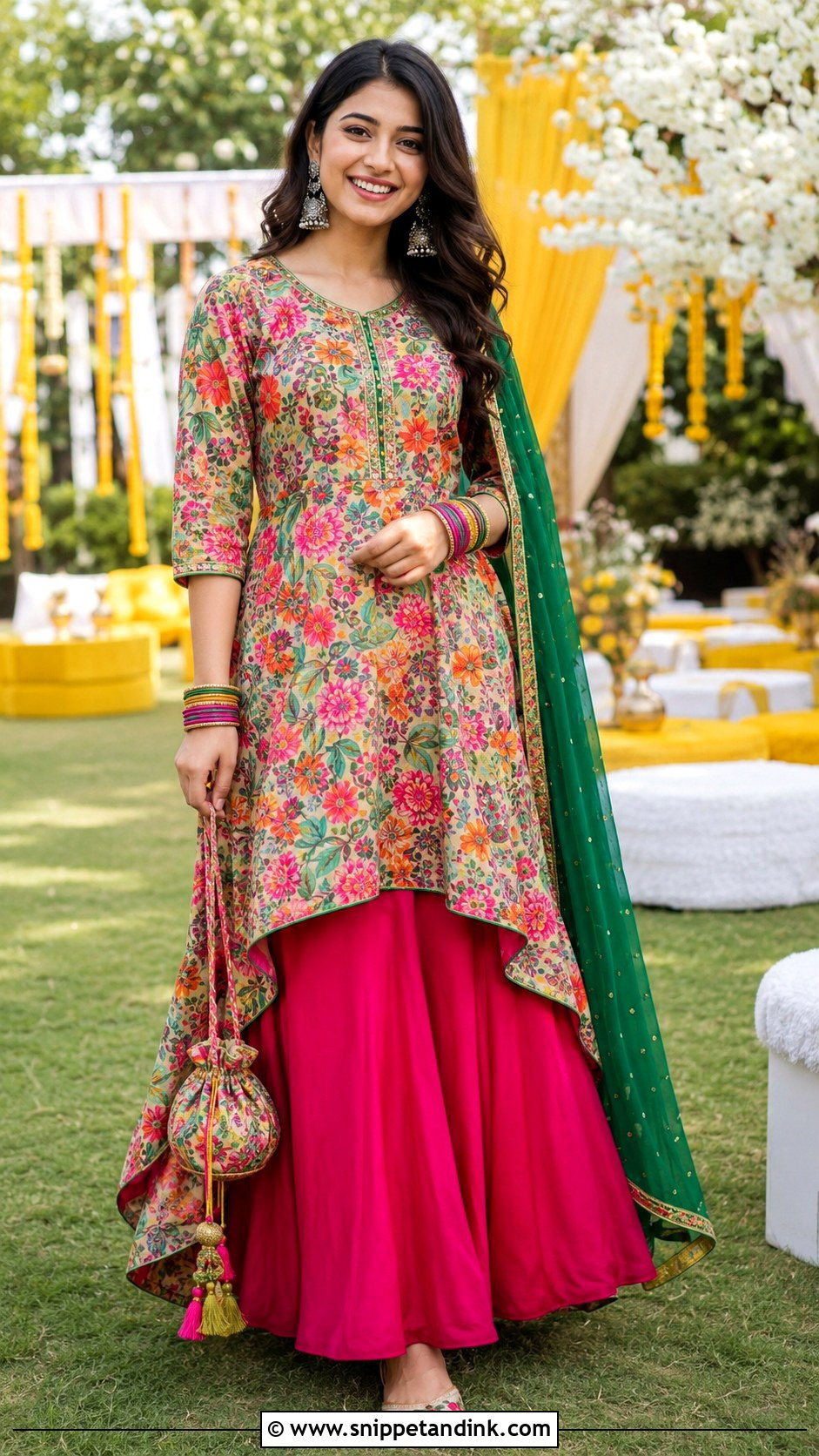
Kurta-and-skirt sets are the easiest outfits to personalize because the two pieces are bought separately. Pick a short or high-low kurta with floral, block-printed or geometric pattern and match a solid skirt to one color in it: a yellow kurta over a pink skirt, a green one over orange. Add a narrow dupatta only if the neckline needs it. Oxidized earrings, colorful bangles, flats and a tassel potli suit the casual mood. Block-printed cotton breathes better than synthetics, which is the reason I suggest it for outdoor afternoons. Keep the skirt ankle-length so it doesn’t drag through lawn grass or catch when you get up from the floor.
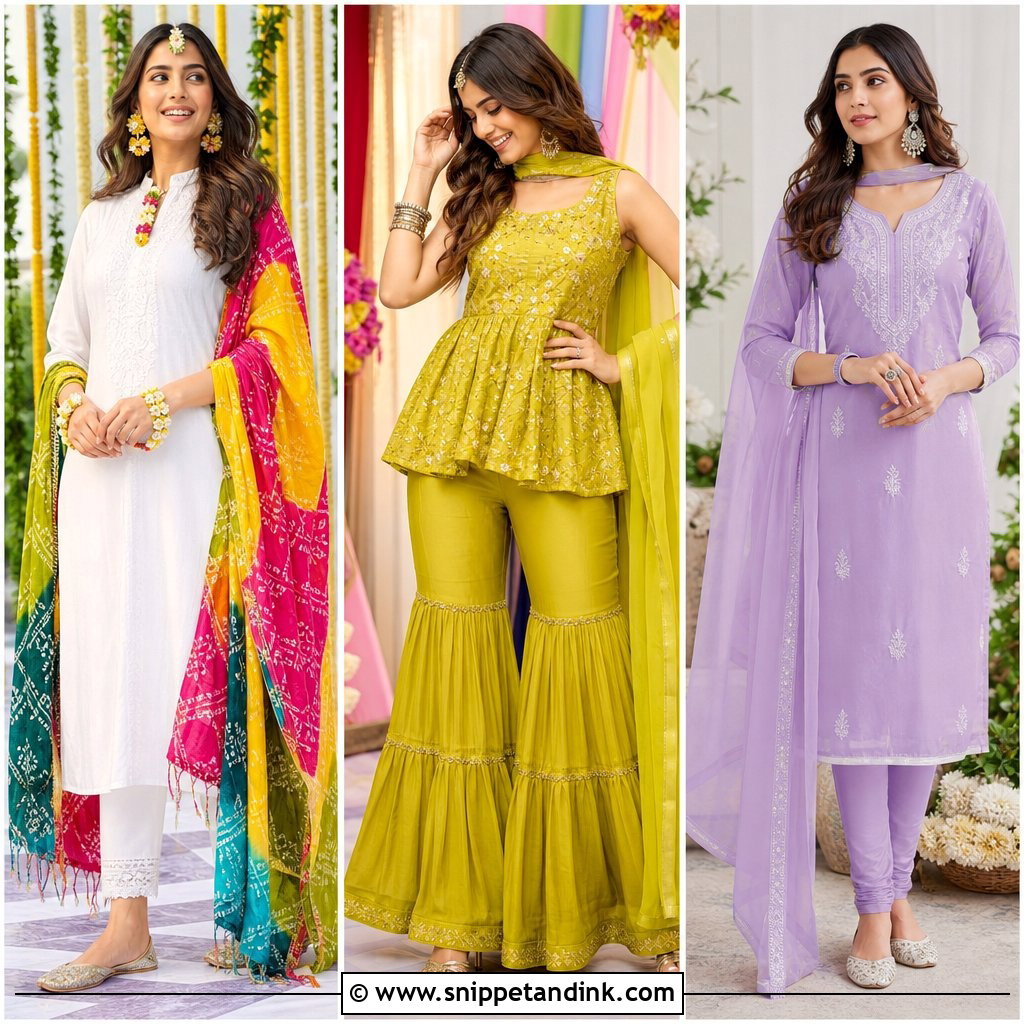
16. Lavender Lehenga Mehendi Dress
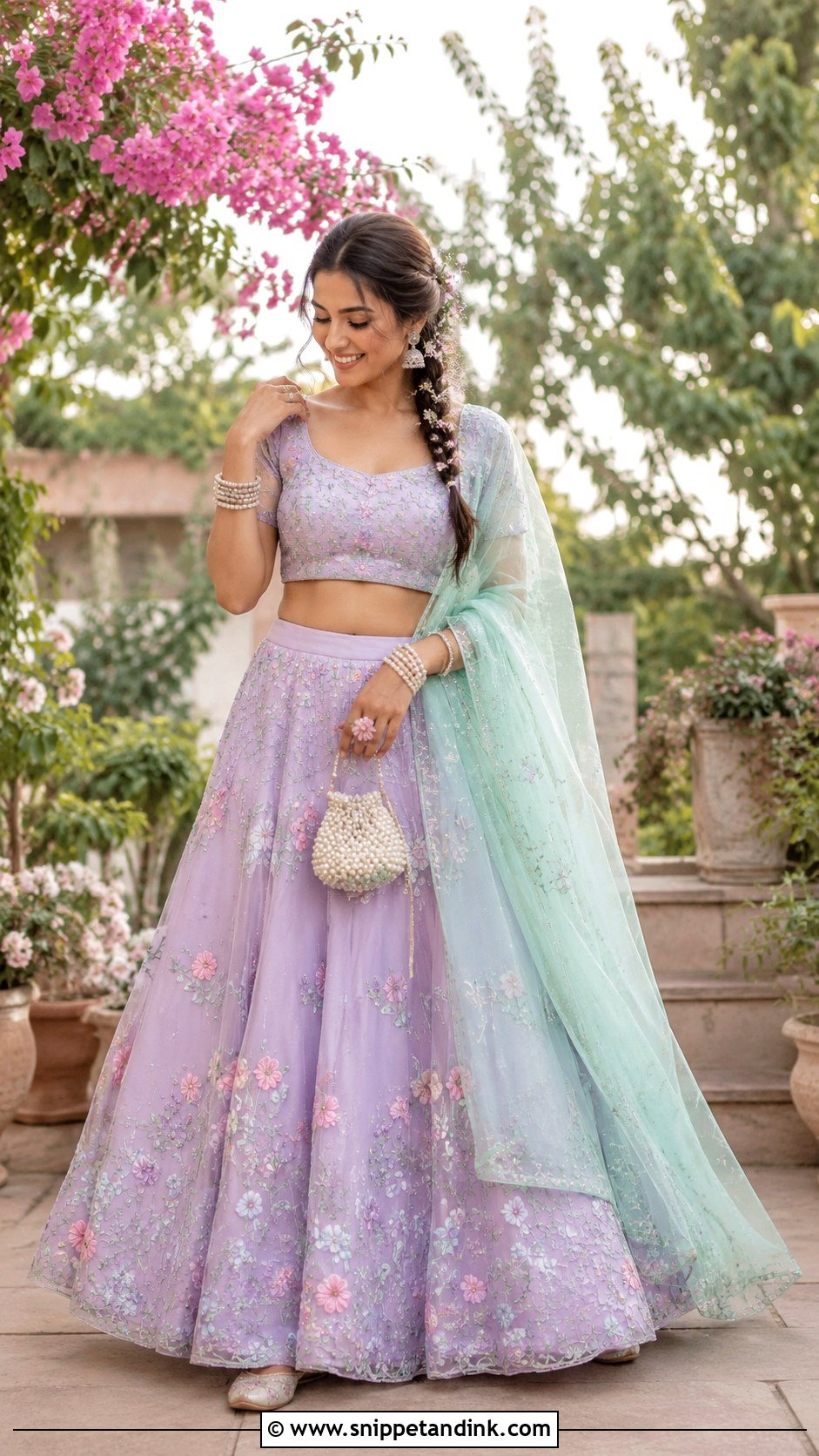
Lavender gives a Mehendi a cooler palette, a nice change from the yellow and green crowd. A lightweight lavender lehenga with floral embroidery, scattered sequins or a silver border pairs with a matching blouse, and a mint, blush or floral organza dupatta brings in contrast. Silver jhumkas, pearl bangles and pale juttis keep it soft. I do warn people that pastels change under warm tungsten lighting and can look greyish in evening photos, so lavender works best at a garden or daytime function with natural light. A bride can add multicolor flowers or a bigger necklace; a guest can stay minimal. Loose curls or a flower-accented braid suit the shade.
17. Orange Anarkali Mehendi Dress
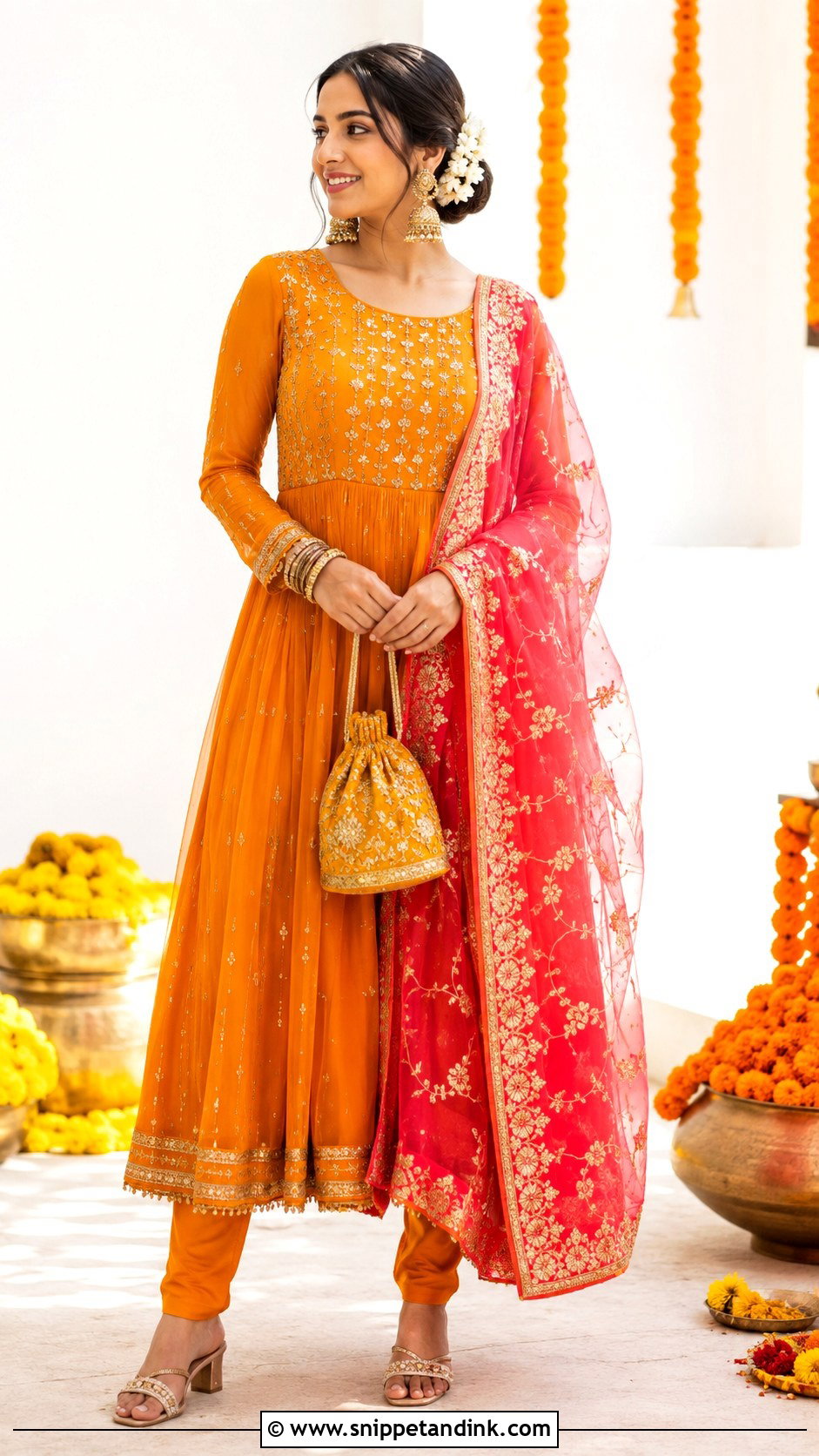
Orange sits right in the marigold palette, so it always looks at home at a Mehendi. Cotton-silk or georgette keeps it breathable; I avoid heavy polyester satin in orange because it turns shiny and hot in an afternoon sun. Look for a fitted bodice with a medium-width flare and gold embroidery at the neckline and hem. Pair it with narrow pants and a pink, green or yellow dupatta over one shoulder. Gold jhumkas, stacked bangles, low heels and a potli are enough. A low bun with fresh flowers is the traditional choice; a ponytail feels younger. Guests, bridesmaids and relatives can all wear it comfortably through a long event.
18. Fusion Jumpsuit Mehendi Dress
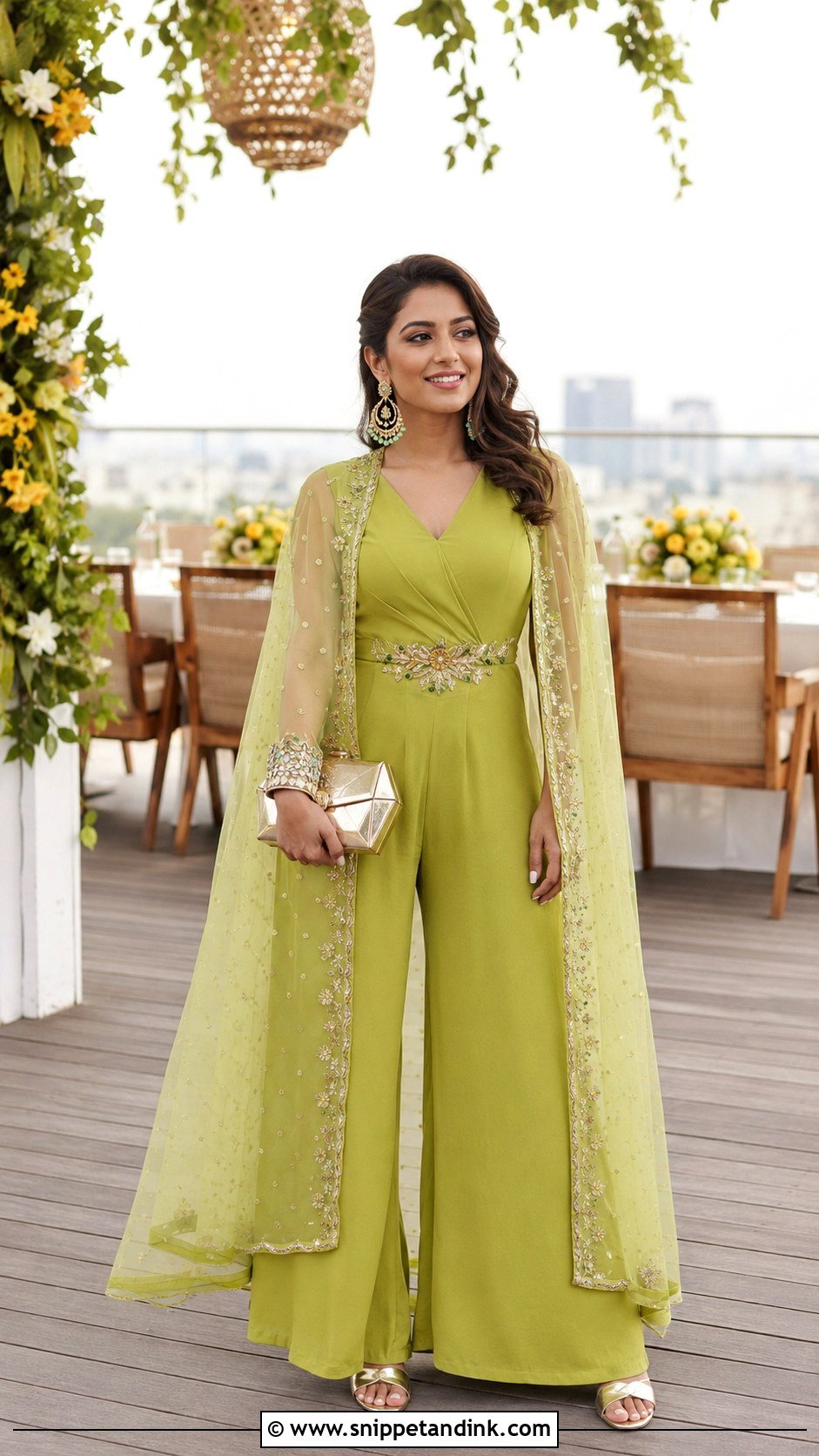
Jumpsuits suit guests and brides who want the ease of Western tailoring with South Asian detail. A wide-leg cut in lime, teal, coral or pink with mirror embroidery, an embellished waist or a draped shoulder looks festive. A detachable cape or light jacket adds drama for photos and comes off before henna. Here is the practical problem I always raise: once your hands are covered in wet paste, you cannot work a back zip or hooks for a bathroom trip. Choose a side zip or a front closure, and avoid tight sleeves. Statement earrings, metallic block heels, a structured clutch and one cuff are enough, with a sleek ponytail. It suits contemporary venues and brunch-style functions.
19. Chanderi Kurta Set Mehendi Dress
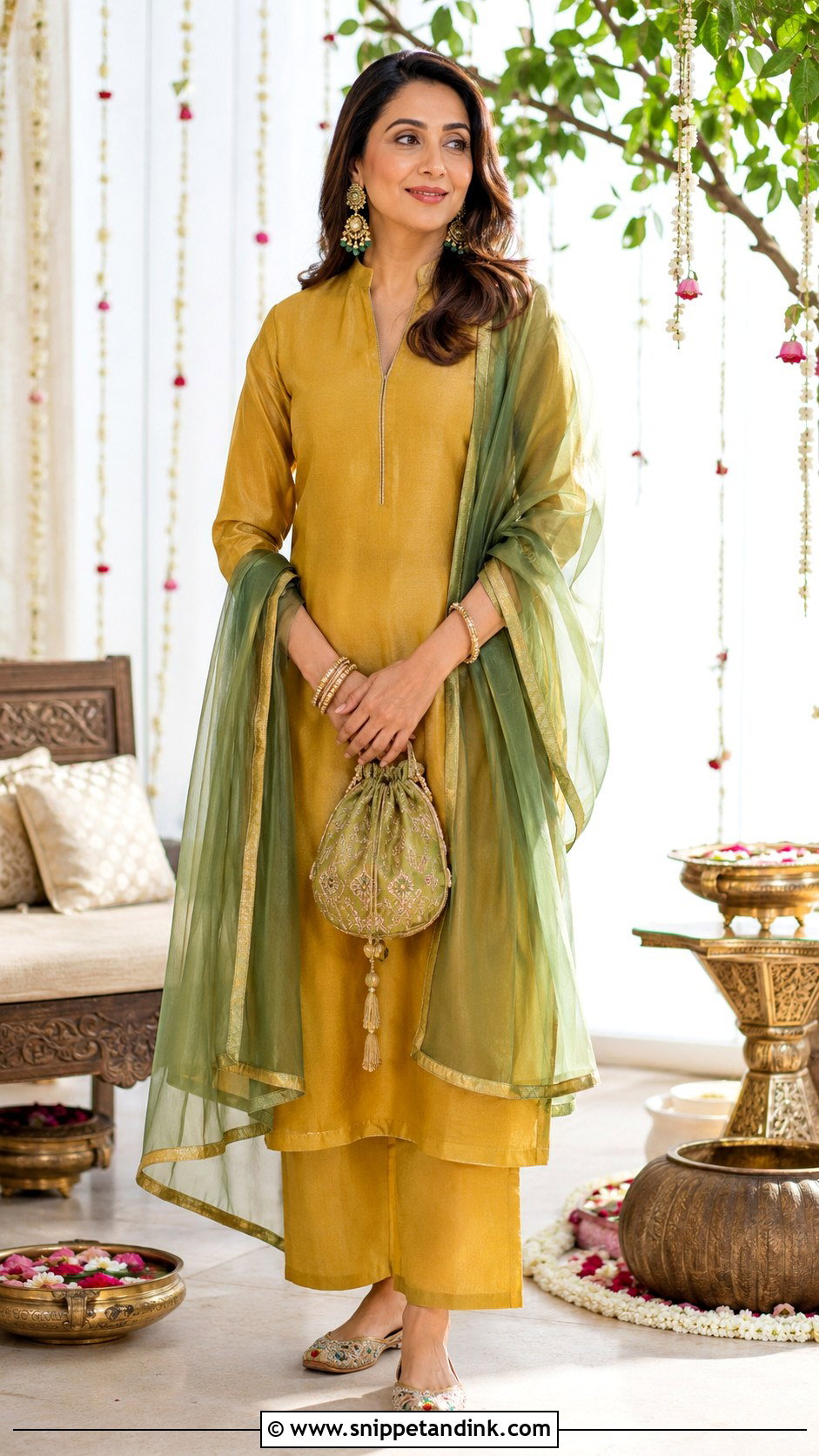
Chanderi has a soft natural sheen, so a kurta set in it looks dressed up even with very little embroidery. Mustard, parrot green, rose pink or turquoise in a straight or gently flared cut pairs with ankle-length pants and a contrasting organza dupatta with a slim zari or gota border. Meenakari earrings, gold bangles, juttis and a silk potli finish it. I like it for mothers, aunts and anyone who prefers quieter clothes, and the pieces get worn again long after the wedding. One fabric note: chanderi creases where you sit, so I suggest steaming it the morning of and not folding it in a bag beforehand.
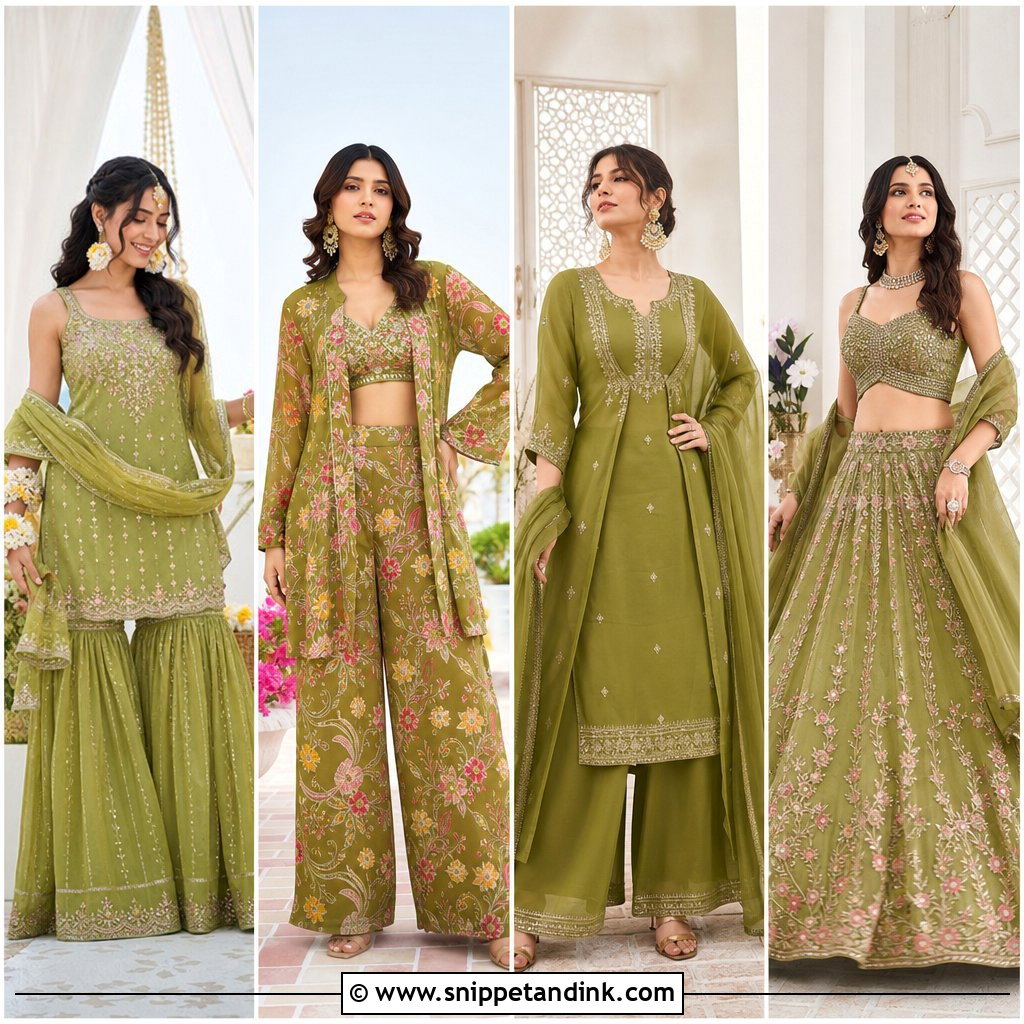
20. Color Block Lehenga Mehendi Dress
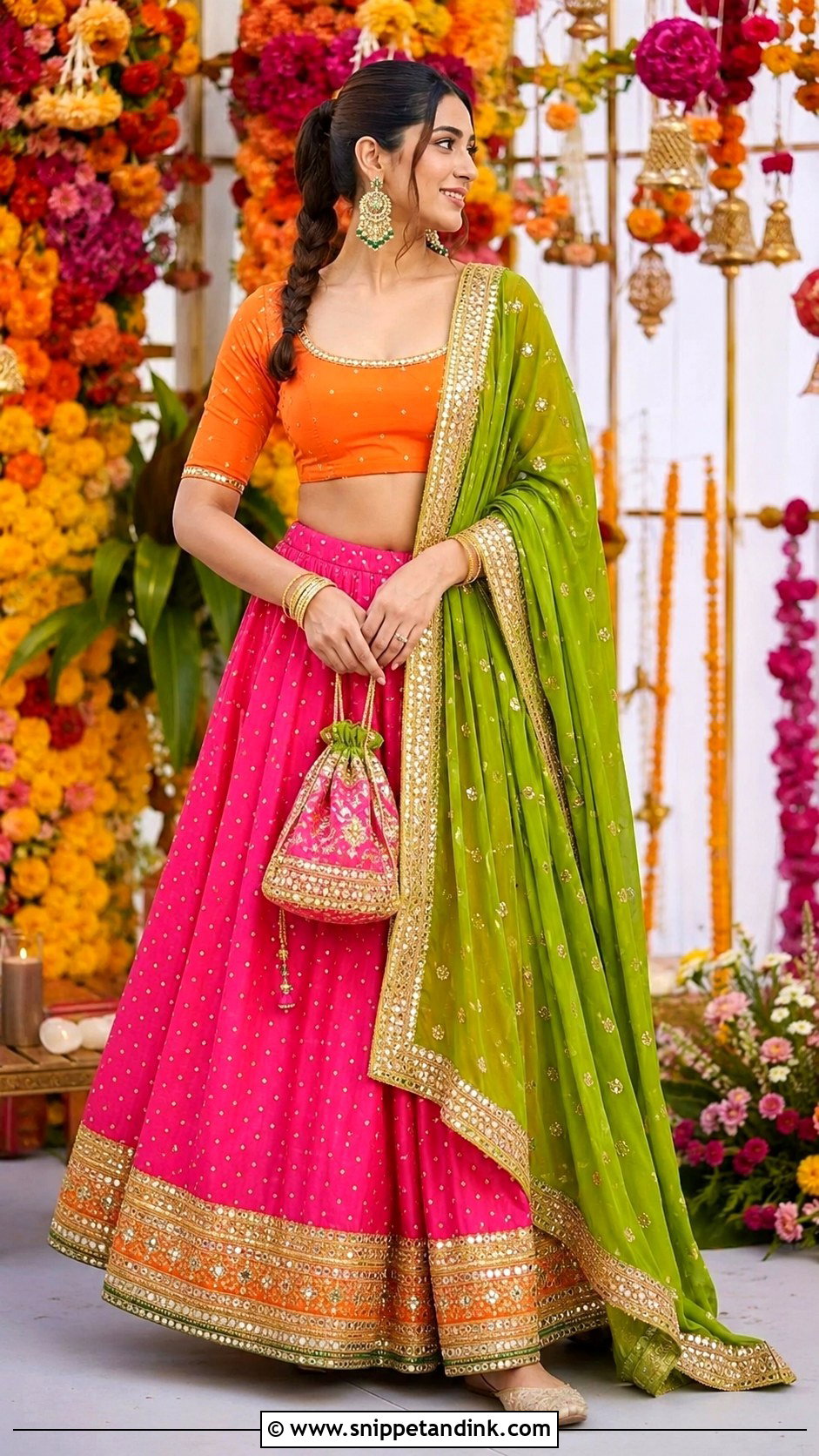
Color blocking is the boldest look on this list, and it needs discipline to work. Hot pink skirt, orange blouse, green dupatta; or turquoise lehenga, yellow top and coral drape. The rule I follow is to keep fabric and embroidery the same across all three pieces so the colors read as one outfit instead of three borrowed ones. Repeated gota borders, small mirrors or gold trim unify them. Jewelry should be plain gold, never multicolor, because the clothes already carry all the color you need. Neutral juttis and a simple potli keep the ground calm. A braided ponytail or sleek bun clears the stage for the palette. Brides, bridesmaids and confident guests carry this best.
Henna on Your Lehenga? Act Before It Dries
Someone always brushes against wet paste. The good news is that a quick, gentle response usually stops a mark from becoming permanent, and panic scrubbing is what makes it worse.
- Lift the paste off with a dry tissue or the edge of a card. Don’t rub; rubbing pushes the dye deeper into the weave.
- Blot the spot from the back of the fabric with cold water. Heat sets henna dye, so no hot water and no hair dryer.
- Leave embroidery, zari and mirror panels alone and point them out to your dry cleaner, saying exactly what the stain is.
- On delicate silk and chanderi, skip home stain removers entirely; they can strip the color around the mark.
I’ll be honest about the limits. A henna mark that has been left to dry on cotton or raw silk rarely disappears completely, which is why a dark or printed fabric is a safer pick for the bride than pale ivory. Before you pack the outfit away, air it out fully, since paste residue and sealant can transfer onto other pieces in the bag.
Sit on the Floor in It Before You Commit
Most of the outfits above will do the job; the difference is in the details you check before the day. Think about how long you’ll be sitting, whether paste is going to your elbows or your ankles, and how easily you can stand, walk and use a bathroom with wet hands. Bright shades carry the festive mood, while softer colors suit a daylight garden. Comfortable shoes and a pinned dupatta do more for your evening than any piece of jewelry. Try your outfit on and sit on the floor in it for ten minutes at home; that one test tells you more than any photo.
You'll Like These Ideas:


Leave a Reply