
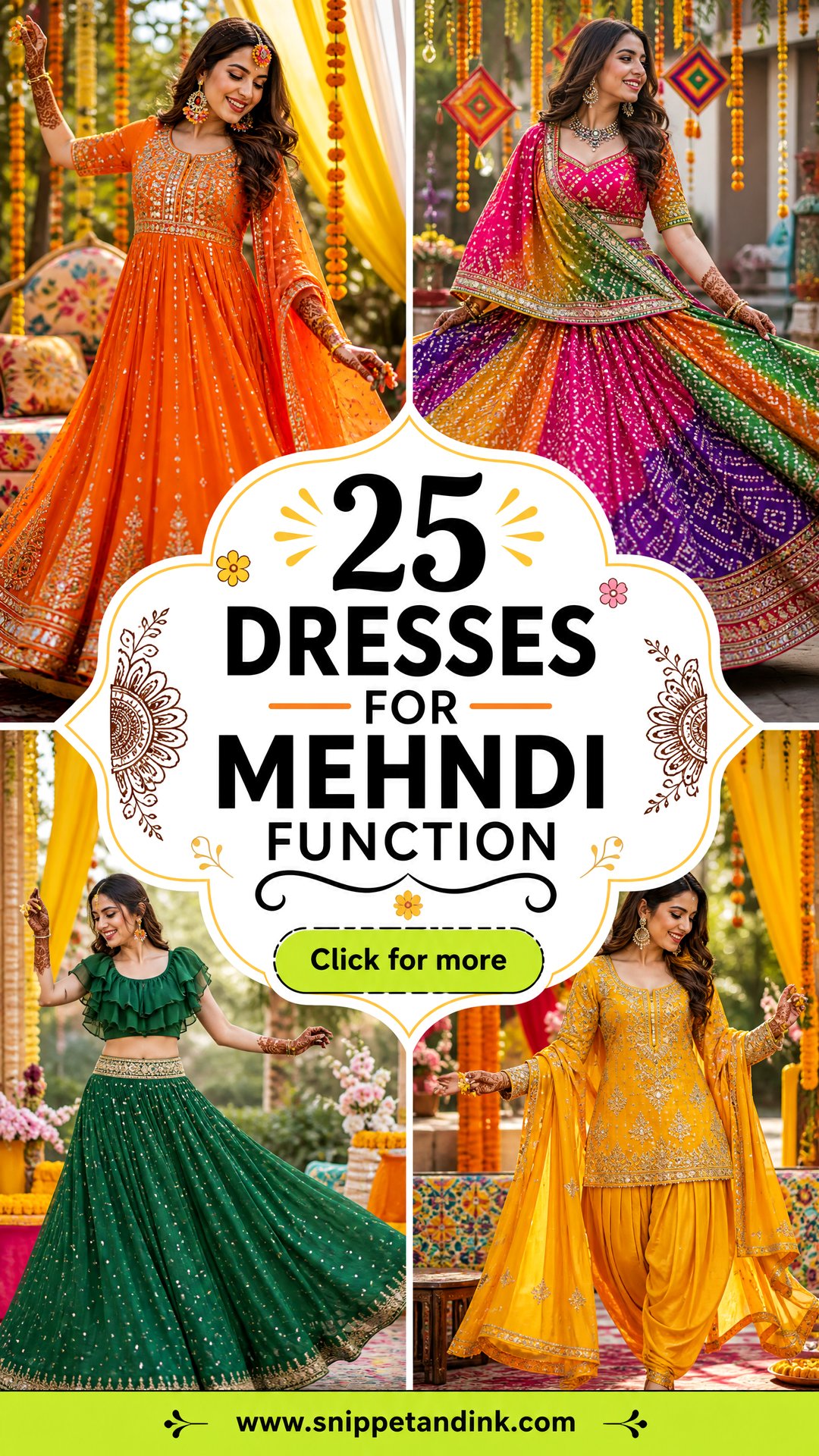
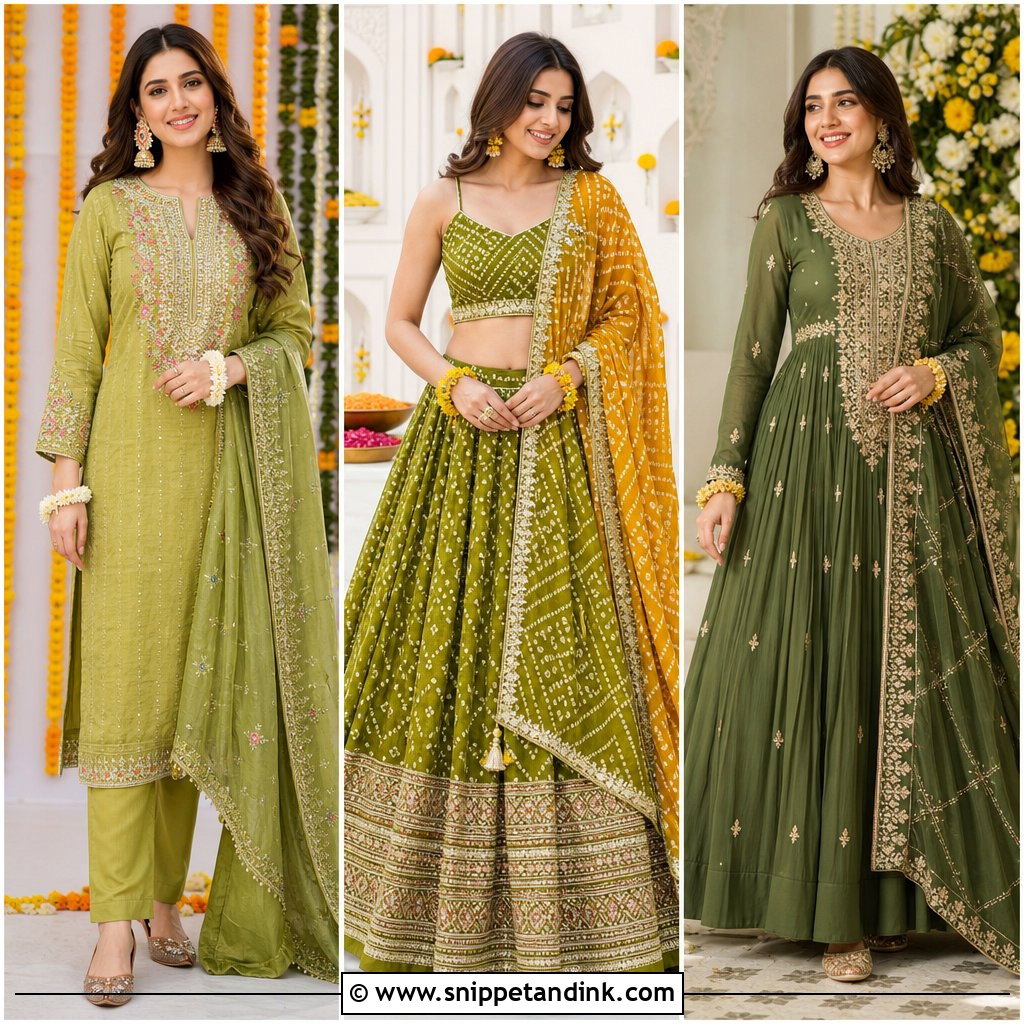
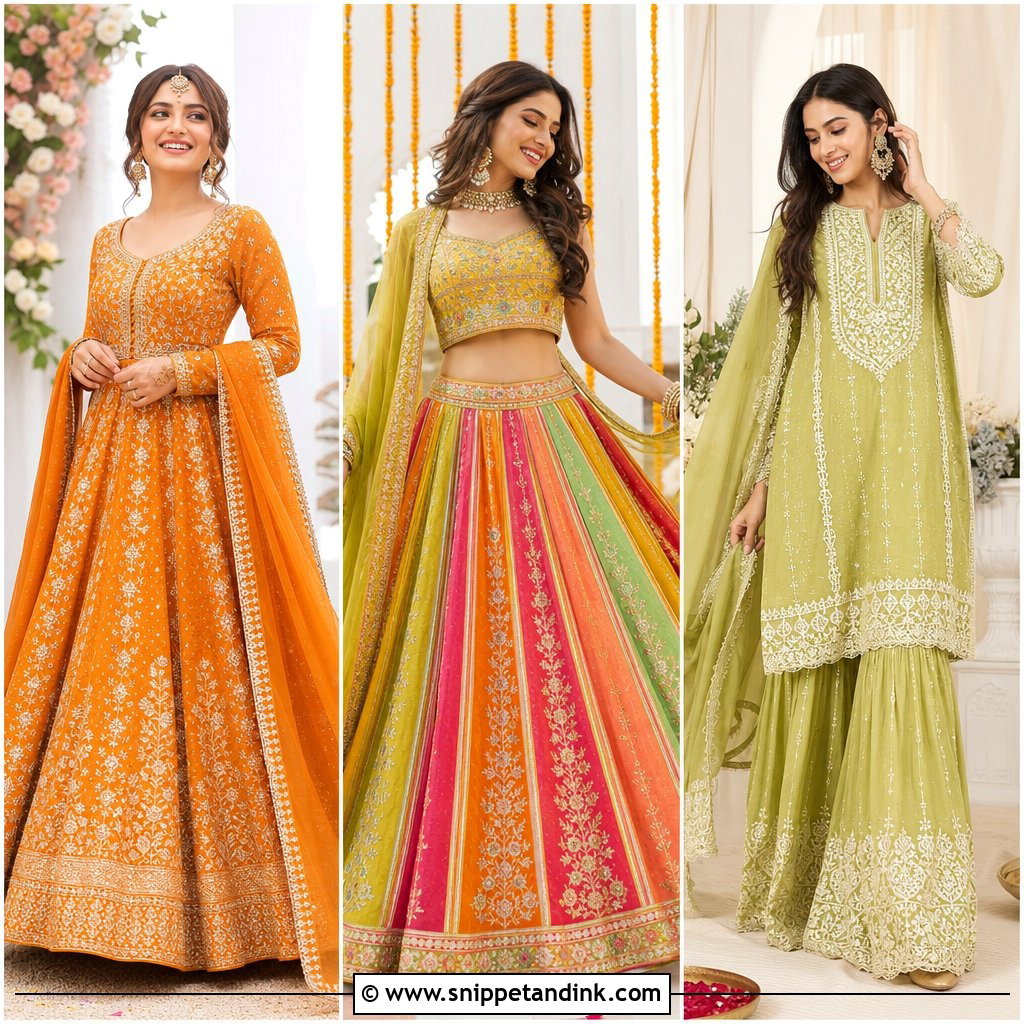
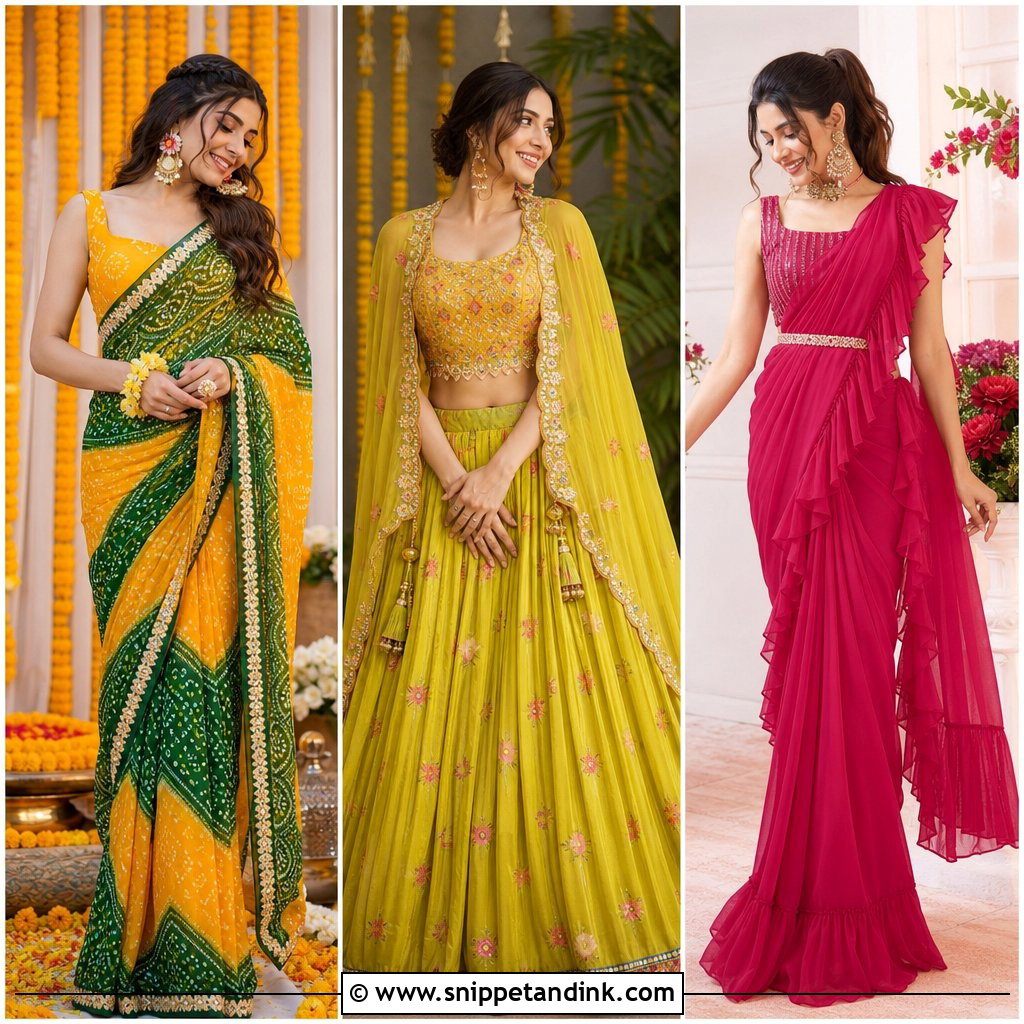
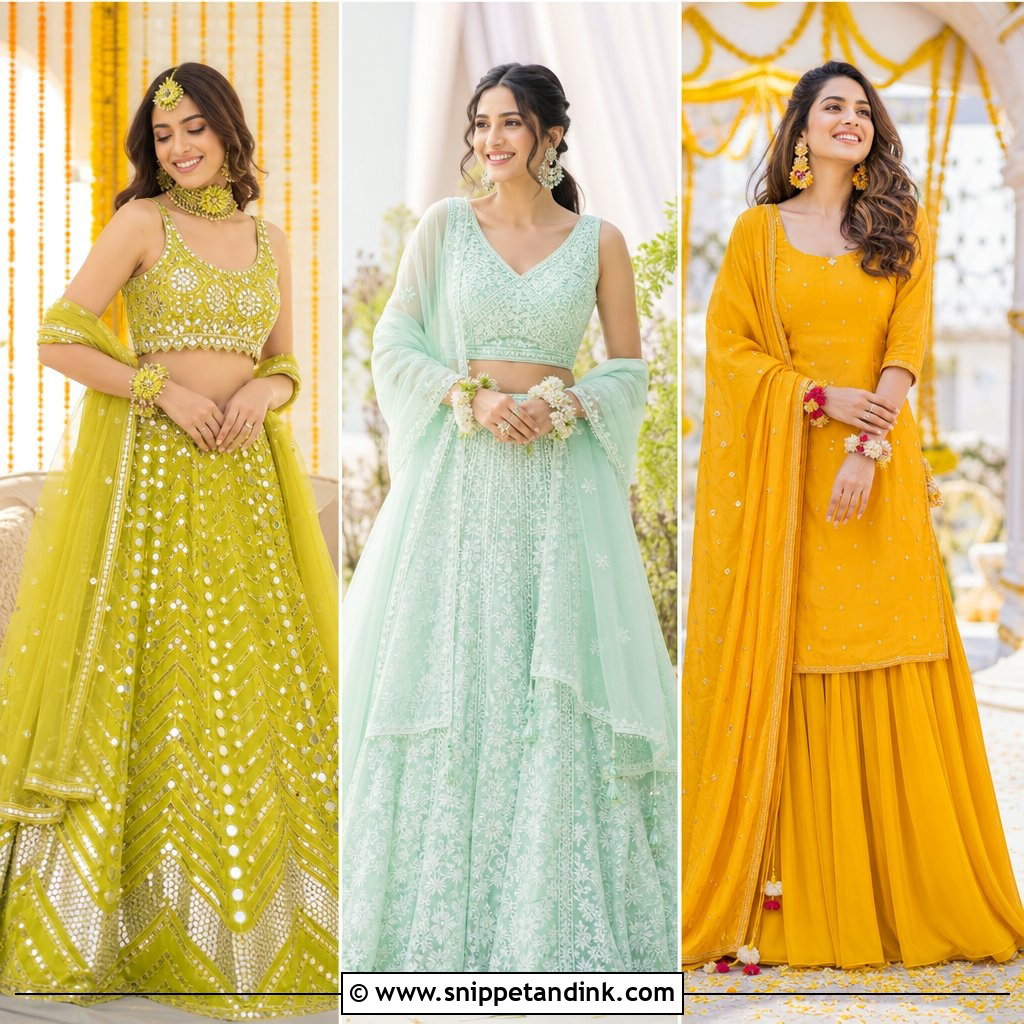
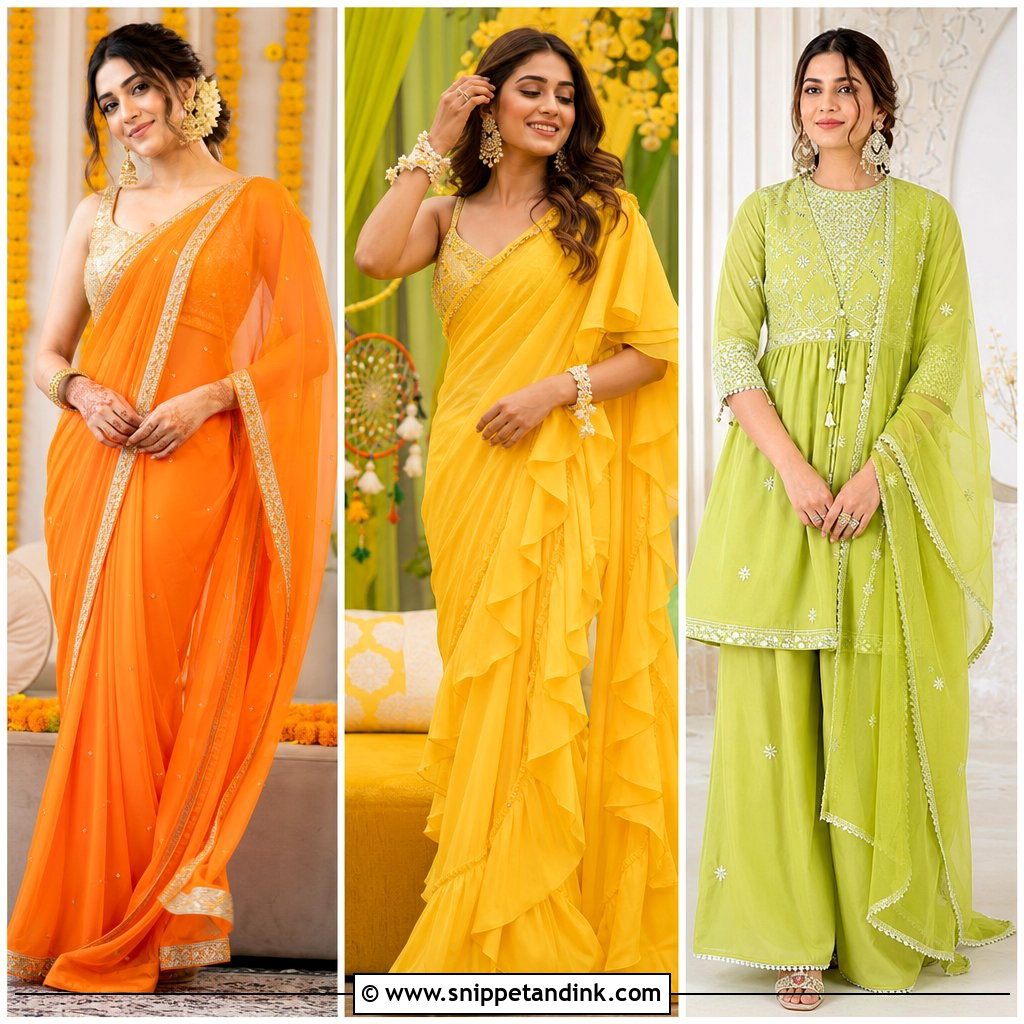
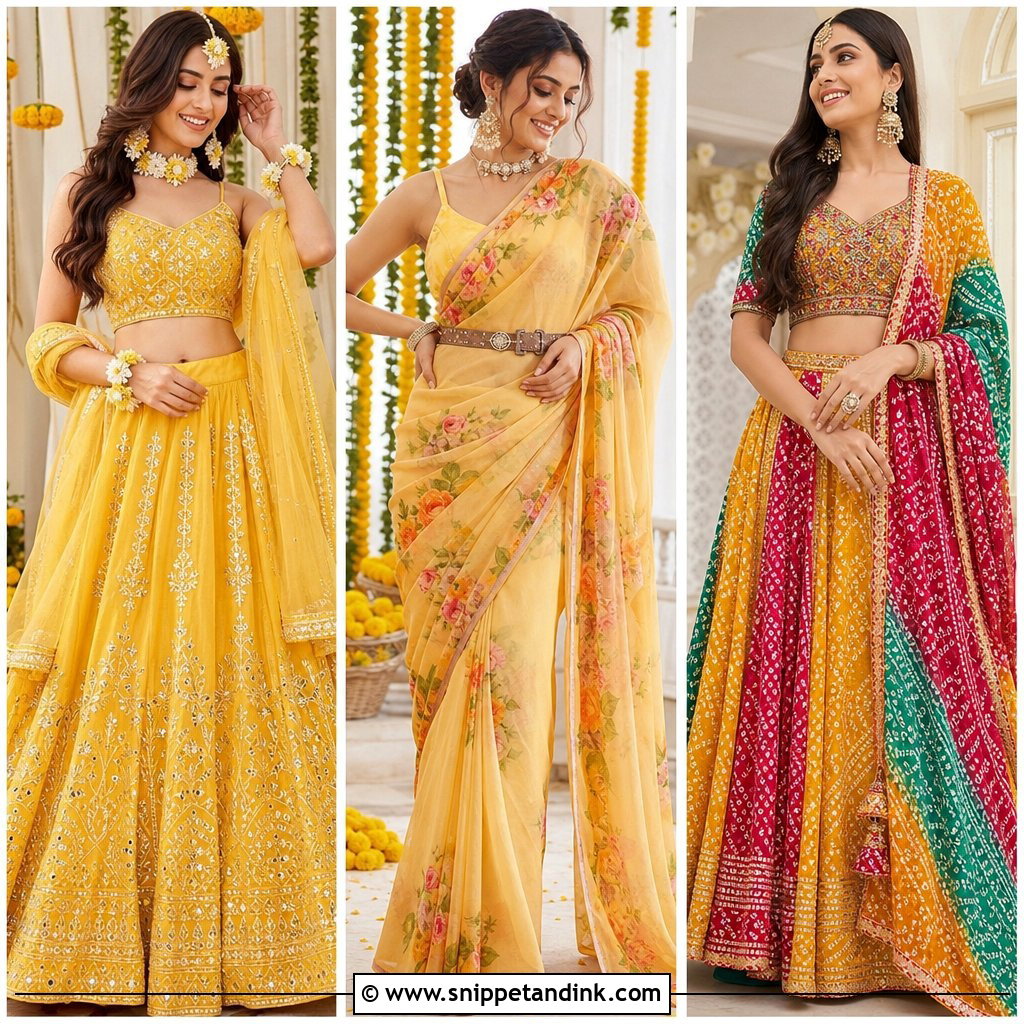
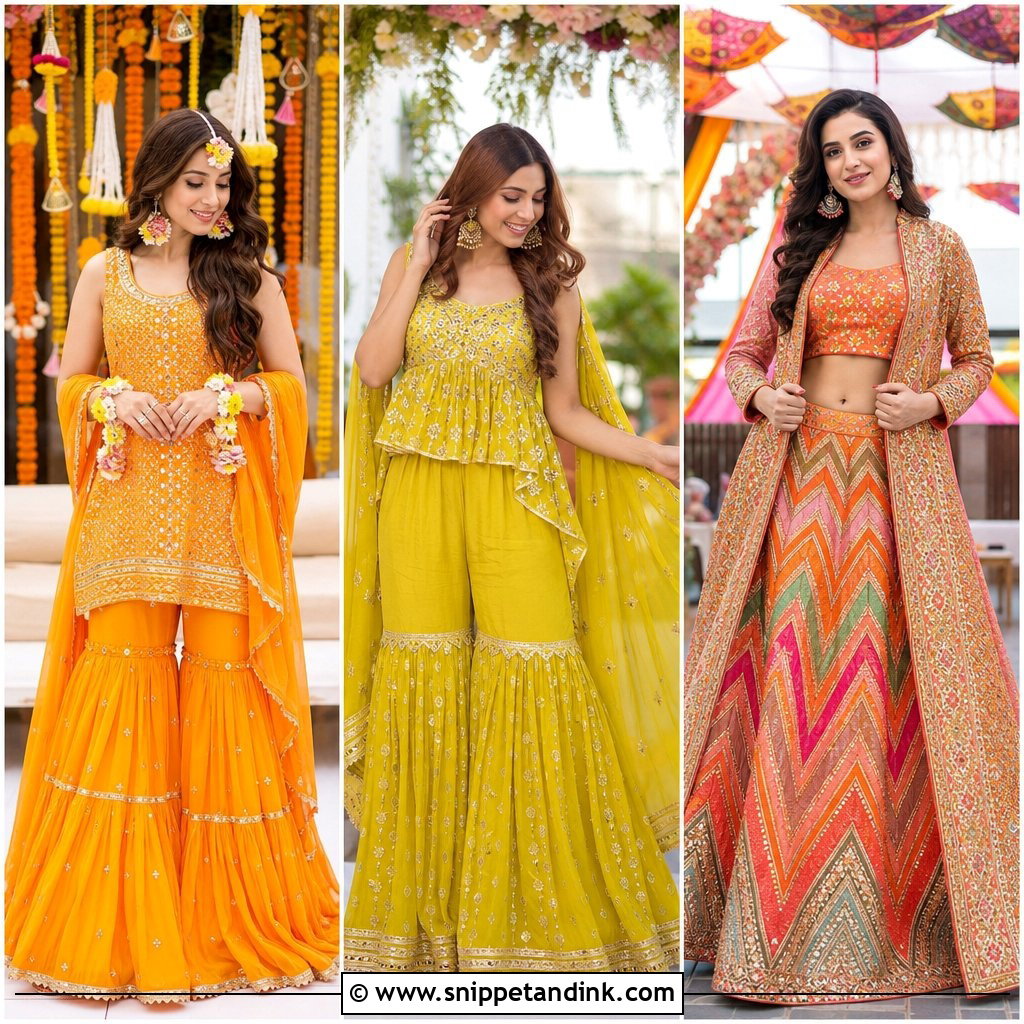
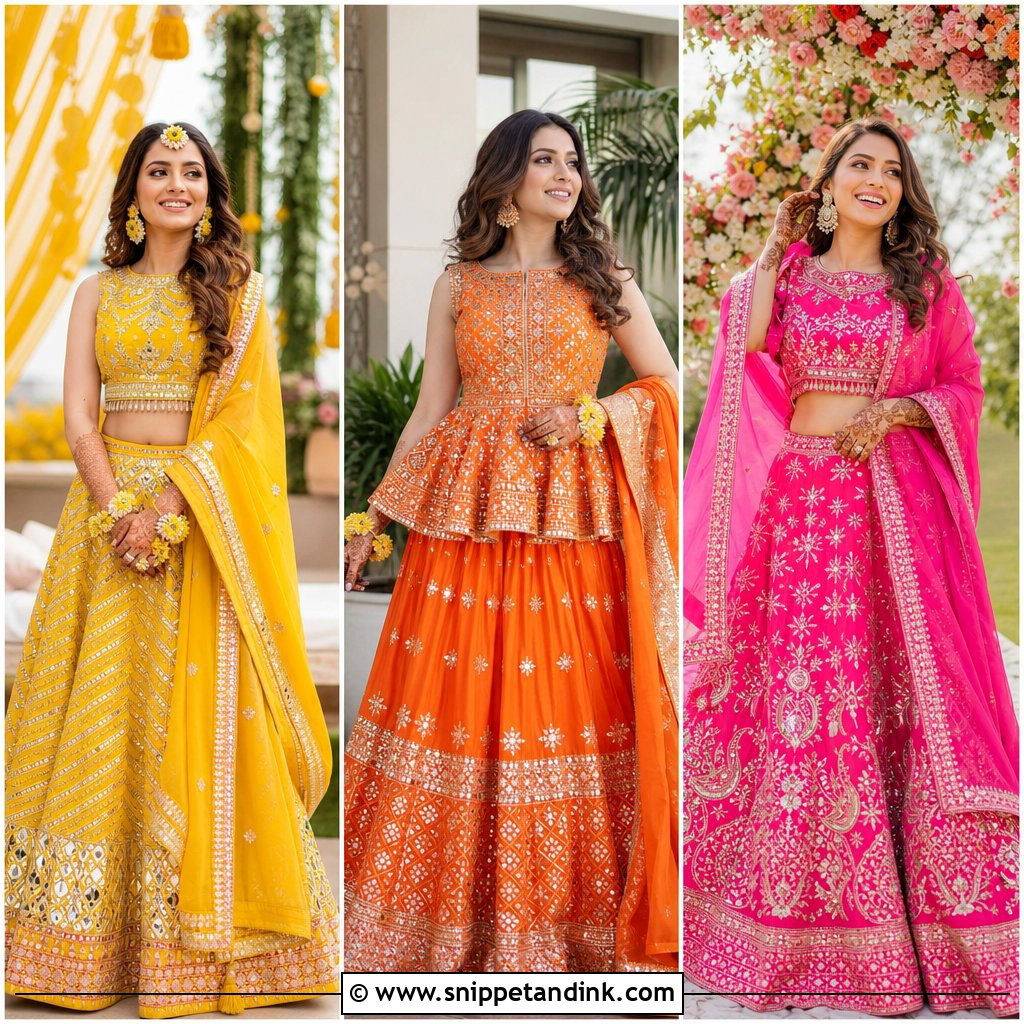
A mehndi outfit has a harder job than most wedding clothes. You’ll sit low for long stretches while henna dries, then get up and dance, then pose for photos with your hands held carefully away from everything. The ideas below cover traditional, contemporary and fusion looks for brides, bridesmaids, sisters and guests. Light lehengas, shararas, Anarkalis and pre-draped pieces tend to be the most practical, because the festive detail is there without fabric that fights you. Green and yellow are the classic colours, though pink, orange, blue and soft pastels hold their own. For each one I’ve noted the shoes, jewelry and small styling choices that make the outfit easier to live in for the whole evening.
Dressing Around Hours of Wet Henna
If you’re the bride or getting your own henna done, plan the outfit around the application, not the photos. Bridal designs can take several hours, and you can’t change clothes, adjust a dupatta or use your hands until the paste has dried and been sealed. Once it’s on, the outfit you’re wearing is the outfit you’re wearing for the rest of the night.
- Sleeves: short or above the elbow if henna is going up your forearms. Pushing a fitted sleeve up later smudges the design.
- Fastenings: side zips or front hooks you can manage with help. A back zip with tiny hooks is hard for anyone else to do without touching your hands.
- Seating: you’ll likely sit low on cushions or a sofa with your hands out. A skirt or pants that let you sit cross-legged will save your back.
- Dupatta: pin it before the artist starts and leave it pinned.
- Jewelry: put on earrings and maang tikka first. Rings and bangles go on the non-henna hand only, or wait until the next day.
Use the bathroom before the application starts, and ask someone to hold drinks with a straw. It sounds fussy, but it’s what keeps the outfit clean and the design sharp.
1. Green Mirror Work Lehenga for Mehndi
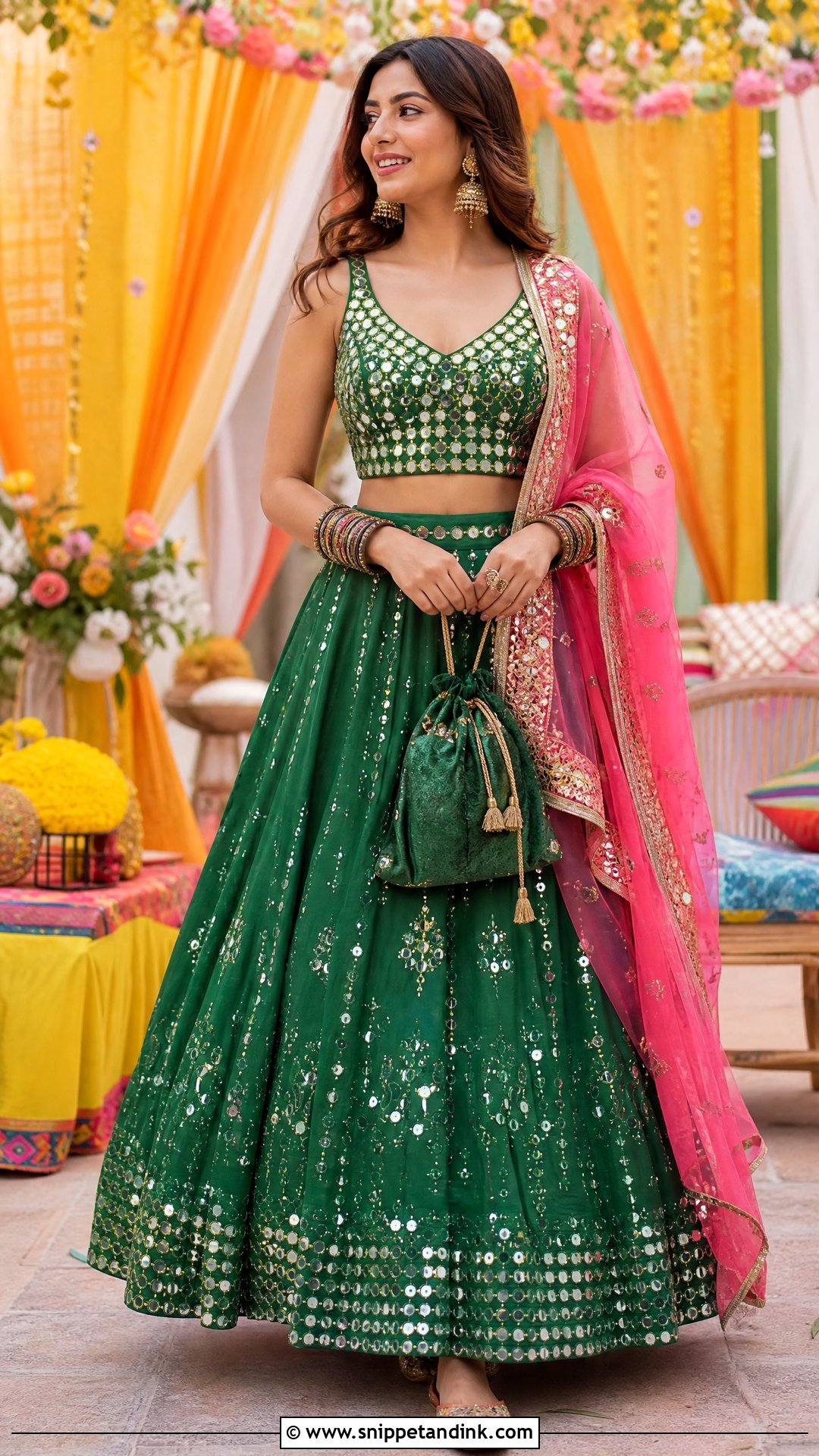
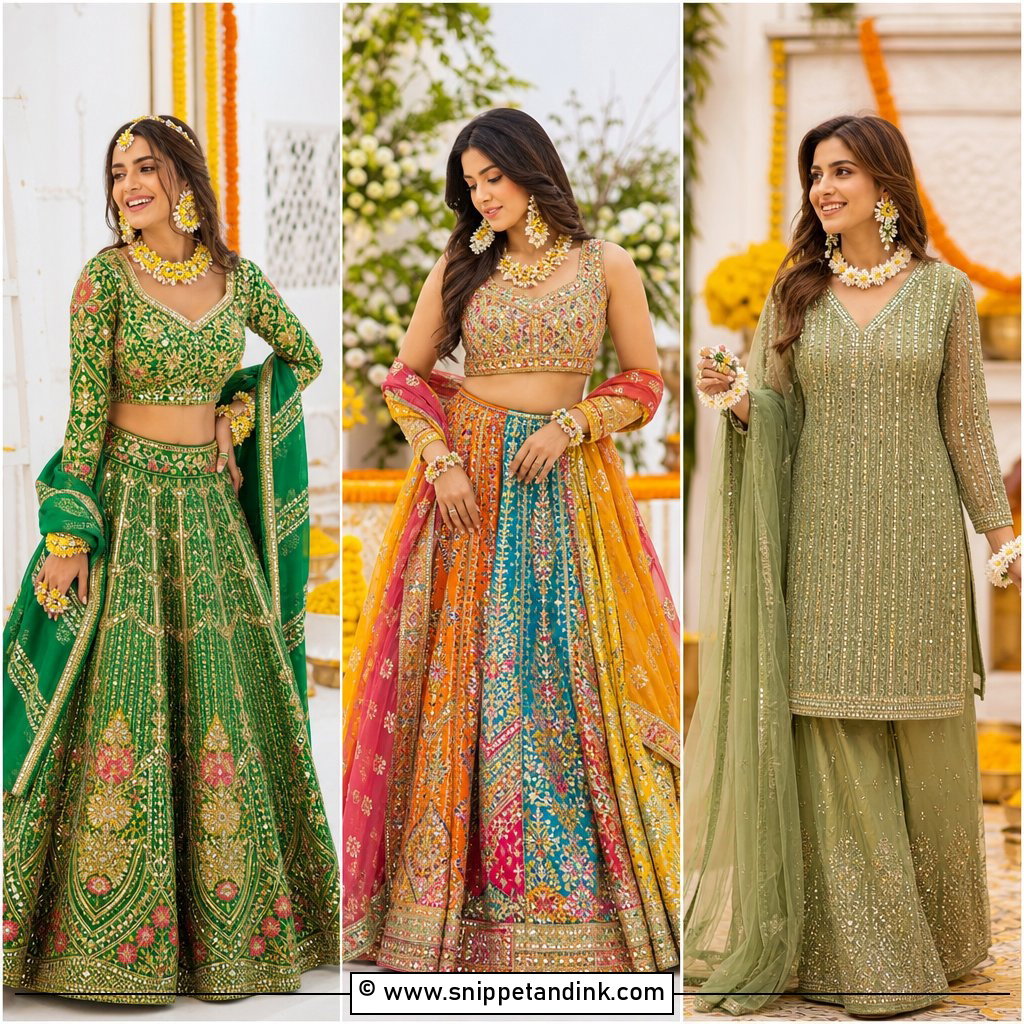
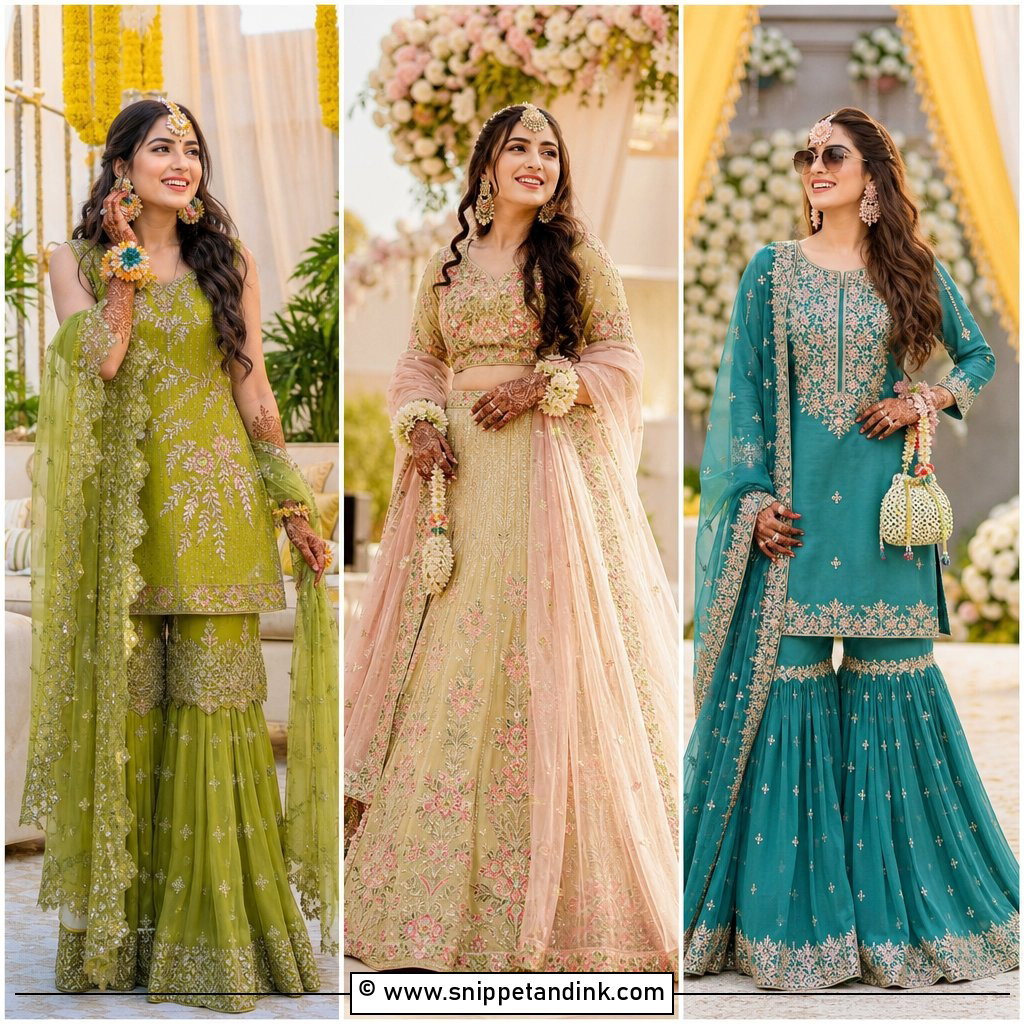
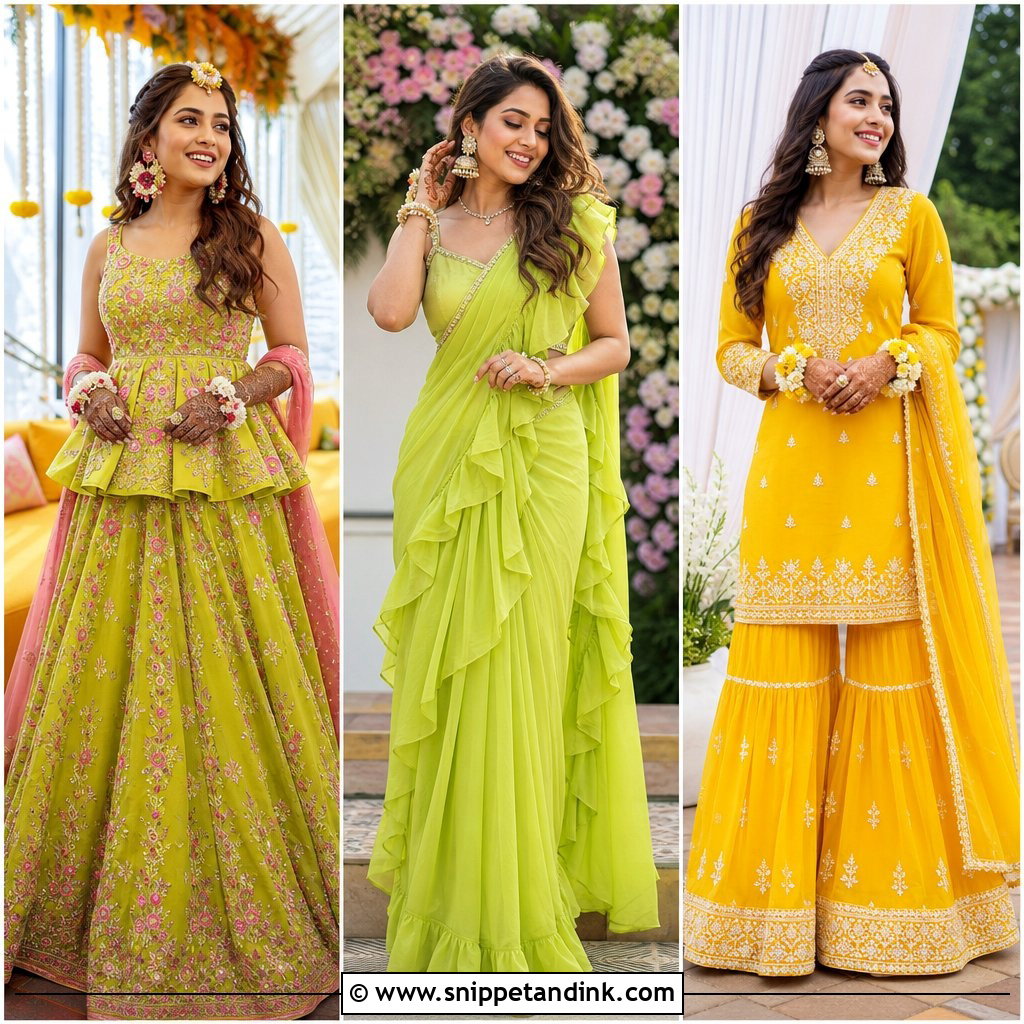
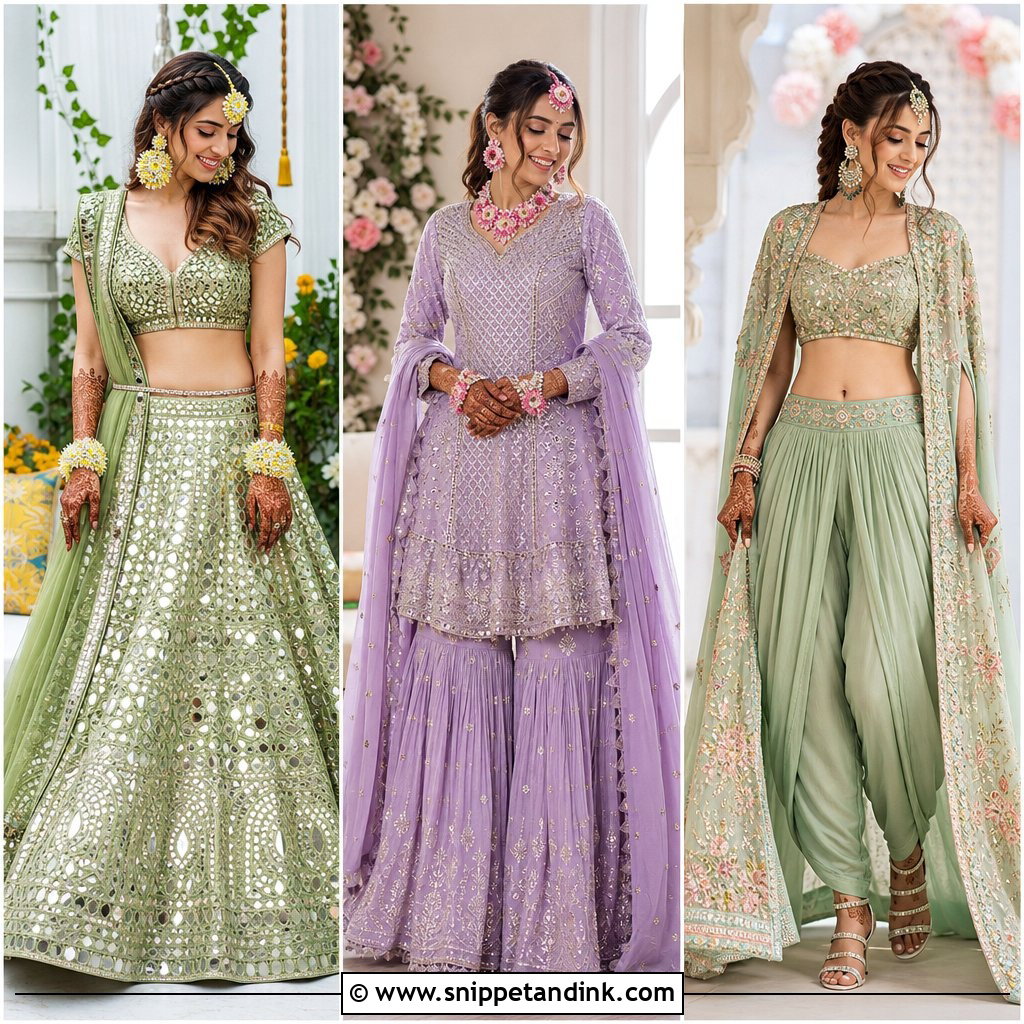
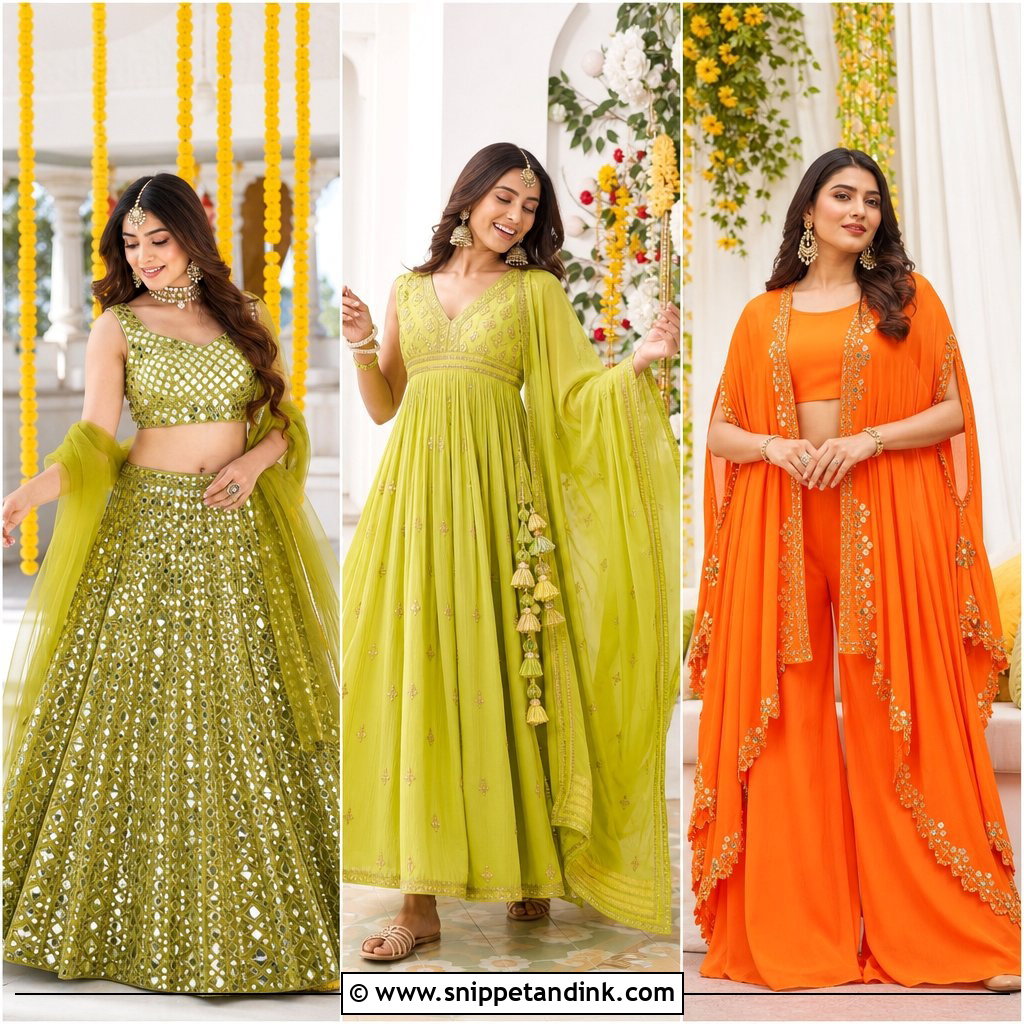
A green mirror work lehenga is the most traditional look in this list, and it earns its place because the mirrors catch every bit of evening light. Choose georgette or chiffon with a medium flare; heavy silk lehengas with a big can-can are hard to fold yourself into on floor seating. Mirror work is heavier than it looks, so if the blouse is densely covered, make sure the straps or short sleeves are doing the carrying. A pink, yellow or orange dupatta keeps it from looking matched head to toe. Gold jhumkas, stacked bangles, embroidered juttis and a flower-studded braid finish it, with a wrist-loop potli so your hands stay free.
2. Yellow Floral Lehenga for Mehndi
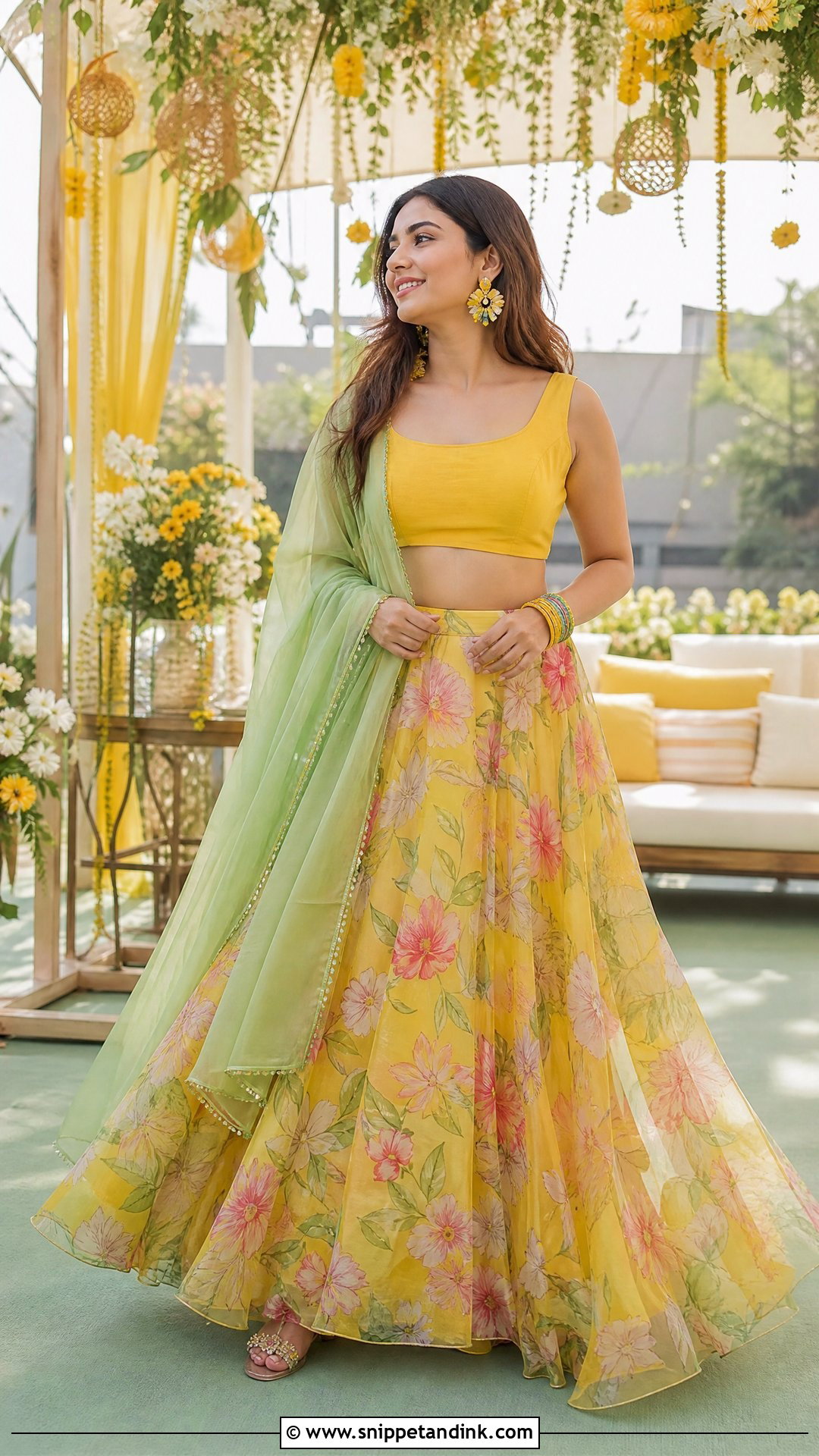
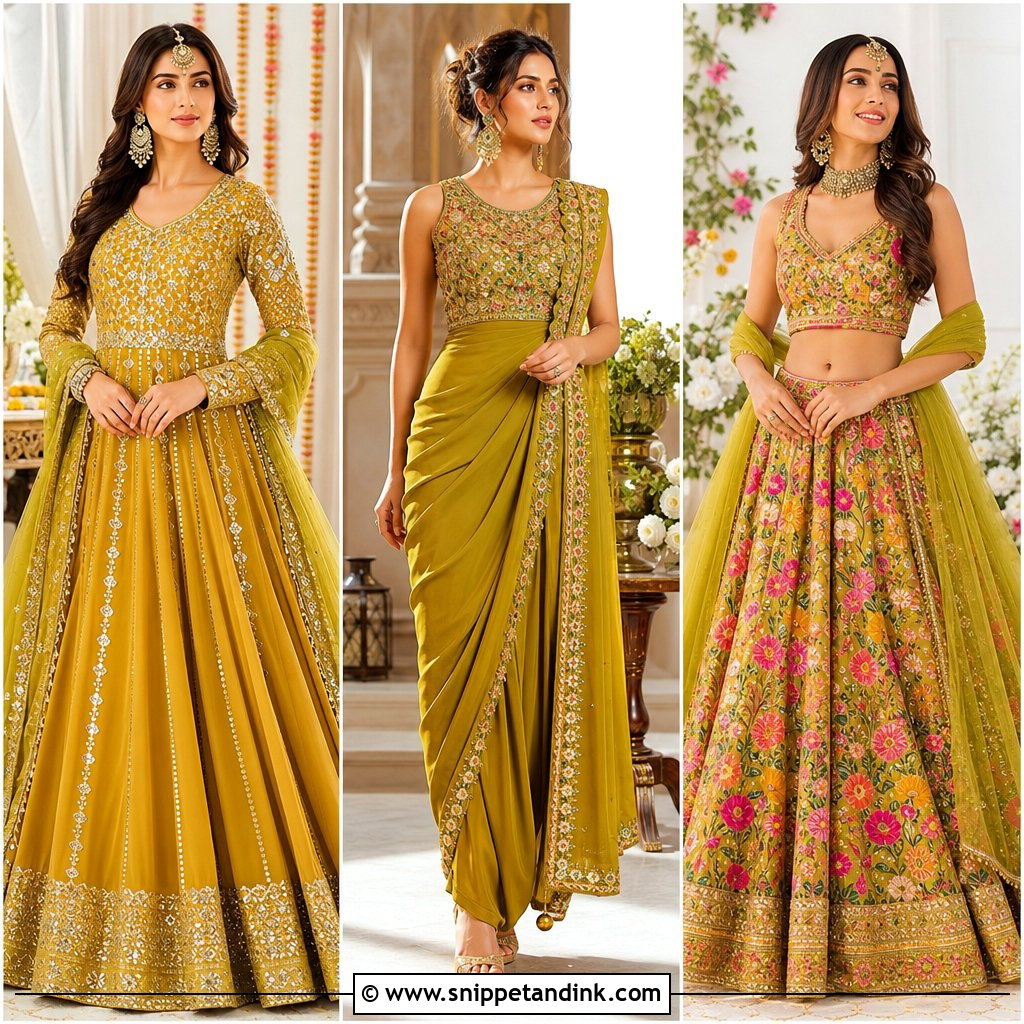
Floral print gives a yellow lehenga a festive look without the weight of embroidery, which matters on a hot afternoon. I’d go for organza, cotton-silk or georgette and check the waistband first; a narrow, stiff band digs in after an hour of sitting. A plain yellow blouse calms the print, and a green or pink dupatta adds contrast. It suits garden venues and daytime functions. Floral earrings, coloured bangles and flat juttis keep you steady on grass. If you’re getting henna, pin the dupatta over one shoulder instead of draping it across both arms, where it will end up in the paste.
3. Pink Sharara Suit for Mehndi
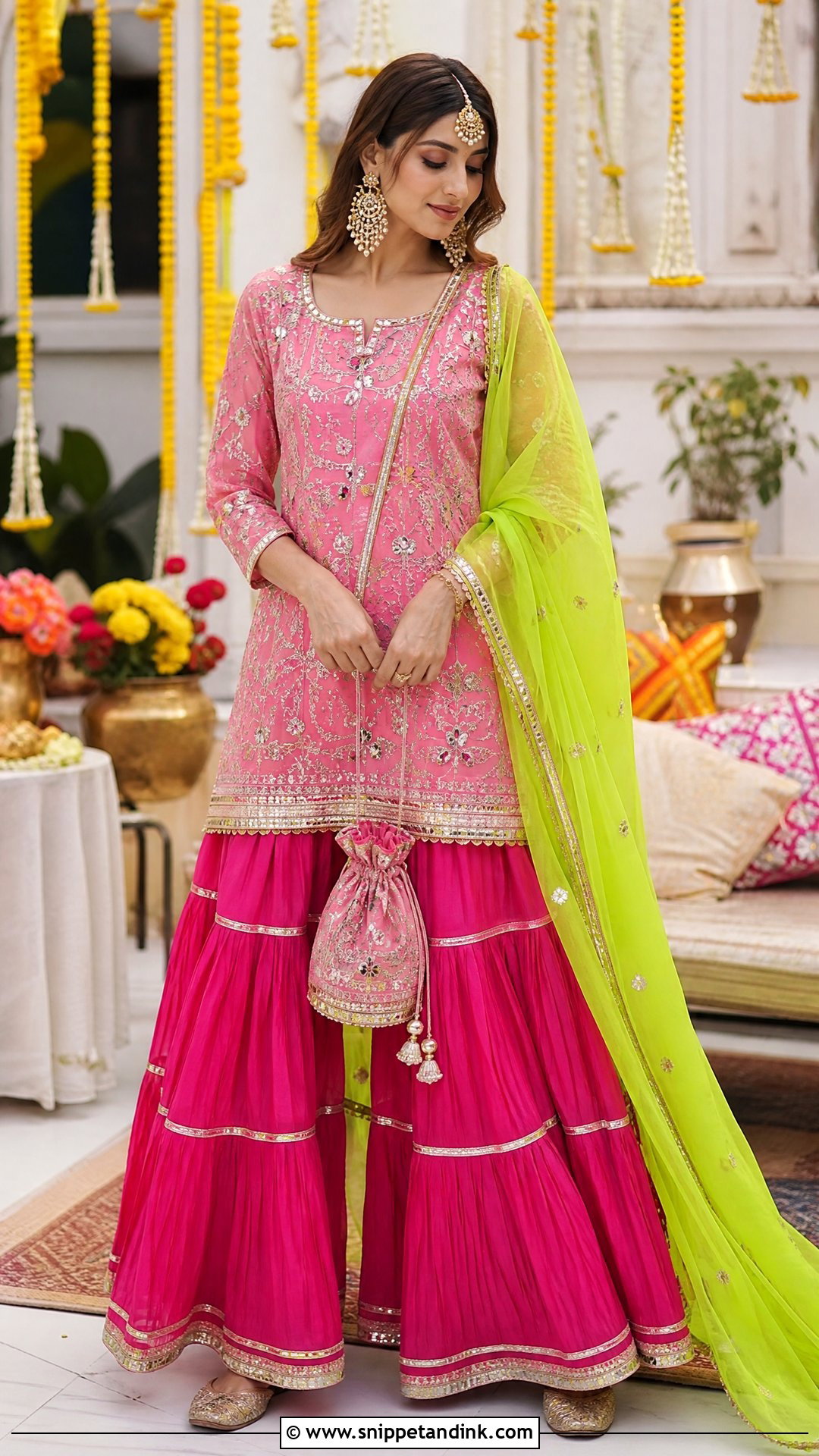
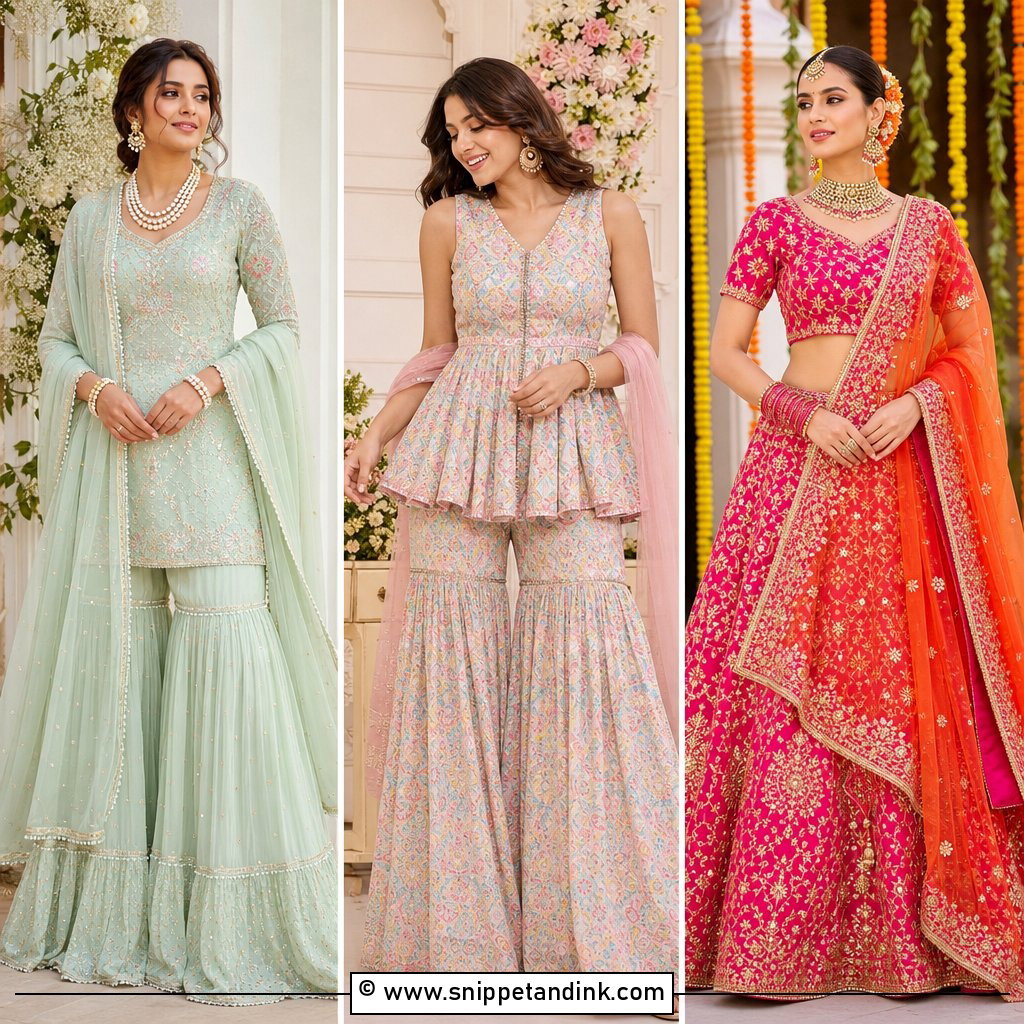
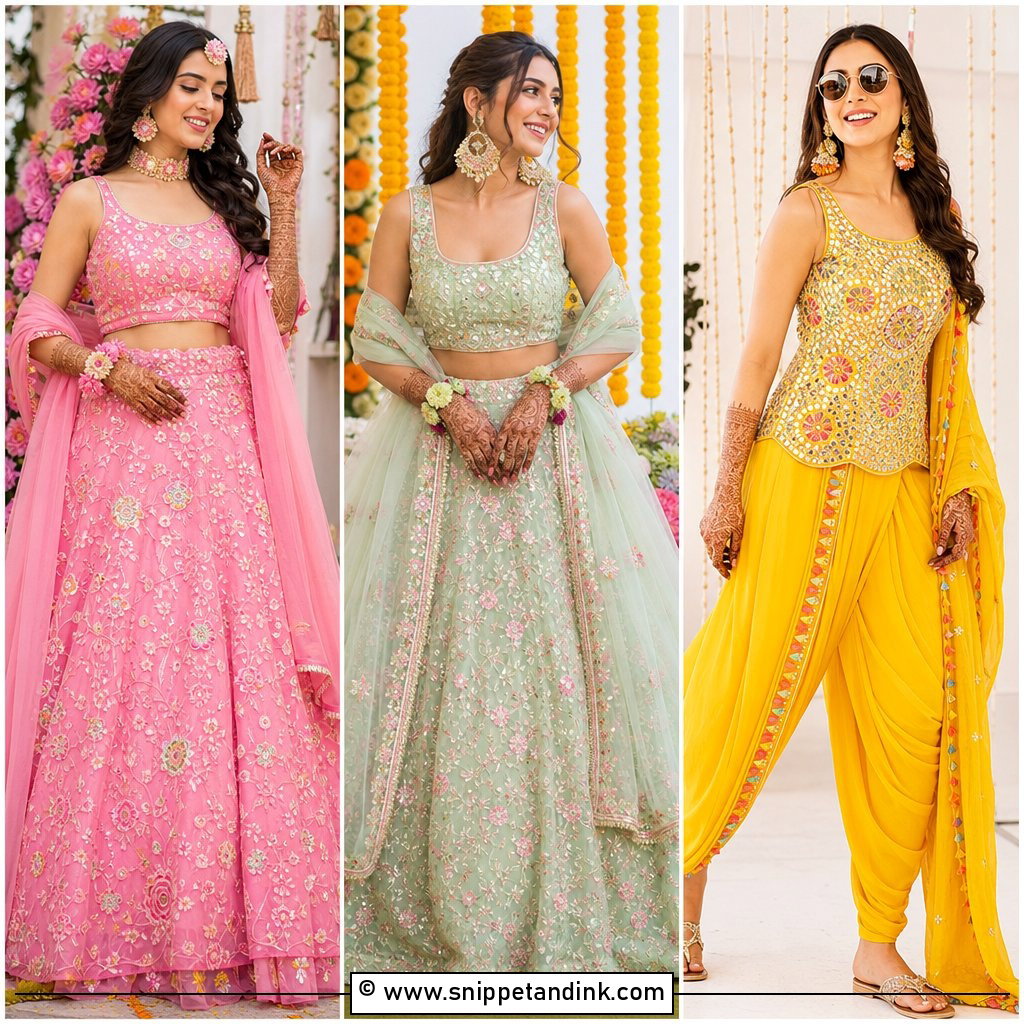
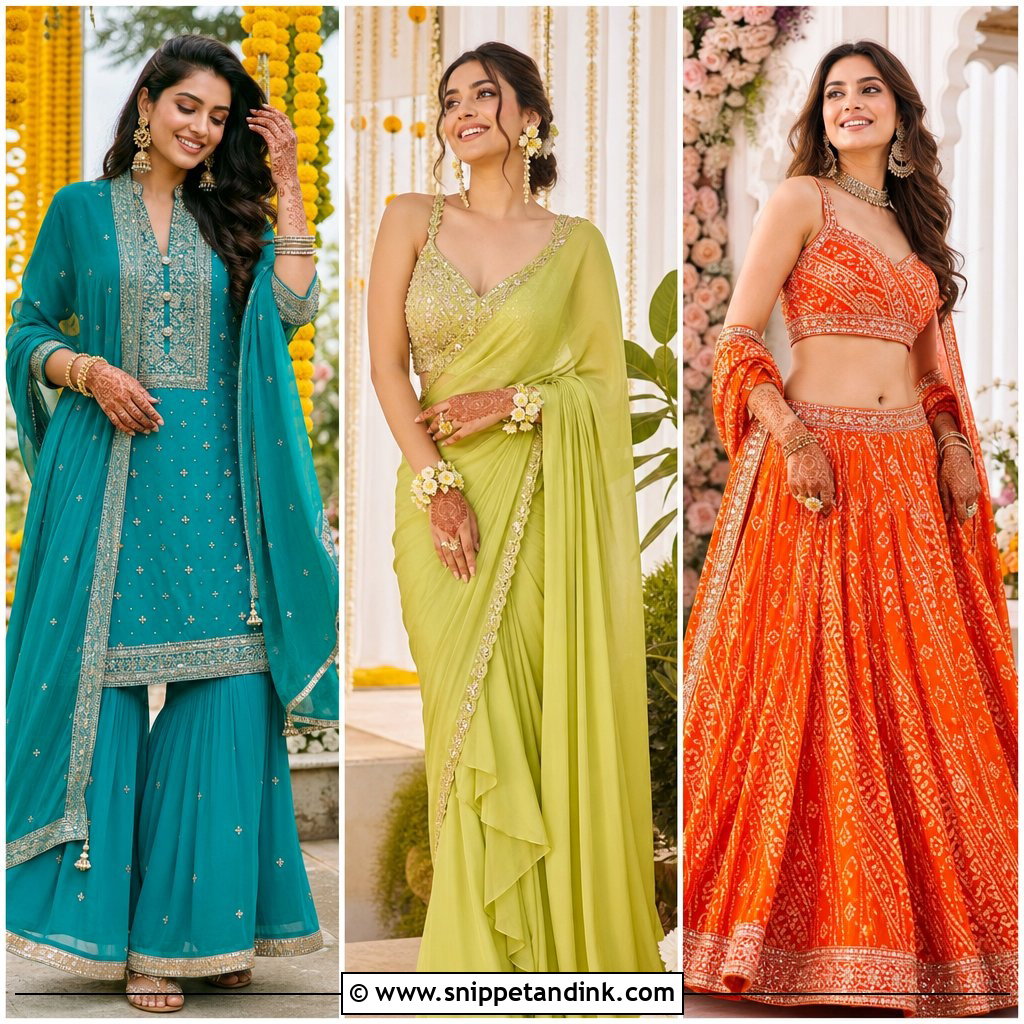
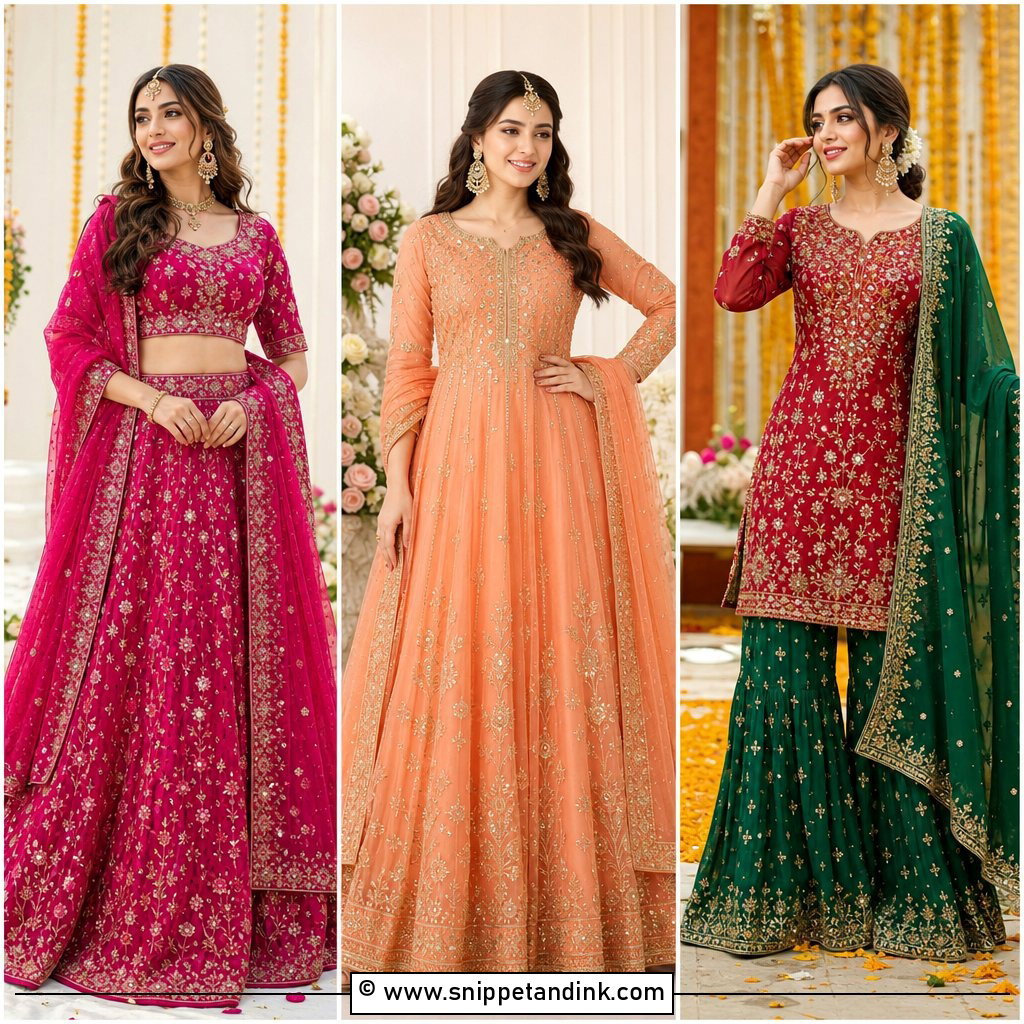
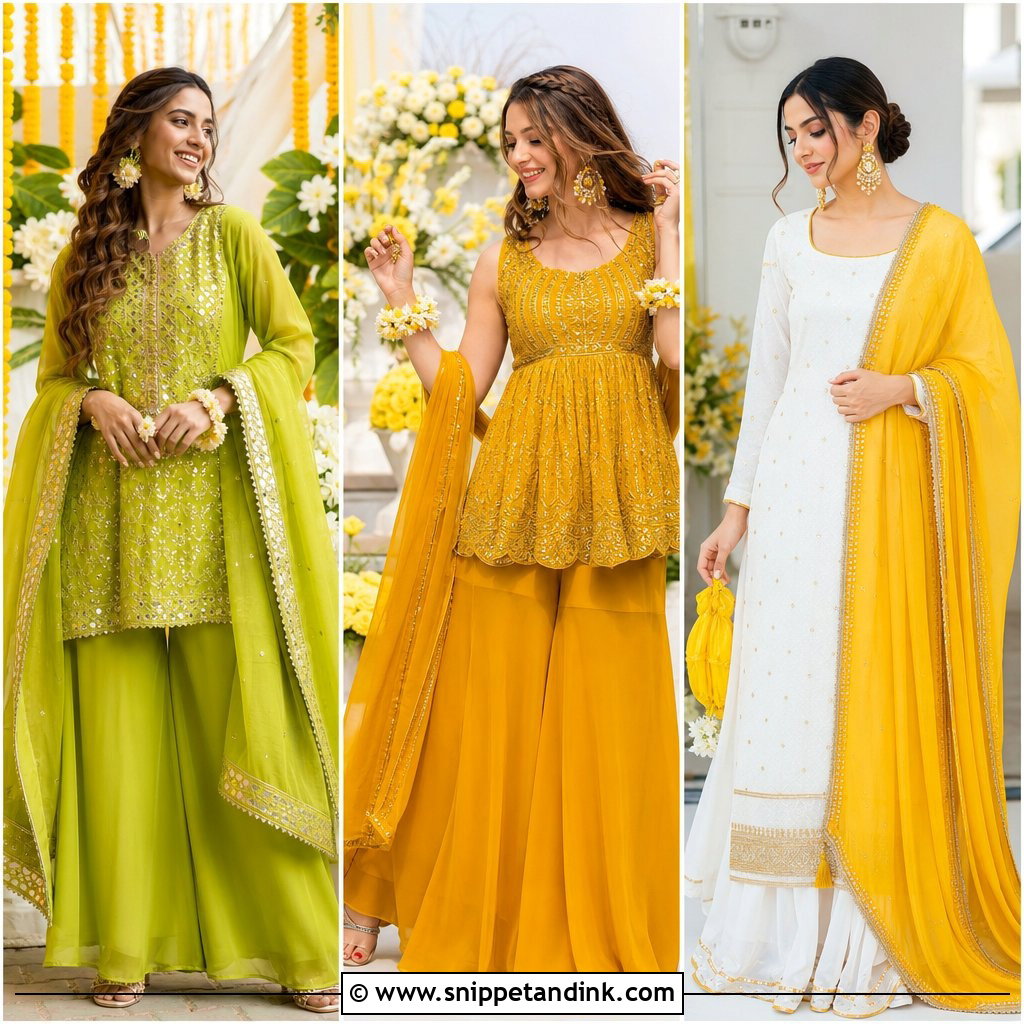
Shararas give you a lehenga’s volume with far more freedom around the legs, and a pink sharara suit is the version I reach for when someone wants to dance properly. A short kurti in gota, mirror or thread embroidery sits over wide flowing pants, with a light dupatta in pink, lime or orange. The fitted top balances the fuller pants on most figures. Sleeves are the thing to watch. Tight sleeves are miserable when your forearm is resting out for an artist, so choose them loose or above the elbow. Chandelier earrings, a small maang tikka, a side braid and a crossbody potli complete it.
4. Lime Green Gharara for Mehndi
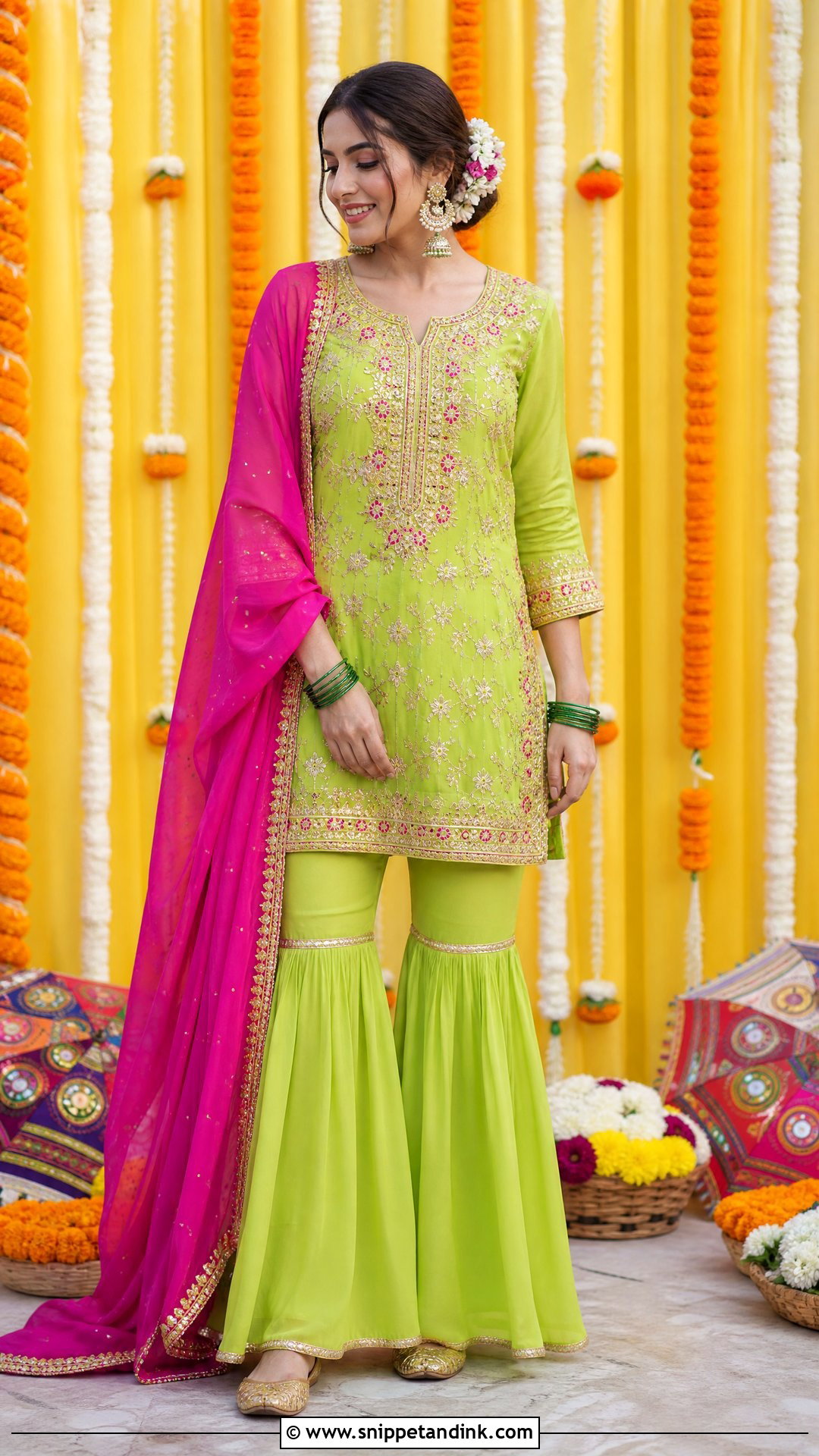
Lime green sits right in the mood of a mehndi. A gharara differs from a sharara because it’s fitted to the knee, then gathered into a flare from a seam there, and that knee seam has to land exactly at your knee or you’ll walk awkwardly all night. So try on the complete outfit with your shoes well before the event. Breathable fabric with placed gota or sequins is easier to wear than dense embroidery everywhere. A magenta or yellow dupatta gives contrast; a sheer matching one looks cleaner. Pearl jhumkas, green glass bangles and gold juttis suit it, with a flowered low bun or loose waves.
5. Orange Anarkali Dress for Mehndi
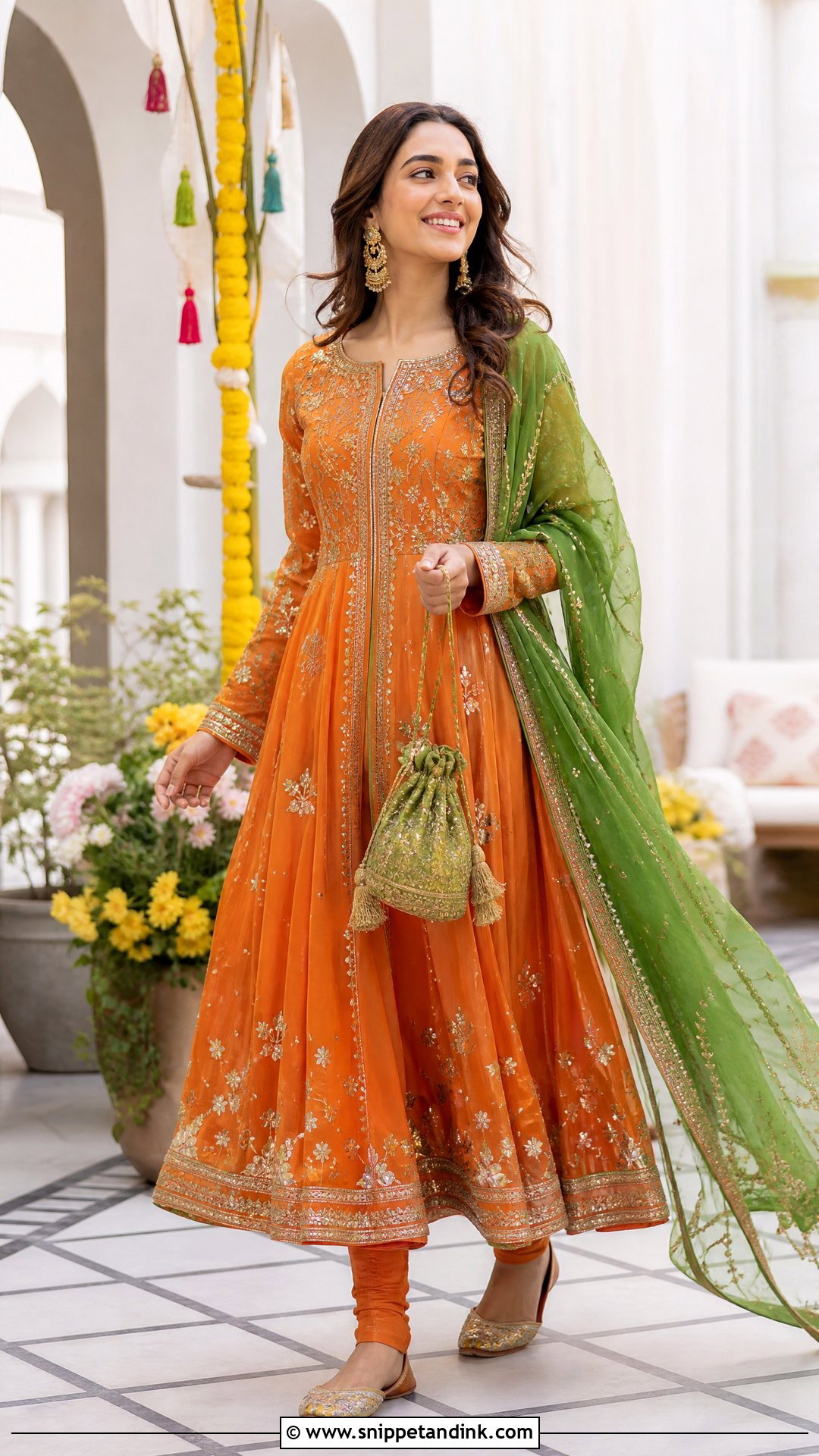
An orange Anarkali moves well in a dance circle because the flare is cut from the bodice, so it spins out without much effort. Calf or floor length both work; floor length looks dressier but catches on stairs. Gold gota borders, scattered mirrors or fine threadwork add shine. Slim churidars underneath keep you covered when you sit on the floor, and a green dupatta over one shoulder stays out of the way. A higher waistline is more comfortable through a long evening than a sharply defined one. Wear bangles only on the hand that isn’t getting henna, and pick a braided crown or neat bun you won’t need to touch.
6. Multicolor Bandhani Lehenga for Mehndi
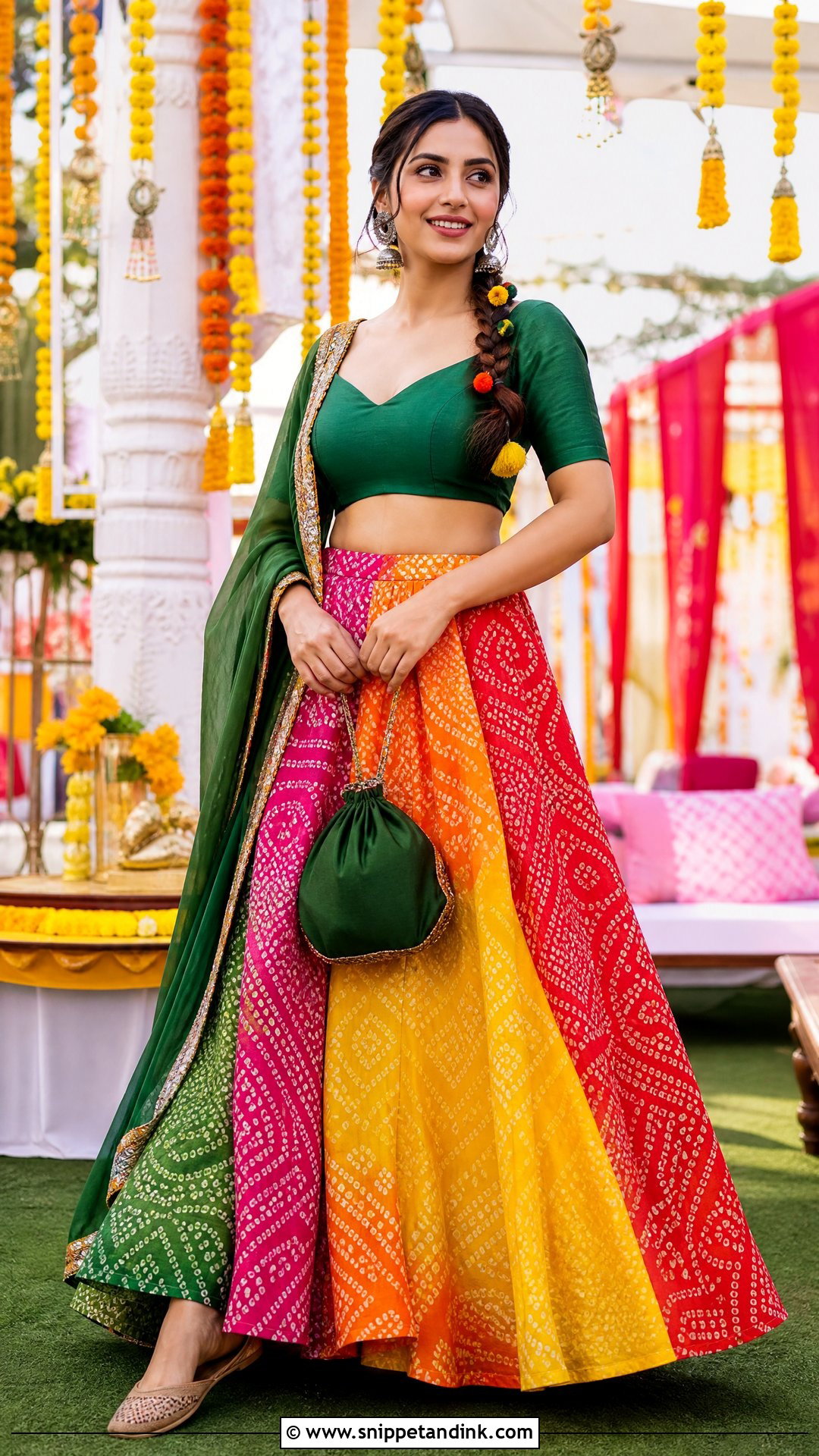
Bandhani is tie-dye made by hand, and the tiny dots give a multicolor Bandhani lehenga its folk character. Pull one colour from the print for a solid blouse so the outfit has somewhere for the eye to rest, and keep the dupatta lightly bordered. It suits brides, sisters and close relatives, with the embroidery level dialled up or down by role. Oxidized silver feels folk; gold feels more formal. One honest note: real bandhani can bleed dye if it gets wet, so keep it away from wet henna paste and spilled drinks. Embroidered juttis, a thread-wrapped braid and a plain potli finish it.
7. White and Green Chikankari Lehenga for Mehndi
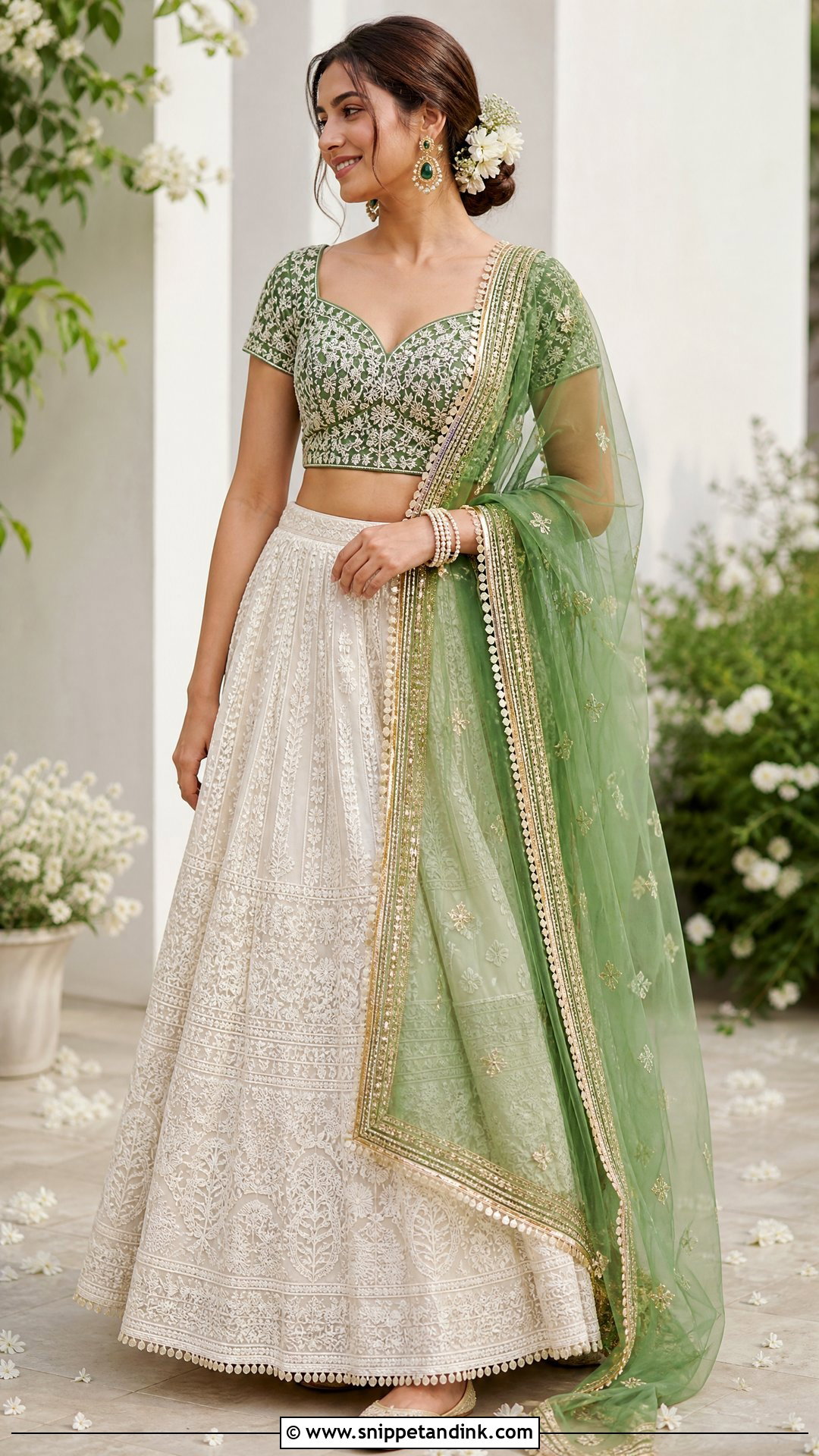
Chikankari is fine white shadow embroidery from Lucknow, and on a white lehenga it reads light and airy, which makes it one of the best options for a summer daytime mehndi. The trade-off is obvious: white shows henna, turmeric and food. A green blouse and a sheer green dupatta with a narrow gota border tie it back to the occasion while leaving the handwork visible. Add green stone earrings, pearl bangles and neutral juttis. Guests should stay minimal; the bride can add florals or a statement necklace. Keep the dupatta short enough that it can’t trail, and finish with a sleek ponytail or a bun trimmed with flowers.
8. Purple Peplum Sharara for Mehndi
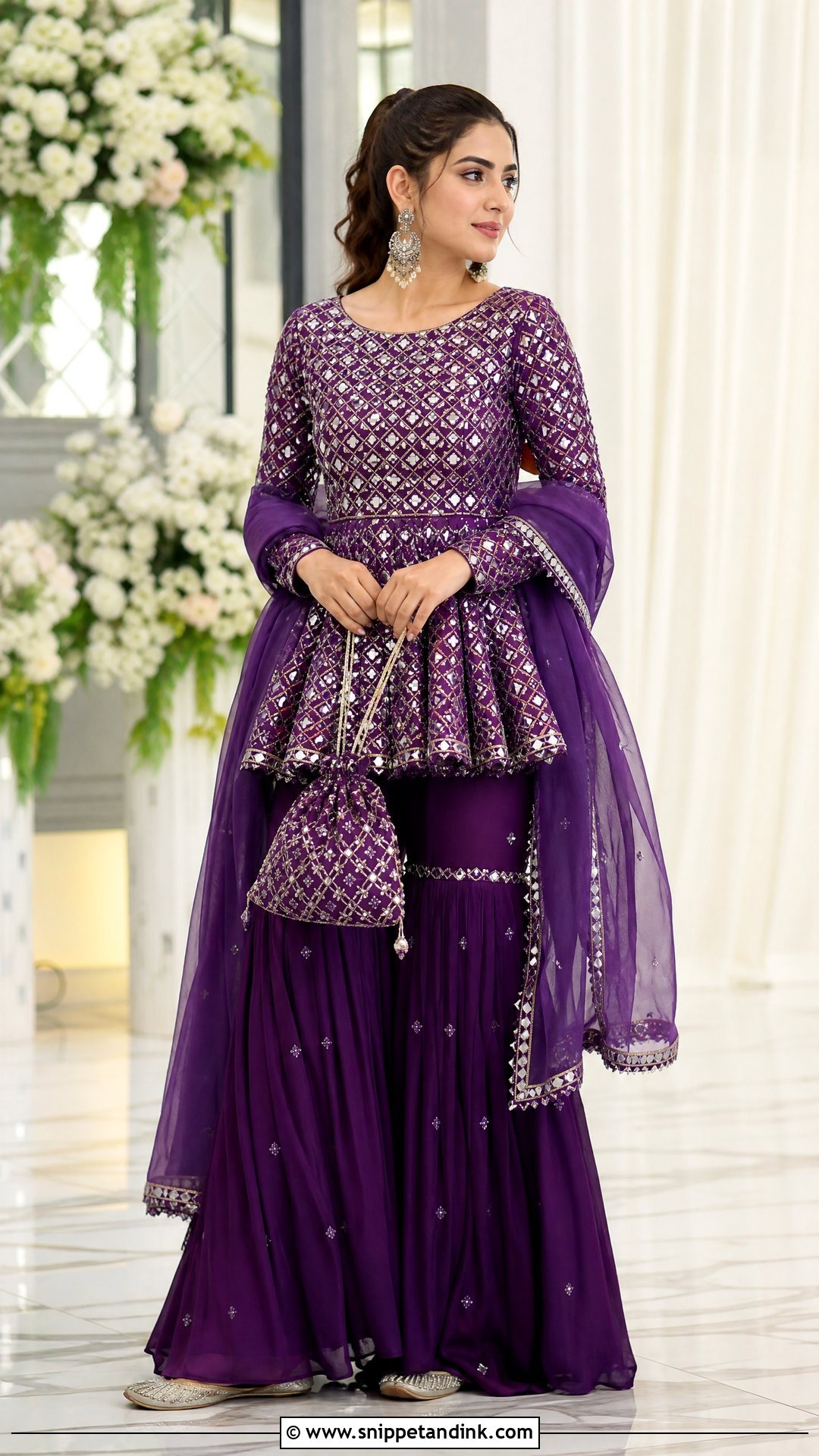
A peplum top over sharara pants gives you a modern shape with traditional detailing. The flare at the waist defines it while covering the midsection, which many guests appreciate when they’ll be sitting all evening. Choose a structured peplum in mirror work, threadwork or a clean gota border. Matching purple pants look sleek; green pants push it toward a bolder mehndi palette. A dupatta is optional here, and if you want one, a sheer piece over a single shoulder is enough. Silver earrings, embellished flats, a small structured potli and polished waves or a high ponytail keep the attention on the peplum shape.
9. Yellow Cape Lehenga for Mehndi
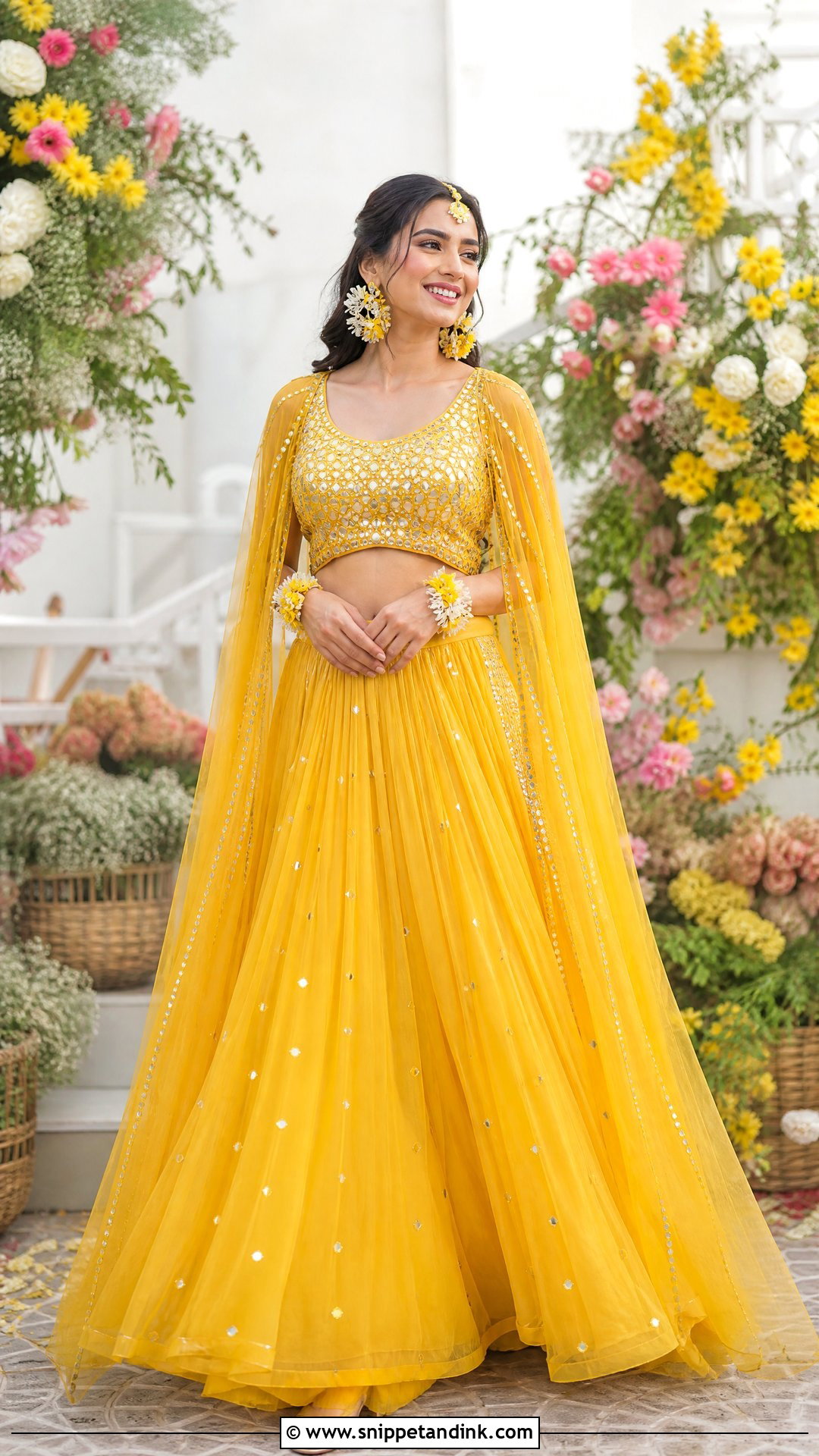
I recommend a cape lehenga to anyone who hates rearranging a dupatta every ten minutes. The sheer cape attaches at the shoulders and falls behind, so it can’t slide into wet henna or under your knees. Check that it hangs clear of your arms when you hold them out; some capes are cut narrow and drape across the elbow. Mirror work, florals or small sequins give sparkle without much weight. Statement earrings, a fine maang tikka and comfortable gold sandals are enough, and skip the necklace if the cape has a decorated neckline. Brides can go floor-length; guests usually look better in a shorter, plainer cape.
10. Green Palazzo Suit for Mehndi
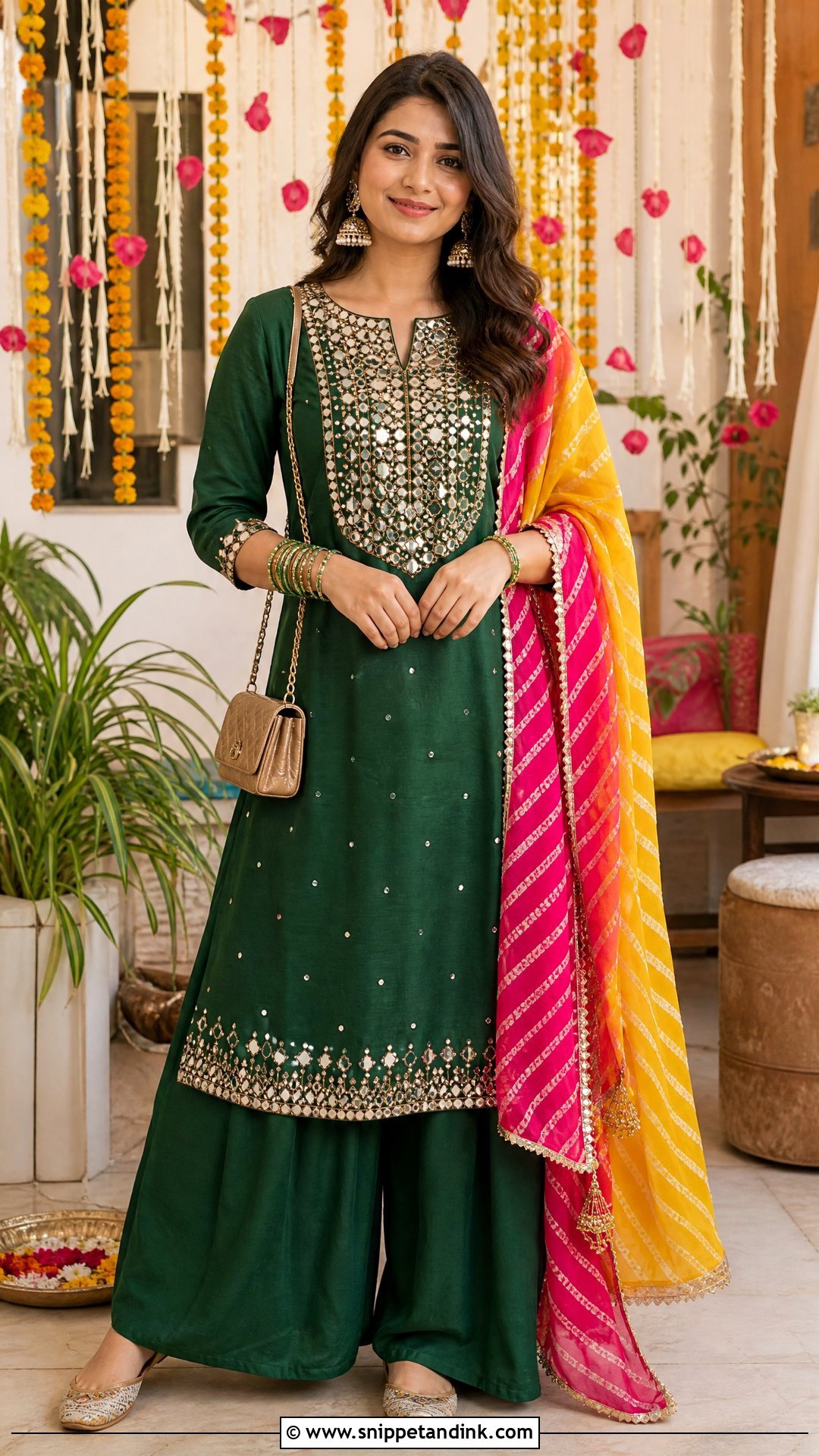
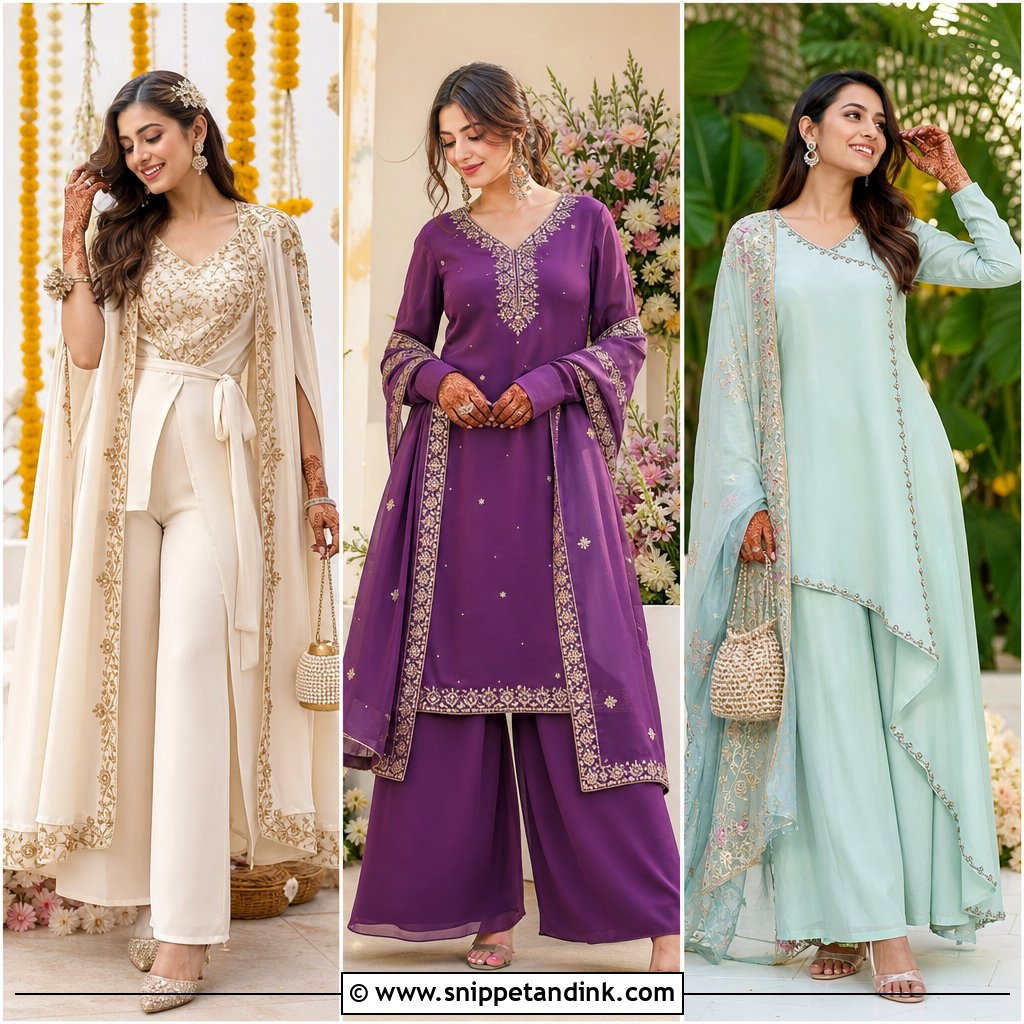
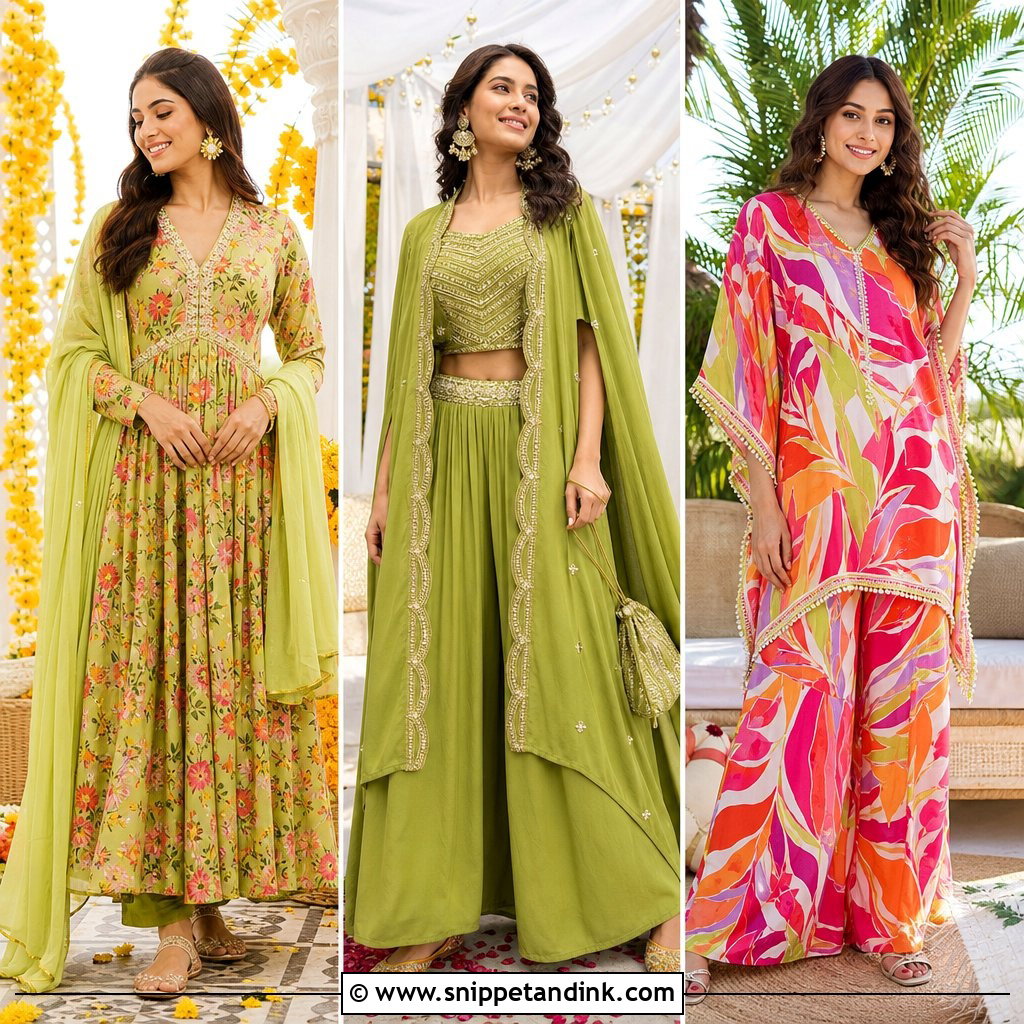
For a home mehndi where you’ll be sitting cross-legged on mattresses and helping in the kitchen between songs, a green palazzo suit is the honest answer. Wide palazzos let you sit any way you like. A knee-length kurta with mirror work, printed borders or coloured embroidery keeps it festive, and a yellow, pink or multicolour dupatta brightens the green. Side slits add movement. Jhumkas, slim bangles and cushioned juttis or metallic flats suit the pace. Carry a crossbody bag, not a clutch; once your hands are hennaed, you can’t hold anything for hours. A braid or half-up style that stays put is all the hair needs.
11. Floral Print Anarkali for Mehndi
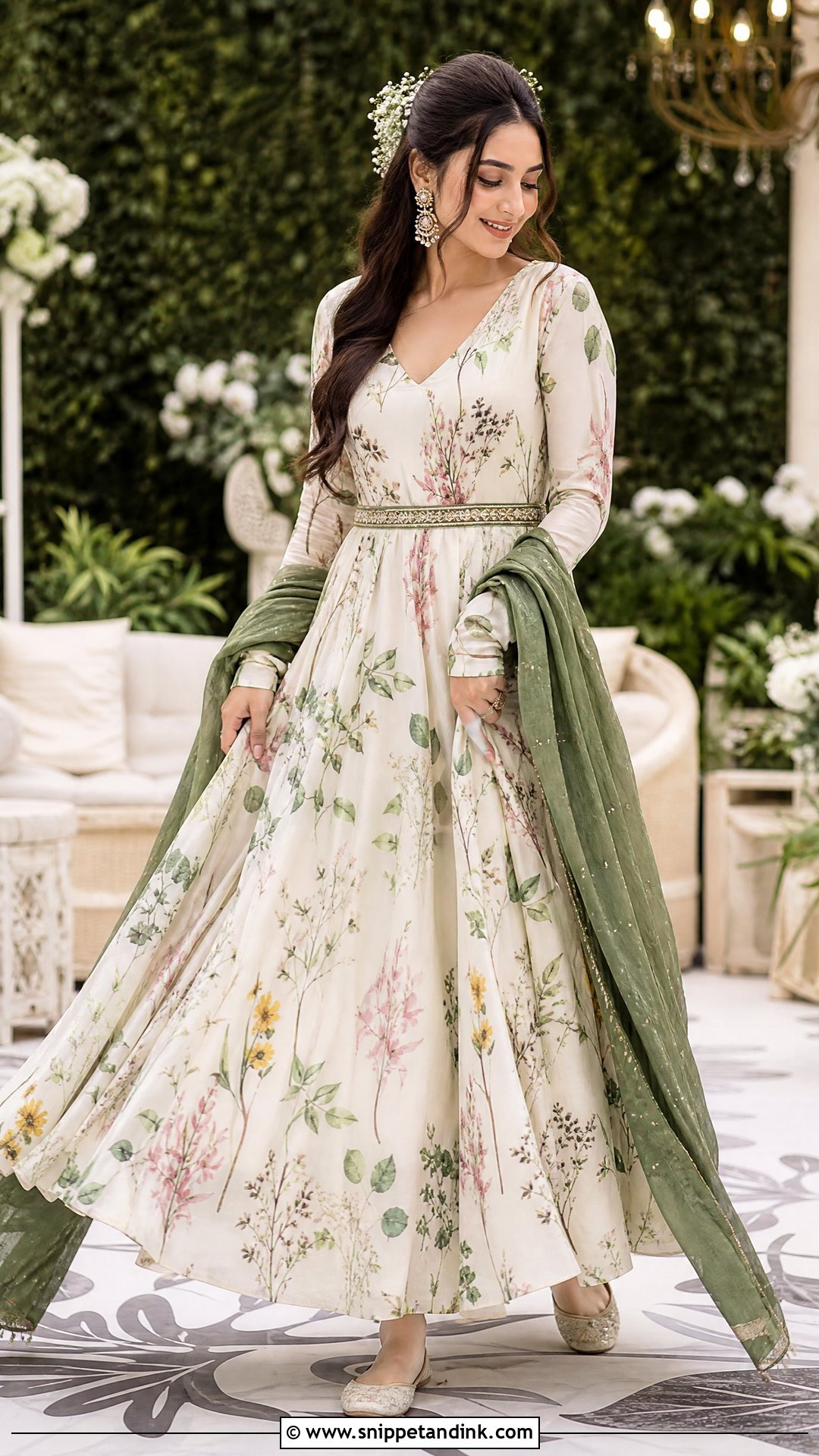
A floral print Anarkali is light enough for an outdoor mehndi, and a print hides small marks far better than a plain fabric does. Pick a green, yellow, pink or ivory base with medium-scale flowers; very small prints turn to a blur in photos. Breathable lining matters in warm weather, since synthetic linings trap heat under a full skirt. A narrow embroidered belt defines the waist and holds the dupatta in place, as long as it isn’t tight when you’re seated. Guests can keep it simple, while family members may add a statement maang tikka. Loose waves, a soft braid and a compact potli finish it.
12. Mustard Yellow Kurta and Skirt for Mehndi
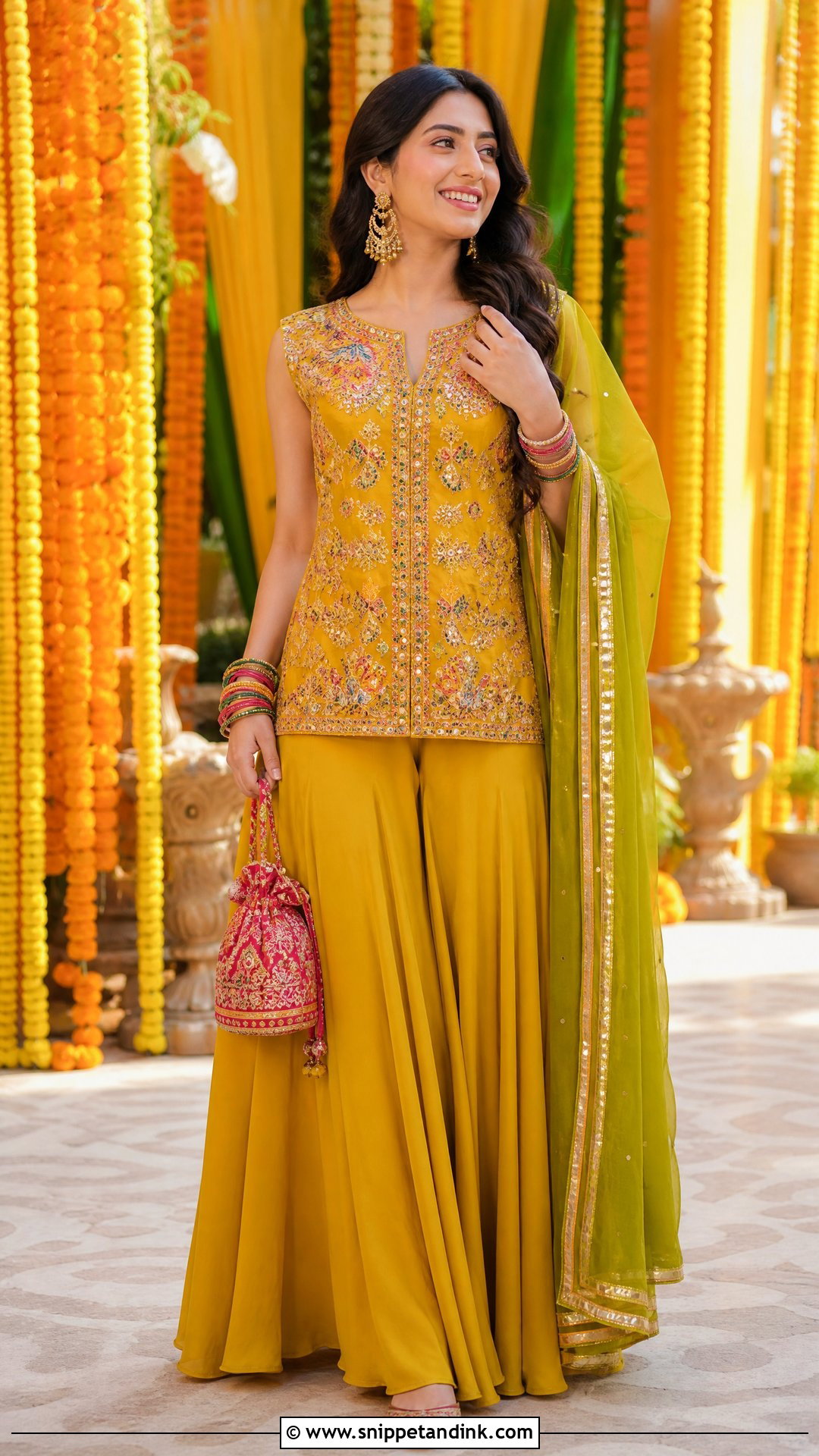
Separates are underrated for mehndi. A mustard kurta and full skirt let you adjust each piece for comfort, and they suit nearly every age because the kurta length and skirt volume can be tailored independently. Make sure the kurta has room across the shoulder blades if you’ll be dancing; a tight back seam pulls every time you raise your arms. Mustard looks rich with antique gold earrings, stacked bangles and embroidered juttis. Pin a gota-bordered dupatta away from your hands. A low braided bun is tidier; a loose braid is softer. A green or pink potli adds contrast.
13. Fuchsia Crop Top Lehenga for Mehndi
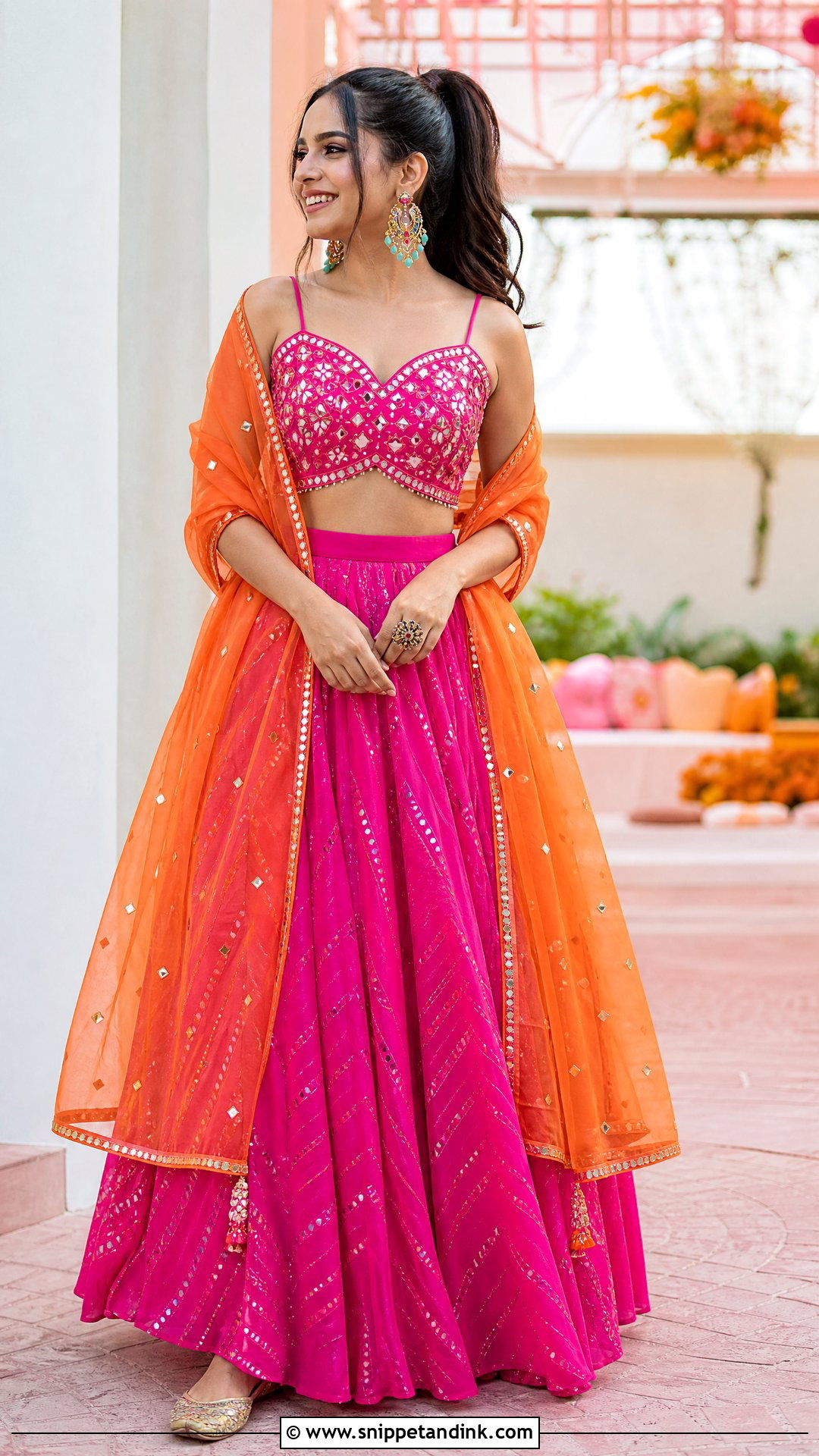
Fuchsia is bright enough to feel festive without reading as bridal red, and on a crop top lehenga it’s a confident guest look. Keep the skirt plain or lightly worked and put the detail into the top, so the outfit doesn’t get heavy. Bring in orange or green through the dupatta, earrings or potli. Crop length is personal; a longer blouse that meets the skirt waistband suits more family gatherings. Colourful chandbalis, metallic flats and one statement ring are plenty, and skip the necklace if the neckline is busy. A high ponytail survives dancing; pinned-back waves look softer.
14. Blue Mirror Work Lehenga for Mehndi
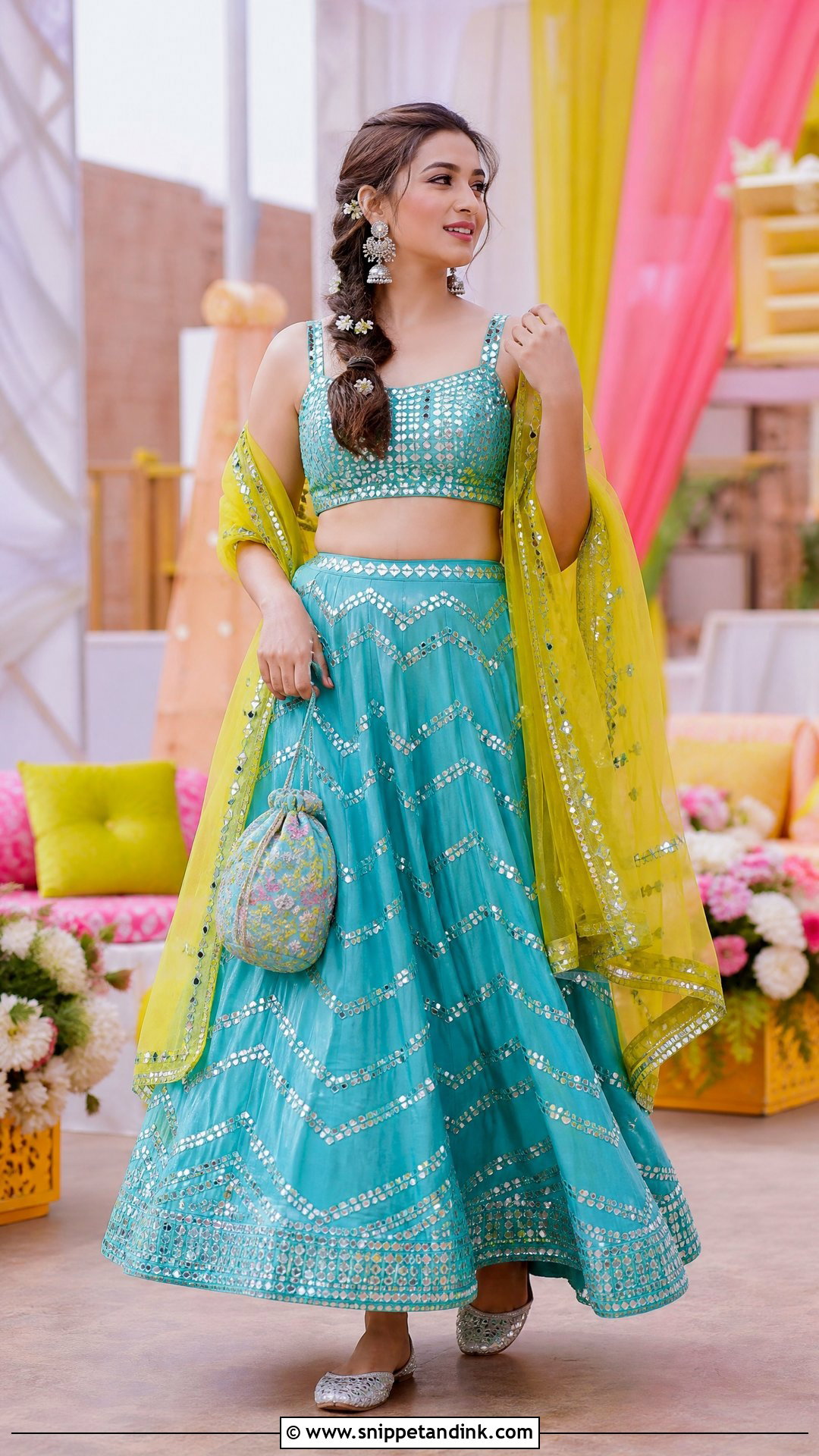
Blue surprises people at a mehndi, but turquoise, royal blue and aqua still feel bright enough for the occasion. Scattered mirror work on a blue lehenga flashes nicely under fairy lights. A yellow or lime dupatta ties it back to the theme. Metal choice follows the shade: silver with cooler blues, gold with turquoise and deep jewel tones. Bridesmaids can each take a different blue and still look like a group. I’d keep the skirt volume moderate, because big skirts in a crowded courtyard get stepped on. Mirror work juttis, a small embroidered bag and loose curls with floral pins finish the look.
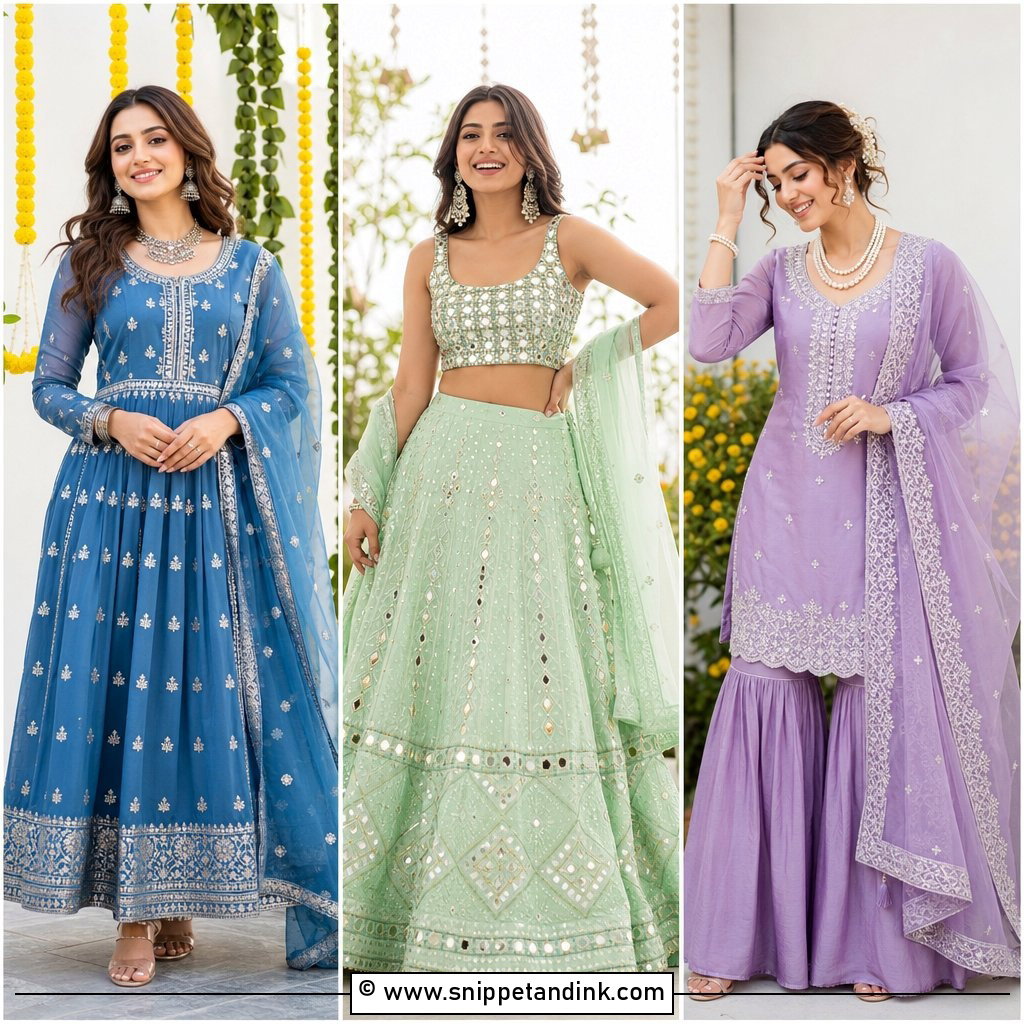
15. Green Draped Saree for Mehndi
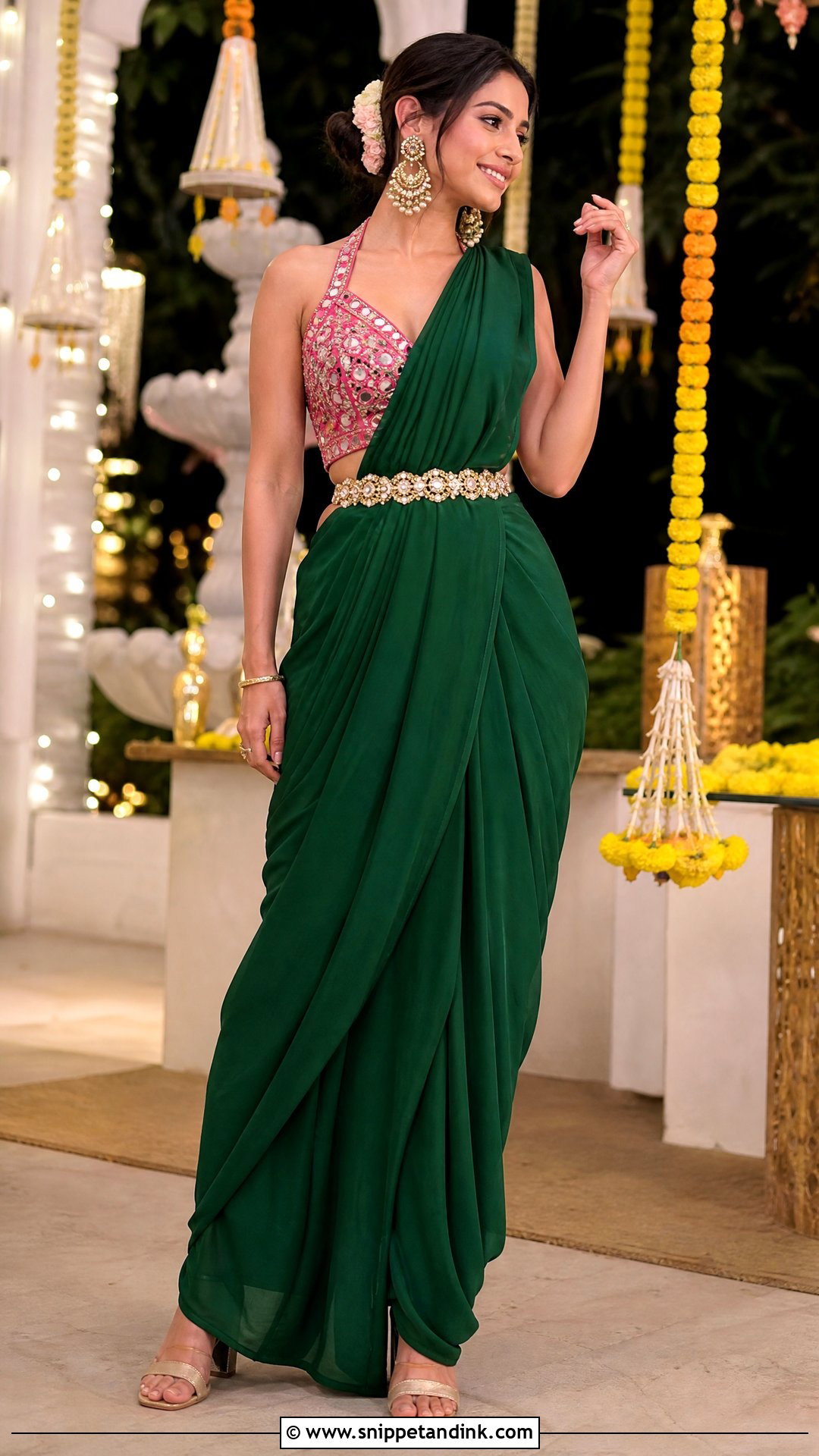
A pre-draped saree solves the biggest problem with wearing a saree to a mehndi: the pleats and pallu shifting every time you sit or stand. Ready-to-wear designs in georgette or crepe have stitched pleats and an attached or easily pinned pallu. A mirror work blouse in green, pink or gold suits it, and a decorative belt holds the drape. Pin the pallu firmly at the shoulder on the side away from the henna hand. Statement earrings, a few bangles and low block heels or embellished sandals keep you steady. A flowered low bun is traditional; soft waves feel newer. It works best for an evening at a venue.
16. Pink and Orange Dhoti Set for Mehndi
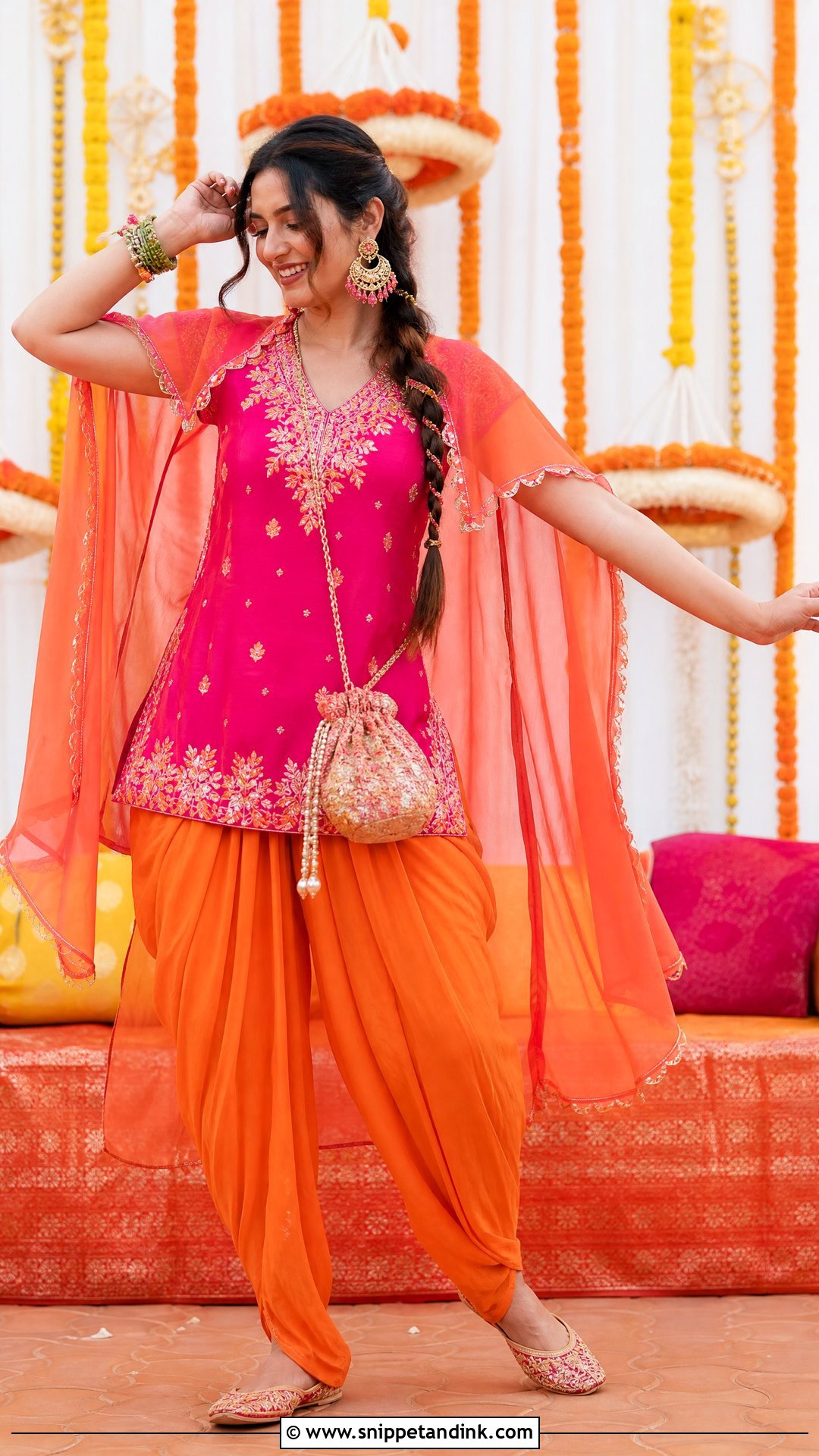
Dhoti pants are made for dancing, and a pink and orange dhoti set is about as energetic as a mehndi outfit gets. Top the draped pants with a short kurti, an asymmetric top or a structured peplum, and add a light cape or one-shoulder dupatta for coverage without wrapping fabric around your arms. The waistband needs to be secure, since dhoti drapes are heavier at the back than they look. Allow room through the hips and knees for squatting during the games. Bold earrings, bracelets stacked on one wrist, cushioned juttis, a high ponytail and a mini crossbody potli keep you moving.
17. Mint Green Embroidered Anarkali for Mehndi
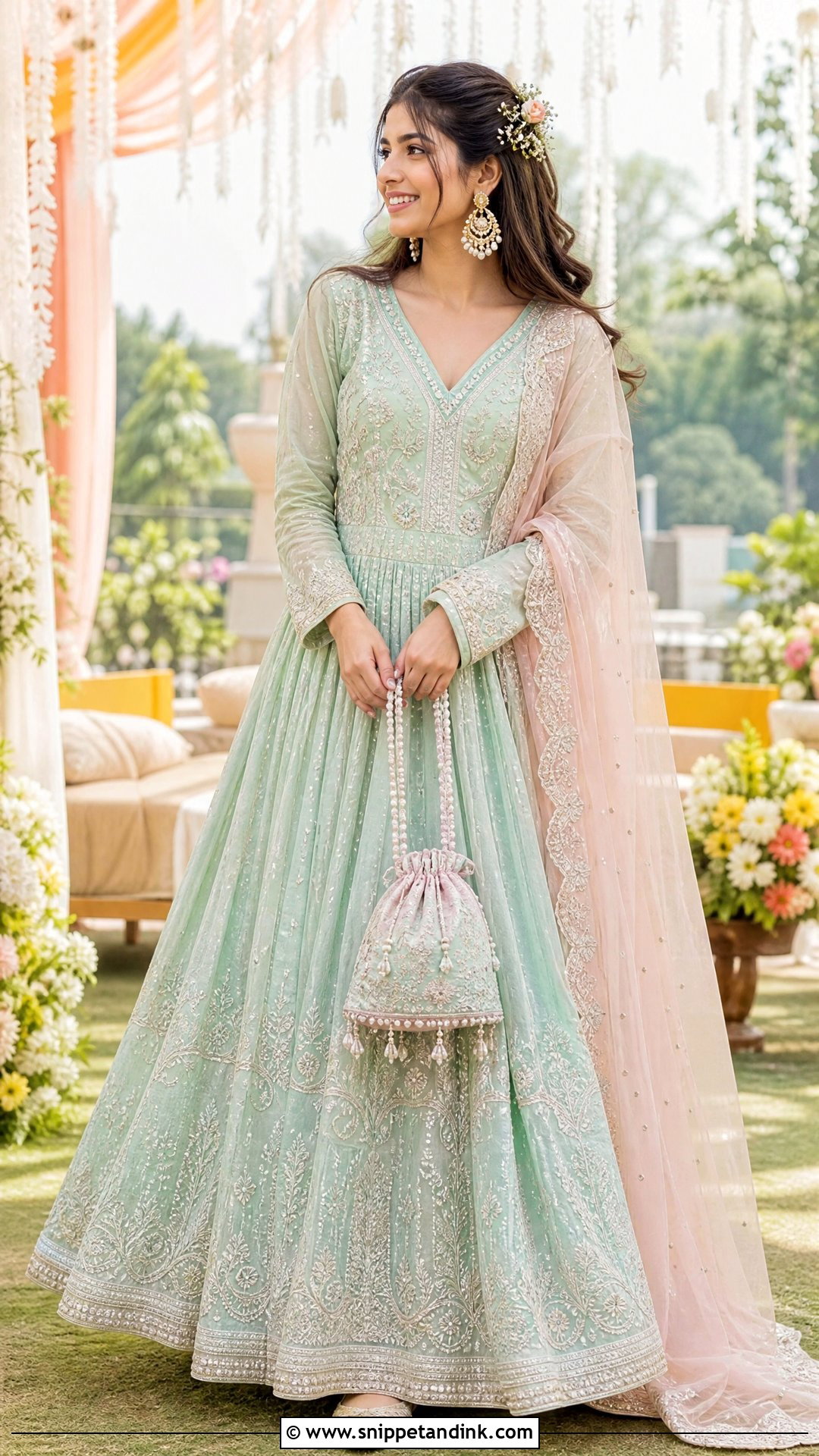
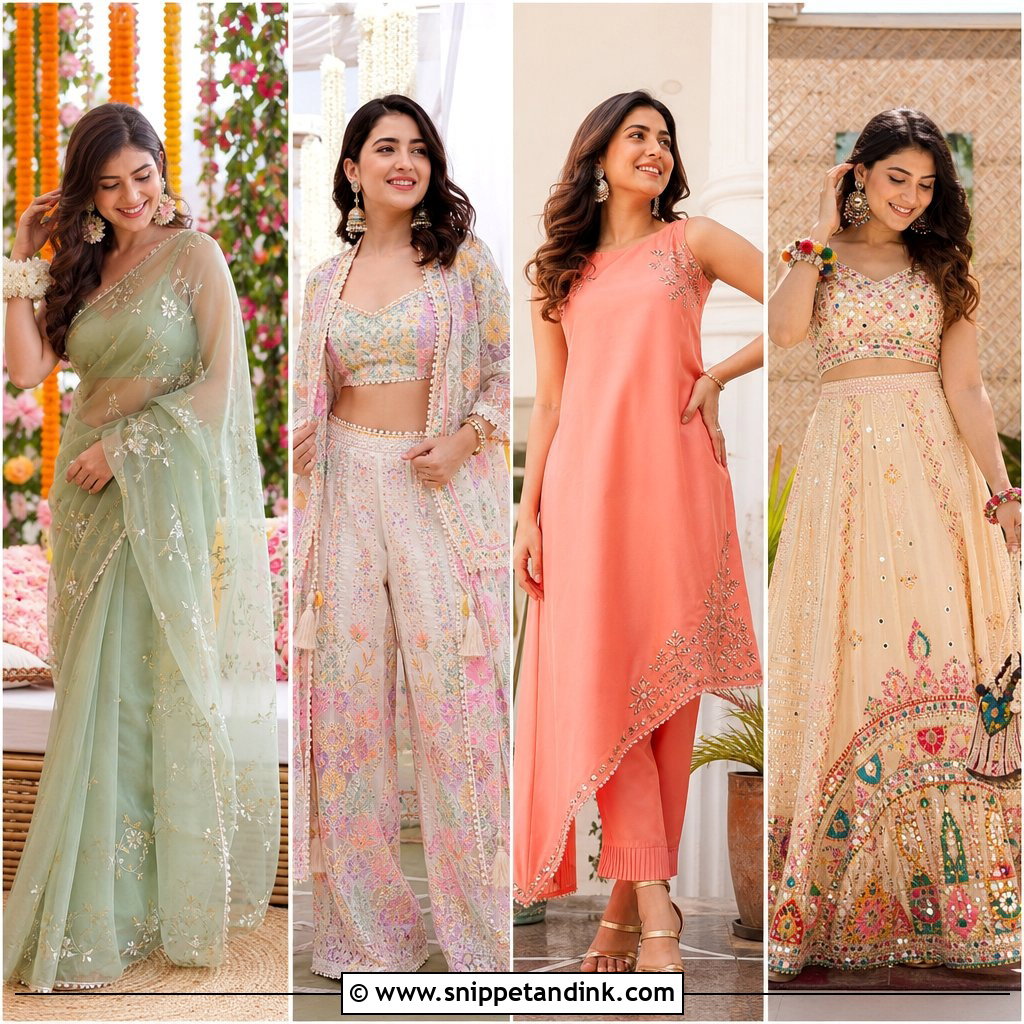
Mint is the colour I suggest to guests who want something soft but still clearly dressed up. An embroidered Anarkali in chiffon, georgette or organza with a comfortable lining flows well; organza holds more shape but can feel scratchy at the underarm, so try it on for a while before buying. Pastel pink, pearl or silver detailing keeps it delicate. A blush dupatta, pearl chandbalis and silver or ivory juttis suit it, with a pastel potli. Among all the strong yellows and greens, mint stands out in daylight group photos. A fitted bodice or slim belt adds shape. Finish with loose curls or a floral half-up style.
18. Orange Jacket Lehenga for Mehndi
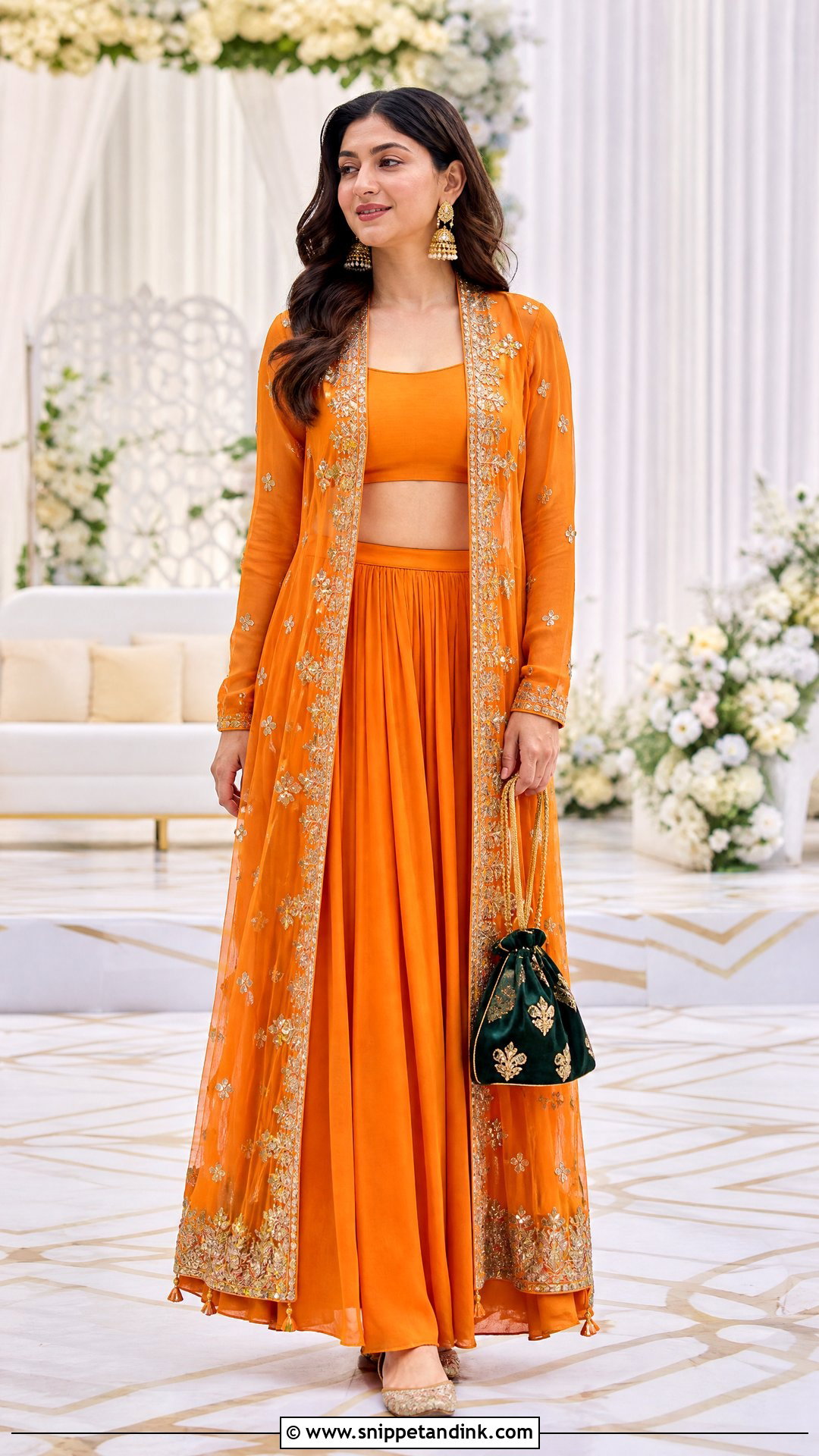
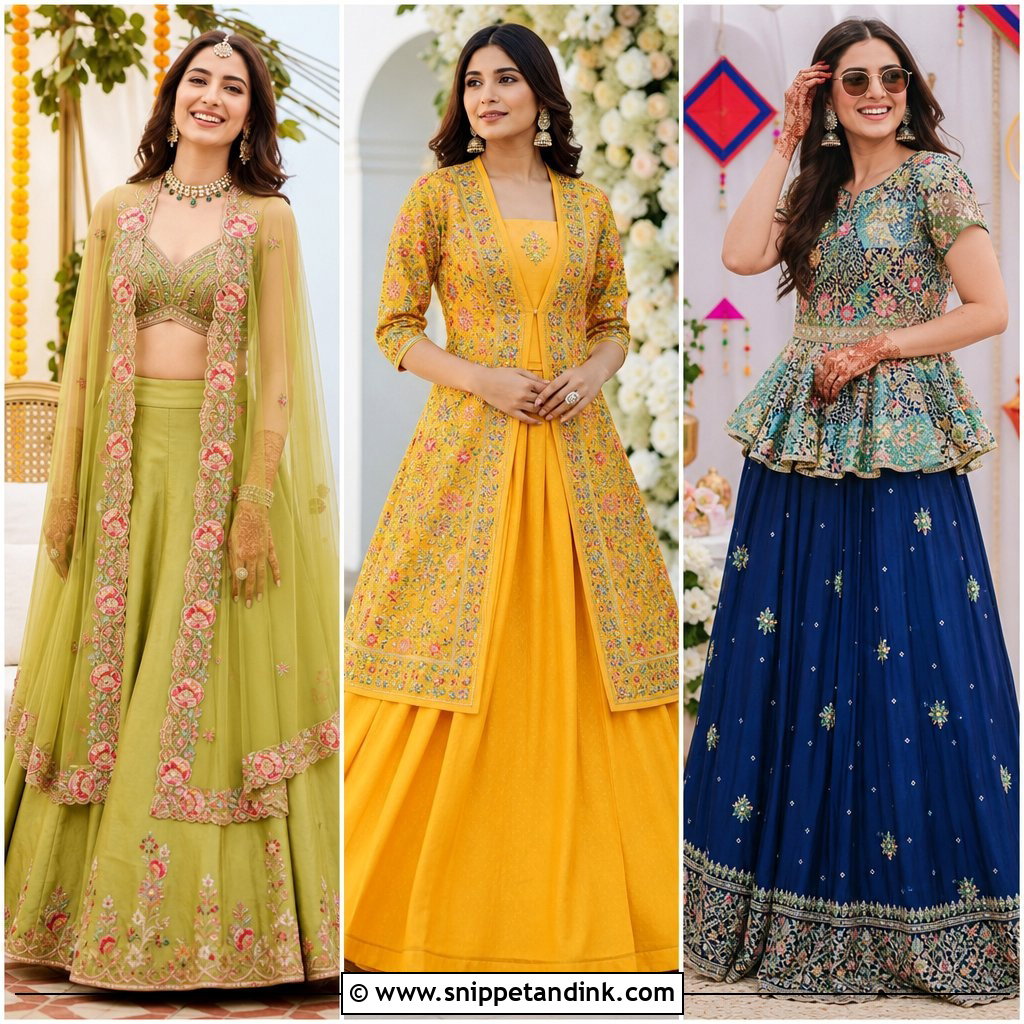
A long sheer jacket replaces the dupatta entirely, and that’s why I like this one for a mehndi. It stays on your shoulders while your hands are busy. Wear a simple blouse and flowing skirt underneath, and let the jacket carry the embroidery, mirrors or bright borders. The hem should stop clear of the floor, or you’ll step on it during the first dance. If the jacket is heavily worked, keep everything under it plain. Brides can wear it to the ankle; guests may prefer knee length. Gold earrings, embroidered juttis, a green potli, and hair in a neat ponytail so the shoulder detailing shows.
19. Green Skirt and Ruffle Top for Mehndi
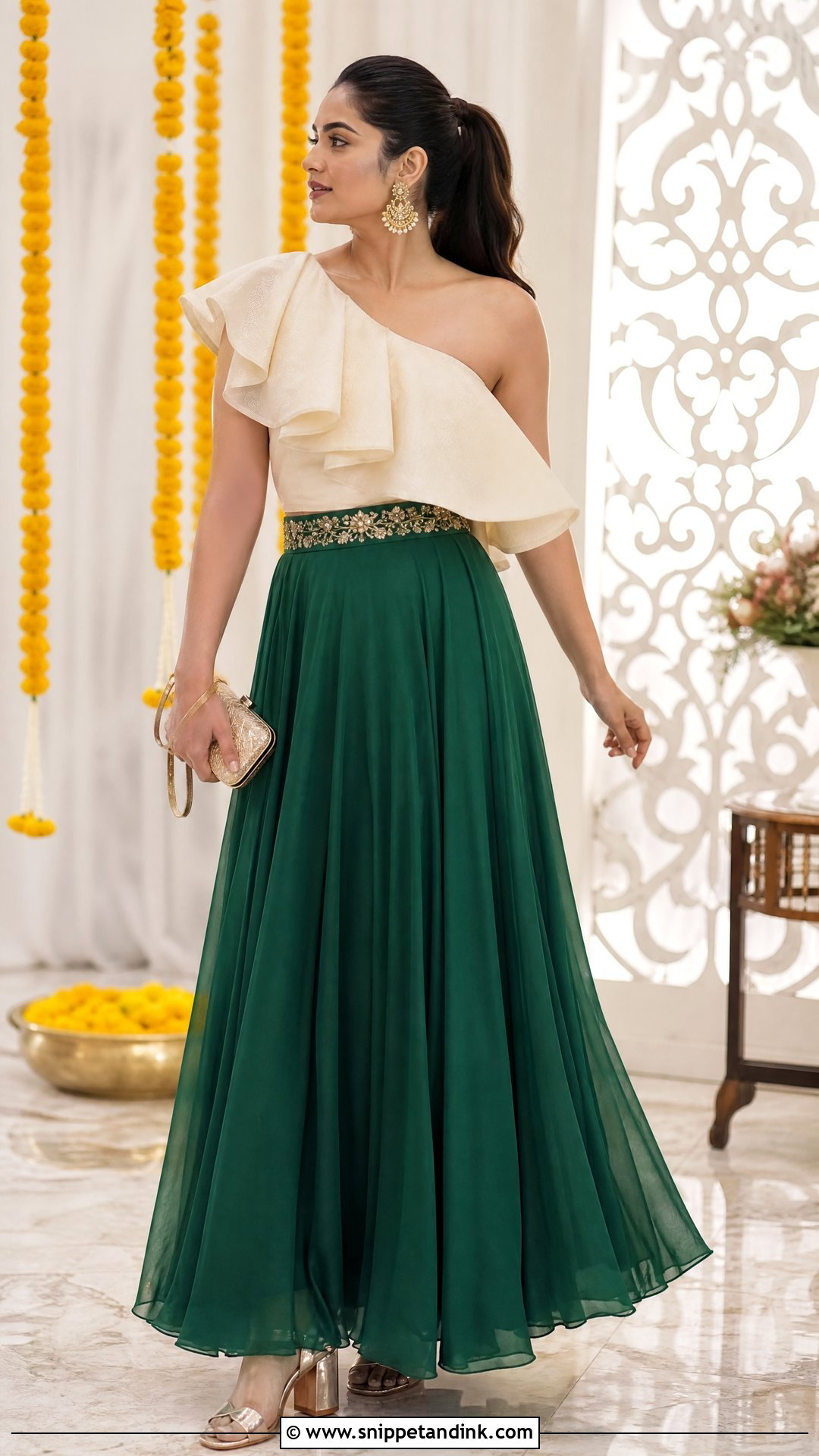
A green skirt with a ruffle top is the easiest Indo-Western outfit here, and it usually works without any dupatta, which makes dancing simpler. A comfortable high-waisted skirt pairs with a one-shoulder or sleeved ruffle top in yellow, pink, ivory or matching green. Keep the ruffles small at the wrist; a big sleeve ruffle drags straight through wet henna. A light embroidered belt links the two pieces. Statement earrings, a wrist-strap clutch and metallic block heels or juttis finish it. A polished ponytail balances the neckline. Guests can stay minimal, while bridesmaids might add floral jewelry.
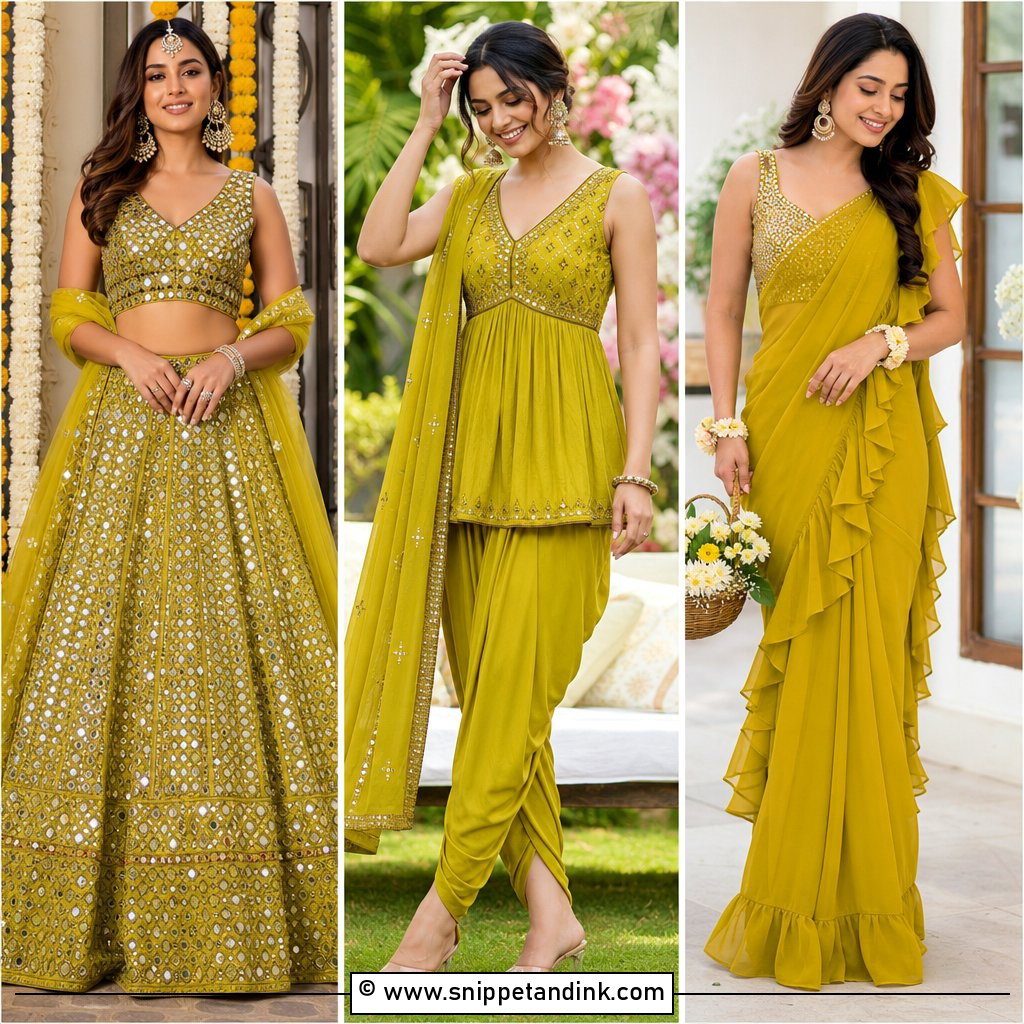
20. Yellow Patiala Suit for Mehndi
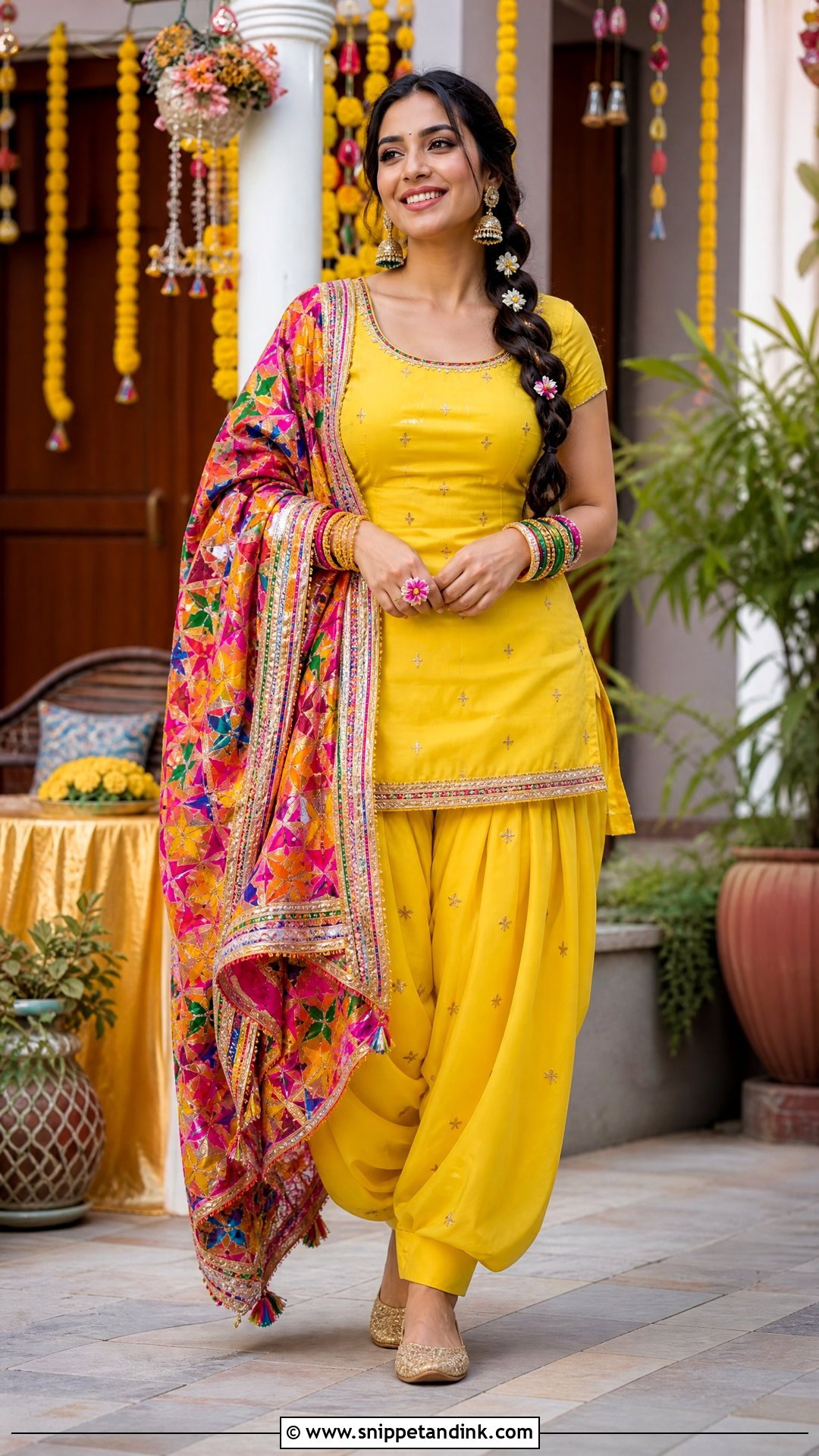
A Patiala suit is the comfortable, traditional choice for a lively home mehndi, especially a Punjabi one with a dholki. The pleated pants are roomy and make sitting and dancing easy, and a short fitted kameez shows off those pleats. A phulkari dupatta, embroidered in green, pink, orange or blue on the yellow base, does most of the decorating. Drape it around the neck or over one shoulder so your arms stay free. Punjabi juttis, jhumkas and a few bright bangles suit it. Cotton-silk is cooler for daytime; light georgette dresses it up for evening. A long braid with a paranda is the traditional finish.
21. Green Sequin Jumpsuit for Mehndi
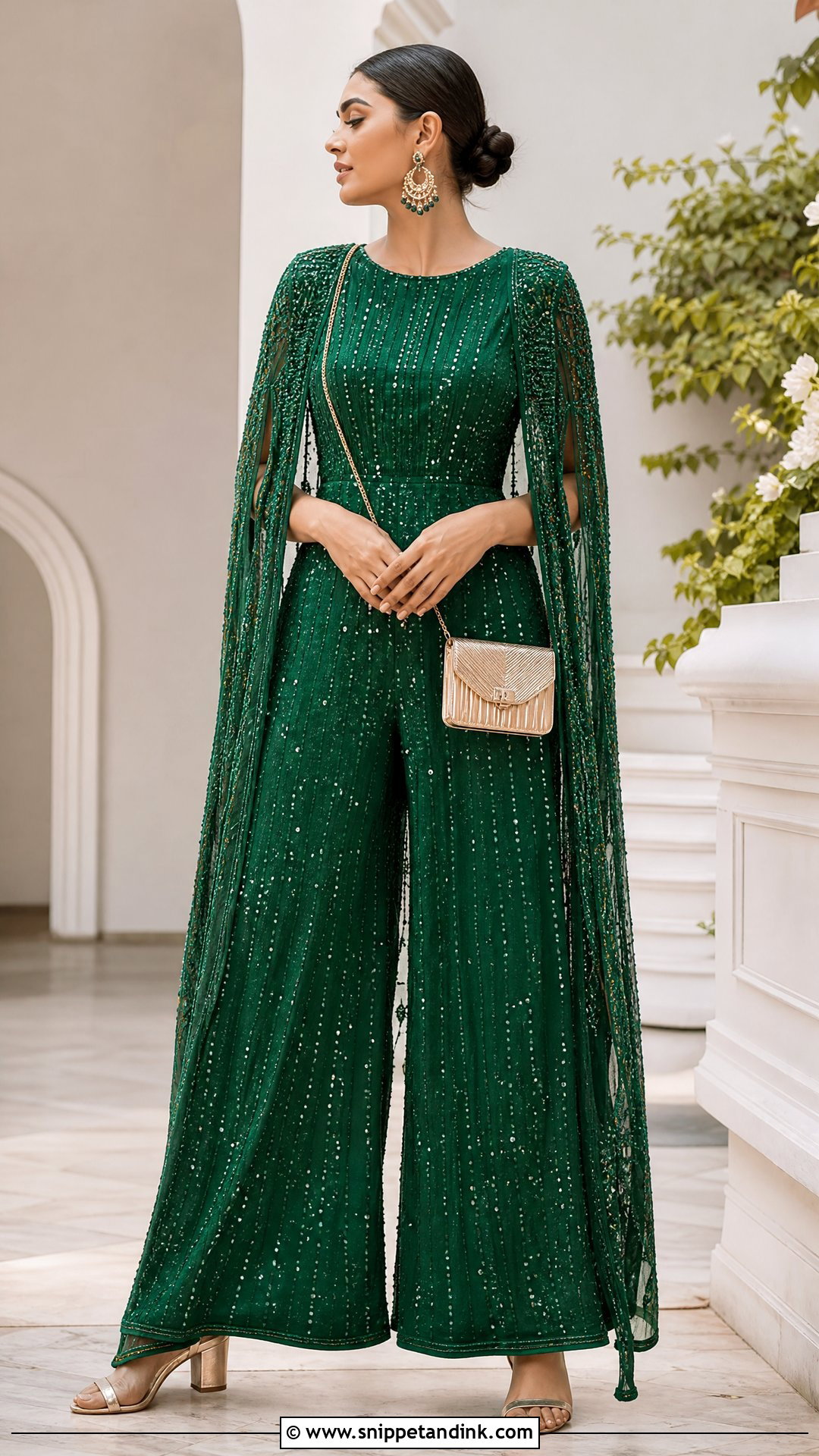
A green sequin jumpsuit fits a venue mehndi or a modern guest dress code. Choose a relaxed wide-leg cut with a defined waist and a neckline that doesn’t shift when you move. Sequins can feel like nightclub wear, so scattered sequins or mirror accents keep it festive rather than party-dress. An embroidered cape, cropped jacket or dupatta drape over one shoulder brings it back to the occasion. The practical problem with any jumpsuit is the bathroom, and with hennaed hands you may need help with zips, so check the fastening before buying. Chandbalis, block heels, a crossbody bag and a sleek low bun finish it.
22. Multicolor Patchwork Lehenga for Mehndi
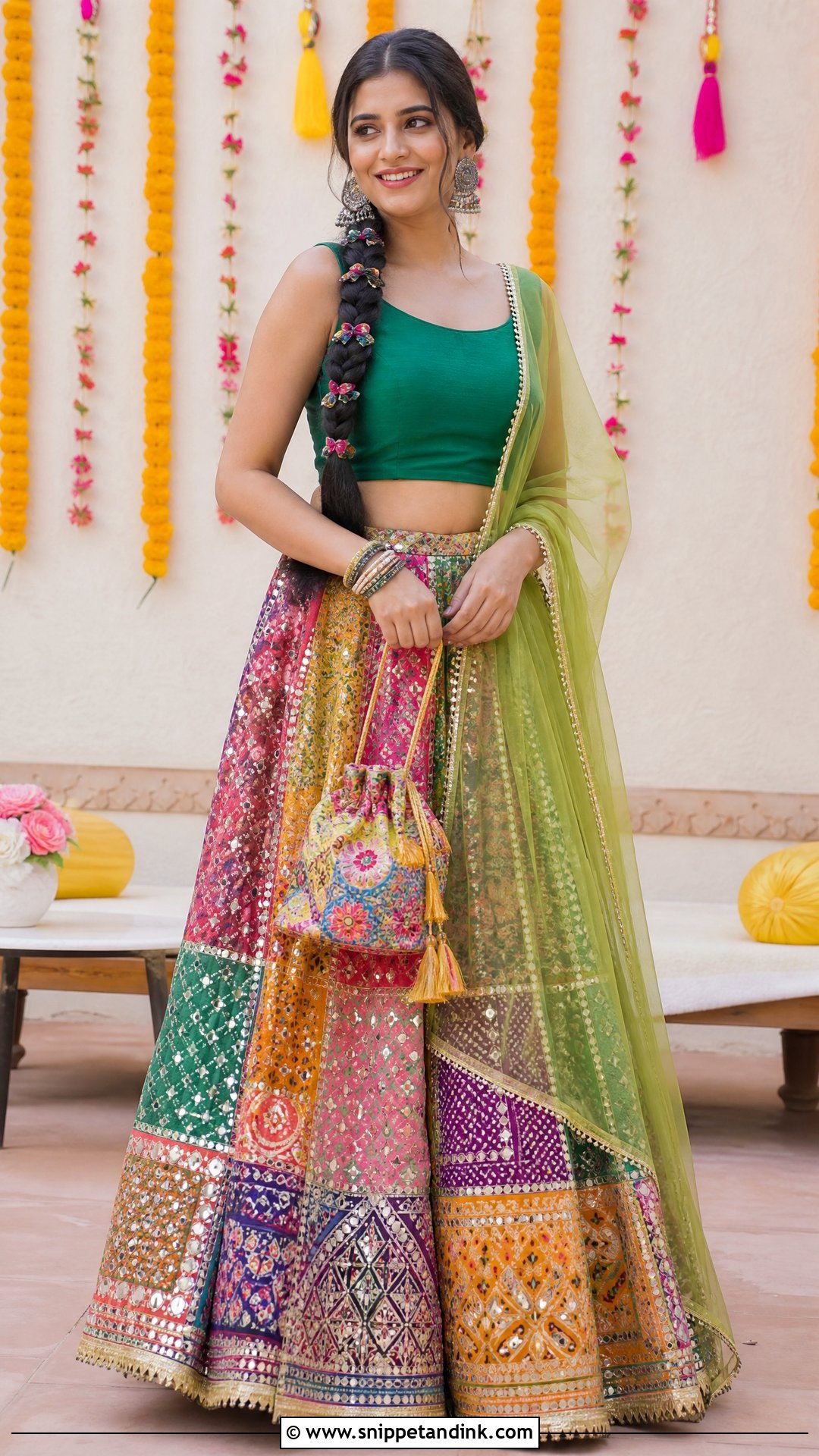
Patchwork is a lot of look in one skirt, so the rest of the outfit has to be quiet. Choose a lehenga that combines printed panels, embroidery, gota or mirrors within a controlled palette, and pair it with a plain fitted blouse in green, yellow, pink or orange. A simple sheer dupatta gives coverage without hiding the panels. Oxidized earrings, a colourful potli and neutral juttis are enough; I’d avoid stacking necklaces or a full wrist of bangles. Brides can choose more elaborate panels and a fuller skirt; guests should go lighter. A loose braid tied with colourful ribbon matches the handcrafted feel.
23. Peach Embroidered Palazzo Set for Mehndi
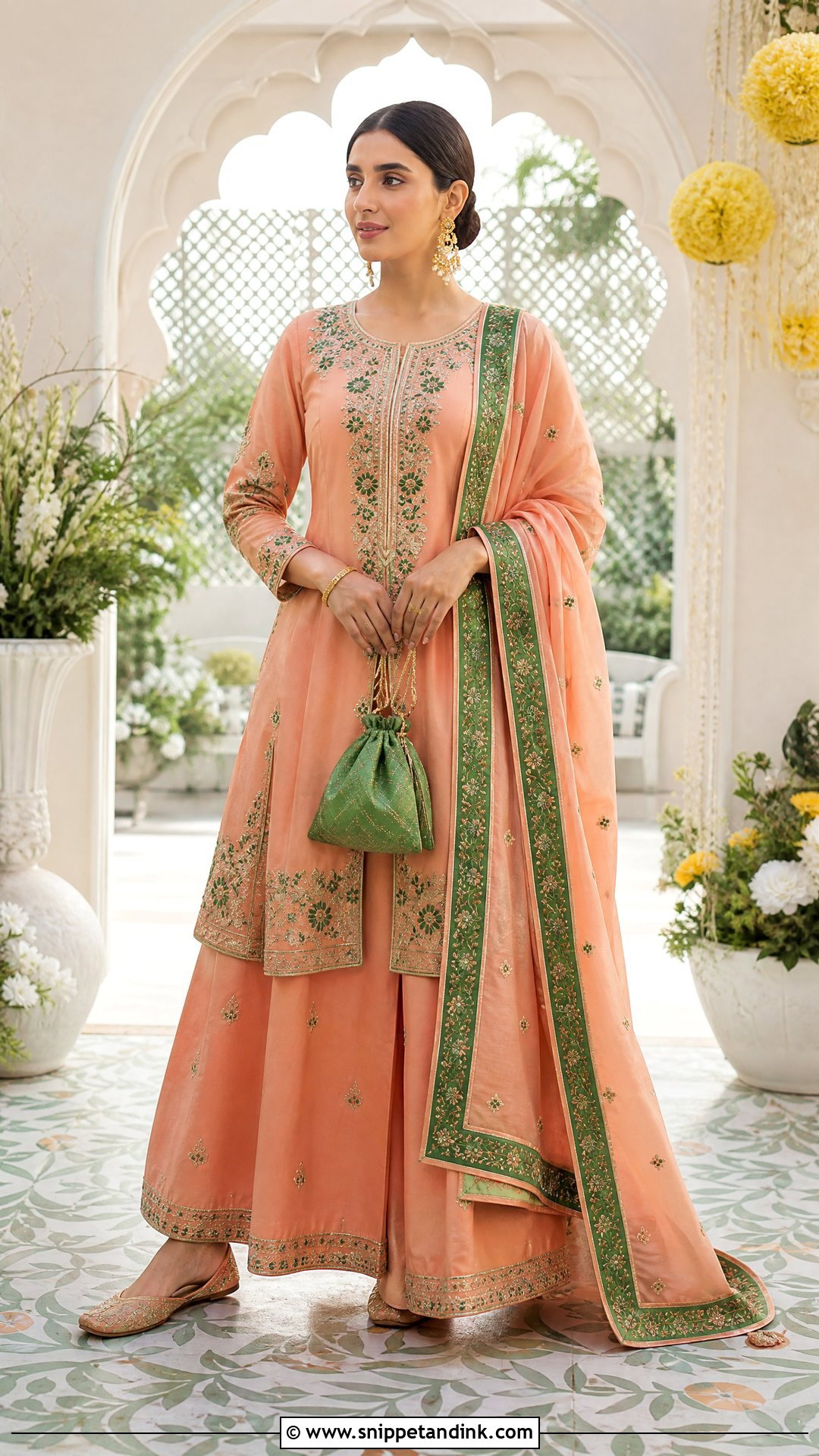
Peach is for anyone who finds traditional mehndi brights too loud. A straight or slightly flared kurta with green, gold or multicolour embroidery and wide palazzos keeps it relaxed, and a green-bordered dupatta connects the muted base to the theme. For seated rituals it is the comfortable pick, since the pants give you freedom without heavy fabric. Balance the kurta length against the palazzo width: very wide pants with a short kurta can shorten the legs, so taller wearers can go longer. Gold drops, peach juttis and a small green potli suit it. A centre-parted low bun looks refined; soft curls feel easier.
24. Yellow and Green Lehenga Saree for Mehndi
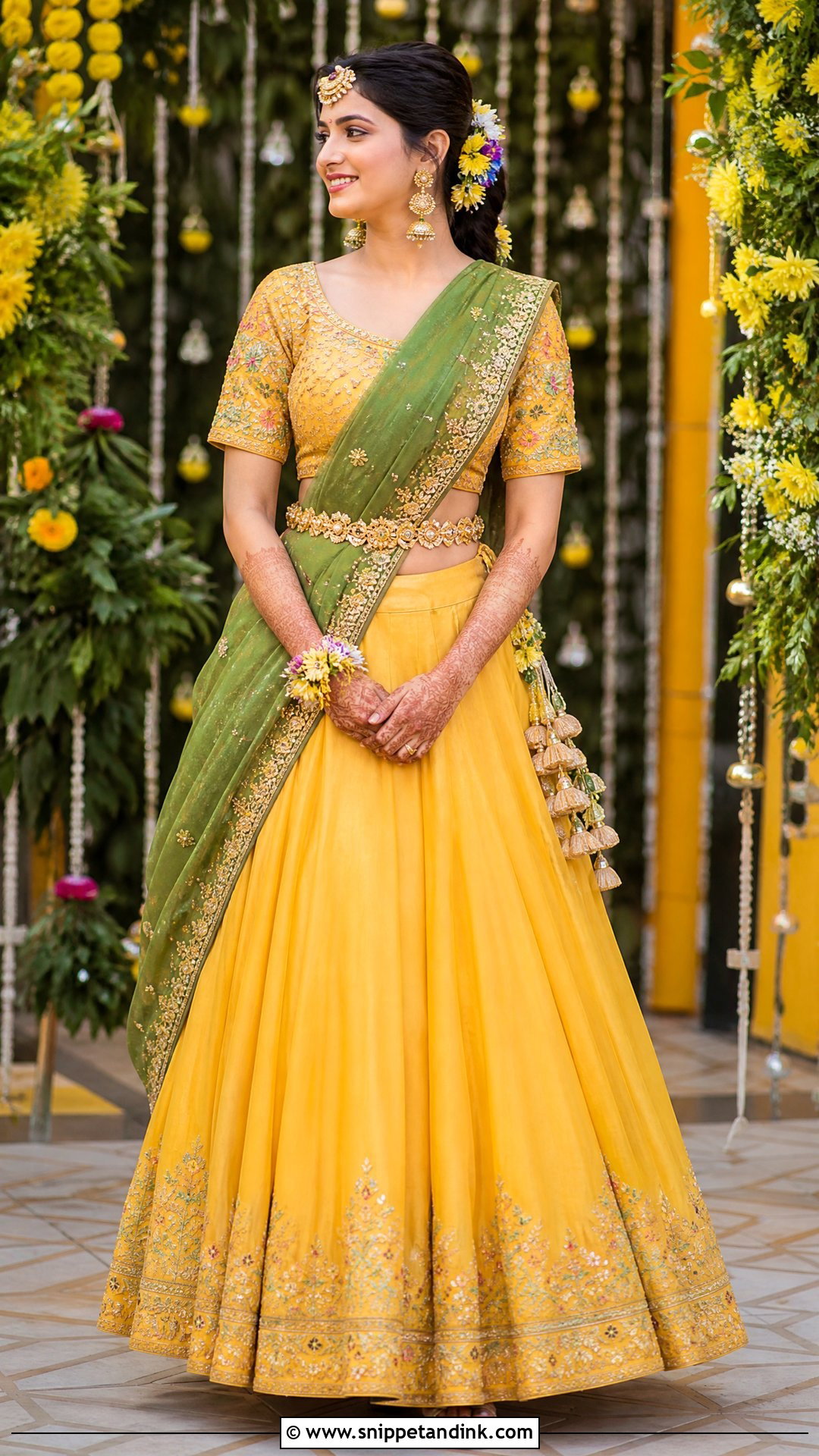
A yellow and green lehenga saree gives you the look of a saree with the security of a stitched skirt. The green drape is pre-attached over a yellow flared base, with a matching embroidered blouse. A waist belt pins the pallu and adds definition, so nothing comes loose while you weave through a busy function. Keep sleeves short or elbow-length; anything longer gets in the artist’s way. Gold jhumkas, a fine maang tikka and wedges or juttis complete it. It suits bridesmaids and close relatives who want a dressier look without managing six yards. Finish with a floral bun or pinned waves.
25. Ivory Floral Skirt Set for Mehndi
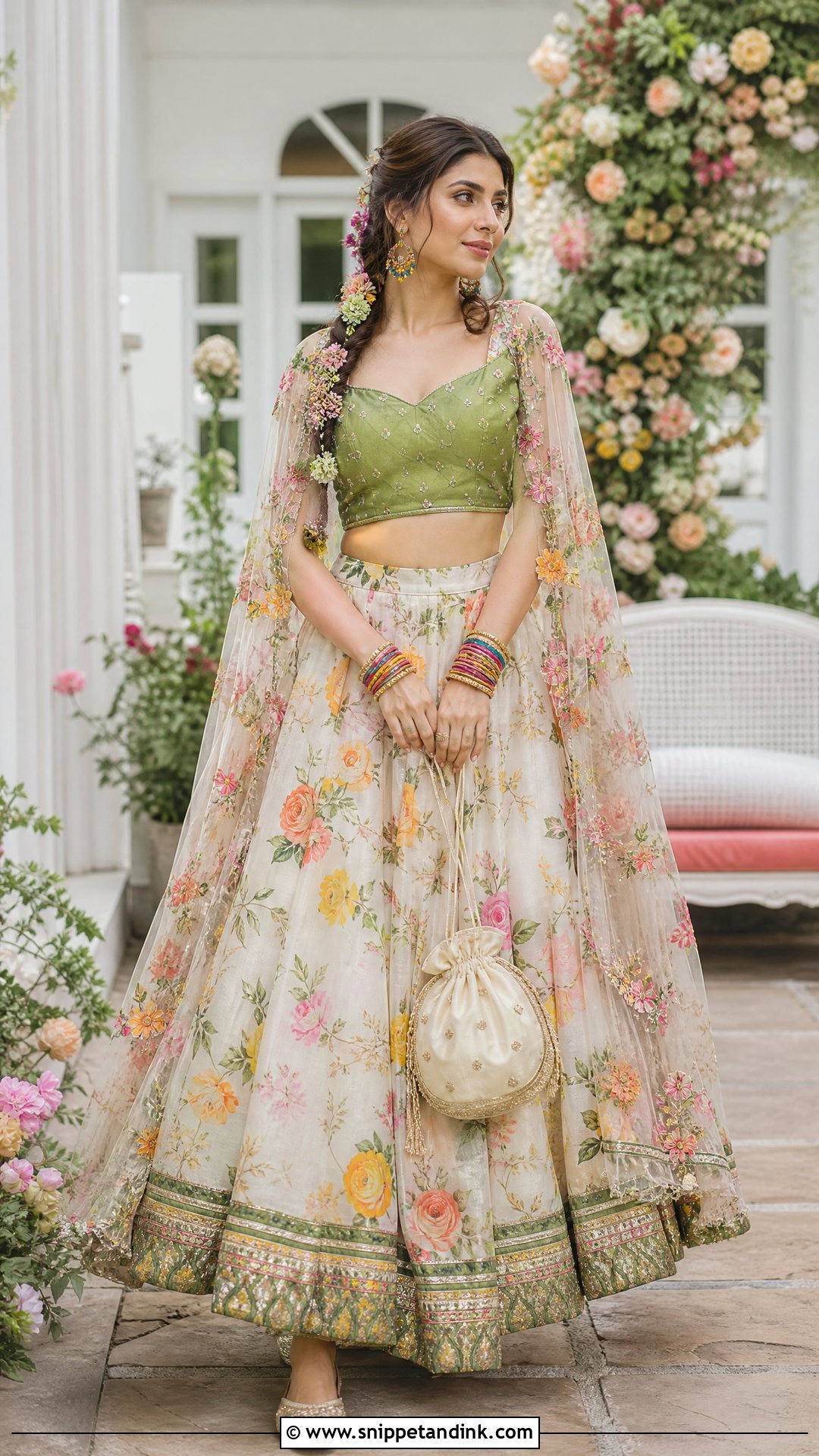
Ivory gives mehndi brights a clean background to sit on. An ivory skirt printed or embroidered with green, yellow, pink and orange flowers pairs with a matching or contrasting fitted blouse, plus a green dupatta, floral cape or light jacket. Bright earrings, colourful bangles and neutral juttis keep it festive. Bridesmaids can coordinate through the flowers while choosing their own blouse shapes. Be realistic about ivory at a mehndi: henna and turmeric stain it quickly, so choose washable fabric where you can and sit away from the paste. A braid with small flowers suits the print, and a potli repeating one bright shade ties it together.
When Henna Paste Lands on Your Lehenga
It happens at almost every mehndi. Fresh paste on fabric hasn’t stained yet, so act fast but gently. Lift it off with the edge of a spoon or card instead of wiping, because rubbing pushes the dye deeper into the weave. Then dab the spot from the back with cold water. Never use hot water or an iron on it, since heat sets the stain.
Silk, embroidery, gota and mirror work shouldn’t be scrubbed at home at all. Let it dry, tell your dry cleaner exactly what the mark is, and point out the spot. Turmeric from a haldi on the same weekend behaves the same way and is just as stubborn on light colours.
Afterwards, store embroidered pieces folded in breathable cotton or muslin rather than plastic, with tissue between the folds so mirrors and zari don’t press into the fabric. Heavy lehengas shouldn’t hang for months; the weight stretches the waistband. Refold them along different lines every few months so creases don’t wear through.
How Much Sparkle for a Bride, a Sister or a Guest
Mehndi dressing is relaxed compared with the wedding itself, but there’s still a hierarchy. The bride usually wears the most embroidery and the strongest colour, often green, yellow or a multicolour piece. Sisters and close family can come close to that, sometimes in a coordinated palette. Guests do best a step down: a lighter lehenga, a sharara or suit, and less heavy work. If you’re unsure, ask the family what colours they’ve chosen, since many families set a theme. Avoid bridal red unless you’re told it’s fine, and don’t wear anything you’d mind getting henna or turmeric on.
Dressing to Dance After the Paste Dries
Every outfit here balances colour, cultural detail and the plain fact that you’ll be sitting, eating and dancing for hours. Green and yellow remain classic, but pink, orange, blue, purple, peach, mint and multicolour all feel right on the night. Let your role guide the embroidery: more detail for the bride, a lighter hand for guests. Choose breathable fabric, a drape that stays where you put it, and shoes you can dance in. Pin loose dupattas away from your hands and leave your wrists bare before the artist starts. Lehenga, sharara, Anarkali, saree or fusion, comfort is what lets you enjoy the evening.
You'll Like These Ideas:


Leave a Reply