
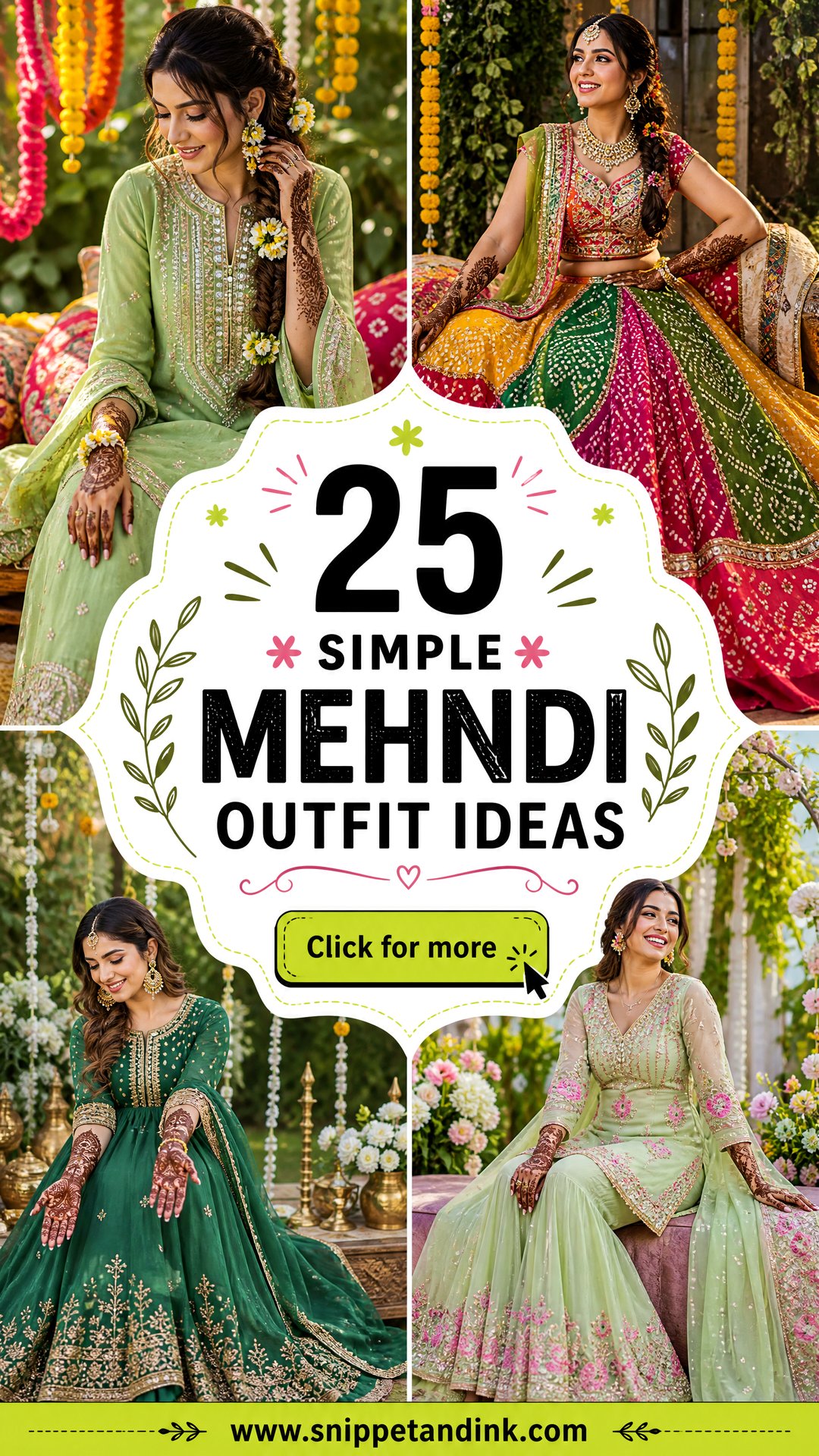
A mehndi is a long, low-seated, high-movement event. People sit on cushions for henna, get pulled up to dance, hug every aunt who arrives and pose for photos in between. When I dress a bride’s whole circle for it, I care less about embellishment and more about breathable fabric, sleeves that leave the forearm free and a dupatta that stays where it’s pinned. Mirror work, gota patti, chikankari and block prints give the festive detail. The colours below run from classic yellow and green to mint, ivory and multicolour, and I’ve noted where each works best for the bride, a sister, a bridesmaid or a guest.
Who Wears Which Colour at the Mehndi
Most mix-ups I see at a mehndi aren’t about the outfit itself. They’re about a guest turning up in the bride’s exact shade, or a bridesmaid group that clashes in every photo. A short conversation a few weeks out avoids both.
- The bride sets the anchor colour first. Everyone else plans around it.
- Sisters and bridesmaids can coordinate by tone rather than matching: all pastels, all jewel tones, or one shared colour worn in different silhouettes.
- Guests should read the invitation for a colour theme. If there isn’t one, yellow, green, pink and orange are all safe, as long as the outfit is clearly simpler than the bride’s.
- Ask the hosts before wearing white, black or very bridal reds. Some families don’t mind; others do.
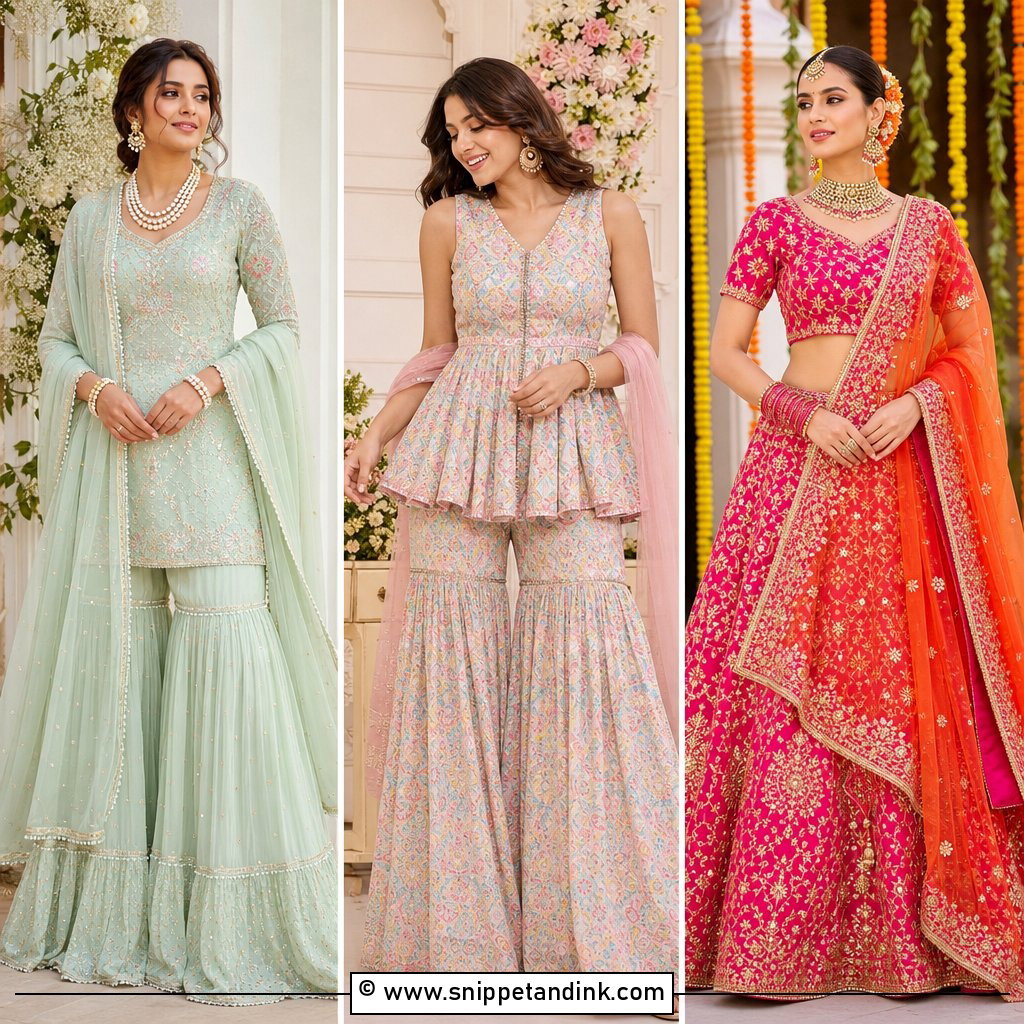
I also ask everyone to think about their role. If you’re hosting, serving or herding children, pick trousers or a sharara over a full lehenga. If you’re getting henna, plan your sleeves around it before anything else.
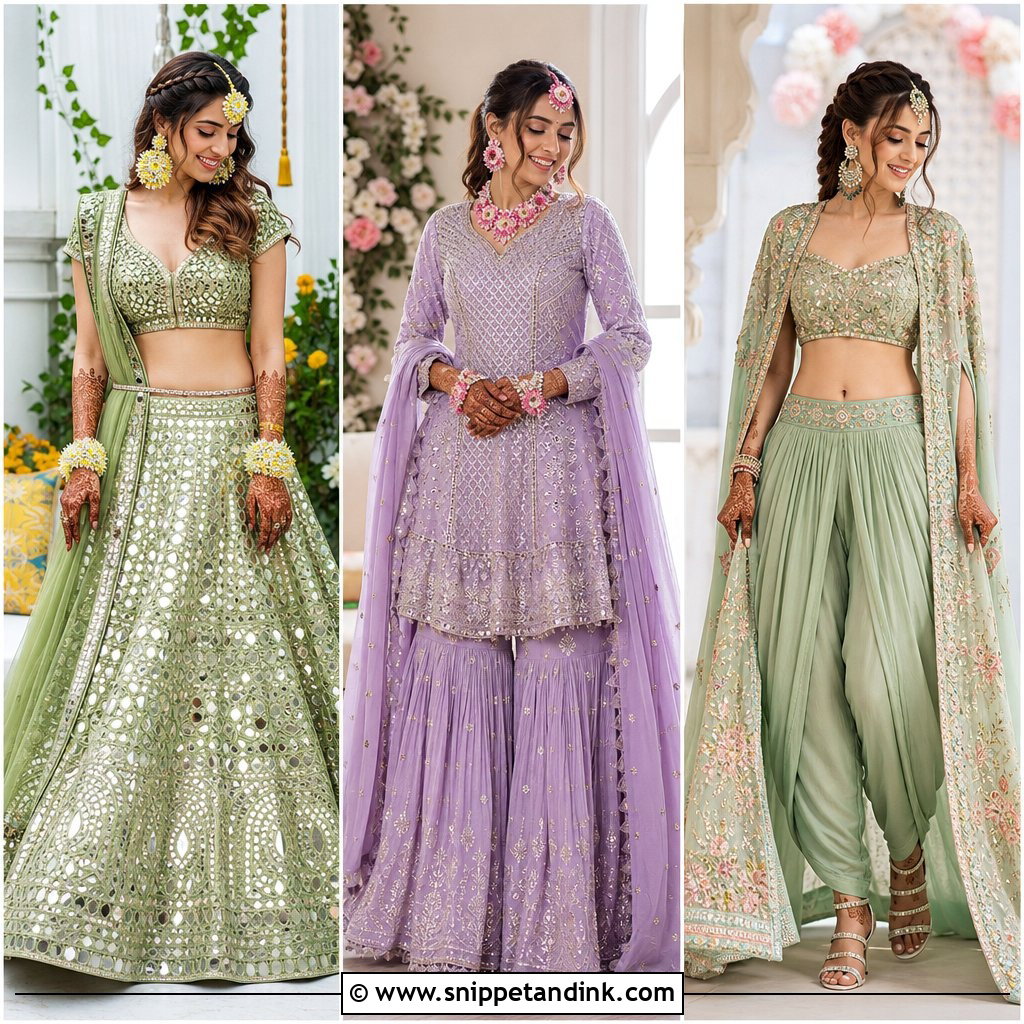
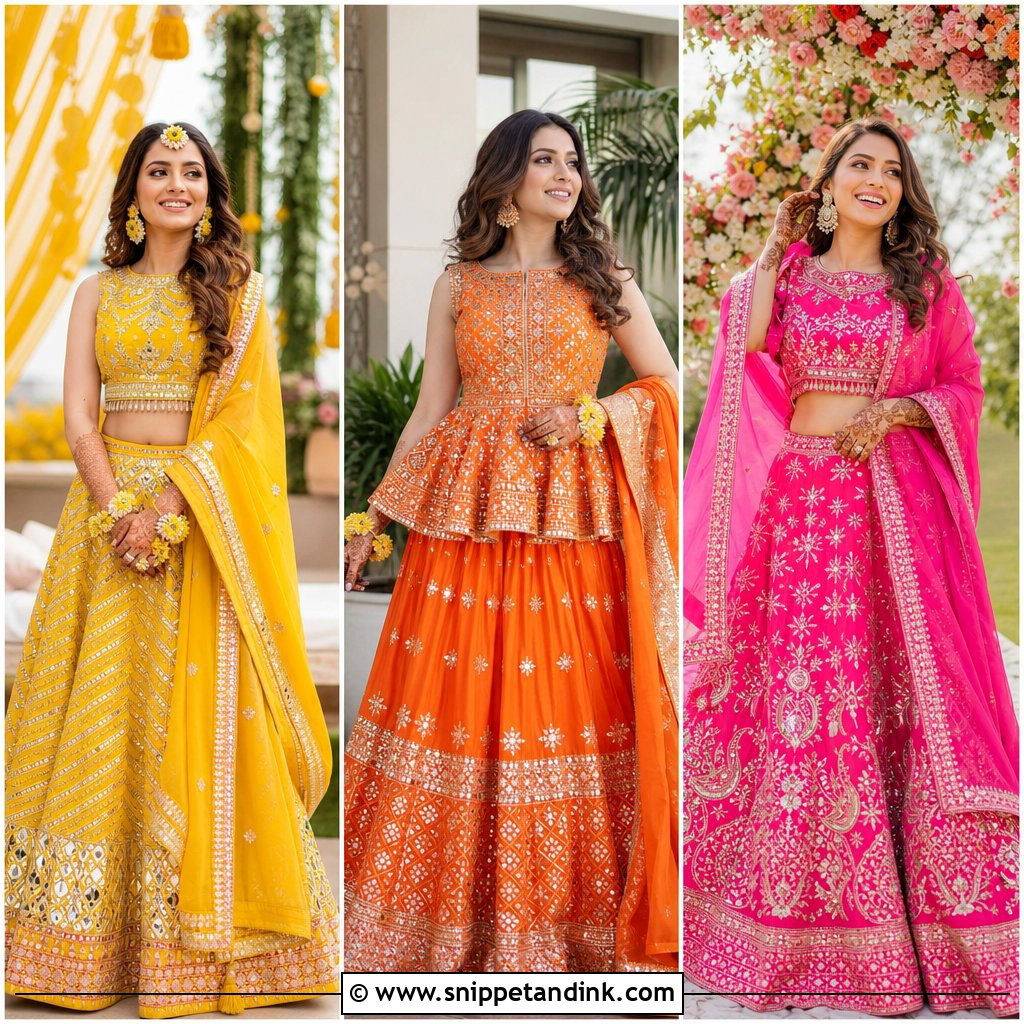
1. Yellow Mehndi Lehenga Outfit
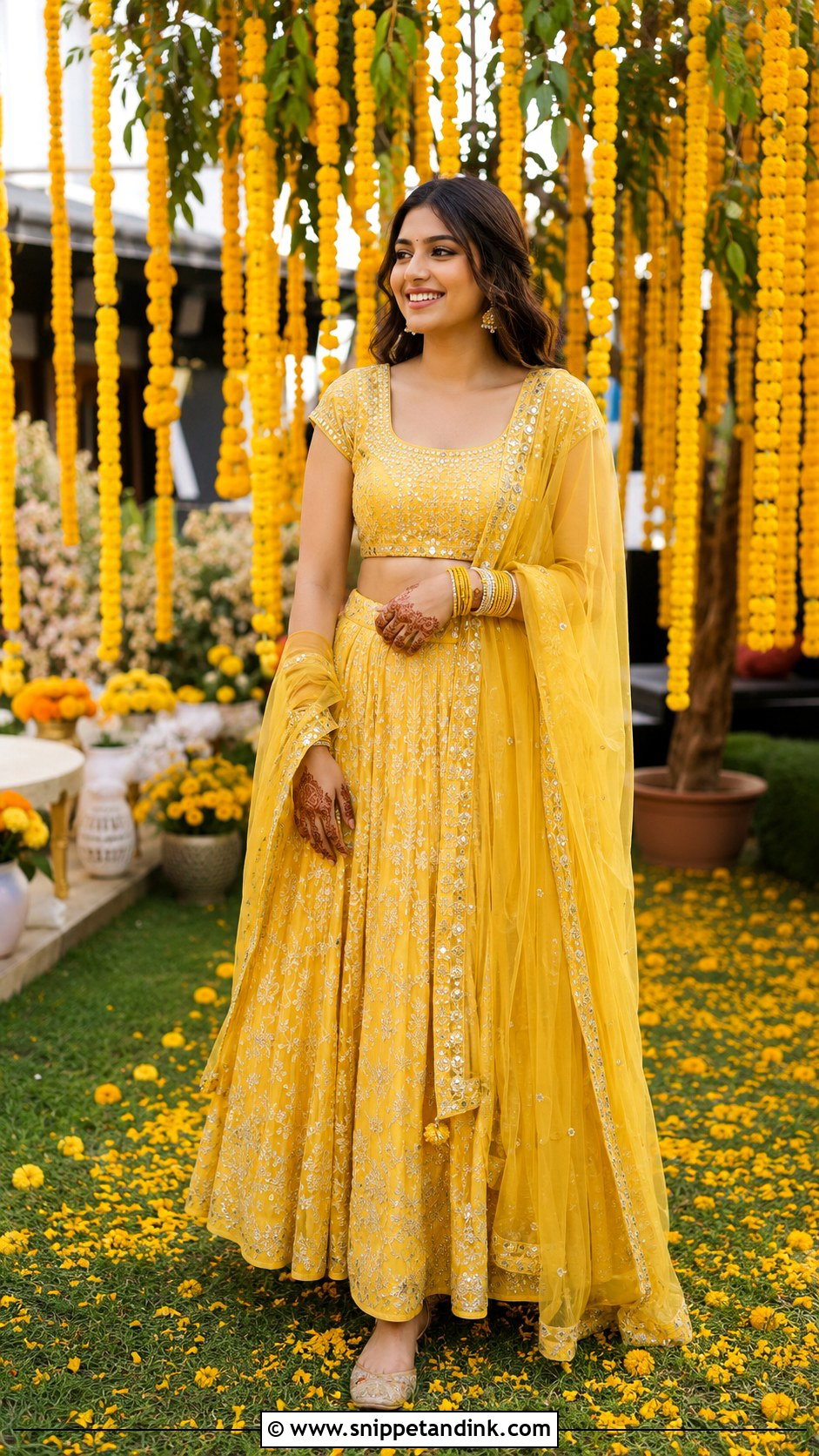
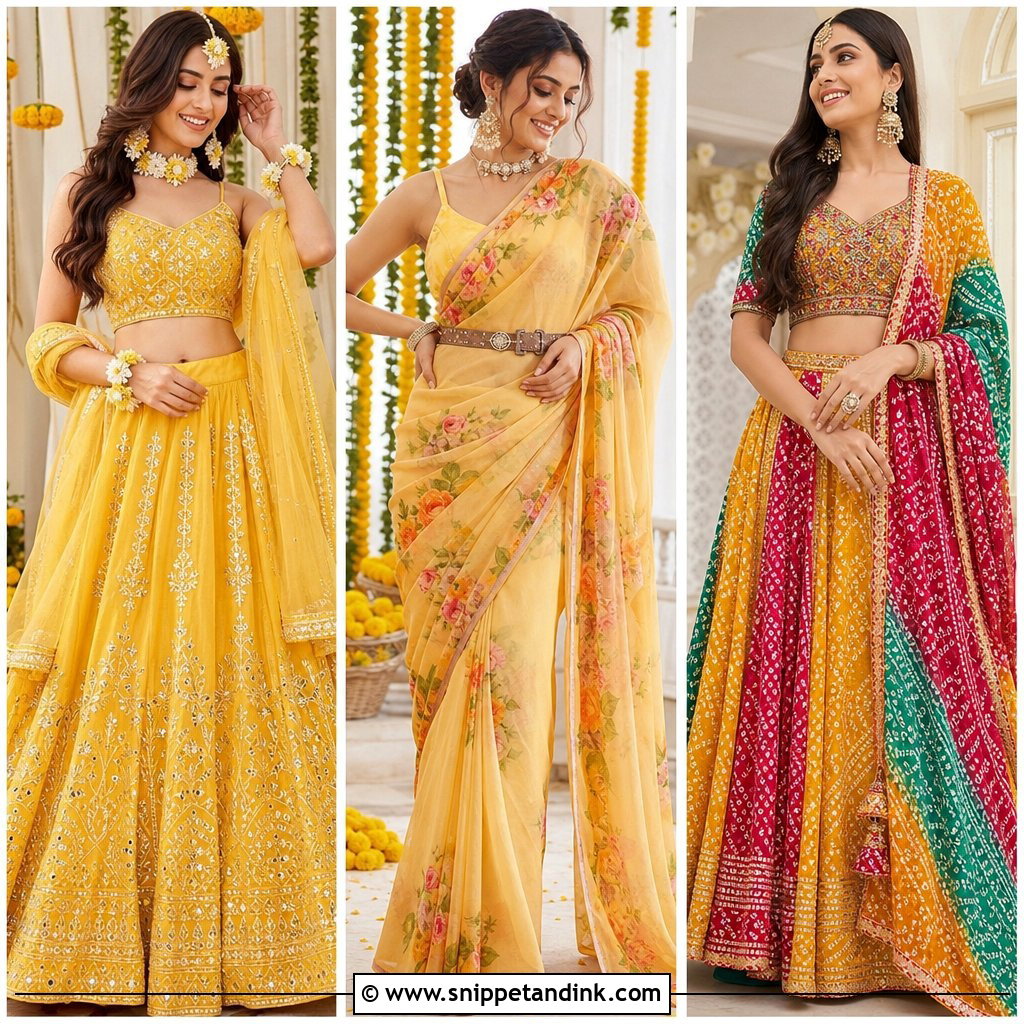
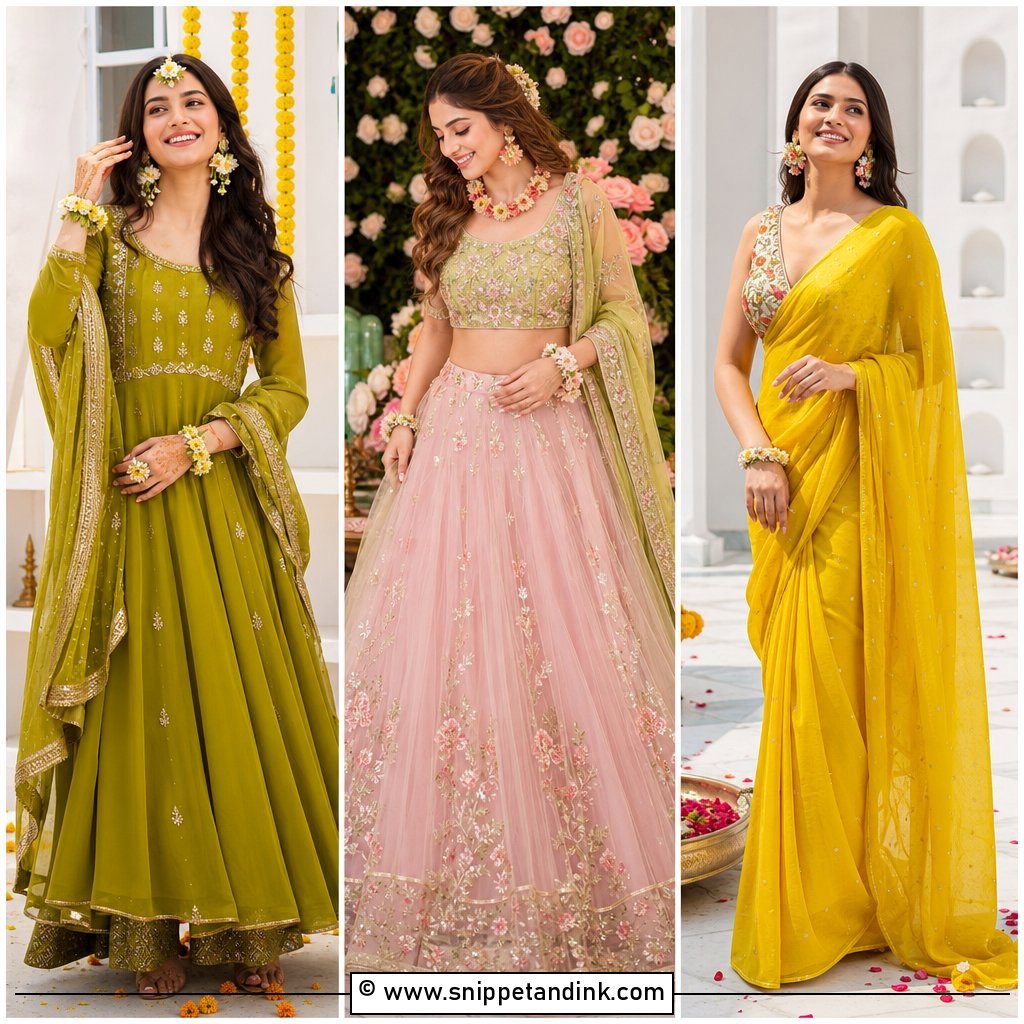
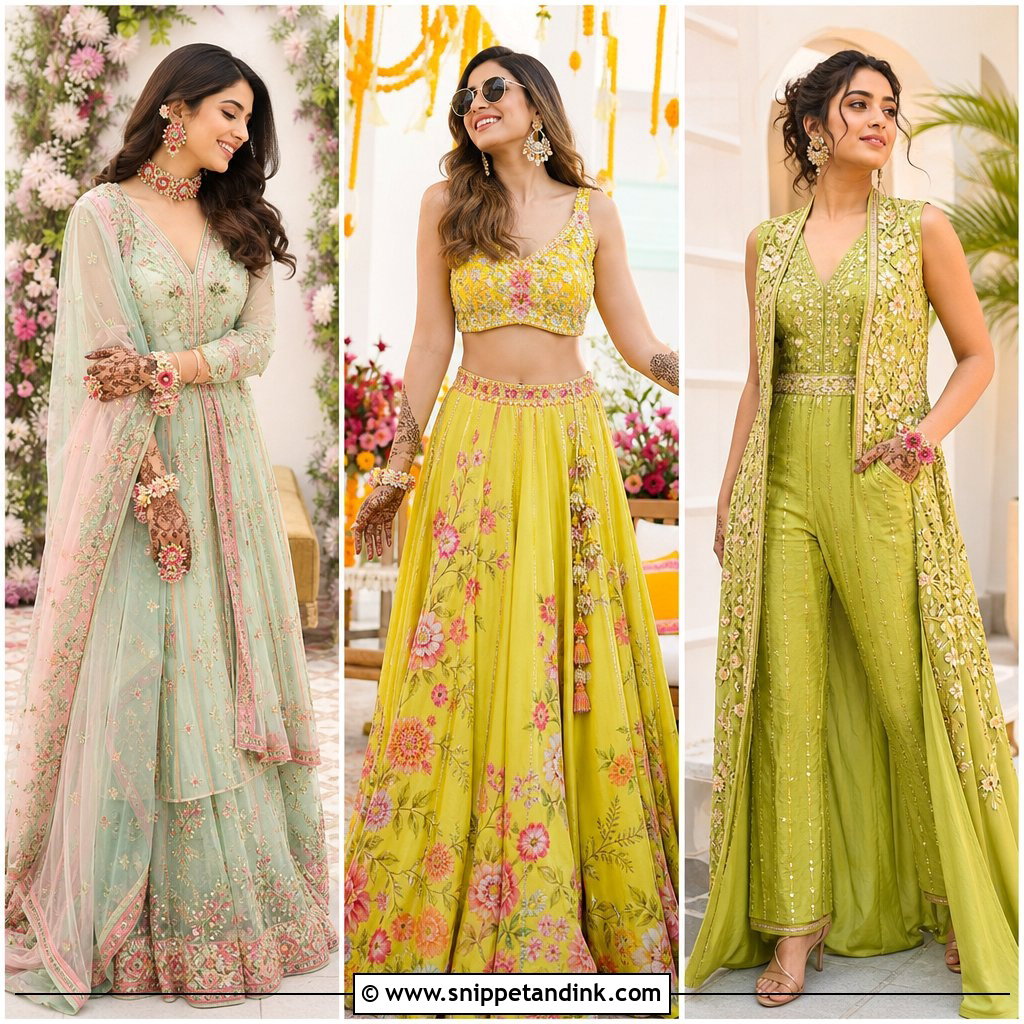
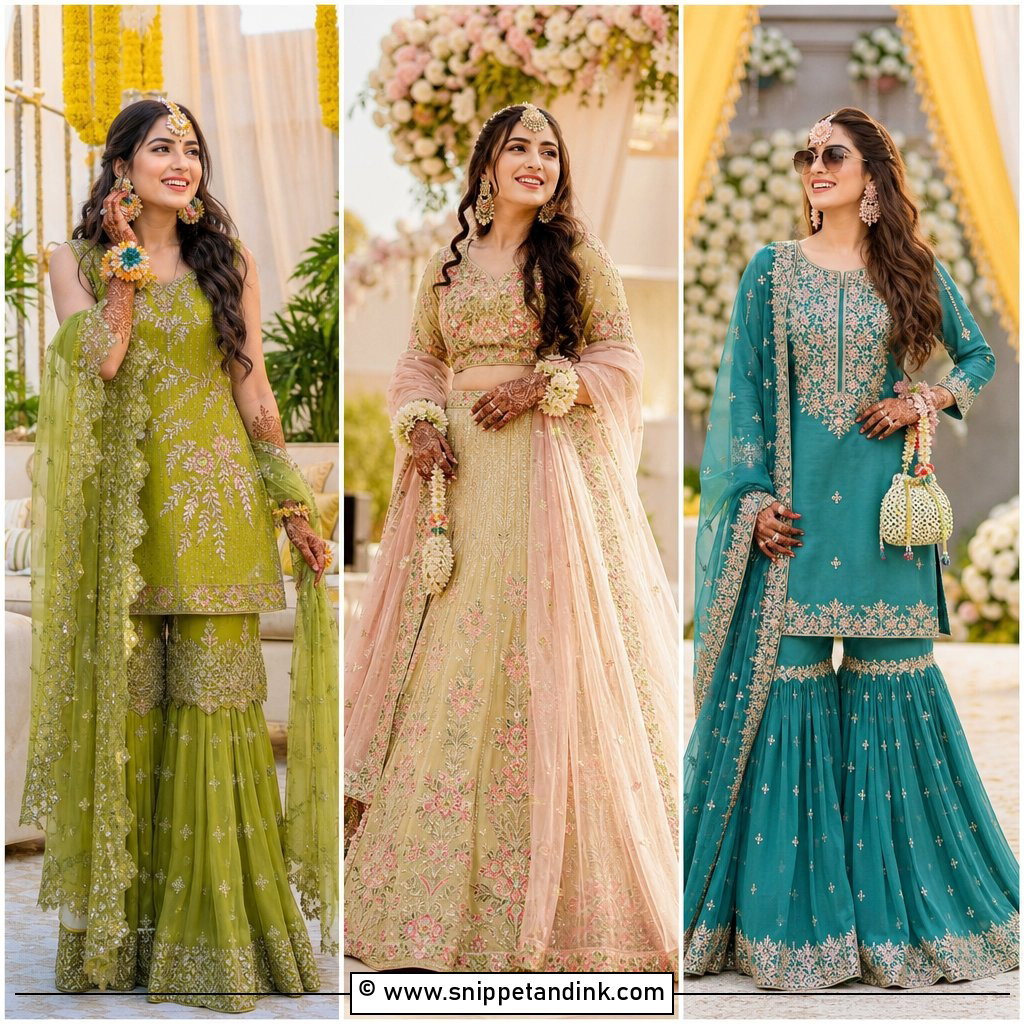
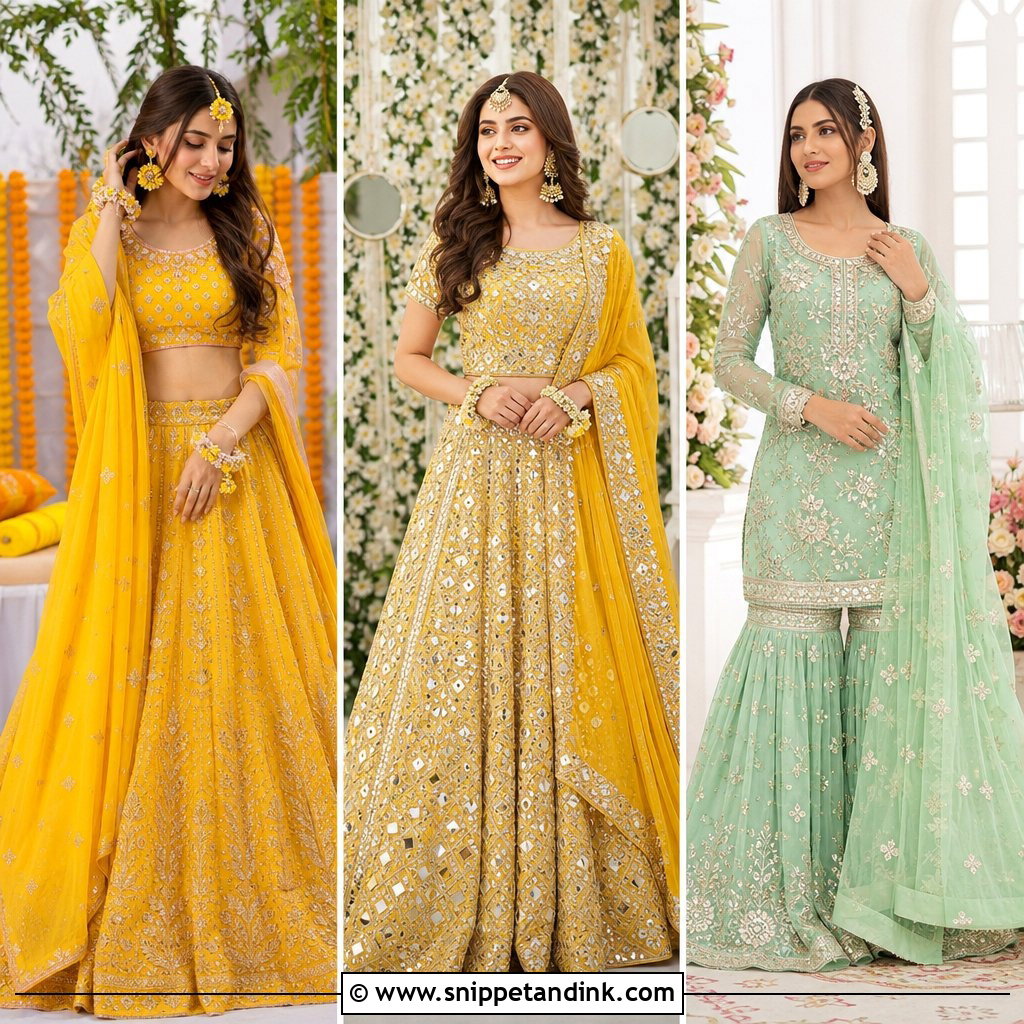
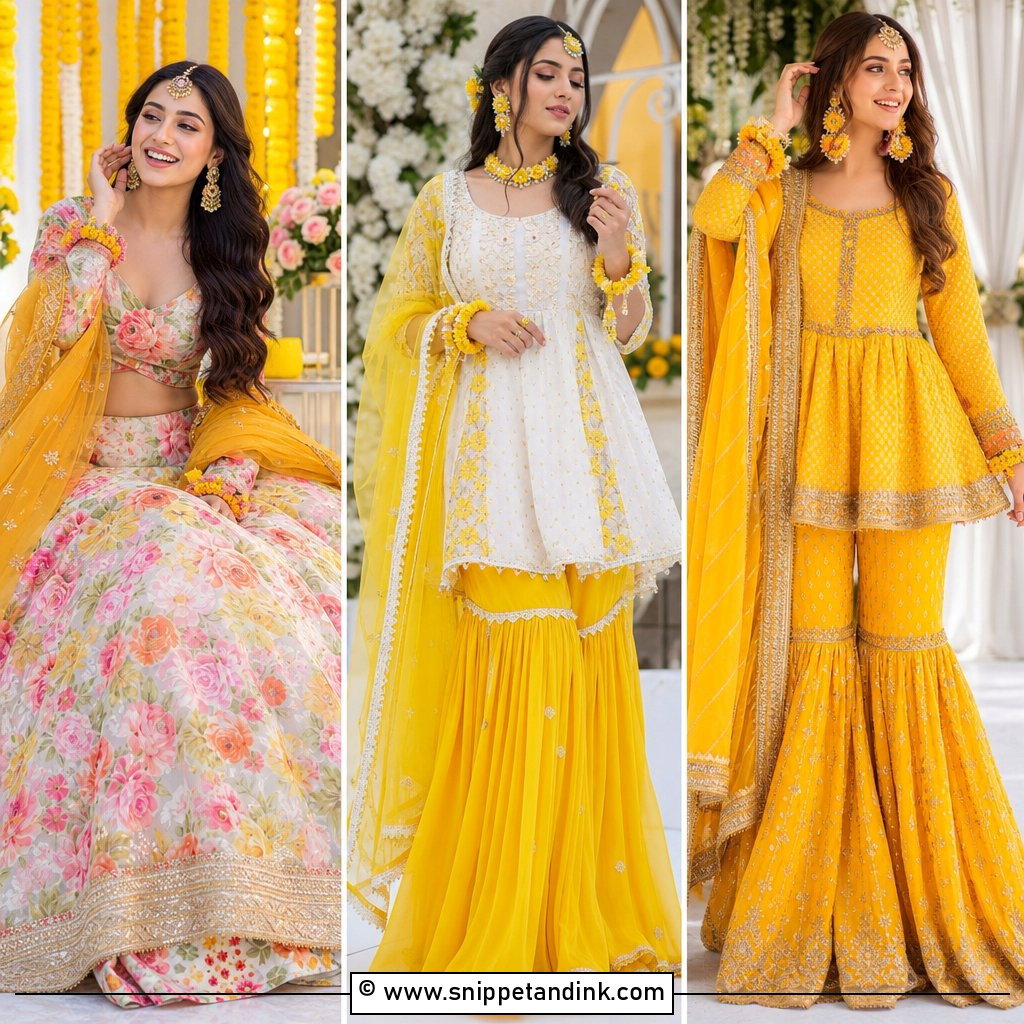
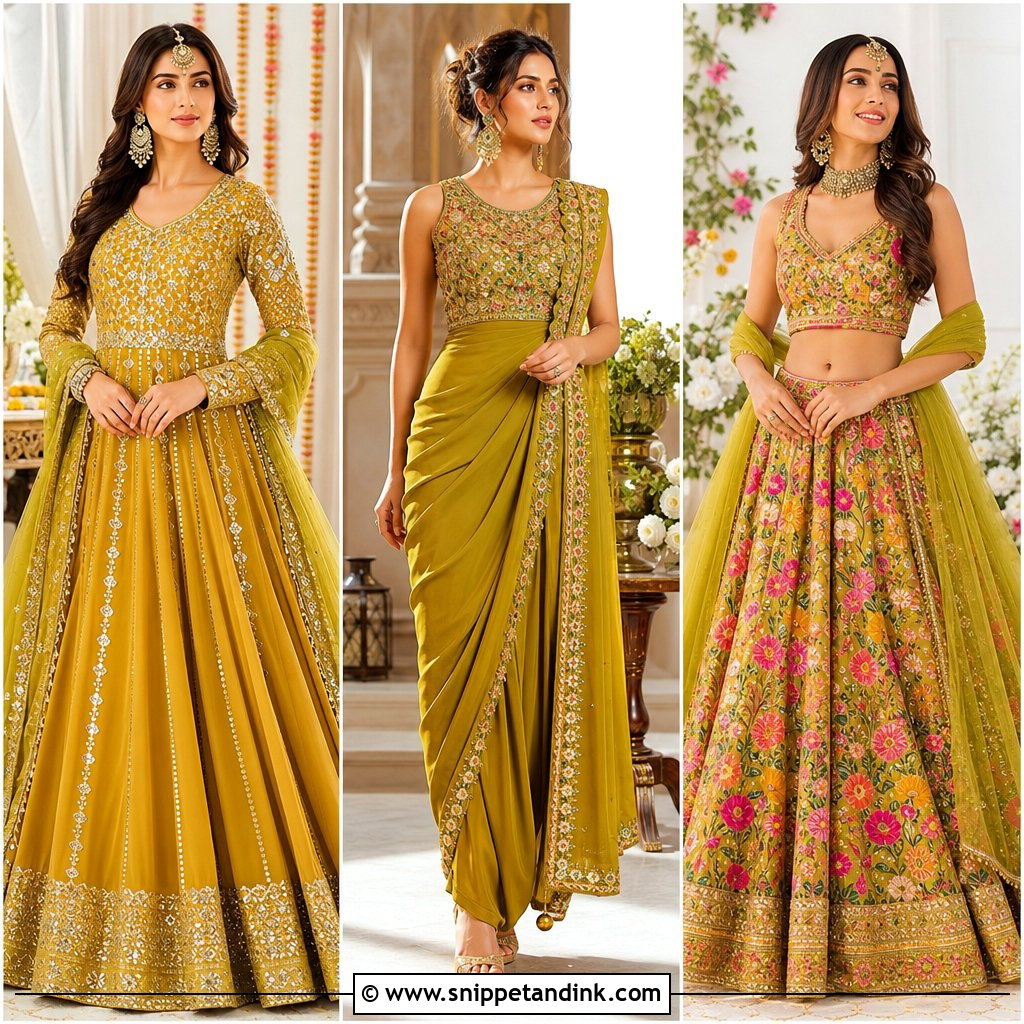
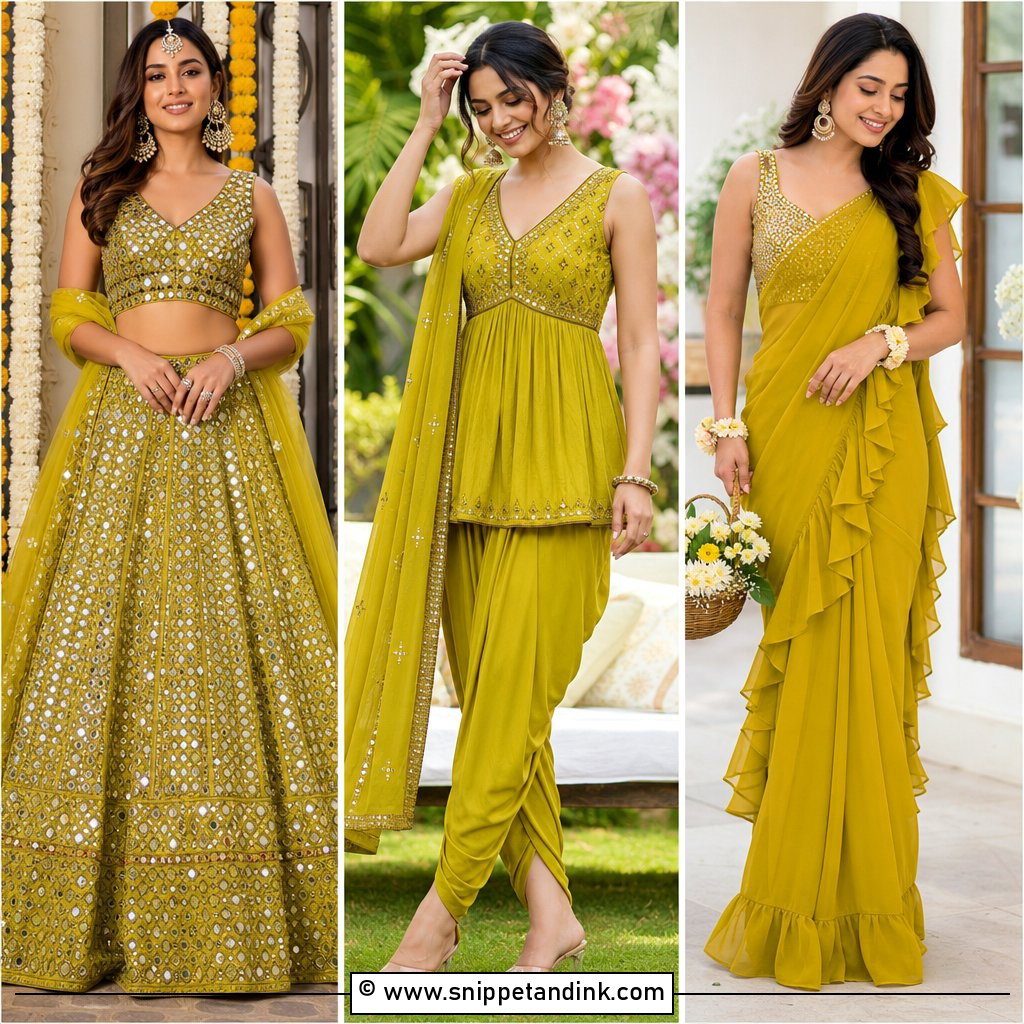
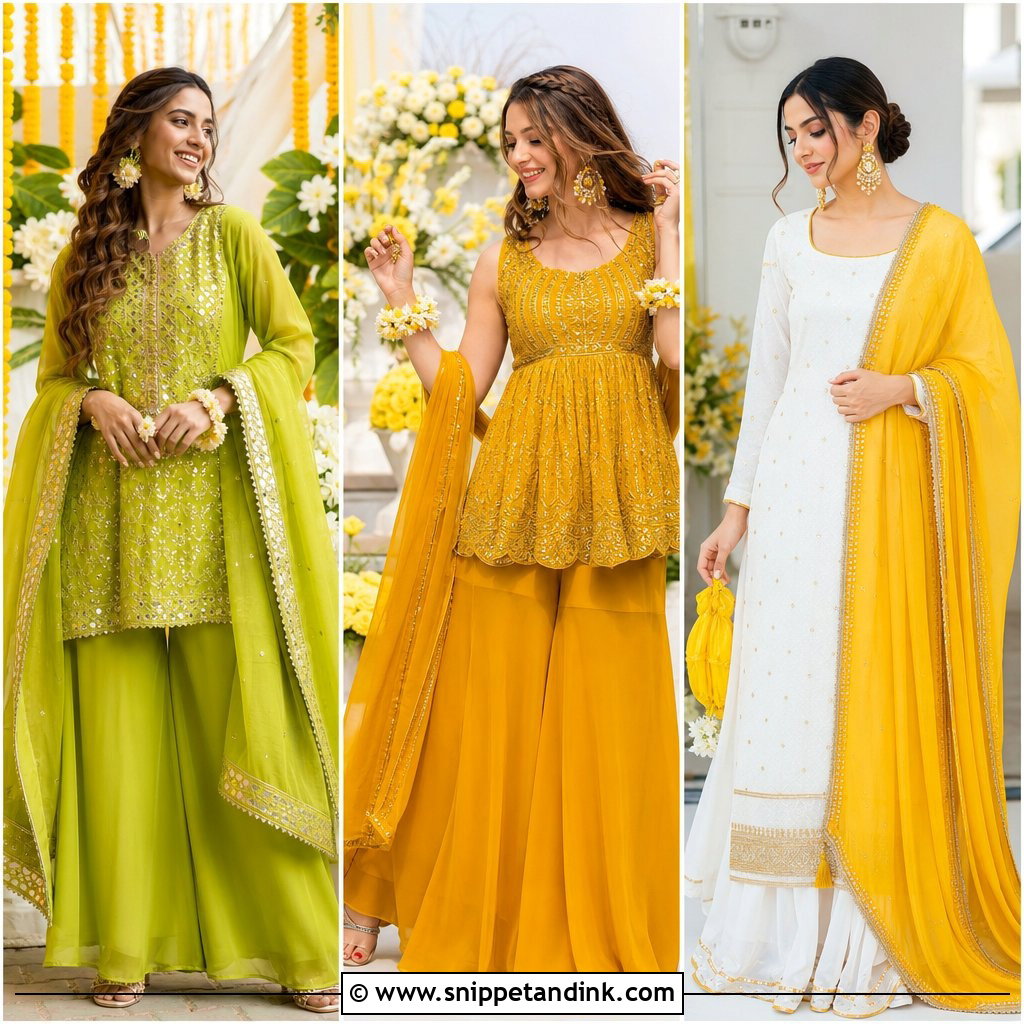
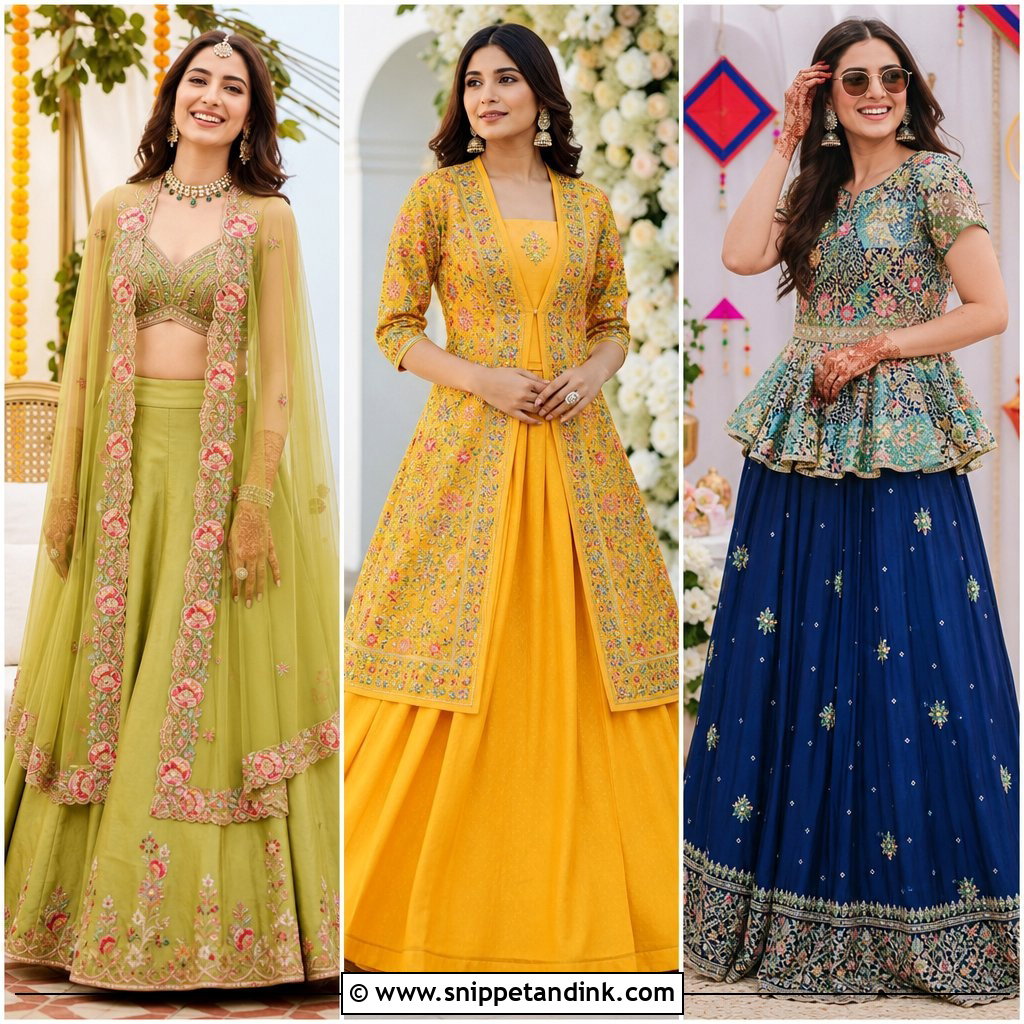
Yellow is the colour most families expect at a mehndi, which makes a yellow lehenga the safest pick in the room. In cotton silk, georgette or chanderi it stays light, and a little mirror work or a narrow gota border is enough. If you’re having henna on your arms, the blouse sleeve decides everything: sleeveless, cap or short. A guest in yellow should go a shade softer or more muted than the bride, so she isn’t mistaken for her in group photos.
2. Green Mehndi Sharara Outfit
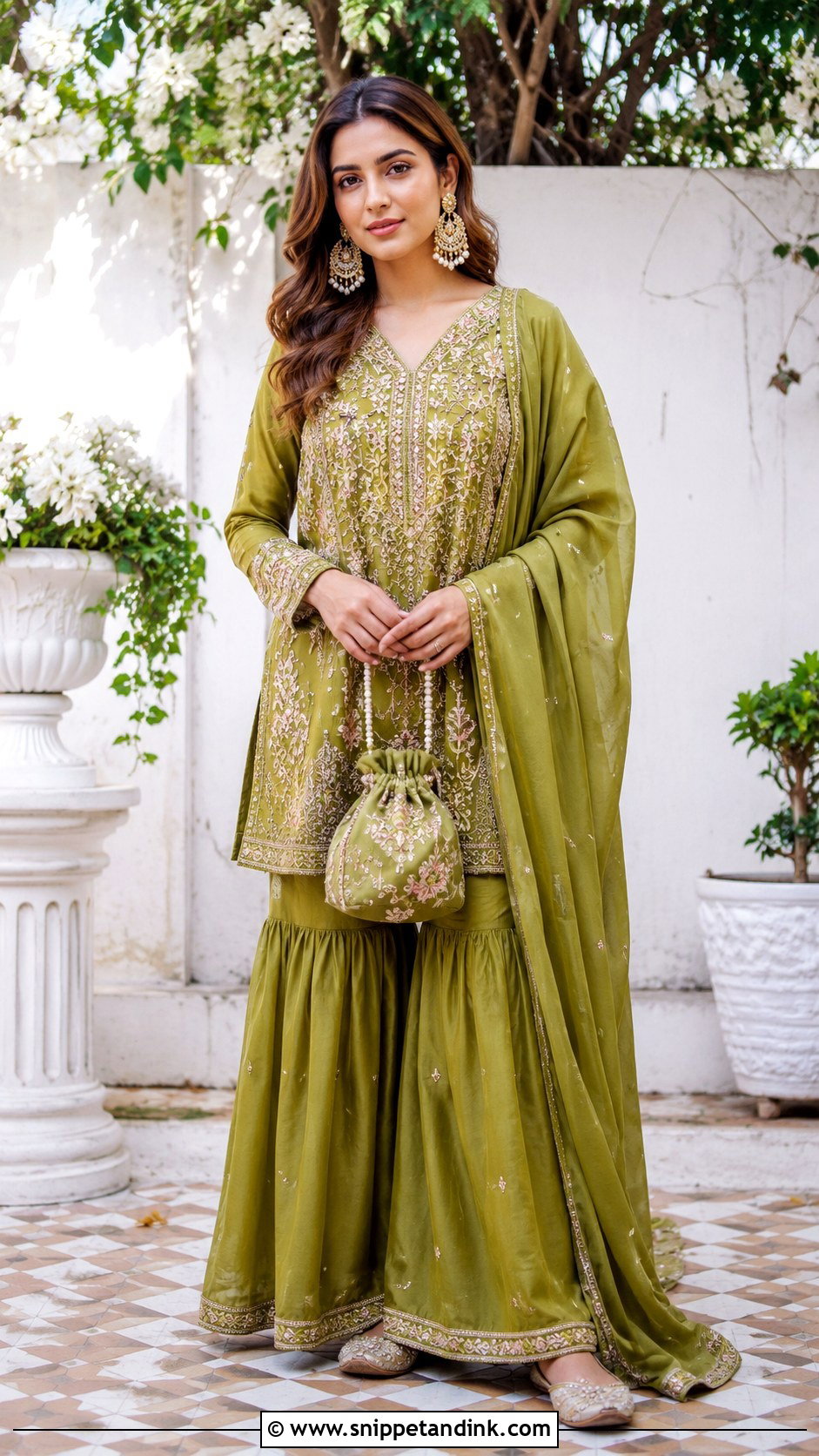
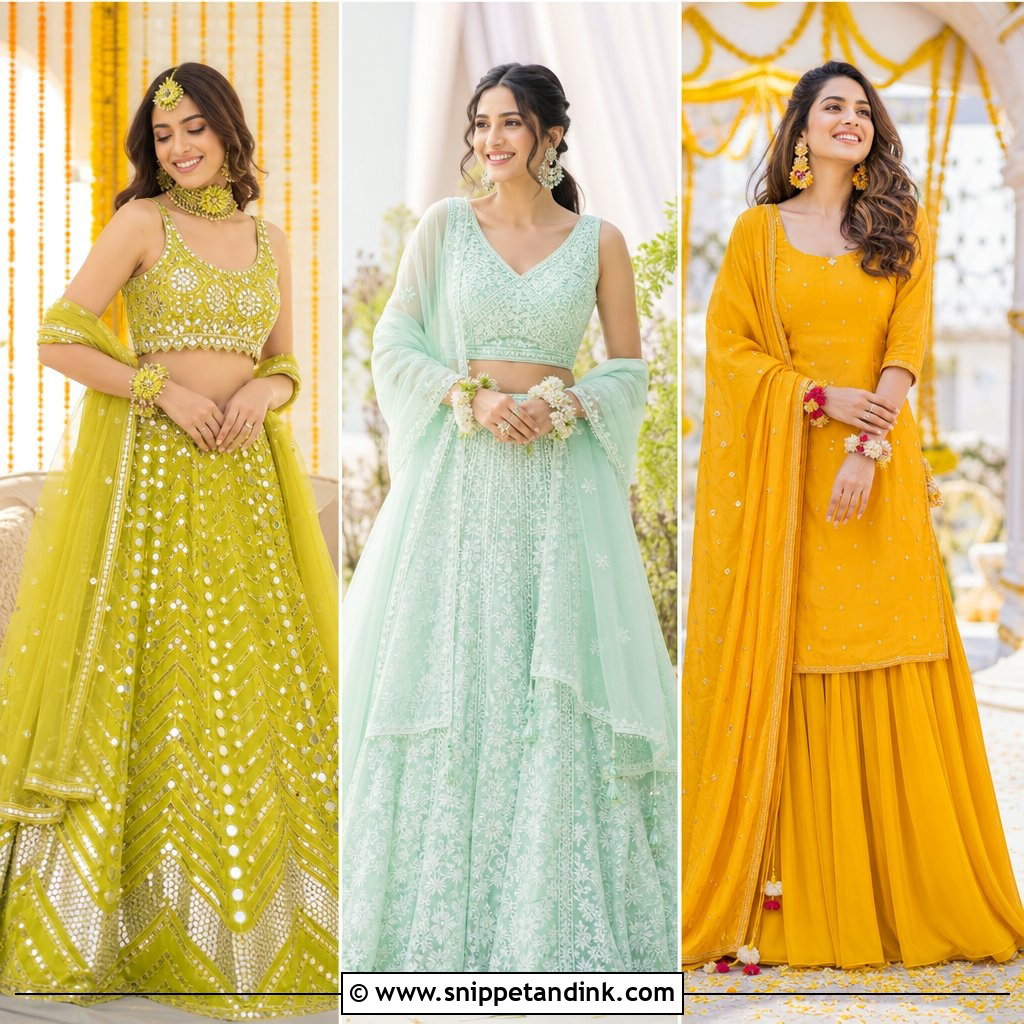
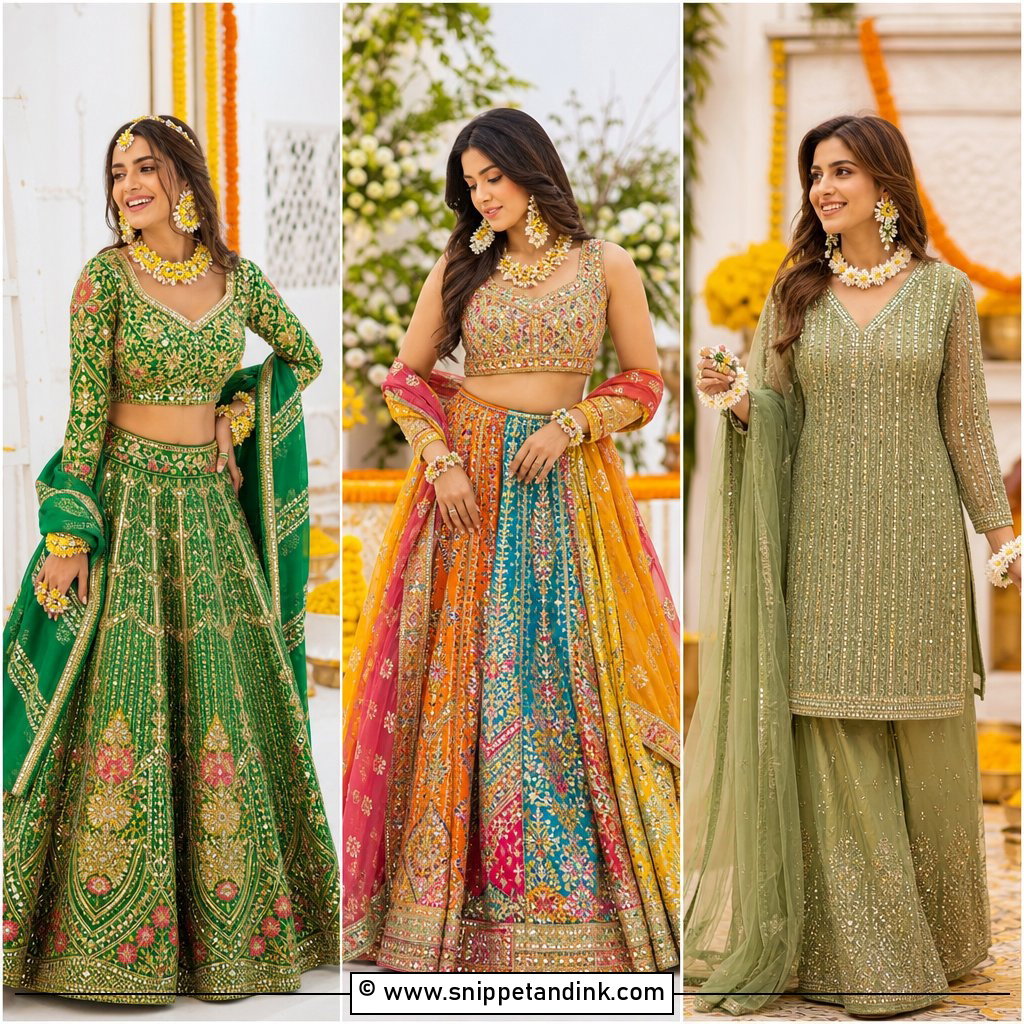
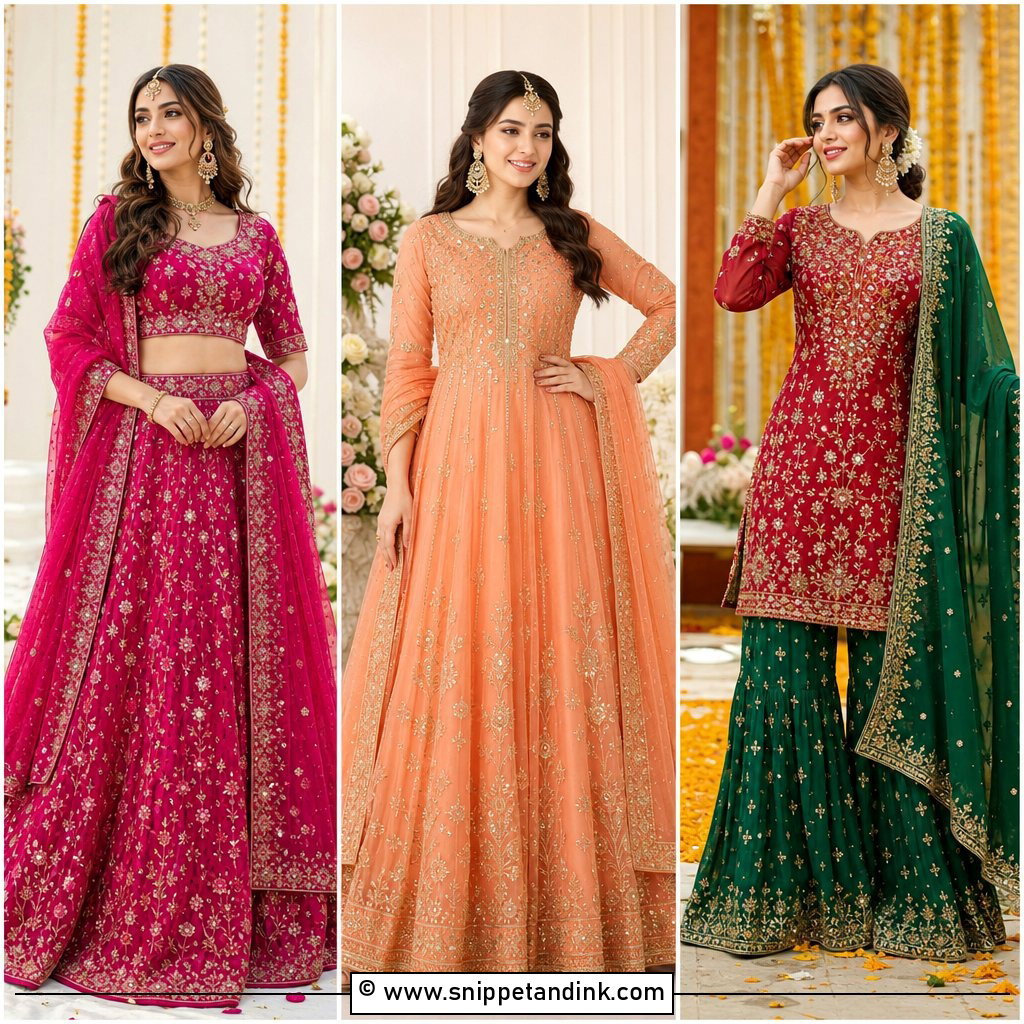
Sharara legs are wide enough to sit cross-legged on a floor cushion, which is where most of the evening happens. I’d use lime for a daytime function and emerald after dark, when bright greens can look flat under warm lights. A chiffon or georgette dupatta pinned at one shoulder leaves your hands free. Braid or soft waves keep hair out of anyone’s wet henna when you hug.
3. Floral Mehndi Kurta Palazzo Outfit
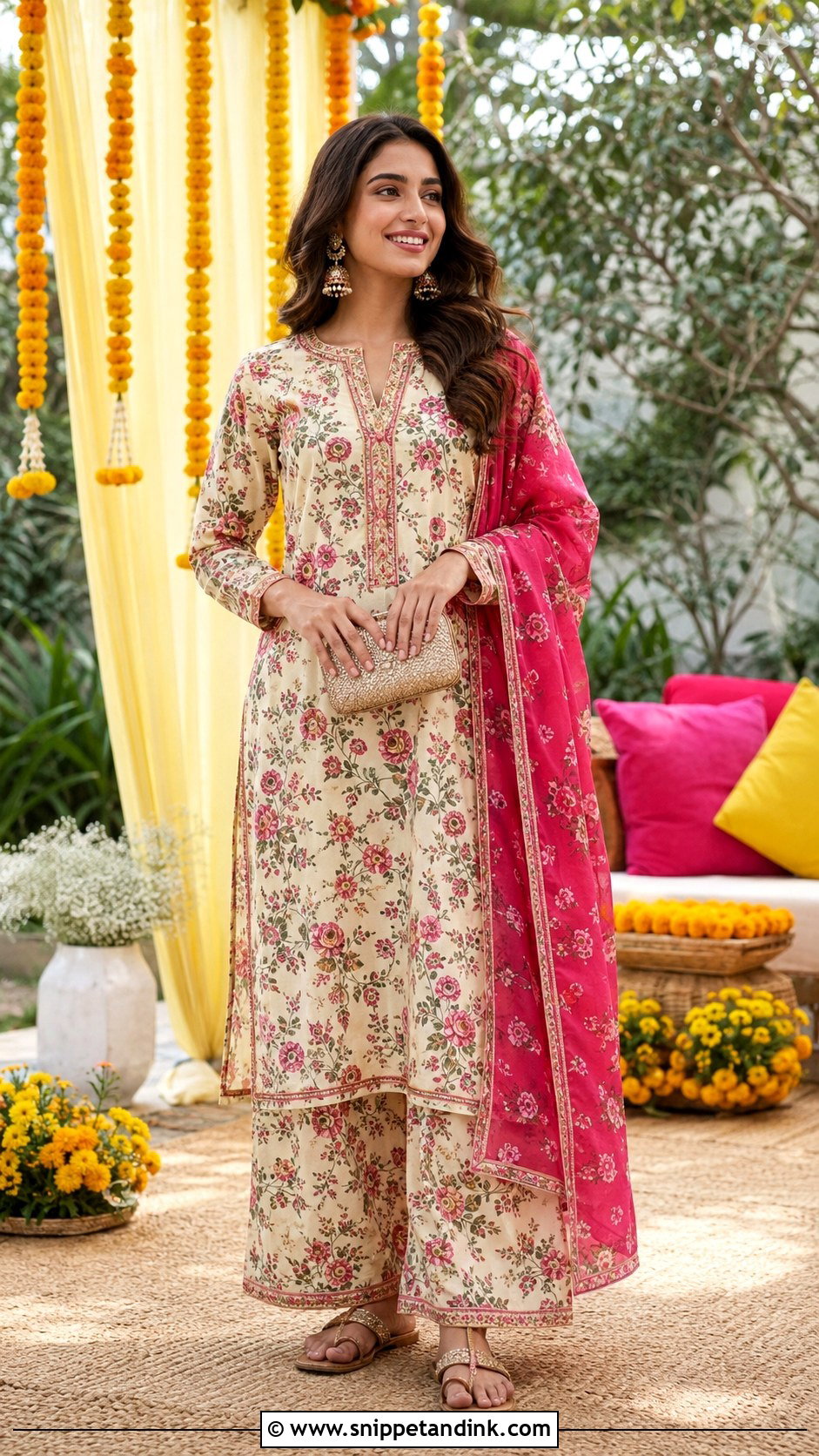
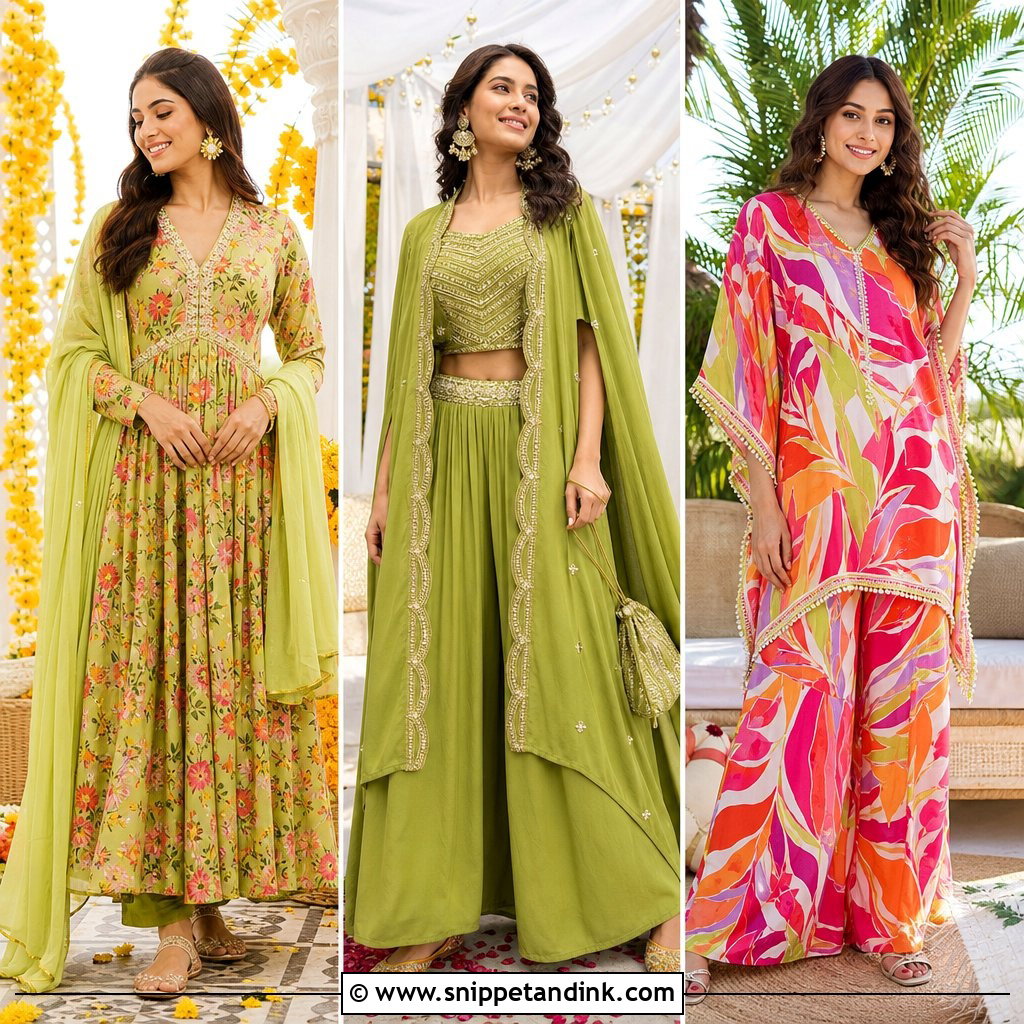
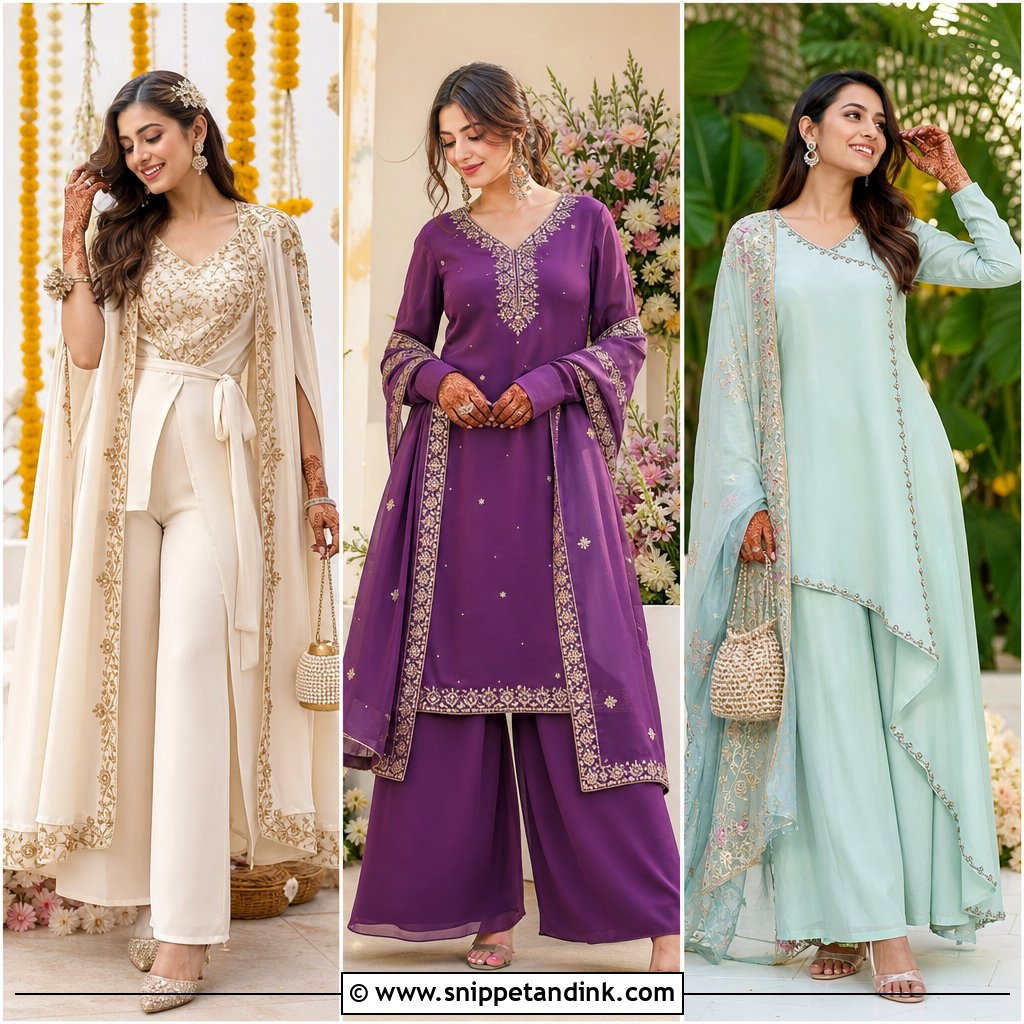
Printed kurta and palazzo sets are the outfit I send cousins and friends in when they’re also helping run the event. You can carry trays, climb onto a stage and sit down without thinking about a hem. Yellow, green, peach or pink florals suit a garden setting. If the kurta looks shapeless on you, a slightly fitted waist or side slits fix it. Kolhapuri sandals and a small clutch keep the feet comfortable on grass.
4. Chikankari Mehndi Co Ord Outfit
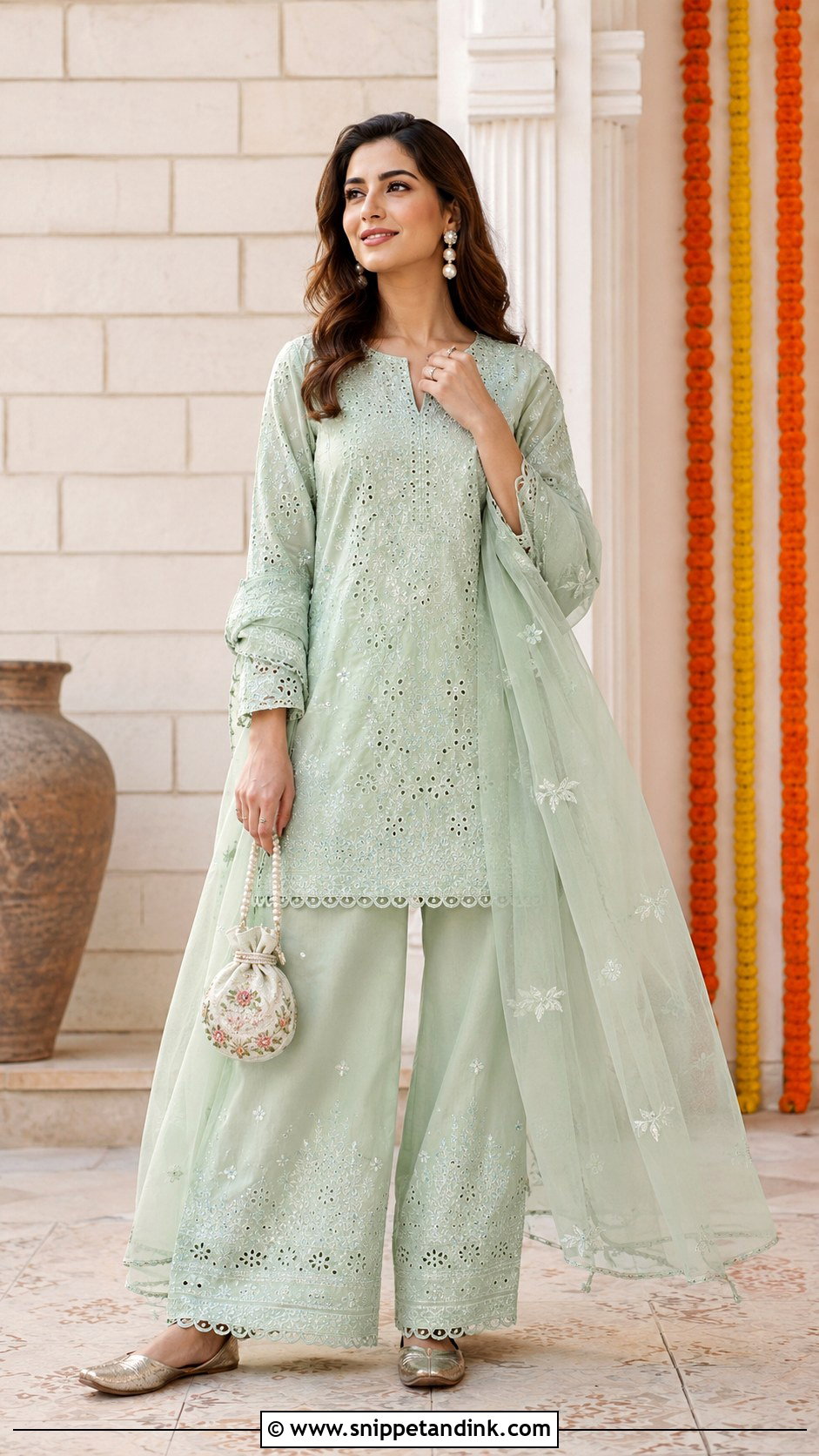
Chikankari is shadow embroidery done by hand on light fabric, so a chikankari co ord set feels cool in heat and looks quietly expensive. White, lemon, mint, sage and blush suit it. The trade-off is fragility. Chikan threads snag on rough bangles and velcro, and pale chikan shows henna stains for good, so I’d skip it if you’re sitting for henna yourself. Pearl earrings and metallic flats keep it understated.
5. Orange Mehndi Anarkali Outfit
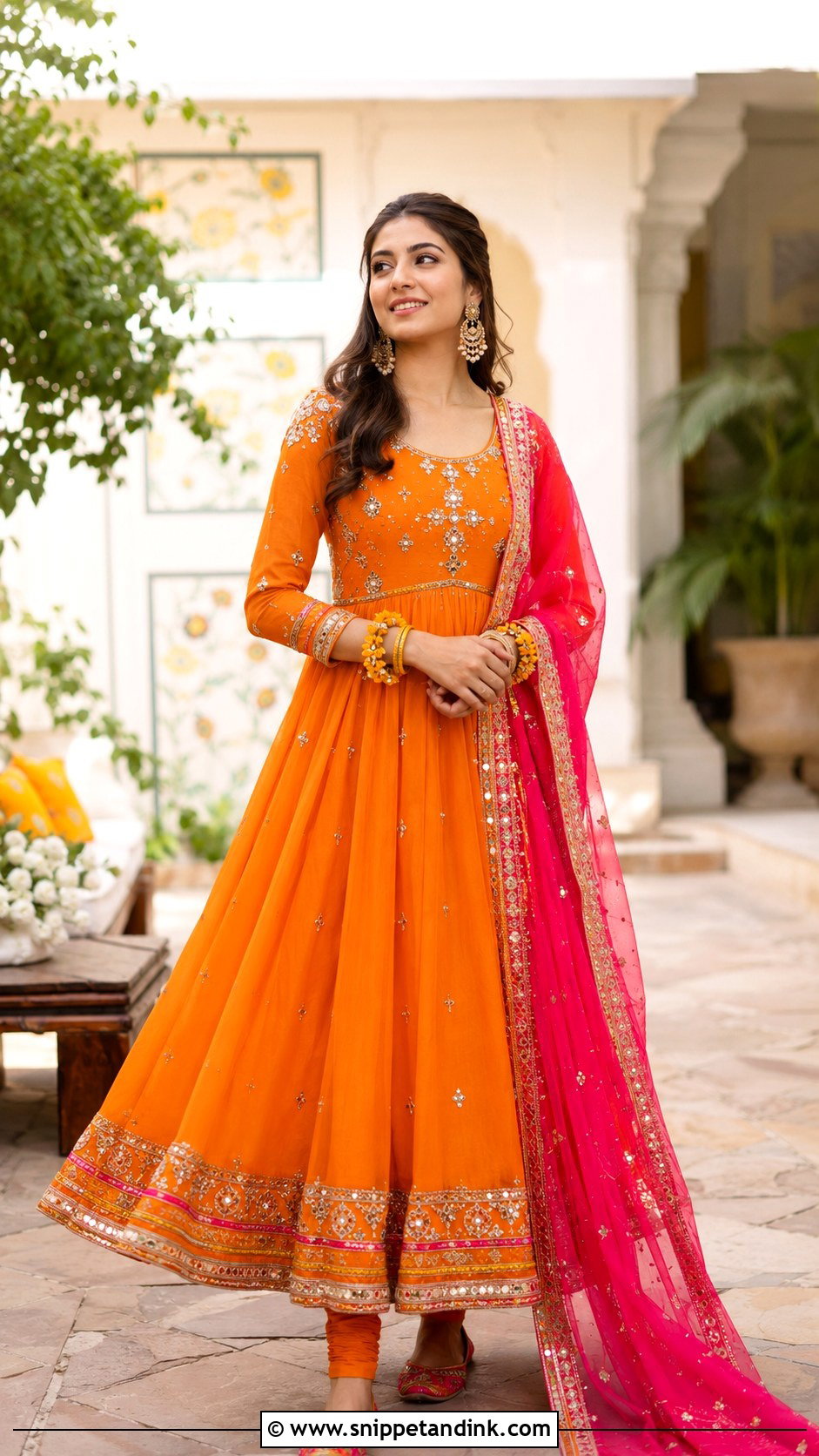
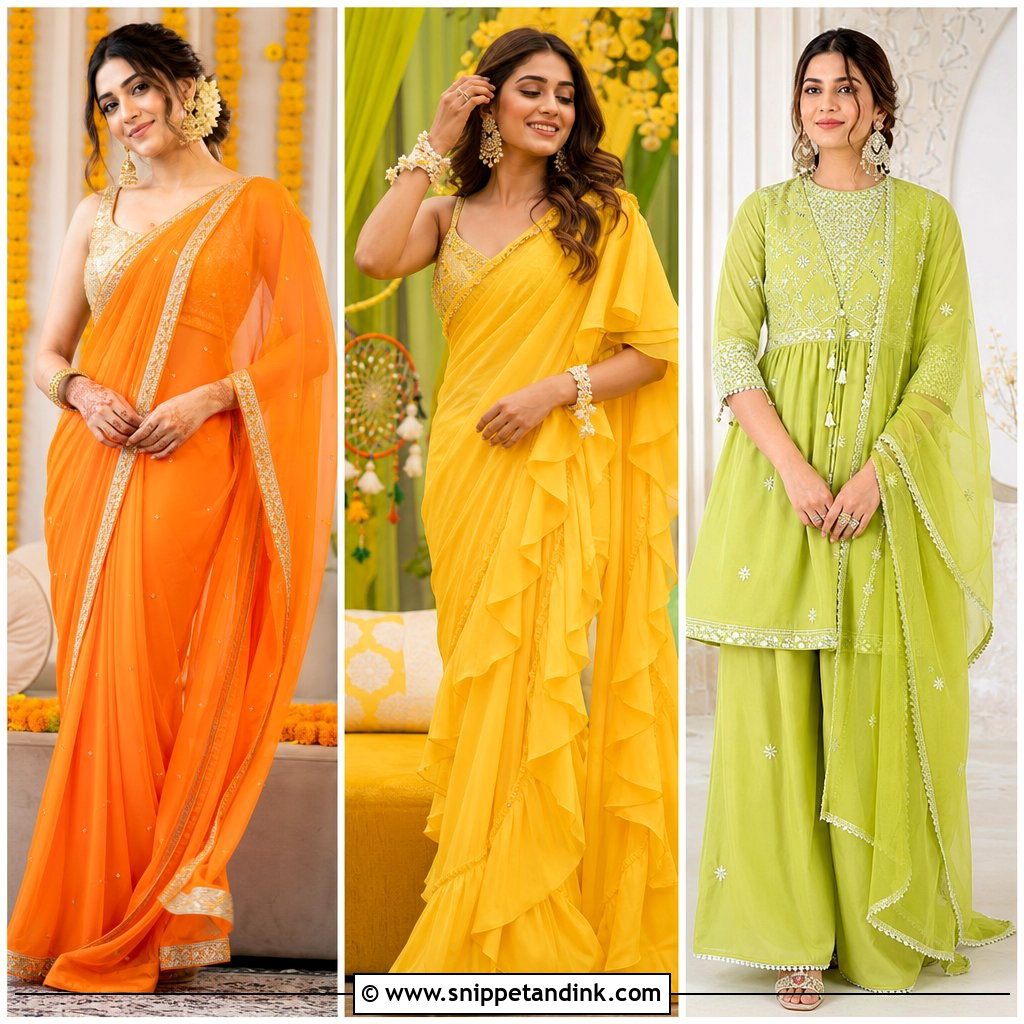
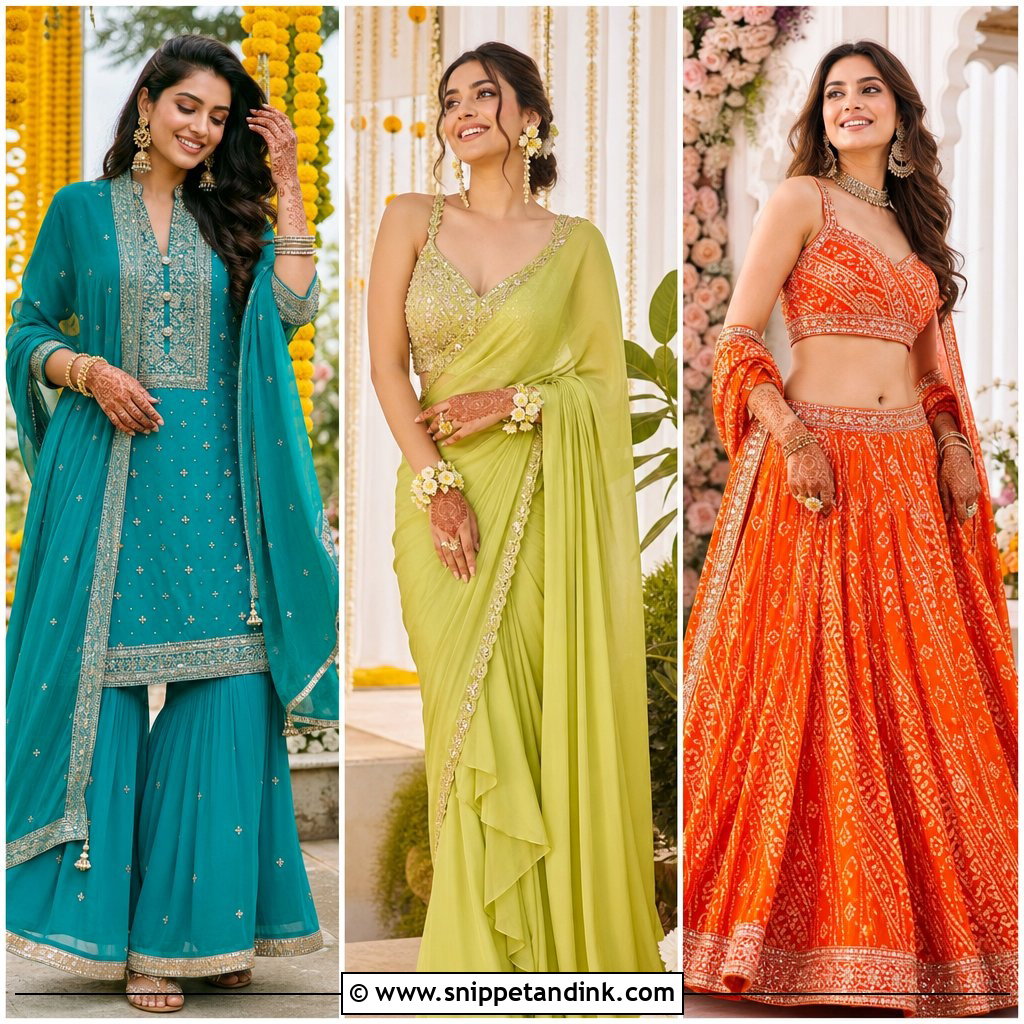
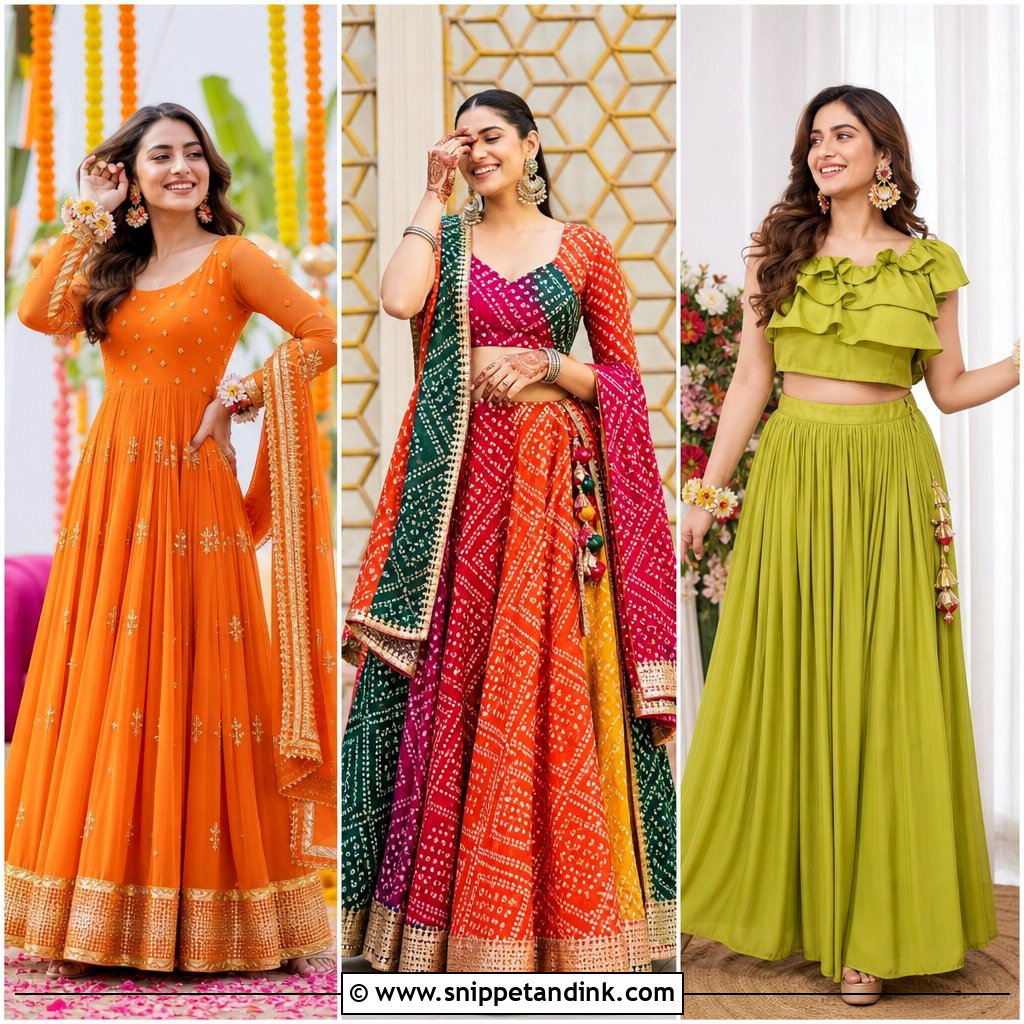
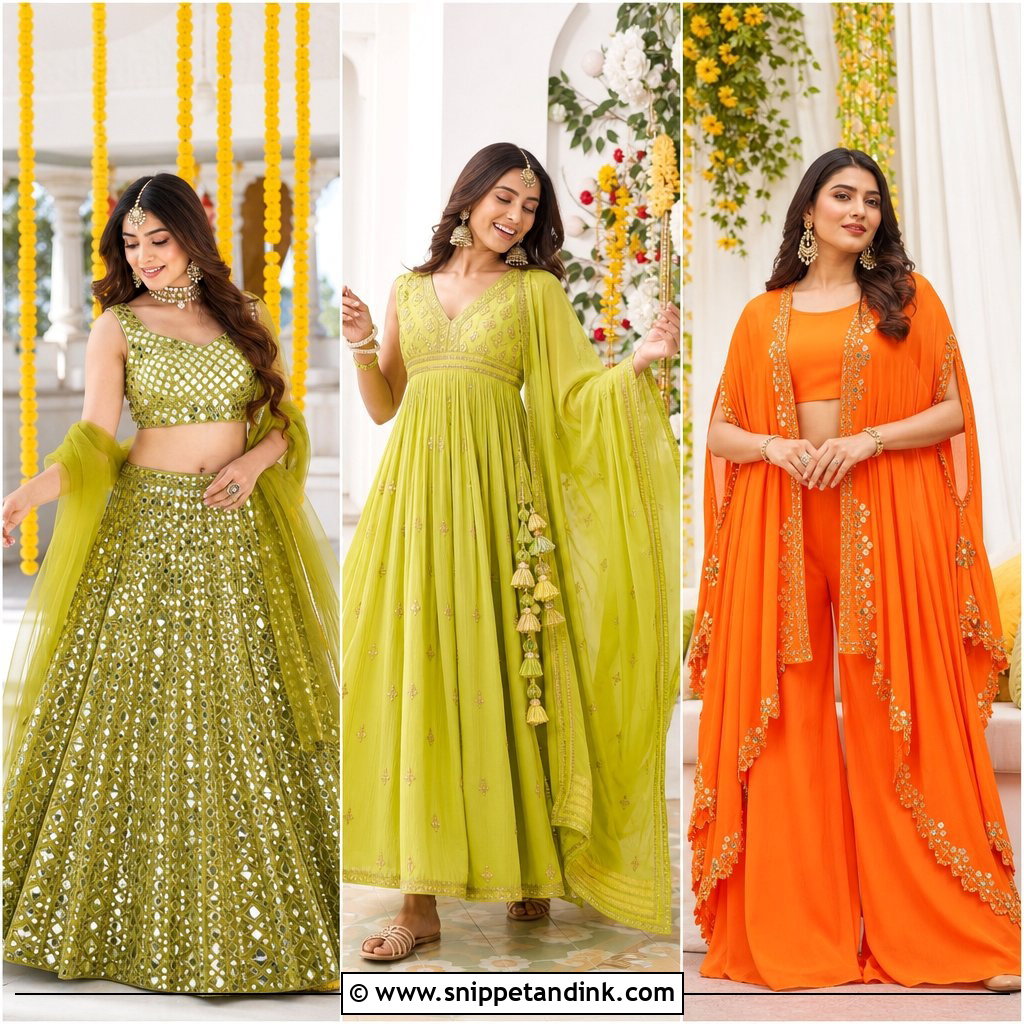
Orange is warm and photographs well under marigolds, which many mehndi setups use. A flowy cotton, georgette or rayon anarkali with a printed border is easy to dance in. Churidar or slim trousers underneath stop the flare from looking too heavy. I like it for close family because it reads dressed up without competing with bridal pieces. A half-up style or loose braid softens the neckline.
6. Pink Mehndi Gharara Outfit
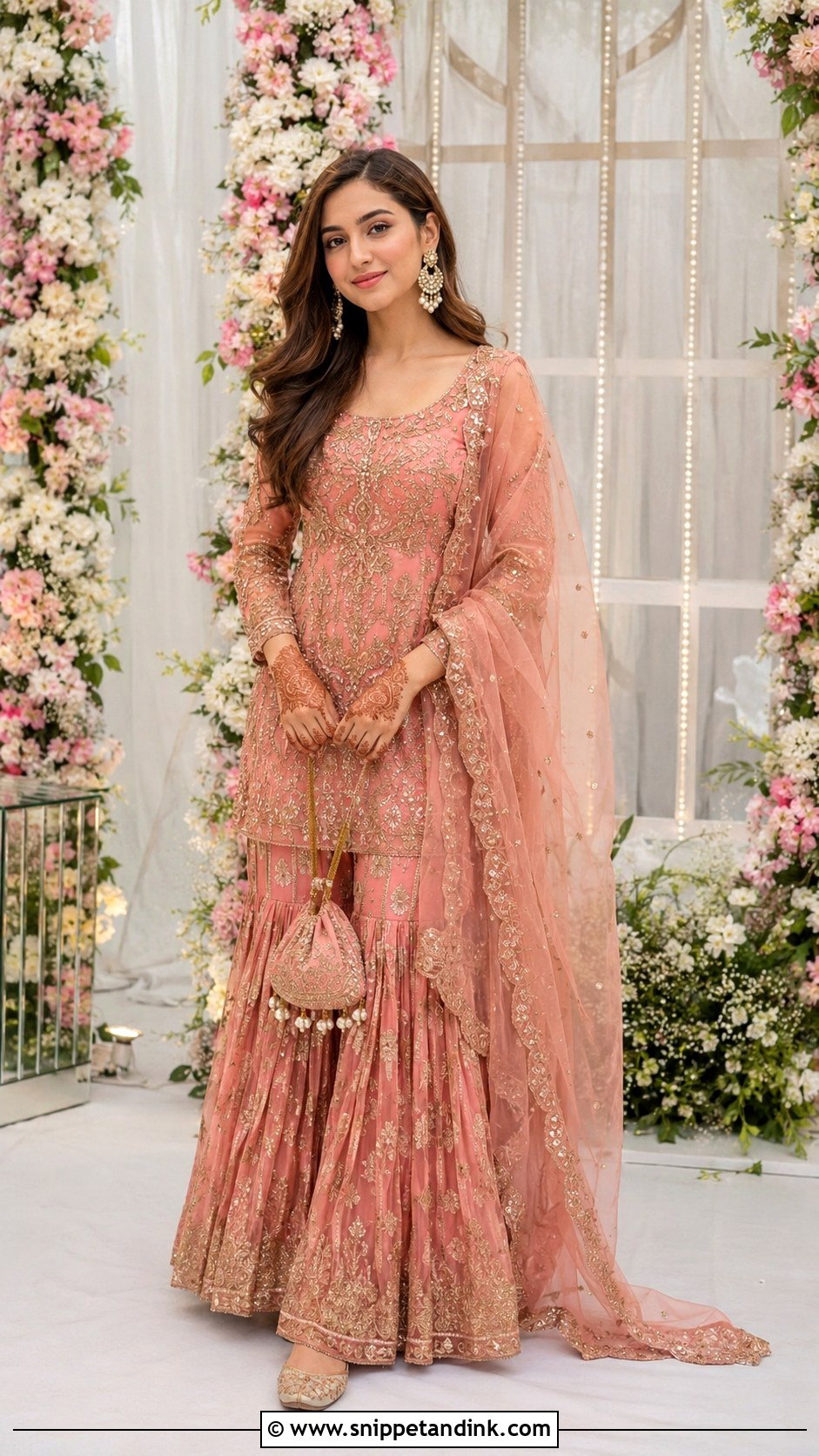
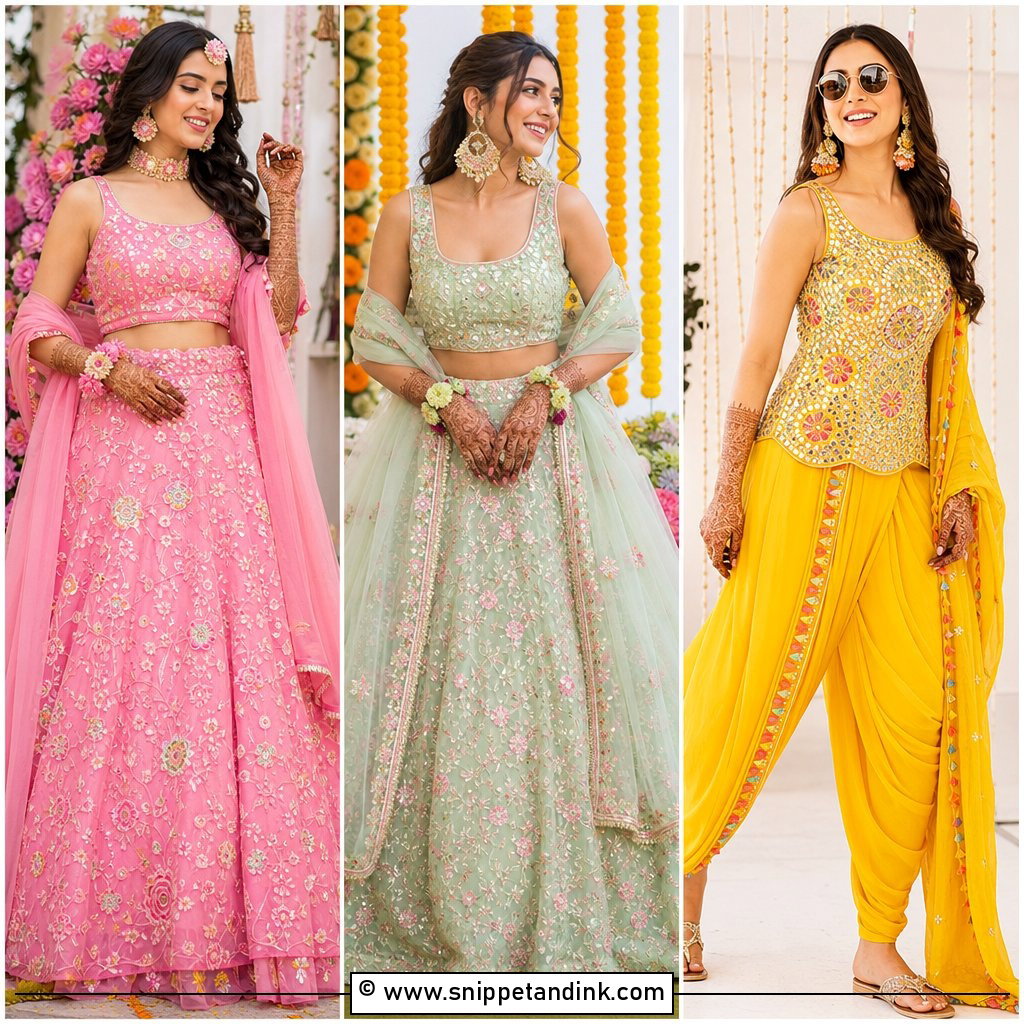
Ghararas create volume below the knee, so I balance them on top with fitted sleeves and a neat neckline. Pale pink suits daytime; hot pink holds up better under evening lights. Lace borders, small sequins or mirror details are plenty. Check the waist before the day, because the joint where the gharara flares sits low and can feel bulky if it’s cut too high. Block heels or embellished flats, a potli bag and a smooth bun complete it for sisters or bridesmaids.
7. Mint Green Mehndi Lehenga Outfit
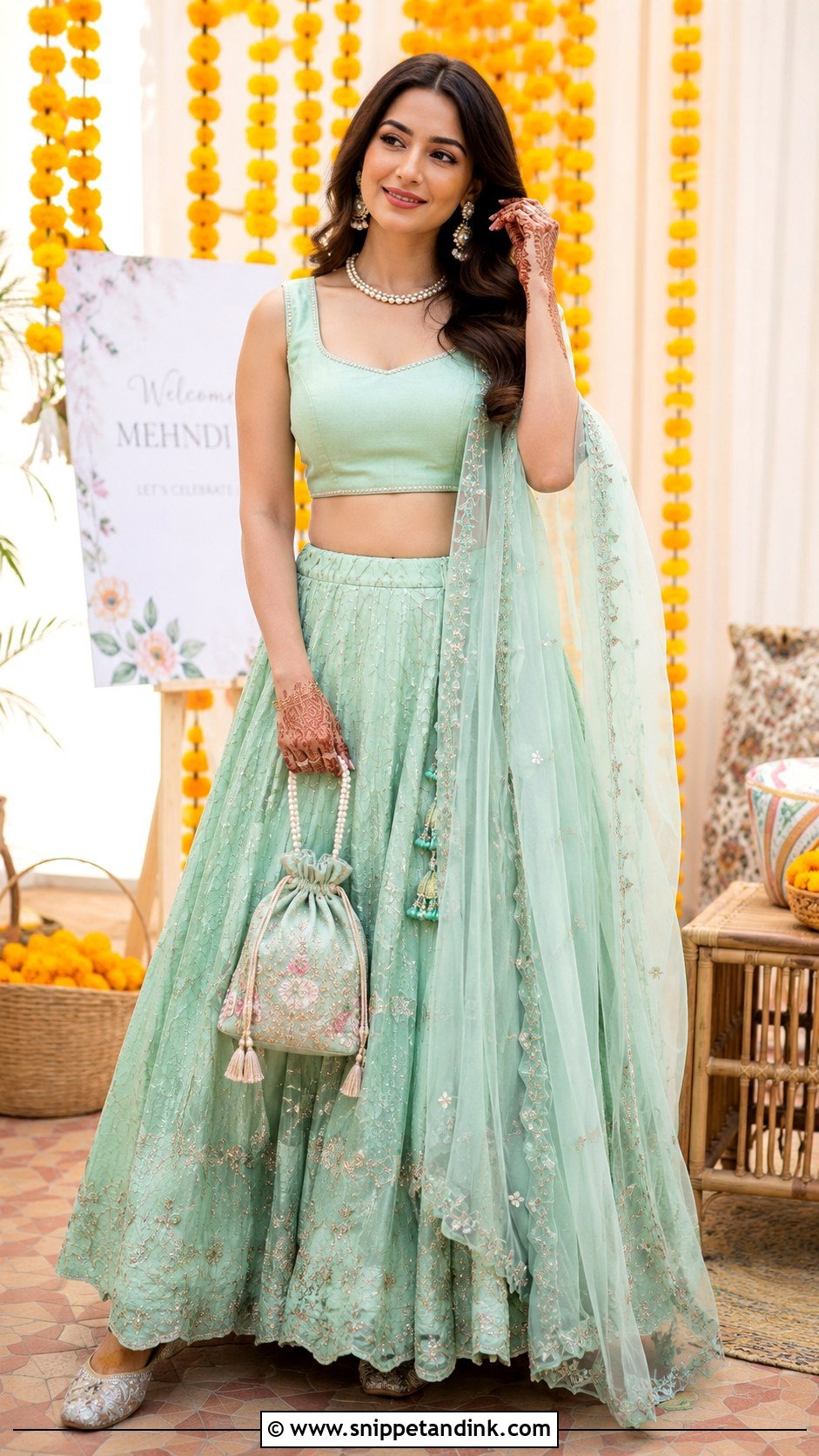
Mint is a softer route into the green family, and against orange marigold decor it gives a strong contrast in photos. A mint lehenga with tonal thread work or fine mirror accents, a simple blouse and a sheer dupatta stays light. It suits silver better than heavy gold, so pearls and silver juttis are what I’d reach for. One caution: in shade or evening light, very pale mint can lean grey, so a slightly deeper mint holds its colour better.
8. White Mehndi Kurta Set Outfit
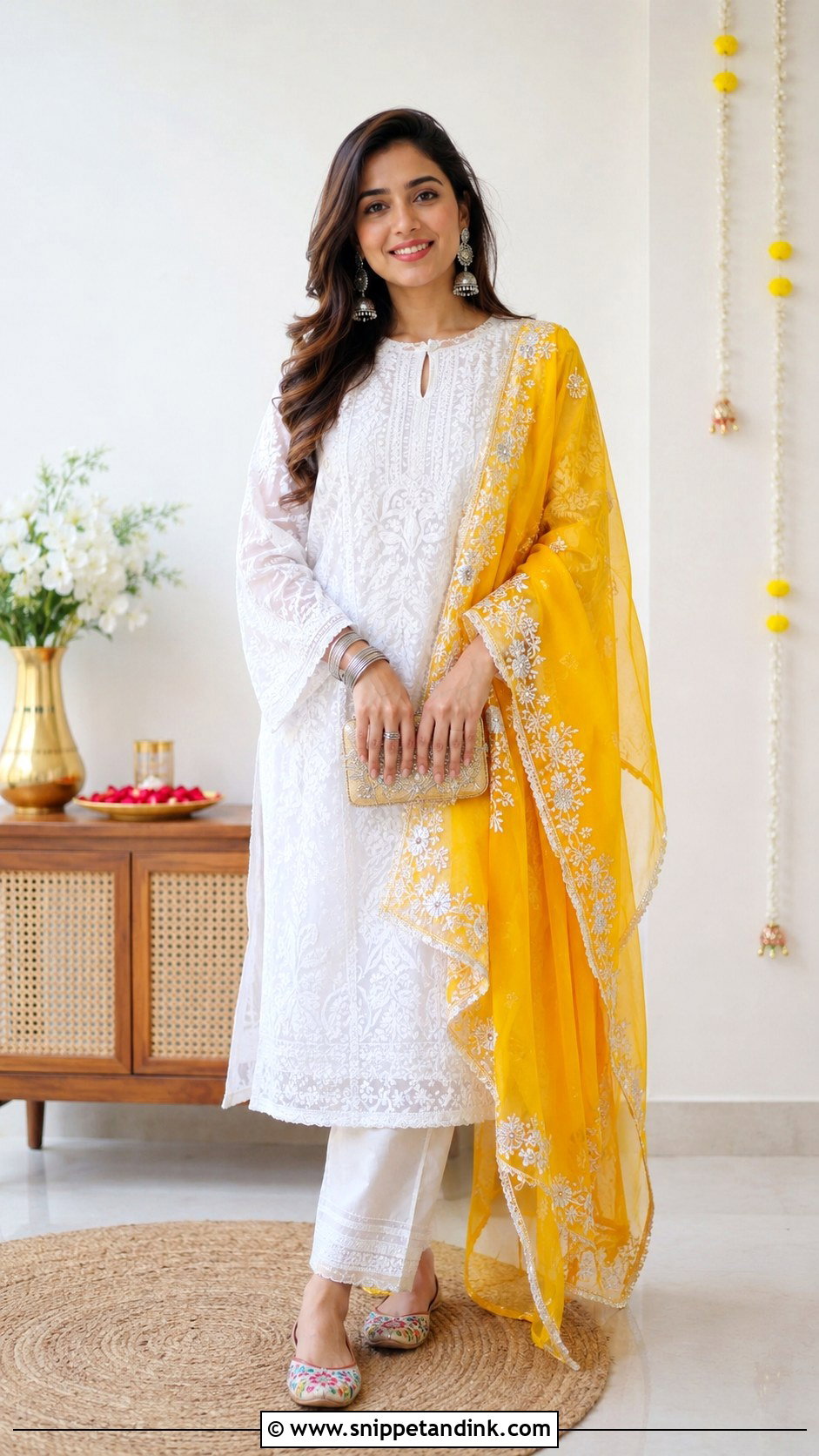
White is a smart base when the dupatta brings the colour. A chikankari, cotton or embroidered kurta with straight pants and a yellow, green, orange or fuchsia dupatta looks ready for the ceremony, then rewears easily afterwards. Pick one with texture, lace or embroidery so it doesn’t look like daywear. Be aware that some families avoid white at festive functions, so a quick check with the hosts is worth it before you commit.
9. Multicolor Mehndi Skirt Outfit
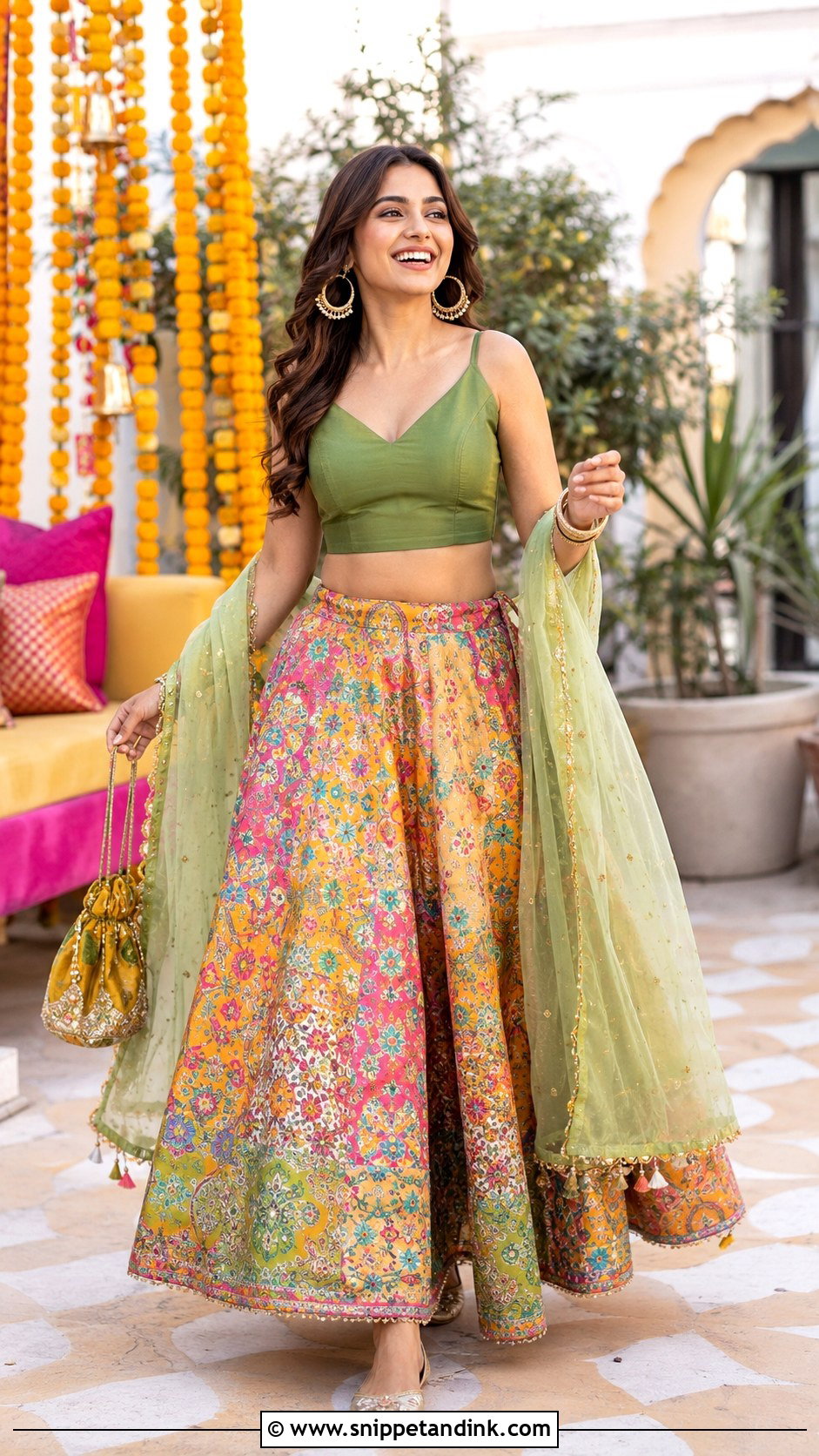
A patchwork or printed skirt does all the talking, so the blouse should be plain and solid. I pull the dupatta colour from one shade in the skirt so the outfit holds together. Cotton, georgette or rayon keeps it light enough to dance in for hours. It suits younger guests and bridesmaids who’ll spend most of the night on the floor.
10. Mustard Mehndi Salwar Suit Outfit
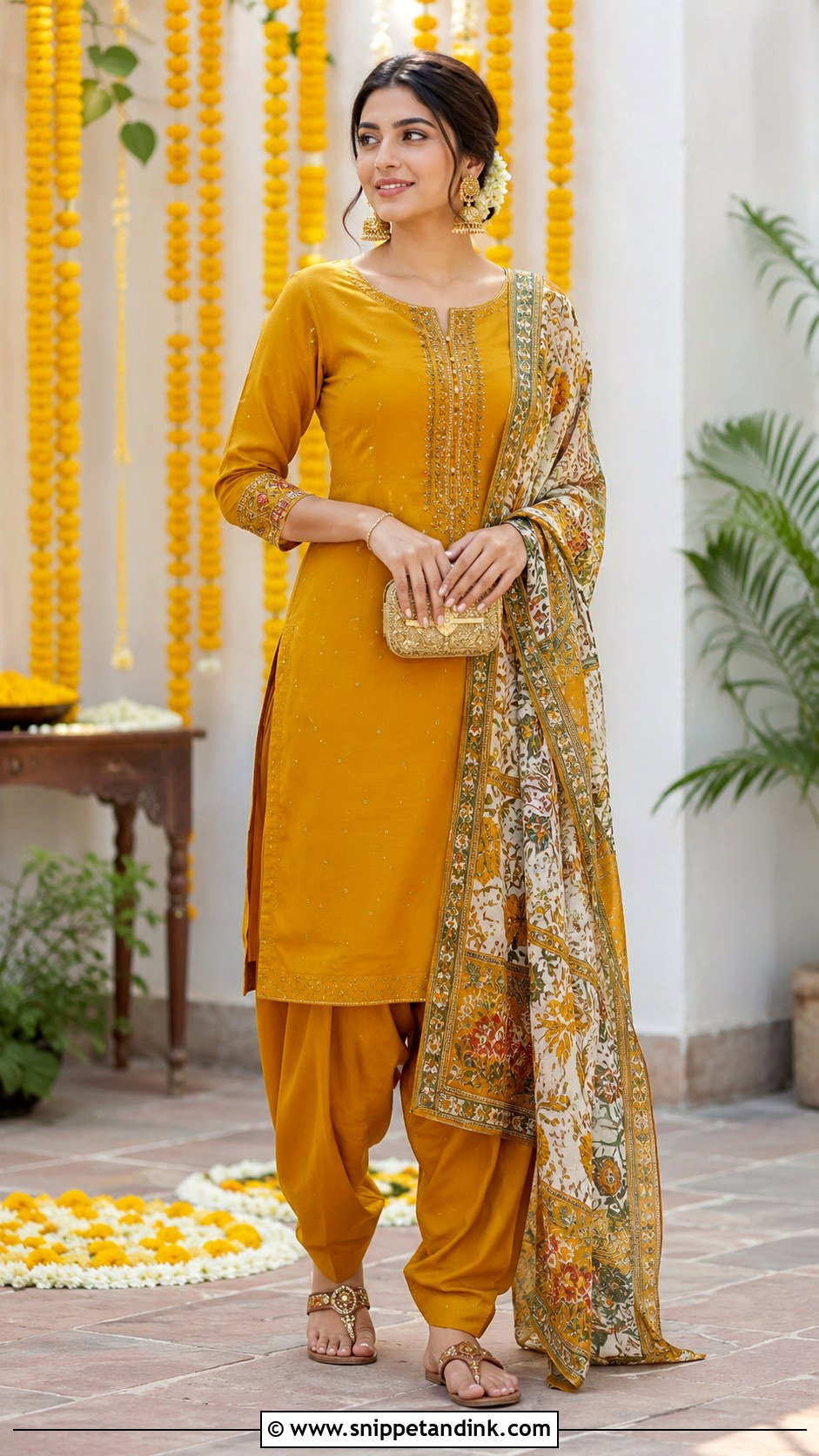
Mustard is the yellow I give to people who find bright yellow too sharp next to their skin. A mustard salwar suit with a straight kurta and a printed or embroidered dupatta is classic and very easy to move in, which matters if you’re helping host. Gold jhumkas and kolhapuri flats keep it warm. Light gota patti or block print is enough detail.
11. Lime Green Mehndi Co Ord Outfit
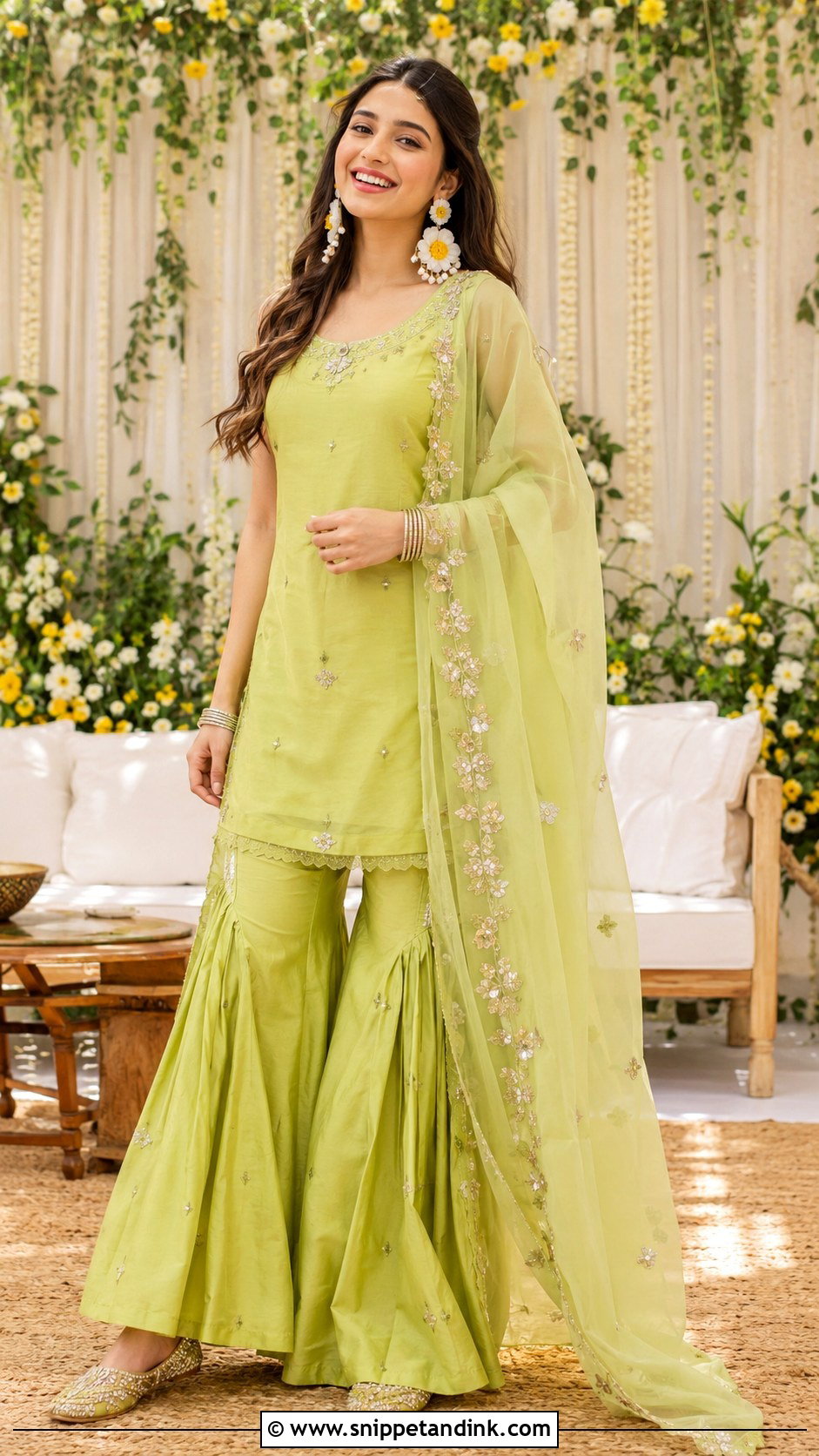
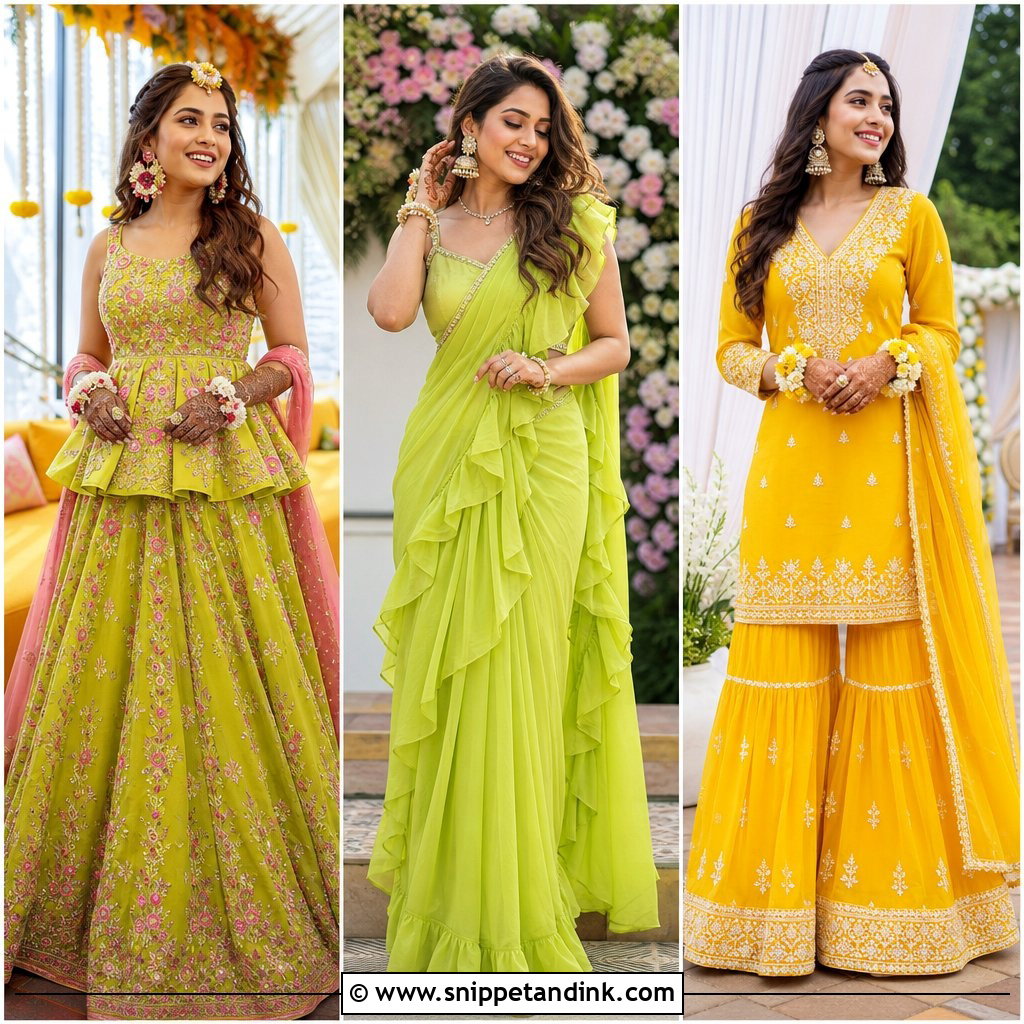
Lime is loud, so I keep a lime co-ord simple: a short kurta or peplum top over palazzos, flared pants or a skirt, with minimal mirror work. A light organza dupatta can be carried just for the photos and left on a chair the rest of the time. Floral earrings and juttis finish it. On deeper skin tones lime looks vivid and fresh; on very fair skin a slightly yellower lime is often kinder.
12. Printed Mehndi Saree Outfit
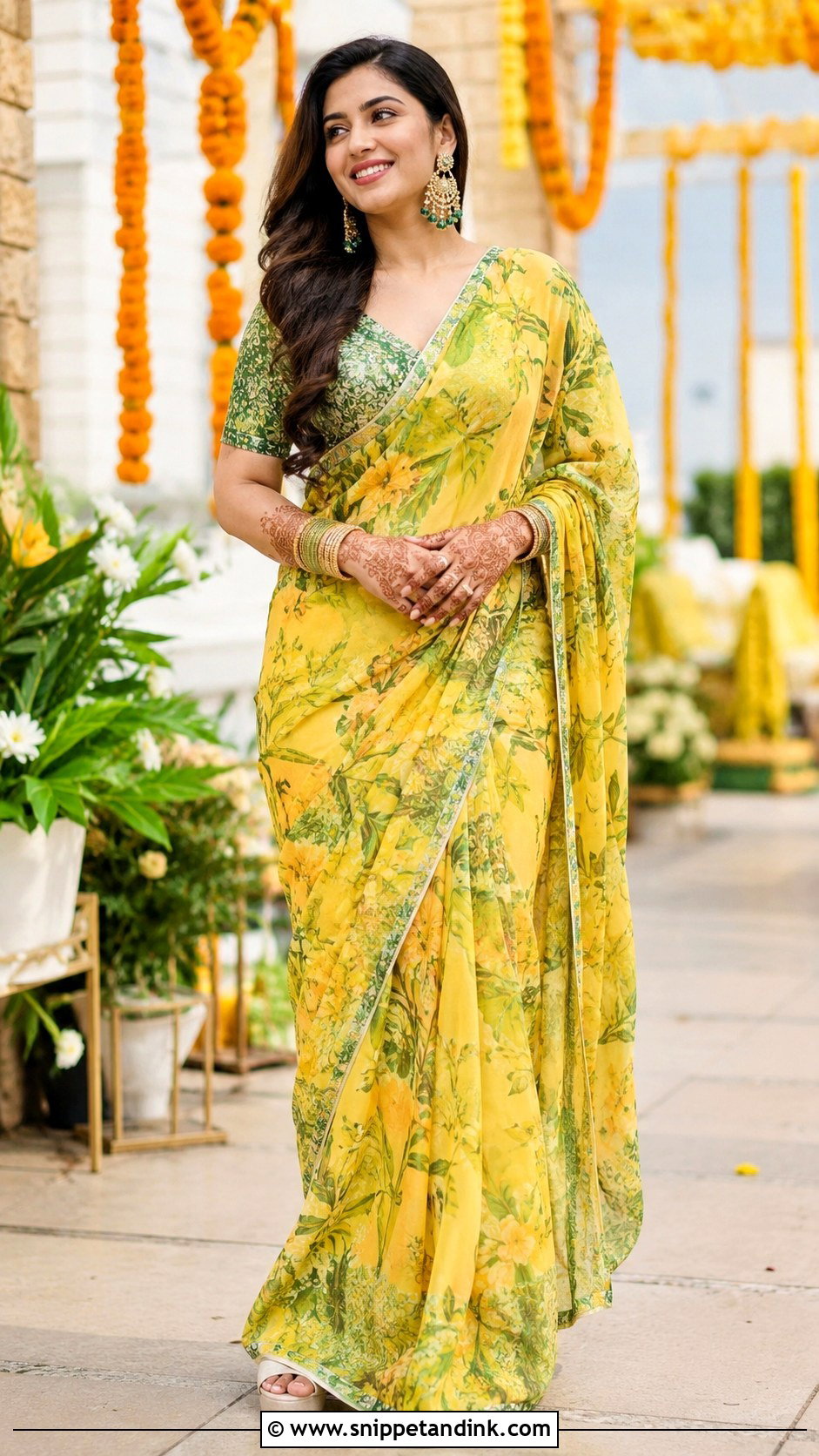
A printed saree in chiffon, georgette, organza or cotton is graceful and light, and floral, leheriya, bandhani or block prints suit a mehndi. Choose a short-sleeved or sleeveless blouse if you’re having henna. My one rule for sarees at a mehndi: pin the pleats and pallu securely before you sit, because re-draping with henna on your hands isn’t possible. Sandals or low wedges, statement earrings and bangles are enough, and the saree rewears easily.
13. Peach Mehndi Anarkali Outfit
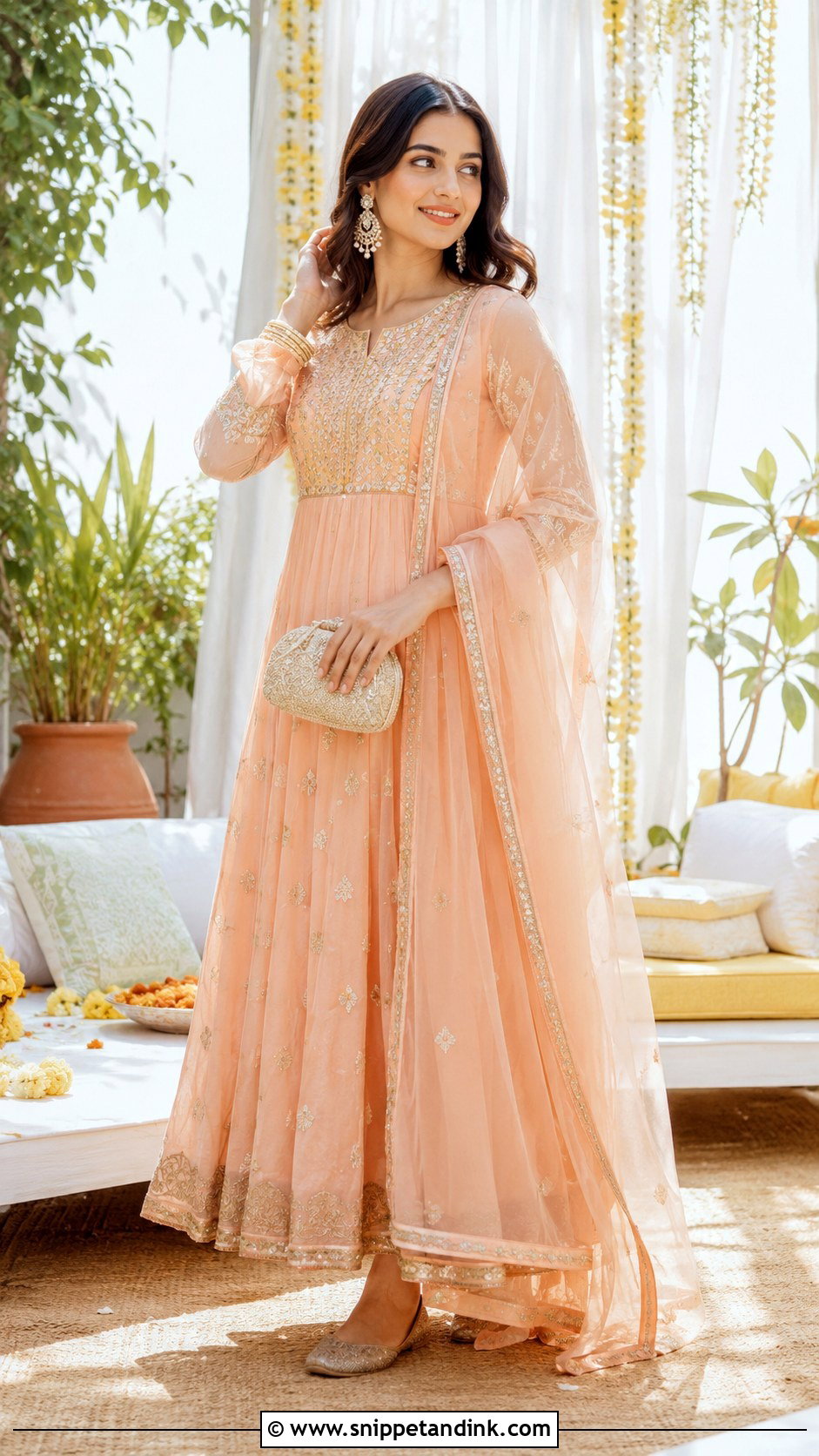
Peach is gentle in daylight and sits well beside mint, gold, ivory and pink, so it’s a good colour for a bridesmaid group that wants to coordinate without matching. An anarkali skims the body and flows from the waist, which suits most shapes. Subtle embroidery or a gota border keeps it simple. For a casual mehndi, stop at pearl earrings; for a formal one, add a maang tikka or bangles.
14. Yellow Mehndi Sharara Outfit
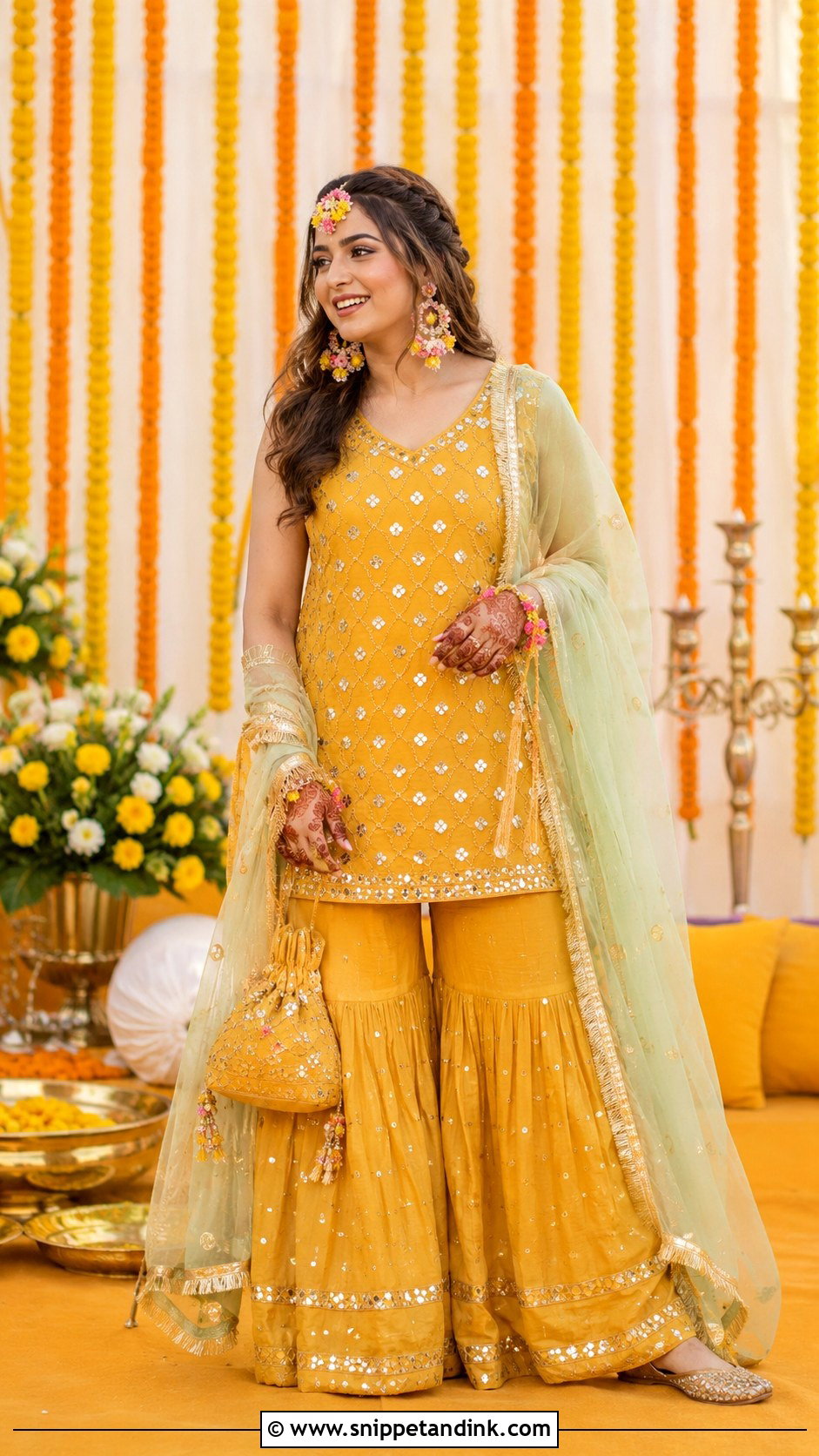
Yellow sharara sets give the festive feel of a lehenga with far less fuss at floor level. The wide pants make sitting for henna easy and the colour reads bright in photos. Simple mirror work, lace trim or floral embroidery is enough. I often add a braid with small flowers, which keeps hair off the shoulders and dupatta. It works for the bride, her friends and guests alike, as long as the guests stay a shade away from her yellow.
15. Sage Green Mehndi Kurta Outfit
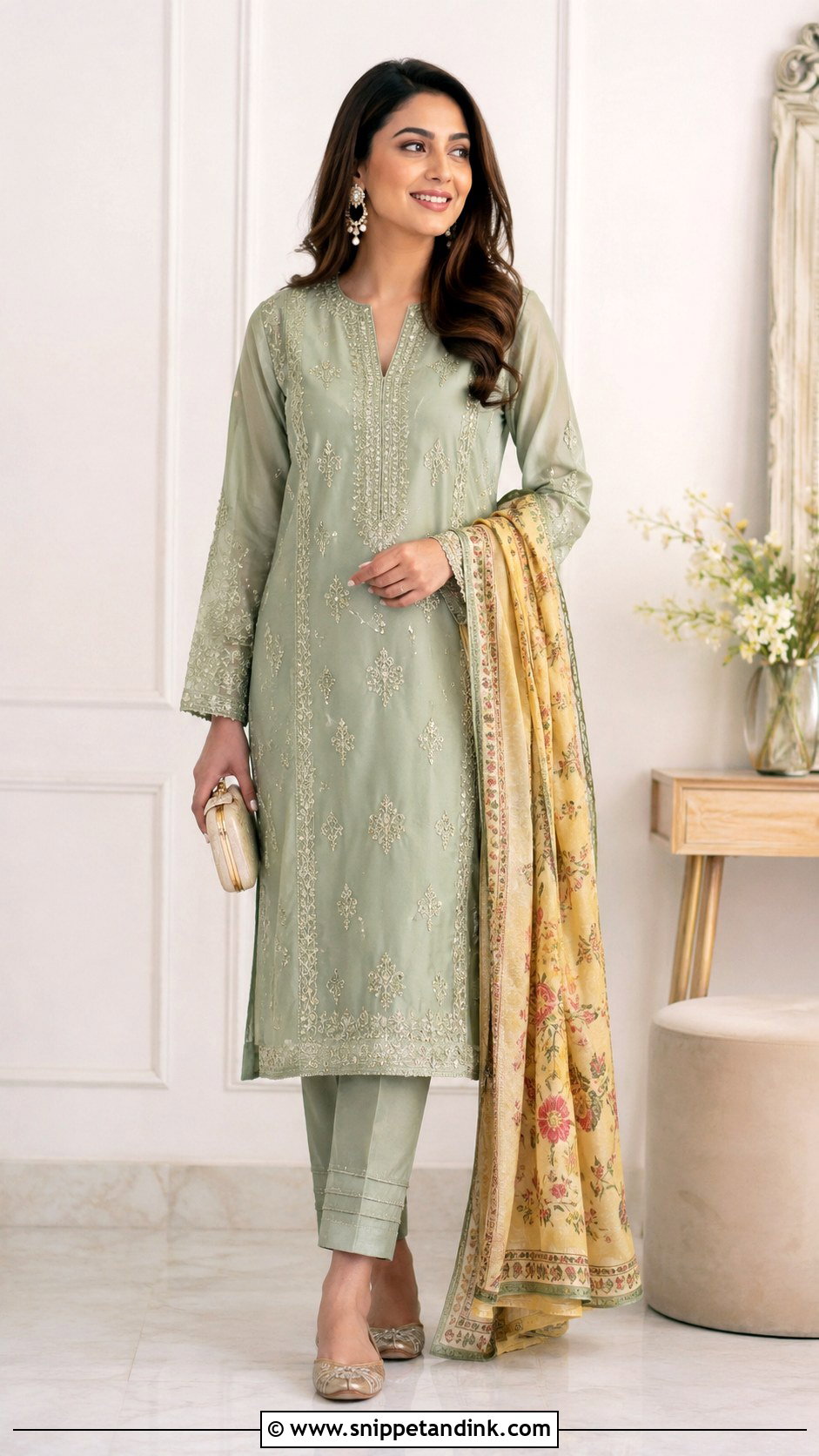
Sage is the colour I suggest to guests who want to look polished but not loud. A sage kurta with straight pants, palazzos or cigarette trousers, plus a printed dupatta in yellow, white or pink, makes it festive. Chikankari, block print or thread embroidery all suit the shade. Because sage is muted, it rewears well for dinners and smaller functions long after the wedding.
16. Bandhani Mehndi Lehenga Outfit
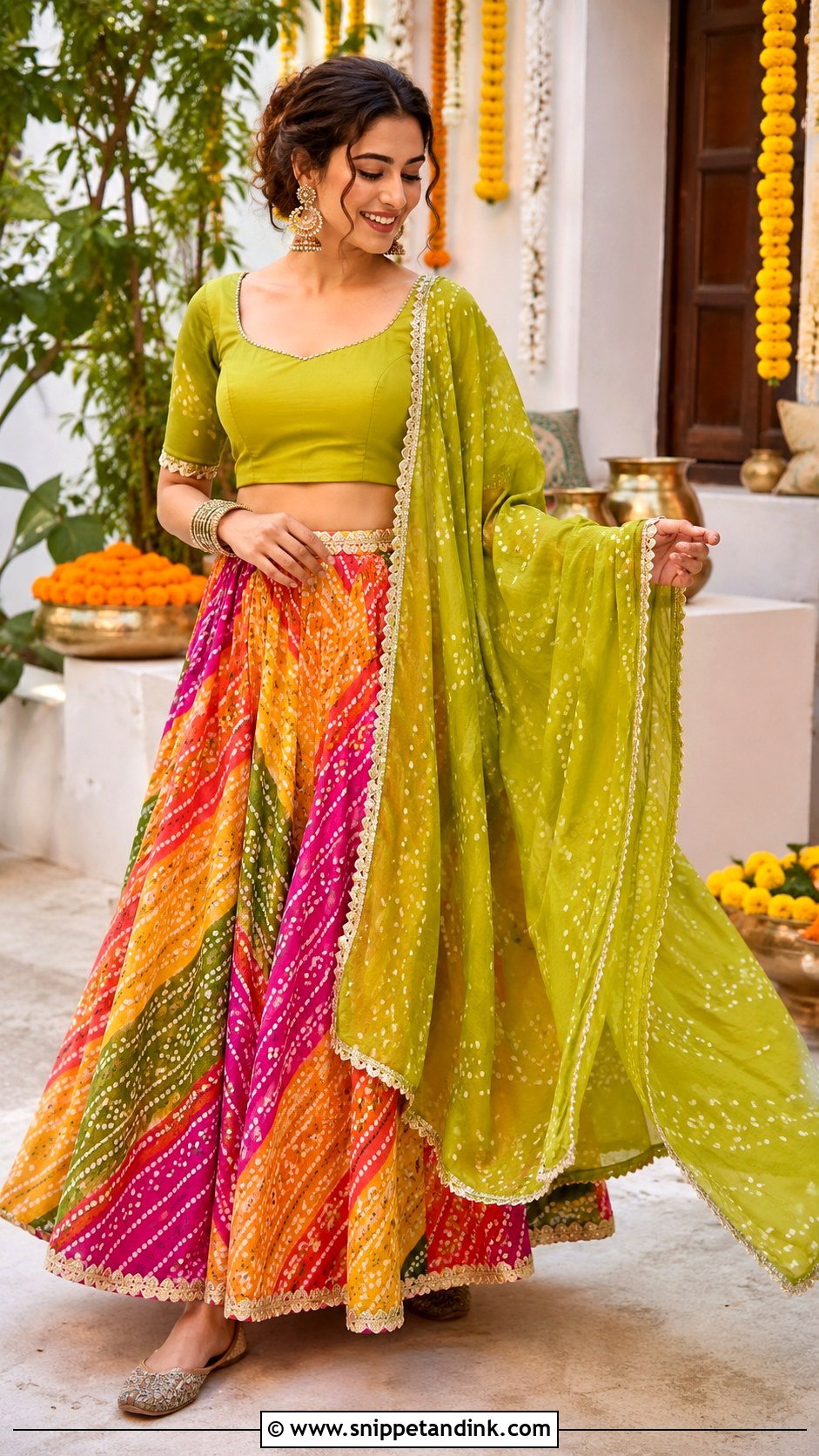
Bandhani carries its own detail through thousands of tiny resist-dyed dots, so the lehenga needs no heavy embroidery. Yellow, green, red, pink and orange prints are all traditional. Pair it with a plain crop blouse or short kurti to calm the print, and keep jewelry to jhumkas and a few bangles. Real bandhani can bleed colour on its first wash, so dry clean it or wash it alone in cold water.
17. Mirror Work Mehndi Kurta Outfit
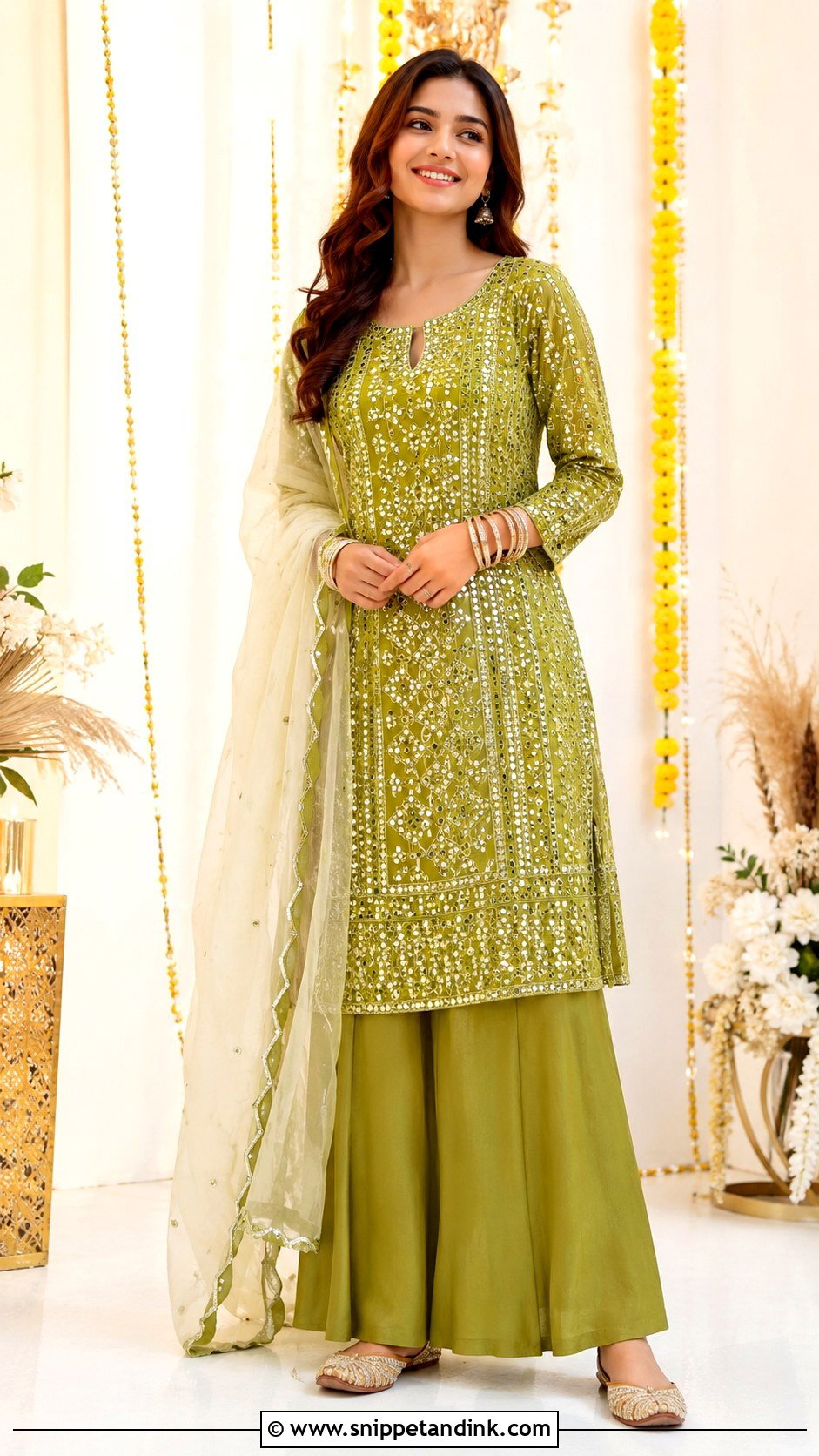
Mirror work sparkles under lights without the weight of sequins, which makes a kurta set comfortable for a long evening function. Yellow, green, pink or ivory bases all work. I follow a simple balance rule: a busy kurta gets plain bottoms, a plain kurta gets a printed dupatta. Keep the dupatta light so it doesn’t hide the mirror work, and stop at small earrings.
18. Lavender Mehndi Palazzo Outfit
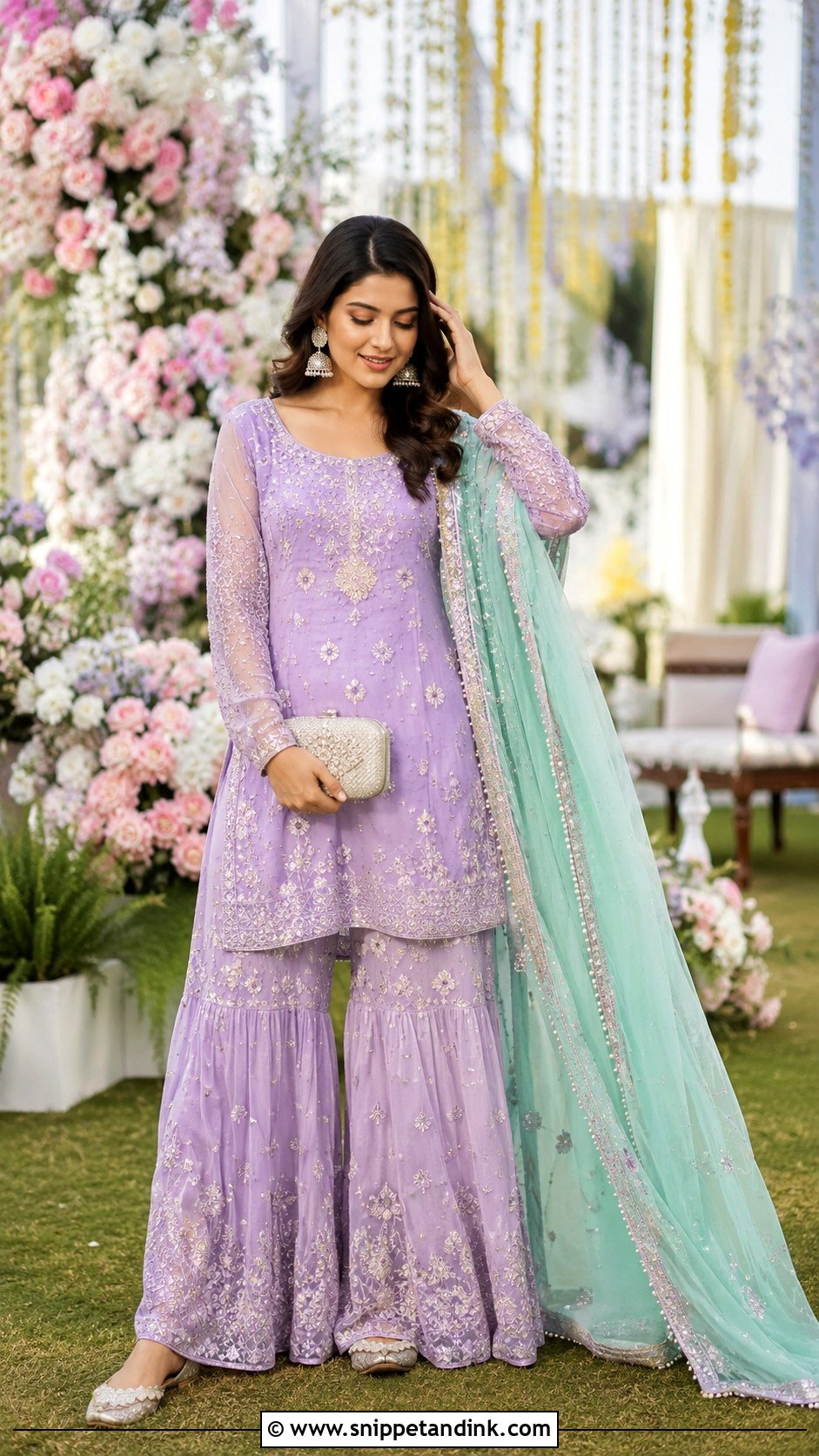
Lavender isn’t traditional at a mehndi, which is exactly why it works for a guest who wants to stand apart from the yellow and green. A lavender kurta with palazzo pants and a contrast dupatta in yellow, mint or ivory keeps it rooted in the occasion. Light sequins or floral print add interest. Silver jhumkas suit lavender better than heavy gold. It looks best in daylight or a garden.
19. Coral Mehndi Skirt Set Outfit
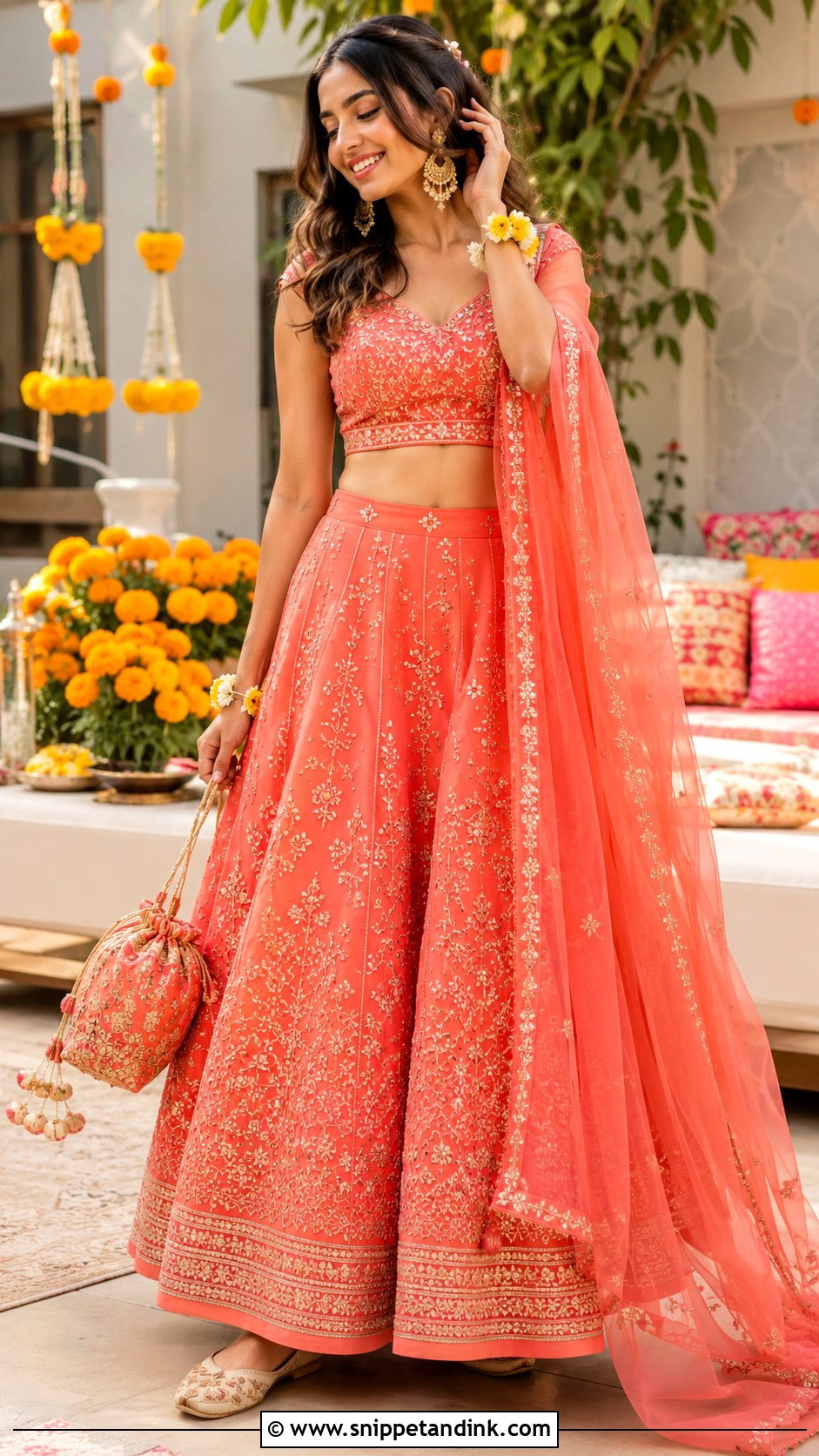
Coral sits between pink and orange, and it flatters a wide range of skin tones in both daylight and evening light. A flared skirt with a matching blouse or short kurti and a sheer dupatta in coral, peach or gold is easy to dance in. Check the waistband while seated; a tight skirt waist is the first thing people loosen at a mehndi. Juttis and gold earrings finish it for bridesmaids and sisters.
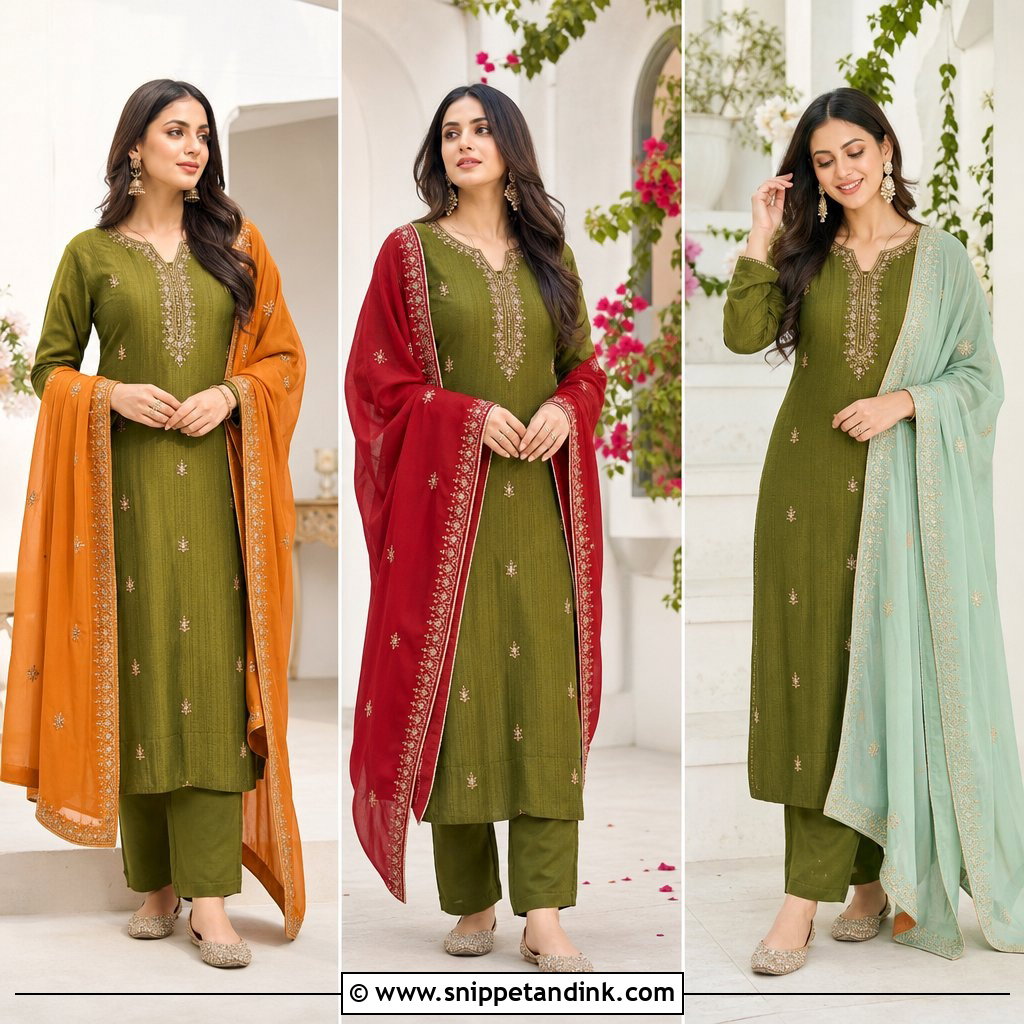
20. Ivory Mehndi Lehenga Outfit
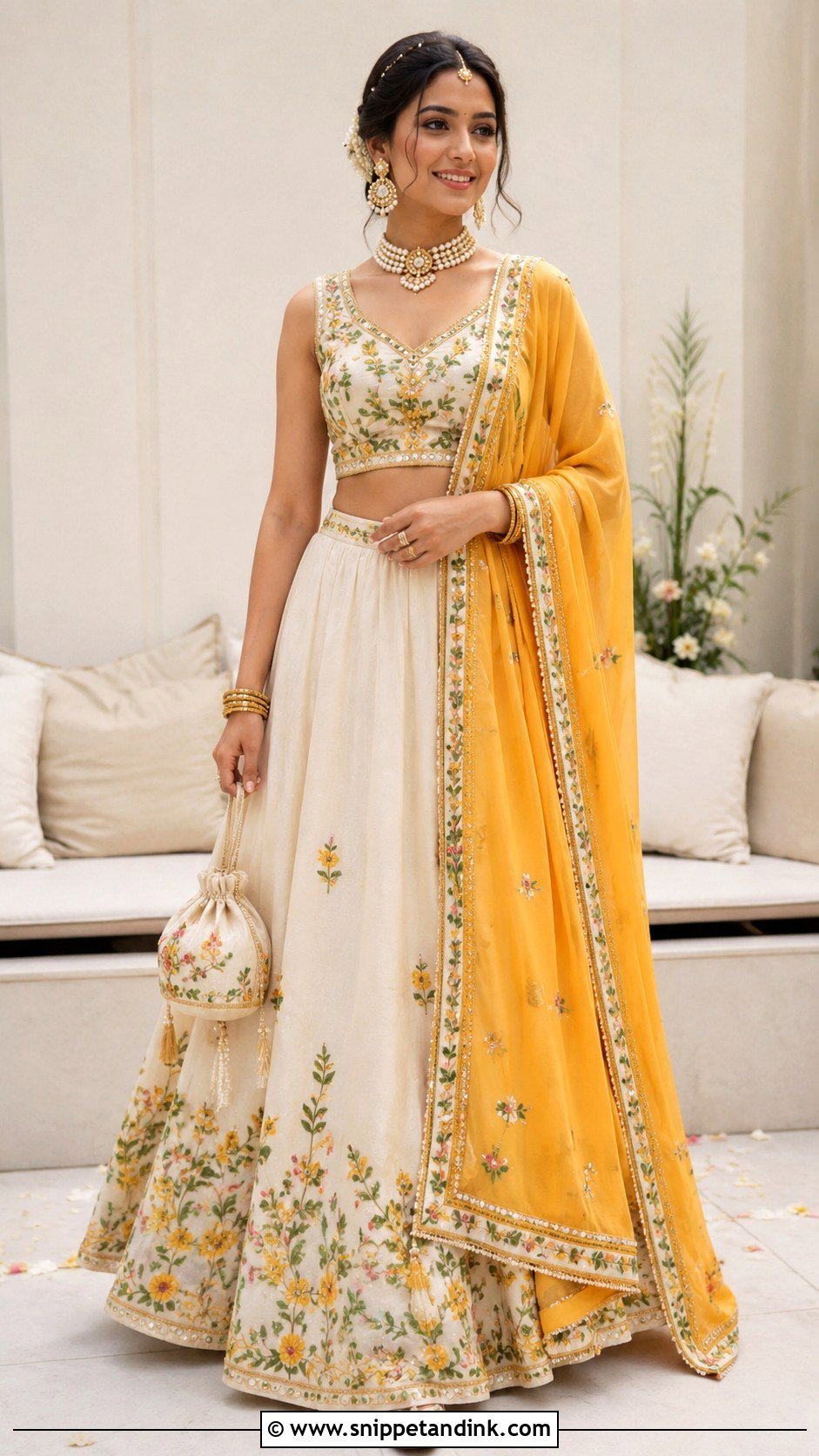
Ivory can look fresh at a mehndi if the colour comes through the embroidery and dupatta. Choose a light ivory skirt and blouse in organza, georgette, cotton silk or net with yellow, green, pink or orange thread work, then a bright dupatta. Guests should keep an ivory outfit clearly simpler than anything the bride wears. Pearls and gold bangles suit it, and ivory is one of the easiest bases to restyle for later events.
21. Leheriya Mehndi Kurta Outfit
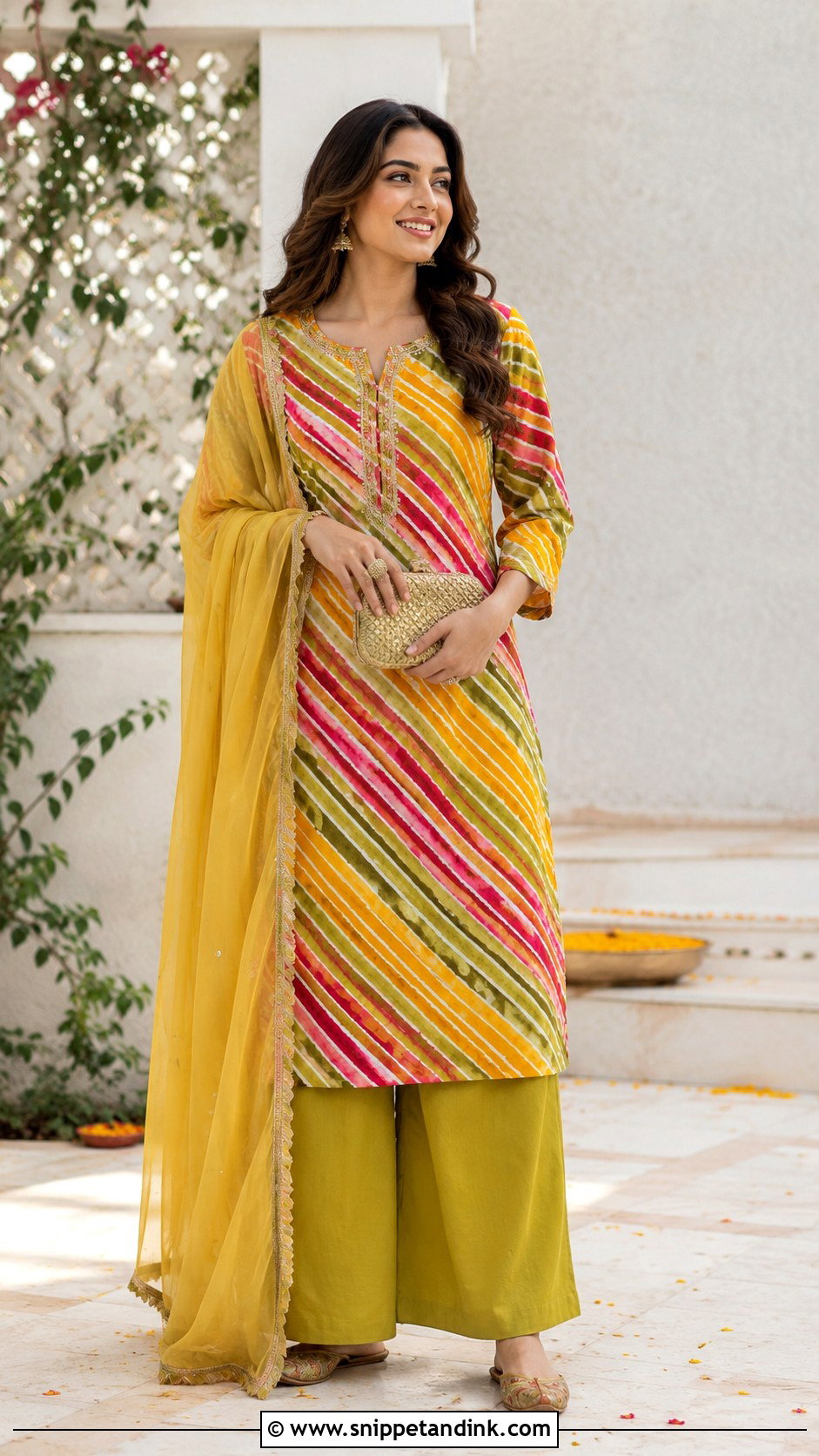
Leheriya is a wave-pattern tie-dye, and the print has so much movement that a leheriya kurta outfit needs very little jewelry. Pair a yellow, green, pink, orange or multicolour kurta with plain pants or palazzos. If you want more shape, an A-line or gathered waist helps. Like bandhani, it’s hand-dyed, so wash it separately the first few times.
22. Green Mehndi Anarkali Outfit
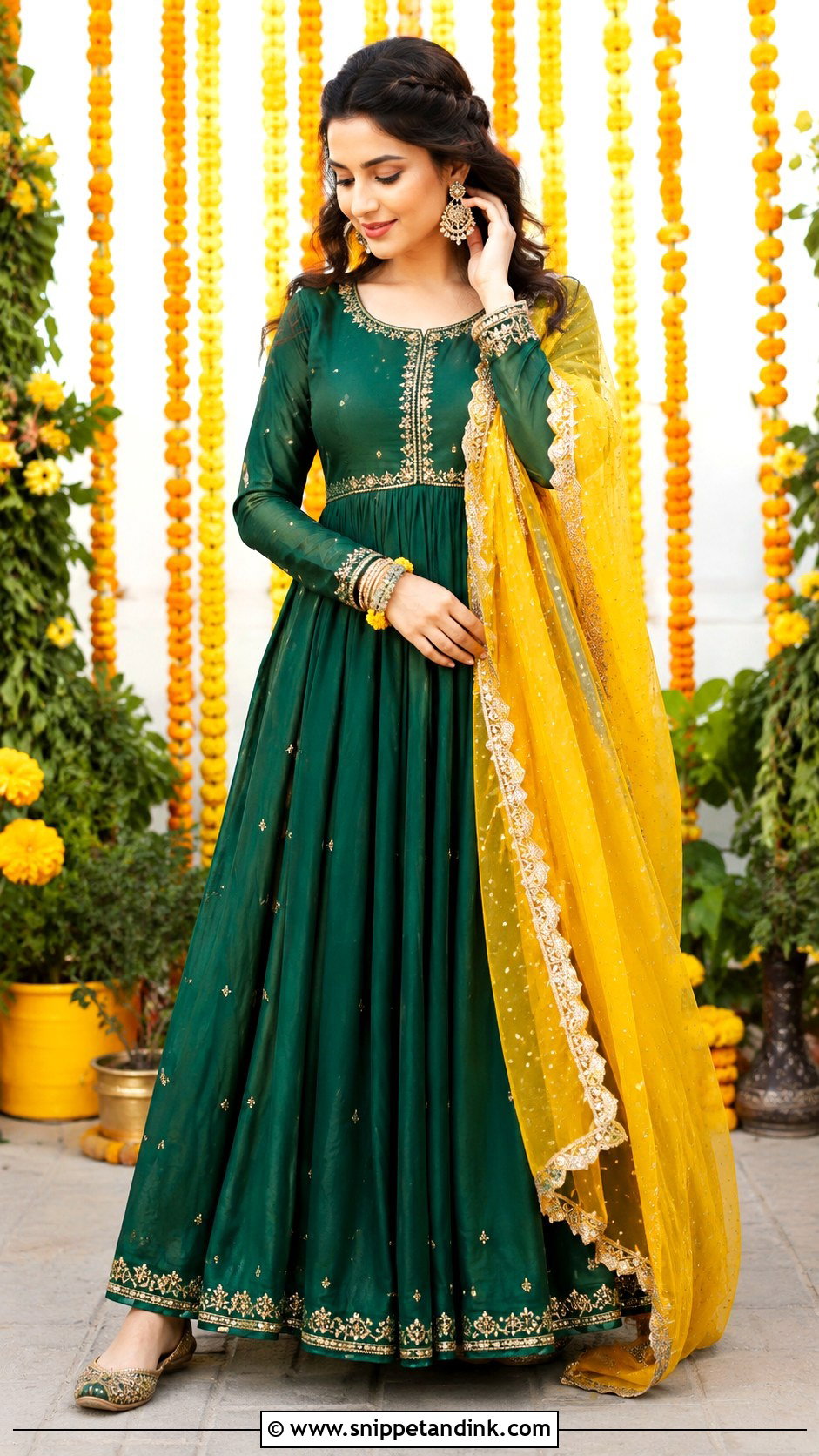
Green is the other classic mehndi colour, and a green anarkali in emerald, parrot, bottle green or olive gives you a dressed-up shape without a lehenga. A yellow, pink or gold dupatta adds contrast. If you’re sitting for henna, choose short sleeves; pushed-up sleeves slide back down and smudge the paste near the elbow. Kundan earrings and bangles suit the deeper greens.
23. Fuchsia Mehndi Salwar Outfit
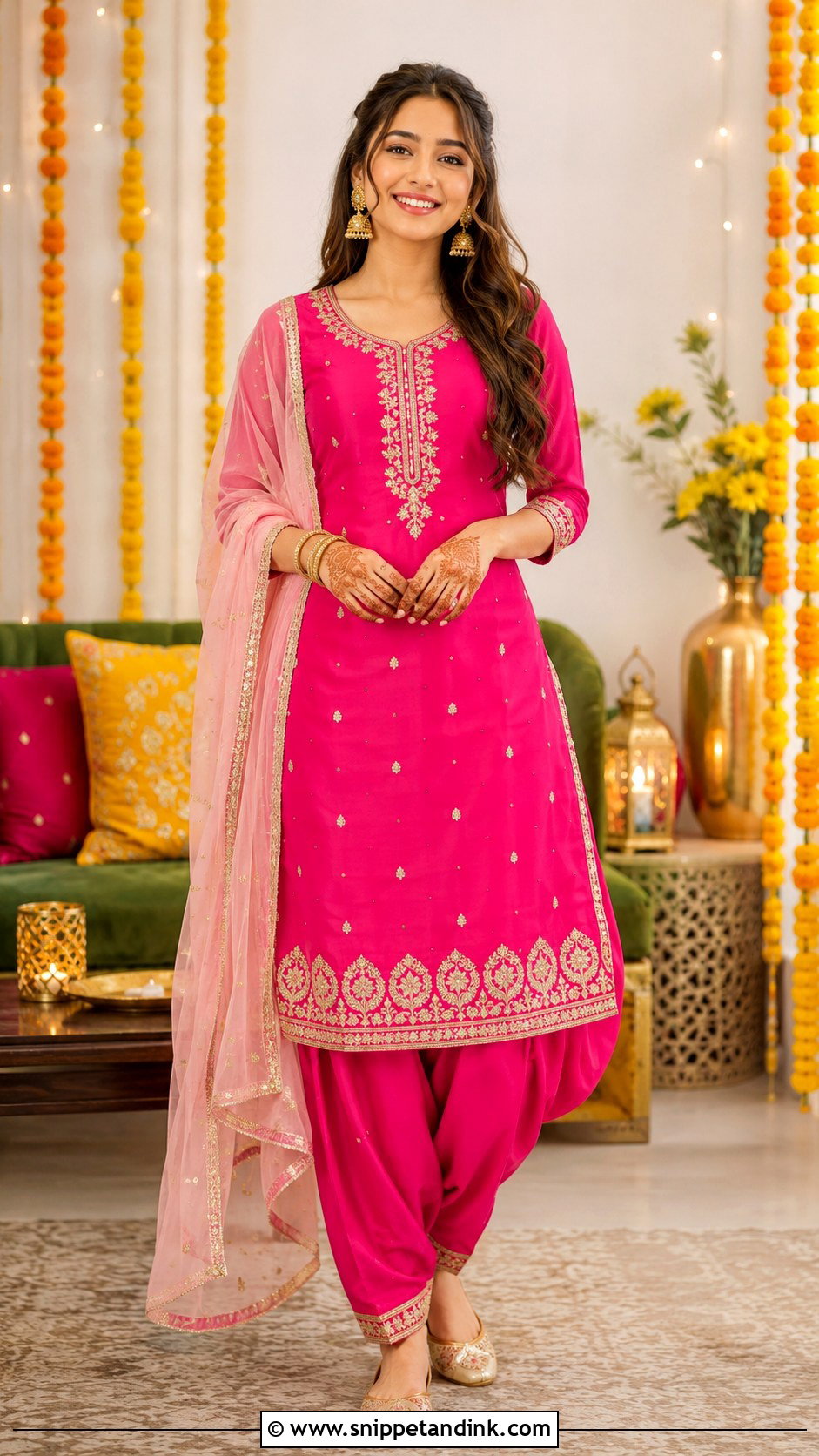
Fuchsia stands out at an evening mehndi in a way softer pinks don’t, especially once the lights go down. A straight or slightly flared kurta with salwar pants and a light dupatta keeps the silhouette easy. Gold, green or orange accessories all pair well. I’d keep embroidery to gota borders or small sequins so the colour leads. A sleek ponytail or braid stays tidy through the dancing.
24. Pastel Mehndi Sharara Outfit
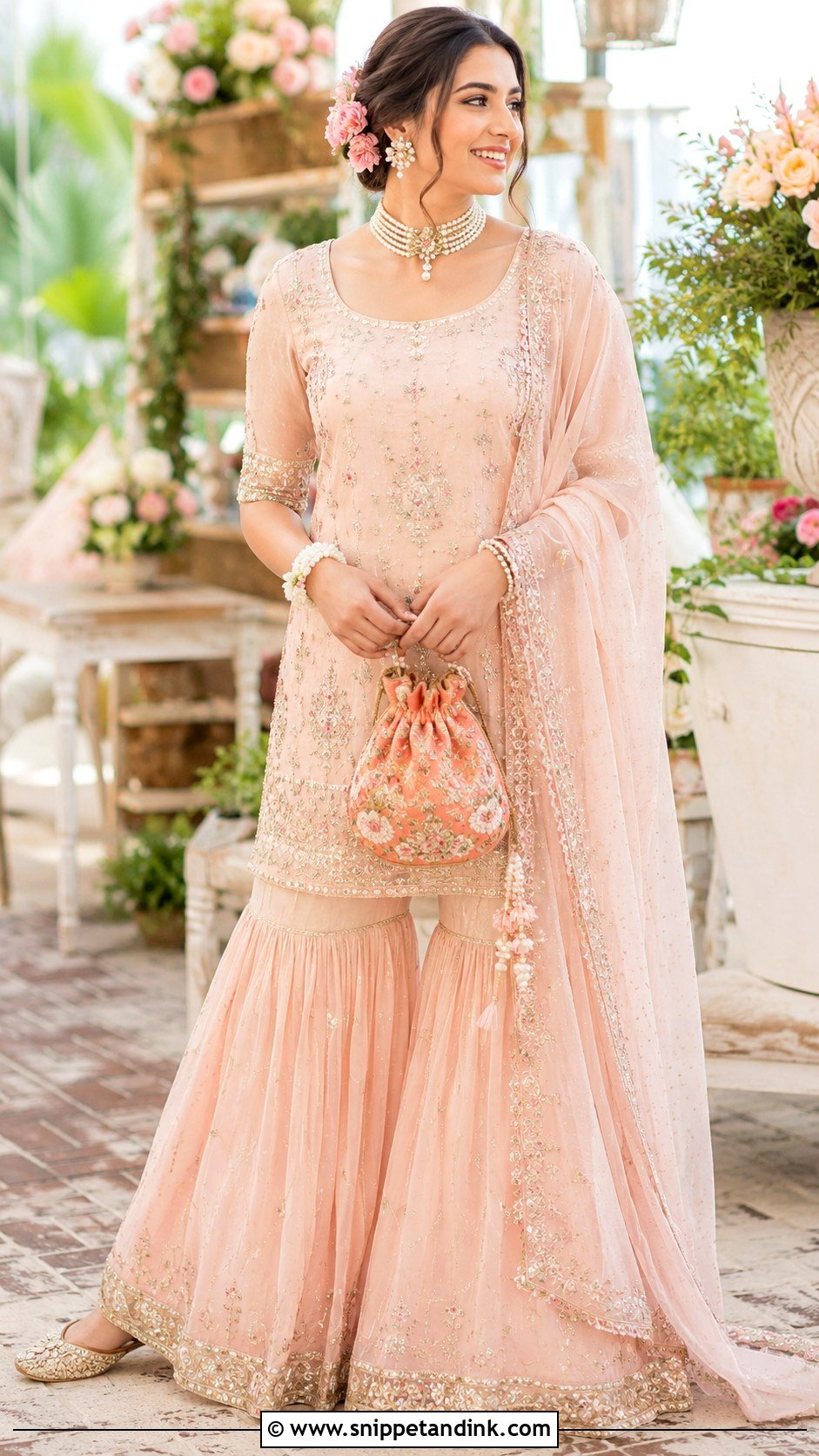
Pastel shararas in mint, blush, powder blue, peach or lilac look airy against bright decor. The risk is that they can look too subdued for a mehndi, so I add one bright element: a floral hair accessory, coloured bangles or a vivid potli bag. Light embroidery or delicate prints keep it refined. This is a good group choice for bridesmaids who each pick a different pastel.
25. Simple Mehndi Jumpsuit Outfit
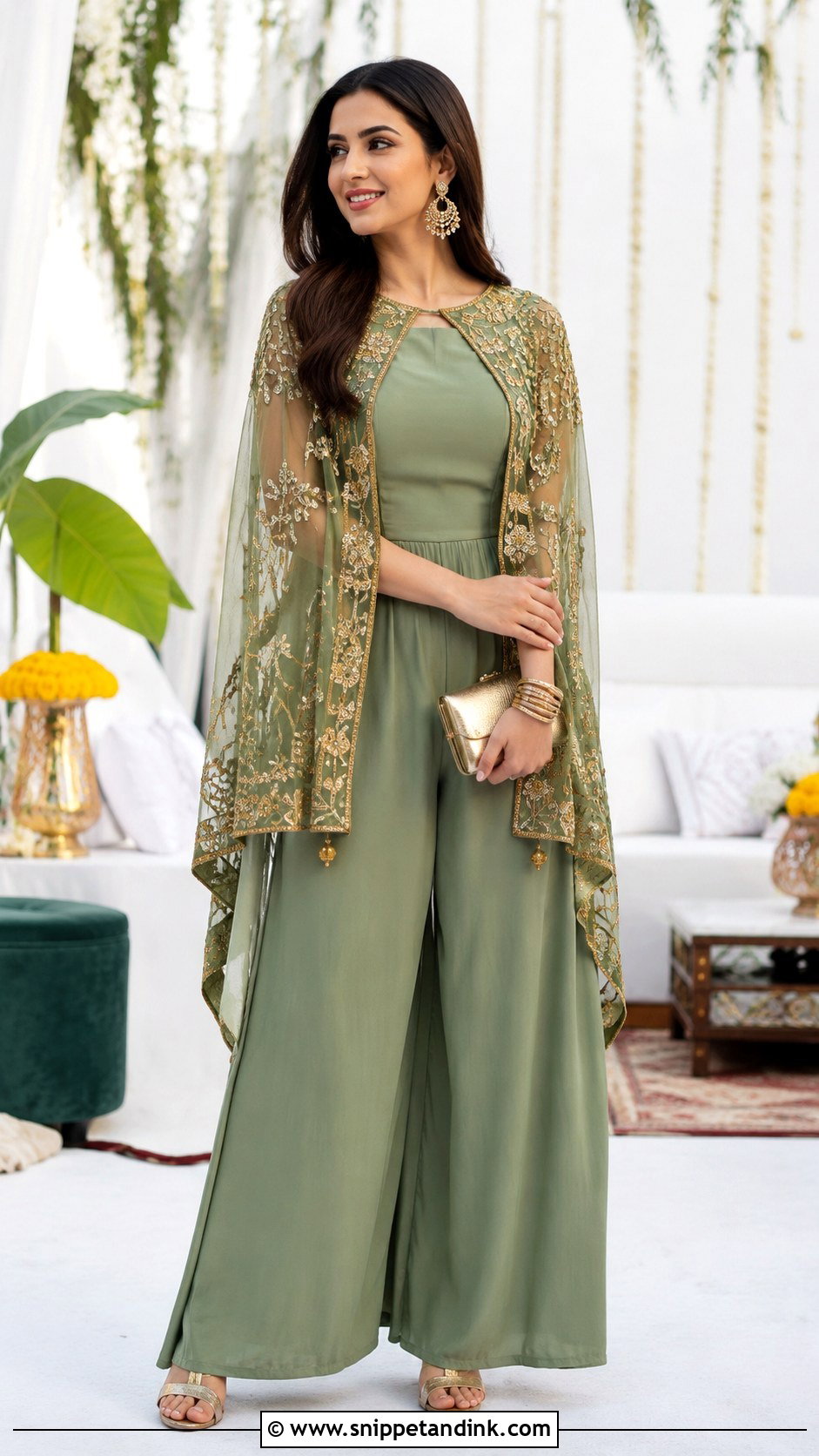
A jumpsuit is the fusion choice, and it suits guests and bridesmaids at a relaxed mehndi more than the bride herself. Wide-leg cuts sit and move like palazzos. An Indian-inspired jumpsuit in yellow, green, coral or pink, with a cape, dupatta or embroidered jacket, keeps it festive. Avoid a tight cut, and think about the bathroom before you choose a one-piece, since getting out of it with henna on your hands is a real problem.
Wearing a Mehndi Outfit Again After the Wedding
Simple mehndi outfits are worth buying partly because they come back out for Eid, Diwali, sangeets and other people’s weddings. A few habits make that possible.
Split the set
I tell clients to treat a set as separates. A mirror work kurta goes with plain white palazzos for a dinner; a sharara works under a different short kurti; a bright dupatta refreshes an old plain suit. When you buy, check that each piece stands on its own.
Deal with marks the same week
Henna, turmeric and oil stains set over time. Get the outfit to a cleaner soon after the function and tell them what the mark is. Don’t iron over a stain, as heat fixes it.
Store it so the work survives
Metallic gota and zari can tarnish in damp air and near perfume, and mirror work cracks if it’s folded sharply. Fold heavier pieces loosely with soft cotton or muslin between the layers, keep them in a breathable cloth bag rather than plastic, and refold along different lines every few months so the creases don’t wear through.
Comfort Shows in the Photos Before the Fabric Does
When I look back through mehndi photos, the outfits that look best are the ones people forgot they were wearing. Light lehengas, shararas, kurta sets, anarkalis, palazzos, sarees and fusion jumpsuits can all work when the fabric breathes, the sleeves suit the henna, the dupatta is pinned and the shoes can handle grass or a dance floor. Yellow and green are the classics. Pink, peach, mint, lavender, coral, ivory and multicolour prints are just as festive when the styling stays simple.
You'll Like These Ideas:


Leave a Reply