
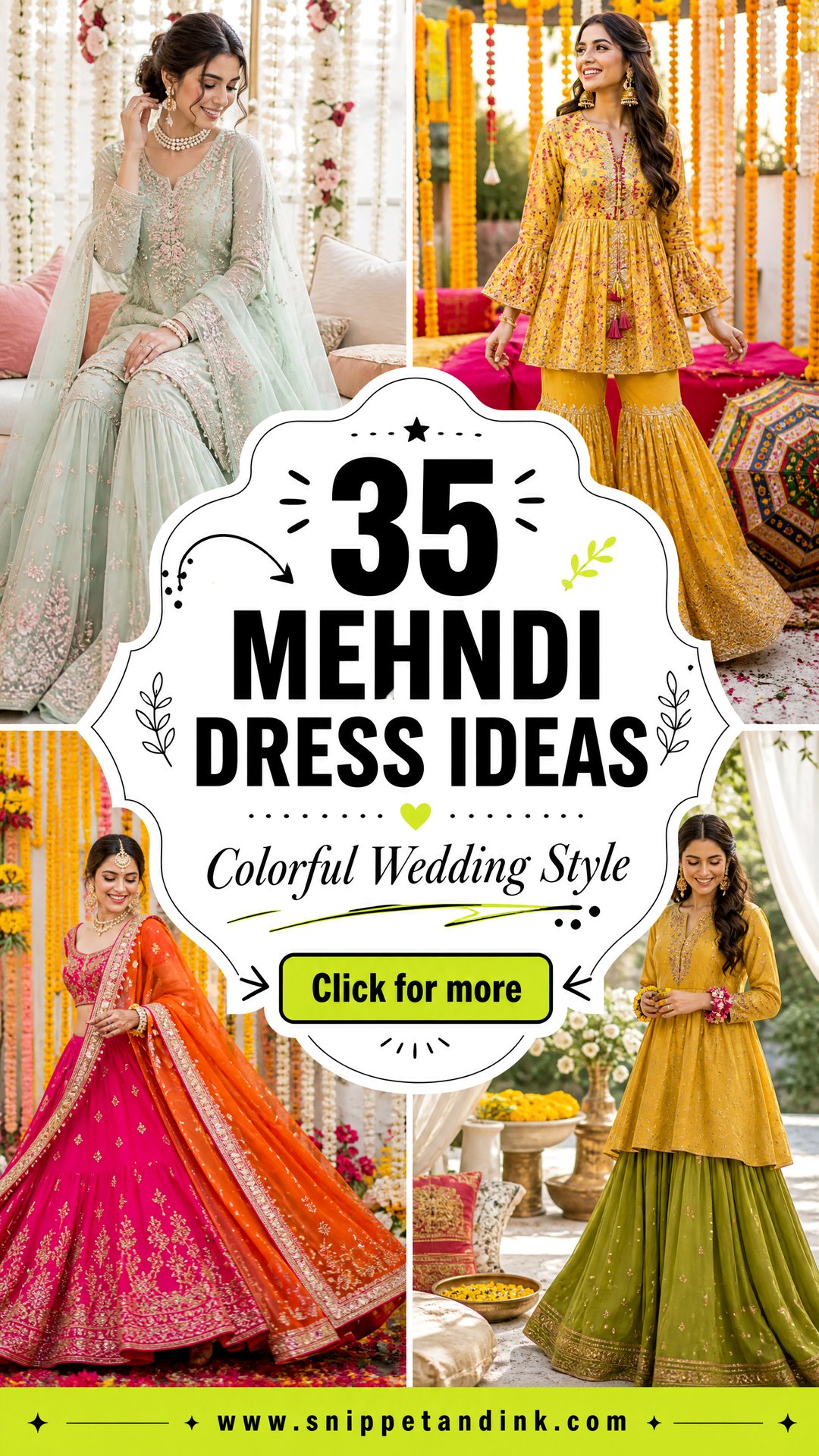
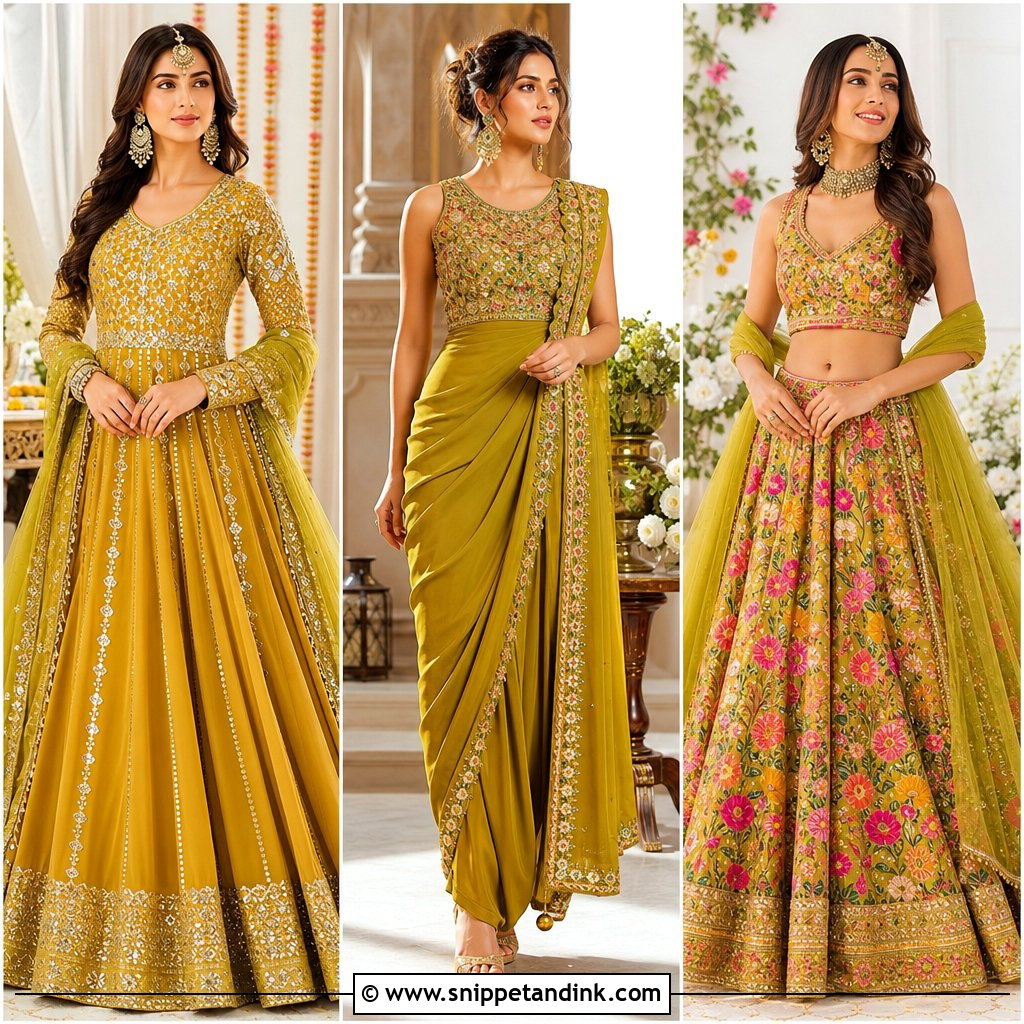
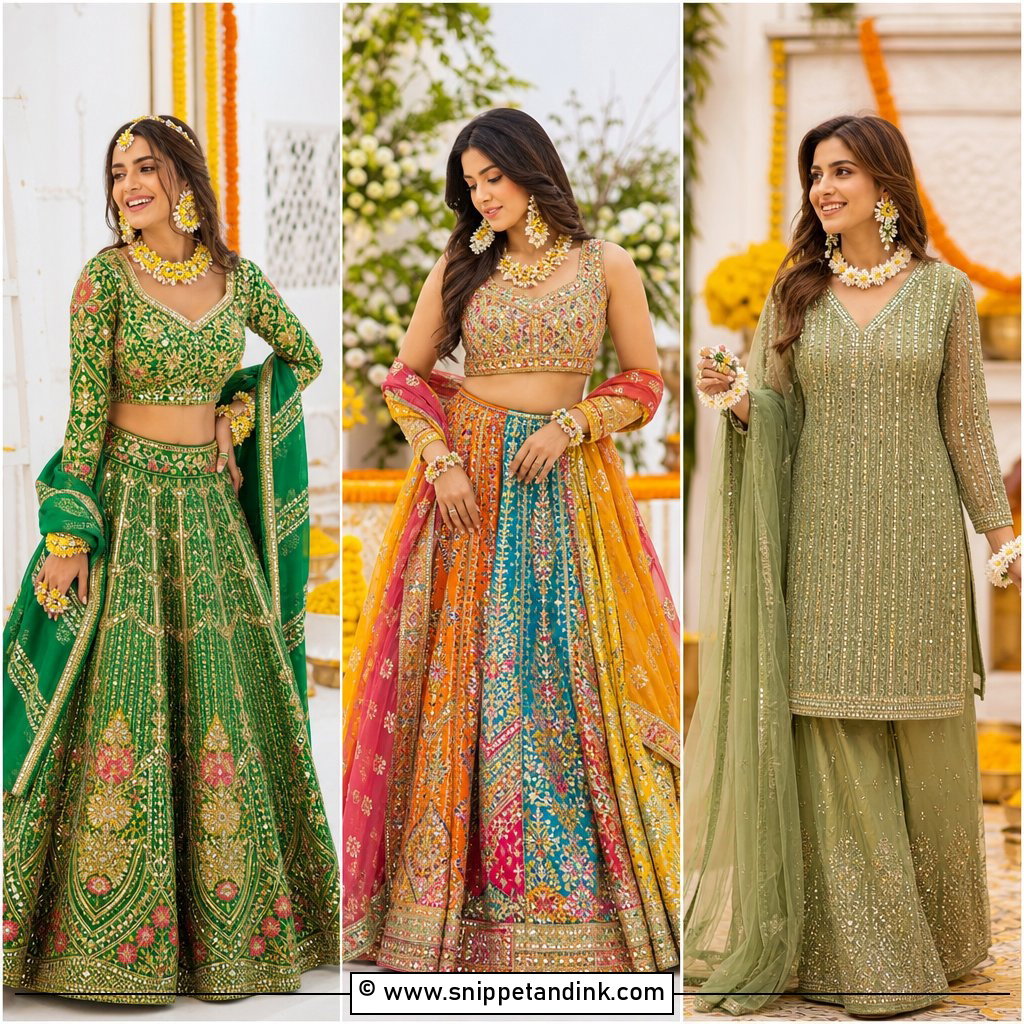
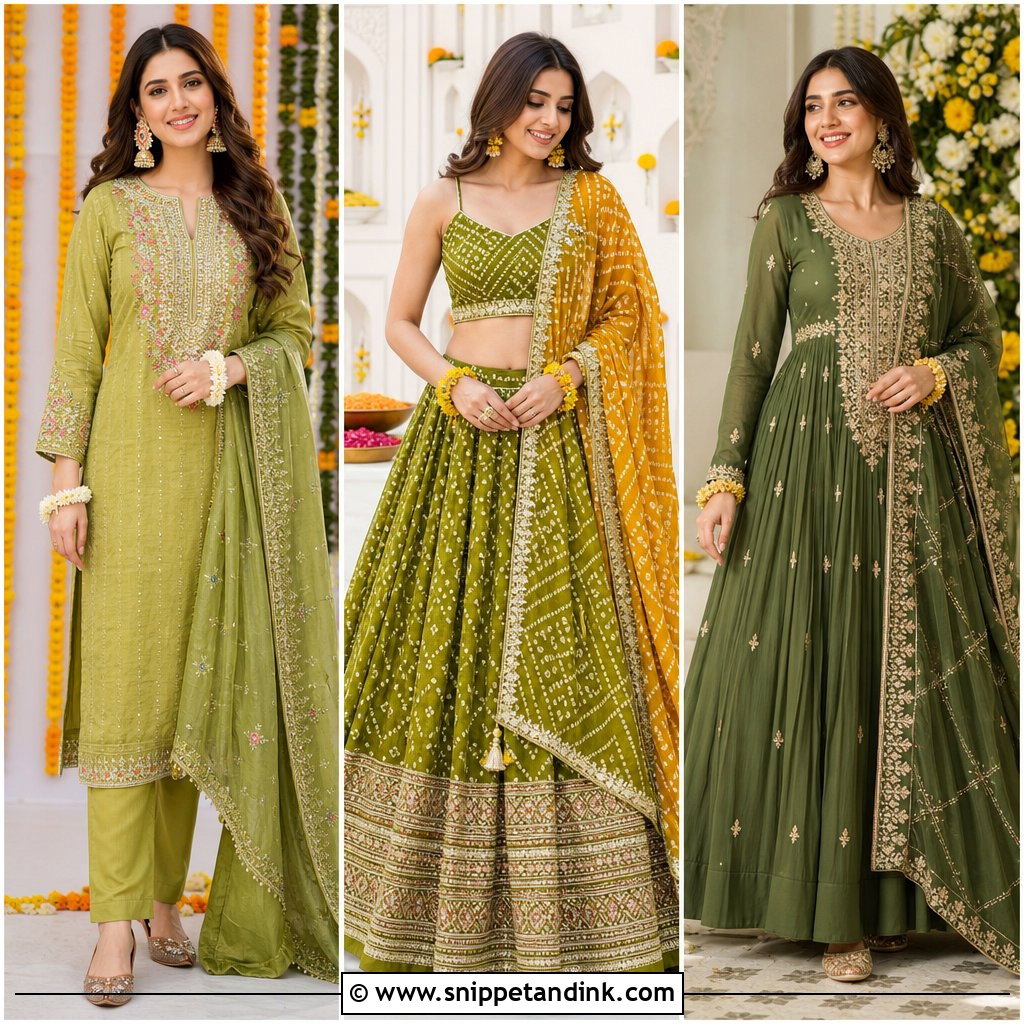
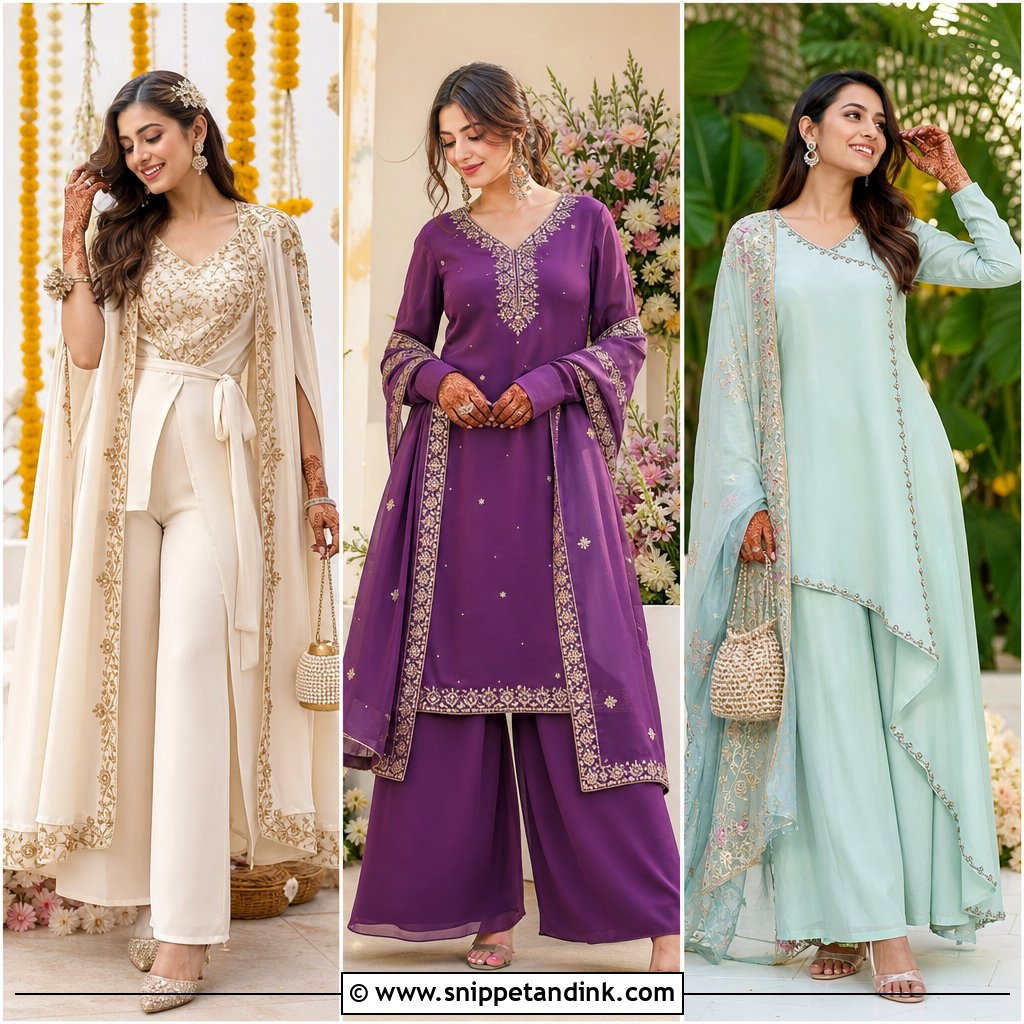
A mehndi asks a lot of an outfit. People sit on cushions, get up to dance, hug every relative who walks in and stay for hours in the heat, often with wet henna on their hands. So when someone asks me what to wear, my first question isn’t about color. It’s about their role: the bride dresses differently from her sister, and a guest dresses differently again. The thirty-five outfits below cover lehengas, shararas, anarkalis, sarees and modern fusion outfits, mostly in the yellow, green, orange and pink a mehndi is known for, with some pastels and quieter cuts too. For each, I’ve said who it suits and what to check before you commit.
Bride, Sister, Mother or Guest? How Much Embroidery Your Role Allows
The most common styling mistake I see at a mehndi isn’t a bad color. It’s someone dressed for the wrong role. The function is relaxed compared with the wedding, but there’s still an order to it, and getting it right is mostly about how much embellishment you wear.
The bride
She gets the heaviest work and the brightest version of the family’s chosen color. She also needs the most practical outfit, since she’ll sit for hours with henna drying on her hands and feet. Short sleeves, a pinned dupatta and nothing that has to be pulled over the head.
Sisters and bridesmaids
Coordinated, not identical. I’d agree a palette with the bride, then let each person pick her own silhouette. Lighter embroidery than the bride’s, and if anyone is getting her own henna done, the same sleeve rule applies.
Mothers, aunts and guests
Ask the host whether there’s a color theme; many families send one with the invitation. Without one, festive brights are safe. Avoid heavy bridal red and anything close to the bride’s exact outfit, and lean toward sarees, kurta sets and anarkalis that look dressed without competing.
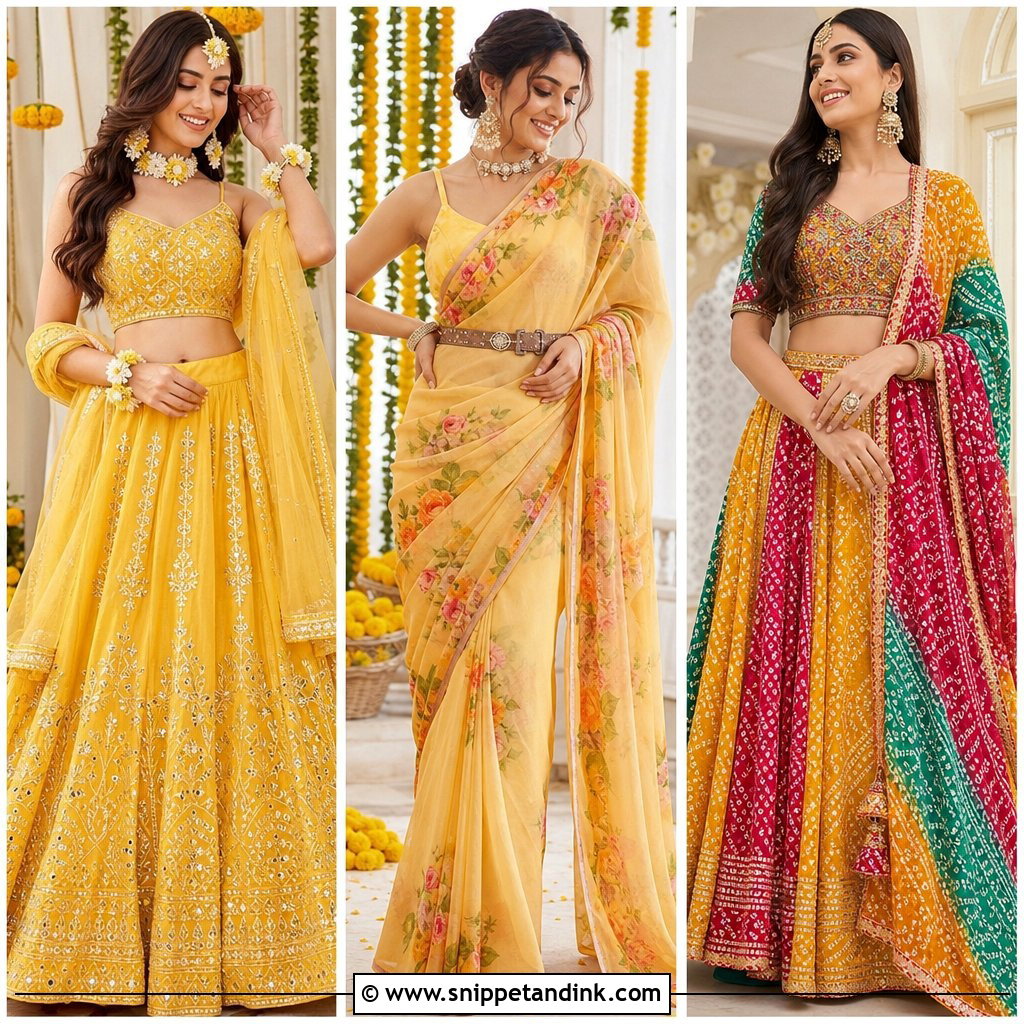
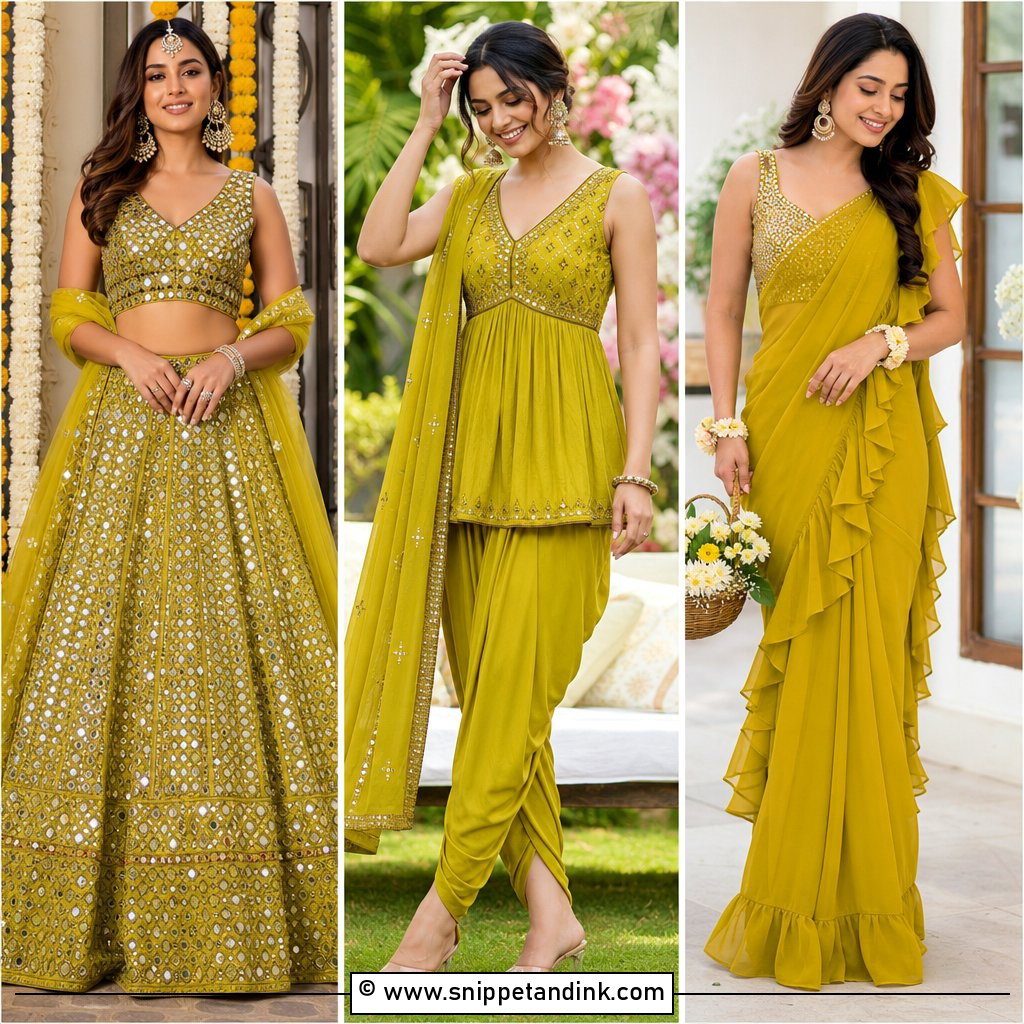
1. Yellow Lehenga With Mirror Work
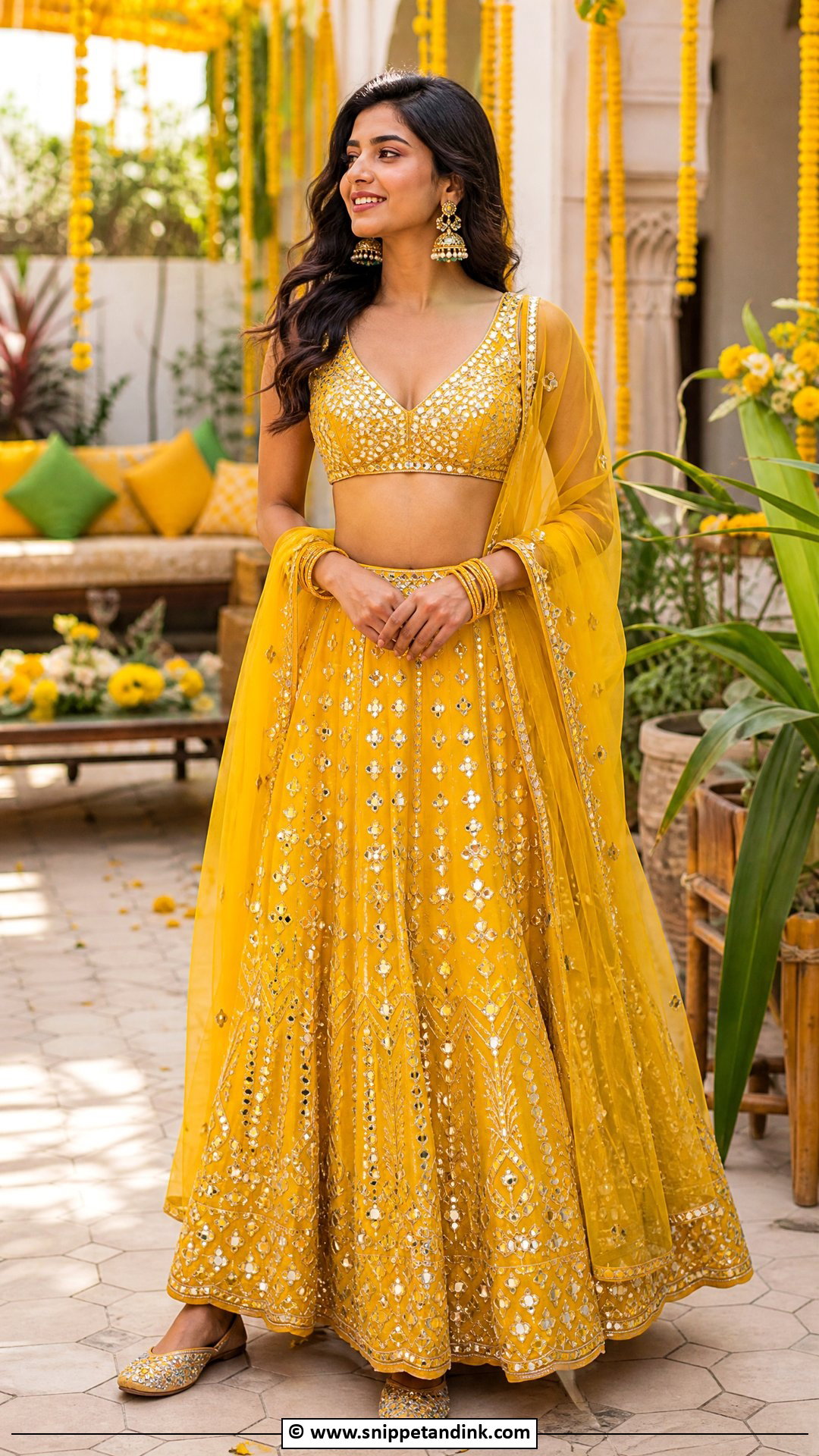
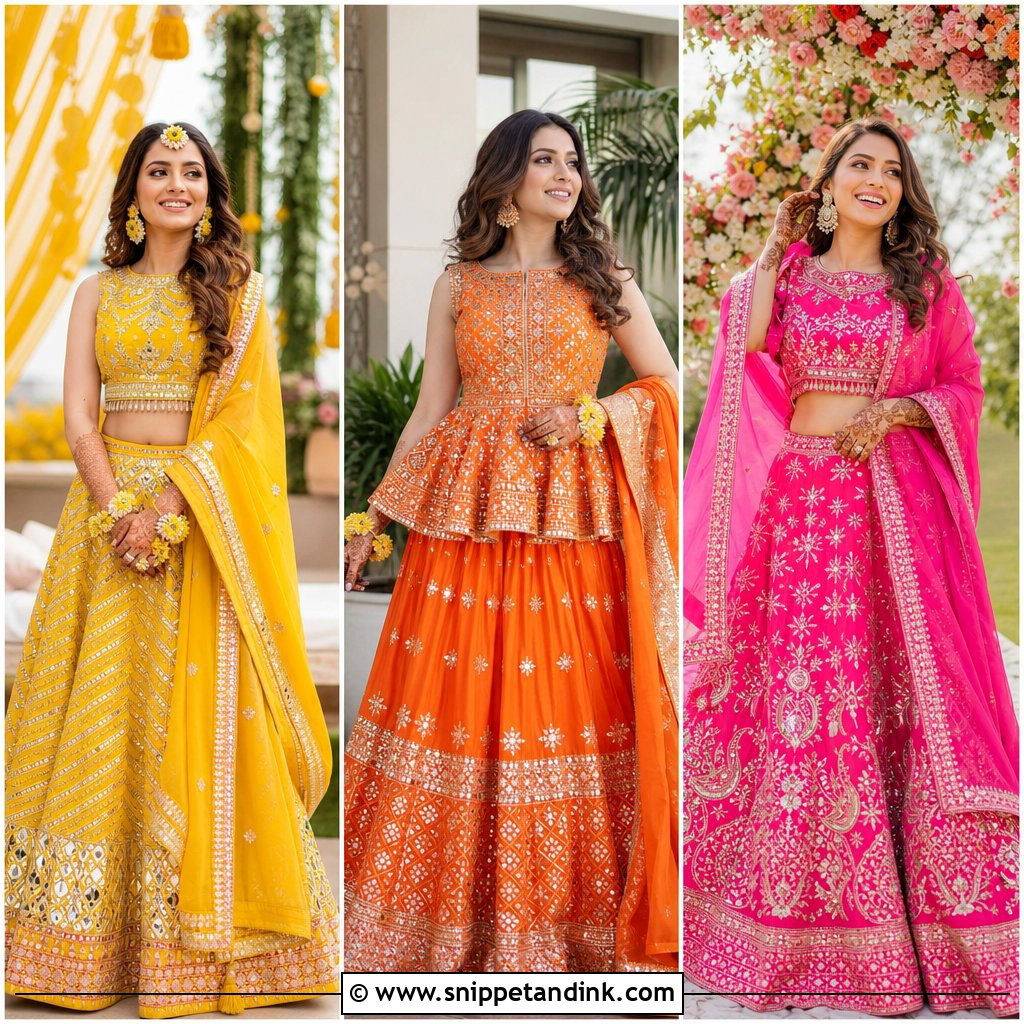
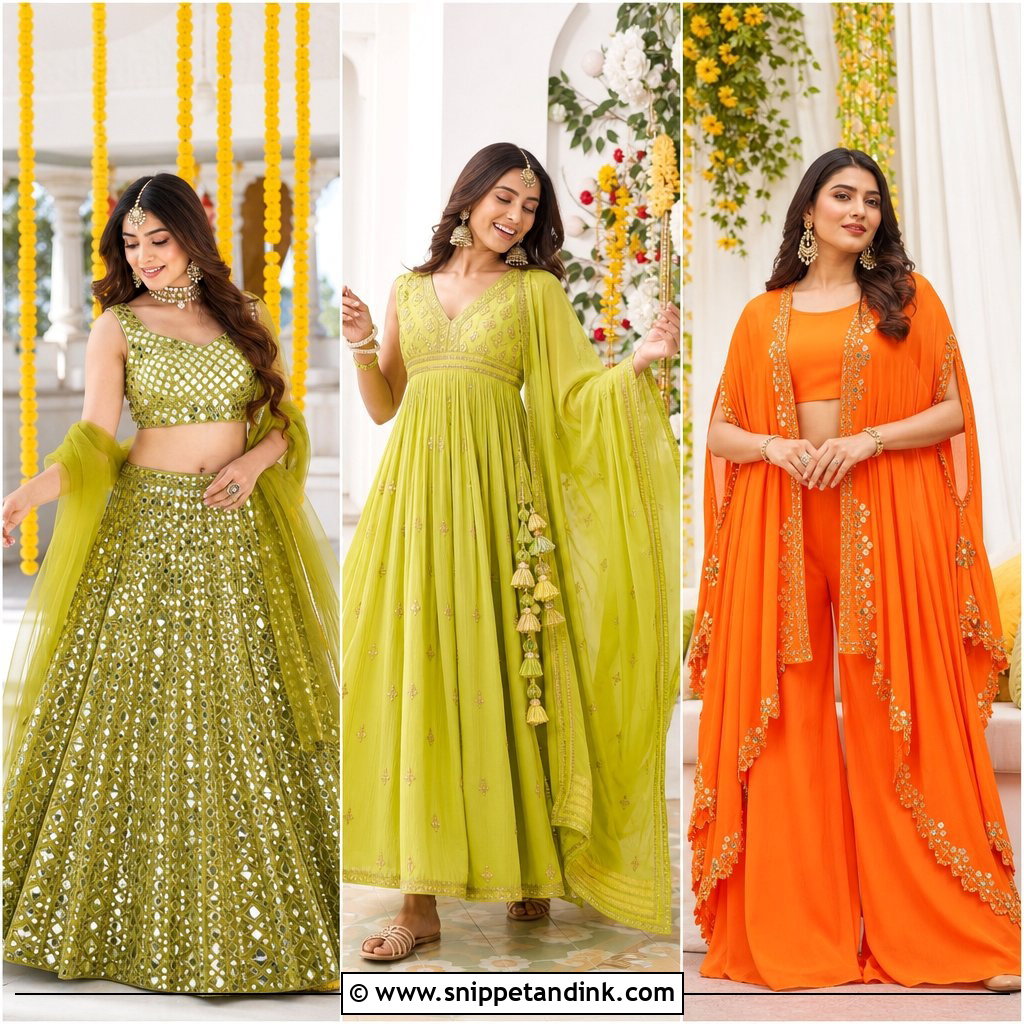
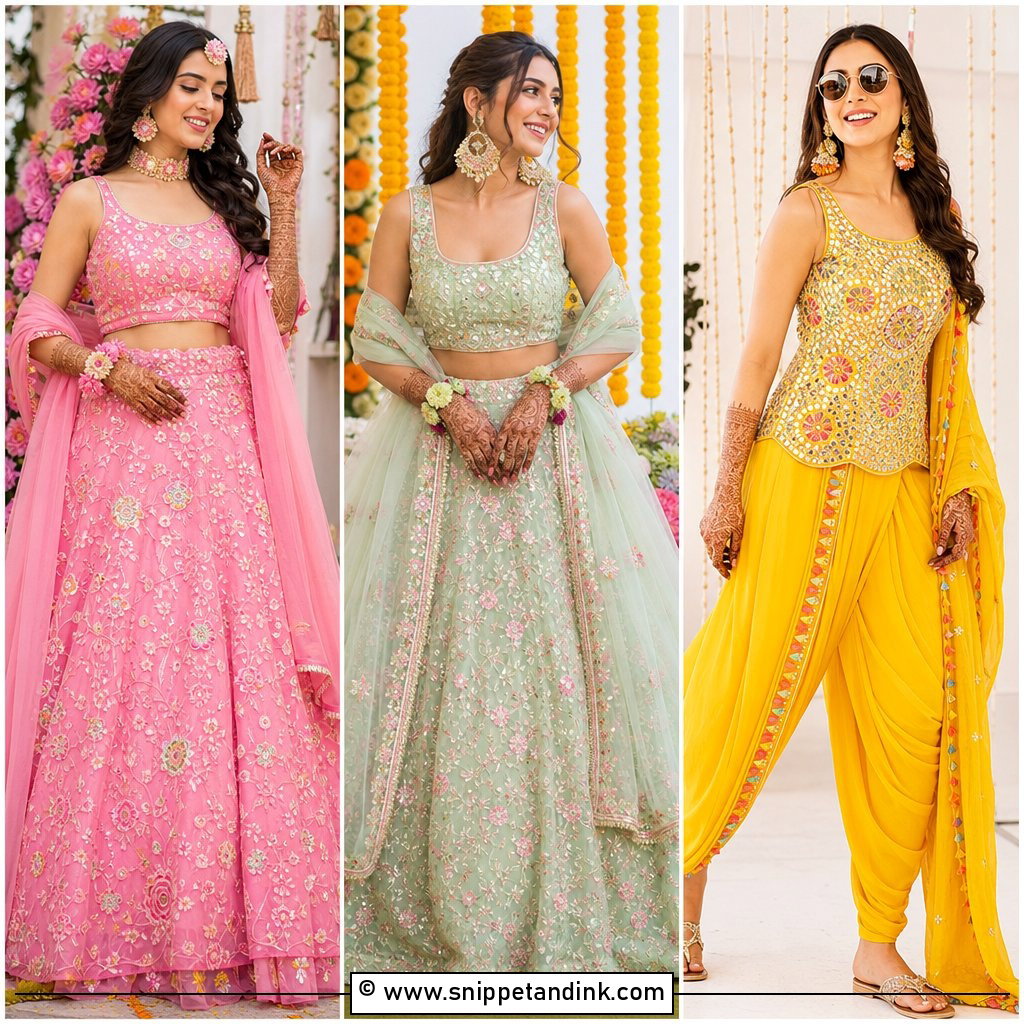
Mirror work on yellow is the outfit people picture when they hear the word mehndi, and it earns that place. The little mirrors catch daylight and flash on camera without needing heavy embroidery. Keep the skirt light so you can sit through a long afternoon, and pin the dupatta neatly on one shoulder. For the bride, I’d go denser with the mirrors; sisters and friends look better with a lighter scattering so the bride stays the brightest yellow in the room. Jhumkas, bangles and block heels or embellished flats suit it, and a loose braid keeps hair off the neck when the dancing starts.
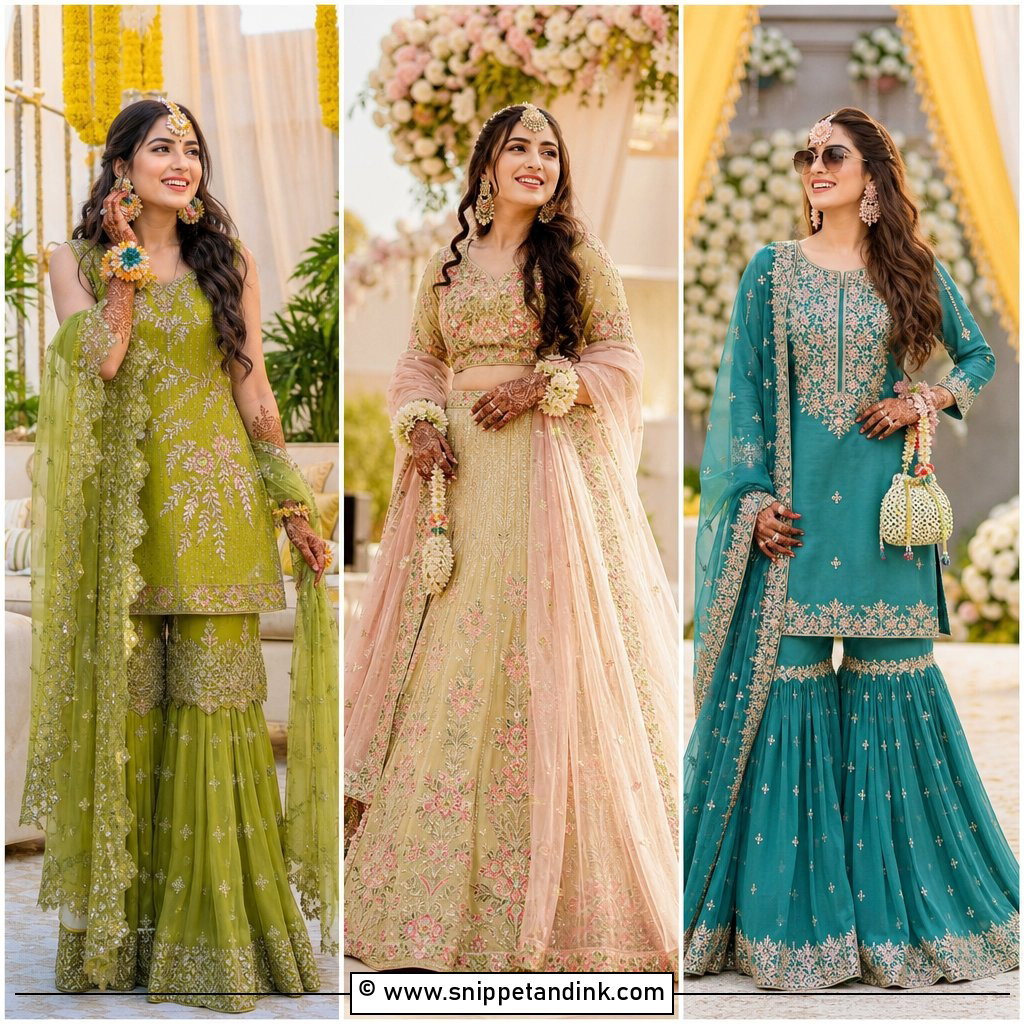
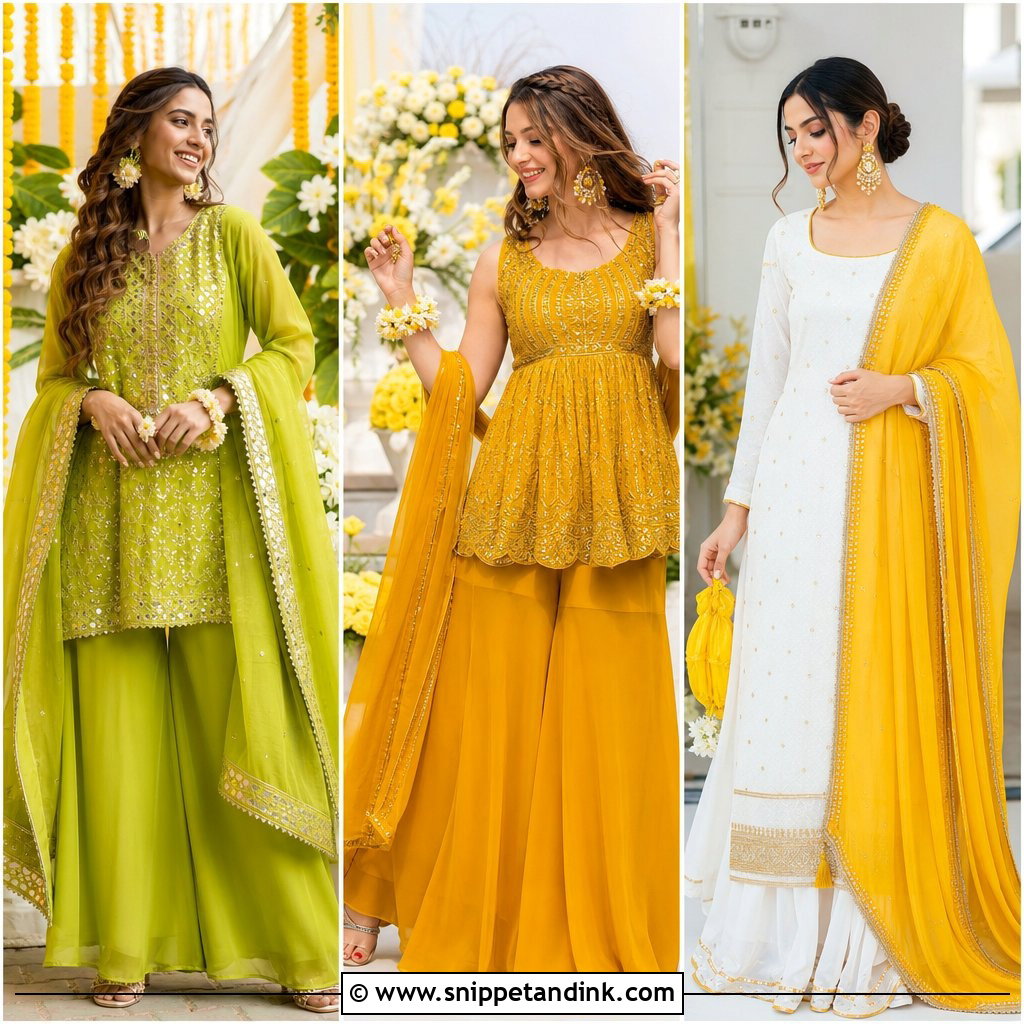
2. Green Sharara Set With Dupatta
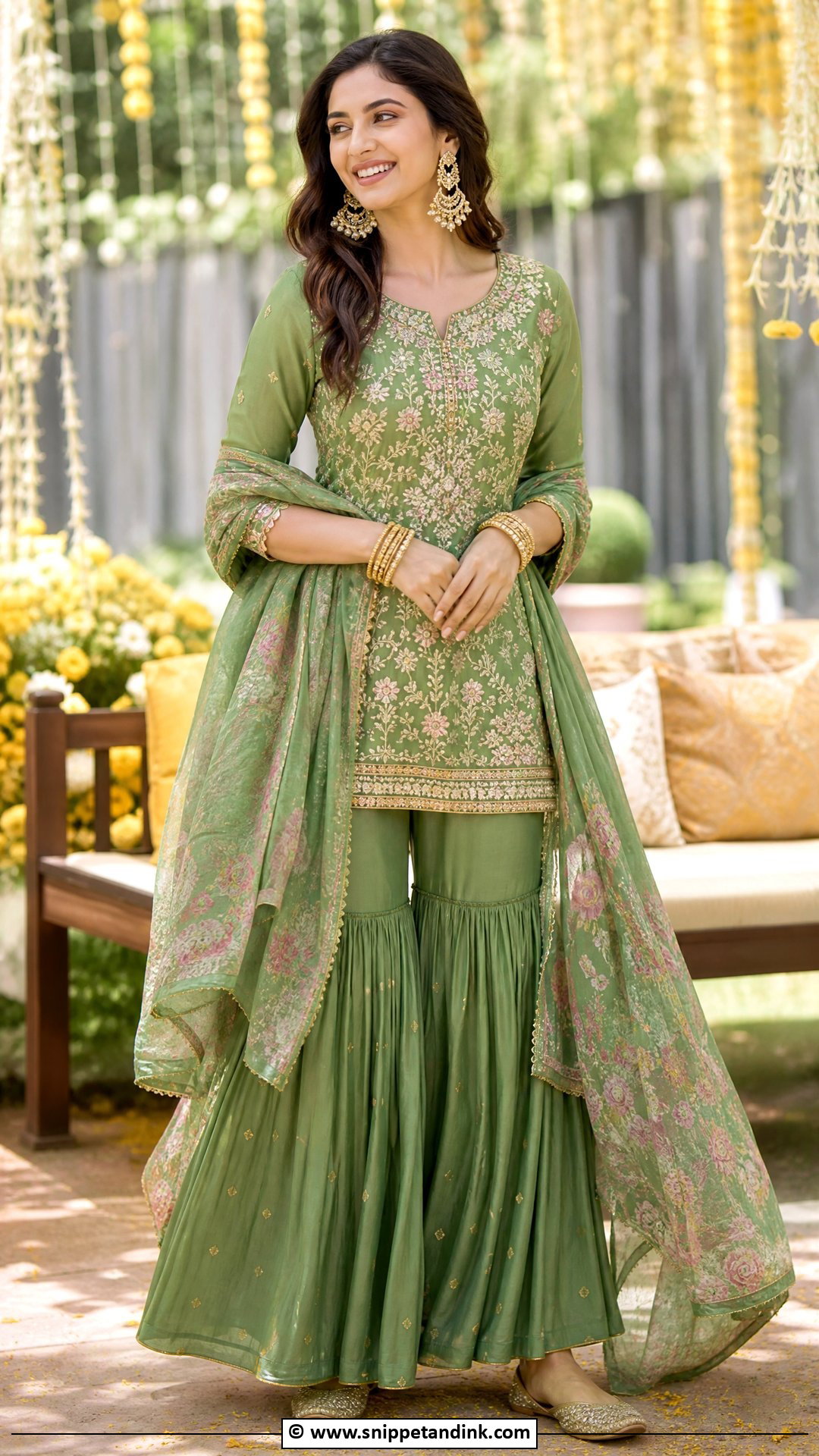
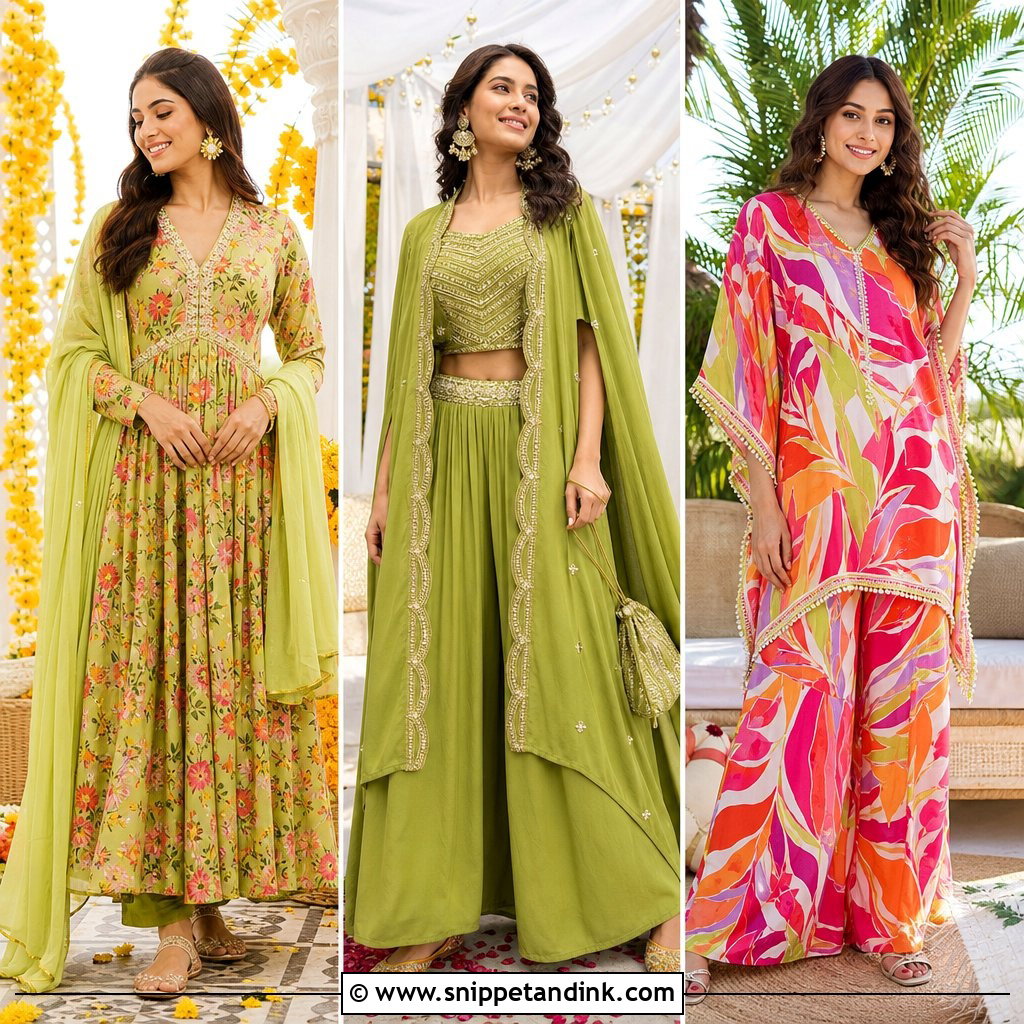
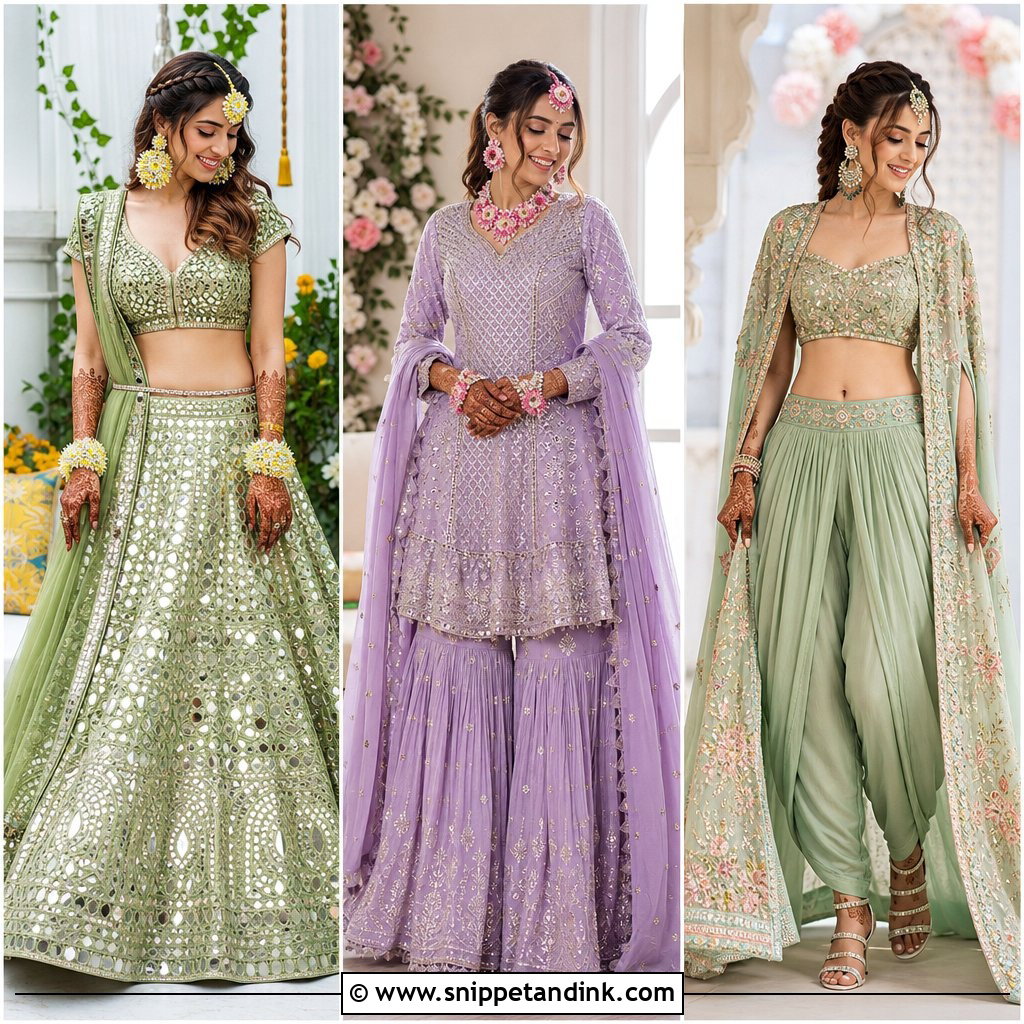
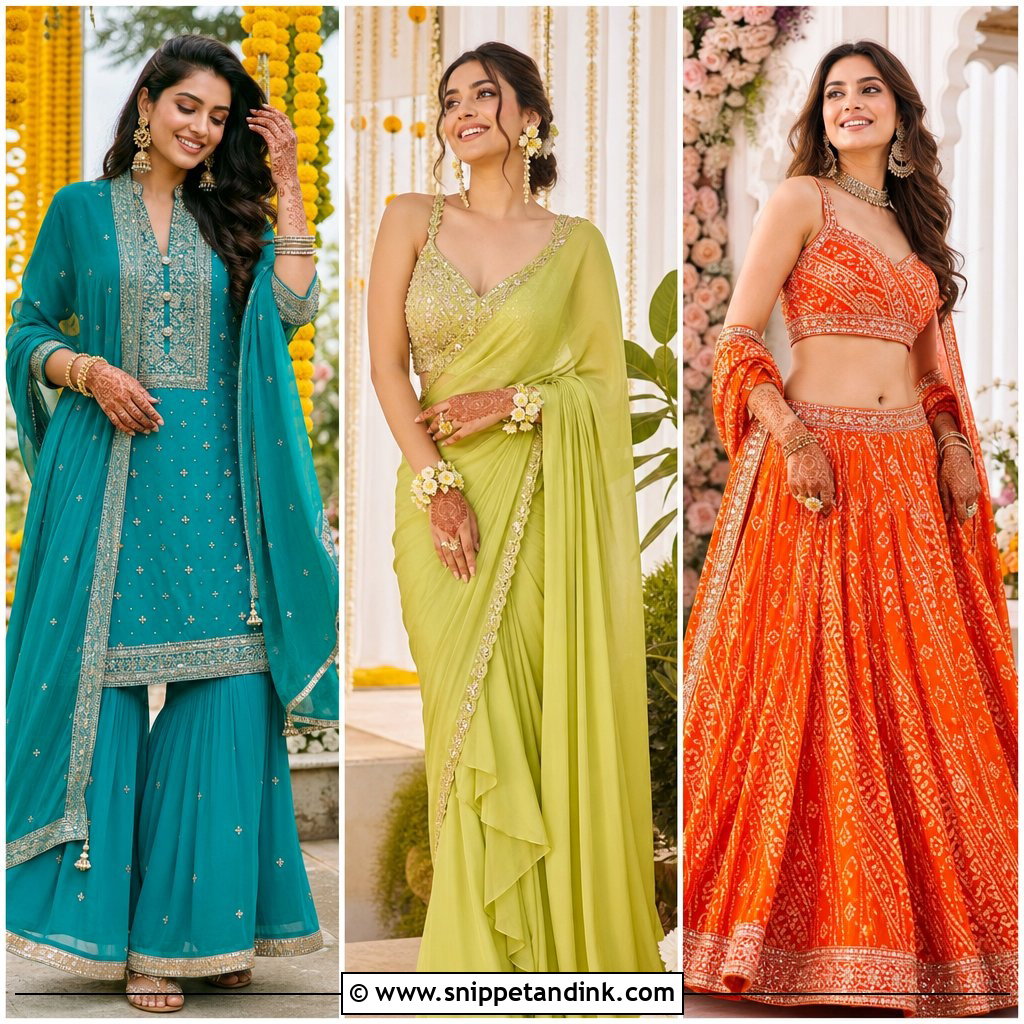
Green ties straight back to the henna, and the sharara’s wide legs are the reason this set is so easy to live in. You can sit cross-legged for the application and still get up for the group dance without adjusting anything. A bride can take it bridal with gota patti, thread work or mirror accents. As a guest, I’d choose a simpler cotton silk or georgette version so it looks polished without competing. Chandbalis, stackable bangles and low heels finish it. Make sure the hem just grazes the floor in the shoes you’ll wear, or the wide legs catch under your heels.
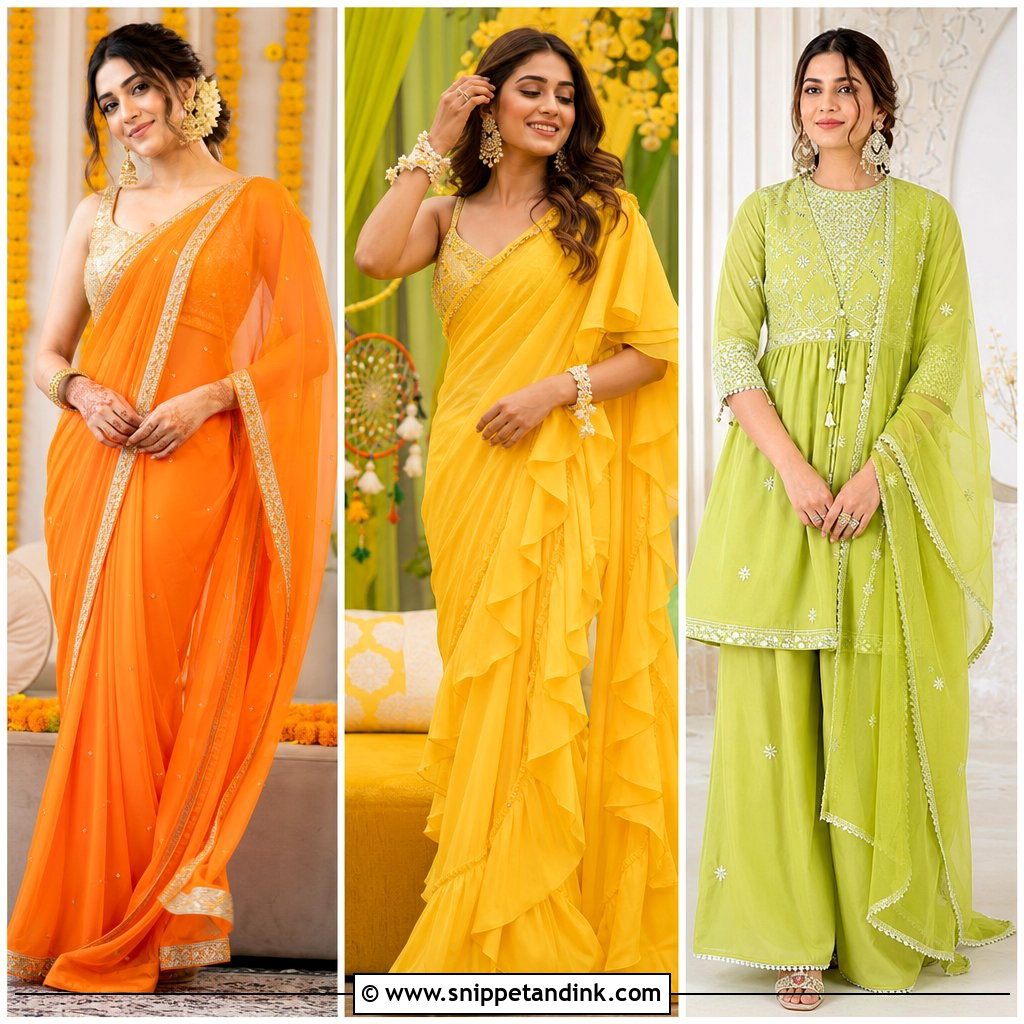
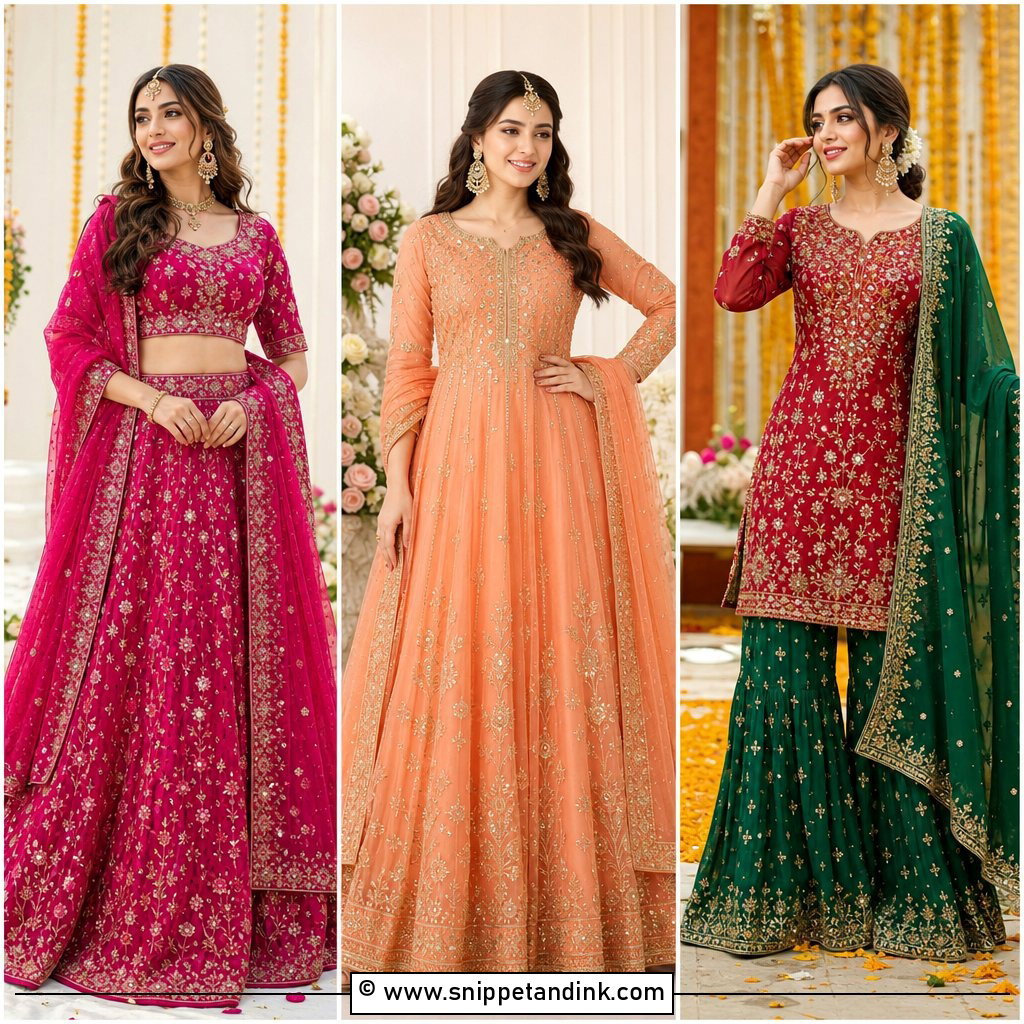
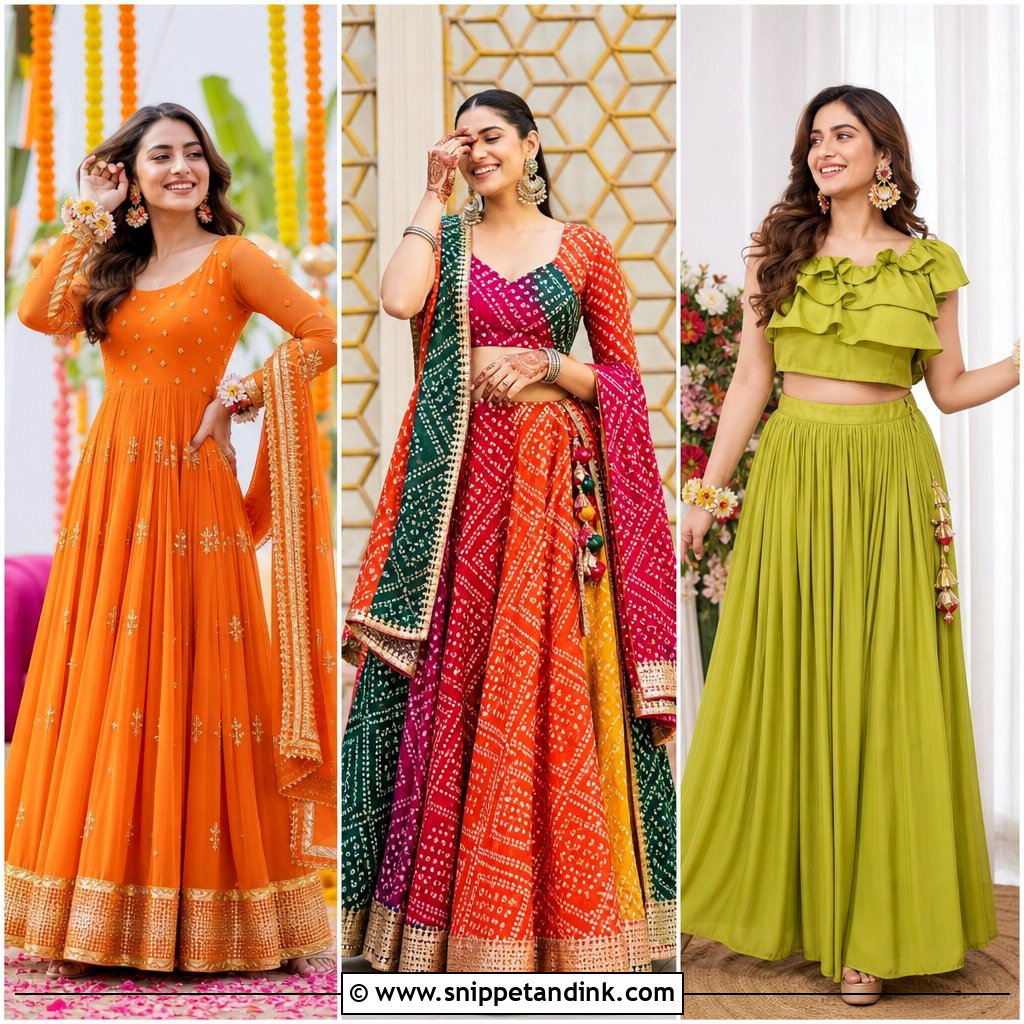
3. Orange Anarkali Suit With Churidar
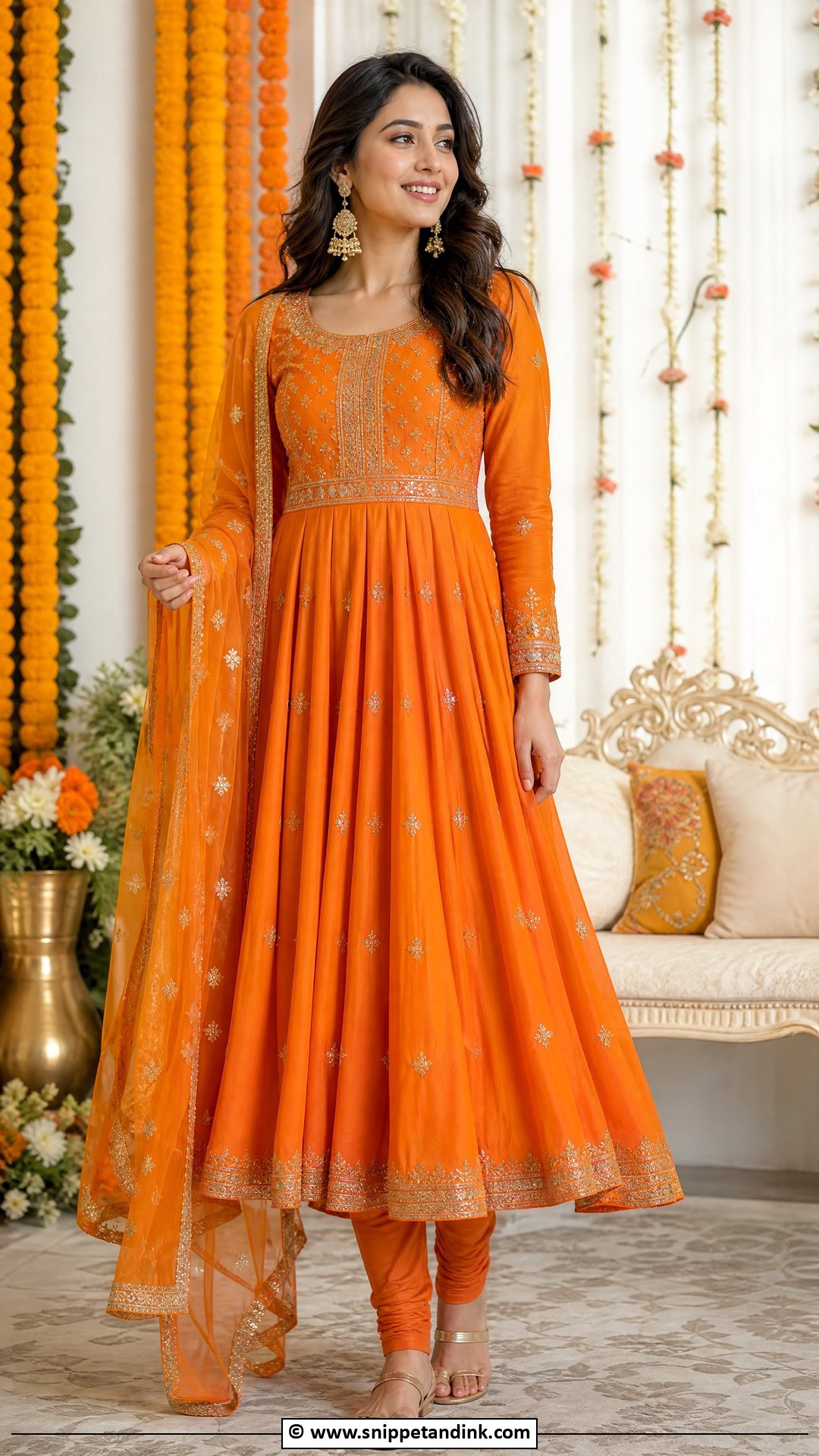
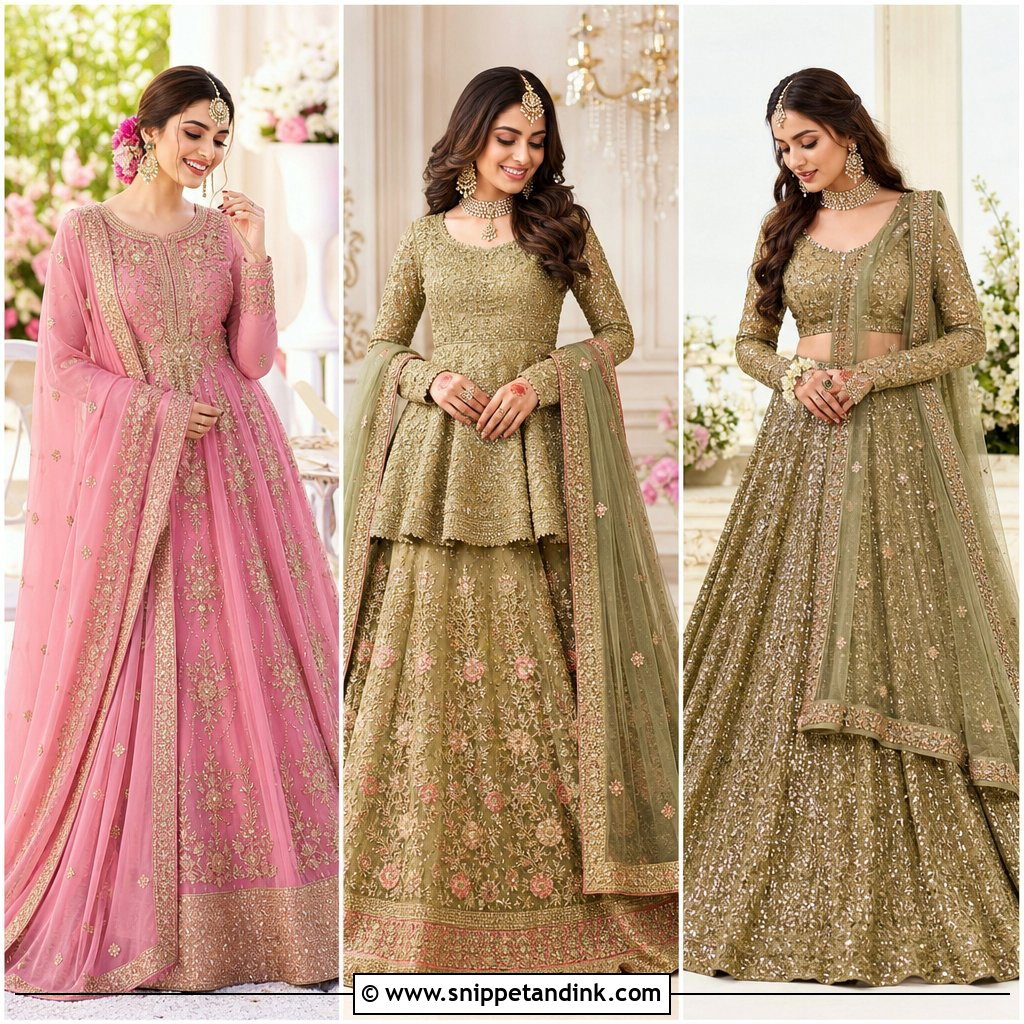
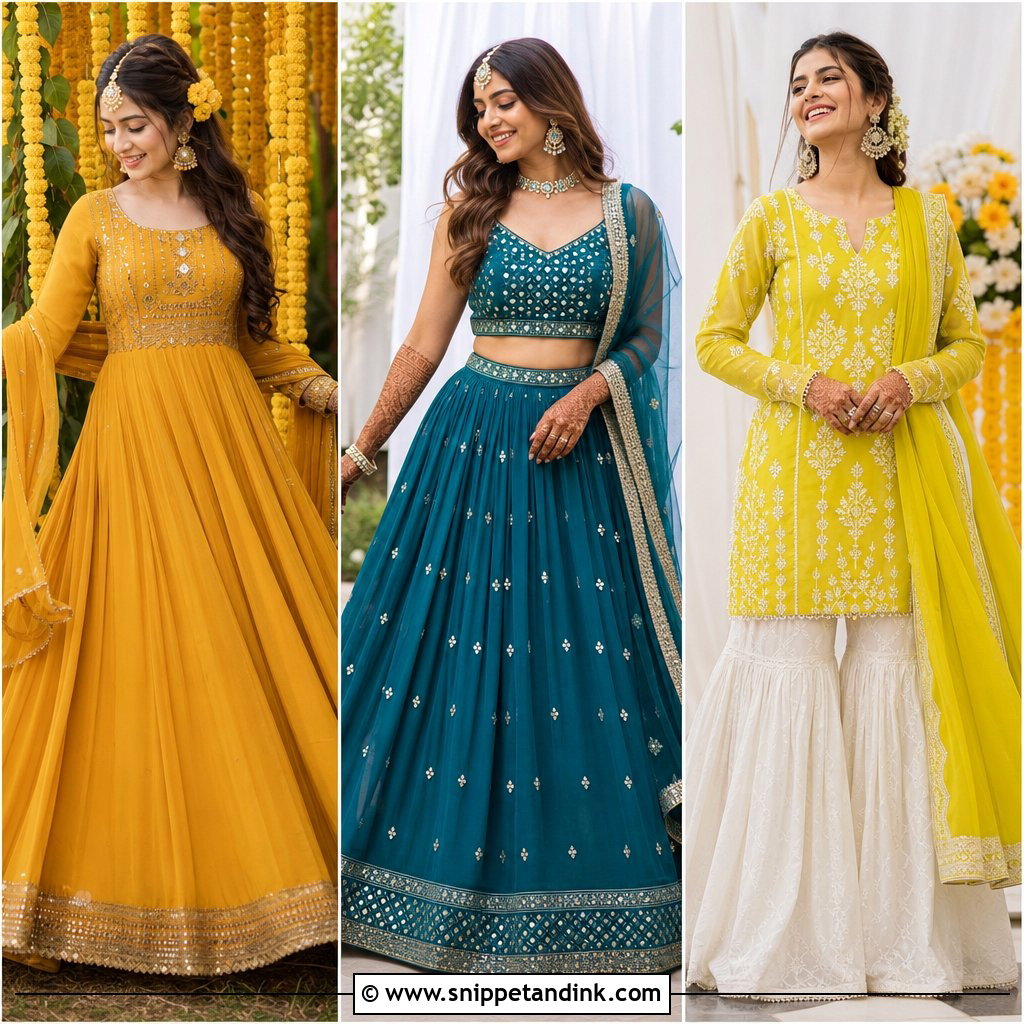
An orange anarkali suit gives you the swing of a lehenga in a single piece, and a churidar underneath keeps the legs covered when you sit. Georgette, chiffon or a silk blend flares best; stiffer fabrics stick out rather than fall. Gold embroidery, small sequins or gota borders make it feel special enough for a family function. I always check the churidar’s length, because the gathered ankle should bunch neatly above the shoe, not pool over it. A maang tikka, drop earrings and metallic sandals complete it. It suits anyone who wants a modest, colorful outfit.
4. Pink Lehenga With Green Dupatta
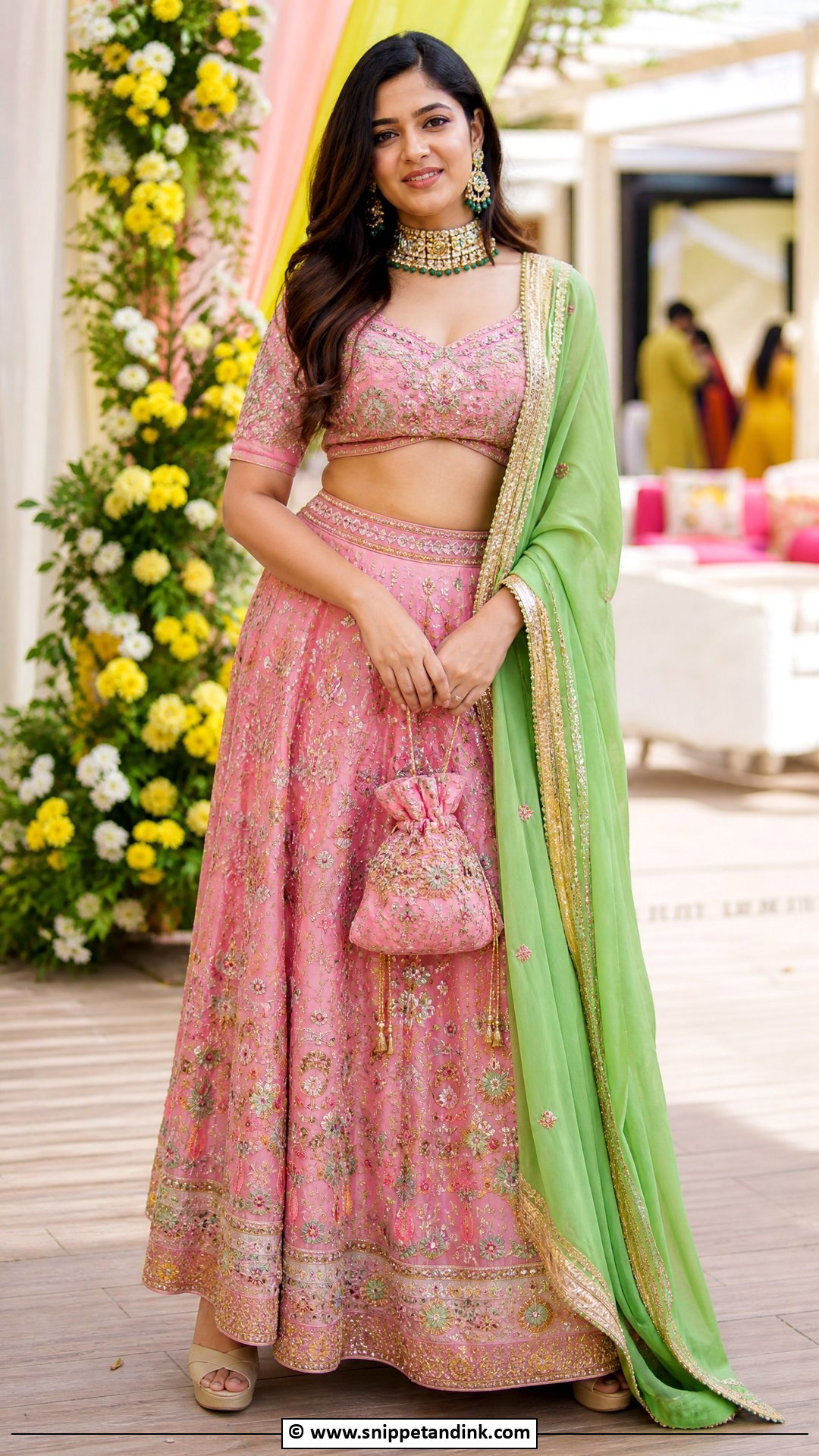
Pink against green is one of the oldest festive contrasts, and it keeps a bridesmaid looking celebratory without stepping into bridal territory. The pink softens it; the green ties it to the ceremony. How formal you go depends on the event: a floral print for a home function, gota or mirror work for a hall. A cropped blouse with elbow sleeves or a sweetheart neckline makes it feel current. In group photos, a set of sisters in this pairing reads as coordinated without being identical. Add kundan earrings, a potli bag and wedges, which won’t sink into a lawn.
5. Mustard Kurta With Palazzo Pants
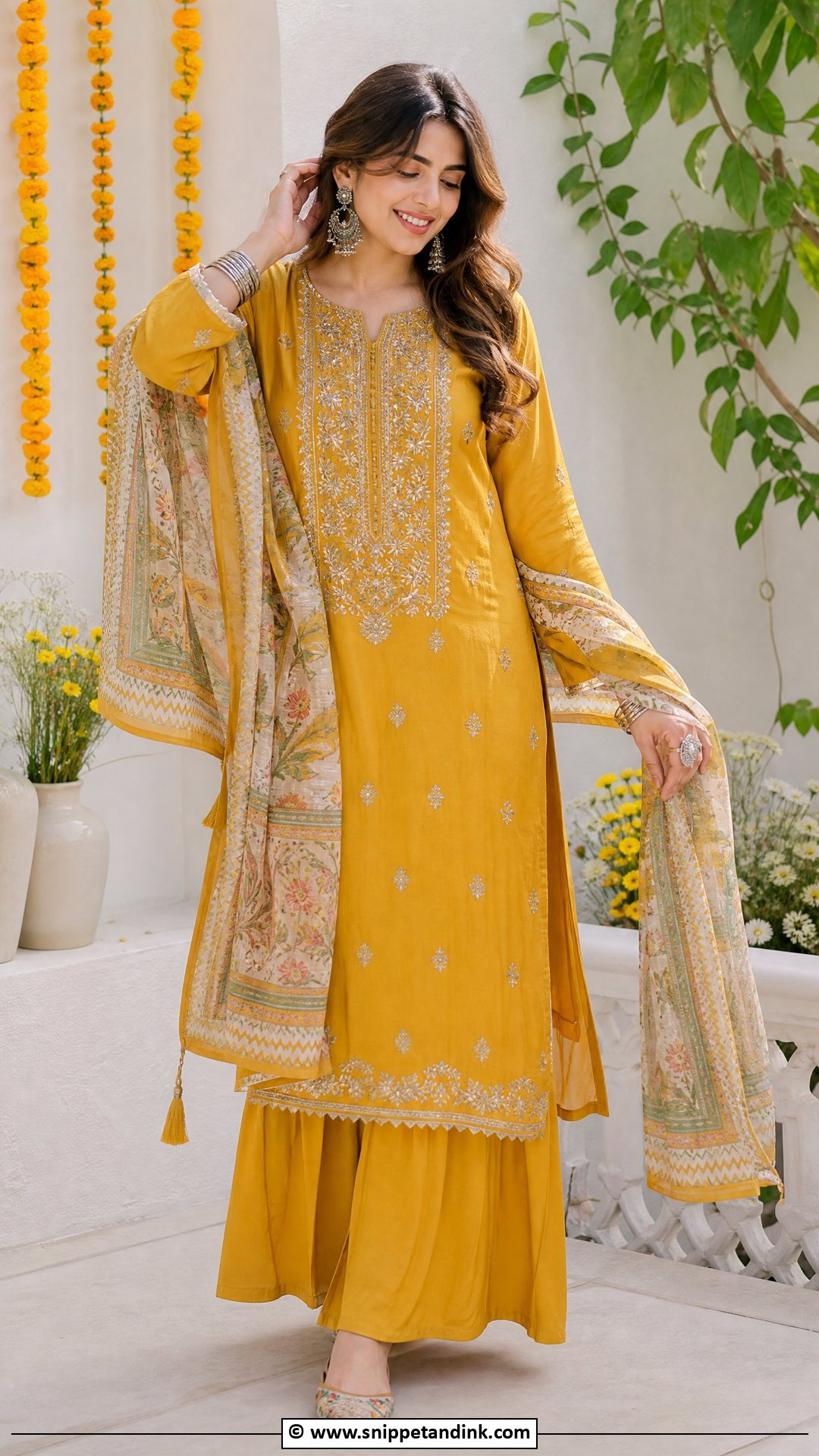
A mustard kurta with palazzos is what I’d hand a guest who’s going straight from work or who simply wants to be comfortable. A straight or A-line kurta with neckline embroidery and wide palazzos flatters most shapes and lets you move freely. Oxidized silver suits a casual daytime event; gold-toned pieces lift it for an evening. Juttis or embellished flats are the right shoes. Mustard also hides the inevitable haldi or henna smudge better than paler colors, which matters at an outdoor event where everyone is touching everyone.
6. Floral Printed Saree With Sleeveless Blouse
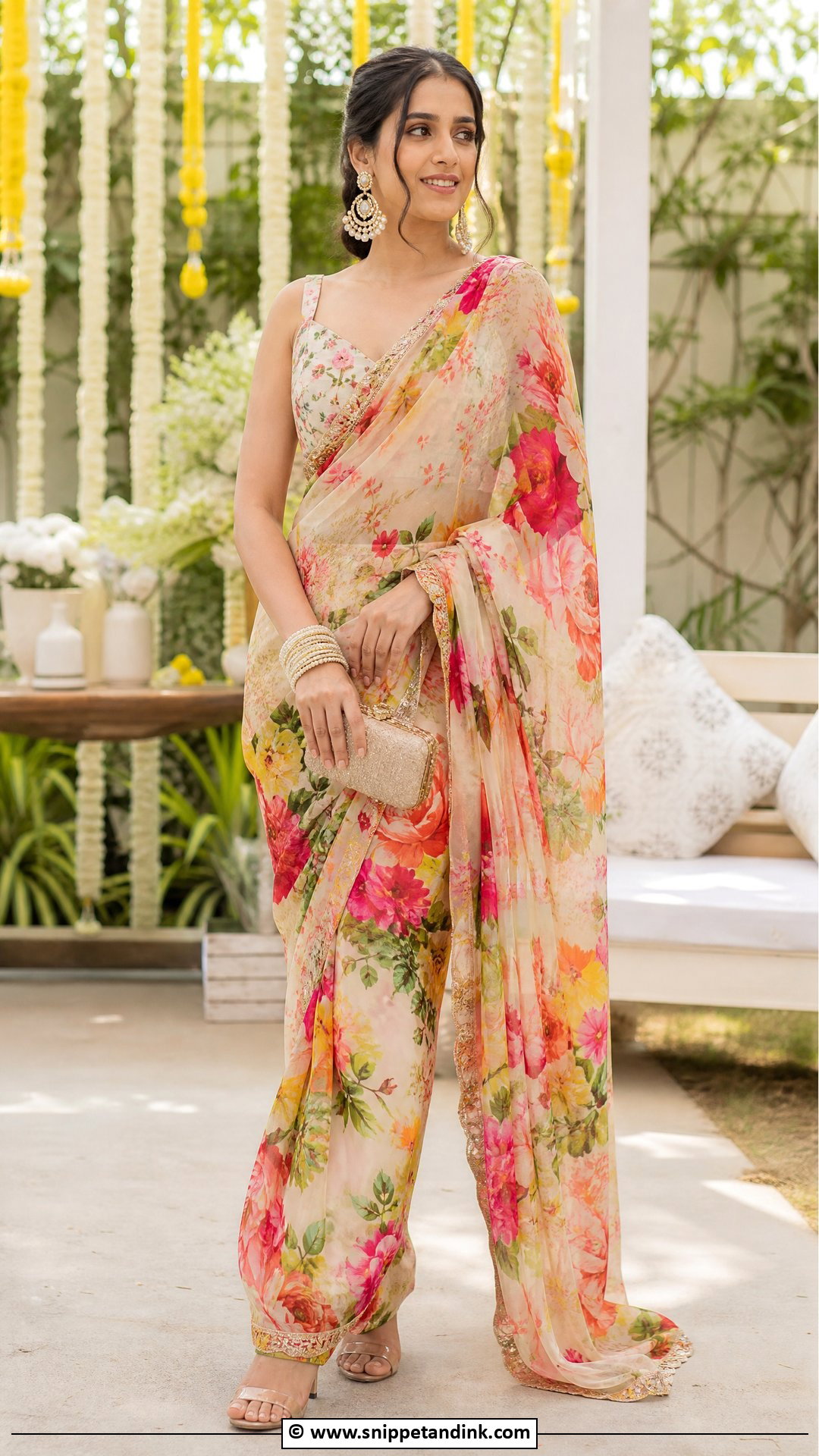
A floral printed saree reads fresh at a daytime mehndi, especially in yellow, green, coral or pink. A sleeveless or short-sleeve blouse keeps it light. The challenge is movement: a saree that’s loosely pleated will slip during the dancing, so pick a pre-pleated one or have the pleats pinned in two places. I’d put pins at the waist and at the shoulder at minimum. Statement earrings, stacked bangles and a small clutch finish it, and a low bun with flowers keeps your neck cool. It suits guests and older sisters who love sarees but want something playful.
7. White Lehenga With Yellow Dupatta
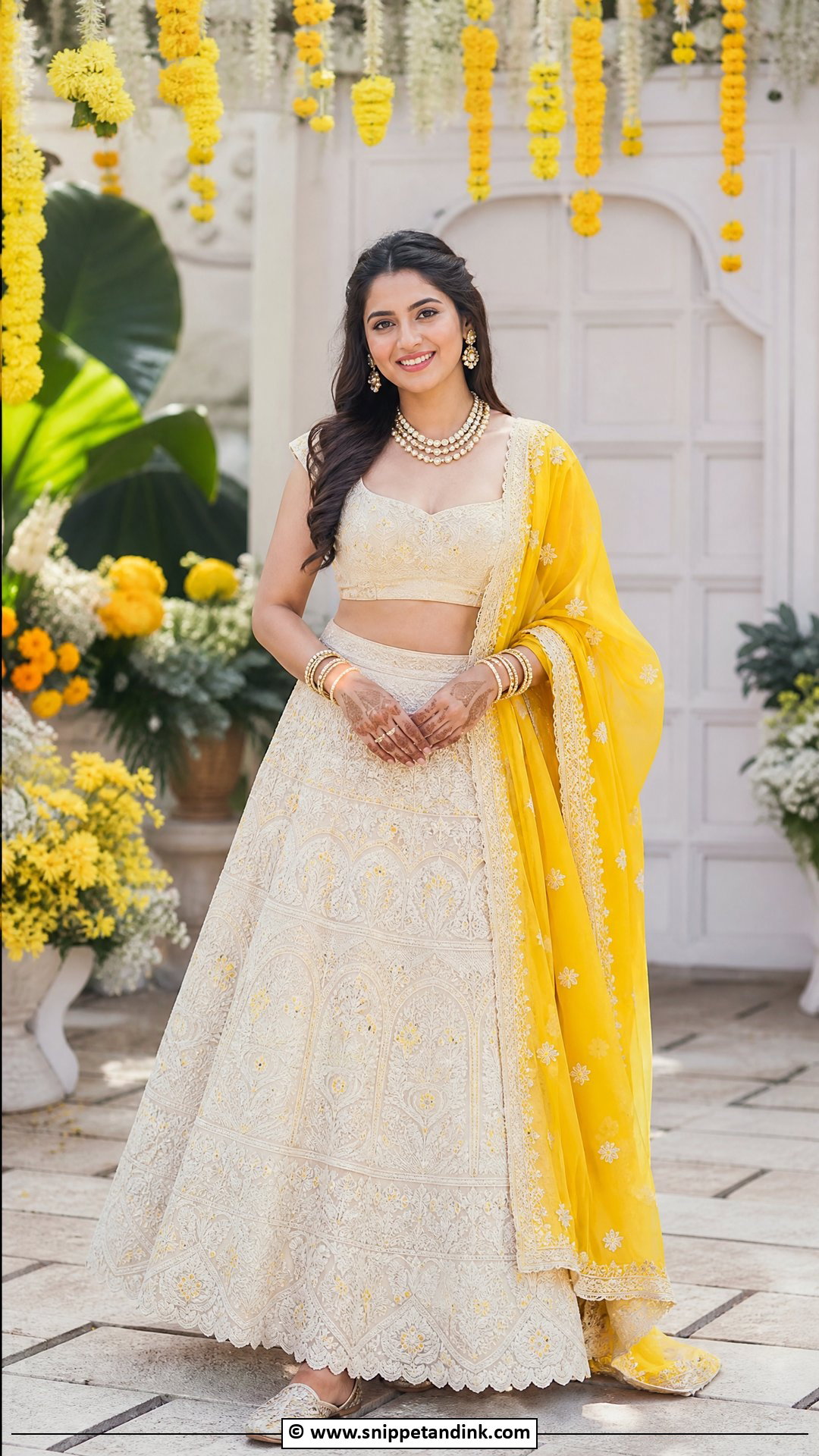
Ivory with yellow gives you a clean, bright look that still feels traditional. The white base lets mirror work, gota or colorful embroidery stand out, and the yellow dupatta brings the mehndi color without turning the whole outfit bold. A bride who wants something fresh can carry it, and so can a guest who prefers softer color. The honest warning is that a white skirt shows every henna mark, so a guest planning to get her own hands done should sit with a cloth over her lap. Pearls or kundan with gold bangles suit it, and a coral lip adds warmth.
8. Lime Green Gharara With Short Kurti
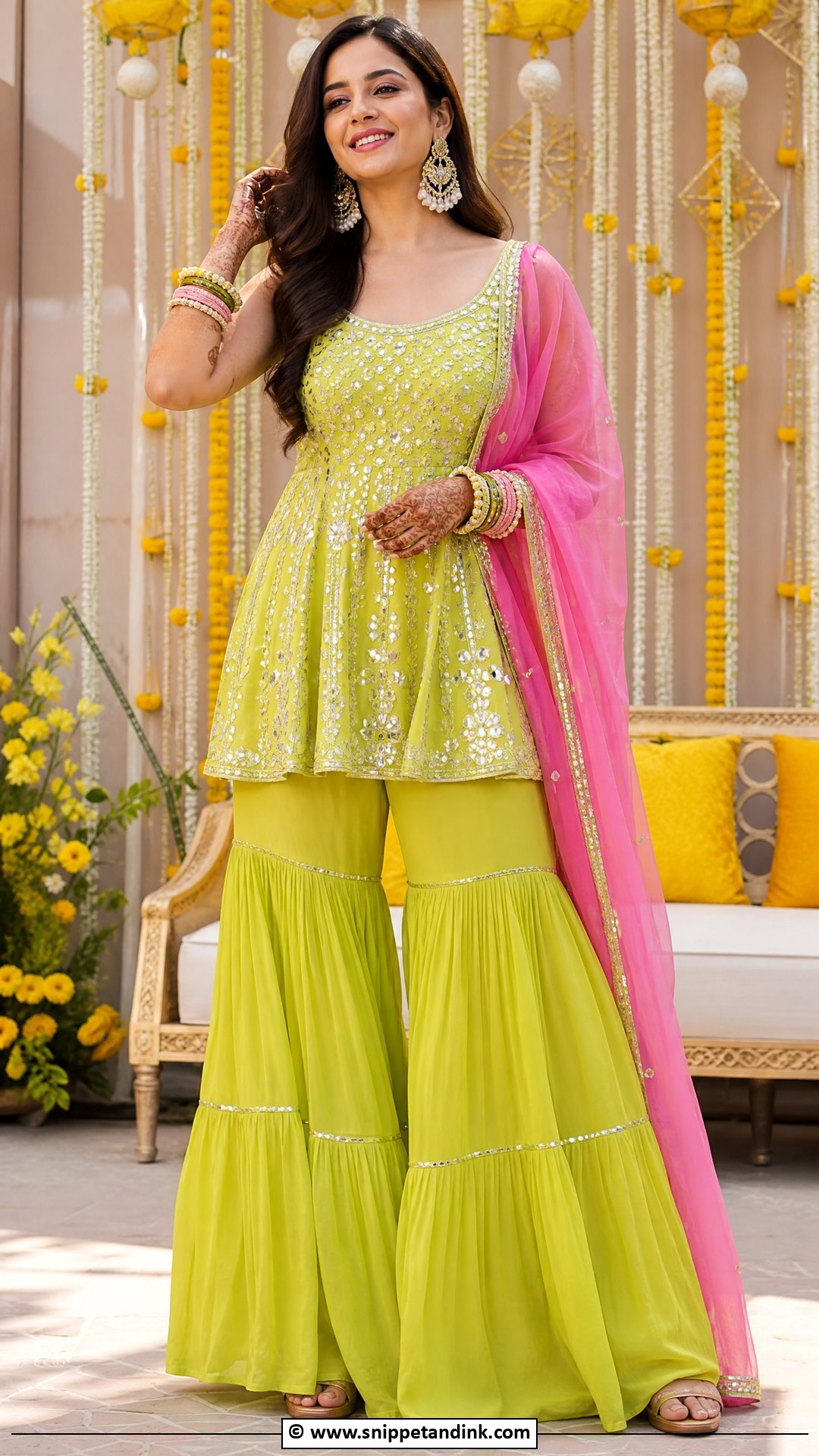
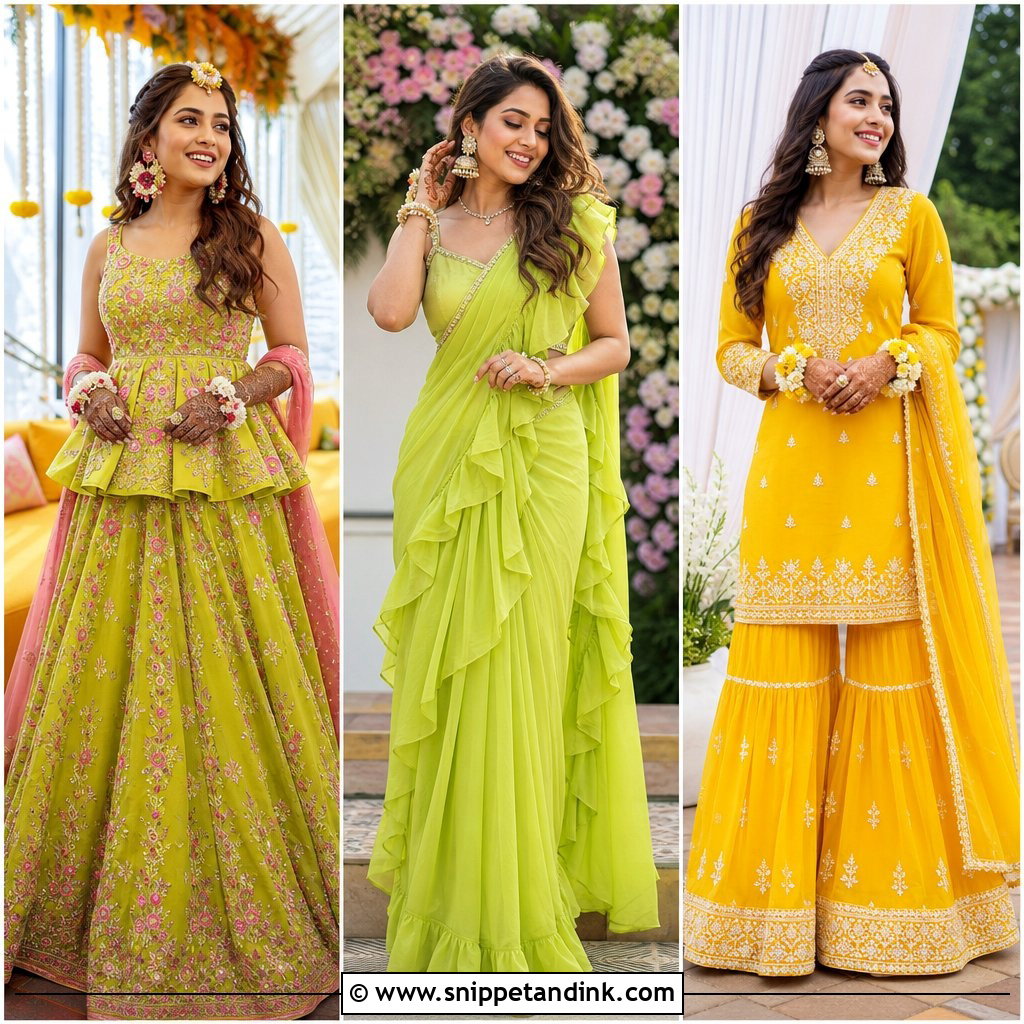
A gharara’s flare starts just below the knee, which gives it movement in every walking or dancing shot. In lime green it’s loud in the best way. A short kurti with mirror work, gota patti or thread embroidery keeps it festive, and a pink, orange or yellow dupatta adds contrast. A passa is a nice traditional touch if you’re comfortable with hair accessories that sit on the side of the head. Comfortable sandals are a must. I’d point younger guests, sisters and bridesmaids toward this when they want energy without a full lehenga.
9. Multicolor Lehenga With Crop Top
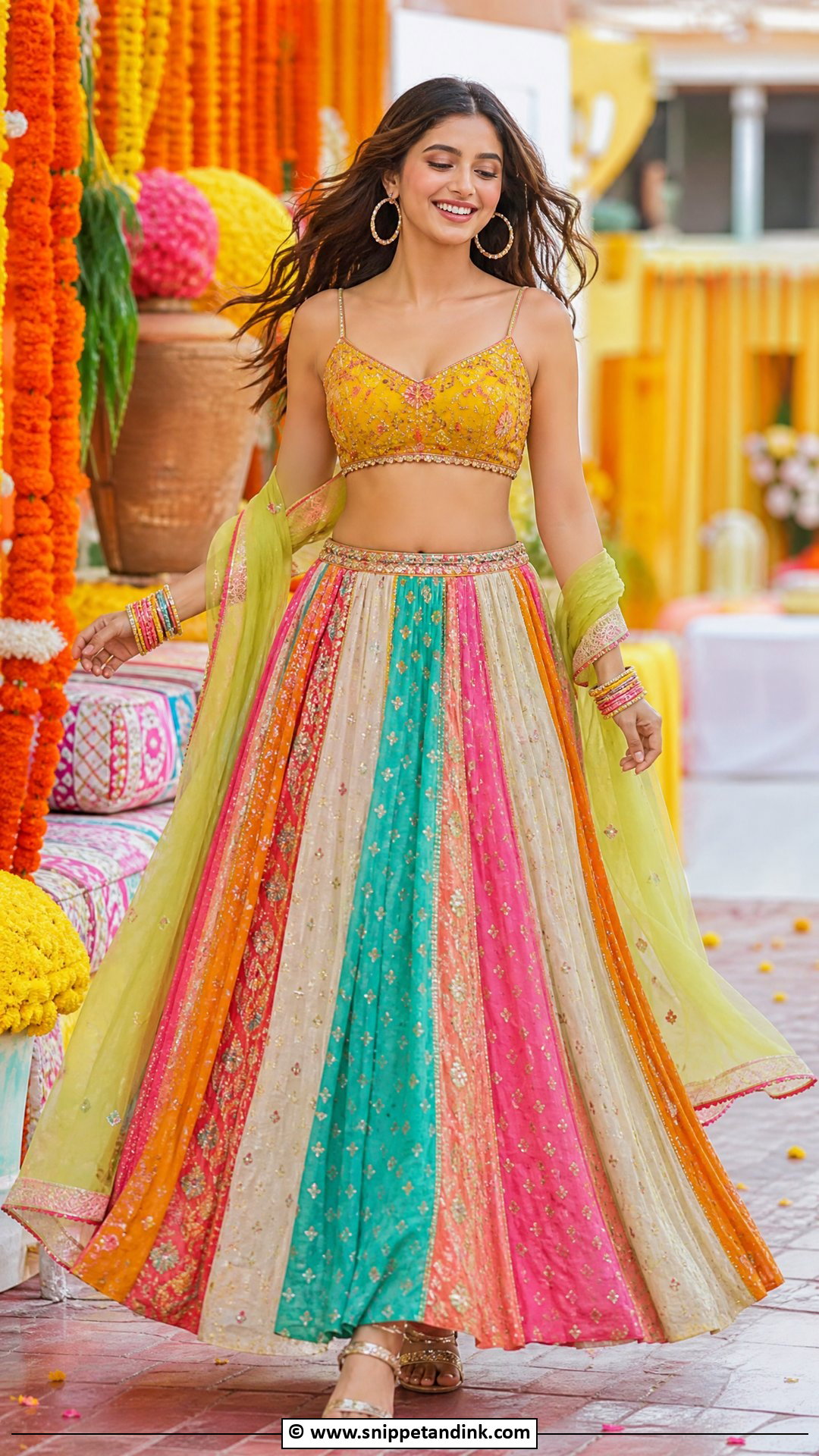
This is the high-energy option: a skirt pieced in yellow, pink, green, orange and blue, balanced by a simpler crop top. The rule I follow is that one piece gets the pattern and the other stays calm. If the skirt is printed or heavily embroidered, the blouse should be nearly plain. You can add a light dupatta or skip it entirely for a fusion feel. Hoops, bangles and a playful potli bag complete it. It suits sangeet-style mehndis where dancing is the main event, less so a quiet family gathering.
10. Pastel Sharara Set With Pearl Jewelry
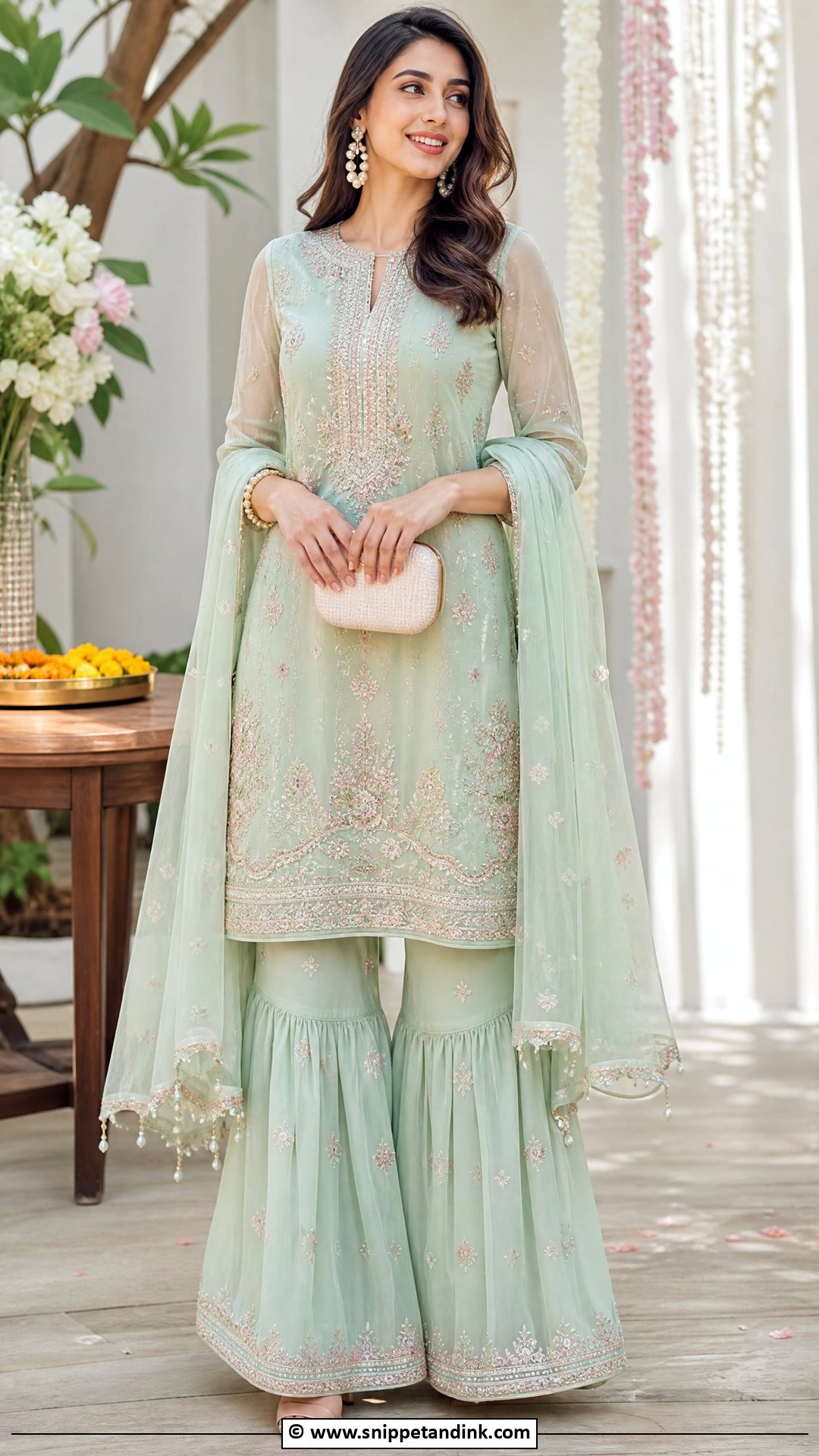
Pastel shararas look dressed up while staying soft. Mint, blush, powder yellow, peach and lavender all work with delicate embroidery or sequins, and the sharara’s volume stops the pale color from looking flat. Pearls suit this palette because they add polish without overpowering it. Nude heels, a small clutch and soft curls or a sleek bun finish the look. On a guest, pastel is a safe choice that won’t clash with the family’s yellow. It does show stains, so keep a pack of wet wipes in your bag.
11. Mirror Work Jacket With Lehenga
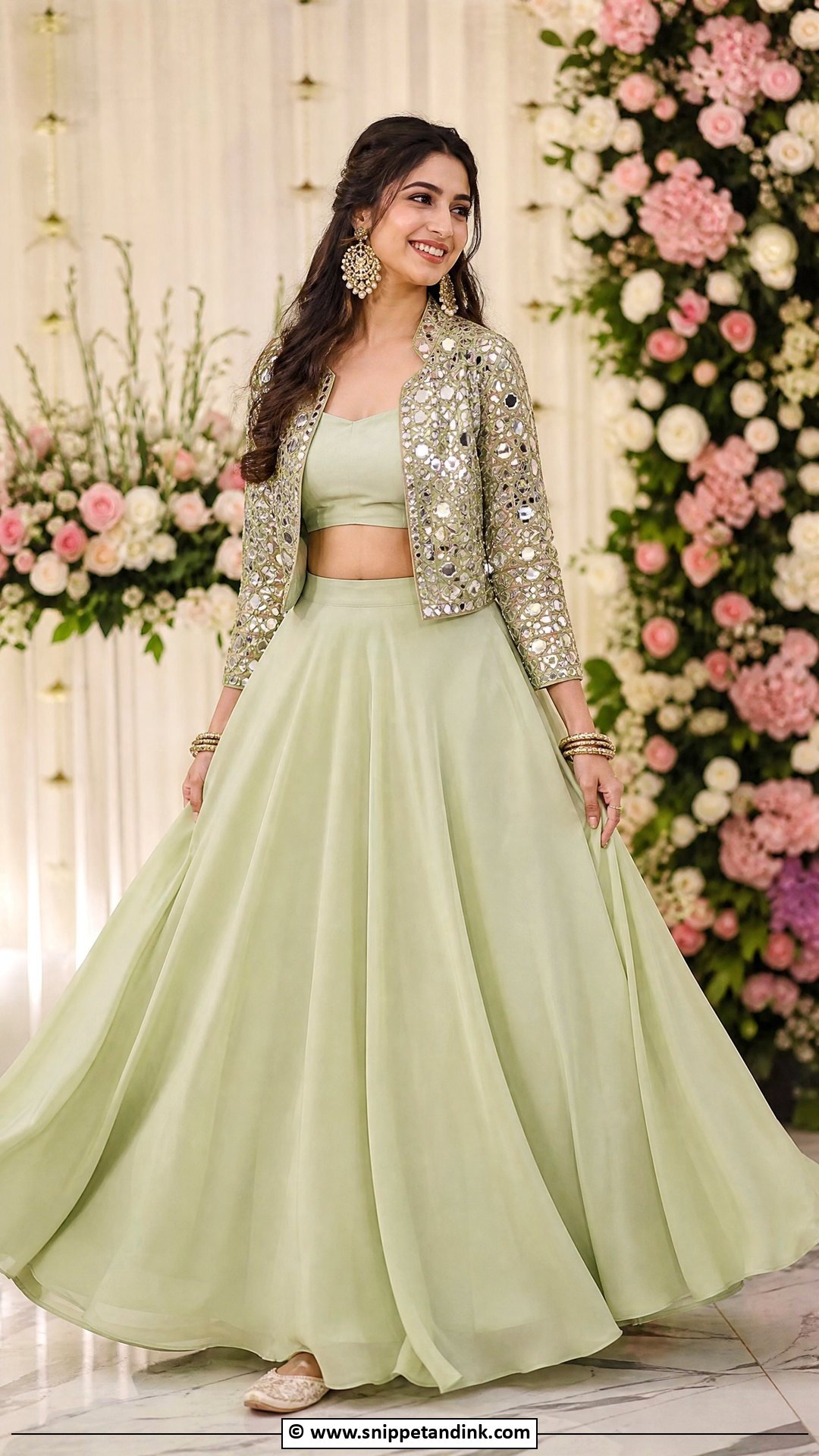
A mirror work jacket over a plain or lightly embroidered lehenga gives structure and sparkle in one layer, so the jewelry can stay simple. It’s a smart swap for the usual blouse-and-dupatta, because a jacket doesn’t need re-pinning all night. Sisters and bridesmaids who want to look festive but move freely tend to love it. Check the jacket’s weight before buying; dense mirror work over a full-length jacket gets warm fast outdoors. Pair it with a fitted blouse, juttis and statement earrings, and the mirrors will do the rest under the lights.
12. Yellow Saree With Green Blouse
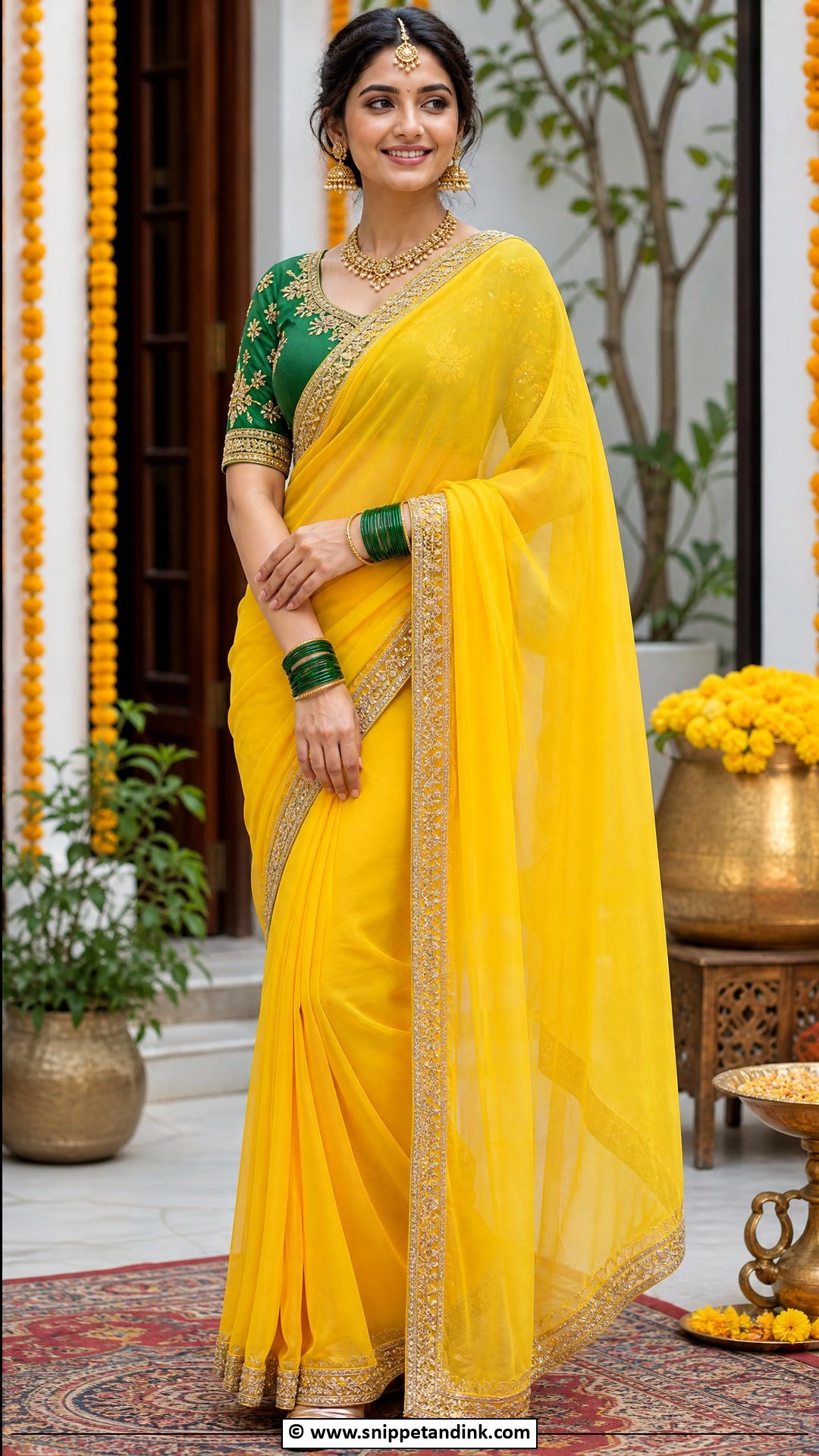
Yellow and green together are as traditional as mehndi colors get. Chiffon or georgette drapes softly for a daytime function; organza holds a crisper shape; silk suits an evening hall. A green embroidered blouse gives contrast and personality. Gold jewelry, green glass bangles and a small bindi make it classic. If you’re worried about the drape slipping, a slim belt at the waist holds the pallu in place and looks modern. It suits mothers, sisters and guests, and some brides wear it for the ceremony before changing into something heavier.
13. Indo Western Dhoti Set
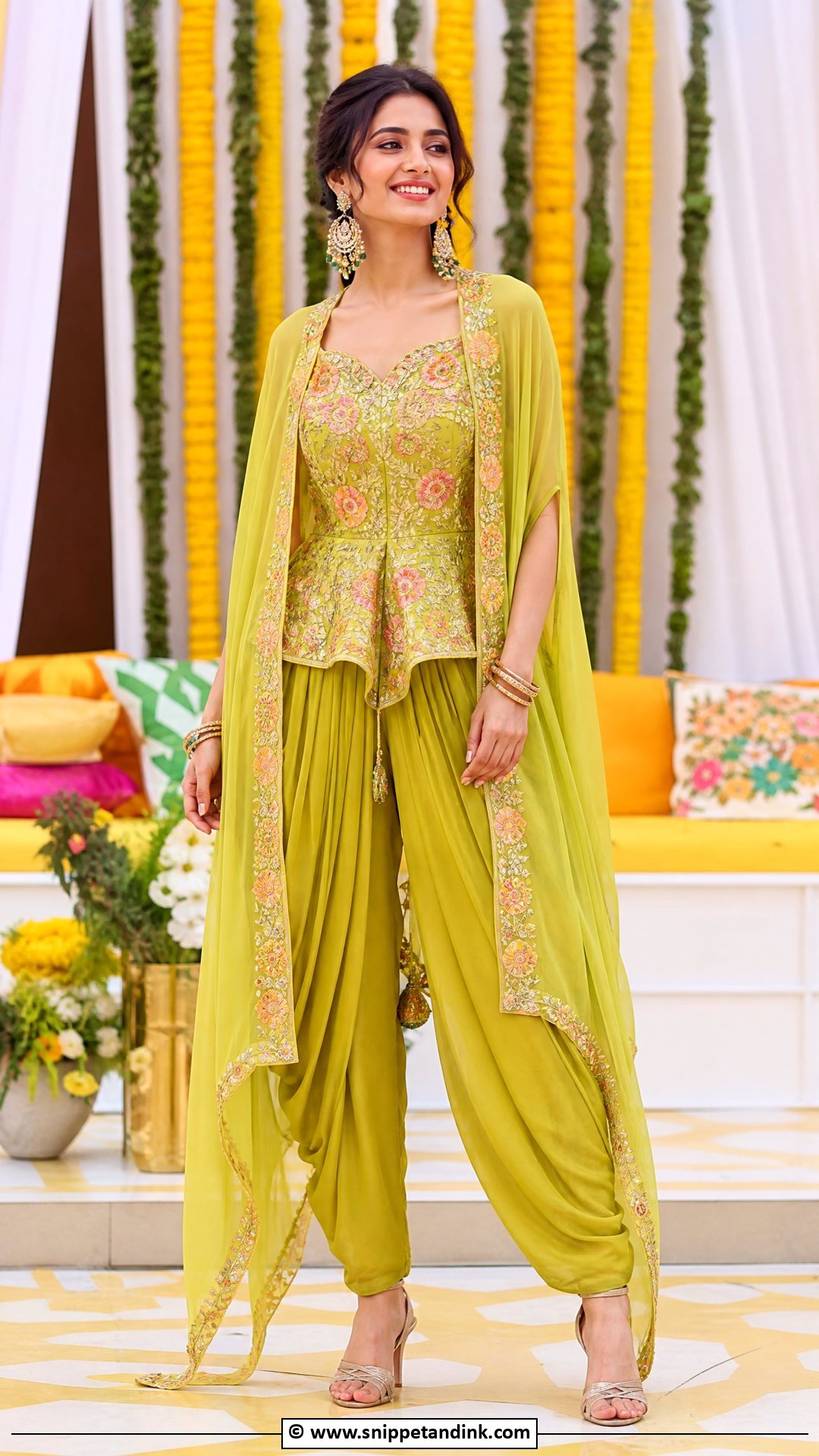
An Indo western dhoti set pairs draped dhoti pants with a short embroidered kurti, a peplum top or a cape blouse. The drape sits between the legs, so there’s no hem to trip over on the dance floor. Mustard, emerald, fuchsia or ivory with mirror work keeps it festive. I’d add statement earrings, bangles and heeled sandals so it reads polished rather than casual. At a very traditional family mehndi, check the mood first; most families are delighted, a few would prefer a lehenga.
14. Green Lehenga With Floral Blouse
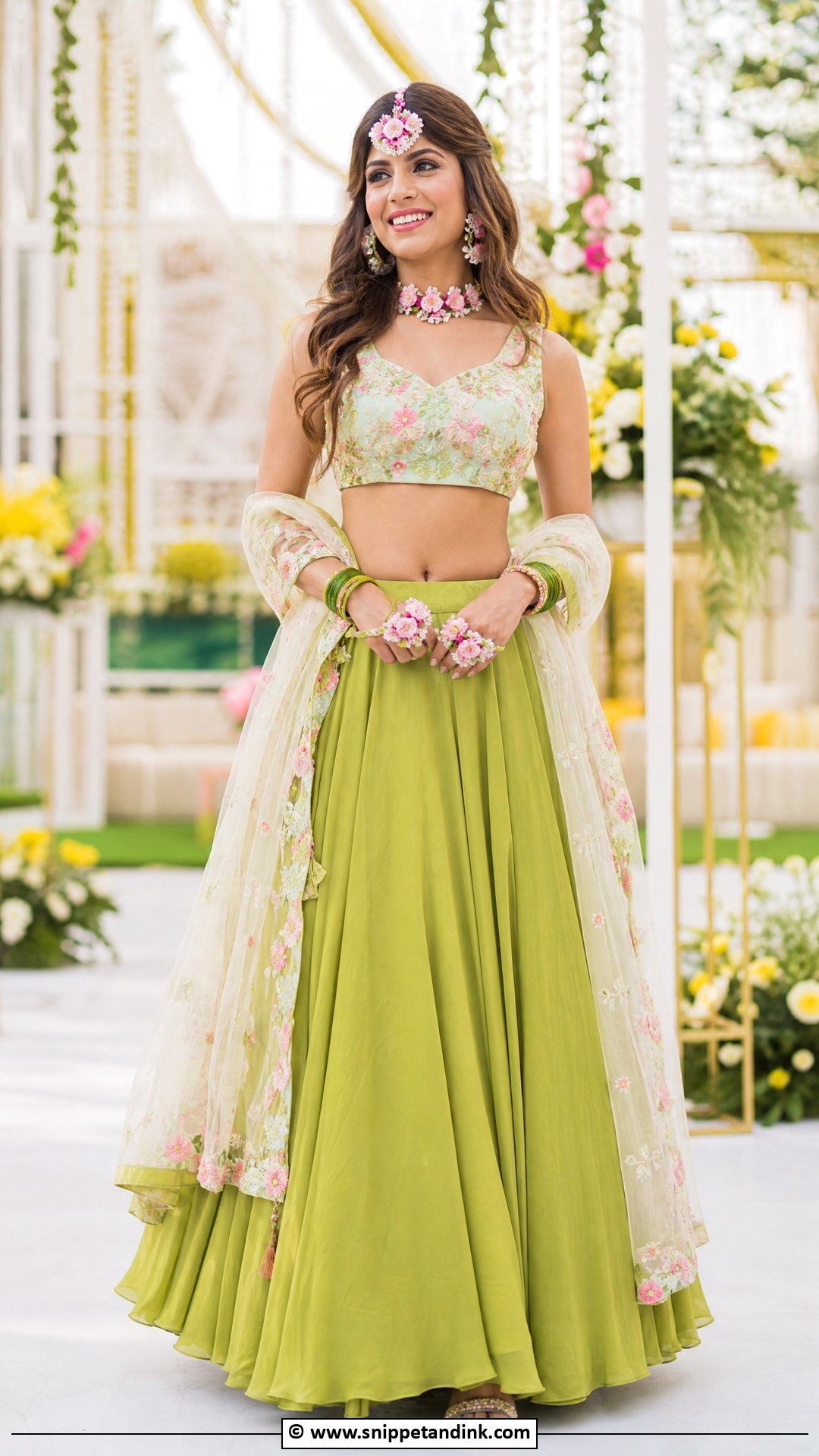
A plain green skirt paired with a floral blouse gives the outfit a garden feel without turning it busy, because the print is contained above the waist. Silk, georgette or organza all work for the skirt; pick the blouse print in yellow, pink or orange so it picks up the rest of the room. A light dupatta with a thin border is all it needs. Floral jewelry suits a daytime ceremony and kundan earrings suit an evening one. I like it on bridesmaids who want color but not head-to-toe pattern.
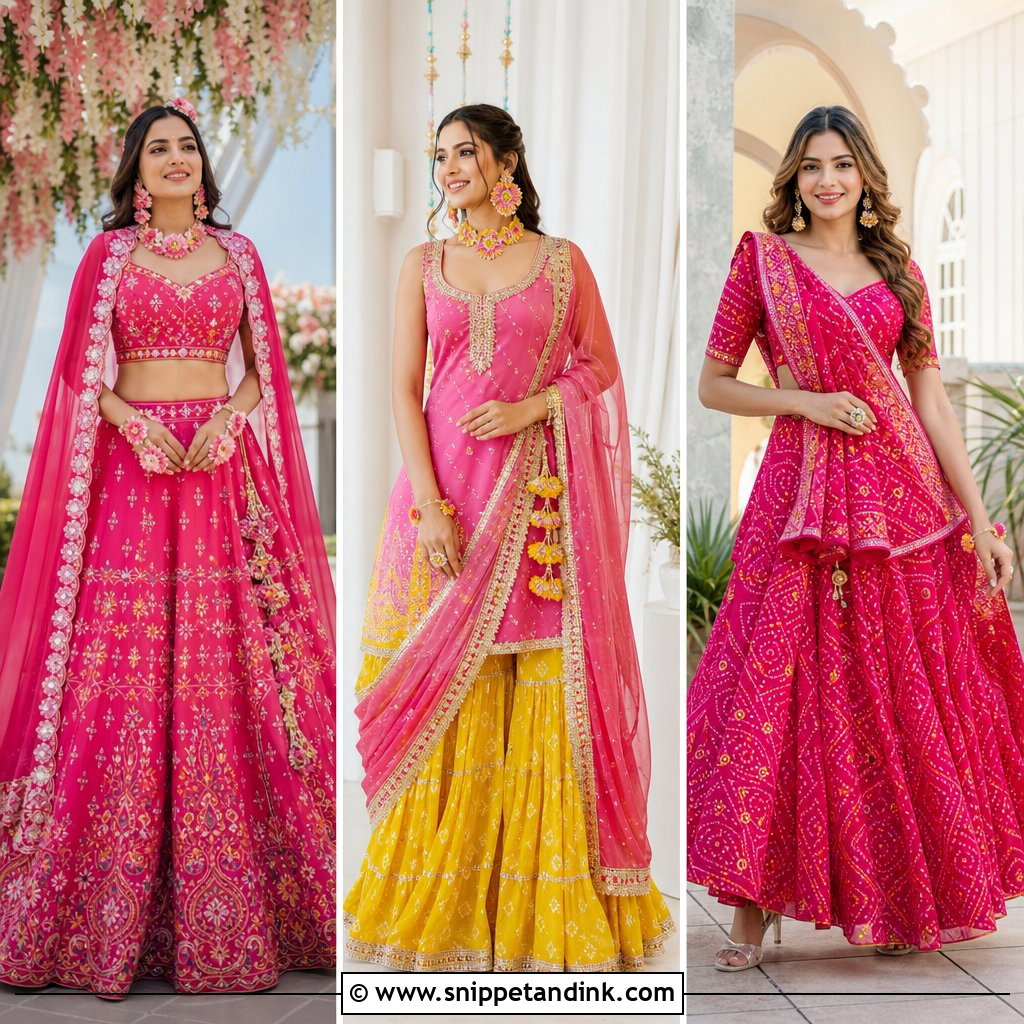
15. Yellow Gharara With Gota Patti
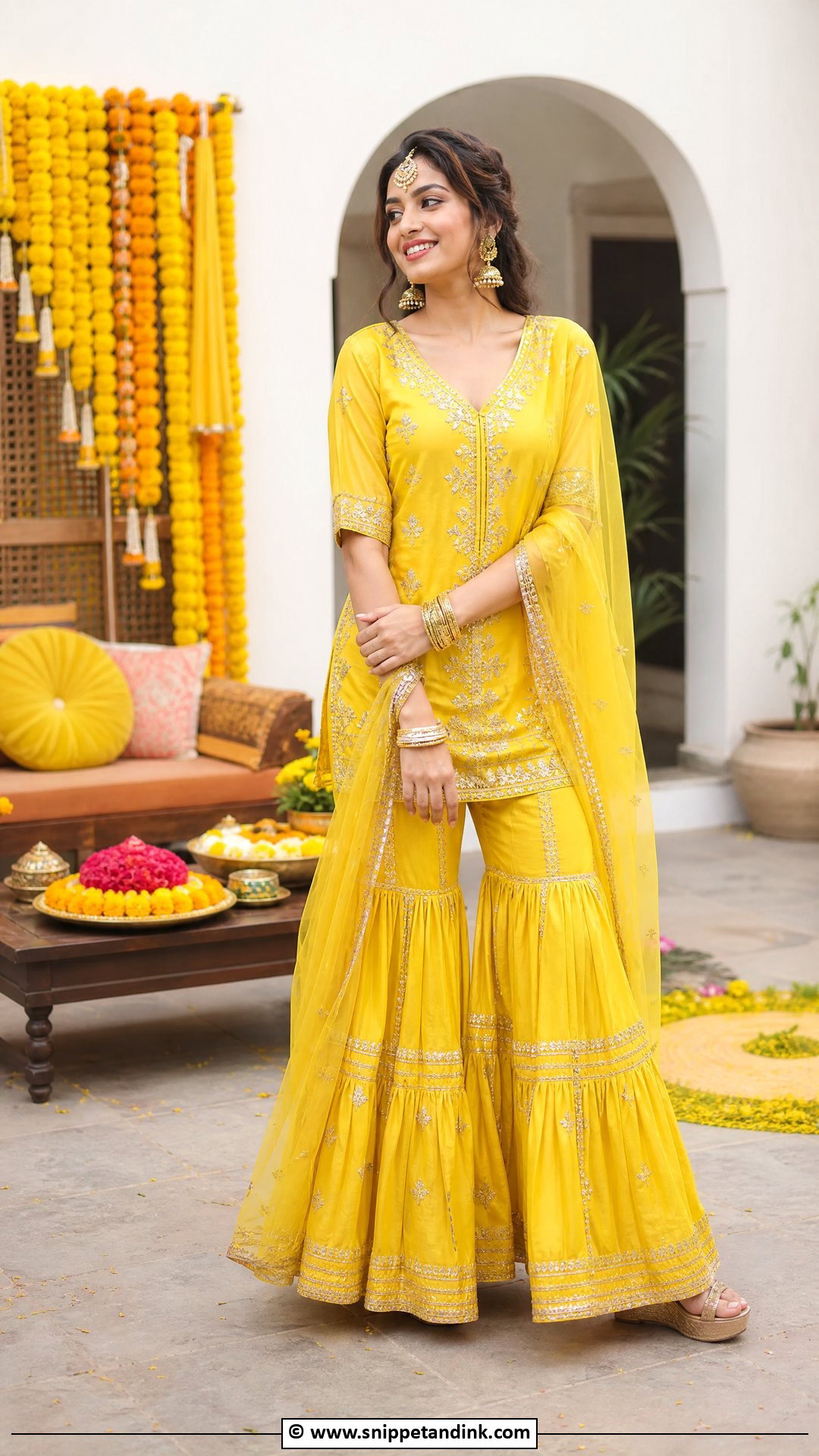
A yellow gharara with gota patti is about as traditional as a mehndi outfit gets. The wide legs create a dramatic shape, and gota gives shine without the weight of zari. A short kurti balances the volume below and a light dupatta keeps it graceful. Jhumkas, a maang tikka and gold bangles finish it. Footwear matters with a gharara: wedges or embellished flats let the hem fall in a clean line, whereas stilettos catch in the fabric. It suits brides, sisters and close family who want a classic look.
16. Printed Anarkali With Dupatta
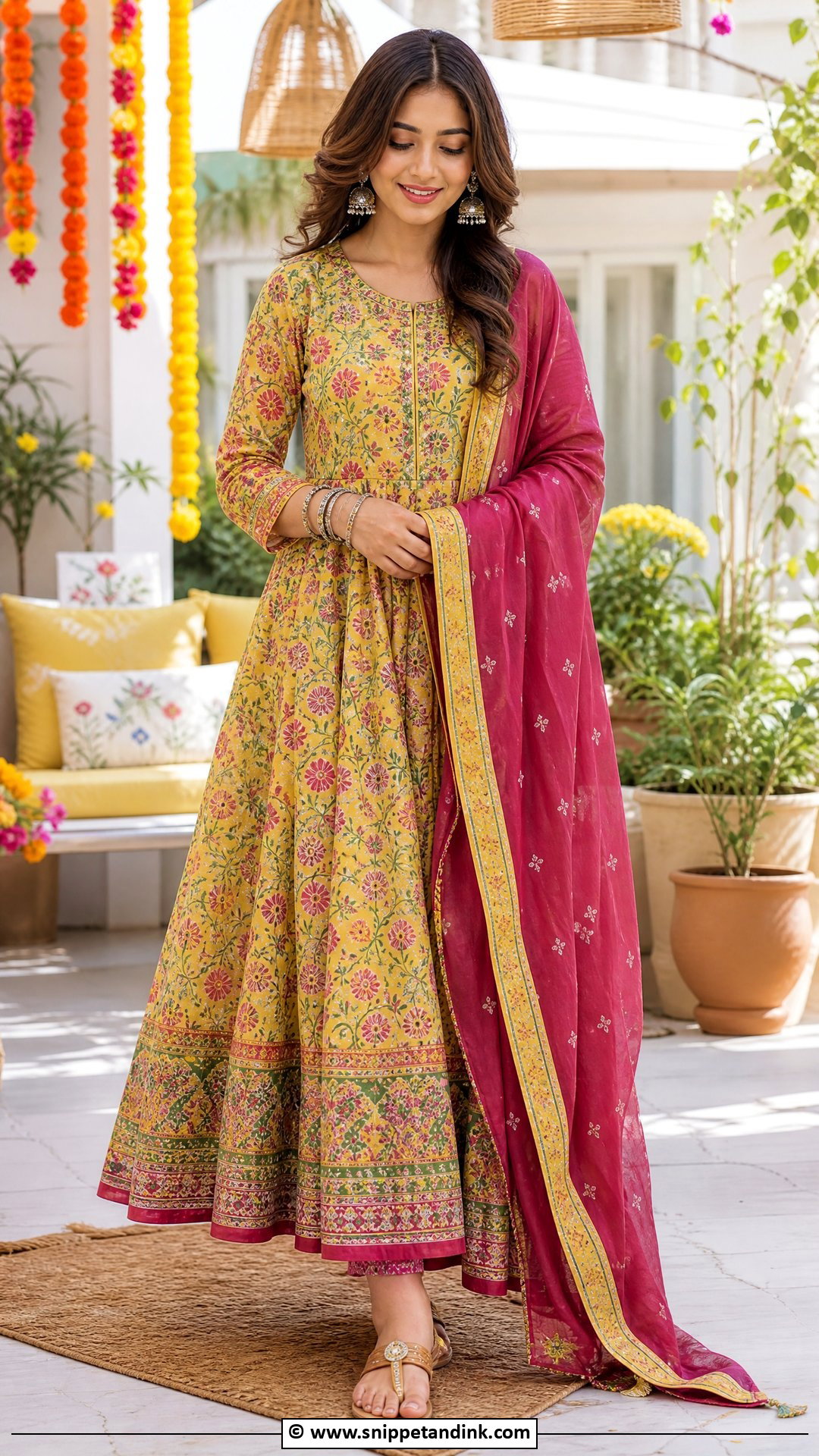
A printed anarkali looks put together with very little effort, which is why I recommend it to guests in summer. Block print, florals, bandhani, leheriya and paisley all suit the mood. The long flare gives movement and the print keeps it lively without embroidery. A contrast dupatta with tassels or a gota border adds a festive finish. Silver earrings, bangles and flat sandals complete it. Cotton prints are the coolest choice for a warm outdoor mehndi, though they crease, so steam it just before you leave.
17. Ruffle Saree With Embroidered Blouse
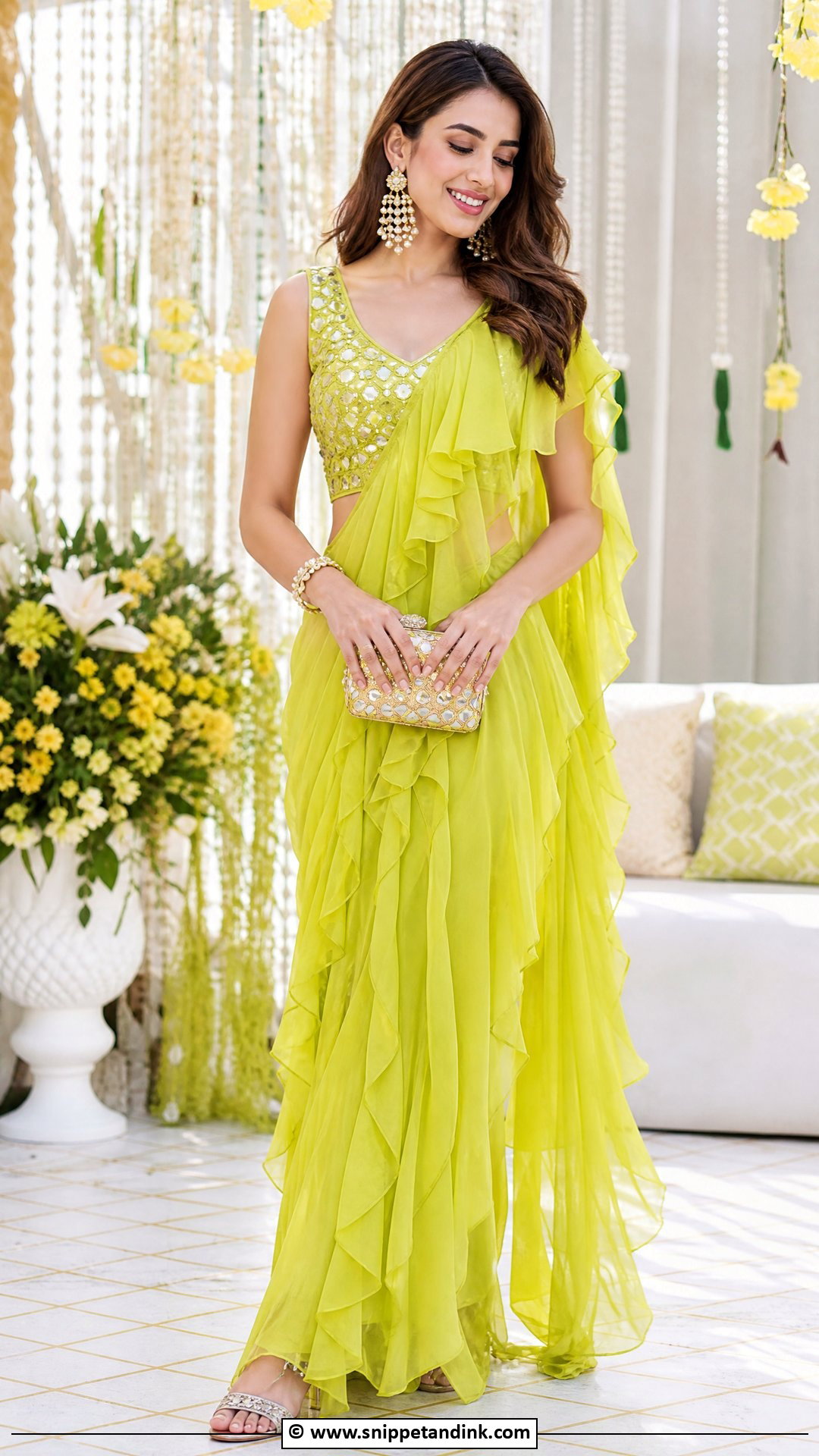
A ruffle saree trades the classic drape’s stillness for movement; the ruffled edge flutters every time you turn. Bright lime, yellow, coral or hot pink suits a mehndi. A detailed blouse with mirror work or thread embroidery completes the outfit, so accessories can stay to earrings, a bracelet and a small clutch. Ruffles add bulk at the hem, so I’d have it pre-stitched or pinned firmly at the pleats. It suits bridesmaids and fashion-minded guests who want a saree that doesn’t feel formal.
18. Peplum Top With Sharara Pants
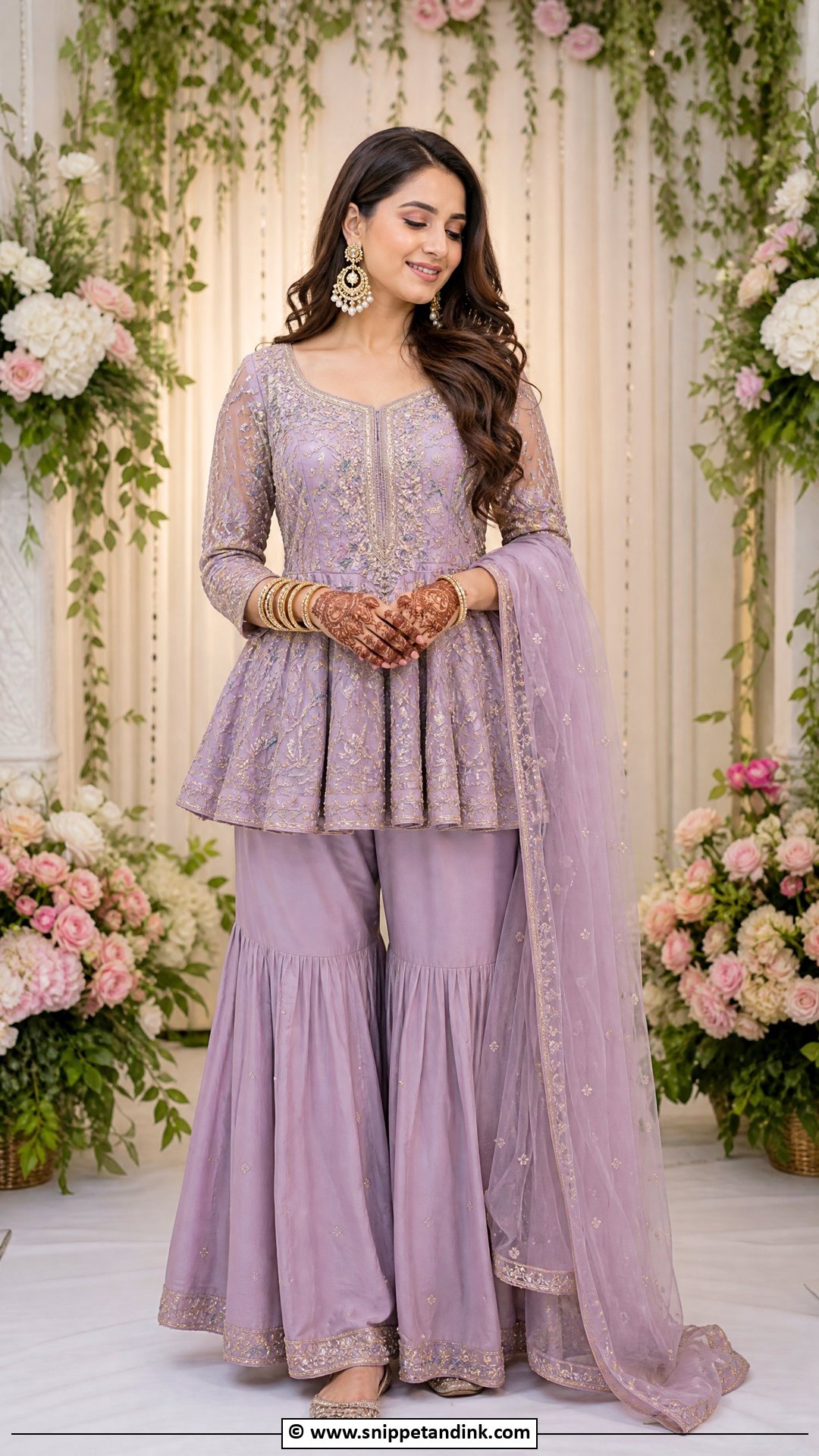
The peplum defines the waist and the sharara keeps everything below relaxed, so this set creates shape without anything feeling tight. That’s why I find it flatters such a wide range of figures. Choose a peplum with mirror work, embroidery or gota and pair it with matching or contrasting shararas. A net or organza dupatta makes it dressier. Check that the peplum hits at the hip bone; longer ones fold awkwardly when you sit. Statement earrings, soft curls and embellished flats finish it for bridesmaids, cousins and guests alike.
19. Bandhani Lehenga With Plain Blouse
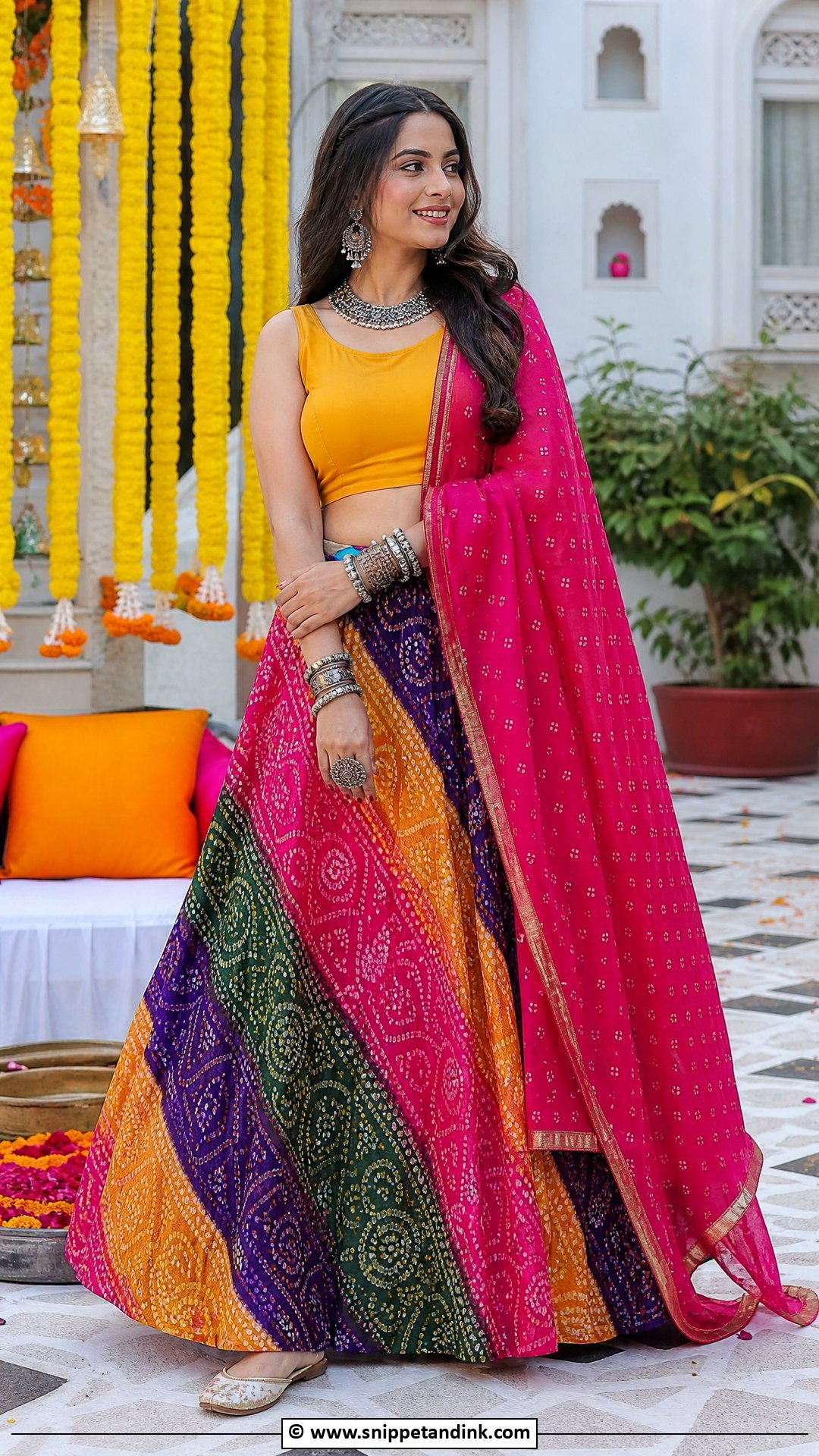
Bandhani is tie-dye made from tiny knotted dots, and a skirt in it has so much pattern that the blouse should stay solid. Yellow, red, green, orange and pink all suit it. A dupatta with a simple border, then oxidized or gold jewelry, finishes it. Bandhani is light, which is why it works at outdoor, daytime and destination events where heavy embroidery would be uncomfortable. Real hand-dyed bandhani can bleed if it gets wet, so I’d avoid it if there’s a pool or water play at the venue. Wear juttis you can stand in all evening.
20. Cape Lehenga Set
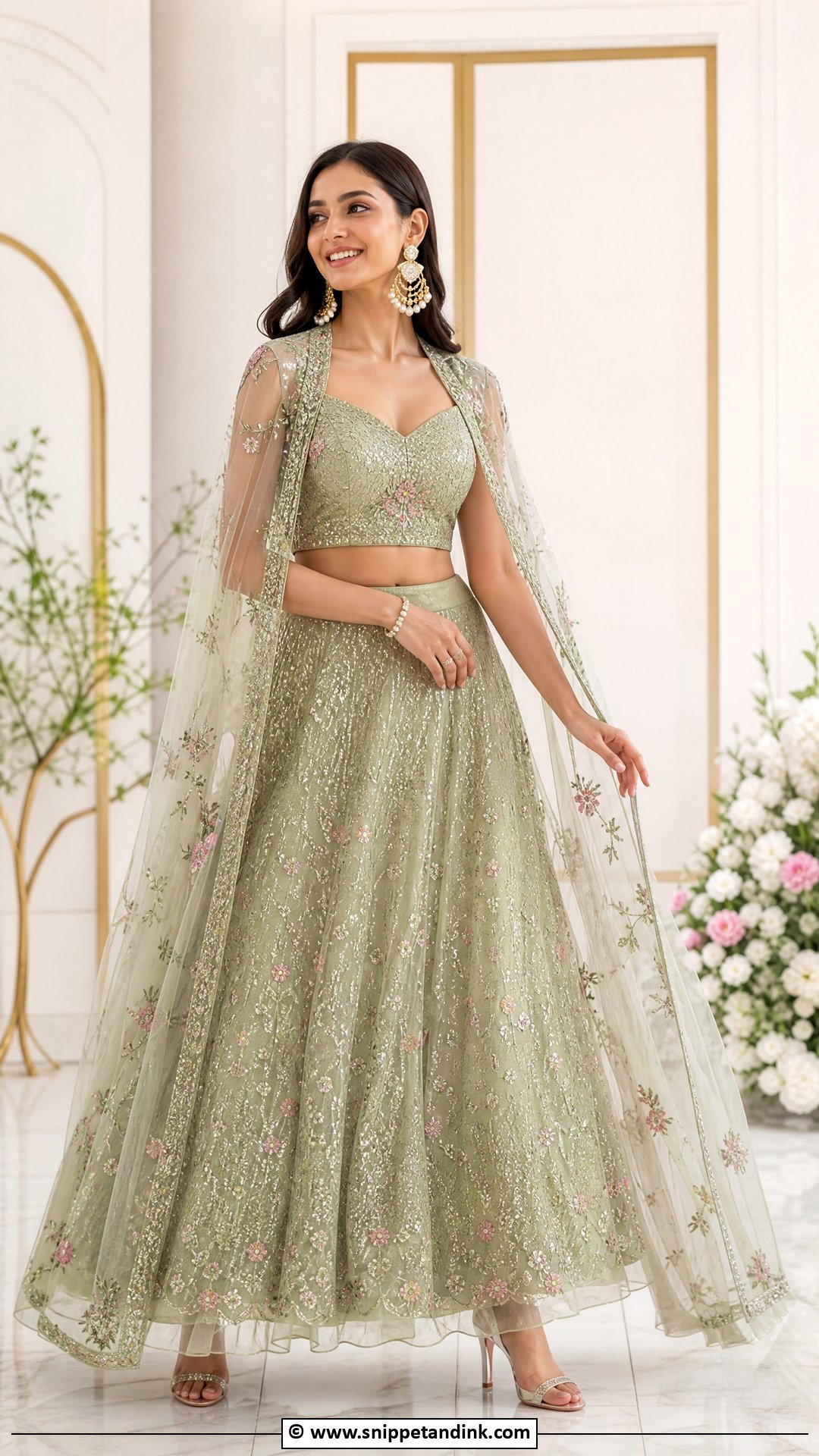
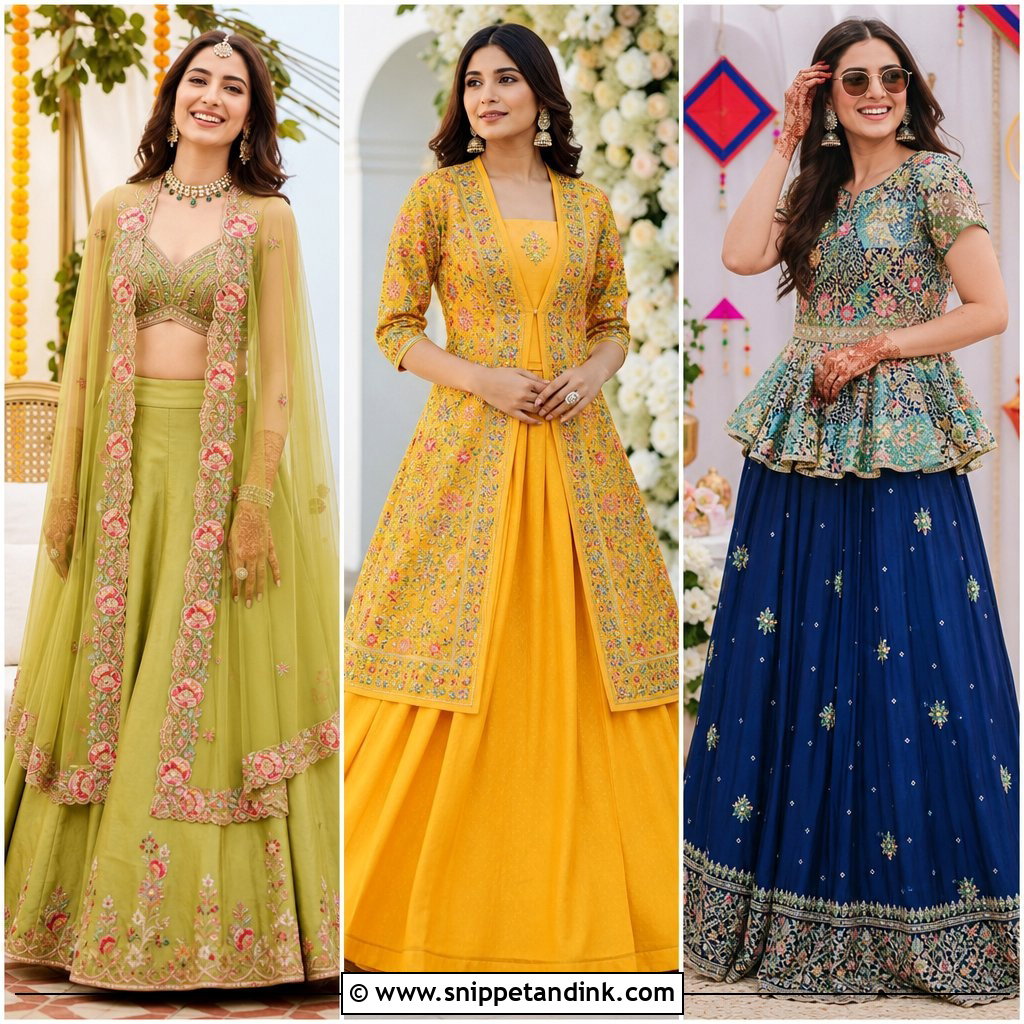
A cape replaces the dupatta, so your hands stay free and nothing slides off your shoulder during the ceremony. The cape can be sheer, embroidered, fringed or mirror-worked, and it gives the outfit movement as you walk. Wear it over a fitted blouse and a flowing skirt for balance. Bright shades keep the mood traditional, pastels make it modern. If the cape has detail at the neckline, skip the necklace altogether and wear earrings and a ring instead. Fringe tangles with bangles, so keep the wrists simple.
21. Green Kurta With Yellow Palazzo
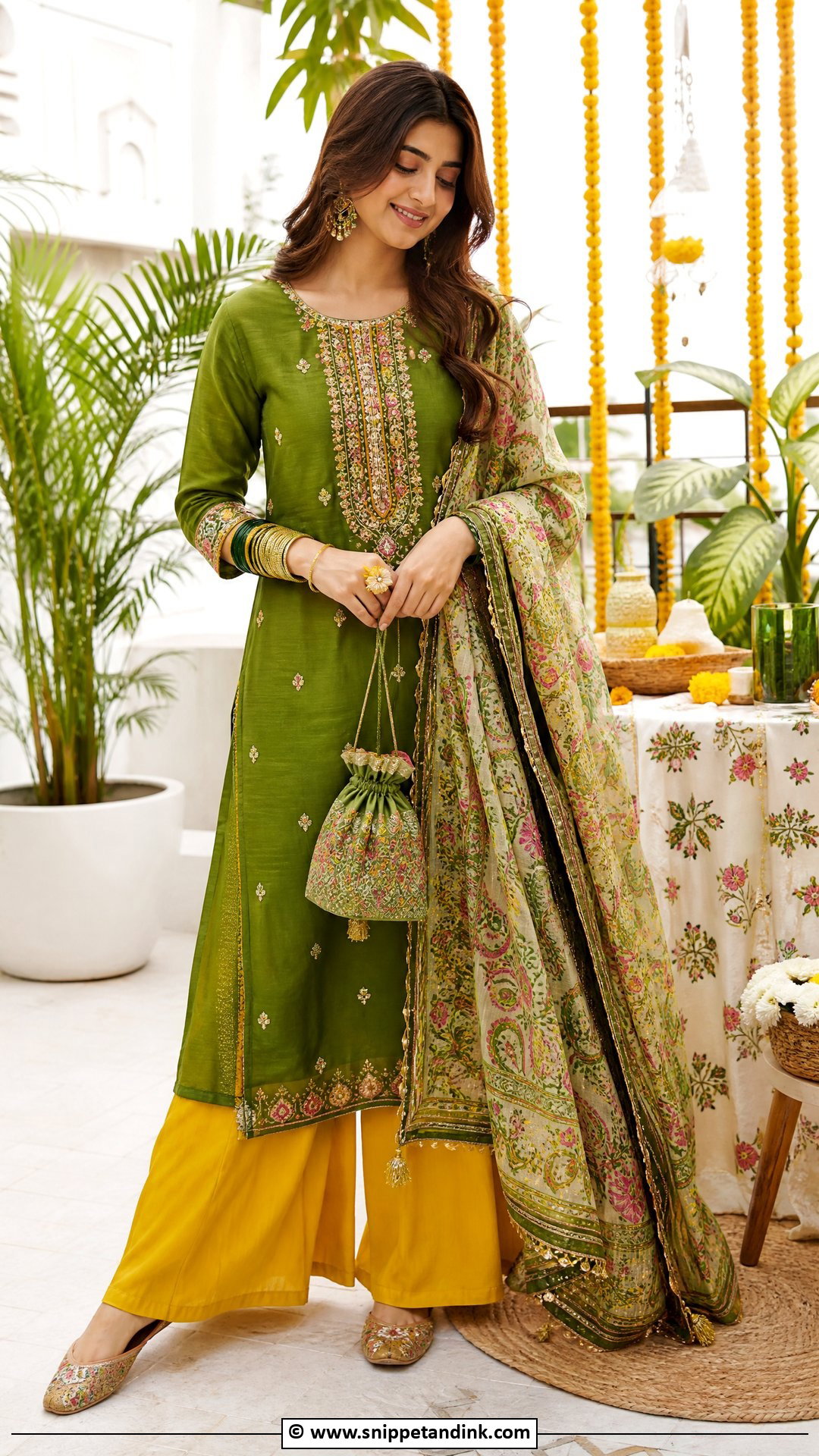
A green kurta with yellow palazzos gives you the two mehndi colors in a simple outfit, and it’s very comfortable at a relaxed home ceremony. Pick a straight kurta with embroidery or mirror work and palazzos with enough flow to sit in. A printed dupatta pulls the colors together. Bangles, juttis and a small potli bag finish it. What I like most is that each piece can be worn separately later, so it’s money well spent for a guest or cousin with several functions to attend.
22. Chikankari Lehenga With Colorful Dupatta
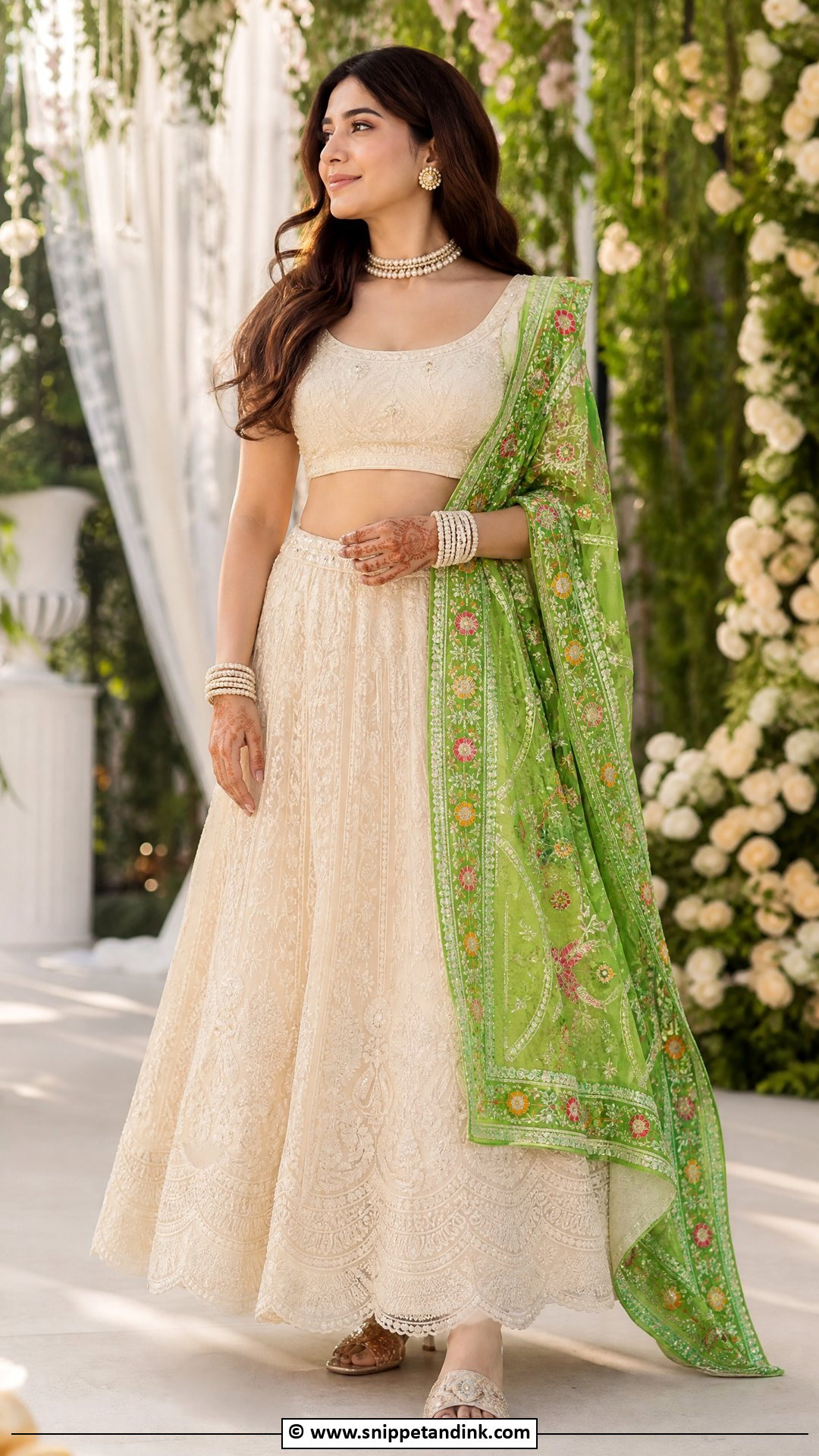
A chikankari lehenga with a colorful dupatta balances refinement with festival color. Chikankari is fine hand embroidery, so the ivory, yellow, mint or peach skirt and blouse stay soft, and the green, pink or orange dupatta brings the ceremony color. It’s breathable, which helps at a hot daytime function. Pearl jewelry, delicate bangles and embroidered sandals suit it, with fresh, glowing makeup. Watch the bangles, though; chikankari threads snag easily on sharp edges.
23. Fuchsia Lehenga With Orange Dupatta
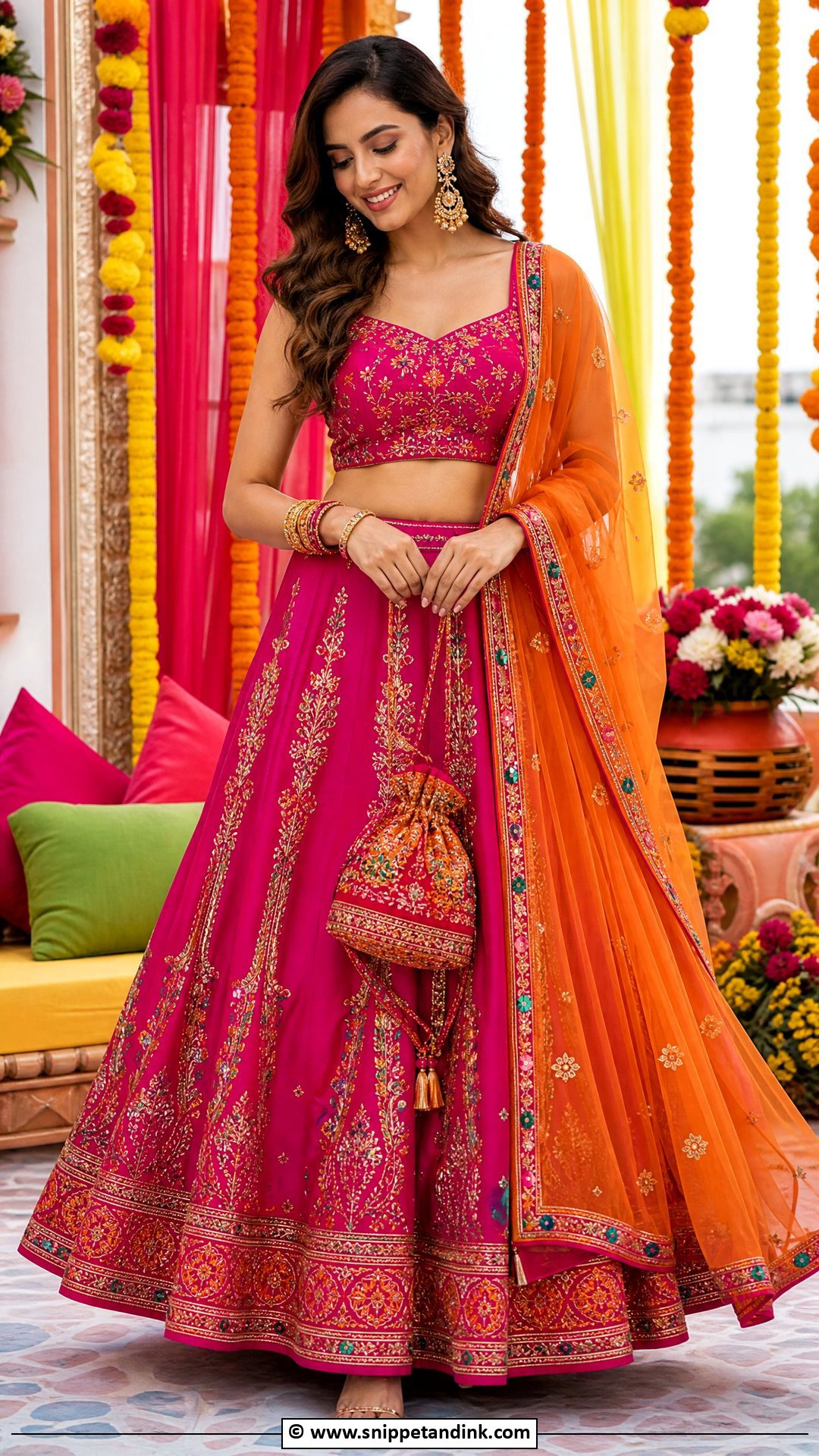
Fuchsia with orange is a loud pairing, and that’s the point. It brings festival energy without needing heavy embellishment, so I’d keep the lehenga to light mirror work, thread embroidery or gota. Because the colors are strong, the jewelry should be one focused piece, such as chandbalis or a maang tikka, not both. Gold sandals and a small potli bag finish it. It stands out in group photos, which makes it a good choice for bridesmaids, sisters and close friends who want to be seen.
24. Silk Kurta Set With Banarasi Dupatta
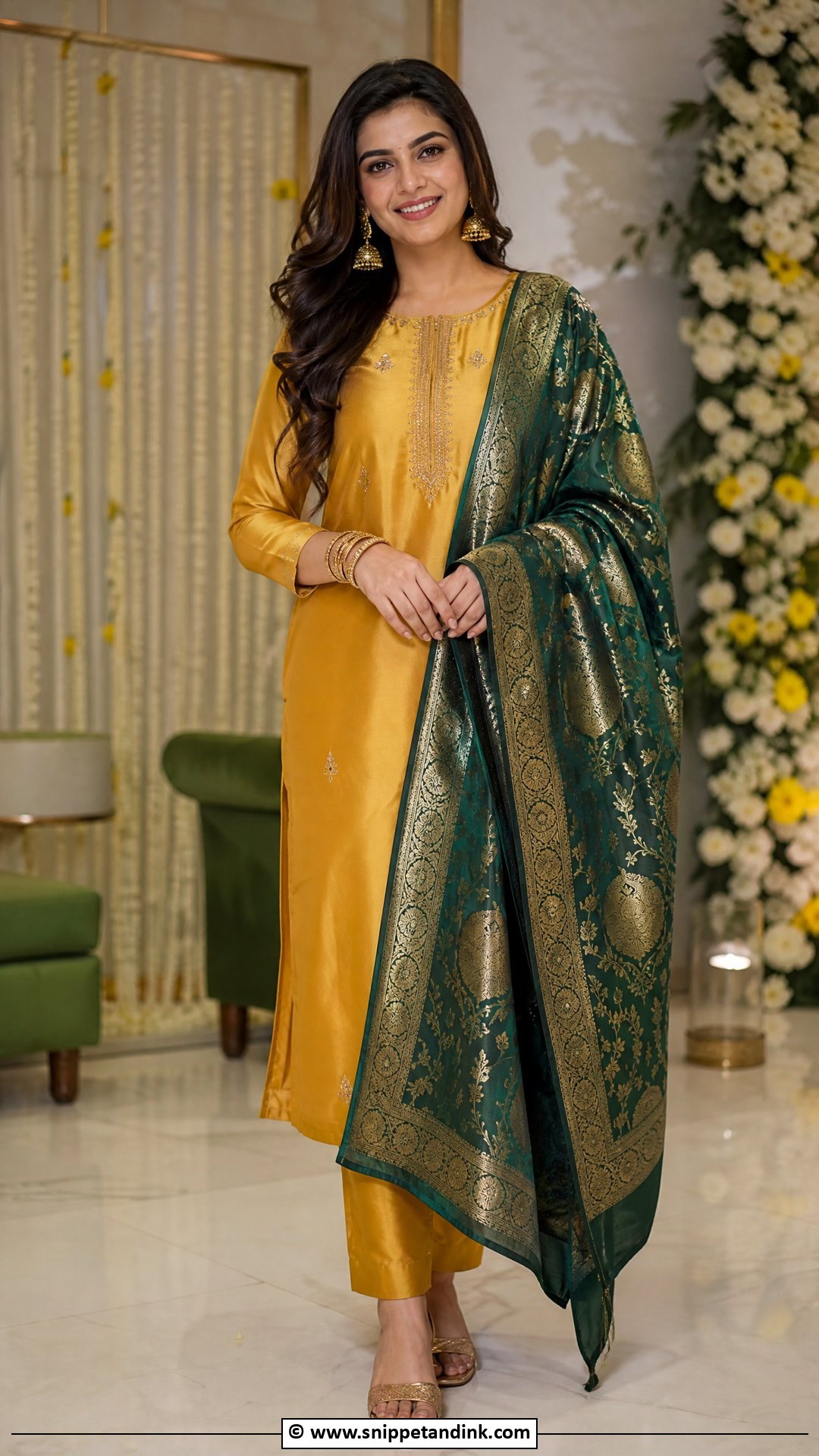
A silk kurta set with a Banarasi dupatta is how I’d dress a mother, an aunt or a guest who prefers quiet elegance. The kurta stays plain or lightly embroidered with straight pants, and the Banarasi dupatta in a contrasting color becomes the statement piece. Yellow with green, orange with pink, or ivory with mustard all work. Banarasi weaving has real weight, so pin it at the shoulder rather than letting it hang freely. Gold earrings, bangles and heeled sandals are all the jewelry it needs.
25. Lehenga With Long Kurti
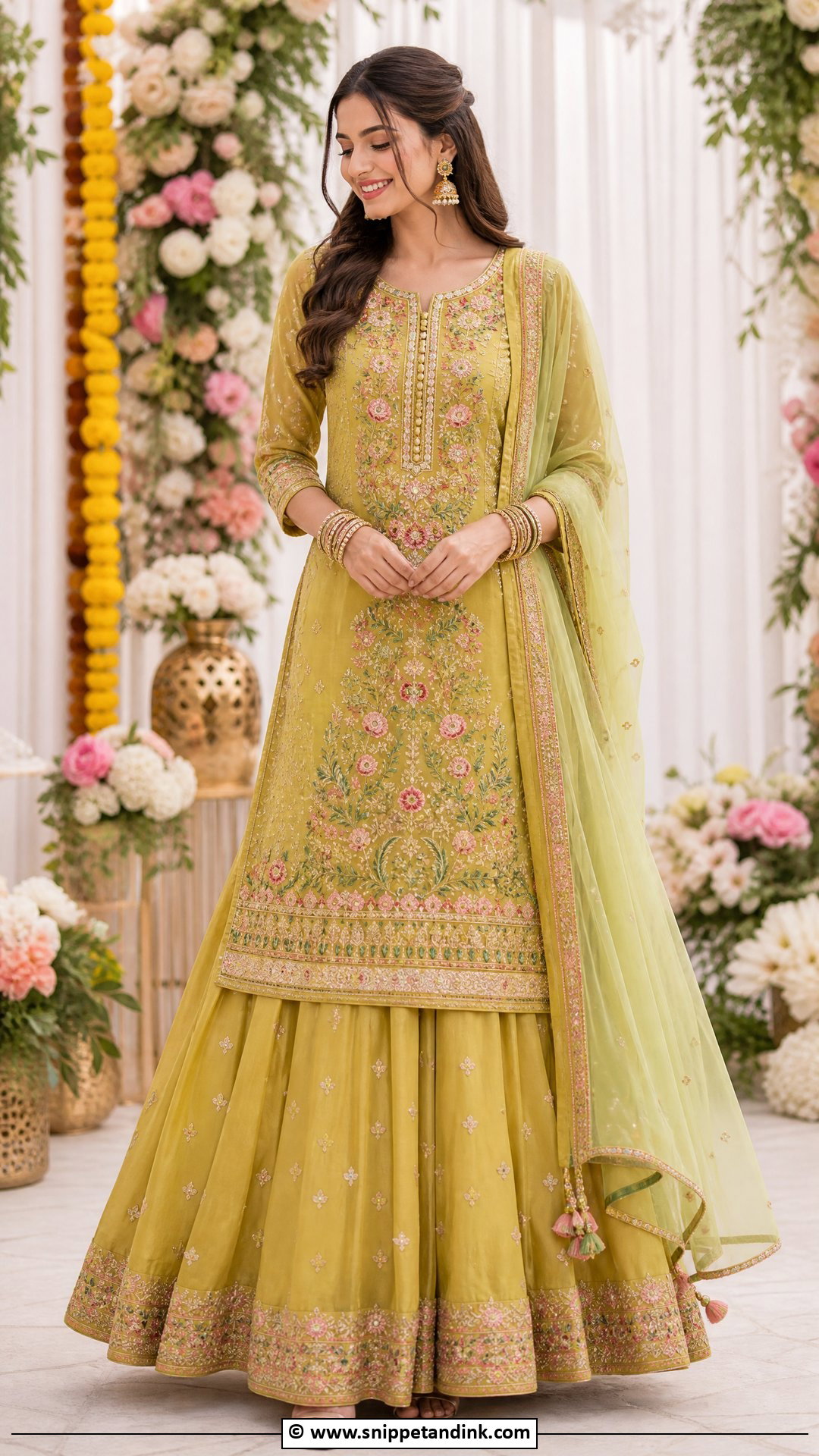
A long kurti over a lehenga gives coverage without hiding the festive shape, because the skirt still flares out below the kurti hem. Embroidery at the neckline, sleeves and hem makes it dressy. Drape a light dupatta over one shoulder or across the arms. It’s what I suggest to brides, sisters and guests who prefer a covered look or have older relatives to consider. Make sure the kurti has side slits high enough to sit comfortably on a low seat. Jhumkas, bangles and comfortable heels finish it.
26. Organza Saree With Mirror Blouse
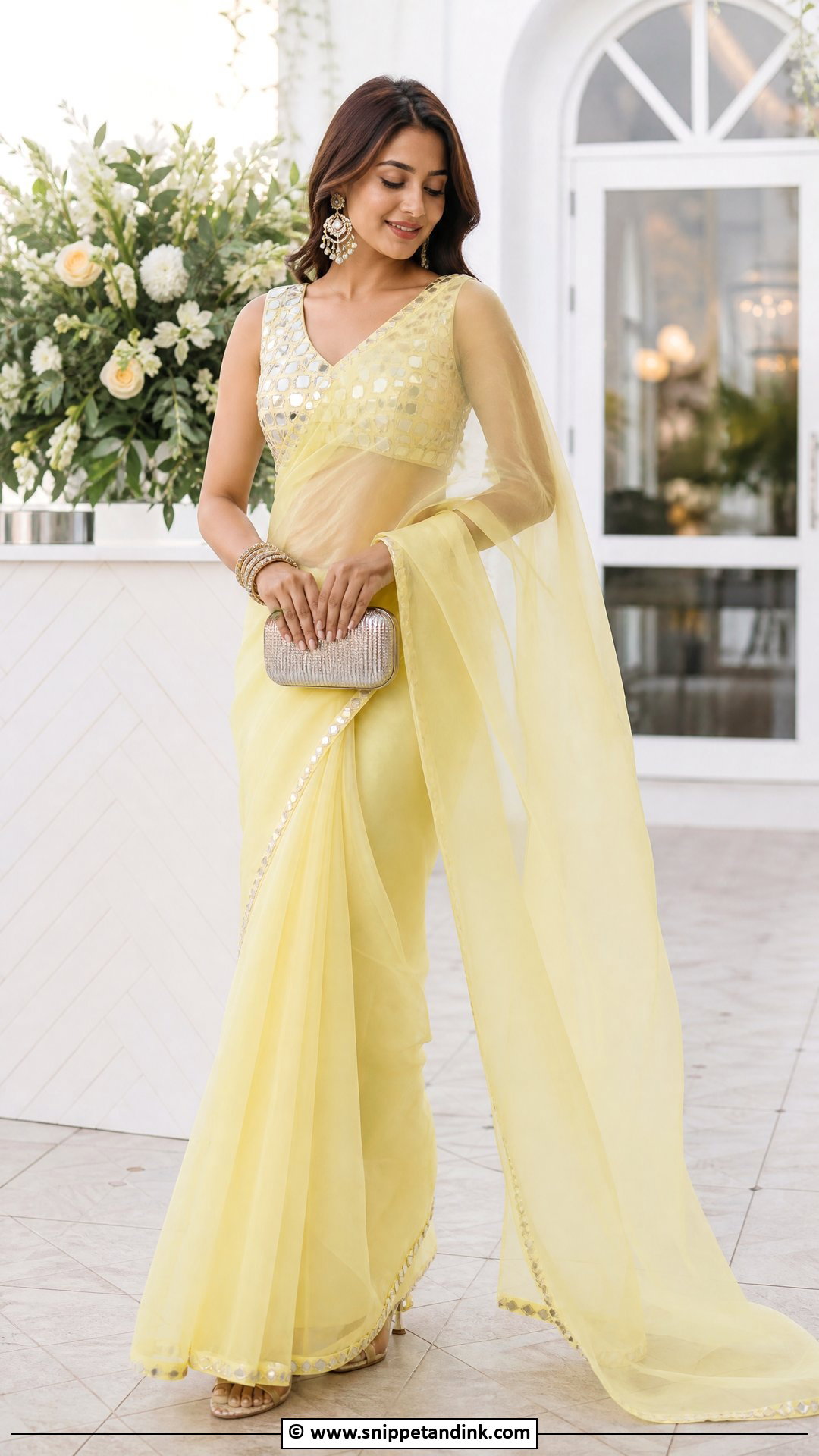
Organza is light and sheer, so a saree in it feels airy even in summer, and a mirror blouse brings the festive sparkle. Lemon yellow, sage green, peach and soft pink look fresh. The catch is that organza is slippery and springy, so it needs careful pinning at the pleats and shoulder to hold its shape all evening. Statement earrings, a sleek clutch and soft waves or a low bun finish it. Bridesmaids and guests who want something elegant but not heavy tend to choose it.
27. Yellow Co Ord Set With Dupatta
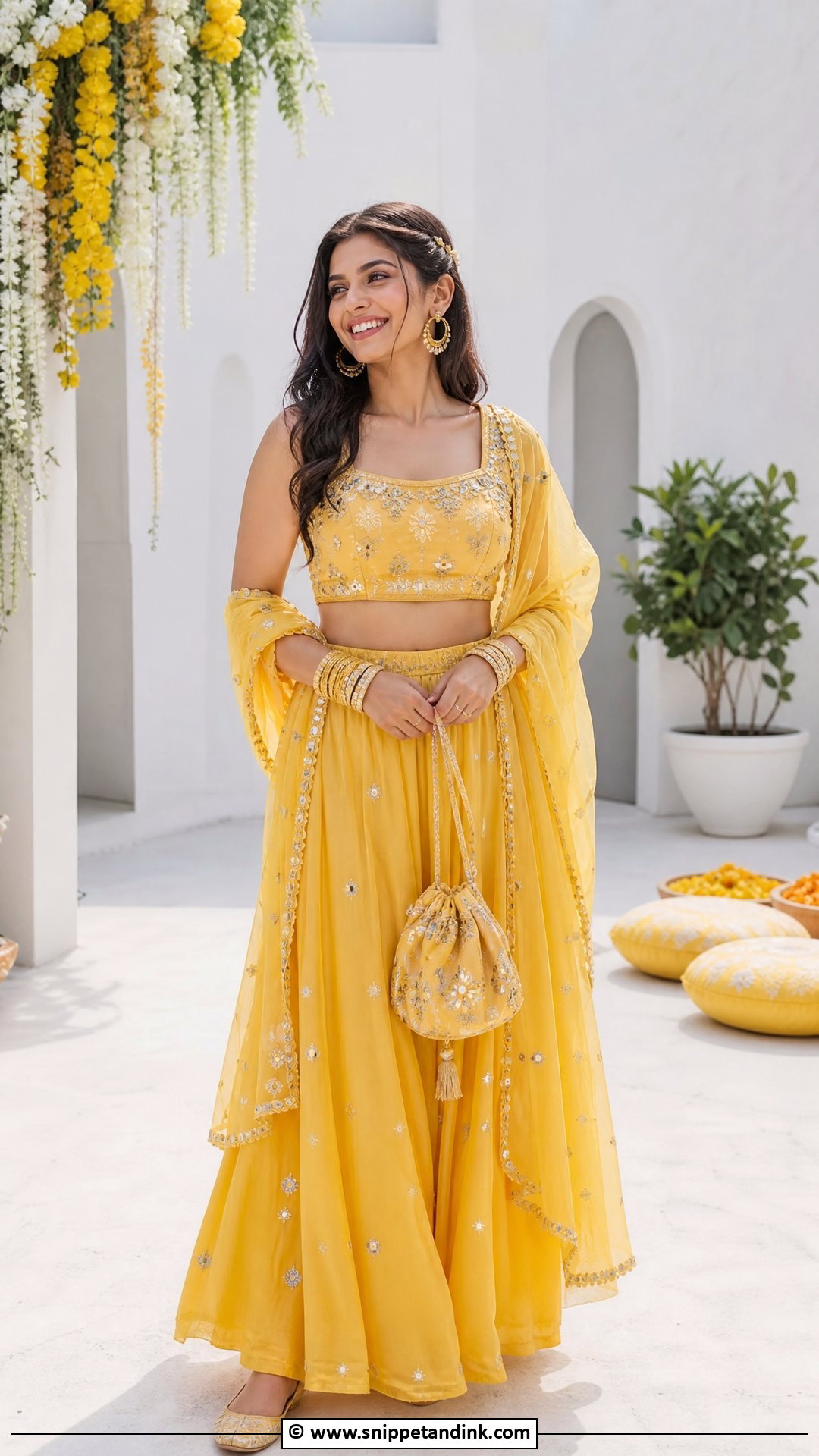
A yellow co ord is the easiest mehndi outfit to style because the work is already done. Choose a matching crop top and skirt, kurta and pants, or peplum and sharara in one shade of yellow, and let a dupatta with mirror work, tassels or a printed border make it festive. Juttis, hoops and stacked bangles complete it. For destination weddings it’s my favorite suggestion: separates fold flat, take little suitcase space and come out with fewer creases than a lehenga.
28. Sequin Lehenga With Soft Dupatta
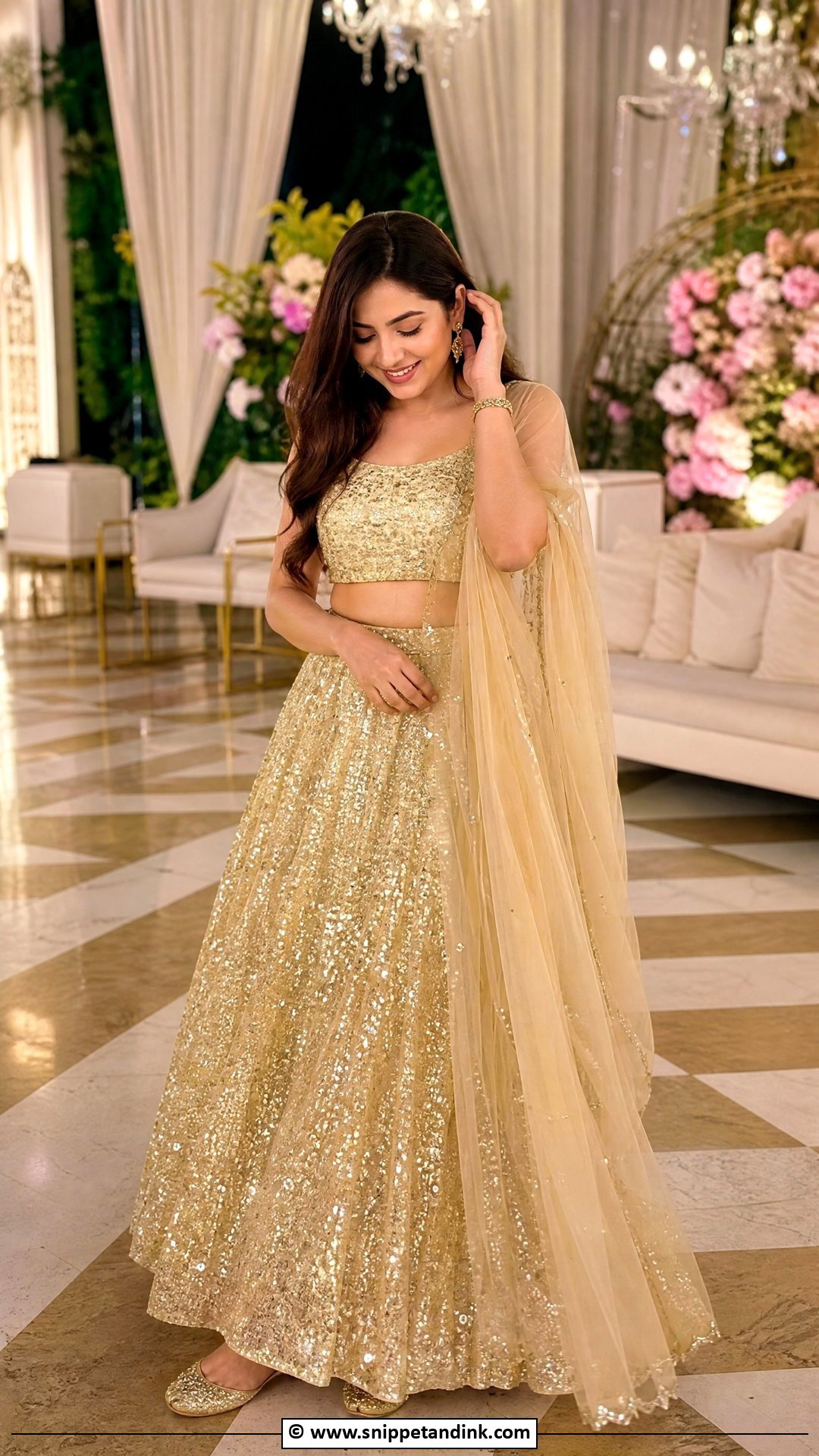
Sequins suit an evening mehndi, when indoor lights pick up every one of them. Choose small sequins in yellow, green, champagne or peach so it reads festive rather than reception-level. A soft chiffon or net dupatta tones down the sparkle. Keep jewelry to earrings and a bracelet. Sequins have a practical downside: they scratch the inner arms and catch on lace, so I check the blouse is lined at the underarm. It suits bridesmaids or brides who want some glamour and still plan to dance.
29. Pakistani Mehndi Gharara Suit
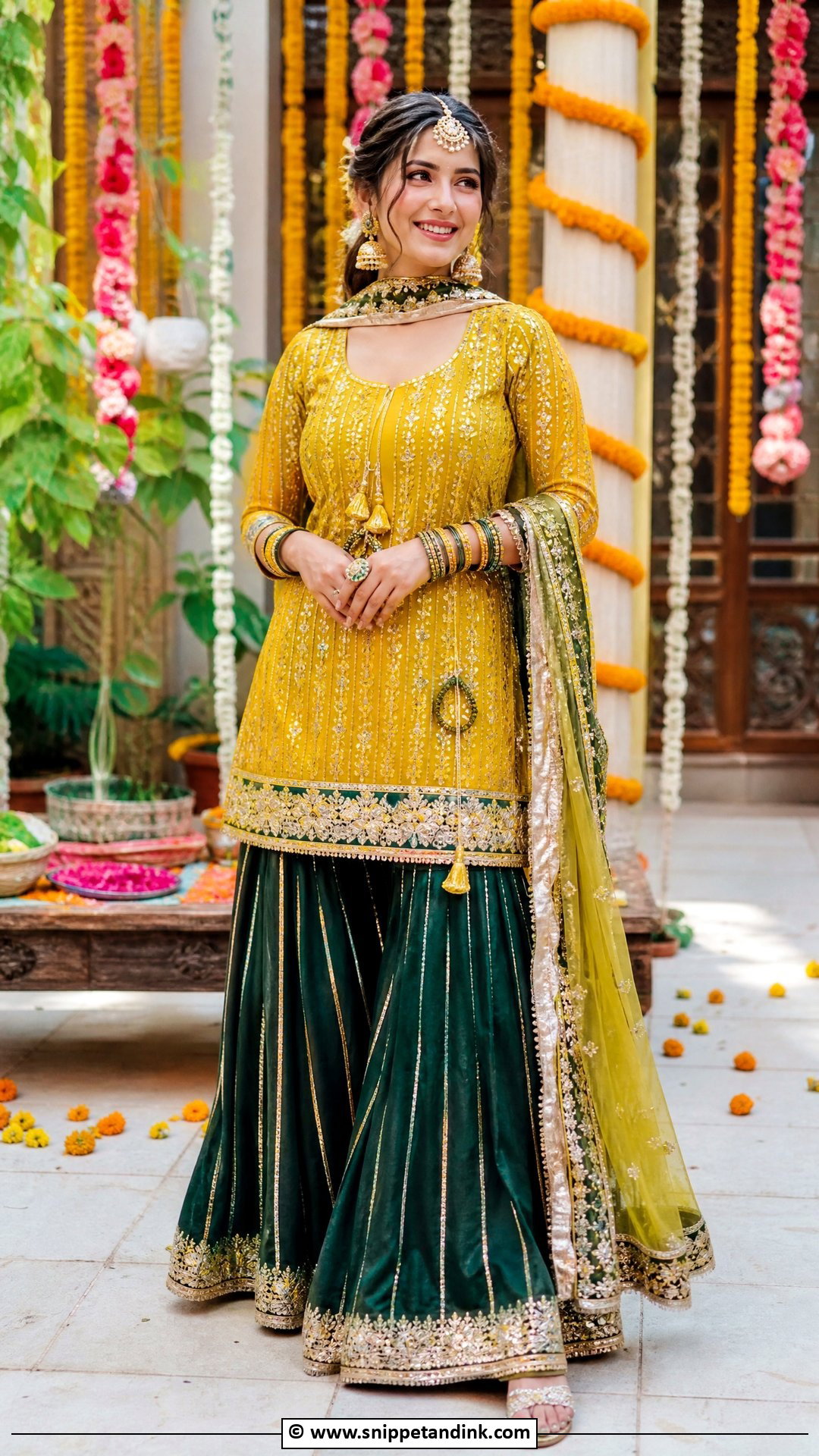
A Pakistani mehndi gharara suit usually combines a short kameez, flared gharara pants and a dupatta with gota, zari or mirror work. Yellow, orange, green and pink are the traditional colors. The silhouette is dramatic, but it stays comfortable as long as the fabric isn’t heavy. Tailoring makes or breaks it; the joining seam at the knee should sit level, or the flare hangs unevenly. Style it with a passa, jhumkas, bangles and soft makeup. Brides and close family members wear it for a classic South Asian look.
30. Simple Mehndi Kurta With Skirt
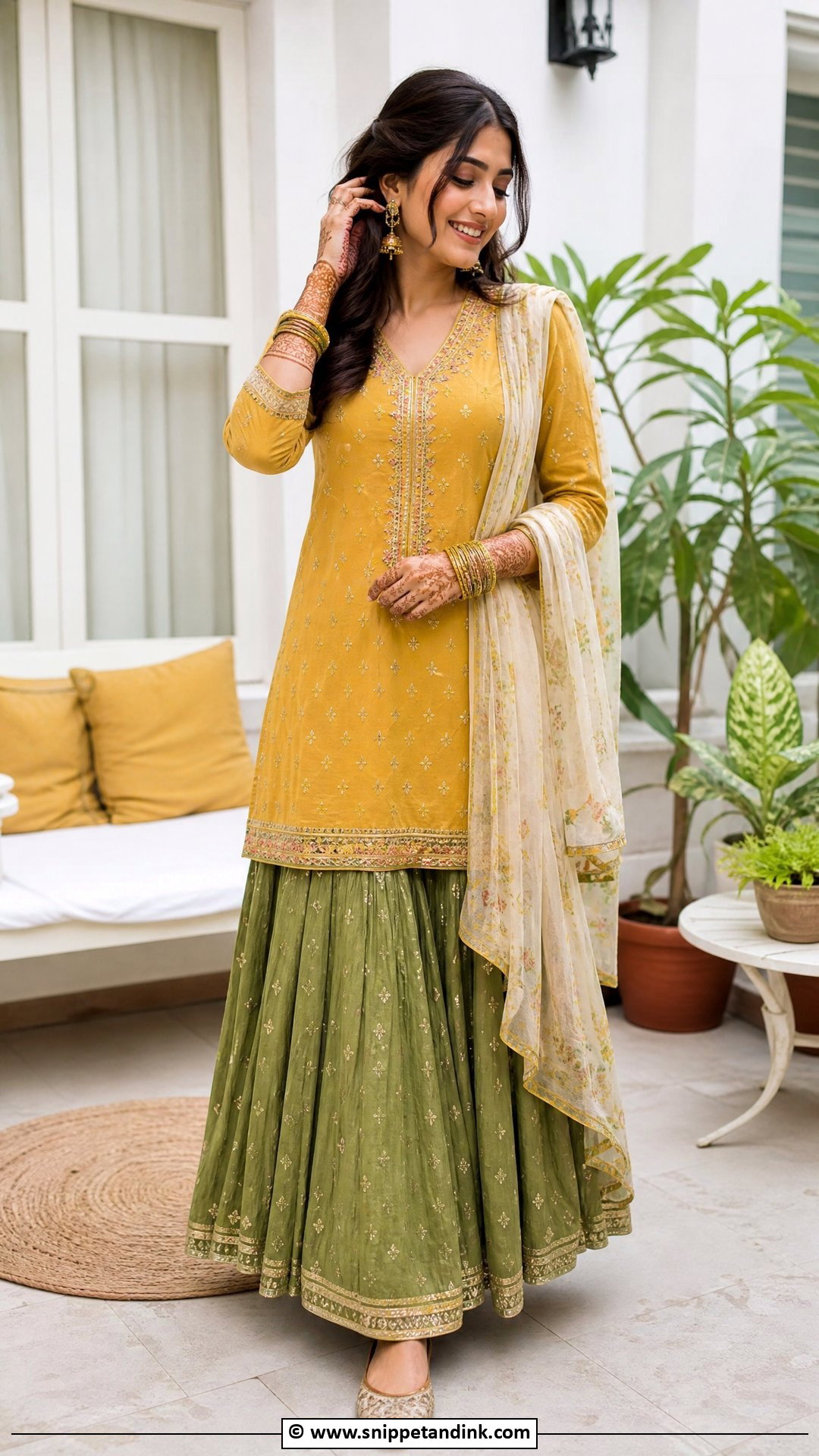
A kurta with a skirt is relaxed, festive and right for a casual home ceremony. A short or mid-length kurta with embroidery, mirror work or block print over a flowing skirt is all it takes, and yellow, green and orange combinations always fit the occasion. A light dupatta adds movement and modesty if needed. Juttis, bangles and small earrings finish it. It’s easy to sit in and easy to dance in, and you’ll wear the pieces again, which matters if you’re a guest with several events coming up.
31. Velvet Kurta With Sharara Pants
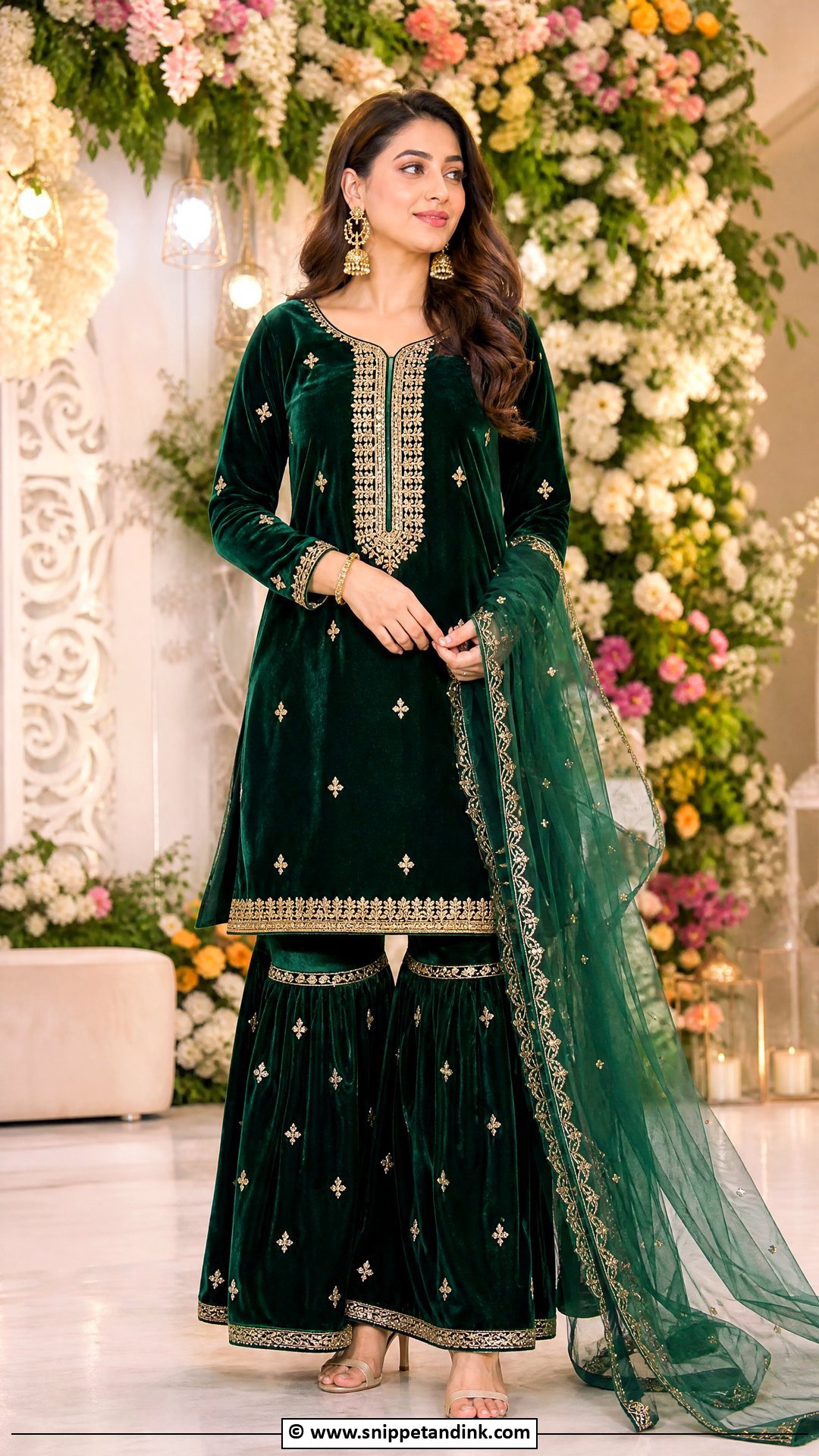
Velvet is warm, so a velvet kurta belongs at a winter or indoor evening mehndi, never a summer garden one. Emerald, mustard, deep pink and teal suit it. The velvet gives texture and richness, and the sharara keeps the bottom half flowing and comfortable. Because velvet adds weight, I’d pair it with a lightweight dupatta and minimal jewelry: gold earrings, a bracelet and heeled sandals. Velvet also marks easily where it’s pressed, so don’t fold it in a suitcase. Hang it in a garment bag instead.
32. Floral Lehenga With Off Shoulder Blouse
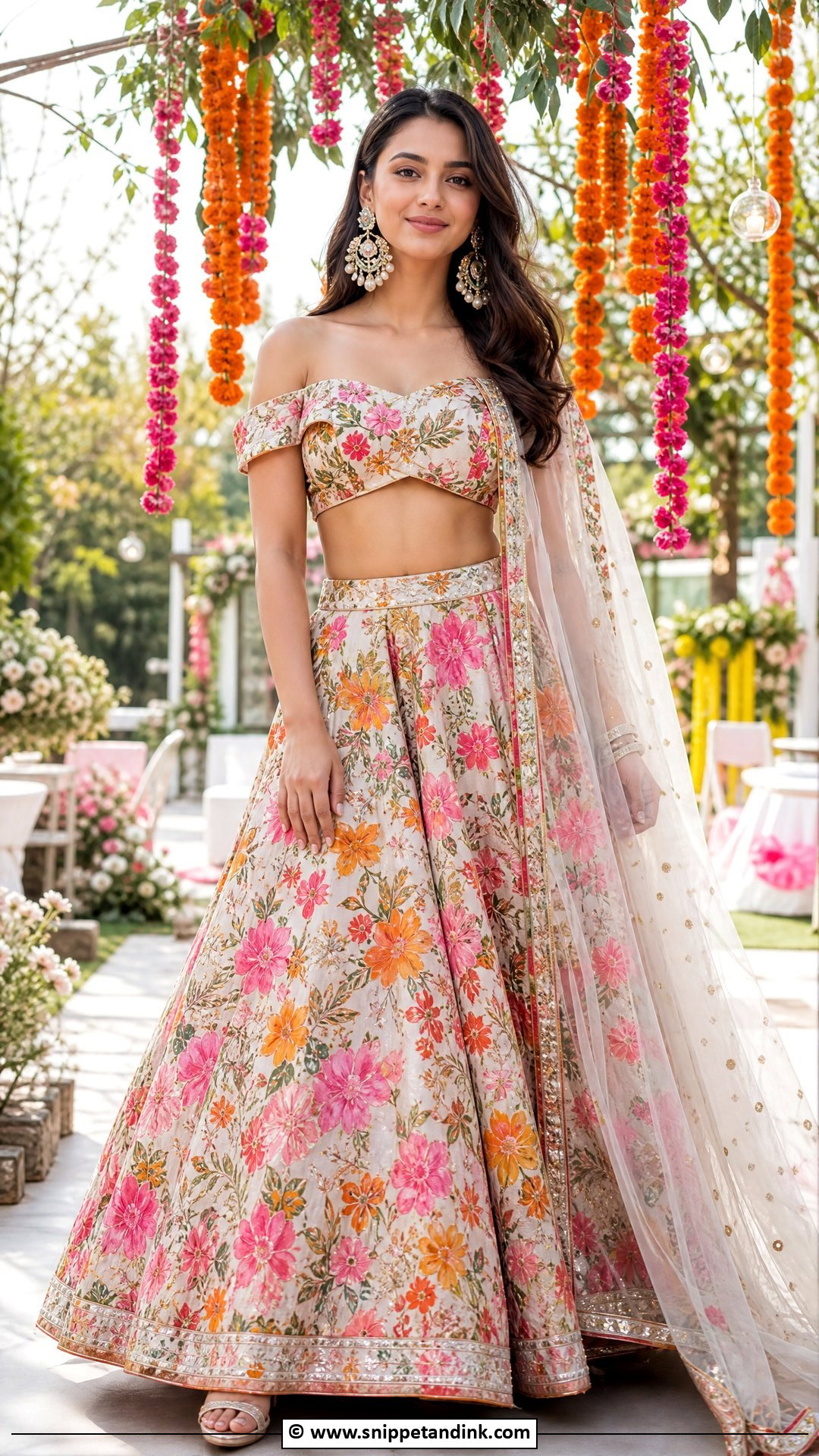
An off shoulder blouse over a floral lehenga skirt feels youthful and modern. Pick a light skirt with printed or embroidered flowers in yellow, pink, green or coral. If you’d like more coverage, drape a sheer dupatta loosely over the arms. Off shoulder blouses creep down when you lift your arms to dance, so an elastic or silicone grip at the neckline is something I’d always ask the tailor for. Statement earrings and soft waves finish it. It suits bridesmaids, cousins and guests who like a feminine look for outdoor photos.
33. Green Saree With Gold Jewelry
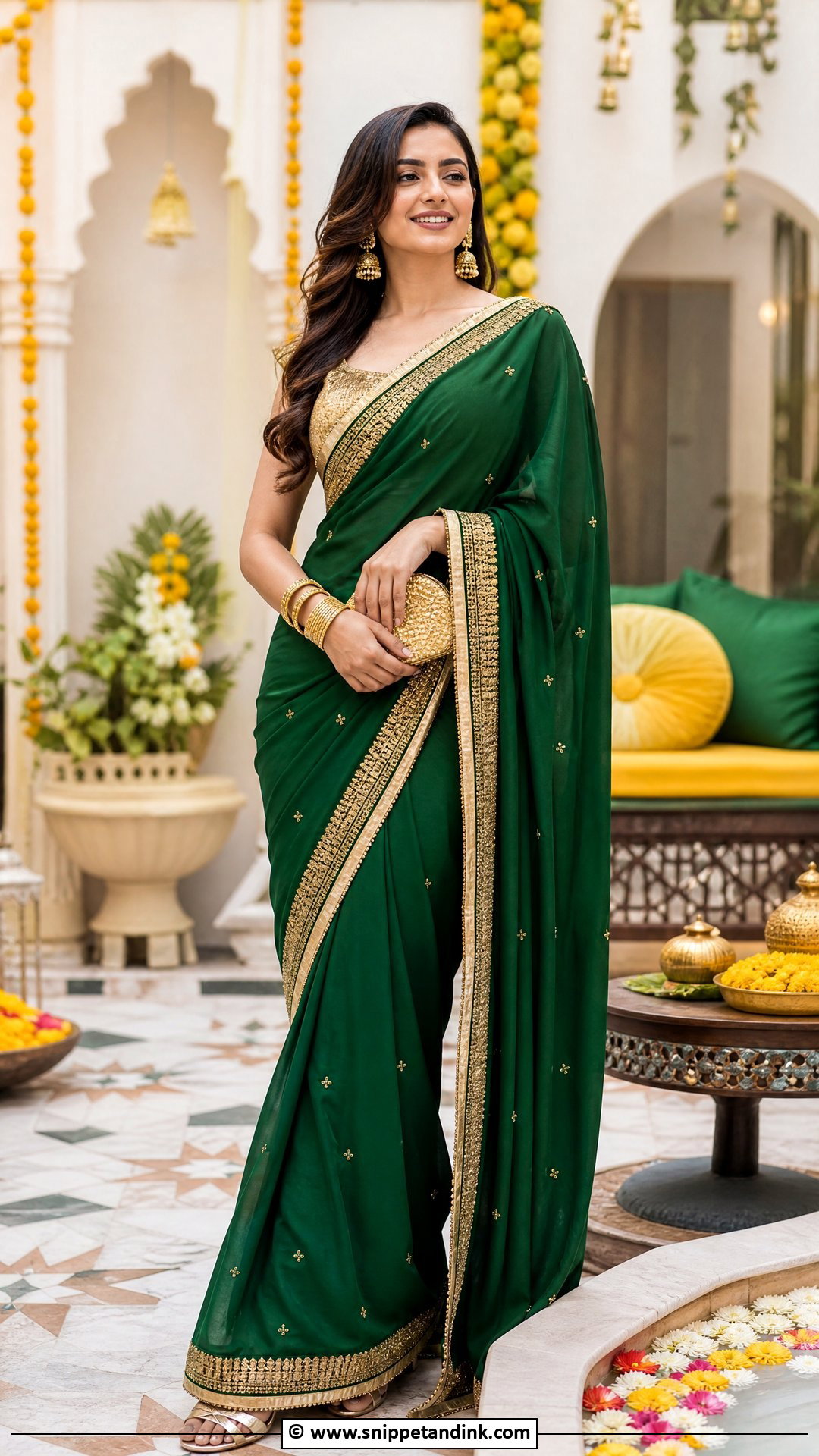
A green saree with gold jewelry suits almost any age or role, which is why it keeps coming back. Silk or organza suits a formal hall; georgette or chiffon suits a home function. A gold or embroidered blouse makes it richer. Gold bangles, jhumkas and a small clutch complete it. The balance rule I use: a plain saree gets a statement blouse, and a heavily worked saree gets a simple one. Mothers, aunts and guests all look right in it, and it rarely clashes with the bride.
34. Kaftan Dress With Ethnic Jewelry
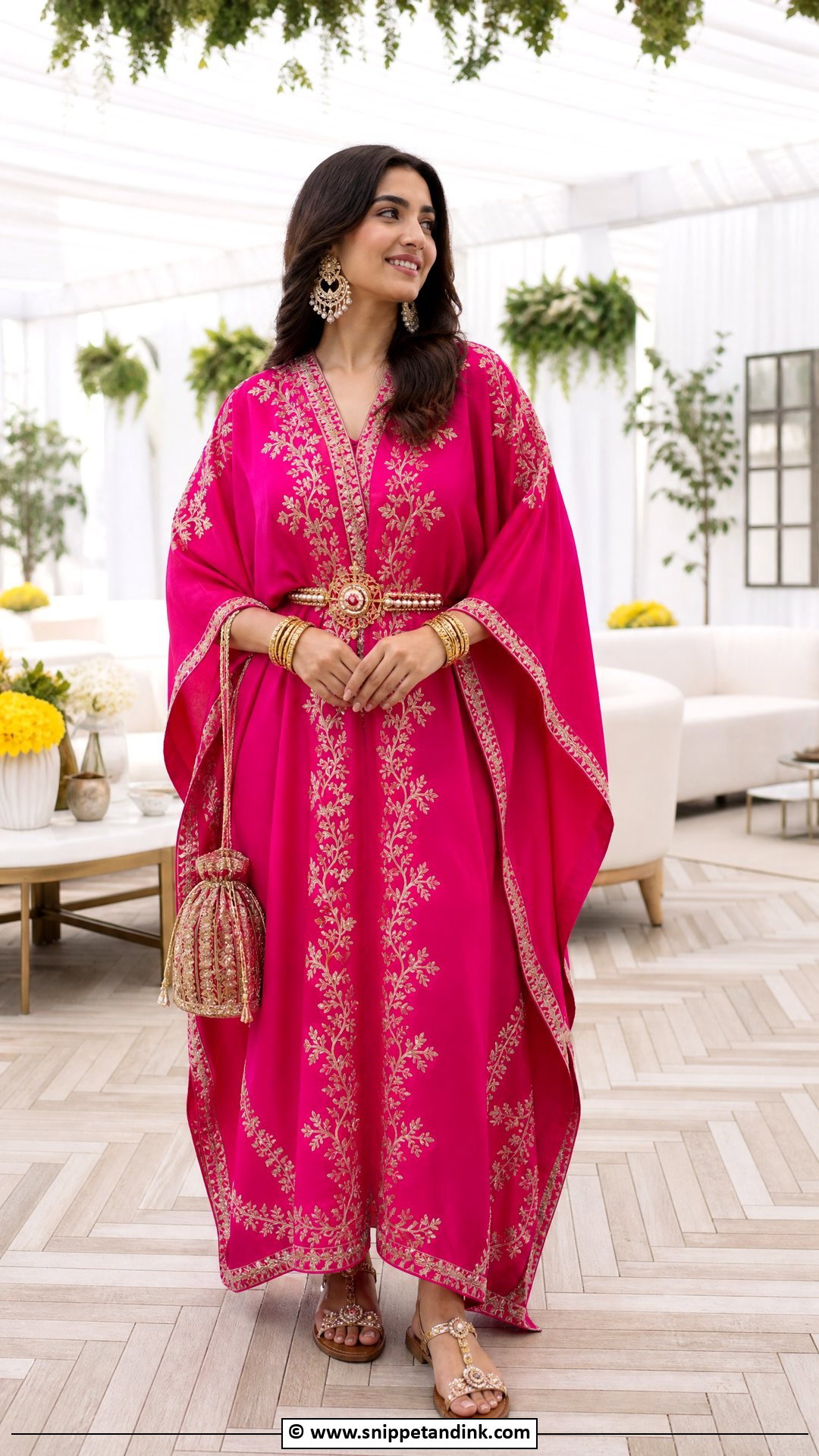
A kaftan is the most relaxed silhouette here and still looks dressed when you choose silk, georgette or crepe with embroidery at the neckline and sleeves. Yellow, lime, orange or fuchsia keep it festive. Statement earrings, bangles and embellished sandals make it feel complete. A belt adds shape if you want it. I often suggest kaftans to guests who are pregnant, because there’s no waistband and nothing restricts movement, and to anyone attending a hot outdoor event.
35. Bridal Mehndi Lehenga With Floral Jewelry
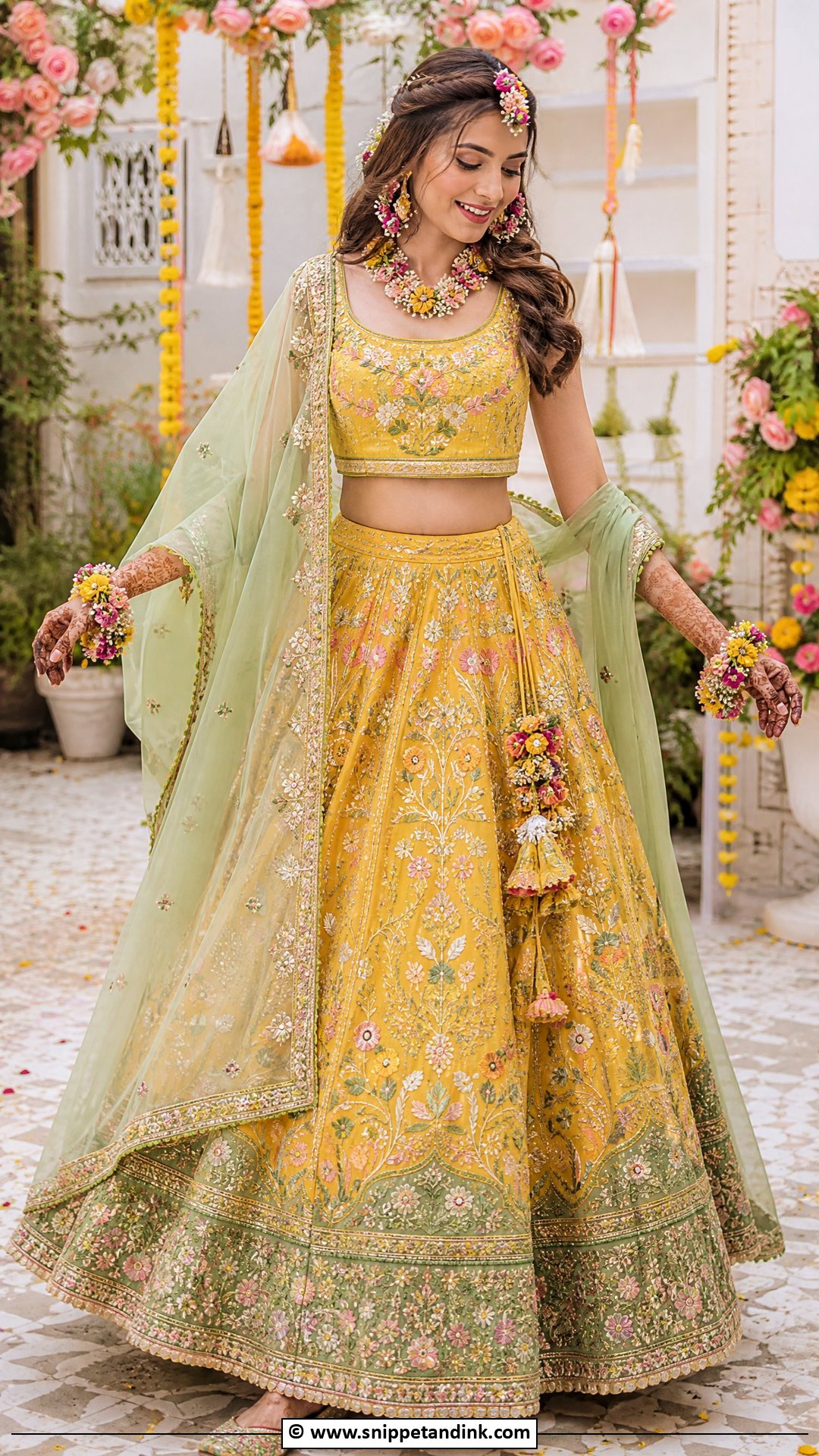
For the bride herself, a mehndi lehenga with floral jewelry is the traditional look. Yellow, green, orange or a mix of bright shades with mirror work, gota or thread embroidery suits it. Floral jewelry softens the outfit and suits the ceremony; fresh flowers look best but wilt in heat, so good artificial pieces are the safer choice for a long day. A light dupatta keeps the hands and arms visible for henna photos. Comfortable shoes matter, since the bride may sit for hours. Keep the makeup fresh and not heavy, since close-up hand shots put your face in the frame too.
Sarees, Ghararas and Dupattas on a Crowded Dance Floor
Mehndi dancing is energetic, and loose fabric is what lets an outfit down. Before any family function I run through the same short list with everyone I dress, and it takes ten minutes at home.
- Pin saree pleats at the waist and the pallu at the shoulder, using small safety pins hidden on the underside.
- Do the hem test in your actual shoes: walk, sit on a low cushion, stand up. If you step on the front, it needs taking up or a higher heel.
- Lift both arms above your head. If the blouse or neckline shifts, add a pin or switch to a dupatta you can tie.
- Spin once. Anything that flies wide enough to catch a neighbor’s bangles needs anchoring.
- Pack a pouch with spare safety pins, a needle and matching thread, wet wipes and blotting papers.
Henna adds one more rule. If you’re getting even a small design done, have someone else adjust your outfit afterwards. Paste smears on fabric before it smears on skin, and the dye leaves orange marks on light colors.
Pin It, Test It, Then Go Dance
The right outfit balances color, comfort, tradition and your own style, and it lets you sit easily, move freely and enjoy the whole celebration. Brides can go bold with lehengas, floral jewelry and mirror work; guests can choose lighter shararas, sarees, kurta sets or printed anarkalis. Yellow and green never go wrong, though pink, orange, ivory, mint and fuchsia look just as festive. Pick breathable fabric, secure the drape before you leave home, and wear shoes you can dance in.
You'll Like These Ideas:


Leave a Reply