
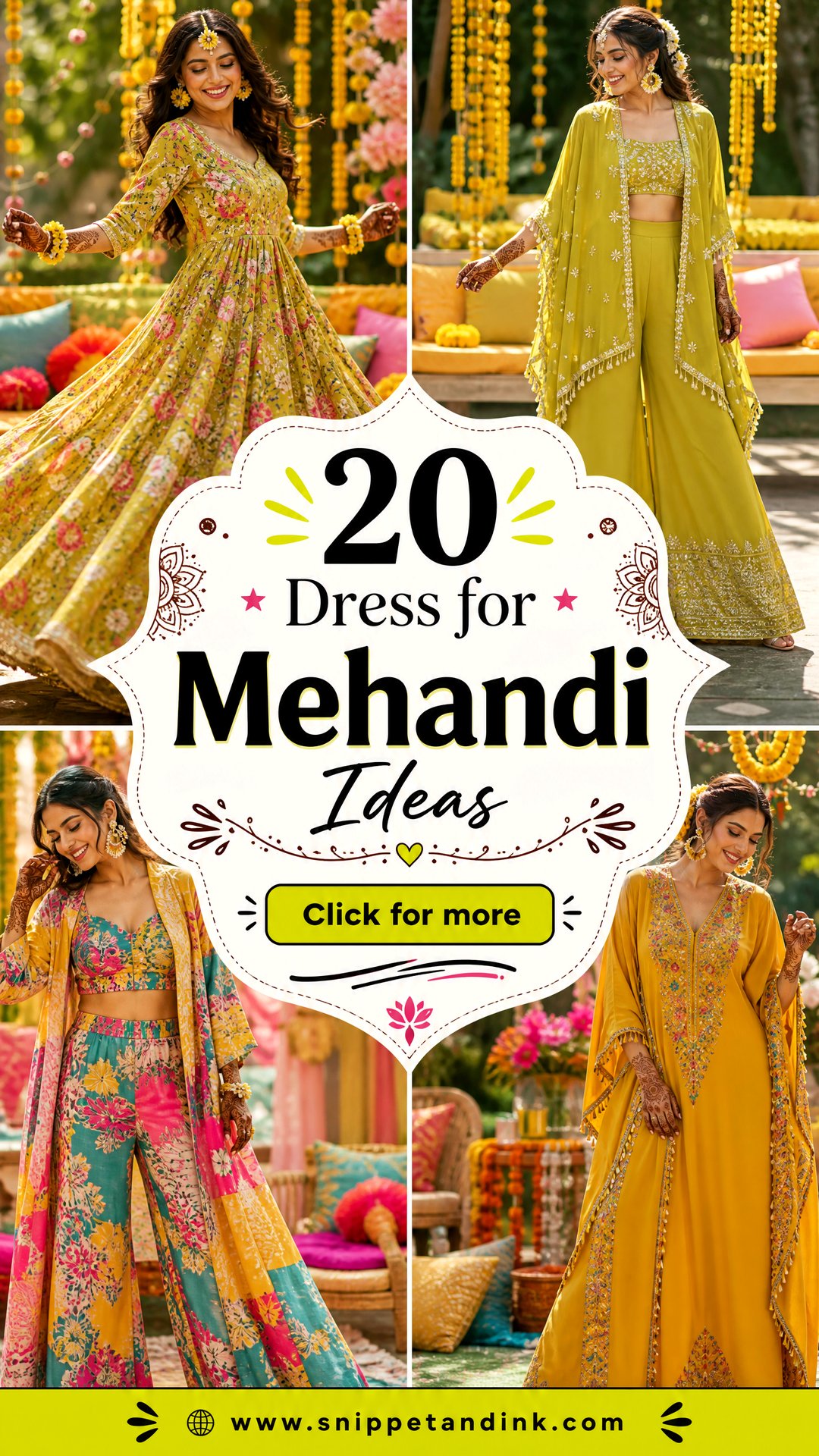
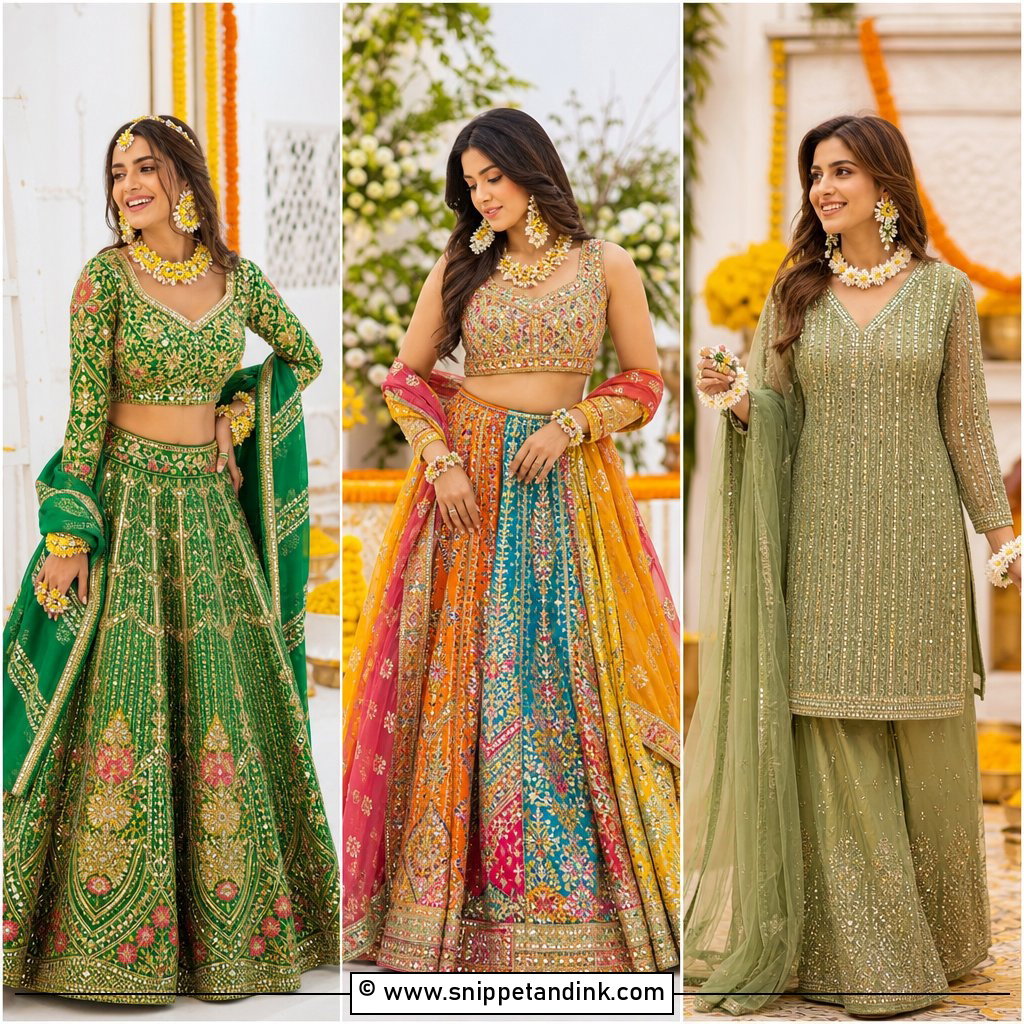
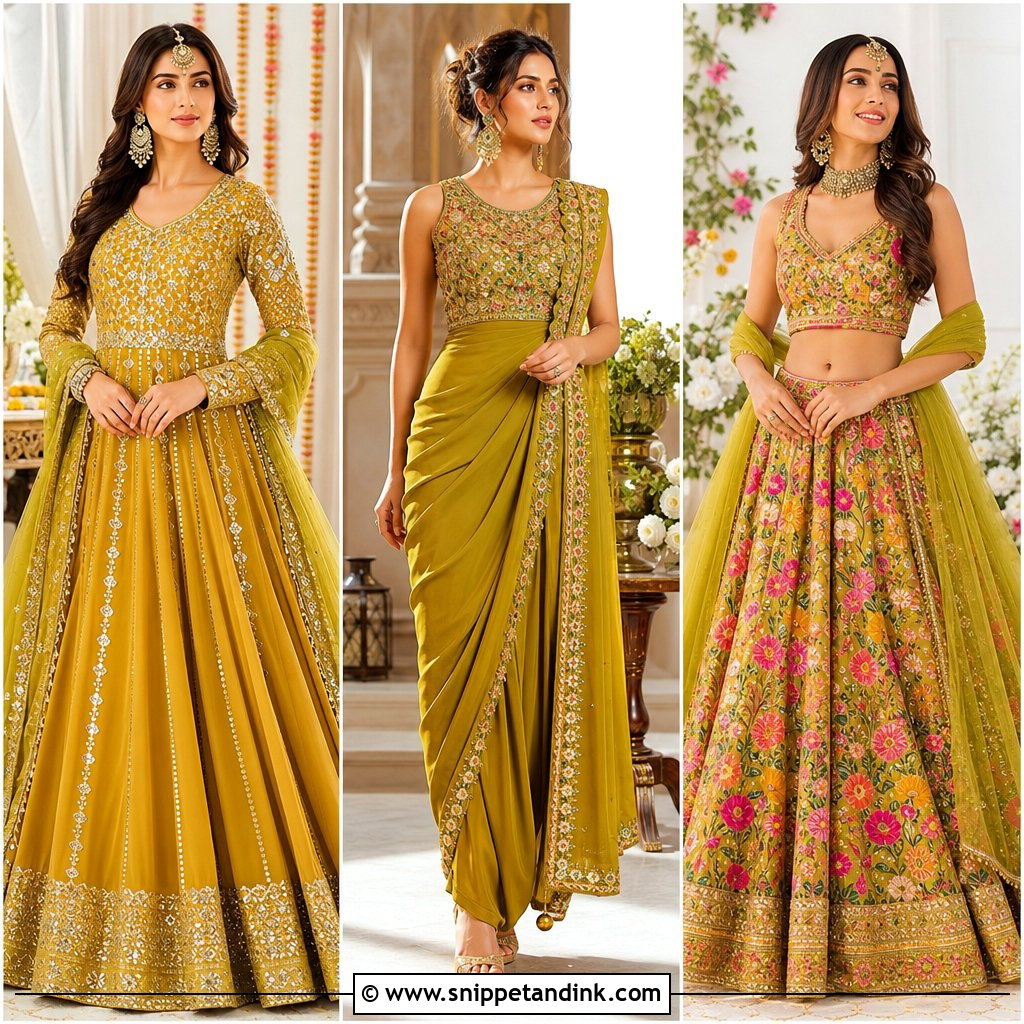
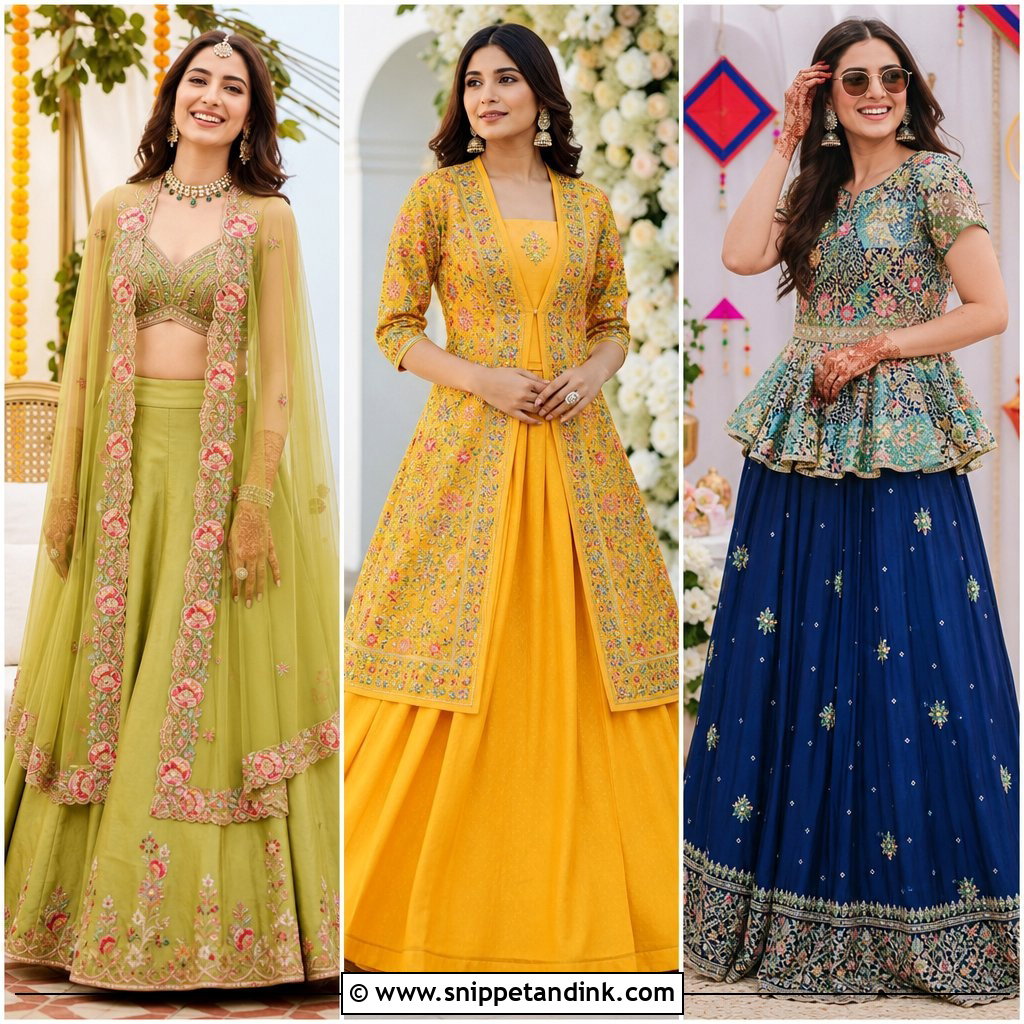
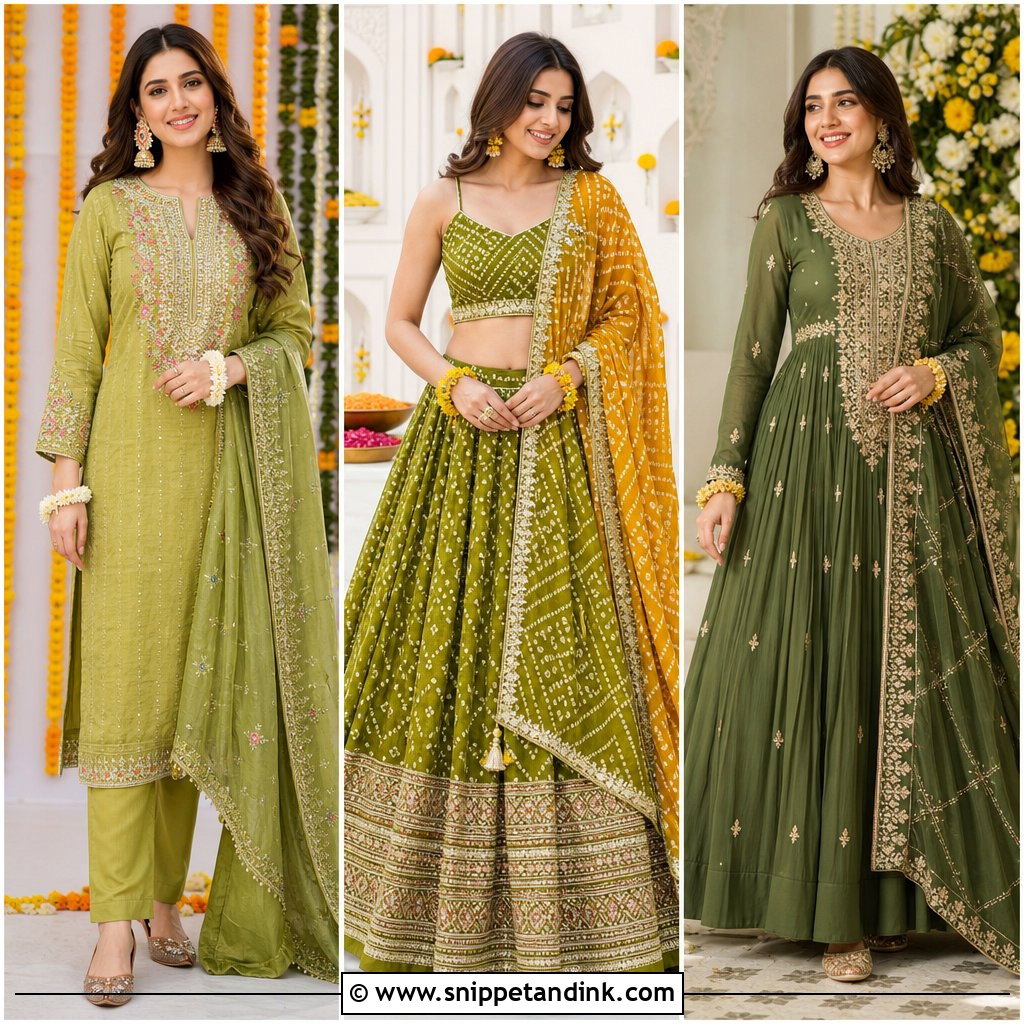
I spend every mehandi function sitting across from people in their outfits, so I see exactly which clothes work and which ones fight the henna. Long tight sleeves have to be pushed up and get creased. Loose dupattas swing into wet paste. Heavy skirts make it hard to sit still for an hour while I work on your feet. Green is the traditional color, but yellow, pink, orange, turquoise and soft pastels all suit the day. Below are twenty outfits for brides, sisters, bridesmaids and guests, with notes from my side of the henna cone on what makes each one easy to wear while the design dries.
Two Hours of Henna and What Your Sleeves Need to Do
A bridal design on both hands and feet can take several hours, and even a guest design on one hand needs the paste to stay on for a good while to stain well. During that time you can’t adjust clothing, hold a dupatta or open a bag. Plan the outfit around that.
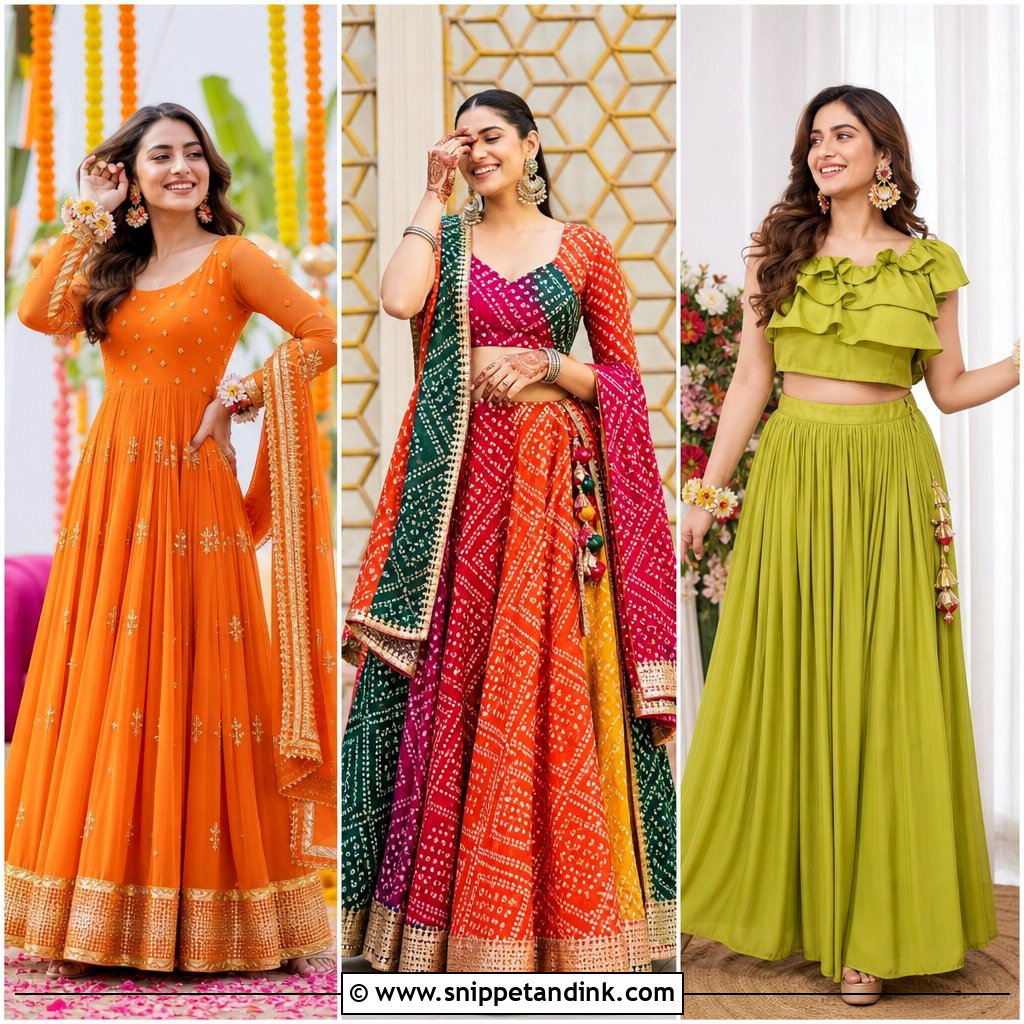
- Sleeves: elbow length or shorter. If your design goes higher, wear a sleeveless blouse for the session.
- Feet: choose a hem that stops above the ankle or can be tucked up easily, and open sandals you can slip on without using your hands.
- Fastenings: front hooks or side zips. Anything at the back needs a helper once your hands are done.
- Jewelry: put on earrings and necklaces first. Rings and bangles go on later, after the paste has dried and flaked.
Brides usually get their henna a day or two before the wedding, and many wear a simple outfit for the session itself, then change for the party. That’s sensible. The stain starts out light orange and darkens over the next day or two, so it peaks on the wedding day rather than at the mehandi.
1. Green Lehenga for Mehandi
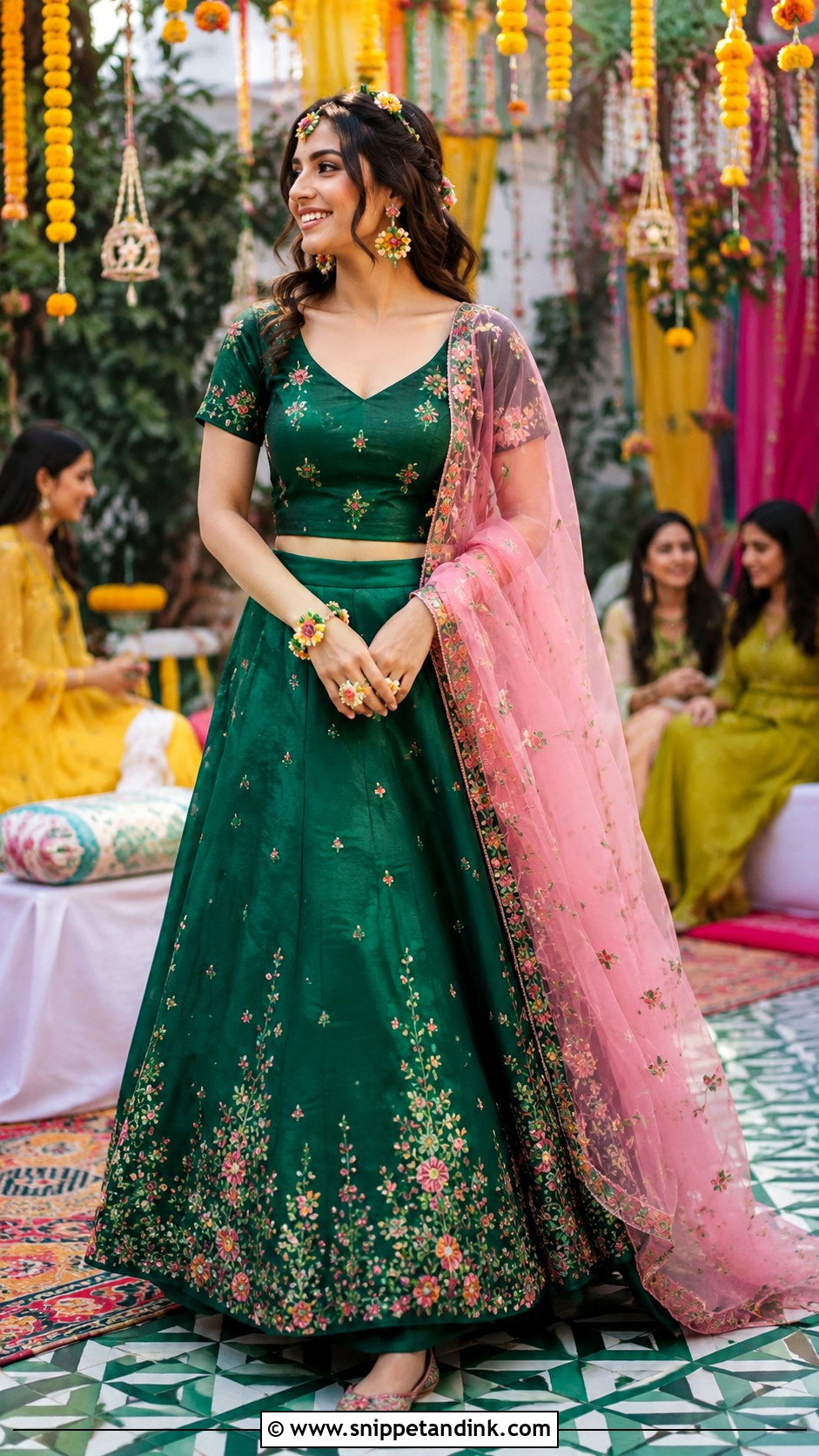
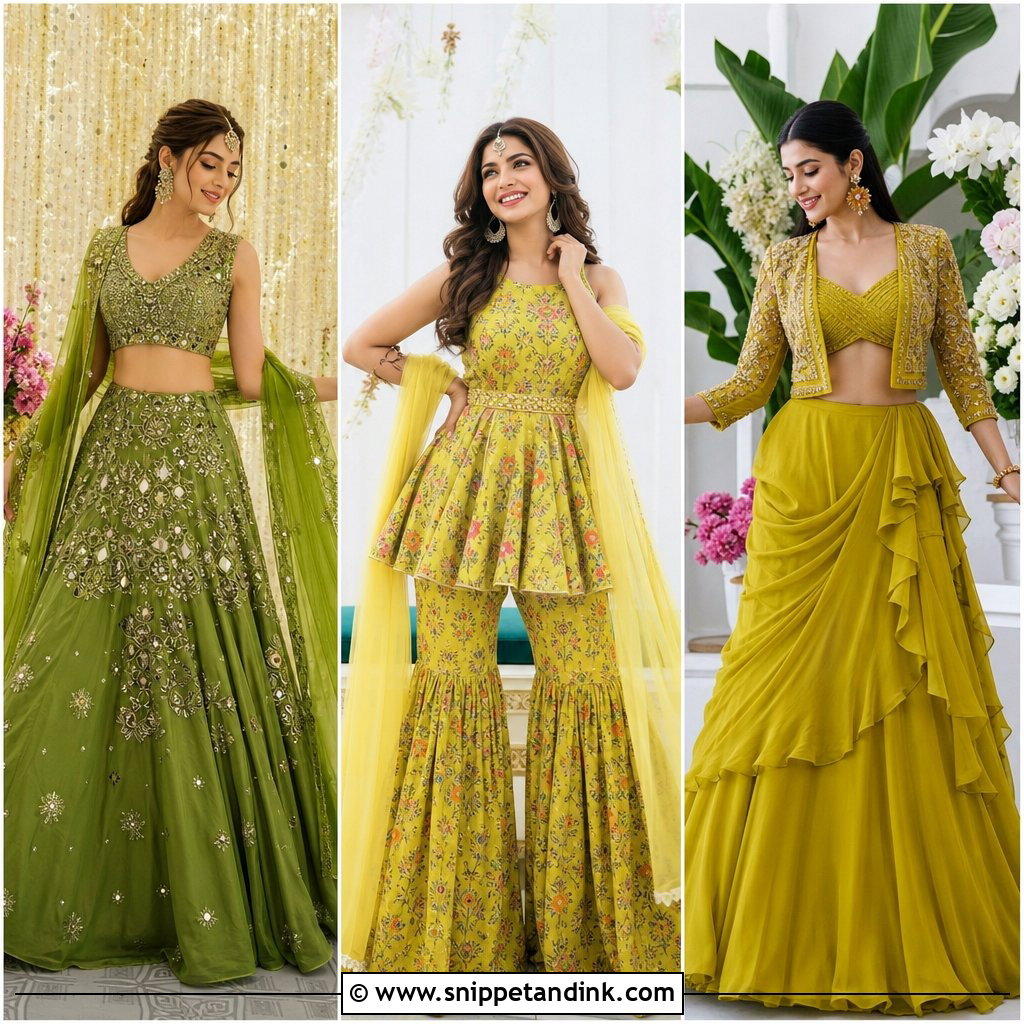
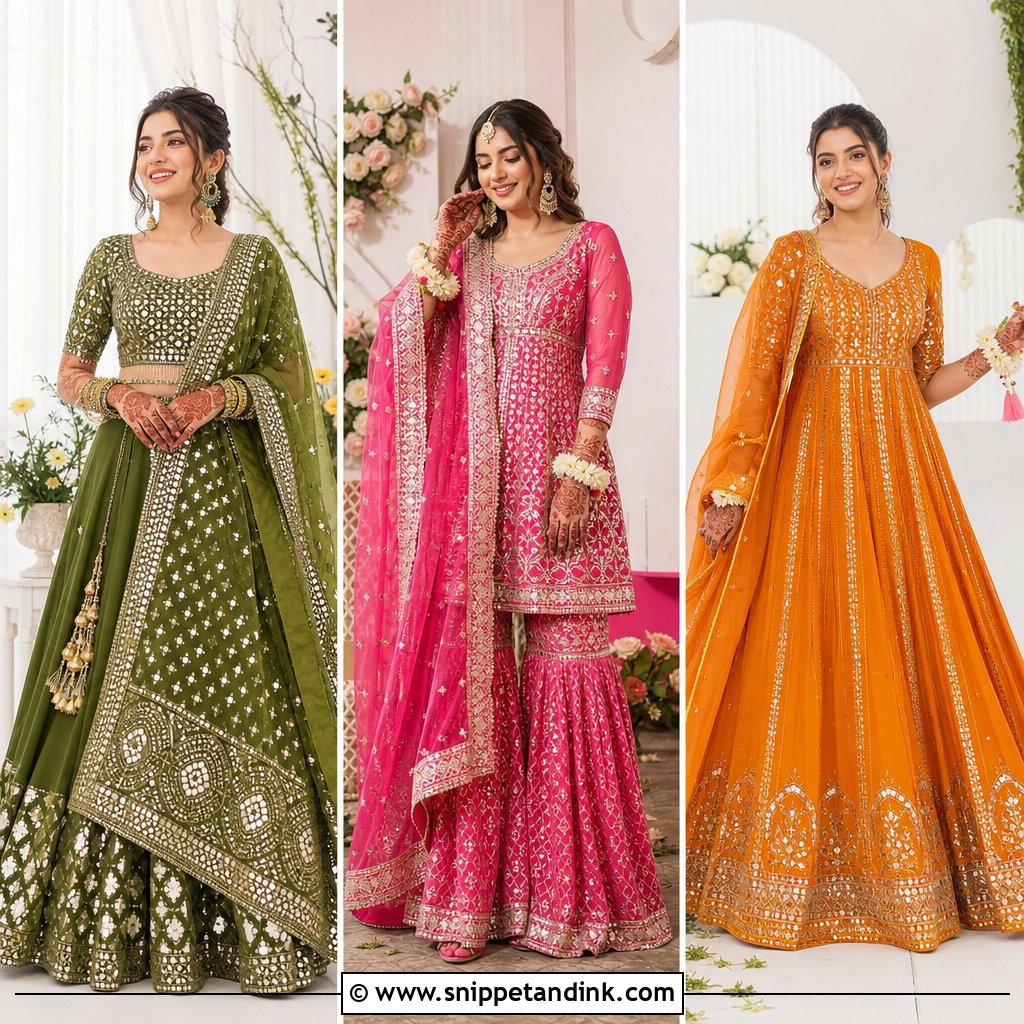
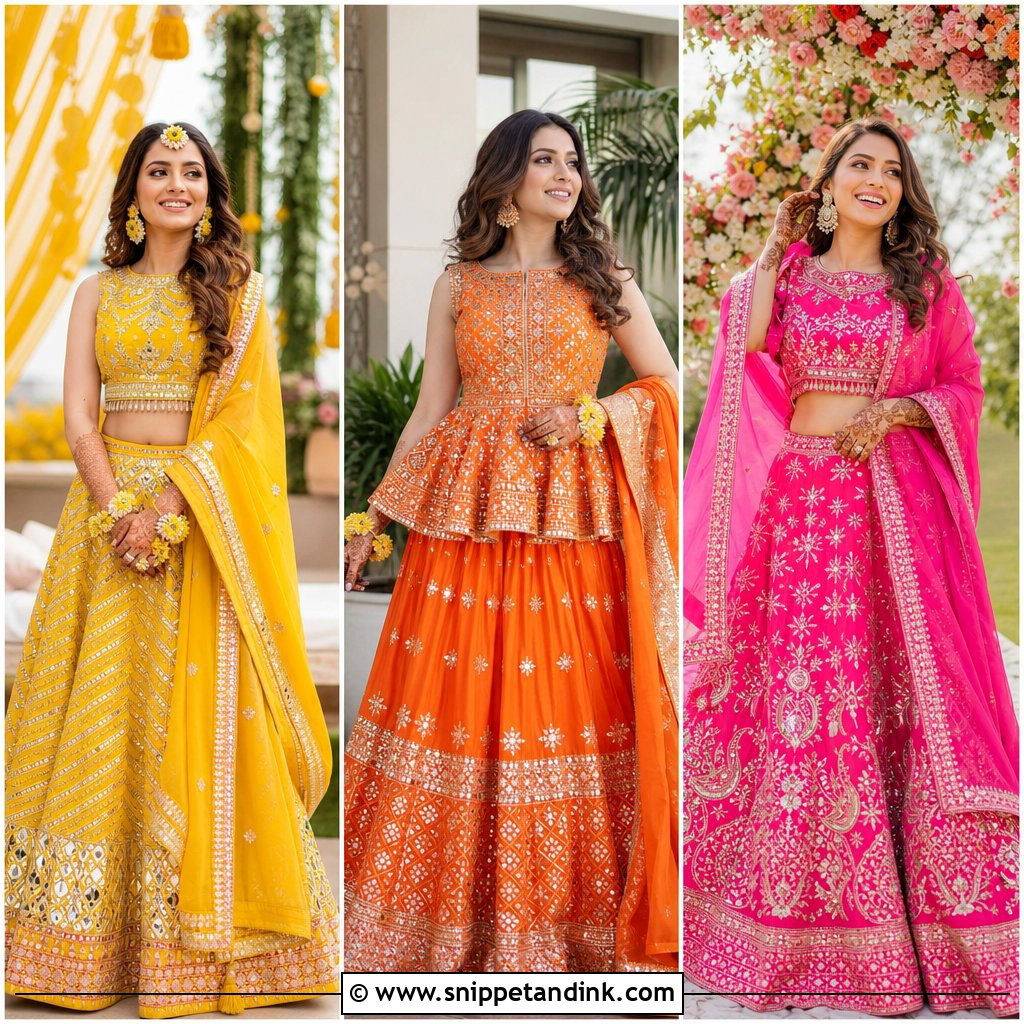
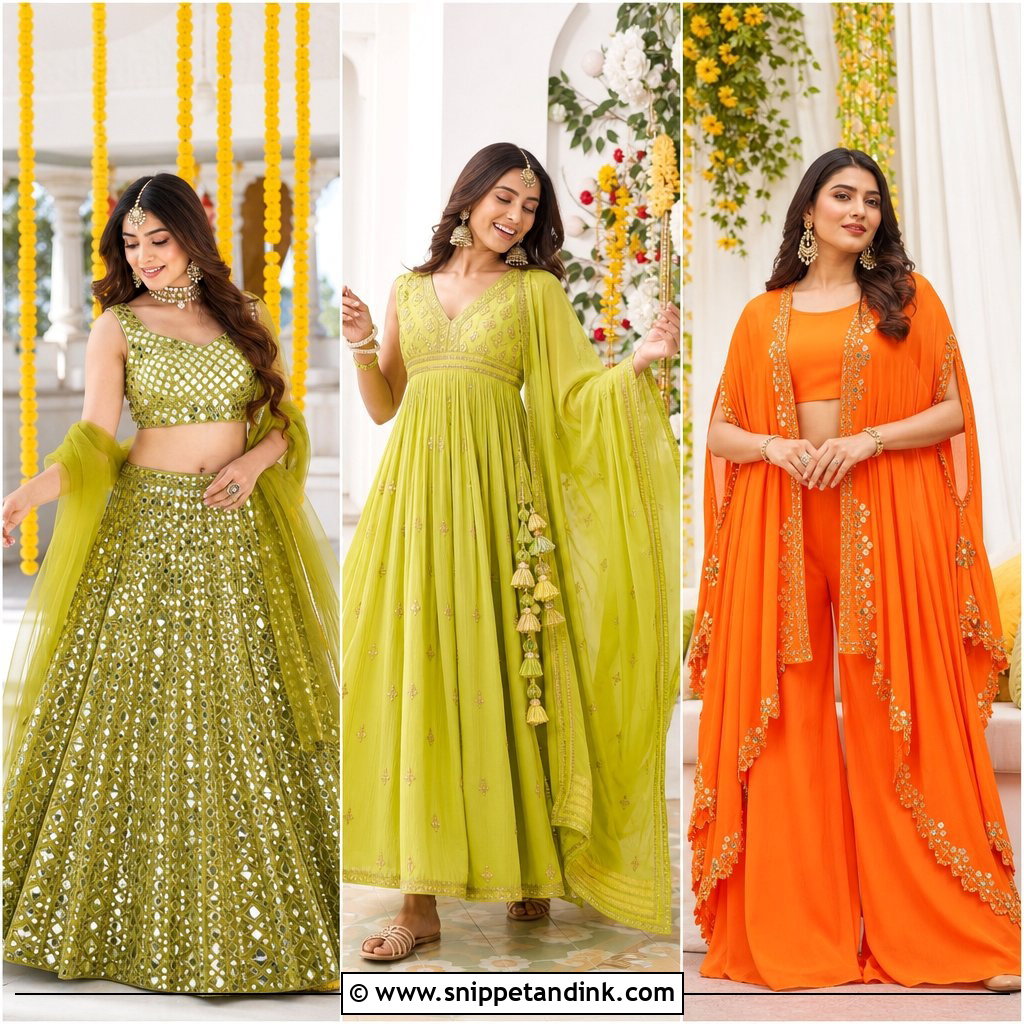
A green lehenga is the classic choice, and it’s a practical one. Georgette or chiffon skirts are light enough to sit in for a long session, and mirror work or a colorful border keeps it from looking predictable. The blouse is what matters most to me: short sleeves leave the forearms free, so I can take the design past the wrist without asking you to hold fabric up. A contrasting pink or orange dupatta adds energy. Pin it to one shoulder before I start. Juttis, medium jhumkas and a small potli complete it.
2. Yellow Sharara Suit for Mehandi
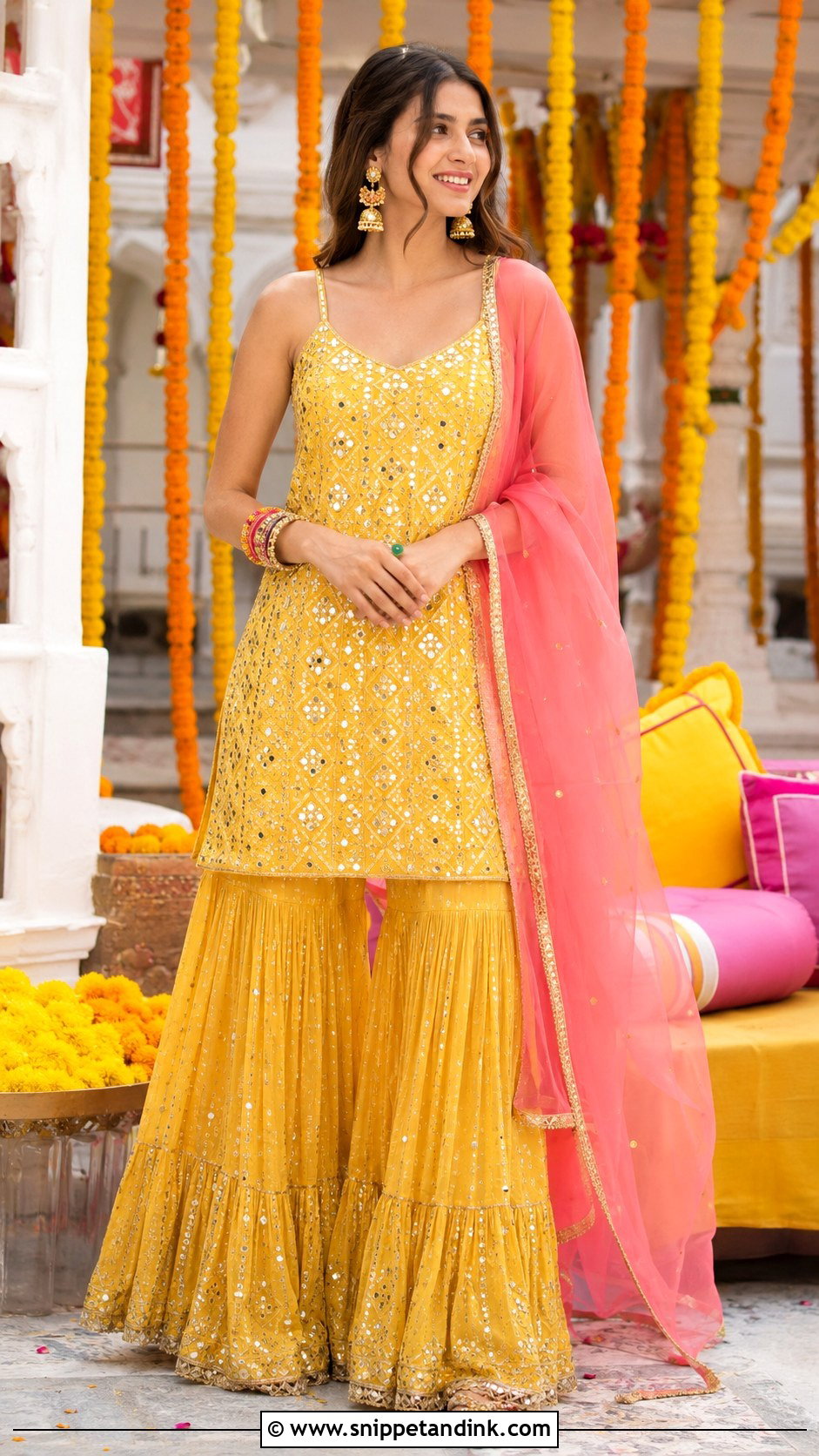
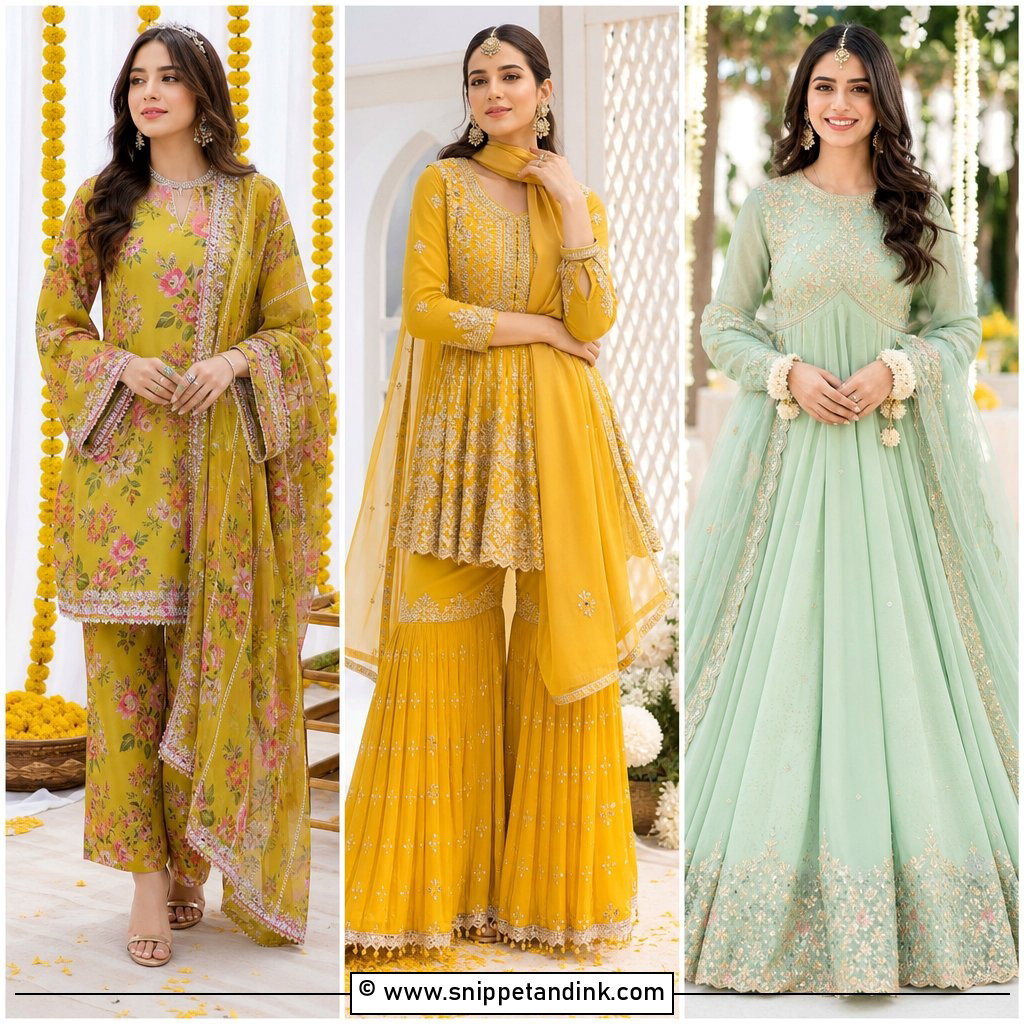
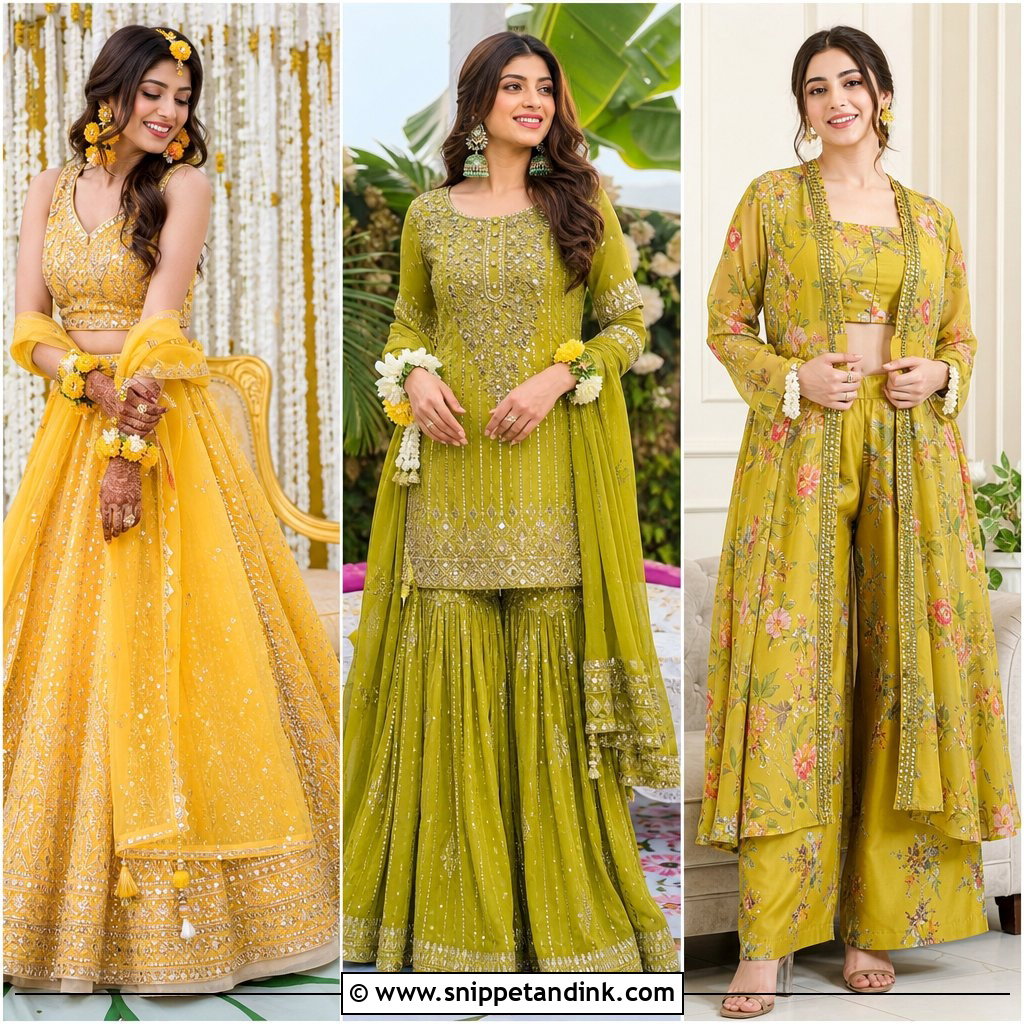
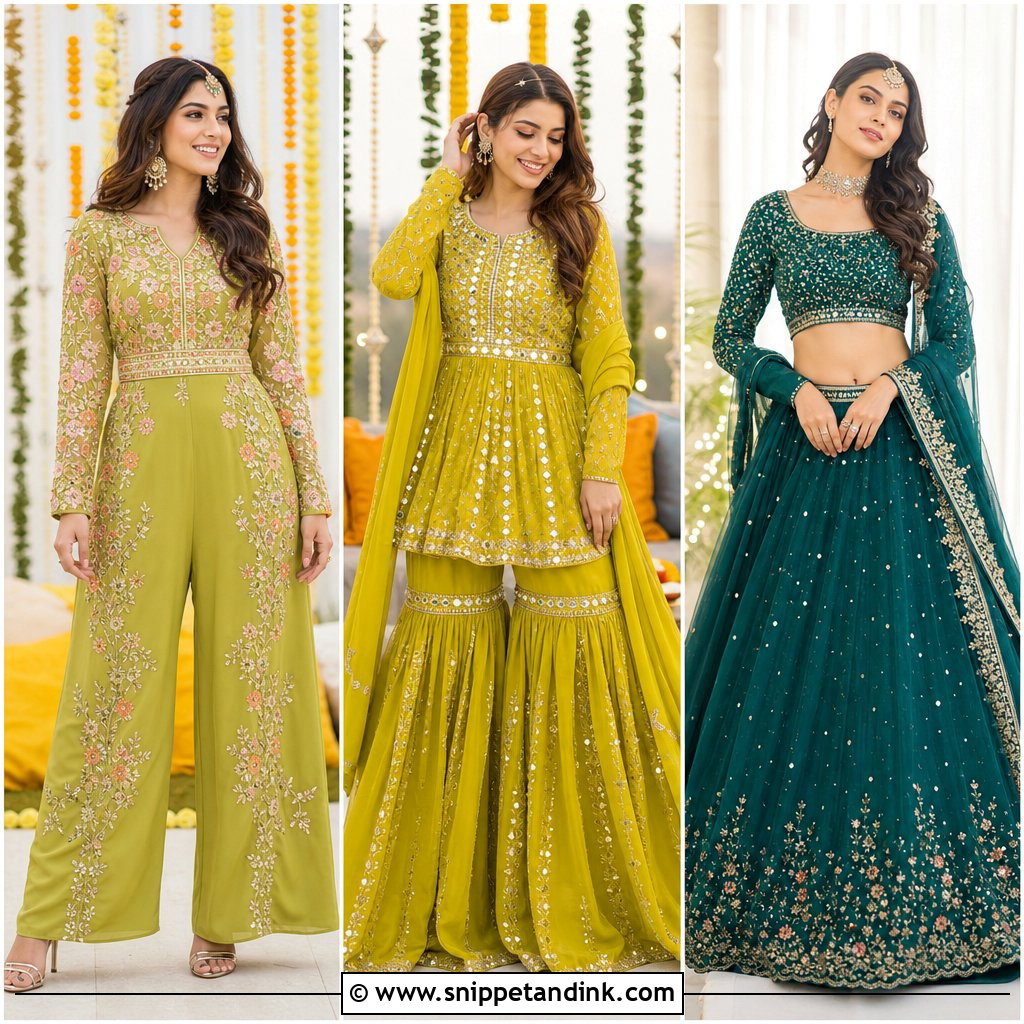
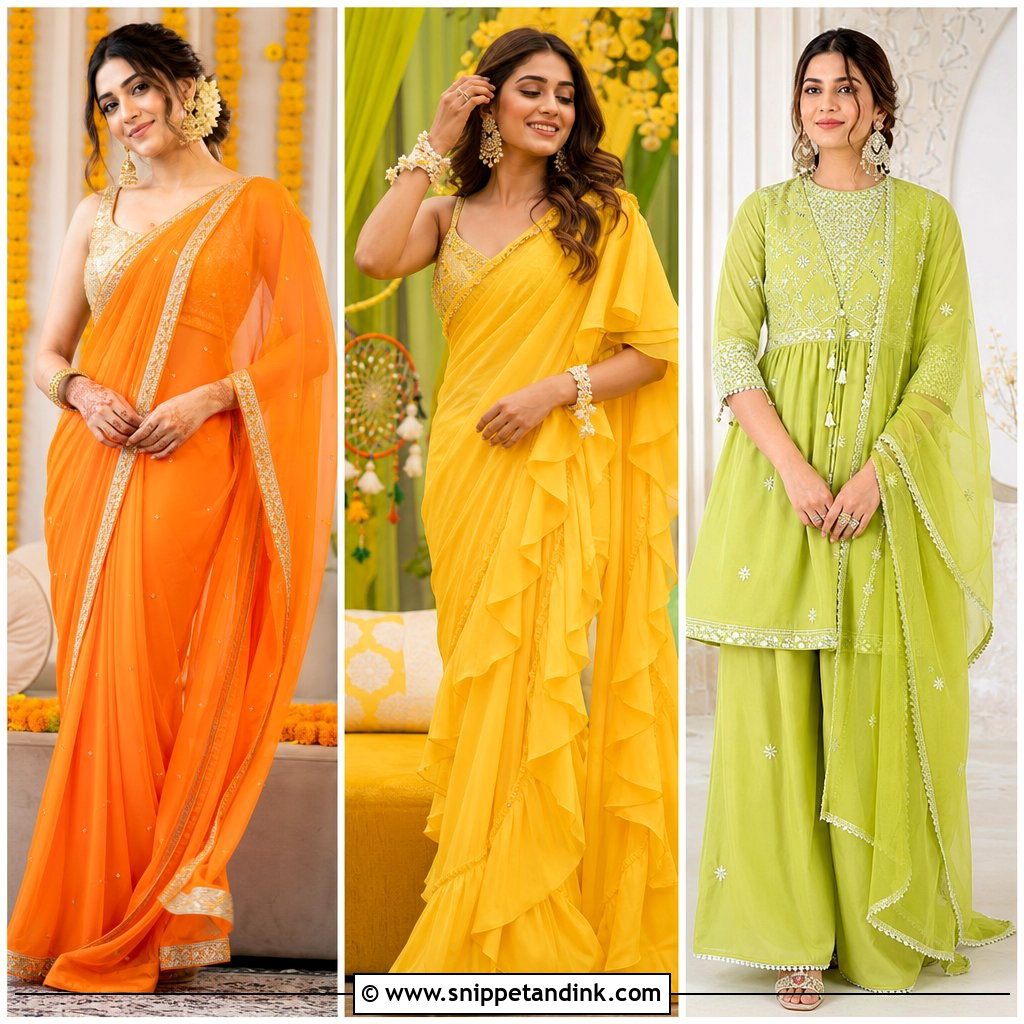
Yellow sharara suits are cheerful and easy to move in, and the wide legs let you sit cross-legged or with knees up while your feet are done. Gota trim and small mirrors add sparkle without weight. An organza dupatta in pink or green adds contrast. Choose jewelry you won’t need to touch once your hands are covered; earrings and a pre-set stack of bangles on the forearm, above where the design ends, are easiest. A low ponytail keeps hair off wet paste. It’s a good pick for bridesmaids, sisters, and guests at an outdoor function.
3. Floral Anarkali Dress for Mehandi
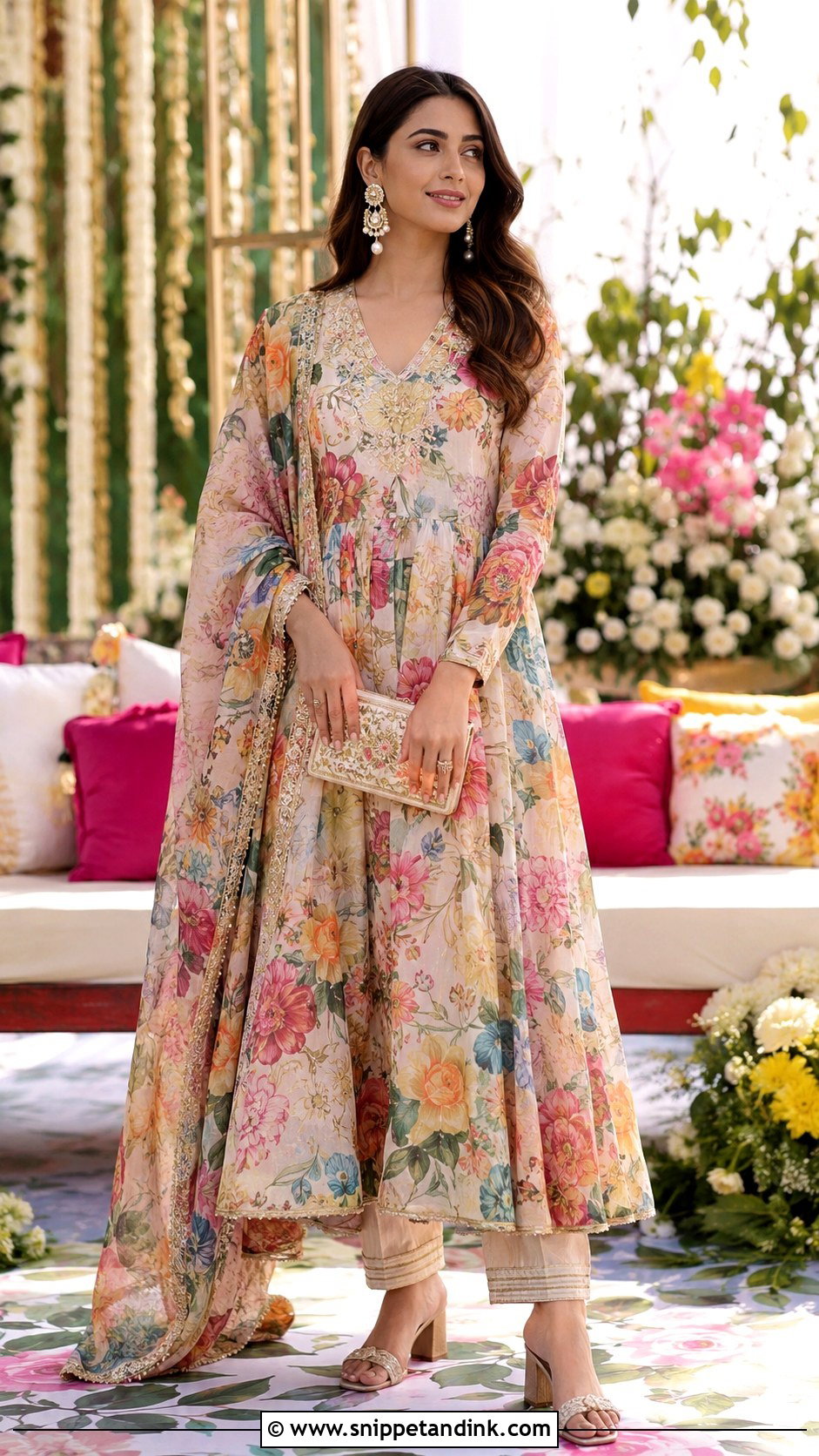
Floral Anarkalis give coverage and color in one piece. Cotton silk or georgette with pink, orange or green flowers looks fresh in daylight. The bodice should be fitted and the skirt light, so it flares without bulk when you sit on a low cushion. Narrow churidar or ankle pants go underneath. If the sleeves are long, ask your tailor for elbow length or a sleeve you can roll; a churidar sleeve pushed up over drying henna will smudge the design. Block heels and pearl-and-kundan earrings finish the look.
4. Mirror Work Gharara for Mehandi
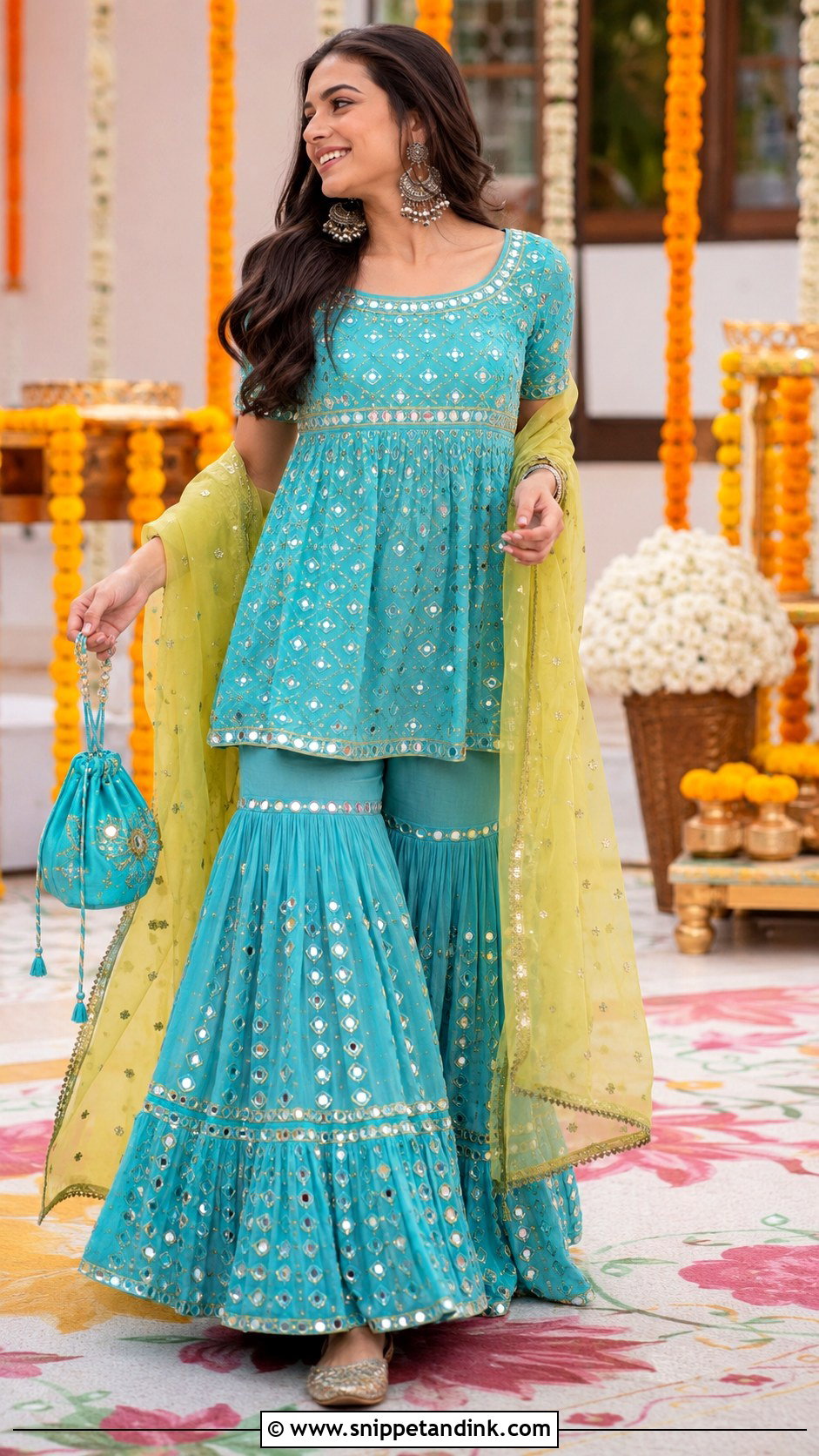
Mirror work looks lively in daylight. I suggest small mirrors on a short kurti rather than heavy all-over embellishment, which can press into the skin when you rest your arm. A traditional gharara with a defined knee seam flares below it and moves well when you dance. A simple-bordered dupatta keeps the outfit balanced. Long tassels on the dupatta are a real hazard near fresh henna; they swing into the paste and leave streaks of dye on the fabric. Oxidized silver earrings and metallic juttis complete it.
5. Cape and Palazzo Set for Mehandi
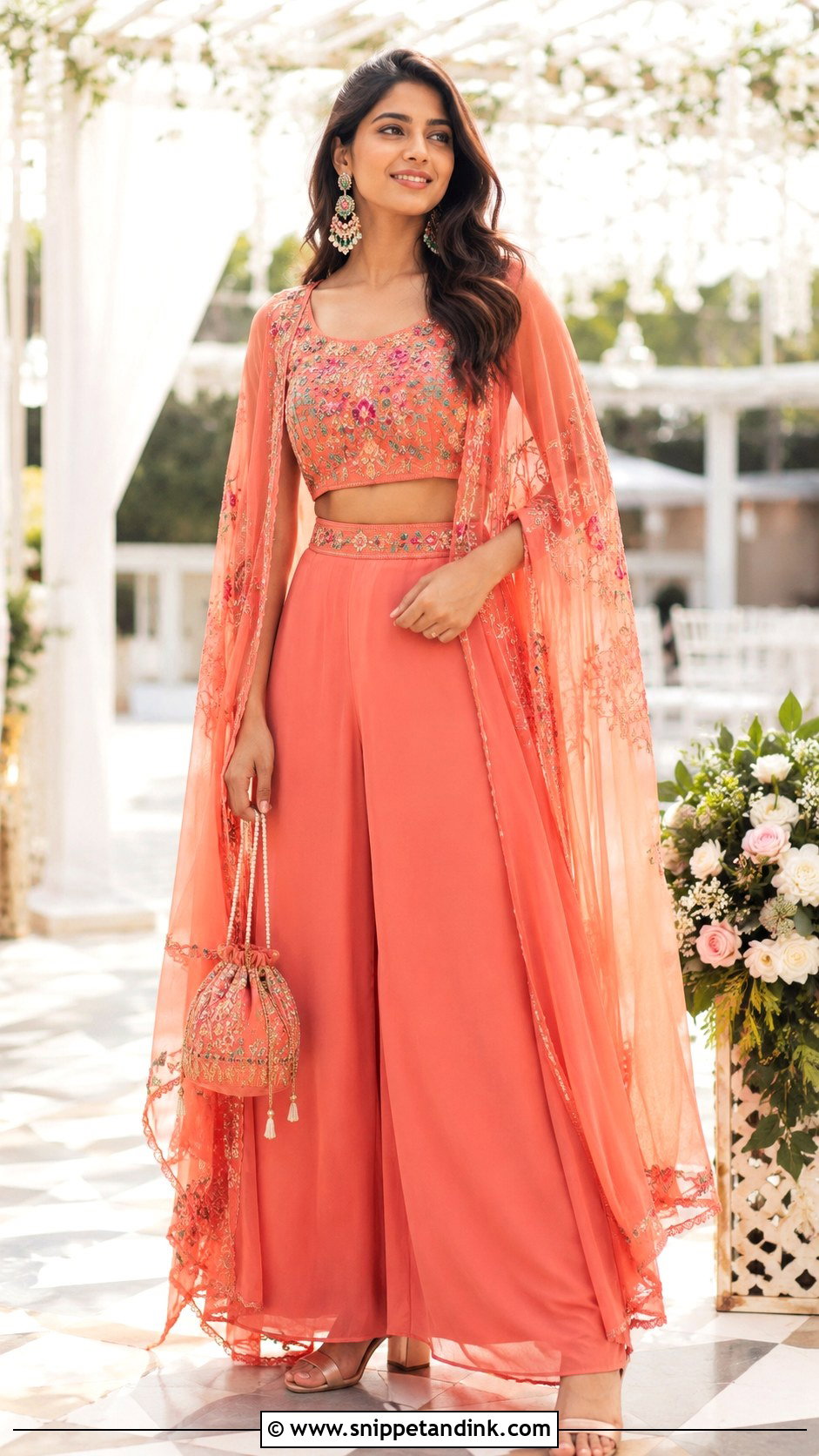
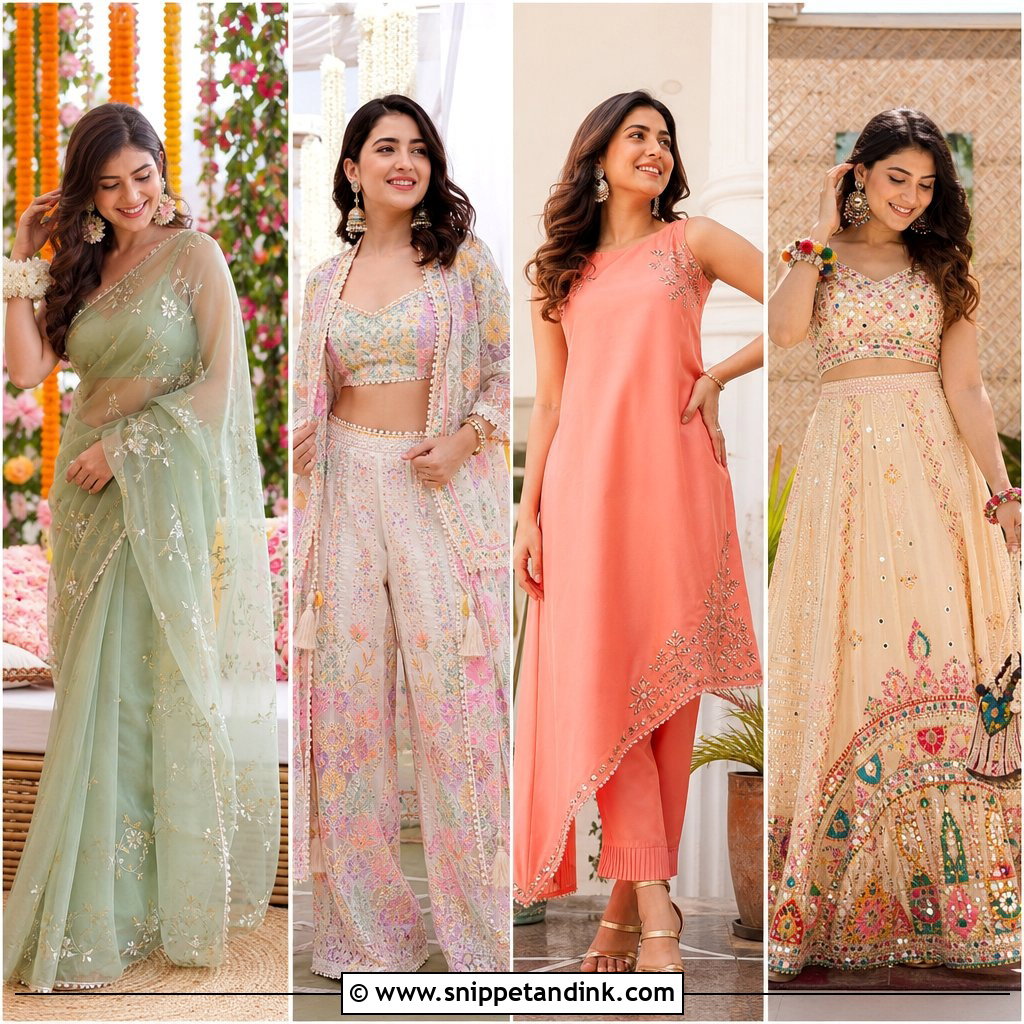
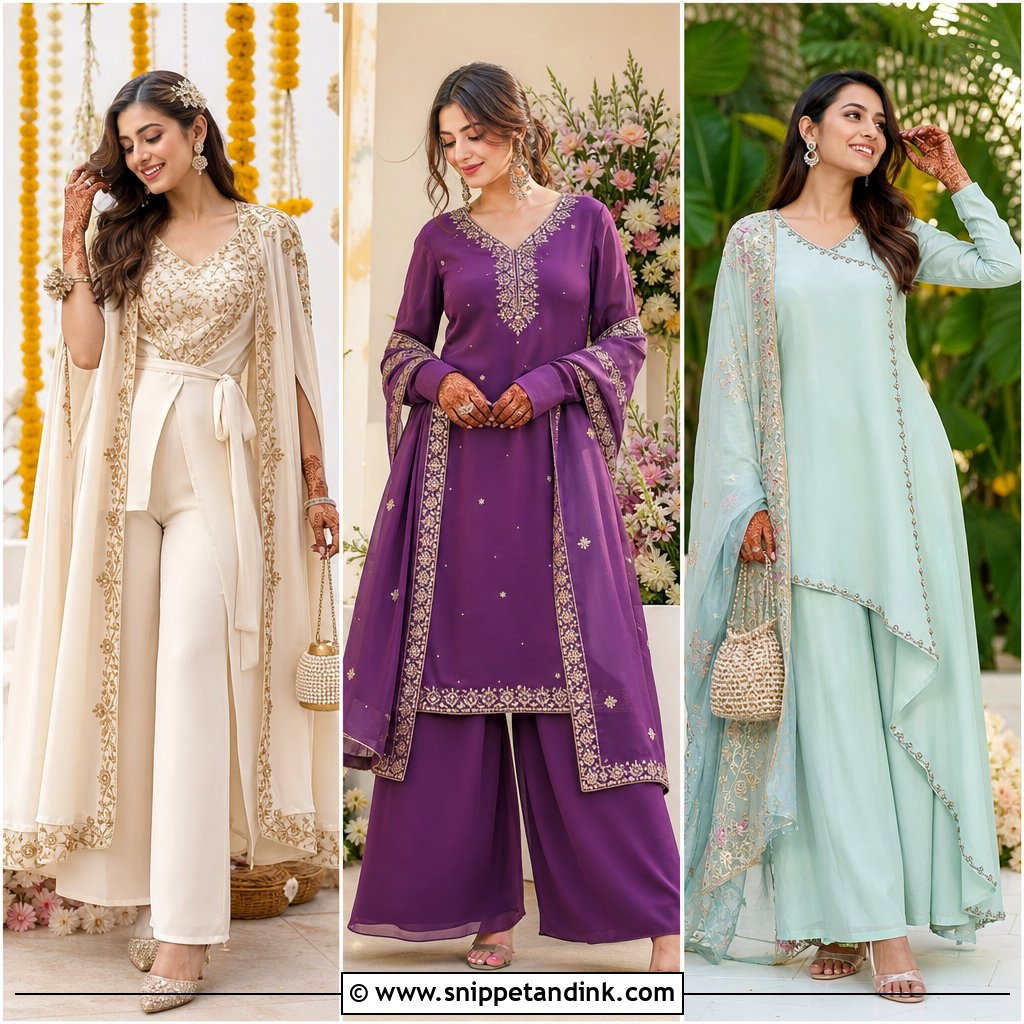
A crop top, palazzos and a light cape is one of my favorite outfits to work around. The cape stays put on your shoulders, unlike a dupatta that slides down the moment you hold out both hands. Lime green, coral or turquoise suit a bold palette. Keep the sleeves short. Choose a crossbody potli so you’re not holding a clutch with hennaed fingers. Keep bracelets to a minimum if the design will go above your wrists. It’s comfortable through a long afternoon and works well for younger guests.
6. Bandhani Skirt and Crop Top for Mehandi
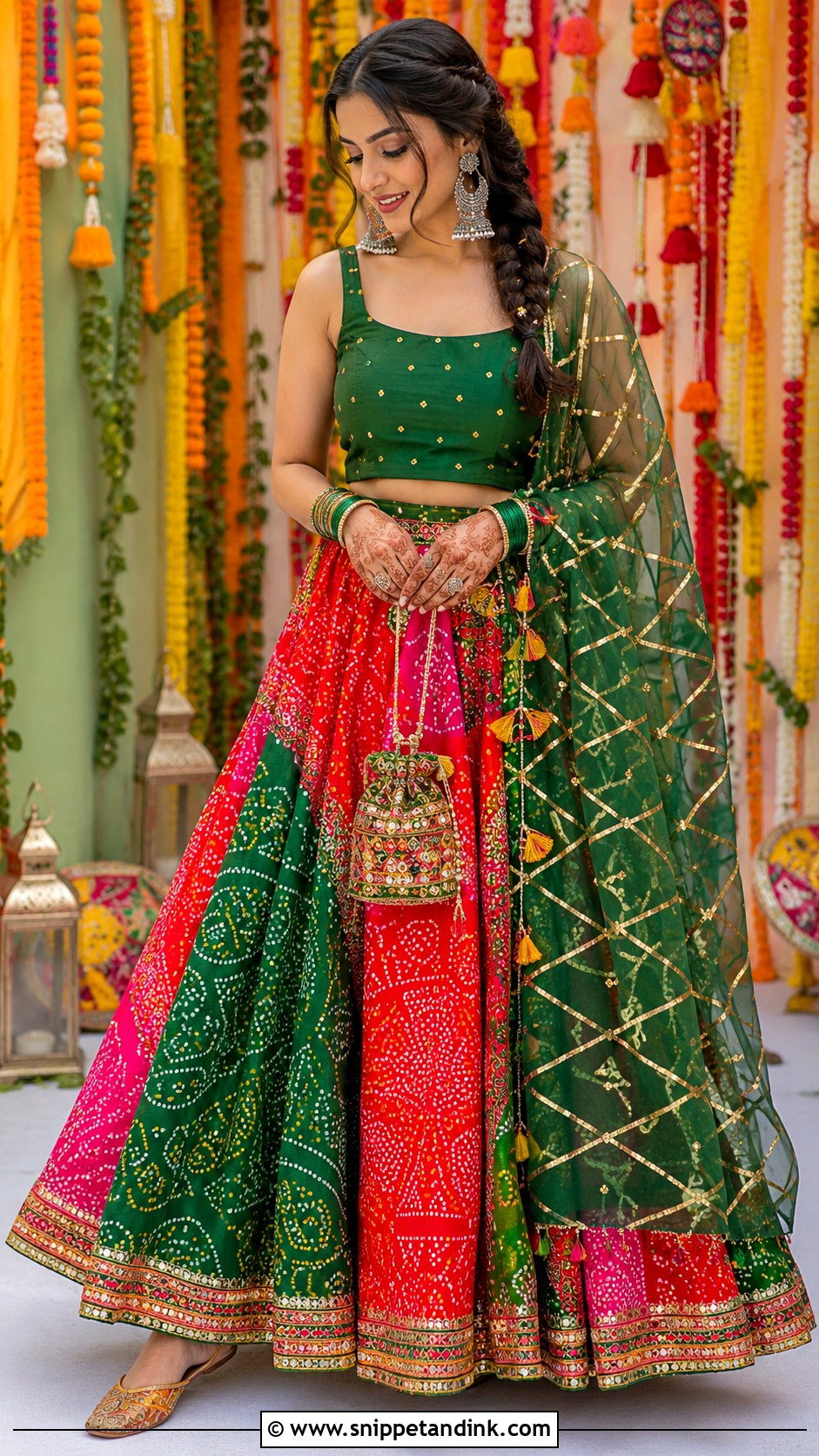
A Bandhani skirt brings traditional tie-dye pattern and plenty of color. A flared skirt in red, pink or a multicolor mix pairs well with a solid crop top, and a sleeveless jacket adds structure without covering the arms. Bandhani cotton is light and breathable, a real advantage in a crowded, warm room. Pin the dupatta away from your hands before I start. Juttis, oxidized earrings and a small potli suit the folk feel. The skirt moves well for dancing once your design is set.
7. Peplum Top and Dhoti Pants for Mehandi
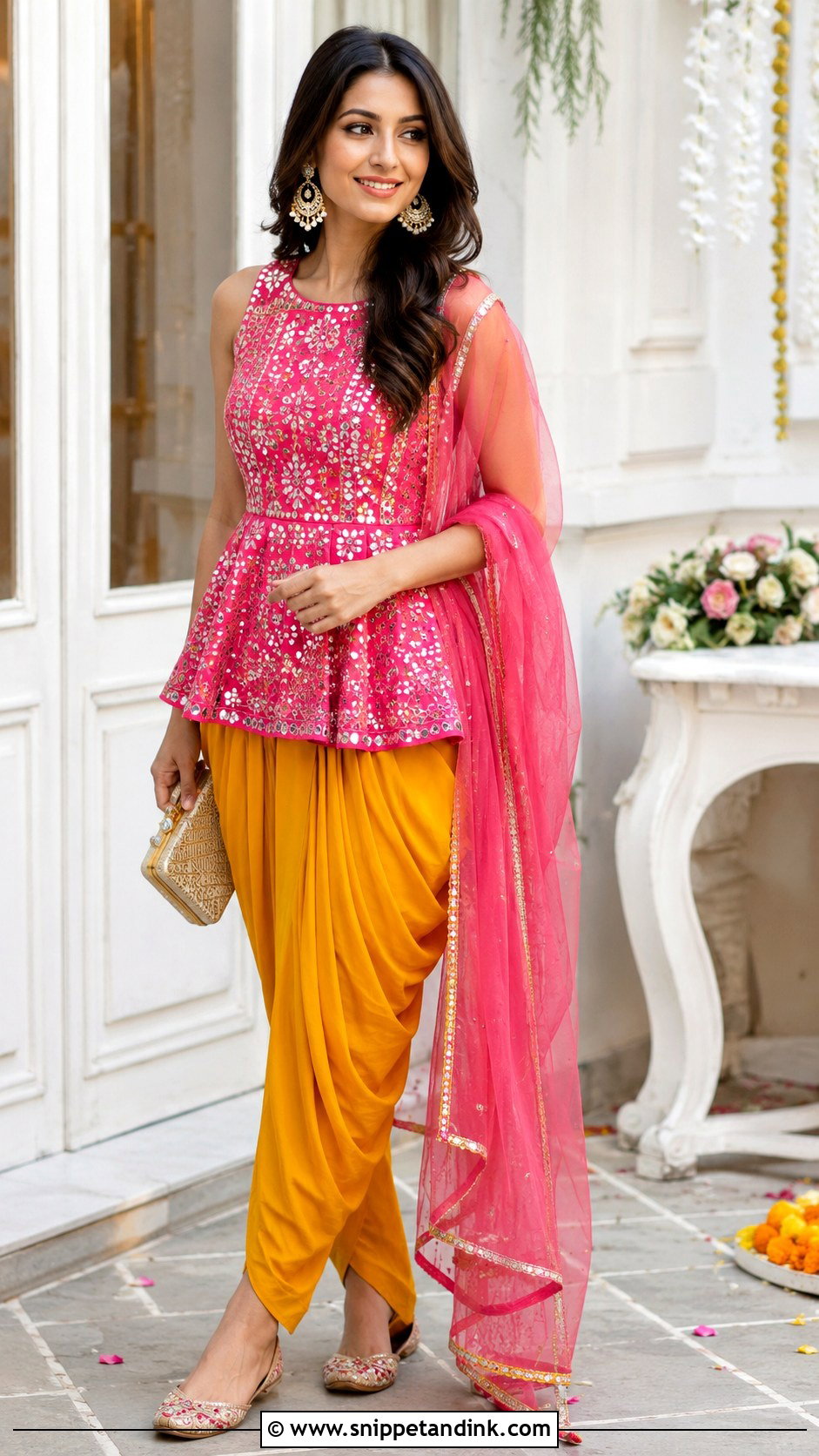
Peplum tops with dhoti pants feel different from a lehenga and are easy to sit in. The structured top can carry mirror work or a decorative neckline, while the draped pants stay light. Emerald, mango yellow or hot pink look festive. Have the dhoti hem tailored carefully; draped pants that are too long fold under your feet when you sit, right where I’m applying. An organza dupatta adds a traditional touch. Embroidered flats and chandelier earrings complete it.
8. Pre-Draped Saree for Mehandi
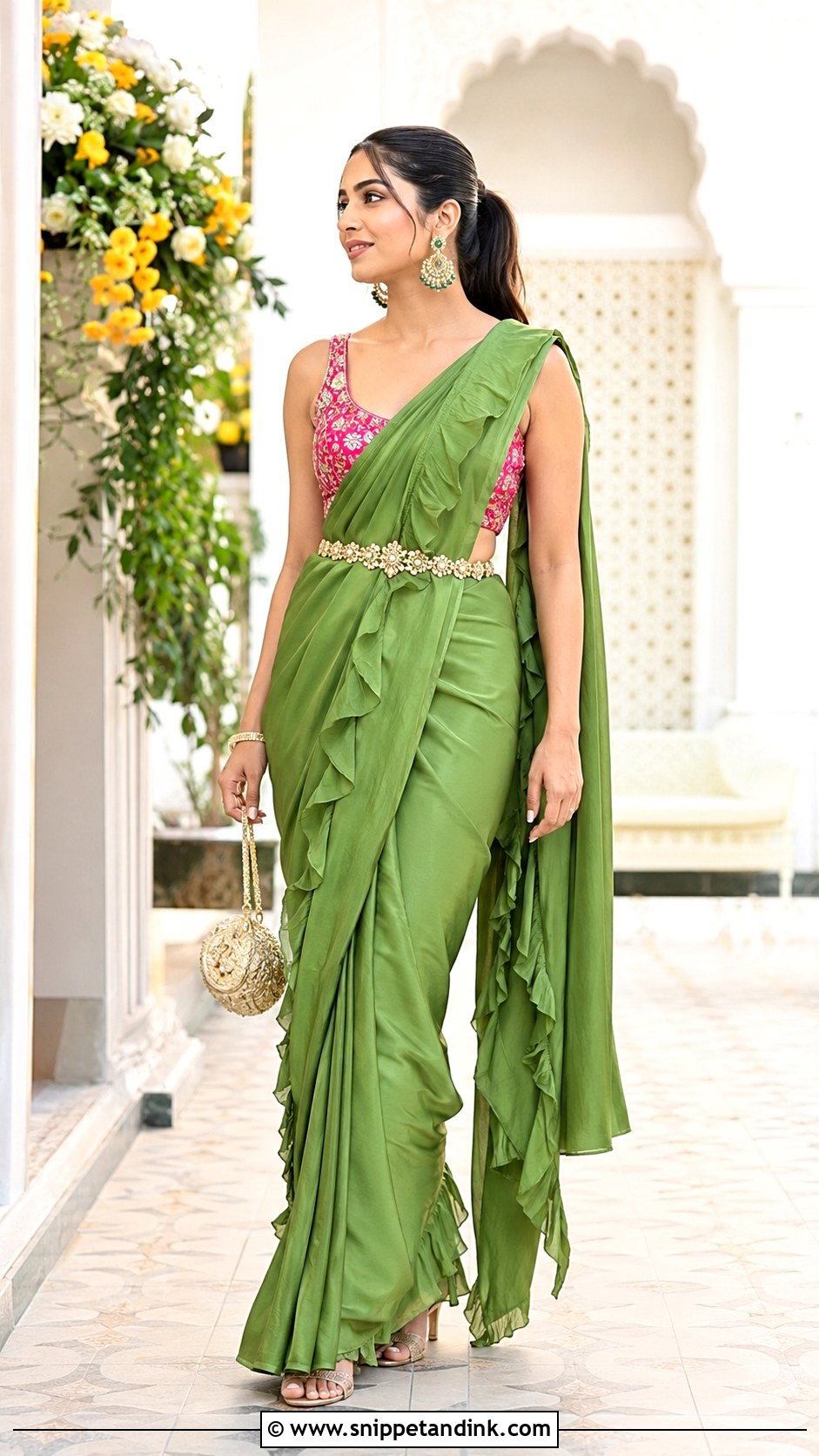
A pre-draped saree removes the pinning and re-pinning that a regular saree needs, which helps a lot once your hands are covered. Choose a light printed or ruffled style in green, yellow or pink. The blouse should have short sleeves or straps. A waist belt keeps the pleats in place while you sit with your hands resting palms up on your knees. A sleek ponytail or low bun stops hair falling onto wet designs. It suits brides, close relatives and guests who love a saree but want something practical.
9. Chikankari Kurta Set for Mehandi
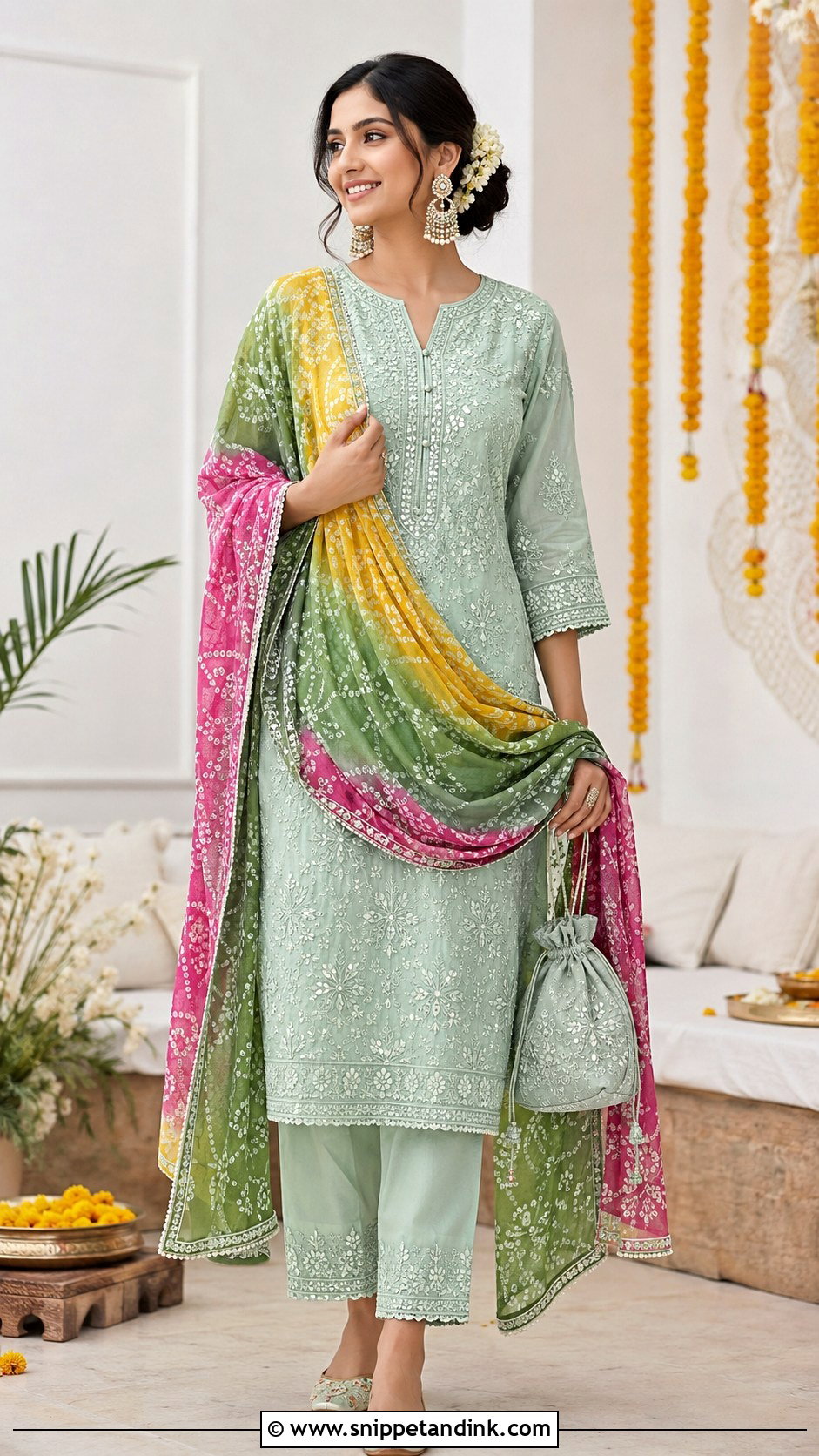
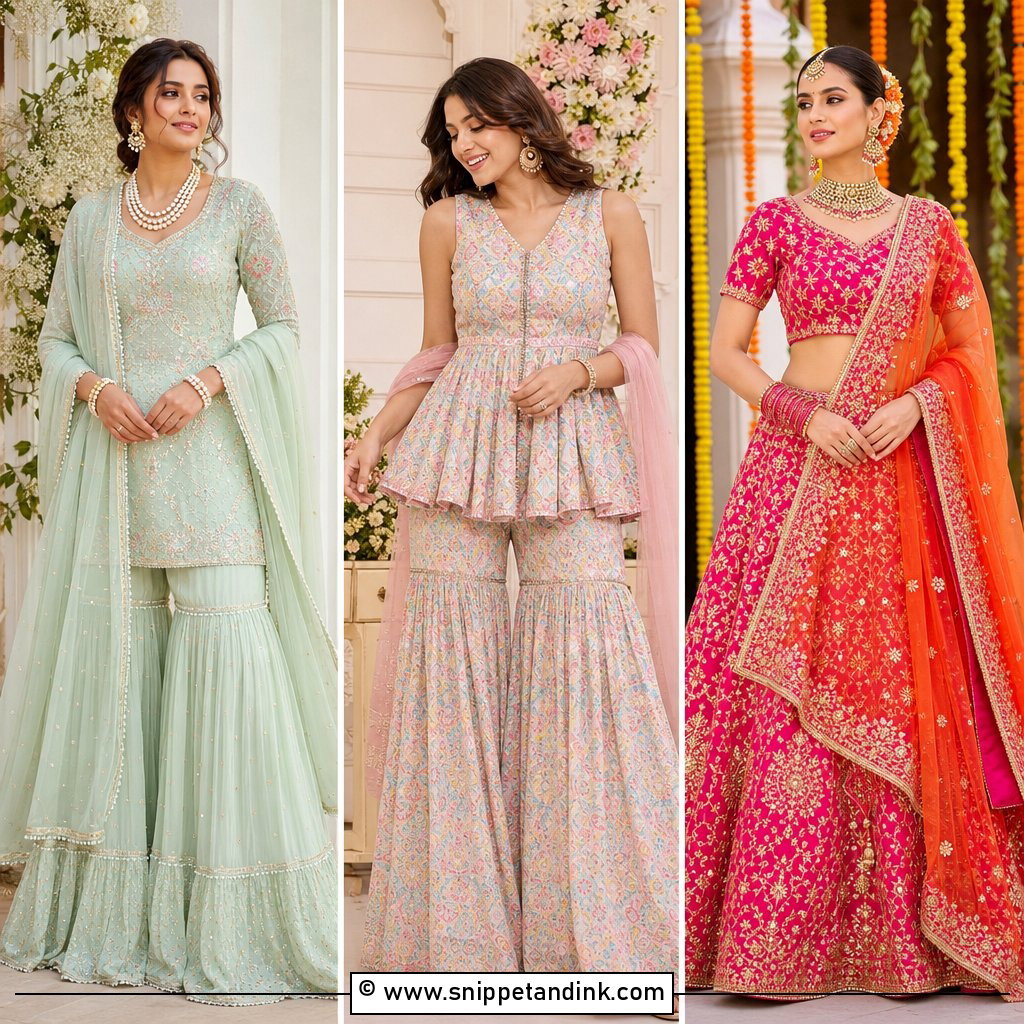
For an intimate daytime mehandi at home, a Chikankari kurta set is cool, soft and easy. Chikankari is fine white thread embroidery on light cotton or georgette, so it breathes in heat. Choose yellow, mint or peach with a lining that lets the embroidery show. White chikankari is lovely, but henna stains on white cotton are almost impossible to remove, so I’d keep it for guests who aren’t getting a full design. Alter long sleeves to elbow length. Add a bandhani dupatta, pearl jhumkas and comfortable juttis.
10. Multicolor Co-Ord Set for Mehandi
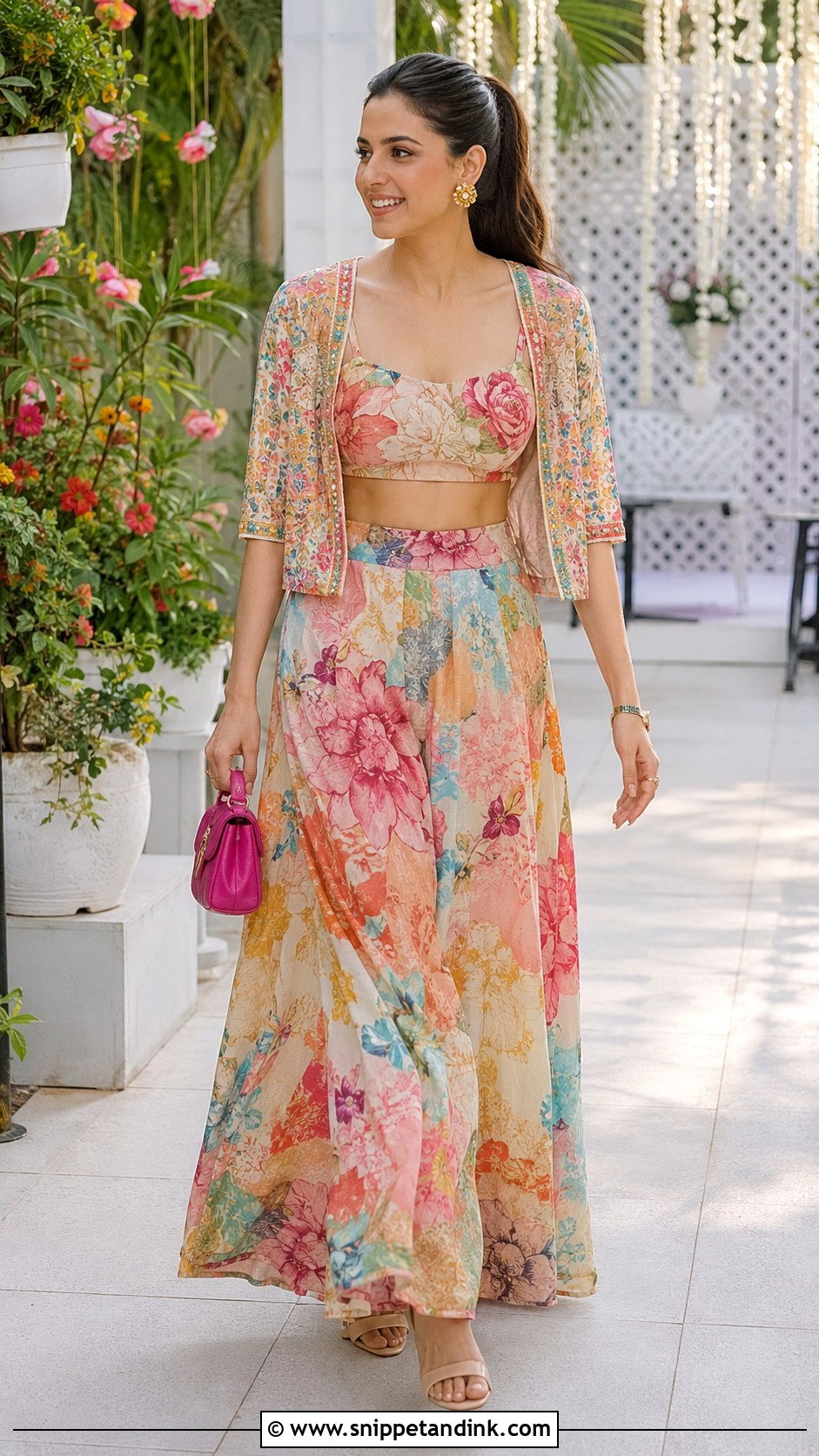
A co-ord set takes the guesswork out of getting dressed. A printed crop top with matching wide-leg pants and a short jacket in green, orange and pink looks cheerful. Block prints and geometric patterns both suit the occasion. The big advantage is that there’s no dupatta. Nothing loose falls across your arms while the paste sets. Choose breathable fabric with room at the hips to sit comfortably. Neutral block heels and gold hoops keep the accessories simple. A neat ponytail and glowing makeup finish it.
11. Jacket Lehenga for Mehandi
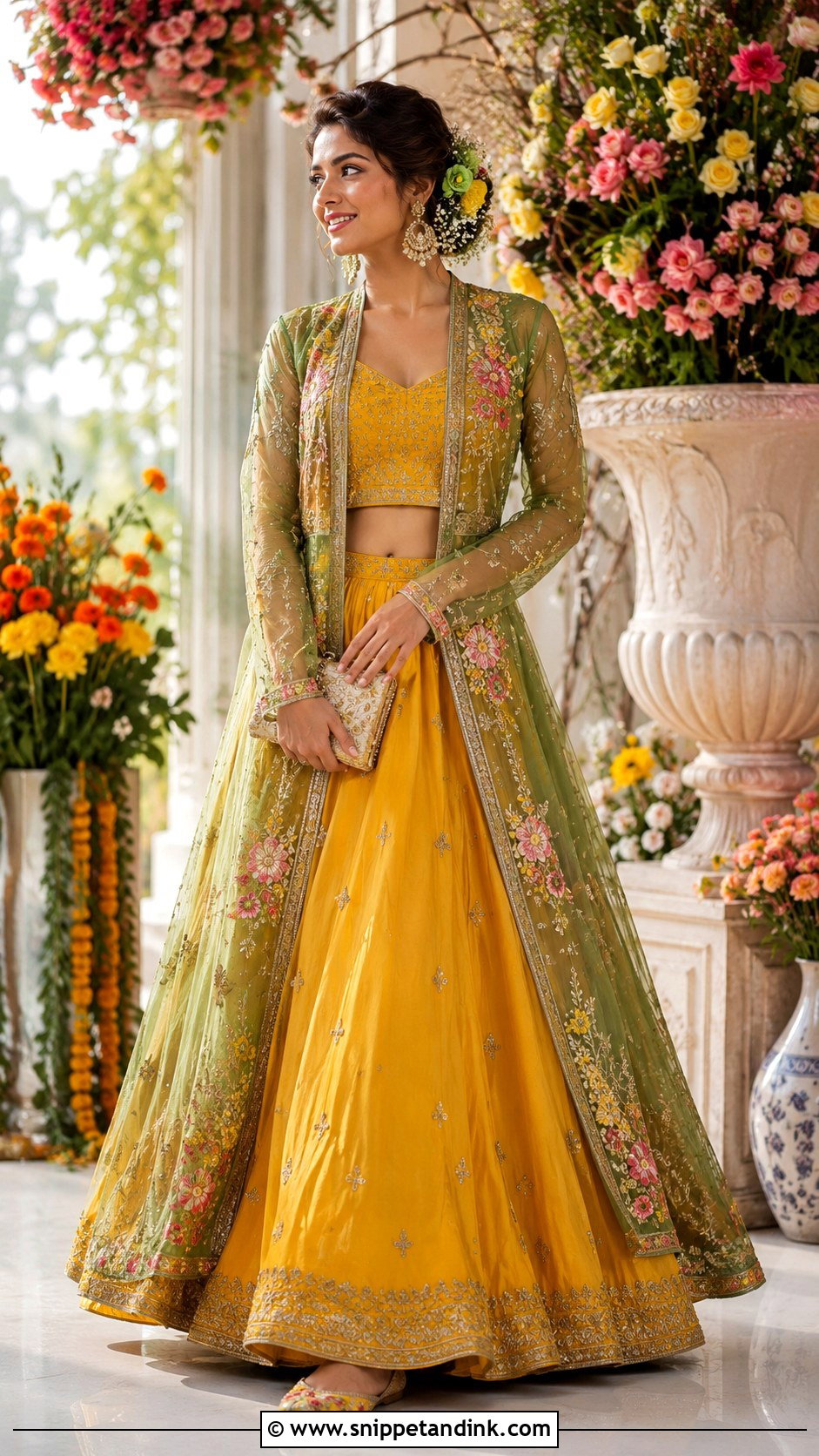
Jacket lehengas give coverage and drama without a separate dupatta. A light flared skirt, a fitted blouse and an open embroidered jacket look festive in green with pink embroidery or turquoise with multicolor threadwork. Waist-length jackets feel playful; long sheer ones look more formal for the bride. The sleeve length is my main concern. If you plan to have henna up to the elbow, the jacket sleeves must end above it, or you’ll need to take the jacket off before I start and keep it off for several hours.
12. Embroidered Kaftan Dress for Mehandi
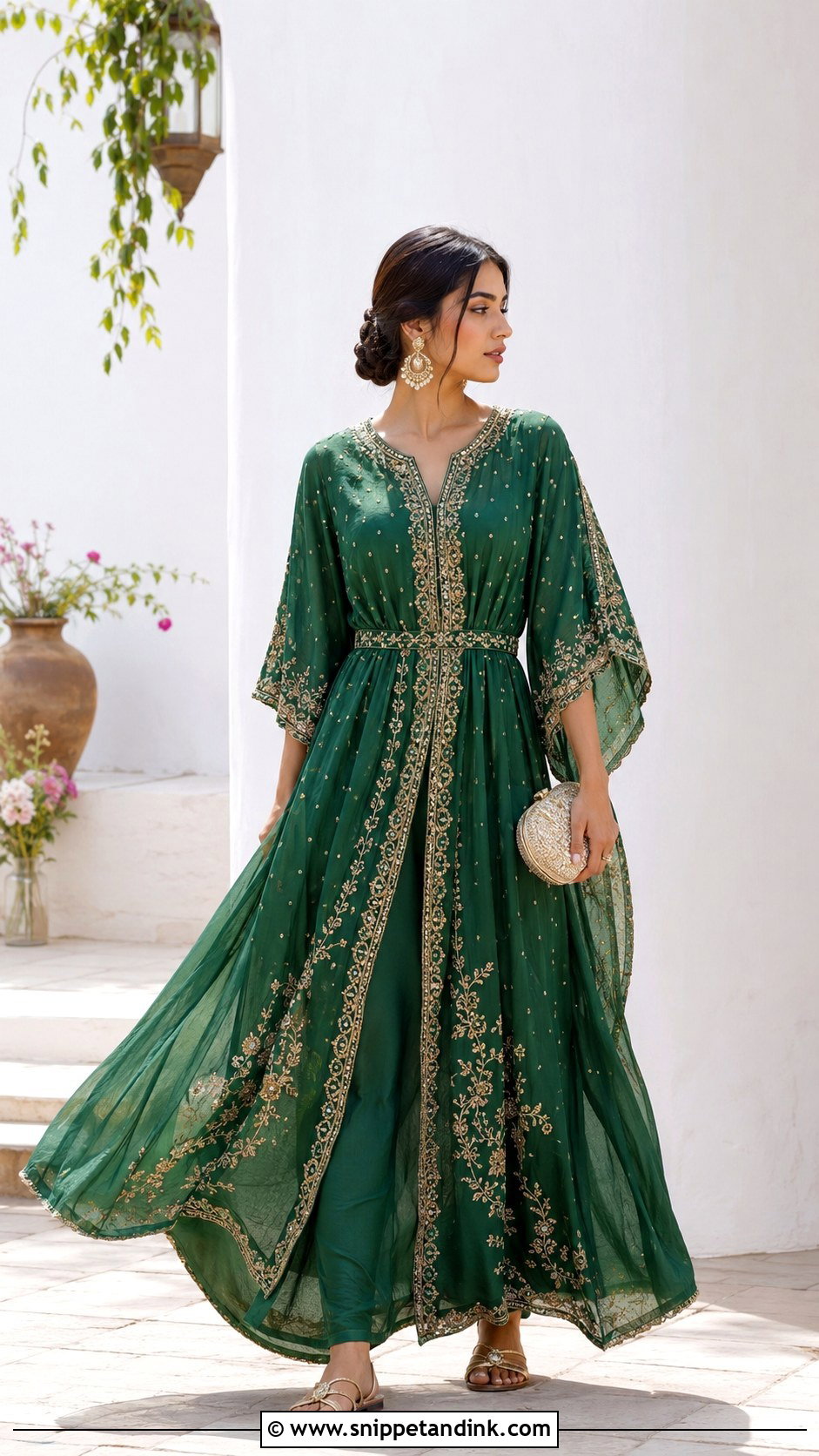
An embroidered kaftan is relaxed but still glamorous. Floor or ankle length with a defined waist and decorated neckline works well, in emerald, lime or a softer mint. Wide kaftan sleeves are the problem: they drape straight onto the forearm while I’m working. Choose elbow-length sleeves or openings you can tie back. Structured earrings and an embellished clutch balance the loose shape, with sleek flat sandals. A low bun or braided ponytail keeps it neat. It suits an intimate function or a destination wedding.
13. Salwar Kameez for Mehandi
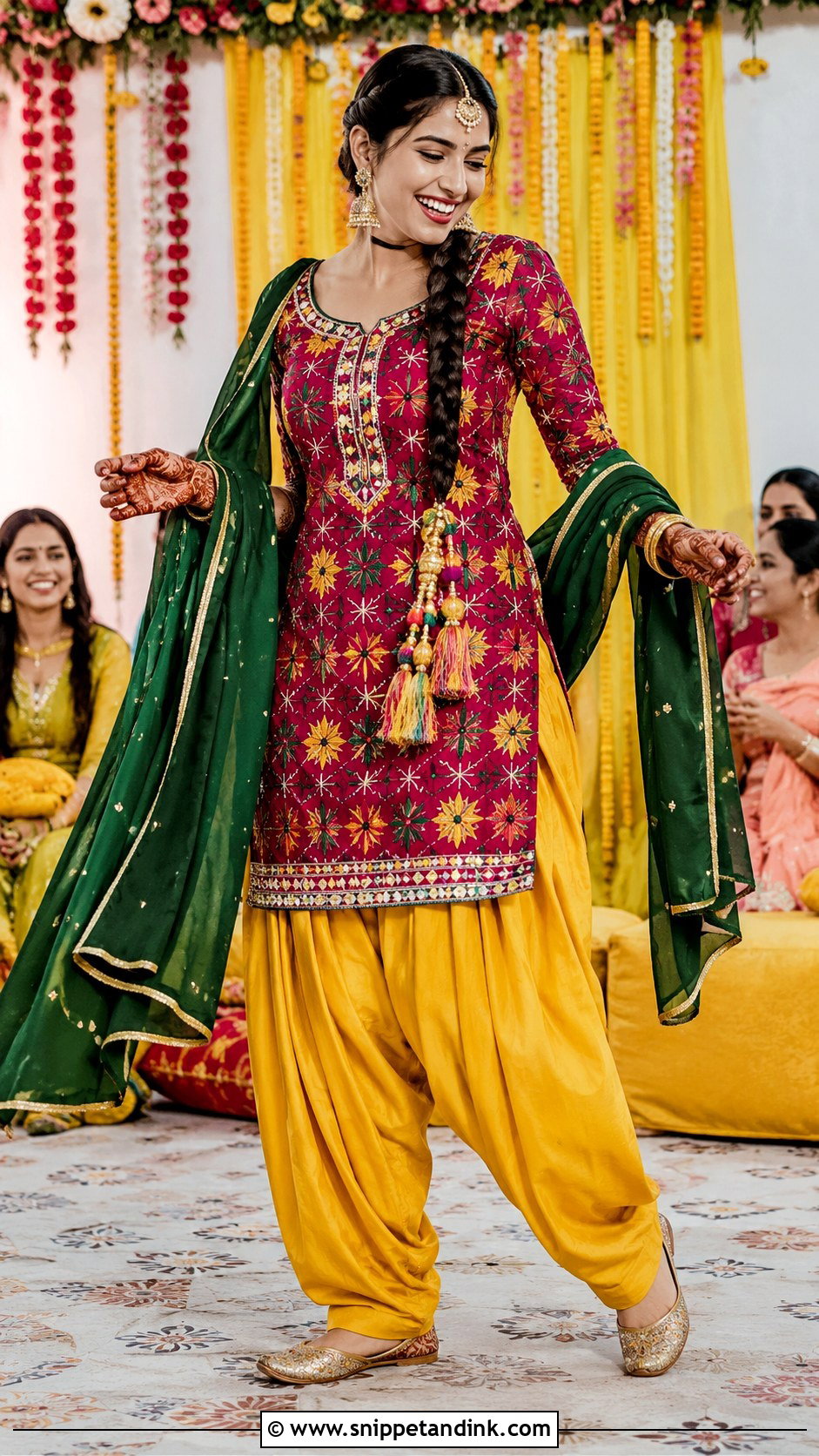
A salwar kameez fits a family-centered mehandi perfectly well. A short or knee-length kameez with phulkari, gota or colorful threadwork pairs with a roomy Patiala salwar for easy sitting and dancing. Green, mustard, orange and magenta suit a Punjabi palette. Pin the dupatta at one shoulder. Juttis, jhumkas and a paranda in a long braid complete the look. Wait to put on heavy bangles until the paste is dry and flaked off; sliding a bangle over a fresh design will smear it.
14. Tiered Skirt and Short Kurti for Mehandi
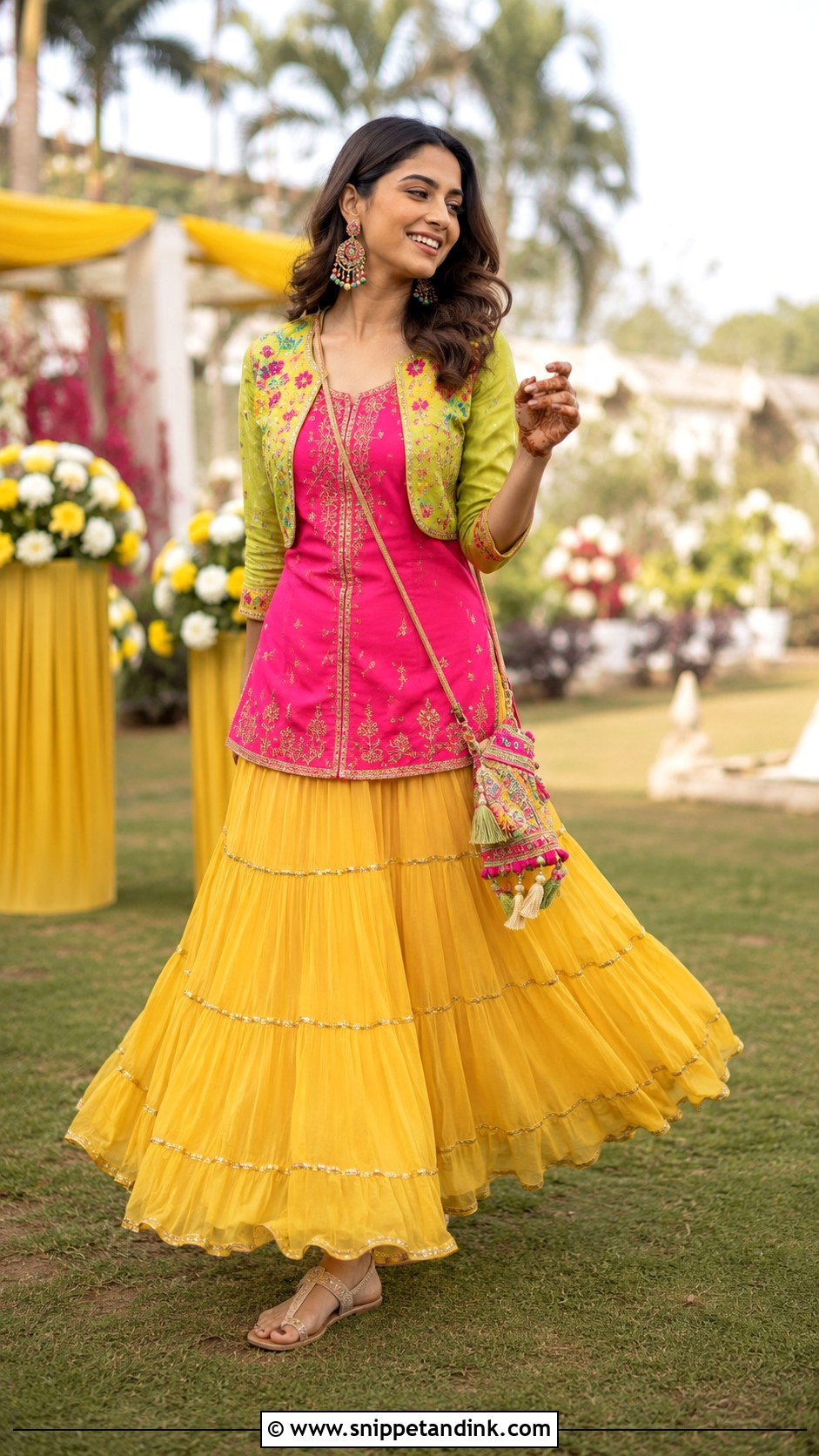
Tiered skirts move with the music and suit an afternoon of dancing. Two or three light tiers in print or solid color pair well with a fitted short kurti. A yellow skirt with a pink top looks bright; green with white feels fresher. Swap the dupatta for a cropped embroidered jacket if you want fewer loose layers. A crossbody potli means you don’t need to hold anything. A side braid or half-up hairstyle keeps the youthful mood. The fitted top balances the volume of the skirt on most body types.
15. Organza Saree for Mehandi
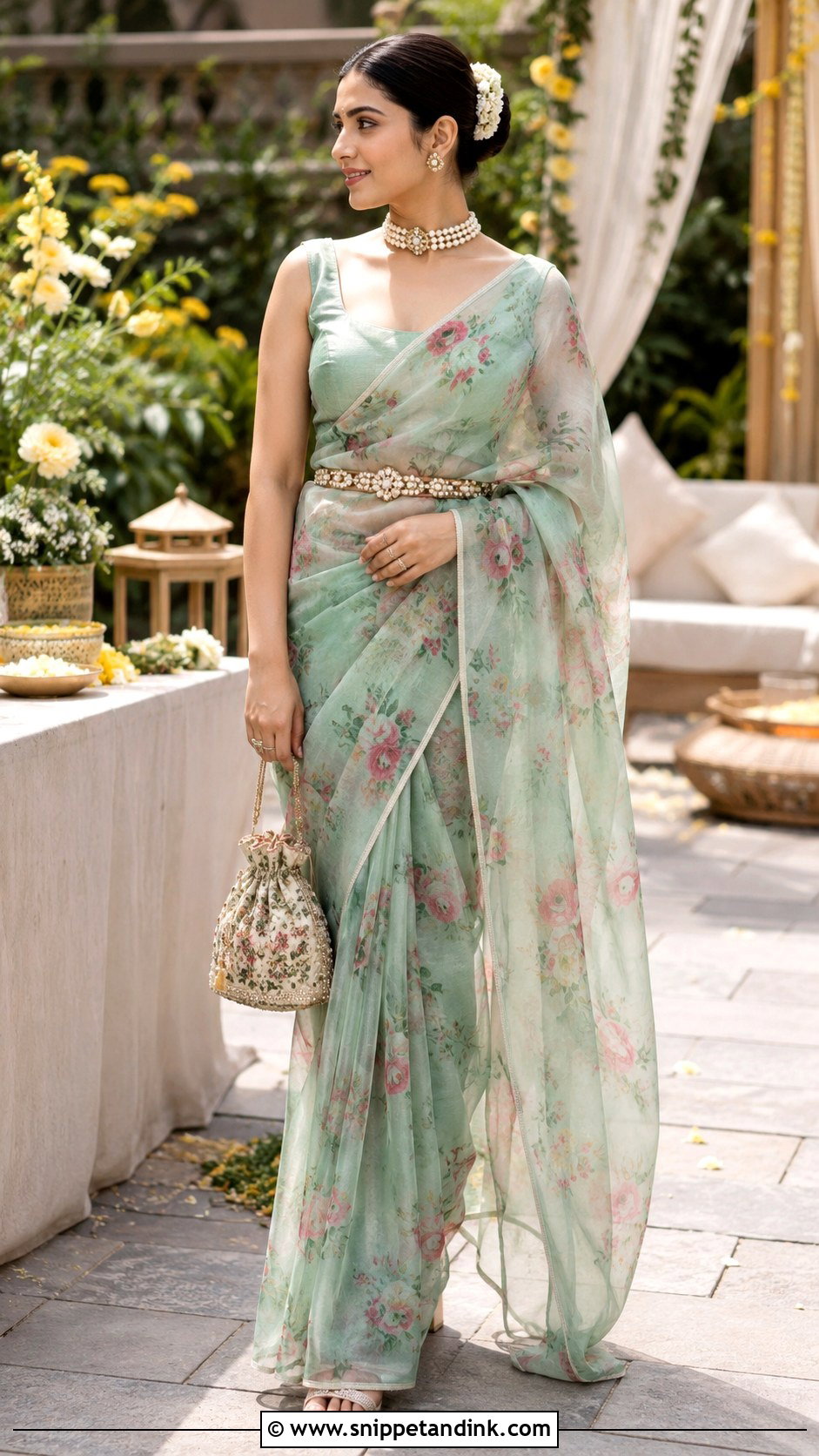
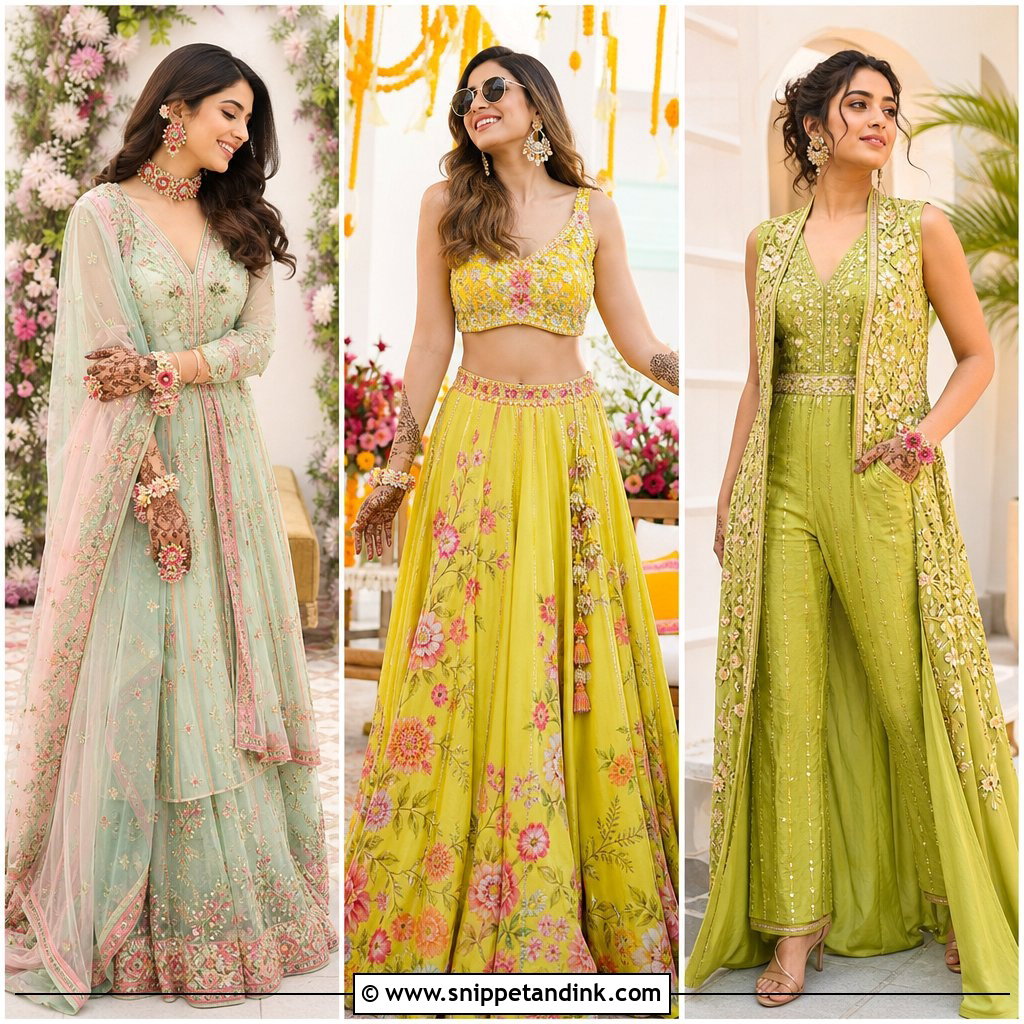
Organza sarees are crisp and quietly elegant. Organza holds its shape, so the pleats stay neat, but the pallu is stiff enough to swing outwards when you turn. Pin it securely at the shoulder so it doesn’t brush across fresh henna. A floral print or scattered embroidery in yellow, pink or lavender pairs well with a contrasting raw-silk blouse. Low block heels and a pearl or kundan choker suit it. A sleek bun with fresh flowers completes it. Mothers and sisters often choose this; brides can add a statement blouse and a waist belt.
16. Jumpsuit With Dupatta for Mehandi
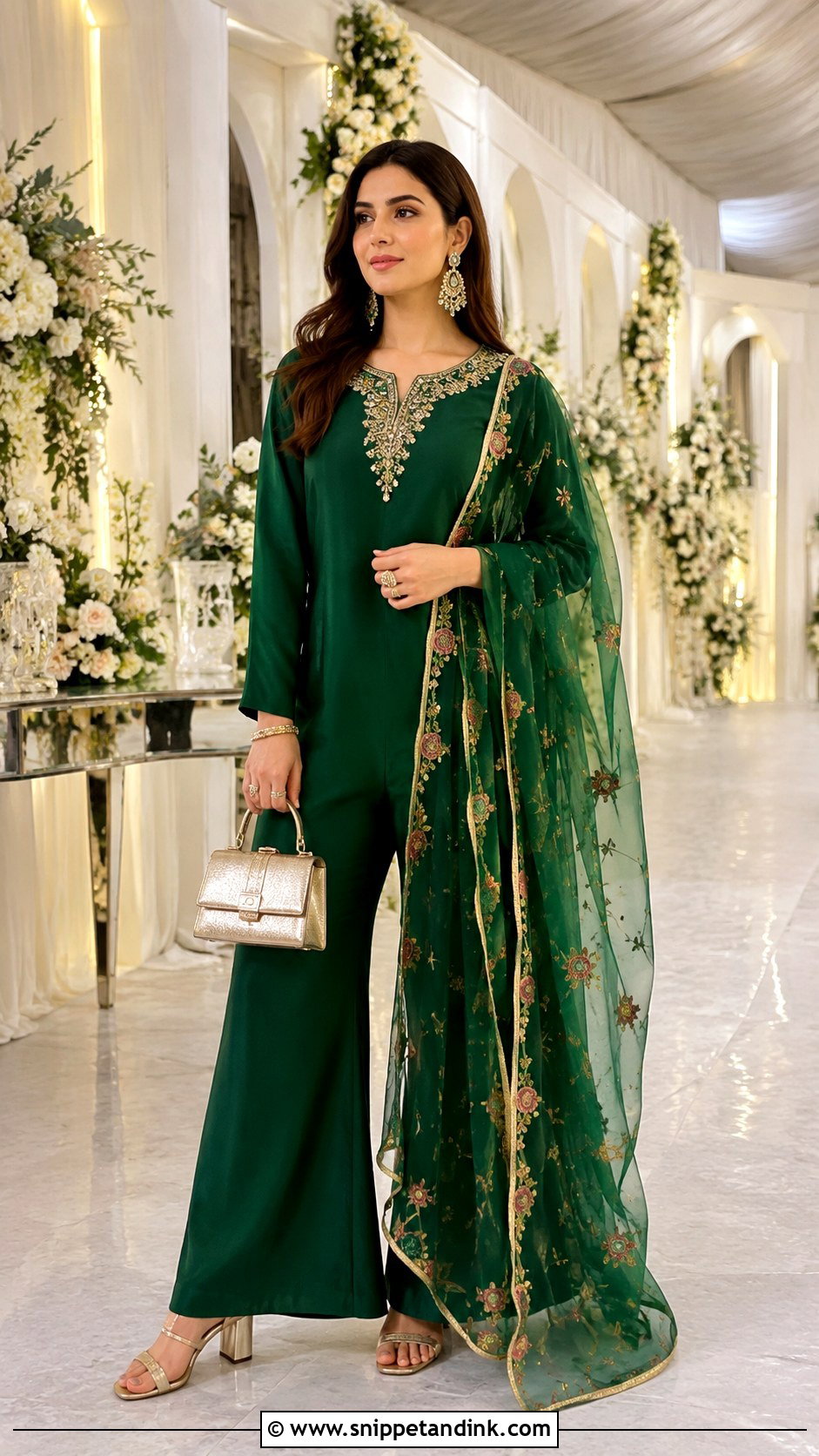
A tailored jumpsuit works at a mehandi when you bring in traditional detail. Emerald, mustard or coral with embroidery at the neck or waist suits the day. Pin a sheer dupatta over one shoulder with a brooch, or swap it for a detachable cape. Before you choose one, think about the restroom: a back zip is very hard to manage with hennaed hands, so look for a side zip or ask someone to help. Leave room through the hips for sitting. Metallic block heels and bold earrings finish it.
17. Angrakha Suit for Mehandi
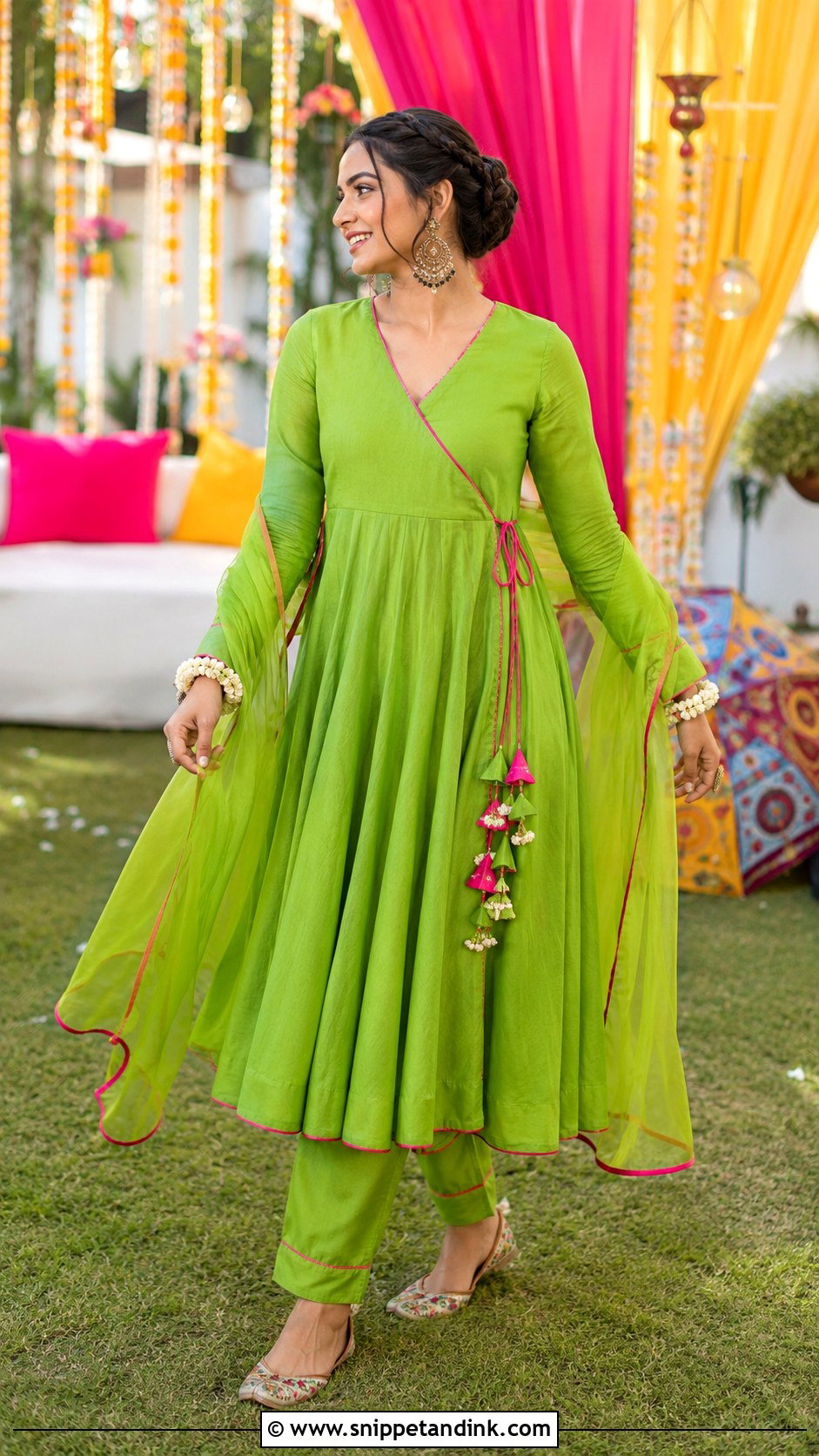
Angrakha suits wrap across the body and tie at the side, which gives a defined waist without tight fabric. Knee- or calf-length kurtas pair with churidar or narrow palazzos. Bright green with pink piping looks festive; mustard with mirror work feels warmer. Keep the side tassels short. Long tie tassels fall straight onto your lap, and that’s exactly where your hands rest while they dry. Embroidered juttis and antique earrings finish it. A braided bun keeps hair tidy.
18. Pastel Lehenga for Mehandi
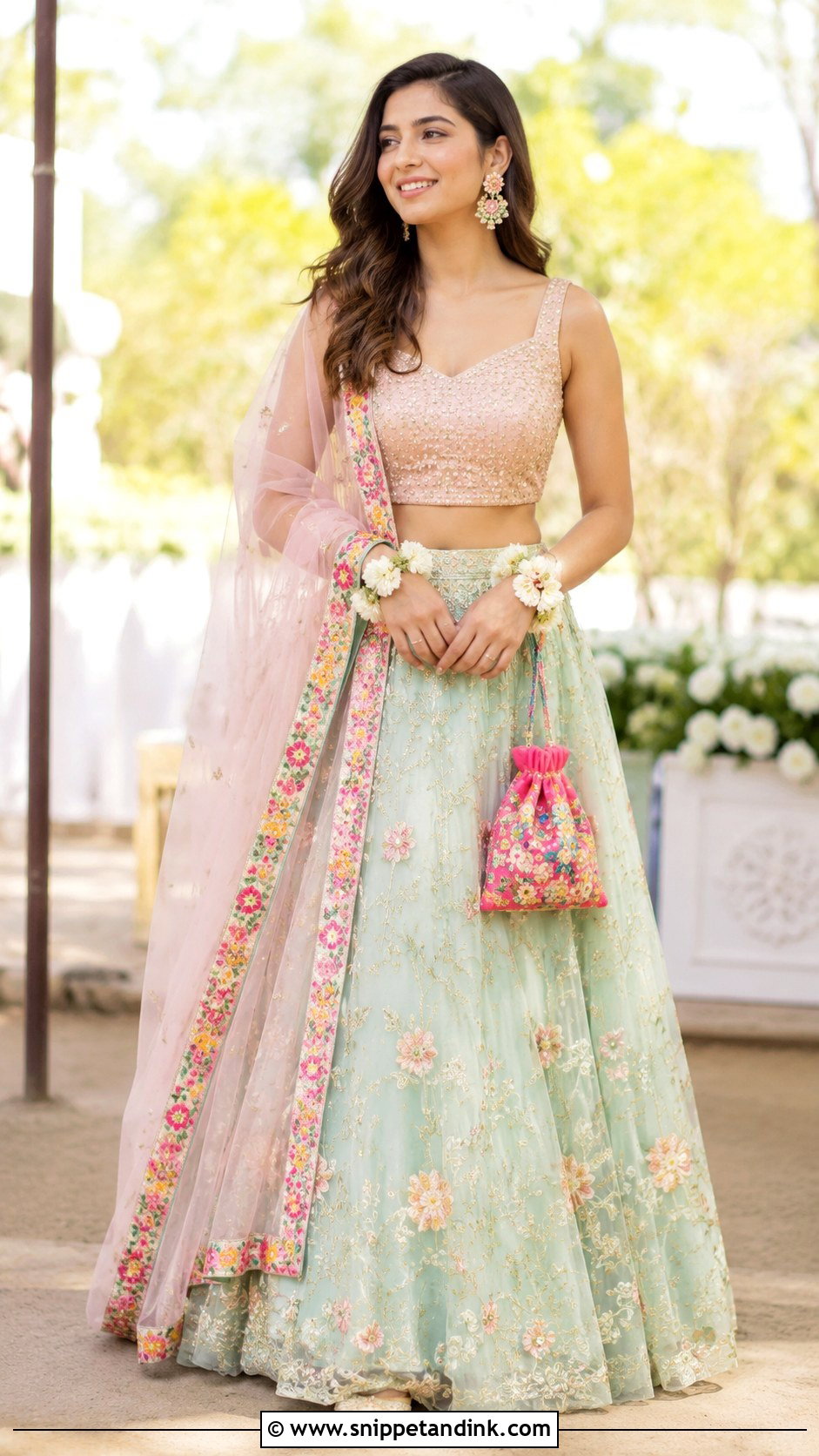
Pastels give the eye a rest when the decor is already full of saturated color. Mint, blush, lilac or powder blue lehengas with floral embroidery and small touches of yellow look fresh. There’s one thing I mention to anyone wearing a pale outfit: henna paste and the lemon-sugar sealant I dab on afterwards both mark light fabrics. Sit with your hands well clear of your lap until the design is dry. Gemstone earrings and floral bangles keep it festive, with metallic juttis underneath.
19. Silk Kurta and Sharara for Mehandi
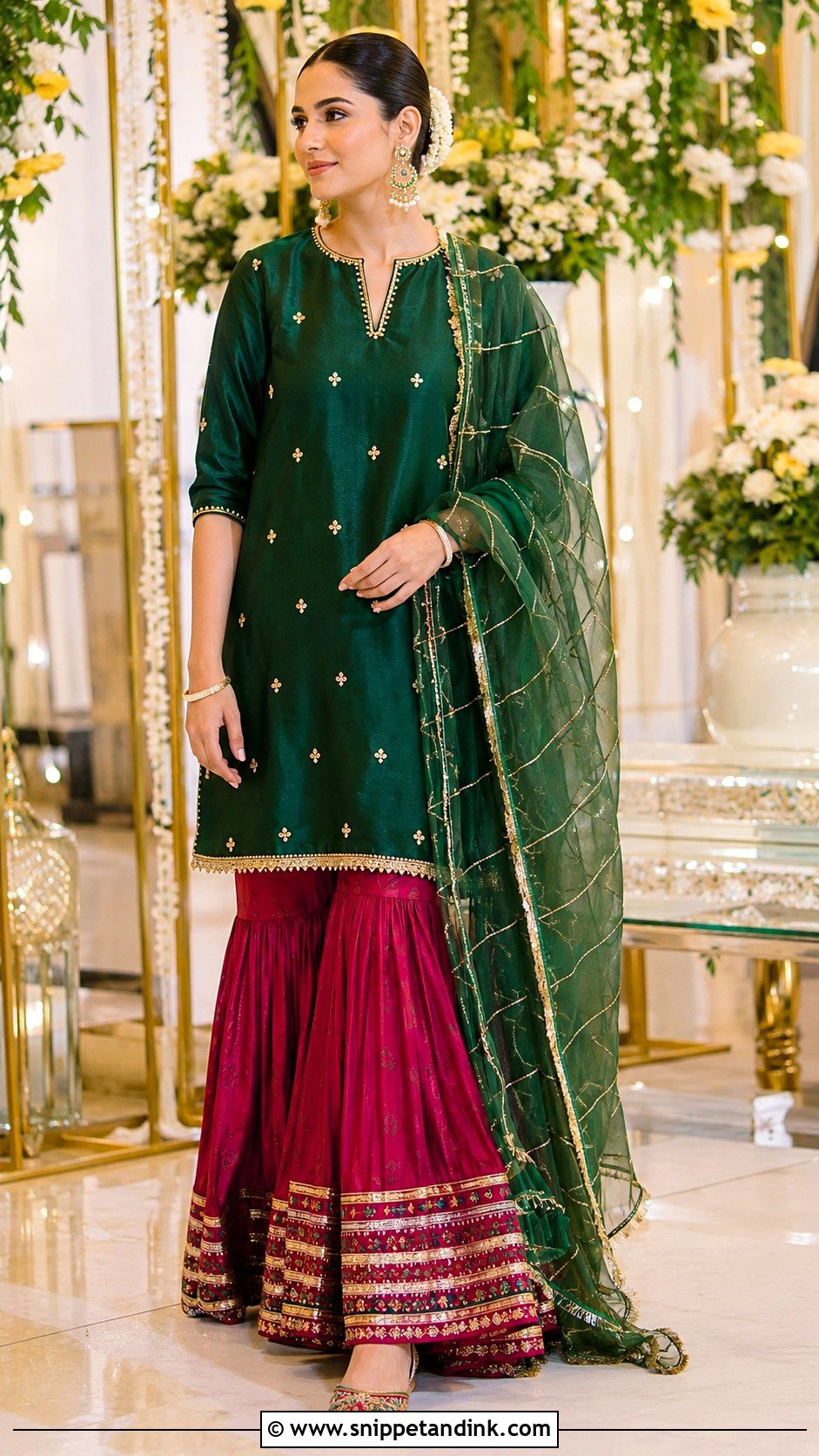
For an evening function, a silk kurta and sharara combination looks richer than cotton. A short raw-silk kurta in emerald, magenta or royal blue pairs with a contrasting sharara. Silk takes a henna stain easily and keeps it, so keep the sleeves short or elbow length. Kundan earrings suit it. Take rings off before I start; a ring left on during application leaves a pale gap in the design once it’s removed. A center-parted low bun gives a refined finish.
20. Fusion Skirt and Blazer for Mehandi
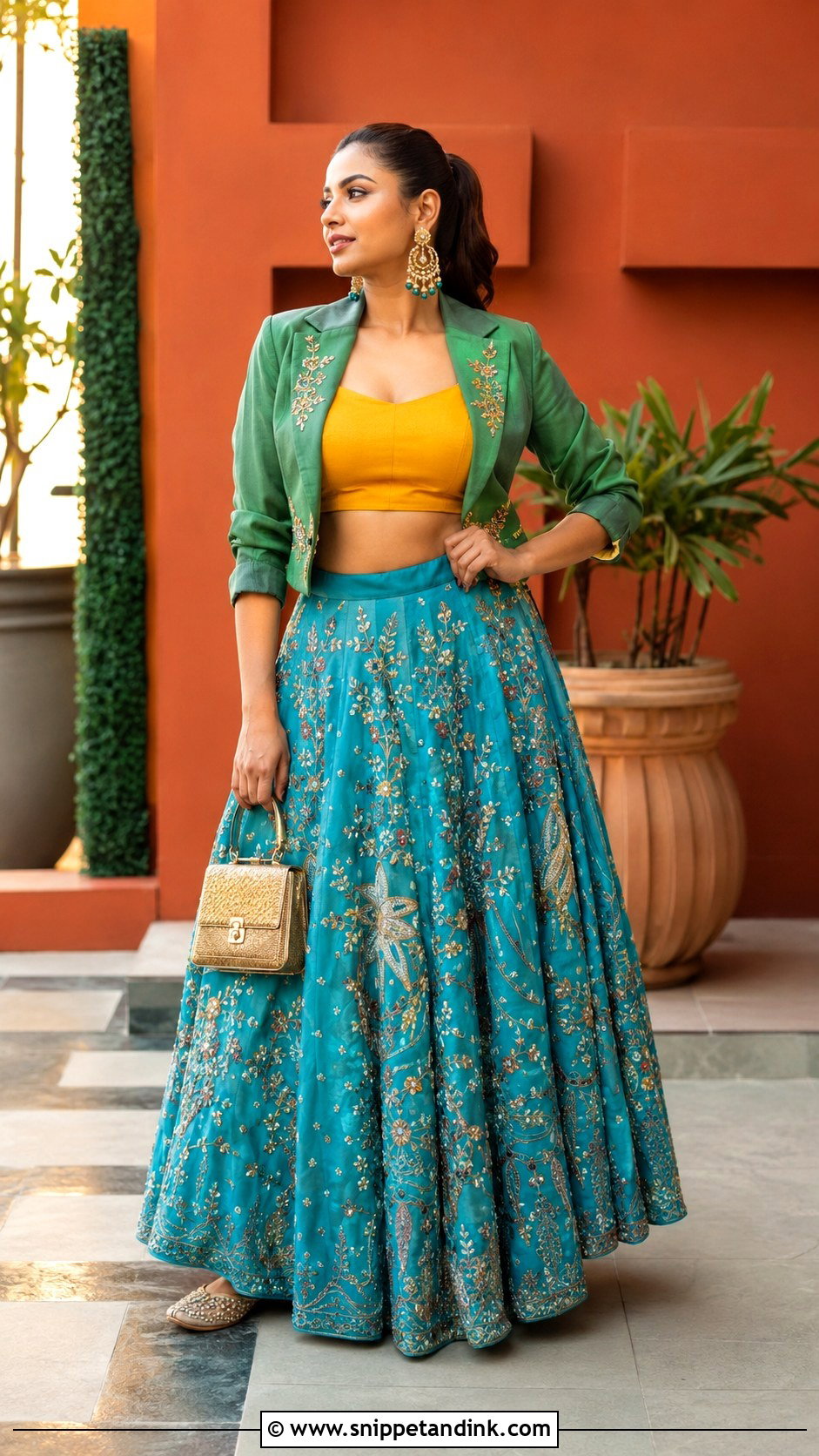
An embroidered skirt with a crop top and a cropped blazer gives a modern look for a contemporary venue. Choose a colorful skirt and a solid blazer that ends near the waist so the skirt’s shape shows. Wear the blazer open, with short or rolled sleeves, and take it off entirely before your henna session if you’re getting a full-arm design. There’s no dupatta, which keeps everything clear of your hands. Pointed juttis, statement earrings and a mini bag finish it.
If Paste Lands on Your Dupatta, Leave It Alone
It happens at almost every function. Someone hugs the bride or a sleeve brushes a wet palm, and a streak of paste lands on fabric. The instinct is to wipe it straight away, which spreads the dye deeper into the weave.
Let it dry completely, then flick or scrape it off with a fingernail or a blunt knife. Treat what’s left with cold water and a little gentle detergent, never hot water. On cotton and linen, a faint mark will often fade over a few washes. On silk, raw silk or anything with zari, take it to a dry cleaner and tell them it was henna. Natural henna dye bonds with protein fibers much like it bonds with skin, so a stain on silk can be permanent. That’s why I always suggest your best silks stay on the hanger until the wedding.
Dress So You Can Forget About Your Clothes While It Dries
The best mehandi outfit is one you can forget about while the paste dries. Short or elbow sleeves, a pinned or absent dupatta and a skirt or trouser you can sit in comfortably make my job easier and your design darker, because you won’t be smudging it. Green and yellow are traditional, but florals, jewel tones and pastels all suit the day. Hold off on wrist jewelry until the paste flakes off. Then dress for your role, whether that’s bride, sister or guest, and enjoy the music.
You'll Like These Ideas:


Leave a Reply