
Pakistani bridal fashion runs on handwork, color and tradition, and a bride usually needs it four times over. Nikah, mehndi, baraat and walima each have their own mood, so the outfits below are grouped as complete looks you can map onto your own week. Lehengas still lead, but ghararas, shararas, saris, pishwas and long formal shirts are just as bridal when they’re cut and embroidered properly. When I sit down with a bride, I don’t start with color. I start with which event matters most to her and her family, because that’s where the budget and the heaviest work should go.
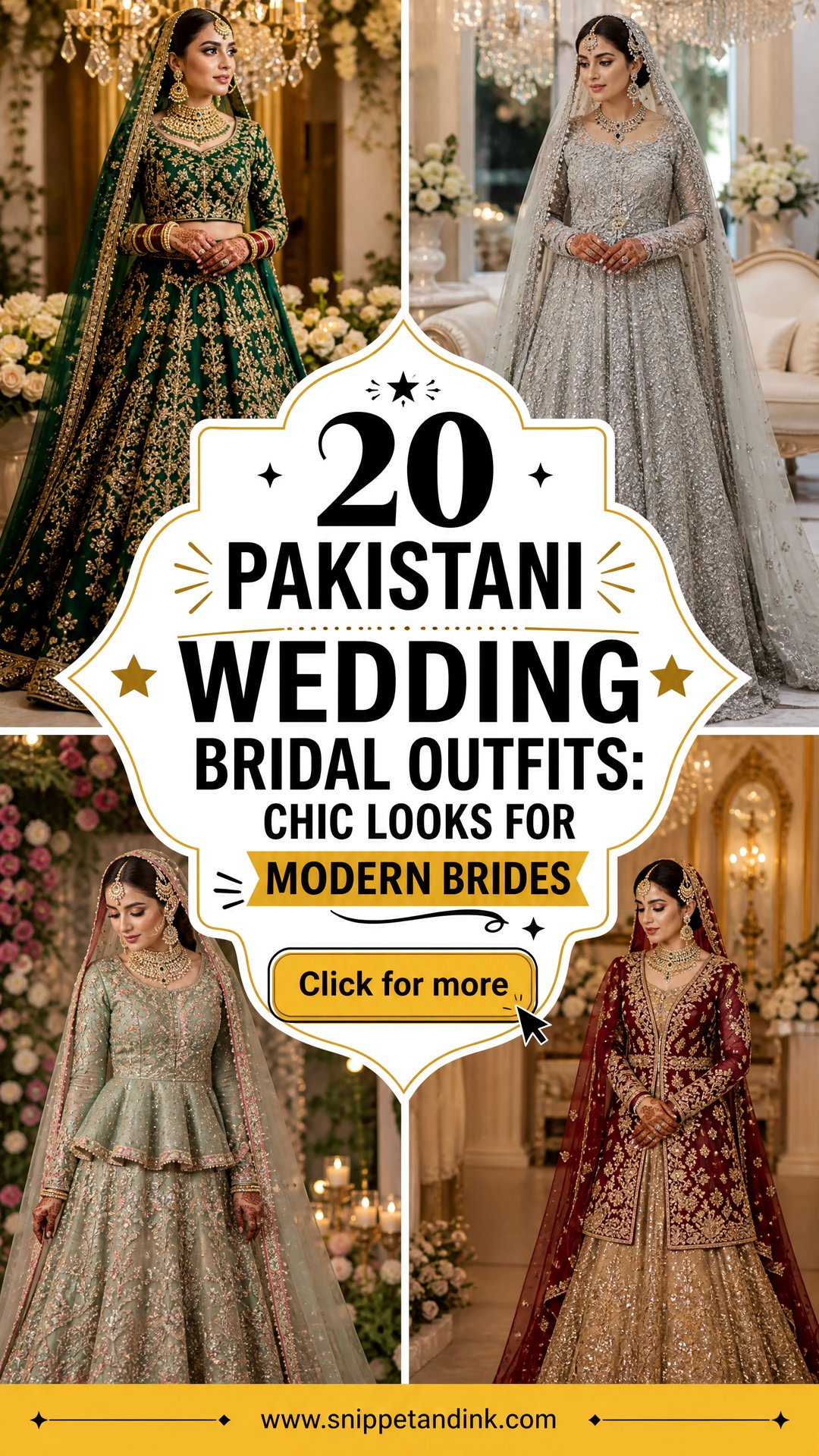
Splitting One Bridal Budget Across Four Events
The most common regret I hear is spending almost everything on the baraat and then scrambling for the walima. Before you fall in love with a single outfit, decide roughly how your budget divides. Most brides put the largest share into the baraat, because that’s the heaviest handwork and the outfit families keep. The walima usually comes next, then the nikkah and mehndi.
- Handwork costs time, so the price follows the embroidery more than the fabric. A lighter outfit with good tailoring often looks better than a heavily worked one cut badly.
- The mehndi outfit is where you can save: shararas, Dhaka pajamas and kurtas in gota or mirror work look festive without bridal-level embroidery.
- A nikkah held at home or in a mosque rarely needs the volume of a lehenga; a well-made kameez and gharara is plenty.
- Jewelry can repeat. A gold set worn at the baraat can come back at the mehndi or nikkah with a different dupatta.
Handwork Takes Months, Not Weeks
Custom zardozi, dabka and gota work is done by hand, and in wedding season every workshop is busy. For a fully embroidered baraat outfit, I’d start the conversation with your designer or karigar several months before the date, and treat the delivery promise as an estimate. Leave yourself at least two fittings, the last one a few weeks out, so there’s time to fix a blouse or rehem a skirt without panic. Lighter outfits for the mehndi and nikkah can be ordered later.
1. Red Pakistani Bridal Lehenga
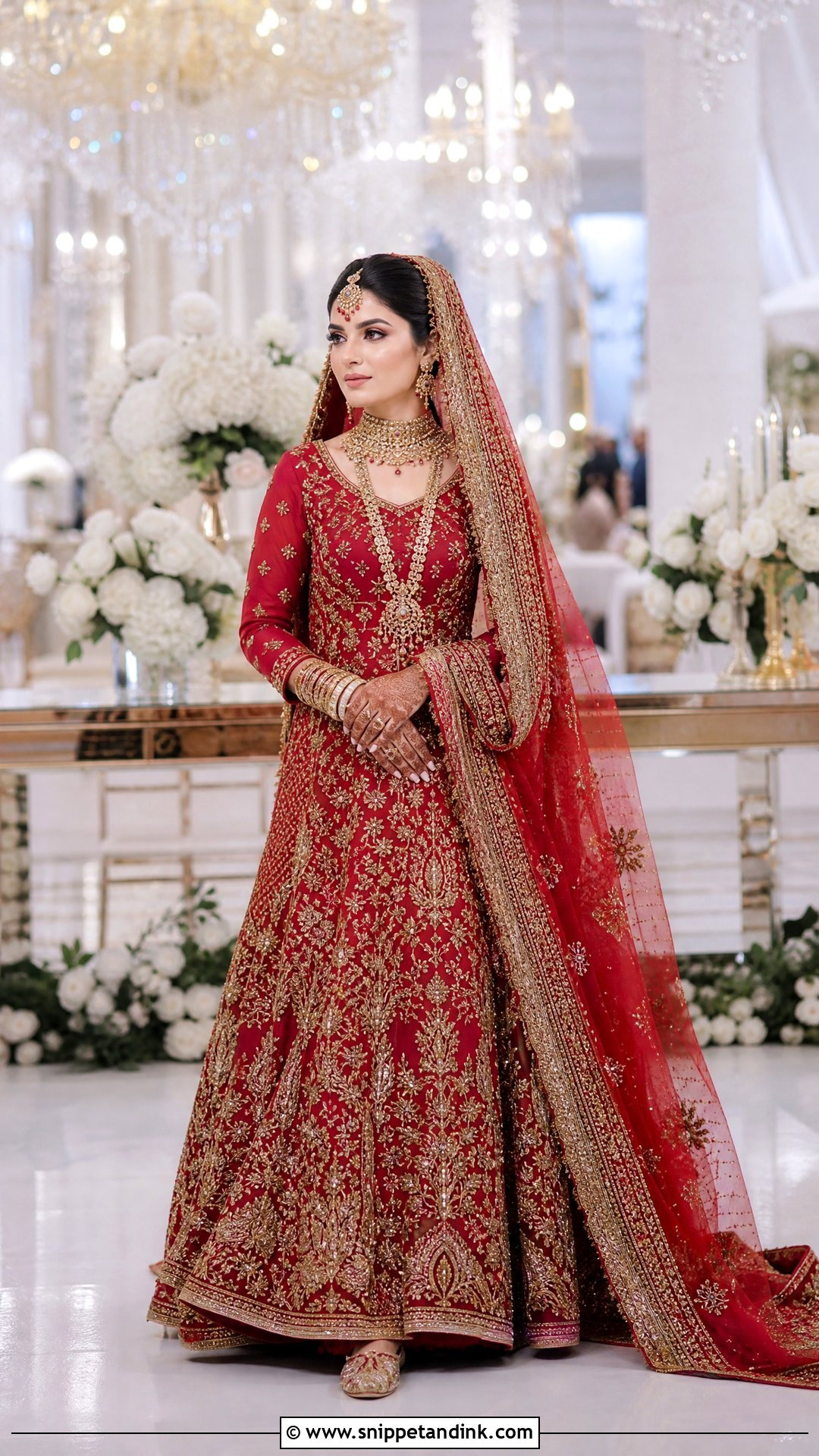
Red at the baraat is still what most families picture, and there’s a reason: nothing else reads as bride from across a hall the same way. Choose a full raw silk or velvet skirt with antique gold zardozi and dabka, and a fitted blouse with a modest neckline to balance the volume. A heavily bordered dupatta goes over the head. If you want a second, lighter dupatta across one shoulder, make sure it’s genuinely lighter; two heavy dupattas pull the blouse backward all evening. Gold choker, layered necklace, jhumkas, tikka, bangles and embroidered khussas complete it. I always set the head dupatta over a firm bun, because that bun is what the jewelry and pins anchor into.
2. Maroon Pakistani Bridal Lehenga
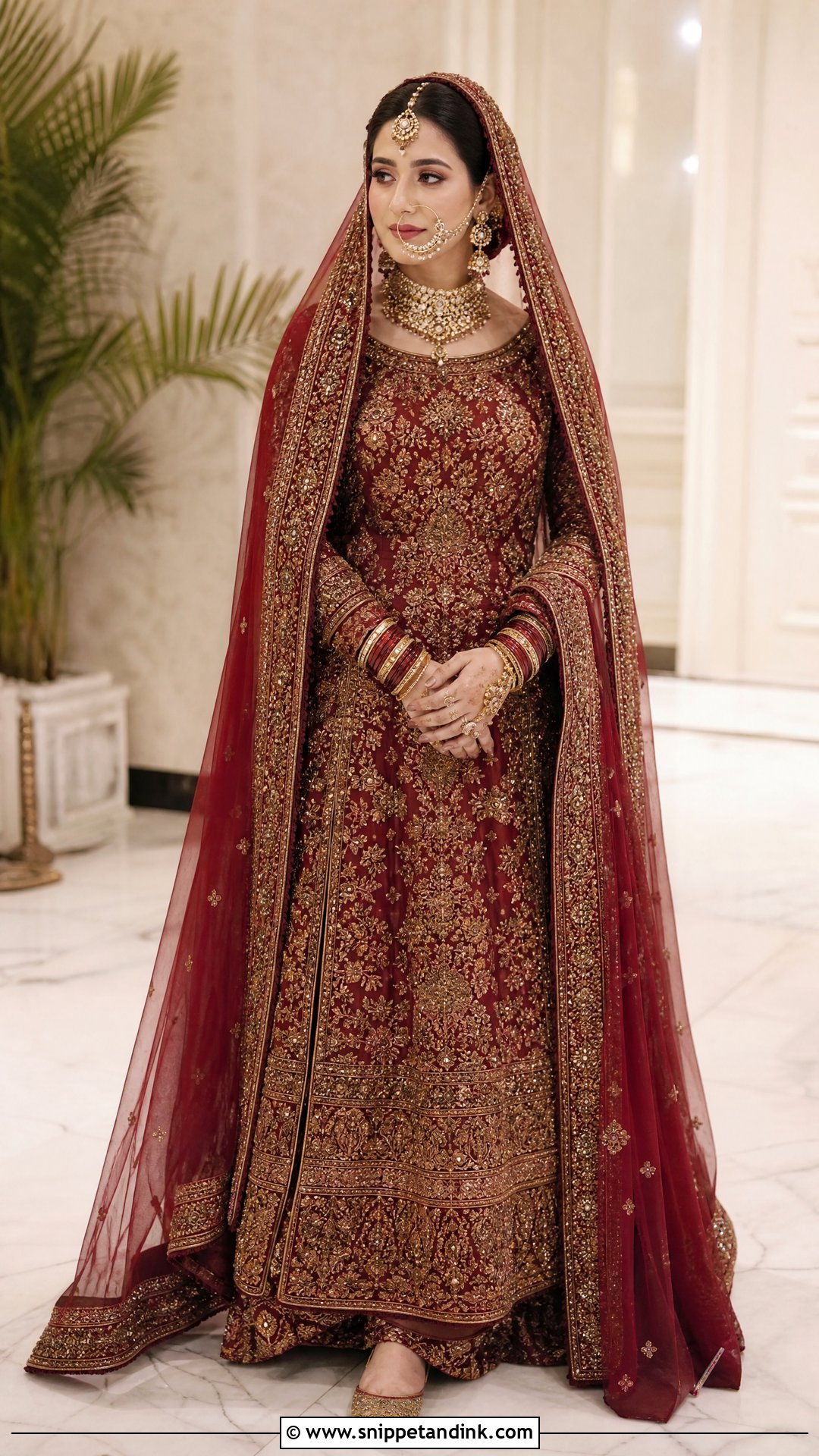
Deep maroon has the grandeur of red with a richer, slightly softer tone, and it suits evening light very well. Build it on a paneled lehenga worked in muted gold, copper and crimson thread. A long blouse or short kameez depends on how much coverage you want. A sheer maroon dupatta over the head with an antique gold one across the arms is a classic pairing. Kundan jewelry and a statement nath belong with this color. One honest warning: maroon and dark red can look nearly black in low-light photos, so ask your photographer how they plan to light the stage.
3. Ivory Pakistani Bridal Gharara
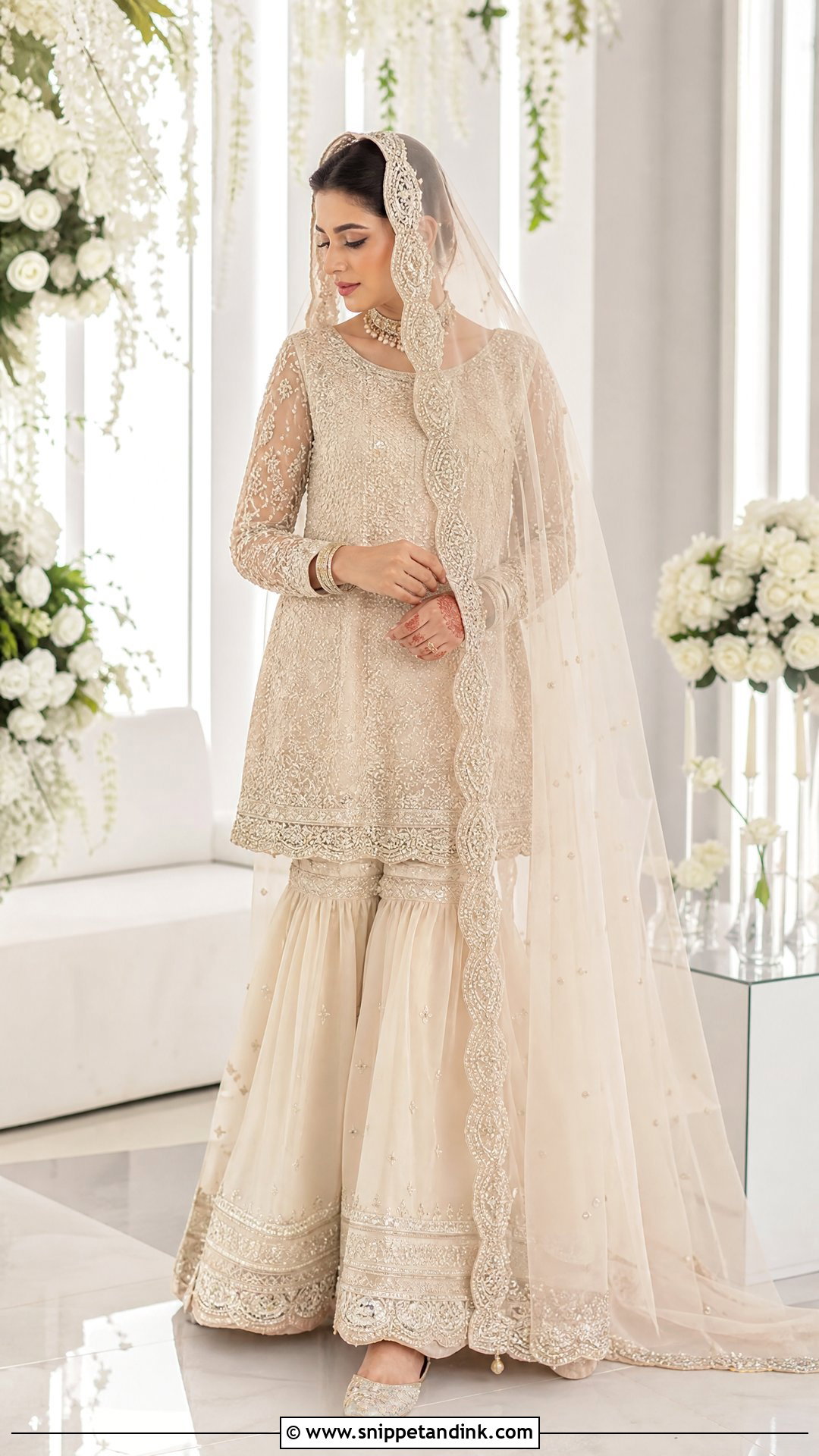
An ivory gharara gives the nikkah a quiet, composed feel. Pair a short kameez in pearl or pale gold work with a gharara that flares hard below the knee, and put a wide gota border at the jor so the traditional shape is obvious. The organza dupatta goes over the head with its scalloped edge framing your face. Keep jewelry delicate: pearl earrings, a slim choker, a small tikka. Ivory khussas sit under the gharara. A sleek middle-parted bun keeps the face clean. I’d only add that ivory picks up makeup transfer easily, so have the dupatta pinned to stay clear of your jaw.
4. Gold Pakistani Bridal Sharara
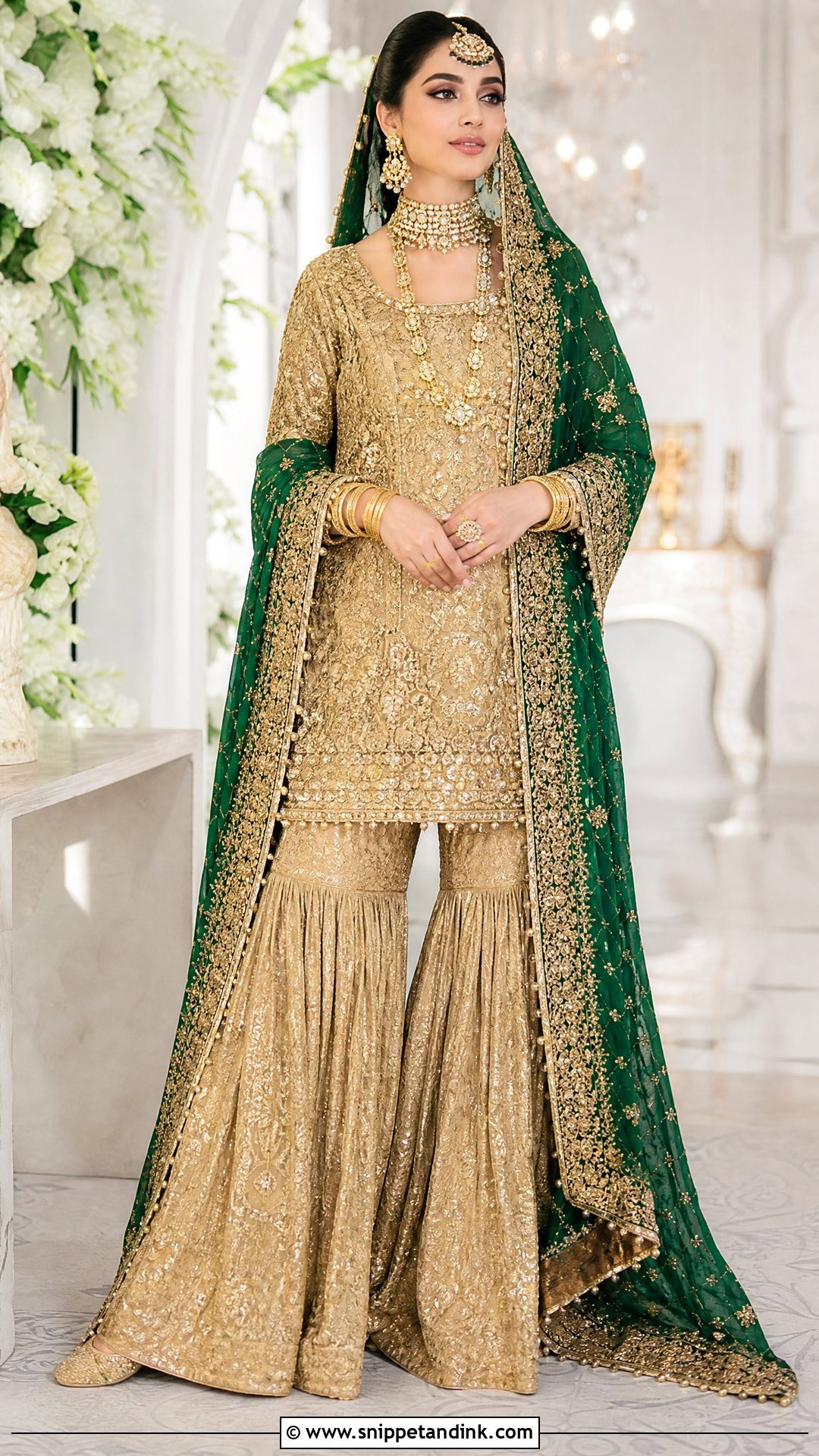
A gold sharara looks dramatic but is far easier to move in than a layered lehenga. Start with a short kameez covered in tonal zari, sequins and dabka, then add wide sharara pants with the heaviest work at the hem, where the weight helps the flare fall. Contrast comes from the dupatta: deep red, rust or emerald with a broad gold border. Kundan choker, jhumkas, bangles and gold khussas complete it. Decide on your dupatta placement before your hair trial, because a soft bun and a pinned head dupatta need different setting. Bronze eyes with luminous skin and a warm rose lip suit all that metallic. It works for a nikkah, a small baraat or a family-only celebration.
5. Pastel Pink Pakistani Bridal Pishwas
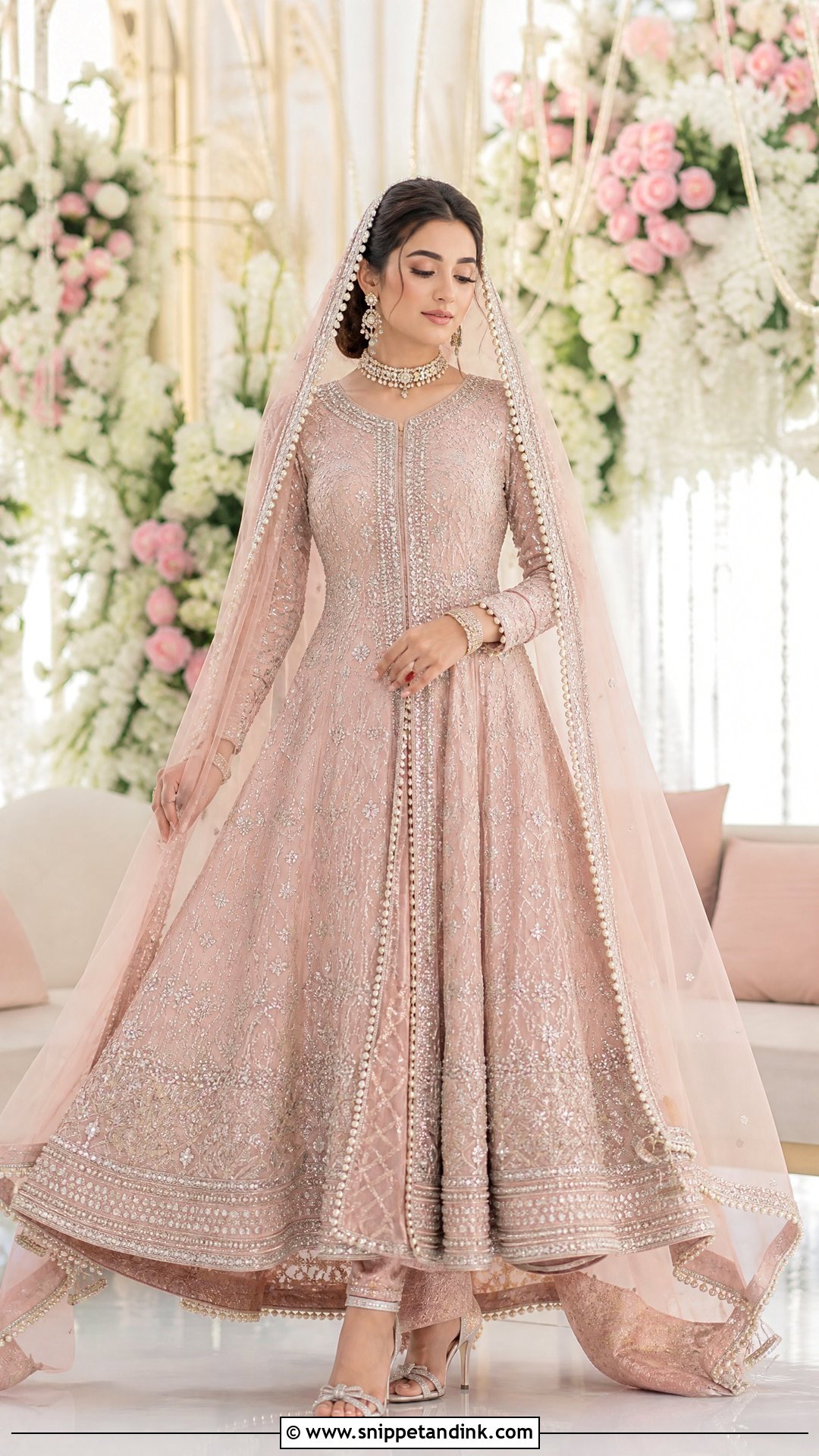
Pastel pink in a pishwas is light and moves with every step. Choose a floor-length pishwas with a fitted bodice, defined waist and a generous flare. Silver, pearl and pale gold embellishment keep the color airy. Wear fitted trousers underneath; you’ll be grateful when you sit on a low sofa for photos. A net dupatta with scattered motifs can go over the head or across both arms. A diamond-style choker, drop earrings and a slim tikka are enough. I’d keep it for a daytime nikkah or a pastel walima rather than the baraat, where it can look underdressed next to the groom’s family.
6. Emerald Green Pakistani Bridal Lehenga
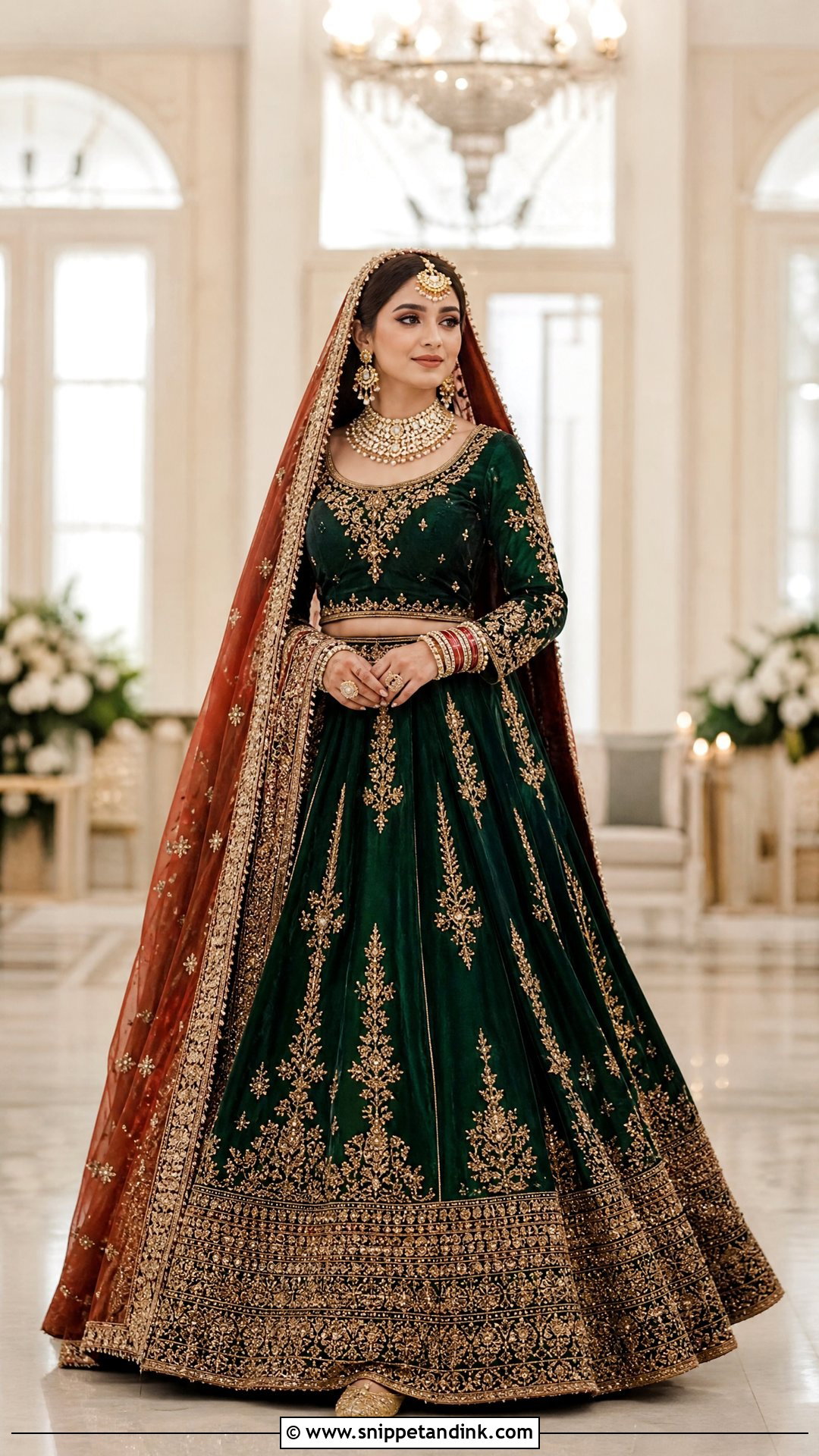
Emerald is for the bride who loves jewel tones and doesn’t mind breaking with red. A silk or velvet lehenga with antique gold embroidery concentrated at the waistband and hem gives you a regal base, and a coordinating blouse keeps it monochrome. Warmth comes from a rust, maroon or muted gold dupatta set over a centre-parted bun. Polki jewelry is a natural fit; the uncut stones look right against deep green. Keep the makeup to defined eyes and a neutral lip. It suits a baraat, a formal mehndi or a winter reception, and for an outdoor evening a velvet shawl in the same green is both warm and photogenic.
7. White Pakistani Bridal Nikah Dress
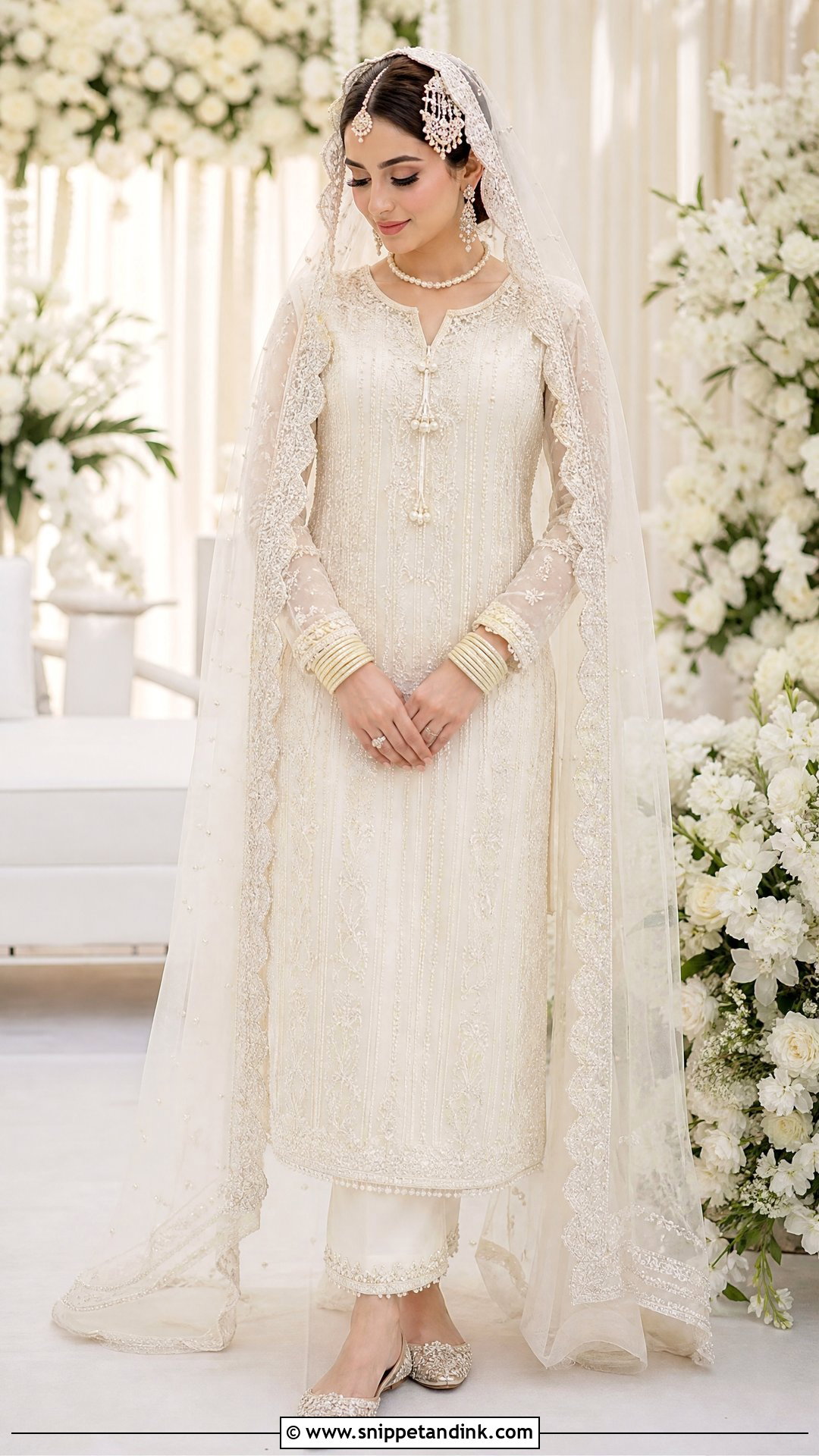
White is the nikkah color for many brides now, especially those keeping the ceremony small and modest. A long kameez in fine silver, pearl or white-on-white embroidery is enough; pair it with straight trousers for a clean line or a lightly flared lehenga for more formality. The organza dupatta with a scalloped edge covers the head while staying light near the face. Pearl jewelry and a delicate passa suit it. White-on-white work is subtle in person and can almost vanish on camera, so I’d make sure at least the borders have a little silver to catch light. A polished bun keeps the veil secure, and a small posy of pale flowers finishes it.
8. Yellow Pakistani Bridal Mehndi Sharara
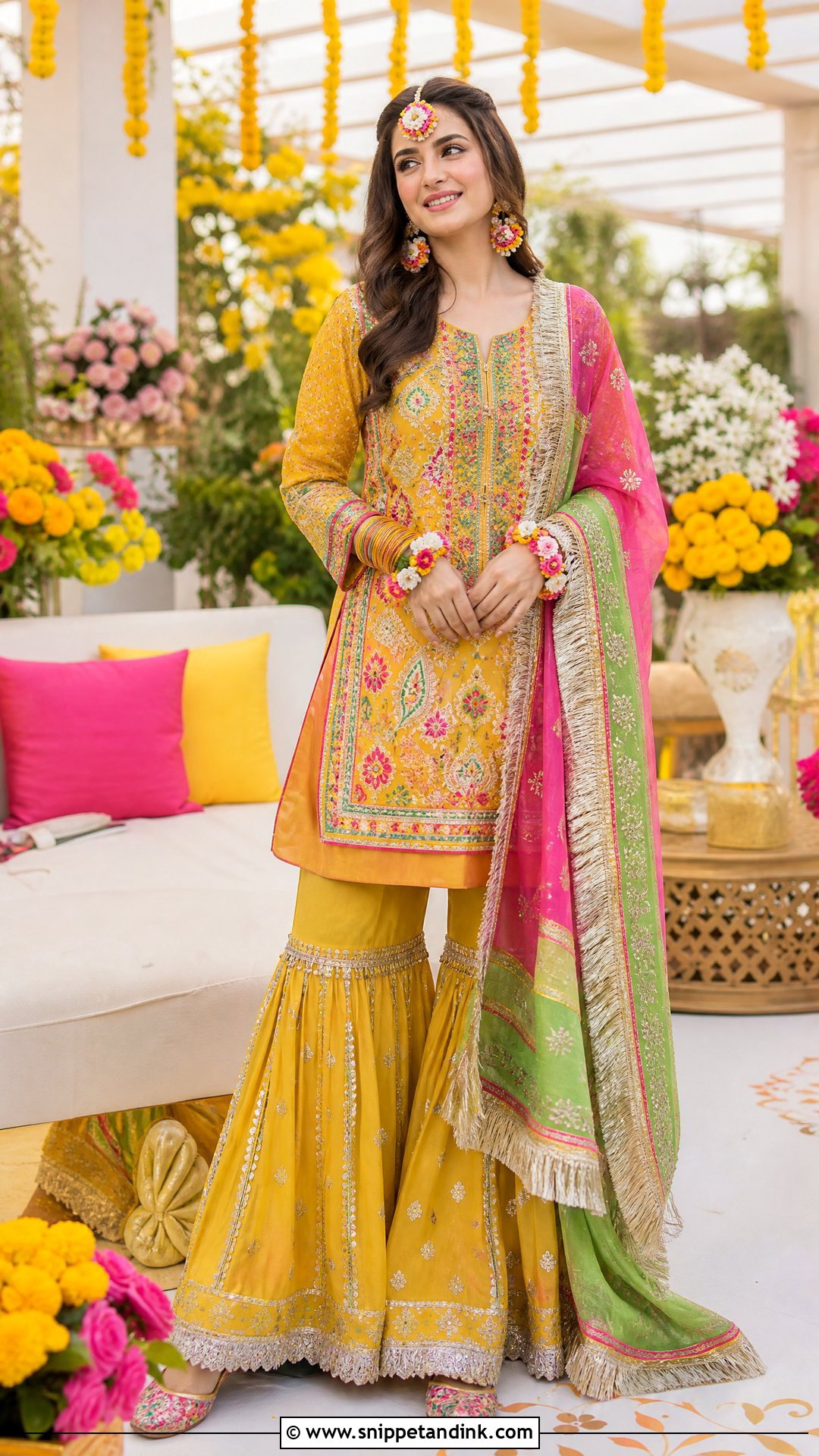
Yellow is mehndi tradition, and it’s very easy to style around marigolds and colorful decor. Wear a short embroidered kurti with a flowing sharara in chiffon, silk or crushed fabric. Crushed fabric is my favorite here: it hides creases from sitting on floor cushions all night. Pink, green or orange borders link the outfit to the decorations. Drape a sheer dupatta over one shoulder so your arms are free for the henna artist. Floral earrings and tikka, colorful bangles and cushioned khussas suit the mood, with a braided hairstyle and small flowers. Keep makeup glowing with a peach lip.
9. Orange And Pink Pakistani Bridal Lehenga
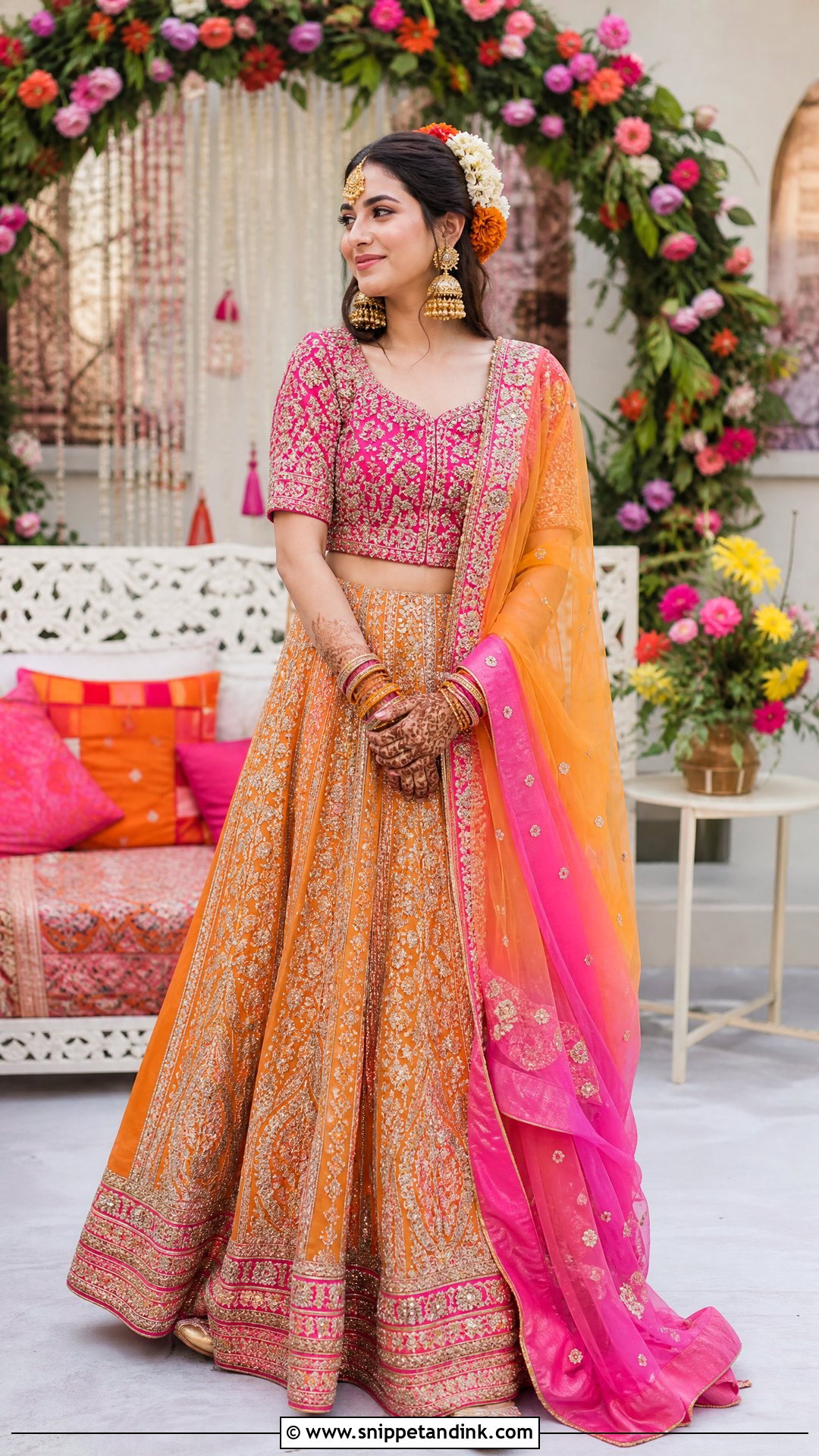
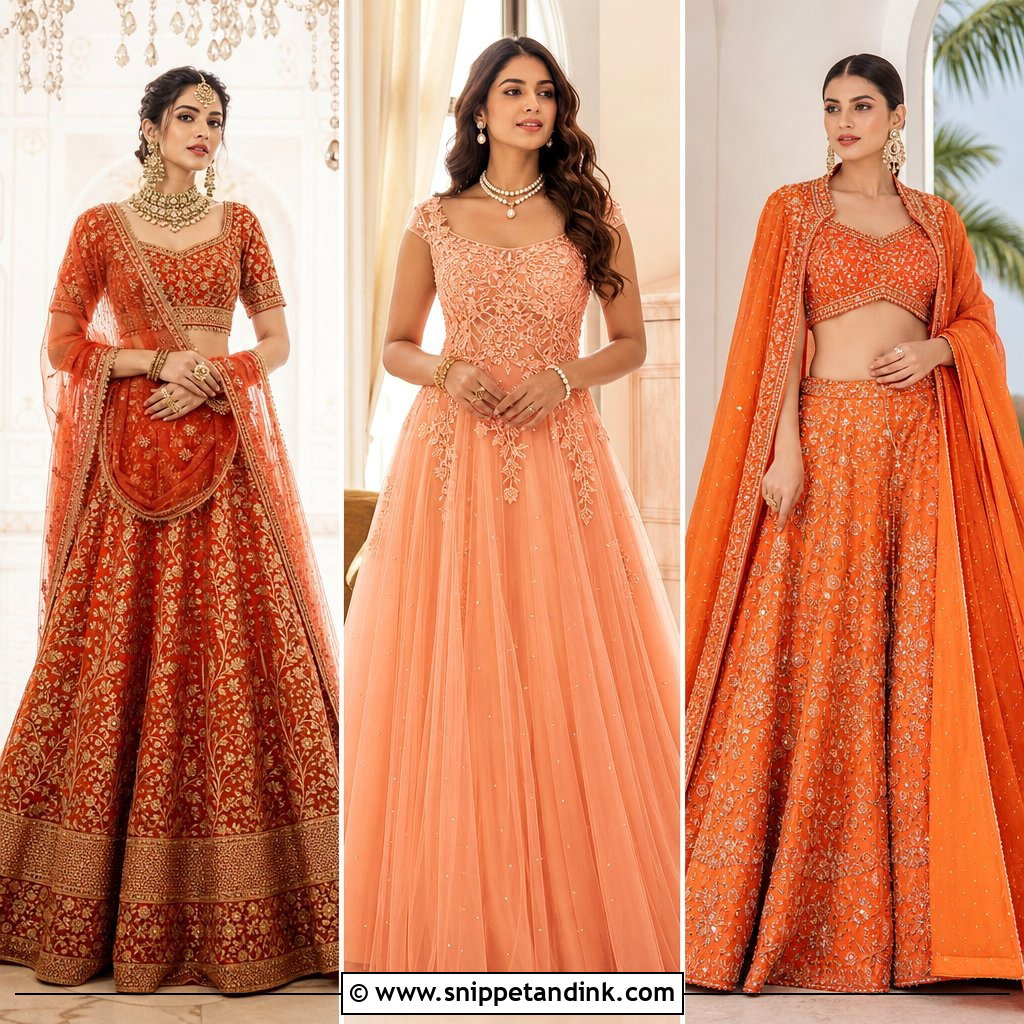
Orange and pink is a combination I love for daytime functions because both colors stay vivid in natural light. A hot pink blouse with a paneled orange lehenga in gota, mirror or gold thread gives you plenty of color. A two-tone dupatta ties them together, either over the head or pinned across a shoulder. Floral jewelry makes it a relaxed mehndi; gold jhumkas and a tikka make it more formal. Metallic khussas are comfortable for dancing. With two loud colors already, coordinate the accessories tightly or the outfit starts to look scattered. A loose braid or textured low bun with small flowers and warm peach makeup complete it.
10. Champagne Pakistani Bridal Walima Gown
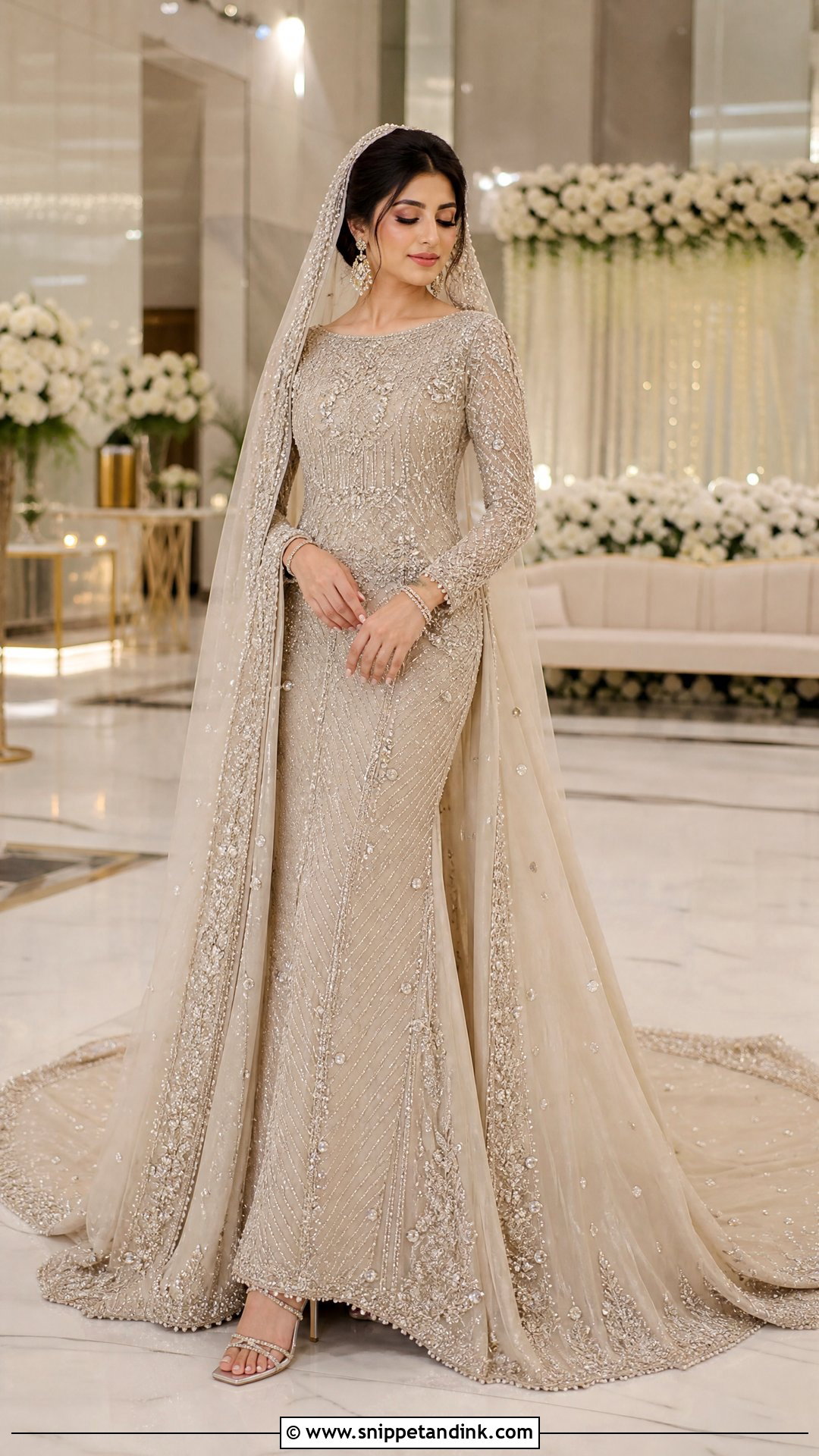
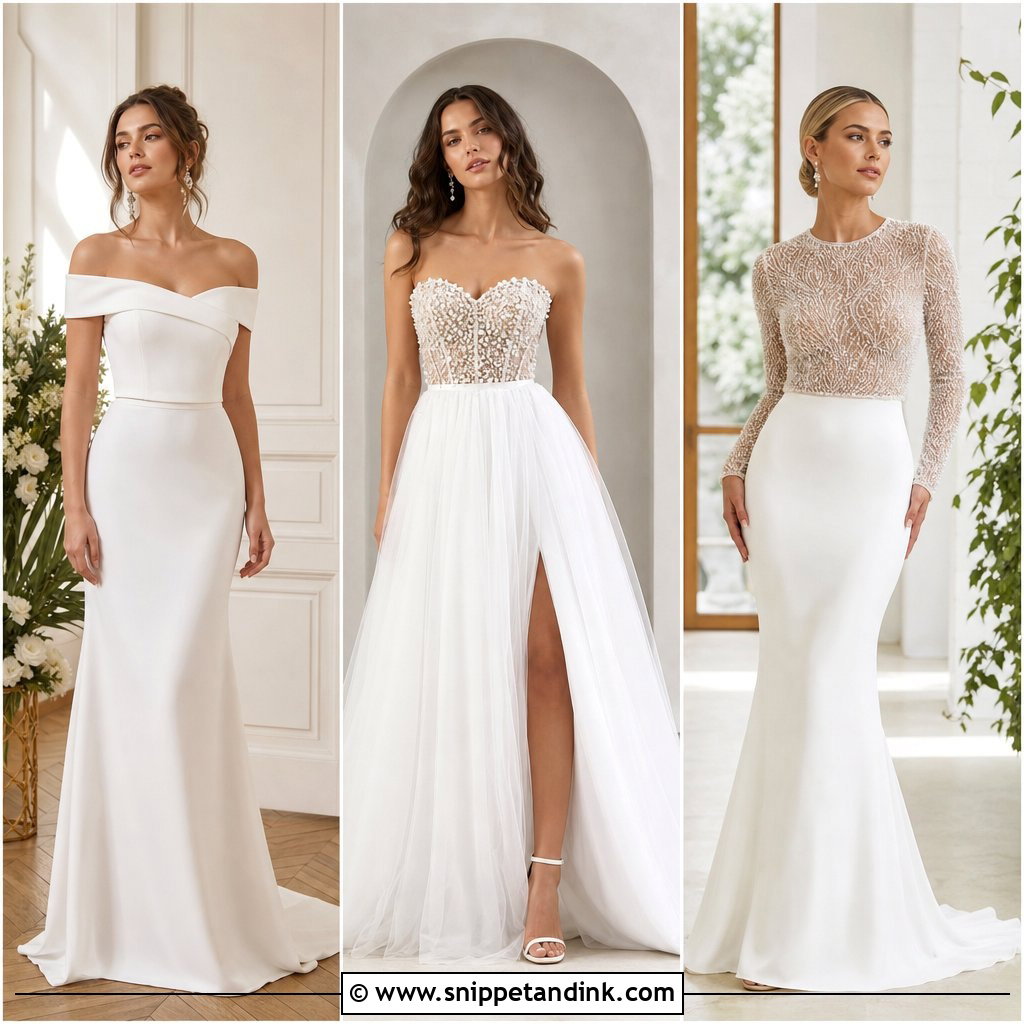
A champagne gown gives you a formal reception look that doesn’t echo the baraat. A floor-length silhouette with a fitted bodice, modest sleeves and a gently flared skirt is all the structure you need. Tonal crystals, pearls and silver embroidery add dimension without breaking the neutral palette. A detachable train or long embroidered veil gives you an entrance, and can come off for dinner. Crystal heels, chandelier earrings and one statement ring finish it. Champagne shifts noticeably between warm and cool light, so compare the fabric against your venue’s lighting before you choose the veil, accessories and foundation shade.
11. Silver Pakistani Bridal Maxi Dress
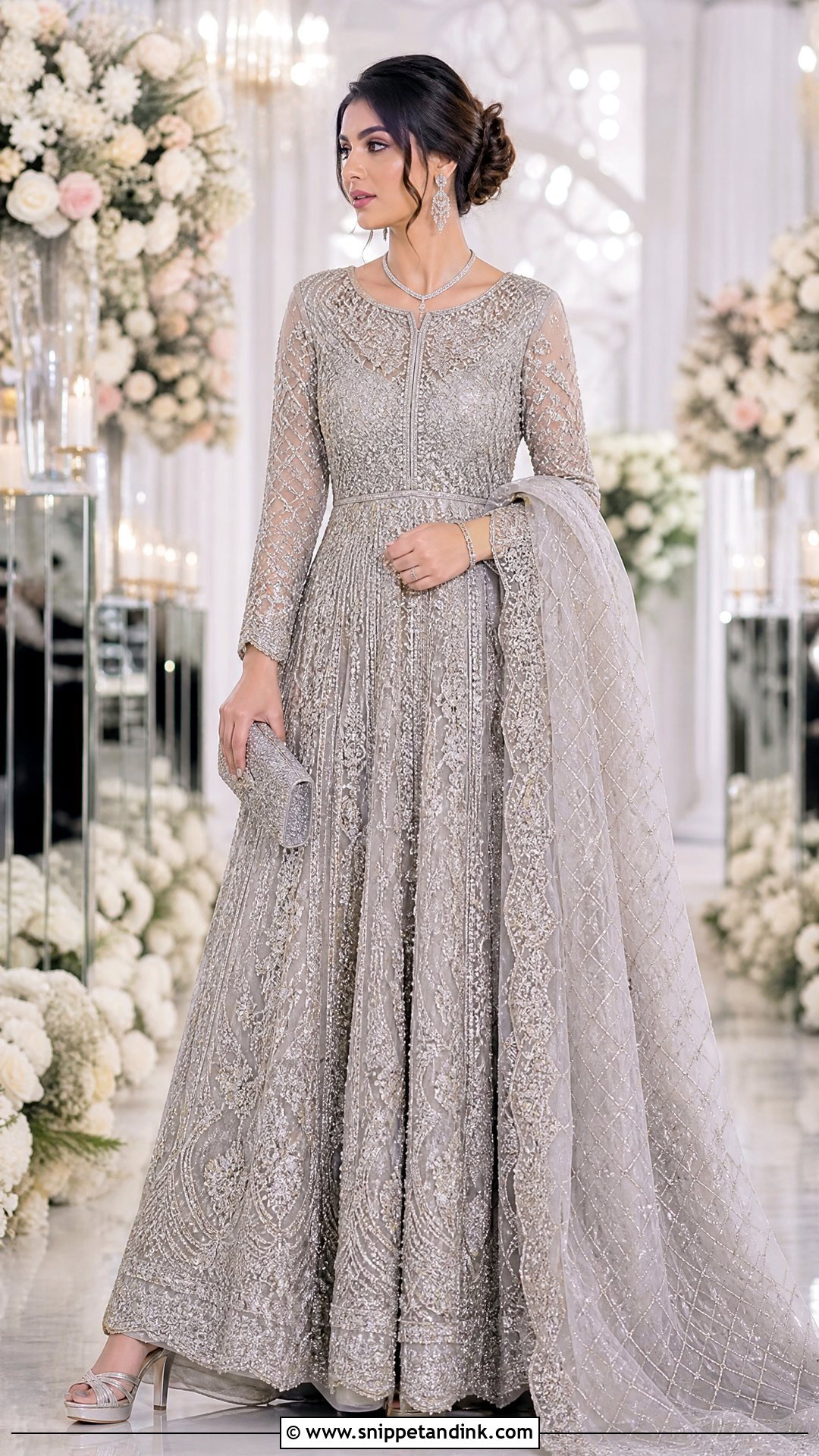
Silver maxis bring cool sparkle to a walima. Choose a flowing design with an embroidered bodice, fitted sleeves and a skirt that doesn’t carry too much weight. Crystal, sequin and grey thread work create depth without color. A sheer silver dupatta over one shoulder, or a light veil behind the hairstyle, keeps it modern. Diamond-style earrings, a slim necklace and metallic heels are enough. I’d put the hair up: crystal and sequin work catches and pulls loose hair, which ruins both the curls and the embroidery by the end of the night. Cool pink makeup and a softly smoky eye suit the palette.
12. Velvet Pakistani Bridal Lehenga
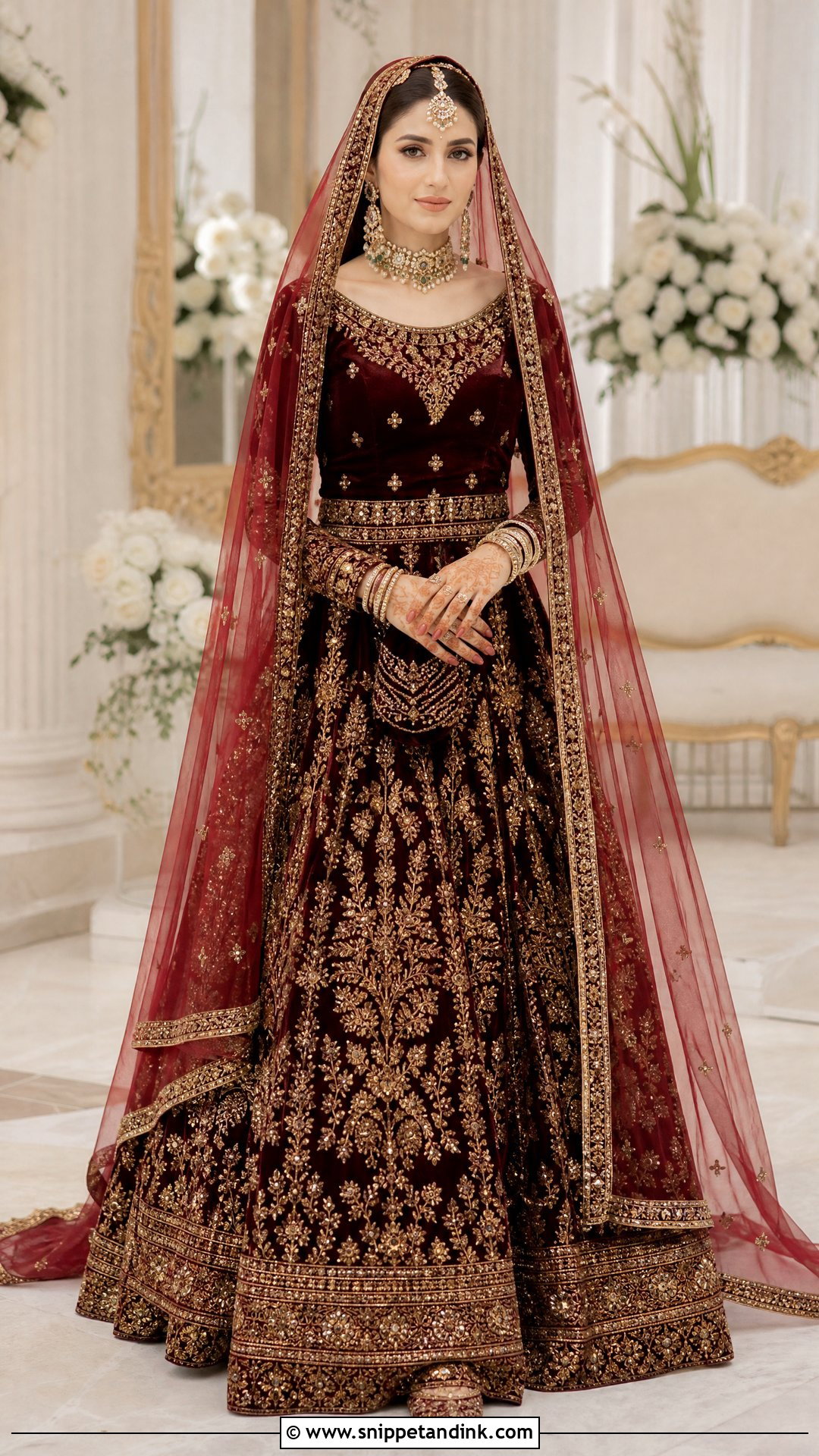
Velvet has a natural sheen and holds its structure, which is why it’s the winter bridal fabric. Burgundy, navy, forest green and deep plum all work for the skirt and blouse. Antique gold embroidery looks rich against velvet, but I’d keep it concentrated rather than all over; fully embroidered velvet becomes genuinely heavy to wear. A lighter net or organza dupatta stops the outfit feeling dense. Polki, a tikka, bangles and closed khussas suit it, with a neat low bun to anchor the veil. If the hall is heated, ask for a breathable cotton lining and skip a bulky can-can underskirt.
13. Pakistani Bridal Saree With Dupatta
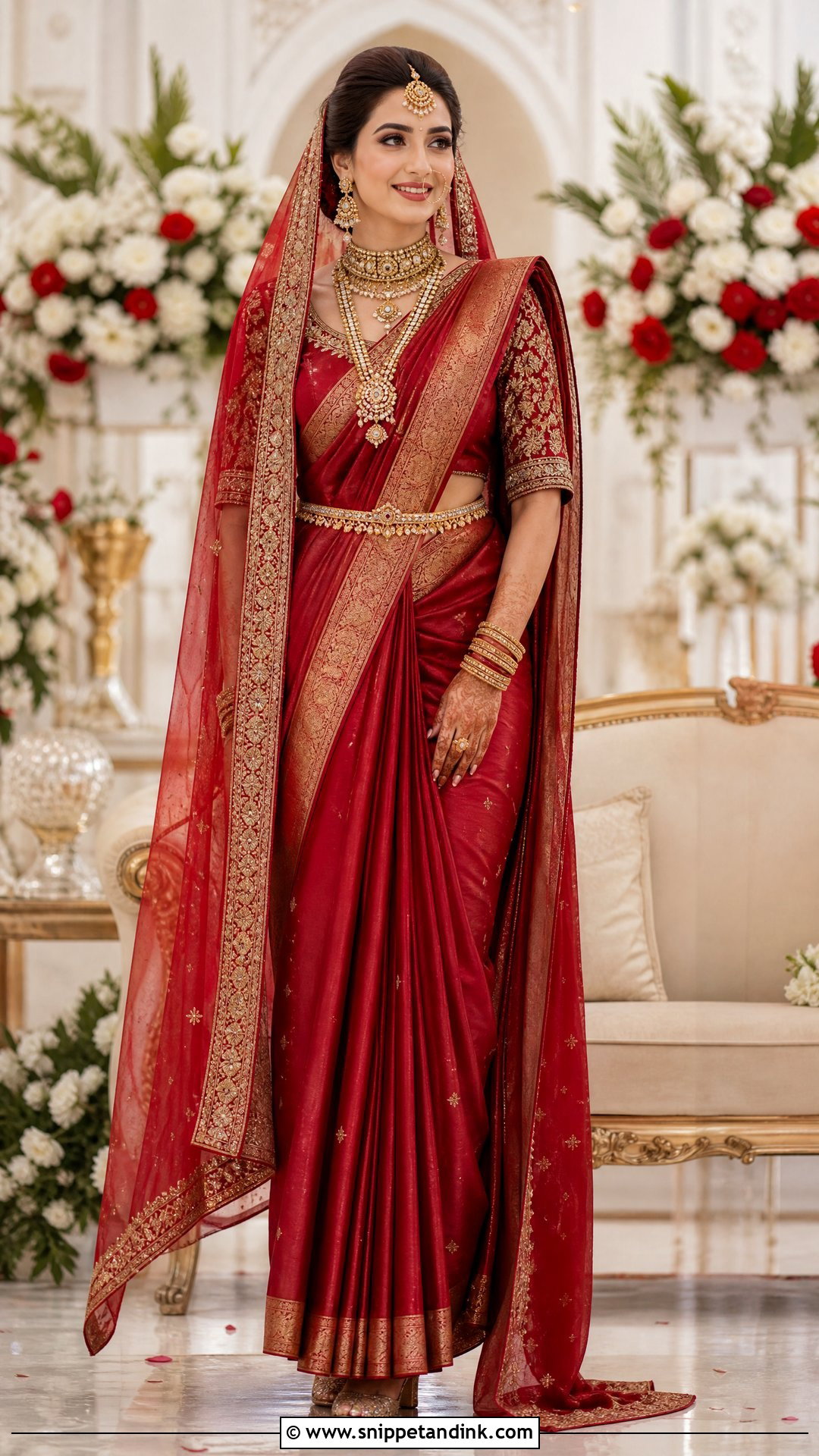
A bridal sari is the choice for a bride who wants a different line from the lehenga crowd. Silk, tissue and embroidered net in red, maroon, ivory or muted gold all work. The blouse carries a lot here: it needs to be structured enough to support heavy embellishment and give comfortable coverage. Pleats should be set and pinned carefully, or stitched, so you can walk and sit without them fanning out. A separate light dupatta over the head gives the traditional bridal veil. A decorative waist belt is more than jewelry; it holds the drape in place through a long evening. Low heels help posture without making steps difficult.
14. Pakistani Bridal Angrakha With Lehenga
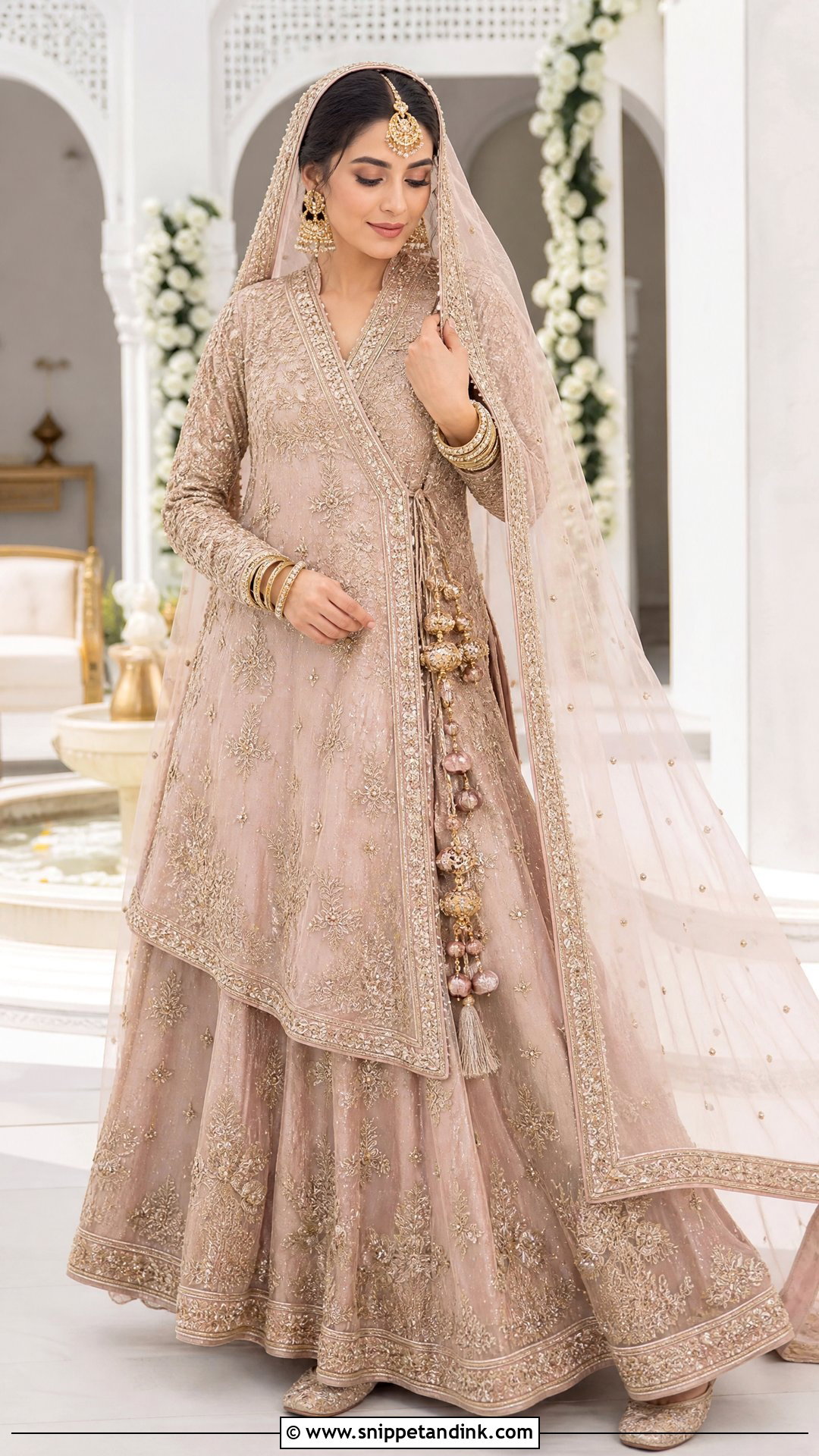
An angrakha top gives a bridal lehenga a wrapped, crossover bodice that’s flattering on most figures because it defines the waist on a diagonal. Look for decorative ties, tassels and embroidered borders that show off the overlap. The lehenga underneath should be lighter at the waist and heavier at the hem. A sheer dupatta over the head lets the neckline stay visible. Jhumkas, a tikka, stacked bangles and khussas complete it. A low braided bun sits well under the veil and holds traditional hair jewelry. The thing I check at fittings is the tie closure: it needs a hidden hook as backup, or it loosens by the end of the night.
15. Pakistani Bridal Long Shirt With Farshi Gharara
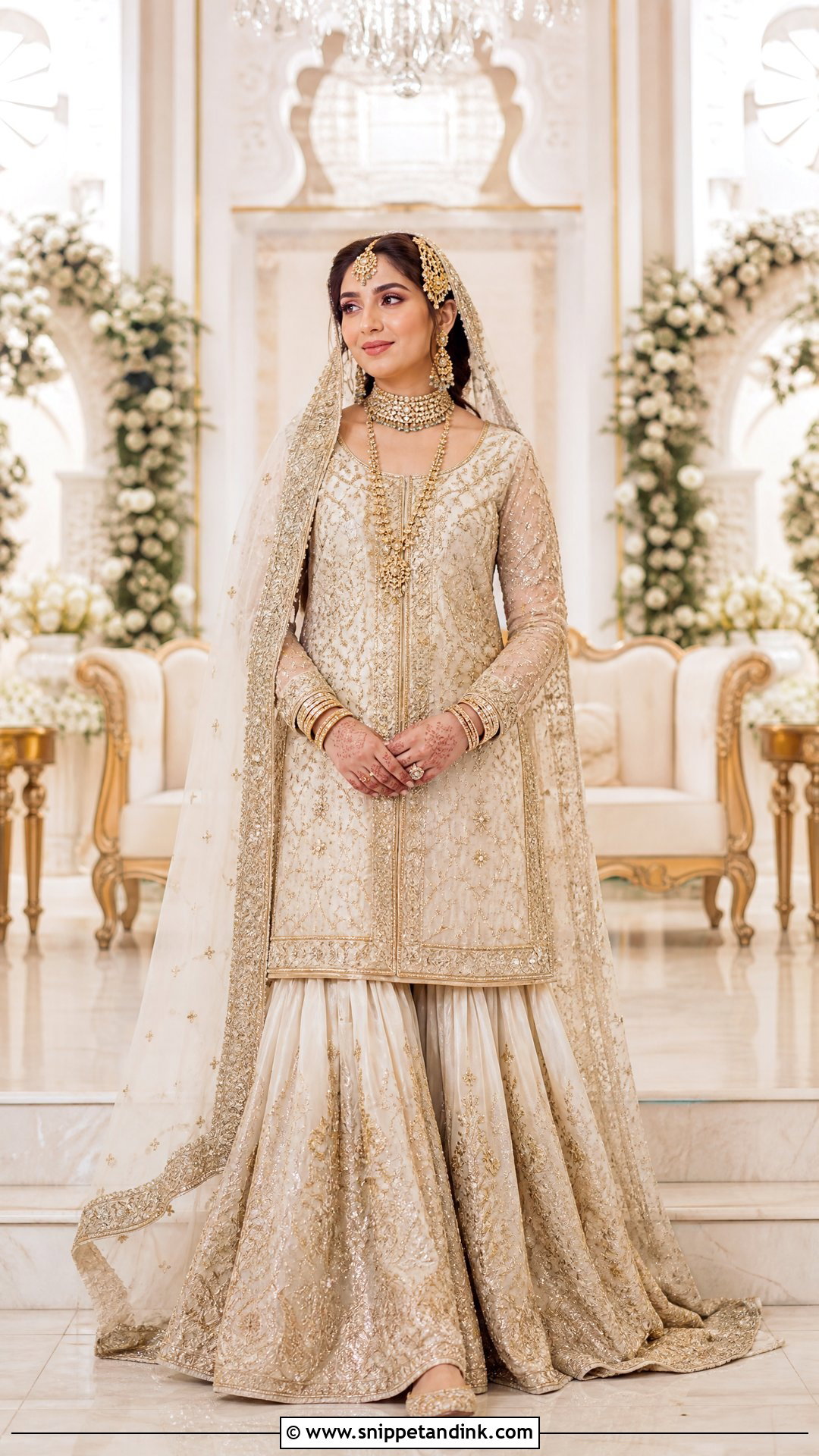
The long shirt with farshi gharara is a heritage look, and it carries real presence. Choose a straight or slightly flared kameez to the knee, with borders on the neckline, sleeves and hem. The gharara should fit through the thigh and then open into a flare that trails on the floor. Ivory with gold, maroon with antique gold, or blush with silver all work. A sheer dupatta over the head, a choker, passa and khussas complete it. Farshi hems are long by design, so you’ll need to practise walking, turning and sitting before the day. Have someone show you how to kick the hem forward as you step; it becomes second nature in a few minutes.
16. Pakistani Bridal Peplum With Lehenga
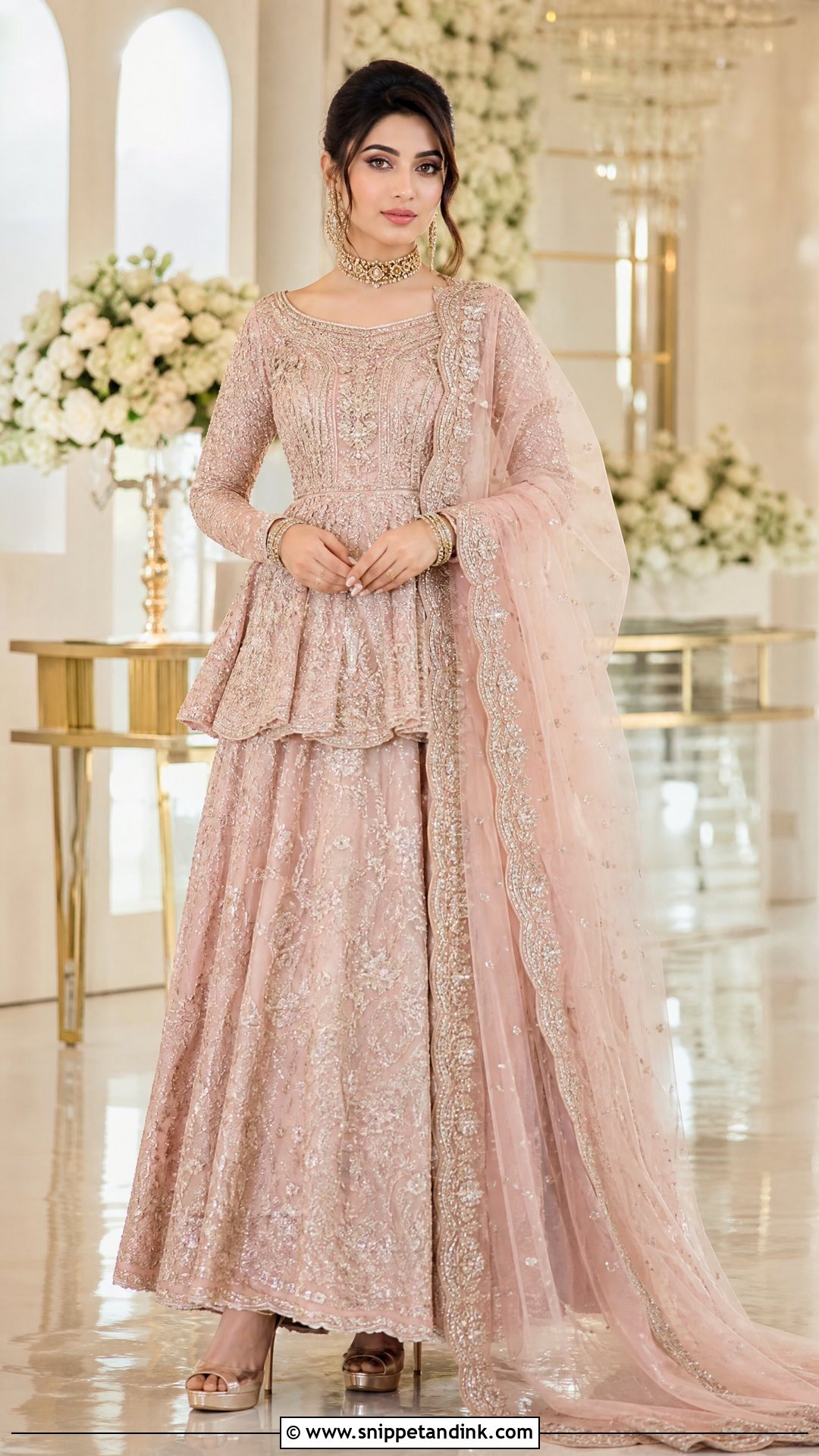
A peplum top gives the lehenga a structured, more contemporary outline and still covers the waist. It should flare gently from the natural waist and end above the fullest part of the skirt. Pair it with a high-waisted lehenga with vertical embroidery for a long, balanced line. Matching embroidery between peplum and skirt matters more than people expect; two different motifs at the waist fight each other. The dupatta can cross diagonally or go over the head. A curled ponytail suits a modern reception, a low bun suits a formal ceremony. Statement earrings and a compact choker are plenty.
17. Pakistani Bridal Kurta With Dhaka Pajama
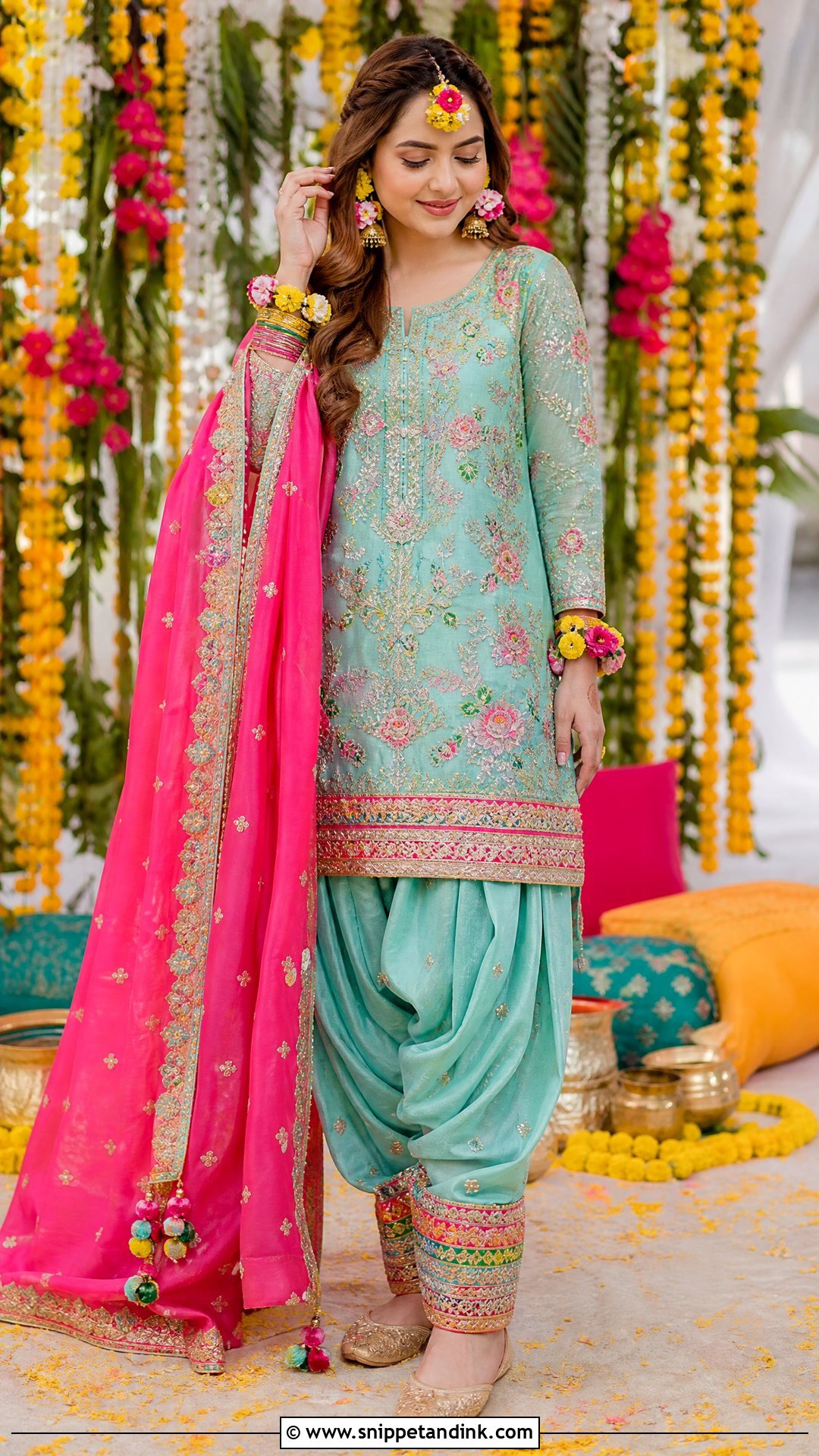
A short kurta with a Dhaka pajama is the mehndi outfit for a bride who wants to dance. The Dhaka pajama has deep folds and decorative borders, and a secure waistband is essential, so ask for a drawstring plus a hook rather than elastic alone. Choose a richly embroidered kurta in green, yellow, pink or turquoise. A contrasting dupatta over one shoulder keeps your arms free. Jhumkas, colorful bangles, a tikka and soft khussas suit it, with a long braid and small floral pins. Have the pajama hemmed in the exact shoes you’ll wear, since the wide fabric is a tripping risk otherwise.
18. Pakistani Bridal Jacket With Lehenga
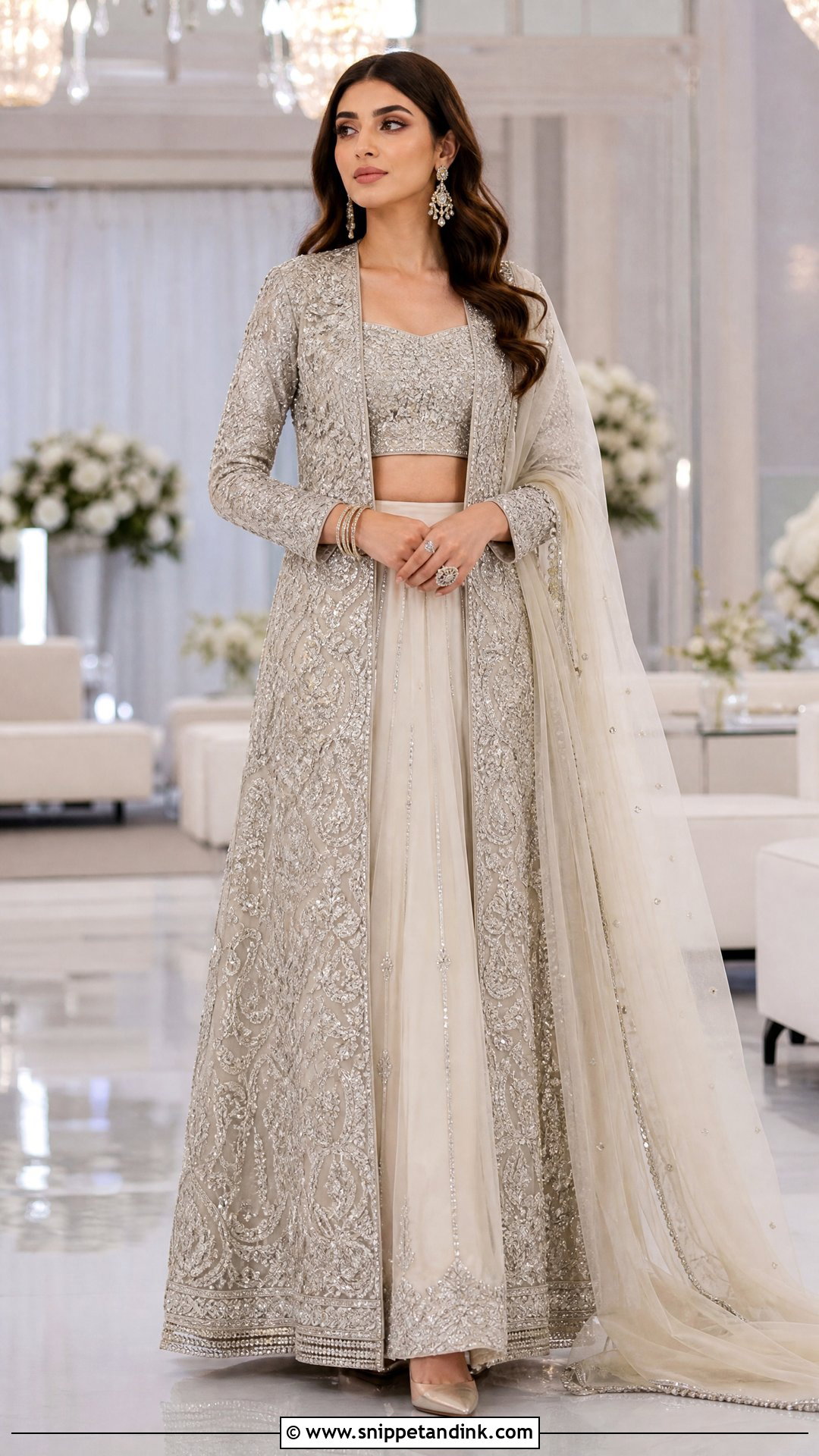
A long embroidered jacket can turn a fairly simple lehenga into something layered and formal. Wear a fitted blouse and high-waisted skirt underneath, with the jacket open or lightly fastened. Sheer jackets look delicate; structured silk gives stronger definition. Concentrate embroidery on the shoulders, opening, sleeves and hem so it frames the body. Keep the dupatta light and over one shoulder so it doesn’t compete with the jacket. Drop earrings, a statement ring and pointed metallic heels finish it. Smooth waves suit an open jacket; a bun is better if you’ll wear a head veil. I suggest it most for walimas and engagements where the bride wants coverage with sharper tailoring.
19. Pakistani Bridal Anarkali With Churidar
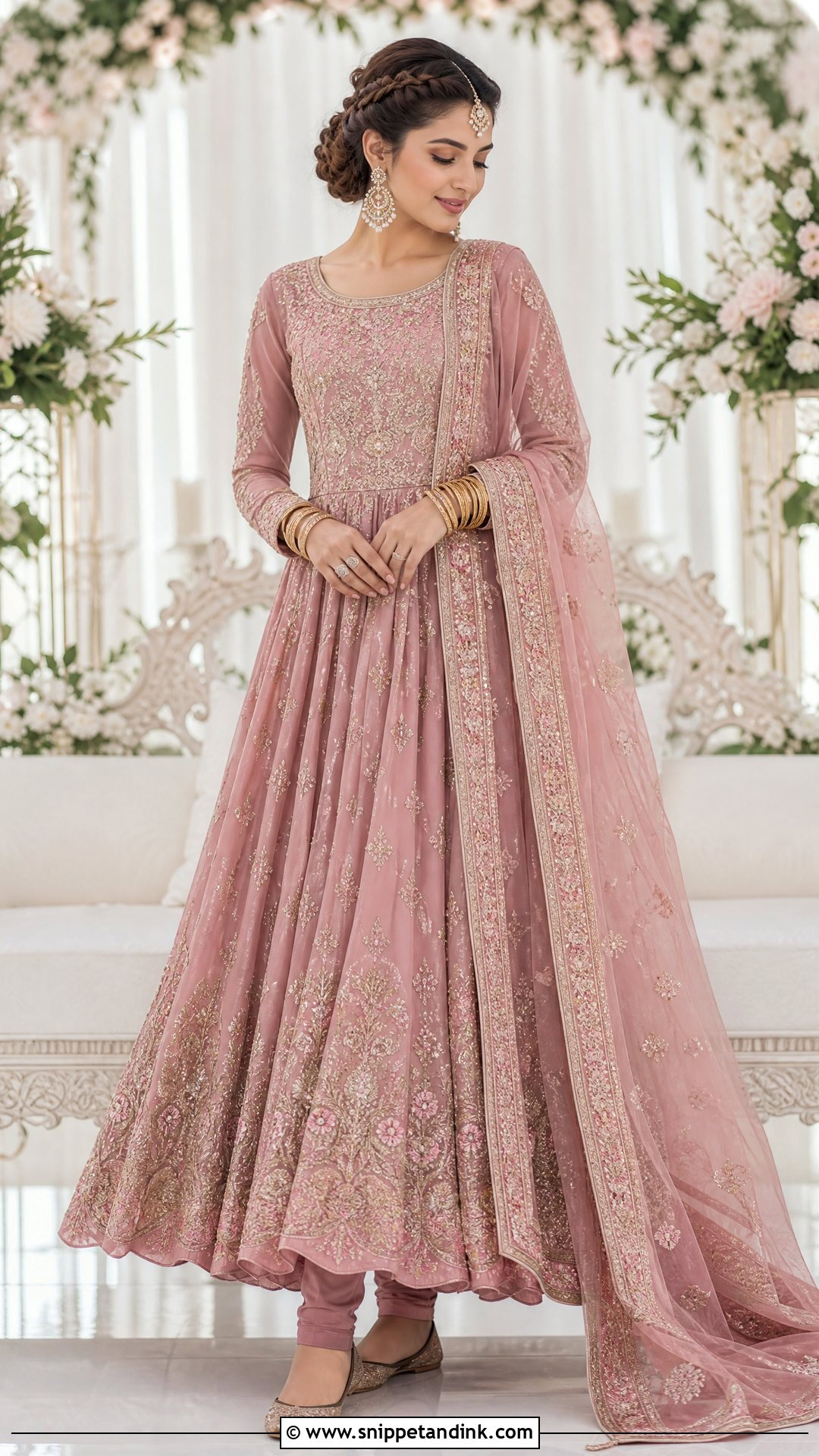
An Anarkali with churidar gives one long, uninterrupted line from shoulder to ankle. Choose a floor- or ankle-length Anarkali with a fitted bodice and a skirt that opens wide below the waist. Embroidered panels add richness, but not every layer needs equal work. Fitted churidars give coverage and let the dress swing freely, and they should be cut long so they gather at the ankle. Pair with an organza dupatta, embellished khussas, chandelier earrings and a small forehead ornament. A braided bun or side-parted updo suits the neckline. Ivory, dusty pink, sage and deep red all suit this cut for a nikkah or reception.

20. Pakistani Bridal Trail Lehenga
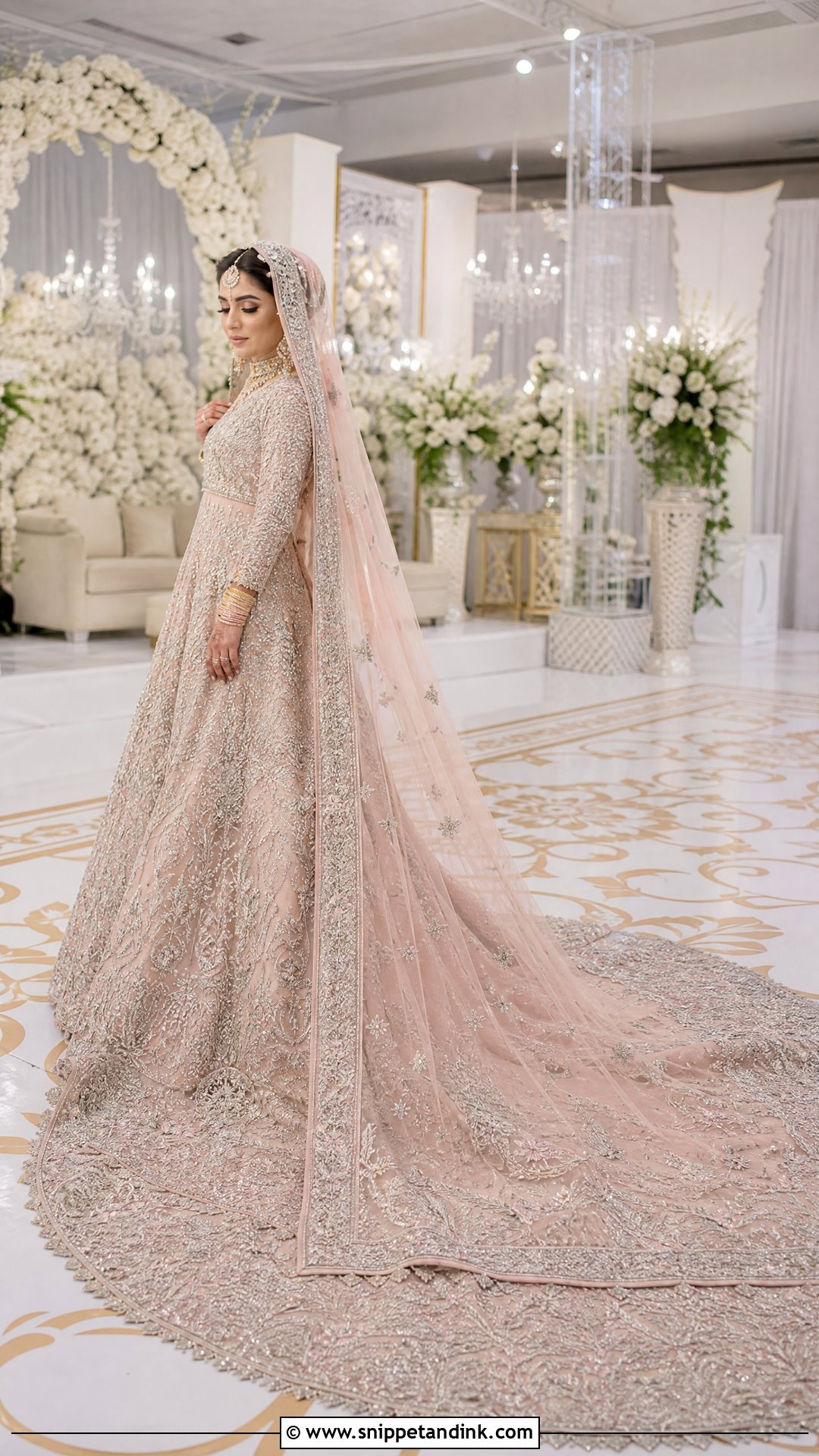
A trail lehenga extends the skirt behind you, and it makes for a memorable walk to the stage. Choose a structured but manageable silhouette with the strongest embroidery along the hem and train. A fitted blouse balances the skirt, and a long veil continues the vertical line. Champagne, blush, silver, emerald and red all work depending on the event. A polished bun keeps the veil and train from tangling with loose hair. Ask your tailor for a hidden wrist loop or bustle so the train can be lifted after the entry photos. Then practise stairs and turns at home, with someone behind you, before the day.
Lift the Lehenga at the Fitting Before You Say Yes
Heavily worked bridal lehengas can weigh several kilos once the skirt, can-can, blouse and dupattas are all on, and that weight sits on your hips and head for hours. At the final fitting, I ask brides to do four things before signing off.
- Stand still for ten minutes in the full outfit, dupatta pinned. If your lower back or neck aches already, it will be far worse after the rukhsati.
- Sit down on a low sofa and stand back up without help. Check the blouse doesn’t ride up and the skirt doesn’t trap your heels.
- Raise both arms as if hugging someone taller. A blouse that’s too tight at the armhole cuts in all evening.
- Walk up a step. If you need two people to manage it, plan for that on the stage.
If the weight is too much, there are fixes: a lighter can-can or none at all, a softer lining, moving some embroidery from the skirt body to the hem, or swapping the head dupatta for a lighter net version. Shoulder straps stitched inside the waistband can also take some of the skirt’s weight off your hips.
Four Events, Four Moods, One Bride
There are a lot of ways to be a Pakistani bride across one wedding week. A red lehenga still carries a grand baraat, an ivory gharara gives a calm nikkah, shararas and Dhaka pajamas bring energy to the mehndi, and champagne gowns or silver maxis suit a polished walima. Whatever you choose, look at the whole picture together: silhouette, fabric, embroidery, jewelry, shoes and where the dupatta will sit. Then wear the full outfit at home for an hour before the event, sitting, standing and walking, because comfort decides how you look in the last photo of the night as much as the first.
You'll Like These Ideas:






Leave a Reply