
A bandeau runs straight across the chest with no straps and no sweetheart dip. That clean, shoulder-baring neckline looks modern on almost any skirt shape, from sleek columns and fitted mermaids to full ball gowns and relaxed destination dresses. Designers keep reworking the strapless gown with sculpted edges, dimensional flowers, dramatic waists and convertible pieces, and the bandeau is the plainest version of the idea. Its plainness is also why fit matters so much. With nothing over the shoulders, the bodice alone holds everything up. I judge any bandeau first by how it stays put when the bride lifts her arms, then by fabric, train, jewelry, shoes and veil. The twenty dresses below range from polished satin to soft lace.
What Holds a Strapless Bodice Up
A straight neckline has nothing to hook onto, so gravity wins unless the dress is built to resist it. When I check a bandeau in a fitting room, I turn it inside out first.
- Boning: flexible boning in the seams keeps the bodice from collapsing. You want it in the side and front seams at minimum, not only at the back.
- Waist stay: a grosgrain ribbon sewn inside at the natural waist and hooked closed before the zip. It takes the weight of the skirt so the bodice doesn’t do all the work.
- Cups or bust support: built-in cups mean you don’t need a strapless bra, which often slips anyway.
- Grip: a strip of silicone or elastic along the top edge helps on a straight neckline, where there’s no curve to cling.
A bandeau suits most bust sizes if the support is right, but a fuller bust often looks more comfortable in a slightly curved or sweetheart edge, which follows the shape instead of pressing flat across it. Try both before deciding.
1. Satin Bandeau Wedding Dress
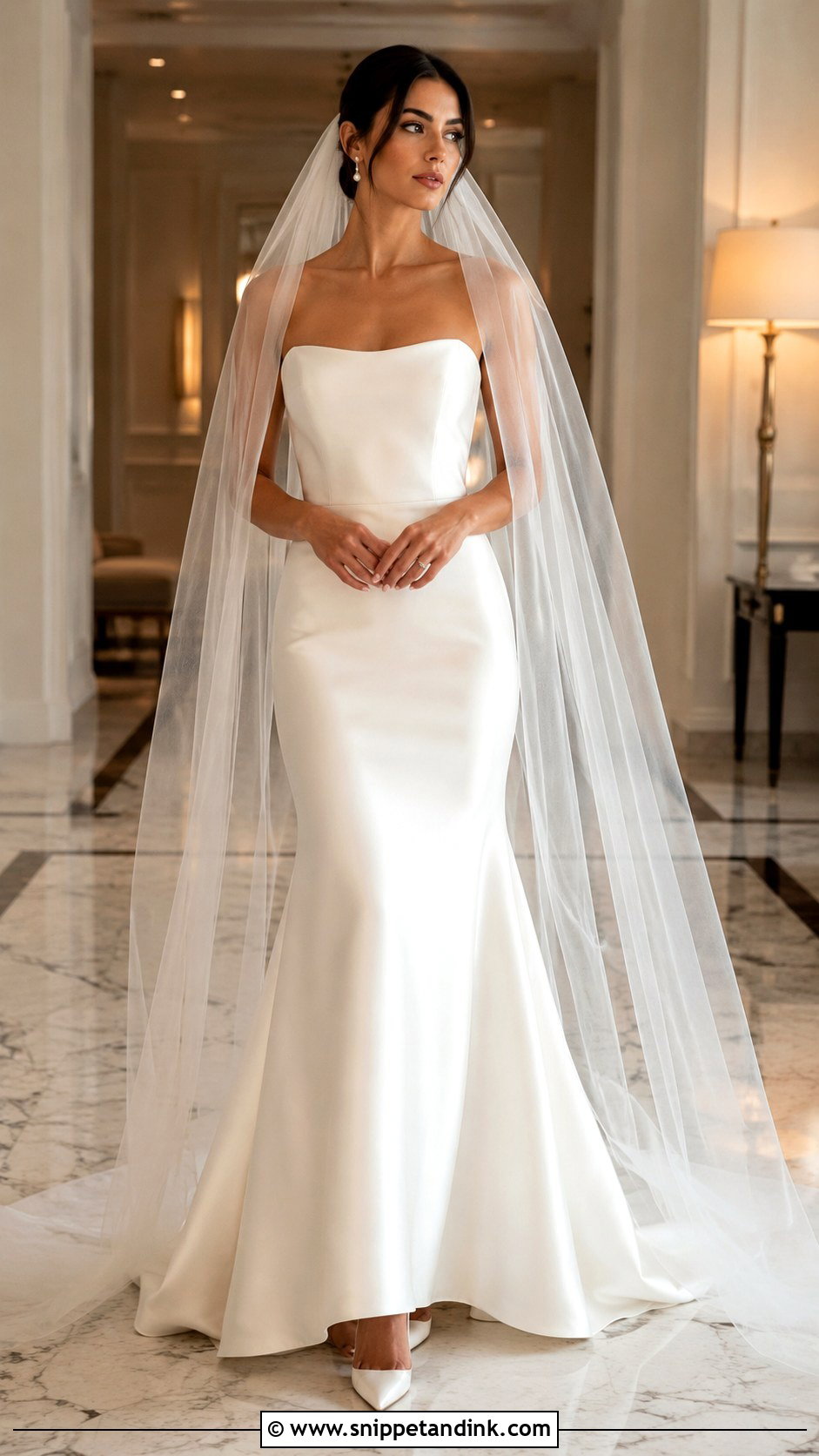
Satin is the fabric I’d show a bride first, because it makes the straight neckline look crisp. Ask for a slight curve at the top edge rather than a dead-straight line; a gentle curve follows the chest and keeps the edge from cutting across the bust. A softly flared skirt adds movement. Pointed ivory pumps, pearl drops, a long sheer veil with a cut edge and a low chignon complete it. Satin shows every wrinkle and bulge underneath, so the boning, cups and a firm waist seam have to be right. It suits a ballroom or hotel where the satin can catch the light.
2. Lace Bandeau Wedding Dress
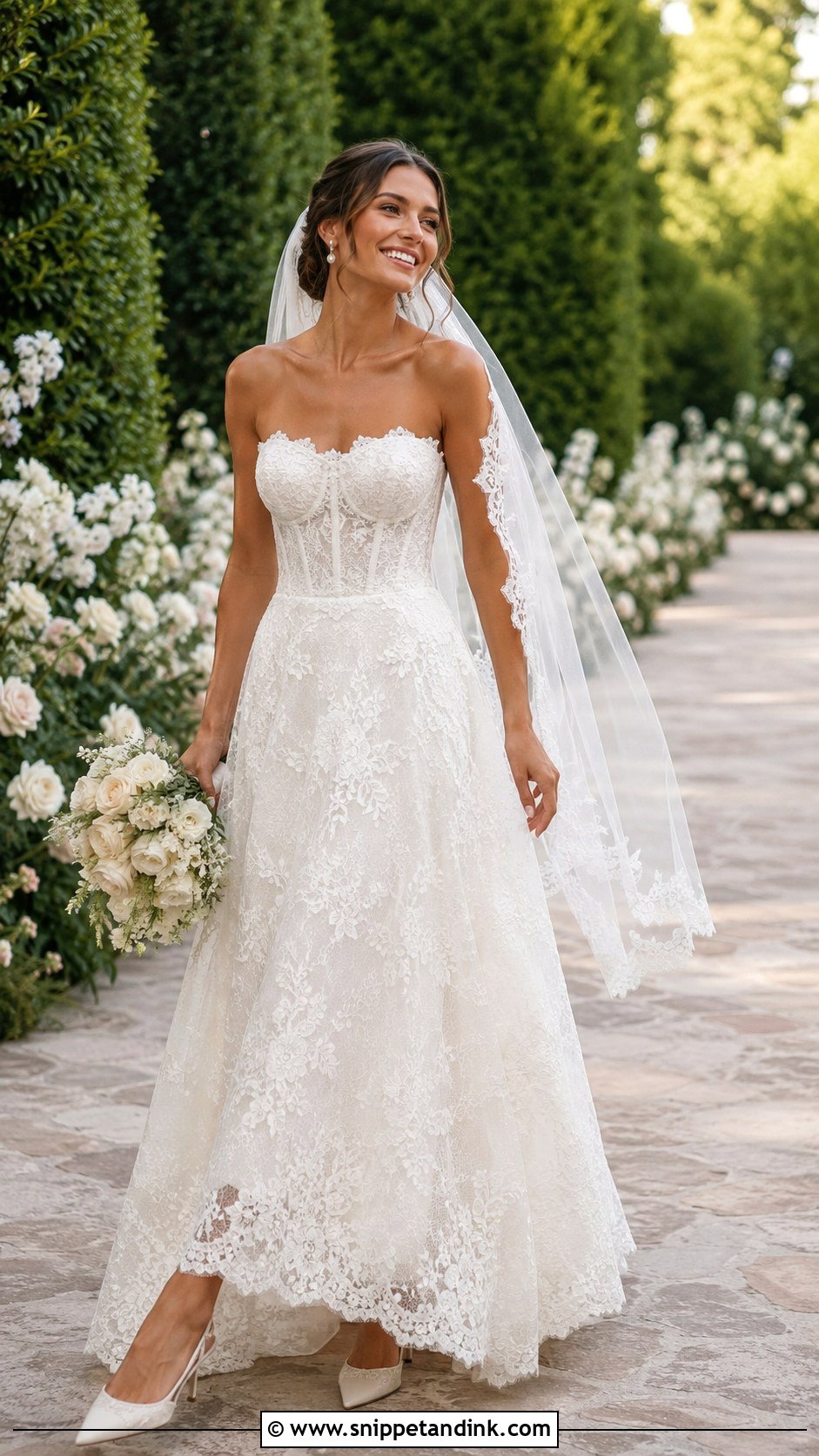
Scalloped lace softens the bandeau’s hard edge more than any other fabric. A straight or lightly scooped neckline finished with scallops, over an A-line skirt with appliqués that thin out toward the hem, keeps it from looking busy. The scallops along the top need a hidden band of tulle or fine elastic underneath; lace on its own will roll outward once you’ve worn it a few hours. Ivory slingbacks, small pearl earrings and a fingertip veil trimmed to match suit it, with soft waves or a loose low bun. If the corset boning shows through, keep accessories minimal. It’s comfortable enough to dance in at a garden or estate wedding.
3. Minimalist Bandeau Wedding Dress
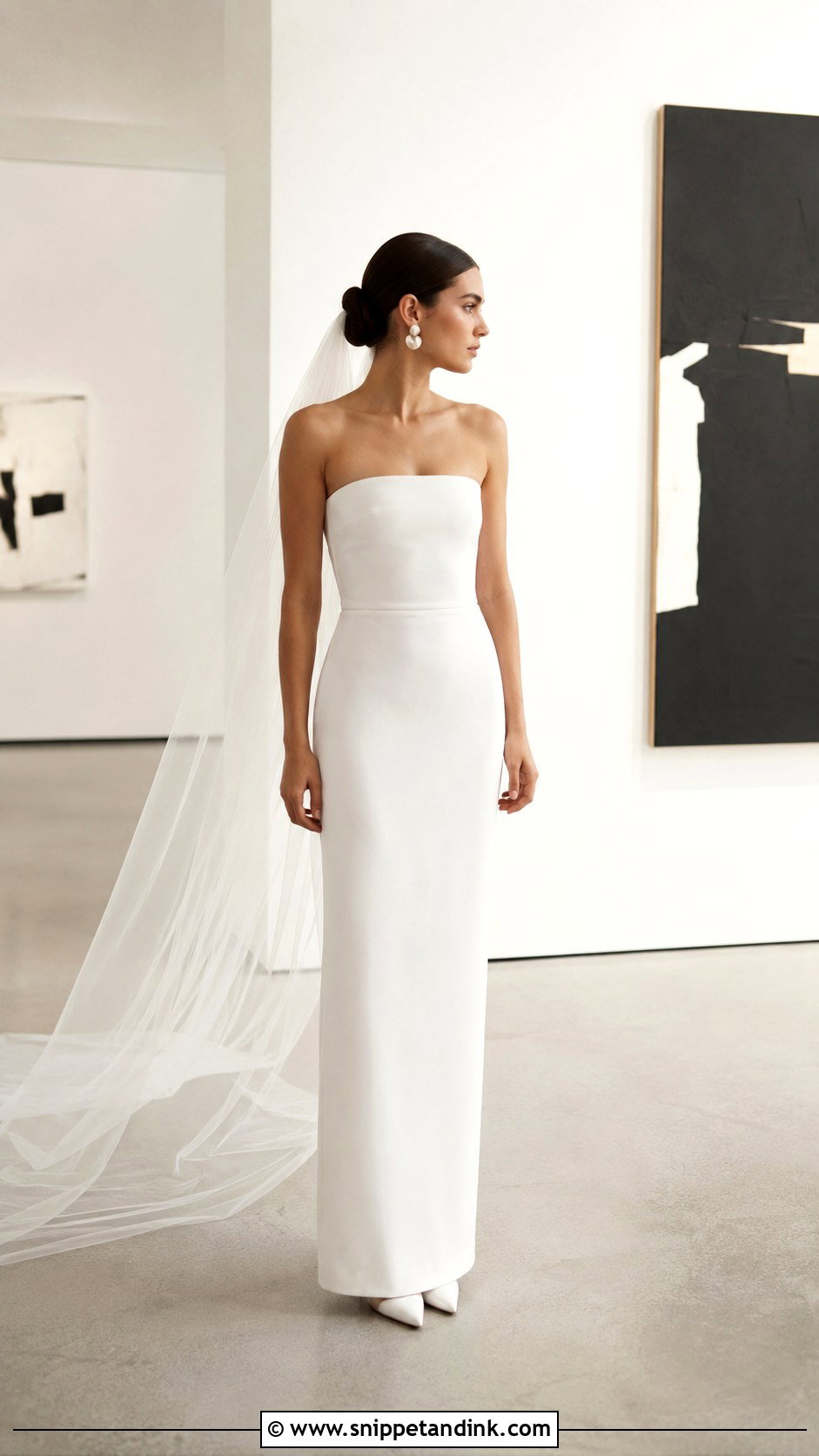
A minimal bandeau can make a stronger impression than heavy decoration, but it is unforgiving. Smooth crepe or matte satin, a column cut with precise seams and a clean straight neckline mean the tailoring is all anyone sees. Every alteration has to land perfectly through the bust, waist and hips, so budget for an experienced seamstress. Pointed pumps, sculptural gold or pearl earrings and an unadorned cathedral veil keep it architectural, with a neat bun. A small white clutch for the reception is fine. It suits city weddings, galleries and courthouse ceremonies.
4. Bandeau Ball Gown Wedding Dress
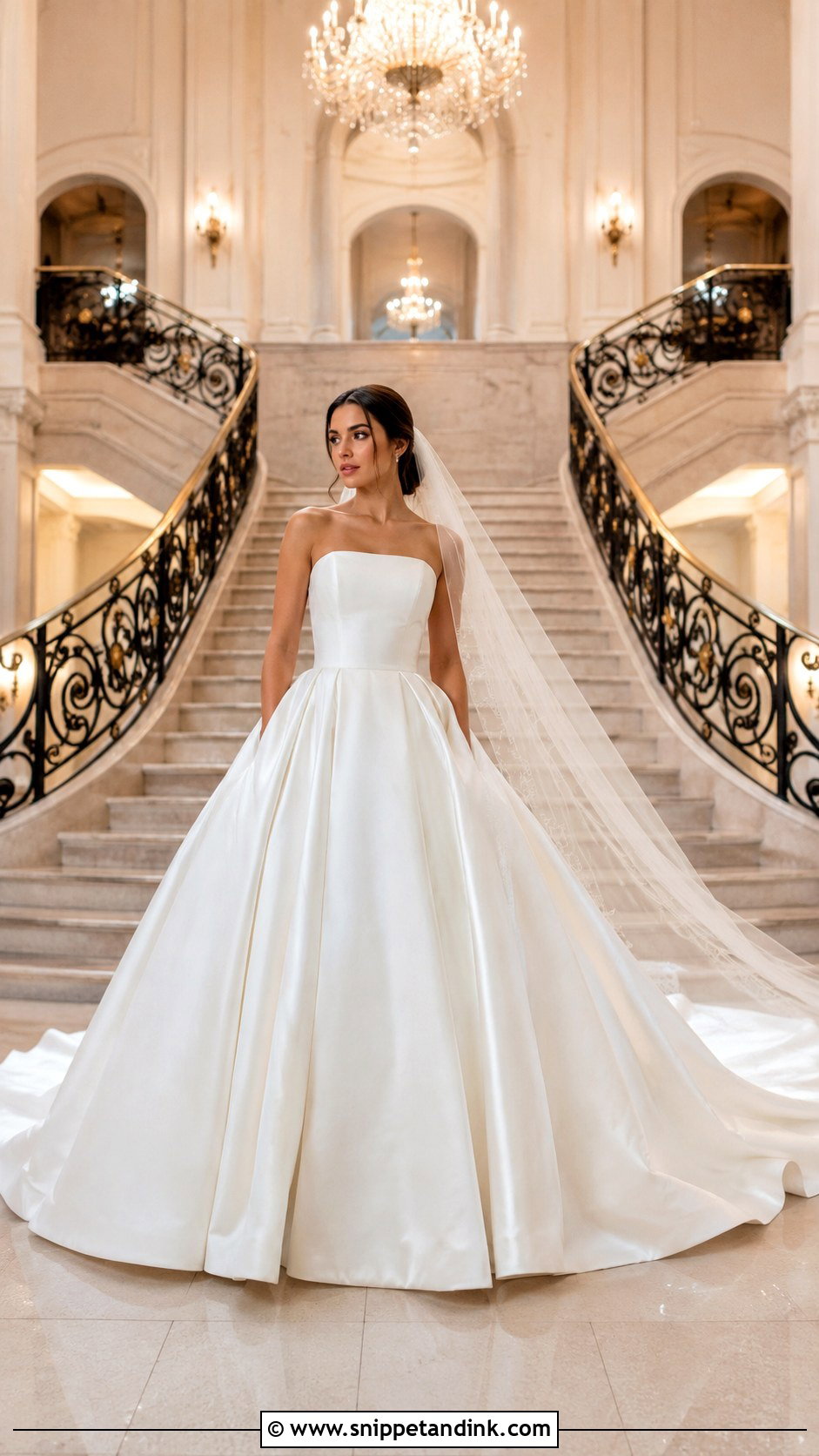
A ball gown skirt makes the bandeau formal and dramatic, and it adds a lot of weight hanging from the waist. That weight pulls the bodice down, so a strong internal waist stay, a grosgrain band fastened snugly at the natural waist, matters more here than anywhere. Look for a structured bodice over tulle, satin or crisp organza, with a defined waist to balance the volume. Crystal studs, satin heels and a cathedral veil longer than the train finish it, along with an updo that leaves the shoulders bare. Pleating or hidden pockets add interest. Skip a big necklace if the bodice is already detailed. It belongs in a ballroom or anywhere with a sweeping staircase.
5. Bandeau Mermaid Wedding Dress
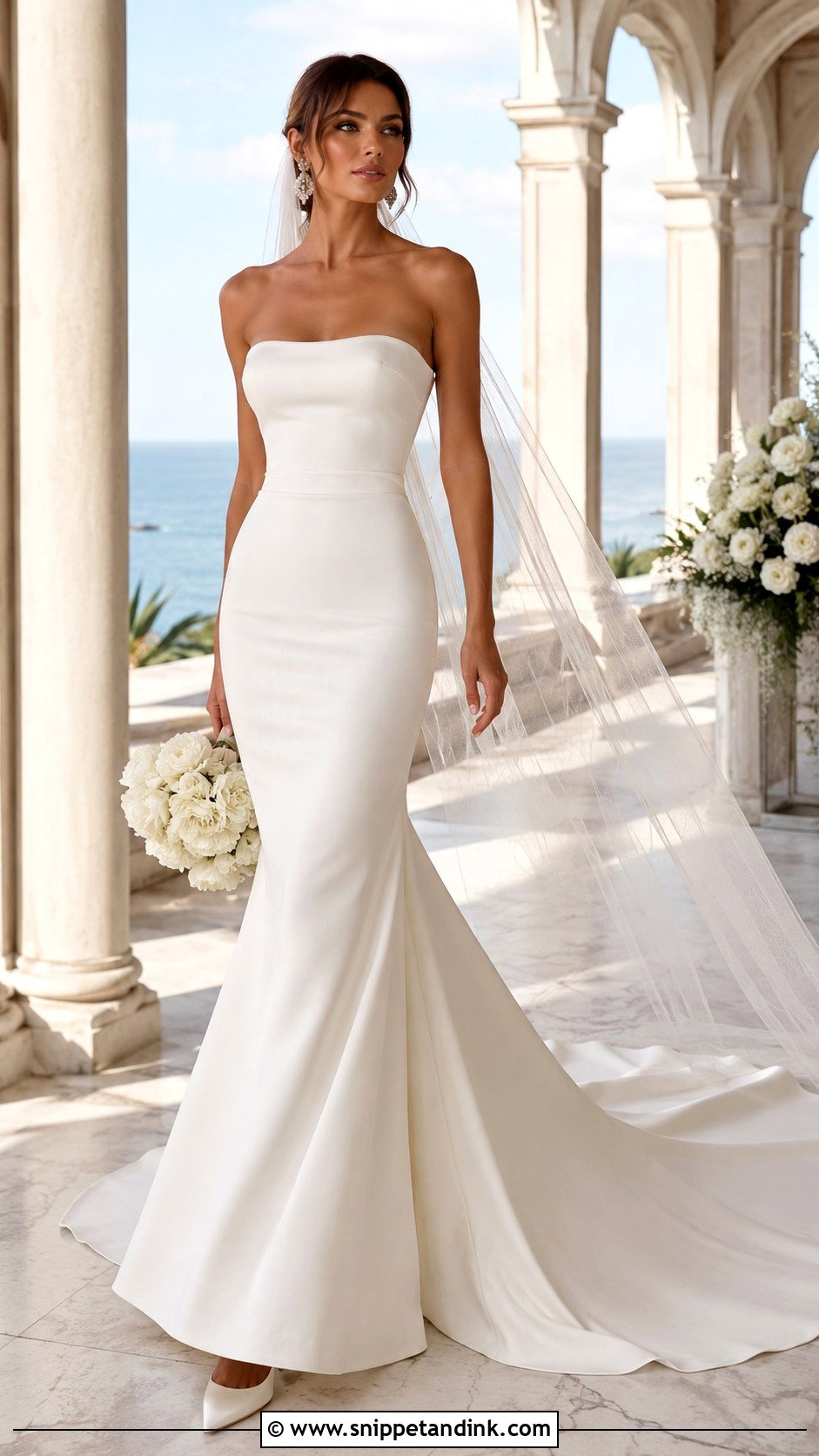
Fitted through the hips and flaring low, the mermaid is the boldest silhouette here, and the least forgiving to move in. Stretch crepe or supportive satin gives a smooth fit with some give. A softly curved neckline balances the close shape, and a dramatic train adds ceremony volume. Wear pointed heels, crystal drops, and a sleek veil anchored beneath a polished bun. Leave off bulky bracelets that snag. At every fitting, sit, walk and try dance steps to check where the skirt opens; too low and you’ll shuffle all night. You’ll need a bustle for the reception.
6. Bandeau A-Line Wedding Dress
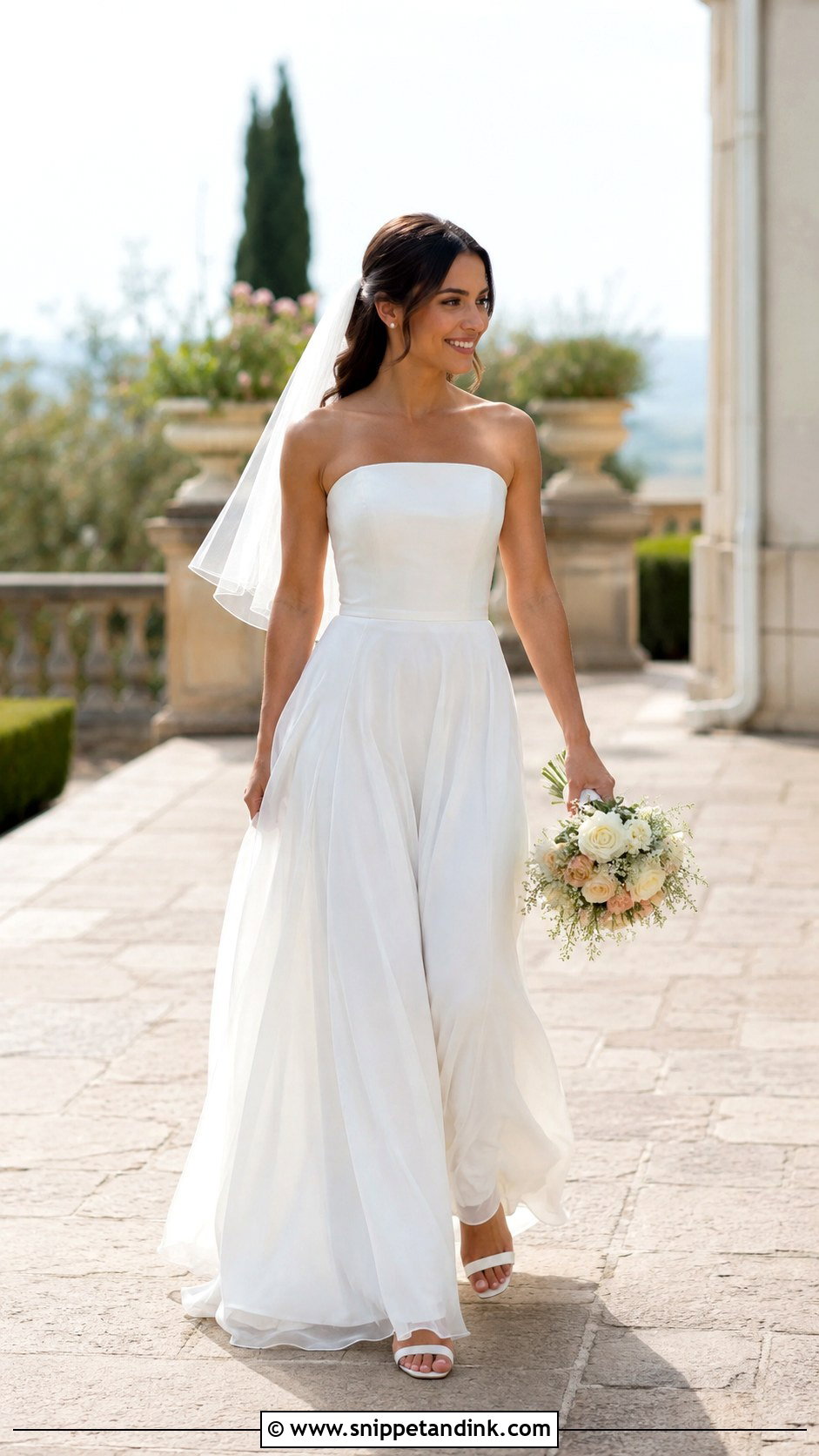
The A-line is the bandeau I’d recommend to a bride who isn’t sure, because it suits most figures. The fitted bodice shows off the neckline and waist, then the skirt falls away gently. Chiffon gives soft movement, satin gives structure and lace feels traditional. Block heels, pearl studs and a light fingertip veil suit it, and a half-up style adds romance without covering the shoulders. I’d choose a narrow sewn-in waistband over a separate belt, which tends to ride up. The skirt should skim rather than cling. It moves easily from a garden ceremony to an indoor reception.
7. Draped Bandeau Wedding Dress
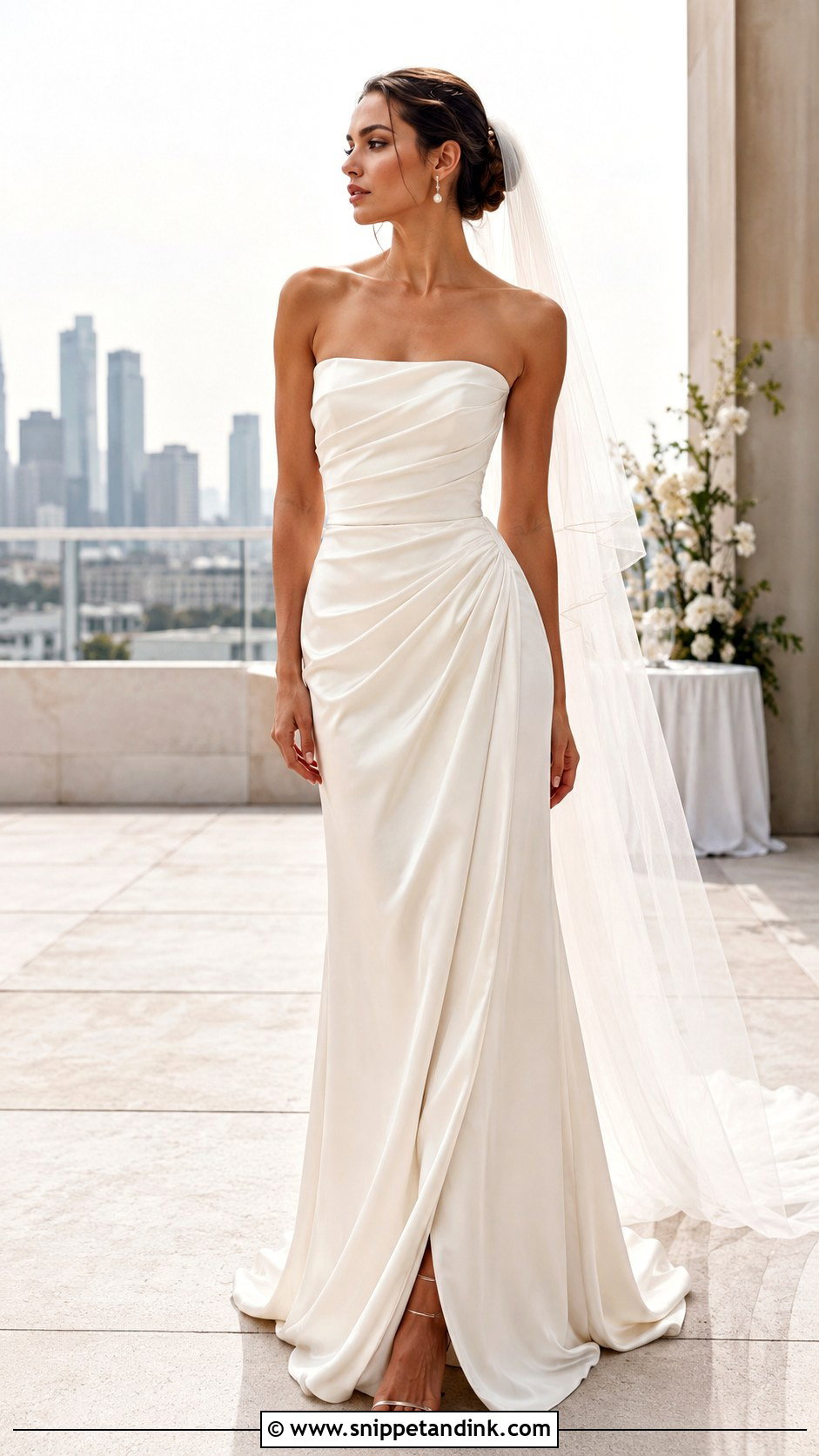
Draping gives depth without beads or lace. Folded satin, gathered crepe or pleats laid diagonally across the bodice soften the straight neckline, and continuing the drape through the waist or hip ties it together. Slim metallic heels, pearl drops, a light veil and a side-parted bun echo the lines. The folds are hand-set by the maker, so ask your seamstress not to take in the bodice by simply sewing through them; good alterations rebuild the drape. Steam carefully on the day, since every fold should look intentional. Keep the bouquet slim so it doesn’t hide the bodice. It suits rooftops, museums and modern ballrooms.
8. Basque Waist Bandeau Wedding Dress
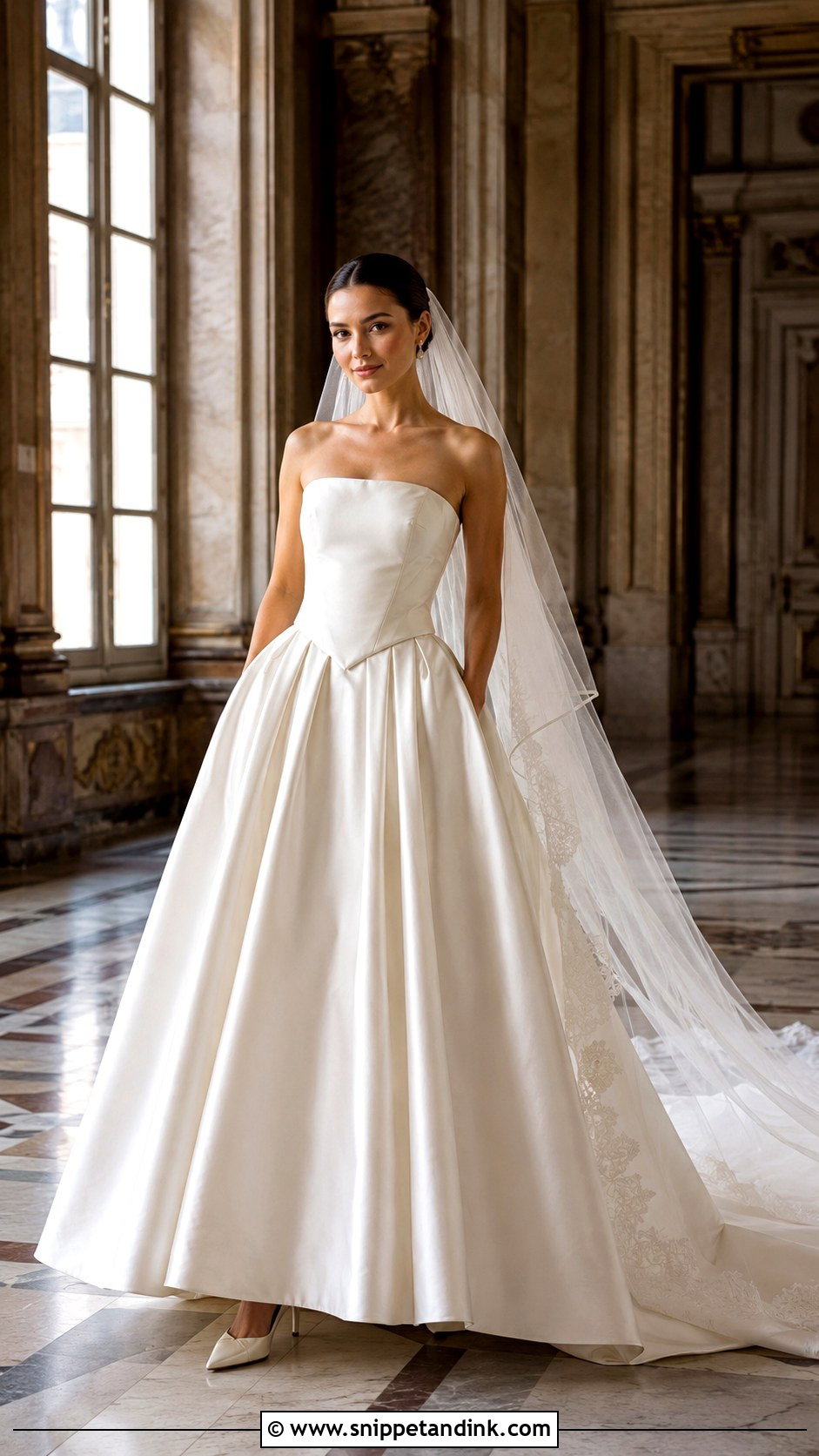
A basque waist extends the bodice into a point below the natural waist. With a bandeau neckline it has a structured, slightly historical feel. Smooth satin or Mikado keeps the point crisp, and a full pleated skirt balances it. The point should land a few inches below your natural waist; too low and it shortens the legs, too high and it looks like a regular waist. Classic pumps, pearl earrings and a long veil behind a sleek bun are enough. Skip a belt, which breaks the line. Make sure you can breathe and sit comfortably in it. Grand halls and formal estates suit it.
9. Drop Waist Bandeau Wedding Dress
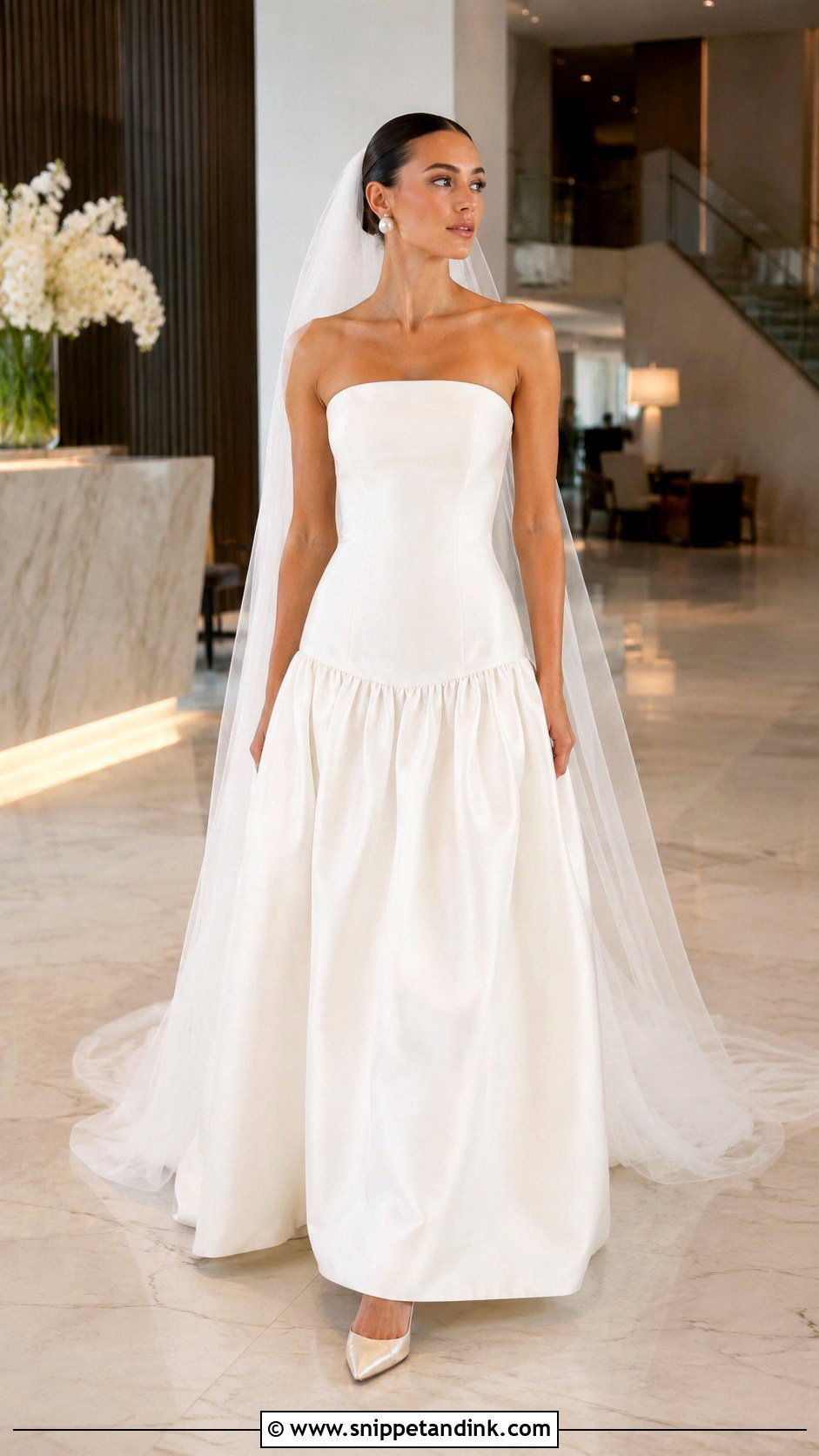
A drop waist runs the bodice past the natural waist before releasing into the skirt, which gives a long, sleek line. Choose structured satin with curved seams and a gathered or softly flared skirt for contrast. Pointed ivory heels, bold pearl studs, a simple floor-length veil and a polished ponytail or low bun keep it current. This shape changes how your proportions read, and it doesn’t suit everyone. Shorter-legged brides often find a long torso swallows them. Try several seam positions before choosing, and keep jewelry minimal so the construction leads.
10. Floral Bandeau Wedding Dress
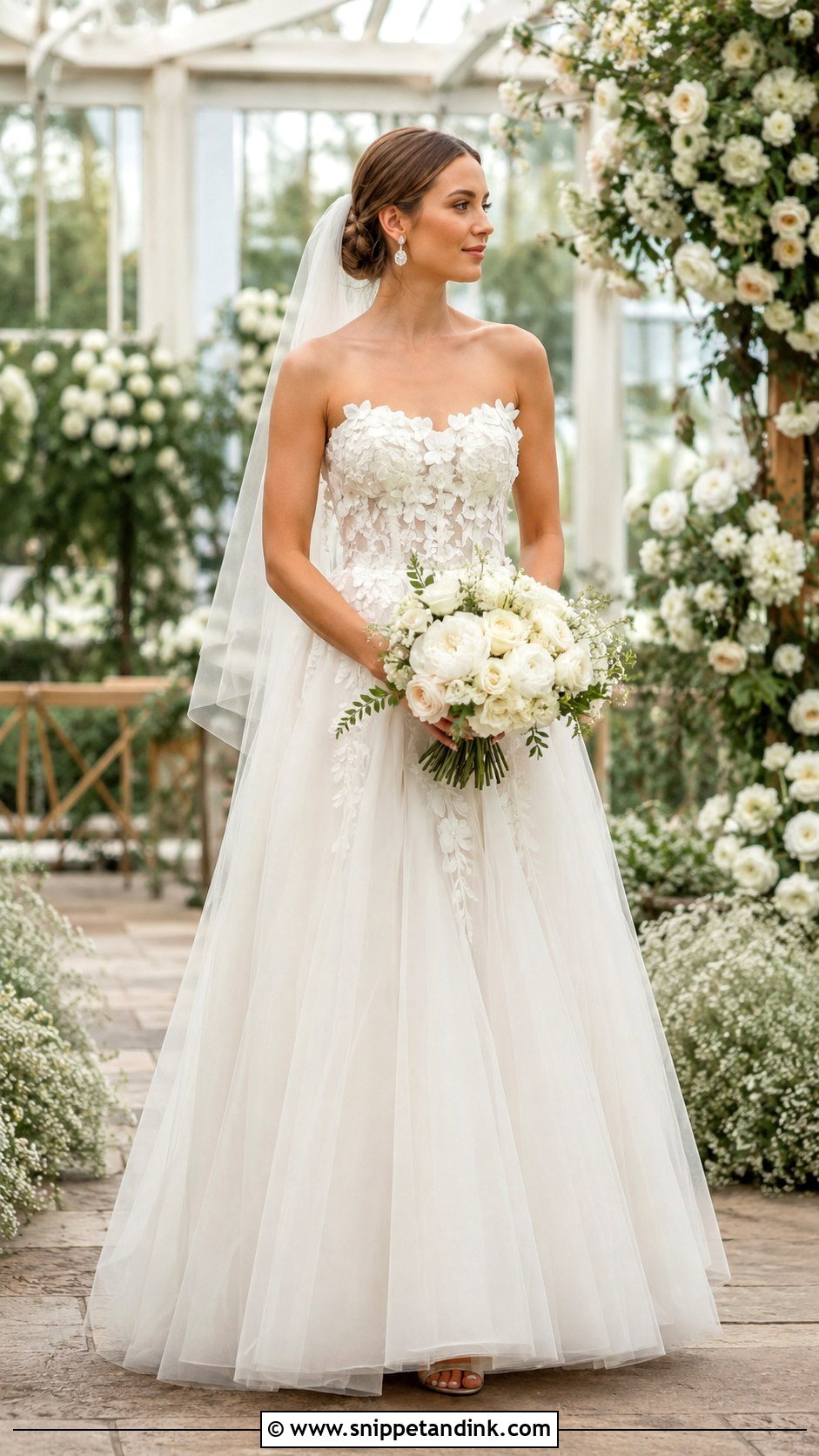
Dimensional flowers can turn a plain bandeau into the centerpiece. I prefer appliqués placed with intent, along the neckline, the bodice or the skirt, rather than everywhere. A fitted top and flowing tulle skirt balance them. Understated heels, small gemstone earrings and a plain veil let the flowers lead, with softly pinned curls. If flowers rise above the neckline, check their stiff backings against the skin at the fitting; they can scratch the underarm with every arm movement. A bouquet in restrained colors sits well beside them. Gardens and greenhouse venues in spring or summer suit it best.
11. Beaded Bandeau Wedding Dress
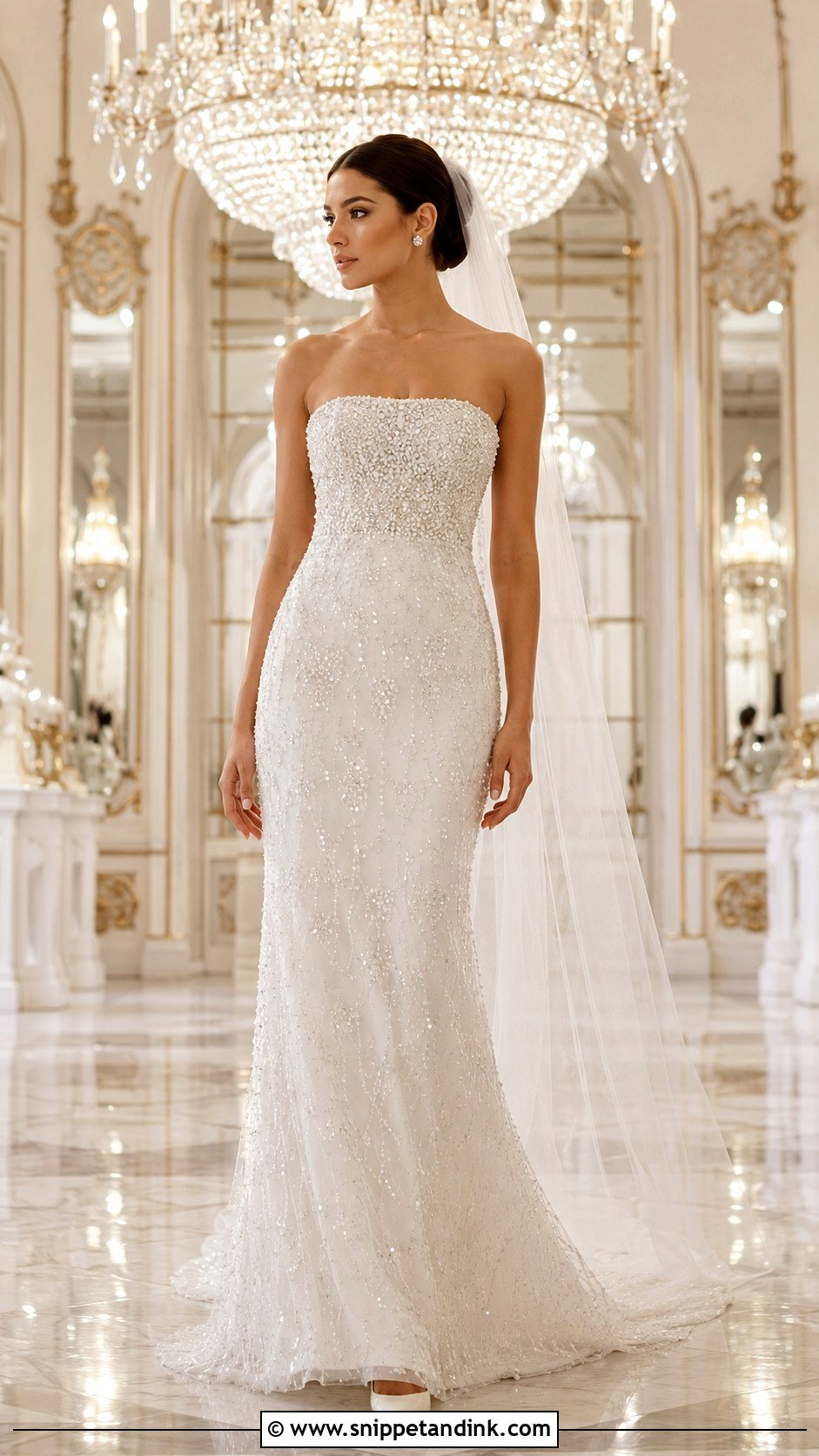
Beading adds real weight, and on a strapless dress all of it hangs from the bodice. Before you fall for a fully beaded gown, lift it on the hanger and ask how the bodice is structured to carry it. Embellishment concentrated on the bodice and thinning through the skirt keeps it manageable. Simple satin pumps, crystal studs and an unbeaded sheer veil suit it, and a smooth updo stops hair from catching on the beads. A lined bodice prevents scratching. It glows under chandeliers and in evening hotel ballrooms.
12. Tulle Bandeau Wedding Dress
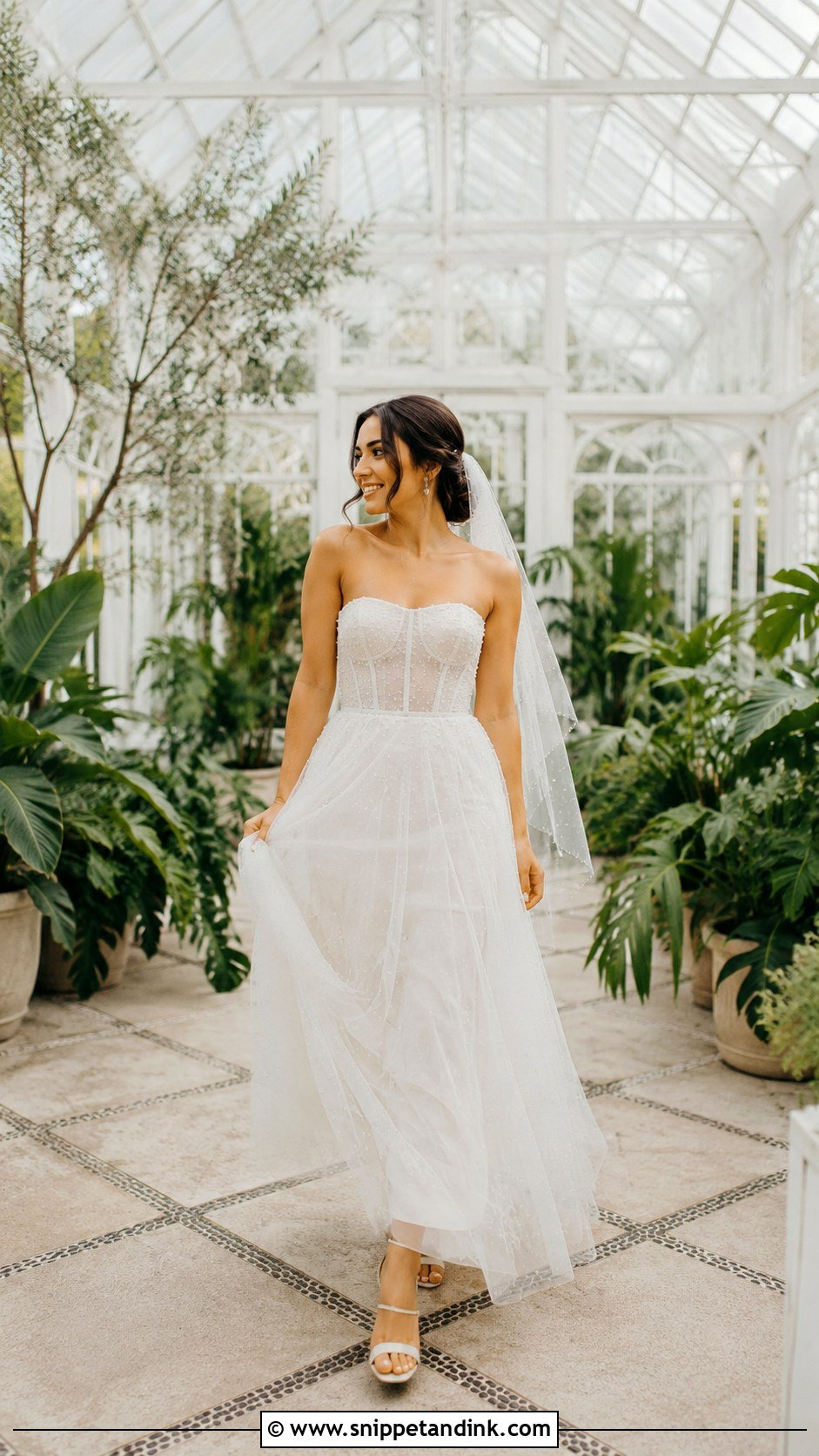
Tulle softens the strong horizontal line of the bandeau. A supportive fitted bodice and a lightly gathered skirt that moves freely, with subtle lace appliqués or scattered pearls, keep it airy. Low block heels, delicate earrings, a fingertip veil in matching tulle and a loose bun with face-framing pieces suit it. Ask early whether the layers can be shortened without disturbing the appliqué placement; it’s a frequent and fiddly alteration. A practical bustle helps at the reception. Tulle snags on rough bark and garden stone, so keep that in mind for outdoor venues.
13. Crepe Bandeau Wedding Dress
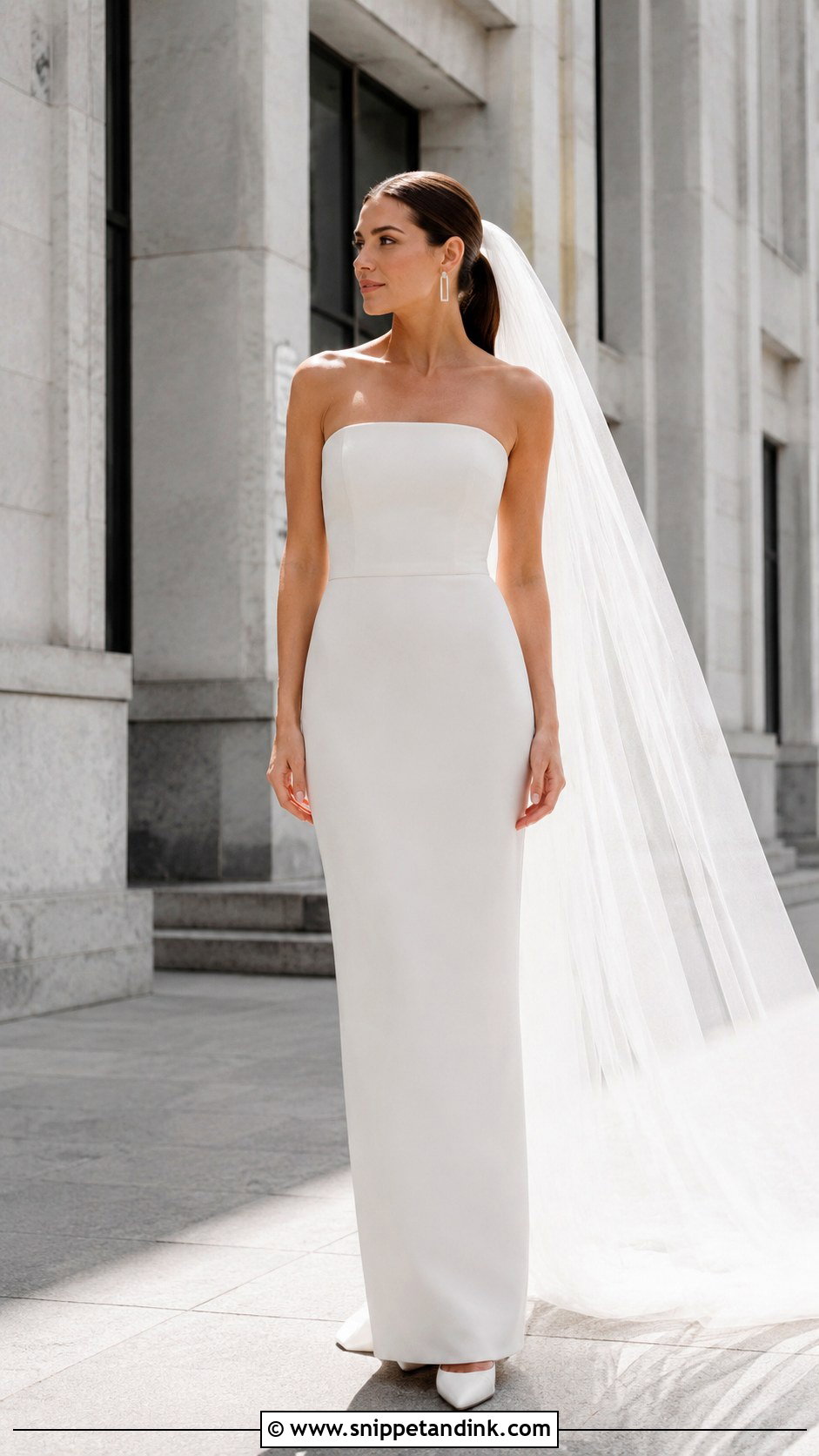
Crepe gives the bandeau a matte, modern finish with less shine than satin. A fitted column or gentle fit-and-flare lets it fall cleanly. Strategic seams and a fully lined bodice support without bulk. Pointed pumps, geometric earrings, a long plain veil and a sleek low ponytail keep it current. Crepe shows every line underneath, so try different shapewear at fittings and look in daylight, not only under fitting-room bulbs. Keep jewelry and flowers simple. It suits courthouses, restaurants and understated destination weddings.
14. Mikado Bandeau Wedding Dress
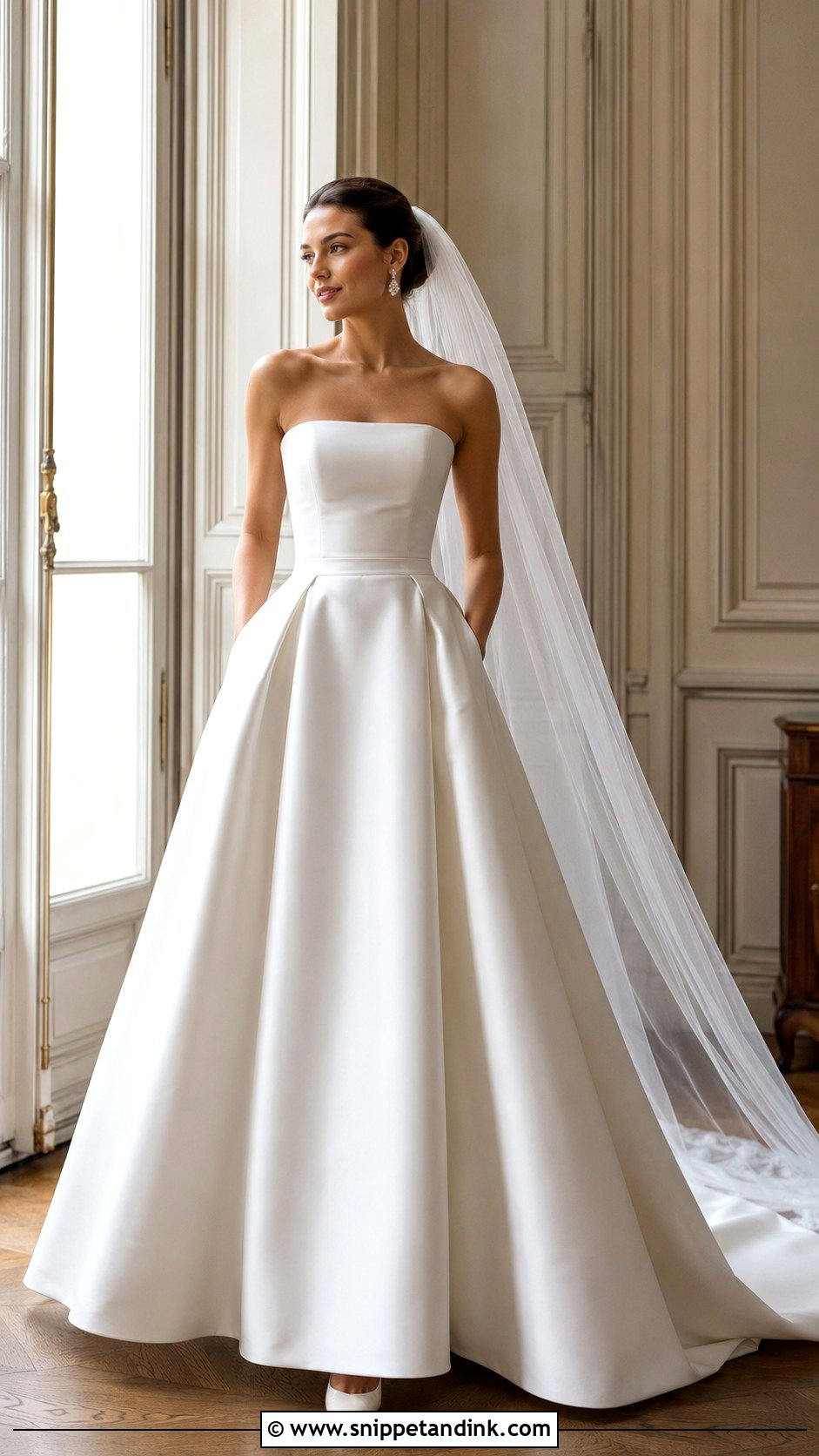
Crisp Mikado fabric holds a sculptural shape on its own, so a bandeau in it can be structured with surprisingly little underneath. A straight neckline, fitted waist and pleated A-line or ball gown skirt show the fabric well. Satin pumps, pearl-and-crystal earrings, a cathedral veil with a clean edge and a classic chignon finish it. Hidden pockets are easy to add in Mikado. Because it has natural body, avoid heavy petticoats unless you want maximum volume. Mikado does crease where you sit, and the creases show sharply; steam the back of the skirt before the reception photos. Luxury hotels and stately homes suit it.
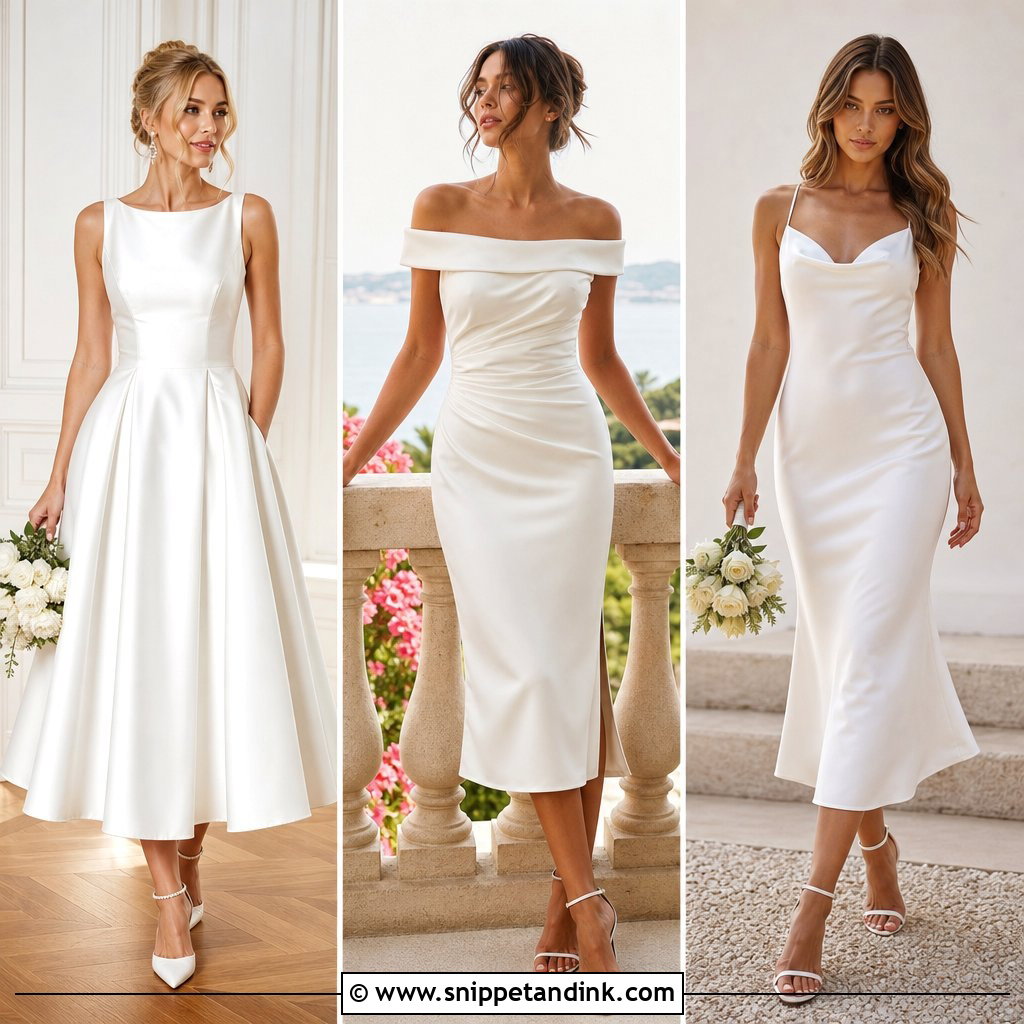
15. Bandeau Wedding Dress With Slit
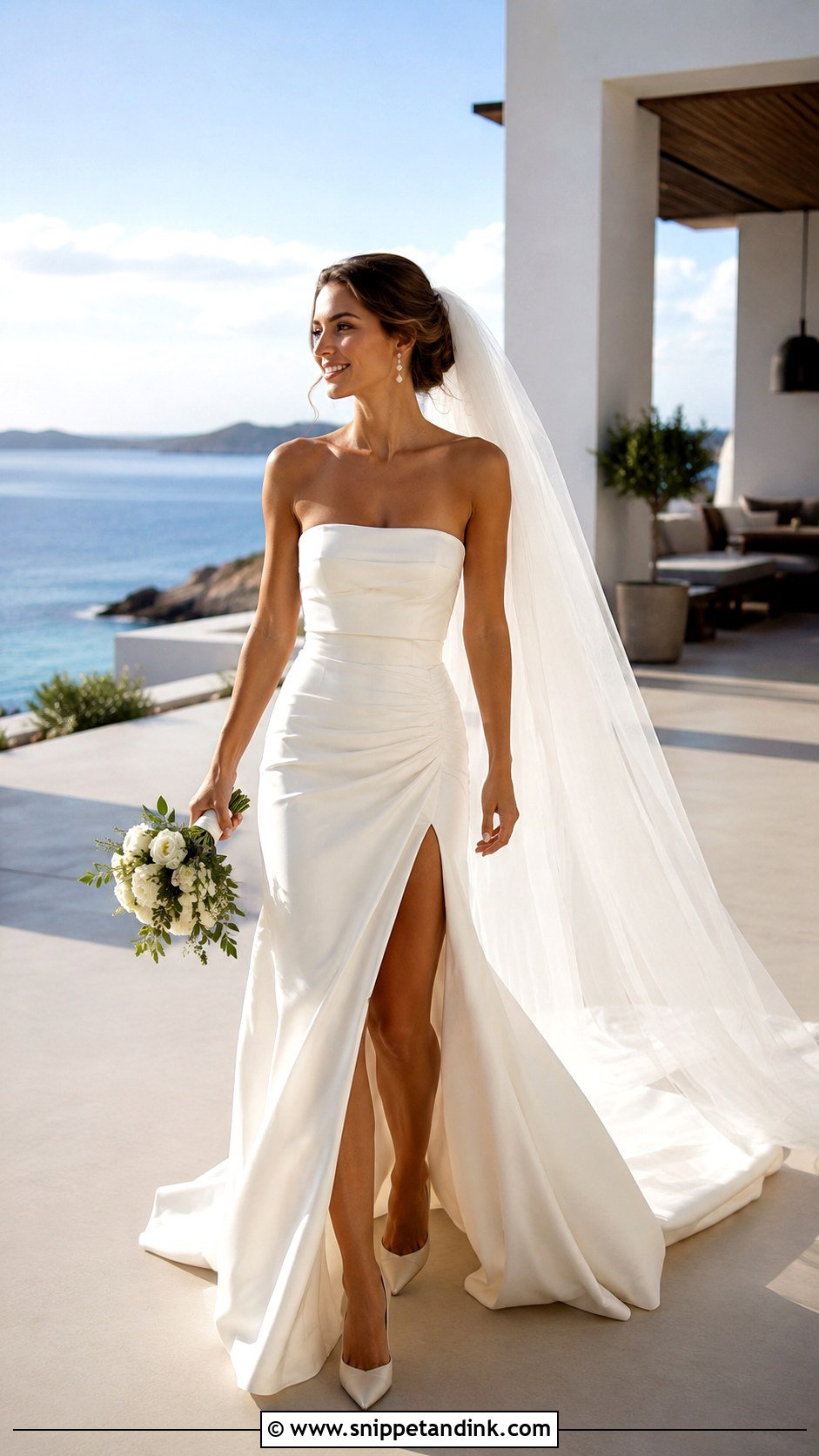
A slit adds movement to a satin or crepe bandeau. A fitted bodice, a defined waist and a slit set slightly to one side should reveal the leg as you walk, not while you stand. The placement is easy to get wrong, so at fittings walk up a few steps and sit down to check coverage. Fashion tape or a hidden hook can secure it. Pointed heels, drop earrings and a soft floor-length veil suit it, with a polished bun or smooth waves. It works well at resorts and rooftop venues where you’ll be moving a lot.
16. Bandeau Wedding Dress With Overskirt
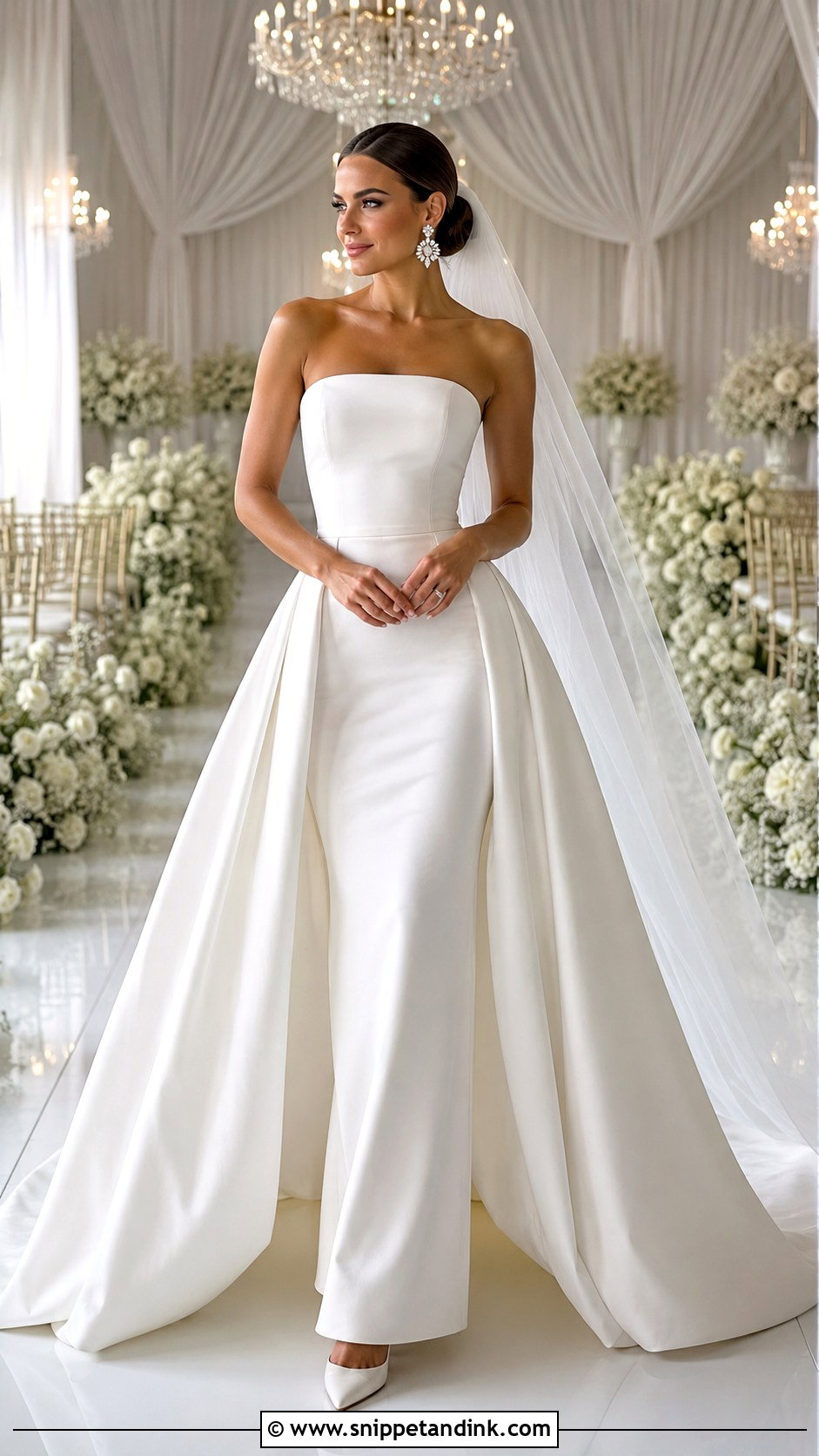
A detachable overskirt gives you two looks from one dress. Start with a fitted column or mermaid, add a full satin or tulle overskirt for the ceremony, and take it off before dancing. Pointed heels, statement earrings and a removable long veil work with both. Practice the removal at your final fitting with the person who’ll help you on the day; most overskirts close with hooks or snaps hidden in the waistband, and doing them in a hurry under a bodice is fiddly. The waistband should lie flat over the base dress, with no visible ridge.
17. Bandeau Wedding Dress With Bow
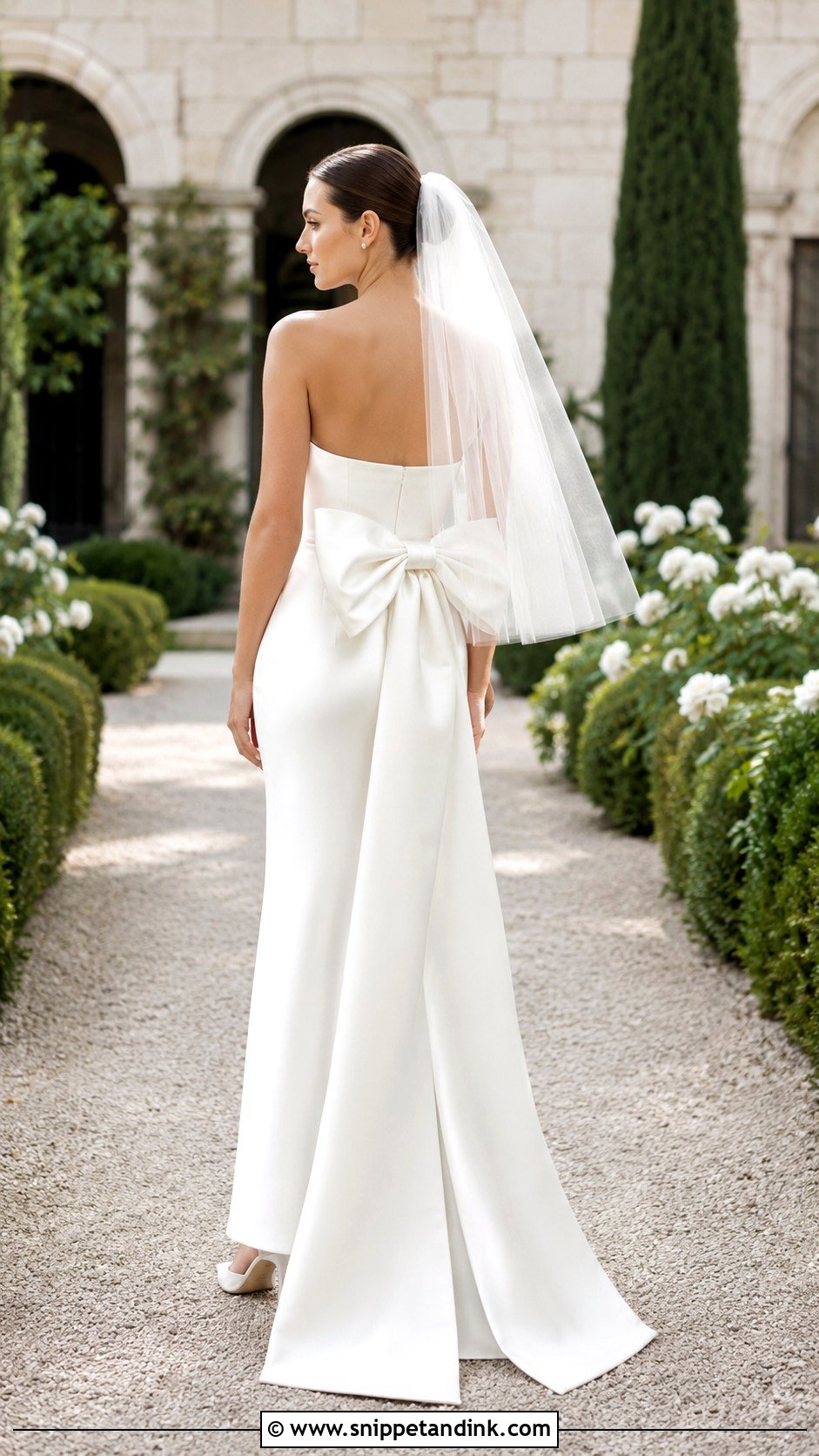
A statement bow on the back gives the plain bandeau dimension. Choose smooth satin with a straight neckline and a detachable bow placed at the lower back. Long tails can melt into the train; a smaller structured bow is quieter. Simple pumps, pearl studs, a sheer veil set so the bow stays visible, and hair worn up suit it. Big bows flatten when you sit in a car or on a chair, so ask whether it has a light interlining to hold its shape. The seamstress should secure it firmly and build the bustle around it.
18. Tea-Length Bandeau Wedding Dress
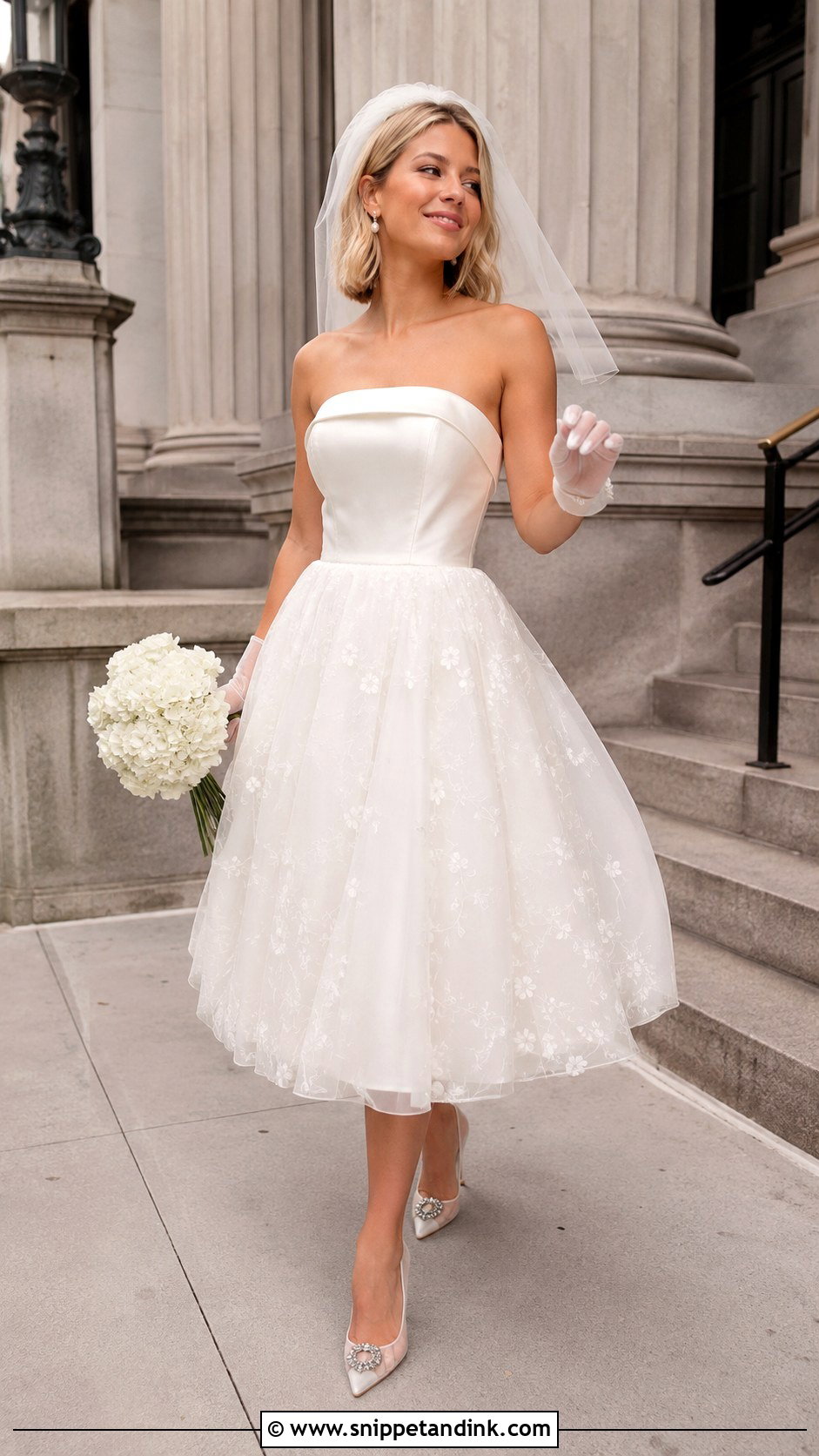
Tea length is the most playful shape here, and your shoes become part of the outfit. A structured bodice and full skirt ending between the knee and ankle in satin, organza or embroidered tulle carry enough bridal presence. Polished slingbacks or embellished block heels, pearl earrings, optional short gloves and a shoulder-length veil suit the retro proportions, with a smooth bun or curled bob. Where the hem lands matters: right at the widest part of the calf, it shortens the leg, so most brides look best with it just below that point. It suits courthouses and daytime garden weddings.
19. Bandeau Mini Wedding Dress
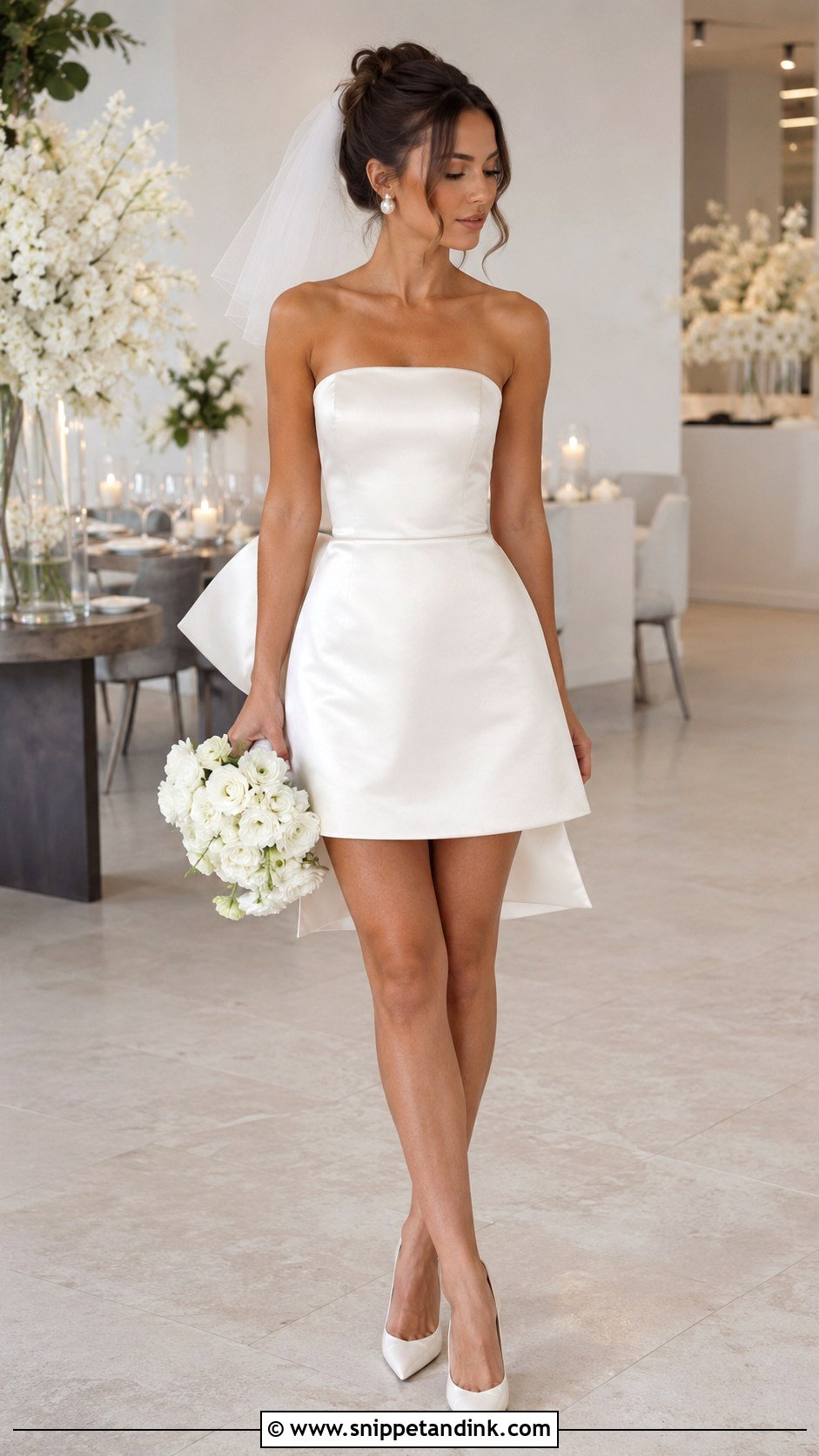
A mini bandeau is a sharp choice for a civil ceremony or an evening change. A well-structured design with a straight neckline and a clean A-line or fitted skirt, in satin with floral appliqués or a removable bow, keeps it bridal. Pointed pumps, pearl earrings and a short veil or hair bow complete it, and sheer tights add coverage in cold weather. Short strapless dresses tend to ride up at the hem and down at the top at the same time when you sit, so sit at the fitting and check both edges. Pair it with a removable floor-length overskirt if you want both looks.

20. Bandeau Wedding Dress With Cape
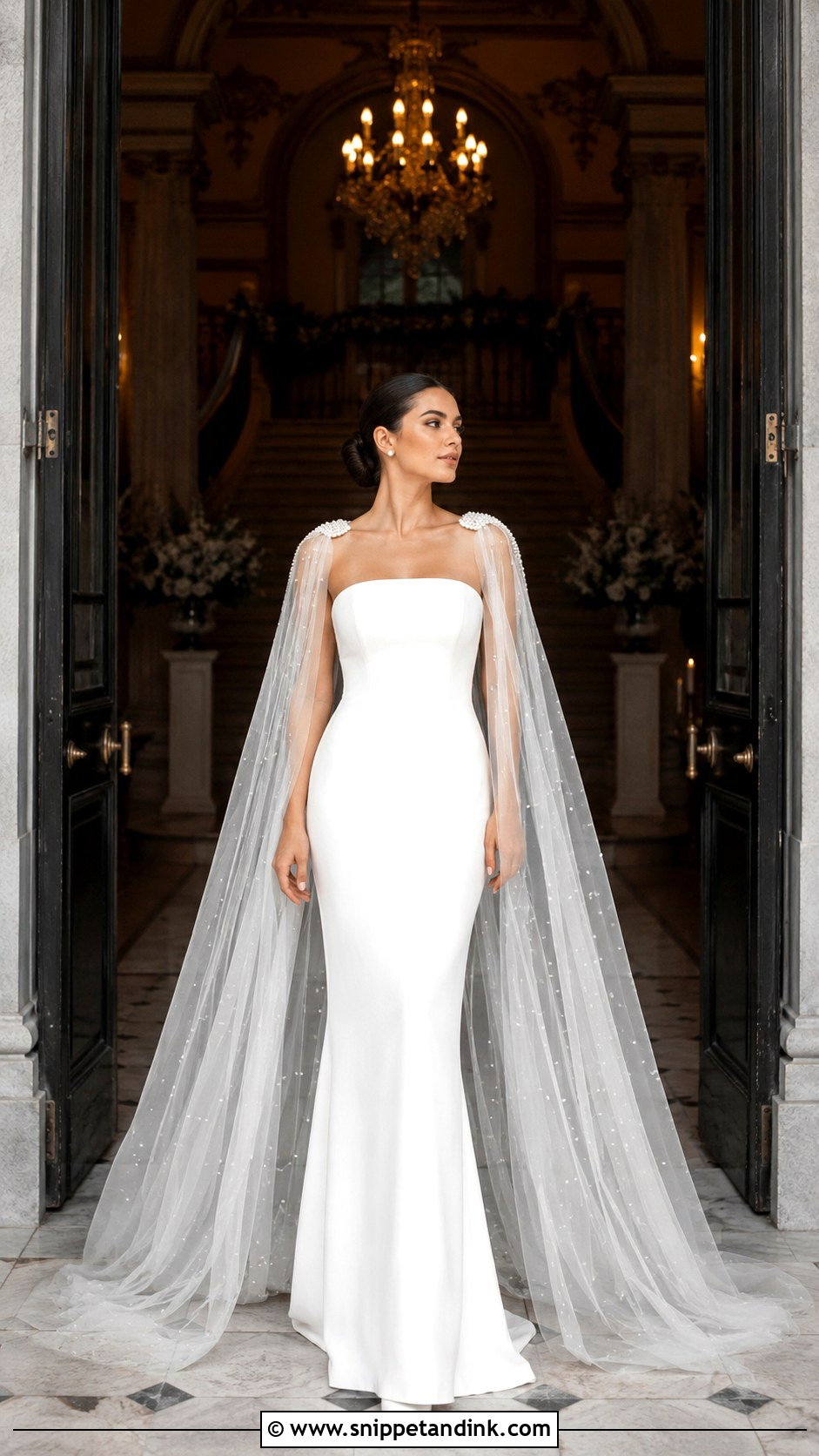
A cape covers the shoulders for the ceremony and comes off for the party. Start with a fitted satin or crepe gown, then add a sheer tulle cape attached discreetly near the back of the bodice, finished with lace edging, scattered pearls or a plain flowing hem. Pointed heels, studs and a low bun suit it; skip the veil if the cape already trails long. The attachment points are the weak spot, because a long cape pulls the bodice backward. Ask for sturdy hidden snaps or hooks sewn into the boned seams, and check the cape releases quickly before the reception. It works well in cooler seasons and for a dramatic arrival.
Fitting Appointments for a Gown With No Straps
Strapless gowns are usually taken in at the bodice, and the fit has to be close enough to grip but not so tight it digs. That balance is easier to judge across a few appointments than in one.
- Bring the exact shoes and undergarments you’ll wear to every fitting. Shoe height changes the hem, and shapewear changes the bodice measurement.
- At the first fitting, the seamstress pins the bodice. Ask her to pin it with you seated too, since your ribcage expands when you sit and eat.
- At the final fitting, do a little test: lift both arms overhead, hug someone and bend to pick something up. The neckline should stay where it was.
- Avoid body lotion or oil on fitting days and on the wedding morning. It makes the bodice slide and can leave marks on satin.
Skin, Posture and Bare Shoulders on Camera
With so much skin showing, tan lines from straps photograph clearly. If you tan, plan for strapless tops in the weeks before. A little matching body makeup or highlighter on the collarbones evens the transition from face to chest.
The habit I watch for most is tugging the bodice up between photos. It’s a sign the fit needs adjusting, and it also creases the top edge. If you find yourself doing it at the final fitting, ask for the bodice to be taken in a little more.
Raise Your Arms Before You Say Yes
A good bandeau gown pairs a clean neckline with structure you can trust, room to move, and styling that feels like yours. The same shoulder-baring base can go minimal, romantic, glamorous, playful or deeply formal. Start with a silhouette and fabric that suit your venue and how much you want to move, then let accessories support the mood. At every fitting, walk, sit, raise your arms and dance a little. If the bodice stays in place through all of that, you’ll stop thinking about it on the day. Crepe, lace, Mikado or tulle, the right one is simply the one that feels like you.
You'll Like These Ideas:










Leave a Reply