
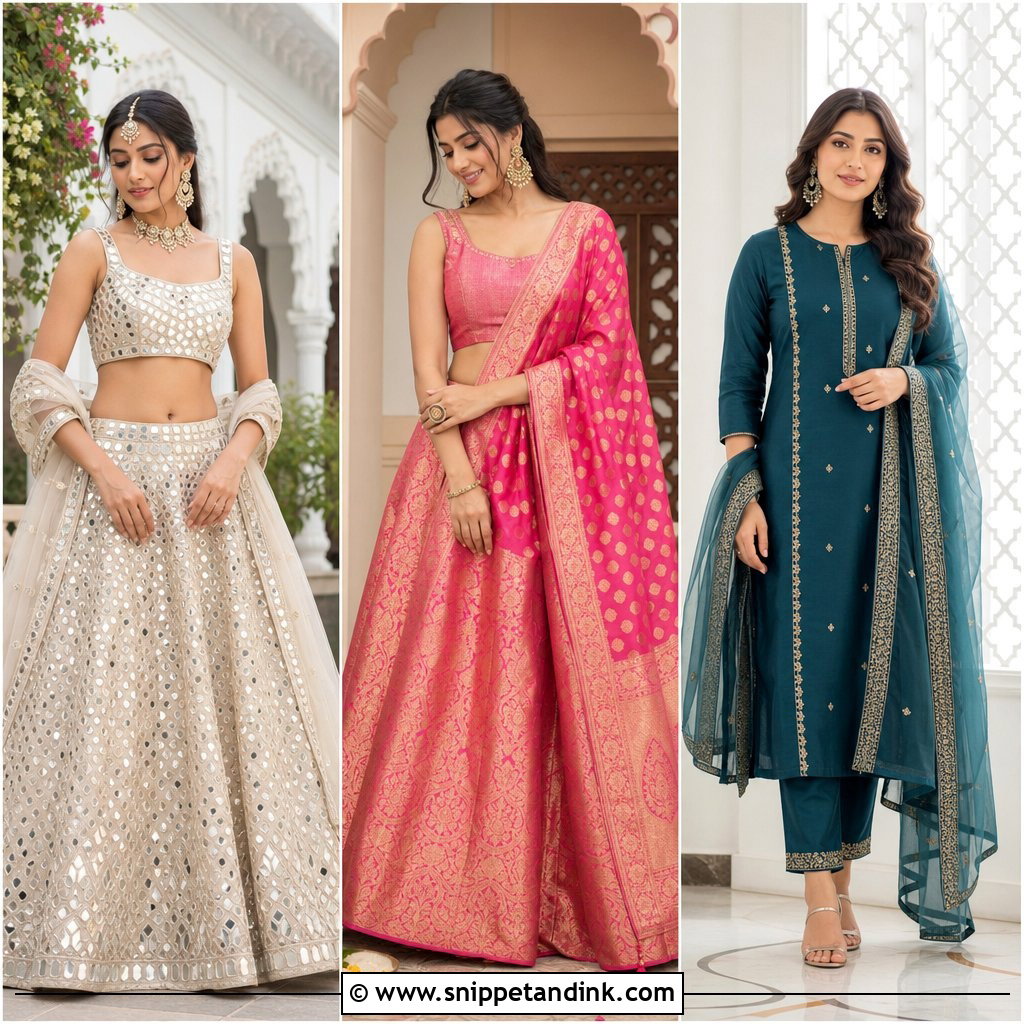
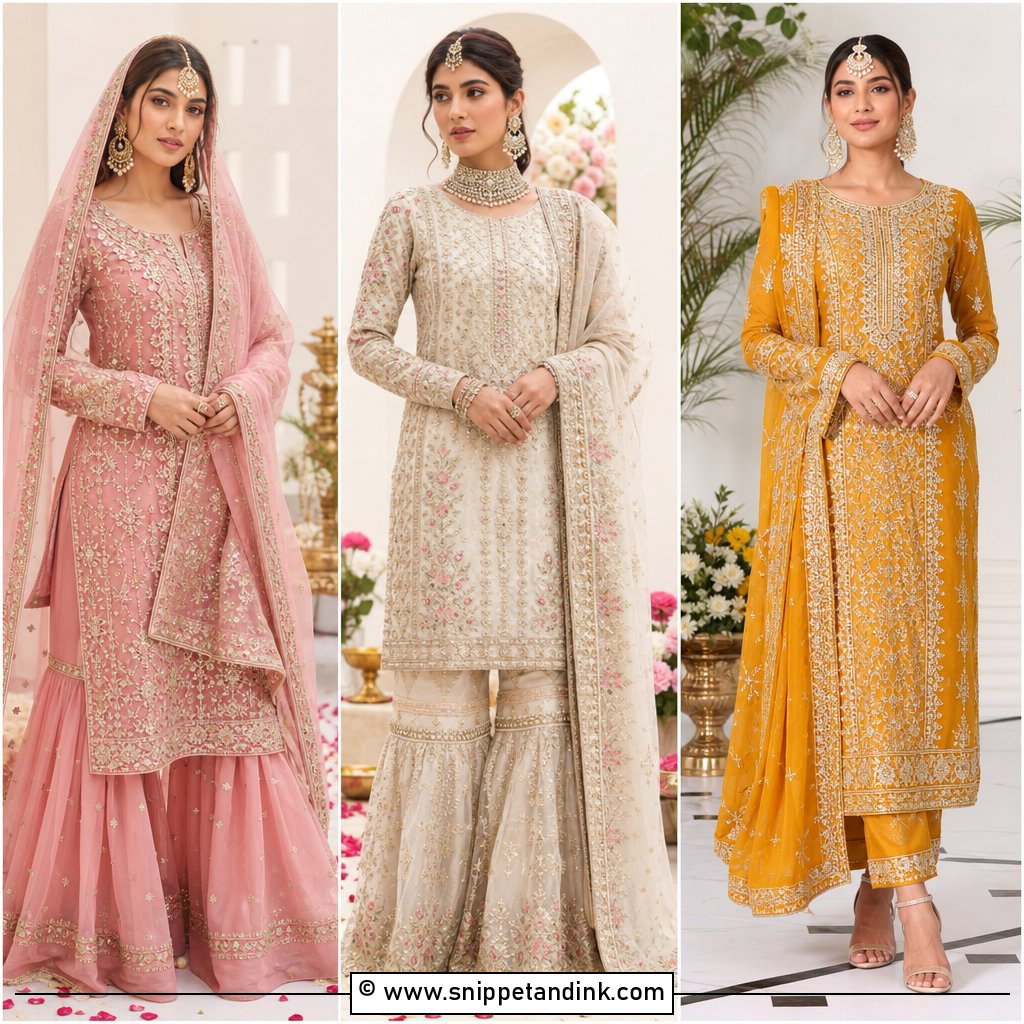
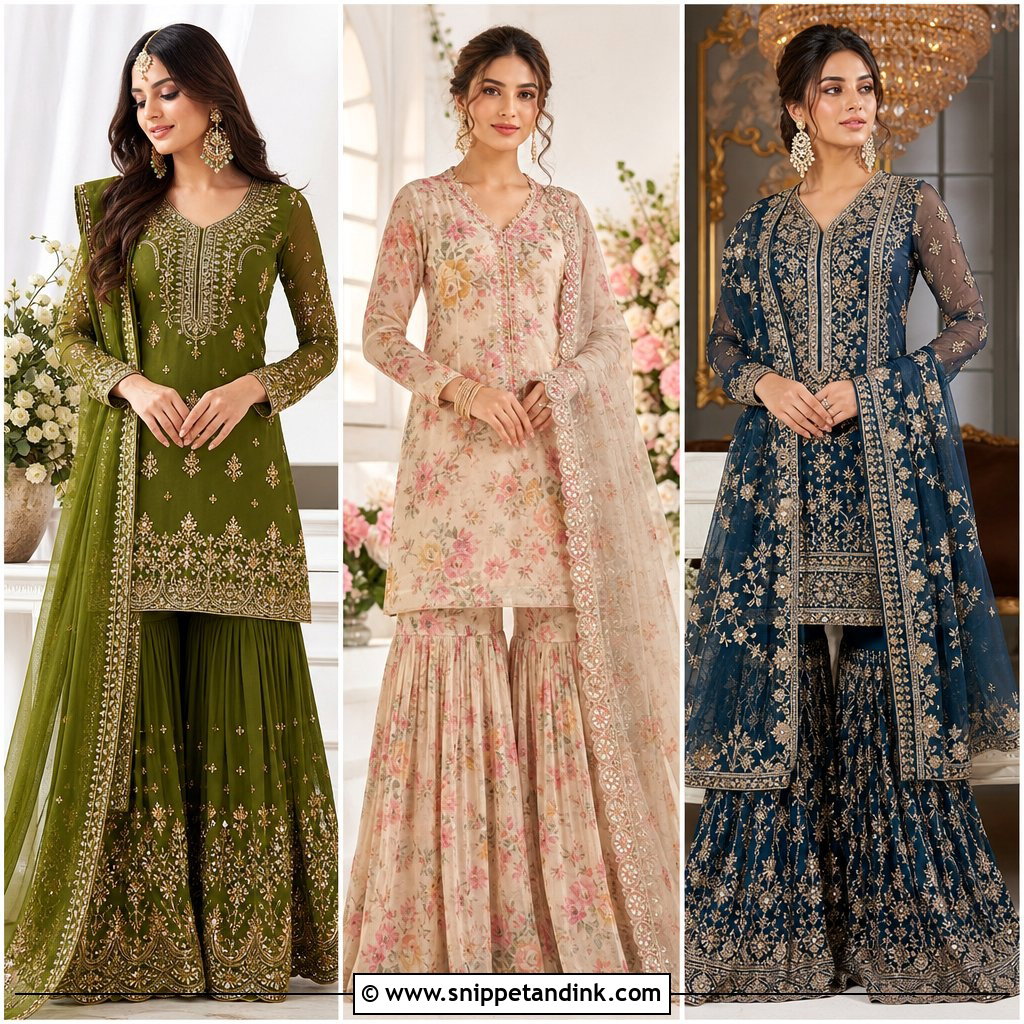
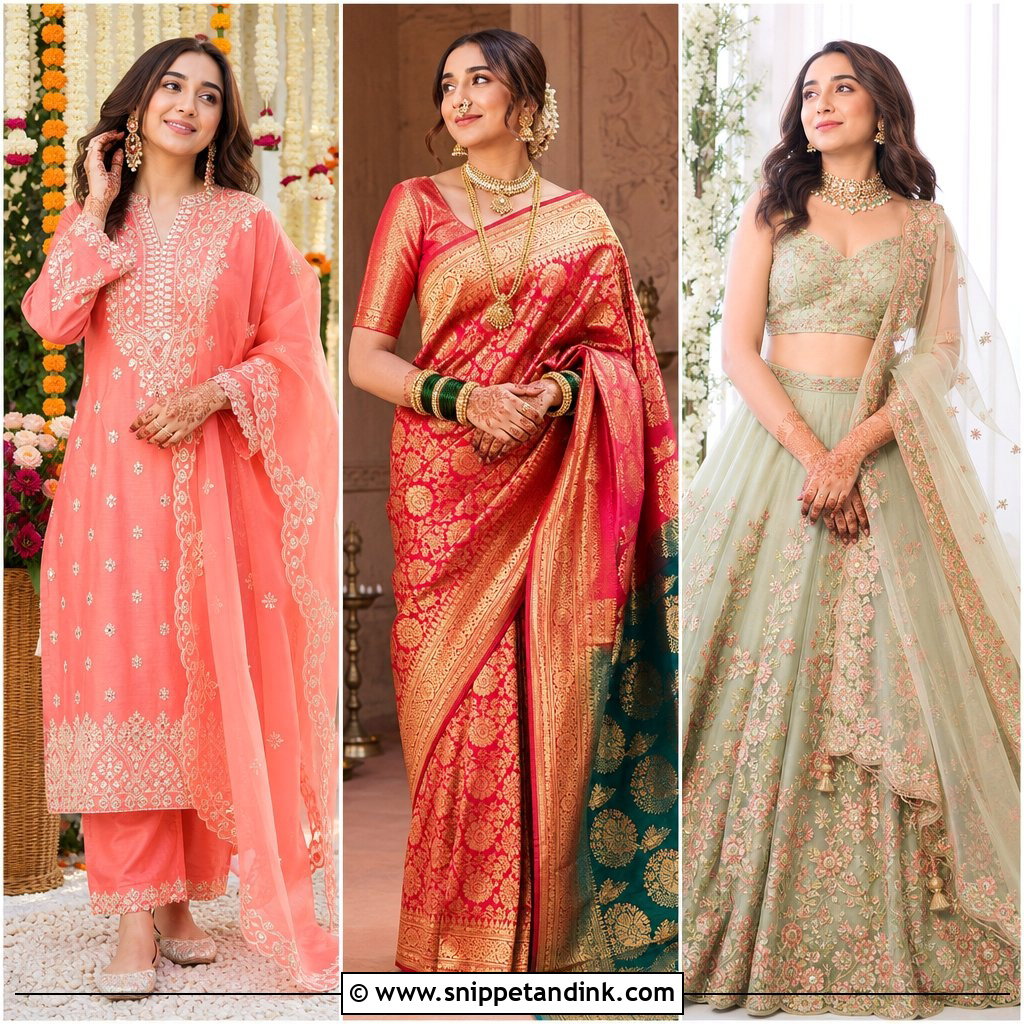
A lehenga has to do more work than most wedding outfits. It gets worn for hours, sat in on the floor, danced in, hugged in and photographed from every side, often across several functions in one week. I’ve pulled together twenty complete looks below, each with the blouse, dupatta, jewelry and shoes I’d put with it, ranging from heavy bridal reds to light organza you can actually move in at a sangeet. Brides will find ceremony pieces here, and bridesmaids and guests will find options that feel festive without competing with the bride. Before you fall for a color, think about which function it’s for, whether the venue is hot or air-conditioned, and how long you’ll be on your feet.

What I Check at a Lehenga Fitting Before Anything Else
Most brides judge a lehenga standing still in front of a mirror. I judge it sitting, walking and lifting their arms, because that’s what the outfit will spend the day doing. These are the checks I run through at every final fitting.
- Weight: hold the skirt up by the waistband. Heavily embroidered bridal skirts can be genuinely heavy, and if it already feels like a strain in your hands, ask for the can-can to be lightened or the lining changed to a lighter fabric.
- Waistband: it should sit snug on the natural waist with a drawstring or hook that you can tighten later in the evening. Waists loosen as you sit and eat, and a skirt that turns sideways is the most common fix I make on the day.
- Blouse: raise both arms above your head. If the blouse rides up or the straps dig in, it needs more ease under the arm or better cups sewn in.
- Hem: wear the exact shoes you’ll wear on the day. A quarter inch above the floor protects the embroidery; any longer and you’ll be stepping on it all night.
- Sitting: sit on a low stool or cushion. Heavy skirts bunch at the front, and stiff linings can push the waistband into your ribs.
Give your tailor time to make changes. Bridal lehengas usually need at least two fittings, and alterations on heavy embroidery are slow, so book the last one a few weeks out rather than a few days.
1. Red Bridal Lehenga With Gold Embroidery
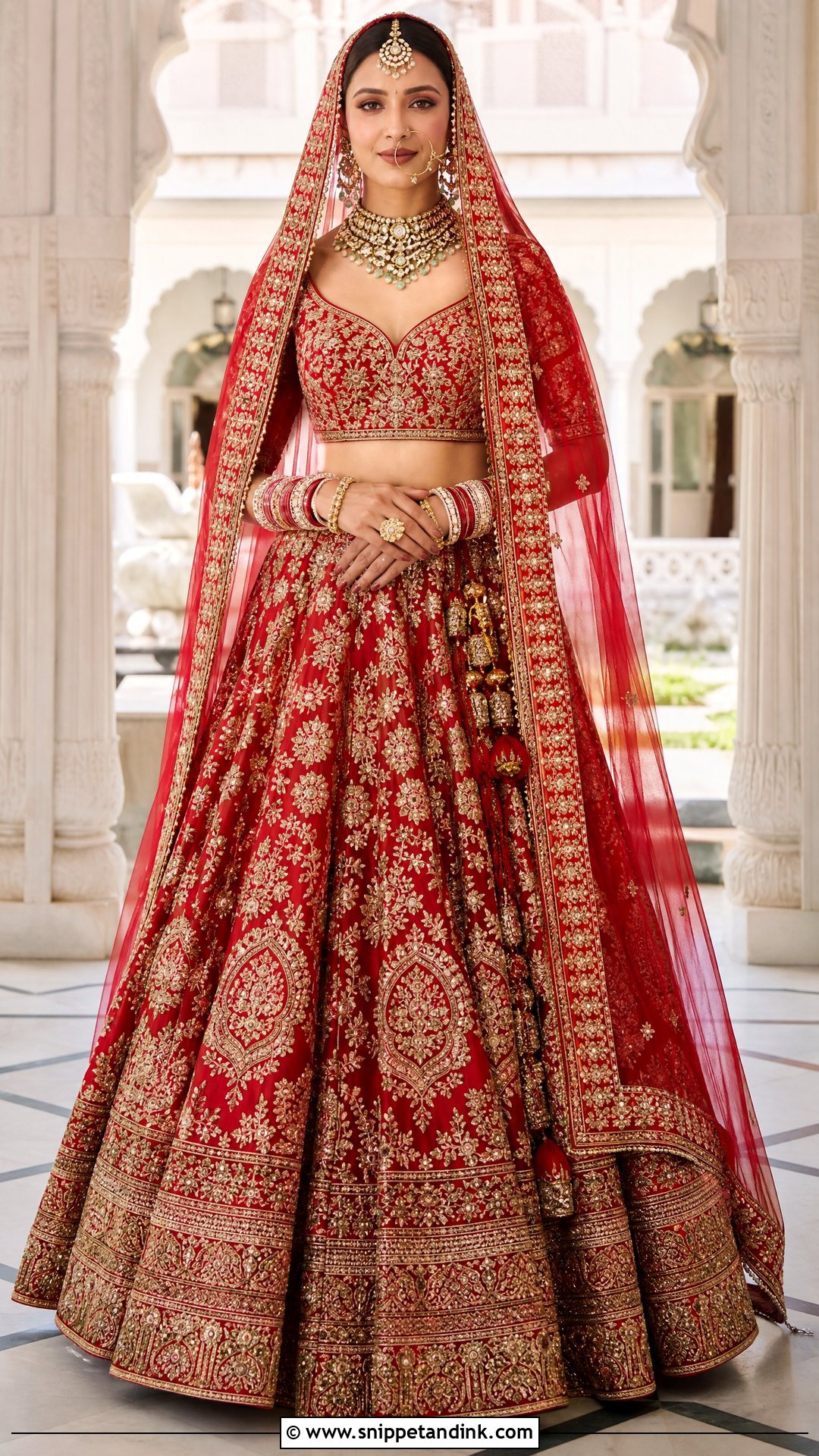
Red and gold is still the outfit I fit most often for the pheras, and it earns that place. Look for a full skirt worked in zari or zardozi, then pair it with a fitted blouse that has proper internal support, because a heavy skirt pulls the whole outfit down if the blouse isn’t anchored. I usually style two dupattas here: a red one over the head for the ceremony and a lighter one across a shoulder. Kundan necklace, tikka, bangles and embroidered juttis finish it. The waistband is where I spend the most fitting time. Zardozi skirts can weigh several kilos, and a waist that’s even slightly loose will slide and twist by the second hour.
2. Maroon Velvet Bridal Lehenga
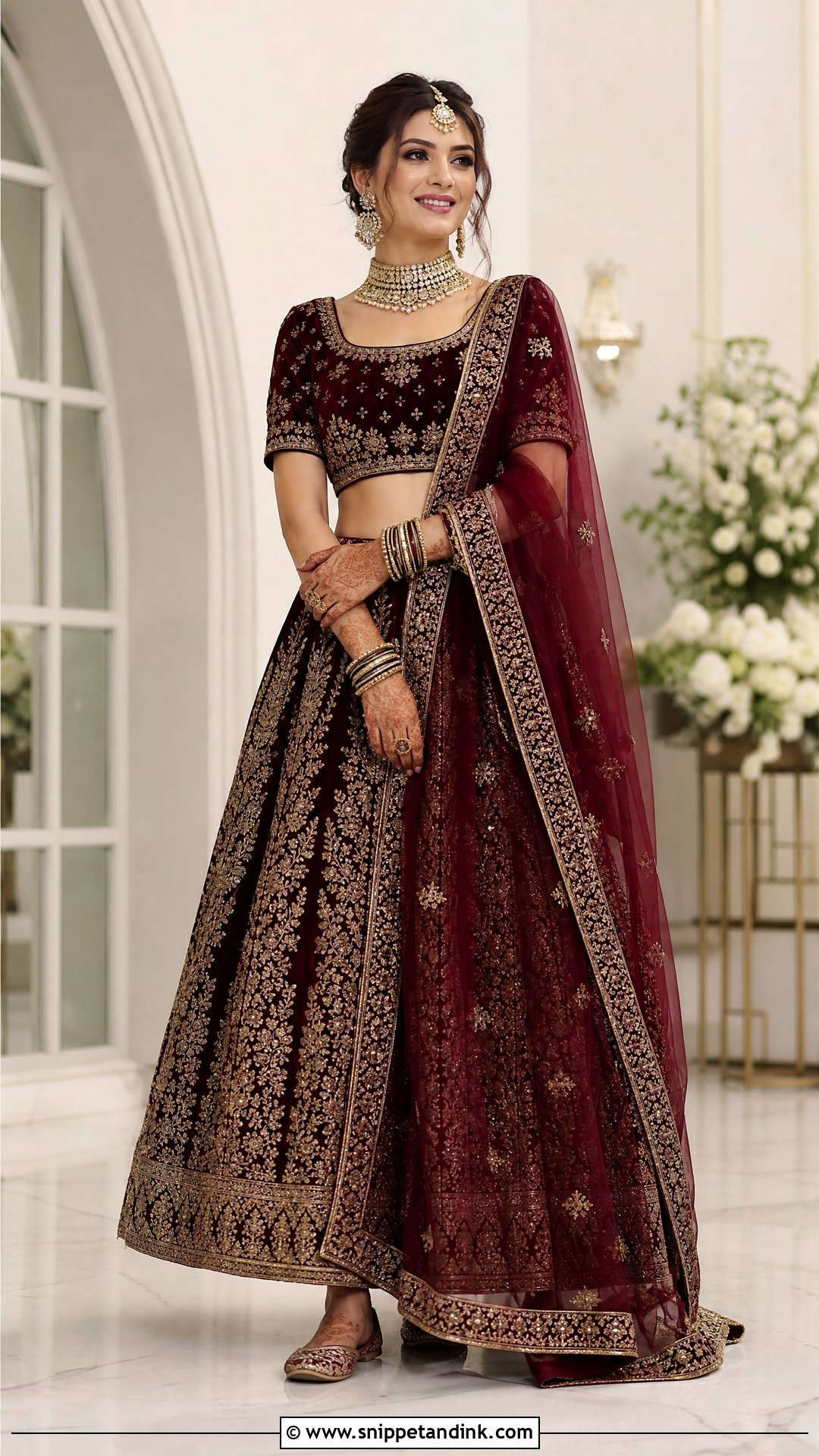
Velvet is a cold-weather fabric, and I’d only put a bride in it for an evening function or a winter wedding. Maroon velvet with antique-gold embroidery at the hem and panels looks rich in candlelight, and a net or organza dupatta keeps the whole outfit from feeling like a blanket. Antique-gold jewelry, a choker and velvet or brocade juttis tie it together. One thing velvet does that other fabrics don’t: it shows every crush mark from sitting. Have the hem finished just above the floor in the shoes you’ll actually wear, which protects the embroidery and stops the pile from getting scuffed on the ground.
3. Pink Floral Bridal Lehenga
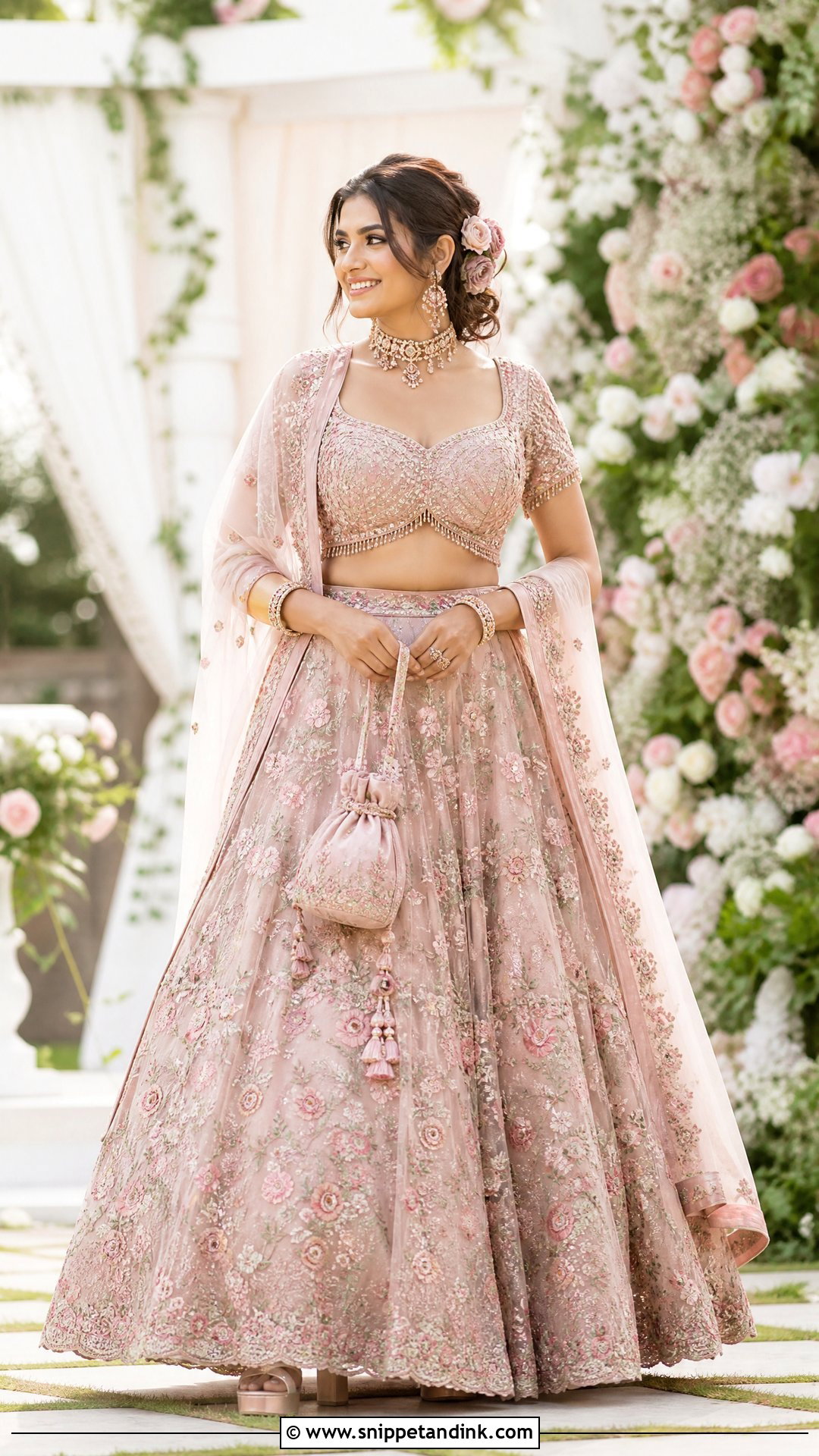
Blush and rose pinks are the shades I suggest to brides who want to skip red without looking like a guest. A skirt with dimensional flowers, pearls or fine threadwork carries enough presence on its own, so I let the dupatta stay sheer and let the embroidery show through it. Rose gold or a pearl-and-kundan set suits the palette. If the skirt mixes several pastels, pick one or two of them for the accessories and ignore the rest; matching everything to everything is what makes a pastel lehenga look busy. Daytime and garden ceremonies are where this one belongs, since soft pink can wash out under warm evening lighting.
4. Ivory Lehenga With Gold Details
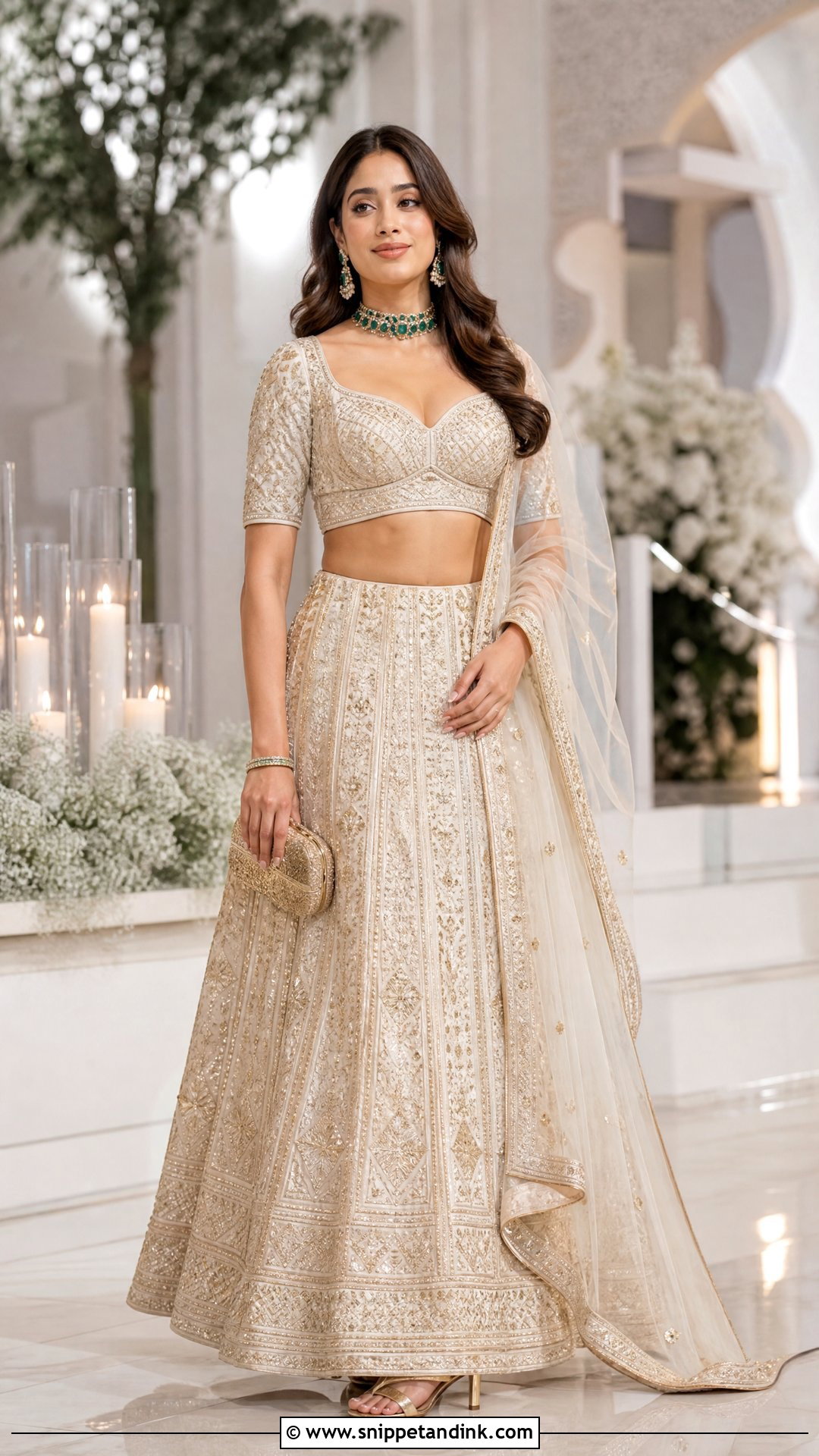
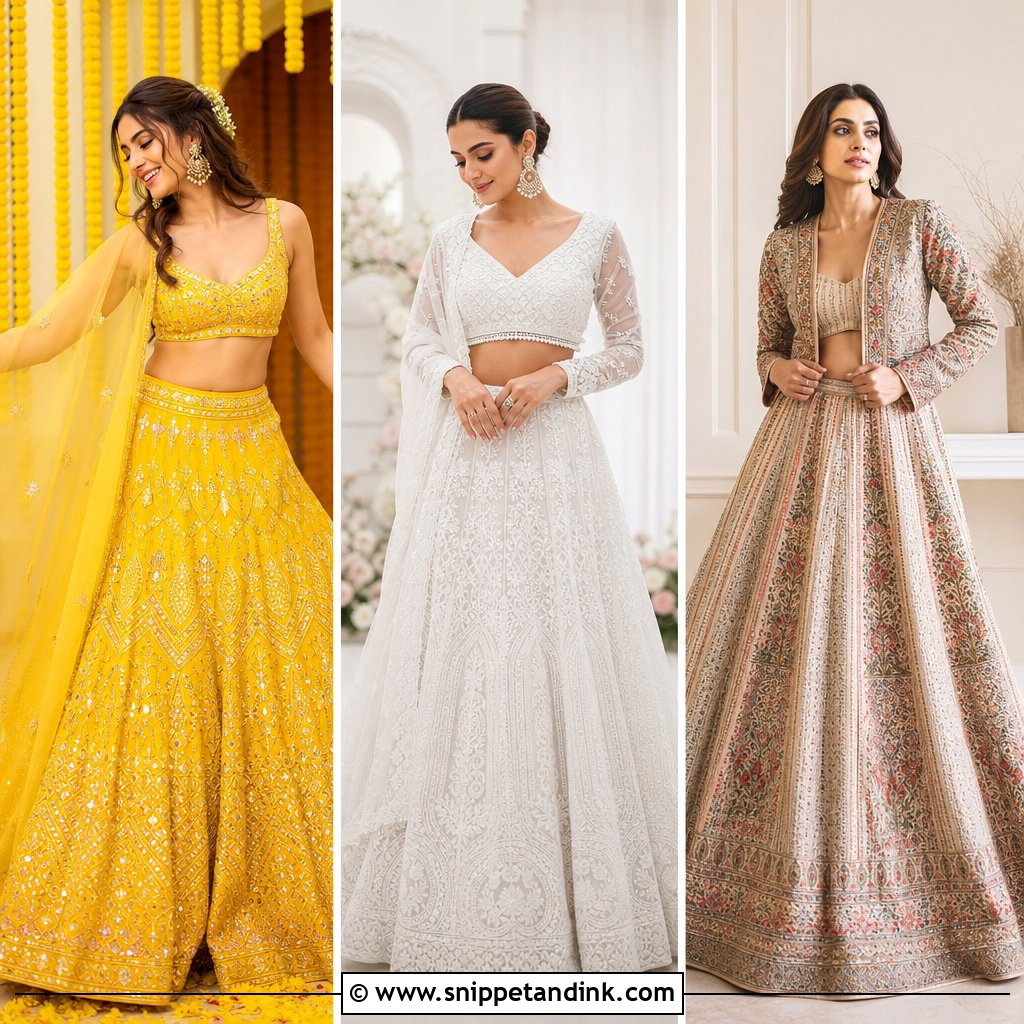
Ivory and gold reads crisp and modern for a reception or engagement, though I always ask first whether pale colors sit comfortably with both families, since in some households white is not worn at weddings. Choose metallic threadwork or architectural embroidery, a fitted blouse with sleeves, and a sheer gold-edged dupatta over one shoulder. Emeralds give contrast; pearls keep it monochrome. My standing test with ivory: stand by a window, then have someone take a flash photo. Thin linings that look fine in a shop mirror can turn see-through under a photographer’s flash, and that’s a far easier fix at the tailoring stage than on the day.
5. Pastel Blue Organza Lehenga
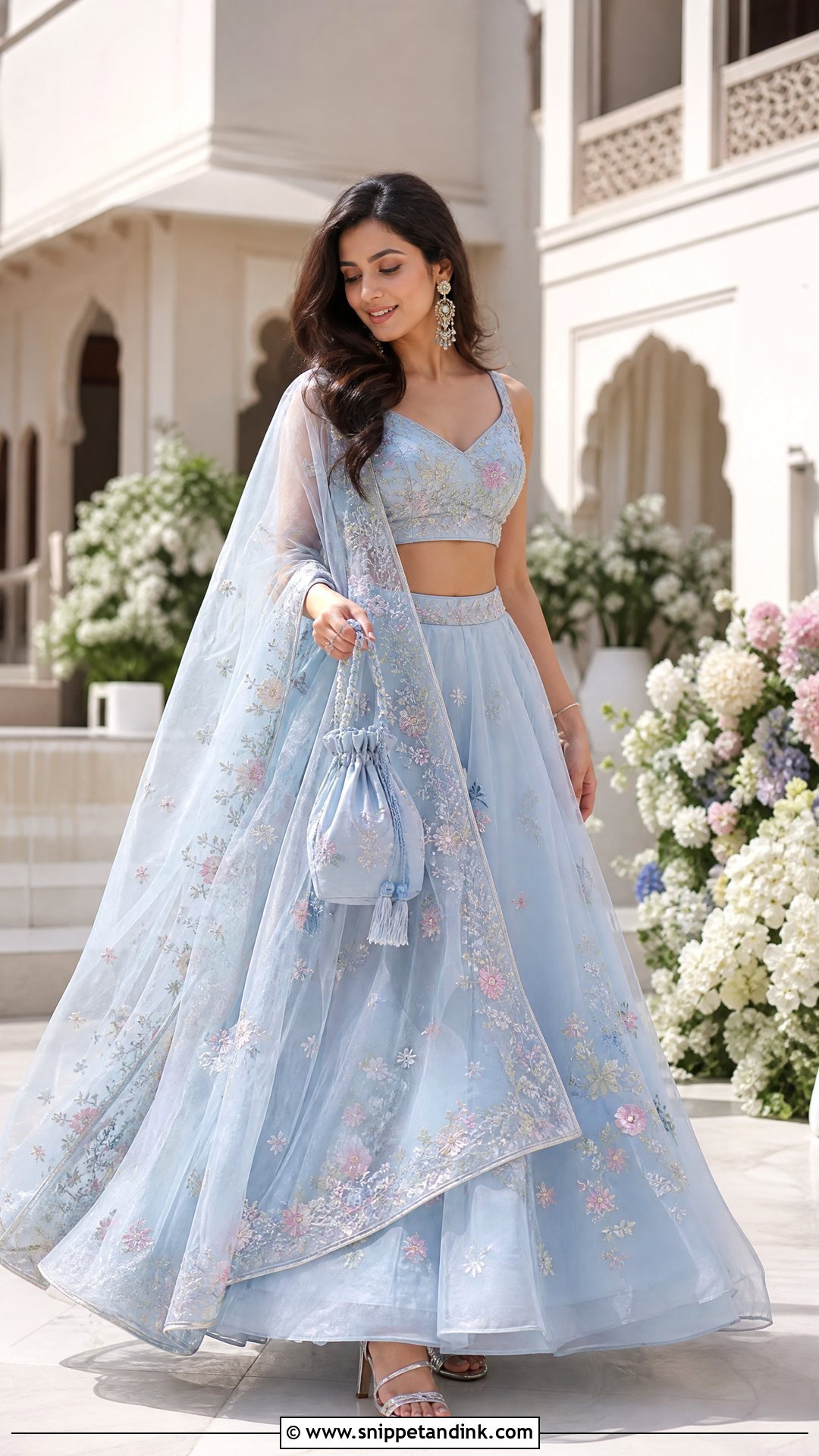
Organza holds its own shape, which is why pastel blue organza moves so nicely at a daytime function without any heavy can-can underneath. Layered skirts with scattered sequins or a wide border, a blouse with secure straps or short sleeves, and a matching organza dupatta keep the outfit cool to wear. Silver jewelry and pale metallic sandals carry the cool tone through, and a small powder-blue potli is plenty. I’d hold back on extra volume underneath; organza already stands away from the body, and adding net just makes it hard to sit. This is one I often recommend for sisters of the couple and bridesmaids.
6. Sage Green Embroidered Lehenga
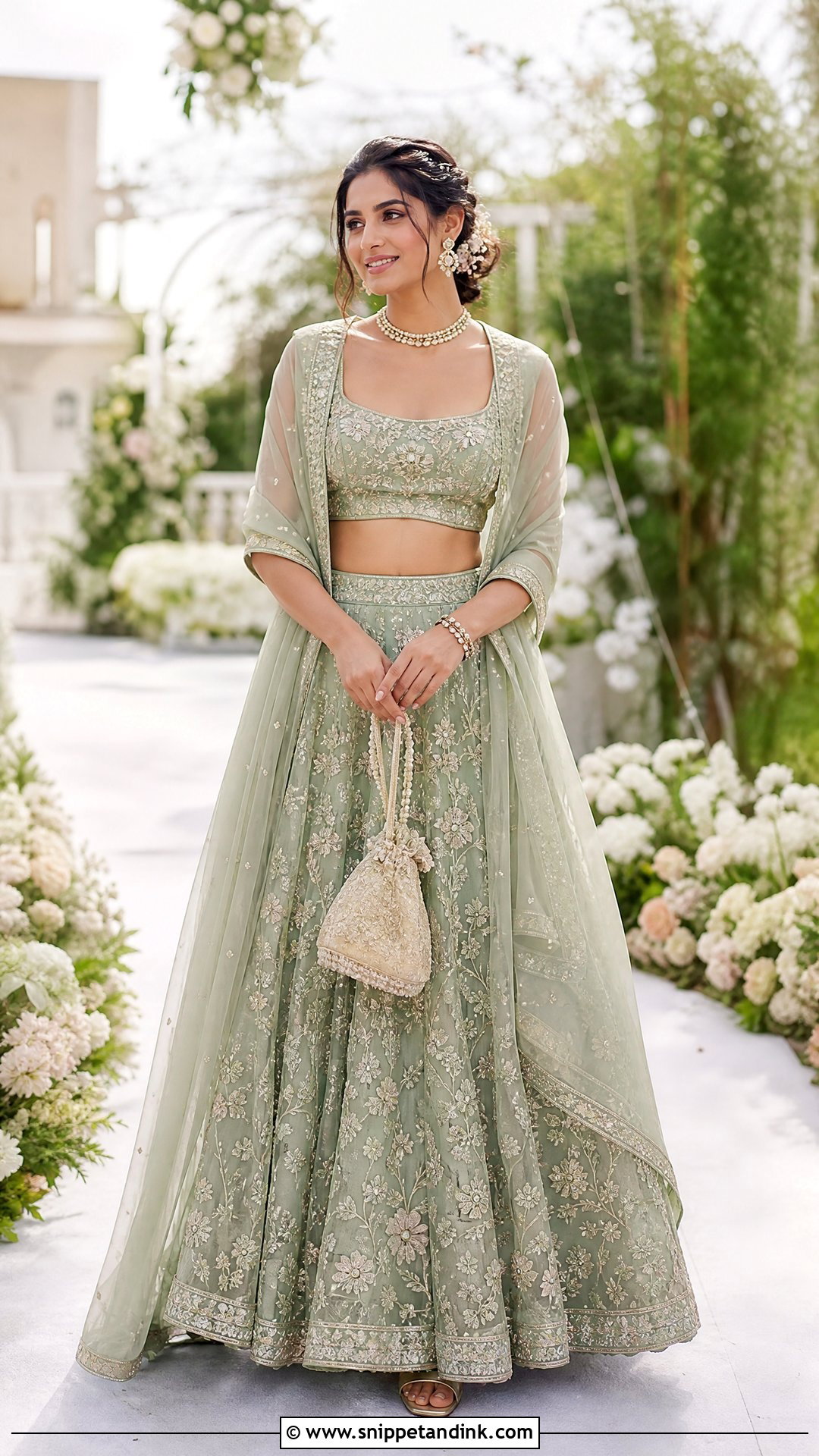
Sage is quiet, and that’s the point of it. A georgette or organza skirt with ivory threadwork or small pearls, a fitted sage blouse and a sheer bordered dupatta make a calm, modern outfit that suits outdoor daytime ceremonies and bridesmaid groups well. Pearl jewelry and polki earrings sit comfortably with the muted green, where bright gold would fight it. Georgette drapes close and shows the shape of the waistband, so a square neckline or structured sleeves help give the top half some definition. Guests should keep the embroidery light; a bride can take the same color further with a fuller skirt and heavier jewelry.
7. Lavender Sequin Lehenga
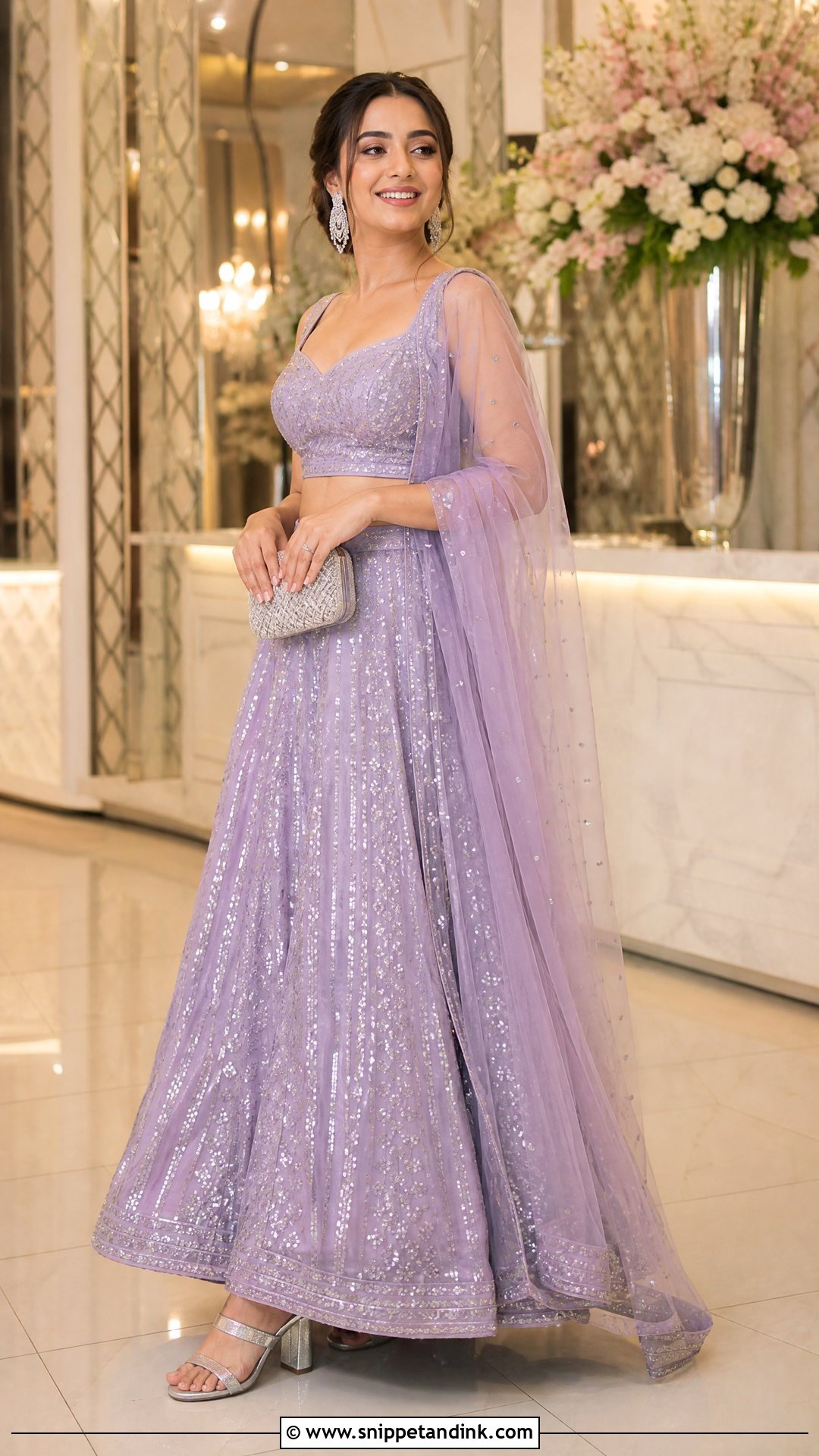
Lavender comes alive under evening lights in a way it doesn’t in daylight, which is why I place it at sangeets and receptions. A flowing skirt with tonal sequins or silver embroidery pairs with a fitted blouse that gives real support, because you will be dancing. Net dupattas slip constantly, so pin this one at the shoulder and add a small loop or safety pin at the wrist. Diamond-look jewelry, silver block heels and a beaded clutch suit the cool color. With a heavily embellished skirt I’ll often drop the necklace entirely and let the earrings do the work.
8. Yellow Lehenga For Haldi
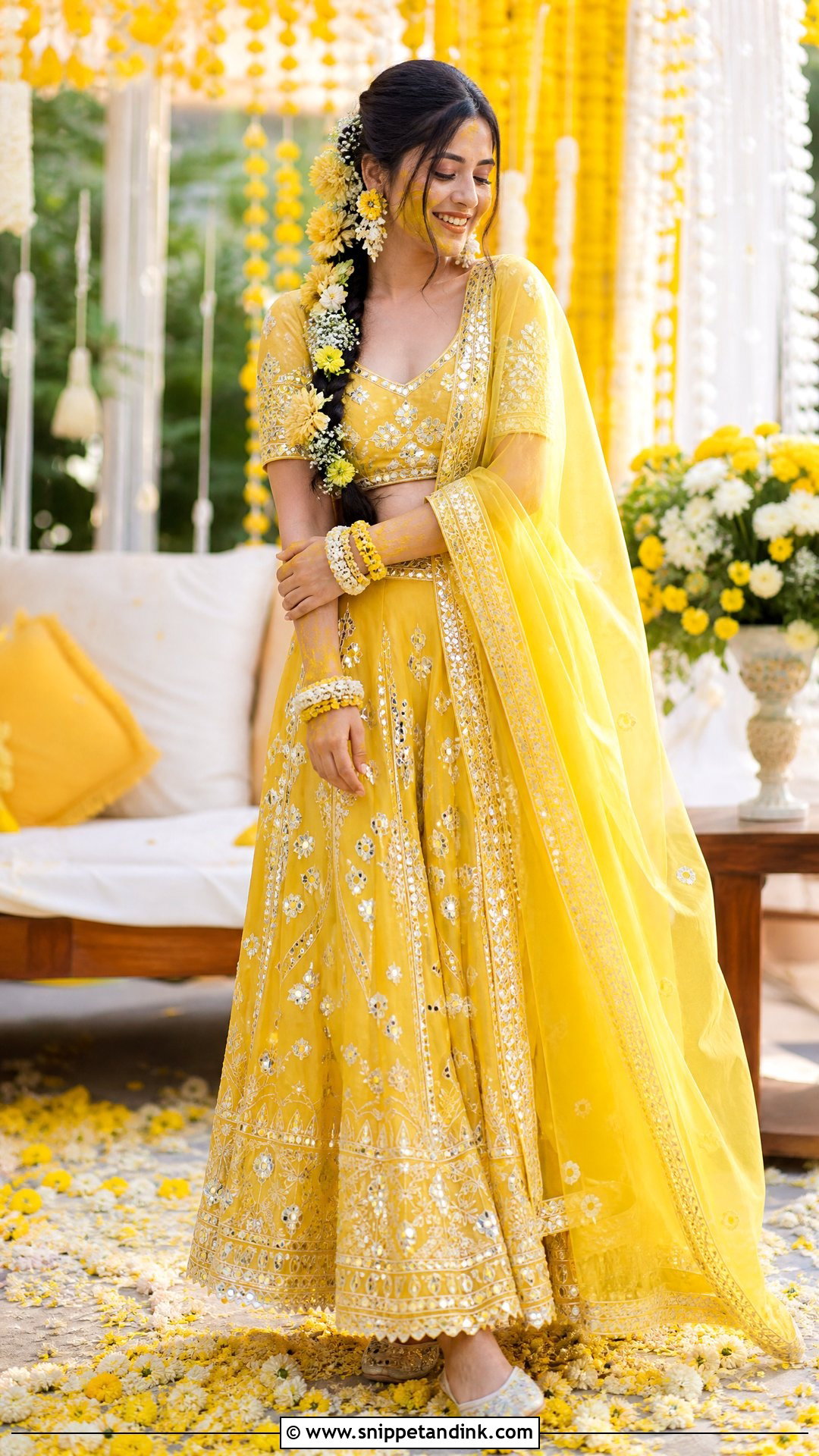
Haldi paste stains, and turmeric in particular can leave a permanent yellow mark on silk, so I never let a bride wear anything precious to this one. A yellow lehenga in cotton silk, georgette or light organza with white embroidery or mirror work is easy to move in and easy to wash. Floral earrings, bangles and flat juttis keep you comfortable sitting on the floor. Fresh or artificial flowers in a braid add the festive touch. You can tuck the dupatta away entirely once the ceremony starts; it’s the first thing to get smeared.
9. Green Mirror Work Lehenga For Mehendi
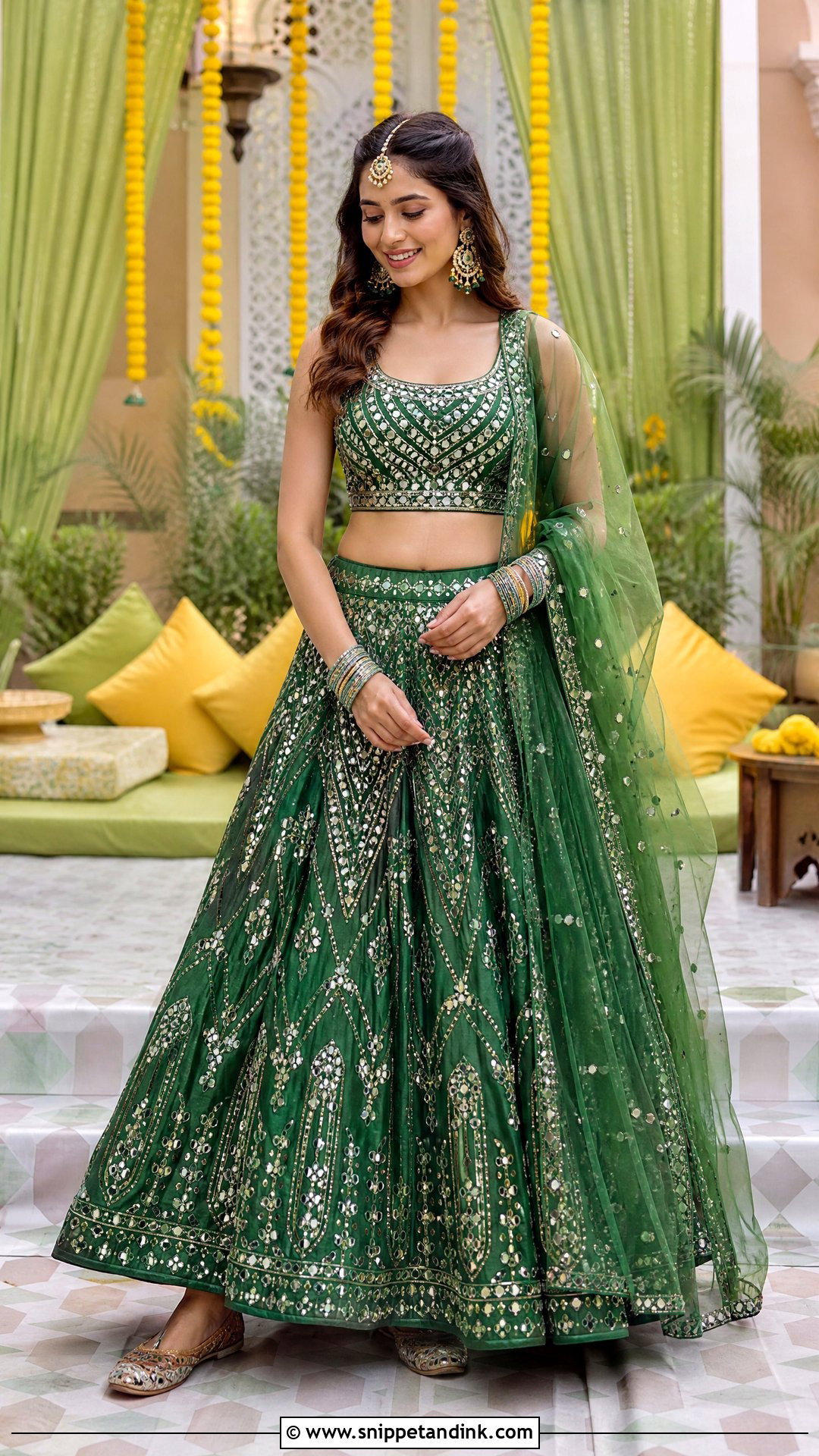
Mirror work catches light from every candle and fairy string at a mehendi, and deep green sets those mirrors off well, which makes this a strong mehendi outfit. Keep the mirror embellishment controlled; small mirrors spread across a skirt are more comfortable to sit on than large clusters, which press into you after an hour on a low seat. A blouse in the same green family or a brighter accent works. Drape the dupatta over one shoulder only so both arms stay free for the artist, and leave rings and hand jewelry off completely until the henna has dried and been scraped away. Statement earrings and a tikka give you plenty of sparkle without touching your hands.
10. Orange Bandhani Lehenga
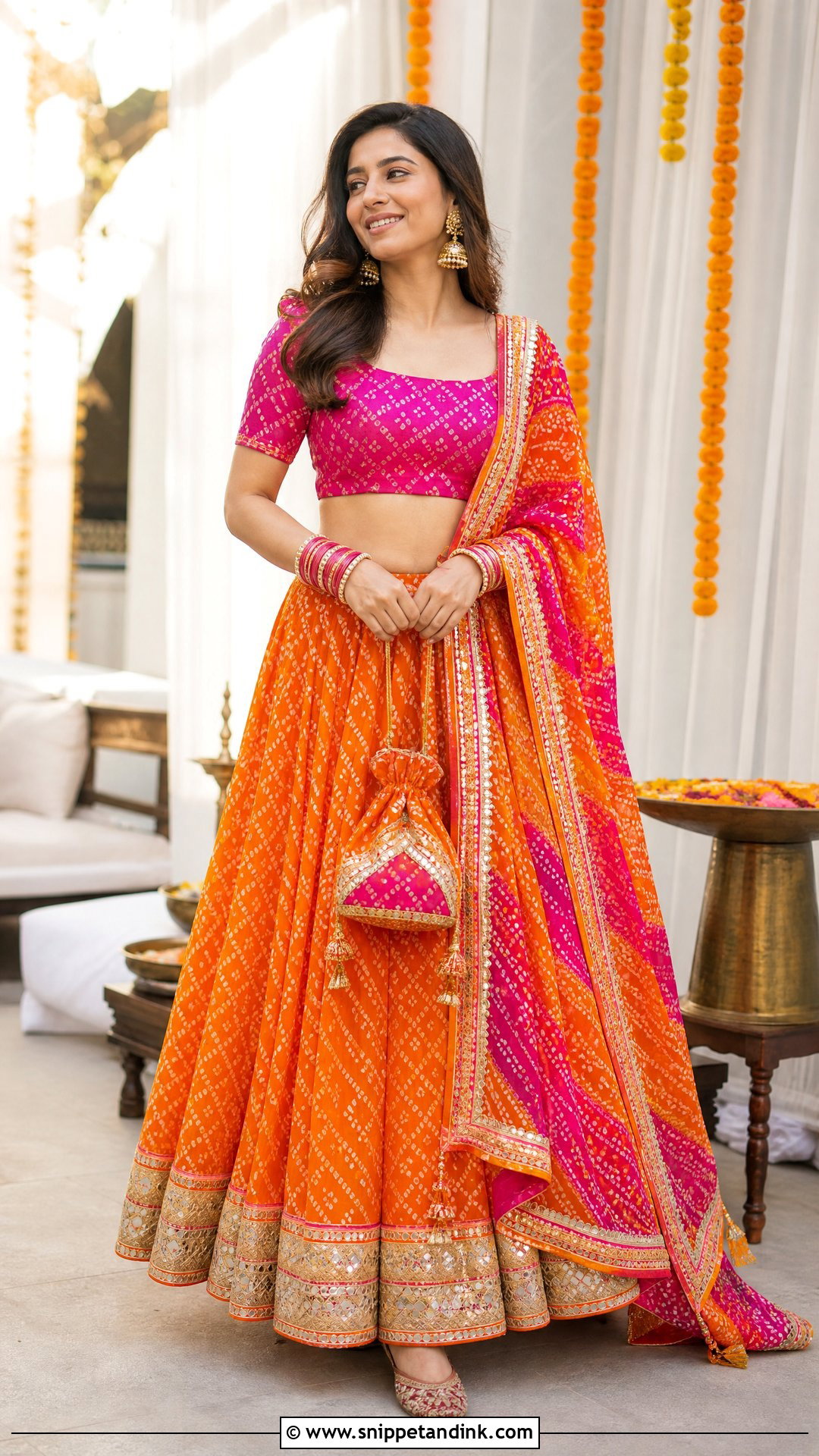
Bandhani is a tie-dye textile with a long tradition behind it, and an orange bandhani lehenga with a gota border feels joyful at a mehendi or welcome lunch. Rust, tangerine or burnt orange all work; the blouse should pick up a color already in the dots, often pink, green or red. A bandhani dupatta can go over both shoulders or be pinned to one side when you need to move. Gold jhumkas, glass bangles and embroidered juttis are all it needs. Because the print is so busy, the handbag should be plain. Real bandhani can bleed dye in its first wash, so keep it away from water and pale fabrics on the day.
11. Royal Blue Lehenga With Silver Embroidery
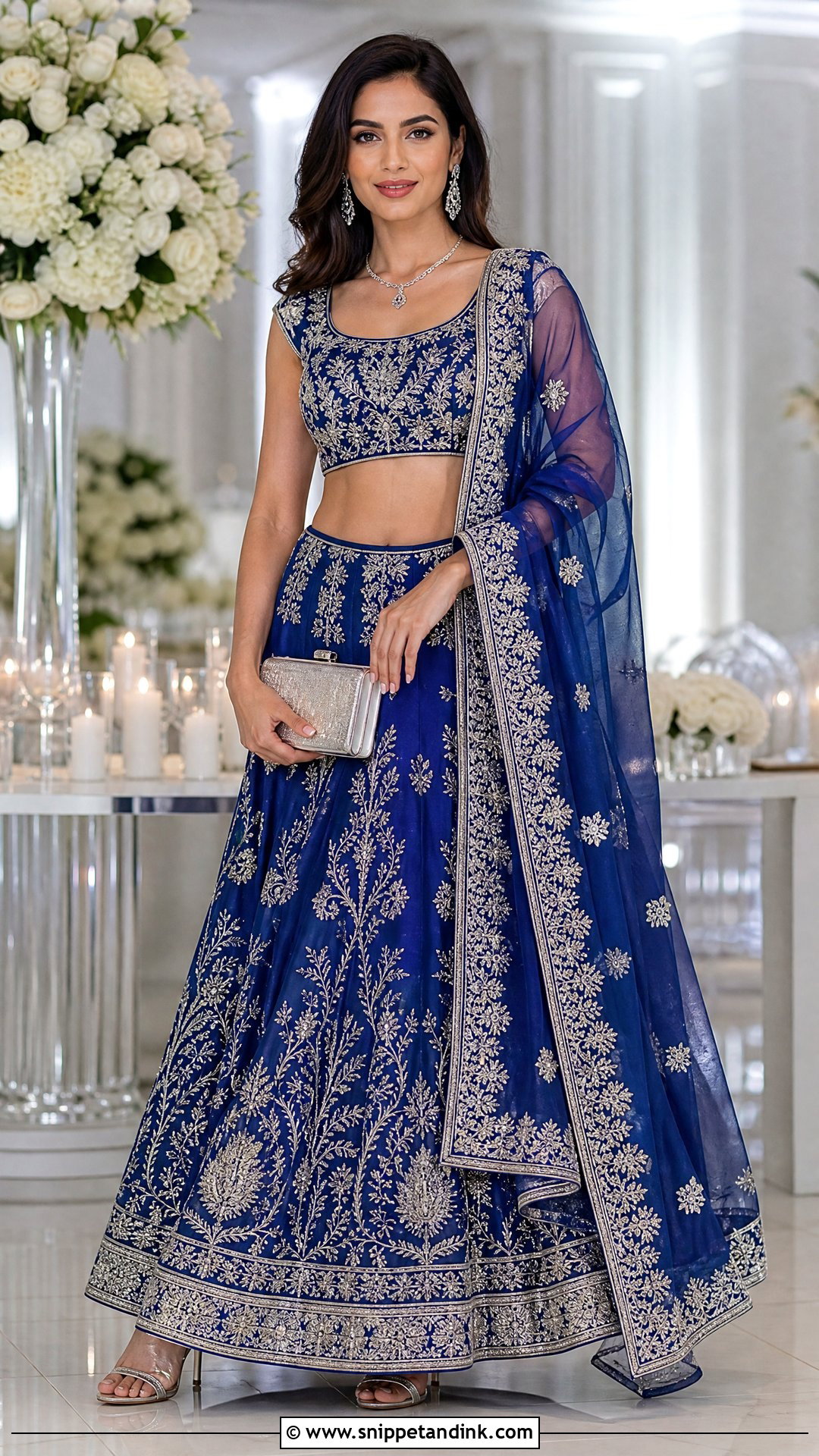
Royal blue with silver embroidery is a reception color that holds up under strong stage lights. I choose the base fabric by season: velvet in winter, silk in between, georgette when it’s warm. A blouse with silver beadwork and a sheer blue dupatta with a narrow border keep things clean. Silver earrings, a delicate necklace and metallic heels finish it. If the skirt is heavily worked, I simplify the blouse, since too much embroidery on both halves makes the upper body look heavy in photos. Guests wearing this should stay below bridal-level embellishment and choose shoes they can dance in.
12. Emerald Green Silk Lehenga
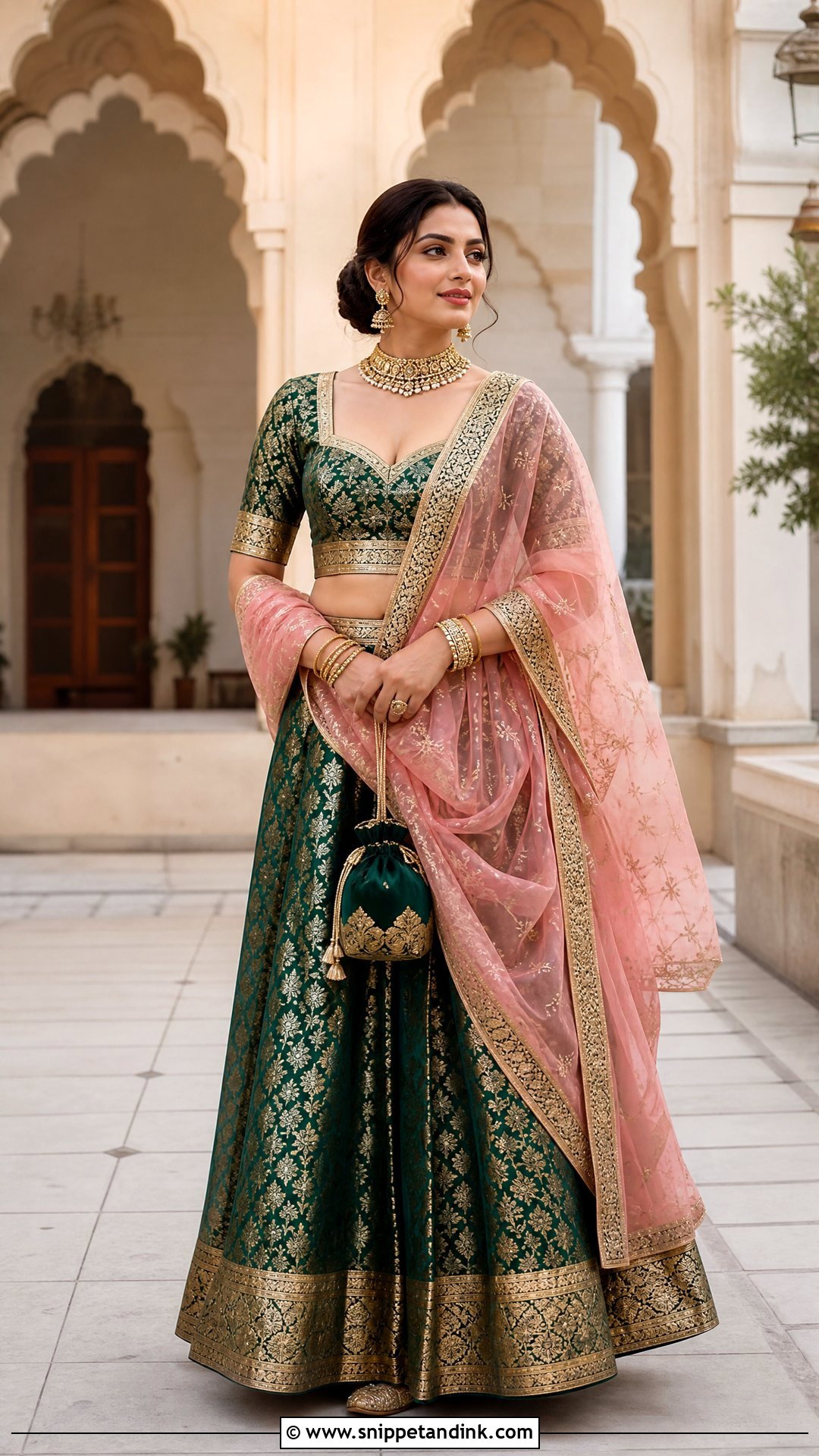
Silk has a natural sheen, so an emerald silk lehenga looks rich without much sparkle at all. A paneled skirt with woven gold motifs, a structured blouse, and a dupatta in soft pink, muted gold or the same emerald are my usual pairings. Traditional gold, a choker and jhumkas warm the deep green. My main fitting concern with silk is bulk at the waist: gathered silk stacks up quickly, so I ask the tailor for panels or box pleats rather than heavy gathers. Bridesmaids can take a lighter version of this with a simpler neckline and fewer accessories.
13. Wine Lehenga With Cape Blouse
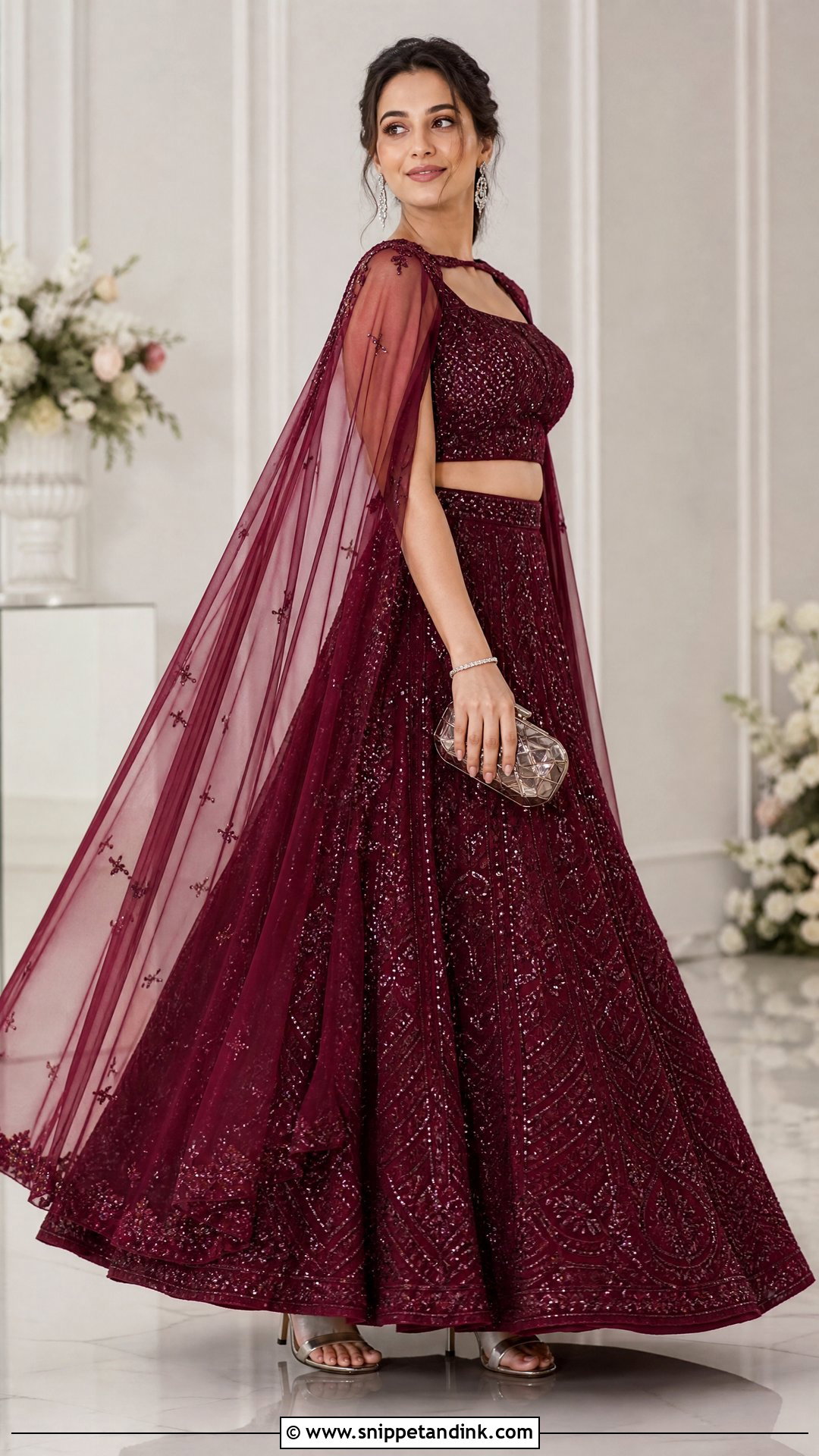
A cape blouse solves the dupatta problem for anyone who hates managing a drape all night. Pair a berry or wine skirt with tonal beadwork with a fitted blouse under a sheer attached cape that ends around the hip, long enough to move but short enough not to hide the skirt. Crystal earrings, a slim bracelet and metallic heels are enough; a heavy necklace fights a decorated cape neckline. A low ponytail or smooth bun shows off the shoulder line. Check the cape attachment points before the sangeet. Capes are usually tacked at the shoulder seam, and a single loose stitch will let one side drag after a few songs.
14. Black Lehenga With Multicolor Embroidery
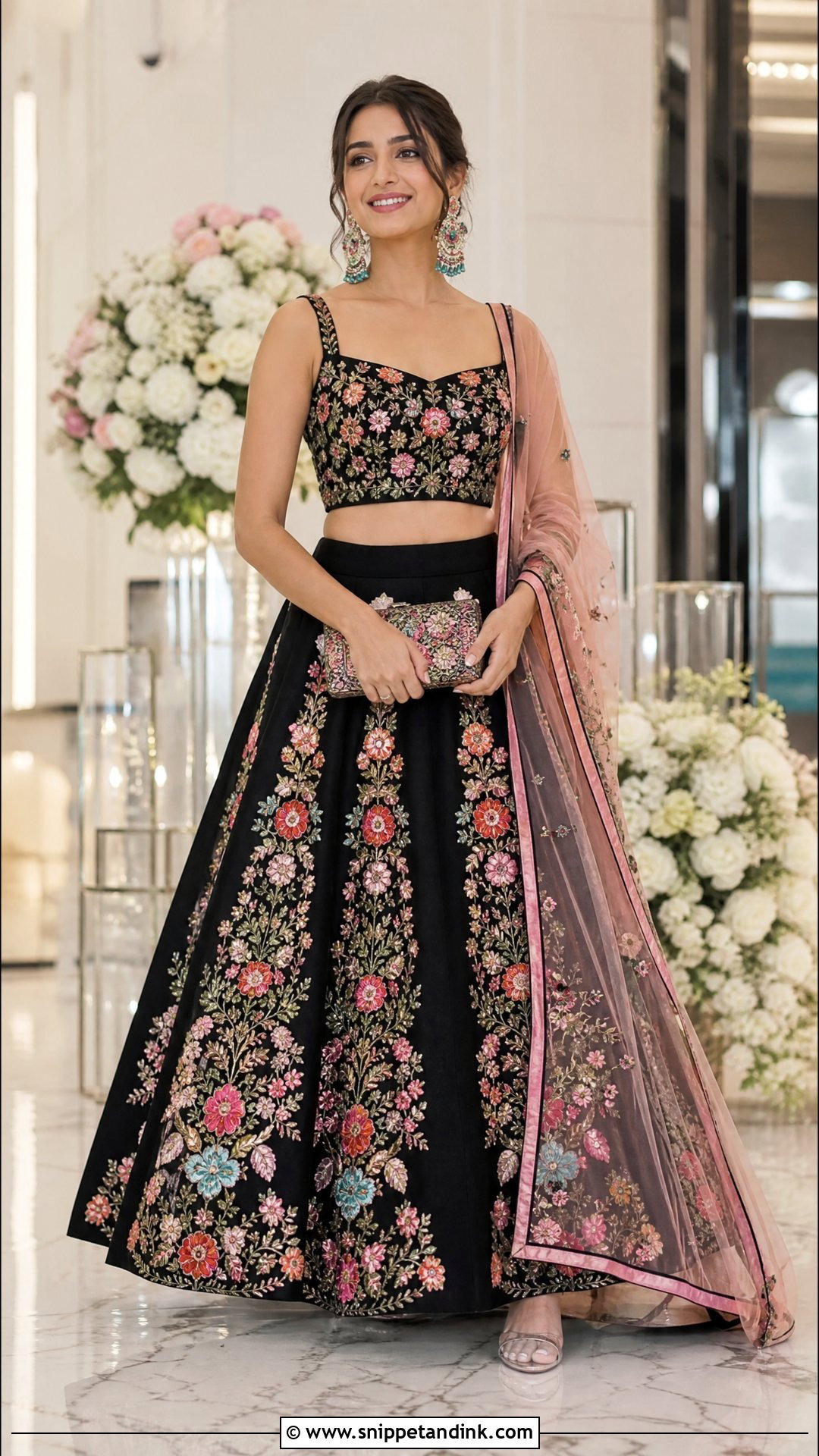
Black only works where the couple and the family are comfortable with it, and in many communities it’s avoided at weddings, so ask before you buy. Where it’s welcome, a black skirt with bright floral threadwork or mirror panels makes an artistic reception outfit. I limit the accessories to two colors from the embroidery, say pink and green, because black throws every color forward and three or four accent shades start to look chaotic. A black blouse and a light dupatta that repeats one embroidery shade keep it coherent. Save it for evening functions.


15. Champagne Sequin Reception Lehenga
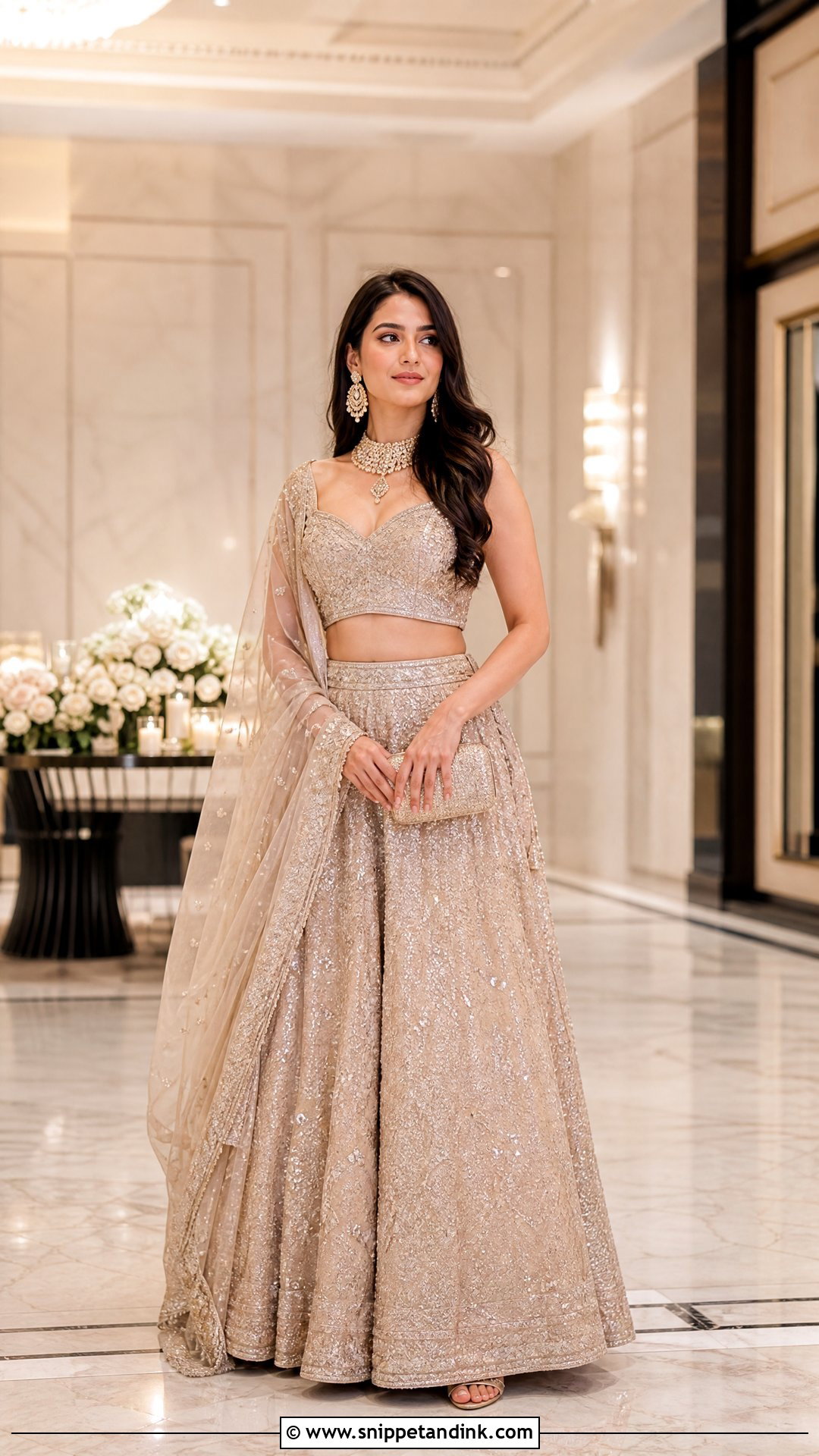
Champagne is the trickiest color I style, because it shifts so much with light. Under warm reception bulbs it reads gold; in daylight it can look almost beige, and on some skin tones it washes out. So I check it in both before committing. A fluid skirt with tonal sequins that reflect evenly, a structured blouse and a matching sheer dupatta are the base. Crystal earrings, neutral heels and smooth waves keep the shine from tipping into costume. Sequined fabric scratches, so the lining has to be fully finished on the inside or your arms and waist will be raw by midnight.
16. Peach Lehenga With Pearl Blouse
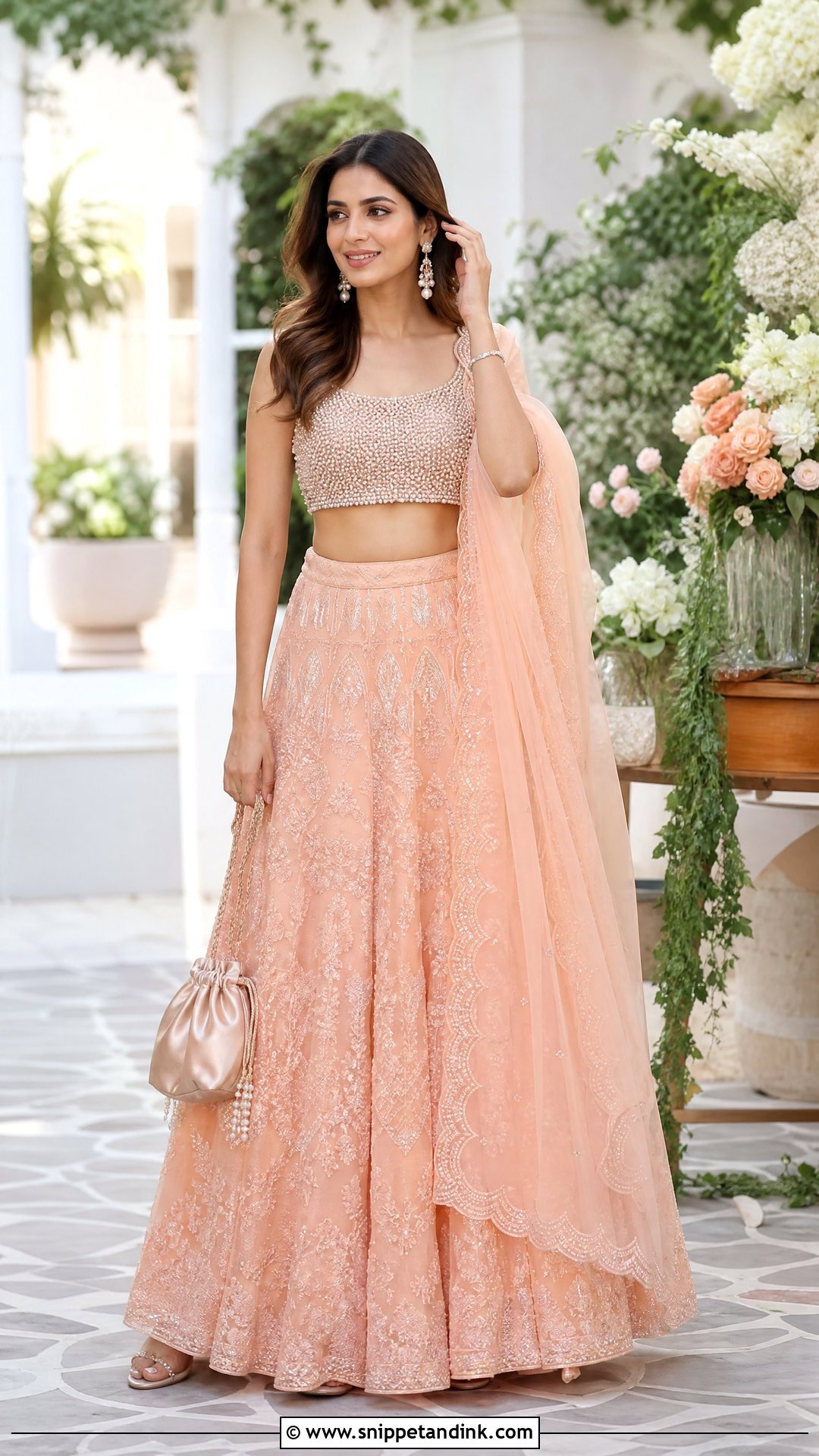
Peach and pearls warm each other up. A flowing peach skirt with tonal embroidery, a blouse worked with pearls at the neckline or sleeves, and a dupatta with only a narrow scalloped edge make a gentle daytime outfit. Pearl drops, a delicate bracelet and nude-gold sandals are enough. The rule I hold to here is one dominant texture: large pearls, heavy sequins and dense embroidery all together cancel each other out. Engagements and daytime receptions suit it, and a bride can build it up with a fuller skirt and layered jewelry.
17. White Floral Printed Lehenga
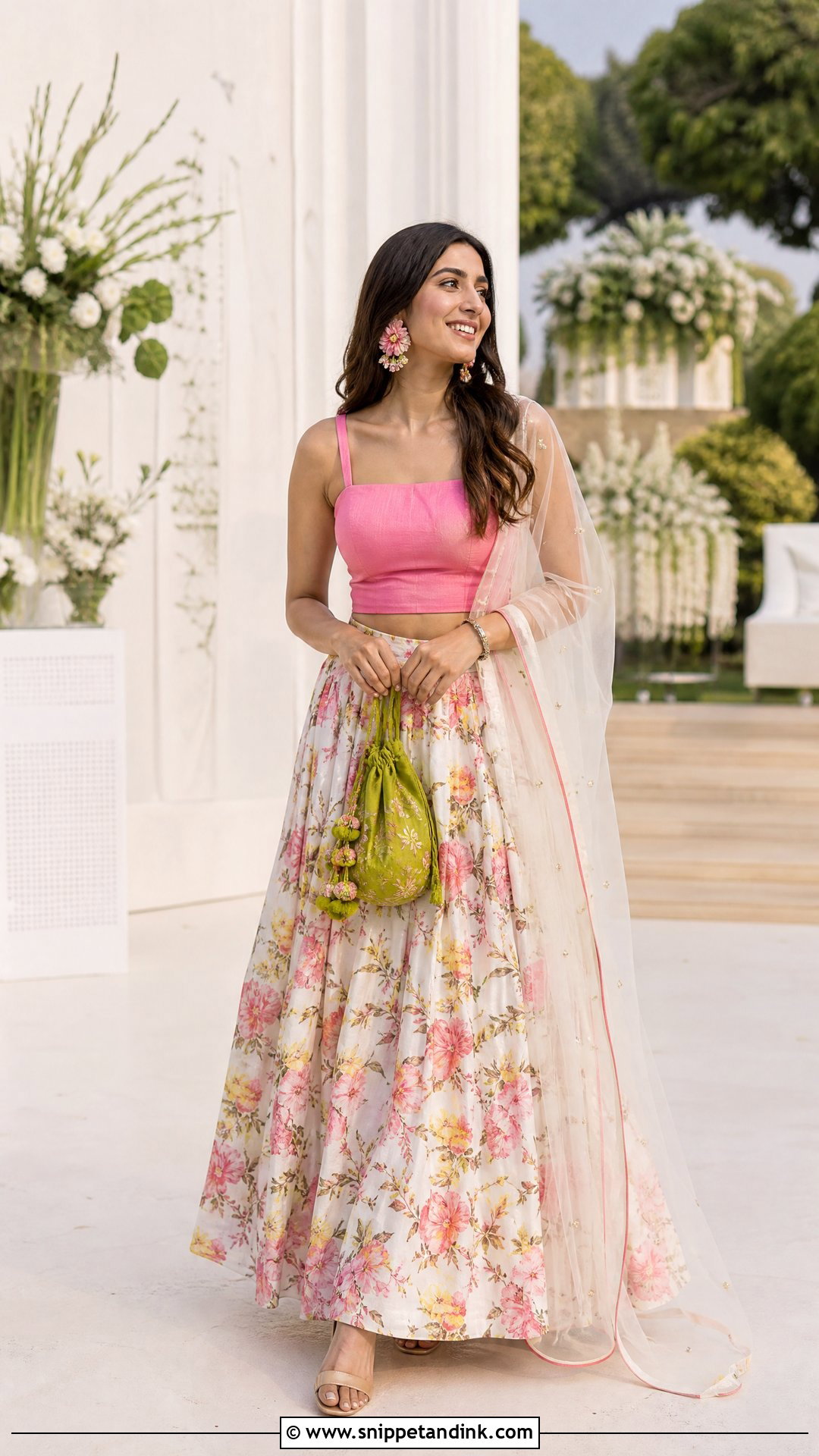
Printed lehengas are lighter, cheaper to clean and far less formal than embroidered ones, which is exactly why I suggest them to guests and bridesmaids for daytime events. A white skirt covered in colorful botanicals needs a solid blouse picked from the print, pink or green usually, and a sheer dupatta with minimal edging. Block-heel sandals beat stilettos on grass. As with ivory, confirm that pale colors are fine with the couple first. A bride who loves the print can add hand embellishment over it and a long veil, and should keep jewelry controlled so the skirt stays the focus.
18. Gold Brocade Lehenga With Red Dupatta
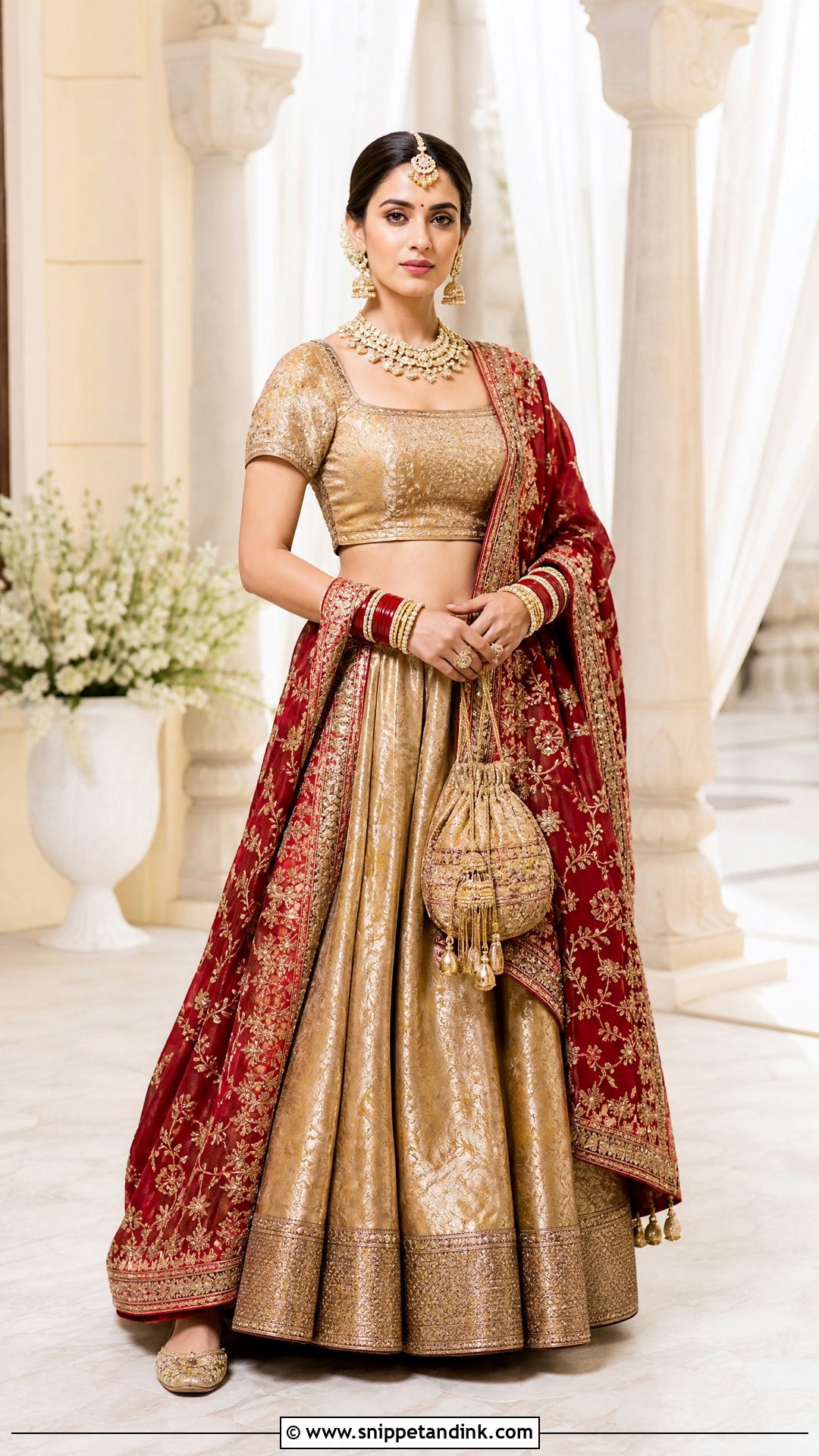
Woven brocade gets its pattern from the loom rather than from surface work, so a gold brocade skirt carries plenty of detail while staying lighter than a fully embroidered one. Add a blouse in matching brocade or deep red silk and drape a lightweight red dupatta across one shoulder or the torso, keeping the border modest. Kundan, red-and-gold bangles and embroidered juttis are classic here. Brocade is stiff and stands out on its own, so I keep the underskirt minimal; a full can-can under brocade makes the hips look twice their size. Close family can wear a single-drape version of the same idea.
19. Teal Lehenga With Peplum Blouse
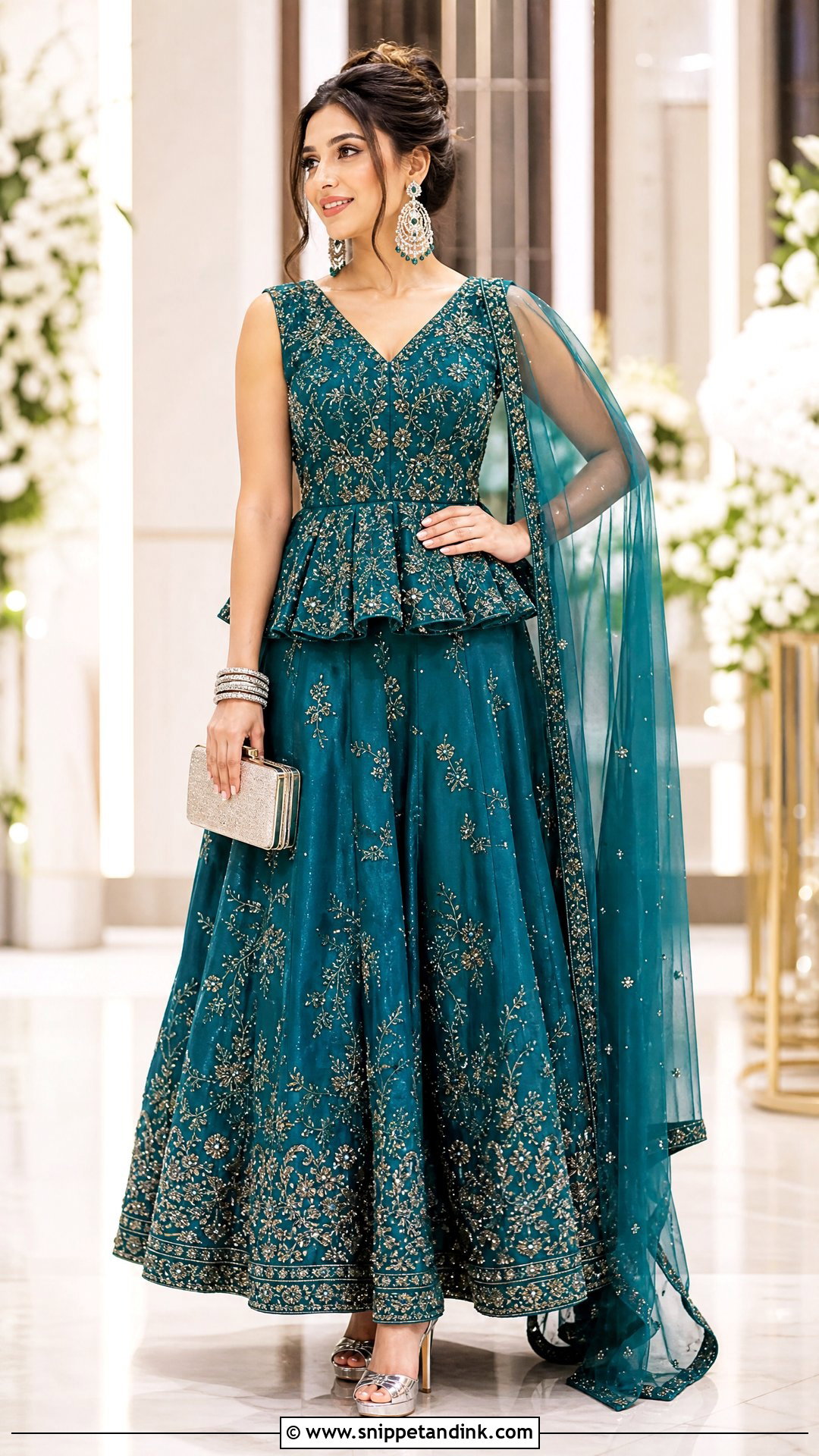
A peplum blouse covers the midriff and defines the waist, which makes it the version I suggest to anyone uneasy about a cropped choli. Pair a teal skirt with restrained gold or silver embroidery with a fitted peplum that flares over the top of the skirt. Since the blouse already carries detail, a narrow dupatta over one shoulder is enough, or none at all if the dress code allows. Proportion matters on shorter frames: a peplum that drops too far below the waist chops the leg line, so I usually stop it a few inches below the natural waist.
20. Multicolor Panelled Lehenga For Sangeet
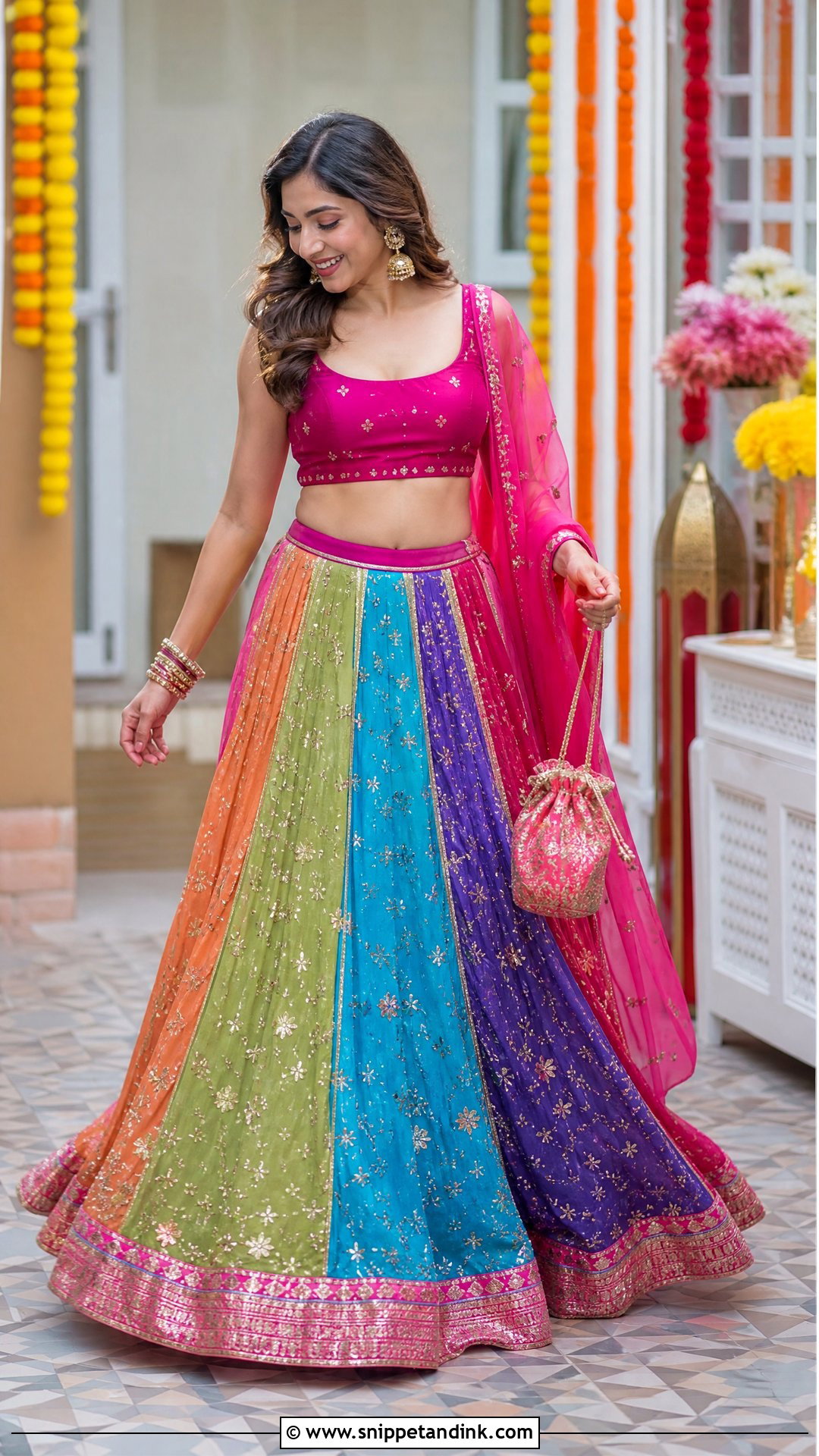
Panelled skirts are made for movement, and a sangeet is where they show it best, since every spin fans the colors out. Choose panels that share a family, such as pink, orange and green, rather than unrelated shades, and pull the blouse color from one of the darker panels. A plain-bordered dupatta, gold earrings, stacked bangles and cushioned juttis keep it practical. A high ponytail or secure bun survives the dancing. Have the hem checked in your actual footwear; a flared skirt that skims the floor in heels will catch underfoot the moment you switch to flats. It’s a group-friendly outfit for bridesmaids, sisters, cousins, and guests.
Pinning a Dupatta So It Stays Put Through the Pheras and the Dance Floor
A dupatta that slips is the thing brides complain about most, and it’s nearly always a pinning problem rather than a fabric problem. For a head drape, I anchor it to the hair with U-pins or bobby pins hidden under the bun, then pin it again at the back of the blouse so its weight isn’t pulling on your scalp. A shoulder drape gets one safety pin through the blouse strap from the inside and a second at the waistband where the fabric falls.
Net and organza are slippery; georgette clings. Use more pins on the first two. For the sangeet, I usually take the bridal dupatta off completely and swap in something narrow or nothing at all. Carry a small kit with spare safety pins and a few bobby pins in your potli or with a cousin, because one will always come loose.
Storing a Zari Lehenga So It Lasts Past the Wedding
Heavy embroidery and metallic zari are what make these outfits worth keeping, and they’re also what damages most easily in storage. Plastic covers trap humidity, which can tarnish metallic thread and yellow pale fabrics, so I wrap lehengas in clean cotton muslin instead.
- Air the outfit for a day before packing it away; sweat and perfume left in the lining discolor it over time.
- Never hang a heavy embroidered skirt. Lay it flat or fold it loosely with tissue between the folds so the embroidery doesn’t rub against itself.
- Refold along different lines every few months. Permanent creases can crack zari and weaken silk along the fold.
- Send it to a dry cleaner who handles bridal embroidery, and point out any stains such as haldi or henna so they can be treated before cleaning.
Matching Each Lehenga to Its Function
The best wedding lehenga is the one that suits the function and that you can still breathe in at hour six. Red, maroon and gold carry the ceremony; pastels, prints and lighter fabrics belong at haldi, mehendi and daytime events; jewel tones and sequins come out at night. Most problems I see on wedding days trace back to the same few things: a waistband that wasn’t tight enough, a hem measured in the wrong shoes, or a dupatta with nothing holding it. Get those right at your fittings and even a heavy outfit becomes comfortable. Brides can lean into heavier craftsmanship, while guests can keep it lighter and still look fully dressed for the occasion.
You'll Like These Ideas:








Leave a Reply