
A Nikah is usually the smallest and most sacred part of the wedding, and the clothes should respect that. Heavy bridal weight belongs to later events; here I dress brides, sisters and guests in pieces they can sit, pray and hug in. Ivory, sage, blush, champagne, powder blue, pistachio, gold and emerald all appear at Nikahs, in chiffon, organza, silk, georgette or jamawar. The ideas below are mixed on purpose: some suit the bride, some suit family, some are guest outfits, and I’ve noted which. If you cover your hair, thoughtful hijab styling is part of the outfit, not an afterthought.
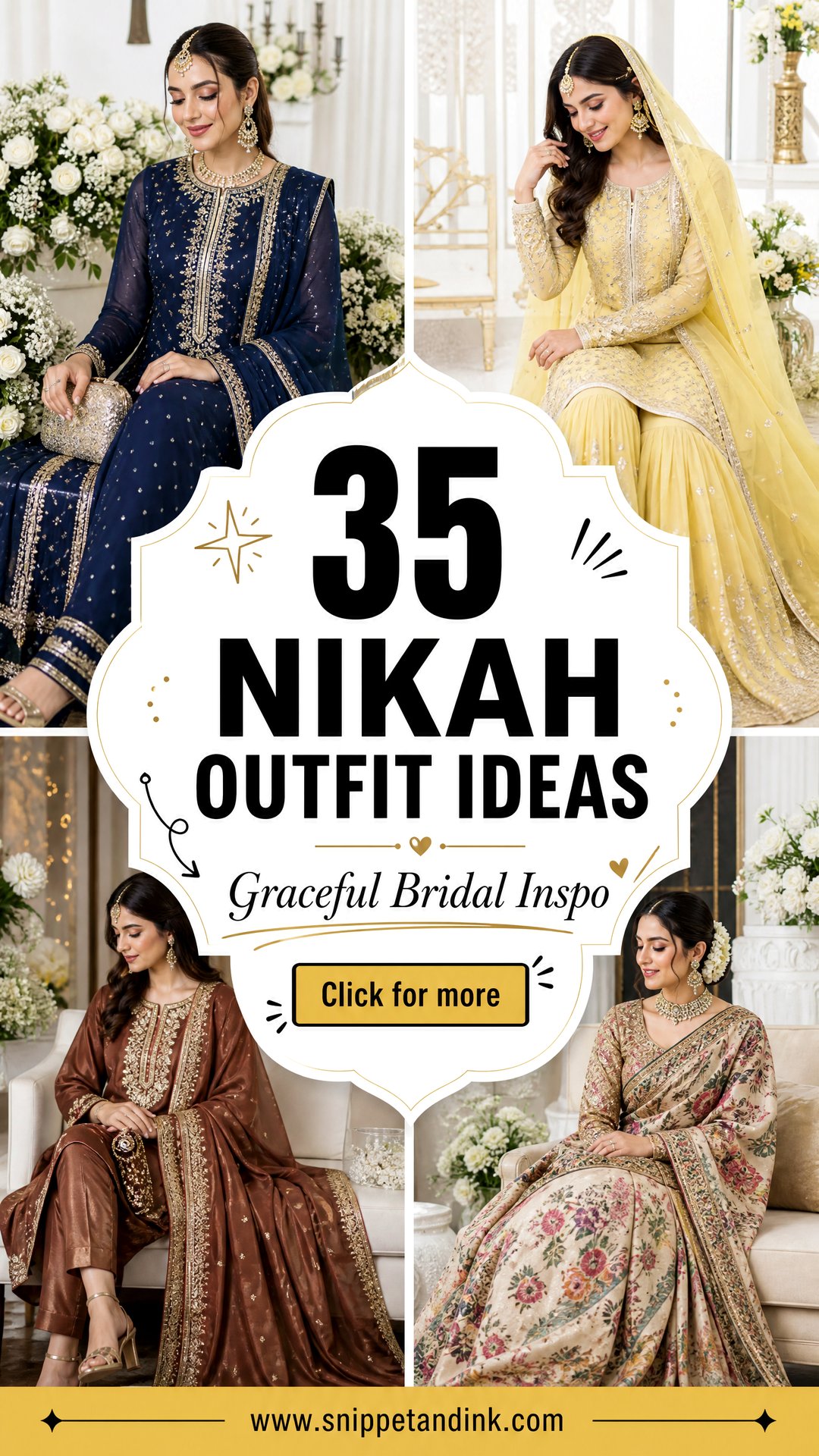
Bride, Sister or Guest? Reading Your Role Before Picking a Color
Half the outfits I help with at a Nikah are not the bride’s. Mothers, sisters, cousins and guests all ask the same question: what am I allowed to wear? The answer depends on the family, but a few conventions hold at most ceremonies.
- The bride chooses first. Her color is off-limits to everyone else, so families often share it in the group chat once it is decided.
- Close family often coordinate in one palette, or in one fabric across different colors. It makes the family photos read as a group without putting everyone in a uniform.
- Guests avoid white, ivory and red unless the bride has said otherwise, and keep embellishment below the bride’s.
- Black is family-dependent. If you have to ask, the safer choice is navy or a deep jewel tone.
Coverage is the other half. For a mosque or a conservative home, I dress everyone, bride and guests alike, in sleeves to the elbow or longer, a neckline at the collarbone, and a dupatta or scarf that can cover the hair during the khutbah and the vows. Even a guest who never covers her hair should carry one.
1. White Nikah Anarkali Outfit
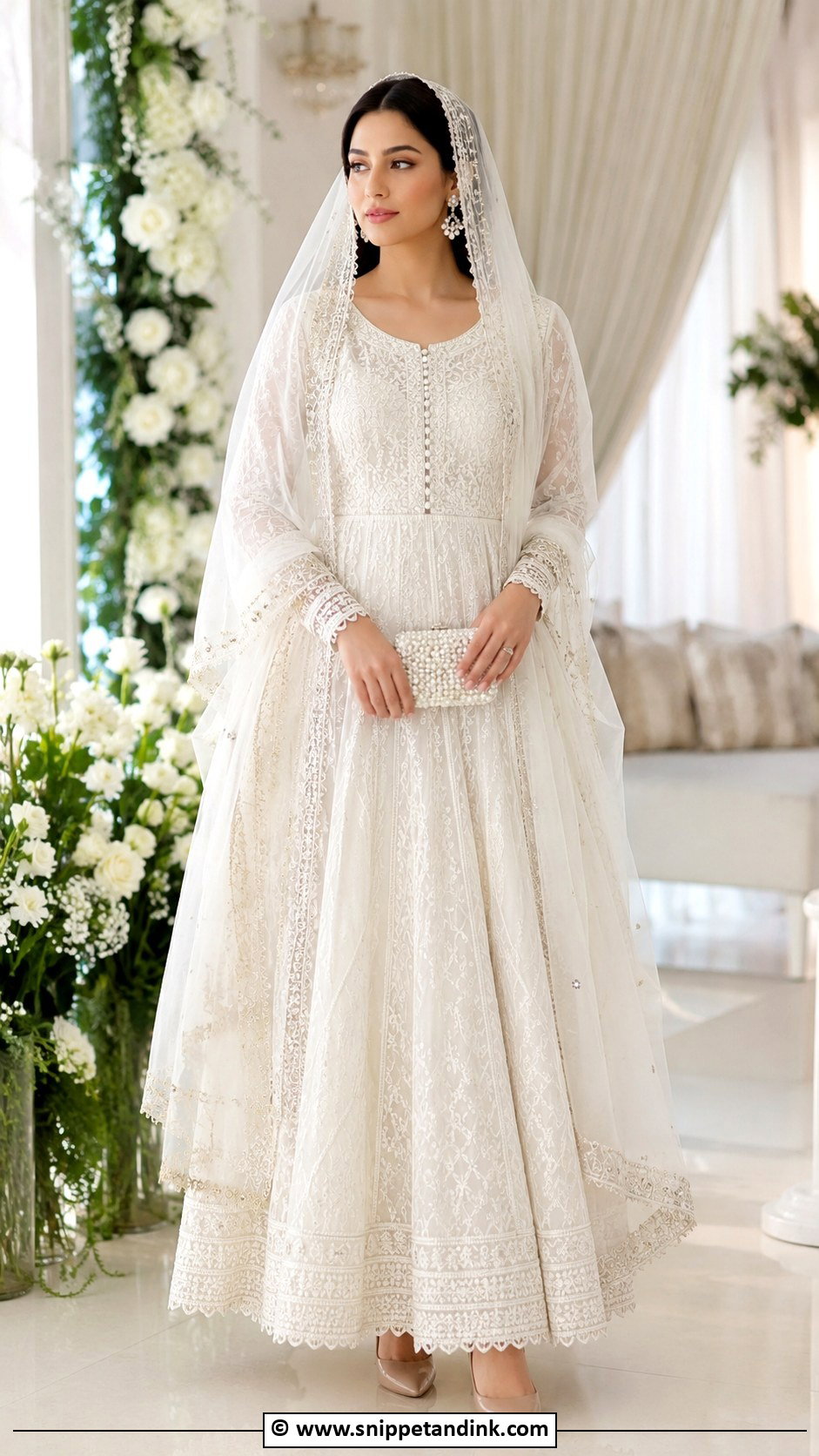
White anarkalis are the classic bridal Nikah piece. Floor length, full sleeves, delicate embroidery and a chiffon or organza dupatta keep it light enough for a mosque or a home. I keep jewelry to pearl earrings and a small maang tikka, since the kalis already give movement. A note for guests: white is only an option if you know the bride is wearing a color.
2. Ivory Sharara Nikah Outfit
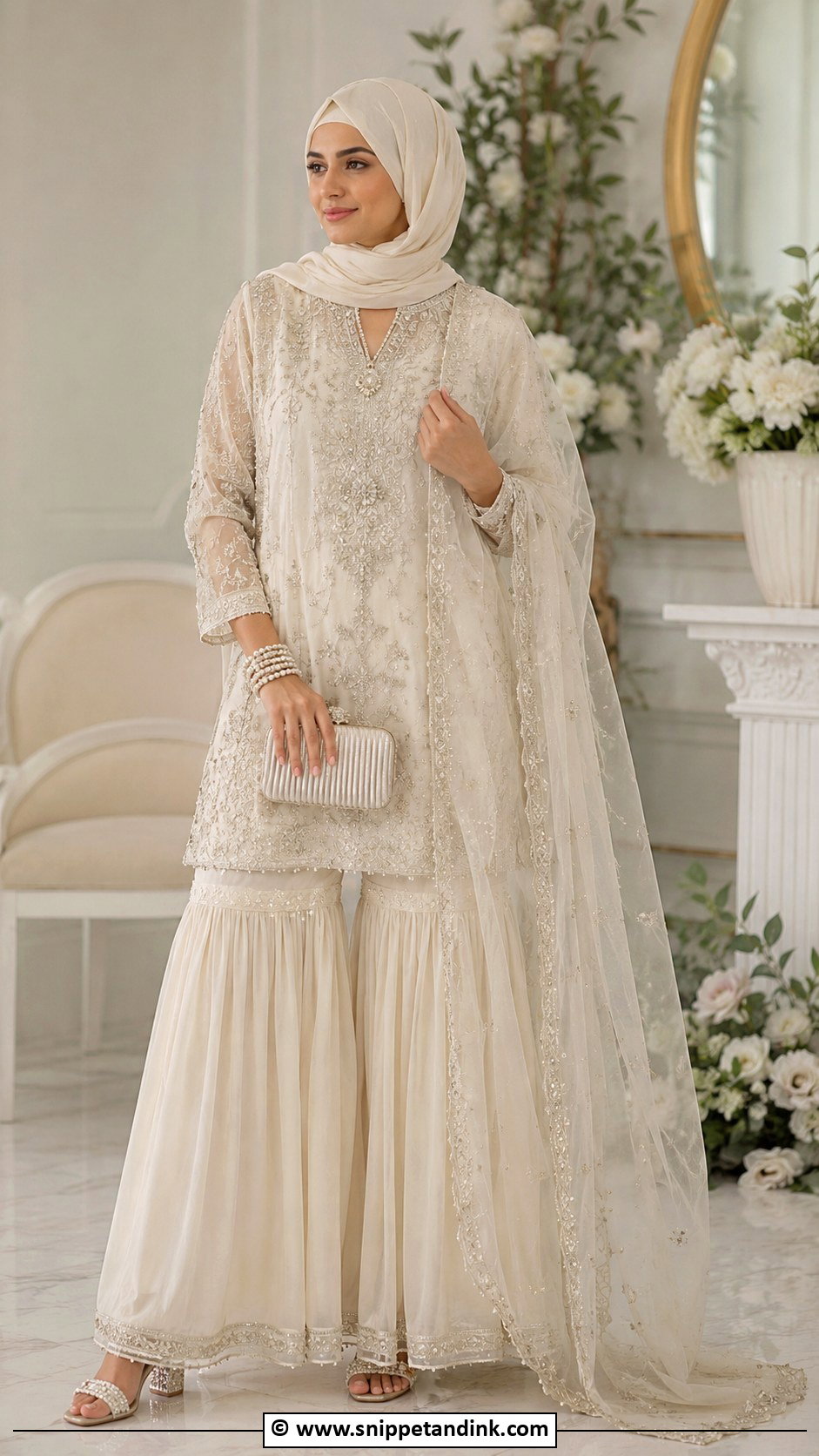
The sharara’s flare starts at the knee, so a short kameez is what keeps an ivory set from looking bottom-heavy. Pearl, sequin or thread details make it read bridal. Block heels are kinder than stilettos here; the wide legs hide them, and you will be standing for photos longer than you expect. Sisters and close family can wear this too, in a less embellished version.
3. Gold Lehenga Nikah Outfit
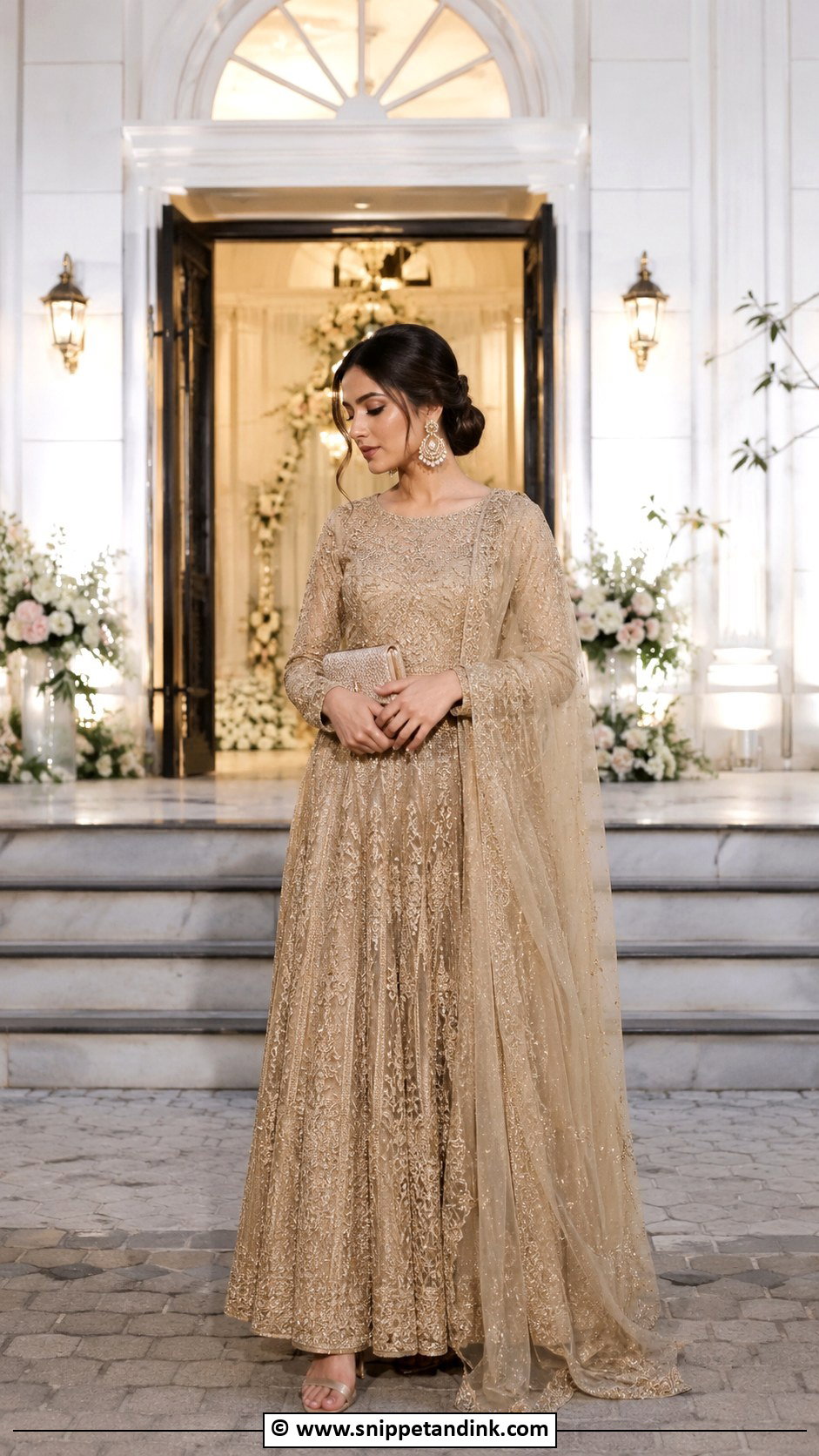
Gold is festive, and that is exactly why I steer most brides toward muted gold or champagne for the Nikah rather than bright metallic. A modest sleeved blouse, a light dupatta and a flowing skirt keep it refined. If the lehenga is heavily worked, the bag and makeup should be plain. Soft gold handles both daylight and evening lamps, which helps when the ceremony runs late.
4. Pastel Pink Nikah Gharara Outfit
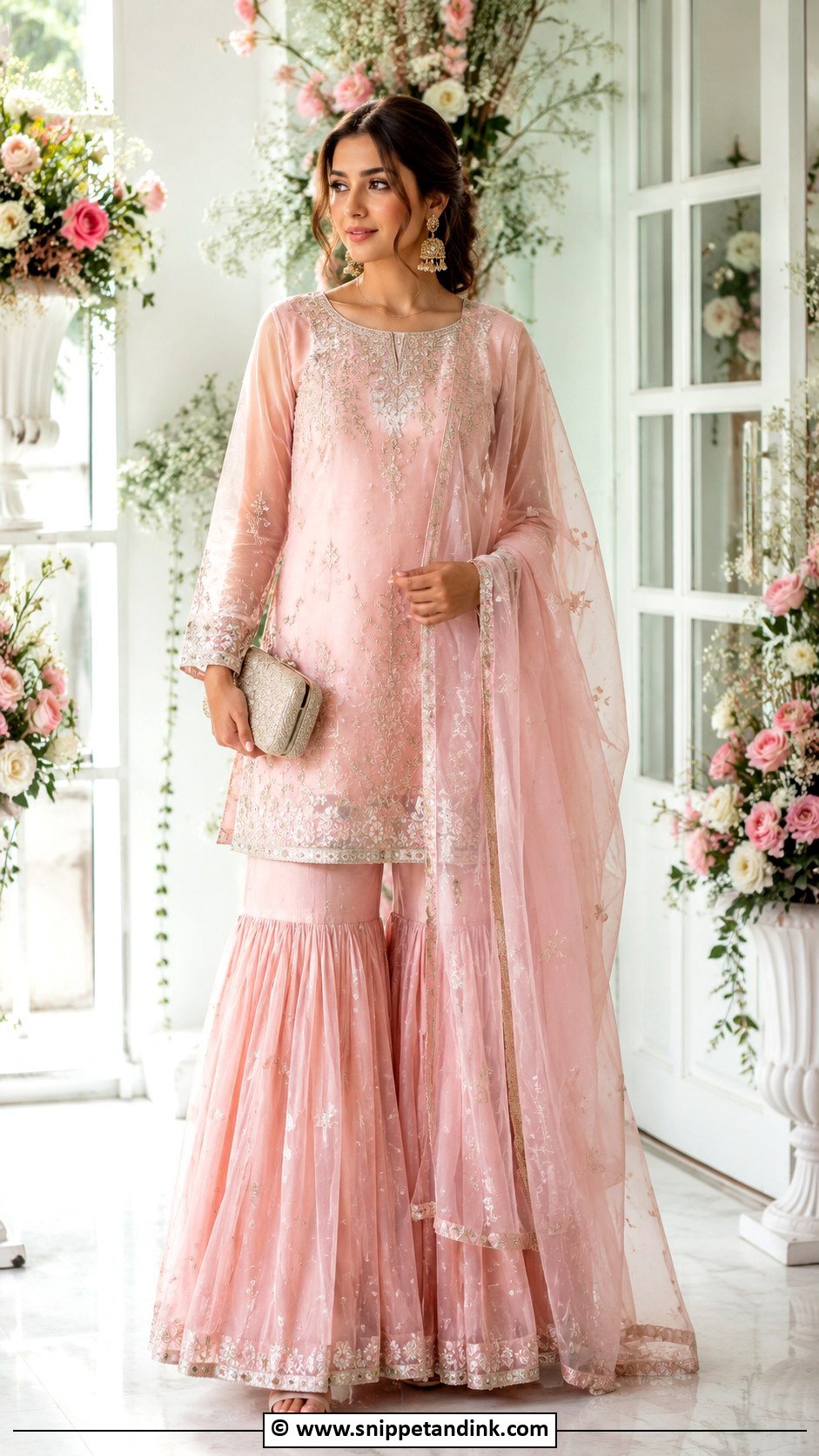
Pastel pink ghararas are romantic without the weight of red. The detail people miss is height: a gharara is cut to fall from a heeled foot, and in flats the knee band drops and the pants pool. Pair a short kurti with zari, gota or pearl work and a net or organza dupatta. Sisters and bridesmaids can wear a simpler version of the same color.
5. Sage Green Nikah Saree Outfit
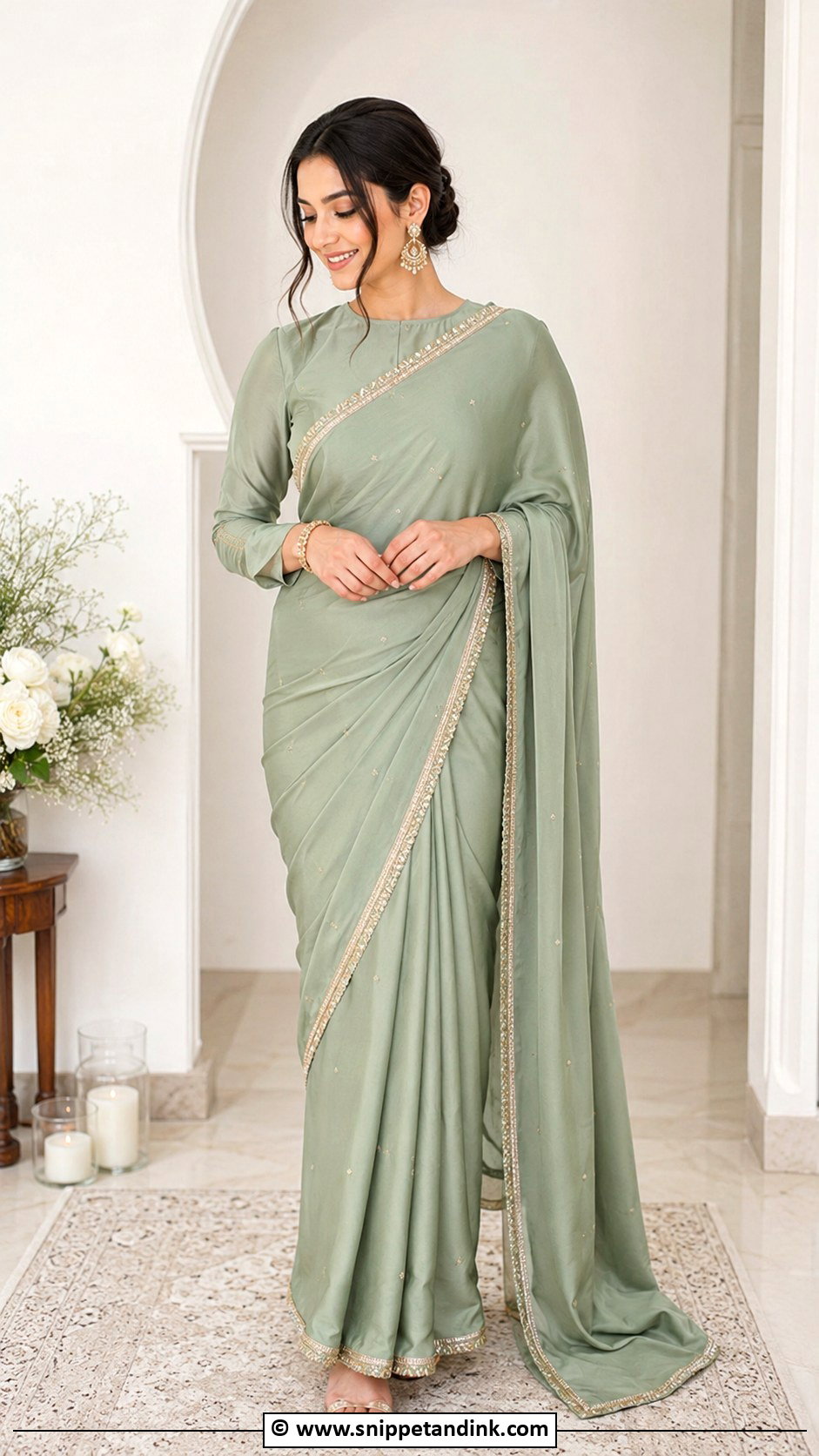
A sage green Nikah saree suits anyone comfortable with a drape. Green carries meaning in many Muslim wedding wardrobes, and sage makes it soft and current. Chiffon or silk with a thin gold edge, a modest blouse and a pallu pinned at the shoulder will hold through the ceremony. If you wear hijab, match its fabric to the saree, or go one shade lighter so your face stays the focus.
6. Champagne Nikah Maxi Dress Outfit
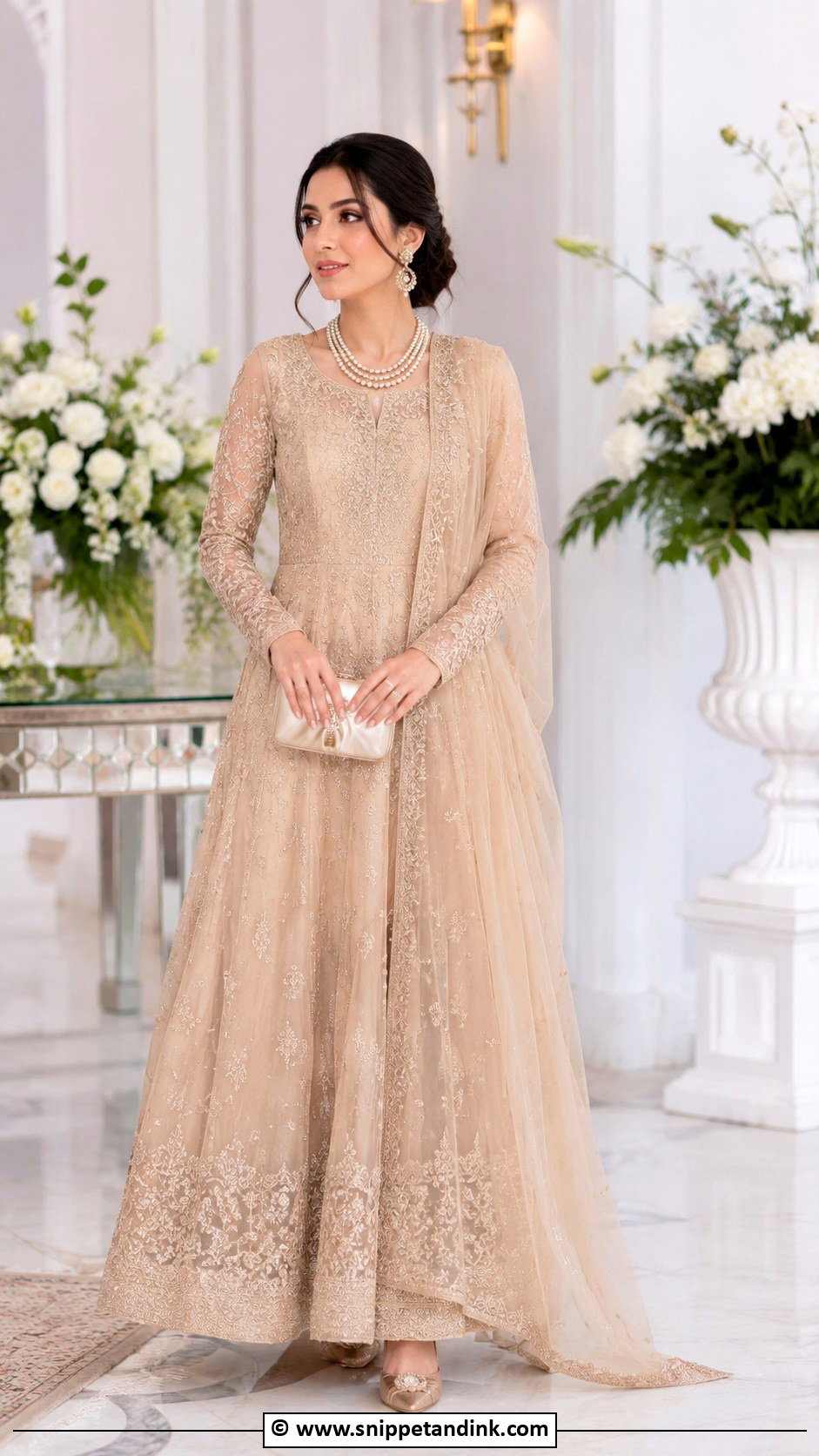
For a bride who wants minimal, a long-sleeve champagne maxi with tonal embroidery is hard to fault. The shade is festive without being loud. I’d add a matching dupatta and pearl jewelry, then stop. Guests can borrow the same idea in a plainer cut. Check the fabric under your phone’s flash before buying, because some champagne satins turn yellow in photos.
7. Emerald Green Nikah Lehenga Outfit
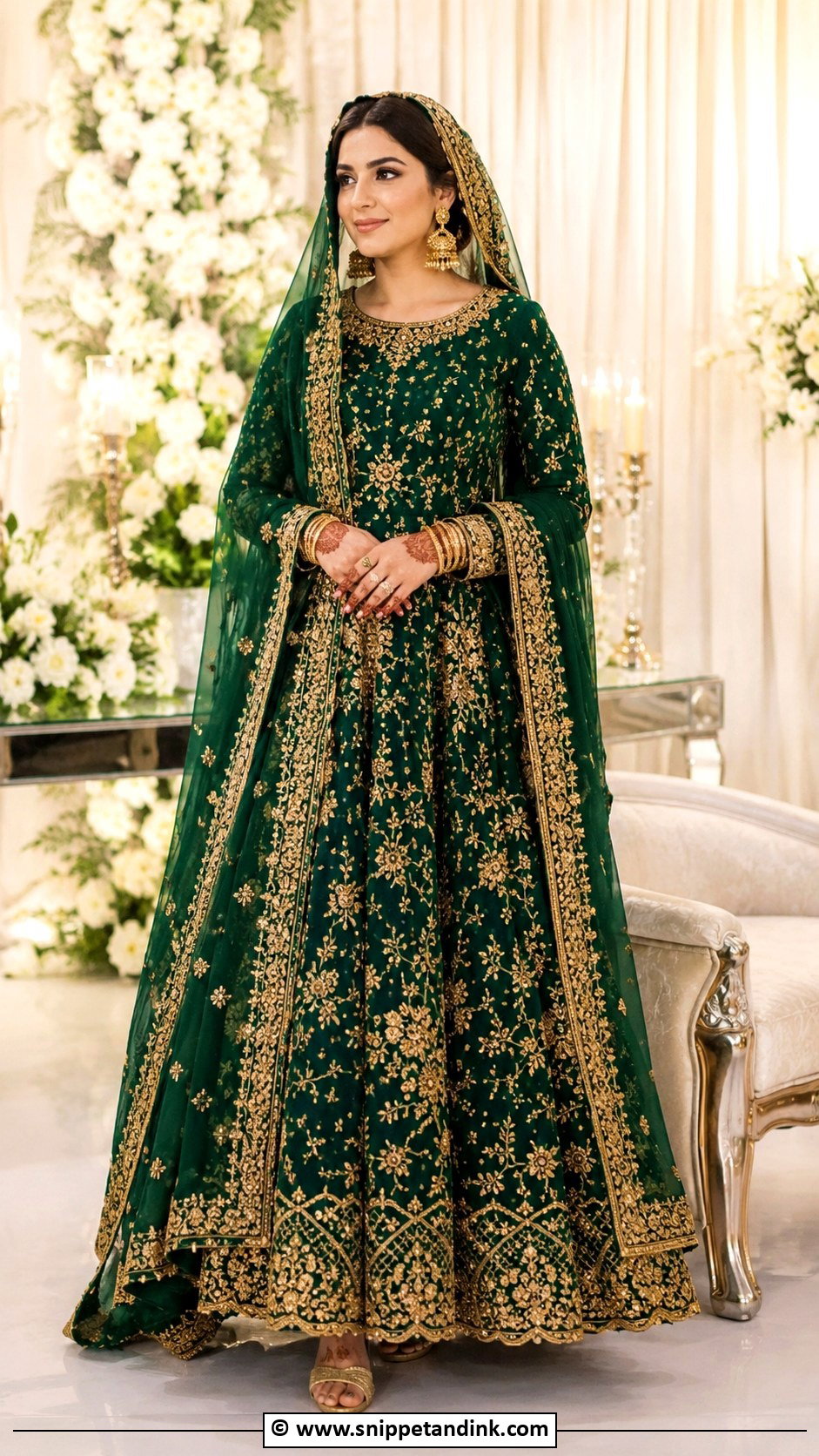
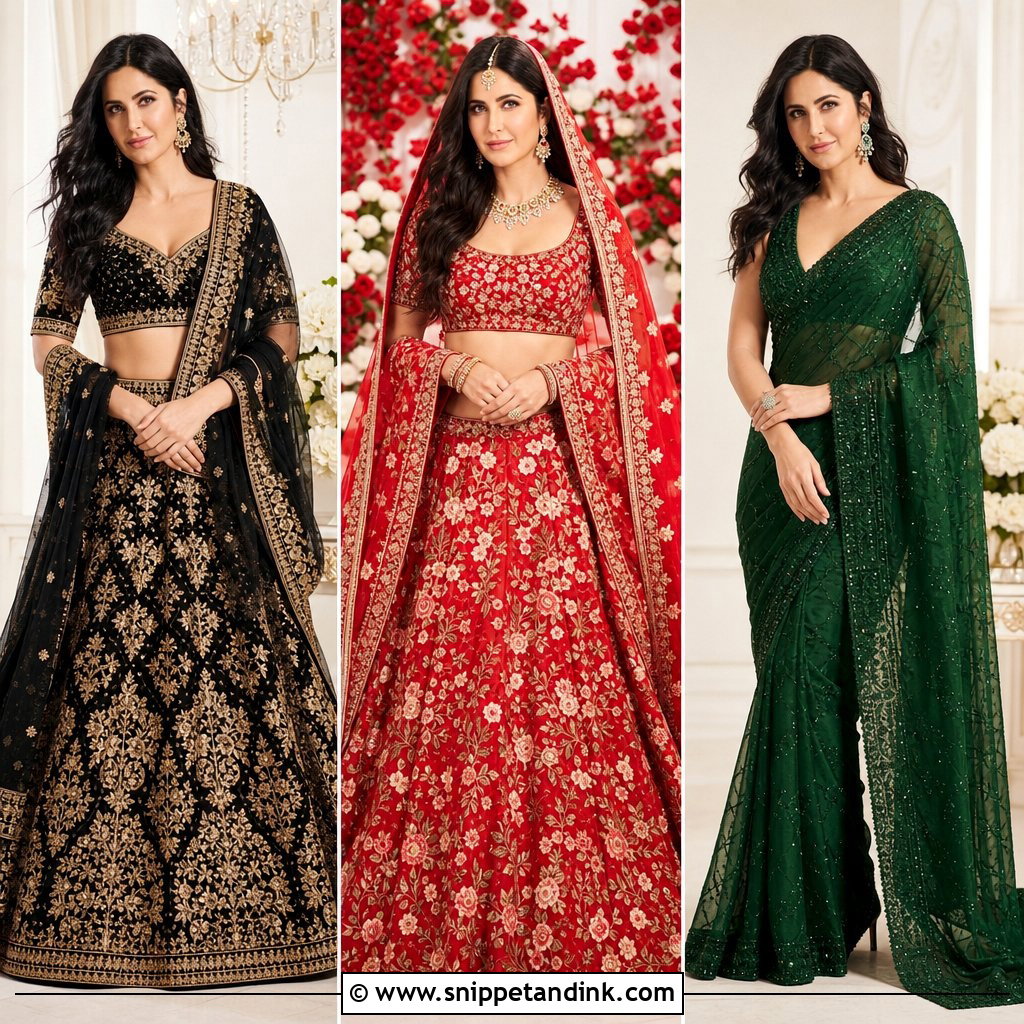
Emerald is a rich, confident Nikah color, best after sunset. Gold embroidery, a modest choli and a dupatta that can go over the head keep it ceremonial. Brides can add a choker or tikka. Guests should skip the bridal jewelry and let the color carry the outfit. With emerald, I keep makeup soft and the lip nude or rose; a bold lip competes with the green.
8. Powder Blue Nikah Salwar Kameez Outfit
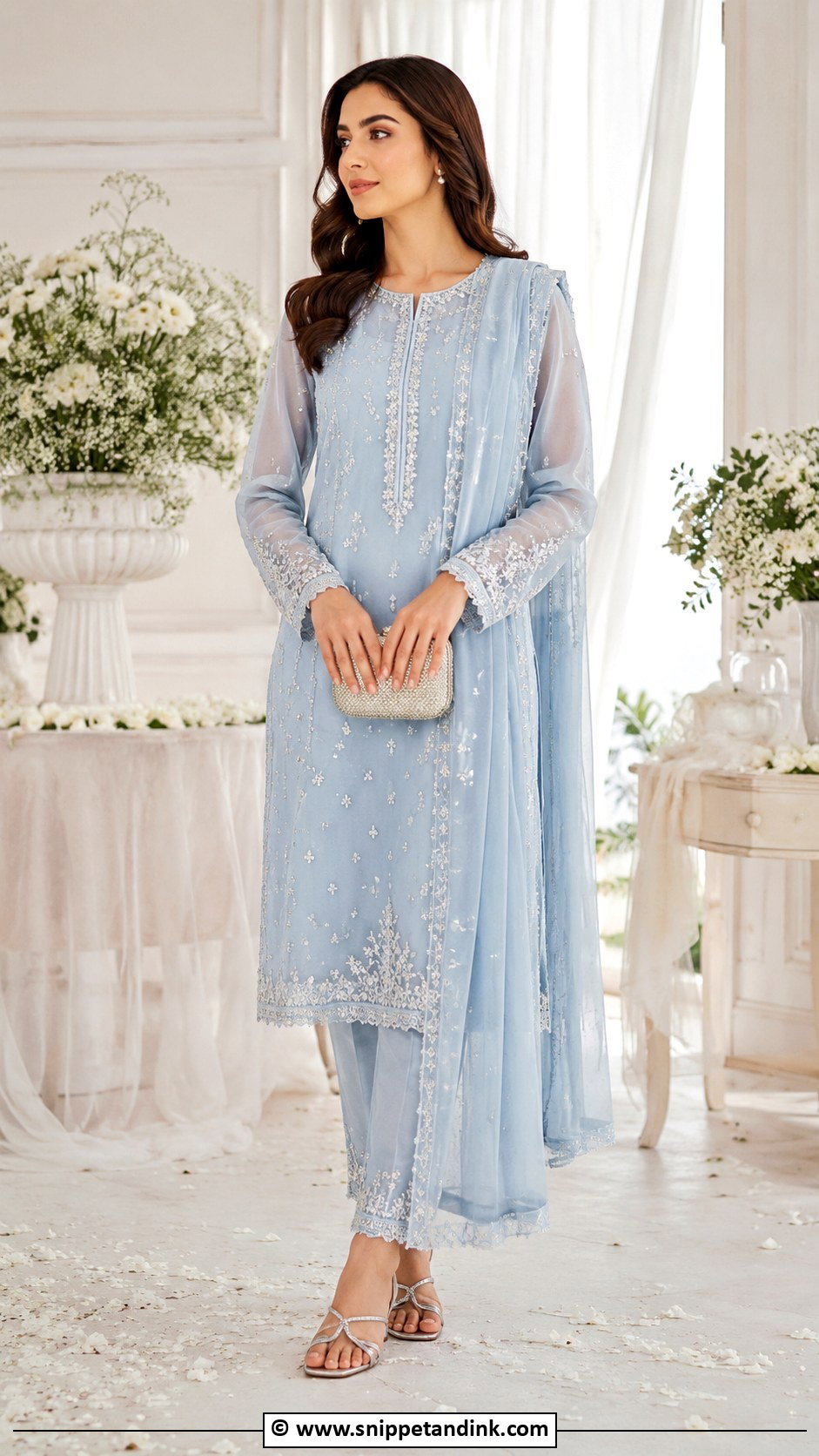
A powder blue Nikah salwar kameez is easy to wear and right for a daytime ceremony. A straight kameez with slim trousers or a classic salwar gives a clean shape. Chiffon, georgette or silk raise the formality. It suits cousins and younger sisters well. For more coverage, choose a higher neckline or a matching hijab.
9. Blush Pink Nikah Lehenga Outfit
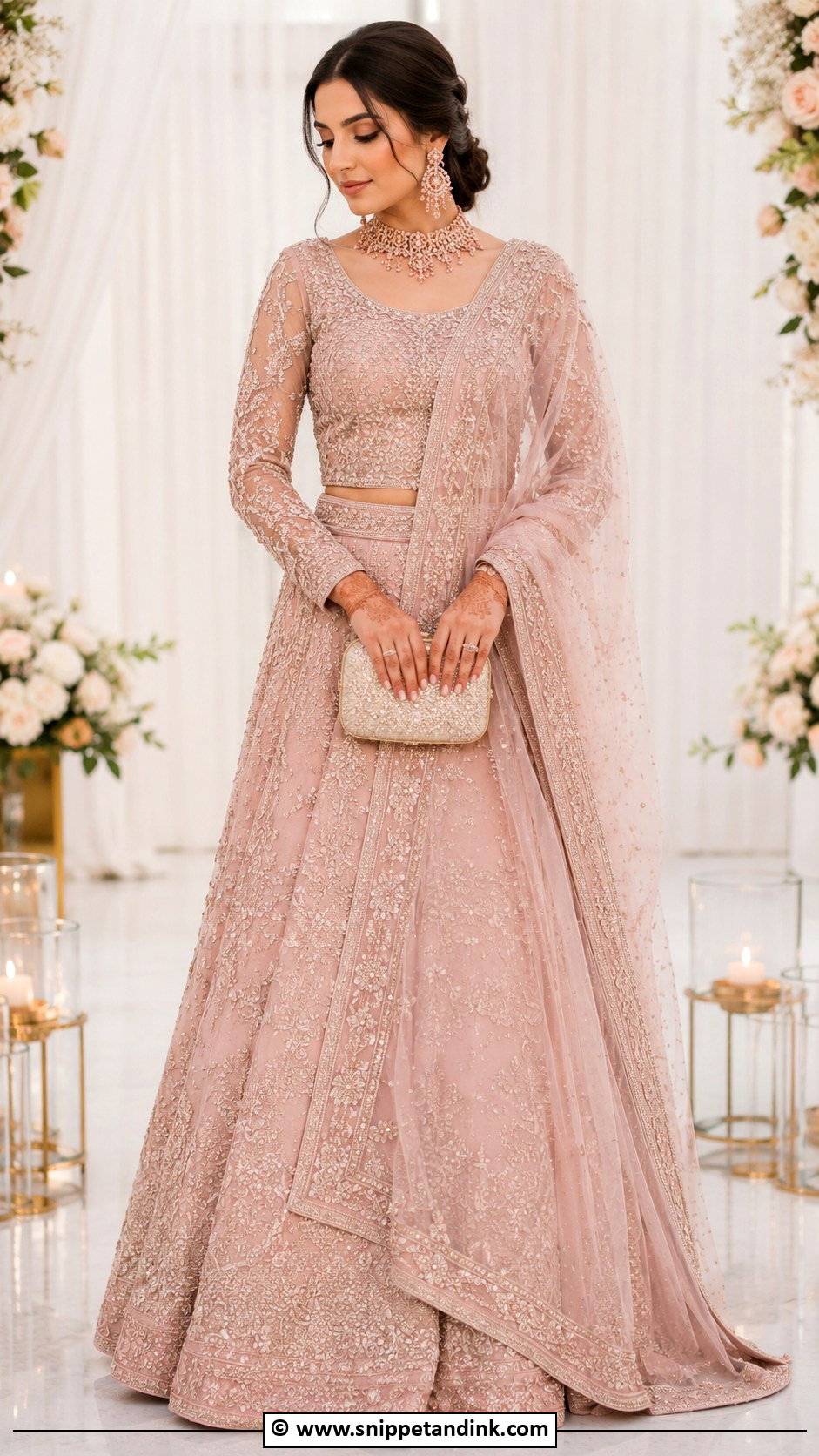
Blush lehengas flatter most skin tones, provided the embroidery is tonal rather than contrasting. Tiny sequins or pearls on a light base, a blouse with elbow or full sleeves, and a sheer bordered dupatta keep it bridal. I would choose between a heavy lehenga and heavy jewelry, never both. Rose gold pieces and nude heels suit the color.
10. Cream Chikankari Nikah Outfit
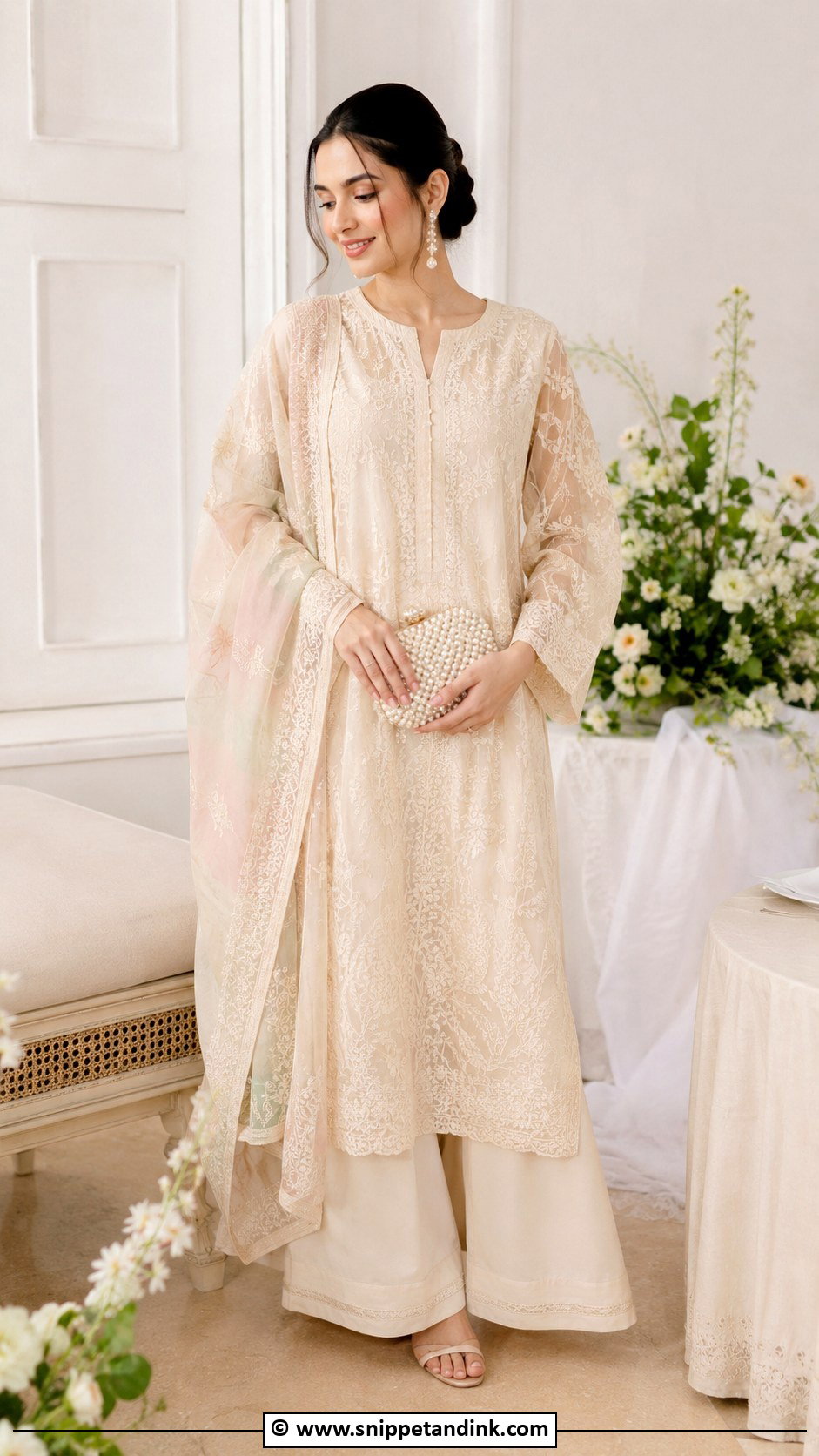
Chikankari is hand embroidery, and its charm is in how quiet it is. Cream on cream on a long kurta, palazzos or a gharara gives a bride an understated look; pastel threads in the dupatta add color without fuss. Pearls suit it better than stones. One practical point: fine cotton or georgette chikankari wrinkles easily, so steam it on the morning, not the night before. It suits daytime home ceremonies and every age group.
11. Mint Green Nikah Sharara Outfit
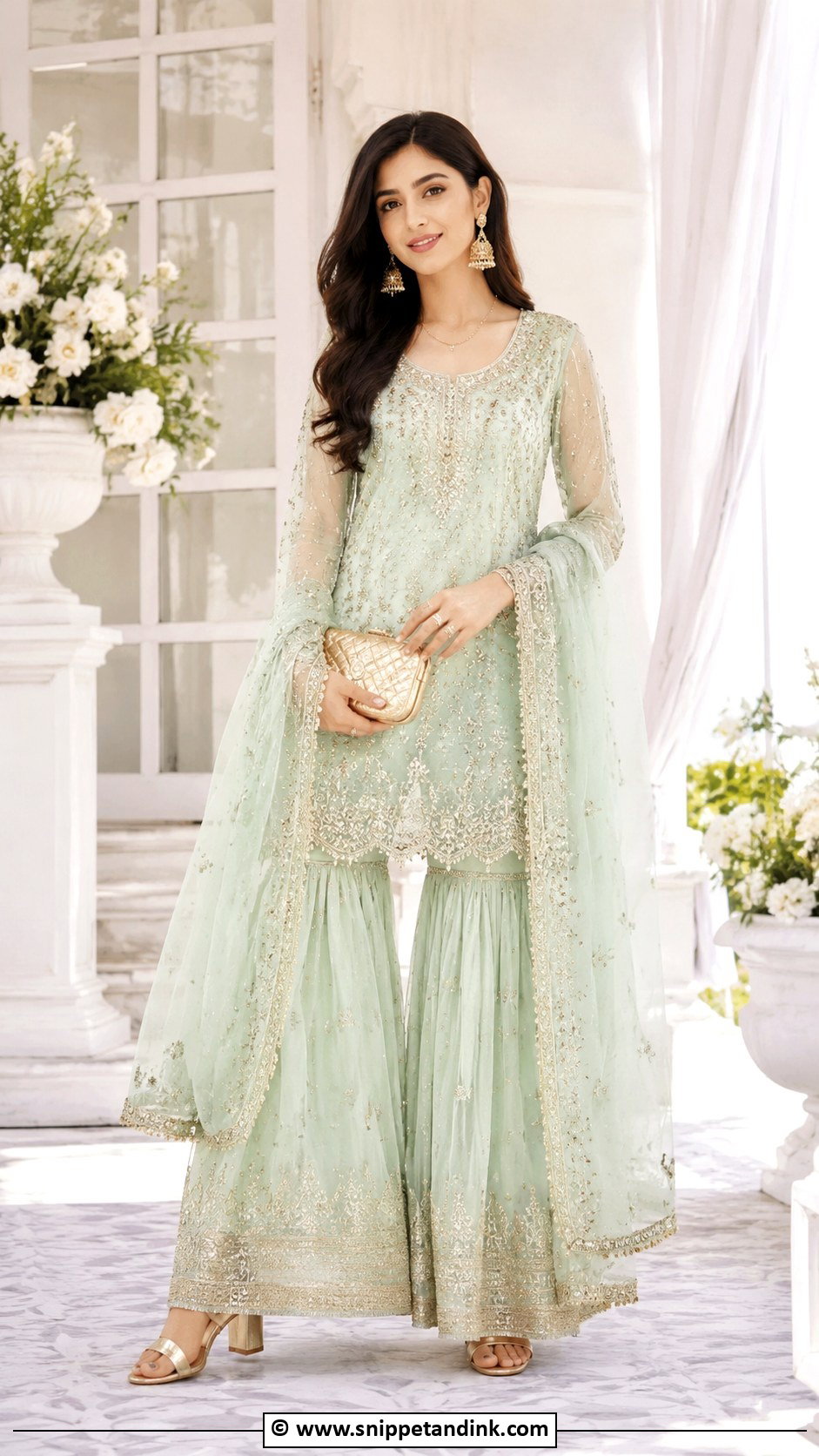
A mint green Nikah sharara is calm enough for a religious ceremony and still festive in photos. A short embroidered kurti, a flowing sharara and a sheer dupatta are the base; silver, pearl or light gold all suit mint. Block heels help the sharara fall smoothly. A light hijab in mint, ivory or beige ties it together. Bridesmaids, sisters, guests and minimalist brides can all wear it.
12. Red Nikah Bridal Lehenga Outfit
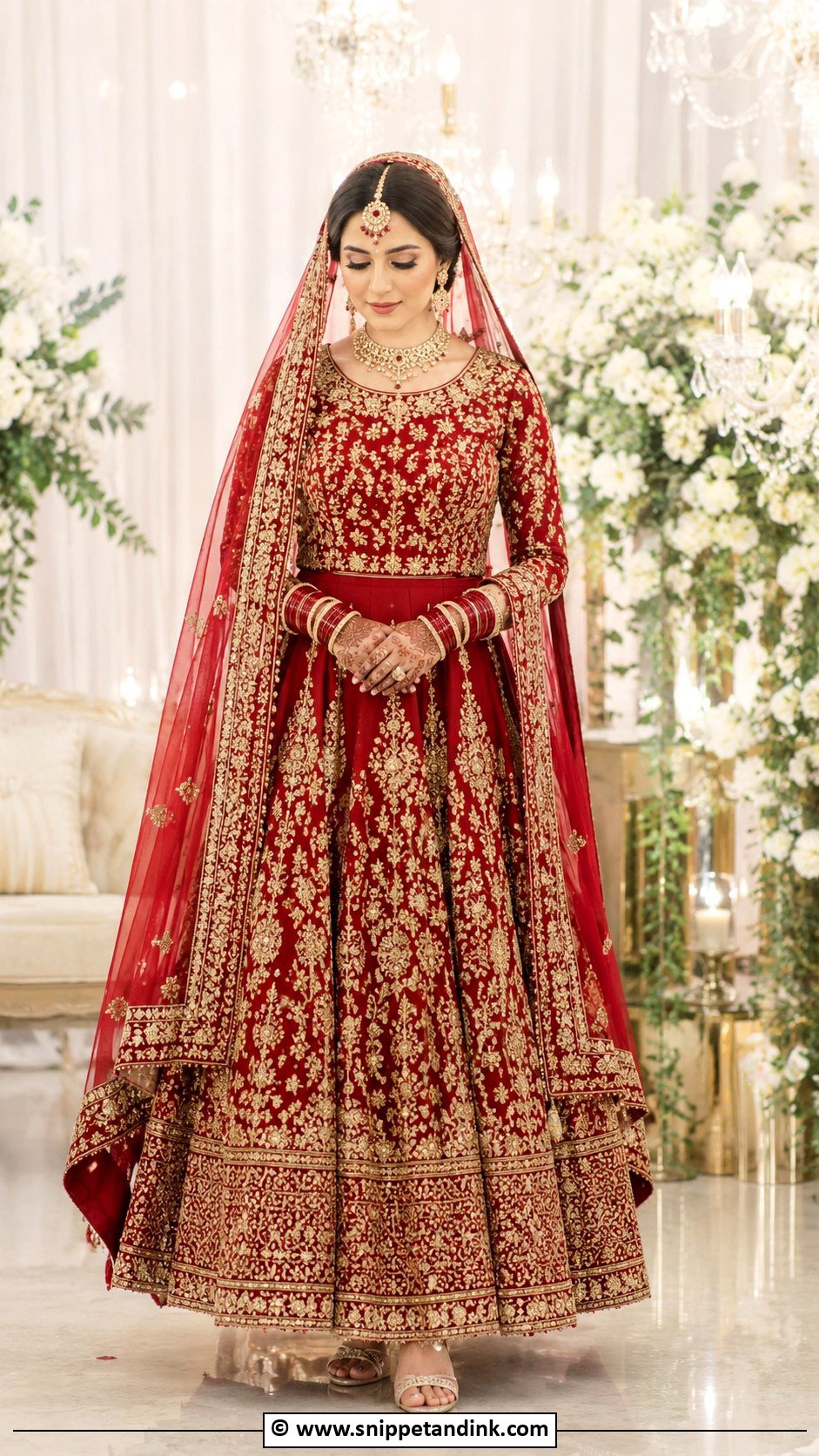
Many brides save red for the main wedding, but a formal Nikah can carry it. I’d go for a deep ruby or maroon-red rather than a bright tone, with gold embroidery, a modest blouse and a dupatta over the head. Tikka, earrings, bangles and a necklace are all appropriate. Keep makeup balanced so the outfit stays the focus. Guests should avoid red; it reads as bridal at most Muslim weddings.
13. White Saree Nikah Outfit
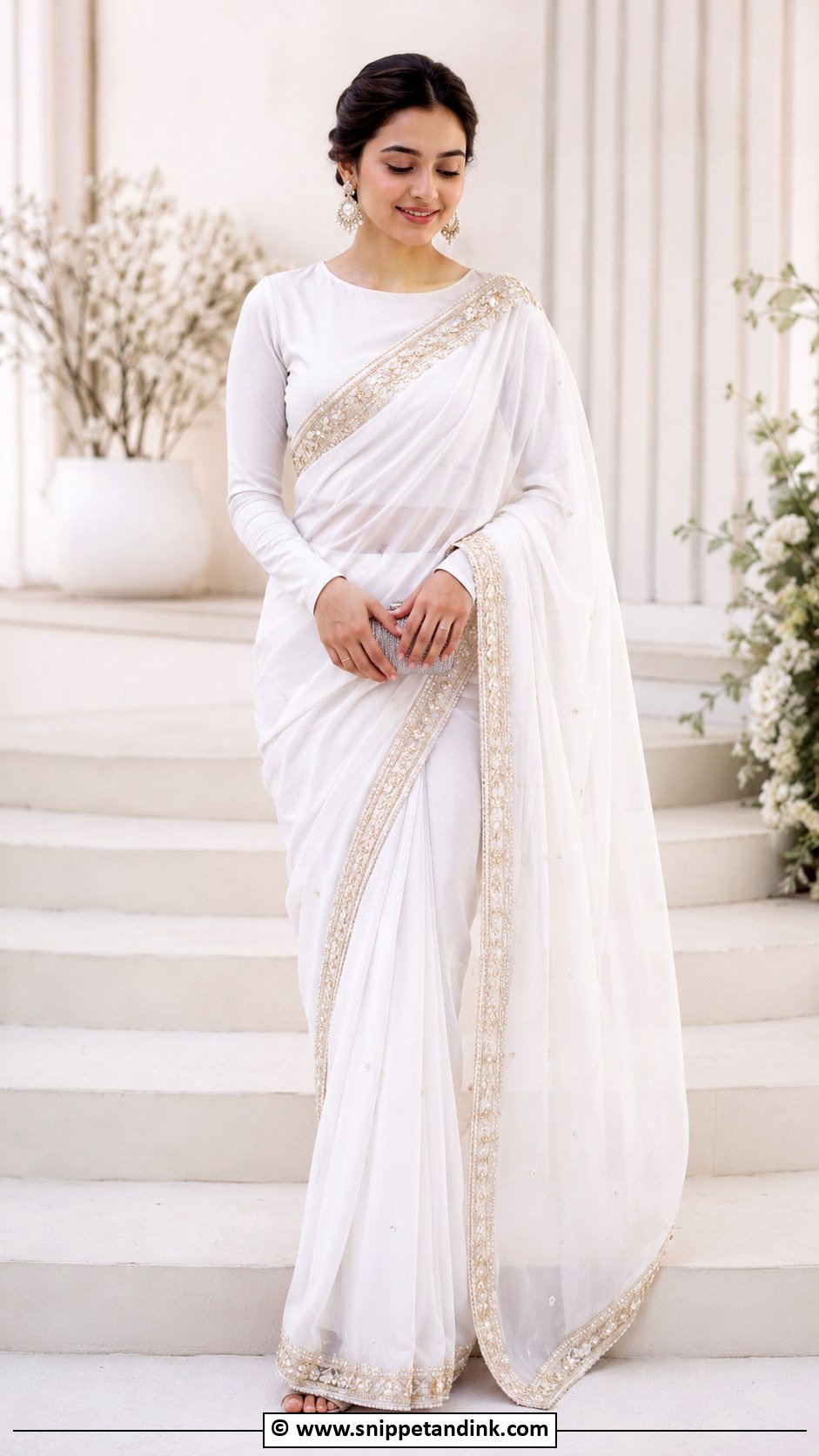
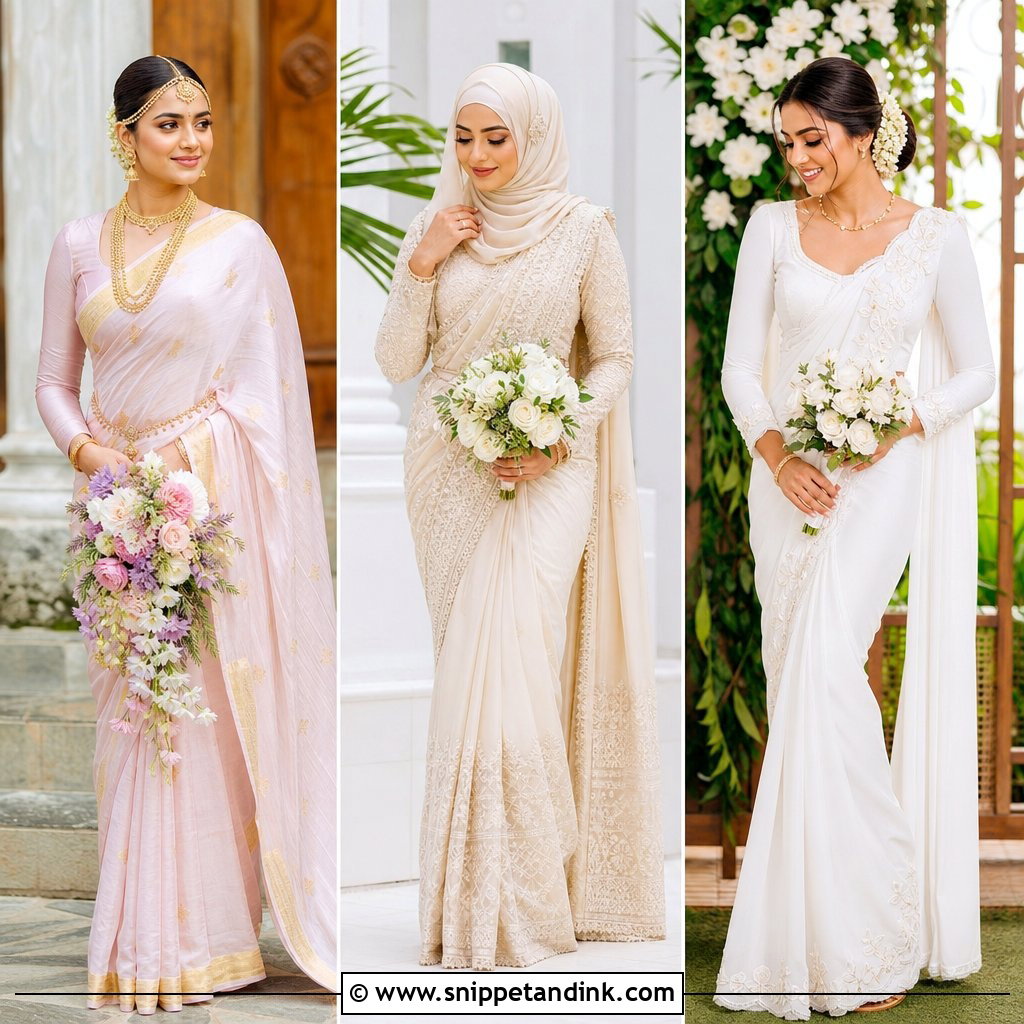
A white saree turns ceremonial through its border: gold, silver or pearl edging keeps it from looking plain. A high-neck or long-sleeve blouse makes it more modest. Pin the pallu securely at the shoulder, and if you want it over the head, add a second pin at the crown. Brides can drape the pallu or add a veil-like dupatta. Guests should only wear white when the bride is not.
14. Peach Nikah Anarkali Outfit
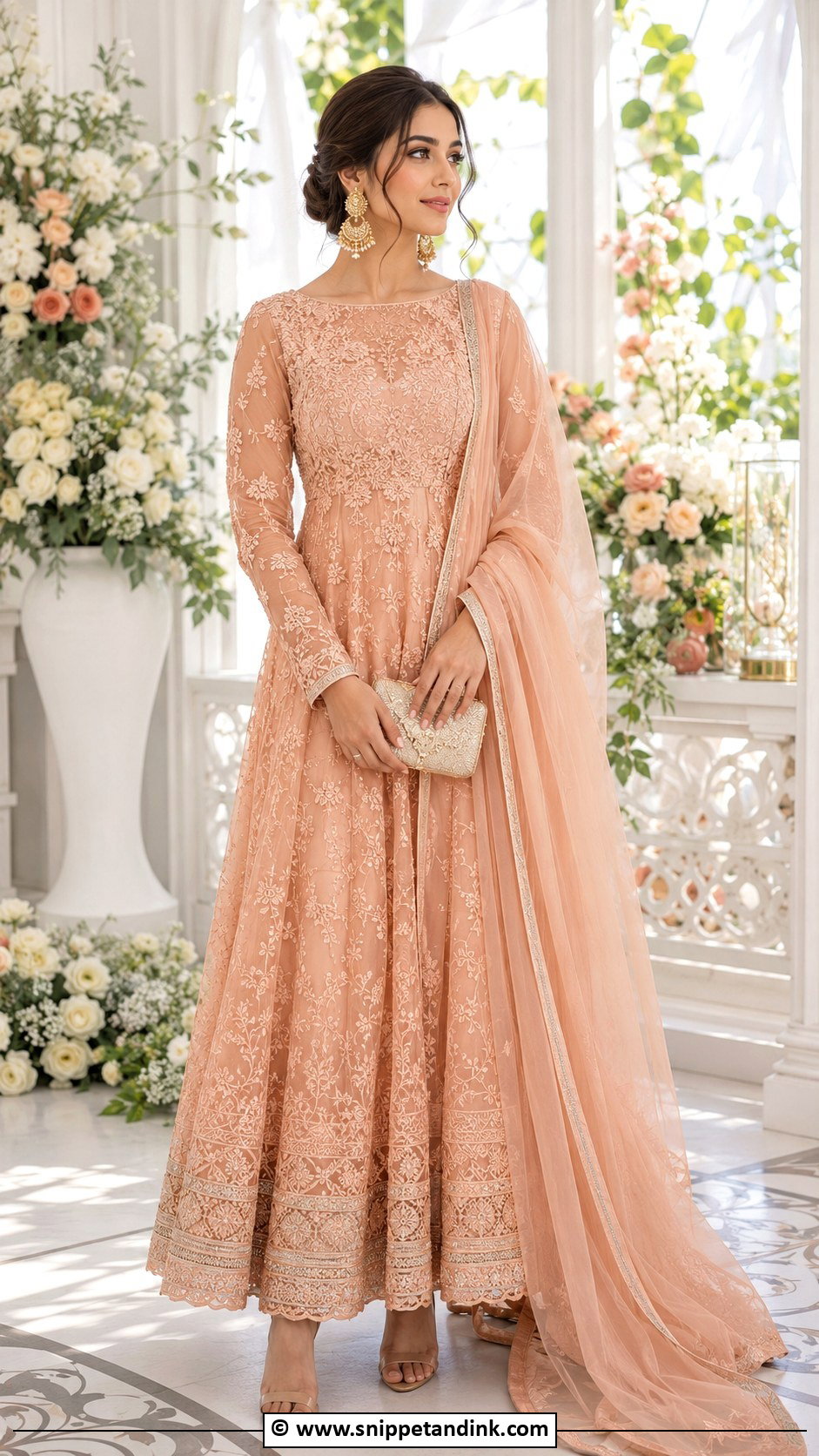
Peach flatters a wide range of skin tones and holds its warmth in daylight. An anarkali with subtle threadwork, mirror details or light zari, and a matching slim-border dupatta keep it balanced. Guests and close family suit a lighter version; a bride can choose heavier work. The flowing shape is comfortable for sitting on the floor and getting up again, which matters more than people think.
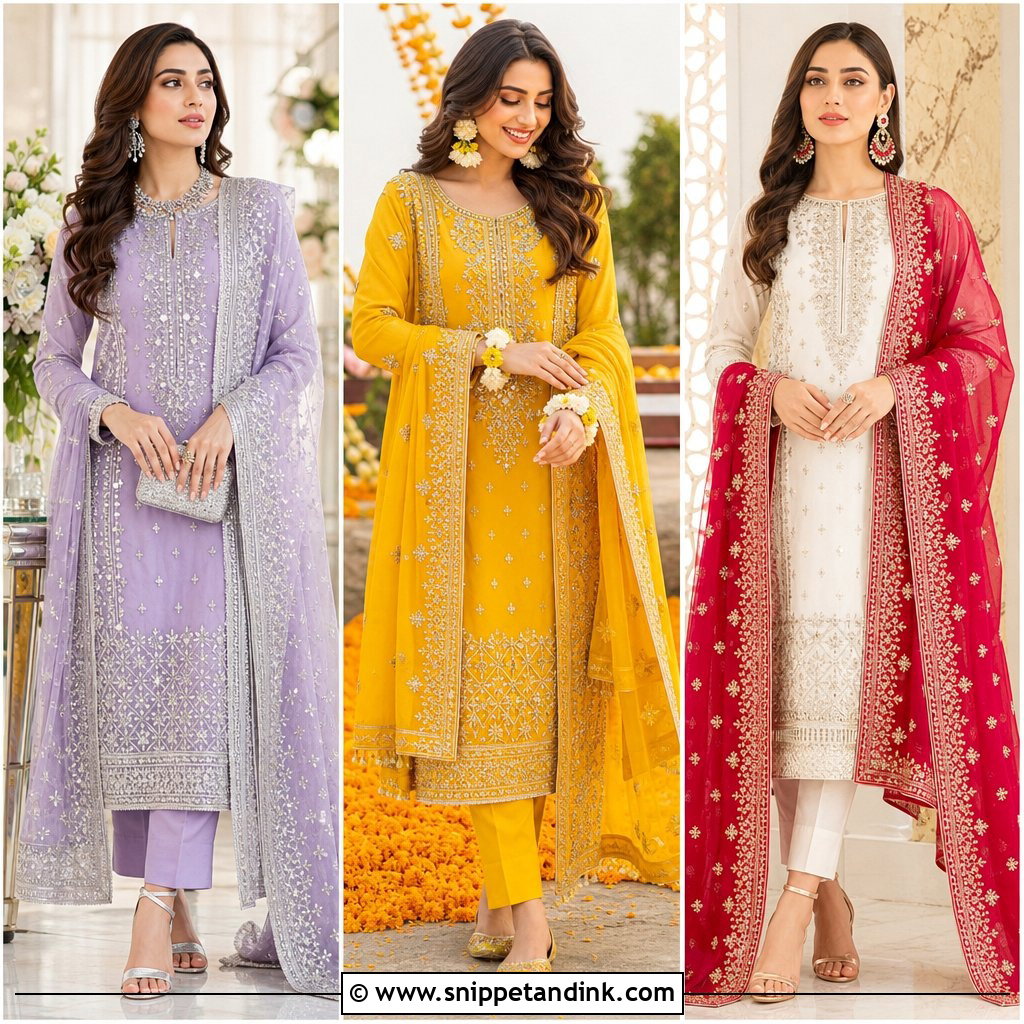
15. Lavender Nikah Maxi Outfit
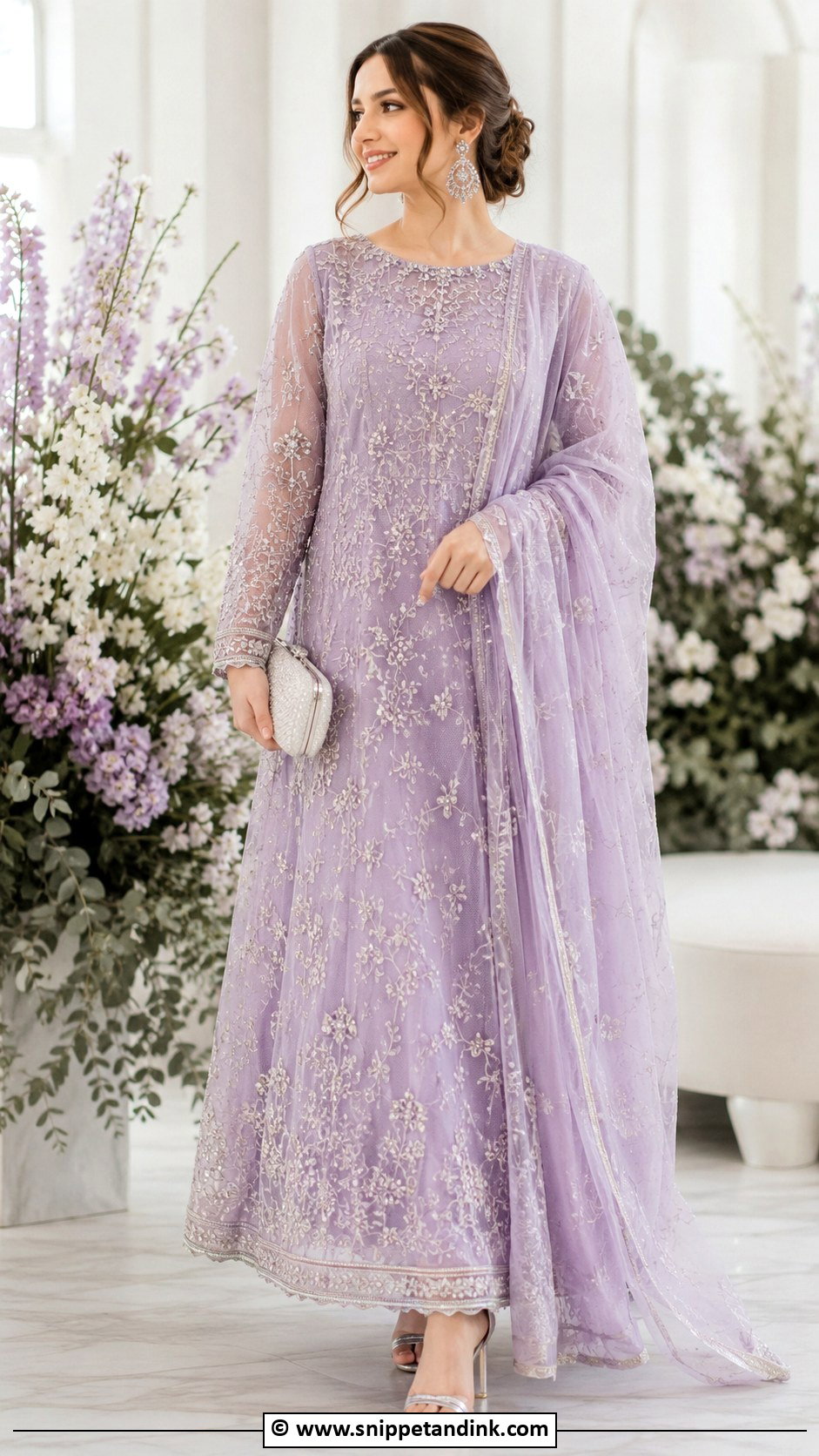
Lavender is a fresh alternative to pink or ivory for spring and summer ceremonies. A modest maxi with lace sleeves or a lightly embellished bodice, plus a chiffon dupatta in the same shade, gives a South Asian finish to a Western cut. Silver heels and crystal earrings suit it. If you wear hijab, lavender or pearl-grey keeps the palette smooth. It suits bridesmaids, sisters and guests.
16. Pistachio Green Nikah Gharara Outfit
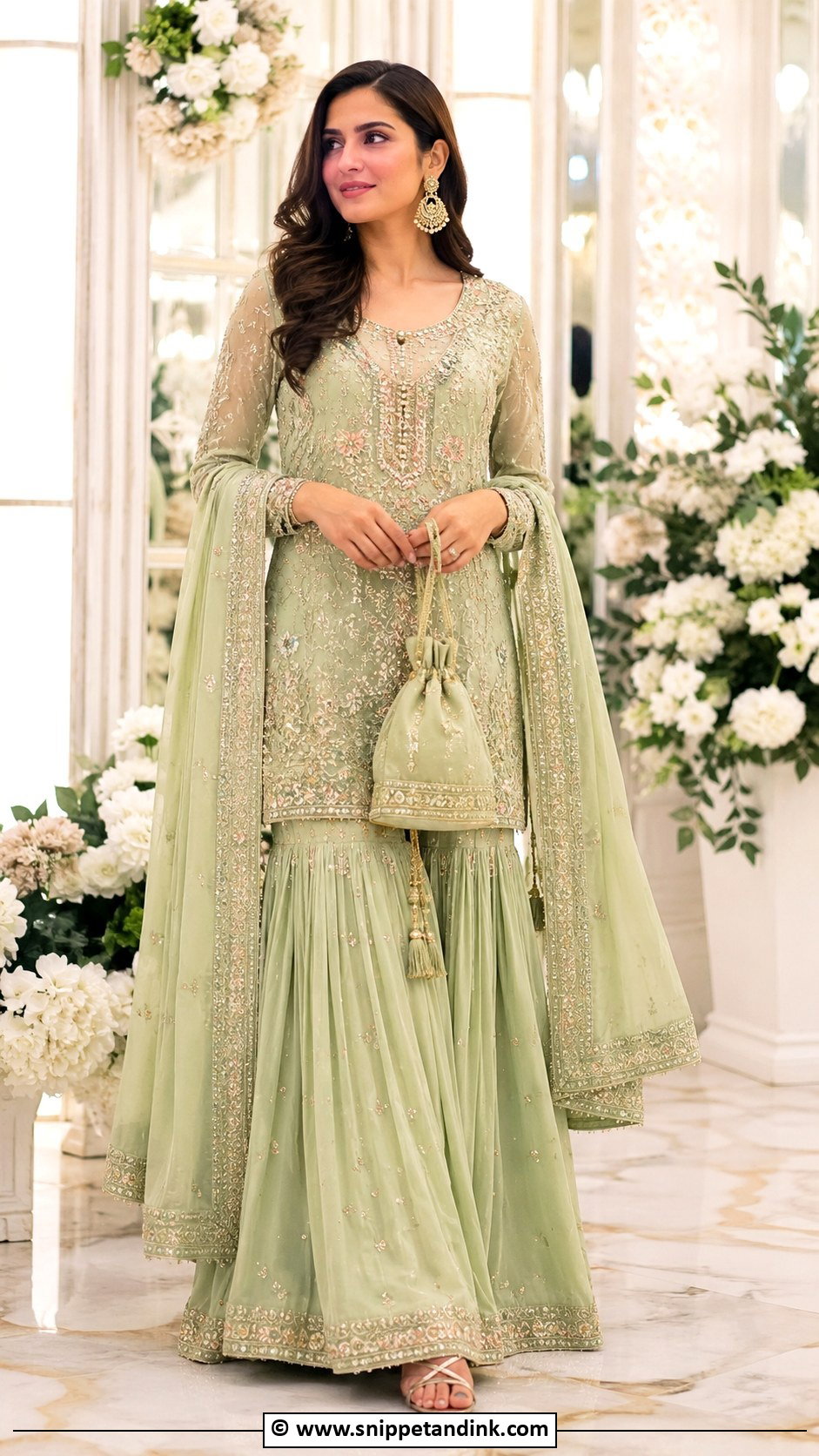
Pistachio is the green I suggest when emerald feels too heavy. On a gharara with delicate gold embroidery, scalloped borders or pearl accents, it looks fresh and traditional at once. The short kurti and wide pants need a heel to balance. Drape the dupatta over the head for the ceremony itself. A potli bag and gold jewelry complete it for brides, sisters or formal guests.
17. Beige Nikah Suit Outfit
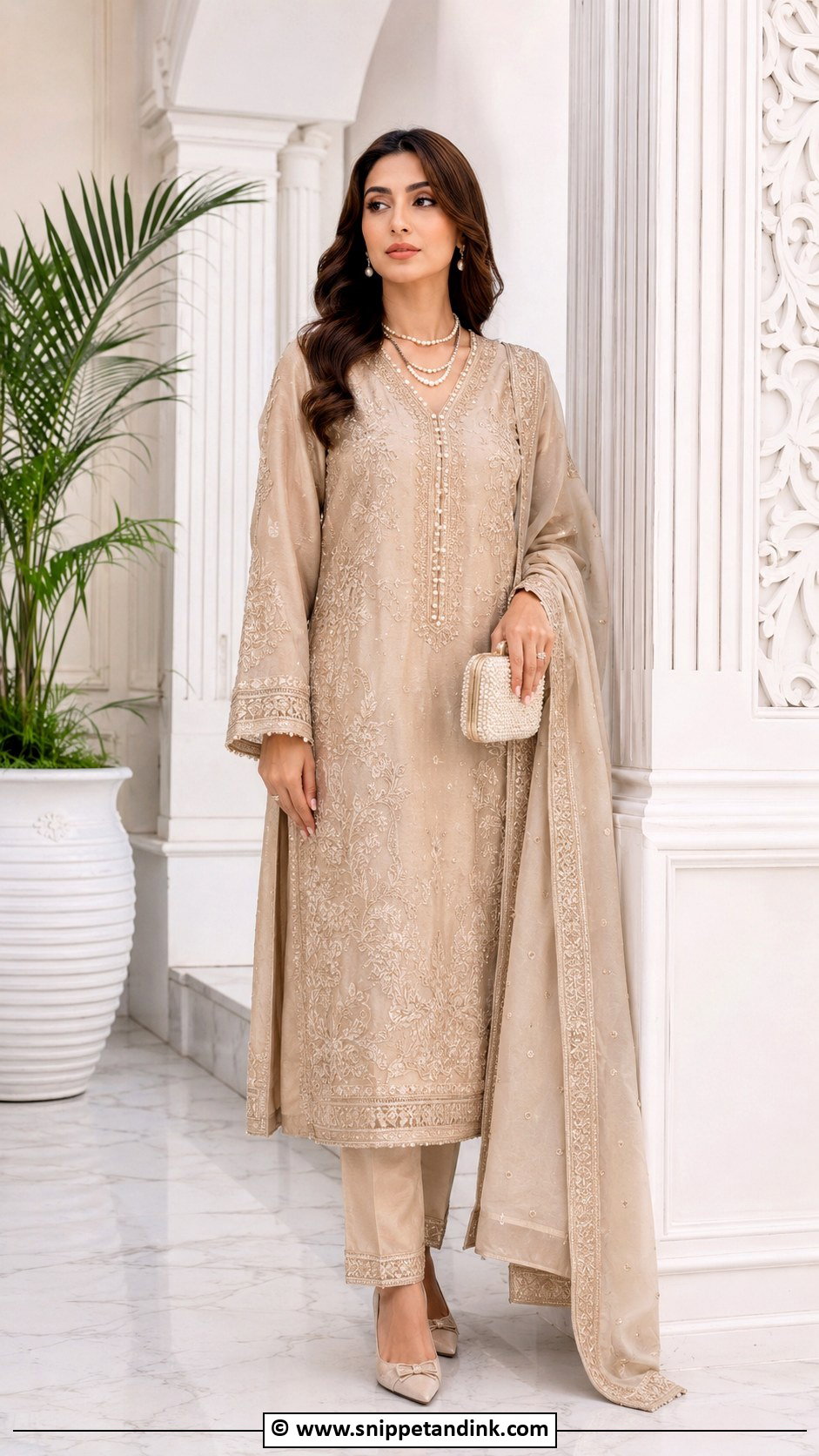
Beige only looks plain when the fabric is flat. Silk, jacquard, organza or brocade give it texture, and then a long embroidered kameez with straight trousers or palazzos looks quietly luxurious. A bordered dupatta and gold or pearl accessories finish it. Mothers, aunts and sisters suit this well, and it is easy to wear again at other weddings.
18. Pearl White Nikah Bridal Outfit
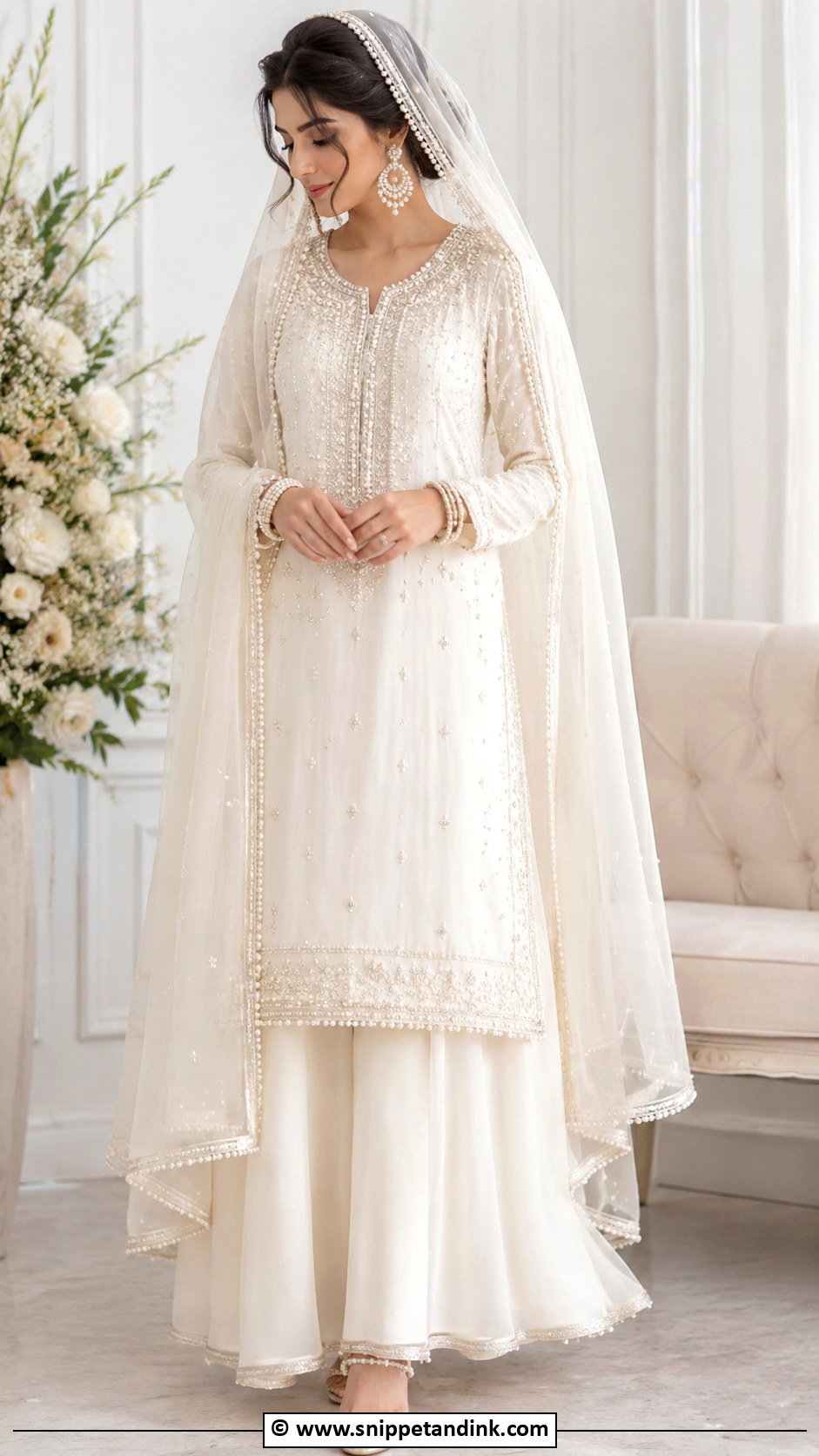
Pearl embellishment has softer depth than stones, which is why I like it for an intimate bridal Nikah. A long kameez, anarkali or lehenga set with pearl work, a sheer pearl-edged dupatta over the head, and fine jewelry keep the look gentle. Check the backs of the pearls at your fitting; a loose thread on a pearl hem unravels quickly once you start walking.
19. Dusty Rose Nikah Saree Outfit
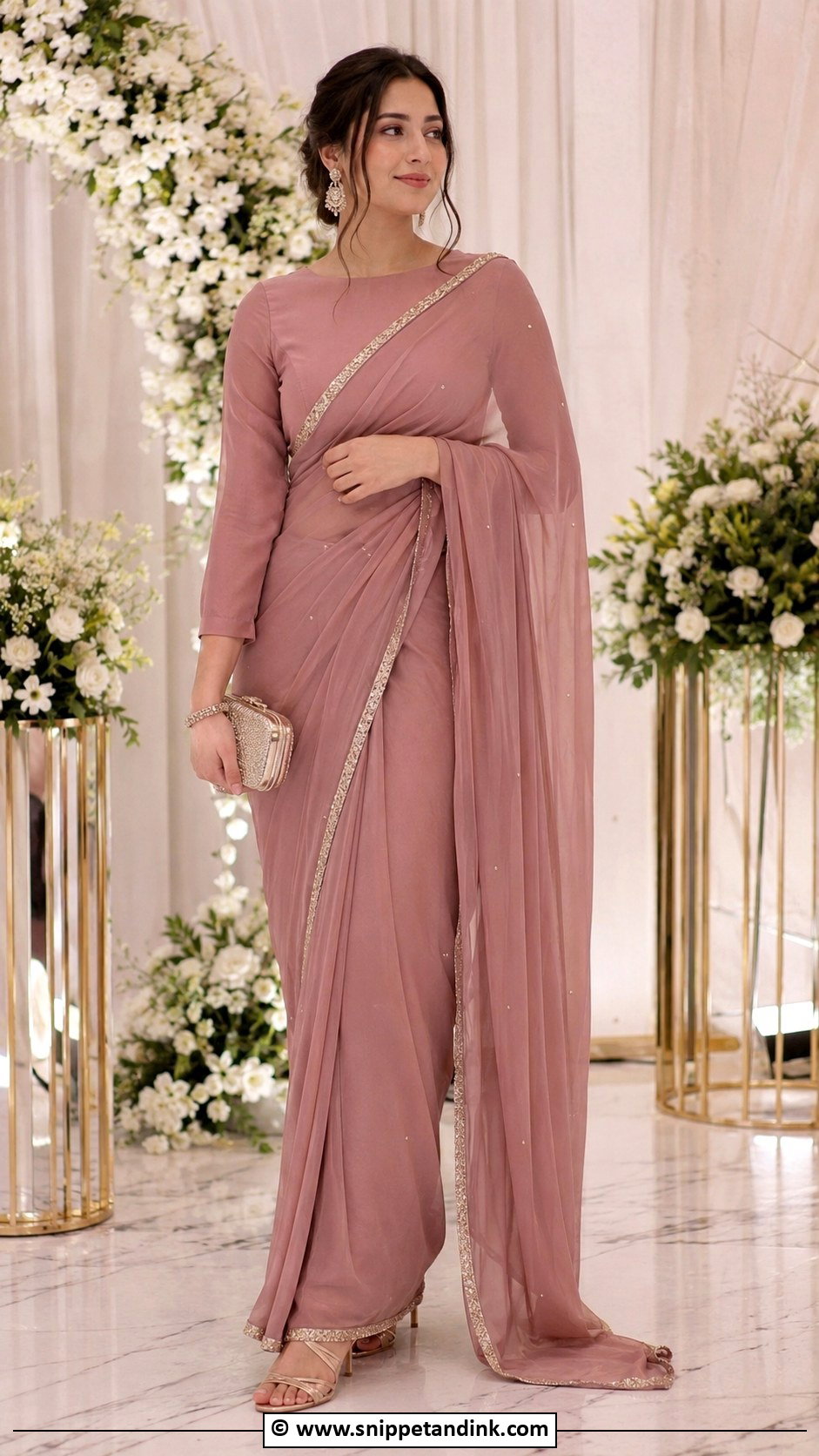
Dusty rose is pink for grown-ups: muted and less sugary than bright pink. A silk, chiffon or organza saree with a fine metallic border suits brides, guests and close family alike. A modest blouse, delicate earrings and rose gold heels complete it. For a formal ceremony, add a statement ring or bracelet. For a simple one, leave it there.

20. Navy Blue Nikah Formal Outfit
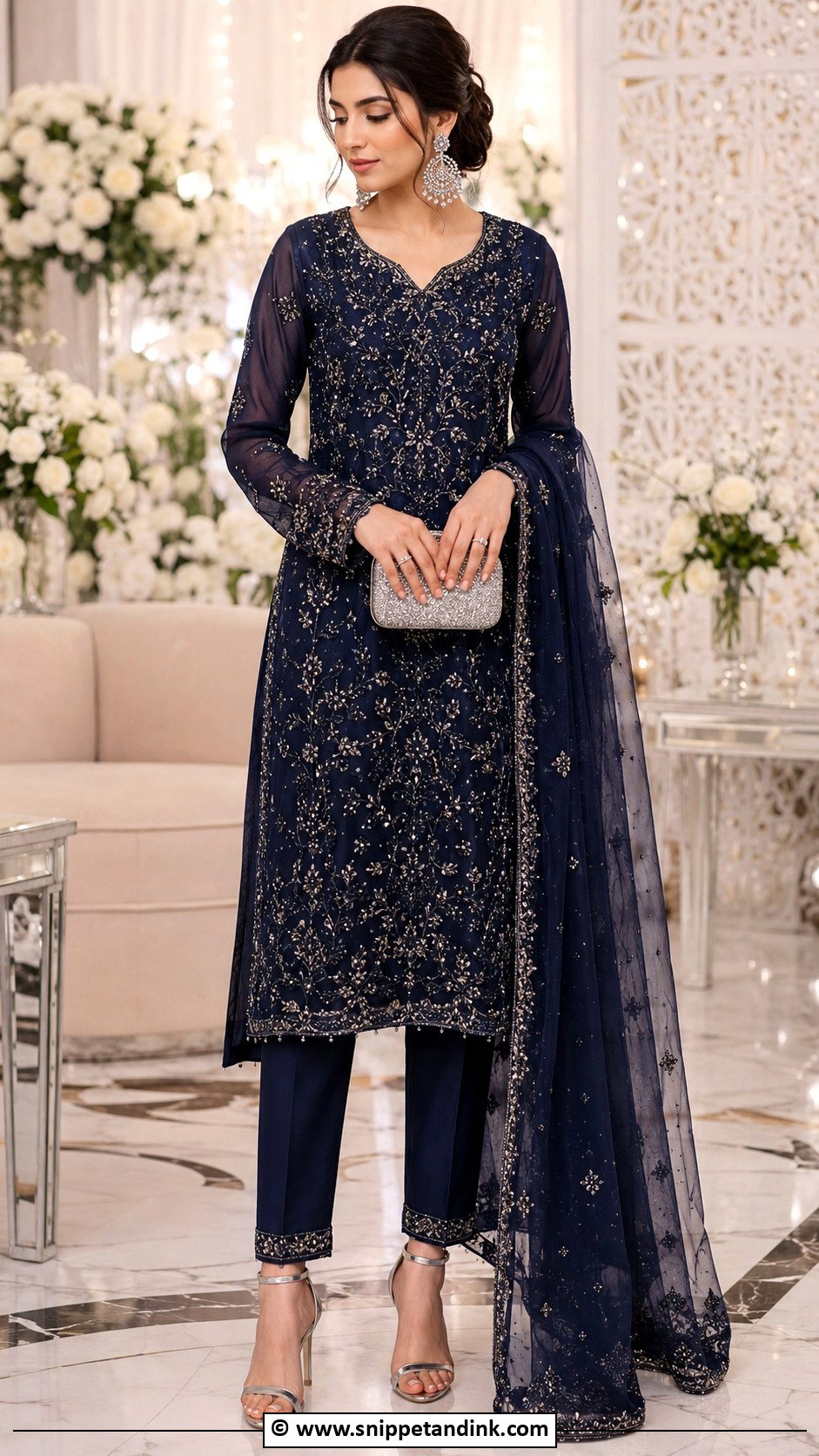
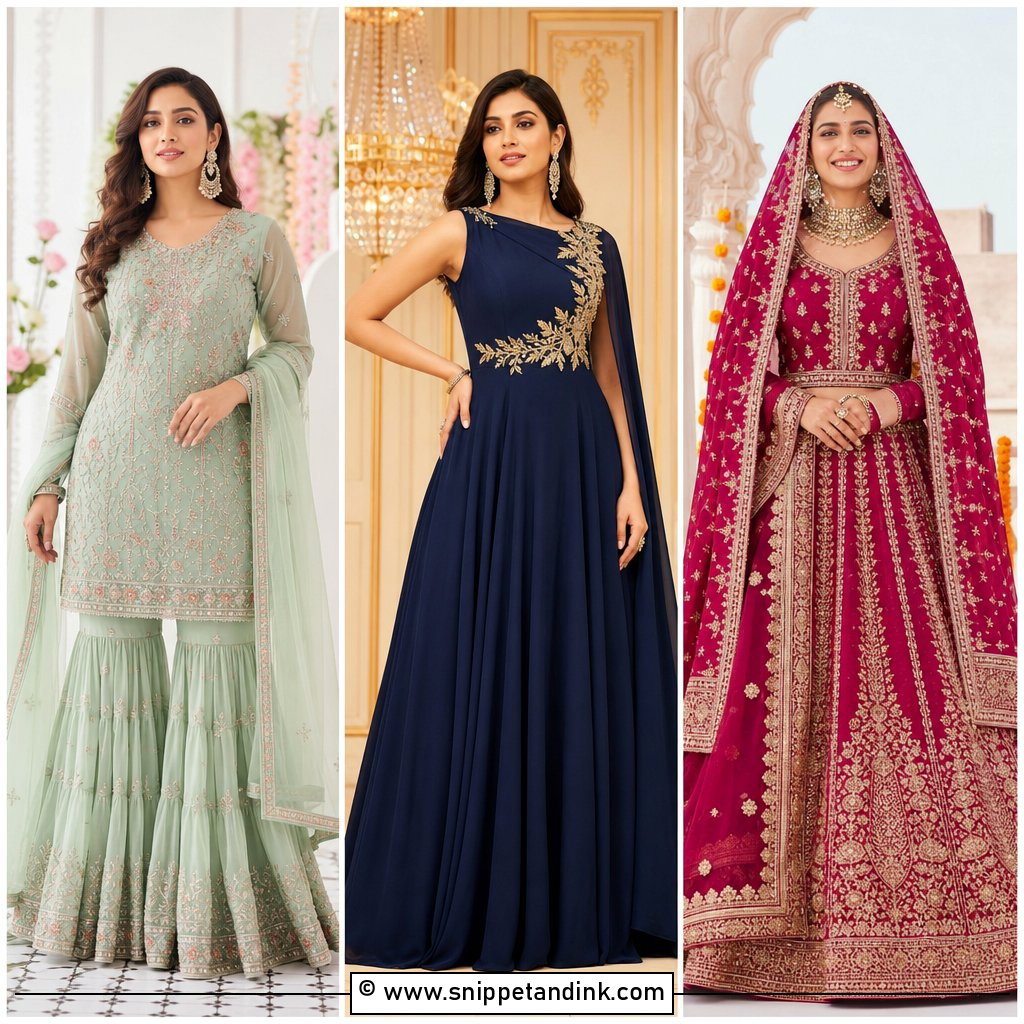
Navy is my go-to for evening and winter Nikahs, especially for guests who prefer deeper colors. A long kameez with matching trousers, a sharara set or an embroidered maxi all work. Silver, antique gold or champagne accents keep it from feeling severe. Avoid anything too flashy for a religious ceremony. A bride who wants to step away from tradition can wear navy too, with heavier work.
21. Floral Organza Nikah Outfit
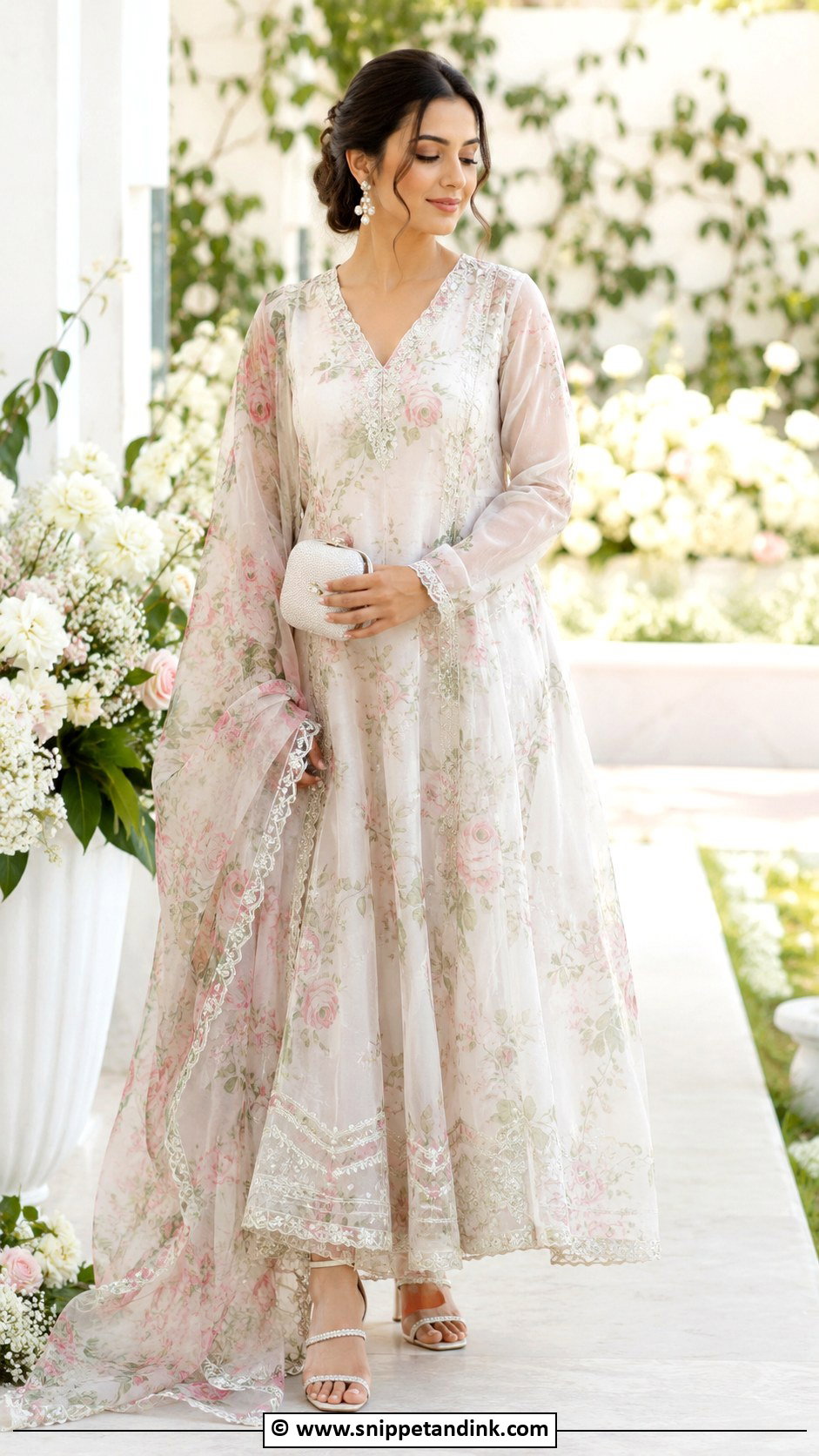
A floral organza Nikah outfit belongs to a garden, home or daytime ceremony. A long kurta or anarkali in ivory, blush, mint or powder blue with floral embroidery or printed layers keeps it airy. Organza is crisp, so ask for a soft lining against the skin. Guests and bridesmaids can wear prints; a bride should look for hand embroidery or pearl details to make it ceremonial.
22. Silver Nikah Lehenga Outfit
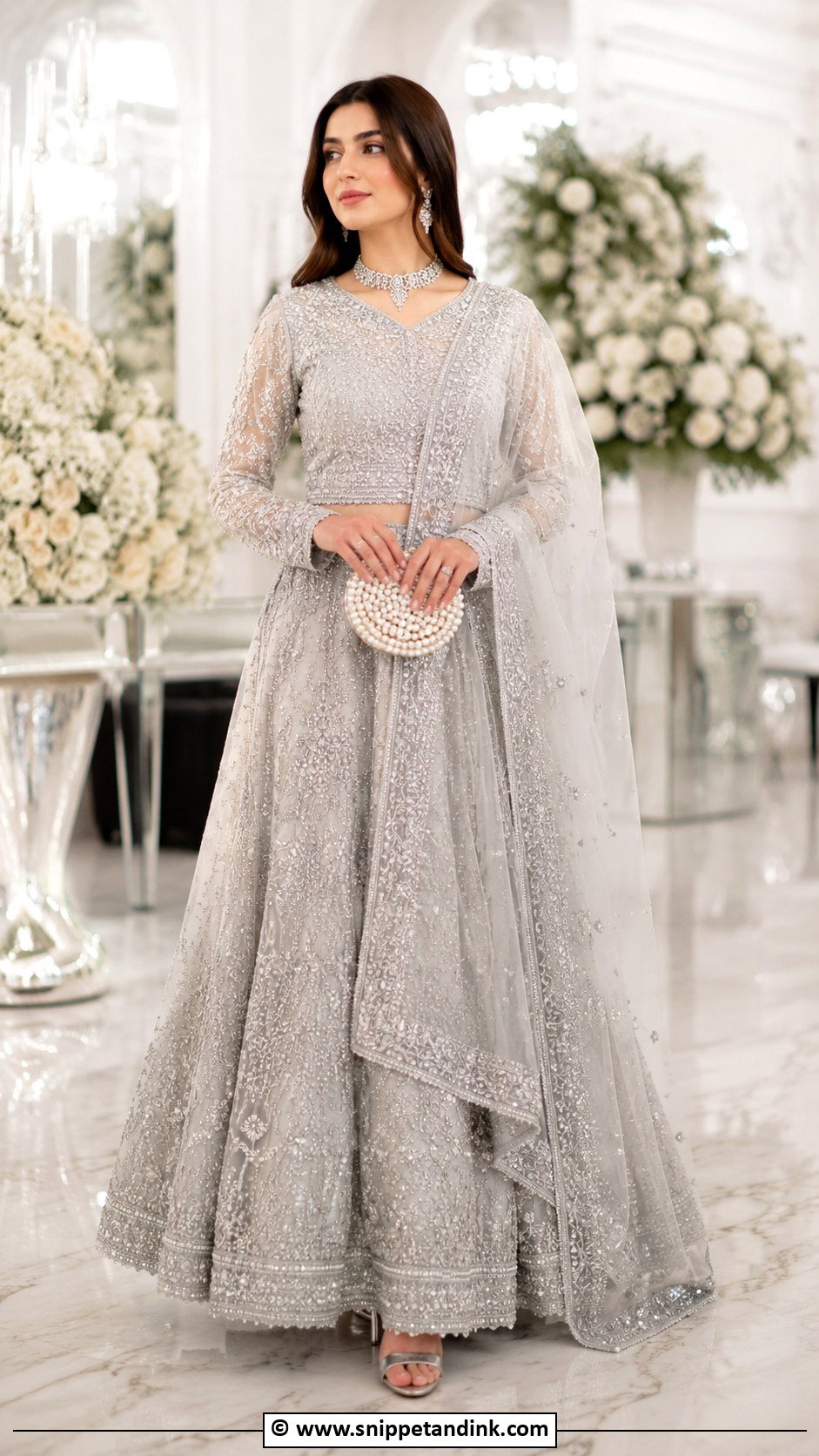
Silver lehengas glow under evening light and look modern in a hotel or formal family venue. Pick a soft silver or dove-grey base with embroidery that catches light gently, a modest blouse and a sheer dupatta. Crystal or pearl jewelry and soft pink makeup suit it. Brides can drape the dupatta over the head; guests should choose lighter embroidery so they do not look bridal.
23. Mauve Nikah Sharara Outfit
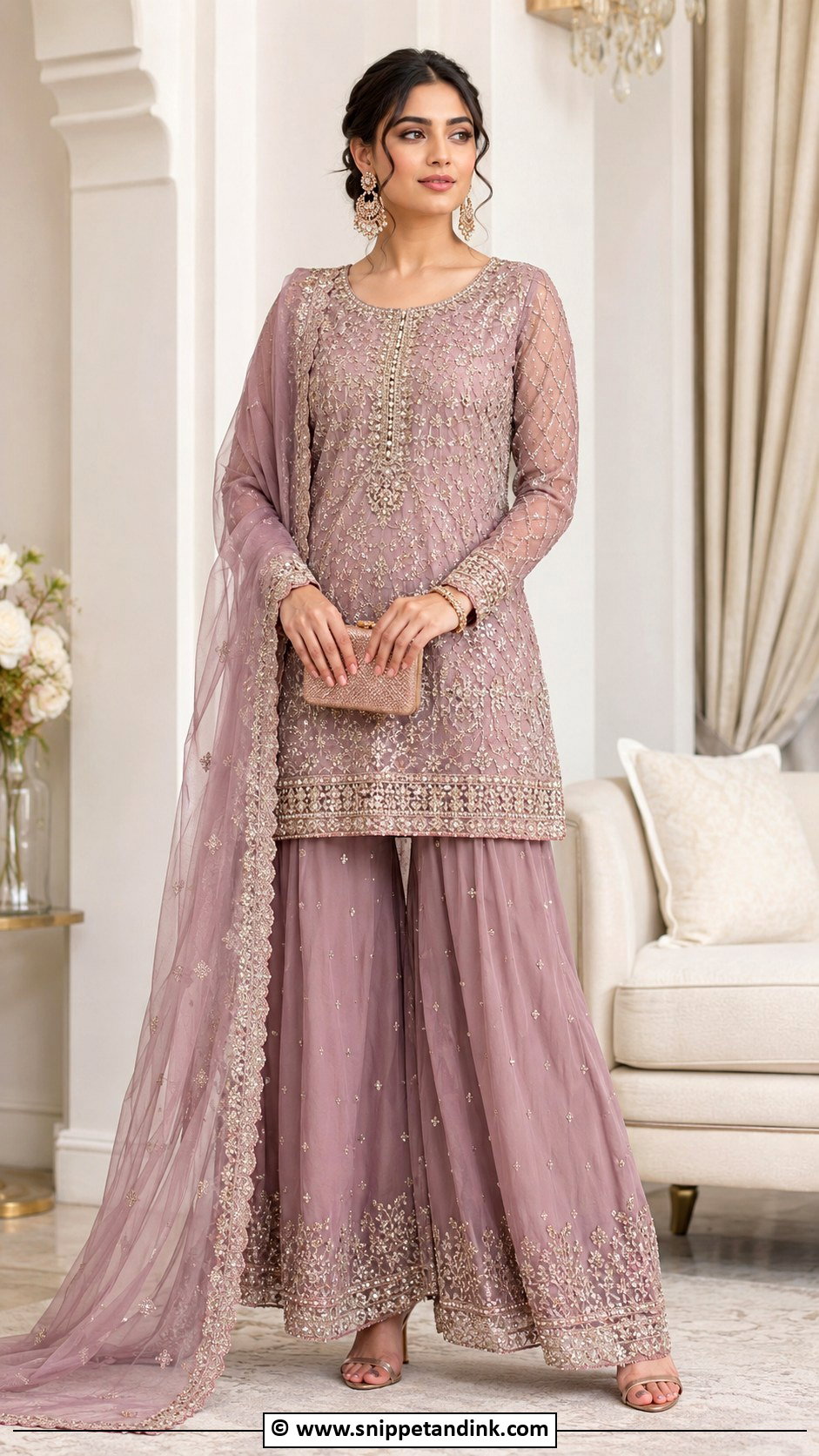
Mauve sits between pink and purple, romantic without being sweet. A short kameez with light embroidery, wide sharara pants and a matching dupatta suit it. It flatters many skin tones, which makes it a reliable bridesmaid color when you are dressing several women at once. A bride can wear it with heavier embroidery and a detailed border.
24. Black Nikah Guest Outfit
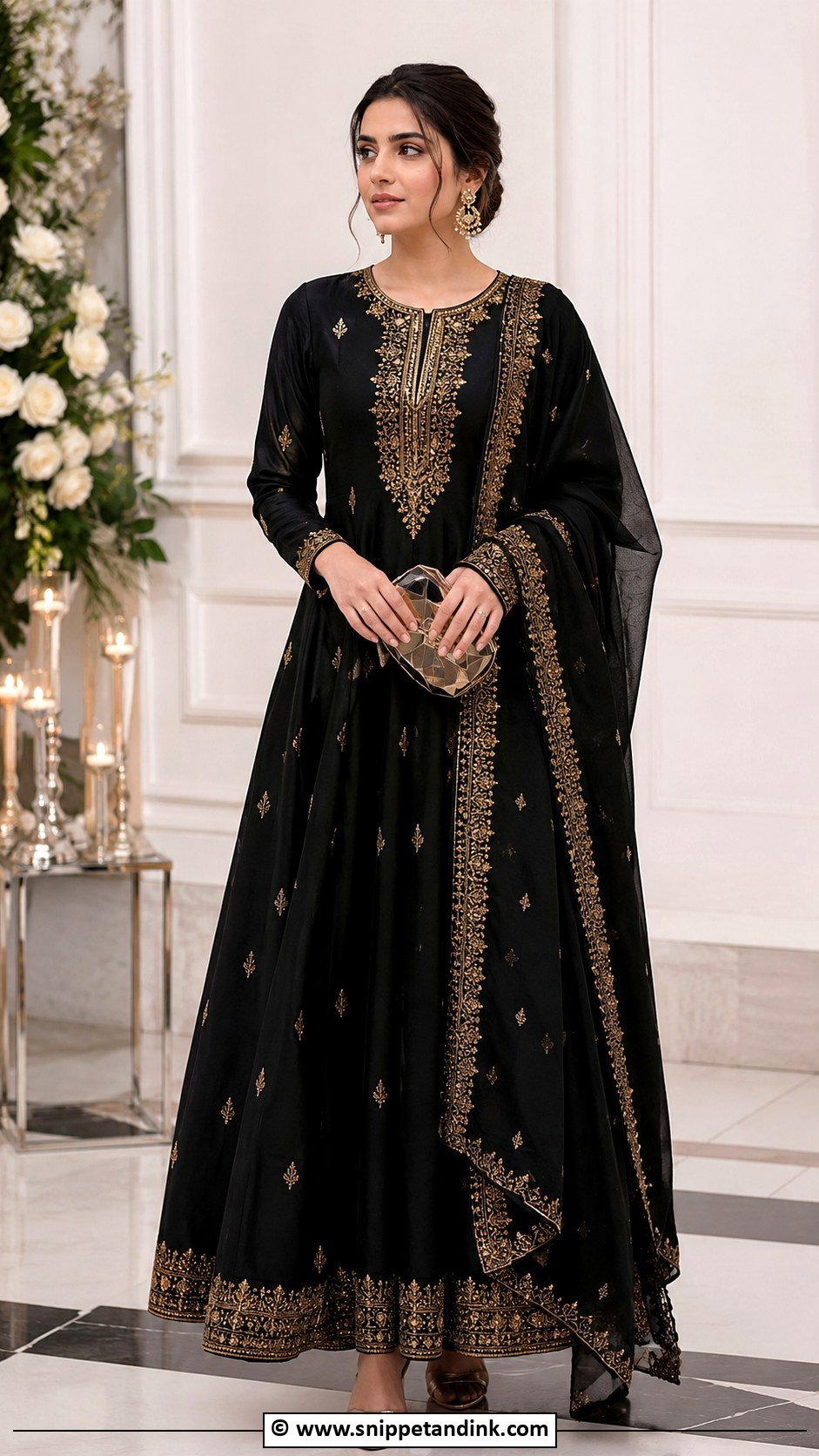
Black at a Nikah depends entirely on the family. Some are relaxed about it at evening or winter ceremonies; others see it as wrong for a wedding. If you are unsure, ask, or choose navy instead. If black is welcome, a modest anarkali, long kameez or saree with gold or silver detailing and a gold dupatta keeps it celebratory. This is a guest outfit, not a bridal one.

25. Teal Nikah Maxi Dress Outfit
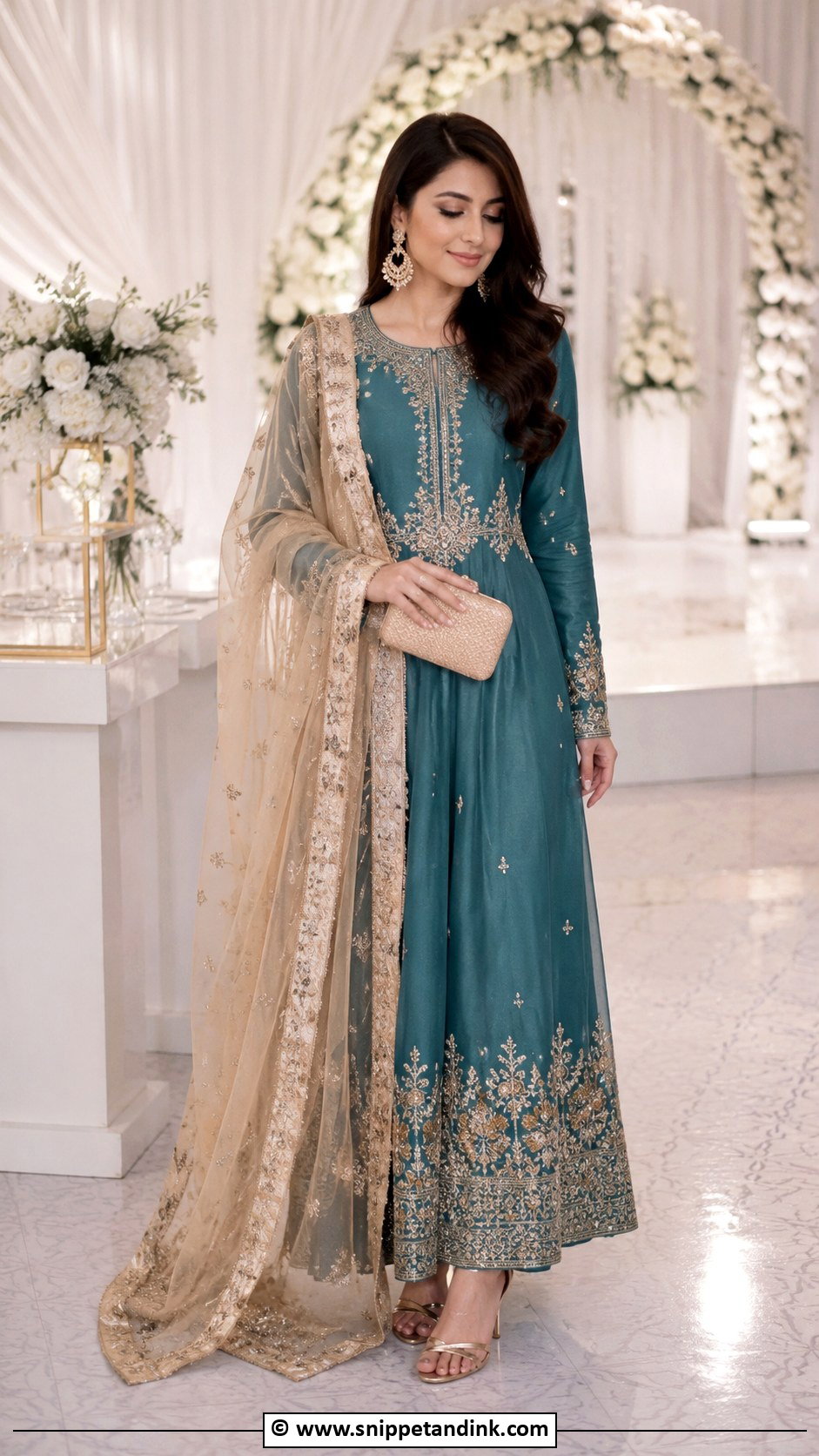
Teal blends blue and green, so it feels festive without being common. A long-sleeve maxi with embroidery at the neckline, cuffs or hem, and a matching or champagne dupatta, make it more traditional. Gold heels and statement earrings suit it. Evening ceremonies show teal at its richest. Brides can choose heavier embellishment; guests keep it lighter.
26. Coral Nikah Salwar Kameez Outfit
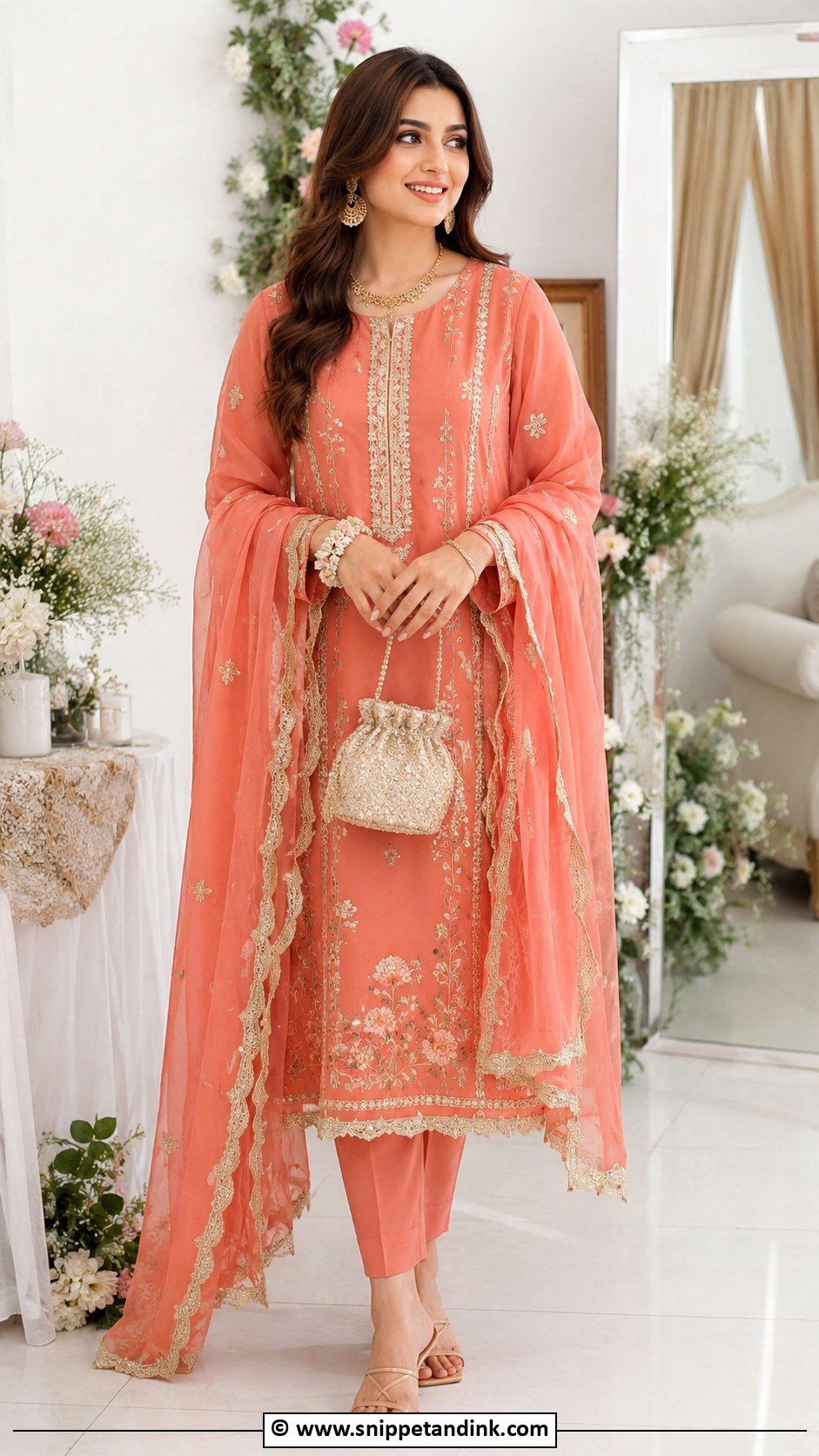
Coral works when it is soft. Neon orange or a near-red shade looks loud at a religious ceremony, so I’d look for a muted coral with delicate embroidery. A straight kameez, trousers and a chiffon dupatta suit guests and family members, especially at daytime summer or home Nikahs. Gold jewelry adds warmth. Full sleeves and a higher neckline add coverage.
27. Light Yellow Nikah Gharara Outfit
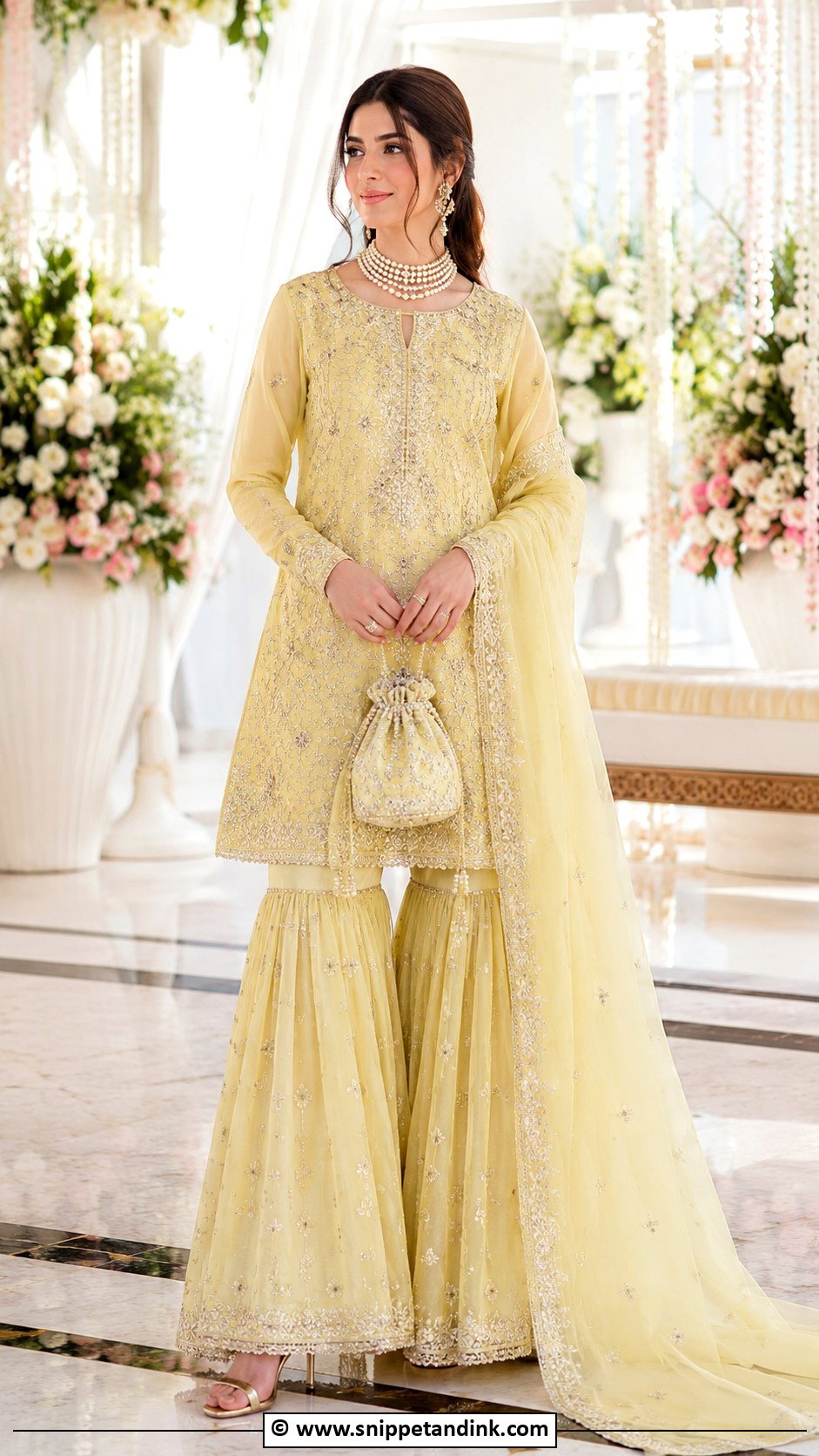
Pale yellow or buttercream suits a Nikah far better than bright yellow, which can look casual or feel like a mayun outfit. A short kurti with pearl, mirror or zari work, a flared gharara and a matching dupatta keep it festive. Younger sisters and bridesmaids suit it; a bride can wear it for a daytime ceremony if she prefers a sunny palette. Wear heels, and keep the dupatta drape neat.
28. Maroon Nikah Bridal Outfit
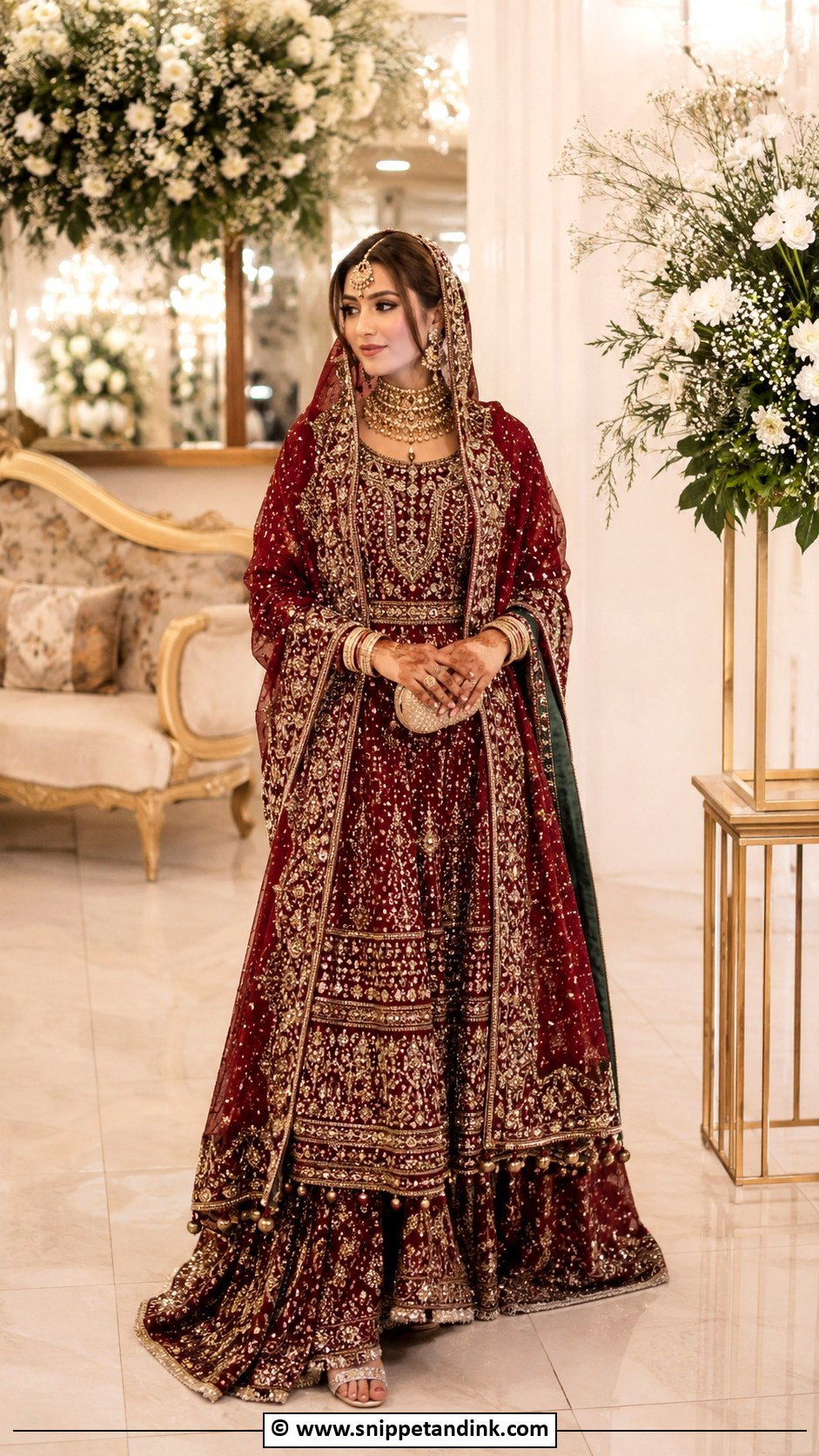
Maroon gives a bride depth without bright red. A lehenga, sharara or long kameez set with antique gold embroidery suits winter, evening or formal ceremonies. Traditional jewelry and a head-draped dupatta complete it. If the outfit is heavy, I keep the lip soft; if it is lighter, a deeper lip can work. Maroon has a strong bridal feel, so it is best kept for the bride or very close family.
29. Lilac Nikah Anarkali Outfit
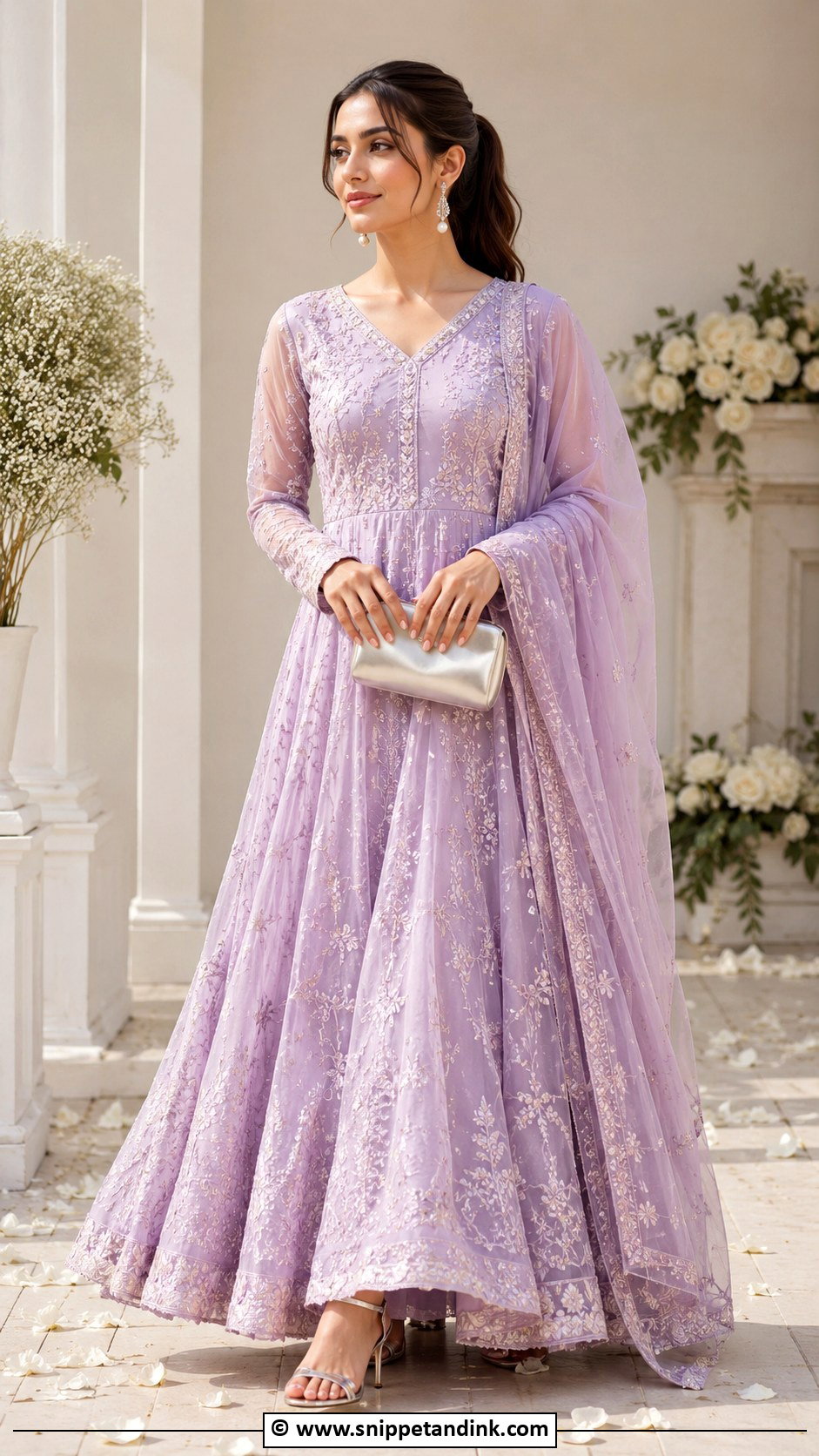
Lilac reads young and gentle. The anarkali shape is easy for long ceremonies, sitting and photos. Light embroidery at the neckline and sleeves with a matching dupatta is enough for a guest, bridesmaid or sister. For a bride, pearl work and a head dupatta add ceremony. Silver heels and pearl earrings suit the color, especially in spring or summer.
30. Brown Nikah Silk Suit Outfit
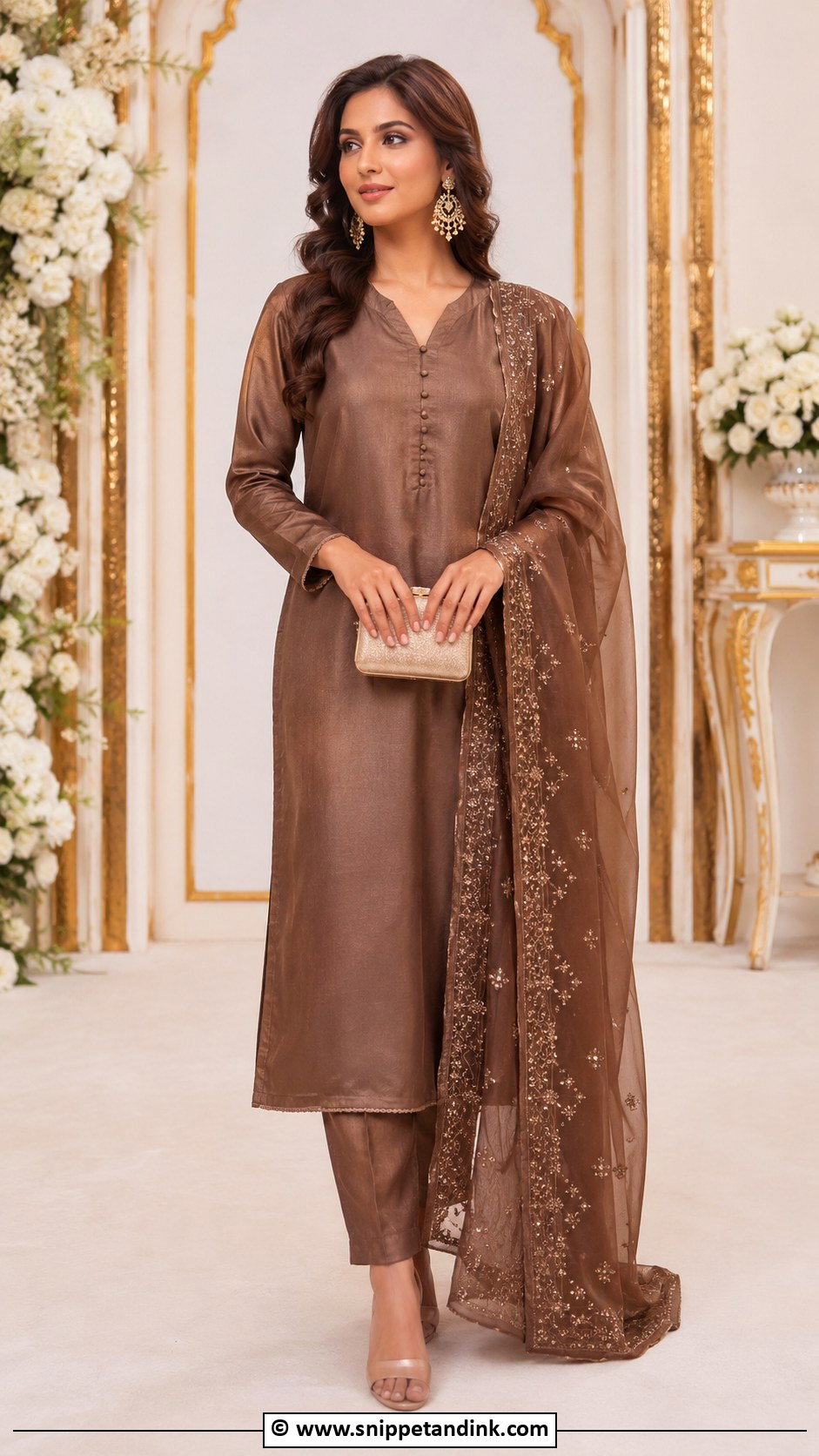
Brown is underrated at weddings. Mocha, cocoa, taupe-brown or bronze-brown in silk, with straight trousers and a lightly embroidered dupatta, looks warm and grown-up. Gold jewelry and nude heels suit it. Mothers, aunts and older sisters wear it well, and brocade or subtle zari raises it for a formal event. It also sits comfortably against cream, gold and neutral decor.
31. White Hijab Nikah Outfit
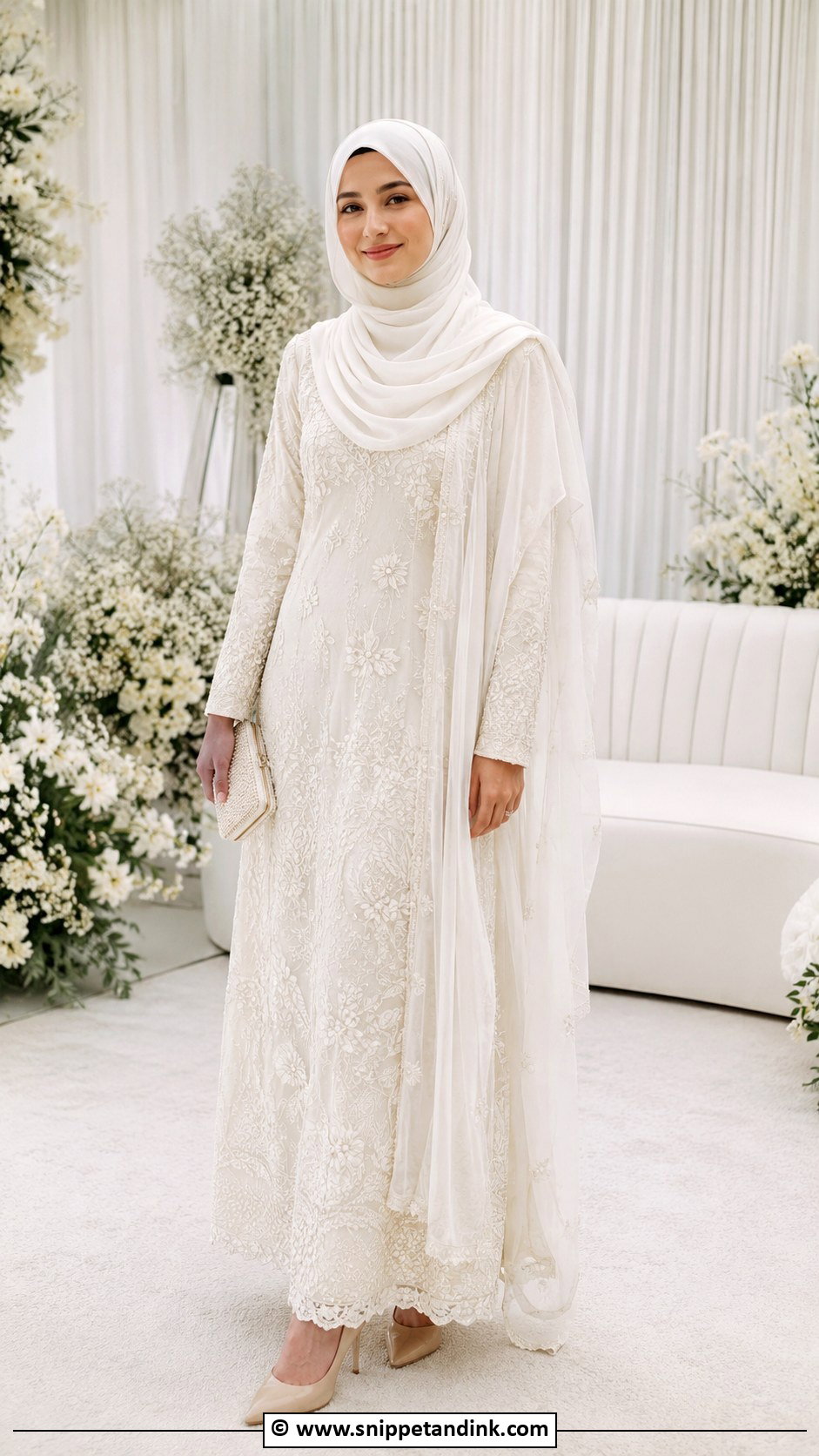
A white hijab Nikah outfit looks cohesive when the hijab matches the outfit’s tone exactly; a bright white hijab against ivory makes the dress look dingy. A white or ivory maxi, anarkali, lehenga or sharara with modest coverage, and a smooth chiffon or silk hijab pinned over an underscarf, keep it neat. Pearl pins add detail. Brides can layer a head dupatta over the hijab; guests should only wear white when the bride is not.
32. Green Velvet Nikah Outfit
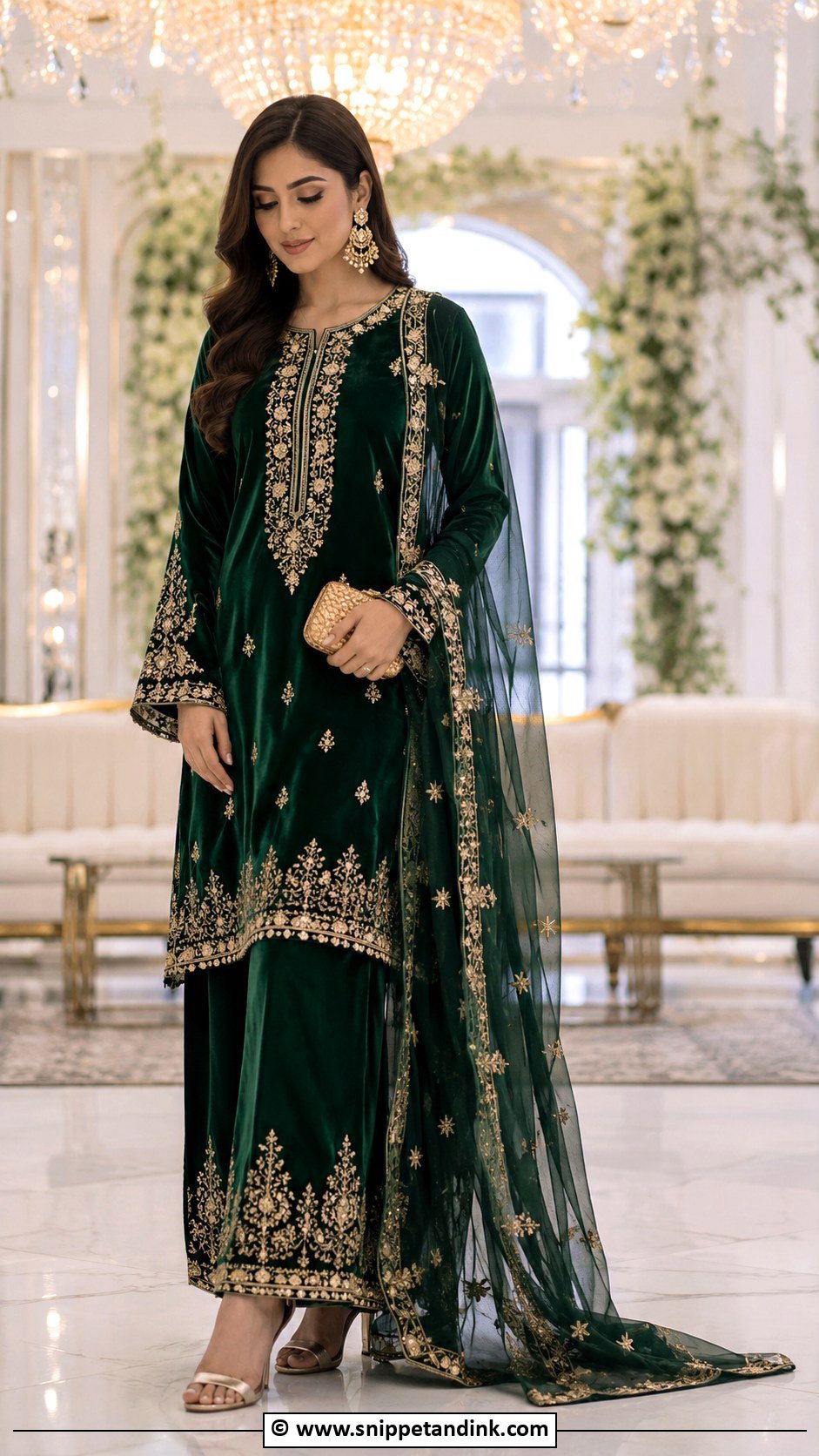
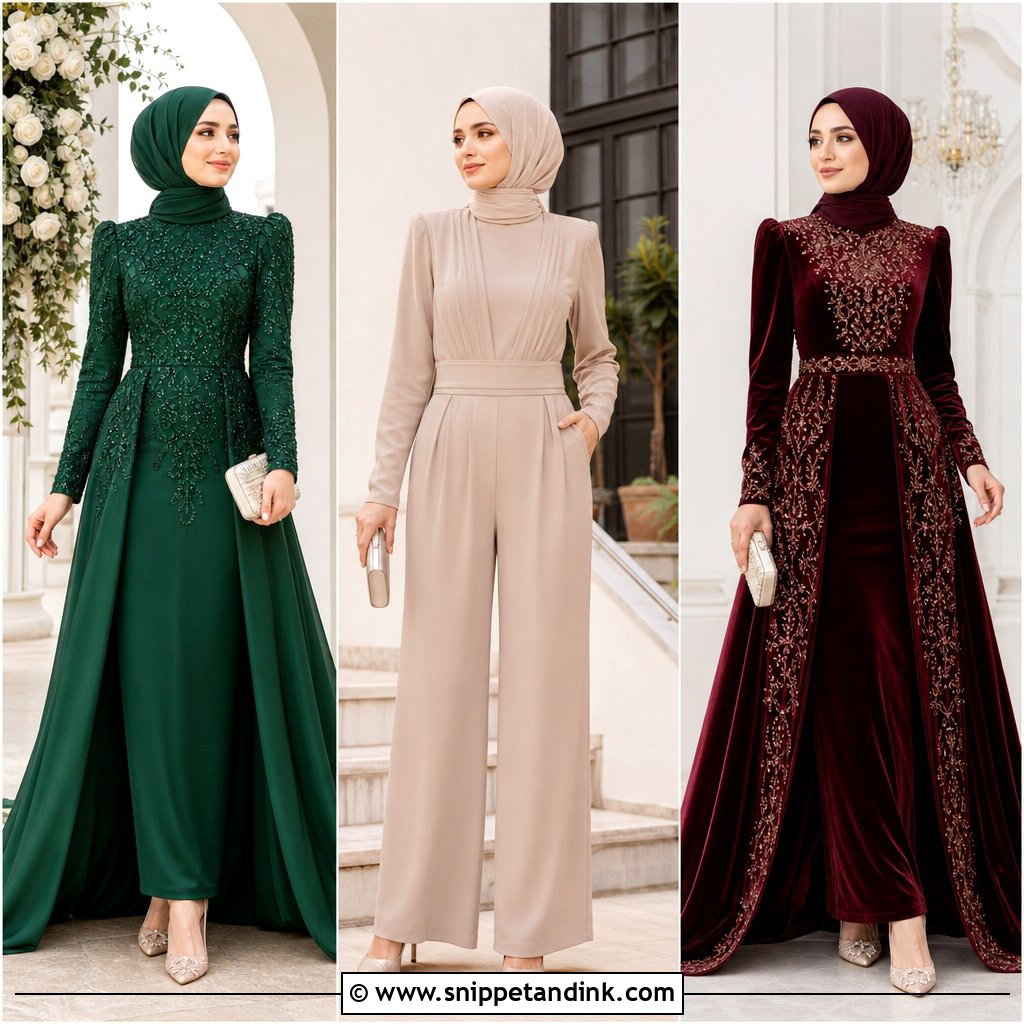
Velvet belongs to cold-weather ceremonies. Deep green velvet with gold embroidery, in a long kameez, sharara set or modest maxi, looks regal. Velvet is heavy and warm, so I keep the cut clean and the accessories balanced, and I would not put it in a crowded, heated hall. A sheer dupatta lightens it. A bride can wear it fully embellished; close family can wear a plainer version.
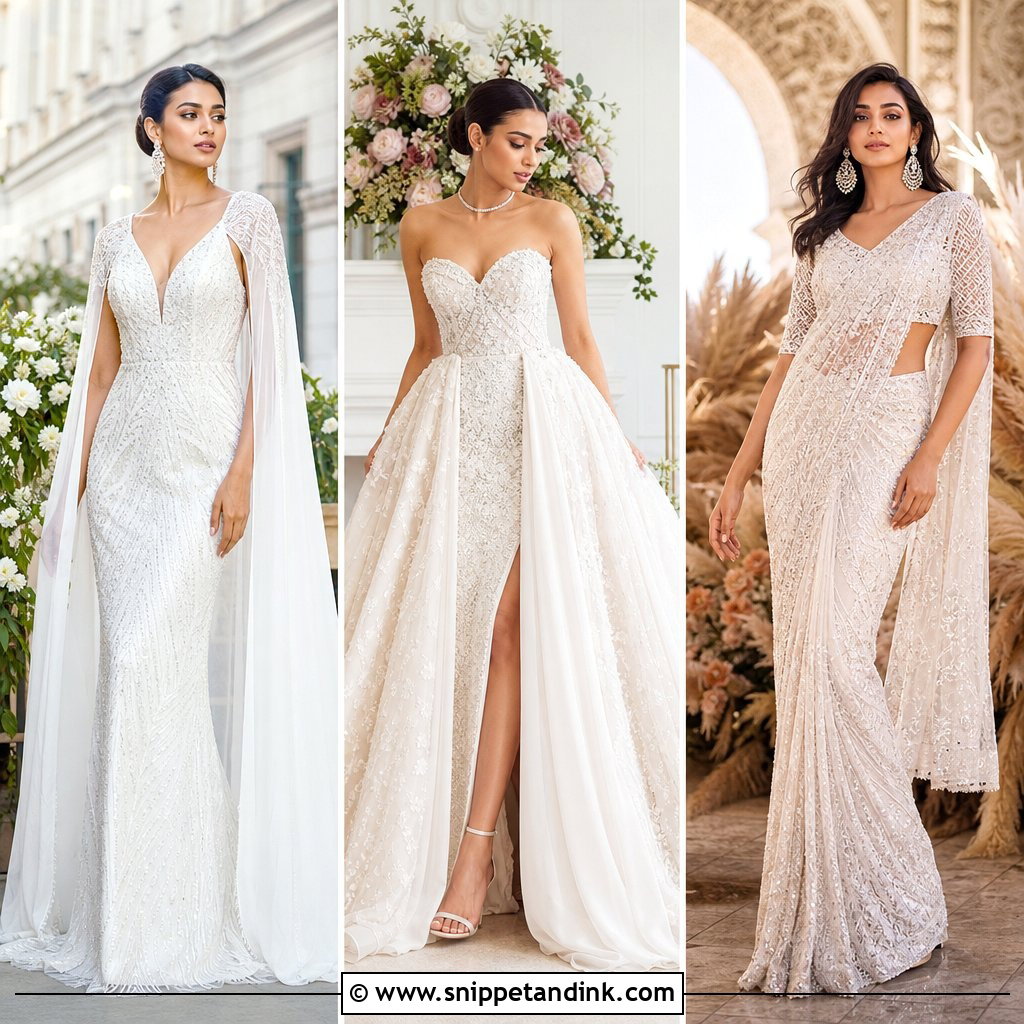
33. Ivory Cape Nikah Outfit
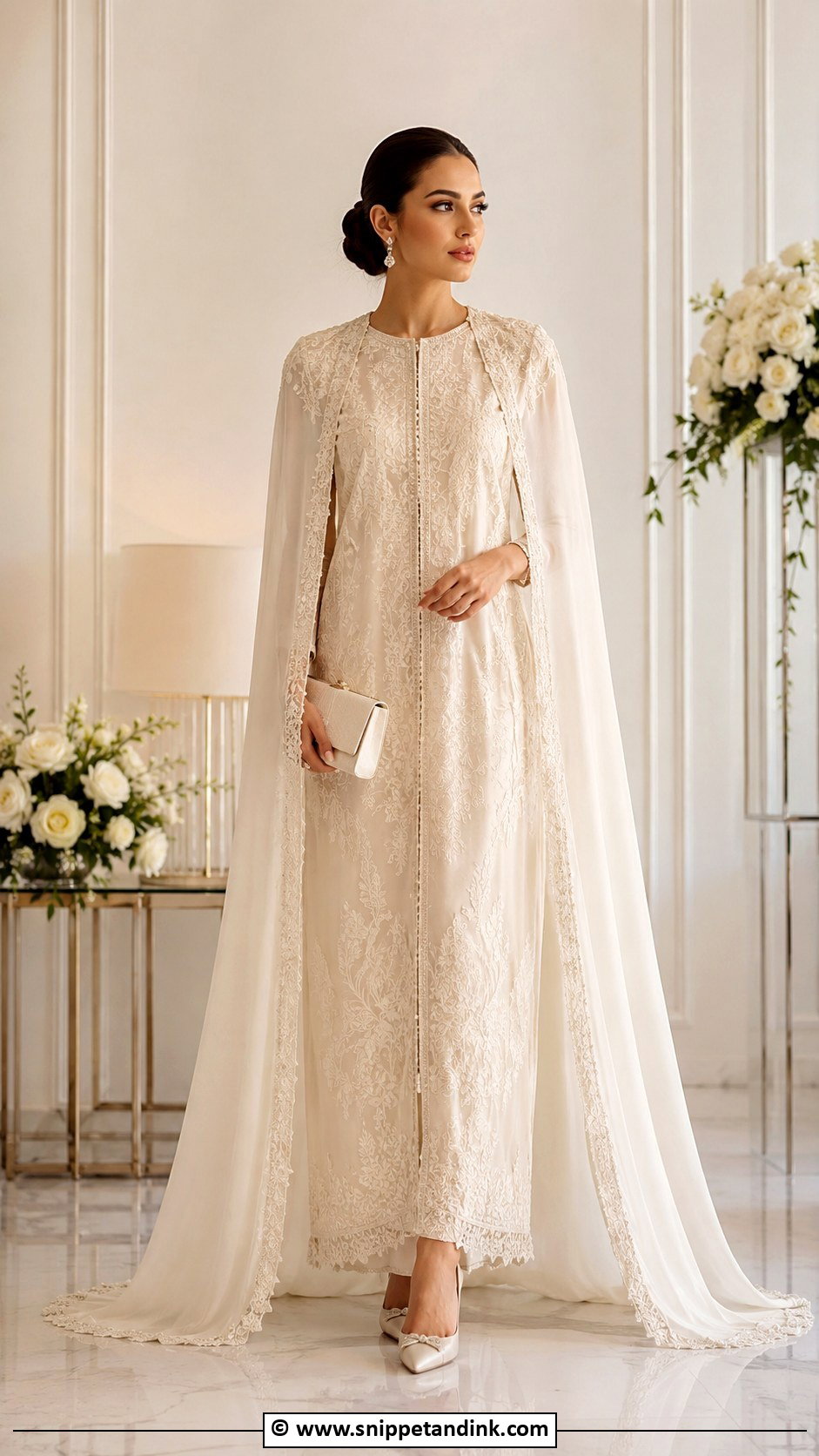
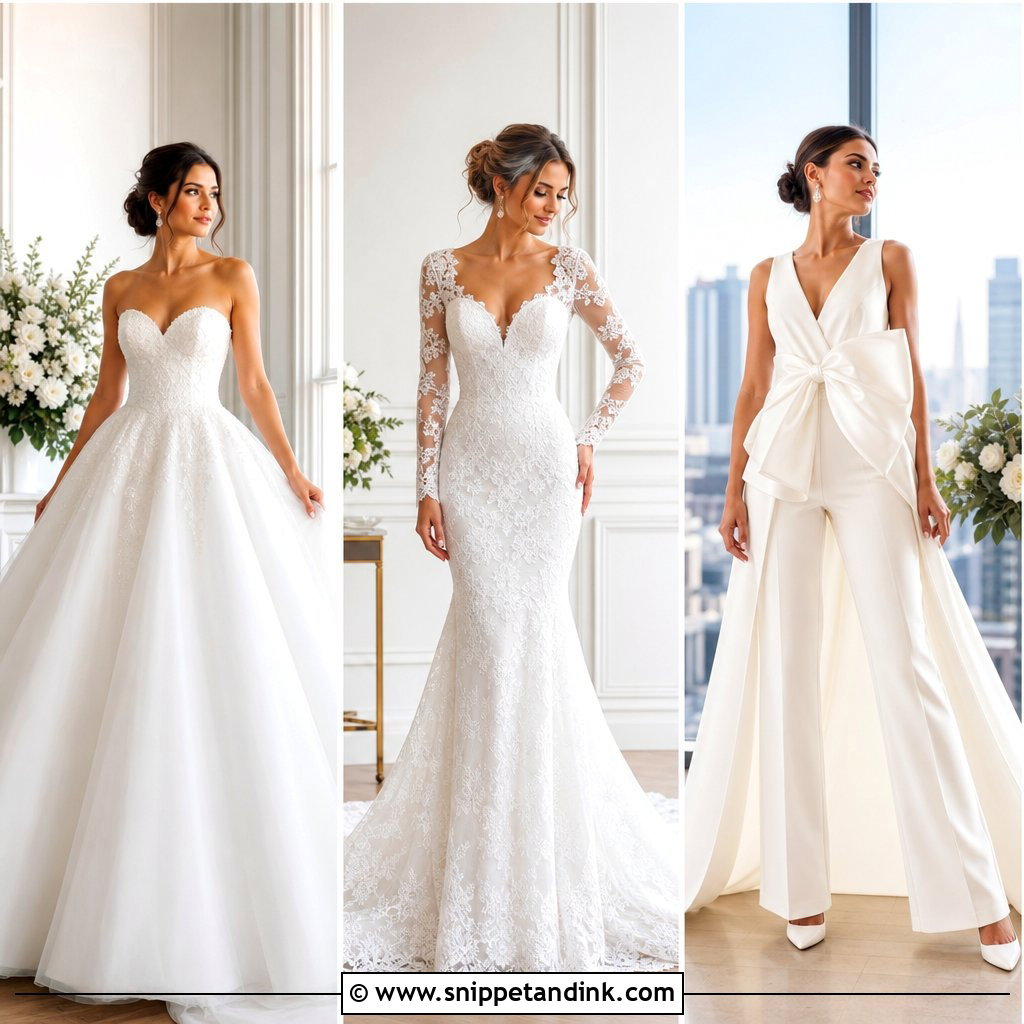
A sheer embroidered cape replaces the dupatta and covers the shoulders and arms without anything to hold in place. Under it, a long dress, a jumpsuit-style set or a lehenga in ivory, champagne or pearl tones works. Pointed heels and a sleek clutch keep it modern. For more tradition, add a light dupatta over the head during the Nikah and remove it later for photos.
34. Printed Silk Nikah Saree Outfit
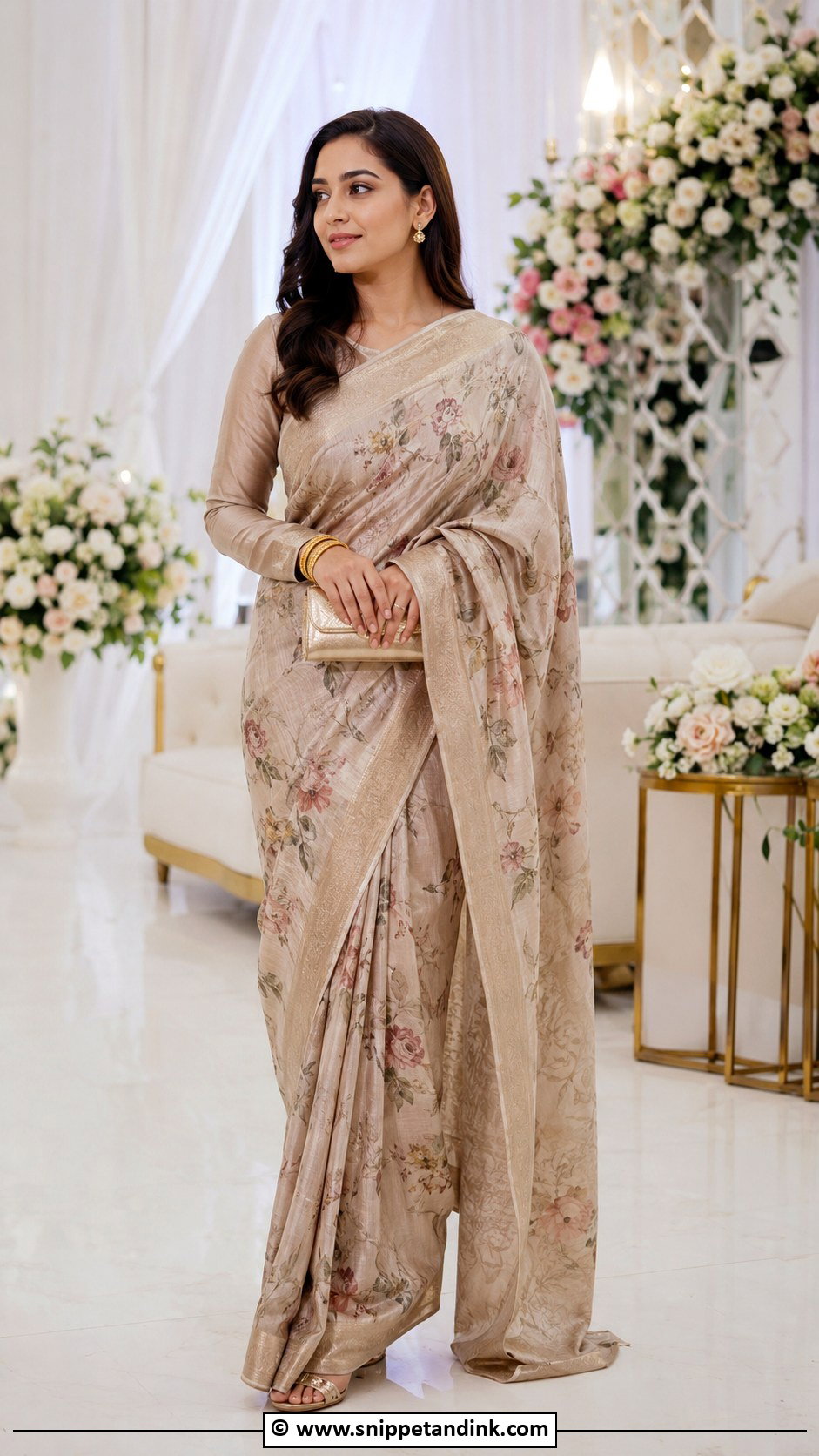
Printed silk is practical and full of personality. A soft floral, paisley or traditional print in rose, sage, cream or powder blue stays formal through the silk, but lighter than heavy embroidery. A modest blouse, gold studs and bangles finish it. Mothers and aunts suit it well. Pin the saree securely at the shoulder and the pleats, and it will stay comfortable all day.
35. Simple Nikah Kurta Outfit
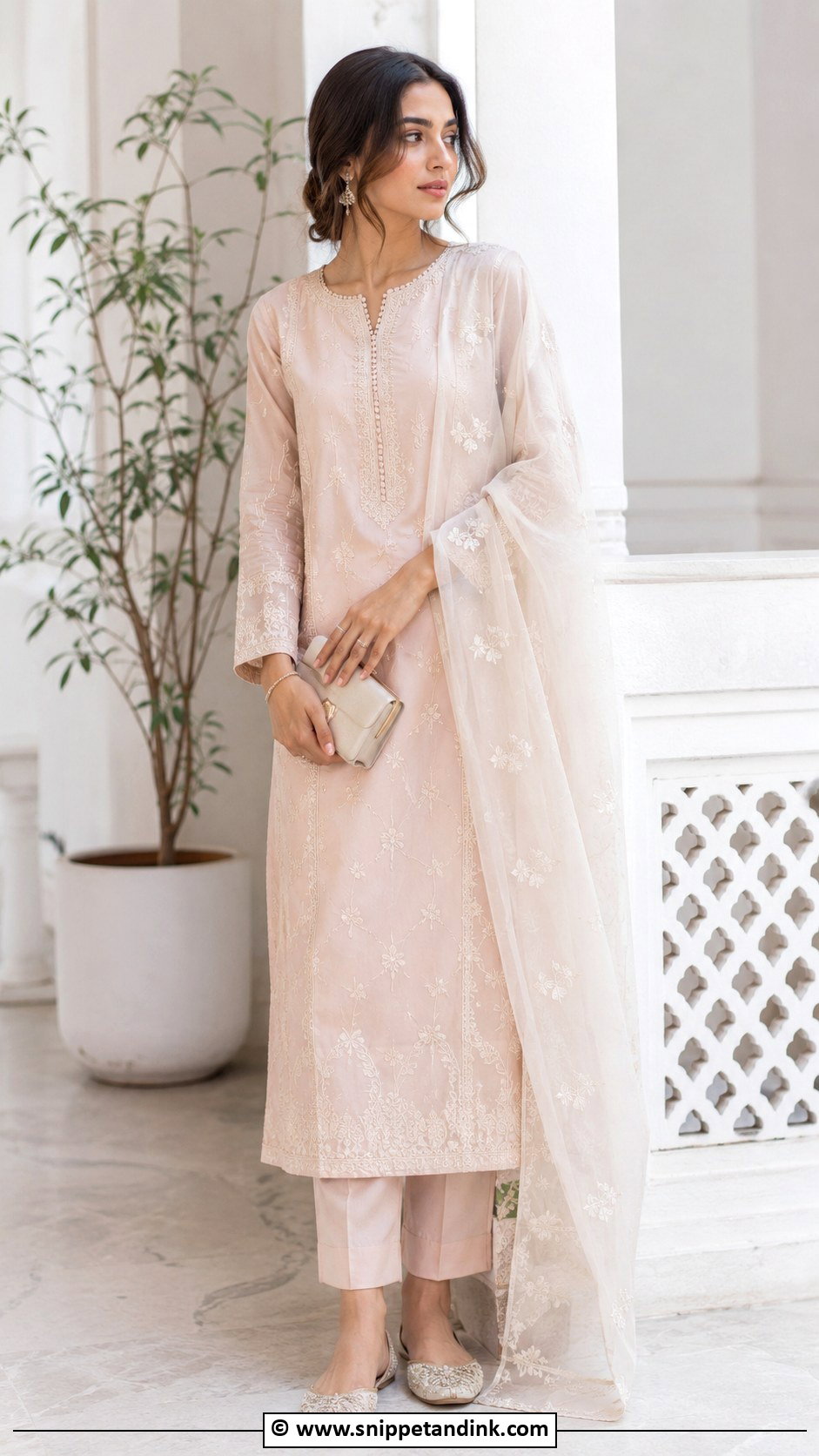
For a small home ceremony, a courthouse Nikah or an intimate family gathering, a simple kurta is often the right answer. A long kurta in ivory, pastel, sage, blush or beige with straight trousers and a clean dupatta, plus light embroidery or lace trim, is enough. Low heels or embellished flats make it easy to move. A bride can add pearl accessories and a head-draped dupatta; guests keep it minimal.
Shoes Come Off at the Mosque Door
People plan the outfit and forget the floor. Many Nikahs, in mosques and at home, are held on carpet with shoes left at the entrance. That changes what I recommend from the ankle down.
- Pick shoes you can slip off and on without bending or unbuckling. Embellished mules and juttis are easier than strappy sandals.
- Hems set for heels will drag once the shoes come off. If you will spend the ceremony barefoot, ask your tailor to split the difference or carry a few safety pins.
- Bridal mehndi on the feet usually shows during this part, so keep pedicures neat.
- Carry a small bag that holds a spare scarf, pins and a phone. You may be seated on the floor for a while, away from your things.
Velvet in January, Chikankari in July
Fabric should follow the season and the room before it follows a picture. Summer Nikahs in packed homes get warm quickly, and a heavy outfit is miserable after the first hour. My rough rules:
- Hot months and crowded rooms: chikankari on cotton or georgette, chiffon, lawn and light organza. Keep heavy work to the borders.
- Mild seasons: raw silk, jamawar and crepe, which hold shape without trapping heat.
- Winter and cool evening venues: velvet, brocade and heavier silk, with a shawl or embroidered jacket that can be removed indoors.
Air conditioning changes the picture. A cool hotel hall can handle velvet in summer, while a small home in winter can still get warm with fifty people in it. I always ask where the ceremony is before I suggest a fabric.
Dressed for the Room, the Family and the Prayer
A Nikah outfit does not need weight to feel memorable. Soft colors, modest shapes and a well-placed dupatta can make a simple piece ceremonial. Brides often lean toward white, ivory, green, gold, blush or maroon; guests have more room with pastels, jewel tones and neutrals. Before you buy, check the venue, the family’s traditions, the weather and your role in the day. Get those right, and the outfit only has to feel like you.
You'll Like These Ideas:


Leave a Reply